Apple announces RCS support for iMessage

Apple announces RCS support for iMessage

Enlarge (credit: Jakub Porzycki/NurPhoto via Getty Images)

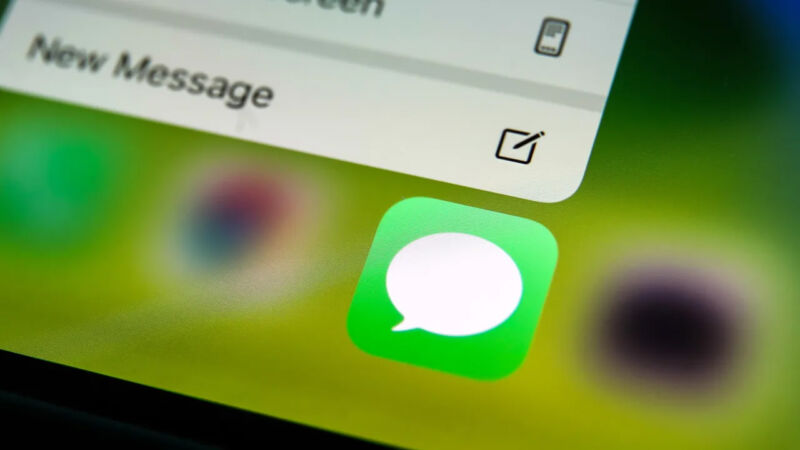
Apple is shocking the world today by adopting the RCS messaging standard for iMessage. When iMessage users are talking to people off the service, iMessage will soon be able to fall back to the RCS carrier messaging standard instead of SMS, which comes with the advantages of read receipts, higher-quality media sending, and typing indicators. Your chats with your green bubble friends will be slightly less awful.

Apple sent several media outlets a statement:

Later next year, we will be adding support for RCS Universal Profile, the standard as currently published by the GSM Association. We believe RCS Universal Profile will offer a better interoperability experience when compared to SMS or MMS. This will work alongside iMessage, which will continue to be the best and most secure messaging experience for Apple users.

iMessage is currently besieged on all sides by various parties. Google has been waging a “get the message” campaign against Apple for the past year or two, imploring the company to adopt RCS. Last year, Apple CEO Tim Cook was asked on stage if the company would make messaging with Android better, and he responded, “I don’t hear our users asking that we put a lot of energy in on that at this point” and told the audience member to “just buy your mom an iPhone” if he wanted easier communication with his mother. Regulators in the European Union have yet to decide the fate of iMessage, but if it meets the qualifications for being a big tech “Gatekeeper,” the iMessage protocol will be forced to open up in the EU. The Wall Street Journal ran an article last year subtitled “Teens Dread the Green Text Bubble,” detailing the bullying that Android users were subject to due to SMS fallback dragging down the capabilities of iMessage group chats (87 percent of US teenagers have iPhones).

Read 4 remaining paragraphs | Comments


Source: Ars Technica – Apple announces RCS support for iMessage

Chinese Rocket's Moon Collision in 2022 Carried Mystery Object, Experts Say

The surface of the Moon is littered with defunct hardware from past missions that are now buried amongst the lunar regolith. A recent crash site left a distinct and curious mark, creating two impact craters of equal size. Scientists examining the collision believe that there may have been an undisclosed object that…

Read more…


Source: Gizmodo – Chinese Rocket’s Moon Collision in 2022 Carried Mystery Object, Experts Say

Mystery Science Theater 3000's Creator Talks Turkey Day and Season 14

Cult-beloved cult-movie series Mystery Science Theater 3000 has big plans for its crowdfunded 14th season, with a 48-hour version of its traditional Thanksgiving marathon styled as a telethon to help it reach its goal. Ahead of next week’s “Mega Turkey Day Marathon Telethon,” io9 got a chance to talk to MST3K…

Read more…


Source: Gizmodo – Mystery Science Theater 3000’s Creator Talks Turkey Day and Season 14

Amazon To Sell Cars Online, Starting With Hyundai

Speaking of things Amazon can or cannot sell on its platform, the e-commerce giant getting into the car business. From a report: The e-commerce giant along with new partner Hyundai announced Thursday at the 2023 LA Auto Show that it will start selling vehicles on its website in the second half of 2024. Hyundai vehicles will be the first vehicles sold on Amazon.com’s U.S. store with other brands following later in the year. The Amazon car sales section will allow customers to shop for vehicles in their area based on a range of preferences, including model, trim, color, and features, choose their preferred car, and then check out online with their chosen payment and financing options. Customers will be able to buy a vehicle online and then pick it up or have it delivered by their local dealership, according to Amazon.

Read more of this story at Slashdot.


Source: Slashdot – Amazon To Sell Cars Online, Starting With Hyundai

Europeans can soon strip Bing, Edge, other Microsoft cruft from Windows 11

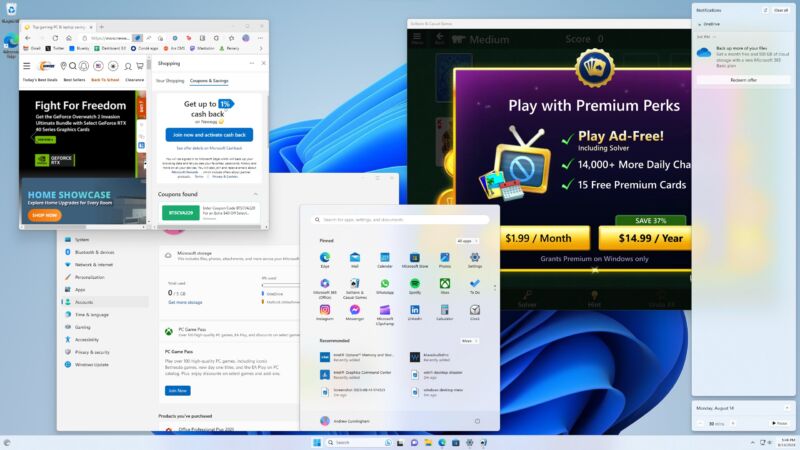
Windows 11 with a number of advertising pushes opened simultaneously

Enlarge / Users in the extended European Economic Area will soon be able to avoid most of the things that feel so exhausting about Windows 11. (credit: Andrew Cunningham)

Using Windows these days means putting up with many, many pitches to use and purchase other Microsoft products. Some are subtle, like the built-in Edge browser suggesting you use its “recommended settings” after each major update. Some are not so subtle, like testing a “quiz” that made some users explain why they’re trying to quit the OneDrive app.

Those living in the European Economic Area (EEA)—which includes the EU and adds Iceland, Liechtenstein, and Norway—will soon get the volume turned down on their Windows 11 systems. To meet the demands of the European Commission’s Digital Markets Act—slated to be enforced in March 2024—Microsoft must make its apps easier to uninstall, its default settings easier to change, and its attempts at steering people toward its services easier to avoid.

Microsoft writes in a blog post that many of these changes will be available in a preview update of Windows 11 (version 23H2) this month. Windows 10 will get similar changes “at a later date.” A couple of changes affect all Windows 10 and 11 users:

Read 4 remaining paragraphs | Comments


Source: Ars Technica – Europeans can soon strip Bing, Edge, other Microsoft cruft from Windows 11

Google Shopping Will Hallucinate AI Products and Then Find You Something Real to Buy

Here’s an AI tool you probably hadn’t considered. Google’s AI-powered Search Generative Experience (SGE) is getting a slew of updates this December, including a feature that lets you dream up a product out of thin air with artificial intelligence, and then search the web for something similar that exists in the real…

Read more…


Source: Gizmodo – Google Shopping Will Hallucinate AI Products and Then Find You Something Real to Buy

Listen to the seismic sounds as Iceland braces for likely volcanic eruption

Aerial view of the Reykjanes Peninsula in Iceland and its lava fields.

Enlarge / The Reykjanes Peninsula in Iceland is mostly a barren waste of lava fields. (credit: Vincent van Zeijst/CC BY 3.0)

Intensifying seismic activity these past few weeks along Iceland’s southwestern Reykjanes Peninsula—marked by tens of thousands of earthquakes, as many as 1,400 within one 24-hour period—has experts warning of a likely volcanic eruption at any time. While such activity is typically monitored by seismometers, seismologists at Northwestern University are also listening to the data collected by the region’s Global Seismographic Network station using an app they developed a few years ago called Earthtunes.

With the app, those earthquakes can sound like slamming doors or hail pelting a window or roof. “The activity is formidable, exciting, and scary,” said Suzan van der Lee, a Northwestern seismologist who co-developed Earthtunes. “Iceland did the right thing by evacuating residents in nearby Grindavik and the nearby Svartsengi geothermal power plant.”

Sonification of scientific data is an area of growing interest in many different fields. For instance, several years ago, a project called LHCSound built a library of the “sounds” of a top quark jet and the Higgs boson, among others. The project hoped to develop sonification as a technique for analyzing the data from particle collisions so that physicists could “detect” subatomic particles by ear. Other scientists have mapped the molecular structure of proteins in spider silk threads onto musical theory to produce the “sound” of silk in hopes of establishing a radical new way to create designer proteins. And there’s a free app for Android called the Amino Acid Synthesizer that enables users to create their own protein “compositions” from the sounds of amino acids.

Read 6 remaining paragraphs | Comments


Source: Ars Technica – Listen to the seismic sounds as Iceland braces for likely volcanic eruption

Hackers use a new SEC rule to snitch on the company they infiltrated

A hacking group deployed a surprising tactic after infiltrating a financial software company’s network. They reported the breach to the US Securities and Exchange Commission (SEC).

DataBreaches.net initially reported on the incident, which was conducted by ALPHV / BlackCat, a group known for breaching entities as diverse as MGM Resorts and Reddit. The hackers reportedly breached the servers of fintech company MeridianLink on November 7, stealing company data without encrypting it. However, when the business neglected to negotiate directly, the hackers increased the pressure by filing a report with the SEC.

They did so citing a new rule the SEC passed this summer, which requires companies falling victim to “material cybersecurity incidents” to report them to the agency within four business days.

However, the four-day requirement may not have taken effect yet. At least one official form claims the rule kicked in 90 days after the date of publication in the Federal Register (they appear to have been published on August 4, making that alleged effective date November 2) or December 18. But the Federal Register document says, “With respect to compliance with the incident disclosure requirements in Item 1.05 of Form 8–K and in Form 6–K [the part referring to the four-day requirement], all registrants other than smaller reporting companies must begin complying on December 18, 2023.” Adding to the confusion, Reuters reported in October that the rule takes effect on December 15.

Engadget reached out to the SEC to clarify whether the rule is active yet. We’ll update this article if we hear back.

MeridianLink told BleepingComputer that it quickly worked to contain the threat. “Based on our investigation to date, we have identified no evidence of unauthorized access to our production platforms, and the incident has caused minimal business interruption,” the company wrote. The company says it’s still trying to determine if any consumer personal information was breached, promising to notify affected parties if it was.

Whether the SEC has any teeth (or desire) to do anything about MeridianLink’s failure to report the incident in four business days, the rule could, ironically, serve as a new tool for cyber attackers. Rather than contacting customers or making calls to tighten the grip and pressure companies to comply with their demands, perhaps they can now simply rat them out to Uncle Sam.

This article originally appeared on Engadget at https://www.engadget.com/hackers-use-a-new-sec-rule-to-snitch-on-the-company-they-infiltrated-201242292.html?src=rss

Source: Engadget – Hackers use a new SEC rule to snitch on the company they infiltrated

Capacitor-based heat pumps see big boost in efficiency

Read 17 remaining paragraphs | Comments


Source: Ars Technica – Capacitor-based heat pumps see big boost in efficiency

Developers Can't Seem To Stop Exposing Credentials in Publicly Accessible Code

Despite more than a decade of reminding, prodding, and downright nagging, a surprising number of developers still can’t bring themselves to keep their code free of credentials that provide the keys to their kingdoms to anyone who takes the time to look for them. From a report: The lapse stems from immature coding practices in which developers embed cryptographic keys, security tokens, passwords, and other forms of credentials directly into the source code they write. The credentials make it easy for the underlying program to access databases or cloud services necessary for it to work as intended. […]

The number of studies published since following the revelations underscored just how common the practice had been and remained in the years immediately following Uber’s cautionary tale. Sadly, the negligence continues even now. Researchers from security firm GitGuardian this week reported finding almost 4,000 unique secrets stashed inside a total of 450,000 projects submitted to PyPI, the official code repository for the Python programming language. Nearly 3,000 projects contained at least one unique secret. Many secrets were leaked more than once, bringing the total number of exposed secrets to almost 57,000.

Read more of this story at Slashdot.


Source: Slashdot – Developers Can’t Seem To Stop Exposing Credentials in Publicly Accessible Code

Poor Things Puts a Shocking and Fantastic Spin on a Classic Tale

At its core, Poor Things is the relatively simple story of a woman growing up and finding herself. However, in the hands of director Yorgos Lanthimos (The Lobster, The Favourite), it tells that tale in the most fantastical, imaginative, disturbing, and hilarious way possible. Words that, in fact, also describe the…

Read more…


Source: Gizmodo – Poor Things Puts a Shocking and Fantastic Spin on a Classic Tale

Lucid's Gravity electric SUV will have a max range of 440 miles

Lucid’s Gravity all-electric SUV has been on our radar for a while now, since originally being introduced back in 2022. Now we have more details, including pricing, availability and those all-important range metrics. First, the bad news. This thing likely won’t ship until 2025, as production doesn’t officially ramp up until late 2024, as reported by Sustainable Mobility Solutions (SAE).

We already knew some details surrounding the EV, including the roomy three-row interior, but now we have range data. Lucid CEO Peter Rawlinson promises a range of at least 440 miles, so it looks like it could inch further than that once the Gravity hits the assembly line. The company has stated in the past that this EV would boast a “greater electric range than any SUV on the market today.”

So let’s look at some metrics. According to Kelly Blue Book, the Gravity will easily exceed this promise, as the current top-range EV SUV is the Fisker Ocean, with a max driving range of 350 miles per charge. As a matter of fact, if Lucid’s forthcoming SUV truly gets 440 miles per charge, that’ll place it near the top of the list for any electric vehicle, SUV or not. The only competition will be another Lucid automobile, as the Air Grand Touring sedan gets 516 miles per charge, according to MotorTrend.

Like the Air line, the Gravity is built on a 900-volt electrical architecture that supports DC fast-charging. The company says the forthcoming EV can go from 0 to 60 in 3.5 seconds, via its dual-motor setup, and boasts a payload capacity of 1,500 pounds with the ability to tow a further 6,000 pounds.

Beyond metrics, Lucid also lifted the veil on the interior of the SUV. The Gravity will boast a 34-inch OLED main display and an optional lower display, with multi-tasking available between the two. In other words, you can throw navigation on one screen and the media player on the other. These displays won’t get in the way of the dash cluster and will even offer gaming applications in the future, according to Derek Jenkins, senior vice president of design and brand at Lucid.

The steering wheel includes two touch controllers inspired by the Apple TV remote, as minute thumb movements select items from the infotainment screen and adjust dashboard display elements. Of course, this is a three-row vehicle, so there’s plenty of room for friends and family, if you’re into that kind of thing. It seats up to seven people.

As previously mentioned, the price should be around $80,000, though things could change before these cars hit showrooms in 2025.

This article originally appeared on Engadget at https://www.engadget.com/lucids-gravity-electric-suv-will-have-a-max-range-of-440-miles-193859560.html?src=rss

Source: Engadget – Lucid’s Gravity electric SUV will have a max range of 440 miles

Amazon's Echo Show 5 falls to a record low of $40 in a Black Friday deal

The Amazon Echo Show 5 smart display is on sale for $40 as part of an early Black Friday deal. This matches a record low price for the device and represents a savings of more than 50 percent, as the typical MSRP for the display is $90. The sale applies to various colorways, including white, charcoal and blue.

This discount is only for the device itself, so you’ll have to pay extra for accessories like a stand. The Echo Show 5 finds a lot of use as a smart home controller, so Amazon also sells bundles that ship with smart light bulbs, the Blink Mini security camera and an Alexa Emergency Assist subscription.

The Echo Show 5 easily made our list of the best smart displays in 2023 for a number of reasons. The diminutive 5.5-inch screen makes it easy to place just about anywhere in the home and allows it to double as a highly useful alarm clock. The ambient light sensor automatically adjusts the screen’s brightness so you can get some sleep and there’s a handy tap-to-snooze function. There’s even a sunrise alarm feature that slowly brightens the screen.

The smart home controls are handy if you have plenty of installed gadgets throughout the home. The Echo Show 5 is also a decent option for video calling, thanks to the integrated camera system. If the idea of an always-on smart display with a camera makes you feel a bit icky, it ships with a physical cover.

For those who balk at the relatively small 5.5-inch display size, Amazon is also selling the much larger Echo Show 10 for $160 as part of the same Black Friday deal. This represents a savings of $90.

Your Black Friday Shopping Guide: See all of Yahoo’s Black Friday coverage, here. Follow Engadget for Black Friday tech deals. Learn about Black Friday trends on In The Know. Hear from Autoblog’s experts on the best Black Friday deals for your car, garage, and home, and find Black Friday sales to shop on AOL, handpicked just for you.

This article originally appeared on Engadget at https://www.engadget.com/amazons-echo-show-5-falls-to-a-record-low-of-40-in-a-black-friday-deal-183059264.html?src=rss

Source: Engadget – Amazon’s Echo Show 5 falls to a record low of in a Black Friday deal

Prison phone company leaked 600K users’ data and didn’t notify them, FTC says

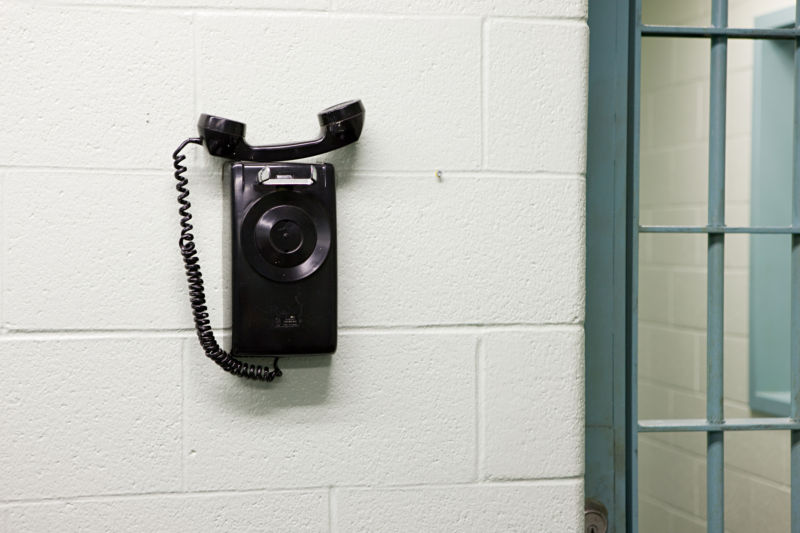
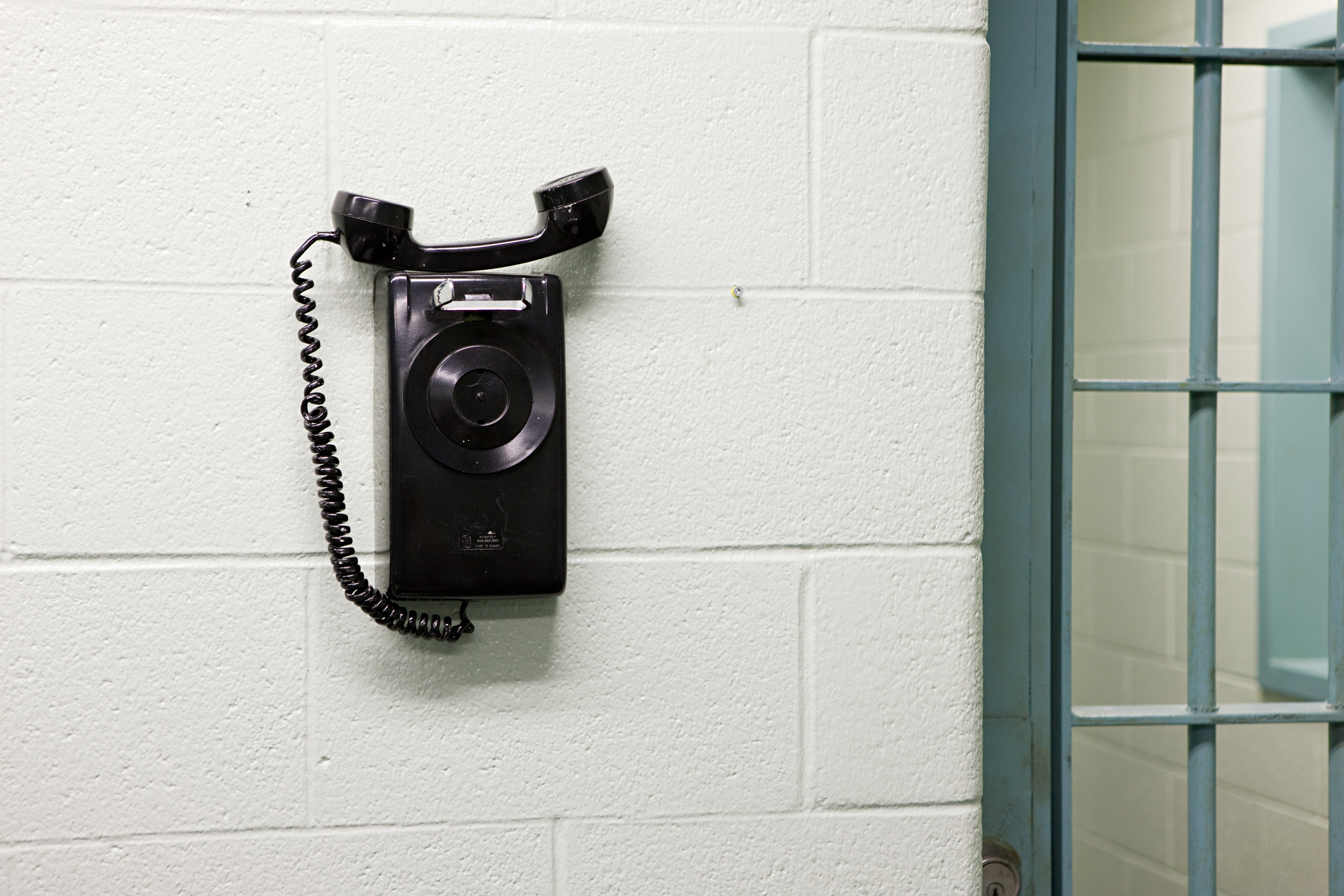
A telephone on a wall inside a prison.

Enlarge / A telephone in a prison. (credit: Getty Images | Image Source)

Prison phone company Global Tel*Link leaked the personal information of nearly 650,000 users and failed to notify most of the users that their personal data was exposed, the Federal Trade Commission said today. The company agreed to a settlement that requires it to change its security practices and offer free credit monitoring and identity protection to affected users, but the settlement doesn’t include a fine.

“Global Tel*Link and two of its subsidiaries failed to implement adequate security safeguards to protect personal information they collect from users of its services, which enabled bad actors to gain access to unencrypted personal information stored in the cloud and used for testing,” the FTC said.

Global Tel*Link has long been controversial because of the prices it charges for inmate-calling services. The company rebranded itself as ViaPath Technologies last year. The subsidiaries targeted in the FTC complaint are Telmate and TouchPay Holdings.

Read 13 remaining paragraphs | Comments


Source: Ars Technica – Prison phone company leaked 600K users’ data and didn’t notify them, FTC says

The Next iPhone Will Have an Easier Time Texting Android's Green Bubbles

Could it be? Is Apple finally relenting and letting Android users frolic in its walled garden? 9to5Mac reports that an Apple spokesperson has revealed that RCS support is on the docket for next year’s iPhone launch. That means more parity for Android users’ messages to iPhone wielders.

Read more…


Source: Gizmodo – The Next iPhone Will Have an Easier Time Texting Android’s Green Bubbles

Signal Reveals Its Operation Costs, Estimates $50 Million a Year In 2024

gaiageek writes: Of note, given the recent Slashdot article about Signal opening up to trying out usernames, is the $6 million annual cost of sending SMS messages for account verification, which certainly suggests that getting rid of phone number verification would be a significant cost-saving solution. Signal pays $14 million a year in infrastructure costs, for instance, including the price of servers, bandwidth, and storage. It uses about 20 petabytes per year of bandwidth, or 20 million gigabytes, to enable voice and video calling alone, which comes to $1.7 million a year. The biggest chunk of those infrastructure costs, fully $6 million annually, goes to telecom firms to pay for the SMS text messages Signal uses to send registration codes to verify new Signal accounts’ phone numbers.

Read more of this story at Slashdot.


Source: Slashdot – Signal Reveals Its Operation Costs, Estimates Million a Year In 2024

Apple iMac (2023) Review: One Foot in the Future and the Past

It’s been over two years since Apple released its all-in-one desktop after skipping the entire M2 generation of chips, leaving us wondering when the iMac would make its dramatic return. The iMac comes in seven fun colors, is powered by Apple’s fancy new M3, and even promises to make gaming on a Mac a thing.

Read more…


Source: Gizmodo – Apple iMac (2023) Review: One Foot in the Future and the Past

Google News is shutting down purchased magazine content, offering refunds

Google News is shutting down purchased magazine content, offering refunds

Enlarge (credit: Google / Ron Amadeo)

Google News is known to most people as a big pile of web links, but it actually hosts magazines, too. Before the days of the Internet, a “magazine” was a big bundle of paper full of articles you could get shipped to your door, sort of like if you printed out a website. For a time, you could pay cold, hard cash for a digital copy of a paper magazine through Google and then view that content through whatever the latest Google magazine/news app was.

Magazine content sales were shut down in 2020, though, and soon, Google’s magazine content will no longer be hosted online. The company announced on a support page that purchased content will be shut down starting December 18. You can see if you have purchased (or freebie) magazines at this link.

Let’s see if we can put on our “Google archeology” hats and figure out where this all came from. Google started selling magazines in 2012 with “Google Play Magazines.” You could buy individual magazine issues for around $8 or subscribe yearly for $11. These were all hosted by Google, with access available through the app and web. One year later, in 2013, Play Magazines was merged with another Google news app, Google Currents, to create Google Play Newsstand. Newsstand featured paid magazines and free website content. Google spent 2013–2016 rolling out purchasing support across more and more countries.

Read 4 remaining paragraphs | Comments


Source: Ars Technica – Google News is shutting down purchased magazine content, offering refunds

Amazon will start selling Hyundais through its website next year

Next year, Amazon will let you add a whole ass car to your shopping cart. The company announced today that it will launch vehicle sales in the US next year. The first cars available to purchase will be from Hyundai, as part of an Amazon partnership with the company, but more brands will presumably be added.

Buying a car on Amazon doesn’t seem to be super different from buying pretty much anything else on the website. According to an Amazon blog post, you’ll be able to search for vehicles in your area based on model, trim, color, and features. Once you’ve selected a car, you can choose to pick it up or have it delivered to a local dealership, and then check out using the same standard payment or financing options you normally use on the site. Do Prime members get free shipping? I sure hope so.

Hyundai is also building in Alexa into its cars starting in 2025 as part of its partnership with Amazon. This will let you ask Alexa to not only do the usual Alexa things like playing music and setting timers, but also ask for directions, traffic updates and weather reports, and control the car’s media player and navigation system.

This article originally appeared on Engadget at https://www.engadget.com/amazon-will-start-selling-hyundais-through-its-website-next-year-191128589.html?src=rss

Source: Engadget – Amazon will start selling Hyundais through its website next year