Sonos Black Friday deals discount the Era 100 smart speaker to $199

If you’re in the market for a premium smart speaker that sounds better than sub-$100 options, this Sonos Black Friday deal may be what you’re looking for. The company is taking $50 off the Sonos Era 100, which offers improved bass and clarity over its predecessor, the Sonos One. In addition, the company has notable discounts on the Sonos Ray soundbar and Sonos Roam portable speaker, letting you save on a variety of home audio products thanks to early Black Friday sales.

Usually $250, the Sonos Era 100 is one of Engadget’s picks for the best smart speakers in 2023. Engadget’s Nathan Ingraham gave the device a review score of 88, writing, “The $250 Era 100 is a complete redesign, inside and out, and the end result is a worthy upgrade and a very versatile speaker.”

The Sonos Era 100’s audio is a cut above budget choices like the Echo Dot and Nest Mini, and it gives you the option of Alexa or the Sonos assistant for voice control. If you pick up two speakers, you can turn them into a stereo pair that fills your room with rich, immersive audio. The WiFi-connected speakers even have Bluetooth as a secondary option.

If you’re looking for a soundbar this holiday season, the Sonos Ray may also be of interest. Engadget found it to have a solid balance of price and performance with its clear dialogue, rumbling bass and solid stereo presence. Usually $279, Sonos’ Black Friday deal brings the soundbar down to $223, making it a much more attractive buy for enhancing your TV’s audio.

Photo of the Sonos Roam (grayish-white) sitting on a wooden outdoor ledge with old buildings in the distance.
Photo by Nathan Ingraham / Engadget

Meanwhile, the Sonos Roam lets you take your music with you. Sitting at over six and a half inches tall and weighing less than a pound, its sound quality transcends the simple Bluetooth speakers it could easily be mistaken for. Holding down a button is all it takes to switch from its standard WiFi to Bluetooth when taking the little sound machine to a party or outdoor excursion. Speaking of the latter, the speaker is rated IP67, meaning it can withstand sitting in three feet of water for 30 minutes. When reviewing it for Engadget, Ingraham stuck it in a bucket of water and tossed it across the room; it kept playing without skipping a beat. The speaker even adjusts its audio depending on whether it’s sitting upright or horizontally.

Sonos’ sale runs from today through November 27 (Cyber Monday).

Your Black Friday Shopping Guide: See all of Yahoo’s Black Friday coverage, here. Follow Engadget for Black Friday tech deals. Learn about Black Friday trends on In The Know. Hear from Autoblog’s experts on the best Black Friday deals for your car, garage, and home, and find Black Friday sales to shop on AOL, handpicked just for you.

This article originally appeared on Engadget at https://www.engadget.com/sonos-black-friday-deals-discount-the-era-100-smart-speaker-to-199-140002193.html?src=rss

Source: Engadget – Sonos Black Friday deals discount the Era 100 smart speaker to 9

Daily Telescope: Traveling into the heart of the Heart Nebula

The heart of the Heart Nebula.

Enlarge / The heart of the Heart Nebula.

Welcome to the Daily Telescope. There is a little too much darkness in this world and not enough light, a little too much pseudoscience and not enough science. We’ll let other publications offer you a daily horoscope. At Ars Technica, we’re going to take a different route, finding inspiration from very real images of a universe that is filled with stars and wonder.

Good morning. It’s November 17, and today’s photo takes us into the Cassiopeia constellation, where we find the Heart Nebula 7,500 light-years away.

This is a fairly bright nebula, discovered nearly 240 years ago by astronomer William Herschel. Because of its brilliant colors, the Heart Nebula is an attractive target for amateur astronomers.

Read 5 remaining paragraphs | Comments


Source: Ars Technica – Daily Telescope: Traveling into the heart of the Heart Nebula

Old Manifest V2 Chrome Extensions Will Be Disabled In 2024

An anonymous reader quotes a report from 9to5Google: With Manifest V3, Google wants to make extensions safer by prioritizing privacy, but was initially criticized for the impact to ad blockers. The Chrome team has since added new features in response and is ready to disable old Manifest V2 extensions in 2024. Google will begin automatically disabling Manifest V2 extensions in Chrome Dev, Canary, and Beta as early as June 2024 (Chrome 127+). Similarly, Chrome Web Store installs will no longer be possible. Developers are encouraged to update and migrate before then.

This will gradually roll out, with Google taking into account user feedback and data to “make sure Chrome users understand the change and what actions they can take to find alternative, up-to-date extensions.” [Google said in a statement:] “We expect it will take at least a month to observe and stabilize the changes in pre-stable before expanding the rollout to stable channel Chrome, where it will also gradually roll out over time. The exact timing may vary depending on the data collected, and during this time, we will keep you informed about our progress.” This was originally schedule to take place in 2023, but Google spent this year closing the functionality gap between Manifest V2 and V3 […].

Read more of this story at Slashdot.


Source: Slashdot – Old Manifest V2 Chrome Extensions Will Be Disabled In 2024

Samsung's refreshed Smart Monitor M8 falls to a new low in early Black Friday deal

Samsung’s Amazon store is selling the 2023 version of its Smart Monitor M8 at a discount, and it’s the lowest we’ve seen the device go for on the website. You can get the smart TV-monitor hybrid for $400, a full $300 less than its retail price and $100 less than its list price during October’s Prime Day sale. Absolutely not bad for a model that only became available for purchase in June this year. The new Smart Monitor M8 is an updated version of the device that launched at CES 2022. It’s slimmer than its predecessor and can rotate to portrait mode for when you want to see the entirety of long documents onscreen. 

The 32-inch smart monitor comes with built-in smart TV experience, complete with streaming apps such as Netflix and YouTube. You can enjoy your movies and shows in 4K and 4K HDR for anything that supports it, but it’s still very much a monitor that you can do work on. In fact, its Workmode will allow you to remotely access another PC and use Microsoft 365 programs. You can also use the monitor as an internet-of-things hub to control your smart home devices. That means you can change the lighting around your home or adjust the temperature right from the monitor, as long as you connect your smart home products to Samsung’s SmartThings. 

In addition, the model comes with a SlimFit camera that you can use for video calls and conferences. You can easily use the camera’s cover for privacy, or even detach it from the monitor if you’re not going to use it anytime soon. The Smart Monitor M8 is on sale for $400 as an early Black Friday deal, so it’ll most likely go back to a higher price after sales for the season are over. 

Your Black Friday Shopping Guide: See all of Yahoo’s Black Friday coverage, here. Follow Engadget for Black Friday tech deals. Learn about Black Friday trends on In The Know. Hear from Autoblog’s experts on the best Black Friday deals for your car, garage, and home, and find Black Friday sales to shop on AOL, handpicked just for you.

Follow @EngadgetDeals on Twitter and subscribe to the Engadget Deals newsletter for the latest tech deals and buying advice.

This article originally appeared on Engadget at https://www.engadget.com/samsungs-refreshed-smart-monitor-m8-falls-to-a-new-low-in-early-black-friday-deal-123505651.html?src=rss

Source: Engadget – Samsung’s refreshed Smart Monitor M8 falls to a new low in early Black Friday deal

The Morning After: Apple will adopt RCS in 2024

Apple has announced it will begin supporting the RCS messaging standard at some point next year. RCS, or Rich Communication Services, was developed by the mobile industry as an upgrade on SMS and MMS. But Apple has been resistant to adopt it both because it prefers its home-grown iMessage platform, and because it’s not secure by default. It doesn’t help that Google has used RCS as a cudgel in its own text-message–bubble-color culture war with the iPhone maker.

In a statement, presumably typed through gritted teeth, Apple said RCS would offer better interoperability compared to SMS and MMS. But added that iMessage, which, unlike RCS, is end-to-end encrypted by default, remains the “best and most secure messaging experience.” It’s likely the change was, in part, motivated by the European Union, which has been turning its attention to the ways the technology industry makes life harder for consumers.

— Dan Cooper

​​You can get these reports delivered daily direct to your inbox. Subscribe right here!​​

The biggest stories you might have missed

The best home theater gifts

The best wireless headphones

Google’s AI-powered search tool can help tackle your holiday shopping

The best gifts for book lovers

Lucid’s Gravity electric SUV will have a max range of 440 miles

Microsoft’s Copilot AI is officially coming to Windows 10

Amazon will start selling Hyundais next year

You can click and collect (from your local dealership).

Promotional image featuring a white, featureless office block so favored by bland corporate types, in front of which are a series of car-sized Amazon packages.
Amazon

It’s hard to tell if there’s magic in buying a car, or if the dealership just puts on a show to make you think there is. We’ll find out for ourselves next year when Amazon enables direct car sales on its platform. The first automaker to sign up is Hyundai, who is, in return, adding Alexa to its 2025-era vehicles.

Continue Reading.

YouTube’s first AI-generated music tools can clone artist voices and turn hums into melodies

John Legend and Charli XCX will let you use their vocal stylings.

YouTube’s newest feature uses an AI to cook up 30-second backing tracks using the voices of high-profile artists. With Dream Track, users specify a general idea for the system to knock out music and lyrics in the style of a selected star. That includes Charli XCX and John Legend, who have both signed up to lend their simulated pipes to your next short clip.

Continue Reading.

Unity launches a suite of AI tools intended to simplify game creation

Unity Muse costs $30 a month.

Unity is now making its suite of AI-enhanced game development tools available to everyone for $30 a month. It’s designed to take a lot of the hard work out of making a new title, by automating the coding process. In the future, you can expect to see tools to create game graphics, set NPC behaviors and animate characters, which could be a very big deal indeed.

Continue Reading.

Hackers use a new SEC rule to snitch on the company they infiltrated

Who’d have thought?

Earlier this year, the SEC mandated companies had four days to notify regulators if they suffer a material cybersecurity breach. So, when hackers accessed fintech company MeridianLink and saw the SEC hadn’t been notified, they took matters into their own hands. Reporting was a way to force the company to negotiate, but it’s still wild to think they reported their own hack to regulators.

Continue Reading.

Kia’s latest EV concepts go big on geometrics and cabin vibes

Retro-futurism never looked so boxy.

Image of a Kia concept vehicle, a light green SUV on a light green background.
Kia

Kia’s concept vehicles merit attention because so many features wind up carrying over to the production model. So, if you’re curious about what a next-generation Kia will look like, take a gander at this gallery. Hope you love boxy shapes and straight lines.

Continue Reading.

This article originally appeared on Engadget at https://www.engadget.com/the-morning-after-apple-will-adopt-rcs-in-2024-121529849.html?src=rss

Source: Engadget – The Morning After: Apple will adopt RCS in 2024

Microsoft Copilot: Enabling the Disabled and Supercharging Kids

This week I’m at Microsoft Ignite. There was a video at the end of the second keynote that spoke to how Copilot could be used by folks who were severely disabled to help make them productive. The video featured a guy in Ukraine where the massive number of civilians who have been critically injured need technologies to help their now heavily injured and disabled population return to work.  

This made me think about how this technology could change education and result in kids who enjoyed school more and could develop skills that would put them in high demand when they graduate regardless of the industry they go into.  

This technology is a massive game changer, and the operational sessions were standing-room-only as developers and service providers race to understand and learn to deploy it effectively.  

Helping the Severely Disabled

If you watch the video I linked to above, you’ll see a guy who would have been severely limited in his ability to earn a living as a developer. He clearly knew the technology and had the mental acuity to do an excellent job, but he was so physically compromised that his normal typing speed was reduced to a few letters a minute. Even a short utility program that might take someone minutes to create would likely take him hours or even days. He was also speech impaired, so simple voice-to-text technology wouldn’t work, either. 

Copilot is a Large Language Model (LLM) that is now being applied across Microsoft’s product set, ranging from productivity and communications tools to coding tools. It is an increasingly advanced AI that can determine intent and then execute against that intent automatically.  

As a result, it was able to not only mitigate the disabled developer’s disability but provide capabilities that a developer without a disability not using Copilot wouldn’t normally have in terms of immediate error checking and code optimization. 

In fact, as this technology advances, it may allow extremely disabled people whose minds are still intact to outperform any other developers who don’t have access to this technology. 

This is huge because most of us don’t want to be a burden on our families. If you were born with a disability or were disabled in a war zone, you’d tend to question whether you should even be alive. Your existence, which was already painful, would lack meaning and, depending on your caregiver, would be incredibly lonely. 

With this technology, the disabled can not only work effectively and mitigate their inability to work but be able to better communicate and collaborate with others and gain what we all often take for granted: a purpose in life, not to mention that society gets another productive member rather than a lifelong dependent. The disabled person is better off, their families are better off and society is better off as a result.  

Given Copilot is being applied to every industry, its impact on the victims in Ukraine would be huge, not only helping them have meaningful lives but helping the country post-war by shifting dependents that were created into productive members who can help rebuild the country and its economy. In fact, once that war is over, I expect Ukraine will be one of the leading technological countries with expertise in disaster recovery and low-cost autonomous weapons. Like Japan after World War II, Ukraine could become far more capable than it was before the war.

Kids

As I watched the video, it occurred to me that kids are often far more creative and imaginative than adults are, but they lack the skills needed to create the art, fill out the stories, and communicate the concepts that their less restricted minds might otherwise create. A child raised with a tool like Copilot will be capable of creating things that an adult might never think of because, as we age, our imaginations become more restricted and our fear of failure more pronounced. 

Think of kids creating programming for other kids, creating art that isn’t yet corrupted by the environment and coming up with ideas and concepts that people believe are impossible but aren’t. And as they advance with AI, once they become adults, they’ll have a depth of understanding regarding how to use AI that should eclipse what anyone from a prior, non-AI enabled generation might be able to do. 

It would be the difference between someone that started dancing or playing an instrument at an early age and someone that learned later in life, but their instrument will be AI. They’ll lack the fear of using something new because, to them, it has always existed. What they create as kids and adults will challenge our current limitations and make it far less likely they’ll boomerang back home once they become adults.  

Can you imagine what an AI Savant would be worth in an AI-driven world? And using AI is a lot of fun. It engages the mind and sets the child up for a far more successful and lucrative future.  

Wrapping Up:

When I came to Microsoft Ignite, I knew Copilot was going to be a game changer. But seeing that developer in Ukraine made me realize it would be far more than that for the severely disabled who are unable to work or even communicate. Applied broadly, this could be a huge benefit to our disabled soldiers, those born with severe defects, or those who have been injured in accidents and might be looking at a depressing and unproductive future. And we are still at the beginning of this AI wave. Imagine what the world will be like in 5 to 10 years when this technology begins to approach its full potential. The world is going to be very different with the firms and countries that have embraced this technology rapidly outpacing those that do not.   

AI will make us better, faster and much more productive, and make a massive difference in quality of life. That alone would change the world for the better, raising voices and imaginations that are currently unheard to true powers for positive change.  


Source: TG Daily – Microsoft Copilot: Enabling the Disabled and Supercharging Kids

Judge rejects X's attempt nullify its FTC privacy settlement

In May 2022, just months before Elon Musk acquired Twitter (now X), the Federal Trade Commission (FTC) hit the platform with a $150 million fine and consent decree that imposed stipulations for safeguarding users’ personal data. The ruling was imposed after the FTC found that Twitter had violated a previous consent decree by inappropriately sharing user phone numbers and email addresses with advertisers.

After acquiring Twitter, Elon Musk went to court in an attempt to overturn that consent decree, arguing that the FTC had increased scrutiny on X and pressured a third-party assessor to find fault with its security practices. In a post on X at the time, Musk called the FTC’s actions “a shameful case of weaponization of a government agency for political purposes and suppression of the truth.”

However, a federal judge just rejected that motion, ruling that his court lacked the authority to block the FTC’s court order, while also blocking Musk’s request to avoid a deposition that’s part of a separate investigation, The Washington Post reported. In other words, X must still adhere to the strict privacy reporting standards imposed by the FTC last year. 

The judge listed other issues with X’s argument, noting that the FTC had good reason to increase scrutiny on X after Musk took over. “The government says this increase in investigative activity should not be surprising because Musk directed at least five rounds of terminations, layoffs or other reductions in X Corp.’s workforce, which affected the security, governance, risk and compliance team,” he wrote in the ruling. 

He added that the third-party assessor said he faced steady delays due to executive turnover at X. Finally, the judge ruled that Musk can’t avoid being deposed by the FTC, as “the government argues that the major changes to the company appear to have been initiated by Musk himself.” 

Musk’s FTC problems started shortly after his acquisition of X, when key executives on Twitter’s privacy and security teams departed. Still, Musk seemed willing to comply with the rules, telling employees at the time that “Twitter will do whatever it takes to adhere to both the letter and spirit of the FTC consent decree.” 

Back in March, though, the FTC stepped up its probe into Musk’s actions in an effort to get more information about the company’s handling of layoffs, X Premium subscriptions, the “Twitter Files” and other issues. 

Meanwhile, the platform can’t seem to stay out of the news, as IBM recently said it would pull advertising on X after discovering its ads were being placed next to pro-Nazi content. Musk himself faced criticism after he appeared to endorse an antisemitic post on the platform. 

This article originally appeared on Engadget at https://www.engadget.com/judge-rejects-attempt-by-x-to-nullify-ftc-privacy-settlement-111536396.html?src=rss

Source: Engadget – Judge rejects X’s attempt nullify its FTC privacy settlement

One-Third of US Newspapers As of 2005 Will Be Gone By 2024

Sara Fischer reports via Axios: The decline of local newspapers accelerated so rapidly in 2023 that analysts now believe the U.S. will have lost one-third of the newspapers it had as of 2005 by the end of next year — rather than in 2025, as originally predicted. There are roughly 6,000 newspapers left in America, down from 8,891 in 2005, according to a new report from Northwestern’s Medill School of Journalism, Media, Integrated Marketing Communications. “We’re almost at a one-third loss now and we’ll certainly hit that pace next year,” said the report’s co-authors — Penelope Muse Abernathy, a visiting professor at Medill, and Sarah Stonbely, director of Medill’s State of Local News Project. Of the papers that still survive, a majority (4,790) publish weekly, not daily.

Over the past two years, newspapers continued to vanish at an average rate of more than two per week, leaving 204 U.S. counties, or 6.4%, without any local news outlet. Roughly half of all U.S. counties (1,562) are now only served with one remaining local news source — typically a weekly newspaper. Abernathy and Stonbely estimate that 228 of those 1,562 counties, or roughly 7% of all U.S. counties, are at high risk of losing their last remaining local news outlet.

There isn’t enough investment in digital news replacements to stop the spread of news deserts in America. The footprint for alternative local news outlets is tiny and they are mostly clustered around metro areas that already have some local coverage. The report estimates that — for outlets focused on state and local news — there are roughly 550 digital-only news sites, 720 ethnic media organizations and 215 public broadcasting stations in America, compared to 6,000 newspapers. The authors argue that the dynamic between those with access to quality local news and those who don’t “poses a far-reaching crisis for our democracy as it simultaneously struggles with political polarization, a lack of civic engagement and the proliferation of misinformation and information online.”

Read more of this story at Slashdot.


Source: Slashdot – One-Third of US Newspapers As of 2005 Will Be Gone By 2024

YouTube will now let breastfeeding and twerking videos be monetized

YouTube videos that feature breastfeeding content can now earn money on the platform, so long as they meet a certain set of criteria. The website has updated its policy to allow monetization of breastfeeding videos that show the mother’s areola, as well as those wherein the person in the video is demonstrating how to use a breast pump with nipples visible. Those videos, however, must include contextual reference to breastfeeding and must include a child in the scene. Otherwise, they still won’t be able to earn money from ads. 

Breastfeeding videos with exposed nipples previously couldn’t earn money on the website. A spokesperson told TechCrunch that YouTube reconsidered after getting feedback on how helpful they are for those navigating that particular stage of parenthood. 

In addition, YouTube has also changed its guidelines when it comes to what it calls “non-sexually graphic dancing.” Creators can now earn money for videos with dance moves such as twerking and grinding, unless those videos were made to deliberately focus on the dancers’ “extreme minimal clothing” or on their breasts, butt and genitalia. They also won’t be earning any money if they use moves that mimic sexual acts, such as grabbing a partner’s genitalia while dancing. Showing “fleeting minimal clothing” is fine, though, as well as “fleeting caresses of sexual body parts” and doing moves that mimic or simulate sexual acts in a professional setting, such as a dance studio. TechCrunch says the website is now reviewing existing content that could be eligible for monetization under the new rules and will switch on their ads if they’d actually adhered to its advertiser-friendly content guidelines. 

This article originally appeared on Engadget at https://www.engadget.com/youtube-will-now-let-breastfeeding-and-twerking-videos-be-monetized-084535300.html?src=rss

Source: Engadget – YouTube will now let breastfeeding and twerking videos be monetized

Scientists Use Raspberry Pi Tech To Protect NASA Telescope Data

Richard Speed reports via The Register: Scientists have revealed how data from a NASA telescope was secured thanks to creative thinking and a batch of Raspberry Pi computers. The telescope was the Super Pressure Balloon Imaging Telescope (SuperBIT), launched on April 16, 2023, from Wanaka Airport in New Zealand. The telescope was raised to approximately 33km in altitude by NASA’s 532,000-cubic-meter (18.8-million-cubic-foot) balloon and, above circa 99.5 percent of the Earth’s atmosphere, it spent over a month circumnavigating the globe and acquiring observations of astronomical objects. The plan had been for the payload to transmit its data to the ground using SpaceX’s Starlink constellation and the US Tracking and Data Relay Satellite System (TDRSS). However, the Starlink connection went down soon after launch, on May 1, and the TDRSS connection became unstable on May 24. The boffins decided to attempt a landing on May 25 due to poor communications and concerns the balloon might be pulled away from further land crossings by weather.

The telescope itself was destroyed during the landing; it was dragged along the ground for 3km by a parachute that failed to detach, leaving a trail of debris in its wake. Miraculously, though, SuperBIT’s solid-state drive was recovered intact. However, other than as a reference, its data was not needed thanks to the inclusion of Raspberry Pi-powered hardware in the form of four Data Recovery System (DRS) capsules. Each capsule included a Raspberry Pi 3B and 5TB of solid-state storage. A parachute, a Global Navigation Satellite System (GNSS) receiver, and an Iridium short-burst data transceiver were also included so the hardware could report its location to the recovery team. The capsules were connected to the main payload via Ethernet, and 24V DC was also available.

The plan had been to release the first DRS capsule on day 40, and then another every 20 days after that, whenever SuperBIT passed over land. However, when it became clear that SuperBIT would have to come down on May 25, it was decided to drop two DRS capsules over Argentina’s Santa Cruz Province. Both of the DRS capsules released were recovered from their reported locations — a curious cougar apparently nosed around one of them without causing damage — and the data was fully intact. Of the unreleased DRS capsules, one failed for unknown reasons at launch — the team speculated that perhaps a cable came loose — but the other also contained an intact data set.

Read more of this story at Slashdot.


Source: Slashdot – Scientists Use Raspberry Pi Tech To Protect NASA Telescope Data

Could AI Eliminate Bias In Recruitment – Or Make It Worse?

What happens when human resources is no longer run by humans? We may soon find out. Artificial intelligence (AI) tools have been creeping into our working lives for the past few decades via process automation, data analysis and virtual chatbots. But it wasn’t until ChatGPT entered the market in 2022 that questions really started being asked about the future of mankind’s involvement in long-standing business activities — recruitment included.

AI models are now widely leveraged to carry out duties like copywriting and coding. But could they really find their way into hiring practices? AI has been touted to streamline sifting and increase interviewing efficiency — but the jury’s out on whether these intelligent tools could eliminate bias in recruiting or exacerbate it further.

Here, we’ll explore some of the challenges surrounding AI and its implications for recruitment.

What is bias in recruitment?

Bias in recruitment refers to unfair and prejudiced attitudes or preferences that influence hiring decisions. These biases can be conscious or unconscious — they are generally based on a candidate’s individual characteristics, such as race, gender, age, ethnicity, disability, or sexuality.

They can also manifest as ‘affinity bias’, the tendency to favour people with similar interests, backgrounds and experiences as us.

It’s widely understood that all people are affected by some form of unconscious bias. For example, we might refer to associations and stereotypes to ‘fill in the gaps’ when trying to get to know somebody new, or treat them more kindly if we see similarities to ourselves in them.

However, this can have detrimental effects for hiring practices.

Why is bias in recruitment an issue?

Bias in recruitment has a number of consequences. It can lead to the unfair exclusion of qualified candidates, reinforcement of harmful stereotypes, and limitations on workplace diversity.

And this is a problem. Diversity consultants EW Group explain that “workforce diversity has a measurable effect on business performance”, on account that “diverse teams are more innovative, more productive and perform better in problem-solving”. As a result, many organisations are striving to promote fair and inclusive hiring practices for better business as well as ethics.

Some companies aim to identify and mitigate recruitment bias through standardised processes, diverse interview panels, and dedicated recruitment and selection training.

How could AI help reduce bias in recruitment?

According to a 2022 study, 65% of recruiters already use AI in the hiring process. But how is it being implemented?

Advocates claim that AI can reduce bias in recruitment by introducing objectivity and consistency into candidate screening. Talent acquisition platform Jobylon posits that “AI is able to screen candidates objectively based on factors such as qualifications and experience without relying on subjective factors such as age, gender, and race” — while human recruiters are inherently influenced by these.

It’s also suggested that AI could help craft unbiased job descriptions by identifying and suggesting neutral language to use.

By minimising human intervention and relying on data-driven decision-making, AI may have the potential to reduce bias and precipitate more equitable hiring outcomes for organisations.

What are the risks of leveraging AI in recruitment?

But in spite of the prospective benefits, AI also carries inherent risks, including the potential to exacerbate biases.

One concern is that AI algorithms may ‘inherit’ biases when they are trained with historical data. If previous hiring decisions were skewed against specific characteristics, AI systems trained on this data may inadvertently perpetuate those same biases.

For example, if women have been historically underrepresented in a company’s workforce, the AI system trained on previous hiring data may lean in favour of men who resemble the existing workforce, further marginalising women.

In one study, researchers from Cambridge University argued that leveraging AI to reduce recruitment bias is counter-productive. In a statement to the BBC, Dr Kerry Mackereth explained that “tools can’t be trained to only identify job-related characteristics and strip out gender and race from the hiring process, because the kinds of attributes we think are essential for being a good employee are inherently bound up with gender and race”.

Additionally, AI algorithms can inadvertently identify proxy variables correlated with certain characteristics — for example, a postcode or school attended to indicate socioeconomic class. This means they could indirectly introduce biases into decision-making — even in ways that human hiring managers don’t.

The takeaway

There’s no doubt about it, artificial intelligence is here to stay — and it certainly has useful applications in the recruitment process. However, it’s crucial that it doesn’t go unchecked by a human. Ultimately, AI’s effectiveness in eliminating bias depends on the quality and diversity of the data it is trained on, as well as the ongoing monitoring by host organisations to ensure fairness.

When leveraging AI, HR teams should be prepared to regularly update training data and employ techniques to de-bias algorithms. Only then can they ensure that AI truly contributes to fair and inclusive recruitment processes, rather than reinforcing existing biases.

Written by Adam Eaton


Source: TG Daily – Could AI Eliminate Bias In Recruitment – Or Make It Worse?

Qualcomm announces Snapdragon 7 Gen 3 mobile chipset with AI acceleration

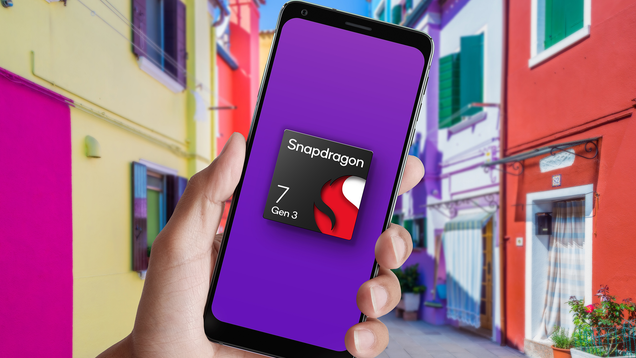
Qualcomm just unveiled the latest mobile chipset to join its armada, the Snapdragon 7 Gen 3. Obviously, this is a refresh of the mid-range Snapdragon 7 Gen 2 and brings some new features to the table. We’ve long known that Qualcomm chips were about to get on-device AI integration, and the Snapdragon 7 Gen 3 is no exception.

Nearly every aspect of this chip seems to have been designed with artificial intelligence in mind, with Qualcomm saying that the components “deliver across-the-board advancements to ignite on-device AI.” This should significantly speed up generative AI applications, with advertised benchmarks of just one second to create Stable Diffusion images from a text prompt.

Of course, a mobile CPU is more than just AI, despite what marketing wants you to believe, and the 7 Gen 3 seems powerful for a mid-range chipset. It boasts 2.63GHz peak CPU speeds, a 50 percent bump in GPU performance compared to the previous gen and “incredible power efficiency” that should ease the strain placed on your phone’s battery. Qualcomm also boasts that the Snapdragon 7 Gen 3 will help unlock “extraordinary camera capabilities” and allow for increased 5G integration.

Mobile chipsets are only as good as the phones they power, so Qualcomm has announced partnerships with OEMs like Honor and Vive. The company says there will be an announcement later this month to officially unveil the first smartphone that uses the Snapdragon 7 Gen 3. Maybe it’ll show up in the just-announced Honor Magic 6, which also boasts a built-in LLM.

This article originally appeared on Engadget at https://www.engadget.com/qualcomm-announces-snapdragon-7-gen-3-mobile-chipset-with-ai-acceleration-063019422.html?src=rss

Source: Engadget – Qualcomm announces Snapdragon 7 Gen 3 mobile chipset with AI acceleration

Qualcomm's Snapdragon 7 Gen 3 Doubles Down on AI for Android's Mid-Range Devices

AI is the name of the game for this year’s chips, particularly for Qualcomm’s mobile processors. The chipmaker has announced the Snapdragon 7 Gen 3 processor for mid-range Android devices with promises of improved AI performance.

Read more…


Source: Gizmodo – Qualcomm’s Snapdragon 7 Gen 3 Doubles Down on AI for Android’s Mid-Range Devices

Bluesky hits 2 million users and will soon release a public web interface

Bluesky has just crossed 2 million users a year after the service’s first ever post was created. While that’s nowhere near the numbers Threads has already reached, it’s still a big accomplishment for the X rival that only opened the app to users in February and still requires an invite for access. Bluesky hit 1 million users merely a couple of months ago, in September, which could mean that the platform has been sending out more invites recently. In its post announcing the milestone, the Bluesky team has also revealed that it’s launching a public web interface around the end of November. 

The interface will allow anybody, even those without an account, to view posts on the platform. Its launch could make more potential users aware about the service’s existence, and Bluesky believes making its posts more accessible “will be especially useful for real-time commentary and breaking news.” In the long run, it could make the service one of people’s go-to social networks for news in the same way X users rely on the website to read about current events. 

And for those waiting for Bluesky to become a more open platform like Mastodon, the team says federation is “timelined for early next year if development continues as planned.” To become a federated or a decentralized and distributed social network, the team is currently developing the AT Protocol, which will give users the power to migrate both their identities and their content from one personal data server to another. “This is one of the core features of Bluesky that makes it ‘billionaire-proof,’ — you’ll always have the freedom to choose (and to exit) instead of being held to the whims of private companies or black box algorithms,” the announcement post reads. 

This article originally appeared on Engadget at https://www.engadget.com/bluesky-hits-2-million-users-and-will-soon-release-a-public-web-interface-062757340.html?src=rss

Source: Engadget – Bluesky hits 2 million users and will soon release a public web interface

'Make It Real' AI Prototype Turns Drawings Into Working Software

An anonymous reader quotes a report from Ars Technica: On Wednesday, a collaborative whiteboard app maker called “tldraw” made waves online by releasing a prototype of a feature called “Make it Real” that lets users draw an image of software and bring it to life using AI. The feature uses OpenAI’s GPT-4V API to visually interpret a vector drawing into functioning Tailwind CSS and JavaScript web code that can replicate user interfaces or even create simple implementations of games like Breakout. “I think I need to go lie down,” posted designer Kevin Cannon at the start of a viral X thread that featured the creation of functioning sliders that rotate objects on screen, an interface for changing object colors, and a working game of tic-tac-toe. Soon, others followed with demonstrations of drawing a clone of Breakout, creating a working dial clock that ticks, drawing the snake game, making a Pong game, interpreting a visual state chart, and much more.

Tldraw, developed by Steve Ruiz in London, is an open source collaborative whiteboard tool. It offers a basic infinite canvas for drawing, text, and media without requiring a login. Launched in 2021, the project received $2.7 million in seed funding and is supported by GitHub sponsors. When The GPT-4V API launched recently, Ruiz integrated a design prototype called “draw-a-ui” created by Sawyer Hood to bring the AI-powered functionality into tldraw. GPT-4V is a version of OpenAI’s large language model that can interpret visual images and use them as prompts. As AI expert Simon Willison explains on X, Make it Real works by “generating a base64 encoded PNG of the drawn components, then passing that to GPT-4 Vision” with a system prompt and instructions to turn the image into a file using Tailwind. You can experiment with a live demo of Make It Real online. However, running it requires providing an API key from OpenAI, which is a security risk.

Read more of this story at Slashdot.


Source: Slashdot – ‘Make It Real’ AI Prototype Turns Drawings Into Working Software

MediaTek Partners With Meta To Develop Chips For AR Smart Glasses

During MediaTek’s 2023 summit, MediaTek executive Vince Hu announced a new partnership with Meta that would allow it to develop smart glasses capable of augmented reality or mixed reality experiences. 9to5Google reports: As the current generation exists, the Ray-Ban Meta glasses feature a camera and microphone for sending and receiving messages. However, the next generation of Meta smart glasses are likely to have a built-in “viewfinder” display to merge the virtual and physical worlds, allowing users to scan QR codes, read messages, and more. Beyond that, the company wants to bring AR glasses into the fold, which presents a much broader set of challenges. To accomplish this, a few things need to change. AR glasses need to be built for everyday use and optimized to take on an industrial design that looks good but can pack enough tech to ensure a good experience. As it stands, mixed-reality headsets are bulky and take on a large profile. Ideally, Meta’s fully AR glasses would be thinner and sleeker.

The new partnership between companies means that MediaTek will help co-develop custom silicon with Meta, built specifically for AR use cases and the glasses. MediaTek brings expertise in developing low-power, high-performance SoCs that can fit within small parameters, like in the frame in a pair of AR glasses. Little to no details were revealed about the upcoming AR glasses, other than directly stating that “MediaTek-powered AR glasses from Meta” would be a thing sometime in the future. Previous leaks position the next generation of smart glasses with a viewfinder as a 2025 release, while a more robust set of AR glasses was referred to as a 2027 product — if done properly, it would be an incredible product.

Read more of this story at Slashdot.


Source: Slashdot – MediaTek Partners With Meta To Develop Chips For AR Smart Glasses

Ramaswamy Is the Only GOP Candidate With a Crypto Plan

Republican presidential candidate Vivek Ramaswamy revealed a crypto plan today that aims to protect core aspects of the industry, including software developers and unhosted digital wallets. CoinDesk reports: Republican presidential candidate Vivek Ramaswamy has a message for most of the employees at the U.S. Securities and Exchange Commission (SEC) if he’s elected to the White House: You’re fired. And everybody still left at their desks would need to back off the crypto industry, according to the candidate’s new policy strategy for U.S. digital assets. Most cryptocurrencies are commodities that are none of the SEC’s business, according to Ramaswamy’s crypto plan shared with CoinDesk on Thursday and set for public release at the North American Blockchain Summit in Texas. The pharmaceutical entrepreneur remains among the top four GOP candidates, maintaining 5% support in a dwindling field dominated by former President Donald Trump, according to polling data.

One issue that separates him from other candidates is his enthusiastic support of crypto as a financial innovation. He argues that the sector needs to have several freedoms protected: the right to code as a First Amendment freedom that should shield software developers from criminal or enforcement vulnerability, the right to maintain self-hosted digital wallets outside the reach of regulators and the right to know how each new virtual asset will be treated by the government. “A big part of what we’re missing today is clarity from our regulators,” Ramaswamy said in an interview with CoinDesk TV. “What we’re going to have is rescinding any of those regulations that are allowing the regulatory state to go after perfectly legal behavior, but by claiming that somehow it shouldn’t exist because they don’t like it. All of that can end on my watch.”

Read more of this story at Slashdot.


Source: Slashdot – Ramaswamy Is the Only GOP Candidate With a Crypto Plan

X’s job search tool is now live on the web

The LinkedIn-like job search tool that X has been experimenting with is now live. A beta version of the feature launched in August to verified users, but the web version of the tool is now open to everyone on X, with iOS and Android availability expected “soon,” according to the company.

The job search feature appears to already be populated with open positions at numerous tech companies, including those run by Elon Musk. There are currently roles listed for SpaceX, Tesla and Neuralink, as well as X and Musk’s newest venture, x.ai.

While Musk previously promised “we will make sure that the X competitor to LinkedIn is cool,” it appears to be very basic for now. Users can browse job listings and descriptions, but are directed to third-party sites to complete an application, even for roles at X. Elsewhere, the company has been testing “job cards” so that individual postings are more easily shareable throughout the platform.

But there have been signs the company has more ambitious plans for career-oriented features on its “everything app.” The company recently updated its privacy policy to note that it may collect data related to users’ employment history for “job applications and recommendations.” This may hint at some kind of recruiting feature for X or other, more advanced job finding features down the line.

This article originally appeared on Engadget at https://www.engadget.com/xs-job-search-tool-is-now-live-on-the-web-010200007.html?src=rss

Source: Engadget – X’s job search tool is now live on the web

Alibaba Cancels Cloud Spinoff, Blames US Chip Sanctions

Alibaba is canceling the scheduled IPO of its cloud division due to the impact of the U.S. government’s CPU export bans to China. The Register reports: The Chinese e-commerce giant reported the move alongside its calendar Q3 earnings, otherwise a generally positive quarter, with the group reporting an income from operations of $4.6 billion, up 34 percent year-on-year, and revenue of $30.8 billion, up 9 percent. Alibaba also said US export restrictions could affect its business more generally by making it harder for the company to upgrade its existing hardware. […] It’s worth noting that the Cloud Intelligence Group brought in $3.789 billion in revenue but earnings before income tax and amortization was $193 million, up 44 percent on the same period a year earlier. Cloud sales growth has stalled in 2023 as customers weigh up their spending.
“We believe that these new restrictions [referring to expanded restrictions announced in October] may materially and adversely affect Cloud Intelligence Group’s ability to offer products and services and to perform under existing contracts, thereby negatively affecting our results of operations and financial condition,” Alibaba said. “We believe that a full spin-off of Cloud Intelligence Group may not achieve the intended effect of shareholder value enhancement,” the company added. “Accordingly, we have decided to not proceed with a full spin-off, and instead we will focus on developing a sustainable growth model for Cloud Intelligence Group (CIG) under the fluid circumstances.”

“The US needs to stop politicizing and weaponizing trade and tech issues and stop destabilizing global industrial and supply chains,” Chinese Foreign Ministry spokesperson Mao Ning said in response to the US’s new restrictions.

Read more of this story at Slashdot.


Source: Slashdot – Alibaba Cancels Cloud Spinoff, Blames US Chip Sanctions