280 million e-bikes are slashing oil demand far more than electric vehicles

Read 24 remaining paragraphs | Comments


Source: Ars Technica – 280 million e-bikes are slashing oil demand far more than electric vehicles

Lotus Eletre R is a 900-horsepower SUV that weirdly slays the competition

Read 12 remaining paragraphs | Comments


Source: Ars Technica – Lotus Eletre R is a 900-horsepower SUV that weirdly slays the competition

World's Largest Single-Site Solar Farm Goes Online

The world’s largest single-site solar farm has gone online in the United Arab Emirates. Called the Al Dhafra solar farm, it features almost 4 million bifacial solar panels and will power nearly 200,000 homes — all while eliminating 2.4 million tons of carbon emissions annually. Electrek reports: Now that Al Dhafra is online, the UAE’s solar power production capacity has increased to 3.2 GW. In September, EWEC called for proposals to develop a 1.5 GW solar farm in Al Khazna near Abu Dhabi. UAE is aiming to triple its renewable energy capacity to 14 GW by 2030. The UAE is hosting COP28 in Dubai, which kicks off on November 30, so, understandably, its rulers would time the launch of the world’s largest solar farm just ahead of that event — it’s simply good PR.

UAE is rightly being criticized for putting the CEO of its state oil company, the Abu Dhabi National Oil Company — the world’s 12th-biggest oil company by production — in charge of COP28. It’s also being criticized for hosting COP28 yet having an all-of-the-above approach to energy. The UAE Energy Strategy 2050 targets an energy mix of 44% clean energy, 38% gas, 12% “clean coal” (yes, it really says that), and 6% nuclear. It says it will become carbon neutral by 2050, but how it will do that on 50% fossil fuels is anyone’s guess.

Read more of this story at Slashdot.


Source: Slashdot – World’s Largest Single-Site Solar Farm Goes Online

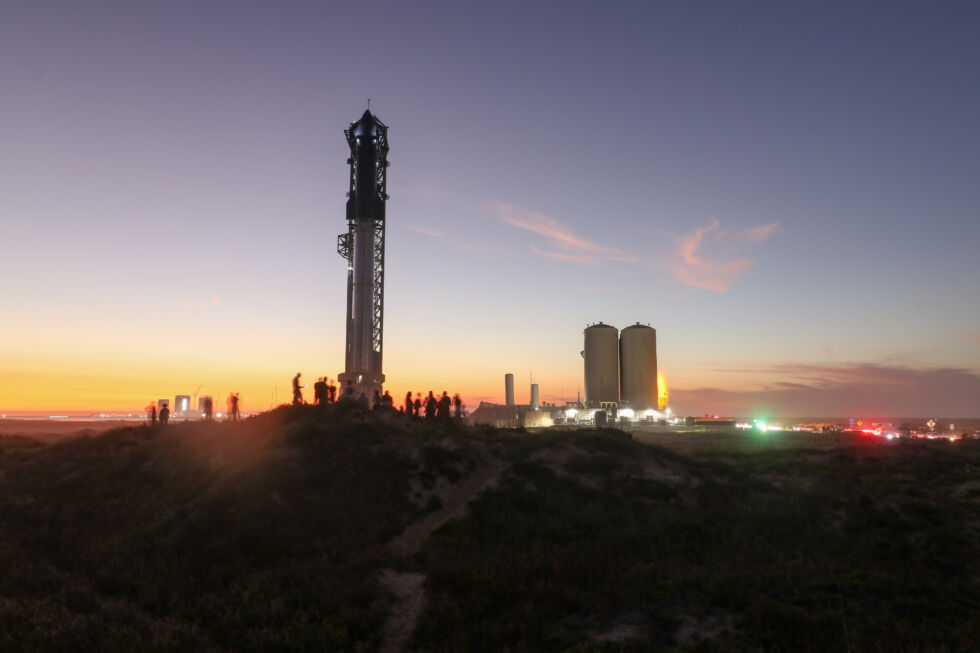
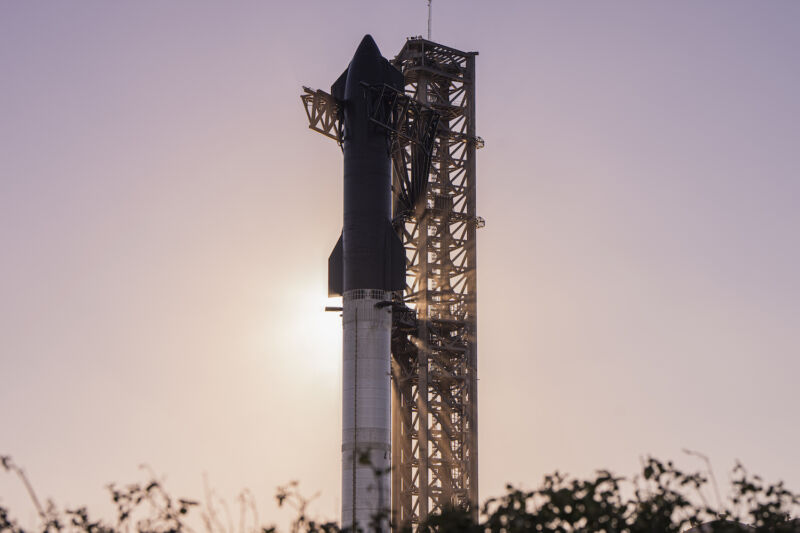
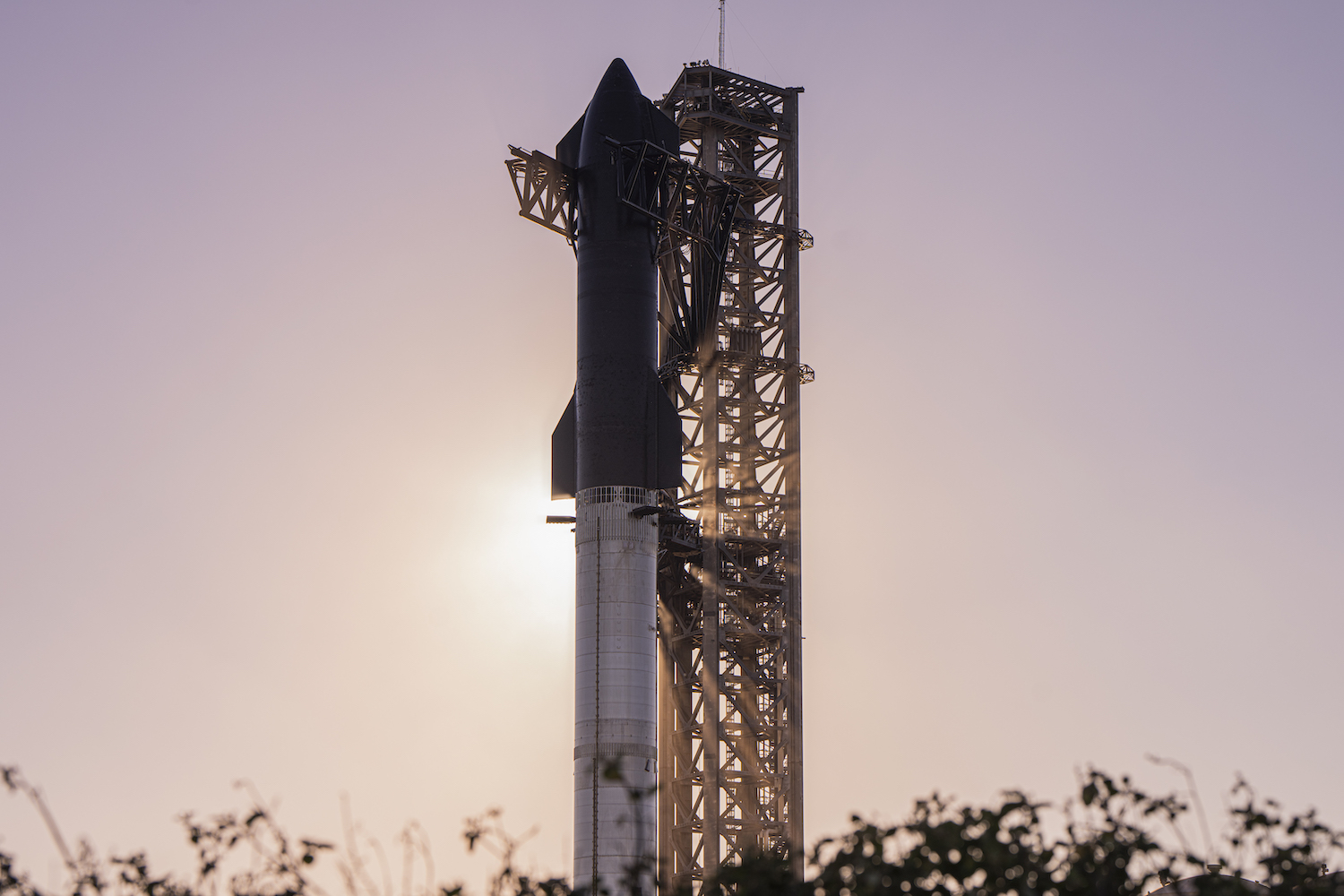
Five things to watch for when Starship takes off Saturday morning

Read 28 remaining paragraphs | Comments


Source: Ars Technica – Five things to watch for when Starship takes off Saturday morning

Why US Women Now Live Almost 6 Years Longer Than Men

According to a new study published in JAMA Internal Medicine, women in the U.S. are now projected to live about six years longer than U.S. men. TIME reports: [T]he 2021 data represent the largest gender-based life expectancy gap in the U.S. since 1996. The gulf began to widen before the COVID-19 pandemic, the authors note, but the trend accelerated from 2019 to 2021. Deaths from COVID-19 and unintentional injuries, a category that includes accidental drug overdoses, were the largest contributors to the widening of the gap, but differential rates of homicide, heart disease, and suicide deaths also played a role, according to the report. It’s well-established that men die of these causes more frequently than women, and in recent years, they have been some of the most common causes of death overall. Heart disease, COVID-19, and unintentional injuries accounted for three of the top five in 2021.

The gender gap would have been even wider, the authors note, but for factors including increases in maternal mortality and decreases in cancer deaths among men. Overall, the data underscore the continued importance of limiting COVID-19’s spread, and of finding better ways to improve national mental health and prevent drug overdoses and suicides — fatalities sometimes labeled by experts as “deaths of despair.”

Read more of this story at Slashdot.


Source: Slashdot – Why US Women Now Live Almost 6 Years Longer Than Men

Sam Altman was 'shocked and saddened' after he was fired as CEO of OpenAI

Sam Altman and Greg Brockman were “shocked and saddened by what the board did” and are still trying to figure out what exactly happened. The former CEO and the former President of OpenAI have published a post on X, sharing the details of what they do know and how they found out the former was being fired. Apparently, company co-founder Ilya Sutskever invited Altman for a meeting at noon on Friday, which was then attended by the whole board except for Brockman. It was at that meeting that Altman found out he was being fired and that OpenAI was going to announce it “very soon.”

Shortly after that, Sutskever reportedly invited Brockman to a separate Google Meet conference, where he was told that Altman had gotten fired and that he was being removed from the board. However, the board members told him that he was “vital to the company and would retain his role.” Brockman chose to quit on his own. The two former OpenAI executives also said that the rest of the company’s management team outside of interim CEO Mira Murati only found out about the board’s decision after Altman was already removed from his post. “The outpouring of support has been really nice; thank you, but please don’t spend any time being concerned,” their joint statement reads. “We will be fine. Greater things coming soon.”

While OpenAI’s c-suite shakeup might have come as a surprise for onlookers, employees were reportedly very much aware that turmoil was already brewing within the organization. According to The Information, Altman’s ouster followed internal arguments on whether OpenAI was developing artificial intelligence technology in a safe manner. During the all-hands meeting after Altman’s firing, employees asked Sutskever if the CEO’s removal was a “coup” or a “hostile takeover.” That seems to imply that some personnel were wondering whether the organization’s leadership removed Altman because he was was commercializing OpenAI’s technology too quickly at the expense of potential safety concerns. 

Bloomberg says Altman and Sutskever were the two people within the organization who butted heads the most when it came to the speed of development and the company’s commercialization. Sutskever is one of the two employees leading a team within OpenAI that’s dedicated to preventing its technologies from going rogue.

Renowned journalist and podcast host Kara Swisher posted similar information on X. She said employees felt that “the profit direction of the company under Altman and the speed of development” were at odds with the “nonprofit side dedicated to more safety and caution.” Swisher also expects more major departures of “top folks” at OpenAI. 

These concerns over the safety of AI development within the organization didn’t pop up overnight, however. OpenAI has been grappling with the issue from the beginning, and it’s the reason why a group of employees left in 2020 to form their own startup that became known as Anthropic. Still, investors were blindsided by Altman’s firing, Forbes reports. Even Microsoft, which pledged to invest $10 billion into the organization over the next few years, reportedly learned about his removal a minute before the announcement went out. 

This article originally appeared on Engadget at https://www.engadget.com/sam-altman-was-shocked-and-saddened-by-openais-decision-to-fire-him-051538582.html?src=rss

Source: Engadget – Sam Altman was ‘shocked and saddened’ after he was fired as CEO of OpenAI

Swedish Workers Are Uniting Against Tesla

New submitter doc1623 shares a report from Wired: Swedish workers are uniting against Tesla. [Starting Friday], cleaners will stop cleaning Tesla showrooms, electricians won’t fix the company’s charging points, and dockworkers will refuse to unload Tesla cargo at all Swedish ports. What started as a strike by Tesla mechanics is spreading, in something Swedish unions describe as an existential battle between Elon Musk’s carmaker and the conventions they say make the country’s labor market fair and efficient. The standoff in Sweden is the biggest union action the company has faced anywhere in the world. Sweden doesn’t have laws that set working conditions, such as a minimum wage. Instead these rules are dictated by collective agreements, a type of contract that defines the benefits employees are entitled to, such as wages and working hours. For five years, industrial workers’ union IF Metall, which represents Tesla mechanics, has been trying to persuade the company to sign a collective agreement. When Tesla refused, the mechanics decided to strike at the end of October. Then they asked fellow Swedish unions to join them.

Some unions that joined the blockade are expanding their actions in an effort to be more effective. Since November 7, union members working at four Swedish ports have been refusing to unload Tesla cargo. Tomorrow, the blockade will be extended to all ports in Sweden. “We don’t want to unload any Tesla cars,” says Jimmy Asberg, who is president of the dockworkers’ branch of Sweden’s transport union and works at Gavle port. “We are going to allow every other car [to dock], but the Tesla cars, they will stay on the ship.” He hopes Tesla will understand how important this issue is for workers in the country. “Not just dockworkers but for all workers in Sweden.”

The Swedish Building Maintenance Workers’ Union will also join the Tesla blockade on Friday at 12 pm local time, “simply because the [IF] Metall Workers Trade Union asked us to,” says ombudsman Torbjorn Jonsson, adding that the union has around 50 members who clean Tesla locations. Four showrooms and service centers will be affected — three around Stockholm and one in the city of Umea. “Their workshops and showrooms will not be cleaned.” Three days later, on November 20, the Seko union, which represents postal workers, will stop delivering letters, spare parts, and pallets to all of Tesla’s addresses in Sweden. “Tesla is trying to gain competitive advantages by giving the workers worse wages and conditions than they would have with a collective agreement,” said Seko’s union president, Gabriella Lavecchia, in a statement. “It is of course completely unacceptable.”

Read more of this story at Slashdot.


Source: Slashdot – Swedish Workers Are Uniting Against Tesla

USDA's Plant Hardiness Zone Map Shows Half the Country Has Shifted

The newly updated U.S. Department of Agriculture’s “plant hardiness zone map” has gardeners across the nation researching what new plants they can grow in their warming regions, as the 2023 map is about 2.5 degrees Fahrenheit warmer than the 2012 map. NPR reports: This week the map got its first update in more than a decade, and the outlook for many gardens looks warmer. The 2023 map is about 2.5 degrees Fahrenheit warmer than the 2012 map across the contiguous U.S., says Chris Daly, director of the PRISM Climate Group at Oregon State University that jointly developed the map with the USDA. Daly says the new map means about half the country has shifted into a new half zone and half hasn’t. In some locations, people may find they can grow new types of flowers, fruits, vegetables and plants.

Daly says he is hesitant to explicitly attribute the specific changes from the 2012 map to the 2023 map to climate change because of the volatility of the key statistic they used to create this map. They were mapping “the coldest night of the year, each year, over the past 30 years”, Daly says, and it’s a highly variable figure. In an email, a press officer for the USDA says, “Changes to plant hardiness zones are not necessarily reflective of global climate change because of the highly variable nature of the extreme minimum temperature of the year.” But Daly says, in the big picture, climate change is playing a role in changing what grows where in the US: “Over the long run, we will expect to see a slow shifting northward of zones as climate change takes hold.”

Read more of this story at Slashdot.


Source: Slashdot – USDA’s Plant Hardiness Zone Map Shows Half the Country Has Shifted

OpenAI President Greg Brockman quits as nervous employees hold all-hands meeting

A glowing OpenAI logo on a red background.

Enlarge (credit: OpenAI / Ars Technica)

On Friday afternoon, not long after news of CEO Sam Altman’s abrupt and surprising departure from OpenAI began spreading online, the company held an all-hands meeting at its headquarters in San Francisco, reports The Information. During the meeting, interim CEO Mira Murati attempted to reassure the shocked employees that the search for a new CEO is underway.

Hours later, OpenAI co-founder and president Greg Brockman posted a statement on X, saying that after he learned today’s news he sent a message to the OpenAI team: “based on todays news, i quit.” Brockman, a key technical figure involved in many of the company’s successes, was relieved of his OpenAI board membership on Friday, but the company initially announced he would be staying on.

Earlier on Friday, OpenAI released a blog post titled “OpenAI announces leadership transition” where it announced that Atlman “was not consistently candid in his communications with the board, hindering its ability to exercise its responsibilities.” In a response post on X, Altman wrote, “I loved my time at openai,” and hinted at future plans without revealing any details.

Read 5 remaining paragraphs | Comments


Source: Ars Technica – OpenAI President Greg Brockman quits as nervous employees hold all-hands meeting

Online Atrocity Database Exposed Thousands of Vulnerable People In Congo

An anonymous reader quotes a report from The Intercept: A joint project of Human Rights Watch and New York University to document human rights abuses in the Democratic Republic of the Congo has been taken offline after exposing the identities of thousands of vulnerable people, including survivors of mass killings and sexual assaults. The Kivu Security Tracker is a “data-centric crisis map” of atrocities in eastern Congo that has been used by policymakers, academics, journalists, and activists to “better understand trends, causes of insecurity and serious violations of international human rights and humanitarian law,” according to the deactivated site. This includes massacres, murders, rapes, and violence against activists and medical personnel by state security forces and armed groups, the site said. But the KST’s lax security protocols appear to have accidentally doxxed up to 8,000 people, including activists, sexual assault survivors, United Nations staff, Congolese government officials, local journalists, and victims of attacks, an Intercept analysis found. Hundreds of documents — including 165 spreadsheets — that were on a public server contained the names, locations, phone numbers, and organizational affiliations of those sources, as well as sensitive information about some 17,000 “security incidents,” such as mass killings, torture, and attacks on peaceful protesters.

The data was available via KST’s main website, and anyone with an internet connection could access it. The information appears to have been publicly available on the internet for more than four years. […] The spreadsheets, along with the main KST website, were taken offline on October 28, after investigative journalist Robert Flummerfelt, one of the authors of this story, discovered the leak and informed Human Rights Watch and New York University’s Center on International Cooperation. HRW subsequently assembled what one source close to the project described as a “crisis team.” Last week, HRW and NYU’s Congo Research Group, the entity within the Center on International Cooperation that maintains the KST website, issued a statement that announced the takedown and referred in vague terms to “a security vulnerability in its database,” adding, “Our organizations are reviewing the security and privacy of our data and website, including how we gather and store information and our research methodology.” The statement made no mention of publicly exposing the identities of sources who provided information on a confidential basis. […] The Intercept has not found any instances of individuals affected by the security failures, but it’s currently unknown if any of the thousands of people involved were harmed. “We deeply regret the security vulnerability in the KST database and share concerns about the wider security implications,” Human Rights Watch’s chief communications officer, Mei Fong, told The Intercept. Fong said in an email that the organization is “treating the data vulnerability in the KST database, and concerns around research methodology on the KST project, with the utmost seriousness.” Fong added, “Human Rights Watch did not set up or manage the KST website. We are working with our partners to support an investigation to establish how many people — other than the limited number we are so far aware of — may have accessed the KST data, what risks this may pose to others, and next steps. The security and confidentiality of those affected is our primary concern.”

Read more of this story at Slashdot.


Source: Slashdot – Online Atrocity Database Exposed Thousands of Vulnerable People In Congo

The Last Of Us Part II Remastered is coming to PS5 next year

A remastered version of The Last Of Us Part 2 is coming to the PlayStation 5 in January, according to a leaked trailer from Sony. The new version of the hit post apocalyptic zombie adventure will be available on the platform on January 19, 2024, and will feature improved loading times, 4K graphics in the console’s Fidelity mode and full integration with the PS5’s new DualSense wireless controller. Insider Gaming and multiple leakers on X first wrote about the remastered version.

In addition to quality of life improvements, the game will also include a brand new “Roguelike Survival Mode,” which will allow players to “choose [their] path through a series of randomized encounters” and play as unlockable characters never before seen in the franchise. The remastered version will also include early versions of three new levels that weren’t present in the original game, as well as commentary from developers.

This isn’t the first time that a Last of Us trailer has leaked straight from Sony before an official announcement. The same thing happened last year with the remake of The Last of Us Part I.

This article originally appeared on Engadget at https://www.engadget.com/the-last-of-us-part-ii-remastered-is-coming-to-ps5-next-year-001232736.html?src=rss

Source: Engadget – The Last Of Us Part II Remastered is coming to PS5 next year

Meta's Head of Augmented Reality Software Stepping Down

According to Reuters, Meta’s head of augmented reality software is stepping down from his role. From the report: VP of Engineering Don Box announced the end of his tenure at Meta internally this week, without elaborating on what he would do next, according to a source familiar with the matter. A Meta spokesperson confirmed Box would be leaving the company at the end of this week and said he was doing so for personal reasons. There would be no change in product roadmap as a result of his decision, she added.

The departure of Box, a veteran engineer with experience building major technology systems from their infancy, could be a setback to progress on the operating system, a key component of Meta’s AR glasses project, the source told Reuters. Meta has been planning to deliver a first generation of its AR glasses by next year, although those are meant to be used only internally and by a select group of developers, the source said. It aims to ship its first AR glasses to consumers in 2027. The Meta spokesperson declined to address the roadmap or whether the OS that Box’s team was building would be in the first generation AR glasses. […]

Meta initially hired Box in 2021 to chart a path forward after the failure of its XROS project, which aimed to create a unified custom operating system for its virtual reality headsets, Ray-Ban Stories smart glasses and planned augmented reality glasses, the source said. Box broke up the 300-person XROS unit into dedicated teams for each device line early last year and personally took over the team focused on AR software, according to both the source and Box’s LinkedIn profile. Prior to joining Meta, Box had worked at Microsoft since 2002. In his final role at Microsoft, he ran engineering for mixed reality, which involved developing software for the HoloLens2 headset and related AR/VR services. Box is known for having led the creation of the Xbox One operating system and later heading Microsoft’s core operating system group, which works across all Windows products.

Read more of this story at Slashdot.


Source: Slashdot – Meta’s Head of Augmented Reality Software Stepping Down

KEPCO Collaborates with Vertical Aerospace

Akihabara News (Tokyo) — Kansai Electric Power Company (KEPCO) and Vertical Aerospace have formalized a commitment to advancing the field of advanced air mobility. This strategic collaboration aims to drive innovation in electric chargers, infrastructure, and charging standards, with a focus extending beyond Japan to key markets in Asia.

Vertical Aerospace, a manufacturer based in Bristol, United Kingdom, plans to unveil its VX4 flying car (eVTOL) at the 2025 World Expo in Osaka.

In this collaborative effort, Vertical Aerospace will develop specifications for eVTOL charging facilities. Simultaneously, KEPCO will play a crucial role in developing essential components such as DC fast chargers, battery cooling systems, and energy management systems based on these specifications.

Beyond the debut of eVTOLs at the World Expo, this partnership aims to expand throughout Japan and into other Asian countries.

Regulatory research is a crucial aspect of the agreement, involving a comprehensive exploration of specifications and regulations governing charging facilities for eVTOLs. The collaboration also encompasses a study on achieving carbon-neutral operation services for eVTOLs, emphasizing environmental sustainability. Furthermore, dedicated efforts will be directed towards enhancing social acceptance and awareness of advanced air mobility.

A similar agreement has recently been signed between KEPCO and Japanese eVTOL-maker SkyDrive.

Recent eVTOL Industry Related Articles

SkyDrive and KEPCO to Charge Up Flying Cars

Subaru Air Mobility Concept

Suzuki Factory to Produce SkyDrive Flying Cars

Hyogo Prefecture Launches New Flying Car Project

Marubeni Links Up with Lift Aircraft

JAL Chief Sees Flying Car Development as Urgent

Flying Car Hits Speed Bump in Nobeoka

SkyDrive Flying Car Gains Weight

Nidec to Build Flying Car Engines

SLT Aims to Produce Six-Seater Flying Car

The post KEPCO Collaborates with Vertical Aerospace appeared first on Akihabara News.


Source: Akihabara News – KEPCO Collaborates with Vertical Aerospace

Valve celebrates 25 years of Half-Life with feature-packed Steam update

It's been a while since I've seen some of those once-ubiquitous logos...

Enlarge / It’s been a while since I’ve seen some of those once-ubiquitous logos… (credit: Valve)

This Sunday, November 19, makes a full 25 years since the original Half-Life first hit (pre-Steam) store shelves. To celebrate the anniversary, Valve has uploaded a feature-packed “25th anniversary update” to the game on Steam, and made the title free to keep if you pick it up this weekend.

Valve’s 25th Anniversary Update page details a bevy of new and modernized features added to the classic first-person shooter, including:

  • Four new multiplayer maps that “push the limits of what’s possible in the Half-Life engine”
  • New graphics settings, including support for a widescreen field-of-view on modern monitors and OpenGL Overbright lighting (still no official ray-tracing support, though—leave that to the modders)
  • “Proper gamepad config out of the box” (so dust off that Gravis Gamepad Pro)
  • Steam networking support for easier multiplayer setup
  • “Verified” support for Steam Deck play (“We failed super hard” on the first verification attempt, Valve writes)
  • Proper UI scaling for resolutions up to 3840×1600
  • Multiplayer balancing updates (because 25 years hasn’t been enough to perfect the meta)
  • New entity limits that allow mod makers to build more complex mods
  • A full software renderer for the Linux version of the game
  • Various bug fixes
  • “Removed the now very unnecessary ‘Low video quality. Helps with slower video cards’ setting”

In addition, the new update includes a host of restored and rarely seen content, including:

Read 5 remaining paragraphs | Comments


Source: Ars Technica – Valve celebrates 25 years of Half-Life with feature-packed Steam update

Canada Court Overturns Government Ruling That Some Plastics Are Toxic

A court in Canada struck down a regulation classifying some plastic products as toxic, “a ruling that could hurt a push by Ottawa to ban single-use plastic items like bags, straws and forks.” From the report: A ban on manufacturing and importing “harmful” single-use plastics came into effect last December after the federal government formally drew up a order that added them to a list of toxic items. But the Federal Court in Ottawa overturned that decision, calling the listing “unreasonable and unconstitutional.” The case was brought by plastics manufacturers such as Dow Inc as well as Imperial Oil.

The office of Environment Minister Stephen Guilbeault said it was considering an appeal. “We strongly believe in taking action to tackle this crisis and keep millions of garbage bags worth of trash off our beaches, out of our waters, and away from nature,” spokeswoman Kaitlin Power said in a statement.

Read more of this story at Slashdot.


Source: Slashdot – Canada Court Overturns Government Ruling That Some Plastics Are Toxic

Barefoot workers, bacteria found at factory that made big-brand eye drops

Eye drop over woman's eye.

Enlarge / Eye drop over woman’s eye. (credit: Getty | AGF)

The Indian manufacturing facility that made generic eye drops sold under CVS, Target, Rite Aid, and Walmart brands had a slew of manufacturing violations, including allowing workers to regularly perform their roles barefoot and failing to document bacterial contamination, according to an inspection report released by the Food and Drug Administration.

Last month, the regulator warned consumers to immediately stop using over two dozen kinds of big-brand eye drops due to a risk of infection. The list has since been updated to include a few more products. In addition to the big store brands, the eye drops were also sold as Leader (Cardinal Health), Rugby (Cardinal Health), and Velocity Pharma branded products.

All of the products are made by Kilitch Healthcare India Limited in Mumbai. At the time of the FDA’s initial warning, the agency said it had found bacterial contamination in critical production areas of the Mumbai facility. As such, the agency warned of a possibility that the products, which are intended to be sterile, may not be and could pose a risk of infection.

Read 6 remaining paragraphs | Comments


Source: Ars Technica – Barefoot workers, bacteria found at factory that made big-brand eye drops

MIT tests new ingestible sensor that records your breathing through your intestines

MIT researchers developed an ingestible capsule that can monitor vital signs including heart rate and breathing patterns from within a patient’s GI tract. The scientists also say that the novel device has the potential to also be used to detect signs of respiratory depression during an opioid overdose. Giovanni Traverso, an associate professor of mechanical engineering at MIT who has been working on developing a range of ingestible sensors, told Engadget that the device will be especially useful for sleep studies.

Conventionally, sleep studies require patients to be hooked up to a number of sensors and devices. In labs and in at-home studies, sensors can be attached to a patient’s scalp, temples, chest and lungs with wires. A patient may also wear a nasal cannula, chest belt and pulse oximeter which can connect to a portable monitor. “As you can imagine, trying to sleep with all of this machinery can be challenging,” Traverso told Engadget.

Clear pill tab
MIT

This trial, which used a capsule made by Celero Systems —A start-up led by MIT and Harvard researchers— marks the first time ingestible sensor technology was tested in humans. Aside from the start-up and MIT, the research was spearheaded by experts at West Virginia University and other hospital affiliates.

The capsule contains two small batteries and a wireless antenna that transmits data. The ingestible sensor, which is the size of a vitamin capsule, traveled through the gastrointestinal tract, and collected signals from the device while it was in the stomach. The participants stayed at a sleep lab overnight while the device recorded respiration, heart rate, temperature and gastric motility. The sensor was also able to detect sleep apnea in one of the patients during the trial. The findings suggest that the ingestible was able to measure health metrics on par with medical-grade diagnostic equipment at the sleep center. Traditionally, patients that need to get diagnosed with specific sleep disorders are required to stay overnight at a sleep lab, where they get hooked onto an array of sensors and devices. Ingestible sensor technology eliminates the need for that.

Importantly, MIT says there were no adverse effects reported due to capsule ingestion. The capsule typically passes through a patient within a day or so, though that short internal shelf life may also limit how effective it could be as a monitoring device. Traverso told Engadget that he aims to have Celetro, which he co-founded, eventually contain a mechanism that will allow the capsule to sit in a patient’s stomach for a week.

Dr. Ali Rezai, the executive chair of the West Virginia University Rockefeller Neuroscience Institute, said that there is a huge potential for creating a new pathway through this device that will help providers identify when a patient is overdosing according to their vitals. In the future, researchers even anticipate that devices could incorporate drugs internally: overdose reversal agents, such as nalmefene, could be slowly administered if a sensor records that a person’s breathing rate slowed or stopped. More data from the studies will be made available in the coming months.

This article originally appeared on Engadget at https://www.engadget.com/mit-tests-new-ingestible-sensor-that-record-your-breathing-through-your-intestines-224823353.html?src=rss

Source: Engadget – MIT tests new ingestible sensor that records your breathing through your intestines

What NASA wants to see from SpaceX’s second Starship test flight

Read 46 remaining paragraphs | Comments


Source: Ars Technica – What NASA wants to see from SpaceX’s second Starship test flight