Epic Games Chief Executive Officer Tim Sweeney testified that Google’s Android operating system is a “fake open platform” in a high-stakes antitrust lawsuit over claims that the technology giant thwarts app market competition. From a report: Sweeney, who founded the company that makes the blockbuster Fortnite, took the witness stand Monday in San Francisco federal court to reinforce his claims that Google Play policies are unlawful and allow Alphabet to maintain a monopoly in the Android mobile-app distribution market. The court fight started in 2020 when Epic marketed Fortnite on Android and sidestepped the Google Play billing system and the 30% revenue cut it was taking from app developers.
“We very much wanted to avoid that and do business directly with our customers,” Sweeney told jurors. Google denies abusing its market power. The jury trial started two weeks ago and is expected to wrap up in early December. If Epic prevails, Google could be forced to allow competing app marketplaces and payment methods on its app store, threatening billions of dollars in revenue generated by Google Play. Sweeney previously testified in a 2021 trial in a similar antitrust suit targeting Apple’s App Store policies as unfair and self-serving. Epic mostly lost that fight, which was decided by a federal judge in Oakland, California, after a trial. An appeals court upheld the judge’s ruling and Epic is now asking the US Supreme Court to review it.
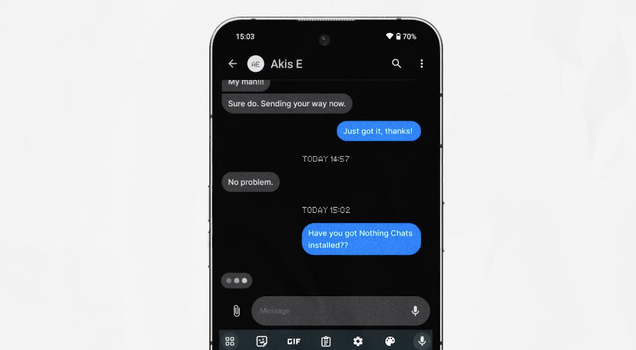
Last week was certainly exciting for the prospect of green and blue bubbles finding peace and harmony in the chat realm, though that excitement was a bit premature in Nothing’s case.
If the musicians in your life are anything like me, they’ve plunged headfirst into significant debt in their relentless pursuit of the gear to fuel their artistic aspirations.
We’ve already seen DJI’s Osmo Action 4 and GoPro’s Hero 12 representing the rugged action cams of 2023, and now, it’s Insta360’s turn to unveil its take on this category — one that focuses more on video quality than, say, its Go series’ versatility. In a nutshell, Insta360’s brand new Ace Pro can be described as a GoPro on steroids, thanks to its handy 2.4-inch flip touchscreen, 1/1.3-inch sensor, Leica tuning and, most notably, 5nm AI neural processor. You’ll also get the usual “FlowState Stabilization,” IPX8 waterproof rating (down to 33ft or 10m) and swappable battery (up to 100 minutes in 4K@30fps Active HDR; fast charging at up to 80 percent in 22 minutes, or to 100 percent in 46 minutes).
Insta360 claims that combining its AI denoising feature with its new image sensor, the Ace Pro produces clearer and more stable low-light results for both videos (up to 4K@30fps in “PureVideo” mode) and stills (up to 48 megapixels). There’s also an “Active HDR Video” mode which turns on automatically when lighting conditions are met, with the company emphasizing on improved color accuracy here — we’ll take a closer look at this in our review later. The camera is also capable of recording at up to 4K@60fps, 4K@120fps (slow motion) or even 8K@24fps, but none of these can take advantage of the AI enhancement nor Active HDR.
The dedicated AI chip isn’t just for enhancing image quality. Over the years, Insta360 has been finding ways to make video editing easier and quicker, and this time, it’s doing so by letting the camera itself do some auto-editing first. Dubbed “AI Highlights Assistant,” this feature analyzes your video while picking out the best bits in real time, then you can review the AI edit on the camera first (and also delete the bits you don’t need to save space). When you next connect your Insta360 mobile app to your Ace Pro, the new AI-generated clip will be automatically pushed to your phone.
Aside from having to test out this feature myself, Insta360 also warned that “AI Highlights Assistant” does require extra power (the company promises to continue optimizing power consumption here), so be mindful of your camera’s battery life when using this feature.
Another fun new feature for making editing easier — though not necessarily limited to the Ace Pro — is “AI Warp,” which can be found in the “Shot Lab” template section in the mobile app. It’s basically Insta360’s first take on generative AI: you can pick a template or type in your own prompt, in order to get the app to transform either the entire video or just the highlighted subject into your desired style — be it cyberpunk, anime, space, superhero costumes or more. The company added that you can look out for even more AI-related effects in its mobile app in 2024.
Insta360 Ace Pro action cam on a multi mount.
Insta360
The Insta360 Ace Pro is already available for ordering, with the $450 standard bundle including a standard mount and a flexible adhesive mount. There’s also a slightly more affordable Ace priced at $380, and while it comes with the same accessories, it has to make do with a smaller 1/2-inch sensor, a max video resolution of just 6K@30fps, no fast charging and no love from Leica. The rest of the feature list is the same, otherwise.
Optional accessories include a dive case (for down to 197ft or 60m), a quick release mount, a multi mount, a GPS preview remote, a “Vertical-Horizontal Mount” and a mic adapter plus cold shoe module (for use with the quick release mount).
This article originally appeared on Engadget at https://www.engadget.com/insta360s-ace-pro-is-a-leica-branded-action-cam-with-ai-enhancements-133003809.html?src=rss
Hulu is offering an enormous discount on its ad-supported plan for Black Friday. The streaming service will give you a year of Hulu (With Ads) for a mere $12. The plan typically costs $80 annually, giving you 85 percent off.
Hulu offers films, current-season episodes of popular broadcast television series and older TV. In addition, the Disney-owned service has original programming, like The Bear, Only Murders in the Building and The Handmaid’s Tale. Remember that the $12 Black Friday sale only applies to the version with advertisements, which doesn’t allow downloaded content for offline viewing.
New subscribers and former members who canceled their plan at least a month ago can take advantage of the Black Friday deal. Everyone who redeems it will pay directly to the streamer (rather than through an app storefront) and convert to a full-priced ($8 monthly) ad-supported plan at the end of 12 months. Hulu also offers an optional Starz add-on for $1 monthly for all new and existing subscribers.
This article originally appeared on Engadget at https://www.engadget.com/hulus-black-friday-deal-gives-you-one-year-of-the-ad-supported-plan-for-only-12-130023223.html?src=rss
Enlarge/ A 50-light-years-wide portion of the Milky Way’s dense center. (credit: NASA, ESA, CSA, STScI, S. Crowe)
Welcome to the Daily Telescope. There is a little too much darkness in this world and not enough light, a little too much pseudoscience and not enough science. We’ll let other publications offer you a daily horoscope. At Ars Technica, we’re going to take a different route, finding inspiration from very real images of a universe that is filled with stars and wonder.
Good morning. It’s November 21, and today’s image takes us into the heart of our galaxy.
Specifically, the image from the James Webb Space Telescope features a star-forming region named Sagittarius C, which is about 300 light-years from the Milky Way’s central supermassive black hole.
As the holidays near, it can be a challenge to buy gifts for the most voracious book readers in your life—but 2023 has seen a ton of excellent fantasy books hit shelves, to the point that it’s been hard to keep up with all the greatest new material. Here’s 20 of our favorite underrated choices that will make the…
An anonymous reader quotes a report from The Verge: Music streaming service Spotify struck a seemingly unique and highly generous deal with Google for Android-based payments, according to new testimony in the Epic v. Google trial. On the stand, Google head of global partnerships Don Harrison confirmed Spotify paid a 0 percent commission when users chose to buy subscriptions through Spotify’s own system. If the users picked Google as their payment processor, Spotify handed over 4 percent — dramatically less than Google’s more common 15 percent fee. Google fought to keep the Spotify numbers private during its antitrust fight with Epic, saying they could damage negotiations with other app developers who might want more generous rates.
Google’s User Choice Billing program, launched in 2022, is typically described as shaving about 4 percent off Google’s Play Store commission if developers use their own payment system, bringing down Google’s 15 percent subscription service fee to more like 11 percent. That often ends up saving developers little or no money since they must foot the cost of payment processing themselves. And in court, Google has focused on benefits like greater flexibility rather than cost savings. […] Harrison says Spotify’s “unprecedented” popularity was great enough to justify a “bespoke” deal. “If we don’t have Spotify working properly across Play services and core services, people will not buy Android phones,” Harrison testified. As part of the deal, both parties also agreed to commit $50 million apiece to a “success fund.”
Google acknowledged Harrison’s testimony in a statement to The Verge. “A small number of developers that invest more directly in Android and Play may have different service fees as part of a broader partnership that includes substantial financial investments and product integrations across different form factors,” says spokesperson Dan Jackson. “These key investment partnerships allow us to bring more users to Android and Play by continuously improving the experience for all users and create new opportunities for all developers.” Google would not name other developers that have gotten the company to agree to more generous rates. During the trial, we learned that Google offered Netflix a special discounted rate of just 10 percent, but Netflix refused. Netflix no longer offers an in-app purchase option on Android and no longer pays Google anything to distribute its app as a result.
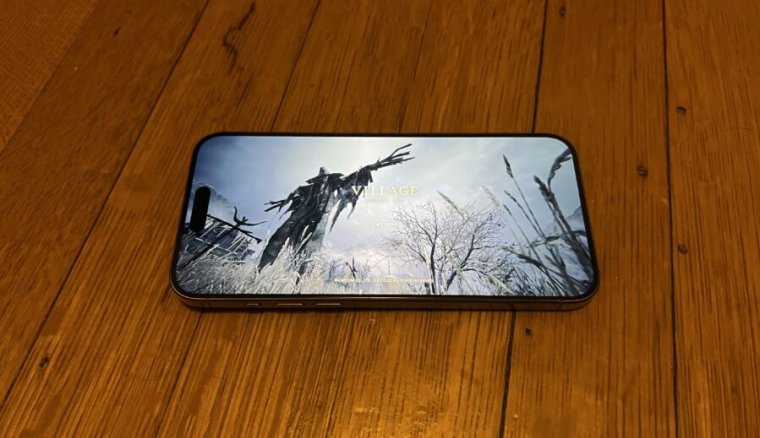
Enlarge/Resident Evil Village runs just well enough on the iPhone 15 Pro Max. (credit: Samuel Axon)
Look, if you’re going to play AAA and core games, you probably want to play on a gaming PC or a console. Let’s just get that right out of the way.
That said, Apple was trying to sell the potential of triple-A gaming on the iPhone 15 Pro this fall, and there’s some possibility that some limited AAA gaming will be possible on that platform.
A small selection of titles, including Resident Evil 4, Death Stranding, and Assassin’s Creed Mirage, are planned for the device. There’s some question as to whether battery life and the thermal realities will make this practical, but the buzz has been enough that people have been asking me about it—including some friends, significant others, and parents to gamers who are doing some holiday shopping and want to make sure they get the right phone for their person.
Tinder is adding many new, pretty basic, features, including the profile prompts and basic info tags other dating apps, like Hinge or Bumble, have. Profile prompts, for example, are a long-standing feature on both, with Tinder users now able to share their responses to statements like “The first item on my bucket list is… ” or “Two truths and a lie.”
The dating app points to Gen Z’s responses in its recent Future of Dating report as motivation for the updates, saying: “At Tinder, we understand that connecting today is about authenticity, depth and the desire for connections that go beyond the surface.”
The company calls it a “rizz-first redesign,” which equates to these new prompts, zodiac sign info and… new animations. Is that rizz-first? I’m not sure it is.
— Mat Smith
You can get these reports delivered daily direct to your inbox. Subscribe right here!
It’ll help test current theories of star formation.
NASA
The James Webb telescope has captured parts of the center of the Milky Way in “unprecedented detail.” This area is about 300 light-years from the galaxy’s supermassive black hole, Sagittarius A, and over 25,000 light-years from Earth. The galactic center is “the most extreme environment” in the Milky Way, according to University of Virginia professor Jonathan Tan.
OpenAI’s corporate drama kept Engadget busy over the weekend, as the company ousted its CEO and co-founder Sam Altman, then reportedly tried to get him back when he was poached by Microsoft — one of OpenAI’s major investors. Now, most of the company’s staff have threatened to quit unless the board resigns and reinstates former CEO Sam Altman and ex-president Greg Brockman. According to Wired and Kara Swisher, around 500 employees signed the letter.
Linda Yaccarino says X stands against antisemitic content.
X CEO Linda Yaccarino called a report from watchdog group media Matters for America “misleading and manipulated,” following a large-scale advertiser pullout. In a note she sent to X employees on Sunday night, she said: “While some advertisers may have temporarily paused investments because of a misleading article, the data will tell the real story.”
Major advertisers, including Apple, Disney, Paramount Global and Yaccarino’s former employer, NBCUniversal, pulled their ads from X last week, after the watchdog group’s report found ads from some of these brands ran next to pro-Nazi content on the website. It also came days after Musk publicly endorsed an antisemitic conspiracy theory as a response to a far-right X user.
X filed its lawsuit against Media Matters on Monday.
This article originally appeared on Engadget at https://www.engadget.com/the-morning-after-tinders-rizz-first-redesign-just-ruined-rizz-for-everyone-121537687.html?src=rss
Enlarge/ A Porsche 963, one of the four different kinds of hybrid prototype racing cars built to the LMDh rules, running in IMSA’s GTP class at the 2023 Petit Le Mans at Road Atlanta in October. (credit: David J. Griffin/Icon Sportswire via Getty Images)
The crowd streamed onto the track before the race, seizing their last chance to see the brightly liveried cars up close. Daytona had been busy in January, but the crowd at Road Atlanta seemed even larger. To be honest, though, the race the fans were here to see would not be one for the ages. A 52-car grid packed into just 2.8 miles of race track promised potential trouble, and the 10-hour race saw 14 interruptions by the safety car, never getting into a rhythm. But I’m not sure that mattered much; the main draw for many in attendance that Saturday was simply seeing this new era of hybrid prototypes in person, and on that score, everyone left with smiles.
We’ve spilled plenty of pixels over the past 18 months or so delving into some of the minutiae of this new class of racing car, variously known as LMDh or GTP. Briefly, these are purpose-built racing cars, which start with a carbon-fiber spine from one of four racecar constructors and then add an engine, bodywork, and software from one of the four OEMs that participate, and then the same Xtrac gearbox, Williams Advanced Engineering lithium-ion battery, and Bosch electric motor as a way to keep development costs reasonable.
The rules purposely limit the amount of aerodynamic downforce a car can generate relative to the amount of drag it creates, and they positively encourage each car maker to give these race cars styling that calls out to their road-going products.
Some YouTube viewers who use Firefox or Edge instead of Chrome have reported having to wait around five seconds every time they try to load a video. In screen recordings shared on Reddit and other online forums, users show how their screen goes blank for a short period when they click on a YouTube video before the page loads. But when they switch to Chrome, that waiting period seemed to be non-existent. Android Authority and 404media, which reported on the users’ complaints, weren’t able to replicate the phenomenon. We also didn’t notice any difference in loading times when we accessed YouTube on different browsers.
Based on the code found by some YCombinator and Reddit posters, YouTube has implemented an anti-adblocker mechanism that’s causing the delays. We did find the snippet of code cited in those threads, but it’s not quite clear what it does. In a statement that Google has provided Android Authority, it admitted that it has implemented a system that’s meant to urge viewers to uninstall their ad blockers. The company said that users who have ad blockers installed “may experience suboptimal viewing” no matter what browser they choose to use
“To support a diverse ecosystem of creators globally and allow billions to access their favorite content on YouTube, we’ve launched an effort to urge viewers with ad blockers enabled to allow ads on YouTube or try YouTube Premium for an ad free experience,” the spokesperson said. “Users who have ad blockers installed may experience suboptimal viewing, regardless of the browser they are using.”
YouTube started cracking down on ad blockers earlier this year, but it went all out earlier this month when it prevented viewers around the world from watching videos unless they disable their apps, add-ons and extensions. The video hosting website is hoping to entice users who couldn’t stand watching ads to subscribe to its $14-a-month YouTube Premium service. Multiple ad-blocking companies have since reported experiencing an elevated number of uninstallations per day since then, but Google has yet to reveal whether YouTube Premium subscriptions have also gone up as a result.
This article originally appeared on Engadget at https://www.engadget.com/google-admits-youtubes-war-on-ad-blockers-is-resulting-in-suboptimal-viewing-experiences-115041371.html?src=rss
There’s never been a better time to buy the Apple Watch SE (2nd Gen), as it has fallen to another new low on Amazon. Both sizes (40mm and 44mm) are available with discounts of $70, with the 40mm GPS Watch SE starting at just $179, or 28 percent ($70) off and the 44mm model starting at $209 (25 percent off). That’s an all-time low, besting the $189 price we saw just two days ago.
With solid performance, a familiar design and support for numerous apps, the 2022 Watch SE scored a solid 89 in our Engadget review. It looks nearly identical to the latest Watch models, and delivers smooth performance despite the slightly older processor. Most importantly, it offer all the same features you’d get in the more expensive models, like all-day heart rate monitoring, built-in GPS, fall detection, Apple Pay support, sleep-tracking and more. Battery life has also been improved over the previous model.
It doesn’t include a blood oxygen sensor or ECG, nor the always-on display of the Series 8 or Series 9 models. If those things aren’t terribly important, you’ll still get a full Watch experience. The other main drawbacks with all Watch models are sleep tracking that doesn’t quite measure up to the competition, and less than a full day of battery life.
If you want the higher-end models, there’s more good news too. All the Watch Series 8 models are on sale, starting at $299 for the Watch Series 8 (GPS 41mm), $329 for the Watch Series 9 (in red only, $100 off) and $359 for the Watch Series 9 in other colors.
This article originally appeared on Engadget at https://www.engadget.com/apple-watch-se-falls-to-another-new-low-in-black-friday-sale-110511086.html?src=rss
Mononymous writes: FreeBSD 14 has been officially released. You can get it from FreeBSD.org, or via freebsd-update and source update methods for existing systems. Some highlights:
– OpenSSH version 9.5p1
– OpenSSL version 3.0.12, a major upgrade from OpenSSL 1.1.1t in FreeBSD 13.2
– OpenZFS release 2.2
– The bhyve hypervisor now supports TPM and GPU passthrough
This version will now create user home directories in /home by default, instead of the traditional /usr/home. More information on the release and changes can be found via the release announcement page.
Starfield just received some key updates promised by Bethesda a couple of months ago, the developer announced. Version 1.8.86 comes with DLSS support that finally gives users with supported NVIDIA cards features including DLSS Super Resolution, Deep Learning Anti-aliasing (DLAA), Reflex Low Latency and DLSS frame generation. That should assuage numerous grumbling users, many of whom used a controversial DLSS mod to tide themselves over.
Along with DLSS, the update includes GPU performance optimizations that will help users with higher-end cards. Bethesda has also addressed memory leaks and other related issues, improved renderer threading and made a number of other stability and performance improvements. On the graphics side, it added brightness and contrast controls (!), while addressing issues around ambient occlusion, shader compilation, HDR brightness (Xbox and Windows 11 only), material issues, crowd character eyes and more.
Update 1.8.86 has landed! 🚀
💻 DLSS Support 🥘 Consume button for food 🔧 Numerous fixes and improvements
Gameplay also sees some welcome updates. You can now “eat the food placed in the world” via a “consume button” without having to add items to inventory, a nice quality-of-life fix. Bethesda also adjusted stealth to be more forgiving, resolved the problem of Andreja’s head staying permanently cloaked, fixed an issue that could prevent players from firing weapons, resolved a problem with naked NPCs, fixed mouse issues and more. It also resolved quest problems that mostly revolve around inconsistent game play.
Bethesda beta tested the new features earlier this month on Steam before deeming them fit for release. In September, it said that it’s “working closely” with NVIDIA, AMD and Intel on driver support, possibly in response to a Digital Foundry technical report saying the game had “disproportionately poor NVIDIA and Intel performance.” Starfield is among the best-selling games of 2023 (thanks in part to being free on Game Pass), with the company having reported 10 million players as of the end of September.
This article originally appeared on Engadget at https://www.engadget.com/starfield-update-brings-dlss-support-and-a-number-of-fixes-092050462.html?src=rss
US Senator Ron Wyden wants the public to know about the details surrounding the long-running Hemisphere phone surveillance program. Wyden has written US Attorney General Merrick Garland a letter (PDF), asking him to release additional information about the project that apparently gives law enforcement agencies access to trillions of domestic phone records. In addition, he said that federal, state, local and Tribal law enforcement agencies have the ability to request “often-warrantless searches” from the project’s phone records that AT&T has been collecting since 1987.
The Hemisphere project first came to light in 2013 when The New York Times reported that the White House Office of National Drug Control Policy (ONDCP) was paying AT&T to mine and keep records of its customers’ phone calls. Four billion new records are getting added to its database every day, and a federal or state law enforcement agency can request a query with a subpoena that they can issue themselves. Any law enforcement officer can send in a request to a single AT&T analyst based in Atlanta, Georgia, Wyden’s letter says, even if they’re seeking information that’s not related to any drug case. And apparently, they can use Hemisphere not just to identify a specific number, but to identify the target’s alternate numbers, to obtain location data and to look up the phone records of everyone who’s been in communication with the target.
The project has been defunded and refunded by the government several times over the past decade and was even, at one point, receiving federal funding under the name “Data Analytical Services (DAS).” Usually, projects funded by federal agencies would be subject to a mandatory Privacy Impact Assessment conducted by the Department of Justice, which means their records would be made public.
However, Hemisphere’s funding passes through a middleman, so it’s not required to go through mandatory assessment. To be specific, ONDCP funds the program through the Houston High Intensity Drug Trafficking Area, which is a regional funding organization that distributes federal anti-drug law grants and is governed by a board made up of federal, state and local law enforcement officials. The DOJ had provided Wyden’s office with “dozens of pages of material” related to the project in 2019, but they had been labeled “Law Enforcement Sensitive” and cannot be released to the public.
“I have serious concerns about the legality of this surveillance program, and the materials provided by the DOJ contain troubling information that would justifiably outrage many Americans and other members of Congress,” Wyden wrote in his letter. “While I have long defended the government’s need to protect classified sources and methods, this surveillance program is not classified and its existence has already been acknowledged by the DOJ in federal court. The public interest in an informed debate about government surveillance far outweighs the need to keep this information secret.”
This article originally appeared on Engadget at https://www.engadget.com/us-senator-calls-for-the-public-release-of-att-hemisphere-surveillance-records-083627787.html?src=rss
The U.S. Food and Drug Administration is reviewing a cutting-edge therapy called exa-cel that could potentially cure people of sickle cell disease, a painful and deadly disease with no universally successful treatment. “If approved, exa-cel, made by Boston-based Vertex Pharmaceuticals and the Swiss company CRISPR Therapeutics, would be the first FDA-approved treatment that uses genetic modification called CRISPR,” reports CNN. From the report: CRISPR, or clustered regularly interspaced short palindromic repeats, is a technology researchers use to selectively modify DNA, the carrier of genetic information that the body uses to function and develop. […] The new exa-cel treatment under FDA consideration can use the patient’s own stem cells. Doctors would alter them with CRISPR to fix the genetic problems that cause sickle cell, and then the altered stem cells are given back to the patient in a one-time infusion.
In company studies, the treatment was considered safe, and it had a “highly positive benefit-risk for patients with severe sickle cell disease,” Dr. Stephanie Krogmeier, vice president for global regulatory affairs with Vertex Pharmaceuticals Incorporated, told the panel. Thirty-nine of the 40 people tested with the treatment did not have a single vaso-occlusive crisis, which means the misshapen red blood cells block normal circulation and can cause moderate to severe pain. It’s the top reason patients with sickle cell go to the emergency room or are hospitalized. Before the treatment, patients experienced about four of these painful crises a year, resulting in about two weeks in the hospital.
The FDA sought the independent panel’s advice, in part, because this would be the first time the FDA would approve a treatment that uses CRISPR technology, but Dr. Fyodor Urnov, a professor in the Department of Molecular and Cell Biology at the University of California, Berkeley, reminded the committee CRISPR has been around for 30 years and, in that time, scientists have learned a lot about how to use it safely. “The technology is, in fact, ready for primetime,” Urnov said. With this kind of genetic editing, scientists could inadvertently make a change to a patient’s DNA that is off-target, and the therapy could harm the patient. […] The FDA is expected to make an approval decision by December 8.
According to The Information (paywalled), OpenAI’s board of directors approached rival Anthropic’s CEO about replacing Sam Altman and potentially merging the two AI startups. Anthropic CEO Dario Amodei declined on both fronts. Reuters reports: The news, reported earlier by The Information on Monday, follows various reported calls to find Altman’s successor days after OpenAI’s board ousted him. […] The co-founders of Anthropic, who were also executives at OpenAI until 2020, had broken from their employer over disagreements regarding how to ensure AI’s safe development and governance. Anthropic has won investments from Alphabet’s Google and Amazon.com. Its Claude AI models have vied for prominence with OpenAI’s GPT series.
X has filed a lawsuit against media watchdog group Media Matters over the latter’s research that showed ads on the social network appearing next to antisemitic content. The company’s owner, Elon Musk, promised to file a “thermonuclear lawsuit” against the organization late last week following an advertiser exodus. In its complaint, X said Media Matters “knowingly and maliciously manufactured side-by-side images depicting advertisers’ posts on X Corp.’s social media platform beside Neo-Nazi and white national fringe content.” It added that the group portrayed the “manufactured images” as if they represented the typical user’s experience in the platform. “Media Matters designed both these images and the resulting media strategy to drive advertisers from the platform and destroy X Corp,” the company wrote.
As TechCrunch notes, though, Media Matters didn’t exactly “manufacture” the images it used with its research. Based on X’s own investigation as it detailed in its lawsuit, the organization used an account older than 30 days to bypass the website’s ad filters to follow a set of users known to produce “extreme, fringe content” along with the biggest advertisers on the platform. The group then allegedly kept on scrolling and refreshing its feed to generate “between 13 to 15 times more advertisements per hour than viewed by the average X user.” X said the watchdog didn’t provide any context regarding the “forced, inauthentic nature” of the advertisements it saw. It also didn’t say why these accounts that are known to produce “extreme, fringe content” were monetized.
In a response to Media Matters’ research, X CEO Linda Yaccarino said “not a single authentic user on X saw IBM’s, Comcast’s, or Oracle’s ads next to the content in Media Matters’ article.” She added that “only two users saw Apple’s ad next to the content, at least one of which was Media Matters.” But Media Matters head Angelo Carusone retweeted several posts from seemingly authentic users showing ads for searches and tags such as “killjews” and “HeilHitler.” We reached out to the organization about the lawsuit, and a spokesperson told Engadget: “This is a frivolous lawsuit meant to bully X’s critics into silence. Media Matters stands behind its reporting and looks forward to winning in court.”
Aside from X’s lawsuit, Media Matters also has to grapple with an investigation by Ken Paxton, the Attorney General of Texas. Paxton said his office is looking into Media Matters, which he called “a radical anti-free speech” organization, for potential fraudulent activity. He said he’s investigating the watchdog to “ensure that the public has not been deceived by the schemes of radical left-wing organizations who would like nothing more than to limit freedom by reducing participation in the public square.”
The media watchdog had published its findings after X owner Elon Musk responded to a tweet that said Jews pushed “hatred against whites that they claim to want people to stop using against them.” Musk wrote: “You have said the actual truth.” Several big-name advertisers had pulled their campaigns from the platform following the incidents, including IBM, Apple, Disney, Paramount and Comcast. Meanwhile, Lionsgate specifically cited Elon’s tweet as the reason for pulling its ads.
This article originally appeared on Engadget at https://www.engadget.com/x-lawsuit-accuses-media-matters-of-running-a-campaign-to-drive-advertisers-away-from-its-website-040022933.html?src=rss
An anonymous reader quotes a report from Wired: A little-known surveillance program tracks more than a trillion domestic phone records within the United States each year, according to a letter WIRED obtained that was sent by US senator Ron Wyden to the Department of Justice (DOJ) on Sunday, challenging the program’s legality. According to the letter, a surveillance program now known as Data Analytical Services (DAS) has for more than a decade allowed federal, state, and local law enforcement agencies to mine the details of Americans’ calls, analyzing the phone records of countless people who are not suspected of any crime, including victims. Using a technique known as chain analysis, the program targets not only those in direct phone contact with a criminal suspect but anyone with whom those individuals have been in contact as well.
The DAS program, formerly known as Hemisphere, is run in coordination with the telecom giant AT&T, which captures and conducts analysis of US call records for law enforcement agencies, from local police and sheriffs’ departments to US customs offices and postal inspectors across the country, according to a White House memo reviewed by WIRED. Records show that the White House has, for the past decade, provided more than $6 million to the program, which allows the targeting of the records of any calls that use AT&T’s infrastructure — a maze of routers and switches that crisscross the United States. In a letter to US attorney general Merrick Garland on Sunday, Wyden wrote that he had “serious concerns about the legality” of the DAS program, adding that “troubling information” he’d received “would justifiably outrage many Americans and other members of Congress.” That information, which Wyden says the DOJ confidentially provided to him, is considered “sensitive but unclassified” by the US government, meaning that while it poses no risk to national security, federal officials, like Wyden, are forbidden from disclosing it to the public, according to the senator’s letter. AT&T spokesperson Kim Hart Jonson said only that the company is required by law to comply with a lawful subpoena. However, “there is no law requiring AT&T to store decades’ worth of Americans’ call records for law enforcement purposes,” notes Wired. “Documents reviewed by WIRED show that AT&T officials have attended law enforcement conferences in Texas as recently as 2018 to train police officials on how best to utilize AT&T’s voluntary, albeit revenue-generating, assistance.”
“The collection of call record data under DAS is not wiretapping, which on US soil requires a warrant based on probable cause. Call records stored by AT&T do not include recordings of any conversations. Instead, the records include a range of identifying information, such as the caller and recipient’s names, phone numbers, and the dates and times they placed calls, for six months or more at a time.” It’s unclear exactly how far back the call records accessible under DAS go, although a slide deck released under the Freedom of Information Act in 2014 states that they can be queried for up to 10 years.