The Morning After: Instagram reportedly served up child-sexualizing Reels to followers of teen influencers

According to an experiment conducted by The Wall Street Journal, Instagram’s Reels video service would serve “risqué footage of children as well as overtly sexual adult videos” to its test accounts that exclusively followed teen and preteen influencers, usually young gymnasts and cheerleaders.

While these tests don’t represent real user experiences (as tech companies tend to counter with), aggregating child sexualization content was apparently a known problem internally, according to current and former Meta employees interviewed by the WSJ.

Meta told its advertising clients it was investigating and that it “would pay for brand-safety auditing services to determine how often a company’s ads appear beside content it considers unacceptable.”

— Mat Smith

The biggest stories you might have missed

Rivian’s electric truck is available to lease in 14 US states

The best Cyber Monday deals for 2023 that are still going

Evernote is reportedly testing a severely restricted plan for free users

​​You can get these reports delivered daily direct to your inbox. Subscribe right here!

ByteDance’s latest layoffs have reportedly gutted the publisher of Marvel Snap

Restructuring may affect around 700 employees.

TMA
ByteDance

According to Reuters and Bloomberg, TikTok’s parent company ByteDance is winding down its gaming arm, including the Nuverse brand, with “hundreds” of jobs likely to be affected. Nuverse, acquired by ByteDance in 2017, is the publisher of notable titles Marvel Snap, Ragnarok X: Next Generation and One Piece: Blood Routes. Despite the apparent success of these games, ByteDance CEO Liang Rubo had reportedly criticized the gaming arm for a lack of focus.

Continue reading.

Tesla sues Sweden for blocking license plate deliveries during labor strike

A district court sided with the automaker in an interim decision.

Tesla sued Sweden’s transportation agency and postal service over a union strike blocking the company’s license plate deliveries in the country. The workers are striking to demand the non-unionized automaker sign a collective bargaining agreement, a standard practice mechanics’ union IF Metall describes as “the backbone of the Swedish model.” However, the Swedish Transport Agency says it already received an interim decision from a district court, ordering it to consent within seven days to Tesla’s request to collect license plates or face hefty fines.

Continue reading.


The best gifts for photographers and videographers

These are our favorite cameras, bags, tripods and more that make great gifts.

TMA
Engadget

There’s never been a better time to own a new camera, as the latest technology means better photos and video than ever. But with all the models out there, let alone the numerous accessories, like backpacks, memory cards, tripods and more, where do you start? Fortunately, we’ve done all the research and found cameras and peripherals at a wide range of prices.

Continue reading.

This article originally appeared on Engadget at https://www.engadget.com/the-morning-after-instagram-reportedly-served-up-child-sexualizing-reels-to-followers-of-teen-influencers-121741678.html?src=rss

Source: Engadget – The Morning After: Instagram reportedly served up child-sexualizing Reels to followers of teen influencers

A popular female coding influencer's Instagram is apparently run by a man

Eduards Sizovs, founder of software developer conference DevTernity, has already been in the headlines for listing fake female speakers for a conference. Now, it has been revealed that Sizovs may also be behind is also behind Coding_Unicorn, a popular Instagram account supposedly run by a female coder, 404 Media reports.

Coding_Unicorn has 115,000 followers on Instagram and claims to be run by a professional software developer named Julia. The account features photos — many of which are glamour shots — of Julia at a MacBook alongside “no-BS coding, career, productivity tips.” 

404 Media has laid out a range of evidence that Sizovs is responsible for the account, such as a YouTube video showing Sizovs having previously logged into the account’s email and photos of Julia’s computer screen that show her logged in as Sizovs. Some of Julia’s Instagram captions are also exact copies of Sizovs’ LinkedIn posts. 

Julia also lists herself as a DevTernity fan and links to the company’s upcoming conferences. She was allegedly going to speak at a conference but “switched to helping with the organization.” The event, which was set to start on December 7, has been canceled following the allegations that fake women were added to the lineup in an effort for it to look diverse. Two women — one listed as a staff engineer at Coinbase and another as a Microsoft MVP and WhatsApp senior engineer — were removed from DevTernity’s website and have no online presence or, potentially, existence at all, according to The Register.  

Sizovs responded to the conference allegations on X: “The amount of hate and lynching I keep receiving is as if I would have scammed or killed someone. But I won’t defend myself because I don’t feel guilty. I did nothing terrible that I need to apologize for.” Sizovs did admit that one profile listed on the site was a “demo persona” that was “auto-generated, with a random title, random Twitter handle, random picture.” However, skeptics claim removing the person should have been simple and that it didn’t appear to be auto-generated at all, with the picture even changing early on.

Looking to the future, Sizovs said, “I’ll increase efforts 10x to make sure that next year, if one of our ladies drops out, we have a fallback plan.” As for Unicorn_Coding, it’s unclear who exactly the woman is in the photos or how she’s connected to Sizovs. Read 404 Media‘s article to learn more about this wild case.

This article originally appeared on Engadget at https://www.engadget.com/a-popular-female-coding-influencers-instagram-is-apparently-run-by-a-man-115046245.html?src=rss

Source: Engadget – A popular female coding influencer’s Instagram is apparently run by a man

How To Know You’re Getting The Best Out Of Your Life Insurance Policy

With things getting more and more expensive in Australia, it is paramount to ensure you’re getting the best out of everything you pay for. Life insurance is simply something we see going out of our accounts every month, but what are we actually paying for, and how do we know we need it? No matter how many comparison sites we head to and people we speak with, the only thing that gets you your money’s worth with life insurance in Australia is finding a tailored solution. 

We want to walk you through a few things you should definitely consider when purchasing or reviewing your life insurance policy. Firstly, we will start with what a basic policy should cover, discuss some essential additions, and explain how you can avoid paying over the odds.

Basic life insurance policies: What it will usually cover

Standard life insurance in Australia is usually a pretty self-explanatory package. There are always a few things included that may not be essential, but every basic policy should at least include death cover, terminal illness cover, and funeral advancement benefit.

Death cover – This is the single payment that will be paid to loved ones after your passing.

Terminal illness cover – You are entitled to an early payment if you are diagnosed with a terminal illness. 

Funeral advancement benefit – This takes a portion of the final payout and releases an advanced payment to cover funeral costs. 

What else should be included in a good life insurance policy?

While the fundamental components of a basic policy offer security and peace of mind in case of death or critical illness, there are things you can do to comprehensively safeguard yourself and your loved ones. Australians may have some of these additions included in their work insurance policy or Super, but it doesn’t hurt being extra safe. 

TPD cover – This cover offers a lump sum payment if injury or illness causes a disability and you cannot work anymore. 

Income protection – This can subsidise a percentage of your salary if you cannot work.

Trauma – This cover provides a lump sum payment upon diagnosis of terminal illness or if you suffer from a stroke, heart attack, or something similar. 

Dependents – If you have children, it doesn’t cost much more to include them in your insurance package. 

One final tip to get the most out of life insurance in Australia

To put it simply, the best thing you can do to reduce costs is to get life insurance while you are young and do your best to be healthy. In Australia, multiple things can affect the price of life insurance, but the primary ones are age & gender, health & lifestyle, and work. Of course, the more you want out of your policy, the more the price will increase. It is essential to go with an Australian insurance provider you can trust, so do some research. We hope this article can guide you if you are considering purchasing or reviewing your policy. Remember, it may not always feel worth it, but life insurance may be the wisest purchase of your life. 


Source: TG Daily – How To Know You’re Getting The Best Out Of Your Life Insurance Policy

Tata Consultancy Services Ordered To Cough Up $210 Million In Code Theft Trial

Richard Speed reports via The Register: A jury has sided with Computer Sciences Corporation (CSC) against Tata Consultancy Services (TCS) over the theft of source code and documentation. A total of $210 million was this week awarded. According to the verdict [PDF], a Texas jury agreed that TCS had “willfully and maliciously” misappropriated both source and confidential documentation by “improper means,” awarding CSC $140 million in damages, with another $70 million tacked on for TCS’s “unjust enrichment.” The complaint [PDF] was filed in April 2019 regarding CSC’s VANTAGE-ONE and CyberLife software platforms. CSC had licensed these software platforms to Transamerica Corporation, a life insurance holding company, to whom Tata — used here to collectively refer to Tata Consultancy Services Limited and Tata America International Corporation — began providing maintenance services.

In 2014, CSC and Transamerica signed off on a Third-Party Access Addendum that would allow Tata to alter CSC’s software, but only for the benefit of its customer — Transamerica. All was well until 2016, when Transamerica decided it needed to refresh its software. CSC and Tata both put in bids. CSC lost, and Tata won with its own software platform called BaNCS. The circumstances got sticky at this point, not least because Tata hired more than 2,000 Transamerica employees. CSC alleged that these former employees had access to its code and documents, and forwarded them on to the Tata BaNCS development team. The situation escalated in 2019, when a CSC employee was accidentally copied in on an email between Tata and Transamerica showing that Tata was accessing confidential information, according to CSC. The company then began legal proceedings. Documents and motions have been exchanged in the years since as Tata sought to get the case thrown out while CSC’s claims were upheld. Eventually, it went to a jury trial, which found for CSC.

Read more of this story at Slashdot.


Source: Slashdot – Tata Consultancy Services Ordered To Cough Up 0 Million In Code Theft Trial

Google is investigating a Drive issue that causes files to go missing

Google Drive users have recently been reporting that files and folders have gone missing, with some saying that months worth of data has disappeared from their accounts. Now, Google has acknowledged the issue, saying that it appears to be caused by the Drive for Desktop app, 9to5Google has reported.

The issue is pretty alarming, obviously. One user on Google’s support forums said that an expense spreadsheet they regularly updated has lost all data from nearly the last five years, with the version history showing the latest version as January 2019. “I’m really mad as this had all the important data which I do not have any local copy for. I need this data retrieved at any cost.” Another poster said the drive reverted to May 2023, with all subsequent data disappearing, and others report similar issues.

In a post from yesterday, Google said that “we’re investigating reports of an issue impacting a limited subset of Drive for desktop users and will follow up with more updates.” It noted the problem affects Drive for desktop v84.0.0.0 – 84.0.4.09. It advised users not to click “disconnect account” within Drive for desktop, and to not delete or move a specific app folder called DriveFS as detailed here. It even recommends making a copy of the app data folder if you have room on your hard drive. 

Google offers several ways to recover (or at least check) deleted files. That includes checking the trash, which is now automatically emptied after 30 days. It’s also a good idea to check the activity panel, which shows any files deleted or moved along with the relevant date. For this latest issue, however, the activity panel doesn’t appear to show that the files have gone missing, according to Google’s support forum users. 

This article originally appeared on Engadget at https://www.engadget.com/google-is-investigating-a-drive-issue-that-causes-files-to-go-missing-092028653.html?src=rss

Source: Engadget – Google is investigating a Drive issue that causes files to go missing

Cheaper Microscope Could Bring Protein Mapping Technique To the Masses

A team of researchers at the Medical Research Council’s Laboratory of Molecular Biology has developed a prototype cryo-electron microscopy (cryo-EM) microscope that, despite being significantly cheaper than high-end machines, has successfully solved protein structures with near-atomic resolution. The findings have been published in the journal Proceedings of the National Academy of Sciences. Science Magazine reports: [MB physicist Chris Russo] wants a manufacturer to commercialize his team’s design, which he believes could be built and sold for $500,000. That’s within reach of a new hire’s startup package, or one of the regular equipment grants offered by the National Institutes of Health (NIH) or National Science Foundation, says Bridget Carragher, founding technical director of the Chan Zuckerberg Imaging Institute. “It would be a marvelous machine,” she says. “Everyone who wants to do structural biology could do it.” […] One of the team’s key insights was that the electron beam does not need the energies typically used in high-end cryo-EM microscopes. Levels of 100 kiloelectronvolts (KeV) — one-third as high — suffice to reveal molecular structure, and they reduce costs by eliminating the need for a regulated gas, sulfur hexafluoride, to snuff out sparks. The team also saw room for improvement in the system of lenses that focuses the electrons and the detector that captures them after they probe the sample.

With the resulting prototype, the LMB group determined the structure of 11 diverse proteins. One was the iron-storing protein apoferritin, which has become a benchmark for cryo-EM resolution records. The LMB researchers mapped it at 2.6 angstroms — 2.6 times the diameter of a hydrogen atom. That’s not as high as the record cryo-EM resolution of 1.2 angstroms, but plenty good enough to make an atomic model, Russo says. And the process was fast. Because the microscope sat in the same lab as the freezing stage, the team could quickly check that its samples were good enough, rather than waiting weeks for results from a high-end machine. “Every single structure was done in less than a day,” Russo says. Thermo Fisher Scientific, which makes a top-end machine, says it is already expanding the cryo-EM market. In 2020, it began to sell a lower cost option, called Tundra, that operates at 100 KeV. “I would say that there are universities that probably never believed they could own cryo-EM that now have the tools,” says Trisha Rice, a vice president who heads the company’s cryo-EM business. Indeed, Rajan’s university just ordered one for $1.5 million.

Russo says Tundra is a step in the right direction, but his team’s innovations could make cryo-EM even cheaper. For example, he says, Tundra dials back the energy on a simplified version of the costly electron source used in top-end microscopes, whereas the electron gun on the LMB prototype was designed for 100 KeV from scratch. But he understands that commercializing his team’s design would require large investments by potential manufacturers. “We’re talking to all of them,” Russo says. “But at the end of the day, it’s up to them.”

Read more of this story at Slashdot.


Source: Slashdot – Cheaper Microscope Could Bring Protein Mapping Technique To the Masses

Instagram reportedly served up child-sexualizing reels to followers of teen influencers

Following X’s alleged ad controversy involving antisemitic content, it is now Meta’s turn to be put under the spotlight for its content algorithm. According to an experiment conducted by The Wall Street Journal, Instagram’s Reels video service would serve “risqué footage of children as well as overtly sexual adult videos” to test accounts that exclusively followed teen and preteen influencers — namely young gymnasts and cheerleaders. These sort of ads were supposed to be forbidden on Meta’s platforms.

To make matters worse, such salacious content was also mixed in with ads representing notable US brands like Disney, Walmart, Pizza Hut, Bumble, Match Group and even The Wall Street Journal itself. The report added that the Canadian Centre for Child Protection achieved similar results with its own tests separately.

While Walmart and Pizza Hut apparently declined to comment, Bumble, Match Group, Hims (retailer of erectile-dysfunction drugs) and Disney have since either pulled their ads from Meta or pressed the firm to address this issue. Given the earlier controversy on X, advertisers are obviously even more sensitive about the type of content shown next to their ads — especially for Disney which was affected by both X and now Instagram. 

In response, Meta told its clients that it was investigating, and that it “would pay for brand-safety auditing services to determine how often a company’s ads appear beside content it considers unacceptable.” However, the firm stopped short at providing a timetable nor detail on future prevention.

While one could say that such tests don’t necessarily represent real user experience (as tech companies tend to argue with), Instagram’s tendency to aggregate child sexualization content was a known problem internally — even before the launch of Reels, according to current and former Meta employees interviewed by the WSJ.

The same group of people suggested that an effective solution would require revamping the algorithms responsible for pushing related content to users. That said, internal documents seen by the WSJ suggested that Meta made it difficult for its safety team to apply such drastic changes, as traffic performance is apparently more important for the social media giant.

This article originally appeared on Engadget at https://www.engadget.com/instagram-reportedly-served-up-child-sexualizing-reels-to-followers-of-teen-influencers-053251960.html?src=rss

Source: Engadget – Instagram reportedly served up child-sexualizing reels to followers of teen influencers

Meta Designed Platforms To Get Children Addicted, Court Documents Allege

An anonymous reader quotes a report from The Guardian: Instagram and Facebook parent company Meta purposefully engineered its platforms to addict children and knowingly allowed underage users to hold accounts, according to a newly unsealed legal complaint. The complaint is a key part of a lawsuit filed against Meta by the attorneys general of 33 states in late October and was originally redacted. It alleges the social media company knew — but never disclosed — it had received millions of complaints about underage users on Instagram but only disabled a fraction of those accounts. The large number of underage users was an “open secret” at the company, the suit alleges, citing internal company documents.

In one example, the lawsuit cites an internal email thread in which employees discuss why a 12-year-old girl’s four accounts were not deleted following complaints from the girl’s mother stating her daughter was 12 years old and requesting the accounts to be taken down. The employees concluded that “the accounts were ignored” in part because representatives of Meta “couldn’t tell for sure the user was underage.” The complaint said that in 2021, Meta received over 402,000 reports of under-13 users on Instagram but that 164,000 — far fewer than half of the reported accounts — were “disabled for potentially being under the age of 13” that year. The complaint noted that at times Meta has a backlog of up to 2.5m accounts of younger children awaiting action. The complaint alleges this and other incidents violate the Children’s Online Privacy and Protection Act, which requires that social media companies provide notice and get parental consent before collecting data from children. The lawsuit also focuses on longstanding assertions that Meta knowingly created products that were addictive and harmful to children, brought into sharp focus by whistleblower Frances Haugen, who revealed that internal studies showed platforms like Instagram led children to anorexia-related content. Haugen also stated the company intentionally targets children under the age of 18.

Company documents cited in the complaint described several Meta officials acknowledging the company designed its products to exploit shortcomings in youthful psychology, including a May 2020 internal presentation called “teen fundamentals” which highlighted certain vulnerabilities of the young brain that could be exploited by product development. The presentation discussed teen brains’ relative immaturity, and teenagers’ tendency to be driven by “emotion, the intrigue of novelty and reward” and asked how these asked how these characteristics could “manifest … in product usage.” […] One Facebook safety executive alluded to the possibility that cracking down on younger users might hurt the company’s business in a 2019 email. But a year later, the same executive expressed frustration that while Facebook readily studied the usage of underage users for business reasons, it didn’t show the same enthusiasm for ways to identify younger kids and remove them from its platforms.

Read more of this story at Slashdot.


Source: Slashdot – Meta Designed Platforms To Get Children Addicted, Court Documents Allege

The Grinch and Martha May Whovier Headline Grinchmas at Universal Theme Parks

Released in 2000, Ron Howard’s How the Grinch Stole Christmas has become a modern Christmas classic—so much so that it’s managed to be more timeless than Illumination’s 2018 Grinch animated film. That’s probably thanks to the presence Jim Carrey’s inimitable take on the character at Universal Studios theme parks.

Read more…


Source: Gizmodo – The Grinch and Martha May Whovier Headline Grinchmas at Universal Theme Parks

Tech Conference Collapses After Organizer Admits To Making Fake 'Auto-Generated' Female Speaker

Samantha Cole reports via 404 Media: The founder of a software developer conference has been accused of creating fake female speakers to bolster diversity numbers — and some speakers are dropping out, with the event just nine days away. Devternity is an online conference for developers that’s invite-only for speakers. In the past, it reportedly drew hundreds of attendees both when it was in-person in Latvia and even more after it moved online. Eduard Sizovs founded the event in 2015.

Engineer Gergely Orosz tweeted on Thursday that he’d discovered fake speakers listed on the Devternity site. Two women — Anna Boyko, listed as a staff engineer at Coinbase, and Natalie Stadler, a “software craftswoman” at Coinbase — were included on the site as speakers but appear to not exist in real life. Neither have an online presence beyond the Devternity website itself. Orosz found archived versions of the Devternity site where Boyko and Stadler were listed; Stadler’s listing was up for years, according to archives from 2021.

Sizovs responded to these claims in a 916-word tweet, admitting that he’d made at least one fake speaker, Stadler, in the process of building the Devternity site and then left her up. He said that the profile was “auto-generated, with a random title, random Twitter handle, random picture,” and that while he noticed it was still on the site, he delayed taking it off because it wasn’t a “quick fix” and that “it’s better to have that demo persona while I am searching for the replacement speakers,” he wrote. In his tweet, Sizovs did not elaborate on why he believed this was “better.” Sizovs wrote that after this year’s upcoming conference “achieved a worse-than-expected level of diversity of speakers,” author and programmer Sandi Metz, “Software Craftswoman, Tech Influencer @ Instagram” Julia Kirsina, and head of developer relations at Amazon Web Services Kristine Howard were the only three women he was able to bring on as speakers. But two of the three dropped out, he said […].

Read more of this story at Slashdot.


Source: Slashdot – Tech Conference Collapses After Organizer Admits To Making Fake ‘Auto-Generated’ Female Speaker

Several Piracy-Related Arrests Spark Fears of High-Level Crackdown In Nordic Region

A series of arrests that began in late August and continued into last week has sparked concerns that a relatively rare ‘Scene’ crackdown targeting the top of the so-called ‘Piracy Pyramid’ may be underway in the Nordic region. TorrentFreak reports: In a statement last week, Denmark’s National Unit for Special Crime (NSK) announced that as part of a long-running investigation, a man was arrested on November 22 and then charged with copyright infringement offenses. NSK said its officers searched the home of a 47-year-old man in South Zealand (Sydsjaelland) and seized IT equipment in connection with illegal file-sharing and “copyright infringement of a particularly serious nature.” “The case is about an organized network that has illegally shared extremely large quantities of films and TV series via file sharing services,” said NSK Police Commissioner Anders-Emil Nohr Kelbaek. While noting that NSK had no further information to offer at this time, Kelbaek said he was pleased that NSK had arrested another suspect believed to have played a ‘significant role’ in the unnamed network.

Last week’s arrest was only the latest in a series of arrests carried out as part of the same long-running NSK investigation into the illegal distribution of movies and TV shows. In late August, NSK arrested four people on suspicion of sharing “extremely large quantities” of movies and TV shows. NSK raided addresses in South-West Jutland, North Zealand and Bornholmand. A 43-year old was arrested at the last location, but it’s claimed he lives elsewhere. In common with last week’s arrest, all were charged on suspicion of “particularly serious” copyright infringement offenses. In an almost identical statement to that issued last week, Commissioner Anders-Emil Nohr Kelbaek said the case was about “an organized network that shares extremely large amounts of data, presumably in the form of films and series.”

TorrentFreak sources report concerns that last week’s arrest may be linked to Scene groups. Terminology used by NSK doesn’t instantly rule that out and does seem to suggest something potentially more significant than other arrests over the past few years. According to NSK, the August arrests took place on August 28, 2023. Using information in Scene release databases we looked for Danish Scene groups and/or groups that were releasing Denmark-focused content before that date but then made no releases afterward; while that wouldn’t provide conclusive proof that a group had been targeted, the method has proven useful in the past. While activity late August suggests nothing especially out of the ordinary, activity since the arrest last week stands in contrast. TF is informed that some groups may have gone dark simply out of an abundance of caution. It’s also possible that the groups have nothing to release. Furthermore, there are many other global groups with no obvious links to Danish content or Denmark that also stopped releasing on November 21. The reasons for this are unknown but holidays in the United States may play a role.

Read more of this story at Slashdot.


Source: Slashdot – Several Piracy-Related Arrests Spark Fears of High-Level Crackdown In Nordic Region

After 151 Years, Popular Science Will No Longer Offer a Magazine

After 151 years, Popular Science will no longer be available to purchase as a magazine. “Cathy Hebert, the communications director for PopSci owner Recurrent Ventures, says the outlet needs to ‘evolve’ beyond its magazine product, which published its first all-digital issue in 2021,” reports The Verge. From the report: PopSci, which covers a whole range of stories related to the fields of science, technology, and nature, published its first issue in 1872. Things have changed a lot over the years, with the magazine switching to a quarterly publication schedule in 2018 and doing away with the physical copies altogether after 2020. In a post on LinkedIn, former PopSci editor Purbita Saha commented on the magazine’s discontinuation, stating she’s “frustrated, incensed, and appalled that the owners shut down a pioneering publication that’s adapted to 151 years worth of changes in the space of a five-minute Zoom call.”

“PopSci is a phenomenal brand, and as consumer trends shift it’s important we prioritize investment in new formats,” Herbert tells The Verge. “We believe that the content strategy has to evolve beyond the digital magazine product. A combination of its news team, along with commerce, video, and other initiatives, will produce content that naturally aligns with PopSci’s mission.” PopSci will continue to offer articles on its website, along with its PopSci Plus subscription, which offers access to exclusive content and the magazine’s archive.

Read more of this story at Slashdot.


Source: Slashdot – After 151 Years, Popular Science Will No Longer Offer a Magazine

Timothy Olyphant Is Joining the Alien Universe

The world of Alien just got a whole lot sexier with the addition of actor Timothy Olyphant. The Justified star, who recently dipped his toe into another major sci-fi universe as Cobb Vanth on The Mandalorian and The Book of Boba Fett, has been cast in Noah Hawley’s upcoming FX show set in the universe of Alien, Aliens,…

Read more…


Source: Gizmodo – Timothy Olyphant Is Joining the Alien Universe

Google Play keeps banning the same web browser due to vague DMCA notices

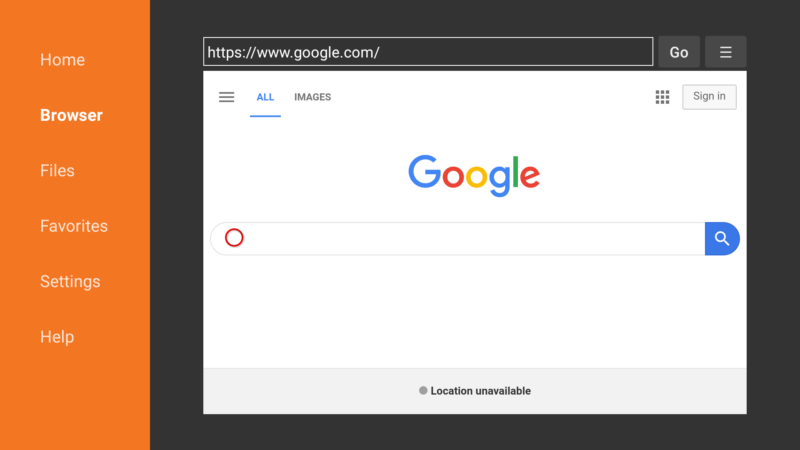
Screenshot of the Google home page displayed on Downloader, an Android app with a built-in browser.

Enlarge / The Downloader app that was suspended from Google Play. (credit: Elias Saba)

App developer Elias Saba has had some bad luck with Digital Millennium Copyright Act (DMCA) takedowns. His Android TV app Downloader, which combines a web browser with a file manager, was suspended by Google Play in May after several Israeli TV companies complained that the app could be used to load a pirate website.

Google reversed that suspension after three weeks. But Downloader has been suspended by Google Play again, and this time the reason is even harder to understand. Based on a vague DMCA notice, it appears that Downloader was suspended simply because it can load the Warner Bros. website.

Downloader is similar to standard web browsers in that it lets users access both legal and illegally shared content. The app can be used for general web surfing and can download files from a website when a user inputs the desired URL. According to Saba, the app itself contains no infringing content, nor does it direct users to infringing content.

Read 15 remaining paragraphs | Comments


Source: Ars Technica – Google Play keeps banning the same web browser due to vague DMCA notices

New 'Stable Video Diffusion' AI Model Can Animate Any Still Image

An anonymous reader quotes a report from Ars Technica: On Tuesday, Stability AI released Stable Video Diffusion, a new free AI research tool that can turn any still image into a short video — with mixed results. It’s an open-weights preview of two AI models that use a technique called image-to-video, and it can run locally on a machine with an Nvidia GPU. […] Right now, Stable Video Diffusion consists of two models: one that can produce image-to-video synthesis at 14 frames of length (called “SVD”), and another that generates 25 frames (called “SVD-XT”). They can operate at varying speeds from 3 to 30 frames per second, and they output short (typically 2-4 second-long) MP4 video clips at 576×1024 resolution.

In our local testing, a 14-frame generation took about 30 minutes to create on an Nvidia RTX 3060 graphics card, but users can experiment with running the models much faster on the cloud through services like Hugging Face and Replicate (some of which you may need to pay for). In our experiments, the generated animation typically keeps a portion of the scene static and adds panning and zooming effects or animates smoke or fire. People depicted in photos often do not move, although we did get one Getty image of Steve Wozniak to slightly come to life.

Given these limitations, Stability emphasizes that the model is still early and is intended for research only. “While we eagerly update our models with the latest advancements and work to incorporate your feedback,” the company writes on its website, “this model is not intended for real-world or commercial applications at this stage. Your insights and feedback on safety and quality are important to refining this model for its eventual release.” Notably, but perhaps unsurprisingly, the Stable Video Diffusion research paper (PDF) does not reveal the source of the models’ training datasets, only saying that the research team used “a large video dataset comprising roughly 600 million samples” that they curated into the Large Video Dataset (LVD), which consists of 580 million annotated video clips that span 212 years of content in duration.

Read more of this story at Slashdot.


Source: Slashdot – New ‘Stable Video Diffusion’ AI Model Can Animate Any Still Image

“Mystery” pneumonia in China is mix of common respiratory germs, WHO says

Parents with children who are suffering from respiratory diseases are lining up at a children's hospital in Chongqing, China, on November 23, 2023.

Enlarge / Parents with children who are suffering from respiratory diseases are lining up at a children’s hospital in Chongqing, China, on November 23, 2023. (credit: Getty | Costfoto/NurPhoto)

Last week, news stories and a posting on an infectious disease surveillance system raised fears that another novel respiratory pathogen with pandemic potential was mushrooming in northern areas of China—namely Beijing and Liaoning province. The reports referenced “undiagnosed pneumonia” in “clusters” of children, hospitals that were “overwhelmed,” and parents who were questioning whether “authorities were covering up the epidemic.”

But, rather than a sequel to the COVID-19 pandemic, the situation appears to be merely a side effect of it. According to independent experts and the World Health Organization, it’s most likely that China is now experiencing a roaring comeback of a mix of common respiratory infections that were muted during the global health crisis. Many other countries experienced the same surges in the past year or two, including the US. As with the other countries, the wave of infection in China is mostly affecting children, who were less exposed to all sorts of pathogens amid the health restrictions, leaving them more vulnerable to infections now.

The global explosion of COVID-19 transmission and subsequent pandemic health measures severely disrupted common cycles of many infectious diseases worldwide, knocking seasonal respiratory infections like adenoviruses and RSV (respiratory syncytial virus) off their annual cycles. In the US, the 2020-2021 flu season was virtually nonexistent, for instance. But, as the novel coronavirus abated and restrictions lifted, those pathogens vigorously returned. (The US also experienced early and intense peaks of RSV and flu last year.)

Read 8 remaining paragraphs | Comments


Source: Ars Technica – “Mystery” pneumonia in China is mix of common respiratory germs, WHO says

The 41 best Cyber Monday gaming deals of 2023: PC accessories, consoles, monitors, games and more

Cyber Monday has brought a truckload of deals on gaming gear for PCs, PS5, Xbox and Nintendo Switch alike. As always, most of those offers aren’t really deals at all — but if you want a hand in upgrading your setup, we’ve scoured the many sales happening around the web and compiled the best Cyber Monday gaming deals we could find. While much of the Cyber Monday 2023 selection is left over from Black Friday, we’re still seeing lower-than-usual prices on consoles, games, gaming monitors, mice, keyboards, headsets, handhelds, laptops and other recommended accessories our gaming experts have tested and reviewed.

Cyber Monday gaming console deals

PlayStation 5

The PlayStation 5 is still $50 off and down to $450 at Amazon and GameStop — though stock has been going in and out at the former, and the latter appears to require in-store pickup. This offer only applies to the older version of the PS5, not the smaller “slim” version that was announced last month. But discounts of any kind for Sony’s console have been extremely rare since the device arrived in 2020, and there’s no performance difference between the two models.

If stock for that deal completely runs dry, Sony is still offering a pair of bundles that do include the latest version of the console: one that comes with Marvel’s Spider-Man 2, and one that includes Call of Duty: Modern Warfare III. You should go with the former while both are available: We called Spider-Man 2 a “perfectly balanced game” in our review, while Modern Warfare 3 has been roundly criticized as one of the most undercooked CoD entries in recent memory. Both games cost $70 on their own, so that’s what you’re saving here. 

As a refresher, Sony says the slim PS5 takes up 30 percent less volume than the original models and weighs up to three pounds less. It also has two USB-C ports instead of one. If the slim Spider-Man 2 bundle runs out of stock, Sony is running a similar deal with the older “fat” PS5 as well. That bundle is down to $480 at BJ’s, while other retailers such as Amazon, Target, Best Buy, GameStop, Walmart and PlayStation Direct have bundles for $500. 

Nintendo Switch OLED

Nintendo’s main Switch promo for Cyber Monday is a bundle that pairs the $350 Switch OLED with a digital copy of Super Smash Bros. Ultimate and a three-month individual subscription to Nintendo Switch Online for no extra cost. Smash Bros. arrived back in 2018, but it still tends to retail between $50 and $60 on its own, while the Switch Online sub normally goes for $8. This version of the console also comes with Smash Bros.-themed controllers.

We’ve seen the Switch OLED go for less in the past, so we’d have liked a more substantial discount — especially with a follow-up console reportedly on the horizon. But if you’re jumping on the Switch bandwagon late, Super Smash Bros. Ultimate remains one of the device’s best games, so there’s still value here. This bundle is available at GameStop, Walmart, Target, Best Buy and Nintendo.com.

Nintendo Switch and Switch Lite

Nintendo is selling a pair of holiday bundles for the $300 Switch and $200 Switch Lite as well: The former is available with Mario Kart 8 Deluxe and the same three-month Switch Online sub as above, while the latter now comes with Animal Crossing: New Horizons. It’s really worth stepping up to the Switch OLED’s larger and more vivid display if you can swing it, but both of those games usually cost between $40 and $50 individually. Both make our roundup of the best Switch games as well.

Xbox Series X

Both Xbox consoles are still discounted for Cyber Monday as well. The Xbox Series X, for one, is available for an all-time low of $400 at Amazon with an on-page coupon. This price is also available at BJ’s, though shipping appears to be unavailable there as of this writing. At Best Buy, you can get the console for $450 alongside a $50 Best Buy gift card, while My Best Buy Plus or Total members can take an additional $50 off on top of that. Walmart has the machine for $439, and Target has it for $450.

If those discounts run dry, the Series X is on sale for $440 at Walmart and Microsoft as part of a bundle that also includes the (divisive) action-RPG Diablo IV. That’s a rare $60 drop for the console itself, while the game goes for $70 (though it’s currently on sale for $42). Other stores like GameStop, Best Buy, Newegg, Target and Amazon have the bundle for $450, though stock has only been intermittently available at some of those retailers.

Xbox Series S

As for the Xbox Series S, a “Starter Bundle” that packs the digital-only console with a three-month Xbox Game Pass Ultimate subscription is on sale for $240 at Microsoft and Target (though stock appears low at the latter). This isn’t the lowest price we’ve seen for Microsoft’s entry-level machine, but it’s still a good $60 off its usual rate. The subscription normally costs $51 on its own. Other retailers like Walmart, Amazon, Best Buy and GameStop have it for $250. If the bundle becomes unavailable, Microsoft has the console alone available for $60 off as well. 

Note that these offers apply to the older Series S with 512GB of storage, not the updated 1TB variant that Microsoft released earlier this year. If you’re willing to pay more, Dell has that model on sale for $300. That’s $50 off and one of the few discounts we’ve seen for the latest iteration of the device.

As a refresher, the Series S lacks a disc drive, and its lesser GPU and RAM count means it can’t hit high frame rates or a 4K resolution as consistently as the Series X. That gulf in power is starting to become more evident as time rolls on. But it can play all the same games, it’s physically smaller and, most importantly, it’s far more affordable if all you need is a cheap route into the Xbox library. 

Nintendo eShop gift card

Here’s a simple one: Amazon currently has a $35 Nintendo eShop gift card on sale for $31.50, or 10 percent off. Nothing huge, then, but if you’re looking to pad your Switch game backlog or top up a Switch Online subscription anyway, it’s hard to complain about any little bit of (effectively) free money.

Cyber Monday PlayStation 5 game deals

A metric ton of video games remain discounted for Cyber Monday. There are frankly too many deals for us to recap them all here, but we’ll run through some of the highlights below.

Starting with PlayStation exclusives, the blockbuster action game God of War Ragnarök is down to a new low of $35, while the PS4 version of the gorgeous open-world game Horizon Forbidden West (which includes a free upgrade to the PS5 version) is on sale for a low of $20. The dramatic action-RPG Final Fantasy XVI is down to $35, the PS5 remake of The Last of Us is down to $40 and Marvel’s Spider-Man: Miles Morales is available for $20. The challenging roguelike Returnal is also on sale for $30. Not all of these are all-time lows, but each is at least a little lower than usual, and many of the discounted titles make our list of the best PS5 games. We aren’t seeing deals on Marvel’s Spider-Man 2, however.

Among multiplatform games, still-available highlights include the turn-based RPG Octopath Traveler II for $30, the recent Dead Space remake for $35 and the stealth game Assassin’s Creed Mirage for $40. Sports games EA Sports FC 24 and Madden NFL 24 are each $30, too. You can peruse through the PlayStation Store’s ongoing Cyber Monday sale for more offers.

Cyber Monday Nintendo Switch game deals

Many of Nintendo’s Black Friday game deals are no longer around for Cyber Monday, but we’re still seeing some decent prices on games we recommend in our guides to the best Switch games and best couch co-op games. The cutesy adventure game Luigi’s Mansion 3 is about $10 off at $40, for instance, while Kirby and the Forgotten Land is still available for a low of $39. Beyond that, well-reviewed RPGs Xenoblade Chronicles 3 and Shin Megami Tensei V are down to $39 and $20, respectively. The Nintendo eShop’s “Cyber Deals” sale has several other discounts of note, including the Portal Companion Collection for a new low of $6.79. There still aren’t significant discounts on newer games like Super Mario Bros. Wonder and The Legend of Zelda: Tears of the Kingdom, though.

Cyber Monday Xbox game deals

For Xbox owners, Microsoft’s Cyber Monday sale still includes a number of picks from our guide to the best Xbox games. The rhythm-action game Hi-Fi Rush, for one, is at a low of $22.49, while the open-world racer Forza Horizon 5 is down to $29. The wonderfully written murder mystery Pentiment is about $7 off at $13.39, the Halo: Master Chief Collection is available for $10 and the third-person shooter Gears 5 is back down to $12. Older gems like The Elder Scrolls IV: Oblivion and Prey are available for $3 each. And while our review wasn’t huge on Starfield, the Bethesda space RPG is now down to $55 (or $56 digitally), a $15 discount for those who’ve been curious. Many of the multiplatform titles noted above are also on sale; just keep in mind that several of these games are also available with an Xbox Game Pass subscription.

Cyber Monday PC game deals

PC gamers have plenty of deals to shop through as well. Steam is running its annual Autumn Sale through November 28, while the Epic Games Store’s Cyber Monday sale includes a recurring coupon that takes 33 percent off eligible games when your cart totals $15 or more. Humble and GOG are still running storewide promos as well.

These sales include literal decades of games between them, so it’s worth browsing the sales for yourself. One highlight, though, brings the trippy survival horror game Alan Wake 2 down to a new low of $33.49 when you use the aforementioned coupon at Epic. Beyond that, the action-RPG/management sim hybrid Dave the Diver is back at a low of $16, while the madcap platformer Pizza Tower is at a low of $15.

Game of the Year contender Baldur’s Gate 3 isn’t discounted, sadly, but several picks from our list of the best PC games are at lower-than-usual prices. Those include the roguelike Hades for $12.49, the VR-only Half-Life: Alyx for $20, the thoughtful RPG Disco Elysium for $10, the driving sim Euro Truck Simulator 2 for $5 and Stray (aka the cat game) for $20. The 27-game Valve Complete Pack is another standout at $14.

Cyber Monday game controller deals

PS5 DualSense Wireless Controller

If you need a spare controller for your PlayStation 5, Sony’s DualSense wireless pad is still down to $49 in various colors at Amazon, Walmart, Target and others. While not an absolute all-time low, that’s a nice $20 or $25 off Sony’s list price depending on which finish you choose.

Xbox Wireless Controller

If you’re after a new Xbox gamepad, official Xbox Series X/S controllers are on sale for $40 at Microsoft, Target and Best Buy. Other stores like GameStop have them for $5 more. Again, the discounts apply to several different finishes. We typically see the gamepad retail between $50 and $60 depending on the color. The big caveat with the Xbox controller is that it requires a pair of AA batteries for power; we recommend grabbing a rechargeable set like the Panasonic Eneloops to mitigate that annoyance. That said, if you want a new controller for gaming on the PC, the Xbox pad is generally easier to set up and use with most Windows clients than the DualSense.

Nintendo Switch Joy-Cons bundle

Apart from the Switch console bundles, Nintendo is selling a bundle that pairs a red and blue set of Joy-Con controllers with a digital copy of Super Mario Party for $100. A pair of Joy-Cons usually goes for $80, while the game alone typically retails in the $50 range these days, so you’re saving about $30 by getting the two together. Note that this isn’t the latest Mario Party game, though — that would be Mario Party Superstars, which was released in 2021. Still, if you’re looking to play a few new Mario Party boards and need a new set of Joy-Cons anyway, it might be worth the extra cost.

8BitDo Ultimate Bluetooth Controller

The 8BitDo Ultimate Bluetooth Controller is on sale for $56 at Amazon and Best Buy, a $14 discount that matches the lowest price we’ve seen. This is a comfortable and deeply customizable wireless gamepad for Switch and PC that we’ve highlighted in the past. The big advantage it has over most official controllers is its Hall effect joysticks, which use magnets to read inputs instead of contact-based potentiometers. This means it should be less susceptible to wear over time and avoid the dreaded “stick drift” we often see with more traditional gamepads. A pair of customizable back buttons, an accurate d-pad and an included charging dock are all nice to have as well.

Backbone One

The Backbone One mobile game controller is down to $70 at Amazon, Target, Backbone’s online store and other retailers. Both the USB-C and Lightning models are on sale; the latter is compatible with Apple’s iPhone 15 series as well as numerous Android phones. We gave the Backbone a positive review last year, and we note it in our gaming handhelds guide: It’s more cramped than a traditional gamepad, naturally, but it has all the requisite buttons to play modern games, it’s extremely easy to set up and it works well for remote streaming from your console or PC. If nothing else, it’s a much better value than the PlayStation Portal.

Thrustmaster T300RS GT Edition

The Thrustmaster T300RS GT Edition is a PlayStation- and PC-compatible racing wheel we’ve previously recommended to sim racing fans looking to upgrade from a standard gamepad for the first time. Right now Thrustmaster has it down to $330 for Cyber Monday, which isn’t an all-time low but marks the lowest price we’ve seen over the past few years. The T300RS GT is a belt-driven wheel with a sturdy build quality and stable, responsive pedals. The latter in particular are a step up over less expensive models we’ve tested. This isn’t the fastest thing to set up, and it’s been around for several years at this point, but it remains an effective way to make racers like Gran Turismo 7 more expressive.

Cyber Monday gaming handheld and VR headset deals

ASUS ROG Ally

The ASUS ROG Ally is down to $600 at Best Buy, which is $100 off the handheld gaming PC’s normal price and a rare discount. The ROG Ally is the “best Windows alternative” pick in our guide to the best gaming handhelds. As that title suggests, the ROG Ally runs Windows, which isn’t nearly as straightforward to use on a seven-inch display as the Steam Deck’s Steam OS but makes it easier to play games from other clients such as Epic, Xbox, GOG and Itch.io. The ROG Ally is physically smaller than Valve’s handheld, too, and the AMD Ryzen Z1 Extreme chip in this config gives it stronger overall performance. It also has a sharper 1080p display with a faster 120Hz refresh rate.

We’d still recommend the Steam Deck (which isn’t discounted) to most, especially after the launch of the new Steam Deck OLED. Apart from being less prone to software quirks, that machine usually lasts longer on a charge, and the new model’s OLED panel is more vivid. The ROG Ally has also had issues with malfunctioning microSD card readers, so you’ll want to stick to its built-in SSD storage (which is thankfully replaceable). But if you’re willing to brave Windows and want the wider game support, the ROG Ally does enough right to be a solid alternative to traditional gaming laptops.

The entry-level version of the ROG Ally with a less powerful AMD Ryzen Z1 chip is also on sale for $450, which is a $150 discount. That’s a decent price if you’ll stick to less-demanding games, but the Z1 Extreme model is significantly faster, so it’s worth the extra cash if you can afford it.

Meta Quest 2

Meta’s Quest 2 VR headset is down to $249 and comes with a $50 store gift card or credit at Amazon, GameStop and Target. (For Amazon, use the code META50 at checkout to see the complete offer.) Other retailers like Walmart, Best Buy and B&H have the same $50 discount without a gift card. It’s tougher to recommend the Quest 2 after the release of the comprehensively superior Quest 3 last month; that newer model isn’t on sale as of this writing, but it’s worth the extra cash if you can stretch your budget. If you can’t, though, the Quest 2 still offers a relatively polished VR experience. While it’s designed to be used cordless, it’s still perfectly usable when tethered to a gaming PC as well. We name the Quest 2 the top headset for those on a budget in our VR headset buying guide.

Cyber Monday video game storage deals

Samsung Pro Plus

The top pick in our microSD card buying guide, the Samsung Pro Plus, is also on sale. You can grab a 128GB unit for $11, a 256GB unit for $18 and a 512GB unit for $32; the first two of those represent the lowest prices we’ve seen, while the third is within $3 of its all-time low. Despite its relatively affordable price, the Pro Plus was among the fastest cards we tested in both sequential and random performance, so it’s a dependable option if you need to add space to a Switch or Steam Deck.

Elsewhere, Samsung’s Evo Select card is down to $25 for a 512GB unit. That one was a fair bit slower in testing, but the differences aren’t hugely noticeable when it comes to load times on Nintendo’s and Valve’s handhelds, so it should do the job if you want to save a few bucks. Both cards come with 10-year warranties.

WD Black C50 Storage Expansion Card for Xbox Series X/S

Unlike the PS5 or Switch, the Xbox Series X/S requires you to use a proprietary expansion card if you want to add storage space for current-gen games. If your Xbox is running out of room, WD’s Black C50 is one of those cards, and its 1TB model is now on sale for an all-time low of $124 at Amazon. At WD, Walmart and Best Buy, it’s on sale for $1 more. This is much more expensive than a typical SSD with the same capacity, but it’s at least $26 off WD’s usual price. If you need more storage, the 2TB version of Seagate’s Storage Expansion Card is $50 off at $230, which again matches the lowest price we’ve tracked. Both cards perform just about identically.

Corsair MP600 Pro LPX SSD

If you’re looking to upgrade a PlayStation 5’s storage, the Corsair MP600 Pro LPX is the top pick in our guide to the best PS5 SSDs, and it’s now down to $110 at Amazon for a 2TB model. That takes about $15 off the device’s average street price and ties its all-time low. The 4TB variant is also on sale for $260, which is another low and $20 less than the drive’s price over the last month. Either way, this PCIe 4.0 SSD checks all of the PS5’s requisite performance boxes and comes with a heatsink pre-installed to keep from overheating. It’s also backed by a five-year warranty.

Cyber Monday gaming mouse deals

Razer Basilisk V3

The Razer Basilisk V3 is the top overall pick in our guide to the best gaming mice, and it’s dropped to $40 at Target, Best Buy, Amazon and Walmart. That’s an all-time low and $10 off the device’s usual street price. The Basilisk V3 isn’t the lightest mouse around at 100 grams, but its sturdy shape should be comfortable for users of each grip type and all but the smallest of hands. It has no major issues with latency or tracking accuracy, either, plus it comes with 11 customizable buttons, including a “sensitivity clutch” for moments where more precise aiming is required. Beyond that, its scroll wheel supports both left-right tilt and a faster free-spin mode — both helpful for navigating large documents — though it is on the noisy side.

Corsair Scimitar RGB Elite

The Corsair Scimitar RGB Elite is the “best for MMOs” pick in our gaming mouse guide, and it’s now down to $50 at Amazon and Best Buy. That’s $2 more than the lowest price we’ve tracked but still $10 below the mouse’s typical going rate. Like most MMO mice, the Scimitar RGB Elite is fairly bulky, but that’s because it has 12 easy-to-distinguish side buttons that you can use to access commands in games like Final Fantasy XIV or Baldur’s Gate 3. Its rounded, gently sloped shape should be comfortable to palm- and claw-grippers of most hand sizes. And while its sensor is fairly old, it’s accurate enough. Just note that its cable is somewhat stiff, and that you probably won’t want to spend much time in Corsair’s messy companion software.

HyperX Pulsefire Haste 2

The HyperX Pulsefire Haste 2 is an honorable mention in our gaming mouse guide, as it’s a solid alternative to the Basilisk V3 if you prefer a flatter shape or one more welcoming to lefties. It performs reliably and weighs a scant 53 grams, so it’s easy to flick around in multiplayer games. Right now it’s down to $40 at Amazon and Best Buy, which is an all-time low and roughly $15 below its average street price over the last couple of months.

Logitech G203 Lightsync

Sticking with gaming mice, the Logitech G203 Lightsync is on sale for $20 at Amazon, B&H and Best Buy. That’s about $8 off its usual going rate. The G203 is the budget pick in our gaming mouse buying guide: It’s small, its scroll wheel is a bit mushy and its rubber cable isn’t especially flexible, but it tracks accurately, it’s built well and its light (85g) shape should suit righties and lefties. For less than $20, it’s hard to do better. If you’d rather go wireless, the Logitech G305 Lightspeed puts a newer sensor in more or less the same shape, and it’s currently discounted to $35.

Cyber Monday gaming monitor deals

LG 27GP850-B

The LG 27GP850-B gaming monitor is available for $300 at LG.com, which is $10 more than its all-time low but about $70 below its average street price. This is the “best for most” pick in our gaming monitor buying guide. It’s a 27-inch IPS panel with a 1440p resolution and a native 165Hz refresh rate — not top of the line by any means, but perfectly competent for most needs. We found it to provide clear motion and fast response times in testing, and it works with both FreeSync and G-Sync to ward off screen tearing regardless of your graphics card. It can’t deliver especially high contrast or deep black tones, but for $300 it’s still a nice value.

Alienware AW3423DW

Dell’s Alienware AW3423DW monitor is on sale for an all-time low of $897 at Amazon, which is about $250 off its usual going rate. Dell has it for a couple bucks more.

The AW3423DW is a 34-inch curved ultrawide monitor with outstanding image quality thanks to its QD-OLED panel. This is the display tech we’ve seen on higher-end TVs in recent years; it blends an OLED display with a layer of quantum dots, in turn adding a bit of extra brightness and color saturation to the excellent contrast, black levels and motion typically expected from an OLED panel. The display doesn’t have the sharpest resolution (3,440 x 1,440) or fastest refresh rate (175Hz), but its vivid colors and fast response times make it a treat for gaming in HDR or SDR. It natively supports G-Sync as well. It does lack an HDMI 2.1 port, however, so it’s best suited for a PC than a PS5 or Xbox Series X. There’s always some risk of burn-in with OLED monitors too.

We gave the AW3423DW a score of 92 in our review last year. If your rig is based on an AMD graphics card, there’s also the Alienware AW3423DWF, a similar variant with native FreeSync support. That one is currently available for $800.

Cyber Monday gaming headset deals

Beyerdynamic DT 900 Pro X

Beyerdynamic’s DT 900 Pro X headphones are down to $249 at Target from a trusted third-party seller. That’s only $20 off their usual going rate, but we haven’t seen many larger discounts over the past few months. The DT 900 Pro X is a wired pair of open-back headphones designed for critical listening at home. It’s currently the top pick in our guide to the best headphones for gaming, as its wonderfully spacious sound does well to envelop you in the fine details of any given game. Like most open-back cans, it can’t produce truly deep sub-bass, but it delivers enough low-end to give in-game explosions a powerful sense of impact. A set of soft velour earpads keep the whole thing comfortable, though it can’t fold up, and the open design means it won’t block much external noise when you’re outside of the house.

Sennheiser HD 560S

The Sennheiser HD 560S is another open-back pair of wired headphones we highlight in our gaming headset guide. It’s down to $150 at Amazon and B&H — that’s not an incredible deal, as the pair often sold for the same rate earlier in the year, but it’s about $30 less than the street price we’ve seen since the summer. Regardless, the HD 560S offers a pleasingly balanced, spacious and detailed sound profile and a frame that’s comfortable to wear for extended periods. It can sometimes sound a little piercing in the treble, it’s not as sturdily built as the DT 900 Pro X and, again, it’ll leak and let in lots of noise. But if you want a pair of audio-centric gaming headphones for less than $200, this is one of the better options in the price range.

Astro A40 TR

Our favorite dedicated gaming headset for most people, the Astro A40 TR, is down to $100 at Amazon. That’s a $30 discount. This deal bundles the headset with Astro’s MixAmp M80, an optional amp that connects to Xbox controllers and provides various audio controls. Even without the accessory, we like the open-back A40 for providing a wider soundstage than most gaming headsets. It’s not as open or detailed as the Beyerdynamic DT 900 Pro X, and it misses more detail in the treble range, but it’s immersive, with a slight bass boost gives in-game effects a little extra boom. The headset as a whole looks “gamer-y,” but it’s comfortable. And while its built-in mic isn’t the clearest we’ve tested, it’s at least serviceable for basic chat.

HyperX Cloud Stinger 2

If all you want is a decent gaming headset for as little as possible, the HyperX Cloud Stinger 2 is worth considering at $35. Though we saw the headset briefly fall down to $30 earlier on Cyber Monday, this deal matches the best price we’ve seen otherwise. The Cloud Stinger 2 is the budget pick in our gaming headset guide: It sounds narrower and less balanced than the Astro A40, but its built-in mic is great for the money and its bass-heavy profile at least makes action scenes feel a little more exciting. It’s all comfy, too, though it’s largely made of plastic.

HyperX Cloud Alpha

HyperX’s Cloud Alpha headset is also on sale for $50. The wired Cloud Alpha has been around since 2018 but continues to offer great comfort and a solid detachable mic. It doesn’t sound bad either, though it can’t provide the same sense of width as the Astro A40 and its underemphasized treble keeps it from delivering pristine detail. Nevertheless, this is a nice step-up over the Cloud Stinger 2 if you’re willing to pay a little bit extra. We highlight the Cloud Alpha as an honorable mention in our gaming headsets guide.

Logitech G535

The Logitech G535 is another honorable mention in our gaming headsets guide, one that should specifically appeal to those who want a wireless option for less than $100. If that’s you, good news: It’s available for just under $80 at Amazon, B&H and Best Buy, which is about $25 off its usual street price. The G535’s noticeably light frame, relatively balanced sound and Bluetooth support all impress for the price; just note that it doesn’t work with Xbox, and that its mic sounds a bit thinner than the wired headsets highlighted above. Its battery life clocks in at 30 to 35 hours per charge, which is decent but not great.

Cyber Monday gaming keyboard deals

Razer Huntsman V2 TKL

If you’re after a new keyboard for gaming purposes, the Razer Huntsman V2 TKL is still on sale for a record low of $80. We recommend the Huntsman V2 TKL in our guide to the best gaming keyboards due to its sturdy tenkeyless frame, crisp PBT keycaps, clean RGB lighting and steady performance. Its keystrokes are quiet, plus it comes with a wrist rest, all for a relatively attainable price. We’re specifically talking about the model with Razer’s linear optical switches here; there’s another variant with clicky switches, but we found typing on that model to be distractingly noisy in testing.

SteelSeries Apex Pro TKL Wireless

The SteelSeries Apex Pro TKL Wireless is back down to $175 at Best Buy and Amazon, a $75 drop that comes within a dollar of the best price we’ve seen. This is the top wireless pick in our gaming keyboards guide. It uses SteelSeries’ magnetic OmniPoint switches, which enable a range of helpful gaming features: You can raise or lower the actuation point of individual keys — setting a high point to make typing more comfortable or a low point to make presses faster for games — or use a rapid trigger mode that lets you repeat critical inputs faster. The rest of the keyboard is solid too, though you’d buy it for that gaming flexibility more than its raw typing experience. The Wooting 60HE, our top overall pick, is a better value if you don’t mind going wired, but it’s not discounted as of this writing. If you really want to reduce clutter on your desk, this is a good alternative.

ASUS ROG Strix Scope II 96 Wireless

The ASUS ROG Strix Scope II 96 Wireless is down to a new low of $145 at Amazon, which is a $35 discount. This was a close second to the Apex Pro TKL in our testing when it came to wireless gaming keyboards. Its pre-lubed ROG NX switches, superb sound dampening and PBT-coated keycaps make it a pleasure to type on, it’s hot-swappable, plus it lasts longer than SteelSeries’ model on a charge. It just lacks the custom actuation tricks we found so useful on the Apex Pro. Still, if you care about a premium typing feel more than gaming-friendly features, this is a good buy.

ASUS ROG Azoth

The ASUS ROG Azoth, meanwhile, is down to $200 at Amazon, Newegg and B&H. That matches the lowest price we’ve seen and marks a roughly $25 drop from the wireless keyboard’s average street price. The Azoth is like a smaller version of the Strix Scope II 96 Wireless with a few more enthusiast touches, including a gasket-mounted design (which gives presses a softer feel), a programmable OLED display and a toolkit for lubing switches in the box. It’s exceptionally well-made, but it probably goes without saying that it’s meant for enthusiasts only, even with this discount.

Razer Huntsman Mini

The Razer Huntsman Mini is down to $70 at Target for a model with linear optical switches. If stock there runs out, Amazon and Best Buy have it for $10 more. Normally, we see this keyboard retail between $90 and $100. The Huntsman Mini is another honorable mention in our gaming keyboards guide. It’s a 60 percent keyboard, so it omits dedicated arrow and function keys but takes up very little space on a desk — providing more room to move a mouse around in turn. Its textured PBT keycaps and aluminum top plate keep it from feeling cheap, while its linear switches are quick, responsive and not terribly loud. Another version of the Huntsman Mini with analog switches is also on sale for $80: We haven’t tested that model, but it lets you customize each key’s travel in a manner similar to the Apex Pro TKL Wireless above.

Cyber Monday gaming laptop deals

ASUS ROG Zephyrus G14

The ASUS ROG Zephyrus G14 is still available for $1,200 at Best Buy for a configuration with a Ryzen 9 7940HS processor, 16GB of RAM, a 512GB SSD and a GeForce RTX 4060 GPU. That matches the lowest price we’ve seen and takes $400 off ASUS’ list price. This model also has a 14-inch 1440p display with a 165Hz refresh rate. The ROG Zephyrus G14 is the top overall recommendation in our guide to the best gaming laptops. It’s a compact notebook that’s plenty capable for triple-A gaming but doesn’t totally sacrifice the “laptop” part of the phrase “gaming laptop.” It’s relatively light and portable at 3.6 pounds, and its keyboard and trackpad both work well. Its 720p webcam could stand to be sharper, though.

MSI Stealth 14 Studio

The MSI Stealth 14 Studio is another gaming laptop we like, and right now Best Buy has it for $1,100. This model includes a Core i7-13620H chip, 16GB of RAM, a 1TB SSD, an RTX 4060 GPU and a 14-inch 1,920 x 1,200 display with a 165Hz refresh rate. We gave the Stealth 14 Studio a score of 87 in our review this past June; like the ROG Zephyrus G14, it’s light for a gaming laptop (3.75 pounds) and offers capable performance for everyday gaming. This config is a lower-end model than the one we reviewed — it has a slightly slower CPU and its display isn’t as sharp or fast — but the gist is the same. Its biggest flaws are its middling 720p webcam and the fact that it can run hot under load. It’s still a gaming laptop, so battery life isn’t amazing either.

Whether you should get this config over the ROG Zephyrus G14 deal above comes down to whether you can sacrifice a higher-res display for more storage space. The G14 has more ports as well, though the Stealth 14 Studio includes a Thunderbolt 4 port, which may be important if you ever plan on connecting an external GPU.

Dell G15 5530 Gaming Laptop

A version of Dell’s G15 5530 Gaming Laptop with a Ryzen 7 7840HS processor, 16GB of RAM, a 512GB SSD, an RTX 4060 GPU and a 15.6-inch, 1080p, 165Hz display is down to $900 at Amazon. That’s a 22 percent discount and the lowest price we’ve tracked. Another model with a more powerful Core i7-13650HX chip and 1TB of RAM is available for $1,160, which is about $190 below its average street price. This is the most recent version of the “best budget” pick in our gaming laptops buying guide. It’s big, heavy (6.2 pounds) and not especially premium feeling, but it’s strong enough to play many games at high-ish settings, and its memory and storage are user-upgradeable.

Your Cyber Monday Shopping Guide: See all of Yahoo’s Cyber Monday coverage, here. Follow Engadget for Cyber Monday tech deals. Learn about Cyber Monday trends on In The Know. Hear from Autoblog’s experts on the best Cyber Monday deals for your car, garage, and home, and find Cyber Monday sales to shop on AOL, handpicked just for you.

This article originally appeared on Engadget at https://www.engadget.com/the-41-best-cyber-monday-gaming-deals-of-2023-pc-accessories-consoles-monitors-games-and-more-224313947.html?src=rss

Source: Engadget – The 41 best Cyber Monday gaming deals of 2023: PC accessories, consoles, monitors, games and more

AWS Repurposes Fire TV Cubes Into $195 Thin Clients For Cloud Desktops

Simon Sharwood reports via The Register: Amazon Web Services has announced the WorkSpaces Thin Client — a device dedicated to connecting to its WorkSpaces desktop-as-a service offering and based on Amazon’s own “Fire Cube” smart TV box. The $195 machine has the same hardware as the Fire Cube: the eight-core Arm-powered Amlogic POP1-G SoC, plus 2GB of LPDDR4 RAM, 10/100 ethernet, and a single USB-A 2.0 port. Bluetooth is included to connect other peripherals. A second HDMI output can be added by acquiring an $85 hub that also offers four more USB ports. Like the Fire TV Cube, the Thin Client also runs a modified cut of Android.

But there the similarities end. AWS created custom firmware and ripped out anything remotely related to running a consumer device, replacing it with software designed solely to create a secure connection between the device and desktops running in the Amazonian cloud. Amazon Business — the B2B version of Jeff Bezos’s digital souk — will ship the device to your door, and charge it to your AWS bill. At least if you are in the USA. Europe will get the Thin Client in early 2024, and it’ll eventually migrate elsewhere.

AWS decided to base the box on the Fire Cube because, according to a corporate blog post, AWS customers expressed a desire for cheaper and easier-to-maintain client devices. As AWS execs searched for a well-priced box, they considered the Fire TV Cube, found it fit the bill and noted it was already being made at scale. Keeping things in-house made sense, too. And so we find ourselves with AWS taking on established thin client providers. The cloudy concern is also keen to have a crack at the thick wedge of the enterprise PC market: call centers, payment processing centers, and other environments with lots of users and high staff turnover due to factors like seasonal demand for workers.

Read more of this story at Slashdot.


Source: Slashdot – AWS Repurposes Fire TV Cubes Into 5 Thin Clients For Cloud Desktops