Google's first geothermal energy project is up and running

Google says a first-of-its-kind geothermal energy project is now feeding carbon-free electricity (CFE) into the Nevada grid that powers its data centers in the area. The company says that the enhanced geothermal system (EGS) is delivering a round-the-clock supply of CFE to the grid. It’s a step toward Google’s goal of entirely powering its data centers and offices on CFE by 2030.

Google teamed up with clean energy startup Fervo Energy in 2021 to work on an EGS. Unlike other sources of CFE such as solar and wind, geothermal projects can operate at any time (solar projects, for instance, can only capture energy during the day). 

Fervo Energy achieved a geothermal breakthrough earlier this year when its system achieved flow and power output records for an EGS. It was capable of producing 3.5 megawatts of electricity — enough to power around 2,600 homes. That test result was said to be the first time an energy company proved an EGS is capable of working on a commercial scale.

Scientists have been trying to make an EGS work since the 1970s. A natural geothermal system requires a blend of heat, rock permeability and fluid to generate electricity. In areas where there’s sufficient heat but not enough permeability, an EGS creates the latter by drilling deep into the earth and injecting fluid to create fractures in the rock.

At its Nevada site, Fervo drilled 8,000 feet into the ground, then extended the well horizontally to reach more of the hot reservoir. It drilled a second horizontal well to intersect the fractures in the rock. The company pumps cold water from the first well through the fractures into the second well. The water absorbs heat from the surrounding rock. This is used to generate steam and that produces CFE.

The Department of Energy has acknowledged that, unlike with gas and oil fracking, EGS poses a low risk of water contamination. EGS reservoirs are typically much deeper in the ground than oil and gas reservoirs and aren’t close to groundwater or near-surface drinking water supplies. Geothermal power plants don’t release any water on the surface either.

A 2019 report by the DOE found that — through advancements in technology as well as in policy and procurement — EGS could generate up to 120 gigawatts of clean energy by 2050. That would be enough to cover over 16 percent of the US’ expected electricity needs.

Google says it’s working to accelerate adoption of EGS as a clean energy solution. To that end, it recently teamed up with Project InnerSpace, a non-profit organization that’s focused on removing barriers that are limiting the global development of geothermal energy. Fervo, meanwhile, is building an EGS site in Utah that it expects to deliver 400 megawatts of 24/7 carbon-free electricity — enough to power as many as 300,000 homes. Fervo says that site will start delivering power to the grid in 2026 and reach full-scale production two years later.

This article originally appeared on Engadget at https://www.engadget.com/googles-first-geothermal-energy-project-is-up-and-running-162630603.html?src=rss

Source: Engadget – Google’s first geothermal energy project is up and running

The best Cyber Monday TV deals that are still available: Save hundreds on sets from Samsung, Sony, LG and more

Cyber Monday is officially in the rear view mirror, but if you’re still looking to pick up a new TV at a discount, it’s not too late. While some of the best Cyber Monday TV deals we could find are no longer available, a handful are still live, including discounts on both premium OLED TVs and more budget-friendly sets from Samsung, LG, Sony, Hisense and TCL. To help make sure you get a TV that’s worth your money, we’ve rounded up the best of the bunch below. And if you’re already happy with your set, we’ve also included a few good Cyber Monday deals for Roku and Chromecast streamers that are still kicking.

Best Cyber Monday OLED TV deals

55-inch Samsung S90C OLED TV

A 55-inch model of Samsung’s S90C OLED TV is still available for $1,298 at Amazon, Walmart and B&H. Samsung itself has it for $2 more. This has been the S90C’s price for the last few weeks but, outside of a brief drop to $1,098 at B&H earlier this month, it matches the lowest rate we’ve tracked. The S90C has received near–universal praise for its QD-OLED panel, which uses quantum dots to boost its peak brightness and color saturation while retaining the high contrast and deep black tones of a typical OLED display. Put another way: It looks great, and it should hold up better than most OLED TVs in a bright room. It’s also an ideal gaming TV, as it has four HDMI 2.1 ports that support up to a 144Hz refresh rate in 4K. The main drawback is that, like all Samsung TVs, it doesn’t support the popular Dolby Vision HDR format.

48-inch LG A2 OLED TV

The 48-inch LG A2 OLED TV is now available for $600 at Best Buy. That’s $50 higher than the all-time low we saw during Cyber Monday, but if you want to step up to an OLED TV at a reasonably affordable price, it’s still a solid value. The A2 is an entry-level model from 2022, so it’s limited to a 60Hz refresh rate, lacks HDMI 2.1 ports and doesn’t support other gaming-friendly features like VRR. It has noticeably lower peak brightness than higher-end OLEDs like the S90, too, so it won’t pop as much with HDR content. That said, it’s still an OLED TV, so it still delivers deep contrast, bold colors, wide viewing angles and low input lag for the money. At this price, it should be a nice step-up option for smaller or secondary rooms.

55-inch Sony A95L OLED TV

If money is truly no object, the 55-inch Sony A95L is $300 off and down to a new “low” of $2,498 at Amazon and B&H (and $2,500 at Best Buy). That’s far from cheap, but this ultra-premium QD-OLED TV has received wide praise for delivering perfect black levels, superb image processing, particularly punchy colors, and high brightness levels relative to other OLED sets. It’s another Google TV and, unlike the Samsung S90C, it supports Dolby Vision HDR. It can even play games at 4K/120Hz with Dolby Vision, and several reviews praise the quality of its built-in speakers. The main negative, apart from its eye-watering price, is that it only has two HDMI 2.1 ports. The S90C should be a better value for most, particularly gamers, but this deal makes the A95L at least a little cheaper than usual.

Best Cyber Monday 4K LED TV deals

55-inch Samsung The Frame LED TV (LS03B)

The 55-inch version of Samsung’s The Frame TV is still down to $978 at Amazon and B&H, which is nearly $400 off its average street price in recent months. It’s available for a couple bucks more at Samsung and Best Buy. This LED TV lacks contrast-boosting features like local dimming and mini-LED backlights, so its picture quality, while good, can’t match the best sets in its price range. Instead, you’d buy a Frame TV for its style. The whole thing is designed to look like a mountable piece of wall art, and when you aren’t watching something, you can use it to display artwork and photos. The TV comes with a few pieces by default, while others are available with an optional subscription.

55-inch Hisense U8K LED TV

The 55-inch Hisense U8K remains available for $698 an Amazon and Walmart, which is an all-time low and $50 less than its typical street price in recent months. Best Buy has it for $700. The 65-inch model is still a decent value at $900 — though that’s $30 higher than the low we saw on Cyber Monday — while the 75-inch set is at a low of $1,290. Several reviews have praised the U8K as one of the year’s best values among midrange TVs, one that gets impressively bright and delivers strong contrast for an LED display. It comes with two HDMI 2.1 ports that play 4K video up to 144Hz, it supports all the major HDR formats and its Google TV platform is easier to use than most smart TV UIs. Its motion and color performance will still trail a good OLED TV, though, and reviews say it’ll wash out much more heavily when viewed from an angle. But if you want to stay under $1,000 for a 65-inch model or smaller, it should be a good value.

65-inch Hisense U6K LED TV

The Hisense U6K is down to $350 for a 55-inch model and $498 for a 65-inch model, both of which represent all-time lows. The U6K is a well–reviewed option for those on a tighter budget, as it’s one of the few affordable sets to use quantum dots, mini-LED backlights and full-array local dimming. All of that helps it deliver better contrast and color volume than most TVs in this price range. It can’t get as bright as the U8K or TCL QM8, so it won’t exactly sparkle with HDR content, and its picture will degrade when viewed at an angle. Its 60Hz refresh rate and lack of HDMI 2.1 ports mean it’s not ideal for gaming, either. But trade-offs are to be expected for less than $500; if you don’t want to pay up for a higher-end model, this looks to be a solid compromise.

65-inch Hisense U7K LED TV

We’ll also note the Hisense U7K, which is down to a low of $900 for a 75-inch set at Amazon and Best Buy. The 65-inch and 55-inch models are also available for lows of $700 and $480, respectively. As its name suggests, this TV sits between the U8K and U6K in Hisense’s lineup: It doesn’t look as rich or bright as the former, but it’s a step up over the latter if you can afford to stretch your budget a little more.

65-inch TCL QM8 LED TV

The TCL QM8 is generally regarded as a close rival to the Hisense U8K in the same price bracket. Its 65-inch model is still down to $900 at Amazon, which is only $2 higher than lowest price we’ve tracked. Like Hisense’s set, the QM8 uses quantum dots, mini-LED backlights and an expansive local dimming feature to deliver strong contrast for a non-OLED TV and enough brightness to overcome glare in any room. It, too, runs Google TV, and it has two HDMI 2.1 ports that can play in 4K/144Hz.

The QM8 isn’t available in a size lower than 65 inches, so those who don’t have the space for a larger TV should get the U8K. But TCL’s TV does have one advantage for gamers: Its eARC port is separate from its HDMI 2.1 ports. That means those with a PS5, Xbox Series X and eARC-enabled soundbar can have all three hooked up at once and enjoy 4K/120Hz gaming on the two consoles without having to change inputs. One of the U8K’s HDMI 2.1 ports, on the other hand, doubles as the eARC port, so it might cause a little extra hassle. Otherwise, the two sets appear to offer similar performance.

65-inch TCL Q6 LED TV

The 65-inch TCL Q6 is available for $500 at Amazon and Best Buy, which is $20 more than its all-time low but still $50 below its usual street price. The 75-inch set is also on sale for $650, which is an all-time low. The Q6 is another budget-level TV released in 2023. Most reviews we trust say it lags well behind the Hisense U6K when it comes to contrast and HDR performance, but it’s worth highlighting because it supports a faster 120Hz refresh rate — so long as you play at a 1080p or 1440p resolution instead of 4K. If you’re a competitive-minded gamer who doesn’t want to spend a ton on a new TV, that extra smoothness might be worthwhile. Note that this set runs Amazon’s Fire TV platform, which’ll work best if you often use Amazon services like Prime Video.

Best Cyber Monday streaming deals

Roku Streaming Stick 4K

The Roku Streaming Stick 4K is still down to $30 at Amazon, Target, Walmart, Best Buy and Roku’s online store, among others. That’s $5 more than its all-time low but still $14 off the average street price we’ve seen in recent months. The Streaming Stick 4K is the top pick in our guide to the best streaming devices: It runs quickly, it supports the major HDR formats and streaming services (Twitch excluded) and it has useful features like AirPlay support and a private listening mode. The Roku OS platform isn’t the sexiest piece of software design, but it’s a breeze to navigate and its search tool does well to find shows across disparate apps.

Roku Express 4K+

A couple other Roku streamers of note remain on sale as well. The Roku Express 4K+, for one, is within a dollar of its all-time low at $25. That dongle can’t plug directly into an HDMI port, lacks Dolby Vision support and has slightly slower Wi-Fi than the Streaming Stick 4K, but it offers the same general experience otherwise. This deal is available at several stores, including Amazon, Home Depot, Best Buy and Roku.com.

Roku Ultra

The Roku Ultra, meanwhile, is down to $69 at various retailers. That’s a $30 discount. The Ultra is the “best set-top box” pick in our media streamer guide; it’s pricier than the Streaming Stick 4K, but it adds an Ethernet jack and a microSD slot for expanding storage. It also comes with Roku’s Voice Remote Pro, which has a rechargeable battery, two programmable shortcut buttons, a remote finder function and a built-in headphone jack for private listening. Just note that you can buy the Voice Remote Pro separately and use it with most other Roku streamers if you don’t want to buy a whole new device.

Google Chromecast with Google TV

The Google Chromecast is on sale for $38 at Amazon, Walmart, Target and others. This deal doesn’t represent an all-time low, but it’s still $12 off Google’s list price. The Chromecast is the runner up in our streaming device guide: It was released way back in 2020 and doesn’t support Wi-Fi 6, but it still performs competently and supports the major apps. Its biggest selling point is the Google TV interface, which does well to proactively suggest shows you might like based on your viewing history and has a genuinely convenient voice search function. If the idea of a streamer that adjusts to your viewing habits sounds appealing, it might be worth grabbing over one of the Roku players above. 

If you’re shopping for an older TV, meanwhile, the 1080p version of the Chromecast offers most of the same benefits and is on sale for $20.

Hulu and Paramount+

If you’re happy with your TV setup but need new things to watch, Hulu and Paramount+ are still running Cyber Monday sales for new and returning subscribers. The former is offering a year of its “with ads” tier for $12 total, down from $80. At the latter, you can get that three months of the ad-supported “Essential” tier for $6 instead of $18. Neither service is essential, but if there’s a show you’ve been meaning to watch on one, offers like these at least make the barrier of entry a bit less imposing. Just remember that your subscription will be set to auto-renew in most cases, so you’ll have to cancel manually if you don’t want to pay full price after the discounted period ends.

Your Cyber Monday Shopping Guide: See all of Yahoo’s Cyber Monday coverage, here. Follow Engadget for Cyber Monday tech deals. Learn about Cyber Monday trends on In The Know. Hear from Autoblog’s experts on the best Cyber Monday deals for your car, garage, and home, and find Cyber Monday sales to shop on AOL, handpicked just for you.

This article originally appeared on Engadget at https://www.engadget.com/the-best-cyber-monday-tv-deals-that-are-still-available-save-hundreds-on-sets-from-samsung-sony-lg-and-more-160503246.html?src=rss

Source: Engadget – The best Cyber Monday TV deals that are still available: Save hundreds on sets from Samsung, Sony, LG and more

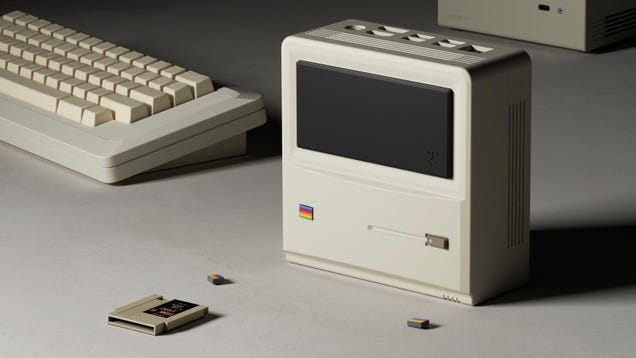
This ‘Little Mac’ Is a Pint-Sized Windows Version of Apple’s Famed PC

How best can you display the advances in technology over the years? Let’s take a PC like the landmark original 1984 Apple Macintosh—later rebranded the Macintosh 128K—and shrink it by more than half. Then, boost its processing capability and memory by a factor of thousands or even tens of thousands—AKA modern mobile…

Read more…


Source: Gizmodo – This ‘Little Mac’ Is a Pint-Sized Windows Version of Apple’s Famed PC

The best Cyber Monday laptop deals that are still live today

Cyber Monday is behind us, but we’re still seeing a number of noteworthy deals on laptops that are worth your money. While the number of deals is no where near where it was yesterday, there are still a number of the best Cyber Monday laptop deals available right now. If you’re looking to gift a new notebook this holiday season or just upgrade your own aging device, you still have time to save hundreds on machines from Dell, Lenovo, HP, Microsoft and others. Some of the deals have brought record lows to top picks from our guides to the best gaming laptops, MacBooks, Chromebooks and Windows laptops and others. Here are the best Cyber Monday laptop deals that are still live today.

Best Cyber Monday MacBook deals

Apple MacBook Air (13-inch, M1)

The older 13-inch MacBook Air that was released in 2020 and uses Apple’s M1 chip is also on sale, with an entry-level config available for $750 at Amazon and Best Buy. We’ve seen this deal a handful of times over the last few months, but it matches the lowest price we’ve seen. It’s really worth stepping up to the M2 Air if you can: It’ll get you a more modern design, a faster chip, a sharper webcam and improved speakers. The 8GB of RAM and 256GB SSD in this config is only suitable for casual use, and this model will almost certainly be discontinued when we get the inevitable M3 refresh. But if you’re on a stricter budget and really want a MacBook, the M1 Air is still well-built, long-lasting and fast enough for the essentials. We currently highlight it in our guide to the best budget laptops.

Best Cyber Monday Chromebook deals

Lenovo IdeaPad Flex 5i Chromebook Plus

The Lenovo IdeaPad Flex 5i Chromebook Plus is down to $379 at Best Buy, which is $120 off its list price. This is the latest iteration of the top pick in our Chromebook buying guide. Its 14-inch, 1,920 x 1,200 IPS touchscreen is good for the money, and it’s plenty fast for the web browsing and light work you’d do with Chrome OS. Both its keyboard and trackpad are comfortable, plus it comes with a decent 1080p webcam. This model comes with an Intel Core i3-1315U processor, 8GB of RAM, 128GB of eMMC storage, one USB-A port, two USB-C 3.2 ports and a microSD card slot. The chassis isn’t especially light at 3.6 pounds, and we found the battery to last roughly seven hours in testing, which is just OK. But for less than $400, this is a strong value.

Best Cyber Monday Windows laptop deals

Dell XPS 13 (9315)

Dell’s XPS 13 is down to $799 for a configuration with a Core i7-1250U processor, 16GB of RAM, a 512GB SSD and a 13.4-inch, 1,920 x 1,200 resolution display. That’s $300 off Dell’s list price and only a little bit higher than the lowest price we’ve seen. The XPS 13 is the top pick in our guide to the best Windows laptops thanks to its svelte design, dependable keyboard and trackpad, lengthy battery life and solid display. You’re not getting the latest processor here, but this model is still performant enough for everyday work. The main issue here is port selection: There’s only two Thunderbolt 4 ports and no dedicated headphone jack. Still, if you can tolerate using a dongle every now and then, this is a good price for a high-quality ultrabook.

Dell XPS 15 (9530)

If you want a larger Windows workstation, the 15.6-inch Dell XPS 15 is also on sale. One variant with a Core i7-13700H processor, 16GB of RAM, a 1TB SSD, an Intel Arc 370M GPU and a 1,920 x 1,200 IPS display is available for $1,099. That’s $500 off Dell’s MSRP and the lowest historical price we could find for this config. Performance in this model should be good for most, though other versions with a richer 3.5K OLED panel, stronger GPUs and extra RAM and storage are similarly discounted.

We gave the 2022 version of the XPS 15 a review score of 93, calling it “the best 15-inch Windows laptop” in the process. This latest iteration uses a newer generation of Intel chips, but it doesn’t make too many changes in terms of design, which is largely a good thing. It still looks sharp and feels well-made, with slim bezels, an aluminum chassis and a soft carbon fiber deck. Its memory and storage are user-replaceable, and it’s not crazy huge for a 15-inch machine, either. Its webcam is still limited to a measly 720p, however, and it doesn’t offer a 120Hz display option. It doesn’t have any USB-A ports, either, though it does include two Thunderbolt 4 ports alongside a USB-C 3.2 Gen 2 port and a headphone jack.

HP Pavilion Aero 13

The HP Pavilion Aero 13 is down to $530 for a model with an AMD Ryzen 5 7535U processor, 16GB of RAM and a 256GB SSD. This notebook goes on sale fairly often, but this is the lowest price we’ve seen for this config. It’s also $20 lower than the deal we saw on Black Friday. 

The Pavilion Aero 13 is the top Windows pick in our budget laptop buying guide. It’s impressively light (2.2 pounds) and slim (0.67 inches) for the money, while its 13.3-inch, 1,920 x 1,200 IPS display is sufficiently bright and colorful. It comes with a solid backlit keyboard and the essential ports as well. It’s still a budget laptop, so it doesn’t have the sturdiest chassis, and it’s saddled with a 720p webcam. You’ll also have to navigate some bloatware. But if you want a cheaper notebook that doesn’t totally sacrifice aesthetics, it’s a decent option.

Microsoft Surface Laptop Studio 2

The Microsoft Surface Laptop Studio 2 is down to $2,043 at Amazon for a configuration with a Core i7-13700H, 16GB of RAM, a 512GB SSD and an Nvidia GeForce RTX 4050 GPU. We gave the Surface Laptop Studio 2 a score of 85 in our review. The big hook is its hinged touch display, which lets the bottom of the screen pivot and tilt over the keyboard like an easel for digital artists. We found the 14.4-inch, 2,400 x 1,600 resolution panel to look great more generally, while its battery life, build quality and overall performance all impressed as well. It’s slightly bulkier than competing models, and it’s still expensive even at this price, but this deal makes it a little more approachable for those who want a laptop for media editing and like the hinged design.

Microsoft Surface Pro 9

A configuration of Microsoft’s Surface Pro 9 with a Core i5-1235U processor, 16GB of RAM, a 256GB SSD and Microsoft’s Surface Pro Keyboard is down to $1,000 at Best Buy. That’s $540 off Microsoft’s list price. If you don’t need the keyboard, a variant with a stronger Intel Core i7-1255U chip is down to $1,097 at Amazon (or $1,100 at B&H and Best Buy). That’s an all-time low and roughly $200 off the config’s usual street price. Another Core i7 model with 512GB of storage is on sale for $300 more.

The Surface Pro 9 tops our guide to the best 2-in-1 tablets. While its 12th-gen chip is about to be two generations old, this is still the device to get if you want the functionality of a laptop in the slim design of a tablet. We’re past the point of the year when Microsoft would normally announce a refresh, but the current model should still be useful if you’re coming from an older Surface in desperate need of an upgrade.

Best Cyber Monday gaming laptop deals

ASUS ROG Zephyrus G14

The ASUS ROG Zephyrus G14 is still available for $1,200 at Best Buy for a configuration with a Ryzen 9 7940HS processor, 16GB of RAM, a 512GB SSD and a GeForce RTX 4060 GPU. That matches the lowest price we’ve seen and takes $400 off ASUS’ list price. This model also has a 14-inch 1440p display with a 165Hz refresh rate. The ROG Zephyrus G14 is the top overall recommendation in our guide to the best gaming laptops. It’s a compact notebook that’s plenty capable for triple-A gaming but doesn’t totally sacrifice the “laptop” part of the phrase “gaming laptop.” It’s relatively light and portable at 3.6 pounds, and its keyboard and trackpad both work well. Its 720p webcam could stand to be sharper, though.

MSI Stealth 14 Studio

The MSI Stealth 14 Studio is another gaming laptop we like, and right now Best Buy has it for $1,100. This model includes a Core i7-13620H chip, 16GB of RAM, a 1TB SSD, an RTX 4060 GPU and a 14-inch 1,920 x 1,200 display with a 165Hz refresh rate. We gave the Stealth 14 Studio a score of 87 in our review this past June; like the ROG Zephyrus G14, it’s light for the category at 3.75 pounds and it offers capable performance for everyday gaming. This config is a lower-end model than the one we reviewed — it has a slightly slower CPU and its display isn’t as sharp or fast — but the gist is the same. Its biggest flaws are its middling 720p webcam and the fact that it can run hot under load. It’s still a gaming laptop, so battery life isn’t amazing either.

Whether you should get this config over the ROG Zephyrus G14 deal above comes down to whether you can sacrifice a higher-res display for more storage space. The G14 has more ports as well, though the Stealth 14 Studio includes a Thunderbolt 4 port, which may be important if you ever plan on connecting an external GPU.

Razer Blade 15

The Razer Blade 15 is down to $2,100 at Amazon, B&H and Newegg for a config with a Core i7-13800H, 16GB of RAM, a 1TB SSD, an RTX 4060 GPU and a 15.6-inch IPS display with a 1440p resolution and a 240Hz refresh rate. That’s $400 off and the lowest price we’ve seen for this 2023 model. The Blade 15 is the high-end pick in our gaming laptop buying guide. This model is powerful enough to play most modern games at high settings in 1080p or 1440p, but the main reason to buy any Blade is its design, which is slimmer and generally more premium than most gaming notebooks. Just don’t expect it to last super long on a charge or stay especially cool under load. We gave the 2022 version of the Blade 15 a review score of 86 last year.

Your Cyber Monday Shopping Guide: See all of Yahoo’s Cyber Monday coverage, here. Follow Engadget for Cyber Monday tech deals. Learn about Cyber Monday trends on In The Know. Hear from Autoblog’s experts on the best Cyber Monday deals for your car, garage, and home, and find Cyber Monday sales to shop on AOL, handpicked just for you.

This article originally appeared on Engadget at https://www.engadget.com/the-best-cyber-monday-laptop-deals-that-are-still-live-today-153010578.html?src=rss

Source: Engadget – The best Cyber Monday laptop deals that are still live today

Internet Use Does Not Appear To Harm Mental Health, Oxford Study Finds

A study of more than 2 million people’s internet use found no “smoking gun” for widespread harm to mental health from online activities such as browsing social media and gaming, despite widely claimed concerns that mobile apps can cause depression and anxiety. From a report: Researchers at the Oxford Internet Institute, who said their study was the largest of its kind, said they found no evidence to support “popular ideas that certain groups are more at risk” from the technology. However, Andrew Przybylski, professor at the institute — part of the University of Oxford — said that the data necessary to establish a causal connection was “absent” without more co-operation from tech companies. If apps do harm mental health, only the companies that build them have the user data that could prove it, he said.

“The best data we have available suggests that there is not a global link between these factors,” said Przybylski, who carried out the study with Matti Vuorre, a professor at Tilburg University. Because the “stakes are so high” if online activity really did lead to mental health problems, any regulation aimed at addressing it should be based on much more “conclusive” evidence, he added. “Global Well-Being and Mental Health in the Internet Age” was published in the journal Clinical Psychological Science on Tuesday. In their paper, Przybylski and Vuorre studied data on psychological wellbeing from 2.4 million people aged 15 to 89 in 168 countries between 2005 and 2022, which they contrasted with industry data about growth in internet subscriptions over that time, as well as tracking associations between mental health and internet adoption in 202 countries from 2000-19.

Read more of this story at Slashdot.


Source: Slashdot – Internet Use Does Not Appear To Harm Mental Health, Oxford Study Finds

What we bought: Casio’s latest flagship digital piano doubles as drool-worthy furniture

Casio’s instrument division has been around a long time, as anyone who got into music as a kid by making fart noises into an SK-1 knows. However, the company is mostly known for entry-level digital pianos that get the job done, but don’t offer much by way of modern conveniences. In recent years, Casio has been dipping its toes into the waters of high-end instruments like the Privia PX-S7000.

The latest Privia entry is a sizable leap over most starter pianos. This is a serious instrument for serious players, with that quad-speaker system, 88 hybrid hammer action keys that feel fantastic, plenty of high-tech bells and whistles and, most importantly, access to three realistic-sounding piano models, along with 400 other instruments. Oh, and it has a hefty $2,400 price tag to match.

All of that is well and good, but let’s talk about why I really decided to splurge on this thing over the myriad of other digital pianos out there — it’s absolutely gorgeous. It hits that sweet spot between a musical instrument and a piece of high-end furniture. I fell in love pretty much instantly when I saw it online. I wasn’t able to try it out ahead of time, as my options here in Minnesota are limited when it comes to testing synths and digital instruments, so I just went for it. My plan was to return the thing if it was a lemon but, as you can see, it’s still there. It’s not a lemon. Maybe it’s a strawberry? Those are pretty.

I had just moved into a mostly-bare new home and had an entire house to fill for the first time in my life. I wanted something that tied the living room together and I don’t really understand visual art, so I went with what I know: expensive musical instruments. It did the trick. It looks stunning sitting there and almost makes up for the lack of wall art.

The piano itself has elegant spruce sides, and it ships with a sleek and sturdy wooden beech stand. There’s also a nice-looking three-pedal unit that attaches near the bottom, providing yet another feature that makes this digital piano feel, well, not-so digital. It weighs just 60 pounds, so it was easy for me to try out different placements on the fly without destroying my back. Real pianos weigh hundreds and even thousands of pounds — I’ve ruined enough friendships in my life asking people to help me move them around, thank you very much.

I ended up with the black model, though it’s also available in white and “harmonious mustard.” Personally, I think the mustard is the most attractive option, but the eye-popping paint job adds another $200 to the price. I’m financially irresponsible, but even I have my limits. I still lust over that warm and luscious yellow, though.

Casio Privia PX-S7000
Photo by Lawrence Bonk / Engadget

The Privia PX-S7000 is not just a conversation piece, it also sounds and feels eerily similar to playing the real thing. The three primary piano models are excellent, but digital recreations of classic instruments are nothing new. This instrument combines those excellent piano models with a realistic-sounding speaker system and a keybed that’s incredibly satisfying to play.

The keybed feels great, with a textured surface on each key that calls to mind, you guessed it, an actual piano. There’s a proprietary technology here, called Smart Hybrid Hammer Action, but I don’t really understand the specifics. All I know is that the keys spring back nicely and do their part to keep the illusion going that you’re playing an analog instrument. There’s a heaviness to the key presses and an oh-so-satisfying thunk as each press returns to the resting position. It’s just plain fun to play. (Though I’m not exactly Rachmaninoff. I’m more of a dime-store Paul McCartney.)

Another proprietary system, Casio’s Multi-Dimensional Morphing AiR Sound Source, helps increase the fun factor by adding a bit of damper, string and aliquot resonance with each press. This tech is based on the sound engine from the even more expensive Celviano line of digital pianos, so it’s nice to see it pop up in a cheaper model. There’s also some counterweight and damping voodoo going on underneath the hood. This is the closest I’ve ever felt to the “real thing” with a digital instrument, though I haven’t spent any time with ultra-high-end digital pianos as a comparison point. I have, though, spent hundreds and hundreds of hours playing real pianos, starting in my grandmother’s den as a wee tyke.

When I’m playing the Privia SX-7000, it sounds like the tones are coming from everywhere at once, thanks to the quad-speaker spatial sound system. They really put me in the center of the action and, believe it or not, this actually makes me play better, especially when compared to my caveman plunks on a MIDI controller.

The main draws here are the three piano models, but this is a digital instrument in the year 2023, so there’s some high-tech fun to be had. Casio has introduced a new feature that pairs analog piano sounds and electric tones with on-board effects to recreate the vibe of classic songs. For instance, you can tap away at a piano that sounds like John Lennon’s Imagine, Queen’s Bohemian Rhapsody, Stevie Wonder’s Superstition and dozens more. There’s even a microphone input and 25 vocal effects options for sing-alongs. I’ve used both to great effect. Starting with a famous piano sound helps me drum up song ideas and plugging a mic in lets me hear my vocals at a decent volume without having to emote like Whitney Houston during the last key change of I Will Always Love You.

All modern digital pianos have a few hundred additional sounds for those times you want to hear an average-sounding bass, and the Privia’s no different. There are 400 sounds to choose from, ranging from good to barely OK. All of the usual bases are covered here, from synth-heavy pads to drum kits and woodwinds. None of these sounds are truly mind-blowing, but they can help generate ideas in a pinch. If I’m recording, however, I prefer a virtual instrument with more control options.

One modern convenience that I enjoy is the included Bluetooth adapter. This is only for incoming sounds, but it’s still pretty cool. I’ve spent many hours streaming music from my phone to the piano and playing along with it. It’s an efficient way to learn new songs.

The piano integrates with a Casio app that offers piano lessons and the like, which I haven’t tried because I like learning in my own way. The app also displays PDF scores on your phone or tablet that you can play along to, though I haven’t experimented much with this feature because I (ducks) can’t read music.

The added features are cool — it’s 2023 after all — but the true draw of the Privia SX-7000 is three-fold: it looks great, it sounds great and it feels like playing a real piano. It’s also really expensive, costing around $2,400, so this isn’t for casual hobbyists. I bought it fully expecting to regret my purchase, but that regret never came. Instead, I feel a spark of joy whenever I see it sitting there, inviting me to play Imagine until I’m blue in the face.

This article originally appeared on Engadget at https://www.engadget.com/what-we-bought-casios-latest-flagship-digital-piano-doubles-as-drool-worthy-furniture-150038288.html?src=rss

Source: Engadget – What we bought: Casio’s latest flagship digital piano doubles as drool-worthy furniture

Job losses likely at VW as the people’s car brand becomes uncompetitive

Tiguan, Touran, Seat Tarraco assembly, mechanical screw connection.

Enlarge / The VW plant in Wolfsburg, Germany. (credit: Volkswagen)

The Volkswagen passenger car brand looks set to lay off workers, according to a report in Reuters. The news organization saw a post on VW’s intranet quoting CEO Thomas Schaffer, who blamed low productivity and high costs for the impending cuts.

“With many of our pre-existing structures, processes and high costs, we are no longer competitive as the Volkswagen brand,” Schaffer said at a staff meeting.

VW accounts for the highest volume among the different brands owned by VW Group but is much less profitable than either Audi or Porsche. In June, VW Group announced a $10.9 billion (10 billion euro) cost-cutting plan for the namesake brand.

Read 4 remaining paragraphs | Comments


Source: Ars Technica – Job losses likely at VW as the people’s car brand becomes uncompetitive

Evernote Pushes Users To Upgrade

After making steep cuts to personnel earlier this year, Evernote’s Milan-based owner Bending Spoons is now experimenting with a new plan that would push more users to upgrade to paid versions of its service. From a report: The company confirmed to TechCrunch it’s been running a small test that placed limits on the number of notes free users could create, but said the new plan is not yet finalized. TechCrunch was alerted to the test by an Evernote user who logged in to a pop-up message that informed them that unless they upgraded to a paid plan, they would now be limited to only 1 notebook and 50 notes. That change would dramatically limit the service for longtime Evernote users who have accumulated hundreds or thousands of notes over the years.

Read more of this story at Slashdot.


Source: Slashdot – Evernote Pushes Users To Upgrade

Study finds no “smoking gun” for mental health issues due to Internet usage

Read 11 remaining paragraphs | Comments


Source: Ars Technica – Study finds no “smoking gun” for mental health issues due to Internet usage

Guidemaster: Game controllers to turn your smartphone into a mobile gaming machine

Razer

Enlarge / It’s not a Razer device unless it’s posed next to a bunch of custom RGB lighting, right? In great news, the Razer Kishi V2 includes zero glaring lights, which we prefer here at Ars Technica. (credit: Razer)

With smartphones getting more powerful processors and integrated graphics, gaming on mobile is a firmly established thing at this point. However, while the touchscreen on most smartphones is great for doing phone things, it’s not always the best gaming interface (and having your hands obscure the screen can make playing some games particularly difficult). If you find yourself spending serious time gaming on your device, a dedicated gaming controller can make a huge difference, leaving you with something similar in form factor to a Nintendo Switch.

Sure, you could also pack a dedicated handheld gaming device like the Lenovo Legion Go, Valve Steam Deck, or Nintendo Switch—but that’s just another piece of gear you’ll need to remember to charge and pack into your gear bag each day. Gaming on a mobile phone brings convenience and eliminates the need for a separate, standalone device, and with mobile silicon getting faster every year—especially on the iOS side, where this year’s iPhone 15 gets you ray tracing—you’re getting rich graphics in a pocket-friendly form factor.

Backbone One mobile gaming controller, Playstation edition (USB-C 2nd gen)

The Backbone One gaming controller.

The Backbone One gaming controller. (credit: Simon Nguyen)

The Backbone One mobile gaming controller is a solid accessory. The buttons are crisp and satisfying to press, and they provide console controller-like responses. While playing a game (in my case, Chrono Trigger for iOS), the D-pad allows for easy maneuvering and doesn’t munge inputs together like some cheap controllers do. A removable piece also allows the Backbone One to fit a phone with or without a case, which is a nice addition. (We tried out the USB-C version of the controller for this guide, although it also supports Lightning devices.)

Read 8 remaining paragraphs | Comments


Source: Ars Technica – Guidemaster: Game controllers to turn your smartphone into a mobile gaming machine

2024 is the Biggest Election Year in History

Economist, in an interactive post: In 2024, countries with more than half the world’s population — over four billion people — will send their citizens to the polls. But many elections are not fully free and fair. Some of these will have no meaningful influence on governments. In the most democratic countries, such as Britain, elections will decide the next government or cause a substantial change in policy. In Russia, one of the least democratic, the vote is very unlikely to weaken Vladimir Putin’s grip on power.

For countries in between, such as India or the United States, elections still matter, and may even be free and fair. But other aspects of democracy, such as participation or governance, have weaknesses. Some places, such as Brazil and Turkey, will not hold general elections in 2024 but have local or municipal elections in which the whole country will participate. Similarly, the European Union’s 27 member states will elect the bloc’s next parliament. More people will vote in 2024 than in any previous year. But this great march to the ballot box does not necessarily mean an explosion of democracy.

Read more of this story at Slashdot.


Source: Slashdot – 2024 is the Biggest Election Year in History

IKEA's new smart home sensors focus on safety and avoiding water damage

IKEA isn’t going to be making a play for top tech company anytime soon, but it has kept up an offering of solid smart home devices. Its latest releases are a trio of affordable smart home sensors for everything from open doors to water leakage.

First in the lineup is the Parasoll door and window sensor. You can mount it on your door or window (basically any access point) and receive a notification if they open or close unexpectedly. It also pairs directly with an IKEA smart bulb. Speaking of light, there’s the Vallhorn wireless motion sensor, which activates lights when movement is detected. You can choose what color and amount of light you want, with the sensor controlling up to 10 IKEA smart bulbs. Rounding out the new offerings is the Barding water leakage sensor, which works to alert you about any rogue water before your floor finds out. The device can send you a mobile notification, or trigger an alarm.

The sensors are small and white, lending themselves to blending in better throughout the house (unless you really love color). All the sensors are compatible with IKEA’s Dirigera Hub, but only Vallhorn works with the older Tradfri gateway.

IKEA points to people’s desire to feel comfortable and secure in their homes as motivation for these new products. “Everyone wants to feel safe at home and we feel excited about entering a new smart product area that creates not only a better, but safer life at home,” Stjepan Begic, Product Design Developer at IKEA of Sweden, said in a statement. “We believe these products can provide our customers with peace of mind and a greater sense of control and comfort.” The three new devices follow the release of previous sensors by IKEA, like Vindstyrka, which measures air quality.

The US pricing isn’t available yet, but the Parasoll will be €9.99 in Europe, with the Vallhorn and Barding sensors priced at €7.99 and €9.99, respectively. These numbers could transfer over directly into USD or be slightly higher. The sensors should be available in the US in January (Vallhorn), April (Parasoll) and July (Barding) in 2024.

This article originally appeared on Engadget at https://www.engadget.com/ikeas-new-smart-home-sensors-focus-on-safety-and-avoiding-water-damage-133033586.html?src=rss

Source: Engadget – IKEA’s new smart home sensors focus on safety and avoiding water damage

Meta's controversial ad-free subscription is facing scrutiny from EU privacy campaigners

In a bid to comply with updated privacy rules in Europe, Meta recently gave Facebook and Instagram users in the region an ultimatum. They either had to agree to receive targeted ads or sign up for a €10 per month subscription for each app (or stop using them altogether). That would give users the choice of opting out of ad tracking, but they’d have to pay a hefty sum to do so. 

Now, an Austrian privacy group called noyb has filed a complaint against that Meta’s actions on behalf of a client in financial distress. The group stated that the subscription price is out of proportion to the value Facebook receives, so it’s effectively a false choice for users without the means to pay for a subscription. 

“More than 20% of the EU population are already at risk of poverty,” wrote noyb founder noted EU privacy advocate Max Schrems. “For the complainant in our case, as for many others, a ‘Pay or Okay’ system would mean paying the rent or having privacy.” 

Citing Meta’s own data, noyb said that the company’s average revenue per user in Europe was $16.79 between Q3 2022 and Q3 2023, or about €62.88 per user. However, it plans to charge a minimum of €120 per year (more if you sign up on a smartphone), or up to €251.88 ($275.88) to have both Instagram and Facebook. 

noyb notes that 3 to 10 percent of users want personalized ads, but 99.9 percent consent, due to the lack of a true choice. “EU law requires that consent is the genuine free will of the user. Contrary to this law, Meta charges a ‘privacy fee’ of up to €250 per year if anyone dares to exercise their fundamental right to data protection,” said noyb’s data protection lawyer Felix Mikolasch. 

Meta’s actions are also likely to set off a “domino effect,” according to noyb. “Already now, TikTok is reportedly testing an ad-free subscription outside the US. Other app providers could follow in the near future, making online privacy unaffordable.” It added that if multiple apps took the same approach, data privacy would be available “only for the rich.” 

Meta defended its approach, saying it follows EU laws. “The option for people to purchase a subscription for no ads balances the requirements of European regulators while giving users choice and allowing Meta to continue serving all people in the EU, EEA and Switzerland. In its ruling, the CJEU expressly recognized that a subscription model, like the one we are announcing, is a valid form of consent for an ads funded service,” a spokesperson told TechCrunch, referring to a post from last month.

However, European courts have stated that any fee charged to avoid tracking on products must be “necessary” and “appropriate.” It also says that consent must be freely given. noyb appears to be targeting those clauses by arguing that the relatively high fees will effectively deter free choice by EU citizens, particularly those in financial difficulty. 

“Fundamental rights are usually available to everyone. How many people would still exercise their right to vote if they had to pay €250 to do so? There were times when fundamental rights were reserved for the rich. It seems Meta wants to take us back for more than a hundred years,” Schrems said. 

This article originally appeared on Engadget at https://www.engadget.com/metas-controversial-ad-free-subscription-is-facing-scrutiny-from-eu-privacy-campaigners-131506495.html?src=rss

Source: Engadget – Meta’s controversial ad-free subscription is facing scrutiny from EU privacy campaigners

Data from NASA’s Webb Telescope backs up ideas on planet formation

Image of an orange, circular shape, with a bright object at the center and areas of higher and lower brightness.

Enlarge / Image of a planet-forming disk, with gaps in between higher-density areas. (credit: ALMA(ESO/NAOJ/NRAO); C. Brogan, B. Saxton)

Where do planets come from? The entire process can get complicated. Planetary embryos sometimes run into obstacles to growth that leave them as asteroids or naked planetary cores. But at least one question about planetary formation has finally been answered—how they get their water.

For decades, planetary formation theories kept suggesting that planets receive water from ice-covered fragments of rock that form in the frigid outer reaches of protoplanetary disks, where light and heat from the emerging system’s star lacks the intensity to melt the ice. As friction from the gas and dust of the disk moves these pebbles inward toward the star, they bring water and other ices to planets after crossing the snow line, where things warm up enough that the ice sublimates and releases huge amounts of water vapor. This was all hypothesized until now.

NASA’s James Webb Telescope has now observed groundbreaking evidence of these ideas as it imaged four young protoplanetary disks.The telescope used its Medium-Resolution Spectrometer (MRS) of Webb’s Mid-Infrared Instrument (MIRI) to gather this data, because it is especially sensitive to water vapor. Webb found that in two of these disks, massive amounts of cold water vapor appeared past the snow line, confirming that ice sublimating from frozen pebbles can indeed deliver water to planets like ours.

Read 8 remaining paragraphs | Comments


Source: Ars Technica – Data from NASA’s Webb Telescope backs up ideas on planet formation

YouTube Is Getting Into Games, Too

An anonymous reader quotes a report from The Verge: YouTube is branching out into games — at least for its paid subscribers. The platform is giving Premium users access to a set of online games that can be directly played on either the mobile app or desktop app. Known as “Playables,” the company first debuted the experimental feature to select users in September. As noted by Droid-Life, YouTube sent a notification last week to Premium subscribers informing them of Playables and allowing them to try it out. Those who opt in will be able to play a total of 37 mini-games that effectively live inside YouTube — there’s no need to download or install them.

The selection of games isn’t too challenging or “out there” — they include crowd-pleasers like Angry Birds Showdown, Brain Out, Daily Solitaire, The Daily Crossword, and a number of arcade games. And they may not be here to stay. YouTube Premium’s notification stated that the games would be available until March 28th, 2024. For now, Premium members can find the full library of games under the “Playables” section in the Explore tab.

Read more of this story at Slashdot.


Source: Slashdot – YouTube Is Getting Into Games, Too

Hackers spent 2+ years looting secrets of chipmaker NXP before being detected

A cartoon man runs across a white field of ones and zeroes.

Enlarge (credit: Getty Images)

A prolific espionage hacking group with ties to China spent over two years looting the corporate network of NXP, the Netherlands-based chipmaker whose silicon powers security-sensitive components found in smartphones, smartcards, and electric vehicles, a news outlet has reported.

The intrusion, by a group tracked under names including “Chimera” and “G0114,” lasted from late 2017 to the beginning of 2020, according to Netherlands-based NCR, which cited “several sources” familiar with the incident. During that time, the threat actors periodically accessed employee mailboxes and network drives in search of chip designs and other NXP intellectual property. The breach wasn’t uncovered until Chimera intruders were detected in a separate company network that connected to compromised NXP systems on several occasions. Details of the breach remained a closely guarded secret until now.

No material damage

NCR cited a report published (and later deleted) by security firm Fox-IT, titled Abusing Cloud Services to Fly Under the Radar. It documented Chimera using cloud services from companies including Microsoft and Dropbox to receive data stolen from the networks of semiconductor makers, including one in Europe that was hit in “early Q4 2017.” Some of the intrusions lasted as long as three years before coming to light. NCR said the unidentified victim was NXP.

Read 11 remaining paragraphs | Comments


Source: Ars Technica – Hackers spent 2+ years looting secrets of chipmaker NXP before being detected

Seven-minute hotfire test moves Europe’s Ariane 6 rocket closer to flight

Read 13 remaining paragraphs | Comments


Source: Ars Technica – Seven-minute hotfire test moves Europe’s Ariane 6 rocket closer to flight