Elon Musk reverses Twitter ban of Sandy Hook shooting-denier Alex Jones

Alex Jones speaking outside a court house while standing in front of several TV news microphones.

Enlarge / Infowars-founder Alex Jones speaks to the media outside Waterbury Superior Court on September 21, 2022 during one of his Sandy Hook defamation trials. (credit: Getty Images | Joe Buglewicz)

Elon Musk has allowed conspiracy theorist Alex Jones back on the social network formerly named Twitter, despite saying that he “vehemently” disagrees with Jones’ claims that the Sandy Hook Elementary School shooting was a hoax.

Musk restored the @RealAlexJones account after polling X users. With almost 2 million votes, about 70 percent of users supported reinstating Jones, who was banned by Twitter in 2018.

“I vehemently disagree with what he said about Sandy Hook, but are we a platform that believes in freedom of speech or are we not? That is what it comes down to in the end. If the people vote him back on, this will be bad for X financially, but principles matter more than money,” Musk wrote on Saturday. Musk also spoke with Jones about his Sandy Hook comments in a live interview on X.

Read 15 remaining paragraphs | Comments


Source: Ars Technica – Elon Musk reverses Twitter ban of Sandy Hook shooting-denier Alex Jones

Mazda not ready to bet on EVs but says more plug-ins for the US market

The nose of a Mazda CX-90

Enlarge (credit: Mazda)

Electrification is a big challenge if you’re a small automaker. And Mazda is a small automaker, one that’s in danger of being caught out by a range of inefficient gasoline- and diesel-powered vehicles. But the Japanese company hasn’t given up on electric vehicles, it says. In an interview with Auto News, Mazda CEO Masahiro Moro says the company will be an “intentional follower” in this space and that questionable demand for EVs justifies this strategy.

“One of the big issues for us is demand is uncertain,” Moro said. “In the current market, the reality for electrification, in particular for battery EVs, is the pace is not that high. So we may start a little slower in terms of the ramp-up. Not necessarily in terms of timing, but the ramp-up.”

In time, we should see a family of new Mazda-designed EVs built on a new platform. But the division that has to design them, called e-Mazda, was only created in November. Moro told Auto News that the division will focus on making EVs lighter and more affordable but won’t develop compact or smaller EVs as the cost of batteries makes them unprofitable.

Read 5 remaining paragraphs | Comments


Source: Ars Technica – Mazda not ready to bet on EVs but says more plug-ins for the US market

Here’s how Ducati made its motorbikes reliable under VW Group

In the past you needed to be brave to own an Italian motorcycle. Now you just need to be brave to ride one.

Enlarge / In the past you needed to be brave to own an Italian motorcycle. Now you just need to be brave to ride one. (credit: Ducati)

BOLOGNA, ITALY—For decades, owning an Italian motorcycle required a tradeoff. On one hand, Italian bikemakers led the pack with gorgeous designs and the most exotic, highest-performing engines in the world. No other country could come close to matching the sounds and smells of a Ducati, Moto Guzzi, or Aprilia revving by. But build quality and reliability always presented a challenge for owners, not to mention parts availability and exorbitant maintenance costs.

Ducati arguably led the charge in every regard, setting a standard as the Ferrari of the motorcycle world with eye-catching Rosso Corsa red paint jobs to go along with real racing success in MotoGP and World Superbike thanks to famous—some might say infamous—desmodromic engines. However, In recent years under Volkswagen Group’s ownership, Ducati has made great strides in reliability and build quality, which explains to a large extent why 2022 was the firm’s most profitable year ever, with 62,000 bikes sold worldwide.

During a recent trip to Italy, I visited the Ducati factory in Bologna to learn how modernizing the production facility at Borgo Panigale helped improve the bikes built there over the decade since joining the Volkswagen group.

Read 26 remaining paragraphs | Comments


Source: Ars Technica – Here’s how Ducati made its motorbikes reliable under VW Group

The race between Intel, Samsung, and TSMC to ship the first 2nm chip

Read 26 remaining paragraphs | Comments


Source: Ars Technica – The race between Intel, Samsung, and TSMC to ship the first 2nm chip

Daily Telescope: Hubble images a dazzling star cluster 158,000 light-years away

This striking image shows the densely packed globular cluster known as NGC 2210, which is situated in the Large Magellanic Cloud.

Enlarge / This striking image shows the densely packed globular cluster known as NGC 2210, which is situated in the Large Magellanic Cloud. (credit: ESA/Hubble & NASA, A. Sarajedini, F. Niederhofer)

Welcome to the Daily Telescope. There is a little too much darkness in this world and not enough light, a little too much pseudoscience and not enough science. We’ll let other publications offer you a daily horoscope. At Ars Technica, we’re going to take a different route, finding inspiration from very real images of a universe that is filled with stars and wonder.

Good morning. It’s December 11, and today’s photograph takes us to the Large Magellanic Cloud, which is one of the very nearest galaxies to our own and lies about 158,000 light-years away.

This Hubble Space Telescope image showcases a brilliant globular cluster within the Large Magellanic Cloud. Such clusters are tightly bound and gravitationally stable, meaning millions of stars persist in a (relatively) tightly confined space for billions of years. This makes them an attractive target for astronomers seeking to study older stars.

Read 4 remaining paragraphs | Comments


Source: Ars Technica – Daily Telescope: Hubble images a dazzling star cluster 158,000 light-years away

Homey Pro review: A very particular set of home automation skills

Homey Pro hub sitting on a desk, with a blue-ish rainbow glow on bottom

Enlarge / The Homey Pro, settling in for some quiet network check-ins at dusk. (credit: Kevin Purdy)

I know there are people who will want to buy the Homey Pro. I’ve seen them on social media and in various home automation forums, and I’ve even noticed them in the comments on this website. For this type of person, the Homey Pro might serve as a specialized, locally focused smart home hub, one that’s well worth the cost. But you should be really, truly certain that you’re that person before you take a $400 leap with it.

Homey Pro is a smart home hub pitched primarily at someone who wants to keep things local as much as possible, forgoing phone apps, speakers, and cloud connections. That means using the Homey Pro to boost a primarily Zigbee or Z-Wave network, while also looping in local Wi-Fi, Bluetooth, and even infrared remotes. It’s for someone willing to pay $400 for a device that offers robust local or cloud backups, professional design, advanced automation, and even a custom scripting language, along with access to some “experiments” and still-in-progress tech like Matter and Thread. It’s for someone who might want to add a select cloud service or two to their home, but not because they have no other option.

But this somebody has also, somehow, not already invested in Home Assistant, Hubitat, or HomeBridge, which are more open to both add-on hardware (like new capabilities added on by USB stick or GPIO pins) and deep tinkering. It’s someone who is willing to check that every device they want to control will work with Homey. While the device offers a pretty sizable range of apps and integrations, it’s far from the near-universal nature of major open-source projects or even the big smart home platforms. And you have to do a little checking further, still, to ensure that individual products are supported, not just the brand.

Read 24 remaining paragraphs | Comments


Source: Ars Technica – Homey Pro review: A very particular set of home automation skills

ULA chief says Vulcan rocket will slip to 2024 after ground system issues

ULA's Vulcan rocket rolls to the launch pad for testing.

Enlarge / ULA’s Vulcan rocket rolls to the launch pad for testing. (credit: United Launch Alliance)

United Launch Alliance will not see the debut of its next-generation Vulcan rocket in 2023, as previously planned.

The launch company’s chief executive, Tory Bruno, announced the delay on the social media site X on Sunday. United Launch Alliance had been working toward a debut flight of the lift booster on Christmas Eve, from Cape Canaveral Space Force Station in Florida.

Bruno made the announcement after the company attempted to complete a fueling test of the entire rocket, known as a wet dress rehearsal.

Read 8 remaining paragraphs | Comments


Source: Ars Technica – ULA chief says Vulcan rocket will slip to 2024 after ground system issues

Why scientists are making transparent wood

a transparent piece of wood on top of a green leaf

Enlarge / See-through wood has a number of interesting properties that researchers hope to exploit. (credit: WILEY‐VCH VERLAG GMBH & CO. KGAA, WEINHEIM)

Thirty years ago, a botanist in Germany had a simple wish: to see the inner workings of woody plants without dissecting them. By bleaching away the pigments in plant cells, Siegfried Fink managed to create transparent wood, and he published his technique in a niche wood technology journal. The 1992 paper remained the last word on see-through wood for more than a decade, until a researcher named Lars Berglund stumbled across it.

Berglund was inspired by Fink’s discovery, but not for botanical reasons. The materials scientist, who works at KTH Royal Institute of Technology in Sweden, specializes in polymer composites and was interested in creating a more robust alternative to transparent plastic. And he wasn’t the only one interested in wood’s virtues. Across the ocean, researchers at the University of Maryland were busy on a related goal: harnessing the strength of wood for nontraditional purposes.

Now, after years of experiments, the research of these groups is starting to bear fruit. Transparent wood could soon find uses in super-strong screens for smartphones; in soft, glowing light fixtures; and even as structural features, such as color-changing windows.

“I truly believe this material has a promising future,” says Qiliang Fu, a wood nanotechnologist at Nanjing Forestry University in China who worked in Berglund’s lab as a graduate student.

Wood is made up of countless little vertical channels, like a tight bundle of straws bound together with glue. These tube-shaped cells transport water and nutrients throughout a tree, and when the tree is harvested and the moisture evaporates, pockets of air are left behind. To create see-through wood, scientists first need to modify or get rid of the glue, called lignin, that holds the cell bundles together and provides trunks and branches with most of their earthy brown hues. After bleaching lignin’s color away or otherwise removing it, a milky-white skeleton of hollow cells remains.

This skeleton is still opaque, because the cell walls bend light to a different degree than the air in the cell pockets does—a value called a refractive index. Filling the air pockets with a substance like epoxy resin that bends light to a similar degree to the cell walls renders the wood transparent.

The material the scientists worked with is thin—typically less than a millimeter to around a centimeter thick. But the cells create a sturdy honeycomb structure, and the tiny wood fibers are stronger than the best carbon fibers, says materials scientist Liangbing Hu, who leads the research group working on transparent wood at the University of Maryland in College Park. And with the resin added, transparent wood outperforms plastic and glass: In tests measuring how easily materials fracture or break under pressure, transparent wood came out around three times stronger than transparent plastics like Plexiglass and about 10 times tougher than glass.

“The results are amazing, that a piece of wood can be as strong as glass,” says Hu, who highlighted the features of transparent wood in the 2023 Annual Review of Materials Research.

The process also works with thicker wood but the view through that substance is hazier because it scatters more light. In their original studies from 2016, Hu and Berglund both found that millimeter-thin sheets of the resin-filled wood skeletons let through 80 to 90 percent of light. As the thickness gets closer to a centimeter, light transmittance drops: Berglund’s group reported that 3.7-millimeter-thick wood—roughly two pennies thick—transmitted only 40 percent of light.

The slim profile and strength of the material means it could be a great alternative to products made from thin, easily shattered cuts of plastic or glass, such as display screens. The French company Woodoo, for example, uses a similar lignin-removing process in its wood screens, but leaves a bit of lignin to create a different color aesthetic. The company is tailoring its recyclable, touch-sensitive digital displays for products, including car dashboards and advertising billboards.

But most research has centered on transparent wood as an architectural feature, with windows a particularly promising use, says Prodyut Dhar, a biochemical engineer at the Indian Institute of Technology Varanasi. Transparent wood is a far better insulator than glass, so it could help buildings retain heat or keep it out. Hu and colleagues have also used polyvinyl alcohol, or PVA—a polymer used in glue and food packaging—to infiltrate the wood skeletons, making transparent wood that conducts heat at a rate five times lower than that of glass, the team reported in 2019 in Advanced Functional Materials.

And researchers are coming up with other tweaks to increase wood’s ability to hold or release heat, which would be useful for energy-efficient buildings. Céline Montanari, a materials scientist at RISE Research Institutes of Sweden, and colleagues experimented with phase-change materials, which flip from storing to releasing heat when they change from solid to liquid, or vice-versa. By incorporating polyethylene glycol, for example, the scientists found that their wood could store heat when it was warm and release heat as it cooled, work they published in ACS Applied Materials and Interfaces In 2019.

Transparent wood windows would therefore be stronger and aid in temperature control better than traditional glass, but the view through them would be hazy, more similar to frosted glass than a regular window. However, the haziness could be an advantage if users want diffuse light: Since thicker wood is strong, it could be a partially load-bearing light source, Berglund says, potentially acting as a ceiling that provides soft, ambient light to a room.

Hu and Berglund have continued to toy with ways to bestow new properties on transparent wood. Around five years ago, Berglund and colleagues at KTH and Georgia Institute of Technology found they could mimic smart windows, which can switch from transparent to tinted to block visibility or the Sun’s rays. The researchers sandwiched an electrochromic polymer—a substance that can change color with electricity—between layers of transparent wood coated with an electrode polymer to conduct electricity. This created a pane of wood that changes from clear to magenta when users run a small electrical current through it.

More recently, the two groups have shifted their attention to improving the sustainability of transparent wood production. For example, the resin used to fill the wood scaffolding is typically a petroleum-derived plastic product, so it’s better to avoid using it, Montanari says. As a replacement, she and colleagues invented a fully bio-based polymer derived from citrus peels. The team first combined acrylic acid and limonene, a chemical extracted from lemon and orange rinds that’s found in essential oils. Then they impregnated delignified wood with it. Even with a fruity filling, the bio-based transparent wood maintained its mechanical and optical properties, withstanding around 30 megapascals of pressure more than regular wood and transmitting around 90 percent of light, the researchers reported in 2021 in Advanced Science.

Hu’s lab, meanwhile, recently reported in Science Advances a greener lignin-bleaching method that leans on hydrogen peroxide and UV radiation, further reducing the energy demands of production. The team brushed wood slices ranging from about 0.5 to 3.5 millimeters in thickness with hydrogen peroxide, then left them in front of UV lamps to mimic the Sun’s rays. The UV bleached away the pigment-containing parts of lignin but left the structural parts intact, thus helping to retain more strength in the wood.

These more environmentally friendly approaches help limit the amount of toxic chemicals and fossil-based polymers used in production, but for now, glass still has lower end-of-life environmental impacts than transparent wood, according to an analysis by Dhar and colleagues in Science of the Total Environment. Embracing greener production schemes and scaling up manufacturing are two steps necessary to add transparent wood to mainstream markets, researchers say, but it will take time. However, they are confident it can be done and believe in its potential as a sustainable material.

“When you’re trying to achieve sustainability, you don’t only want to match the properties of fossil-based materials,” Montanari says. “As a scientist, I want to surpass this.”

Jude Coleman is an Oregon-based freelance journalist who covers ecology, climate change, and the environment. Read more of her work at judecoleman.com. This article originally appeared in Knowable Magazine, an independent journalistic endeavor from Annual Reviews. Sign up for the newsletter.

Knowable Magazine | Annual Reviews

Read on Ars Technica | Comments


Source: Ars Technica – Why scientists are making transparent wood

A locally grown solution for period poverty

Image of rows of succulents with long spiky leaves and large flower stalks.

Enlarge / Sisal is an invasive species that is also grown agriculturally. (credit: Chris Hellier)

Women and girls across much of the developing world lack access to menstrual products. This means that for at least a week or so every month, many girls don’t go to school, so they fall behind educationally and often never catch up economically. 

Many conventional menstrual products have traditionally been made of hydrogels made from toxic petrochemicals, so there has been a push to make them out of biomaterials. But this usually means cellulose from wood, which is in high demand for other purposes and isn’t readily available in many parts of the globe. So Alex Odundo found a way to solve both of these problems: making maxi pads out of sisal, a drought-tolerant agave plant that grows readily in semi-arid climates like his native Kenya.

Putting an invasive species to work

Sisal is an invasive plant in rural Kenya, where it is often planted as livestock fencing and feedstock. It doesn’t require fertilizer, and its leaves can be harvested all year long over a five- to seven-year span. Odundo and his partners in Manu Prakash’s lab at Stanford University developed a process to generate soft, absorbent material from the sisal leaves. It relies on treatment with dilute peroxyformic acid (1 percent) to increase its porosity, followed by washing in sodium hydroxide (4 percent) and then spinning in a tabletop blender to enhance porosity and make it softer. 

Read 6 remaining paragraphs | Comments


Source: Ars Technica – A locally grown solution for period poverty

The quest to turn basalt dust into a viable climate solution

Read 19 remaining paragraphs | Comments


Source: Ars Technica – The quest to turn basalt dust into a viable climate solution

Hubble back in service after gyro scare—NASA still studying reboost options

Read 15 remaining paragraphs | Comments


Source: Ars Technica – Hubble back in service after gyro scare—NASA still studying reboost options

EU agrees to landmark rules on artificial intelligence

Read 5 remaining paragraphs | Comments


Source: Ars Technica – EU agrees to landmark rules on artificial intelligence

Revisiting the Ford Mustang Mach-E—how’s the pony EV doing 3 years later?

A Ford Mustang Mach-E, head-on

Enlarge / The Ford Mustang Mach-E is now in its third year of production, so it felt like a good idea to see how it’s maturing. (credit: Jonathan Gitlin)

When Ars first drove the then-new Ford Mustang Mach-E back in early 2021, the car was an attention magnet. Now, almost three years later, the Mustang Mach-E is a much more common sight on our roads, but so are other electric crossovers from most of Ford’s usual rivals, including the sales juggernaut that is the Tesla Model Y. We decided to book a few days with a Mustang Mach-E to see how (or if) this equine EV has matured since launch.

Originally, Ford had been working on a much more boring battery electric car until Tesla started delivering its Model 3s, at which point a hastily convened “Team Edison” set to work adding some much-needed brio to the design, rethinking Ford’s EV strategy in the process.

Giving this midsize crossover EV a Mustang name tag remains divisive—I expect a reasonable percentage of comments to this story will be people showing up to complain, “It ain’t no real Mustang.” The crossover’s name is what it is, and there are plenty of Mustang styling cues, but even with the designers’ trick of using black trim to make you ignore the bits they don’t want you to see, there’s no denying the proportions are pretty far from coupe-like.

Read 16 remaining paragraphs | Comments


Source: Ars Technica – Revisiting the Ford Mustang Mach-E—how’s the pony EV doing 3 years later?

FDA approves first CRISPR therapy—here’s how it works against sickle cell

This digitally colorized scanning electron micrograph (SEM) revealed some of the comparative ultrastructural morphology between normal red blood cells (RBCs), and a sickle cell RBC (left) found in a blood specimen of an 18-year-old female patient with sickle cell anemia.

Enlarge / This digitally colorized scanning electron micrograph (SEM) revealed some of the comparative ultrastructural morphology between normal red blood cells (RBCs), and a sickle cell RBC (left) found in a blood specimen of an 18-year-old female patient with sickle cell anemia. (credit: CDC)

The Food and Drug Administration on Friday approved two gene therapies to treat sickle cell disease, one of the which is the first CRISPR/Cas9-based treatment to win regulatory approval in the US.

The announcement is a landmark in the treatment of sickle cell disease, a devastating condition in which red blood cells deform into a sickle shape and clog up blood vessels. Sickle cell disease affects around 100,000 people in the US, most commonly African Americans. It leads to anemia, vaso-occlusive events and crises (painful episodes in which small blockages starve tissue of oxygen), strokes, progressive and irreversible organ damage, decreased quality of life, and early death.

Until today, treatments have been limited. A bone marrow transplant from a genetically matched sibling can cure the condition more than 90 percent of the time, but only around 20 percent of people with the disease have such a genetically matched sibling donor. There are also multiple drugs available and supportive care, but these mainly reduce the severity of the disease. The new gene therapy treatments, on the other hand, have shown to be highly effective at preventing vaso-occlusive events and crises.

Read 8 remaining paragraphs | Comments


Source: Ars Technica – FDA approves first CRISPR therapy—here’s how it works against sickle cell

Apple appears to have blocked Beeper Mini’s iMessage app in less than a week

Beeper mini promotional splash image

Enlarge / Beeper Mini’s promises of “Blue bubbles” on Android seemed to have been nixed by a certain Cupertino-based firm on Friday. (credit: Beeper)

Beeper Mini, the Android app born from a reverse-engineering of Apple’s iMessage service, is currently broken, and it is unknown whether it will resume functioning.

Beeper desktop users received a message from co-founder Eric Migicovsky late on Friday afternoon, noting an “iMessage outage” and that “messages are failing to send and receive.” Reports had started piling up on Reddit around 2:30 pm Eastern. As of 5:30 pm, the app was still reporting errors in sending and receiving messages, with “Failed to lookup on sever: lookup request timed out.” Comments on Beeper’s status post on X (formerly Twitter) suggested mixed results, at best, among users.

The Verge, messaging with Migicovsky, reported that he “did not deny that Apple has successfully blocked Beeper Mini”; to TechCrunch, Migicovsky more clearly stated about an Apple cut-off: “Yes, all data indicates that.” To both outlets, Migicovsky offered the same comment, re-iterating his belief that it was in the best interests of Apple to let iPhone owners and Android users send encrypted messages to one another. (Ars reached out to Migicovsky for comment and will update this post with new information).

Read 4 remaining paragraphs | Comments


Source: Ars Technica – Apple appears to have blocked Beeper Mini’s iMessage app in less than a week

HP printer app is installing on PCs whether they have HP printers or not

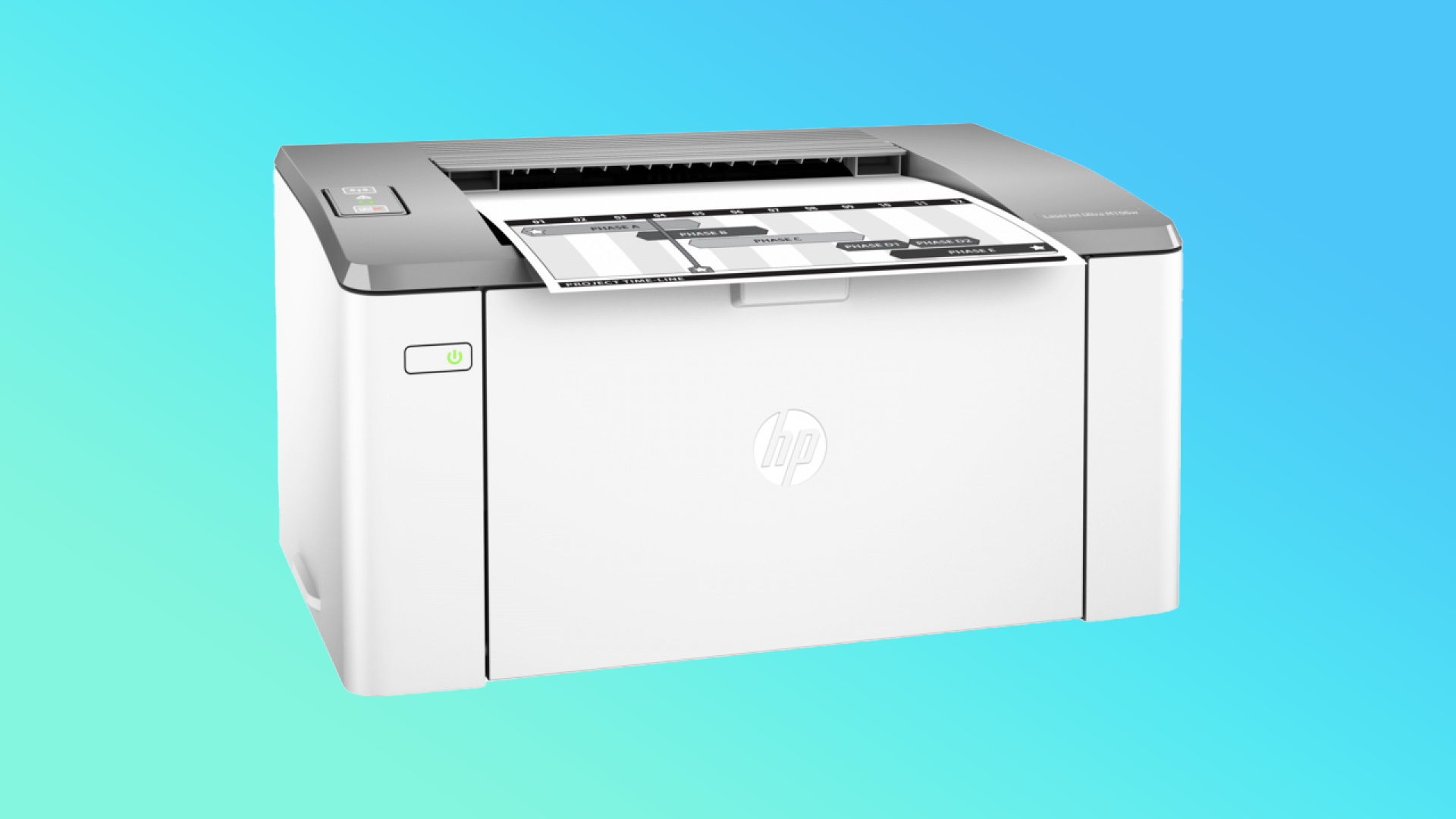
The HP LaserJet M106w is one of the printer models that is mysteriously appearing for some users in Windows 10 and 11.

Enlarge / The HP LaserJet M106w is one of the printer models that is mysteriously appearing for some users in Windows 10 and 11. (credit: HP)

Earlier this month, Microsoft posted a new entry in its list of known issues with fully up-to-date Windows 11 PCs: The HP Smart printer app was installing automatically on Windows 10 and Windows 11 PCs whether they had an HP printer installed or not, changing the names and icons of their connected printers and causing error messages.

Affected PCs will usually appear to have an HP LaserJet M101-M106 connected, so look for that model number in your list of printers (people who actually own one of those HP LaserJets presumably won’t have problems). All versions of Windows 11 are affected, plus all currently supported versions of Windows 10; Windows Server versions going back to 2012 can also be affected.

Microsoft continues to look into the issue, but in an update posted yesterday, the company stated unambiguously that HP was not to blame. The company also says that most printers should continue to work fine, and that they “will continue to use the expected drivers for printer operations.” But if your printer relies on a third-party app for additional functionality, that may be broken.

Read 4 remaining paragraphs | Comments


Source: Ars Technica – HP printer app is installing on PCs whether they have HP printers or not

Apple exec departure leads to major iPhone, Apple Watch reshuffle

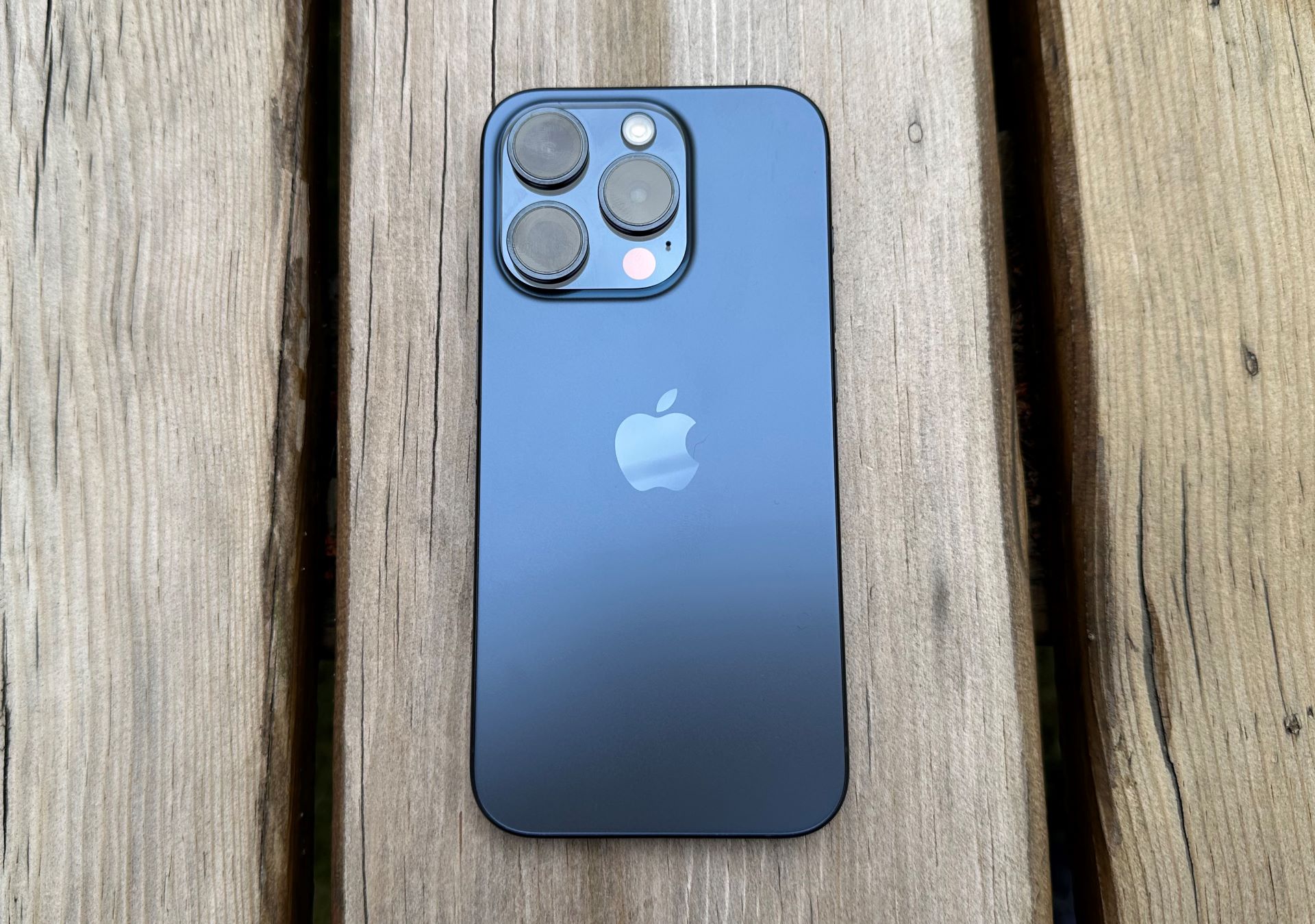
The iPhone 15 Pro.

Enlarge / The iPhone 15 Pro. (credit: Samuel Axon)

According to a report in Bloomberg, Tang Tan, vice president of Product Design, is leaving Apple, and his departure heralds a shuffle of executives heading up some of the company’s most important products.

Sometimes, you might wonder just how much a specific executive influences the grand scheme of things, but the report claims that people within Apple see Tan’s departure as “a blow,” clarifying that he “made critical decisions about Apple’s most important products.” His team reportedly had “tight control” over the look and functionality of those products.

Tan oversaw major aspects of iPhone and Apple Watch design, and he was the executive overseeing accessories and AirPods, as well. He reported to John Ternus, Apple’s senior vice president of Hardware Engineering, who is likely a more widely known name.

Read 4 remaining paragraphs | Comments


Source: Ars Technica – Apple exec departure leads to major iPhone, Apple Watch reshuffle

Verizon fell for fake “search warrant,” gave victim’s phone data to stalker

Read 23 remaining paragraphs | Comments


Source: Ars Technica – Verizon fell for fake “search warrant,” gave victim’s phone data to stalker

Stealthy Linux rootkit found in the wild after going undetected for 2 years

Trojan horse on top of blocks of hexadecimal programming codes. Illustration of the concept of online hacking, computer spyware, malware and ransomware.

Enlarge

Stealthy and multifunctional Linux malware that has been infecting telecommunications companies went largely unnoticed for two years until being documented for the first time by researchers on Thursday.

Researchers from security firm Group-IB have named the remote access trojan “Krasue,” after a nocturnal spirit depicted in Southeast Asian folklore “floating in mid-air, with no torso, just her intestines hanging from below her chin.” The researchers chose the name because evidence to date shows it almost exclusively targets victims in Thailand and “poses a severe risk to critical systems and sensitive data given that it is able to grant attackers remote access to the targeted network.

According to the researchers:

Read 9 remaining paragraphs | Comments


Source: Ars Technica – Stealthy Linux rootkit found in the wild after going undetected for 2 years

Worm’s rear end develops its own head, wanders off to mate

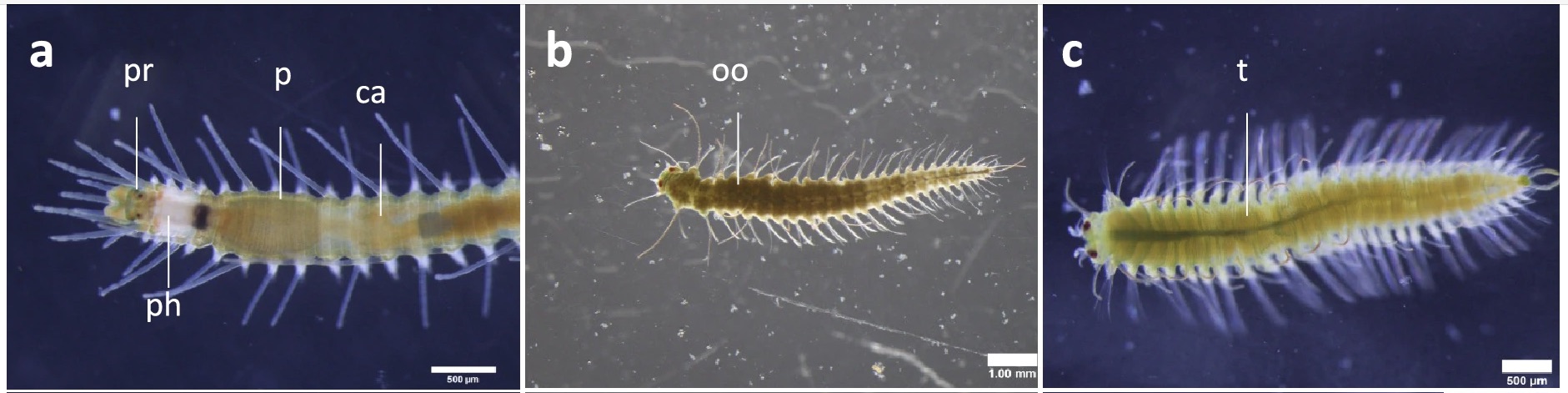
Three images of worm-like organisms.

Enlarge / From left to right, the head of an actual worm, and the stolon of a male and female. (credit: Nakamura et. al.)

Some do it horizontally, some do it vertically, some do it sexually, and some asexually. Then there are some organisms that would rather grow a butt that develops into an autonomous appendage equipped with its own antennae, eyes, and brain. This appendage will detach from the main body and swim away, carrying gonads that will merge with those from other disembodied rear ends and give rise to a new generation.

Wait, what in the science fiction B-movie alien star system is this thing?

Megasyllis nipponica really exists on Earth. Otherwise known as the Japanese green syllid worm, it reproduces by a process known as stolonization, which sounds like the brainchild of a sci-fi horror genius but evolved in some annelid (segmented) worms to give future generations the best chance at survival. What was still a mystery (until now) was exactly how that bizarre appendage, or stolon, could form its own head in the middle of the worm’s body. Turns out this is a wonder of gene regulation.

Read 9 remaining paragraphs | Comments


Source: Ars Technica – Worm’s rear end develops its own head, wanders off to mate