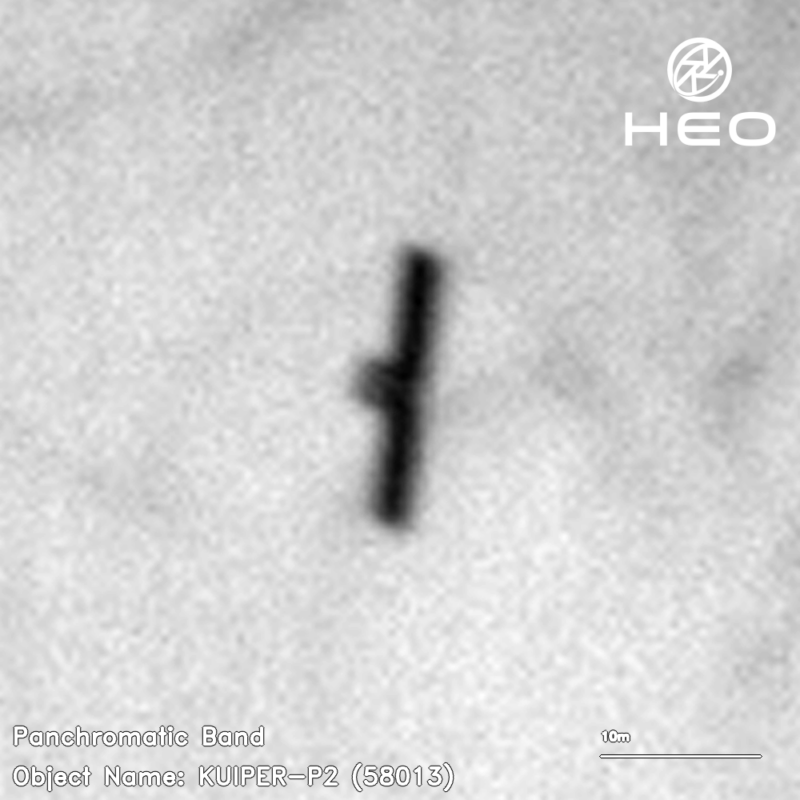
Enlarge/ An image of a Kuiper satellite in space. (credit: HEO Space)
Welcome to the Daily Telescope. There is a little too much darkness in this world and not enough light, a little too much pseudoscience and not enough science. We’ll let other publications offer you a daily horoscope. At Ars Technica, we’re going to take a different route, finding inspiration from very real images of a universe that is filled with stars and wonder.
Good morning. It’s December 13, and today’s image comes from a company that images other objects in space—HEO Space. It reveals one of the two Project Kuiper satellites currently undergoing testing in low-Earth orbit.
Project Kuiper is Amazon’s answer to SpaceX’s Starlink satellite Internet constellation. However, in the run-up to the October launch of the first two demonstration satellites on an Atlas V rocket, Amazon was super secretive about the satellites. It released almost no technical details or any photos. So this in-space image is the best we’ve got for now.
An anonymous reader quotes a report from The Register: Two years after the Log4Shell vulnerability in the open source Java-based Log4j logging utility was disclosed, circa one in four applications are dependent on outdated libraries, leaving them open to exploitation. Research from security shop Veracode revealed that the vast majority of vulnerable apps may never have updated the Log4j library after it was implemented by developers as 32 percent were running pre-2015 EOL versions. Prior investigations from Veracode also showed that 79 percent of all developers never update third-party libraries after first introducing them into projects, and given that Log4j2 — the specific version of Log4j affected by the vulnerability — dates back to 2014, this could explain the large proportion of unpatched apps.
A far smaller minority are running versions that were vulnerable at the time of the Log4j vulnerability’s disclosure in December 2021. Only 2.8 percent are still using versions 2.0-beta9 through 2.15.0 — post-EOL versions that remain exposed to Log4Shell, the industry-coined moniker of the vulnerability’s exploit. Some 3.8 percent are still running version 2.17, a post-patch version of the Java logger that’s not exposed to Log4Shell attacks, but is vulnerable to a separate remote code execution (RCE) bug (CVE-2021-44832).
The researchers believe this illustrates a minority of developers that acted quickly when the vulnerability was first disclosed, as was the advice at the time, had returned to older habits of leaving libraries untouched. Altogether, just shy of 35 percent remain vulnerable to Log4Shell, and nearly 40 percent are vulnerable to RCE flaws. The EOL versions of Log4j are also vulnerable to three additional critical bugs announced by Apache, bringing the total to seven high and critical-rated issues. “At a surface level, the numbers above show that the massive effort to remediate the Log4Shell vulnerability was effective in mitigating risk of exploitation of the zero-day vulnerability. That should not be surprising,” said Chris Eng, chief research officer at Veracode.
“The bigger story at the two-year anniversary, however, is that there is still room for improvement when it comes to open source software security. If Log4Shell was another example in a long series of wake-up calls to adopt more stringent open source security practices, the fact that more than one in three applications currently run vulnerable versions of Log4j shows there is more work to do.
“The major takeaway here is that organizations may not be aware of how much open source security risk they are exposed to and how to mitigate it.”
Following a two-year investigation by the National Highway Traffic Safety Administration (NHTSA), Tesla will recall over 2 million vehicles to address Autopilot safety concerns, according to new NHTSA documents. Fixes will be issued to owners for free via over-the-air (OTA) updates to add features that ensure drivers pay attention while using Tesla’s controversial driver assistance system. It affects all current Tesla EVs built since Autopilot launched in 2015, including the Model 3, Model Y, Model S and Model X.
“The remedy will incorporate additional controls and alerts to those already existing on affected vehicles to further encourage the driver to adhere to their continuous driving responsibility whenever Autosteer is engaged,” the NHTSA stated in a document. It noted that while Autopilot (specifically its Autosteer component) does have several controls to ensure drivers pay attention, they’re not always enough.
“In certain circumstances when Autosteer is engaged, the prominence and scope of the feature’s controls may not be sufficient to prevent driver misuse of the SAE Level 2 advanced driver-assistance feature,” the document states. That in turn may lead to “an increased risk of a collision.”
Tesla was ordered to address the driver monitoring system. “The remedy will incorporate additional controls and alerts to those already existing on affected vehicles to further encourage the driver to adhere to their continuous driving responsibility whenever Autosteer is engaged, which includes keeping their hands on the steering wheel and paying attention to the roadway,” it states. Those will include more prominent visual alerts, making it easier to turn Autosteer on and off, and eventual suspension from Autosteer if the driver fails to behave responsibly on an ongoing basis.
In a letter to the NHTSA, Tesla acknowledged the order and said it would issue the required fix. “Tesla will release an over-the-air (OTA) software update, free of charge. Owner notification letters are expected to be mailed February 10, 2023.” The order affects 2,031,220 vehicles, though models that went into production after December 7th will have already incorporated the update.
The NHTSA said last August that it was opening an investigation into Autopilot following 11 crashes with parked first responder vehicles since 2018 that resulted in 17 injuries and one death. In a letter to Tesla sent shortly afterward, the regulator requested detailed documentation on how the driver assistance system works. Specifically, it wanted to know how it ensures that human drivers will keep their eyes on the road while Autopilot is engaged and whether there are limits on where it can be used.
This article originally appeared on Engadget at https://www.engadget.com/tesla-recalls-2-million-cars-in-order-to-fix-autopilot-safety-controls-123308343.html?src=rss
Apple is adding a new iPhone feature called Stolen Device Protection, which limits what thieves can do with a stolen phone and passcode. It combines location, biometric scans and time delays, allowing victims to lock out the perpetrator and safeguard their data.
Stolen Device Protection defends against iPhone thieves who monitor users entering their passcode before snatching the device. With the passcode, the perpetrator could reset the owner’s Apple ID password, turn off Find My tracking, change an Apple ID password and a lot more.
With this still-in-beta feature turned on, the phone will ask for a Face ID or Touch ID scan if the device is away from a familiar location, like home or work. It will also require a one-hour delay before changing the Apple ID password on the device. After the hour, it will still ask for a Face ID or Touch ID Scan before changing the Apple ID password from the iPhone.
— Mat Smith
You can get these reports delivered daily direct to your inbox. Subscribe right here!
The Electronic Entertainment Expo, better known as E3, is officially dead. “After more than two decades of E3, each one bigger than the last, the time has come to say goodbye. Thanks for the memories,” the Entertainment Software Association, E3’s organizer, wrote on X. The industry trade group closed the statement with “GGWP” — good game, well played.
The ESA said, after major names pulled out of this year’s planned E3, the event “simply did not garner the sustained interest necessary to execute it in a way that would showcase the size, strength and impact of our industry.”
While E3 may be gone, gaming events aren’t going away. Gamescom, held in Germany, is far larger than E3 in attendance and other factors. There’s also Summer Game Fest, a sort-of E3 replacement The Game Awards producer and host Geoff Keighley started in 2020 and expanded last year to include a physical event for the first time. The likes of Capcom, Ubisoft and Xbox held games showcases in association with SGF this year. The event will return for its fifth edition in 2024.
It’s the first engagement report it’s ever released.
Netflix
Netflix has published the first of a new twice-a-year engagement report called What We Watched. It launched Tuesday as a Microsoft Excel file (!) and lists the hours viewed for every title that tallied more than 50,000 viewing hours, making it the first ultra-detailed glimpse at what people watch on Netflix.
Top hits include the first season of the action-thriller series The Night Agent (nope, not heard of it), with 812,100,000 hours watched. In second place was season two of the drama Ginny & Georgia (I don’t know her or her) with 665,100,000 hours. Korean show The Glory (three for three…) came third with 622,800,000 hours watched.
Rivals could use tap-and-go payments without Apple Pay.
Apple is attempting to avoid another legal battle with the European Union. The company is allegedly offering its rivals access to its Near-Field Communication (NFC) technology, used for tap-and-go payments, following the European Commission’s ongoing probe into Apple’s potential antitrust Apple Pay practices. While Apple’s current proposal could get it out of a hefty fine and settle the case against it, it’s not guaranteed to move forward.
It’s not just Europe, either. Apple faces a lawsuit in the United States, brought in July 2022 by Iowa’s Affinity Credit Union, which accuses the company of engaging in anti-competitive behavior by illegally restricting iOS users to Apple Pay for any contactless payment.
This article originally appeared on Engadget at https://www.engadget.com/the-morning-after-ios-173s-new-feature-will-make-things-harder-for-iphone-thieves-121541329.html?src=rss
Several years ago, Land Rover announced plans to offer electrified versions of all its vehicle and that process has finally begun. The company teased the Range Rover Electric in a press release and video, promising an 800 volt architecture and all the benefits of a modern EV. At the same time, it’ll be just as powerful and capable off-road as its gas-guzzling counterparts.
Apart from some aspirational promises, details are still sparse. To start with, it’ll supposedly have “performance comparable to a flagship Range Rover V8 and the all-terrain capability developed in-house by Land Rover experts.” That all-terrain capability includes the ability to wade through 850mm of water (2.8 feet), though the current V8-powered 2023 Range Rover already offers 900mm of depth.
Land Rover
The new model will supposedly be the “quietest and most refined Range Rover ever created,” the company said, thanks to “active road noise cancellation configuration and sound design, plus cabin comfort levels enabled by its electric underpinnings.” In other words, it’ll take advantage of the relatively low noise levels and simplicity of an electric drivetrain, like other luxury EVs.
The new model will be built on Jaguar Land Rover’s Modular Longitudinal Architecture (LMA) based on an 800 volt architecture, something that generally supports added charging power, enhanced performance, increased efficiency and weight savings. That, the company says, will help enable “fast-charging on public networks,” among other benefits.
The company is also promising “a seamless electric ownership experience — effortless charging, energy partnerships, software-over-the-air updates and intelligent technology to maximise range.” On top of that, the vehicle and and batteries will both be built in the UK in Solihull and Wolverhampton, respectively.
Range, performance and other key specifications, along with full photos of the vehicle are still missing. If you’re undeterred by that and swayed by Land Rover’s promo video (featuring glimpses of the vehicle, a model in a gold dress wearing green rubber boots, some koi fish and plenty of water), you can now join the waiting list.
This article originally appeared on Engadget at https://www.engadget.com/range-rover-electric-teased-ahead-of-its-2024-reveal-111741916.html?src=rss
Despite being valued at $86 billion by private investors, OpenAI reported $44,485 in revenue in 2022, almost entirely from investment income. CNBC reports: That’s from the nonprofit parent’s 990 filing with the Internal Revenue Service, a form that has to be filled out by organizations wishing to maintain their tax-exempt status. Federal standards don’t require audited financial statements from nonprofits. In its home state of California, OpenAI was able to avoid submitting audited financials for 2022 because the foundation’s stated revenue was below the $2 million reporting threshold. The last time OpenAI filed with the state was 2017, when revenue was $33.2 million, or more than 700 times what the foundation reported for 2022.
For all its talk of openness, OpenAI’s financials remain a black box. Created as a nonprofit in 2015, OpenAI launched a so-called capped-profit entity in 2019, enabling it to raise billions of dollars in outside funding and attain attributes of a tech startup, such as the ability to hand out equity to employees. The for-profit side of the house went on to develop ChatGPT, the chatbot that took the world by storm late last year and kicked off the generative AI boom. […]
Thad Calabrese, a professor of public and nonprofit financial management at New York University, said OpenAI’s current status is confusing, and is unlike anything he has seen in the nonprofit world. He said OpenAI could give up its nonprofit status, and he cited the Blue Cross Blue Shield Association, which in 1994 allowed associated nonprofit medical insurance plans to switch into for-profit entities. “There’s no real need to have the nonprofit,” Calabrese said. “If you want to be a startup, be a startup.” Regarding OpenAI’s reporting with the IRS, he said “fundamentally you can’t really get a holistic sense of these organizations when you don’t have consolidated financial statements.”
If you need a spare gamepad for your Xbox or PC, Microsoft’s wireless Xbox Series X/S controller is currently available for $45 at Amazon. That’s close to the lowest price we’ve seen and the sale applies to multiple finishes (carbon black, blue and velocity green).
The Series X/S controller is the classic well-balanced model with responsive face buttons, triggers, and joysticks. The d-pad offers nice tactility compared to Sony’s DualSense PS5 controller, though it still uses an asymmetrical joystick layout. It comes with Bluetooth connectivity so you can use it with a PC or mobile device, plus a dedicated “Share” button for screen and video capture.
While you don’t get the advanced haptic feedback features of the DualSense, it fits nicely in your hand and is generally easier to use on a PC — especially for clients besides Steam. Alternatives like the 8BitDo Ultimate Bluetooth Controller and Microsoft’s own Elite Series 2 pad offer a wider array of features, but if you just need the basics, the standard Xbox controller is solid.
The primary drawback is a reliance on AA, rather than rechargeable batteries for power. That lets it last longer on a charge than the DualSense, but you’ll have to buy a separate rechargeable battery pack if you don’t want to regularly swap out batteries. If you can live with that limitation, the sale offers a cheap way to get an extra high-quality controller or two.
This article originally appeared on Engadget at https://www.engadget.com/microsofts-official-xbox-wireless-controllers-drop-to-45-093236413.html?src=rss
For the first time, scientists have discovered nuclear fission occurring amongst the stars, supporting the idea that neutron stars create “superheavy” elements when they collide, which then break down via nuclear fission to birth rare elements. Space.com reports: Nuclear fission is basically the opposite of nuclear fusion. While nuclear fusion refers to the smashing of lighter elements to create heavier elements, nuclear fission is a process that sees energy released when heavy elements split apart to create lighter elements. Nuclear fission is pretty well known, too. It’s actually the basis of energy-generating nuclear power plants here on Earth — however, it had not been seen occurring amongst the stars before now.
The team of researchers led by North Carolina State University scientist Ian Roederer searched data concerning a wide range of elements in stars to discover the first evidence that nuclear fission could therefore be acting when neutron stars merge. These findings could help solve the mystery of where the universe’s heavy elements come from. Scientists know that nuclear fusion is not just the primary source of energy for stars, but also the force that forges a variety of elements, the “heaviest” being iron.
The evidence of nuclear fission discovered by [Matthew Mumpower, research co-author and a scientist at Los Alamos National Laboratory] and the team comes in the form of a correlation between “light precision metals,” like silver, and “rare earth nuclei,” like europium, showing in some stars. When one of these groups of elements goes up, the corresponding elements in the other group also increases, the scientists saw. The team’s research also indicates that elements with atomic masses — counts of protons and neutrons in an atomic nucleus — greater than 260 may exist around neutron star smashes, even if this existence is brief. This is much heavier than many of the elements at the “heavy end” of the periodic table. “The only plausible way this can arise among different stars is if there is a consistent process operating during the formation of the heavy elements,” Mumpower said. “This is incredibly profound and is the first evidence of fission operating in the cosmos, confirming a theory we proposed several years ago.”
“As we’ve acquired more observations, the cosmos is saying, ‘hey, there’s a signature here, and it can only come from fission.'”
The research was published in the journal Science.
Generative AI is nothing new for Snapchat users, with the app’s “My AI” suite offering the likes of a free ChatGPT-powered chatbot, as well as the freemium AI-generated “Dreams” selfie effects, Bitmoji backgrounds and more. In the latest update, Snapchat+ subscribers can now leverage AI to extend images — or “zoom out” — at the click of a button, thus making the social media app even more practical. Say you have a snapshot of your pet but it’s a little too close, just click on the crop button on the right menu, and then hit the “Extend” button at the bottom. Voilà!
The updated My AI also lets subscribers directly generate Snaps by typing a simple prompt. In the viewfinder, click the “AI” button on the right, then type in whatever you desire (within reason, of course), and shortly, you’ll have an image to tinker with before sharing. Snap suggests you try silly prompts like “a dog sleeping on a rocket” or “a planet made out of cheese.”
Last but not least, the aforementioned Dreams feature now lets you generate fantastical portraits with friends in them. On the Dreams page, simply pick a friend, hit “Done,” and then you’ll be able to share the generated portrait of you both. Like before, Snapchat+ subscribers are given one pack of eight Dreams selfies every month, whereas non-subscribers only get one pack as a free trial, before they consider signing up for the $4-a-month service. Regardless, all users can buy more for $0.99 per pack.
Snap’s ongoing AI efforts seem to be paying off, with its number of subscribers rocketing from five million in September to seven million today — getting one step closer to the ten million “medium-term goal” set by CEO Evan Spiegel back in April, as reported by Time Magazine. Of course, given the fierce competition like Meta which offers similar features for free, Snap will have to keep churning out new AI-powered tools to keep its platform fun and fresh.
This article originally appeared on Engadget at https://www.engadget.com/snapchat-subscribers-can-now-use-ai-to-generate-or-extend-images-within-the-app-060003554.html?src=rss
Xbox is giving you a detailed look at how much you’ve gamed and which titles you’ve truly enjoyed playing this year. Its 2023 recap shows your total time gaming on the system over the past year, the month you’d been most active on the Xbox, your total achievements and your top genres in a pie chart, which could give you an idea whether your taste in games has changed over time. Of course, you’ll also get to see a list of games that you’ve played the most this year, ranked based on how much time you’ve spent on each one.
The recap will also let you know if you’ve unlocked rare achievements. And it will show how you stack up against other fans when it comes to the number of hours you’ve gamed, your gamerscore, and your total number of achievements — stats that could fuel your competitive nature and compel you to game more, or make you realize if you’ve been spending a bit too much time playing.
Since it’s that time of the year when everybody and every brand looks back over the past months, you can get an overview of your gaming life even if the Xbox isn’t your system of choice. If you’re more of a PlayStation gamer, Sony also recently rolled out its wrap-up recap for 2023 that contains the same information, along with game recommendations based on your history, perhaps to encourage you to rack up more gaming hours in 2024.
This article originally appeared on Engadget at https://www.engadget.com/xbox-2023-year-in-review-recap-stacks-you-up-against-other-players-043306717.html?src=rss
An anonymous reader quotes a report from REVE News: The U.S. Energy Information Administration (EIA) expects, for the first year on record, combined electricity generation from wind and solar to surpass generation from coal in 2024. EIA expects solar generation in 2024 to increase 39% (228 kilowatthours) from 2023, driven by continued increases in solar capacity. “Renewables, particularly solar photovoltaics, are growing rapidly and making large contributions to electricity generation,” DeCarolis said.
EIA expects natural gas prices to be $2.77 per million British thermal units this winter, about 23% lower than previously forecast. The winter season is off to a warmer-than-expected start, so U.S. households are consuming less natural gas for heat than expected. The lower natural gas consumption is also contributing to rising U.S. natural gas inventories, which typically results in lower prices. “We’re seeing record domestic natural gas production paired with lower-than-expected natural gas demand, and we expect that is going to push prices lower this winter season,” DeCarolis said. EIA will publish its next STEO on January 9, 2024, including the agency’s first forecasts for the energy sector through 2025. The full report is available on the EIA website.
Enlarge/ This picture, taken several months ago, shows different parts for Blue Origin’s New Glenn rocket inside the company’s manufacturing facility in Florida. (credit: Blue Origin)
For the first time, it’s starting to feel like Jeff Bezos’s space company, Blue Origin, might have a shot at launching its long-delayed New Glenn rocket within the next 12 months.
Of course, there’s a lot for Blue Origin to test and validate before New Glenn is ready to fly. First, the company’s engineers need to fully assemble a New Glenn rocket and raise it on the company’s sprawling seaside launch pad at Cape Canaveral Space Force Station in Florida. There’s a good chance of this happening in the coming months as Blue Origin readies for a series of tanking tests and simulated countdowns at the launch site.
It’s tempting to invoke Berger’s Law, the guideline championed by my Ars colleague which states that if a launch is scheduled for the fourth quarter of a calendar year—and if it is at least six months away—the launch will delay into the next year. Given Blue Origin’s history of New Glenn delays, that’s probably the safer bet. New Glenn’s inaugural flight has been delayed from 2020 until 2021, then 2022, and for now, is slated for 2024.
An artificial intelligence campaign volunteer named Ashley is being used to call thousands of Pennsylvania voters on behalf of Democrat Shamaine Daniels, “ushering in a new era of political campaigning in which candidates use technology to engage with voters in ways increasingly difficult to track,” reports Reuters. From the report: Like a seasoned campaign volunteer, Ashley analyzes voters’ profiles to tailor conversations around their key issues. Unlike a human, Ashley always shows up for the job, has perfect recall of all of Daniels’ positions, and does not feel dejected when she’s hung up on. “This is going to scale fast,” said 30-year-old Ilya Mouzykantskii, the London-based CEO of Civox, the company behind Ashley. “We intend to be making tens of thousands of calls a day by the end of the year and into the six digits pretty soon. This is coming for the 2024 election and it’s coming in a very big way. … The future is now.” For Daniels, the tool levels the playing field: as the underdog, she is now armed with another way to understand voters better, reach out in different languages (Ashley is fluent in over 20), and conduct many more “high bandwidth” conversations.
Mouzykantskii said he is fully aware of the potential downsides, and does not intend to take any venture capital funding which might entice him to prioritize profits over ethics. Mouzykantskii and his co-founder Adam Reis, former computer science students at Stanford and Columbia Universities respectively, declined to disclose the exact generative AI models they are using. They will only say they use over 20 different AI models, some proprietary and some open-source. Thanks to the latest generative AI technologies, Reis was able to build the product almost entirely on his own, whereas several years ago it would have taken a team of 50 engineers several years to do so, he said. The report notes that there are “few legal guardrails” regulating this particular use of AI. “No rules directly apply to what Civox is doing. Federal Trade Commission regulations ban telemarketers from making robocalls to people on the Do Not Call Registry, but the list does not apply to political calls — and Civox’s activity, with its ‘personalized’ messages, does not qualify as robocalling.”
The House of Mouse celebrated its centennial in 2023 through monumental film and television releases and Disney Parks experiences, while dealing with real-world repercussions during historic writers and actors’ strikes. And then, of course, there was the whole ongoing skirmish with Florida Governor Ron DeSantis.
For the first time, Netflix has released a comprehensive report of what people watched on the platform over a six month period. It includes hours viewed for every title, the premiere date for any Netflix show and movie, and whether a title was available globally. From the Hollywood Reporter: The list includes worldwide viewing for more than 18,000 movies and seasons of TV (18,214, to be exact) between January and June. Those 18,214 titles all had at least 50,000 hours of viewing over those six months, encompassing about 99 percent of all viewing on Netflix, vp strategy and analysis Lauren Smith told reporters during a presentation of the data on Tuesday. It is the deepest dive into viewing that Netflix (or any other streamer) has ever made public.
Among the highlights: The Night Agent was the biggest title on Netflix in the first half of 2023, racking up 812.1 million hours of viewing. Season two of Ginny & Georgia was second at 665.1 million hours, followed by Korean drama The Glory (622.8 million hours). Wednesday ranked fourth at 507.7 million hours of viewing, despite being released in November 2022. The company is using total hours viewed in this report as a way to measure engagement by its users rather than the “view” formula (total viewing hours divided by running time) it employs to compare titles in its weekly top 10 lists.
Original series and movies dominate the top of the chart, but Smith said the split between original and licensed titles was more even: About 55 percent of viewing was for originals and 45 percent was for licensed shows and films. Suits, which dominated the Nielsen U.S. streaming charts for much of the summer and fall, had a combined 599 million hours of viewing worldwide on Netflix across all nine seasons. The show’s first season ranked highest, coming in 67th place with 129.1 million hours. At the other end, a little more than 20 percent of the titles on Netflix’s list (3,813 in all) had very little viewing. The company rounded them to 100,000 hours but they would fall between 50,000 and 149,999 hours — barely a drop in the streamer’s more than 100 billion total hours of viewing for the six months. The full “What We Watched: A Netflix Engagement Report” can be downloaded here.
Threads is going to make an effort to moderate more of the user-generated content on the platform. Head of Instagram, Adam Mosseri, posted that it is working on creating a fact-checking program. Mosseri didn’t lay out what such a program would entail, only saying that Threads is going to “match fact-check ratings from Facebook or Instagram to Threads.” Currently, fact-checkers can’t rate content on Threads, so instead when something gets flagged as being false on Instagram or Facebook, a fact-checker’s ratings will also roll over onto the app. “Our goal is for fact-checking partners to have the ability to review and rate misinformation on the app,” Mosseri wrote.
The program is expected to be available early next year. Meta said third-party fact-checking partners will flag and review the content that circulates on Threads. The app’s users will be given the choice to increase, lower or maintain the default level of “demotions on fact-checked content” in personal feeds. Meta says if a user decides to see less sensitive content on Instagram, those settings will roll over into their Threads view.
Social media companies, like Threads, have to consider expanding guardrails to prevent misinformation from proliferating on their platforms, especially ahead of the coming presidential elections. A fact-checking system on the Threads app isn’t a huge shock considering recent moves by the company. When the company introduced a search tool, it blocked certain words “previously linked” to misinformation on Meta’s platform.
However, offering users a fact-checking feature does not necessarily mean Threads will become the new front page for digital news. Mosseri told TechCrunch that the platform, as of now, does not plan on “amplifying the news” on its platform.
This article originally appeared on Engadget at https://www.engadget.com/threads-is-going-to-fact-check-content-on-its-app-010720646.html?src=rss
Although the X-Men have been returning to the world of Lego in fits and starts recently—a few characters in the Marvel minifigures line here, a giant Wolverine fist there—2014 was the last time Marvel’s mutants actually got to star in a more traditional Lego set. That’s now changing… but it’s not an entirely joyous…
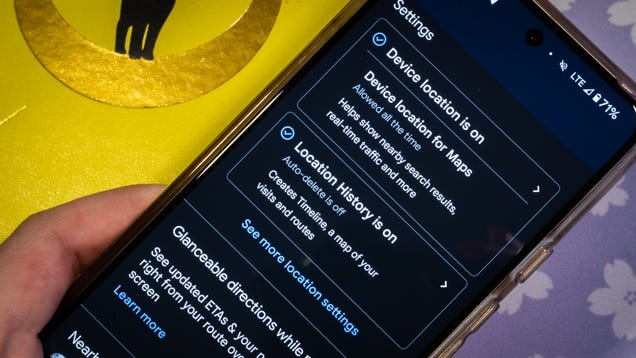
If you give me access to your location, I am the person who will check on you constantly and bring it up the next time I see you. “So,” I’ll start casually, “what were you doing in the city last week?” Then you’ll ask me how I knew you were down there. I’ll remind you that you gave me access one summer long ago and…
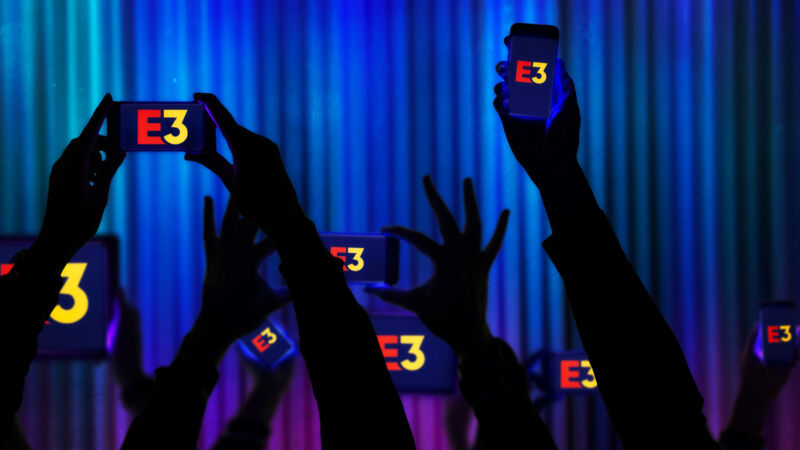
Enlarge/ This photo is exactly what it was like to be on the E3 show floor. Exactly. (credit: Aurich Lawson | Getty Images)
Today’s news that the Electronic Entertainment Expo is officially, totally, and completely dead was a bit bittersweet for your humble Ars Technica Senior Gaming Editor. Don’t get me wrong, I’ll miss the chance to meet industry luminaries, connect with far-flung associates, and play games months ahead of time in a setting that’s as much a theme park as a trade show. But after spending many a late night covering 15 E3 shows in 16 years, I can say that the crowds, the smells, and the sensory overload associated with the LA Convention Center aren’t always all they’re cracked up to be.
Still, those who have been there will tell you that, for a gaming fan, there was nothing quite like the bombast and spectacle of the E3 show floor in its heyday.
For those who haven’t been there, we’ve sorted through literally hundreds of E3 photos taken by Ars journalists over the years to assemble a few dozen of the best into this visual travelogue-meets-history-lesson. We hope that skimming through the galleries below will give you some idea of the madcap event that E3 was and why it has generated so many lasting memories for those who attended.
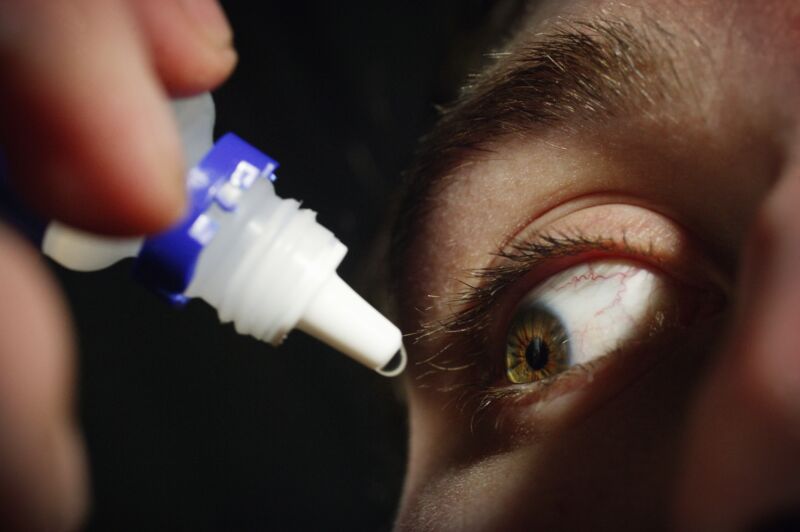
Recapping this unexpected threat to health, the Food and Drug Administration on Tuesday released an advisory titled “What You Should Know about Eye Drops” in hopes of keeping the dangers of this year from leaking into the next. Among the notable points from the regulator was this stark pronouncement: No one should ever use any homeopathic ophthalmic products, and every single such product should be pulled off the market.