I’ve used a foldable laptop for a month, and I’m ready to return to a clamshell

HP Spectre Fold

Enlarge / Reflective screens and creases aren’t the only concerns with foldable PCs. (credit: Scharon Harding)

Specs at a glance: HP Spectre Foldable 17-cs0097nr
Screen 17-inch 1920×2560 OLED touchscreen
OS Windows 11 Home
CPU Intel Core i7-1250U
RAM 16GB LPDDR5-5200
Storage 1TB PCIe 4.0 SSD
Networking Wi-Fi 6E, Bluetooth 5.3
Ports 2x Thunderbolt 4
Size (folded) 10.91×7.53×0.84 inches
Weight (with keyboard) 3.58 lbs
Battery 94.3 Wh
Warranty 1 year
Price (MSRP) $5,000
Other HP Rechargeable MPP2.0 Tilt Pen, Bluetooth keyboard, and HP Envy USB-C Hub included

Although foldable smartphones have been available for five years, the devices are still trying to justify themselves. And after using a foldable-screen laptop as my primary PC for about four weeks, I’m not sure they’re ready for prime time.

I’m leaving my time with HP’s first foldable laptop with a sense of anticipation for the future of laptops, which I think would benefit from a resurgence of creative ideas that cater to the unique ways people use their computers. But I seriously question if the benefits of having a 17-inch screen in a 12-inch laptop body are worth the trade-offs inherent in today’s foldable PCs.

Early participants in the foldable laptop world have an opportunity to define the space, while consumers can decide if this is something they even want. HP’s foldable is the most beefed-up option ever, and weeks of use have shown me a lot about what I want and don’t want to see when the dust settles.

Read 44 remaining paragraphs | Comments


Source: Ars Technica – I’ve used a foldable laptop for a month, and I’m ready to return to a clamshell

The Morning After: Tesla recalls over 2 million cars over Autopilot safety

Following a two-year investigation by the National Highway Traffic Safety Administration (NHTSA), Tesla will recall over two million vehicles to address Autopilot safety concerns.

Fixes will be issued through free over-the-air (OTA) updates, adding features that ensure drivers pay attention while using Tesla’s Autopilot driver assistance system. It affects all current Tesla EVs built since Autopilot launched in 2015, including the Model 3, Model Y, Model S and Model X.

Those features will include more prominent visual alerts, making it easier to turn Autosteer on and off, and eventual suspension from Autosteer if the driver fails to behave responsibly. NHTSA opened the investigation following 11 crashes with parked first-responder vehicles, which resulted in 17 injuries and one death, since 2018.

Tesla’s legal episodes are likely to continue into 2024. The company updated its purchase agreement documents for its Cybertruck, ensuring it could sue at least some Cybertruck owners who flip their vehicles too soon. Not in a Fast and the Furious way, but by trying to sell one of the popular trucks soon after purchase. Tesla could seek injunctive relief to prevent owners from transferring their vehicle’s title if they attempt to sell it within one year of buying it.

— Mat Smith

​​You can get these reports delivered daily direct to your inbox. Subscribe right here!​​

The biggest stories you might have missed

Instagram is making it easier to remove spammy followers

Range Rover Electric teased ahead of its 2024 reveal

The best 15 last-minute Christmas gifts for 2023

Apple’s self-repair program now includes the iPhone 15 and more M2-powered Macs

Watch this: The Game Awards’ missteps and Light No Fire

Netflix’s 2024 game lineup includes Game Dev Tycoon, Sonic Mania and a Cozy Grove sequel

How to take spatial video on the iPhone 15 Pro

Tesla’s latest Optimus robot can handle an egg without breaking it

The machine has come a long way from its earlier iterations.

TMA
Tesla

More Tesla news, but nothing to do with litigation. Its Optimus robot has reappeared, with improved dexterity — enough to handle an egg. While the previous version of Optimus struggled to walk during a live demo, the latest model can move with more grace, perhaps thanks to its Tesla-designed actuators and sensors. The machine has an actuated neck, with two degrees of freedom, and it’s said to be 30 percent faster at walking. Tesla says it’s been able to reduce the robot’s weight by 10 kilograms without sacrificing any functionality. Optimus handles objects more delicately, with the demo showing it picking up and gently placing down an egg. Finally — it’s what I’ve been waiting for from robots.

Continue reading.

Xbox Cloud Gaming lands on Meta Quest headsets

You’ll need a Game Pass Ultimate membership, controller and solid internet connection.

Meta Quest 2, 3 and Pro headset owners can now stream hundreds of games through Xbox Cloud Gaming. You’ll need an Xbox Game Pass Ultimate membership, a compatible controller, solid internet connection and the most recent Quest software update, but those are the only things stopping you from playing the latest Xbox games on a huge (virtual) screen. Meta says you’ll be able to choose from four virtual display sizes. You can opt to play games in an Xbox-themed virtual space or make it appear as though the display is floating in mid-air, thanks to the Quest 3 and Pro’s full-color passthrough.

Continue reading.

Apple finally offers the USB-C AirPods Pro case separately

My Lightning cable is living on borrowed time.

My persistent anonymous messages to Apple customer support have finally borne fruit.

Continue reading.

This article originally appeared on Engadget at https://www.engadget.com/the-morning-after-tesla-recalls-over-2-million-cars-over-autopilot-safety-121554058.html?src=rss

Source: Engadget – The Morning After: Tesla recalls over 2 million cars over Autopilot safety

Instagram now offers AI-generated backgrounds on Stories

Every day, there seems to be new generative AI news, and while it can often be serious and quite technical, this time around it’s just plain fun. Instagram has launched a new generative AI-powered tool called backdrop that lets you create a new image in the, yes, background of your Story. Meta’s generative AI lead, Ahmad Al-Dahle, announced the feature on Threads alongside a video tutorial.

Instagram’s backdrop tool appears once you upload or capture content for your Story. It sits alongside existing icons at the top of your screen, like text and music, represented by an image of a person with a rectangular frame behind them. To use backdrop, just click on that icon, and the image’s entire background will go checkered (similar to picture editors like PhotoShop) along with a text box prompting you to “describe the backdrop you want…” From there, you can add anything from “surrounded by puppies” to “chased by dinosaurs” — very different vibes — and the AI tool will generate it in the background.

Don’t expect people to actually think you’re hanging out under the aurora borealis (another possible prompt), as your Story will get tagged with AI·Backdrop by Instagram, along with a sticker saying try it and your description in quotation marks. Currently, Instagram’s backdrop tool is only available to users in the United States.

This article originally appeared on Engadget at https://www.engadget.com/instagram-now-offers-ai-generated-backgrounds-on-stories-115054259.html?src=rss

Source: Engadget – Instagram now offers AI-generated backgrounds on Stories

Threads finally launches in Europe

Meta’s Threads has finally arrived in Europe over five months after it launched in the US, UK and elsewhere around the world. Following a countdown and Instagram teaser invitation, the app is now officially available in the bloc on the web, though the iOS and Android apps still aren’t available for many.

Threads.net is now live on the web, though the mobile apps are still showing as unavailable for many (you may have to wait patiently). I was able to sign in using my Instagram account, though Meta also offers access without creating a profile — though you can’t post or interact with content in that case. Once I agreed to use Instagram and chose my profile, it asked if I was okay with it being public and if wanted to follow the same people I do on Instagram. A few more clicks and I was in. 

Threads finally launches in Europe
Steve Dent for Engadget

The delay was reportedly due to the EU’s upcoming Digital Markets Act (DMA) set to take effect in 2024. As one of seven tech giant “Gatekeepers,” Meta wanted to ensure it’s in compliance with the DMA, particularly around rules for sharing data between apps. In compliance with EU policies, the app also allows users to access the platform without needing to create a profile.

Threads launched July 5 on mobile with a basic feature set and required users to sign in using their Instagram accounts. It was much like Twitter (now X) when it launched, with support for text posts up to 500 characters, along with photos and five-minute videos. It also supported reposts and quote posts, while allowing users to limit their replies and block/report other users.

Since then, it has added a web version, along with both “following” and “for you” feeds, the ability to send Threads posts on Instagram, following list sorting, liked posts on your profile page and more. In short, it’s become a robust rival to X, Bluesky and its other short-form social media apps.

In addition, yesterday Meta started testing the ability to make Threads posts available on Mastodon and other fediverse apps. That compatibility with the decentralized “ActivityPub” service, and the ability to cross-post to other apps, was a key promise Meta made when it introduced Threads. 

Threads’ rise came with the steep decline of Elon Musk’s X, now seen as more polarized than ever. Among much other drama, the platform recently lost a number of key advertisers after Musk boosted an antisemitic conspiracy theory. In response to that, Musk delivered a new message for advertisers pulling back from the platform: “Go fuck yourself.”

Threads is still in a precarious spot, though. It was an instant hit, crossing the 100 million signup mark just five days after launch and counted 141 million users as of November 10, according to research company Quiver Quantitative. However, engagement is another issue — the number of daily active users has fluctuated and dropped steeply a month or so after launch. It should get a massive boost now that it’s in Europe, though, and Meta easily has the might (and money) to make it work and crush both established and potential rivals. 

This article originally appeared on Engadget at https://www.engadget.com/threads-finally-launches-in-europe-110747780.html?src=rss

Source: Engadget – Threads finally launches in Europe

Proton Mail now has a desktop app in beta

Proton finally has a desktop app. The Swiss company, known for its privacy-focused alternatives to the Google Workspace apps, revealed a Windows and macOS application on Thursday that includes Proton Mail and Proton Calendar. The desktop app is currently available in beta for subscribers on the most expensive premium tier, but the company says it will launch for all Proton users in early 2024.

The company says the desktop app has a modern design with a clutter-free experience. Proton views the move as providing a leg up over Google. “While many people use email on desktop in a browser, desktop apps can still provide certain advantages such as better offline support,” Proton CEO Andy Yen wrote in a press release. “For this reason, we have decided to launch a desktop app, something that even Gmail does not provide.” The desktop app now gives Proton apps on all major platforms.

Marketing image showing the
Proton

In addition to the desktop app, Proton is launching several new features for all platforms, including auto-forwarding email rules. Messages sent this way will be encrypted between Proton accounts, and it supports unencrypted auto-forwarding to non-Proton accounts. In addition, Proton Mail now integrates with customer relationship management (CRM) and customer support software as the company looks to grow its footprint in the business world.

Proton says encrypting forwarded messages while maintaining the security the company brands itself on was an enormous challenge. “Messages sent between Proton Mail accounts are always end-to-end encrypted by default,” Proton CTO Bart Butler wrote. “But to maintain end-to-end encryption for messages forwarded to other Proton users presented a huge technical challenge. We needed to figure out how to re-encrypt messages for different recipients without the server being able to access the content.”

Attachment previews are also available for all Proton Mail platforms. Previously, you had to download email attachments locally before viewing them. It now lets you see them directly from the inbox with one click. Proton says it does so without compromising security.

Marketing image showing a screenshot of the Proton Mail desktop app with a pop-up asking to
Proton

You can also now snooze Proton Mail messages in another catch-up move for the encryption-focused company. In addition, it spruced up the Proton Calendar with searches on the web while adding public holidays. The company has had a busy year, also launching a native Windows file-syncing app in July and a password manager in April.

Before it officially launches early next year, the Proton Mail desktop app is available now in beta for Proton Visionary subscribers. That tier was previously locked to legacy supporters, but the company has reopened registrations from now until January 3. (The plan isn’t cheap, though, at $40 monthly or $360 annually.) Meanwhile, auto-forwarding is available now for paid users on any plan, while attachment previews, snoozing and calendar improvements are here for everyone with a Proton account.

This article originally appeared on Engadget at https://www.engadget.com/proton-mail-now-has-a-desktop-app-in-beta-110021703.html?src=rss

Source: Engadget – Proton Mail now has a desktop app in beta

Spider-Man 2's New Game+ mode pushed back to 2024

In October, Insomniac Games launched Marvel’s Spider-Man 2 without key features like New Game+ and audio descriptions. Just before the game’s release, Insomniac’s community and marketing director, James Stevenson, shared that New Game+ “should” arrive before the end of 2023. However, Insomniac has now released a statement explaining that it’s targeting the next Marvel’s Spider-Man 2 update for early 2024.

Insomniac shared the news on X: “We know players have been eagerly awaiting features such as New Game+ and Audio Descriptions, among many more. We have been working vigilantly on these features and require more testing to ensure the quality is up to our standards. We are now targeting Early 2024 for the next game update, and we’ll have a feature-complete list closer to its release.”

Insomniac went on to explain that it’s adding more “highly requested features” to the game, such as replaying missions and changing the time of day. Many users’ responses on X were positive, encouraging Insomniac to take all the time it needs and expressing their love for the company — some of which got answers from the company sharing its thanks and appreciation.

The original Marvel’s Spider-Man game has New Game+, allowing players to start the game over while holding on to items they acquired during previous gameplay. But, despite the few missing features, we’re big fans of Marvel’s Spider-Man 2. Gamers can play as Peter Parker or Miles Morales across a world that’s expanded to include parts of Brooklyn and Queens. The story, side-quests, and more minor activities all added to the gameplay, creating a sequel that is “both bigger and better.”

This article originally appeared on Engadget at https://www.engadget.com/spider-man-2s-new-game-mode-pushed-back-to-2024-102622924.html?src=rss

Source: Engadget – Spider-Man 2’s New Game+ mode pushed back to 2024

Are Tiny Black Holes Hiding Within Giant Stars?

sciencehabit shares a report from Science Magazine: Grunge music: a source of validation for a generation of disaffected youth. And a surprising source of scientific inspiration for Earl Bellinger of the Max Planck Institute for Astrophysics. While listening to Soundgarden’s 1994 hit Black Hole Sun 2 years ago, he contemplated a curious question: Might itty-bitty black holes from the dawn of time be lurking in the hearts of giant stars? A new study by Bellinger and colleagues suggests the idea is not so far-fetched. Astronomers could detect these trapped black holes by the vibrations they cause on the star’s surface. And if there’s enough of them out there, they could function as the mysterious dark matter that holds the universe together.

The researchers found that the black holes would sink to the star’s core where hydrogen atoms undergo fusion to produce heat and light. At first, very little would happen. Even a dense stellar core is mostly empty space. The most microscopic of the black holes would have a hard time finding matter to consume and its growth would be extremely slow, Bellinger says. “It could take longer than the lifetime of the universe to eat the star.” But larger ones, roughly as massive as the asteroid Ceres or the dwarf planet Pluto, would get bigger on timescales of only a few hundred million years. Material would spiral onto the black hole, forming a disk that would heat up through friction and emit radiation. Once the black hole was about as massive as Earth, it would produce significant amounts of radiation, shining brightly and churning up the star’s core like pot of boiling water. “It will become a black hole — powered object rather than fusion-powered object,” says study co-author Matt Caplan, a theoretical physicist at Illinois State University. He and his colleagues have dubbed these entities “Hawking stars.”

The European Space Agency’s Gaia satellite has spotted about 500 such anomalously cool giant stars, known as red stragglers, Bellinger says. To figure out whether these might actually be hiding a black hole, he says, astronomers could tune in to the particular frequencies at which the stars vibrate. Because a Hawking star would churn throughout its interior, rather than just in the topmost layers like an ordinary red giant, it would be expected to thrum with a particular combination of frequencies. Such waves can be detected in the way the star’s light pulses and throbs. Bellinger is applying for funding to study the known red stragglers and see whether any display the characteristic vibrations of a black hole. The study has been published in The Astrophysical Journal.

Read more of this story at Slashdot.


Source: Slashdot – Are Tiny Black Holes Hiding Within Giant Stars?

Discord could ban users if they continue to deadname trans people

Discord has officially updated its hateful conduct policy to add behaviors that don’t reflect its “goal to promote acceptance and inclusivity.” These newly added bannable behaviors include “deadnaming or misgendering a transgender person.” According to TechCrunch, Discord started internally implementing its expanded policy in 2022, but the chat app has just only made it public in an effort to provide more transparency.

“As part of our ongoing efforts to ensure Discord remains a safe and fun place for people to hang out with friends, we continually evaluate potential harms and update our policies,” a spokesperson told the publication. “We often work with organization and subject matter experts to ensure our policies accurately encompass a holistic view of how these issues manifest across the internet and society.”

In addition to misgendering and deadnaming trans people, Discord also considers expressing contempt or disgust towards members of protected groups, perpetuating negative stereotypes about them, repeatedly using slurs to degrade them, threatening or promoting violence against them, as well as calling for their segregation and exclusion as hateful behaviors. LGBT organization GLAAD has praised Discord in its call for social networks to update their policies to recognize deadnaming and targeted or deliberate misgendering as hate speech. 

GLAAD also points out that among the biggest social networks today, TikTok is the only one that explicitly prohibits intentional misgendering and deadnaming. Notably, X implemented a rule against the behavior in 2018 when it was still called Twitter, but it quietly removed that section in its hateful conduct policy under Elon Musk’s leadership.

Discord won’t be banning users who violate its hateful conduct policy after just one infraction, though. Under its warning system, users who go against its rules will receive a direct message detailing their offense, with the platform weighing each violation differently based on the “severity of harm.” Users can see their account standing in their settings page. If they have one or more violation, their accounts will be marked “at risk,” while they could be permanently suspended if they’re marked as having “severe or repeated” violations. 

This article originally appeared on Engadget at https://www.engadget.com/discord-could-ban-users-if-they-continue-to-deadname-trans-people-083112064.html?src=rss

Source: Engadget – Discord could ban users if they continue to deadname trans people

Low-Frequency Sound Can Reveal That a Tornado Is On Its Way

Scientists are exploring infrasound, low-frequency sound waves produced by tornadoes to develop more accurate early warning systems for these destructive storms. The hope is that eavesdropping on infrasound signals, which travel for hundreds of miles, could provide up to two hours of advance warning. The BBC reports: Scientists have been listening to tornadoes and trying to work out whether they produce a unique sound since the 1970s. Experimental evidence suggests that low-frequency infrasound, with a frequency range of 1-10Hz , is produced while a tornado is taking shape and throughout its life. One recent set of measurements from a tornado near Lakin, Kansas in May 2020 revealed that the twister produced a distinct, elevated signal between 10Hz and 15Hz. In some cases arrays of infrasound detecting microphones have been shown to pick up the noise produced by tornadoes from more than 100km (60 miles) away and have also indicated that the infrasound is produced before tornadogenesis even begins. Researchers hope that by eavesdropping on these noises, it may be possible to not only hear a tornado coming but perhaps even predict them up to two hours before they form.

Since 2020, a team from Oklahoma State University has been testing infrasound’s predictive powers using equipment installed in tornado-chasing vehicles. Their portable kit, the Ground-based Local Infrasound Data Acquisition, or “Glinda”, system, references a character from The Wizard of Oz. They hope the equipment will help storm chasers to better monitor the development of tornadoes in real time, but requires the equipment to be deployed to the right place at the right time. Some researchers, however, are working on systems that can be left to permanently monitor for tornadoes. One group, led by Roger Waxler, principal scientist at the National Centre for Physical Acoustics (NCPA) based at the University of Mississippi, are planning to deploy four permanent arrays of high-tech sensors in south Mississippi to detect infrasound signals. They hope the system will provide a way of consistently monitoring and detecting tornadoes.

[…] Waxler and his team hope their decade-long experiment will lead to an effective early warning system for tornadoes, particularly when combined with other sources such as doppler radar. “It’s not unreasonable that we could localize a tornado to half a football field,” adds Waxler. “I envision seeing a map on an app with a dot that shows there’s a tornado coming up South Lamar [Avenue, for example].” Warnings have improved in recent decades: from 2003 to 2017, 87% of deadly tornadoes were preceded by an advance warning, but people still have an average of just 10-15 minutes to find shelter. A study based on interviews with 23 survivors of two deadly tornadoes found that people tried to evaluate and respond to the risk of a tornado as the situation evolved, but some did not have a place to shelter easily. Experts believe tornado warnings are too often ignored due to “warning fatigue” created by false alarms and hours of televised storm coverage. One study found 37% of people surveyed did not understand the need for taking precautionary measures during a tornado warning. Waxler hopes that a more accurate early warning system could change the way people respond when they hear a storm is approaching. “Rather than going to hide in your bathtub or cellar, it might be a better idea to get in your car and drive if you know where a tornado is. “The goal is to save lives.”

Read more of this story at Slashdot.


Source: Slashdot – Low-Frequency Sound Can Reveal That a Tornado Is On Its Way

Twitch clears up its confusing sexual content guidelines

Twitch has finally streamlined its confusing guidelines surrounding sexual content after a creator was able to appear seemingly topless in a stream posted on the website. The incident compelled viewers to question what kind of content could actually appear — and what could get you banned — on livestreams. Following feedback from users, Twitch has merged the two separate sexual content policy sections on its guidelines page and clarified that some materials that were previously prohibited are now allowed on the platform, as long as they’re properly labeled. 

They include content that “deliberately highlight breasts, buttocks and pelvic region” when fully clothed, which Twitch admits has caused female-presenting streamers to be “disproportionately penalized.” The website now also allows streams to show drawn, animated or sculpted female-presenting breasts, genitalia or buttocks that are fully exposed. That said, fictionalized sexual acts and masturbation are still prohibited. Videos that show writing on female-presenting breasts and buttocks are now allowed, as well, along with videos that contain strip tease dances. Meanwhile, dance moves that include “twerking” and “grinding” can now be shown in videos even without being labeled. 

In addition to clarifying its sexual content policy, Twitch has also altered its homepage algorithm so that it’ll no longer recommend content that had been labeled with Drugs, Intoxication, or Excessive Tobacco Use; Violent and Graphic Depictions; Gambling; and/or Sexual Themes. The website explains that while viewers must deliberately click on videos on the homepage to watch them, parts of streams with those themes were still visible even to those who may be uncomfortable seeing them due to their thumbnails. Now, viewers must explicitly seek out videos containing those themes. 

This article originally appeared on Engadget at https://www.engadget.com/twitch-clears-up-its-confusing-sexual-content-guidelines-065648446.html?src=rss

Source: Engadget – Twitch clears up its confusing sexual content guidelines

Apple now needs a judge's order to hand over push notification records

Following the revelation that our mobile push notification records can be handed over to law enforcements, Apple put the blame on the Department of Justice (DOJ) for preventing tech companies from revealing such process. Meanwhile, the company also updated its Legal Process Guidelines document to state that “a subpoena or greater legal process” was required to obtain the relevant records. However, Reuters spotted that a week later, Apple quietly tweaked this particular line to match Google’s stricter policy on this matter:

“The Apple ID associated with a registered APNs token and associated records may be obtained with an order under 18 U.S.C. §2703(d) or a search warrant.”

In other words, law enforcement will now need a judge’s consent in order to obtain push notification data from Apple — as is the case with Google all this time, according to a statement provided to Reuters. Engadget reached out to Apple, but it refused to comment on the updated guidelines.

The “push notification spying” concerns were originally brought to light by Oregon Senator Ron Wyden who, in an open letter to the DOJ, claimed that foreign governments have been demanding Google and Apple to provide push notification records. Given how push notifications go through these companies’ servers, the senator is worried that “Apple and Google are in a unique position to facilitate government surveillance of how users are using particular apps.”

Wyden then addressed the elephant in the room, by arguing that these two tech giants “should be permitted to be transparent about the legal demands they receive, particularly from foreign governments.” Apple’s response regarding the DOJ’s suppression appears to align with the senator’s claims, but it’s unclear whether the department will take action on both tech companies’ stepped-up transparency on push notification surveillance.

This article originally appeared on Engadget at https://www.engadget.com/apple-now-needs-a-judges-order-to-hand-over-push-notification-records-052710429.html?src=rss

Source: Engadget – Apple now needs a judge’s order to hand over push notification records

Cruise drops nine executives following its robotaxi accident probe

A few weeks after Cruise’s CEO Kyle Vogt and co-founder Daniel Kan resigned, the company has also dismissed nine executives considered as “key” figures for the firm. According to Reuters and other sources, GM’s robotaxi unit sent an internal memo to staff members announcing the executives’ departure while regulators are investigating an incident wherein a pedestrian was dragged by a Cruise vehicle after being struck by another car. Authorities are accusing the company of withholding a video that allegedly shows the victim underneath its vehicle. 

“Following an initial analysis of the October 2 incident and Cruise’s response to it, nine individuals departed Cruise,” the memo reportedly reads. “We are committed to full transparency and are focused on rebuilding trust and operating with the highest standards when it comes to safety, integrity, and accountability. As a result, we believe that new leadership is necessary to achieve these goals.”

One of the executives who was dismissed was Gil West, who served as Cruise’s Chief Operating Officer. A spokesperson also confirmed to Reuters that Jeff Bleich and David Estrada, who were the company’s Chief Legal and Policy Officer and Senior Vice President of Government Affairs, respectively, were among the nine executives who were let go. 

This is just the latest update in the major upheaval Cruise is going through. The California DMV suspended the company’s driverless permit in October, the same month the incident happened. In November, Cruise recalled 950 of its robotaxis following reports that they had trouble identifying children and that the company knew about it but kept the vehicles on the streets anyway. The robotaxi company eventually suspended even its manual operations as part of a safety probe by a third-party firm. Vogt also reportedly announced before he left the company that layoffs are on the horizon, so these executives may not be the only personnel leaving Cruise before the year ends. 

This article originally appeared on Engadget at https://www.engadget.com/cruise-drops-nine-executives-in-the-midst-of-an-accident-probe-involving-its-vehicle-044408544.html?src=rss

Source: Engadget – Cruise drops nine executives following its robotaxi accident probe

Human Brain Cells Hooked Up To a Chip Can Do Speech Recognition

An anonymous reader quotes a report from MIT Technology Review: Brain organoids, clumps of human brain cells grown in a dish, can be hooked up to an electronic chip and carry out simple computational tasks, a new study shows. Feng Guo and his team at Indiana University Bloomington generated a brain organoid from stem cells, attached it to a computer chip, and connected their setup, known as Brainoware, to an AI tool. They found that this hybrid system could process, learn, and remember information. It was even able to carry out some rudimentary speech recognition. The work, published today in Nature Electronics, could one day lead to new kinds of bio-computers that are more efficient than conventional computers.

“This is a first demonstration of using brain organoids [for computing],” says Guo. “It’s exciting to see the possibilities of organoids for biocomputing in the future.” With Brainoware, Guo aimed to use actual brain cells to send and receive information. When the researchers applied electrical stimulation to the hybrid system they’d built, Brainoware responded to those signals, and changes occurred in its neural networks. According to the researchers, this result suggests that the hybrid system did process information, and could perhaps even perform computing tasks without supervision. Guo and his colleagues then attempted to see if Brainoware could perform any useful tasks. In one test, they used Brainoware to try to solve mathematical equations. They also gave it a benchmark test for speech recognition, using 240 audio clips of eight people pronouncing Japanese vowels. The clips were converted into electrical signals and applied to the Brainoware system. This generated signals in the neural networks of the brain organoid, which were then fed into an AI tool for decoding.

The researchers found that the brain organoid — AI system could decode the signals from the audio recordings, which is a form of speech recognition, says Guo. “But the accuracy was low,” he says. Although the system improved with training, reaching an accuracy of about 78%, it was still less accurate than artificial neural networks, according to the study. Lena Smirnova, an assistant professor of public health at Johns Hopkins University, points out that brain organoids do not have the ability to truly hear speech but simply exhibit “a reaction” to pulses of electrical stimulation from the audio clips. And the study did not demonstrate whether Brainoware can process and store information over the long term or learn multiple tasks. Generating brain cell cultures in a lab and maintaining them long enough to perform computations is also a huge undertaking. Still, she adds, “it’s a really good demonstration that shows the capabilities of brain organoids.”

Read more of this story at Slashdot.


Source: Slashdot – Human Brain Cells Hooked Up To a Chip Can Do Speech Recognition

Instagram is making it easier to remove spammy followers

Meta is rolling out a suite of new tools on Instagram that give users more control over how much spam content and bots they will see on their feeds. People will also be told if something they posted is in accordance with community guidelines. The new tools will be introduced gradually in the coming weeks.

Instagram has developed and improved its automated detection system that checks for spam across comments, tags, story views and followers. The moderation systems will flag fake followers and spam-filled content and give users the option to delete those items in bulk to save users time. Any suspected spam or bot account will get filtered into a separate inbox for you to review, and if an account isn’t spam, you can approve a request and they’ll be added to your following list. Otherwise, all accounts will be automatically removed after 30 days. Posts by profiles that get tagged as spam won’t appear on the content creators’ accounts unless they get approved. An account holder can view, bulk delete or approve any tag requests flagged by the system.

Instagram will also send in-app notifications if it detects posts that violate its content policies. This follows Instagram’s most recent update that shows when posts are blocked from appearing on the Explore page, which should stop account holders from repeating those mistakes. For Stories though, Instagram said it is still experimenting with hiding views from accounts that the platform deems as spam.

The company already introduced the “Hidden Words” tool in 2021, which hides messages with questionable keywords. In the coming update, Instagram said it will start to edit out suspected spam through the advanced comment filtering tool. The issue of harassment and spam has long been a focal point for Instagram. It has had to deal with bots storming the platform and proliferating sexually explicit content. However, the company needs to strike a balance between policing inappropriate content and allowing for the free exchange of ideas on its platform. Recently, Instagram has faced scrutiny for allegedly censoring pro-Palestinian content amid the ongoing war in the Gaza.

This article originally appeared on Engadget at https://www.engadget.com/instagram-is-making-it-easier-to-remove-spammy-followers-021801458.html?src=rss

Source: Engadget – Instagram is making it easier to remove spammy followers

Ukrainian cells and Internet still out, 1 day after suspected Russian cyberattack

A service center for "Kyivstar", a Ukrainian telecommunications company, that provides communication services and data transmission based on a broad range of fixed and mobile technologies.

Enlarge / A service center for “Kyivstar”, a Ukrainian telecommunications company, that provides communication services and data transmission based on a broad range of fixed and mobile technologies. (credit: Getty Images)

Ukrainian civilians on Wednesday grappled for a second day of widespread cellular phone and Internet outages after a cyberattack, purportedly carried out by Kremlin-supported hackers, hit the country’s biggest mobile phone and Internet provider a day earlier.

Two separate hacking groups with ties to the Russian government took responsibility for Tuesday’s attack striking Kyivstar, which has said it serves 24.3 million mobile subscribers and more than 1.1 million home Internet users. One group, calling itself Killnet, said on Telegram that “an attack was carried out on Ukrainian mobile operators, as well as on some banks,” but didn’t elaborate or provide any evidence. A separate group known as Solntsepek said on the same site that it took “full responsibility for the cyberattack on Kyivstar” and had “destroyed 10,000 computers, more than 4,000 servers, and all cloud storage and backup systems.” The post was accompanied by screenshots purporting to show someone with control over the Kyivstar systems.

In the city of Lviv, street lights remained on after sunrise and had to be disconnected manually, because Internet-dependent automated power switches didn’t work, according to NBC News. Additionally, the outage prevented shops throughout the country from processing credit payments and many ATMs from functioning, the Kyiv Post said.

Read 5 remaining paragraphs | Comments


Source: Ars Technica – Ukrainian cells and Internet still out, 1 day after suspected Russian cyberattack

Instagram Notes can now include two-second looping videos

Instagram inboxes are about to get a little busier. The app is adding two-second looping videos and direct replies to Notes, the status update-like feature that lives at the top of users’ inboxes.

The feature was first introduced a year ago as a way to share quick text updates with your mutual followers and close friends. Since then, the company has also added music and translation capabilities to the feature. Now, with the latest change, users will also be able to share 2-second looping videos in the space, almost like a mini Boomerang. The clip will appear at the top of your friends’ inboxes in place of your normal profile photo.

At the same time, Meta is also adding the ability for people to interact with their friends’ notes similar to how you might respond to a Stories post. Tapping on a note at the top of your inbox brings up a shortcut to reply with a GIF, sticker, voice note, photo or text. Replies to notes are routed to users’ inboxes alongside other messages.

The updates come as Meta has looked for more low-pressure ways to encourage users to share on its apps, including with smaller groups of friends. The company recently rolled out the ability to share feed posts and Reels with “close friends” only. It’s also recently been spotted working on a feature called “flipside,” which could offer a finsta-like space directly in users’ profiles.

This article originally appeared on Engadget at https://www.engadget.com/instagram-notes-can-now-include-two-second-looping-videos-010755739.html?src=rss

Source: Engadget – Instagram Notes can now include two-second looping videos

Google Maps Ditches Cloud-Based Location History

Google Maps will soon give you the option to store your location data on your device instead of in the cloud. Android Police reports: In the coming year, Google is planning to switch things up by defaulting to saving your Timeline directly on your device instead of the cloud. You’ll also have the option to wipe out bits or the whole information dossier whenever you want and disable location history completely. When you’re jumping ship to a new device and want to keep your data close, you always have the option to back it up in the cloud. Google assures you that it’ll lock it up with encryption.

Another significant update is the shorter default amount of time before your location history is auto-deleted. Soon, when you turn on location history, the default auto-delete time shrinks to three months. In the past, it used to hang around for 18 months by default. If you’re the sentimental type, you can extend the Timeline’s lifespan or turn off the auto-delete option. Google Maps has another nifty trick up its sleeve: soon, you can erase all traces of your trips with just a few taps. Say you’ve got a favorite hangout spot and you want to keep it to yourself. You can wipe the slate clean right from the app, whether it’s searches, directions, visits, or shares. This handy feature is making its debut on Maps for Android and iOS in the next few weeks.

Finally, you will soon be able to click on the blue dot on the map to view your Location History and Timeline at a glance. It allows you to tweak what you share and store on Maps, all without having to dive into the settings. Currently, the blue dot only gives you some neat shortcuts for parking saves and location sharing.

Read more of this story at Slashdot.


Source: Slashdot – Google Maps Ditches Cloud-Based Location History

GM's Cruise Robotaxi Unit Dismisses Nine Execs After Safety Probe

According to Reuters, General Motors’ Cruise robotaxi unit dismissed nine executives amid an ongoing safety investigation, which the company confirmed included Chief Operating Officer Gil West. The company conducted a full safety review following an incident in San Francisco where a pedestrian was struck and dragged by one of its cars. GM already halted service nationwide and removed its cars from public roads. Reuters reports: CEO Kyle Vogt and co-founder Dan Kan both resigned in recent weeks and Cruise is preparing for a round of layoffs this month. “Following an initial analysis of the October 2 incident and Cruise’s response to it, nine individuals departed Cruise,” according to the memo. “We are committed to full transparency and are focused on rebuilding trust and operating with the highest standards when it comes to safety, integrity, and accountability,” the memo said. “As a result, we believe that new leadership is necessary to achieve these goals.”

The Cruise spokesperson confirmed that among those dismissed was also Chief Legal and Policy Officer Jeff Bleich and Senior Vice President of Government Affairs David Estrada. Cruise’s troubles are also a setback for an industry dependent on public trust and the cooperation of regulators. The unit had in recent months touted ambitious plans to expand to more cities, offering fully autonomous taxi rides. The investigation, led by law firm Quinn Emmanuel, is expected to last until January, GM has said. “The personnel decisions made today are a necessary step for Cruise to move forward as it focuses on accountability, trust and transparency,” GM said in a statement.

Read more of this story at Slashdot.


Source: Slashdot – GM’s Cruise Robotaxi Unit Dismisses Nine Execs After Safety Probe

Guidemaster: A cheat sheet for comparing the iPhone 15 lineup’s cameras

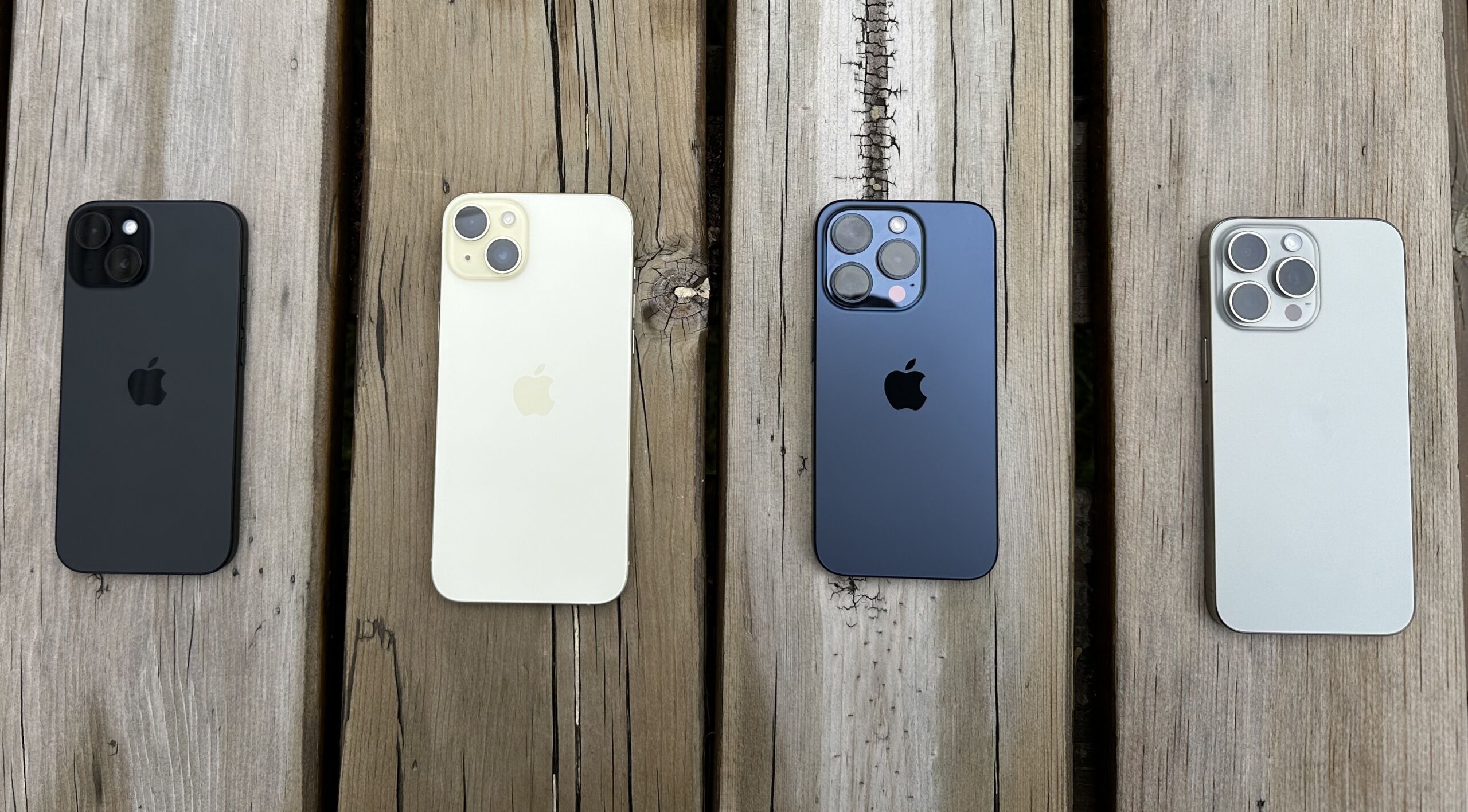
iPhone 15, iPhone 15 Plus, iPhone 15 Pro, and iPhone 15 Pro Max lined up on a table

Enlarge / The iPhone 15 lineup.

Over the past couple of years of reviewing the iPhone, we’ve often jokingly called them “smartcameras” rather than smartphones, as the camera features are really what sell people on upgrading to new models.

So, for our final Apple gift guide, we’ll revisit some of what we explored in our iPhone 15 and iPhone 15 Pro review with a special focus on the cameras. If you’re looking to grab a new iPhone for yourself or someone in your family, which camera is best?

The idea here is to provide a top-level, quick summary of the features of each iPhone camera as they pertain to specific uses to make for an easy buying guide for last-minute holiday shoppers who want a quick answer. We’ll go over each phone and survey its features, detailing their relevant uses and noting some recommendations and considerations along the way.

Read 44 remaining paragraphs | Comments


Source: Ars Technica – Guidemaster: A cheat sheet for comparing the iPhone 15 lineup’s cameras