North America’s Bird Populations Are Shrinking Faster. Blame Climate Change and Agriculture

“Billions fewer birds are flying through North American skies than decades ago,” reports the Associated Press, “and their population is shrinking ever faster, mostly due to a combination of intensive agriculture and warming temperatures, a new study found.”

Nearly half of the 261 species studied showed big enough losses in numbers to be statistically significant and more than half of those declining are seeing their losses accelerate since 1987, according to Thursday’s journal Science… The only consolation is that the birds that are shrinking in numbers the fastest are species — such as the European starling, American crow, grackle and house sparrow — with large enough populations that they aren’t yet at risk of going extinct, said study lead author Francois Leroy, also an Ohio State ecologist…

When it came to population declines — not the acceleration — the scientists noticed bigger losses further south. When they did a deeper analysis they statistically connected those losses to warmer temperatures from human-caused climate change. “In regions where temperatures increase the most, we are seeing strongest declines in populations,” [said study co-author Marta Jarzyna, an ecologist at Ohio State University]. “On the other hand, the acceleration of those declines, that’s mostly driven by agricultural practices.” The scientists found statistical correlations between speeded-up decline rates and high fertilizer use, high pesticide use and amount of cropland, Leroy said. He said they couldn’t say any of those caused the acceleration of losses, but it indicates agriculture in general is a factor. “The stronger the agriculture, the faster we will lose birds,” said Leroy…

McGill University wildlife biologist David Bird, who wasn’t part of the study, said it was done well and that its conclusions made sense. With a growing human population, agriculture practices are intensified, more bird habitats are being converted to cropland, modern machinery often grind up nests and eggs and single crop plantings offer less possibilities for birds to find food and nests, said Bird, the editor of Birds of Canada. “The biggest impact of agricultural intensity though is our war on insects. Numerous recent studies have shown that insect populations in many places throughout the world, including the U.S., have crashed by well over 40 percent,” Bird said in an email. “Many of the birds in this new study showing population declines depend heavily on insects for food.”

A 2019 study of the same bird species by Cornell University conservation scientist Kenneth Rosenberg also found that North America had 3 billion fewer birds than in 1970, the article points out.


Read more of this story at Slashdot.

The US reportedly used Anthropic’s AI for its attack on Iran, just after banning it

In a lengthy post on Truth Social on February 27, President Trump ordered all federal agencies to “immediately cease all use of Anthropic’s technology” following strong disagreements between the Department of Defense and the AI company. A few hours later, the US conducted a major air attack on Iran with the help of Anthropic’s AI tools, according to a report from The Wall Street Journal.

The president noted in his post that there would be a “six-month phase-out period for agencies like the Department of War who are using Anthropic’s products,” so federal agencies are still expected to eventually move away from using Claude or other Anthropic tech. It’s also not the first time that the US used Anthropic’s AI for a major military operation, as the WSJ previously reported that Claude was used in the capture of the now-removed Venezuelan president Nicolás Maduro.

Moving forward, the Department of Defense may begin transitioning towards other AI options, especially after reaching deals with both xAI and OpenAI to use their models within the federal agency’s network. However, the WSJ reported that it would take months to replace Anthropic’s Claude with other AI models.

This article originally appeared on Engadget at https://www.engadget.com/ai/the-us-reportedly-used-anthropics-ai-for-its-attack-on-iran-just-after-banning-it-172908929.html?src=rss

Collabora Clashes With LibreOffice Over Move To Revive LibreOffice Online

Slashdot reader darwinmac writes: The Document Foundation (TDF), the organization behind LibreOffice, has decided to bring back its LibreOffice Online project which been inactive since 2022. Collabora, a company that was a major contributor to the original LibreOffice Online, is not pleased with this development. After the original project went dormant, Collabora forked the code and created its own product, Collabora Online.

Collaboras Michael Meeks, who also sits on the TDF board, reacted to the TDFs decision by saying that a fully supported, free online version already exists in the form of Collabora Online, and that resurrecting a dead repository makes little sense when an active, open community around the online suite already exists.

For now, The Document Foundation plans to reopen the old repository for new contributions. The organization has issued a warning that the code is not ready for live deployment and users should wait until the development team confirms it is stable.


Read more of this story at Slashdot.

Galileo’s Handwritten Notes Discovered in a Medieval Astronomy Text

In a library in Florence, Italy, historian Ivan Malara noticed handwritten notes on a book printed in the 1500s — and recognized the handwriting as Galileo’s. The finding “promises new insights into one of the most famous ideological transitions in the history of science,” writes Science magazine — since the book Galileo annotated was a reprint of Ptolemy’s second-century work arguing that the earth was the center of the universe.

Galileo’s notes, perhaps written around 1590, or roughly 2 decades before his groundbreaking telescope observations of the Moon and Jupiter, reveal someone who both revered and critically dissected Ptolemy’s work. And they imply, Malara argues, that Galileo ultimately broke with Ptolemy’s cosmos because his mastery of the traditional paradigm’s reasoning convinced him that a heliocentric [sun-centered] system would better fulfill Ptolemy’s own mathematical logic.


Read more of this story at Slashdot.

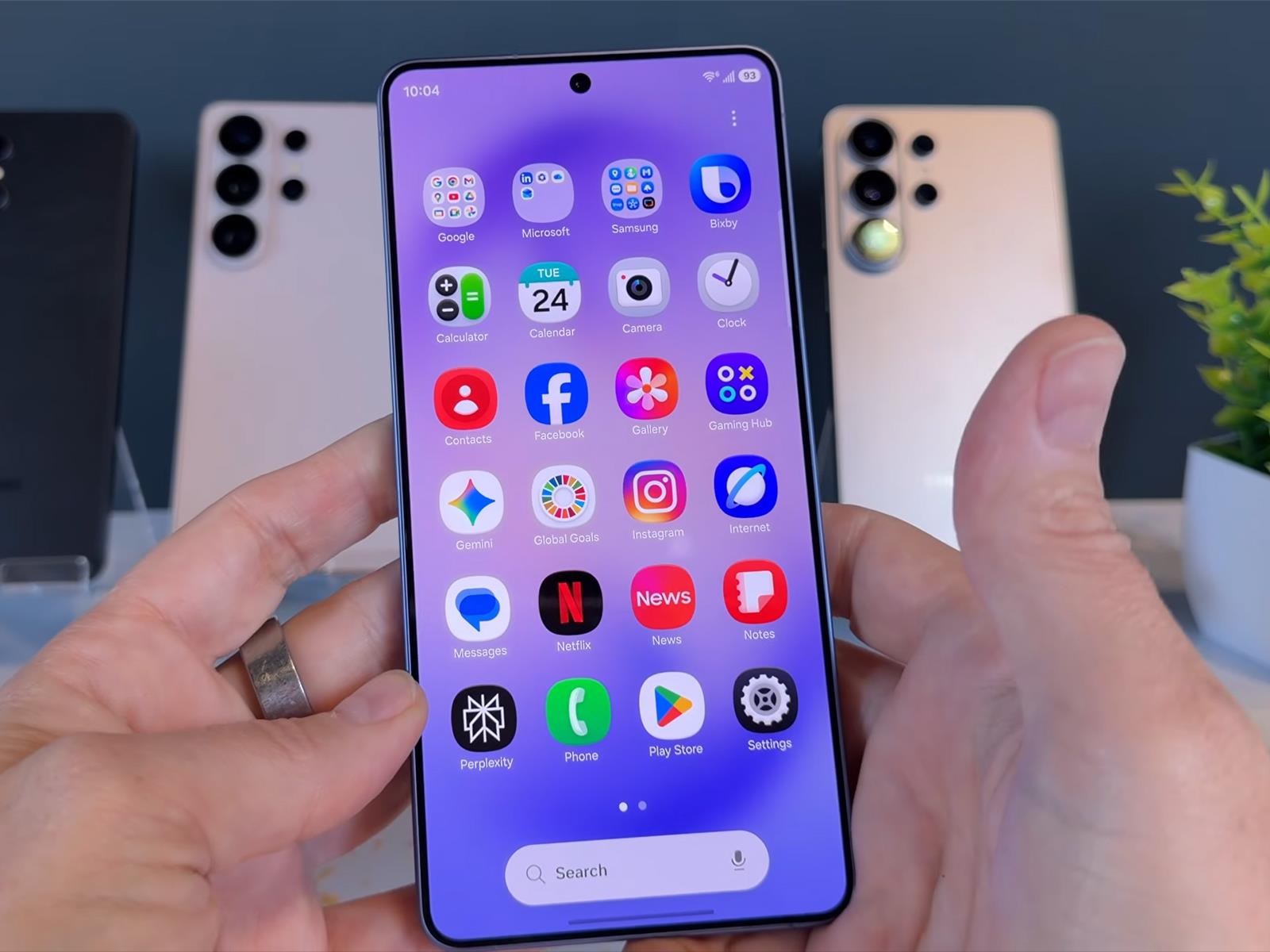
Samsung Galaxy S26 Ultra Now 24% Off With Gift Card, S26+ 21% Off

Samsung Galaxy S26 Ultra Now 24% Off With Gift Card, S26+ 21% Off
Samsung’s newly minted Galaxy S26 series is up for preorder and instead of an early adopter tax, there are actually some nice pre-release offers up for grabs, including a free storage upgrade and up to a $200 Amazon gift card. The best offer is tied to the top dog, the Galaxy S26 Ultra, but there are preorder deals to be had across the entire

A closer look at Honor’s Robot Phone

While Honor has already made plenty of product announcements, with tablets, foldables and more, its most interesting device at MWC 2026 is the Robot Phone — and maybe the humanoid robot that came alongside it.  

After briefly showing off a model at CES, Honor isn’t quite ready to launch its Robot Phone. However, we got more specs, tech demos and a closer look following the company’s MWC press event in Barcelona. The Robot Phone is currently set to launch later this year.

Honor Robot Phone at MWC 2026
Image by Mat Smith for Engadget

Honor has put a lot of effort into ensuring its camera gimbal is highly mobile, to the point of creating a tiny personal robot that is, dare I say, adorable? The Robot Phone’s pop-up camera can cock its head, shake to say no, nod to agree, and even “flip” – or at least rotate 360 degrees. According to Honor’s presentation, it can even bop along to songs. A spokesperson told me that it’s got five songs in its repertoire, so it’s not clear whether they’re programmed for these kind of demos, or will be a feature of the final retail device.

Another demo here at MWC showed how you could make the Robot Phone “sleep” by covering its gimbal eye, though it’s odd that the camera is still exposed rather than folded away. My main concern with the Robot Phone is the robustness and durability of its robotic mechanisms. We’ve lived through several waves of smartphones that attempted much simpler mechanical camera functions and the threat of dust or heavy-handed users can’t be ignored.

Honor Robot Phone at MWC 2026
Image by Mat Smith for Engadget

The company says it’s taken what it learned from foldables, regarding high-performance materials and simulation accuracy, and applied it to shrinking the camera module. On stage, Honor CEO James Li revealed what he calls the industry’s smallest micro motor, much smaller than a 1-euro coin and, he added, 70 percent smaller than existing micro motors. 

As this component has been reduced substantially, the Robot Phone’s gimbal will be the industry’s smallest 4-degrees-of-freedom gimbal system. That’s a spec – we finally got a spec! It’ll also offer three-axis stabilization in this tiny camera package, with the primary camera using a 200-megapixel sensor. 

The fold-away panel that the primary camera tucks into also reveals more typical cameras, so you’re not forced to use the gimbal if you don’t need it. Still, that’s one very thick camera unit:

Honor Robot Phone at MWC 2026
Image by Mat Smith for Engadget

Honor has already started building out camera modes and features, with a Super Steady Video mode that enhances stability while swinging the Robot Phone around to capture video. AI Object Tracking will apparently intelligently follow subjects, while AI SpinShot supports intelligent 90-degree and 180-degree rotational movement for more cinematic transitions. We’ve seen these sorts of pre-programmed movements and functions in full-size phone gimbals and action cams. If Honor can nail it in such a tiny form, it’ll be impressive. 

Other specifications during Honor’s press event were sparse, although the company announced a collaboration with ARRI Image Science to bring its cinematic smarts to the Robot Phone’s gimbal camera. 

In a press release, Honor’s Li said the collaboration would bring ARRI’s “cinematic standards and professional workflows” into mobile imaging. It’s apparently the first time elements of ARRI Image Science are being integrated into a consumer device. Dr. Benedikt von Lindeiner, VP at ARRI, said the goal is to bring a true cinematic aesthetic, such as “natural color, gentle highlight roll-off, and a sense of depth,” to shooting with an Honor smartphone.

Honor Robot Phone at MWC 2026
Image by Mat Smith

Honor also made a humanoid robot companion for its Robot Phone. The bot took to the stage alongside the Robot Phone, danced alongside human dancers, did a backflip and shook hands with CEO James Li. It didn’t say a thing, but fortunately, during some on-the-rails banter between the robot, Robot Phone and Honor’s CEO, the Robot Phone was particularly chatty.

Like the many humanoid robots we’ve reported on and seen in person, Honor hopes to put it to work in both industrial and domestic settings, pitching it as a central part of the company’s multi-million-dollar push into AI. For now, it’s being called Honor Robot.  

This article originally appeared on Engadget at https://www.engadget.com/mobile/smartphones/a-closer-look-at-honors-robot-phone-145935198.html?src=rss

Honor’s Magic V6 doesn’t have a new rabbit to pull out of its hat

Honor launched the Magic V5 in August 2025 and yet its successor is being announced just seven months later. Speak to Honor’s representatives, and you can imply that it’s racing to push the envelope against both its real competition (Samsung) and its anticipated one (Apple). With so little time between launches, you’ll be unsurprised to learn that little has changed. The only other real reason this device has been pushed out so swiftly is because it’ll help Honor retain the title of making the world’s thinnest foldable. I’ll leave you to decide if you think that’s a valid enough reason to release a whole new smartphone so soon.

Last year, just one of the four Magic V5 colorways measured in at 8.8mm folded and 4.1mm open while the rest clocked in at 9mm and 4.2mm respectively. This year Honor is marking its own homework with a similarly generous spirit, with the white version of the Magic V6 measuring 8.75mm folded and 4.0mm open. The black, gold and red colorways will have to settle for the indignity of measuring 9mm folded and 4.1mm open. Now, I appreciate the engineering savvy necessary to make a device this slim, but this push for more thinness needs to stop. Last year’s Magic V5 crossed the millimeters-wide rubicon from slender to dainty, to the point where, while holding it, I was worried about how durable it was. After all, foldables are regularly put through mechanical stresses that regular phones never have to deal with in normal duty.

Honor says the phone is well built to withstand the rigors of normal life, including a scratch-resistant display cover. The screen is impact-resistant, there’s a far stronger hinge and it’s rated for IP68 and IP69 dust and water resistance. Claims that, I’m sure, will be tested to its limits by sceptical reviewers when the device goes on sale. The company has also been scraping away at the V6’s weight, with the white model weighing in at 219 grams, while the other three colorways are 224 grams. That’s lighter than an iPhone 17 Pro Max (233 grams), and you can bet Honor mentioned that fact in its briefings to the press more than once.

Honor has also seen fit to make some massive design changes to the inside of the V6 to help shrink many of its components. This redesigned internal structure includes a new antenna, speaker chamber, vibration motor, NFC module, SIM card slot and USB-C housing. All of the space vacated by those components has been filled by a new 6,660mAh battery with 25 percent silicon content. Honor says you should expect to be able to play a video on the primary display for 24 hours with that beefy battery.

It’s worth noting only the international version is equipped with this 6,660mAh cell, while the China-only variant gets an even better model. Honor said its domestic edition will have a CATL-manufactured battery with 32 percent silicon content and a rated capacity of more than 7,000mAh.

Honor Magic V6 on its side
Honor

“And when Alexander saw the breadth of his domain he wept, seeing as he had no more worlds to conquer.” The quote comes from Die Hard — although it’s an urban myth that film coined the phrase entirely — but the sentiment applies to much of the rest of this handset. The rest of the spec sheet is more or less the same as found on the Magic V5, which itself was a modest revision of its predecessor. Essentially, there aren’t too many more worlds to conquer even at the highest end of smartphone components, so grab your weepin’ tissues.

Dab at the corners of your eyes when you see the cameras are more or less identical both in the main setup and for selfies. There are two 50-megapixel lenses paired with a 64-megapixel telephoto, and up front on both the cover and internal display, there’s a 20-megapixel f/2.2 selfie lens.

You’ll find similarly-meager fare in the list of changes made to the displays, since the primary screen remains the same size and resolution as before. The bezels on the cover screen have been trimmed, so it now measures in at 6.52-inches, up from the 6.43-inch on the V5. But in most of the other ways in which it matters, you’ll find that here it’s business as usual.

The V5 shipped with a Snapdragon 8 Elite, 16GB RAM and 512GB storage, and that was plenty fast enough. The V6 can boast that it’s the first foldable to ship with a Snapdragon 8 Elite Gen 5 (paired with 16GB RAM and 512GB storage). While it is an upgrade on the older SoC, it’s not transformative. Let’s be honest, it’s hard not to see Honor’s desire to shuffle a new handset out the door with some marketing claims comes at the cost of any meaningful substance.

On the software side, it’s business as usual, although one thing caught my eye enough to be worth comment. At several points during Honor’s briefing, the company went hard on the idea that its devices play wonderfully well with Apple’s. If you install Honor Connect onto your iPhone and Mac, you’ll be able to share files, extend your desktop and even control your AirPods. This was something the company has been pushing for a while now, but it surprised me how much it was brought up here.

On one hand, it makes sense that any would-be Apple challenger would offer a friendly way in for iPhone diehards. Tell them that your Android handset will integrate with your existing devices and then hope to show them what you’ve got to offer. On the other, if you’re so eager to tag your gear onto another company’s ecosystem, it doesn’t suggest a lot of confidence in your own. Especially when you’re marketing your pricey, ultra-premium flagship foldable as “an ideal macOS companion” in your own marketing materials. Still, being able to use the V6 as an extended display for your Mac is a cool idea, no matter the broader narrative.

At first blush, Honor’s Magic V6 looks like a phone that exists to satisfy a marketing demand rather than out of necessity. (I’m sure someone will point out that’s the case for a lot of new phones these days, but I’m sure you take my meaning.) To stay ahead of its rivals, it’s nipped and tucked every corner of this phone to within an inch of its life, and the end result is more or less the same handset we saw less than a year ago. That’s not to say it’s a bad phone, the V5 was a lovely piece of kit, but I can’t help but wonder if holding this device back until Honor had more meaningful improvements wouldn’t have been better.

At the time of publication, Honor hasn’t shared pricing and availability information, which we will update here when it’s announced.

This article originally appeared on Engadget at https://www.engadget.com/mobile/smartphones/honors-magic-v6-doesnt-have-a-new-rabbit-to-pull-out-of-its-hat-130048729.html?src=rss

How to share your location via satellite on iPhone

Apple’s satellite features are designed for situations where cellular and Wi-Fi coverage are unavailable. In supported regions, compatible iPhone 14 or later models can connect directly to a satellite to send messages, access Emergency SOS and share location data. Location sharing via satellite is particularly useful when traveling in remote areas, hiking or driving through regions with limited network coverage. This guide explains what is required to use location sharing via satellite on an iPhone, how to prepare the feature in advance and how to send your location when no signal is available.

How to share your location via satellite

When there is no cellular or Wi-Fi signal available, open the Find My app. If satellite connectivity is possible, the app will prompt you to connect to a satellite. Onscreen instructions will guide you to point the iPhone toward the sky and adjust its position to maintain a connection.

Once connected, select the option to share your location. The iPhone will record your current location and send it via satellite to the selected contact. During this process, it is important to keep the device steady and follow the visual guidance until the transmission is complete.

After the location is sent, the contact can view it in their Find My app. The shared location represents a specific moment in time rather than ongoing movement.

What you need before using satellite location sharing

Location sharing via satellite is available on iPhone 14 models and later that are running iOS 18 or newer. The feature is supported only in specific countries and regions, and its availability may vary by local regulations. Satellite services also require a clear view of the sky, which means dense tree cover, buildings, mountains or being indoors can interfere with connectivity.

Apple offers satellite features free of charge for two years with the activation of an iPhone 14 or later, although this policy may change over time. It is important to confirm that satellite services are active on the device before relying on them in a remote setting.

Location sharing via satellite works through the Find My app. Unlike Emergency SOS, it is not intended for urgent situations and does not contact emergency services. Instead, it allows trusted contacts to see your current location when standard connectivity is unavailable.

Preparing your iPhone for satellite use

Before heading somewhere with limited coverage, it is important to confirm that location services and Find My are properly configured. On the iPhone, open the Settings app and tap Privacy & Security, then select Location Services and ensure the feature is turned on. Scroll down to Find My and confirm that location access is set appropriately.

Next, open the Find My app and make sure location sharing is enabled. If location sharing has not been set up, the app will prompt you to choose contacts who are allowed to view your location. Only contacts added in advance can receive location updates via satellite. If you are somewhere without cellular or Wi-Fi coverage, you’ll need to use Apple’s Connection Assistant. Open Settings, then tap Satellite and choose a satellite feature.

Apple also recommends reviewing the satellite connection demo, which is available within the Find My app and other satellite features. This demo shows how to hold the iPhone and move it to maintain a satellite connection. Practicing this step ahead of time can make the process quicker and less stressful when it is actually needed.

Viewing shared locations and managing access

Contacts who receive a satellite location update can see it in the same way as standard Find My location sharing. The location appears on the map with a timestamp indicating when it was sent. If additional updates are needed, the process must be repeated, provided satellite connectivity is still available.

Location sharing permissions can be managed at any time. In the Find My app, users can add or remove contacts and adjust how long location sharing remains active. These settings apply to both standard and satellite-based sharing.

How location sharing via satellite works

When an iPhone loses access to cellular and Wi-Fi networks, the Find My app can switch to satellite mode. This allows the device to send limited data packets to a satellite, which then relays the information to Apple’s network and on to the selected contact.

Because satellite bandwidth is limited, location updates are not continuous — the iPhone sends a snapshot of the user’s location rather than live tracking. Updates may take several minutes to send, depending on conditions and satellite availability.

Battery level can also affect satellite performance. Apple recommends ensuring the iPhone is sufficiently charged before relying on satellite features, especially during extended outdoor activities.

Important limitations to keep in mind

Satellite location sharing is not a replacement for Emergency SOS. In situations involving immediate danger, Emergency SOS via satellite should be used instead, as it connects directly with emergency services.

Environmental factors can significantly affect satellite connectivity. Cloud cover, terrain and obstructions can slow or prevent successful transmissions. The feature also works best outdoors with a clear view of the horizon.

Finally, satellite services are designed for occasional use rather than frequent messaging or tracking. Location updates may take longer than expected and should not be relied on for real-time navigation or coordination.

Sharing your location via satellite can provide peace of mind when traveling beyond the reach of traditional networks. By setting up the feature in advance and understanding its limitations, iPhone users can make better use of Apple’s satellite tools when they matter most.

This article originally appeared on Engadget at https://www.engadget.com/mobile/smartphones/how-to-share-your-location-via-satellite-on-iphone-130000085.html?src=rss

The strange animals that control their body heat

In 1774, British physician-scientist Charles Blagden received an unusual invitation from a fellow physician: to spend time in a small room that was hotter, he wrote, “than it was formerly thought any living creature could bear.”

Many people may have been appalled by this offer, but Blagden was delighted by the opportunity for self-experimentation. He marveled as his own temperature remained at 98° Fahrenheit (approximately 37° Celsius), even as the temperature of the room approached 200°F (about 93°C).

Today, this ability to maintain a stable body temperature—called homeothermy—is known to exist among myriad species of mammals and birds. But there are also some notable exceptions. The body temperature of the fat-tailed dwarf lemur, for example, can fluctuate by nearly 45°F (25°C) over a single day.

Read full article

Comments

Some Linux LTS Kernels Will Be Supported Even Longer, Announces Greg Kroah-Hartman

An anonymous reader shared this report from the blogIt’s FOSS:

Greg Kroah-Hartman has updated the projected end-of-life (EOL) dates for several active longterm support kernels via a commit. The provided reasoning? It was done “based on lots of discussions with different companies and groups and the other stable kernel maintainer.” The other maintainer is Sasha Levin, who co-maintains these Linux kernel releases alongside Greg. Now, the updated support schedule for the currently active LTS kernels looks like this:
— Linux 6.6 now EOLs Dec 2027 (was Dec 2026), giving it a 4-year support window.

— Linux 6.12 now EOLs Dec 2028 (was Dec 2026), also a 4-year window.

— Linux 6.18 now EOLs Dec 2028 (was Dec 2027), at least 3 years of support.

Worth noting above is that Linux 5.10 and 5.15 are both hitting EOL this year in December, so if your distro is still running either of these, now is a good time to start thinking about a move.


Read more of this story at Slashdot.

Anthropic’s Claude Leaps to #2 on Apple’s ‘Top Apps’ Chart After Pentagon Controversy

Anthropic’s Claude AI assistant “jumped to the No. 2 slot on Apple’s chart of top U.S. free apps late on Friday,” reports CNBC:

The rise in popularity suggests that Anthropic is benefiting from its presence in news headlines, stemming from its refusal to have its models used for mass domestic surveillance or for fully autonomous weapons… OpenAI’s ChatGPT sat at No. 1 on the App Store rankings on Saturday, while Google’s Gemini was at No. 3… On Jan. 30, [Claude] was ranked No. 131 in the U.S., and it bounced between the top 20 and the top 50 for much of February, according to data from analytics company Sensor Tower… [And Friday night, for 85.3 million followers] pop singer Katy Perry posted a screenshot of Anthropic’s Pro subscription for consumers, with a heart superimposed over it.

Friday Anthropic posted “We are deeply grateful to our users, and to the industry peers, policymakers, veterans, and members of the public who have voiced their support in recent days. Thank you. “


Read more of this story at Slashdot.

Silicon Valley’s Ideas Mocked Over Penchant for Favoring Young Entrepreneurs with ‘Agency’

In a 9,000-word expose, a writer for Harper’s visited San Francisco’s young entrepreneurs in September to mockingly profile “tech’s new generation and the end of thinking.”
There’s Cluely founder Roy Lee. (“His grand contribution to the world was a piece of software that told people what to do.”) And the Rationalist movement’s Scott Alexander, who “would probably have a very easy time starting a suicide cult…”

Alexander’s relationship with the AI industry is a strange one. “In theory, we think they’re potentially destroying the world and are evil and we hate them,” he told me. In practice, though, the entire industry is essentially an outgrowth of his blog’s comment section… “Many of them were specifically thinking, I don’t trust anybody else with superintelligence, so I’m going to create it and do it well.” Somehow, a movement that believes AI is incredibly dangerous and needs to be pursued carefully ended up generating a breakneck artificial arms race.

There’s a fascinating story about teenaged founder Eric Zhu (who only recently turned 18):

Clients wanted to take calls during work hours, so he would speak to them from his school bathroom. “I convinced my counselor that I had prostate issues… I would buy hall passes from drug dealers to get out of class, to have business meetings.” Soon he was taking Zoom calls with a U.S. senator to discuss tech regulation… Next, he built his own venture-capital fund, managing $20 million. At one point cops raided the bathroom looking for drug dealers while Eric was busy talking with an investor. Eventually, the school got sick of Eric’s misuse of the facilities and kicked him out. He moved to San Francisco.

Eric made all of this sound incredibly easy. You hang out in some Discord servers, make a few connections with the right people; next thing you know, you’re a millionaire… Eric didn’t think there was anything particularly special about himself. Why did he, unlike any of his classmates, start a $20 million VC fund? “I think I was just bored. Honestly, I was really bored.” Did he think anyone could do what he did? “Yeah, I think anyone genuinely can.”

The article concludes Silicon Valley’s investors are rewarding young people with “agency”. Although “As far as I could tell, being a highly agentic individual had less to do with actually doing things and more to do with constantly chasing attention online.” Like X.com user Donald Boat, who successfully baited Sam Altman into buying him a gaming PC in “a brutally simplified miniature of the entire VC economy.” (After which “People were giving him stuff for no reason except that Altman had already done it, and they didn’t want to be left out of the trend.”)

Shortly before I arrived at the Cheesecake Factory, [Donald Boat] texted to let me know that he’d been drinking all day, so when I met him I thought he was irretrievably wasted. In fact, it turned out, he was just like that all the time… He seemed to have a constant roster of projects on the go. He’d sent me occasional photos of his exploits. He went down to L.A. to see Oasis and ended up in a poker game with a group of weapons manufacturers. “I made a bunch of jokes about sending all their poker money to China,” he said, “and they were not pleased….”

“I don’t use that computer and I think video games are a waste of time. I spent all the money I made from going viral on Oasis tickets.” As far as he was concerned, the fact that tech people were tripping over themselves to take part in his stunt just confirmed his generally low impression of them. “They have too much money and nothing going on…” Ever since his big viral moment, he’d been suddenly inundated with messages from startup drones who’d decided that his clout might be useful to them. One had offered to fly him out to the French Riviera.

The author’s conclusion? “It did not seem like a good idea to me that some of the richest people in the world were no longer rewarding people for having any particular skills, but simply for having agency.”


Read more of this story at Slashdot.

Sam Altman Answers Questions on X.com About Pentagon Deal, Threats to Anthropic

Saturday afternoon Sam Altman announced he’d start answering questions on X.com about OpenAI’s work with America’s Department of War — and all the developments over the past few days. (After that department’s negotions had failed with Anthropic, they announced they’d stop using Anthropic’s technology and threatened to designate it a “Supply-Chain Risk to National Security”. Then they’d reached a deal for OpenAI’s technology — though Altman says it includes OpenAI’s own similar prohibitions against using their products for domestic mass surveillance and requiring “human responsibility” for the use of force in autonomous weapon systems.)
Altman said Saturday that enforcing that “Supply-Chain Risk” designation on Anthropic “would be very bad for our industry and our country, and obviously their company. We said [that] to the Department of War before and after. We said that part of the reason we were willing to do this quickly was in the hopes of de-esclation…. We should all care very much about the precedent… To say it very clearly: I think this is a very bad decision from the Department of War and I hope they reverse it. If we take heat for strongly criticizing it, so be it.”

Altman also said that for a long time, OpenAI was planning to do “non-classified work only,” but this week found the Department of War “flexible on what we needed…”

Sam Altman: The reason for rushing is an attempt to de-escalate the situation. I think the current path things are on is dangerous for Anthropic, healthy competition, and the U.S. We negotiated to make sure similar terms would be offered to all other AI labs.

I know what it’s like to feel backed into a corner, and I think it’s worth some empathy to the Department of War. They are… a very dedicated group of people with, as I mentioned, an extremely important mission. I cannot imagine doing their work. Our industry tells them “The technology we are building is going to be the high order bit in geopolitical conflict. China is rushing ahead. You are very behind.” And then we say “But we won’t help you, and we think you are kind of evil.” I don’t think I’d react great in that situation. I do not believe unelected leaders of private companies should have as much power as our democratically elected government. But I do think we need to help them.

Question: Are you worried at all about the potential for things to go really south during a possible dispute over what’s legal or not later on and be deemed a supply chain risk…?

Sam Altman: Yes, I am. If we have to take on that fight we will, but it clearly exposes us to some risk. I am still very hopeful this is going to get resolved, and part of why we wanted to act fast was to help increase the chances of that…

Question: Why the rush to sign the deal ? Obviously the optics don’t look great.

Sam Altman: It was definitely rushed, and the optics don’t look good. We really wanted to de-escalate things, and we thought the deal on offer was good.
If we are right and this does lead to a de-escalation between the Department of War and the industry, we will look like geniuses, and a company that took on a lot of pain to do things to help the industry. If not, we will continue to be characterized as as rushed and uncareful. I don’t where it’s going to land, but I have already seen promising signs. I think a good relationship between the government and the companies developing this technology is critical over the next couple of years…

Question: What was the core difference why you think the Department of War accepted OpenAI but not Anthropic?

Sam Altman: […] We believe in a layered approach to safety–building a safety stack, deploying FDEs [embedded Forward Deployed Engineers] and having our safety and alignment researcher involved, deploying via cloud, working directly with the Department of War. Anthropic seemed more focused on specific prohibitions in the contract, rather than citing applicable laws, which we felt comfortable with. We feel that it it’s very important to build safe system, and although documents are also important, I’d clearly rather rely on technical safeguards if I only had to pick one…

I think Anthropic may have wanted more operational control than we did…

Question: Were the terms that you accepted the same ones Anthropic rejected?

Sam Altman: No, we had some different ones. But our terms would now be available to them (and others) if they wanted.

Question: Will you turn off the tool if they violate the rules?

Sam Altman: Yes, we will turn it off in that very unlikely event, but we believe the U.S. government is an institution that does its best to follow law and policy. What we won’t do is turn it off because we disagree with a particular (legal military) decision. We trust their authority.

Questions were also answered by OpenAI’s head of National Security Partnerships (who at one point posted that they’d managed the White House response to the Snowden disclosures and helped write the post-Snowden policies constraining surveillance during the Obama years.) And they stressed that with OpenAI’s deal with Department of War, “We control how we train the models and what types of requests the models refuse.”

Question: Are employees allowed to opt out of working on Department of War-related projects?

Answer: We won’t ask employees to support Department of War-related projects if they don’t want to.

Question: How much is the deal worth?

Answer: It’s a few million $, completely inconsequential compared to our $20B+ in revenue, and definitely not worth the cost of a PR blowup. We’re doing it because it’s the right thing to do for the country, at great cost to ourselves, not because of revenue impact…

Question: Can you explicitly state which specific technical safeguard OpenAI has that allowed you to sign what Anthropic called a ‘threat to democratic values’?

Answer: We think the deal we made has more guardrails than any previous agreement for classified AI deployments, including Anthropic’s. Other AI labs (including Anthropic) have reduced or removed their safety guardrails and relied primarily on usage policies as their primary safeguards in national security deployments. Usage policies, on their own, are not a guarantee of anything. Any responsible deployment of AI in classified environments should involve layered safeguards including a prudent safety stack, limits on deployment architecture, and the direct involvement of AI experts in consequential AI use cases. These are the terms we negotiated in our contract.

They also detailed OpenAI’s position on LinkedIn:

Deployment architecture matters more than contract language. Our contract limits our deployment to cloud API. Autonomous systems require inference at the edge. By limiting our deployment to cloud API, we can ensure that our models cannot be integrated directly into weapons systems, sensors, or other operational hardware…

Instead of hoping contract language will be enough, our contract allows us to embed forward deployed engineers, commits to giving us visibility into how models are being used, and we have the ability to iterate on safety safeguards over time. If our team sees that our models aren’t refusing queries they should, or there’s more operational risk than we expected, our contract allows us to make modifications at our discretion. This gives us far more influence over outcomes (and insight into possible abuse) than a static contract provision ever could.

U.S. law already constrains the worst outcomes. We accepted the “all lawful uses” language proposed by the Department, but required them to define the laws that constrained them on surveillance and autonomy directly in the contract. And because laws can change, having this codified in the contract protects against changes in law or policy that we can’t anticipate.


Read more of this story at Slashdot.

Duolingo Grows, But Users Disliked Increased Ads and Subscription Pushes. Stock Plummets Again

Friday was “a horrible day” for investors in Duolingo, reports Fast Company. But Friday’s one-day 14% drop is just part of a longer story.

Since last May, Duolingo’s stock has dropped 81%. Yes, the company faced a social media backlash that month after its CEO promised they’d become an “AI-first” company (favoring AI over human contractors). And yes, Duolingo did double its language offerings using generative AI. But more importantly, that summer OpenAI showed how easy it was to just roll your own language-learning tool from a short prompt in a GPT-5 demo, while Google built an AI-powered language-learning tool into its Translate app.

And yet, Friday Duolingo’s shares dropped another 14%, after announcing good fourth quarter results but an unpopular direction for its future. Fast Company reports:

On the surface, many of the company’s most critical metrics saw decent gains for the quarter, including:
— Daily Active Users: 52.7 million (up 30% year-over-year)
— Paid Subscribers: 12.2 million (up 28% year-over-year)
— Revenue: $282.9 million (up 35% year-over-year)
— Total bookings: $336.8 million (up 24% year-over-year)

The company also reported its full-year 2025 financials, revealing that for the first time in its history, it crossed the $1 billion revenue mark for a fiscal year.

But the Motley Fool explains that Duolingo’s higher ad loads and repeated pushes for subscription plans “generated revenues in the short term, but made the Duolingo platform less engaging. Ergo, user growth decelerated while revenues rose.” Thursday Duolingo announced a big change to address that, including moving more features into lower-priced tiers. Barron’s reports:

D.A. Davidson analyst Wyatt Swanson, who rates Duolingo stock at Neutral, posited that the push to monetize “led to disgruntled users and a meaningful negative impact to ‘word-of-mouth’ marketing.” Duolingo has guided for bookings growth between 10% and 12% in 2026, compared with the 20% rate the company would have expected to see “if we operated like we have in past years….”
If stock reaction is any indication, investors are concerned about Duolingo’s new focus.


Read more of this story at Slashdot.

New ‘Star Wars’ Movies Are Coming to Theatres. But Will Audiences?

“The drought of upcoming Star Wars movies is coming to an end soon,” writes Cinemablend. In May the The Mandalorian and Grogu opens, and one year later there’s the release of the Ryan Gosling-led Star Wars: Starfighter.

But “there are some insiders who already believe that Starfighter will be a bigger hit than The Mandalorian and Grogu…”

According to unnamed sources who spoke with Variety, there’s a “sense” that Star Wars: Starfighter, which is directed by Deadpool & Wolverine’s Shawn Levy, will be a more satisfying viewing experience. These same sources are allegedly impressed by the early footage they’ve seen of Ryan Gosling’s performance and also suggested that Levy has “recaptured the franchise’s spirit of fun.” Furthermore, the article states that there’s concern that because The Mandalorian and Grogu is spinning out of a streaming-exclusive series, it might not have as much appeal to people who aren’t already fans of The Mandalorian… Star Wars: Starfighter, on the other hand, will be accessible to everyone equally. It’s set five years after The Rise of Skywalker, which is an unexplored period for the Star Wars franchise onscreen. It’s also expected that most, if not all of its featured characters will be brand-new, so no knowledge of past adventures is required.
Slashdot reader gaiageek reminds us that 2027 will also see a special 50-year anniversary event in movie in theatres: a “newly restored” version of the original 1977 Star Wars.


Read more of this story at Slashdot.

US Threatens Anthropic with ‘Supply-Chain Risk’ Designation. OpenAI Signs New War Department Deal

It started Friday when all U.S. federal agencies were ordered to “immediately cease” using Anthropic’s AI technology after contract negotiations stalled when Anthropic requested prohibitions against mass domestic surveillance or fully autonomous weapons. But later Friday there were even more repercussions…

In a post to his 1.1 million followers on X.com, U.S. Secretary of War Pete Hegseth criticized Anthropic for what he called “a master class in arrogance and betrayal as well as a textbook case of how not to do business with the United States Government or the Pentagon.”

Our position has never wavered and will never waver: the Department of War must have full, unrestricted access to Anthropic’s models for every LAWFUL purpose in defense of the Republic… Cloaked in the sanctimonious rhetoric of “effective altruism,” [Anthropic and CEO Dario Amodei] have attempted to strong-arm the United States military into submission — a cowardly act of corporate virtue-signaling that places Silicon Valley ideology above American lives. The Terms of Service of Anthropic’s defective altruism will never outweigh the safety, the readiness, or the lives of American troops on the battlefield. Their true objective is unmistakable: to seize veto power over the operational decisions of the United States military. That is unacceptable…

In conjunction with the President’s directive for the Federal Government to cease all use of Anthropic’s technology, I am directing the Department of War to designate Anthropic a Supply-Chain Risk to National Security. Effective immediately, no contractor, supplier, or partner that does business with the United States military may conduct any commercial activity with Anthropic… America’s warfighters will never be held hostage by the ideological whims of Big Tech. This decision is final.

Meanwhile, Anthrophic said on Friday that “no amount of intimidation or punishment from the Department of War will change our position.” (And “We will challenge any supply chain risk designation in court.”)
Designating Anthropic as a supply chain risk would be an unprecedented action — one historically reserved for US adversaries, never before publicly applied to an American company. We are deeply saddened by these developments. As the first frontier AI company to deploy models in the US government’s classified networks, Anthropic has supported American warfighters since June 2024 and has every intention of continuing to do so. We believe this designation would both be legally unsound and set a dangerous precedent for any American company that negotiates with the government… Secretary Hegseth has implied this designation would restrict anyone who does business with the military from doing business with Anthropic. The Secretary does not have the statutory authority to back up this statement.

Anthropic also defended the two exceptions they’d requested that had stalled contract negotiations. “[W]e do not believe that today’s frontier AI models are reliable enough to be used in fully autonomous weapons. Allowing current models to be used in this way would endanger America’s warfighters and civilians. Second, we believe that mass domestic surveillance of Americans constitutes a violation of fundamental rights.”

Also Friday, OpenAI announced that “we reached an agreement with the Department of War to deploy our models in their classified network.”

OpenAI CEO Sam Altman emphasized that the agreement retains and confirms OpenAI’s own prohibitions against using their products for domestic mass surveillance — and requires “human responsibility” for the use of force including for autonomous weapon systems. “The Department of War agrees with these principles, reflects them in law and policy, and we put them into our agreement. We also will build technical safeguards to ensure our models behave as they should, which the Department of War also wanted. ”

We are asking the Department of War to offer these same terms to all AI companies, which in our opinion we think everyone should be willing to accept. We have expressed our strong desire to see things de-escalate away from legal and governmental actions and towards reasonable agreements. We remain committed to serve all of humanity as best we can. The world is a complicated, messy, and sometimes dangerous place.


Read more of this story at Slashdot.

This retro-inspired handheld comes with Banjo-Kazooie and Battletoads built in

Who would’ve guessed we’d get to play the original Banjo-Kazooie on a handheld with just a D-pad in 2026. HyperMegaTech!’s latest release is a collaboration with Rare Ltd., the legendary game developer known for the Banjo-Kazooie franchise and, more recently, Sea of Thieves, called the Super Pocket Rare Edition.

The vertical handheld features 14 classics from the British developer, including two Battletoads titles, Conker’s Pocket Tales and many more. While most of the games were released on 8- or 16-bit consoles, Banjo-Kazooie will be the headliner since it was originally released on the Nintendo 64. It may sound weird to control Banjo and Kazooie with a D-pad, but HyperMegaTech! assured that the game has been enhanced and optimized specifically for the Super Pocket handheld.

Since HyperMegaTech! and Evercade share Blaze Entertainment as a parent company, that means the Rare Edition handheld will be compatible with Evercade cartridges. Once you’re done with the 14 included games, you can expand your Super Pocket’s library with cartridges that feature collections from Taito, NeoGeo or Atari. HyperMegaTech! said the Rare Edition handheld will be available for $69.99 in June 2026, but has already opened preorders.

This article originally appeared on Engadget at https://www.engadget.com/gaming/this-retro-inspired-handheld-comes-with-banjo-kazooie-and-battletoads-built-in-203111135.html?src=rss

Trump moves to ban Anthropic from the US government

US President Donald Trump announced Friday that he was instructing every federal agency to “immediately cease” use of Anthropic’s AI tools. The move comes after Anthropic and top officials clashed for weeks over military applications of artificial intelligence.

“The Leftwing nut jobs at Anthropic have made a DISASTROUS MISTAKE trying to STRONG-ARM the Department of War,” Trump said in a post on Truth Social.

Trump said that there would be a “six month phase out period” for agencies using Anthropic, which could allow time for further negotiations between the government and the AI startup.

Read full article

Comments

Google Brings Quantum-Hardened HTTPS To Chrome In Major Security Upgrade

Google Brings Quantum-Hardened HTTPS To Chrome In Major Security Upgrade
Traditional cryptographic signatures that underpin HTTPS can be broken by a sufficiently powerful quantum computer using algorithms like Shor’s, threatening the trust model of secure connections. To help protect against this threat, Google is rolling out a major upgrade to Secure HTTP in its Chrome browser. In a blog post published yesterday,