You can now mindlessly scroll your TikTok’s ‘for you page’ on larger screens and foldable devices. The new update will be available for users worldwide and on devices like the iPad or the various foldable Android phones out there. TikTok, which is traditionally mobile-forward, said it will deliver a clear video feed of content on bigger screens with “enhanced clarity.”
The top and bottom of screens that stream TikTok videos will have a navigation bar that makes it easier to access tabs and featured videos. With this update, clips can also be watched in landscape orientation. This creates new opportunities for video creators to generate content in a horizontal format after years of a vertical-only.
TikTok also said it is going to continue experimenting with features like Topic Feeds, which would allow users to explore videos in specific categories like gaming, food or fashion. The platform has been exploring new ways to deliver content to users and it has been quietly testing the idea of an AI-powered chatbot that can recommend videos to users. While it’s still the leading app for short-form videos, creating unique ways to deliver content to its users can help set the social media company itself apart from competitors in the space, like Instagram’s Reels and YouTube Shorts.
This article originally appeared on Engadget at https://www.engadget.com/tiktok-upgrades-its-app-experience-for-tablets-and-foldables-172456485.html?src=rss
Enlarge/ Yes, pickup trucks are used in work situations, but they’re also bought by people who want to drive them off-road. (credit: Kristin Shaw)
Between a new platform and the model’s first hybrid powertrain, the redesigned 2024 Toyota Tacoma is full of interesting tidbits and both off- and on-road enhancements. The refresh has been a long time coming, as the last time Toyota updated the Tacoma was for model year 2015.
The Tacoma line began in 1995 as a US-specific version of the global HiLux. Even Back to the Future‘s Marty McFly coveted a black 1985 Toyota HiLux SR5 Xtra Cab, and it appeared in his garage, complete with a kangaroo bar, off-roading lights, and more.
By design, the new Tacoma is larger than the last generation, sharing a platform with the full-size Tundra. Today, the 2024 Tacoma is more fuel-efficient than its smaller predecessor, notching between 20 and 26 mpg (9–11.8 L/100 km) in the gas-powered versions—a 1995 HiLux ranged from 14–22 mpg (10.7–16.8 L/100 km). We’re waiting to see what the hybrid powertrain earns from the EPA; the difference in mpg may be modest, but the horsepower quotient is impressive.
A bipartisan group of lawmakers has written to U.S. President Joe Biden, warning European technology regulation are unfairly targeting U.S. companies and not including many Chinese or EU firms, according to a letter seen by Reuters on Monday. From the report: Under the European Union’s Digital Markets Act (DMA), five major U.S. tech companies — Alphabet, Amazon, Apple, Meta and Microsoft — were designated “gatekeeper” service providers. From March 2024, these companies — as well as TikTok’s Chinese owner ByteDance — will be required to make their messaging apps work with rivals and let users choose which ones they want pre-installed on their devices.
In a letter seen by Reuters, 21 members of the U.S. House of Representatives warned the new rules could damage American economic and security interests and called on Biden to secure commitments from the EU the rules will be enforced fairly. “Securing our leadership in this sector is imperative for our economy and American workers,” the letter said. “The designation of leading U.S. companies as ‘gatekeepers’ threatens to upend the U.S. economy, diminish our global leadership in the digital sphere, and jeopardize the security of consumers.”
The letter questioned why Chinese companies Alibaba, Huawei, and Tencent had avoided designation and why European companies had avoided any scrutiny. “The EU inexplicably failed to designate any European retailers, content-sharing platforms, payment firms, and telcos,” it said. Signatories of the letter — including Representative Lou Correa, a Democrat, and Thomas Massie, a Republican, — called on Biden to seek assurances from EU lawmakers the DMA will not be unfairly used to target U.S. companies.
In the grim dark future of the 41st millennium, there is only… contract negotiations? A year ago Games Workshop announced that it was working with Amazon Studios to bring the universe of its legendary sci-fi miniatures game Warhammer 40,000 to film and TV. Today it did so again, but now it’s even officialler.
Flipboard is the latest mainstream app to officially join the fediverse, the collection of decentralized services that run on the ActivityPub protocol. The news reading app, which has been experimenting with Mastodon for nearly a year, now plans to become fully interoperable with Mastodon and the rest of the fediverse.
The news reading app is starting with the accounts of about two dozen publishers, including Polygon, Medium, Semafor, Kotaku and Mental Floss, whose Flipboard content will be discoverable across the fediverse. By next month, the company expects all public Flipboard accounts will be federated, meaning anyone on an ActivityPub-powered app will be able to view their posts and interact with them.
And beginning in April, according to Flipboard CEO Mike McCue, all fediverse content will also be readily available within the Flipboard app itself. This means users will be able to use Flipboard browse content shared to Mastodon, Pixelfed (a photo sharing app kind of like Instagram), PeerTube (a decentralized video platform) and the rest of the apps that make up the fediverse.
Flipboard’s official entrance into the fediverse comes at a moment where there is increasing enthusiasm for ActivityPub within the social media industry. Last week, Meta announced that it was taking its first steps toward making Threads compatible with Mastodon and the rest of the fediverse. “I think you’ll probably have more than 150 million people in the fediverse by the end of the next year,” McCue tells Engadget, “You have millions of Flipboard users, millions of Threads users all joining this network … it’s not going to take very long before this becomes the largest social network.”
McCue’s enthusiasm for Mastodon and the fediverse is especially notable given his once close ties to Twitter. The Flipboard CEO was a member of Twitter’s board between 2010 and 2012, and reportedly considered selling Flipboard to the company in 2015. But Elon Musk’s takeover of the company, and the disintegration of its API, prompted him to begin experimenting with Mastodon and Bluesky integrations earlier this year.
He now believes that momentum for the fediverse is so strong, Twitter may ultimately end up supporting ActivityPub too. “More and more companies will have to look at ActivityPub,” he predicts. “I wouldn’t be surprised if Twitter ultimately decides they’re going to have to do this.”
This article originally appeared on Engadget at https://www.engadget.com/flipboard-is-moving-to-the-fediverse-170426320.html?src=rss
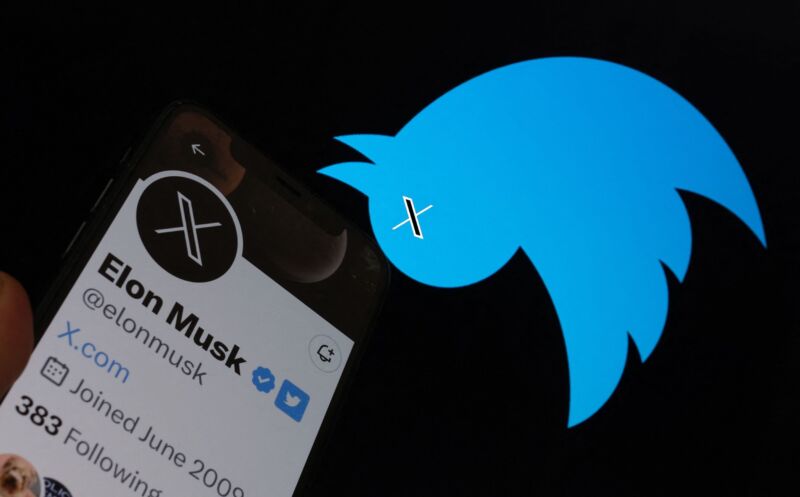
The European Union has opened a formal investigation into whether Elon Musk’s X platform (formerly Twitter) violated the Digital Services Act (DSA), which could result in fines of up to 6 percent of global revenue. A European Commission announcement today said the agency “opened formal proceedings to assess whether X may have breached the Digital Services Act (DSA) in areas linked to risk management, content moderation, dark patterns, advertising transparency and data access for researchers.”
This is the commission’s first formal investigation under the Digital Services Act, which applies to large online platforms and has requirements on content moderation and transparency. The step has been in the works since at least October, when a formal request for information was sent amid reports of widespread Israel/Hamas disinformation.
The European Commission today said it “decided to open formal infringement proceedings against X under the Digital Services Act” after reviewing X’s replies to the request for information on topics including “the dissemination of illegal content in the context of Hamas’ terrorist attacks against Israel.” The commission said the investigation will focus on dissemination of illegal content, the effectiveness of measures taken to combat information manipulation on X, transparency, and “a suspected deceptive design of the user interface.”
Following a tumultuous few weeks for Beeper, which has been trying to provide an iMessage-compatible Android app, a group of US lawmakers are pushing for the DOJ to investigate Apple for “potentially anticompetitive conduct” over its attempts to disable Beeper’s services. From a report: Senators Amy Klobuchar (D-MN) and Mike Lee (R-UT) as well as Representatives Jerry Nadler (D-NY) and Ken Buck (R-CO) said in a letter to the DOJ that Beeper’s Android messaging app, Beeper Mini, was a threat to Apple’s leverage by “creating [a] more competitive mobile applications market, which in turn [creates] a more competitive mobile device market.”
In an interview with CBS News on Monday, Beeper CEO Eric Migicovsky and 16-year-old developer James Gill talked about the fight to keep Beeper Mini alive. Migicovsky told CBS News that Beeper is trying to provide a service people want and reiterated his belief that Apple has a monopoly over its iMessage service. The company created Beeper Mini after being contacted by Gill, who said he reverse-engineered the software by “poking at it” using a “real Mac and a real iPhone.” […] The lawmakers’ letter also pointed to a Department of Commerce report calling Apple a “gatekeeper,” mirroring language used in the EU Digital Markets Act (DMA) that went into force earlier this year, regulating the “core” services of several tech platforms (though, notably, iMessage may not be included in this). They went on to cite Migicovsky’s December 2021 Senate Judiciary Committee testimony that “the dominant messaging services would use their position to impose barriers to interoperability” and keep companies like Beeper from offering certain services. “Given Apple’s recent actions, that concern appears prescient,” they added.
Apple’s recently-released tvOS 17 update allows for native VPN apps and big-name providers are wasting no time. ExpressVPN dropped an app a couple of weeks ago and now the same is true of one of its primary competitors. NordVPN now has an official Apple TV app available for download.
This is the real deal and works with your current NordVPN subscription, if you have one. The setup is simple. Just download the app and sign in. If you’re new to the service, download the app and create an account. Once connected, you’ll have access to the company’s global array of secure servers.
The app encrypts all network traffic and uses the company’s NordLynx protocol to speed up the connection, which should offer an optimized streaming experience with minimal buffering. Of course, this will likely depend on the locations of your actual network connection and virtual network connection.
Back when Apple first announced that native VPNs would be coming to tvOS 17, NordVPN expressed doubts, telling The Verge that the company was “concerned that there may be some limitations.” It looks like it got over those doubts.
So, why would you even want or need a dedicated VPN on your Apple streaming box? There are a couple of reasons, all of which involve traveling with the diminutive device. You can customize settings, like preferred server location, which helps get around geographic restrictions regarding streaming content. Nobody’s gonna stop you from binging Foundation while on vacation. Even without geo-restrictions, bringing your Apple TV into a hotel room will allow you to stream whatever you want instead of relying on, gag, cable.
Before tvOS 17, you couldn’t configure a VPN on these devices. You’d have to install a VPN client on the router, which is notoriously complicated. Kudos to Apple on this one. NordVPN isn’t the only available VPN on the Apple TV App Store. There’s the aforementioned ExpressVPN, PureVPN and several more. You can install VPN apps on Apple TV HD and Apple TV 4K devices, running tvOS 17 or later.
Speaking of tvOS 17, the company just dropped an update. The latest and greatest tvOS 17.2 brings a redesigned interface and the ability to answer FaceTime calls directly from the TV.
This article originally appeared on Engadget at https://www.engadget.com/nordvpn-comes-to-the-apple-tv-162030095.html?src=rss
The European Union opened a formal investigation into Elon Musk’s X on Monday examining the platform’s role in spreading ‘illegal content’ around the Israel and Hamas war. X has come under fire recently for antisemitic content on the platform, losing a slew of advertisers in the process.
Southwest Airlines is still paying for its meltdown during the 2022 holidays that stranded millions of travelers — and the tab is growing. From a report: The U.S. Transportation Department has ordered Southwest to pay a $140 million civil penalty, part of a broader consent order after the airline’s operational failures a year ago. That penalty is by far the largest the DOT has ever levied for consumer protection violations, according to a statement from the department. “This is not just about Southwest,” Transportation Secretary Pete Buttigieg said in an interview with NPR’s Morning Edition on Monday. “This is about the entire industry, sending a signal that you should not be cutting corners — because if you fail your passengers, we will hold you accountable.”
A major winter storm last December caused travel disruptions across the country as airlines canceled thousands of flights. But while other airlines recovered relatively quickly, Southwest fell apart. The airline ultimately canceled 16,900 flights, stranding more than 2 million passengers. In a statement, Southwest described the agreement as “a consumer-friendly settlement.” The airline says it has taken steps since last year’s disruption to improve its operational resiliency and customer care.
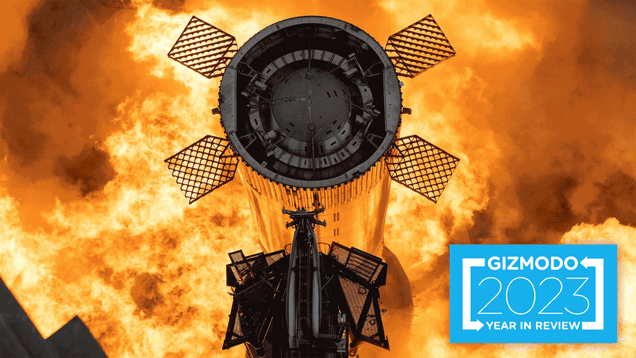
It’s time to look back at spaceflight in 2023, a real “two steps forward, one step back” kind of year, filled with highs, lows, and everything in between.
Adobe has abandoned its proposed $20 billion acquisition of product design software company Figma, as there was “no clear path to receive necessary regulatory approvals” from UK and EU watchdogs.
The deal had faced probes from both the UK and EU competition regulators for fears it would have an impact on the product design, image editing and illustration markets.
Adobe refused to offer remedies to satisfy the UK Competition and Markets Authority’s concerns last week, according to a document published by the regulator on Monday, arguing that a divestment would be “wholly disproportionate.”
As a precocious teen looking to improve my college application, I sat in on a business studies class. I figured taking two extra A-Levels at night school alongside those I took during the day would make me irresistible to admissions tutors. The class I watched examined if it was worth a large factory keeping its own trucks and drivers in-house rather than outsourcing them. The data showed selling the trucks and firing the workers was more expensive in the long run, and yoked the company to the whims of any third-party logistics company in the local area. Not to mention, if you don’t own a mission-critical component of your business, you’re a lot less powerful when negotiating with your suppliers. But the teacher, and the class, all agreed it was smart to sell it all because it made a bigger profit in the quarter and was cheaper for the next two years. These people had never considered if something bad would happen, and how to prepare for it. It was at this point I realized my values were out of step with the commercial orthodoxy and opted not to take the course.
I mention this because I’ve always thought the people in the tech industry with all the money are probably halfway savvy about how All Of This Is Meant To Work. I’d told myself that what, to me, appeared illogical and self-defeating was because they were playing a game of six-dimensional chess on a board I was too dim to see. Unless, of course, the economics of our industry are so unmoored from reality that everyone’s just pretending, or deluding themselves. And more than a decade of cheap money and lax regulation means everyone’s behaved a little bit sillier than they should have. Now the lights are coming up and everyone’s looking to see what’s actually going on, there’s nowhere for these apparently smart people to hide.
It’s stopped making sense for investors
UCG via Getty Images
The Silicon Valley mindset is easy to grasp: If you’re lucky enough to have spare cash, put a small bit of it behind some kids with a big idea. All it takes is for one of those bets – emphasis on the word bet – to win and you’ll get a slice of some pretty big profits. In an era where zero interest-rate policies mean it’s almost free to rack up extraordinary debt, it’s a better route than heading to Las Vegas with your 401k. Not to mention the special cachet and attention you can garner by presenting yourself to the world as a “guru.” But you might have noticed that a lot of high-profile bets haven’t been coming off of late, wasting a lot of cash in the process.
Take WeWork, which this year filed for Chapter 11 after working its way through $16.9 billion since 2014. What logic can we apply to its main backer, Softbank CEO Masayoshi Son*, to justify him burning the GDP of Jamaica on such a venture? Especially when Regus, which performs the same decidedly un-techy role of renting temporary office space, owns its properties and makes a small but regular profit every non-COVID year, was available to buy outright for a fraction of the cost? How did this amount of money pass from one company to another without any sort of internal or external oversight? And why did he think that WeWork’s nicer interior design and a beer tap on every floor was such a big draw? The only theory that holds water is that Son was so blindsided by promises of vast future profits (from office rental) that he lost any sense of self-restraint.
That mix of cheap credit and the promise of unbelievable future returns can be applied across the tech industry, too. It might help explain why the cost of streaming has leapt so high while the catalogs available have shrunk. The studios weren’t hurting for profit in the days before Netflix, but the fact it was valued like a tech company enabled it to rack up huge debts. That led plenty of studios to leap onto the bandwagon in the hope of getting some of that mythical profit. In the early days, the hope was that the sheer number of people paying for content would balance out the low cost. But now growth has stalled and there’s still $14.30 billion of debt, plus an audience with an ever-increasing desire for new content.
It’s stopped making sense for consumers
Mario Tama via Getty Images
The debt swinging around Netflix’s neck, and the necks of those who followed it into the streaming world save for Amazon, Apple and Warner Bros***, is directly related to this gold rush. And it’ll need to be paid off to the investors and banks who handed over billions of dollars in expectation of vast rewards further down the line. Which is why the cost of a standard Netflix subscription has pretty much doubled since 2011 – with Premium plans now costing $23 a month. Given the scattershot nature of streaming libraries and the fact Netflix can’t be your sole source of entertainment, most consumers have more than one subscription going at the same time. That’s been fine, more or less, while times are good, so what happens when the world’s economies all start to slow down and you’re looking to make room in your monthly budget?
It’s worth remembering new technologies are expensive, both in cost and how much time and effort you spend to get to grips with them. But while technology has had some world-changing hits in the past – personal computing, the internet, smartphones and, uh, social media – it’s been a while since we’ve had anything that big. But the industry can’t help but keep hyping the next big thing even if it’s obvious to anyone with eyes that it’s not going to be a winner. We’re at the peak of the hype cycle for machine learning, which its boosters tell us will automate us all into obsolescence in a decade or so**. The problem is, whenever you actually sit and try to use a generative AI, the results are underwhelming, so great is the gap between the promise and the reality. Take Google’s new AI which managed to give fake answers to spreadsheet-level questions like who won an Academy Award last year. You can already see the itchy feet of those hoping the Humane Pin will be the Next Big Thing despite its risible introduction video.
Consumers lose out here not just because of these expensive boondoggles but because they suck up all the oxygen from everything else. Many of these technologies were designed not to solve real-world problems, of which we have plenty, but to dazzle investors, placate Wall Street and dupe credulous buyers. It doesn’t help that generative AI, like crypto before it, uses a significant amount more energy than it should, exacerbating climate change. Sadly, when all the attention and money shifts to the next thing, we’ll all be poorer for it, both for the folks who were duped into reading machine-written articles about the importance of volleyball, and the folks who got laid off because some genius thought GPT-3 would do a better job without oversight.
It’s stopped making sense for workers
Embracer Group is a Swedish game publisher that loaded up on debt to buy every small studio and IP it could get its hands on. In 2018, CEO Lars Wingefors told GamesIndustry his company would eschew a “fewer, bigger, better” strategy in favor of a “diversified” lineup. In 2021, it said it had access to more than $2 billion in cash and credit to continue its spending spree, bankrolling a slew of newer, smaller titles. That included reviving TimeSplitters developer Free Radical to start work on a new game in the long-dormant cult series.Two years after that, the company admitted that a deal worth $2 billion in revenue over six years had fallen apart and that it would have to cut costs. Free Radical has now been closed, putting the last two years’ worth of work on the shelf and close to 1,000 people across Embracer have lost their jobs.
Reality’s going to hit us in the face like a shovel
krisanapong detraphiphat via Getty Images
When I was a kid, a relative worked for a company that made and sold slot machines for adult gambling. I must have been 10 when he came over and set up a game where he gave me a pound in 2p pieces, which I could wager on the outcome of a deck of cards. He’d rigged the game so that, despite all of the pledges to double my cash as my funds shrunk, I’d wipe out. It was a valuable lesson in why it’s not a smart idea to gamble your money, given by someone who saw it up close and personal every day.
The other lesson he taught me was the vow of gratitude he would utter often, which was doubly amusing given his atheism. Whenever there was a bad story in the news, or a tale of corporate woe closer to home, he’d say “there but for the grace of God go I.” Because he knew that so much of what happens in our lives is governed by chance, so it’s pointless to claim it was wisdom. We should always remember that none of us are untouchable, and that the worst phrase in the English language is “what could possibly go wrong?” It’s just a shame that so many of the supposed great minds in the technology industry didn’t get the chance to learn this lesson when they were young enough to appreciate it.
* Wikipedia – hardly a symbol of partisanship – has gone studs-in on Son. At the time of writing, his biography says “his reputation as an investor rests almost solely on his $20 million initial investment in Alibaba Group in 2000.” Given the rest of his track record – and the fact he is presently in debt to his own company to the tune of several billion, ouch.
** I do wonder how many of its backers who spend their days worrying about Roko’s Basilisk have thought about how they’ll be treated by the 85 million or so people suddenly forced into serfdom.
*** Warner Bros. malaise is more directly related to the debt tied to the various buyouts and sales that has seen it shifted from one corporate parent to another. Not that the streaming wars has helped here, but it’s fair to say that its problems are a different realm to those of its peers.
This article originally appeared on Engadget at https://www.engadget.com/2023-was-the-year-the-economics-of-tech-caught-up-with-reality-153052312.html?src=rss
Apple’s recent move to block Beeper Mini, the app that lets Android users chat with iPhone through the iMessage protocol, has caught the eye and a fair bit of ire of several U.S. congresspeople. Now lawmakers are calling for an investigation into the tech giant over “potential anticompetitive treatment” of the smaller…
An anonymous reader shares a report: As Russian troops poured into Ukraine at the start of Vladimir Putin’s invasion in February last year, alarm was rising at a flagship Kremlin nuclear project in neighboring Belarus, just a short distance from the European Union’s border. Engineers at Rosatom preparing a new 1,200-megawatt reactor, which was not yet connected to the power grid, to generate electricity at the Astravets Nuclear Power Plant detected a mysterious and exceedingly rare problem. Resin was seeping into the primary circuit, threatening to seize up critical components, according to internal documents of the Russian state nuclear corporation seen by Bloomberg.
Control rods and fuel assemblies risked being damaged or broken if the problem persisted when uranium atoms began fissioning. In the worst case, according to people familiar with the problem, accumulation of so-called ion-exchange resin, which regulates the purity of water flowing through plant channels and pipes, could impede reactor control, elevating the risk of a meltdown if something went wrong once it was online. So on February 25, 2022, Rosatom pulled the plug temporarily on its freshly fueled unit in northwest Belarus, delaying its launch.
Nuclear engineers said Rosatom followed safety procedures by interrupting physical startup of the reactor in order to investigate. Still, the problem compounded delays that pushed back commercial operations more than a year. When the reactor was turned on for the first time in March, Belarusian President Alexander Lukashenko confirmed there were problems to state media. “There were certain shortcomings in the construction,” he said. “The delay is due to our determination to stick to very high safety standards.” The water contamination incident, which was previously flagged by Lithuanian intelligence, is among a series of problems, including shortages of skilled labor, delayed shipments, and defective supplies, that Rosatom faced in recent years and which have continued in the wake of Putin’s war against Ukraine, according to the documents and interviews with European officials familiar with the assessments.
Twisters screenwriter Mark L. Smith discusses the sequel. A new Percy Jackson clip introduces Grover. Hiding In Time is coming to Amazon. Plus, what’s coming on For All Mankind. Spoilers, away!
The giants of the consulting world face an unusual quandary this year: many of them are in the process of dismissing hundreds of staffers even after they hired thousands of college graduates to deal with new demand. Now, one of the biggest of them all is looking to AI to change that. From a report: Deloitte is using AI to evaluate existing staffers’ skills and map out plans that would shift employees away from quieter parts of the business and into roles that are more in demand. It’s part of a broader bet by the professional services firm that the technology will allow it to moderate hiring growth over time.
The moves come after Deloitte added 130,000 staffers this year. But in the midst of those hirings, though, the firm warned thousands of staffers in the US and UK that their jobs were at risk of becoming redundant after the company was forced to restructure certain areas of the business in response to a slowdown in demand. “It is obviously a great objective to be able to avoid large swings of hirings and layoffs,” said Stevan Rolls, global chief talent officer at Deloitte. “You could always be more efficient and effective about finding the right people.”
Be honest: How many times this year have you skipped or scrolled past a much-needed update? Maybe you just wanted to log into Twitter, er, X without setting up multifactor authentication. Putting off these minor inconveniences adds up, and it could lead to an insecure tech setup just waiting to be exploited by an attacker.
So, now you’re probably spending a few days sleeping in your childhood bed, and wondering when Uncle Dave will stop talking to you about buying gold stocks. There’s never been a better time to take care of the less-than-riveting admin work of locking down your digital life. Here’s a quick holiday checklist you and your loved ones (including Dave) can spend an hour doing during your holiday downtime to set up for a more secure year.
Update all your apps and devices
For the most current patches and options, you’ll need to start this security check up by updating all your devices and apps. The companies behind the tech have already done a lot of the work to keep you safe, but it’s your job to make sure that you’re taking full advantage of those updates. I’d recommend starting with operating system updates then apps second because there’s usually some new features reliant on the latest OS within other software. While you’re there, set up automatic updates so that you don’t have to worry about doing this manually in the future.
REUTERS / Reuters
Sign up for or update your password manager
Strong passwords are your first line of defense to keep your accounts safe, but they’re almost impossible to memorize and keep track of. Download a password manager to store this information for you, so that your passwords can be unguessable gibberish that you’ll actually use. Long term, it’s important to change these passwords every 90 days or so, and never to repeat across accounts. A password manager will help remind you of that, and even generate new password ideas for you. Unique and regularly-changing passwords help prevent attacks like credential stuffing, as we’ve seen make headlines in the recent 23andMe data breach.
Make sure you’re using MFA or, ideally, passkeys
Strong passwords are important, but it’s well-known that they aren’t enough to keep unauthorized actors out of your account. Most people are familiar with using a text message code to grant access to an account. If you’re taking time out of your day to set this up, however, I would recommend using a third-party authenticator app or a hardware key for more secure options. Or, for companies that have switched to allowing passkeys at login, that’s usually your best bet.
This will be one of the more tedious parts of the checklist, so if you can’t sit down and knock out your major logins now, at least push yourself to make these changes each time you log into a website over the next couple of weeks. Being stuck with family for the holiday might not be your preferred opportunity to make this change, but there’s sure to be an upcoming major snowstorm or bout seasonal depression just screaming to be harnessed for your technological well-being.
Consider a VPN, or at least a more secure browser
A strong VPN will keep your web browsing private. Whether it’s free or paid for, defaulting to using a VPN adds an extra layer of security to the work you’re doing online. Most have options to use it across different devices, or to run automatically on startup so that you can set it up once and forget about it. I would also recommend switching over to a secure browser like Tor that runs on a privacy-first platform for more sensitive online matters. Of course there’s a catch: VPNs and Tor can both slow down your browsing, or break certain website features. Updates to the services have helped over time, but even if you use it for just a portion of web browsing, some protection is better than none.
RapidEye via Getty Images
Get up to date on the latest hacks and attack vectors
Keeping up with security news will help you determine what accounts need special attention versus where you can go on autopilot. Once you know whether a breach may have occurred or a password has been leaked, you can quickly make changes to accommodate. Websites already exist to see if you’ve been in a data breach, and most companies have an obligation to tell you if they’ve been impacted. When you also stay up to date on the latest scams and attacks, you know what red flags to look out for in your own inbox to stay proactive.
Tell brokers to stop selling your data
It’s surprisingly easy to stop companies from trading your privacy for cash. On top of getting in the habit of not sharing your cookies or granting location data, you can opt out of working with the top three major data brokers. Axiom, Oracle and Epsilon all have slightly different variations of the same form to fill out so that information like your home address and relatives’ names aren’t being sold for profit. This is a good start to getting your online privacy back, however, it can be more of a headache than just one opt out form.
You have to do this frequently to make sure your information hasn’t been readded to any of the broker sites, and if your information has already been sold to marketing companies, it’s too late to undo it. There are subscription service sites that can help track and continuously delete whatever information pops up for you, but starting with just Axiom, Oracle and Epsilon will still be a free, worthwhile step toward more privacy.
Samsung
Back up everything
Get an external hard drive or connect to the cloud and keep all of your data backed up. Do this regularly, so that even if your device quits or gets ransomed by an attacker, you aren’t completely screwed. I’d recommend opting for something that can be set up automatically, so that you don’t have to keep constant track of it. That could look like spending the 99 cents per month on extra iCloud storage (or Google Drive or another in-house cloud tool) so that your phone gets backed up each night while you’re asleep. Windows and Mac also both do auto updates to an external drive on desktop, so you can set it and forget it.
Alternatively, you could install backup software onto a device so that it’s taken care of by a third party, but that may be less intuitive to set up. Just don’t forget to clean up your data storage every once in a while, too, so that you’re not holding onto useless screenshots or pictures of your ex from years ago that are taking up valuable space.
Make a plan to check in on your security settings more frequently
It’s overwhelming to play catch up. Going through a list like this can seem intimidating if you haven’t worried about it before. If you set up automatic updates and backups, it’ll take some of those repeat tasks off your plate. But since you’ll already, hopefully, be setting new passwords once a quarter, you can do a quick check up on your other security measures too. See if you’ve been a victim of a breach or identity theft, keep telling data brokers to get their hands off your information and find out if new VPNs or other software has been released that could make your security setup more seamless. Making it a part of the routine is much easier than annual sprees, and can help you catch a cybersecurity problem before it becomes unmanageable.
This article originally appeared on Engadget at https://www.engadget.com/heres-everything-you-should-do-to-up-your-security-before-next-year-143009276.html?src=rss