Lenovo Unveils an Attachable AI Agent ‘Companion’ for Their Laptops

As the Mobile World Conference begins in Spain, Lenovo brought a new attachable accessory for their laptops — an AI agent. CNET reports:
The little circular module perches on the top of your Lenovo laptop display, attached via the magnetic Magic Bay on the rear. The module is home to an adorable animated companion called Tiko, who you can interact with via text or voice… [I]t can start and stop your music, open a web page for you or answer a question. You can also interact with it by using emoji. Give it a book emoji, for example, and it will pop on its glasses and sit reading with you while you work… The company wants to sell the Magic Bay accessory later this year — although it doesn’t know exactly when, or how much it will cost.
It even comes with a timer (for working in Pomodoro-style intervals) — but Lenovo has also created another “concept” AI companion that CNET describes as “a kind of stationary tabletop robot, not dissimilar to the Pixar lamp, but with an orb for a head.”
With a combination of cameras, microphones and projectors, the AI Workmate can undertake a variety of tasks, including helping you generate and display presentations or turn your written work or art into a digital asset… It’s robotic head swivelled around and projected the slides onto the wall next to me.
Lenovo created a video to show this “next-generation AI work companion” — with animated eyes — “designed to transform how modern professionals interact with their workspace.”

It bridges the physical and digital worlds — capturing handwritten notes, recognizing gestures, summarizing tasks, and proactively helping you stay ahead of your day. The moment you sit down, Lenovo AI Workmate greets you, surfaces priority tasks, and keeps your work organized without switching apps or losing context. From turning sketches into presentations to projecting information for instant collaboration, [it] brings on-device AI intelligence directly to your desk — secure, responsive, and always ready… It’s not just software. It’s a smarter way to work.

It looks like Lenovo once considered naming it “AI Sphere” (since that name still appears in its description on YouTube).

Lenovo also showed another “concept” laptop idea that PC Magazine called “futuristic”:

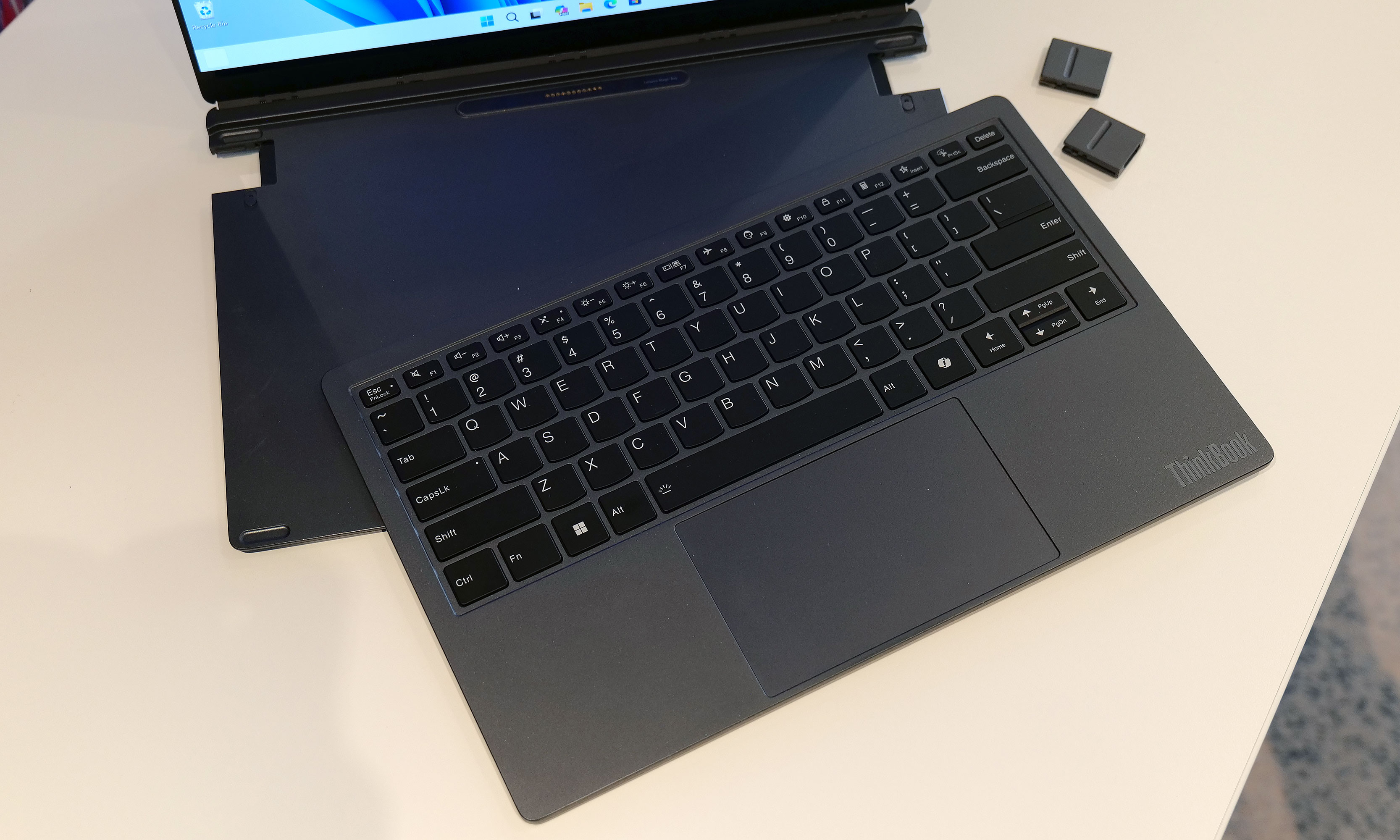
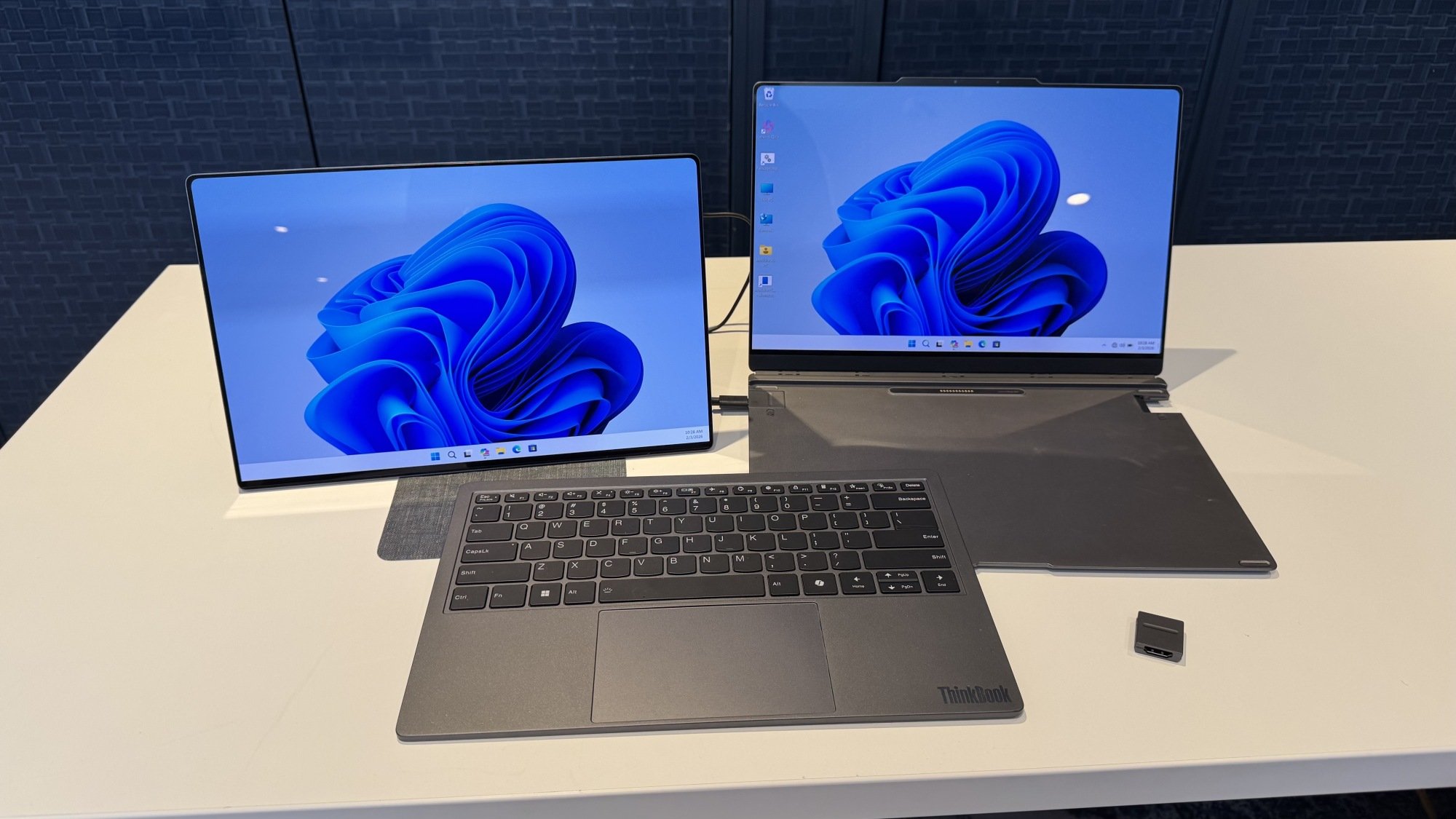
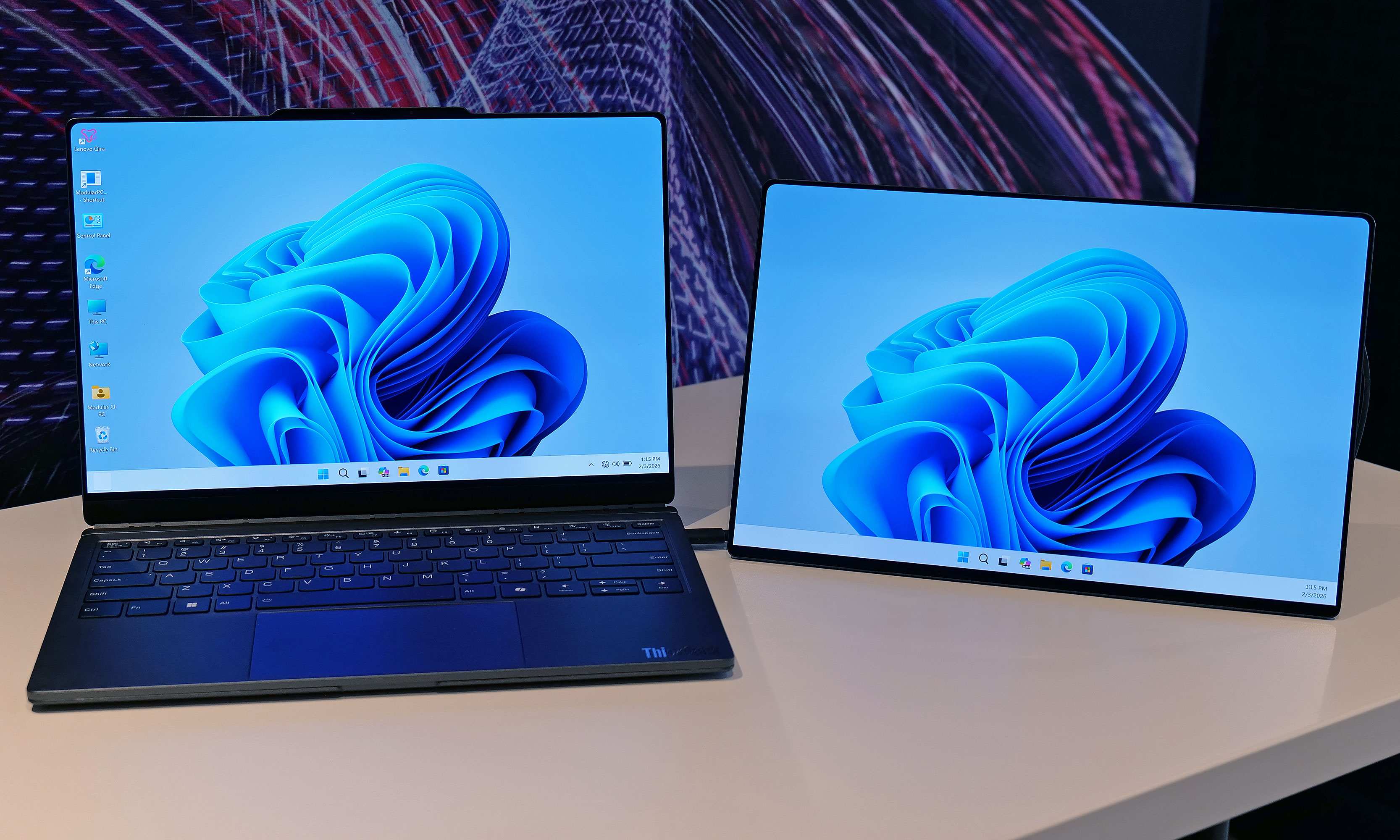
The ThinkBook Modular AI PC looks like a traditional laptop at first glance, but a second, removable screen fastens onto the lid. You can swap that screen onto the keyboard deck (in place of the keyboard, which can then be used wirelessly), or use it alongside the laptop as a portable monitor, attached via an included cable…. While Lenovo is still working on this device, and it’s very much in the concept phase, it feels like one of its best-thought-out prototypes, one likely to make it to store shelves at some point.

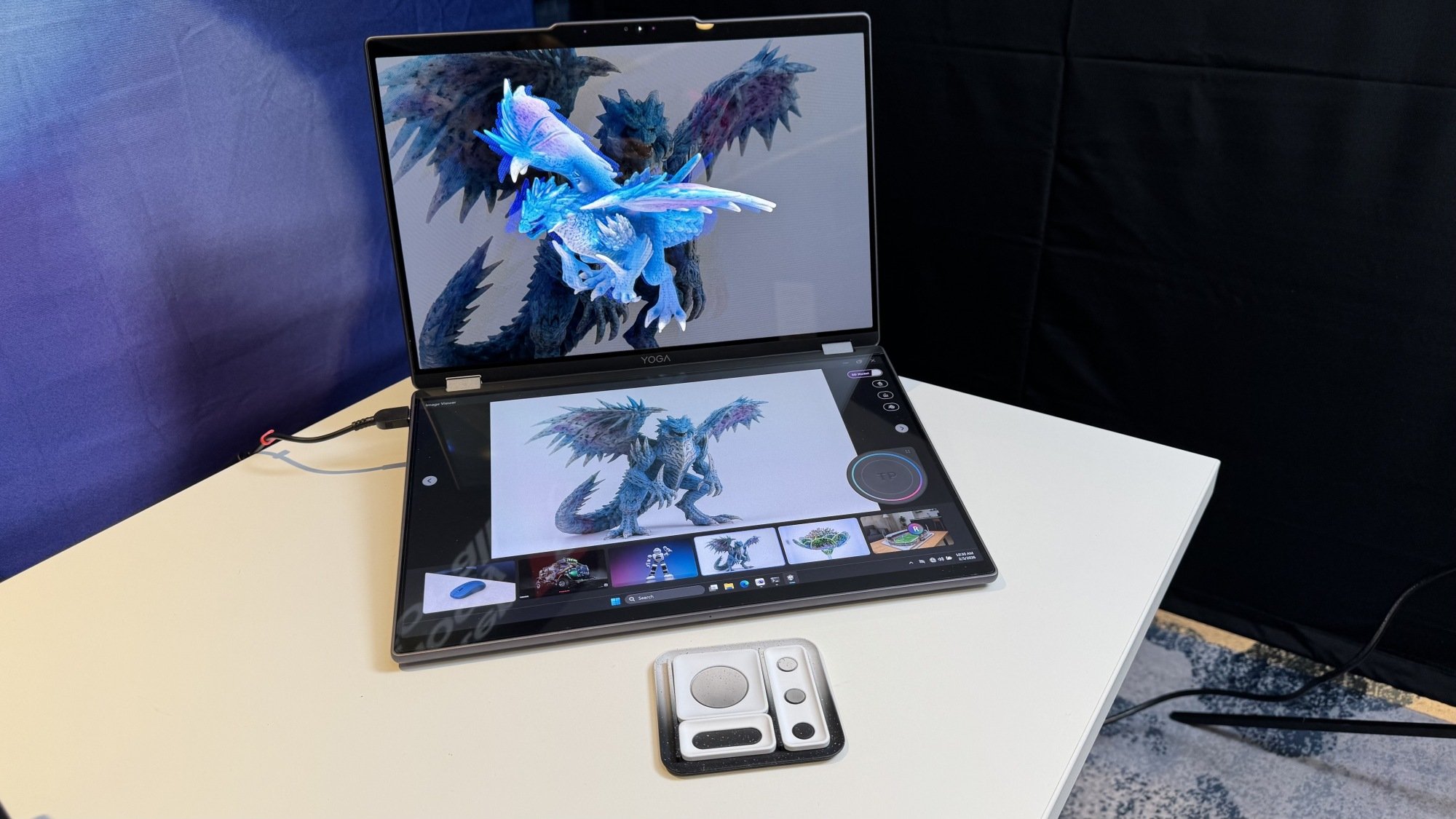
Another “concept” laptop is Lenovo’s Yoga Book Pro 3D Concept, ofering directional backlight and eye-tracking technology for the illusion of 3D (playing slightly different images to each of your eyes). It offers gesture control for 3D models, two OLED displays, and some magical “snap-on pads” which, when laid on the display — make the GUI appear on the screen for a new control menu to “provide quick-access shortcuts for adjusting lighting, viewing angle, and tone”.


Read more of this story at Slashdot.

Motorola Razr Fold hands-on at MWC 2026: Bright screens, inside and out

After briefly announcing its new foldable at CES, Motorola is now ready to debut its first book-style foldable in full at MWC 2026. There are several features we already knew, including support for Motorola’s new Pen Ultra stylus and no fewer than five cameras. However, many specs were still unknown. There are some pleasant surprises.

Motorola decided to make both screens brighter than any of its rivals by quite a margin. The main 8.1-inch foldable display of the Razr Fold has a peak brightness of 6200 nits, while the external screen almost matches it with 6000 nits. For comparison, both screens on the Pixel 10 Fold Pro have a peak brightness of 3000 nits and other foldables’ internal screens typically have substantially lower brightness levels. Inside Motorola’s demo room, filled with windows and Barcelona sun, I had no trouble reading either screen.

The main display is a 2K (2,484 x 2,232) LTPO display that can reach a peak refresh rate of 120Hz, while the external display has a 2,520 x 1,080 resolution and peaks at 165Hz. Both screens also support Dolby Vision.

Motorola Razr Fold at MWC 2026
Image by Mat Smith for Engadget

With those high-brightness levels, Motorola has opted for a silicon-carbon 6,000mAh battery, another leading specification among foldables at the time of writing. It’ll be interesting to see how battery life fares, powering those big, bright screens. The Razr Fold also supports fast charging at up to 80W with the company’s own (sold separately) TurboPower charger and up to 50W wireless charging.

With a silicon-carbon battery that offers higher energy density, Motorola’s biggest foldable yet remains surprisingly svelte, despite its huge battery. The Razr Fold is 4.6mm (0.181 inches) thin when open and 9.9mm (0.39 inches) when closed. Yes, Samsung’s latest Z Fold is thinner (4.2 mm; 8.9 mm), but it has a substantially smaller 4,400mAh battery.

Motorola Razr Fold at MWC 2026
Image by Mat Smith for Engadget

The Razr Fold’s hardware continues with many of the design touches found on recent Razr phones. I spent most of my time with the Blackened Blue iteration of the Razr Fold, with a woven piqué design that felt both easy to hold and didn’t seem to hold onto fingerprints. There will also be a Lily White color that doesn’t have the piqué design, but a more satin finish.

The Razr Fold has a Snapdragon 8 Gen 5 processor, the de facto flagship Android processor at this point. The foldable also has its own liquid-cooling system to maintain consistent performance during tougher tasks and gaming sessions.

The Razr Fold’s cameras will have to do more than what we’re used to seeing on the flip-style Razr smartphones, which have underwhelmed in the past. Fortunately, it looks like it could be a very capable smartphone camera. The main 50-megapixel sensor has a f/1.6 lens and 3.5 degrees of optical image stabilization. It’ll also work alongside a multi-spectral 3-in-1 light sensor to improve color accuracy. The Razr Fold’s ultrawide camera has a 50MP sensor, a 122-degree field of view, and support for macro photography. The 50MP periscope telephoto camera can reach up to 3x optical zoom and 100x SuperZoom, through image cropping and AI-boosted image processing. And finally, there are two selfie cameras: a 32MP internal camera that can record up to 4K video and a 20MP external selfie cam, both with a f/2.4 lens.

Motorola Razr Fold at MWC 2026
Image by Mat Smith for Engadget

Motorola is already claiming this is the best camera on a foldable smartphone, with the highest DXOMARK score among foldables. If you haven’t heard of DXOMARK before, it’s a benchmarking website and lab in France that offers professional image quality testing for smartphones, camera lenses and cameras. It also offers a consultancy service to help manufacturers improve their devices’ camera performance.

It’s too early to tell whether this is objectively a better cameraphone than Samsung’s Z Fold 7, but I was particularly impressed by the Razr Fold’s telephoto camera results. Similarly, I’m intrigued by Motorola’s decision to support its newest stylus, the Moto Pen Ultra. It warrants further testing when the foldable lands for review.

Motorola hasn’t announced pricing and availability for the Razr Fold. It’ll be coming to North America “in the coming months.”

This article originally appeared on Engadget at https://www.engadget.com/mobile/smartphones/motorola-razr-fold-hands-on-mwc-2026-050027092.html?src=rss

Does a Gas-Guzzler Revival Risk Dead-End Futures for US Automakers?

If U.S. automakers turn their backs on electric vehicles, “their sales outside the U.S. will shrivel,” warns Bloomberg. [Alternate URL.]

They’re already falling behind on the technology, relying on a 100% U.S. tariff on Chinese EVs to keep surging rivals like BYD Co. at bay…. While the American automakers “mostly understand the challenge in front of them, they don’t have full plans” to confront it [said Mark Wakefield, head of the global automotive practice at consultant AlixPartners]…

“Now is a great time for the V-8 engine,” said Ryan Shaughnessy, the Mustang’s brand manager. “We’ve done extensive customer research in multiple cities, looking at a variety of powertrains, and the V-8 is always the number-one choice.” It isn’t just customers. U.S. automakers have long been run by “car guys:” enthusiasts who live for the bone-shaking rumble of a big engine. For them, quiet and smooth EVs — even the absurdly fast ones — can’t satisfy that craving. They’re convinced many American car buyers share the same enthusiasm for what Shaughnessy described as “the sound and roar of the V-8.”

Wall Street couldn’t be happier with the new direction… Ford’s fortunes are also on the rise, as it’s predicting operating profits could grow by as much as 47% this year to $10 billion. Ford’s stock has risen nearly 50% over the last 12 months. Under the previous environmental rules, automakers effectively had to sell zero-emission vehicles in growing numbers to offset their gas-guzzlers. When they fell short, they had to buy regulatory credits from EV companies such as Tesla Inc. or face penalties. GM spent $3.5 billion on credits from 2022 to the middle of 2025. Now, according to JPMorgan Chase & Co. analyst Ryan Brinkman, GM and Ford each have “billion dollar tailwinds”…

[T]he hangover from all that new horsepower could leave US automakers lagging their Chinese rivals who already build the world’s most advanced — and lowest priced — electric cars. Indeed, there is much talk in Detroit about the competitive tsunami that will be unleashed on American automakers once Chinese car companies find a way to break through trade barriers now protecting the US market. [Ford Chief Executive Officer Jim] Farley even calls it an “existential threat”… “They’re going to build as many V-8 engines and big trucks as they can get out the factory doors,” said Sam Fiorani, vice president of vehicle forecasting for consultant Auto Forecast Solutions. “And as the rest of the world develops modern drivetrains, newer batteries and better electric vehicles, GM and Ford in particular are going to find themselves falling even further behind.”

The article notes GM “continues to develop battery-powered vehicles, and CEO Mary Barra said the automaker would begin offering a ‘handful’ of hybrids soon,” while Ford and Stellantis “have plans to launch extended-range electric vehicles, or EREVs, a new kind of plug-in hybrid with an internal combustion engine that recharges the battery as the vehicle drives down the road.” But while automakers may be investing in future EV vehicles, they’re also “leaning into the lucre that comes from selling millions of fossil-fuel vehicles in a rare moment of loosened regulation.”


Read more of this story at Slashdot.

Norway’s Consumer Council Calls for Right to Repair and Antitrust Enforcement – and Mocks ‘Enshittification’

The Norwegian Consumer Council, a government funded organization advocating for consumer’s rights, released a report on the trend of “enshittification” in digital consumer goods and services, suggesting ways consumers for consumers to resist. But they’ve also dramatized the problem with a funny four-minute video about the man whose calls for him to make things shitty for people.

“It’s not just your imagination. Digital services are getting worse,” the video concludes — before adding that “Luckily, it doesn’t have to be this way.” The Consumer Council’s announcement recommends:
Stronger rights for consumers to control, adapt, repair, and alter their products and services,
Interoperability, data portability, and decentralisation as the norm, so the threshold for moving to different services becomes as low as possible,
Deterrent and vigorous enforcement of competition law, so that Big Tech companies are not allowed to indiscriminately acquire start-ups, competitors or otherwise steer the market to their advantage,
Better financing of initiatives to build, maintain or improve alternative digital services and infrastructure based on open source code and open protocols,
Reduce public sector dependence on big tech, to regain control and to contribute to a functioning market for service providers that respect fundamental rights,
Deterrent and consistent enforcement of other laws, including consumer and data protection law.

The Norwegian Consumer Council is also joining 58 organisations and experts in a letter asking the Norwegian government to rebalance power with enforcement resources and by prioritizing the procurement of services based on open source code. And “Our sister organisations are sending similar letters to their own governments in 12 countries.”

They’re also sending a second letter to the European Commission with 29 civil society organisations (including the EFF and Amnesty International) warning about the risks of deregulation and calling for reducing dependency on big tech.

Thanks to Slashdot reader DeanonymizedCoward for sharing the news.


Read more of this story at Slashdot.

Lenovo’s robot concept can help you digitally sign documents (and maybe annoy coworkers)

Lenovo can make a robot, too. Alongside proof-of-concept foldable gaming PCs and modular laptops, it introduced the AI Workmate Concept at MWC 2026. With its own Intel Core Ultra processor, 64GB of memory and its own Pico projector, it’s an AI-laced “workmate” meant to streamline office tasks and collaboration. And it has an LCD face.

For now, it’s a proof of concept, musing on how to integrate voice commands and LLMs (large language models) into workplace settings. It’s meant to sit on your desk, but preferably also near a wall – more on that later.

Voice commands aside, the concept bot supports writing, voice and gestures with on-device AI processing. While it can answer the usual voice assistant questions, it can also scan and summarize documents (both digitally and physically) and even assist with creating a PowerPoint presentation – though you might want to check its work.

Lenovo AI Workmate Concept at MWC 2026
Mat Smith for Engadget

The 3.4-inch 480 x 480 screen doesn’t seem to offer any data visualization or numbers. During my demo, it only seemed to show the bot’s eyes and facial expressions: it’ll sip coffee as it listens (with a moustache), cup a floating hand to the side of its face when it needs you to repeat a command, or twinkle when it’s processing more complicated tasks, like that fictional PowerPoint presentation.

With its articulated head, which houses the projector, cameras and LCD face, you can ask it to project images or documents on either the desk in front of it or a wall nearby. No need to flip around your monitor or laptop to share with colleagues. In one example, a spokesperson asked for a postcard. The Workmate then projected a (Lenovo-branded) image of Barcelona onto the desk. The rep laid paper down, then signed the ‘postcard’ and got the robot to scan it (with two downward-facing 5-megapixel cameras), and then send the file to a nearby printer.

Lenovo AI Workmate Concept at MWC 2026
Image by Mat Smith for Engadget

In theory, this sort of flow could transition to document signing or adding notation to images and files. However, one caveat here is whether those of us who work in offices want the extra workplace noise of a chatty robo and the person barking orders at it.

Lenovo says this concept (and it has a few at MWC) is meant to demonstrate the company’s “exploration of spatial and physical AI experiences” that integrate “seamlessly into professional environments.” Hopefully, further evolutions offer a text-based way to make using it a little less noisy.

Lenovo was also showing a simpler AI work device, the AI Work Companion Concept. It’s a completely different premise, despite the name being a little too close to the AI Workmate Concept.

Lenovo AI Workmate Concept at MWC 2026
Image by Mat Smith for Engadget

The AI Work Companion is not a robot, but a handsome chunky desk clock, with a solid, satisfying dial on the top and programmable buttons. The front is almost entirely display, able to show calendars, task lists and other work-centric dashes. It runs independently, plugging into a USB-C port for power and pulling data down wirelessly, while also acting as a port hub for charging other accessories and devices.

It’s certainly not as high-concept as the robot, but there are some AI smarts inside.

The Work Companion’s “Thought Bubble” uses AI to sync a user’s tasks and daily schedule across devices, synthesizing a daily action plan. It will even suggest times to break up bursts of work and attempt to monitor screen time to better manage burnout.

According to the press release, Lenovo says it also has “playful interactions with the user” and will, kind of bleakly, offer an end-of-week celebration report of tasks completed. It’s lucky it’s a good-looking desk clock.

This article originally appeared on Engadget at https://www.engadget.com/ai/lenovo-concept-robot-ai-workmate-mwc-2026-230159746.html?src=rss

Lenovo’s ThinkPads get a spec bump at MWC 2026

Lenovo is updating its business-focused laptop lineup at MWC 2026. The best-selling ThinkPad T-series is getting a full refresh, and there’s an updated ThinkBook 2-in-1 and an all-new Android tablet.

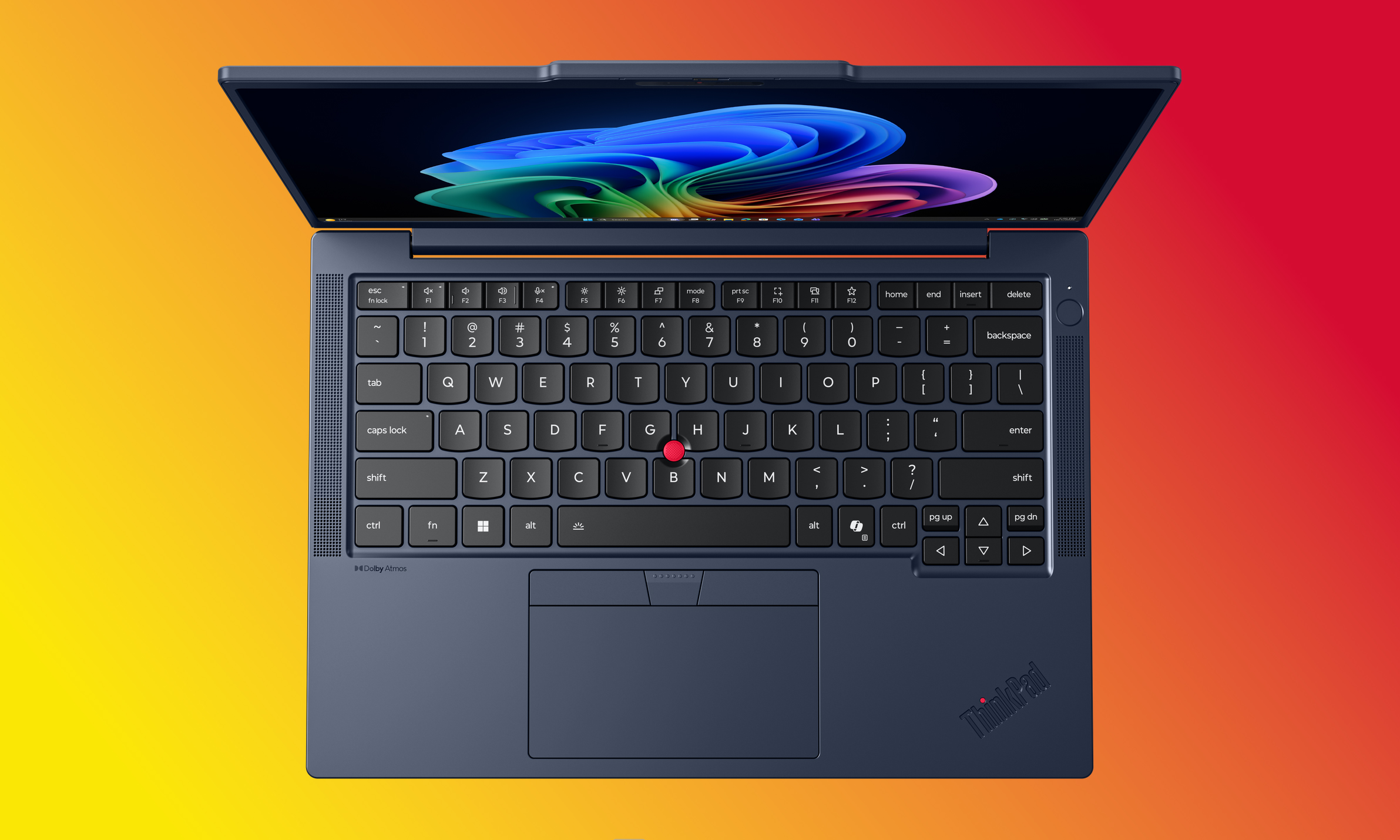
The ThinkPad T-Series, the backbone of Lenovo’s business PC lineup, now (optionally) ships with a 5MP camera that supports computer vision and vHDR. The 2026 versions of the laptops have larger speakers and a new color (“cosmic blue”) on some models.

The ThinkPad T14 Gen 7 and ThinkPad T16 Gen 5 (each starting at $1,799) are the all-around workhorses of the ThinkPad lineup. Lenovo touts the 2026 models’ 10/10 iFixit repairability score. They ship with either an Intel Core Ultra Series 3 (with Intel vPro) or an AMD Ryzen AI Pro 400 Series processor.

The ThinkPad T14s Gen 7 laptop against a colorful gradient
ThinkPad T14s Gen 7
Lenovo

Meanwhile, the T14s Gen 7 ($1,899+) is an even lighter version of Lenovo’s slim ThinkPad variant. The 2026 model weighs 2.45 lbs (1.1kg), making it the lightest T-series model to date. The T14s Gen 7 is powered by Intel Core Ultra Series 3 (with Intel vPro) or AMD Ryzen AI Pro 400 Series processors.

Rounding out the T-Series is the second-generation of the 360-degree-folding ThinkPad T14s 2-in-1. The 2026 model ($1,849+) is ever-so-slightly lighter than its predecessor, now weighing in at 3.06lbs (1.39kg). The new version includes a garaged pen, with its storage slot living above the screen.

The ThinkPad X13 Detachable against a colorful gradient
ThinkPad X13 Detachable
Lenovo

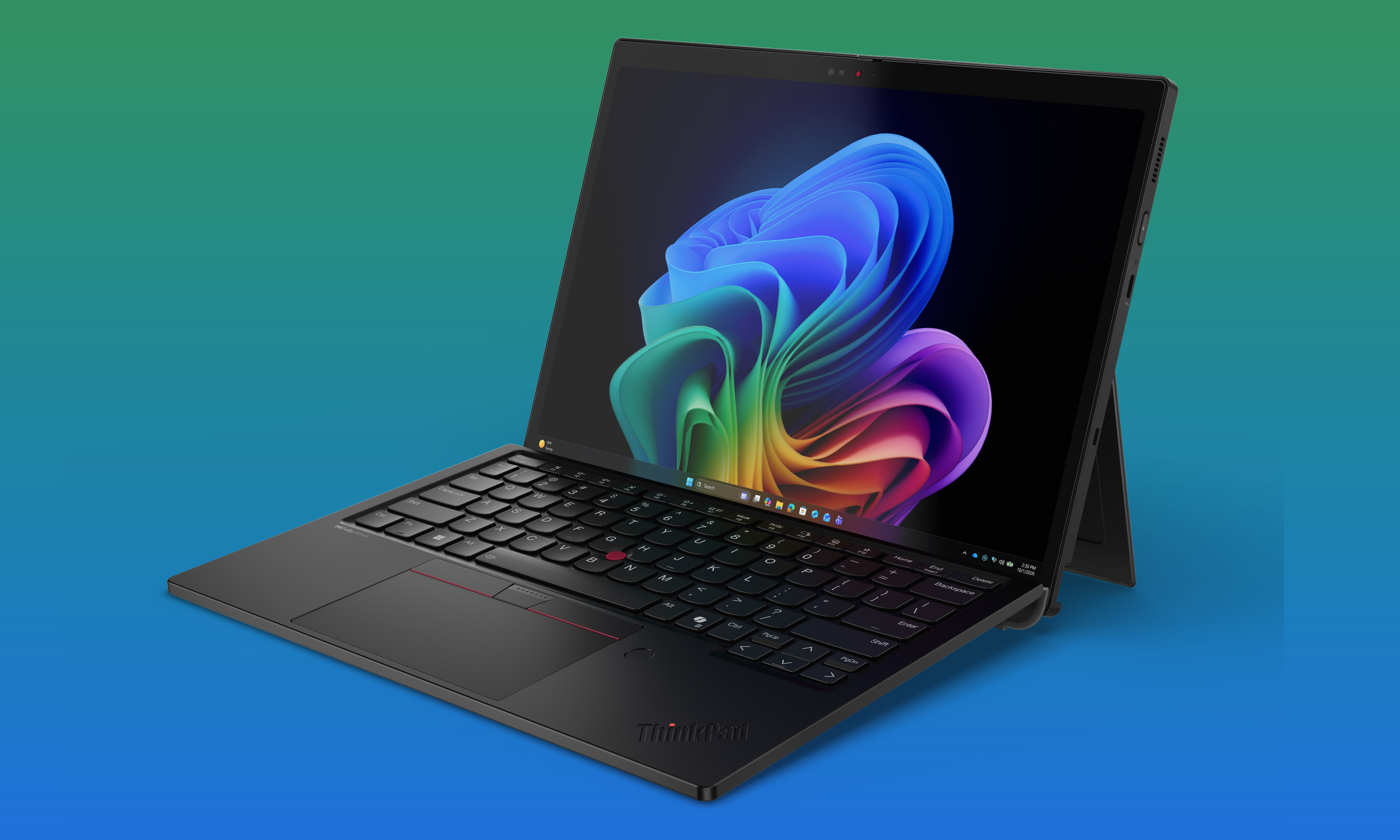
The ThinkPad X13 Detachable is the lineup’s take on the Surface Pro. The tablet has Intel Core Ultra Series 3 processors and up to 64GB of RAM. Its 13-inch display supports up to 500 nits of brightness. It has a pair of Thunderbolt 4 ports, and its keyboard has full-sized keys with 1.5mm of travel. It ships with a “full-size ergonomic pen” that you can stash (and charge!) in a dedicated slot on the keyboard. The X13 Detachable starts at $1,999.

The $499 ThinkPad X11 is a rugged Android tablet for industrial environments. Powered by the Snapdragon 7s Gen 3 Mobile Platform, it has a 10.95-inch display with 2,560 x 1,600 resolution and 600 nits of brightness. It’s MIL-STD-810H certified, meaning it passes stringent military testing for durability.

A person in an automotive factory, using the ThinkTab X11 tablet to look at graphs
ThinkTab X11
Lenovo

Finally, there’s the ThinkBook 14 2-in-1 Gen 6 ($1,754+). This Yoga-like folding device has a 14-inch WUXGA touch display. It runs on an Intel Core Ultra 7 (Series 3) processor and supports up to 32GB of RAM.

Most of the devices start shipping in Q2 2026. (That includes the ThinkPad T14, T16, T14s, T14s 2-in-1, ThinkTab X11 and ThinkBook 14 2-in-1.) The lone exception is the ThinkPad X13 Detachable, which is slated for Q3 2026. You can learn more about the new business-focused devices on Lenovo’s website.

This article originally appeared on Engadget at https://www.engadget.com/computing/laptops/lenovos-thinkpads-get-a-spec-bump-at-mwc-2026-230100419.html?src=rss

Lenovo unveils the 2026 refresh of its Yoga 9i 2-in-1 convertible laptop at MWC

Lenovo has given the Yoga 9i 2-in-1 Aura Edition a refresh for 2026 and launched the new device at this year’s Mobile World Congress. The convertible laptop comes with a new Canvas Mode when the Yoga Pen Gen 2 case it’s bundled with is attached to the A-cover. When you lay the device down on a flat surface with the case attached, you’ll get a slight elevation on the display, which may make it easier to sketch or draw.

The Copilot+ laptop is powered by Intel Core Ultra Series 3 processors with integrated graphics, has up to 32GB in memory and runs Windows 11. Its 14-inch screen has a resolution of 2,880 x 1,800 pixels, has a variable refresh rate of 120 Hz and supports multi-touch. In addition to the new Canvas Mode, the device also supports Tablet, Tent, Stand and traditional Laptop Modes like its predecessors do. The Yoga 9i 2-in-1 Aura Edition Gen 11 will be available in May, with prices starting at $1,949.

Lenovo has also launched the new Yoga Pro 7a at MWC 2026. This Copilot+ laptop is powered by AMD Ryzen AI Max+ Series processors and comes with up to 128GB of RAM, so it can be used for heavy AI tasks. It has a 15.3-inch 2.5K PureSight Pro OLED display and is equipped with a big Force Pad trackpad that doubles as a drawing tablet. You can get the device starting in August this year for at least $2,099.

For a more affordable option, there’s the new IdeaPad Slim 5i Ultra laptop, which also has Copilot+ features. It’s powered by Intel Core Ultra processors and comes with either a WUXGA OLED or a WQXGA IPS LCD 14-inch display that has a VRR of 120 Hz. The device was designed for portability, with its thinnest part measuring just 11.9 mm in depth, and weighs 2.5 lbs. It will be available starting in October for at least $799.

Another affordable option is the new Idea Tab Pro Gen 2, which is specifically targeted towards students. It’s powered by theSnapdragon 8s Gen 4 Mobile Platform and has a 13-inch 3.5K display. The Tab Pro Gen 2 is Lenovo’s first tablet to ship with its Qira AI assistant and the company’s AI tools. It will be sold with a Lenovo Tab Pen Plus included for $419 starting in July.

This article originally appeared on Engadget at https://www.engadget.com/computing/laptops/lenovo-unveils-the-2026-refresh-of-its-yoga-9i-2-in-1-convertible-laptop-at-mwc-230100644.html?src=rss

Lenovo’s latest gaming tablet goes big on battery

Lenovo’s buzziest gaming-related MWC announcement is undoubtedly its foldable Legion Go handheld-cum-laptop hybrid, which you can read all about here. But that wasn’t all the company showed off. We’re also getting an updated Legion Tab, Lenovo’s powerful gaming tablet.

Like the Gen 4 and 3 models before it, the latest Legion Tab features an 8.8-inch LCD display with an 165Hz refresh rate. The 3K panel can get up to 600 nits of brightness. The notable spec boosts come in the form of a jump up to a Snapdragon 8 Gen 5 chipset and a larger 9,000mAh battery, which should help you power through those long-haul flight gaming sessions.

The 360g Gen 5 Legion Go Tab is equipped with 16GB of RAM and up to 512GB of storage. It also features what looks like an RGB light ring next to the rear camera cutout (just in case anyone needs reminding that you’re a capital G on-the-go gamer), and two USB-C ports.

The latest Legion Go Tab also supports Lenovo AI Engine+, which uses AI for audio enhancement and noise cancellation. Available in Eclipse Black, Glacier White and Surge, it will be available to buy in May, with prices starting at $849.

Lenovo also unveiled a new 15-inch variant of its Gen 11 Legion 7a gaming laptop, after announcing an updated 16-inch model at CES in January. It features a slightly smaller version of the same PureSight OLED display and is powered by a Ryzen AI Max+ 392 processor with integrated Radeon 8060S graphics. Weighing in 1.65kg, the Legion 7a is a slimline laptop designed to be easily portable without compromising too much on power, and its 84Whr battery is good for the size. It will be available with up to 2TB of storage in July, starting at $2,299.

This article originally appeared on Engadget at https://www.engadget.com/gaming/pc/lenovos-latest-gaming-tablet-goes-big-on-battery-230017436.html?src=rss

Lenovo Unveils An Army of Copilot+ Thinkpads, ThinkBooks, and More At MWC 2026

Lenovo Unveils An Army of Copilot+ Thinkpads, ThinkBooks, and More At MWC 2026
At Mobile World Congress 2026 in Barcelona, Lenovo is doing what it does best: iterating on the workhorse gear that actually pays the bills while sprinkling in some wild, future-facing AI concepts to keep things interesting.

The headline standout, pictured above and below, is the ThinkBook Modular AI PC Concept. This one leans into the

The Lenovo Modular AI PC concept is a remixed dual-screen laptop with hot swappable ports

The potential of modular laptops has never fully translated to the real world. While companies like Framework have made major strides in recent years, there’s still quite a bit of room for improvement. At MWC, Lenovo is looking to address that with its Modular AI PC concept. It features not one but two displays and a detachable keyboard to create something that strains the definition of a laptop, thanks to an innovative and very adaptable design.

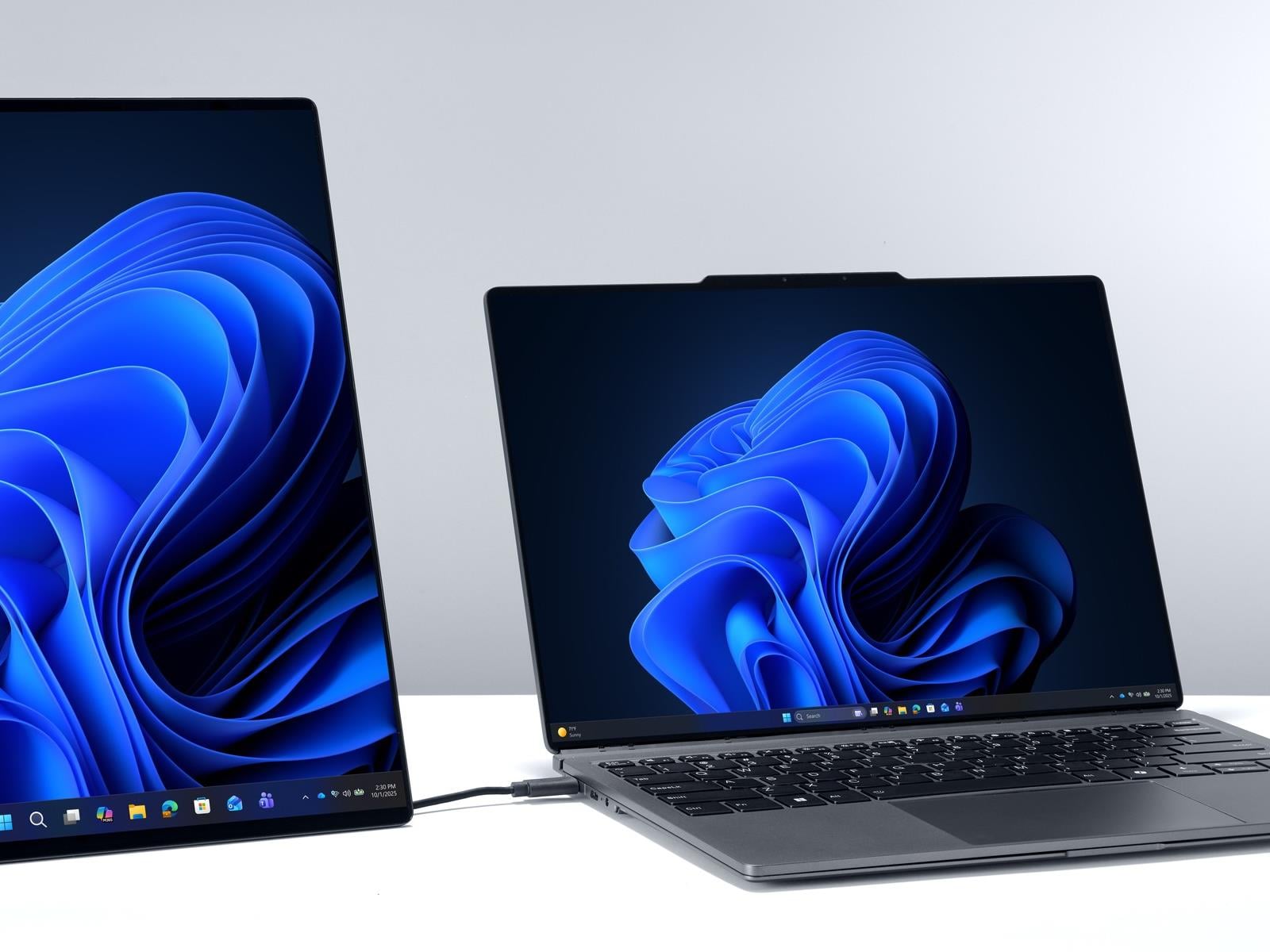
Compared to Framework’s gadgets, which primarily use modularity to make upgrading the system and extending its lifespan easier, Lenovo’s concept is based around a 14-inch chassis with hot swappable components. This allows you to move its keyboard and secondary display around at will, so the system can better adjust to its environment or workload. By default, its bonus screen is mounted on its lid, allowing you to do easy face-to-face sharing with someone sitting opposite you. However, without even needing to turn the system off, you can yank away the notebook’s keyboard and put the display in its place to provide additional real estate. 

The Lenovo Modular AI PC concept's second screen can be attached to its lid or moved off to the side like a traditional dual monitor setup.
The Lenovo Modular AI PC concept’s second screen can be attached to its lid or moved off to the side like a traditional dual monitor setup.
Sam Rutherford for Engadget

Or if you prefer a more traditional dual-screen setup, you can move it off to the side, prop it up via a built-in kickstand and connect to the laptop over USB-C. You even get the flexibility to arrange the display in vertical or landscape orientation, which is nice if you’re doing stuff like coding or writing in a word doc (I feel targeted, but in a good way). And because the keyboard can connect to the notebook using pogo pins or Bluetooth, you have the freedom to position it practically anywhere you want. 

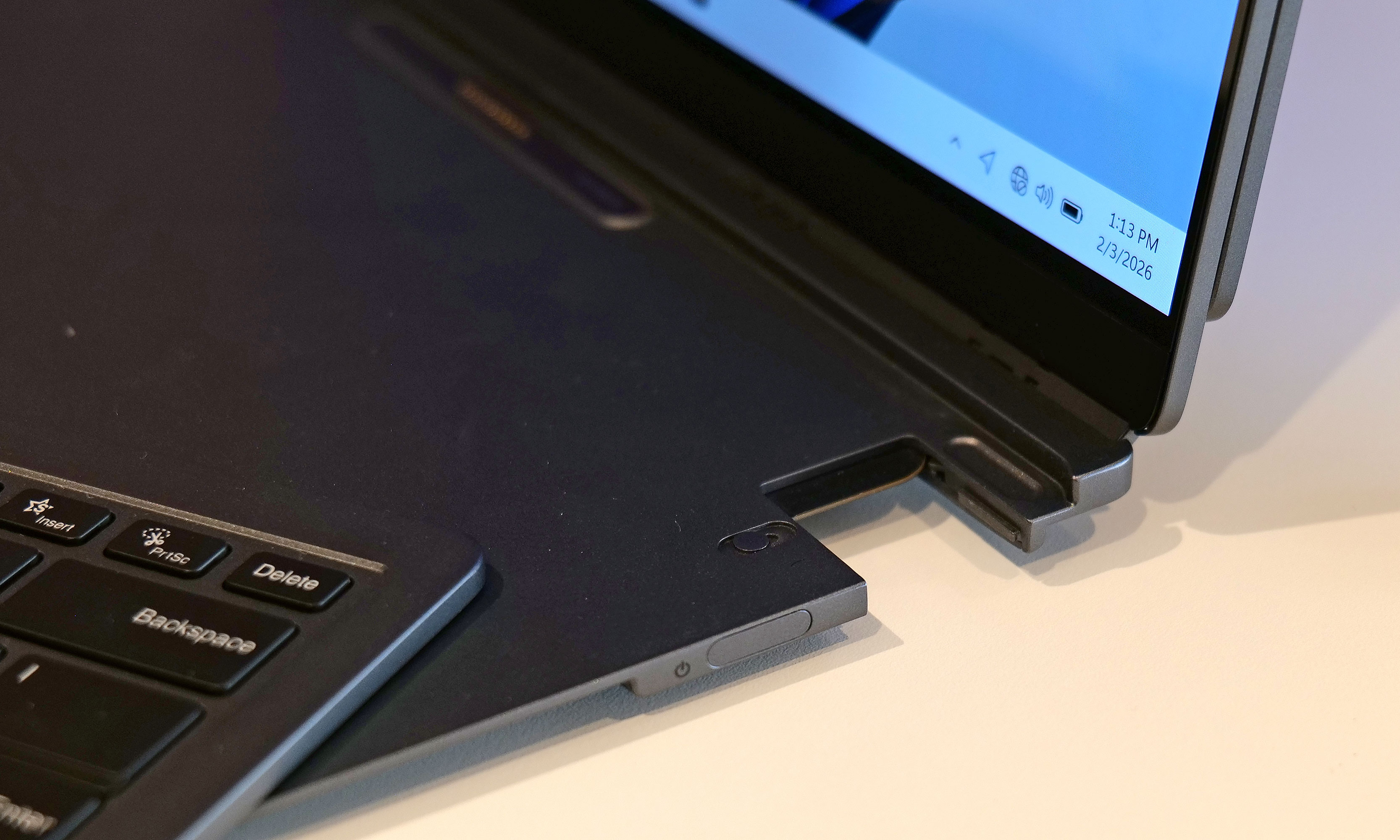
Meanwhile, Lenovo borrowed one aspect of Framework’s modularity by including the ability to swap ports on the fly. During my demo, the company showed off modules featuring USB-C, USB-A and HDMI connectors, though I was told there are a ton of additional possibilities for those who might need things like a proper Ethernet jack or additional ports for audio. 

The Lenovo Modular AI PC concept's keyboard and be completely removed at a moment's notice and positioned anywhere you like thanks to its Bluetooth connectivity.
The Lenovo Modular AI PC concept’s keyboard and be completely removed at a moment’s notice and positioned anywhere you like thanks to its Bluetooth connectivity.
Sam Rutherford for Engadget

But what impressed me the most was that despite being a concept device, the whole setup felt quite polished. That almost suggests that this thing might be closer to becoming an actual retail product than some of the company’s other demo gadgets. Build quality felt really sturdy and I had no issues changing out ports or moving the secondary display around without needing to troubleshoot or reboot the system. Everything just kind of worked. And while Lenovo isn’t sharing details about what processor it’s running or how much memory it has, its performance felt snappy too. 

My only question is that I’m not quite sure where AI fits into all of this. I was able to break down and reconfigure the system without any help from machine learning or a digital assistant. That said, I’m not complaining, because even with a lot of moving parts, its modular design is very approachable and easy to use. 

Ports on the Lenovo Modular AI PC concept can be hot swapped between to add USB-C, USB-A and HDMI connectors as needed.
Sam Rutherford for Engadget

Unfortunately, Lenovo isn’t planning on turning this concept into a true retail device. But even so, I hope the company will at least consider bringing some of the modular laptop’s features like its hot swappable ports to future products.

This article originally appeared on Engadget at https://www.engadget.com/computing/laptops/the-lenovo-modular-ai-pc-concept-is-a-remixed-dual-screen-laptop-with-hot-swappable-ports-230000158.html?src=rss

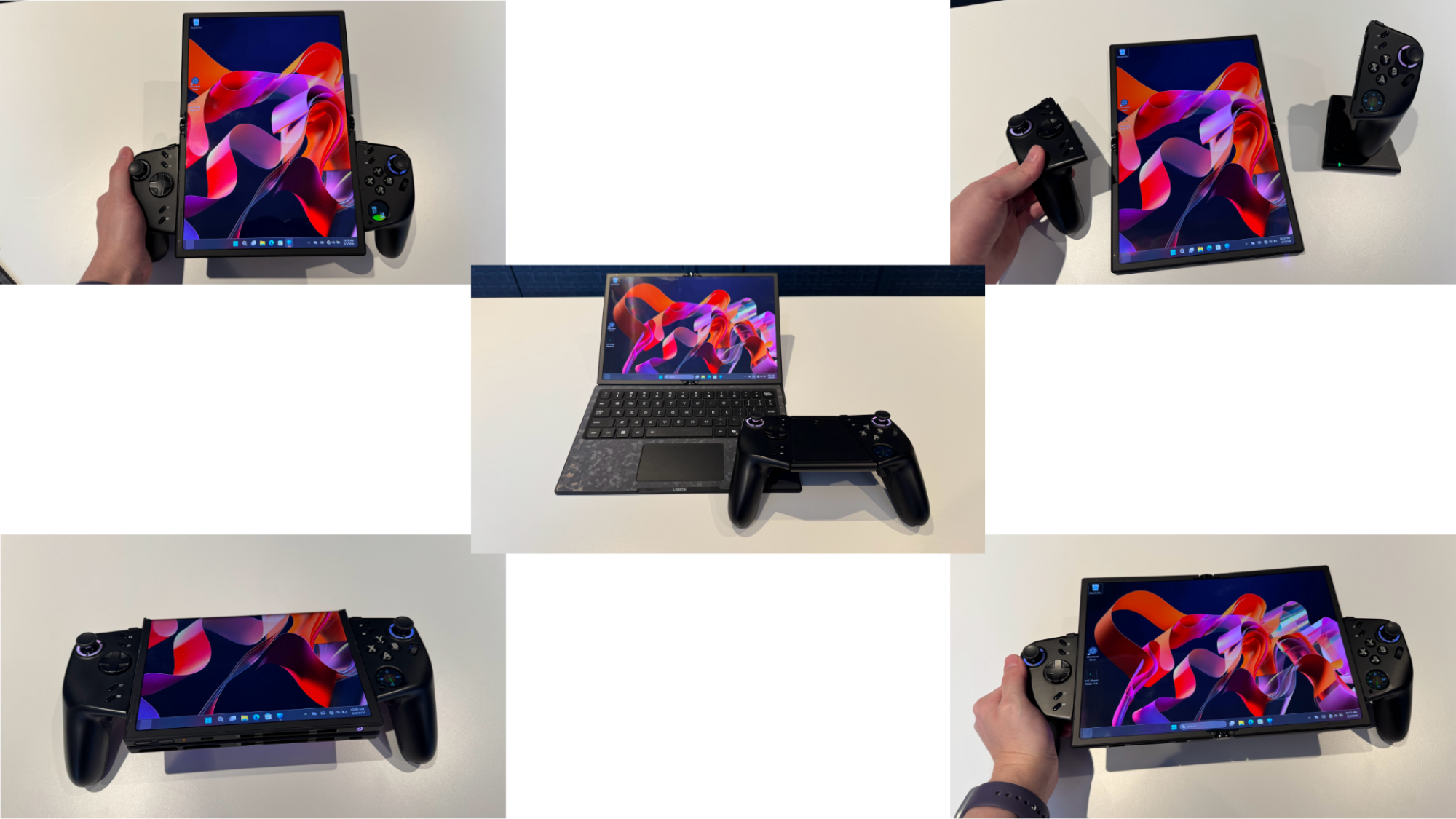
The Lenovo Legion Go Fold gaming handheld concept looks awkward but its versatility is endless

Lenovo already has a large roster of gaming handhelds. However, it seems there’s always room for another because at MWC the company showed off an ambitious concept device based around a flexible OLED display. And while the whole setup looks ungainly, after getting my hands on it, I’m very intrigued by its adaptability. 

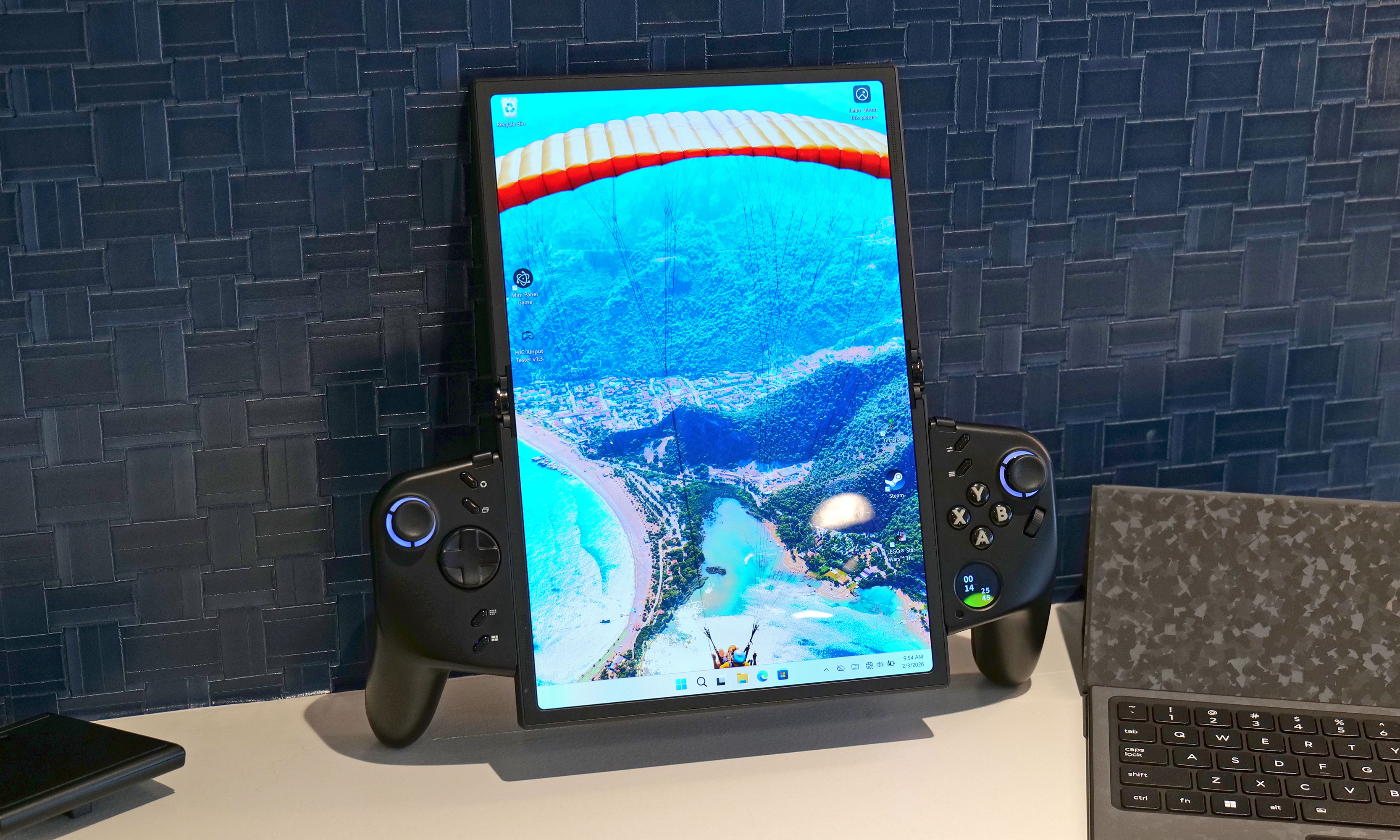
Now I’ll be the first to admit that an 11.6-inch display feels oversized on a handheld that, in theory, is meant to be somewhat portable. That said, the beauty of the Legion Go Fold’s screen is that it can be bent in half to create a more appropriately-sized 7.7-inch panel. In this configuration, the system feels a lot less cumbersome while also sporting a more traditional aspect ratio. Then, at a moment’s notice, you can extend the display to provide extra room when you need it. 

How silly does this look when its flexible display is fully extended in portrait mode?
Sam Rutherford for Engadget

However, the thing I like most about the Legion Go Fold is that its controllers are detachable and that the tablet has several different mounting points. This means if you have the space, you can remove the controllers, rotate the display into landscape mode and then reattach them to get an immersive widescreen experience. Alternatively, you can connect the gamepads together using one of Lenovo’s accessories (which is similar to Nintendo’s Joy-Con Grip) and then prop the system up using the Go Fold’s folio cover, which doubles as a kickstand. 

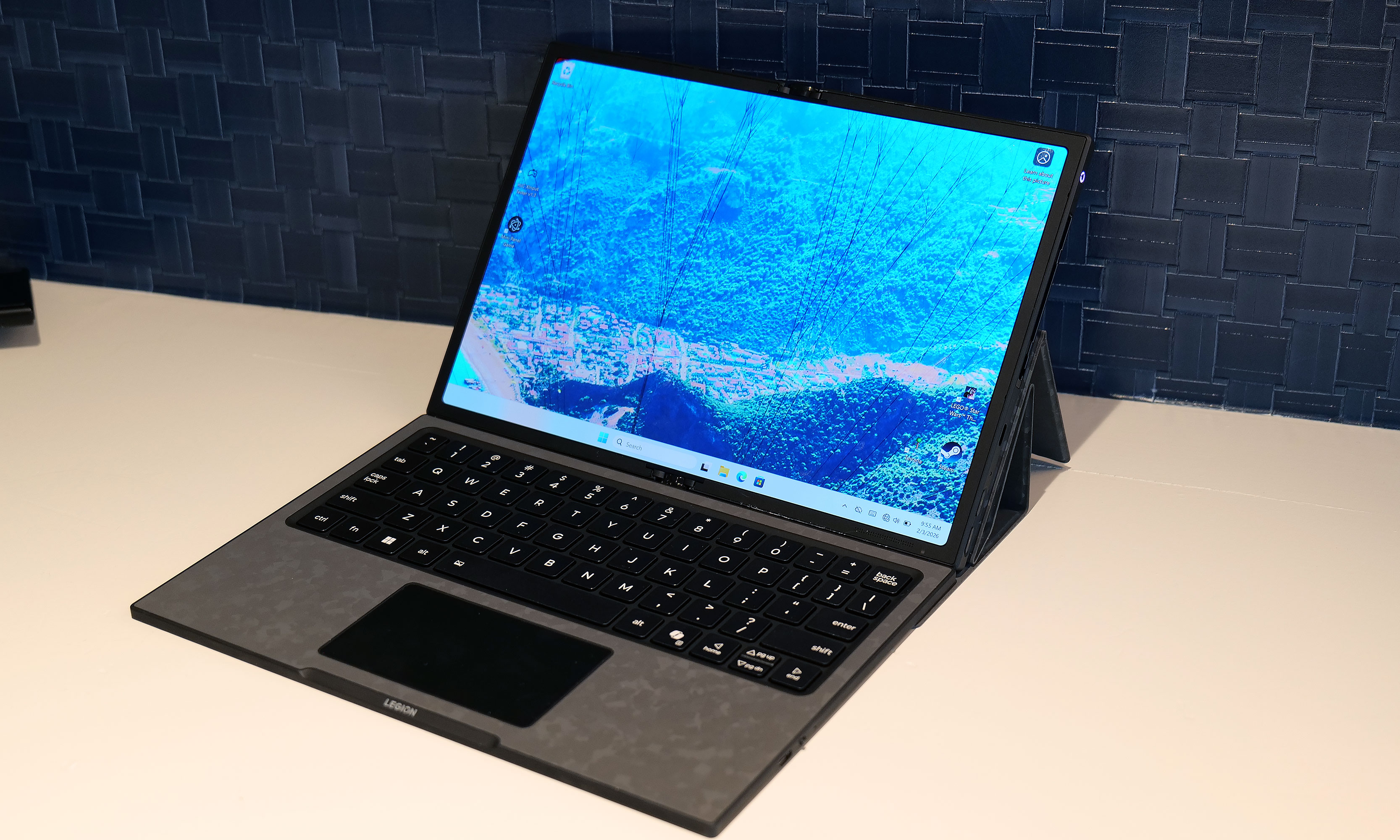
But wait, there’s more: The handheld also features a strip of pogo pins for connecting a wireless keyboard, effectively transforming the whole setup into a miniature gaming laptop. Depending on how you’re counting, that’s at least four different modes you’re getting from the Legion Fold, which is really quite impressive and speaks to the versatility of Lenovo’s design.

Another feature I really like is the small 1-inch OLED display on the right gamepad. It supports a handful of widgets that can display the time, performance settings and more. It also doubles as a small touchpad, which can be really handy when playing PC titles that were originally developed for mouse and keyboard. And just like on the Legion Go and Legion Go 2, the Fold’s right gamepad has a small scroll wheel and a hidden sensor, so it can also turn into a vertical mouse for playing FPS titles. 

At this point, it’s important to mention that Lenovo doesn’t have concrete plans to put this thing into production, so its specs don’t really matter. That said, the Legion Go Fold I tried featured an Intel Core Ultra 7 258V chip with 32GB of RAM and a 48WHr battery, which is more than respectable. Though if this thing does become an actual retail device, I would like to see a power cell with a bit more capacity. 

I really love how the Legion Go Fold can turn into a miniature laptop just by moving some of its accessories around.
Sam Rutherford for Engadget

But as a concept gadget, I think the Legion Go Fold is a great showcase of how new technology (in this case, a flexible display) can bring new capabilities and greater flexibility to existing categories. And who knows, if a lot of people like the idea, it might encourage Lenovo to refine it and put it on sale for real. I would just be a bit worried about pricing, because all these components won’t come cheap. 

This article originally appeared on Engadget at https://www.engadget.com/gaming/pc/the-lenovo-legion-go-fold-gaming-handheld-concept-looks-awkward-but-its-versatility-is-endless-230000816.html?src=rss

Lenovo’s Foldable Gaming Handheld Is Too Cool to Remain Just a Concept

We may earn a commission from links on this page.

Gaming handhelds are in a bit of a rough spot right now. The Nintendo Switch 2 costs significantly more than its predecessor, the Steam Deck is out of stock in most regions, and the Xbox handheld is prone to bugs. Plus, they’re all huge.

Lenovo has been one of the better companies in this space of late, releasing two of my favorite gaming handhelds running, but the company apparently isn’t done with handhelds yet. At Mobile World Congress, Lenovo showed off its newest concept, the modular Legion Go Fold handheld, a device that tries to solve pretty much every problem in gaming handhelds through one neat trick: It’s also a foldable tablet.

Various ways to use the Lenovo Legion Go Fold
Various ways to use the Lenovo Legion Go Fold Concept
Credit: Michelle Ehrhardt

The device is essentially a tablet with an 11.6-inch OLED screen that can fold in half, but it comes with two controller halves that can attach to it in a number of ways. While you can use the full screen horizontally if you like, with one controller half on either side, you can also orient the tablet vertically for a “dual-screen” experience. Or, fold that vertical orientation over itself for a more compact 7.7-inch screen. There’s also a stand and Bluetooth keyboard you can use to turn the tablet into a pseudo laptop, and you can even connect the controller halves to a connector piece to turn it into a standalone controller that doesn’t need to be attached to the tablet. I tried all of these configurations, and they mostly felt comfortable, although I’ll admit the “dual-screen” mode did feel a little top heavy on the early prototype I tested.

Lenovo’s “FPS Mode” even makes a return, so you can take the right-hand controller piece and slot it into a special dock to use it like a mouse. Essentially, this thing can play in pretty much any orientation or form factor you can think of, meaning you won’t need to buy multiple handhelds for different use cases anymore. The tablet is Windows-based, too, promising more app compatibility than Android. And one of the controller halves even has its own tiny OLED screen, for keeping an eye on important performance stats.

The catch? Like a lot of Lenovo’s more interesting devices, the Legion Go Fold is just a concept for now. If you want to see it come to fruition, you’ll have to make your voice heard with an email or social post—Lenovo has a history of making good on its concepts, so you never know if the company is just testing the waters to gauge interest.

Unfortunately, because it’s a concept, there’s no word on what the Legion Go Fold might cost, although I do know the prototype I saw was decked out with an Intel Core Ultra 7 CPU, 32GB of RAM, and 1TB of storage. Based on Lenovo’s other gaming handhelds, I’d have to guess this would start for at least $600, and could go as high as $1,100, which is obviously pricier than the Switch 2 or Steam Deck, but might be worth it for all this device can do.

Lenovo also showed off a Framework competitor

ThinkPad Modular AI PC Concept
Credit: Michelle Ehrhardt

The Legion Go Fold is the clear standout among Lenovo’s MWC lineup, but there are a few other noteworthy devices worth calling out.

Alongside iterations on existing laptops and consumer tablets that will be making their way to market later this year, Lenovo also showed off the ThinkBook Modular AI PC concept, which reads like the company’s approach to the Framework Laptop. This device seems like a normal laptop at first, but you can swap out the keyboard for a second display if you’d like. You can then use that display for touch input, or continue to use the keyboard you just removed wirelessly. There’s also an integrated kickstand, so you can prop up the second display to become an external monitor instead, and slot the second display into the laptop lid to use the device like a tablet while it’s closed.

So far, none of that is especially Framework-y, but the kicker is that this concept’s ports are modular, so you can mix and match how many USB or ethernet connections you have. That’s something we haven’t really seen from any company other than Framework, so it looked like Lenovo decided to see that laptop’s bet and then raise it.

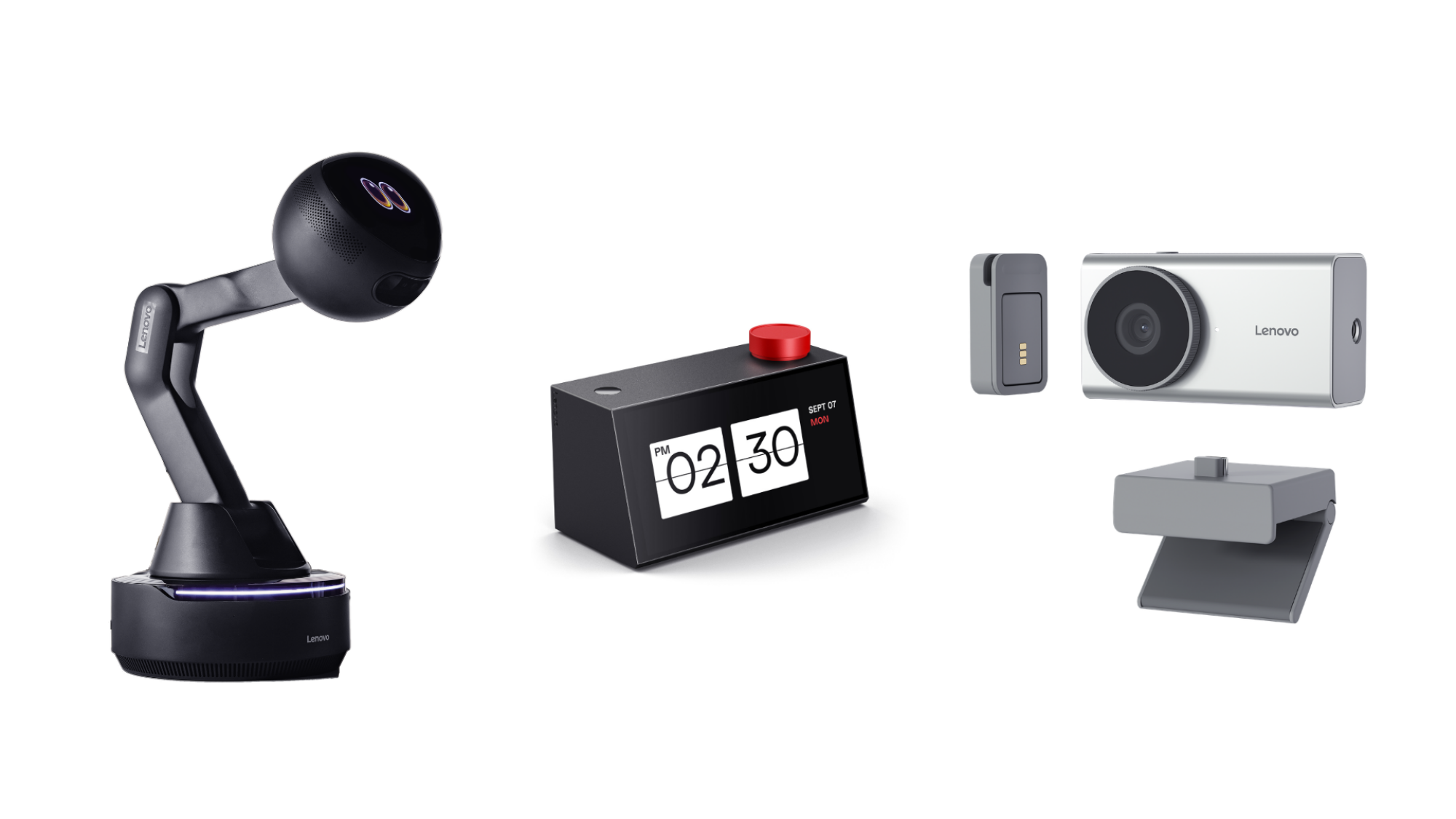
Lenovo AI Workmate (left), Lenovo AI Work Companion (center), Yoga Wireless Webcam (right)
Concepts for Lenovo AI Workmate (left), Lenovo AI Work Companion (center), Yoga Wireless Webcam (right)
Credit: Lenovo

The Lenovo Workmate is an odd AI device

In the enterprise space, there’s the Lenovo AI Workmate, a concept that basically attaches an AI chatbot to an animated touchscreen and puts it on an articulating robot arm. It’s supposed to be able to do regular computer things, like scan documents or even create PowerPoints, but looking at the thing, I think the idea is to make you greet your new robot overlords with a smile.

Also, while I didn’t get to see them, Lenovo also showed off concepts for the AI Work Companion, which focuses more on scheduling and look like a retro alarm clock, and the Yoga Wireless Webcam, which can stream 4K video to your computer from a distance.

Lenovo Yoga Book Pro 3D
Lenovo Yoga Book Pro 3D Concept
Credit: Michelle Ehrhardt

Finally, the company showed off a glasses-free 3D laptop concept, called the Yoga Book Pro 3D. Devices like these have become common among creatives in the past few years, but what sets this one apart is that it comes with magnetic pucks you can place on it to summon certain tools in your editing programs.

Again, these concepts aren’t guaranteed to come to market, but they certainly bring some much-needed oddball energy to the table at a time when other big companies are sticking with tried-and-true designs. Here’s hoping the RAM crisis doesn’t keep them in the lab longer than necessary.

AIs Can’t Stop Recommending Nuclear Strikes In War Game Simulations

“Advanced AI models appear willing to deploy nuclear weapons without the same reservations humans have when put into simulated geopolitical crises,” reports New Scientist:

Kenneth Payne at King’s College London set three leading large language models — GPT-5.2, Claude Sonnet 4 and Gemini 3 Flash — against each other in simulated war games. The scenarios involved intense international standoffs, including border disputes, competition for scarce resources and existential threats to regime survival.
The AIs were given an escalation ladder, allowing them to choose actions ranging from diplomatic protests and complete surrender to full strategic nuclear war… In 95 per cent of the simulated games, at least one tactical nuclear weapon was deployed by the AI models.

“The nuclear taboo doesn’t seem to be as powerful for machines [as] for humans,” says Payne.
What’s more, no model ever chose to fully accommodate an opponent or surrender, regardless of how badly they were losing. At best, the models opted to temporarily reduce their level of violence. They also made mistakes in the fog of war: accidents happened in 86 per cent of the conflicts, with an action escalating higher than the AI intended to, based on its reasoning…

OpenAI, Anthropic and Google, the companies behind the three AI models used in this study, didn’t respond to New Scientist’s request for comment.

The article includes this comment from Tong Zhao, a senior fellow in the Nuclear Policy Program at the Carnegie Endowment for Peace think tank. “It is possible the issue goes beyond the absence of emotion. More fundamentally, AI models may not understand ‘stakes’ as humans perceive them.”

Thanks to long-time Slashdot reader Tufriast for sharing the article.


Read more of this story at Slashdot.
Best Buy Canada seemingly just leaked Sonos’ next portable speaker

A product briefly posted on the Canadian Best Buy website this weekend suggests Sonos may soon announce a new portable speaker called the Sonos Play. The speaker offers Wi-Fi and Bluetooth connectivity, AirPlay 2 support, Trueplay to tune the sound based on wherever you’ve placed it and voice controls, according to a page that’s since been removed. Best Buy Canada had it listed for $399.99 CAD (or a little under 300 US dollars), and put the release date at March 31.

The listing may have been taken down, but not before it was spotted and reposted on Reddit. The product page for the Sonos Play also showed that it comes in two colors, White and Black, and it has a little carrying strap for added convenience. It’s IP67 rated dust- and waterproof. Sonos hasn’t officially made any announcements about it yet, but we wouldn’t be surprised to see one soon.

This article originally appeared on Engadget at https://www.engadget.com/audio/speakers/best-buy-canada-seemingly-just-leaked-sonos-next-portable-speaker-215601978.html?src=rss

Chronic Ocean Heating Fuels ‘Staggering’ Loss of Marine Life, Study Finds

Slashdot reader JustAnotherOldGuy shared this report from the Guardian:

Chronic ocean heating is fuelling a “staggering and deeply concerning” loss of marine life, a study has found, with fish levels falling by 7.2% from as little as 0.1C of warming per decade. Researchers examined the year-to-year change of 33,000 populations in the northern hemisphere between 1993 and 2021, and isolated the effect of the decadal rate of seabed warming from short shifts such as marine heatwaves. They found the drop in biomass from chronic heating to be as high as 19.8% in a single year.

“To put it simply, the faster the ocean floor warms, the faster we lose fish,” said Shahar Chaikin, a marine ecologist at the National Museum of Natural Sciences in Spain and the study’s lead author. “A 7.2% decline for every tenth of a degree per decade might sound small,” he added. “But compounded over time, across entire ocean basins, it represents a staggering and deeply concerning loss of marine life.”


Read more of this story at Slashdot.
Anthropic’s Claude Pass ChatGPT, Now #1, on Apple’s ‘Top Apps’ Chart After Pentagon Controversy

“Anthropic may have lost out on doing business with the US government,” reports Engadget, “but it’s gained enough popularity to earn the number one spot on the App Store’s Top Free Apps leaderboard.”

Anthropic’s Claude AI assistant had already leaped to the #2 slot on Apple’s chart by late Friday,” CNBC reported Saturday:

The rise in popularity suggests that Anthropic is benefiting from its presence in news headlines, stemming from its refusal to have its models used for mass domestic surveillance or for fully autonomous weapons… OpenAI’s ChatGPT sat at No. 1 on the App Store rankings on Saturday, while Google’s Gemini was at No. 3… On Jan. 30, [Claude] was ranked No. 131 in the U.S., and it bounced between the top 20 and the top 50 for much of February, according to data from analytics company Sensor Tower… [And Friday night, for 85.3 million followers] pop singer Katy Perry posted a screenshot of Anthropic’s Pro subscription for consumers, with a heart superimposed over it.

Sunday Engadget reported Anthropic’s “very public spat” with the Pentagon “led to a wave of user support that finally allowed Claude to dethrone OpenAI’s ChatGPT on the App Store as the most downloaded free app” .

Friday Anthropic posted “We are deeply grateful to our users, and to the industry peers, policymakers, veterans, and members of the public who have voiced their support in recent days. Thank you. “


Read more of this story at Slashdot.

Anthropic’s Claude Passes ChatGPT, Now #1, on Apple’s ‘Top Apps’ Chart After Pentagon Controversy

“Anthropic may have lost out on doing business with the US government,” reports Engadget, “but it’s gained enough popularity to earn the number one spot on the App Store’s Top Free Apps leaderboard.”

Anthropic’s Claude AI assistant had already leaped to the #2 slot on Apple’s chart by late Friday,” CNBC reported Saturday:

The rise in popularity suggests that Anthropic is benefiting from its presence in news headlines, stemming from its refusal to have its models used for mass domestic surveillance or for fully autonomous weapons… OpenAI’s ChatGPT sat at No. 1 on the App Store rankings on Saturday, while Google’s Gemini was at No. 3… On Jan. 30, [Claude] was ranked No. 131 in the U.S., and it bounced between the top 20 and the top 50 for much of February, according to data from analytics company Sensor Tower… [And Friday night, for 85.3 million followers] pop singer Katy Perry posted a screenshot of Anthropic’s Pro subscription for consumers, with a heart superimposed over it.

Sunday Engadget reported Anthropic’s “very public spat” with the Pentagon “led to a wave of user support that finally allowed Claude to dethrone OpenAI’s ChatGPT on the App Store as the most downloaded free app.” .

Friday Anthropic posted “We are deeply grateful to our users, and to the industry peers, policymakers, veterans, and members of the public who have voiced their support in recent days. Thank you. “


Read more of this story at Slashdot.
Anthropic’s Claude grabs top spot in App Store after Trump’s ban

Anthropic may have lost out on doing business with the US government, but it’s gained enough popularity to earn the number one spot on the App Store’s Top Free Apps leaderboard. At the top, Claude beat out both ChatGPT and Google Gemini, which respectively sit at the second and third spots on Apple’s free apps charts.

The sudden surge in user downloads isn’t random. It follows news that President Trump has barred any federal agency from using Anthropic’s Claude or other AI tools after the AI company refused to concede on certain guardrails. After declining to have its AI models be used for mass domestic surveillance and fully autonomous weapons, Anthropic was also threatened with a “supply-chain risk” label by the Department of Defense Secretary Pete Hegseth. The very public spat led to a wave of user support that finally allowed Claude to dethrone OpenAI’s ChatGPT on the App Store as the most downloaded free app.

While OpenAI has stepped into Anthropic’s shoes after agreeing to a deal with the Department of Defense, the CEO still offered up some thoughts about the debacle during an AMA on X. Even though Claude is a competing model, Sam Altman said that Anthropic’s supply-chain risk designation was “a very bad decision” that he’s hoping gets reversed. On top of that, OpenAI’s CEO called Anthropic’s blacklisting “an extremely scary precedent,” but he’s “still hopeful for a much better resolution.”

This article originally appeared on Engadget at https://www.engadget.com/big-tech/anthropics-claude-grabs-top-spot-in-app-store-after-trumps-ban-193610130.html?src=rss

Americans Listen to Podcasts More Than Talk Radio Now, Study Shows

“Podcasts have officially overtaken AM/FM talk radio as the more popular medium for spoken-word audio in the United States,” reports TechCrunch, citing Edison Research’s Share of Ear survey:

The researchers have tracked these statistics over the last decade, and almost always, the percentage of time people spent listening to podcasts increased, while their time with spoken radio broadcasts decreased. For the first time this year, podcasts eclipsed spoken-word radio with 40% of listening time, as opposed to 39% for radio…

We checked with Edison to see if these statistics include video podcasts, and they do. But the need to clarify that question points to the undeniable growing prevalence of video podcasts, hosted on platforms like Spotify and YouTube, which marks another key trend in podcasting… YouTube said that viewers watched 700 million hours of podcasts each month in 2025 on living room devices, like TVs, up from 400 million the previous year.


Read more of this story at Slashdot.
North America’s Bird Populations Are Shrinking Faster. Blame Climate Change and Agriculture

“Billions fewer birds are flying through North American skies than decades ago,” reports the Associated Press, “and their population is shrinking ever faster, mostly due to a combination of intensive agriculture and warming temperatures, a new study found.”

Nearly half of the 261 species studied showed big enough losses in numbers to be statistically significant and more than half of those declining are seeing their losses accelerate since 1987, according to Thursday’s journal Science… The only consolation is that the birds that are shrinking in numbers the fastest are species — such as the European starling, American crow, grackle and house sparrow — with large enough populations that they aren’t yet at risk of going extinct, said study lead author Francois Leroy, also an Ohio State ecologist…

When it came to population declines — not the acceleration — the scientists noticed bigger losses further south. When they did a deeper analysis they statistically connected those losses to warmer temperatures from human-caused climate change. “In regions where temperatures increase the most, we are seeing strongest declines in populations,” [said study co-author Marta Jarzyna, an ecologist at Ohio State University]. “On the other hand, the acceleration of those declines, that’s mostly driven by agricultural practices.” The scientists found statistical correlations between speeded-up decline rates and high fertilizer use, high pesticide use and amount of cropland, Leroy said. He said they couldn’t say any of those caused the acceleration of losses, but it indicates agriculture in general is a factor. “The stronger the agriculture, the faster we will lose birds,” said Leroy…

McGill University wildlife biologist David Bird, who wasn’t part of the study, said it was done well and that its conclusions made sense. With a growing human population, agriculture practices are intensified, more bird habitats are being converted to cropland, modern machinery often grind up nests and eggs and single crop plantings offer less possibilities for birds to find food and nests, said Bird, the editor of Birds of Canada. “The biggest impact of agricultural intensity though is our war on insects. Numerous recent studies have shown that insect populations in many places throughout the world, including the U.S., have crashed by well over 40 percent,” Bird said in an email. “Many of the birds in this new study showing population declines depend heavily on insects for food.”

A 2019 study of the same bird species by Cornell University conservation scientist Kenneth Rosenberg also found that North America had 3 billion fewer birds than in 1970, the article points out.


Read more of this story at Slashdot.