Marvel Became Its Own Worst Enemy in 2023

This year, the once-untouchable Marvel Studios finally showed some vulnerability. For 15 years, the studio behind some of the biggest and best superhero movies ever was all but invincible. Every single gamble paid off. Every story expertly seeded over a decade blossomed beautifully. And even in the less cohesive few…

Read more…


Source: Gizmodo – Marvel Became Its Own Worst Enemy in 2023

Polish Train-Bricking Scandal Reportedly Kept Under Wraps by Government Officials

A Polish hacking group, Dragon Sector, went public recently with a scandal about one of Poland’s oldest train makers, Newag, bricking its own trains when they were repaired by third parties. However, new reporting on Tuesday from Polish publication Onet alleges that Dragon Sector first went to government officials…

Read more…


Source: Gizmodo – Polish Train-Bricking Scandal Reportedly Kept Under Wraps by Government Officials

The Play Store preps remote app uninstall feature

The Play Store preps remote app uninstall feature

Enlarge (credit: Google Play)

One of the neatest features of the Play Store is remote app installation. If you have multiple devices signed into the same Google account, the Play Store’s “install” button will let you pick any of those devices as an installation target. If you find an app you like, it’s great to queue up installs on your phone, watch, TV, tablet, laptop, and car, all from a single device. It makes sense, then, that you might want to be able to uninstall apps from all your devices, too.

The new feature coming to the Play Store will let you do exactly that: remote uninstalls from any device on your account. The first sign of the feature is in the latest Android patch notes, which list a “New feature to help you uninstall apps on connected devices.” It doesn’t seem like this has been activated yet, but the news site TheSpAndroid has photos of the feature, showing what you would expect. Opening the Play Store and uninstalling an app will bring up a list of devices, just like installing does now.

It might not look like it, but under the hood, all installs from the Play Store happen via Android’s push notification system. By default, the press of the Play Store install button requests Google to send an app push to your current device, but there’s no need for the target device of a remote app install to be turned on and unlocked. Just like any other push notification, when the device connects to the Internet and sees the push, it will wake up and do whatever business it needs to do—usually, that’s “show a message and beep,” but in this case, that business is “install an app.” Google has slowly exposed its remote install functionality to the world, first with the Android Market (now Play Store) website in 2011. It took 11 years for a similar feature to come to the Play Store phone app.

Read 1 remaining paragraphs | Comments


Source: Ars Technica – The Play Store preps remote app uninstall feature

The DOJ says it disrupted the Blackcat ransomware group

The US Department of Justice says it has disrupted the Blackcat ransomware group. Also called ALPHV or Noberus, the hackers have targeted over 1,000 computer networks and extorted millions of dollars from victims. Bloomberg reports its members were known for speaking Russian. “In disrupting the BlackCat ransomware group, the Justice Department has once again hacked the hackers,” Deputy Attorney General Lisa O. Monaco wrote in a DOJ news release.

The FBI says it developed a decryption tool, which it has used to help over 500 Blackcat victims recover their data — saving more than $68 million in ransom payments. The agency adds that it has “gained visibility into the Blackcat ransomware group’s computer network” and seized several of its websites.

“With a decryption tool provided by the FBI to hundreds of ransomware victims worldwide, businesses and schools were able to reopen, and health care and emergency services were able to come back online,” Monaco wrote. “We will continue to prioritize disruptions and place victims at the center of our strategy to dismantle the ecosystem fueling cybercrime.”

U.S. President Joe Biden listens as Deputy Attorney General Lisa Monaco speaks at an event announcing measures to fight ghost gun crime, at the White House, in Washington, U.S., April 11, 2022. REUTERS/Kevin Lamarque
US Deputy Attorney General Lisa O. Monaco with President Biden.
REUTERS / Reuters

Blackcat’s developers create and update the ransomware software, which “affiliates” deploy in attacks on high-value targets; the developers and attackers then split the profits. Once an affiliate has infiltrated a network, they typically steal sensitive data before encrypting the victim’s system, incapacitating it. They then ask for a ransom. If the victims pay, the hackers say they’ll decrypt the system and abstain from exposing their confidential information. If the targets refuse to pony up, the hackers leave the victims locked out and publish their spicy documents on the dark web.

Blackcat took credit for infiltrating businesses and other US and European organizations. These included hacks on MGM Resorts, Caesars Entertainment, Reddit, US critical infrastructure (government facilities, emergency services, defense industrial base companies, critical manufacturing and healthcare facilities), a large UK hospital group and various attacks across the energy sector.

Its members aren’t afraid to think outside the box, either. Last month, Blackcat affiliates reportedly ratcheted the pressure on a hacked company by snitching to the SEC for not reporting their infiltration.

Although this could only be a fleeting upper hand in a long-running game of cat and mouse, the DOJ warns it’s just getting started. “Criminal actors should be aware that the announcement today is just one part of this ongoing effort,” wrote the DOJ’s Acting Assistant Attorney General Nicole M. Argentieri. “Going forward, we will continue our investigation and pursue those behind Blackcat until they are brought to justice.”

This article originally appeared on Engadget at https://www.engadget.com/the-doj-says-it-disrupted-the-blackcat-ransomware-group-174755936.html?src=rss

Source: Engadget – The DOJ says it disrupted the Blackcat ransomware group

Turquoise taillights tell you this Mercedes is driving autonomously

Read 6 remaining paragraphs | Comments


Source: Ars Technica – Turquoise taillights tell you this Mercedes is driving autonomously

See the Breathtaking Power of Iceland's Volcanic Eruption

A trepidatious Iceland has waited for this moment for over a month: a large crack in the ground has started to spew up lava. In mid-November, hundreds of tremors—earthquakes that portended the eruptions to come—forced the evacuation of the nearby Icelandic village of Grindavík and at least one famous tourist…

Read more…


Source: Gizmodo – See the Breathtaking Power of Iceland’s Volcanic Eruption

SSH protects the world’s most sensitive networks. It just got a lot weaker

Terrapin is coming for your data.

Enlarge / Terrapin is coming for your data. (credit: Aurich Lawson | Getty Images)

Sometime around the start of 1995, an unknown person planted a password sniffer on the network backbone of Finland’s Helsinki University of Technology (now known as Aalto University). Once in place, this piece of dedicated hardware surreptitiously inhaled thousands of user names and passwords before it was finally discovered. Some of the credentials belonged to employees of a company run by Tatu Ylönen, who was also a database researcher at the university.

The event proved to be seminal, not just for Ylönen’s company but for the entire world. Until that point, people like Ylönen connected to networks using tools which implemented protocols such as Telnet, rlogin, rcp, and rsh. All of these transmitted passwords (and all other data) as plaintext, providing an endless stream of valuable information to sniffers. Ylönen, who at the time knew little about implementing strong cryptography in code, set out to develop the Secure Shell Protocol (SSH) in early 1995, about three months after the discovery of the password sniffer.

As one of the first network tools to route traffic through an impregnable tunnel fortified with a still-esoteric feature known as “public key encryption,” SSH quickly caught on around the world. Besides its unprecedented security guarantees, SSH was easy to install on a wide array of operating systems, including the myriad ones that powered the devices administrators used—and the servers those devices connected to remotely. SSH also supported X11 forwarding, which allowed users to run graphical applications on a remote server.

Read 29 remaining paragraphs | Comments


Source: Ars Technica – SSH protects the world’s most sensitive networks. It just got a lot weaker

Sony's Video Game Plans Leaked By Ransomware Group

Speaking of the 1.3 million stolen files of Sony division Insomniac Games that hackers have leaked, the data dump includes game roadmaps, budgets, and detailed information about Insomniac’s upcoming Wolverine game, which a document says is slated for 2026. Bloomberg reports: According to the files, Sony plans to release several Marvel-inspired titles in the next decade, including Spider-Man 3, based on Venom and X-Men games. The files also reference a new Ratchet & Clank game apparently slated for 2029. Insomniac and Marvel’s licensing commitment is as high as $621 million to develop and market the X-Men games by 2035, according to one document, which was one of many circulating on the internet. The documents also give us a peak into how Sony internally felt about Microsoft’s acquisition of Blizzard. Eurogamer adds: Sony has privately described Microsoft’s $68.7bn takeover of Activision Blizzard as a potential “leapfrog” moment for its long-term console rival to take the lead. Threats identified by Sony include Microsoft using Call of Duty to “disrupt and threaten console gaming and game subscription markets”, with a potential “massive threat to PlayStation Plus.” […] “Activision provides incredible strategic value across live service games, scale in mobile and PC storefront (Battle.net),” Sony wrote, describing the various advantages Microsoft has now added to its portfolio with the deal freshly completed.

Read more of this story at Slashdot.


Source: Slashdot – Sony’s Video Game Plans Leaked By Ransomware Group

US Congress recommends placing assets at Lagrange points to counter China

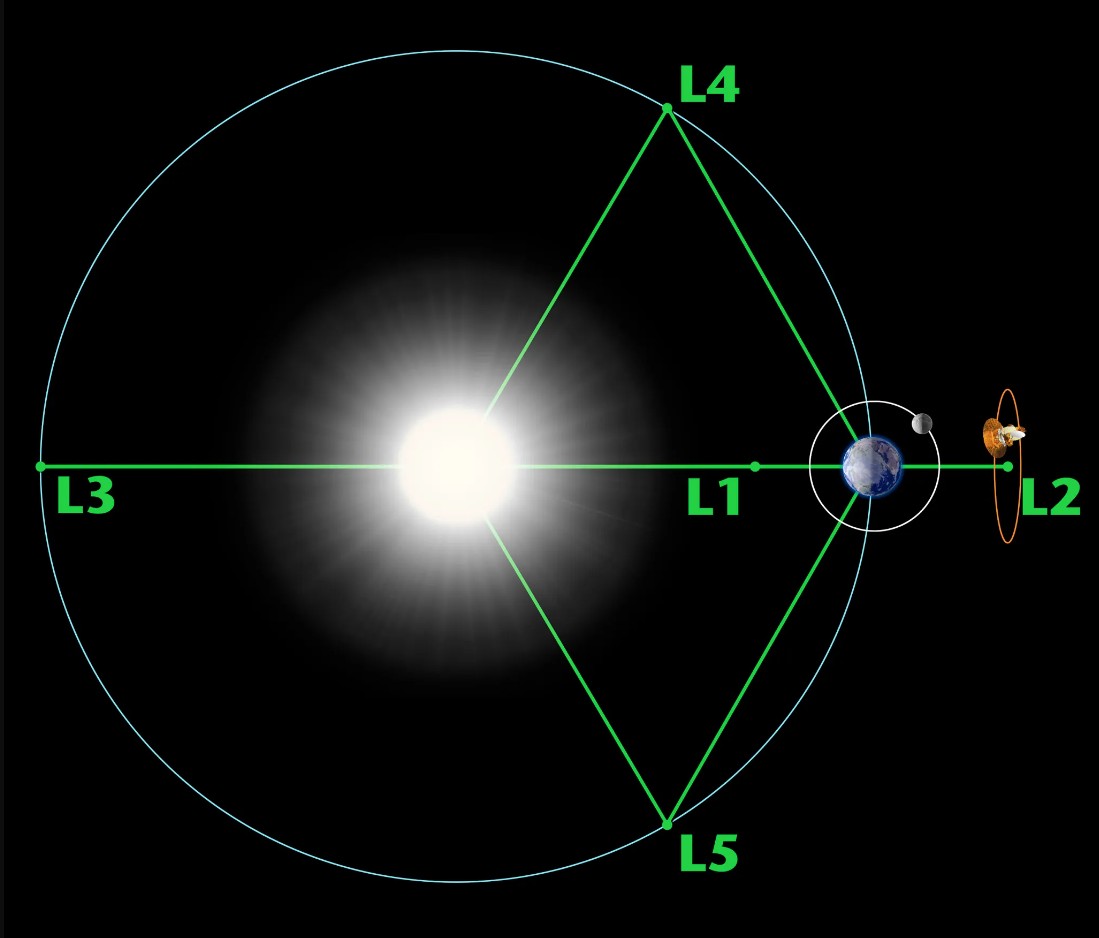
Lagrange points are positions in space where the gravitational forces of a two-body system like the Sun and Earth produce enhanced regions of attraction and repulsion.

Enlarge / Lagrange points are positions in space where the gravitational forces of a two-body system like the Sun and Earth produce enhanced regions of attraction and repulsion. (credit: NASA)

A bipartisan committee in the US House of Representatives recently issued a report on the economic and technological competition between the United States and China, and offered nearly 150 recommendations to “fundamentally reset” the relationship.

The report followed a year-long study of the competition between the countries since China’s entry into the World Trade Organization in 2001.

“The Chinese Communist Party has pursued a multi-decade campaign of economic aggression against the United States and its allies in the name of strategically decoupling the People’s Republic of China from the global economy, making the PRC less dependent on the United States in critical sectors, while making the United States more dependent on (China),” the report states.

Read 13 remaining paragraphs | Comments


Source: Ars Technica – US Congress recommends placing assets at Lagrange points to counter China

Samsung adds foldables to its self-repair program for the first time

Samsung Galaxy Z Flip 5 and Z Fold 5 owners can now fix their phones through the company’s self-repair service. The do-it-yourself program is expanding so that more Galaxy products, including foldables and tablets, are included in the iFixit collaboration. 

Samsung said it will add seven more products this month to its list of devices that are eligible for self-repair – from PCs, smartphones and tablets — including the Galaxy S23 series, Tab S9 series and the Galaxy Book2 Pro series. The program provides users with original equipment manufacturer (OEM) device parts and step-by-step guides that allow for things like screen or battery replacements. The price of fix kits will vary depending on the device. For example, a Samsung Galaxy S22 Ultra Screen and Battery set costs $240.

Samsung’s self-repair program, which first launched in the US last year, will also be offered to customers in an additional 30 countries across Europe. The company says expanding the scope of what’s covered by the program is in line with Samsung’s overall strategy to alleviate e-waste.

This article originally appeared on Engadget at https://www.engadget.com/samsung-adds-foldables-to-its-self-repair-program-for-the-first-time-171120939.html?src=rss

Source: Engadget – Samsung adds foldables to its self-repair program for the first time

Rick and Morty Season 7 Sets Max Streaming Date

Rick and Morty’s seventh season wrapped up Sunday night with “Fear No Mort,” another standout episode in what’s been one of the Adult Swim series’ strongest installments yet. But if you don’t have Adult Swim access and have been dying to see what you’ve been missing—including the new voices for Rick and Morty—here’s…

Read more…


Source: Gizmodo – Rick and Morty Season 7 Sets Max Streaming Date

Dark matter might be keeping an even darker secret

A diffuse cloud of light extending from lower left to upper right, sitting in a field of stars.

Enlarge / A compact dwarf galaxy, which may have features that are difficult to explain with standard models of dark matter. (credit: ESA/Hubble & NASA)

It is impossible for a telescope to image and far from being completely understood, yet dark matter is everywhere.

The deepest mysteries about dark matter relate to its nature and behavior. The prevailing idea regarding dark matter is the cold dark matter theory (CDM), which posits that dark matter is made up of low-velocity particles that do not interact with each other. This thinking has been debated—and it is up for debate again. Led by astrophysicist Hai-Bo Yu, a team of researchers from the University of California Riverside have come up with an alternative idea that explains two extremes where cold dark matter doesn’t work well.

Galaxies and galaxy clusters are thought to be surrounded by halos of dark matter. At one end of the controversy are galactic dark matter halos that are too dense to be consistent with CDM, and at the other are galactic dark matter halos too diffuse for CDM to make sense of. Yu and his colleagues instead suggest that some dark force (sorry Star Wars fans—not the Force) causes dark matter particles to smash into each other. This is Self-Interacting Dark Matter, or SIDM.

Read 11 remaining paragraphs | Comments


Source: Ars Technica – Dark matter might be keeping an even darker secret

Netflix Avatar's Showrunner Discusses Losing the Original Creators

When Netflix first announced it was bringing the world of Avatar: The Last Airbender to live-action, it was doing so with the help of the people who helped shape it in the first place: Bryan Konietzko and Michael Dante DiMartino. Then, two years later, they suddenly weren’t. And for remaining showrunner Albert Kim,…

Read more…


Source: Gizmodo – Netflix Avatar’s Showrunner Discusses Losing the Original Creators

Amazon's AI Product Reviews Seen Exaggerating Negative Feedback

A anonymous reader shares a report: Shopping on Amazon.com has long entailed scrolling through pages and pages of often redundant customer feedback. In an effort to make the task less onerous, the company in August began using artificial intelligence to convert billions of reviews into brief summaries consisting of a few sentences apiece. As is often true with generative AI, the results aren’t perfect. In some cases, the summaries provide an inaccurate description of a product. In others, they exaggerate negative feedback. This has potential implications not just for customers, but for Amazon merchants who depend on positive reviews to boost sales. Making matters worse, merchants say, the summaries were deployed just as they were headed into the crucial holiday shopping season — giving them one more thing to worry about besides inflation-battered shoppers.

Most shoppers can probably tell when the AI has misclassified a product. For example, the home fitness company Teeter sells an inversion table designed to ease back pain. Amazon’s AI generated summary calls it a desk: “Customers like the sturdiness, adjustability and pain relief of the desk.” The technology’s tendency to overplay negative sentiment in some reviews is less obvious. The $70 Brass Birmingham board game, for instance, boasts a 4.7-star rating based on feedback from more than 500 shoppers. A three-sentence AI summary of reviews ends with: “However, some customer have mixed opinions on ease of use.” Only four reviews mention ease of use in a way that could be interpreted as critical. That’s fewer than 1% of the overall ratings, yet the negative sentiment accounts for about a third of the AI-generated blurb.

Read more of this story at Slashdot.


Source: Slashdot – Amazon’s AI Product Reviews Seen Exaggerating Negative Feedback

Watch Blue Origin's first launch in 15 months here at 11:37AM ET

Blue Origin is taking another stab at its first launch in 15 months as New Shepard’s 24th mission is scheduled to take flight on Tuesday. The company had to scrub a planned launch on Monday due to a ground system issue. Today’s launch window opens at 11:37AM ET and the webcast starts 20 minutes beforehand. You can watch the launch below.

The uncrewed science mission has 33 payloads, more than half of which were developed by NASA, Blue Origin says. The other payloads are from K-12 schools, universities and STEAM-centric organizations. The manifest also includes 38,000 student postcards from the Club for the Future initiative.

The Federal Aviation Administration grounded New Shepard after an uncrewed launch attempt in September 2022 didn’t go as planned. The booster failed after takeoff but it was able to separate successfully from the capsule. Although the capsule made a safe parachute landing, the booster was destroyed when it hit the ground in a designated hazard area.

This article originally appeared on Engadget at https://www.engadget.com/watch-blue-origins-first-launch-in-15-months-here-at-1137am-et-160030131.html?src=rss

Source: Engadget – Watch Blue Origin’s first launch in 15 months here at 11:37AM ET

Toshiba To Be Delisted After 74 Years

Toshiba will be delisted on Wednesday after 74 years on the Tokyo exchange, following a decade of upheaval and scandal that brought down one of Japan’s biggest brands and ushered in a buyout and an uncertain future. From a report: The conglomerate is being taken private by a group of investors led by private equity firm Japan Industrial Partners that also includes financial services firm Orix, utility Chubu Electric Power and chipmaker Rohm. The $14 billion takeover puts Toshiba in domestic hands after protracted battles with overseas activist investors that paralysed the maker of batteries, chips, and nuclear and defence equipment. Although it is not clear what shape Toshiba will ultimately take under its new owners, Chief Executive Taro Shimada, who is staying in his role following the buyout, is expected to focus on high-margin digital services.

Read more of this story at Slashdot.


Source: Slashdot – Toshiba To Be Delisted After 74 Years

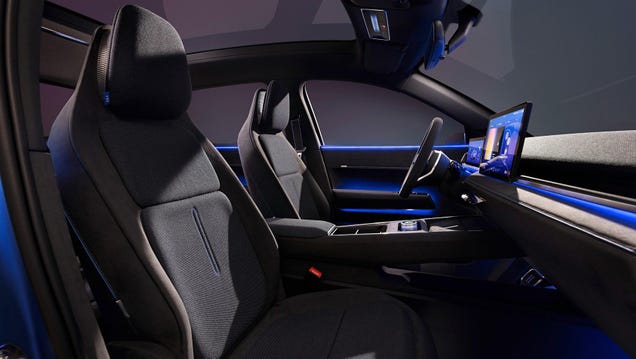
Volkswagen Bows to Touchscreen Criticism, Will Bring Back Physical Buttons

There’s more than nostalgia making folks pine for the days of knobs, dials, and buttons. Touchscreens are fine for all-in-one devices but not for something as simple as controlling a car’s air conditioning. Volkswagen had to learn the hard way that just because something can be put in a touchscreen doesn’t mean it…

Read more…


Source: Gizmodo – Volkswagen Bows to Touchscreen Criticism, Will Bring Back Physical Buttons

Google’s loss to Epic Games leads to $700M settlement with users, states

Google’s loss to Epic Games leads to $700M settlement with users, states

Enlarge (credit: SOPA Images / Contributor | LightRocket)

After Epic Games proved that Google’s Android app store monopoly violates antitrust law, Google has agreed to pay a $700 million settlement with US states and consumers, Reuters reported.

Once a judge approves the settlement, the largest chunk—$630 million—will go to consumers who allegedly were hit with unnecessary fees for in-app transactions. Google has not admitted to any wrongdoing, but each eligible consumer will receive at least $2, and some will receive more. Individual payouts will vary, depending on how much consumers spent in the Google Play Store between August 16, 2016 and September 30, 2023.

The remaining $70 million will go to states that joined the settlement, which includes all 50 states, the District of Columbia, Puerto Rico, and the Virgin Islands.

Read 11 remaining paragraphs | Comments


Source: Ars Technica – Google’s loss to Epic Games leads to 0M settlement with users, states

2023 was the year Cruise's robotaxi dream came to a crashing end

The year had started so well for robotaxis. Cruise and Waymo came into 2023 riding high on fresh investments from General Motors and Google, respectively, as well as rapidly growing interest from the general public and a downright rabid rate of adoption by city governments. Things were looking up, very up, for the burgeoning self-driving vehicle industry! Then a driverless Crusie taxi accidentally dragged a hit-and-run victim down a San Francisco street for a few dozen feet and everything just sort of went to shit from there. So fragile, these Next Big Things. Let’s take a look back through the year that was to see how autonomous taxi tech might recover from this catastrophe.

Cruise (Out of) Control

Cruise came into this year looking like a nigh-on unstoppable force of transportational change as the core of GM’s self-driving efforts. The company received a $1.5 billion investment from the automaker in March 2022 after GM spent $2.1 buying equity ownership for the startup from Softbank Vision Fund. In February the company announced that its test fleet of driverless taxis had traveled a million miles of San Francisco’s streets without a human behind the wheel. The program had only started the previous November.

“When you consider our safety record, the gravity of our team’s achievement comes into sharper focus,” Mo Elshenawy, Cruise’s EVP of engineering, said in February. “To date, riders have taken tens of thousands of rides in Cruise AVs. In the coming years, millions of people will experience this fully driverless future for themselves.”

Cruise CEO Kyle Vogt had been installed at his position in December 2021 after GM CEO Mary Barra ousted Dan Ammann from the spot. Vogt spent the following year laying out a grand vision of “zero crashes, zero traffic, and zero emissions,” though, according to a November report from the New York Times, the company “put a priority on the speed of the program over safety” during his tenure, cutting corners on safety in order to get more vehicles on the road. And expand Cruise did, into Houston and Los Angeles most notably, despite a growing number of traffic incidents and accidents left behind by its vehicles.

In April, the company was given permission to operate its driverless vehicles throughout San Francisco, 24/7 as well as pick up paying passengers during daylight hours. Previously, only Cruise employees were allowed to ride in the robotaxis and they could only operate when the sun was out. In August, the California Public Utilities Commission (CPUC) voted 3-to-1 in favor of allowing Cruise (and Waymo as well) to to pick up paying passengers at all hours.

Not everybody was fully on board with the robotaxi takeover, mind you. In January 2023, San Francisco officials requested the CPUC slow or even halt the expansion of self-driving vehicle services in the city, arguing that the free-for-all growth OK’d by state regulators was becoming an “unreasonable” burden. In fact, barely a week after the CPUC voted in favor of expansion, the California DMV opened an investigation into an altercation between a Cruise taxi and a fire truck. In response, the DMV had Cruise cut its operating fleet in half — down to 50 vehicles during daylight hours and 150 at night — until it had completed its investigation. Then there was the whole “using robotaxis as love hotels” issue in August.

Those mishaps were bad. The events of October 3 and Cruise’s response to the resulting investigation proved unforgivable. As the company initially explained in the above thread, a human-driven vehicle struck a pedestrian, pushing her into the path of the Cruise taxi in the lane to her right. The taxi ran the woman over, despite aggressively braking, and ended up dragging her 20 feet until coming to a stop. EMS crews were able to extract the pedestrian from underneath the taxi using the jaws of life, and rushed her to medical treatment with critical injuries.Though she has not been identified, the pedestrian was reportedly in serious condition as late as October 25.

If that weren’t bad enough, Cruise then allegedly misled regulators about when the taxi engaged its brakes — telling them that the taxi had stopped immediately, not eventually, after slowly traveling another 20 feet down the block. The company then repeatedly delayed in releasing video of the incident to investigators until October 19.

The company’s cover-up efforts puts Cruise in financial jeopardy with the CPUC, which is currently considering fining it as much as $1.5 million for its obfuscating actions. The Commission’s decision will be made in early February at an upcoming evidentiary hearing.

More immediately, the accident itself set off a whole slew of investigations, regulatory and internal alike. The Exponent consulting firm was brought in as an independent investigator and promptly dredged up some rather unflattering data regarding the robotaxis’ difficulties with spotting and reacting to the presence of small children. That revelation wasn’t so bad, at least compared to the company’s decision to keep the vehicles on the road even after being informed of the potentially deadly defect.

The California DMV was not amused and, two weeks after the accident occurred, the department suspended Cruise’s license to operate within the state, effectively shuttering its robotaxi operations. That’s a huge blow to GM, which has sunk billions into the startup and was anticipating the robotaxi service to generate as much as $5 billion annually when operations were to begin in 2025. In mid-November, the company recalled all 950 of its autonomous taxis in operation, and even paused robotaxi rides with human safety drivers behind the wheel a week later, as part of a “full safety review.”

Then things got even worse. On November 18, CEO Kyle Vogt announced his resignation from his position a week after GM installed EVP of Legal and Policy Craig Glidde (who was already a Cruise board member) as Chief Administrative Officer. The following day, company co-founder and Chief Product Officer Daniel Kan also announced his departure.

In response to Vogt’s departure, GM promoted Mo Elshenawy from EVP of Engineering to the dual role of President and CTO, leaving the CEO position currently vacant. GM CEO Mary Barra told reporters recently that the company has “a lot of confidence with what the two co-presidents will do,” but will be “leaning in to make sure that it meets our strict requirements from a safety perspective.”

GM suddenly found itself holding the multibillion dollar bag, so it cut off funding near immediately, slashing budgets to the tune of “hundreds of millions” of dollars. As a result, Cruise has since suspended its equity program and begun laying off employees, starting with those in autonomous vehicle operations.

“The most important thing for us right now is to take steps to rebuild public trust,” Cruise said in a statement. “Part of this involves taking a hard look inwards and at how we do work at Cruise, even if it means doing things that are uncomfortable or difficult.”

But Cruise isn’t entirely dead yet, as Elshenawy explained in a recent email to staff. The company plans to scale back its self-driving ambitions and relaunch with a renewed focus on the current Chevy Bolt AV robotaxi platform, rather than its custom-built Origin vehicle. As such the company is pausing production on the Origin at least through 2024 but does plan to continue the program at some point in the future.

Waymo Money, Waymo Problems

Waymo entered 2023 in much the same way as Cruise did: riding high on the hype and promise of self-driving vehicle technology. However it is ending the year in a very different place from its biggest competitor.

Google-backed Waymo had received glowing praise from Swiss RE, a leading global reinsurer, regarding the safety of its vehicles versus human drivers the previous September, and had just launched its second Waymo One taxi service area that December, this time in Phoenix, Arizona, running a route between downtown and the Phoenix Sky Harbor International Airport.

Los Angeles joined Waymo’s stable of cities in February. Much as it was rolled out in San Francisco, Waymo’s self-driving vehicles were initially made available only to riders who were part of the Waymo Research Trusted Tester program in a limited area (in this case, Santa Monica), always outside of rush hour and only in limited numbers.

The following month the company launched a similar effort in Austin, Texas, a town where it had conducted some of its earliest self-driving tests back in 2015. Austin is a hot town to test self-driving vehicles in, on account of a 2017 state law that prevents cities from locally regulating the technology’s use and deployment on their streets.

Things were going so well for Waymo come summer that the company announced it would shift gears, pushing back plans for its self-driving truck idea to instead focus fully on its expanding robotaxi service.

“Given the tremendous momentum and substantial commercial opportunity we’re seeing on the ride-hailing front, we’ve made the decision to focus our efforts and investment on ride-hailing,” Waymo co-CEOs Tekedra Mawakana and Dmitri Dolgov wrote in a July blog post. “We’re iterating more quickly than ever on our technology by pushing forward state of the art AI/ML, and seeing significant business growth and rider demand in San Francisco, Phoenix, and Los Angeles.”

By August, Waymo announced that Austin would be joining those towns as the fourth city to host its autonomous taxi service, with the program rolling out through the Fall. That same month, Waymo received its driverless deployment permit from the California Public Utilities Commission (CPUC), enabling the company to begin charging passengers for its robotaxi rides as well as expanding the service to additional customers. Previously, the company could only charge for rides if a human safety driver was behind the wheel. The company acknowledged at the time that demand was “incredibly high” (signups had already reportedly passed 100,000 users) but that it was working to make its fully autonomous trips “available to everyone over time.”

“Things are growing… The ridership is increasing in both Phoenix and SF,” he continued, noting that the company provides more than 10,000 trips per city each week. Overall, it would have been a pretty great year for Waymo — especially after chief rival, Cruise, effectively imploded over the course of Q4 — had the company’s workforce not been subject to not one, not two, but three rounds of layoffs impacting over 300 employees.

The Road Ahead for Robotaxis

As we head into the new year, Waymo is effectively the only game in town, now that Cruise isn’t a viable commercial entity for the foreseeable future.

Midway through the year, analysts predicted the robotaxi market, valued at just over $1.1 billion in 2022, could rise to anywhere from $45.7 billion in 2030 to $118 billion in 2031 citing, “increasing demand for shared transportation, advancements in vehicle technology, growing interest in fuel-efficient public transportation, and improved infrastructure.”

Those outlooks have been tempered in recent months, at least for short term estimates, with Cruise temporarily out of the picture. Forrester Analytics, for example, now expects drone delivery services to become the dominant self-driving vehicle segment in 2024 as pushback from regulators slows development of robotaxi transit tech.

“Expect a booming year for self-driving forklifts, curbside delivery robots, and drone delivery, driven by the increasing popularity of e-commerce, the need for last-mile delivery solutions, and more sophisticated autonomous technologies,” wrote Craig Le Clair, Vice President and Principal Analyst at Forrester.

We are, of course, still waiting on those million robotaxis Elon Musk promised us back in 2019.

This article originally appeared on Engadget at https://www.engadget.com/2023-was-the-year-cruises-robotaxi-dream-came-to-a-crashing-end-153002522.html?src=rss

Source: Engadget – 2023 was the year Cruise’s robotaxi dream came to a crashing end