The PlayStation 5 has officially hit the 50 million sales milestone, Sony confirmed in a blog post. That’s an impressive figure, considering the litany of supply chain issues that kept PS5s in limited supply after its November 2020 launch. And notably, the PS5 manage to reach 50 million sales just a week longer than it took the PlayStation 4, which wasn’t bogged down by as many supply chain issues or a worldwide pandemic.
Sony has also outsold the Xbox Series X and S by almost three to one this year, the Financial Times reports, based on data from Ampere Analysis. While Microsoft doesn’t release official Xbox sales numbers (you can take a wild guess as to why), Ampere estimated that Microsoft sold 7.6 million next-gen systems this year (a 15 percent drop from 2022), while Sony’s sales exploded by 65 percent to reach 22.5 million units sold.
It’s not hard to see why the PS5 is in more demand: Sony has pumped out far more must-have games this generation (including the recent Spider-Man 2, as well as anticipated sequels like God of War Ragnarok), while Microsoft has stumbled with its more high profile releases, like Halo Infinite and Redfall. But it could just be that Microsoft has a different goal. It’s far more focused on pushing subscriptions to Xbox Game Pass, which also allows players to stream titles over the cloud and play on PC with its ultimate tier.
This article originally appeared on Engadget at https://www.engadget.com/sony-has-sold-50-million-ps5-consoles-over-three-years-145835145.html?src=rss
Cybersecurity incidents are constantly in the news these days, but you’ll soon be hearing about a lot more of them. That’s because a new rule from the Securities and Exchange Commission went into effect on Monday, requiring all public companies to report data breaches in just four days.
Bird Global, the company that pioneered on-street electric scooter rentals, has filed for Chapter 11 bankruptcy protection [Editor’s note: the link is paywalled; alternative source] in Florida, five years after becoming the fastest start-up ever to reach a so-called “unicorn” valuation above $1bn. From a report: In September, the New York Stock Exchange suspended trading in Bird, which went public via a blank-cheque company in 2021, after its market capitalisation fell below a $15mn threshold. “We are making progress towards profitability and aim to accelerate that progress by right-sizing our capital structure through this restructuring,” Bird interim chief executive Michael Washinushi said on Wednesday.
Bird said it would operate as normal during the restructuring process and that its lenders had entered into a “stalking horse” sale agreement. The company aims to complete a sale process within 120 days. Its European and Canadian businesses are not part of the bankruptcy filing. Founded by former Uber and Lyft executive Travis VanderZanden in Los Angeles in 2017, Bird spawned dozens of copycat companies around the world. But e-scooter rentals have struggled to reach consistent profitability, amid regulatory strictures, safety concerns, and high capital and operating costs.
NASA just combined all of my favorite things: space, lasers, and cats. In a first-of-its-kind demonstration of deep space optical communication, the space agency streamed a high-definition video from 19 million miles away from Earth. And as it turns out, NASA is just as obsessed as we are when it comes to sharing cat…
When Elon Musk first took over Twitter, those of us in the tech media had all kinds of theories about how the acquisition might bring about the death of the 17-year-old platform.
Some posited that his inept attempts at cost-cutting would cause irreparable damage to Twitter’s infrastructure or that mass resignations would lead to catastrophic instability. But as is so often the case with Musk, predictions were in vain. Twitter did die this year, but the way it played out was both more boring and more stupid than anyone could have possibly imagined.
Musk killed Twitter by slowly making it useless for those who relied on it for real-time information, by choking off conversations from those not willing to pay, by flooding users’ timelines with spammy blue-check sycophants and renaming the company X. He killed it by re-platforming actual Nazis and far-right trolls and Alex Jones and boosting anti-semitism so loudly the site’s largest remaining advertisers and most prominent users abandoned the platform in droves. Though you can still go to www.twitter.com and see a website that vaguely resembles the thing we used to call Twitter, it’s only a dull echo of what it once was.
– via Getty Images
The beginning of the end
While you could argue the death spiral began the second Musk walked into Twitter HQ carrying a sink 14 months ago, the platform we all knew began to die three months later, when Musk abruptly decided to ban third-party client apps from its platform and put the rest of its API behind an outrageously expensive paywall.
Twitter had long been an outlier among its social media peers for having a relatively open platform. It gave researchers tools to access the full history of all public conversations on Twitter. It allowed developers to build their own apps on top of its platform, which fostered a small but robust ecosystem of third-party Twitter clients.
Third-party apps like Tweetbot and Twitterific had a relatively small (but devoted) following, but they also played a significant role in defining the culture of Twitter. In the early days of Twitter, the company didn’t have its own mobile app, so it was third-party developers that set the standard of how the service should look and feel. Third-party apps were often the first to adopt now-expected features like in-line photos and video, and the pull-to-refresh gesture. The apps are also responsible for popularizing the word “tweet” and Twitter’s bird logo.
And while many of these apps had become less prominent in recent years, they were emblematic of the way that Twitter, at its best, empowered its users to shape the platform.
Likewise, having an open and readily-available API meant that Twitter, while not the largest social platform, could play an outsize role in shaping online culture. Because its firehose of data was easily accessible to researchers, the public conversations that happened there fueled studies into everything from global elections to public health.
By closing its API to developers and the research community, Musk made it clear he was not interested in using Twitter for anything that couldn’t make him a buck in the process. Twitter’s data was simply another part of the platform to commodify. Nearly a year later, making Twitter’s API inaccessible to all but those with the deepest pockets may not seem like even the tenth-most consequential change to happen under Musk, but it showed just how willing he was to alienate influential communities on Twitter. It was also a major warning sign of what was to come.
Twitter’s current lords & peasants system for who has or doesn’t have a blue checkmark is bullshit.
If killing Twitter’s API was a quiet warning sign, the complete destruction of Twitter “verification” was a five-alarm fire. Twitter’s verification system was always flawed, but it hinged on the basic premise that the company had some evidence the accounts it verified belonged to the actual people claiming them and that those were people or organizations of some importance. When Musk rolled out his poorly thought out paid verification scheme last year, it went horribly and predictably wrong almost immediately because he failed to uphold any kind of identity check.
Despite the chaotic initial rollout, verification’s now-meaningless status did not become fully apparent until this year. After a wave of thousands of spammers, scammers and Musk sycophants signed up for verification, Twitter began removing “legacy” verification from thousands of accounts.
The algorithmic boost provided to the new paid-for wave of blue checks, combined with the promise of a potential share of ad revenue, has drastically altered the dynamics of conversation on Twitter. Verified accounts are given priority ranking in replies and search results, regardless of the size of their following or their engagement — which has made Twitter even less relevant and useful. And the promise of potential ad revenue has incentivized the worst kind of engagement bait.
The result is that even the most carefully curated timelines have become filled with useless spam. And fraudsters are increasingly using pay-to-play verification to carry out scams targeting people trying to reach legitimate customer service channels.
X marks… the death of Twitter
If you were to look for a singular moment when Twitter died, however, it happened in July, when Musk announced that the company would now be known as X. The company changed its name, logo and everything formerly associated with the bird app.
This was more than an ill-considered rebrand. X, a letter with which Musk has long been fascinated, represented, literally, the end of Twitter. For as much as Musk has said it’s about creating an “everything app,” it’s also about fully severing any ties to the expectations and norms associated with Twitter. Want to break verification? Want to charge new users for the privilege of posting? Want to make news stories unreadable? Want to maliciously slow down links to competitors’ websites? Want to re-platform the most heinous peddlers of hate and conspiracy theories? Those actions may have been at odds with Twitter’s mission, but at X, it’s all just another Tuesday. As CEO Linda Yaccarino told CNBC “the rebrand represented really a liberation from Twitter.”
Justin Sullivan via Getty Images
It’s unclear if Musk will ever succeed at creating anything resembling an “everything app” where users will be able to use X to run their “entire financial world.” So far, users seem to have little interest in the somewhat random assortment of new features that have been introduced, like live shopping and aggregating job listings. What Musk has succeeded at, however, is reshaping the platform in his own image.
But if there was any doubt remaining about whether the platform had a chance, Musk has almost single handedly wiped out what remained of Twitter’s ad business. After boosting an antisemitic conspiracy theory and repeatedlyfailing to prevent ads from appearing near pro-Nazi content, many of the company’s largest remaining advertisers have halted their spending on the platform.
Musk, naturally, responded by telling advertisers “go fuck yourself,” while speculating that the loss of ad dollars could “kill the company.”
But it’s not just advertisers who have fled an increasingly toxic platform. Many of the biggest and most-followed accounts have stopped posting in recent weeks. X’s infrastructure continues to slowly crumble, with random featuresconstantlybreaking. Meanwhile, all this has only strengthened the growing number of X competitors, and especially the Meta-owned Threads app. Threads is surging, landing at number four on Apple’s list of most-downloaded apps of the year, despite a late summer launch. X, which has seen steady declines in traffic and engagement, did not make the list.
This article originally appeared on Engadget at https://www.engadget.com/how-twitter-died-in-2023-and-why-x-may-not-be-far-behind-143033036.html?src=rss
I’ve always been pretty money-conscious, but I didn’t really get into budgeting until I was in my mid-twenties. “Budgeting” is generous — I thought I was budgeting, but really I was using a crude Google Sheet system to track my expenses every month. I didn’t truly understand the difference between those two things until I started looking into ways to upgrade. It had been working fine for me, but as I got older and wanted to grow my savings, save up for a home down payment and a wedding and generally do more “adult” things with my money, I started to scour the internet for alternatives. I settled on You Need a Budget (YNAB) about four years ago and I’ve enjoyed it so much that I keep using it even after achieving some of those milestones.
The YNAB Method is an approach to budgeting that resonated with me then and still does today. I won’t belabor the basics here, but put simply, you’re to give every dollar a “job” as soon as you get paid by taking care of immediate needs first and then accounting for the rest of your true expenses. The way YNAB does this is basically by acting like a digital envelope system where you can customize all of your envelopes (or “categories”) and the amount of money you need for each (“targets”), and dump money into all of them every time you get paid. For example, I know I need $65 each month to pay for internet, so I have an internet category in YNAB with a target of $65 each month that’s due by the 15th, since I’ll need that money to pay the bill on the 20th of every month.
Follow that example for all of the rest of your expenses like rent or mortgage payments, groceries, electricity, insurance premiums and you’ll have a full YNAB budget in place. You can (and should) also do that for “true” expenses, which include things like hair cuts and car maintenance in the YNAB system. You may not need a specific amount of money for things like that every month, but you can plan for them by saving a little every time you get paid — so by the time you need to get that hair cut ahead of a wedding or unexpectedly need a new set of tires, you have at least some, if not all, of the money necessary to pay it.
YNAB
I was already taking stock of my standard expenses and setting aside money for those first and foremost, but YNAB made the process much easier. It’s worth noting that was already part of my routine. I was privileged enough to get a decent financial education from my parents growing up (mantras like “pay yourself first” come to mind, and I see taking care of your most necessary expenses as a way of accomplishing that).
The game-changer for me was considering my “true expenses,” which added up quickly. The inevitable weekly takeout order, veterinary bills for our cat, train and rideshare fees and the like were all things I knew I needed to pay for but didn’t previously deal with until the time came. In YNAB, you can create categories for all true expenses and plan for them each month (or week, depending on how you budget/get paid) so there’s (hopefully) never a question of how you’re going to pay for any of them.
If you’re able to do this and get your expenses in order, it’s possible that you’ll find you have money left over each paycheck. Then you can expand your budget to think about other true expenses or sinking funds you may want to address. My line between true expenses and sinking funds is blurry at best, but the latter are just allocated monies you set aside for variable expenses that you know are inevitable like home maintenance or insurance premiums.
Holiday gifts were big for me; every year, I have even more people in my life that I need to buy gifts for during the holiday season and I never planned for that in advance before using YNAB. Now, I have a “holiday gifts” category with a generous target that I put money toward every month and set to be “due” every year in early October. As soon as sales start to kick in during the fall, I have a pool of money with which I can buy all of my loved ones’ gifts.
I should say that YNAB appeals to my Type-A, über-organized personality, but you can’t plan for everything. A few years back, I unexpectedly had to spend about $500 for some car repairs and I didn’t have quite that much in my “car maintenance” sinking fund. Instead of panicking, I moved some money over from my “clothing” category to cover the remainder of the costs. It was a bit painful psychologically (I love seeing those little green progress bars in the YNAB app), but it didn’t impact my finances at all. YNAB accounts only for the money you actually have, regardless of which category it’s in, so I wasn’t spending anything that I couldn’t afford. That’s really important to me, as someone who tries to live within their means — and as much as possible, below it — to avoid lifestyle creep.
YNAB
Getting back to those “adult” priorities I mentioned before: YNAB was one of the key things that helped me and my partner save up a home down payment and the funds we’d need to pay for our wedding simultaneously, without feeling too stretched along the way. We cut down (not cut out, mind you) on all unnecessary expenses and aggressively saved during this five-year period, and YNAB made keeping track of it all easy.
But I would like to stress that the service was just one of the things that helped, and there were other factors that contributed as well. It’s not realistic to suggest budgeting alone is the answer to all of one’s money prayers. But it’s certainly a step in the right direction and a good habit to build over time.
I consider YNAB up there with 1Password as one of the few services I’m happy to pay for every year because of how much it adds to my life. However, it’s worth noting that you don’t have to pay for YNAB to start budgeting using its tenants. The YNAB method, the envelope system and zero-based budgeting are all very similar and you can do them all with less expensive tools, and even manually with physical envelopes and cash. There are plenty of online communities with flourishing examples of how you can get started without paying for yet another subscription. I recommend checking out Taylor Budgets, Budget Treasures and other similar YouTube channels for more inspiration.
This article originally appeared on Engadget at https://www.engadget.com/what-we-bought-how-ynab-gives-me-peace-of-mind-and-keeps-my-money-in-check-140049410.html?src=rss
A U.S. computer scientist on Wednesday lost his bid to register patents over inventions created by his artificial intelligence system in a landmark case in Britain about whether AI can own patent rights. From a report: Stephen Thaler wanted to be granted two patents in the UK for inventions he says were devised by his “creativity machine” called DABUS. His attempt to register the patents was refused by Britain’s Intellectual Property Office on the grounds that the inventor must be a human or a company, rather than a machine. Thaler appealed to the UK’s Supreme Court, which on Wednesday unanimously rejected his appeal as under UK patent law “an inventor must be a natural person.”
“This appeal is not concerned with the broader question whether technical advances generated by machines acting autonomously and powered by AI should be patentable,” Judge David Kitchin said in the court’s written ruling. “Nor is it concerned with the question whether the meaning of the term ‘inventor’ ought to be expanded … to include machines powered by AI which generate new and non-obvious products and processes which may be thought to offer benefits over products and processes which are already known.” Thaler’s lawyers said in a statement that “the judgment establishes that UK patent law is currently wholly unsuitable for protecting inventions generated autonomously by AI machines.”
Creating stickers from photos is an easily overlooked iPhone feature tucked into iOS 17. Using Apple’s machine learning algorithms that quickly separate a subject from its background, it extracts pictures of you, your friends or pets (or anything else it detects as the picture’s subject), transforming them into digital decals. It even makes animated stickers from Live Photos to slap onto iMessage chats or Markup tools. Here’s how to create your own.
What are iPhone stickers?
In Apple’s ecosystem, stickers are digital versions of their real-world counterparts. They debuted in iOS 10, Apple’s 2016 iPhone operating system, allowing users to place cut-outs of fun images onto iMessage bubbles for more personalized reactions.
Apple
Creating iPhone stickers from photos is new to iOS 17, and so is their location. In older versions of iOS, you had to navigate the iMessage App Store (in the Messages app) and app drawer to find them. In the new software’s more streamlined approach, you only have to tap the plus icon next to a message, choose Stickers and pick the one you want. (More on that below.)
How to create stickers from photos in iOS 17
Here’s how to make custom stickers from your photos on Apple’s latest iPhone software:
In the Photos app on your iPhone, choose a picture you want to transform into an iPhone sticker. Tap on the photo to open it in a full-screen view.
Touch and hold your finger on the photo’s subject. For example, if it’s a picture of your dog making a derpy face, hold your finger down on the pup until you see an animated effect highlighting the subject. (If it doesn’t work on the first try, do it again.)
In the popup menu that appears above the subject, choose “Add Sticker.” If you don’t see that text, tap on the arrow (>) at the right end of the options box until you find it. After tapping “Add Sticker,” the decal will appear below in the same drawer you’ll see in the Messages app.
Optionally, hold your finger down on it in the stickers drawer and choose “Add Effect” from the menu. You can give it a standard outline, add a comic style, transform it into a puffy sticker or make it shiny.
Tap the X button or swipe down to close the Stickers menu at the bottom of the screen.
How to create stickers from Live Photos in iOS 17
Apple’s Live Photo adds (roughly) three-second video clips captured before and after pressing the shutter button. If you took your source picture as a Live Photo, you can turn it into an animated iPhone sticker through the following steps:
Open the iOS Photos app, and tap on the Live Photo you want to turn into an animated sticker. It should now take up your phone’s entire screen.
Hold your finger down on the photo’s subject. Wait until you see an animated ripple effect protruding and highlighting the subject. (Try again if it doesn’t catch the first time.)
In the menu above the subject, choose “Add Sticker.” If you don’t see that option, tap the right arrow at the end of the menu. After tapping “Add Sticker,” you’ll see the subject appear in a drawer below with your custom stickers.
You should see a pop-up menu above the sticker. If you don’t, hold your finger down on the sticker in the list. Choose “Add Effect.” A new screen with effects options will appear.
In addition to sticker effect options, you’ll see “Off” on the upper left. Tap that until it changes to “Live.” You now have an animated sticker.
Press the X button or swipe down to close the sticker drawer.
How to use custom stickers in iMessage
Apple
Here’s how to use your new photo sticker in the Messages app:
In Messages, open a chat thread.
Press the + button to the left of the text box.
Choose “Stickers.”
If you don’t see your custom sticker in the “recently used” menu below, tap the sticker icon (between the 9:00 clock and smiley face icons, above the stickers but below the text box) to find it.
If you want to place the sticker in a reply, tap the one you want. Or, if you’re going to include it as a reaction on top of a chat bubble, hold your finger down on the sticker and drag it onto the message to which you want to react.
How to use custom stickers in Markup
You can also add stickers to photos, screenshots, PDFs, email attachments and other documents:
Open an image or file you want to add a sticker to. It could be through the Photos app, Files, Mail, Notes or any other app that supports Markup edits.
If you’re in Photos, tap “Edit,” then choose the Markup icon (upward-facing pen on the upper right). If you’re in Files or another app where you already see the icon, skip the “Edit” step and only tap the pen symbol.
Once you’ve opened the Markup menu, tap the + sign at the far right of the bottom toolbar (next to the color palette and pencil).
Tap “Add Sticker.”
Choose the custom sticker you just made.
It should appear with a blue bounding box atop the original photo or document. Drag the corners to resize, or slide your finger across the screen to move it.
Tap outside the bounding box to place the sticker.
This article originally appeared on Engadget at https://www.engadget.com/how-to-create-stickers-on-the-iphone-with-your-photos-on-ios-17-133039376.html?src=rss
AI may or may not take people’s jobs in years to come, but in the meantime, there’s one thing they cannot obtain: patents. Dr. Stephen Thaler has spent years trying to get patents for two inventions created by his AI “creativity machine” DABUS. Now, the United Kingdom’s Supreme Court has rejected his appeal to approve these patents when listing DABUS as the inventor, Reuters reports.
The court’s rationale stems from a provision in UK patent law that states, “an inventor must be a natural person.” The ruling stipulated that the appeal was unconcerned with whether this should change in the future. “The judgment establishes that UK patent law is currently wholly unsuitable for protecting inventions generated autonomously by AI machines,” Thaler’s lawyers said in a statement.
Thaler first attempt to register the patents — for a food container and a flashing light — was in 2018, as owner of the machine that invented them. However, the UK’s Intellectual Property Office said he must list an actual human being on the application, and when he refused, it withdrew his application. Thaler fought the decision in the High Court and then the Court of Appeal, with Lady Justice Elisabeth Laing stating, “Only a person can have rights. A machine cannot.”
Thaler, an American, also submitted the two products to the United States Patent and Trademark Office, which rejected his application. Plus, he previously sued the US Copyright Office (USCO) for not awarding him the copyright for a piece of art DABUS created. The case reached the US District Court of Columbia, with Judge Beryl Howell’s ruling explaining, “Human authorship is a bedrock requirement of copyright.” Thaler has argued that this provision is unconstitutional, but the US Supreme Court declined to hear his case, ending any further chances to argue his stance. While the UK and US have rejected Thaler’s petitions, he has succeeded in countries such as Australia and South Africa.
This article originally appeared on Engadget at https://www.engadget.com/uk-supreme-court-rules-ai-cant-be-a-patent-inventor-must-be-a-natural-person-131207359.html?src=rss
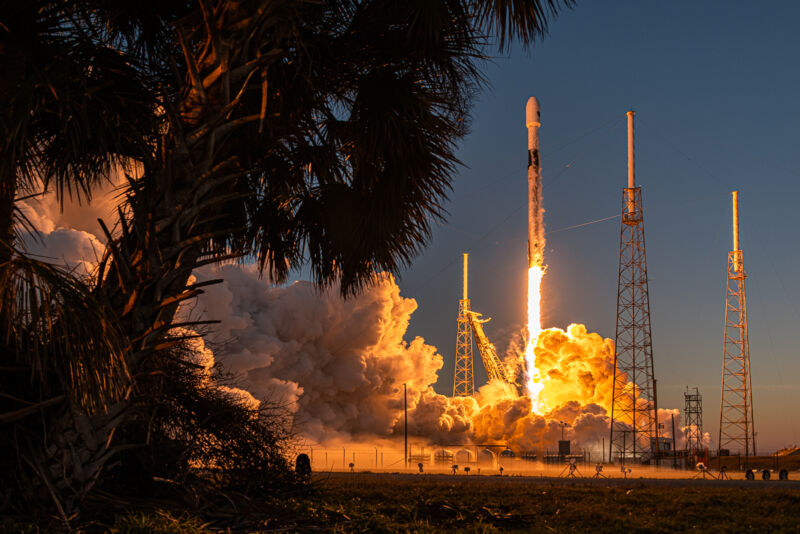
Enlarge/ A Falcon 9 rocket launches in January 2023 carrying a GPS III satellite into orbit. (credit: Trevor Mahlmann)
After our inaugural ranking last year, Ars Technica is again publishing a list of the most accomplished US commercial launch companies. We hope the list sparks debate, discussion, and appreciation for the challenge of operating a successful rocket company.
Please note that this is a subjective list, although hard metrics such as total launches, tonnage to orbit, success rate, and more were all important factors in the decision. And our focus remains on what each company accomplished in 2023, not on what they might do in the future. Certainly there will be more reshuffling next year.
1. SpaceX (no change)
Only one rocket company approached a mind-boggling 100 launches this year. Only one company reused more than 90 percent of the rockets it launched in 2023. Only one company launched one million kilograms of cargo into orbit. And only one company debuted the (privately developed) largest and most powerful rocket ever seen—Starship. And then launched it again just months later on a mostly successful flight.
jd writes: Ars Technica is reporting a newly-discovered man-in-the-middle attack against SSH. This only works if you are using “ChaCha20-Poly1305” or “CBC with Encrypt-then-MAC”, so it isn’t a universal flaw. The CVE numbers for this vulnerability are CVE-2023-48795, CVE-2023-46445, and CVE-2023-46446. From TFA: At its core, Terrapin works by altering or corrupting information transmitted in the SSH data stream during the handshake — the earliest stage of a connection, when the two parties negotiate the encryption parameters they will use to establish a secure connection. The attack targets the BPP, short for Binary Packet Protocol, which is designed to ensure that adversaries with an active position can’t add or drop messages exchanged during the handshake. Terrapin relies on prefix truncation, a class of attack that removes specific messages at the very beginning of a data stream.
The Terrapin attack is a novel cryptographic attack targeting the integrity of the SSH protocol, the first-ever practical attack of its kind, and one of the very few attacks against SSH at all. The attack exploits weaknesses in the specification of SSH paired with widespread algorithms, namely ChaCha20-Poly1305 and CBC-EtM, to remove an arbitrary number of protected messages at the beginning of the secure channel, thus breaking integrity. In practice, the attack can be used to impede the negotiation of certain security-relevant protocol extensions. Moreover, Terrapin enables more advanced exploitation techniques when combined with particular implementation flaws, leading to a total loss of confidentiality and integrity in the worst case.
Enlarge/ A new image of NGC 2264, also known as the “Christmas Tree Cluster.” (credit: NASA et. al.)
Welcome to the Daily Telescope. There is a little too much darkness in this world and not enough light, a little too much pseudoscience and not enough science. We’ll let other publications offer you a daily horoscope. At Ars Technica, we’re going to take a different route, finding inspiration from very real images of a universe that is filled with stars and wonder.
Good morning. It’s December 20, and today’s image showcases two astronomical objects—the Cone Nebula and the Christmas Tree Cluster—that combined are known as NGC 2264. (NGC, by the way, stands for New General Catalogue of Nebulae and Clusters of Stars).
These astronomical objects are found about 2,300 light-years from Earth, and because they are relatively close, they are popular astronomical objects to observe in the night sky. This is a composite image from NASA and other organizations that combines observations from NASA’s Chandra X-ray observatory along with those from ground-based telescopes. The image has been rotated clockwise 160 degrees so that the “Christmas tree” appears standing.
The European Union says three porn sites are now subject to stricter rules under the Digital Services Act (DSA). The bloc has designated Pornhub, Stripchat and XVideos as “very large online platforms” (VLOPs) after determining that they each have an average of more than 45 million monthly users in the EU. As such, the three sites are subject to the same stringent rules as the likes of Facebook, Instagram, X and TikTok.
The European Commission (the EU’s executive arm) says VLOPs have until February 17 to comply with the DSA’s general requirements. Those include making it easy for users to flag illegal content, prioritizing reports from “trusted flaggers,” providing a means of appeal for content moderation decisions, publishing an annual transparency report detailing content moderation processes and bolstering their systems to “ensure a high level of privacy, security and safety of minors.”
The three porn sites also have four months to comply with additional obligations. For instance, they’re required to have mitigation measures in place to prevent the spread of illegal content. This, according to the Commission, includes “child sexual abuse material and content affecting fundamental rights, such as the right to human dignity and private life in case of non-consensual sharing of intimate material online or deepfake pornography.” The three sites must also offer researchers publicly available data and be subject to an annual external independent audit. The Commission says these measures will “empower and protect users online, including minors, and duly assess and mitigate any systemic risks stemming from their services.”
The Commission says it will keep a close eye on the three porn sites to make sure they comply with the rules, “especially concerning the measures to protect minors from harmful content and to address the dissemination of illegal content.”
The penalties for failing to comply with the DSA’s requirements are severe. Platform holders can be fined up to six percent of their annual global revenue. The Commission may also issue penalties of up to five percent of average daily worldwide revenue for each delayed day that VLOPs fail to abide by remedies, interim measures or commitments. In extreme cases, the EC can also ask national courts to temporarily block access to a given service.
The Commission, which designated its first 19 Very Large Online Platforms and Search Engines under the DSA in April, is already holding some VLOPs to account. Earlier this week, the EU opened formal infringement proceedings into X over potential violations of the DSA. Among other things, investigators are looking into whether the platform is doing enough to mitigate risks to “civic discourse and electoral processes.” They’re also examining the “suspected deceptive design” of features such as paid checkmarks. In October, the EU said it was looking into Meta’s and TikTok’s handling of the conflict between Israel and Hamas under the DSA.
This article originally appeared on Engadget at https://www.engadget.com/pornhub-and-xvideos-will-be-subject-to-the-same-strict-eu-rules-as-social-media-sites-123922469.html?src=rss
We spend a lot of time talking about entertainment and Advanced Driver Assistance Systems (ADAS) for cars, but we have not focused that much on motorcycles or electric bikes even though they are potentially more dangerous to drive. Qualcomm is changing that as it approaches the market for two and three wheeled vehicles to address their severe safety issues in a move to make all vehicles safer.
And given it is often our youth that drive these two wheeled vehicles, this effort helps protect our kids, so it’s as important as our efforts to improve safety in cars and trucks.
Let’s talk about how Qualcomm’s technologies will make motorcycles, bicycles and three wheeled vehicles safer.
Motorcycles, Bicycles and Tricycles
Unlike automobiles and trucks, those riding motorcycles, bicycles and tricycles do not have the luxury of the protections afforded to modern 4+ wheeled vehicles. The primary protective gear consists of leather clothing and a certified helmet (required in most places by law to keep medical costs down). There have been efforts to apply airbags to this class of vehicle, and there are products in market that afford better protection, but these are more the exception than the rule. In any collision between one of these smaller vehicles and a car or especially a truck, the lighter vehicle driver is likely to be at a massive disadvantage.
The smaller vehicles can hide in larger vehicles’ blind spots, tend to do things drivers of larger vehicles are not prepared for (like lane splitting), and, as with other types of vehicles, the drivers do not always adhere to speed limits and like to show off with potentially deadly consequences.
These smaller vehicles are limited in size and carrying capacity meaning that any automated solution needs to be tiny and lightweight. Otherwise, it will not be viable.
Qualcomm’s Solution
Qualcomm is adapting its automotive class of entertainment and ADAS solutions to these smaller vehicles. It has an advantage given it started with smartphones and was forced by that market to lead on weight, wireless connectivity and adequate performance. As a result, Qualcomm has a comprehensive solution that begins with basic entertainment and communications and advances to full ADAS support. Granted, the larger the vehicle the more comprehensive the solution, which means that capabilities should scale up as you move from bicycles and motorcycles to three wheeled vehicles that are typically more carlike.
The coming benefits include better communications and shared entertainment between those riding on the same bike and in groups, the ability to better identify threats like gravel and black ice and both alert the driver and change the vehicle’s driving behavior to help avoid an accident. AI-driven capabilities can locate fuel and charging locations close to the rider and advise that the rider is approaching a dangerous area while automatically reconfiguring the vehicle to better survive it.
It can alert the vehicle’s owner to an attempted theft and disable the vehicle so that the thief cannot ride off with it or use it once stolen. Collision alerts notify the rider they are in a blind spot and might get hit or alert the driver of the larger vehicle to watch out for the smaller vehicle they may not be aware is close to them. AR solutions are built into glasses and helmets to better navigate the world and to provide additional instrumentation to improve the driver’s on-street performance and avoid accidents. They can provide geo fencing for parents and rental companies to make sure these vehicles do not go places that are not approved or notify parents that a child is sneaking out with the vehicle at night. Automatic purchase capabilities tie back to the various mobile wallets so the rider can more easily pay for tolls and food on the road.
This collection of features should allow these smaller vehicles to better approach the safety of cars and trucks and avoid most of the accidents that take our riders today.
Wrapping Up:
Two and three wheeled vehicles are far less safe than cars, but the same ADAS technology that is being applied to cars and trucks can be applied to these smaller vehicles by reducing theft and making them far safer to ride. I had to stop riding motorcycles because it simply had become too unsafe, and I don’t heal the way I once did. This Qualcomm effort, if successful (and it likely will be), should go a long way to providing a path back to riding motorcycles for me. That alone makes me excited.
If they feel brave and technically capable, Samsung Galaxy Z Flip 5 and Z Fold 5 owners can now fix their phones through the company’s self-repair service. The do-it-yourself program is also expanding to the Galaxy S23 series, Tab S9 series and the Galaxy Book2 Pro, all in collaboration with iFixit.
Neither the Flip 5 nor the Fold 5 show on iFixit yet, so we don’t know how much repairs might cost. For the sake of estimates, a repair kit for the Google Pixel Fold’s inner screen costs around $900.
— Mat Smith
You can get these reports delivered daily direct to your inbox. Subscribe right here!
It could be the first in a series of more affordable music gear.
Engadget
Teenage Engineering’s latest reveal (with timer and everything) turned out to be the K.O. II EP-133 sampler. Another lump of music technology, yes, but the real surprise was its (relatively) reasonable price. The K.O. II is an opportunity for Teenage Engineering to create a series of more capable instruments that don’t cost Field-series levels of money. Even if it’s still $299. As a sampler, it’s great for beginners or those who love a more performative style. It’s not nearly as detailed as rival samplers, but it was never going to be. Fadergate aside (many devices have issues with the sliders not working), this is a promising product.
You’ll still be able to buy it from other retailers — just not Apple.
Following yesterday’s news, Apple is scrambling to make software updates to its Apple Watch algorithms to avoid a ban on smartwatch sales in the US. Changing how the Watch measures oxygen saturation, Apple believes, could help keep the Watch on shelves during the crucial holiday season. The blood oxygen sensor, first introduced with the Apple Watch 6 in 2020, is at the heart of a patent dispute between Apple and Masimo, another California-based company that sued Apple in 2021. The tech company previously called the ITC’s ruling “erroneous” and plans to appeal the decision to the Federal Circuit.
505 Games, the publisher behind the iPhone (and Mac) port of Death Stranding, announced on X it needs “a little more time,” and it will have “a new release date in early 2024.” The Mac App Store now lists January 31, 2024, as the expected date. If you’re hoping to play it on iOS, you’re limited to the iPhone 15 Pro line with its A17 Pro chip. Resident Evil 4, however, is available to play, now.
This article originally appeared on Engadget at https://www.engadget.com/the-morning-after-you-can-now-repair-samsungs-foldables-yourself-121548532.html?src=rss
Now’s your chance to avoid paying full price for a Mac desktop that has plenty of processing power. Apple’s Mac Mini M2 256GB model is down to $479 from $600 at Amazon and B&H. The 20 percent discount brings the Mac Mini M2 back down to its all-time low price — compared to the $500 it’s frequently at. The 512GB Mac Mini M2 is also on sale, with a 17 percent price cut, bringing it to $700 from $800.
The Mac Mini 2 is an impressive add-on to any Apple computer and a serious upgrade from the first Mini’s release in the early 2000s. The device builds on 2021’s M1, and merited an 86 in our review thanks to features like 8GB of RAM, eight CPU cores and ten graphic cores. It’s also wild with ports, offering two Thunderbolt 4 USB-C, two USB-A, HDMI 2.0, a 3.5mm headphone jack and gigabit Ethernet. Plus, it supports Bluetooth 5.3 and Wi-Fi 6E.
Apple’s Mac Mini 2 also offers better airflow than its predecessor, thanks to an elevated base. The device itself is sleek, and with a width and height of 7.75 inches, it won’t take up too much room on your desk. All in all, besides the fact that none of the ports face forward, there’s not much to dislike about the Mac Mini M2.
Volkswagen is the latest automaker to embrace Tesla’s North American Charging Standard (NACS) in electric vehicles. Subsidiaries Audi, Porsche and Scout Motors will implement the NACS in their North American EVs starting in 2025 as well.
The VW brands are also looking into providing owners of existing models with adapters so they can tap into Tesla’s Supercharger network. There are more than 15,000 Supercharger stations in North America. VW’s EVs will be able to charge at those in addition to more than 3,800 DC fast charging outlets run by Electrify America and Electrify Canada.
With so many carmakers adopting the NACS, Tesla’s charging solution is becoming a de facto standard. GM, Volvo, Polestar, Mercedes, Honda, BMW, Lucid and others have all pledged to support NACS charging within the next couple of years.
This article originally appeared on Engadget at https://www.engadget.com/volkswagen-finally-confirms-itll-switch-its-evs-to-teslas-charging-standard-101517391.html?src=rss
prisoninmate shares a report from 9to5Linux: Announced in early August and initially planned for the end of the month, the Fedora Asahi Remix distribution is finally here for those who want to install the Fedora Linux operating system on their Apple Silicon Macs. Previously a remix of Arch Linux ARM, the Fedora Asahi Remix distribution is the result of a multi-year collaboration between the Asahi Linux project and the Fedora Project, enabling you to have a proper daily driver on your Apple Silicon Mac thanks to Fedora Linux’s excellent 64-bit ARM support.
The distro is based on the latest Fedora Linux 39 release and ships with the KDE Plasma 5.27 LTS desktop environment by default, using Wayland. This promises a smooth Linux desktop experience on Apple hardware similar to macOS. Fedora Asahi Remix also comes with XWayland for those who want to run X11 apps. In addition, it features non-conformant OpenGL 3.3 support including GPU-accelerated geometry shaders and transform feedback, PipeWire by default with WirePlumber, as well as the Calamares graphical installer. You can download and install Fedora Asahi Remix here.
After laying off nearly a quarter of its staff last year, e-scooter rental company Bird has filed for Chapter 11 bankruptcy, the company announced. Existing lenders have agreed to purchase the assets and the company is being kept afloat via a $25 million loan from Apollo Global Management (Yahoo and Engadget’s owner) and second-lien lenders, according to The Wall Street Journal.
The company will continue to operate as normal and “has sufficient liquidity to meet financial obligations to city partners, vendors, suppliers, and employees during and after the restructuring process, and will operate as usual,” the company wrote. The filing doesn’t affect Bird Canada or Bird Europe, which are separate organizations.
Bird aims to sell off its assets for the highest possible price via a “stalking horse” agreement that will set in motion an auction of sorts. Its current lenders will designate a baseline bid before opening the proceedings to other bidders over the next few months.
Bird went public in 2021 via a “SPAC” (special purpose acquisition company) with an implied valuation of $2.3 billion, but its stock cratered less than a year later. Founder Travis VanderZanden stepped away late in 2022, at which point his stake in the company was worth less than his Miami house, according to a Crunchbase report. Bird was forced to delist from the New York Stock Exchange this year due to a valuation that was too low.
Bird launched in multiple cities in 2017-18 with a fair amount of hype as e-scooters were seen as a sustainable urban mobility solution. It continued to grow despite a lack of profitability (following the Uber model), but the COVID pandemic forced the company to halt operations in multiple locations around the world. Since then, cities have also become more hostile to e-scooter rentals, with some seeing them now as a potential safety hazard and eyesore.
This article originally appeared on Engadget at https://www.engadget.com/bird-files-for-bankruptcy-after-going-public-in-2021-092905867.html?src=rss
When hurricane Larry made landfall in the Atlantic in 2021, it was depositing over 100,000 microplastics per square meter of land per day. The findings have been published in the journal Communications Earth and Environment. Wired reports: As hurricane Larry curved north in the Atlantic in 2021, sparing the eastern seaboard of the United States, a special instrument was waiting for it on the coast of Newfoundland. Because hurricanes feed on warm ocean water, scientists wondered whether such a storm could pick up microplastics from the sea surface and deposit them when it made landfall. Larry was literally a perfect storm: Because it hadn’t touched land before reaching the island, anything it dropped would have been scavenged from the water or air, as opposed to, say, a highly populated city, where you’d expect to find lots of microplastics. […]
The instrument in a clearing on Newfoundland was quite simple: a glass cylinder, holding a little bit of ultrapure water, securely attached to the ground with wooden stakes. Every six hours before, during, and after the hurricane, the researchers would come and empty out the water, which would have collected any particles falling — both with and without rain — on Newfoundland. “It’s just a place that experiences a lot of extreme weather events,” says Earth scientist Anna Ryan of Dalhousie University, lead author of the paper. “Also, it’s fairly remote, and it’s got a pretty low population density. So you don’t have a bunch of nearby sources of microplastics.”
The team found that even before and after Larry, tens of thousands of microplastics fell per square meter of land per day. But when the hurricane hit, that figure spiked up to 113,000. “We found a lot of microplastics deposited during the peak of the hurricane,” says Ryan, “but also, overall deposition was relatively high compared to previous studies.” These studies were done during normal conditions, but in more remote locations, she says. The researchers also used a technique known as back trajectory modeling — basically simulating where the air that arrived at the instrument had been previously. That confirmed that Larry had picked up the microplastics at sea, lofted them into the air, and dumped them on Newfoundland. […] The Newfoundland study notes that Larry happened to pass over the garbage patch of the North Atlantic Gyre, where currents accumulate floating plastic.