Sirius XM Radio was sued by New York state for making it difficult for customers to cancel subscriptions to the broadcaster’s online radio services, in violation of state and federal consumer protection laws. From a report: A probe by the AG’s office found that Sirius trains employees to keep customers seeking to cancel on the phone or in a chat for a “frustrating” six-part conversation that includes asking them a series of questions and pitching as many as five “retention offers,” New York Attorney General Letitia James said Wednesday in a statement.
We knew it was coming, but now we have a date: Bobby Kotick will officially step down as CEO of Activision Blizzard on December 29, 2023. Blizzard and King vice chairman Humam Sakhnini will also leave at the end of December, Activision Blizzard chief communications officer Lulu Meservey is out in January, and a handful of other executives will leave in March, according to an internal memo from Xbox head Phil Spencer published by The Verge.
Activision Blizzard vice chairman Thomas Tippl, Blizzard president Mike Ybarra and King president Tjodolf Sommestad will remain at the studio and report to Matt Booty, Microsoft’s president of gaming content and studios. Otherwise, leadership teams across Activision, Blizzard and King will stay the same, according to the memo.
Kotick has been the head of Activision since 1991. At Activision Blizzard, he oversaw massively popular franchises including Call of Duty, Diablo, Starcraft and World of Warcraft, and once the company acquired mobile studio King in 2016, he added Candy Crush to that list. The company is a AAA powerhouse and it generated $7.5 billion in revenue in 2022.
Activision Blizzard was sued by California’s Civil Rights Department in 2021 over allegations of systemic sexism, discrimination and harassment at the studio, and executives were accused of fostering a frat-house style culture. At the time, all top leadership roles at Activision Blizzard were filled by white men. The Securities and Exchange Commission filed a separate, related lawsuit against the studio a few months later. In November 2021, The Wall Street Journal reported Kotick had long ignored and helped cover up instances of sexual harassment at the studio. In response, workers at Activision Blizzard held walk-outs and demanded Kotick’s resignation, but a shareholder vote in 2022 kept him in place.
Microsoft announced its intent to purchase Activision Blizzard in early 2022, lawsuits and all. The deal was valued at $69 billion, and considering the scale of both companies involved, it faced intense scrutiny from regulators in the US and the UK. The acquisition was approved in October, after 21 months of legal arguments and concessions. Microsoft is now the third-largest video game studio in the world by revenue and it’s the face of the ongoing consolidation craze tearing through the industry.
Once Microsoft’s purchase went through, Kotick said he’d stay on through the end of 2023. According to Bloomberg, Kotick is set to make $375 million from the acquisition, and he’s expecting a golden parachute of $14.6 million.
This article originally appeared on Engadget at https://www.engadget.com/bobby-koticks-reign-at-activision-blizzard-ends-december-29-2023-194225817.html?src=rss
With a dizzying array of streaming services available, there was no shortage of great TV this year—and while io9 has already shared our top 20 shows of 2023, today we’re revealing our top TV moments… all 50 of them. These are the moments when we laughed, cheered, shed a tear, shrieked in disbelief, and/or realized…
It’s summer 2021. You rent a house in the countryside with a bunch of friends for someone’s birthday. The weather’s gorgeous that weekend, so mostly you’re all outside—pool, firepit, hammock, etc.—but you do all sleep in the same house. And then on Tuesday, you get an alert on your phone that you’ve been exposed to SARS-CoV-2, the virus that causes COVID-19. How likely are you to now have it?
To answer that question, a group of statisticians, data scientists, computer scientists, and epidemiologists in the UK analyzed 7 million people who were notified that they were exposed to COVID-19 by the NHS COVID-19 app in England and Wales between April 2021 and February 2022. They wanted to know if—and how—these app notifications correlated to actual disease transmission. Analyses like this can help ensure that an app designed for the next pathogen could retain efficacy while minimizing social and economic burdens. And it can tell us more about the dynamics of SARS-CoV-2 transmission.
Over 20 million quarantine requests
The NHS COVID-19 app was active on 13 to 18 million smartphones per day in 2021. It used Bluetooth signals to estimate the proximity between those smartphones while maintaining privacy and then alerted people who spent 15 minutes or more at a distance of 2 meters or less from a confirmed case. This led to over 20 million such alerts, each of which came with a request to quarantine—quite a burden.
Microsoft Copilot, Microsoft’s AI-powered chatbot, can now compose songs thanks to an integration with GenAI music app Suno. From a report: Users can enter prompts into Copilot like “Create a pop song about adventures with your family” and have Suno, via a plug-in, bring their musical ideas to life. From a single sentence, Suno can generate complete songs — including lyrics, instrumentals and singing voices.
Copilot users can access the Suno integration by launching Microsoft Edge, visiting Copilot.Microsoft.com, logging in with their Microsoft account and enabling the Suno plug-in or clicking on the Suno logo that says “Make music with Suno.” […] AI algorithms “learn” from existing music to produce similar effects, a fact with which not all artists — or GenAI users — are comfortable, especially in cases where artists don’t consent to having an AI algorithm train on their music and didn’t receive compensation for it.
In the last year, computers started acting strangely human. As OpenAI’s Ilya Sutskever put it, you can think of AI as a “digital brain”, one that’s directly modeled after that of a human. Just like a young child, AI has incentives and learns from those around it. If ChatGPT was a young child, it would be growing…
Enlarge/ The lab’s empty because everyone’s relaxing in the park while the AI does their work. (credit: Fei Yang)
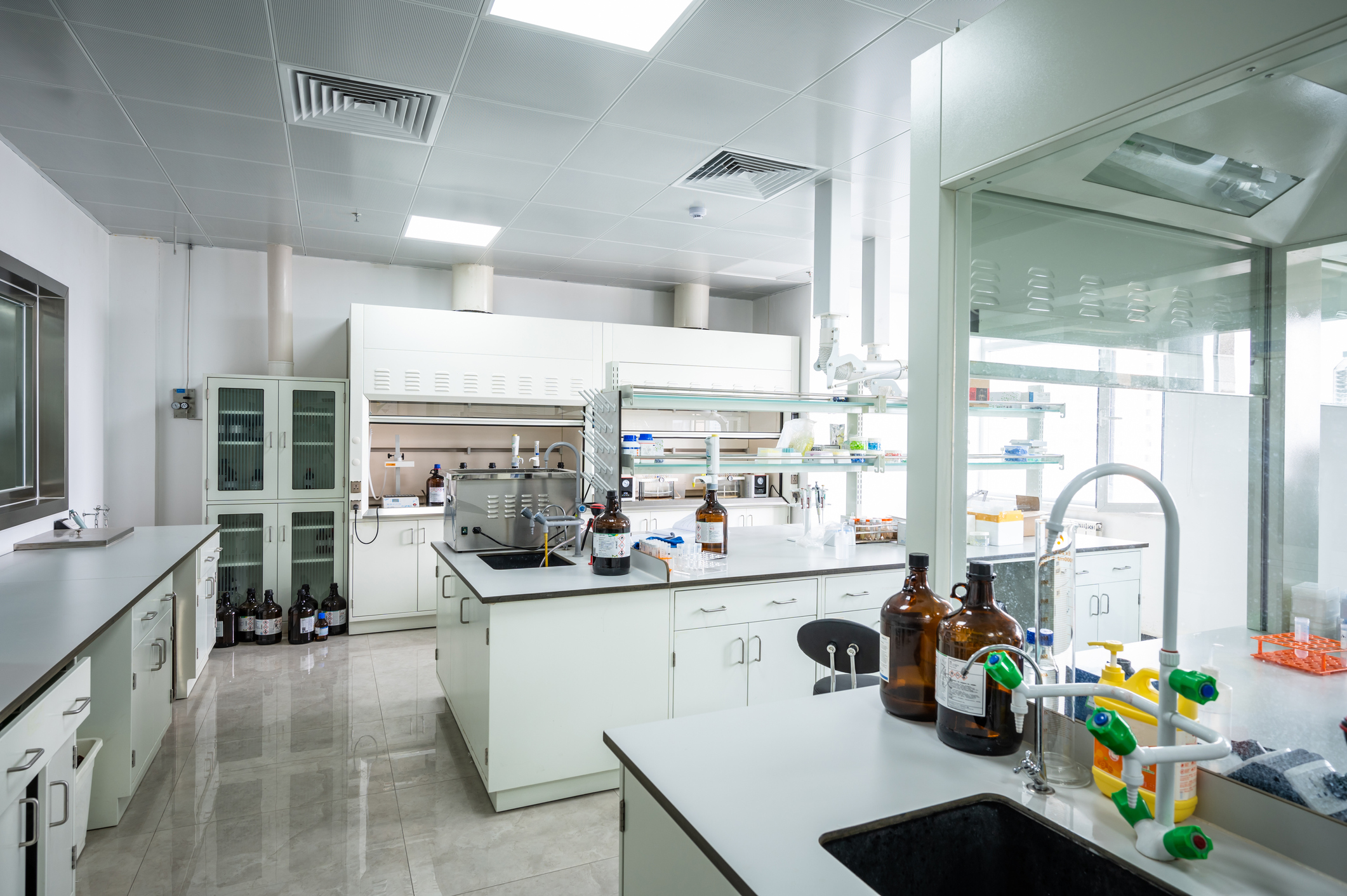
Despite rapid advances in artificial intelligence, AIs are nowhere close to being ready to replace humans for doing science. But that doesn’t mean that they can’t help automate some of the drudgery out of the daily grind of scientific experimentation. For example, a few years back, researchers put an AI in control of automated lab equipment and taught it to exhaustively catalog all the reactions that can occur among a set of starting materials.
While useful, that still required a lot of researcher intervention to train the system in the first place. A group at Carnegie Mellon University has now figured out how to get an AI system to teach itself to do chemistry. The system requires a set of three AI instances, each specialized for different operations. But, once set up and supplied with raw materials, you just have to tell it what type of reaction you want done, and it’ll figure it out.
An AI trinity
The researchers indicate that they were interested in understanding what capacities large language models (LLMs) can bring to the scientific endeavor. So all of the AI systems used in this work are LLMs, mostly GPT-3.5 and GPT-4, although some others—Claude 1.3 and Falcon-40B-Instruct—were tested as well. (GPT-4 and Claude 1.3 performed the best.) But, rather than using a single system to handle all aspects of the chemistry, the researchers set up distinct instances to cooperate in a division of labor setup and called it “Coscientist.”
Scythians in modern-day Ukraine made leather out of human skin, a team of researchers has determined, likely as a macabre trophy item. The discovery affirms a claim by the ancient Greek historian Herodotus, who wrote extensively on the Scythian way of life.
Reuters published an explosive investigative report Wednesday chronicling Tesla’s alleged patterns of deliberate neglect and shifting blame onto customers for parts failures. The damning exposé accounts the Elon Musk-led company’s alleged long-running tendency to claim vehicle owners had engaged in “driver abuse,” charging them for repairs over failures caused by parts the company discussed internally as being flawed. The issues are often related to suspension and steering. Externally, Tesla’s portrayal of the problems has ranged from flat-out denial to partial acknowledgment.
Several accounts in the story document Tesla owners who were told their car’s issues stemmed from prior damage or driver abuse. In some cases, they had just bought the vehicles:
One of the drivers Reuters interviewed, Shreyansh Jain, suffered a suspension collapse in a 2023 Tesla Model Y he had owned for less than 24 hours. When the automaker told him a lower control arm separating from the steering knuckle caused the failure, he expected Tesla to cover the repairs. A service rep who inspected the car said they found “no evidence of any external damage,” as revealed in a text message.
About a week later, Tesla sent a letter to Jain, skirting blame and citing “a prior external influenced damage to the front-right suspension” as the cause.
Jain said he was the only person to have driven the car on its first day of ownership, and he hadn’t had an accident before the suspension failed. “I was like, ‘Bloody hell, how can metal just snap like that when I know for sure the car has not hit anything?’” he said to Reuters. Three months later, the repairs were complete, and Jain paid a $1,250 deductible (with his insurance covering the rest). He says his rates then spiked dramatically on another car he owned.
Tesla CEO Elon Musk stands behind the Model Y at its 2019 unveiling.
Tesla
Cincinnati surgeon Trace Curry paid $110,000 for a 2016 Tesla Model X. He replaced the SUV’s control arms twice, once covered by warranty and a second time at his expense. After the warranty ran out, Reuters reviewed invoices showing Curry paid around $10,000 for failed suspension and drive-axle parts. Then, in 2018, he replaced the front half shafts (under warranty); he replaced them again (at his own cost) for $1,500.
Reuters’ investigation suggests Tesla knew that many of the parts that required replacing in Curry’s Model X — control arms, suspension and front half shafts — had high failure rates.
Andrew Lundeen was driving his wife’s 2018 Model 3 in August when the car’s power steering failed while driving over a speed bump. The Santa Rosa, California, resident told Reuters a Tesla service manager told him a power steering connector had corroded — and attributed it to a car wash, which the employee cited as a known problem.
Lundeed paid $4,400 out of pocket to replace the steering rack and a wiring harness, allegedly thanks to his bold decision to visit a car wash. “This is the only car I’ve ever heard of where a car wash can damage the wiring,” he told the Tesla manager. Lundeed described the employee as saying, “All I can tell you is we’re not a 100-year-old company like GM and Ford. We haven’t worked all the bugs out yet.”
Tesla’s Model 3
Photo by Roberto Baldwin / Engadget
The investigation also documents Tesla’s can-kicking and inconsistent responses to part recalls in different regions. For example, the company’s engineers identified the aft link, part of the suspension, as having snapped in several incidents while owners drove at low speeds (similar to Jain’s account). A former Tesla employee “with direct knowledge of the matter” told Reuters that between 2016 and 2020, Tesla “resolved” around 400 aft link complaints in China — either through in-warranty repairs or through “goodwill repairs” if they were out-of-warranty.
The Musk-led automaker delayed a recall for four years, only agreeing to one after Chinese regulators applied pressure. The country’s State Administration for Market Regulation described a “risk of accidents” as part of the rationalization.
However, despite global reports of failures, Tesla never recalled the part in the US and Europe. The company told US regulators the problems resulted from “driver abuse.” Reuters also viewed a 2019 “talking points” memo urging service centers to blame “vehicle misuse,” like “hitting a curb or other excessive strong impact,” as the culprit. “Abuse” and “misuse” are conditions in the Musk-led company’s contract, giving the automaker leeway to reject in-warranty repairs for incidents it labels as such.
The National Highway Traffic Safety Administration (NHTSA) has been investigating Tesla since 2020 for the fore link (a suspension part) in Model S and X, and it began looking into power steering failures in the 2023 Model 3 and Model Y in July. Reuters’ nearly 5,000-word report is worth a read, especially if you’re a Tesla owner who has paid for repairs out of pocket. The NHTSA will likely find it an equally compelling read.
This article originally appeared on Engadget at https://www.engadget.com/tesla-knew-some-of-its-parts-had-high-failure-rates-but-reportedly-blamed-drivers-anyway-184957494.html?src=rss
Most companies are not ready to deploy generative AI at scale because they lack strong data infrastructure or the controls needed to make sure the technology is used safely, according to the chief executive of the consultancy Accenture. From a report: The most hyped technology of 2023 is in an experimental phase at most companies and macroeconomic uncertainty is holding back IT spending generally, Julie Sweet told the Financial Times in an interview ahead of the company publishing quarterly results on Tuesday. Accenture reported another big jump in revenues from generative AI projects in the three months to November 30, with $450mn in bookings compared with $300mn over the previous six months. But they remain small relative to group sales of $64bn annually.
Corporate executives are keen to deploy the technology to understand data across their organisation better or to automate more customer service, Sweet said. “The thing that is going to hold it back, though, isâ…âmost companies do not have mature data capabilities and if you can’t use your data, you can’t use AI. That said, in three to five years we expect this to be a big part of our business.” Accenture and other consulting groups have boasted of multibillion-dollar investments in generative AI, including hiring and training staff, in the hope of a windfall from deploying the technology to clients across the world.
Sweet said executives were being âoeprudentâ in rolling out the technology, amid concerns over how to protect proprietary information and customer data and questions about the accuracy of outputs from generative AI models. “We are still at the stage where most CEOs, asked if there is someone in their organisation who can tell them where AI is being used, what the risks are and how they’re being mitigated, the answer is still ‘no.'”
Apple’s AAA gaming ambitions for the iPhone 15 Pro saw both a release and a delay this week.
When Apple unveiled the iPhone 15 Pro and touted its AAA gaming capabilities in September, the company named three upcoming games as showcases: the Resident Evil 4 remake, Death Stranding, and Assassin’s Creed Mirage. All would arrive to iOS and all would require an iPhone 15 Pro to play.
Resident Evil 4 launched on iOS, iPadOS, and macOS today. And a few days ago, publisher 505 Games announced in a post to X that Death Stranding—which was expected to launch this month—has been delayed to “a new release date in early 2024” because it “needs a little more time.”
Every year, there are a few dates I immediately look forward to on the calendar. My birthday, of course. My wedding anniversary. Christmas. Super Bowl. San Diego Comic-Con. And, maybe above all others, DesignerCon.
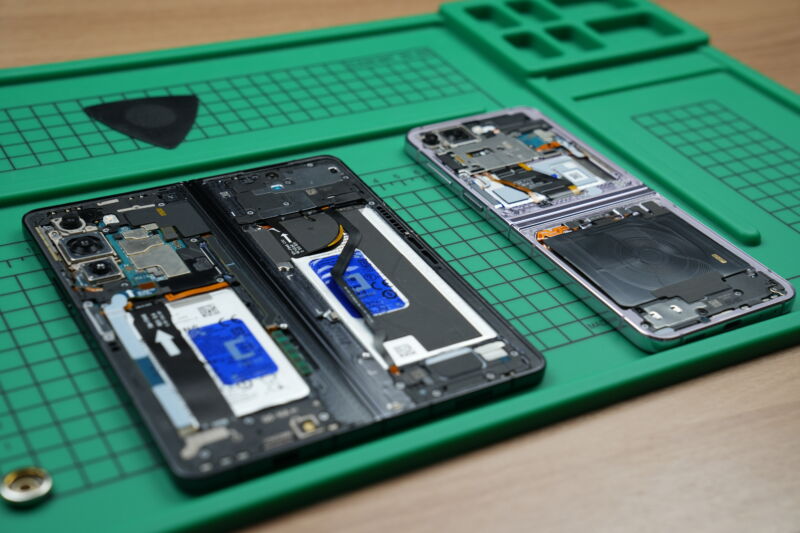
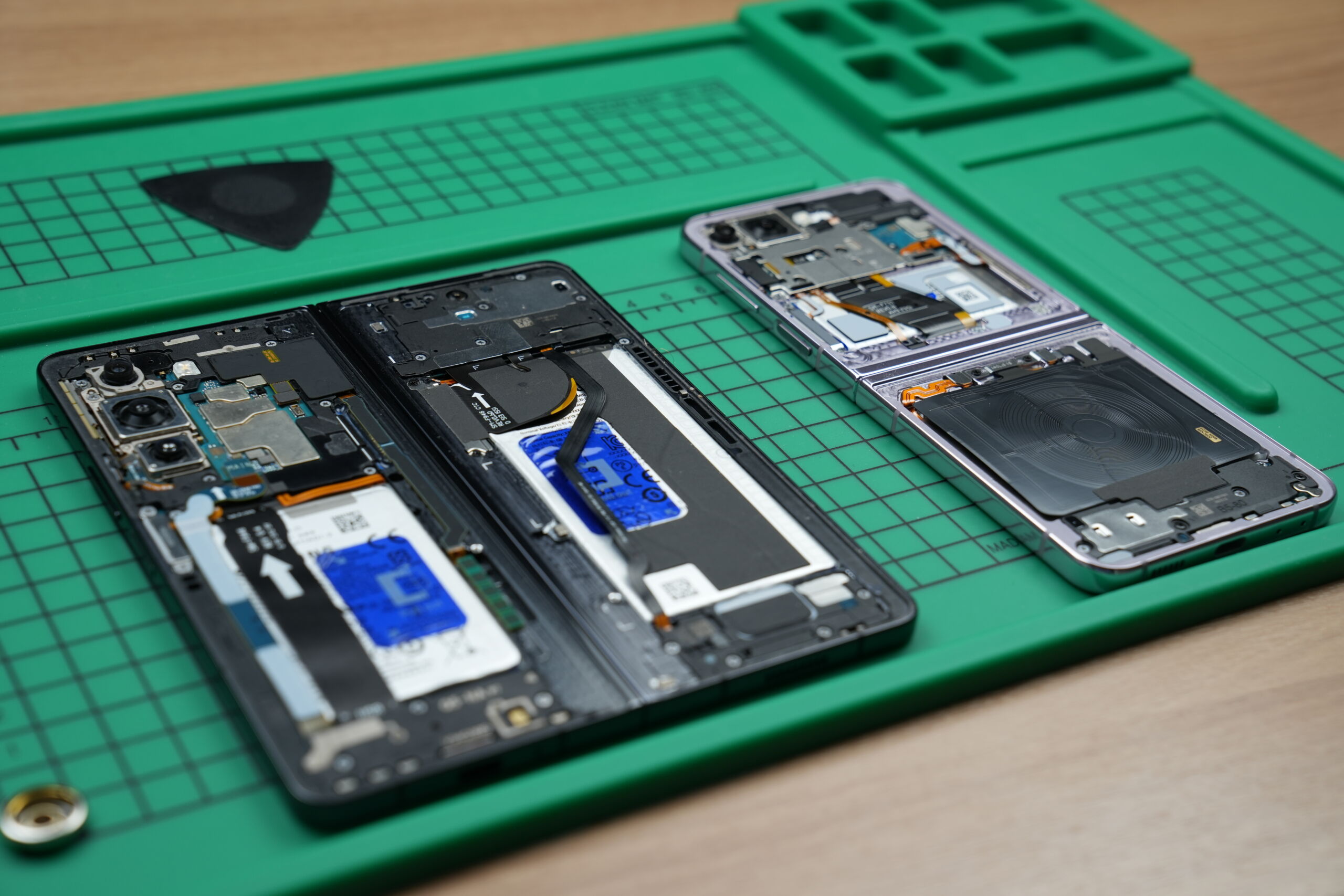
Enlarge/ The Galaxy Z Fold5 and Flip5, being carefully taken apart. (credit: Samsung)
Samsung says it’s doing a big expansion to its self-repair program this month. The repair program launched last year in partnership with iFixit, and now Samsung will be offering parts and repair manuals for more phones in more countries.
First up, the device list is adding some of Samsung’s newest and most expensive models. Foldables are landing in the self-repair system for the first time, with the Galaxy Z Flip5, and Z Fold5 getting parts and manuals soon. The parts aren’t up for sale yet, but we’re dying to know the cost of a Z Fold5 display. (The Pixel Fold, a similarly sized flexible Samsung display, costs $900.) Samsung’s current slab-phone flagship is also hitting the repair system for the first time, with all S23 models getting included. The Galaxy A05s, the first mid-range phone, is landing in the system, too. All the Galaxy S9 and A9 tablets are now repairable, as is the Galaxy Book 2 Pro laptop.
The number of countries where you can buy parts is increasing, too. Samsung’s repair program is currently active in the US, South Korea, Brazil, Mexico, Belgium, France, Germany, Italy, Netherlands, Poland, Spain, Sweden, and the UK. Samsung now says it’s expanding the repair program to 30 additional companies, with the full list being: “Albania, Andorra, Austria, Bosnia and Herzegovina, Bulgaria, Croatia, Cyprus, Czechia Republic, Denmark, Estonia, Finland, Greece, Hungary, Ireland, Kosovo, Latvia, Liechtenstein, Lithuania, Luxembourg, Malta, Monaco, Montenegro, North Macedonia, Norway, Portugal, Romania, Serbia, Slovakia, Slovenia, and Switzerland.” Forty-three countries is a huge progression in just a year, but the flagship S23 is sold in 130 countries if Samsung wants complete coverage.
We’re still discovering new ways covid-19 can harm us, some four years after the emergence of this complicated viral disease. In a recent report, doctors in Massachusetts describe a teen girl whose vocal cords became paralyzed soon after a bout of covid-19. The girl required a tracheostomy in place for more than a…
Astrobotic and Intuitive Machines are all set with their Moon landers. Now they just need their rockets prepped and the launch windows to swing open. But once underway, these NASA-funded missions, slated for early 2024, will chart a new course for the future of private space exploration.
The future of water may be changing in California. The state Water Resources Control Board has signed off on regulations to turn more recycled wastewater from our homes into drinking water. From a report: The regulations were approved unanimously by the board on Tuesday and now give the go-ahead for local water agencies to plan to turn wastewater into water we can drink through a process called Direct Potable Reuse. Darrin Polhemus, the division of drinking water director with the State Water Resources Control Board, said this approval was a very big step for California. “It really will be the highest quality water delivered in the state when it’s done,” Polhemus said.
California’s new rules would let, but not require, local water agencies to take wastewater from toilets or showers, treat it, and then put it right back into the drinking water system. “Direct potable reuse is just a really critical strategy for our state to have as we move to this new hydrology that we have, and as everyone has already said, increasing our resilience and reducing our reliance on imported water,” said Laurel Firestone, board member for the State Water Resources Control Board.
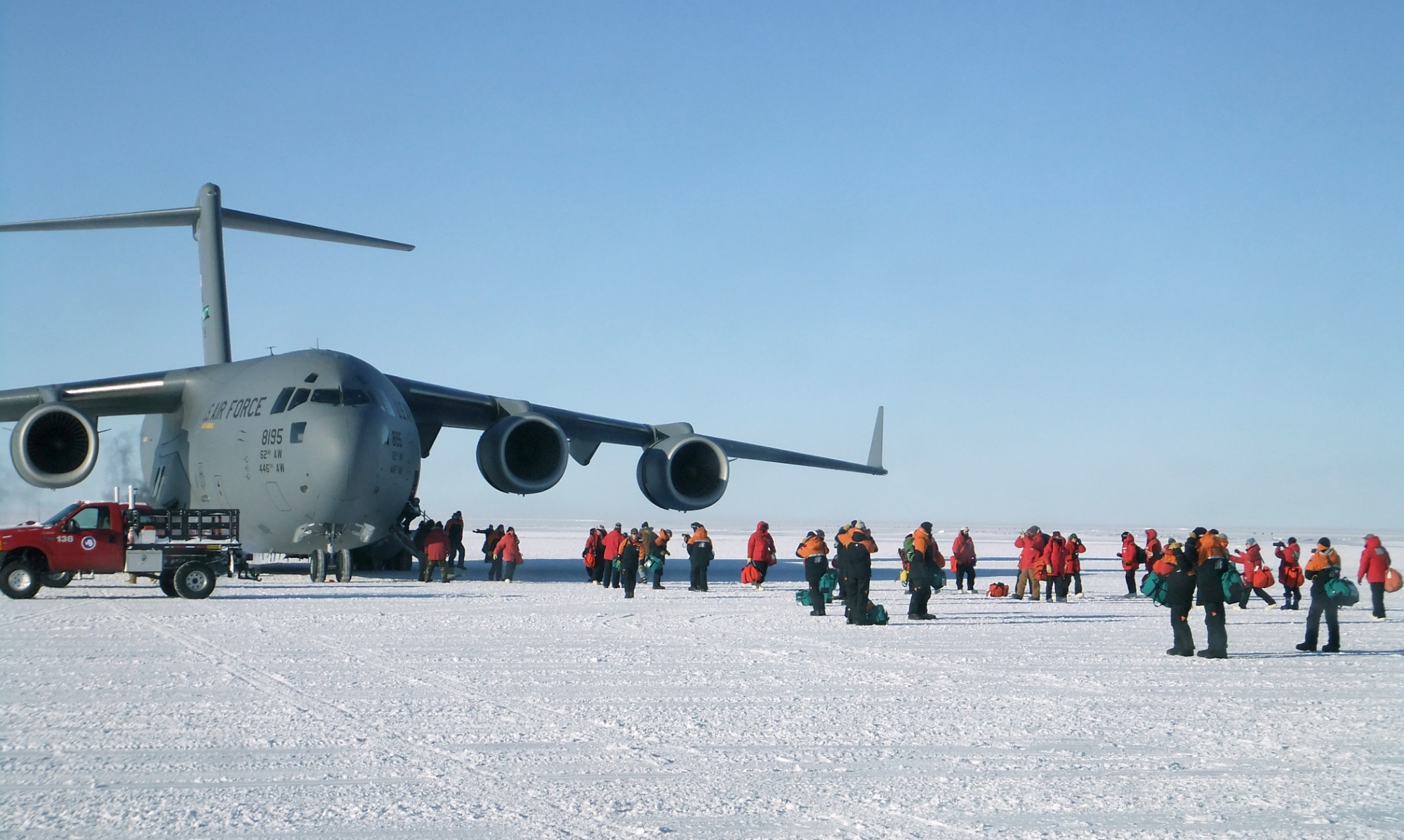
The US National Science Foundation is one of the US’s primary means of supporting fundamental scientific research—its investments account for about 25 percent of federal support to America’s colleges and universities for basic research, or research driven by curiosity and discovery. But NSF Director Sethuraman Panchanathan has asked Ars for the opportunity to explain how the unique facilities that NSF supports in the Antarctic have value for both commercial interests and national security. In making this argument, he’s joined by Representative Tony Gonzales of Texas, who explains how NSF’s Antarctic research has had direct impacts on people in his district.
Antarctica’s geopolitical significance is understated. US involvement in Antarctica is a strategic necessity for scientific advancement, engineering breakthroughs, educational opportunities, and national security.
Today, global competition is fiercer than ever. For our nation to maintain global competitiveness in an era of shifting geopolitical power dynamics—notably where China seeks to expand its global influence—we must support the critical science and engineering research efforts happening at the bottom of our planet. While seven nations claim territories across the Antarctic continent, the US recognizes none and claims none, in full alignment with the Antarctic Treaty. The US, with the world’s most significant and influential presence in Antarctica, leads cooperatively to ensure interagency and international partnerships can succeed in everything from science to security.
Experimental rockets, Moon landers, planetary flybys, breathtaking spacewalks, and vintage boosters—these are just a few of the many stories that contributed to the most striking and memorable images of 2023.