Lenovo Showcases Foldable Legion Go Handheld And Yoga Book Pro 3D Concepts

Lenovo Showcases Foldable Legion Go Handheld And Yoga Book Pro 3D Concepts
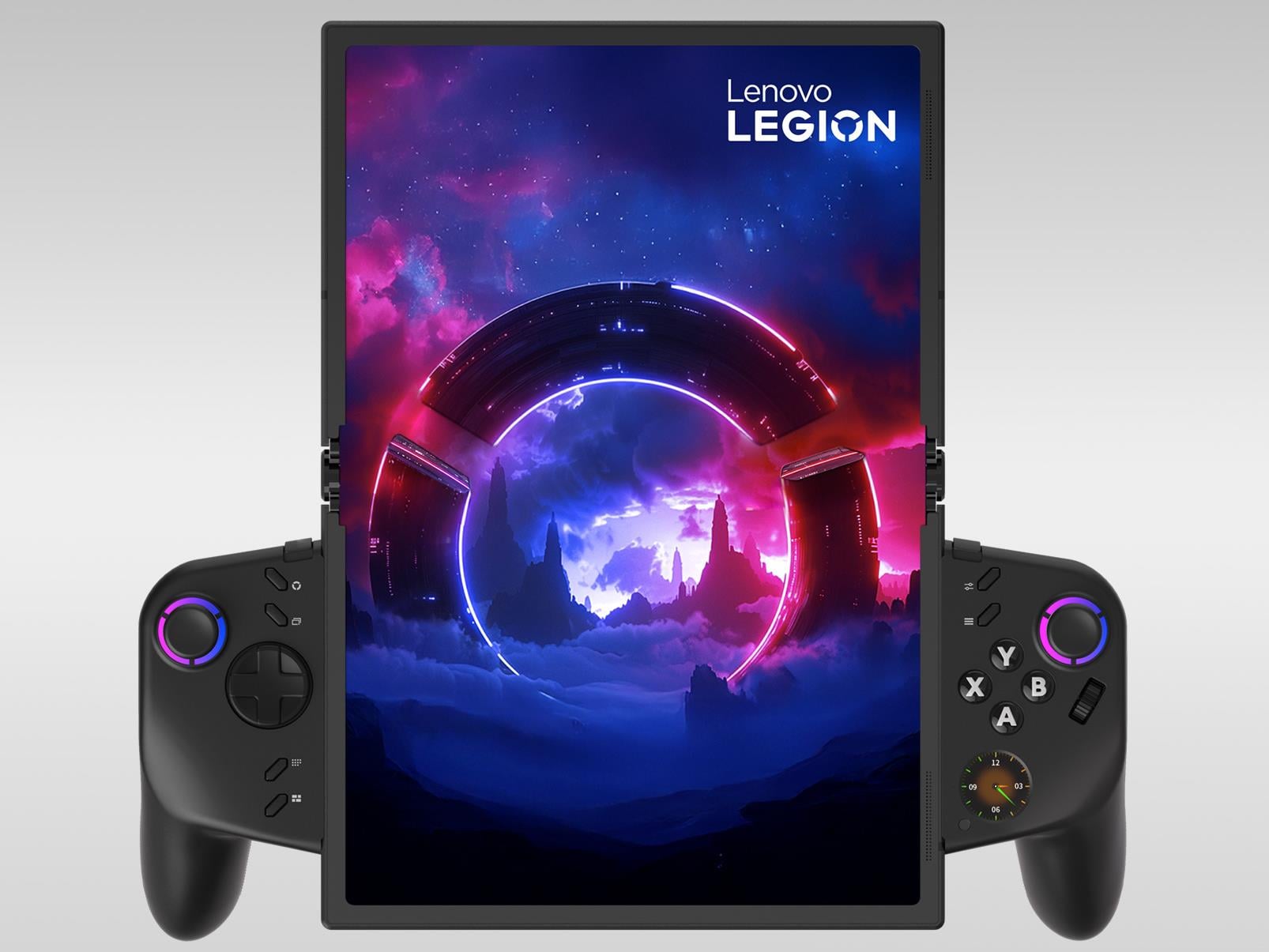
Lenovo is showing off an army of new products this week at MWC 2026, including a handful of interesting concepts that may or may not see the light of day, such as the ThinkBook Modular AI PC that we already wrote about. The company is not focused on a singular product category, though, as evidenced by its Legion Go Fold concept.

The handheld

The Samsung Wallet can now hold your house keys

Samsung’s newest feature turns your phone into your house keys. The company has created the Digital Home Key, a feature inside of the Samsung Wallet that should let you unlock any compatible smart door with your phone. The Samsung Wallet already offered digital car keys. 

“As we continue to evolve Samsung Wallet, delivering trusted mobile experiences remains at the core of our innovation,” Woncheol Chai, EVP and head of Digital Wallet Team, Mobile eXperience (MX) Business at Samsung Electronics, said in a statement. “Through close collaboration with our partners and in alignment with the Aliro standard, Digital Home Key brings the same level of security and ease Samsung Galaxy users expect from Samsung Wallet to their homes.”

Created by the Connectivity Standards Alliance (CSA), Samsung calls Aliro an “industry-standardized communication protocol.” The Digital Home Key will also get support from smart lock brands like Nuki and Schlage. It’s also designed to meet EAL6+ security certification. 

According to Samsung, you’ll also need biometrics or a PIN to use the Digital Home Key. You should be able to remotely manage or remove the tool through Samsung Find if you lose your phone.

Samsung is rolling out the Digital Home Key in select regions starting this month. It plans to expand its range as compatible smart lock brands become available in more locations. 

This article originally appeared on Engadget at https://www.engadget.com/home/smart-home/the-samsung-wallet-can-now-hold-your-house-keys-142944132.html?src=rss

Apple introduces the $599 iPhone 17e with MagSafe and twice the storage

Apple has just announced the addition of the iPhone 17e to its smartphone lineup. This model is kitted with the same A19 chip that powers the base iPhone 17, and it will support the Apple Intelligence suite of AI tools. As the rumors suggested, the iPhone 17e will indeed be priced at $599, same as last year’s iPhone 16e. The base model will come with 256GB of storage, and also be available in a new pink color.

The iPhone 16e was missing a few elements that are now being added to the 17e, most notably MagSafe charging at Qi2 speeds. This means it can charge wirelessly at 15W compared to the 7.5W.

Apple also gave the iPhone 17e its C1X cellular modem, which it said is “up to 2x faster than C1 in iPhone 16e.” This year’s entry-level iPhone also has Ceramic Shield 2 on its 6.1-inch Super Retina display, which Apple says offers “3x better scratch resistance than the previous generation and reduced glare.”

Most of the other specs appear similar to the iPhone 16e, including the 48-megapixel Fusion camera that uses one single hardware sensor to provide two dedicated camera pipelines. It’s not yet clear whether there are specific changes here, but to use Apple’s words in its press release, “[The Fusion camera] also enables an optical-quality 2x Telephoto — like having two cameras in one.”

The iPhone 17e is rated IP68 for dust and water resistance, and will also support Emergency SOS, Roadside Assistance, Messages and Find My via satellite. From the outside, the device looks very similar to its predecessor, with the same shape, notch and buttons as before. We’ll of course have to wait for a review unit and more information to know for sure, but Apple continues to state that the iPhone 17e delivers “all-day battery life,” though adding this time it’s aided by the C1X modem “and the advanced power management of iOS 26.”

Apple unveiled most of its iPhone 17 roster back in September, but its budget models usually are introduced a few months later. We’re also still waiting on the official news of what’s colloquially being calling the iPhone Fold, which is rumored to arrive in the back half of this year.

The iPhone 17e will be available for pre-order on March 4, and will start arriving in stores on March 11.

This article originally appeared on Engadget at https://www.engadget.com/mobile/smartphones/apple-introduces-the-599-iphone-17e-with-magsafe-and-twice-the-storage-140612085.html?src=rss

Apple updates the iPad Air with an M4 chip

Apple is kicking off multiple days of product announcements this morning with a new iPad Air. Unsurprisingly, it’s more or less like the iPad Air Apple announced one year ago, except it now has an M4 chip instead of last year’s M3.

Apple is also including its in-house networking chips, the N1 and C1X, which will cover Wi-Fi and cellular connectivity. This means the iPad Air supports the Wi-Fi 7 standard for the first time. The Air also now has 12GB of RAM standard, up from 8GB in the prior model.

The rest of the iPad Air appears unchanged at this point. It has the same display that the 2023 and 2024 models sported — either an 11- or 13-inch LCD that tops out at 500 nits of brightness and a 60Hz refresh rate. Storage options start at 128GB and go up to 1TB, same as last year. The dual stereo speaker configuration and both front- and rear-facing cameras are unchanged, as well.

For those keeping track, it’s been less than two years since Apple redesigned the iPad Air, adding a 13-inch model that had an M2 chip. I remain surprised the company is committed to releasing chip updates for the Air so frequently — even the M2 model is more than powerful enough for the target audience. But, getting a faster chip for the same money is hard to complain about.

Naturally, the iPad Air M4 is running iPadOS 26, which was released last fall. It was, without a doubt, the biggest iPadOS update we’ve seen, bringing a far more robust multitasking system than the iPad has ever had before. It’s most noticeable and useful on the larger 13-inch screen, but having greater freedom with window management and more robust background tasks is a huge step forward — even if the Liquid Glass visual redesign is a bit divisive.

Pre-orders for the new iPad Air M4 open on Wednesday, March 4, and the tablet will be fully available on March 11. As before, pricing starts at $599 for the 11-inch model and $799 for a 13-inch display.

This article originally appeared on Engadget at https://www.engadget.com/mobile/tablets/apple-updates-the-ipad-air-with-an-141117993.html?src=rss

It’s almost a station wagon: The 2026 Subaru Trailseeker, driven

A new pair of EV siblings joins the Subaru lineup this year, each using a shared skateboard chassis developed in partnership with Toyota. Compared to the original Solterra and smaller Uncharted, the new Trailseeker bears more Subaru DNA despite riding on the same electric platform. And unlike the Solterra and Uncharted, the Trailseeker will be built for the American market alongside the Forester at the company’s Lafayette, Indiana, assembly line.

Styling alone helps the Trailseeker look the most Subaru-ish of the expanding electric lineup, with plenty of the plastic cladding you’d find in the Forester and Crosstrek. An optional two-tone paint job helps accentuate the more traditional station wagon profile, which is the most important part of the Trailseeker’s brief: providing a longer and higher rear canopy that Subaru purposefully stretched to hold a full-size dog crate.

Meanwhile, the standard dual-motor powertrain sticks with all-wheel drive only (the Uncharted has a front-wheel-drive option), and a class-leading 8.5 inches (216 mm) of ground clearance emphasizes its off-road capability. It offers 281 miles (452 km) of range out of a 74.7 kWh battery, with a starting price tag of $39,995.

Read full article

Comments

What’s Driving the SaaSpocalypse

An anonymous reader quotes a report from TechCrunch: One day not long ago, a founder texted his investor with an update: he was replacing his entire customer service team with Claude Code, an AI tool that can write and deploy software on its own. To Lex Zhao, an investor at One Way Ventures, the message indicated something bigger — the moment when companies like Salesforce stopped being the automatic default. “The barriers to entry for creating software are so low now thanks to coding agents, that the build versus buy decision is shifting toward build in so many cases,” Zhao told TechCrunch.

The build versus buy shift is only part of the problem. The whole idea of using AI agents instead of people to perform work throws into question the SaaS business model itself. SaaS companies currently price their software per seat — meaning by how many employees log in to use it. “SaaS has long been regarded as one of the most attractive business models due to its highly predictable recurring revenue, immense scalability, and 70-90% gross margins,” Abdul Abdirahman, an investor at the venture firm F-Prime, told TechCrunch. When one, or a handful, of AI agents can do that work — when employees simply ask their AI of choice to pull the data from the system — that per-seat model starts to break down.

The rapid pace of AI development also means that new tools, like Claude Code or OpenAI’s Codex, can replicate not just the core functions of SaaS products but also the add-on tools a SaaS vendor would sell to grow revenue from existing customers. On top of that, customers now have the ultimate contract negotiation tool in their pockets: If they don’t like a SaaS vendor’s prices, they can, more easily than ever before, build their own alternative. “Even if they do not take the build route, this creates downward pressure on contracts that SaaS vendors can secure during renewals,” Abdirahman continued.

We saw this as early as late 2024, when Klarna announced that it had ditched Salesforce’s flagship CRM product in favor of its own homegrown AI system. The realization that a growing number of other companies can do the same is spooking public markets, where the stock prices of SaaS giants like Salesforce and Workday have been sliding. In early February, an investor sell-off wiped nearly $1 trillion in market value from software and services stocks, followed by another billion later in the month. Experts are calling it the SaaSpocalypse, with one analyst dubbing it FOBO investing — or fear of becoming obsolete. Yet the venture investors TechCrunch spoke with believe such fears are only temporary. “This isn’t the death of SaaS,” Aaron Holiday, a managing partner at 645 Ventures, told TechCrunch. Rather, it’s the beginning of an old snake shedding its skin, he said.


Read more of this story at Slashdot.

Former NASA chief turned ULA lobbyist seeks law to limit SpaceX funding

A former NASA administrator says he is “encouraged” that the US Congress is considering legislation to prevent NASA from spending more than 50 percent of its launch funding on any single provider.

“America succeeds in space when American companies compete, innovate, and grow,” former NASA Administrator Jim Bridenstine wrote on LinkedIn. “I’m encouraged to see Congress taking meaningful steps to strengthen the industrial base that underpins both our civil and national security space missions.”

Bridenstine commended the chairman of the Senate Committee on Commerce, Science, and Transportation, Sen. Ted Cruz (R-Texas), and ranking member Maria Cantwell (D-Wash.) on a new provision that appears in the NASA Transition Authorization Act of 2025. Cruz plans to hold a markup hearing for the legislation on Wednesday.

Read full article

Comments

You Can Get This Budget HP Laptop on Sale for Just $245 Right Now

We may earn a commission from links on this page. Deal pricing and availability subject to change after time of publication.

The refurbished HP EliteBook 840 G7, originally released in 2020, is on sale for $244.99 on StackSocial right now. And while it’s not brand new, it’s far from outdated. With a 10th-gen Intel Core i5 processor, 16GB of RAM, and a 512GB SSD, it still holds up well for everyday tasks like web browsing, document editing, streaming, and Zoom calls. It runs Windows 11 Pro smoothly, which isn’t a given for older machines. And the 14-inch Full HD display delivers clear, bright visuals without looking washed out, making it suitable for both work and casual use.

Physically, the EliteBook is built to travel. It has a sturdy aluminum chassis that feels solid, but it’s still slim and light enough to slip into a backpack without much thought. Battery life clocks in at up to 15 hours, which makes it a practical option for students or anyone who works on the go. The port selection is generous too—two USB-A ports, two USB-C, and HDMI—which is a refreshing change from today’s dongle-heavy ultrabooks. The keyboard is comfortable for long typing sessions, and there’s even a fingerprint reader for faster logins. You also get a 1MP webcam and built-in mic, which are perfectly serviceable for meetings, even if they won’t blow you away.

That said, there are a few caveats. This is a refurbished unit, so there’s no manufacturer’s warranty, but it’s listed as Grade A refurbished model, meaning that it should arrive in near mint condition. You won’t be doing video editing or gaming on this thing, and the webcam could use an upgrade, but for basic productivity, it’s more than capable. If you need a secondary machine, a solid workhorse for travel, or a budget-friendly laptop for a student, this is a smart, low-risk option. It may be a 2020 model, but with specs like these and an OS that’s still fully supported, it earns its place in 2026.

Our Best Editor-Vetted Tech Deals Right Now

Deals are selected by our commerce team

Claude Is Down

If you tried to access Claude for any of your AI needs Monday morning, you might have failed—or, rather, the chatbot may have failed to load. It’s not you, your internet, or your device: Claude is down.

Anthropic confirmed the outage on Monday, citing “elevated errors on Claude.ai, console, and claude code.” As of this article, the company has posted four updates to Claude’s status page: The first, at 11:49 UTC (6:49 a.m. ET), was simply to acknowledge an investigation into the issues; the next, at 12:06 UTC, was an update to confirm continued investigations, before sharing that Claude API was working as intended at 12:21 UTC. At that time, the company had identified the issues were related to Claude.ai and with login and logout paths. Finally, at 13:22 UTC, the company confirmed it had identified the cause of the issue, and a fix is “being implemented,” though there’s no timeline for how long that might take to roll out to users.

Like most outages, I expect Anthropic to get Claude up and running soon. It might be back before most of America signs on for work. Still, the outage comes at a tumultuous time for the company. Anthropic made headlines last week when President Trump ordered all federal agencies to stop using its AI services, after Anthropic and the Department of Defense could not come to an agreement on how the U.S. military could use Claude in its endeavors. The Defense Department wanted unrestricted access to the AI, while Anthropic wanted safeguards in place. The two could not reconcile, but not only did the Defense Department drop Anthropic, Defense Secretary Pete Hegseth declared the company a “supply-chain risk to national security.” As such, no company that works with the U.S. military can also work with Anthropic.

To be clear, none of that is likely related to this outage. But Anthropic likely has more users than ever experiencing this downtime, as the drama skyrocketed Claude to the top of Apple’s App Store.

The Out-of-Touch Adults’ Guide to Kid Culture: What Is an ‘Alpine Divorce’?

In this week’s Out-of-Touch guide, we’re talking about Alpine divorce, diagnosing exactly how messed up the younger generations are through their viral videos, and looking at some dumb food trends popular among young people.

What is an “Alpine Divorce”?

If you’ve been seeing the phrase “Alpine Divorce” showing up in your feeds lately, here’s the 411 (as they used to say): An Alpine Divorce is when a man takes his wife on a hike, usually in the mountains, and then just leaves her there to fend for herself.

The phrase dates back to a short story written in 1893 by Robert Barr called “An Alpine Divorce,” but the renewed interest in the subject stems partly from the case of a Austrian mountain climber who was recently found guilty of gross negligent manslaughter after leaving his girlfriend behind on the hike, but mostly from a video posted by tiktoker @everafteriya, which purports to document a mild case of Alpine Divorce.

Her man didn’t leave her to die, but @everafteriya’s sad tale was has been played over 19 million times and has over 18,000 comments. It spread from TikTok to X to Threads and everywhere else, and women all over are sharing their own stories of being left behind on hikes and climbs.

Viral video of the week: Act on Demand

Younger generations fear more than just being left behind, as you can see in this week’s viral videos. On the surface, the footage posted by Pennsylvania improv troupe Act on Demand seems boring, but if you know what you’re looking at, it’s like a portal into the damaged collective soul of Generations Z and A.

Check this out:

and this:

For older people, it’s hard to understand why these videos have millions of views—they look like footage of any beginner-level improv class to me; neither particularly good nor particularly bad—but young people are seeing something different.

Here are some of the top comments on the videos above:

  • is this a humiliation ritual

  • Some of these are so egregiously bad that I have to know what went on in their mind prior

  • World’s worst improv class

  • Do they pay for this or is this a support group?

It goes on like that. Tens of thousands of commenters dragging strangers who have the temerity to be learning to do something. And there’s another level of commentary, too. A semi-ironic fandom is developing, with people posting compilation videos and edits of Act on Demand:

Videos of people caught doing embarrassing things have always been popular, but the members of Act on Demand aren’t doing anything more embarrassing than publicly being beginners at Improv.

Younger people don’t go to parties anymore. The don’t socialize. They don’t have friends, have sex, or get drunk. They don’t take risks. They don’t live their lives. All these things involve being in new situations where you might not be in control, where you’re vulnerable, an vulnerability means you might be “cringe.” The fear of being cringe overrides all other concerns, even the need to socialize.

At the same time, younger people so crave social interaction that they’ll settle for a simulation of it. They’ll watch a beginner improv class to obsess over the inner lives and relationships of totally average strangers in Pennsylvania, they’ll enter into parasocial relationships with people they’ll never meet, and they’ll turn to machines to be their friends.

Four dumb food trends among young people

But enough about our dystopian future; here’s a palette cleanser (pun intended) of four dumb food trends popular among young people.

  • Sour plates: TikTok user Haskell has kicked off a trend for “sour plates,” that is, preparing traditional food with ingredients from sour candies to create sour meals. It’s as gross as it sounds. While some people are trying them, it’s more of a joke than a widespread trend.

  • Loaded water: Loaded water is water enhanced with something: a flavor boost, fruit juice, electrolytes, carbonation, and even vitamins or prebiotics. The idea is to increase hydration by making water more palatable, but the problem is, when you add fruit juice to water, you’re not drinking water; you’re drinking juice. Water is defined by the absence of other ingredients, so “loaded water” can’t even exist.

  • Boy kibble: Boy kibble is like girl dinner, but so much worse. There are variations, but boy kibble usually consists of rice and ground beef, often served without spices or vegetables.

  • Eating like a lurking alligator: OK, I actually approve of this one. A new trend on TikTok sees young men eating like lurking alligators in their bathtubs. Check it out:

Stack Overflow Adds New Features (Including AI Assist), Rethinks ‘Look and Feel’

“At its peak in early 2014, Stack Overflow received more than 200,000 questions per month,” notes the site DevClass.com. But in December they’d just 3,862 questions were asked — a 78 percent drop from the previous year.

But Stack Overflow’s blog announced a beta of “a redesigned Stack Overflow” this week, noting that at July’s WeAreDevelopers conference they’d “committed to pushing ourselves to experiment and evolve…”

Over the past year, on the public platform, we introduced new features, including AI Assist, support for open-ended questions, enhancements to Chat, launched Coding Challenges, created an MCP server [granted limited access to AI agents and tools], expanded access to voting and comments, and more.

However, these launches are not standalone features. We have also been rethinking our look and feel, how people engage with Stack Overflow, and how content is created and shared. These new features, along with the redesign, represent how we are bringing Stack Overflow’s new vision to life and delivering value that developers cannot find elsewhere.

Our goal is to build the space for every technical conversation, centered on real human-to-human connection and powered by AI when it helps most. To support this, we are introducing a redesigned Stack Overflow to best reflect this direction… During the beta period, users can visit the beta site at beta.stackoverflow.com and share feedback as we build towards a new experience on Stack Overflow.
They’ve updated their library of reusable UI components (buttons, forms, etc.), and are promising “More ways to share knowledge and ask any technical question.” (“Alongside looking for the single right answer to your question, you can now find and share experience-based insights and peer recommendations…”)

They’re launching all the planned features and functionality in April, when “More users will automatically redirect to the new site.” (Starting in April users “can continue to toggle back to the classic site for a limited time.”)


Read more of this story at Slashdot.

At MWC, Tecno’s super-thin modular concept phone doesn’t even have a wired charging port

On its own, at 4.9mm thin, Tecno’s modular phone concept barely feels like a smartphone. It has a screen, a basic camera module, four low-profile pogo-pin connectors and that’s about it. From there, you can seemingly build your conceptual phone however you want.

At its booth at MWC 2026, Tecno had two families of modular components in two different colorways, which is surprising at this concept stage. The chunky telephoto lens and housing must weigh over three times as much as the base phone, adding up to 20x zoom capabilities, even if it was a little glitchy during my hands-on. The barrel also offers manual focus, which is always a nice touch. The lens itself is huge, though, making even Vivo’s latest 400mm telephoto lens peripheral look reasonable by comparison.

Tecno's modular concept phone at MWC 2026
Image by Mat Smith for Engadget

There are more subtle camera modules, including ultrawide options and a more streamlined periscope telephoto. There’s even an action cam that can attach through Wi-Fi and be used on its own. Depending on the module, transmission is also done through Bluetooth and even mmWave. One module has an antenna that folds out, turning the phone into a walkie-talkie messenger… thing that can communicate without cell service or Wi-Fi. There were also lanyard connectors, grip clips, and several that I may have forgotten. Sadly, the game controller mod wasn’t on the stand, though I’m not sure how you’d use it blindly on the back. 

It’s a lot of fun to swap out and even stack the modules, most of which were functionally working. There are plenty of questions left to answer, and I’m concerned about how rigid the magnetic connection would be when pulling this kind of phone out of your pocket repeatedly. Also, who’s going to carry around an attaché case filled with all these things? 

Tecno's modular concept phone at MWC 2026
Who doesn’t love an aerial?
Image by Mat Smith for Engadget

Naturally, due to its thickness, the phone has a tiny battery cell (I don’t know the capacity), but you can add 3,000mAh battery packs to the back. And another. And even another, topping out at around 10,000mAh, beating the capacity of most mainstream smartphones. It was only then that I realized it lacked any traditional USB-C charging port. Instead, a charging module can be attached to either of the two pairs of connectors. (And you can add further modules on top of that.)

Tecno often has thrilling concepts and one-off devices at trade shows, so we can’t vouch that this will eventually make its way to consumers. Modular phones are a tricky sell, as they can often lose the efficiencies that come from unified components. Google ended its Project Ara modular concept over 10 years ago, while Motorola’s Moto Mods just weren’t very good and even I struggle to remember LG’s G5 modules.

Adding to that, the company also rarely sells its phones in Western Europe and the US. Judging by the moves being made by other Chinese phone manufacturers in the last year, that could change.

This article originally appeared on Engadget at https://www.engadget.com/mobile/smartphones/at-mwc-tecnos-super-thin-modular-concept-phone-doesnt-even-have-a-wired-charging-port-123129135.html?src=rss

Trump FCC’s equal-time crackdown doesn’t apply equally—or at all—to talk radio

In the Trump FCC’s latest series of attacks on TV broadcasters, Federal Communications Commission Chairman Brendan Carr has been threatening to enforce the equal-time rule on daytime and late-night talk shows. The interview portions of talk shows have historically been exempt from equal-time regulations, but Carr has a habit of interpreting FCC rules in novel ways to target networks disfavored by President Trump.

Critics of Carr point out that his threats of equal-time enforcement apply unequally since he hasn’t directed them at talk radio, which is predominantly conservative. Given the similarities between interviews on TV and radio shows, Carr has been asked to explain why he issued an equal-time enforcement warning to TV but not radio broadcasters.

Carr’s responses to the talk radio questions have been vague, even as he tangled with Late Show host Stephen Colbert and launched an investigation into ABC’s The View over its interview with Texas Democratic Senate candidate James Talarico. In a press conference after the FCC’s February 18 meeting, Deadline reporter Ted Johnson asked Carr why he has not expressed “the same concern about broadcast talk radio as broadcast TV talk shows.”

Read full article

Comments

Sony faces a $2.7 billion antitrust lawsuit in the UK

Another major antitrust lawsuit has launched in the UK. This time its against Sony, which could be on the hook for almost £2 billion ($2.7 billion) for overcharging PlayStation users. 

A class action case for about 12.2 million users argues that Sony “occupies a dominant position in relation to the digital distribution of PlayStation games and in-game content and that it has been unfairly charging its UK customers too much for digital games and in-game content purchased through the PlayStation Store.”

It argues that Sony “has a near monopoly” on add-on content and digital games through the PlayStation store, allowing it to set the prices and take a 30 percent commission.

The class action encompasses anyone in the UK who owned a PlayStation console and purchased digital games or made in-game purchases through the PlayStation store between August 19, 2016 and February 12, 2026. It’s being run as an opt-out lawsuit, so anyone meeting the criteria can qualify without taking any action. If the lawsuit is successful then each person could receive about £162 ($217). 

Sony has argued that allowing downloads from third-party stores could bring security and privacy risks, according to the Financial Times. It further states that the digital sales commission makes up profits lost for selling their consoles with minimal profit. 

This lawsuit follows the success of a similar class action decided in October. The UK’s Competition Appeal Tribunal found that Apple had been abusing its dominant market position and overcharging App Store users. In December, Apple filed an appeal against the £1.5 billion ($2 billion) fine. 

This article originally appeared on Engadget at https://www.engadget.com/big-tech/sony-faces-a-27-billion-antitrust-lawsuit-in-the-uk-114113889.html?src=rss

Vivo’s X300 Ultra goes global and gets a huge 400mm Zeiss telephoto lens

Vivo barely has a presence outside of China but that seems to be changing with the company’s next flagship phone. At Mobile World Conference 2026, the company unveiled the X300 Ultra smartphone that comes with a 200MP sensor along with two accessories designed for pro photographers and content creators: a SmallRig video cage and 400mm Zeiss telephoto extender lens.

Vivo didn’t go into detail about the phone’s specs, but you can likely expect a high-end processor, screen, battery and other internal components when it’s fully unveiled later on. Vivo did say that like the X300 Pro, the X300 Ultra will have an impressive 200MP main camera sensor, and is likely to offer features like 4K 120fps Dolby Vision HDR recording. 

Vivo's X300 Ultra will launch globally with pro camera accessories
Mat Smith for Engadget

Another thing Vivo revealed is that you’ll be able to get the Vivo X300 Ultra with a 400mm equivalent lens accessory called the Vivo Zeiss Telephoto Extender Gen 2 Ultra. That will allow about an eight times zoom compared to the native field of view, plus a lot more when combined with the high-quality digital zoom. It will also offer “gimbal-grade” optical image stabilization and motion-tracking focus technology, Vivo says. 

Along with the lens, Vivo is introducing a “pro-grade camera cage” designed by the well-known accessory company SmallRig. It’s expandable and offers multiple cold shoe mounts and quick-release ports so you can easily add things like handles, lights and microphones. It also comes with dedicated physical buttons for tactile shutter and zoom adjustment, plus a multi-level cooling fan to keep the phone running cool. You also get an “External Lens Expansion Frame” to accommodate the X300 Ultra Telephoto Extender.

Vivo's X300 Ultra will launch globally with pro camera accessories
Mat Smith for Engadget

Vivo showed off the phone at MWC 2026 in Barcelona to a fair amount of enthusiasm. The company emphasized that the X300 Ultra will come to international markets, but it didn’t say which for now or at what price (the X300 Pro costs about €1,400 in Europe). That decision, it said, “signals Vivo’s more proactive and confident approach to expanding its presence in the global premium smartphone segment.” Given the likely price, though, it’s debatable if pro creators will want to buy this instead of, say, a pretty nice mirrorless camera and lens. 

This article originally appeared on Engadget at https://www.engadget.com/mobile/smartphones/vivos-x300-ultra-goes-global-and-gets-a-huge-400mm-zeiss-telephoto-lens-105058478.html?src=rss

Motorola’s Edge 70 Fusion phone has a huge curved 144Hz display

Motorola has unveiled the Edge 70 Fusion, its latest mid-range model with an impressive display and OIS-enabled camera with a Sony sensor. Though other specs are modest, the cameras, display and Pantone-inspired, fabric-like colors make it a good choice for fashion-forward and budget conscious buyers in Europe and other (non-US) territories. 

The Edge 70 Fusion is a more modestly specced version of last year’s Edge 70 that’s thicker at 7.2mm compared to 5.9mm but has a better screen. Motorola says it has the world’s first “quad-curved” display that folds into the sides for smoother lines and a more elegant look. The AMOLED screen is also huge at 6.78 inches and has a 144Hz refresh rate with Pantone-validated color accuracy, while hitting a peak 5,200 nit brightness, easily enough for sunny outdoor use. 

Motorola's Edge 70 Fusion phone has a huge curved 144Hz display
Motorola

The 50MP main camera is also impressive, using Sony’s Lytia 710 sensor with optical image stabilization and an f/1.8 aperture. That’s accompanied by a 13MP ultra-wide macro camera and a 32MP from selfie camera with 4K recording. 

The Edge 70 fusion is powered by Qualcomm’s Snapdragon 7s Gen 3 with Cortex-A720 and A520 cores, along with an Adreno 810 GPU, promising about a 15 percent bump in performance over the last model. It supports 68W wired (no wireless) fast charging and carries a 5,200mAh battery. It will be relatively tough as well, with IP68 and IP69 dust and water resistance ratings and MIL-STD-810H durability. 

It’s a solid value with prices starting at $430 in Europe (about $503) when it goes on sale later this month in colors like Patone Orient Blue, Pantone Country Air and Pantone Sporting Green. There’s no indication that it will be available in the US, though. 

This article originally appeared on Engadget at https://www.engadget.com/mobile/smartphones/motorolas-edge-70-fusion-phone-has-a-huge-curved-144hz-display-093035809.html?src=rss

TCL is upgrading its easy-on-the-eyes glare-free NXTPAPER display tech with AMOLED

TCL has been making smartphones and tablets at an impressive clip for years. While most companies have focused on foldable display tech — and TCL has dabbled — the focus has been on its NXTPAPER screens. Aimed at being friendlier on the eyes, and pitched as a device somewhere between e-ink slates and traditional tablets, NXTPAPER has gradually been upgraded and refined, reaching an apex at CES 2026 earlier this year with the Kindle Scribe-alike, the Note A1 NXTPAPER and its latest smartphone, the NXTPAPER 70 Pro.

At MWC, just a couple of months later, it’s preparing for a major leap forward on future phones and tablets. It’s been announced (and backed up with tech demos) that it’s developing AMOLED NXTPAPER displays, aiming to combine the eye comfort benefits of TCL’s current displays with flagship visual performance. This involved fundamentally redesigning and re-engineering the display architecture. Still, it should address the biggest problems with current LCD-based NXTPAPER, such as mediocre brightness, poor outdoor performance, and dull colors.

This NXTPAPER AMOLED screen, well, it looks like AMOLED:

TCL NXTPAPER AMOLED at MWC 2026
Image by Mat Smith for Engadget

On the showfloor at CES, the company had several demo devices showcasing the new screen technology’s brightness. While still photos don’t really do it justice, it’s impressive, and the anti-glare effect seems premium compared to third-party anti-glare protective films. 

TCL says its incoming AMOLED display — it hasn’t announced a device yet — will reach 3,200 nits of brightness. For reference, TCL’s 70 Pro topped out at a mere 900 nits. TCL says it will also feature 120Hz refresh rates, 100 percent color gamut coverage, and blue light reduction that can go as low as 2.9 percent, which is 15 percent less than existing NXTPAPER displays.

The company plans to launch an AMOLED NXTPAPER smartphone before the end of the year.

This article originally appeared on Engadget at https://www.engadget.com/mobile/smartphones/tcl-is-upgrading-its-easy-on-the-eyes-glare-free-nxtpaper-display-tech-with-amoled-085736065.html?src=rss

Does a New Theory Finally Explain the Mysteries of the Planet Saturn?

“Saturn and some of its 274 moons are pretty weird,” writes Smithsonian magazine:

[Saturn moon] Titan has strangely few impact craters, Hyperion is tiny and misshapen, and Iapetus has a tilted orbit. What’s more, planets tend to wobble along their rotational axes as they spin, like an off-kilter spinning top in the moments before it topples over. Formally called precession, scientists have long thought that Saturn’s wobble rate should match Neptune’s because they’re probably gravitationally linked. However, data from NASA’s Cassini spacecraft, which studied the ringed planet from 2004 to 2017, revealed that Saturn’s precession rate is slightly speedier than Neptune’s.

In 2022, some researchers suggested that the destruction of a hypothetical moon, called Chrysalis, around 160 million years ago may have knocked Saturn out of sync and formed the pieces that became the planet’s rings. But this work implied that Chrysalis probably would’ve crashed into Titan, posing a major problem, study co-author Matija Äuk, an astronomer at the SETI Institute, tells New Scientist’s Leah Crane. In that case, Chrysalis’ debris couldn’t have become the rings, he says.
So, Äuk and his colleagues used computer simulations to investigate what would happen if Chrysalis did smack into Titan. If that happened around 400 million years ago, they found, the crash would’ve wiped away Titan’s craters and made its orbit more elliptical. The altered path may have slowly pushed the trajectories of other moons, which then scraped against one another and left chunks of ice and rock that now make up Saturn’s rings. The timing seems to align with the rings’ estimated age of roughly 100 million years. Additionally, one piece of kicked-up debris may have formed the weird moon Hyperion, which may have subsequently tilted the orbit of the moon Iapetus, according to the analysis. The scenario could also resolve Saturn’s unexpected wobble, which is currently “a little bit too fast,” Äuk tells Jacopo Prisco at CNN.

The study has been accepted for publication in the Planetary Science Journal, and is already available on the preprint server arXiv.


Read more of this story at Slashdot.

Qualcomm’s Snapdragon Wear Elite chip is made for smartwatches and AI devices

Qualcomm’s Snapdragon Elite chips are reserved for the best Android phones and laptops, and now the company has introduced the first in the Elite series for wearables. The Snapdragon Wear Elite processor is designed for smartwatches and AI devices like pendants and promises up to a fivefold increase in single-thread CPU performance, Qualcomm announced. 

The new processor is built on a 3nm process to improve speed and efficiency over previous models, while boosting the number of cores to five (one big core at 2.1GHz and 4 little cores at 1.9GHz). With those changes, the company is promising up to five times faster single-threaded performance, with GPU speeds boosted up to seven times. 

Qualcomm's Snapdragon Wear Elite chip is made for smartwatches and AI devices.
Qualcomm

The Snapdragon Wear Elite is also equipped with a new NPU that allows low-power AI use cases like keyword recognition along with noise cancellation. It’s also the first Snapdragon wearable processor with a dedicated Hexagon NPU supporting AI models with two billion parameters. That will allow new “personal AI experiences,” the company said, like context-aware recommendations, natural voice interactions, life logging and AI agents that can orchestrate tasks on your behalf. 

Wear OS devices with the chip should see up to 30 percent improved battery life and charging speeds of up to 50 percent in ten minutes. It also allows for more types of connectivity, including 5G reduced capability, micro-power Wi-Fi, NB-NTN for satellites, Bluetooth 6.0, GNSS and UWB. However, manufacturers will be able to source versions of the chip without some of those wireless features. 

Whether the Snapdragon Wear Elite will give Wear OS watch manufacturers a better chance to chip into the 50-plus percent market share of Apple’s Watch remains to be seen. The first devices using the chip will start to ship in the “next few months,” Qualcomm said. “Leading global partners are supporting the platform including Google, Motorola and Samsung.”

This article originally appeared on Engadget at https://www.engadget.com/wearables/qualcomms-snapdragon-wear-elite-chip-is-made-for-smartwatches-and-ai-devices-080744412.html?src=rss

AMD will bring its “Ryzen AI” processors to standard desktop PCs for the first time

AMD has been selling “Ryzen AI”-branded laptop processors for around a year and a half at this point. In addition to including modern CPU and GPU architectures, these attempting to capitalize on the generative AI craze by offering chips with neural processing units (NPUs) suitable for running language and image-generation models locally, rather than on some company’s server. But so far, AMD’s desktop chips have lacked both these higher-performance NPUs and the Ryzen AI label.

That changes today, at least a little: AMD is announcing its first three Ryzen AI chips for desktops using its AM5 CPU socket. These Ryzen AI 400-series CPUs are direct replacements for the Ryzen 8000G processors, rather than the Ryzen 9000-series, and they combine Zen 5-based CPU cores, RDNA 3.5 GPU cores, and an NPU capable of 50 trillion operations per second (TOPS). This makes them AMD’s first desktop chips to qualify for Microsoft’s Copilot+ PC label, which enables a handful of unique Windows 11 features like Recall and Click to Do.

The six chips AMD is announcing today—the 65 W Ryzen AI 7 Pro 450G, Ryzen AI 5 Pro 440G, and Ryzen AI 5 Pro 435G, along with low-power 35 W “GE” variants—all bear AMD’s “Ryzen Pro” branding as well, which means they support a handful of device management capabilities that are important for business PCs managed by IT departments. At this point, it doesn’t seem as though AMD will be offering boxed versions to regular consumers; the Ryzen AI desktop chips will appear mainly in business PCs that don’t need a dedicated graphics card, but which do benefit from more robust graphics than AMD offers in regular Ryzen desktop CPUs.

Read full article

Comments