The best laptop power banks for 2025

Smaller battery packs are great for refiling phones and tablets, but if you need to keep a laptop juiced up while you’re far from an outlet, you’ll need something larger. For this guide, we tested portable chargers with at least a 20,000mAh (74Wh) capacity, but kept the upper limit below 27,000mAh (99Wh), since that’s about the maximum size allowed by the TSA in carry-on luggage. Some laptop power banks sport extra features like wireless charging or an AC plug so you can power small devices such as a travel printer or an LED lamp. But what all of them have in common is a larger size and higher price tag than standard battery packs. So if you don’t want to play a guessing game, these are the best laptop power banks we tested.

If you just need to keep a smartphone from dying before you can make it home, just about any power bank will do. But if you need to revive multiple devices or the substantial battery of a laptop, you’ll want something with a high milliamp-hour​​ (mAh) capacity. A power bank capable of delivering enough power to a laptop will have a capacity between 20,000 and 27,000 mAh.

Go higher than 27,000mAh and you won’t be able to take it on an airplane, which is why most portable chargers top out around that number. Since the voltage for most portable power banks is around 3.7 volts, a 27,000mAh battery translates to 99.9 watt hours — which is the maximum capacity the TSA will allow for carry-on luggage. (And note that these batteries can’t be checked, regardless of size).

If you want something even bigger than a laptop power bank, and don’t need to fly with it, you’ll likely want to look into portable power stations. These can be the size of a car battery or larger and can potentially fuel an entire weekend away.

Another thing to keep in mind is that the capacity listed in a power bank’s specs is not what will be delivered to your devices. As I mentioned, the capacity of these banks is around 25,000mAh. Even the huge battery on a MacBook Pro has a mAh rating of around 5,000 – 6,000mAh, so you might think you’d get five full charges but in reality, you only get about a single 70-percent charge. The voltage is different (typically 3.7V for the power bank and 11.4V for a laptop) which makes the watt-hours, or the amount of energy each battery can hold, different (working out to 92Wh for the battery and 72Wh for the laptop). On top of that, in order to feed a charge from a power bank to a laptop, a voltage conversion takes place and that dissipates a decent amount of energy.

Without turning this into a physics lesson, this all means that a power bank with a 25,000mAh (or 92Wh) capacity will typically fill a 5,000mAh (or 72Wh) laptop battery to about 75 percent. In my tests, I averaged about a 60-percent efficiency rate between a power bank’s listed capacity and the actual charge delivered.

Every large power bank I’ve tested has at least three USB ports, with a mix of USB-C and USB-A, which should cover nearly any portable device you need to recharge — earbuds, phones, tablets, laptops, you name it. In addition to the different plug formats, some ports supply power at different wattages. For example, one USB-C port might be rated for 60 watts, while the one next to it is rated for 100 watts. So if you’ve got a device that’s capable of 70W fast charging, such as the new MacBook Air, you’d want to opt for the 100W port to get the best charging speeds possible. Note that devices with a smaller wattage draw won’t be negatively affected by connecting to ports with high ratings. For example, a Galaxy S24 Ultra, capable of 45W super fast charging, can happily plug into the 100W port. A device will only draw what it can take, regardless of what a port can supply. Just remember that the port, device and cable need to be at or above the desired wattage rating to achieve maximum charging rates.

Some of these larger batteries also have AC ports. It might seem like a natural fit to plug in your laptop’s power adapter for a recharge. But really, the AC port should only be for devices that can’t use USB — such as a lamp or a printer. Plugging a power adapter into the AC port only wastes energy through conversion. First, the battery converts its DC power to supply the port with AC power, then the power adapter converts that AC power back to DC so your laptop can take it in. And as you’ll remember from physics class, each time energy is converted, some is lost to heat and other dissipations. Better to cut out the middleman and just send that DC power straight from the battery to the device.

Also, you can use more than one port at a time with these devices; just remember that the speed of whatever you’re charging will likely go down, and of course, the battery is going to drain proportionally to what you’re refilling.

Just in the last year and a half that I’ve been testing portable power banks, wireless charging capabilities have noticeably improved. The first few I tried were painfully slow and not worth recommending. Now the wireless pads built into power banks are impressively fast — particularly, in my experience, when charging Samsung Galaxy phones (though the lack of a stabilizing magnetic connection like Apple’s MagSafe means they only work when rested flat on a pad). Most wireless charging connections can be used while other ports are also being employed, making them convenient for some mobile battlestation setups.

Of course, wireless charging is always less efficient than wired, and recharging from an external battery is less efficient in general. If you want to waste as little energy as possible, you’re better off sticking to wired connections.

All power banks are designed to be portable, but there’s a big difference between a pocket-friendly 5,000mAh battery and one of these laptop-compatible bruisers. Most of the latter weigh between a pound and a half to two pounds, which is a considerable addition to a backpack. Many of the options listed here have a display to tell you how much charge remains in the battery, which is helpful when you’re trying to judiciously meet out charges to your devices. If a bank has a wireless connection, the pad is usually on the flat top and any available AC connection is usually at one end. Both may require you to engage those charging methods. Don’t be like me and grumble loudly that you got a bum unit without pressing (and sometimes double pressing) all the buttons first.

For the past year and a half, I’ve been testing and using dozens of portable batteries for our other battery guide. Some of those batteries include the higher-capacity power banks you see here. I also got a hold of a few extra banks just for this guide to make sure we covered what’s available. I went for brands I’m already familiar with, as well as battery packs from well-received manufacturers I hadn’t tried before (like UGREEN and Lion Energy). I only considered banks with at least a 20,000mAh capacity and mostly stuck with those that rated 25,000mAh and higher.

Here’s everything we tested:

Due to shipping and travel issues, I wasn’t able to test two of the batteries I had slated: the HyperJuice 245W and the UGREEN Power Bank 25,000mAh. Once I’ve had a chance to see how these two perform — as well as any new worthy contenders that hit the market — I’ll update this guide accordingly.

I tested each power bank with an iPhone 15, a Galaxy S23 Ultra, an iPad Air (M1) and a 16-inch MacBook Pro with the M1 Pro chip. Even though these banks can charge multiple devices at once, I refilled one at a time, to make side-by-side comparisons more straightforward. I drained the batteries of the phones and tablets to between zero and five percent and then didn’t use any device as it refilled.

For the MacBook, I let it run down to 10 percent before plugging in the power bank. That’s when most laptops give display a “connect to power” warning, as draining any battery to empty will compromise the battery life. I then used it as one might in a mobile office, with a Bluetooth keyboard and mouse, while connected to Wi-Fi and a VPN.

For each test, I noted how long a completely charged battery took to get a device back to full and how much of the battery’s capacity was used up in one charge. I also noted things like portability, apparent durability, helpful features and overall design.

For reference, here are the battery capacities of the devices I used:

  • iPhone 15: 3,349mAh

  • Galaxy S23 Ultra: 4,855mAh

  • iPad Air (5th gen): 7,729mAh

  • 16-inch M1 Pro MacBook Pro: 27,027mAh

The main difference is size. Phone power banks tend to have a capacity ranging from 5,000mAh to 20,000mAh and laptop powerbanks are typically rated between 20,000mAh and 27,000mAh. There’s no official definition, however. Laptop batteries are simply larger and need a bigger supply of power to give them a meaningful charge.

You can charge a power bank exactly as fast as the power bank’s internal mechanisms will allow. Most batteries are limited in how quickly they can accept and deliver a charge to avoid dangerously overheating. But to make sure you’re charging a bank as quickly as possible, make sure the wall adapter and the USB-C cable you are using have a high wattage rating — using a 5W power brick and a 10W cable will take a lot longer to refill your bank than a 65W wall charger and a 100W cord.

Look for a power bank with a rating of at least 20,000mAh. Slightly smaller batteries may work, but they won’t deliver a significant charge to your laptop.

A milliamp hour (mAh) is how much a battery can hold, and most portable batteries list their capacity using mAh. If you get a battery rated at 20,000mAh or above, it should be able to charge your laptop.

Using mAh to discuss laptop batteries can be confusing. Due to differing voltages, you can’t directly compare the mAh ratings of a power bank battery to a laptop battery. Using watt-hours is a better gauge, as that calculation takes voltage into account.

This article originally appeared on Engadget at https://www.engadget.com/computing/accessories/best-laptop-power-bank-120040388.html?src=rss
“NokiApple LumiPhone 1020 SE” merges Windows Phone body with budget iPhone guts

Remember the Lumia 1020? It’s back—in iPhone SE form.

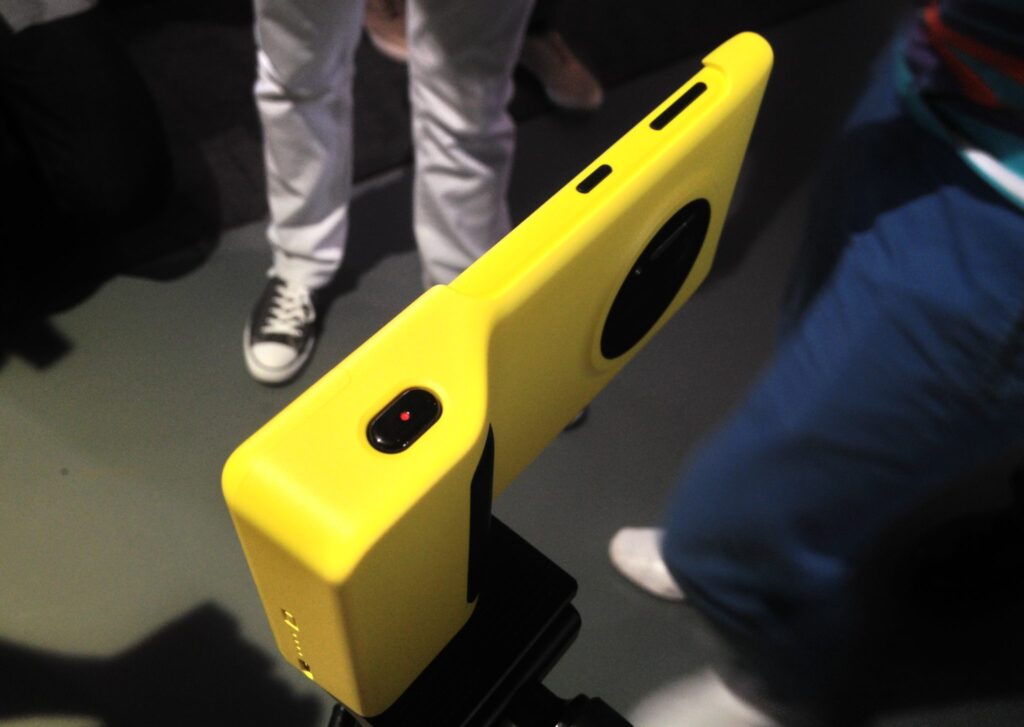
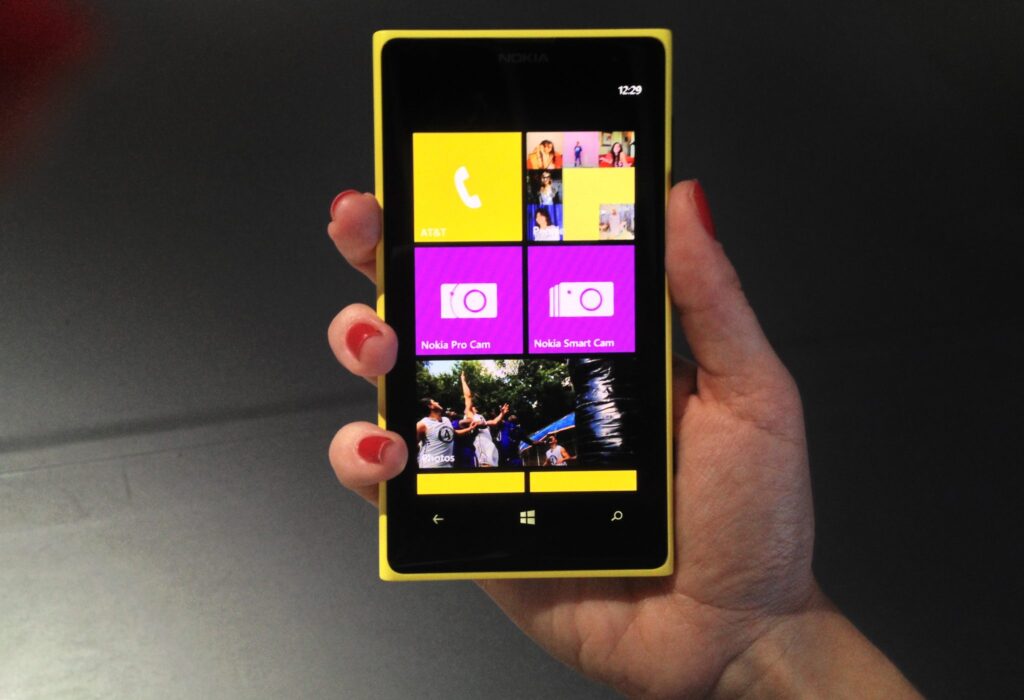
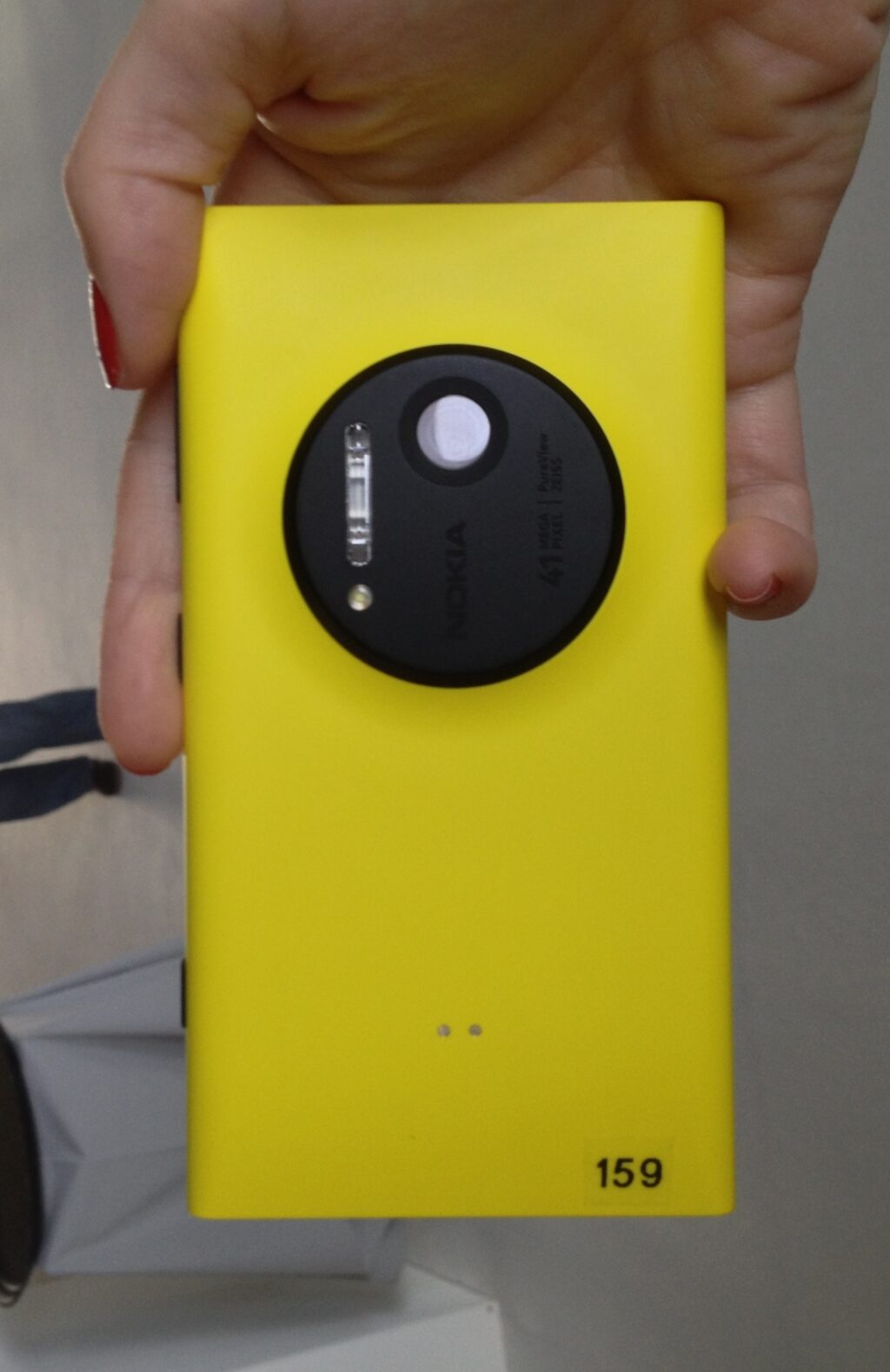
The Lumia 1020 was a lot of smartphone in July 2013. It debuted with a focus “almost entirely on the phone’s massive camera,” Ars wrote at the time. That big 41-megapixel sensor jutted forth from the phone body, and Nokia reps showed off its low-light, rapid-motion camera abilities by shooting pictures of breakdancers in a dark demonstration room. The company also offered an optional camera grip—one that made it feel a lot more like a point-and-shoot camera. In a more robust review, Ars suggested the Lumia 1020 might actually make the point-and-shoot obsolete.

Front of the Lumia 1020, showing a bit of Windows Phone square grid flair.


Credit:

Casey Johnston

Back of the Lumia 1020, with oh-so-much yellow.


Credit:

Casey Johnston

The accessory camera grip for the Lumia 1020, shown at its press reveal.


Credit:

Casey Johnston

The Lumia 1020 contained yet another cutting edge concept of the day: Windows Phone, Microsoft’s color-coded, square-shaped companion to its mobile-forward Windows 8. The mobile OS never got over the users/apps, chicken/egg conundrum, and called it quits in October 2017. The end of that distant-third-place mobile OS would normally signal the end of the Lumia 1020 as a usable phone.

Read full article

Comments

The ‘White Collar’ Recession is Pummeling Office Workers

White-collar workers are facing their deepest hiring slump in a decade, with one in four U.S. job losses last year hitting professional workers, according to S&P Global. A 2024 Vanguard report shows hiring for employees earning over $96,000 has fallen to its lowest level since 2014. The downturn has been particularly severe for job seekers â” 40% of applicants failed to secure even a single interview in 2024, according to a survey of 2,000 respondents by the American Staffing Association and The Harris Poll.

Technology and high interest rates appear to be driving the decline, with companies reassessing their workforce needs amid AI adoption and economic pressures. While hiring remains steady for those earning under $55,000 annually, the market continues to be especially challenging for mid-career professionals and higher earners.

Read more of this story at Slashdot.

Sonic the Hedgehog 3 zooms onto Paramount+ on February 18

Sonic the Hedgehog shows no sign of slowing down — so to speak. The blue blur’s third movie was a hit at the box office, and it’s coming to Paramount+ sooner than you might have expected. Sonic the Hedgehog 3 will land on the streaming service in the US and Canada on February 18 i.e. tomorrow.

The film zoomed into theaters in December and vacuumed up cash faster than Sonic loses his rings when he runs into spikes. To date, it has pulled in over $478 million, making it the second highest-grossing video game film behind one that stars one of Sonic’s oldest rivals. The Super Mario Bros. Movie raked in $1.36 billion.

Sonic the Hedgehog 3 picks up soon after the events of the Knuckles spin-off series. It sees Sonic and the gang taking on a new opponent, a powerful hedgehog named Shadow (voiced by Keanu Reeves). It’s safe to say that Sonic et al probably make it through that encounter given that a fourth movie in the series is on the way. Sonic The Hedgehog 4 is scheduled to spin dash into theaters on March 19, 2027.

This article originally appeared on Engadget at https://www.engadget.com/entertainment/tv-movies/sonic-the-hedgehog-3-zooms-onto-paramount-on-february-18-182404772.html?src=rss

Reddit Mods Are Fighting To Keep AI Slop Off Subreddits

Reddit moderators are struggling to police AI-generated content on the platform, according to ArsTechnica, with many expecting the challenge to intensify as the technology becomes more sophisticated. Several popular Reddit communities have implemented outright bans on AI-generated posts, citing concerns over content quality and authenticity.

The moderators of r/AskHistorians, a forum known for expert historical discussion, said that AI content “wastes our time” and could compromise the subreddit’s reputation for accurate information. Moderators are currently using third-party AI detection tools, which they describe as unreliable. Many are calling on Reddit to develop its own detection system, the report said.

Read more of this story at Slashdot.

Hardware Mod Showcases an iPhone SE 3 in the Body of a Windows Phone

A tech enthusiast has successfully transplanted the internal components of an iPhone SE 3 into the body of a Nokia Lumia 1020 Windows Phone, according to a post on Reddit’s r/hackintosh forum. The modification preserves all key functions of the iPhone SE 3, including its 12-megapixel camera, 5G capabilities, and Touch ID sensor, which has been relocated to the back of the device. The project retains the Lumia 1020’s distinctive design while upgrading its outdated microUSB port to Apple’s Lightning connector.

The creator adapted the Lumia’s original camera shutter button to work as a secondary volume control that can trigger photos in the iPhone’s camera app. The only significant feature lost in the conversion was the headphone jack.

Read more of this story at Slashdot.

X blocks users from sharing links to Signal

Elon Musk is taking aim at federal workers and organizations, through the Department of Government Efficiency (DOGE). Now, Musk-owned X (formerly Twitter) is blocking Signal.me links, a URL used by encrypted messaging service Signal that allows people to quickly contact others directly, the blog Disruptionist reports. Federal workers have used Signal to covertly report relevant and dangerous activities. 

Anyone who attempts to post a Signal.me link in a DM, public post or on their profile page receives error messages such as, “This request looks like it might be automated. To protect our users from spam and other malicious activity, we can’t complete this action right now. Please try again later.” Other responses include, “We can’t complete this request because this link has been identified by X or our partners as being potentially harmful.” Engadget confirmed the block in a test. 

Users who try to click existing Signal.me links get a message stating, “Warning: this link may be unsafe. The link you are trying to access has been identified by X or our partners as being potentially spammy or unsafe, in accordance with X’s URL Policy.” They can choose to ignore the warning and proceed to the link. 

Musk is working with President Trump to cut federal workers across the board. Over 9,500 employees were fired on Friday, February 14, alone. 

This article originally appeared on Engadget at https://www.engadget.com/big-tech/x-blocks-users-from-sharing-links-to-signal-170642686.html?src=rss

South Korea pauses downloads of DeepSeek AI over privacy concerns

DeepSeek, the massively popular Chinese AI assistant, has been temporarily unavailable from app stores in South Korea since February 15. A press release from the country’s data protection authority, the Personal Information Protection Commission (PIPC), stated that downloads will resume once the Chinese AI company complies with local data protection laws, while those with the app can still use it. DeepSeek is also blocked on South Korean government and military devices.

DeepSeek only established a local presence in South Korea on February 10. The company also acknowledged that it didn’t fully consider South Korea’s data protection laws when launching the service globally. Fortunately for South Korean users, the new AI powerhouse intends to cooperate with the PIPC.

The PIPC says that inspecting DeepSeek will take some time. On-site inspections of six AI services from Google, OpenAI, Microsoft and others took around five months. This inspection should take less time because it only involves DeepSeek.

In a statement to TechCrunch, the PIPC revealed that it discovered DeepSeek was transferring Korean users’ data to ByteDance, TikTok’s parent company. Local users were warned against entering personal information into the app.

Last month, the Italian Data Protection Authority or Garante, sent DeepSeek an information request asking what type of data the models were trained on and several other questions. Other countries like Australia and Taiwan have also banned the app on government devices due to security concerns.

Chinese Foreign Ministry spokesperson Guo Jiakun responded to South Korea’s DeepSeek ban, claiming Beijing would never ask any company or individual to store or collect data illicitly.

This article originally appeared on Engadget at https://www.engadget.com/ai/south-korea-pauses-downloads-of-deepseek-ai-over-privacy-concerns-163302959.html?src=rss

Privacy-problematic DeepSeek pulled from app stores in South Korea

In a media briefing held Monday, the South Korean Personal Information Protection Commission indicated that it had paused new downloads within the country of Chinese AI startup DeepSeek’s mobile app. The restriction took effect on Saturday and doesn’t affect South Korean users who already have the app installed on their devices. The DeepSeek service also remains accessible in South Korea via the web.

Per Reuters, PIPC explained that representatives from DeepSeek acknowledged the company had “partially neglected” some of its obligations under South Korea’s data protection laws, which provide South Koreans some of the strictest privacy protections globally.

PIPC investigation division director Nam Seok is quoted by the Associated Press as saying DeepSeek “lacked transparency about third-party data transfers and potentially collected excessive personal information.” DeepSeek reportedly has dispatched a representative to South Korea to work through any issues and bring the app into compliance.

Read full article

Comments

Despite court orders, climate and energy programs stalled by Trump freeze

President Donald Trump’s freeze on federal funding shows little sign of thawing for climate, energy and environmental justice programs.

Despite two federal court orders directing the administration to resume distributing federal grants and loans, at least $19 billion in Environmental Protection Agency funding to thousands of state and local governments and nonprofits remained on hold as of Feb. 14, said environmental and legal advocates who are tracking the issue.

EPA Administrator Lee Zeldin has vowed to seek return of an additional $20 billion the agency invested last year in the Greenhouse Gas Reduction Fund program, calling for a Department of Justice investigation into what he characterized as a “scheme… purposefully designed to obligate all of the money in a rush job with reduced oversight.”

Read full article

Comments

Nearly 10 Years After Data and Goliath, Bruce Schneier Says: Privacy’s Still Screwed

Ten years after publishing his influential book on data privacy, security expert Bruce Schneier warns that surveillance has only intensified, with both government agencies and corporations collecting more personal information than ever before. “Nothing has changed since 2015,” Schneier told The Register in an interview. “The NSA and their counterparts around the world are still engaging in bulk surveillance to the extent of their abilities.”

The widespread adoption of cloud services, Internet-of-Things devices, and smartphones has made it nearly impossible for individuals to protect their privacy, said Schneier. Even Apple, which markets itself as privacy-focused, faces limitations when its Chinese business interests are at stake. While some regulation has emerged, including Europe’s General Data Protection Regulation and various U.S. state laws, Schneier argues these measures fail to address the core issue of surveillance capitalism’s entrenchment as a business model.

The rise of AI poses new challenges, potentially undermining recent privacy gains like end-to-end encryption. As AI assistants require cloud computing power to process personal data, users may have to surrender more information to tech companies. Despite the grim short-term outlook, Schneier remains cautiously optimistic about privacy’s long-term future, predicting that current surveillance practices will eventually be viewed as unethical as sweatshops are today. However, he acknowledges this transformation could take 50 years or more.

Read more of this story at Slashdot.

X is reportedly blocking links to secure Signal contact pages

X, the social platform formerly known as Twitter, is seemingly blocking links to Signal, the encrypted messaging platform, according to journalist Matt Binder and other firsthand accounts.

Binder wrote in his Disruptionist newsletter Sunday that links to Signal.me, a domain that offers a way to connect directly to Signal users, are blocked on public posts, direct messages, and profile pages. Error messages—including “Message not sent,” “Something went wrong,” and profiles tagged as “considered malware” or “potentially harmful”—give no direct suggestion of a block. But posts on X, reporting at The Verge, and other sources suggest that Signal.me links are broadly banned.

Signal.me links that were already posted on X prior to the recent change now show a “Warning: this link may be unsafe” interstitial page rather than opening the link directly. Links to Signal handles and the Signal homepage are still functioning on X.

Read full article

Comments

NASA nominee previews his vision for the agency: Mars, hard work, inspiration

The likely next leader of NASA, private astronaut and pilot Jared Isaacman, has kept a low profile since the announcement last year that he was President Donald Trump’s choice to lead the space agency.

This is understandable, as Isaacman must still be confirmed by the US Senate. No date has yet been put forward for a confirmation hearing before the Senate Commerce, Science, and Transportation Committee, which is chaired by Sen. Ted Cruz (R-Tex.). Typically, during this interim period, nominees meet with Senators behind closed doors before their hearings and limit public comments that could put them in the hot seat during the confirmation process.

This has meant that we’ve heard little from the person who is in line to lead NASA over the next four years as the space agency confronts a number of issues. These include reconfiguring the Artemis Program, a potential pivot toward Mars, an aging International Space Station, Mars Sample Return, a limited pipeline of science missions, and the likelihood of budget cuts. On top of all of this there is the uncertainty and unease federal workers face as the Trump Administration scrutinizes their activities for efficiency and, in some cases, loyalty.

Read full article

Comments

The best Presidents’ Day deals on Apple, Samsung, Dyson, Peacock and more

Apparently President’s Day was created to honor George Washington’s birthday. But now on a Monday in February we celebrate every US president by shopping for deals. Nixon, Taft, Coolidge, Polk, Johnson, Hoover and all those other guys — they’d be quite proud of us. In our searches we found quite a few deals on the tech we recommend, including $100 off Apple’s new iPad mini and a streaming deal for a year of Peacock for $30. Our top pick for the best Bluetooth tracker, the Chipolo One, is on sale and Engadget readers can get an additional 10 percent off (with the code ENGADGET10), plus ThermoWorks’ flagship instant-read thermometer is down to a near record-low price. Here are the best President’s Day tech deals from this week that you can shop right now.

Apple AirTags (four-pack) for $70 ($30 off): This is a record-low price for a bundle of AirTags in which the price per Bluetooth tracker is only $17.50. While there are rumors of new AirTags coming soon, these remain some of the best Bluetooth trackers you can get at the moment, particularly if you are an iPhone user. Attach them to your keys, backpack, bike and other belongings (using the right AirTag holders, of course) to keep track of all of your stuff neatly within the Find My app.

Apple 2024 MacBook Pro M4 for $1,400 at Amazon ($199 off with coupon): Apple’s latest Pro-model laptop is down to $1,400 at Amazon with a discount and an on-page coupon. The 14-inch MacBook Pro has 16GB of memory and 512GB SSD storage and both the Space Black and Silver colorways are on sale. Engadget’s Devindra Hardawar gave the computer a 92 in his review and it’s currently Engadget’s pick for the best MacBook for creatives. It has a fast M4 chip, long battery life, bright display and Sharp 12MP Center Stage webcam.

Apple Studio Display with tilt-adjustable stand for $1,300 at Amazon ($300 off): We appreciated the excellent build quality of Apple’s pricey display in our official review, but noted that it’s probably only for Apple diehards. Both the standard glass model and the nano-textured glass option are on sale. The Studio Display made our list of the best monitors and has built-in speakers, a 12MP camera, three USB-C ports and a screen with 5K resolution — but a max refresh rate of 60Hz and single-zone backlighting.  

Apple Pencil (USB-C) for $69 at Walmart ($10 off): Apple sells too many versions of the Apple Pencil. So we made a guide. The USB-C model works with all current-generation iPads, including the M2 iPad Air, the M4 iPad Pro, the new iPad mini and the 10th generation iPad. It’ll also work with a few older tablets too. Just note that this one attahced magnetically but doesn’t recharge that way, like the other Apple Pencils. And it doesn’t have pressure sensitivity. Also at Amazon and Target. 

A logo.
Peacock

Peacock Premium (one-year) at Peacock for $30 ($50 off): Here’s one from our new streaming deals guide: A year of Peacock’s streaming service is $30 if you use the code WINTERSAVINGS at checkout. The code is valid through February 18 and saves you 60 percent off the usual $80 annual fee. Though it’s called “Premium” it’s actually the ad-supported tier (Premium Plus is the ad-free plan but it’s not discounted and goes for $140 yearly). Peacock is one of our picks for the best streaming services and has some great original content, including Poker Face, a Twisted Metal adaptation and Mrs. Davis.

ThermoWorks Thermapen One for $79 ($30 off): This Engadget exclusive deal brings one of our favorite grilling gadgets down to a near record-low price. It displays temperatures super quickly on its easy-to-read display, and the latest model has a brighter display and improved accuracy when compared to the previous version of the thermometer. It also has an IP67 rating, so it’ll stay protected against accidental spills.

Chipolo One (four-pack) for $67.50 ($32 off): Use the code ENGADGET10 at checkout to get an additional 10 percent off all Chipolo devices right now. That brings a four-pack of our favorite Bluetooth trackers down to $67.50, or roughly $17 per tracker. Chipolo devices work with Android and iOS, and in our testing, we found them to have the loudest ring and the speediest left-behind alerts, so it’s unlikely you’ll get too far before being alerted that you left some belongings behind.

KitchenAid Artisan Series 5 quart tilt head stand mixer for $350 at Amazon ($100 off): One of our top picks for kitchen tech is, unsurprisingly, KitchenAid’s famed stand mixer. It’s not only powerful, the seemingly endless array of available attachments make it a true kitchen multitasker. KitchenAid is hosting a larger sale for President’s Day on its own website, and many of the brand’s countertop appliances are currently up to $100 off.

Dyson V12 vaccuum for $499 at Dyson ($150 off): Now through President’s Day, the Dyson V12 Detect Slim stick vacuum is $150 off. This is the lighter sibling to the V15 model we picked as the best cordless vac in our guide. This one includes the Fluffy Optic cleaner head that won us over in our testing. It’s a hard-floor brush head with a laser “blade” that clearly shows you the tiniest bits of dust so you can be sure to suck them up. The Gen5 Outsize Absolute is also on sale for $150 off. It’s down to $899. That model is the largest cordless vac and has up to 140 minutes of run time.

iRobot Roomba Combo 10 Max for $789 at Wellbots ($610 off with code): Wellbots has a few iRobot vacuums on sale for President’s Day, including the new Roomba Combo 10 Max and its Autowash Dock, which can empty and cleans the vac. Right now it’s on sale for $789 if you use the code ENGAD410 at checkout. That’ll take a full $610 off the hefty $1,399 MSRP. That’s even cheaper than the last time it was on sale. Not only does the robot itself mop and vacuum, the dock can hold 60 days worth of dust and seven days worth of dirty mop water. For a slightly cheaper combo robo vac, Wellbots is also discounting the Roomba Combo j5 for $239 instead of the full $529 with the code ENGAD210. 

Samsung Music Frame
Photo by Billy Steele/Engadget

Samsung LS60D Music Frame for $150 at Woot ($250 off): You might be familiar with Samsung’s Frame TV — the sets that mimic works of art when you’re not watching television. The Music Frame furthers that home-theater-as-decor aesthetic by hiding Dolby Atmos audio equipment behind what looks like a regular picture frame. This one doesn’t have a screen, instead you’ll insert your own photo or art behind the glass. Inside are two woofers, two tweeters and two mid-range drivers. The speaker array is capable of Dolby Atmos audio and it leverages Samsung’s SpaceFit tech to calibrate the sound to the room. We checked it out at CES 2024 and were impressed with how robust the music sounded.

Fitbit Charge 6 Fitness Tracker for $116 at Amazon ($44 off): Our current top pick for a fitness tracker is back on sale. It went as low as $100 for Black Friday, but this is the lowest price we’ve seen this year. Our favorite fitness tracker is the successor to our previous top pick, the Charge 5. This new generation has a more accurate heart rate monitor and the ability to pair with exercise machines via Bluetooth. Plus there’s now a physical side button for navigation in addition to the touchscreen.

Ring Battery Video Doorbell for $60 at Amazon ($40 off): Another Amazon security device company, Ring, is also having a sale right now. The discount matches the record-low price for the Ring Video Doorbell. This battery-powered model doesn’t need to be wired into your home, so you can put it near any door. The removable battery is rechargeable via USB-C and will likely need a refill every couple months. You’ll need a Ring subscription to access all the features, like person and package alerts and extended event history.  

Apple Music logo on a red background
Apple

Apple Music (6 months) for $3 at Apple ($60 off): Normally an Apple Music subscription is $11 per month after a 30-day free trial. And when you buy a new Apple device, you usually get a three-month trial. But if you somehow haven’t yet signed up for the service, this promotion applies to you. The deal will run through February 27 and is open only to people who are entirely new Apple Music — current and previous customers are not eligible, nor are those who qualify for the free trial that comes with a new device. You’ll need to redeem the offer through an iPhone, iPad or Mac. Apple Music made our guide to the best music streaming services for its lossless streaming quality, ease of use with Apple devices and emphasis on using DJ curation over AI and algorithm playlists. Note that the subscription will automatically renew unless you cancel. 

NordPass Premium (27 months) for $35 at Nord ($46 off): One of our favorite password managers for cross-platform availability is having a sale. NordPass Premium is currently available for $35 for 27 months. At full price, two years would cost you $81, and this deal throws in three months for free. NordPass also offers a free tier, but the Premium plan keeps you logged in when you switch devices while also helping you analyze your passwords to improve their strength.

EcoFlow DELTA Pro Ultra for $5,299 at EcoFlow ($797 off): The whole-home backup battery and inverter from EcoFlow is on sale for a Valentine’s Day/President’s Day sale at the manufacturer’s site.

Mill food recycler for $874 at Mill ($125 off): A President’s Day sale from Mill, the kitchen food recycling company, will run until Monday, February 17 and will give you $125 off a new food recycling bin. If you’ve explored the different options for composting food and have decided to give a machine a try, Mill could be a good one to check out. The machine dries and grinds food scraps, reducing odors and bulk while creating grounds that you can add to your garden.

Apple AirPods Pro 2 for $169 ($90 off): Everyone’s favorite buds (seriously, people buy a lot of these things) fell to a record low of $154 for Black Friday, but this is the best price we’ve seen this year. They’re a little older at this point, debuting in 2022, but they’re still our favorite wireless earbuds for iPhone. Engadget’s Billy Steele gave them a score of 88 in his review when the buds first came out, citing the fantastic sound and amazing transparency mode.

Apple AirPods 4 for $100 at Amazon ($29 off): Apple’s newest wireless earbuds came out in September and last week, they hit their lowest price yet. That price is still going strong, so you can still pick them up at a discount. Engadget’s Billy Steele gave them a review score of 88, saying they sounded clearer and more balanced than most open-back earbuds. Plus you get all the Apple-perks like fast pairing and device switching with other Apple gadgets, hands-free Siri and Find My tracking. Also at Target and Best Buy. There’s also a noise-canceling version on sale for $149.

Amazon Kindle Paperwhite (16 GB) for $135 at Amazon ($25 off): Our choice for best premium ereader. is the Kindle Paperwhite Signature Edition that goes for $200 and isn’t discounted. The standard Paperwhite, on sale here, is basically the same machine, minus a few (inessential) perks like auto-adjusting front lights, extra storage and wireless charging. This is the lowest price we’ve tracked this year (it went about $5 lower for Black Friday) on a very lovely e-reader with remarkably fast page turns, a super crisp display and a great battery life.

Amazon Kindle Colorsoft Signature Edition (32 GB) for $230 at Amazon ($50 off): Engadget’s Valentina Palladino found a lot to like about the Kindle Colorsoft in her review including quick page turns, the fairly accurate (if a bit cold) color technology and the pinch to zoom feature, which was especially nice for reading comics. If you’re just looking to read black and white text, you can save yourself a bit of money and go with the Paperwhite — text on the Colorsoft is not as crisp.

8BitDo Pro 2 controller for $39 at Amazon ($12 off): The black version of one of our picks for the best Switch controllers is down to a record-low price. The programmable controller is compatible with the Switch, Apple devices, Android devices, Windows PC, Steam Deck and Raspberry Pi.

Blink Mini 2 (2-pack) for $38 at Amazon ($32 off): The Blink Mini 2 security camera sell for $40 each at full price, so this deal gets you two for less than the MSRP for one. The small security cameras have two way talk and listen, capture live video in 1080p and have infrared sensors for black and white images at night. You’ll need a Blink Subscription Plan if you want to save clips to the cloud, but if you also buy a Sync Module 2, you can save clips from your Blink Mini cameras to a flash drive.

Blink Video Doorbell and Sync Module 2 for $35 ($35 off): Here’s a bundle that combines the Video Doorbell with a Sync Module 2, the device that allows you to store footage from your Blink cameras and doorbells locally. The doorbell offers 1080p daytime footage and infrared night video plus two-way audio. You can use it wired or on batteries that should last two years before needing to be replaced. The Blink subscription plan is required if you want person detection and the ability to store clips in the cloud.

Samsung Evo Select (1TB) microSD card for $70 at Amazon ($10 off): The Evo Select is the budget pick in our guide to the best microSD cards: It’s not the fastest model we tested, but it’ll serve as a way to add storage for your Nintendo Switch or Android tablet. This deal matches the all-time low for the extra-spacious 1TB model. Also at Samsung and B&H.

iRobot Roomba Vac Essential (Q0120) for $119 at Amazon ($130 off): The top pick in our guide to the best budget robot vacuums has hit a new low price. It can’t map paths in your home, instead it randomly traverses a room until it’s covered the area. But it has good suction and cleans well, plus it’s easy to set up and control through Roomba’s mobile app. Also at Best Buy and Target.

LG B4 OLED TV (48″) for $600 at Best Buy ($200 off): This ties the lowest price we’ve seen for the 48-inch LG B4, which is the entry-level model in LG’s 2024 OLED lineup. While it’s not as bright or color-rich as some higher-end alternatives, it still offers the essential perks of any good OLED TV: superb contrast with deep black tones, clear motion, wide viewing angles and the like. It’s also a nice value for gaming, as it has four HDMI 2.1 ports that support refresh rates up to 120Hz. It’s just better off in a darker room, and this particular model is relatively small.

Follow @EngadgetDeals on Twitter and subscribe to the Engadget Deals newsletter for the latest tech deals and buying advice.

This article originally appeared on Engadget at https://www.engadget.com/deals/the-best-presidents-day-deals-on-apple-samsung-dyson-peacock-and-more-173252871.html?src=rss

Apple Weighs Adding Paid Business Listings To Maps App

Apple is exploring ways to monetize its Maps app by introducing paid business listings and prioritized search results, Bloomberg News reports, citing an internal company meeting with the Maps team. The initiative would allow businesses to pay for higher placement in search results and more prominent display on maps, similar to Google Maps’ advertising model. While no timeline has been set and no active development is underway, the move would mark Apple’s first attempt to generate direct revenue from its mapping service. The potential Maps monetization comes as Apple expands its advertising business across other services. The company has previously increased its focus on search ads in the App Store and recently added advertising to its News and Stocks apps, as well as its sports content.

Read more of this story at Slashdot.