The Morning After: Apple’s big week starts with the iPhone 17e

We’re at the start of another one of those weeks where Apple announces one or two of its lesser products each day. The first pair to break cover is the iPhone 17e and iPad Air M4, with more due to drop as the calendar rolls forward. The iPhone 17e is by far the more interesting gadget, especially as the price remained the same as for the iPhone 16e. Apple is charging $599 for the 17e, even though the base model storage has doubled to a very welcome 256GB.

The 17e also gains several features that were held back from the equivalent budget handset last year. The most notable is perhaps the addition of MagSafe at Qi2 speeds, enabling users to wirelessly charge their device at 15W. Keen-eyed spec-list nerds will also spot Apple’s C1X proprietary wireless chip, which offers comparable speed to the Qualcomm models it will eventually replace, but with far better power efficiency.

The iPad Air, by comparison, is the very model of a modern major iterative spec revision to keep it up to date. The M3 has been upgraded to an M4, and it’ll get the same home grown wireless chips (N1 and C1X), blessing it with Wi-Fi 7 compatibility. Apple is also adding some more RAM to the iPad Air, boosting it from 8GB to 12GB, but without adding any more digits to the price.

As someone who’s still clinging on to an iPhone 14, the generous storage and low cost of the iPhone 17e is intriguing. And it’s a far more attractive package than whatever Apple was trying to offer with the iPhone Air.

— Dan Cooper

The other big stories this morning

The Lenovo Modular AI PC concept is a remixed dual-screen laptop with hot swappable ports

Modularity! For! Some! Reason!

Image of the components of Lenovo's modular AI PC on a table.
Sam Rutherford for Engadget

Lenovo rocked up to MWC to show off a concept laptop with hot-swappable components, letting users push around their keyboard and displays at will. The company says you can set up the hardware on your desk to suit your needs at any given time. So, if you need a standard laptop, you can do that, or you can put a second display where your keyboard should go and use your keyboard wirelessly. Sadly, it’s a concept, so while you can purr at Lenovo’s engineering prowess you can’t hand it any of your cash to properly own this thing.

Continue Reading.

A closer look at Honor’s Robot Phone

Sources describe the unit as ‘adorable.’

Image of Honor's Robot Phone
Mat Smith for Engadget

Honor made its usual full-court press at MWC, but the star of its own show was the Robot Phone, due to launch later this year. It’s a smartphone with its own articulating camera gimbal which can move around in response to its user’s commands. The Morning After’s own Mat Smith says it’s able to shake and nod its, uh, “head,” and can even dance along to music. And that’s before you get to its real function to, you know, take photos and stuff.

Continue Reading.

Paramount+ and HBO Max could be merging into a single streaming service

The combined ParaSkyWarDisco would serve 200 million subscribers.

Paramount Sky CEO David Ellison has outlined his vision for his latest toy, Warner Brothers Discovery. He told investors both companies would merge their streaming services, giving it a global audience of around 200 million subscribers. Ellison also pledged to give HBO operational independence, hopefully meaning it won’t be staffed entirely by patronage appointees.

Continue Reading.

Everything announced at MWC 2026: Lenovo’s wild foldable gaming handheld, Honor’s Robot Phone, and more

Far too many things for one newsletter.

Image of the Leitzphone held in a hand
Mat Smith for Engadget

MWC is such a big show it would be impossible to cover everything we’ve reported on in a single newsletter. But, thankfully, we’ve built a roundup of the most important things for you to peruse, especially all of the biggest phones that you aren’t as likely to see on store shelves in the US.

Continue Reading.

This article originally appeared on Engadget at https://www.engadget.com/general/the-morning-after-engadget-newsletter-121540093.html?src=rss

Meta starts testing its AI shopping assistant

Meta has started rolling out an experimental AI shopping tool to some users in the US, according to Bloomberg. At the moment, it’s reportedly only showing up on desktop browsers when select users visit Meta AI on the web. They’ll know if they have access to the feature if they see the “Shopping research” button inside the query text box. The company has confirmed that it was testing the feature, Bloomberg said, but it didn’t say when a wider release will happen.

When users ask for product suggestions, the chatbot will show them a carousel with product images and their pricing, along with a link to the e-commerce website and information about the brand. Meta AI will also include a short explanation why it recommended the item. If Meta AI can see a user’s information, such as their gender and location data, it can tailor responses for them. Bloomberg said it replied with a selection of women’s puffer jackets from shops that ship to New York, based on the tester’s profile. Users cannot check out from within the Meta AI interface, but they can click on the links it provides to shop online.

Mark Zuckerberg previously told investors that Meta is launching agentic shopping tools during an earnings call earlier this year. It doesn’t come as a surprise that the company is working on them, when rival AI companies already offer the same tools. OpenAI rolled out a dedicated shopping assistant for ChatGPT just before Black Friday last year, shortly after Google launched its own shopping tools for Gemini. Perplexity also released an AI shopping assistant at the same time.

This article originally appeared on Engadget at https://www.engadget.com/ai/meta-starts-testing-its-ai-shopping-assistant-120148124.html?src=rss

With developer verification, Google’s Apple envy threatens to dismantle Android’s open legacy

It’s been nearly 20 years since Google revealed Android, which the company described as the first “truly open” mobile operating system, setting Google-powered phones apart from the iPhone’s aggressively managed experience. Over time, though, Android has become more aligned with Apple’s approach. For the moment, users still have the final say in what software runs on their increasingly locked-down smartphones. Later this year, though, Google plans to seriously curtail that freedom in the name of security.

In the coming weeks, Google will officially debut Android developer verification, which will require app makers outside the Play Store to register with their real names and pay a fee to Google. Failure to do so will block their apps from installation (sometimes called sideloading) on virtually all Android devices. Google says this is a necessary evolution of the platform’s security model, but upending the status quo could push developers away from Android and risk the privacy of those that remain.

This might make your phone a little safer, sure, but it won’t stop people from getting scammed. At the same time, it could rob the Android ecosystem of what made it special in the first place.

Read full article

Comments

Google’s Home’s latest feature is Gemini-powered ‘Live Search’ for cameras

Google Home has some significant new quality-of-life updates and a new AI-powered feature, the division’s head honcho Anish Katturkan announced on X. Many of them, including a function called “Live Search,” are powered by the company’s Gemini for Home service launched in October 2025 as the official replacement for Google Assistant on smart devices. 

“We launched Gemini for Home in Early Access specifically to learn from real-world usage,” Katturkaran said. “With millions of you now testing and shaping this experience every day, we’re pushing regular voice improvements to address your feedback.”

The Live Search feature does just what it says, letting you query Gemini about the current state of your home based on what the cameras see. For instance, you can ask things like “Hey Google, is there a car in the driveway?” However, the feature is only available for Google Home Premium advanced subscribers who pay a $20 per month ($200 per year) fee. 

Gemini for Home now uses updated models to improve the quality and accuracy of answers too and will more reliably play newly-released songs. Other key updates include better targeting for smart home devices by room, house and device, reduced instances of cutting off a speaker prematurely, better reliability for user-created automations by voice and more. Too see all those changes, check out Google Home’s latest changelog,

Finally, Google Home announced “enhanced support” for the Nest x Yale lock, including comprehensive passcode management (including for guests), a more robust activity history, real-time notifications for lock events and enhanced lock settings like single touch locking. 

This article originally appeared on Engadget at https://www.engadget.com/home/smart-home/googles-homes-latest-feature-is-gemini-powered-live-search-for-cameras-112216551.html?src=rss

MWC 2026’s most bizarre phone can start fires (on purpose)

This isn’t a Galaxy Note 7 debacle. Oukitel’s WP63 is a ruggedized smartphone that’s meant to set things alight. It has a built-in electric igniter, aimed at emergency response and camping, helping to start fires when you forgot matches, but you brought this beastly phone along for the adventure. It’s got several other notable features, like a 20,000mAH battery, a loudspeaker, and even its own built-in USB-C cable for charging other devices.

Still, the igniter was why I was here. The WP63 has an electric coil that heats up, similar to cigarette lighters in cars circa 1987. This is hidden away behind a protective cover at the top of the device, and once it pops out, you activate it using an app. An Oukitel spokesperson was able to light some rolled-up paper, and I was surprised how gentle and seemingly in control it was. (The paper looked like a cigarette, too.)

Unfortunately, another spokesperson told me that it can’t be used to light candles, although I can’t understand why. I don’t start campfires, but I do light candles.

Oukitel WP63 at MWC 2026
Image by Mat Smith for Engadget

The phone will be priced around $500, and completely ignoring the tendency for thinner and thinner phones, it’s 27mm thick. Another outdoor use? If a bear decided to attack you in the woods, you might be able to concuss it with the WP63.

This article originally appeared on Engadget at https://www.engadget.com/mobile/smartphones/oukitel-wp630-mwc-2026-smartphone-igniter-101046023.html?src=rss

The 19th Century Silent Film That First Captured a Robot Attack

The Library of Congress has restored Gugusse et l’Automate, an 1897 short by Georges Melies that likely features the first robot ever shown on film. Long thought lost, the reel was discovered in a box of decaying nitrate films donated from a Michigan family collection. NPR reports: The film, which can be viewed on the Library of Congress’ website, depicts a child-sized robot clown who grows to the size of an adult and then attacks a human clown with a stick. The human then decimates the machine with a hammer.

In an Instagram post, Library of Congress moving image curator Jason Evans Groth said the film represents, “probably the first instance of a robot ever captured in a moving image.” (The word “robot” didn’t appear until 1921, when Czech dramatist Karel Capek coined it in his science fiction play R.U.R..)

“Today, many of us are worried about AI and robots,” said archivist and filmmaker Rick Prelinger, in an email to NPR. “Well, people were thinking about robots in 1897. Very little is new.”


Read more of this story at Slashdot.

Superagers’ ‘Secret Ingredient’ May Be the Growth of New Brain Cells

alternative_right shares a report from ScienceAlert: According to a study of 38 adult human brains donated to science, superagers — people who retain exceptional memory as they age — have roughly twice as many immature neurons as their peers who age more typically. Moreover, people with Alzheimer’s disease show a marked reduction in neurogenesis compared to a normal baseline. […]

Led by researchers at the University of Illinois Chicago, the team set out to examine a variety of postmortem hippocampal tissue samples to see if they could identify markers of neurogenesis — and if different groups had any notable differences. The brain samples were donated from five groups: eight healthy young adults, aged between 20 and 40; eight healthy agers, aged between 60 and 93; six superagers, aged between 86 and 100; six individuals with preclinical Alzheimer’s pathology, aged between 80 and 94; and 10 individuals with an Alzheimer’s diagnosis, aged between 70 and 93. The young healthy adult brain tissue was first analyzed to establish the neurogenesis pathways in the adult brain. Then, they analyzed 355,997 individual cell nuclei isolated from the hippocampus, searching for three different stages of cell development: Stem cells, which can develop into neurons; neuroblasts, which are stem cells in the process of that development; and immature neurons, on the verge of functionality. The results were striking.

“Superagers had twice the neurogenesis of the other healthy older adults,” [says neuroscientist Orly Lazarov of the University of Illinois Chicago]. “Something in their brains enables them to maintain a superior memory. I believe hippocampal neurogenesis is the secret ingredient, and the data support that.” That’s an interesting result on its own, but the data from the individuals with preclinical Alzheimer’s pathology and Alzheimer’s diagnoses is where the real meat of the study sits. In the preclinical group, subtle molecular changes hinted that the system supporting new neuron growth was beginning to falter. In the Alzheimer’s group, a clear drop in immature neurons was evident. A genetic analysis of the nuclei also showed that superager neural cells have increased gene activity linked to stronger synaptic connections, greater plasticity, and brain-derived neurotrophic factor, a critical protein for neural survival, growth, and maintenance. Taken together, these three things can be interpreted as resilience. The research has been published in the journal Nature.


Read more of this story at Slashdot.

OpenAI will amend Defense Department deal to prevent mass surveillance in the US

OpenAI’s Sam Altman said the company will amend its deal with the Defense Department (or the Department of War) to explicitly prohibit the use of its AI system on mass surveillance against Americans. Altman has published an internal memo previously sent to employees on X, telling them that the company will tweak the agreement to add language to make that point especially clear. Specifically, it says:

“Consistent with applicable laws, including the Fourth Amendment to the United States Constitution, National Security Act of 1947, FISA Act of 1978, the AI system shall not be intentionally used for domestic surveillance of U.S. persons and nationals.

For the avoidance of doubt, the Department understands this limitation to prohibit deliberate tracking, surveillance, or monitoring of U.S. persons or nationals, including through the procurement or use of commercially acquired personal or identifiable information.”

Altman has also claimed in the memo that the agency affirmed that its services will not be used by its intelligence agencies, including the NSA, without a modification to their contract. He added that if he received what he believed was an unconstitutional order, he would rather go to jail than follow it.

In addition, the OpenAI CEO has admitted in the memo that the company shouldn’t have rushed to get the deal out on Friday, February 27, since the issues were “super complex and demand clear communication.” Altman explained that the company was “trying to de-escalate things and avoid a much worse outcome” but it “looked opportunistic” in the end. If you’ll recall, OpenAI announced the partnership shortly after President Trump ordered all US government agencies to stop using Claude and any other Anthropic services. To note, Anthropic started working with the US government in 2024.

The Defense Department and Secretary Pete Hegseth had been pressuring Anthropic with to remove its AI’s guardrails so that it can be used for all “lawful” purposes. Those include mass surveillance and the development of fully autonomous weapons. Anthropic refused to bow down to Hegseth’s demands and in a statement said that “no amount of intimidation or punishment” will change its “position on mass domestic surveillance or fully autonomous weapons.” Trump issued the order as a result. The Defense Department had also taken the first steps to designate Anthropic as a “supply chain risk,” which is typically reserved for Chinese companies believed to be working with their country’s government.

Altman said that in his conversations with US officials, he reiterated that Anthropic shouldn’t be designated as a supply chain risk and that he hoped the Defense Department would offer it the same deal OpenAI agreed to. In an AMA session on X over the weekend, Altman clarified that he didn’t know the details of Anthropic’s agreement and how it differed from the one OpenAI signed. But if it had been the same, he thought Anthropic should have agreed to it.

After the news broke out about OpenAI’s deal, Anthropic climbed its way to the number one spot of the App Store’s Top Free Apps leaderboard, beating out both ChatGPT and Google Gemini. Anthropic, capitalizing on Claude’s sudden popularity, launched a memory import tool to make switching to its chatbot from another company’s easier. Meanwhile, uninstalls for ChatGPT’s jumped by 295 percent day-over-day, according to Sensor Tower.

Here is re-post of an internal post:

We have been working with the DoW to make some additions in our agreement to make our principles very clear.

1. We are going to amend our deal to add this language, in addition to everything else:

“• Consistent with applicable laws,…

— Sam Altman (@sama) March 3, 2026

This article originally appeared on Engadget at https://www.engadget.com/ai/openai-will-amend-defense-department-deal-to-prevent-mass-surveillance-in-the-us-050637400.html?src=rss

Iowa County Rolls Out Extensive Zoning Rules For Data Centers

Linn County, Iowa has adopted what may be one of the nation’s strictest local zoning ordinances for data centers, requiring detailed water studies, formal water-use agreements, 1,000-foot residential setbacks, noise and light limits, and infrastructure compensation. “But seated beneath a van-sized American flag hanging from the rafters of the drafty Palo Community Center gymnasium, residents asked for even stronger protections,” reports Inside Climate News. “One by one, they approached the microphone at the front of the gym to voice concerns about water use, electricity rates, light pollution, the impacts of low-frequency noise on livestock, and the county’s ability to enforce the terms of the ordinance. Some, including Dorothy Landt of Palo, called for a complete moratorium on new data center development.”

Landt asked: “Why has Linn County, Iowa, become a dumping ground for soon-to-be obsolete technology that spoils our landscape and robs us of our resources? While I admire the efforts of the Board of Supervisors to propose a data center ordinance, I would prefer to see all future data centers banned from Linn County.” From the report: The county is already home to two major data center projects, operated by Google and QTS. Both are located in Cedar Rapids, Iowa’s second-largest city, and are therefore subject to its laws. The new ordinance would apply only to unincorporated areas of the county, which make up more than two-thirds of its geographic footprint. […] In drafting the ordinance, [Charlie Nichols, director of planning and development for Linn County] and his staff drew on the experiences of communities nationwide, meeting with local government officials in regions that have seen massive booms in data center development, including several counties in northern Virginia, the “data center capital of the world.”

As data center development balloons, many communities that initially zoned the operations as warehouses or standard commercial users are abandoning that practice, Nichols noted. The extreme energy and water demands of data centers simply cannot be accounted for by existing zoning frameworks, he said. “These are generational uses with generational infrastructure impacts, and treating them as a normal warehouse or normal commercial user is just not working.” […] The Linn County, Iowa, ordinance goes one step further than tightening existing zoning rules. Instead, it creates a new, exclusive-use zoning district for data centers, granting county officials the power to set specific application requirements and development standards for projects. No other counties in the state have introduced similar zoning requirements, said Nichols. In fact, few jurisdictions nationwide have. […]

From its first reading to final adoption, the ordinance has expanded to include language setting light pollution standards, requiring a waste management plan, including the Iowa DNR in the water-use agreement to address potential well interference issues and requiring an applicant-led public meeting before any zoning commission meetings. “I am very confident that no ordinance for data centers in Iowa is asking for more information or asking for more requirements to be met than our ordinance right now,” said Nichols at the final reading. The Cedar Rapids Metro Economic Alliance has said that it strongly supports current and future data center development in the area. The new ordinance is not an effective moratorium, Nichols said. He said he “strongly believes” that a data center can be built within the adopted framework.


Read more of this story at Slashdot.

British Columbia To End Time Changes, Adopt Year-Round Daylight Time

An anonymous reader quotes a report from CBC.ca: The B.C. government says this Sunday will be the last time British Columbians have to change their clocks. The province will be permanently adopting daylight time and the March 8 “spring forward” will be the last time change, Premier David Eby announced Monday. “We are done waiting. British Columbia is going to change our clocks just one more time — and then never again,” Eby said. Residents will have eight months to prepare for Nov. 1, 2026, when the clocks would have been turned back one hour, but will now remain the same. B.C.’s new time zone will be called “Pacific Time,” according to the province. Further reading: Permanent Standard Time Could Cut Strokes, Obesity Among Americans


Read more of this story at Slashdot.

A Dust Devil Full Of Tumbleweeds

This is a video captured by Douglas Barillas of a dust devil blowing a bunch of tumbleweeds around in the sky of Lake Los Angeles, California. I guess they’re not tumbleweeds anymore, they’re *putting on cool guy shades* flyweeds. Damn, I haven’t put on those cool guy shades on in a while, that felt good. “Well it shouldn’t have, now take them off.” But– “TAKE THEM OFF AND STEP ON THEM.” Mom!

� Driver spots a tumbleweed dust devil, Los Angeles County
by
u/solateor in
NatureIsFuckingLit

Apple Might Use Google Servers To Store Data For Its Upgraded AI Siri

Apple has reportedly asked Google to look into “seting up servers” for a Gemini-powered upgrade to Siri that meets Apple’s privacy standards. The Verge reports: Apple had already announced in January that Google’s Gemini AI models would help power the upgraded version of Siri it delayed last year, but The Information’s report indicates Apple might lean even more on Google so it can catch up in AI.

The original partnership announcement said that “the next generation of Apple Foundation Models will be based on Google’s Gemini models and cloud technology,” and that the models would “help power future Apple Intelligence features,” including “a more personalized Siri.” While the announcement noted that Apple Intelligence would “continue to run on Apple devices and Private Cloud Compute,” it didn’t specify if the new Siri would run on Google’s cloud. Apple’s Private Cloud Compute is not only underpowered but it’s also underutilized in its current state, notes 9to5Mac, “with the company only using about 10% of its capacity on average, leading to some already-manufactured Apple servers to be sitting dormant on warehouse shelves.”


Read more of this story at Slashdot.

Oops: South Korean cops lost $5M in seized crypto after leaking wallet password

Soon after South Korean police posted a press release boasting about seizing $5.6 million worth of cryptocurrency from 124 wealthy tax evaders, cops realized that they had mistakenly posted images that made it possible for a thief to quickly steal most of the seized assets.

Eventually, the press release was removed, but not before it was grabbed by local media outlets and tech publications covering the theft.

Bleeping Computer shared a screenshot of the retracted images, which showed a handwritten note next to a Ledger device that’s used as a so-called “cold wallet” to store crypto out of reach of online threats. Clearly legible in the photo, the note contained a complete mnemonic recovery phrase that anyone can use as a master key to move assets off the cold wallet to a new wallet without any additional PIN or permissions required.

Read full article

Comments

Australia will consider requiring app stores to block AI services without age verification

Australia’s government may take a strict stance on ensuring younger users cannot access AI chatbots. Reuters reports that Australian regulators may require app storefronts to block AI services that do not implement age verification for restricting mature content by March 9. 

“eSafety will use the full range of our powers where there is non-compliance,” a representative for the commissioner said in a statement to the publication. Those paths could include “action in respect of gatekeeper services such as search engines and app stores that provide key points of access to particular ‌services.”

A review by Reuters found that of 50 leading text-based AI chat services in the region, only nine had introduced or shared plans for age assurance. Eleven services reportedly “had blanket content filters or planned to block all Australians from using their service,” according to the report, leaving a large number that had not taken public action a week ahead of the country’s deadline. Failure to comply could see AI companies face fines of up to A$49.5 million ($35 million).

The question of which parties are responsible for keeping children from accessing potentially harmful content is being debated around the world. In the US, for instance, Apple and Google have been lobbying to have the task delegated to platforms rather than app store operators. The language from the Australian regulators about all stores is hardly definitive at this stage, but given the breadth of its sweeping ban on the use of social media and some highly social digital platforms for citizens under age 16 enacted last year, an aggressive stance seems to align with leaders’ priorities. 

This article originally appeared on Engadget at https://www.engadget.com/ai/australia-will-consider-requiring-app-stores-to-block-ai-services-without-age-verification-221714252.html?src=rss

Anthropic brings memory to Claude’s free plan

Anthropic is bringing another paid feature to Claude’s free tier. The next time you chat with Claude, you’ll have the option to have it reference your previous conversation to inform its outputs. Anthropic first made its chatbot capable of remembering past interactions last August, before giving it the ability to compartmentalize memories in the fall. Making memory a free feature is well-timed; earlier today Anthropic made it easier for users to import their past conversations with a competing chatbot to Claude. If after enabling memory you decide to turn it off, you can either pause the feature, preserving Claude’s memories for use down the road, or completely delete them so they’re not saved on Anthropic’s servers.

Claude is enjoying new-found popularity, having recently jumped to the number one spot in the App Store’s free app charts. This comes while Anthropic is engaged in a high-stakes contract dispute with the US government over AI safeguards. On Friday, US Defense Secretary Pete Hegseth labeled the company a “supply chain risk” after it refused to sign a contract that would allow the Pentagon to use Anthropic models for mass surveillance against Americans and in fully autonomous weapons. Following Hegseth’s announcement, Anthropic vowed to challenge the designation. As of right now, we’re waiting to see how things play out, and what it might mean for Anthropic.

This article originally appeared on Engadget at https://www.engadget.com/ai/anthropic-brings-memory-to-claudes-free-plan-220729070.html?src=rss

HBO Max and Paramount+ To Merge Into One Streaming Service

Paramount Skydance plans to combine HBO Max and Paramount+ into a single streaming platform following its acquisition of Warner Bros. Discovery. “As we said, we do plan to put the two services together, which today gives us a little over 200 million direct-to-consumer subscribers,” said David Ellison, the company’s CEO. “We think that really positions us to compete with the leaders in the space.” The deal still needs regulatory approval. The Washington Post reports: He added that Paramount didn’t want to make changes to the HBO brand. “Our viewpoint is HBO should stay HBO,” Ellison said, noting that his favorite HBO product is “Game of Thrones.” If Justice Department regulators allow the deal to go through, it would place recent HBO Max hits, such as “The Pitt” and “A Knight of the Seven Kingdoms,” alongside Paramount offerings including “South Park” and “Yellowstone.” “They built a phenomenal brand,” he said. “They are a leader in the space, and we just want them to continue doing more of it.”

The deal to buy Warner Bros., valued at about $110 billion, will almost surely attract regulatory scrutiny from the Justice Department because — without divestments — it places major swaths of the film, television and news industries under one roof: Warner Bros. and Paramount studios, HBO Max and Paramount+, and CBS and CNN would all have the same parent company. Ellison expressed confidence on the call that the deal wouldn’t face hurdles with regulators.


Read more of this story at Slashdot.

Call of Duty will add Black Ops Royale, a new free game mode coming March 13

Call of Duty is getting a new battle royale mode later this month. The popular first-person shooter will introduce Black Ops Royale as a free game mode on March 13. 

Black Ops Royale pays homage to Blackout, the series’ first foray into a battle royale game mode back in CoD: Black Ops 4. Matches will have 100 players dropping in as four-person teams. The mode takes place on the massive Avalon map, but there will be no familiar Warzone features like loadouts, the gulag, or buy stations. Instead, it’s all about the scavenging the weapons from the recent Black Ops 7 game and upgrading them. 

According to the team’s announcement, there will be other familiar features from the Blackout days such as the weapon handling and bullet drop that have been reimagined for modern-day Warzone players. You’ll also be able to further customize your play style with an open-ended perks system, another nod to the original Call of Duty BR perk mechanic.

This article originally appeared on Engadget at https://www.engadget.com/gaming/call-of-duty-will-add-black-ops-royale-a-new-free-game-mode-coming-march-13-211733205.html?src=rss

Charter Gets FCC Permission To Buy Cox, Become Largest ISP In the US

An anonymous reader quotes a report from Ars Technica: Charter Communications, operator of the Spectrum cable brand, has obtained Federal Communications Commission permission to buy Cox and surpass Comcast as the country’s largest home Internet service provider. Charter has 29.7 million residential and business Internet customers compared to Comcast’s 31.26 million. Buying Cox will give Charter another 5.9 million Internet customers. The FCC approved the deal on Friday, but the companies still need Justice Department approval and sign-offs from states including California and New York.

Opponents of Charter’s $34.5 billion acquisition told the FCC that eliminating Cox as an independent entity will make it easier for Charter and Comcast to raise prices. But the FCC dismissed those concerns on the grounds that Charter and Cox don’t compete directly against each other in the vast majority of their territories.

FCC Chairman Brendan Carr’s primary demand from companies seeking to merge has been to eliminate diversity, equity, and inclusion (DEI) programs and policies. In a press release (PDF), the Carr-led FCC said that “Charter has committed to new safeguards to protect against DEI discrimination,” and that Charter’s network-expansion plans will bring “faster broadband and lower prices” to rural areas. The merger was approved one day after Charter sent a letter to Carr outlining its actions to end DEI. Charter offers broadband and cable service in 41 states, while Cox does so in 18 states.


Read more of this story at Slashdot.

The Best Ways to Refresh Your Old Kitchen for Cheap (or Free)

We may earn a commission from links on this page.

Kitchens endure a lot. Every single day we’re in there spilling, splattering, and literally using open flames. Our kitchens are gathering spots, ersatz home offices, staging areas, and late-night snack depots, and they take a lot of wear and tear. Eventually, all that use begins to show, and the kitchen starts to look a little worn down and outdated—and your bank account begins to tremble, because kitchen renovations are expensive as heck.

If you’re not ready for a full-on reno or remodel, don’t despair: You can achieve a powerful transformation in your kitchen with a few simple changes and upgrades, without spending a lot of money (or, in some cases, any money at all). If you need to refresh your kitchen without cracking open a retirement account to pay for it, here are some ways to do it.

Upgrade your kitchen’s storage, both cosmetically and functionally

Your kitchen is three things, really: A gathering place and a food prep space, sure—but it’s also where you store most, if not all, of your groceries and implements. One of the most powerful ways to refresh your kitchen is to augment or add to that storage, and you can do that in a variety of cheap or free ways:

  • Remove cabinet doors. If your kitchen cabinets are a little dated and boring, you don’t need to replace them. You can get a totally new look by removing some of the cabinet doors to get an open-shelving look, and it’s totally free. The real trick is to not remove all of the doors—you want to create a visual pattern and balance the openness with the existing doors, so have a plan before you start unscrewing hinges.

  • Paint cabinets. Painting kitchen cabinets is a cheap way to revitalize them, transforming old wood finish nightmares into sleek, modern monochrome. And if you remove some cabinet doors, consider painting inside the boxes for a blast of color as well. Another option is to vinyl wrap your cabinets, which can be a very cost-effective way to completely transform your cabinetry—and with the right tools, applying vinyl film like this to your cabinets is not a difficult DIY job.

  • Add shelving. Whether your design runs rustic or industrial or something in between, if you have open wall space in your kitchen, consider putting up some simple shelving. It’s a great and inexpensive way to increase your storage (and refresh the kitchen’s look) without shelling out a lot of money.

  • Upgrade storage containers. If you’re going to go with some open shelving, or if your countertops are laden with containers of food, spices, or coffee, upgrading those containers to something a bit more attractive (and in line with the rest of the kitchen’s design) is an easy way to freshen the space. From metal canisters with cute chalkboard labels to ultra-modern splashes of color, upping your container game makes open shelving pop.

  • Add furniture. If you have a little space, adding a mobile island will expand your storage and give you more working space. If you don’t have the space for an island, a simple, attractive kitchen cart like this can also be a nice, affordable upgrade.

  • Under-cabinet lighting. Add some mood lighting that’s also a practical upgrade with some easy-to-install, plug-in under-cabinet lighting.

  • Peel-and-stick trim. If your cabinets are looking a bit bland, you can use peel-and-stick trim to augment glass cabinet doors or add panel effects to your cabinets.

  • Add some pot racks. For less than $60 and some time, you can clear out your lower cabinets and make them usable storage again while creating a nice visual in your kitchen with a hanging pot rack. Of course, if you’re going to expose your pots and pans to the world, you might want to consider an upgrade there, as well.

Give your appliances a visual upgrade

Your appliances—both built-in and on the countertops—are a huge part of your kitchen’s visual appeal (or lack thereof). You can upgrade them affordably with a few simple purchases and some elbow grease.

  • Decals and appliance wraps. If your appliances are older and white or black, you can spiff them up pretty quickly and affordably with things like magnetic dishwasher covers or vinyl wraps to give them a stainless steel look without buying all new appliances.

  • New hardware. There’s nothing easier than swapping out old pulls and handles for new, sleeker versions—new hardware can really transform the look of your cabinetry without the cost of replacing them entirely. And if your stove is looking a little well-used, a set of new burner grates and upgraded knobs will go a long way toward making it look new again. (You’ll likely need to find stove hardware that’s compatible with your specific model, but there are lots of options out there.)

  • Color coordinating countertop appliances. If your countertops are currently populated with a disparate array of appliances, a simple way to upgrade the look and feel of the kitchen is to replace them with a coordinated set. For example, KitchenAid makes toasters, mixers, kettles, and other small appliances in a sharp empire red, making your counters cohesive and eye-catching instead of chaotic and messy.

Refinish your kitchen’s walls, floors, and countertops

Get a remodeled look without the remodel by refinishing the surfaces in your kitchen using these simple, affordable, and (often) reversible projects.

  • Peel and stick. Walls, backsplashes, and even floor tiles can be completely transformed with peel-and-stick products. Wallpaper, tile backsplashes, and floor tile decals can be installed with just some cutting and measuring tools and a little patience, but the final result can look like a whole new kitchen was installed on top of your old one.

  • Vinyl flooring or washable rugs. If your kitchen floor is making you sad but tile decals won’t work, you could throw a washable area rug down and cover it up. Another alternative would be some vinyl sheet flooring that you can cut to size and simply lay over your existing floor.

  • Refinish or cover countertops. You can upgrade and transform your countertops pretty cheaply using a variety of refinishing kits that cost less than $100. Alternatively, vinyl wraps or contact paper can cover up dated counters pretty effectively. If you don’t have the time or patience for those projects, you could consider just buying an oversize cutting board to leave on top of the counters permanently.

  • Clean up grout. Sometimes it’s not your tile that’s gotten old and tired, it’s just your grout. You might be amazed to discover how transformative an hour spent using a grout pen can be.

Replace kitchen lighting, outlet covers, and other fixtures

Just about everything in your kitchen is replaceable, including old, crusty fixtures. Swapping a few out isn’t terribly expensive, and most of these projects can be done DIY.

  • Replace or add lights. If your kitchen feels sadder because the lights are old and dated (and probably dusty), even a non-electrician can swap them out for something a little more jazzy. If you just need more light, consider adding some easy, plug-in pendant lights for an instant style bump (you can also find versions that will screw into existing recessed lights).

  • Change outlet covers. One of the easiest, cheapest little upgrades you can make in your kitchen is to swap out the tired old white or beige outlet and light switch covers for something with a little more pop. All you need is a few bucks and a screwdriver (just keep in mind that you shouldn’t have metal covers near water sources).

  • Replace faucets. Changing out a faucet isn’t a terribly complicated job, though you might need some specific tools. Even a cheap faucet can have a lot of style and be a big upgrade from one that’s seen much better days.

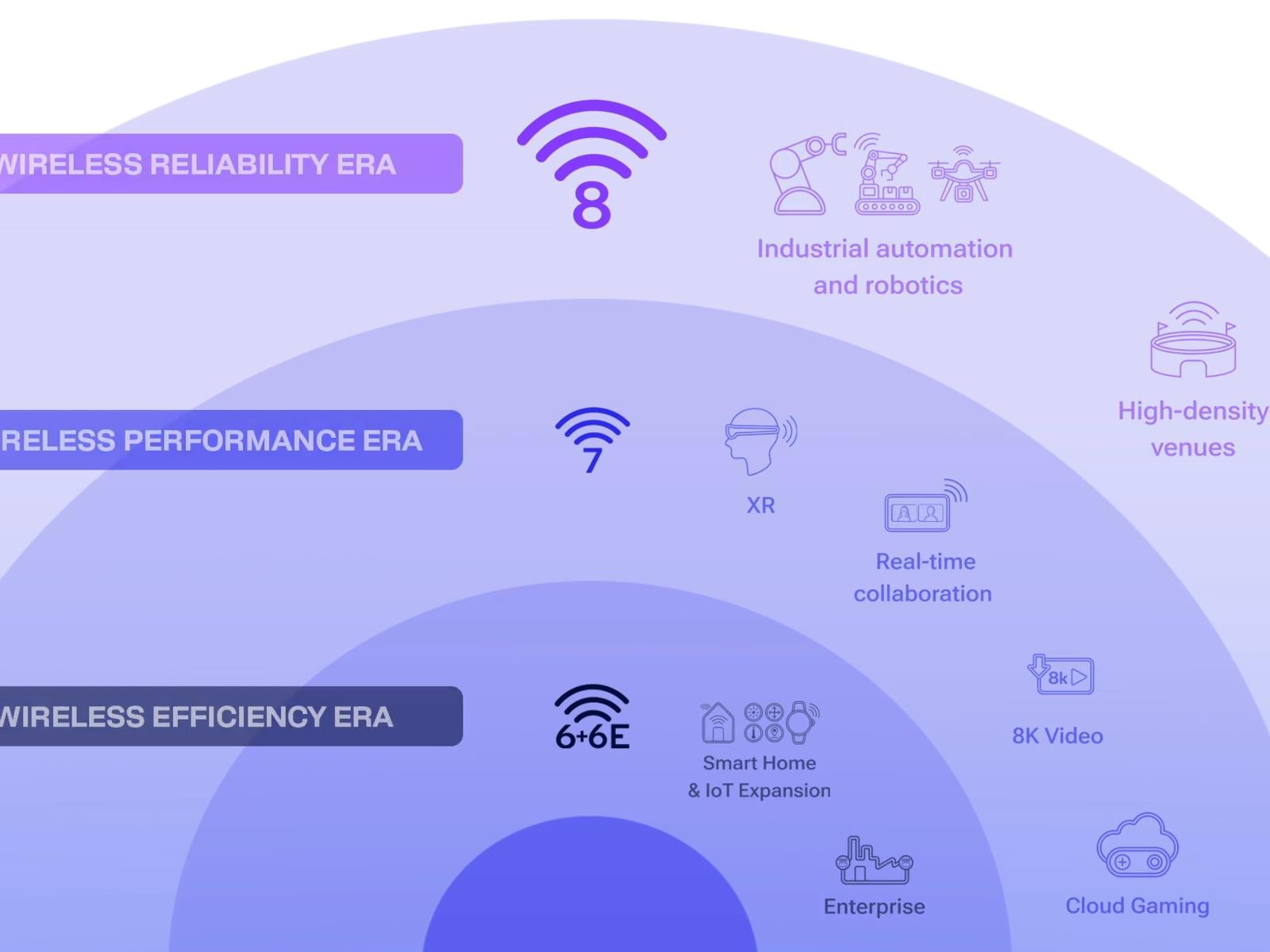
Qualcomm Unveils Wi-Fi 8-Fueled Snapdragon Wear Elite Platform With Native AI For Ultra-Fast Connectivity

Qualcomm Unveils Wi-Fi 8-Fueled Snapdragon Wear Elite Platform With Native AI For Ultra-Fast Connectivity
At Mobile World Congress 2026, Qualcomm is eagerly showing off its next-gen of “truly personal, always-on, intelligent wearable computing devices” powered by its Snapdragon Wear Elite platform, which includes support for Wi-Fi 8 and a built-in NPU. As Qualcomm notes, Snapdragon Wear Elite is the first NPU-powered wearable platform in the industry,