Here’s What’s Happening (and Not Happening) With Smart Rings in 2026

We may earn a commission from links on this page.

Smart rings are already having a strange year. In January, I saw smart rings taking on all kinds of tasks at CES, looking like some kind of wave of the future. Then I came home and discovered that the brand-new Luna smart ring I was reviewing had already been pulled off the U.S. market. I think it’s time to take a look at why the smart ring market is so weird, where I see its potential, and what I miss about the earlier days of this technology. 

The lawsuit that’s keeping some smart rings off the U.S. market

To understand why some rings have disappeared (or aren’t launching here), you need to know about a U.S. International Trade Commission verdict from 2025. Oura sued two of its competitors, Ultrahuman and RingConn, claiming they infringed on a patent it had for the design of a smart ring. The ITC agreed, and those companies had to pull their rings from the U.S. market by October of 2025. Ultrahuman did so; RingConn instead made a deal to license Oura’s patent and pay them royalties. 

The patent at issue is this one. It describes a smart ring in such general terms that Oura is able to claim that pretty much all smart rings violate it. I’m no patent lawyer, but it seems strange to me that a company should be able to use a 2024 patent to force competitors off the market in a product category that’s been around longer than that. 

Oura called the ITC ruling a “decisive legal victory,” and published this blog post explaining why they won. Ultrahuman published its own blog post detailing why it thinks the decision was a mistake, giving some background on the patent at issue. I’d recommend reading both of those if you want to get up to speed on who is claiming what. 

Oura then brought legal action against yet more smart ring makers, including Noise (which makes the Luna ring), Amazfit, Reebok, and Samsung. Ironically, Samsung had tried to get a judgment before all this saying that its patents don’t infringe on Oura’s, but that suit was thrown out because Oura had not yet tried to sue Samsung. 

I’ve asked several of these companies about where the legal action stands from their point of view, but understandably they’re all guarded and don’t want to say much. Here’s my best understanding of the current state of the market for the major brands I’ve reviewed or that I personally find interesting: 

  • Oura: The Oura ring is still going strong, of course. Here’s my review of the Oura Ring 4.

  • Ultrahuman: Not available in the U.S., but there’s a chance that could change. Here’s my review of the Ring Air, and my announcement about the new Ring Pro. The Pro uses a different design than the Air, and Ultrahuman has hinted that it hopes to be able to bring it to the U.S. market legally. 

  • RingConn: Reached an agreement to keep selling its rings in the U.S. by making royalty payments to Oura. I’m working on a review of RingConn 2, and there is a RingConn 3 coming later this year.

  • Luna: The ring is not available in the U.S.; here is my review of it anyway. The company seems to be bringing the same software features to a smart band due to launch this year. 

  • Samsung: The Galaxy Ring is still available in the U.S. as far as I can tell. I’ll be reviewing it soon. 

  • Amazfit: The Helio Ring still seems to be available as well.
Why rings are exciting right now

I’ve been following the smart ring market since 2018, when I found the Motiv ring (now defunct) to be the “perfect minimalist fitness tracker” except for the teensy problem that it didn’t capture heart rate very well during workouts. (Motiv was bought in 2020 by Proxy, and Proxy was bought in 2023 by Oura.)

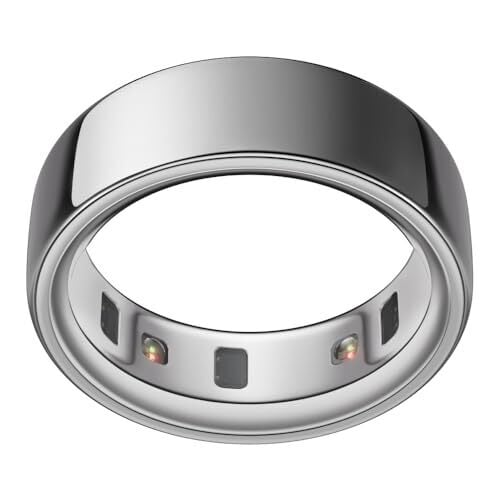
Oura first got around the heart rate accuracy problem by marketing the ring for sleep; it’s a lot easier to get good measurements when a person is lying completely still. But the technology has improved, and now all of the products I listed above can get mostly-plausible heart rate readings in a variety of contexts, although none of them let you look very closely at the graphs. Smart rings now also have blood oxygen sensing, better battery life, and more options for colors and finishes. They don’t all have sensor bumps on the interior anymore. In short, smart rings have been working better and looking nicer over time. 

So now we have sleek, decently accurate wearables that you can slip on your finger and pretty much ignore. That ability to ignore the ring while you go about your day is why I’ve managed to use my Oura ring for so long. It becomes a part of you like a wedding ring does—you wear it all the time, whether you’re thinking about it or not, and it feels weird not to have it on. 

It’s impressive how many more features companies have been putting into rings. RingConn’s next ring will have haptic alerts. Ultrahuman’s new ring packs features like alarms and diagnostics into its charging case. But even though the hardware is getting better, and many companies are developing more and more software features (especially Oura and Ultrahuman), it’s arguable whether the experience of using a ring has actually gotten better, or if it’s just more complicated. 

Where rings still struggle

Rings have some inherent issues, and I’m going to lay out my standard list of complaints here. First, smart rings are just not good workout trackers. They’re too chunky to allow for a proper grip in weightlifting workouts, and they’re not comfortable for exercises that require you to grip or pull anything with your hands (deadlifts, the rowing machine, even chores like shoveling snow). 

Since rings don’t have their own display, you need to use a phone app to start and stop workouts or to monitor your data. Auto-detection of workouts is an OK way to bridge that gap, but it’s not good. You’ll get plenty of workouts detected at the wrong time, or of the wrong type, or your hair brushing session will get tagged as a swim. Meanwhile, smart rings may measure heart rate better than they used to, but they still don’t give reliable, exportable heart rate data. 

Sizing will probably always be an issue. You need to get a sizing kit to know what size ring to buy, and makers tend to only offer rings in whole sizes within a certain range. Our fingers swell and shrink from hour to hour and season to season, so there isn’t necessarily a single reliable size that will always fit. There’s no ring equivalent to a watch band you can adjust and tighten. 

Finally, one of the biggest issues with smart rings, and one that I don’t think gets talked about enough, is battery lifetime. Not how long you can go between charges, but how many years you can use the ring before it stops holding a charge. 

I’ve had multiple Oura rings die right around the two-year mark. No smart ring company wants to go on the record with an estimate of battery life, but whenever I’ve mentioned that my smart rings have all died after about two years, I tend to get nods of agreement. Sometimes on social media you’ll see a couple exchanging smart rings in place of traditional wedding rings. I always wonder how they’ll feel about replacing them in a few years.

Ring companies are running out of ideas for things we actually want

Despite all the innovation in recent years, the smart ring I liked the most was Oura’s gen 2 (RIP, 2018-2021). And you know why? Besides the Oura app not having a subscription fee at that time, the best feature was that the LEDs used infrared rather than visible light. There was no green glow from your finger at night. It was beautifully ignorable.

I didn’t use it for workouts, and the app didn’t support workout tracking or even step tracking at that time. It just gave me data on my sleep and HRV. If I wanted to know what heart rate zones I hit during workouts, I could use another device for that, or just go without knowing. 

But in the years since, Oura has tried to be more things. It’s now a fitness tracker, a blood oxygen sensor, a tracking app for your continuous glucose monitor, and more. All wearables seem to be heading this direction, trying to swallow up their competitors’ features the same way every social media app is trying to also be Snapchat and TikTok in addition to whatever it was in the first place. 

I’m not sure if we all want this plethora of features from our smart rings. A smart ring is never going to be an Apple Watch. I miss the gen 2 Oura ring that just tracked my sleep without shining lights in my face. I want that back, and I’d love for it to be inexpensive since it doesn’t need to do all that much. 

But the companies aren’t going to go that direction, and I get why (capitalism). Instead, they’re looking for features and services they can add to justify charging more. Oura added a subscription in 2021, then in 2025 rolled out new colors of rings and “multi-ring support” in hopes you might want to buy two $500 rings. 

Other ring companies have figured out that being “subscription-free” is their best counter to Oura’s business model. That said, they’re still competing in the same world. So Ultrahuman’s main features are free to use, but you’re invited to pony up for a number of mini-subscriptions that provide extra features. Smart ring companies are also looking to other offerings, especially services you can pay for more than once. 

Both Oura and Ultrahuman will sell you a panel of blood tests, and recommend repeat testing. Both of these companies also have partnerships with the makers of continuous glucose monitors (which themselves run about $100/month) so you can use the smart ring app to monitor your blood glucose throughout the day—a controversial offering for people without a medical need. (CGMs are, of course, incredibly valuable to people with diabetes.) 

So the inexpensive, unobtrusive smart ring of my dreams isn’t likely to occur anytime soon. It may be what I want, but it doesn’t seem to be a viable business model. Looking to the future, I hope to see more rings on the U.S. market, with more of a variety in what they offer. I’m excited to see where Ultrahuman goes with its superpowered charging case. But it’s hard to imagine smart rings coming up with many more features that are actually worth paying for. 

Our Best Editor-Vetted Tech Deals Right Now


Amazon Fire TV Soundbar


—
$99.99

(List Price $119.99)

Deals are selected by our commerce team

Skateboarding train game Denshattack! is out on June 17

Denshattack!, the skateboarding game that manages to mix an anime-inspired narrative with Tony Hawk Pro Skater-style grinding and wall-riding, is coming out on June 17. The game’s publisher Fireshine Games announced its launch date alongside a new trailer at Nintendo’s recent Indie World event.

If it wasn’t clear from previous trailers, Denshattack! remains stylish as hell, filled to the brim with bright colors and over-the-top animation. The new trailer doesn’t offer much more in terms of what the story of the game will be, but it does highlight its fast-paced gameplay, which will have you flipping and grinding a tiny train through settings like a futuristic cityscape, jungles and a snowy mountain region.

Among the other charms of Denshattack!, the game also features original songs from composers Tee Lopes (Sonic Mania), Ryo Nagamatsu (Splatoon series), Richard Jacques (Jet Set Radio series) and Takenobu Mitsuyoshi (Daytona USA). If you’re at all curious to try Denshattack! before it comes out this summer, demos of the game are available to download right now for PC and Switch 2.

Denshattack! will be available on PC, PlayStation 5, Switch 2 and Xbox Series X/S when it launches June 17. The game will also be available to play via Xbox Game Pass.

This article originally appeared on Engadget at https://www.engadget.com/gaming/skateboarding-train-game-denshattack-is-out-on-june-17-210314631.html?src=rss

Meta’s AI Display Glasses Reportedly Share Intimate Videos With Human Moderators

An anonymous reader quotes a report from Engadget: Users of Meta’s AI smart glasses in Europe may be unknowingly sharing intimate video and sensitive financial information with moderators outside of the bloc, according to a report from Sweden’s Svenska Dagbladet released last week. Employees in Kenya doing AI “annotation” told the journalists that they’ve seen people nude, using the toilet and engaging in sexual activity, along with credit card numbers and other sensitive information.

With Meta’s Ray-Ban Display and other glasses with AI capabilities, users can record what they’re looking at or get answers to questions via a Meta AI assistant. If a wearer wants to make use of that AI, though, they must agree to Meta’s terms of service that allow any data captured to be reviewed by humans. That’s because Meta’s large language models (LLMs) often require people to annotate visual data so that the AI can understand it and build its training models.

This data can end up in places like Nairobi, Kenya, often moderated by underpaid workers. Such actions are subject to Europe’s GDPR rules that require transparency about how personal data is processed, according to a data protection lawyer cited in the report. However, Svenska Dagbladet’s reporters said they needed to jump through some hoops to see Meta’s privacy policy for its wearable products. That policy states that either humans or automated systems may review sensitive data, and puts the onus on the user to not share sensitive information.


Read more of this story at Slashdot.

Call Of Duty Reboots Blackout As Black Ops Royale With New Rules And Upgrades

Call Of Duty Reboots Blackout As Black Ops Royale With New Rules And Upgrades
Call of Duty: Warzone is introducing a new Black Ops Royale mode with some very familiar elements reminiscent of both Call of Duty: Black Ops 4 and last year’s Black Ops 7. From Black Ops 7, we have a port of the large-scale Endgame mode Avalon map, and from Black Ops 4 we have a renewed take on the Blackout mode, breaking away from some of

Drinkbox Studios’ Blighted will be out for Switch 2 and PC this fall

During today’s Nintendo Indie World presentation, we got a narrower time frame for when and where we’ll be able to play the next project from Drinkbox Studios. The team announced that Blighted will be coming out in this fall for both the Nintendo Switch 2 and for PC. It’ll arrive on the same date for both platforms, but we don’t have any more specific timeline than the season.

We first heard about Blighted during last year’s Summer Games Fest. With past credits such as Guacamelee!, Guacamelee! 2 and Severed, the studio is now turning its eye toward a 3D Metroidvania-RPG. It may be a new direction in genre, but Drinkbox’s signature moody, eerie vibes do seem to be returning in heaps for Blighted. The core premise of the game revolves around the player regaining lost communal memories and also eating brains, so it’s definitely heavy on the surreal and slightly macabre. Blighted will also have options for both solo and co-op play of its story.

This article originally appeared on Engadget at https://www.engadget.com/gaming/drinkbox-studios-blighted-will-be-out-for-switch-2-and-pc-this-fall-203638261.html?src=rss

10 Hacks Every Bluesky User Should Know

If you’re tired of X and Threads, it might be time to move to greener, or perhaps bluer, pastures. Lifehacker’s own Joel Cunningham moved to Bluesky way back in 2024, and since then, a lot of our writers and editors have followed suit and are living it up over on the butterfly site. It turns out that, with the right platform, it’s possible to like social media again.

Bluesky is quite unlike most other social media networks. You have a lot of control over who sees your posts and how they reply to them, plus you can block and mute users en masse and tweak moderation settings just so. If you’re new to Bluesky, or if you’ve just been using the default settings, it’s time to dig deeper into all the ways you can customize your experience.

Use starter packs to find people to follow

Bluesky Starter Packs

Credit: Khamosh Pathak

If you’ve just started using Bluesky, your feed will feel quite light, especially if you want to venture outside of the algorithmically driven Discover feed and look at what makes the app unique.

But there are ways to get past this issue. Bluesky calls them Starter Packs, and anyone can create and share them. Starter Packs are essentially lists of profiles that you can follow with just one click. A website like Bluesky Starter Pack is a great place to discover these packs, since it lets you search and filter based on your interests or even which accounts are the most popular. Open a Starter Pack and click the Follow All button if you want to follow everyone in the list. Or, you can open a Starter Pick and pick and choose people to follow individually.

Find and pin feeds

Discover and Pin Feeds in Bluesky

Credit: Khamosh Pathak

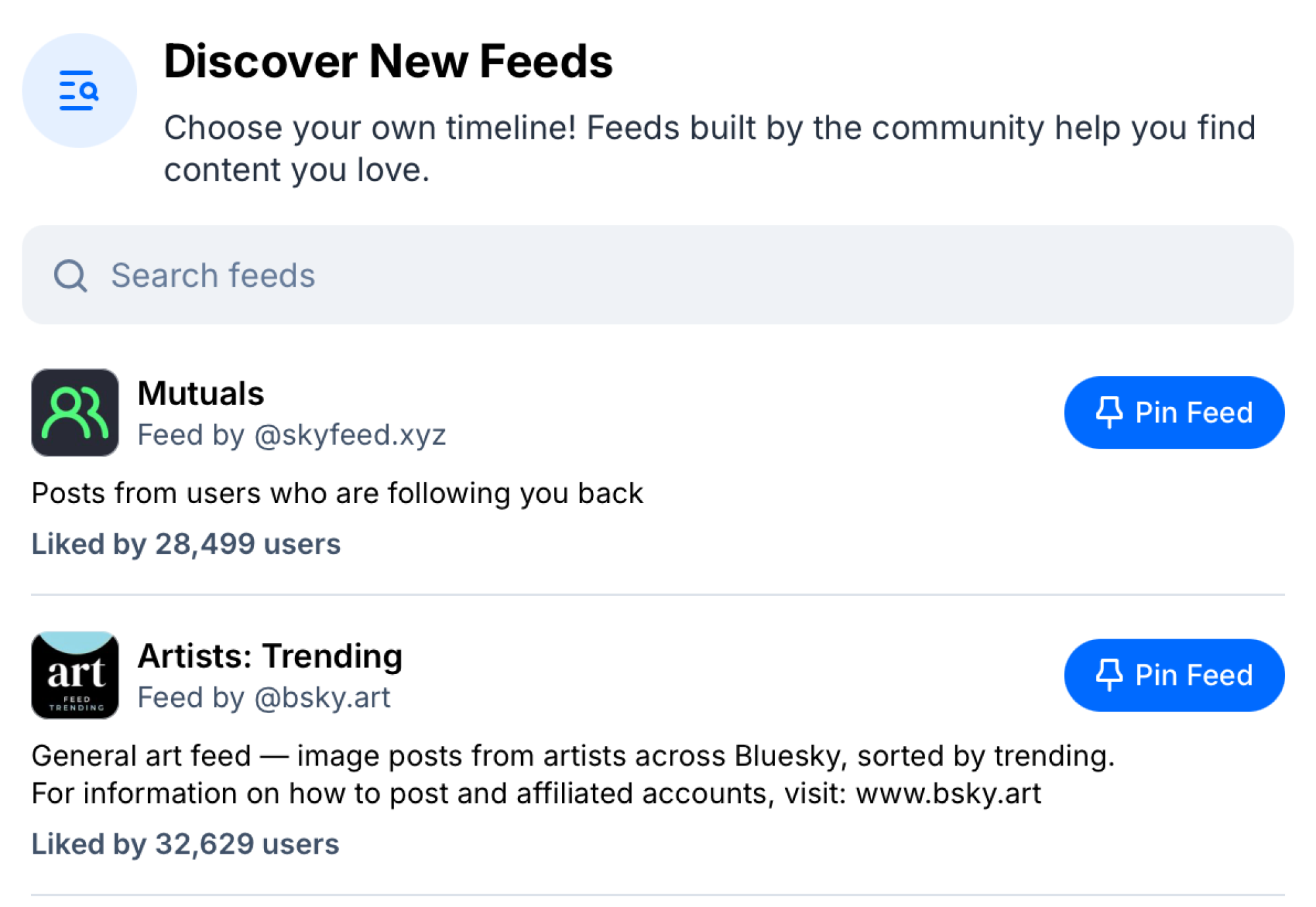
Bluesky really encourages you to go outside of your typical network of mutuals, and that’s why there’s a Feeds section in the sidebar. Anyone in the community can build a custom feed, and you can subscribe to it with just a click. That means you don’t have to stick to the usual defaults, like your Following feed, and can instead browse through posts however you wish.

Bluesky has a few algorithmically generated feeds like Discover and Popular with Friends, but the vast majority of feeds are custom-made. You can search for any topic, and when you like what you see, you can click Pin Feed to add it to the top of your scrolling window. Then, all you need to do is tap or click on a pinned feed to swap to it.

Try AT Protocol apps like Flashes and Deck Blue

TweetDeck style layout for Bluesky.

Credit: Pranay Parab

Just like Mastodon, Bluesky encourages third-party apps. Developers can directly plug in to the underlying AT Protocol and create their own apps on top of Bluesky.

This means, yes, there is a TweetDeck alternative for Bluesky, in both a website form and as a Mac app (I prefer the Mac app, honestly). If you’re more into photos, you can also try out Flashes or Pinksky, which recreate the Instagram experience by focusing on photos and videos.

Securely sign up for third-party apps using app passwords

App Passwords in Bluesky

Credit: Khamosh Pathak

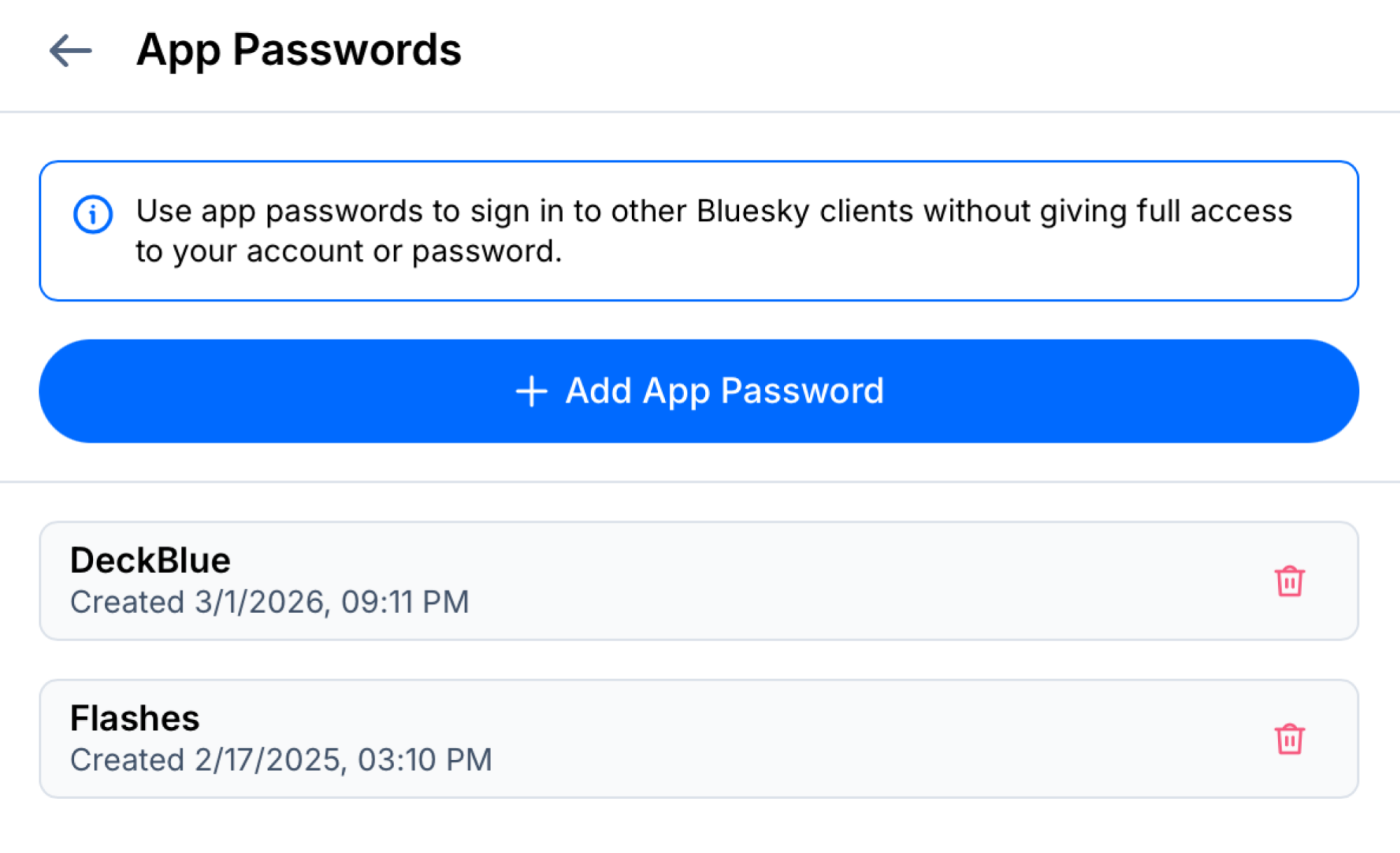
Bluesky doesn’t have a traditional authentication system where you can sign into third-party apps by simply connecting them to your Bluesky account (like you can using your Google or Apple accounts). So how do you use all those third-party apps built on the AT Protocol? Simple: uniquely generated app passwords. Each Bluesky service or app will ask you for a unique app password that will only work for that particular service, and isn’t the same as your main Bluesky password. This way, your Bluesky account won’t be compromised even if the app has a leak, and you can quickly change the password or revoke access if you no longer want to use that service.

Go to Settings > Privacy and Security > App Passwords > Add App Password to create a new app password. Make sure to give it a unique name, so you can easily find it. You can delete an app password using the Delete button next to the service name.

Choose who gets to reply to you, and how

Post Interaction Settings in Bluesky

Credit: Khamosh Pathak

As social media platforms go, Bluesky offers perhaps the best moderation tools in the business. A prime example is how you can restrict replies to your posts.

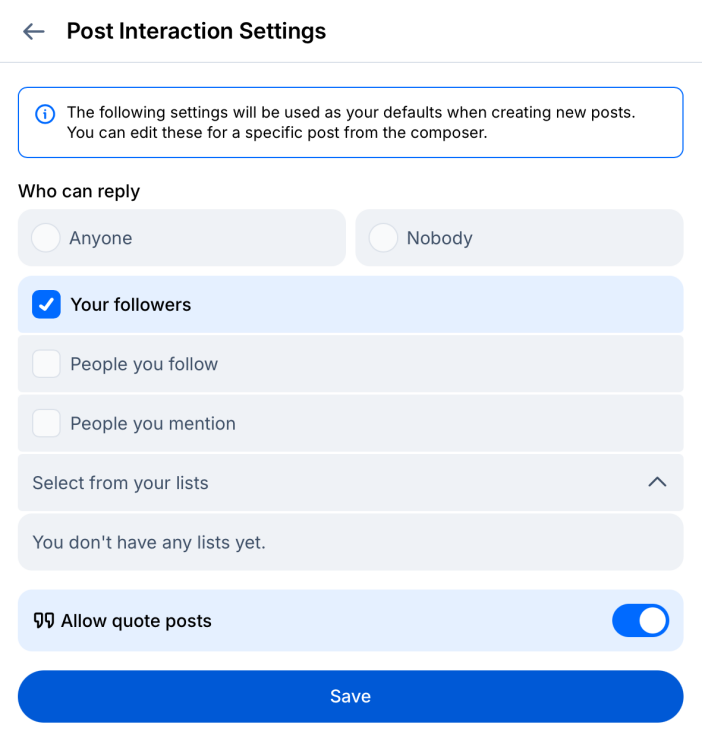
Go to Settings > Moderation > Interaction Settings, and you’ll find a plethora of options. You can open up replies to everyone, or you can even go nuclear and block anyone from replying to your posts.

Then there are the granular options. You can restrict replies to just your followers, people you follow, people you mention, or you can create a list of people who are allowed to reply to you.

While you’re here, you can also disable the “Allow Quote Posts” feature, so others on the platform can’t repost your posts directly on their pages.

Take control of your posts, even after they’re in the wild

Detach Quote on Bluesky

Credit: Bluesky

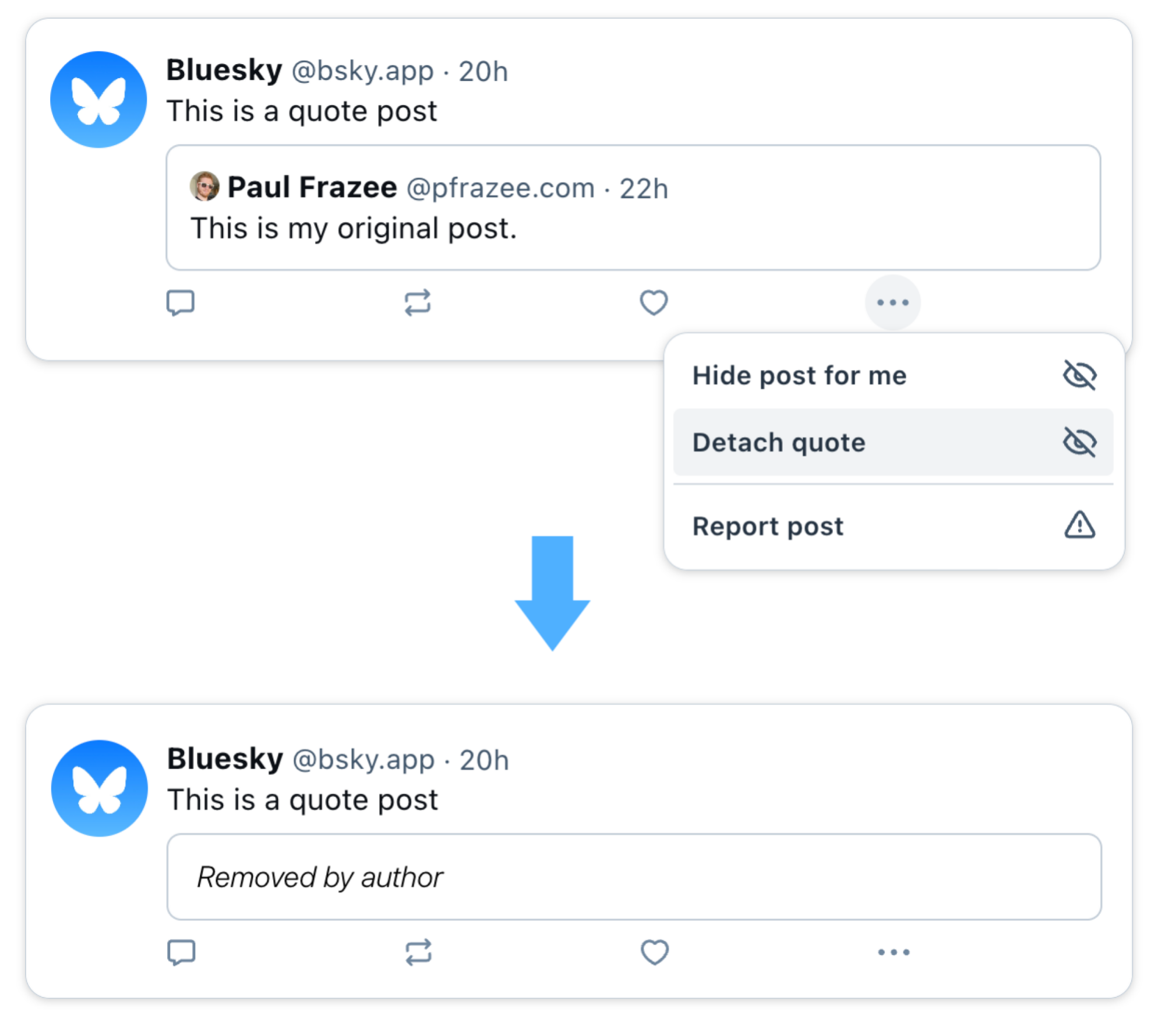
If someone has quoted your post and you would rather they didn’t, you can quickly fix that. Go to the post, click the three-dots menu, and choose the Detach quote option. The post will remain as is, but your quote wll be removed.

Similarly, you can quickly hide replies to a post. Choose a reply, click the three-dots menu, and from here, you can choose to hide the reply for you, or for everyone.

Note that this won’t prevent people who can see your posts from screenshotting them to share as images.

Use community-created mute and block lists

Block or Mute accounts in bulk.

Credit: Khamosh Pathak

Bluesky has community lists to help you subscribe to new accounts, and also to block accounts en masse. You’ll find many moderation lists for different types of posters online, either by searching on Bluesky or looking at third-party websites like ClearSky. This way, you can quickly block brands, grifters, or whoever else you might not want to see in one click. This is a great way to sort out at least the more infamous or nefarious profiles. To use a moderation list, open it, click Subscribe, and then choose either Mute accounts or Block accounts.

Follow any profile using RSS

Bluesky Posts in RSS Reader

Credit: Khamosh Pathak

We say it often at Lifehacker: you really should be using RSS. Just like Bluesky, it’s another way to find or read new blogs and news without relying on an algorithm. And you can even follow Bluesky profiles in your RSS reader of choice, no setup required. Go to a Bluesky profile and add ‘/rss’ to the end of the URL. Then, copy it and add it as a source in your RSS reader of choice. Easy peasy.

Repeat this for as many profiles as you want, sort them in easy to access folders, and you can now read posts and links from your favorite Bluesky profiles right in your RSS reader, so you can easily mix them in with your articles and blogs.

Use your own domain name as your username

Change handle to domain in Bluesky.

Credit: Khamosh Pathak

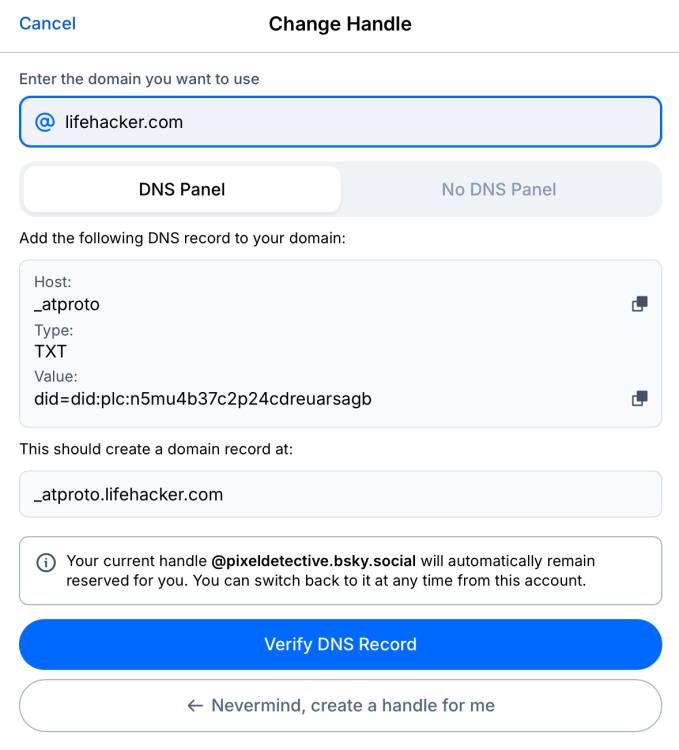
This is one of my favorite features. Bluesky lets users and organizations change their handles to their own, custom domain addresses. A handle like “@lifehacker.bsky.social,” which is written in the default format, can be changed to just say “lifehacker.com”.

This works through a form of simplified self-verification (though Bluesky now also offers a traditional verification system). You’ll need access to your domain manager to pull it off.

Go to Settings > Account > Handle and choose I have my own domain. Then, input your domain address. Bluesky will show you the DNS records that you need to update using your domain manager. Once that’s done, click Verify DNS Record and wait for the handle to update automatically.

Post to Bluesky, Threads, and Mastodon at the same time

Cross posting using Croissant app

Credit: Justin Pot

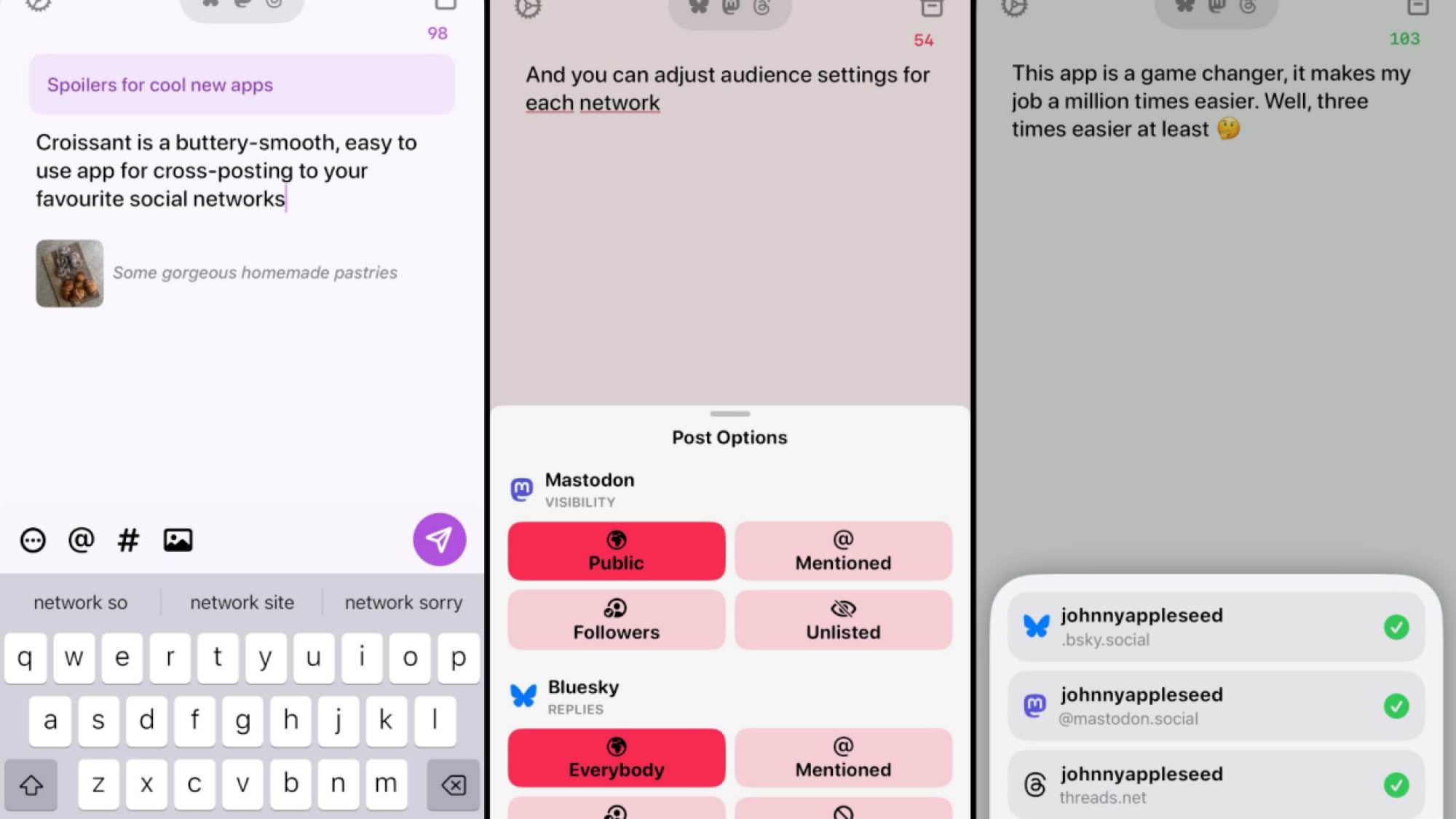
Even if you’re on Bluesky, that doesn’t mean you only have to use Bluesky. You can treat Bluesky as your home base, and still post your content to other networks like Threads and Mastodon at the same time, using an app like Croissant. It’s a simple app that lets you connect your Bluesky, Threads, and Mastodon accounts all at once, taking advantage of their fediverse connectivity. You can then use Croissant to draft your posts, and send them out to all three networks at once. You can schedule posts, too, which is helpful if you’re using Bluesky in a professional capacity. Croissant costs $2.99/month, or $19.99/year.

What we can learn from scientific analysis of Renaissance recipes

Forget “eye of newt and toe of frog/wool of bat and tongue of dog.” People in the 16th century were more akin to DIY scientists than Macbeth’s three witches when it came to concocting home remedies for everything from hair loss and toothache, to kidney stones and fungal infections. Medical manuals targeted to the layperson were hugely popular at the time, according to Stefan Hanss, an early modern historian at the University of Manchester in the UK. “Reader-practitioners” would tinker with the various recipes, tweaking them as needed and making personalized notes in the margins. And they left telltale protein traces behind as they did so.

Hanss is part of an interdisciplinary team of archaeologists, chemists, historians, conservators, and materials scientists who have analyzed trace proteins from the fingerprints of Renaissance people rifling through the pages of medical manuals. The team reported their findings in a paper published in The American Historical Review. It’s the first time researchers have used proteomics to analyze Renaissance recipes, enhanced further by in-depth archival research to place the scientific results in the proper historical context.

“We have so many recipes of that time, [including] cosmetic, medical, and culinary recipes, as well as handwritten recipes passed down for generations,” Hanss told Ars. “It’s really a key element of Renaissance culture, and [the manuscripts] are all covered with scribbled marginalia of [past] users. Experimentation was everywhere. It’s not only about book-learned knowledge but hands-on practical knowledge. It’s a key change in the way people constructed knowledge at that time.”

Read full article

Comments

Downdetector and Speedtest have been sold for over $1 billion

The next time you check your internet speed or whether your favorite site is down, another company may be profiting. On Tuesday, Ziff Davis announced that it sold its Connectivity division, which includes Ookla’s Speedtest and Downdetector, to Accenture. The deal is worth $1.2 billion in cash.

According to Reuters, the deal will allow Ziff Davis to focus on its core brands, including IGN, Mashable and Everyday Health. Brand consolidation appears to be the name of the game, as the company recently laid off some of Eurogamer‘s most experienced editors and its entire video team. That followed a rotation of editorial staff among Ziff Davis’s other gaming publications, which reduced VG247 to a small, two-person gaming guides site.

Ziff Davis bought Ookla for $15 million in 2014. Reuters notes that the division seized on the 5G rollout and a surge in pandemic-driven bandwidth demand to boost its impressive return on the investment. (Connectivity generated a whopping $231 million in 2025.)

Accenture is a global technology consulting company headquartered in Dublin. The company views the acquisition as a key step in building “end-to-end network intelligence services essential for AI-based transformation.” (Can someone who speaks corporate translate, please?) The deal may take a few months to be finalized, and Ziff Davis will continue to operate Speedtest and Downdetector in the meantime.

This article originally appeared on Engadget at https://www.engadget.com/cybersecurity/downdetector-and-speedtest-have-been-sold-for-over-1-billion-201741894.html?src=rss

Musical adventure game Mixtape will be ready to rock out on May 7

Time to dust off your boomboxes and your walkmans: musical coming-of-age game Mixtape is due out this spring. At its reveal, this next title from game developer Beethoven and Dinosaur was targeting a 2025 release, but as happens to the best laid plans, the game’s arrival got pushed back. Today’s trailer announced that the new launch date for the narrative- and music-focused adventure game is May 7, 2026. Despite the new date, Mixtape will still be coming to the usual array of current gaming platforms: Steam and the Epic Games Store, PlayStation 5, Xbox Series X/S and the Nintendo Switch 2. 

Johnny Galvatron, game director for the project, spoke with Engadget recently about the process of conveying that familiar feeling of restless teenage ennui in this medium. “Idleness is hard to explore as a video game, and one of the interesting things about being a teenager is you just hang out a lot, and sometimes it just sucks,” Galvatron said. “So I love that we made a game that shows that idleness.”

As the name suggests, the soundtrack is core to the experience of this game about three friends at the end of high school. Expect to hear tracks by iconic punk and alternative artists such as DEVO, Joy Division, Siouxsie and the Banshees, Smashing Pumpkins and Iggy Pop.

This article originally appeared on Engadget at https://www.engadget.com/gaming/musical-adventure-game-mixtape-will-be-ready-to-rock-out-on-may-7-200500458.html?src=rss

OpenAI Amends Pentagon Deal As Sam Altman Admits It Looks ‘Sloppy’

OpenAI is amending its Pentagon contract after CEO Sam Altman acknowledged it appeared “opportunistic and sloppy.” On Monday night, Altman said the company would explicitly restrict its technology from being used by intelligence agencies and for mass domestic surveillance. The Guardian reports: OpenAI, which has more than 900 million users of ChatGPT, made the deal almost immediately after the Pentagon’s existing AI contractor, Anthropic, was dropped. […] The deal prompted an online backlash against OpenAI, with users of X and Reddit encouraging a “delete ChatGPT” campaign. One post read: “You’re now training a war machine. Let’s see proof of cancellation.”

In a message to employees reposted on X, the OpenAI CEO said the original deal announced on Friday had been struck too quickly after Anthropic was dropped. “We shouldn’t have rushed to get this out on Friday,” Altman wrote. “The issues are super complex, and demand clear communication. We were genuinely trying to de-escalate things and avoid a much worse outcome, but I think it just looked opportunistic and sloppy.” Upon announcing the deal, OpenAI had said the contract had “more guardrails than any previous agreement for classified AI deployments, including Anthropic’s.”

[…] However, observers including OpenAI’s former head of policy research, Miles Brundage, have queried how OpenAI has managed to secure a deal that assuages ethical concerns Anthropic believed were insurmountable. Posting on X, he wrote: “OpenAI employees’ default assumption here should unfortunately be that OpenAI caved + framed it as not caving, and screwed Anthropic while framing it as helping them.” Brundage added: “To be clear, OAI is a complex org, and I think many people involved in this worked hard for what they consider a fair outcome. Some others I do not trust at all, particularly as it relates to dealings with government and politics.”

In his X post, he also wrote that he would “rather go to jail” than follow an unconstitutional order from the government. “We want to work through democratic processes,” Brundage wrote. “It should be the government making the key decisions about society. We want to have a voice, and a seat at the table where we can share our expertise, and to fight for principles of liberty.”


Read more of this story at Slashdot.

There are plenty of great choices if you want to spend less than $15K on an EV

Last time we looked at the used electric vehicle market, it was to see what the options are if you’re spending $10,000 or less. Two solid choices emerged quickly: a BMW i3 if you don’t need much range, and a Chevrolet Bolt if you do. Lots of earlier Nissan Leafs made the list, too, but these had limited range and air-cooled batteries to contend with; we also included an assortment of compliance cars and, perhaps for the very brave, a Tesla. But what happens when you grow the budget by 50 percent? What EVs make sense when there’s $15,000 burning a hole in your pocket?

As it turns out, at this price point the planet starts looking a lot more like your own personal bivalve. For starters, the cars that looked good at $10,000 look a lot better in the next bracket up, generally newer model years or with lower mileage than the cheaper alternatives. Which means you can afford the facelifted i3. For model-year 2018 onwards, BMW fitted its electric city car with a larger-capacity battery, which means up to 114 miles (183 km) of range on a full charge, or about 150 miles (241 km) if it’s the one with the two-cylinder range-extender engine. Apple CarPlay and Android Auto might also be built into these i3s, although there are aftermarket solutions now, too.

No aftermarket is required to get CarPlay or Android Auto on any of the Bolts you might buy for under $15,000, which include a mix of pre- and post-facelift (model-year 2022 onwards) cars, although few of the slightly more spacious Bolt EUVs. Like the i3s, expect lower mileage examples, plus all the usual caveats: slow DC charging and seats that can get a bit hard on long drives.

Read full article

Comments

Elgato’s Stream Deck + XL adds a touch strip and dials to an already massive array of buttons

Elgato’s Stream Deck helped popularize using a macro pad among aspiring livestreamers and regular desk jockeys, so it’s only natural for the brand to continue to expand on its lineup. After announcing a suite of new Stream Deck devices last year, Elgato is kicking off 2026 with the Stream Deck + XL, a larger version of the already big Stream Deck XL, and a collection of new audio accessories that should help improve sound mixing in and out of livestreams.

The Stream Deck + XL not only expands on the number of buttons on the regular Stream Deck XL (from 32 customizable buttons to 36 customizable buttons), but also introduces multiple new control options, including a touch strip and six dials. All the controls on the new Stream Deck are customizable, and the presence of the touch strip means you can receive visual feedback about adjustments you’re making while you’re making them. The new macro pad should still work well as a way to quickly end a live stream or queue up a transition, and Elgato says that paired with its new Wave XLR Pro audio interface, the Stream Deck + XL could also become a straightforward tool for sound mixing, too.

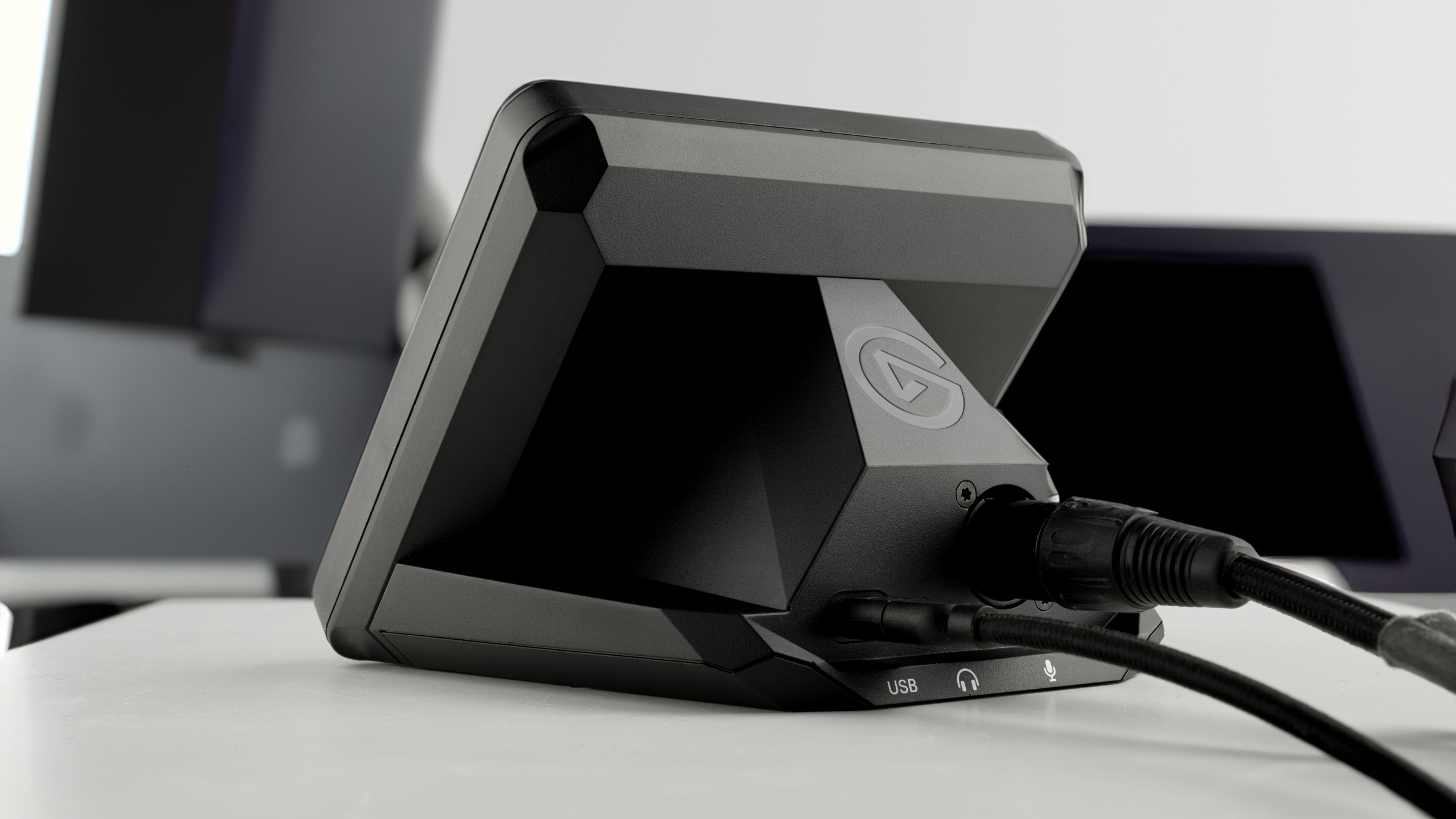
The new XLR DOck MK. 2 on the back of a Stream Deck, with an XLR cable plugged in.
The XLR Dock MK. 2 adds an XLR input to the Stream Deck +.
Elgato

The Wave XLR Pro “integrates two fully independent XLR inputs with 80 dB of clean gain each,” Elgato says, along with multiple headphone outputs and “a built-in Maximizer effect” that can maintain consistent loudness. When you’re livestreaming, Elgato’s says the Wave XLR Pro’s “per-channel ducking” can also automatically lower other audio sources when you speak. The XLR Pro is one of several Wave audio products Elgato is announcing alongside the Stream Deck + XL, a lineup which also includes a new condenser microphone and a new way to connect XLR microphones to the company’s smaller Stream Deck. The XLR Dock MK. 2, exclusively compatible with the Stream Deck +, lets you connect professional XLR audio devices directly to your Stream Deck. The Dock “adds 80 dB of clean gain, 48V phantom power, onboard DSP effects, and low-latency VST Insert support,” and can be entirely managed through the Stream Deck’s buttons and dials.

Elgato says both the Stream Deck + XL and the XLR Dock MK. 2 are available to pre-order today for $350 and $130, respectively. The Wave XLR Pro will cost $350 when it launches at some point in Q2 2026.

This article originally appeared on Engadget at https://www.engadget.com/computing/elgatos-stream-deck–xl-adds-a-touch-strip-and-dials-to-an-already-massive-array-of-buttons-195200129.html?src=rss

Intel 18A Xeon 6+ Clearwater Forest CPUs Debut With Up To 288 Cores At MWC 2026

Intel 18A Xeon 6+ Clearwater Forest CPUs Debut With Up To 288 Cores At MWC 2026
AMD isn’t the only company launching non-mobile processors at Mobile World Congress 2026. Intel’s got some hardware to show off today, too, in the form of the Xeon 6+ processors that we know better by their codename “Clearwater Forest”. These chips are the successors to Sierra Forest, the all E-core Xeons that Intel launched back in 2024.

The long-delayed The Division Resurgence hits iOS and Android on March 31

Ubisoft is finally releasing The Division Resurgence on March 31 for both iOS and Android. This game was first announced all the way back in 2021 and has suffered from delays in recent years.

This is a free-to-play mobile game set in the universe of The Division, complete with an MMO-style shared open world and both co-op and solo gameplay. It also features an original story that’s set during the early days of the pandemic in NYC, making it a sequel to the first game but a prequel to the second one.

It’s a third-person action RPG with PvP. The loop looks fairly similar to the mainline games. Players should expect plenty of combat and loot to collect, which in turn can be used to upgrade gear.

Pre-registration is already open for the game at the iOS Store and the Google Play Store. Ubisoft has also announced some perks for The Division 2 players. Franchise veterans will receive some loot upon booting up Resurgence, including gear and clothing. Those who dip into The Division 2 after trying the mobile game will get other perks, including Resurgence-themed gear.

Today’s launch date announcement was part of a 10th anniversary showcase for the franchise. Ubisoft also revealed an anniversary-themed season for The Division 2, which includes “global events inspired by the original game” and an in-game hoodie. The company is also making the Warlords of New York expansion free during this period, which has received a new update focused on realistic combat.

The Division 1 and The Division 2 are both on sale right now, with massive discounts up to 90 percent on PC and 85 percent on PlayStation and Xbox. Today’s update, however, didn’t give us any new information regarding the recently-announced Survivors DLC for The Division 2. We don’t know much about this, except that it’s being described as “an updated take on the survival extraction experience.”

This article originally appeared on Engadget at https://www.engadget.com/gaming/the-long-delayed-the-division-resurgence-hits-ios-and-android-on-march-31-193905948.html?src=rss

Study Finds AI Is Fueling An Alarming Surge In Sophisticated Phishing Scams

Study Finds AI Is Fueling An Alarming Surge In Sophisticated Phishing Scams
The National Consumers League has released its annual fraud report detailing the many scams that most consumers have fallen for. As you’d expect, AI is playing a large role in how the threat landscape has evolved this past year. While the kinds of scams fraudsters are using haven’t changed much, the effectiveness of certain types of scams

I Tried Meta AI’s Shopping Assistant, and I Won’t Be Using It Again

I tend to go out of my way to avoid using Meta AI, but today, I gave it a fair shake. That’s because, as reported by Bloomberg, Meta’s AI service is now testing a shopping assistant. The idea is to compete with similar services from AI platforms like ChatGPT or Gemini, where users tap into the power of generative AI to search the web for product recommendations. That’s all fine and well in theory, but in execution, Meta AI’s shopping assistant is a bit of a disaster—even if it is only in testing.

Meta AI’s shopping suggestions are useless

When I tried accessing Meta AI’s web app logged out, I didn’t see the shopping assistant. But once I signed into my Meta Account, a number of additional options appeared—including “Shopping.” When you click the option, a new “Shopping research” option appears in the model selector, alongside “Thinking” and “Fast.” While you can type your own prompt into the search bar, a number of suggestions appear below, too. At this time, I see things like “Help me find a signature scent,” “Show me mid-century modern living room furniture,” or “Find a one-of-a-kind gift for my friend.” Finally, AI is here to help you spend money when you can’t think of anything to buy.

I was pretty intrigued by that last prompt. Meta AI doesn’t know my friend, and yet, it’s going to find me a “one-of-a-kind” gift they’ll love? I had to see what the bot would come up with. After Meta AI thought for a while (11.6 seconds, or so it tells me), the bot indeed confirmed my suspicions, asking for more info about my friend. It needed details like hobbies and interests, budget, and special memories I could incorporate into the gift. You would think that some gift ideas of my own would pop up by just thinking through these questions myself, but I needed the AI’s help, so I offered the following made-up answers to test it out: “Their hobbies and interests are music, biking, and going to the movies. My budget is $100. We went on vacation to Hawaii and we missed our flight home.”

The AI thought for 45.8 seconds, before returning with its “one-of-a-kind” gift ideas. Its favorite was something that combined my “friend’s” interest in music and our fake vacation to Hawaii: a ukulele. One-of-a-kind, indeed. Meta AI reasoned that, “a Ukulele Starter Kit is the perfect way to bring the island vibes home. The Kala Learn to Play Ukulele Concert Starter Kit is right at your budget and comes with everything they’d need to start, including lessons and a tuner. It’s a great hobby for a music lover and a direct connection to Hawaii.” Other unique gifts included three different types of portable speakers. Thanks.

“For the movie buff,” Meta AI suggested a scratch-off poster of 100 movies everyone should see. Or, as a “subtle nod to our trip,” a movie poster of film shot in Hawaii. This, I’ll admit, is a bit more unique, even though I’d never actually buy that. After scrolling past some bike accessories, though, I really hit gold:

horrible gift ideas from Meta AI
“A Custom Hawaiian Shirt would be hilarious,” said the generative AI chatbot.
Credit: Lifehacker

Meta AI isn’t much more helpful if you search for products yourself

After failing to find a perfect gift for my fake friend, I gave a custom prompt a try next: “I need a new couch for my living room.” This was a bit more helpful. The bot returned a list of five different couches, each with a description of the design and brand, in addition to a carousel of 12 couches of varying prices. To narrow it down, the bot asked me some questions about my home and interests, like how big my living room was and what style I was looking for. I sent the bot the following: “My living room is 200 sq. feet. I want a modern leather couch under $2000.” This returned what seemed to be a relevant list of couches, each within budget and style. I also learned about some new brands I didn’t know before the search, like Article and Poly & Bark.

Finally, I asked Meta AI for help finding a new MacBook. I said I needed something fast, but under $1,200. It thought, then brought back three decent options: a 13-inch M4 MacBook Air for $999, a 15-inch M4 Air for $1,199, or an M3 MacBook Air with extra storage for $1,030. There’s nothing wrong with those suggestions, but there were two issues I found with the result. First, the link for that third MacBook Air recommendation didn’t actually go to a listing, but the homepage for Abed Tahan, a store based in Lebanon. A quick search of the site returned results for the M3 MacBook Air in question, but it was more expensive than Meta AI said it was, and the store doesn’t ship to the U.S. Second, I asked Meta AI whether these results were the latest newest models, and it confirmed they were—despite the fact that Apple had announced new M5 MacBooks this morning. If the bot was working on a limited knowledge base, that’d be one thing, but it performs web searches with each query. It should be able to find this information.

While there are some apparent plusses to Meta AI’s shopping assistant, like its ability to find furniture that fits a particular room size and style, I feel pretty confident that I won’t be using it. The fact that some products links don’t actually work, and that it can’t reliably give you the most up-to-date products on the market, defeats the entire purpose of a shopping tool. I’ll be sticking to my usual shopping research: a traditional search engine combined with real user experiences.

Google introduces Find Hub updates and more AI tools in the March Pixel Drop

Google unveiled its new features coming both to the Pixel line of devices and to the broader Android ecosystem this spring. Two of the more exciting additions for all Android devices are coming through the Find Hub. This can now be used to share real-time locations within Google Messages conversations or to send tracking information to airlines in instances of lost luggage.

With both of those features, users can turn off their sharing any time. Specific to the luggage issue, Google has partnered with 10 airlines to integrate Find Hub locations as part of their baggage recovery process. Using the luggage recovery does require the missing item to have a Find Hub-compatible tag or network accessory.

Another aesthetic update coming to Android is the ability to create a personalized Calling Card. You can choose a photo, font and color for your information that will be displayed to friends within Phone by Google. The short-form video trend is also coming to Google Play. The app storefront will now have a feed of Google Play shorts. It’s being positioned as a discovery tool for seeing different programs in action.

Screenshots of new updates in Circle to Search and Magic Cue on Google's Pixel smartphones
Google (modified)

The March Pixel Drop will bring improvements to the Circle to Search feature on smartphones. Going forward, it should be easier to use Circle to Search either to virtually try items on yourself or to shop for fashion from videos or social media posts. Magic Cue, an AI feature that debuted on the Pixel 10, can now also deliver restaurant recommendations. Pixel smartphones will also get some new personalized looks. Users can create AI-generated custom icons on the home screen with six different styles.

On the smartwatch side, Pixel devices will have new alerts if your phone is lost or left behind, as well as access to Express Pay. Pixel watches will also be getting some new safety alerts for earthquakes, and Satellite SOS is rolling out to more users across Europe, Canada, Hawaii and Alaska.

This article originally appeared on Engadget at https://www.engadget.com/mobile/smartphones/google-introduces-find-hub-updates-and-more-ai-tools-in-the-march-pixel-drop-190000773.html?src=rss

Accenture Acquires Ookla, Downdetector As Part of $1.2 Billion Deal

Accenture is acquiring Downdetector parent company Ookla from Ziff Davis in a $1.2 billion deal to bolster its network analytics and visibility tools for telecoms, hyperscalers, and enterprises. “The deal, which will transfer all of Ziff Davis’s Connectivity division to Accenture, includes Ookla’s Speedtest, Ekahau, and RootMetrics,” notes The Register reports: “Modern networks have evolved from simple infrastructure into business-critical platforms,” said Accenture CEO Julie Sweet in a canned statement. “Without the ability to measure performance, organizations cannot optimize experience, revenue, or security.” Ookla is meant to let them do just that.

Data captured at the network and device layer are used to enhance fraud prevention in banking, smart homes monitoring, and traffic optimization in retail, Accenture said. Ookla’s platform, which lets user’s test their own connectivity speed, captures more than 1,000 attributes per test, and provides the foundation for those analytics, Accenture said.


Read more of this story at Slashdot.

MacBook Air M5 vs. MacBook Air M4: What’s changed beyond the Apple silicon

Apple unveiled a new MacBook Air today, and apart from the new M5 chip, things don’t look remarkably different. Sure, it’s getting a mild refresh, but maybe not in the way most people would want. Namely, it’s more expensive — a $100 price bump across all models. In exchange, the MacBook Air M5 does get faster performance and double the storage.

If you placed the MacBook Air M4 and the M5 in front of me, I wouldn’t be able to tell which was which. The M5 offers an overall CPU/GPU performance boost, along with some extra storage and double the file transfer speeds. Still, I didn’t expect a radical change, but I wish we got more for that extra $100.

It’s not worth jumping to the MacBook Air M5 if you’ve got the M4 unit already, but if you’re working with an older model, then it may be worth the switch, especially if you’re a professional. Like the rest of Apple’s new suite of products, pre-orders start at 9:15AM ET on March 4. I’d wait until full reviews are published before committing to spending money, though. Still, if all you care about are the specs and what they mean, we’ve got a pretty good idea of all that.

MacBook Air M5 vs. MacBook Air M4: Performance and battery life

Naturally, the biggest difference between the MacBook Air M5 and the MacBook Air M4 is their chipsets. While the price did go up, we also got double the storage in the MacBook Air M5, jumping from 256GB to 512GB at the base configuration for both sizes. Upgraded configurations start at 1TB.

According to Apple, the MacBook Air M5’s unified memory is 28 percent faster than the M4’s, and the AI performance is 4x faster. Casual users likely won’t feel the impact of the overall performance gains. (You could potentially get more use out of it compared with an M4 chip.) But Apple claims that folks who are rendering 3D in Blender will see a 50 percent increase in speed. That’s pretty significant if you’re a professional looking for a relatively affordable premium laptop with some oomph.

The MacBook Air got double the storage, but what you might overlook is that it also got double the speed. In theory, the read and write performance should be much faster. In real-world use, you won’t have to wait as long when you’re copying files, importing photos or videos and doing AI-enabled tasks. It could also potentially decrease boot times, meaning your MacBook might be faster at waking up after shutting down, but if so, the improvement may be negligible.

The MacBook Air M5 is also equipped with Apple’s new N1 chip. This enables the latest standards in connectivity, like Wi-Fi 7 and Bluetooth 6. Unless you’re a power user, it’s unlikely you’ll be using this chip to its full capacity, which can take up 46 gigabits per second of internet speed. If you’re paying your ISP for those rates, you can probably afford a MacBook Pro, which might better suit your needs (you speed demon).

The battery life of the MacBook Air M5 remains the same as its predecessor. In my experience reviewing laptops, Apple has been killing it with its battery life scores (with the M4 lasting over 18 hours on Engadget’s battery test), so I wouldn’t be too shocked if its claims are accurate. Those are: 18 hours of video streaming and 15 hours of wireless web surfing. I’ve also tested the MacBook Air M4, and that latter time is on point.

MacBook Air M5 vs. MacBook Air M4: Design, display, audio

Similar to the iPad Air M4 announcement this week, the MacBook Air M5’s design, display and audio remain unchanged despite the overall price increase. Apart from being frustrated by the higher cost, I was satisfied that everything that’s here is already pretty solid.

There’s a decent array of colors, with the MacBook Air available in either blue, silver, beige and black. Although, I will always advocate for more, and brighter, colors especially since these hues are so tame.

The MacBook Air M5 continues to live up to its name with a thin and light design. The 13-inch model comes in at 11.97 x 8.46 x 0.44 inches and 2.7 pounds, while the 15-inch stacks up to 13.4 x 9.35 x 0.45 inches and 3.3 pounds. Unfortunately, since there’s no change in design, we’re stuck with only two Thunderbolt 4 ports and a headphone jack.

I’d like to complain that the MacBook Air still doesn’t have an OLED panel, but I can’t, since even the Pro MacBooks still have yet to feature one. (There are laptops, like the ZenBook 14, that cost around the same as the MacBook Air and manage to sport an OLED display, so it’s not unreasonable.) 

Despite that, the MacBook Air’s displays are plenty vibrant. Both models come with a Liquid Retina LED panel at 224 ppi, and emit up to 500 nits of brightness. It makes working outdoors possible, but since it’s a glossy panel, I’d still recommend staying inside (or finding shade). The MacBook Air 13 has a 13.6-inch, 2,560 x 1,664 panel, while the 15 is equipped with a 15.3-inch, 2,880 x 1,864 screen. I’ve seen both the 13-inch and 15-inch versions of the MacBook Air M4 in person and they’re pleasantly bright.

The speakers on both the MacBook Air M4 models produced loud and clear sound, albeit with middling bass. The MacBook Air M5 features the same speaker system, with the 13-inch supporting four speakers and the 15-inch carrying six, so it stands to reason the new laptops will deliver similar experiences on sound.

macOS Tahoe and Apple Intelligence

No changes to macOS Tahoe here. Everything you get with the MacBook Air M4 you’ll get on the M5. That includes the controversial Liquid Glass design and Apple Intelligence features like Live Translation in Messages. Speaking of Apple Intelligence, like I said earlier, you will likely benefit from faster processing thanks to the M5 chip. Apple claims AI tasks will be 4x faster, so even those who casually use AI may notice the difference.

If you’d like to compare for yourself exactly what changes the MacBook Air M5 brings over its predecessor, we’ve compiled this table to make it easier on your eyes.

MacBook Air M5 vs. MacBook Air M4: Specs at a glance

Spec

MacBook Air M5

MacBook Air M4

Price

$1,099 (13-inch), $1,299 (15-inch)

$999 (13-inch), $1,199 (15-inch)

Processor

M5

M4

Display

13.6-inch: Liquid Retina, LED, 2,560 x 1,664, 224 ppi

15.3-inch: Liquid Retina, LED, 2,880 x 1,864, 224 ppi

13.6-inch: Liquid Retina, LED, 2,560 x 1,664, 224 ppi

15.3-inch: Liquid Retina, LED, 2,880 x 1,864, 224 ppi

RAM

16GB, 24GB, 32GB

16GB, 24GB, 32GB

Storage

512GB, 1TB, 2TB, 4TB

256GB, 512GB, 1TB, 2TB

Battery

18 hours (video streaming), 15 hours (wireless web)

18 hours (video streaming), 15 hours (wireless web)

Dimensions

13-inch: 11.97 x 8.46 x 0.44 inches

15-inch: 13.4 x 9.35 x 0.45 inches

13-inch: 11.97 x 8.46 x 0.44 inches

15-inch: 13.4 x 9.35 x 0.45 inches

Weight

13-inch: 2.7 pounds

15-inch: 3.3 pounds

13-inch: 2.7 pounds

15-inch: 3.3 pounds

This article originally appeared on Engadget at https://www.engadget.com/computing/laptops/macbook-air-m5-vs-macbook-air-m4-whats-changed-beyond-the-apple-silicon-185256565.html?src=rss

M5 Pro and M5 Max are surprisingly big departures from older Apple Silicon

As part of today’s MacBook Pro update, Apple has also unveiled the M5 Pro and M5 Max, the newest members of the M5 chip family.

Normally, the Pro and Max chips take the same basic building blocks from the basic chip and just scale them up—more CPU cores, more GPU cores, and more memory bandwidth. But the M5 chips are a surprisingly large departure from past generations, both in terms of the CPU architectures they use and in how they’re packaged together.

We won’t know the impact these changes have had on performance until we have hardware in hand to test, but here are all the technical details we’ve been able to glean about the new updates and how the M5 chip family stacks up against the past few generations of Apple Silicon chips.

Read full article

Comments