Amazon’s generative AI vision for Alexa is appealing, but unproven

Amazon’s long-awaited update to its assistant is almost here. About 18 months after the company first previewed the “next-gen Alexa” built with generative AI, it unveiled Alexa+, and early access will be available starting in March. Alexa+ will exist alongside the older Alexa and will cost $20 a month, unless you have a Prime membership, which will make it free to use. The new assistant will come with all the modern upgrades that its contemporaries like the redesigned Siri or Gemini offer, like more conversational interaction, better contextual understanding and the ability to “summarize complex topics” and “make suggestions based on your interests.” But it does one thing differently, and it’s the way Amazon purports to integrate with third-party apps and the rest of the internet that could set it apart.

At the presentation, vice president of Alexa and Fire TV Daniel Rausch outlined three ways the new assistant can integrate with other services you use. Firstly, it already works with “tens of thousands” of integrations already available, with Uber, Sonos, Samsung and Xbox being a few of the many logos that were displayed when Rausch said this. Presumably, that means Amazon worked with these partners to get their apps to play nicely with Alexa+ through their APIs.

Secondly, for the large swath of the online world that doesn’t have apps or the resources to code an API just for Alexa+, the assistant should be able to scour the internet for their website and navigate it on your behalf. During the presentation, Rausch demonstrated how Alexa+ was able to go to the Thumbtack website to hire a professional to fix his oven. Instead of having to whip out a phone or laptop to click through menus himself, Rausch could just verbally tell Alexa+ what he needed and what times he was available, and the AI did the rest.

Another look at a list of content partners that will work with Alexa+ at launch.
Sam Rutherford for Engadget

This example in particular struck me as very similar to Google’s restaurant-reservation system Duplex, which, since way back in 2018, could call businesses on your behalf to book a table. All you had to do was tell Google what date and times you were considering, how many people were in your party and it would make the call for you, even speaking in a human-sounding voice to the restaurant. The way Alexa+ would click around websites on your behalf seems like Duplex on steroids.

Finally, Alexa+ can work with the “AI agents” on other sites, so you can talk to just one assistant instead of dozens of chatbots. In the presentation, Rausch got Alexa+ to work with the AI music generator Suno to come up with a country-style song about bodega cats.

After the company’s presentation, I spoke with Rausch to get more clarity on how Alexa+ will work with the rest of the online world. For one, I wanted to know for sure if that third method would work with customer service chatbots from companies like Capital One, United Airlines and more. While Rausch said that he had no details to share on specific names or services, he did confirm that “the SDK is all about integrations like that,” saying it’s for people to use Alexa to connect with agents on their behalf to complete tasks.

Rausch is aware that any friction at all in the adoption and setup process can turn people away. To that end, upgrading to Alexa+ should not require any additional sign-ins or authentication. You should be able to have all your connected appliances, security cameras and home routines carry over without any effort.

“The reason that customers love Alexa is it takes away all the complexity,” Rausch said. People don’t need to remember the brand of the WeMo plug they bought, for example, to be able to tell Alexa to turn off a lamp. “We would never take that away,” he said. When you’re adding new services after upgrading to Alexa+, Rausch said you’ll either do so “in the ways that you do it today” or that it’ll get even easier, since “Alexa can walk you through those setups in many more cases.”

Using Alexa to order a car service and compare prices.
Sam Rutherford for Engadget

According to Rausch, instead of having to “dig around in the Alexa app, you just say ‘Alexa, I want to set up a streaming account with Hulu’ or something.” You’ll be presented with a QR code on an Echo device with a screen to facilitate that, and the assistant should guide users along the way.

“We like to say Alexa is an expert, and now an expert on herself.”

Amazon isn’t the only company that has made its assistant perform tech support for users. This approach is very similar to how Siri can teach you how to, say, shoot a video in Cinematic mode or create a Genmoji. Where better to get help about a product you’re using than the product itself? Why make me go to a different place for information?

“From a customer experience perspective, customers just want the thing done,” Rausch said. “They don’t have to be responsible or care about any of these things, right?” He believes people just want the plumber or a reservation booked, and don’t want to fuss around with websites and phone calls.

People do want their digital assistant to be helpful and easy to use, but isn’t it equally important that these AI services are accurate and reliable?

When I asked Rausch how Amazon worked around the tendency of generative AI to hallucinate and sometimes spread misinformation, he said “I actually think in the industry, there’s been a mistake of thinking a model is a product.” He also said “LLMs are at the foundation of the architecture, but they’re not the only thing answering the question.”

In other words, Alexa+ is using a combination of Amazon’s knowledge graphs, reliable sources on the internet and partnerships with authoritative outlets. “Other products will simply give you an answer out of the LLM. If you’re asking for an authoritative answer, that’s not actually sometimes the way to get one. and I think that’s what you’re highlighting,” he said.

Rausch added that Amazon has “taken great care” with Alexa. “Will it make mistakes? Every piece of software makes mistakes,” he said. “But we’re working hard to ground it in knowledge.”

I’ve yet to try out Alexa+ for myself, and everything we’ve seen so far has been in highly controlled demos, so it’s hard to tell what real world performance will be like. But if the new Alexa is truly able to work with third-party services in a way that’s seamless and effective, it would not only bring Amazon back into the consumer AI race, but could possibly give it an advantage over the likes of Google, Apple and OpenAI. Considering Amazon really brought the idea of a virtual assistant into homes around the world, this could also have an impact that goes beyond the tech-savvy users of today’s AI services.

This article originally appeared on Engadget at https://www.engadget.com/ai/amazons-generative-ai-vision-for-alexa-is-appealing-but-unproven-140014416.html?src=rss

Engadget review recap: iPhone 16e, NVIDIA RTX 5070 Ti, Sony A1 II and more

As Engadget celebrates its 21st birthday this weekend, we’re rounding up all of the recently published reviews from the last few weeks. It’s already a busy time for the reviews team, even though spring is still officially a few weeks away. The latest entries include a new iPhone, the latest from NVIDIA and those Beats workout earbuds the company teased months ago. Pour a couple bevvies for the weekend and make one a double, because we’re old enough to drink now. 

Apple’s new “budget” phone has arrived, providing the most affordable gateway to Apple Intelligence. While the iPhone 16e offers solid performance, expected long battery life and a great display, there are some caveats that you might not be able to live with. “In my week or so with the iPhone 16e, I felt the drawbacks of the camera the most — I can live without MagSafe and the Dynamic Island,” Cherlynn writes. “But what the iPhone 16e does offer is fast performance, a clean design, long battery life and, most crucially, cheaper access to Apple’s ecosystem.”

If you’re in the market for a new 4K gaming GPU, the RTX 5070 Ti is a a nice upgrade over the regular 5070. However, finding one, and doing so for a decent price, is another thing entirely. “I knew it would be a tad faster than the 4070 Ti Super, but with the addition of multi-frame generation, it’s also a far more capable 4K card,” Devindra says. “And it’s definitely more future-proof than the 5070, since it has 16GB of VRAM like the 5080.”

With A1 II, Sony had to live up to its own high standards. And while the camera may be the company’s best mirrorless option yet, it’s not a huge leap over the A1. “The innovation that Sony is known for is lacking here, and on top of that, the A1 II is very expensive,” Steve explains. “The A1 II is only a mild upgrade over the A1 and when it comes to video, it’s lagging behind the Nikon Z8 and Z9 as well as the Sony R5 II.”

Steve also took the DJI Flip for a spin. He gives the creator-friendly drone high marks for 4K video quality, battery life and a people-safe design. The drone’s obstacle detection isn’t the best though, and it struggles in windy conditions. 

While Lenovo has already teased a new version of the Legion Go gaming handheld for later this year, the company introduced the more streamlined Legion Go S in the meantime. There are some things to like here, including a more portable design, an 8-inch 120Hz display and handy controls. For now, the price is the main problem. 

“The issue is that Lenovo hasn’t fully rolled out all of its variations,” Sam writes. “So even if you aren’t holding out for the SteamOS variant, you’d be silly not to wait for less expensive versions to come out with starting prices closer to $600 (or even $500 for the one with Valve’s platform).”

After an initial tease months ago, Beats finally debuted its updated Powerbeats Pro workout earbuds. The hook design remains, but there are significant upgrades both inside and out, including Apple’s first dance with heart-rate tracking in an audio product. “On the whole, the Powerbeats Pro 2 are a substantial upgrade over the original,” I explain. “They’re more comfortable and have a host of new features that help it match today’s earbuds.”

I also reviewed the Noble Audio FoKus Rex5 earbuds in the last month. This set offers the best sound quality I’ve experienced on wireless earbuds, thanks in part to the company’s use of five drivers in each one. However, the Rex5 is expensive at $449 and it’s far from a complete package in terms of features and noise-canceling performance. 

Managing editor Cherylnn Low spent more time living with the Kindle Scribe 2 and updated the review with some long-term observations about the tablet. The Samsung Galaxy Watch 7 was wrapped around the wrist of buying advice senior report Amy Skorheim as she put yet another incremental update from the company through its paces. 

My review of the Technics AZ100 earbuds that one a Best of CES award from Engadget is coming soon. As I suspected during my brief hands-on in Las Vegas, the improved sound is the star of the show here, but I won’t spoil the rest of the review with more observations. MWC 2025 is happening next week, so whatever is announced during the show will certainly be on the upcoming review agenda. For now, you can check out our preview here. 

This article originally appeared on Engadget at https://www.engadget.com/engadget-review-recap-iphone-16e-nvidia-rtx-5070-ti-sony-a1-ii-and-more-130054263.html?src=rss

We’ve figured out the basics of a shape-shifting, T-1000-style material

The T-1000 in Terminator 2 could change shape at will, morph its hands into blades or turn parts of its body into a fluid to move through metal bars. “I saw this movie when I was a child—it was like, ‘Wow, can you imagine,’ I thought, ‘being able to do this?’” says Otger Campàs, a professor at Max Planck Institute of Molecular Biology and Genetics in Dresden, Germany. “Now I work on embryos. And what we saw in The Terminator actually happens in an embryo. This kind of shape shifting is what an embryo does.”

Campàs and his team drew inspiration from processes called fluidization and convergent extension—mechanisms that cells in embryos use to coordinate their behavior when forming tissues and organs in a developing organism. The team built a robotic collective where each robotic unit behaved like an embryonic cell. As a collective, the robots behaved like a material that could change shape and switch between solid and liquid states, just like the T-1000.

Real-world and sci-fi alloys

The T-1000 was a marvel to behold, but the movie gave no clues as to how it worked. This is why Campàs and his colleagues looked for clues elsewhere. Similar shape-shifting properties have been observed in embryos when you watch their development sped up using time-lapse imaging. “Tissues in embryos can switch between solid and fluid states to shape the organs. We were thinking how we could engineer robots that would do the same,” Campàs says.

Read full article

Comments

Half-Life 3 is just the hot exclusive Valve needs to propel SteamOS past Windows

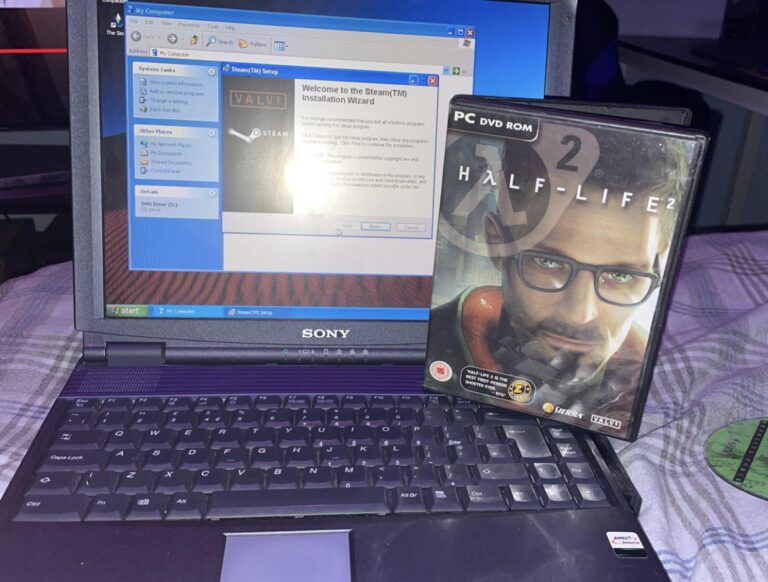
A little over 20 years ago, Valve was getting ready to release a new Half-Life game. At the same time, the company was trying to push Steam as a new option for players to download and update games over the Internet.

Requiring Steam in order to play Half-Life 2 led to plenty of grumbling from players in 2004. But the high-profile Steam exclusive helped build an instant user base for Valve’s fresh distribution system, setting it on a path to eventually become the unquestioned leader in the space. The link between the new game and the new platform helped promote a bold alternative to the retail game sales and distribution systems that had dominated PC gaming for decades.


Remember DVD-ROMs?
Credit:
Reddit

Today, all indications suggest that Valve is getting ready to release a new Half-Life game. At the same time, the company is getting ready to push SteamOS as a new option for third-party hardware makers and individual users to “download and test themselves.”

Read full article

Comments

Federal firings could wreak havoc on Great Lakes fishery

Sweeping layoffs of federal employees have struck the program responsible for controlling the invasive sea lamprey that threatens fish across the Great Lakes, the earth’s largest freshwater ecosystem.

Among hundreds of US Fish and Wildlife Service (USFWS) employees terminated this month were 12 members of the Great Lakes sea lamprey control program, based at field stations in Marquette and Ludington, Michigan.

These staffing cuts could have grave consequences for the lakes’ native fish population and the $5 billion fishery they comprise.

Read full article

Comments

COSMIC Desktop Alpha 6 Released

New submitter TronNerd82 writes: Linuxiac reports that the 6th alpha release of the COSMIC desktop environment has been released. The new alpha release includes zooming, desktop icon management, some new scaling options, and improved accessibility features. Also included in the release are a number of bug fixes.

These include, but are not limited to:
– Fixing a crash issue in Steam, and fixing certain issues for Radeon RX GPUs
– Fixing a bug that prevented icons from appearing in screenshots
– Adding a layer of polish to the COSMIC Files application by adding folder size metadata and preventing crashes

Also of note are a number of memory usage reductions across the board. COSMIC Alpha 6 also replaces the default font, changing from Fira Sans to Open Sans, with Noto Sans Mono as the default monospace font. Additional changes can be found in System76’s official announcement.

Read more of this story at Slashdot.

Chinese Scientists Developing Mars Drone That Can Roll and Fly

Chinese scientists are developing a lightweight Mars drone capable of both rolling on the ground and flying using contra-rotating coaxial rotors. Space.com reports: The air-ground dual-purpose unmanned aerial vehicle (UAV) weighs only 10.6 ounces (300 grams), equivalent to the weight of an apple. The development team is at the School of Astronautics (SoA) of the Harbin Institute of Technology. Seen as showing promising potential in future Mars science work, the UAV can take off at any time, traverse obstacles, and boasts superb endurance, reports state-owned China Central Television (CCTV).

“On the ground, it mainly rolls by shifting its center of gravity,” said Zhu Yimin, a Ph.D candidate at SoA. “In the air, it relies on a pair of contra-rotating coaxial rotors, controlled by a steering engine to adjust the forward direction, to control torque and force, ultimately achieving stable flight,” Zhu told CCTV. The UAV work entails multiple models of air-ground dual-mode robots with different configurations, CCTV reports. These robots move by rolling close to the ground, which reduces energy consumption, and can achieve a flight endurance time of more than six times that of traditional drones of the same size.

According to Zhang Lixian, a professor within the SoA, the hope is that the aerial vehicle can show off its long endurance and observational abilities on Mars. “Our second goal is for such machines to be suitable for construction in many underground spaces and for exploring unknown underground spaces. We also need robotic means for inspection and environmental detection. We have now materialized all these functions,” said Zhang. A video of the drone can be found here.

Read more of this story at Slashdot.

Serbian Student’s Android Phone Compromised By Exploit From Cellebrite

An anonymous reader quotes a report from Ars Technica: Amnesty International on Friday said it determined that a zero-day exploit sold by controversial exploit vendor Cellebrite was used to compromise the phone of a Serbian student who had been critical of that country’s government. […] The chain exploited a series of vulnerabilities in device drivers the Linux kernel uses to support USB hardware. “This new case provides further evidence that the authorities in Serbia have continued their campaign of surveillance of civil society in the aftermath of our report, despite widespread calls for reform, from both inside Serbia and beyond, as well as an investigation into the misuse of its product, announced by Cellebrite,” authors of the report wrote.

Amnesty International first discovered evidence of the attack chain last year while investigating a separate incident outside of Serbia involving the same Android lockscreen bypass. […] The report said that one of the vulnerabilities, tracked as CVE-2024-53104, was patched earlier this month with the release of the February 2025 Android Security Bulletin. Two other vulnerabilities — CVE-2024-53197 and CVE-2024-50302 — have been patched upstream in the Linux kernel but have not yet been incorporated into Android. Forensic traces identified in Amnesty International’s analysis of the compromised phone showed that the Serbian authorities tried to install an unknown application after the device had been unlocked. The report authors said the installation of apps on Cellebrite-compromised devices was consistent with earlier cases the group has uncovered in which spyware tracked as NoviSpy spyware were installed.

As part of the attack, the USB port of the targeted phone was connected to various peripherals during the initial stages. In later stages, the peripherals repeatedly connected to the phone so they could “disclose kernel memory and groom kernel memory as part of the exploitation.” The people analyzing the phone said the peripherals were likely special-purpose devices that emulated video or sound devices connecting to the targeted device. The 23-year-old student who owned the phone regularly participates in the ongoing student protests in Belgrade. Any Android users who have yet to install the February patch batch should do so as soon as possible.

Read more of this story at Slashdot.

Google’s Taara Hopes To Usher in a New Era of Internet Powered by Light

Alphabet’s X division has developed a silicon photonic chip for its Taara project, which transmits internet via laser beams instead of fiber optic cables. The system delivers 20Gbps through “light bridges” that establish line-of-sight connections between transceiver units. The second-generation technology miniaturizes previous mechanical components — including gimbals, mirrors, and lenses — into solid-state circuitry the size of a fingernail.

This chip enables a single laser transmitter to potentially pair with multiple receptors, significantly reducing costs from the current ~$30,000 per bridge setup. Taara has already demonstrated real-world viability by connecting Brazzaville and Kinshasa across the Congo River, providing the latter with five-fold cheaper internet access, and supplementing bandwidth at Coachella 2024. Project leader Mahesh Krishnaswamy claims Taara can deliver “10, if not 100 times more bandwidth” than Starlink in dense areas. X’s Astro Teller suggests this technology could form the foundation for 7G networks as radio frequency bands become increasingly congested. Taara will soon “graduate” from X and seek external funding, with Alphabet maintaining a significant stake.

Further reading: Official blog post.

Read more of this story at Slashdot.

3D Software Company Autodesk Cuts 1,350 Jobs To Boost AI Investment

Autodesk said it would cut 1,350 employees, or about 9% of its workforce, as part of a pivot to the cloud and artificial intelligence. Fast Company reports: Companies across sectors such as architecture, engineering, construction, and product design are making extensive use of Autodesk’s 3D design solutions, with the software maker’s artificial intelligence and machine learning capabilities further driving spending on its products. Autodesk saw a 23% jump in total billings to $2.11 billion in the fourth quarter ended January 31.

The company’s international operations have particularly shown strength, while analysts have also noted that the company was outpacing peers in the manufacturing sector, driven by the performance of its “Fusion” design software.

Read more of this story at Slashdot.

SpaceX readies a redo of last month’s ill-fated Starship test flight

SpaceX plans to launch the eighth full-scale test flight of its enormous Starship rocket as soon as Monday after receiving regulatory approval from the Federal Aviation Administration.

The test flight will be a repeat of what SpaceX hoped to achieve on the previous Starship launch in January, when the rocket broke apart and showered debris over the Atlantic Ocean and Turks and Caicos Islands. The accident prevented SpaceX from completing many of the flight’s goals, such as testing Starship’s satellite deployment mechanism and new types of heat shield material.

Those things are high on the to-do list for Flight 8, set to lift off at 5:30 pm CST (6:30 pm EST; 23:30 UTC) Monday from SpaceX’s Starbase launch facility on the Texas Gulf Coast. Over the weekend, SpaceX plans to mount the rocket’s Starship upper stage atop the Super Heavy booster already in position on the launch pad.

Read full article

Comments

Apple Accused of Misleading Consumers With Apple Watch ‘Carbon Neutral’ Claims

Apple is facing a class action lawsuit alleging it misled consumers by falsely claiming certain Apple Watches were carbon neutral, as the carbon offset projects it relied on did not effectively reduce greenhouse gas emissions. The Verge reports: Apple said in 2023 that “select case and band combinations” of its Apple Watch Series 9, Apple Watch Ultra 2, and Apple Watch SE would be the company’s first carbon neutral devices. The suit was filed on behalf of anyone who bought those watches. It alleges that the products were not really carbon neutral because they relied on faulty offset projects that didn’t actually reduce the company’s greenhouse gas pollution. […]

The company’s carbon neutral claims were false, and the seven plaintiffs would not have purchased the Apple Watches or paid as much for them had they known that, the lawsuit alleges. “Apple’s false advertising may lead [consumers] to choose its products over genuinely sustainable alternatives,” the complaint (PDF) filed in a California federal court on Wednesday says.

Apple is standing by its assertions. “We are proud of our carbon neutral products, which are the result of industry-leading innovation in clean energy and low-carbon design,” Apple spokesperson Sean Redding said in an email. Redding says the company reduced Apple Watch emissions by more than 75 percent. The company focused on cutting pollution from materials, electricity, and transportation used to make the watches, in part by getting more of its suppliers to switch to clean energy. To deal with the remaining pollution, Redding says Apple invests in “nature-based projects to remove hundreds of thousands of metric tons of carbon from the air.” That’s where the new lawsuit finds problems.

To offset their emissions, many companies buy carbon credits from forestry projects that represent tons of planet-heating carbon dioxide that trees and soil naturally trap. Apple primarily purchased credits from the Chyulu Hills project in Kenya and the Guinan Project in China, the suit says. It alleges that neither of the projects met a basic standard for carbon offsets, which is that they capture additional CO2 that would not otherwise have been sequestered had Apple not paid to support the project.

Read more of this story at Slashdot.

Microsoft Begins Turning Off uBlock Origin, Other Extensions In Edge

Microsoft Edge is following Chrome’s lead by disabling uBlock Origin and other Manifest V2-based extensions in its browser. Neowin reports: The latest Edge Canary version started disabling Manifest V2-based extensions with the following message: “This extension is no longer supported. Microsoft Edge recommends that you remove it.” Although the browser turns off old extensions without asking, you can still make them work by clicking “Manage extension” and toggling it back (you will have to acknowledge another prompt).

Google started phasing out Manifest V2 extensions in June 2024, and it has a clear roadmap for the process. Microsoft’s documentation, however, still says “TBD,” so the exact dates are not known yet. This leads to some speculating about the situation being one of “unexpected changes” coming from Chromium. Either way, sooner or later, Microsoft will ditch MV2-based extensions, so get ready as we wait for Microsoft to shine some light on its plans.

Another thing worth noting is that the change does not appear to be affecting Edge’s stable release or Beta/Dev Channels. For now, only Canary versions disable uBlock Origin and other MV2 extensions, leaving users a way to toggle them back on. Also, the uBlock Origin is still available in the Edge Add-ons store, which recently received a big update.

Read more of this story at Slashdot.

Benioff Says Salesforce Won’t Hire Engineers This Year Due To AI

Salesforce CEO Marc Benioff said his firm, San Francisco’s largest private employer, does not plan to hire engineers this year because of the success of AI agents created and used by the company. From a report: “My message to CEOs right now is that we are the last generation to manage only humans,” Benioff said Wednesday on Salesforce’s earnings call, indicating that companies of the future will have hybrid human and digital workforces. Benioff added that Salesforce’s mission is to become “the No. 1 digital labor provider, period” to other companies.

Read more of this story at Slashdot.

OpenAI Plans To Integrate Sora’s Video Generator Into ChatGPT

An anonymous reader quotes a report from TechCrunch: OpenAI intends to eventually integrate its AI video generation tool, Sora, directly into its popular consumer chatbot app, ChatGPT, company leaders said during a Friday office hours session on Discord. Today, Sora is only available through a dedicated web app OpenAI launched in December, which lets users access the AI video model of the same name to generate up to twenty-second-long cinematic clips. However, OpenAI’s product lead for Sora, Rohan Sahai, said the company has plans to put Sora in more places, and expand what Sora can create.

[…] OpenAI may be trying to attract users to ChatGPT by letting them generate Sora videos from the chatbot. Putting Sora in ChatGPT could also incentivize users to upgrade to ChatGPT’s premium subscription tiers, which may offer higher video generation limits. One of the reasons OpenAI launched Sora as a separate web app was to maintain ChatGPT’s simplicity, Sahai explained during the office hours. Since its launch, OpenAI has expanded Sora’s web experience, creating more ways for users to browse Sora-generated videos from the community. Sahai also said OpenAI “would love to build” a standalone mobile app for Sora, noting that the Sora team is actively looking for mobile engineers. OpenAI also plans to expand Sora’s generation capabilities to images, letting users create more photorealistic images than what’s currently possible with OpenAI’s DALL-E3 model.

Read more of this story at Slashdot.