The game industry continues to integrate artificial intelligence into the game development process. Some of the biggest players, such as EA and Microsoft, have demoed some of the tools being worked on internally that the companies hope to use in the future. Now, it seems another gaming giant, Sony, is also developing a prototype tool for creating
ZA/UM Studio, the company behind Disco Elysium, just announced a new game called Project [C4]. It’s being described as a “genre-defining RPG” and there’s a teaser trailer that’s light on gameplay but heavy on disturbing imagery.
Based on the trailer, we still don’t know if the game will pull mechanics or visuals from the highly-regarded Disco Elysium. A press release did note that folks would play as a spy of some kind and suggested that the game could actually, in part, take place in the human brain. Everything else is still shrouded in secrecy.
What’s not shrouded in secrecy? ZA/UM has had, to put it lightly, a tumultuous several years since Disco Elysium was released in 2019. It has been plagued by layoffs, firings and departures of the core team that made Disco Elysium, including creator Robert Kurvitz, art director Aleksander Rostov and writer Helen Hindpere.
Back in 2022, the company’s new executive suite fired all three, accusing them of misconduct and attempted intellectual property theft. It’s worth noting that Kurvitz wrote the novel that Disco Elysium is based on, so we aren’t sure how someone could steal from their own book. Lawsuits were filed and Kurvitz and Rostov set up their own company.
The pair also refuted the allegations of IP theft, writing in an open letter that they were fired as they attempted to investigate suspicious activity surrounding the takeover of ZA/UM by Estonian businessmen Ilmar Kompus and Tõnis Haavel. These two were previously convicted of investment fraud. The pair has also been accused of creating a hostile work environment, particularly for women.
“I know at least five women who’ve left or been made to leave the studio since Disco’s launch, naming Tõnis Haavel as a major factor. There are zero women in creative leadership and very few women in leadership positions in general,” a former writer for Disco Elsyiumtold PC Gamer amidst recent company-wide layoffs.
This article originally appeared on Engadget at https://www.engadget.com/gaming/the-studio-that-technically-made-disco-elysium-has-a-new-game-in-the-works-185218695.html?src=rss
The long-runningrumors and hints that Microsoft is planning to enter the portable gaming market accelerated forward this week. That’s thanks to a Windows Central report that Microsoft is planning to partner with a “PC gaming OEM” for “an Xbox-branded gaming handheld” to be released later this year. The device, code-named Keenan, will reportedly feature “Xbox design sensibilities,” such as the branded Xbox guide button, but will almost certainly be a PC gaming device running Windows at its core.
Any Microsoft entry into the world of gaming handhelds will join a market that hasbecomequitecrowded in the wake of the Steam Deck’s success. To make its own portable gaming effort stand apart, Microsoft will have to bring something unique to the table. Here are some of the features we’re hoping will let Microsoft do just that.
A bespoke user interface
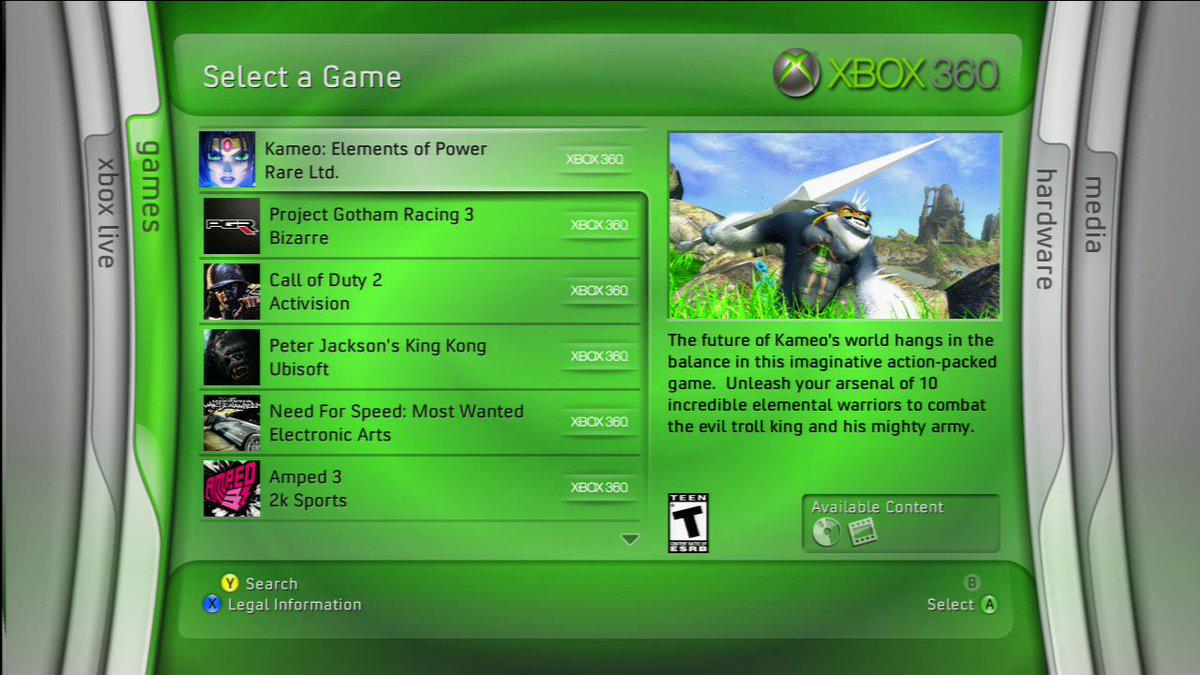
There’s never been a better time to bring back the old Xbox 360 “blades” interface.
Credit: Microsoft / Reddit
For decades, Windows has been designed first and foremost for the world of large monitors driven by a mouse and keyboard world. When hardware makers try to simply stick that OS into a handheld screen size controlled by buttons and analog sticks, the results can be awkward at best.
NVIDIA’s GPU Technology Conference, also known as GTC, is coming up next week. The event is happening March 17-21 in San Jose, but you can also follow along with all the big developments here at Engadget. We’ll have a liveblog for the keynote with CEO Jensen Huang on March 18 at 1PM ET/10AM PT, which is when most of the big news will drop. His speech will also be livestreamed for free.
It’s a safe bet that you’ll hear a whole lot about artificial intelligence during the week, but with all the changes in the computing landscape over the past 12 months, the stakes might be higher for the company to make serious waves at this conference.
What to expect at this year’s GTC
NVIDIA has been going all-in on AI for years now, and that makes it a regular highlight for GTC programming. Last year saw the company unveiling its Blackwell line of GPUs for faster and less demanding computations. We’re guessing that Huang will introduce another iteration of Blackwell GPUs with even better specs this time around. NVIDIA is also likely to share updates on its projects in automotive, robotics and quantum computing.
But the company is in a very different situation in early 2025 than it was going into last year’s conference. NVIDIA is no longer sitting quite so comfortably at the top of the heap. The emergence of DeepSeek’s reasoning model caused a plunge for tech stocks, including NVIDIA’s, earlier this year. There have been lots of issues related to its latest RTX product launches and splashy tech for AI-generated NPCs in gaming are, unsurprisingly, pretty soulless.
Basically, NVIDIA needs a win. This would be the time for Huang to drop something surprising and exciting. Hopefully he delivers.
This article originally appeared on Engadget at https://www.engadget.com/computing/how-to-watch-the-nvidia-gtc-2025-keynote-with-ceo-jensen-huang-183038194.html?src=rss
We may earn a commission from links on this page. Deal pricing and availability subject to change after time of publication.
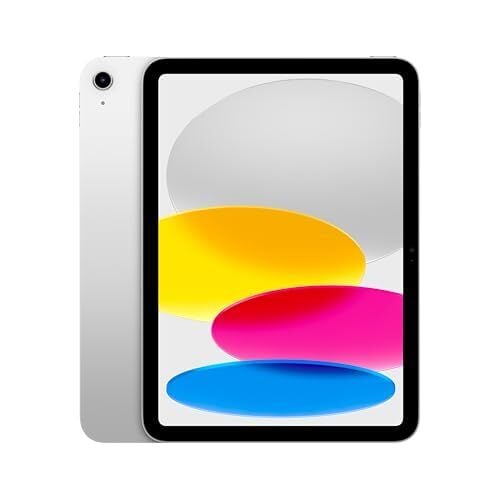
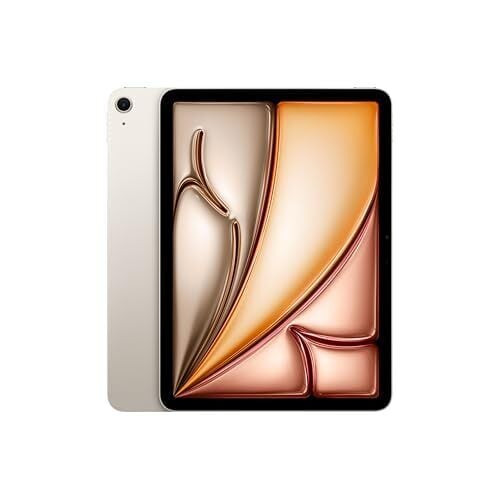
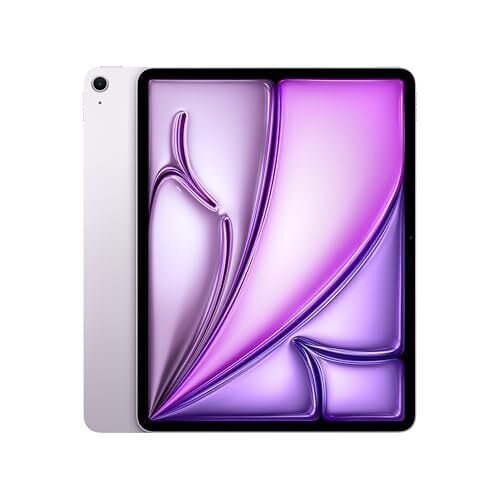
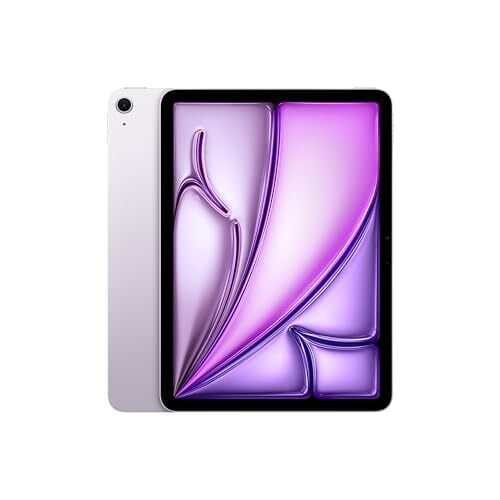
Tomorrow Apple will be releasing new MacBooks and iPads, which is why you’re seeing discounts on the older MacBooks and iPads. There are two iPads being released tomorrow, the M3 iPad Air, which you can pre-order right now for $559 (originally $599) for the 11-inch version, or the the 11th-generation iPad for $329 (originally $349) for the 11-inch version, or $749 (originally $799) for the bigger 13-inch version. Impressive by Apple’s standards considering they haven’t even released yet. However, this could be because the older versions might be a better deal for you.
Yes, it’s always nice to get the shiny new toy, but as Jake Peterson, Lifehacker’s Senior Technology Editor explains, the new iPad Air might not be worth it when you can get the very capable M2 iPad Air for cheaper. Most people can justify an M3 chip over an M2 chip on a laptop, where there’s more multitasking, heavier applications running, and speed is more important. But unless you’re looking to do those things on a tablet, the difference between the M2 and M3 chip’s speed might not be worth the money for you.
If you can wait until after the release of the new iPads on March 12 to make your purchase, that will be the most sensible decision, as the M2 iPads will likely drop in price and be a better value than the new iPad Air (if you can find the M2 iPads in stock). While Apple might not sell the older iPads in new conditions, Amazon and Best Buy will.
However, if money is not an issue and you want the best iPads available, both the iPad 11th-generation and the M3 iPad Air will be your best options.
Just last week, Microsoft announced that the Skype app would no longer be available and would be replaced with Microsoft Teams by May. Yesterday, Microsoft made a similar announcement; however, this time, it will be replacing the Windows Remote Desktop app with the Windows App.
In a blog post, Hilary Braun, Senior Product Manager at Microsoft,
Waymo is expanding to new (but actually old) territory. The Waymo One service will soon be available in more of the San Francisco Bay Area, specifically Mountain View, Los Altos, Palo Alto and parts of Sunnyvale.
The company spent several years testing its self-driving cars in Mountain View, the city where its headquarters is located. According to TechCrunch, Waymo One will be available across 27 square miles of Silicon Valley, in addition to the 55 square miles it covers elsewhere in the Bay Area, including San Francisco.
This is the latest in a string of expansions for the company. Waymo has been up and running in Los Angeles and Phoenix for a while. It started offering robotaxi rides in Austin, Texas last week, just in time for SXSW. Miami and Atlanta are also on the docket. Waymo said in January that it planned to test its vehicles in 10 new cities this year, including Las Vegas and San Diego.
We’ll gradually add riders to this new service area over time, as we work to bring Waymo One to more of the Bay Area. Keep an eye on the app if you’re an area local. Who’s ready to ride? pic.twitter.com/egHh2claxJ
This article originally appeared on Engadget at https://www.engadget.com/transportation/waymo-expands-to-more-cities-in-the-bay-area-181528776.html?src=rss
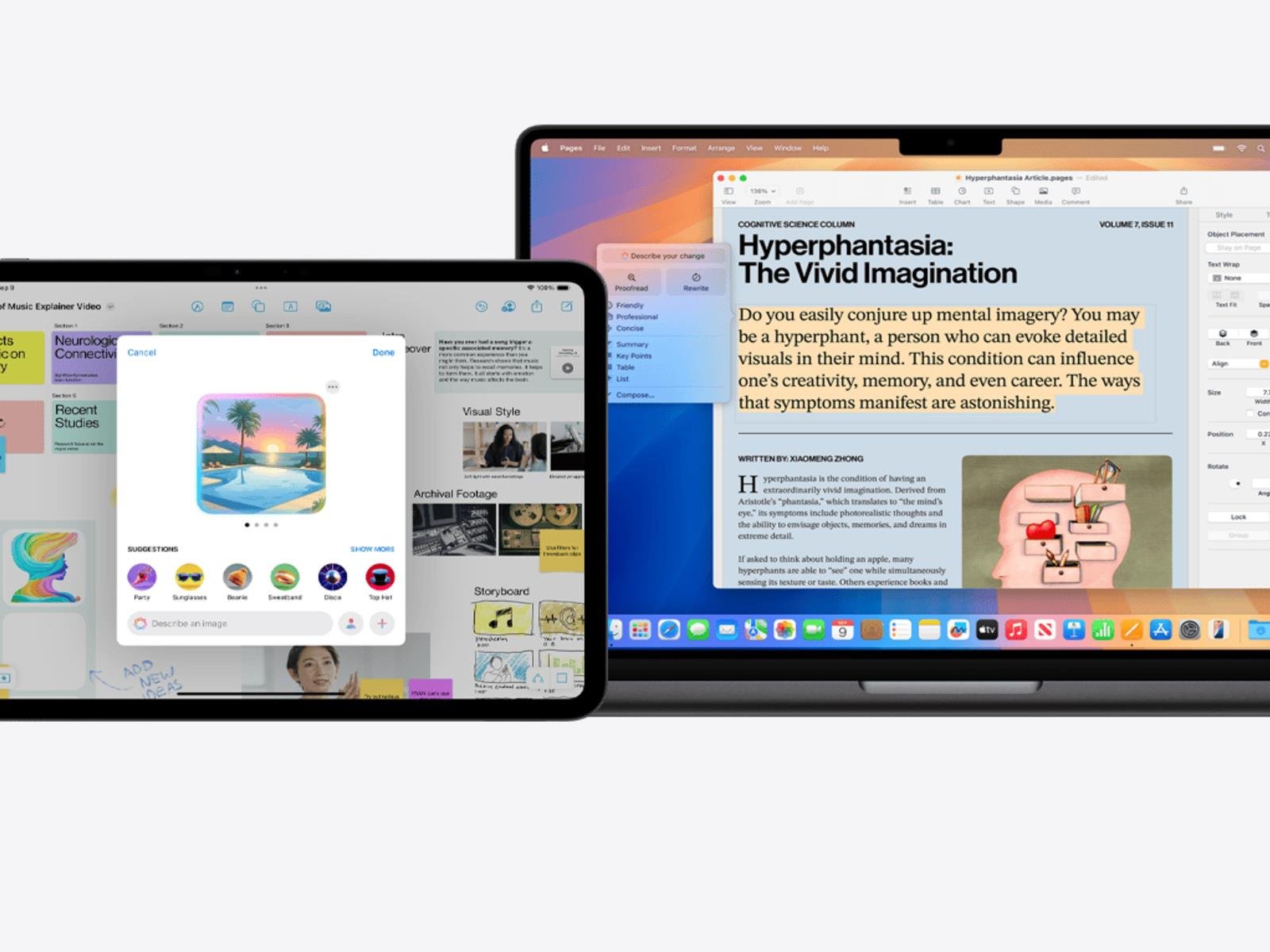
Apple has attempted to spur some excitement recently by introducing Apple Intelligence along with a newly, redesigned less expensive iPhone, but it doesn’t seem to have succeeded. It seems as if the next move for the Cupertino giant is a complete makeover of the operating systems that power its lineup, according to Bloomberg’s Mark Gurman.
Abstract of a paper published on Journal of Hospitality and Tourism Management:The adoption of digital menus accessed through quick response (QR) codes has witnessed a notable upsurge. Despite potential benefits for restaurant operators, the nuanced effects of QR code menus on customer behavior and experience remain relatively unknown. This research investigates the influence of menu presentation (QR code vs. traditional) on customer loyalty. In two studies, we find that QR code menus diminish customer loyalty (compared to traditional menus) due to perceived inconvenience. This effect is further moderated by customers’ need for interaction. Our work is timely in highlighting the negative impact of perceptions of inconvenience on technology adoption.
The original Ninja Creami became a viral hit a few years ago when it took the tech from $5,000 commercial ice cream makers and distilled it into something you could buy for less than $200. As good as the Creami is at whipping up sorbets, gelatos and smoothie bowls, there’s still one classic frozen treat it can’t do: soft serve. But now there’s a new addition to the family, the Swirl by Creami, and with it Ninja may have just created the ultimate all-in-one home ice cream machine.
Design and features
Instead of engineering a brand-new, multi-purpose device, Ninja basically took the existing Creami and bolted a soft serve module on the side. And then it tacked on a big handle, so you still get that physical sensation of pulling it down to dispense your icy creation.
That might seem a bit crude from a design perspective, but let’s be honest, the Swirl isn’t going to win any beauty pageants. More importantly, it’s a rather straightforward and effective approach. That’s because when you’re not making soft serve, you can simply spin a batch of regular ice cream with one of the machine’s two included pint containers. However, if you are going for something smooth and fluffy, things get a little more complicated.
In addition to the standard paddle lid, the Swirl has a special top you need to use when making soft serve. The machine uses a new pint container that has a clever but somewhat tricky built-in nozzle for dispensing said soft serve. You need to keep the twist cap on its bottom closed for traditional scooped desserts, but open for soft-serve. And you better not forget, because if you don’t seal it all the way while freezing your ice cream base, it’s going to get stuck. That’s no good because the container won’t fit in the machine unless the pint is fully closed, so you’re going to chip away at the parts that are stuck until it does. Unfortunately, if you’re not planning on making soft serve, you can’t use the classic Creami pints because those aren’t compatible (though like before, the Swirl’s lids and containers are dishwasher safe).
A potential hurdle with the Swirl’s design, especially for people who live in apartments or places with small kitchens, is that it’s about twice as big and heavy as a standard Creami. It’s 15.1 x 10 x 17.5 inches and weighs 20 pounds. This means you’ll have to find a decently large place to stash it, unless you live in a mansion, because this thing isn’t going to live on your countertop.
Modes: The world is your ice cream
Sam Rutherford for Engadget
One of the best things about the Swirl is that it can do practically everything the Creami can and more. That’s because, in addition to the standard ice cream, lite ice cream, gelato, sorbet and milkshake modes, there are new options for frozen yogurt, fruit whip, frozen custard and so-called Creamifits.
Most of these are self-explanatory, but a few warrant further explanation. Fruit whips are mostly frozen fruit with a bit of sugar that are blended into something akin to a healthier sorbet (like those delicious pineapple Dole whips). I also appreciate that there’s a dedicated mode for frozen custard, which is even richer and creamier than traditional ice cream (often due to the inclusion of additional egg yolks). Since it’s hard to find outside of southern and midwest states, this is another welcome addition. Finally, Creamifit is a new term for high-protein concoctions that frequently feature ingredients like whey, cottage cheese or Greek yogurt. They effectively turn workout shakes into frozen treats.
Sam Rutherford for Engadget
When you’re ready to whip up a batch, Ninja made things simple by dividing the machine’s functions into two main categories: one for regular scooped treats and one for soft serve. The label you won’t see is the one for smoothie bowls, which is a setting that’s available on older models. I found that omission wasn’t a big deal because depending on the type of texture you’re looking for, the milkshake or Creamifit settings are viable replacements.
Another improvement over the original Creami is that Ninja updated the Swirl’s blending modes so that you get the right consistency without needing to re-spin. And in my testing, I’d say the company nailed it. Oftentimes with its predecessor, I would have to put ice cream in for a second go before I was happy, but not so with the new machine. That goes for both soft serve and regular scooped desserts. Furthermore, the Swirl is quieter too. Granted, it’s still rather loud at about 80 decibels from around six feet away. But compared to the basic Creami (around 82db), which routinely sent my three-year-old son running out of the kitchen when I used it, it’s a small improvement. So while you won’t want to watch TV in the same room, you can at least still have a conversation.
Soft serve: Tasting is believing
If you want to make soft serve, after using the standard paddle lid (left) to spin your ice cream base, you’ll need to attach Ninja’s dedicated soft serve lid (right) before slotting the entire pint into the opening on the left side of the machine.
Sam Rutherford for Engadget
If you can handle the Swirl’s more involved process, the rewards are worth it. This thing really can produce soft serve that’s just as good as what you can buy from your local shop or friendly neighborhood truck. In fact, I’d argue that your creations might even be better because you can control what goes in them. Sure, you can follow recipes. But just like its predecessor, the magic of the Swirl is that as long as you follow a few basic guidelines, you can kind of throw anything together and it will taste divine. That’s exactly what I did for my first test batch.
Like a lot of parents, I try to minimize food waste as much as possible. Instead of tossing out some old strawberries and pineapple chunks at the end of the week, I diced them up, added a splash of lime juice and mixed everything with a third of a cup of sugar. After letting the fruit macerate for a bit, I simply stuck them in the Swirl’s pint container and froze it overnight. The next day, I set the machine to the fruit whip setting, spun it and then swapped in Ninja’s soft serve lid before pulling down on the handle. Goddamn, it was good.
Sam Rutherford for Engadget
The consistency of the fruit whip was super smooth without any big ice crystals, The flavor was like a tropical fruit bowl exploded in my mouth. But the best part is that it cost almost nothing to make, because its ingredients probably would have ended up in the trash in a lot of households.
Next, I whipped up some basic chocolate soft serve (using this recipe from Ninja’s Test Kitchen) because that’s my three-year-old’s favorite flavor. Instead of using regular whole milk, heavy cream and cocoa powder, I swapped those out for Fairlife chocolate milk. Not only does that increase the amount of protein, this brand is also lactose-free. This resulted in a super fluffy soft serve with an almost marshmallow-like mouthful that everyone in my family enjoyed (including my lactose-intolerant wife). It was a classic done right.
After that, I tried freestyling another recipe by chopping up some maraschino cherries (get Luxardo if you can) and adding those plus some of their syrup to some Fairlife milk and coconut cream. The Swirl’s soft serve setting does a great job of adding lots of air to the ice cream while blending to help ensure a light and velvety texture, but just to be safe I also added a quarter teaspoon of xanthan gum to the mixture. I blended everything up as normal, pulled down the lever and voila: a super rich and dense, but not heavy, cherries and cream treat.
But perhaps my most rewarding creation was a matcha soft serve that was the best I’ve ever had. My wife drinks matcha every day, so over the years she’s turned me into a bit of a snob myself. I know right away when places like Starbucks use poor-quality powder that tastes like day-old grass cuttings. By combining some decent ceremonial matcha with lactose-free milk and cream using this recipe, I was able to make her soft serve with unmatched taste and texture. That’s normally incredibly hard to find since most ice cream shops don’t have a ton of non-dairy options.
Wrap-up
Compared to the original Creami, the Ninja Swirl is significantly larger and a bit more complicated.
Sam Rutherford for Engadget
Homemade soft serve is kind of like ice cream’s white whale. Machines that whip up churned desserts have been around for years, and there was even one built into the counter in my grandma’s old house. But soft serve often requires specialized equipment that’s incredibly cost-prohibitive to own, especially since these are single-purpose machines. Ninja has changed that with the Swirl. Not only can it create delicious concoctions that rival what you can buy from a store (and for way cheaper), it can handle pretty much any other frozen treat you can think of — all in one gadget.
That said, there are a few knocks against the Swirl. The first is that making soft serve results in about a quarter cup of ice cream getting stuck inside various components, like the space between the bottom of the pint and the nozzle. That’s not a big deal, but if you’re trying to cut down on food waste by turning leftovers into dessert, it’s a bit unfortunate. The Swirl is also big and bulky, and at $350, it’s nearly twice the price of a standard Creami.
Sam Rutherford for Engadget
My biggest gripe is that the Swirl isn’t available in a deluxe size like you can get with its predecessor. A pint of ice cream is enough for a couple of people, but if you’re making soft serve for a crowd, the Swirl’s 16-ounce containers mean you’ll have to spin up a second batch. And with the Swirl’s pints and lids going for $35 a pair, that’s an added expense if you plan on using this thing for entertaining. When asked, Ninja wouldn’t comment if a larger model is on the way, but I would be shocked if a deluxe version doesn’t make an appearance at some point. So, if you like what the Swirl can do but want a machine with more capacity, you may want to hold tight for now.
The final issue is that with the Swirl launching only a couple of years after the Creami came out, some folks may be feeling buyer’s remorse about the original. I don’t see it that way. The previous model is still a surprisingly versatile device that’s affordable and doesn’t take up a ton of space in your kitchen. While the Swirl adds a major but not truly essential branch of desserts to its repertoire, it also brings with it a higher cost and added complexity. But for anyone who has fond memories of enjoying a silky smooth frozen cone on a hot summer’s day (ideally, after a round of mini golf), the Ninja Swirl is bringing that magic into your kitchen in a way we haven’t seen before.
This article originally appeared on Engadget at https://www.engadget.com/home/kitchen-tech/ninja-swirl-by-creami-review-this-might-be-the-ultimate-home-ice-cream-maker-180015294.html?src=rss
After years of intense rumor and speculation, Nintendo finally revealed the Switch 2 in January of this year. While the company hasn’t yet announced each and every new feature the Switch’s successor will sport, the company did confirm a number of details leakers had been hinting for a long time, including a larger display, redesigned magnetic Joy-Cons, a new kickstand, backwards compatibility, and, least consequentially, a large “2” embossed on the console and dock.
Since the initial announcement, we’ve learned a bit more about the Switch 2 in advance of its full unveiling later this year. Nintendo announced a worldwide tour, where fans can try out the Switch 2 early. It also appears that the new Joy-Cons will have a “mouse mode” that will let you drag a controller around on a table…like a computer mouse. Other than that, things have been a tad quiet—until now.
Here are new Switch 2 details, courtesy of FCC filings—and what they might hint for the future of the system.
The Switch 2 will use NFC, which bodes well for Amiibo support
As spotted by The Verge, Nintendo has submitted a number of filings to the FCC. The outlet scanned through these documents, and discovered the Switch 2 will support NFC (near field communication)—the technology the enables products like Amiibo to wirelessly communicate with the console. (It’s also the tech behind tap-to-pay features like Apple Pay and Google Play.) If you’ve used Amiibo before, you might remember NFC communication happens through the right Joy-Con on the Switch. That appears the be the case for the Switch 2 as well.
A second USB-C port
Another interesting confirmation in these filings concerns the console’s second USB-C port. You could see this new port in the official Switch 2 announcement video, but Nintendo didn’t elaborate on what it was meant for. Now we know: You’ll be able to charge your Switch 2 via either USB-C port, which is great news for portable players. With the first generation of Switch, the USB-C port is on the bottom, meaning you can’t charge the console while playing with the kickstand out (unless you get very creative). A second port on the side will solve for that issue. This isn’t a necessarily reason to upgrade to a Switch 2, but it is a perk—perhaps one that should have been thought through a decade ago with the first Switch.
Wi-Fi 6 support
Finally, the filings show that the Switch 2 supports Wi-Fi 6 with up to 80MHz of bandwidth. The OG Switch supports Wi-Fi 5, as Wi-Fi 6 wasn’t even a thing when it came out back in 2017. The upgrade should enable faster internet speeds for game downloads and online play while potentially increasing battery life, as Wi-Fi 6 connections can turn off when you aren’t using them. That said, we won’t know how much the Switch 2’s speed and battery life improve over the original Switch until reviewers are able to put the console through its paces.
Mark you calendar for an April 2 Nintendo Direct
The Switch 2 has no current release date. However, the company did say in the announcement video that there will be a Nintendo Direct on Wednesday, April 2 at 6 a.m. PDT, specifically intended to offer “a closer look at Nintendo Switch 2.” We’ll see how much more information is leaked before that date.
When Ars finally drove the single-motor BMW i4 eDrive40 last year, we came away very impressed. Until then we’d only sampled the powerful twin-motor i4 M50, which is fast and fun but a bit too expensive, and it gives away a little too much range in the process. But neither of those is the model most people will buy. All-wheel drive is non-negotiable to car buyers in many parts of the country, and that means they want this one: the i4 xDrive40 Gran Coupe.
If the pictures are giving you a bit of deja vu, that’s perfectly normal. Yes, it looks a lot like the BMW 430i Gran Coupe we reviewed yesterday, and the two cars share a lot more than just the CLAR platform that underpins much of BMW’s current lineup.
All things being equal, designing a vehicle to be an electric vehicle from the ground up involves many fewer compromises than using a platform that has to cater not just to batteries and electric motors but also internal combustion engines and transmissions and gas tanks.
Breaking: A Big Tech company is ramping up its AI development. (Whaaat??) In this case, the protagonist of this now-familiar tale is Meta, which Reutersreports is testing its first in-house chip for AI training. The idea is to lower its gargantuan infrastructure costs and reduce its dependence on NVIDIA (a company that apparently brings out Mark Zuckerberg’s “adult language” side). If all goes well, Meta hopes to use it for training by 2026.
Meta has reportedly kicked off a small-scale deployment of the dedicated accelerator chip, which is designed to specialize in AI tasks (and is, therefore, more power-efficient than general-purpose NVIDIA GPUs). The deployment began after the company completed its first “tape-out,” the phase in silicon development where a complete design is sent for a manufacturing test run.
The chip is part of the Meta Training and Inference Accelerator (MTIA) series, the company’s family of custom in-house silicon focused on generative AI, recommendation systems and advanced research.
Last year, the company started using an MTIA chip for inference, a predictive process that happens behind the scenes in AI models. Meta began using the inference one for its Facebook and Instagram news feed recommendation systems. Reuters reports that it plans to start using the training silicon for that as well. The long-term plan for both chips is said to begin with recommendations and eventually use them for generative products like the Meta AI chatbot.
The company is one of NVIDIA’s biggest customers after placing orders for billions of dollars’ worth of GPUs in 2022. That was a pivot for Meta after it bailed on a previous in-house inference silicon that failed a small-scale test deployment — much like the one it’s doing now for the training chip.
This article originally appeared on Engadget at https://www.engadget.com/ai/meta-is-reportedly-testing-its-first-in-house-ai-training-chip-174550664.html?src=rss
Our favorite kleptomaniac prince is back. There’s a new Katamari Damacy game coming to Apple Arcade on April 3. Katamari Damacy Rolling Live is being developed by franchise steward Bandai Namco and, as the name suggests, brings those familiar rolling gameplay mechanics to iOS devices, Mac computers and Apple TV.
The Apple Arcade exclusive doesn’t look all that dissimilar to previous entries. You play as the prince, rolling up objects until they grow large enough to become stars. It’s Katamari. The big difference here is the plot. The old games typically had you creating stars for the noble purpose of rebuilding the galaxy. This time, the stars are created for the benefit of the king’s burgeoning career as a livestreamer.
Bandai Namco
That’s right. Successful runs boost the king’s “subscriber count” and this leads to positive comments from in-game fans. Once the viewership reaches a certain threshold, you unlock new stages. That’s a fairly odd twist, but it’s not as if anyone plays Katamari for the plot. You play for the satisfaction of rolling over stuff to get bigger.
Apple promises a “captivating soundtrack that blends different genres.” It’ll be tough to beat the OG soundtrack, which is one of the all-time greats, but we’ll just have to wait and see. It’s been around eight years since we’ve had any new Katamari game and around a decade since we’ve had a good one. Bandai Namco did release a remaster of the original title back in 2018 and the sequel in 2023.
This isn’t the only Apple Arcade news today. The platform announced an update to the well-received Skate City: New York that brings 30 new levels and 90 new objectives. It’ll be available on March 27. There’s also a new Space Invaders game coming on April 3.
This article originally appeared on Engadget at https://www.engadget.com/gaming/the-first-new-katamari-game-in-years-is-coming-to-apple-arcade-in-april-173045224.html?src=rss
If you’re looking for longevity in your laptop, the 16GB RAM on any MacBook Air is vital and will last you a long time. All “older” MacBook Airs, including those with M2 and M1 chips, have good discounts right now (if you can find them in stock), but if you can afford to upgrade to the new M4 MacBook Air that comes out tomorrow, March 12, you’ll be getting a better value for your money, according to Jake Peterson, Lifehacker’s Senior Technology Editor. It’s an even better value than the M4 Pro. However, if you prefer to save yourself some $200, the M3 is still a capable and powerful laptop in 2025. You can see the full breakdown of the M3 MacBook Air in CNET’s review.
Businesses, governments, and researchers continue to struggle with extracting usable data from PDF files, despite AI advances. These digital documents contain valuable information for everything from scientific research to government records, but their rigid formats make extraction difficult.
“PDFs are a creature of a time when print layout was a big influence on publishing software,” Derek Willis, a lecturer in Data and Computational Journalism at the University of Maryland, told ArsTechnica. This print-oriented design means many PDFs are essentially “pictures of information” requiring optical character recognition (OCR) technology.
Traditional OCR systems have existed since the 1970s but struggle with complex layouts and poor-quality scans. New AI language models from companies like Google and Mistral now attempt to process documents more holistically, with varying success. “Right now, the clear leader is Google’s Gemini 2.0 Flash Pro Experimental,” Willis notes, while Mistral’s recent OCR solution “performed poorly” in tests.