Google Drive is now available on Snapdragon-based Windows PCs

There’s now a native version of Google Drive for Arm-powered PCs, like those featuring last year’s Snapdragon X Elite and X Plus chips. The company announced this feature update in a blog post, saying that the Drive app for Windows is “generally available” for Snapdragon X chipsets. Today’s release follows a beta test going back to last year.

This includes machines by several big brands, with the most notable being the newest Microsoft Surface laptops. The Drive port for Arm-based PCs also allows users to access their accounts through the Windows File Explorer app. This should make it easier to pull files from Drive accounts.

The native app only works on devices running Windows 11 and Microsoft WebView2. Existing beta users will automatically be updated to the full version. It’s rolling out today but could take up to 15 days to hit everyone’s accounts. The new app is available for all Google Workspace customers, Workspace Individual Subscribers and users with personal Google accounts.

This article originally appeared on Engadget at https://www.engadget.com/computing/google-drive-is-now-available-on-snapdragon-based-windows-pcs-173517153.html?src=rss

Should we be concerned about the loss of weather balloons?

Due to staff reductions, retirements, and a federal hiring freeze, the National Weather Service has announced a series of suspensions involving weather balloon launches in recent weeks. The question is, will this significantly degrade forecasts in the United States and around the world?

On February 27, it was announced that balloon launches would be suspended entirely at Kotzebue, Alaska, due to staffing shortages. In early March, Albany, N.Y., and Gray, Maine, announced periodic disruptions in launches. Since March 7, it appears that Gray has not missed any balloon launches through Saturday. Albany, however, has missed 14 of them, all during the morning launch cycle (12z).

The kicker came on Thursday afternoon when it was announced that all balloon launches would be suspended in Omaha, Neb., and Rapid City, S.D., due to staffing shortages. Additionally, the balloon launches in Aberdeen, S.D.; Grand Junction, Colo.; Green Bay, Wis.; Gaylord, Mich.; North Platte, Neb.; and Riverton, Wyo., would be reduced to once a day from twice a day.

Read full article

Comments

Current SEC chair cast only vote against suing Elon Musk, report says

A new report says that when the Securities and Exchange Commission sued Elon Musk less than a week before President Trump’s inauguration, only one member—the current chairman—voted against filing the lawsuit.

The vote behind closed doors was 4–1, with three Democrats and Republican Hester Peirce joining to support the lawsuit over Musk’s late disclosure of a Twitter stock purchase in early 2022, Reuters reported today. The one dissent reportedly came from Republican Mark Uyeda, who was subsequently named acting SEC chairman by Trump.

Uyeda also asked SEC enforcement staff “to declare that a case they wanted to bring against Elon Musk was not motivated by politics, an unusual request that the staffers refused,” Bloomberg reported last month. Reuters said its sources confirmed that “staff refused to sign the pledge, as it is not typical SEC practice.”

Read full article

Comments

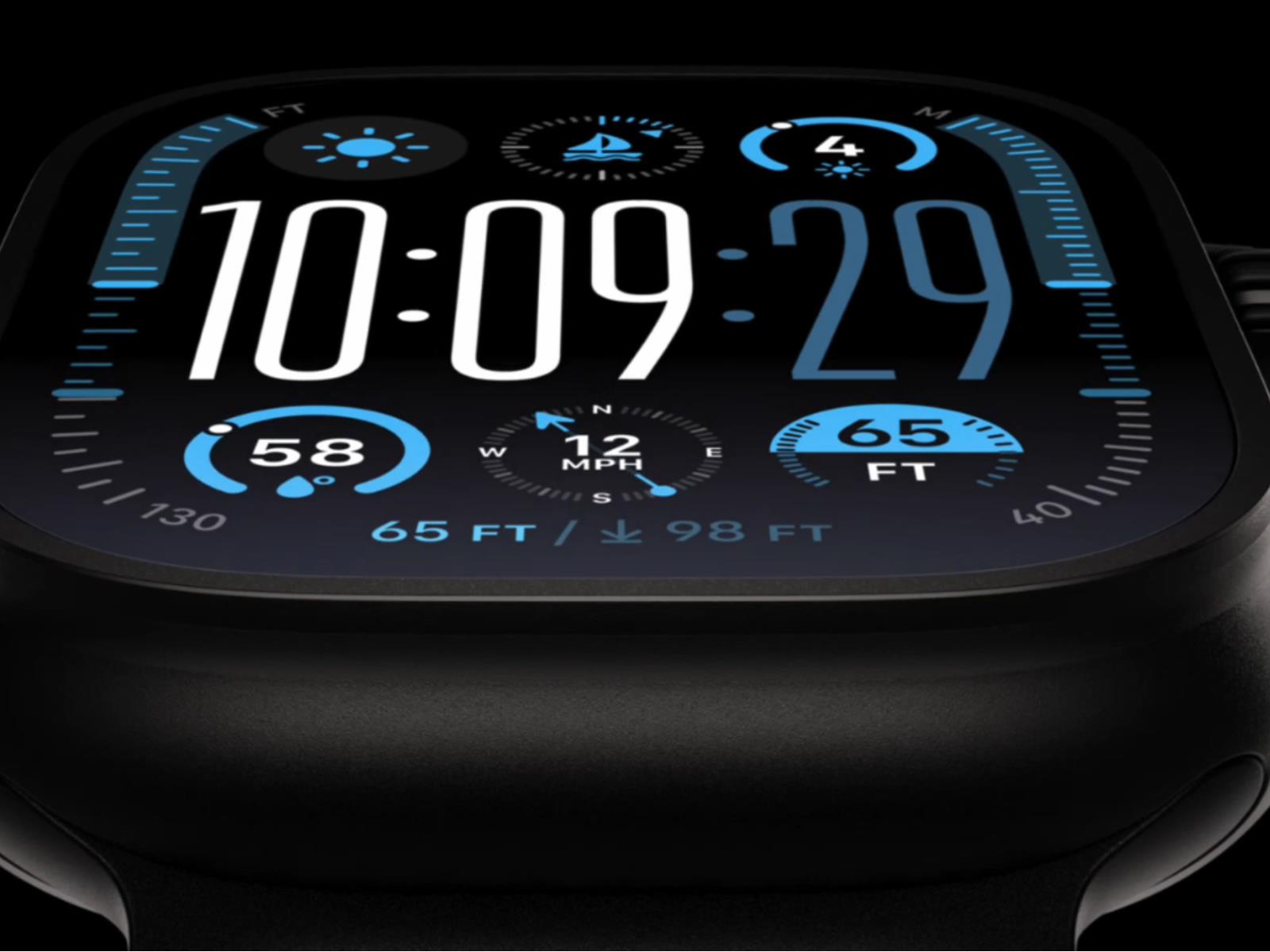
Apple Watch Could Get A New Hardware Feature No Other Smartwatch Has

Apple Watch Could Get A New Hardware Feature No Other Smartwatch Has
Like just about every technology company, Apple continues to try and incorporate artificial intelligence into as many of its products as it can. However, it hasn’t gone well for the company so far. It has struggled to get Apple Intelligence and Siri up to the level of competing offerings. Things have gone so poorly that the company was recently

How a nephew’s CD burner inspired early Valve to embrace DRM

Back in 2004, the launch of Half-Life 2 would help launch Steam on the path to eventually becoming the de facto digital rights management (DRM) system for the vast majority of PC games. But years before that, with the 1998 launch of the original Half-Life, Valve cofounder and then-CMO Monica Harrington said she was inspired to take DRM more seriously by her nephew’s reaction to the purchase of a new CD-ROM burner.

PC Gamer pulled that interesting tidbit from a talk Harrington gave at last week’s Game Developers Conference. In her remembering, Harrington’s nephew had used funds she had sent for school supplies on a CD replicator, then sent her “a lovely thank you note essentially saying how happy he was to copy and share games with his friends.”

That was the moment Harrington said she realized this new technology was leading to a “generational shift” in both the availability and acceptability of PC game piracy. While game piracy and DRM definitely existed prior to CD burners (anyone else remember the large codewheels that cluttered many early PC game boxes?), Harrington said the new technology—and the blasé attitude her nephew showed toward using it for piracy—could “put our entire business model at risk.”

Read full article

Comments

“MyTerms” wants to become the new way we dictate our privacy on the web

Author, journalist, and long-time Internet freedom advocate Doc Searls wants us to stop asking for privacy from websites, services, and AI and start telling these things what we will and will not accept.

Draft standard IEEE P7012, which Searls has nicknamed “MyTerms” (akin to “Wi-Fi”), is a Draft Standard for Machine Readable Personal Privacy Terms. Searls writes on his blog that MyTerms has been in the works since 2017, and a fully readable version should be ready later this year, following conference presentations at VRM Day and the Internet Identity Workshop (IIW).

The big concept is that you are the first party to each contract you have with online things. The websites, apps, or services you visit are the second party. You arrive with either a pre-set contract you prefer on your device or pick one when you arrive, and it tells the site what information you will and will not offer up for access to content or services. Presumably, a site can work with that contract, modify itself to meet the terms, or perhaps tell you it can’t do that.

Read full article

Comments

Apple Finally Made the New AirPods Max Worth Buying

Last year, I advised readers that the “second-generation” AirPods Max were actually a worse deal than the original pair. Apple was charging $549 for headphones that were virtually identical to the pair that launched in 2020, only with USB-C instead of Lightning. What’s more, Apple actually took away a feature with the USB-C pair: Unlike the Lightning AirPods Max, the USB-C model was not compatible with 3.5mm adapter, meaning you couldn’t use them for wired playback.

Seeing as the Lightning AirPods Max are frequently on sale by around $150, it seemed silly to recommend the newer, more expensive AirPods Max—unless you really couldn’t live without USB-C. That is, until today, when Apple made an excellent AirPods Max announcement. When Apple releases iOS 18.4 next month (as well as macOS Sequoia 15.4), the company will issue a rare AirPods Max update: These headphones will support both lossless audio and ultra-low latency audio, as Apple will now allow for a wired connection over USB-C.

Lossless audio vs. Bluetooth

Let’s start with lossless audio. While AirPods’ wireless quality is excellent, it isn’t perfect. In order to beam music from a device like your iPhone or Mac to your AirPods over Bluetooth, those files need to be compressed. While compression has come a long way since the days of MP3 files, you do lose information in the process. You might not notice, especially with a good pair of wireless headphones, but if you’re directly comparing a lossy codec like AAC (what Apple uses for Bluetooth streaming) and ALAC (Apple Lossless Audio Codec) over high quality headphones, you may hear a difference.

AirPods Max will support ALAC streaming and downloads via a USB-C connection. You can plug your AirPods into your Mac, iPhone, or iPad, and listen to music without data loss. That said, be warned: These files will be much larger than the compressed music you might be used to, so keep that in mind before downloading or streaming large amounts of lossless music.

Apple wants professionals making music with AirPods Max

The other big update here is ultra-low latency audio. Traditionally, wireless headphones have been impossible to use for anything that requires real-time audio feedback. That’s because Bluetooth audio comes with “latency,” or a delay between the audio source and the target output. This isn’t an issue when streaming music or audiobooks, or even when watching shows and movies, because the delay is minute enough to be inconsequential.

However, if you’re a professional musician, this delay is unworkable. Try recording a track when listening to real-time feedback on a pair of wireless headphones, and you’ll have a bad time.

Now that AirPods Max with USB-C can be used with a wired connection, that’s changing. With iOS 18.4, you can plug your AirPods Max directly into a source, like your Mac, via USB-C, and take advantage of ultra-low latency audio. Apple even says that this AirPods Max model is the only headphone to offer musicians the ability to create and mix music with Personalized Spatial Audio with head tracking in mind. I’ve never been a big fan of this feature, but perhaps once artists can design tracks with head tracking while using AirPods Max, it may improve.

The company also touts the benefits of this reduced latency for gaming and livestreaming. Apple says there is zero response delay here, and the experience is “on par” with the built-in speakers on your iPhone, iPad, or Mac.

OG AirPods Max are left behind

If you’re an original AirPods Max owner (like me), none of this news applies to you. Unfortunately, both lossless wired playback and ultra-low latency audio are exclusive to the USB-C AirPods Max—even though the original AirPods Max supports wired playback over a 3.5mm to Lightning adapter.

Apple didn’t specify why this was the case—perhaps there’s a technical limitation between Lightning and USB-C—but I imagine it also helps that the company now has two new perks to highlight with its “new” AirPods Max. Remember, these headphones were basically the same, minus the port and some new colors, so now Apple can point to these features as exclusives, and reasons to buy the AirPods Max over the, well, older AirPods Max.

If you’re an audiophile entrenched in the Apple ecosystem, then, yeah: It’s a reason to buy the new model. Lossless audio support is awesome, especially if you have the lossless audio files to play. And if you have interest or need for a pair of headphones for music creation, all the better.

However, barring these needs, I’d still recommend comparing prices between the Lightning and USB-C AirPods Max. Stores are cutting the price of the new model more than they used to, but if you find a significantly good deal on the Lightning headphones, consider them. If you don’t care about USB-C, lossless audio, or ultra-low latency, and you just want a pair of high-quality wireless headphones that work well with your Apple devices, you’ll be well-served by the original pair—especially if you can shred some digits off the price tag.

Oops: Google says it might have deleted your Maps Timeline data

The Google Maps Timeline has long been a useful though slightly uncomfortable feature that maintains a complete record of everywhere your phone goes (and probably you with it). Google recently changed the way it stored timeline data to improve privacy, but the company now confirms that a “technical issue” resulted in many users losing their timeline history altogether, and there might not be any way to recover it.

Timeline, previously known as Location History, is very useful if you need to figure out where you were on a particular day or if you just can’t remember where you found that neat bar on your last vacation. Many Google users grew quite fond of having access to that data. However, Google had access to it, too. Starting in 2024, Google transitioned to storing Timeline data only on the user’s individual smartphone instead of backing it up to the cloud. You can probably see where this is going.

Users started piping up over the past several weeks, posting on the Google support forums, Reddit, and other social media that their treasured Timeline data had gone missing. Google has been investigating the problem, and the news isn’t good. In an email sent out over the weekend, Google confirmed what many already feared: Maps has accidentally deleted Timeline data on countless devices.

Read full article

Comments

China Unveils a Powerful Deep-sea Cable Cutter That Could Reset the World Order

schwit1 writes: A compact, deep-sea, cable-cutting device, capable of severing the world’s most fortified underwater communication or power lines, has been unveiled by China — and it could shake up global maritime power dynamics.

The revelation marks the first time any country has officially disclosed that it has such an asset, capable of disrupting critical undersea networks. The tool, which is able to cut lines at depths of up to 4,000 metres (13,123 feet) — twice the maximum operational range of existing subsea communication infrastructure — has been designed specifically for integration with China’s advanced crewed and uncrewed submersibles like the Fendouzhe, or Striver, and the Haidou series.


Read more of this story at Slashdot.

Did Red Bull build an undriveable car? Questions from the Chinese Grand Prix.

Formula 1 spent this past weekend in Shanghai for the 2025 Chinese Grand Prix. There was a little something for everyone: entertaining racing on-track, different winners for the sprint and Grand Prix, some driver and team intrigue, rumors of a potential technical shakeup happening soon, and a bit of an argument that exposes the entertainment side of the sport.

Once out in the countryside, skyscrapers are starting to fill in the backdrop behind the Shanghai International Circuit. One of the mid-2000s crop of race tracks designed by Herman Tilke, it’s characterized by the neverending decreasing radii that are turns 1 and 2, plus the longest straight on the calendar. It was freshly resurfaced for this year, eliminating the bumps and increasing the grip level to fix a botched job performed ahead of last year’s F1 race the process.

China was home to the first sprint weekend of the year, with a 19-lap race on Saturday in place of that morning’s practice session ahead of the 56-lap race on Sunday. Lewis Hamilton, now clad in bright Ferrari red, led from start to finish, showing the kind of ability that has led him to 105 race wins. Hamilton’s last year with Mercedes was better than the winless 2022 and 2023, but his new Ferrari already appears to suit him better.

Read full article

Comments

Nothing’s Essential Spaces is an AI-powered app done right

The most notable feature of Nothing’s latest phones may be its combo of distinct hardware design and Android software tweaks. However, after using the Nothing Phone 3a for a few weeks, the Essential Space app has kept me hooked on what is ostensibly a lower-mid-range smartphone.

It’s also a hard app to explain in a single sentence. It’s a little bit of a screenshot gallery, a little bit of a notes app, a little bit of a to-do list app, a little bit of country, a little bit of rock-and-roll. It’s all sewn together with similar AI features to what we’ve seen on most new smartphones.

However, compared to the disjointed apps and features of Google AI, Galaxy AI, or Apple Intelligence, Essential Space keeps everything in one place. The utility is helped by having a dedicated launcher button (the Essential Key): A single press will screenshot your phone (and file it in Space), while a long press starts recording your voice — and files it away in Space, too, initiating AI-powered transcription. A double press of the Essential Key launches the app, which seems odd. The screenshot should also be a double press, but maybe that’s just me.

It’s not an entirely new premise. We raved about Google’s Pixel Screenshot app, which also does a good job of organizing your screenshots to make things easier to find. However, Google’s Screenshots app is limited to only that — screenshots. Nothing, on the other hand, already announced it’ll bring a similar-seeming Smart Collections feature to the Space app in the future.

Inside Nothing’s Space app, the phone extracts dates, attempts to create to-do lists, analyzes screenshots and associates them with time, date, and location data. In short, it makes it easier to remember why I took a screenshot when I did, and it even attempts to create actionable items and reminders. I’ve started taking voice notes and mulling over everything I must do on a workday morning. It’ll summarize it into a to-do list with goals I can check off when completed.

With Essential Space, Nothing doesn’t seem to be meddling with AI for the sake of it. While image generation, rewriting emails, and writing guidance on my smartphone are occasionally fun, Essential Space removes many roadblocks to using these functions. I don’t have to ask the Phone 3a to transcribe your voice recordings; it just gets to work. There are limitations, perhaps predictably, given the middleweight processor of a mid-range phone, and AI processing happens on the cloud. Nothing says it deletes processing requests from its servers after they’re completed. However, phones that cost over twice as much as the Phone 3a can handle AI processing on-device for most things that Essential Space can do.

There is also no way to share something with Space, whether a photo or a recording unless you initiate the recording through that pesky Essential Key. Of course, you can take screenshots of old screenshots, photos, and websites, but then you’re back to the same disjointed process as other Android devices and iPhones.

Nothing’s Essential Space manages to streamline AI into many of the features I use most, like transcription and reminders. The company has teased further functionality, like a focused search for use inside the Space app, and cutesy gimmicks like flip-to-record for your voice notes, which should only bolster what I thought would be weird software curio. It isn’t earth-shattering, but put all together, it’s one of the best integrations of AI aimed at making your life easier.

This article originally appeared on Engadget at https://www.engadget.com/mobile/smartphones/nothing-phone-3a-essential-spaces-ai-powered-app-done-right-163042976.html?src=rss

I’m Obsessed With Grilling Shrimp on My Waffle Iron

We may earn a commission from links on this page.

For lean protein that’s tasty, low fat, and affordable, you can’t go wrong with shrimp, especially if you buy frozen. I like to do just that, and stretch it out over many meals. I think we can all agree that when you’re eating a lot of one particular thing, the best way to keep things interesting is to try new recipes and to find different cooking methods for it. And my latest shrimp obsession is to “grill” it using my waffle iron. 

Why waffled shrimp works

The waffle iron is one of the most versatile appliances in your kitchen—it’s good for so much more than making waffles. The benefits of using a waffle maker to cook your wee sea bugs is four-fold: speed, ease, space, and a dry cook (which compares to grilling).

When I waffle my shrimp, I always start with a cleaner counter space; as the prep is all done beforehand, and my particular waffle maker is not very large, I need some room to have all my skewers ready to go. Then it’s just a matter of switching out the skewers of shrimp in the appliance; once cooked, they’re ready to snack on or lay across a pile of rice. 

The “dry cook” is the biggest selling point for me. I love shrimp, but I don’t always love eating wet shrimp, and the waffle iron remedies this. (I’m a sometimes seafood lover, so I can get easily grossed out by too much ocean; my fiance historically makes too much saucy shrimp, so I’ll switch to waffling when I’m in charge of dinner.) Similarly to grilling, where you have grates, the divots and grooves of the waffle press allow the excess juices to drain away from the meat. (This is also why you should waffle some meat.) That, coupled with the high heat of the waffle plates, means you can quickly concentrate the flavor without much moisture collecting around the seafood.

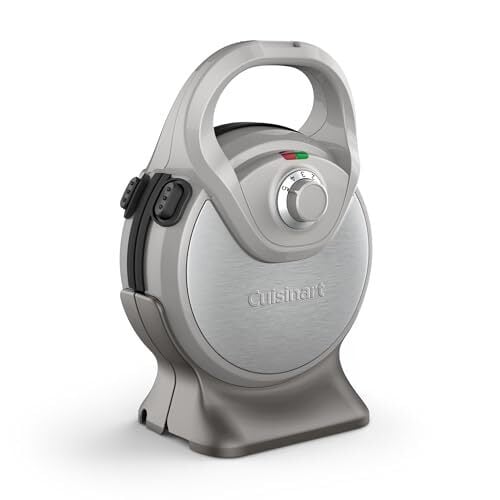
Skwered shrimp on a waffle iron.

Credit: Allie Chanthorn Reinmann

How to waffle your shrimp

1. Thaw the shrimp 

Waffling your shrimp is especially good if you’re in the mood for a quick shrimp snack. Since the waffle iron cooks from both sides simultaneously, my medium shrimp finished cooking in three minutes. If you have frozen shrimp or you’re marinating it, thaw them in the fridge overnight and give them a seasoning dry rub in the morning so you’ll be ready to waffle them just before eating. 

2. Marinate

A good marinade can be nearly any seasoning mix, spice blend, or even salad dressing. As I mentioned, I prefer dry but flavorful shrimp, so after thawing I’ll pat them dry with paper towel and add them to a bowl with dry seasonings like old bay, cayenne pepper powder, a curry powder mix, and salt. Then I’ll drizzle on a teaspoon or so of cooking oil. This makes it easier to coat the shrimp with the seasonings but also prevents them from sticking to the iron. 

3. Skewer

Raw shrimp on a skewer.

Credit: Allie Chanthorn Reinmann

You don’t need to skewer the shrimp, but I like to because it’s so much easier to remove them from the waffle maker and switch in the next batch. Also, you must consider how fun it is to eat shrimp straight off the skewer. Use bamboo skewers and poke through the centers of the shrimp—they don’t need soaking or any special treatment. You can skewer as many as will fit, but don’t add more than the length or width of your waffle iron.

4. Waffle

My waffle iron only has an on-off toggle, but if you have temperature controls, then put them up to the highest setting. Shrimp cook easily, and large or medium shrimp will cook through in three to four minutes. When your iron is fully preheated, lay down as many skewers as you can fit with about a half-inch of space between them. Press the lid down and keep some pressure on it for the first minute or so. Peek in the side to see if they’re looking opaque after three minutes, and remove them if so. Swap in the next skewers. 

If you don’t have a waffle iron already or you’re looking to buy a new one, I highly recommend one that has removable plates for easier cleaning. It’s such a relief to let the waffle iron cool down while I eat my snack shrimp, then come back and pop out the plates; the appliance goes into its storage spot and I take care of plates with the rest of the dishes. 

While your waffled shrimp may not have the grill marks or the smoky flavor of actual grilled shrimp (perhaps you can add some smoked paprika?), heating up the waffle iron is a lot easier than firing up a real grill. Plus, if you live in an apartment (like I do), or you simply don’t have a grill, this waffle-griddled shrimp gives you lots of flavor and a lot less mess.

China Bans Compulsory Facial Recognition and Its Use in Private Spaces Like Hotel Rooms

China’s Cyberspace Administration and Ministry of Public Security have outlawed the use of facial recognition without consent. From a report: The two orgs last Friday published new rules on facial recognition and an explainer that spell out how orgs that want to use facial recognition must first conduct a “personal information protection impact assessment” that considers whether using the tech is necessary, impacts on individuals’ privacy, and risks of data leakage. Organizations that decide to use facial recognition must data encrypt biometric data, and audit the information security techniques and practices they use to protect facial scans. Chinese that go through that process and decide they want to use facial recognition can only do so after securing individuals’ consent. The rules also ban the use of facial recognition equipment in public places such as hotel rooms, public bathrooms, public dressing rooms, and public toilets. The measures don’t apply to researchers or to what machine translation of the rules describes as “algorithm training activities” — suggesting images of citizens’ faces are fair game when used to train AI models.


Read more of this story at Slashdot.

My Favorite Amazon Deal of the Day: This Merach Rowing Machine

We may earn a commission from links on this page. Deal pricing and availability subject to change after time of publication.

A rowing machine can be a great workout option for people looking to target multiple major muscle groups at once (legs, back, core, and arms) while getting their cardio going at the same time.

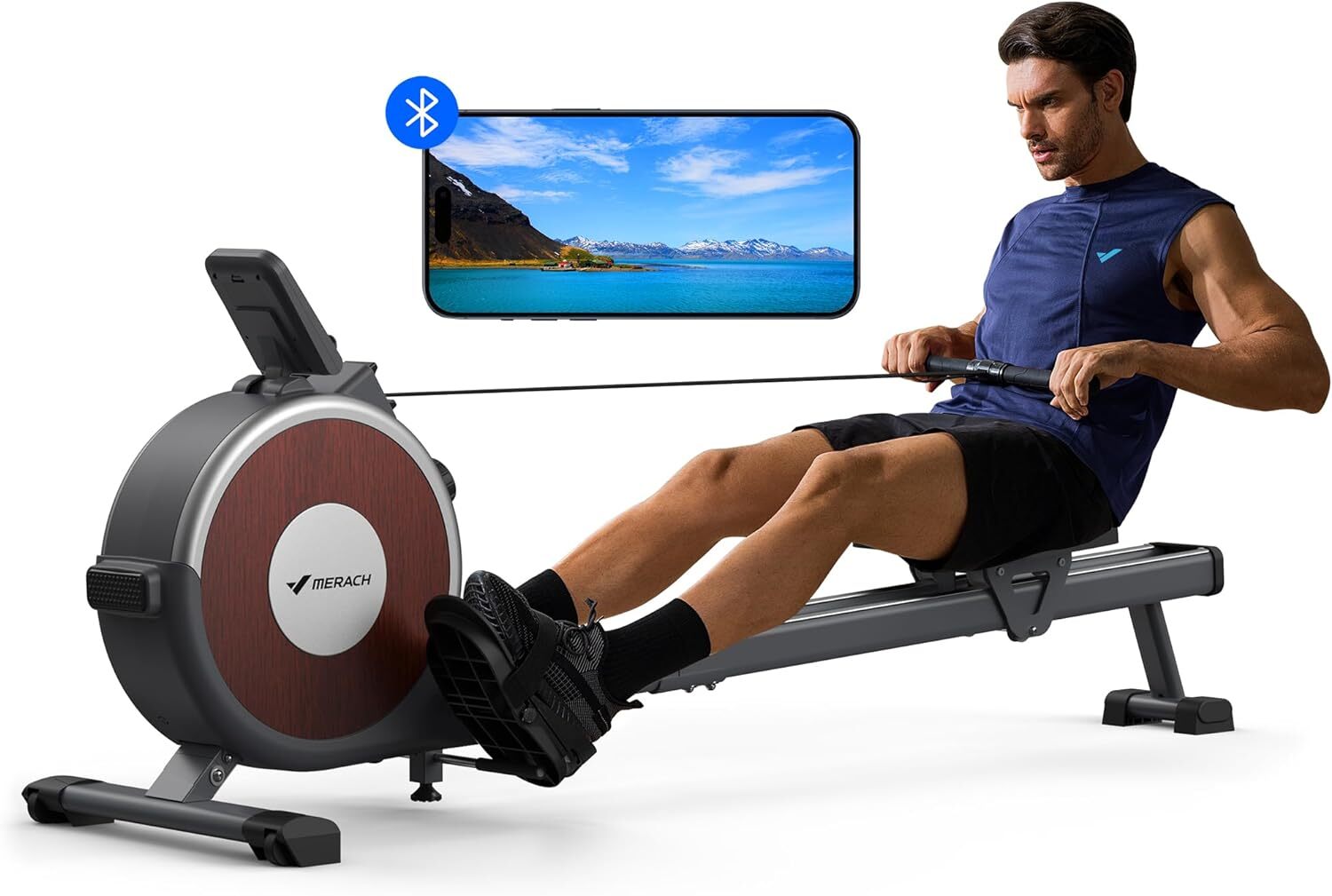
If you’re looking for a rowing machine that’s light, portable, and quiet, the Q1S Merach is worth checking out. Right now, Merach’s Magnetic Rowing Machine is on sale for $179.99 (originally $299.99), a 40% discount. This is the machine’s lowest price ever, according to price-checking tools.

As I said in my review, this machine is practical, silent, and affordable even before the current discount. I really like the ability to prop it up against the wall and keep it from taking up too much space in my dining room. The machine is also silent enough that I can get workouts done while watching TV and without annoying my partner.

The Merach app is a great companion for the rowing machine, with different workouts, tracking metrics, optional classes, and other paid options to unlock. The screen itself is disappointing, but you can very easily use your phone’s screen and prop it in front of you to get a much better idea of what you’re doing.

Where this machine might fall short for some people is in its size. I’m 5’7″, and I feel that the handlebars sit very low to the ground and don’t come out far enough at the start of the drive, giving me that cramped, small rowboat feel. To get any tension on my arms at the beginning of the stroke, I have to lean back—which isn’t good form. If you’re just trying to get a workout in, though, it likely won’t bother you.

You Can Get Lifetime Access to Microsoft Office 2024 for Just $160 Right Now

We may earn a commission from links on this page. Deal pricing and availability subject to change after time of publication.

If you’re tired of subscription-based software but still need Microsoft Office, this lifetime license for Office 2024 (Home & Business for Mac or PC) might be worth considering. It’s currently on sale for $159.97 on StackSocial until March 30 (down from $249.99) and is a one-time purchase that gives you access to Word, Excel, PowerPoint, Outlook, and OneNote without the recurring fees of Microsoft 365. After buying, the license ties to your Microsoft account, not a specific device, so you can reinstall it if you switch computers. The catch is that this version won’t get future upgrades, meaning once Microsoft moves on to the next version, you’ll still be stuck with this one. Of course, that might not be an issue if you just need core productivity tools without chasing every new feature.

This Office 2024 edition is faster and has some notable improvements over Office 2021, particularly in Excel, where handling large datasets is noticeably smoother. PowerPoint’s got some solid upgrades, too, including the ability to record presentations with live camera feeds—useful for remote work or online courses. The newer Outlook offers better search functionality and an updated accessibility checker to flag emails that may not be easily readable for everyone. Microsoft also gave the whole suite a Fluent Design facelift, making everything look more polished and consistent across its apps. Unlike Microsoft 365, this version works entirely offline, which is a plus for users who don’t want cloud dependency.

There are also some AI-powered features baked into this 2024 version. Word’s Smart Compose can predict and suggest text, making writing faster, while Excel’s AI Data Insights can analyze trends and recommend visualizations for your spreadsheets. PowerPoint has improved storytelling tools to make presentations more engaging with smoother transitions and built-in media support. And if you need real-time collaboration, Office 2024 does allow co-authoring within Word, Excel, and PowerPoint. However, it’s not as seamless as the cloud-based version of Microsoft 365. Also, no Microsoft Teams subscription is included, so if that’s part of your workflow, you’ll need to factor that in. This deal makes sense if you want a no-subscription Office suite that works offline. But if you’re after continuous updates and deep cloud integration, Microsoft 365 might still be the better choice.

AI Will Impact GDP of Every Country By Double Digits, Says Mistral CEO

Countries must develop their own artificial intelligence infrastructure or risk significant economic losses as the technology transforms global economies, Mistral CEO Arthur Mensch said last week.

“It will have an impact on GDP of every country in the double digits in the coming years,” Mensch told the A16z podcast, warning that nations without domestic AI systems would see capital flow elsewhere. The French startup executive compared AI to electricity adoption a century ago. “If you weren’t building electricity factories, you were preparing yourself to buy it from your neighbors, which creates dependencies,” he said.


Read more of this story at Slashdot.

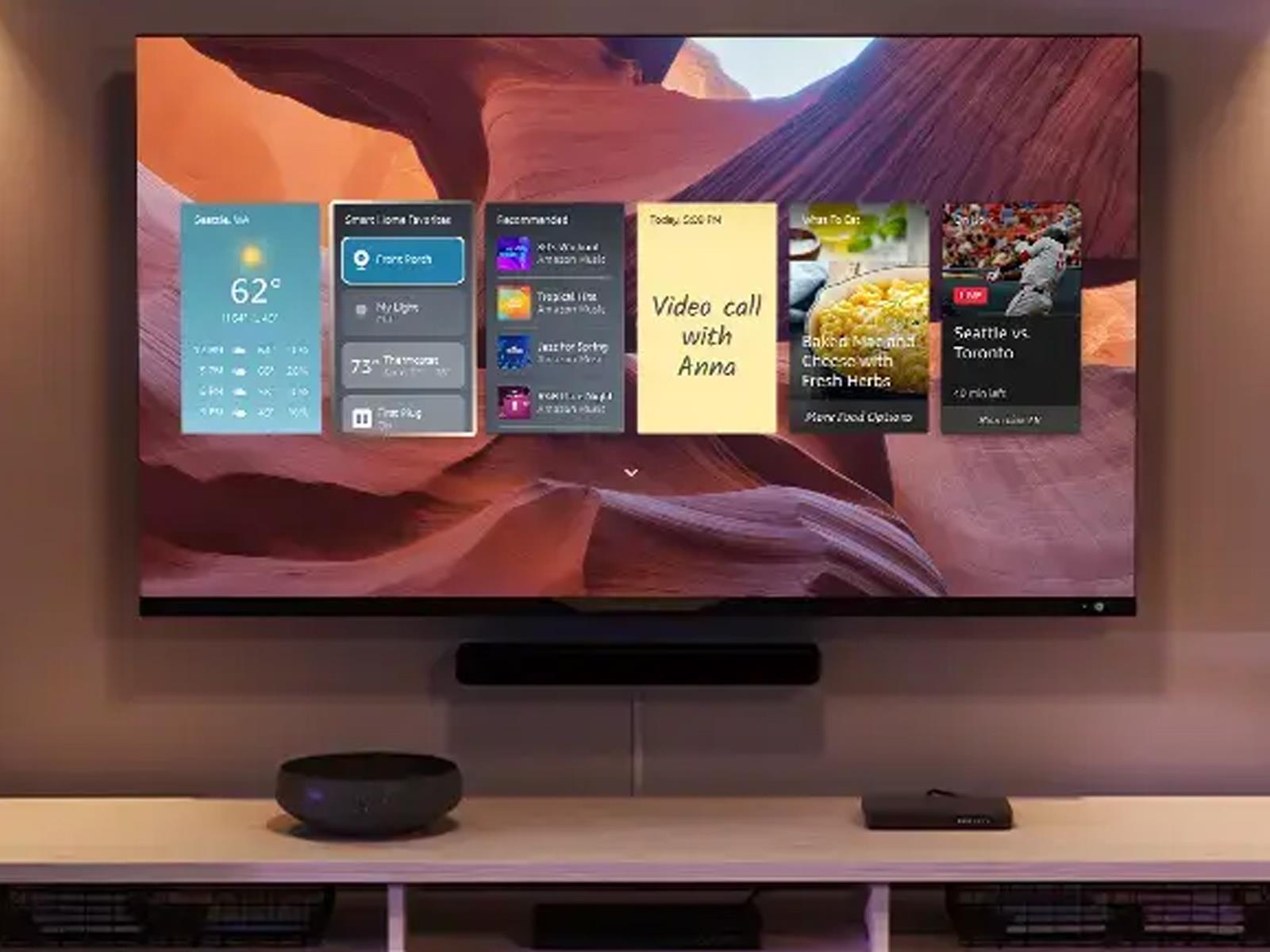
This 4K Fire TV Slashed To Just $199 Is A Great Deal But You Have To Be Quick

This 4K Fire TV Slashed To Just $199 Is A Great Deal But You Have To Be Quick
We live in some wild times, folks. Pricing on things like eggs and other staples are going through roof, and let’s not even get started with the situation on current-generation graphics cards. However, if it’s a new big (or semi-big) television you’re after, pricing has never been better. Go figure! To wit, we recently highlighted a 65-inch

Indiana Jones and The Great Circle hits PS5 on April 17

The PlayStation 5 release date for Indiana Jones and the Great Circle has been revealed. MachineGames’ latest Nazi-thwacking simulator will hit Sony’s console on April 17, just four months after it debuted on Xbox and PC. If you pony up for the digital premium edition or physical collector’s bundle, you’ll get early access to the game on April 15 (plus some other goodies). Digital pre-orders are open now and physical pre-orders go live tomorrow, March 25.

Microsoft confirmed last August that it would bring a port of the tremendously enjoyable blockbuster to Sony’s console this spring as part of its shift away from platform exclusivity. We’ve seen a number of notable former Xbox exclusives come to PS5 (and Switch in some cases) over the last year or so. Among them are Sea of Thieves, Hi-Fi Rush, Pentiment and Grounded. Forza Horizon 5 is also PS5-bound on April 29.

Meanwhile, Doom: The Dark Ages will hit PS5 on May 15, the same day it’s set to land on PC and Xbox. Rumors suggest that a remastered collection of the first three Gears of War games is coming to Sony’s system. The rebooted Fable and even Xbox’s flagship Halo series could make the leap over to PlayStation as well, as the walls around Microsoft’s gaming garden continue to crumble.

This article originally appeared on Engadget at https://www.engadget.com/gaming/indiana-jones-and-the-great-circle-hits-ps5-on-april-17-150021622.html?src=rss

Google’s Pixel 9a Misses Out on a Couple of Pixel AI Features

Google’s budget phone for the masses, the Pixel 9a, will retail at $499 when it launches in April. That’s a full $100 less than the iPhone 16e and $300 less than the Pixel 9. Even so, the 9a has many of the same features as the Pixel 9. It carries over the same Tensor G4 chip, and promises to feature most of the Pixel 9’s AI suite.

Most, but not all. Ars Technica is now reporting that the Pixel 9a will be missing some crucial AI features at launch. That’s because the Pixel 9a features 8GB RAM, while the Pixel 9 has 12GB RAM, and the Pixel 9 Pro models feature 16GB RAM.

While the Pixel 9a comes with on-device Gemini Nano, Ars Technica confirmed with Google that it’s going to be using the Gemini Nano 1.0 XXS (“extra extra small”) model. This is the company’s lightest available model, and the one that runs on the Pixel 8. The rest of the Pixel 9 series phones, by comparison, all run the Gemini Nano XS (extra small) model.

While you can still use Gemini AI on Pixel 9a using the power button, being limited to the XXS model means it will lack some of the Pixel line’s tentpole AI features. The 8GB RAM is not enough to run the Gemini AI models in the background, and the XXS model is text-only.

Because it can’t run in the background, and it can’t process images, it therefore can’t support features like Pixel Screenshots app, which require image processing in the background. It also won’t support Call Notes, a feature that uses audio analysis to provide on-device AI summaries of phone conversations. Additionally, it’s possible that the Pixel line’s newly announced spam detection feature might not be available on the Pixel 9a, but that’s not confirmed as of yet.

Luckily, the Recorder app will still work, because the app creates a transcript first (not using Gemini AI), and then uses AI on the transcribed text, something that Pixel 9a can pull off.

That’s all we know so far. More details on what works and what doesn’t will only be available once the Pixel 9a is available in the wild, sometime in April. With this Pixel 9a release, the gap between the flagship Pixel and the budget Pixel is widening. Luckily, it’s limited to AI features for now. If you don’t intend to use these on-device AI features, you won’t feel the pinch.

Genetic testing company 23andMe declares bankruptcy

On Sunday, the genetic testing and heritage company 23andMe announced that it had entered Chapter 11 bankruptcy and was asking a court to arrange its sale. The company has been losing money for years, and a conflict between its board and CEO about future directions led to the entire board resigning back in September. Said CEO, Anne Wojcicki, has now resigned and will be pursuing an attempt to purchase the company and take it private.

At stake is the fate of genetic data from the company’s 15 million customers. The company has secured enough funding to continue operations while a buyer is found, and even though US law limits how genetic data can be used, the pending sale has raised significant privacy concerns.

Risky business

The company launched around the time that “gene chips” first allowed people to broadly scan the human genome for sites where variations were common. A few of these variants are associated with diseases, and 23andMe received approval to test for a number of these. But its big selling point for many people was the opportunity to explore their heritage. This relied on looking broadly at the patterns of variation and comparing those to the patterns typically found in different geographic regions. It’s an imperfect analysis, but it can often provide a decent big-picture resolution of a person’s ancestry.

Read full article

Comments