Congress Extends ISS, Tells NASA To Get Moving On Private Space Stations

A recently-revised Senate authorization bill (PDF), co-sponsored by Senate Commerce Committee Chair Ted Cruz, would extend the International Space Station’s lifespan from 2030 to 2032 while pushing NASA to accelerate plans for commercial space stations to replace it. Ars Technica’s Eric Berger reports: Regarding NASA’s support for the development of commercial space stations, the bill mandates the following, within specified periods, of passage of the law:

– Within 60 days, publicly release the requirements for commercial space stations in low-Earth orbit

– Within 90 days, release the final “request for proposals” to solicit industry responses

– Within 180 days, enter into contracts with “two or more” commercial providers for such stations

Cruz is trying to inject urgency into NASA as several private companies — including Axiom Space, Blue Origin, Vast, and Voyager — are finalizing designs for space stations. All have expressed a desire for clarity from NASA on how long the space agency would like its astronauts to stay on board, the types of scientific equipment needed, and much more. These are known as “requirements” in NASA parlance.

[…] Cruz and other senators on the committee appear to share those concerns, as their legislation extends the International Space Station’s lifespan from 2030 to 2032 (an extension must still be approved by international partners, including Russia). Moreover, the authorization bill states, “The Administrator shall not initiate the de-orbit of the ISS until the date on which a commercial low-Earth orbit destination has reached an initial operational capability.” With this legislation, the U.S. Senate is making clear that it views a permanent human presence in low-Earth orbit as a high priority. This version of the authorization legislation must still be passed by the full Senate and work its way through the House of Representatives.


Read more of this story at Slashdot.

Anthropic says it will challenge Defense Department’s supply chain risk designation in court

In a new blog post, Anthropic CEO Dario Amodei has admitted that it received a letter from the Defense Department, officially labeling it a supply chain risk. He said he doesn’t “believe this action is legally sound,” and that his company sees “no choice” but to challenge it in court. Hours before Amodei published the post, the Pentagon announced that it notified the company that its “products are deemed a supply chain risk, effective immediately.”

If you’ll recall, the Defense Department (called the Department of War under the current administration) threatened to give the company the designation typically reserved for firms from adversaries like China if it didn’t agree to remove its safeguards over mass surveillance and autonomous weapons. President Trump then ordered federal agencies to stop using Anthropic’s tech.

Amodei explained that the designation has a narrow scope, because it only exists to protect the government. That is why the general public, and even Defense Department contractors, can still use Anthropic’s Claude chatbot and its AI technologies. Microsoft told CNBC that it will continue using Claude after its lawyers had concluded that it can keep on working with Anthropic on non-defense related projects.

The CEO has also admitted that his company had “productive conversations” with the department over the past few days. He said that they were looking at ways to serve the Pentagon that adheres to its two exceptions, namely that its technology not be used for mass surveillance and the development of fully autonomous weapons, and at ways to “ensure a smooth transition if that is not possible.” That confirms reports that Anthropic is back in talks with the agency in an effort to reach a new deal. In addition, he apologized for a leaked internal memo, wherein he reportedly said that OpenAI’s messaging about its own deal with the department is “just straight up lies.”

This article originally appeared on Engadget at https://www.engadget.com/ai/anthropic-says-it-will-challenge-defense-departments-supply-chain-risk-designation-in-court-054459618.html?src=rss

Microsoft Confirms ‘Project Helix,’ a Next-Gen Xbox That Can Run PC Games

An anonymous reader quotes a report from 80 Level: Microsoft has officially confirmed development of its next-generation Xbox console, currently known internally as Project Helix. While concrete details remain limited, early information suggests the company is positioning the device as a hybrid between a traditional console and a gaming PC, capable of running both Xbox titles and PC games. The codename was revealed recently by new Xbox CEO Asha Sharma, who reaffirmed Microsoft’s continued commitment to dedicated gaming hardware despite speculation that the company might shift entirely toward cloud or platform-based ecosystems. According to Sharma, Project Helix represents the next step in Xbox’s console strategy.

Although official specifications have not yet been announced, early reports indicate the system will likely rely on a new AMD system-on-chip combining Xbox hardware with PC-style architecture. The device is expected to emphasize high performance while maintaining compatibility with existing Xbox game libraries. […] If the concept holds, Project Helix could mark a significant shift in how console ecosystems are structured, moving away from tightly closed hardware platforms toward something closer to a unified PC-console environment. Sharma wrote in a post on X: “Great start to the morning with Team Xbox, where we talked about our commitment to the return of Xbox, including Project Helix, the code name for our next generation console. Project Helix will lead in performance and play your Xbox and PC games. Looking forward to chatting about this more with partners and studios at my first GDC next week!”


Read more of this story at Slashdot.

Pentagon Formally Designates Anthropic a Supply-Chain Risk

The Pentagon has formally designated Anthropic as a “supply chain risk,” ordering federal agencies and defense contractors to stop using its AI tools after the company sought limits on the military’s use of its models. In a written statement, the department said it has “officially informed Anthropic leadership the company and its products are deemed a supply chain risk, effective immediately.” Politico reports: The designation, historically reserved for foreign firms with ties to U.S. adversaries, will likely require companies that do business with the U.S. military — or even the federal government in general — to cut ties with Anthropic.

“From the very beginning, this has been about one fundamental principle: the military being able to use technology for all lawful purposes,” the Pentagon said in the statement. “The military will not allow a vendor to insert itself into the chain of command by restricting the lawful use of a critical capability and put our warfighters at risk.”

A spokesperson for Anthropic did not immediately respond to a request for comment. But the company said last week it would fight a supply-chain risk label in court.


Read more of this story at Slashdot.

Artist Dresses And Dances Like Trash Blowing In The Wind

Because it takes all kinds, this is a video of artist Shoji Yamasaki dressed like, and dancing like, random pieces of trash blowing in the wind. Oh man, I’ve known my fair share of pieces of trash in life, and none of them danced like this. Most of them moved like SNAKES. Real jerkbags!

X’s Exclusive Threads feature lets creators paywall the end of tweet threads

Today, X announced some updates to its creator subscriptions platform. The leading change gives participating accounts the option to make part of tweet threads only visible to subscribers. This new Creator Subscriptions feature is called Exclusive Threads, an ironic name choice given X’s main text-based social media posting competitor is called Threads.

Creator Subscriptions 2.0 is here: powerful new tools to grow your subscribers and earn more.

Introducing Exclusive Threads — lock any post in a thread for subscribers only. Tease in the parent, monetize the rest. Subscribe buttons are now embedded directly in the conversation. pic.twitter.com/j8Bg3bMDiW

— Creators (@XCreators) March 5, 2026

The new tool allows a creator to tease paywalled content, rather than keeping all of the material behind a subscribers-only gate. A gif shared both by the X Creators account and by the company’s head of product, Nikita Bier, show how it will look in practice. Buttons to sign up as a subscriber will be embedded into the post chain, with the hope that the need to see the rest of the thread will be a big enough draw for readers to pay up. X has been making a push to draw content creators, offering other recent features like a ‘paid partnership’ label for sponsored posts.

This article originally appeared on Engadget at https://www.engadget.com/social-media/xs-exclusive-threads-feature-lets-creators-paywall-the-end-of-tweet-threads-000246204.html?src=rss

Workers report watching Ray-Ban Meta-shot footage of people using the bathroom

Meta’s approach to user privacy is under renewed scrutiny following a Swedish report that employees of a Meta subcontractor have watched footage captured by Ray-Ban Meta smart glasses showing sensitive user content.

The workers reportedly work for Kenya-headquartered Sama and provide data annotation for Ray-Ban Metas.

The February report, a collaboration from Swedish newspapers Svenska Dagbladet, Göteborgs-Posten, and Kenya-based freelance journalist Naipanoi Lepapa, is, per a machine translation, based on interviews with over 30 employees at various levels of Sama, including several people who work with video, image, and speech annotation for Meta’s AI systems. Some of the people interviewed have worked on projects other than Meta’s smart glasses. The report’s authors said they did not gain access to the materials that Sama workers handle or the area where workers perform data annotation. The report is also based on interviews with former US Meta employees who have reportedly witnessed live data annotation for several Meta projects.

Read full article

Comments

Mac Studio 512GB RAM Option Disappears Amid Global DRAM Shortage

Apple has removed the 512GB RAM configuration for the Mac Studio, leaving 256GB as the new maximum. The remaining 256GB upgrade has also increased in price and now faces longer shipping delays as demand grows “due to consumers seeking machines suitable for running local AI agents,” reports MacRumors. From the report: The Mac Studio starts with 36GB RAM, but there were upgrades ranging from 48GB to 512GB, with the higher tier upgrades limited to the M3 Ultra chip. Now there are options ranging from 48GB to 256GB, with wait times into May for the 256GB upgrade. Apple has also raised the price for the 256GB RAM upgrade option. It used to cost $1,600 to go from 96GB to 256GB on the high-end M3 Ultra machine, but now it costs $2,000. 512GB was $4,000 when it was available.


Read more of this story at Slashdot.

United Airlines Can Now Boot Passengers Who Refuse To Use Headphones

United Airlines has updated its contract of carriage to require passengers to use headphones when playing audio or video on personal devices during flights. Travelers who refuse could be removed from the plane or even permanently banned from flying with the airline, reports CBS News.

United notes that it will offer customers who forget theirs a free pair of wired earbuds. “Don’t worry if you forget your headphones for your flight,” the airline states on its website. “If they’re available, you can request free earbuds.” You’d better hope your device still has a headphone jack…

Further reading: Flying Was Already the Worst. Then America Stopped Using Headphones.


Read more of this story at Slashdot.

10 Hacks Every Whoop User Should Know

We may earn a commission from links on this page.

If you’ve been wearing a Whoop, you’ve probably explored some of the features of its incredibly rich app—but chances are, some things are still hiding from you. I’ve been wearing a Whoop off and on since version 3.0, so let me tell you some of the best ways to use the Whoop (and a few things I think you should do differently than you’re “supposed” to). 

Use the Whoop’s strength trainer after (not during) workouts

I’m going to start off with my strongest opinion, and you’re free to disagree: Whoop’s strength trainer is a pain the butt to use during workouts, but you get all the benefits with less hassle if you use it to attach a workout after you finish recording your gym session. 

The Strength Trainer knows what exercises you’re doing, and so it can calculate a “muscular load” for the workout. This is great, because you now get an appropriately high strain score for a hard workout. (Without Strength Trainer, Whoop only uses heart rate data to calculate strain, which of course underestimates your strength workouts.) 

I don’t like using the Strength Trainer during workouts because you have to remember to start and stop each set, and mid-workout editing is annoying. But there is an easier way! Just record an appropriate workout type (like “weightlifting”), and then after your workout Whoop will prompt you to attach a Strength Trainer workout. You select your exercises, fill in your weights, and then Whoop re-processes the workout to give you your new, higher strain score. 

Turn your phone sideways

Horizontal view on Whoop

Credit: Beth Skwarecki

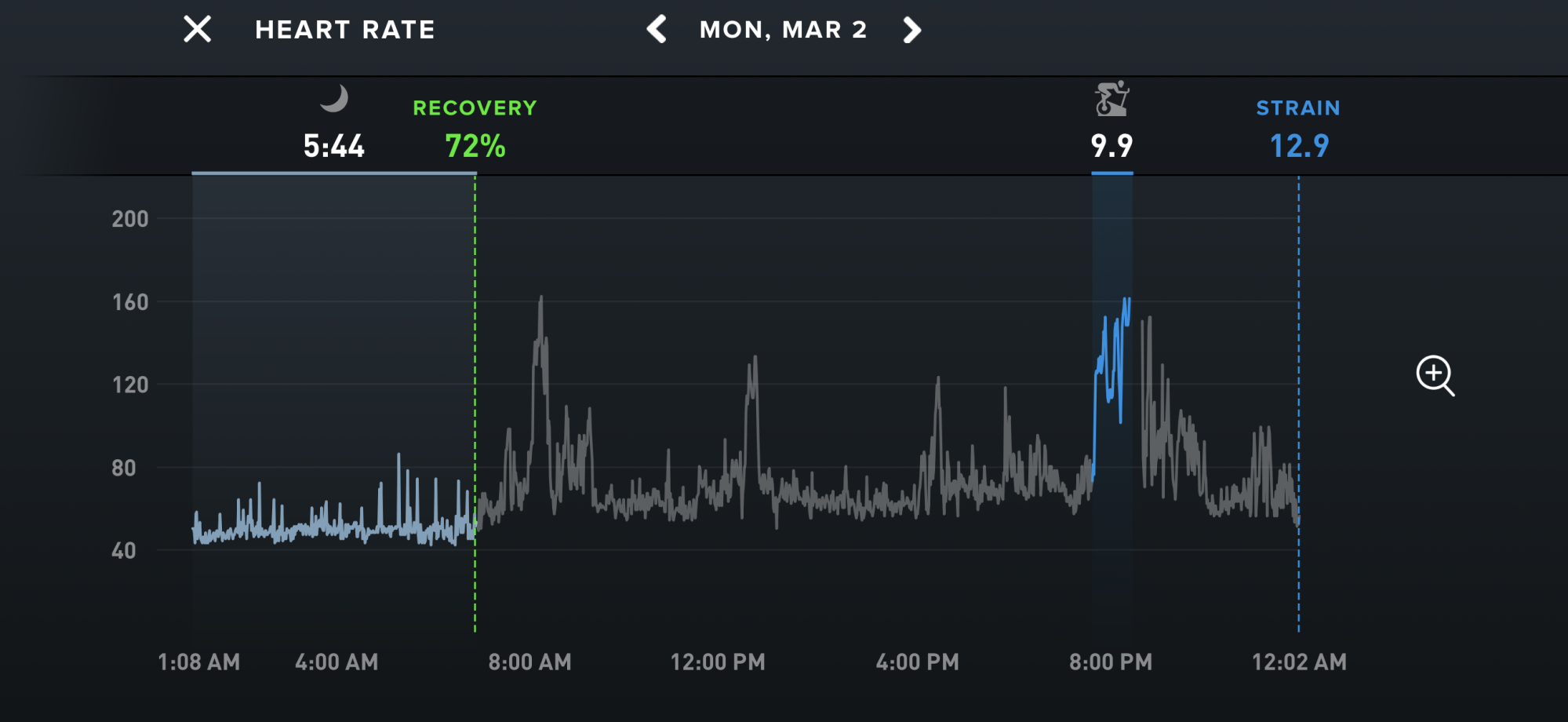
This is a little Easter egg that you may never discover except by accident. When you’re on the home screen, turn your phone sideways. You’ll see a long, horizontal graph of your heart rate for the day so far, with sleep and workouts highlighted. (You need to have rotation unlocked in your phone settings, of course.) 

Set up a custom weekly plan

The weekly plans are a truly underrated feature of the Whoop app. They give you a way to focus on the firehose of data Whoop can track, turning it into a few simple tasks you can work on throughout the week. If you’re feeling either stumped or overwhelmed when you look at your Whoop app, set up a plan and check on your progress throughout the week. 

If you don’t know where to start, you can choose one of the pre-made plans. For example, the “Feel Better” plan gives you a target for daily steps, suggests meeting a hydration goal four days per week, and doing “any recovery activity” three days per week. All of these parameters are editable, if you’d like to tweak something. 

But you can also set up a custom plan, or ask the Whoop Coach to write you one. The plan can use any combination of Journal answers (“did you hydrate today?”) and data that Whoop gathers (for example, I’m aiming for 65% sleep consistency). I find it more motivating to chip away at weekly targets rather than follow (or ignore) individual recommendations each day. 

Use the “daily outlook” rather than just tapping the Whoop Coach icon

Whoop Coach is the only fitness AI I’m currently on speaking terms with. They all have their flaws, but the Whoop Coach is pretty good about delivering the highlights of your data each day and telling you how you’re doing compared to your weekly goals. 

That said, there are two ways to access Whoop Coach, and one of them is more useful than the other. The way I like to use it is to look for the “daily outlook” button in the middle of the home screen, right under “My Day” and above the timeline. Tap this, and you’ll get a full rundown of what you’ve been doing well lately and where you may want to focus your efforts today. (If I’ve been doing a lot of outdoor workouts lately, I’ll even get a weather report.) 

Meanwhile, the “W” button in the corner of the screen also brings up the Whoop Coach, but it’s a lot less helpful. This coach seems to focus on designing my next workout, whether I want to do that or not, and it doesn’t usually take my weekly plan or other relevant goals into account. 

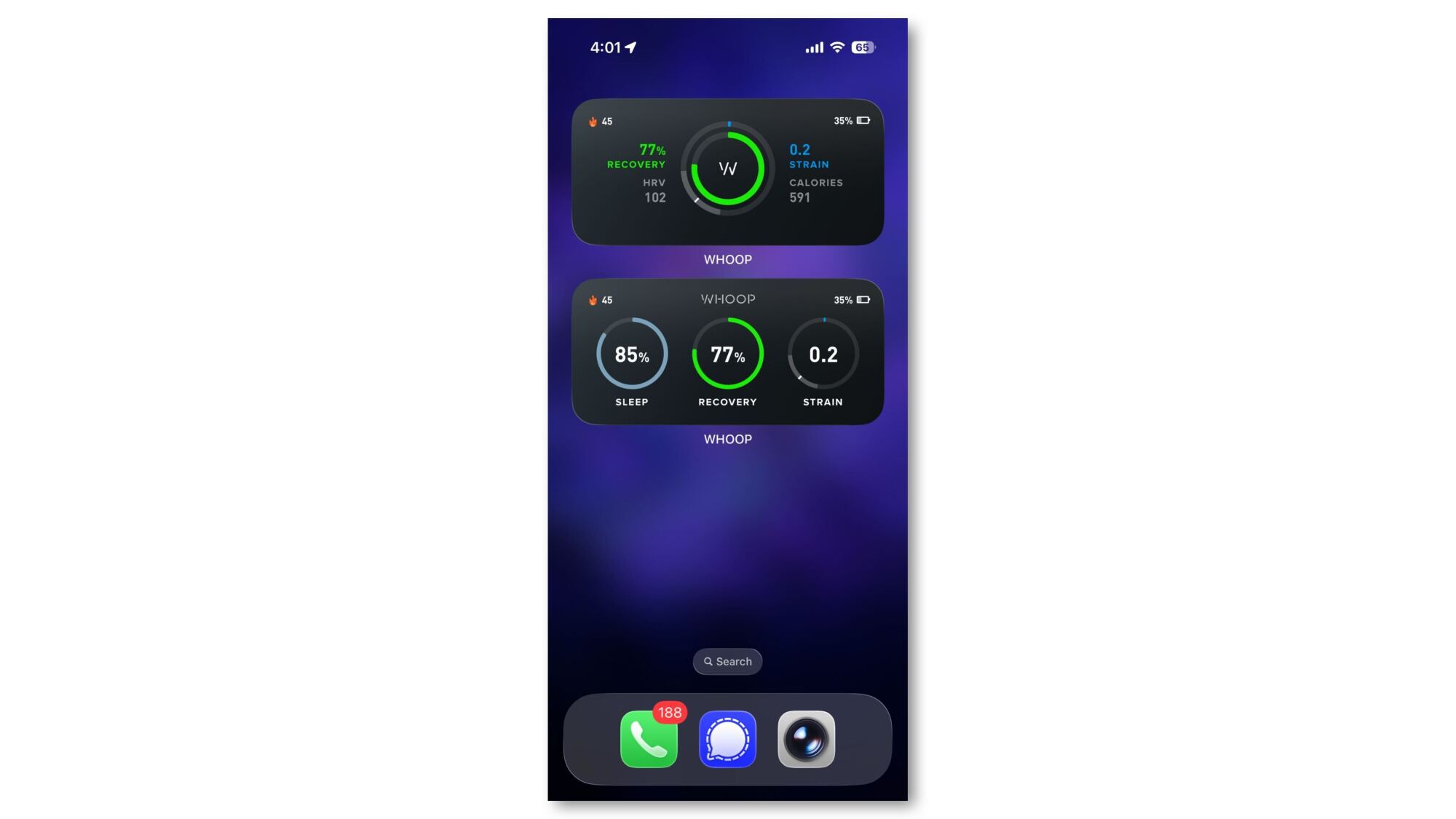
If you miss the old strain/recovery view, get it back with a widget

Whoop widgets
Top: the “old” view. Bottom: the new one. Both are available as home screen widgets (shown on iPhone).
Credit: Beth Skwarecki

The Whoop app offers widgets you can put on your home screen, which mostly just replicate data you can get in the app. But one of them is slightly different—a widget that shows strain and recovery the way the app used to. This view is arguably confusing, and I understand why Whoop moved away from it: your strain and recovery are shown as concentric circles, and sleep score is missing. 

But who really needs the sleep score? This widget gives my HRV and the calories it thinks I’ve burned so far today, with little icons in the corners for how long a streak I’ve kept up and the current battery life of the device. If you’d prefer the current design, with separate circles for sleep, recovery, and strain, there’s a widget option for that as well. 

Broadcast your heart rate to gym equipment

The Whoop sensor picks up your heart rate, so why not use it as a heart rate monitor with other devices? It’s not as accurate as a chest strap, so I wouldn’t advise using it in place of one, but it’s a convenient way to broadcast your heart rate to a treadmill or elliptical machine at the gym. This way you can see your heart rate on the machine’s display in real time, while still tracking the workout to your Whoop app as usual. To turn on heart rate broadcasting, tap the icon for your device (in the top right corner of the app) and you’ll see a toggle labeled broadcast heart rate. 

Wear it on your body (with or without buying more products from Whoop)

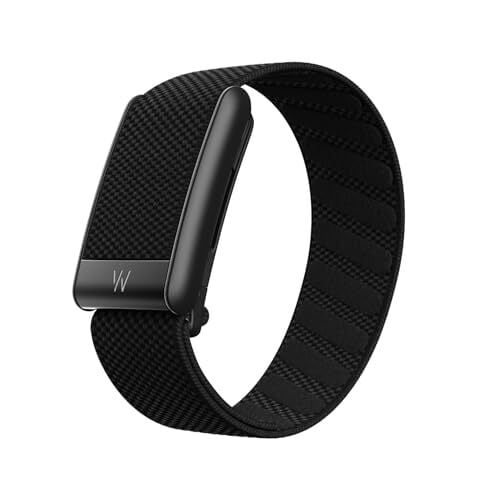
The wristband is convenient, but the ability to be worn in a bicep band is one of Whoop’s best features. You can buy Whoop’s own bicep band, but it’s not cheap. You can also buy compatible third-party bicep bands from other retailers like Amazon. This one snaps onto the Whoop device more easily than Whoop’s own band does. 

Whoop also has its Body line of clothing, including sports bras and boxer shorts with a pocket for the device. If you’re handy with a sewing needle, you could create your own. And if you’re not, but want to get the Whoop off your wrist for a particular occasion, I’ve had success taping the device to my skin with athletic tape. Not my proudest moment, but it worked.

Set up custom bedtime recommendations

Whoop’s best sleep features are a little bit hidden. Since the app knows how “recovered” you are, it can estimate how much sleep you’ve been missing out on, and recommend a bedtime to help you catch up, if needed. 

There are a few layers to this feature, so bear with me. First, scroll down on your home screen, and you’ll see a card with a recommended bedtime and wake time. Next, tap that card and you’ll see a screen where you can change what kind of bedtime recommendation you’ll get. You can choose to “meet my sleep need” (catch up if needed) or “improve my sleep” (try to stay consistent while still getting as much sleep as you reasonably can). 

There’s more, though: tap the calendar icon at the top right corner, and you can set a weekly schedule. For each day on the schedule, you can decide if you want an alarm at a set time of day, or if you’d like the Whoop device to buzz you when you’ve hit a certain amount of sleep. This could be enough to “get by,” enough to “perform,” or enough to “peak” (meet 100% of your sleep need). You can also use the schedule to get recommendations even if you don’t want the alarm. 

Only track some things in the journal

Every day, Whoop will prompt you to fill out a questionnaire about what you did the day before. This helps it to figure out what affects your recovery. A classic example is logging when you drink alcohol, and then getting hard data on just how poorly you slept on the nights you drank. 

At first, you’ll be tempted to log everything. But that’s not the right way to use the journal. First of all, if you already know something (like that alcohol interferes with your sleep), there’s no need to track it. Secondly, tracking too many things is just a lot of hassle when it comes time to fill out your journal. You can tap the “use previous answers” checkbox, but then you’re likely to miss a few things. 

Most importantly, Whoop can’t even use the data from your answers unless you’re racking up answers that are both yes and no. So there’s no need to log anything you always do, or anything you never do. I recommend paring down your journal questions like so: 

  • Things that you sometimes do and sometimes don’t, and you don’t yet know how they affect your sleep and recovery

  • Things that you want to log for the sake of a weekly plan

  • Things that are directly relevant to your life right now, because you can always swap out your questions from time to time. 

Use those guidelines to whittle down your journal questions to just the things that actually help you to accomplish some kind of goal. Revisit the list every month or so; for example, I track allergy symptoms during the spring allergy season, but I remove it from the list for the rest of the year. Keep the questions relevant and the journal will stay useful. 

Charge the Whoop band when you shower

Whoop ships most of its devices with a wireless power pack. It’s a great idea, in theory: you can slip the battery pack onto the device while you’re wearing it, so you don’t miss a minute of valuable data. And I do appreciate this when I’m about to head out for a run and I realize my battery is at 2%. But I don’t routinely charge the Whoop this way if I can help it. 

Because who wants to wear a strap with a giant battery pack hanging off it? Not me. And as for 24/7 wear, I do not want to shower with a fabric band around my arm, and then have a soggy band to wear for hours afterward. Instead, I take the Whoop off to shower, and if the battery level is low, that’s when I charge it. This way I avoid both of these inconveniences. I recommend you do, too. 

COPPA 2.0 passes the Senate again, unanimously this time

Today the US Senate unanimously passed proposed legislation known as COPPA 2.0. This measure, fully named the Children and Teens’ Online Privacy Protection Act, aims to create new protections for younger users online, such as blocking platforms from collecting their personal data without consent. 

COPPA 2.0 is a modernized take on the Children’s Online Privacy Protection Act of 1998, attempting to address recent changes in common online activities, like targeted advertising, that could prove harmful to minors. Lawmakers have made several attempts to get this bipartisan bill through. While it has made varying amounts of headway in the Senate, none of the COPPA 2.0 bills to date have gotten past the House of Representatives. Industry groups such as NetChoice have previously opposed COPPA 2.0 and other measures around minors’ online activity such as KOSA, the Kids Online Safety Act. NetChoice members include Google, YouTube, Meta, Reddit, Discord, TikTok and X.

“This bill expands the current law protecting our kids online to ensure companies cannot collect personal information from anyone under the age of 17,” Senate Democratic Leader Chuck Schumer (D-NY) said in a statement about the latest result. “This is a big step forward for protecting our kids. We hope the House can join us. They haven’t thus far.”

However, there has been a bigger push both domestically and internationally toward restrictions on when and how younger people engage online. Several states — Utah, California and Washington to name a few — have enacted laws requiring some level of age verification, either to access mature content online or to use social media apps at all. Many of these efforts have raised concerns about privacy regarding where and how people’s personal information is stored and protected. COPPA 2.0 might wind up benefitting from the privacy debates since it emphasizes giving teens and parents ways to protect themselves from having their data used against them rather than asking adults to give up data in order to use the internet as usual.

This article originally appeared on Engadget at https://www.engadget.com/big-tech/coppa-20-passes-the-senate-again-unanimously-this-time-215044656.html?src=rss

MS exec: Microsoft’s next console will play “Xbox and PC games”

Last summer, we here at Ars made the argument that the company’s next Xbox console should give up the walled garden approach and just run Windows already. Now, newly named Microsoft Executive Vice President for Gaming Asha Sharma has strongly hinted that this is indeed the direction Microsoft is going, saying its next-generation console will “play your Xbox and PC games.”

In a social media post Thursday afternoon, Sharma said that “our commitment to the return of Xbox” would include a new console codenamed Project Helix that “will lead in performance and play your Xbox and PC games.” Sharma said she would be discussing that commitment and that console itself with developers and partners at her first Game Developers Conference next week.

Sharma’s statement leaves a little wiggle room for Project Helix to be something other than a full-fledged Windows-based living room gaming box. The coming console’s access to PC games could be limited to Microsoft’s existing streaming solution via PC Game Pass, for instance, or to games designed for Microsoft’s own Xbox-branded PC SDK and the PC Xbox app.

Read full article

Comments

This Compact Samsung Soundbar/Subwoofer Combo Is on Sale for $140

We may earn a commission from links on this page. Deal pricing and availability subject to change after time of publication.

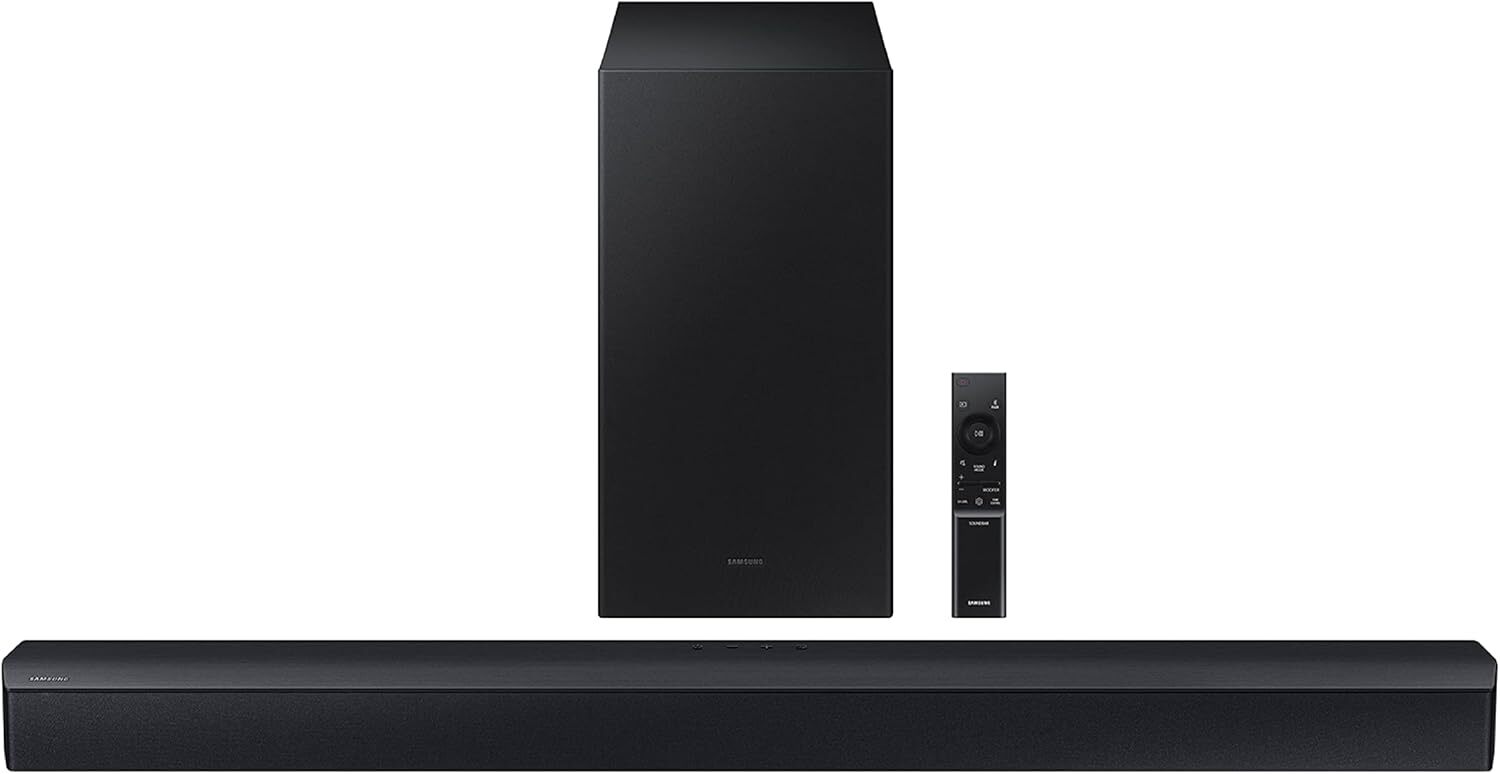
The Samsung HW-C450 soundbar is one of the best ultra-thin soundbars on the market, and at less than two inches thick, it packs some serious power with six drivers and built-in amplification. A compact, minimalist option for small rooms (or just for those who don’t want a bulky, unsightly audio accessory ruining their media-viewing room), this highly rated 2.1-channel soundbar with a wireless subwoofer just dropped 29% on Amazon, bringing its price to $139.97 (originally $197.99).

While it doesn’t have the surround sound of a 5.1 system, CNET notes that this soundbar delivers “impressive sound quality” despite its small size, with better-than-average sound detail for movies and TV shows. While it features modes like Game Mode and Bass Boost, if your primary goal is to use it for music, you may want to look elsewhere. 

The HW-C450 also lacks HDMI connectivity compared to models with multiple inputs, like the Sony HT-CT150. The display features illuminated, touch-sensitive buttons if you don’t want to use the remote (or tend to misplace it), and there’s no need for a wire to connect the included sub, which provides additional low-end punch. 

It’s a sleek and powerful option for a home theater experience, making it a great option for decor-minded buyers looking to beef up their TV and movie-watching experience with style. The slim design fits neatly under TVs without obscuring the screen, and at under $150, now is a great time to invest in the surprisingly bassy Samsung HW-C450 soundbar if you’re on a budget.

Our Best Editor-Vetted Tech Deals Right Now


Amazon Fire TV Soundbar


—
$99.99

(List Price $119.99)

Deals are selected by our commerce team

RFK Jr.’s anti-vaccine policies are “unreviewable,” DOJ lawyer tells judge

A lawyer for the Trump administration told a federal judge Wednesday that anti-vaccine Health Secretary Robert F. Kennedy Jr. has such ample authority over the country’s vaccine policies that he is “unreviewable.” His unfettered powers even allow Kennedy the freedom to recommend, if he chose to do so, that people ditch vaccines and actively expose themselves to infectious diseases, the lawyer argued, according to Reuters.

The comments came amid a lawsuit filed against Kennedy by the American Academy of Pediatrics, several other medical groups, and three anonymous women. The suit challenges a number of Kennedy’s actions on vaccine policy since he took office, including his unilateral changes to COVID-19 vaccine policies, his firing of all 17 expert vaccine advisors for the Centers for Disease Control and Prevention—whom Kennedy replaced with hand-picked anti-vaccine allies—and his decision to dramatically overhaul the CDC’s childhood vaccine schedule to match that of the small country of Denmark, dropping the total number of recommended vaccinations from 17 to 11 and making the US an outlier among high-income countries.

The groups are seeking a preliminary injunction to block the vaccine policy changes and bar the new advisors from meeting. Their next meeting is scheduled for March 18–19.

Read full article

Comments

Microsoft’s Project Helix Xbox Promises PC Game Support And Top Performance

Microsoft’s Project Helix Xbox Promises PC Game Support And Top Performance
Microsoft’s new CEO of Gaming and head of Xbox, Asha Sharma, shared the first concrete details about the company’s next-generation game console, essentially confirming reports that it will be a hybrid system of sorts, focusing on both console and PC gaming. She also teased a major performance uplift and, in the process, may have taken a shot

Amazon.com is experiencing issues and failing to load prices

Amazon’s website appears to be experiencing technical issues that are keeping users from logging in and preventing prices from displaying correctly. DownDetector reported a spike of outage reports around 2PM ET, and the issues seem to have grown from there.

While Amazon.com seems to be able to display the company’s homepage, prices and product information aren’t loading, and clicking through to product pages in some cases shows an error page, with text that says “Sorry, something went wrong on our end.” Users have also reported being unable to log into their accounts.

“We’re sorry that some customers may be experiencing issues while shopping,” Amazon said in a statement to Engadget. “We appreciate customers’ patience as we work to resolve the issue.”

The company shared a similar sentiment with customers on X, confirming that it’s aware customers are experiencing problems and acknowledging that its working on a fix. As a cloud provider through its Amazon Web Services (AWS) business, Amazon has experienced its fair share of outages, including one in October 2025 that took out services like Snapchat and Amazon’s own Alexa voice assistant for hours. The company’s website experiencing issues without a larger AWS outage seems a bit more unusual, and might suggest the problem lies outside of its cloud infrastructure.

This article originally appeared on Engadget at https://www.engadget.com/big-tech/amazoncom-is-experiencing-issues-and-failing-to-load-prices-211430510.html?src=rss

Amazon appears to be down, with over 20,000 reported problems

Based on over 20,000 reports, Amazon appears to be experiencing an outage.

According to Downdetector, reports of problems started increasing at 1:41 pm ET today. By 2:26 pm, ET, Downdetector received 18,320 reports of problems with Amazon’s website. The number of complaints peaked at 3:32 pm ET at 20,804.

As of this writing, Amazon hasn’t confirmed any specific problems. However, an Amazon support account on X said at 3:02 pm ET today that “some customers may be experiencing issues” and that Amazon is working “to resolve the issue.”

Read full article

Comments

Trump’s TikTok Deal Benefited Firms That ‘Personally Enriched’ Him, Lawsuit Says

An anti-corruption group has filed a lawsuit (PDF) against Donald Trump and Attorney General Pam Bondi over the deal that transferred TikTok’s U.S. operations to a group of investors tied to the administration. The suit claims the arrangement violates a 2024 law requiring ByteDance to divest and alleges the deal financially benefited Trump allies while leaving the platform’s algorithm under Chinese ownership. NBC News reports: The suit, filed by the Public Integrity Project, a law firm that seeks to raise the “reputational cost of corruption in America,” argues the deal violates a law intended to prevent the spread of Chinese government propaganda and has enriched Trump’s allies. That law, signed by then-President Joe Biden in 2024, said that TikTok couldn’t be distributed in the United States unless the Chinese company ByteDance found an American-based corporate home by the day before Donald Trump returned to office. The law was upheld by the Supreme Court.

“The law was clear, but it was never enforced,” says the lawsuit, filed Thursday in the U.S. Court of Appeals for the District of Columbia Circuit. “Shortly after the deadline to divest passed, President Trump issued an executive order purportedly granting an extension for TikTok to find a domestic owner and directed his Attorney General not to enforce the law.” The plaintiffs in the suit are two software engineers from California: One is a shareholder in Alphabet Inc., YouTube’s parent company; the other is a shareholder in Meta Platforms, Inc., which is Instagram’s parent company. Both say they suffered financially due to the non-enforcement of the law. “The original motivation for this law was to prevent the Chinese government from pushing propaganda onto American audiences,” said Brendan Ballou, CEO of the Public Integrity Project and a former Justice Department prosecutor. “The deal that the president approved is the absolute worst of all possible worlds, because right now ByteDance continues to own the algorithm, which means that it can censor the content that it doesn’t like, but at the same time Oracle controls the data and it can censor the information that it doesn’t like. Really it’s a situation that’s going to be terrible for users, and terrible for free speech on the platform.”


Read more of this story at Slashdot.

OpenAI introduces GPT-5.4 with more knowledge-work capability

In keeping with its recently accelerated release cadence, OpenAI has shipped GPT-5.4 (including GPT-5.4 Thinking and GPT-5.4 Pro).

This update comes at a critical time, as recent events have led some vocal users to abandon ship for competing products and models from Anthropic and Google.

GPT-5.4 is another model update focused on usefulness for agentic tasks, particularly knowledge work. OpenAI says this is its first model explicitly aimed at computer-use tasks; like competing models, it can issue keyboard or mouse inputs based on periodic desktop or application screenshots.

Read full article

Comments

Yep, Amazon Is Down

If you’re shopping online, or just trying to access certain websites, and things aren’t loading properly, it’s (probably) not your internet: Amazon is down. As of Thursday afternoon, Amazon services, including both Amazon.com and AWS, are having issues loading and running.

You can see that from Downdetector, a site used to track user reports of issues with websites and services. (Disclosure: Lifehacker’s parent company, Ziff Davis, owns Downdetector.) As of this article, Amazon.com has tens of thousands of user reports, while AWS has thousands. Prime Video, Amazon’s streaming service, also has user reports at this time, though they aren’t as drastic.

It’s not clear what’s causing the issues just yet, but it’s not the first time Amazon has made headlines for outages. Back in October, AWS had a major period of downtime, taking down much of the internet. Many sites and services rely on AWS to operate, so when Amazon has issues, all of these companies have issues too.

I’m sure we’ll learn what the issue is in due time, and Amazon will undoubtedly issue a fix soon after. But it goes to show that even the largest companies in the world aren’t immune to problems. And when those problems do arise, it affects a lot of users.