Notable Zwift Events for the Weekend of March 1-2

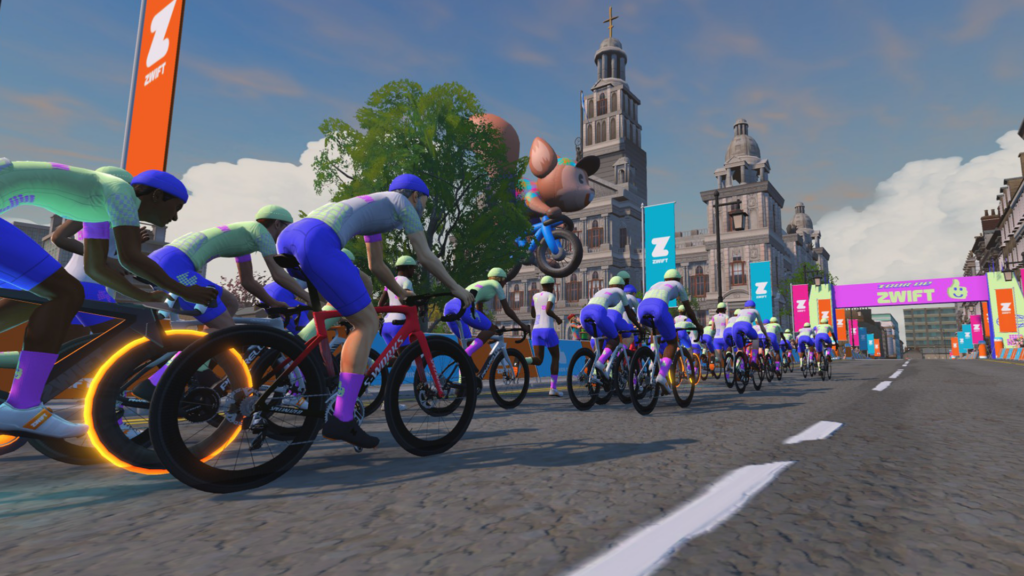
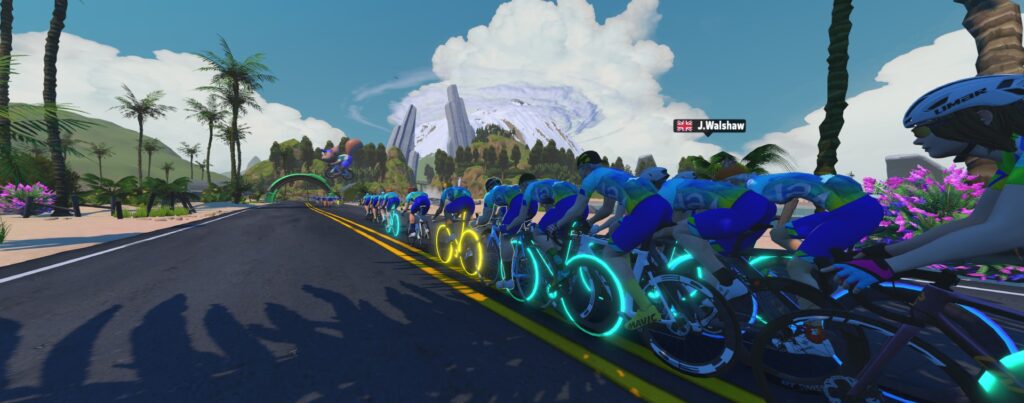
No races featured this weekend… just a bunch of amazing group rides! We’ve got a few charity events, two banded badge hunt rides, an epic 4-hour endurance event, and a series kickoff with Shimano. See all the details below.

� Sir Chris Hoy’s | Tour de 4

✅ Good Cause  ✅ Popular  ✅ Special Guests  ✅ Kit Unlock

The Tour de 4 is an initiative launched by Sir Chris Hoy to change the perception of people living with stage 4 cancer and to raise vital funds for cancer charities across the UK.

Read all about Tour de 4 series >

Rides are held weekly on Saturdays, and this week’s ride will be 45 minutes long, on the Greater London Flat route.

Saturday, March 1 @ 10am UTC/5am ET/2am PT
Sign up at zwift.com/events/view/4817884

� Vatternrundan Group Ride Series #8

✅ Popular  ✅ Endurance Challenge  ✅ Kit Unlock

The Vätternrundan group ride series ends this weekend, and the final ride has lots of signups despite being really long! Riders are on Watopia Big Flat 8 this weekend for 4 hours of 1.8-2.2 w/kg riding.

Sunday, March 2 @ 7am UTC/2am ET/Saturday 11pm PT
Sign up at zwift.com/events/view/4654689

� Banded Bike MS Badge Hunt

✅ Route Badge  ✅ Banded  ✅ Good Cause

Bike MS is a group of passionate cyclists looking to raise funds and awareness for those living with multiple sclerosis. Join the squad on a banded badge hunt ride across an open-paced lap of the rarely-used Yorkshire Double Loops route (29.7km, 547m).

Sunday, March 2 @ 2:05pm UTC/9:05am ET/6:05am PT
Sign up at zwift.com/events/view/4846882

� Shimano Super Cycling Sunday

✅ Route Badge  ✅ Popular  ✅ Guest Leader  ✅ Kit Unlock

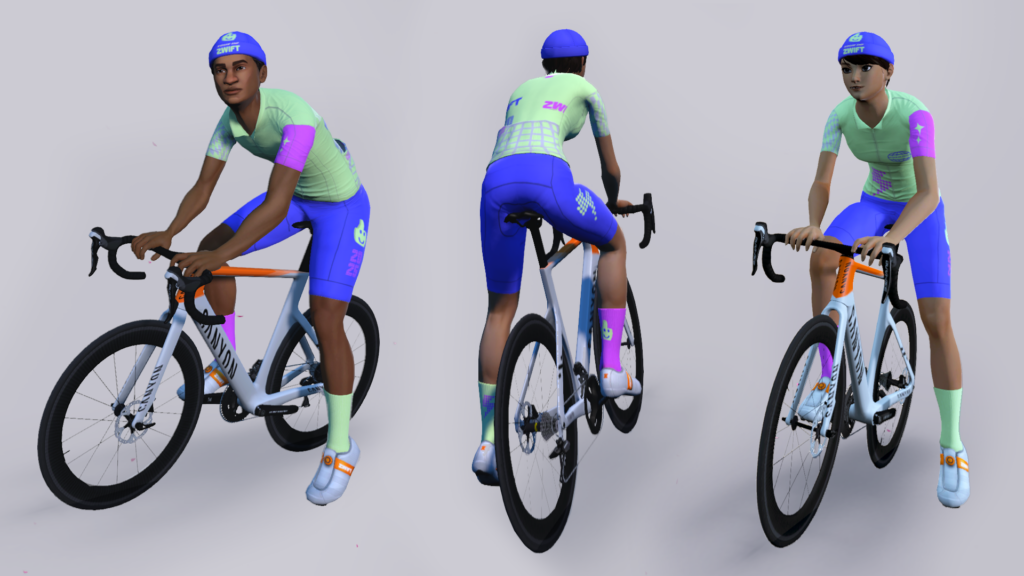
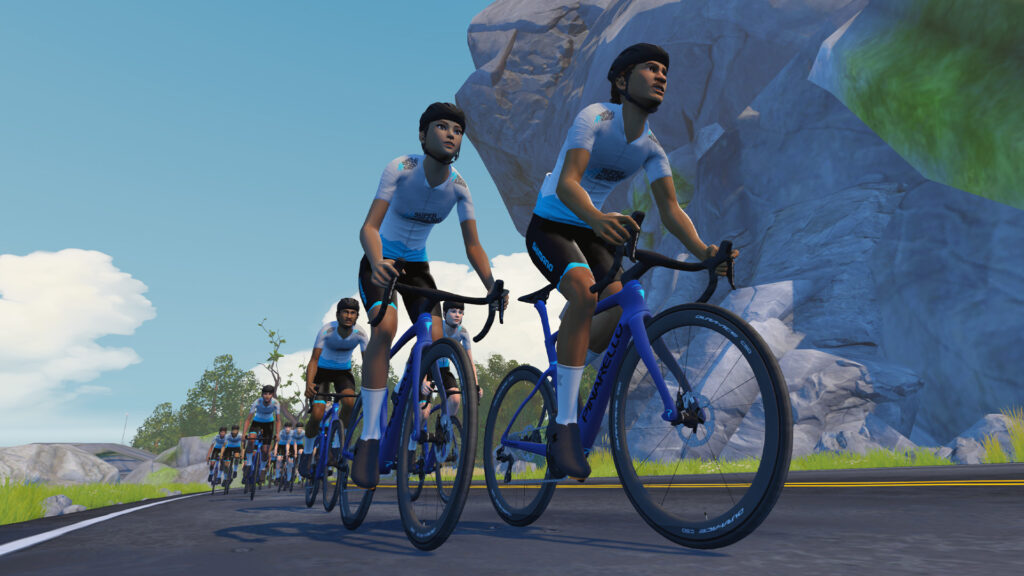
Join the kickoff ride to a new series from Shimano! These open-paced group rides feature newer Zwift routes, a #SuperCyclingSunday kit unlock, special guest riders, and more! This week’s ride is an open-paced event on Watopia’s Danger Noodle (32.3km, 414m).

Read all about the Shimano Super Cycling Sunday series >

Sunday, March 2 @ 3pm UTC/10am EDT/7am PDT
Sign up at zwift.com/events/view/4868267

� Bikealicious Weekend Social Mixer

✅ Banded Ride  ✅ Beginner-Friendly  ✅ Route Badge

The friendly Bikealicious crew is leading a banded group ride on the epic and brand-new ZG25 Queen route (44.8km, 894m). Grab this route badge if you haven’t done so yet, which comes with extra XP.

Saturday, March 1 @ 8pm UTC/3pm ET/12pm PT
Sign up at zwift.com/events/view/4861009

How We Make Our Picks

We choose each weekend’s Notable Events based on a variety of factors including:

  • Is the event unique/innovative in some way?
  • Are celebrities (pro riders, etc) attending/leading?
  • Are signup counts already high, meaning the event is extra-popular?
  • Does the ride include desirable unlocks or prizes?
  • Does the event appeal to ladies on Zwift? (We like to support this under-represented group!)
  • Is it for a good cause?
  • Is it just plain crazy (extra long races, world record attempts, etc)?
  • Is it a long-running, popular weekly event with a dedicated leader who deserves a shout out?

In the end, we want to call attention to events that are extra-special and therefore extra-appealing to Zwifters. If you think your event qualifies, comment below with a link/details and we may just include it in an upcoming post!
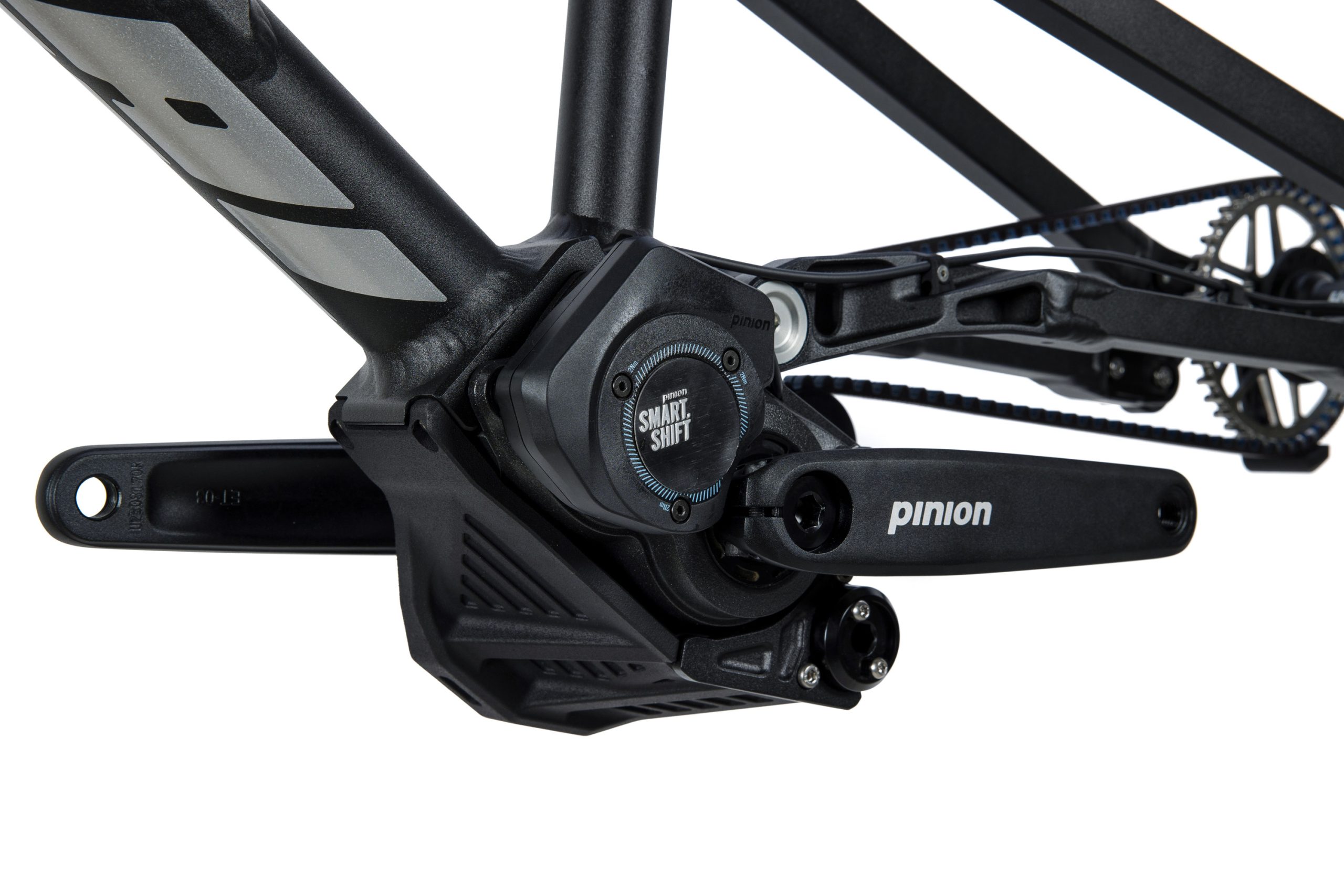
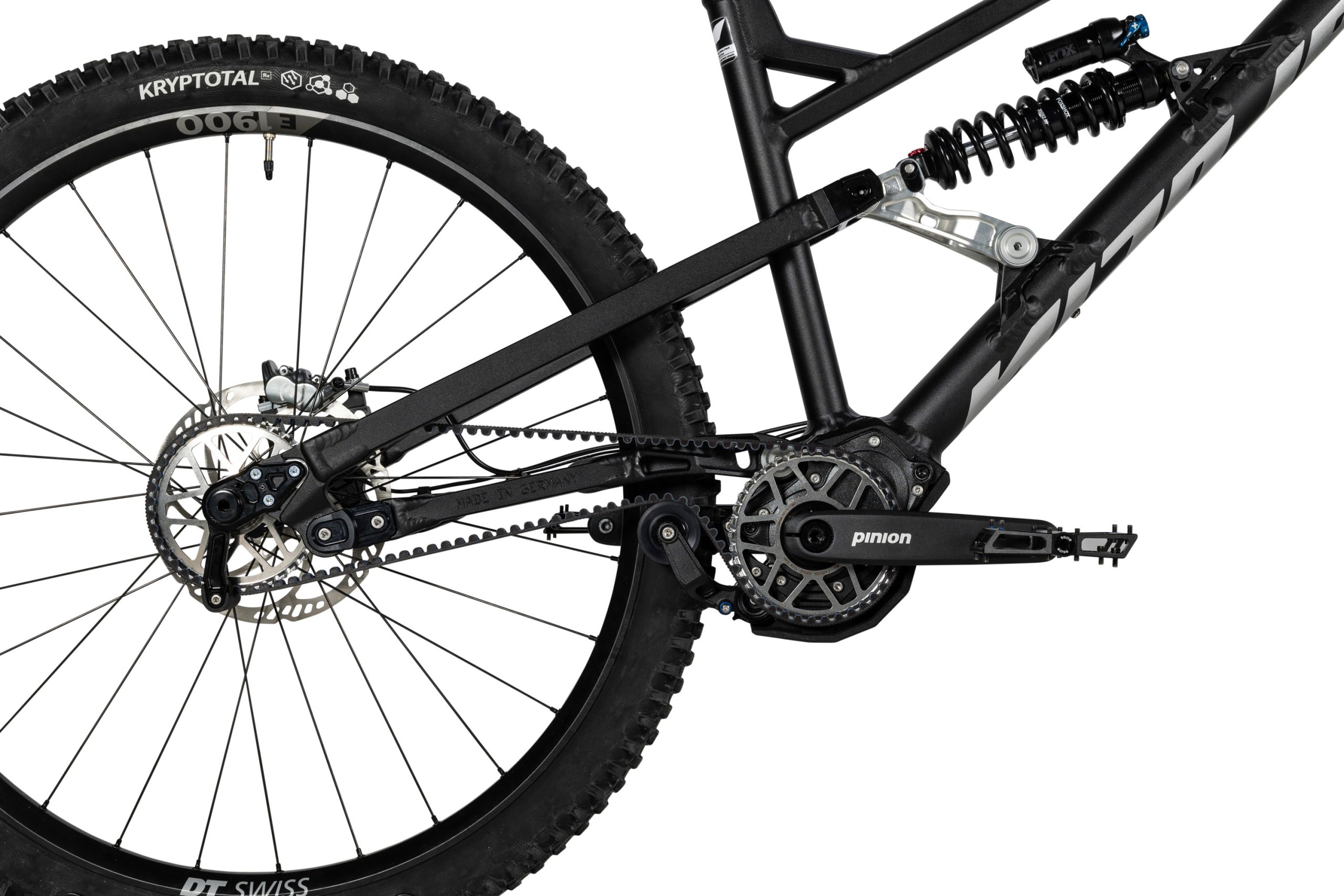
The Geometron G1 GPI could be the last bike you ever need to buy

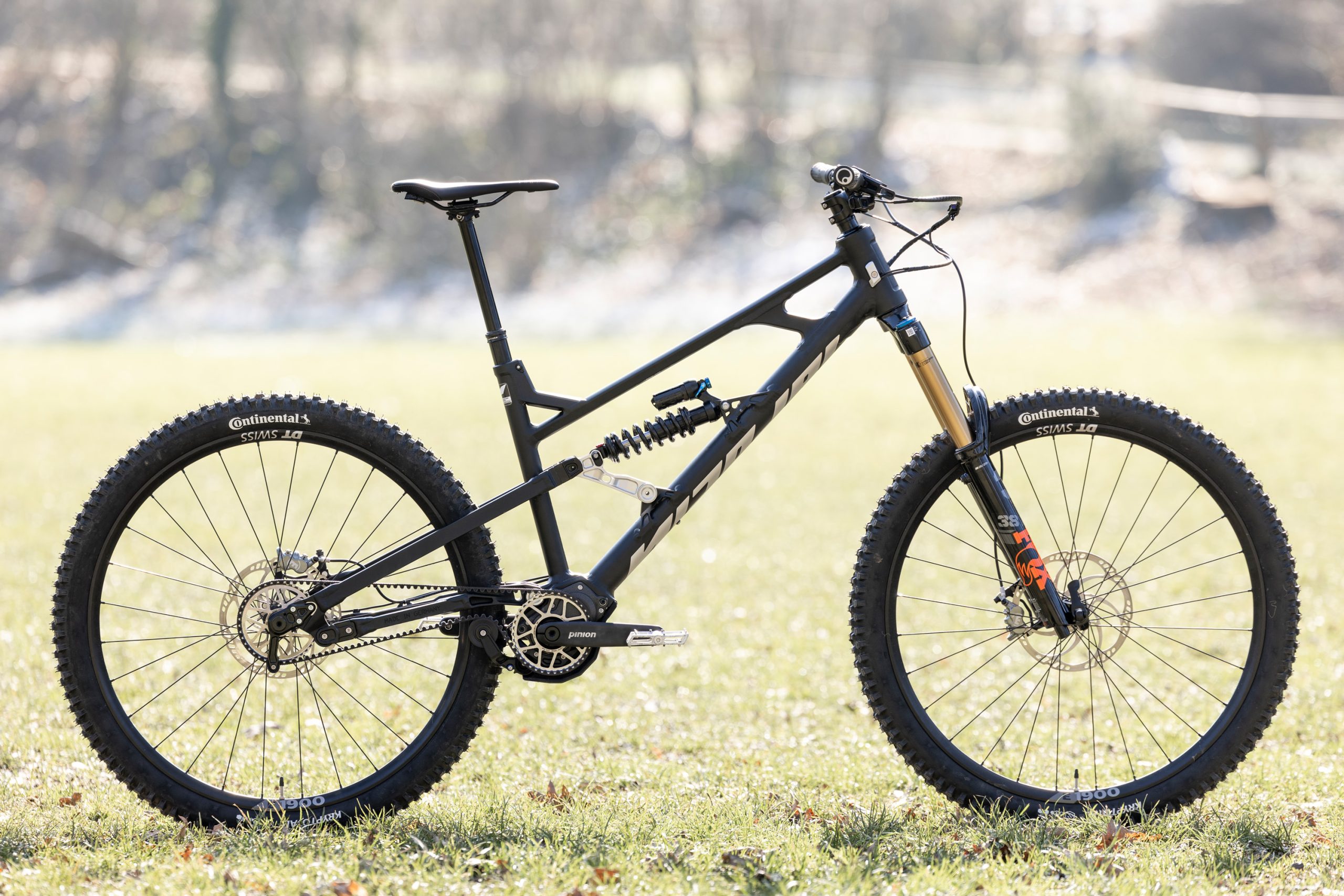
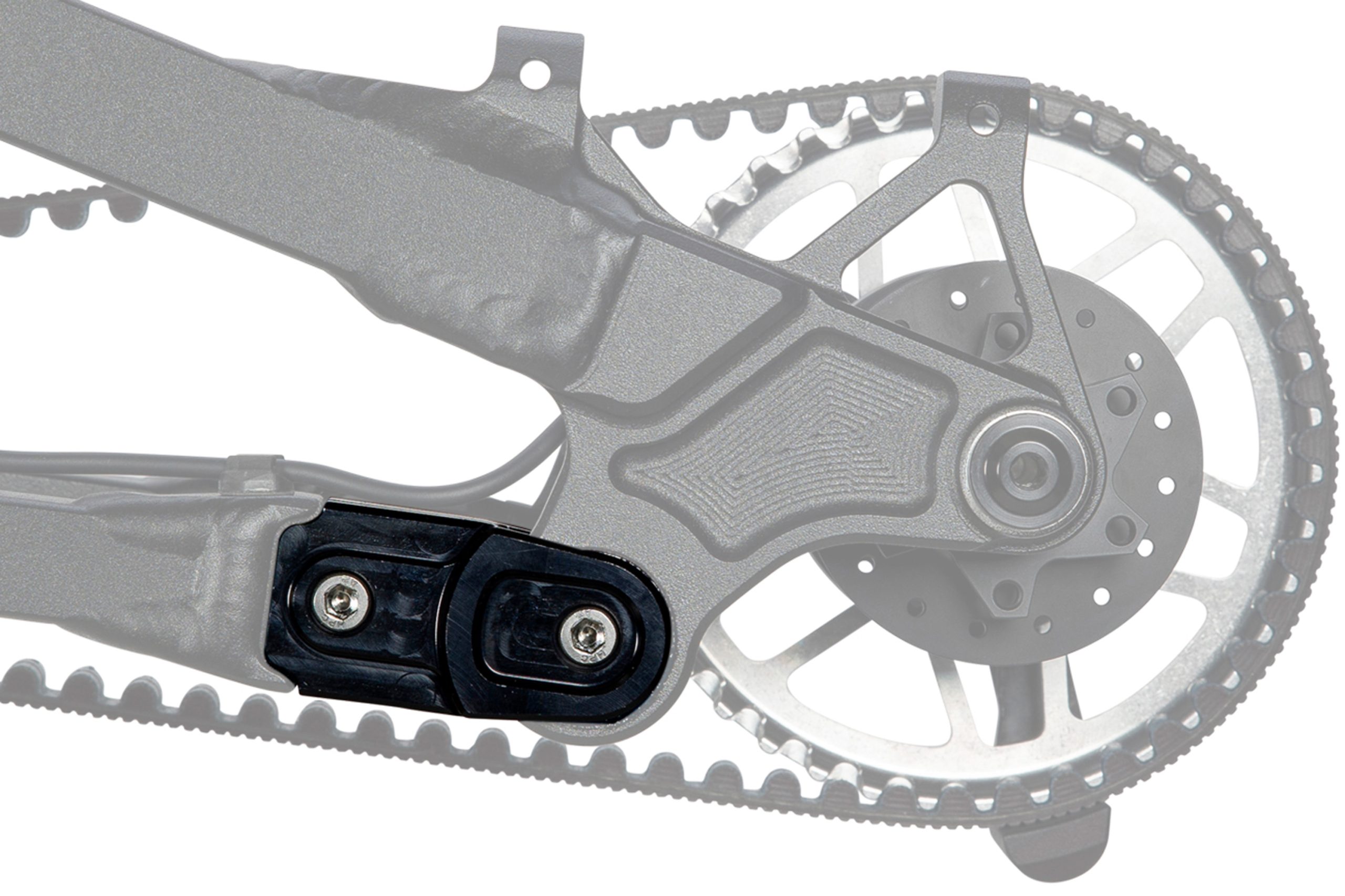
Geometron has bolted a Pinion C1.12i gearbox – with its 12-spur gear system and electronic Smart.Shift shifter – into its G1 gravity-focused bike, with a Gates Carbon Drive belt drive completing the package.

With a near maintenance-free drivetrain, extensive geometry adjustability, mullet-wheel setup compatibility and a focus on reliability, the Geometron G1 GPI is a bike built to last – and adapt as a rider’s interests or trends move on.

While excitement over gearbox bikes has bubbled along for years, 2025 seems to be the year they’ve caught the zeitgeist – helped no end by the relative explosion of Pinion-equipped downhill bikes about to be raced by the likes of Atherton and Intense.

Why has Geometron added a gearbox?

Geometrons G1 GPI – gearbox detail
Gearboxes are having a moment. Geometron

Gearboxes have always been a popular wish-list item for many riders. Their low-slung position, lack of low-hanging derailleurs and sealed mechanism offer numerous advantages.

The system’s weight, centred around the bottom bracket, is low and central between the wheels’ contact points, which should give a bike a much more balanced feel.

It also means there’s less unsprung mass at the rear wheel, because there’s no cassette and derailleur. This means the rear wheel is better able to react to impacts, enabling it to track the ground more effectively.

One factor rarely mentioned, which Geometron highlights, is that building a bike around a gearbox has a positive impact on designing the suspension kinematics – specifically, how the suspension system reacts to force inputs.

Geometrons G1 GPI – belt drive pack shot
The belt drive is near maintenance-free. Geometron

Anti-squat is the force that counteracts pedal bob. Brands frequently quote this in their marketing material, but the figure depends on which gear is selected – with a typical derailleur drivetrain, the amount of anti-squat depends on the gear selected.

The Pinion system has a constant rear-sprocket and drive-sprocket size, so this figure can be controlled easily, because the designers only have to work with one physical gear ratio.

As such, Geometron’s G1 GPI has a constant anti-squat of 115 per cent at 30 per cent sag.

As a brand that focuses on reliability, the reported advantages of a gearbox are also a natural fit.

Pinion quotes a service interval of 10,000km for its system, and the belt drive requires no lubrication.

At the heart of the matter

Geometrons G1 GPI – pack shot
The bike is Geometron’s gravity-focused model. Geometron

The G1 is a 162mm/175mm-travel bike built for exploiting gravity to its fullest.

The brand was among the first to push extreme geometry figures – long reach, slack head angles and steep seat angles.

Geometrons G1 GPI – Mutator detail
The geometry of the bike is extensively adjustable. Geometron

The G1 is still at the forefront of geometry, even if the rest of the market has started to catch up.

Head angles sit below 64 degrees, seat angles above 78 degrees and reach ranges from 459mm to 534mm over the five sizes on offer.

Geometron extolls the adjustability on offer with the G1.

Its ‘Mutators’ enable quick and easy adjustments to the chainstay length, head angle and bottom bracket height. They are also used if riders want to switch rear-wheel size.

In addition, longer or shorter shocks can be used to alter travel, while 150 to 200mm-travel forks can be fitted.

Pinion’s C1.12i Smart.Shift

Pinion’s gearbox offers a 600 per cent gear range (the equivalent of a non-existent 10-60t cassette) across 12 gears, with consistent 17.7 per cent steps between gear ratios.

The internals ensure that power is delivered via two pairs of gears in every selected gear.

The gears can also be shifted while the cranks are stationary – something Charlie Hatton expressed to BikeRadar was great on a DH race course, because gears can be shifted mid-air, ready for quickly changing track pitches, meaning every pedal stroke is made in the right gear.

The Smart.Shift system is an electronic shifter for the Pinion gearbox. This includes Pinion’s Start.Select tech, which automatically puts the gearbox in an appropriate gear for setting off. Pre.Select can be used to enable automatic cadence-dependant shifting when coasting.

Geometron G1 GPI prices and specs

You can buy the frame and gearbox for £5,099, or add in an EXT Storia shock, bringing the package to £5,849.

Adding an EXT ERA fork takes the package to £7,224, while selecting a BikeYoke Revive dropper post brings it to £7,524.

A rolling chassis, which includes Hope Fortus 30 wheels, brings it all up to £7,849.

Geometron offers a full custom-build programme, too.

Boardman’s new £5,500 road bike with SRAM Red AXS might be the best value on offer in 2025

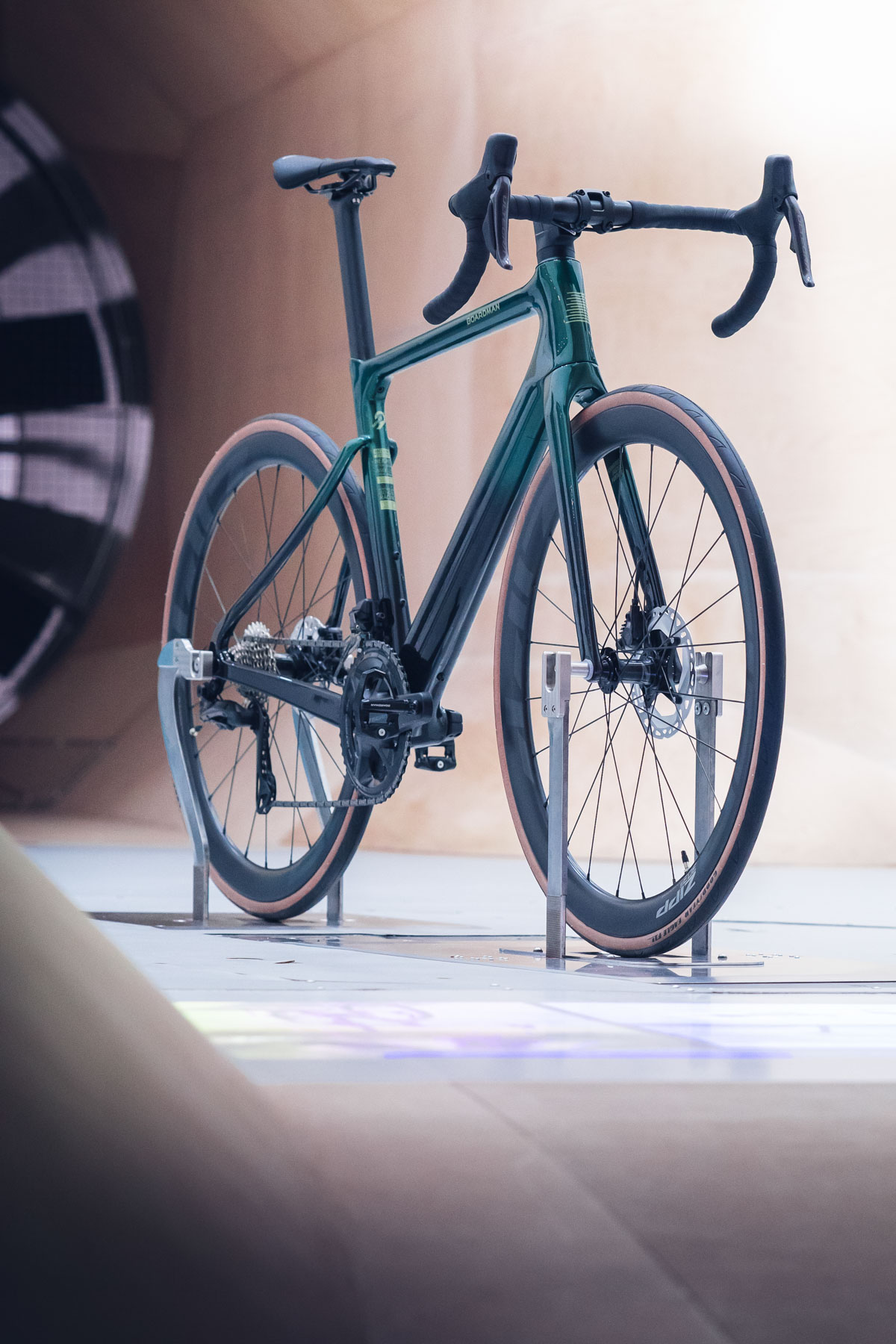
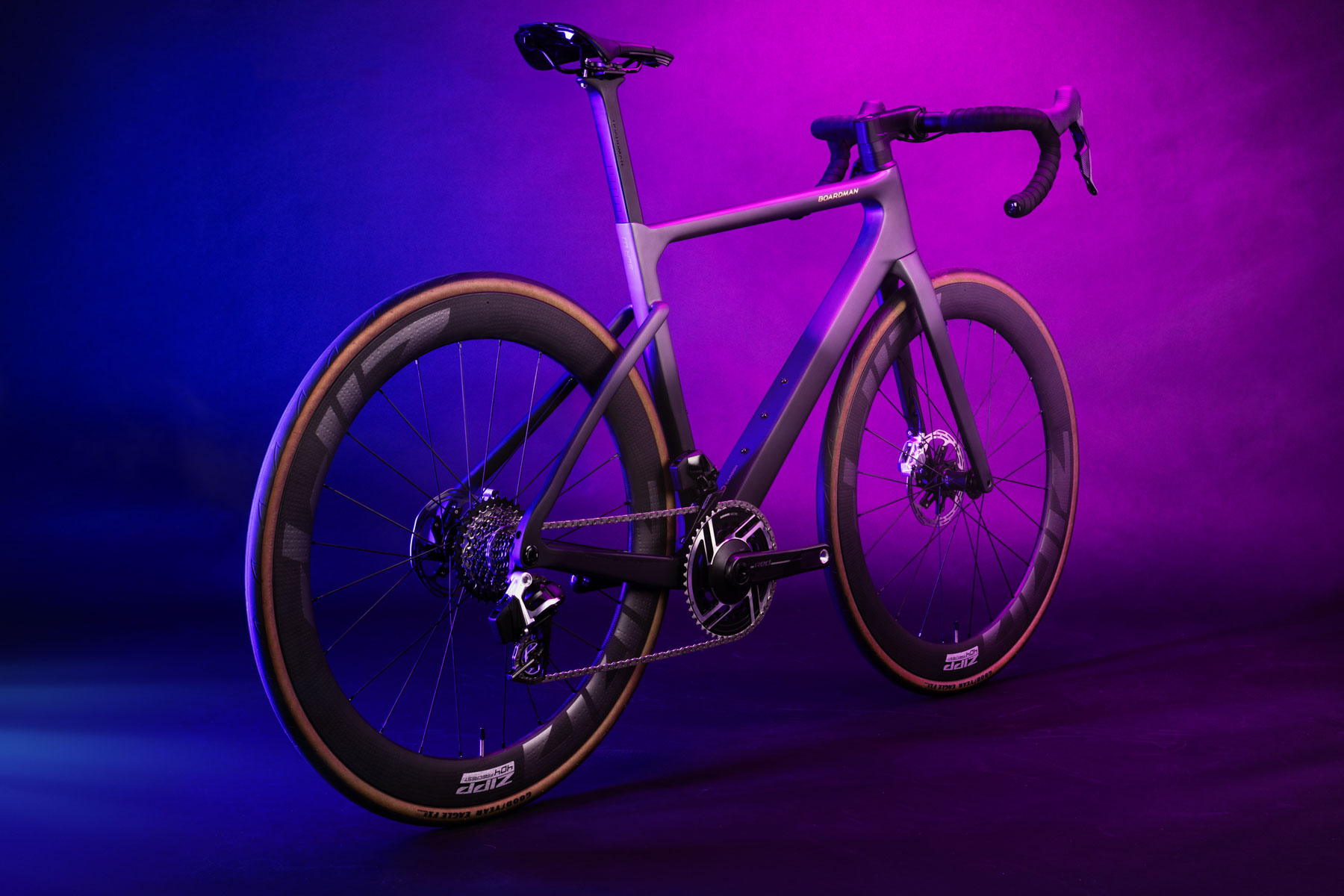
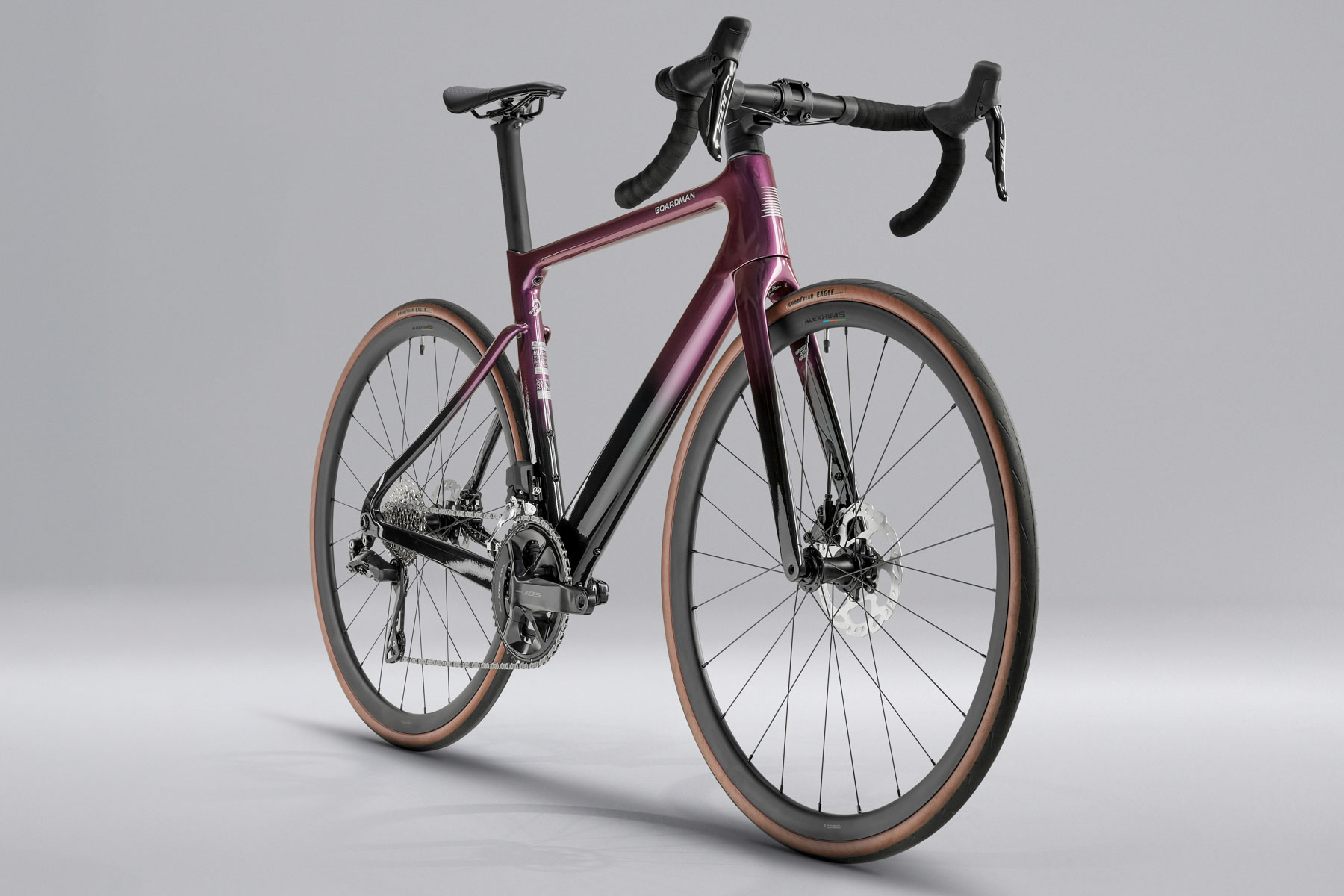
Boardman has unveiled its long-awaited update to the SLR – designed to be a new performance bike for British conditions.

That means a heady combination of race-bike pace, endurance-bike comfort and practical touches to keep you riding all-year round and in all weather.

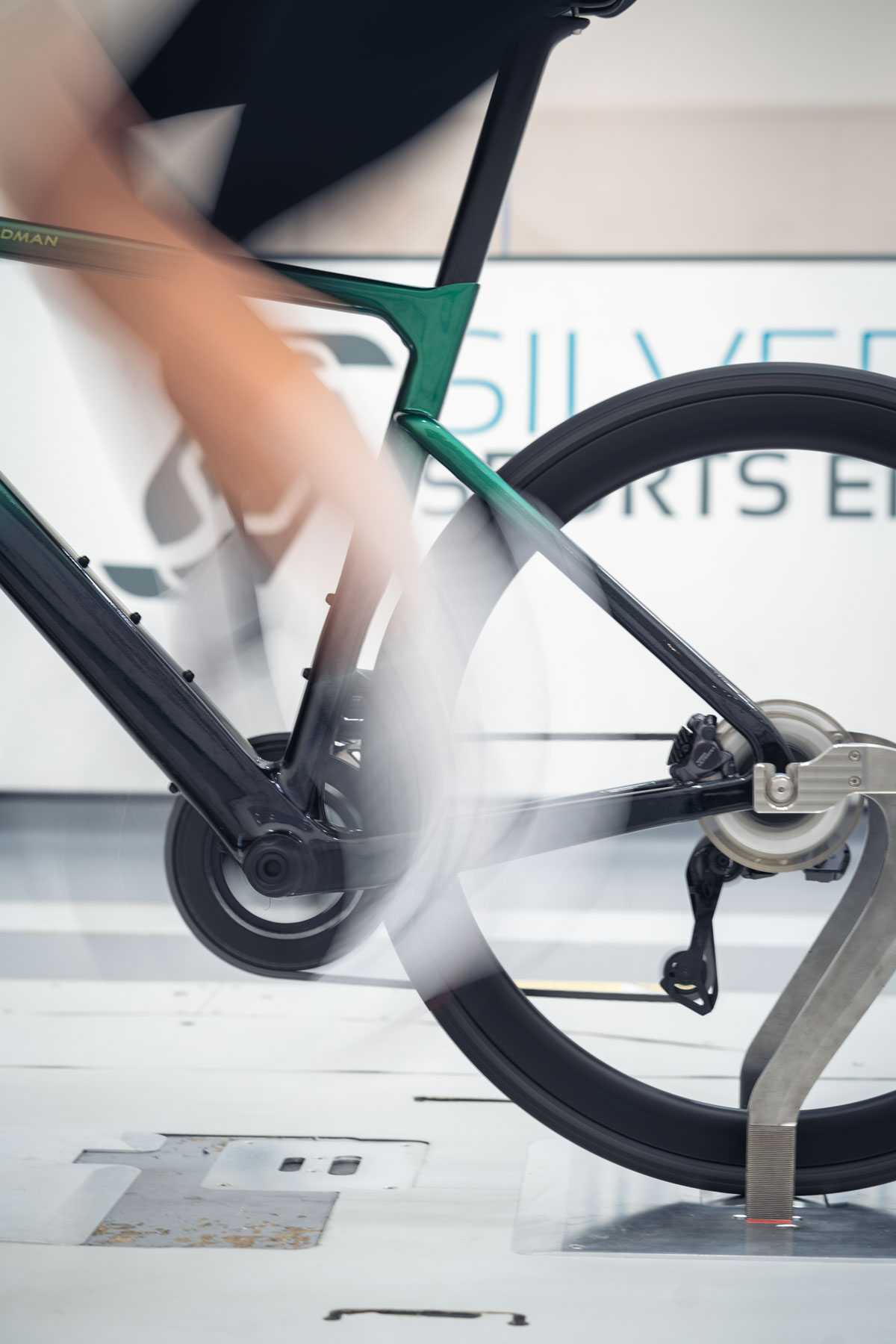
The new SLR frameset has been designed with the help of both CFD (computational fluid dynamics) and wind-tunnel proving.

The spec list is aimed squarely at modern UK riding. That means generous 36mm tyre clearances, mudguard mounts, a third set of bottle cage bosses, a UDH rear dropout, and hard-wearing components for adverse conditions.

Boardman SLR bicycle in windtunnel
The new SLR’s design has been tested and proven in the wind tunnel. Boardman

Boardman’s aim is for the new SLR to be a bike that’s fast in all four seasons.

David Radcliffe, Boardman’s head of product, tells us: “We wanted the aerodynamic advantages of a fully integrated front end. But it needs to also be practical, so rather than a one-piece bar and stem, which gives the rider limited choices in bar width and stem length… we’ve stuck with a standard bar and stem mated to fully internal routing, giving more choices here.”

Boardman says other stem-length and bar-width options will be available at the point of purchase. The 90, 100, 110 & 120mm stems will retail for £48.

“We’ve also used a high-grade headset from Acros with the highest level of seals. We want to ensure that we don’t compromise longevity at the expense of gaining watts in efficiency. 

“It’s a very similar story at the rear end too. With the dedicated aero-D-shaped seatpost having a two-position clamp, you can effectively run the saddle position with zero offset (inline) or with 15mm of setback, allowing finer tuning to get your ideal fit.”

The two-position carbon post comes as standard on models 9.0 and above. It’s also available separately from Halfords and retails for £80.

The seat clamp can also be used with a clamp insert that converts the frame to allow for a standard 27.2mm-diameter seatpost in place of the dedicated aero post. That opens up rider choice should you want to fit a more compliant post, such as Canyon’s VCLS, or even a suspension post such as the Redshift ShockStop.

Plenty of room for big tyres and mudguards

Boardman SLR 9.8
The new SLR is priced very competitively – this range-topping 9.8 is £5,500. Boardman

The frame and fork both have generous tyre clearances of up to 36mm, or if you use mudguards that drops to a still-generous 32mm. Bikes will ship as stock with 30mm-wide tyres.

Boardman has worked closely with Kinesis to offer a dedicated mudguard kit from Fend Off.

Unusually for a road bike, the SLR gets a third set of bottle bosses on the underside of the down tube.

Radcliffe explains: “We wanted to add practical features, and I’ve always liked a set of underside bosses on gravel and adventure bikes. I’m a big fan of the tool-can approach to riding with spares rather than a saddle pack.

“They are much easier to transfer between bikes, though you do lose a bottle position. This is the ideal solution, plus that extra weight is carried low down – much better for the balance of the bike.”

Improved aerodynamics

Boardman at the wind tunnel
The Silverstone Sports Engineering wind tunnel was the SLR’s proving ground. Boardman

Even with the extra practical touches and increased emphasis on aerodynamics, Boardman has kept the weight of the frame respectably low. A medium-sized finished C10 carbon frame is claimed to weigh 995g and the matching fork 450g. The frame is designed with a BB386EVO bottom bracket shell.

The aerodynamic design improves upon the previous SLR design. When tested back-to-back in the wind tunnel, it resulted in an average 5.7W saving across a full YAW sweep (-15 to +15) at 50kph.

The rear dropout is now the Universal Derailleur Hanger standard, future-proofing the SLR frameset. As previously, the SLR is backed with a lifetime warranty for the original owner.

SLR geometry evolved

The SLR’s geometry hasn’t changed radically from the previous generation. It retains the low front end, although on a size large (effectively a 57cm bike), the stack is down a few millimeters to 577mm from 584mm, and the reach has elongated a little to 394mm from 391mm.

The 72.5-degree head angle is half a degree slacker, while the standard 73-degree seat angle remains the same.

Standard Range Sizes XS SM MD LG XL
Recommended height 162 – 170cm 170 – 179cm 177 – 183cm 181 – 189cm 187 – 195cm
Recommended in-seam 70 – 78cm 74 – 82cm 78 – 85cm 82 – 89cm 86 – 94cm
Stack (mm) 537 548 563 577 593
Reach (mm) 371 378 388 394 404
Seat tube (mm) 465 485 500 525 545
Top tube (mm) 525 540 555 570 585
Head tube (mm) 126 138 151 166 183
Head angle (degrees) 71 72 72.5 72.5 72.5
Seat angle (degrees) 74 73.5 73.5 73 73
Chainstay (mm) 410 410 412 412 412
BB drop (mm) 74 70 70 70 70
Crank length (mm) 165 170 170 172.5 172.5
Stem length (mm) 80 90 100 110 120
Bar width (mm) 380 380 400 400 420


Edit Table

The women’s model gets its own geometry, with a lower stack and shorter reach than the equivalent men’s sizes, alongside adjusted bar widths and stem lengths to suit.

Standard Range Sizes SM MD LG
Recommended height 162 – 170cm 170 – 177cm 175 – 183cm
Recommended in-seam 72 – 80cm 77 – 84cm 80 – 87cm
Stack (mm) 537 548 563
Reach (mm) 371 378 388
Seat tube (mm) 465 485 500
Top tube (mm) 525 540 555
Heat tube (mm) 126 138 151
Head angle (degrees) 71 72 72.5
Seat angle (degrees) 74 73.5 73.5
Chainstay (mm) 410 410 412
BB Drop (mm) 74 70 70
Crank length (mm) 165 170 170
Stem length (mm) 70 80 90
Bar width (mm) 380 380 380


Edit Table

Better value than ever

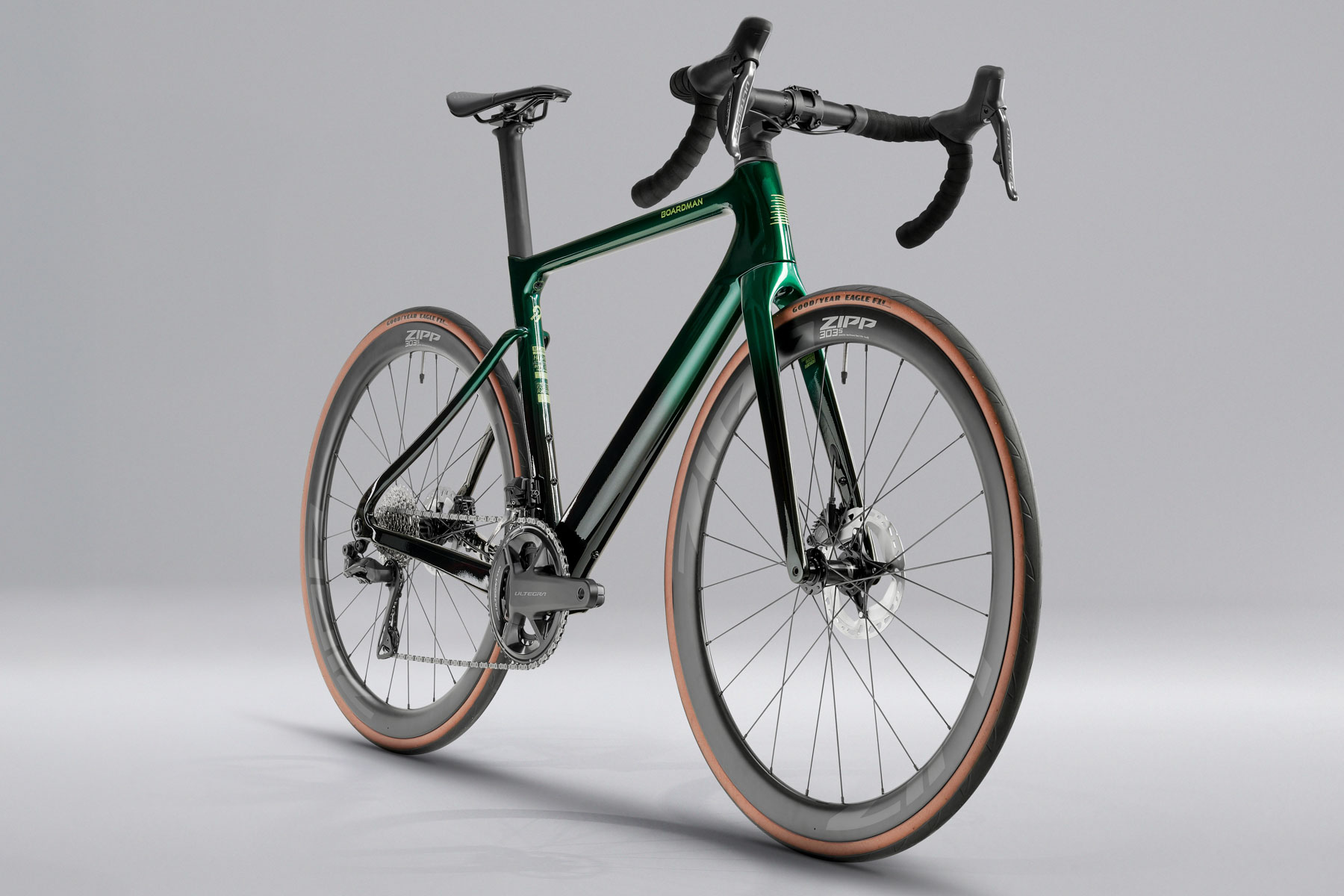
Boardman SLR 9.6
The £3,500 SLR 9.6 is a value-packed highlight of the new range. Boardman

Boardman has always been big on value, but the new SLR range takes it to a new level.

There are two tiers of frame and fork, with high-grade C10 carbon on the 9.8, 9.6, and 9.2 and a medium-grade C7 for the 9.0 and 8.9.

There’s a wide range of options on the SLR – from £1,200 for the Tiagra-equipped 8.9 to £5,500 for the superbike-level specification of SRAM Red AXS and Zipp 404 wheels.

Compared to similar-spec bikes such as Specialized’s Red-AXS equipped S-Works Roubaix (£12,000) or Trek Domane SLR 9 AXS Gen4 (£11,270), the Boardman looks like incredible value.

It follows a very welcome emerging trend for dropping prices from the likes of Cube’s 2025 offerings, Van Rysel and direct-to-consumer brands such as Ribble, Canyon and State.

The range

Boardman SLR 9.2
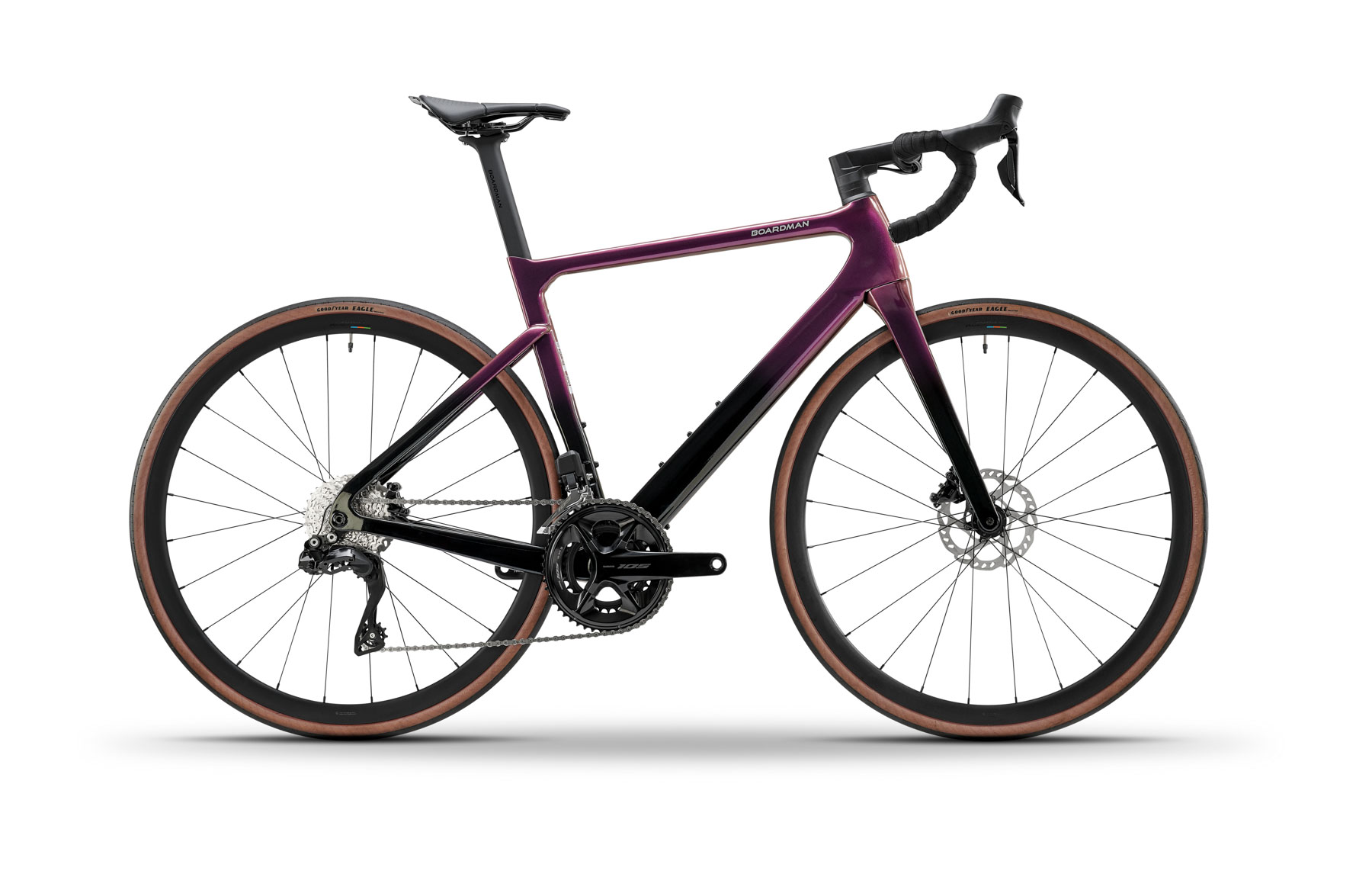
The SLR 9.2 is another keenly priced model – £2,500 for Shimano 105 Di2 and the premium-level C10 carbon frame. Boardman

Boardman has covered off major price points and equipment levels from the C7 carbon-framed, Tiagra drivetrain 8.9 to the 9.0, 9.2, 9.6 and range-topping 9.8. Interestingly, there’s no 9.4 announced today to replace our 2021 Bike of the Year winner. That bike came equipped with SRAM’s then-new Rival AXS 12-speed wireless groupset. Could the omission of the 9.4 indicate that something new from SRAM is on the horizon?

The range has a couple of standout models, including the £2,500, 105 Di2-equipped 9.2, which we’ve got an exclusive first look at.

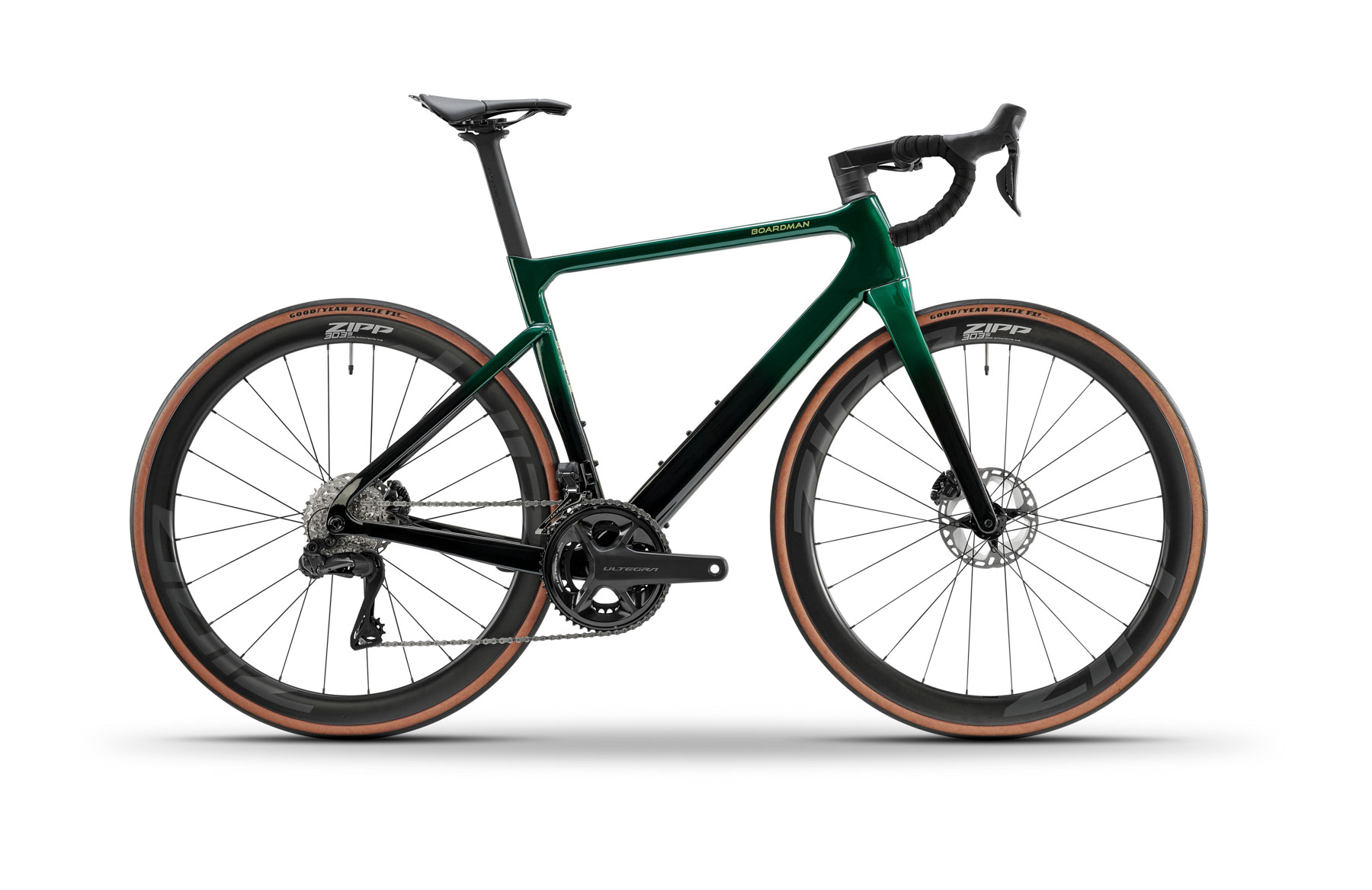
Alongside this is the 9.6, with a specification that includes Shimano’s impeccable Ultegra Di2 and rolls on a fine combination of Goodyear Eagle F1 tubeless tyres and Zipp’s impressive 303s wheelset, all for the impressive price of £3,500.

A similar-specification bike such as Cervélo’s Soloist, with Ultegra Di2 and Reserve wheels, would set you back £6,800. Even Canyon’s similarly sporty Endurace CF SLX8 is more expensive at £4,999.

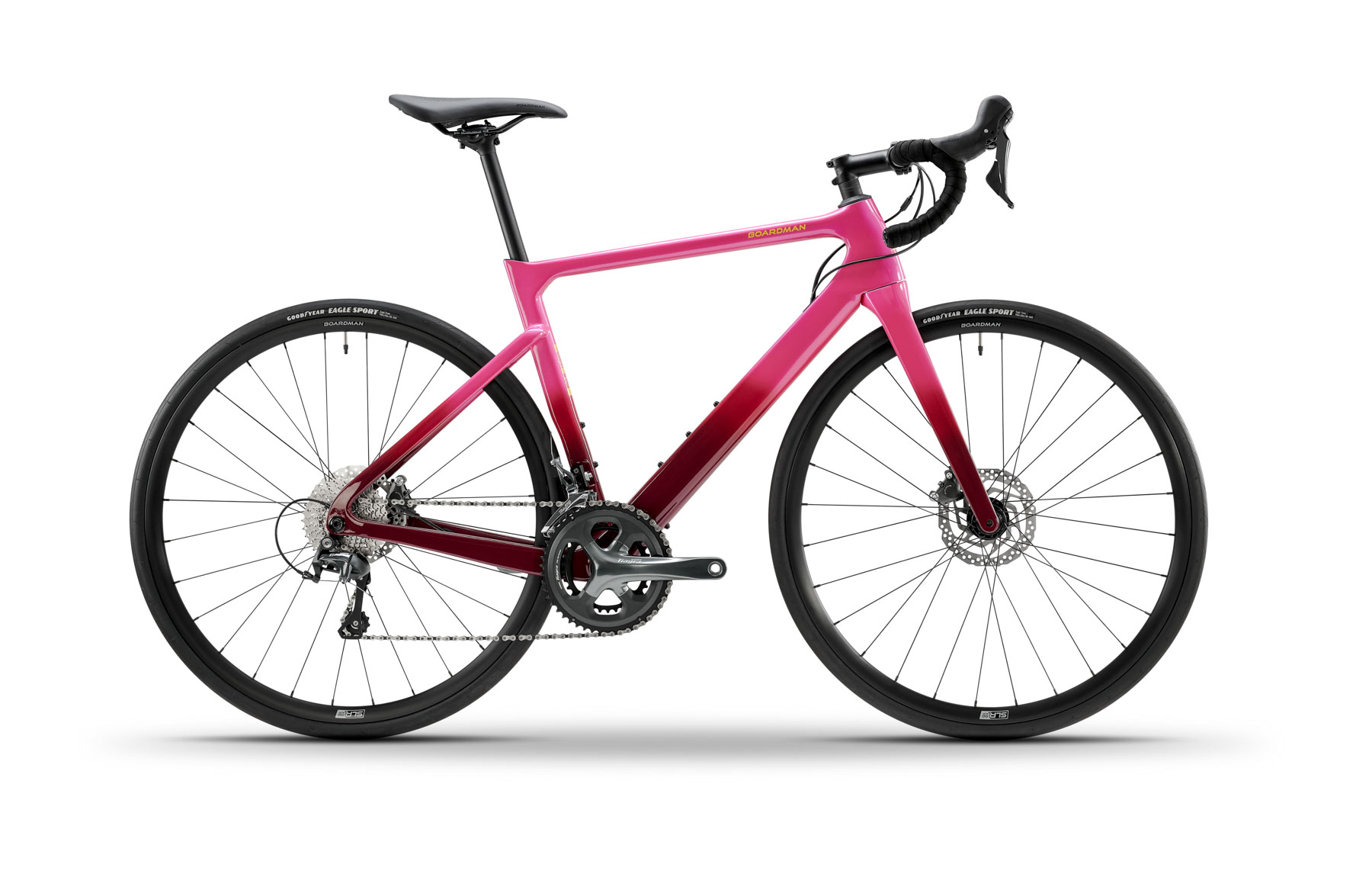
Boardman SLR 8.9 Women’s

Boardman SLR 8.9 Womens
The women’s-specific SLR 8.9 comes in the bold fluro-red fade colourway. Boardman

  • Frame: Boardman C7 Carbon, internal cable routing, 12x142mm thru-axle, UDH
  • Fork: Boardman C7 Carbon 12x100mm thru-axle, hidden mudguard mounts
  • Headset: ACROS 1.5in
  • Stem: Boardman Alloy
  • Handlebar: Boardman Aero Alloy
  • Tape: Boardman Textured
  • Seatpost: Boardman Alloy
  • Saddle: Boardman SLR Road
  • Brakes: Shimano Tiagra BR-4770 hydraulic disc
  • Shifters: Shimano Tiagra ST-4720
  • Front derailleur: Shimano FD-4700 brazed-on 10-speed
  • Rear derailleur: Shimano RD-4700 10-speed
  • Chain: KMC X10 10-speed
  • Crankset: Shimano FC-4700 50×34-tooth
  • Bottom bracket: BB386EVO
  • Cassette: Shimano CS-HG500 11-34-tooth, 10-speed
  • Wheelset: Boardman RD Alloy SLR, tubeless-compatible
  • Tyres: Goodyear Eagle Sport 700x30mm
  • Sizes: SM, MD, LG

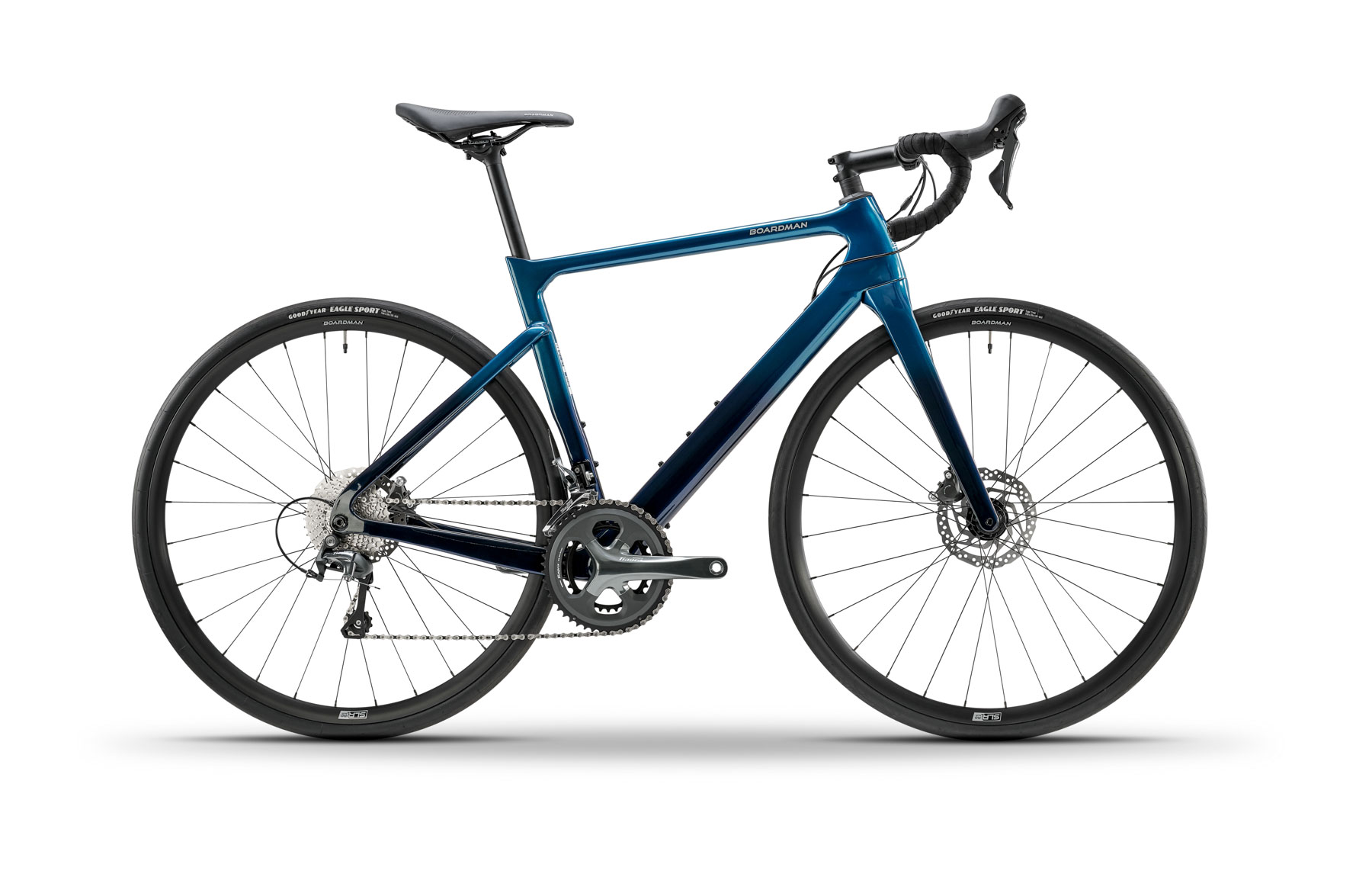
Boardman SLR 8.9 

Boardman SLR 8.9
The 8.9 base model comes with Shimano Tiagra for £1,400. Boardman
  • Frame: Boardman C7 Carbon, internal cable routing, 12x142mm thru-axle, UDH
  • Fork: Boardman C7 Carbon 12x100mm thru-axle, hidden mudguard mounts
  • Headset: ACROS 1.5in
  • Stem: Boardman Alloy
  • Handlebar: Boardman Aero Alloy
  • Tape: Boardman Textured
  • Seatpost: Boardman Alloy
  • Saddle: Boardman SLR Road
  • Brakes: Shimano Tiagra BR-4770 hydraulic disc
  • Shifters: Shimano Tiagra ST-4720
  • Front derailleur: Shimano FD-4700 brazed-on 10-speed
  • Rear derailleur: Shimano RD-4700 10-speed
  • Chain: KMC X10 10-speed
  • Crankset: Shimano FC-4700 50×34-tooth
  • Bottom bracket: BB386EVO
  • Cassette: Shimano CS-HG500 11-34-tooth, 10-speed
  • Wheelset: Boardman RD Alloy SLR, tubeless-compatible
  • Tyres: Goodyear Eagle Sport 700x30mm
  • Sizes: XS, SM, MD, LG, XL

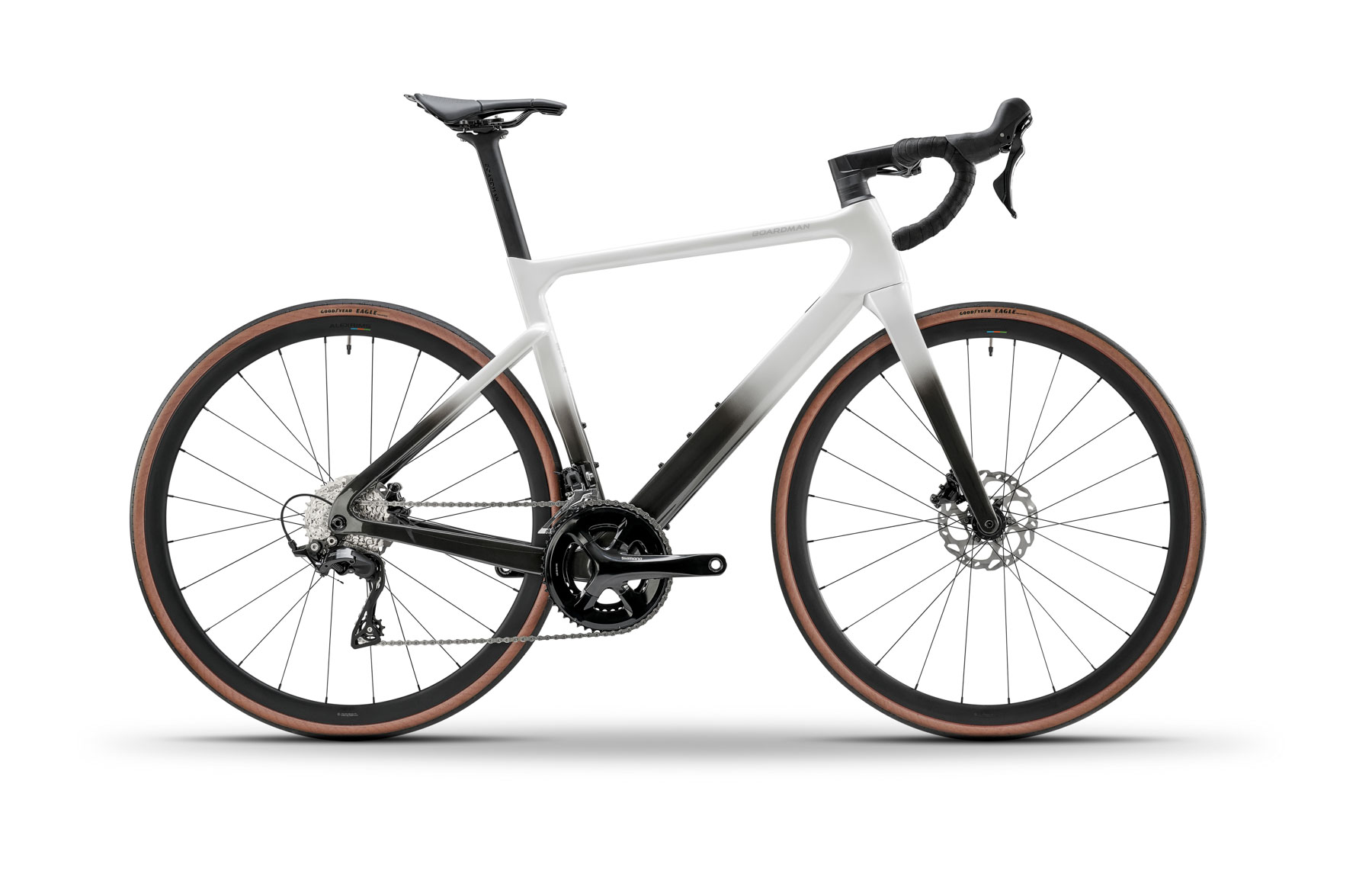
Boardman SLR 9.0

Boardman SLR 9.0
The £1,800 SLR 9.0 comes with Shimano 105 mechanical 12-speed. Boardman
  • Frame: Boardman C7 Carbon, internal cable routing, 12x142mm thru-axle, UDH
  • Fork: Boardman C10 Carbon 12x100mm thru-axle, hidden mudguard mounts
  • Headset: ACROS 1.5in
  • Stem: Boardman SLR ICR
  • Handlebar: Boardman Aero Alloy
  • Tape: Boardman Textured
  • Seatpost: Boardman Aero D-Shaped Carbon
  • Saddle: Prologo Scratch M5 PAS Steel
  • Brakes: Shimano 105 BR7170 hydraulic disc
  • Shifters: Shimano 105 R7170
  • Front derailleur: Shimano 105 FD-R7100 12-speed
  • Rear derailleur: Shimano 105 RD-R7101 12-speed
  • Chain: Shimano KCNM6100 12-speed
  • Crankset: Shimano FC-RS520, 50-34-tooth
  • Bottom bracket: BB386EVO
  • Cassette: Shimano CS-R7101, 11-34-tooth, 12-speed
  • Wheelset: Alex Alloy Road 30mm, tubeless ready
  • Tyres: Goodyear Eagle tubeless ready 700x30mm
  • Sizes: XS, SM, MD, LG, XL

Boardman SLR 9.2 

Boardman SLR 9.2
The 105 Di2-equipped SLR 9.2. Boardman
  • Frame: Boardman C10 Carbon, internal cable routing, 12x142mm thru-axle, UDH
  • Fork: Boardman C10 Carbon 12x100mm thru-axle, hidden mudguard mounts
  • Headset: ACROS 1.5in
  • Stem: Boardman SLR ICR
  • Handlebar: Boardman Aero Alloy
  • Tape: Boardman Textured
  • Seatpost: Boardman Aero D-Shaped Carbon
  • Saddle: Prologo Scratch M5 PAS Steel
  • Brakes: Shimano 105 BR7170 hydraulic disc
  • Shifters: Shimano 105 R7170 Di2 12-speed
  • Front derailleur: Shimano 105 FD-R7150 Di2 12-speed
  • Rear derailleur: Shimano 105 RD-R7150 Di2 12-speed
  • Chain: Shimano CN-M6100 12-speed
  • Crankset: Shimano FCR-7100 50-34-tooth
  • Cassette: Shimano CSR-7101, 11-34 Tooth, 12-speed
  • Bottom bracket: BB386EVO
  • Wheelset: Alex Alloy Road 30mm, tubeless ready
  • Tyres: Goodyear Eagle tubeless ready 700x30mm
  • Sizes: XS, SM, MD, LG, XL

Boardman SLR 9.6 

Boardman 9.6 SLR
The 9.6 SLR with Ultegra Di2 and Zipp 303s wheels looks impressive value at £3,500. Boardman
  • Frame: Boardman C10 Carbon, Internal cable routing, 12x142mm thru-axle, UDH
  • Fork: Boardman C10 Carbon 12x100mm thru-axle, hidden mudguard mounts
  • Headset: ACROS 1.5in
  • Stem: Boardman SLR ICR
  • Handlebar: Boardman Aero Alloy
  • Tape: Boardman Textured
  • Seatpost: Boardman Aero D-Shaped Carbon
  • Saddle: Prologo Scratch M5 PAS Tirox
  • Brakes: Shimano Ultegra ST-R8170 hydraulic disc
  • Shifters: Shimano Ultegra ST-R8170 Di2 12-speed
  • Front derailleur: Shimano Ultegra ST-R8170 Di2 12-speed
  • Rear derailleur: Shimano Ultegra ST-R8170 Di2 12-speed
  • Chain: Shimano CN-M8100 12-speed
  • Crankset: Shimano FC-R8100 50/34-tooth, 12-speed
  • Cassette: Shimano CD-R7101 11-34T
  • Bottom bracket: BB386EVO
  • Wheelset: Zipp 303 S Carbon tubeless ready
  • Tyres: Goodyear Eagle F1 R, tubeless ready 700x30mm
  • Sizes: XS, SM, MD, LG, XL

Boardman SLR 9.8 

The £5,500 SLR 9.8 with SRAM RED AXS and Zipp 404
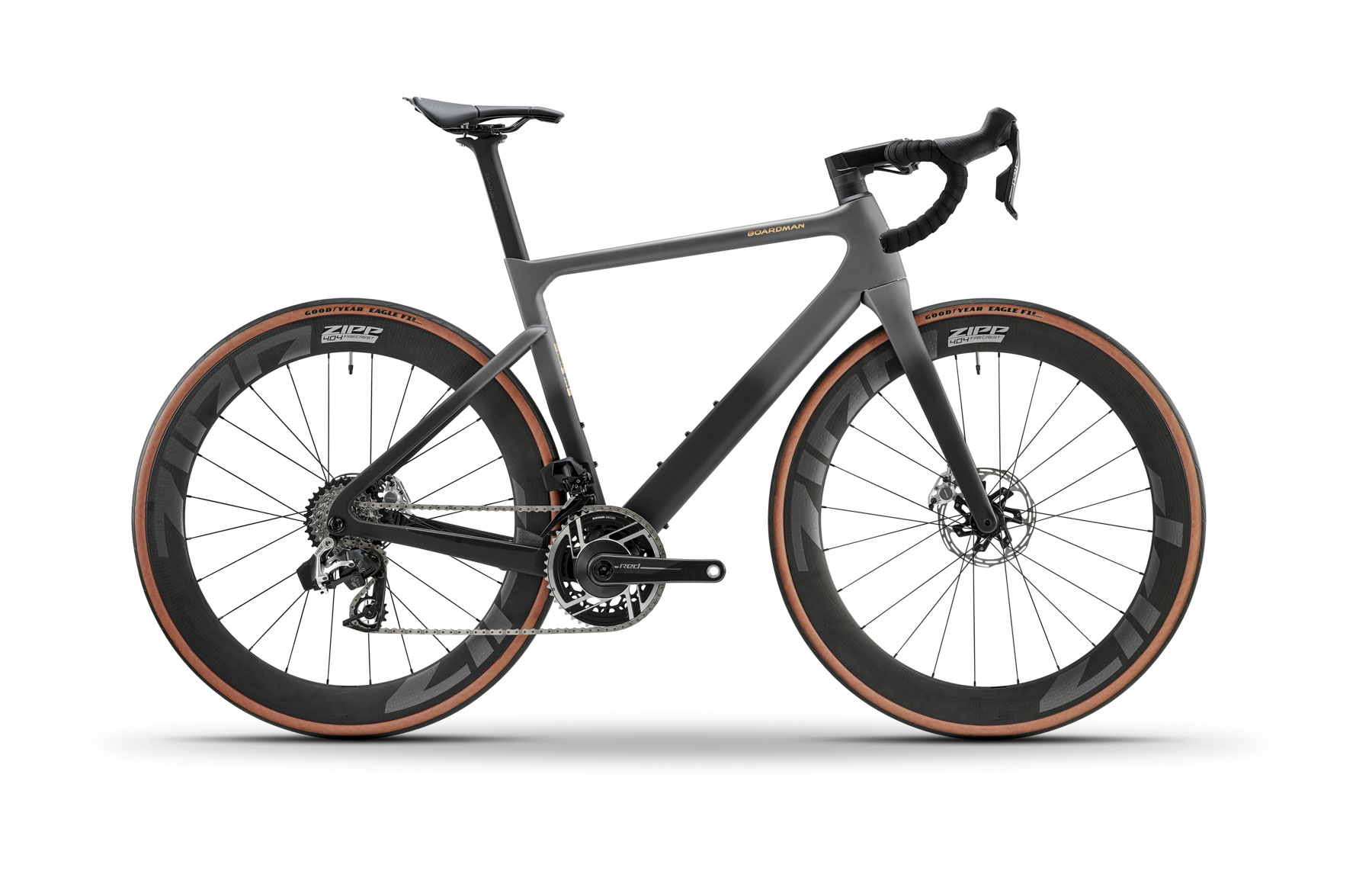
The range-topping SLR 9.8 with SRAM RED AXS and Zipp 404 firecrest wheels. Boardman
  • Frame: Boardman C10 Carbon, internal cable routing, 12x142mm thru-axle, UDH
  • Fork: Boardman C10 Carbon 12x100mm thru-axle, hidden mudguard mounts
  • Headset: ACROS 1.5in
  • Stem: Boardman SLR ICR
  • Handlebar: Boardman Aero Alloy
  • Tape: Boardman Textured
  • Seatpost: Boardman Aero D-Shaped Carbon
  • Saddle: Prologo Scratch M5 PAS Tirox
  • Brakes: SRAM Red AXS E1 hydraulic
  • Shifters: SRAM Red AXS E1
  • Front derailleur: SRAM Red AXS E1 12-speed
  • Rear derailleur: SRAM Red AXS E1 12-speed
  • Chain: SRAM Force 12-speed
  • Crankset: SRAM Red AXS E1 46/33-tooth
  • Cassette: SRAM Force D1 XG-1270, 10-33-tooth, 12-speed
  • Bottom bracket: SRAM DUB BB386, 86.5mm
  • Wheelset: Zipp 404 Firecrest Carbon tubeless
  • Tyres: Goodyear Eagle F1 R, tubeless ready 700x30mm
  • Sizes: XS, SM, MD, LG, XL

44,100 Everests: Digging Into Tour de Zwift 2025 Data

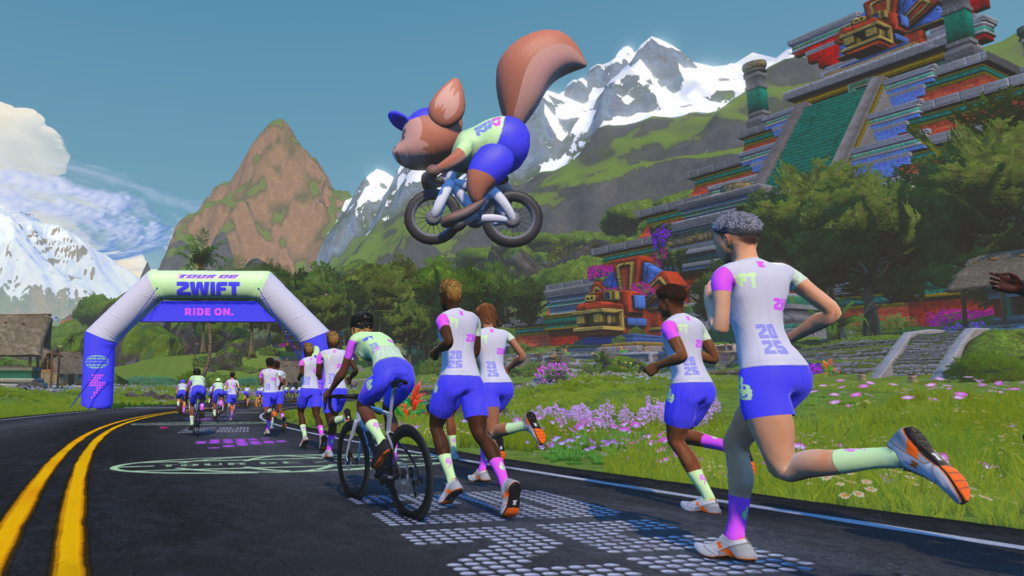
Tour de Zwift 2025 just wrapped up last week. Held during “Peak Zwift” time, TdZ is Zwift’s marquee annual group ride/run event – and it showed! Participation numbers seemed especially strong this year, with hundreds showing up to every ride I saw.

But it’s hard to gauge just how big TdZ is overall, without access to Zwift’s backend data analytics. So I reached out to Zwift with a request for some numbers, and they took the time to gather those stats so I could share them here. Let’s dive in!

Zwifter Counts

  • Total registered for TdZ: 342k
    Zwifters could register via the web, signing up in game, or by completing a TdZ event. So this figure doubtless includes some folks who clicked to register, but never actually rode a TdZ event.
  • Total who finished all 6 stages:
    • Cycling: 85,958
    • Running: 1,798

The Ultimate Challenge

Did riders finish the Ultimate Challenge because of the kit unlock? Doubtful. It’s more likely we completed the challenge simply because it existed!

Arguably the biggest “new feature” at this year’s TdZ was “The Ultimate Challenge.” This was for riders only, and required you to complete all 18 routes featured in this year’s Tour. (Routes could be completed in events, or as on-demand efforts.)

It was a bit of an “under the radar” challenge, but Zwift did help things along by creating a temporary personal dashboard at zwift.com (which has since been taken down) where you could monitor which routes you still needed to check off. I used it to determine I still had three routes left heading into make-up week!

So how many Zwifters finished the Ultimate Challenge? Here are some stats:

  • Total Ultimate Challenge finishers: 11,427
  • Total who completed at least half of the Ultimate Challenge (9 separate TdZ routes): 40,263
  • Total who completed all rides AND runs (the Ultimate Ultimate Challenge?): 346
    Zwift’s own Jon Mayfield and Leah Thorvilson are in this group.

Totals

It’s always amazing to look at the accumulated totals from all Zwifters in big events like Tour de Zwift. Check it out…

  • Total distance covered in TdZ 2025 events: 37,316,561 kilometers
    Or around the Earth 931 times. Or to the Moon and back… 48 times!
  • Total elevation climbed in TdZ 2025 events: 390,238,173 meters
    That’s 44,100 Everests!
  • Total time accumulated between all TdZ 2025 activities: 1,206,646 hours
    That’s 50,276+ days of continuous riding… or 137+ years!
  • Total Ride Ons given and/or received during TdZ 2025 events: 27.6 million
    That’s an average of 23 Ride Ons per rider-hour, meaning riders gave or received, on average, 23 Ride Ons per hour while in TdZ events.
  • Total TdZ 2025 event completions:
    • Rides: 1,119,338
    • Runs: 27,510
  • Most popular cycling route in this year’s TdZ events: Petite Douleur
    This “Little Pain” of a route began its life as a Rebel Route I created back in August of 2020, so it’s fun to see its popularity in TdZ!
  • Most popular running route in this year’s TdZ events: Park to Peak

Previous Year Comparison

Zwift was happy to share that this year’s TdZ stats were up from last year’s TdZ, across the board.

The most notable change was the total number of graduates (~86k this year, up from 69k last year), although this was admittedly helped along by the reduction in total stages from 8 to 6.

Questions or Comments?

I had a great time in this year’s TdZ events, whether I was racing the group ride or just spinning away in zone 2 to knock out the route as part of the Ultimate Challenge.

What about you? How was your TdZ experience? Any ideas for improvement you want to share? I’m sure Zwift HQ will be watching the comments on this post, so please share your feedback below…

This wild chainless two-wheel drive eMTB goes from 0 to 25km/h in 9 seconds and climbs slopes of up to 25%

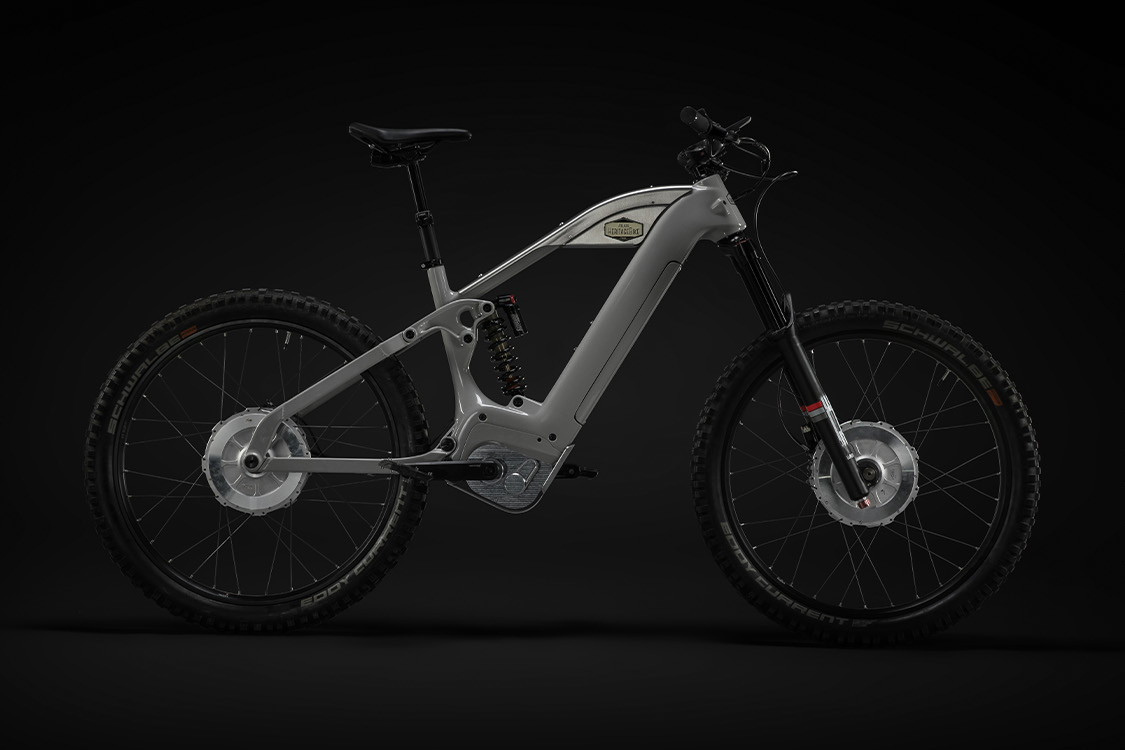
Pairing dual front- and rear-hub motors, a chainless ‘energy recovery’ drivetrain, extensive connectivity and a French-made carbon frame, the CIXI Heritage Chainless Altitude is claimed to offer more power and traction than a conventional electric bike.

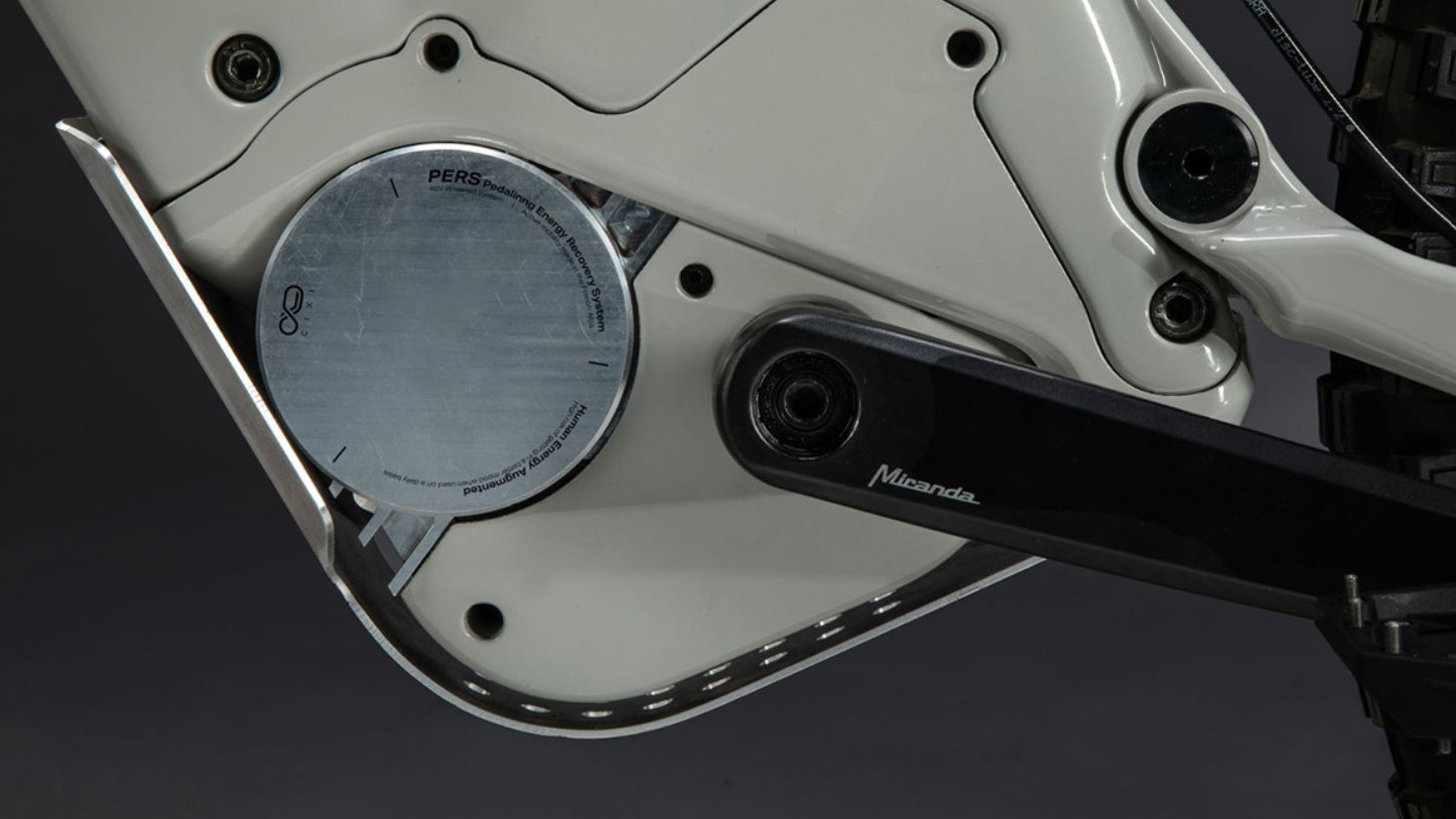
Designed in collaboration with Ateliers HeritageBike, the eMTB eschews a belt drive or chain drive in favour of a crankset that drives the PERS energy recovery unit.

This sits where a typical mid-mount electric bike motor would, converting pedal power into electric power.

This transmits power to the rear-wheel drive, extending range even when the battery is low, according to the brand.

Cixi Heritage Chainless Altitude – PERS system detail
The system appears to be designed primarily for cargo bikes. Cixi

CIXI says that “algorithms automatically adjust the [energy recovery unit’s] behaviour according to the desired comfort or effort cadence, regardless of the bike’s speed or slope”.

The PERS system entered production earlier this year, with four bikes equipped with the system due to be available at Eurobike following 40,000km of lab testing and 5,000km in real-world conditions, according to a report published on BIKEeurope.

With a peak power of 1,125W and 50Nm of torque, CIXI says the two-wheel drive offers improved acceleration and traction versus a traditional electric bike, accelerating from 0 to 25km/h in 9 seconds on an 8 per cent incline in its two-wheel drive configuration. This compares with 23.6 seconds with a single motor.

Cixi Heritage Chainless Altitude – pack shot
The bike was first shown at Eurobike 2024, with the PERS system entering serial production this year. Cixi

Likewise, CIXI says the bike can climb slopes as steep as 24 per cent. The brand says this compares with “15.5 per cent for a conventional configuration” – although it doesn’t specify which bike or system it is comparing this to.

Built around a French-made carbon frame, the bike’s pricing and availability are to be confirmed.

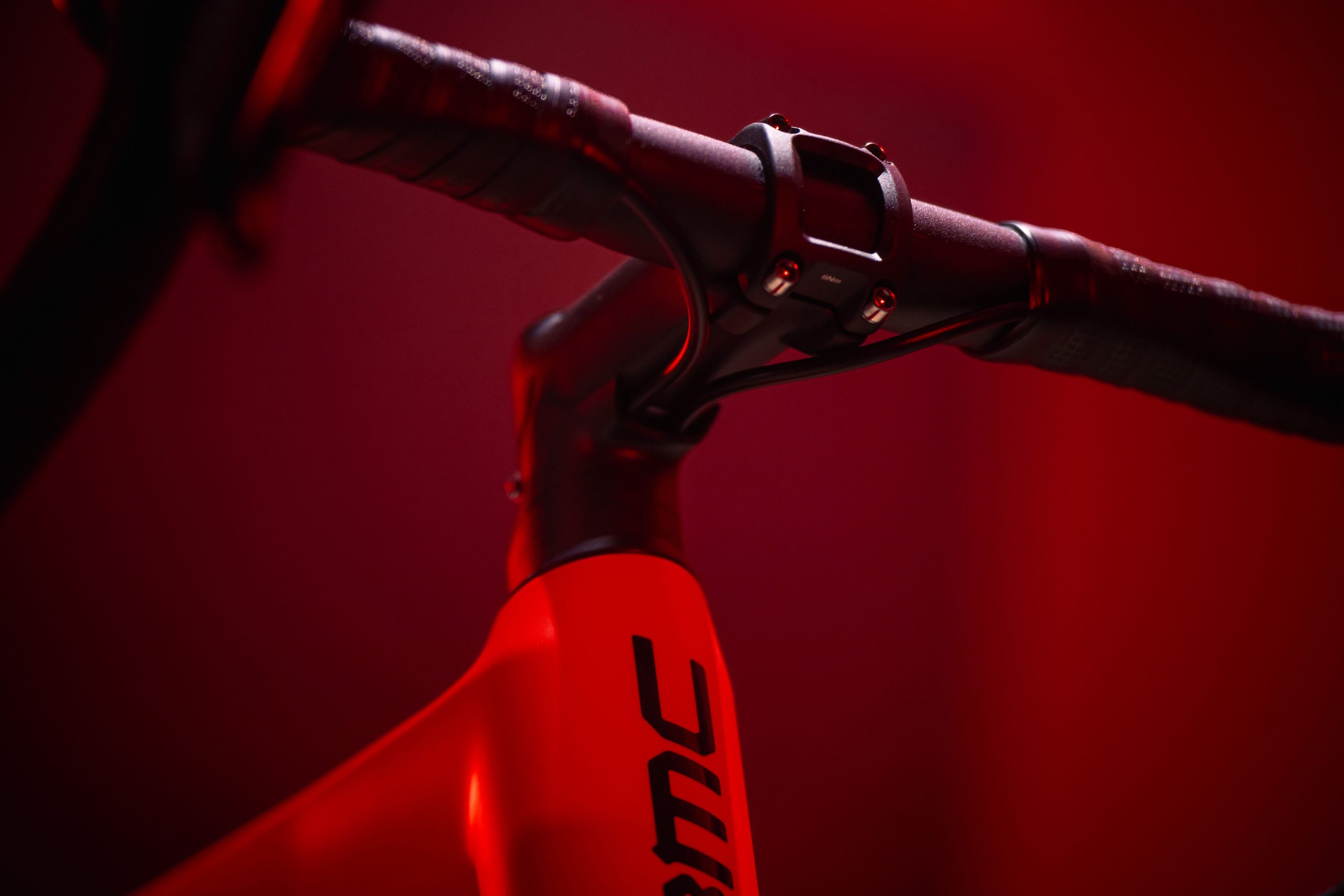
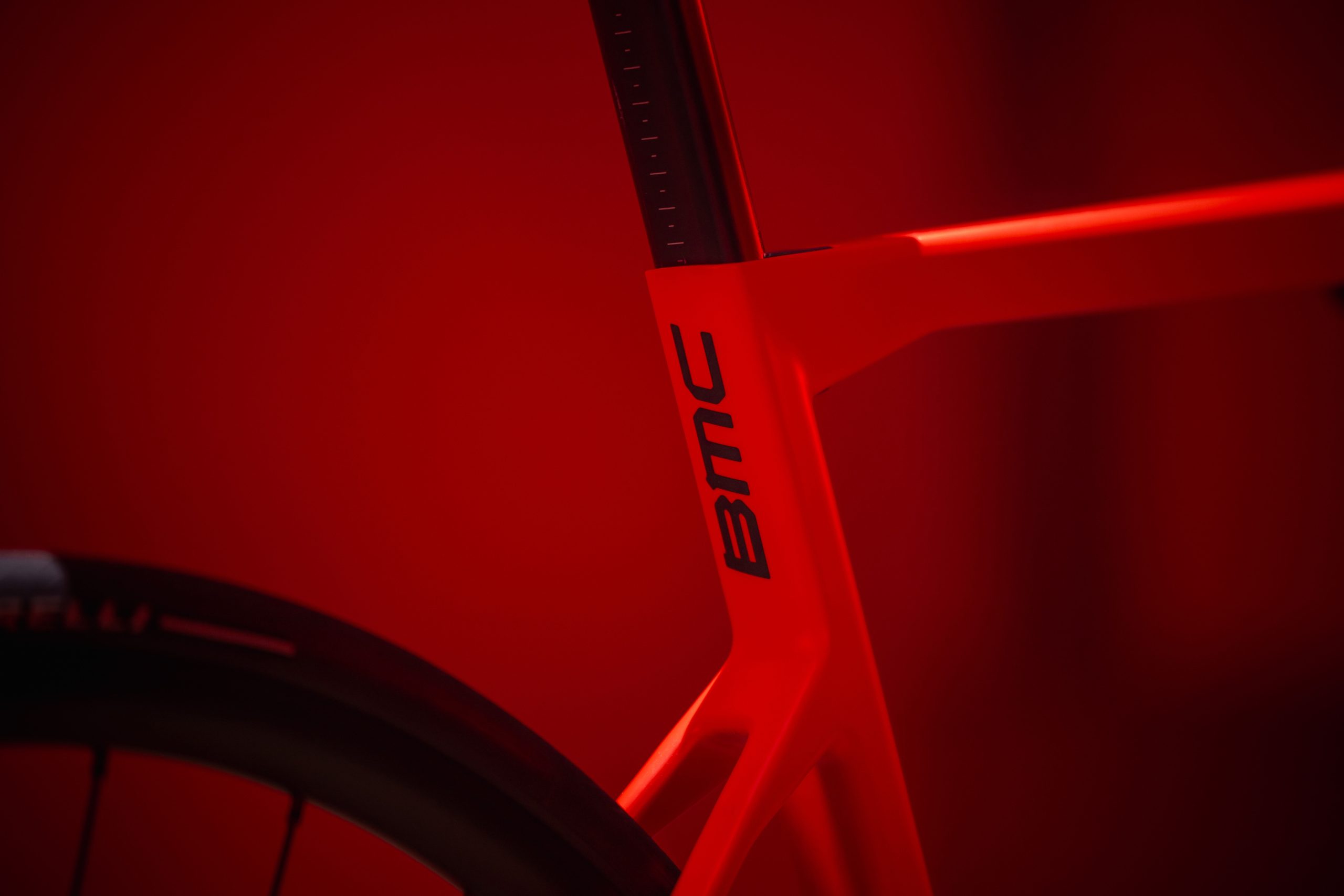
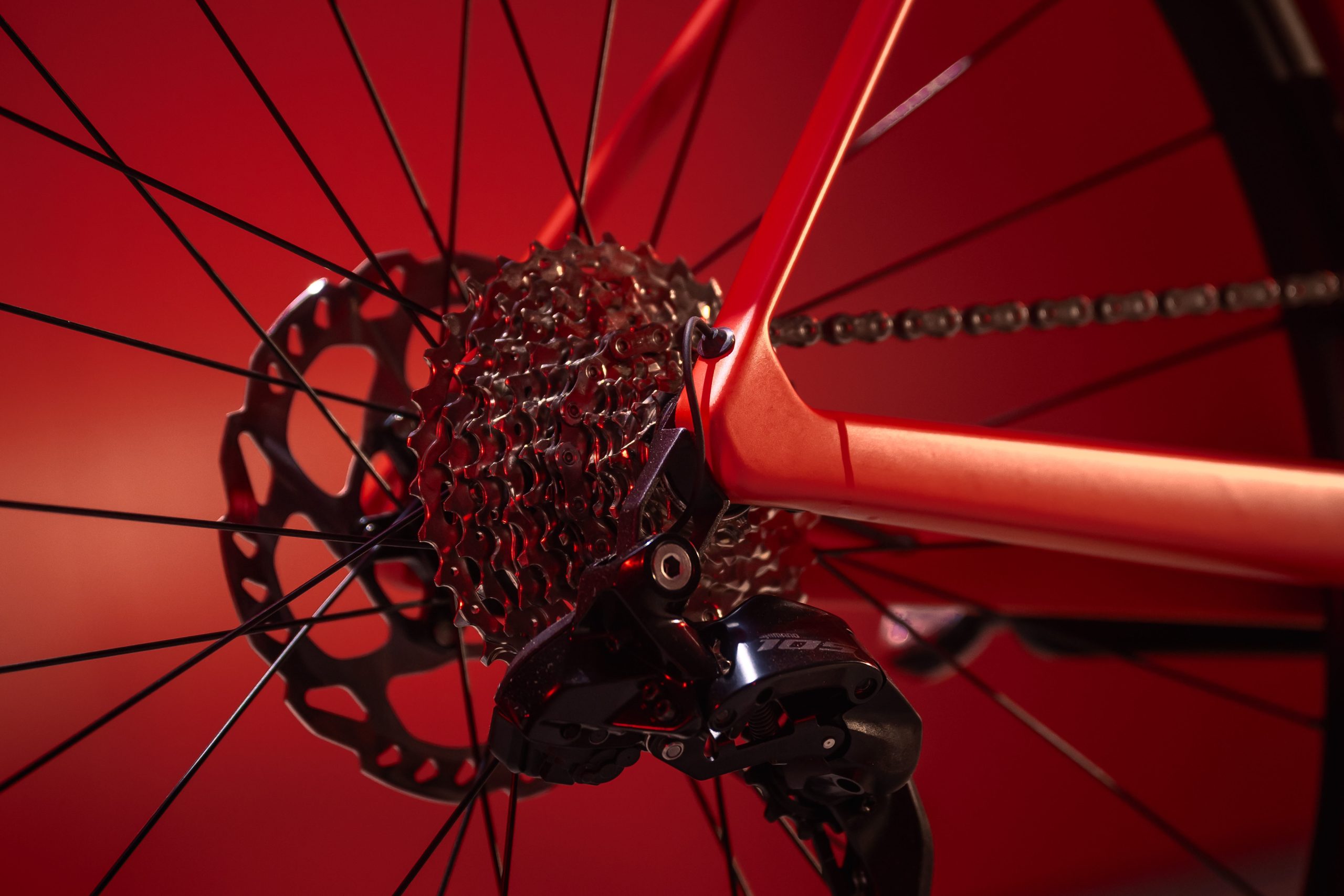
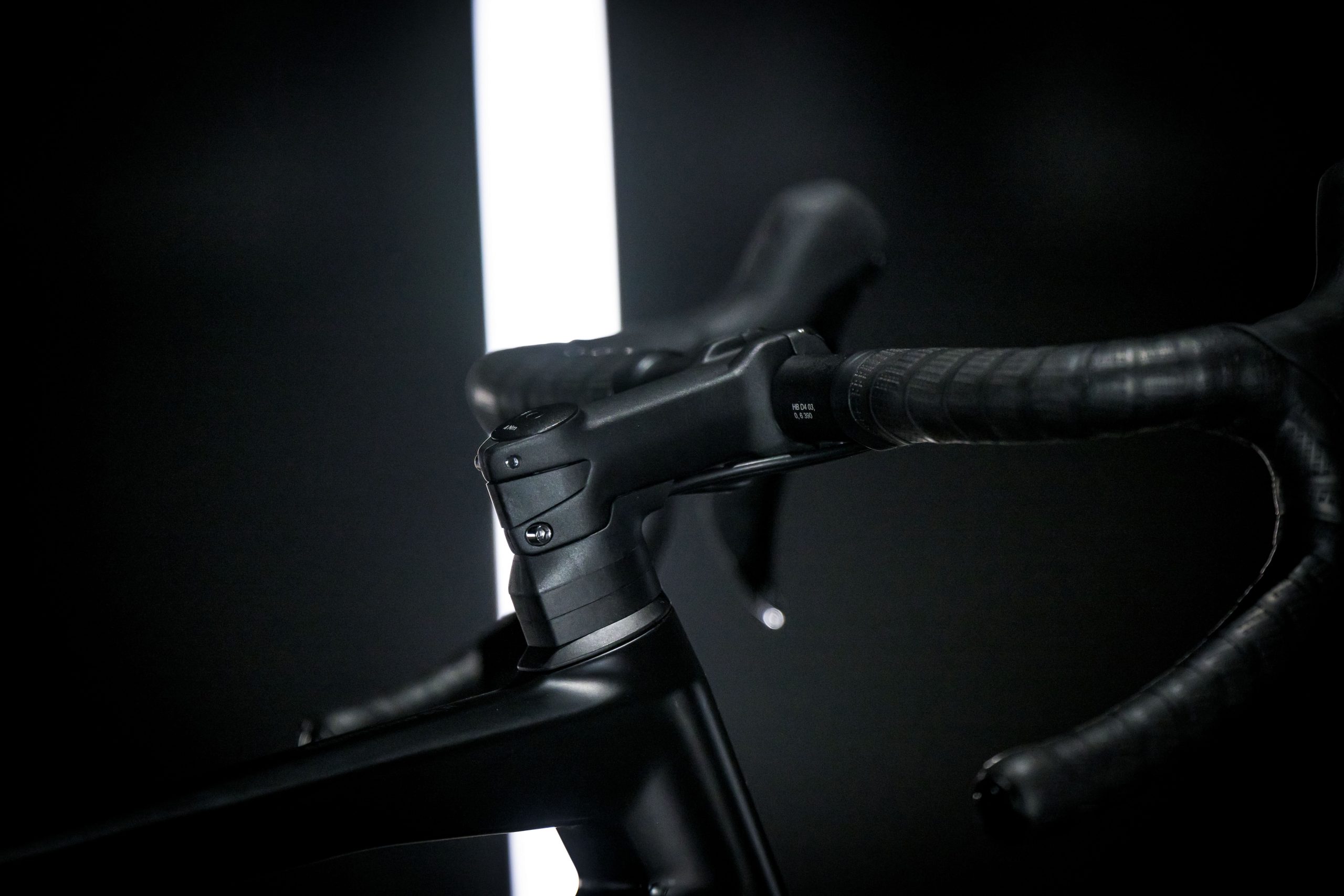
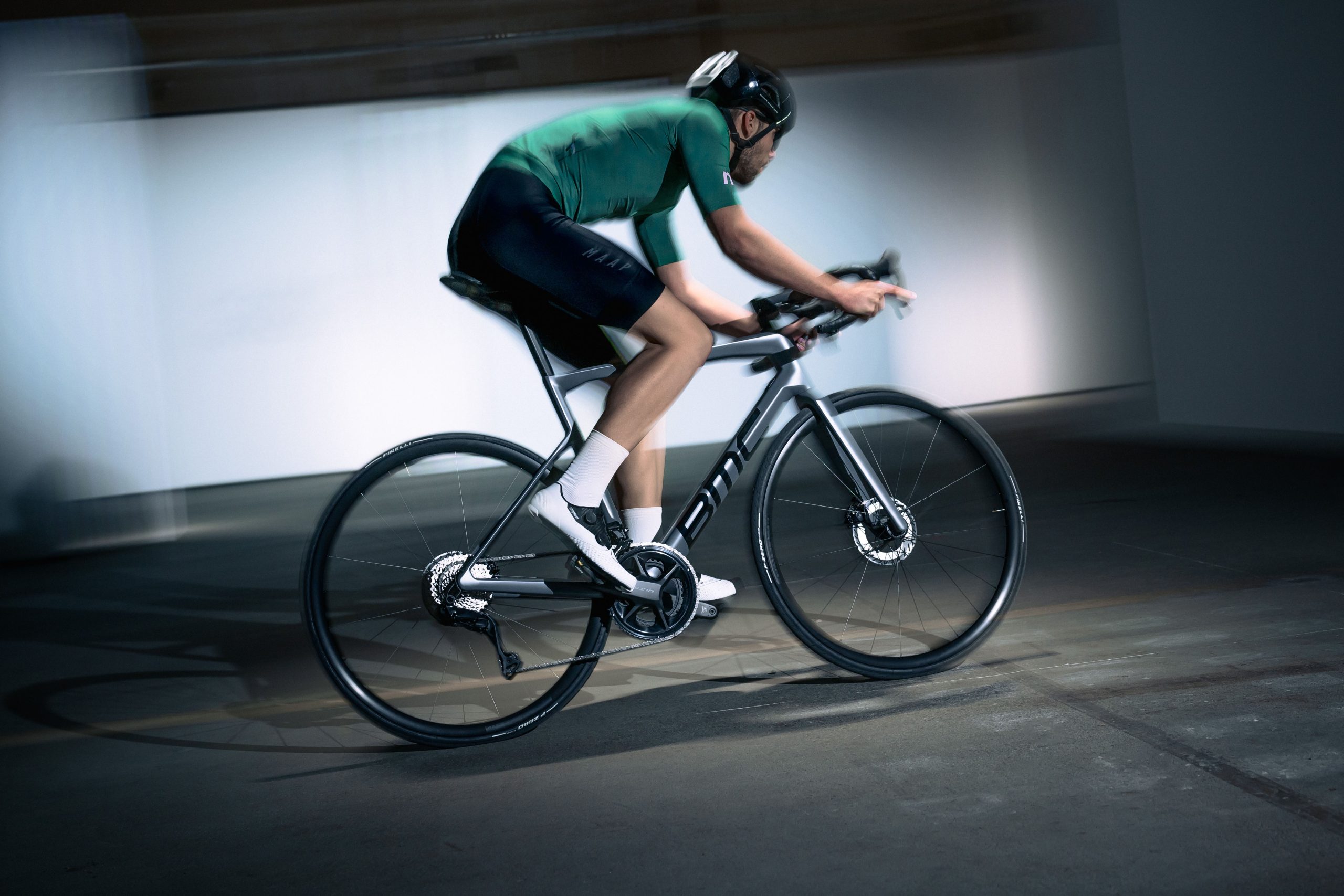
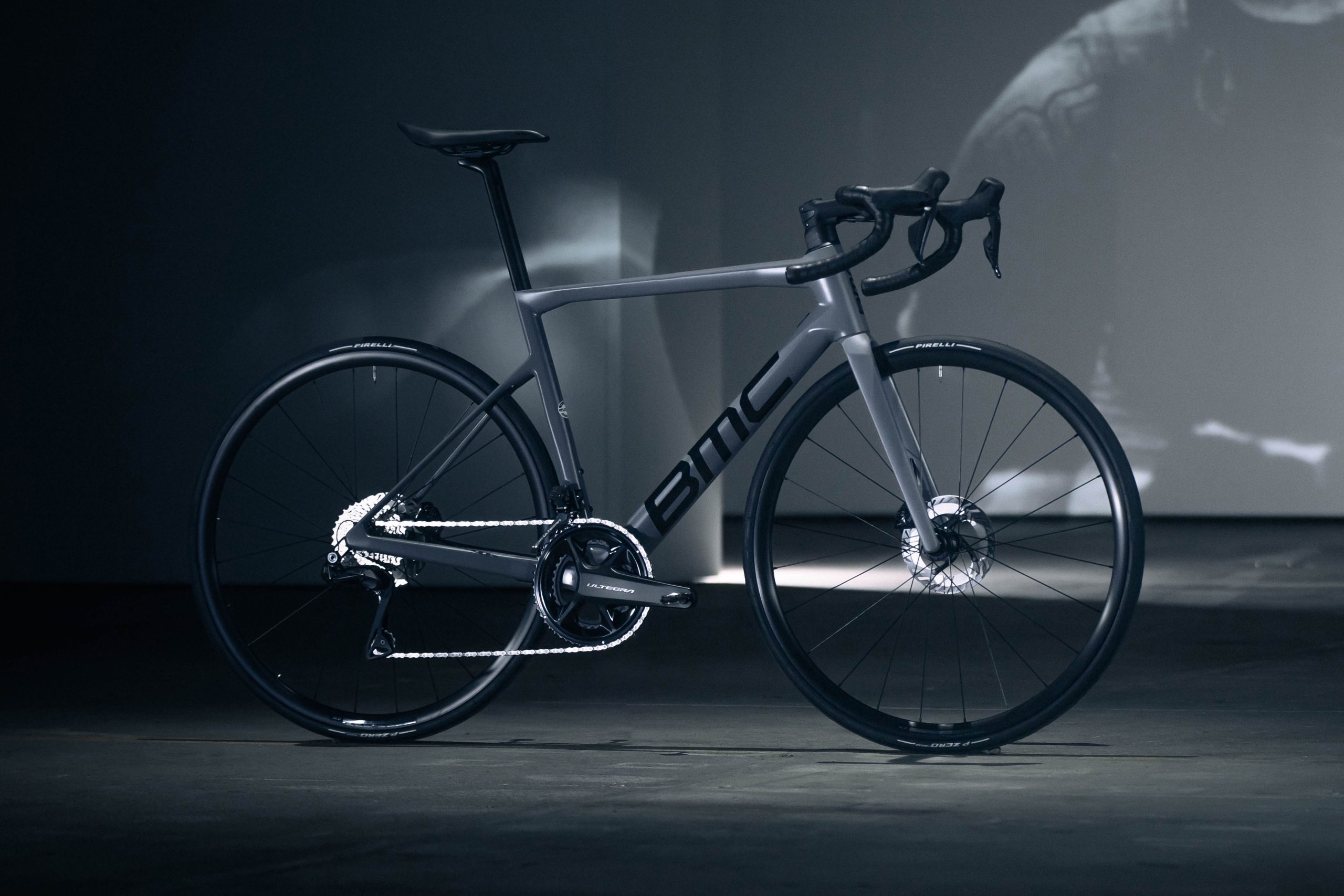
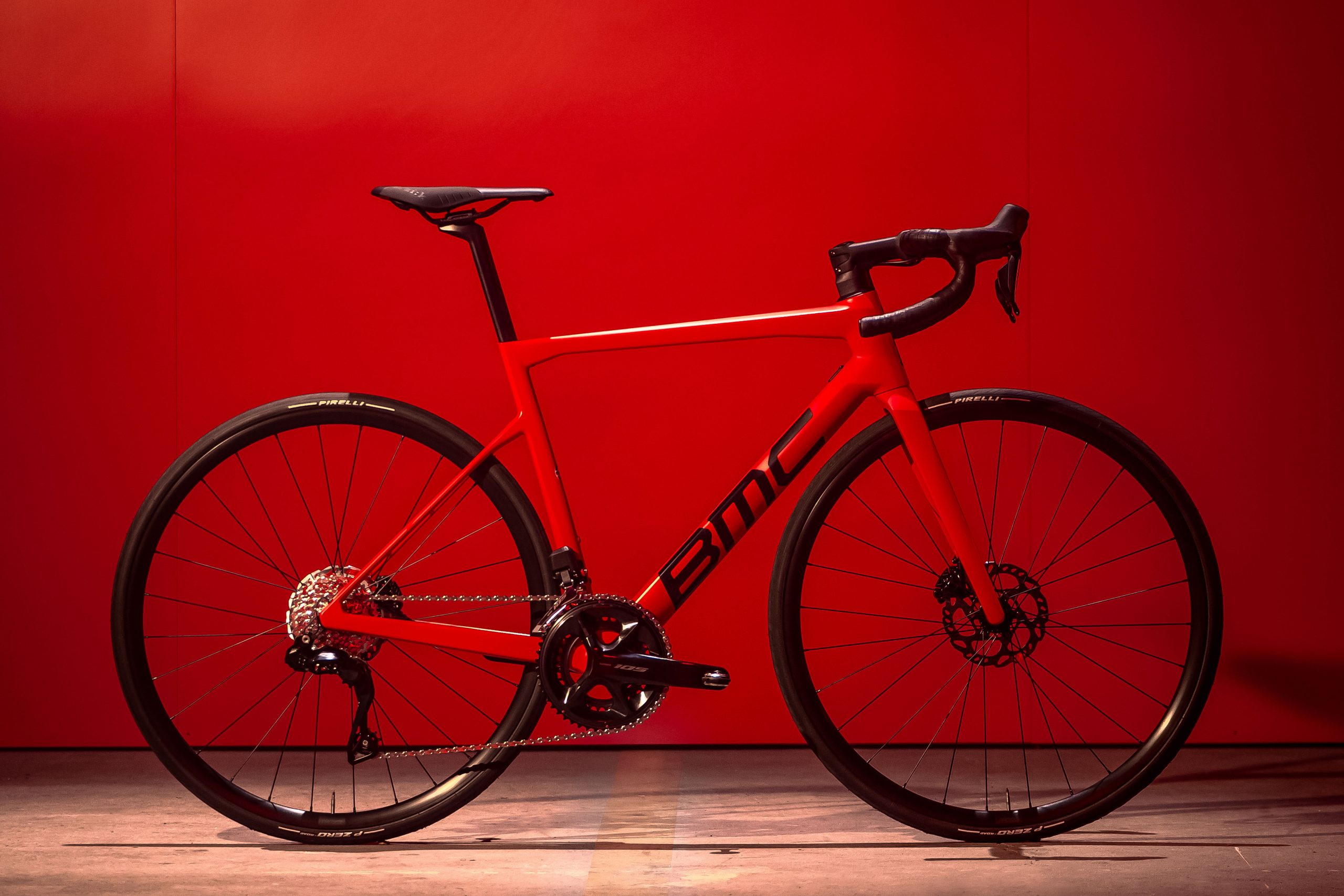
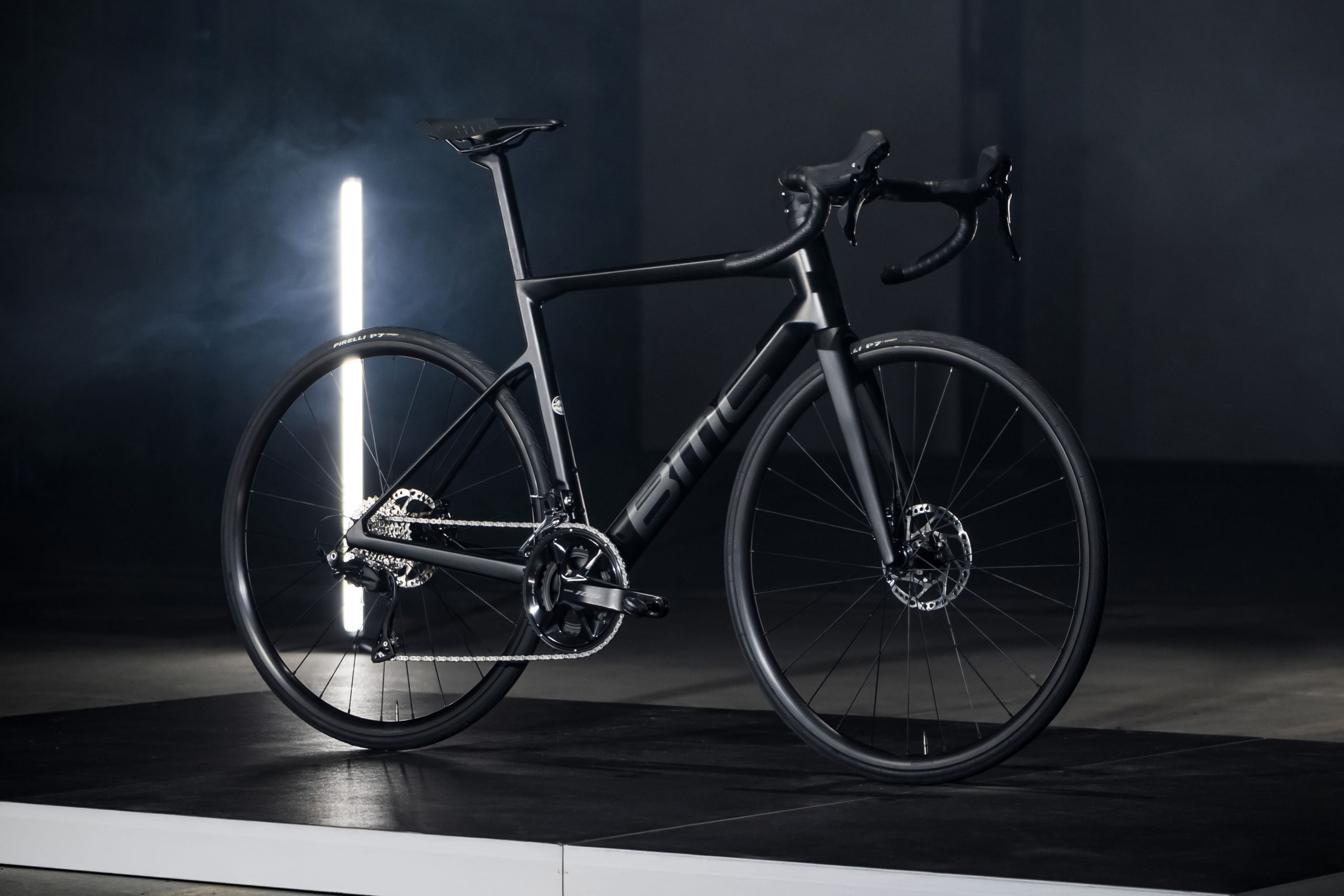
You can now buy a cheap(er) BMC Teammachine SLR with fully integrated cable routing

BMC has updated its entry-level Teammachine SLR road race bike with fully integrated cable routing to match the flagship Teammachine SLR 01.

Previously, customers had to shell out $8,499 / €8,499 for a complete Teammachine bike with modern integrated cable routing – that figure is now $2,999 / €2,999. 

The brand’s Teammachine SLR 01 remains unchanged.

No more external routing

2026 BMC Teammachine SLR Three
Hoses (and gear cables) now enter into a port under the stem. BMC

The Swiss brand’s proprietary ICS routing system, which has been applied here, sees cables and hoses routed inside the upper headset bearing, between the steerer tube. 

Some might lament the loss of an externally routed option on ease-of-servicing grounds, but each bike is offered with a two-piece cockpit with a standard front-facing four-bolt stem faceplate (rather than the brand’s more stylised ICS2 design). 

2026 BMC Teammachine SLR Three
The Teammachine SLR frame shares the same silhouette as the Teammachine SLR 01. BMC

This sees cables and hoses fit under the stem, before entering the frameset, and means the stem can be swapped over without having to unravel the system.

BMC says the ICS system confers both aerodynamic and aesthetic benefits, but those purported upsides are left to the rider’s perception – the brand doesn’t offer data on the aerodynamic improvements between the old Teammachine SLR and the updated model.

Is the Teammachine SLR just an SLR 01 without the fancy builds?

2026 BMC Teammachine SLR Three
The Teammachine SLR frame has the same features as the Teammachine SLR 01, but a lower-spec carbon layup. BMC

In a word, no – the Teammachine SLR isn’t quite a carbon copy of its higher-spec sibling, which is now approaching five years old.

BMC says the updated frameset has the same layout as the top-spec 01 frameset, including compatibility for the brand’s one-piece ICS Carbon Aero, ICS Carbon or latest ICS Carbon EVO cockpits, the D-shape seatpost and semi-integrated Aerocore bottle cages.

Tyre clearance is also identical, at 30mm – a little shy of the latest race bikes.

2026 BMC Teammachine SLR Four
The cockpit features a proprietary inlet adaptor and spacers. BMC

However, the carbon layup features a lower stiffness-to-weight ratio compared to the premium bike – BMC claims the frame “shares the same stiffness targets as the Teammachine SLR 01”, but that complete builds come in from “around 8kg” in an unspecified size.

For context, Warren Rossiter reviewed the current-generation BMC Teammachine SLR 01 in a size 56cm with a Shimano Dura-Ace Di2 R9100 groupset, which weighed 7.09kg. 

What Teammachine SLR builds can I have?

2026 BMC Teammachine SLR Two
Teammachine SLR bikes start from $2,999 / €2,999. BMC

The BMC Teammachine SLR is available from today in three builds – the Two, Three and Four – with a One-spec build confirmed to follow later in the year.

BMC says riders have the choice of three seatpost setbacks (15mm as standard, with 25mm and inline options also available).

The brand hasn’t yet confirmed whether these are free of charge to choose at point of purchase.

BMC Teammachine SLR Two

2026 BMC Teammachine SLR Two
2026 BMC Teammachine SLR Two. BMC
  • Groupset: Shimano Ultegra Di2 R8150
  • Wheels: BMC AR 27, alloy
  • Tyres: Pirelli P Zero Road, 26mm
  • Saddle: Fizik Argo Vento R5
  • Claimed weight: 8kg (unspecified size)
  • Price: $4,999 / €4,999 / CHF4,999

BMC Teammachine SLR Three

2026 BMC Teammachine SLR Three
2026 BMC Teammachine SLR Three. BMC
  • Groupset: Shimano 105 Di2 R7150
  • Wheels: BMC PRD 23, alloy
  • Tyres: Pirelli P Zero Road Sport, 26mm
  • Saddle: Fizik Antares R7
  • Claimed weight: 8.3kg (unspecified size)
  • Price: $3,999 / €3,999 / CHF3,999

BMC Teammachine SLR Four

2026 BMC Teammachine SLR Four
2026 BMC Teammachine SLR Four. BMC
  • Groupset: Shimano 105 R7100
  • Wheels: BMC PRD 23, alloy
  • Tyres: Pirelli P7 Sport, 26mm
  • Saddle: Fizik Antares R7
  • Claimed weight: 8.5kg (unspecified size)
  • Price: $2,999 / €2,999 / CHF2,999

Canyon finally offers bike customisation, but only on its flagship Aeroad (for now)

Canyon has announced a new bike customisation programme dubbed ‘MyCanyon’.

The programme will initially be offered on its flagship Aeroad CFR road bike and will give riders the ability to select from a range of paintjobs, components and accessories.

MyCanyon will also offer riders a choice of stem length, solving one of the biggest headaches riders have on bikes with integrated cockpits.

Swaps and upgrades won’t come for free, although Canyon would likely point out its custom bikes will still offer good value relative to off-the-peg options from its competitors.

At launch, the MyCanyon programme will be available only in the USA, although Canyon says it will get a worldwide rollout by “end-summer” 2025.

Custom Canyons for everyone

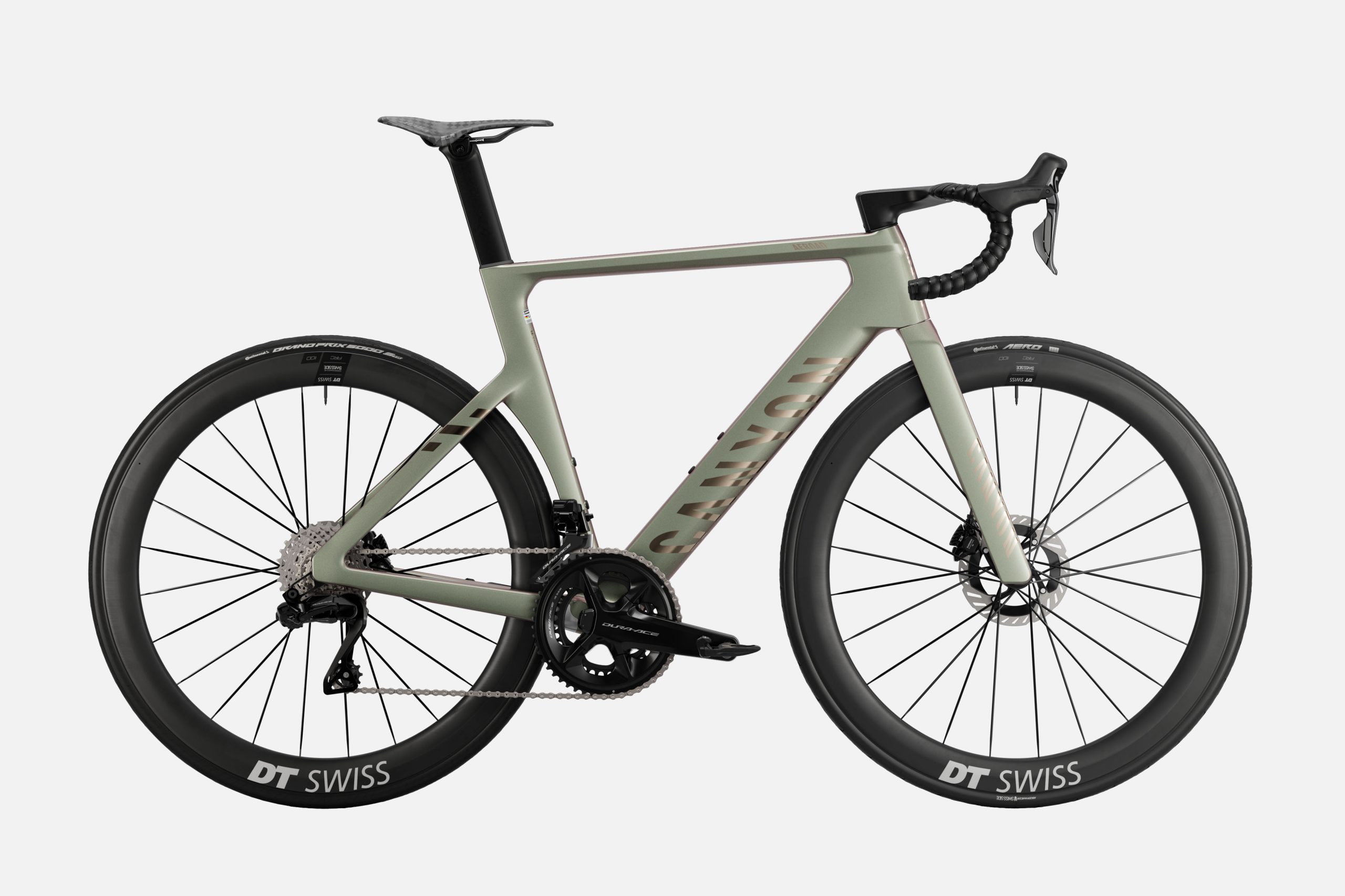
MyCanyon Canyon Aeroad CFR
MyCanyon is a premium programme, offering custom paintjobs and component upgrades. Canyon

Canyon has held off offering spec customisation options on its bikes for many years, but it points out it has a rich history of making “dream bikes”.

The only catch was you had to be someone like Mathieu van der Poel or Annemiek van Vleuten to get a custom Canyon.

Now, though, Canyon says it wants to offer every rider the chance to build “a bike like no other”.

Given MyCanyon is being offered only on its Aeroad CFR platform at launch – prices for which start at $9,999 – you’ll need deep pockets, though.

Curated customisation

MyCanyon Canyon Aeroad CFR
MyCanyon is available only on the Aeroad CFR platform at launch. Canyon

According to Canyon, the MyCanyon programme is designed to offer “curated customisation” for three main areas – aesthetics, fit and function.

Aesthetics

MyCanyon Canyon Aeroad CFR
The first option in the MyCanyon programme is the custom paintjobs. Canyon

Aesthetics covers modifications to things such as the bike’s paintjob and decal colours, with three tiers available.

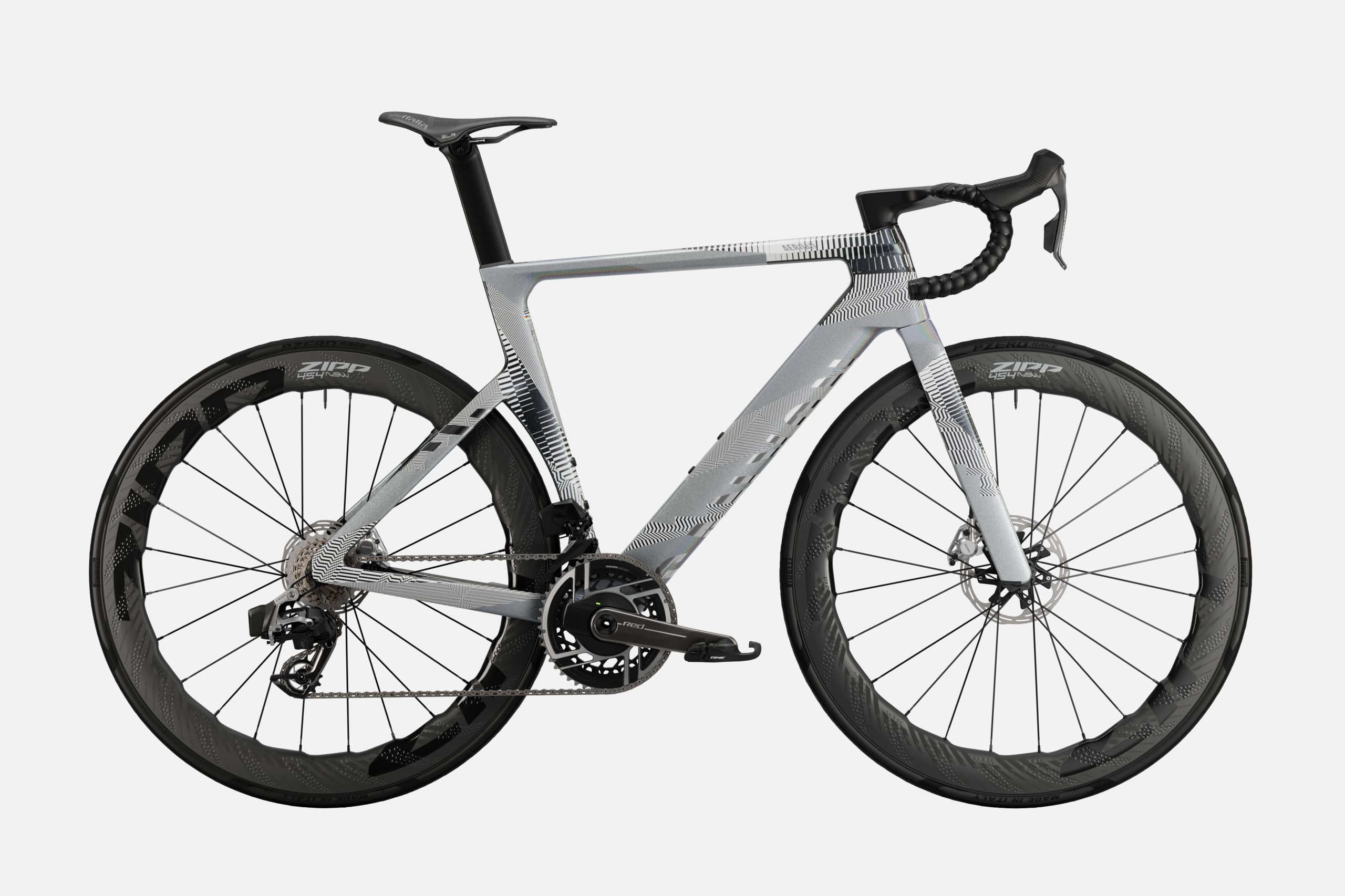
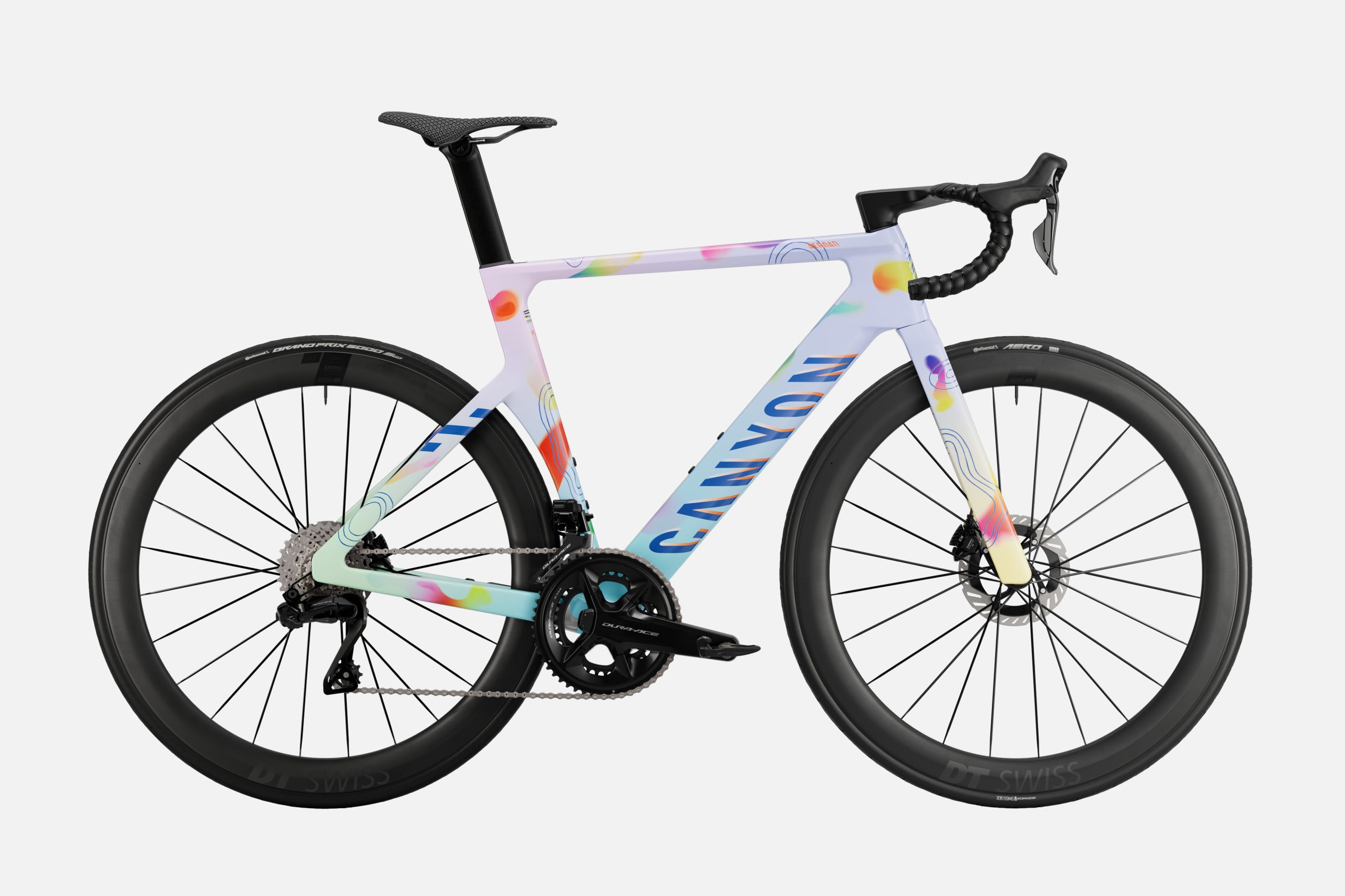
The cheapest aesthetic upgrades come from the Fabrio collection. These paintjobs cost $500 (pricing for the rest of the world is yet to be confirmed), and there are three different styles designed to respond to light.

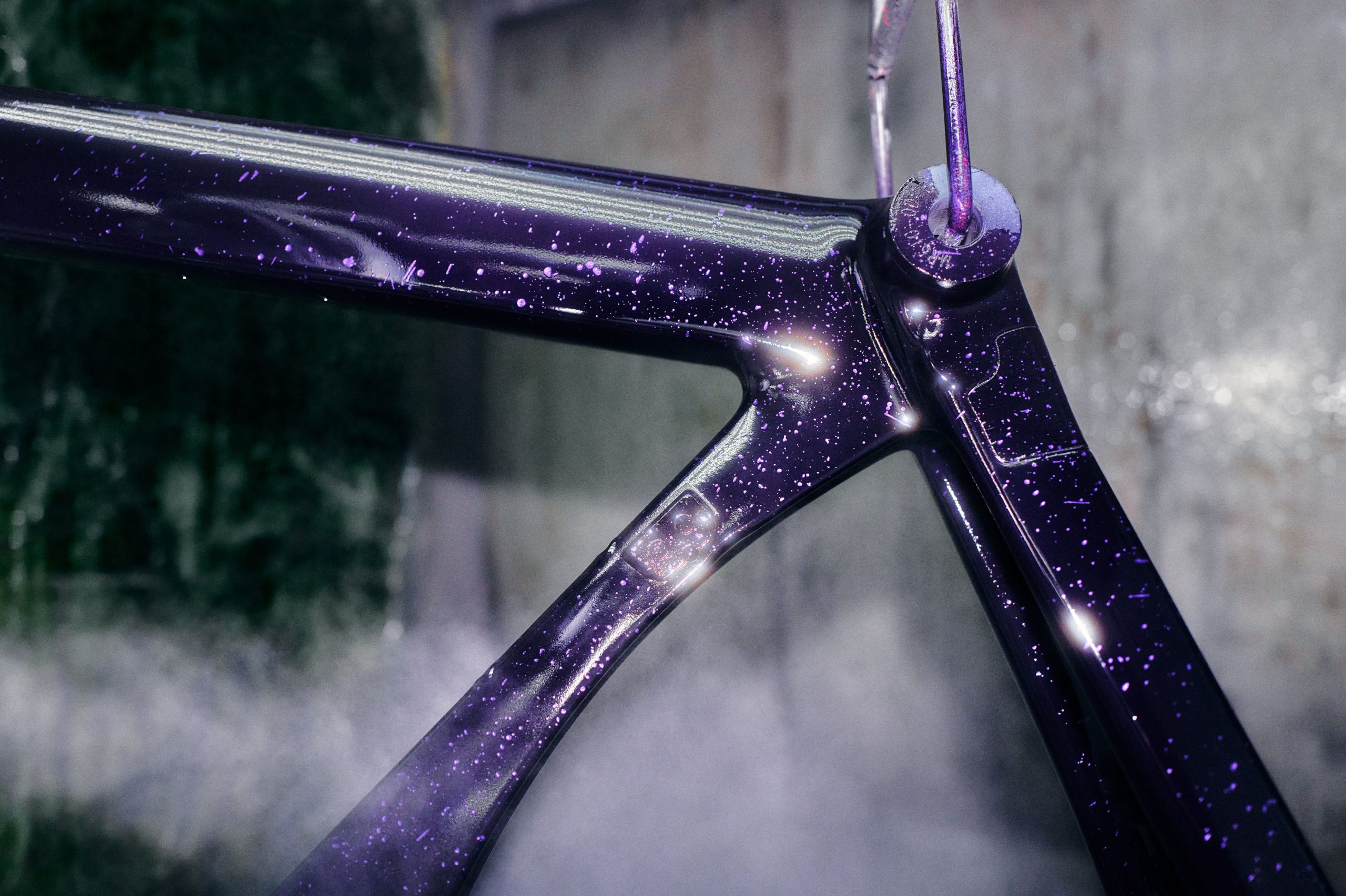
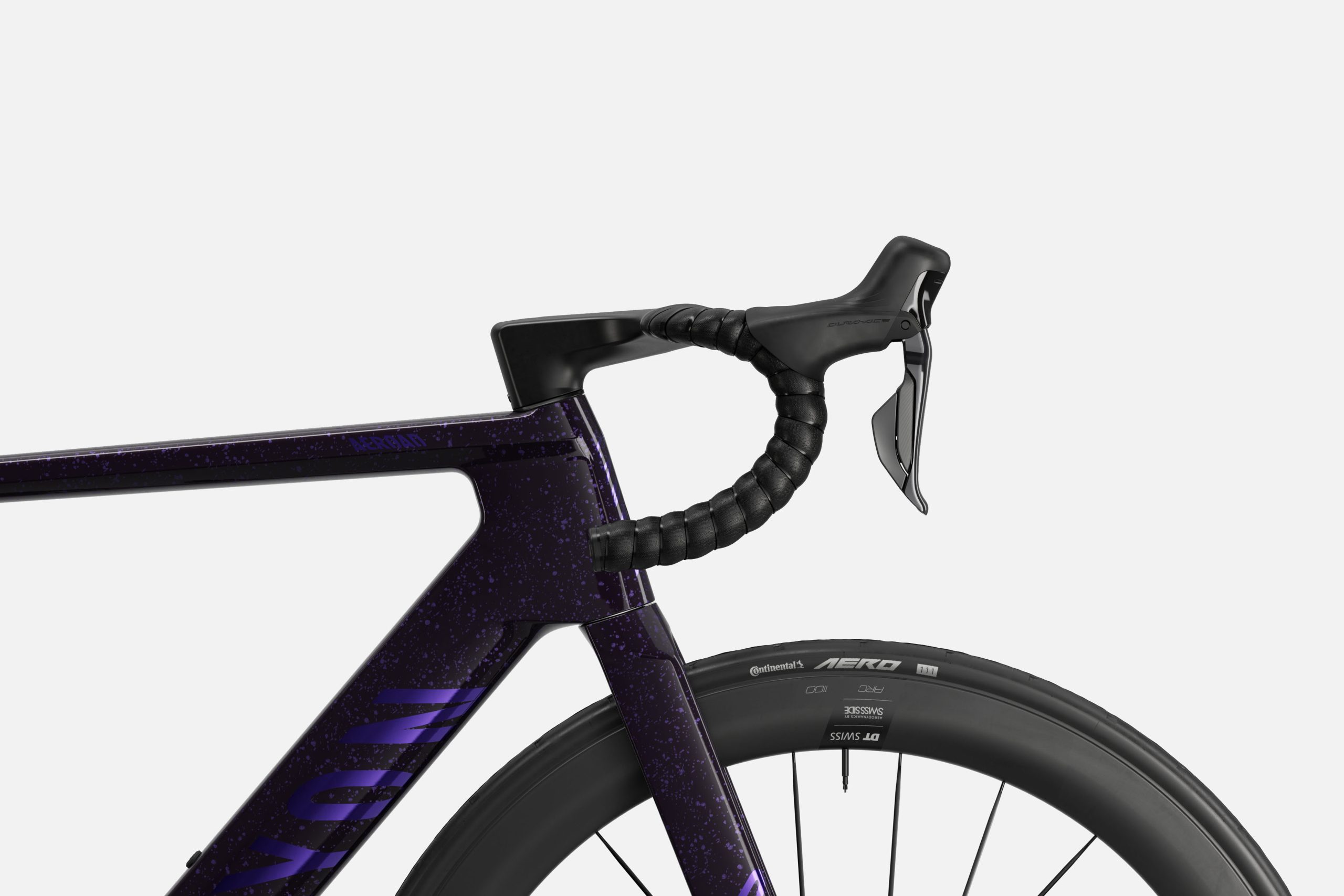
For $700, you can have a paintjob from the Mano collection, which features four “uniquely hand painted” designs inspired by “the largest known nebulae in our universe“.

At this tier, riders can also select to customise the designs with different decals, giving a total of eight options.

MyCanyon Canyon Aeroad CFR
The paintjobs range in price from $500 to $1,500. Canyon

The most expensive upgrade in the looks department comes in the form of the Opus edition paintjobs, which cost $1,500 each.

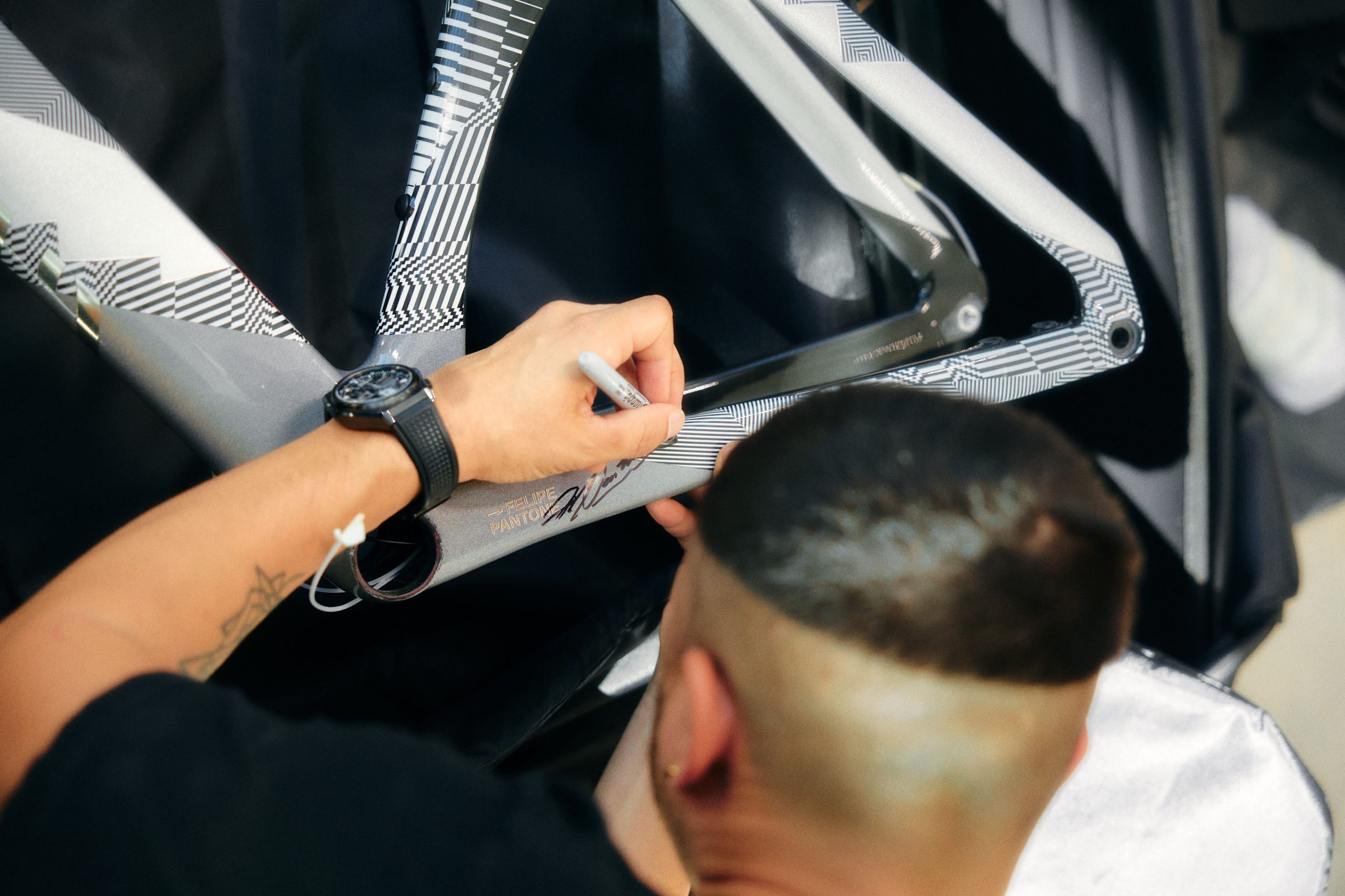
These feature “artworks” from artists Felipe Pantone and Elena Salmistraro, which Canyon says are “deeply labour intensive to produce”.

Fit

MyCanyon Canyon Aeroad CFR
Riders can, at long last, swap stem lengths at the point of purchase with MyCanyon. Canyon

Canyon has long held off giving riders the ability to customise parts in its webshop, but riders will finally have the option to swap stem lengths at the point of purchase with MyCanyon.

There are some caveats – stems can only be swapped between -10 and +20mm lengths from the default size (which scales with each frame size).

A size-medium Aeroad CFR, for example – which has a default stem size of 100mm – can be specced with a 90, 110 or 120mm stem.

Swapping your stem length doesn’t cost more, although it’s worth noting riders are required to select one of the upgraded paintjobs in the MyCanyon programme (prices for which start from $500, as previously noted).

Handlebar width and drop shape are adjustable on the Aeroad CFR by default, although you’ll need to purchase different drop shapes separately.

Handlebar-width and stack-height changes are already accounted for by the Aeroad’s adjustatble PACE Bar Aerocockpit, which can be adjusted between 370 and 420mm wide (centre to centre at the brake hoods).

Canyon’s PACE Aero drops (which replace the stock handlebar drops with a set of narrower, flared ones) will still need to be purchased separately.

Stem adjustments aside, riders will also be able to upgrade from the stock Selle Italia SLR Carbonio saddle to either the 3D-printed Boost 3D Kit Carbonio ($100 surcharge) or the full-carbon Boost Tekno ($150 surcharge).

Function

MyCanyon Canyon Aeroad CFR
Canyon will also offer riders a choice of groupset, wheels and tyres. Canyon

The other areas riders will be able to change through the MyCanyon programme are the bike’s drivetrain and wheels, although the options are for simple swaps rather than detailed customisation.

Riders will be able to select between Shimano’s Dura-Ace Di2 R9200 groupset and SRAM Red AXS, for example, but won’t be able to customise the gear ratios.

MyCanyon Canyon Aeroad CFR
You can choose between Shimano and SRAM’s flagship groupsets, and wheels from Zipp or DT Swiss. Canyon

Likewise, there’ll be two choices for the bike’s ‘rolling stock’ – DT Swiss ARC 1100 wheels with 28c Continental Aero 111 and GP5000 S TR tyres (front and rear, respectively) or Zipp 454 NSW wheels and 28c Pirelli P Zero TLR RS tyres.

Bar tape will also be upgraded (from Canyon’s own to Lizard Skins) to match the bike’s decals.

Riders will also be given the opportunity to add extra details and accessories such as name stickers and bike computer mounts.

MyCanyon lead times and availability

MyCanyon Canyon Aeroad CFR
Canyon says MyCanyon will be available worldwide by the end of the summer. Canyon

As noted previously, the MyCanyon customisation programme will only be available in the USA and with the Aeroad CFR at launch.

Following the initial launch, Canyon says it aims to extend the programme to Asia–Pacific by the end of April 2025, with the rest of the world following by the “end of summer 2025”.

Canyon also says it is considering extending the MyCanyon programme to other models in its range, beyond the Aeroad CFR, but hasn’t yet made any final decisions.

In terms of lead times for MyCanyon builds, Canyon says custom bikes should be ready within “six to twelve weeks”, depending on the availability of parts.

In the US, riders will also have the option of shipping their MyCanyon bike to a local bike shop, which can handle the out-of-the-box setup.

I’m embarrassingly excited about this extraordinarily boring product

Picture the scene: I’m a week into a cycling tour and have unloaded a pile of panniers into the vestibule of my palatial tent. I’m ready to relax and now must find clean/dirty pants to lounge in as I reflect on the day’s route.

I plunge my arm into the cavernous depths of my pannier bags, fingers rooting around for the fragrant goods like a subterranean mole hunting out polycotton worms.

After a few seconds of guessed fumbling, my hand grasps something. Yanking at the tangled mess of cycling kit and civvies, I eventually wrestle free a travel towel, sigh with frustration, give in, and dump the lot at the foot of the tent.

Cycling kit removed and bedclothes donned, I stuff it all back into my pannier, only to repeat the sorry affair when I need kit again the following morning.

Ortlieb Packing Cubes
Praise be the Packing Cube. Jack Luke / Our Media

But it needn’t be this way!

Spotted at Corebike, it turns out Ortlieb makes a range of clever packing cubes that fit perfectly into its Back-Roller panniers – my preferred panniers for touring.

With divider pockets and a plastic stiffening structure, the cubes look like the best way to bring sense to my panniers.

Ortlieb Packing Cubes
I can already envision a pile of these stacked neatly at the foot of my tent. Scott Windsor / Our Media

Roll-top stuff sacks would achieve the same thing, but they have two key drawbacks.

First off, stuff sacks are generally designed to be waterproof.

That goes both ways, so stuffing stinky kit into these only encourages a funky miasma to develop. I’ve used mesh stuff sacks to achieve order, but these lack structure and tend to become tangled.

Secondly, round bags don’t pack neatly into the square shape of a pannier.

That’s a very minor point, but if you’re at the limit of what you can carry – a fairly frequent occurrence if I’m venturing into the back of beyond for a few days on my tandem – every little bit counts.

If it isn’t clear already, I’m sold. I’ll report back on whether they deliver on my hopes of life-improving order after this summer’s tours.

SQUIRREL_13190815

Shimano Super Cycling Sunday Series Announced

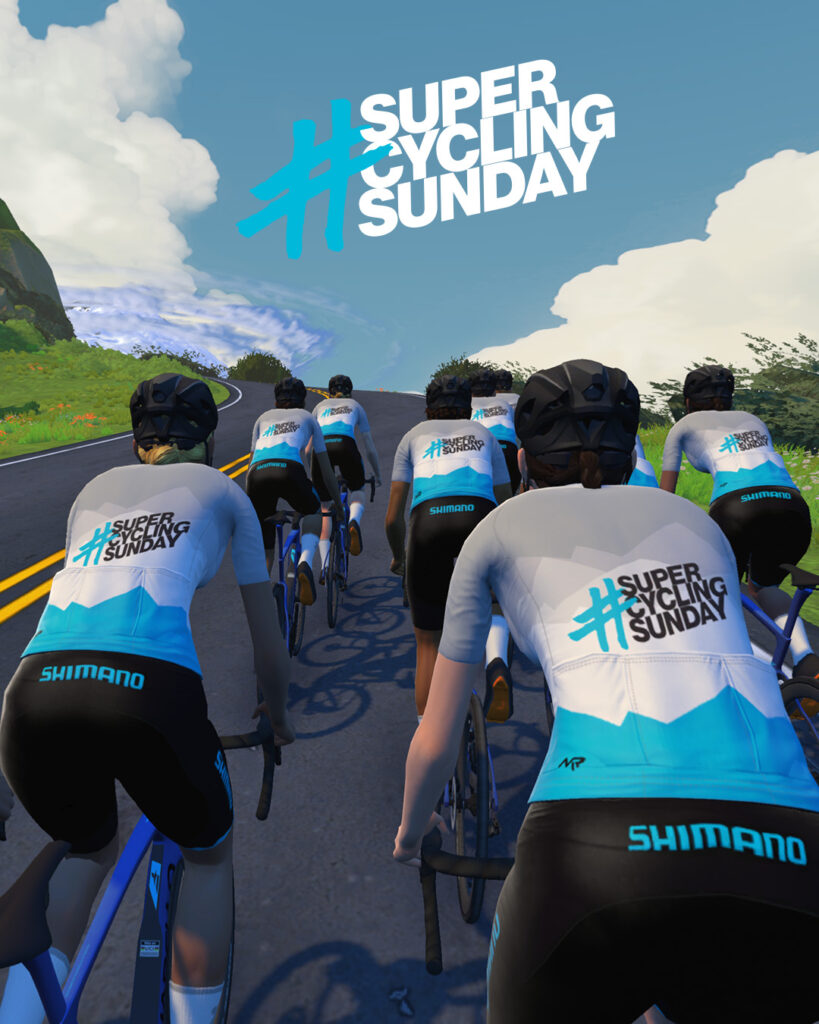
Give yourself that Monday smile that only comes from Sunday miles! Shimano’s Super Cycling Sunday campaign has come to Zwift with a series of weekly rides scheduled from March 2 through the end of the year.

These open-paced group rides feature newer Zwift routes, a #SuperCyclingSunday kit unlock, special guest riders, and more! Read on for details…

Kit Unlock

Complete any of the rides to unlock the exclusive Shimano Super Cycling Sunday kit in game!

March + April Route Schedule

Routes will be decided two months in advance. These are full routes so riders earn route badges for completing the event.

Events take place every Sunday at 3pm UTC/10am ET/7am PT or 4pm UTC/11am ET/8am PT.

Date Route
03/02/2025 Danger Noodle
03/09/2025 Sugar Cookie
03/16/2025 Libby Hill After Party
03/23/2025 Yorkshire Double Loops
03/30/2025 The Magnificent 8
04/06/2025 Tair Dringfa Fechan
04/13/2025 Wandering Flats
04/20/2025 Douce France
04/27/2025 Greater London 8

Sign up at zwift.com/events/tag/shimanosupercyclingsunday

Ambassadors

The first #SuperCyclingSunday ride of each month will be hosted by a special guest rider who will be announced a few days before each ride. The March 2 kickoff event features Khory, a Shimano ambassador who knows what the brand and Super Cycling Sunday are all about:

I’m content creator with a long running passion for photography and videography, a recently turned 40 year old dad of two and a self confessed cycling geek! If I’m not on the bike, I’m creating content around bikes or at very least in the pub talking about them. Zwift has been a game changer when it comes to year round riding being based in the UK with our long winters and short days putting the comfort and convenience back into winter miles for the summer smiles!

Find Khory on Insta @khoryzfmedia

Questions, Comments… Free Socks?

Learn more on Shimano’s Super Cycling Sunday homepage, including IRL events and a chance to get some free socks if you’re an EU resident!

Got questions or comments? Share below!

PFC/PFAS-free waterproof clothing is better than you think

New, supposedly more eco-friendly waterproof fabrics have made a few headlines in recent months.

The strongest opinion I’ve heard boils down to an outright rejection of the efficacy of the new fabrics – while the general consensus among experts is they aren’t quite as effective as their forbears. To me, the extreme view is (very) wide of the mark.

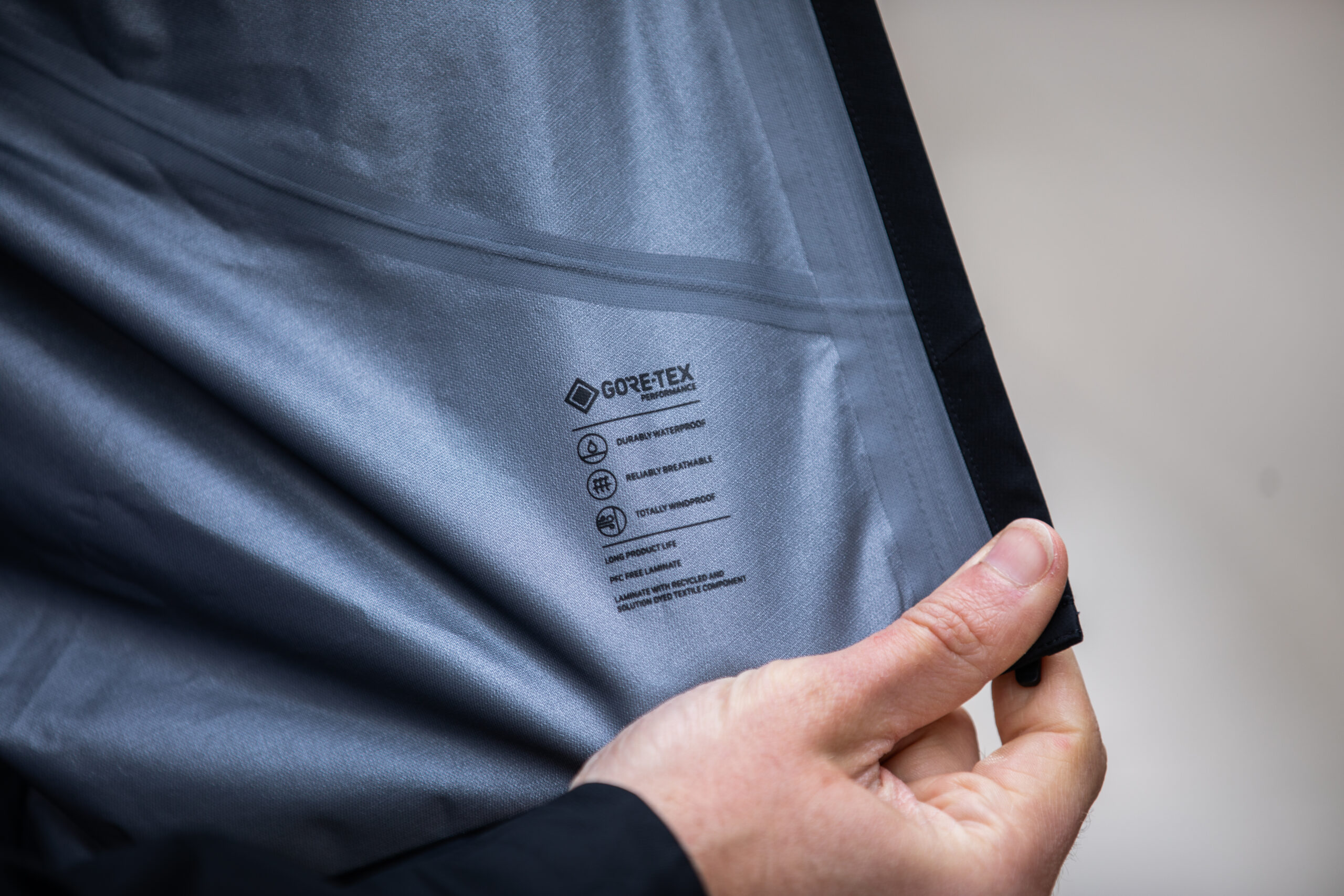
I’ve tested seven waterproof jackets, two deep-winter jackets and a set of winter gloves in recent months, which can all lay claim to being PFC/PFAS-free. In reality, all the fabrics are perfectly capable.

While I’d never advocate buying a new jacket or gloves for the sake of doing so – using existing products remains the most environmentally conscious decision – I’m very impressed by the performance the latest waterproof fabrics can offer.

In fact, I think the latest technology could be more desirable than the old when riding through rainy conditions, for more than purely ecological reasons.

Less waterproof… but more breathable?

Gore Spinshift Gore-Tex Jacket
New-generation fabrics are here to stay, but I don’t think it’s the performance disaster some might fear. Scott Windsor / Our Media

The experts say, broadly speaking, we should expect reduced durability and ‘performance’ from new PFC/PFAS-free fabrics – but that, in time, performance should be recovered as brands develop new iterations.

While I agree that water resistance (both from the durable water repellent treatment you often see in action, and the membrane between the inner and outer-face fabrics) has generally dropped a little compared to previous-generation fabrics, most of them feel very breathable.

Of course, they don’t circumvent the laws of physics and breathe while it’s especially humid (raining), but when it’s drier, they seem to offer an equal or greater sense of gas exchange compared to older fabrics I’ve tested.

Scott RC Weather WP Men's Jacket
Some jackets have fewer layers, which is an advantage for weight and breathability – but a disadvantage for robustness and ultimate protection. Scott Windsor / Our Media

In turn, I’ve felt less clammy when working hard in comparable conditions wearing PFC/PFAS-free clothing than older-style fabrics. A notable exception is thinner two-layer fabrics, such as Gore-Tex Shakedry and the PFC/PFAS-free Pertex Shield variant used for the Scott RC Weather WP Men’s Jacket, which have the physical advantage of fewer layers blocking airflow.

That said, I think many of the latest fabrics with the same layered construction feel thinner (lighter) than before.

This would seem to help air penetrate a little more. That might seem undesirable (I certainly prefer a waterproof that feels more like a barrier than a flimsy shell), but remember this simple gas exchange is key to moving warm air through, which can help keep you from overheating and sweating as readily.

Santini Magic jacket
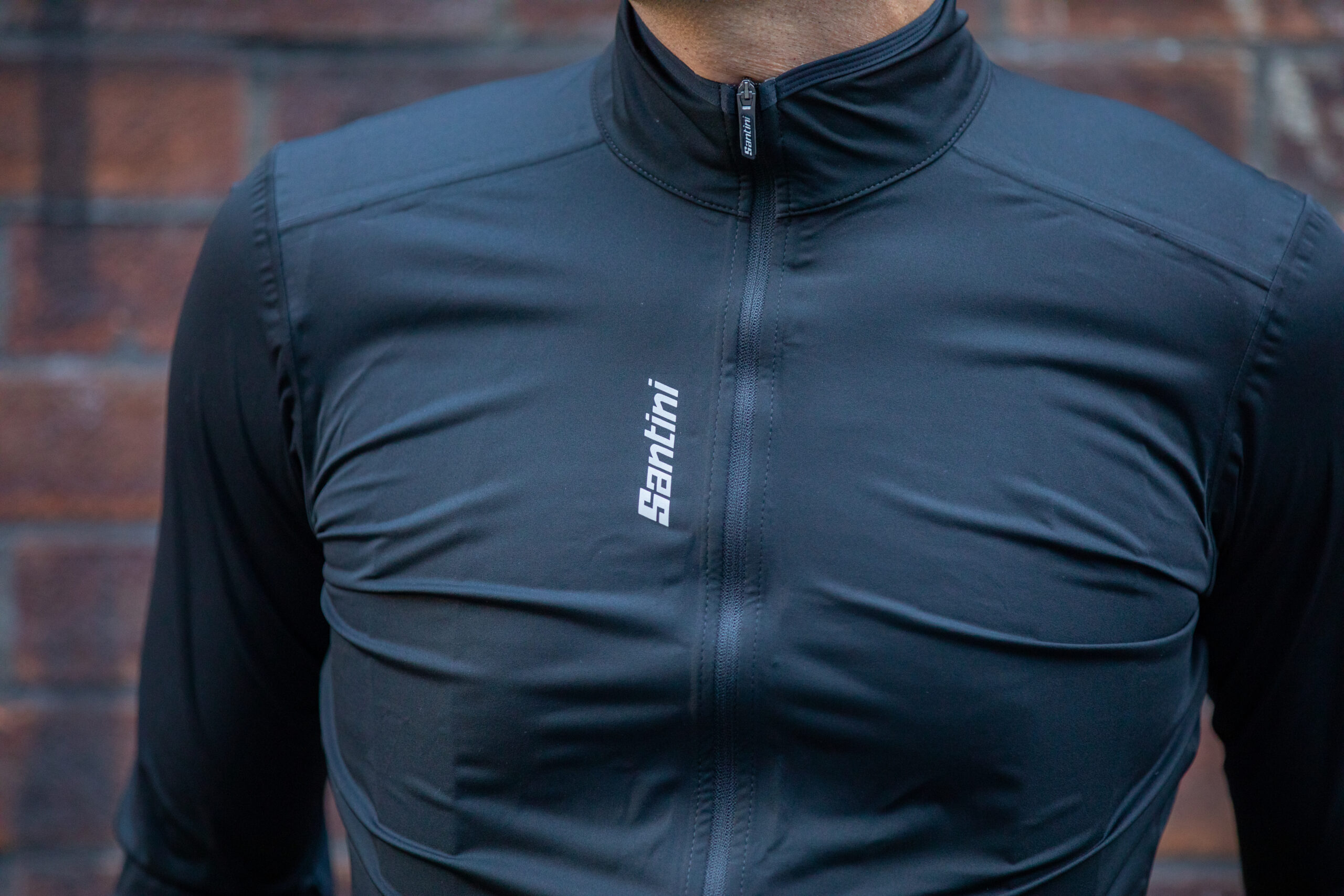
The Santini Magic jacket was the first commercially available waterproof jacket to feature the PFC/PFAS-free Polartec Power Shield RPM fabric. Scott Windsor / Our Media

While comparing the performance of any fabrics is a little like comparing apples and oranges – or, at least, different kinds of apples – I’d argue that many of the latest three-layer fabrics, such as Gore ePE, Pertex Shield and Polartec Power Shield RPM, feel at least as breathable as their predecessors (such as Gore-Tex Active).

Gore doesn’t commit to a specific breathability figure for Gore-Tex ePE, while Pertex is also secretive on details for Shield. However, Polartec is more forthcoming: both Power Shield RPM and Power Shield Pro (the latter is used on the Santini Guard Neos jacket) have 20,000g/m²/24hrs ratings – on a par with similarly pitched PFC/PFAS forebears on paper.

Add in the relative lightness, though, and that can help make them feel even better.

Why would I want a less-waterproof waterproof jacket?

Female cyclist riding a road bike in wet weather
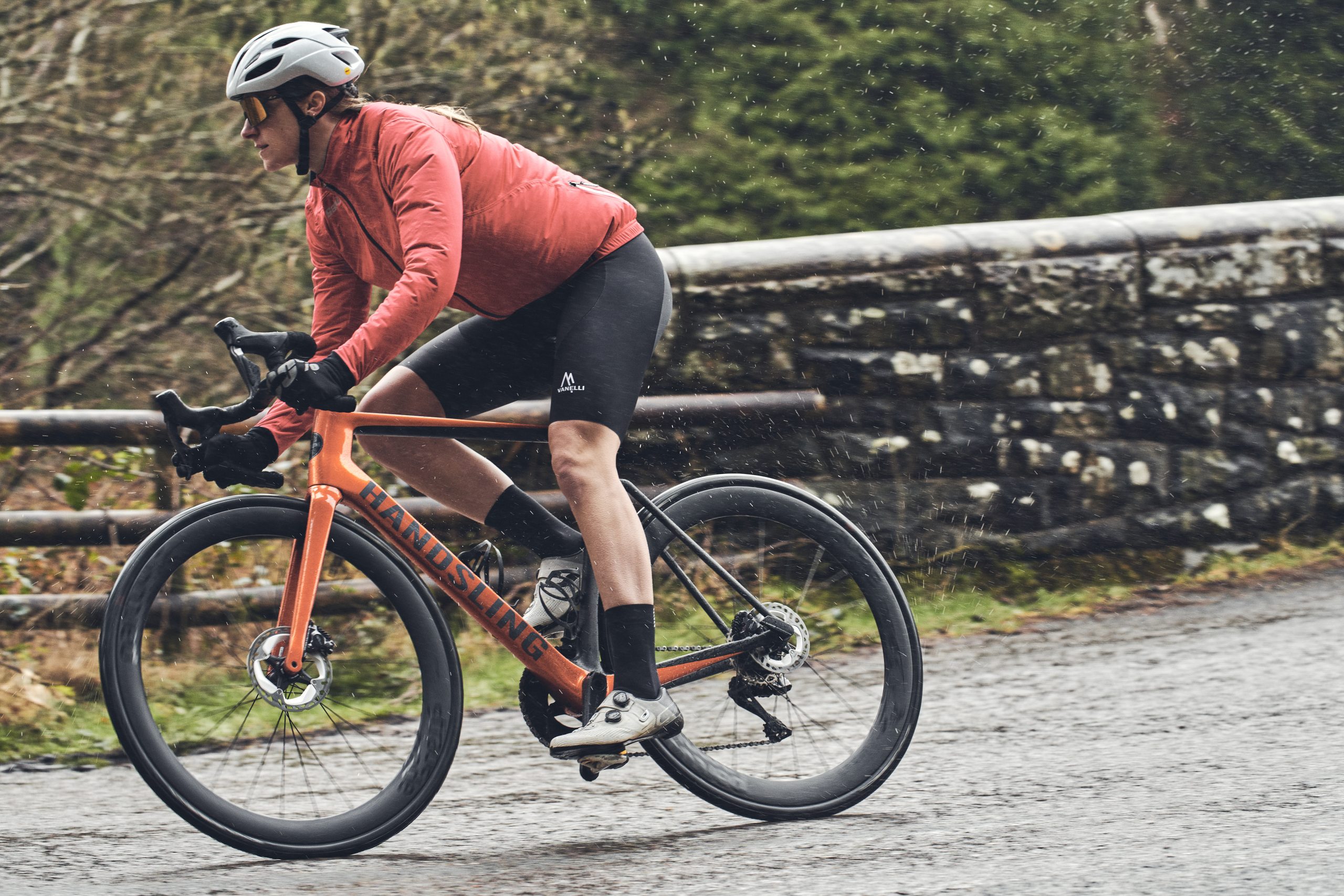
Riding in the rain is a fact of life for many of us and we need to acknowledge the limitations of even the best waterproof kit. Steve Sayers / Our Media

This is a good question – the answer lies in an honest appraisal of how well waterproof jackets perform in reality.

As we know, they can’t keep rain out and breathe at the same time – for the most part, they can do one or the other in the moment (resist rain when it’s wet, or let water vapour out when it’s dry and the required atmospheric gradient exists).

When I ride, I produce my fair share of sweat if I’m working hard. When it’s raining and I’m zipped up, that sweat builds up under the jacket because it has nowhere to go.

Thus, in quick order, my baselayer is often wet through, even when the jacket is doing a grand job of keeping rain water out. This isn’t comfortable and can lead to me feeling chilly in the longer run.

Castelli Perfetto ROS 2 long sleeve jacket
The Castelli Perfetto softshell has yet to go PFC/PFAS-free, but it’s only a matter of time – in fact, a new-generation fabric version could be even better. Simon von Bromley / Our Media

The more pertinent question, then, is ‘“’if I’m getting wet anyway, what can I do to make myself more comfortable?’.

For many, the answer has historically lain in softshell jackets such as the Castelli Perfetto (née Gabba). Although these typically offer limited protection from the rain compared to a proper waterproof jacket, they make up for that with far greater breathability. 

They’re no magic bullet, but they offer greater scope to ride without getting uncomfortably wet inside as quickly.

Perhaps, then, PFC/PFAS-free fabrics offer a similar alternative, except (as far as I’ve seen) with a greater bias to more waterproofing. A halfway house, if you like, between what older hardshell waterproof fabrics could do, and what softshells offer.

Scott Trail Storm WP Men's One Piece waterproof
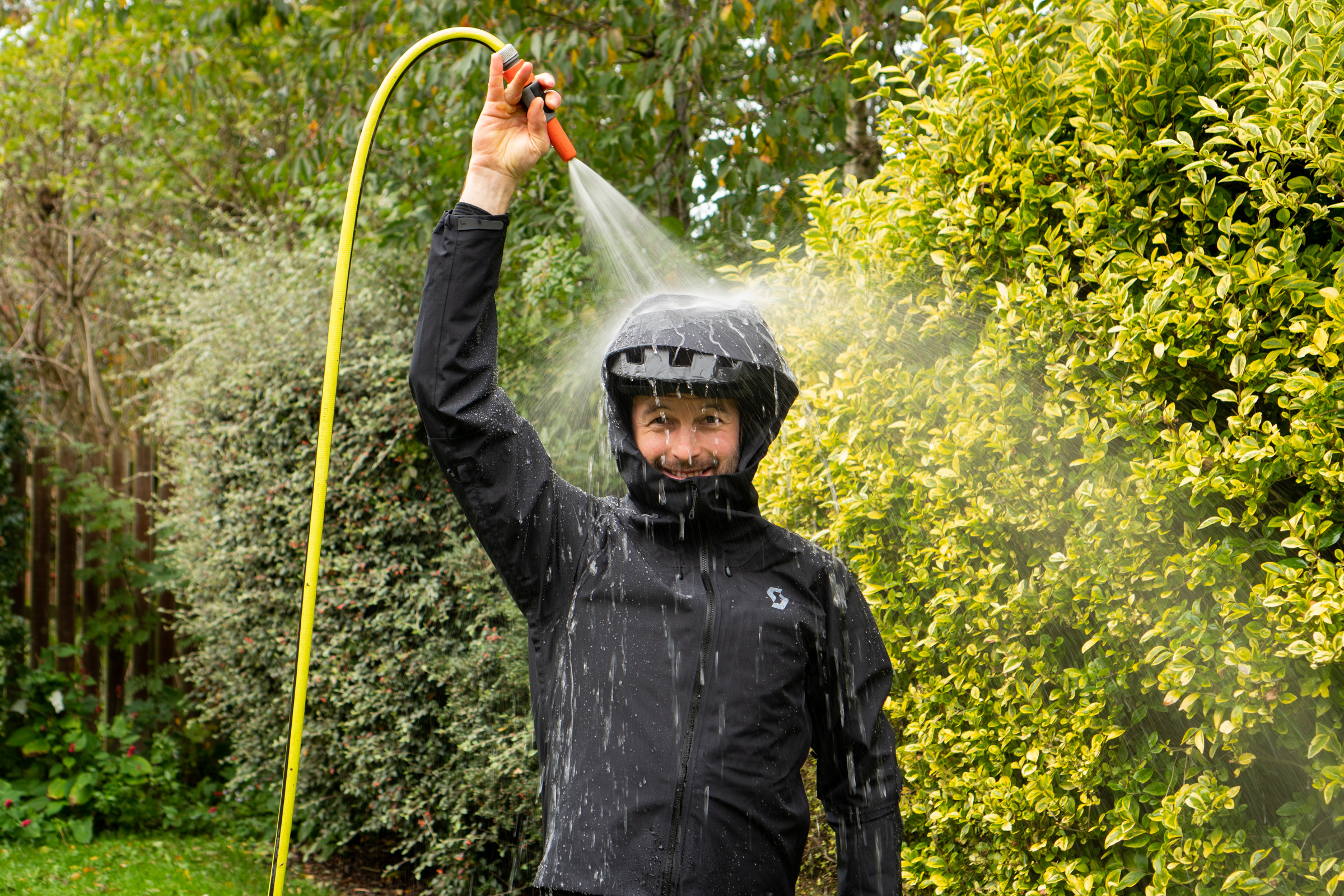
Just like my colleague Alex Evans, I too engage in a spot of hosepipe testing – but the real insights are gained on the road when you’re working hard. Alex Evans / Our Media

If I’m remaining drier for longer inside my jacket, because the garment is more breathable overall, then I’m more comfortable, while the water resistance of PFC/PFAS-free fabrics is still better – up to around a 20,000mm water column rating – than a softshell.

This has proved more than enough to protect me from even a heavy and prolonged rain shower in testing. For the kind of conditions when even greater water protection is needed… perhaps it wasn’t a wise choice to go cycling that day in the first place.

As a result, with bans beginning to roll out across the world on sales of clothing made with PFC and PFAS chemicals (as of 1 January 2025, the US states of New York and California have banned them, according to clothing brand Patagonia), I wouldn’t lament the loss of them. 

In reality, the new-age tech is just as effective as the old when riding in real-world conditions.

Family of Auckland to Wellington record holder thank Rapha for ‘owning up to false narrative’ in Lachlan Morton film

The family of Brian Lambert have thanked Rapha for “owning up to the false narrative” in its film documenting Lachlan Morton’s Auckland to Wellington record. 

Morton set a new record in January by riding 648km between the two New Zealand cities in under 19 hours. 

The Australian rider said he completed the ride in honour of one-time record holder Brian Fleck. 

However, the Chapter 1: In One Day film published on Rapha’s YouTube channel, documenting Morton’s ride, failed to mention Brian Lambert, who held the record for more than 40 years.

Owning up to the false narrative

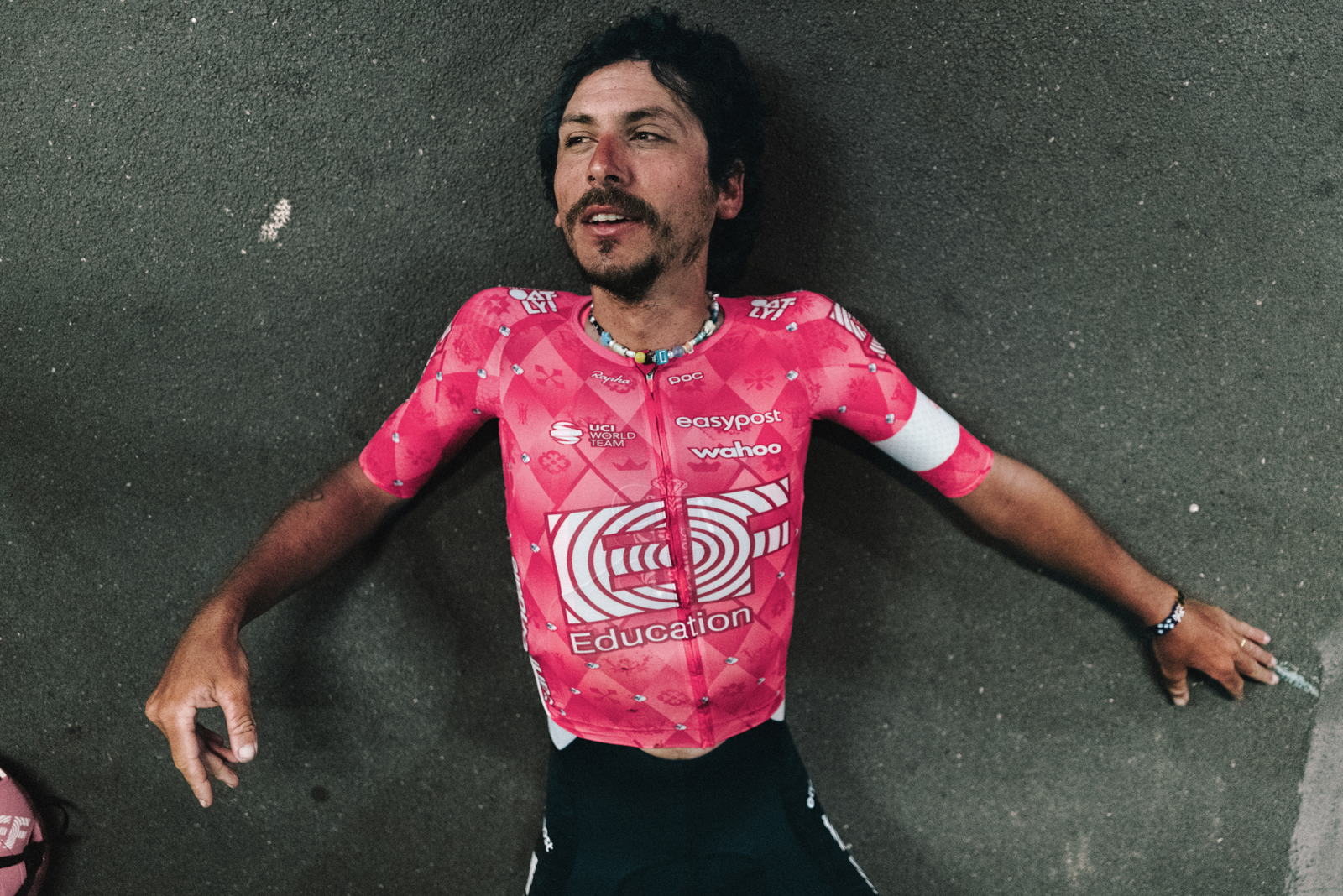
Lachlan Morton on ground after Auckland to Wellington record attempt.
Brian Lambert’s family have thanked Rapha for “owning up to the false narrative”. Dan King / Rapha

Met with uproar from cyclists in New Zealand, as well as Lambert’s family, Rapha then published an apology, stating: “We would like to sincerely apologise to Brian Lambert’s family, friends, and fellow riders for this omission.”

Rapha then corrected its communications around the record, which it had originally intended to use to launch its new Rapha Pro Bib Shorts III.

Following the changes Rapha made, Brian Lambert’s son, James Lambert, said: “The team at Rapha have done well with owning up to the false narrative created by the film.”

Brian Lambert set an initial record for cycling from Auckland to Wellington in 1982, which Brian Fleck broke a year later.

Rapha said it focused on Brian Fleck’s record attempt because of former professional cyclist and Kiwi Hayden McCormick’s relationship with Fleck and memory of the record.  

“We regret not recognising Brian Lambert’s record-breaking rides and the place he holds in history,” Rapha said in its apology. 

Another chapter in the folklore

Determined to reclaim the record, Lambert began training intensely, sometimes riding more than 1,000km a week.

Lambert took the record back in 1984, cycling between the two cities in under 20 hours.

His time stood for 41 years until Morton’s ride in January, where he cut 91 minutes off Lambert’s time. 

On behalf of his family, James Lambert had originally requested that Rapha remove the film from YouTube – a request Rapha denied. 

But after speaking with the cycling clothes brand, he said: “We completely understand the film staying up, adding another chapter to the folklore of the history of the record.”

Brian Lambert died after a long battle with Parkinson’s in 2022. His family requested that any monetisation of the film be donated to the Parkinson’s Society of New Zealand.

Rapha has said the film will not be monetised. 

James Lambert described the film and the ensuing back-and-forth with Rapha as “bizarre” and said he hopes Rapha’s apology and actions “puts everything [to] bed once and for all”. 

Introducing Pedal Games: Custom Info Panels and Mini Games for Indoor Cycling

A few months back, Jesper from ZwiftHacks and Jonathon from ZwiftHype announced the release of Pedal Games, “a collection of mini games and info panels to users of all kinds of virtual cycling platforms.”

Read Jesper’s post >

In some ways, you can think of Pedal Games as similar to Sauce for Zwift, in that it provides game overlays that let you customize your indoor cycling experience. But Pedal Games also offers lots of fun stuff that Sauce does not, and it’s a free app!

So today, I want to run through a quick intro to what Jesper and Jonathon have built, because it really is quite an amazing Zwift community project. Let’s go!

Getting Set Up

Prerequisites

Pedal Games is a Windows application that requires Windows 10 or 11 to run.

You’ll also need indoor cycling software (such as Zwift), since Pedal Games is just an add-on to whatever cycling software you use. Pedal Games works particularly well with Zwift and TrainingPeaks Virtual, but supports getting data via ANT+, MQTT, WebSocket, HTTP, and UDP, which means in theory it can be combined with just about any platform.

Signup

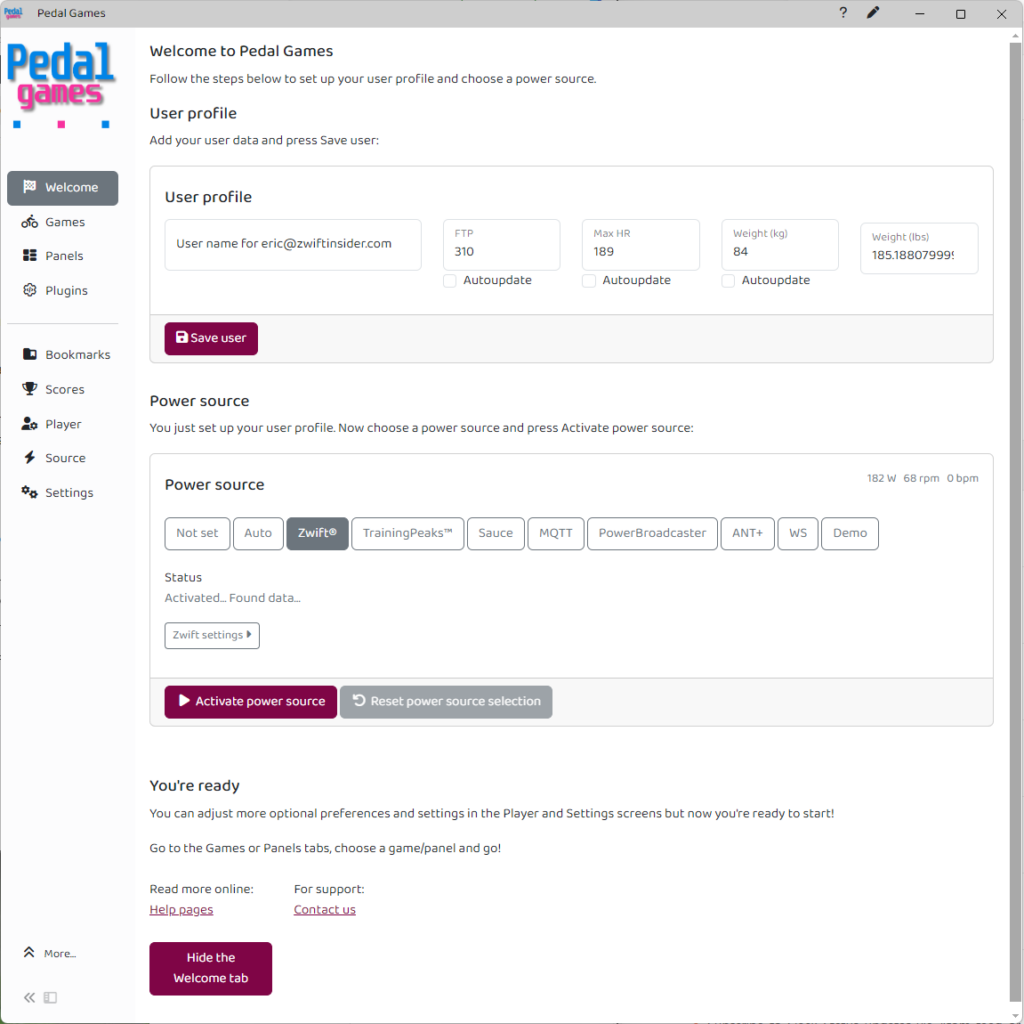
To get started, head to pedalgames.online and click to Sign Up. You’ll need to create an account, download the app, then sign into it to get started.

Setup

Once you’ve signed in, you’ll need to set up your basic user info (FTP, Max HR, and weight) on the homescreen. You can then set the power source to Zwift and start up Zwift.

When you see “You’re ready” at the bottom, you’re ready to go! Start up your Zwift session…

Mini Games

Let’s begin by looking at some of the mini games, since these are what’s most new and different about Pedal Games vs Sauce for Zwift.

The app includes a pile of mini games, which you access by clicking “Games” from the main home screen.

See full list of games on the Pedal Games website >

The games are created to encourage you to hold a particular target power, cadence, or heart rate – and various combinations of those. Each game includes a HUD element you can drag and drop to wherever you’d like on your screen.

Let’s start with a simple example, great for recovery days:

Underwatter

So at its simplest, a game will have you try to stay above or below a particular target. As you hit the target, time accumulates. Your goal is to accumulate as much as possible in the target zone.

Underwatter has you stay under a particular power target. “The Band” has you try to keep your power in a particular range:

The Band

“Spin” is a similar idea, but the target is cadence-based, not power-based. With spin, you’re trying to keep your cadence at or above the target:

Spin

Things get more interesting when you mix and match power, target, and/or cadence targets. “Under The Radar”, for example, has you work on your efficiency by requiring you to stay above a certain power threshold while keeping your heart rate below a certain target.

Unstructured Training

The big idea with these mini games is “unstructured training.” Instead of a structured ERG workout that requires you to hold particular power numbers for precise time intervals, these games push you to accumulate time at target power in a more flexible way.

What’s the value of unstructured vs structured training? Jonathon Levie explains it very well:

I’m pretty good at 1 minute power. I had a series of coached training sessions to improve that. The workout was 20s on (700w?), 40s off, for about 10 minutes. Rest, then another set.

First week’s session was impossible. I get it, it’s the coach’s guess and he’s going off what I should be able to do based on my 1 minute power. We dropped the power for next week. The intervals felt okay, but the rest felt like it ended sooner and sooner. I completed the first set, but had nothing for the second set and didn’t even try.

We lowered the power for the next week. I felt slightly better during the first set, and attempted to start the second set, and quit. Was I improving? I was making it farther each week, as we lowered the power. Was I motivated? Nope, I wanted to quit cycling. If I can’t complete a session to improve the one thing I’m great at after 3 weeks, then feels hopeless.

When I first livestreamed Pedal Games a few years back, I had set the game’s target power to 700w. To score, just ride higher than that. I expected short efforts with long recoveries. I found that as soon as my HR was ready I was sprinting again. Recoveries felt perfect, I was in control. It was all self selected intervals and recoveries.

Looking at the power data after, I was sprinting for about 20s at 700w, then took around 40s to recover before going again, all while laughing and riding the keyboard.

That was the workout I couldn’t do coached. Why?

Because the coached workouts are written backward. You are going to do #w for #s and recover for #s. But that recipe may not be what you’re capable of, or capable of that day. Riding to score over #w means the workout is being written to fit the rider’s legs that day. Slightly shorter attack, or slightly longer recovery, and suddenly the athlete is capable of doing much more than their coach thought was possible. Rather than feeling like a failure, I rode this feeling like I was winning a race the whole time and in control!

Later, a coach showed me their own impossible workout through PG and was in disbelief…

These mini games are, in many ways, similar to XERT’s XSS Buckets idea. Instead of super structured intervals, just work to accumulate time at a particular power level. Fill the buckets.

I think the world of cycling training is only beginning to dip its toe into this “unstructured training” idea, and I really hope Zwift jumps into that fray in some way soon.

Custom HUD Panels

Pedal Games also includes a pile of “info panels” that you can use to customize your Zwift HUD, sort of like what Sauce for Zwift offers. There are lots of panels available, including:

  • Standard Zwift HUD data like power, cadence, HR, speed, gradient, etc
  • Various Lap Data Trackers (a much-requested Zwift feature)
  • ETA for Zwift Routes (how long until I finish this route? Handy in races…)
  • Draft Info (some really interesting stuff here…)
  • Efficiency Score (Weighted Average Power, divided by the Average Heart Rate)
  • Calories/min
  • Ride On Counter
  • And many, many more

See full list of info panels on Pedal Games website >

Here’s a quick video showing how you can start using these info panels in Zwift:

Right-clicking any of the panels gives you access to a pile of customization options like transparency, size, etc.

Here’s another video showing how to use the draft-related panels in Pedal Games:

Wrapping It Up

There’s a lot more to Pedal Games than what I’ve summarized above, but I hope this post gave you a good idea of what the app offers and how to start using it. Jesper and Jonathon have been working on this app for years, so it’s been fun to finally start using it and seeing what two of the greatest minds in the Zwiftiverse have come up with. Well done, guys!

Questions or Comments?

Share below!

Almost twice as many boys cycle than girls, according to new study

Boys are almost twice as likely to cycle regularly compared to girls of the same age, according to Sustrans’ all-new Children’s Walking and Cycling Index, published today.

While the active travel charity’s biannual Walking and Cycling Index has helped to demonstrate trends in the UK adult population over the last decade, this new report aims to help us understand the behaviours, attitudes and barriers faced by children between the ages of 6 and 15.

“Children are all too often left out of the conversation when it comes to policy making and investment decisions. They are too young to vote, ignored in research and left out of consultations and engagement exercises,” Sustrans says.

The cycling gender gap starts early

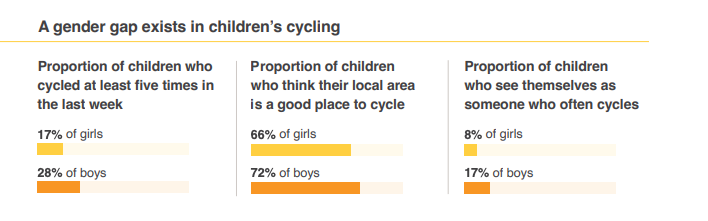
Bar charts showing the gender gap in children's cycling from active travel charity Sustrans
There’s a gender gap when it comes to boys’ and girls’ participation in cycling. Sustrans

We already know there’s a sizeable gender gap when it comes to cycling in the UK, with the 2023 Walking and Cycling Index revealing 21 per cent of men cycle at least once a week, compared to only 10 per cent of women.

But the new Children’s Walking and Cycling Index reveals a staggering difference in childhood, with 28 per cent of boys cycling at least five times in the last week, compared to 17 per cent of girls.

That gap is compounded by the figures for the proportion of children who see themselves as someone who often cycles, with 17 per cent of boys and only 8 per cent of girls.

These differences are minimised when other methods of active transport are combined (walking, or using a wheelchair or scooter). A total of 63 per cent of boys and 61 per cent of girls reported having used these methods of transport at least five times in the previous week.

When asked whether they think their local area is a good place to cycle, 72 per cent of boys and 66 per cent of girls said it is.

We recently heard from active travel expert Laura Laker about women’s safety concerns while cycling. We – as a cycling community – talk a lot about how we can eliminate the barriers preventing more women cycling, but does the issue really lie much earlier in life?

Children want to cycle more

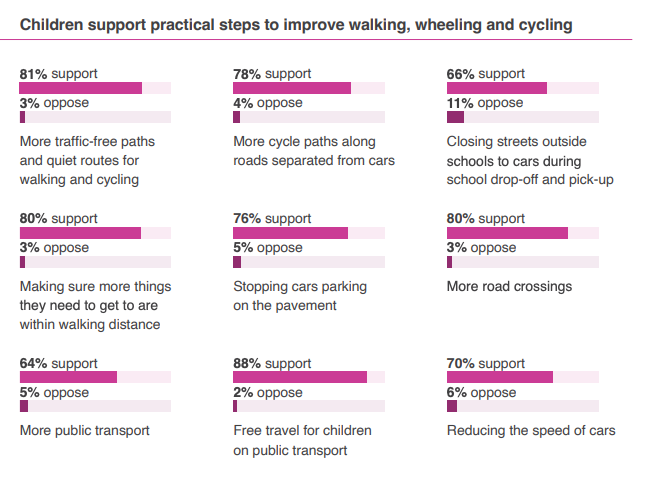
Active Charity Sustrans figures for improving walking, wheeling and cycling for children
Children want to cycle more – and cycle safely. Sustrans

Gender differences aside, the encouraging news is that children are keen to ride, with 51 per cent of respondents reporting they would like to cycle more, compared to 33 per cent wanting to walk or wheel more, 28 per cent wanting to take public transport more, and 26 per cent wanting to be driven more.

81 per cent of children area also in support of more traffic-free paths, and quiet routes for walking and cycling, 78 per cent wanted more cycle paths along roads separated from cars, and 70 per cent support reducing the speed of cars.

About the Children’s Walking and Cycling Index

1,089 children were surveyed in May 2024 as part of YouGov’s Children and Parents Omnibus Survey, designed to be representative of the UK population.

This factored in age, ethnicity, gender, school level, disability and socio-economic group.

The Children’s Walking and Cycling Index is due to be published every other year, with the next report in 2027.

Announcing Team Velos Monument Races: The Classics Competition 

Intro To Team Velos

Team Velos is a long-established Zwift club with an active racing team encompassing all levels of riders and a women’s team. Velos prides itself on helping riders improve and holds nine group rides weekly including beginner-friendly events, sprint and climb training rides, monthly route badge challenges, and our flagship Poursuite de la Lanterne Rouge with its three challenges, including a chase of the red beacon.

See upcoming Team Velos rides at zwift.com/events/tag/velos

The Classics Competition

Team Velos also hosts three weekly races: an individual time trial (Race of Truth), a “handicap” chase race, and our Monument Races on Fridays. Beginning 28 February, Velos will host a series of special events under our Monument series: The Classics Competition.

Spring is Classics season, and our goal with The Classics Competition is to present something instantly recognizable every week to cycling fans, who, for many, follow the one-day classics with as much enthusiasm as three-week grand tours. 

Team member and Classics country resident Vincent Van Gestel devised our Classics Competition, which comprises 12 weeks of races on Fridays (including the five cycling Monuments), with our events corresponding to the weekends each pro event is held (liberty taken with Il Lombardia, which is held in autumn).

In addition to the 5 Monuments, seven other famous one-day classics have been selected to complete the 12-week Classics Competition. Each week, a Zwift course has been chosen to be most representative of the pro races, but every route has also been chosen to be enjoyable and competitive for D Cat to reflect the team’s ethos of helping riders at every level achieve their goals.

Schedule and Route Details

Classics Competition races happen each Friday at 7:15pm UTC/2:15pm ET/11:15am PT.

The five events marked with * count toward the Monuments Series general classification.

See upcoming Classics Competition events at zwift.com/events/tag/velosmonument

Race Results

Results for all races (including cumulative scoring for the 5-race Monuments series) will be published on a dedicated race page. For details and updates, go to: velosmonuments.co.uk

Questions or Comments?

To learn more about Team Velos, go to: teamvelos.co.uk. Got questions? Share below!

UDOG’s new road cycling shoe pairs wrap-around tech with a compelling price tag

UDOG has treated us to a preview of its new Sempre road shoe, a simplified, less costly version of the popular Cento. Its £160 / €180 price tag could make it a compelling option.

The brand’s wrap-around tensioner design is used in models including the gravel-focused Distanza, road lace-up Tensione and Cima, and UDOG’s latest dial-tensioning premium Cento shoe.

The new Sempre has a laser-cut upper, complete with the full wrap-around tension bands unique to UDOG. Here, it’s matched to a single-dial closure system, whereas the Cento has twin dials.

The minimal seamed upper wraps around the forefoot to enable the tensioning closure to compress in order to fit without creasing.

Udog shoe outsole
UDOG’s more affordable road shoe offering retains a stiff composite outsole. Warren Rossiter / OurMedia

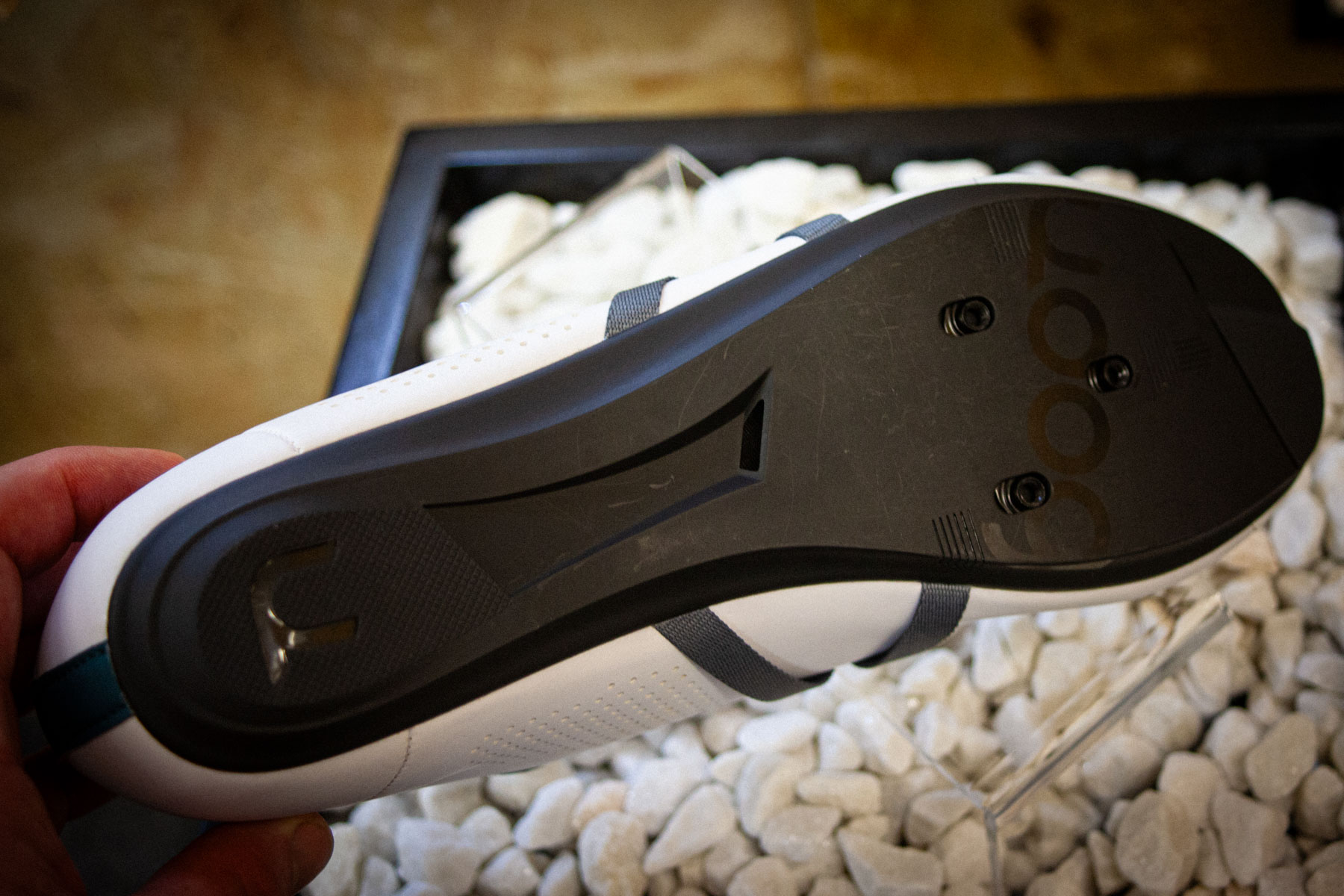
The carbon-composite outsole has mid-foot venting and moulded cleat markers.

At £160 / €180, the Sempre could be a serious challenger to some of the best road shoes at this price point. We’ll have to wait until June, however, for the final version and official launch.

UCI cancels 2025 Gravel World Championships in Nice

The Union Cycliste Internationale (UCI) has announced that the 2025 Gravel World Championships will not take place in Nice as previously planned.

The Championships were originally scheduled to be held on 18 October, but the governing body confirmed the rumoured cancellation yesterday. 

It is now looking for a new venue and date for its mixed-surface Championships.

“The UCI and the City of Nice acknowledged the difficulties of organising the event in the capital of the French Riviera on that date, and in view of various constraints, technical and regarding the calendar, it was mutually agreed not to organise the 4th edition of the UCI worlds for gravel in Nice,” the UCI said in a statement published on its website. 

The UCI says it is studying options to find a new organiser, venue and date, which “will be announced as soon as possible”. 

Hosting the Gravel World Championships in Nice posed issues for the UCI. 

Navigating out of the city and through Côte d’Azur would have been harder than previous editions of the race in Veneto, Italy, and Leuven, Belgium. 

The decision follows pressure on the UCI regarding the 2025 Road World Championships, which are set to take place in Kigali, Rwanda.

The European Parliament called for the race’s cancellation if Rwanda “does not change course” on the ongoing conflict in the Democratic Republic of Congo. 

UCI president David Lappartient told Cyclingnews that there is “no plan B” for the Rwanda championships. 

How the Race Was Lost: Zwift Games Stage 2 on Scotland Smash

The Zwift Games are upon us, and with them big race packs on fresh routes. Having finished third in stage 1 (read about that here), I had to keep chasing the podium for stage 2, so I entered the 450-570 group once again…

The Warmup

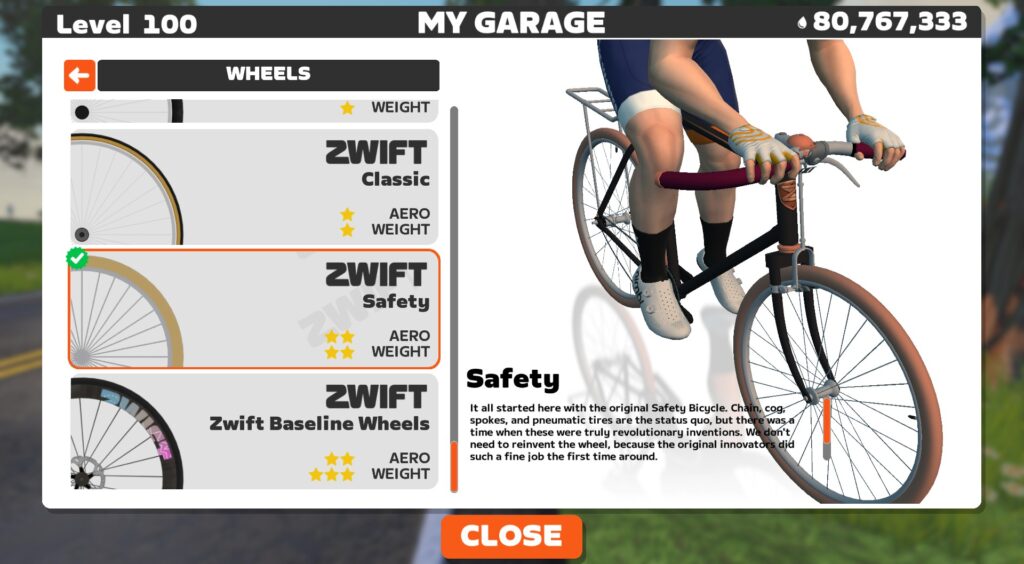
It was Saturday, my long ride day, so I was on the bike early for a 1-hour spin with Coco and friends to loosen up the legs. I dusted off the ol’ Safety Bike, too, wanting to have a little fun since equipment was neutralized for Zwift Games races:

Soon enough, I found myself in the pens, with the countdown clock nearing zero. Let’s race!

Start In Glasgow

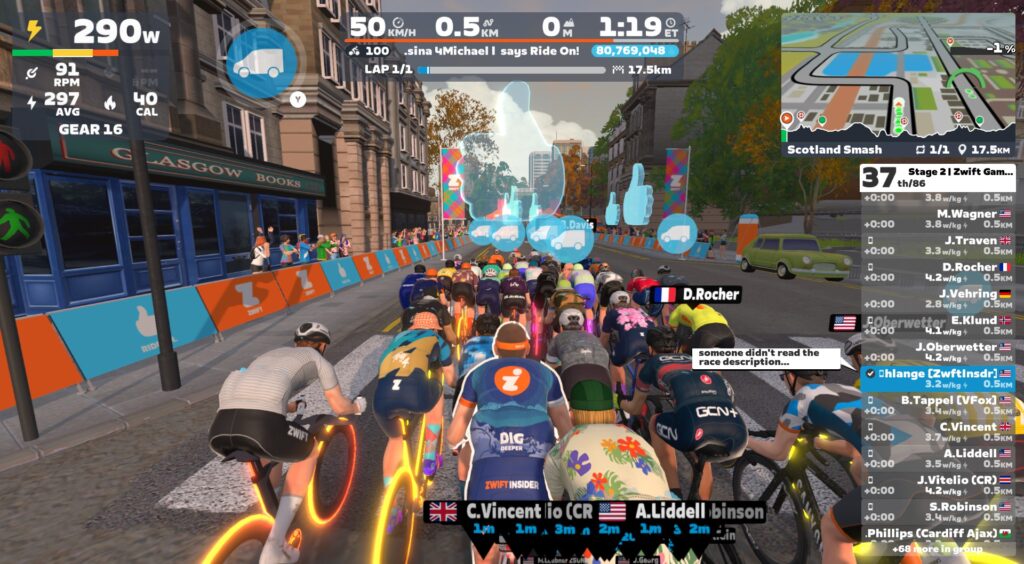
Scotland Smash begins with a lap of the Glasgow Crit Circuit, so out of the pens 86 of us headed through the Champion’s Sprint banner and around to the Clyde Kicker, our first incline of the day.

So many riders used their draft boost powerup in the opening minutes of the race, apparently unaware that they wouldn’t get another powerup. Ouch! Gotta read that event description, folks…

I’m not a strong climber, but I can usually punch my way to survival over shorter kickers like the Clyde. 32 seconds at 446W saw me finishing this segment near the front of the group, so I eased up and recovered in the draft as we finished the circuit and headed out to greater Scotland for a big lap.

60 riders left in the front pack.

The Middle Bit In Greater Scotland

The bulk of this route takes place outside of Glasgow as you go around the greater Scotland loop in a (mostly) clockwise direction. We began with the slack ~1.2km climb up “The Cliffs” toward the lap banner, the same climb and banner that would host the finish of the race.

While a few riders went off the front for a bit, this first time up The Cliffs was pretty tame, and I sat in the draft, betting on our group’s ability to pull back any small breakaways. I was trying to race smarter, not harder. To save what energy I could, so I could have maximum energy when I needed it.

Through the lap banner and down “The Postcard” descent, I grabbed a bit of recovery before we hit the Corkscrew Castle climb, where I knew another dig was imminent. Fortunately, this climb is a short one too, only requiring around 20 seconds of well-timed but hard effort:

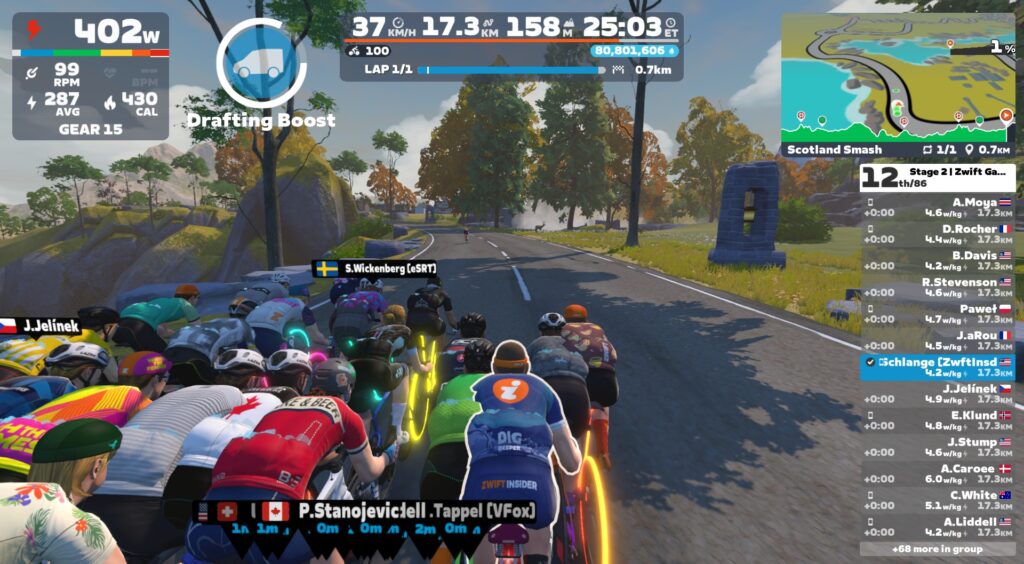
After a bit of descending and recovery near Nessie’s pond, we hit Breakaway Brae, our next timed climb. Another ramp up in effort, but not hitting the redline. This race was feeling punchy, and not easy, but I definitely wasn’t on the rivet either. (As a point of reference, I averaged 282W in the first 17 minutes of Stage 2 vs 256W in the first 17 minutes of Stage 1.)

48 riders remained as we entered Glasgow again.

Return to Glasgow

With only 5km left in the race, we entered Glasgow for another lap. Would anyone try a serious attack up the Clyde Kicker? I doubted it, as anyone who could go long from there could also go long from The Cliffs climb a few kilometers up the road.

Sure enough, nobody went, and an almost identical effort landed me near the front of the group as we created Clyde.

Descending the Clyde, one “M Robbins” attacked in earnest. It looked like we were going to reel him in, but then he pushed again on the way out of Glasgow, stretching the gap out to 4 seconds before nervous riders began swarming to the front of the peloton as we headed out of Glasgow for the final climb to the line.

There were 43 riders left in the peloton and 1 up the road as we entered our finishing climb. The field had shrunk by 50% since the start of the race.

The Finish

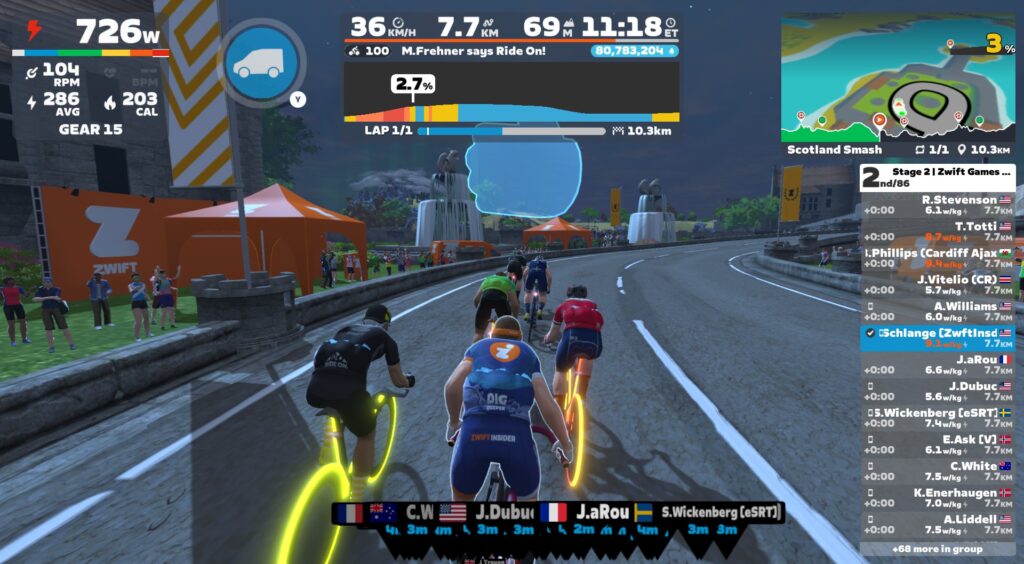
With 2km left, we began the climb up The Cliffs. Robbins was 4s ahead, and one rider (JaRou) jumped off the front to give chase, followed by another (T Totti). I upped my watts a bit when I saw Totti jump, figuring I could grab his wheel for a possible free tow up to Robbins. But JaRou and Totti didn’t put in enough work to fully close it to Robbins, so instead we all blobbed up again, with Robbins holding a 3-4 second gap.

With 800 meters to go, I triggered my draft boost powerup, executing the first step in my grand race-winning plan:

My thinking was this: most riders would hold their draft boost for the final sprint of the race, so I would do something different, using the boost earlier so my legs were fresher heading into the final 15-30 seconds of the race. Then as my draft boost ran out, I would go all-in, rocketing through the pack and off the front, to ultimate glory!

But I soon realized I’d activated my powerup a bit early, and my draft boost ran out with 400 meters to go. I didn’t up my power to rocket through the peloton with the draft boost still active, because I didn’t think I could hold out in the wind for that long. Instead, I sat behind a couple of wheels, waiting for someone to attack hard so I could follow their wheel to get off the front with a bit less work.

One “L Rabound” jumped hard and came around with orange numbers, so I revved it up as well, benefiting from their draft even though I was 5 meters back. We quickly caught M Robbins on the front, and with 30 meters left I passed Rabound… but a the same time I was passed by a hard-charging E Held!

Second place. First loser!

See my ride on Zwift.com >
See my ride on Strava >

Watch the Video

Takeaways

This race felt a lot more like a typical Zwift race, versus stage 1‘s odd “super easy until the final 2km” feel. Scotland is a rolling, pitching place, so there’s always a bit of work to do just up the road, and plenty of places to attack and drop weaker riders.

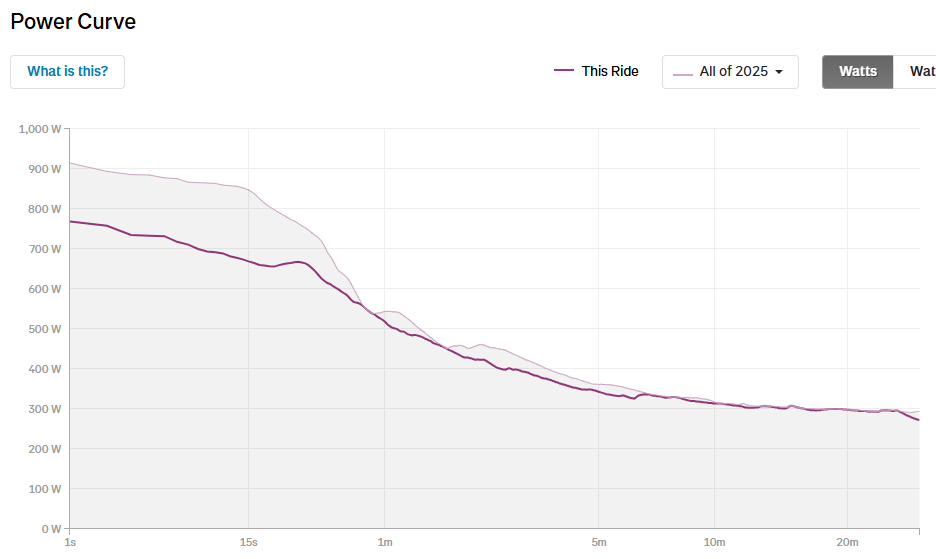
My Strava power curve showed me hitting lots of new PRs for 2025 in this race, so I was happy with that:

Could I have played the finish differently, for a better result? Perhaps. But it was fun to be a bit contrarian with my powerup usage, and attack early. (Elle Held definitely timed it perfectly, holding those orange numbers for quite a while and slingshotting to victory in the final 30 meters. Well done!)

My 2nd place finish earned me a racing score upgrade from 543 to 550, and a finishing time for the Zwift Games GC of 26:06. That puts me at (wait for it) 1,456 out of 44,598 in the Sprint Classification. Almost on the podium…

Your Thoughts

Did you race Zwift Games stage 2? How did it go? Share your experience below!

The BikeRadar forum is closing on 17 March: FAQs

We are sad to announce that the BikeRadar forum will be closing on 17 March 2025. 

If you are a member of the forum, this FAQ will answer the most common questions about the closure. 

Why is the BikeRadar forum closing? 

The BikeRadar forum was launched alongside the website in July 2007 and, in the nearly 18 years since, has helped hundreds of thousands of cyclists share their passion for the sport. 

The forum was launched when Facebook was in its infancy and Instagram didn’t exist. Online communities have evolved in ways none of us would have predicted nearly two decades ago. 

However, continually rising operational costs mean we are very sadly no longer able to support the BikeRadar forum. 

When is the forum closing? 

The BikeRadar forum will no longer be accessible from Monday 17 March 2025, when it will move to ‘read only’ prior to deletion. 

What will happen to my posts, pictures, attachments and private messages? 

After the forum has closed on Monday 17 March 2025, all forum data  – including posts, pictures, attachments and private messages – will be permanently deleted. We expect this to be completed by Monday 14 April 2025.  

If you want to keep any of your forum content, such as posts, pictures, attachments or private messages, please copy and save it before midnight on Sunday 16 March 2025.  

Unfortunately, we will not be able to retrieve any forum data on your behalf after this date. 

What will happen to my forum account and login details? 

Your account will be securely deleted as part of the closure, in accordance with our privacy policy. If you have signed up for the BikeRadar newsletter, you will continue to receive it. 

Will this affect commenting on the main BikeRadar website? 

Commenting on content on the main BikeRadar website will not be impacted by the closure of the forum. You will continue to be able to comment on articles and reviews by logging in to Disqus, our commenting provider. 

How can I remain part of the BikeRadar community? 

Building a community of like-minded riders remains extremely important to BikeRadar and, as mentioned above, you will still be able to comment as usual on articles and reviews on the BikeRadar website.  

The BikeRadar team is active within our comments section, responding to questions and getting involved in the discussion. We love interacting with our readers and are committed to finding new ways to incorporate your views and feedback into our content.  

Over the years, the BikeRadar forum has been a valuable source of information for new cyclists. Upon the closure of the forum, we will also compile the most commonly asked questions from riders and ensure they are covered within content on BikeRadar.com. 

To stay in touch with the BikeRadar community beyond our website, you can find us on YouTube, Instagram and Facebook, and you can hear from the BikeRadar team directly on the BikeRadar Podcast. You can also keep up with all of the latest news from BikeRadar via our newsletter – sign up here. 

How can I get in touch with you? 

If you have another question, you can email us at forumhelp@bikeradar.com and we will get back to you. 

Thank you to everyone who has contributed to the BikeRadar forum and been part of the community since 2007. 

We appreciate your continued support and thank you for being part of BikeRadar.  

The BikeRadar team 

Zwift Academy 2024 Winners Announced

If you’ve been following this week’s Zwift Academy Final series from GCN, you know it’s been filled with highs and lows, thrills and spills, grueling all-out efforts! On Saturday, with the release of the final episode, the winners were announced.

Congratulations to Emily Dixon (Australia) and Noah Ramsay (Canada), winners of Zwift Academy 2024!

Full Press Release from Zwift

Returning for its ninth year, the Zwift Academy talent identification and training program – in partnership with CANYON//SRAM zondacrypto and Alpecin-Deceuninck – has awarded professional contracts to two athletes who demonstrated talent above their competitors. 

Australia’s Emily Dixon will join CANYON//SRAM zondacrypto Generation and Canada’s Noah Ramsay has earned a spot on the Alpecin-Deceuninck Development Team. 

The two accomplished riders are the latest names on an illustrious list of Zwift Academy alumni which includes Giro d’Italia Women’s stage winner Neve Bradbury, Luca Vergallito who was promoted from the Development team after just one year and has recent strong results in the Volta ao Algarve as well as two-time Vuelta a Espana stage victor Jay Vine.

Emily and Noah set themselves apart from more than 100,000 Zwifters who participated in the 2024 Zwift Academy competition. They were among the eight finalists invited to the respective team camps which hosted the finals — the four women joined CANYON//SRAM zondacrypto in the Algarve, Portugal and the four men linked up with  Alpecin-Deceuninck in Denia, Spain.

During the concluding round, each athlete participated in different challenges and races, both on the road and on Zwift, met with coaches and staff from both squads, as well as joining group rides with their potential future team-mates. The final challenge was to complete the same test they undertook four days earlier, with significant fatigue in their legs. 

Emily distinguished herself by combining strong and efficient power numbers, first-class riding technique, and experience beyond her age. Tackling every challenge with a calm and collected spirit, Emily’s focus was proving her talent and not letting her competitors’ performances affect her, which impressed the judges. The 18-year-old was motivated to prove her talent and determined to mark herself out as the best. 

Noah meanwhile, impressed the Zwift Academy coaches and team staff with his stand-out bike handling skills, impressive power data, and the room left for him to improve with their input. The 22-year-old approached the finals with determination and tactical thinking, sizing up his fellow competitors to set himself up well to secure the life-changing professional contract. 

Women’s winner, Emily Dixon said: “It’s been such an amazing week, I’ve loved every minute of it and am so grateful for everyone at Zwift and the CANYON//SRAM zondacrypto team — I’ve learnt so much and they have all been so kind and welcoming. I’m utterly speechless and did not expect to win the 2025 Zwift Academy at all. I’m really looking forward to getting started with the team.”

Men’s winner, Noah Ramsay said: “The Zwift Academy process was great; it was handled so smoothly and allowed me to perform at my best alongside the Alpecin-Deceuninck riders and the other finalists. I don’t think it’s really sunk in yet as I didn’t think I stood out as the best among the other riders. There will be a different type of stress this year as I step into the Alpecin-Deceuninck Development Team but I’m excited for the challenge it will bring.”

Adam Szabó, Head of Sports at CANYON//SRAM zondacrypto Generation said: “Emily is an excellent all-round cyclist with impressive power and speed, as demonstrated on the racing circuit and during other varied challenges. As a rider, she has the foundations that we will be able to build on in the long term. She is the type of rider we were looking for to fit into our team.”

Kristof de Kegel, Performance Manager at Alpecin-Deceuninck said: “Noah excelled throughout the ZA finals and physically was the type of rider we were looking for. He clearly demonstrated how he will be able to fit in with the Alpecin-Deceuninck Development team during the sprint challenge where he held his own and outperformed the rest of the finalists.”

GCN captured the Zwift Academy finals unfold in a four-episode series which can be watched here.

To learn more about the finalists and to see how you can stay up to date with the latest Zwift Academy news, read more here.