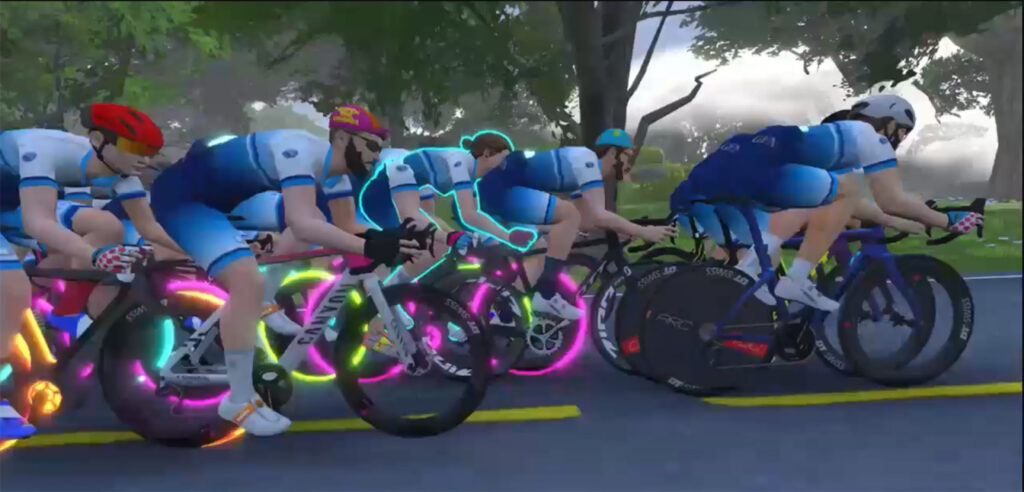
Notable Zwift Events for the Weekend of March 15-16

Our top two picks this weekend are epic in their own completely different ways. See the details below, along with three additional notable picks…

� Ryan’s Epic Race… Up Alpe Du Zwift Part Deux

✅ Popular  ✅ Special Guests  ✅ Alpe PR Party

The biggest event this weekend isn’t from Zwift, but from YouTuber Ryan Condon who has organized a race up Alpe du Zwift. He’ll be shooting for a new Alpe PR, and so can you! (Or just enjoy a leisurely jaunt and chat). Watch his announcement video >

Five different Robopacers have been set up to pace riders to a particular Alpe finishing time, and they’ll “lead” each pen group out. (See event description for pace details.)

Sunday, March 16 @ 11:05am UTC/7:05am EDT/4:05am PDT
Sign up at zwift.com/events/view/4877365

� Gran Fondo Operation Enfant-Solei

✅ Good Cause  ✅ Epic Distance

We had to feature this Canadian fundraiser fondo, because the race lengths are a bit crazy, and it’s a good cause! Five different lengths to choose from, all starting at separate times: 300km, 225km, 150km, 75km, 35km. Everyone will be on Watopia’s Big Flat 8 route.

Some may just ride this for a challenging effort, but it’s also a fundraiser. See event description for details (scroll down for English version). Get started by signing up to fundraise here.

Saturday, March 15 @ 12:30pm UTC/8:30am EDT/5:30am PDT
Sign up at zwift.com/events/view/4725263

�The Ultimate Women’s Mini Races – Crit Crazy

✅ Punchy Race  ✅ Unique Event

Women’s Mini Races (3 races in an hour) happen each Sunday, but the ULTIMATE Mini Races are a bigger monthly event organized by Vinnette Powell of Team eSRT. If you’re looking for some punchy women-only racing, check out these events.

This Sunday’s races are crit-themed and held on custom-length versions of the The Bell Lap, Glasgow Reverse, and Neokyo Crit Course routes. Two time zones are available.

Sunday, March 16 @ 7pm UTC/3pm ET/12am PT and @ 3pm UTC/11am ET/8am PDT
Sign up at zwift.com/events/tag/esrt

� Zwift Big Spin, Stage 2

✅ Popular  ✅ Fun Unlocks

The Big Spin series is underway, and riders are showing up en masse for fun group rides with a prize spinner at the end! Have you won the BMX bike yet?

Learn all about the Big Spin >

Stage 2 is 80’s themed and held on Watopia’s Jurassic Coast route (19.5km, 212m).

Hourly events this weekend
Sign up at zwift.com/the-zwift-big-spin

� Zwift Games, Stage 4: London Uprising

✅ New Route  ✅ Competitive Fields  ✅ Kit Unlock

The Zwift Games race series is now in stage 4 of 5, and racers everywhere are taking part thanks to various categorization options, free routes, and big competition.

Learn all about the Zwift Games >

This weekend is stage 4 on the new London Uprising route (20.9km, 356m). Are you ready to race up the Fox and Box Hills?

Hourly events this weekend
Sign up at zwift.com/events/tag/zwiftgames2025stage4

How We Make Our Picks

We choose each weekend’s Notable Events based on a variety of factors including:

  • Is the event unique/innovative in some way?
  • Are celebrities (pro riders, etc) attending/leading?
  • Are signup counts already high, meaning the event is extra-popular?
  • Does the ride include desirable unlocks or prizes?
  • Does the event appeal to ladies on Zwift? (We like to support this under-represented group!)
  • Is it for a good cause?
  • Is it just plain crazy (extra long races, world record attempts, etc)?
  • Is it a long-running, popular weekly event with a dedicated leader who deserves a shout out?

In the end, we want to call attention to events that are extra-special and therefore extra-appealing to Zwifters. If you think your event qualifies, comment below with a link/details and we may just include it in an upcoming post!

Fidlock teases its first bike lights plus new range of stainless steel bottles

Clasp and mount specialist Fidlock is set to add to its range of useful commuter accessories with all-new stainless steel bottles and its first bike light set.

The range of accessories use the fast and secure magnetic Pinclip mounting system.

Fidlock’s entry into the world of bike lights is somewhat unexpected, but it looks to have applied the same quick-and-secure mantra to these as-yet-unreleased lights.

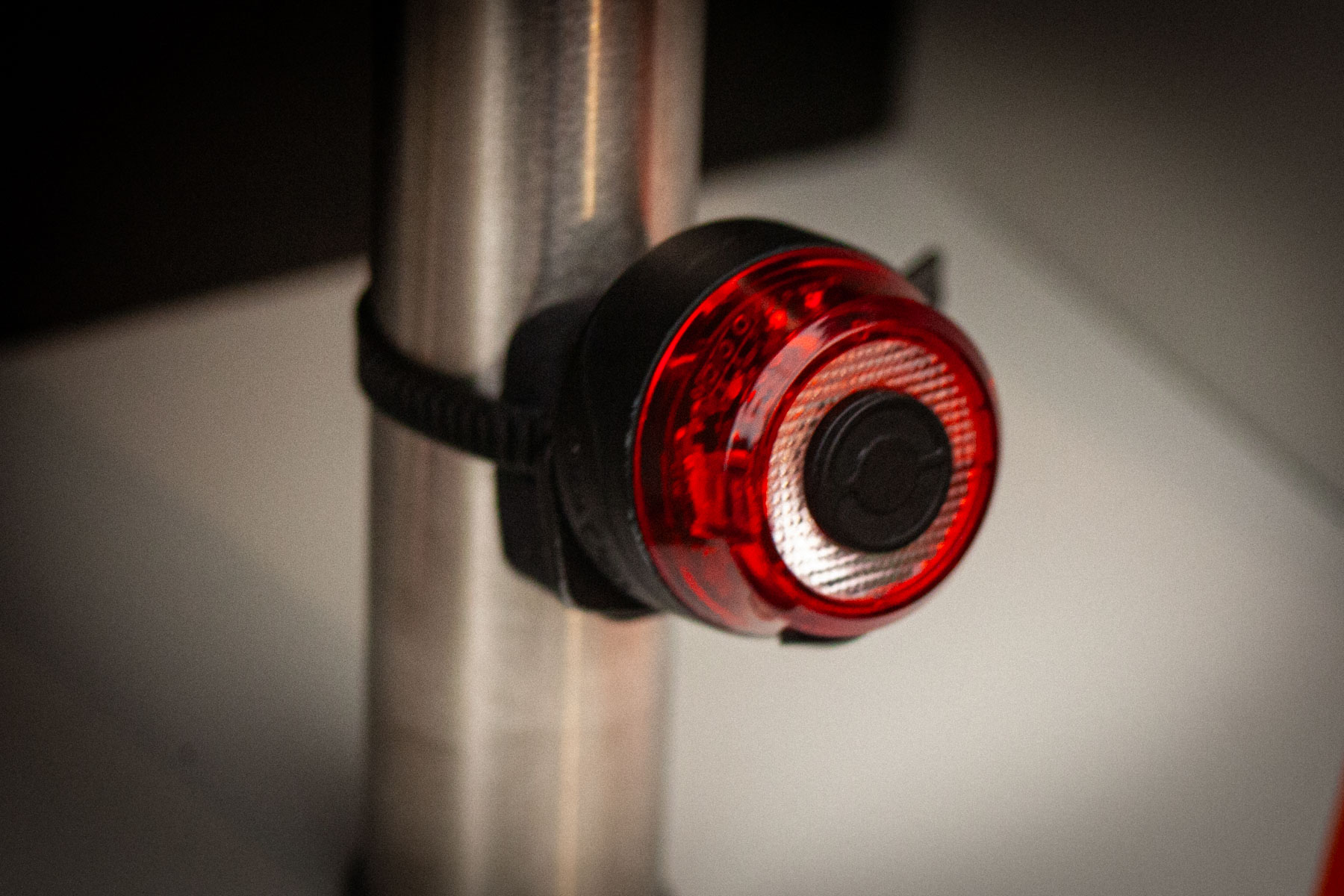
Fidlock rear light
Fidlock will also offer a Pinclip-mounting rear light. Warren Rossiter / OurMedia

Presented as 3D-printed mock-ups, the circular 360-degree visibility rear light snaps into a minimal Pinclip mount similar to the brand’s seat packs and on-bike action cam mounts.

The front light uses a band-on Pinclip mount that’s much more minimal than the competition, which suggests you could leave the mount in place when not using the light, without taking up excess bar real estate. Or you could use the Pinclip with the compatible action cam unit.

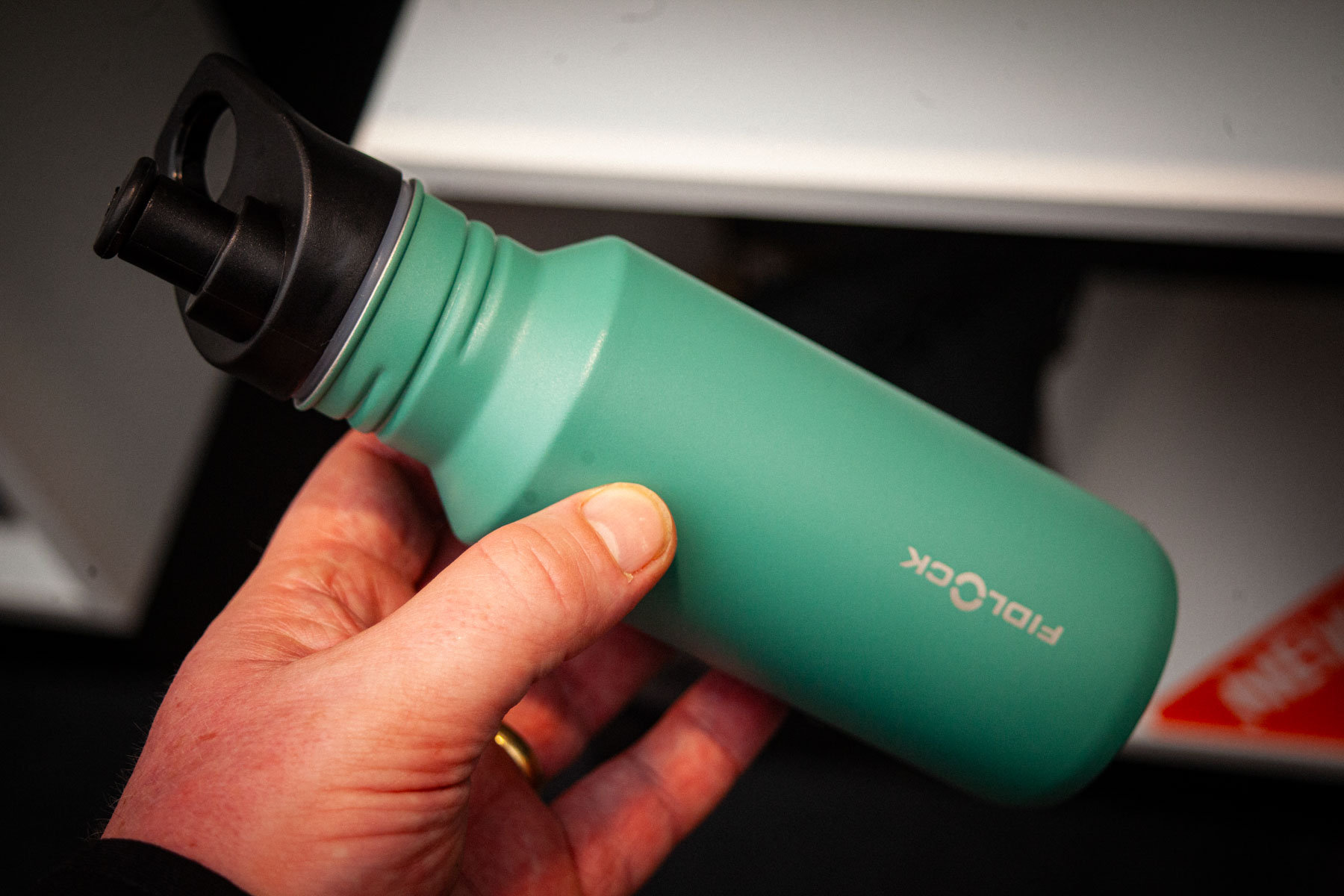
Fidlock steel bottle
Fidlock’s twist-mount bottle range gains three durable steel bottle options. Warren Rossiter / OurMedia

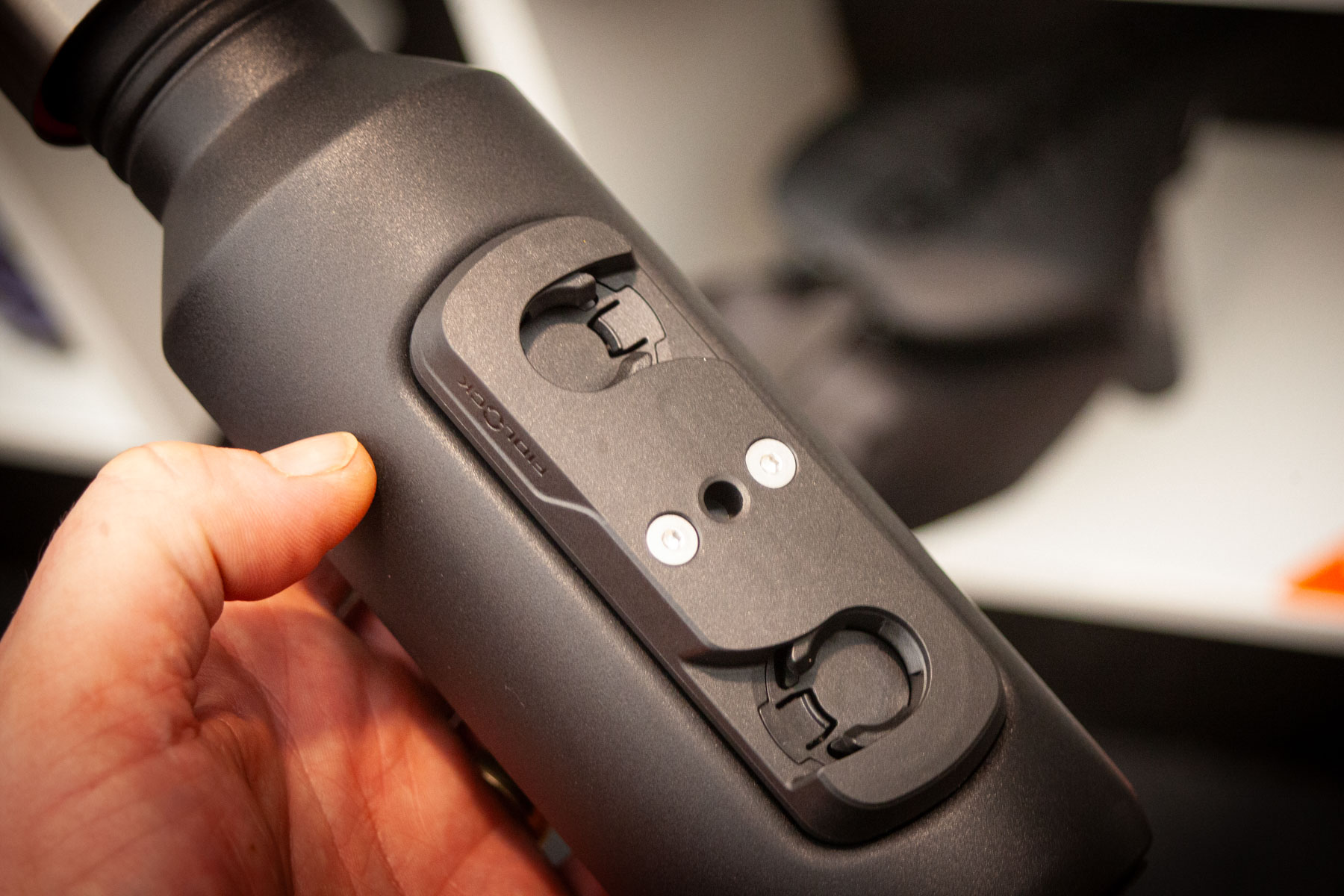
The new Twist steel bottles are designed to work with Fidlock’s minimal twist-lock bottle mount.

The bottles are available with a capacity of either 400ml with a bite-valve top or 600ml with a screw-cap.

Fidlock bottle detail
The twist-lock system is now incorporated into a range of hardy steel bottles. Warren Rossiter / OurMedia

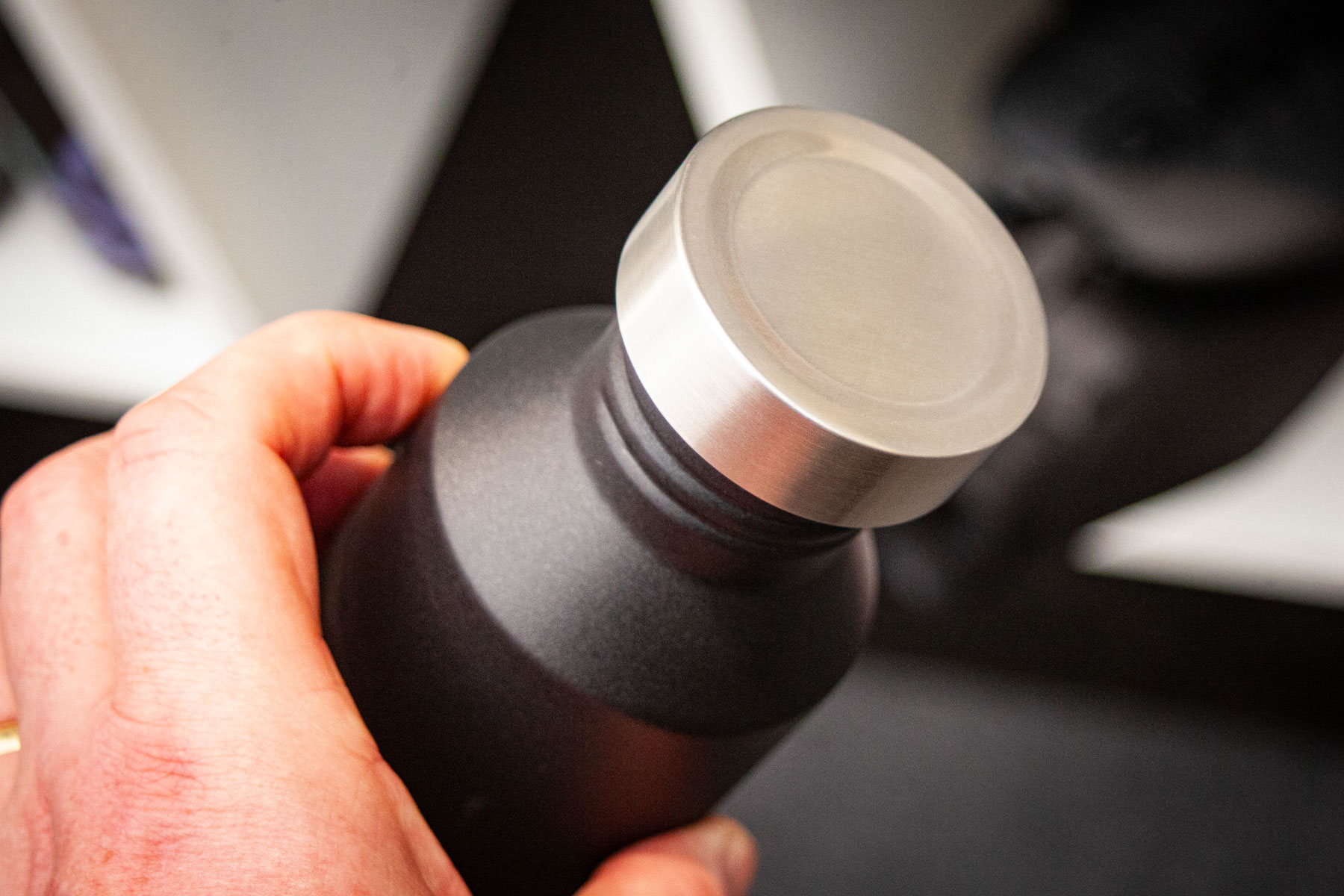
The model that caught our eye, however, is the 500ml dual-wall insulated bottle.

Fidlock steel bottle cap detail
The insulated steel twist-lock bottle should be commuter gold. Warren Rossiter / OurMedia

The Twist bottles are fully compatible with all Twist bases, which are available to fit standard bottle bosses, while a zip-tie mounting version is also available for frames without bosses.

The bottles and lights are set to be released later this year, with no global pricing yet available.

Teravail is upending the applecart by making a carbon rim for its tyres

Teravail has done something few dedicated tyre brands have done before – designed a rim for its tyres.

While the likes of Mavic, ENVE, Zipp and Giant/Cadex have all developed tyres to work optimally with their wheelsets, the US-based tyre brand has subverted that growing trend.

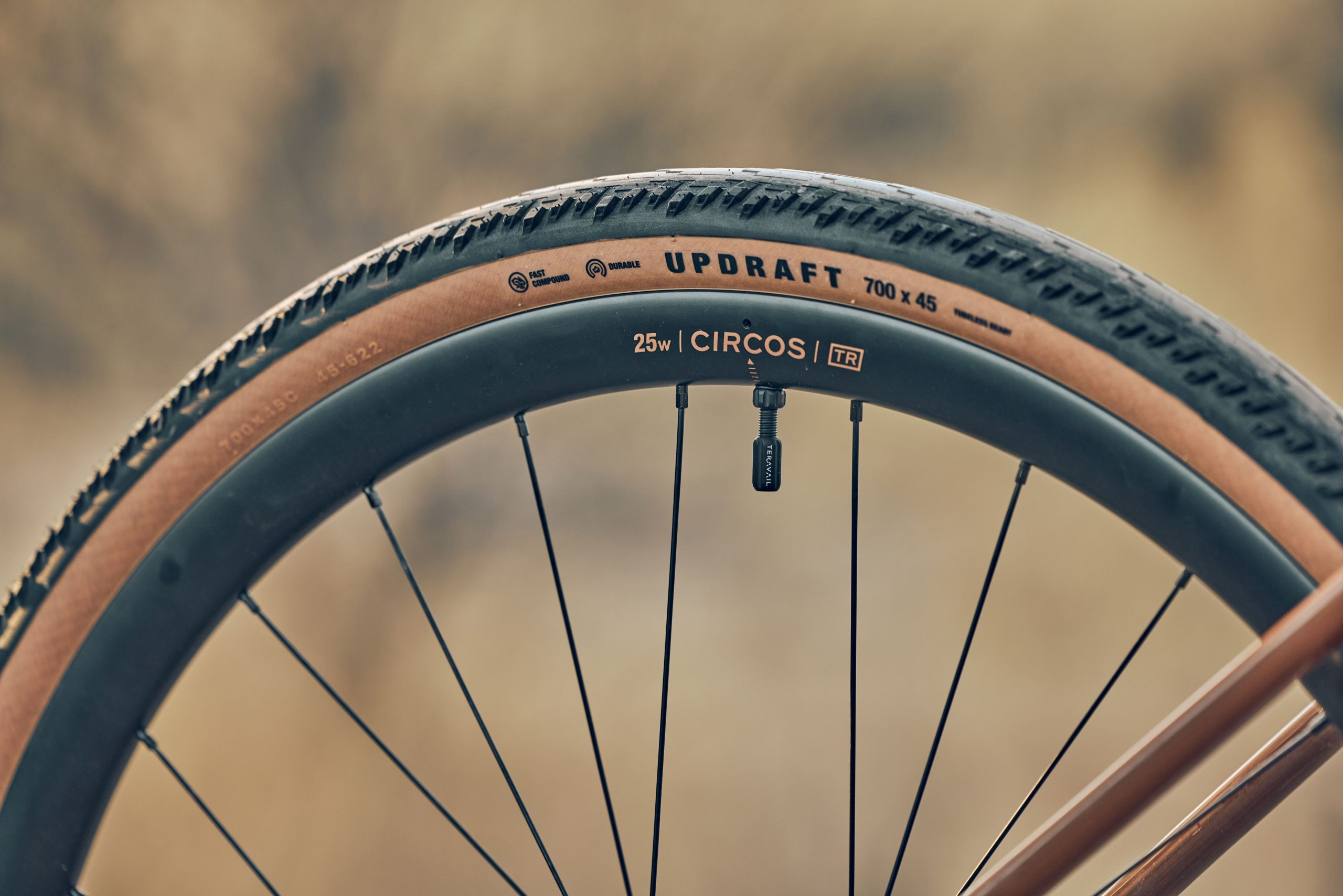
The Circos carbon gravel rim features a shallow hookless design with a 25mm-wide internal channel, and is available in both 24- and 28-spoke options. 

The profile is designed to match to the brand’s new Updraft gravel race tyre – claimed to be its “fastest gravel tyre ever” – alongside the existing Washburn, Cannonball, Sparwood and Rutland tyres.

Circos rims (front or rear) will cost $495 / CA$720 each, and the Updraft tyre $75-80 / CA$110-115.

Subverting the wheel-tyre system norm

Teravail Circos wheelset and Updraft tyres
The Circos wheelset is designed to work best with Teravail’s tyres, but you’re not locked in. Teravail

While not every wheel brand takes the route of designing tyres to match its rims, it’s far rarer to see a tyre brand develop a rim to match its tyres. 

In recent memory, Vittoria produced the Qurano range of wheels to accompany its road tyre offerings, but this has since been retired.

For many, the upturn in approach might be welcome – tyres are generally considered to be the most important part of customising a gravel bike setup, so being able to choose a rim optimally suited to this choice may well be favourable over buying a relatively expensive rim or wheelset and then fitting a favoured tyre. 

Teravail Circos wheelset and Updraft tyres
The potential benefits of an optimised rolling-stock setup are highly coveted by many riders. Teravail

The potential upsides for a combined wheel-tyre system are easier fitting, safer retention, improved aerodynamics and optimised tyre profiling (which in turn can boost grip).

Teravail says the Circos carbon rim is designed to deliver the “best possible connection to [the rider’s] terrain”, while offering customisability to suit their demands.

Aside from the hookless 25mm-wide internal channel, Teravail says the front and rear rims have specific profiles and benefit from specific spoke-hole drilling techniques to balance pedalling and impact forces. That said, they both have a claimed weight of 370g.

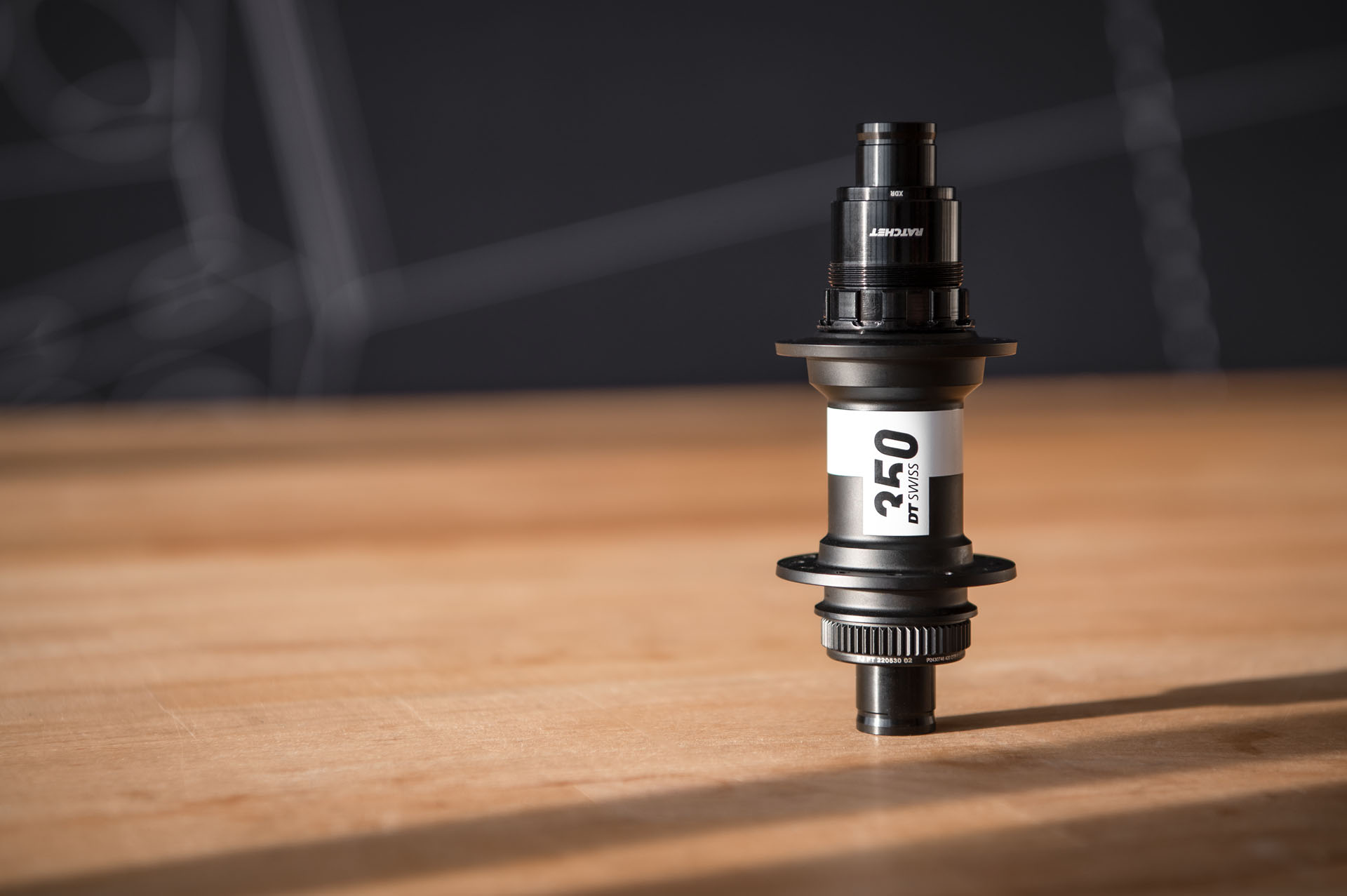
The rims can be laced to a DT Swiss 350 hubset with DT Swiss Competition J-bend spokes via Pro-Lock brass nipples by the brand to create a full wheelset, or supplied as a rim to achieve a custom build. 

DT Swiss 350 road hub on a table
The DT Swiss 350 hubset is a staple of road and gravel wheel builds. DT Swiss

As mentioned, they are available in 24 and 28 spoke-hole options, and can be specified with a Shimano HG11 or SRAM XDR freehub body.

Teravail says both front and rear rims cost $495 / CA$720 apiece, with complete wheelset prices dependent on spec choices. 

The rims are said to be tested to Teravail’s in-house standards (which are claimed to exceed ISO 4210 regulation tests) and are covered by the brand’s lifetime warranty. Complete and custom wheels are hand-built at its Minnesota warehouse.

New Updraft tyre

Teravail Circos wheelset and Updraft tyres
The file-tread design is said to offer superior grip to a smooth tread, but result in low rolling resistance. Teravail

Teravail has also launched the Updraft, which it claims is its “fastest gravel tyre ever”. 

Described as offering responsive acceleration, the brand says the central portion of the tyre has a file tread to promote low rolling resistance, without sacrificing longevity or grip. 

The shoulders have pronounced lugs for grip on loose corners, and it uses the brand’s simply-named ‘Fast’ compound. This is employed on all four of its other gravel tyres.

The casing uses a 120 TPI (threads-per-inch) material, which it claims offers a “compliant ride with minimal weight”. This can be had in two forms – ‘Light & Supple’ and ‘Durable’, whereby the latter is fortified and spreads over the shoulders for greater puncture protection at the cost of a small amount of weight and rolling resistance.

Teravail Circos wheelset and Updraft tyres
The tyres are said to have more strings to their bow than simple hardpack. Teravail

Naturally, the tyre is tubeless-compatible and designed for use with hookless rims (albeit, it can be run with a hooked rim).

Teravail says the tyre is available in 700×35, 40, 45 and 50c widths with either casing, weighing from 395g. It is also available with black or tan sidewalls. 

The Updraft is set to cost $75 / CA$110 in the Light and Supple casing options, while the Durable-casing version is $5 extra in both countries.

UK and European pricing is still to be confirmed for the Circos rim and Updraft tyre.

Orbea’s new e-gravel bike has a custom control system and it’s brilliant

Forget lightweight, low-torque drop-bar bikes, Orbea wants to give you the full-powered experience with the new Shimano EP801-equipped Denna electric gravel bike.

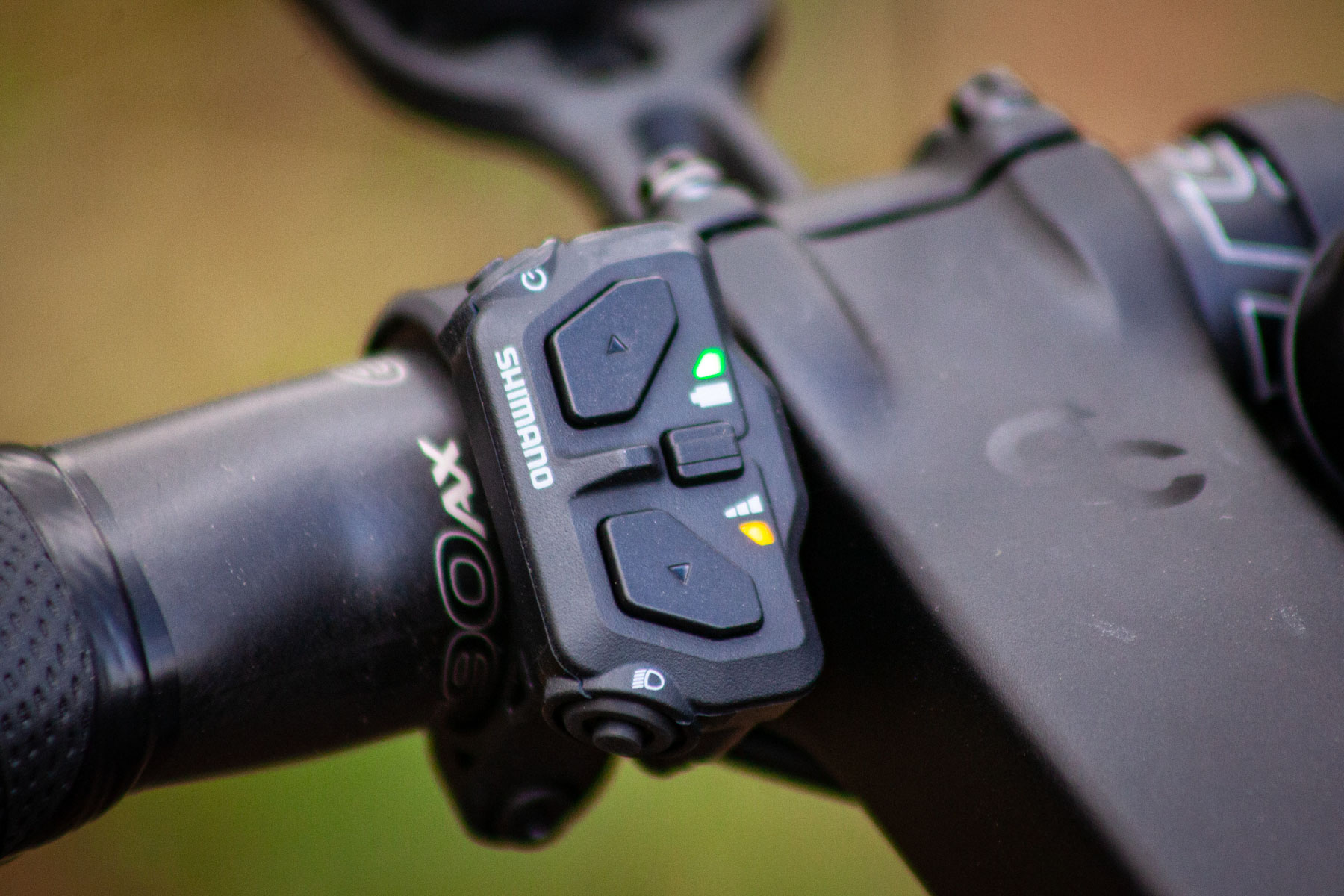
It’s not just the choice of a motor usually found on electric mountain bikes, Orbea has also given us a custom control system that uses Shimano’s left-hand shifter to control the bike’s motor levels.

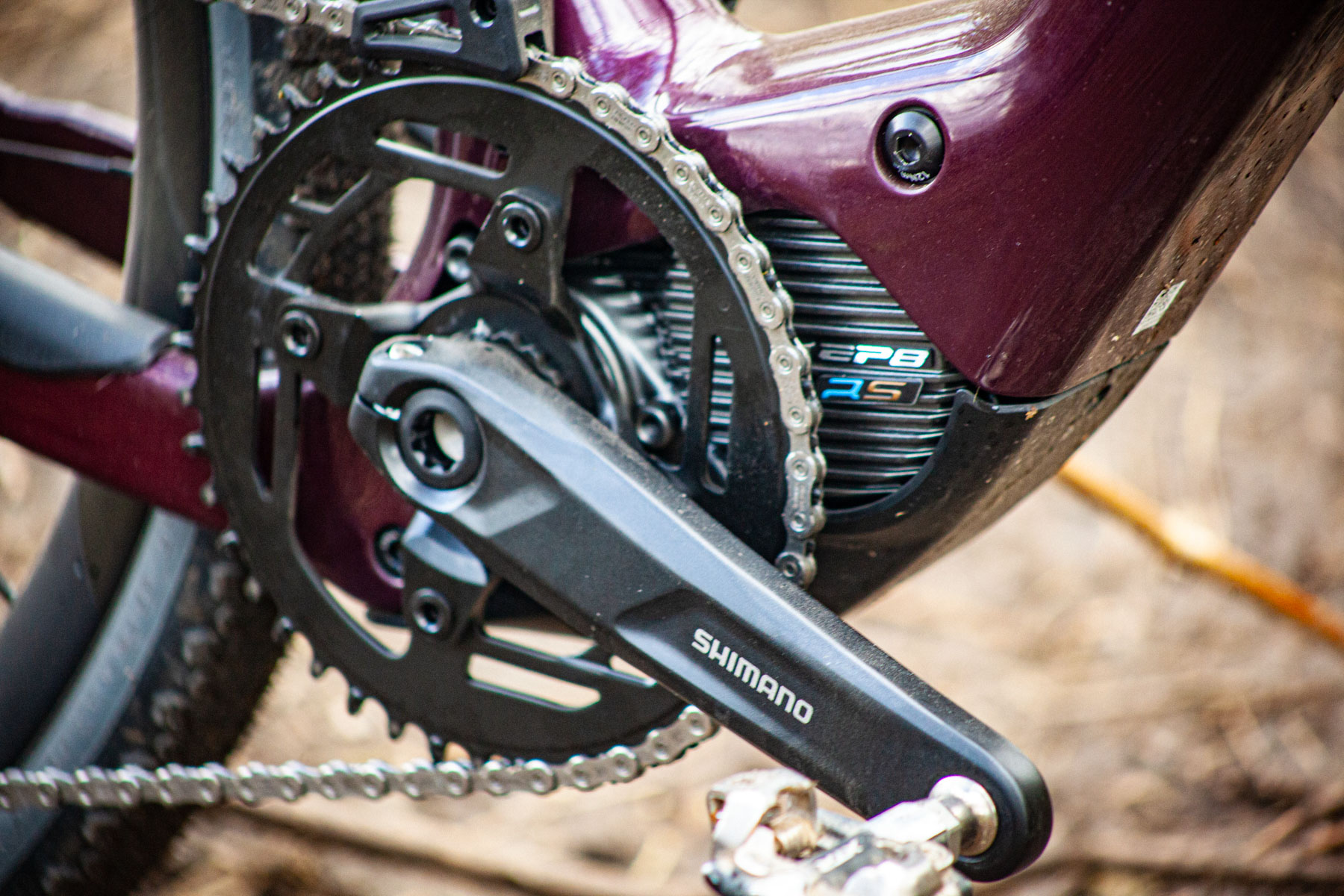
The Shimano EP8 RS motor has the potential for 85Nm of torque and combines with a custom 420Wh battery. This makes the Denna a power-laden e-gravel bike that’s an alternative to the lightweight all-road 50Nm/350Wh Mahle X20-equipped Orbea Gain.

Shimano's EP8 RS motor
Shimano’s EP8 RS motor is more commonly found on electric mountain bikes. Warren Rossiter / OurMedia

The Orbea Denna M10i we’ve got our hands on for an exclusive test sits one rung below the range-topping SRAM Red XPLR AXS-equipped M11e.

The Denna range starts with the CUES-equipped Denna M30. All models share the same frame and fork, and Shimano powertrain.

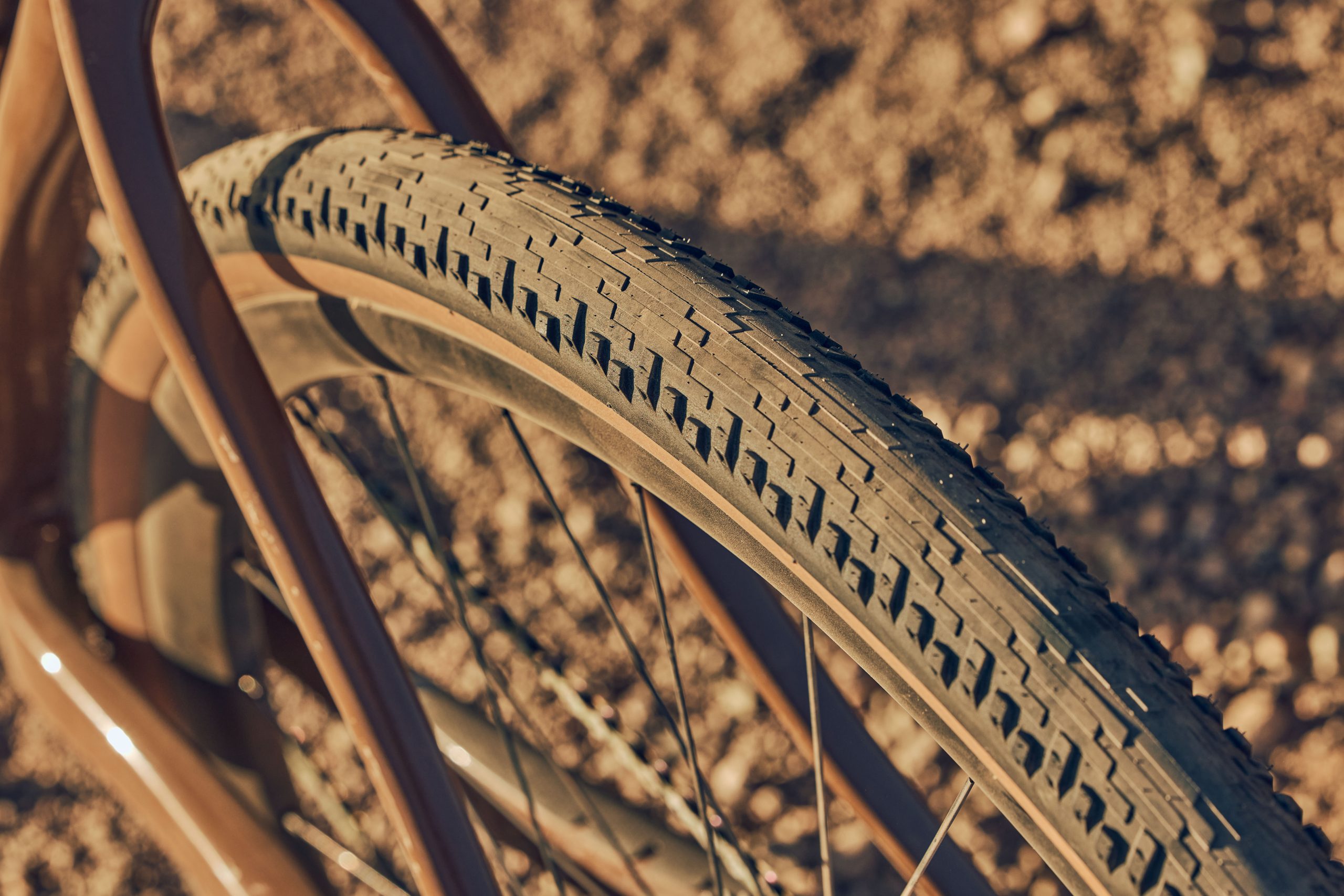
The Denna is offered in versions featuring either gravel tyres or road tyres. Gravel incarnations get Vittoria’s 45mm Terreno Dry Gravel G2.0 TLR rubber and the road option comes with Pirelli’s P Zero Race SmartEvo TLR 30c treads.

The new Orbea Denna M10i is priced at £8,999 / $9,999 / €9,999.

Custom power delivery

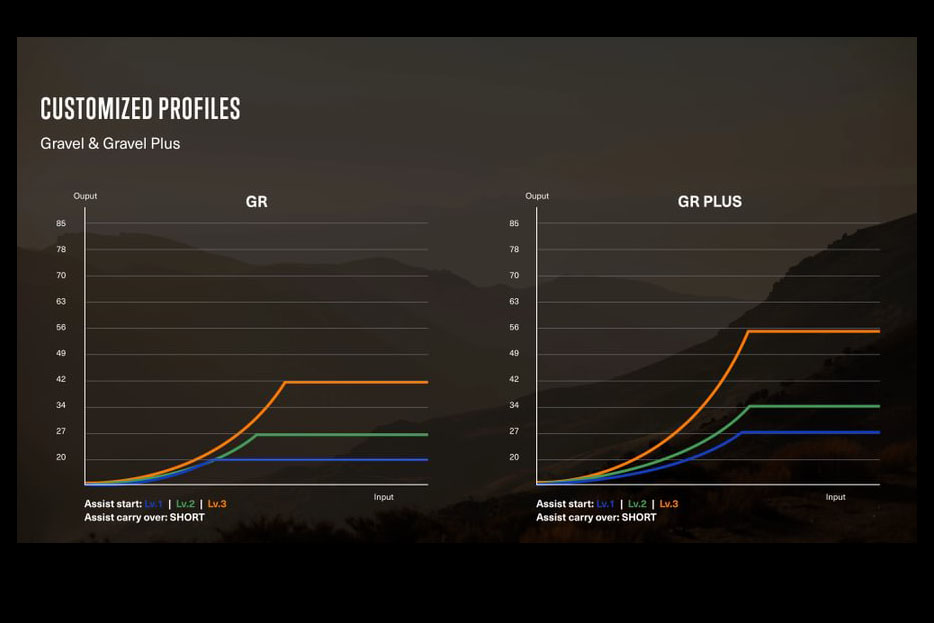
Orbea Shimano EP8 Gen 2 RC Profiles
Orbea has two custom power profiles on the Denna. Orbea

Orbea hasn’t simply bolted a Shimano EP8 Gen2 RS motor to the Denna. Instead, it has worked extensively on two custom profiles: Gravel and Gravel+. The bike comes set up in Gravel mode and can be switched to Gravel+ using the Shimano E-tube ride app.

Neither mode utilises the full power of the EP8 motor that’s usually reserved for enduro electric mountain bikes. Through the tunability of the Shimano motor via the E-tube app, you can always define your own full-fat performance mode, though.

Shimano e-bike bar mounted controller
The minimal Shimano motor controller on the Denna. Warren Rossiter / OurMedia

Programming power modes is all well and good. However, the genius move is using Shimano’s Ultegra Di2 levers on an off-road build and reassigning the left-hand shifter’s Di2 triggers, which are redundant on a 1x bike, to control the motor modes.

That means you’ve effectively got 12 gears to control with your right hand and three power levels with your left. It’s akin to having a ratio switch on a 4WD, and this combination works brilliantly off-road (based on my few test rides so far).

I’ll report back further once I’ve finished testing the Denna.

Ample range that can be extended

Range-wise, Orbea claims the 420Wh battery can reach up to 3,500m of elevation gain in Eco mode. If that’s not enough, you can equip the Denna with the 210Wh Range Extender, which is smaller than a water bottle and weighs less than 1kg.

On my first ride out on the Denna in standard Gravel mode, I achieved 52.425 miles / 84.37 kilometres with 3,593 feet / 1,095 metres of climbing. This included plenty of mode-switching, and lots of technical singletrack and mud.

The internal battery is Orbea’s own custom design, but it’s built to Shimano’s exacting standards. Shimano has agreed to handle all battery warranties alongside its motors for the Denna range.

Off-road focused geometry

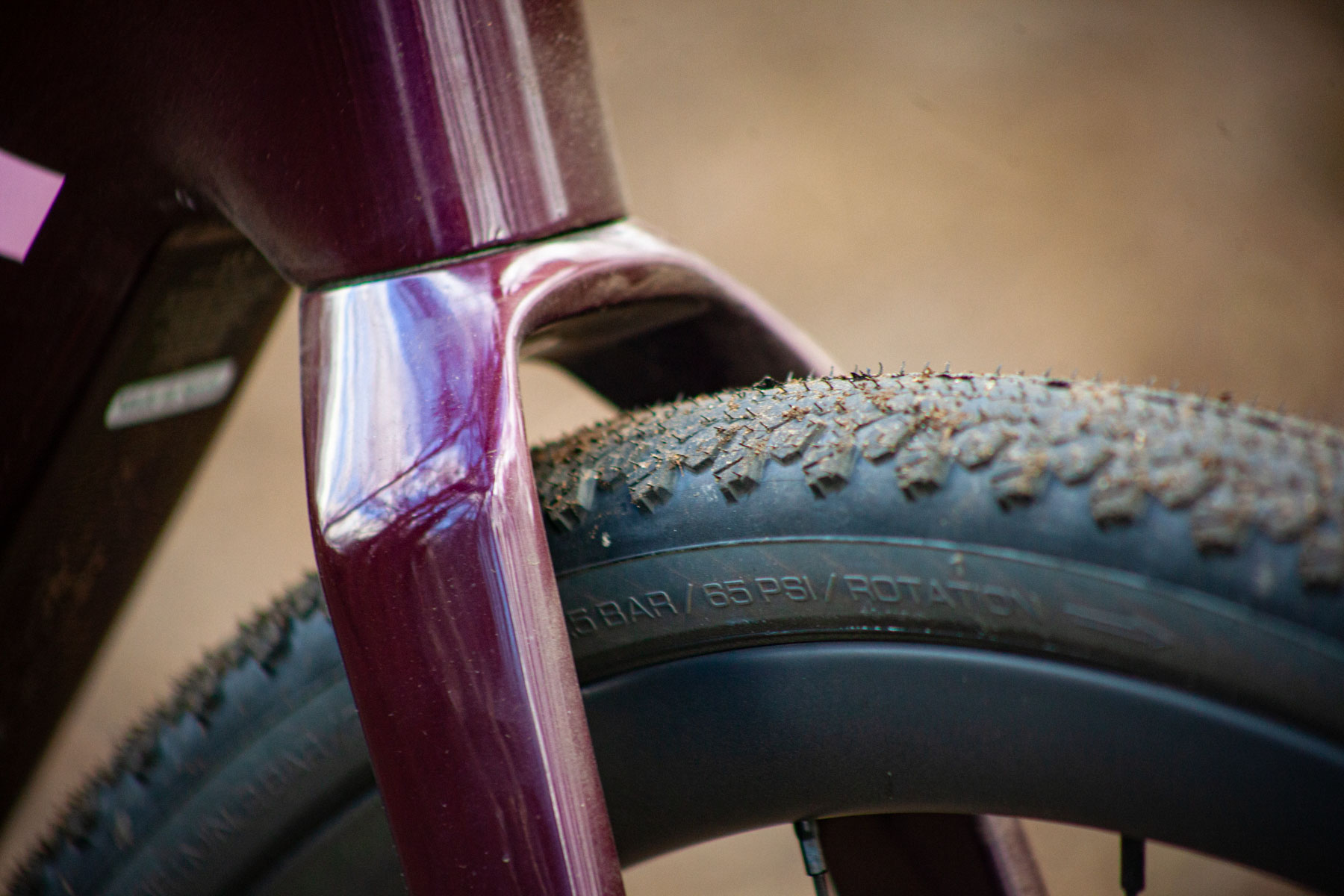
Denna fork tyre clearance
The Denna has generous 50mm tyre clearances. Warren Rossiter / OurMedia

Orbea’s impressive Gain ebike is very gravel-capable, but its geometry is much more from the all-road space. The Denna slots into this gap with its much more off-road-focused shape.

It sports a long top tube and short stem – 90mm on my large test bike – combined with a short seat tube and low standover height. Each size gets a specific fork offset to avoid toe-overlap and set a longer trail figure to help you keep control in the rough.

My size-large bike gets a 67mm trail. The bottom bracket is lower than on a standard non-assisted all-road bike and the wheelbase is extended by 30mm – to aid control and stability on rough surfaces. Add in a rough-stuff-ready 50mm tyre clearance and the new Denna looks good to go really wild.


Premium build

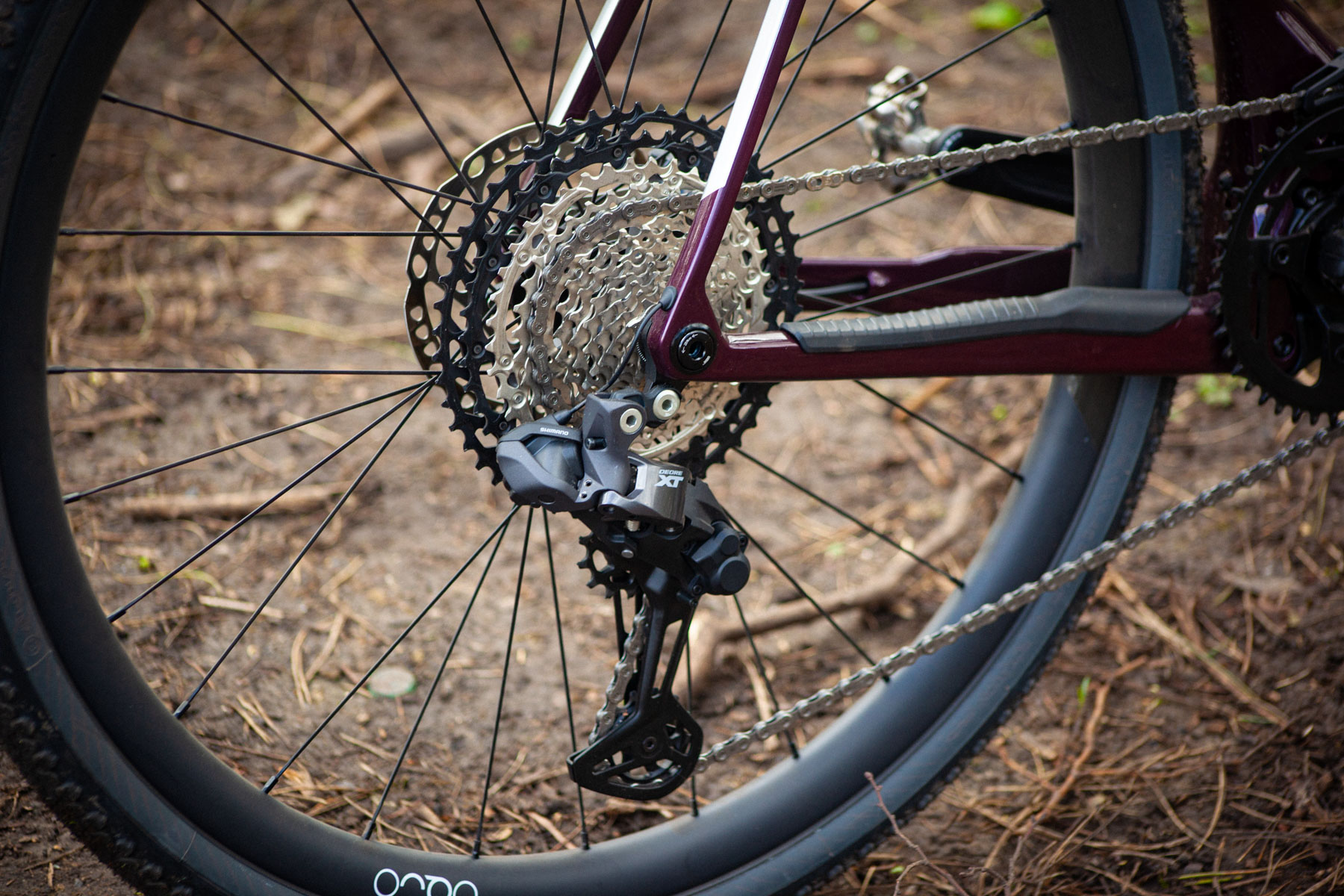
Shimano XT Di2 derailleur
The Denna M10i mixes Shimano’s XT Di2 with Ultegra Di2. Warren Rossiter / OurMedia

The Denna M10i is an expensive bike with a premium build. The drivetrain is intriguing because it mixes Shimano’s Ultegra Di2 and XT Di2. You may ask, why not GRX? The simple answer is that the current GRX Di2 isn’t compatible with XT, which Orbea wanted to use because of the extra gear range available for 1x.

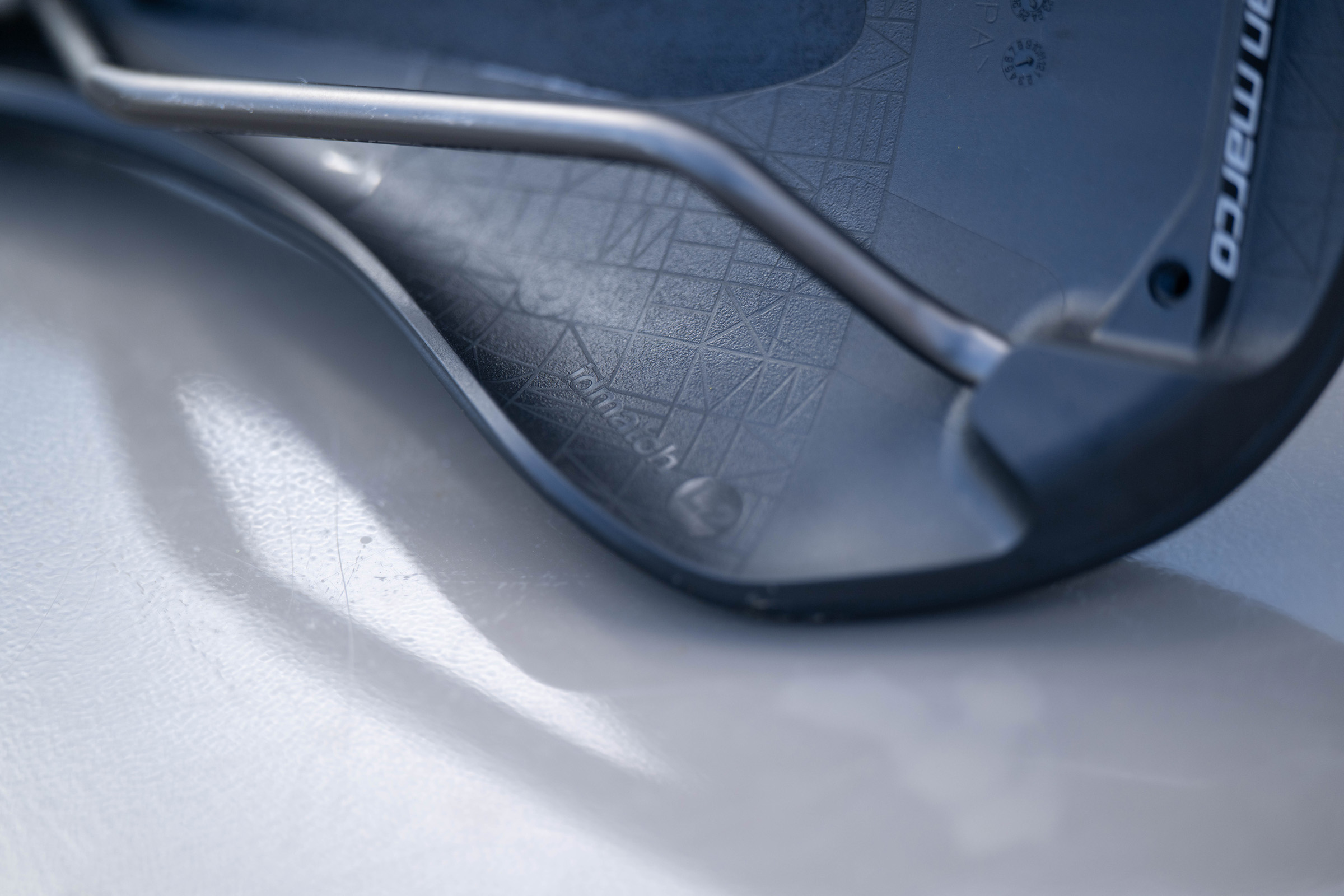
Up-front, Orbea’s own stem clamps Easton’s EC90 AX bar. At the back, it’s Orbea’s own RP10 carbon post, topped with a Selle San Marco Shortfit saddle.

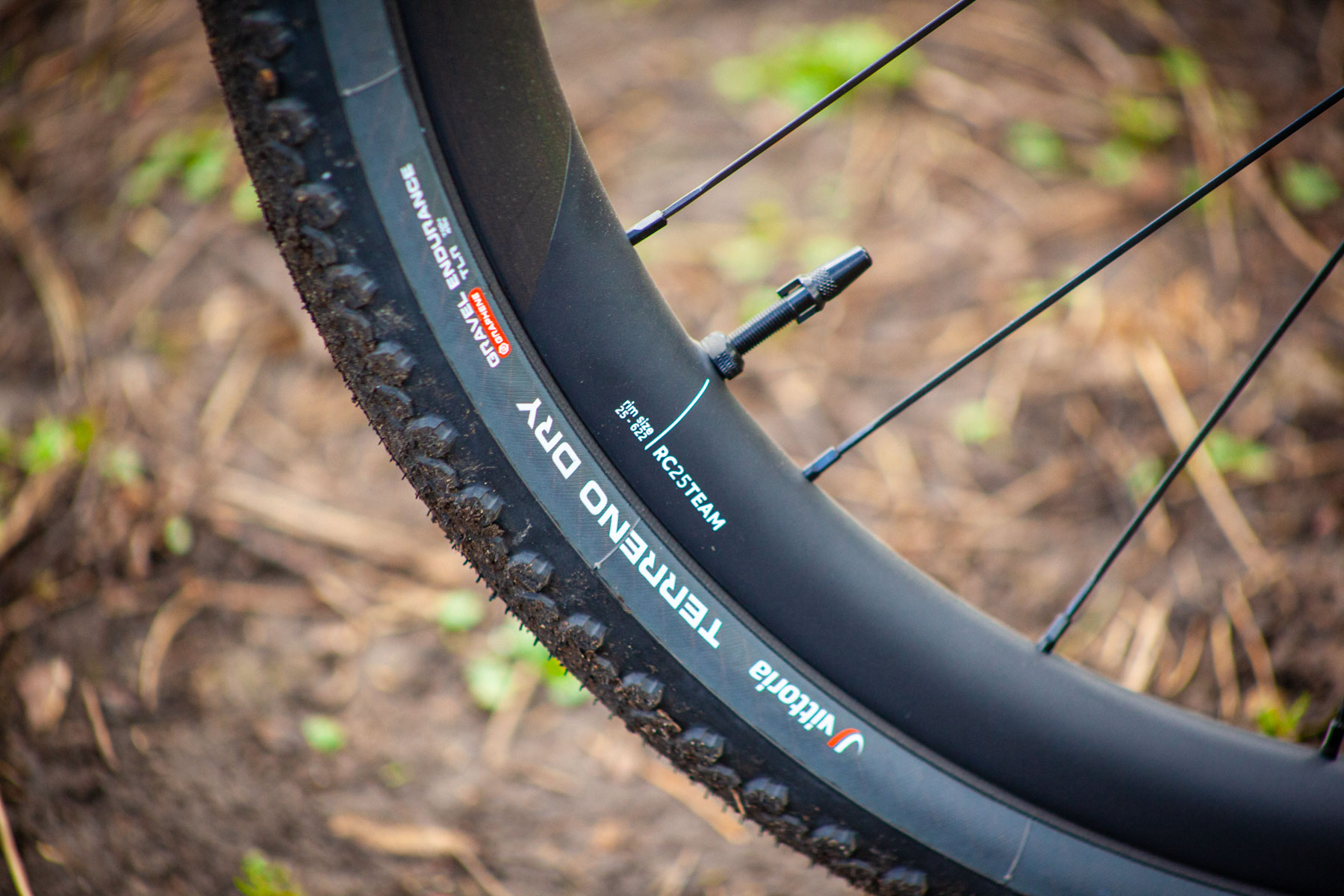
The M10i rolls on Orbea’s own Oquo RP45 Team carbon wheels, wrapped with Vittoria’s Terreno Dry tyres in a 45mm width. It’s not the ideal choice for muddy springtime rides in the UK, but a solid-performing tyre in the dry.

Vitttoria's Terreno Dry tyres
Vittoria’s Terreno Dry tyres are, as the name suggests, best suited to summer conditions. Warren Rossiter / OurMedia

Orbea Denna M10i spec highlights

  • Weight: 13.9kg (large)
  • Powertrain: Shimano RP8 Gen2 RS motor, Orbea custom 420Wh internal battery
  • Drivetrain: Shimano Steps EM600 crankset, Alloy EP8 42t chainring, Shimano Ultegra Di2 shifters, Shimano XT Di2 rear derailleur, Shimano CS-M8100 11-52 cassette, Shimano M6100 12-speed chain
  • Brakes: Shimano R9270 hydraulic
  • Wheels: Oquo Road Performance RP45TEAM carbon wheels
  • Tyres: Vittoria Terreno Dry Gravel G2.0 TLR 45mm
  • Handlebar: Easton EC90 AX
  • Stem: Orbea RP10 alloy 90mm
  • Seatpost: Orbea carbon XP10 Zero offset
  • Saddle:  Selle San Marco Shortfit 2.0 Start Up Off Road Xilite
  • Price: £8,999 / €9,999 / $9,999

This clever conversion kit makes your dropper wireless for half the price of a RockShox Reverb

Wireless dropper posts are one of the most effective upgrades you can make to your mountain bike, with effortless actuation and little required maintenance making them easy to live with.

The only problem is the price, with even the cheapest models costing £400 / $500.

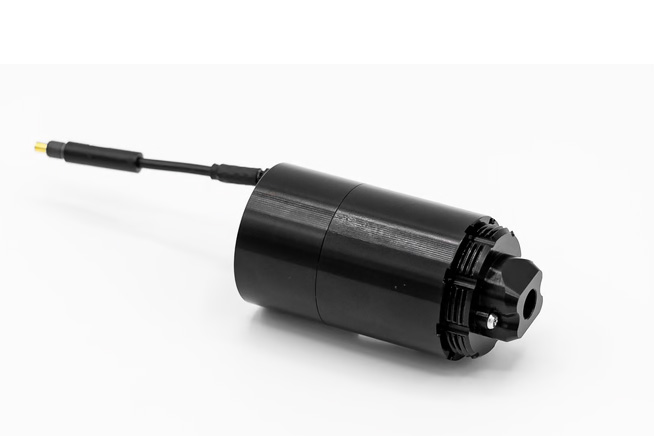
OnlyMotion has set out to fix this with its wireless electronic conversion kit.

The brand says the device enables you to upgrade your existing dropper post, providing instant, effortless control.

OnlyMotion is currently seeking backing on Kickstarter for the wireless actuator, with early-bird buyers able to secure the device for $174.

Wireless upgrade

OnlyMotion actuator
The brand says the actuator is strong enough to lift 200 times its own weight. OnlyMotion

OnlyMotion says the patent-pending actuator integrates directly into the seat tube, shielding it from dirt and water, ensuring long-term reliability in all conditions.

It is also IPX7-rated, meaning it should be able to deal with wet winter trails.

The system works using a brushless motor that actuates the dropper post in the seat tube. This is then connected to a remote on the handlebar.


OnlyMotion remote gif
It appears the production model is fully wireless. OnlyMotion

OnlyMotion says the system is wireless, but in some teaser trailers, the actuator and remote appear to be connected via wire, while in others they look to use a wireless network.

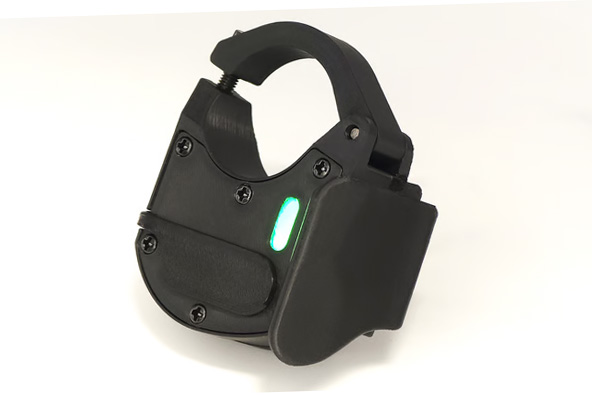
OnlyMotion remote
The remote looks practical, with the paddle not exposed to damage, unlike some other designs. OnlyMotion

The wireless remote itself is ring-shaped and made from 7075 aluminum, featuring a large paddle that should help with easy activation.

An LED indicator on the remote shows battery information, as well as connectivity status.

The brand says the device is currently compatible with the Fox Transfer, Bontrager Line, Race Face Turbine R and OneUp V2 & V3 posts, with more to follow in the near future.

Specialized Turbo Kenevo SL 2 Expert lightweight full suspension mountain electric bike - eMTB
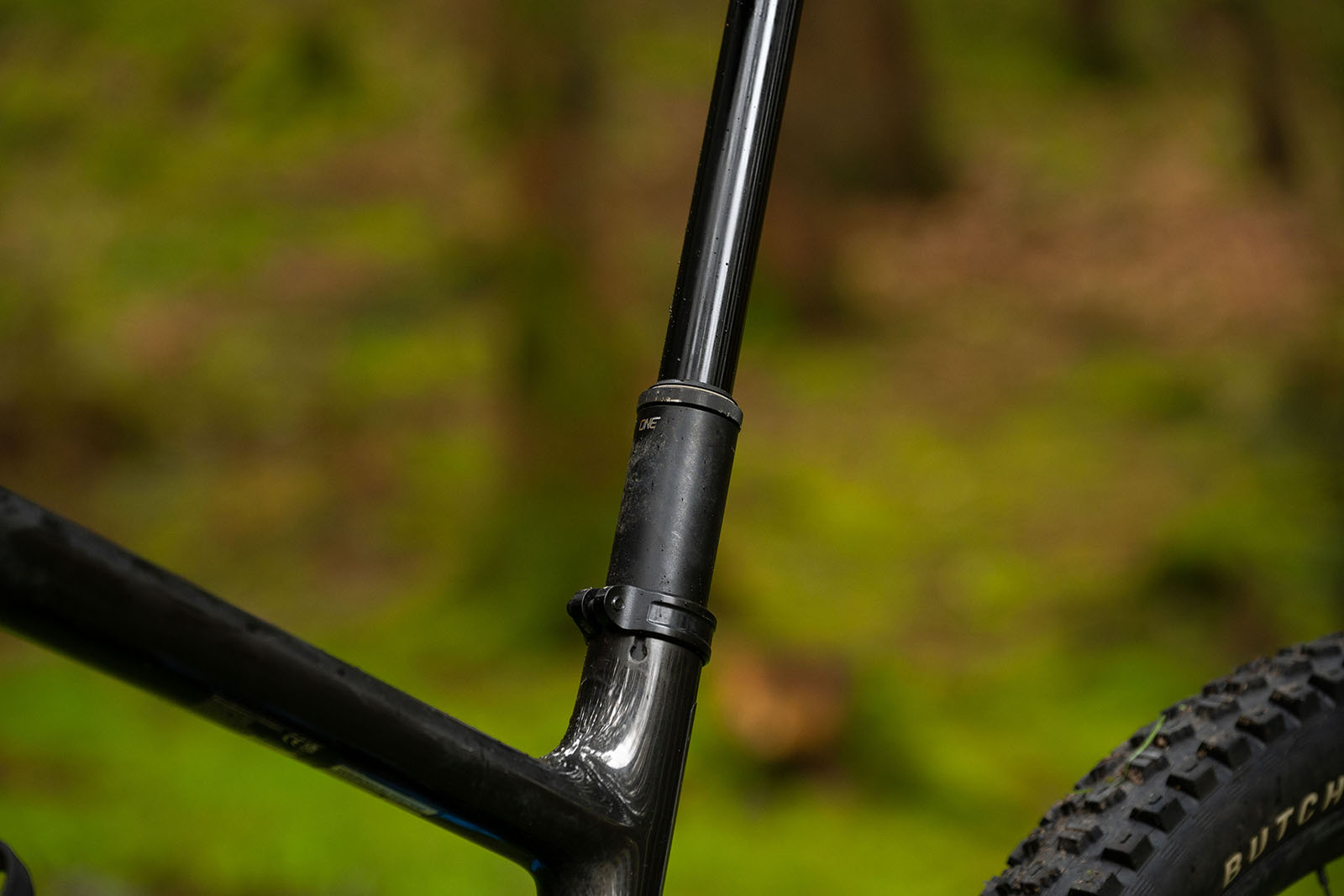
Dropper insertion is already an issue on some frames. Andy Lloyd / Our Media

While the brand says the device is compatible with a host of dropper posts, that’s not to say it will work with your setup, because the extra length added to the post may cause insertion issues depending on your frame.

The device charges via USB-C and is said to last for 150 hours of riding per charge, which OnlyMotion equates to 4,000 actuations.

OnlyMotion says charging is fast, with 10 minutes giving the system enough juice for a day’s riding.

Top 5 Zwift Videos: The 4th Challenge, Climb Portals, and Home Gyms

Zwift’s latest game release launched the long-awaited 4th challenge, so this week’s top video breaks down everything you need to know about the Factory Tour challenge.

We’ve also selected videos about Hardknott Pass on Zwift, building a home gym in a barn, an exciting new Zwift event, and team time trial tips.

ZWIFT Update 1.85: 4th Challenge Arrives // Big Spin ’25 // More…

Shane Miller, GPLama, shares all the latest Zwift news including information on the 4th challenge, Zwift v.1.85, The Big Spin, and more.

Hardknott Pass is on Zwift! How Does It Compare to the Real Thing?

After Zwift recently added Hardknott Pass to the climb portal, Cycle the Nation decided to create a comparison of the real-life climb and Zwift’s climb portal replica.

I Built My Own Gym in a 300-Year-Old Barn

While most cyclists follow the conventional path of setting up their pain caves in their garages, corners of their houses, or living rooms, Mark Lewis is doing things a little bit differently. In this video, watch as Mark sets up his home gym in his barn.

I guarantee you a NEW Alpe Du Zwift PR (but only next Sunday 16th)

Ryan Condon is back with another epic event. Hear from Ryan as he shares the details of his next event: an epic race up the legendary Alpe du Zwift (sign up here).

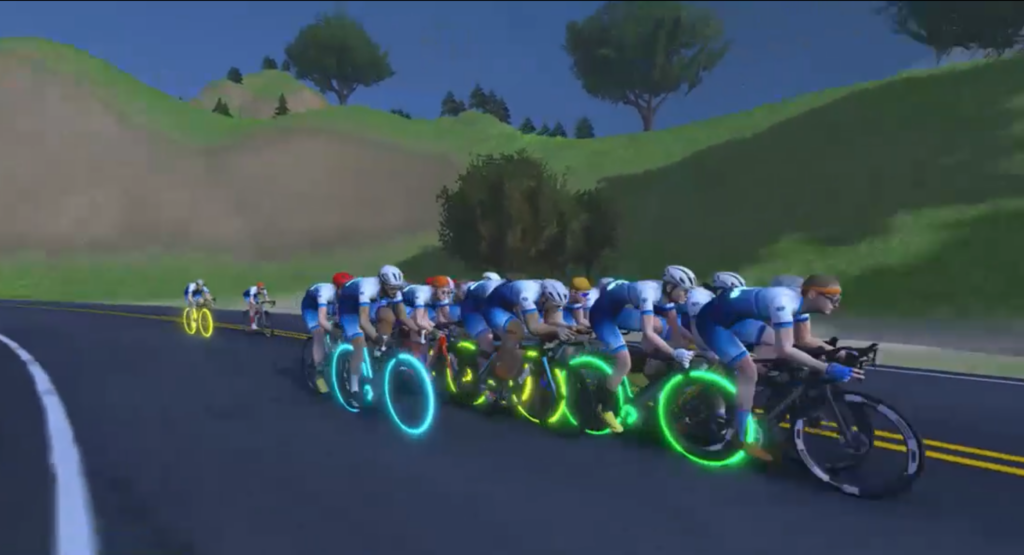
Zwift: Honing Your Performance for ZRL, WTRL, and Coming World TTT Champs

Looking to do a team time trial on Zwift? The Musette breaks down his top tips for having a successful team time trial on Zwift.

Got a Great Zwift Video?

Share the link below and we may feature it in an upcoming post!

Hope’s new carbon crankset and colourful pedals are built for gravel adventures

Hope has expanded its gravel range, with new brakes that will add a splash of colour to your bike and a handmade carbon crankset designed to produce a smoother ride.

The latest addition to the made-in-Lancashire gravel line-up is the new RX Carbon crankset, which takes its inspiration from the brand’s mountain bike carbon cranks.

Hope has adjusted the chainline to suit gravel groupsets. The new crankset is designed to work with both 45mm and 47.5mm (wide) chainlines.

The new carbon crank arms have a foam core inside to help absorb vibrations as you pedal.

The foam core is an integral part of the crank’s assembly because it’s used in place of a sacrificial material or internal bladder, which requires a chemical process to remove. Because the foam core stays in place, it’s also said to make the Hope cranks better from an environmental perspective.

The cranks are claimed to weigh 426.5g without a chainring or 532.5g, as pictured, with an RX chainring (40T). The spiderless direct-mount rings are available in 28 to 44-tooth sizes.

The arms are initially available in 165mm, 170mm and 175mm lengths, but because they are made in-house by Hope, the brand hasn’t ruled out adding additional options.

The crankset is set to be priced at £575 / $751 / €722 when it’s available in April.

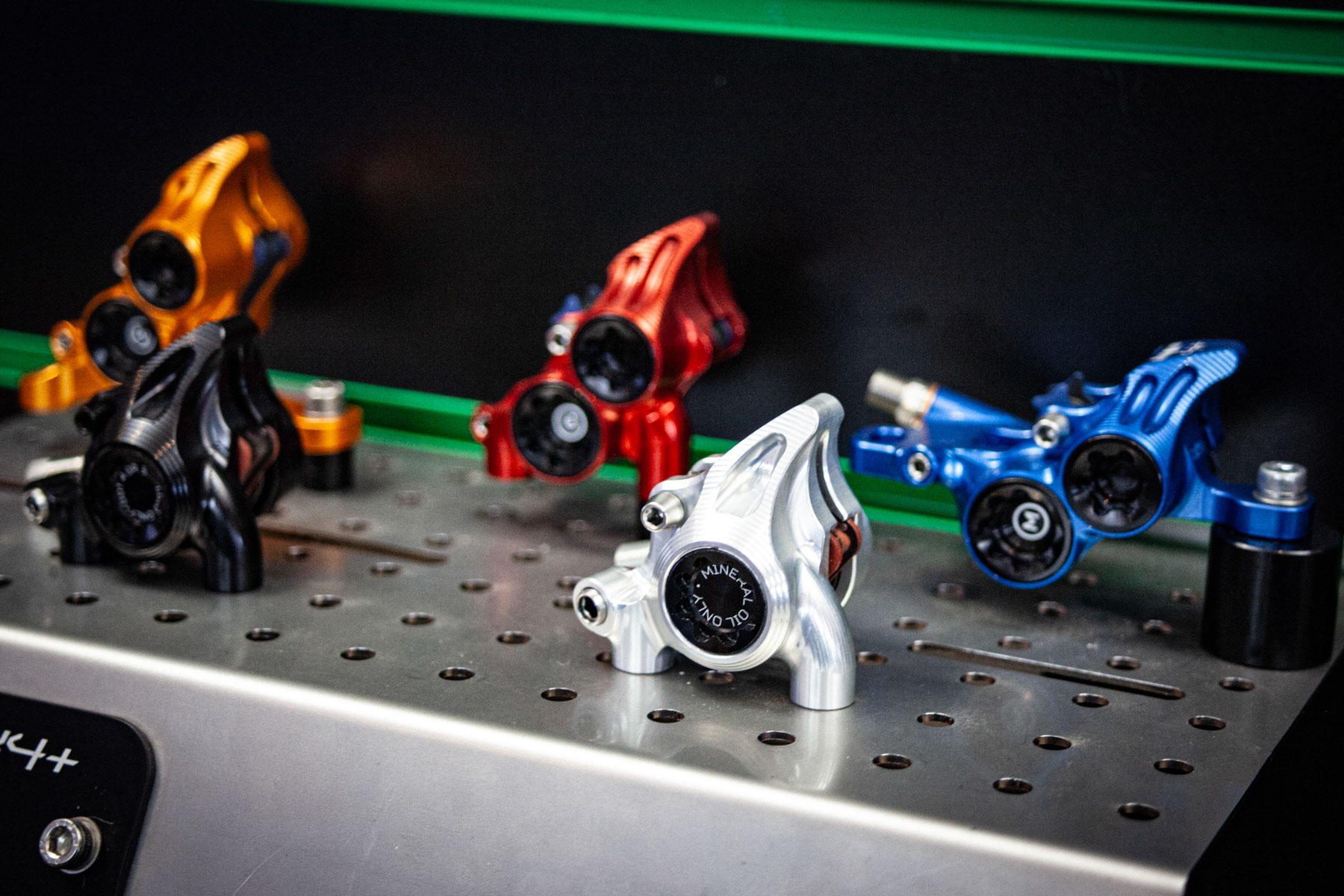
Hope's RX2 and RX4 brakes
Hope’s RX2 and RX4 brakes can bling up your gravel bike. Warren Rossiter / OurMedia

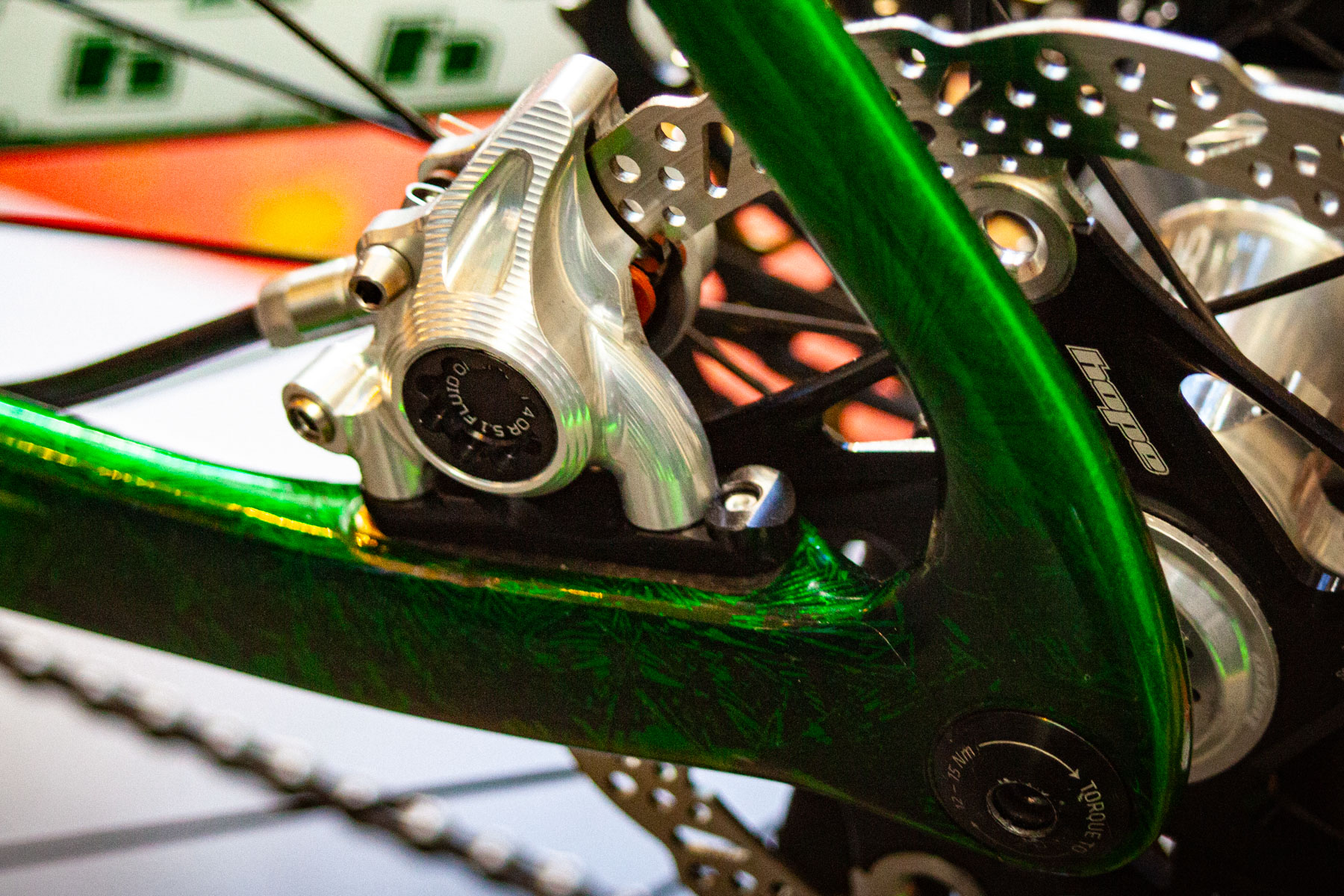
The second addition to Hope’s gravel line-up is the new RX2 and RX4 brake calipers. The RX2 is based on the design of the MTB-specific two-pot X2 brake (Hope’s lightest offering), but with a slimmed-down profile that’s been reshaped to suit road/gravel flat-mounts.

The RX4, as the name suggests, is a larger four-pot design that’s more suited to adventurous bikepacking-style bikes.

The RX2's minimal 2-pot design
The RX2’s minimal two-pot design could be a great upgrade for your gravel bike. Warren Rossiter / OurMedia

In usual Hope fashion, they’re available in myriad colours and can be specced with seals to make them compatible with either Shimano (Mineral oil) or SRAM (Dot fluid) brake systems.

Pricing for the RX2 brakes is TBC.

Using the QZ App with Zwift Running

In a recent article, Eric touched upon auto incline within Zwift and at the end of the article touched up how getting incline simulation was possible using a 3rd party app called QZ. 

The incline simulation topic using QZ has caused a fair amount of confusion with some misinformation being published, so I thought I would clear up any confusion with an in-depth piece on QZ and all you can do with it within the running arena of Zwift.

What is QZ? 

QZ is a 3rd party app developed by Roberto Viola (download in the Apple Store for $4.99 or Google Play for $5.99).  Frustrated after purchasing a treadmill only to find it wouldn’t connect to Zwift, Roberto designed an app that would bridge the BT signal being transmitted by his treadmill and send it to Zwift. 

For an in-depth interview with Roberto, click here to listen to his interview with Ian Hannah where he shares his background and the history of QZ, including where the name comes from.

QZ has evolved massively over the years.  From its humble beginnings of connecting Roberto’s treadmill, it now covers a range of exercise equipment including turbo trainers, x-trainers, and rowing machines to name but a few.  Recent innovations include Virtual Gearing, which has caused excitement in the cycling world since it opens up this feature to many indoor trainers not capable of doing it natively in game (such as the entire Garmin/Tacx range).

But let’s get back to running and look at the main features that QZ can bring to your running.

Auto Incline

Going by many other names such as gradient simulation, incline control, etc, the ability to have the treadmill adjust the incline to match the in-game course was and still is to some extent the number 1 requested feature.  Until the release of the Wahoo Kickr Run this was a feature that couldn’t be done natively.  However, it’s a little-known fact that every time the gradient changes whilst running in game, that gradient is transmitted via Bluetooth!  This is where QZ is able to capture that data and send it to your treadmill for it to adjust its incline.

There are two ways to do this and which method you use depends on your equipment and whether you have an active Zwift subscription.

Method 1

To use this method, you need an Android device and an active Zwift subscription.  There’s no difference between a running or cycling subscription, it’s simply a Zwift subscription.  So if you currently have a subscription that you use for cycling, you’re good to go. 

Currently this version only works on Android, and has to be a different device to what you are running Zwift on.  The device on which you run Zwift can be Apple, Android, Windows, etc, but QZ must be run on an Android device.  I’m sure this will change over time but Roberto spins multiple plates and receives over 400 emails daily for support and prioritises helping users over development of new features. 

What this method does is simulate your treadmill being the Wahoo Kickr Run, fooling Zwift into thinking your treadmill has the ability to be controlled natively.  This opens up a new box on the pairing screen to pair gradient control.  Using this method, you get the popup gradient display under the central HUD which displays the current gradient and you can see how far you’ve progressed up that hill!

The full user guide can be seen here.  Skip to the line in bold titled only on Android with version 2.18.4 and above.

Method 2

Other than the cost of the QZ app, this method is free, as you don’t need an active Zwift subscription.  And if you are an iOS user only, then you’re in luck as you can run QZ on your device for this method.  This method also runs on Windows and Mac.  In fact, you don’t need a spare device as using this method you can run QZ on the same device on which you are running Zwift.  (You’ll probably want to run it on a separate device however so you can see both QZ and Zwift at the same time.)  This method requires you to enter your username and password into QZ so that the app can access the API’s of Zwift in order to gather the incline data.  Rest assured, however, that this login information along with every piece of data collected by QZ is only stored locally.  No user data is sent to a server or anywhere in fact. 

This version of auto incline comes with a couple of minor issues, the first being that it can only poll for the current gradient every 5 seconds.  Any less and it causes major issues.  What this means is that as you hit the base of a hill there’s a slight delay before the treadmill reacts.  Likewise, when you crest the hill you get up to 5 seconds longer before it turns downwards.  This means it’s slightly less accurate than method 1, but it’s barely noticeable.

Another minor issue is that because Zwift doesn’t know you have auto incline, you don’t get the gradient display in the HUD. 

Heart Rate Controlled Speed

A little known and vastly underused feature of QZ is the ability for it to control your treadmill speed and incline based on your heart rate.  Many of you will use zones for your training, often running to keep your heart rate in a specific zone.  QZ can do this for you.  By telling the app your max HR you can then ask the app to control the speed and elevation so that you stay in this zone.  You can adjust the % of your heart rate max so that the QZ zones match the coloured zones of Zwift, too. 

When testing this feature with Roberto many months ago I found that when I hit a decent gradient my HR would rocket through the zones quicker than QZ could slow the speed and instead of keeping me in Zone 2 I would sail through to Zone 4.  The net effect would be QZ would then slow the treadmill down to almost a walk to compensate so it felt like I was forever speeding up and slowing down.  Roberto then developed the app so that it responds much quicker and now when you hit a gradient it slows the treadmill down before waiting for your HR to go outside of your zone.  And then as you crest the hill it speeds back up again.  This feels not too dissimilar to how the Wahoo Kickr Run controls speed based on your position on the treadmill.

This gives a far more stable experience where your HR remains fairly constant throughout.  You can of course turn auto incline off so that your treadmill doesn’t simulate hills, in which case QZ will control the speed only.  Perfect for those who need to do that long zone 2 run.   

Workout Simulation

Another hotly requested feature is the ability to have Zwift control speed and incline based on a workout you are doing.  Currently it doesn’t do this as when Zwift displays the target speed and incline on screen it doesn’t actually transmit this information, it displays it only.

However, you can ask QZ to do this for you.  As Zwift has no run workout editor, you’ll need to create a workout using a workout editor. Here is a link to one which gives you instructions on creating a workout and how to import it to Zwift.

If you import this workout to Zwift and also upload it to QZ you can then simultaneously start both.  Your workout is then running on Zwift with displays for speed and incline, but when each block changes QZ will adjust the speed and/or incline to match.  Obviously things such as pausing, skipping a block and adjusting the bias of the workout add a layer of complication.

But in the absence of a native workout editor this is as good as it gets.

Wrapping It Up

So that is all things QZ and running.  I’ve been using QZ since 2021, having had the same issue as Roberto in that I bought a treadmill that would only talk to its own app.  I’ve also used auto incline since then, back when it was so hard to get working. After knowing Roberto for 4 years, I know how hard he works and how much time he dedicates to helping users get their equipment working.  You will not get this level of support from any other developer, and the app costs the price of a coffee!

But please please consider a monthly subscription or a one-off donation.  It all helps to support Roberto in developing the app and supporting end users.  He isn’t the head of a multi-person team of app developers working on QZ, it’s him alone. 

Lastly: there is a very active Facebook group here where you can ask questions, get support and even thank Roberto personally. 

Questions or Comments?

Do you use the QZ app? Got questions or comments? Share below!

Canyon is working on a new gravel bike with a suspension fork: everything we know so far

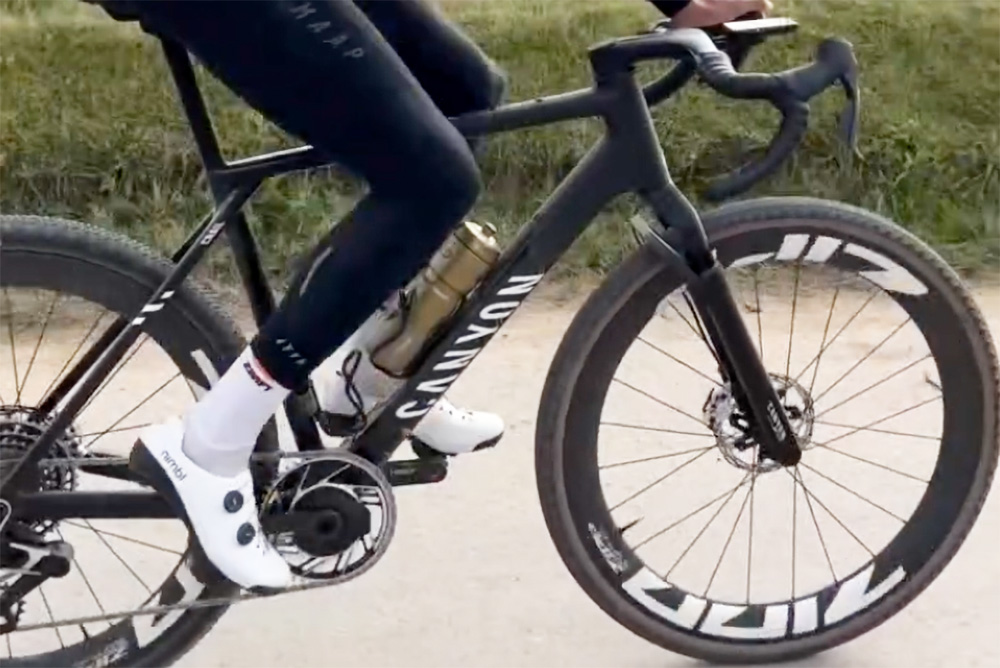
A video on social media platform Threads shows Canyon-sponsored athlete Mateu Cavallé riding a new gravel bike, complete with a matching Canyon-branded suspension fork.

Until now, only the Grizl – Canyon’s adventure-focused bike – was available with a suspension fork. The Grail – the brand’s gravel race bike – hasn’t been available with a suspension fork, with geometry that wasn’t corrected for a longer fork.

The new bike looks closer to a Grail – in fact, it doesn’t appear to be a radical departure from the existing bike. 

Up-front, the new bike appears to have fully internal routing compared to the current Grail’s design, where it runs under the stem and into the head tube. That suggests Canyon may have tweaked the aerodynamics of the Unbound-winning bike.

Big tyre clearances?

The new bike is using Zipp’s super-wide 303 XPLR wheels with what looks like a 45mm tyre.

It also looks likely that Canyon has upped the tyre clearances on the new bike. Cavallé’s bike is set up with Zipp’s super-wide 303 XPLR wheelset, with what looks to be the Goodyear/Zipp collaboration tyre in its Inter version.

This is a 45mm-wide tyre, but the current Grail has a more modest clearance of 42mm.

Exclusive suspension

Close up of gravel suspension forks for the best gravel suspension forks list.
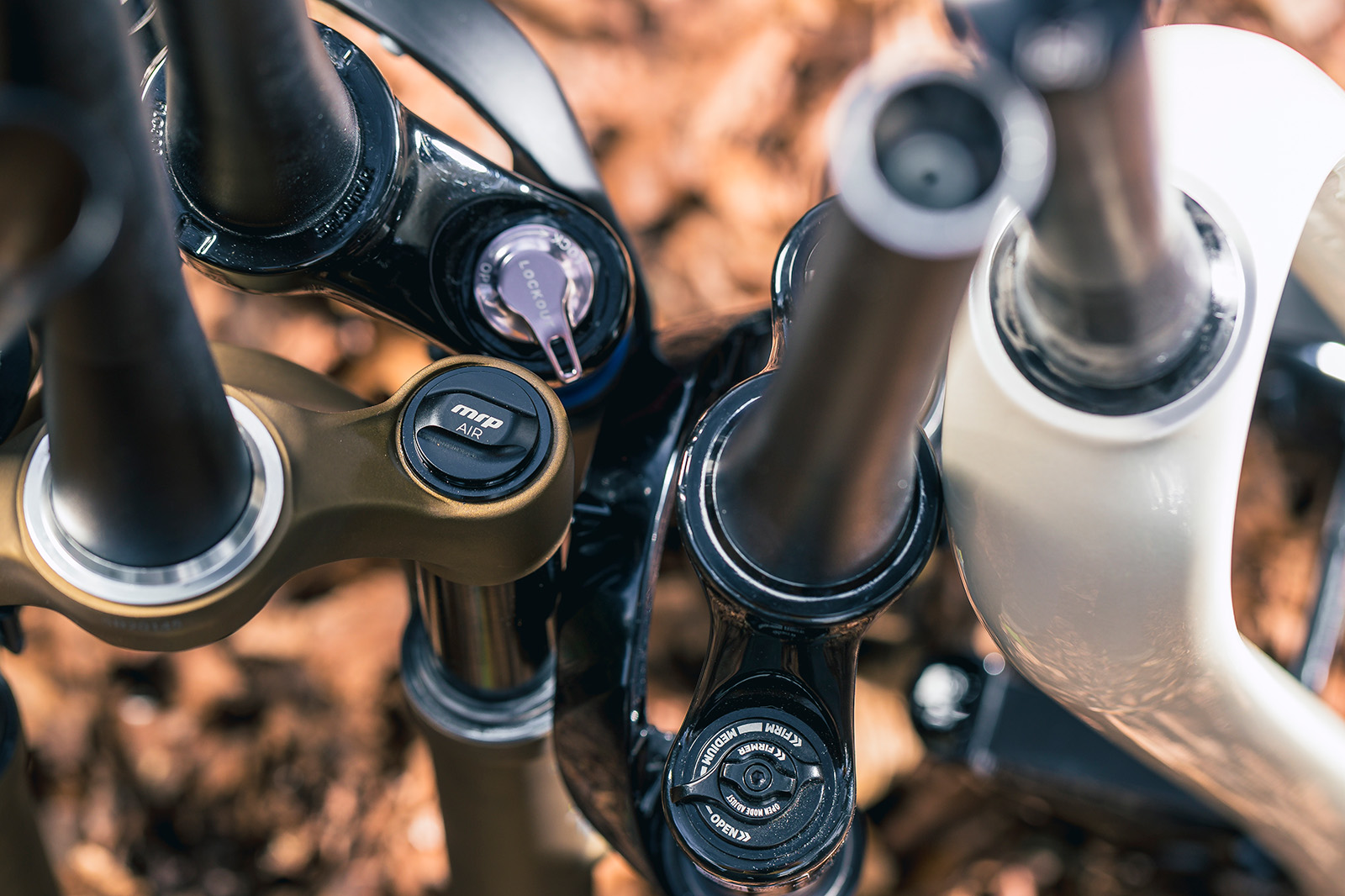
Gravel bike suspension forks are becoming more common. Russell Burton / Our Media

Rumours were abound last year that DT Swiss was working on a gravel suspension fork. 

Given that most of the major suspension players – including Fox, RockShox, Cane Creek, Cannondale, Suntour, MRP, KS and Lauf – have something in this space, it wouldn’t be a surprise to see DT Swiss join them. 

Further rumours suggested DT’s as-yet-unseen fork was, in fact, a collaboration with Canyon and would be a Canyon-exclusive component. 

Whether the fork is indeed fully exclusive or will be exclusive for a set period of time, remains to be seen.

The fork appears to have a reverse arch brace, reminiscent of DT Swiss’ lightweight XC Race fork from 2015. 

The arch brace is on the rear of the fork.

DT’s modern F-series mountain bike forks all have a conventional forward-facing arch brace. The reverse design is something we’ve seen in the gravel space with Fox’s impressive 32 Taper-Cast fork.

The images don’t appear to show any crown adjusters, but we wouldn’t be surprised to see some sort of lock-out – either remote or a simple button lock-out like that found on the Cane Creek Invert CS.

A report from September last year on the Bikerumor site also suggested a DT and Canyon team-up. 

The design shown then, on the bike of German gravel rider Peter Scherman looked a little different from the much slimmer-looking all-black unit of Cavallé’s bike. 

An earlier sighting of Canyon’s new fork.

However, that fork could well have been a mule prototype using one of DT’s older lightweight XC designs as a basis, like the OPM ODL fork from 2015.

Why design your own?

The question remains – why would Canyon want to develop its own suspension fork?

Perhaps because of the brand’s successes on the gravel racing scene, it wanted a lighter option than those currently available. 

If that’s the case, working with DT Swiss would make sense because, historically, DT Swiss has made some of the lightest racing suspension forks.

If Canyon’s new race fork sets a new standard for light weight, could we see a response from the other major players? Perhaps an SL version of the RockShox Rudy Ultimate in the vein of the classic SID World Cups. Or an even lighter iteration of Fox’s 32 Taper-Cast?

With no official word yet from Canyon on a new gravel race bike, this bike looks somewhat complete. We wouldn’t be surprised to see an all-new bike line-up to help Rosa Klöser defend her Unbound title now she’s a Canyon-sponsored rider.

The Ultimate Zwift Games Elite Championships Preview

The following article is adapted from the Pro E Cycling preview of the elite Zwift Games. Pro E Cycling maintains a website with pro virtual cycling race results and a ranking system for pro riders. It also publishes a blog every Tuesday morning on all things virtual cycling. You can sign up for the blog (for free) on Substack here.

Well, here we are! Zwift Games started Saturday, March 8. At Pro E Cycling, we’ve decided to greet the biggest race series of the season with the longest most ambitious blog post of our existence.1

Below is the table of contents for what you’ll find in this post. Feel free to use the links jump between sections, skip the boring bits, and leave your thoughts in the comment section below.

How to Watch and Official Resources

Starting with the simple stuff. Zwift Games will take place on three consecutive Saturdays in March:

  • March 8 – Sprint Championships
  • March 15 – Climb Championships
  • March 22 – Epic Championships

All three championships will be broadcast on YouTube, and Zwift has set up an official Zwift Games Elite Hub where you can find all the YouTube links, start lists, results, and the fan guide.

The men and women will race consecutively for each championship, starting at 17:00 UTC each Saturday. Just to cater to our subscriber list, that translates to noon EST.

Got that? Good. Now the interesting stuff.

Format

Last year, the format was simple: the Sprint Championship used the well-trodden and easy-to-follow format of the 2023 UCI World Championships.1 The Epic and Climb Championships were straight scratch races.

This year, Zwift has gotten a bit more creative. Most of the format I like.2 But some aspects are too cute by half.

Sprint Championship

Format

The Sprint Championship is divided up into three separate races.

  • The first race is 16.1 km/88m around Makuri Madness. Zwift calls this “Stage 1.”
  • The second is 18.1 km/167m through Scotland Smash. Zwift calls this “Stage 2.”

Both of these races are scratch races. Riders will be awarded points based on their position at the finish, starting at 70 and descending by one until last place (so second gets 69 points, third 68, etc.). Each race also has an intermediate sprint location where the top three riders receive points (10-5-3).

After the first two races, the five riders with the most accumulated points will advance to what Zwift calls the “Sprint Showdown.” Importantly (you’ll see why later), this is not a “stage.”

Whoever crosses the finish line first wins the Sprint Championship and the $3,000 that comes along with it.

Analysis

One of the critiques of last year’s Sprint Championship was that, well, it arguably wasn’t really a sprint championship. In particular, the second race (where riders needed to finish in the top 10 out of 30 to advance to the third and final race) included a climb of the Titan’s Grove Reverse KOM, a 0.9 km segment at 6.6% that (in the eyes of some) turned the stage into a bit more of a puncheur’s championship than a sprinter’s.

I think that concern was overblown – Titan’s Grove Reverse isn’t much longer than a one minute effort for the top men. To the extent that was an issue though, it’s been largely been fixed this year, but to be honest it’s a difficult balance to strike. Zwift can’t just put on a long, flat race: that’s boring. There needs to be some punchy segments to give the non-pure sprinters some hope, but not to the point where the nomenclature of a sprint championship no longer makes sense.3

I think they’ve done a good job striking the right balance this year. Stage 1 has a bit of a punch about two kilometers before the finish line, but it’s not really enough to drop the stronger sprinters – it’ll just mean the fireworks start earlier. Stage 2 includes the Clyde Kicker twice, Breakaway Brae once, and finishes with a slight uphill for the last 1.5 km. Advantage: puncheurs. Maybe? Slightly? It’s a good balance.

Glasgow Sprint Circuit is the perfect course for the final. Give the puncheurs a chance to attack at the Clyde Kicker, but for the sprinters who are able to hang on, they’ll be able to cross the line at the Champion’s Sprint with their hands raised above their heads (well, IRL, Zwift hasn’t programed avatars to do that… yet).

Climb Championship

Format

The Climb Championship will have the same structure as the Sprint Championship:

  • The first race is Watopia’s Downtown Eruption (19.9 km/275m). This is “Stage 3.”
  • The second is London Uprising (20.9 km/357m). This is “Stage 4.”
    • Just like with the Sprint Championship, each of these two stages will have an intermediate climb (Stage 3) or sprint (Stage 4) where additional points are awarded to the first three riders. Points at the finish line are the same as they were for the sprint.
  • The “Climb Showdown” will feature the top 5 riders with the most points in Stages 3 and 4, and be on the new ZG25 Climb Champs course (5 km/156m). First across the line wins the Climb Championship and $3,000.

Analysis

This is a very different Climb Championship than last year, a scratch race up Alpe du Zwift. And as challenging and iconic as the Alpe is, I think it’s fair to say it doesn’t always produce the best racing. The women’s race last year was a bit of a snoozefest. Illi Gardner just sat at a slightly higher w/kg threshold for the entirety of the climb and finished 1:35 ahead of Emma Belfoth (who herself was 1:18 up on Gabriela Guerra in third).4

But if the question you are trying to answer is “who’s the best climber,” well, the Alpe is the right place to do it. And while I think this year’s format will produce more exciting racing, it certainly gives more room for puncheurs to shine.

Take Stage 3 for instance. There are two climbs in the stage. The first is the Volcano KOM. It’s a pretty quick 3.8 km at only 3.2% – a 5:30-6:00 minute effort for the top men. The stage ends with the Hilly KOM (0.9 km at 5.5%). This was the end of last year’s Epic Championship, where Neal Fryett completed the segment in a blistering 1:20 to win.

This is… not a climbing stage. It’s a 5 minute power test halfway through and a one minute power test to end. The same is true for Stage 4, which features the Fox Hill and Box Hill KOMs, both 5-minute power tests. Johan Norén has done the former in 4:36, and Lennert Teugels the latter in 5:11. The Climb Showdown final goes up Fox Hill again, and that’s that.

So all in all, I think calling this a “Climb Championship” isn’t really right. Matthieu van der Poel holds the record up the Poggio in 5:40. This format and these courses favor that style of rider.

Epic Championship

Format

Ironically, the Epic Championship is arguably more of a climbing test than the Climbing Championship. The format here is simple. It’s a scratch race, and here’s the course:

  • ZG25 Queen. First off, great name right?5 Zwift calls this “Stage 5.”
    • The route is 44.8 km/894m. There are two intermediate KOMs with the same first-three-across-the-line scoring system as the earlier stages.

Analysis

Not a ton to say here. I like the route, and overall the Epic is my favorite championship. It’s the closest we have in the virtual world to an IRL road race, and while I definitely don’t want the whole sport to trend this way, there is something nostalgic about settling in for a longer race that takes time to develop.

It also produced the biggest upset of the inaugural Zwift Games last year, Fryett’s win over Teugels and Ollie Jones. I think there’s something about the longer races that puts virtual specialists justtt a little out of their comfort zones and creates space for these kind of results.6 I’m hoping we get something similar again.

Overall Championship

Format

The winner of the Overall Championship will take home $5,000, but no golden KICKR bike this year. Heartbreaking. That thing was sick. The top 30 riders will also be in the money this year, so there’s a bit more “spreading the wealth” and incentives to fight for positions even outside the top ten.

Overall standings will be calculated based on the points riders score across all five stages – both finish line points and intermediate sprint and KOM points. But because the Sprint and Climb “Showdowns” aren’t considered stages, those won’t count for anything for the Overall.

Analysis

A few thoughts here:

  • It’s sort of dumb that the Sprint and Climb Showdowns don’t mean anything for the Overall. Sorry, but it should matter for the Overall which rider finishes first vs. fifth there.
  • I love giving points for intermediate locations though. So smart. The “primes” last year – where riders won money rather than points – were never that exciting from a fan perspective. It was mostly riders who didn’t have a chance to win money at the finish line going for the primes, so they never mattered much for the overall race. But when the points matter for overall (and stage) standings? Game onnnnn.
  • I also don’t like how undervalued the Epic becomes in this system. It’s literally worth half the sprint and climb races, since both of those are split into two stages and therefore award twice as many points. I’d prefer to see each championship count the same.

Qualification Criteria and Start List

When the initial start list came out, I published the full list and a detailed explanation of the qualification criteria.

You can check out that link for a more in-depth explanation, but in short at the time we thought there were two ways to qualify:

But, it turns out, there was another way!

  • Wild cards (I think. But I don’t really know, since as far as I can tell, Zwift doesn’t make any of this public.)

When I published the above post, I noted that the main takeaways were that Freddy Ovett, the defending champion on the men’s side, and Kate McCarthy, the reigning world champion on the women’s side, hadn’t qualified. They did not qualify through the second chance race either. Yet… both are on the official start list published by Zwift. The same is true for U.S. national champion Hayden Pucker, who was 51st in the World Series standings after the third stage and on the outside looking in for Zwift Games.

So, what to make of this? Especially with Ovett and McCarthy, it seems like Zwift has exercised its discretion to issue wild cards to some higher-profile names, even if they didn’t meet the strict qualification criteria. In the above post, I noted that Zwift had never really closed the door on this possibility:

To qualify for the Zwift Games, riders would have to finish in the top 50 in the World Series overall standings. Zwift didn’t shut the door on additional riders beyond those 50 qualifying, but (again, as reported by Chris [Schwenker]) did say that “racing will be limited to 50-60 riders, with the aim of balancing entertaining racing, high field quality and access for riders.”

I strongly support this decision. As an initial matter, it makes sense to make some concessions after the fiasco of the World Series trainer malfunctions and cancellation of the final two stages, which some top riders had been relying on to qualify for Zwift Games. This is most true for McCarthy, who had a win taken away from her in Stage 2 because of a trainer issue outside of her control.

But even setting that aside, I’m sympathetic to reserving spots for top names even if they fell short of qualifying. The defending Zwift Games champion should be on the start line. So should the reigning world champion. If Ashleigh Moolman Pasio – who PCS has ranked as the 31st best female road cyclist ever – wants to show up for Zwift Games, by god let her in.7

(As an interesting side note, when Zwift officially announced the return of Zwift Games for this year, they promised us Moolman Pasio would be participating. They also promised us current men’s world champion Jason Osborne. But neither is on the official start list. Bummer.)

Anyway, platforms or race organizers retaining discretion to invite bigger names through wild card spots is nothing new. The UCI did something similar for the most recent esports world championship. And… it’s smart? If you care about growing the sport, there needs to be a sober recognition that some of the top names are not going to be able to prioritize minor virtual races – i.e., qualifiers – in their calendars. And that’s okay. We still want them there for the big races.

That being said: Zwift, can you at least be open about what you are doing?!? The above list I published was completely correct based on the announced qualification criteria,8 but as you’ll see below it seems like there have been a decent amount of discretionary tweaks. I’m assuming that, in addition to just making sure the biggest names were racing, some riders dropped out and Zwift filled the gaps with additional wild cards. Which they should do. But… it would be nice if there was some transparency here? Otherwise, we are just left guessing.

So with all that said, the start lists I published previously are correct, with the following changes when compared to the official Sprint Championship start lists:

Men

  • + Freddy Ovett
  • + Lennert Teugels
  • + Hayden Pucker
  • + Holden Comeau
  • + Brian Duffy Jr.
  • + Thomas Perren
  • – Stefan Van Aelst
  • – Pim van Diemen
  • – Matthias Deroose
  • – Moritz Ritter
  • – Luke Elton

Women

  • + Kate McCarthy
  • + Emma Belforth
  • + Illi Gardner
  • + Tilly Field
  • – Arielle Verhaaren
  • – Jacquie Godbe
  • – Lucy Harris
  • – Rachel Brown
  • – Sara Lundin
  • – Marine Maugé
  • – Lara Meyer

In addition, the following riders have (provisionally) qualified through the second chance race since I published the initial start list post:

Men

  • Krzysztof Król
  • Thomas Gobert
  • Timothy Rugg
  • Rob Devlin
  • Thomas Sørensen

Women

  • Selene Colombi
  • Camilla Ahlberg
  • Ellexi Snover
  • Leonie Harper
  • Kate Trdin

Prediction Game

Now the fun stuff!

Here’s the game: I’m going to rank the top ten riders, both men and women, based on the total number of points I think they’ll score in Zwift Games. So for example, last year Kathrin Fuhrer won on the women’s side with 295 points, followed by Gabriela Guerra in second with 293; Lou Bates in third with 290; and all the way down to Kristen Kulchinsky in sixth with 283 points.

On the men’s side, Ovett won with 280 points. So in this prediction game, the correct bingo card last year would’ve had Ovett – the men’s champion and proud owner of a freaking golden KICKR bike – in seventh.

I don’t know if this is the best way to “predict” Zwift Games. Or that I’ll do particularly well at it. But it’s certainly a little quirky, and that’s our niche. So let’s do it (bracketed numbers are the rider’s [current ranking/all-time ranking]):9

1) Kate McCarthy [3/11]

To start, I’m fairly confident that it’ll be a female rider at the top of this list. At the moment, the women’s virtual peloton is pretty top heavy. There are some incredible riders, but the top eight or so are a tier above the rest of the field. In contrast, the men’s peloton is a bit deeper, with maybe 15-20 riders in a similar tier.

The upshot of this is that the top women are more likely to consistently be in the top spots in each stage, whereas the men will shuffle around a bit more and score less points. This is precisely what happened this year, and I think it will happen again.

But to McCarthy specifically: she’s my pick to win Zwift Games on the women’s side. Her season thus far has been insane – she’s won the UCI World Championship, four of the five Sunday Race Club monthly finals in which she’s participated, and the only Zwift World Series race she entered she won but had the result annulled due to a trainer malfunction. Another way of saying all this is that, if you count the World Series win, McCarthy has won six of the seven pro races she’s entered this year.

That’s a crazy win rate, the likes of which we’ve never really seen since Freddy Ovett won four of five individual stages and the overall GC in the second season of the 2020-2021 Zwift Premier Division. Because our current ranking system accounts for results over the past two years, and her run has only started this season, McCarthy is still currently only ranked third in the world. But she’s by far and away been the best rider this season, and is the Pro E Cycling pick to win Zwift Games.

2) Gabriela Guerra [2/9]

3) Kathrin Fuhrer [1/1]

McCarthy has some intense competition. I’ve written previously about how much fun the rivalry between her, Guerra, and Fuhrer has been this season.

I won’t fully rehash that article here – this post is already way too long – but it’s worth explaining why I’ve got Guerra second and Fuhrer, the defending champion and current world #1, in third. The truth is… who the heck knows. These three are so, so close to each other. Of the ten pro races that have happened so far this season, one of this trio has won every one.

Recently though, Guerra has been slightly better than Fuhrer. In the past five Sunday Race Club monthly finals, Fuhrer has done okay: she’s finished in the top 10 each time, but she hasn’t managed to podium. Guerra, on the other hand, has been on the podium for each of those races. So I think right now Guerra is riding slightly better. But again, I could be totally wrong here.

4) Lou Bates [4/5]

And then there’s Lou Bates. I’m going to be honest here: Bates is my favorite rider to watch in the women’s peloton. She’s got the sort of “idgaf, I’m just gonna go for it” style of racing that is wildly entertaining, even if maybe not optimal from a strategic perspective.

There was a time not so long ago where Bates had a legitimate argument as the best rider in the world. She won Zwift Grand Prix last year, along with 3/4 of the individual stages in which she raced (and oh yeah, she finished second in the other one).

But recently, she’s been a step behind McCarthy, Guerra, and Fuhrer. I’m rooting for that to change here – Bates is one of the few pro riders that hasn’t really made her way over to MyWhoosh yet, so maybe racing on home turf will help – but realistically I have her finishing fourth on the women’s side.

5) Lennert Teugels [6/5]

And finally we get to the men. Last year, Teugels finished 29th in Zwift Games. But leading with that is pretty deceptive: he finished second in both the Epic and the Climb. But he didn’t race in the Sprint, and so was effectively eliminated from GC before the racing began.

This year, Pro E Cycling has Teugels as our pick for men’s Zwift Games champion. He hasn’t raced much this year – he was absent from the Zwift World Series, and is only on the start line because Zwift gave him a wild card – but he’s been on the podium in the only two Sunday Race Club finals he’s entered. And, critically, the only riders he’s lost to in those races were Michael Vink [3/8] and Jason Osborne [1/2], neither of whom are racing here. His non-monthly final Sunday Race Club results haven’t been that compelling, and I realize picking Teugels here over Ovett, Jones, and Lionel Vujasin is probably a bit of an upset pick, but hey this is all for fun so who cares if I’m wrong �

6) Freddy Ovett [9/4]

It’s difficult to rank Ovett. He’s dominated when he’s raced professionally on Zwift, but he really doesn’t do so that often. Indeed, we haven’t seen him in a pro race this year – or at all since he was crossing the finish line at the top of the Alpe last year as winner of the inaugural Zwift Games.

Ovett recently won a KISS Racing 100 community race (sitting at a silly 5.1 w/kg for the entirety of the 100 km), so his form seems pretty good. But it’s tough to say for sure. What I do know is that when Ovett races on Zwift, he tends to win. So I’ve got him high up in the rankings again this year.

7) Mika Söderström [5/21]

8) Merle Brunnee [9/23]

This is where it gets really tough. I’m grouping these two together, and don’t actually feel like there is much distance between Söderström and Brunnee and Jones and Kulchinsky below (or the riders I list as “notable omissions,” for that matter). But Söderström has looked strong in Zwift World Series, and currently sits in third behind Fuhrer and Kulchinsky after three stages. Brunnee, for her part, has been one of the only riders really able to challenge the trio of McCarthy, Guerra, and Fuhrer in Sunday Race Club, finishing on the podium in five of the six monthly finals so far this season. So I’ve got them here, but it’s close.

9) Ollie Jones [8/3]

Jones is a virtual racing trailblazer. Most folks introduce him as the first Zwift Academy male winner. But a cooler fun fact (okay, not actually), is that in Zwift Games he is likely to become the fifth rider ever – male or female – to eclipse 1,000 career PEC Points. He’s at 998 right now, so any top 10 finish will do it. And if he does, he would join Vujasin and Osborne on the men’s side, and Fuhrer and Cecilia Hansen on the women’s side, as the only riders to ever hit that milestone.

But Jones has been riding well this season. I expect him to be consistently in the top ten, and predict that will be good enough for a podium finish in the men’s Overall competition. This is essentially what he did through the first three stages of the Zwift World series, where his three top-10 finishes have placed him first in GC.

10) Kristen Kulchinsky [6/6]

Consistency. For a rider of her stature, Kulchinsky hasn’t actually won a lot of professional races. Only three to be exact (two Zwift Grand Prix stages and a Sunday Race Club finals). But she really doesn’t have bad days either. Do I think Kulchinsky will win a Zwift Games stage? To be honest, I don’t. Do I think she will be in the top 10 in each one, or close to it? Yeah, it feels inevitable. And consistency goes a long way in the Overall competition. Last year, she finished 8th, 5th, and 7th10 in the three stages, good for 6th overall. I expect something similar this year.

Notable Omissions

There are lots. It’s a deep field! Leaving all-time #1 and current #2 Lionel Vujasin off this list was hard. Same with Cecilia Hansen, the second best female virtual cyclist… ever. Other riders like Marlene Bjärehed [13/22], Lucy Charles-Barclay (she’s a triathlete who hasn’t raced much virtually, so our rankings don’t reflect her skill), Illi Gardner [18/15], Emma Belforth [27/28], Michał Kamiński [4/11], Martin Maertens [7/16], Daniel Turek [11/28], Mickael Plantureux [13/39], and Hayden Pucker [NR/150]11 could also make me look like an idiot. The list goes on and on, though it’s mainly men since 7 of my top 10 are already women.

But I wanted to throw out a bunch of these names so that when one of them wins the darn thing, I can at least say I mentioned them in the preview �

Enjoy Zwift Games all – we will be here for you the whole way through!


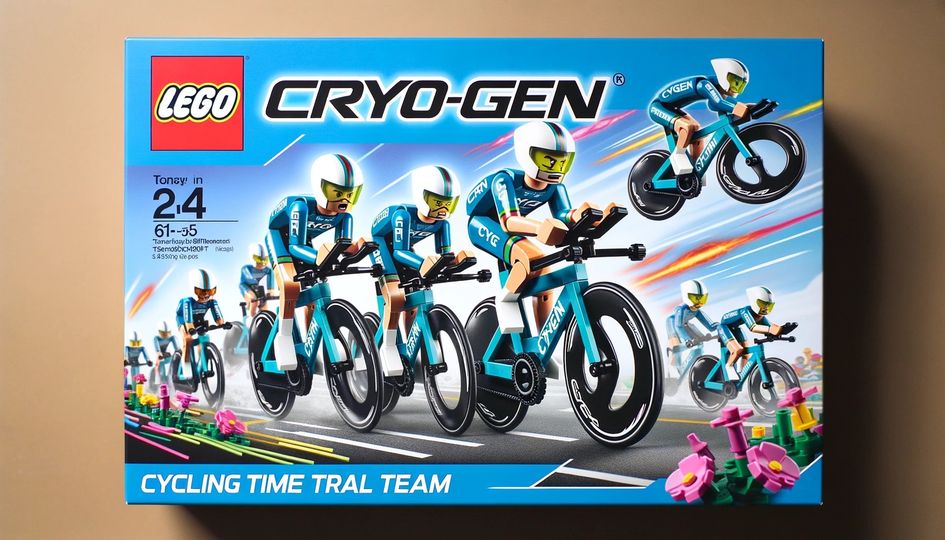
Team CRYO-GEN: 2024/2025 ZRL Season Highlights and the Power of Community

Intro to Team CRYO-GEN

Founded in 2018, Team CRYO-GEN is a global Zwift community team known for its friendly atmosphere and formidable racing prowess. The name CRYO-GEN stands for “Competitive Riders Young & Old – Groups for Experienced or New,” reflecting the team’s inclusive ethos. Under the leadership of team manager Rick Bowman, the team has grown to over 1000 members worldwide, ranging from complete novices to elite A+ racers.

Team CRYO-GEN prides itself on a strong community spirit, striving to ensure every member feels like an important part of the group and “not just another name or number”. This welcoming culture, combined with a drive for excellence, has helped the team become a force on the virtual roads – even fielding men’s and women’s squads in the elite Premier Division of the Zwift Racing League.

2024/2025 ZRL Season Highlights

The 2024/2025 Zwift Racing League (ZRL) season was an outstanding one for Team CRYO-GEN, marked by strong podium finishes, key promotions, and consistent performances across all divisions. Below we recap the season’s high points, from championship victories to gritty efforts in tough leagues, showcasing the depth and determination of Team CRYO-GEN.

Promotions & Achievements

Team CRYO-GEN dominated many league standings this season. Eight CRYO-GEN squads finished in the top two of their divisions, with four teams earning promotion to higher tiers:

  • Team CRYO-GEN Haleakala (AMERICAS E, Div 2) – League champions, earning promotion to A1 (the top A division).
  • Team CRYO-GEN Stelvio (EMEA W, Div 2) – Dominant division win and promoted to A1 after an undefeated season.
  • Team CRYO-GEN Hautacam (AMERICAS E, Div 2) – Finished strong with a Week 6 victory to clinch the division title and promotion to A1.
  • Team CRYO-GEN Tourmalet (EMEA E, Div 2) – Consistently on the podium (three podium finishes) and promoted to B1.

Additionally, several other squads – Team CRYO-GEN Galibier, Mt. Evans, Iseran, and Grand-Colombier – finished as runners-up in their leagues, underlining the team’s competitive depth across regions. Impressively, no CRYO-GEN teams were relegated this season, a testament to the strength and consistency of the team’s performances.

One notable highlight: in the Americas Eastern A2 division, CRYO-GEN’s Haleakala and Hautacam finished 1st and 2nd respectively, showcasing Team CRYO-GEN’s depth by sweeping the top two spots in that league!

Top-Performing Teams

Several Team CRYO-GEN teams consistently fought at the front of the pack, demonstrating exceptional form and race IQ throughout the season:

  • Team CRYO-GEN Iseran (EMEA East, Div 1) – Runner-up overall for the third straight season, constantly dueling with their rivals from DZR. (Best moments: managing to beat DZR in multiple races. Looking ahead: preparing for the ZRL Finals in April to cement themselves as one of the top C category squads.)
  • Team CRYO-GEN Stelvio (EMEA W, Div 2) – Never finished below 4th place and took two outright wins during the season.
  • Team CRYO-GEN Hautacam (AMERICAS E, Div 2) – Capped the season with a clutch Week 6 win, securing their promotion as division runners-up.
  • Team CRYO-GEN Tourmalet (EMEA E, Div 2) – Earned three podium finishes and consistently placed in the top 4 each race.
  • Team CRYO-GEN Galibier (EMEA W, Div 3) – Scored three outright wins, dominating their division from start to finish.
  • Team CRYO-GEN Haleakala (AMERICAS E, Div 2) – Logged three first-place finishes over the season, showing remarkable strength in every race.
  • Team CRYO-GEN Grand-Colombier (AMERICAS E, Div 1) – Ended the season with back-to-back wins, proving themselves as one of the top teams in their division.

These top-performing squads solidified CRYO-GEN’s status as a leading force in ZRL, regularly battling at the highest level of competition.

Mid-Table Consistency

Team CRYO-GEN’s mid-table teams also held their own in challenging divisions, ensuring a strong club presence even when not contending for the title:

  • Team CRYO-GEN Mur-de-Huy (EMEA W, Div 1) – Hard-fought season with finishes ranging from 7th to 11th in a very competitive top division.
  • Team CRYO-GEN Ventoux (EMEA E, Div 1) – Steady performer, consistently coming in 8th or 9th each week in a tough league.
  • Team CRYO-GEN Santis (EMEA W, Div 2) – Balanced campaign with finishes between 5th and 9th place, showing reliable performance.
  • Team CRYO-GEN Val-Thorens (EMEA E, Div 2) – A model of consistency, finishing 3rd overall in the league. Notably, Val-Thorens never placed lower than 6th in any race, with top points scorers Nick Hird (355 pts) and Philip Helfenberger (311 pts) leading the charge.
  • Team CRYO-GEN Koppenberg (EMEA W, Div 1) – Mixed results; managed a couple of 2nd-place finishes but struggled with inconsistency in other races.
  • Team CRYO-GEN Mortirolo (EMEA W, Div 1) – A solid presence, regularly finishing 4th or 5th in a very strong division.

Battling in Tough Leagues

A few CRYO-GEN teams faced especially fierce competition in top divisions, showing tremendous grit and determination despite the odds:

  • Team CRYO-GEN Mauna-Kea (Oceania W, Div 1) – Achieved two superb 3rd place finishes, but a DNQ (did not qualify in one race) hurt their final standing.
  • Team CRYO-GEN Etna (Oceania W, Div 1) – Consistently finished around 8th–11th in an extremely competitive B1 league, holding their own in a brutal field.
  • Team CRYO-GEN Mount Aspiring (Oceania W, Div 1) – Displayed fighting spirit by avoiding any bottom-place finishes (never lower than 14th in a 16-team league).

These teams showed true grit against elite competition, and their efforts were nothing short of impressive.

Special Recognitions

Throughout the season, certain Team CRYO-GEN squads earned special shout-outs for exceptional performances:

Teams of the Week

  • Week 3 – Team CRYO-GEN Stelvio for a superb win in EMEA-W Southern A2.
  • Week 4 – Team CRYO-GEN Iseran for beating DZR in the Team Time Trial by just 3 seconds.
  • Week 5 – Team CRYO-GEN Mt. Evans (Americas Central C1) and CRYO-GEN Galibier for their dominant victories that week.
  • Week 6 – Team CRYO-GEN Hautacam for its first win in AMERICAS Eastern A2 and CRYO-GEN Mauna-Kea for securing another 3rd place in Oceania W Div1.

Team of the Season

Team CRYO-GEN Haleakala was recognised as the standout team of the season for their dominant title-winning campaign in Americas Eastern A2. Haleakala’s consistent excellence set the bar for the entire team.

Looking Ahead

With the ZRL format expected to evolve next season (moving to a new Zwift Racing Score system), Team CRYO-GEN is ready to adapt and continue competing at the highest level. The team has already set key targets for the upcoming season:

  • Team CRYO-GEN Iseran – Preparing for the ZRL Finals in April, aiming to establish themselves as one of the top Category C squads.
  • Team CRYO-GEN Stelvio & CRYO-GEN Tourmalet – Both pushing for yet another promotion to even higher divisions after coming so close this season.
  • Team CRYO-GEN Mur-de-Huy (and other mid-pack teams) – Looking to build on their chemistry and climb further up the rankings in their leagues.

With incredible depth, teamwork, and a hunger for results, Team CRYO-GEN appears poised for another dominant season ahead. Congratulations to all CRYO-GEN riders, captains, and support crew on an unforgettable ZRL season – let’s come back stronger, faster, and ready for the next challenge!

The Power of Volunteers and Automation

None of these achievements would be possible without the dedicated volunteers working behind the scenes. Team CRYO-GEN’s day-to-day operations are supported by a strong admin team of volunteers who handle everything from social media and website management to graphic design, data analytics, and team captain duties for each racing category. This robust support structure allows the racing squads to focus on performing their best, knowing that planning and community management are in capable hands. The team’s leadership includes three team managers and numerous admins who devote countless hours to keeping the community running smoothly – truly the unsung heroes of CRYO-GEN’s success.

To manage a community of this size and complexity, Team CRYO-GEN also embraces automation and technological tools. For example, the team leverages ZwiftPower, a community-built platform that automatically tracks race results and rider data across Zwift events. Tools like ZwiftPower (now an official part of Zwift’s ecosystem) and the WTRL scoring system for ZRL help eliminate tedious manual data crunching. This means volunteer organisers can quickly get accurate standings, monitor performance, and even enforce fair racing rules (like category limits and disqualifications) without doing it all by hand. Additionally, Team CRYO-GEN coordinates via Discord and other apps to automate event scheduling and communications, ensuring that members around the world stay informed and engaged.

In short, dedicated volunteers are the backbone of Team CRYO-GEN, and smart automation ensures their efforts scale effectively. This combination of passionate people and helpful technology creates a well-oiled machine — a community that runs efficiently and delivers a top-notch experience for all its members.

Join Team CRYO-GEN – Ride and Race with Us!

The Team CRYO-GEN community is always excited to welcome new riders into the fold. Whether you’re a seasoned Zwift racer or brand new to virtual cycling, Team CRYO-GEN has a place for you. Our team spans all experience levels and focuses on fostering a supportive, fun environment as well as offering competitive racing to test your skills. If you’re looking for camaraderie, encouragement, and the thrill of online racing, now is the perfect time to get involved.

Together we ride, together we race, and together we win! Team CRYO-GEN is more than just a racing team – it’s a family of riders who push and uplift each other. If you’re ready to start your next cycling adventure with us, you can sign up on our website cryogen.team. Come be a part of this vibrant community and share in the excitement of the Zwift Racing League and beyond. We can’t wait to see you on the virtual roads – Ride On!

The best-value alloy wheelset I tested in 2024 now has a 40% discount

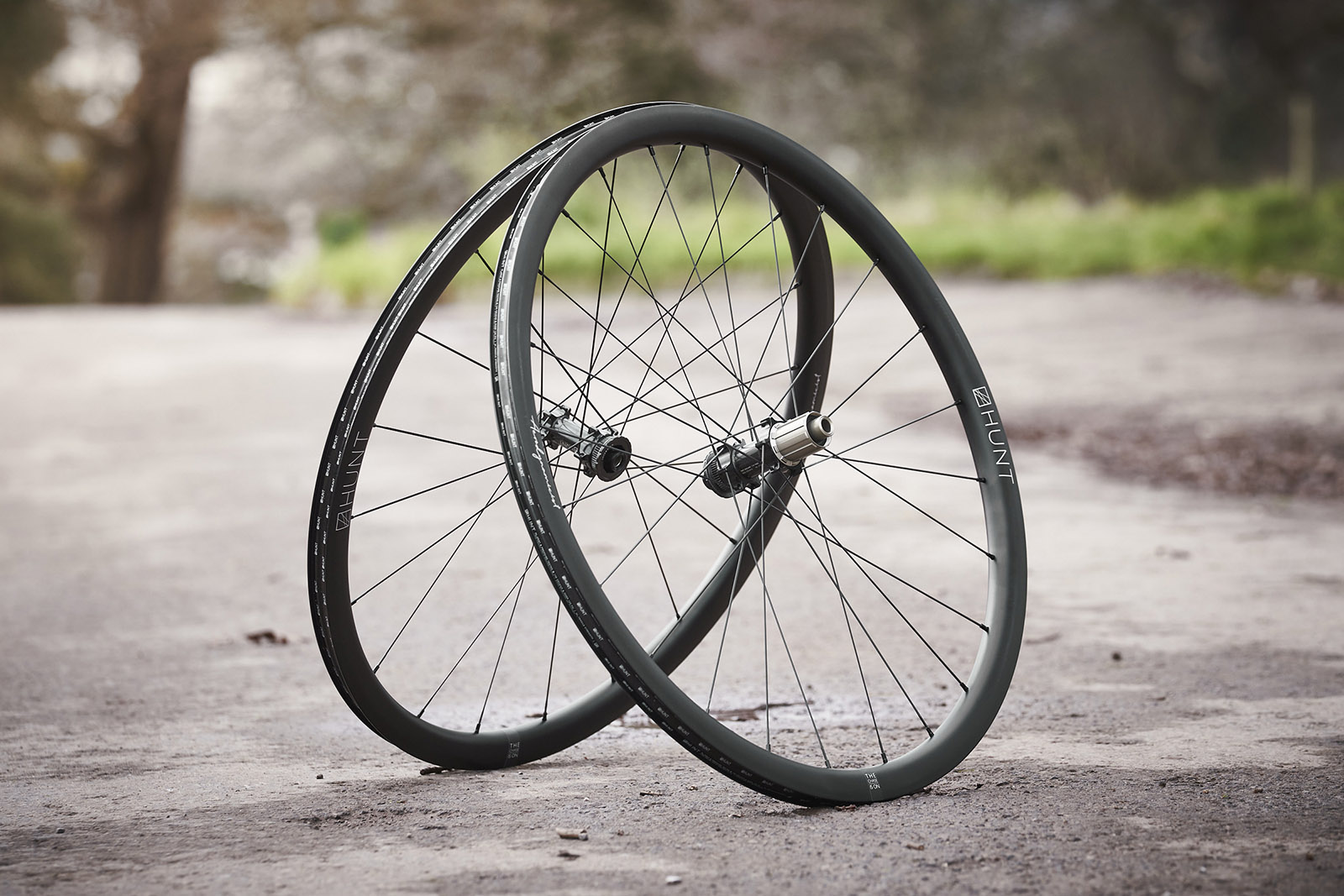
The Hunt 34 Aero Wide Disc SL alloy disc wheelset is currently discounted to £359.40 – almost £200 cheaper than when I reviewed it in 2024.

Hunt is offering a bumper 40% discount on the current full retail price of £599.

I considered the 34 Aero Wide Disc SL to be the best-value alloy wheelset I tested last year and the discounted price underlines that opinion.

What are you getting here?

Hunt Aero Wide 34 Disc SL road bike wheelset
The Hunt Aero Wide 34 Disc SL was already a great-value alloy wheelset. Steve Sayers / Our Media

You can read my full review of the wheelset here.

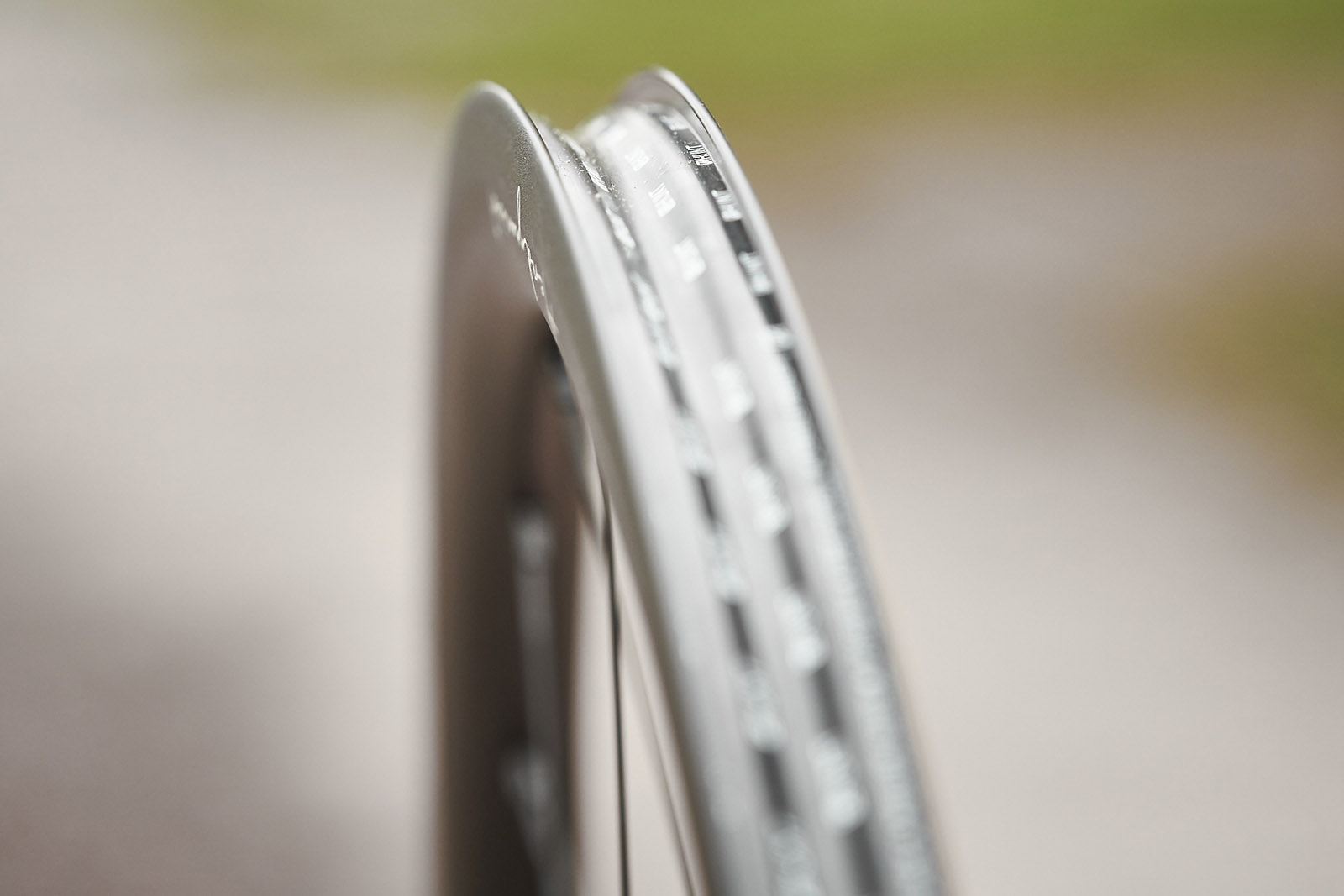
The 20mm internal rim width is modern for an alloy wheelset and well-suited to popular 25 and 28mm tyres. Externally, the rims measure 26mm at their widest. 

Hunt Aero Wide 34 Disc SL road bike wheelset
The rim is contemporary, with an external width that flares out for aerodynamic gain. Steve Sayers / Our Media

Paired with the 34mm depth, you might expect the wheelset to carry excess weight, but at 1,572g with the Hunt-supplied lockrings, it’s competitively light.

Of the group of wheels I tested, you’d have to spend £760 (over twice the price) on the Roval Alpinist SLX Disc for anything lighter. 

Hunt also says aerodynamics were a key focus for the wheelset at launch – these claims are extremely difficult to reliably quantify in the real world, but the overall sense of speed was impressive when I tested the wheelset.

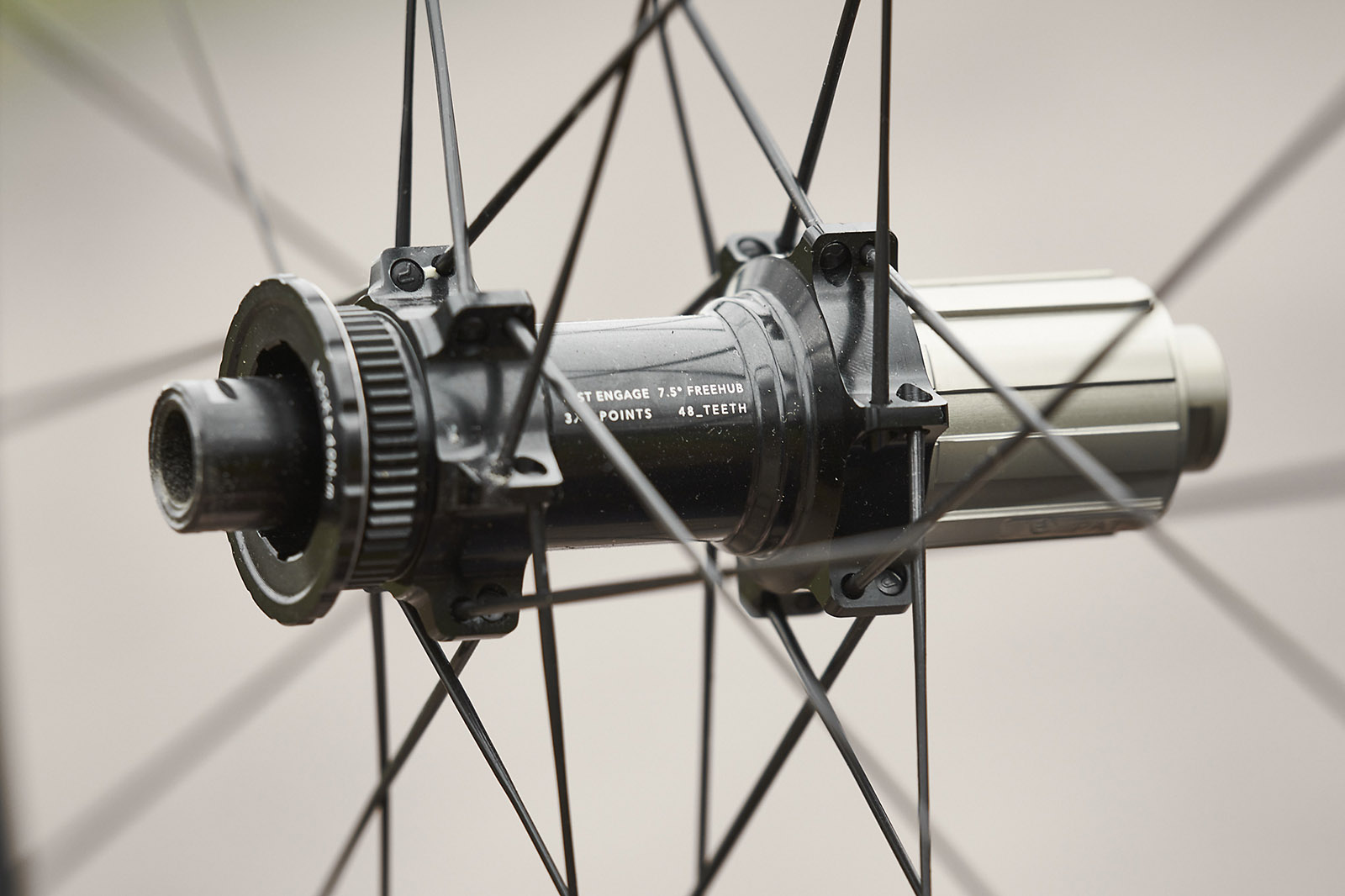
Hunt Aero Wide 34 Disc SL road bike wheelset
A noisy freehub is something of a Hunt trademark. Steve Sayers / Our Media

The wheelset also uses the brand’s own pawl-based Sprint SL hubs with a fast 7.5-degree engagement-angle freehub. 

Hunt has since made moves to introduce ratchet-based freehubs to its wheelsets (such as the 50 Carbon Disc), but unless the wasp-buzz sound puts you off – even from the 34 Aero Wide’s ‘low-noise’ version – there’s little reason to hesitate because of this.

Why spend more?

Hunt Aero Wide 34 Disc SL road bike wheelset
It’s hard to pick holes when the asking price is only £359.40. Steve Sayers / Our Media

This was already a legitimate question before the existence of this discount, and one I interrogated after I’d performed my alloy wheels group test last year.

I’d found that alloy rims (this one included) could offer tangible aerodynamic advantages compared to a shallow box-section rim. The ride quality – so often posited as a key benefit of carbon wheels, alongside aerodynamics – shouldn’t be sniffed at either.

While the allure of carbon wheels remains (and Hunt has discounted a few of those too), my experience led me to question whether the carbon-for-summer, alloy-for-winter approach was really necessary. 

The Hunt 34 Aero Wide Disc SL wheelset impressed in both of these respects.

And now, at its heavily reduced price, it’s nothing short of a barnstorming steal.

All About Zwift’s New Groovy Time Trial Wheels

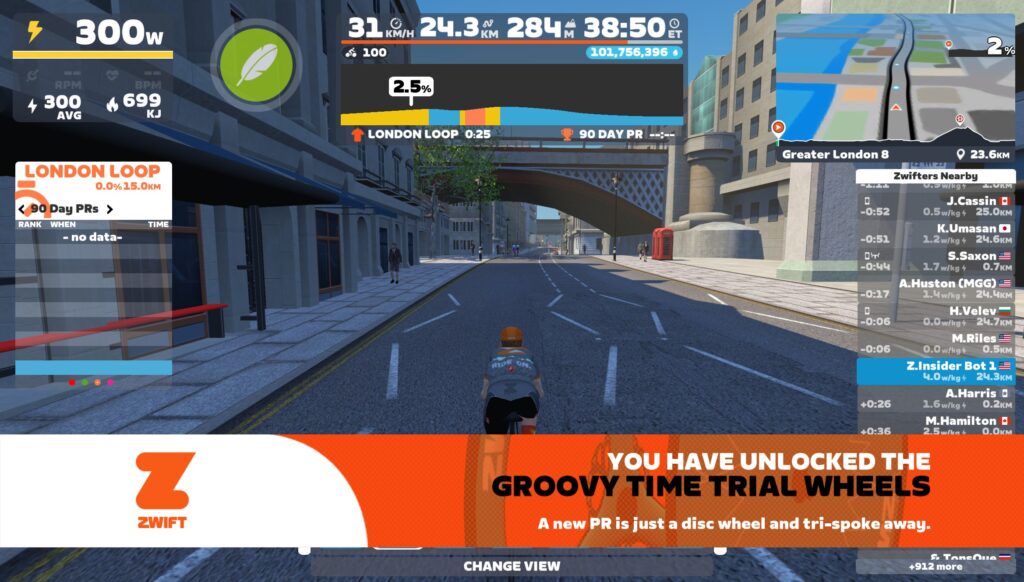
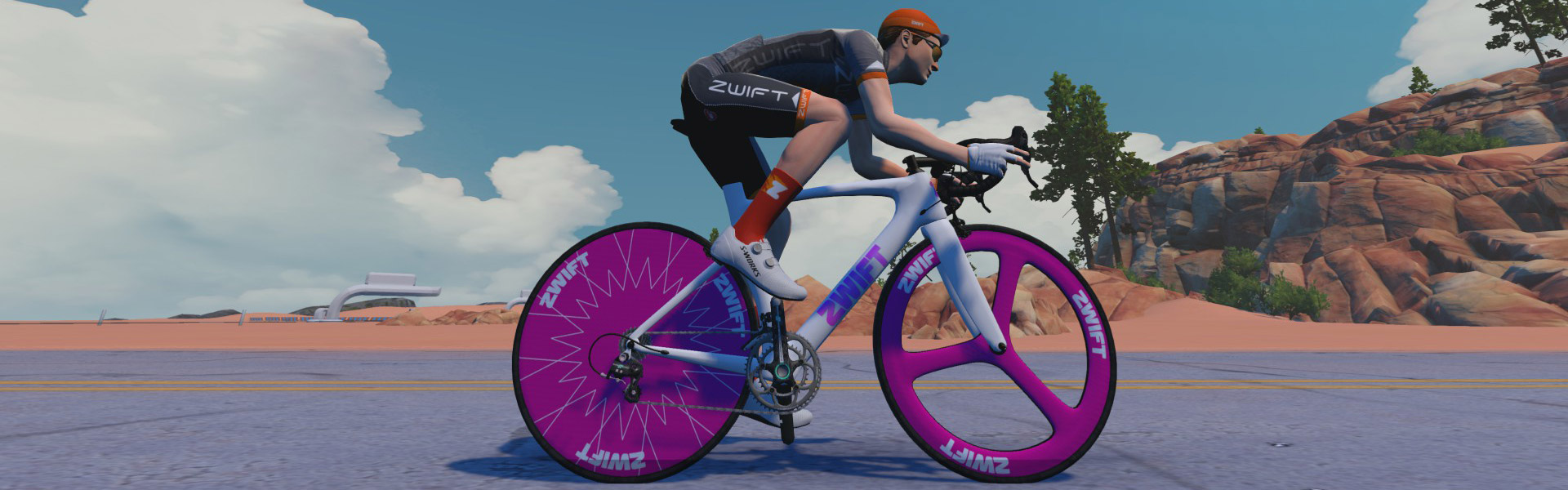
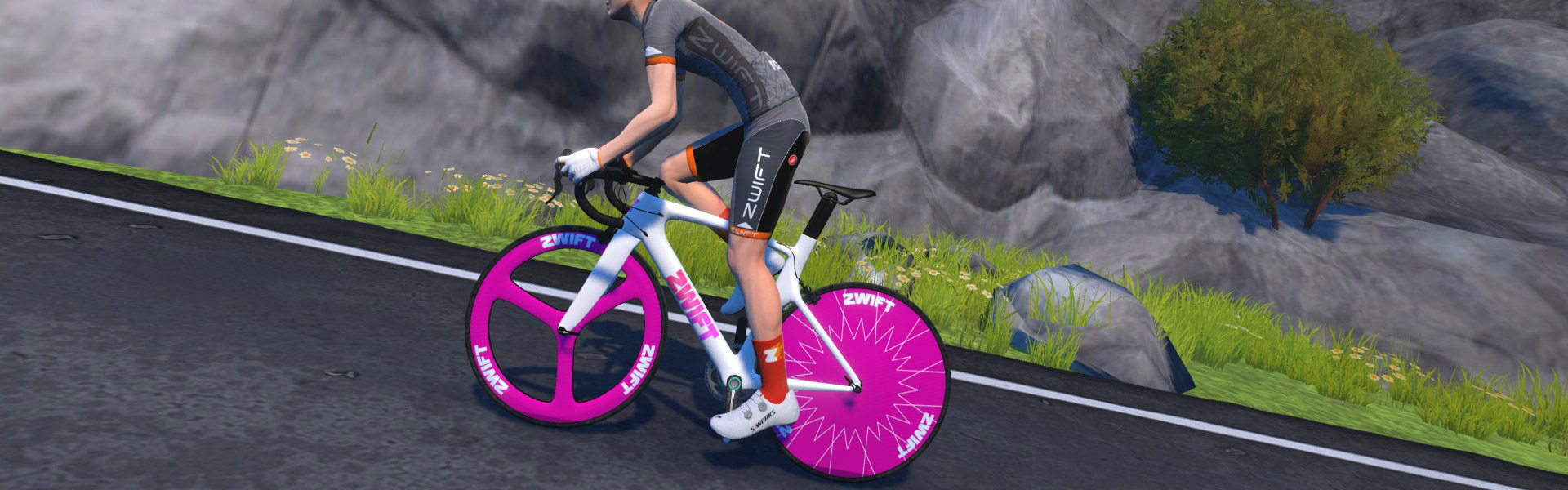
Zwift’s Big Spin 2025 kicked off March 3rd, and with it the much-loved prize spinner. One of this year’s big prizes is the “Groovy Time Trial” wheelset, the second tri-spoke wheelset in game.

Here’s how these wheels are described in the Drop Shop:
“Stiff and responsive, the tri-spoke flies in calm weather, while the disc wheel cuts through the air and minimizes turbulence – perfect for time trials and longer rides.”

The Groovy Time Trial wheels are rated 4 stars for aero and 1 for weight, just like the other disc wheelsets in Zwift. This indicates that their climbing performance will be poor, but their aero performance will be strong. Just like disc wheels IRL!

But as with any new piece of Zwift equipment, we ran them through our normal tests to learn exactly how they perform. Because we like precision. So here’s everything you need to know about the performance of the new Zwift Groovy Time Trial Wheels…

Aero (Flat/Rolling) Performance

The Groovy’s aero performance is strong, putting them in the 81st percentile and ahead of all but the fastest non-disc wheels in game. To be precise: while the three name-brand disc wheels (DT Swiss, Zipp 858, and Zipp 808) beat these handily, the Groovy wheels are also outpaced by the non-disc Zipp 858, Zipp 808, ENVE 7.8, and ENVE 8.9.

Their test time of 50:47 is 22 seconds slower than the current fastest road wheels (DT Swiss ARC 1100 DICUT DISC) on our test course, which is two laps of Tempus Fugit totaling 34.6km.

Climb Performance

Rated just 1 star for weight, we didn’t expect much in terms of climbing performance from the Groovy Time Trial wheels! They came in second-to-last in the overall list of road wheels, faster only than the Zwift Tri Spoke // Disc Wheel.

To be fair, these wheels turn in an Alpe time of 49:44, which isn’t much slower than the other disc wheels in game. (The fastest climbing disc wheelset, the DT Swiss, clocked in at 49:37). If you’re racing up a long climb, disc wheels are probably not your best best. The fastest overall climbers in game (Lightweight Meilensteins and Roval Alpinist CLX) complete the test 30 seconds faster than the Groovy Time Trial wheels.

Note: all test results above are from a 75kg, 183cm rider holding 300W steady using the Zwift Aero frame.

Conclusions

The Zwift Groovy Time Trial Wheels are a fun unlock, and not only because you can change their color to match your frame:

While their performance isn’t going to impress anyone who already has one of the top-level disc or non-disc wheelsets, Zwifters below level 25 without access to more aero wheels may see these as a much-desired garage addition for use in flat and rolling races!

This wheelset will be added to the following posts, and it can also be found on our Master Zwift Wheels List:

Questions or Comments?

Share below!

Important note: this post contains speed test results for Zwift frames or wheels. These results may change over time, and a bike’s performance relative to others may also change. We don’t always revise posts when performance rankings change, but we do keep current, master versions of our speed test results which are always available. See the frame charts, wheel charts, and Tron vs Top Performers for current performance data.

Cockpit too low? Race Face’s new Turbine SL Stem will give you back 6mm (and it doesn’t look hideous)

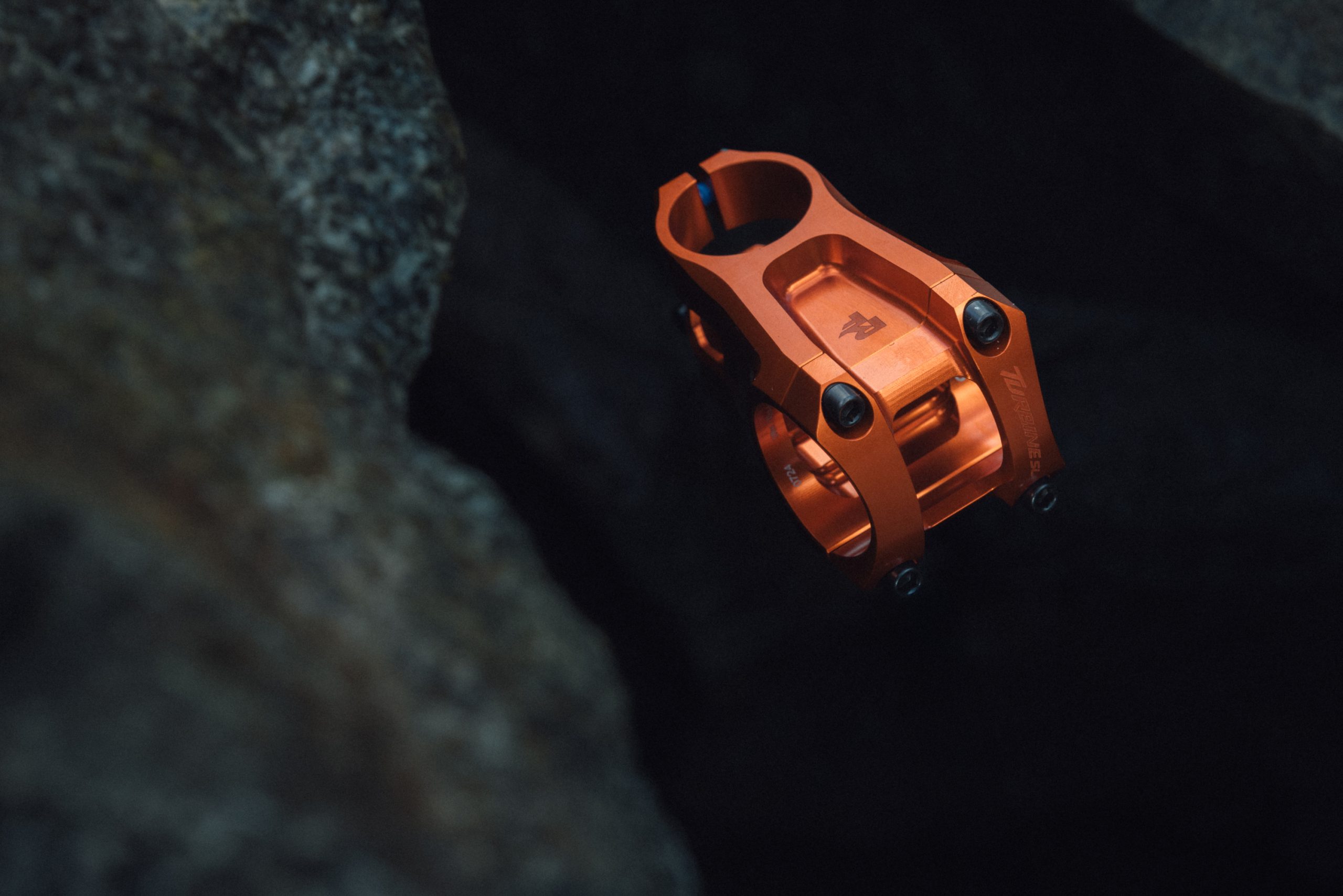
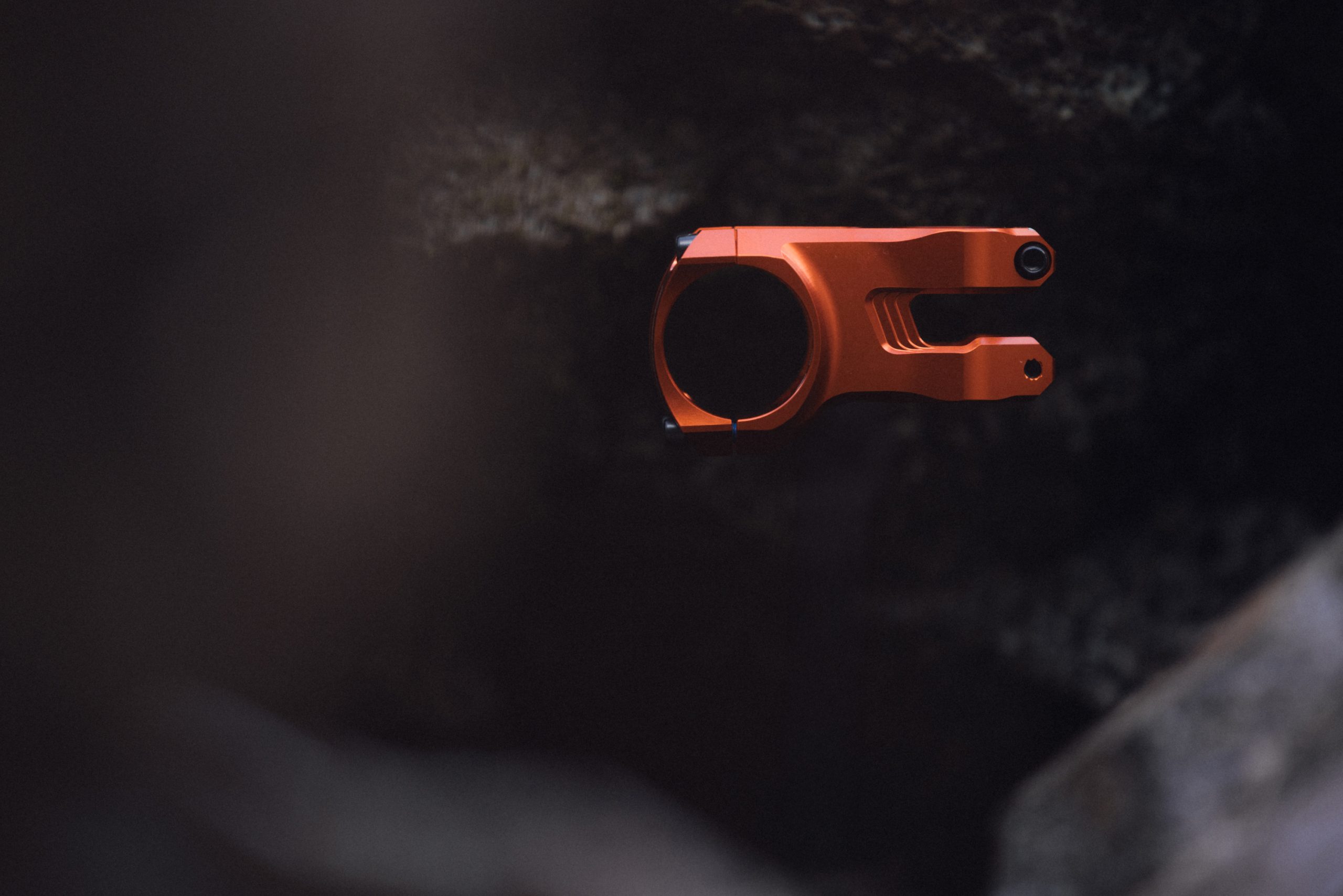
Race Face has released its new Turbine SL Stem, which promises high levels of versatility with a flippable design that will give you +6mm of lift or a -6mm drop.

The Turbine SL Stem is aimed at short-travel segments up to 140mm, including cross-country and trail bikes, and enables riders to prioritise efficiency or confidence depending on the orientation of the stem.

Three lengths are available: 40mm, 50mm and 60mm.

Unlike other flippable stems, the Turbine SL remains stylish in either orientation.

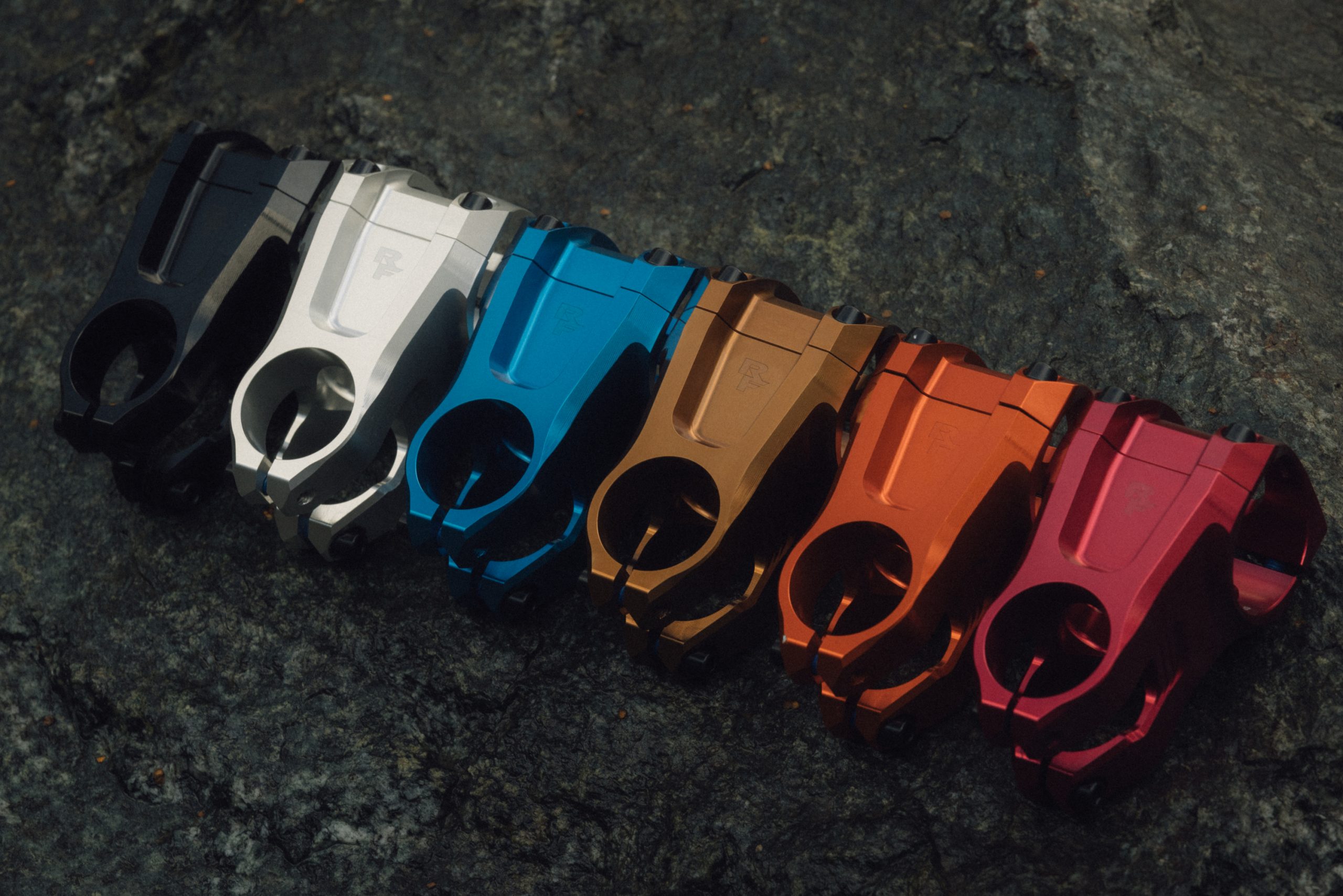
The Turbine SL Stem is priced at $115 / €119 / AU$179 and can be specced in six colour options: Black, Silver, Kashmoney, Orange, Red and Blue.

Variable versatility

Race Face Turbine SL Stem on bike
The new stem has two positions to suit your riding style. Race Face

Race Face says the variable -6mm or +6mm offset enables you to enhance pedalling characteristics on the climbs or increase the cockpit height for a better descending posture.

Having two options in one stem should mean it’s easier to tune your bike to your preferred setup.

Race Face Turbine SL Stem pack shot
The Turbine SL Stem is made using machined aluminium. Race Face

By switching stem orientations, you can adapt your bike to different trails, racing scenarios or personal preferences without adjusting headset spacers or purchasing a new stem.

Unlike other adjustable stems, the Turbine SL maintains a seamless look whatever the orientation. 

The top-lock faceplate makes for a clean cockpit, which is said to work well with over-stem bike computer mounts.

Race Face Turbine SL Stem pack shot
The stem remains stylish, whatever direction you run it in. Race Face

The stem is made from 6000-series machined aluminium, which Race Face says gives it great durability and lightweight performance, weighing in at 112g for a 40mm length.

Race Face has committed to the 35mm handlebar standard, and the stack height is listed as 40mm, with the clamp width 48mm.

Race Face Turbine SL Stem colourways
The Race Face Turbine SL Stem comes in six colourways. Race Face

The brand says the stem is eMTB-ready, and rates it to Use Classification 4, meaning it’s suitable for trail riding.

A lifetime warranty is included, with Race Face saying this includes crashes.

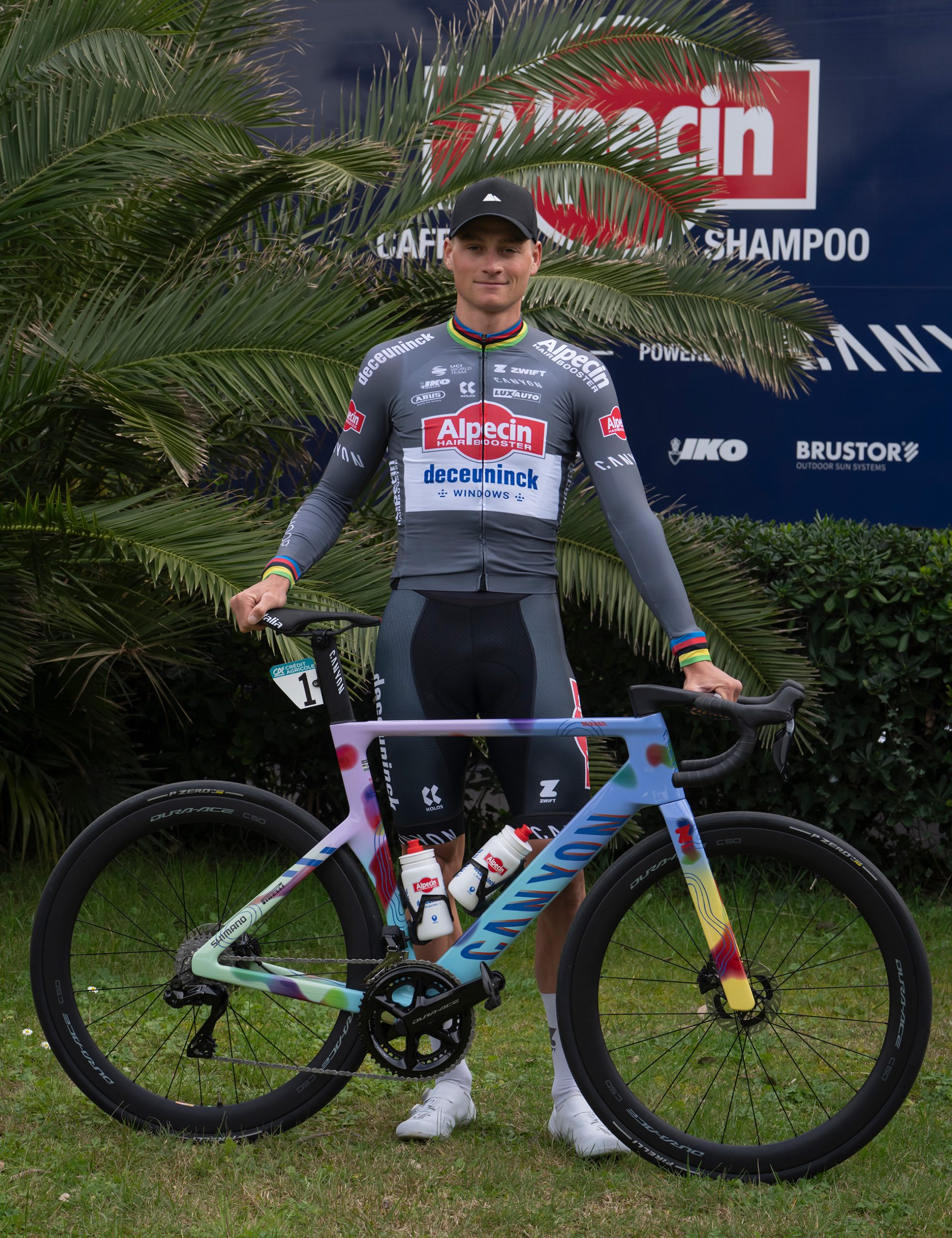
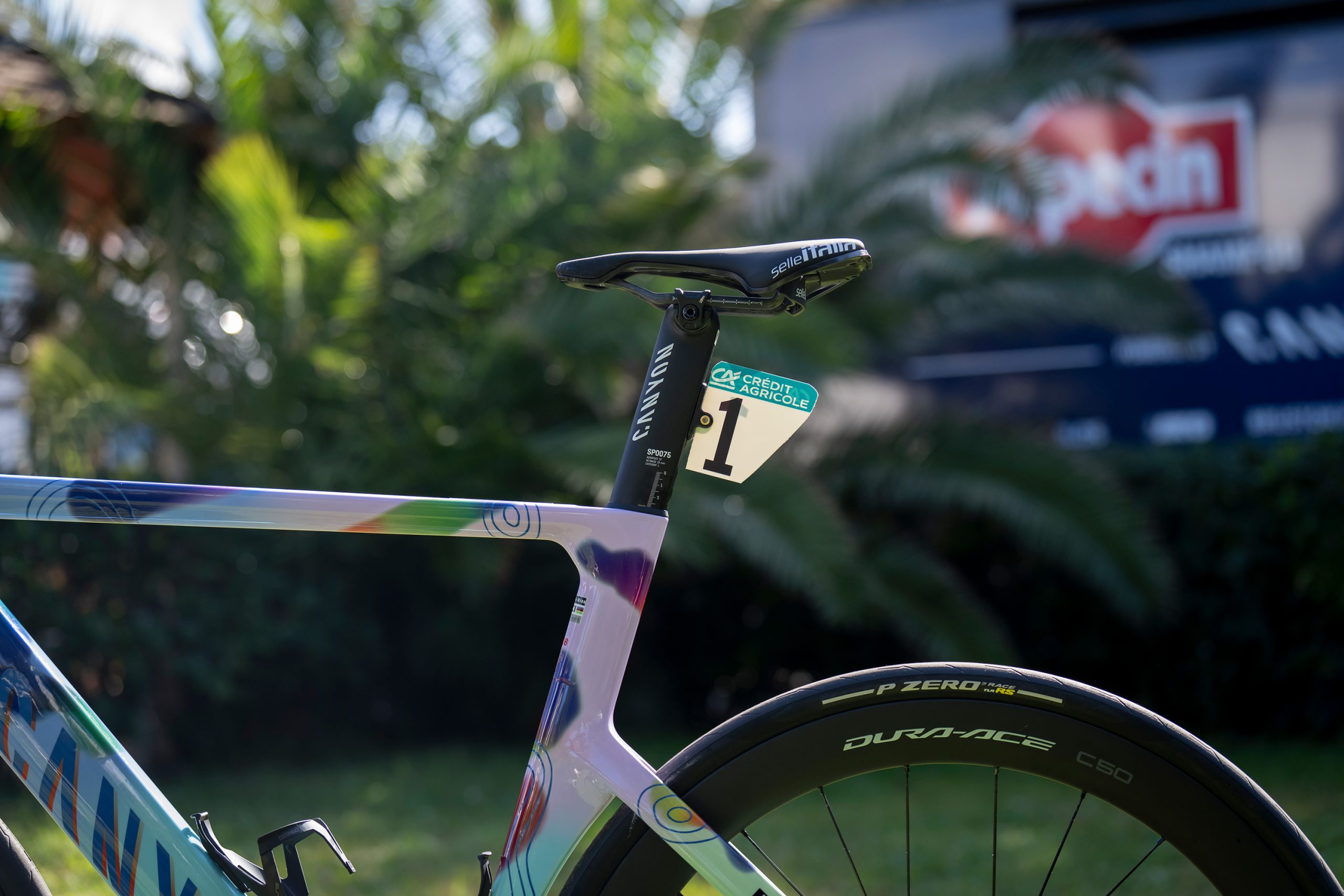
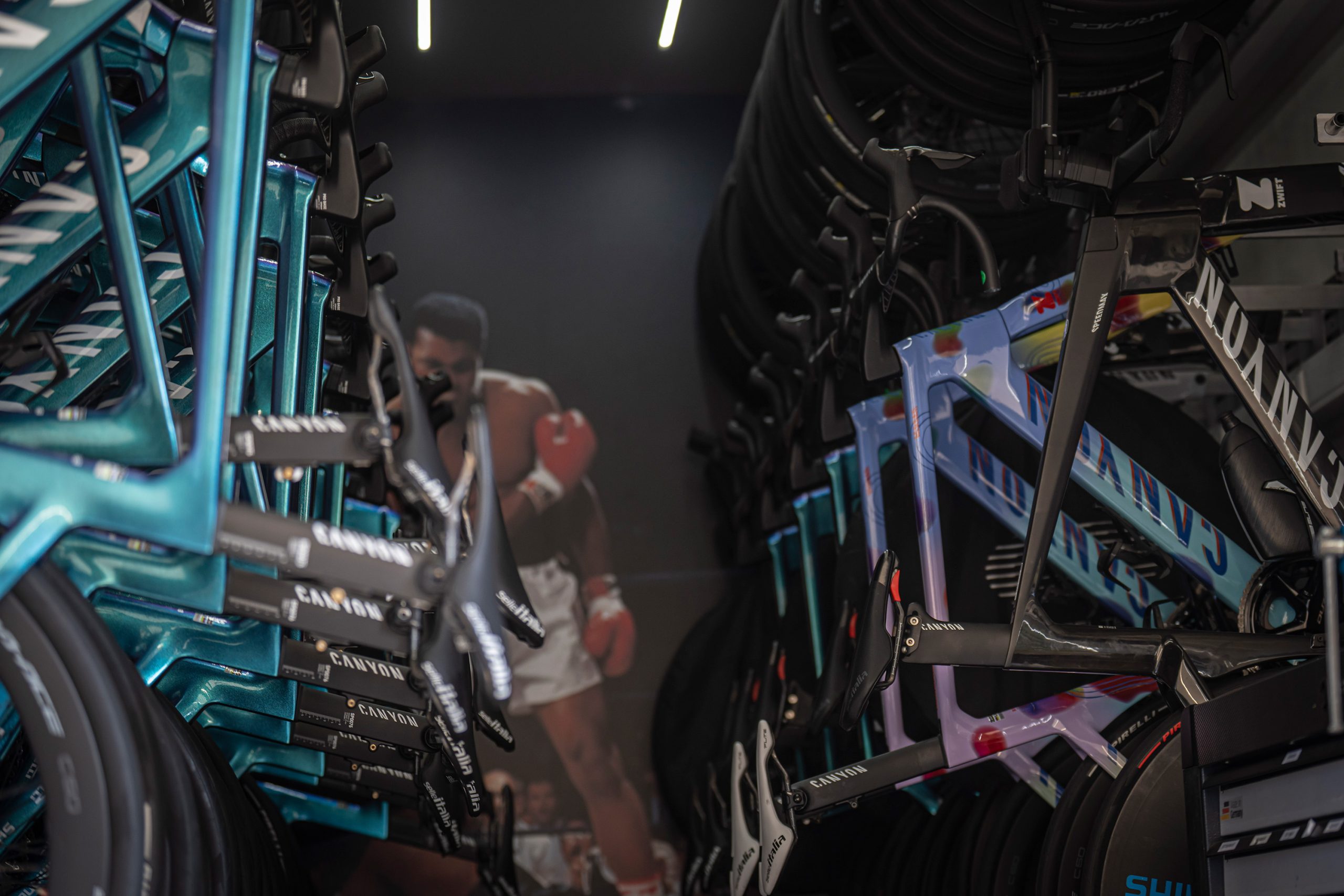
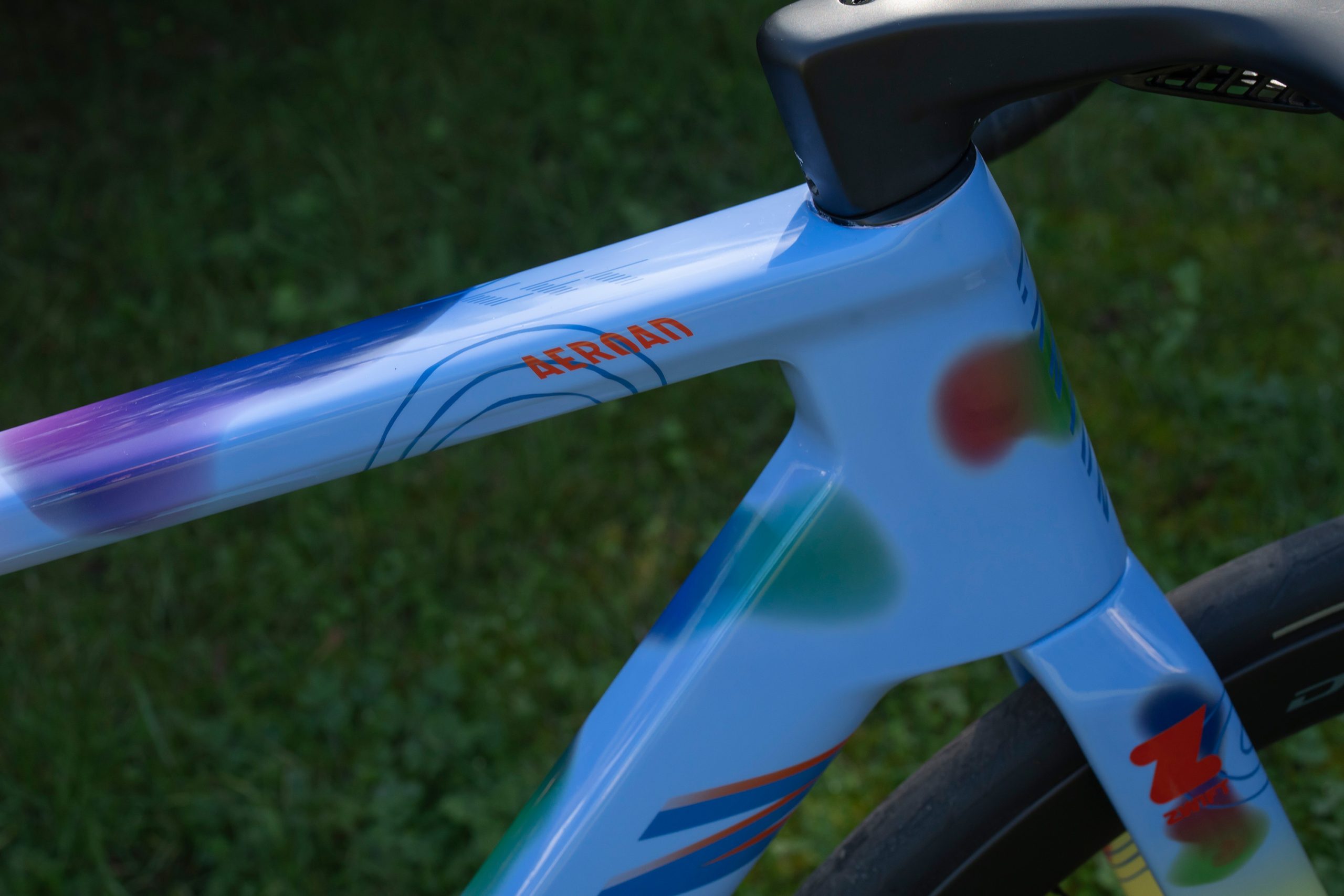
Mathieu van der Poel has a stunning custom Canyon Aeroad for Tirreno-Adriatico

Mathieu van der Poel is riding a customised Canyon Aeroad at the Tirreno-Adriatico, which could be yours through the MyCanyon programme.

The bike features a colourway seen in the MyCanyon customisation programme, announced last week, with the addition of sponsors’ logos that have been transferred over the artwork.

The artwork was created by Elena Salmistraro, a world-renowned artist who has been commissioned to produce designs for MyCanyon.

Mathieu Van Der Poel and Canyon Aeroad
Van der Poel has taken three stages in the Tirreno-Adriatico. Canyon

Canyon says the design has bright, bold fingerprints of colour in a kaleidoscopic palette, making for a “perfect combination of modernity and fun, ideal for attracting attention”, which it certainly did at the start line of Stage 2.

Van Der Poel Canyon Aeroad MyCanyon with race number
Van der Poel has the race number ‘1’. Canyon

With the first stage being a time trial, where van der Poel was riding his Canyon Speedmax TT, Stage 2 was the first time we’d seen the custom Aeroad in the race.

Van Der Poel Canyon Aeroad MyCanyon in race bus
Van der Poel has many spare bikes in the team bus. Canyon

A look in the team bus suggests van der Poel is planning to use the design for the whole race, with several spare Salmistraro bikes to cover all eventualities.

Van Der Poel Canyon Aeroad MyCanyon artwork
Elena Salmistraro lives and works in Milan and is one of the two initial artists commissioned to design artwork for the MyCanyon programme. Canyon

Under the artwork is the brand’s Aeroad Canyon Factory Racing (CFR) marque, which sits at the top of Canyon’s frame development and is claimed to weigh 960g for a size-medium frame.

Van der Poel’s bikes use a Shimano Dura-Ace groupset and wheelset (booted in Pirelli P Zero Race RS tyres), while Canyon’s in-house finishing kit provides a clean, homogeneous look.

MyCanyon enables buyers to customise specs as well as aesthetics, with multiple stem options available in addition to saddles.

New Komoot users now face a monthly fee to send routes to devices

Komoot has changed the way users can send routes to external devices.

New users will be required to have an active Komoot Premium subscription (currently £4.99 / $4.99 a month) to sync routes to their devices, such as bike computers and smart watches. 

Previously, users who had purchased or unlocked a specific Komoot map, such as a single region, region bundles or the ‘World Pack’ could sync routes to external devices.

Now, however, new Komoot users will need an ongoing premium subscription to sync routes. 

Existing users can relax

Fortunately, if you purchased or unlocked a map from the route-planning app before the end of February 2025, you will still be able to plot and send routes to your device. 

But new Komoot users will have to start an active subscription to sync routes.

The premium subscription currently costs £4.99 per month in the UK or £59.99 annually ($4.99 / $59.99 in the US). Previously, you could unlock single regions for £3.99, region bundles for £8.99, or the whole world for £29.99.

Route planning for a bikepacking trip on komoot
Komoot is one of the most popular route-planning apps. komoot

In a statement published on its website, Komoot said: “At Komoot, we’re always working to improve our product so explorers like you can make the most of your outdoor adventures.

“Previously, syncing Komoot routes to external devices was available to all users who had purchased or unlocked specific Komoot maps products, like single regions, region bundles or the World Pack. This is still the case for all existing accounts that have purchased or unlocked Komoot maps before the end of February 2025. After this, all accounts that had not purchased or unlocked a maps product will require an active Komoot Premium subscription to enjoy this functionality.

“With a Komoot Premium subscription, you gain the ultimate flexibility to tailor your experience, for example, with your own customised route Collections, your favourite sport-specific maps, or now, sending your Komoot routes instantly to your GPS devices via Profile Connect or Live Sync.”

What else is covered by Komoot Premium? 

If you’re now weighing up whether a Komoot Premium subscription is worth it, what else do you get for your money?

The subscription unlocks features such as multi-day route planning, personal route collections, live tracking and weather updates.

It also provides a range of extra map functions, such as 3D maps, sport-specific maps (including mountain biking and long-distance cycle routes), and Komoot maps on Garmin devices.

Winning on Zwift: How to Save Energy and Outsmart the Competition

Let’s be real, winning a Zwift race isn’t just about “pushing big watts”. If it were, we’d all just go full gas and hope for the best. But the truth is, the smartest riders beat the strongest riders all the time.

In my latest video, I break down “six essential tactics” to help you conserve energy, race efficiently, and drop your rivals when it counts. Watch the full video (below) for all the details, but here’s a sneak peek of the biggest takeaways.

#1: Learn to Dangle

Hanging just off the back of the group, what I call “dangling”, is an underrated but killer tactic. It lets you stay in the draft without getting caught in the “watt wasting window”. Think of it as energy banking: while the front riders are burning matches, you’re recovering and getting ready to strike.

#2: Stop Overshooting Yourself Into the Wind

When a group slows after a surge, some riders overshoot straight to the front, big mistake. That’s like volunteering to do extra work when no one asked you to. Ease up early, settle in, and let others waste their watts.

#3: Master Pack Flow

Reading the group’s rhythm is game-changing. If the front is accelerating, match it early to avoid getting dropped. If they’re slowing, back off your effort so you don’t waste energy surging forward. Smart pacing = less wasted effort.

#4: Attack Over the Top, Not From the Front

Want to break away? Don’t just blast off from the front position. That’s a free tow for everyone behind you. Instead, use momentum to roll past the group at just the right moment, forcing them to react after you’ve gained free speed.

#5: Soft Attacks Drain the Pack

Instead of going all-in too early, make a few jabs. If done right, this wears down the competition without completely draining yourself. When it’s finally time to go all-out, they’ll be too cooked to chase you down.

#6: Fully Commit to Your Final Move

When you decide to go, GO! No half-measures. If you hesitate, the group will smell blood and reel you back in. Make them think, “Nah, we’ll never catch that guy.” Even if it doesn’t work, you’ll know you gave it everything.

Final Thoughts

You don’t have to be the strongest rider, you just have to be smarter than the strongest rider. Learn to conserve energy, read the race, and strike at the right time, and you’ll start bagging way more wins.

Want to see these strategies in action? Watch the full video and start racing smarter today!

Specialized’s secret gravel tyre? Unreleased Tracer spotted at Arizona Belgian Waffle Ride as part of ‘mullet’ tyre setup

The Arizona edition of the Belgian Waffle Ride acts as the unofficial curtain-raiser for the US gravel racing season and Sofía Gómez Villafañe used this year’s edition to test what appears to be an unreleased Specialized tyre.

Gómez Villafañe rode to a convincing win in the elite women’s field, finishing 20 minutes ahead of Courtney Sherwell, on a Specialized Crux fitted with a new Specialized Tracer gravel tyre on the rear.

The Tracer is part of Specialized’s current line-up of gravel tyres, but this new model looks to have a revamped tread pattern, with more aggressive and widely spaced lugs compared to the existing tyre.

For gravel racers, it’s likely to be better suited to loose conditions than the Specialized Pathfinder – one of the most popular gravel tyres out there, but best saved for hardpack conditions.

We can’t quite make out the size of Gómez Villafañe’s tyre but, with the trend in gravel being for ever-wider rubber, we’d expect Specialized to reflect that in the options available.

Sofía Gómez Villafañe's Specialized Crux with new Specialized Tracer gravel tyre
You can just about make out the tread pattern on the new Tracer. @dhughes101

Specialized simply pointed us to its stock ‘Project Black’ statement when we asked about the prospect of a new Tracer: “Specialized relies on feedback from professional athletes in both developing and testing advanced pre-production products in real-world applications,” reads the statement. 

“With this top-level feedback, some of these design elements and products eventually show up in future retail product offerings. We call this Project Black.”


Business up front, party at the rear

Sofía Gómez Villafañe's Specialized Crux with new Specialized Tracer gravel tyre
Sofía Gómez Villafañe is one of the stars of gravel racing. She rode a Specialized Cruz with the new Air Trak front tyre, and an unreleased Tracer rear tyre, at the Arizona Belgian Waffle Ride. @dhughes101

Gravel racers are getting ever-more experimental with their tyre setups, with big rubber now commonplace – and some riders even opting for mountain bike tyres, if their frame offers the required clearance.

Gómez Villafañe used something of a mullet setup in Arizona, with Specialized’s new Air Trak MTB tyre on the front and the Tracer gravel tyre on the rear.

Mullet bikes are more common in mountain biking, pairing a 29in front wheel with a 27.5in rear – business at the front, party at the back – while it’s also common for mountain bikers to use front- and rear-specific tyres to fine-tune speed and grip.

Sofía Gómez Villafañe's Specialized Crux with new Specialized Tracer gravel tyre
The Air Trak is Specialized’s latest XC race tyre. @dhughes101

While we’re familiar with mullet gearing in gravel, a mullet approach to tyre choice is less common. However, Lachlan Morton used a 50mm-wide Vittoria Terreno Dry and 44mm Vittoria Mezcal en route to winning the 2024 edition of Unbound, taking advantage of all the available clearance on his Cannondale SuperSix EVO CX SE frameset.

Back to Gómez Villafañe’s bike, and the Air Trak, which pairs a low-profile centre tread with more pronounced cornering blocks, has just been released and is part of a new XC line-up that also includes the Fast Trak.

The Air Trak is said to be the faster of the two and has a claimed weight of 575g in a 2.2in width. It’s also available in a 2.35in width, at a claimed 585g.

Sofía Gómez Villafañe's Specialized Crux with new Specialized Tracer gravel tyre
We won’t mention the mismatched sidewalls… @dhughes101

Specialized is offering the Air Trak and Fast Trak – the latter more of an XC all-rounder with chunkier tread to match – in Flex Lite and Grid Lite casing options. Flex Lite is the lightweight, supple option, while Grid Lite adds sidewall protection.

MTB tyres in gravel races appear to be here to stay, so expect to see more of the Air Trak this year. As for the Tracer, watch this space for more.

Sofía Gómez Villafañe's Specialized Crux with new Specialized Tracer gravel tyre
We love the marbled finish on this Crux. @dhughes101

How magnesium molecules can bring comfort to your bike – and more fresh tech from Bike Connection’s winter event

BikeRadar was on hand for Bike Connection’s Winter 2025 MTB event in Massa Marittima, in the heart of Italy’s beautiful Tuscany region.

The event is designed to bring prominent mountain bike brands and journalists from across the globe together in one place, where new bikes, products and brand philosophies can be showcased.

We’ve rounded up some of the most eye-catching bits of tech from 2025’s early-season event.

Leatt’s magnesium Ceramag pedals and stems

Leatt Pedals All Mountain Ceramag 8.0Ti flat mountain bike pedal
The Ceramag 8.0Ti pedals and stem come in a fancy and incredibly costly package. Mountain Bike Connection Winter / Rupert Fowler

In a flurry of product announcements, Leatt’s moving into – or at least testing the water with – products including pedals, stems, handlebars and grips.

The science and data-focused South African brand is first to admit it doesn’t plan on selling these products by the bucket-load, thanks to the lofty price tags that accompany new, high-tech construction techniques.

Leatt Pedals All Mountain Ceramag 8.0Ti flat mountain bike pedal
Leatt’s logo is laser-etched, but rather than the etching ‘damaging’ the surface, it has simply changed the ceramic coating’s colour. Mountain Bike Connection Winter / Rupert Fowler

Leatt’s Ceramag pedals and stems – which get their name thanks to the ceramically coated magnesium they’re built from – are, as a result, super-light compared to traditional aluminium alloy models.

Available in two sizes – narrow and wide – the Ceramag pedals spin on an optional titanium spindle and have 10 removable pins per side.

Leatt Pedals All Mountain Ceramag 8.0Ti flat mountain bike pedal
Leatt admits these aren’t likely to appeal to the mass market, given their £279 / $319 / €319 asking price. Mountain Bike Connection Winter / Rupert Fowler

According to the brand, the narrower flat pedals with titanium axle weigh only 266g a pair, while the equivalent clip version – which uses the same construction techniques – weigh 298g a pair.

You pay a premium for the tech though, with retail prices sitting at £279 / $319 / €319 for the titanium axle flats and £299 / $339 / €339 for the equivalent clips.

Leatt Stem Ceramag Gravity 8.0Ti mountain bike stem
Leatt’s ceramic-coated magnesium stem is impressively light. Mountain Bike Connection Winter / Rupert Fowler

There are also gravity stems, using the same magnesium construction tech.

Playing to magnesium’s strengths, Leatt has taken advantage of the material’s molecular grain by orientating in a way that should help with “transferring less vibration [to the rider]”.

Leatt Stem Ceramag Gravity 8.0Ti mountain bike stem
The stem’s ceramic finish is designed to be tough and prevent corrosion. Mountain Bike Connection Winter / Rupert Fowler

The jury’s still out on that, but there’s no denying they’re light. At 100g for a titanium-bolt, 33mm-long version, they’re going to be a weight weenie’s dream.

Again, they’re not cheap, with the priciest 50mm version costing £199 / $229 / €229.

Atherton Bikes A.170

Atherton Bikes A.170 enduro mountain bike
The A.170 is a high-speed enduro and gravity-focused machine. Mountain Bike Connection Winter / Rupert Fowler

We haven’t had a shortage of Atherton Bikes coverage here on BikeRadar in recent times – and for good reason.

The A.170 is a long 170mm-travel, six-bar DW-link, descent-focused enduro bike that – according to the brand – is its best-seller.

Atherton Bikes A.170 enduro mountain bike
The DW6 six-bar suspension design is a thing of beauty. Mountain Bike Connection Winter / Rupert Fowler

You only need to glance over the frame spec, suspension and geometry to see why, although riding it for yourself may well lead to a sale; Atherton says it has a 100 per cent conversion rate from demo days to sales for the A.170.

Firstly, the additive manufacturing frame uses 3D-printed titanium lugs at each of the bespoke carbon tubes’ intersections.

Atherton Bikes A.170 enduro mountain bike
The lugs – the sections at the end of each carbon tube – have been 3D-printed using titanium alloy. Mountain Bike Connection Winter / Rupert Fowler

Rather than traditional welding or a full-carbon mould, this means Atherton can adapt the geometry of its frames more easily; there are no jigs or expensive moulds.

This results in a 22-size range, with reach figures spanning 410mm to 530mm. While this incredible number of sizes means riders should be able to find a bike that fits perfectly, further personalisation is possible – for an extra fee.

Atherton Bikes A.170 enduro mountain bike
The A.170’s frame isn’t cheap, at £4,750 with a rear shock. Geometry customisations will cost you extra. Mountain Bike Connection Winter / Rupert Fowler

Thirdly, the DW6 rear-suspension design has seven pivot points, more than both the four-bar Horst-link and twin-link designs.

The claim of no performance losses is bold, but stands strong and true on the trail.

Atherton Bikes A.170 enduro mountain bike
The lower linkage adds to the number of ‘bars’ in the design. Mountain Bike Connection Winter / Rupert Fowler

However, there’s a catch (there always is).

Costing from £4,750, the A.170 is expensive. Add an extra £650 for any additional customisations you may want to make and it’s firmly in superbike territory.

Feedback Sports Pro E Lift bike repair stand

Feedback Sports Pro E Lift electric bike repair stand
The electronically lifting stand will suit people with bad backs. Mountain Bike Connection Winter / Rupert Fowler

People with back pain rejoice.

Feedback Sports – a company famed for its high-quality workshop kit – now has an electronically raising bike repair stand.

While its 45kg maximum weight limit is clearly aimed at chunky electric bikes, it also means lifting your standard mountain, road or gravel bike will be a doddle for the stand.

Feedback Sports Pro E Lift electric bike repair stand
It features Feedback Sports’ highly revered clamp. Mountain Bike Connection Winter / Rupert Fowler

At full extension, it can lift bikes to 1.85m – which should be plenty high enough to work on an ebike motor – and compresses to a low 0.9m.

With your seatpost at full mast, you shouldn’t need to lift your bike into the clamp’s quick-release and quick-clamping jaws.

Feedback Sports Pro E Lift electric bike repair stand
The wheels make it manoeuvrable around your workshop. Mountain Bike Connection Winter / Rupert Fowler

Wheels and a handy foot paddle make moving the stand’s 24.5kg weight around easier than you’d expect.

It’s on sale soon and retails for a handsome $1,195.

Selle San Marco Mantra saddle

Selle San Marco Mantra mountain bike saddle
The Mantra has a large ‘delta’ shape, designed to be suited to the demands of modern-day MTB. Mountain Bike Connection Winter / Mirror Media

Selle San Marco hopes its new Mantra saddle will be the perfect pew for your peach.

Designed specifically for the rigours of more extreme riding, its wide, stubby nose is said to provide control and support whether you’re seated or standing.

Selle San Marco Mantra mountain bike saddle
It’s wide along its entire length, helping riders find their perfect position. Mountain Bike Connection Winter / Mirror Media

Taking note of ebikers and enduro riders, who tend to sit towards the front of their seats when climbing, Selle San Marco has adopted what it calls the ‘delta’ shape and a flat – rather than banana-shaped – front-to-rear profile.

Selle San Marco Mantra mountain bike saddle
The saddle’s shell has been tuned to be comfortable and flexible, helped by the wide rail placement. Mountain Bike Connection Winter / Mirror Media

This is claimed to boost comfort, along with a generous and long perineum pressure-relief channel.

Three rail options are available: stainless steel ‘manganese’, stainless steel ‘Xsilite’ and carbon fibre. They retail for £119.99, £134.99 and £179.99 respectively.