All About the New Cannondale CAAD13 on Zwift

Zwift’s latest update included the welcome addition of several new bike frames, including two bikes from US-based Cannondale. We’ve already written about the speedy SuperSix Evo LAB71, so today we’ll cover the more budget-friendly CAAD13, which Cannondale calls “the speediest, smoothest, best handling, finest performing aluminum race bike on the planet”:
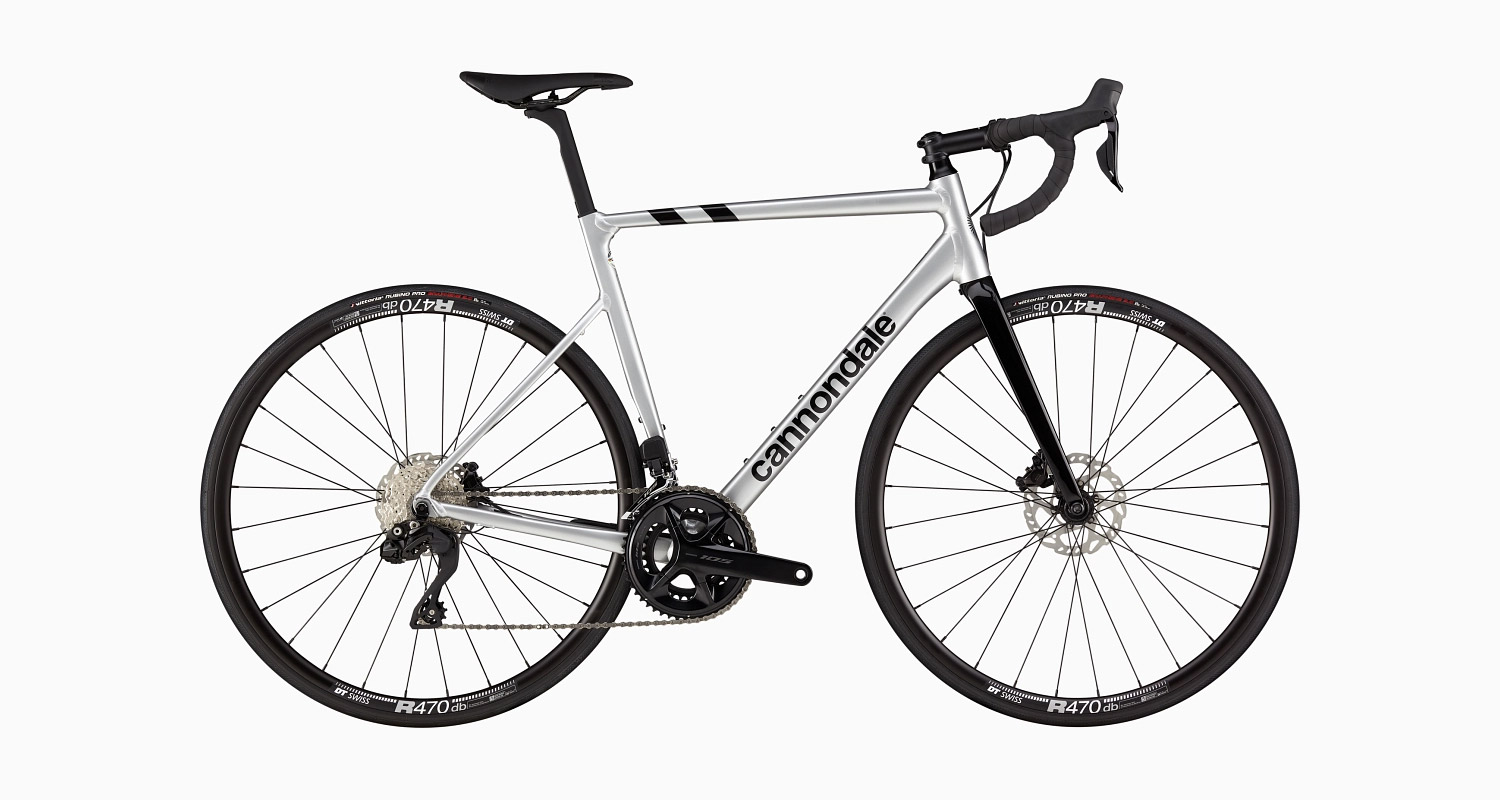
You’ll need to be updated to game version 1.86+ to see the CAAD13 in Zwift’s Drop Shop. You’ll also need to be at level 14+ with 500,000 Drops to buy it. Here’s how it’s described in the Drop Shop:

“Experience the Cannondale CAAD13, a bike that embodies Cannondale’s legacy in aluminum frame design. Its lightweight, aerodynamic structure offers exceptional speed and agility, ensuring you conquer every virtual climb and sprint. With a tapered head tube and wider tires for enhanced stability and handling, the CAAD13 is perfect for both spirited rides and competitive races. Elevate your cycling experience with a bike built for performance and comfort, ready to tackle any challenge.

See our master list of all frames in Zwift >

It’s rated 3 stars for aero and 3 stars for weight, so we know it’s not the lightest bike. But a 4-star system isn’t the most granular of performance measurements, so we ran this frame through our precise tests to measure performance at nerd-level detail. Let’s dive in!

Note: test results below are from a 75kg, 183cm rider holding 300W steady using Zwift’s stock 32mm Carbon wheelset.

Aero (Flat/Rolling) Performance
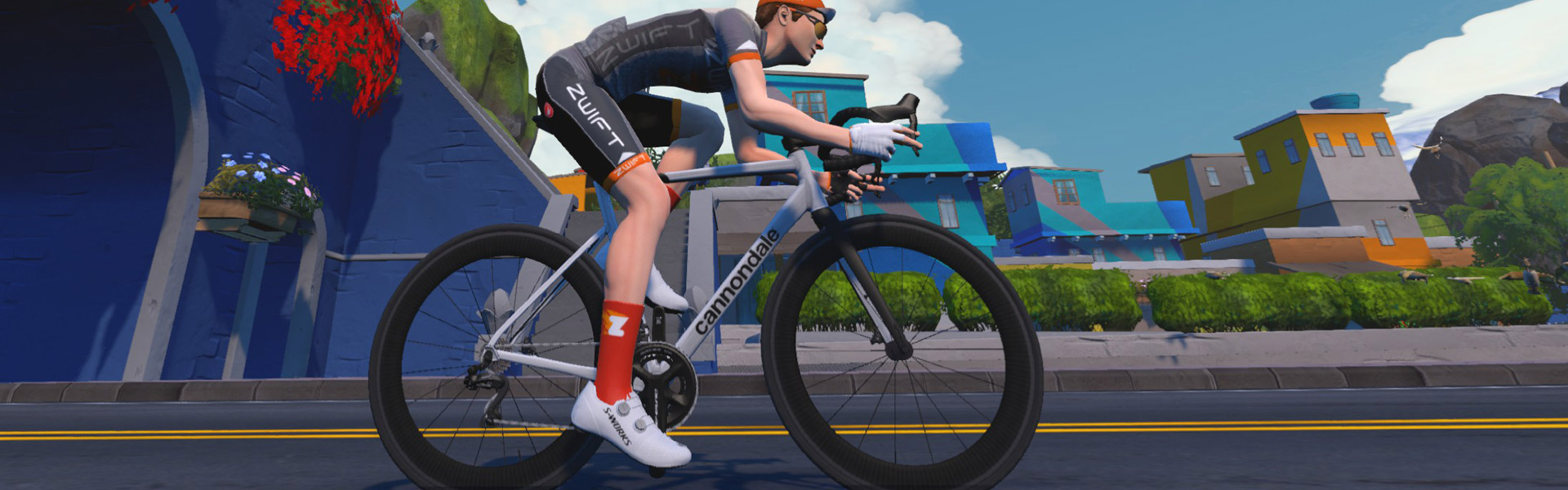
The CAAD13 is surprisingly fast, given its cost and unlock level. It trims 58.4s off our baseline Zwift Carbon frame over an hour of flat riding, putting it less than 5 seconds behind the game’s fastest frame.

Climb Performance
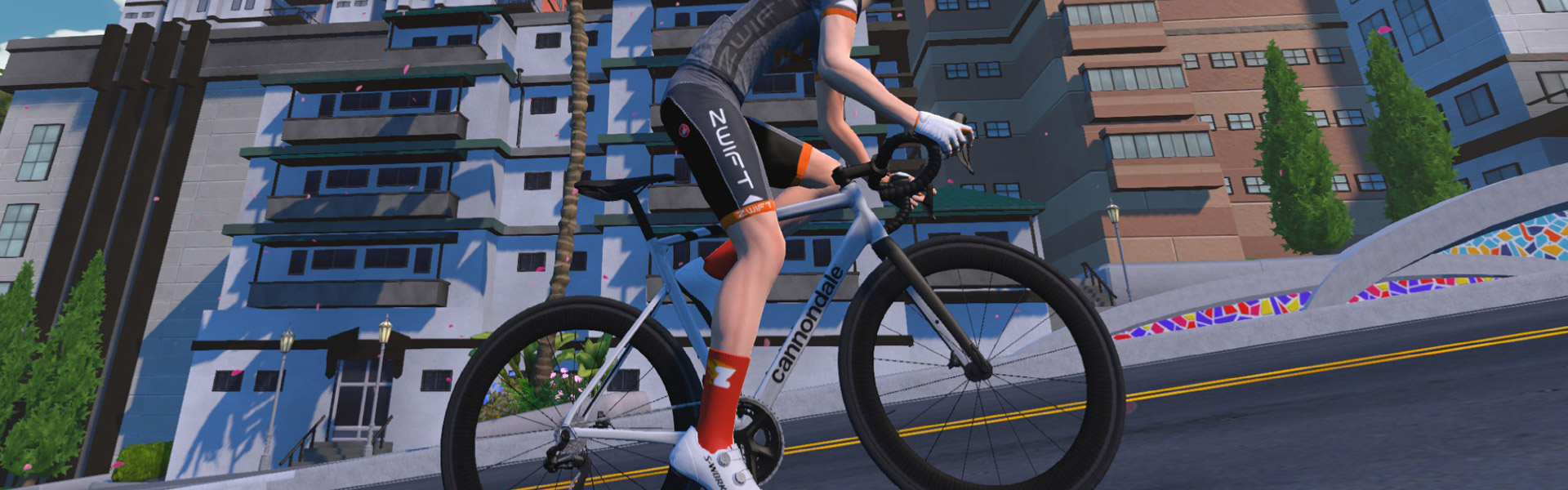
The CAAD13 performs worse climbs than it does on the flats, coming in at the 47the percentile in our rankings.

This bike shaves 28.8 seconds off of our baseline Zwift Carbon’s time on an hourlong climb, which means it’s ~27 seconds slower across an hourlong climb compared to the fastest climbing bike (S-Works Tarmac SL8).

Upgrading Your Cannondale CAAD13
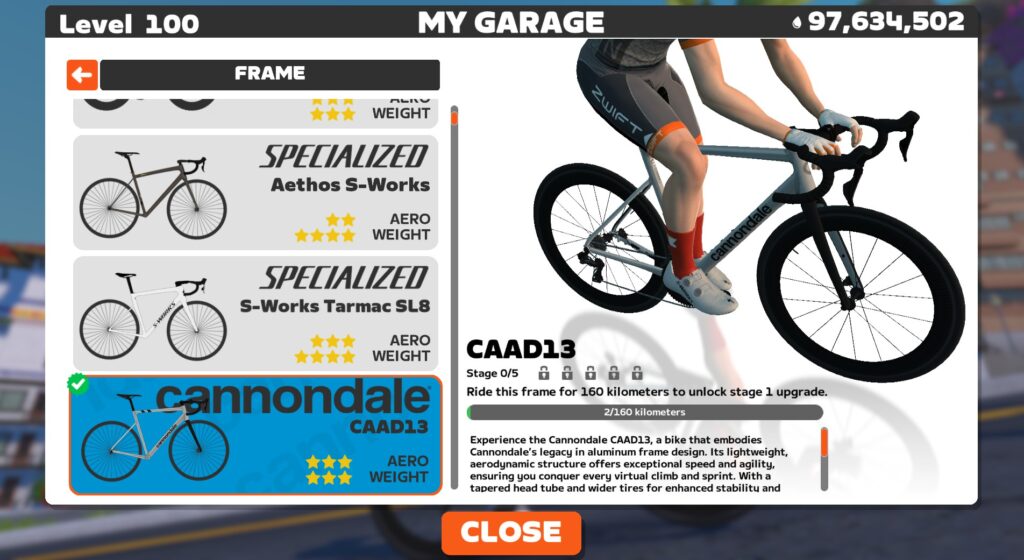
Like all frames in Zwift, the CAAD13 can be upgraded in five stages. As a high-end race bike, each of the five stages results in a performance improvement. The Cannondale CAAD13 upgrade stages are as follows:

  1. Ride 200km, pay 100,000 Drops for an aero upgrade
  2. Ride 260km, pay 200,000 Drops for a weight reduction
  3. Ride 320km, pay 350,000 Drops for a drivetrain efficiency improvement
  4. Ride 380km, pay 500,000 Drops for an aero upgrade
  5. Ride 440km, pay 750,000 Drops for a weight reduction

You can expect a fully upgraded CAAD13 to be approximately 28 seconds faster on a flat hour and 36 seconds faster on an hourlong climb vs the “stock” CAAD13.

Conclusions

Cannondale’s CAAD13 is the worst performer of the four new frames added in Zwift’s latest update… but that doesn’t make it a bad bike. If you’re a Cannondale fan looking for a different frame, this may be the ticket.

It doesn’t have a color slider, but it is more affordable and unlocked at a lower level than the other three new frames.

Questions or Comments?

Got questions or comments about this frame? Share below…

Important note: this post contains speed test results for Zwift frames or wheels. These results may change over time, and a bike’s performance relative to others may also change. We don’t always revise posts when performance rankings change, but we do keep current, master versions of our speed test results which are always available. See the frame charts, wheel charts, and Tron vs Top Performers for current performance data.
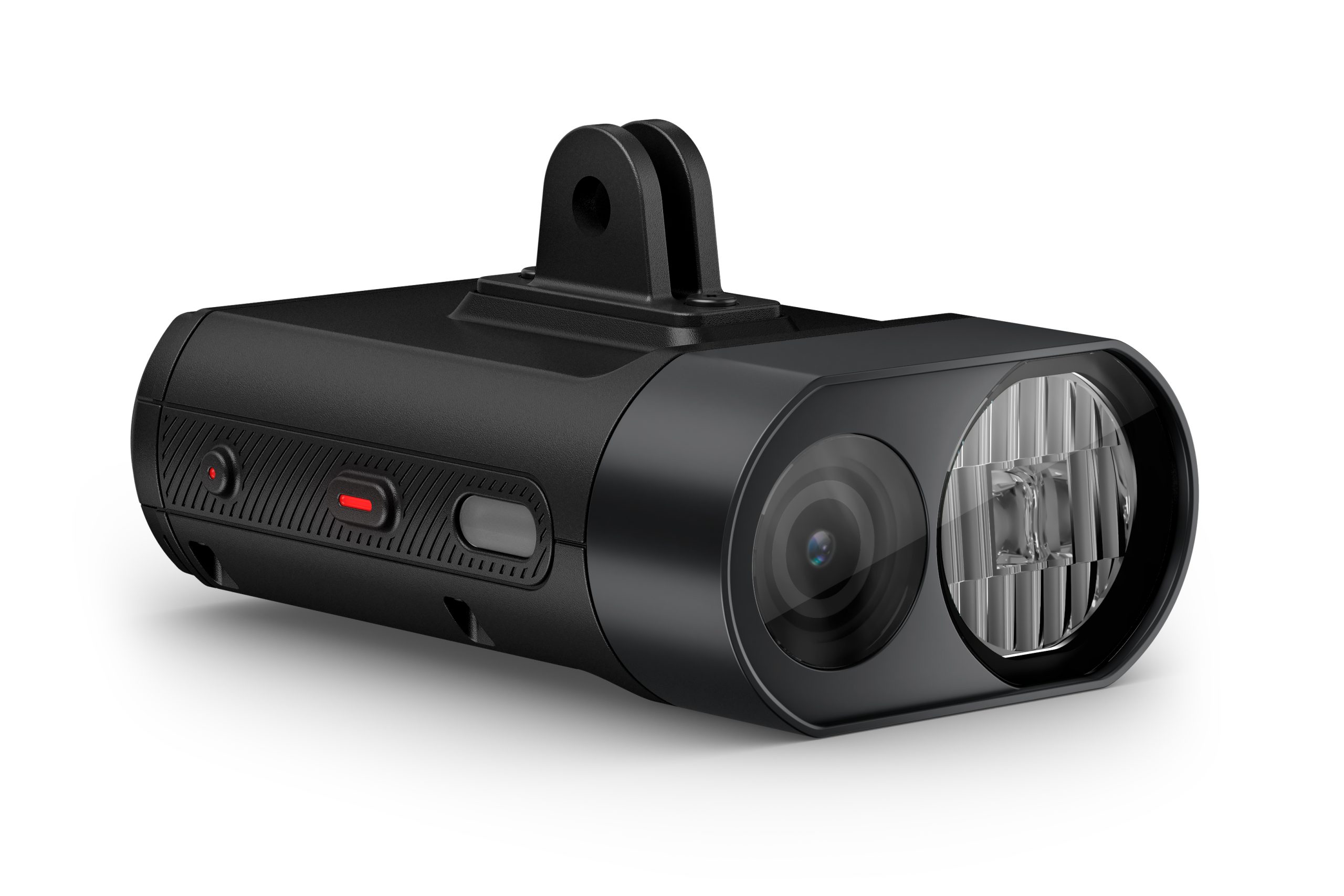
The Garmin Varia Vue headlight records incidents and near-misses in 4K resolution

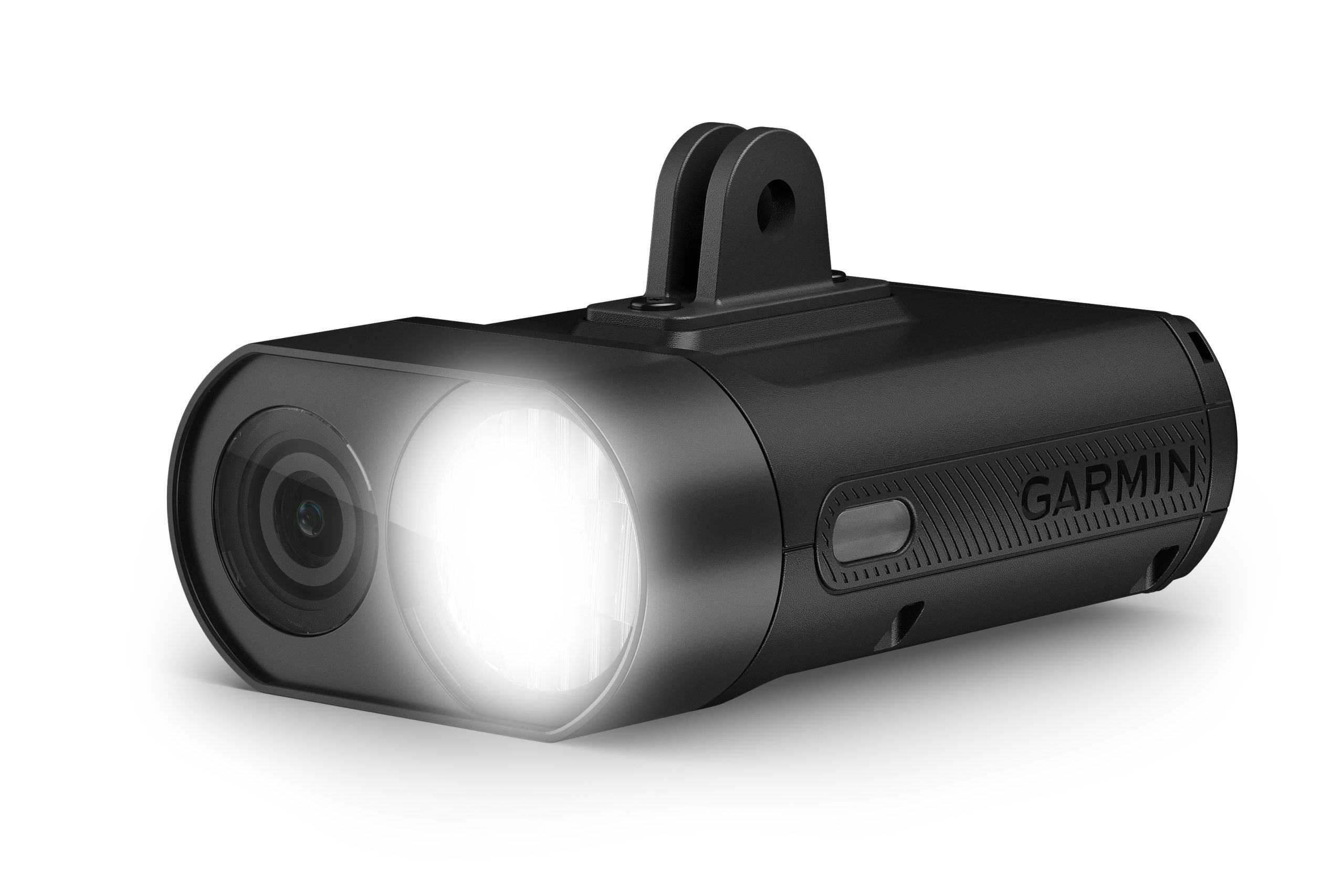
Garmin has launched its new Varia Vue camera headlight system, with the ability to record footage in 4K resolution.

The Varia Vue syncs with Garmin Connect and Garmin Vault (its subscription-based online storage for recorded videos), and the brand’s dedicated Varia app, plus the RCT715 rear-view radar and camera light.

The Varia Vue costs £459.99 / $549.99 / €549.99, plus £9.99 / $9.99 / €11.99 per month for the Vault subscription (or £99.99 / $99.99 / €119.99 per year).

Digital image stabilisation

Garmin Varia Vue
Garmin says the new Varia Vue can record in 4K. Garmin

According to Garmin, the Varia Vue can record footage in 4K resolution and benefits from the brand’s digital image stabilisation technology.

Digital image stabilisation effectively crops raw recorded images – by cutting off the edge of the frames, the camera processes a smoothed-out version of the footage. 

As a result, in general use, it’s unlikely the processed footage will be output in true 4K resolution, but it should be more than enough to capture details such as vehicle registration plates and faces. There’s also a microphone, which has been concealed from the wind to aid ‘clean’ audio capture.

Garmin Varia Vue
The Varia Vue automatically detects incidents and saves them to Garmin Vault. Garmin

All data is stored in Garmin’s Vault online data bank, which is encrypted. That said, it’s worth noting that some territories don’t allow the use of camera technology in this way.

Garmin says the Varia Vue will automatically detect ‘incidents’ and save them to Vault via WiFi. It can also sync with the brand’s RCT715 rear-facing camera-light device to create a two-view account of an incident. 

The device has a claimed battery life of up to nine hours with the light switched off. With the light switched on in ‘day flash’ mode, Garmin says the battery life dips to around seven hours. 

That said, bikepackers and multi-day riders are catered for, given that the device can be charged on the go (via a battery pack or dynamo setup, for example) while the camera function is switched on.

Adaptable lighting with a cropped beam

Garmin Varia Vue
The light has a maximum output of 600 lumens. Garmin

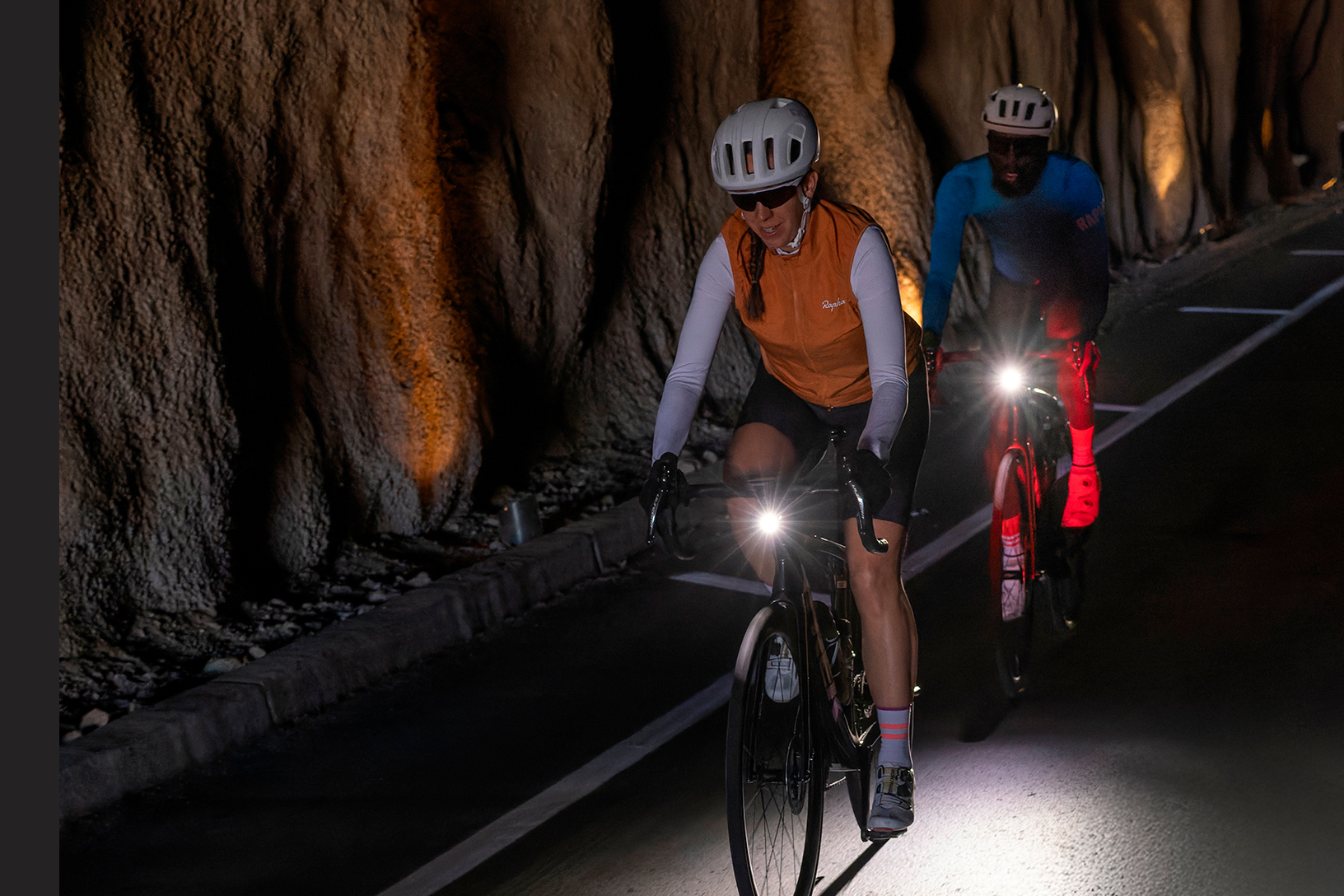
The light can emit up to 600 lumens – generally considered enough for visibility in a built-up area with ambient street lighting – across five modes, including the day flash setting. 

This means the light isn’t StVZO-compliant, but the beam is cut off to reduce glare for oncoming road users.

A dedicated StVZO version is available in Germany and the the Nordic countries, which produces up to 165 lumens and up to four hours’ battery life – lower due to the lack of flashing modes, which are less power-hungry.

Similarly, Garmin claims the light is adaptable to riding speed and ambient light, but only when the unit is paired with a Garmin Edge bike computer.

The Varia Vue can also be controlled from a Garmin Edge device, or via the brand’s Varia app.

Garmin Varia Vue prices and availability

Garmin Varia Vue
The light is claimed to be adaptable to your riding speed and ambient light. Garmin

The Garmin Varia Vue is available now, priced at £459.99 / $549.99 / €549.99.

The Varia Vue requires a Garmin Vault subscription at £9.99 / $9.99 / €11.99 per month (or £99.99 / $99.99 / €119.99 per year).

The Varia Vue isn’t supplied with a memory card, so you’ll need to factor that into the overall cost.

Sizzle and Flash: All About Zwift’s Aero Lightning Socks

It’s time to talk about something very serious. I’ll get right to it: Zwift, like many cyclists, has a bit of a sock problem.

First came the Fire Socks, enticing us to work toward level 50 so we could sprint to flaming glory in the next race.

But that wasn’t enough. Zwift had to up the ante and create the glorious Confetti Socks so level 100 Zwifters bring a party to any peloton.

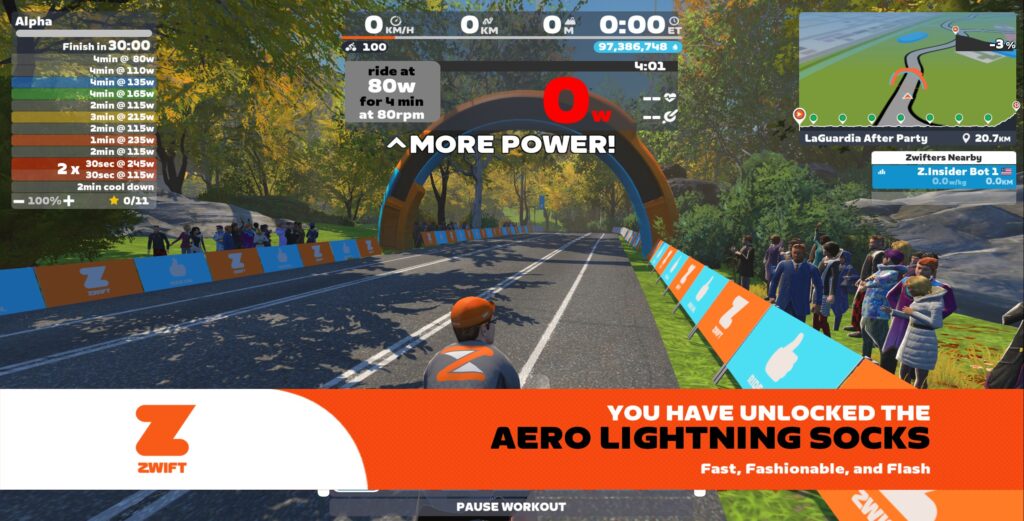
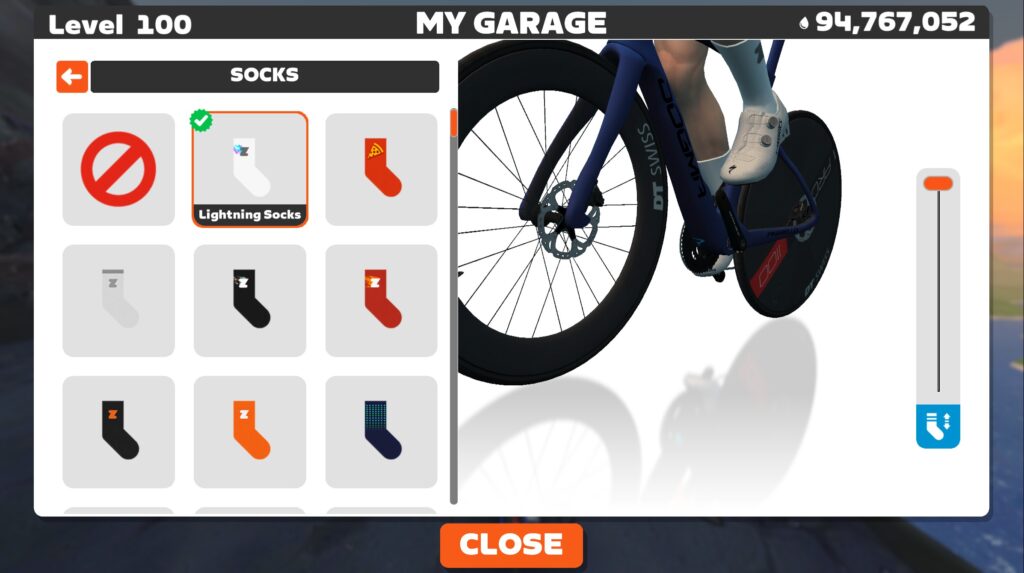
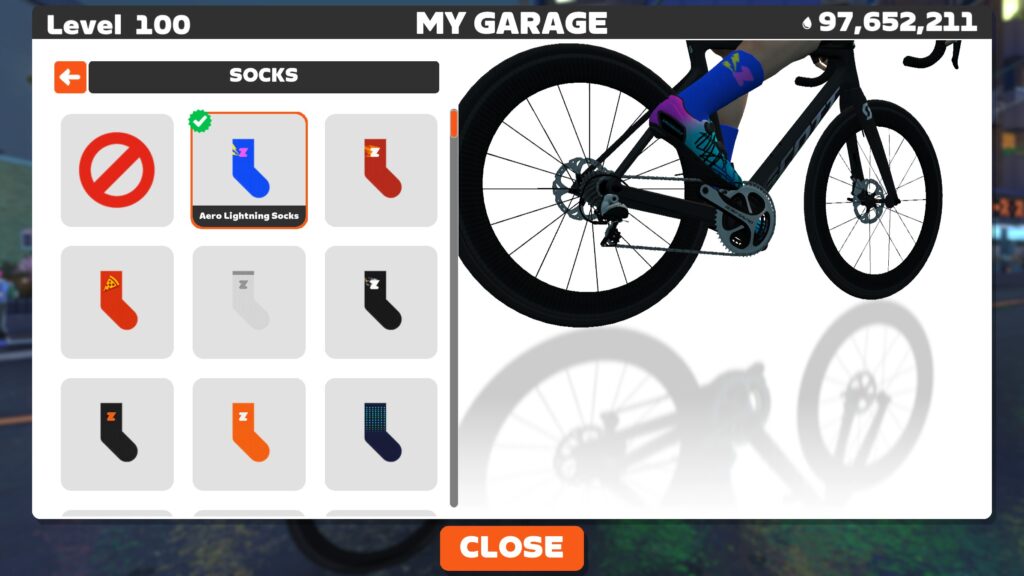
And now we have a third pair of socks: the Lightning Socks. Which is actually two pairs of socks, although you can only own one pair at a time. Confused yet? Let’s jump in and learn everything there is to learn about the newest socks on Zwift!

Animation/Effects Details

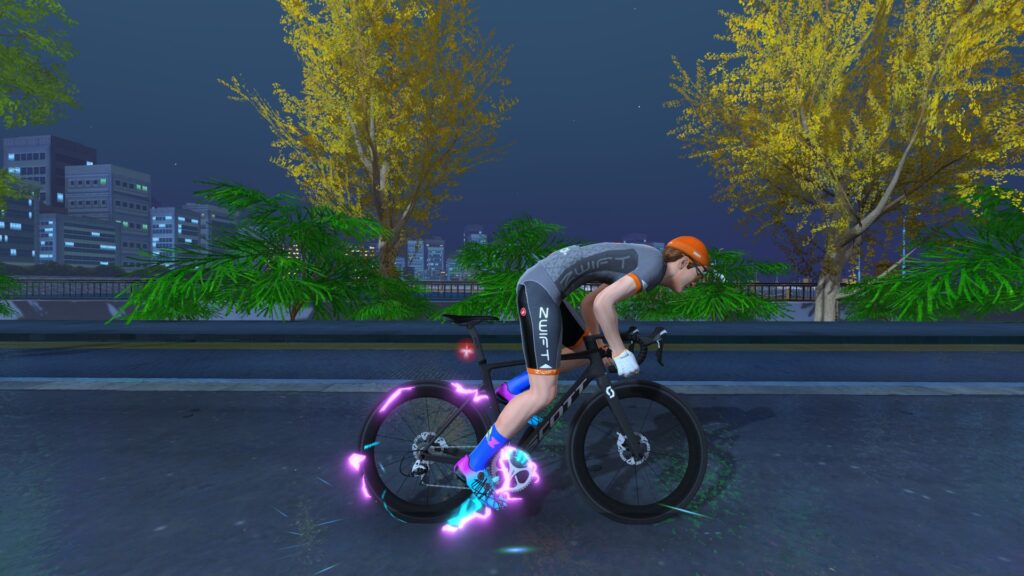
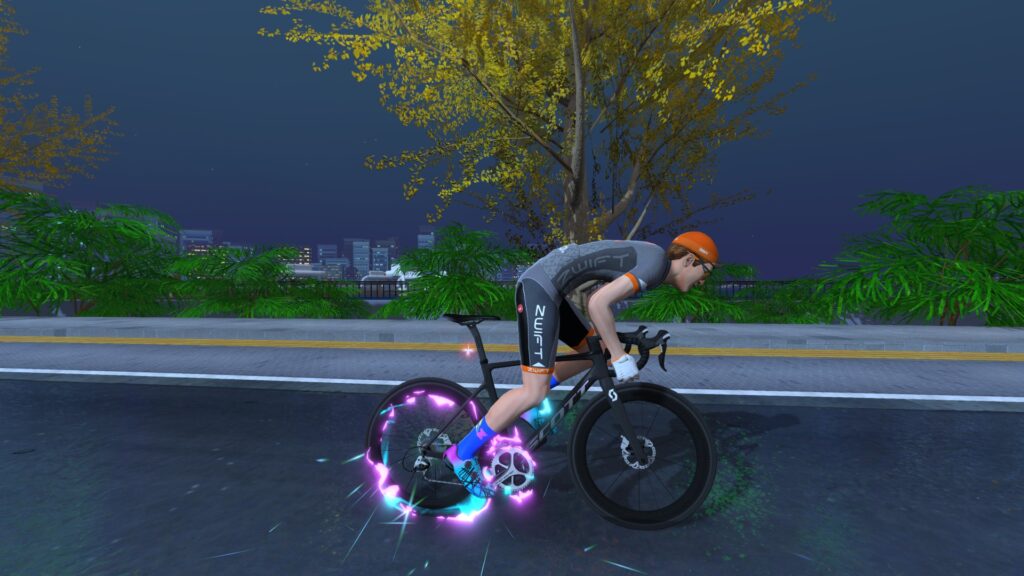
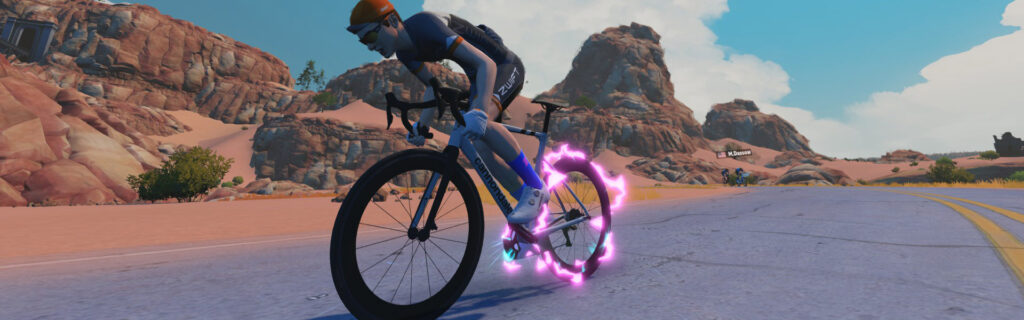
Lightning socks include cool visual effects which are triggered as you hit certain power levels. The power levels are multipliers of your FTP, and there are four levels of animation possible, triggered when you hit 1.5x, 2.1x, 2.7x, and 3.2x your in-game FTP.

If your current power is greater than 1.5 times your FTP, the first effect, called the “sparks and tire halo” effect, will appear. This works whether you’re wearing Lightning Socks or Aero Lightning Socks.

Ramp up your power to 2.1 times your FTP and the “tire size flash” effect will be added to the effect above. This works whether you’re wearing Lightning Socks or Aero Lightning Socks.

Why stop now? Pour it on and hit 2.7 times your FTP and the “full Aero Lightning effects” will be added to the effects above. (This only applies if you’re wearing the Aero Lightning Socks.)

There’s one more level! Hit 3.2 times your FTP and the “lightning feet” effect will be added to the effects above. (This only applies if you’re wearing the Aero Lightning Socks.)

Here’s a quick video showing what these animation levels look like in action:

How to Unlock Lightning Socks

Lightning Socks and Lightning Aero Socks are unlocks for Zwift’s Factory Tour Challenge. You can click to read all about that challenge if you’d like, but to summarize:

  • Lightning Socks are unlocked when you finish the first part of the challenge by completing 250 power units. (1 power unit=riding at 1 W/kg for 1 hour)
  • Your Lightning Socks are upgraded to Aero Lightning Socks when you finish the hidden and much larger second part of the challenge by completing 600 additional power units!

Lightning Socks vs Aero Lightning Socks

Lightning Socks only offer two levels of animation/effects (see samples above) and do not give any performance benefit. The Aero Lightning Socks make you more aero, and offer four levels of animation/effects.

You will automatically unlock the Lightning Socks once you complete 250 units in the Factory Tour Challenge. They will be added to your garage, and your avatar can wear them whenever you’d like.

If you continue on in the Factory Tour Challenge and do another 600 power units, you will automatically unlock the Aero Lightning Socks. These will replace your “basic” Lightning Socks, automatically upgrading them to aero socks with more effects.

Speed Tests

So, just how much faster do the Aero Lightning Socks make you?

We ran a test with and without the socks, using our standard bot (75kg, 183cm tall) at 300 watts. The Aero Lightning Socks made our bot approximately 12 seconds faster across an hour of riding on flat roads.

Questions or Comments?

Are you working on completing the Factory Tour Challenge? What do you think of the Lightning Socks as a reward? Share below!

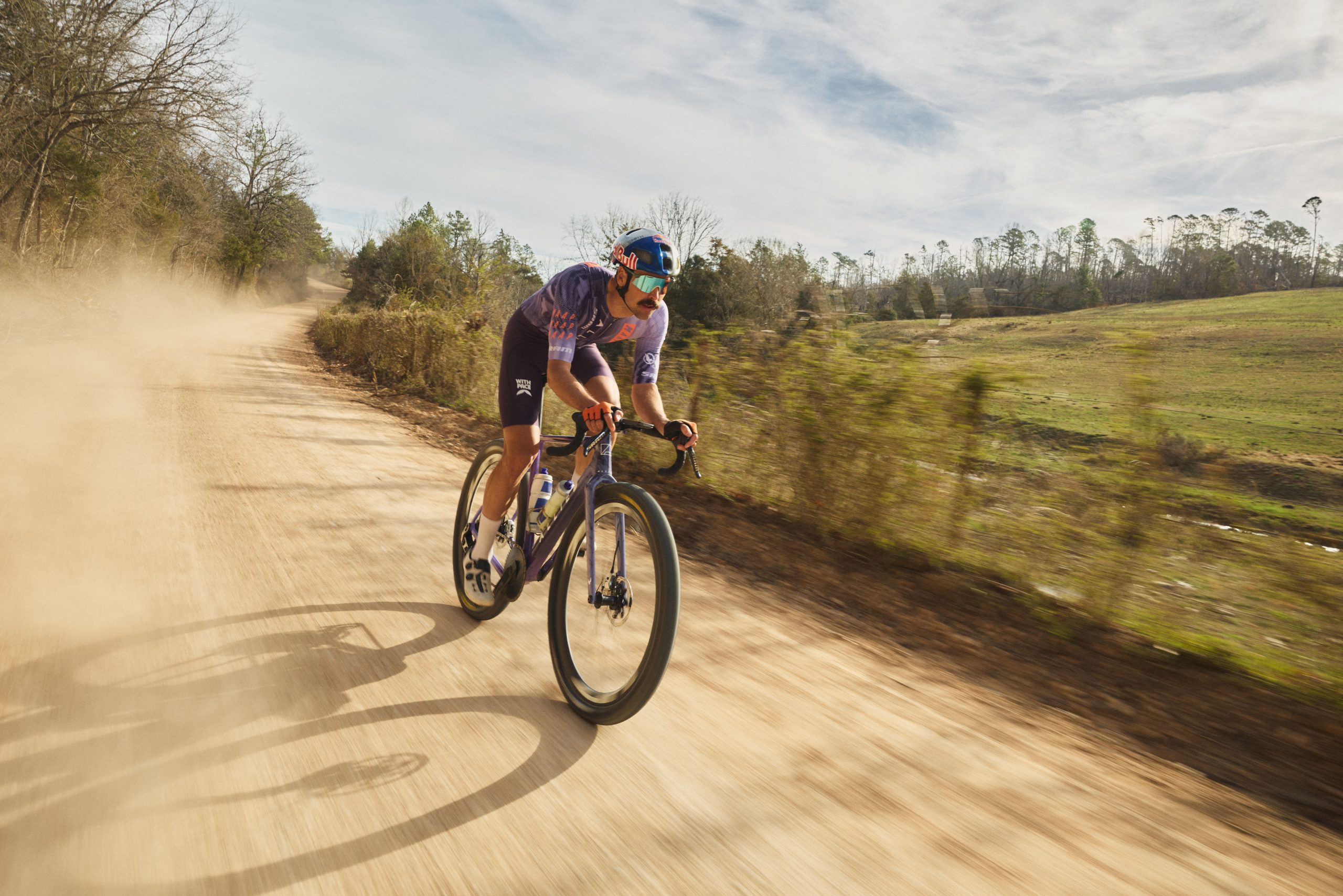
Want to run chunky tyres on your gravel bike? The Allied Able says yes, with enormous 57mm clearance

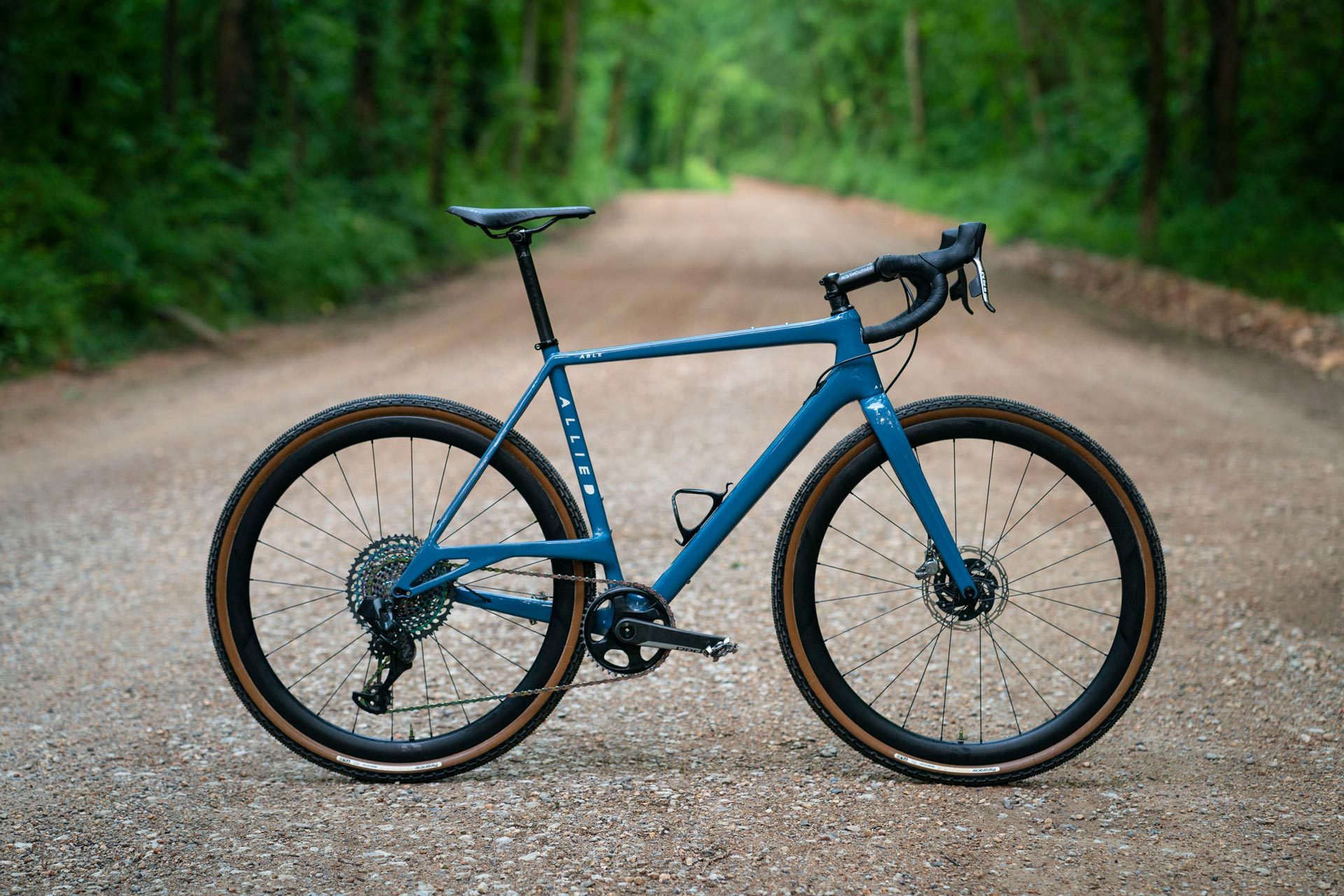
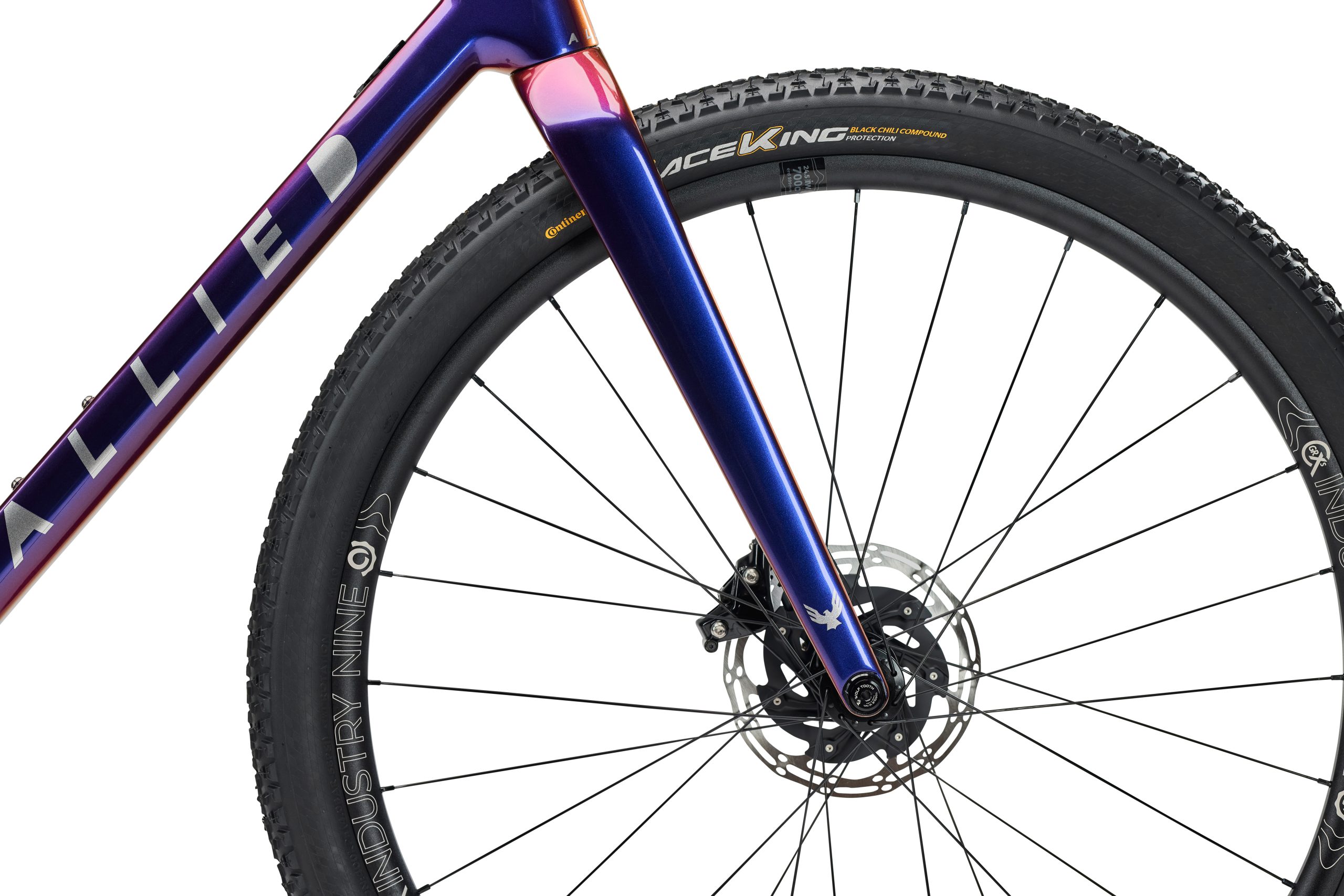
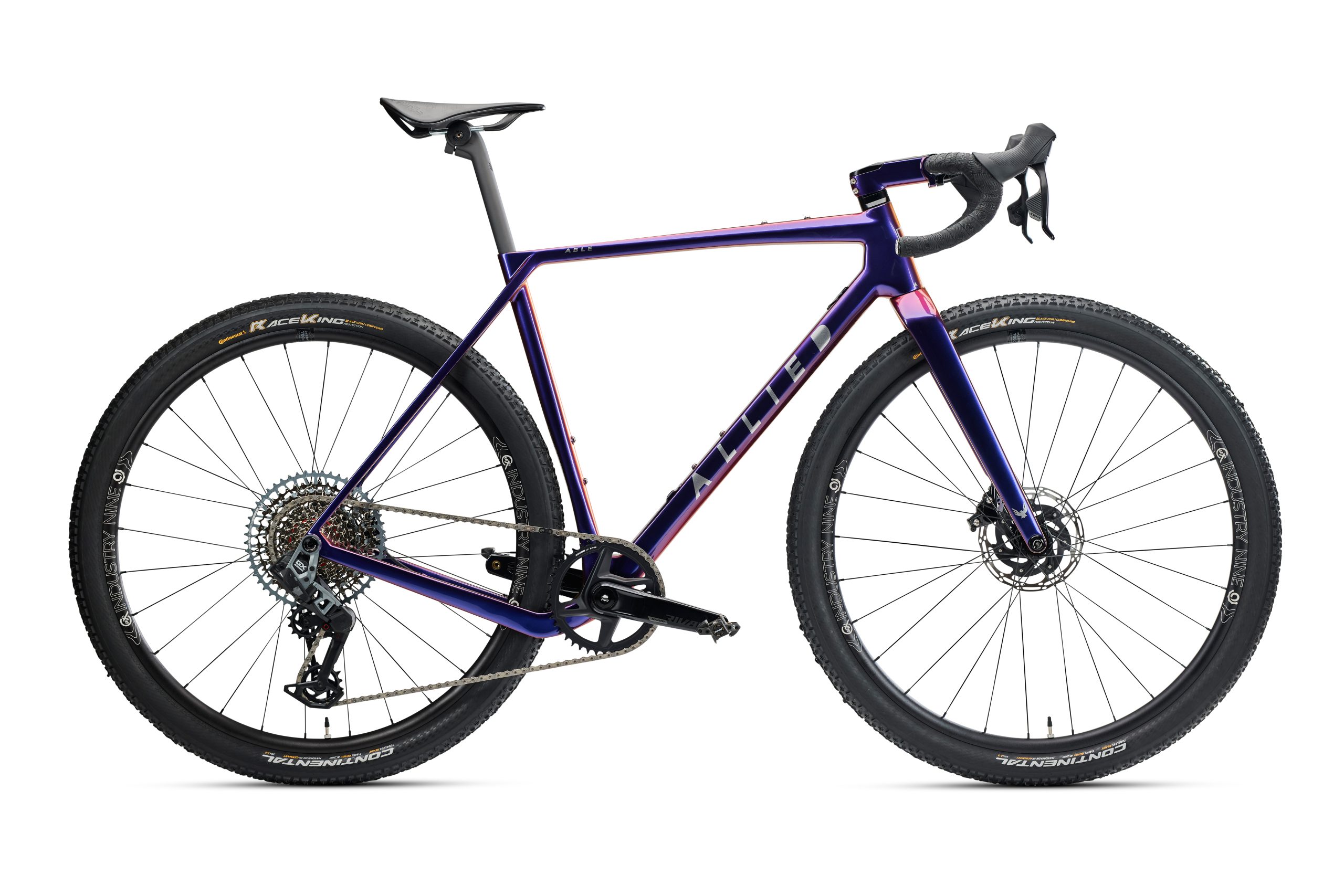
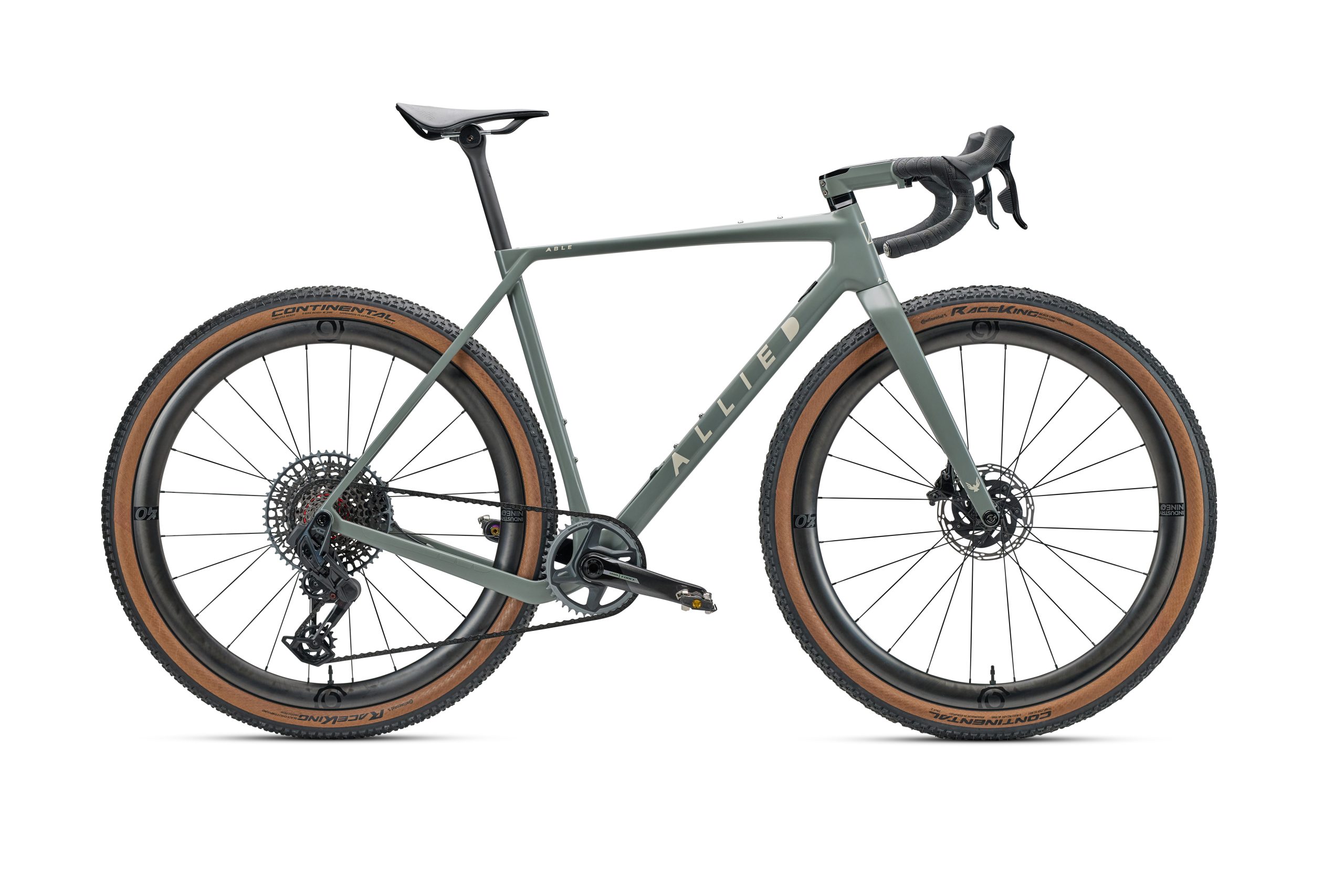
Allied has finally launched its long-teased second-generation Able, with the new gravel race bike able to accept up to a whopping 2.25in / 57mm tyre.

The distinctive elevated driveside chainstay of the outgoing model is no more, and the new Able also drops a significant amount of weight over its predecessor.

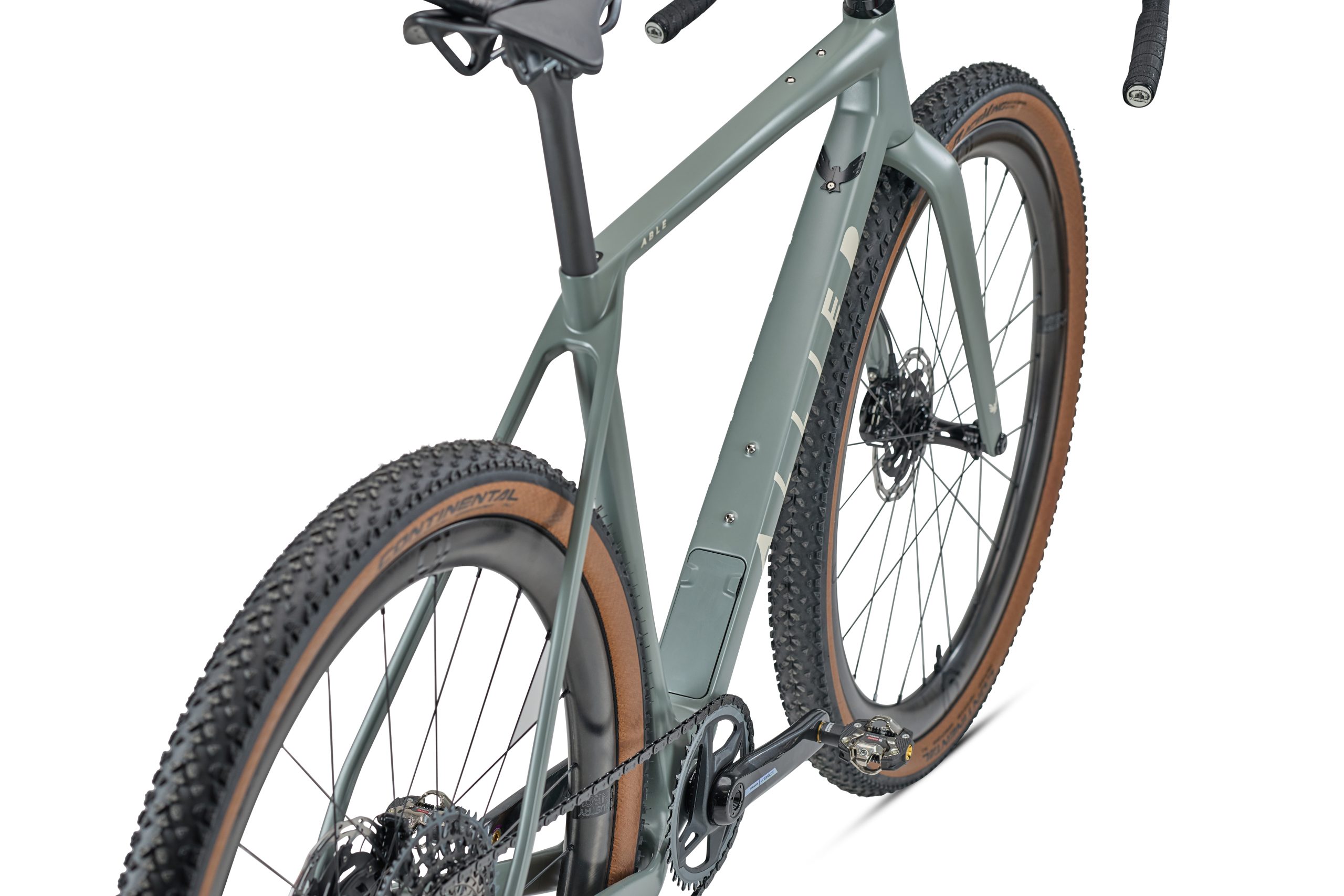
There’s also a nifty down tube storage solution, where the storage hatch is independent of the bottle cage. 

We first spotted the new Able at Unbound 2024, where Payson McElveen tested a prototype which saw her take eighth place in the 200-mile event and Taylor Lideen also raced it in the 350-mile race. 

The Able is available now, with the cheapest SRAM Rival eTap AXS build retailing from $6,775 and rising up to $11,500 for the top-tier SRAM Red XPLR AXS build. 

A frameset, which includes a stem and seatpost, retails from $4,500. 

57mm tyre clearance

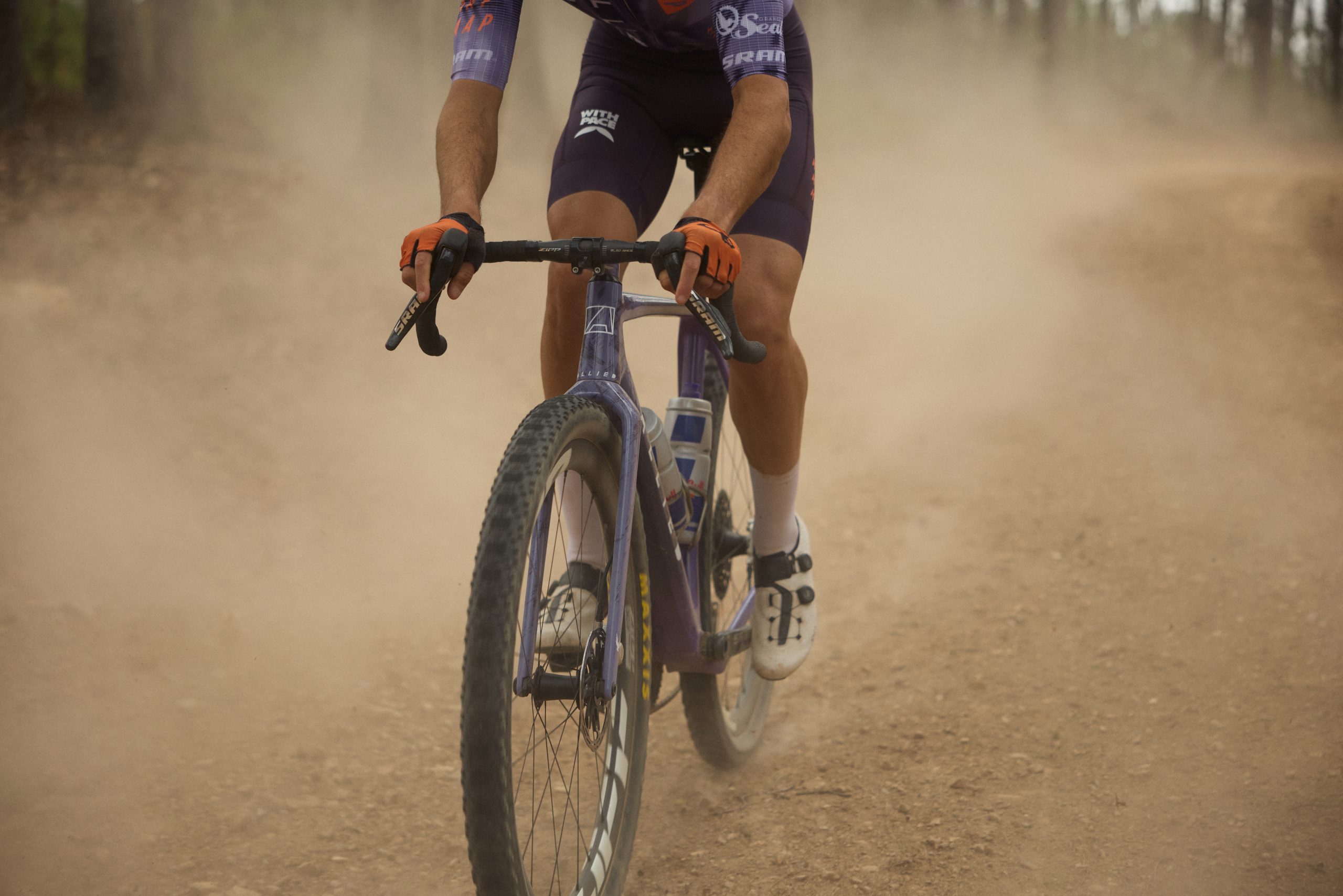
Payson McElveen riding Allied Able
The Able is yet another bike that’s following the trend for voluminous tyres Allied

The Able is the latest in a slew of new gravel bikes embracing larger-volume mountain bike tyres. 

It has clearance for 57mm / 2.25in tyres, matching the Lauf Seigla and 3T Extrema Italia – although it’s bested by the Ridley Ignite GTX and Lee Cougan Innova Super Gravel, which can take up to a 58 and 61mm tyre, respectively. 

Allied says it chose this clearance because it believes 2.25in are “the fastest available tyres”, although it acknowledges its initial test mules had a 2.1in / 53mm clearance. 

For context, the outgoing Able was optimised around a 42mm tyre but could take up to a 43mm out back, and a 47mm up front. 

Farewell weird chainstay

Allied Able
The distinctive elevated chainstay is no more. Allied Cycle Works

The outgoing Able was instantly recognisable for its elevated driveside chainstay, which Allied claimed improved the bike’s rear-end stiffness and also allowed the brand to run short 420mm chainstays. 

Speaking to BikeRadar, Sam Pickman, head of product, said the brand removed this so its athletes could have the flexibility to run a 50t chainring with a wide-range 10-52t cassette. 

Pickman explains: “to make that combination work, the elevated chainstay would have had to be really high, which would have created a whole host of other structural issues we wanted to avoid”.  

Like its predecessor, the new Able is only compatible with 1x drivetrains, although when we spotted Taylor Lideens riding a prototype last year, he was riding a 2x Shimano GRX Di2 set-up. 

An out-and-out gravel race bike  

Payson McElveen riding Allied Able
The Able has its eyes set firmly on the race course. Allied

Allied says the new Able has been designed for the demands of gravel racing and went through eight prototypes before settling on the final design. 

Like Allied’s other bikes, the carbon frame is made in its Rogers, Arkansas facility – bypassing the typical Asian production most brands utilise. 

A size medium (56cm) frame is claimed to weigh 950g (although Allied doesn’t reveal whether that’s painted or with hardware) – a 340g decrease over the previous model.

The accompanying fork is claimed to weigh 425g. 

Allied Able SRAM Rival Mullet
Allied has paid close attention to the riding characteristics of the fork. Allied

The new frame is claimed to have a 15 per cent reduction in front-end lateral stiffness over its predecessor, which Allied says is to improve handling and “help the bike feel more planted on rough roads”.

The rear end has a 20 per cent increase in lateral stiffness to improve pedalling efficiency, according to the brand. 

Allied says the new fork is designed to match the frame’s stiffness and went through several variants before settling on the final design, and says it received feedback from some of its riders that the earlier forks were too stiff. 

In a sign of its racing intent, the new Able is largely bereft of mounting points, retaining a pair of top tube mounts but losing the under-the-down-tube mounts of the previous model. 

Elsewhere, the Able runs on a BSA 68mm threaded bottom bracket standard and a round 27.2mm seatpost, with routing for a dropper post. 

Embracing integration 

Allied Able SRAM Rival Mullet
Not a cable in sight… Allied

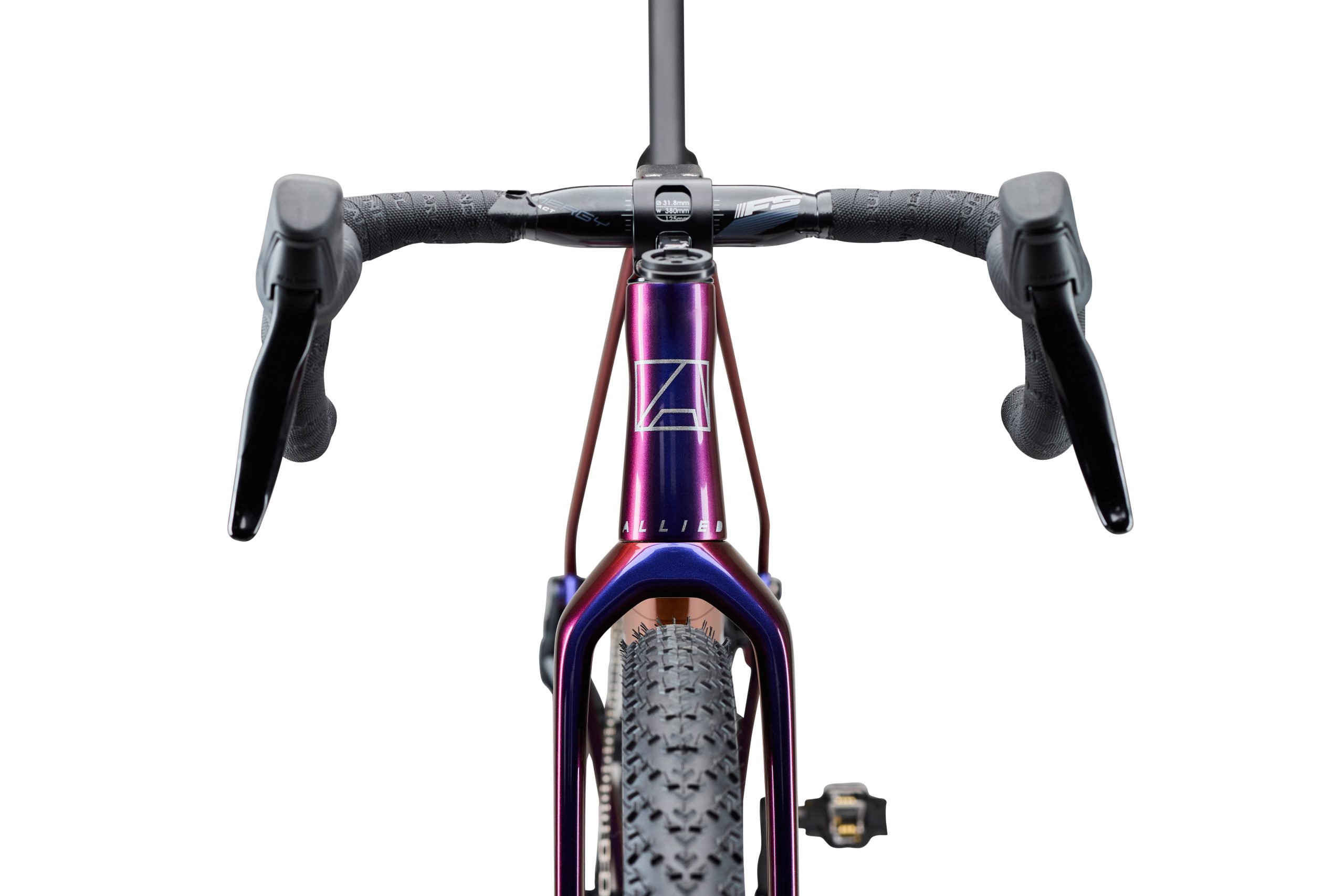
The Able is now fully integrated and uses Allied’s ST03 adjustable stem from its Alfa road model. 

The brand says riders can swap between two rise options (0 and -8-degrees) without needing to re-cable the bike. The ST03 will be available in lengths from 70 to 130mm. 

Cool down tube storage

Allied Able SRAM Force Mullet
Other manufacturers, take note… Allied

The new Able comes equipped with down tube storage, but its design differs from almost every other manufacturer in that the storage door is independent of the bottle cage. 

Allied says this design not only saves weight versus under-the-bottle designs, but improves operation and gives you the peace of mind of traditional bottle security. 

We believe this to be the first of its kind on a gravel bike, but the design isn’t new on mountain bikes – a similar setup can be found on the Canyon Exceed and YT Jeffsy.

Race-focussed geometry

Payson McElveen riding Allied Able
The geometry isn’t quite as radical as you’d expect Allied

The Able will be offered in five sizes from XS (52cm) to XL (61cm). Allied says the new geometry “improves high-speed stability without sacrificing the nimble handling required for the technical terrain riders encounter today”. 

Pickman further elaborates that Allied’s primary goal was to “position the rider comfortably yet aggressively, while carefully balancing the front and rear centre to achieve an optimal weight distribution of approximately 53/47 over the rear and front tyres”. 

The head tube angle has been slackened by 0.5-degrees to 71-degrees on a size medium with a 71mm fork trail (the outgoing Able had a 66mm trail across most sizes). 

Allied says it deliberately decided on these numbers “to increase confidence on varied terrain while ensuring the bike retains the necessary handling agility for navigating unpredictable situations”. 

Elsewhere, there’s a 74-degree seat tube angle (except for the smallest XS size) and the reach has grown by 13mm on a size medium to 400mm, but the stack remains identical at 575mm. 

 XS / 52cm S / 54cm M / 56cm L / 58cm XL / 61cm
Seat Tube Length (mm) 460 500 530 550 570
Effective Top Tube (mm) 534 554 564 580 591
Head Tube Length (mm) 97 113 135 156 177
Head Tube Angle (°) 70.5 70.5 70.5 70.5 70.5
Seat Tube Angle (°) 75 74 74 74 74
Front centre (mm) 611 622 633 651 663
Wheelbase (mm) 1,039 1,049 1,061 1,078 1,090
Stack (mm) 540 555 575 595 615
Reach (mm) 390 395 400 410 415
Rough frame weight (g) 900 930 950 970 1,030


Edit Table

Allied Able builds 

As well as a frame-only option, Allied will be offering three SRAM-equipped builds. 

While the brand has provided a starting price for the builds, the final price will vary depending on paint and specific component choices. 

Allied Able SRAM Rival AXS Mullet 

Allied Able SRAM Rival AXS Mullet
This Rival eTap AXS / GX Eagle Transmission mullet build opens the range. Allied
  • Groupset: SRAM Rival eTap AXS / GX Eagle Transmission mullet
  • Handlebar: FSA A-Wing AGX
  • Wheels: Industry Nine 1/1 GRCX
  • Tyres: Vittoria Terreno XC Race, 29×2.1in 
  • Price: from $6,775

Allied Able SRAM Force AXS Mullet

Allied Able SRAM Force AXS Mullet
The Force build, pictured here in ‘Lunar Rock’ Allied
  • Groupset: SRAM Force AXS / XO Eagle Transmission mullet
  • Handlebar: FSA K-Wing AGX carbon
  • Wheels: Industry Nine 1/1 Ultralite Carbon Gravel
  • Tyres: Continental Race King ProTection, 29×2.2in 
  • Price: from $8,400

Allied Able SRAM Red XPLR AXS 

Allied Able SRAM Red XPLR AXS
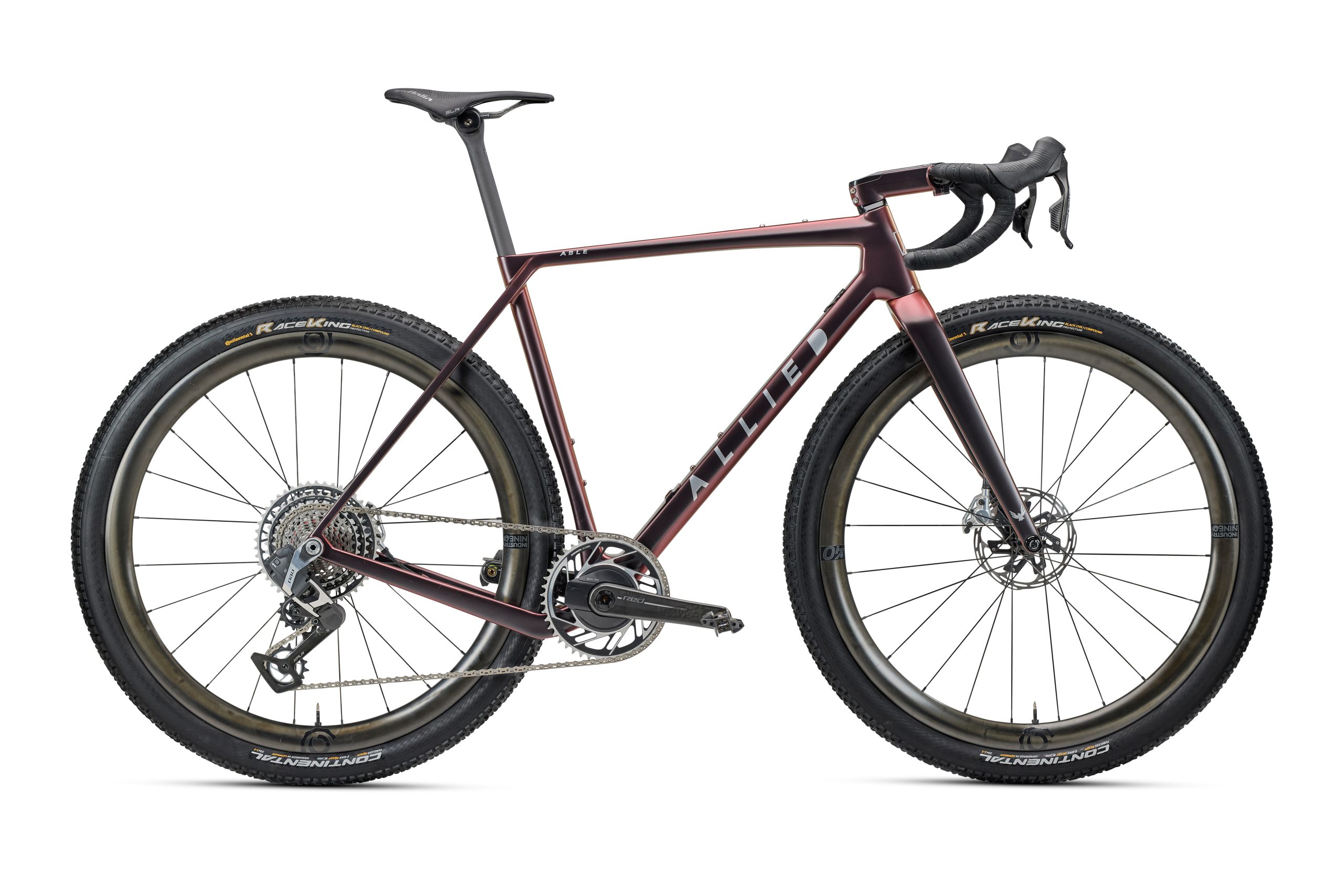
The Red XPLR AXS build looks seriously lustworthy… Allied
  • Groupset: SRAM Red XPLR AXS
  • Handlebar: ENVE SES AR Road In-Route
  • Wheels: Industry Nine Solix SL – AR40c
  • Tyres: Continental Race King ProTection, 29×2.2in 
  • Price: from $11,500 

Wahoo’s new Roam and Bolt bike computers wave goodbye to one of their most defining features

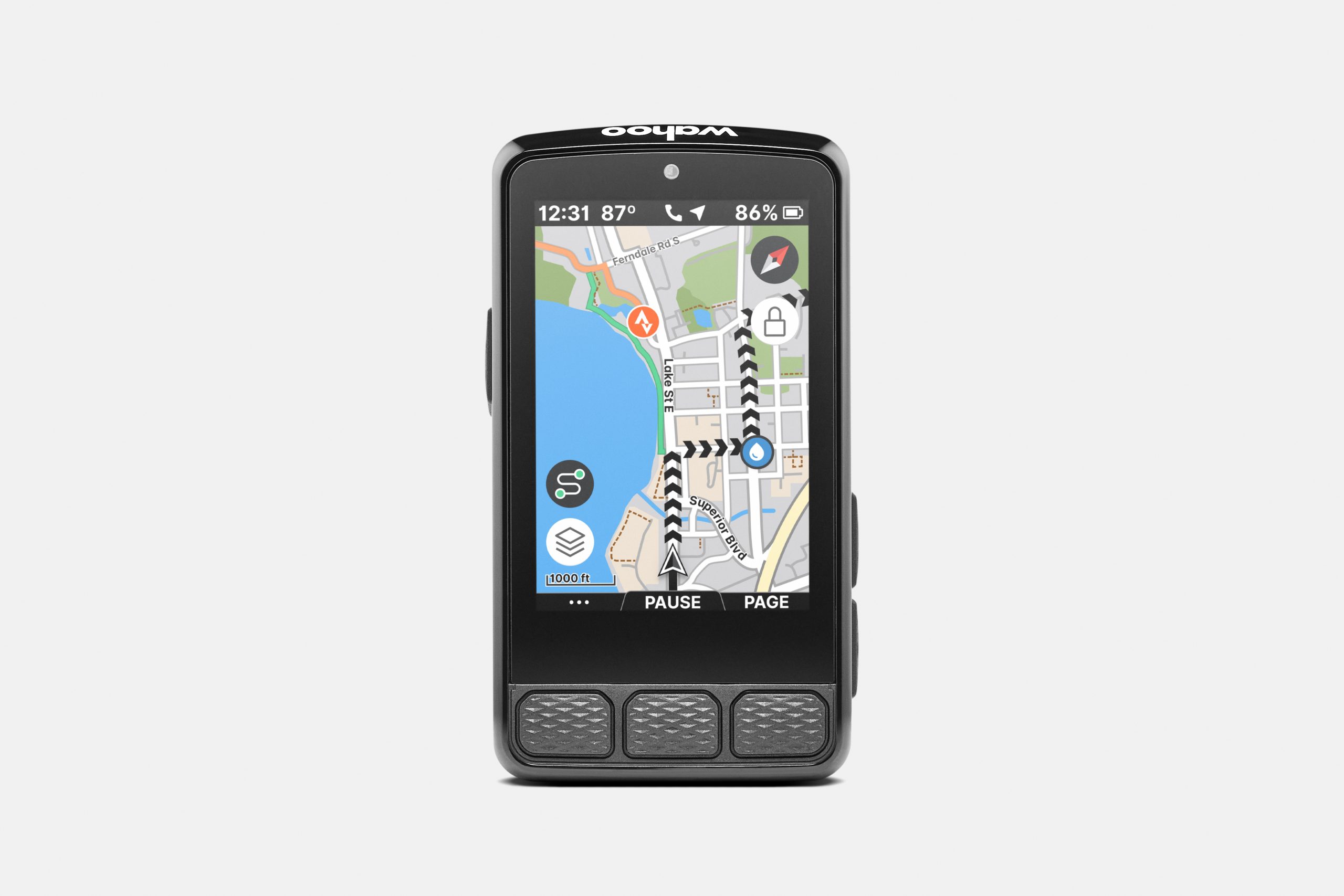
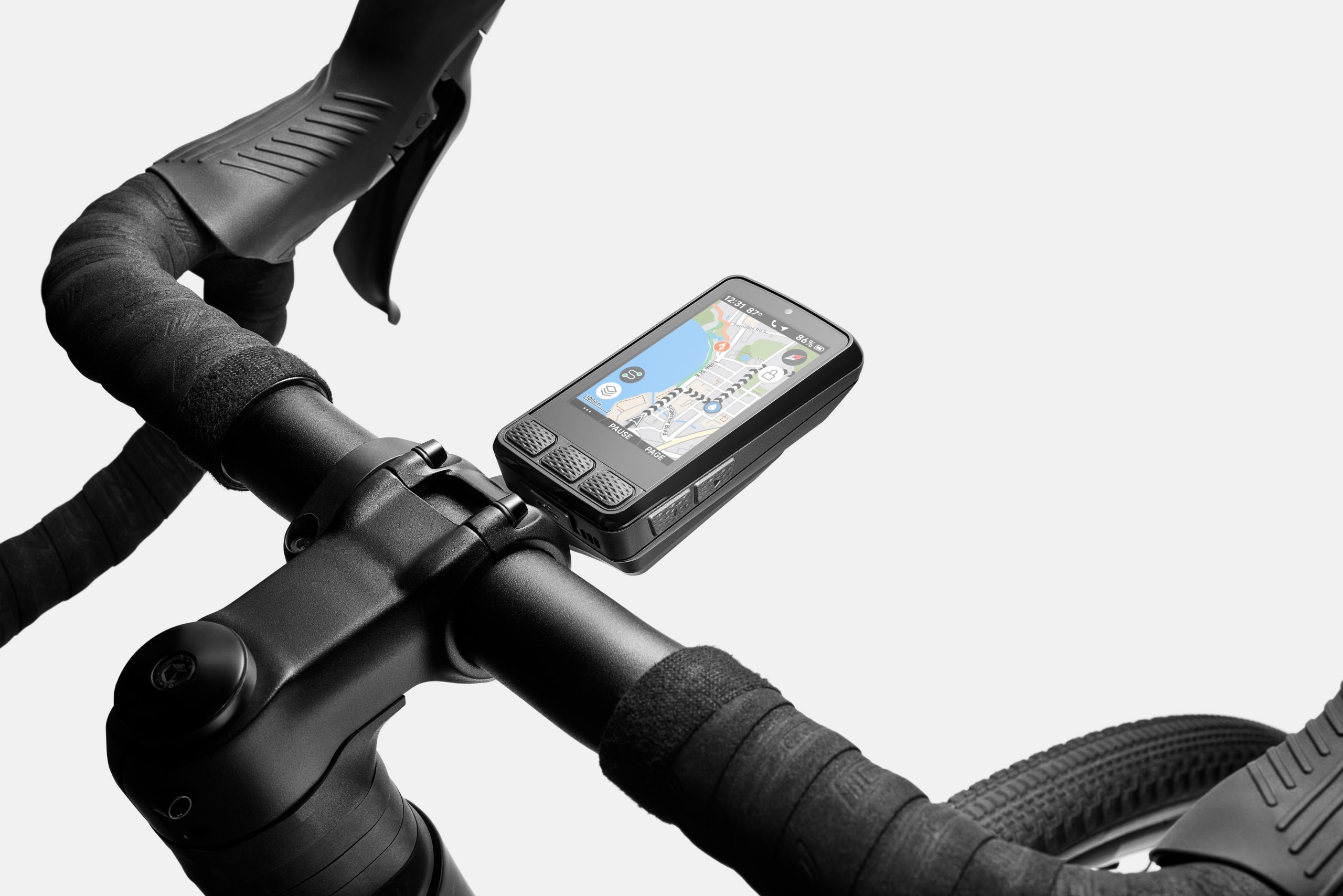
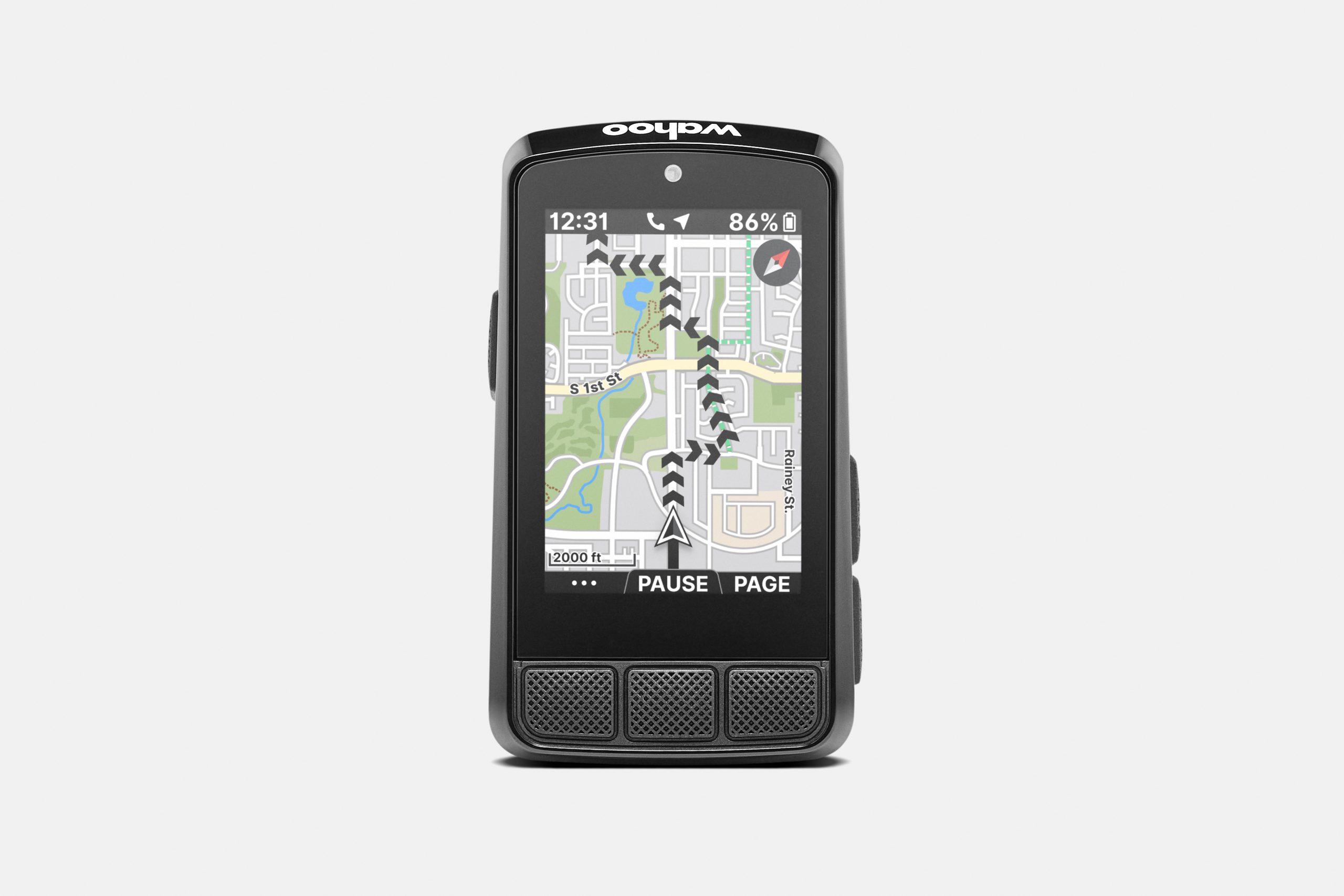
Wahoo has announced updates to its Roam and Bolt bike computers, headlining with improved screens and the integration of the brand’s overhauled user interface which debuted on the Elemnt Ace.

The Elemnt Roam 3 sees a touchscreen installed for the first time, with a small increase in size.

The smaller Elemnt Bolt 3 has received a similar screen update, although this remains non-touchscreen.

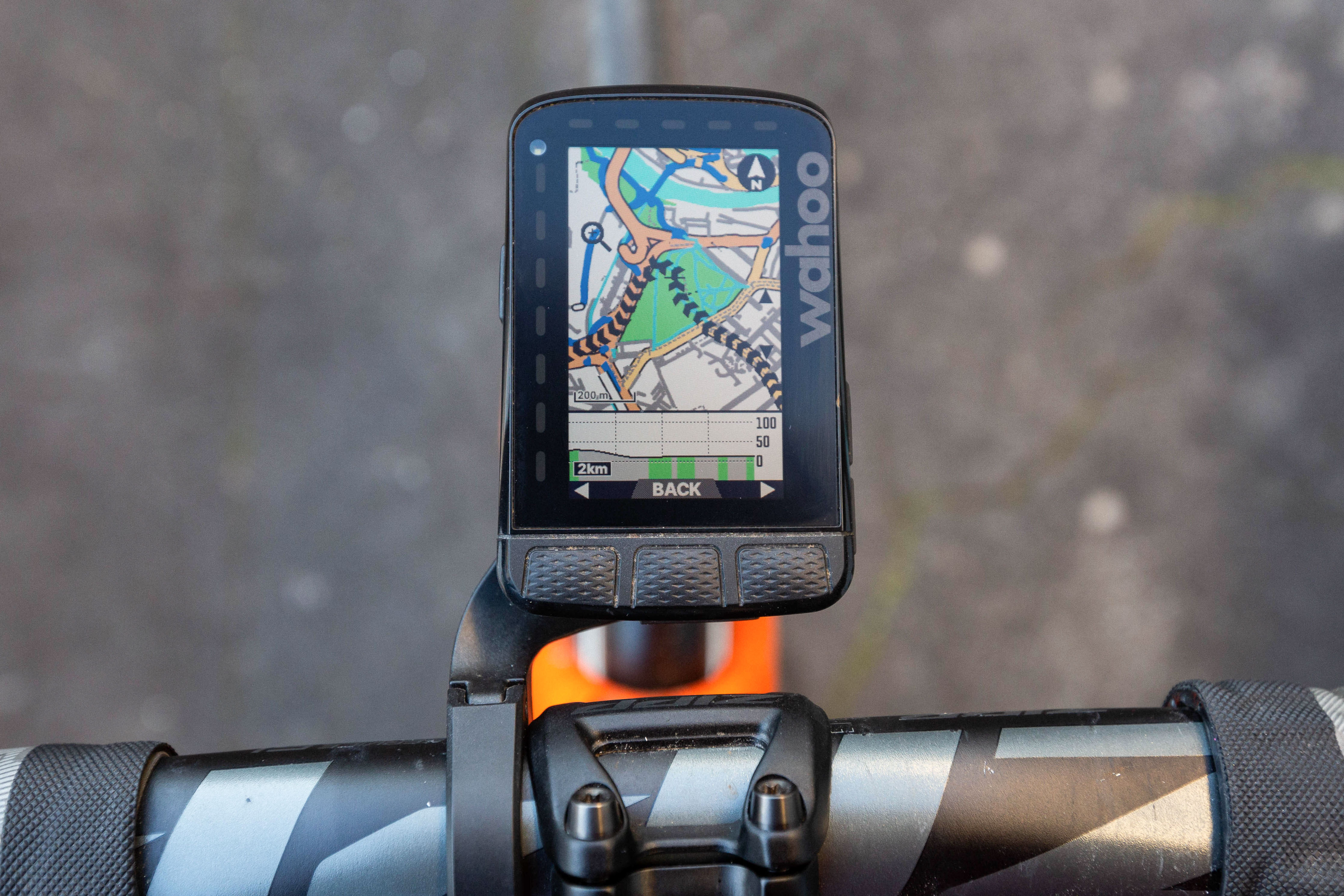
But the LED indicators – which ran along the outgoing Bolt and Roam’s bezels – have been dropped from the new bike computers.

Both have seen visible changes to their form factor, but Wahoo hasn’t shared detailed specifications.

The Roam 3 is set to cost £399.99 / $449.99 / € 449.99 / AU$749.95, and the Bolt 3 £299.99 / $329.99 / €329.99 / AU$549.99. Both will be available to buy from Tuesday 6 May.

Wahoo Elemnt Roam 3

Wahoo Elemnt Roam 3
The Wahoo Elemnt Roam 3 features an improved, slightly larger screen. Wahoo

The Wahoo Elemnt Ace, which launched in December 2024, remains at the top of the Wahoo computer tree, so the latest Roam slots in between it and the smaller Bolt. 

The LED indicators – which previously inhabited the top and left-hand edge of the bezel – are no more, dropped in favour of an improved screen.

This has enlarged to 2.8in (measured diagonally) from 2.7in, with thinner side bezels, and which Wahoo claims is anti-reflective. The ambient light sensor has also shifted from the top-left corner to the top-centre.

Wahoo Elemnt Roam 3
The device occupies a middle-sized ground between the Elemnt Ace and Bolt 3. Wahoo

The screen is now touch-sensitive with pinch, zoom and swipe capability, but Wahoo has retained the three soft-function buttons on the bottom of the device, plus the two toggle buttons and power button. 

When it launched the Elemnt Ace, the brand claimed that this dual functionality gave riders operational choice. Specifically, the buttons were said to be especially useful in the rain, and when wearing winter gloves.

Wahoo’s render images suggest that the screen is also more detailed, possibly with a higher pixel count and more colour range – the previous Roam V2 could only produce 64 colours – although the brand hasn’t confirmed this.

Wahoo Elemnt Roam V2 navigation screen
The Elemnt Bolt V2 had LED indicators on the top and left bezels – these are now consigned to the history books. Felix Smith / Our Media

Navigation and mapping has been improved, and voice prompts are also part of the updated feature set.

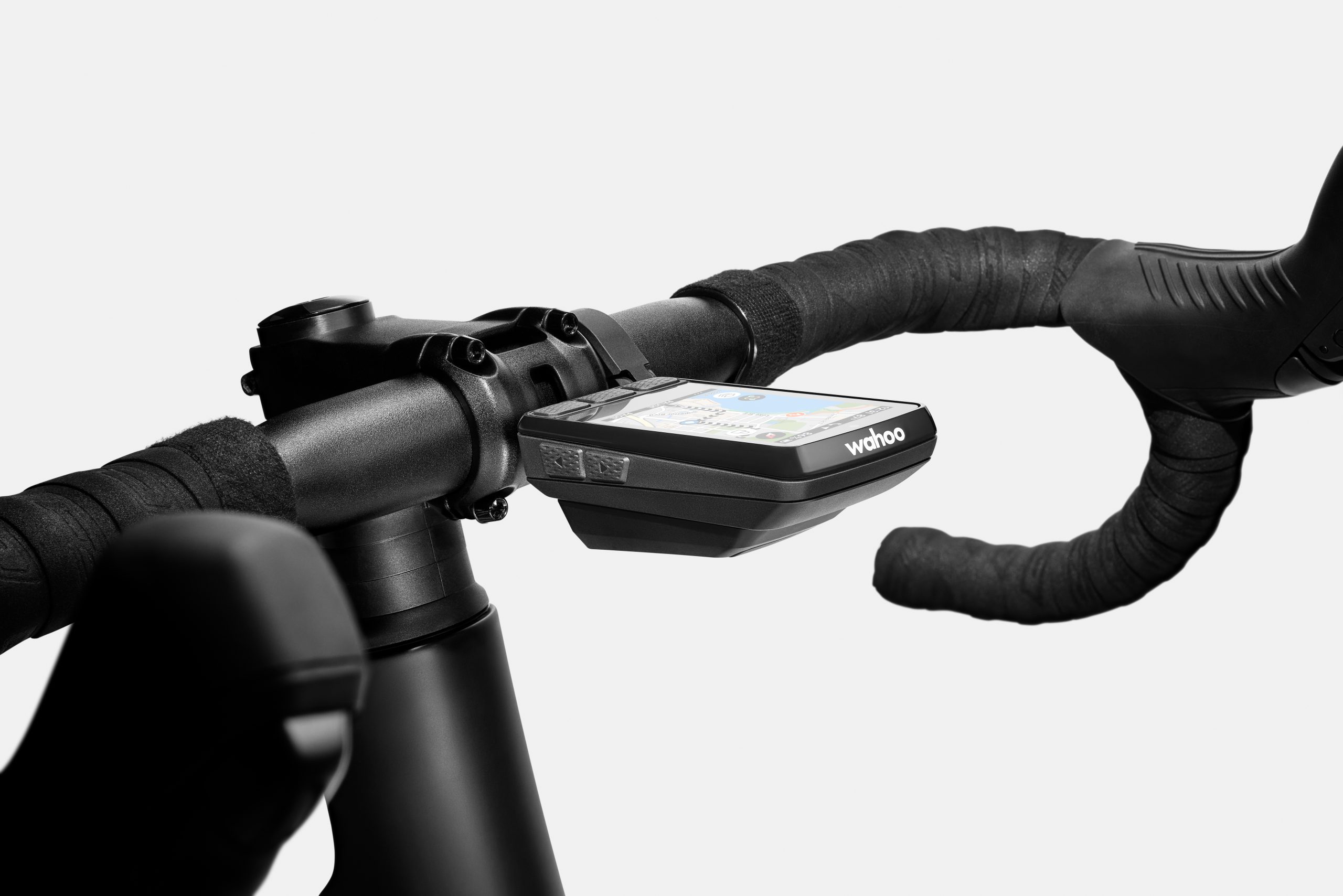
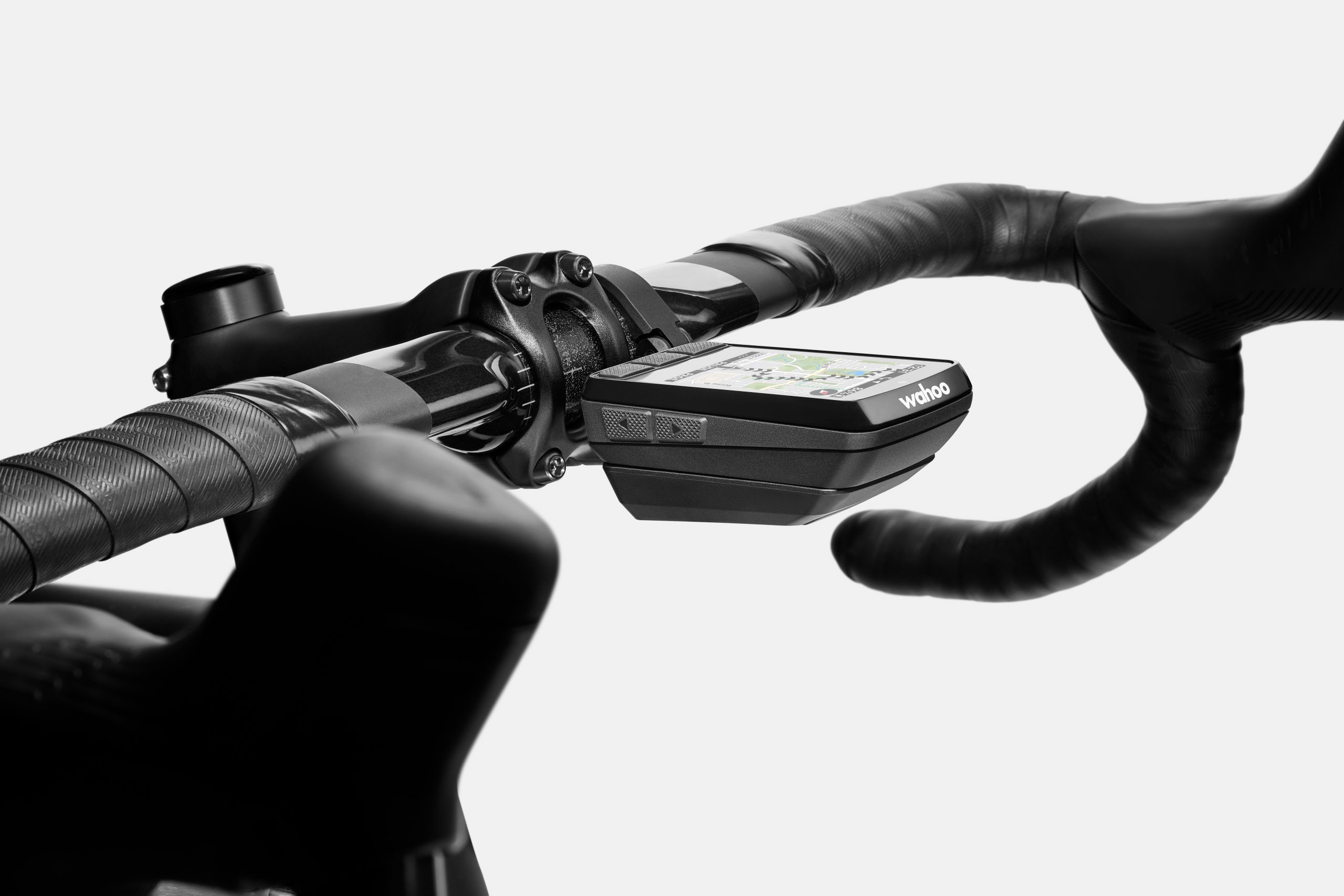
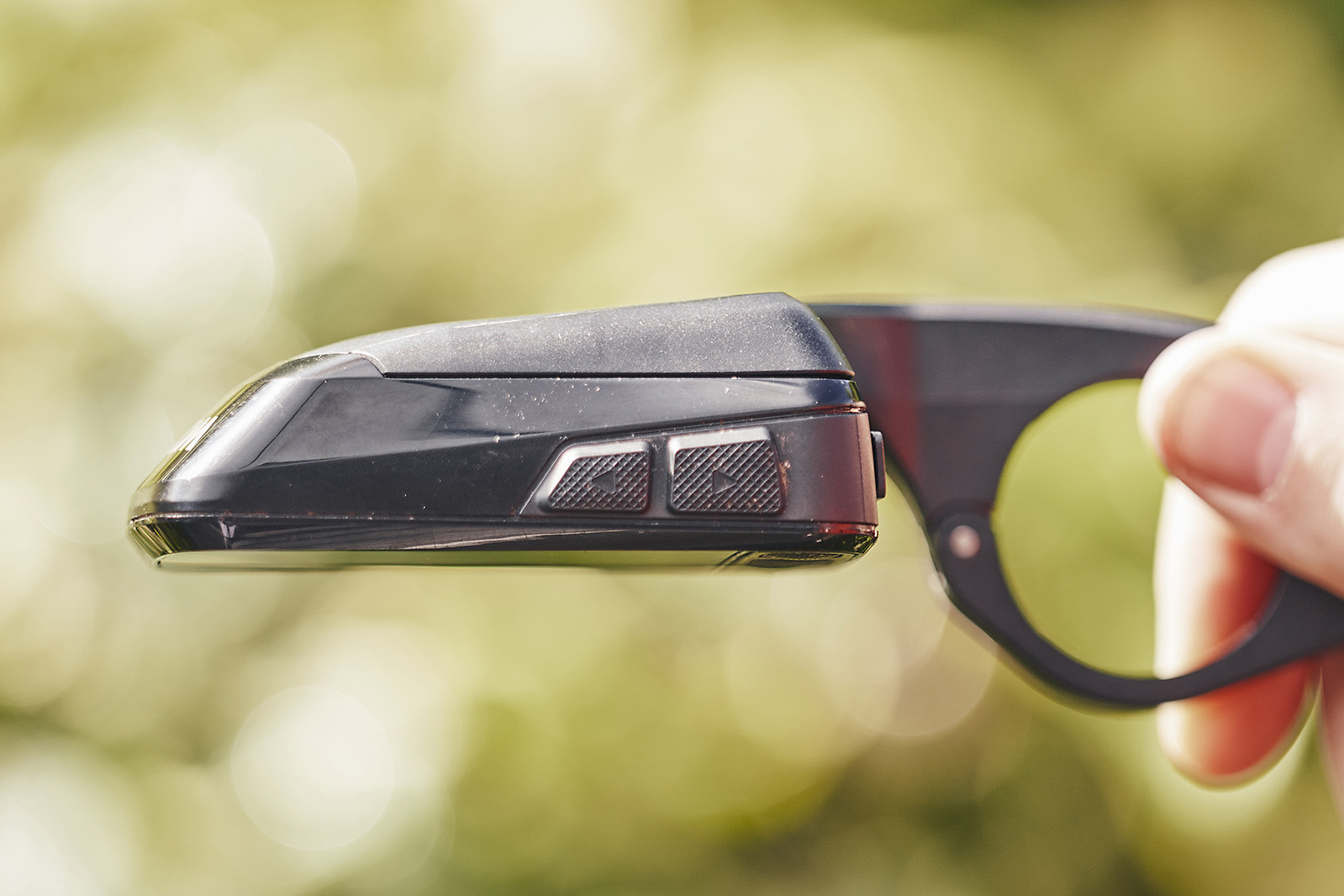
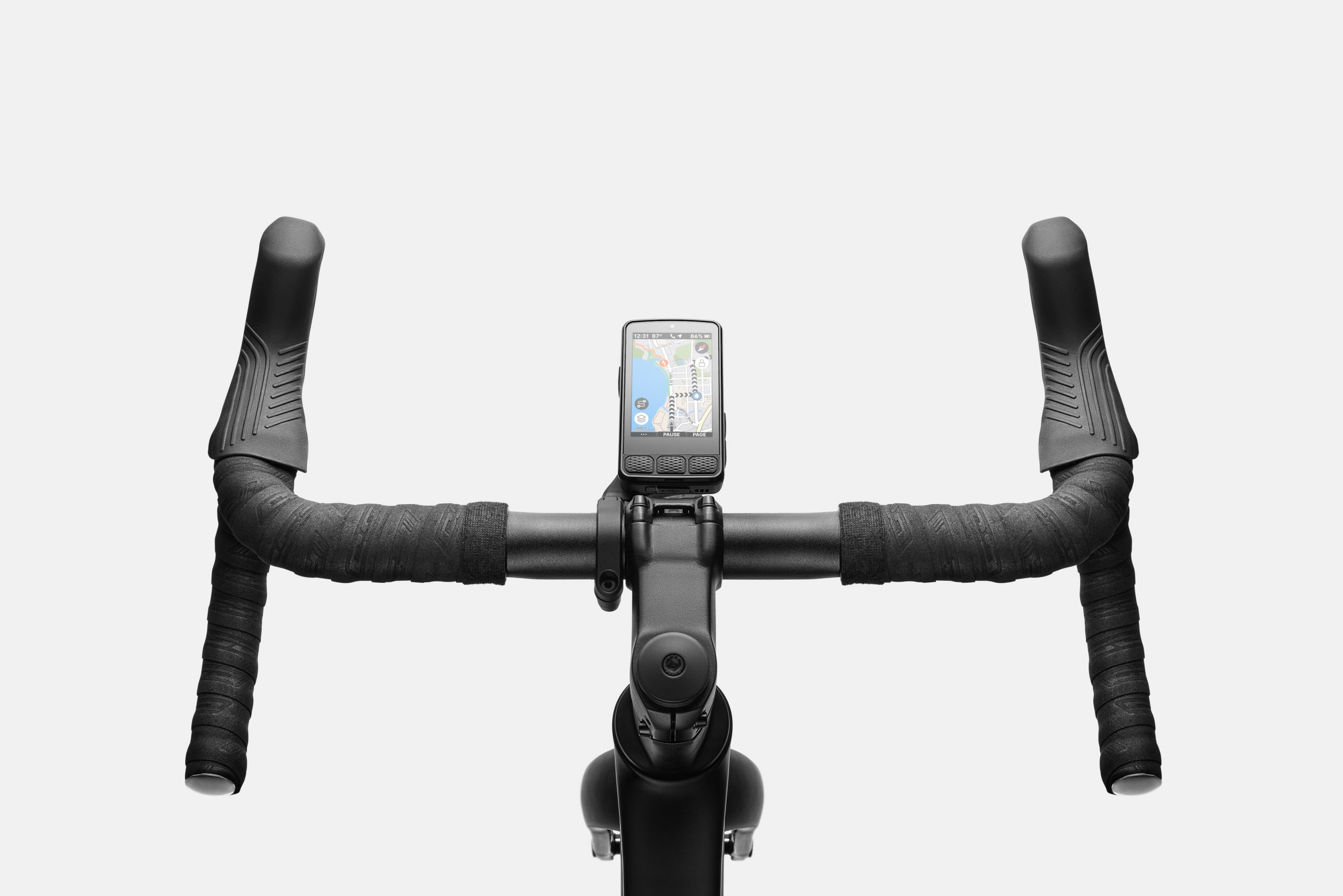
The overall form factor appears slightly longer and narrower (Wahoo hasn’t shared detailed specs), with a similar depth. It uses the same click-mount interface, although it’s unclear yet whether the supplied out front mount (which features a supporting frame) has been modified.

Wahoo Elemnt Roam 3
Internal specifications have yet to be fully confirmed, but the claimed battery life has increased by around seven hours. Wahoo

Wahoo says the Elemnt Roam 3’s battery will last for “up to 25 hours”, a marked improvement on the previous Roam’s 17 hours claim (which we found to be close to the mark in real-world testing). 

This indicates that the battery capacity has been updated, alongside potential improvements to the device’s battery management and internal components – albeit, again, this hasn’t been confirmed. 

This is also linked to the brand’s updated software and Wahoo app, which debuted on the Elemnt Ace, and has now been rolled out across the Roam and Bolt 3.

This sees a refined interface on start-up, as well as full setup and customisation of the screens carried in the app.

Wahoo Elemnt Bolt 3

Wahoo Elemnt Bolt 3
The Elemnt Bolt 3 remains the smallest of the three Elemnt computers. Wahoo

The Wahoo Elemnt Bolt 3 has seen similar updates to its screen and design, with a slight bump in screen size (and detail, judging from the brand’s press images). The LED indicators have been dropped from the top bezel.

Like the Roam 3, the ambient light sensor has shifted to the top centre of the device.

The Bolt 3 remains the brand’s smallest and cheapest bike computer, and continues to be pitched as “compact and aerodynamic”.

Wahoo Elemnt Bolt 3
Press images show the computer to be substantially thicker than the outgoing model (including the mount). Wahoo

That said, close inspection of the Wahoo’s supplied images reveals that the Bolt 3 is thicker compared to the previous generation, suggesting an overhaul under the hood.

Wahoo Elemnt Bolt V2
The Bolt v2 appears much sleeker, by comparison. Steve Sayers / Our Media

Wahoo’s claimed run time has increased from 15 to “up to 20 hours”, hinting that a larger battery could be the main cause for this.

As with the Roam 3, though, exact hardware specifications have yet to be shared. 

Pricing and availability

Wahoo Elemnt Roam 3
The new computers aren’t available to buy just yet. Wahoo

Wahoo says the new Elemnt Roam and Bolt 3 computers will be available to buy on Tuesday 6 May. 

  • Roam 3: £399.99 / $449.99 / € 449.99 / AU$749.95
  • Bolt 3: £299.99 / $329.99 / €329.99 / AU$549.99.

Our test units are soon to arrive at BikeRadar HQ, when we’ll get to grips with all the changes and report on whether you should think about upgrading.

Move over Garmin! This new rear-view radar could upset the Varia’s dominance

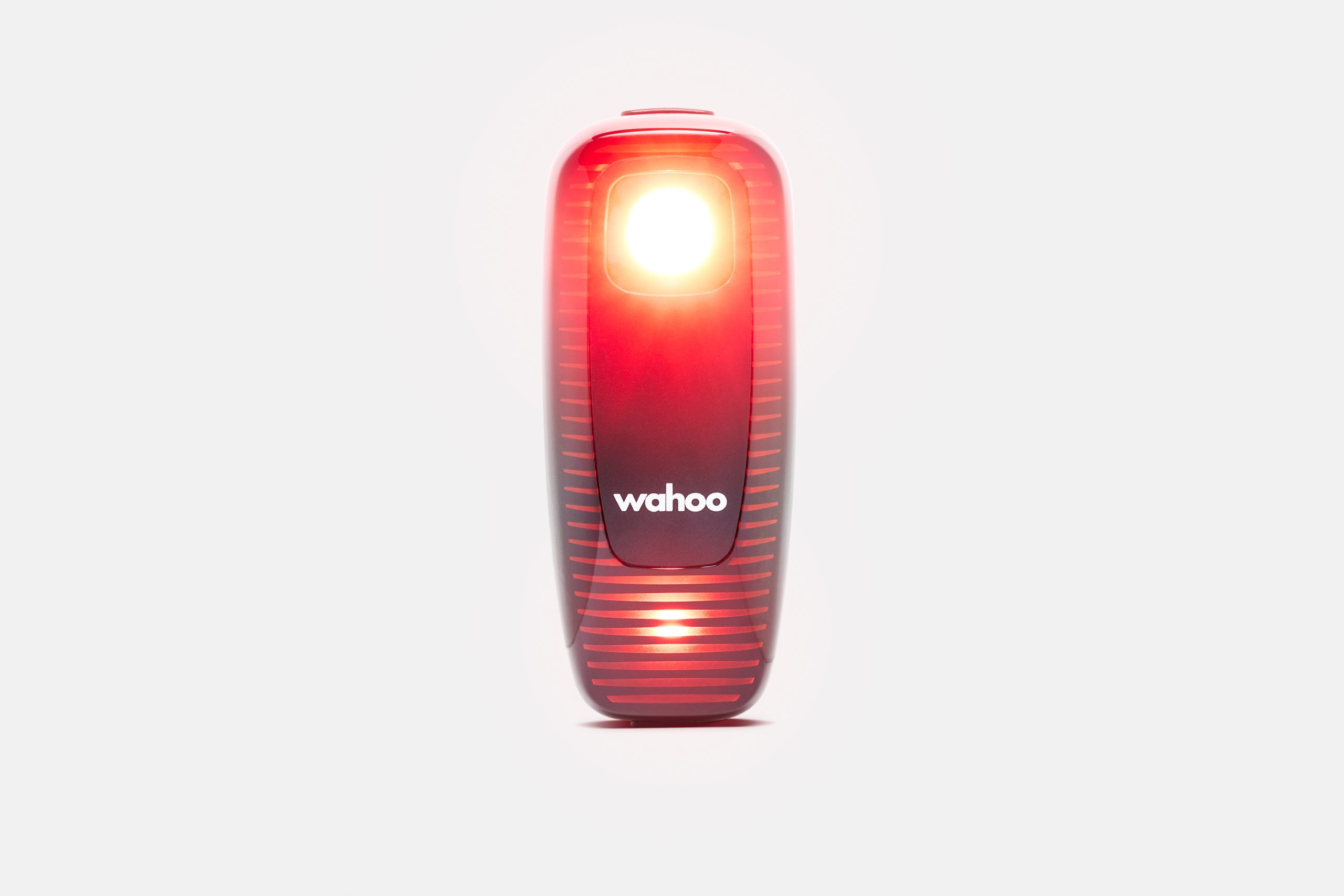
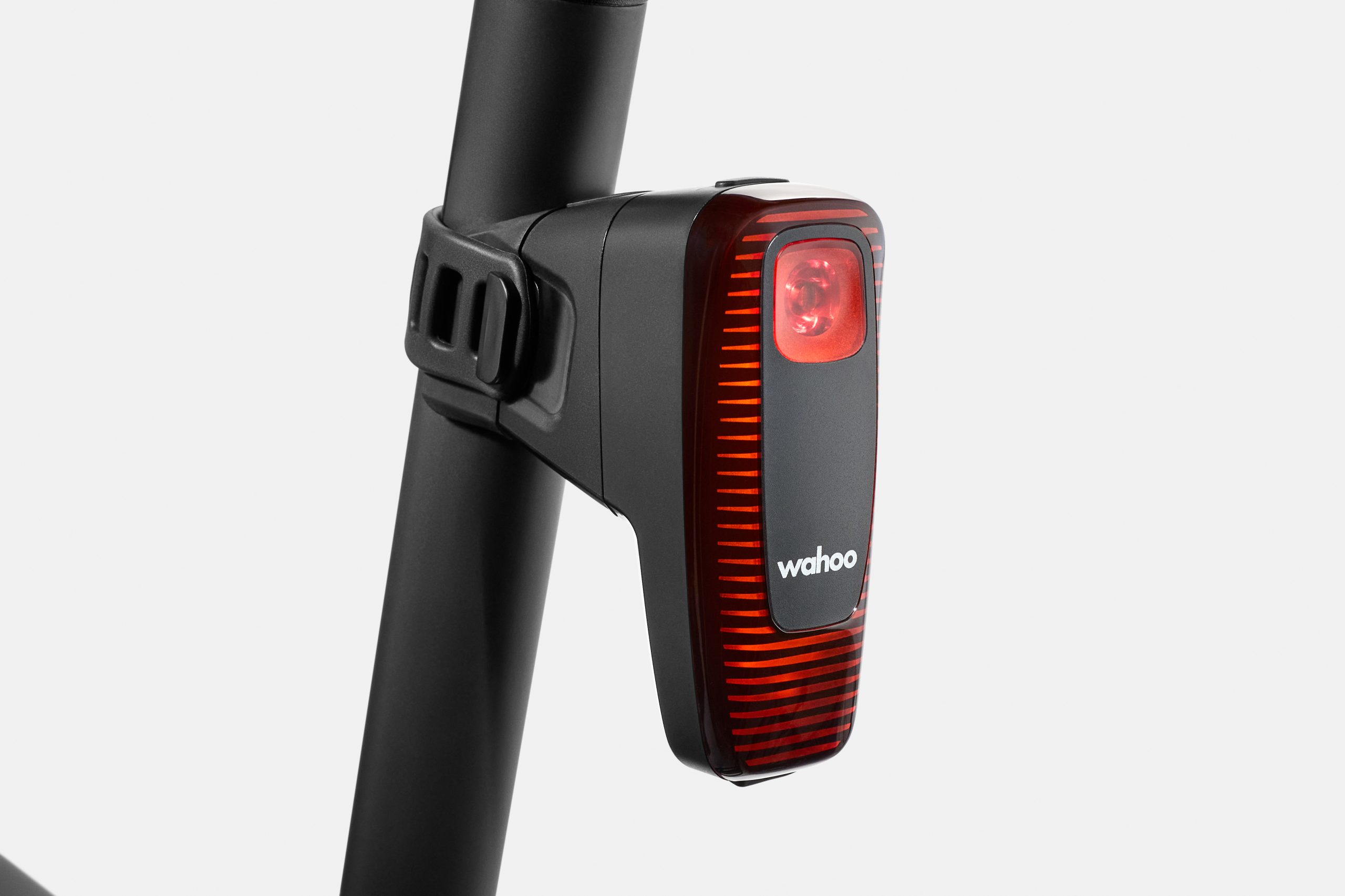
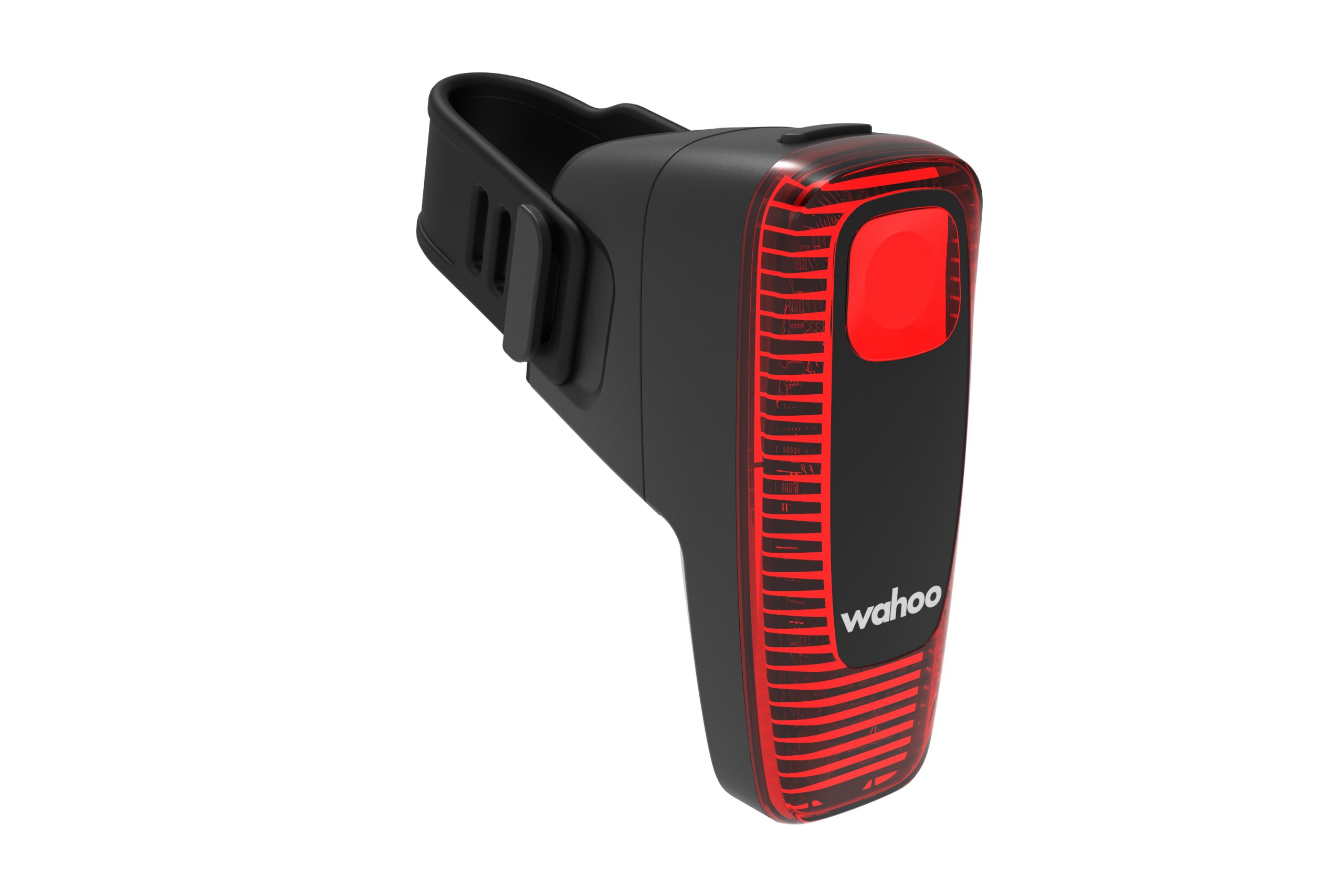
Wahoo has launched the Trackr Radar – the brand’s first rear view vehicle detection system. 

In a similar vein to Garmin’s Varia radar products, it’s designed to pair with the brand’s own bike computers – although Wahoo says it will also work with “other compatible Bluetooth or ANT+ bike computers.”

Wahoo has yet to confirm an on-sale date, but says the unit will cost £179.99 / $199.99 / €199.99/ AU$349.95 when it does become available. 

Reactive lighting

Wahoo Trackr Radar
Details about the new Radar are scant. Wahoo

The Wahoo Trackr Radar doesn’t rip up the rearview radar rulebook – like other radar systems, it works by sending a millimetre wavelength radar signal out, receiving the bounced-back signal from objects behind, then transmitting this data by ANT+ or Bluetooth to display on a compatible bike computer. 

Upon detecting an approaching vehicle, the built-in rear light powers up its flash pattern and brightness to increase rider visibility.

Wahoo says the Trackr Radar is designed to integrate natively with the brand’s Elemnt ecosystem of bike computers, but that the device also works with other devices, such as Garmin edge bike computers and smartwatches.

Wahoo Trackr Radar
The light will work with Garmin bike computers. Wahoo

It’s worth noting that Garmin’s Varia devices also work with Wahoo computers – meaning neither brand is intentionally locking you out of using its radar system if you use the other’s computer. 

That said, testing will reveal if functionality is different depending on which computer you’re using, such as the Hammerhead Karoo and Coros Dura.

The Trackr Radar also features an accelerometer, which detects braking, upping its output and flashing more aggressively when the rider decelerates. 

Wahoo says the light reduces in brightness when there’s no traffic around, saving battery life in the process. It suggests the Trackr Radar can provide up to 20 hours of burn time. 

The American brand has yet to confirm the full technical specification of the Trackr Radar, including light modes, lumen counts and weight – although we’ll soon be putting our test unit to the test against its natural rival, the Garmin Varia RTL515.

Wahoo Trackr Radar prices and availability

Wahoo Trackr Radar
Availability for the new light is TBC. Wahoo

Wahoo has yet to confirm when the Trackr Radar will be available to buy, but says it will cost £179.99 / $199.99 / €199.99/ AU$349.95. 

Garmin’s Varia RTL515 is the same in the US and Europe, but £10 cheaper in the UK and AU$20 more expensive in Australia.

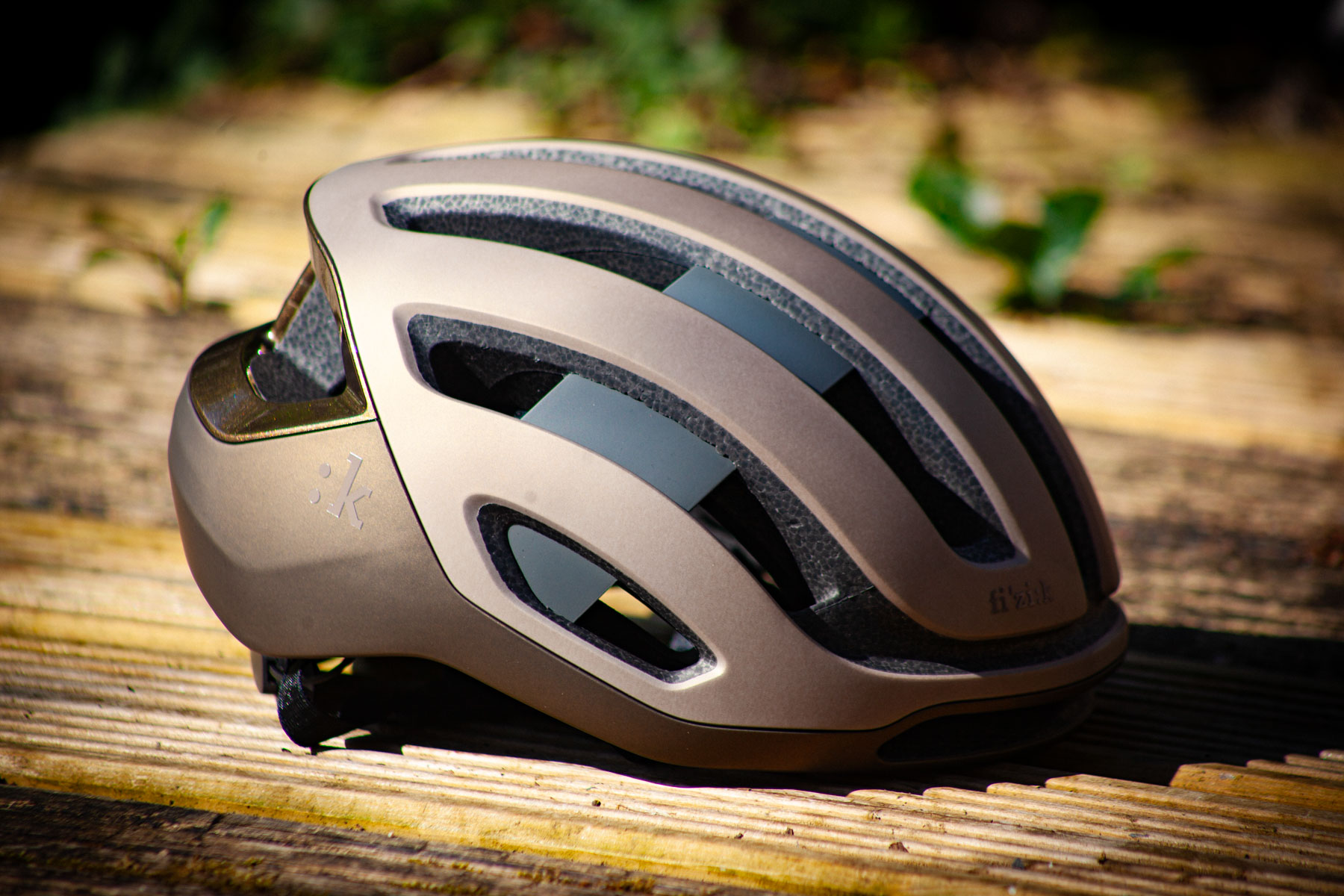
Fizik’s new helmets look great – but they’ll cost you

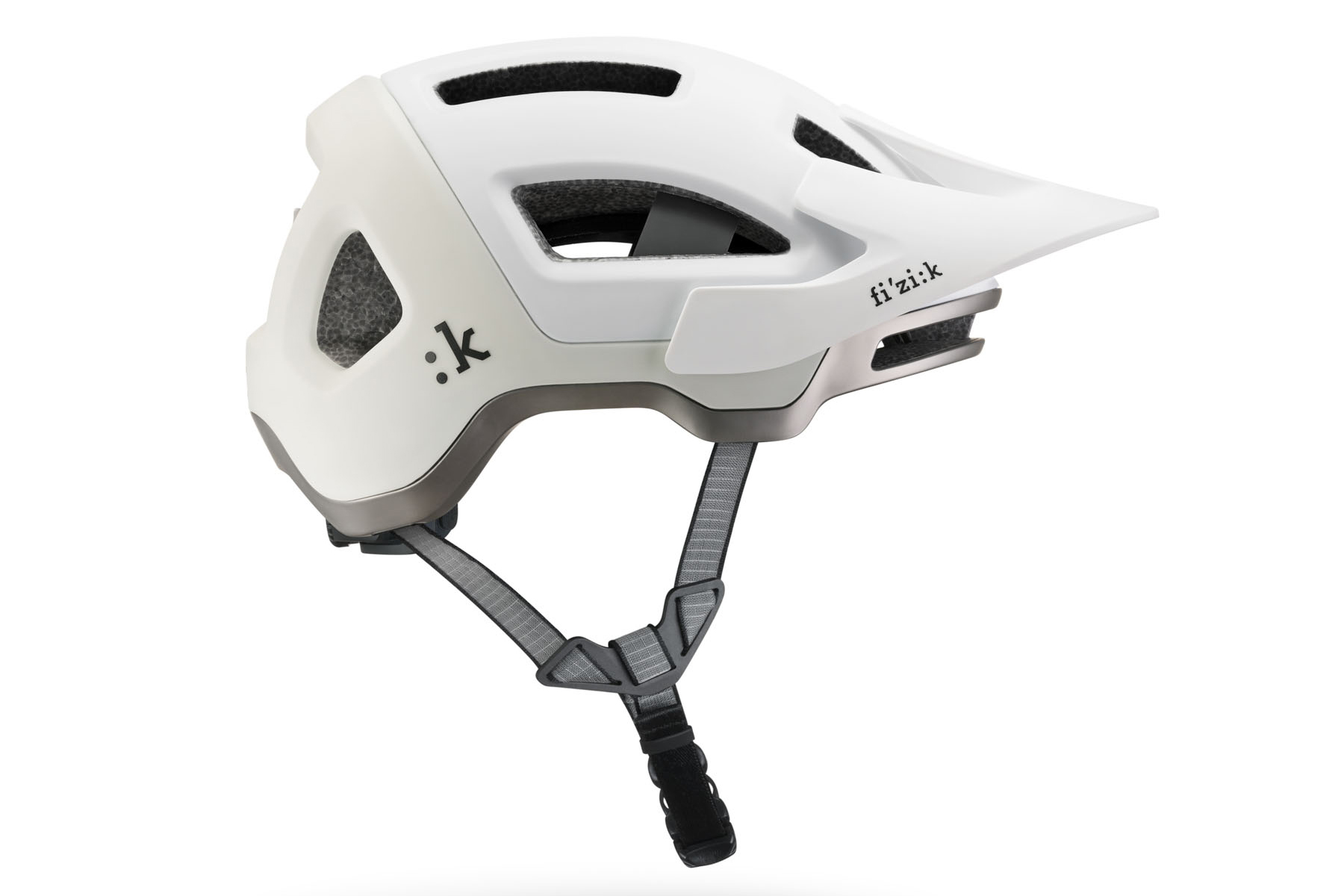
Fizik, the saddle specialists who turned its hand to a successful shoe range, has now branched out into helmets.

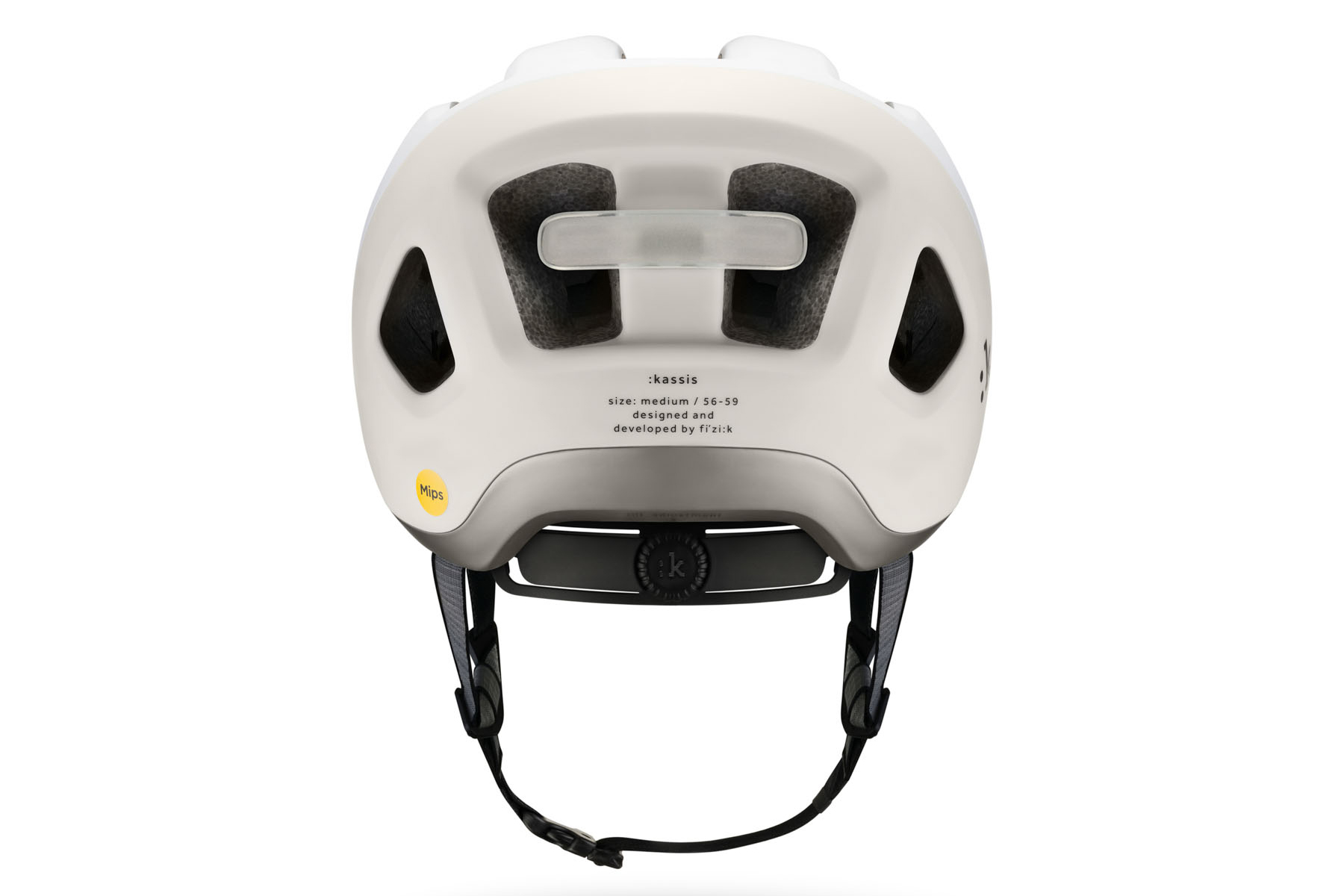
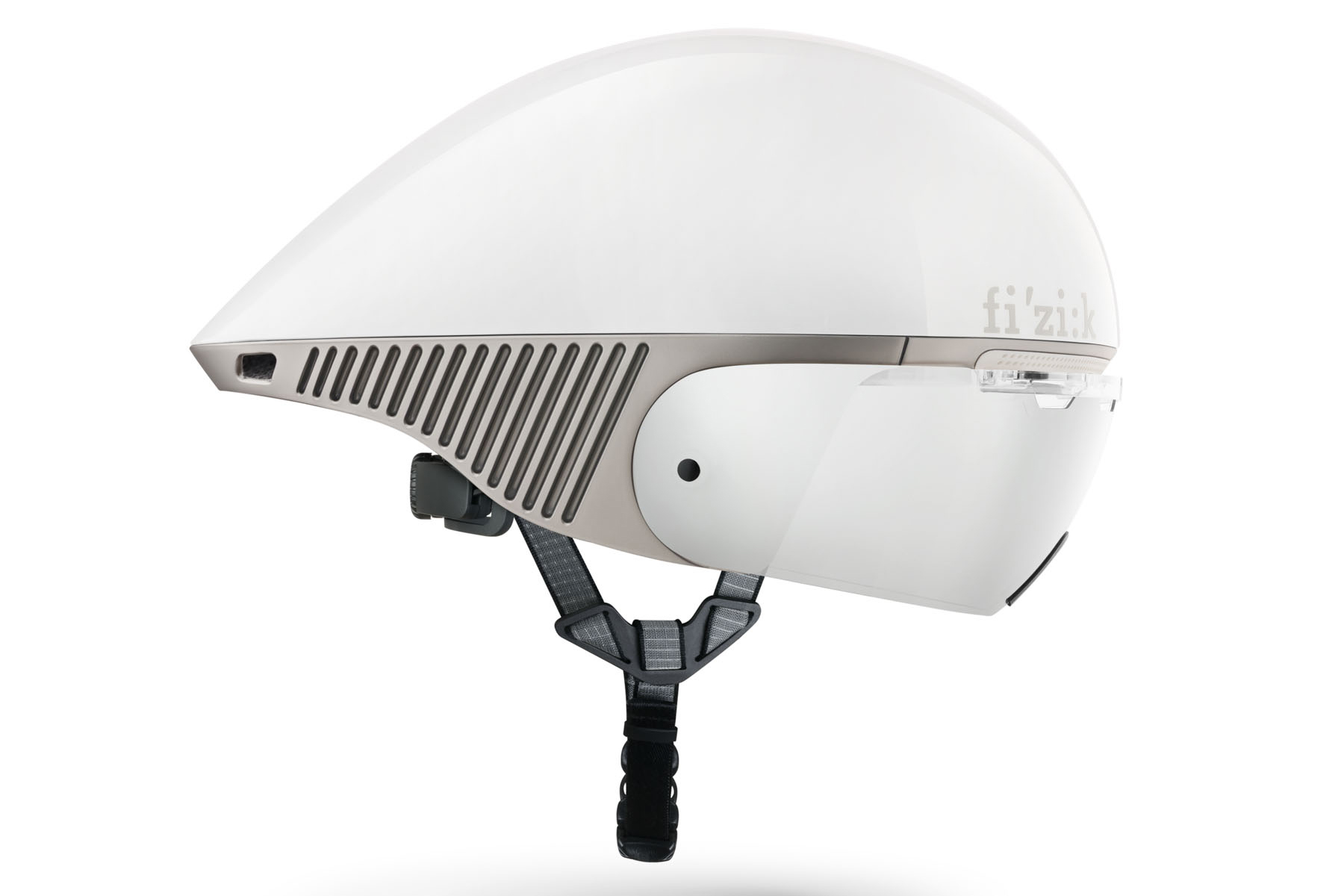
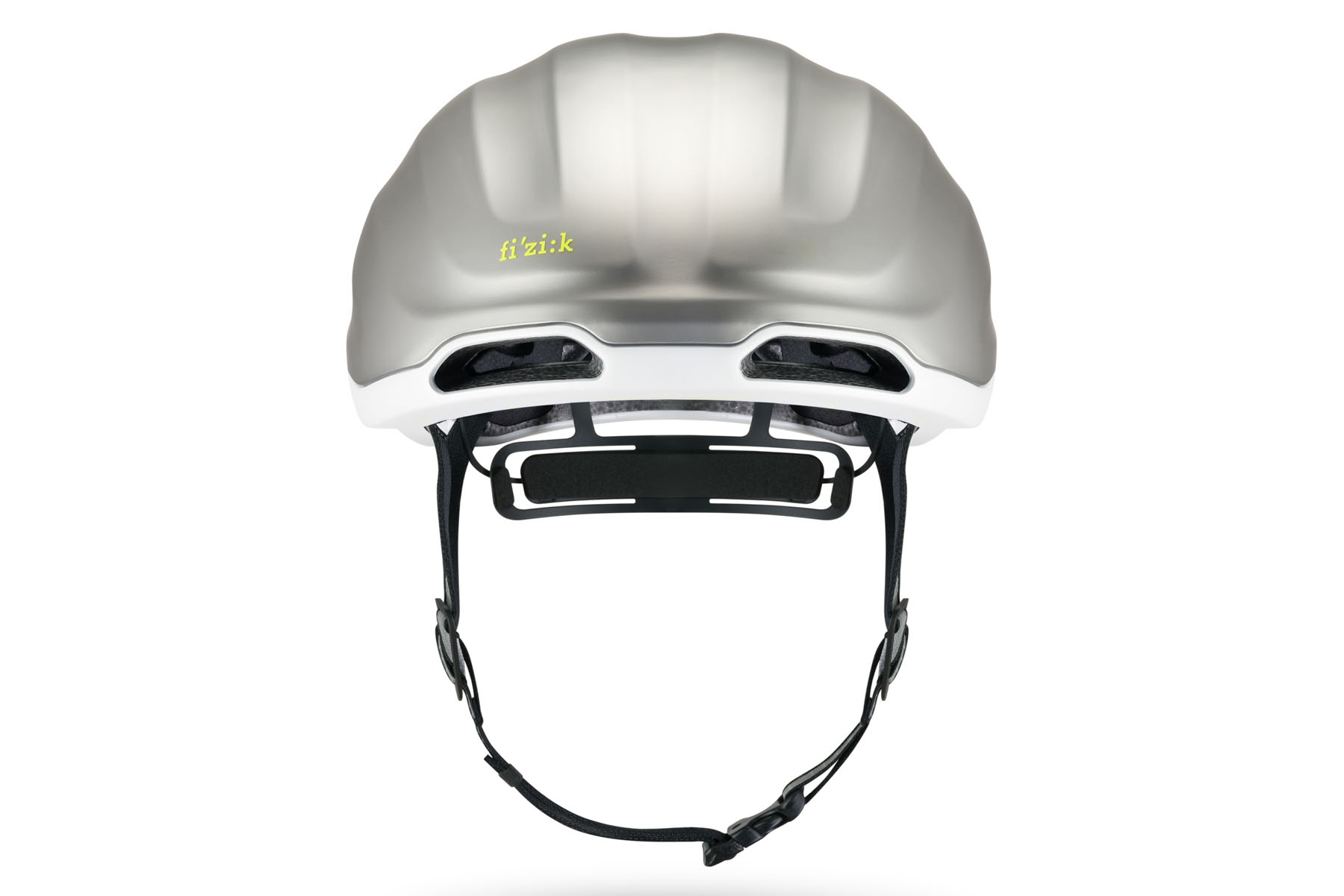
Today’s launch sees four models: the Kudo, Kudo Aero, Kassis, and Kunée. Both the Kudo and Kudo Aero are aimed at road, gravel, and XC riding. The Kassis is aimed at off-road trail riders, and the Kunée is a specialist aero helmet for TT and Triathlon.

The helmets, however, don’t come cheap, starting at £189.99 / $199.99 for the trail-focused Kassis, with the road going Kudo and Kudo Aero at £269.99 / $289.99. The TT-specific Kunée tops the price list at £359.99 / $379.99.

That puts Fiziks new helmets at the premium end of the market along with the likes of Kask’s Elemento WG11 (£335), Trek’s Velocis (£230), and Lazer’s Kineticore Z1 (£230) for the road, and Fox’s Crossframe Pro (£190) and Giro’s Merit Spherical (£190) on the mountain bike side.

Air flow

Fizik says its helmets balance cooling with aero considerations. Warren Rossiter / Our Media

Fizik says that all of the helmet designs were guided by CFD (computational fluid dynamics).

The aim is to streamline airflow and minimize wind resistance – not only for aerodynamics, but also to channel air through the helmet vents for comfort and cooling.

Fizik claims the shape of the vents and internal channelling is designed to induce the venturi effect, where airflow velocity increases on entry and is pushed out at the rear, helping to keep a constant flow of a cool draft.

Advanced fit

The rear cradle offers lots of vertical adjustment. The temple anchors can also be adjusted to change the shape of the retention system between round and oval.

Whilst Fiziks’ retention system looks very much like any other premium helmet, it has introduced design tweaks enabling the fit to be adjusted over a wider range with more fine-tuning than competing designs.

The rear cradle has 5 anchor points, offering 5cm of vertical adjustment. Adjusting this also adjusts the tilt of the helmet.

The micro dial rear adjuster works in unison with internal retention anchors at the temples.

These offer three-position adjustment, which alters the shape of the retention system from a round shape in its shortest position to a more oval shape in its longest position.

It should mean that Fizik’s design and fit system will suit more head shapes than most.

The helmet range is available in a broad size range from 52cm up to 61cm

Safety

The road/gravel Kudo and Kudo Aero, along with the trail-focused Kassis, feature MIPS Air Node. The latest multi-impact-protection system, with its anti-rotational design integrated into the pad system and how it anchors into the helmet, is much less intrusive than previous generation designs, and doesn’t hinder airflow.

Fizik helmet light
The light offers 90 minutes of run time in solid mode, double that for flashing. Fizik

For added safety, the Kudo, Kudo Aero, and Kassis all come with a clip-in rear light with a 35-lumen output and 90-minute run time on solid, or 180 minutes in flash mode. The light is available separately for £29.99 / $29.99 / €29.

All helmets are compliant with CE EN 1078:2012 or CPSC 1203 safety standards, depending on country, and rated 5 stars in the Virginia Tech Helmet Ratings.

Fizik helmet range overview

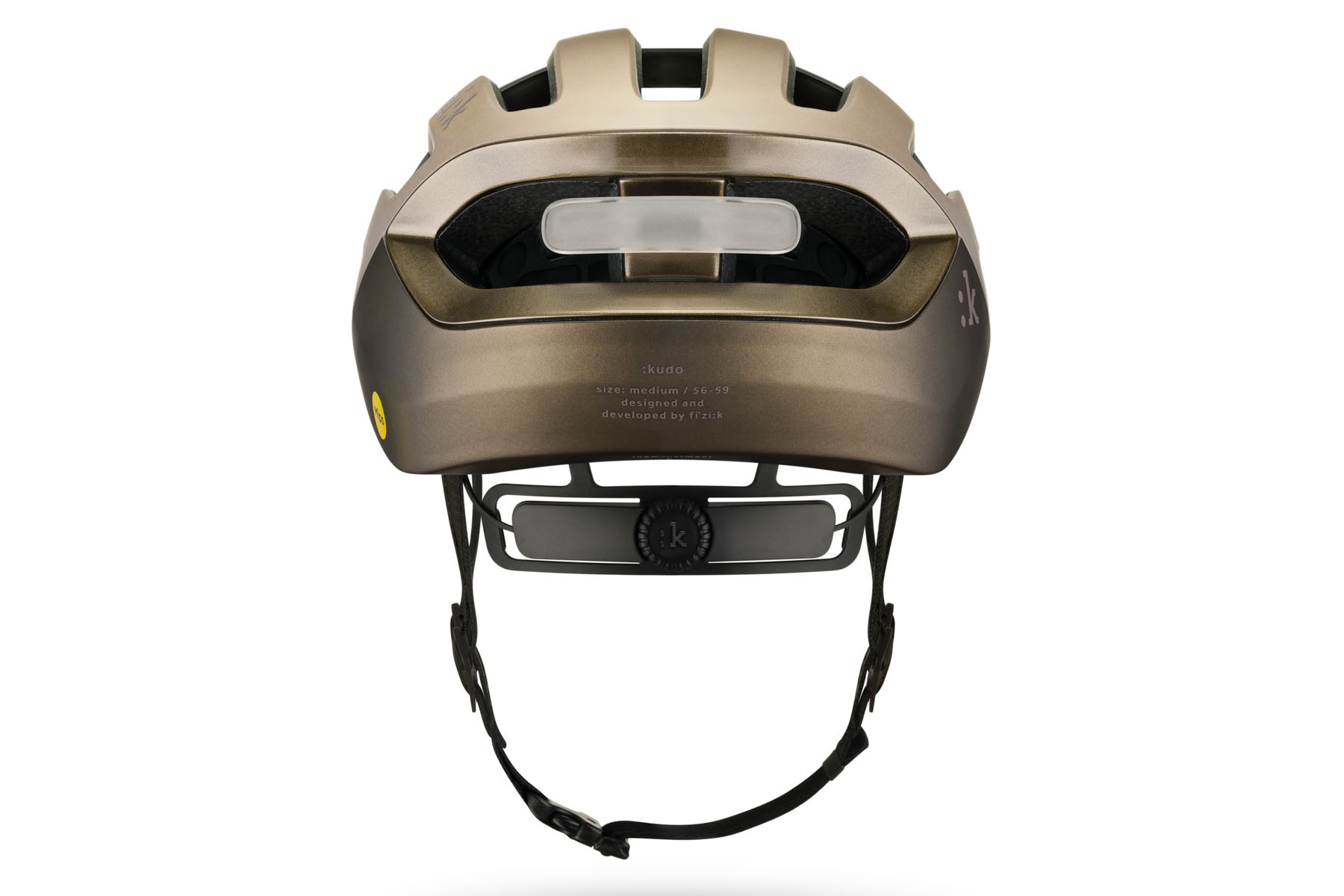
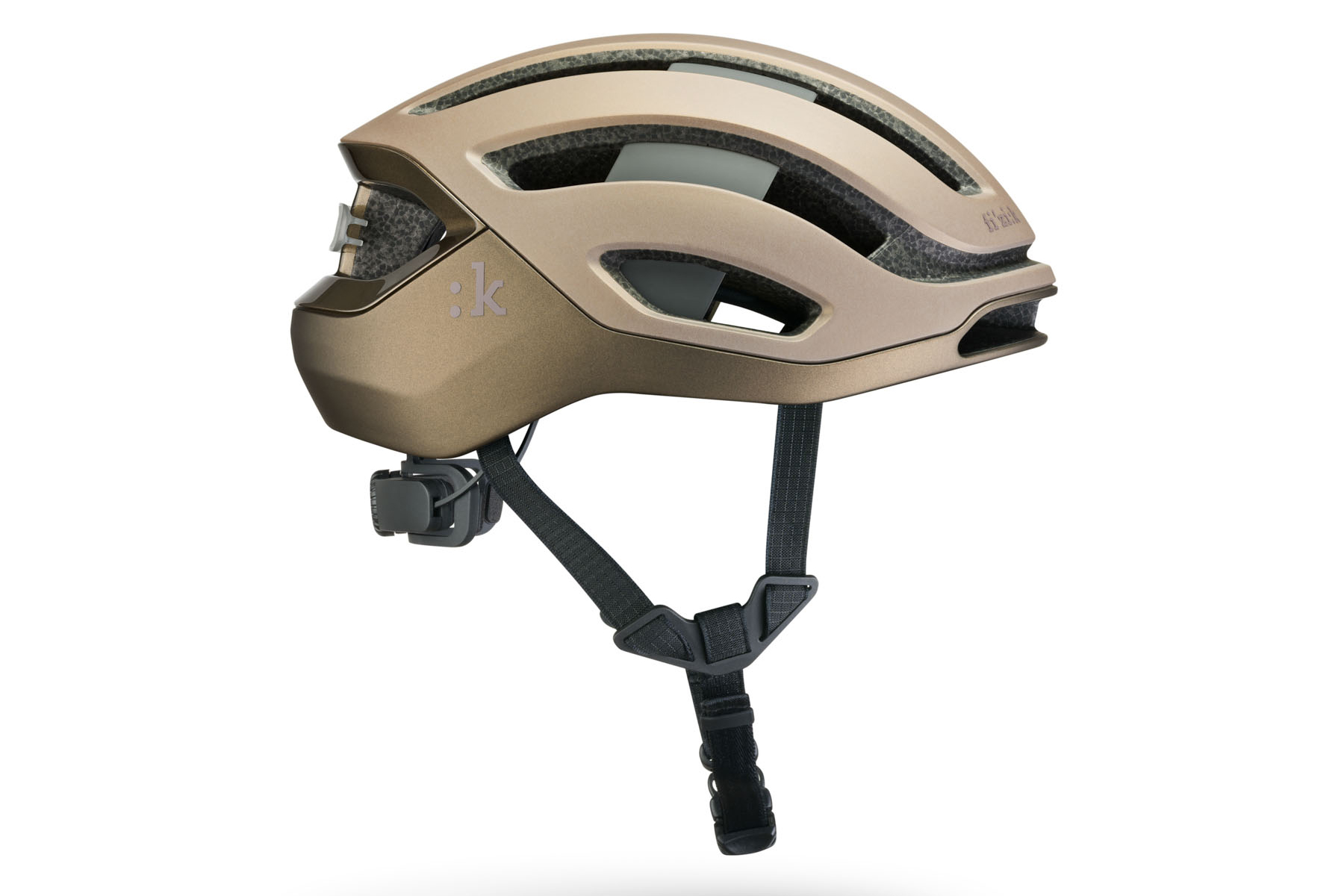
Kudo

Kudo helmet side
The Kudo’s compact, rounded shape looks good. Fizik

The Kudo is Fiziks’ lightest and coolest design. Fizik claims the rounded low-volume design makes for a helmet that reduces wind resistance whilst providing optimal thermoregulation thanks to the venturi effect created by the brow vents, internal channels, and large exhaust port.

The side vents are designed to also hold sunglasses securely.

Fizik produces different helmets to meet the different global sagety standards. This results in the US (CPSC) helmets weighing slightly more than the European (CE) versions:

  • S: 52-56 (CE 270g/CPSC 310g)
  • M: 56-59 (CE 280g/CPSC 320g)
  • L: 59-61 (CE 310g/CPSC 360g)

The Kudo comes with a soft bag and rear light as standard and in white, black, and bronze.

  • Price: £269.99 / $289.99 / €290

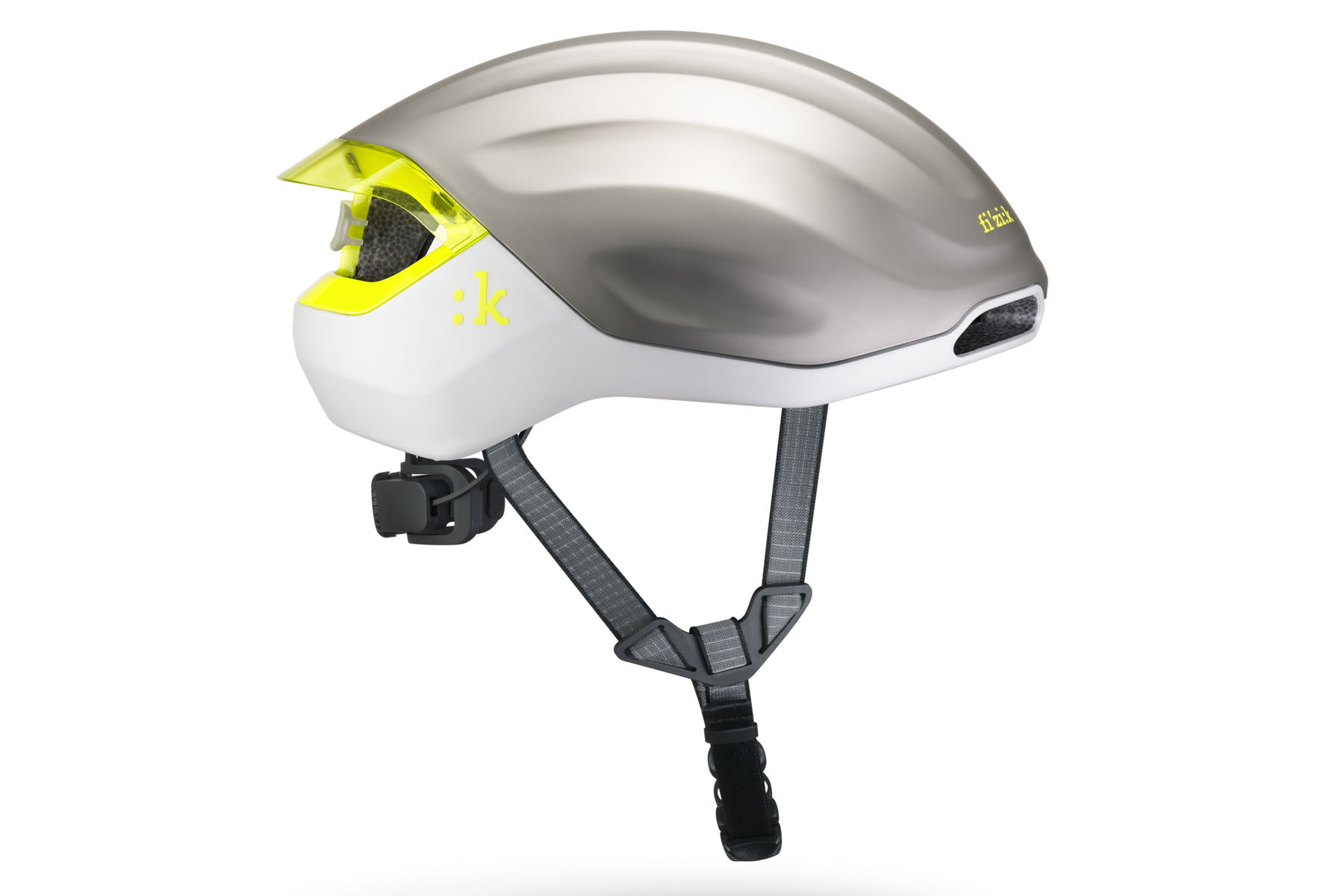
Kudo Aero

Kudo Aero side view
The Kudo Aero uses a Venturi effect design to aid cooling. Fizik

The Kudo Aero looks rather like the Kudo with the vents filled in.

Fizik, however, claims the Kudo Aero’s shape is very aerodynamically efficient with the addition of the clear rear breakaway spoiler working in conjunction with the Venturi effect of the brow vents and large exhaust port to increase airflow for comfort whilst reducing drag.

  • S: 52-56 (CE 270g/CPSC 300g)
  • M: 56-59 (CE 290g/CPSC 320g)
  • L: 59-61 (CE 320g/CPSC 360g)
Kudo Aero front
The Kudo Aero’s brow vents force cooling air across the rider’s head.

The Aero comes with a soft bag and rear light as standard and in white, black, and silver.

  • Price: £269.99 / $289.99 / €290

Kassis

Kassis side view
The Kassis breakaway peak has plenty of adjustment. Fizik

The Kassis follows the same compact rounded design as the road-going helmets but with extended coverage at the temples and the rear.

It comes with a fully adjustable peak with the twin large rear side vents doubling up as sunglass holders.

Kassis rear
The Kassis offers more coverage at the rear for added protection. Fizik

The Kassis is available in white, dark navy, and mud-sand colours, and is compliant with CE EN 1078:2012 and NTA 8776 or CPSC 1203 safety standards.

  • S: 52-56 (CE 330g/CPSC 380g)
  • M: 56-59 (CE 360g/CPSC 420g)
  • L: 59-61 (CE 400g/CPSC 460g)
  • Price: £189.99 / $199.99 / €200

Kunée

The Kunée's corrugated side panels
The Kunée’s corrugated side panels help condition the air flow over the rider’s shoulders. Fizik

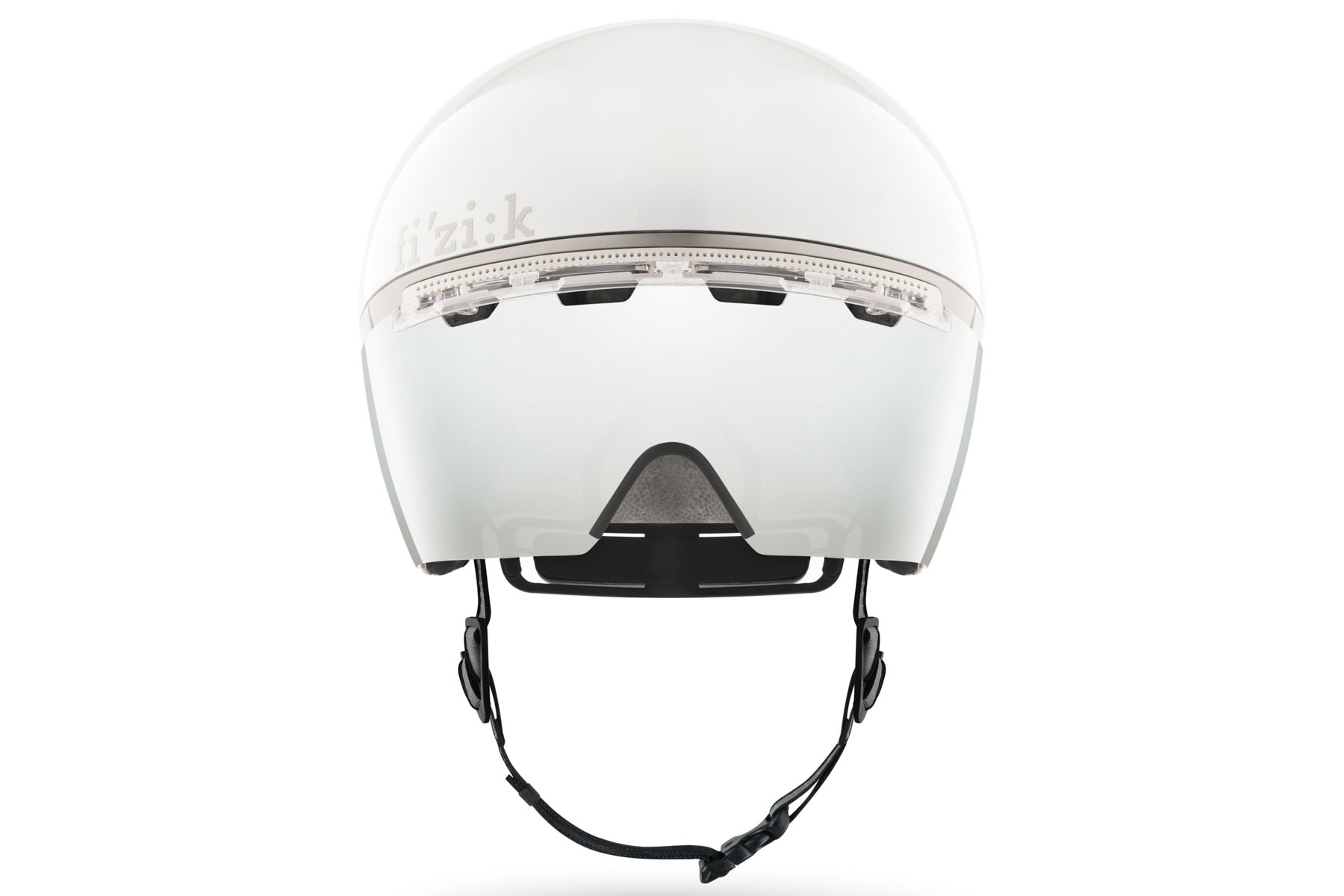
The TT/Triathlon Kunée was designed with a smooth frontal surface and teardrop shape, with a magnetic, wide, seamless visor.

The visor has brow vents that mesh seamlessly with the 3 vents on the helmet.

Using the same Venturi design as the road helmets, Fizik claims the Kunée’s cooling airflow is amongst the best of any TT design, though they haven’t released any performance data yet

Kunée time trial helmet front
The wide visor attaches magnetically. Fizik

On the teardrop’s rear flanks, Fizik has used a corrugated set of side panels designed to keep the disruptive air close for a much smoother transition around the riders’ shoulders.

Fizik says this corrugation has enabled it to keep the size and volume of the Kunée smaller whilst having similar aerodynamic performance to wider helmets designed to shelter the riders’ shoulders.

This more compact and lighter shape makes for a more comfortable helmet.

The helmet was designed in collaboration with athletes, with wind tunnel and real-world testing as part of its development.

It complies with CE EN 1078:2012 and CPSC 1203 safety standards.

The Kunée comes in 2 sizes: S/M and M/L, and in white only

It comes with both a clear and mirrored visor, plus a travel case.

  • S/M: 54-58 (400g)
  • M/L: 58-61 (450g)
  • Price: £359.99 / $379.99 / €380

This inflatable insert promises easier fitting, lower weight and better protection than foam inserts (and no, it’s not an inner tube)

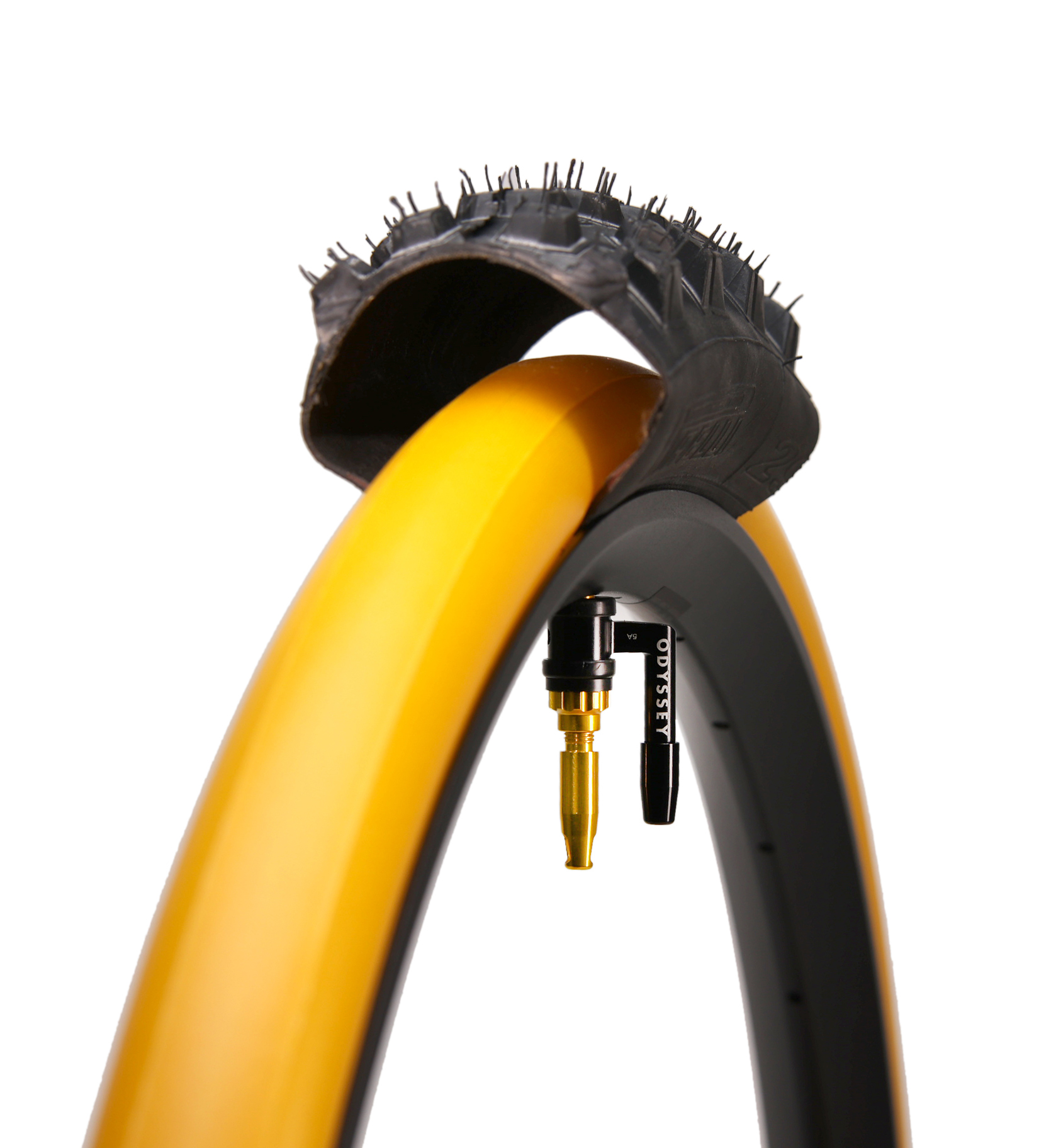
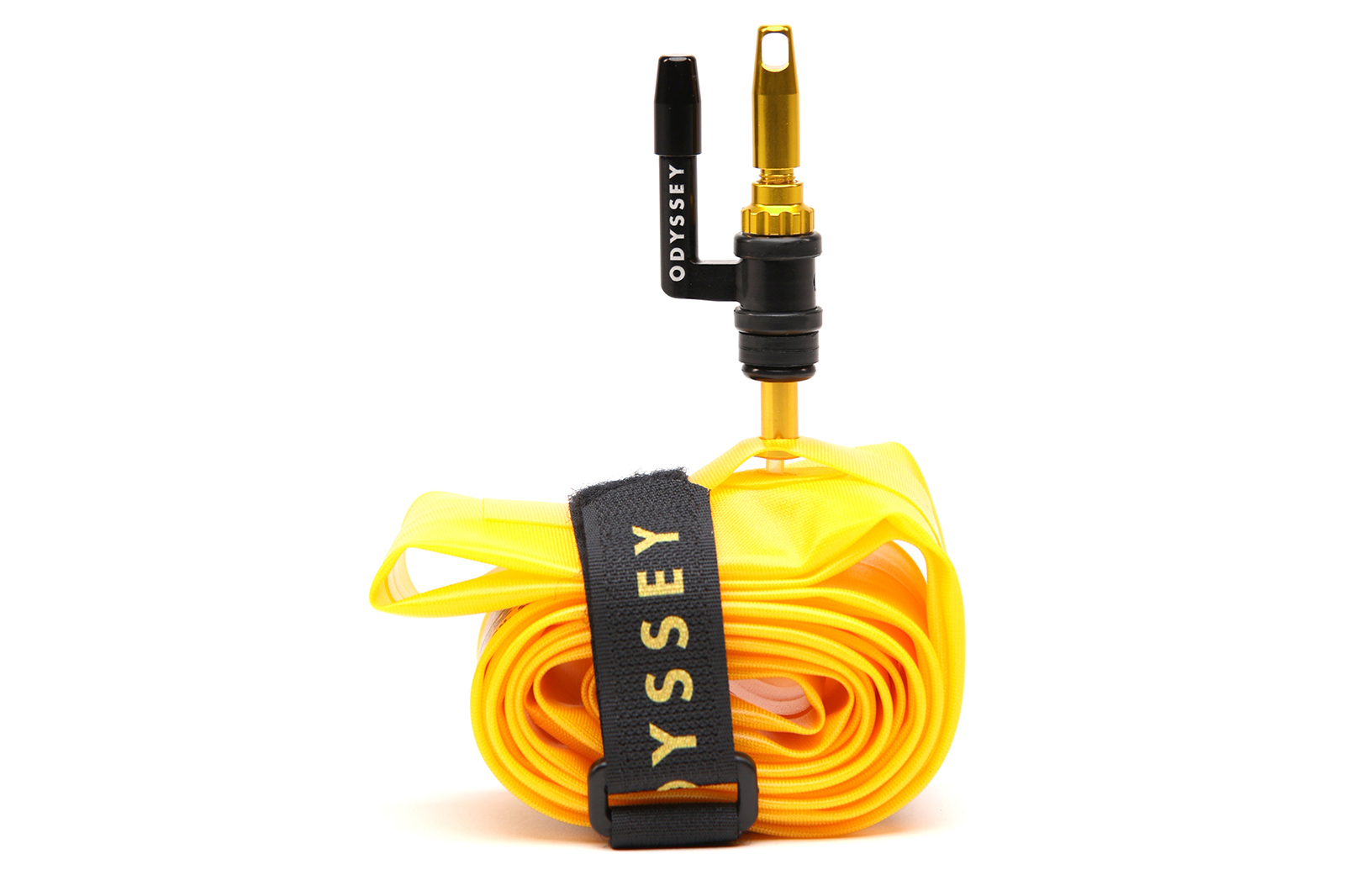
The OPTIS (Odyssey Pneumatic Tire Insert System) is a lightweight, tunable, tyre insert, which is inflated with a bike pump rather than arriving as a fully turgid foam strip. Similar to a motorcycle mousse, the OPTIS is a departure from the standard foam inserts.

It works by using a not-very-stretchy inner tube, which forms a very lightweight band inside the rim.

Instead of expanding outward into the tyre’s casing like an ordinary inner tube, once inflated, the OPTIS cinches down, hugging the rim.

This creates a bead lock, preventing the tyre from burping. It also protects the rim from impact.

The OPTIS is an inner tube, of sorts, that provides sidewall support and rim protection. Odyssey MTB

Odyssey claim that the OPTIS adds only 90g to a traditional tubeless setup, making it much lighter than most inserts.

Besides weight saving, the insert’s firmness can be tuned to suit conditions and rider tastes.

Odyssey claims that the OPTIS adds just 90g to the weight of a tubeless setup. Odyssey

The inner tube is filled with air through a special valve, which uses the same central valve stem as the Presta valve, which fills the tubeless tyre above the insert.

Odyssey claims installation is easier than a standard insert, and can even be used to help seat stubborn tubeless tyres.

Odyssey also claims the OPTIS offers lower rolling resistance on rough surfaces than foam inserts, citing that losses from hysteresis (the foam material moving against the inside of the tyre) will be reduced.

Haven’t we seen this before?

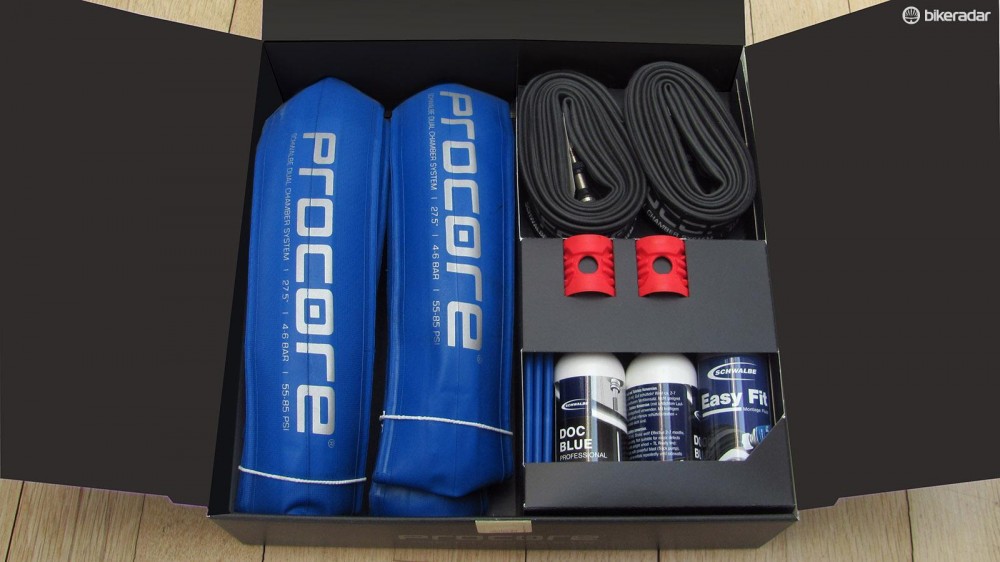
Back in 2016 the Schwalbe Procore offered an alternative to foam inserts

The eagle-eyed amongst you may think this is a very similar concept to the Schwalbe Procore from 2016 – and you would be right, but there are a few key differences which set the OPTIS apart.

Firstly, the OPTIS uses just a bare inflatable tube made of a relatively inflexible material.

The Schwalbe Procore used a pseudo-tyre, which looked much like a beadless, blue road bike tyre, which sat over a traditional stretchy rubber inner tube.

Crucially, the valve design looks different.

The Schwalbe Procore valve was a very clever piece of engineering, but was intricate and prone to becoming blocked by the talc in the rubber inner tube.

The chunky valve on the OPTIS will hopefully alleviate these issues.

  • OPTIS estimated MSRP: $89.99
  • OPTIS replacement insert: $39.99 

Is Zwift coming for Strava? Indoor training app announces major overhaul to track your outdoor rides

There is change afoot in the world of cycling apps. We’ve recently seen major players change how their apps work with an eye on expanding their functionality and becoming a one-stop shop for your training needs. 

Not least, Zwift. On Friday, the indoor training giant announced a host of updates to its Companion app, which are set to make the platform far more than a log of turbo trainer sessions. 

Previously, the app worked like a remote control for Zwift, enabling you to message other Zwifters and adjust the resistance of your trainer, among other things. It also meant you could plan rides and analyse your workouts.

But that’s set to change this summer, with the Companion app receiving a “significant update” that will combine your indoor and outdoor rides into one space. To do this, Zwift says the app will ingest your Wahoo or Garmin data.
With this holistic look at your training, the Companion app will also enable you to set weekly goals and track your fitness progress within the ecosystem for the first time. These goals can be set using the following metrics: Time, Distance, Calories, Stress Points, or Kilojoules.

All a bit familiar?

Graphic showing Zwift Companion training app.
You’ll be able to see your training score and set goals in the app. Zwift

 This is all reminiscent of that other cycling tech giant, Strava. With a Strava subscription, you can see your training from the great indoors and outdoors in one place, set goals, analyse your training and gain access to a range of performance metrics, such as heart rate analysis and relative effort.

There is another sign Zwift is coming for Strava with its new TrainingScore feature. 

Zwift says its TrainingScore “reflects your long-term cycling fitness by averaging your recent training load over time, combining both workout volume and intensity into a single, easy-to-understand daily number.” 

Strava user's guide
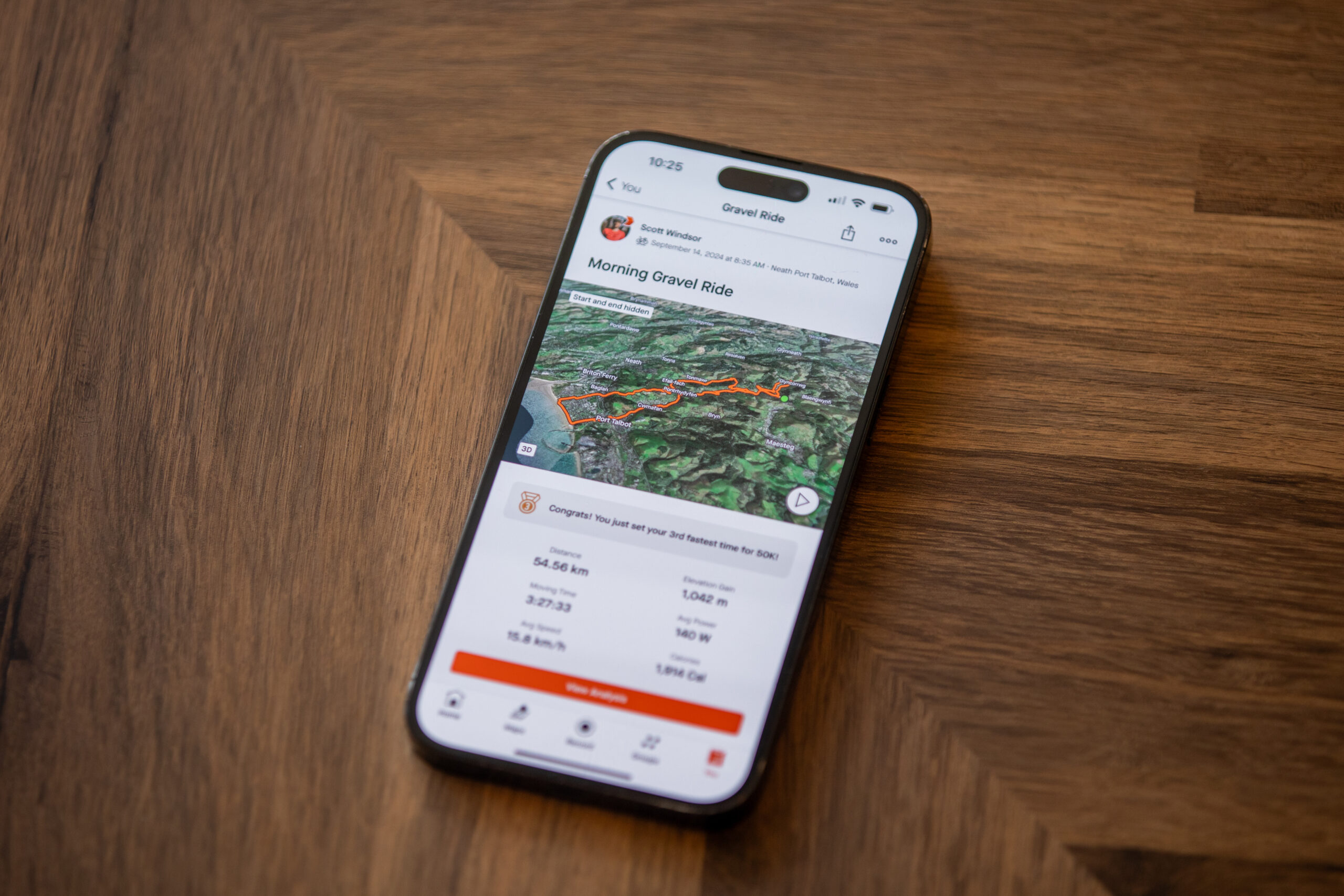
Zwift appears to have its sights on Strava. Scott Windsor / Our Media

This sounds a lot like Strava’s Fitness Score, which is a single number Strava presents to subscribers based on heart rate or power meter data. This personalised number can be used to analyse your training or act as a benchmark for your fitness over time. 
But Zwift’s latest update doesn’t just have Strava in its sights. It also seems to be taking aim at Garmin, with the release of a TrainingStatus update which mirrors Garmin’s feature of the same name. 

Garmin’s Training Status feature gives you an overview of your longer-term training, prompting you with a range of status, from peaking (you’re in ideal form) down to detraining (your fitness level is decreasing). 

Zwift’s TrainingStatus does a similar thing. Comparing long-term fitness with short-term fatigue, it can indicate five levels of training:

  • Ready: ready to start or return to Training
  • Fresh: active and ready for a challenge
  • Productive: consistently training and recovering well
  • Overreaching: training heavily but in need of more recovery. Rest weeks are essential for recovery and peak performance.
  • Detraining: loss of fitness due to reduced training

AI shakeups 

WHOOP Coach graphic showing phone screen asking question and wearable device.
The Whoop Coach answers your health and fitness questions. WHOOP

It’s not just Zwift that’s been shaking things up, though. Last year, Strava released its Athlete Intelligence tool, which uses generative AI to analyse your activities and provide written summaries of your workout. 

This followed Whoop’s AI feature. Powered by ChatGPT-4, the Whoop Coach answers your health and fitness questions to turn the health-tracking app into a “powerful new coaching experience” that “goes beyond surface-level insights”.

Garmin has also shaken up its Connect app, introducing its first-ever paid subscription last month. Called Connect+, the new subscription plan is said to provide users with a range of new personalised health and fitness insights, while keeping existing features free. And yep, you guessed it: Connect+ also uses AI to provide personalised prompts. 

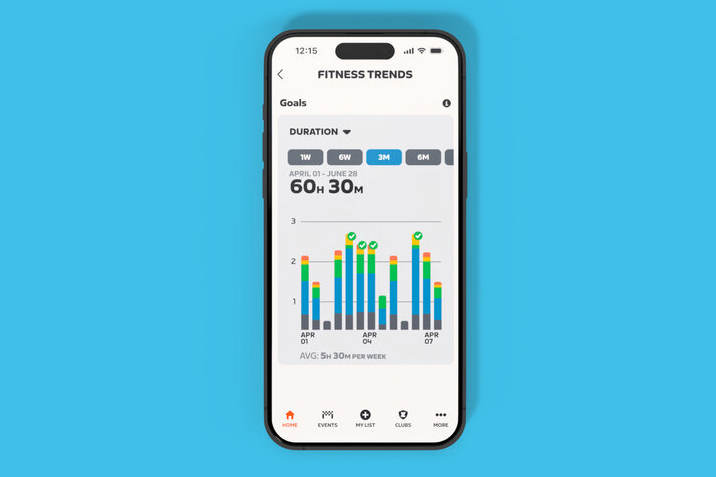
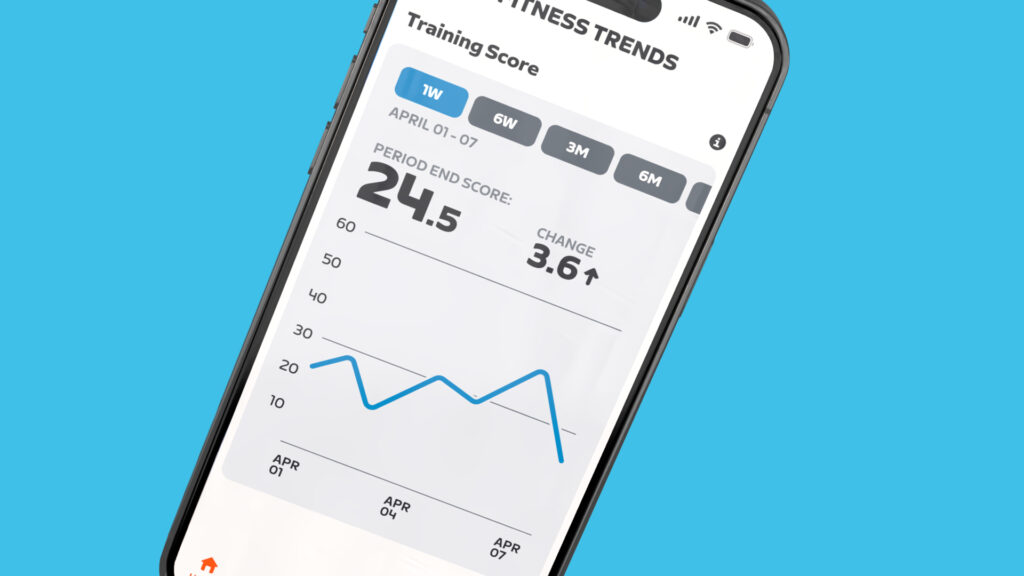
Graphic showing fitness trends in Zwift.
Does Zwift’s latest features make it an even more compelling option?. Zwift

In the indoor training space, we’ve also seen Rouvy buy FulGaz and make some big changes and develop features that bring it more in line with Zwift, although Zwift’s new updates may keep Rouvy chasing for some time. 

But what this all boils down to is Zwift’s latest updates make it an even more compelling option, especially when we’re all paying closer attention to our purse strings. 

Zwift costs £17.99 / $19.99 per month, while Strava costs £8.99 / $11.99 and Connect+ costs £6.99 / $6.99. Combining the training features you can expect from the likes of Strava and Garmin and a whole indoor training platform seems like a hard proposition to beat – even if Zwift hasn’t jumped on the AI bandwagon, yet.

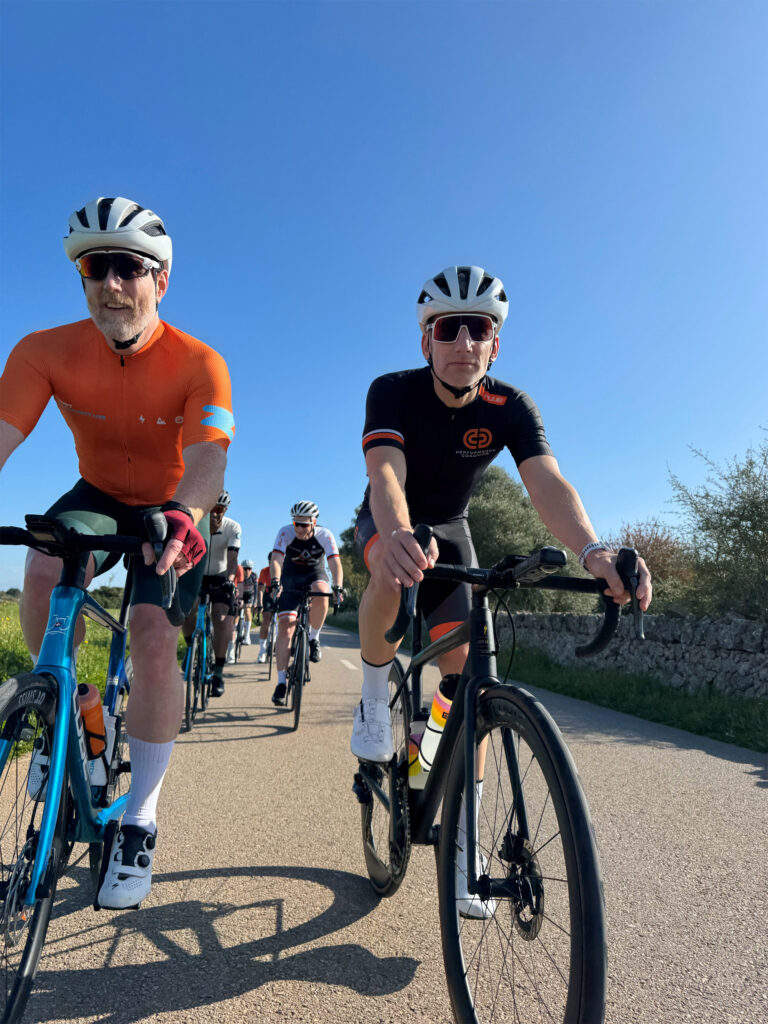
Zwifters in Mallorca, Day 2: Sant Salvador (The Uber Pretzel)

With day 1 of Zwift Community Live 2025 done and dusted (read about it here), I was looking forward to day 2 and the prospects of a longer, harder group ride. The weather looked to be beautiful in Mallorca, the ZCL vibes were good, and I was excited to roll on new roads. Here’s how the day unfolded for me…

Ride Plan

Today’s ride was called the Uber Pretzel as it was the longest of the three ride options. We would ride from our resort in Platja de Muro to the top of Sant Salvador, then loop back for a total distance of 115km and a bit over 1000 meters of elevation:

I was looking for a ride group that would push a bit harder than the previous day’s, with fewer and shorter stops along the way. And I was looking for some epic roads. This route looked like it would tick all the boxes.

Getting Started

The dining room was buzzing when I arrived around 7:15am. Clearly, lots of riders were planning on doing the Uber Pretzel as well (which wasn’t a surprise given how the week’s routes were planned), and everyone was eating early since we would be starting at 8:30.

After another tasty granola bowl, some fruit, and a smoothie, I headed back to my room to kit up and meet Monica at the starting area. (She’s a stupendous sidekick, by the way: fetching bikes and forgotten gloves and filling bottles to help make my experience even better.)

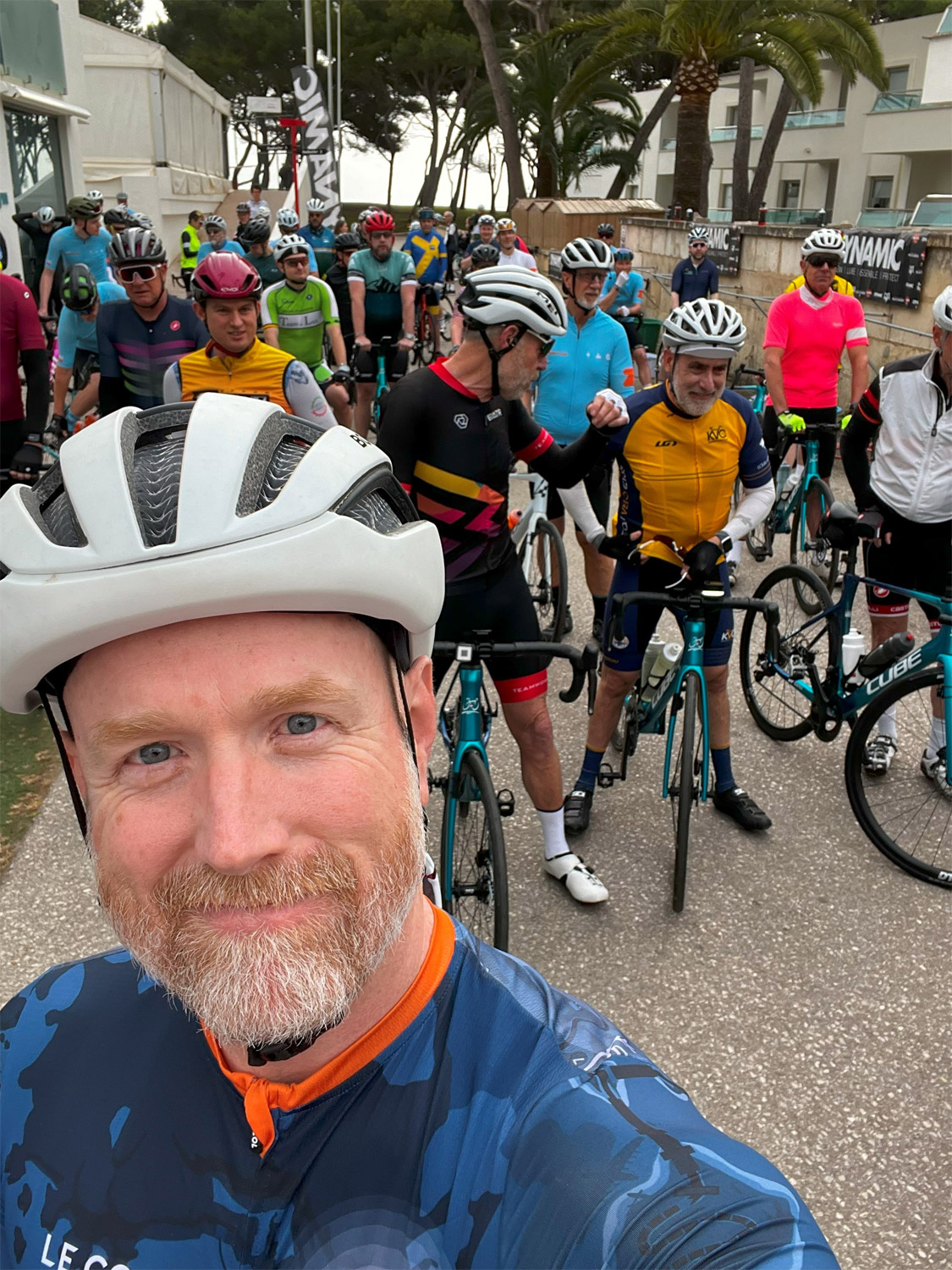
Riders are grouped into packs of 12 which leave a few minutes apart. (The goal is that the faster packs leave sooner, so packs stay separated and large groups of cyclists don’t clog up the roads.) I looked around for a group to join, and saw that the first group would definitely be too spicy for my taste. It contained the likes of Nathan Guerra, Jeff from NorCal Cycling, Zwift Academy 2024 winners Noah Ramsay and Emily Dixon, and Freddy Ovett… among others.

But just behind them a group was forming up that included Zwift CEO Eric Min, VP of Marketing Steve Beckett, and the great Kristin Armstrong. This looked like the group for me, so I hopped in, along with Zwift Academy 2023 winner Louis Kitzki and a few others.

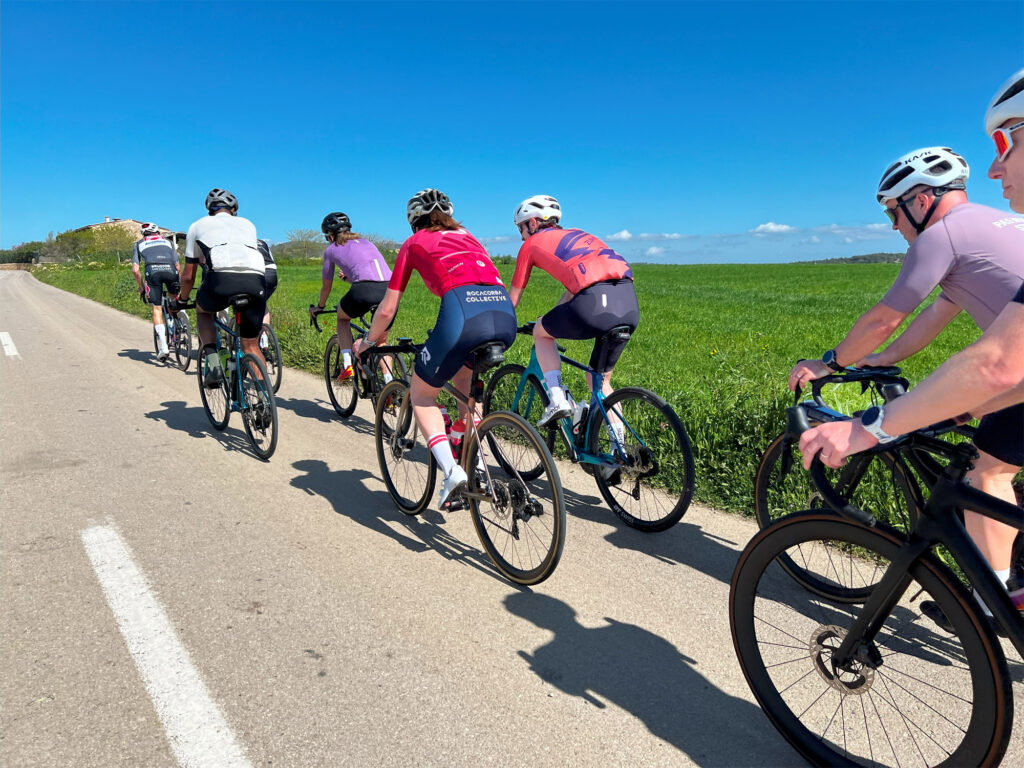
Soon enough, we were off. Two abreast, we quickly got up to a nice cruising pace on the flattish lead-in to the centerpiece climb of the day. Chugging along at ~35 kph, we quickly spun our way toward Sant Salvador, upping the power on the inclines to keep our speed rolling without going so hard that our legs would burn out early. A sensible tempo pace.

Riding two abreast gives you the chance to get to know your ridemates. Along with those already mentioned we had an Olympic runner, a coach/triathlete from the UK, a man who was an early investor in Zwift, a woman who helps lead Rocacorba Cycling, the guy who heads up the CORE sensor team, Tim Perkin from Mountain Massif, and others!

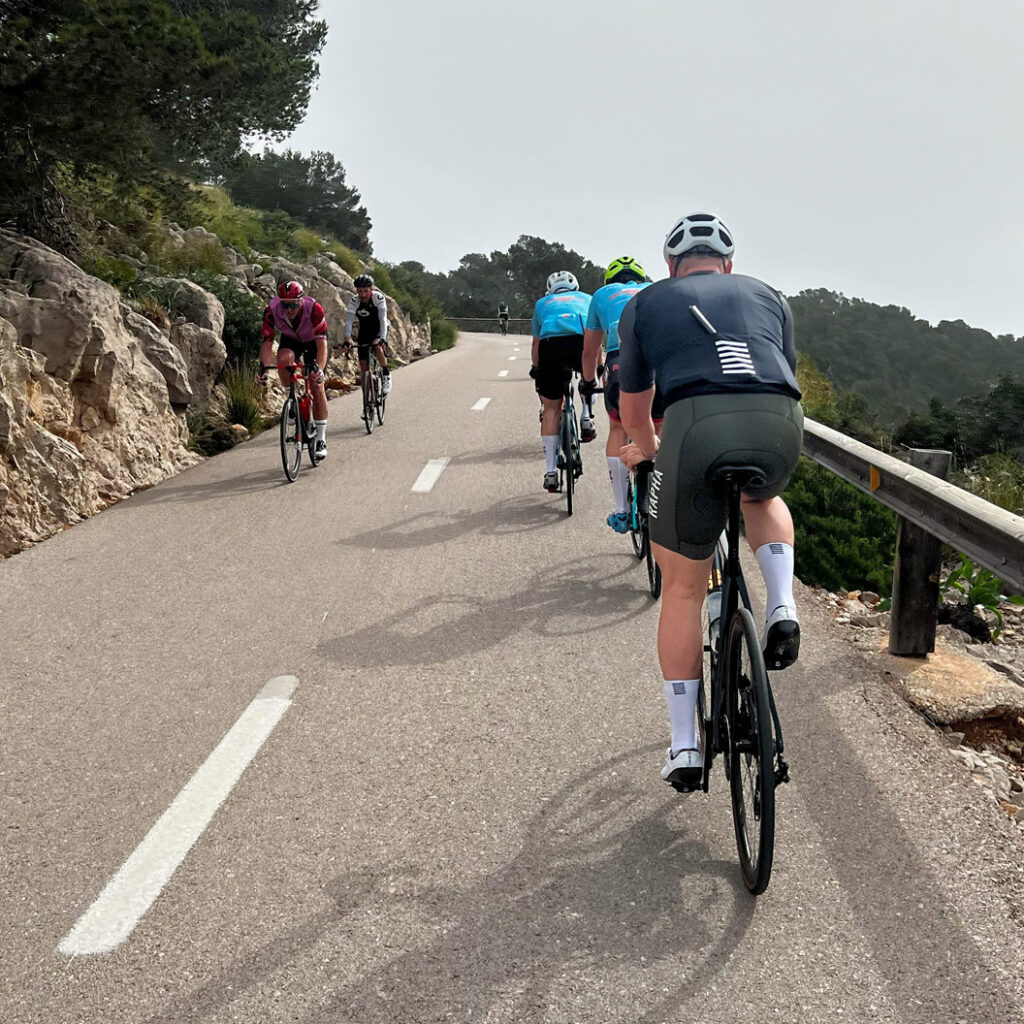
It didn’t take long for us to arrive at the big climb of the day. As the road ramped up, around half the group fell off while the other half pushed on ahead at a higher pace. I was one who fell off – no surprise there – and I was perfectly fine with it. With another 60km left to ride, I wasn’t interested in blowing up on the slopes of Sant Salvador. I wanted to enjoy the ride and take in this beautiful climb, hairpin by hairpin. And that’s what I did!

It really is a nice climb, with lots of shade, smooth pavement, and gorgeous views over the edge as you negotiate the turns. I love climbs like this that alternate between a sort of walled-in tunnel of trees and wide open vistas that let you see all the way to the ground and be surprised again and again at how high you’ve climbed.

Soon enough, I was at the top, having averaged 308W for 21:53. (This rocketed me to 29,209th out of 69,900 on the Strava segment. The best time on the day? ZCL attendee Beast On A Bike | Louis Hatchwell at 14:30. His average power? 432W.)

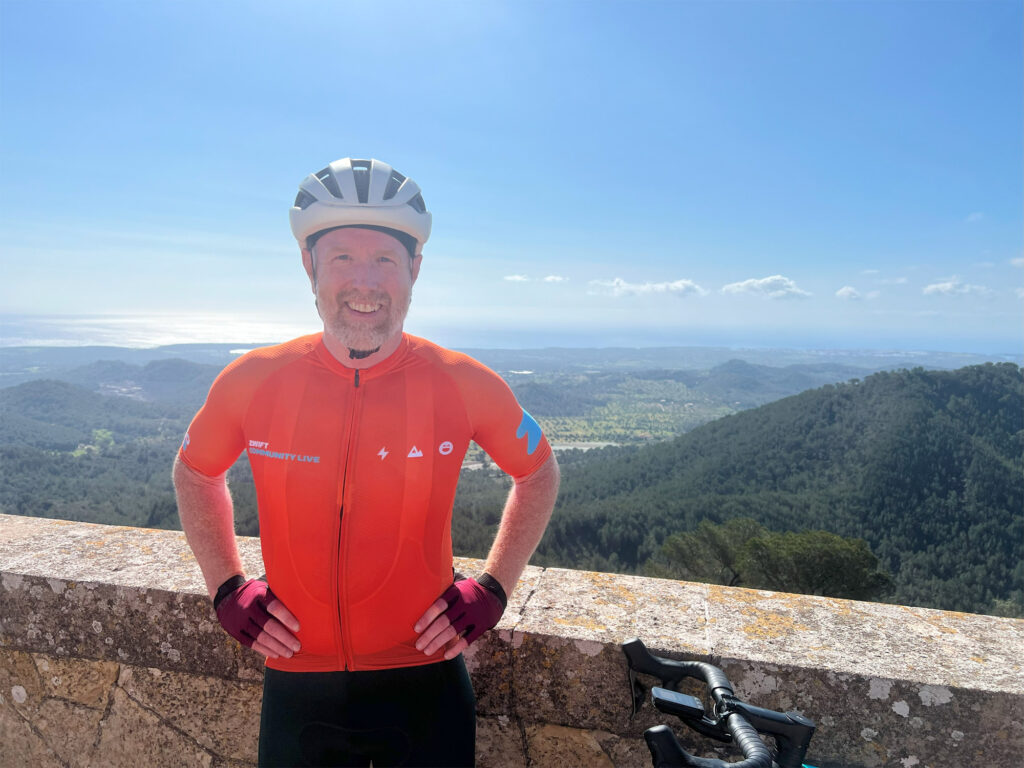
View from the top!
My ride crew atop Sant Salvador

We took some photos at the top, admired the near-360-degree views, refilled bidons from the support van, and headed downhill knowing our coffee stop was 30km ahead. (Eric Min was hungry, so we weren’t waiting around!)

The way home was a nice mix of flats and slight downhills, many of which were narrow country roads with very little traffic. Once again we churned through the kilometers, stopping only for a bit of coffee and cake in Sineau before winding our way home.

After just over 4 hours of riding we were back at the hotel, enjoying a beer and a snack in comfortable couches overlooking the Mediterranean beach. 118km, 1000m of elevation, and an average speed of 28.8 kph. Another good day out on the bike in beautiful Mallorca!

See today’s ride on Strava >

Finishing the Day: Recovery, Dinner, and a Fireside Chat

Today ended much like yesterday: kickstarting recovery with good nutrition and Normatec boots, eating a tasty dinner with some new Zwift friends from Austria and Germany, then sitting on the night’s fireside chats. (Monica and I also took some time to cool our feet in the ocean and enjoy the beautiful beach just outside our door.)

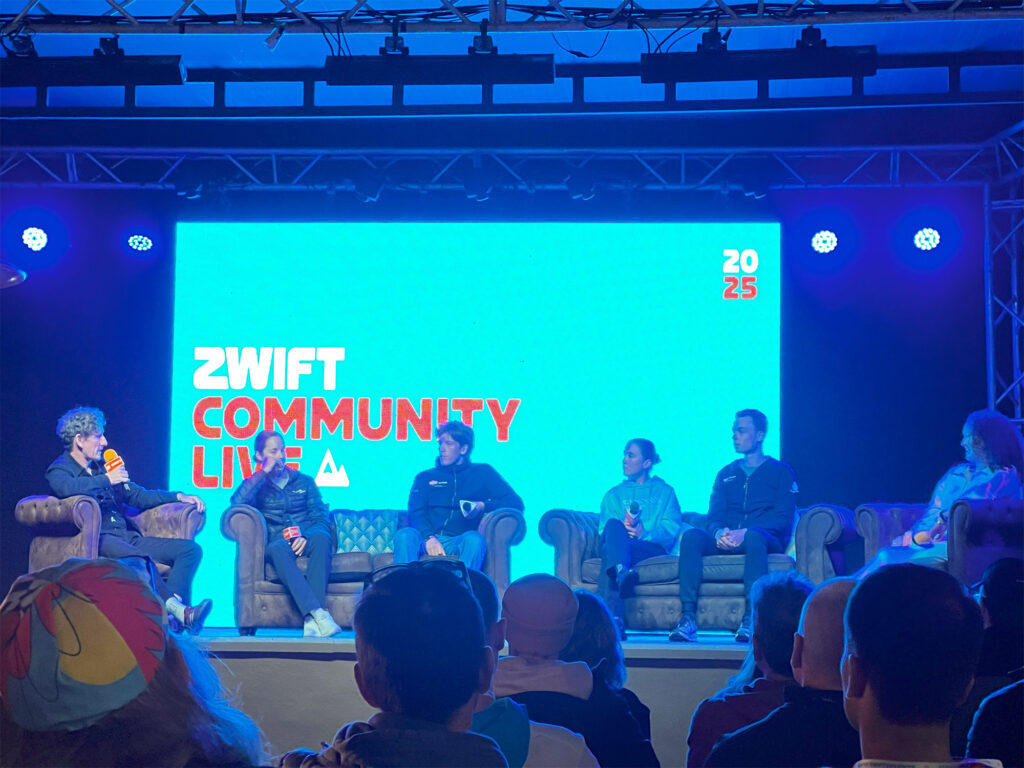
The first chat was hosted by Matt Stephens and featured Zwift’s Director of Women’s Strategy Kate Veronneau along with the 4 winners of Zwift Academy from 2023 and 2024. The discussion centered around the Academy winners’ experiences, and what Zwift Academy is doing to change how riders get into the sport.

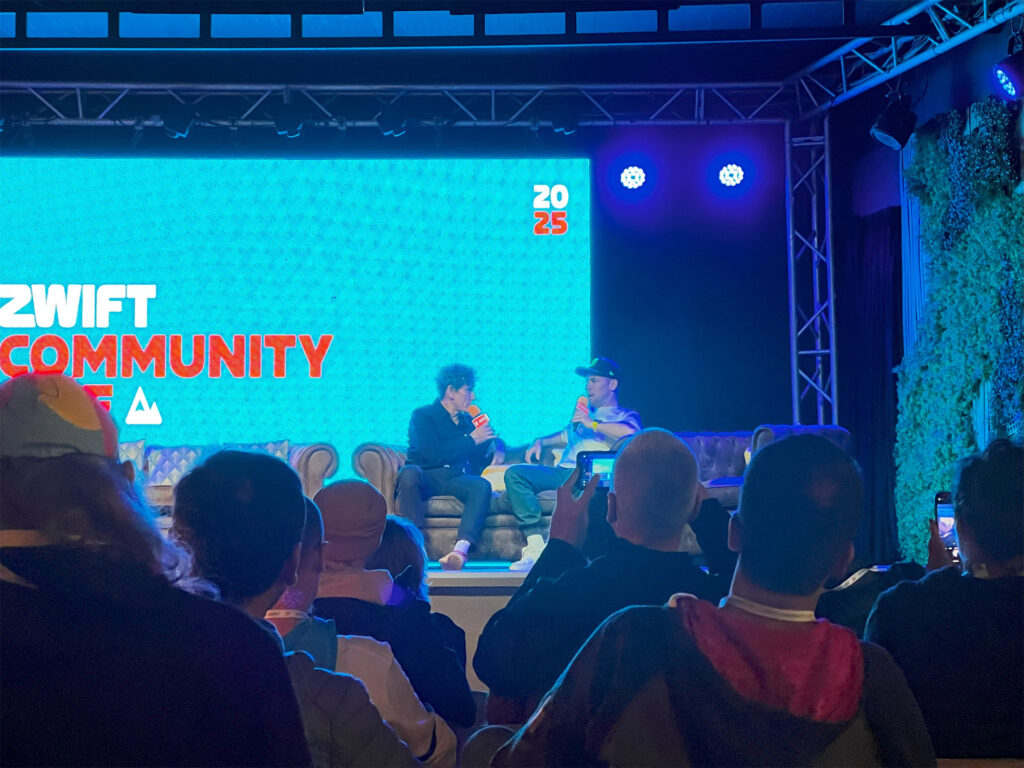
The night ended with Matt calling a surprise guest to the stage: Mark Cavendish! He and Matt chatted about Cav’s life now that he’s retired, along with obscure topics like how eating cheese late at night can affect one’s dreams. I’m sure many Zwifters were just as starstruck as I was to see Cav in person. What a legend!

Coming Up Tomorrow

Tomorrow’s ride will be the biggest of ZCL: the Uber Pretzel featuring Sa Calobra! It’s essentially the same distance as today’s ride, but twice the elevation. Here’s the route:

Watch this space to learn how it goes…

Zwifters in Mallorca, Day 1: Cap de Formentor (The Mega Pretzel)

Hundreds of Zwifters have arrived here in Mallorca for a few days of quality riding and IRL hangouts at Zwift Community Live 2025. With so many people to meet and new roads to ride, each person’s daily experience at this event will be unique and personal…. but here’s mine.

The Warmup

Before diving into Day 1, let me give you a few highlights from the days leading up to it:

  • My wife Monica and I spent two lovely nights at the home of Simon Schofield (creator of the Zwiftcast), just south of Girona. Simon and his wife Jennie were, of course, incredible hosts, and I even got a ride in with Simon in which he put me to work chasing his ebike’s wheel up the local climb! See it on Strava >
  • We arrived in Mallorca a few days before the official first day of ZCL, because Zwift had invited members of the media out for a “This Season on Zwift” presentation (read the details of what was announced here.) New roads, Zwift Ride crank length options, more HUD data, fitness metrics and outdoor rides giving us XP… it was a lot of good news!
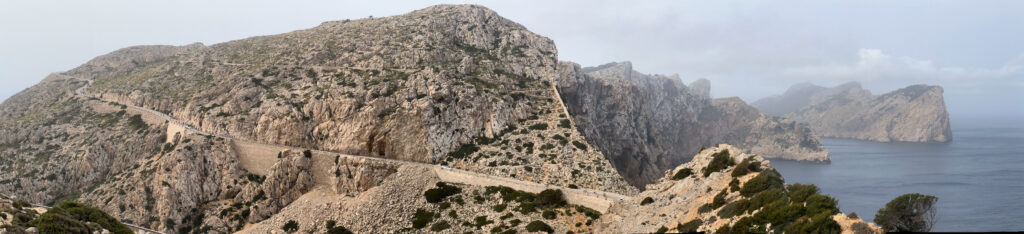
  • I rode out to Cap de Formentor (the lighthouse!) along with Nathan Guerra, Shane Miller, DC Rainmaker, DesFit, Eric Min, and other media and Zwift HQ folks. It was a great ride with incredible views and just enough climbing, wind, and goats to make it interesting. See it on Strava >
  • The day before Day 1 (Thursday), Zwift held a meeting with key Club leaders to discuss upcoming features and here from leaders about how Zwift could help them build their communities even more. It was a really fun conversation, and the chattiness in the room made it easy to see why all these folks were good at building communities on Zwift.
  • The night of Day 0 featured the first of our fireside chats, hosted by Matt Stephens. It was a sort of kickoff chat that featured Zwift CEO Eric Min plus the VP of Product at Zwift, Mark Cote. They spoke of the importance of community at Zwift, some goals for ZCL, and generally set the tone for the event.

Pride Goes Before a Fall

On the flight into Mallorca, I had joked with Monica, “How long into this event will we go before the first Zwift crashes their bike?” (Because the joke is, of course, that Zwifters can’t handle their bikes outside.)

It turns out, not long at all.

Before the epic Cap de Formentor outing on Wednesday afternoon, I was 20 minutes into my first ride in Mallorca, testing the rental bike and shaking out my legs with Nathan Guerra.

It started to rain just a bit… then a bit more… and soon enough, it was a full-on downpour. As we went through a roundabout I felt my rear wheel lose traction, and I quickly hit the deck, body and bike sliding across the entire lane.

So I got the honor of being Zwift’s first “incident report” for the event. Happily, a few scrapes and some soreness weren’t enough to hamper any ride plans. The bibs weren’t even torn through. Ride on!

Breakfast

Now, let’s get into Day 1.

It began with breakfast. Without giving a full review of all the food we eat at ZCL, let me just say that the folks at Iberostar Playa de Muro Village do it right! The food is amazing. A huge variety of high-quality, tasty options are served for breakfast and dinner in a massive buffet style aided by attentive and courteous waitstaff.

I made a granola bowl with fruit and yogurt, and also had a beet-based smoothie, two small pastries, and a cappuccino. Fuel for the fight.

In the dining room everyone was chatting about their ride plans for the day: are you doing the Uber? The Mega? The Pretzel? Which pace group? (Each of ZCL’s three days centers on a bike ride, and attendees have the option of three different ride lengths, aptly named the Uber Pretzel, Mega Pretzel, and The Pretzel. Each ride also has three pace options, and all the groups are led by qualified ride leaders.)

The Mega Pretzel

I went with the Mega Pretzel – the medium-length ride – for two reasons:

  1. It went out to the Cap de Formentor lighthouse again, and I had really enjoyed the ride two days earlier. I wanted to tackle it again now that I had knowledge of how the roads (climbs) layed out.
  2. My left wrist was sore and swollen from the crash, and I wasn’t sure how it would hold up on the longer Uber Pretzel.

Here’s the route we had planned:

The Uber riders had left an hour earlier, and the Mega riders (the largest group) were slated to leave at 9:30am. We started by breaking into groups of ~12 riders, each with a leader. Dave Towle was on hand to send each group out, and soon enough we were off!

The Lead-In

The ride begins with a flat lead-in to the pitchy road that takes you out to the lighthouse. We rode two abreast, keeping an easy speed of ~30kph, then turned onto the first climb of the day: Coll De Sa Creueta. This is the biggest climb on the route, and I had already decided I wanted to hammer it a bit and beat my time from two days prior. And I did! 325W for 11:18 got me to the top, the “first lookout”, around 70 seconds faster than before.
A Star-Studded Cast

As we continued to make our way toward the lighthouse, I spotted various recognizeable Zwifters: Tim “Bacon” Searle, Shane Miller, Florence Nakagwa from Canyon/SRAM Generation, Tim Perkin (Mountain Massif organizer), and others.

I was pushing fairly hard up one climb, passing lots of riders on my right, when a big guy flew past me on my left. He was in the saddle, undoubtedly churning out big watts, but looked beautiful doing it with ease and perfect form. “Who is this cycling Adonis?” I said to myself. I hammered a bit to catch his wheel, and soon discovered it was Sir Chris Hoy himself, here to deliver a fireside chat later in the week.

That’s Sir Chris Hoy’s wheel I’m struggling to hold!
In this shot: Leah Thorvilson, Maddie Le Roux (2023 Zwift Academy winner), Rick Zabel, Chris Hoy, and others…

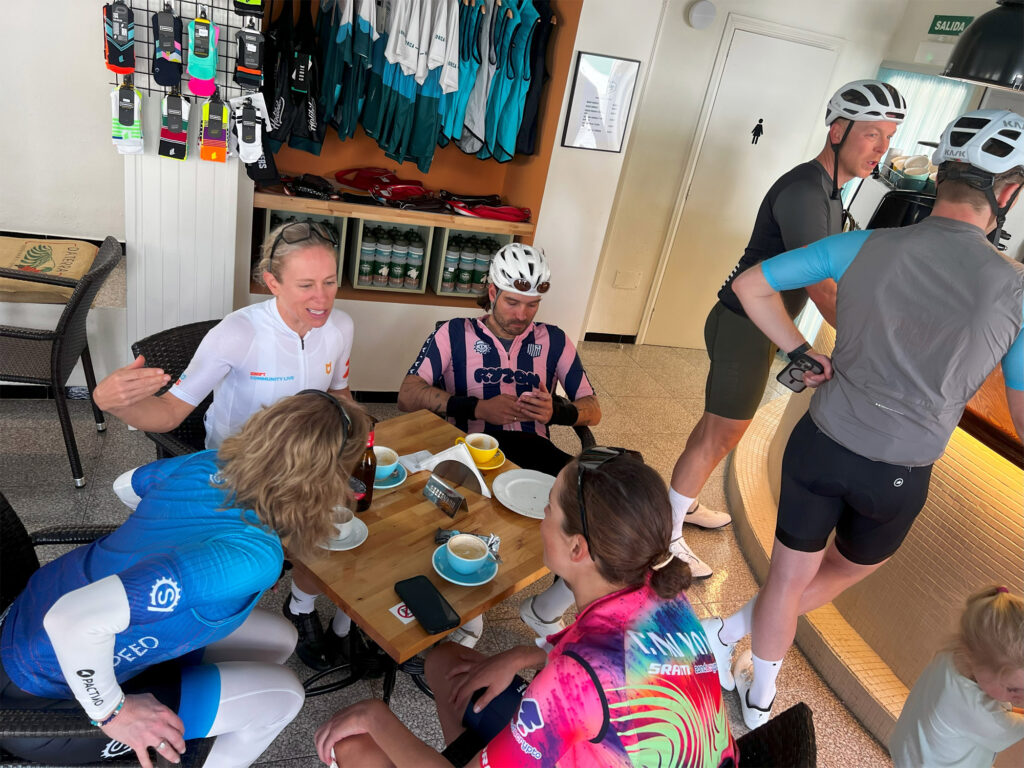
Near the end of the ride, we made our scheduled coffee stop at a cafe along with a few other 12-member ZCL groups. As I stood in line, I looked around and marveled at everyone in the room: Matt Stephens, Leah Thorvilson, two Canyon/SRAM riders, Rick Zabel, Sir Chris… and lots of “ordinary” Zwifters too. What a crowd!

The Long and Windy Road

The road out to the lighthouse is twisty, with epic views around every corner, and (at least in my experience) stiff winds as you near the turnaround point at the lighthouse. Once you’re on the more exposed final few kilometers of tarmac leading up to the point, the views are wild, the winds are high, and all the senses are firing. Amazing. Highly recommended.

Wrapping Up the Ride

Once we came back from the lighthouse on the same road we’d gone out, it was time to finish up with ~30k of rolling/flat roads back to our base in Platja de Muro. Easy peasy.

Matt Stephens (left) and ride leader Andy pulling us home on the flats

We heard that Chris Hoy was behind our group along with Zwift’s Chris Snook, as Sir Chris had suffered a bit of a mechanical. We were getting close to home and our group didn’t want to wait around for the Chrises to close the 10-minute gap, but I decided I did.

It turned out to be a good call. Riding and chatting with those two was more interesting than sitting in the larger group and cruising home. Sir Chris shared stories of his early years, riding in Mallorca as an 18-year-old. And before we knew it, were were back at the hotel. 84km with 1028 meters of elevation done and dusted! See it on Strava >

Finishing the Day: Recovery, Race Meeting, Dinner, and a Fireside Chat

I arrived back at the hotel around 3 in the afternoon, meeting Monica who had finished her ride a bit earlier.

The day ended with:

  • Kickstarting our recovery with powerup cookies and Normatec boots
  • A brainstorming session with ~15 of the top race organizers on Zwift and members of Zwift HQ
  • An amazing dinner
  • Everyone gathering for a hilarious and inspiring fireside chat with Kristin Armstrong (3x Olympic gold medalist and level 51 Zwifter) hosted by Dave Towle and Matt Stephens. Kristin talked about coming to Mallorca where everyone trains, and how now… we’re everyone.

Coming Up Tomorrow

Today’s ride was lovely, and it was great to sit in and chat with lots of Zwift community members. My wrist felt good, too, so I’m looking for something a bit more challenging tomorrow. It’s time to jump into the Uber Pretzel group! Here’s the planned route:

Watch this space to learn how it goes…

Zwift even has pro photographers taking shots throughout the event… here’s me descending from the lighthouse.

2025 Tour of Flanders: race predictions, course preview, and how to watch live

Pound for pound the most exciting races of the year? Many make a strong case for the Tour of Flanders (6 April). It has all the ingredients for the ultimate bike race: the best riders at the peak of their powers, explosive climbs, jarring cobbles, exceptional distances and ultra-passionate fans.

The Tour of Flanders, particularly on the men’s side, has oodles of history, yet has been smart to move with the times to create a route that satisfies the modern sporting audience, with a finishing circuit, repeated key climbs and a compact course suited to fans to watch in multiple locations.

In 2017 the start of the men’s race moved to Antwerp, a port city in north Belgium but for 2025 returns to Bruges, which previously held the start from 1998. The starts, finishes and route in between, like other one-day Classics, often change but the racing in earnest doesn’t truly start until the cobbled climbs, or bergs, do.

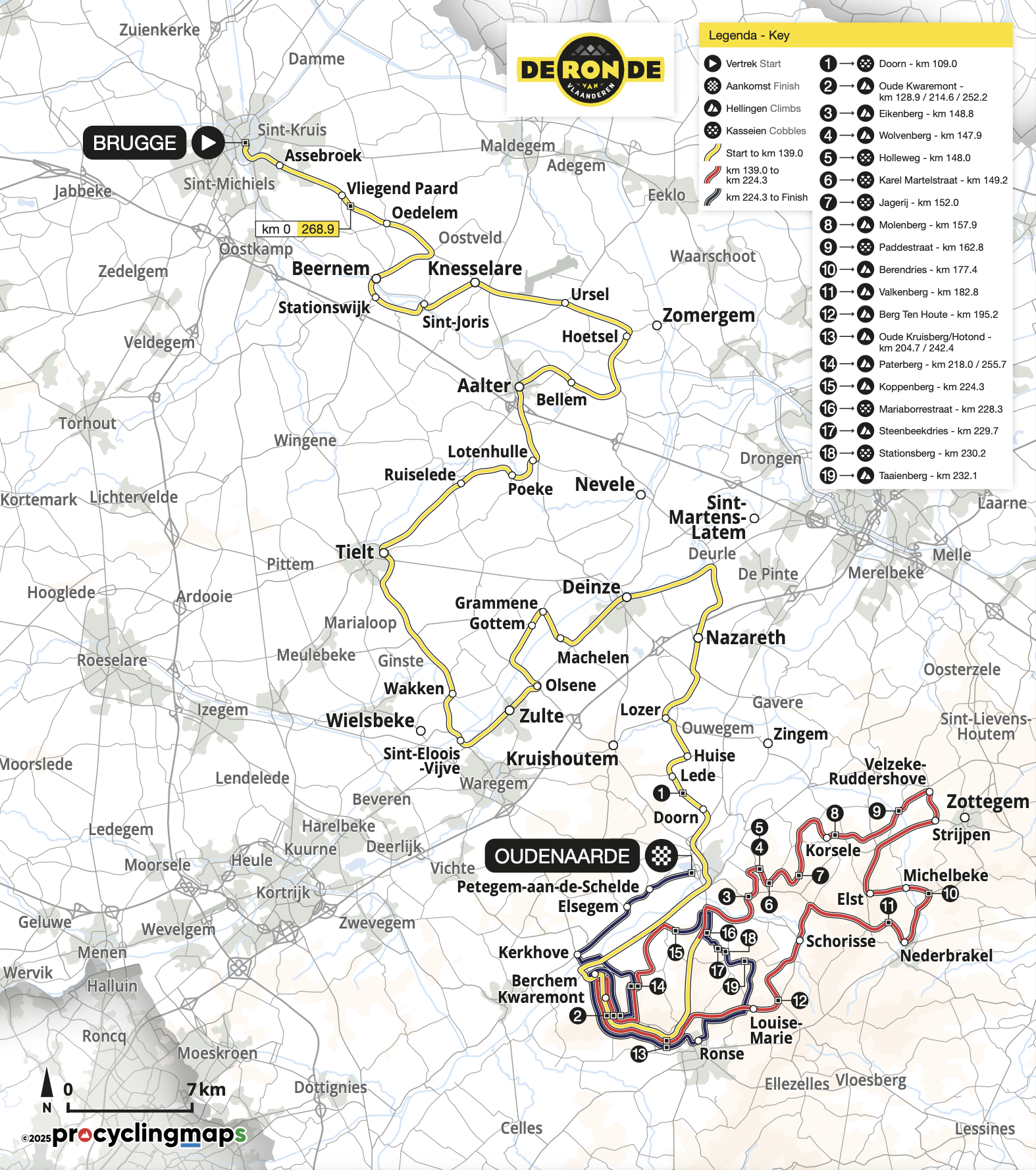
For the men, that means the first of three ascents of the race’s signature climb, Oude Kwaremont (2km at 4.4%), which summits 140km from the finish and gives increasingly lubricated fans gathering in VIP areas their money’s worth. The route in total is 268.9km, with an expected finish around 16.15 CET.

Oude Kwaremont is often used by the favourites as a springboard, either on the first ascent to chase the breakaway, the second to thin out a leading group or the third for the ultimate winner to go it alone.

This, however, is to put a formula on Flanders that doesn’t exist. The reality is that anything can happen, at different points, with other climbs, such as the wall-like Koppenberg, the scene of other iconic flashpoints. It’s not unusual to see riders having to get off and walk through its traffic jam on the mighty Koppenberg, the route’s steepest road with its most uneven surface.

Mathieu van der Poel stays out of trouble on the Koppenberg as traffic forms behind in the 2024 race.

It’s a difficult race to be dominant in, which makes the achievements of defending champion and three-time winner Mathieu van der Poel all the more impressive.

Victory this year will leave him alone as the most prolific in history with four wins and he comes into it at the peak of his considerable powers. He will face stern competition from Classics rival Wout van Aert and, to an even greater extent, 2023 winner and bookies favourite Tadej Pogačar. A humdinger awaits.

The 2025 men’s route.

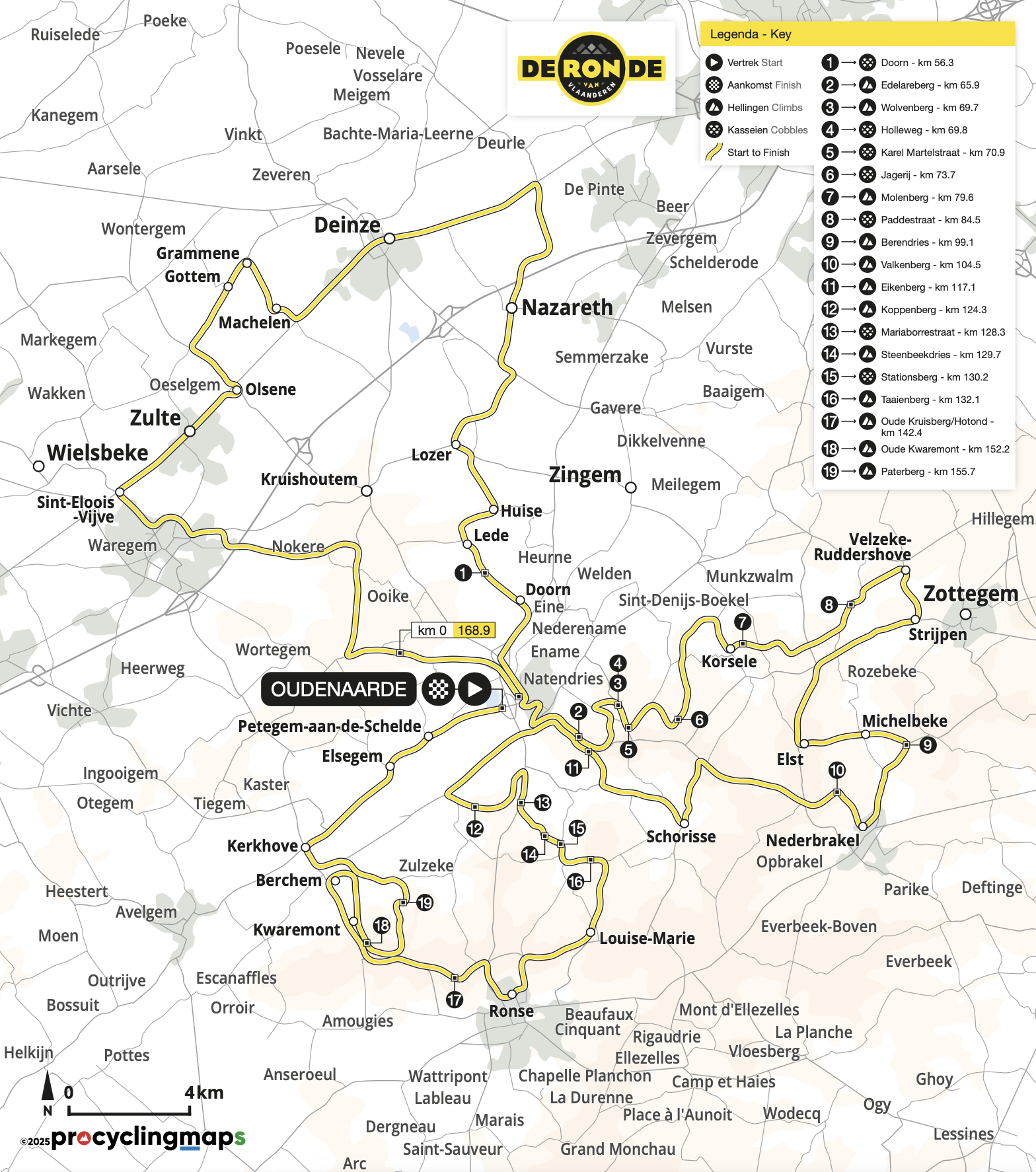
The women’s race (168.8km), like so many of the Spring Classics, takes place on the same day as the men’s, but unusually finishes later (around 17.30 CET). The course starts and ends in Oudenaarde, with only a single ascent of Kwaremont included, but the Koppenberg makes an appearance. Two-time winner Lotte Kopecky will be a fan favourite on home roads and will face off against fellow double winner (and defending champion) Elisa Longo Borghini and Puck Pieterse. 2016 winner Lizzie Deignan makes her final appearance at the race.

The women’s route.

How can I watch the 2025 Tour of Flanders live in the UK?

UK residents are still dealing with the shock of Eurosport’s closure, where live cycling could previously be accessed for £6.99 a month. That’s since risen to £30.99 a month, after Eurosport’s coverage was rolled into TNT Sports by parent company Warner Bros. Discovery.

Coverage of the men’s race starts at 9am BST (Sunday 6 April) on TNT Sports 1 and runs until 4pm, with women’s race coverage from 1.45pm to 5.15pm on TNT Sports 2. TNT Sports is available via the Discovery+ app, EE TV, Sky and Virgin Media.
How can I watch the 2025 Tour of Flanders live in the US?

FloBikes streams the race in the US, with costs starting from $12.50 when signing up to an annual plan. It’s also available on Max (formerly HBO Max), which is part of the Warner Bros. Discovery group – monthly subscriptions start from $9.99.
Coverage starts for the men’s race at 3.55am EDT and the women’s race at 9am EDT.

How can I watch the 2025 Tour of Flanders live in Australia?

SBS will be covering the women’s and men’s racing live on SBS Viceland and SBS On Demand. The men’s race will be broadcast in full from 5.55pm, with the women’s race from 12.30am on Monday 7 April. No subscription is needed.

How else can I watch the 2025 Tour of Flanders?

A Virtual Private Network (VPN) is software that allows you to change your device’s IP address, making it appear as though you’re accessing the internet from another country. As long as you adhere to your broadcaster’s terms and conditions, a VPN enables you to unblock your usual streaming services, no matter your location. Additionally, a VPN can improve playback speeds and significantly enhance your overall internet security.

There are many VPN options available, but we recommend NordVPN as the best choice. It offers strong streaming capabilities, robust security features, and excellent value for money.

At BikeRadar (published by Our Media Limited), we review VPN services to help you access online content and services securely while you’re on the go. This includes activities like streaming your favourite TV shows, live web content or using apps from different countries (provided it’s okay with the service provider’s terms and conditions). It’s important to note: BikeRadar does not endorse or support the use of VPN services for illegal or malicious activities, such as accessing paid-for pirated content. Please ensure you enjoy online content responsibly!

These weird cleats convert any road shoe for 2-bolt SPD pedals

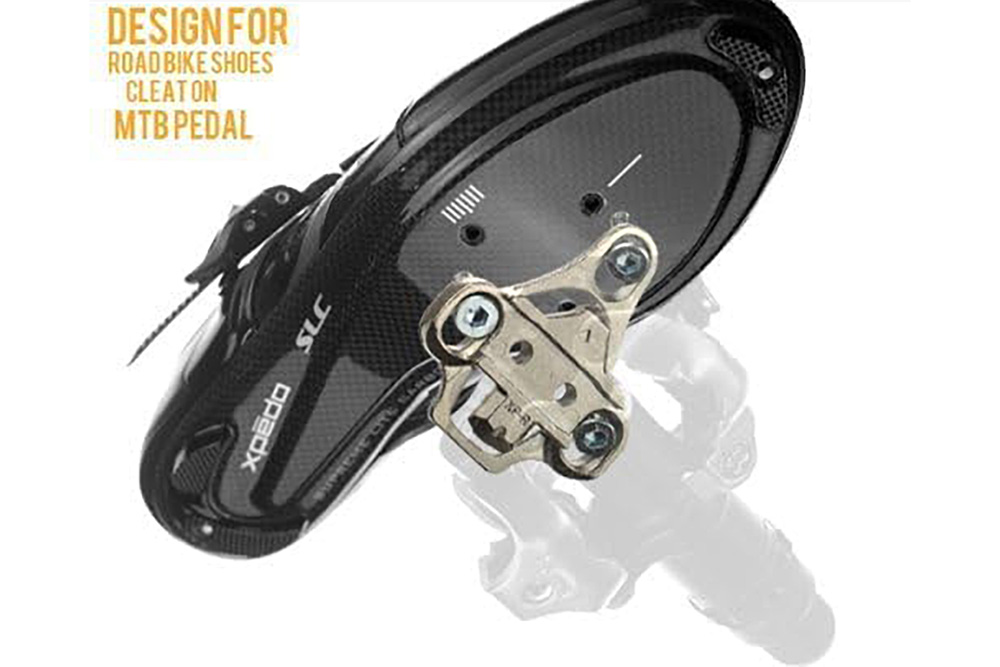
Did you know you can get off-road SPD cleats for 3-bolt road cycling shoes? I didn’t, but it turns out Chinese pedal brand Wellgo makes them.

I knew adaptors existed to enable you to fit 2-bolt SPD cleats to 3-bolt cycling shoes, but until recently, I didn’t realise anyone made cleats specifically for this purpose.

Priced at around £20 to £30, depending on where you shop, Wellgo’s RC-8 cleats are a little pricier than standard cleats. They might save you from needing to buy a new set of shoes, though.

Wellgo RC-8 cleats
Wellgo’s RC-8 cleats enable you to use SPD pedals with 3-bolt cycling shoes. Wellgo

It makes sense when you think about it – most road-style cycling shoes come with holes for 3-bolt cleats nowadays, but there’s a huge market out there for spin bikes (from brands such as Peloton), which often have pedals designed for 2-bolt SPD cleats.

Given this, there’s clearly also demand for adaptors to make 3-bolt cycling shoes compatible with spin bike pedals.

If you’re wondering why all of this is relevant, let me fill you in.

Last week, my colleague Warren wrote a deep dive on the subject of road pedals and the lack of innovation in that space recently.

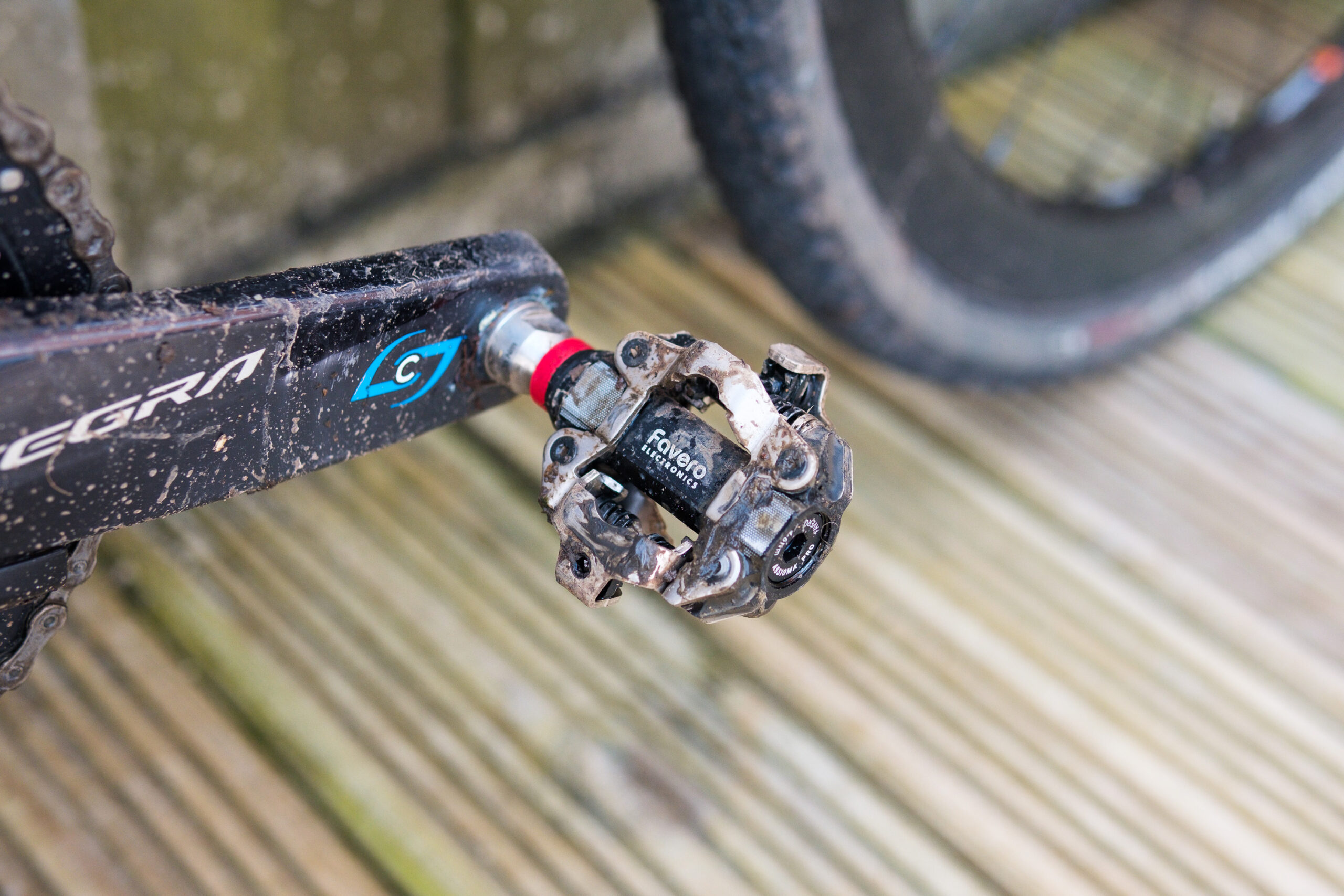
Having just spent a week away at Bike Connection’s Spring 2025 road and gravel event, where I used a set of Shimano RX801 gravel shoes and Favero’s Assioma PRO MX SPD power meter pedals for both on- and off-road riding, it begged the question, why do I bother with single-sided ‘road’ pedals at all?

Favero Assioma Pro MX power meter pedal
SPD pedals work just as well on a road bike as on a gravel or XC bike. Simon von Bromley / Our Media

Sure, they’re a little lighter, but it’s unlikely that makes any difference to my performance on the bike.

In my experience, SPD pedals also offer just as much ‘retention’ as road pedals, yet are much easier to clip into because they’re dual-sided.

Of course, one thing causing inertia to switching from 3- to 2-bolt cleats is that few of my cycling shoes will accommodate them (why all cycling shoes aren’t drilled for both kinds of cleats will forever be a mystery to me).

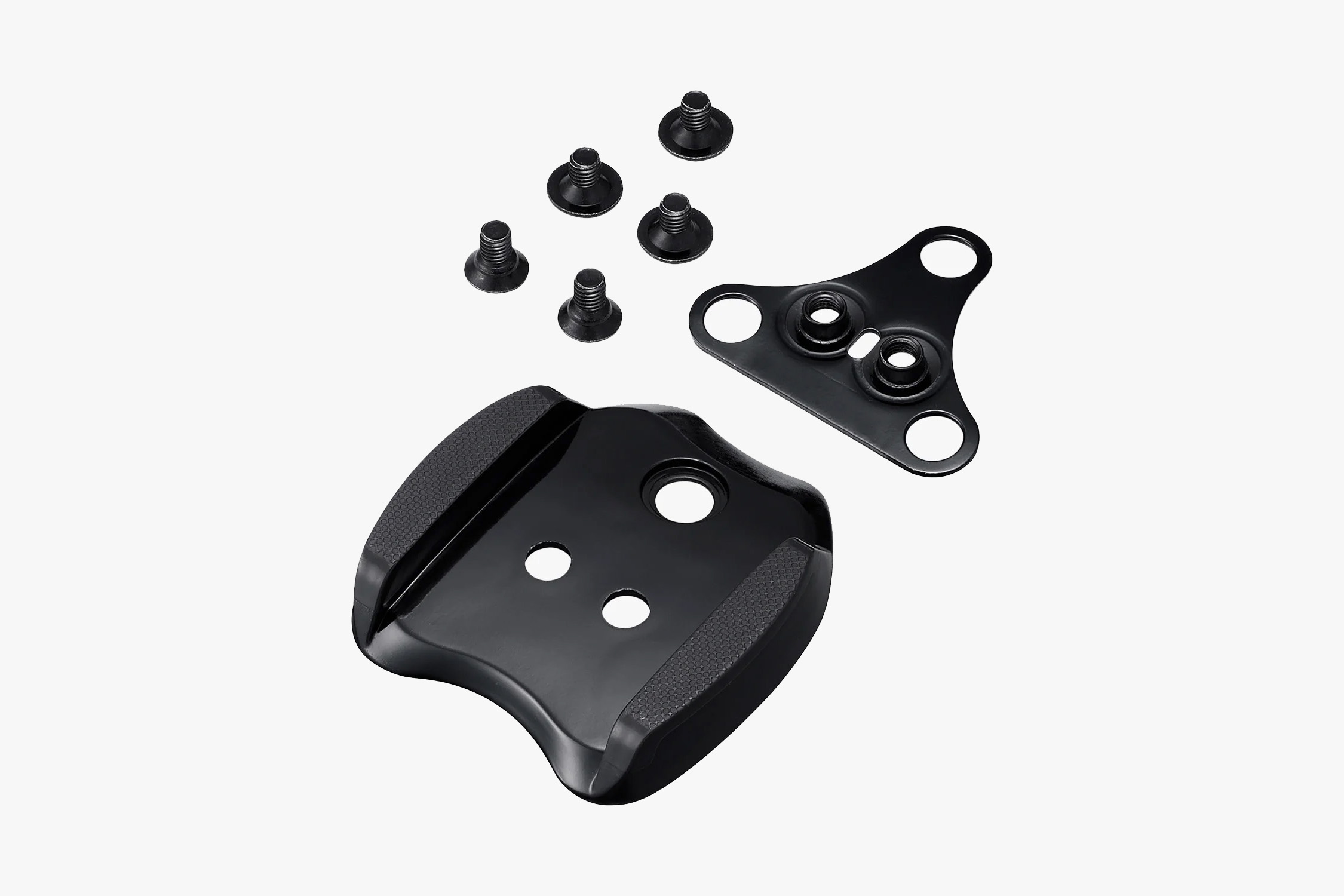
As noted, I could use adaptors (such as Shimano’s SM-SH41 Cleat Adapters), but their cheap plastic construction would feel out of place on high-end road shoes, such as my favourite Specialized S-Works 7 Lace.

Shimano SM-SH41 cleat adaptors
Shimano’s SM-SH41 Cleat Adapters will doubtless do the job, but their plastic construction looks a bit cheap. Shimano

These all-metal Wellgo cleats, on the other hand, look much slicker (although a quick read of some online reviews reveals they might not be as durable as you’d hope).

Because the cleats aren’t recessed, it appears they’d increase your shoe stack height somewhat, but perhaps that would be a worthwhile trade-off for the increased ease of use.

Will I be switching to SPD pedals for all my riding, then? Probably not – for better or worse, I’ve got too many sets of power meter pedals (a first-world problem if ever there was one), making a wholesale switch impractical.

Whether you should switch systems is another question, though – if you’re not heavily invested in expensive 3-bolt pedal systems, there doesn’t seem to be much to lose.

SQUIRREL_13201497

Notable Zwift Events for the Weekend of April 5-6

It’s the last week of the Big Spin, plus we’re featuring some big endurance rides and races and one popular new event from Shimano.

� Zwift Big Spin Makeup Stages

✅ Popular  ✅ Fun Unlocks  ✅ Last Chance

Did you miss a stage of the Zwift Big Spin? Or maybe (like me) you’ve ridden them all… multiple times… and still haven’t unlocked the coveted BMX bike. Either way, this weekend is your last chance to knock out a Big Spin stage or two! Events are hourly, on the half hour, rotating through each of the 4 stages.

Learn all about the Big Spin >

Hourly events this weekend
Sign up at zwift.com/the-zwift-big-spin

� Epic Race Series: Deca Dash

✅ Unique Event  ✅ Endurance Challenge

Zwift has rebooted the Epic Race Series for April, making some interesting changes to make the races more compelling (read about all the changes here). We’ve got mass starts, forced categories, category kits, and a refreshed ride schedule. The first race is on Jarvis Island’s Deca Dash (52.6km, 499m).

Events scheduled throughout the weekend
Sign up at zwift.com/events/tag/zwiftepicapril

� SZR Endurance Ride

✅ Endurance  ✅ Legacy Leaders

This endurance ride from SZR is really three rides in one, since each category (C, D, and E) has its own pace, route, and leaders. This weekend’s lengths range from 100-120km.

Saturday, April 5 @ 6am UTC/2am ET/Friday 11pm PT
Sign up at zwift.com/events/view/4928348

� Cycle Nation Endurance Ride

✅ Endurance Challenge

Like the SZR ride above, this one is sort of like 3 rides in one. Three categories, each with their own pace, and lengths right around 100km.

Saturday, April 5 @ 4am UTC/12am EDT/Friday 9pm PDT
Sign up at zwift.com/events/view/4928332

� Shimano Super Cycling Sunday

✅ Route Badge  ✅ Popular  ✅ Guest Leader  ✅ Kit Unlock

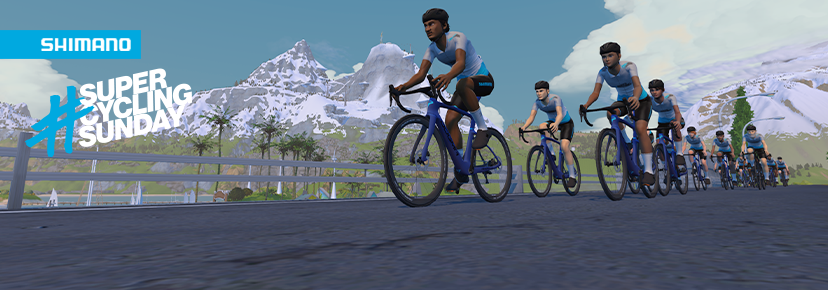
This new series from Shimano is proving popular! These are open-paced group rides on newer Zwift routes that include a #SuperCyclingSunday kit unlock, special guest riders, and more! This week’s ride is on Watopia’s Tair Dringfa Fechan (32.1km, 374m).

Read all about the Shimano Super Cycling Sunday series >

Sunday, April 6 @ 2pm UTC/8am EDT/5am PDT
Sign up at zwift.com/events/view/4868280

How We Make Our Picks

We choose each weekend’s Notable Events based on a variety of factors including:

  • Is the event unique/innovative in some way?
  • Are celebrities (pro riders, etc) attending/leading?
  • Are signup counts already high, meaning the event is extra-popular?
  • Does the ride include desirable unlocks or prizes?
  • Does the event appeal to ladies on Zwift? (We like to support this under-represented group!)
  • Is it for a good cause?
  • Is it just plain crazy (extra long races, world record attempts, etc)?
  • Is it a long-running, popular weekly event with a dedicated leader who deserves a shout out?

In the end, we want to call attention to events that are extra-special and therefore extra-appealing to Zwifters. If you think your event qualifies, comment below with a link/details and we may just include it in an upcoming post!

You can now buy Van Rysel bikes at Sigma Sports

UK retailer Sigma Sports has become the first independent business to stock Van Rysel bikes and equipment.

The announcement marks a significant turn in strategy for the brand. Previously exclusively available via sports supermarket, Decathlon (the parent company of Van Rysel), the announcement follows heavy investment in developing new products and pro team sponsorship.

Sigma Sports is stocking Van Rysel’s high-end road products, including the recently-announced RCR-F aero bike and RCR-R all-rounder.

Accessories, including the highly-rated RCR shoes and five-star RCR-F helmet, are also available.

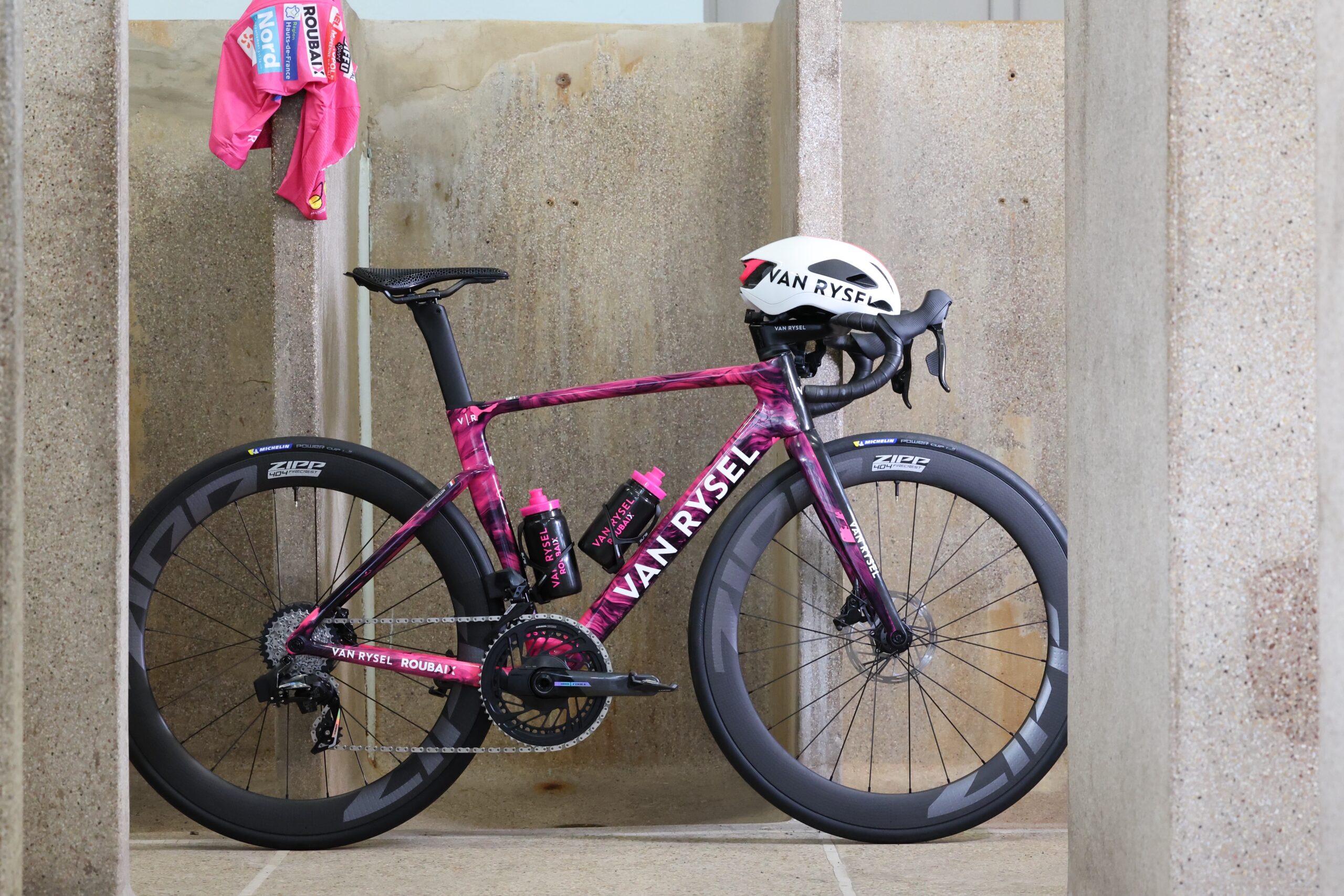
Van Rysel RCR Pro Roubaix in Roubaix showers
Van Rysel has undergone enormous changes since the brand’s reboot in 2023. Van Rysel

Though the 105 Di2-equipped RCR-R 105 Di2 looks keenly priced at £4,500, the limited premium range reflects Sigma’s position as a generally high-end retailer – and plays into Van Rysel’s goal to become a “top five global bike brand.”

Strategically speaking, ranging Van Rysel bikes alongside halo products from established brands – including Specialized and Cannondale – in one of the UK’s top cycling retailers is a stark shift in brand positioning from lining up £10,000 bikes next to inflatable kayaks and archery sets at Decathlon.

Speaking about the partnership, Maxime Delabre, Global Chief Marketing Officer at Van Rysel, said: “We are excited to partner with Sigma Sports as our first other retail partner for the RCR-F, bringing our cutting-edge technology to even more passionate riders.”

Sigma Sports’ CEO, James McEuen said: “As the leading independent road, gravel and triathlon retailer in the UK, we are delighted to enter this exclusive partnership with Van Rysel.

“We are proud to carefully select only the very best brands and products to offer customers both in-store and online. VAN RYSEL has proven that the best can be affordable. We look forward to helping our customers enjoy this new and exciting product mix.”

Van Rysel bikes are available via Sigma’s online store and in-store.

What’s Coming Next? Read “This Season On Zwift” Spring 2025 Press Release

Zwift just released their latest “This Season on Zwift” announcement detailing key game features, Companion app updates, and hardware offerings releasing in the next few months. We’ve posted the complete press release below, and in the coming days will be diving into some of the announcements in more detail.

There’s lots to love here, so let’s get on to the big news…

Track Your Fitness Progress Using Zwift Companion App Whether RIding Indoors or Out

Plus, many more updates are landing This Season On Zwift, including new roads in France, HUD updates and Streak Flair

Zwift, the biggest training destination for cyclists worldwide, is excited to lift the lid on a host of Zwifter benefits launching This Season On Zwift. As seasons change across the globe, Zwift is better equipped than ever before to support Zwifters on their training and fitness journey.

Zwift Companion App is set to receive a significant update, allowing Zwifters to set weekly goals and track their fitness progress within the ecosystem for the first time. From April 8th, Zwift Companion gets a new look, bringing fitness metrics to the fore. Here, Zwifters will be able to set weekly goals, using the following metrics: Time, Distance, Calories, Stress Points, or Kilojoules. 

Zwifters will now be able to track their fitness progression with Zwift’s new training score. Training Score reflects your long-term cycling fitness by averaging your recent training load over time, combining both workout volume and intensity into a single, easy-to-understand daily number.

Additionally, Zwifters will also see a new Training Status indicator within the Zwift Companion app. Training Status reflects current training load by comparing long-term fitness (42 days) and short-term fatigue (7 days). Higher training loads build fitness, but it’s vital to balance this with recovery. Zwift Companion will indicate five levels of training status:

  • Ready – Ready to start or return to Training
  • Fresh – Active and ready for a challenge
  • Productive – Consistently training and recovering well
  • Overreaching – Training heavily but in need of more recovery. Rest weeks are essential for recovery and peak performance.
  • Detraining – loss of fitness due to reduced training.

Outdoor now counts on Zwift! To provide the best training insights, Zwift Companion App will now ingest outdoor riding data from Garmin and Wahoo devices. Hammerhead compatibility is expected later in the summer. Zwifters will need to ensure they have enabled the correct permissions in the Zwift Connections portal. Once enabled, outdoor data will be pulled into Zwift Companion App to best inform Training Score and Training Status metrics. From launch, Zwifters will be able to scroll back through their previous history and view their weekly training record.

Rolling out later this summer, Zwift Companion will receive a second update that will enable Zwifters to track their fitness trends. Updated screens will allow Zwifters to dive deeper into individual metrics and track historical trends for their Training Score, Training Status and Weekly Streak.

To make things truly fun and Zwifty, paying Zwift members will earn additional XP for their outdoor rides, at a rate of 5XP per kilometre. Additionally, paying Zwift members can also keep their streaks alive with outdoor riding. 

Streaks have proven to be a popular feature since their introduction. Currently, 53% of active Zwifters have a 4-week streak or greater, and 9% have an active six-month streak – Ride On! For those with impressive streaks, there will now be the ability to show off to the rest of Watopia, through Streak Flair. Streak Flair can be toggled on in the ‘Fun Settings’ within the game menu. At four weeks, Zwifters unlock a Scotty medallion, 12 weeks secures a Scotty Key Chain, and 24 weeks will unlock a waving animated Scotty.

Launching Spring, the Zwift HUD will receive a number of updates, including one of the most requested features – splits! Enabled from the Zwift Action Bar, Zwifters can enable splits, providing lap functionality – perfect for manual interval training. Laps will display time, distance, average power and average heart rate. 

Additionally, Zwifters will also be able to toggle on a critical power display, allowing them to view peak 5sec, 60sec, 5min and 20min power.

The Configurable HUD, found in the top left, has been a favourite since launch. Zwifters now have a range of more advanced training metrics to choose from, including Power balance (L/R), Average w/kg, Average Speed, Weighted Power (WP) and Body Temp and Heat Strain Index (HSI), enabled by a new integration with CORE Body Temperature Sensors.

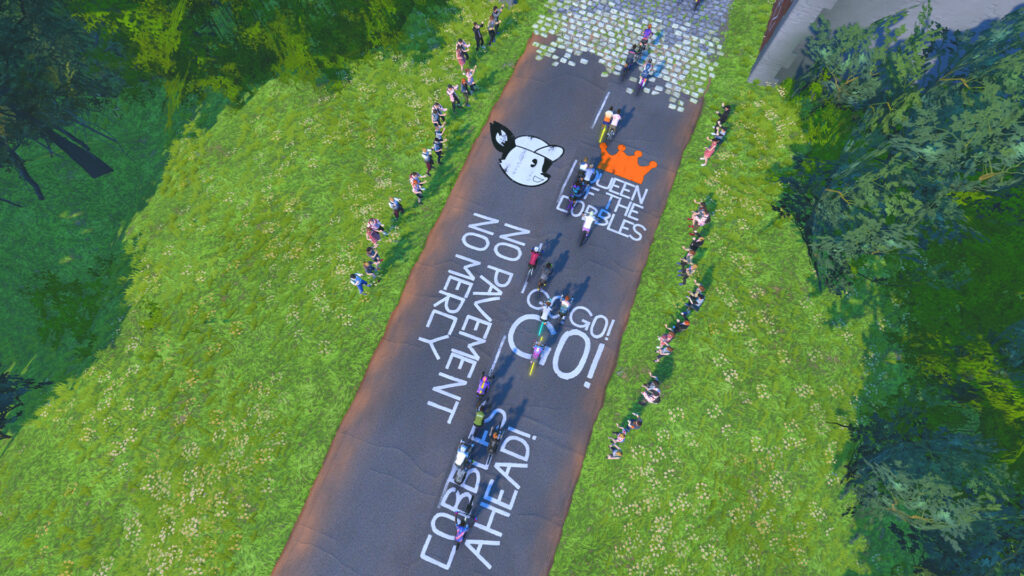
For Zwifters looking to explore, from April 7th they will have new roads to discover in the France map. New connecting roads now make the France map more explorable than ever before and include numerous cobbled sectors, just in time for Paris Roubaix Femmes avec Zwift! A new Route Chaser Challenge will be live in-game for Zwifters to explore the new routes and secure bonus XP for completion.

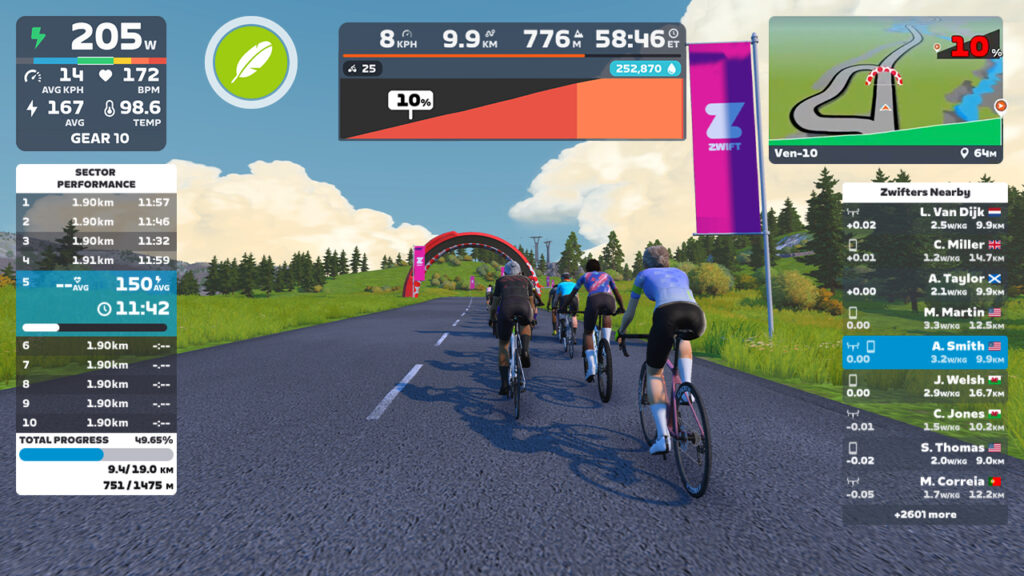
Ven-Top has also received a significant update, which is live now. Similar to Alpe du Zwift, Ven-Top now features timed segments in the HUD, helping Zwifters break the climb into manageable chunks. For those who make it to the top, the spinning reward wheel has also made the trip across from Alpe du Zwift, bringing greater reward for conquering such an epic challenge.

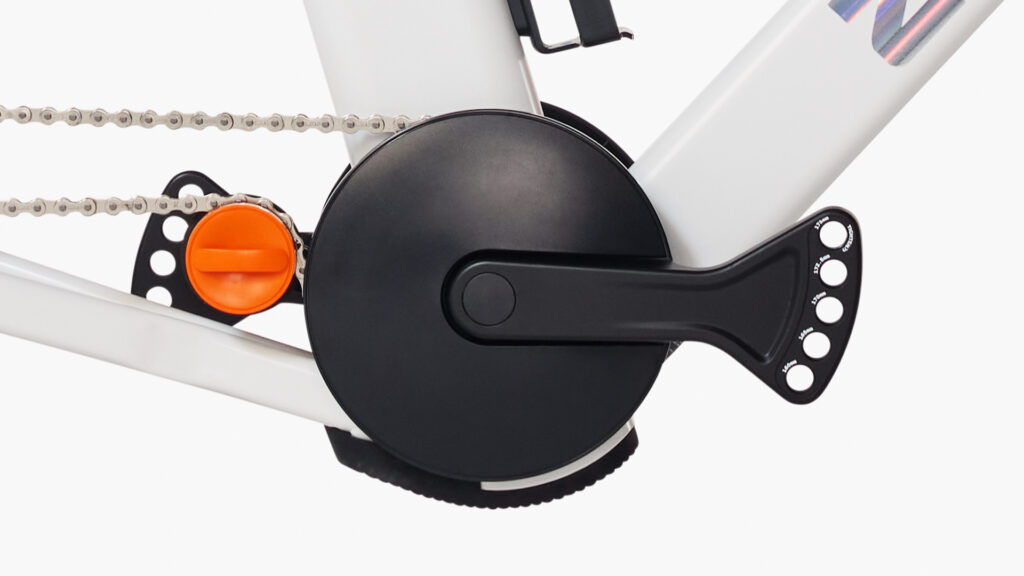
And there’s one more thing! Zwifters who wish to use differing crank lengths on their Zwift Ride now have the option to purchase adjustable cranks as an upgrade accessory. The Zwift Ride adjustable cranks provide five crank length options – 160/165/170/172.5/175. They will be available to purchase via Zwift.com from April 16th within the US, EU and UK for $99.99/€99.99/£99.99.

To find out more about This Season on Zwift visit zwift.com/this-season-on-zwift

Your Thoughts

What do you think of Zwift’s plans for the next few months? Share below!

Top 5 Zwift Videos: Bike Upgrades, Zwift Racing League, and Alpe du Zwift

It seems as though Zwift has been on a roll recently: first the 4th challenge, and now bike upgrades! Learn all about bike upgrades in this week’s top video.

We’re also highlighting videos about bike upgrades in ZRL, climbing Alpe du Zwift in under an hour, pre-season FTP tests, and tips and tricks on using Zwift as a beginner.

Zwift Bike Upgrades // Requirements // How It Works

We recently saw the launch of the long-awaited bike upgrades feature on Zwift. Hear from Shane Miller, GPLama, as he explains the basics of Zwift’s new bike upgrading system.

The biggest secret to the new Zwift Bike changes for the Zwift Racing League Finals

How will the new bike changes actually impact Zwifters? Casual Creations shares several important tips to help Zwifters choose their equipment correctly for the Zwift Racing League Finals.

Can I climb Alpe du Zwift in under an hour?

Ryan first climbed Alpe du Zwift in 107 minutes. Now, after a bit over a year of training, he is chasing sub-one-hour. Watch as Ryan attempts to conquer this challenge in his Epic Alpe Race.

FTP Test on Zwift and Afternoon Run Session with Sam Long

In Lionel’s second vlog of the 2025 season, he races the Zwift Games as an all-out FTP test to see where his fitness is at.

Zwift & Indoor Cycling 101

As Zwifter Black British Cyclist Kendizle rides The Big Spin, he shares a boatload of tips and tricks on how to get started with Zwift.

Got a Great Zwift Video?

Share the link below and we may feature it in an upcoming post!

Oakley CYBR sunnies go ultra-minimal with rimless lenses and Unobtanium earsocks

Oakley has released new CYBR ZERO and CYBER DYNO glasses, both featuring a futuristic rimless design.

The new glasses are designed for cycling and other sports, with both utilising the technology we’ve come to expect from Oakley’s cycling sunglasses, including Unobtanium earsocks and Iridium lenses.

Oakley says the glasses have a functional fit that makes them compatible with a variety of faces and have been developed with weight savings in mind.

Both glasses share a similar style with the CYBR DYNO featuring a slightly larger lens.

The new CYBR glasses are available to buy now, with pricing for the CYBR ZERO starting at £158 and the CYBR DYNO starting at £168.

Rimless lineage

Oakley CYBER ZERO
The CYBR ZERO features a smaller lens than the CYBER DYNO. Oakley

Oakley says the CYBR ZERO build on the rimless heritage of the brand’s Radar cycling glasses, with the design said to allow for weight savings with the lens used for the structure.

The glasses are available with Prizm lenses, which Oakley says enhance colour, contrast and detail.

Oakley CYBER ZERO
Vents are cut into the lenses of both glasses for breathability. Oakley

Ligature nose pads are used to secure the glasses alongside O Matter arms that see integrated Unobtainium earsocks.

The brand says its lenses are tested under extreme mass and high-velocity circumstances to provide protection against a wide range of demanding conditions.

Oakley CYBR DYNO
Oakley has prioritised weight savings and visibility with the CYBR range. Oakley

The Oakley CYBR ZERO frames are available in three colours: Polished Navy,  Polished White, Polished Black and Matte Iron Red, while the CYBER DYNO comes in Polished White, Matte Abyss, Matte Myst and Matte White.

Photochromic lenses can be specced, which change tint when exposed to UV light.

Tadej Pogačar smashes Paris-Roubaix KOMs on rapid 213km training ride – a sign of things to come?

Tadej Pogačar, the men’s world road race champion, has just taken several prestigious Strava KOMs along the Paris-Roubaix course.

Ahead of his upcoming debut at the Queen of the Classics, Tadej Pogačar has been out training on the race’s infamous cobbled roads.

In a 212.96km training ride, posted to Strava yesterday, Pogačar rode from northern France to Belgium, averaging an impressive 37.6kph.

Along the way, Pogačar tackled many of Paris-Roubaix’s most feared sectuers, notching up record times on the five-star Mons-en-Pévèle and four-start Auchy-lez-Orchies à Bersée.

He even got a second-place trophy on the five-star Carrefour de l’Arbre, finishing just one second off Wout Van Aert’s KOM time from his third-place finish at the 2023 edition – the second-fastest edition of the race ever (behind last year’s race).

He finished his ride by reconing key climbs from this weekend’s Tour of Flanders, such as the Oude Kwaremont.

Tadej Pogačar's Paris-Roubaix training ride on Strava
Pogačar’s training ride certainly feels like something of a statement. Strava

On this ride, he posted only his third-best time up that climb – though it’s a KOM he already holds from his winning ride at the 2023 edition of that race, so perhaps he didn’t feel a need to dig too deep at that point.

Either way, despite the help of a slight north-northeast tailwind of 25.4 km/h (which counts as a “moderate breeze”, according to the Beaufort Wind Force Scale), Pogačar must have been putting out some serious power on this ride.

That will come as no surprise to anyone who’s watched him race in recent years, of course.

Tadej Pogačar's KOMs from his Paris-Roubaix training ride on Strava
Unsurprisingly, Mons-en-Pévèle is an extremely popular segment on Strava. Strava

It’s one thing to take a KOM while racing with a peloton and teammates, though, and another to take them while out on training rides – especially on famous roads (if you can call them that) such as these.

At the time of writing, for example, Mons-en-Pévèle has seen 39,168 attempts by 23,394 people.

One thing we don’t know, however, is what bike Pogačar used – his Strava file simply lists his bike as “Čolnago”.

The speed would suggest he used his Colnago Y1Rs aero bike, though given Colnago says that only has clearance for 30mm tyres – relatively small by modern Roubaix standards – might he have ridden a new V5Rs all-rounder instead?

Colnago Y1RS aero road bike
Did Pogačar use his Colnago Y1RS to take these KOMs? Liam Cahill / Our Media

This weekend’s Tour of Flanders should give us a taste of what to expect at the Hell of the North, but the dominant trend in recent years has been for riders to use their aero bikes with the biggest tyres they can squeeze in.

The question on everyone’s lips is whether Pogačar can repeat Matheiu Van Der Poel’s trick of winning the historic race in the rainbow jersey. Whatever bike he rides, then, it certainly seems like the legs won’t be an issue.