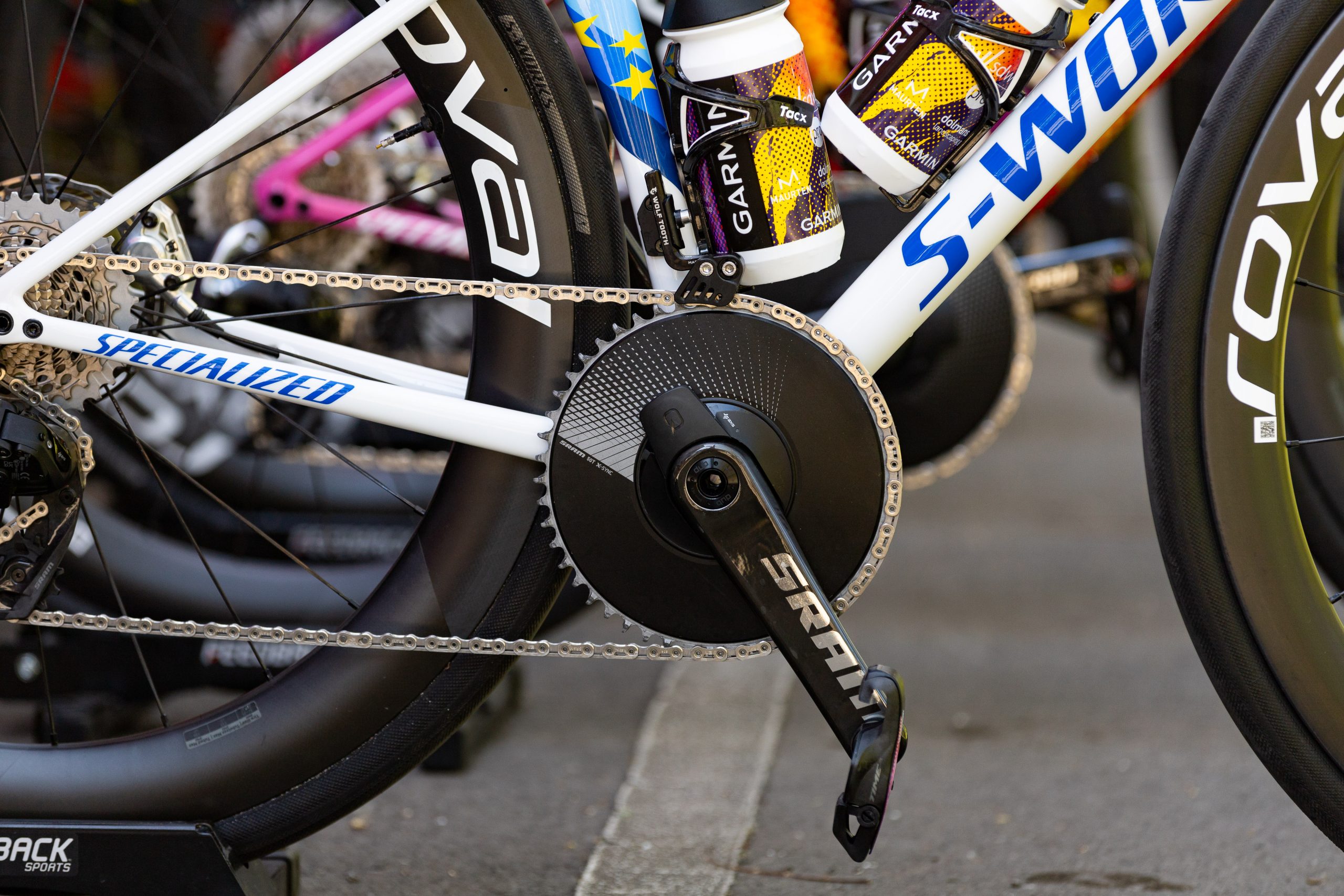
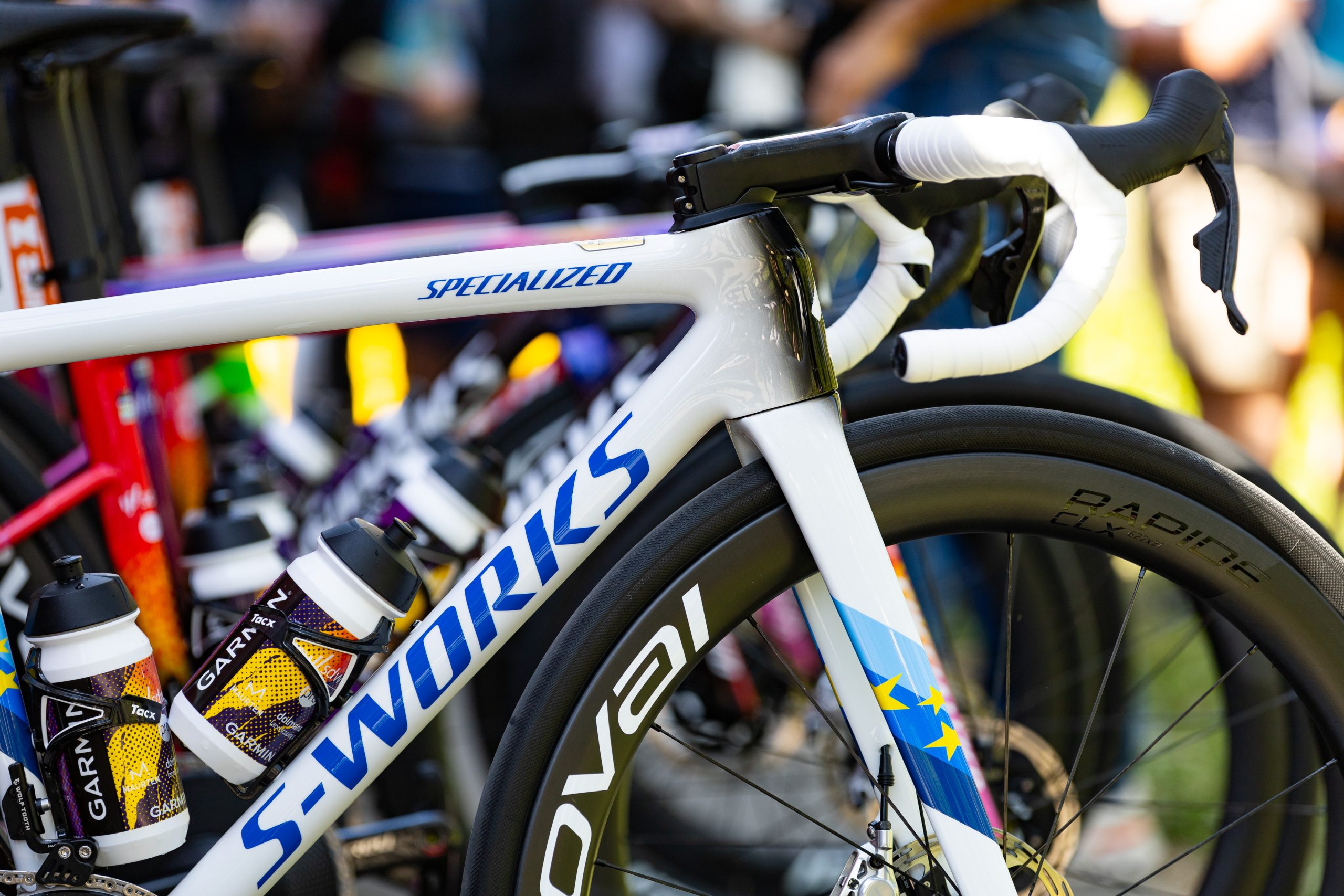
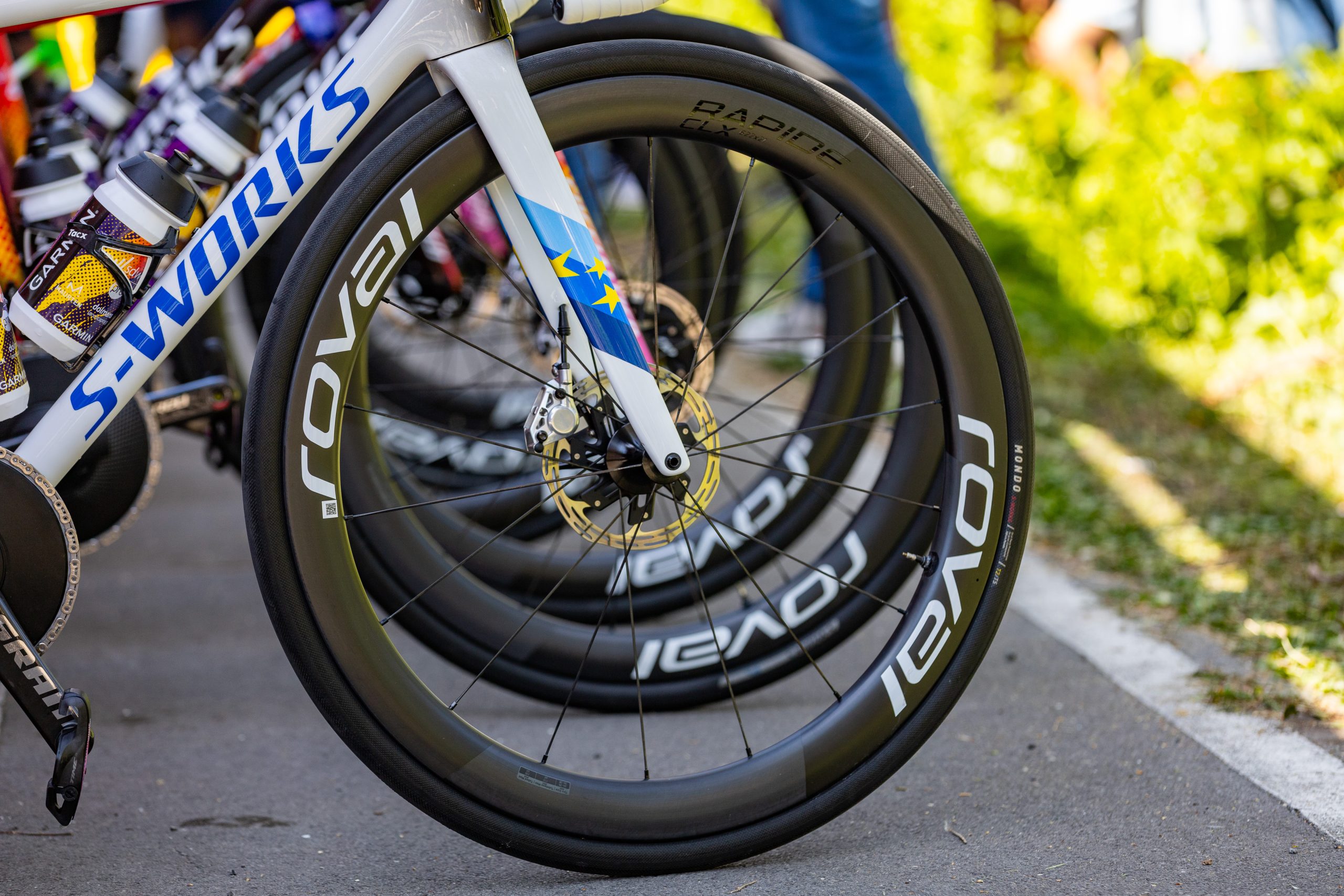
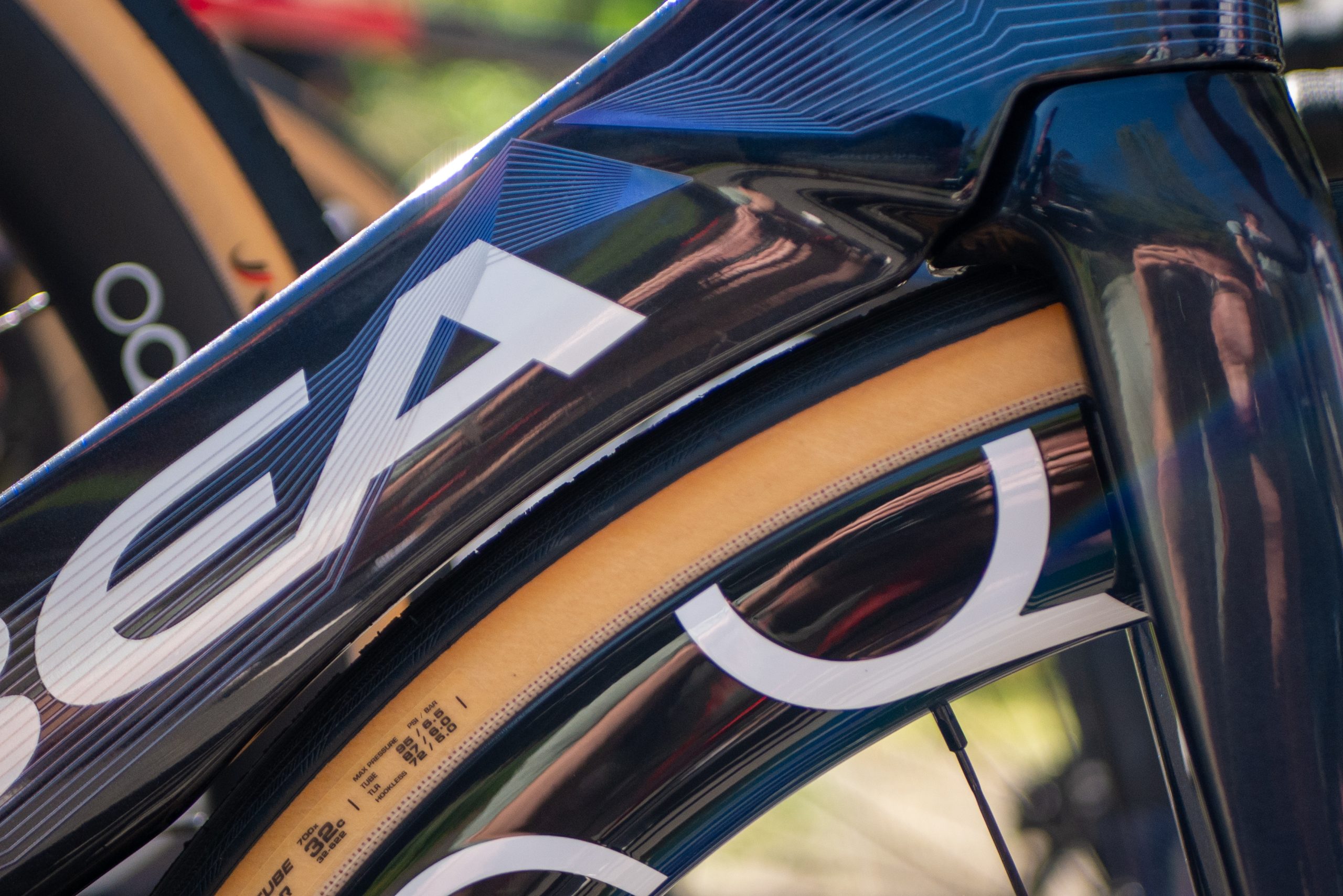
Lorena Wiebes powered to a 3rd place at this year’s Paris-Roubaix Femmes aboard a Specialized S-Works Tarmax SL8 custom-painted to honour her European road championships win.
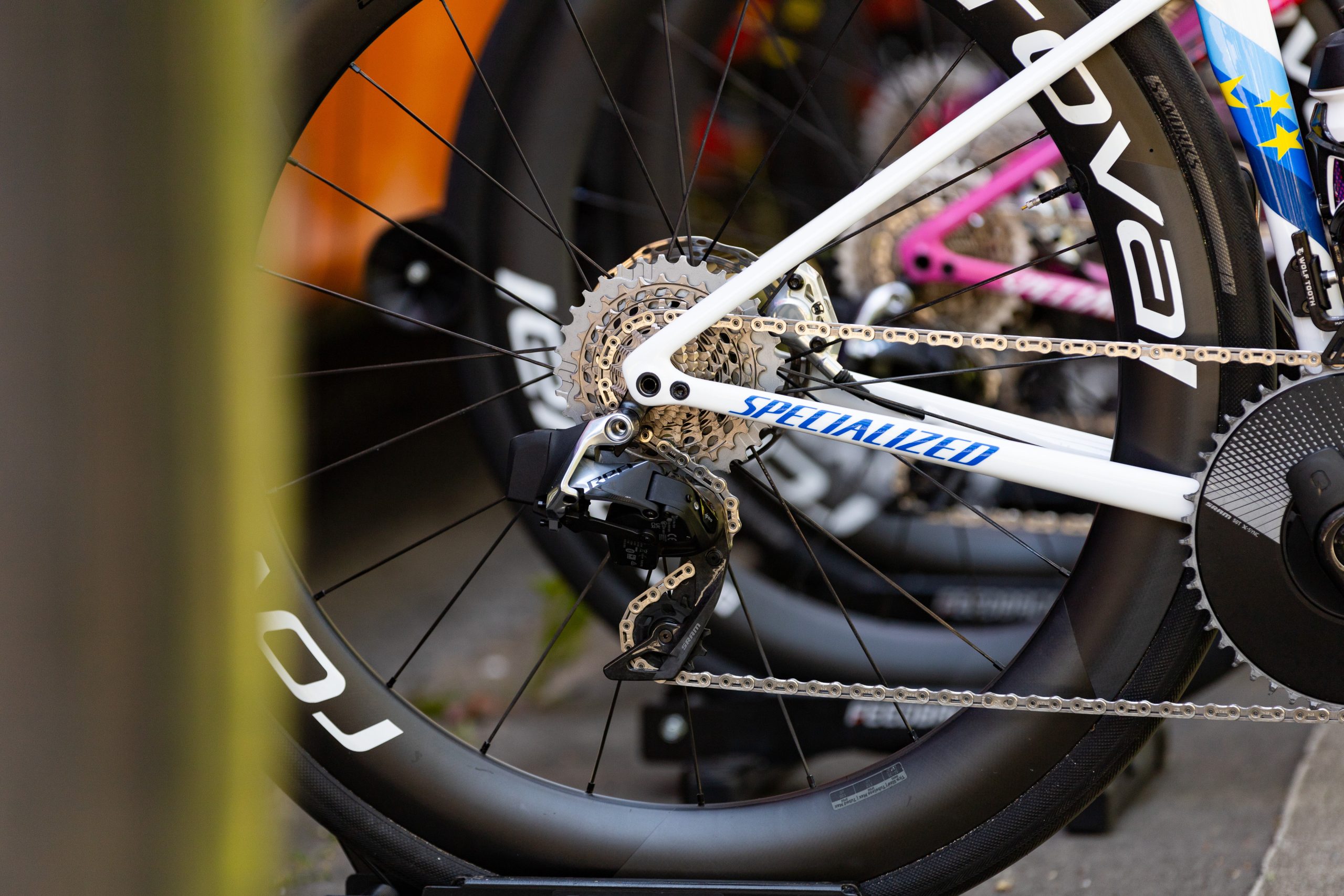
Wiebes ran a 1x setup, with a 50t chainring paired to a 10-32 cassette. A Wolf Tooth Gnarwolf chainguide helped keep things in check on the devastatingly rattly cobbles of northern France.
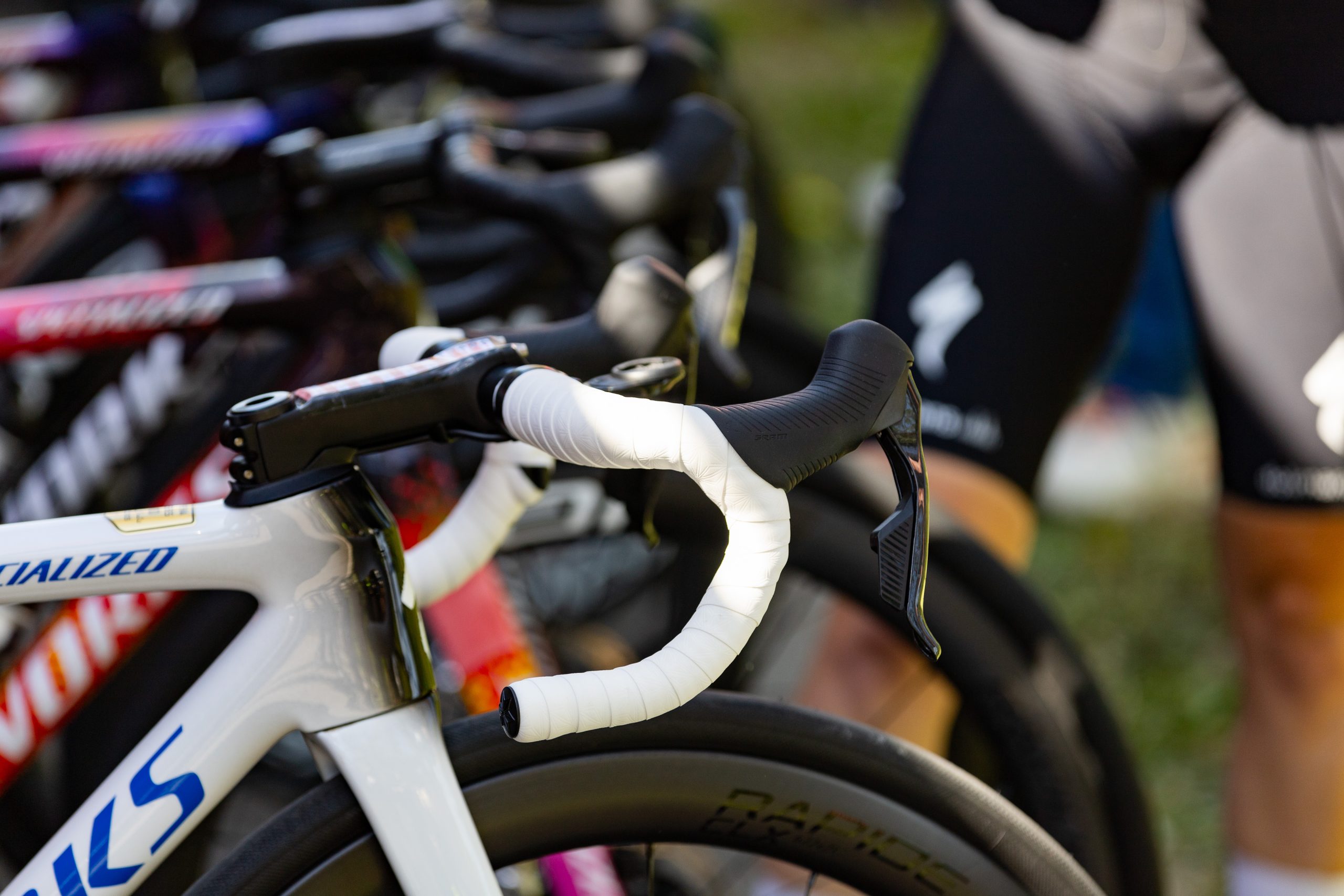
Sprint shifters in the form of SRAM’s AXS Wireless Blips are hiding under the white bar tape. These gave her another hand position to shift the 12 gears available.
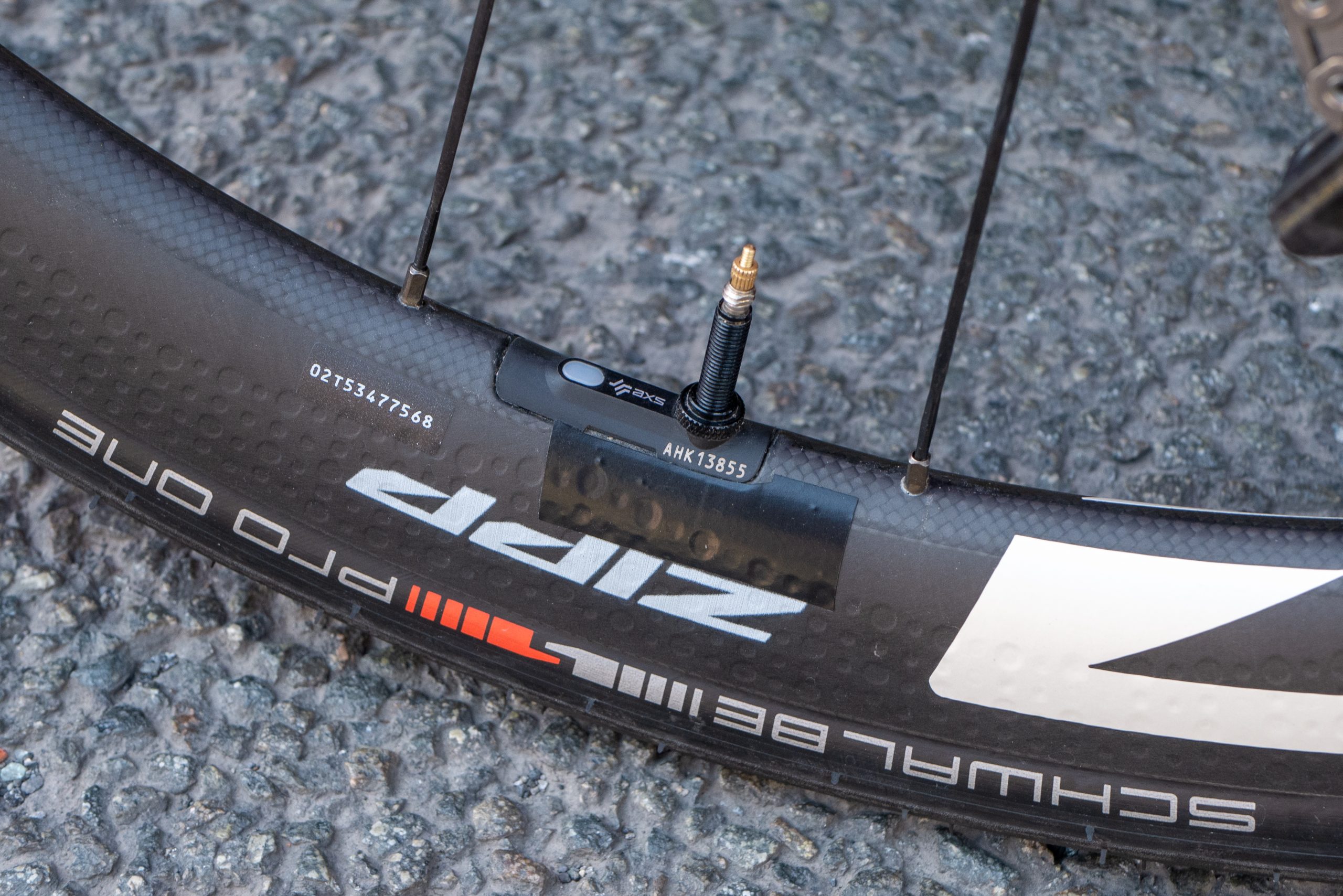
These tubeless endurance tyres are designed to provide more puncture protection without sacrificing too much rolling resistance – key to staying at the sharp end of this race.
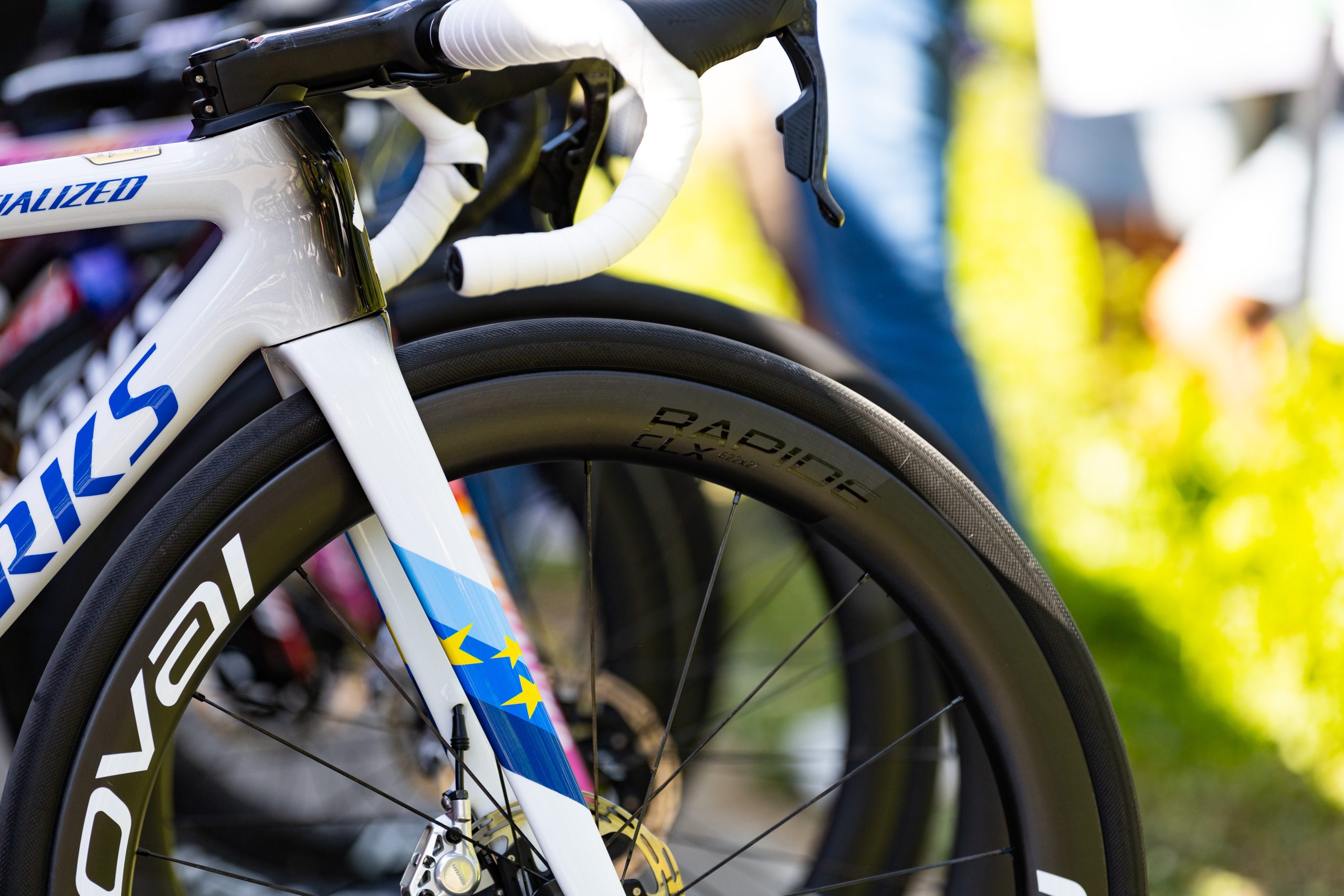
They’re fitted to the Roval Rapide CLX II wheelset with gloss white decals, which work nicely with the look of the bike.
Wiebes has forgone the SL8’s one-piece cockpit instead of a traditional two-piece setup, which also looks to be wrapped with thicker – possibly double-wrapped – bar tape with a generous amount of tape across the tops.
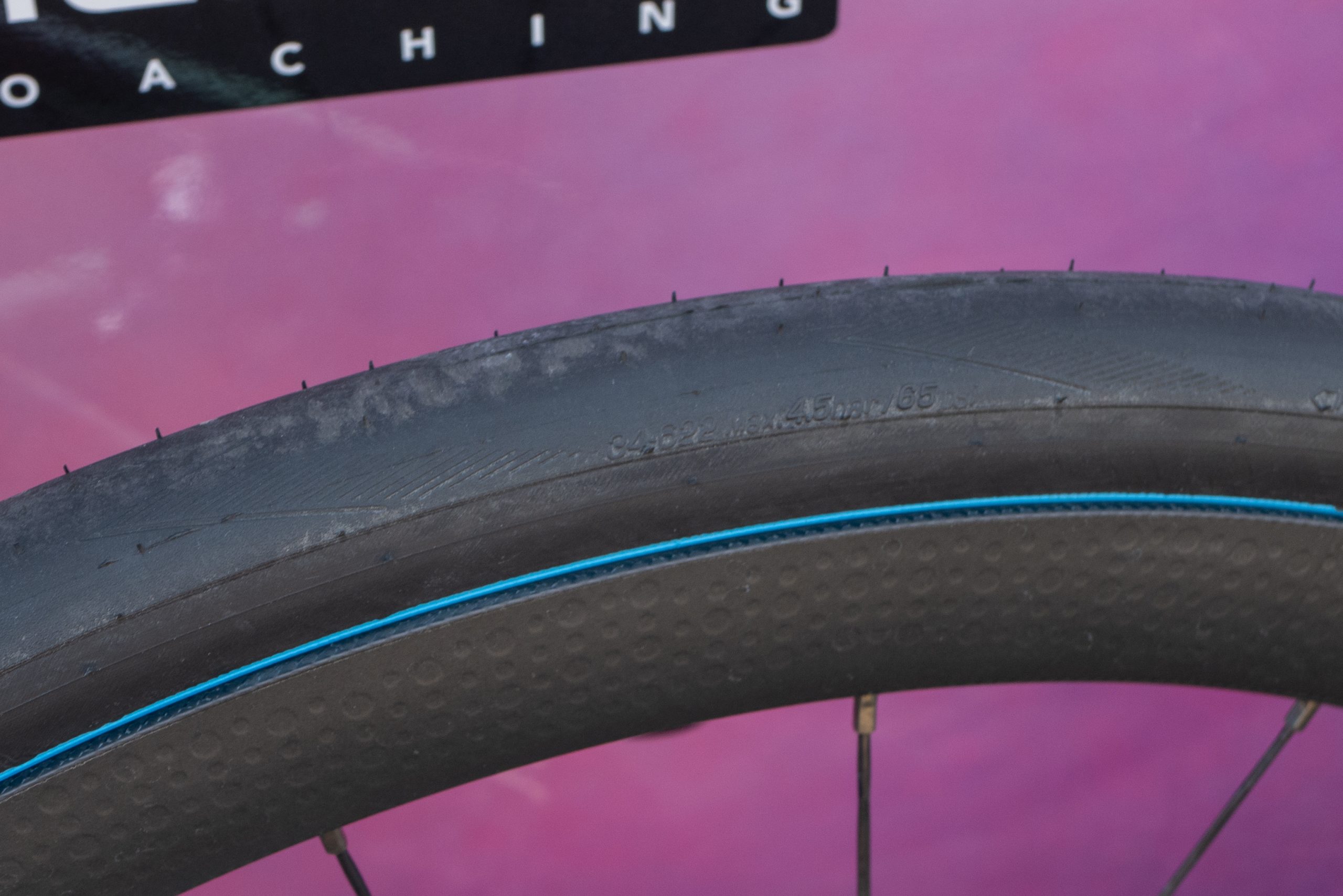
You can’t miss this 50-tooth aero chainring, with Wolf Tooth GnarWolf Chainguide Wiebes ran a SRAM Red eTap AXS rear derailleur with a 10-32 tooth cassette. The SL8’s signature Speed Sniffer headtube design is painted black. Specialized S-Works Mondo tyres have a subtle tread pattern. Felix Smith / Our Media Roval Rapide CLX II wheelset with gloss white decals. Felix Smith / Our Media White bar tape generously smothers the compact handlebars on this two-piece cockpit. Felix Smith / Our Media
The fifth edition of Paris-Roubaix Femmes avec Zwift delivered a brilliant race with more attacks than you could keep track of.
Pauline Ferrand-Prévot (Visma–Lease a Bike) became the first Frenchwoman to win – no less on her very first crack at the race – Paris-Roubaix Femmes, doing it in style with a searing solo attack.
The tech on display was equally impressive, with prototype wheels from Zipp, tyre clearances pushed to – and beyond – the limit, old-school hacks and much more.
Here are our top 2025 Paris-Roubaix Femmes avec Zwift tech picks.
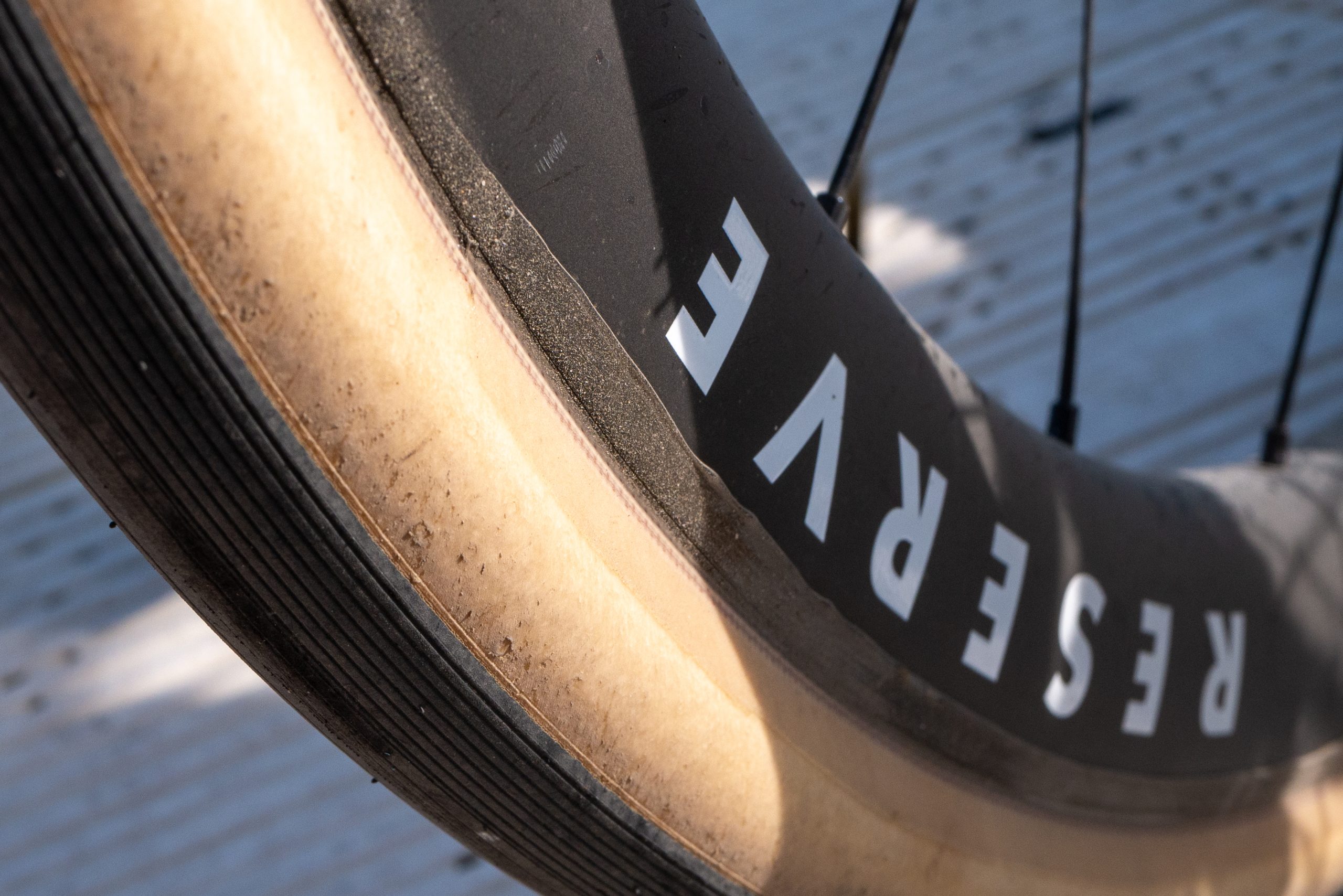
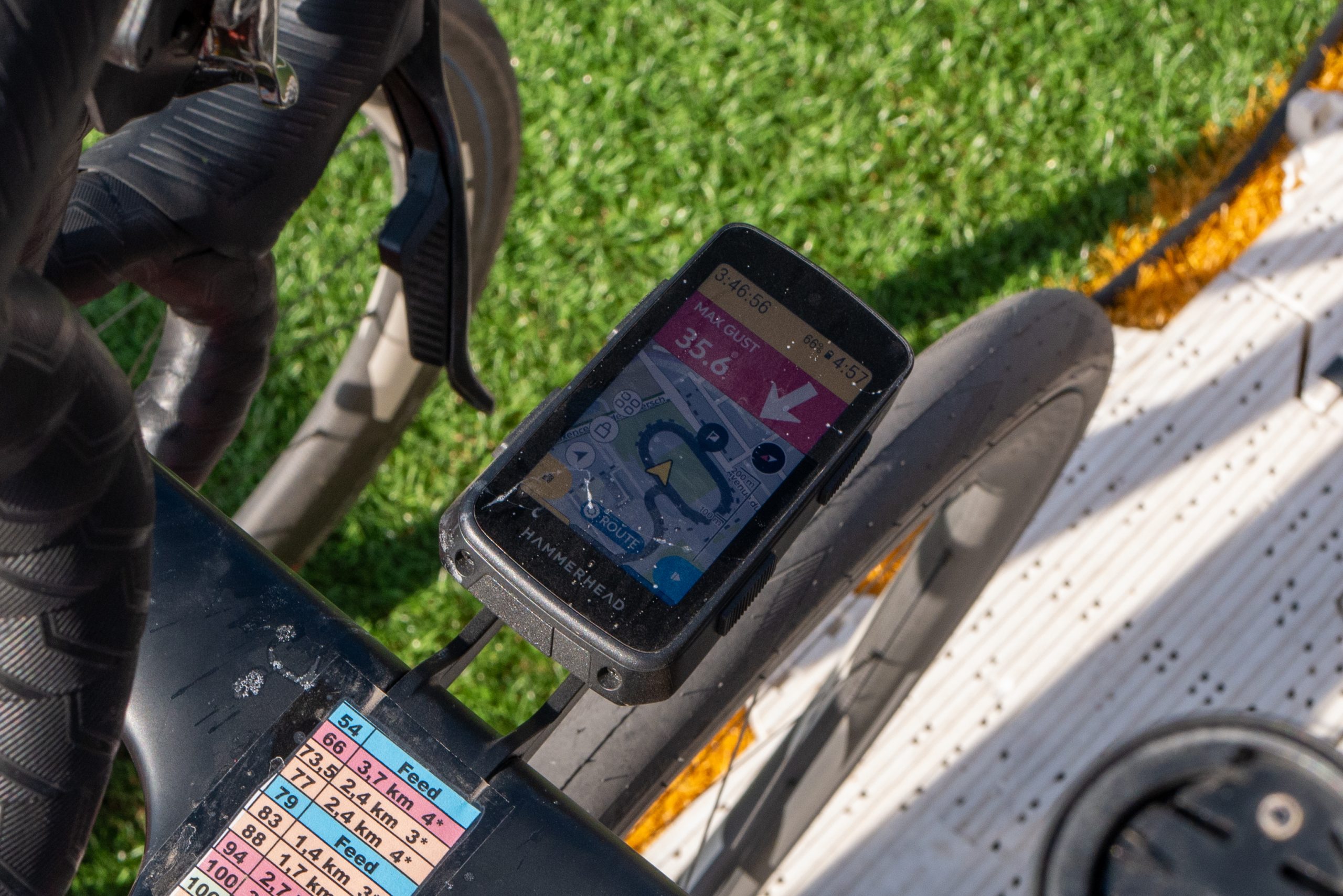
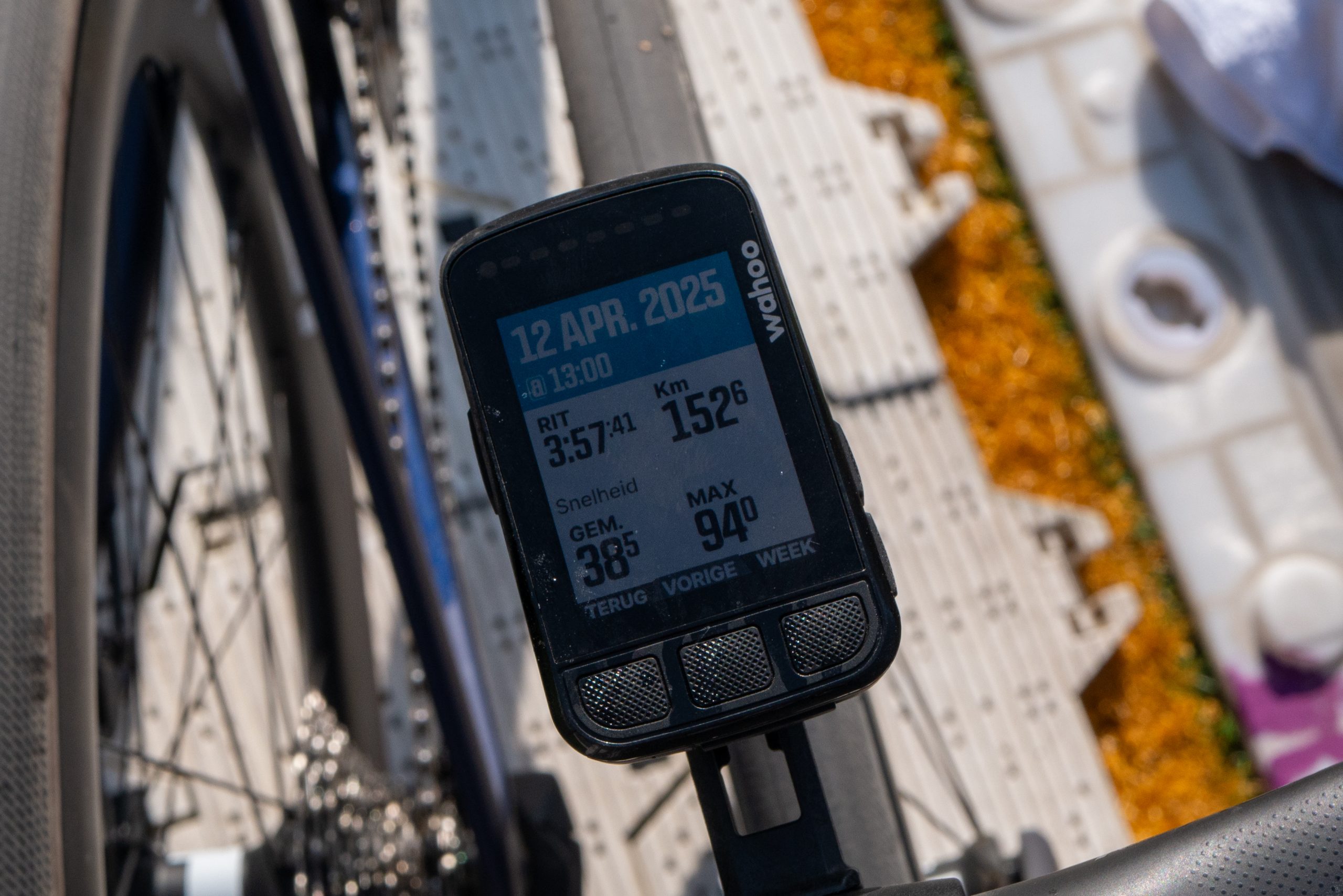
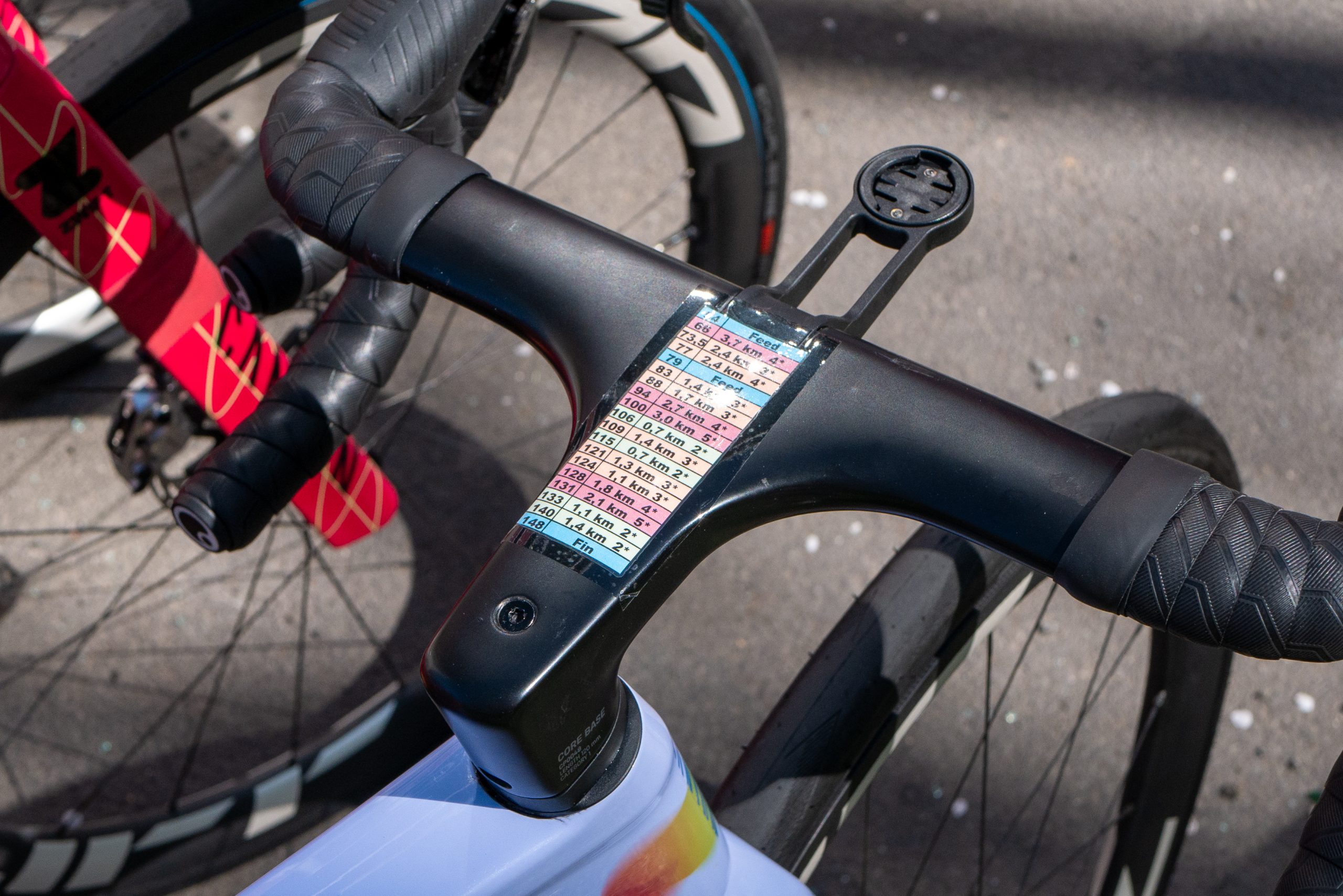
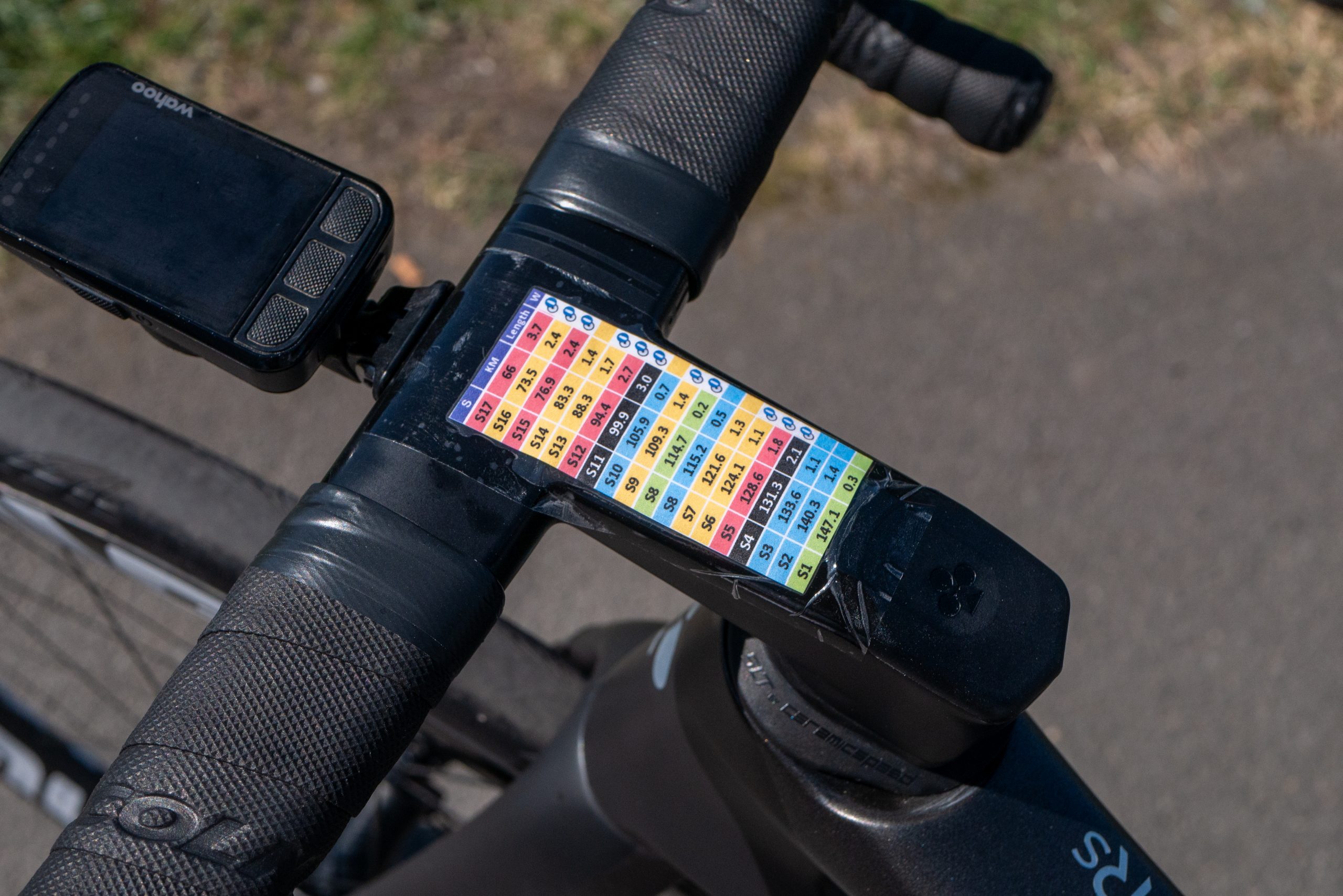
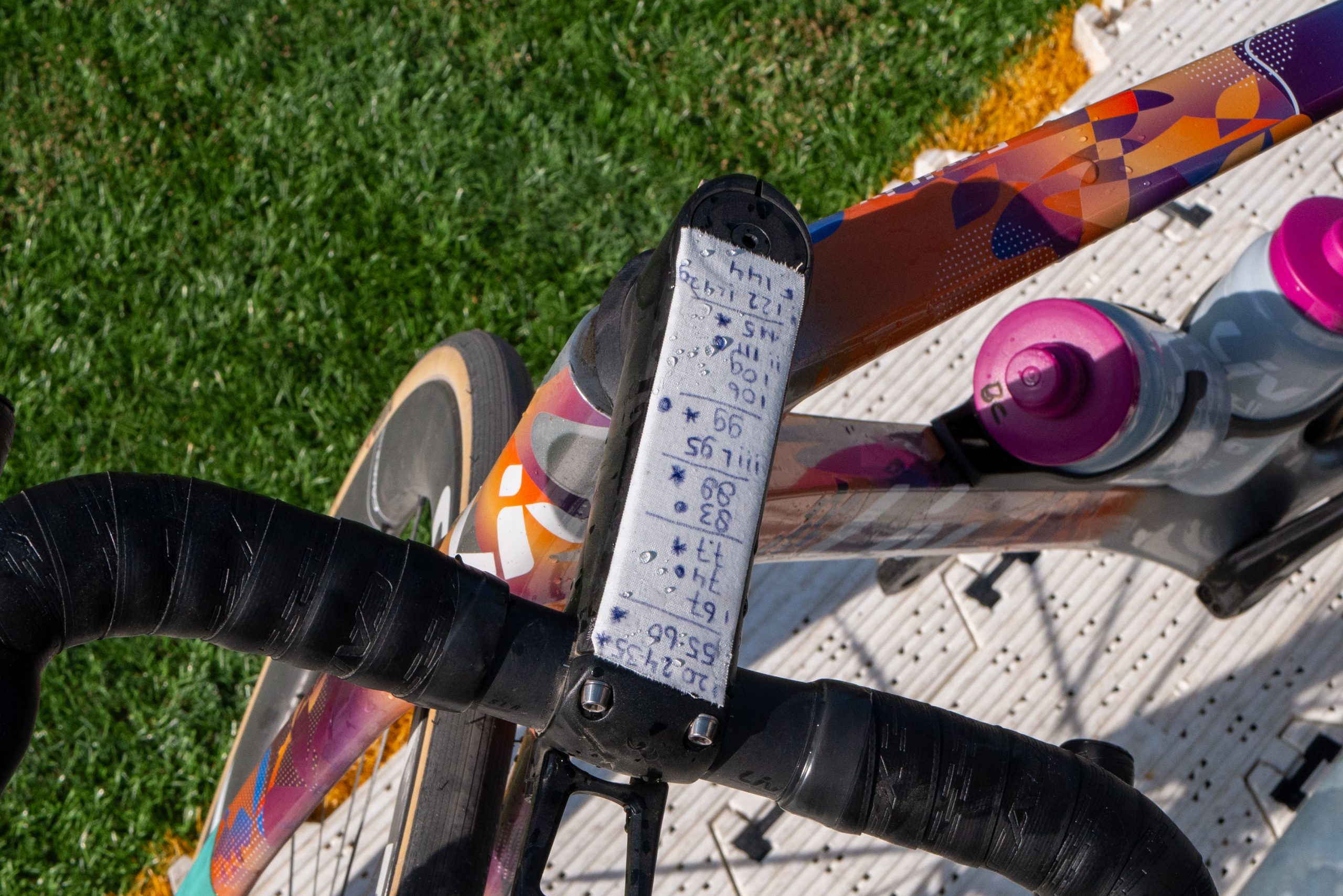
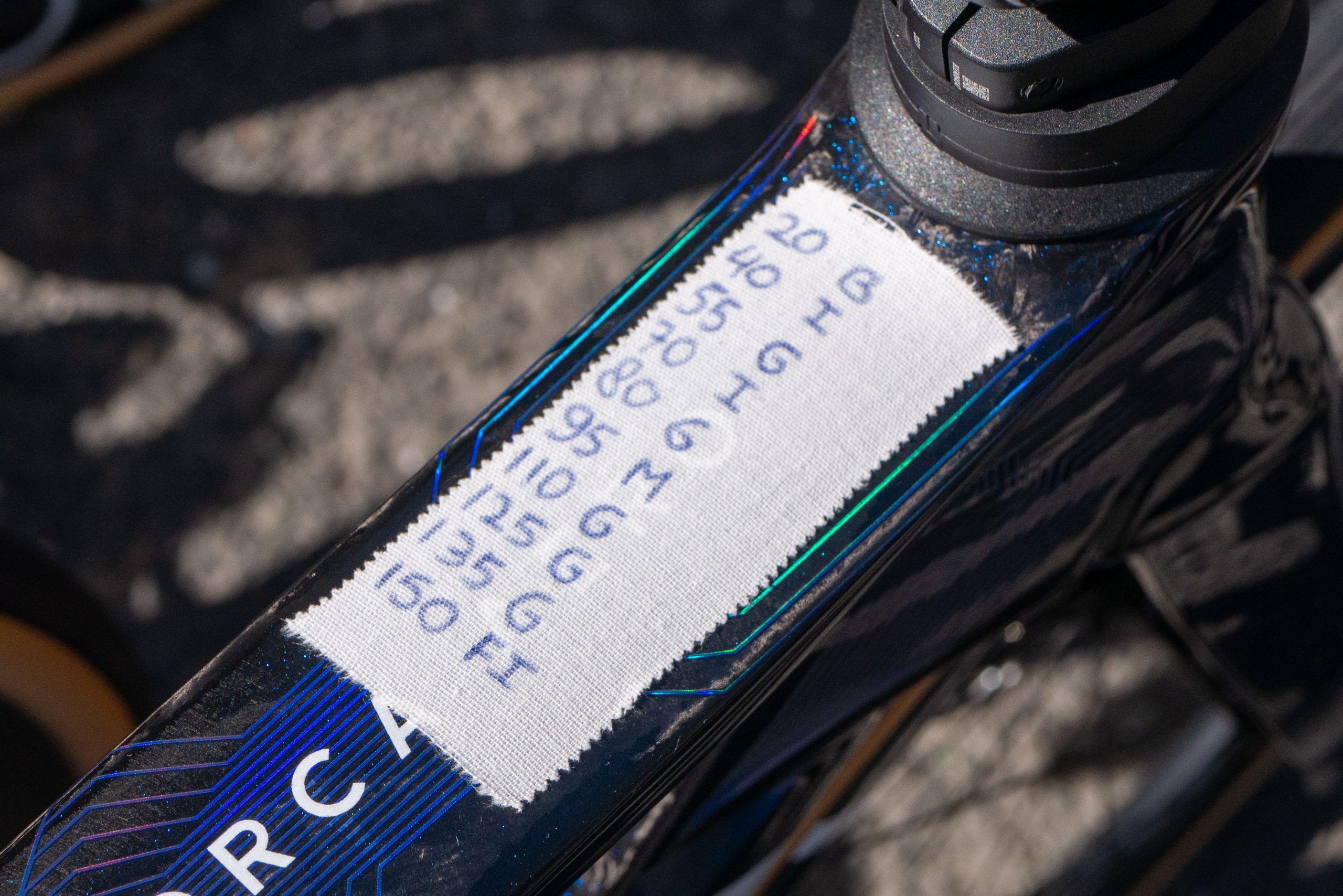
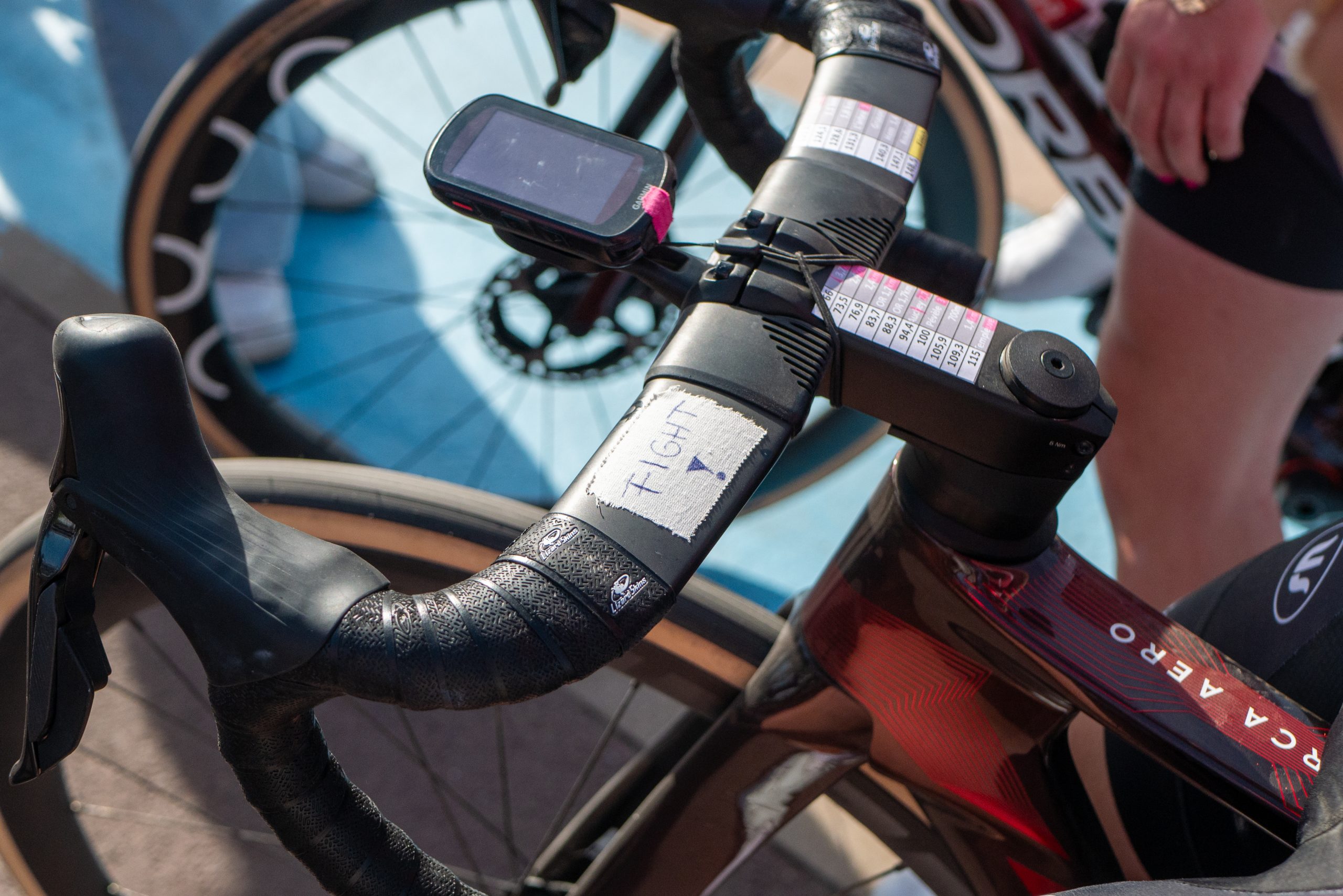
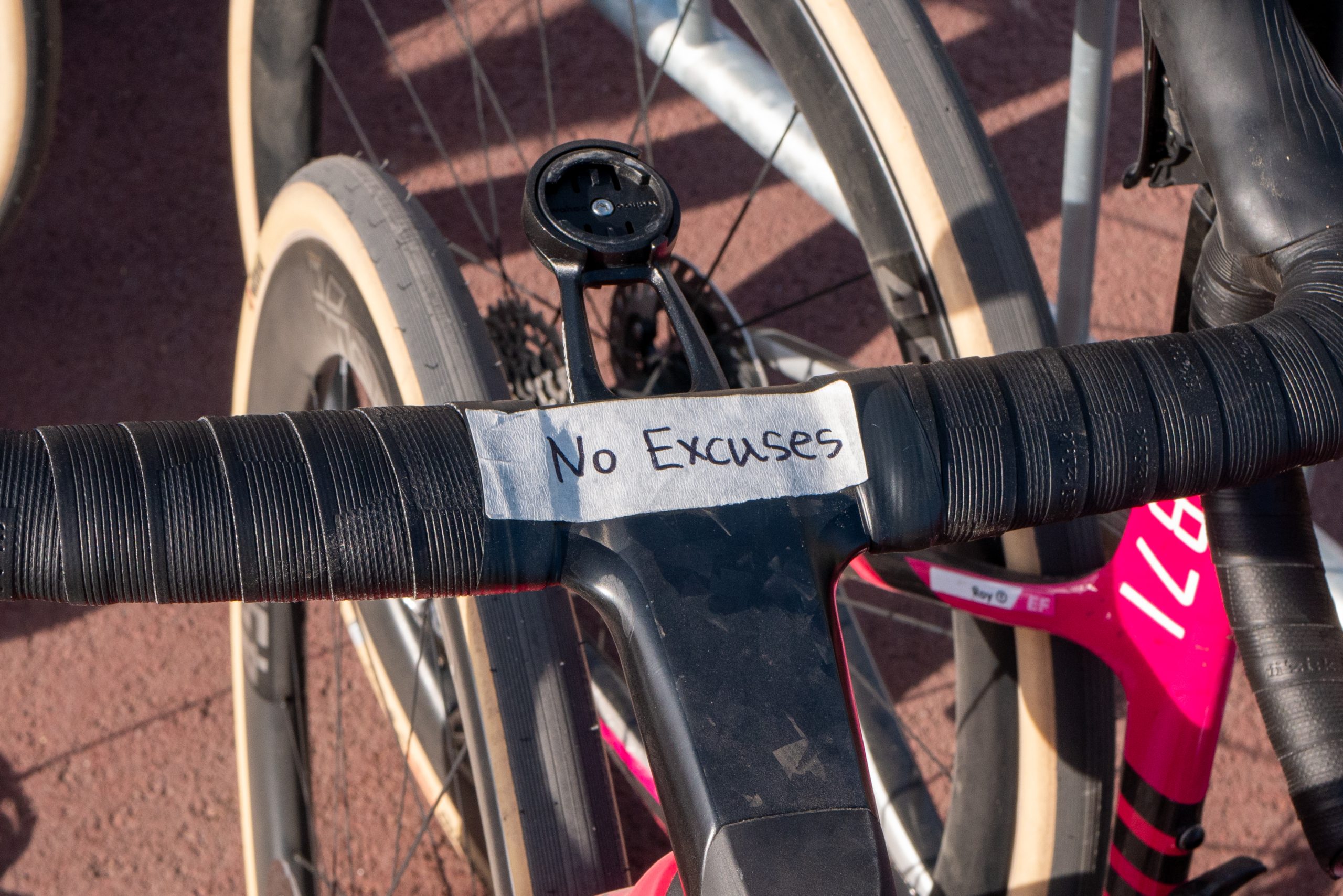
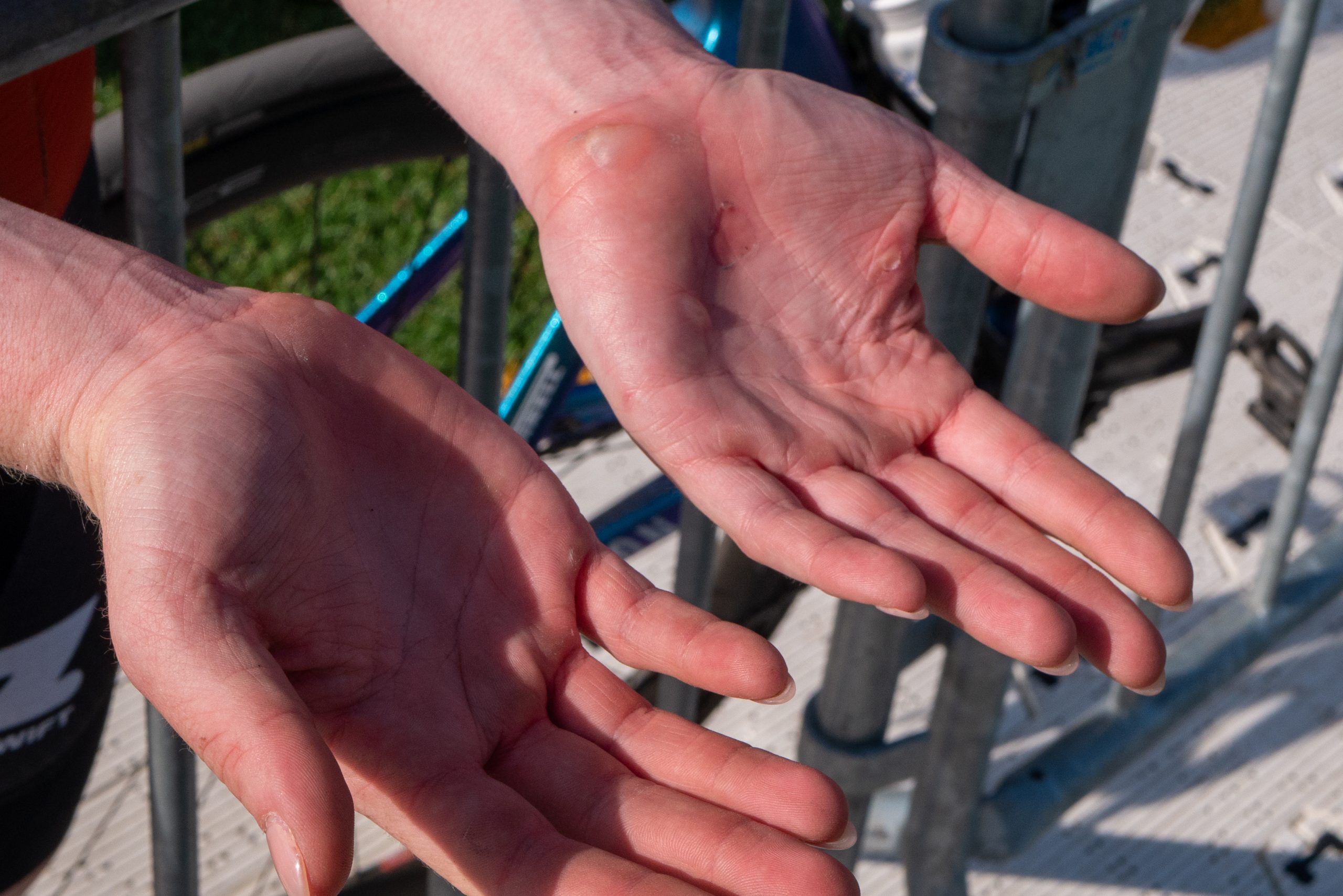
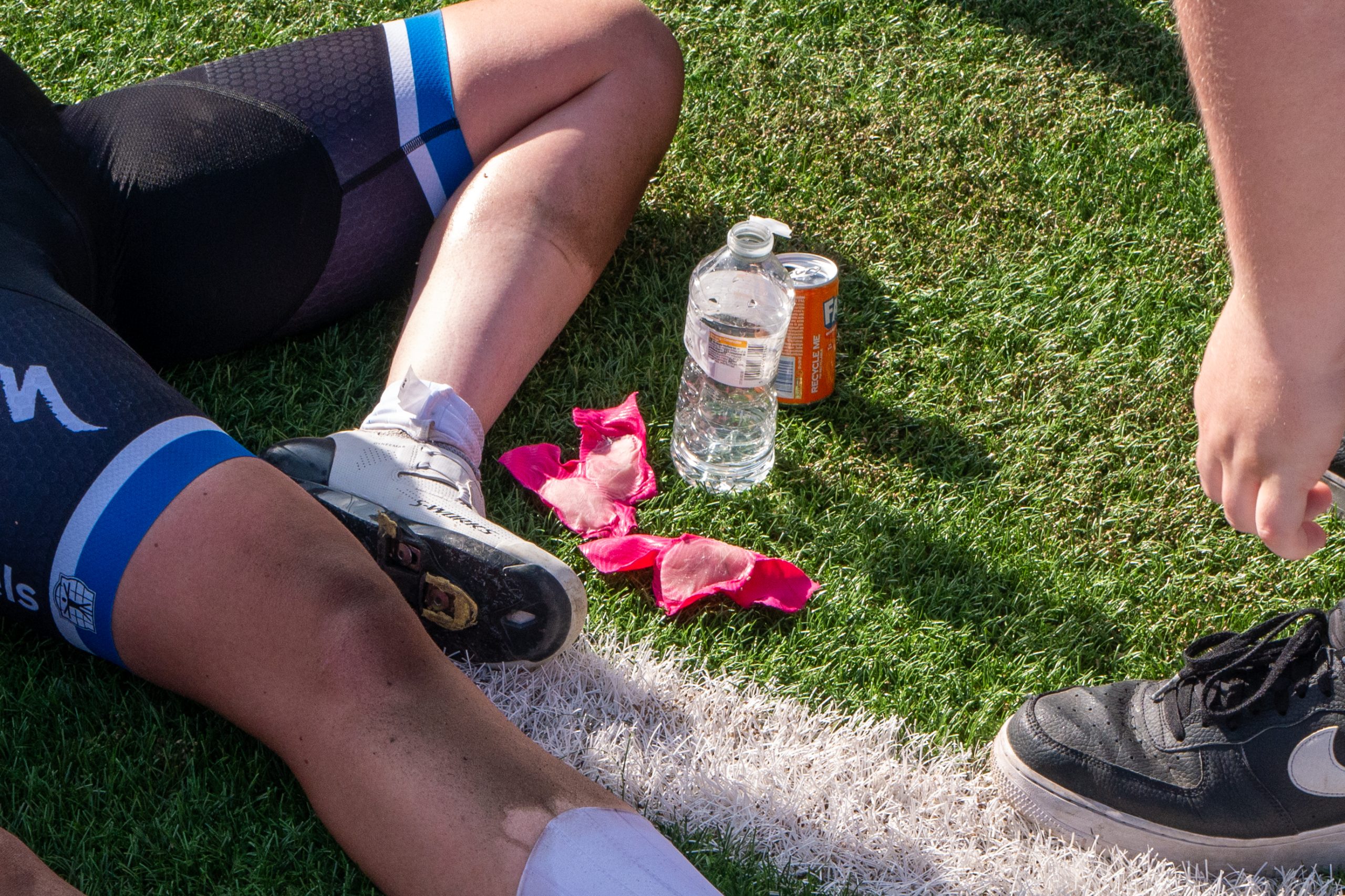
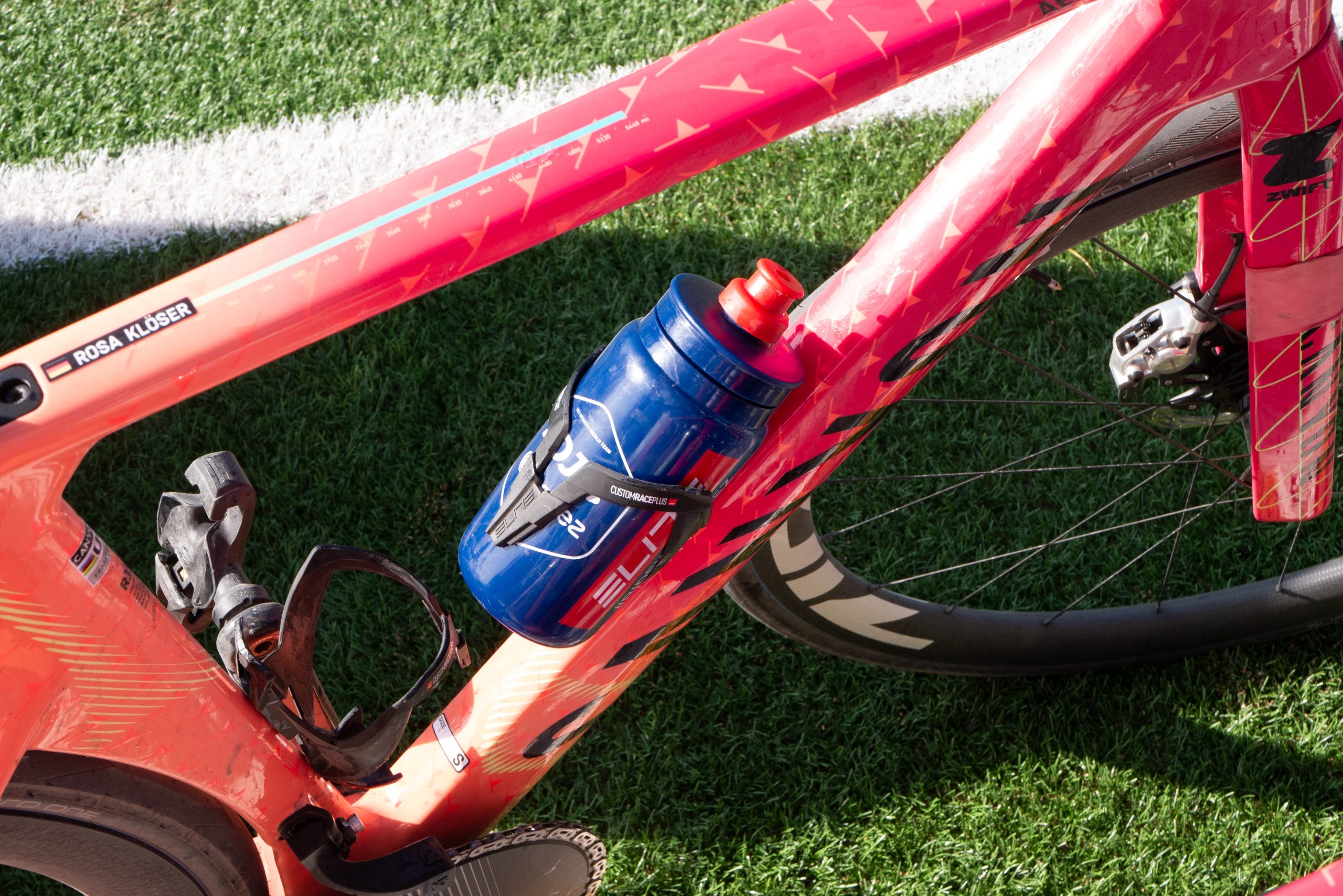
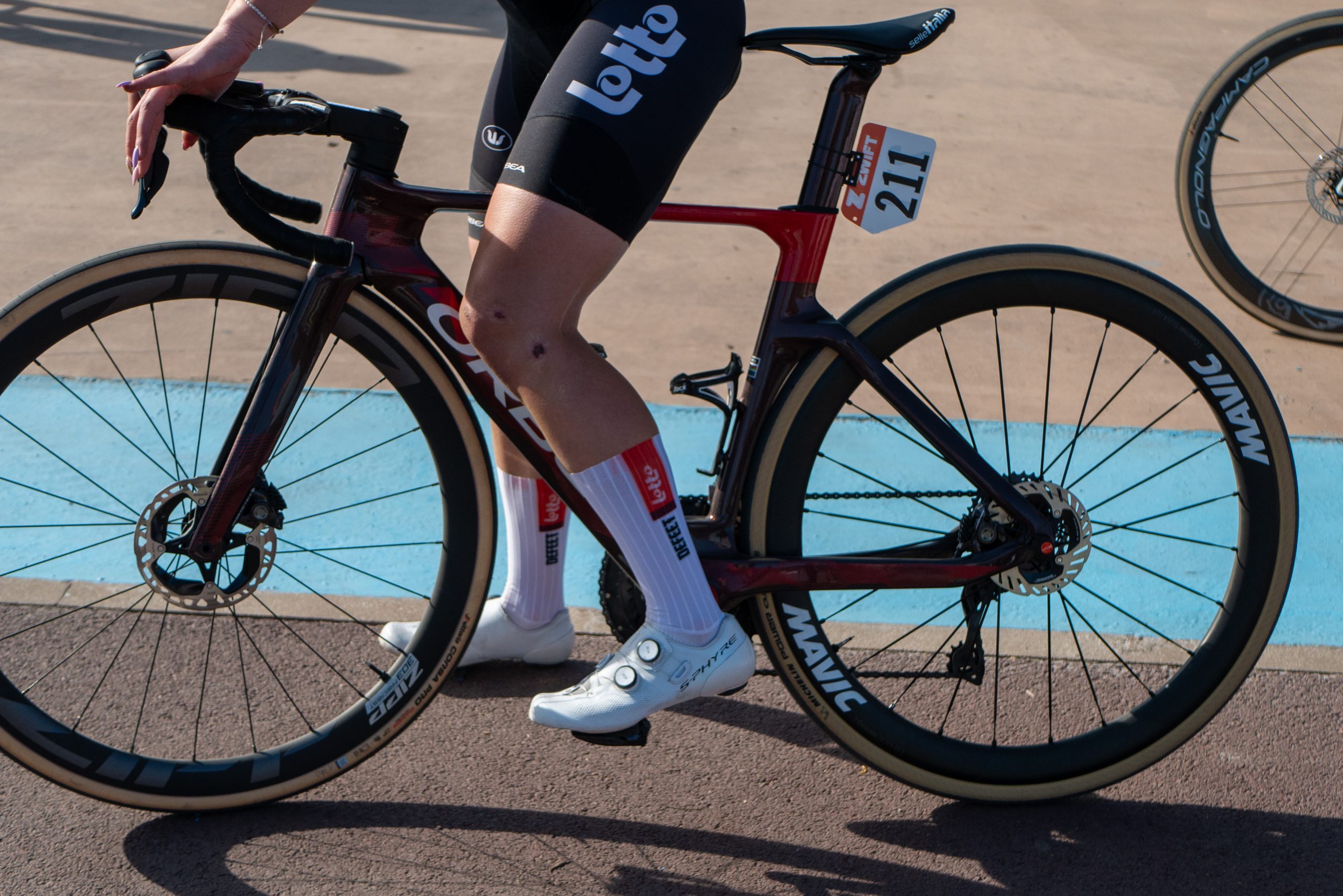
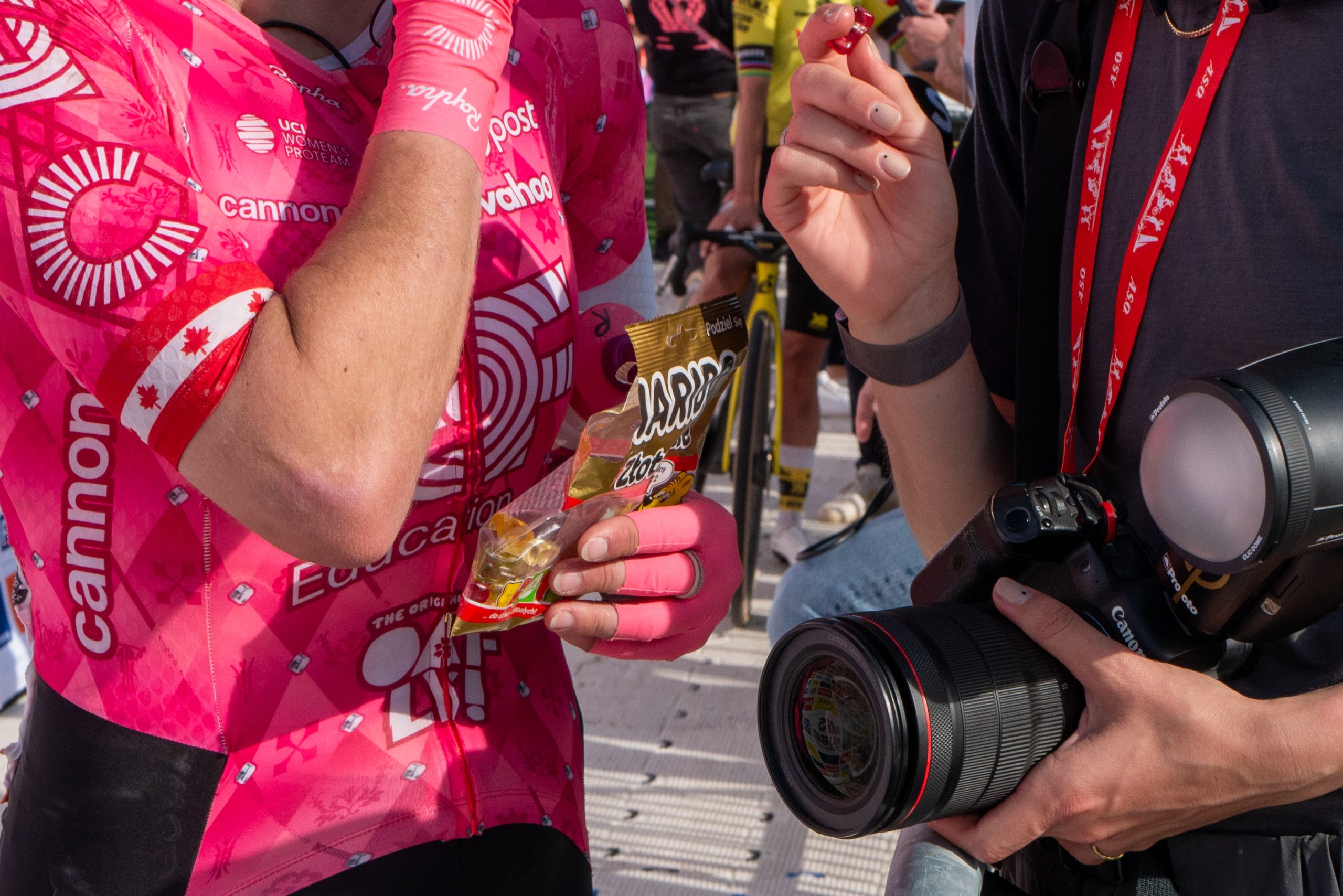
Visma Lease-a-Bike team mechanics have applied a layer of Vittoria Mastik (ie, tubular tyre glue) to the external rim-tyre interface to help hold the tyres in place in the event of a blowout. Given the Mastik is clear, it’s hard to spot. Thankfully, Roubaix dust sticks to everything. Liam Cahill / Our Media The Roubaix course snakes its way through very exposed farmland. This Hammerhead Karoo head unit is set up to show wind direction. Knowing where gusts are coming from without waiting to be hit by them might save you some precious energy. Liam Cahill / Our Media The max speed on this Wahoo suggests this rider finished their day in the team car. Liam Cahill / Our Media Riders often keep details of the cobble sectors and feed zones within easy sight on their stems. Chloe Dygert had colour-coded notes to help identify upcoming critical points. From left to right, her notes show the distance covered when the sector begins, the sector length, and the star rating. Liam Cahill / Our Media This UAE AQD rider even had small icons to show which sectors would have wheels and bottles at the end. Liam Cahill / Our Media Other efforts were a little more basic. But provided the rider understands what is written, that’s all that matters. Liam Cahill / Our Media ‘FI’ means finish, but the rest might as well be double Dutch to us. Liam Cahill / Our Media If in doubt, a motivational message is the way to go. Paris-Roubaix is, after all, about simply getting to the finish for most of the riders. Liam Cahill / Our Media Given EF Education-Oatly came away with an excellent 2nd place finish, this simple message seems to have been very effective. Liam Cahill / Our Media Racing over the cobbles is like holding onto a very aggressive jackhammer while riding at maximum effort. Flora Perkins gave us a far too graphic description of feeling her blisters popping on the cobbles. Funnily enough, riders with these hands seem especially keen on trying 40mm road tyres. Liam Cahill / Our Media Riders will try to avoid ending their day with countless blisters. This VolkerWessels rider opted for a whole lot of tape, and it seemed to do the trick. Liam Cahill / Our Media This Orbea Orca Aero takes tyre clearance to the limit. Orbea states a maximum tyre size of 30mm for this frame, but this rider had fitted 32mm Vittoria Corsa Pros. Liam Cahill / Our Media Chloe Dygert was rolling on Zipp’s as-yet unreleased wheels with some electrical tape hiding what we assume is a new name. More difficult to hide is a new TyreWiz, first spotted by BikeRadar at Omloop. Liam Cahill / Our Media Dygert and the Canyon Sram team opted for 34mm Schwalbe Pro One tyres. They looked as though they ballooned even wider on those new rims, suggesting a very wide internal profile. Liam Cahill / Our Media Riders will grab whatever bottle they can wrap their battered hands around at Roubaix. Rosa Kloser has borrowed this one from FDJ Suez. Liam Cahill / Our Media These mismatched wheels suggest this Lotto rider has visited the Mavic neutral service car. Liam Cahill / Our Media Finally, 2023 winner – and 5th place finisher today – Alison Jackson shared her post-race snacks with a photographer. We’re not on first-name terms yet, so there was no Haribo for BikeRadar. Liam Cahill / Our Media
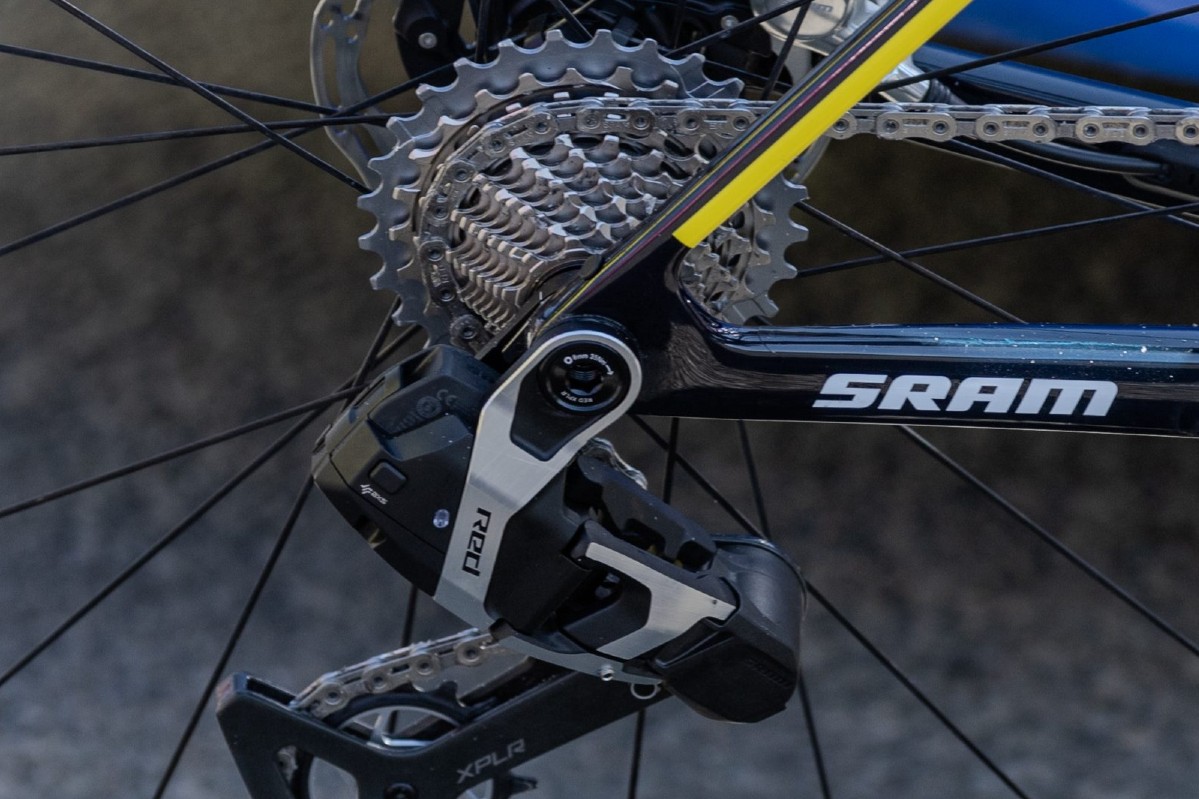
The Lidl-Trek team has been spotted using a specially modified SRAM Red XPLR gravel rear derailleur at the start of Paris-Roubaix Femmes.
Modified as a one-off solution at the team’s request, the 13-speed, 1x-specific derailleur is being used with SRAM’s Red 10-33t road cassette, a 12-speed model.
Speaking to BikeRadar outside the team bus before the start, SRAM’s Alvise Rizzi revealed the reason for the modified 1x drivetrain.
“The SRAM RED XPLR AXS rear derailleur is purpose-built for gravel and rough road riding, and Lidl-Trek saw an opportunity to leverage its full-mount design and superior impact resistance for the unique demands of Paris-Roubaix.
“The course is known for its brutal cobbles, along with dust, dirt and potentially mud – conditions that mirror what XPLR was designed to handle.
“Because Paris-Roubaix is nearly flat, the team wanted to pair the XPLR derailleur’s performance benefits with a tighter-range 12-speed road cassette instead of the standard XPLR cassette. To support this setup, we made a minor change to a spare part of the derailleur.”
Lidl-Trek’s Paris-Roubaix drivetrain combines a 12-speed SRAM Red road cassette with a 13-speed SRAM Red XPLR gravel rear derailleur Felix Smith / Our Media
Such a change is only possible because the team’s Trek Madone bikes use SRAM’s UDH dropout design, which allows Trek’s aero road bike to be used with SRAM’s gravel components.
We first saw this in action when Emma Norsgaard, and then Mads Pedersen, used gravel gearing for Omloop Het Nieuwsblad and Gent-Wevelgem, respectively. For this hilly Classics (including the Tour of Flanders), the team used the Red XPLR rear derailleur and cassette in its standard 13-speed configuration, paired with a road 1x crankset.
This gearing combination provided wide-ranging gearing at the rear, suitable for the cobbled bergs of Flanders, thanks to the 10-46t XPLR gravel cassette, while the road crankset still provided a race-worthy top gear.
For Paris-Roubaix, Lidl-Trek has evolved that setup with this hacked arrangement, to offer the apparent benefits of XPLR with a tight road cassette.
But while the change to make XPLR 12-speed and road-worthy seems simple enough, it doesn’t sound like the solution will be publicly available any time soon.
How did you get into cycling? I am a runner so I use cycling to cross-train. I did indoor cycling at gym first, then heard about Zwift from Strava athletes and it sounded interesting. I really invested in it when Covid hit and wanted to keep up my fitness. I worked throughout Covid as a health care worker, so any spare time I had had to be in isolation, and that’s where Zwifting came into play!
How many years have you been racing on Zwift? 2 years now
Are you part of a Virtual team? Yes, was headhunted by eSRT to join their D category women’s team. I thought it was a joke at first! Then thought what the heck let’s just do it! It could be fun! They are really supportive and when I joined it opened up a whole new world of women’s racing!
What do you love most about racing? The fact you race against other women around the world without leaving your home!
What is your favourite style of race (e.g. points, scratch, iTT, TTT, Chase, duathlon)? I love TTT – working and communicating with the team about tactics over Discord is always a thrill and also can be very entertaining! The Sunday Minis are also a great HIIT workout to improve endurance and sprint training.
What is your favourite Zwift women’s race series? Oh I absolutely love them all! My fave has to be the ICENI and Zwift Women’s Racing Series – competing against ladies with similar abilities to you, in different styles of racing formats, with both individual and Team GC competitions really keeps you coming back for more! I also did my first Tour de Boudicca with 3 races over 3 days. I thought I couldn’t last all 3 but I did – I surprised even myself!
What is your most memorable racing experience, inside or outside or BOTH? Most memorable was Zwift Womens Racing Series 2 on Mountain Mash – I sprinted out the gate wanting to get a lead on the rest of field (as I am a horrible climber) and got a third of the way up the climb before getting caught by the pack! I didn’t win, of course, but still managed to come 11th out of 28!
What is your favourite food to eat post race? I’m never hungry post race, but I do drink a large glass of chocolate milk!
What advice would you give to a woman entering her first Zwift race? Give it a go! We’ve all been where you are, you are never alone in women’s racing, they are all very supportive!
Any upcoming race you are looking forward to? ZRL and ICENI!
Where can people follow your racing adventures? On Zwift Companion App!
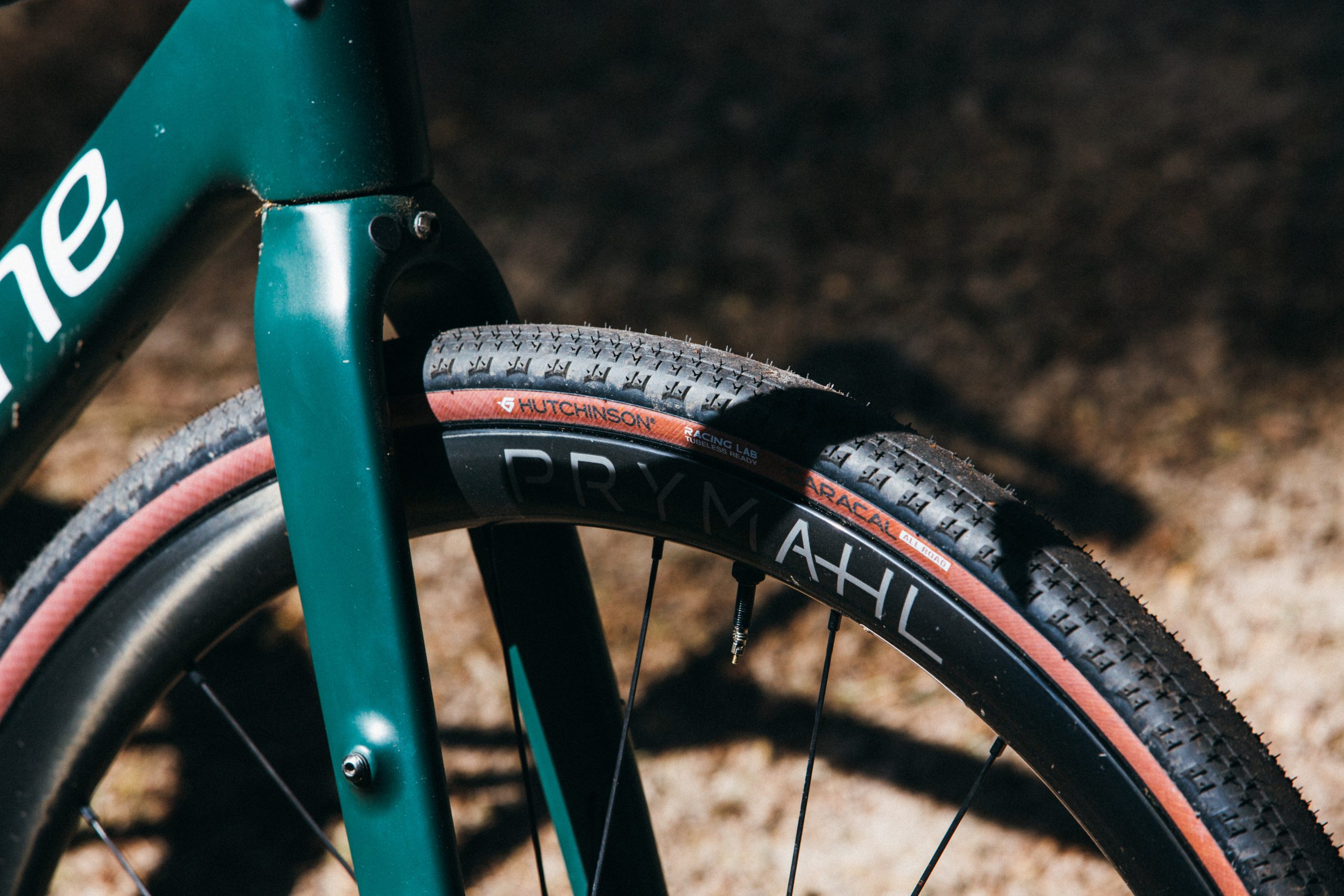
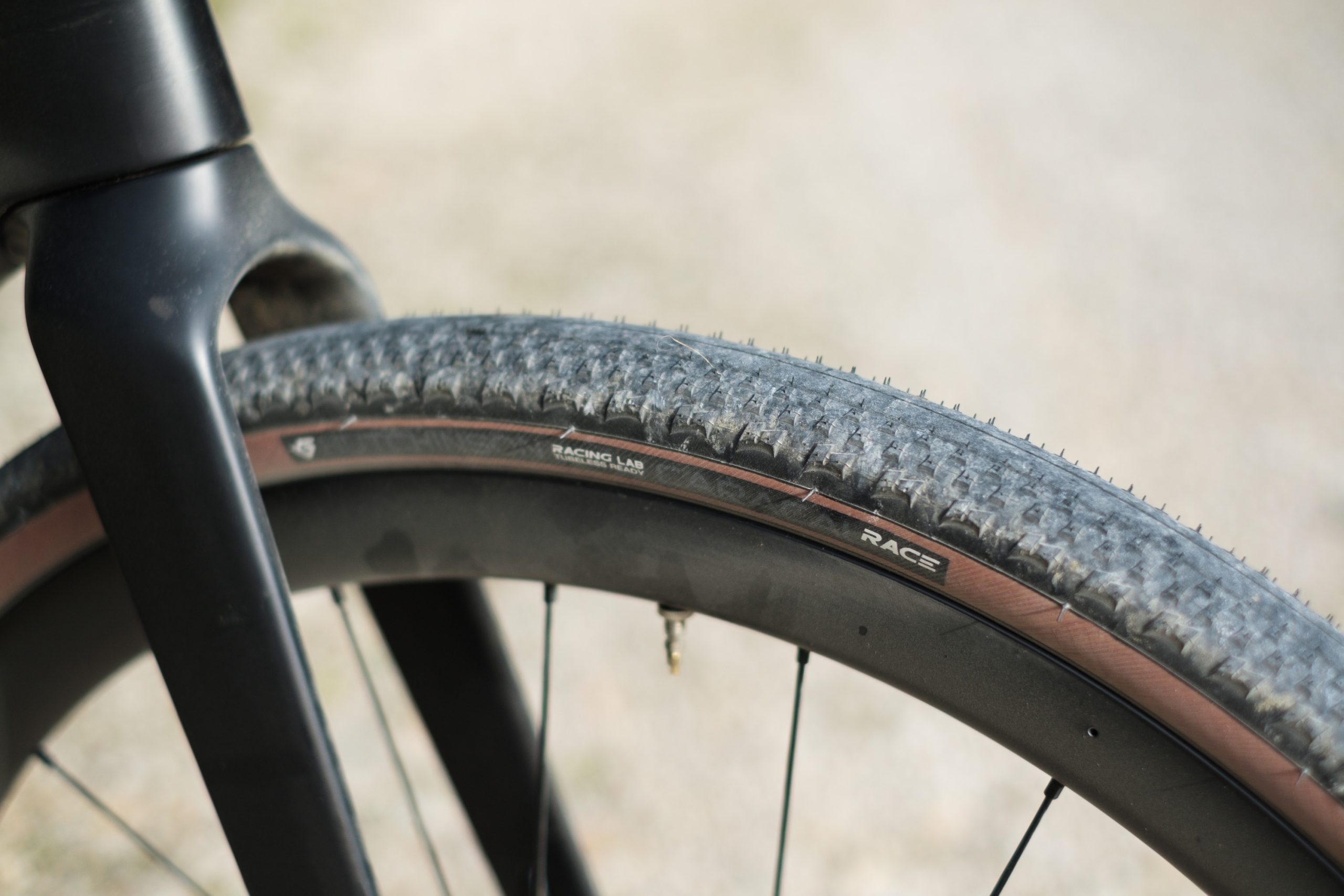
Hutchinson has revealed the Caracal All Road, a revised version of its gravel race tyre designed specifically for all-road bikes.
The Caracal All Road takes the template of Hutchinson’s existing Caracal Race gravel tyre, with Hutchinson’s 127 TPI SwiftEasy casing and a semi-slick tread, and adds a puncture protection strip underneath the tread.
The size of the tyre is reduced to 700x35c (down from 700x40c), to fit a wider range of road and all-road bikes.
Hutchinson describes the Caracal All Road as a “fit-and-forget” option for bikes without big tyre clearances. Hutchinson
Given most gravel bike tyres have got consistently wider in recent years, it might seem an odd step for Hutchinson to add a smaller size to the Caracal line-up.
However, Hutchinson says the Caracal All Road is aimed at “gravel-curious roadies” rather than experienced gravel cyclists – riders who “want the freedom to play off-road when the trail calls” but don’t want to sacrifice performance on the road.
The Caracal All Road is, Hutchinson claims, “a fit-and-forget gravel tyre offering, meaning riders no longer have to choose between road and gravel”, or waste time with pre-ride tyre swaps.
The Caracal All Road is at home both on- and off-road, according to Hutchinson. Hutchinson
Continuing on this theme, Hutchinson says it made the decision to add a puncture protection belt in order to bolster the tyre’s durability.
The Caracal Race, after all, is one of the fastest gravel bike tyres available (according to independent testing by bicyclerollingresistance.com), but it isn’t the most durable available.
As with all racy tyres, it achieves its speed by giving up some reliability, with a reduced casing thickness and the lack of a dedicated puncture protection strip beneath the tread.
The Hutchinson Caracal All Road uses a premium rubber compound on the tread for fast rolling. Hutchinson
The rubber compound used in the tread remains Hutchinson’s premium Mach Tread 3.0, which was originally developed for Hutchinson’s fastest road bike tyres, such as the Blackbird Racing Lab TLR.
Available with black or tan sidewalls and manufactured in France, the Caracal All Road costs £49.99 / €54.99.
Wider gravel options
Hutchinson’s Caracal Race tyre will soon be available in a larger 45c option. Simon von Bromley / Our Media
Alongside the Caracal All Road, Hutchinson has also announced it is releasing 45c versions of its Caracal Race and Caracal gravel tyres.
Previously, both of these tyres were only available in a single, 700x40c size. With wider tyres all the rage in gravel racing, though, Hutchinson appears to be responding to that demand.
Hutchinson says the 700x45c Caracal tyre is on sale now, with the 45c Caracal Race available from “June 2025 onwards”.
Pricing for both models is the same as the 40c versions, at £54.99 / €59.99 per tyre for the Caracal Race and £49.99 / €54.99 for the Caracal.
As we enter the outdoor season, some of you may have noticed big performance differences between riding indoors and out. This week’s top video explains why you feel this way and shares solutions.
We’re also highlighting videos about a rider’s first race on Zwift, a review of the Zwift Ride, a review of the Caveworks Rivet, and an analysis of an elite Zwift race.
Your FTP is Wrong – Here’s Why!
If you’re struggling to hit the same numbers indoors and outdoors, this video is for you. In this video, Sarah from Everything is Photogenic breaks down why indoor and outdoor power is often so different.
My First Zwift Race was Brutal!
Lazy Fitness Man joins his first-ever Zwift race. Watch as he provides commentary over his unexpectedly hard race.
£1199! Is The Zwift Ride Really Worth That? – Long Term Review
Biker Campervan shares a long-term review of the Zwift Ride. After 4000km, how has it held up? Is it worth the price?
Caveworks Rivet In-Depth Review // Get This or The Zwift Ride?
After logging lots of miles on the Caveworks Rivet, Desfit provides an in-depth review of the indoor cycling frame and compares it to the Zwift Ride.
Getting Destroyed by a National Champion
Jeff from Norcal Cycling talks to e-sport national champion Brian Duffy Jr. as he analyzes his recent race in the elite Zwift Games.
Got a Great Zwift Video?
Share the link below and we may feature it in an upcoming post!
The women’s Paris-Roubaix rolls out on Saturday 12 April 2025, while the men’s race follows on Sunday 13 April 2025.
Paris-Roubaix is the culmination of the cobbled Classics before the one-day racing heads to smoother ground for the Amstel Gold race, La Flèche Wallonne and Liège-Bastogne-Liège.
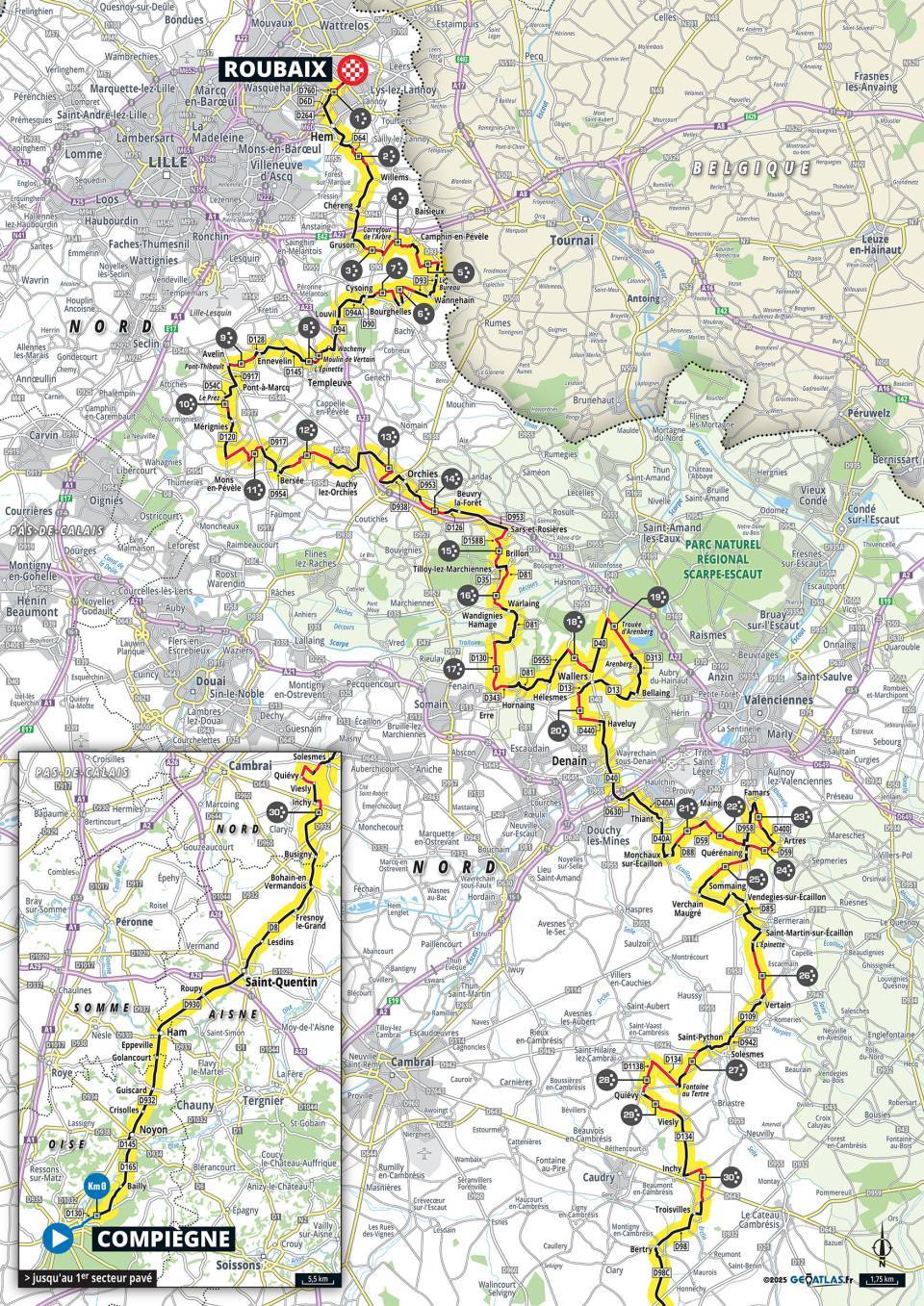
The men’s Paris-Roubaix is notorious for its cobbled secteurs – 30 of them this season, totalling 55.3km of hellish tooth-rattling riding throughout the 259.2km route.
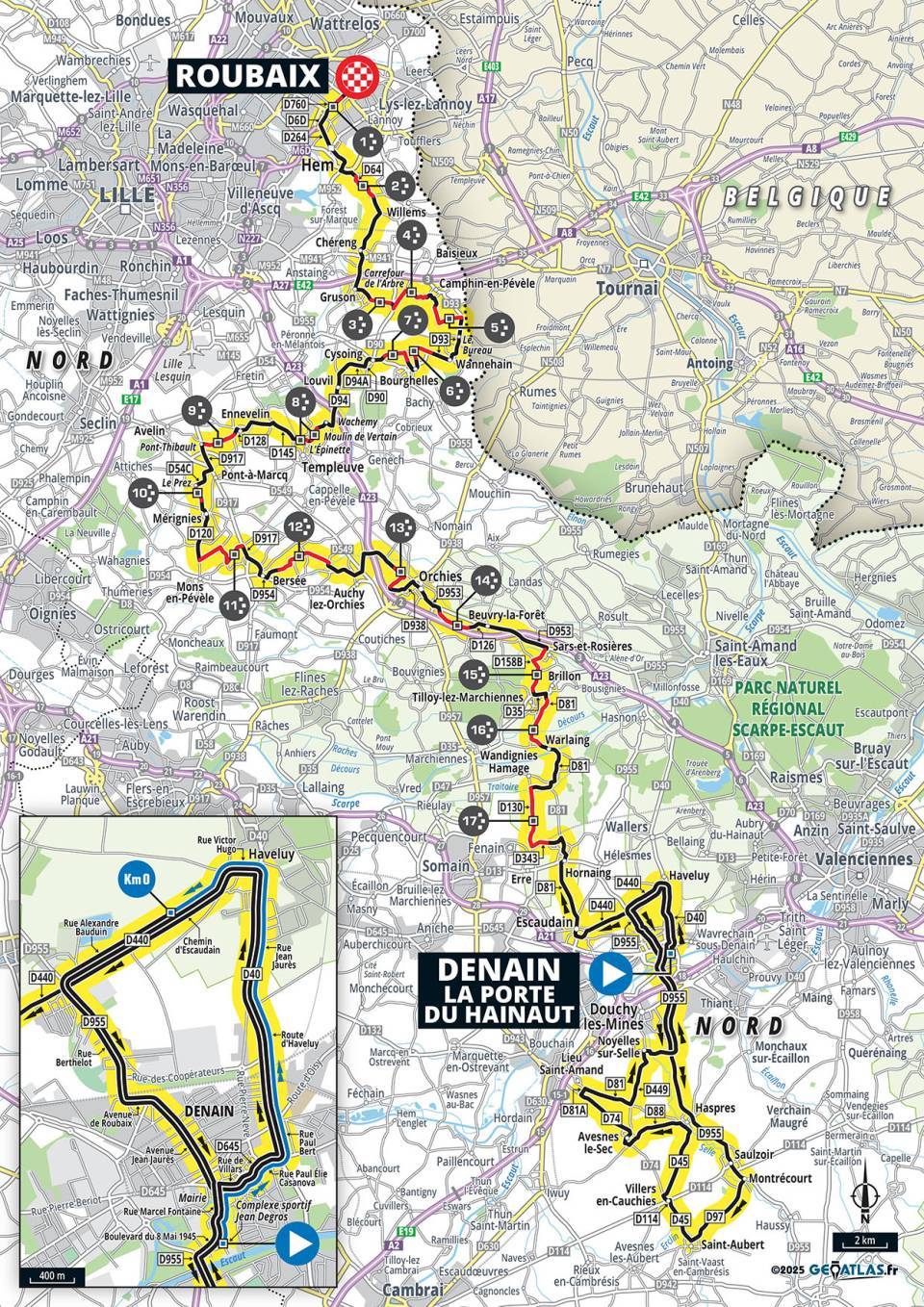
The women’s race starts in Denain, covers 148.5km and includes 17 cobbled secteurs totalling 29.2km.
When it’s dry, as it has been for most of the recent races, the riders arrive for the ritual lap of the velodrome in Roubaix covered in dust; wet weather, as in 2021 when the race was rescheduled to October, swaps that for mud. The women’s race this year is set for a scorcher – highs of 24ºC and dry – while the men’s will be a touch cooler, with light rain predicted in the morning.
Paris-Roubaix 2025 race schedules
The women’s route heads south before turning back north to Roubaix.
The women’s race starts at 1pm CEST on Saturday 12 April, with the first cobbles secteur scheduled from 2.46pm CEST.
The scheduled earliest finish is 4.47pm CEST.
The men’s route starts in Compiègne, northeast of Paris.
The men’s race starts at 11.10am CEST on Sunday 13 April and is scheduled to hit the first secteur at around 1.30pm CEST. The scheduled earliest finish time is 5.03pm CEST.
How can I watch Paris-Roubaix 2025 live in the UK?
Coverage of the women’s race (Saturday 12 April) is from 1.15pm BST to 4.30pm BST on TNT Sports 4. The men’s race (Sunday 13 April) starts at 10am BST (Sunday 13 April) on TNT Sports 1 and runs until 4.45pm BST. TNT Sports is available via the Discovery+ app, EE TV, Sky and Virgin Media.
How else can I watch the 2025 Paris-Roubaix when I’m outside of the UK?
A Virtual Private Network (VPN) is software that enables you to change your device’s IP address, making it appear as though you’re accessing the internet from another country.
As long as you adhere to your broadcaster’s terms and conditions, a VPN enables you to unblock your usual streaming services, no matter your location. Additionally, a VPN can improve playback speeds and significantly enhance your overall internet security.
There are many VPN options available, but we recommend NordVPN as the best choice. It offers strong streaming capabilities, robust security features, and excellent value for money.
At BikeRadar (published by Our Media Limited), we review VPN services to help you access online content and services securely while you’re on the go. This includes activities such as streaming your favourite TV shows, live web content or using apps from different countries (provided it’s okay with the service provider’s terms and conditions). It’s important to note: BikeRadar does not endorse or support the use of VPN services for illegal or malicious activities, such as accessing paid-for pirated content. Please ensure you enjoy online content responsibly.
How can I watch Paris-Roubaix 2025 live in the USA and Canada?
Both races will be hosted in the USA by NBC and its paid-for streaming service, Peacock. The women’s race begins at 8.40am ET (12 April) and the men’s 5.05am ET, with CNBC network coverage of the latter from 10am-12pm ET.
Subscriptions cost $7.99 a month, or $79.99 a year for a basic plan, rising to $13.99 a month or $139.99 a year for an ad-free plan.
In Canada, racing is available on FloBikes, with a subscription costing CAN$150 for 12 months.
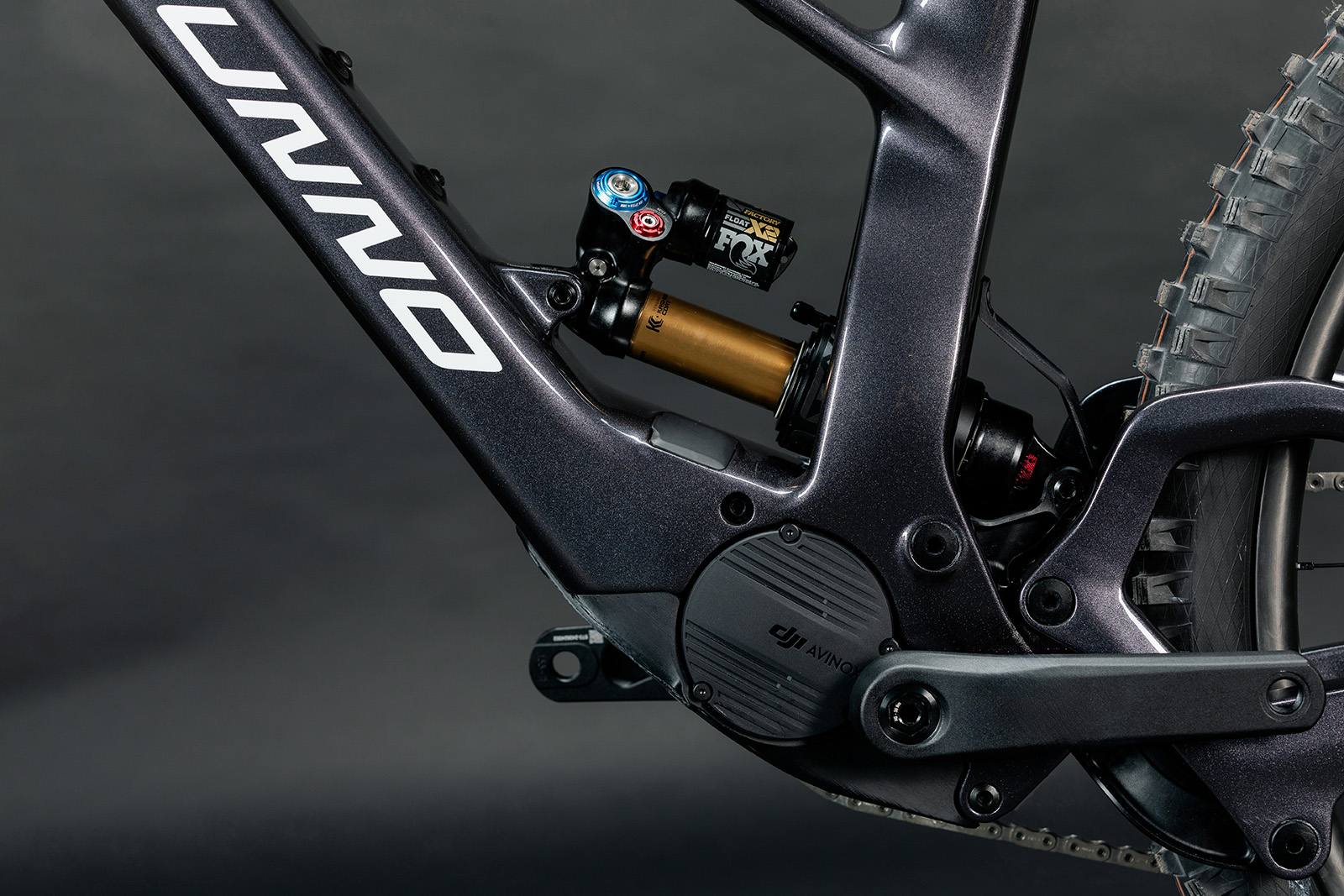
Unno’s updated Mith eMTB is one of the first bikes to use the impressive DJI Avinox drive unit.
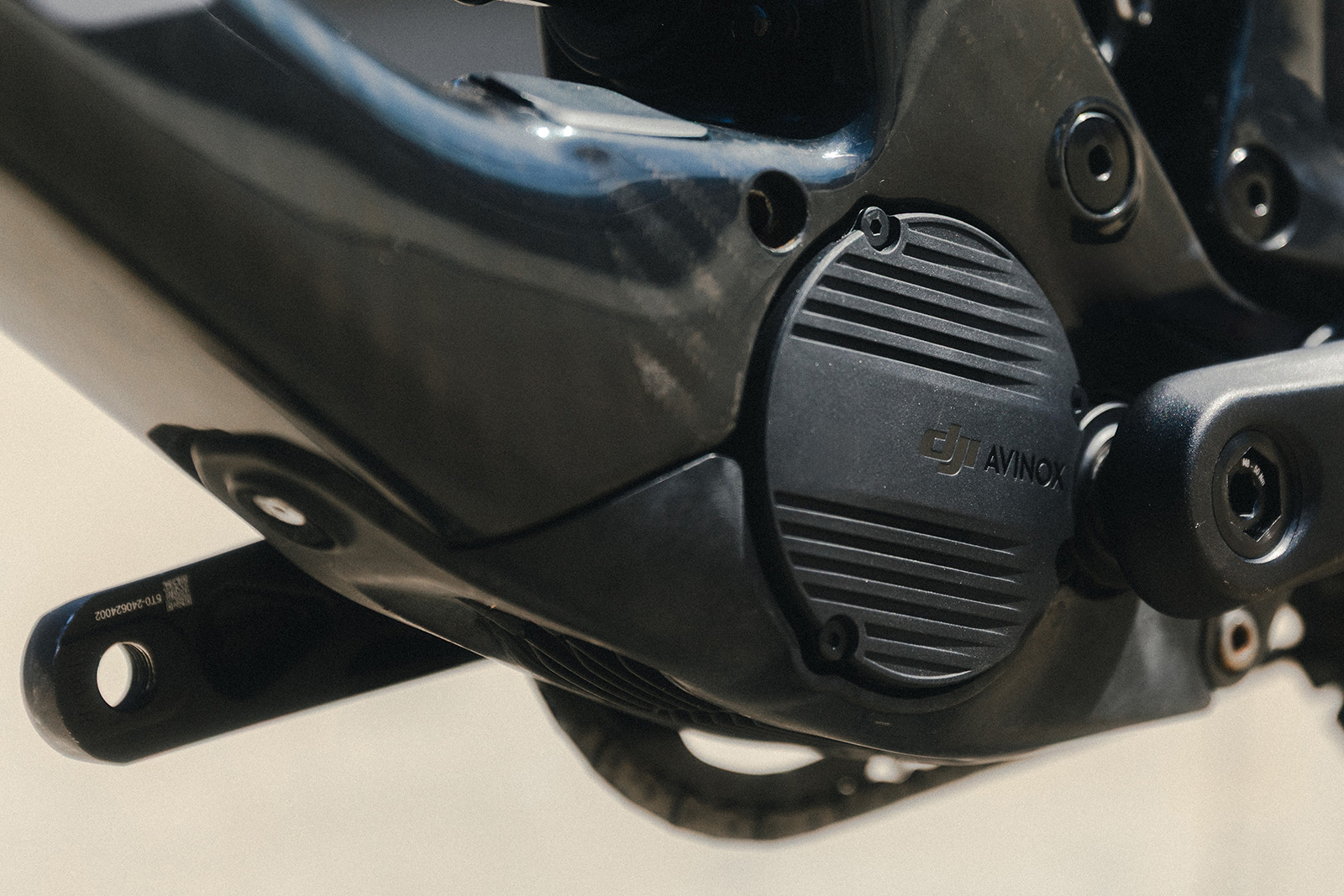
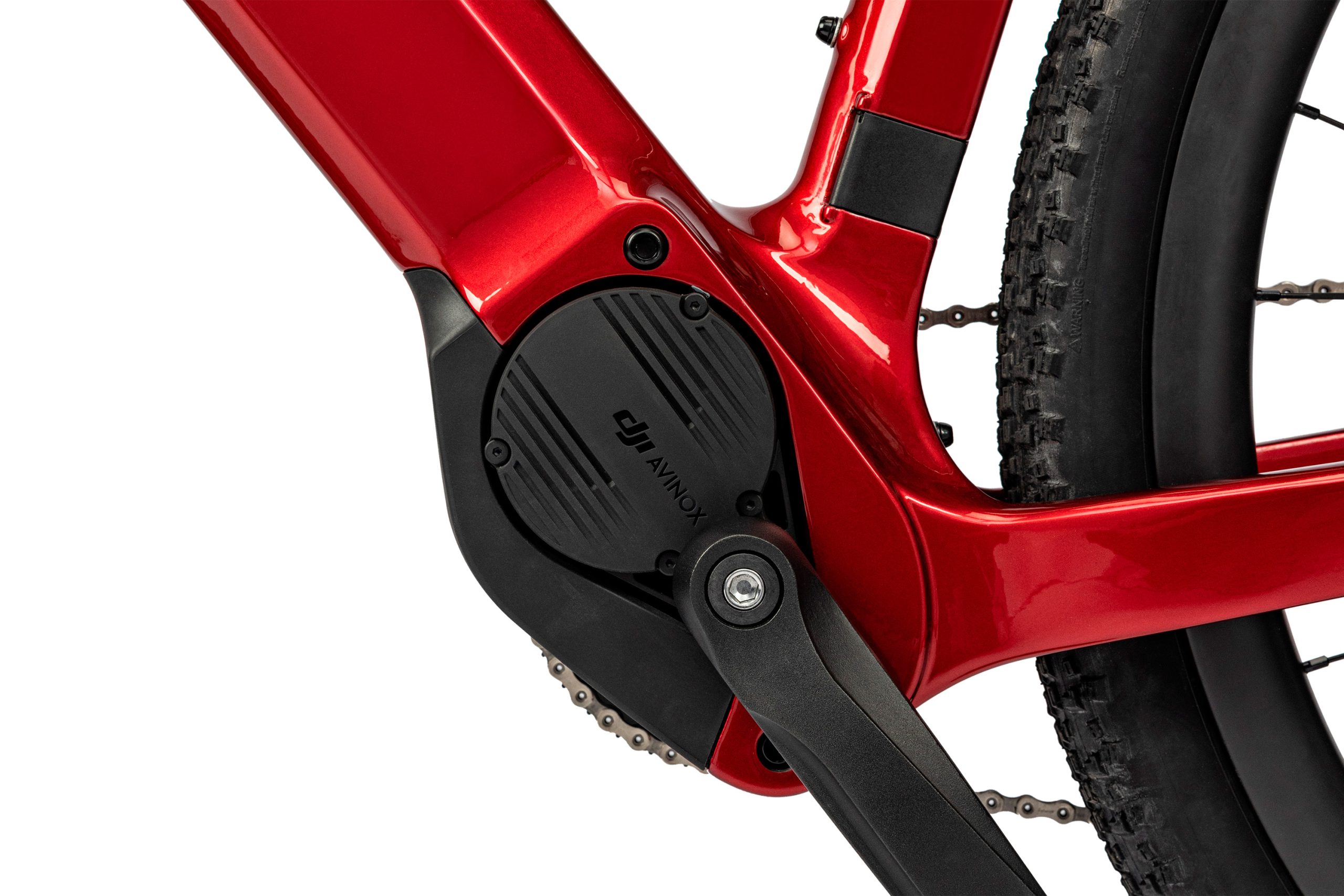
The motor in question can deliver a whopping 105Nm of torque and 850 watts of peak power as standard, but flick it into the short-burst Boost mode, and there’s 120Nm and 1,000 watts on tap.
DJI’s Avionox drive unit has masses of torque and loads of power. UNNO
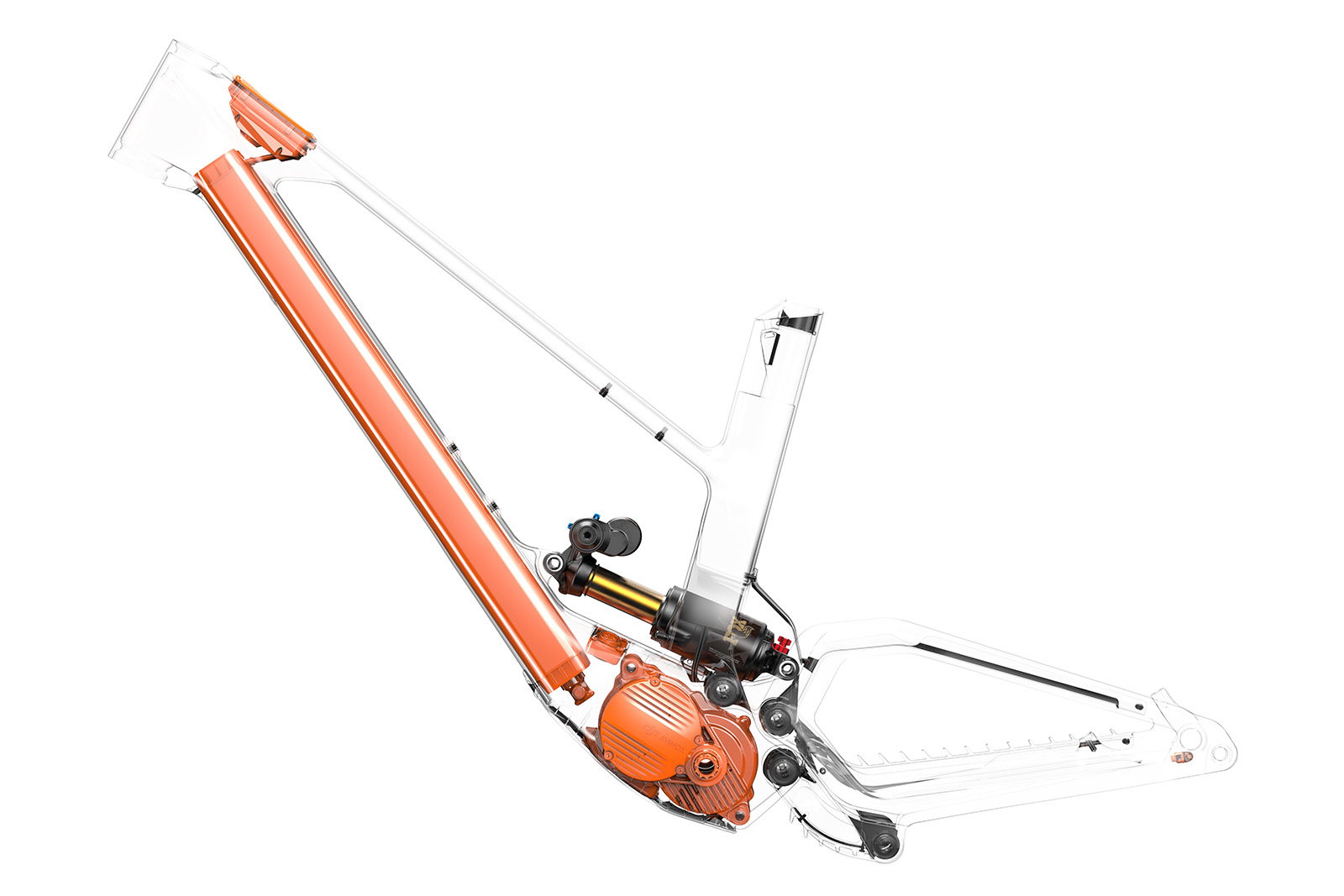
Powering this is an 800Wh battery encased within the sleek carbon frame.
Its slender tube shapes hide the fact that it’s an eMTB, let alone the fact that it’ll be one of the most powerful on the trails.
Despite the cheapest bike in the range costing just over £8,000, I still think this beast of a bike will be in high demand.
New motor, more power and lower weight
Unno will be one of the first bike brands to take on the DJI motor, which is one of the most sensitive, responsive drive units available. UNNO
While the previous-generation Mith was built around the Bosch Performance Line CX motor, the new bike is one of the first to use the DJI Avinox drive unit.
This motor offers Eco, Trail, Auto and Turbo modes, along with the more powerful Boost setting.
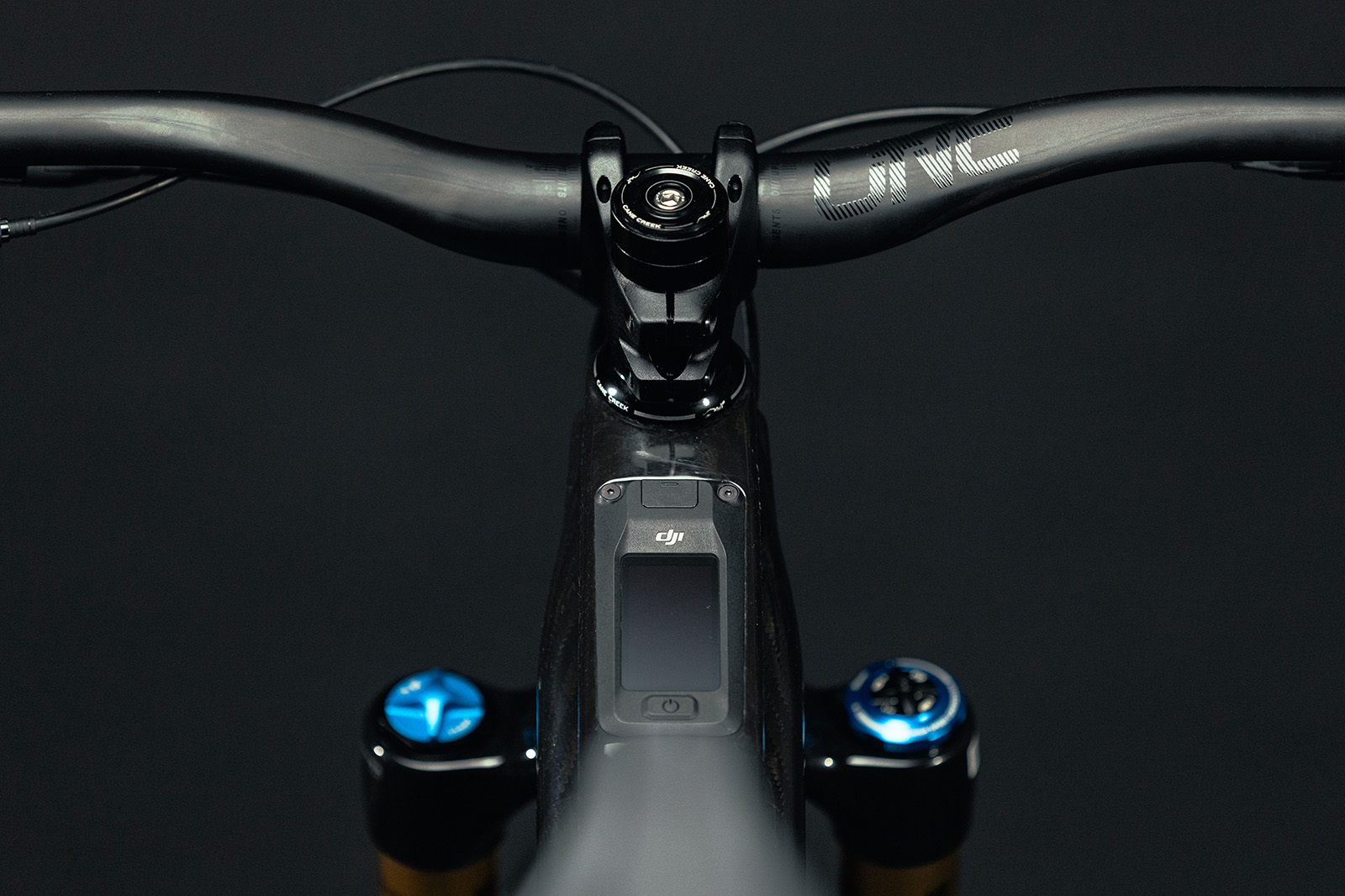
The fully integrated touchscreen helps to make the DJI system one of the slickest on the market. UNNO
From a design point of view, though, it’s the compact size and low 2.52kg weight that open up possibilities for the engineers.
Powering the Avinox motor as standard is the 800Wh battery, although there is a 600Wh option if you’re looking to bring the overall weight down a bit.
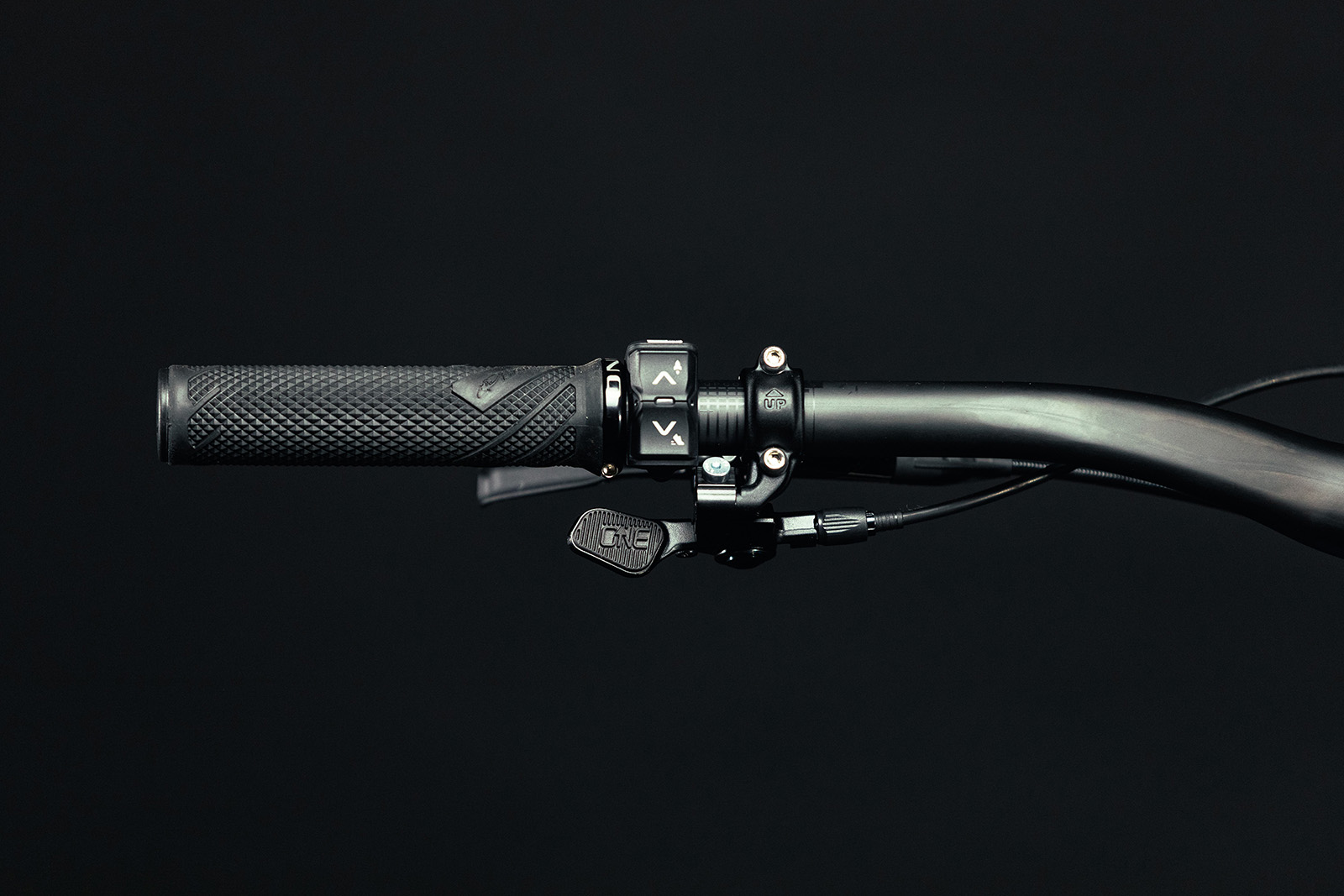
Two wireless bar-mounted controllers enable riders to alter motor modes and change the display on the integrated screen. UNNO
In addition to the motor and battery technology, Unno has also able to make use of the Avinox’s incredible integration, including the top-tube mounted touchscreen, wireless bar-mounted controllers and the Avinox app that enables you to customise just about everything you can think of.
Rider-friendly frame improvements
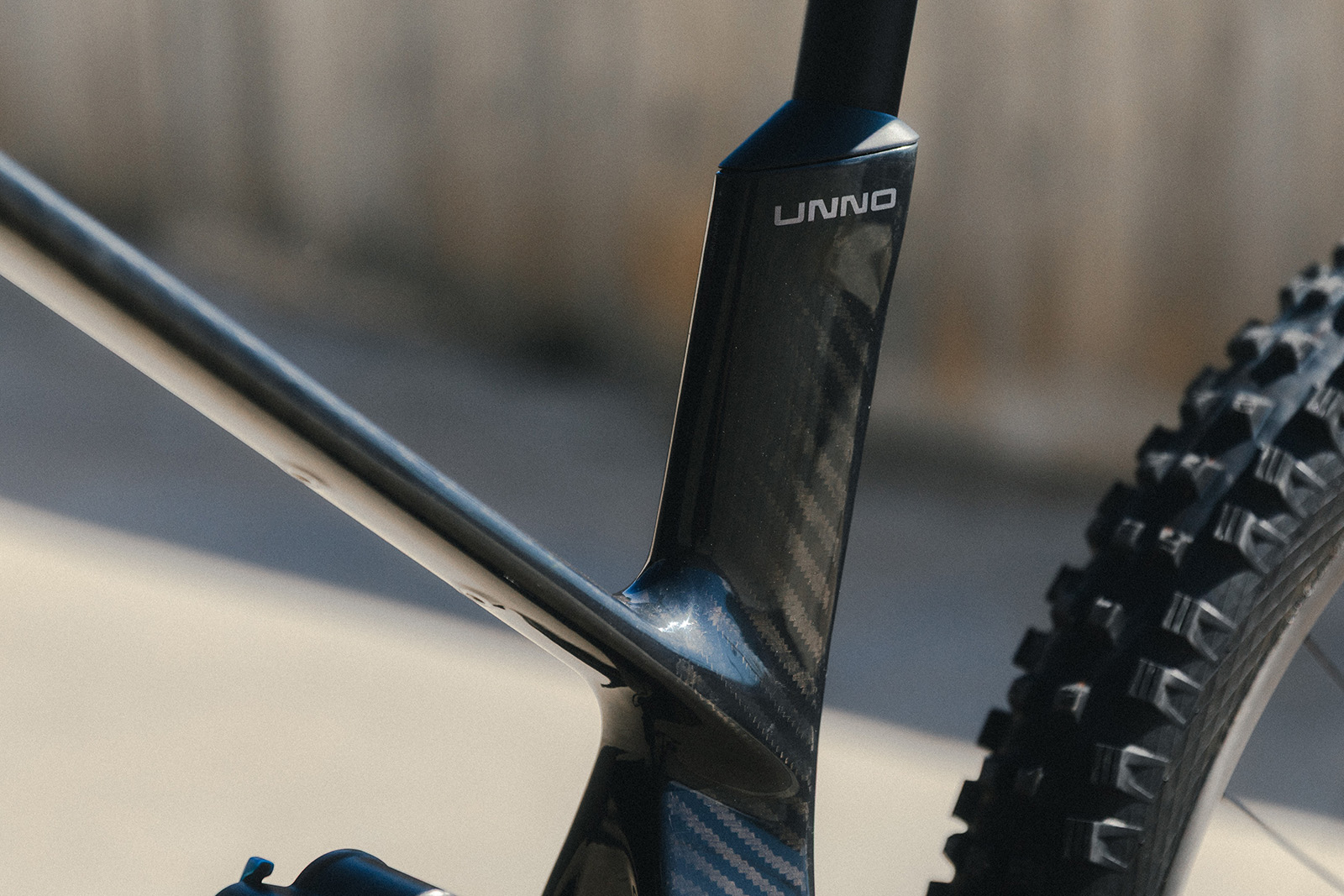
Shorter seat tubes help to deliver better seatpost insertion depths, enabling riders to use long-travel dropper posts. UNNO
Unno has made changes to the full-carbon frame, built around a mixed-wheel setup.
For a start, the brand has ditched the headset-routed cables in a bid to keep things simple – and keep riders happy.
The frames are lined with cable guides to make the job of swapping hoses easier, too.
On top of that, the new rear-shock position should make setup quicker, with better access to the damper and all its adjustments.
A change of shock position gives better access, which should improve setup. UNNO
Shorter seat tubes, which now range from 400-440mm across the three sizes, have been shortened to allow for longer-travel dropper posts across all sizes.
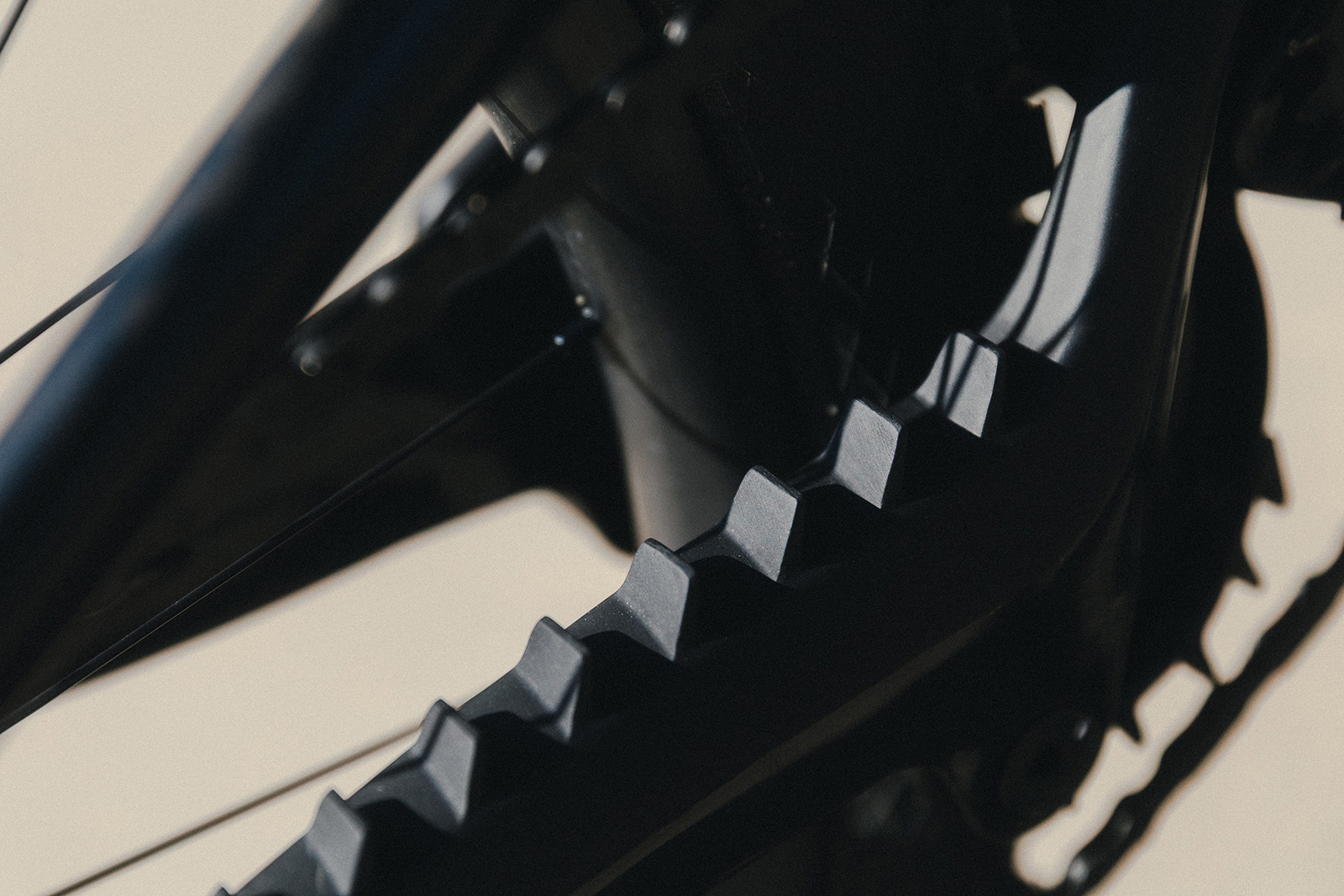
Other improvements include better chainstay and lower-link protection, along with a rubber-coated (internally) chain guide to help keep the Mith silent while you ride.
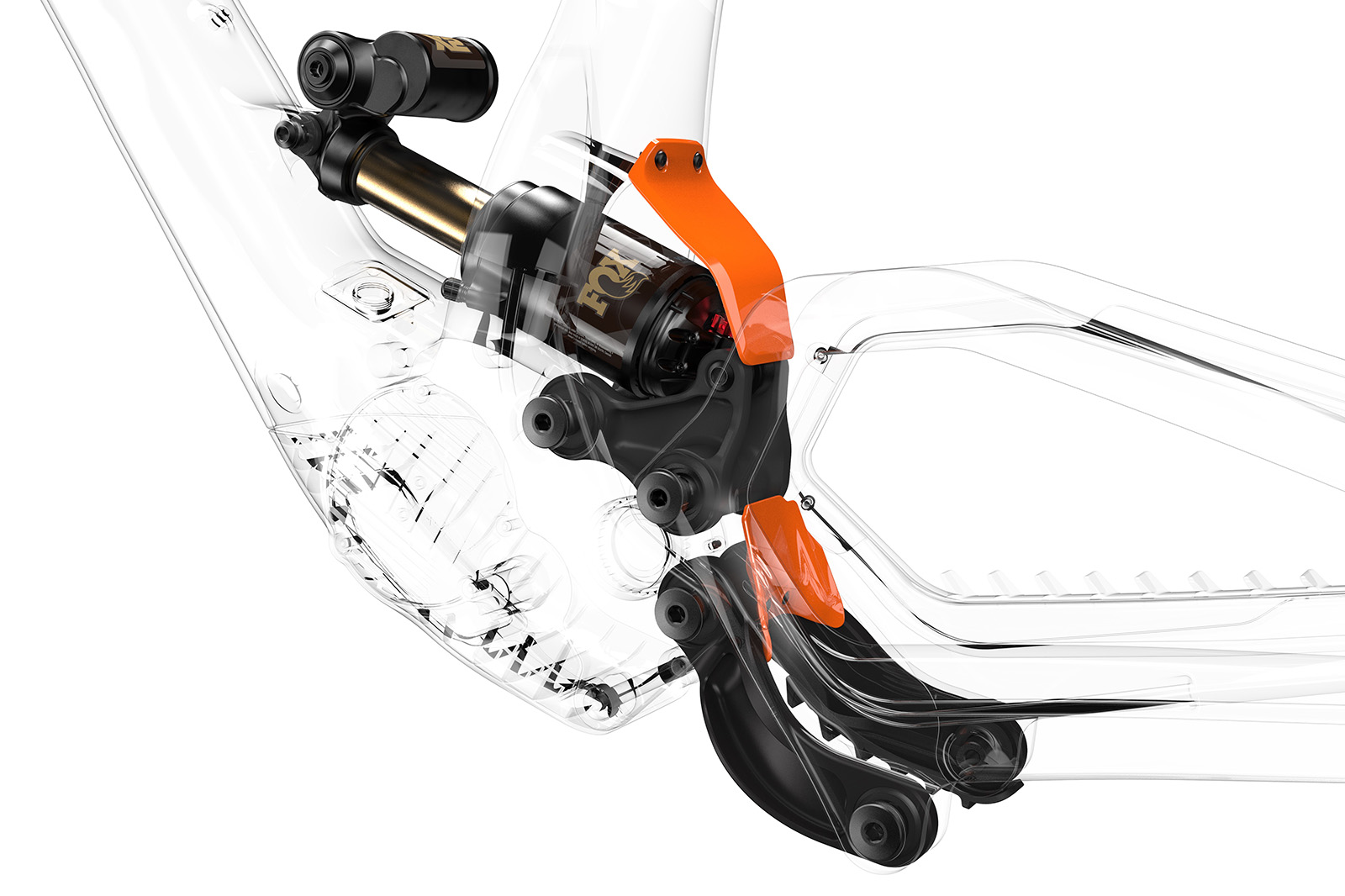
This cutaway image shows the Mith’s integrated fenders. UNNO
The linkage bearings are now bigger and said to be better sealed, while there are integrated fenders to protect the shock and links from rear-wheel spray.
Finally, there’s room for a 750ml bottle within the front triangle.
All frames get a lifetime warranty, too.
Refined rear-wheel travel
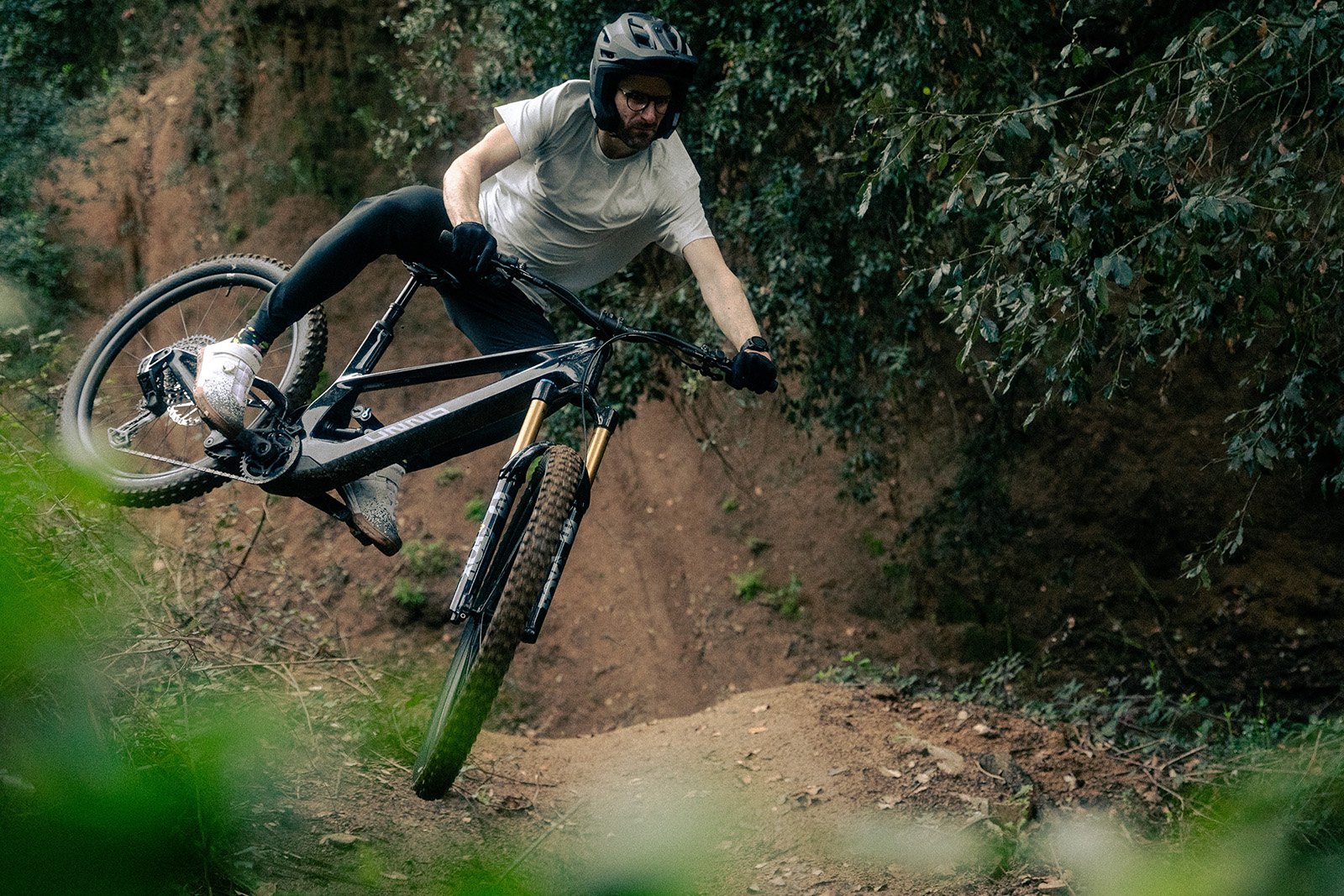
At just over 21kg, there should be no issues with chucking the Mith around in the air or on the trail. UNNO
The 160mm of rear-wheel travel is controlled using Unno’s virtual-pivot system.
This is configured to create an extremely supple first 30 per cent of the travel before more support kicks in through the middle of the travel, hitting a controlled ramp-up at the end of the stroke.
Unno suggests two sag settings, depending on what you’re riding. You can set the shock up with 30 per cent sag for the ‘standard’ geometry setup, or 35 per cent sag in the race setup, which Unno says is ideal on steeper trails.
Anti-squat values (the amount the bike resists bobbing while you pedal) remain above 100 per cent in both of these settings.
Three frame-size options
Better chainstay protection should help to keep the Mith nice and quiet. UNNO
Unno is offering the Mith in only three sizes, meaning there’s a chance not everyone will be catered for.
Reach figures range from 430-490mm.
The head angle is slacker than the previous iteration of the bike, now sitting at 63.5 degrees, and can be made slacker by 0.5 degrees if you opt to put the bike into the low setting.
We’ve emailed Unno to confirm this because there’s nothing about it in the press materials, apart from a single line regarding changes.
Seat tube angles are set at 77 degrees across all sizes, while the chainstay length remains 450mm across the board.
The Mith, now powered by the DJI Avinox motor, should be rapid on the climbs. UNNO
There are two build options available, both of which use the same carbon frame and DJI Avinox motor, 800Wh battery, Fox Factory-level suspension and short, 155mm e*thirteen cranks.
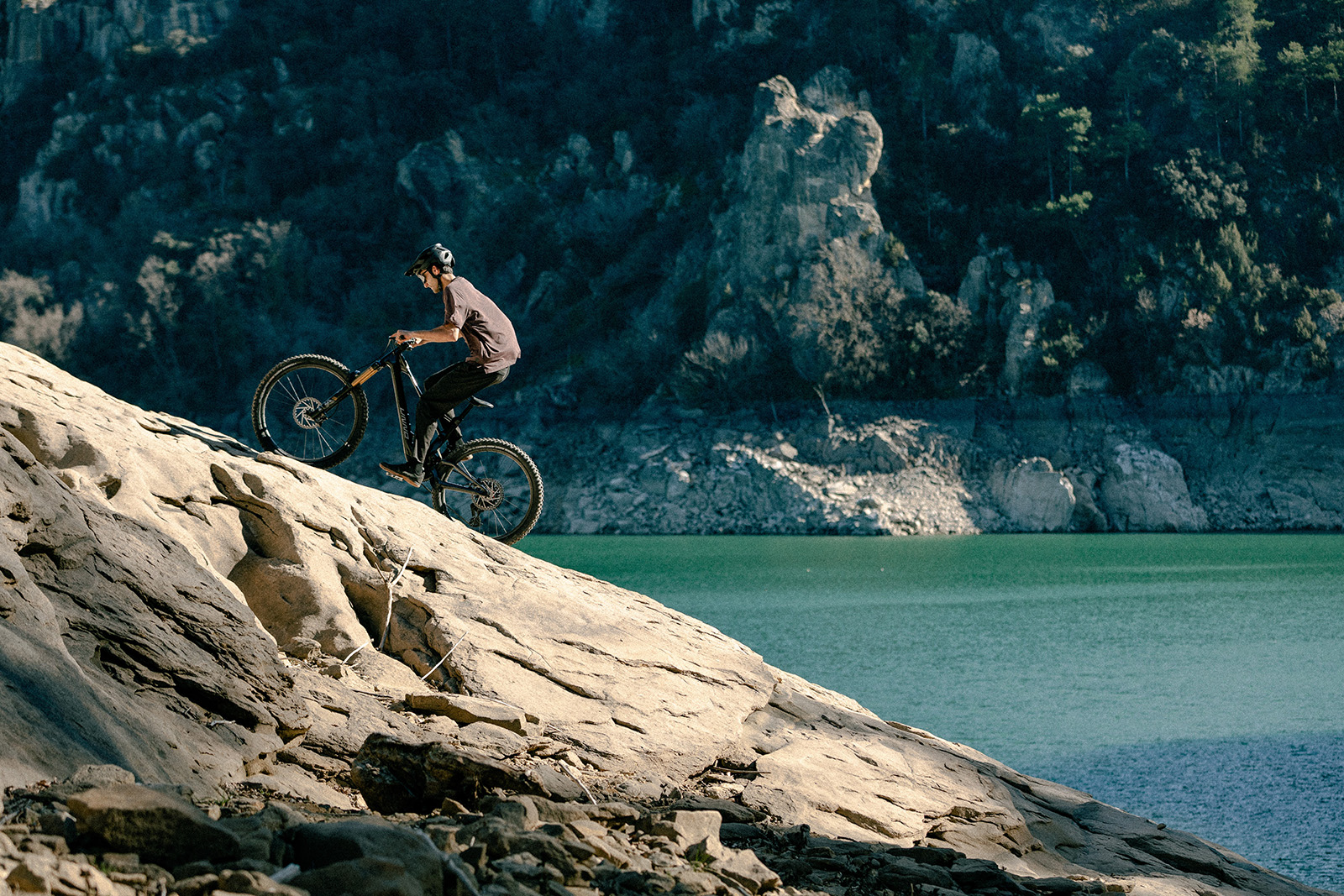
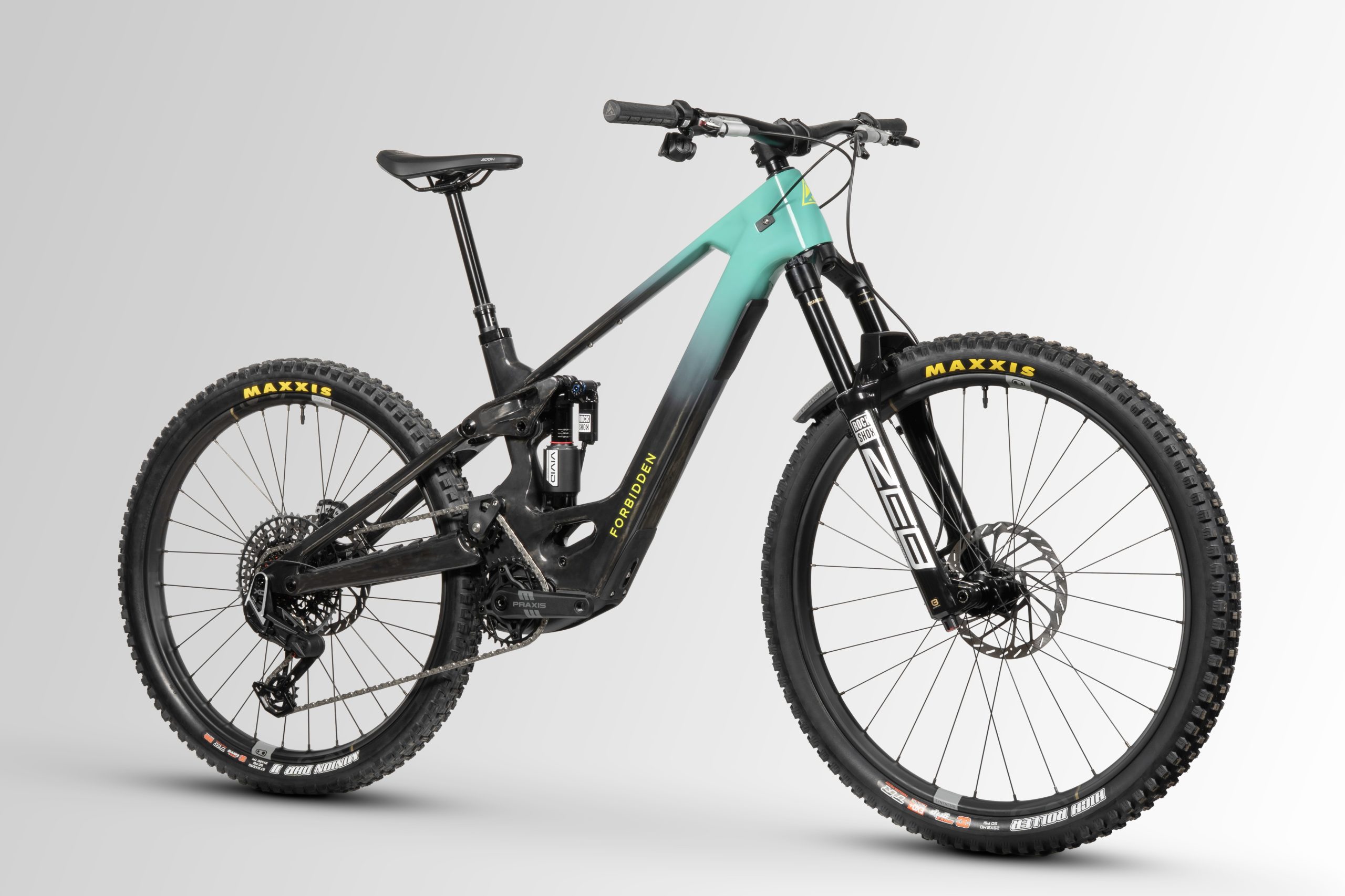
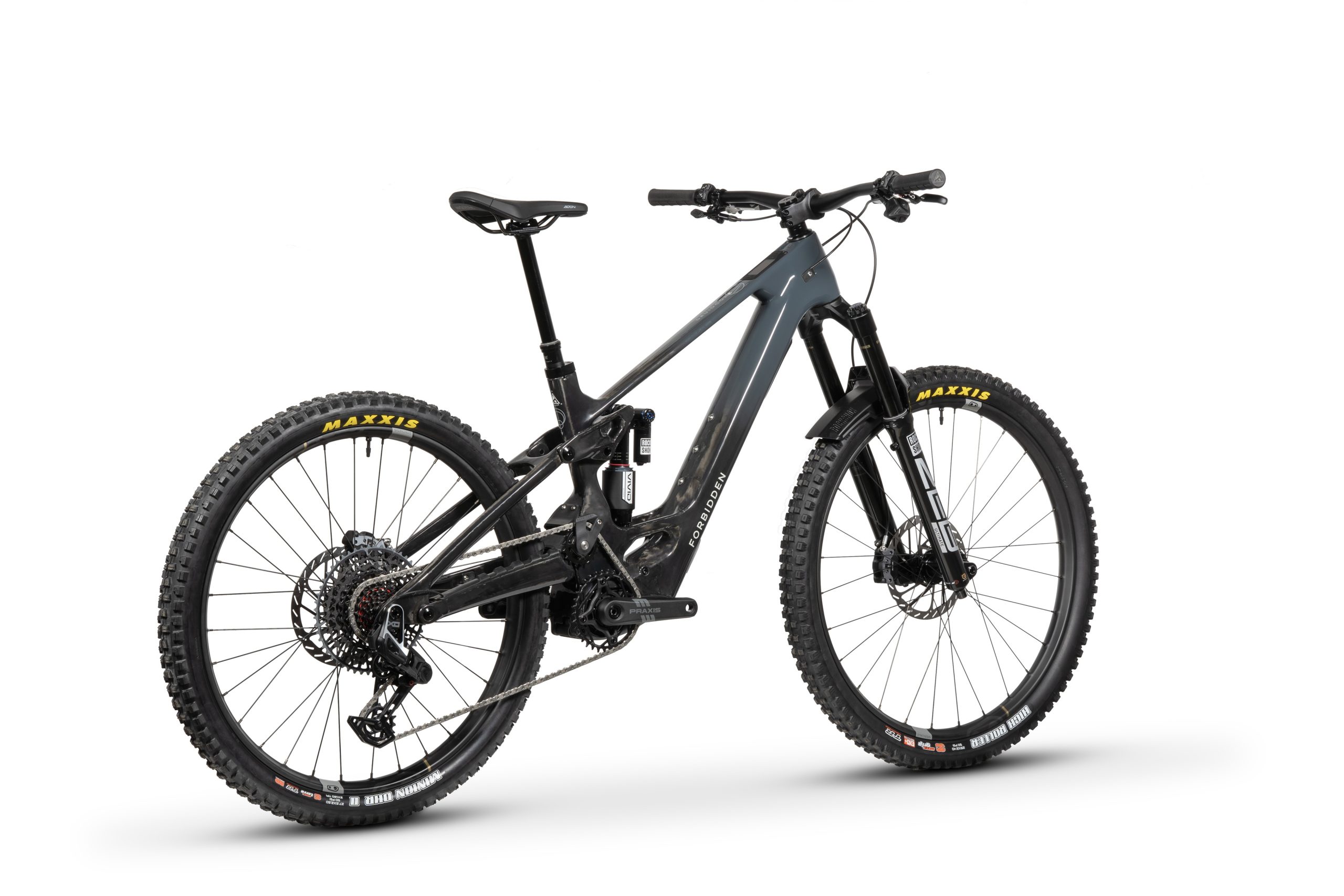
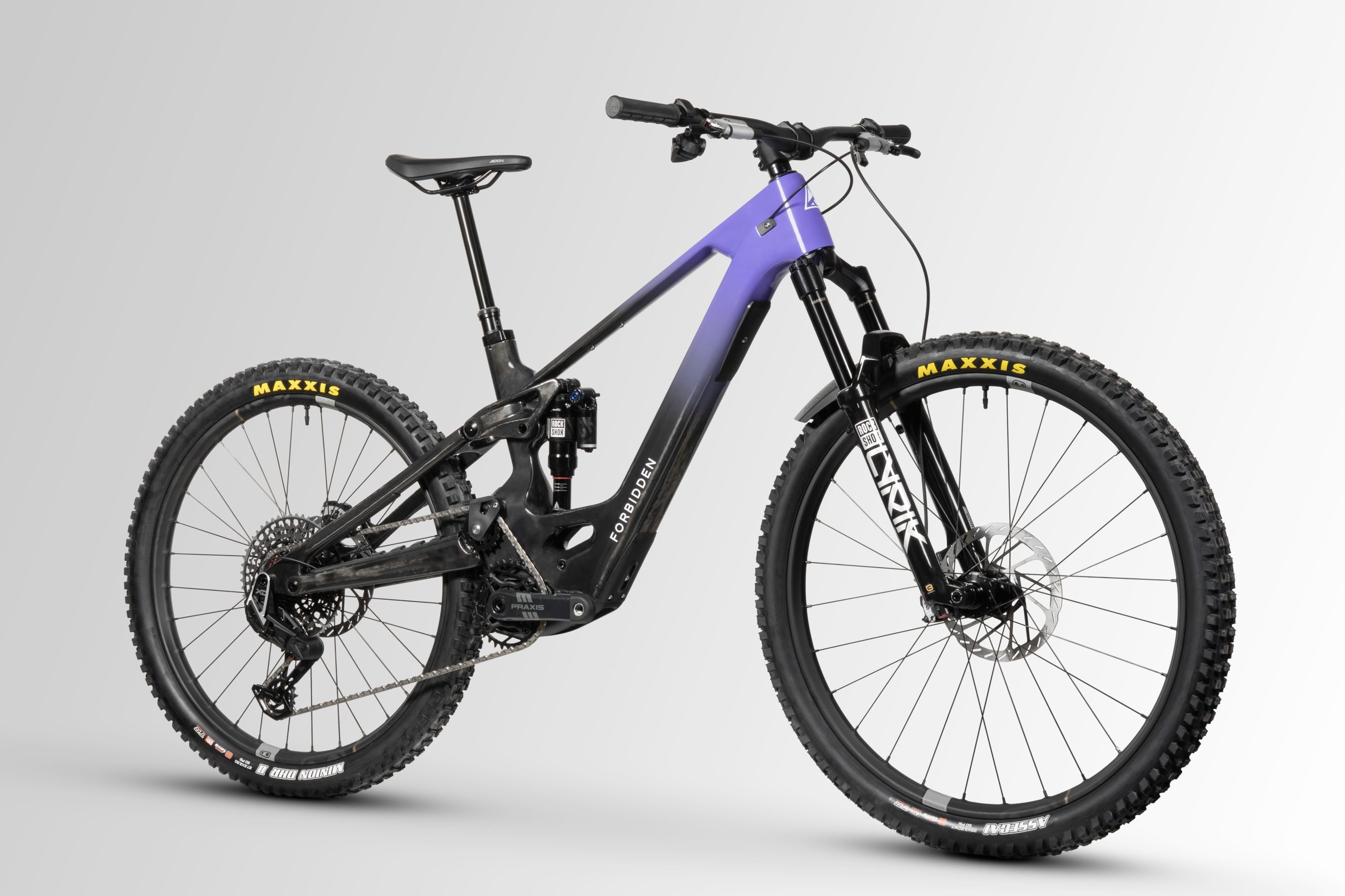
Forbidden has announced two new eMTBs, utilising the brand’s high-pivot suspension design and the DJI Avinox motor – the Druid E LitE and the Druid E CorE.
Both of the bikes in the new Druid E family have two travel options, with correspondingly different battery sizes.
The Druid E CorE has 150mm of travel, a 160mm fork and a larger 800Wh battery.
Want to go big? The Druid E CorE is for you. Forbidden
While the Druid E LitE is slightly more trail-focused, the CorE is built with burlier kit, and is named to honour Forbidden’s late bike builder, Cory Thornton.
Forbidden’s goal was to build a bike that matches the capability and ride characteristics of the Druid mountain bike, with the added punch of the market’s most powerful motor.
Why am I so excited?
The high-pivot system gives a rearward axle path, smoothing out bumps. Forbidden
Forbidden’s high-pivot suspension layout gives it great on-trail characteristics. It’s smooth and fast, and capable on the toughest terrain.
At the same time, the DJI Avinox motor in the Amflow bike blew almost every bike tester away with its controllable, high levels of power and torque – as yet still unmatched (despite Specialized’s best efforts).
Combining the two, as I hoped would happen, should make for an extremely capable eMTB.
Forbidden Druid E details
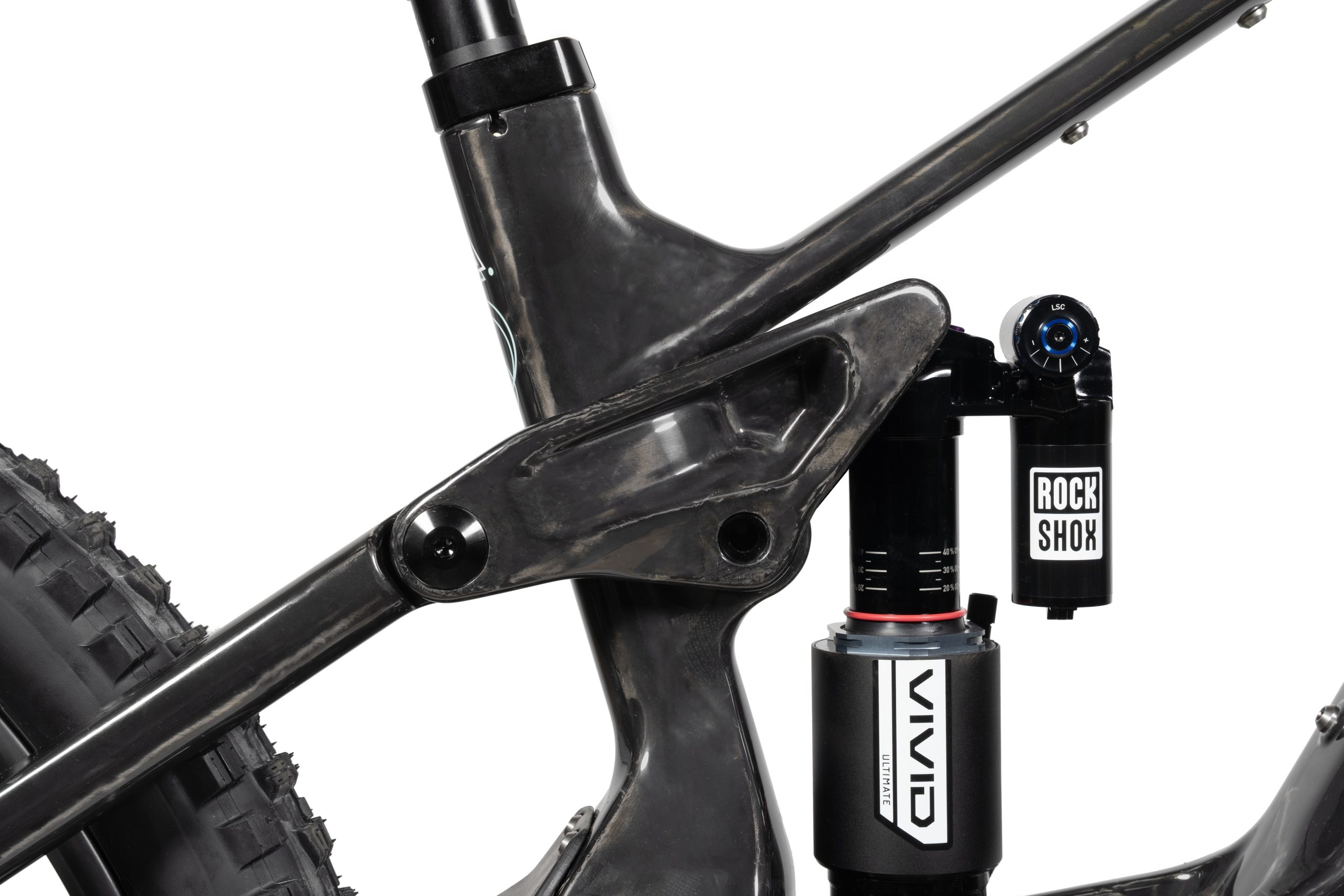
A carbon rocker keeps the weight low. Forbidden
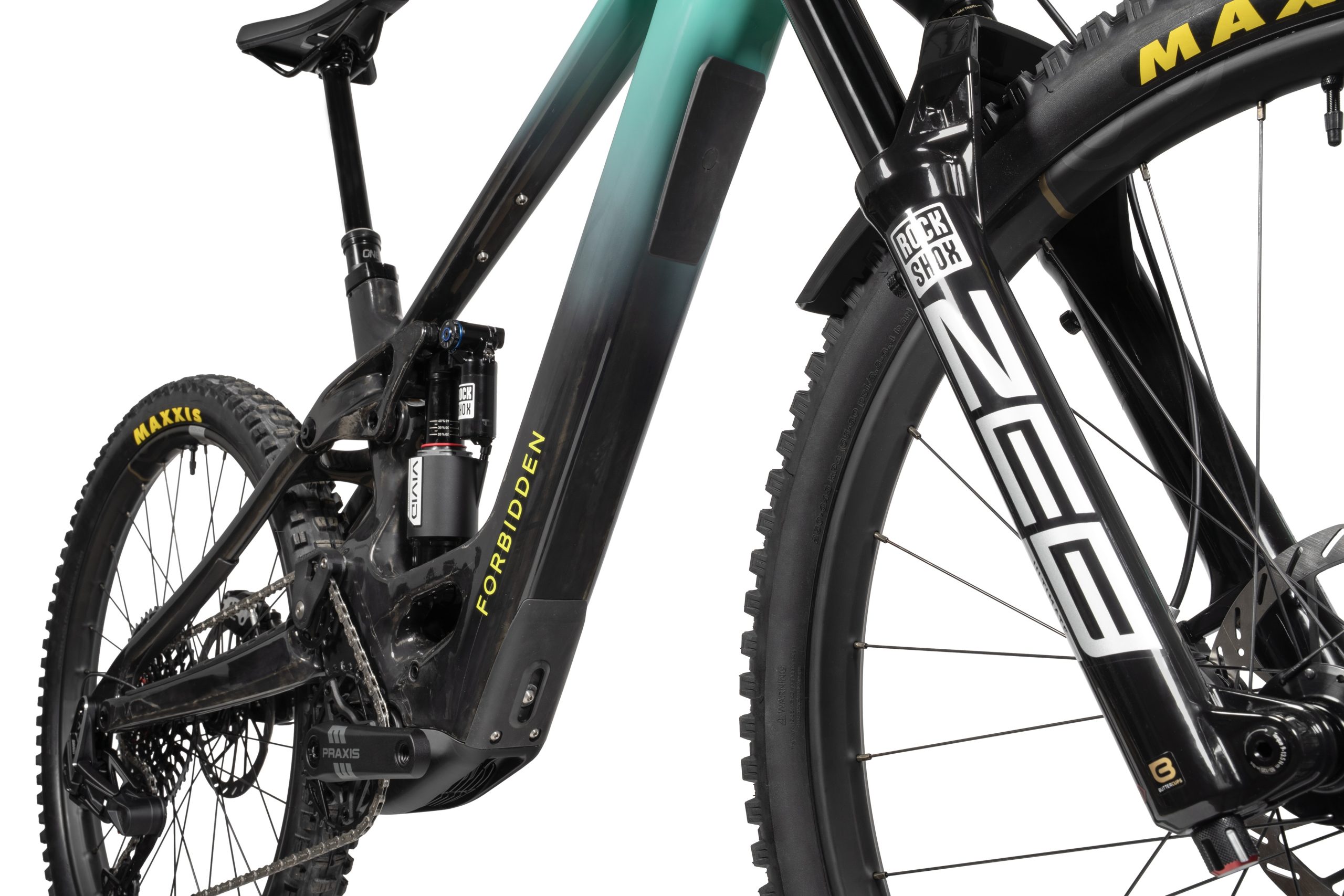
Both of the new bikes feature a carbon construction, including carbon links. There’s plenty of protection on there to keep the frame safe and the ride quiet.
There’s space for a full-sized bottle in the frame, as well as an accessory mount.
Oversized bearings, additional sealing and a steel idler featuring two sets of bearings are there to boost durability, while the bikes come with a lifetime warranty.
The bikes feature mixed wheel sizes. Forbidden claims this helps keep them agile and manoeuvrable, despite the added weight of the motor and battery.
Forbidden Druid E geometry
Plenty of protection for the down tube here. Forbidden
Although they’re modern, the figures on the geometry sheet might not look particularly extreme.
However, there’s good reason for this, according to Forbidden.
The reach figure, in particular, is fairly short (in the most modern terms), while the stack is tall.
Forbidden says the distance between the cranks and the bar is what really dictates geometric fit.
Put the front end up higher – for DH control and confidence – and you can reduce the reach, ensuring there’s a consistent fit and feel.
So, don’t expect any wild, stretched ride positions here.
To further complement this descending bias, there are short seat tubes to maximise dropper drop – 180mm on the smallest size – and short cranks.
The LitE has 155mm cranks, while the CorE gets 150mm.
Why DJI?
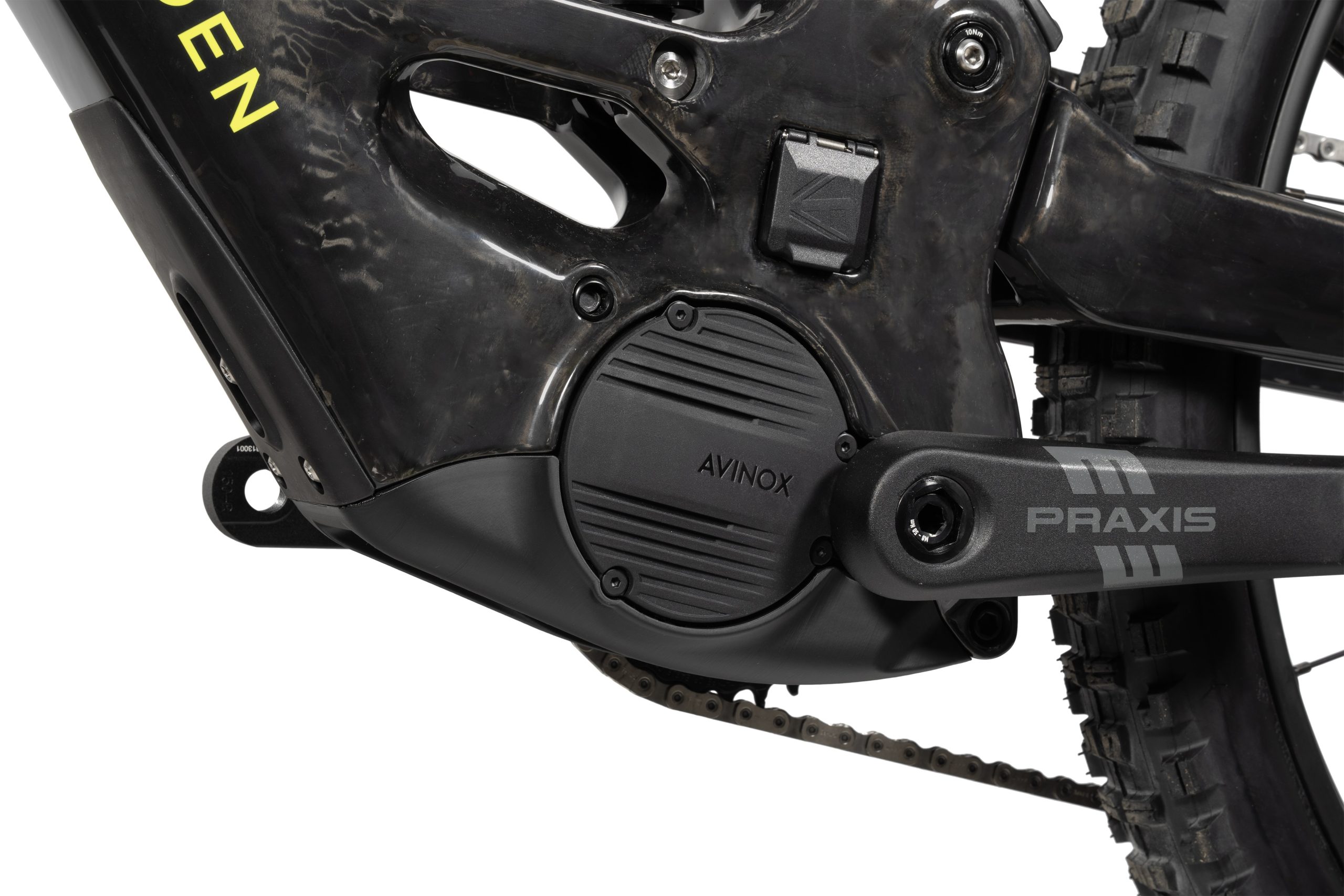
DJI’s Avinox is the most hyped motor around. Forbidden
There’s tons of hype around the DJI Avinox motor, and it’s easy to see why brands, especially smaller, more reactive ones, are flocking towards it.
The first reason is the power – 800W peak power, with a 1,000W boost function is, frankly, ridiculous.
Then there’s the lesser-discussed (but more important in my opinion) torque figure – the real grunt of an eMTB motor when you’re churning up a techy climb – 120Nm here.
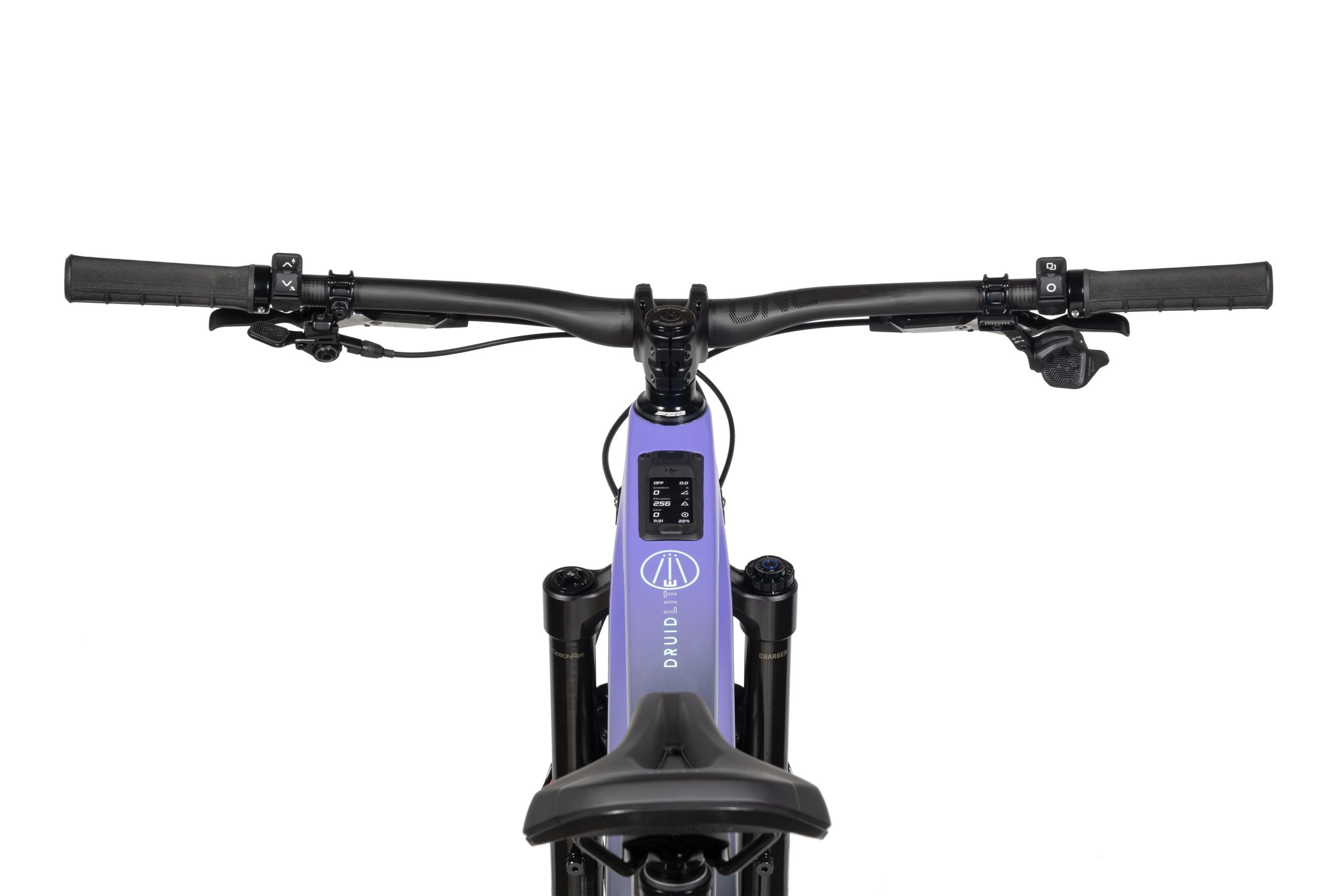
DJI’s top-tube mounted display is data-rich. Forbidden
That surpasses the new S-Works-only torque figure of 111Nm on the new Turbo Levo, the new Druid’s closest competitor, and will beat rumoured updates to Bosch’s motor, as far as we understand.
It’s also not a particularly heavy system, at 2.5kg (the Bosch Performance CX comes in at 2.8kg), and the UI and app are as detailed as they come.
Forbidden Druid E LitE and CorE spec and price details
The Druid E LitE is ready to hit the trails, with 140/150mm of suspension travel. Forbidden
At the time of writing, we are waiting for confirmed specifications and pricing. We will update the story when we have this information.
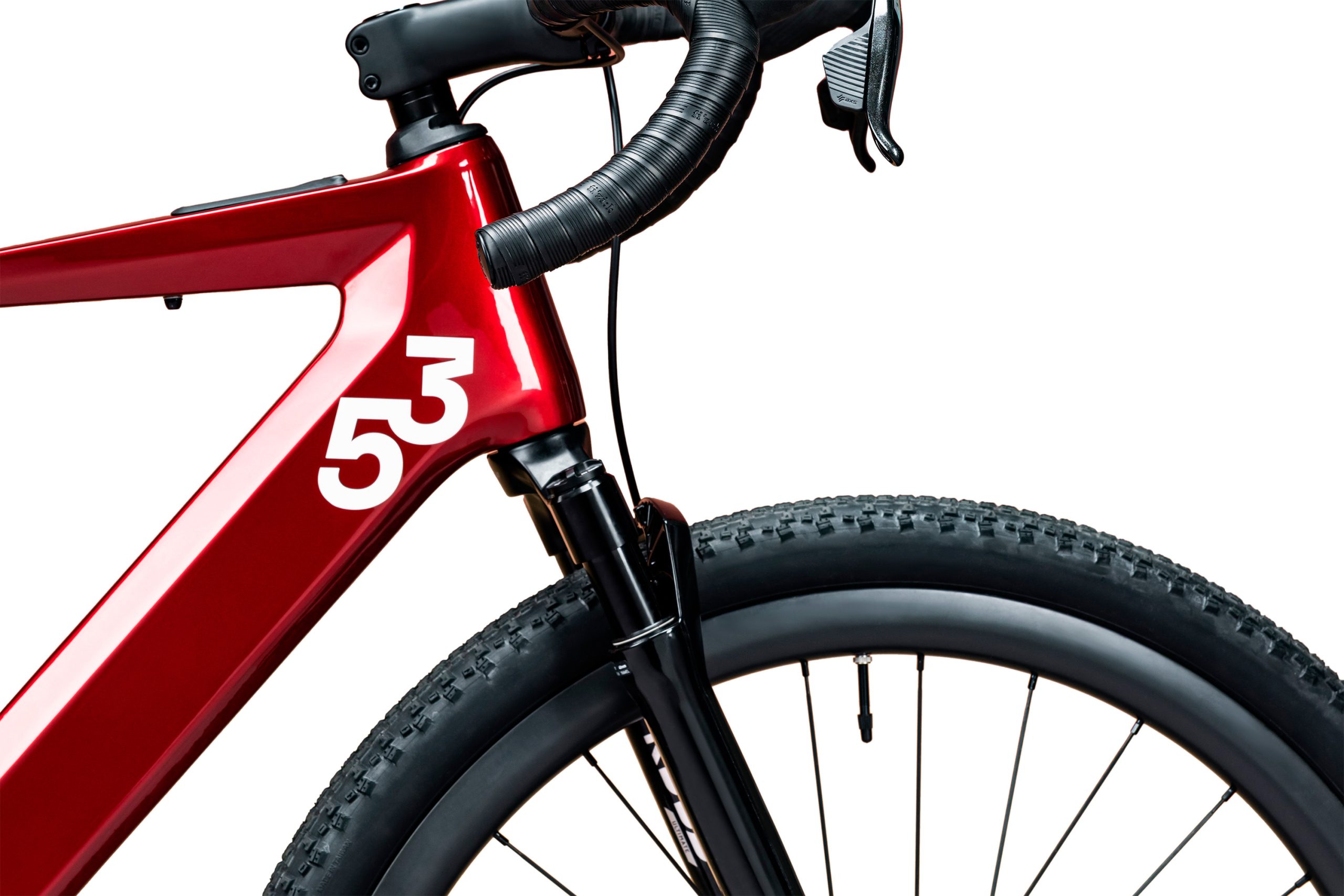
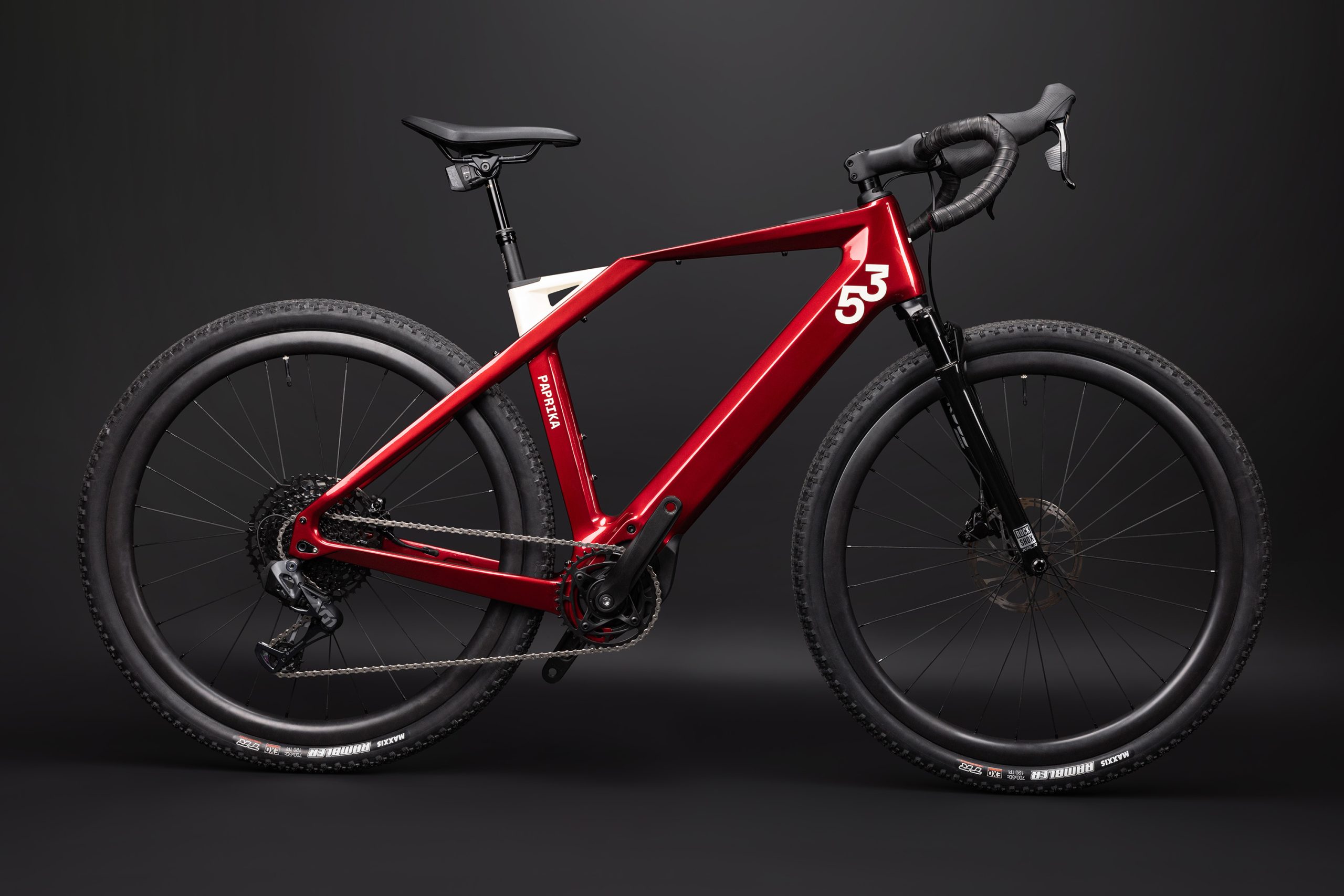
While Forbidden’s Druid E launched today was long rumoured to be the first third-party bike to feature the motor, Paprika 53’s Model 25 GT joins it on launch day as the first electric gravel bike.
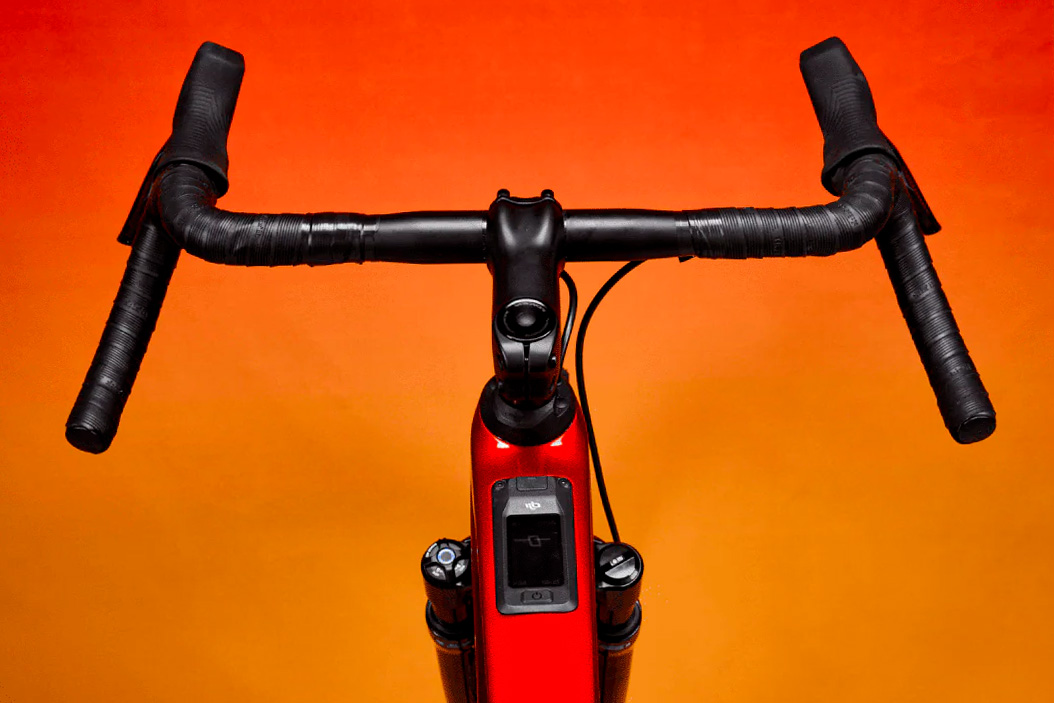
Unlike other systems, DJI uses a touchscreen display. Paprika 53
The bike features a full carbon fibre frame, integrating the DJI’s touchscreen display into the top tube, battery in the downtube and motor in the bottom bracket area.
Paprika 53 says it has made the bike as compliant as possible, theorising that the added power will mean riders spend more time in the saddle.
RockShox’s Rudy Ultimate XPLR fork should provide good damping for larger bumps. Paprika 53
The frame features what Paprika 53 calls a dropline dip to absorb bumps, with the design also allowing for better saddle height adjustability.
As well as two bottle cage mounts, the frame appears to have accessory mounts under the drop line dip and under the top tube, although these don’t look compatible with the standard mounting hardware.
SRAM’s Reverb AXS XPLR dropper post sits in the frame, allowing for the saddle to be dropped out of the way on descents.
The Model 25 GT borders the line of XC bike with wide 50mm tyres and front suspension. Paprika 53
The brand has developed its own handlebar – the Parabola Carbon Bar which features 25 degrees of flare, and is said to add control and comfort to the front end.
A mullet drivetrain is used, combining SRAM’s road Force eTap AXS shifters and X01 Eagle AXS mountain bike drivetrain with a 38t front chainring and 11-50t cassette.
Paprika 53’s own carbon wheels are wrapped in 50mm Maxxis’ Rambler tyres.
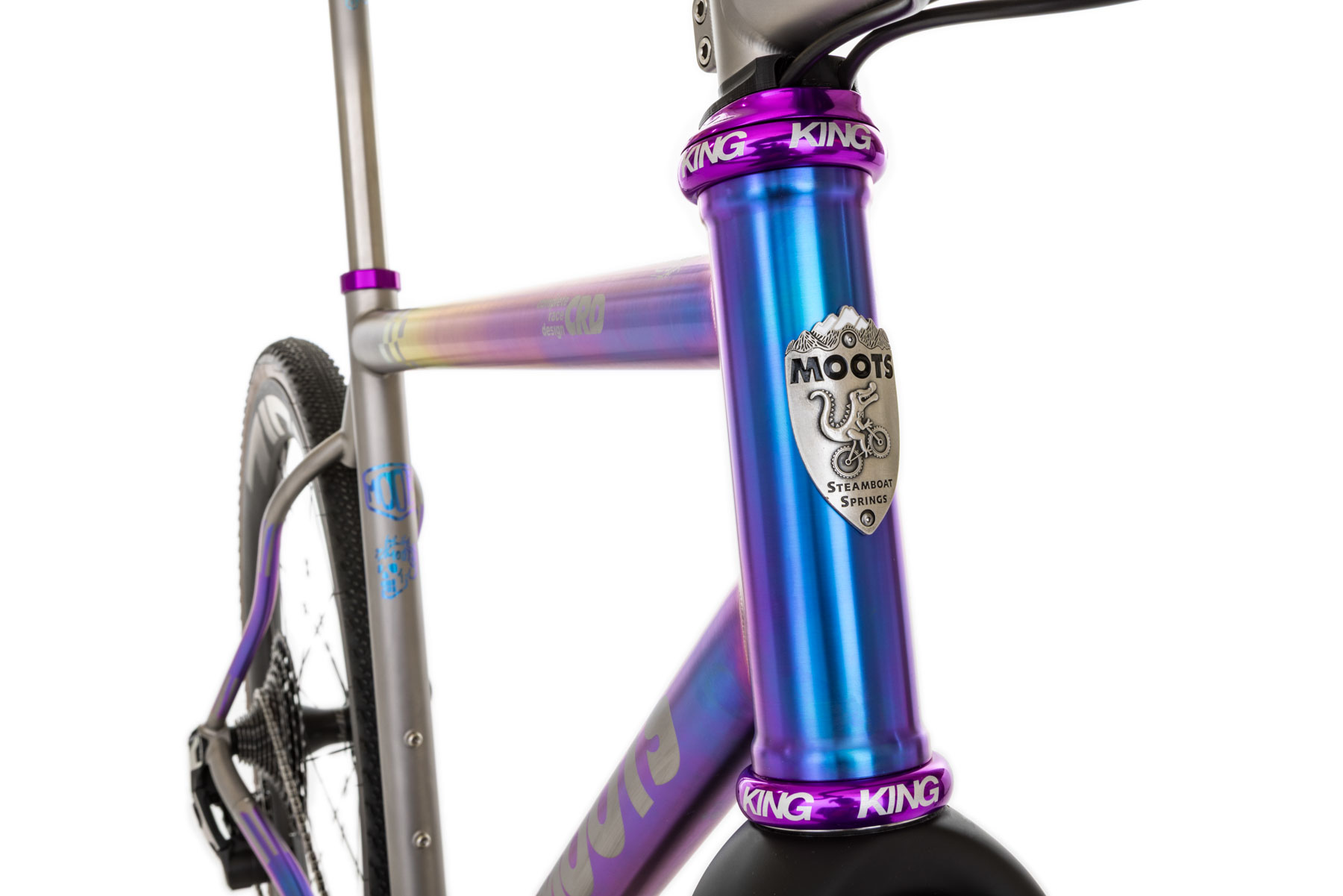
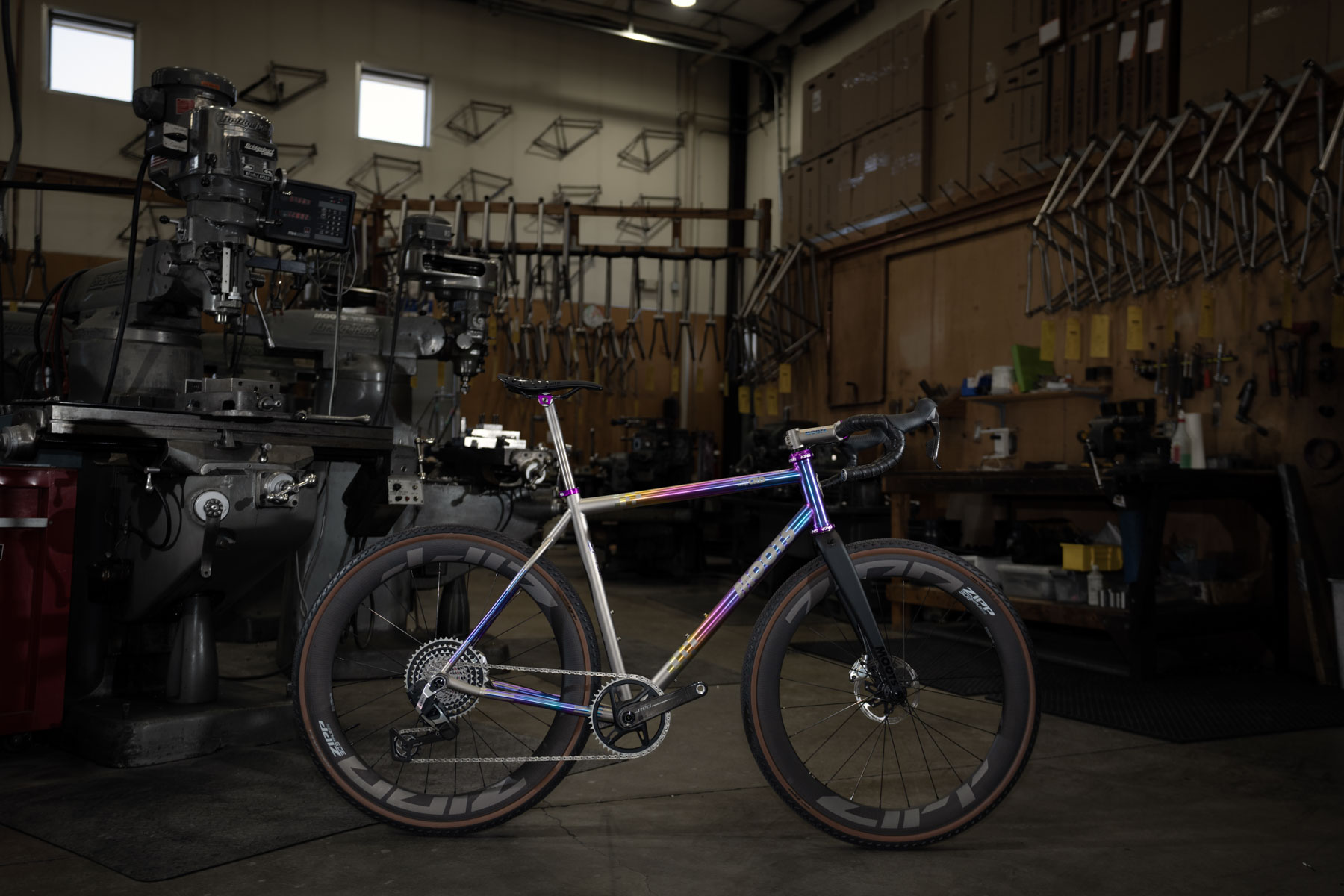
Just in case you thought the Moots Routt CRD wasn’t exclusive enough, the Steamboat, Colorado, titanium specialists have been busy working on this ultra-limited-edition version.
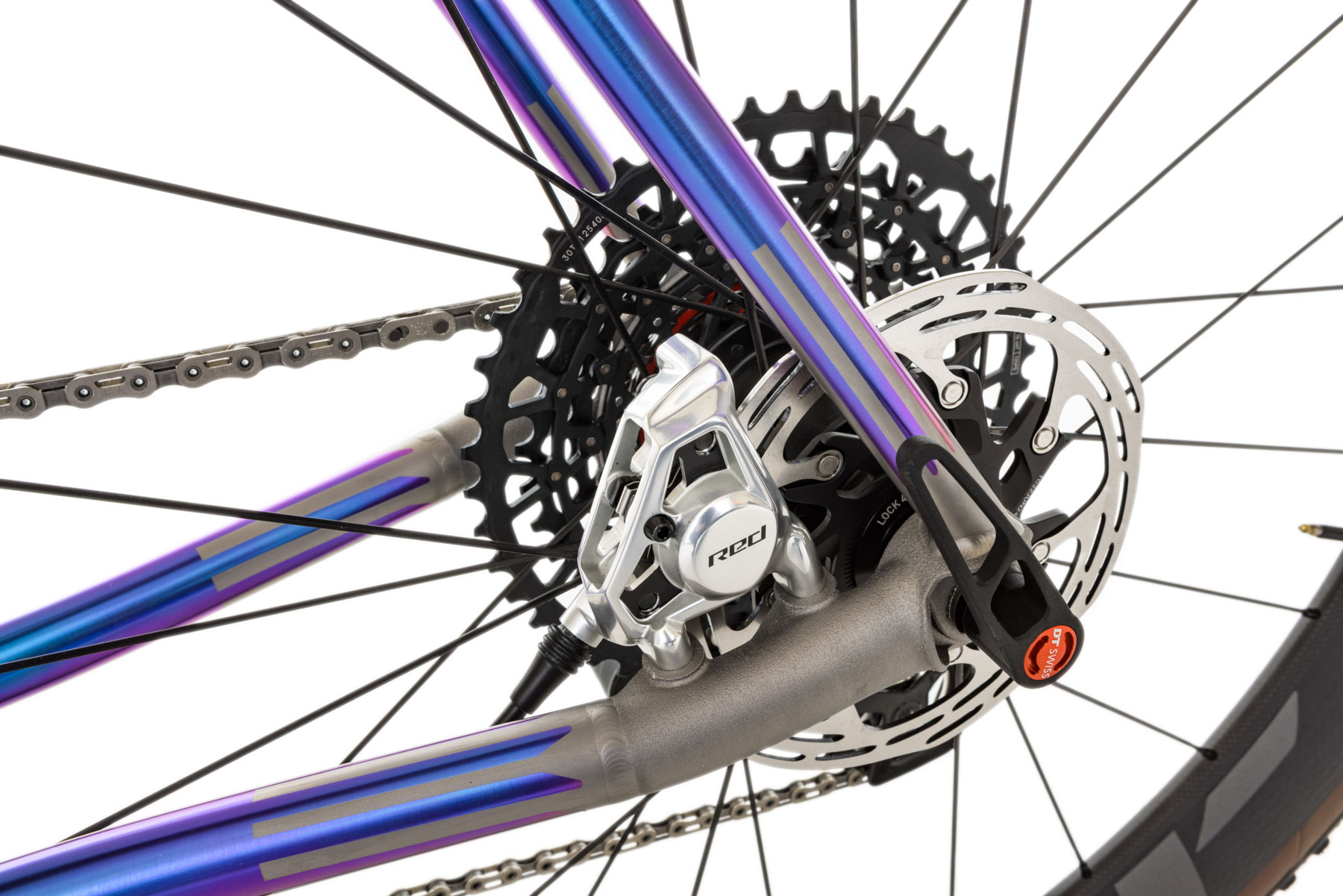
Based on the ‘standard’ Routt CRD, the limited-edition bike gets Moots’ lightweight RSL titanium tubing, along with 3D-printed Universal Derailleur Hanger dropouts, a T47 bottom bracket, an all-new integrated cockpit and Moots’ carbon gravel fork.
The California Dreamin’ Routt CRD isn’t your average gravel bike, though – it comes with another layer of exclusivity and a price tag of $15,899.
Even more exclusive
The California Dreamin’ Routt CRD comes with matching Chris King components. Moots
The California Dreamin’ Routt CRD is a collaboration with Chris Johnston of Outdoor Bros.
Every element of the California Dreamin’ finish is created by Richard Jara. Moots
The finish of the bike is inspired by Johnston’s ride along the west coast of California, from the Pacific Coast Highway to the gravel routes in the Sierra Nevada.
“I wanted a bike that could adapt seamlessly to whatever terrain I encountered,” Johnston explains. “It needed to have both capability and personality, capturing the essence of California style and performance.”
The rear dropouts are made from 3D-printed titanium. Moots
Fine-art finishing
Moots’ anodising and graphics specialist Richard Jara finishes each bike meticulously. Moots
What that means is a Moots CRD with a massively labour-intensive finish. Moots told us it takes three full working days to complete the finish alone.
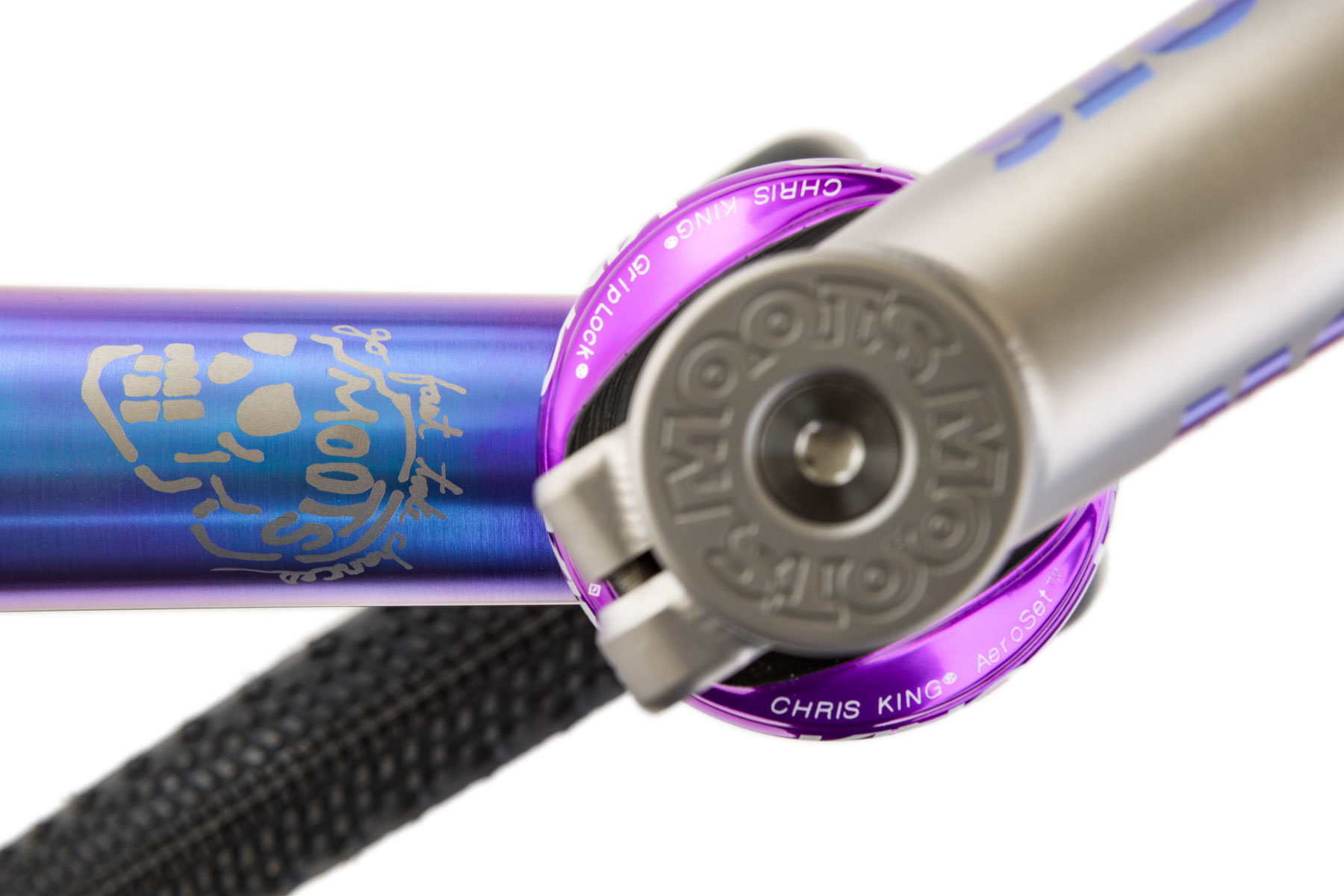
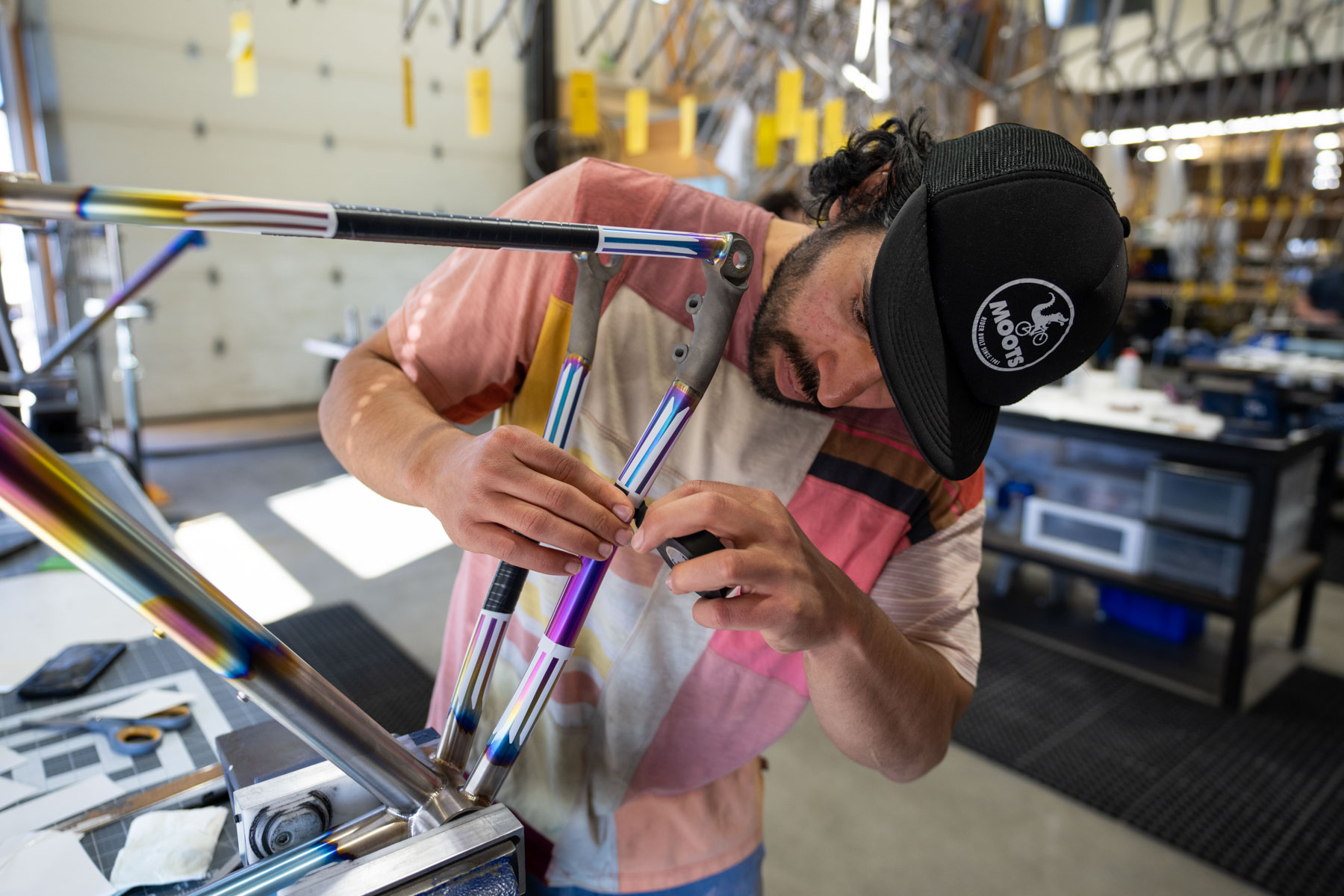
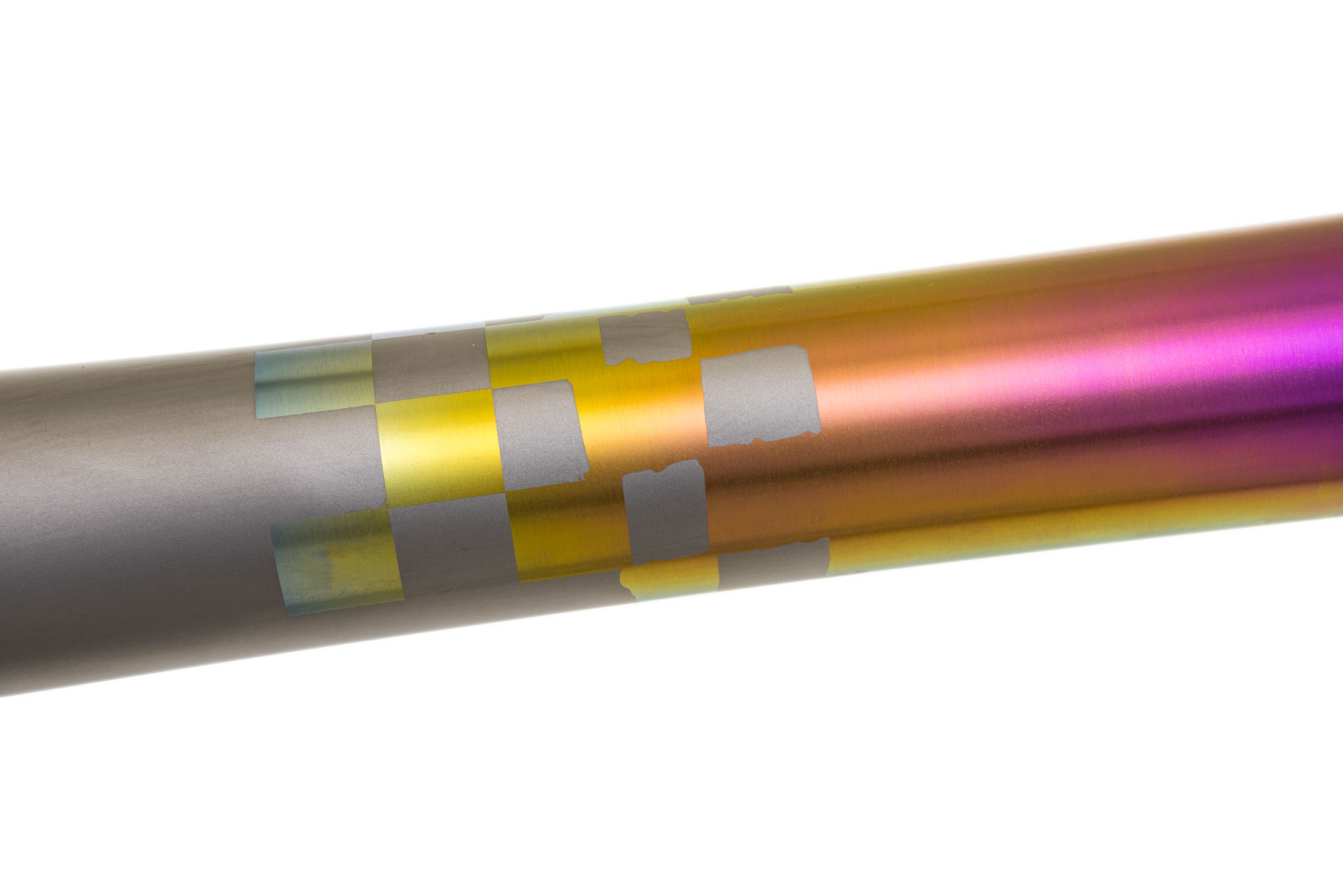
The finish involves a meticulous anodising treatment that shifts from a high-voltage blue to a vibrant pink. It is paired with hand-finished checkerboard graphics and subtle skull details.
Moots’ in-house specialist Richard Jara completes each frameset by hand, meaning no two frames from this limited run are alike.
“The anodising process is like painting with voltage, and Jara is Michelangelo,” says Johnston. “Every frame will have nuances, subtle colour shifts, and intentional imperfections that add character and depth. It’s raw, refined and thoughtfully detailed.”
The attention to detail is beyond Moots’ standard bikes. Moots
A frameset or complete bike can be ordered from Moots, but the run is limited to 25, so it won’t be around for long.
No two California Dreamin’ bikes will be identical.
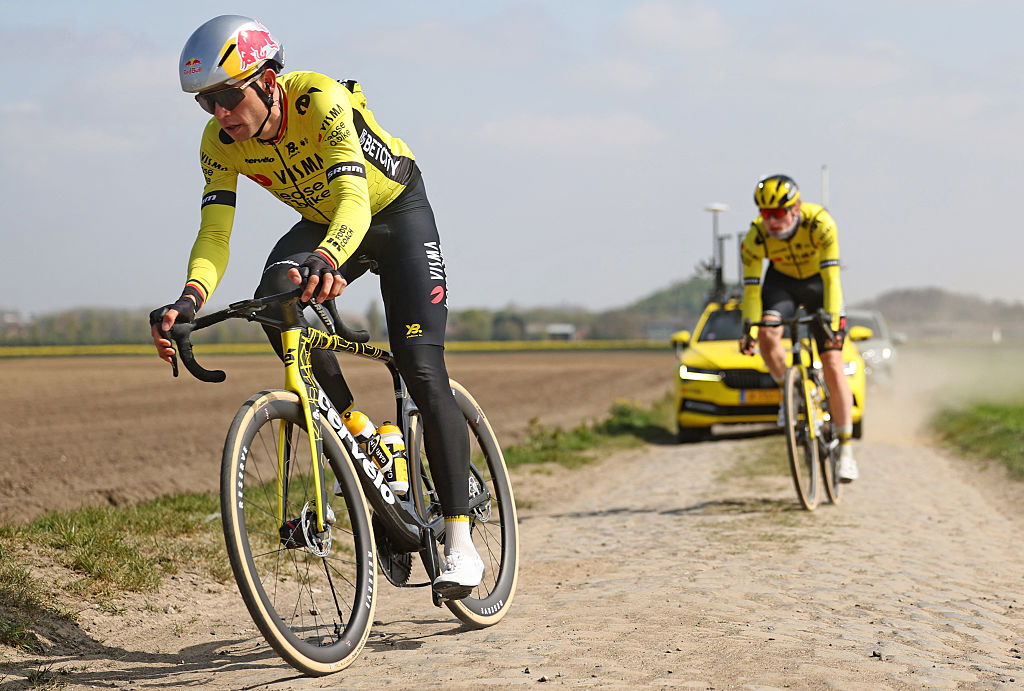
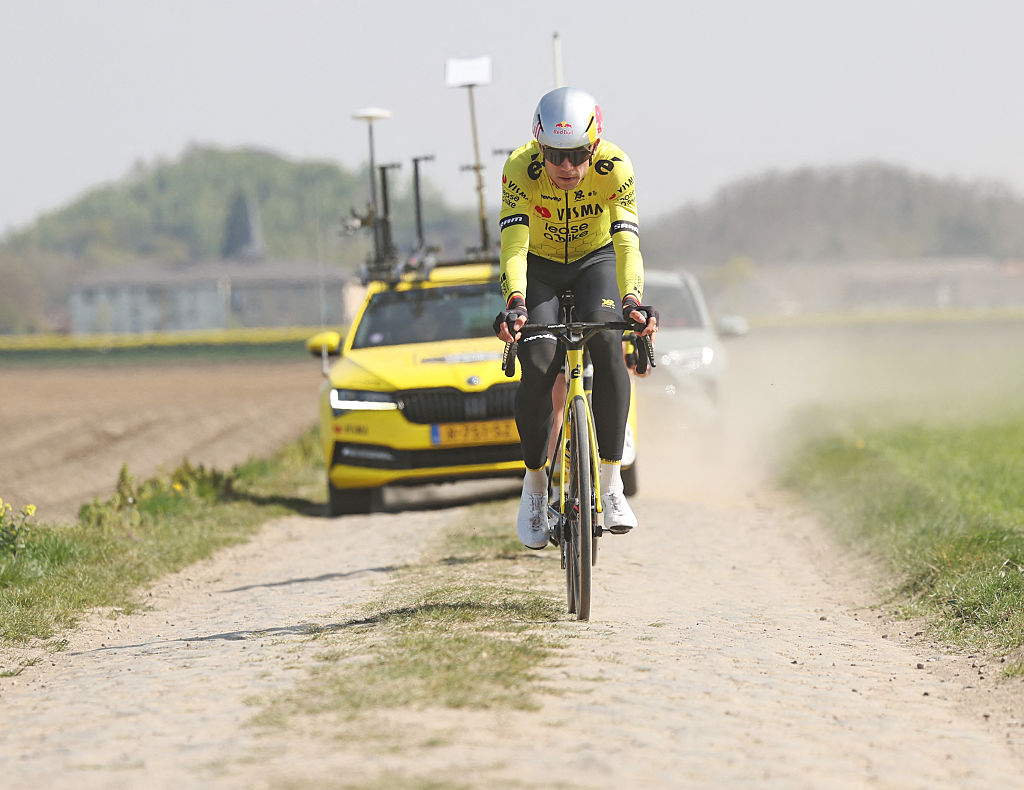
Photos of Wout van Aert’s recce ride ahead of Paris-Roubaix this weekend show the Visma–Lease a Bike leader using Gravaa’s KAPS tyre inflation system.
The Gravaa system uses a hub containing a mini-electronic inflator, which enables the rider to adjust tyre pressures on the fly via a wireless trigger mounted on the bars.
However, this isn’t Gravaa’s first sighting in the cobbled Classics, with three of Visma–Lease a Bike’s riders using the system in the 2023 edition of Paris-Roubaix.
Dylan van Baarle, Christophe Laporte, and Edoardo Affini all used the pressure adjustment system, though van Baarle – the Paris-Roubaix winner in 2022 with Ineos-Grenadiers – was involved in a crash that ended his race.
Wout van Aert used Gravaa’s on-the-fly tyre pressure adjustment system for his Paris-Roubaix recce on Thursday. Look closely and you can see the oversized hub and hose running from the valve. Getty Images
Judging by the photos of van Aert’s recce on Thursday, the Belgian is riding his favoured Cervélo S5, while the wheelset looks like Reserve’s Gravaa-compatible wheelset with a 42mm-deep front and 49mm-deep rear rim.
The Vittoria tyres look to take up nearly all of the S5’s 34mm tyre clearance. Could Wout be using the largest 32mm size available in the Corsa Pro range?
Marianne Vos used the system at the UCI Gravel World Championships. Liam Cahill / Our Media
Wout also looks to be using SRAM Red AXS in a 1x setup, and the crankset appears to be the Red Aero E1 1x option.
Van Aert has finished on the podium twice at Paris-Roubaix. Getty Images
Whether van Aert will use the Gravaa system in Sunday’s race remains to be seen.
At the very least, he’ll be gathering some very useful pre-race tyre pressure data ahead of the toughest one-day race on the professional calendar for both riders and their equipment.
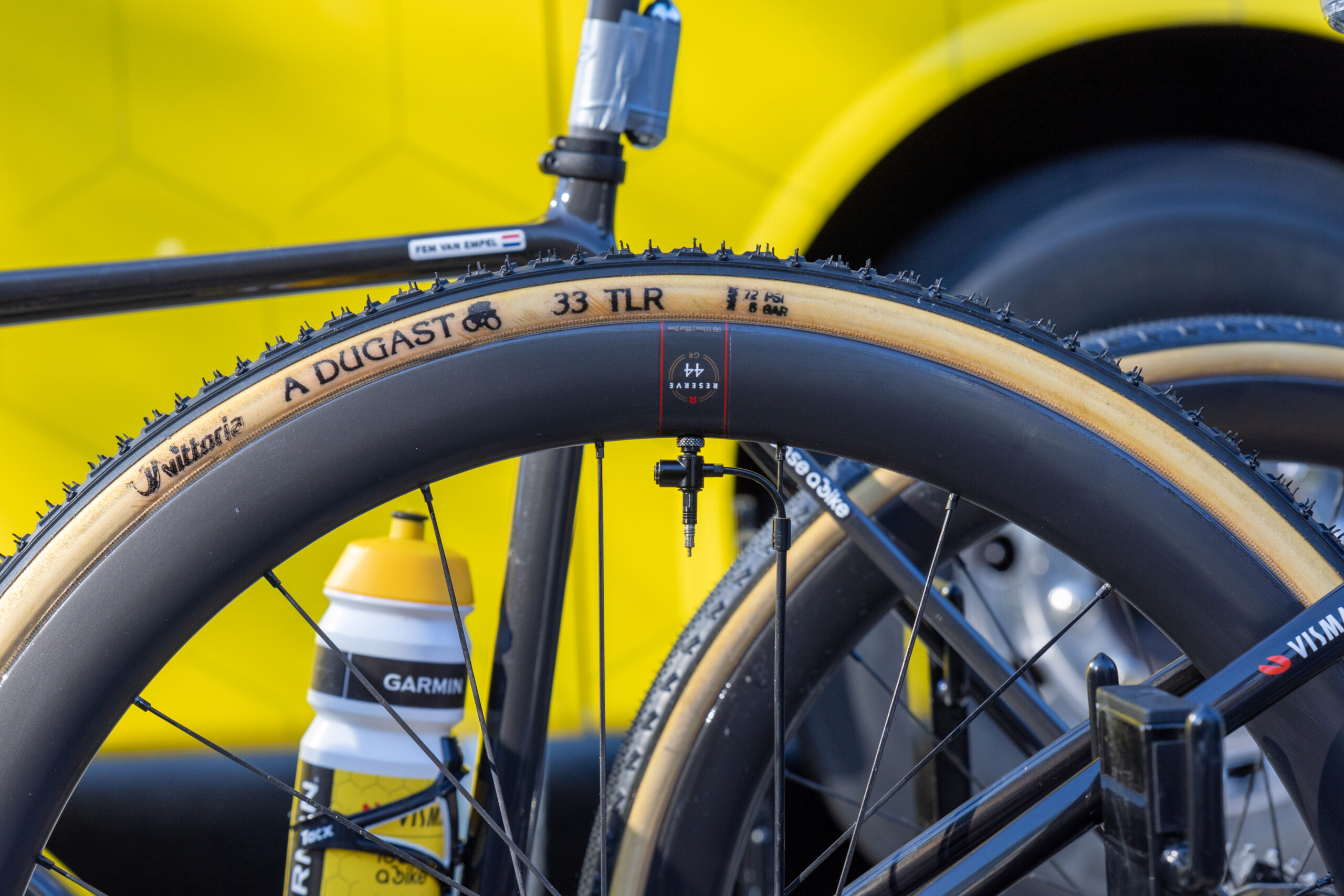
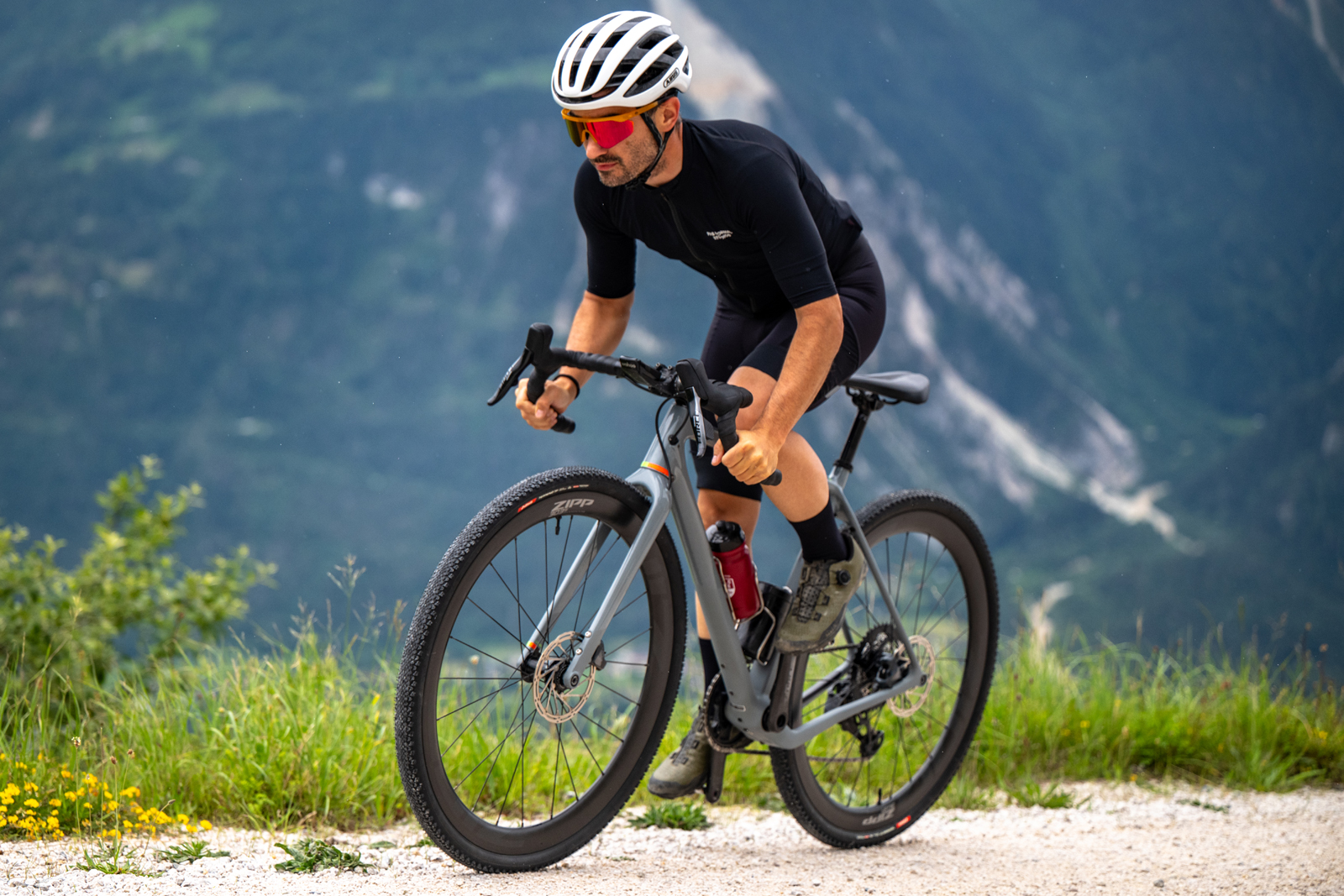
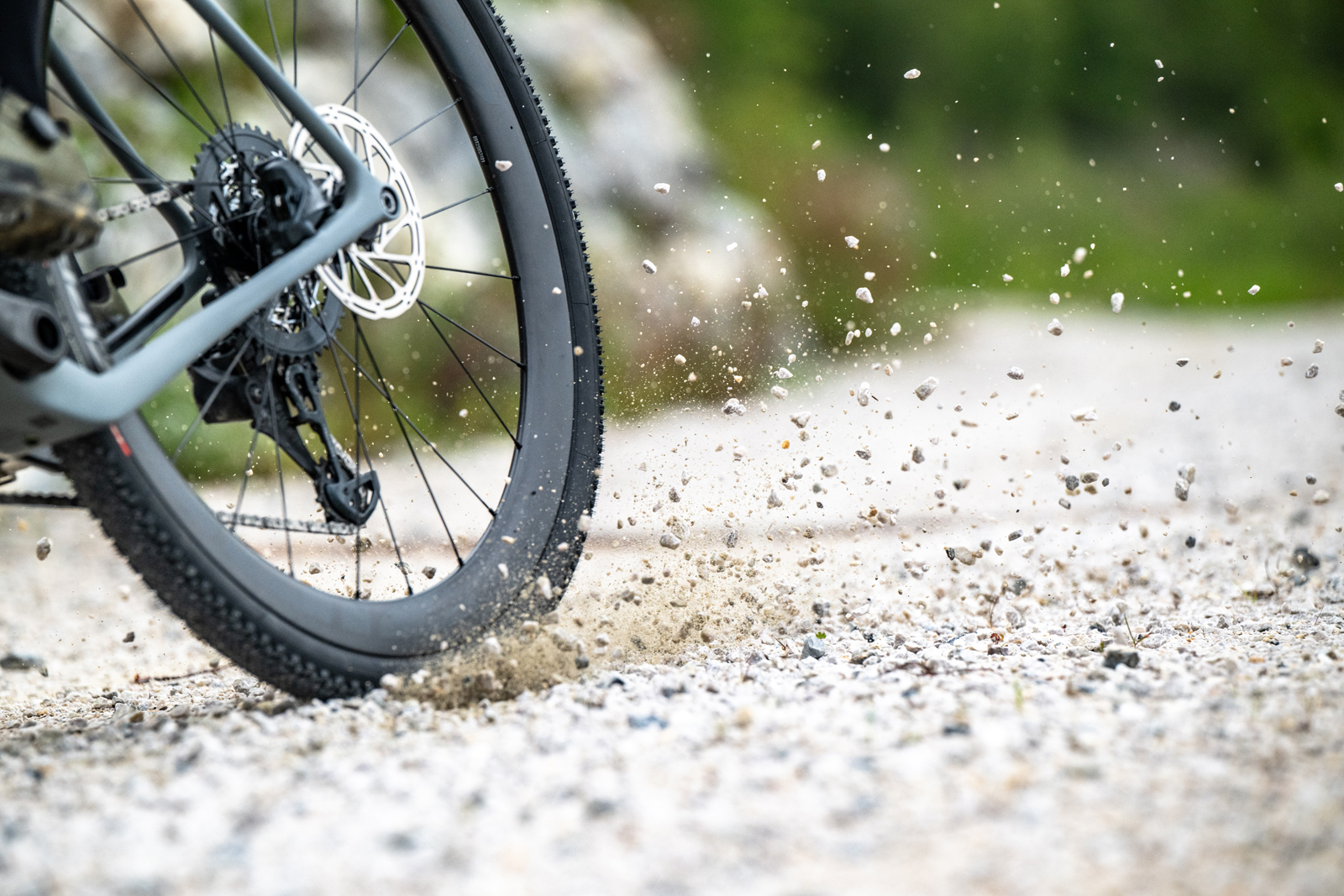
Vittoria will rename its gravel tyres from July to make choosing the ideal tyre easier. The company has also announced its mixed-terrain T50 tyre is now available in more sizes.
Previously, Vittoria’s gravel bike tyres were called the Terreno Zero, Terreno Dry, Mezcal and Terreno Wet.
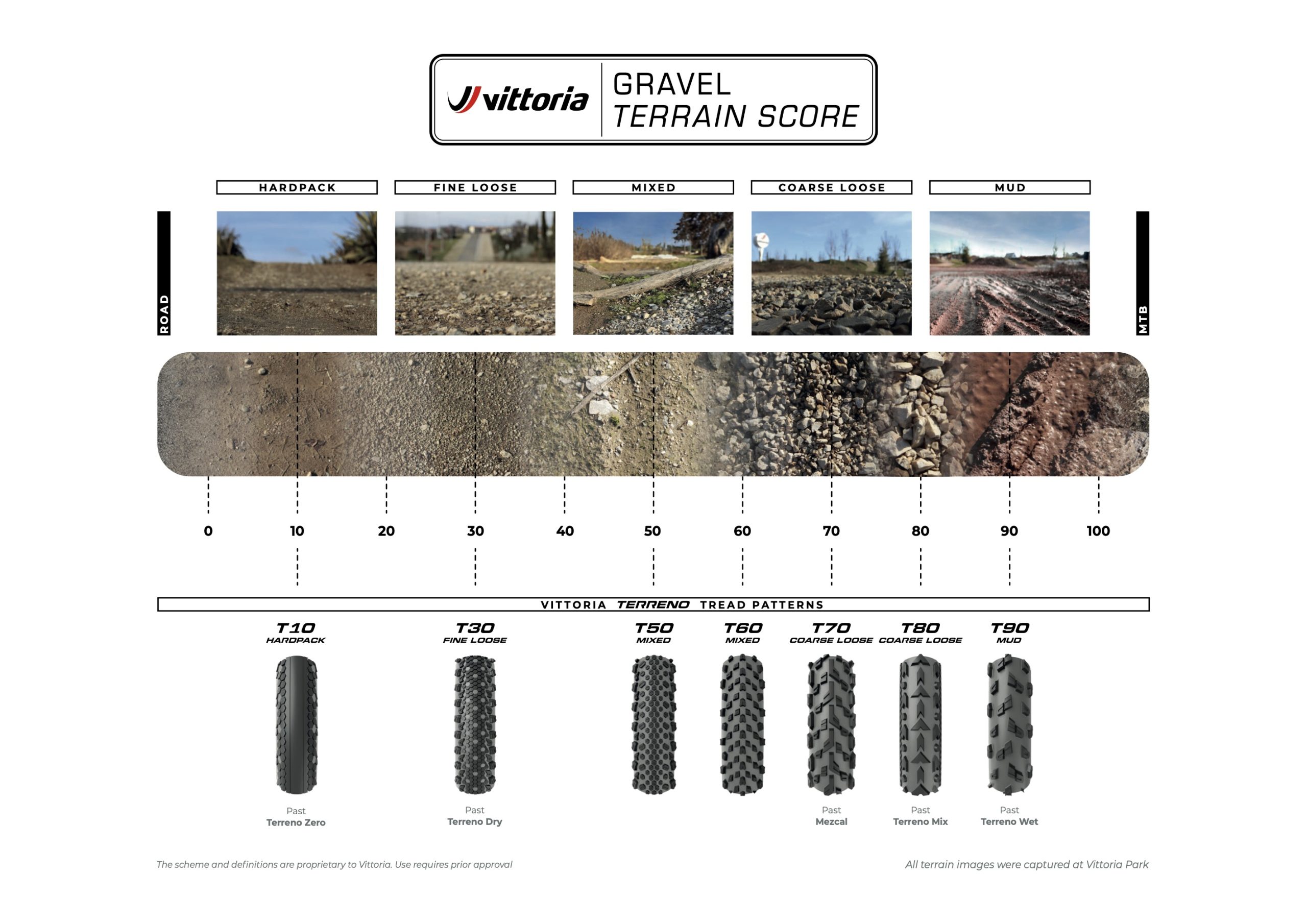
But its tyres will be named based on the brand’s new Gravel Terrain Score, or T-Score. Vittoria says the T-Score ranks surfaces on a scale from 0 (smooth like tarmac) to 100 (almost impossible to ride on a gravel bike).
The T-Score breaks gravel riding into five main terrains: hardpack; fine loose; mixed; coarse loose; and mud.
This diagram shows the T-Score scale, the surfaces and corresponding tyres. Vittoria
With the new T-Score system, all you’ll need to do to find the right gravel tyre is assess which surface you’re riding on and choose a tyre accordingly.
Stijn Vriends, chairman and CEO of Vittoria, says: “When riders follow the chart and start by identifying the type or types of terrain they intend to ride, and by simply tracing their way down, a rider can quickly identify the perfect tyre for their situation.”
The tyres in Vittoria’s endurance gravel tyre range will feature new labelling, which will correspond to the Terrain Score scale. It will adopt the new naming convention across its sport and performance gravel tyre ranges later in the year.
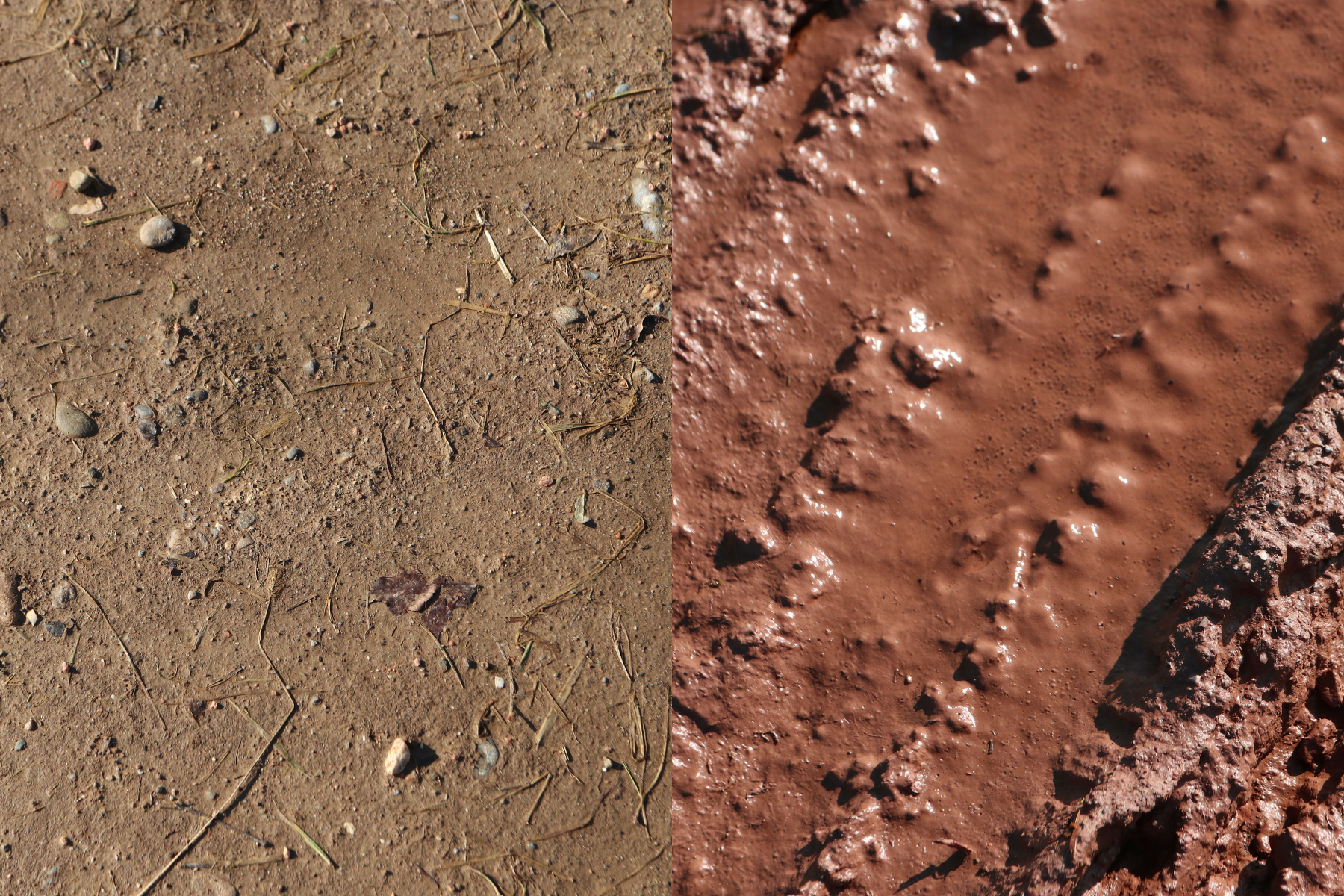
The scale covers everything from hardpack (left) to mud (right). Vittoria
For example, this means the Terreno Zero, suitable for riding on hardpack, will now be called the T10.
At the opposite end of the spectrum, the Terreno Wet, suitable for riding in mud, will be called the T90.
“In all the choices we make, we always strive to put ourselves in the cyclist’s perspective, and this Gravel Terrain Score is precisely an effort to simplify every rider’s decision, as each of them knows what bike they own and what type of terrain they will ride on the most,” says Vanessa ten Hoff, Vittoria’s chief marketing and innovation officer.
Some of Vittoria’s previous gravel tyre names highlighted whether they were suitable for dry or wet riding. But ten Hoff says this was “sort of misleading” because the dry tyres also work well in the wet. “It’s more important to focus on the terrain,” she says.
Vittoria’s new gravel tyre names at a glance
New tyre name
Ideal surface
Previous name
T10
Hardpack
Terreno Zero
T30
Fine loose
Terreno Dry
T50
Mixed
N/A
T70
Coarse loose
Mezcal
T80
Coarse loose
Terreno Mix
T90
Mud
Terreno Wet
A confusing golden age?
Vittoria thinks choosing a gravel tyre should be a simpler process. Vittoria
In a white paper, Vittoria explains that we are in a “golden age” of gravel riding. There is an evolution in the bikes and equipment people use as well as riders “enjoying a fresh perspective”.
But the momentum in innovation has led to confusion over equipment and application. This is an issue BikeRadar’s senior technical editor Warren Rossiter addressed, arguing that we need to change the way we categorise gravel bikes.
Vittoria says this issue is particularly true with tyres, and that it should be simpler to pick the right ones.
Instead, consumers are faced with complex naming conventions and product categories.
Stating you’re into gravel riding is the ‘beginning of a battle’. Vittoria
In the white paper, Vittoria says the category of ‘gravel tyres’ does little to guide a consumer towards the correct product for their riding, be it gravel racing or bikepacking, for example.
It says a consumer stating they are interested in gravel riding to a shop assistant is the ‘beginning of a battle’.
“[T]hey must pour [sic] through seemingly endless tread designs, widths, casing and worst of all model names are devoid of any clear contextual application,” it says.
Vittoria says the T-Score will bring some clarity to these interactions: “When that same gravel consumer enters the shop, the dealer can ask, ‘what percentage of the time do you ride off-road?’, and the consumer answer will automatically link their needs to the correct product.”
Vittoria adds that if a consumer has tried one of the products before but wants more off-road capability, knowing which tyre to choose becomes easier. Likewise, if they want a faster tread, they can choose a tyre with a lower T-Score.
Vittoria T50 gravel tyre
Vittoria has also launched the new T50 gravel tyre. Vittoria
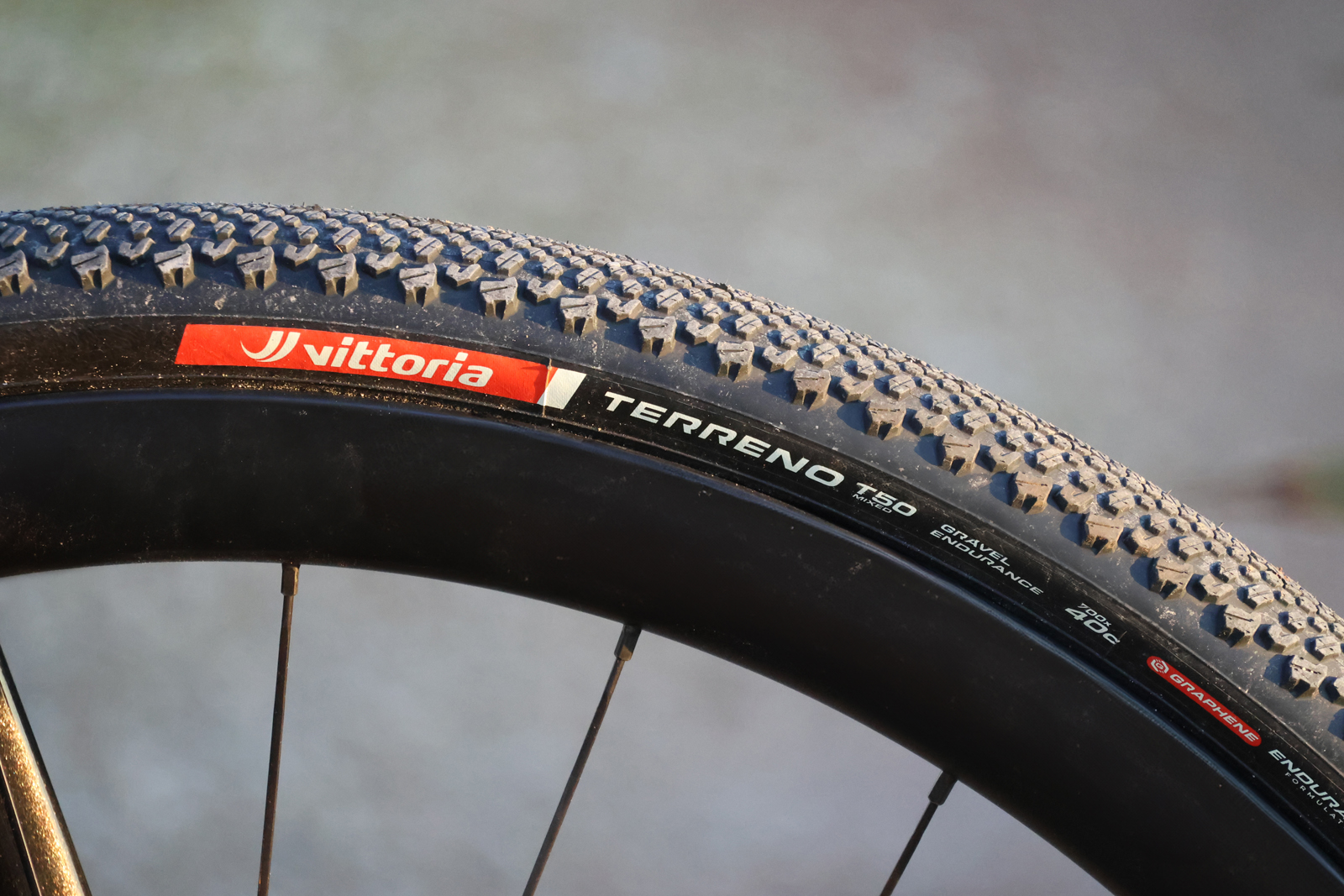
The T50 gravel tyre has no previous equivalent in Vittoria’s range. The tyre is the first from Vittoria to follow the new T-Score naming convention and it’s now available in three sizes.
Designed for mixed terrains, Vittoria says the T50 ensures you can find the “perfect” tyre for your riding in its new categorisation.
Vittoria says the tyre provides “unparalleled speed and capability across various terrains, from hardpack to mixed conditions”.
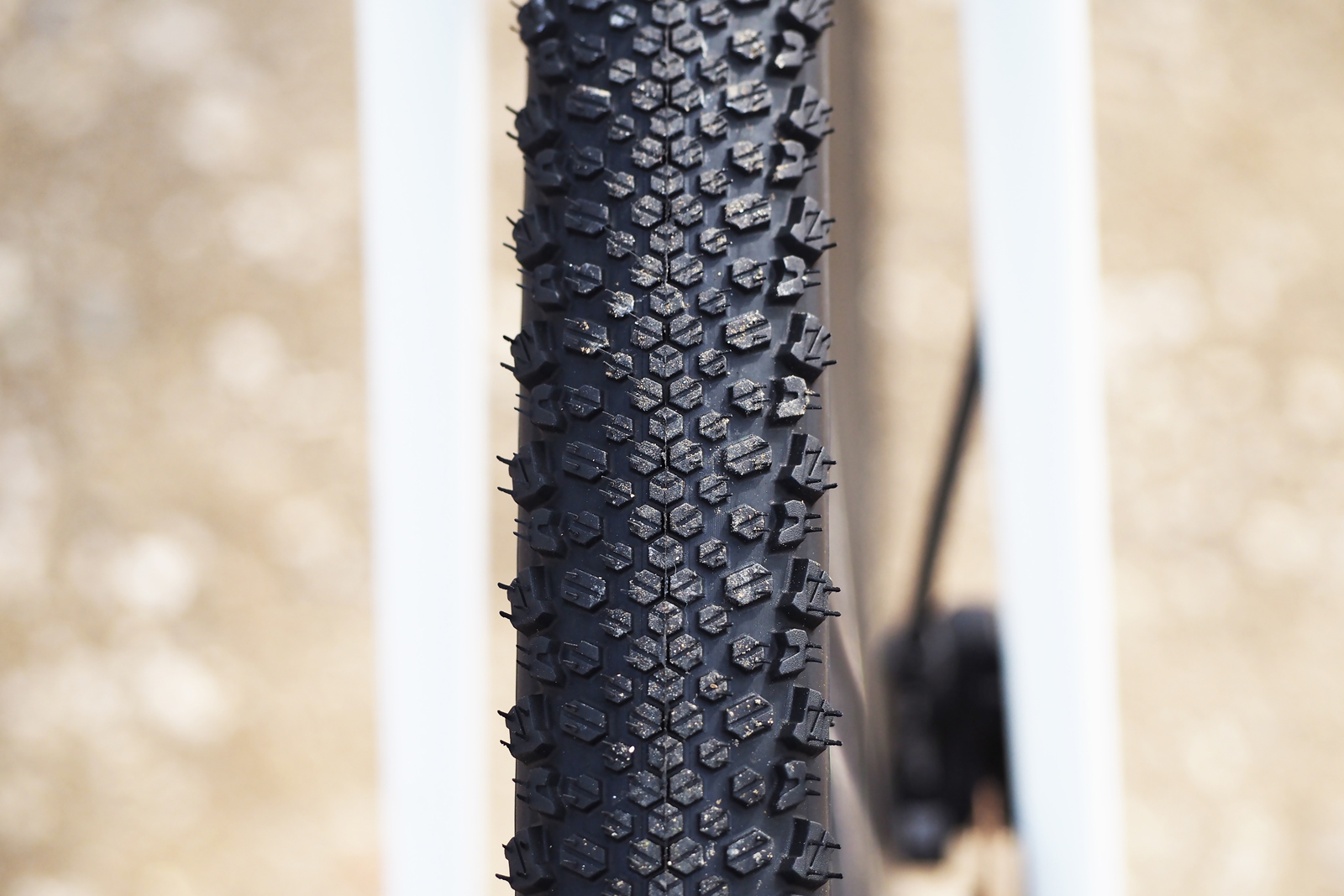
Ten Hoff explains that the new V-shaped tread plays an integral role in this performance.
The tread is said to aid speed and braking. Vittoria
“If you’re going in the riding direction, when the V shape comes down it has the smallest area that grips. But if you’re breaking or cornering, this is where the bigger part of the area is gripping,” she says.
The new directional siping texture on the tyre aids the T50’s performance across the surface.
Sitting wide of the V, there are two lines of lugs on the tread. Ten Hoff says these lugs provide “progressive feedback” when you are leaning and that the lugs on the edge of the tyre are different sizes to help free debris.
“This is what makes the T50 a really, really fast tyre,” she says, adding that the T50 doesn’t feel like a mixed-terrain tyre.
Elsewhere, the tyre uses Vittoria’s endurance casing for adaptability and strength. It features reinforced nylon sidewalls for puncture resistance and stability. The tyre also features an anti-puncture belt.
The T50 uses Vittoria’s Endurance Formulation tyre compound with graphene, making it suitable for long-distance gravel riding.
The tyre will be available in three sizes, from 40m to 50mm, costing €58.95.
It will also be available with black or brown sidewalls, which will soon be available for all Vittoria’s gravel tyres.
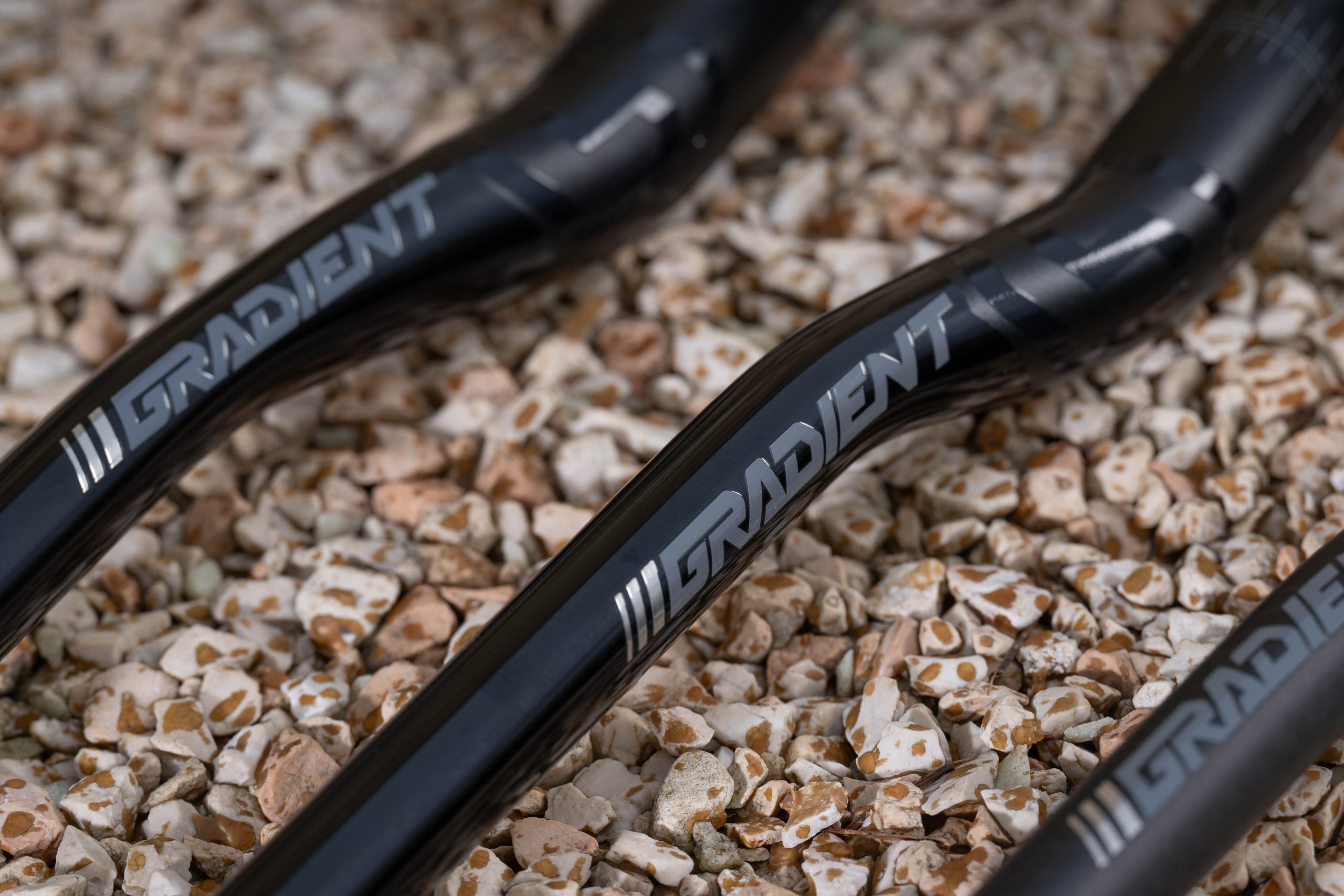
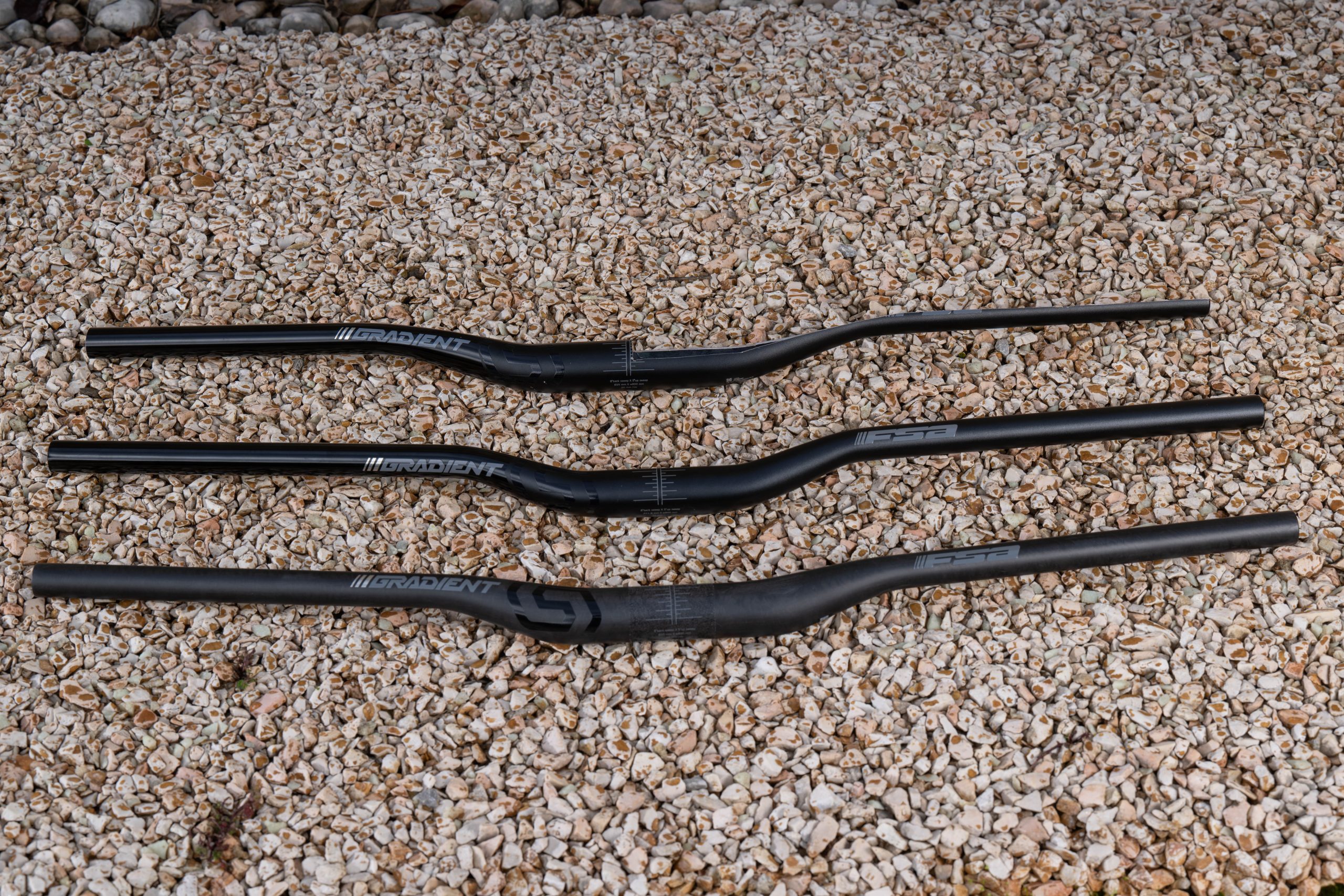
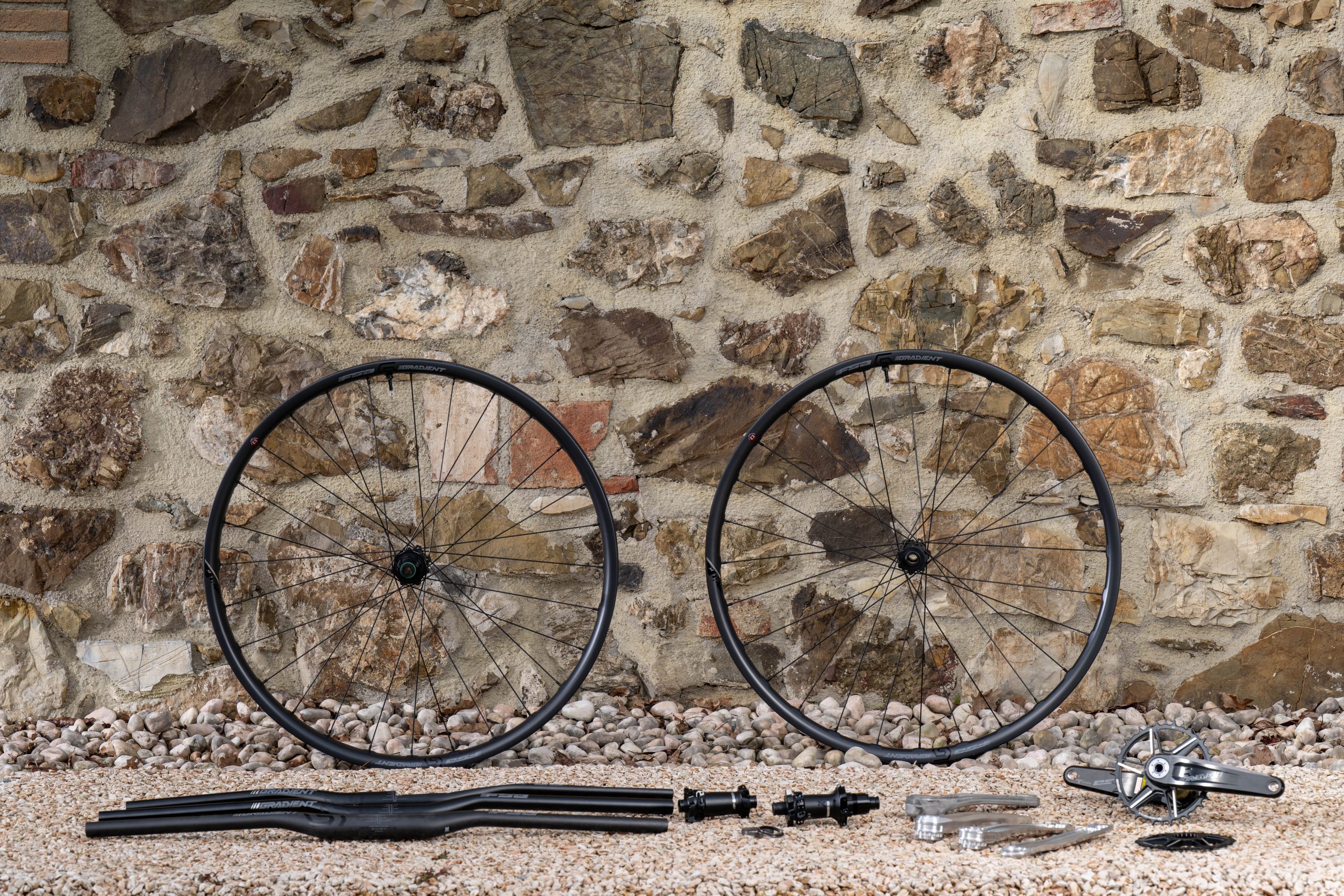
FSA’s all-new Gradient components range is designed to boost rider performance by targeting compliance and durability.
From the new i30 carbon wheels to both the carbon and aluminium handlebars, all of Gradient’s premium-level components have been developed in conjunction with the Atherton Continental race team to be as compliant and strong as possible.
The new range encompasses mountain bike wheels, handlebars, stems, and cranks and chainrings, with prices ranging from £99.99 / $99 / €119.99 for the direct-mount stem up to £1,499 / $1,420 / €1,498 for the wheelset.
While the new i30 wheelset – with its striking-looking variable-depth rim – is probably the biggest news here, it’s the carbon and alloy handlebars that piqued my interest the most.
Bars aren’t boring
The bars have been tuned to have in-built flex and dampen harshness. Mountain bike Connection Winter / Mirror Media
Handlebars are the most important contact point between you and your bike.
While your pedals, saddle and sometimes frame act as two-way translators between you and the bike, it’s the handlebar you have the most visceral, raw connection with.
Your hands are filled with nerve endings, sending millions of sensory inputs to your brain every millisecond.
Harshness, steering vagueness, feel and comfort are derived – in large part – from the bar.
Getting it right is, therefore, important and FSA thinks it has done just that with the newest Gradient kit.
Offered in two material types – carbon and alloy – and two stem-clamp diameters for each material – 31.8mm and 35mm – the brand has gone to great lengths to emphasise the importance of their feel.
They’ve got a relatively standard shape. Mountain bike Connection Winter / Mirror Media
All variants share an 800mm width, eight-degree backsweep and five-degree upsweep. The carbon versions come in 20mm and 30mm rises, and the alloy ones 25mm and 40mm.
Now the important bit; the carbon bar’s layup has been specially formulated to “increase compliance”, and is said to offer “superior vibration-damping qualities” helping “reduce arm fatigue”.
While that may sound like word soup to the less tech-savvy, it basically means the new bar should – although it’s not guaranteed – filter out some of the trail’s buzzy, harsh vibrations that can cause your hands to cramp and seize up.
The alloy bar is claimed to do a similar thing, but FSA acknowledges the two materials are not equal.
Increased compliance is the main focus, however.
Here, the brand says aluminium – at least with how it has been manufactured – is going to “absorb large impacts” and help reduce rider fatigue when the terrain goes from extreme to crazy.
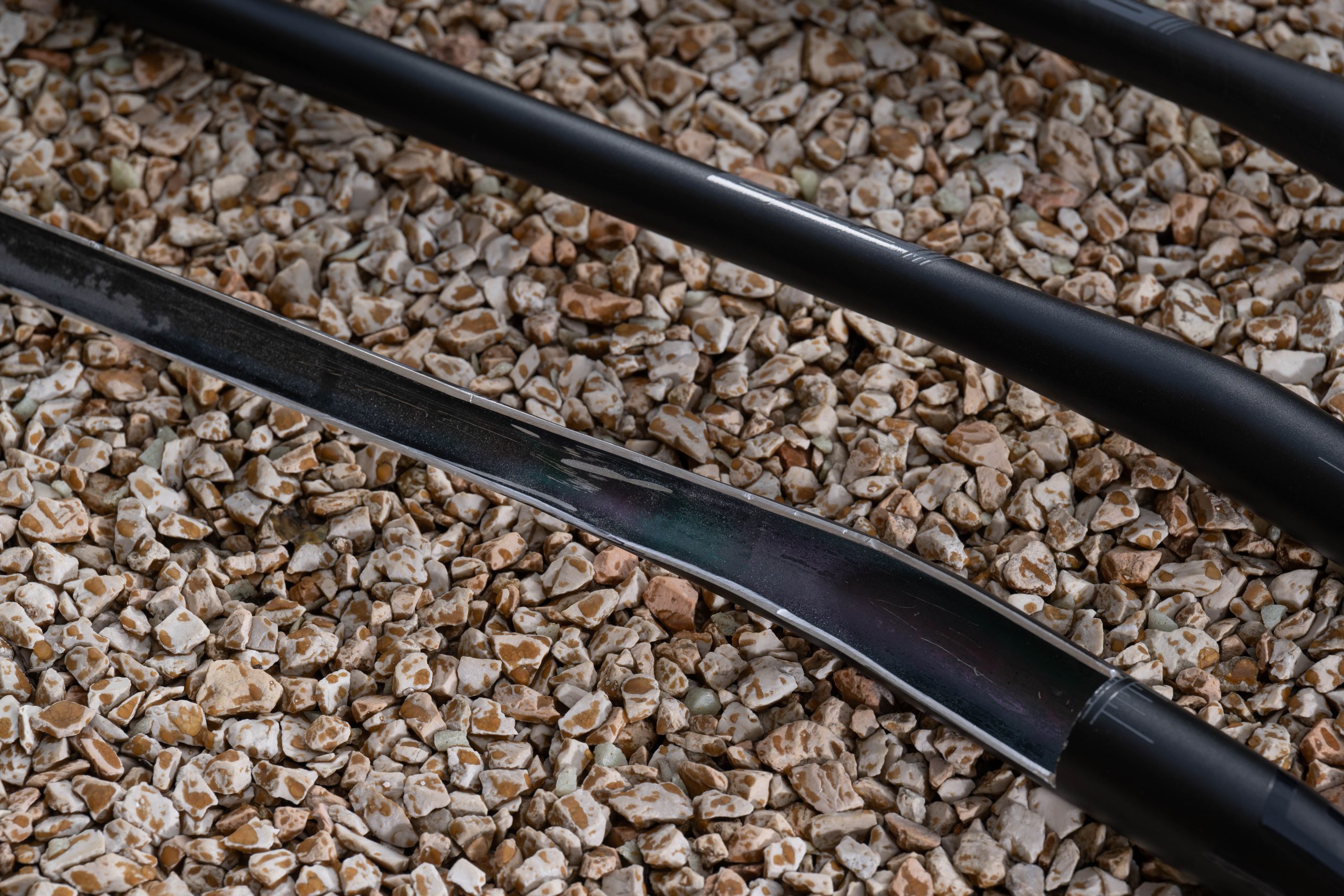
To improve the bar’s resonance-damping abilities beyond the alloy’s own properties, FSA has ‘squashed’ or flattened its bends (where it rises) to reduce stiffness.
FSA says the proof is in the pudding, with its sponsored riders choosing the alloy version over the carbon one, because of the smoother feel.
Not missing a trick, though, the brand’s latest, or should I say resurgent, smaller bar-clamp diameter standard is claimed to increase the damping further without feeling – in my words – ‘noodly’.
Cashing in on compliance
The cutaway reveals the bar’s wall thickness, showing how the construction boosts compliance. Mountain bike Connection Winter / Mirror Media
FSA isn’t the only brand cashing in on this latest compliance craze, however.
As manufacturing and technology, and therefore bikes, improved quickly throughout the late 2000s and early 2010s, every component and frame became stiffer.
As a sum of their parts, we reached a tipping point where bikes were too rigid.
They rode like bucking broncos, with each part transferring every one of the trail’s undulations directly into your hands, wrists and arms.
This resulted in a tiring and uncontrollable ride.
Brands such as OneUp launched the compliance-tuned Carbon Handlebar, and later the alloy alternative, pioneering the ovalised or flattened profile where the bar raises.
We’ve also seen this expertise with compliance used in wheel building – the Crankbrothers Synthesis being a prime example – where the front is tuned for compliance and the rear for stiffness.
FSA hopes it’s onto something by tapping into this performance-enhancing trend.
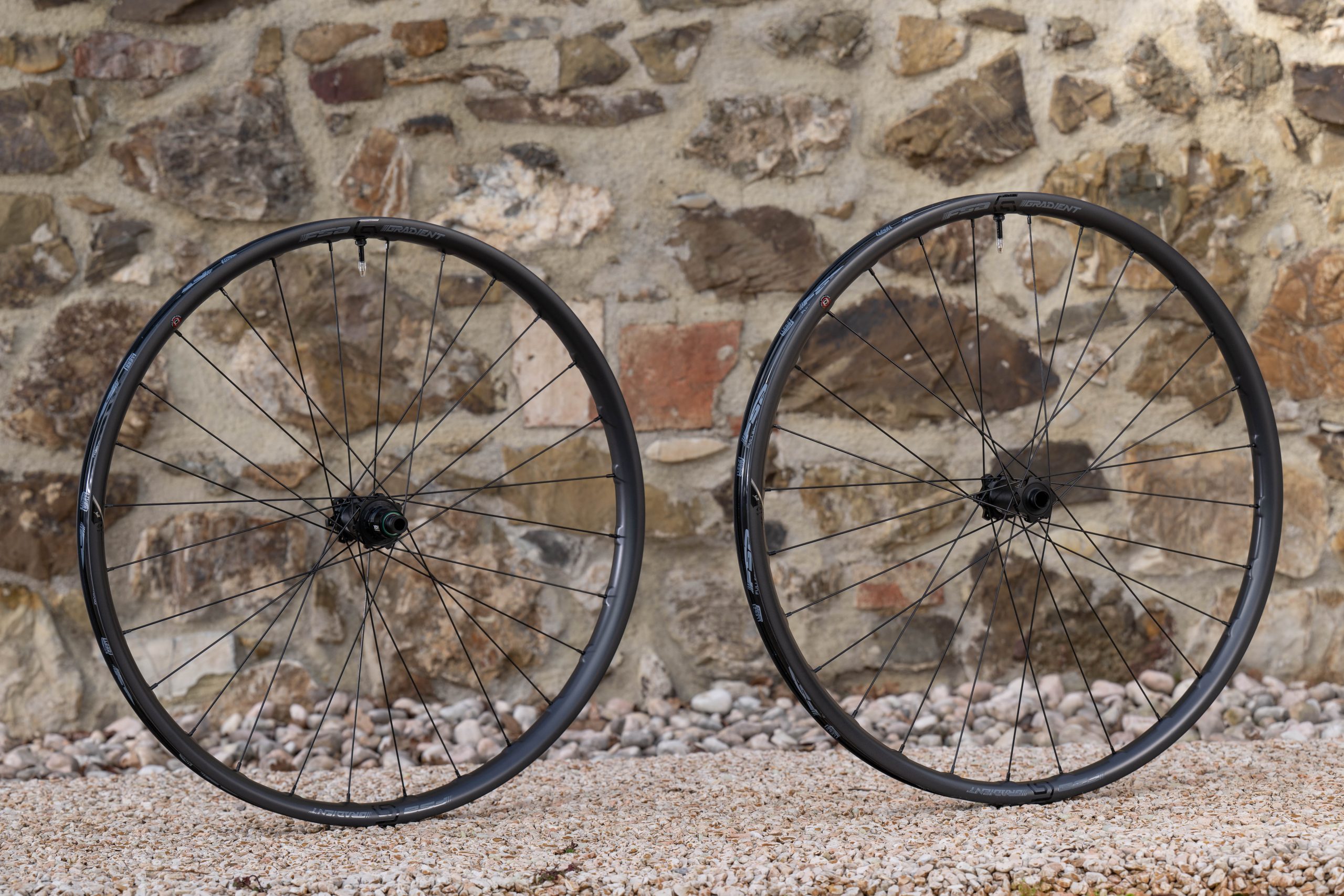
FSA’s i30 wheels
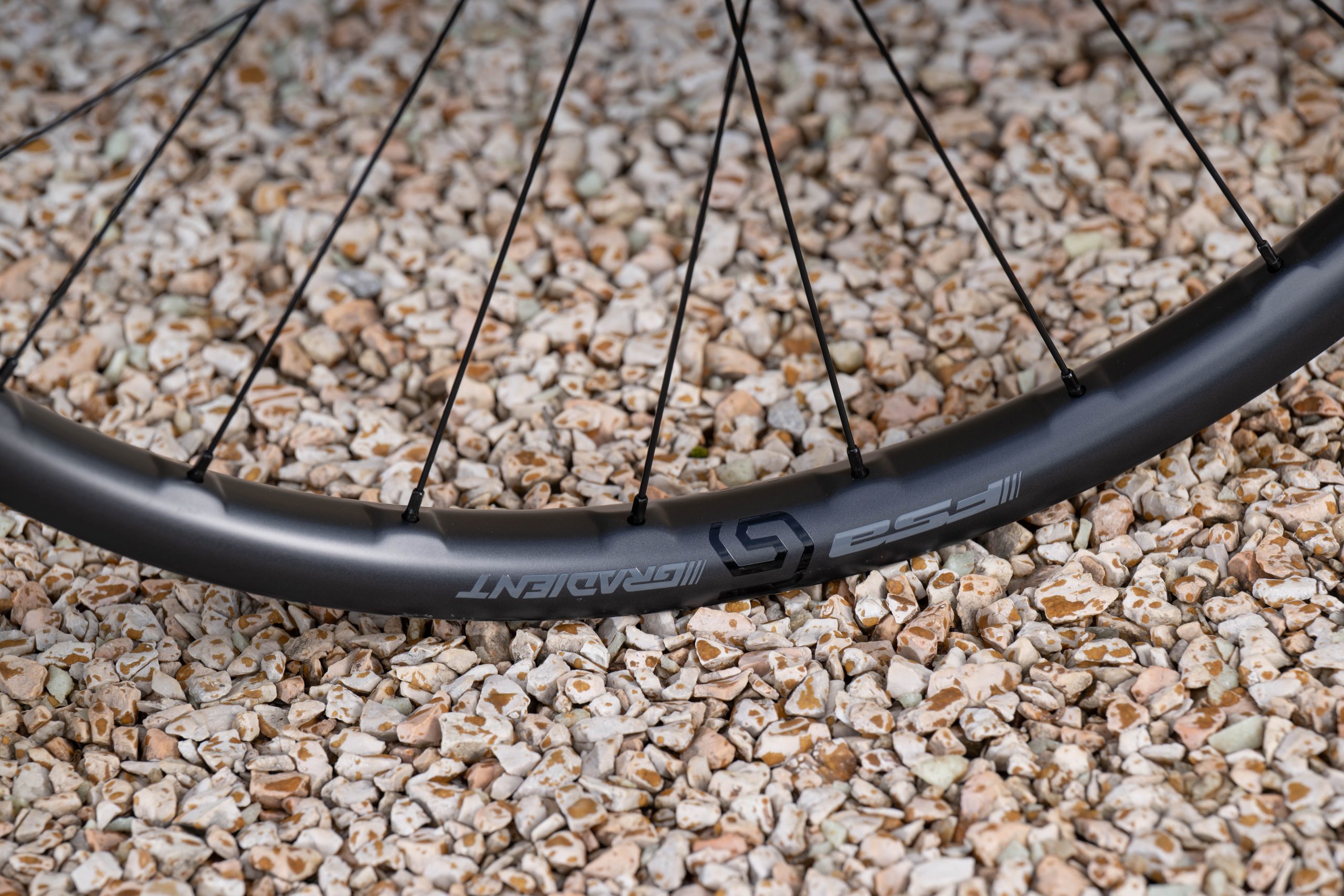
At just under 1,900g a pair, they’re relatively light, but also expensive, costing £1,499 / $1,420 / €1,489. Mountain bike Connection Winter / Mirror Media
The new i30 wheels are also claimed to offer compliance and a smooth ride quality.
That’s thanks, firstly, to a “special carbon layup”, where material is presumably added in some places and removed from others to tune stiffness.
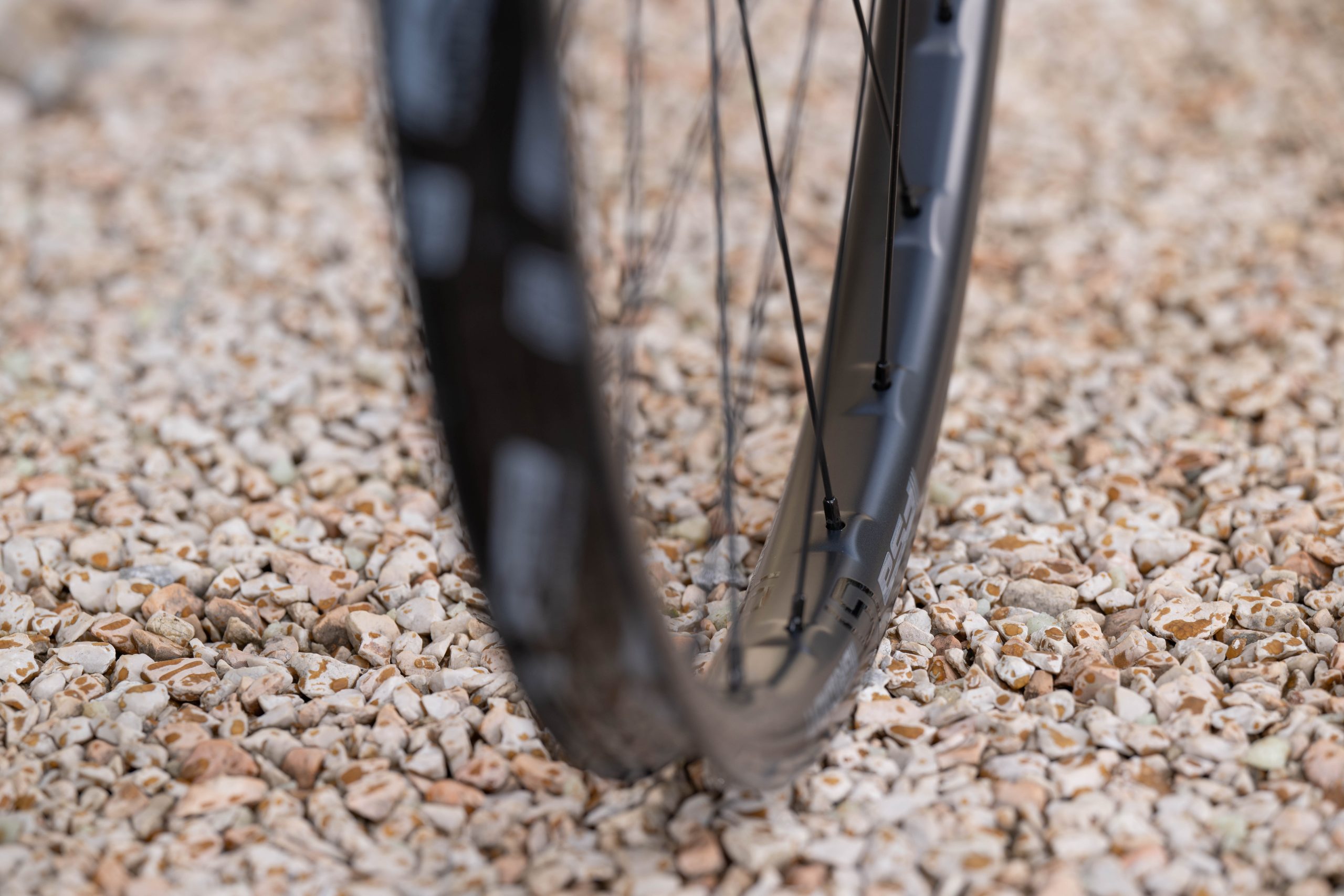
Secondly, and just as importantly, it’s because of the striking variable-height rim. Here, the spokes anchor onto a thicker, taller section. There is then a lower, thinner section between each spoke.
Mimicking FSA road-wheel tech – called ‘interspoke milling technology’ – the wheels are said to be light and strong.
This 22mm to 24mm height variation is behind a good chunk of the compliance ‘magic’.
The raised portions give the rim a 24mm depth, and 22mm for the lower sections. Mountain bike Connection Winter / Mirror Media
FSA claims the lower height “provides increased flexibility”. By implication, a more flexible rim means vibrations and big hits are better absorbed by the wheels.
With a 30mm internal width – hence the name i30 – FSA is saying this metric also plays its part in tuning strength or stiffness and “handling”, which reading between the lines means the wheels’ ability to absorb vibrations.
Details make the difference
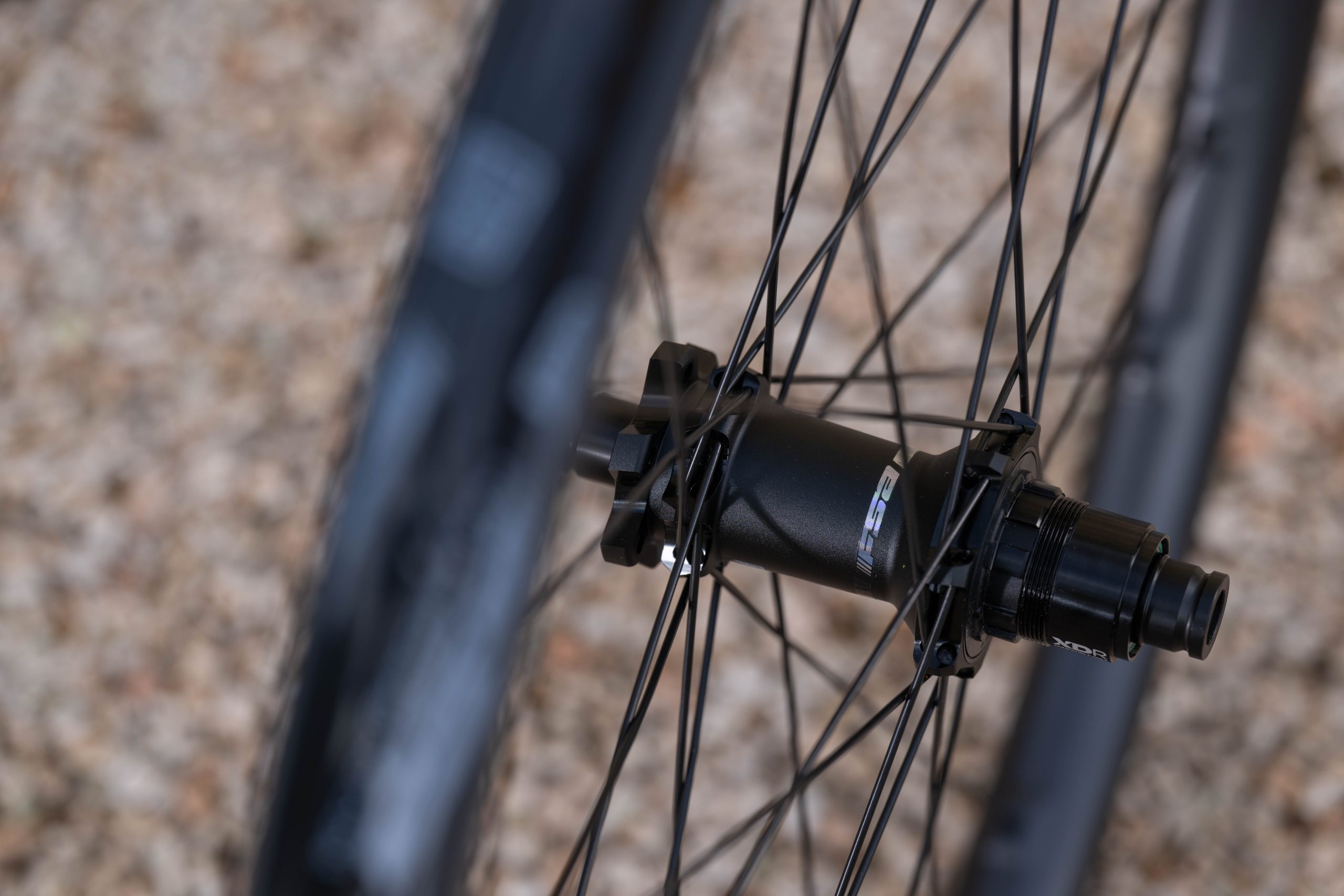
The rear hub has a 72-point engagement ratchet-style freehub. Mountain bike Connection Winter / Mirror Media
In terms of other details, the rims have a 4mm asymmetrical design, where the spokes sit off to one side, helping create an evenly tensioned build.
The rims have a 37mm external width – which is par for the course these days – and a 3.5mm sidewall width, which is claimed to reduce pinch flats.
The hubs have Microspline and SRAM XD freehubs, running on a 72-point ratchet-style engagement system.
According to FSA, the hubs have a tool-free design to speed up and simplify maintenance.
Extensive testing has put each part of the wheels through stringent ride-simulating torture.
Torsional, ISO, impact, fatigue, mud and spoke testing have all been carried out.
Emerging with the highest ASTM5 rating, the i30 wheels look impressive.
In fact, FSA’s so confident in the wheels’ durability, it’s offering a lifetime warranty on them.
A pair of 29in wheels are claimed to weigh 1,869g, which is marginally heavier than DT’s EXC 1200, but slightly lighter than the EXC 1501 wheels, both of which set the benchmark in carbon wheel performance.
Hold on, what about the wheel build?
There’s little mention of the wheels’ build in the i30 press material. Mountain bike Connection Winter / Mirror Media
The most important part of a wheel is arguably its build.
No amount of individual component tuning can compensate for a badly built wheel, whether that’s because it’s weak and wobbly, or ultra-stiff and harsh.
And we all know the painstaking approach pro racers and their mechanics take to wheel builds, finely tuning spoke tension to adjust the feel.
It’s a bit of an art; and while FSA may have done all this, it’s a surprise to see it’s not shouting about it.
Not mentioning how its wheels are built beyond stating the spokes are evenly tensioned thanks to the rim’s asymmetrical design seems like a bit of an omission.
The only other tidbit of information I could glean is about the spokes and their mounting points.
The brand says it has “[applied] a force of 150kg to the spokes and rim spoke holes” to check durability and strength, but there’s no mention of spoke tension.
Of course, the brand’s engineers aren’t stupid and neither are the pro riders who have used and tested the wheels, so until I try a pair, I’m going to take FSA’s word about these claims.
Rounding out the Gradient range
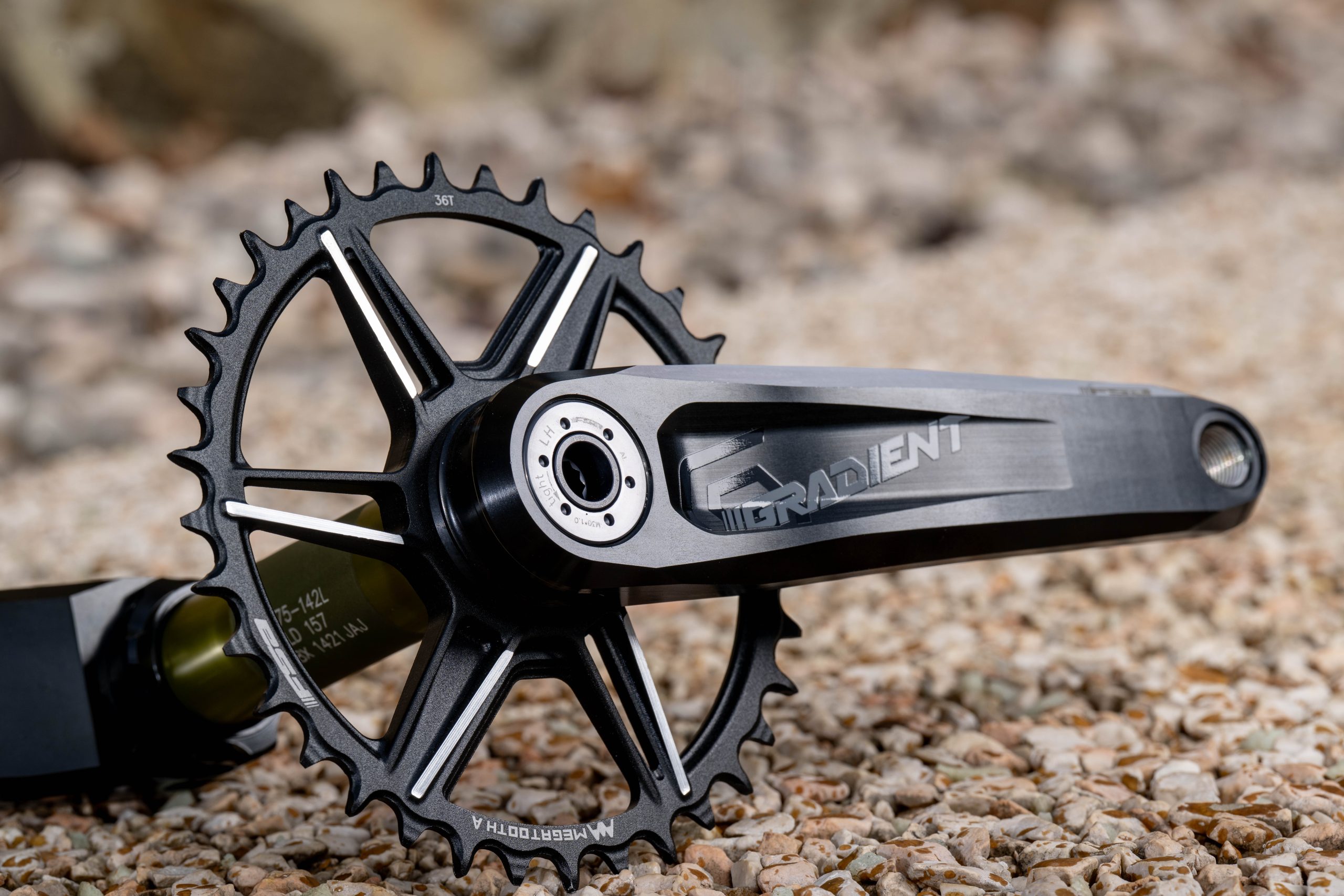
FSA’s new Gradient crankset is made from forged aluminium.
Although not focused on compliance like the bars and wheels, the new Gradient range also includes stems – both fork crown direct-mount and steerer-bolted – and a 1x aluminium crankset.
The Gradient cranks are made from forged aluminium with CNC machine finishing, where two halves of each crank arm are made from a single block of material and then seamlessly bonded together.
They’re available in 165mm, 170mm and 175mm lengths and have 30t to 36t (in 2t increments) chainring options.
Both the direct-mount and steerer-bolted stems are available to match the 31.8mm and 35mm clamp-diameter Gradient handlebars.
The direct-mount stem comes in 45mm and 50mm lengths, while the steerer-bolted stem has 33mm, 45mm and 50mm lengths.
FSA Gradient range prices
A selection of the new Gradient kit. Mountain bike Connection Winter / Mirror Media
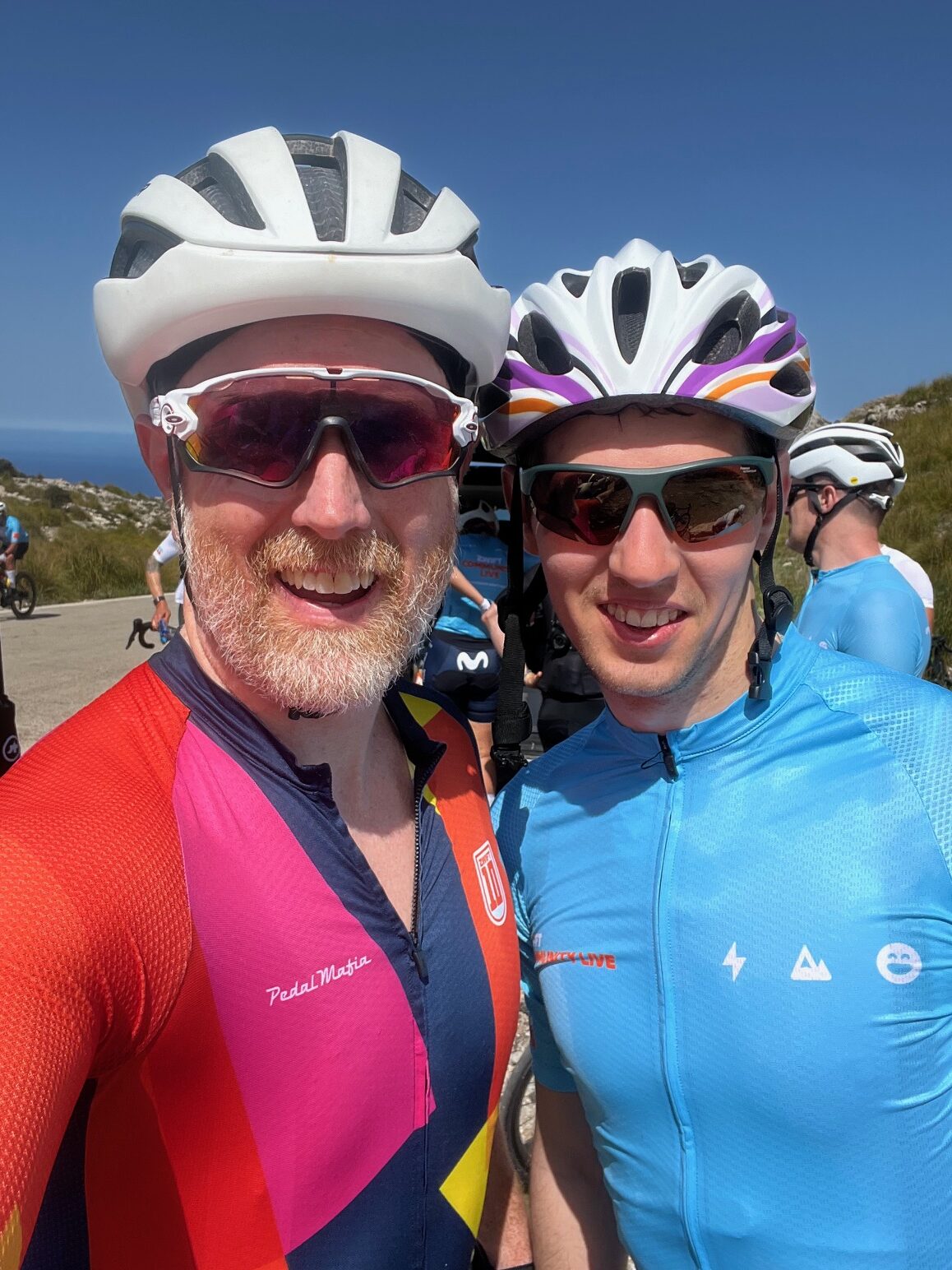
With days 1 and 2 of Zwift Community Live 2025 ridden and uploaded, I was feeling the fatigue in the legs. But the weather was beautiful in Mallorca, the vibe at ZCL was perfect, and nothing was going to stop me from taking on the toughest ride of the week up Sa Calobra! Here’s how the final day of ZCL unfolded for me…
Ride Plan
Today I was again taking on the “Uber Pretzel” version of the three ride options. If ZCL had a “Queen Stage”, this was it: as much distance as the day before, but twice as much elevation! We would ride from sea level up to the top of the famous Sa Calobra climb, then descend it all the way down to sea level before turning around to climb our way out:
I really wasn’t sure how well my tired legs would handle all the elevation, so I resolved to take it easy and enjoy the ride so I could finish ZCL on a high note.
Ride Summary
Getting Started
Once again, the dining room was buzzing for breakfast as all the Uber riders chatted about their day. Sa Calobra is a bucket list climb for many, so there were lots of excited – if not a little nervous – riders in the room. I was one of them.
After a quick breakfast full of clean carbs (whole grains, fruit, and yogurt) I kitted up and headed out to the starting area.
Since I wanted to make sure I saved my legs for the climbs without holding up my group too much, I resolved to join a more medium-paced group instead of one of the first, faster groups. I was also looking to ride with some Zwifters I hadn’t ridden with yet, so I joined the group led by Zwift’s Director of Women’s Strategy, Kate Veronneau. (I knew from prior experience that Kate is both a very strong rider and an experienced ride leader. She wouldn’t steer us wrong!)
Let the Fun Begin: Coll de sa Batalla
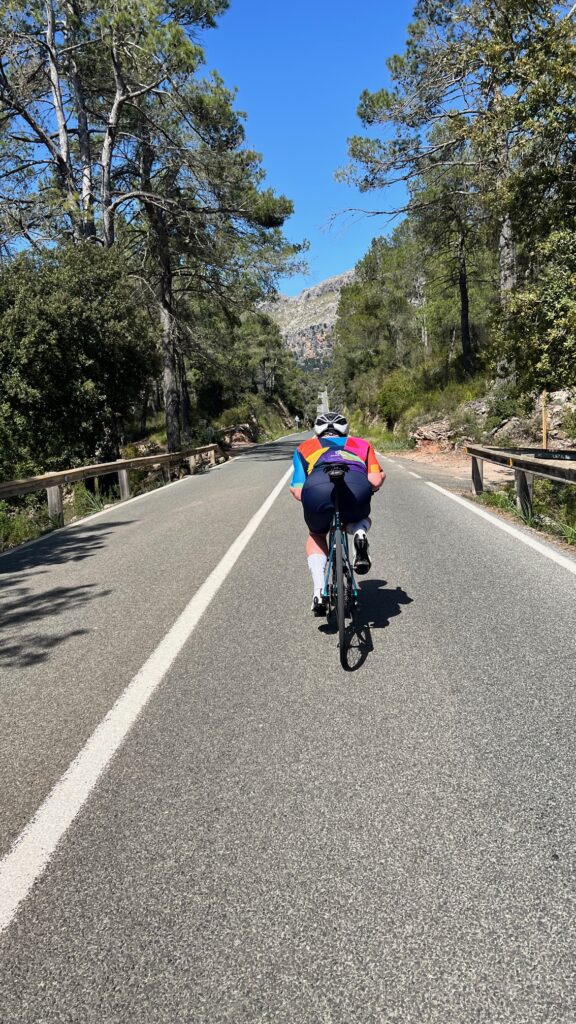
The first 10km of the ride were quite flat, and the group got into a rhythm. Then the ground sloped up so we were climbing – but this was just the easy stuff. 25km in, the switchbacks began as we made our way up the Coll de sa Batalla (7.9km at 6%):
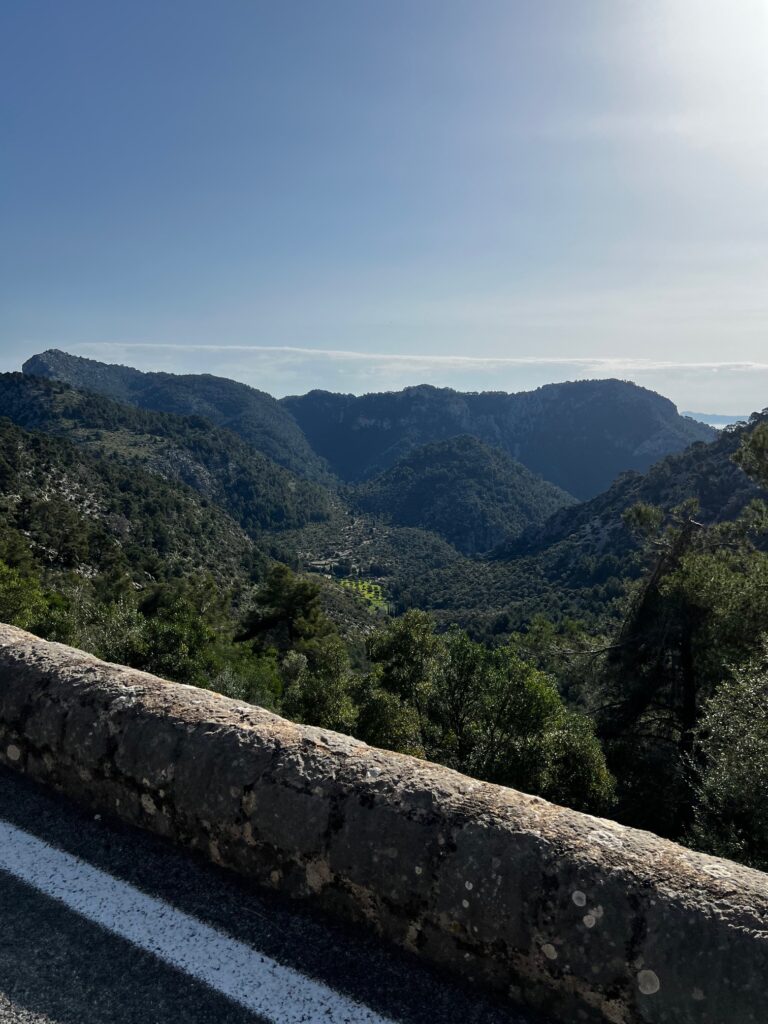
This is where most of the group pulled away from me, and I just rode my own ride, enjoying the switchback climb and valley views as I lugged my “overmuscled” physique toward Sa Calobra.
Solo climbing time on Coll de sa BatallaValley view from Coll de sa Batalla
I caught up to the group where they’d stopped at the Repsol gas station, and I thought we were close to the start of the Sa Calobra descent.
We were not.
Thinking we didn’t have much climbing left, and with legs that felt decently fresh, I followed the front two guys (one wearing an Everesting jersey, which should have tipped me off) who quickly got away from the rest of the group as we put in a solid climbing effort to finish off Coll de sa Batalla.
A Surprising Climb
A fun rollercoaster descent followed, lulling me into a sense of security. Then the road pitched upward – surprisingly so – and I realized I had made a bit of a mistake. We still had another 3.1km at 6% to climb to the top of Coll dels Reis before we could descend the other side (which is Sa Calobra). I was soon caught and (once again) passed by most of the group. Ha!
We regrouped at the top of Coll dels Reis on the Sa Calobra side, and Kate explained that we could hang out there, at the top of Sa Calobra. Or we could descend it, then turn around and climb back up. Everyone in our group was there to ride Sa Calobra, so down we went.
Descending Sa Calobra
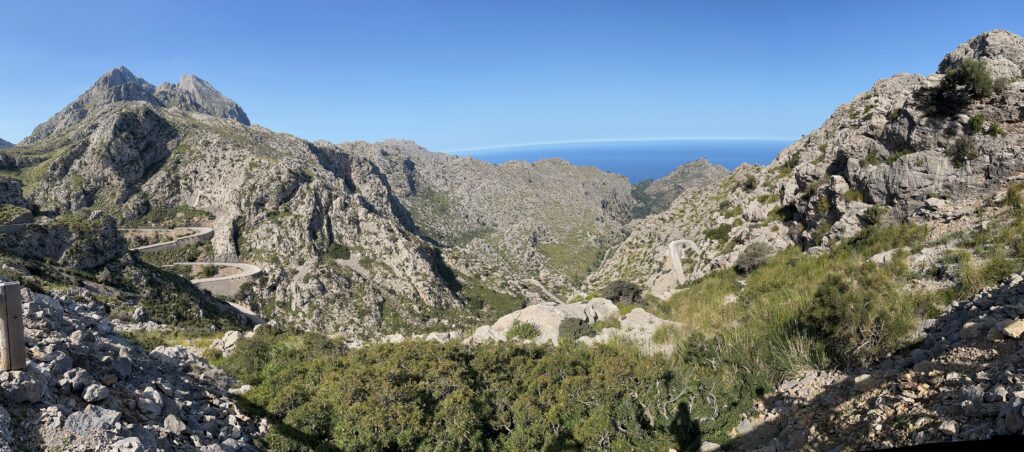
It’s hard to adequately describe my experience descending Sa Calobra for the first time. It’s such an otherworldly and unique road. The smooth, serpentine turns seem to undulate endlessly, contrasting with the rocky mountainside as you look down and try to wrap your head around how it’s all laid out.
The road was smooth and dry, the temperature was cool but not cold, and there were no cars getting in the way. I took advantage of it and enjoyed the descent, staying off the brakes when it felt safe (because fast is fun), but not taking any unnecessary risks, either.
It was perhaps halfway down that I began passing Zwifters who were in the first, fast group and on their way up the climb. Nick Nellis from TFC, Nick Kalkounis from ZwiftHQ, Jeff Linder from NorCal Cycling, Nathan Guerra, Jason Stern from DIRT… I yelled “Allez allez!” at everyone I recognized, flashing a smile as they suffered their way up the climb. I knew I’d be there soon enough.
Soon enough I was down at the bottom with a whole lot of cyclists, and it was time to turn around and pay the piper.
Climbing Sa Calobra
I told the two riders with me that I was going to treat this like a Zwift TTT race: holding what seemed like too easy of a pace at the start so I still had something to give at the end. So I chugged along around 220W, somewhere between 2.5 and 3 W/kg, and just enjoyed this infamous climb.
(At least, I think that’s where my power was. I’m not convinced my Garmin pedals were reading accurately, since my L/R balance was way off, indicating at least one misreading pedal.)
In the early part of the climb, I met one of the Zwifters with me: Vlad. He’s from the Ukraine, and lives in Kiev. He’s only ridden indoors, on Zwift, since the war began. ZCL was his first opportunity to ride outside in over three years. Wow.
Zwifters from later groups began zipping past us, descending as we climbed, and we started yelling “Ride On!” to everyone we recognized. You could hear the Ride Ons all over the mountain as Zwifters shared the love. Super fun!
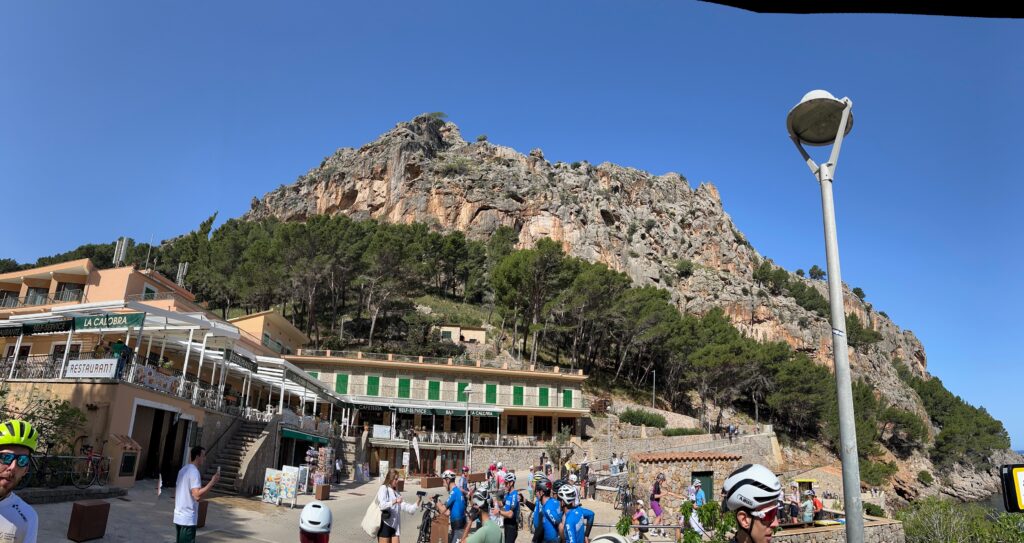
The end of the climb actually came a bit earlier that I’d expected, but that’s not to say it felt short. The Zwift support van was parked perhaps 100 meters before the finish line of the Strava segment, so as I neared the van I heard yells of “push all the way to the sign!” Everyone had to go hard to the line.
I clocked a blazing 50:28 on the official segment, earning me 81,823rd place out of 165,549 riders. Top 50%!
All Downhill from Here
We regrouped at the support van, then made our way together to the coffee shop for a welcome shot of caffeine and cake. Our 2000 meters of climbing were essentially done, we just had a mostly-downhill 40km left to knock out.
Cyclists know that’s a great way to end a ride. Top-knotch route design right there.
It was probably bad form for me to enjoy a cheeky supertuck off the front of the group on a long, straight section of downhill. But it felt like such a fun and Zwifty thing to do. (Take that, UCI!)
SupertuckingSpinning with the Zwinfluencers
And it’s also possible that a few others and myself enjoyed ourselves a bit too much, relishing the speed of the rolling descent. Kate eventually rolled up to the front to get things slowed down and grouped together, and we began making our way toward home as a unit once again… slowly.
Mercifully, when a faster group of Zwifters rolled by, Kate said we could join them if we wanted to roll faster, so a few of us did just that. That’s how I ended up riding next to Ayesha McGowan (@ayesuppose) and Carolyn Carter (@la_triathlete) in a zippy group of influencers (Zwinfluencers?) who towed me the rest of the way into Mallorca.
The day was far from over, though. After a shower and some hangout time with Monica to hear how her ride went, we headed for dinner (fajitas!) followed by the final fireside chat hosted by Matt Stephens.
This third chat was by far my favorite of the three nights. Matt’s two guests were Sirs Chris Hoy and Mark Cavendish, and those three men held everyone’s attention for over an hour. The conversation was expertly guided by Matt and included serious notes (Sir Chris talking about his stage 4 cancer diagnosis) but also lots of stories and laughs.
Stephens with Hoy and CavThanking the ride leaders and ZHQ crew
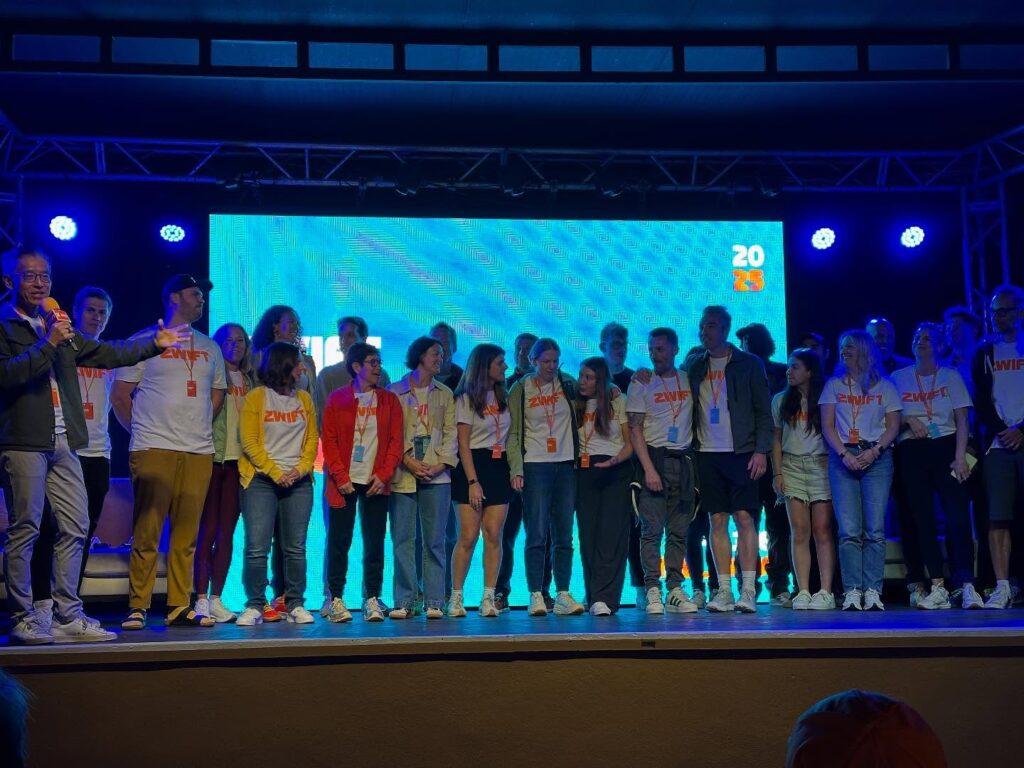
Eric Min came up next, thanking everyone for coming, inviting the Zwift staffers and ride leaders up for a round of applause, and promising a ZCL for 2026. (Everyone cheered, because everyone wants to do it again!)
We ended the night with a 10-minute ZCL highlights video, which I wish Zwift had uploaded somewhere because I’d include it here. (It was so well done, and really captured the positive energy and community vibes of the week.) It felt like the perfect ending to an incredible few days.
That’s a Wrap
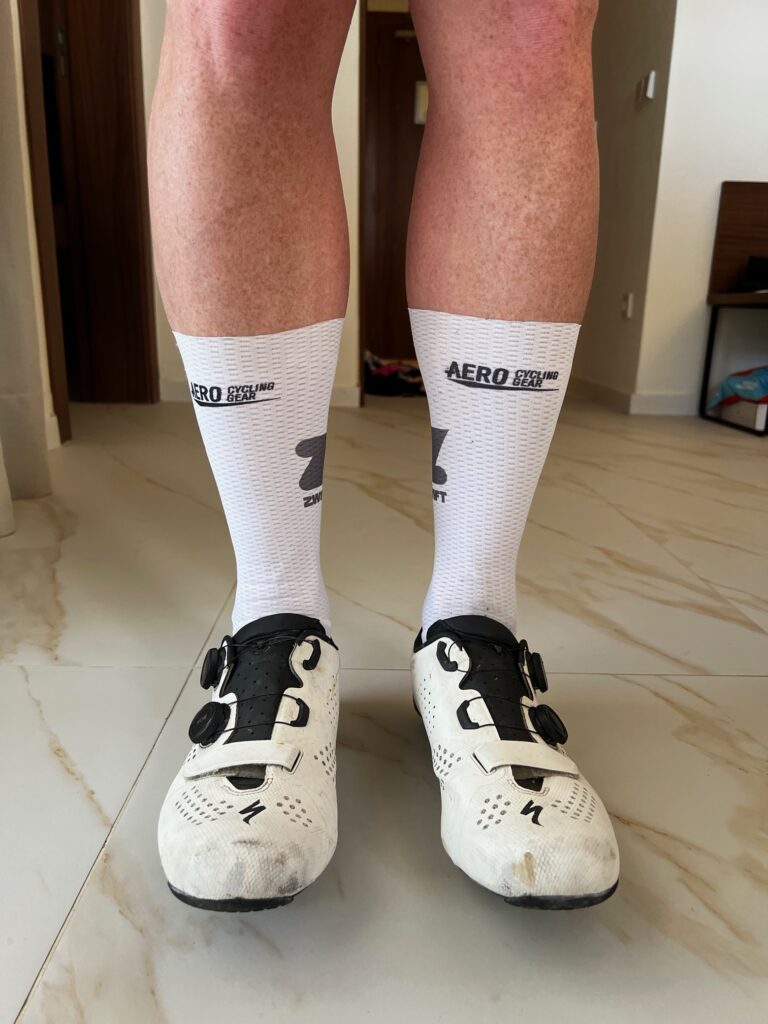
I may write one more post with additional thoughts on all things ZCL, because there was so much I haven’t shared in these daily summaries. But since it’s past midnight here in St. Andrews, Scotland, where Monica and I have extended our European stay, for now I’ll leave you with a #humblebrag shot of the sweet aero socks Zwift gave everyone at ZCL:
Gravel racing has been full of tyre talk of late, from the shift towards larger volumes to racers opting to use low-rolling-resistance tyres from mountain biking.
The issue is that, bar a few exceptions, gravel tyre tech has tried to span the wide variety of gravel riding.
That spectrum covers everything from fast, flat-out shorter-distance gravel racing to multi-day epics, bikepacking and everything in between.
That has meant tyre compounds have tended towards the hard-wearing rather than race-developed options.
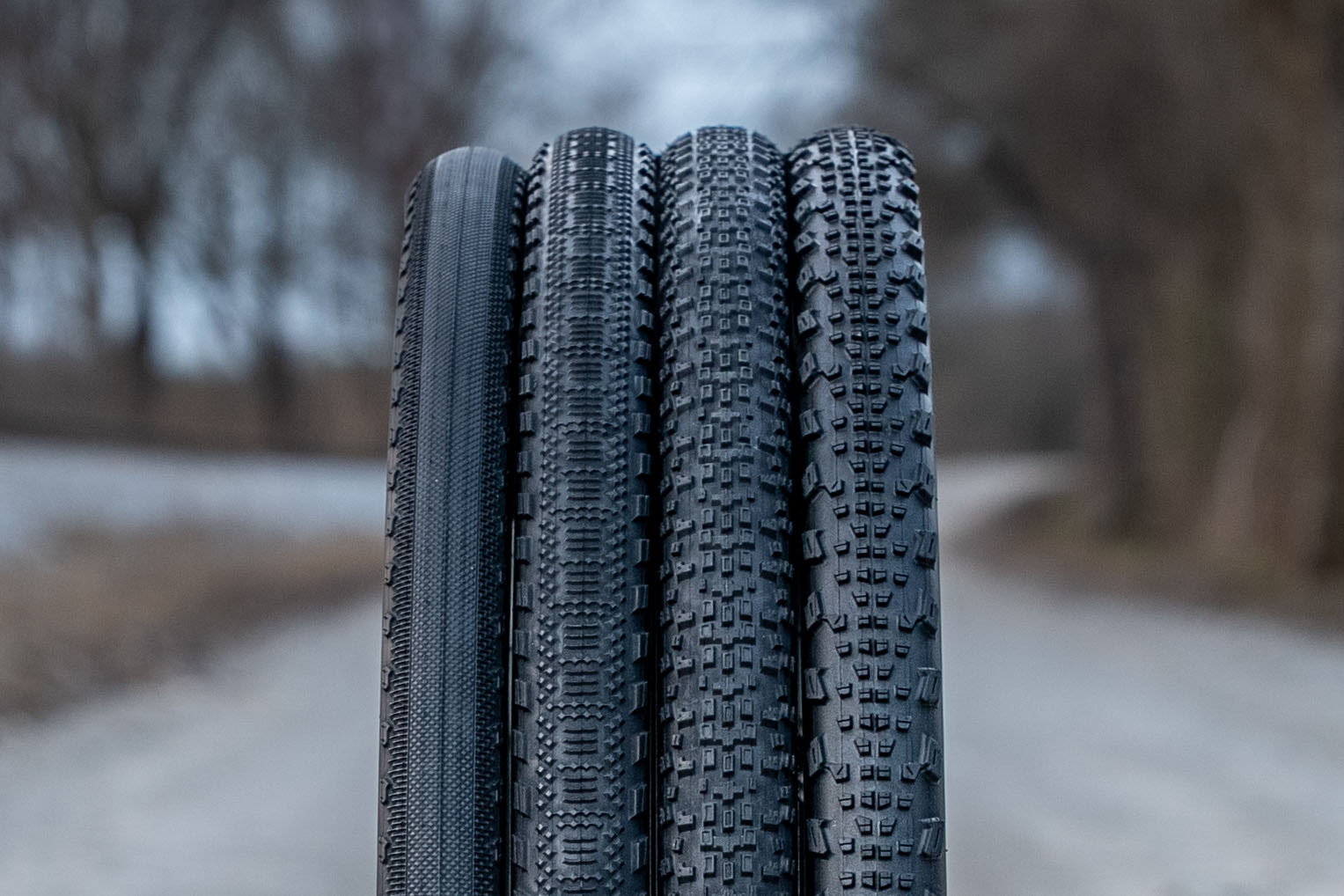
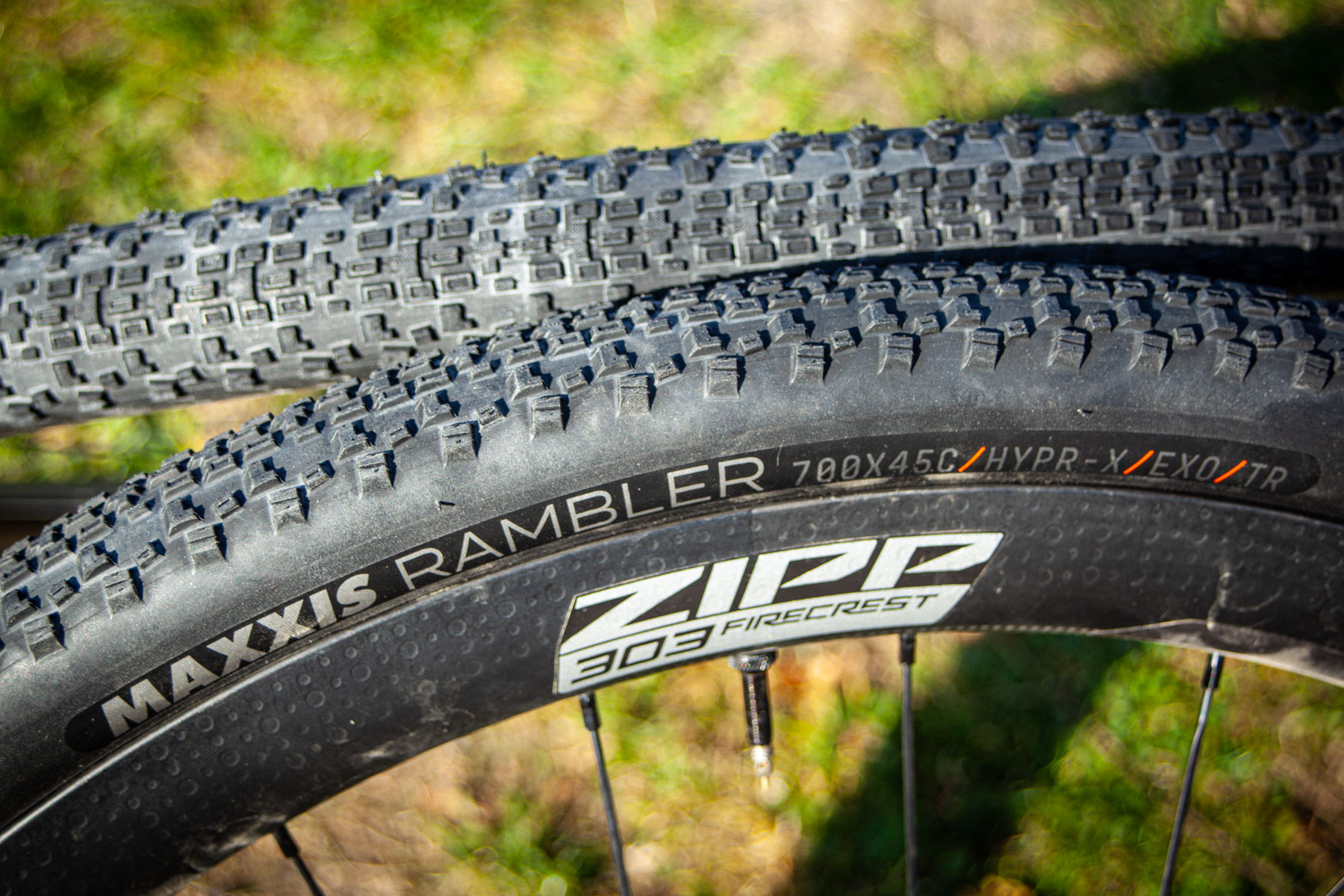
Well, it looks as if Maxxis has become the first MTB tyre brand to take gravel tyre tech seriously, introducing its new gravel-specific HYPR-X compound.
Where the mountains meet the road
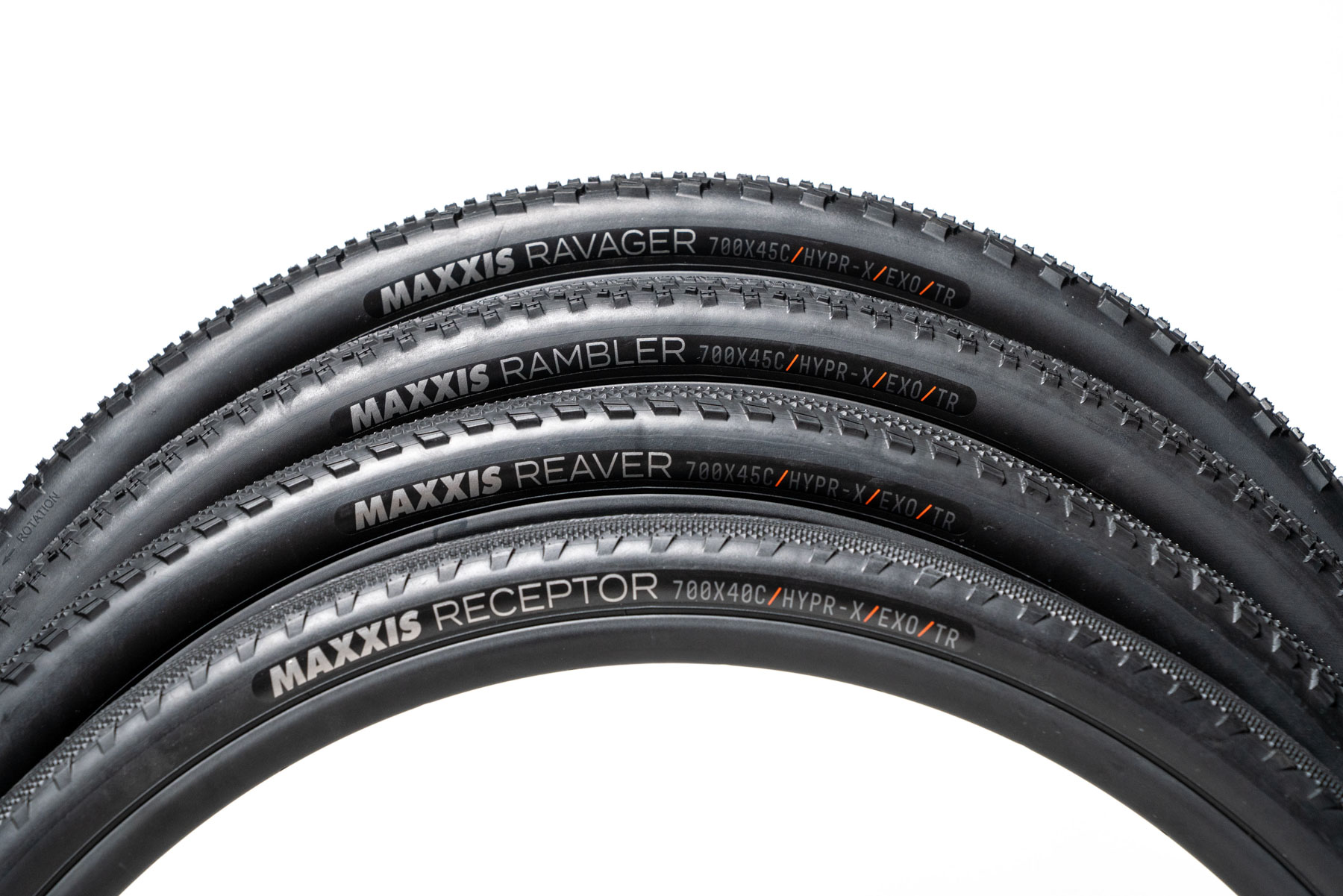
Maxxis’ gravel range has a tread for every condition. Maxxis
The new HYPR-X compound blends the road-racing HYPR compound from the High Road SL tyre with the race-winning MaxxSpeed mountain bike compound.
The new HYPR-X compound is being rolled out on Maxxis’ four gravel models – the Receptor, Reaver, Rambler and Ravager.
Higher grip, lower rolling resistance
Maxxis’ new HYPR-X compound has been introduced across the whole gravel tyre range. Maxxis
Maxxis claims the new compound brings with it a 19 per cent improvement in cornering traction and 25 per cent less rolling resistance in lab testing.
The compound is wrapped around Maxxis’ 120 TPI casing, updated from the previous generation with a stronger nylon yarn. Maxxis claims this will vastly increase tread durability.
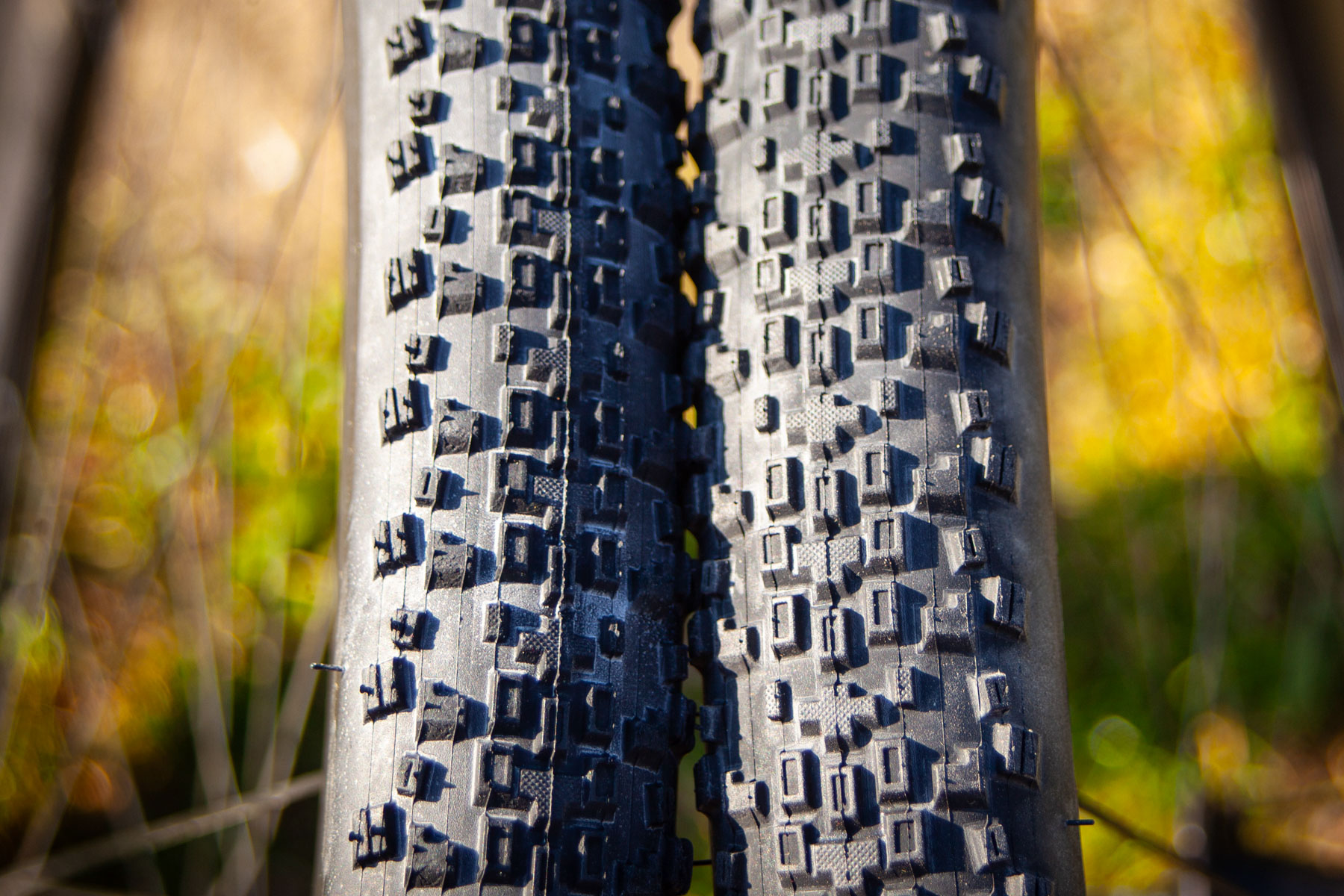
The old Rambler (left) and the new grippier, lower-rolling-resistance HYPR-X Rambler (right). Warren Rossiter / OurMedia
We’ve got a set of the new HYPR-X compound Ramblers and I’ve tested them side-by-side with the current Dual-compound Ramblers over a few brief rides. We’ll follow up with a full test of the new Ramblers soon.
My first impressions are that the new compound has much more elasticity than its predecessor.
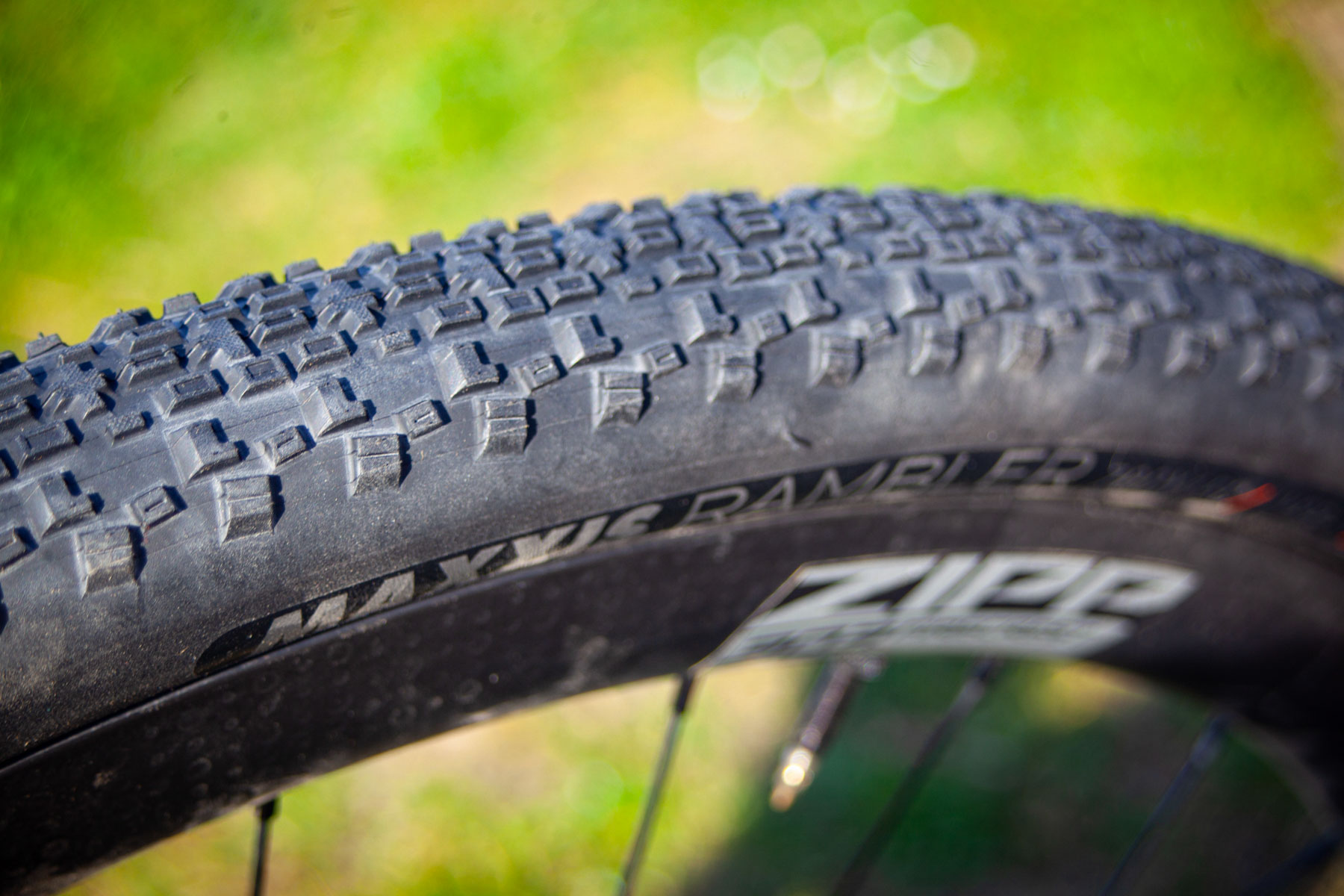
The shoulder tread deforms more easily in the corners and the grip feels much more assured. Meanwhile, its roll on the road feels impressively quick for a treaded tyre.
The new Rambler gets updated graphics on its hot patch. Warren Rossiter / OurMedia
Given the previous Rambler was one of the best gravel tyres, this new compound looks to be improving on that very high standard.
The new HYPR-X brings a small increase in weight to 566.3g (45mm), compared to 560.3g (45mm) on the previous Dual-compound tyre.
Maxxis Rambler HYPR-X specifications
The new compound has a much more elastic feel to its pronounced shoulder tread. Warren Rossiter / OurMedia
The Reaver and the Rambler with HYPR-X and new casing will be available first in 700x45c, with other sizes arriving over the next three months.
All sizes of the Ravager and the Receptor are scheduled to roll out in the third quarter of 2025.
Maxxis has confirmed pricing will be the same as its current gravel tyres.
The Tiny Races concept came to me while I was riding outdoors one day, trying to figure out a way to make workouts on Zwift more enjoyable. Like many Zwifters, I’d done a lot of structured workouts on Zwift, and I’ll readily admit that they provide very efficient and targeted training stimulus.
There’s just one problem: I find structured workouts to be lonely, painful, and boring.
So the Tiny Races were created, with the goal of pushing riders hard in 4 back-to-back events lasting 5-10 minutes each. The hope was that you’d get a lot of VO2-level work in on each race, effectively turning your hour of racing into an hour-long VO2 workout.
But Tiny Races aren’t a perfectly structured VO2 workout. Yes, you’ll get a lot of VO2-level work in. But it may vary greatly depending on your strengths as a rider, and the course chosen for the day.
So on this Saturday, I decided to try something I’d never done before. I would simply treat the first 4 minutes of each race as a VO2 interval, shooting to average 350W during that time. Then I would ease and recover as I finished the race.
Then do it again, and again. And again. Four VO2 intervals. Because on this particular day, I was more interested in getting a quality workout in than I was in finishing high in the race rankings.
Here’s how the races (workouts?) unfolded…
Race 1
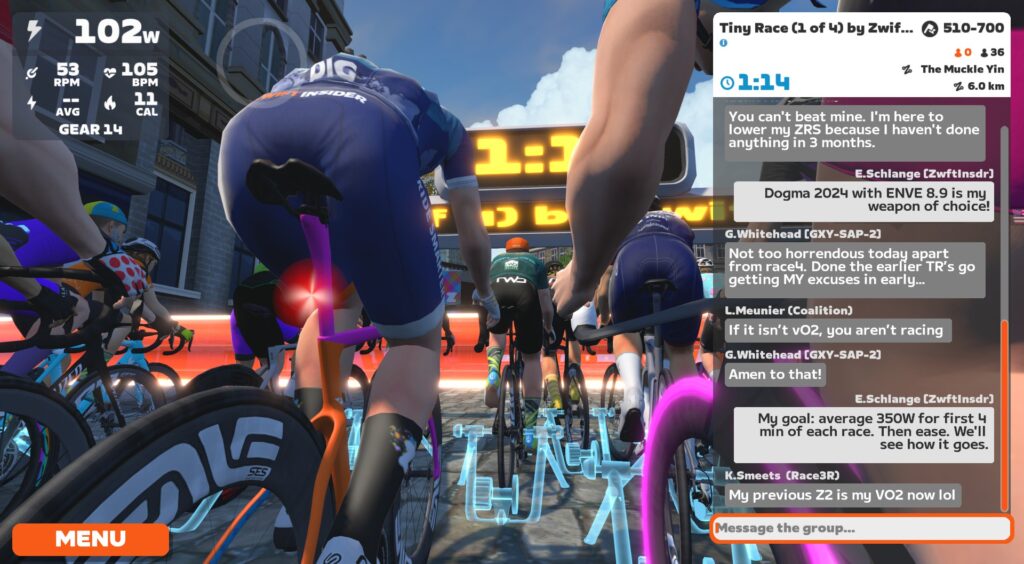
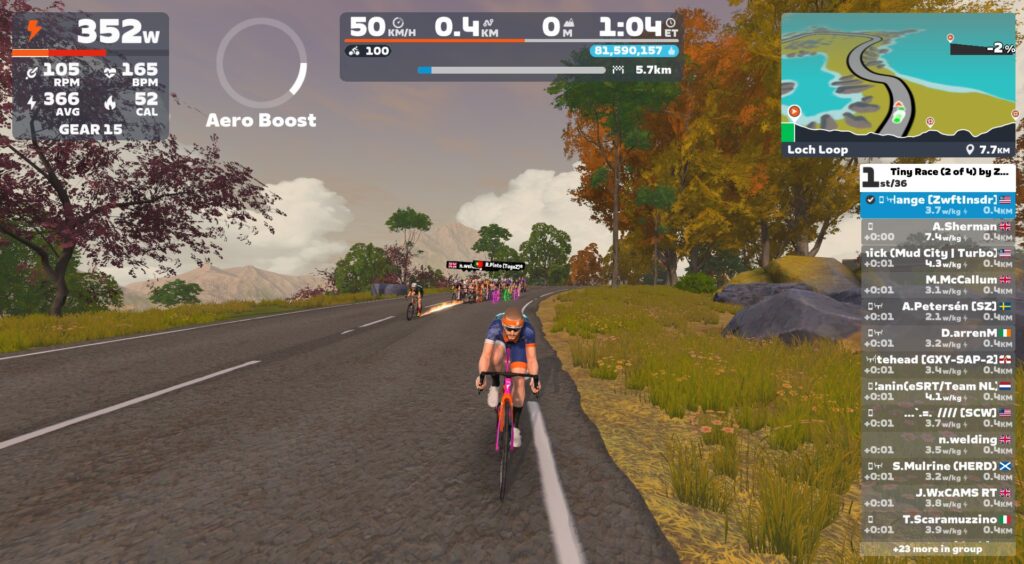
The first race was 6km of The Muckle Yin, ending at the Breakaway Brae Reverse banner. I chatted a bit with the other racers, even telling them what my plan was:
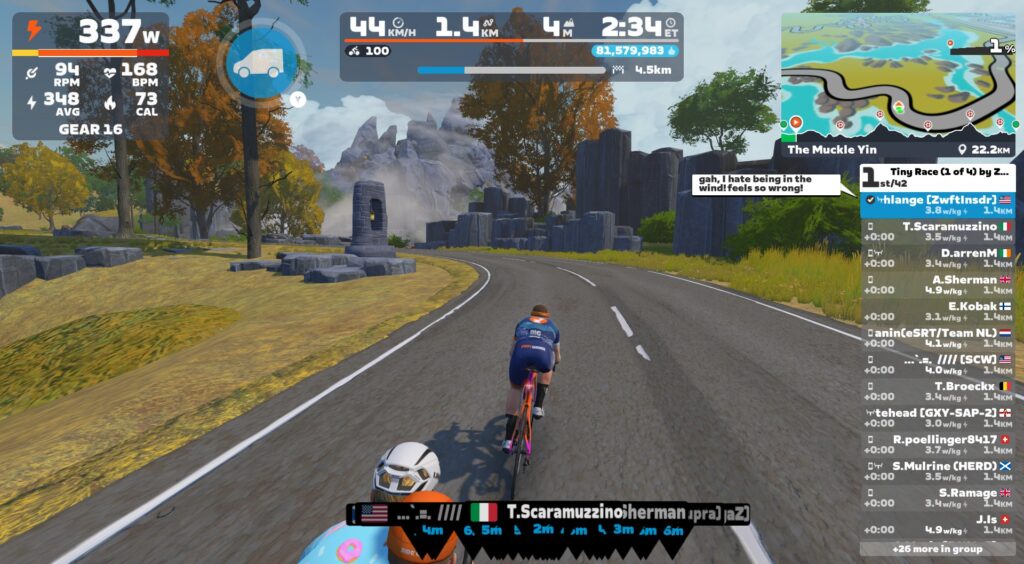
Soon enough, we were off! I found myself in the wind as we climbed The Cliffs section, and as a racer, this just felt wrong. I was wasting watts! But not today. Today, I needed to hold 350W for the first 4 minutes.
I stayed on or near the front for most of that climb, then the clock hit 4 minutes and I eased up.
4 minutes at 352W, HR 173bpm
We were so close to the top of the climb and the descent that followed that I put in a little extra work to hold onto the pack so I could stay in the draft until the Corkscrew Castle climb. When we hit that climb the pack flew away, and I finished the last 1.5km easy, clicking to watch the front riders finish before I crossed the line in 36th.
My racing score dropped from 549 to 529 in this single race.
Race 2
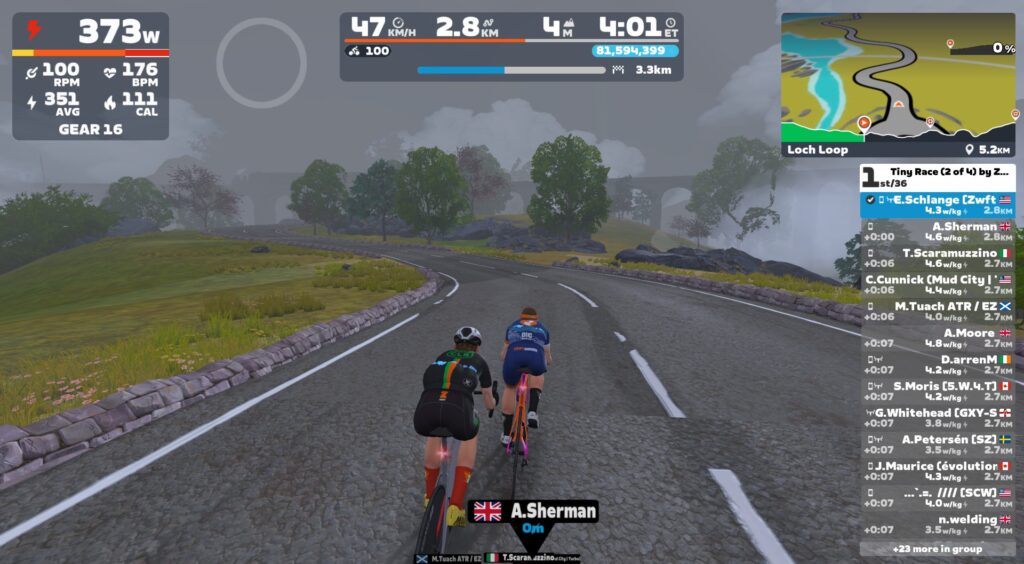
The second race was on 6.2km of Loch Loop, ending at the entrance to Corkscrew Castle. This race begins with a long, slack descent down The Cliffs section that we climbed in the previous race. Again, I had to hold 350W for the first 4 minutes, so against my racing instincts I went hard out of the gate onto the descent where I would normally be recovering.
I got an aero powerup at the start, and decided to use it as I went off the front, to make the race more interesting. One rider, A. Sherman, saw my attack and followed. Let’s go!
I was using my steering to shorten the course a bit, but Sherman didn’t have steering, so eventually I gave up and let the game autosteer so we could work together. (Although “work together” really isn’t accurate, because all I was doing was holding 350W. Sherman would have to decide if he wanted to sit on my wheel or push hard and be in the wind.)
I’d say he chose poorly, sitting in the wind just ahead of me for most of my 4-minute effort instead of taking some time to recover. But maybe he was doing a VO2 interval too!
When I sat up at the 4-minute mark, I messaged, “Good luck!” and let Sherman ride away. We had a 6-second gap on the peloton.
4 minutes at 352W, HR 176bpm
I clicked to watch how Sherman got along. He ended up getting caught on Breakaway Brae with 1.2km to go. Nice try, sir!
I rolled in at 34th place out of 36. My racing score dropped from 529 to 509. Woah!
Race 3
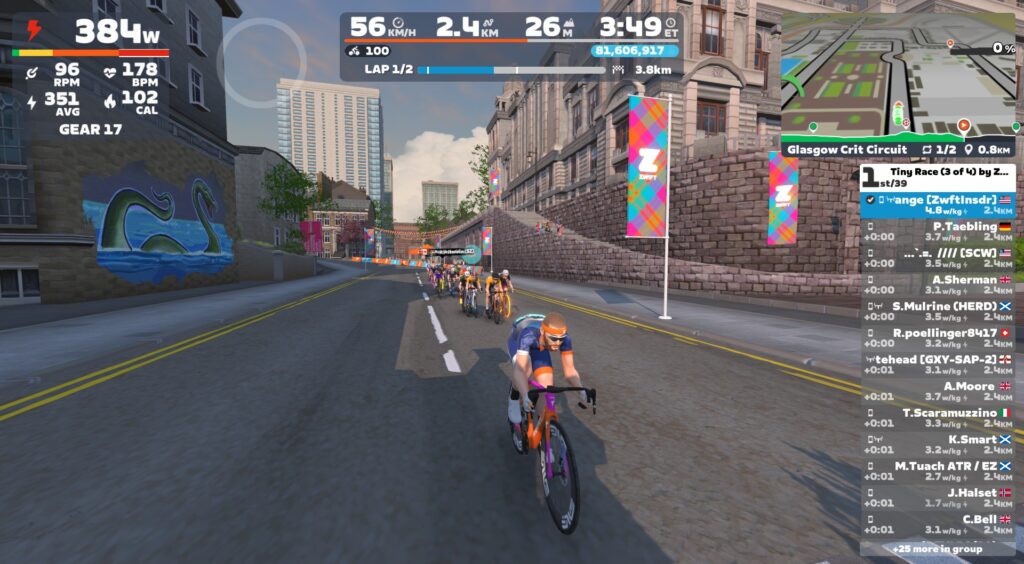
For our third race, we were taking on 2 laps of Glasgow Crit Circuit. The VO2 intervals weren’t killing me yet, so I knew I had the power to do it again. But how hard would it be to hit that 350W average on Glasgow’s undulating roads?
Only one way to find out.
Once again I was off the front early. Then we hit the Clyde Kicker, and I almost got dropped as everyone revved up the power big-time and I tried to keep it fairly steady! I used my aero powerup to chase back onto the group, finding myself off the front again before the lap was finished.
4 minutes at 350W, HR 178bpm
I finished 31 out of 39, dropping my racing score to 503. One race/interval left!
Race 4
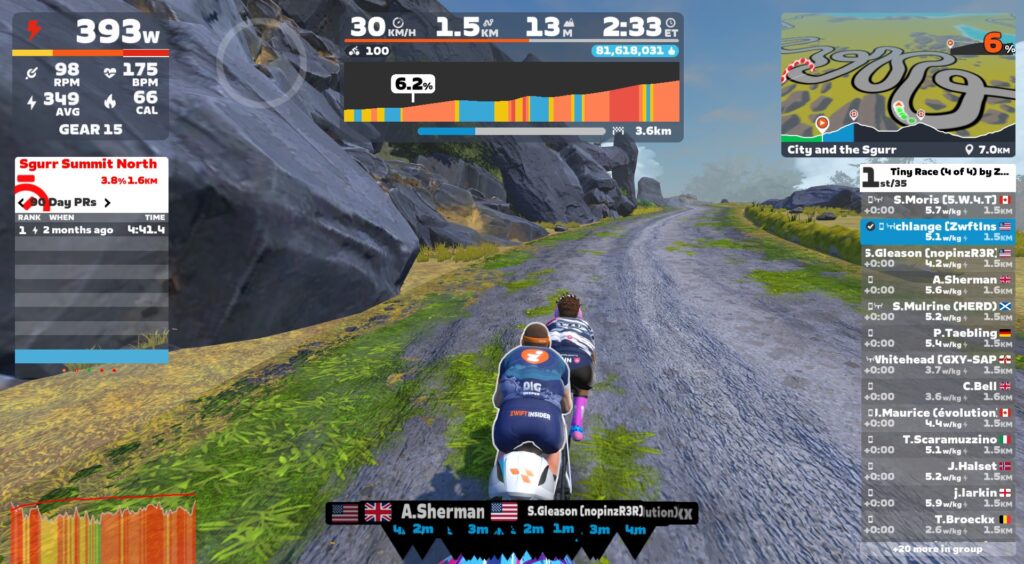
The final race was on City and the Sgurr, a route I rather despise since it quickly takes you up the gravel side of the Sgurr climb, where I always get dropped.
No pressure today, though. I just needed to hold 350W for 4 minutes, which would put me somewhere in the middle of that climb.
Again, I found myself on the front for most of the lead-in to the climb. And I stayed there for the initial bit of the climb before the pack swamped me when things got steep:
I finished my last 4-minute interval just a few meters off the back of the peloton. Job done!
4 minutes at 354W, HR 177bpm
I finished the dirt climb, descended the other side, then climbed the paved side to complete the race at the top of the Sgurr 30th out of 35., dropping my racing score to 490.
Watch my race video:
Takeaways
My “Tiny Racing as VO2 Workout” experience left me with two key takeaways to discuss.
A VO2 Workout that Doesn’t Suck?
I must say that doing a VO2 workout this way was much more enjoyable than doing a typical structured VO2 workout. And I’ve done a lot of structured VO2 workouts! I found it easier than anticipated to hit the target average wattage, and in fact impressed myself with how close I got.
I think it’s a combination of the rush of being off the front of a race (which pushes you to keep pushing) as well as the rush of just being in a pack of riders who are all pushing hard. It took my mind off of the suffering of the VO2 effort somewhat, and the intervals didn’t feel as long.
If structured workouts are lonely, painful, and boring, doing them in a race wasn’t lonely at all, less painful (thanks to some distraction) and much less boring, partly due to the challenge of hitting the target power without ERG mode, and partly due to being in the middle of a race.
What I’d like to do next is work to extend these intervals by increasing the target wattage (increments of 10W) or time (increments of 30s). I’d like to work up to 5 minutes at 360, then see if we can keep pushing!
Tanking My Zwift Racing Score
I’m a fan of Zwift Racing Score, but I must say I was surprised by how precipitously it dropped in these four races.
It was particularly surprising because the three races I’d done leading up to these had been Zwift Games climbing races where I’d lost badly, but my score had only dropped a total of 6 points across those events:
Stage 3: 550 to 549 when I finished 94th out of 128 (see results)
Stage 4: 549 to 548 when I finished 39th out of 60 (see results)
Stage 5: 548 to 544 when I finished 25th out of 33 (see results)
I’m at a bit of a loss to explain how those three events lowered my score by only 6 points, while the four Tiny Races dropped my score by a total of 54 points. All I can figure is that placing very near the bottom of the race impacts your score a lot more than placing, say, in the bottom 1/3 of the group.
(If you’ve got any great insights into how my score dropped so significantly, please share them in the comments below! I’ve reached out to my contacts at ZHQ to see if they can provide any insight…)
Questions or Comments?
Have you ever done a race as a structured workout? Explain your approach, and how it went. Got other questions or comments? Share below!
Strava has launched new ‘Sticker Stats’ that can be shared on social media to show off your activities in greater detail.
The announcement comes alongside a host of other updates to the popular ride-sharing app, including the integration of FATMAP’s ‘advanced mapping technology’, refinements to its routing capabilities and a refresh of the Activity Details page.
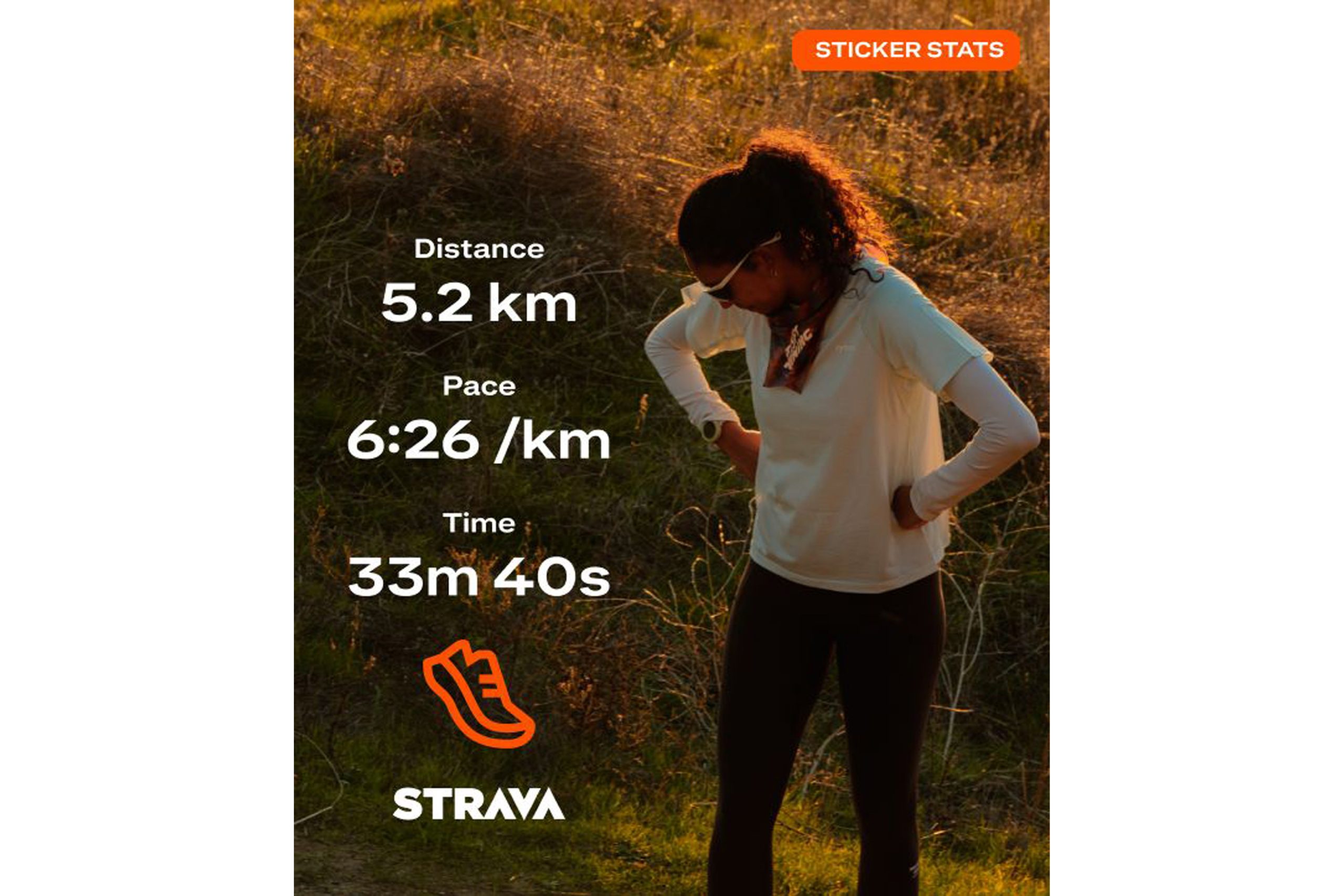
Strava’s new Sticker Stats feature makes it easier to share activity stats on social media. Strava
Strava’s new Sticker Stats feature is designed to enhance the way activities can be shared on social media platforms, such as Instagram.
Accessed via the share button on Strava’s app, the feature creates a transparent ‘sticker’ that can be copied to your clipboard and overlaid onto photos, or imported directly into Instagram as a story.
Each sticker features distance, elevation gain and ride time, plus a line drawing of the route map, followed by Strava’s logo.
The only thing to note is that an activity’s ‘visibility’ must be set to ‘everyone’ or ‘followers’ – private activities can’t be shared.
Mapping updates
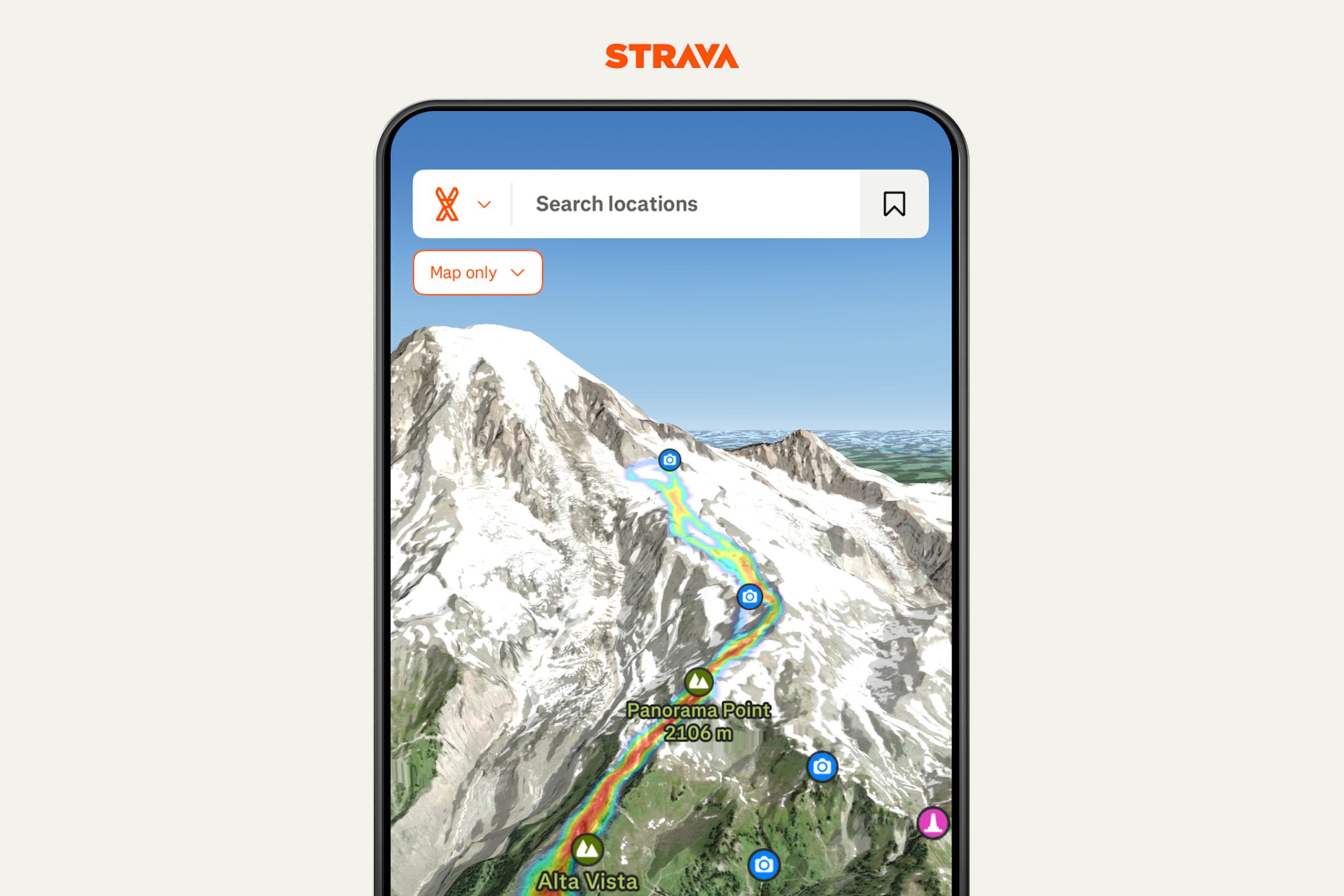
Strava has announced a slew of new winter-focused mapping tools. Strava
Having acquired FATMAP – a company that produced detailed 3D maps designed for outdoor enthusiasts – in 2022, Strava has announced its capabilities have now been integrated into its platform.
In what the brand is calling a “major upgrade” to its mapping features, Strava says the technology delivers “lifelike 3D terrain, detailed satellite imagery, and new maps layers for planning winter and trail activities”.
Many of the features are integrated from FATMAP, which Strava acquired in 2022. Strava
Focused primarily on winter activities, such as skiing and snowboarding, Strava says its ‘proprietary Map Rendering Engine’ will provide users with new insights such as:
Avalanche gradient – shows steep gradients (between 25 and 45+ degrees) where avalanches are likely to occur
Gradient – displays slope angles between 0 and 90 degrees
Aspect – shows which direction a slope faces “to help users find the best snow and understand how much sun a particular face of the mountain might receive”
Winter Map Style – a winter-specific map optimised for planning “snow activities”
Strava says these new features are available now in the Maps tab on its app or in the map sections of activities.
Route search and filtering
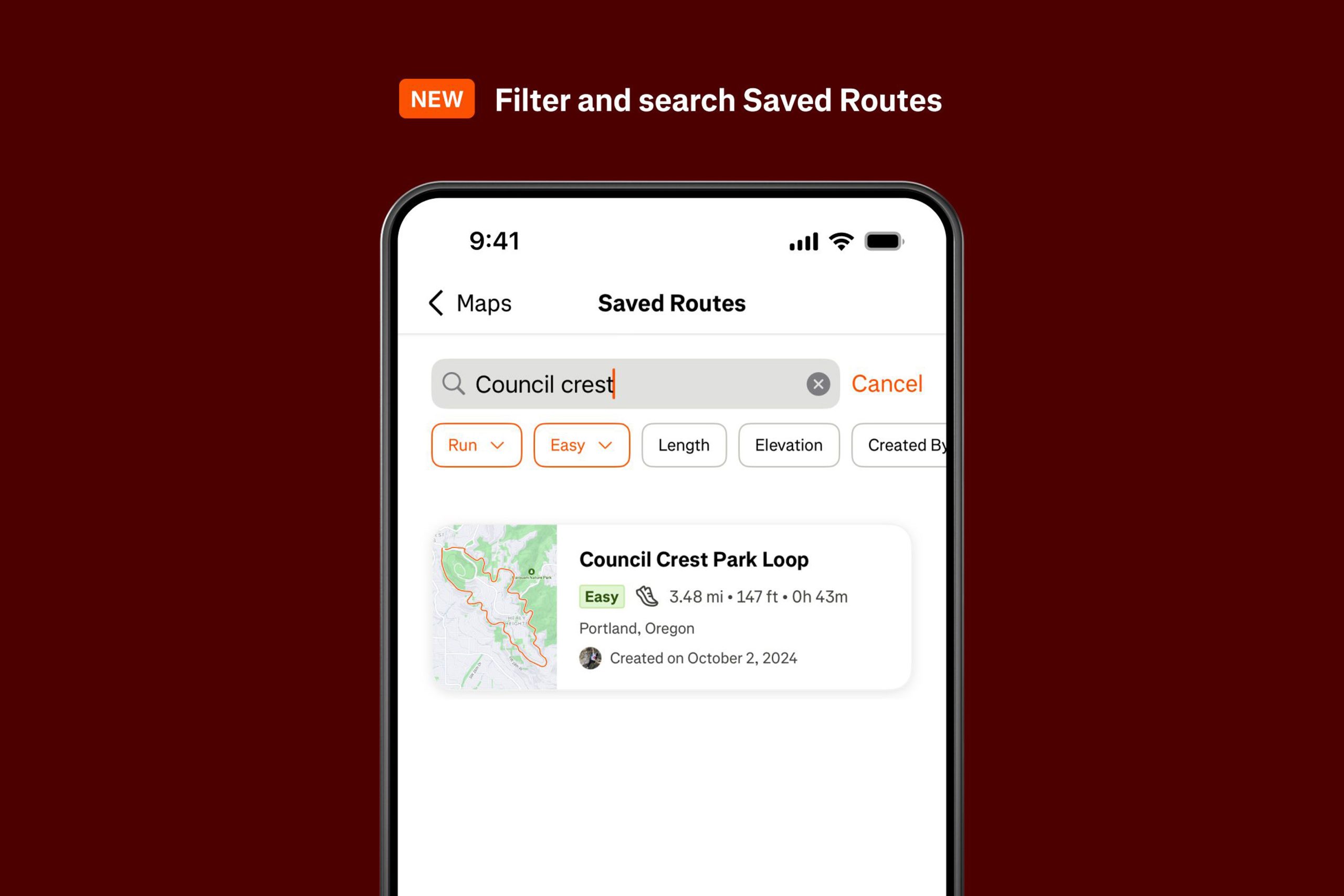
Routes can now be searched and filtered. Strava
In addition to these new mapping tools, Strava says users can now use keywords and/or filters to search through saved routes.
The goal, as you might expect, is to help users find saved routes more easily – and prevent users with lots of saved routes having to scroll through everything manually.
Available now, users will be able to filter routes by length, elevation, difficulty, who created them “and more”.
It’s worth noting, however, these features are only available to paid subscribers.
Redesigned Activity Details
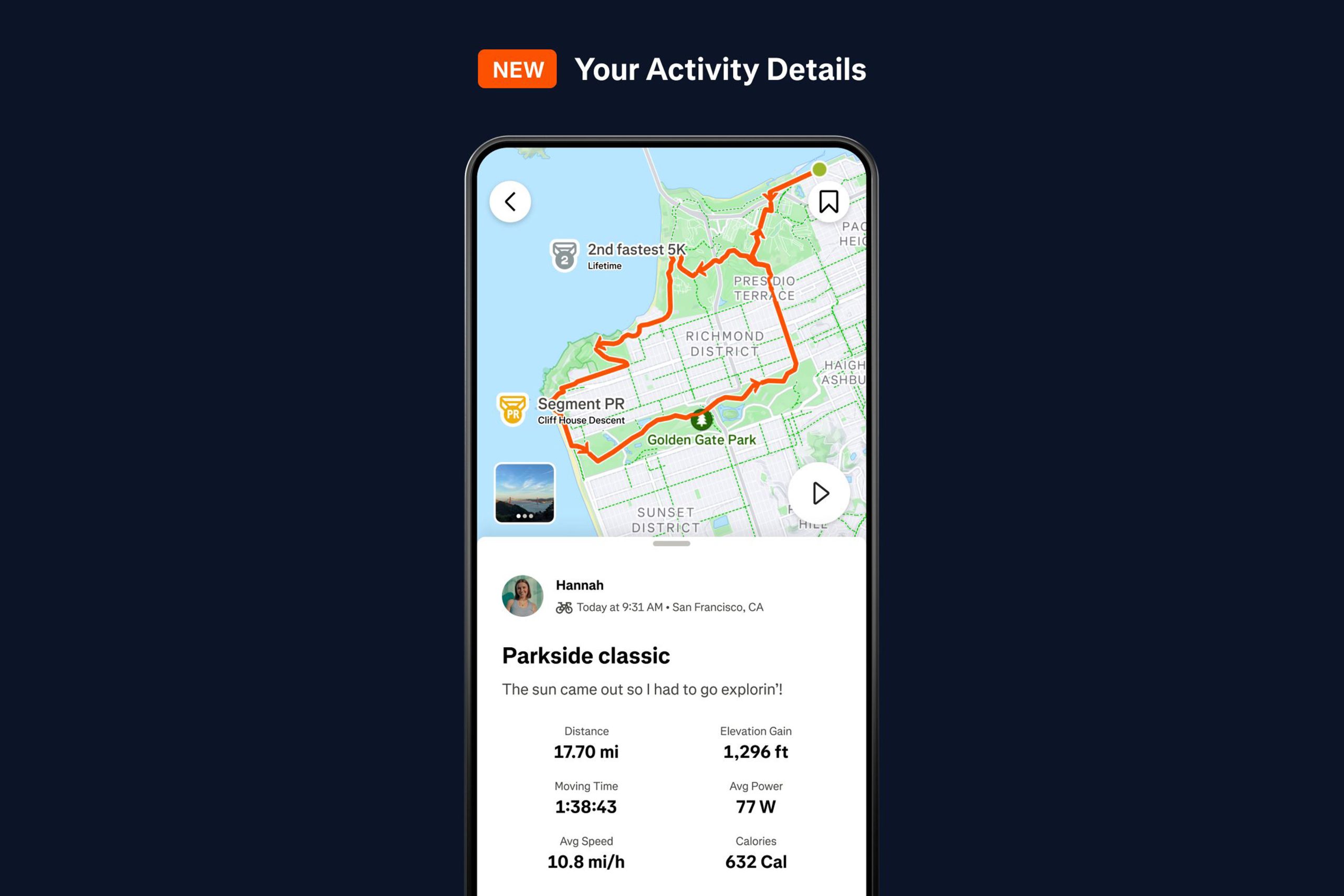
The Activity Details page gets a refresh. Strava
Something that applies to all Strava users, however, is the redesigned Activity Details page.
Strava says this update brings “a new look” to this page, alongside fresh insights and highlights from each activity.
This update consists of two headline features:
All-in-one view – the map, route and any photos or videos from an activity can now be seen on a single page, with users able to toggle quickly between maps and stats
Relive your wins – medals and/or trophies for personal records and KOM/QOMs will now appear on the map, helping you more quickly locate any notable efforts or achievements from an activity
These features are live now on Strava for all users.