
Category Archives: Bikes
Hell of a Route Chaser Challenge Launched
This week Zwift launched their next “mini Challenge”, celebrating new routes on France’s fresh tarmac/cobbles. Named “Hell of a Route Chaser Challenge”, the challenge is to complete five of the new French routes:
- Croissant
- 12.3km, 71m elevation
- Achievement Badge: 185 XP
- ZIMetrics Difficulty: 5.9/100
- Hell of the North
- 19.8km, 241m elevation
- Achievement Badge: 395 XP
- ZIMetrics Difficulty: 10.7/100
- Gentil 8
- 23.7km, 248m elevation
- Achievement Badge: 465 XP
- ZIMetrics Difficulty: 12.4/100
- Bon Voyage
- 31.3km, 155m elevation
- Achievement Badge: 565 XP
- ZIMetrics Difficulty: 14.3/100
- Three Musketeers
- 35.8km, 200m elevation
- Achievement Badge: 705 XP
- ZIMetrics Difficulty: 16.6/100
Note our ZIMetrics difficulty ratings for each route: they get higher as you move through the challenge!
Challenge Rewards
Your reward for completing all five routes? Boosted fitness of course. Because any ride is a good ride, right?
But also, you will surely earn a route badge or five, as these are all new routes. Each route badge is worth the amount of distance XP earned for riding the route’s length, meaning you effectively earn double XP the first time you complete a route and earn the badge. That means you’ll earn 2315 XP for these 5 route badges, on top of the regular distance XP you accumulate per km/mile.
Zwift has bumped up the challenge XP bonus as well, doubling it to 2000XP for this challenge. You will earn this bonus after you finish the 5th route of the challenge.
All told, that’s ~6630XP you will earn by completing this challenge.
Joining the Challenge
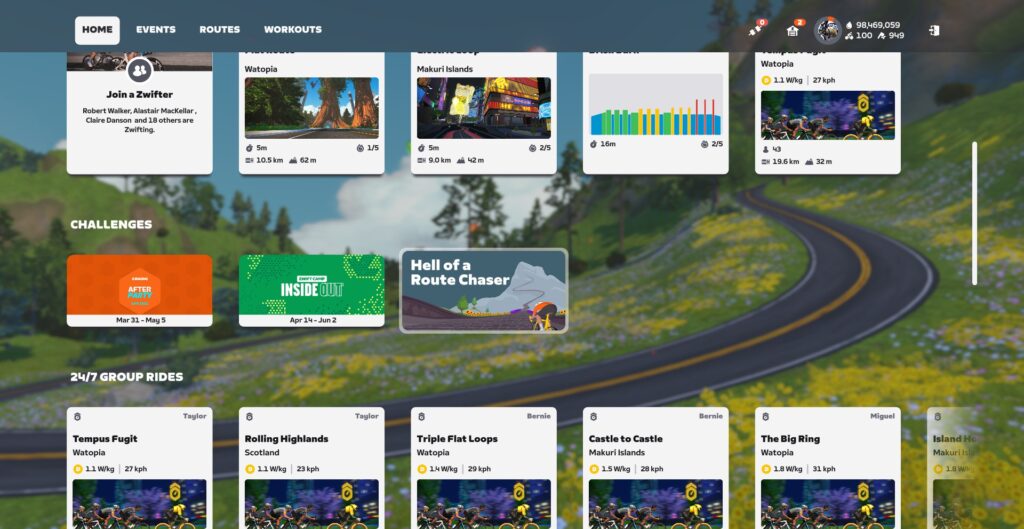
To sign up for this Challenge, just click its card on the home screen under “Challenges”:
If you see this screen, you’re signed up:
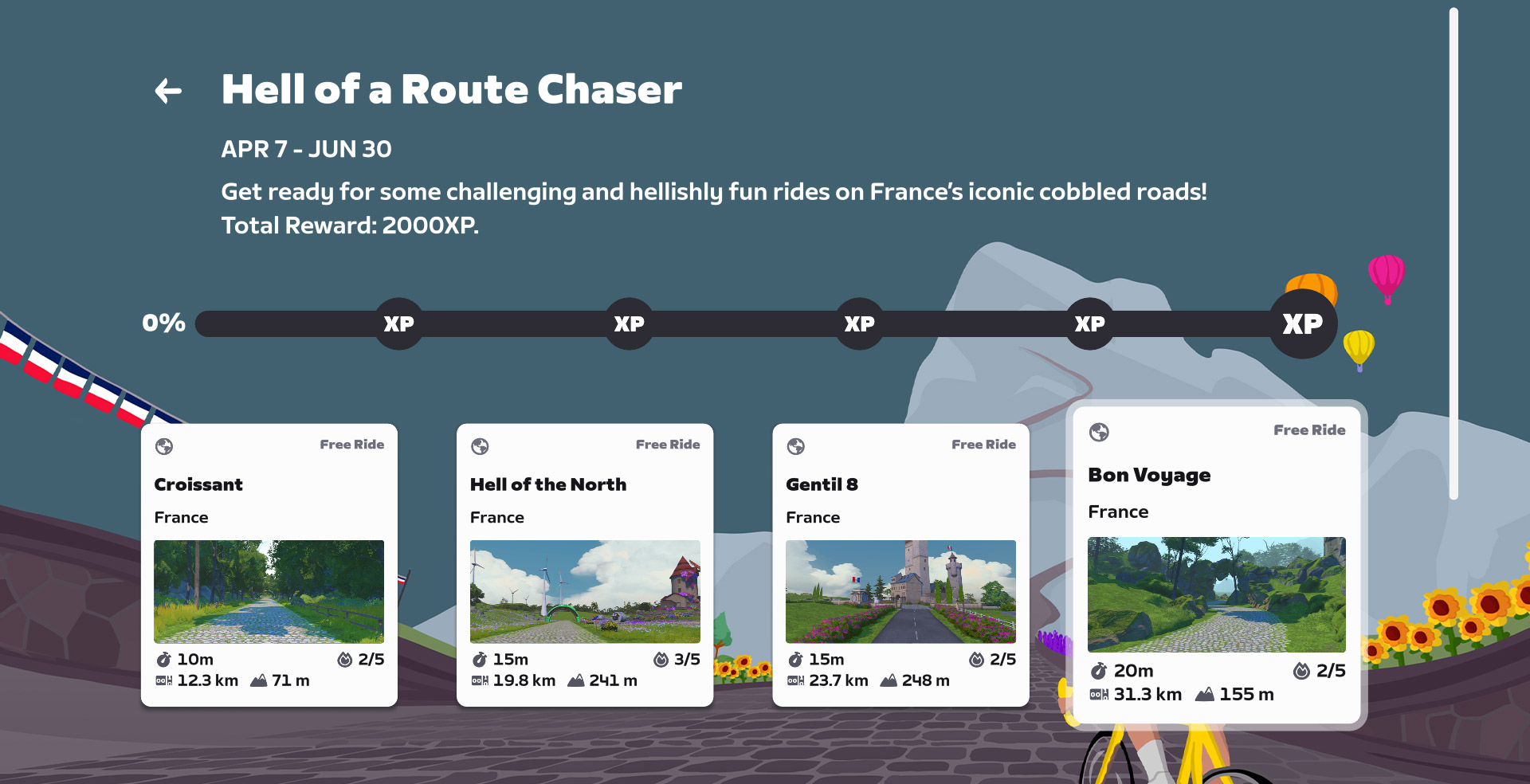
Clicking a route from this screen will take you into France to ride that route. But you can also ride these routes via other methods once you’re signed up. Ride them in events, as workouts, or even as free rides by choosing them from the route picker. As long as you sign up beforehand, completing the route via any of these methods will mark it as complete for the challenge.
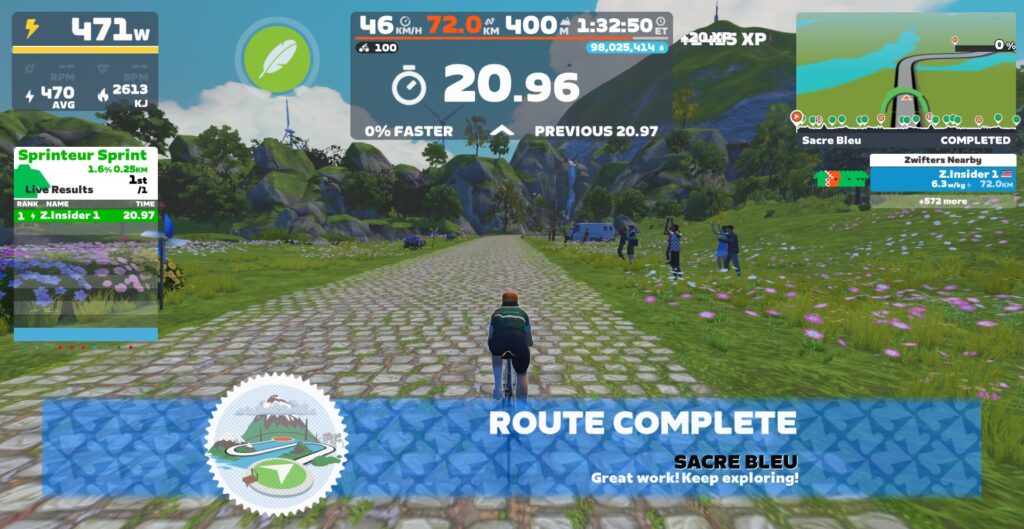
You’ll know you completed the route for the challenge because you’ll get a banner on your screen:
Questions or Comments?
Before you ask: I don’t know exactly how long this challenge will remain available. Zwift tells me each mini challenge will typically last around 3 months, but also Zwift hasn’t been revealing precise deadlines on these challenges until a week or two before they expire.
Got other questions or comments? Share below!
Is the definition of an ebike about to change?
EU regulations around ebikes could be set to change, potentially altering their classification as bicycles.
Several EU ministries announced before the 2024 European Parliament elections that vehicle regulations would be revised, leading to changes in ebike regulations. But the success of electric bikes could be seen as depending on their equal legal status to bicycles.
This is the view, at least, of ZIV (Zweirad Industrie Verband), the German cycling industry association. Last week, ZIV published a position paper setting out what it believes should be the future ebike regulations.
Why has ZIV made its recommendations?
ZIV’s chief technology officer, Tim Salatzki, says in the position paper that ebikes “are the most important driver of electric mobility with almost 16 million now on the roads in Germany”.
Salatzki says ebikes are a key component of “the mobility transition” and the most popular recreational vehicle, making them decisive to the success of the German bicycle industry.
“The success of ebikes depends on their equal legal status to bicycles. To ensure this equality in the long term, we propose more precise parameters for this type of vehicle,” says Salatzki.
The equal status of ebikes – which are legally designated Electrically Powered Assisted Cycles (EPACs) – and human-powered bicycles is based on their comparable riding characteristics, where the cyclist’s pedalling has a direct influence on riding behaviour and movement.
Limiting the assistance power of ebikes would also help ensure that EPACs retain their bicycle-like characteristics and do not become subject to the same regulations that apply to mopeds, according to the position paper.
So what are ZIV’s recommendations?
The recommendations, which some have suggested will influence future EU policymaking, define ebikes by the following characteristics:
- Support ratio of 1:4 and
- Support ratio of 1:6 possible up to max. 15 km/h and
- Max. assistance power of 750W at the drive wheel and
- Max. weight of 250kg for single-track EPAC or
- Max. weight of 300kg for multi-track EPAC
To illustrate its assistance ratio recommendations, ZIV says: “If a cyclist has a power output of 100W, an assistance ratio of 1:4 would mean that the electric motor contributes a maximum of four times this power, i.e. 400W. This would result in a total power output of 500W at the drive wheel.”
What does this mean for ebikes?
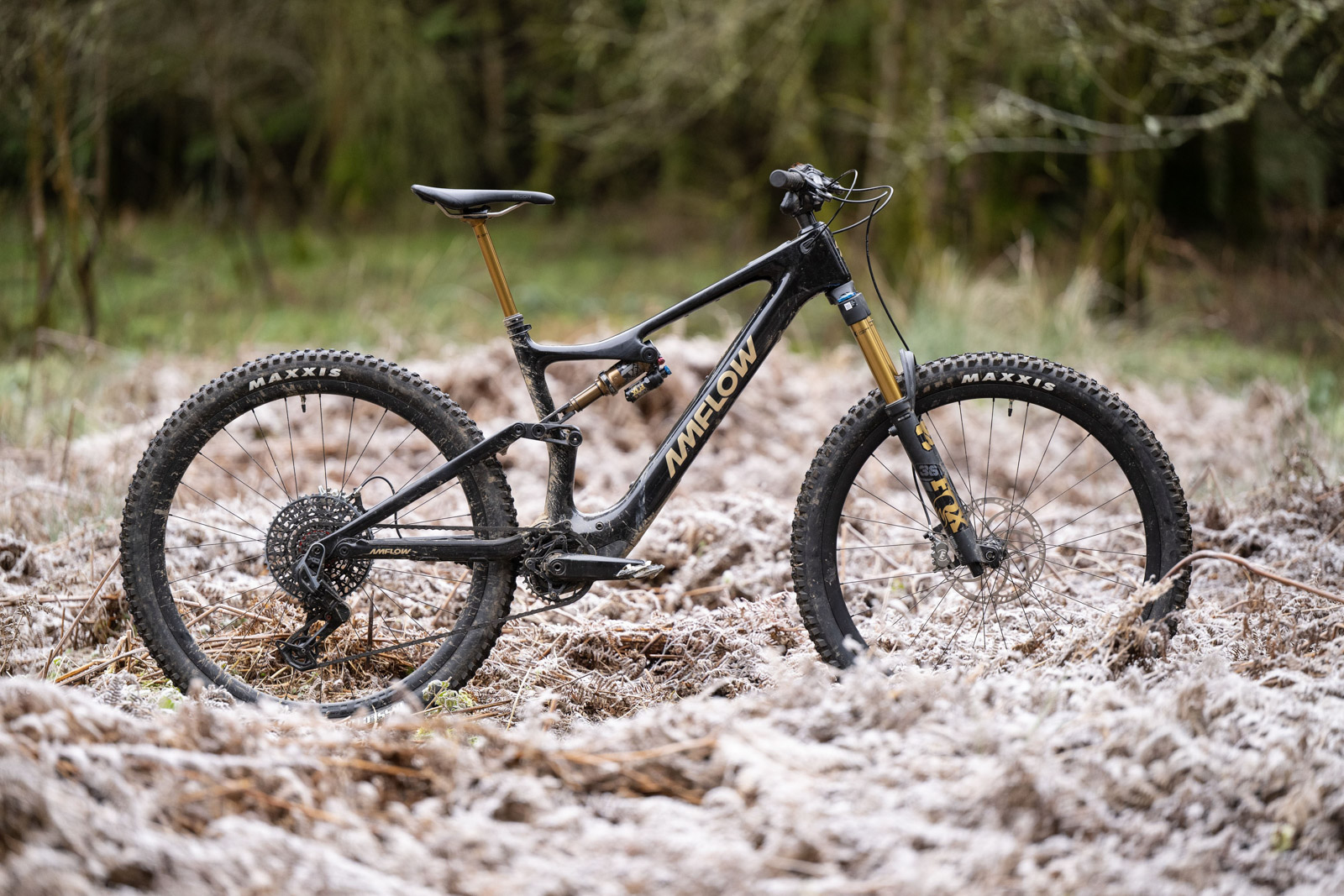
ZIV’s recommendations are fairly consistent with current ebike regulations. But there could be consequences for certain ebikes.
For instance, ebikes with motors that provide a greater maximum assistance than 750W would not meet the recommendations. This would include the DJI Avinox motor, used in eMTBs, which has a peak power of 850W and can provide a 30-second boost of 1,000W.
ZIV also says separate framework conditions and parameters must be defined for electric cargo bikes weighing more than 300kg.
Heavy e-cargo bikes with multi-track (or parallel sets of) wheels are increasingly used by delivery companies. They can fit into cycle lanes, yet behave differently to typical ebikes, posing a potential safety risk, which it appears ZIV is considering.
The regulation could also prove restrictive for innovation, according to ebike industry expert Hannes Neupert, who addressed the parameters in a LinkedIn post.
“The 750-watt limit is an attack on people with physical disabilities, children, the elderly, tandem riders, cargo transporters, and families! The ZIV’s stated wishes attempt to preserve the eMTB as a core market for as long as possible! The future of the mobility transition is willingly sacrificed on the altar of quick profit!” Neupert wrote.
“Hilltop Hustle” Route Details
BDS Movement calls for protests against Israel–Premier Tech at Tour de France
The Boycott, Divestment and Sanctions (BDS) Movement has called for peaceful protests at this year’s Grand Tours against the participation of Israel–Premier Tech.
In an announcement published yesterday, the BDS Movement says the Tour de France, Giro d’Italia and Vuelta España are allowing “Israel Premier Tech, a cycling team representing Israel, to participate”.
“As Israel escalates its ongoing genocide against 2.3 million Palestinians in Gaza and its violent military occupation of the West Bank, international sporting bodies have a moral obligation to take all measures to prevent genocide, or risk being held criminally liable,” the announcement reads.
The BDS Movement adds that by allowing Israel–Premier Tech to participate in the three Grand Tours, the events are helping Israel “sportswash its grave crimes against Palestinians”.
Sportswashing is typically described as a public relations exercise to use sport to help improve the reputation of a government or state.
Political scientist Jiri Zakravsky, author of Cycling Diplomacy: Undemocratic Regimes and Professional Road Cycling Teams Sponsorship, explained to BikeRadar that the term “is closely connected with governments and governmental activities, especially in the context of human rights”.
Who are Israel–Premier Tech?
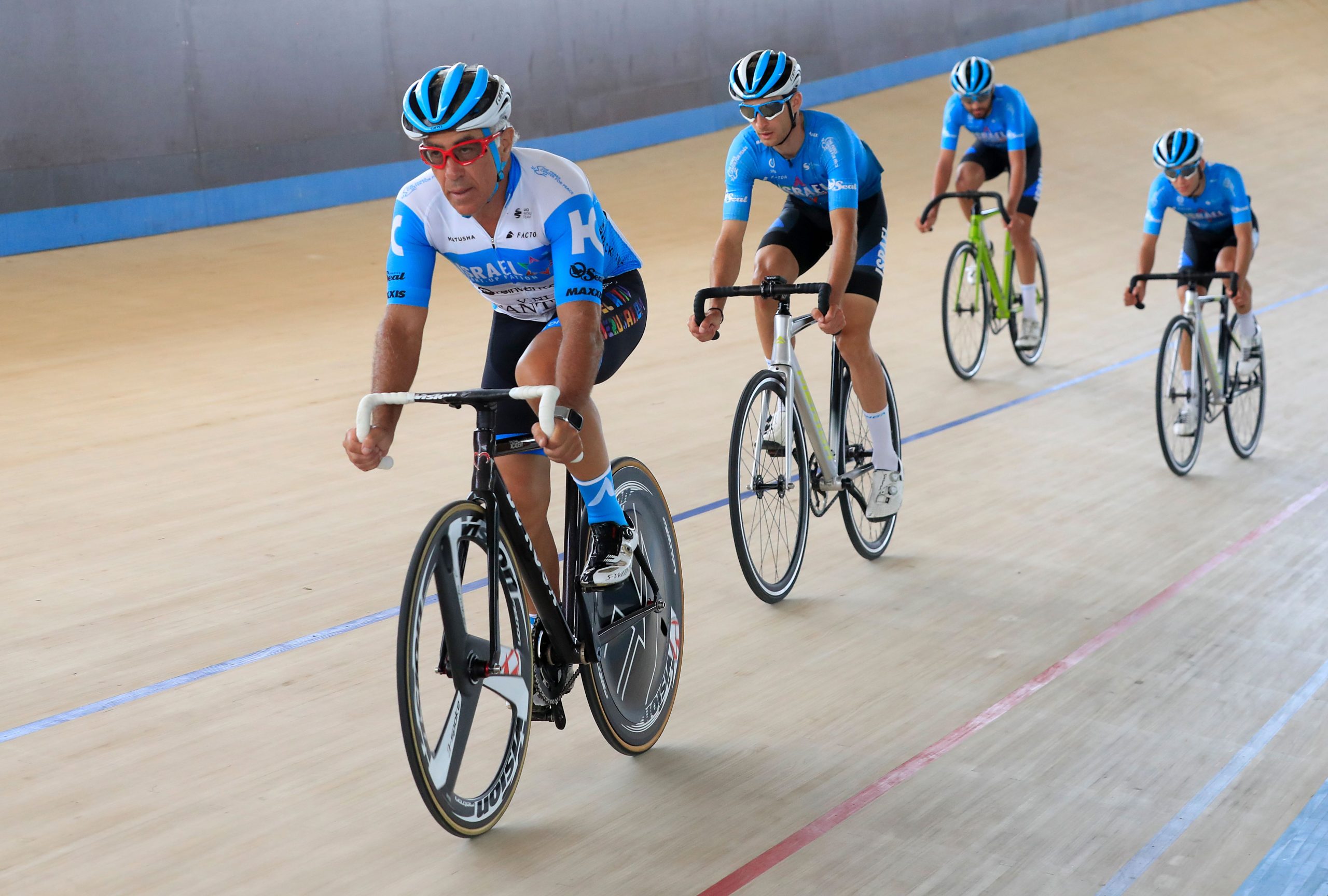
Israel–Premier Tech was founded in 2014 and is co-owned by Canadian-Israeli billionaire Sylvan Adams.
Adams has referred to himself as a “self-appointed ambassador at large for the State of Israel”. He drove Israel’s £9m bid to host the start of the 2018 Giro d’Italia and built the region’s first Olympic-standard velodrome in the same year.
Adams has previously said the UCI ProSeries team is apolitical and not a government project, although it receives a “pitiful small amount” of funding from the national tourism board.
Ron Baron, the team’s other co-owner, has described Israel–Premier Tech as a form of “sports diplomacy”. Israeli Guy Niv, who rode for the team from 2018 to 2022 and is a former army sniper, has said every rider on the team understands that “being on an Israeli team, they are ambassadors for the country”.
Adams has described Israel’s genocide against Palestinians as “good vs. evil and civilization against barbarism” and said anti-Israel activity is “aided by useful idiots” in the West.
UCI hypocrisy
Ahead of the Giro d’Italia starting on 9 May, the BDS Movement’s call for protest also accuses the UCI, cycling’s international governing body, of “hypocrisy”.
It says the UCI sanctioned Russia days into its invasion of Ukraine, suspending Russian and Belarusian teams and banning UCI events in Russia and Belarus, but that it has not taken the same measures against Israel.
The BDS Movement claims the UCI “is now helping to sportswash Israel’s Gaza genocide by allowing Israel–Premier Tech to participate” in its events.
The BDS Movement upholds the principle that “Palestinians are entitled to the same rights as the rest of humanity”. It was launched by 170 Palestinian unions, refugee networks and other bodies after Palestinian civil society organisations in 2005 called for boycotts, divestment and sanctions as a form of non-violent pressure on Israel.
BikeRadar has contacted Israel–Premier Tech and A.S.O, the organiser of the Tour de France, for comment.
Tadej Pogačar’s new Colnago V5Rs could prove that pure lightweight race bikes have had their day
Colnago has unveiled the V5Rs, Tadej Pogaçar and UAE Team Emirates’ new all-round race bike.
The bike represents evolution over revolution, featuring an aerodynamic makeover alongside weight savings, thanks to a refined carbon layup process. It’s the lightest frame Colnago has ever made, saving around 150g compared to the V4Rs.
Nevertheless, the V5Rs could see the end of one of the last ‘pure lightweight’ race bikes in the pro peloton, with Colnago claiming the V5Rs as being its second-most aerodynamic bike ever (after the Y1Rs).
It’s fair to say the V5Rs doesn’t rewrite the rulebook like its most high-profile rider, though – the geometry has been tweaked rather than overhauled and the clearance for 32mm-wide tyres is unchanged.
One notable switch is to a BSA threaded bottom bracket from a T47, and some (if not total) free-of-charge flexibility in rider-fit components is welcome.
The Colnago V5Rs is available in seven specifications, with prices from €10,000 up to €15,400. US and UK model availability and prices vary, but the bike is available from today in all major territories.
Revised carbon layup process delivers
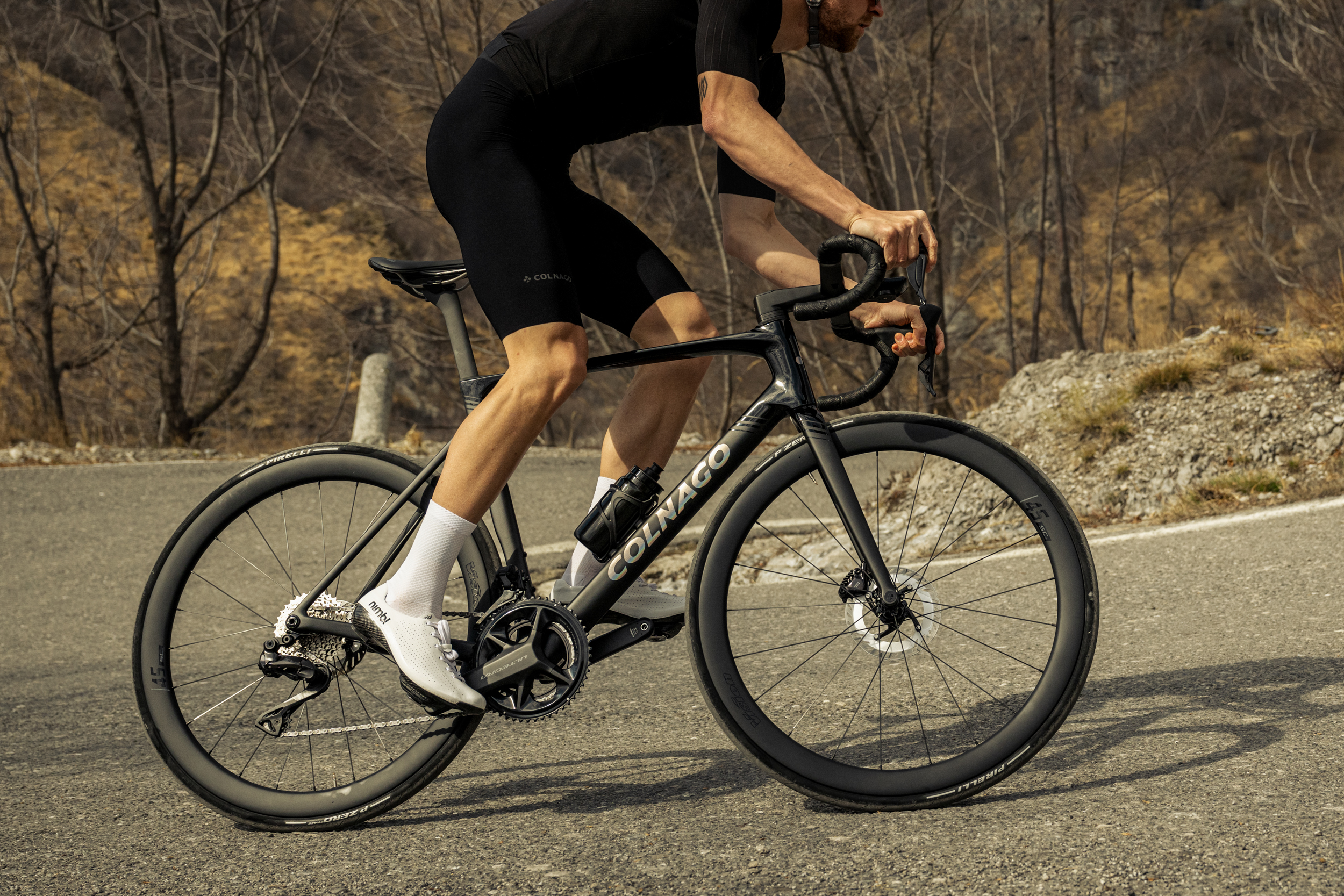
“Our sponsored teams didn’t ask for anything specific for the V5Rs,” Colnago’s head of research and development, Davide Fumagalli, says. “Instead, they just asked for a bike that met the latest standards and trends.”
It may come as little surprise, then, that the V5Rs ticks the wide tyre clearance box (officially 32mm with 4mm space between tyre and frameset) and now features a BSA threaded bottom bracket.
Beyond this, Fumagalli’s team sought to develop the V4Rs by improving the old bike’s aerodynamics and weight, while retaining similar stiffness and compliance levels.
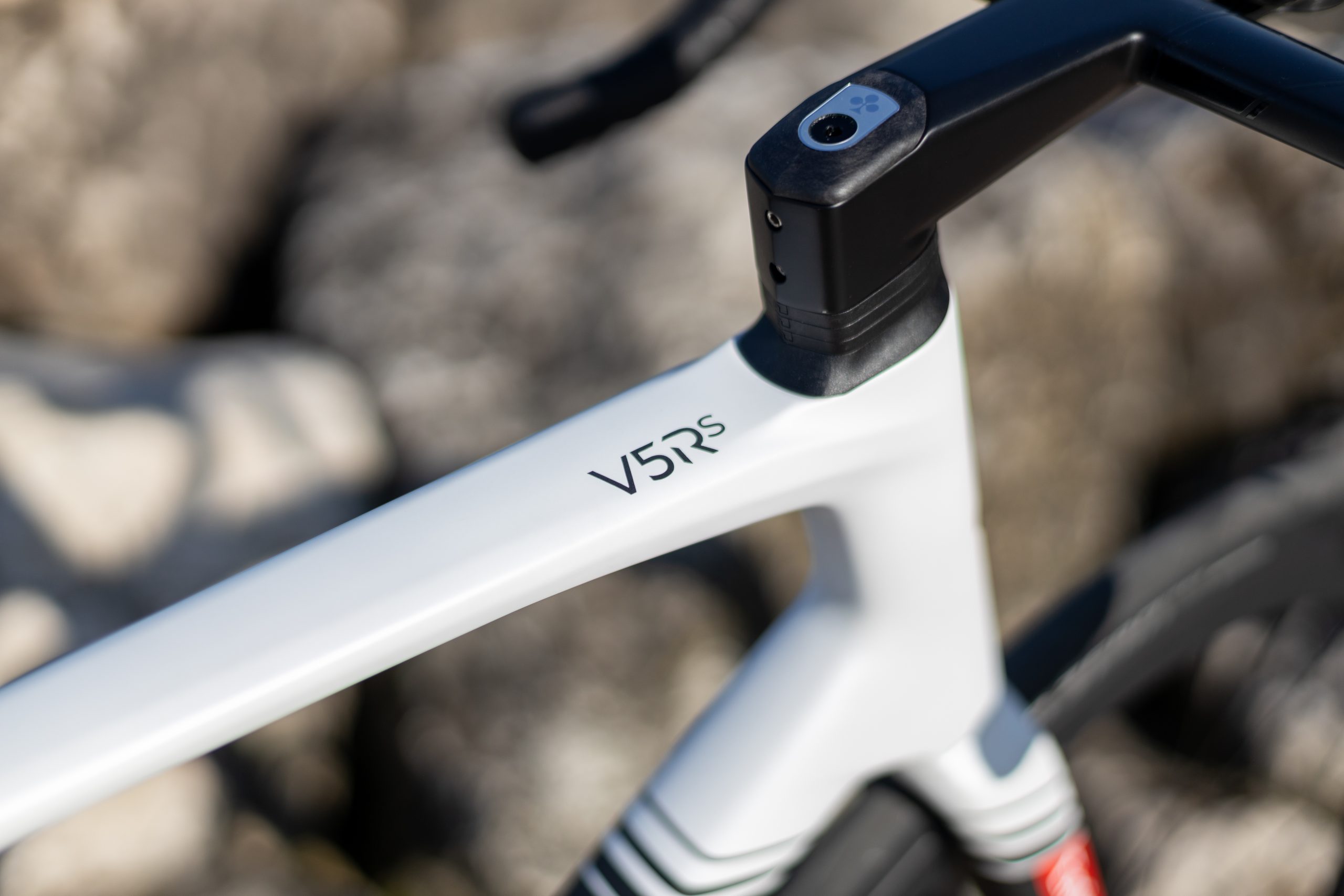
Central to this is a modified carbon layup process, in which polypropylene mandrills are inflated inside the laid-up carbon, which (once cured) produces fewer imperfections in the finished frame compared to using the brand’s previous foam-and-bag technique.
Colnago says every tube on the new frameset is new, and is created in five pieces – the main triangle, plus two seatstays and chainstays – before being bonded together.
Alongside that, Fumagalli says carbon materials have continued to evolve, enabling the brand to shave unnecessary carbon from the frame, while optimising the mix.
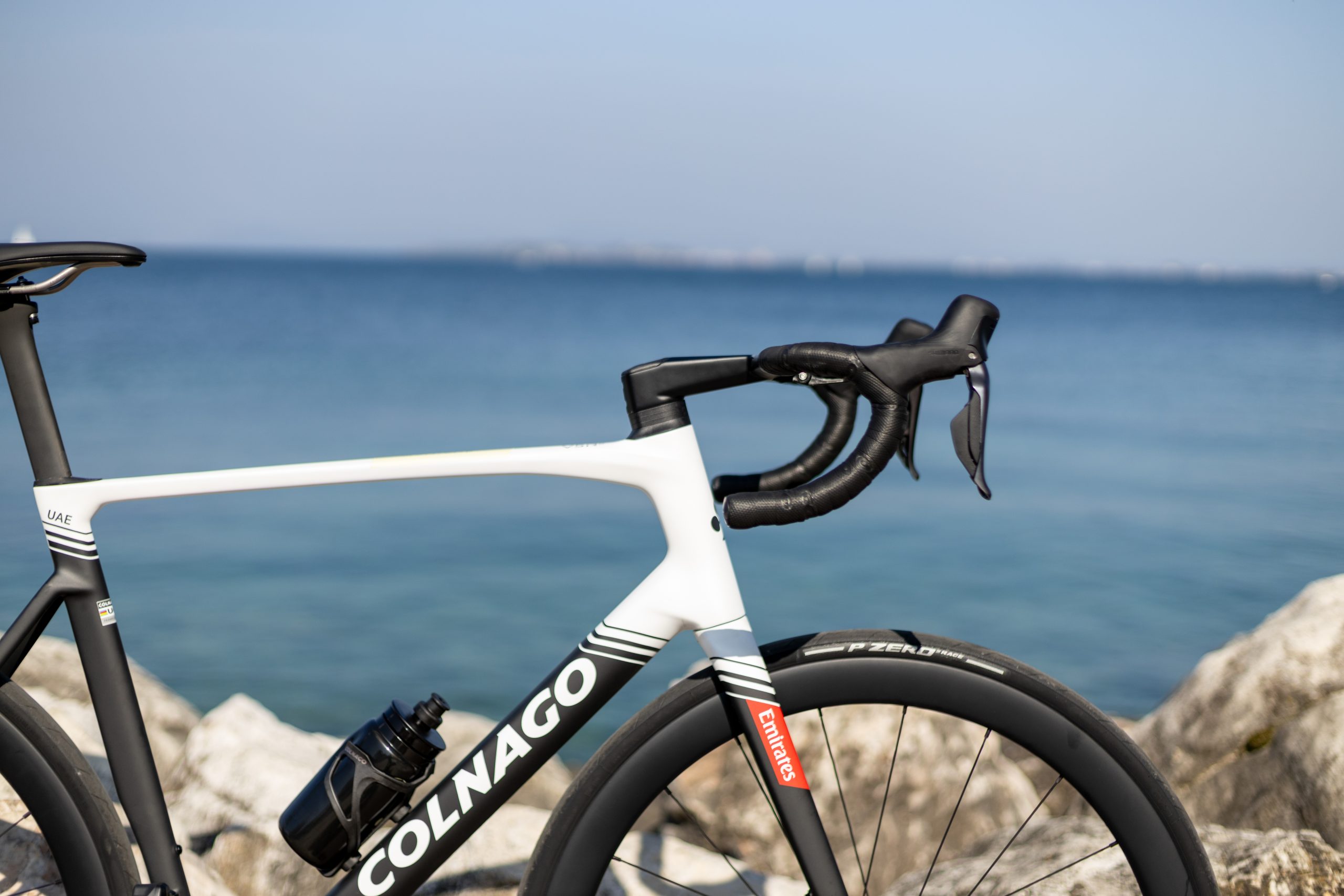
Where previously the V4Rs used a greater proportion of ‘high strength’ fibres than ‘high modulus’ fibres, this has been reversed for the V5Rs. Generally speaking, this makes the layup stiffer, according to Fumagalli, but meant the brand was able to tweak the tube profiles for aerodynamic gain (more on this to come) and weight loss.
This has seen the bottom bracket area shrink compared to the V4Rs, a contributing factor in the switch to the BSA standard.
A complete frameset ‘kit’ (which includes the derailleur hanger) weighs 1,027g – 146g less than the V4Rs in Colnago’s size 485, which is roughly equivalent to a size 52cm or small for many other brands.
Aero wins… again
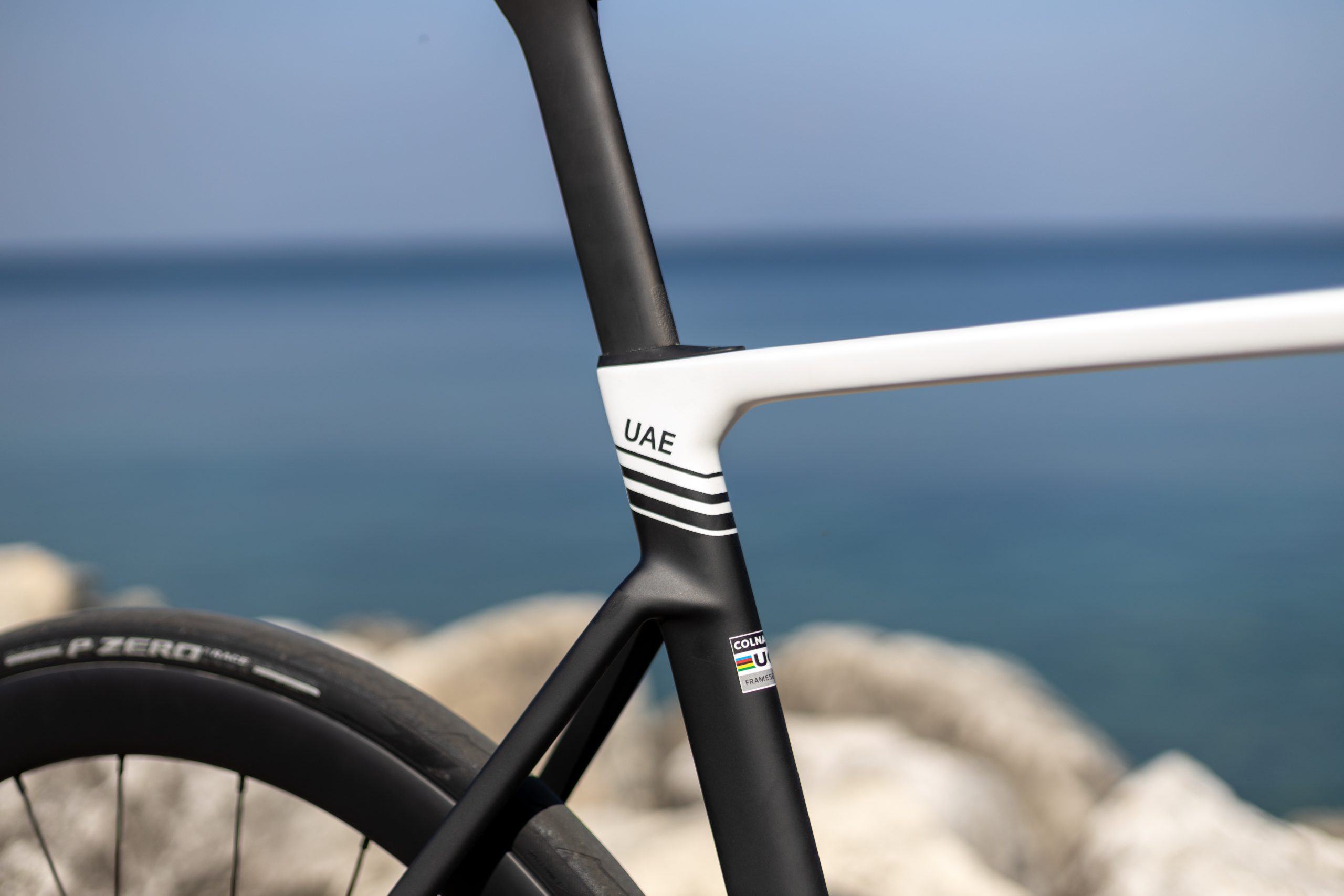
When Colnago unveiled the Y1Rs aero bike, it effectively affirmed the generally held consensus that aerodynamics are the biggest influence on rider speed – whether you’re Tadej Pogačar or not.
Perhaps expectedly, the V5Rs has seen a major aerodynamic overhaul, using the same CFD (computational fluid dynamics) model, 3D-printing prototyping and wind tunnel pressure mapping techniques developed for the Y1Rs.
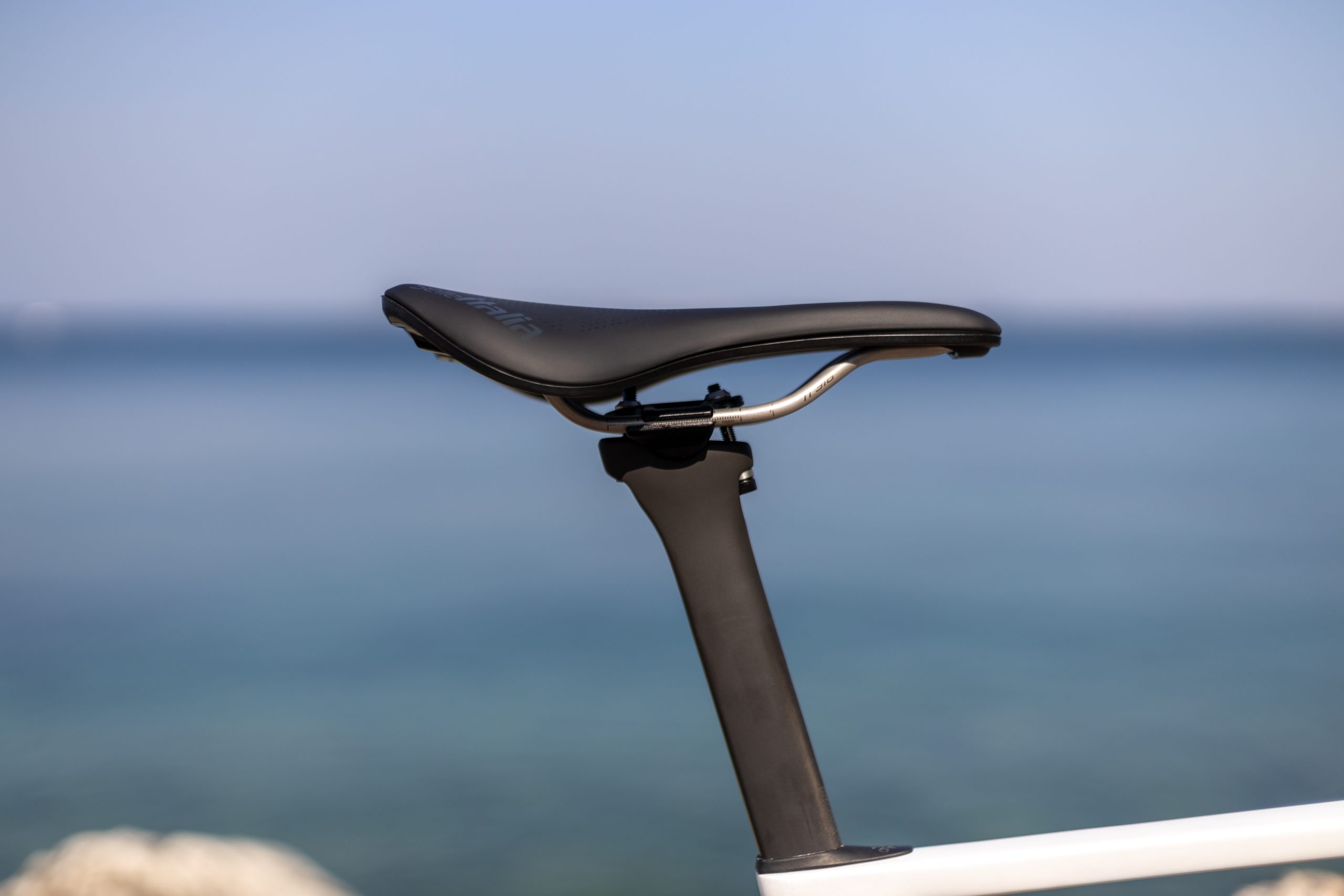
This has yielded a narrower head tube with a downsized 1-1/8in upper bearing and thinner fork blades, plus a thinner and deeper profile for the seat tube and seatpost. This remains proprietary, but an evolution of the old D-shape seatpost.
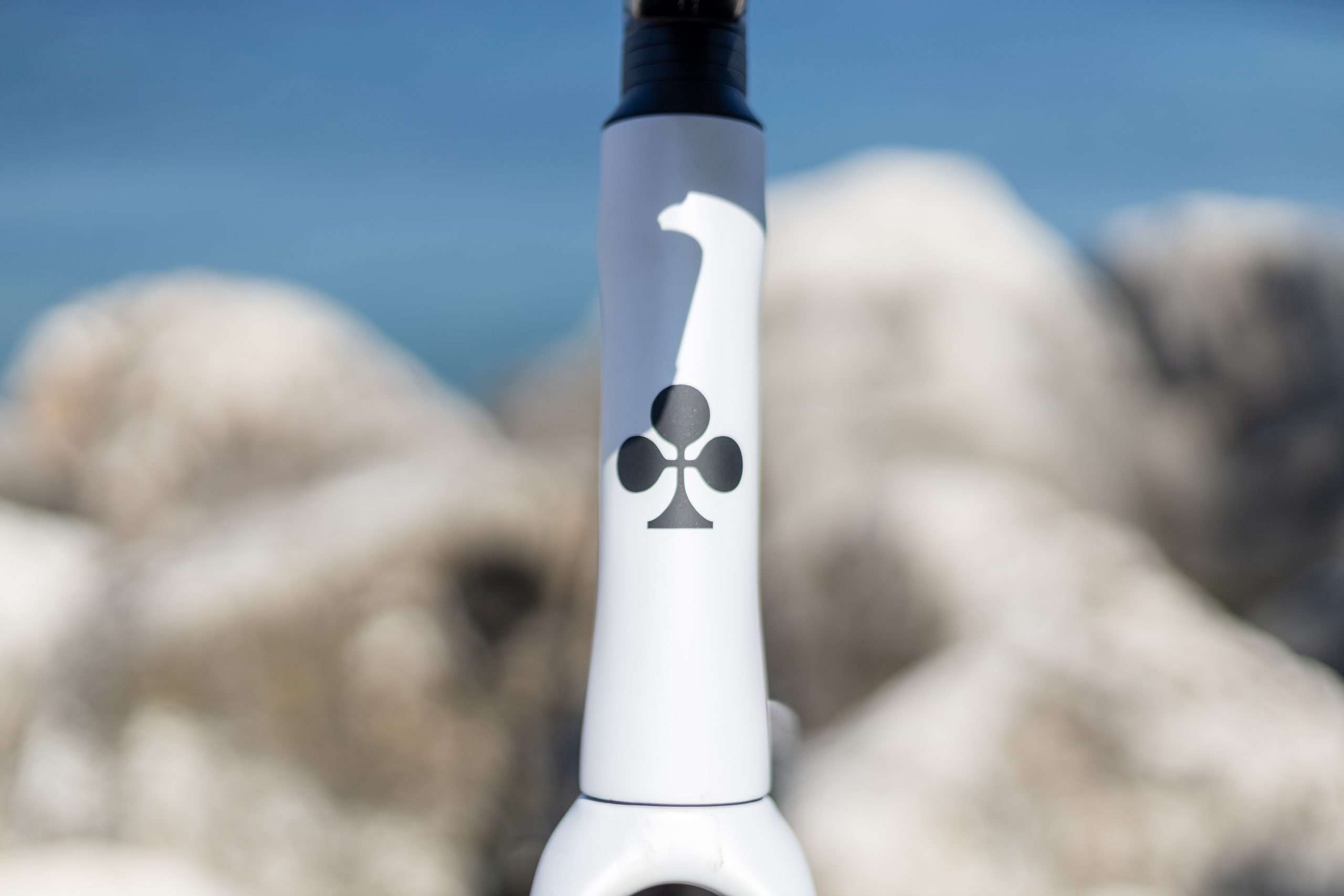
The head tube’s lower bearing remains at 1-1/4in, retaining the use of CeramicSpeed’s SLT (Solid Lubrication Technology).
Colnago claims the frontal area of the bike has been reduced by 13% and that “the aerodynamic performance of the V5Rs is in line with many WorldTour aero bikes”.
Exactly which bikes Colnago is referring to isn’t clear, just as when the brand claimed the Y1Rs was the most efficient bike in the pro peloton.
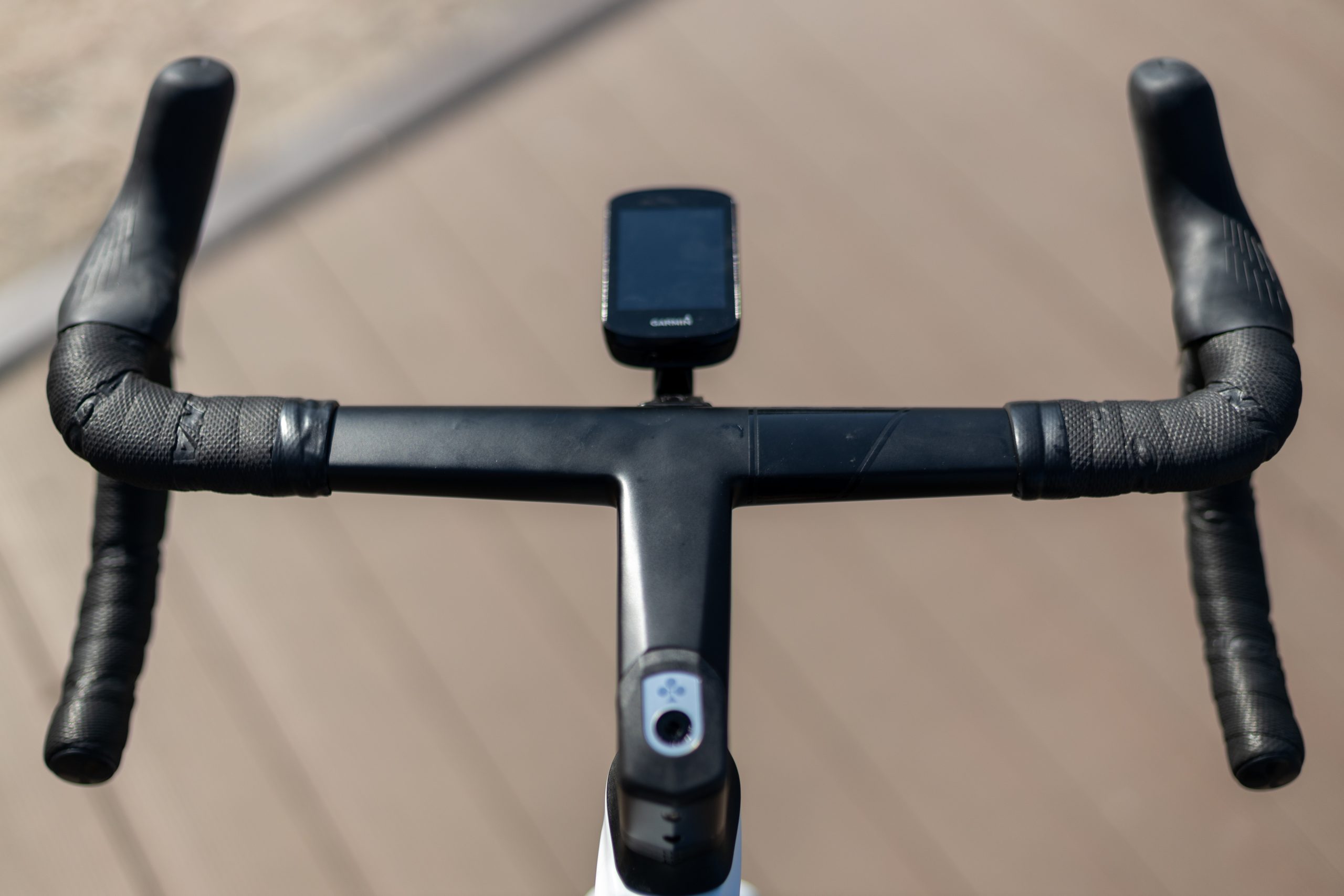
With a mannequin mounted to the V5Rs, the bike-rider system produces a WAD (wind averaged drag) of 490W at 50kph, according to Colnago (mannequin and bike sizes aren’t declared). This compares to 499W for the V4Rs, while the Y1Rs scored 474W in the same test.
A side benefit of the narrowed profile is said to be increased steering reactivity and control on descents, a desirable outcome given Pogačar’s tendency to attack over summits and carry on.
However, the V5Rs is now firmly considered an all-rounder race bike by Colnago, as opposed to the V4Rs’ less aero-optimised approach.
Sharpened handling?
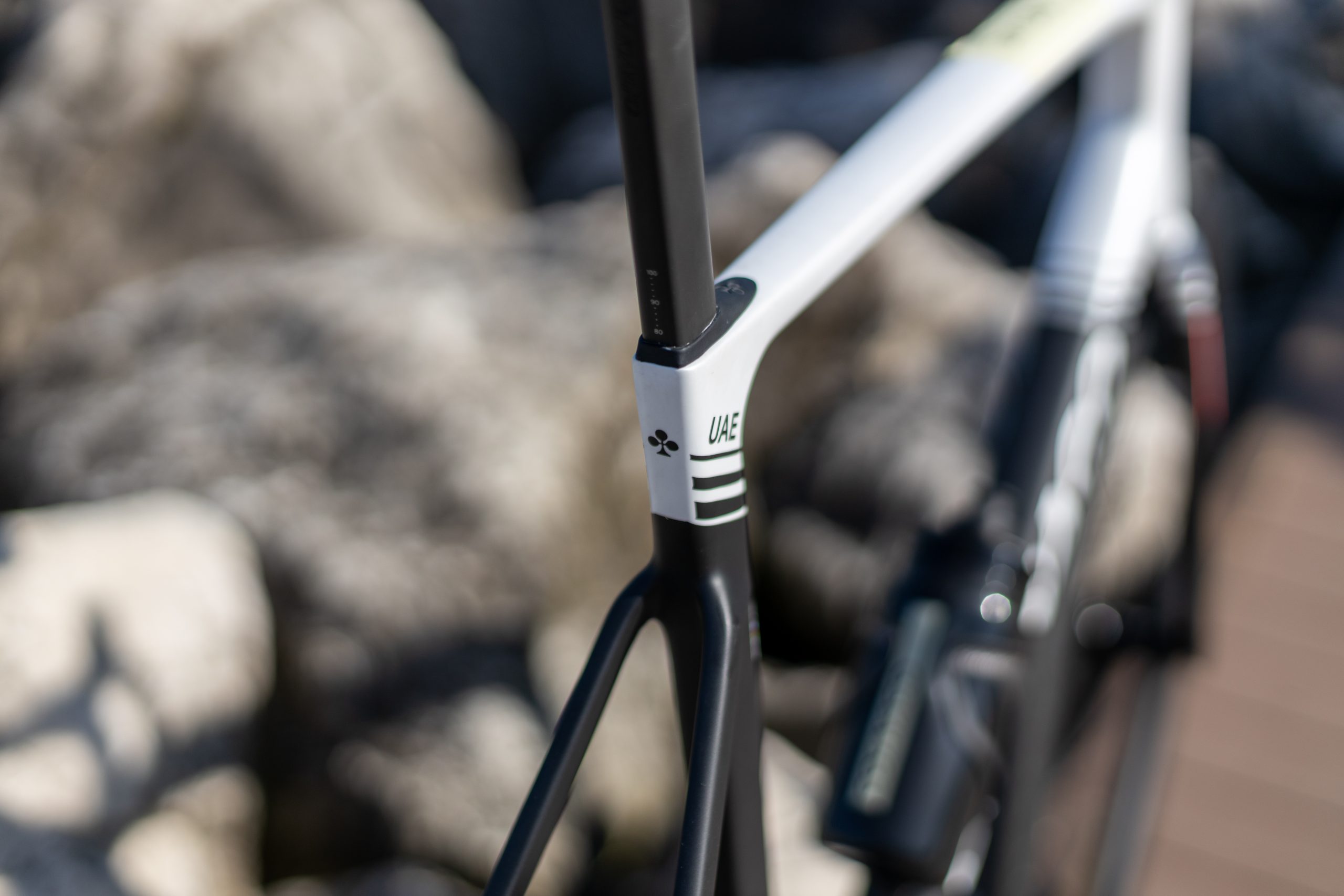
Fumagalli says the V4Rs’ handling was one of its most popular features, but that the construction and aerodynamic changes to the frameset haven’t resulted in a loss of stiffness.
Colnago refers to ‘Real Riding Stiffness’ when it describes frame rigidity, prioritising efficiency when sprinting and climbing seated – both significant strengths of its star rider.
The geometry has been tweaked, though, in an attempt to make the V5Rs “slightly more aggressive and efficient while better accommodating modern riding positions”.
This starts the introduction of a second fork for the smaller four sizes, with a 47mm rake, helping to keep the handling consistent for those framesets. The three larger frame sizes feature a fork with a 43mm rake.
The head tube and seat tube angles have also been steepened slightly, which promotes a more ‘forward-oriented’ position. It’s worth remembering that Pogačar is notable for this, while the bike is available with a standard 15mm-setback or inline seatpost.
| SIZE | 420 | 455 | 485 | 510 | 530 | 550 | 570 |
|---|---|---|---|---|---|---|---|
| Head tube angle | 70.6 | 71.5 | 72.3 | 72.5 | 73 | 73 | 73.5 |
| Seat tube angle | 75.5 | 75.3 | 74.8 | 74.5 | 73.8 | 73.5 | 73.3 |
| Reach (mm) | 371 | 377 | 384 | 390 | 397 | 404 | 411 |
| Stack (mm) | 509 | 523 | 539 | 557 | 575 | 593 | 612 |
| Fork length (mm) | 377 | 377 | 377 | 377 | 377 | 377 | 377 |
| Fork rake (mm) | 47 | 47 | 47 | 47 | 43 | 43 | 43 |
| Trail (mm, with 700x28c tyre) | 70 | 65 | 59.5 | 58.5 | 59.5 | 59.5 | 57.5 |
| Head tube length (mm) | 101 | 112 | 127 | 146 | 162 | 181 | 199 |
| Wheelbase (mm) | 975 | 978 | 984 | 994 | 997 | 1010 | 1019 |
| Chainstay length (mm) | 408 | 408 | 408 | 408 | 408 | 408 | 408 |
| Front-center (mm) | 579 | 581.5 | 586.5 | 596.5 | 600 | 612.5 | 622 |
| Bottom bracket drop (mm) | 74 | 74 | 72 | 72 | 72 | 72 | 72 |
Customers need to purchase the inline seatpost should they require one, but have a free choice of handlebar width (37, 39, 41 and 43cm measured from centre-to-centre) and crank lengths offered by the relevant groupset brand.
Colnago V5Rs specifications and prices
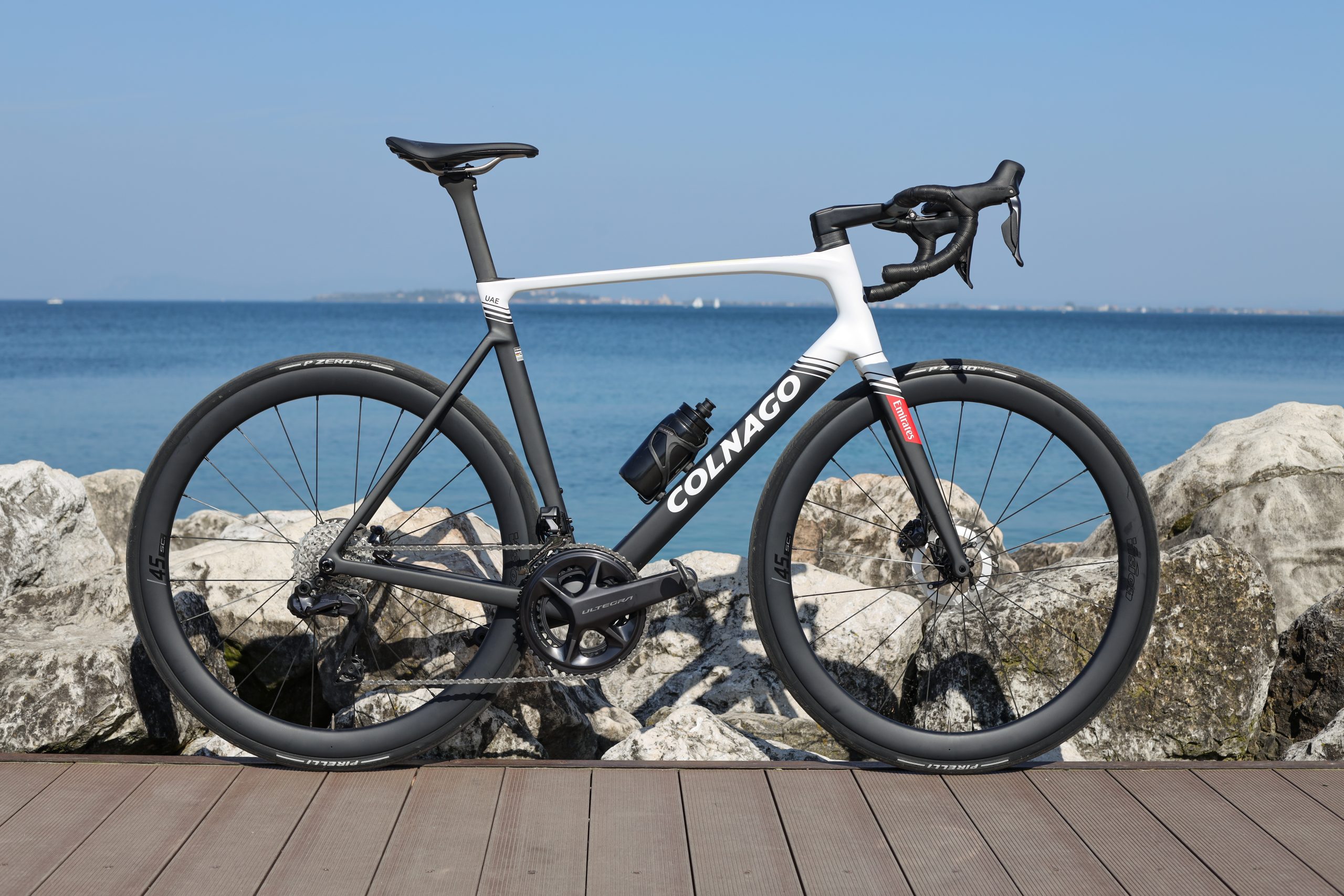
The bike is available in seven complete builds and as a frame kit, which includes the frame, fork, headset, CC.01 handlebar (in Europe and the UK only), seatpost and bottle cages. In the US, the CC.01 cockpit is a $900 add-on.
All bikes are available in Europe, with specific builds available in the US and UK.
| GROUPSET | WHEELS | HANDLEBAR | EUROPE PRICE | US PRICE | UK PRICE |
|---|---|---|---|---|---|
| Campagnolo Super Record Wireless | Bora Ultra WTO | Colnago CC.01 | € 15,400.00 | N/A | N/A |
| Shimano Dura-Ace Di2 R9200 | ENVE SES 4.5 | Colnago CC.01 | € 15,900.00 | $14,750.00 | N/A |
| Shimano Dura-Ace Di2 R9200 | Shimano C50 | Colnago CC.01 | € 14,700.00 | N/A | N/A |
| Shimano Dura-Ace Di2 R9200 | Vision SC45 | Colnago CC.01 | € 12,800.00 | N/A | £9,999.99 |
| SRAM Red AXS | Vision SC45 | Colnago CC.01 | € 11,800.00 | N/A | N/A |
| Shimano Ultegra Di2 R8100 | Vision SC45 | Colnago CC.01 | € 10,800.00 | $11,000.00 | £8,999.99 |
| SRAM Force AXS | Vision SC45 | Colnago CC.01 | € 10,000.00 | N/A | N/A |
| Frame kit* | N/A | N/A | € 5,940.00 | $5,750.00 | £5,499.95 |
Zwiftcast Episode 215: Zwift Community Live and the Latest Zwift Updates
This April saw the launch of Zwift Community Live, an epic four-day event bringing together the Zwift community in Mallorca to connect ambassadors, community leaders, special guests, and passionate riders from around the globe.
Dave Towle joins Rebecca Charlton to talk about the inaugural edition, as well as bringing us interviews with a number of Zwift community members who were in attendance including Sir Mark Cavendish.
Plus we discuss all the latest news, including Zwift outdoors, new roads in France, and much more. Ride on!
Zwiftcast is available on Podbean, Apple Podcasts, YouTube, Amazon Music, and Spotify.
“Croissant” Route Details
“Excessive alcohol consumption” blamed for van der Poel bottle-throwing incident as team files complaint and UCI wades in
Mathieu van der Poel’s team, Alpecin-Deceuninck, will file a complaint against the spectator who threw a water bottle at the winner of Paris–Roubaix.
The Dutchman was hit in the face by a full bidon on his way to his third successive victory in the Hell of the North.
“It was a dangerous and unacceptable incident,” said Alpecin-Deceuninck, according to Sporza.
“We are relieved that Mathieu was unharmed and confirm that as a team we will file a complaint against the perpetrator to denounce the behavior.”
Is alcohol to blame?
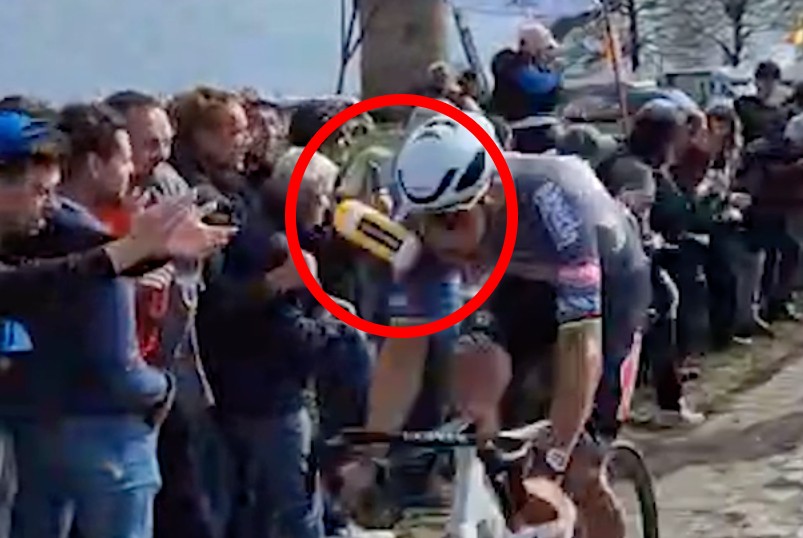
The WorldTour team says it wants more drastic action to ensure rider safety in the future.
“We want measures to follow to keep people with bad intentions away from cycling races,” says the team.
“Too often we notice that the misconduct is the result of – or at least goes hand in hand with – excessive alcohol consumption.”
Alpecin-Deceuninck says incidents such as Sunday’s are an escalation of “earlier facts”. A spectator was filming spitting at van der Poel during the E3 Saxo Classic in March.
“During other competitions too – both on the field and on the road – we found that misconduct by a few has far-reaching consequences,” says Alpecin-Deceuninck.
“It means that the safety of the riders cannot always be guaranteed, it overshadows the enjoyment and reputation of true cycling enthusiasts and it distracts from the sporting achievements.
“We will follow the further course of the legal procedure internally, so that the misconduct does not receive more attention than it deserves. But we are pushing for consultation with and cooperation between all parties involved (riders, teams, federations, organisers and governments).
“Measures must be taken to keep people with bad intentions away from cycling races and to take more proactive action at known critical points.”
The man who threw the bottle at van der Poel reported himself to the police.
Van der Poel described the incident as “attempted manslaughter” and stated that “Ww can’t let this pass”.
The UCI’s reaction
It’s not only van der Poel and his team who have spoken about the incident. The UCI also released a statement condemning the action.
“The Union Cycliste Internationale (UCI) and the associations representing the families of cycling (CPA for the riders, AIOCC for the organisers and AIGCP for the teams) unanimously condemn, in the strongest terms, the unacceptable behaviour of a spectator during the 122nd edition of Paris-Roubaix from the side of the road on 13 April,” it said.
“Cycling is one of the few sports that offers such proximity between athletes and the public during events. This is one of its assets, both for the riders themselves and for the spectators.
“However, this particularity implies an increased responsibility for spectators at an event, whose behaviour can not only influence the course of the event, but also, and even more seriously, endanger the physical integrity of the riders.”
Zwift Update Version 1.88 (144046) Released
Zwift version 1.88 begins its phased rollout today. It’s a minor release, containing mostly visual tweaks and bug fixes. Read on for details…
Hilltop Hustle Opens Up
Not mentioned in Zwift’s release notes, the new “Hilltop Hustle” route which was released as event-only a few updates ago is now available to free ride in Watopia. Ready for some hill repeats?
“Close the Gap” Changes
Zwift’s release notes say, “Visual improvements to the in-game ‘Close the Gap’ banner.” Here are more details of what has changed:
- Smoother transition between distance numbers if a closer bike comes into draft range
- Indicator now ignores players that aren’t moving
- Indicator will not appear if speed difference is outside limits (no more popup for bikes going too fast to draft)
New Climb Portals
Two new climbs have been added to the Climb Portal library:
- Cauberg (0.8km, 57m): featuring in the Amstel Gold Race on April 20
- Côte de la Redoute (1.5km, 153m): featuring in Liège–Bastogne–Liège April 27
These short climbs are scheduled in the coming days, and we’ll be building out their detail pages here on Zwift Insider ASAP.
Release Notes
Zwift provided notes on additional tweaks and bug fixes in this update:
- Fixed an issue that could potentially cause Bike Upgrade progress to be counted toward a non-equipped bike.
- Streak Flair is no longer visible in HoloReplays.
- Fixed gaps in the roadway in Watopia and London.
- Fixed an issue where Zwifters could get snagged on the Home Screen routes page when navigating between tabs if using a device with a mouse.
- The ‘Join a Zwifter’ card in the Home Screen is now placed at the end of the For You row if no friends are Zwifting at the moment.
- Improved readability of Bike Upgrade purchase dialog boxes in some languages.
- Various visual improvements in France.
- Various visual improvements in the Home Screen.
- Stability improvements.
Discuss this update in Zwift’s forum > (link coming soon)
Questions or Comments?
If you spotted any other changes or bugs in the update, please comment below!
Cannondale’s new Moterra is banking on a Bosch motor upgrade – and I think that’s a wise move
Cannondale’s new Moterra eMTB looks like an iterative refinement rather than a full ‘rip up the rule book’ do-over. However, dig a little deeper and the changes are more than skin deep.
There’s an entirely new carbon fibre frame with updated geometry. It has been given the brand’s Proportional Response design philosophy and a maximum ASTM 5 rating.
The range comprises two models: the standard Moterra (160mm front, 150mm rear travel) and the Moterra LT (170mm front, 165mm rear) catering for trail and enduro riders.
But with the success of DJI’s Avinox-equipped Amflow, the subsequent Avinox avalanche was basically inevitable.
UNNO, Forbidden and Teewing are the first adopters outside of DJI’s own ecosystem, all launching bikes with the Avinox motor.
Not only do Avinox bikes have the peak torque (120Nm), watts (1,000W) and sheer speed of the Amflow motor, the bikes themselves are raising the bar.
The Amflow was universally loved because of its motor, and the frame’s foibles – think conservative geometry and average suspension – were given a bit of a free pass because of it.
This gave other brands that made concessions in the motor department (think Bosch, Shimano, Yamaha and Brose) the opportunity to claw back performance (and prospective buyers) elsewhere.
But now the floodgates have opened on Avinox-powered bikes outside of the DJI ecosystem, are other brands going to be left floundering?
The new Moterra proves that might not be the case.
Bosch is still a solid bet
While it’s undeniable that Chinese brand DJI has all the manufacturing and technological know-how cemented by years of drone production, it’s a newcomer to the world of mountain bike motors.
Bosch, in comparison, is an industry veteran. Launching its first Performance Line motor in 2010, it has had over 15 years to understand, refine and bike-proof its drive unit.
The latest Gen 5 Performance Line CX – fitted to Cannondale’s newest Moterra and a host of other electric mountain bikes – is the pinnacle of all that development.
While peak power (600W) and torque (85Nm) figures are now down compared to even Brose’s latest motor fitted to the Specialized Turbo Levo 4 (720W and 111Nm), it’s not always about on-paper stats.
Bosch, of all the current ebike motor manufacturers, has the reputation for being the most reliable, and the brand has impressive after-sales support.
The latest iteration sees further refinements including more sensors, a lower weight (100g less than the Gen 4), and most crucially, a silent no-knock ride.
Add in better battery tech – improved energy density reduces weight while upping capacity – and steel-manning the argument to go Bosch is easy.
But there’s more (unofficially) on the horizon for Bosch.
Rumours of an over-the-air software update are rife.
There’s talk of both torque and power getting a boost to 100Nm and 750W respectively, potentially giving Bosch back its eMTB motor crown.
We all know the Bosch motor felt more powerful than the 85Nm and 600W claimed figures, so it would be fair to say boosting those numbers would equate to an even spicier ride.
And even if this rumoured upgrade isn’t on the horizon, Bosch’s power, its power delivery and battery life – which is exceptional – are more than enough to keep my feet sitting solidly in the German brand’s camp.
What does this mean for Cannondale’s newest Moterra?
Both the new Moterra and Moterra LT are fitted with the newest 800Wh battery – although the smaller 600Wh version can be fitted without issue – and the Gen 5 Bosch motor. Those are two very big ticks in the most important boxes.
The batteries are removable, too, which was one of the biggest things Cannondale wanted – off-bike charging is massively important to the brand, and riders can swap out a depleted battery for a fully charged one to keep riding for longer.
Equally, they could run the bike with the smaller battery to reduce weight for a more agile ride.
Of course, the 250Wh PowerMore range extender is also compatible, upping battery power to a whopping 1,050Wh, more than the Avinox’s maximum 800Wh unit.
While power and torque are both down compared to DJI’s, battery capacity, and maybe more importantly, battery flexibility and customisation, are way ahead on the Bosch system.
I’d say that’s one of the many resounding reasons to stick with Bosch.
The new Moterra must also be a good bike
All that motor power is useless if Cannondale has left stones unturned on the bike’s more general development.
From the sounds of things, that isn’t the case with the new Moterra.
While the ‘must-haves’ could be on any bike brand’s shopping list, it’s the execution that matters.
Cannondale wanted the Moterra to: have good proportions and ‘flow’; be as light as possible, but also strong and be incredibly easy to work on.
Going to great lengths to tick all these things off, Cannondale says it scrutinised every weave of carbon fibre, removing any that weren’t necessary.
Coupled with a redesigned skid plate – that protects the underside of the motor – this frame is 996g lighter than the previous generation.
Cannondale could have saved more weight by making the down tube sealed, but removing the battery was important.
Elsewhere, the pivot hardware has been designed to make the bike and shock easier to disassemble.
Importantly, Cannondale’s Proportional Response is keyed into the Moterra’s DNA.
Not only does this see wholesale, proportioned geometry changes as the sizes get bigger – rather than taking a small size and ‘zooming in’ its figures to create bigger ones – it also uses different shock tunes and carbon layups.
Riders on the small bike should garner the same sensations as ones on the XL.
Two models, different uses
The Moterra range is split in two, with each bike having a very different personality.
The two bikes share a number of components, but also differ in big ways.
Cannondale Moterra
The standard Moterra – said to be the range’s most versatile bike – is basically its own entity.
A custom rear end means it can sport a 29in rear wheel, have a more compliant feel and has lower shock progression, so it better suits air shocks. Anti-squat has also been tuned in the climbing gears to boost traction.
This 160mm front, 150mm rear-travel bike also has a steep seat tube angle (77.7 degrees) and a trail-ready 64.4-degree head tube angle.
Reach figures span 430mm to 515mm through the four-size range (small to extra-large).
Cannondale says its research has discovered an emerging and growing discipline, focused heavily on technical climbs rather than winching up fire roads.
It argues the new Moterra is the perfect tool for that job.
Cannondale Moterra LT
On the face of it, the LT is just the standard bike after a big old glow-up.
But beneath the similar looks lurk some very important, major differences.
The custom-made rear swingarm is stiffer and designed specifically for mixed wheel sizes (29in front, 27.5in rear).
A chunkier cross-section increases rigidity, but crucially it’s no heavier than the outgoing Moterra LT’s.
Suspension kinematics are also tuned differently, this time targeting the linear spring rate of a coil shock rather than the progressive nature of an air-spring.
Its descent-focused, ‘race-ready’ frame has a high stack figure (647mm small and medium, 656mm large, 665mm extra-large) to help the rider feel in, rather than on the bike.
Compared to the old Moterra LT, it’s got shorter, proportionally sized chainstays. The small and medium get 445mm, while the large and extra-large have a 450mm figure.
These are small changes, but they’re important ones.
Cannondale wants the new Moterra LT to be its most capable bike, and I think it has absolutely hit the mark.
Back to Bosch
The new Moterra looks like a great bike on paper, then.
There are plenty of compelling reasons to opt for it over the competition, even if the Bosch motor isn’t one of them.
Will it stand up to comparative testing with the new guard of Avinox-equipped bikes from other brands?
We’re looking forward to finding out in a future test.
2025 Cannondale Moterra and Moterra LT models and prices
2025 Cannondale Moterra Carbon 1
- Moterra carbon frame, 150mm travel
- Fox Float X Factory shock
- Fox 38 Factory, 160mm travel
- SRAM X0/GX Eagle AXS Transmission drivetrain
- DT Swiss H 1900 wheels
- £8,950
2025 Cannondale Moterra Carbon 2
- Moterra carbon frame, 150mm travel
- RockShox Deluxe Select+ shock
- RockShox ZEB Select, 160mm travel
- Shimano XT Linkglide/CUES drivetrain
- WTB ST i30 wheels
- £7,500
2025 Cannondale Moterra LT 1
- Moterra LT carbon frame, 165mm travel
- Fox DHX Performance shock
- Fox 38 Performance, 170mm travel
- SRAM Eagle 90/Eagle 70 Transmission drivetrain
- DT Swiss H 1900 wheels
- £7,850
“Cauberg” Climb Portal Details
Coming Up: Matthew Lefthand’s 24-Hour Virtual World Record Attempt on April 19th
First, a Bit of Background…
Matthew Lefthand began cycling in July of 2022 after marathon training left him plagued with constant knee and foot troubles. Finding that pedaling did not inflame the pain, Matthew went on to complete several century rides in a 60-day ramp to complete his first road bike race ever: LOTOJA, a 208mi/334km point-to-point ride/race crossing three states and multiple mountain ranges. From that moment on, Matthew was hooked on cycling and was especially drawn to ultra distances.
After building fitness, gaining road skills, and essentially living on the bike (1200 hours/31,000 miles of riding each year) during the 2023 and 2024 seasons, Matthew did his first “real” ultracycling race, Hoodoo 500. After a bumpy start, nutritional disaster, and persevering through 20mph constant winds with gusts up to 40mph, he completed the 520mi/836km and 30,000ft/9,000m of elevation in 29h06m, besting the course record by 5 hours!
With this achievement, Matthew knew he had found his place and set out to specialize his training for ultracycling in 2025. With a winter of intense work under his belt, Matthew asked his good Zwift-friend, Chris “Hoppo” Hopkinson, which early 2025 race would be best to test the waters. Matthew added Bike Sebring to the calendar and put everything into preparation, including learning to ride on a liquid-only diet, attaching TT bars to his indoor bike to practice position, getting a professional TT bike fit, and learning everything he could about the stressors and tactics of a 24-hour race.
His result was very impressive, completing 576 miles in 24 hours at Sebring, surpassing any other American over that time and also any other cyclist during a non-drafting 24-hour race.
World Record Plans for 2025
Feeling on top of the world and gaining more supporters, Matthew set his 2025 schedule to pursue the WUCA World Cup and attempt a few World Records. Matthew told me he’s “not much of a racer.” However, he is attracted to the idea of pulling the most he can out of himself – studying the craft of ultracycling relentlessly to go as far as he can, as fast as he can.
Up Next: 24-Hour Virtual World Record Attempt
Matthew’s next challenge is a 24-hour Virtual World Record attempt on April 19th, hosted by ENVE and supported by Wahoo, Zwift, Rotor, and BrainStoke.
The attempt will begin at 8am ET on Tempus Fugit with a special robopacer named “No Limits Left(y)”. While it has a different name, the metrics of this bot are identical to Constance. Matthew aims to push his limits, break the record, and do it in a fair and equitable way for all who cycle virtually. In addition to the physical feat, Matthew is dedicating his ride to his mom, who is battling Stage 3 Breast Cancer. Incentives to give to the National Breast Care Foundation as well as directly to his mom’s treatment will be shared throughout the event.
Join Matthew!
Matthew invites the public to join him virtually (on Zwift) or physically. He will be riding beginning at 8am ET on April 19th.
ENVE HQ will be open to the public during the entirety of the event. If you are local to Ogden, Utah and want to join in person, Matthew’s team will have several indoor bikes set up, including a Zwift Ride and KICKR Core. You’re also welcome to bring your own bike and trainer.
You can join via Zwift by searching for the “No Limits Left(y)” bot on Tempus Fugit. The event will also be streamed live on YouTube and feature interviews with Tyler Pearce (VC Adventures), Hoppo, Marko Baloh, Hayden “Farmwatts” Pucker, Magnus Kulset, Vidmar Mehl, and others.
Details of the event can be found here. Be sure to follow Matthew for updated information: @matthew.lefthand on Instagram, Facebook, YouTube, TikTok, Strava, and Zwift.
(Matthew is additionally supported by Formula 369, Cycling Upgrades, MYB Supplements, Ventum, Peak State Fit, Infinity Seat, and Impermanence Counseling Services.)
These prototype wheels spotted at Paris-Roubaix prove wide road rims are here to stay
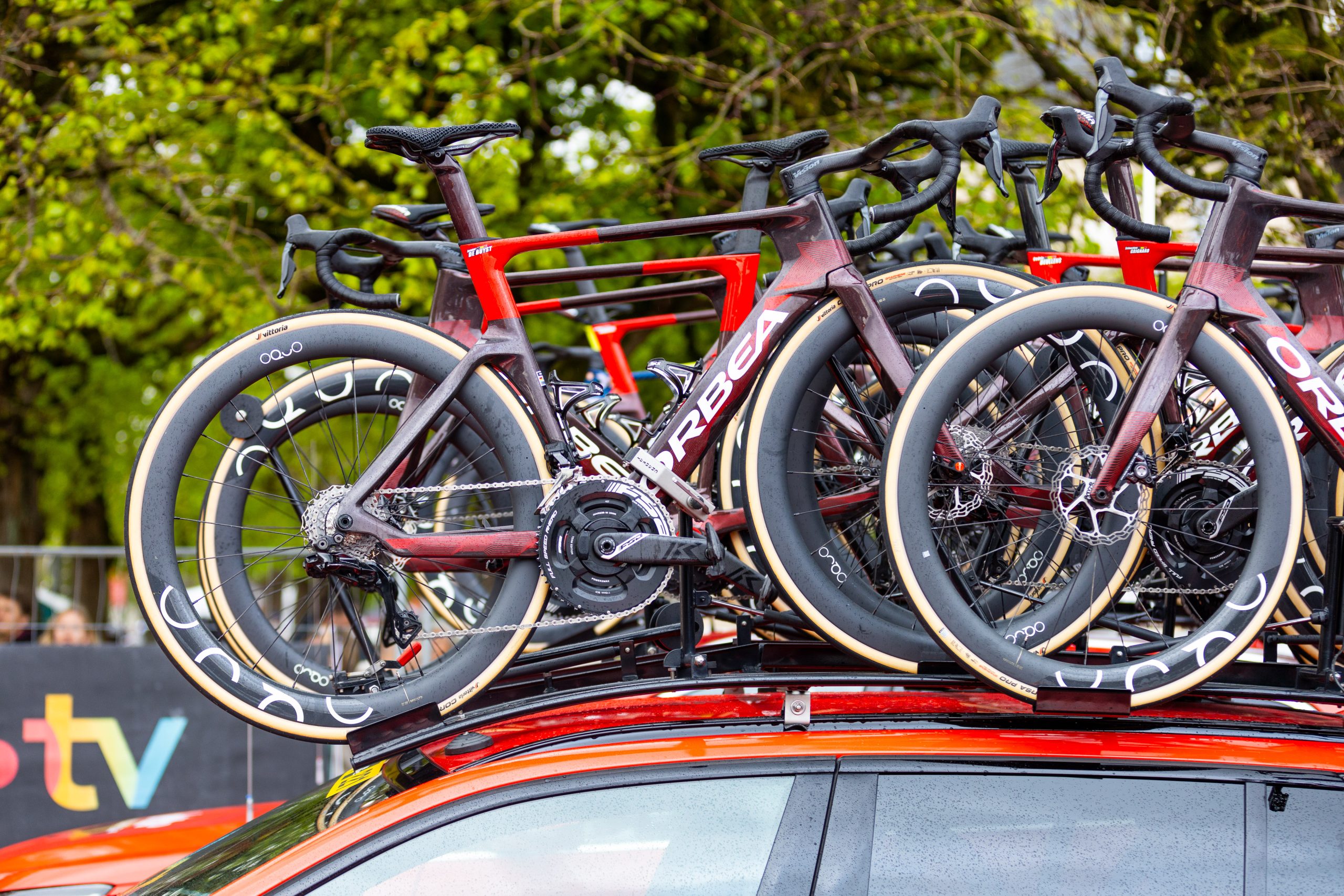
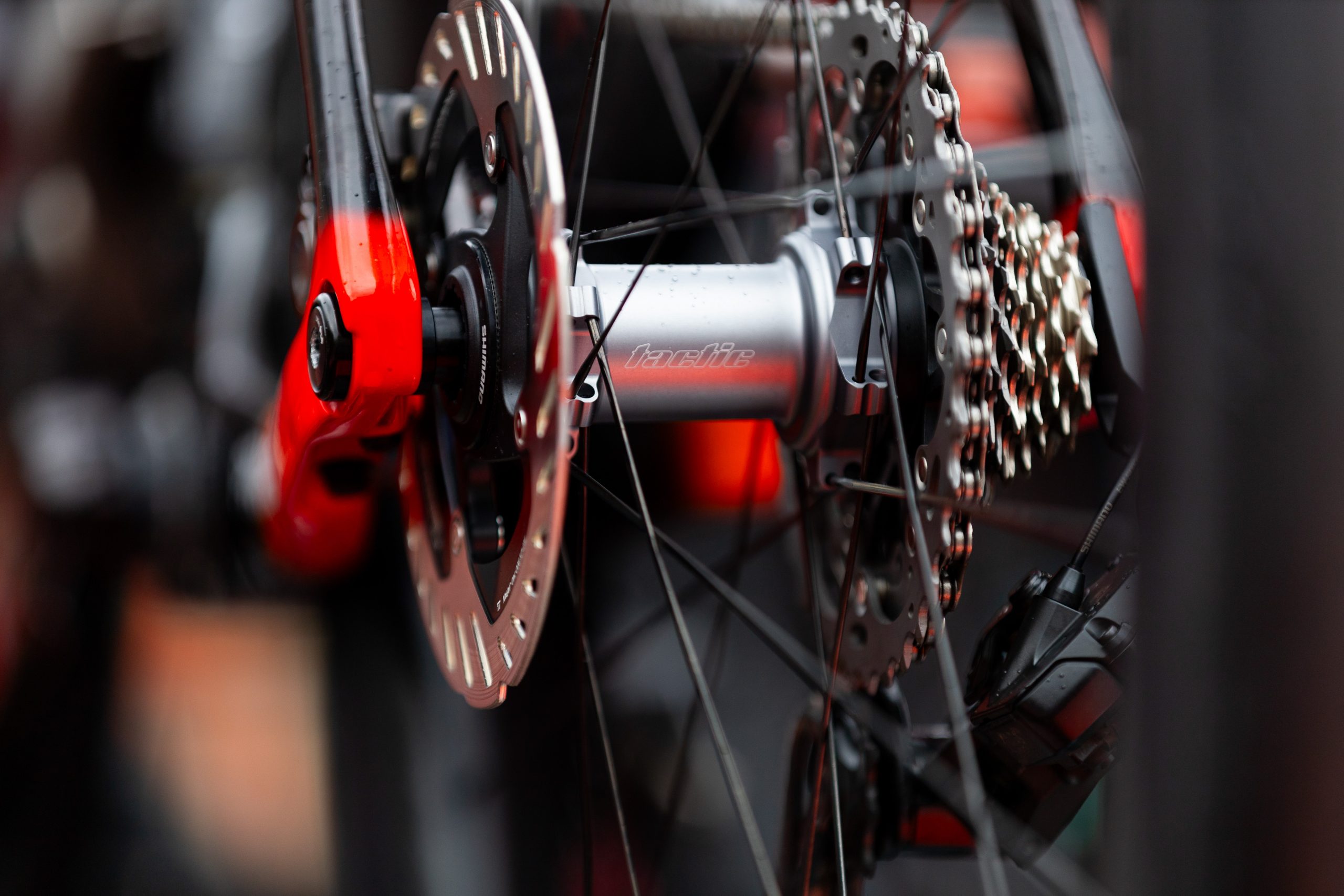
We’ve spotted a prototype wheelset from Basque brand Oquo at Paris-Roubaix.
Oquo arrived on the scene in 2023 as an offshoot of Orbea, and, like the bike brand, sponsors the Lotto Cycling Team.
Oquo launched with eight models for road and gravel bikes, and a source at the brand said this new wheelset has been developed with Lotto.
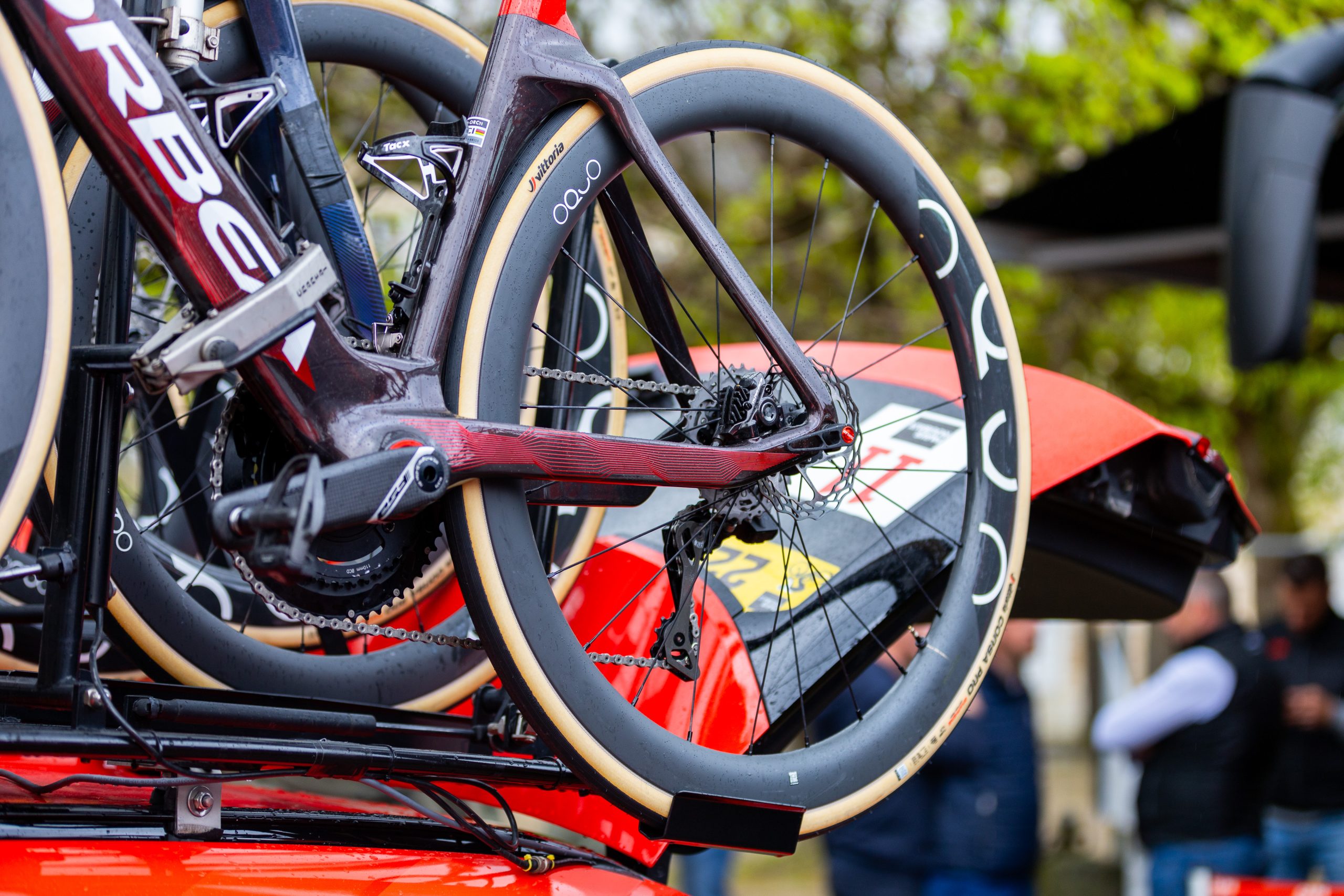
The wheelset has ‘RP50LTD’ printed on the rim. Oquo’s current ‘Road Performance’ line-up comprises of the RP35LTD, RP45LTD and RP57LTD wheelsets.
As you might expect, the new wheelset features a 50mm-deep rim and “wide internal width”, though we don’t have any figures to work with for the latter.
It’s fair to assume, though, that the wider rim width is intended to better support the increasingly wide tyres seen on race bikes. Oquo says the rim itself has also been designed to improve comfort.
That makes the wheelset a good fit for the harsh cobbles of Paris-Roubaix.
We saw the wheelset mounted to a bike on top of a Lotto team car at the start of Paris-Roubaix, but it was also used by members of the team in the race, including Joshua Giddings and Baptiste Veistroffer.
Sébastien Grignard was Lotto’s best finisher at Paris-Roubaix, crossing the line in 40th, six minutes and 22 seconds behind Mathieu van der Poel.
The trend for wide tyres on road bikes shows little sign of slowing, with 35mm tyres used by some riders at this year’s Paris-Roubaix, and pro riders now demanding clearance for 35-40mm rubber.
19-21mm is considered a typical internal width for conservative road wheels, with 21-23mm now common for designs intended for use with 28-32mm tyres.
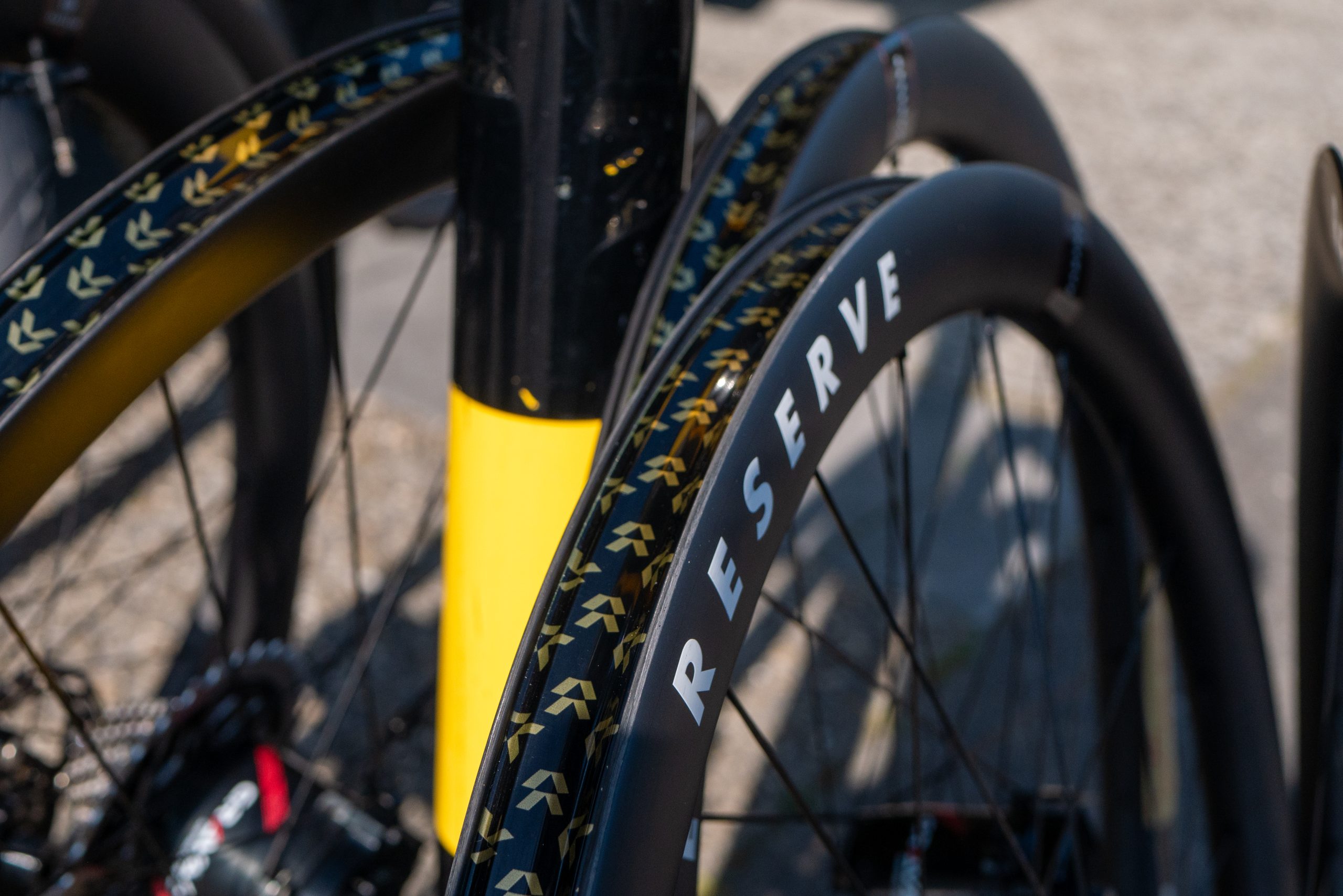
Some road wheels take this further: Reserve’s 52|63 aero wheelset features a 25mm internal width at the front and 24mm at the rear, while Zipp’s 353 NSW and 303 Firecrest wheels have a 25mm intrernal width.
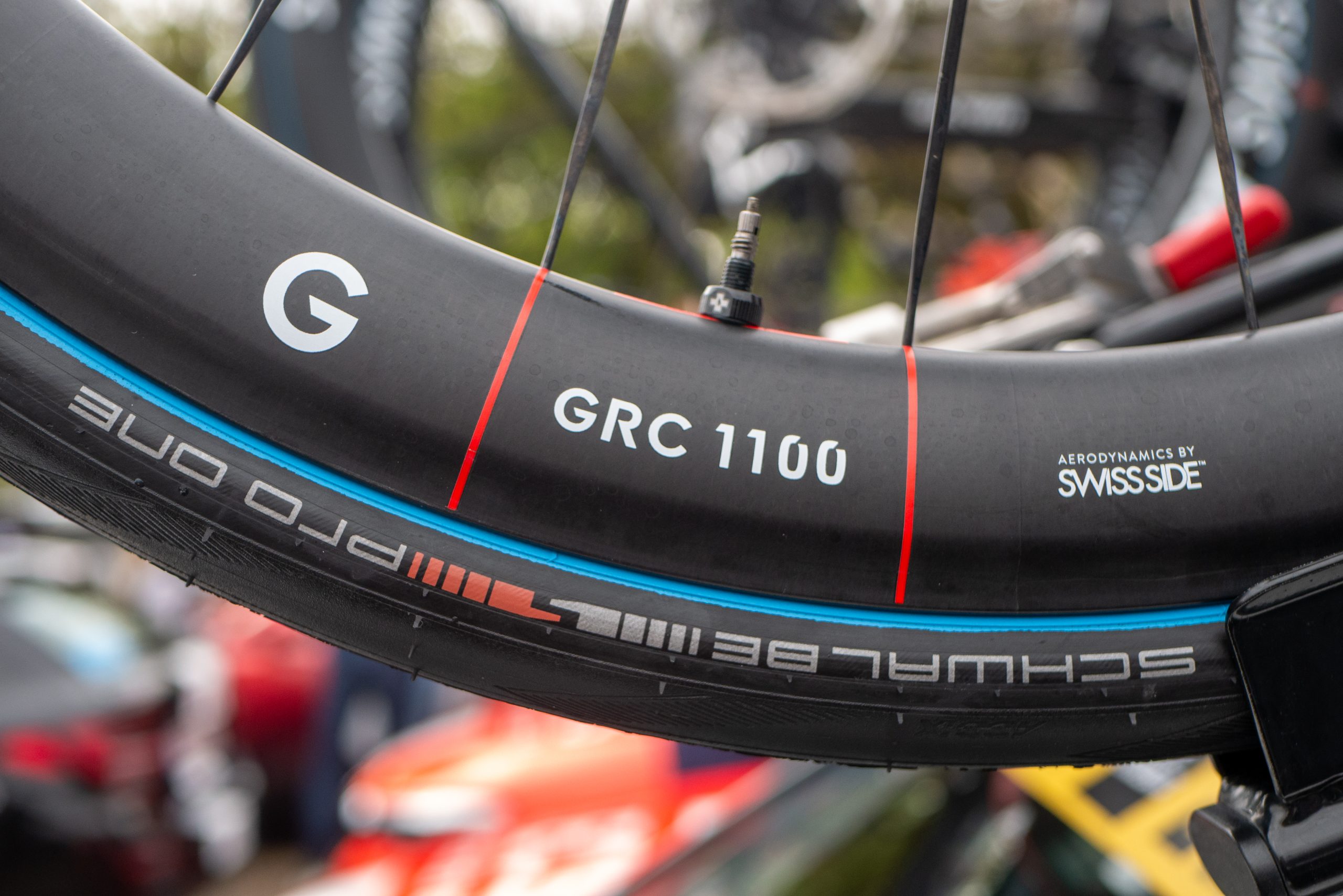
Some teams even switched to all-road or gravel wheels for Paris-Roubaix. Tudor riders turned to DT Swiss’ 50mm-deep GRC 1100 gravel wheels, with a 24mm inner width.
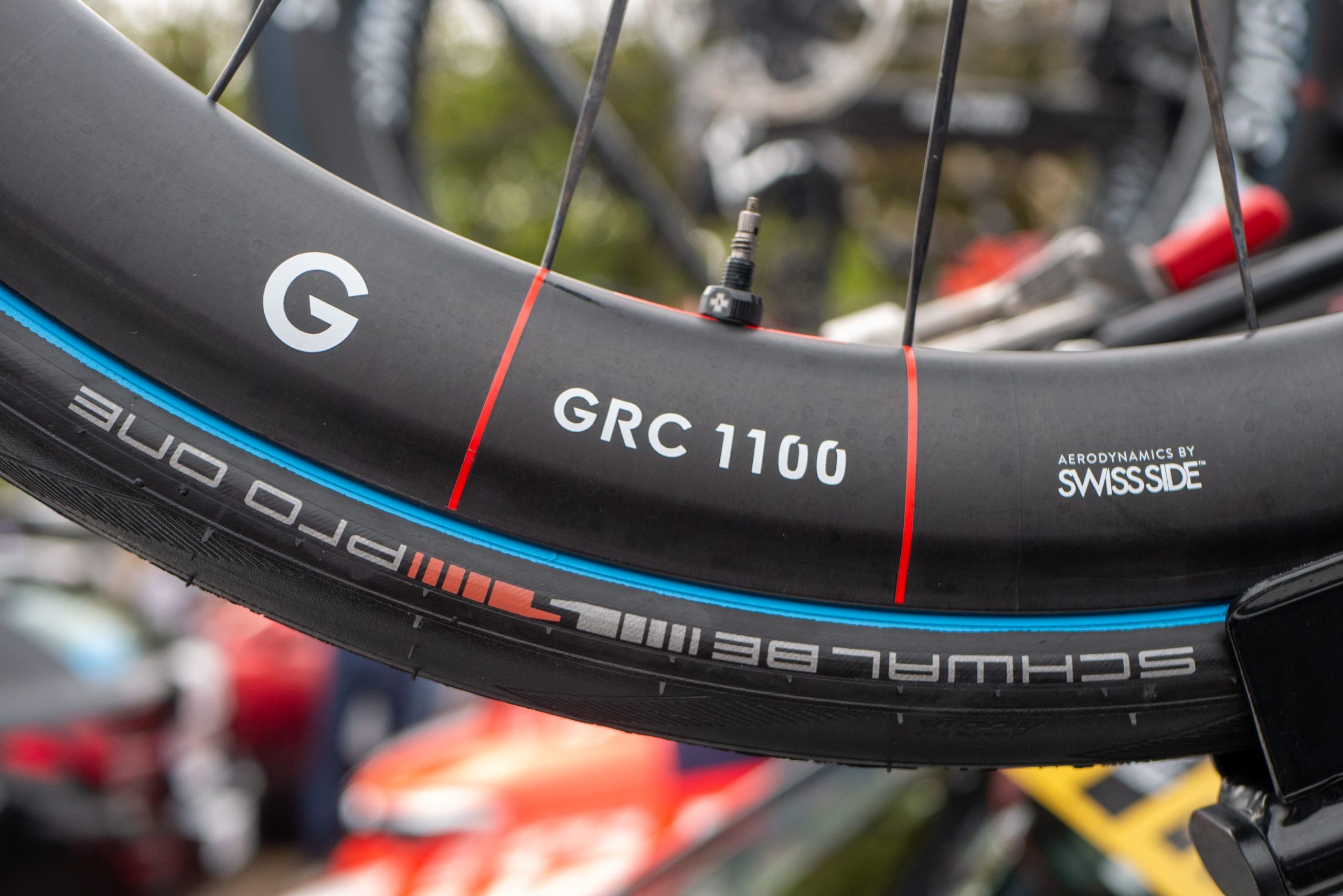
Part of the advantage with the DT Swiss gravel wheels is the greater external width, which makes them better optimised for wide tyres from an aero perspective – the standard ARC wheels are ‘only’ 20mm / 27mm wide, internally and externally
Oquo’s new wheelset is a sign of things to come then, and while there’s no official word on a launch date, we’ll bring you more when we have it.
SISU Reissu: France Race Series Begins Today
Why ride the new roads in Zwift’s France when you can race them? The team at SISU Racing is holding the next edition of their popular SISU Reissu series. It’s the France Reissu, and it happens April 14-20!
The Finnish word Reissu roughly translates as a journey or trip, embodying the concept of travel, adventure, or excursion. The Reissu is a 3 or 5-stage GC series. The rider, and team, in each grade who complete the series with the lowest cumulative time will be crowned with the Johtaja Jersey (symbolically at this stage). Stages 1, 3, and 4 comprise a 3-Stage GC, or race all 5 for the full journey.
See upcoming SISU events at zwift.com/events/tag/sisu >
Schedule (5 Stage Series)
- Stage 1: Monday 14 April – Bon Voyage, France x 1 lap
- Stage 2: Tuesday, 15 April – Three Musketeers, France x 1 lap
- Stage 3: Wednesday, 16 April – Croissant, France x 1 lap [iTT]
- Stage 4: Saturday, 19 April – Gentil 8, France x 1 lap
- Stage 5: Sunday, 20 April – Ven-10, France x 1 lap
For easy sign-on, join the SISU Racing Club in the Companion App and join the conversation by joining the SISU Racing Discord.
More Info
- All events are mass starts with all riders visible.
- Riders enter according to their Zwift’s Racing Score.
- A ZwiftPower profile is mandatory to be included in the GC.
- Your best time will count if you race a stage in multiple zones.
- The team GC is based on a team’s best three finishers in each stage.
- ZPower and riders without heart rate data will be removed from the results.
- Riders who upgrade during the first four stages will be classified in their higher grade.
- iTT will be a mass start using TT bikes with no draft.
For results and much more visit .sisu.racing/reissu.

Man who threw bottle that hit Mathieu van der Poel in “attempted manslaughter” at Paris-Roubaix hands himself in to police
The spectator who threw a water bottle at Mathieu van der Poel, hitting the Dutchman in the face as he soloed to a third consecutive Paris-Roubaix victory on Sunday, has handed himself in to police, according to Belgian media outlet, Nieuwsblad.
Van der Poel was hit by the bottle on the Templeuve sector, with approximately 30km of the race remaining.
On Monday morning, Nieuwsblad reported that an unidentified man had handed himself in to police in West Flanders and reportedly expressed his regret about the incident.
Speaking to Sporza after the race, van der Poel described the incident as “attempted manslaughter”.
“We can’t let this pass,” said van der Poel.
“It was a full bidon, and it hurt a lot. If I take that bidon on my nose, it’s broken.
“Hopefully, the police can identify the man because there has to be a trial for this.
“This is attempted manslaughter. If the UCI doesn’t take action, then we will do it with the team.”
Van der Poel crossed the finish line at the Roubaix velodrome one minute and 18 seconds ahead of defending Tour de France champion – and Paris-Roubaix debutant – Tadej Pogačar.
Pogačar, the first defending Tour winner to ride Paris-Roubaix since Greg LeMond in 1991, had teed up a thrilling finale by matching van der Poel throughout the race.
The pair were leading until sector nine, approximately 40km from the finish, when Pogačar went into a tight right-hand corner too fast, and crashed on the grass verge lining the cobbles.
Pogačar didn’t require a bike change but lost time due to a dropped chain, and dropped further behind when he suffered a subsequent front-wheel puncture.
Van der Poel also punctured on the run-in to Roubaix but a quick bike change saw the 30-year-old re-establish his advantage to become the third rider in history – after Octave Lapize (1909-1911) and Francesco Moser (1978-1980) – to win Paris-Roubaix three times in a row.
Gravel tech, massive tyres and neat hacks – 2025 men’s Paris-Roubaix tech gallery
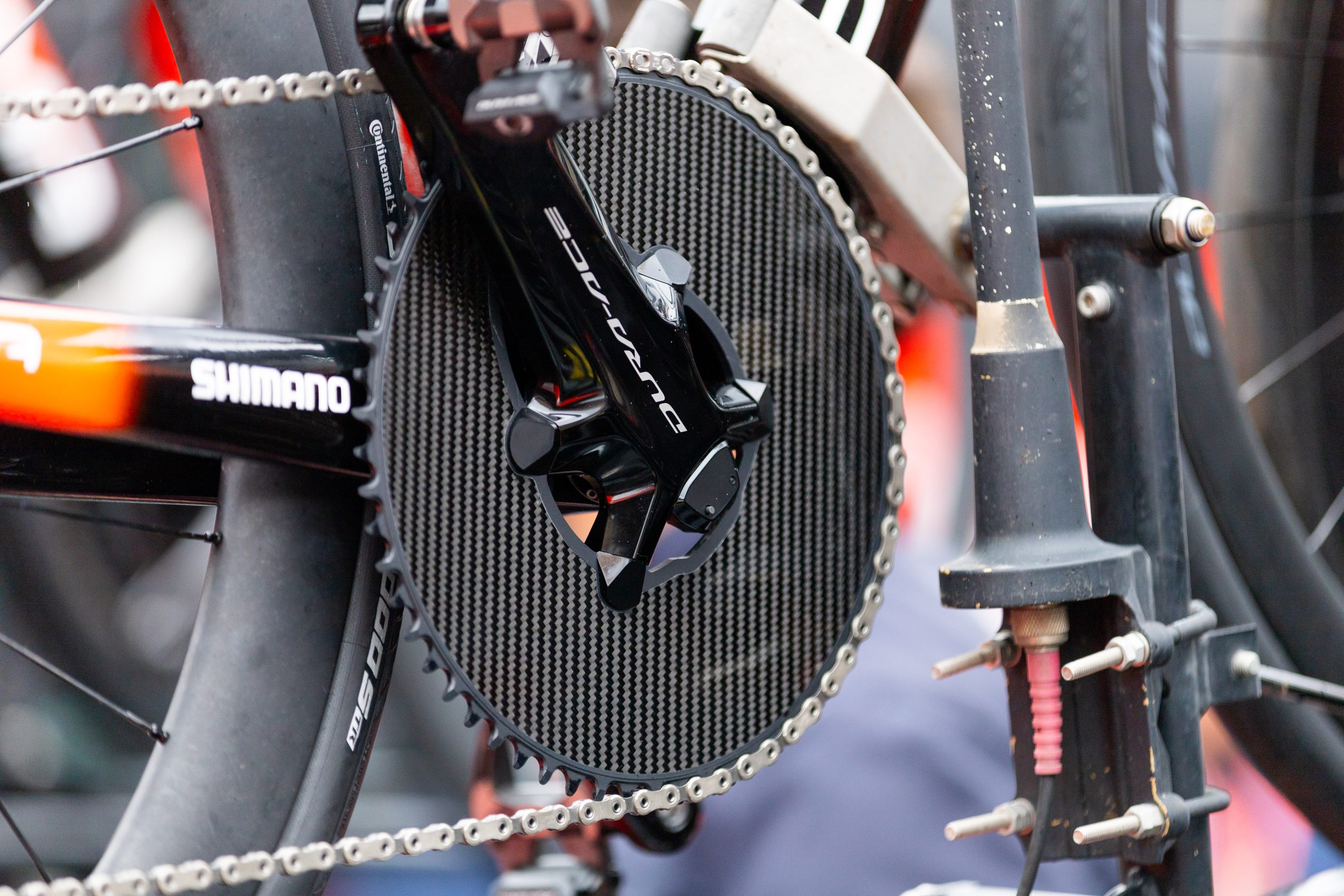
While Paris-Roubaix bikes are not as wild as they once were, pros still go to great lengths to make the cobbles a little more bearable.
Riders did all sorts, including going over their bike’s frame clearance limits, fitting gravel components, and using non sponsor correct parts.
Here’s a detailed breakdown of all we saw on the morning of the race itself.
- Check out our tech gallery of the Paris-Roubaix Femmes avec Zwift
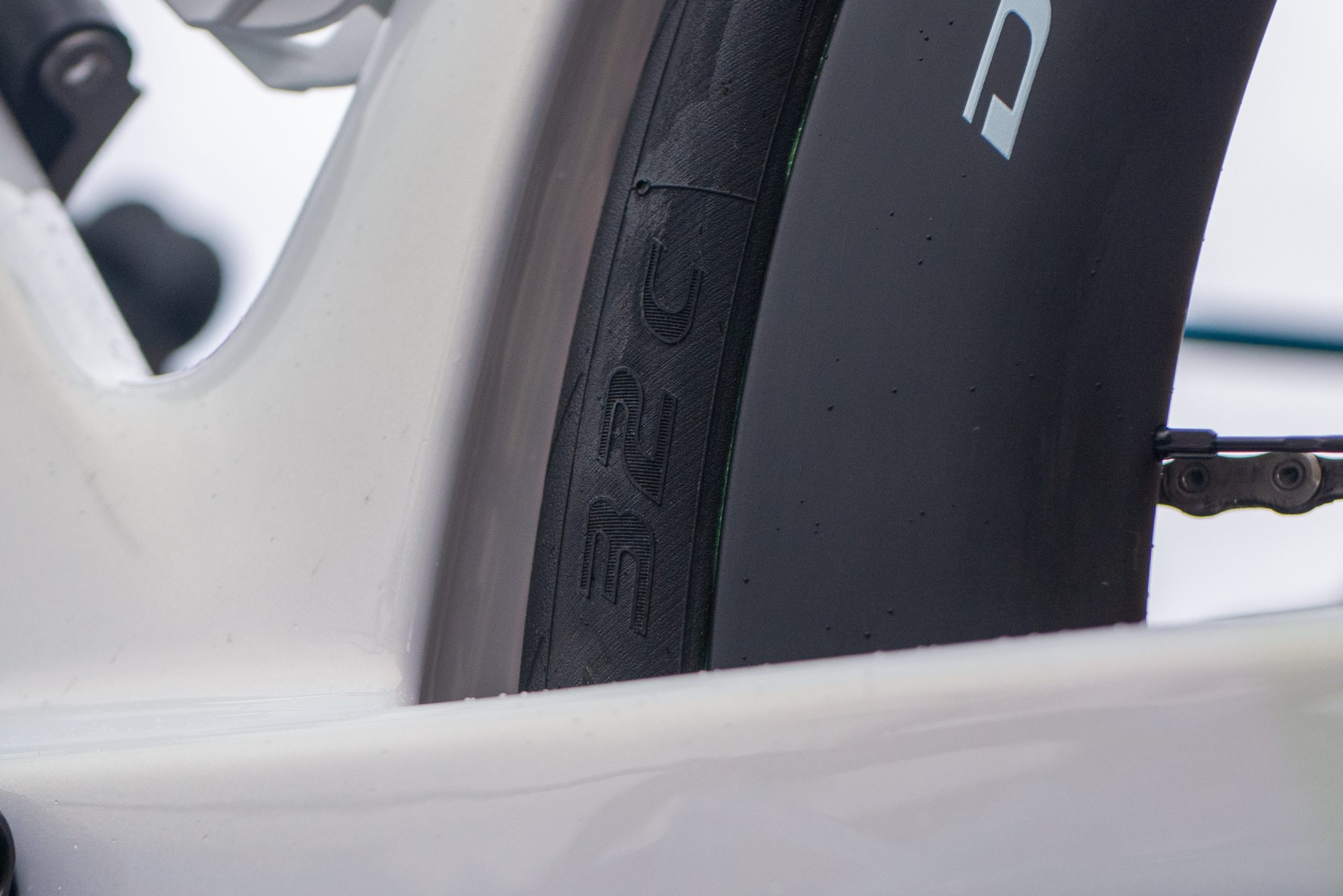
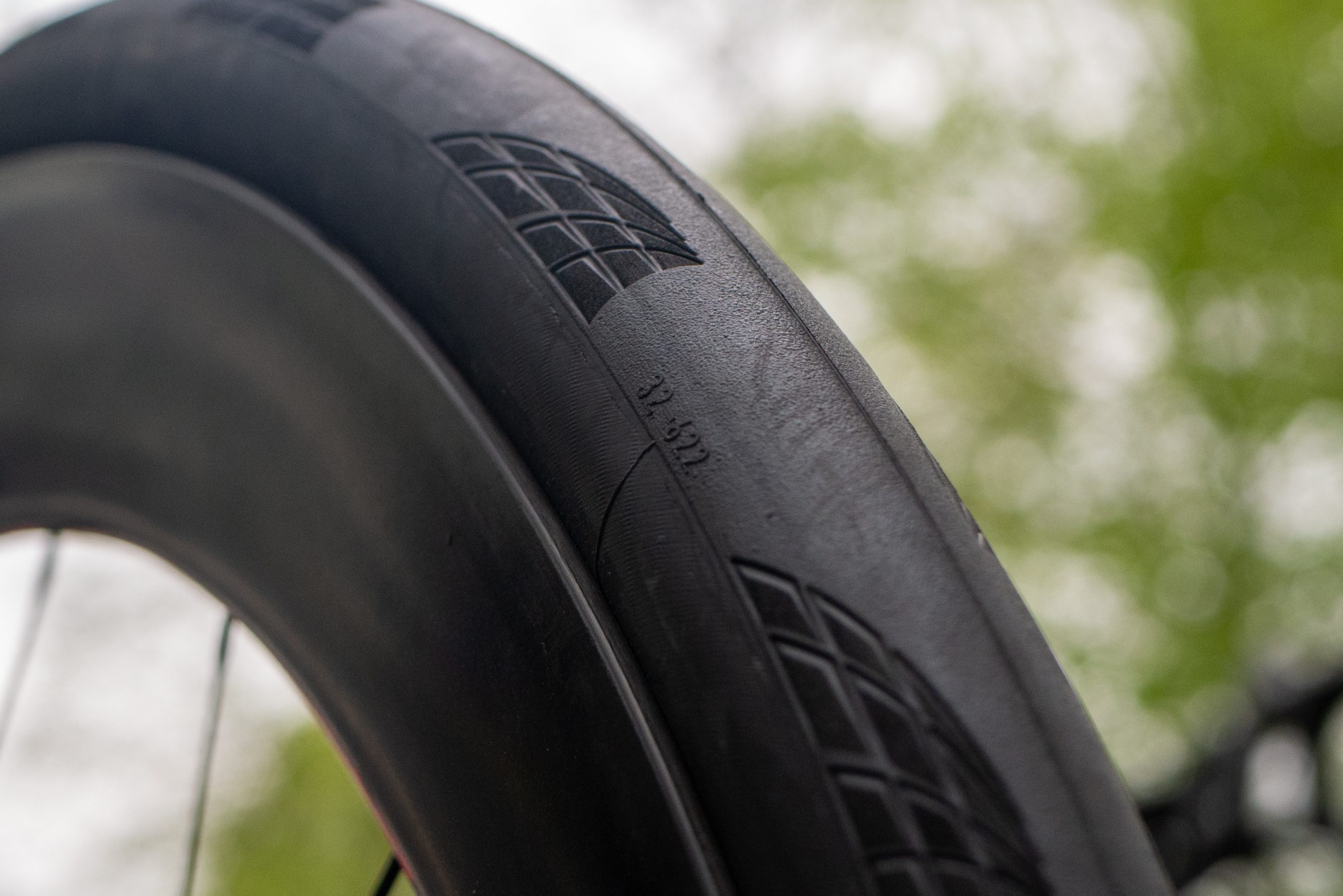
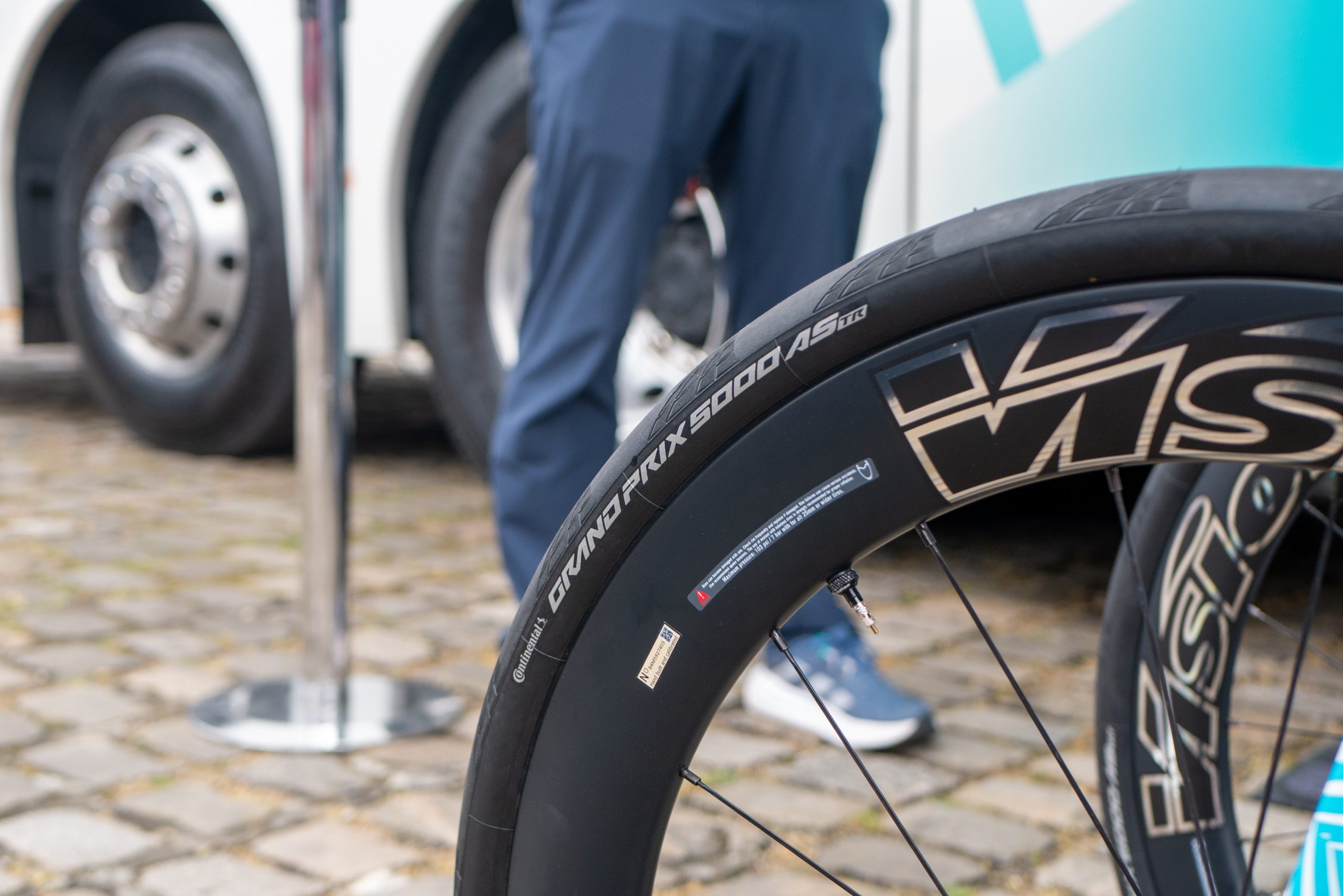
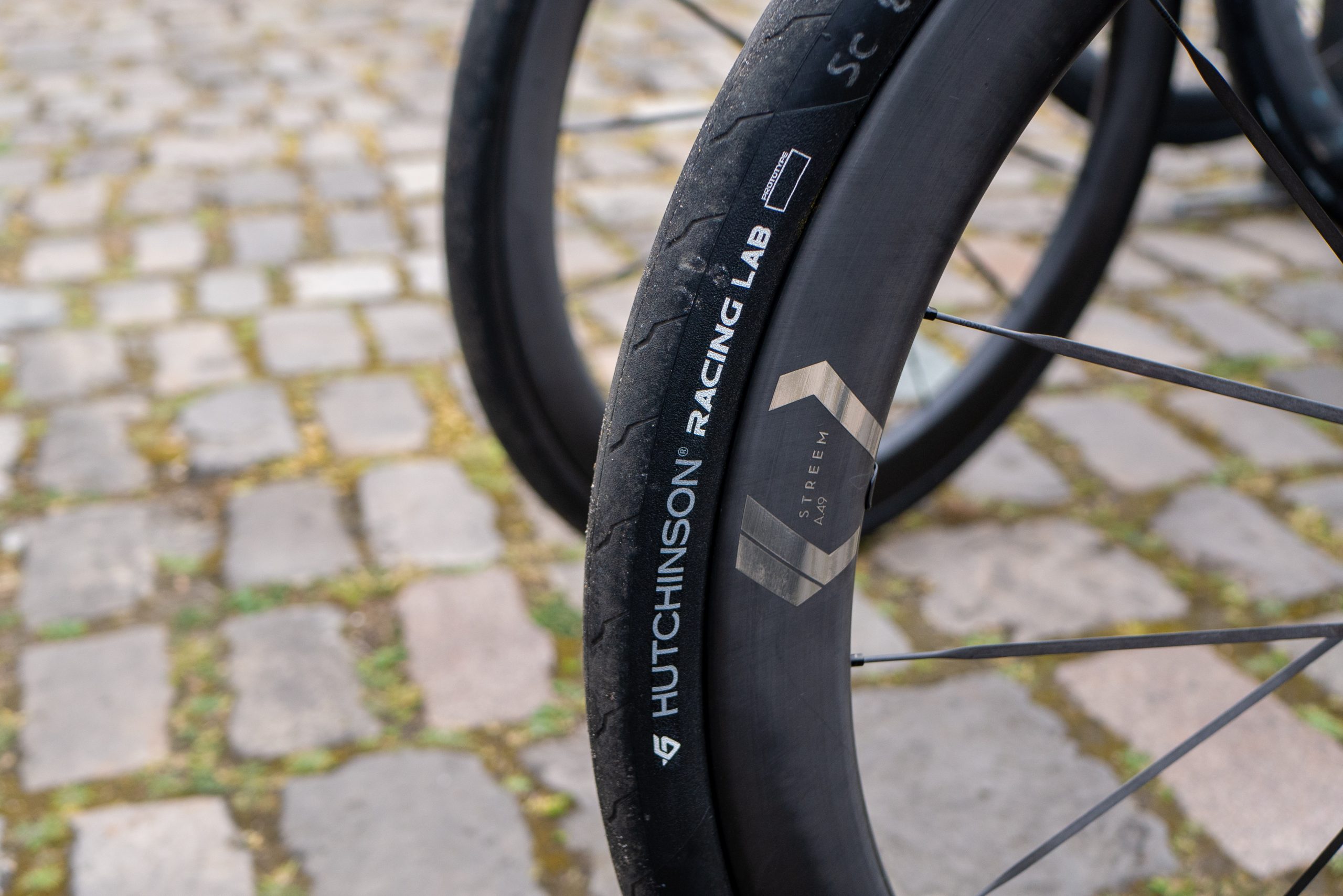
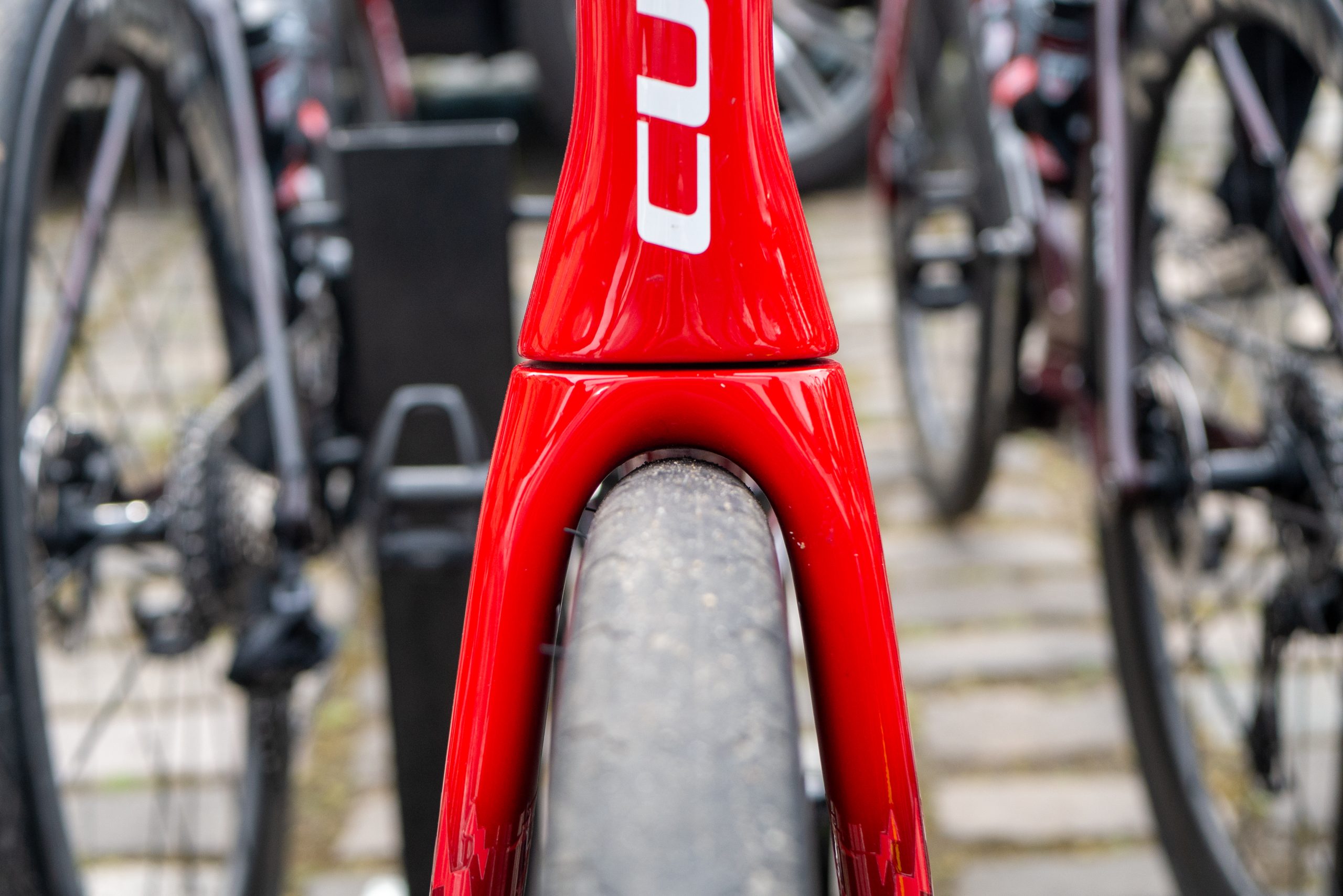
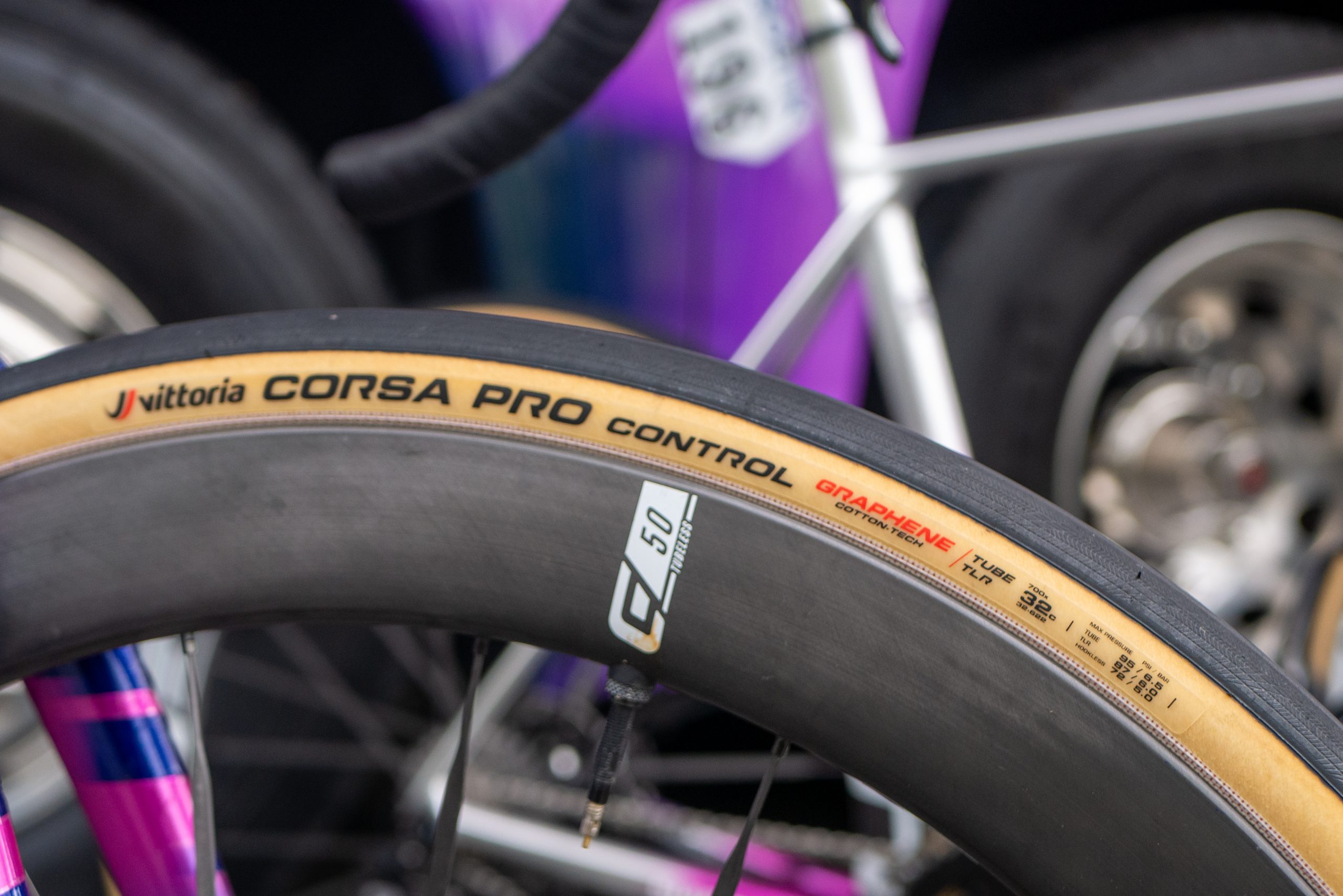
32mm tyres are de rigueur
Gravel gear
Exceptionally neat hacks
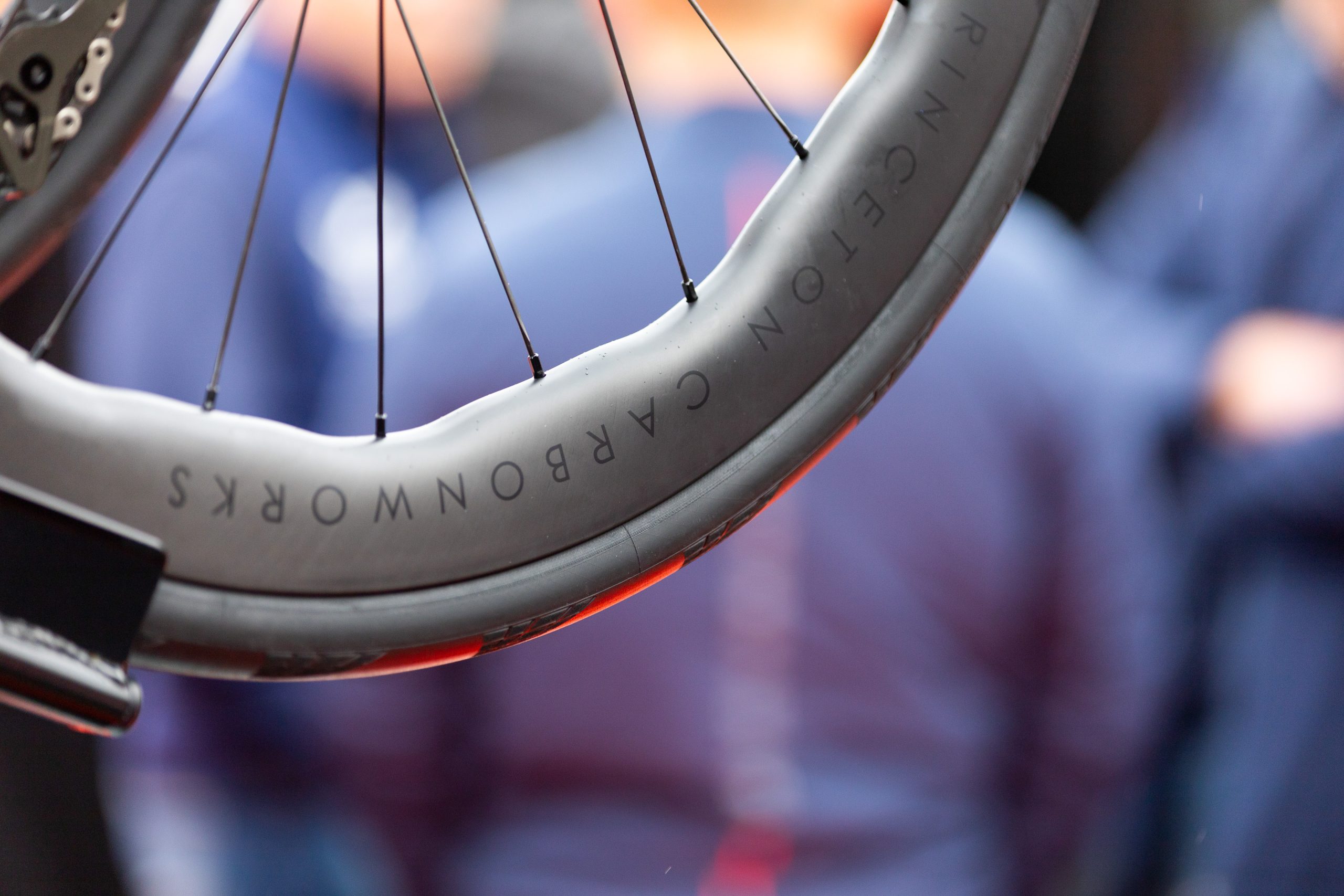
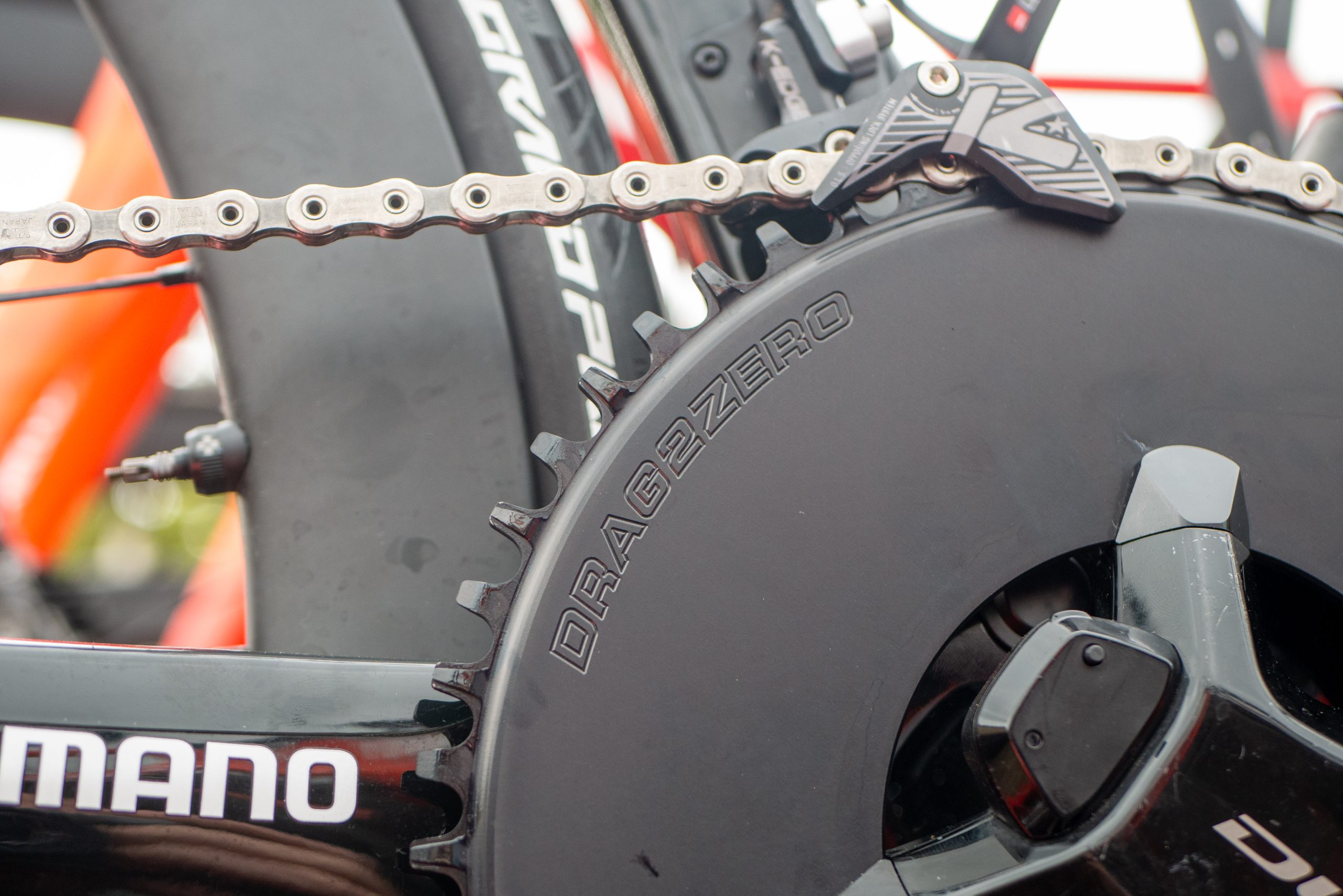
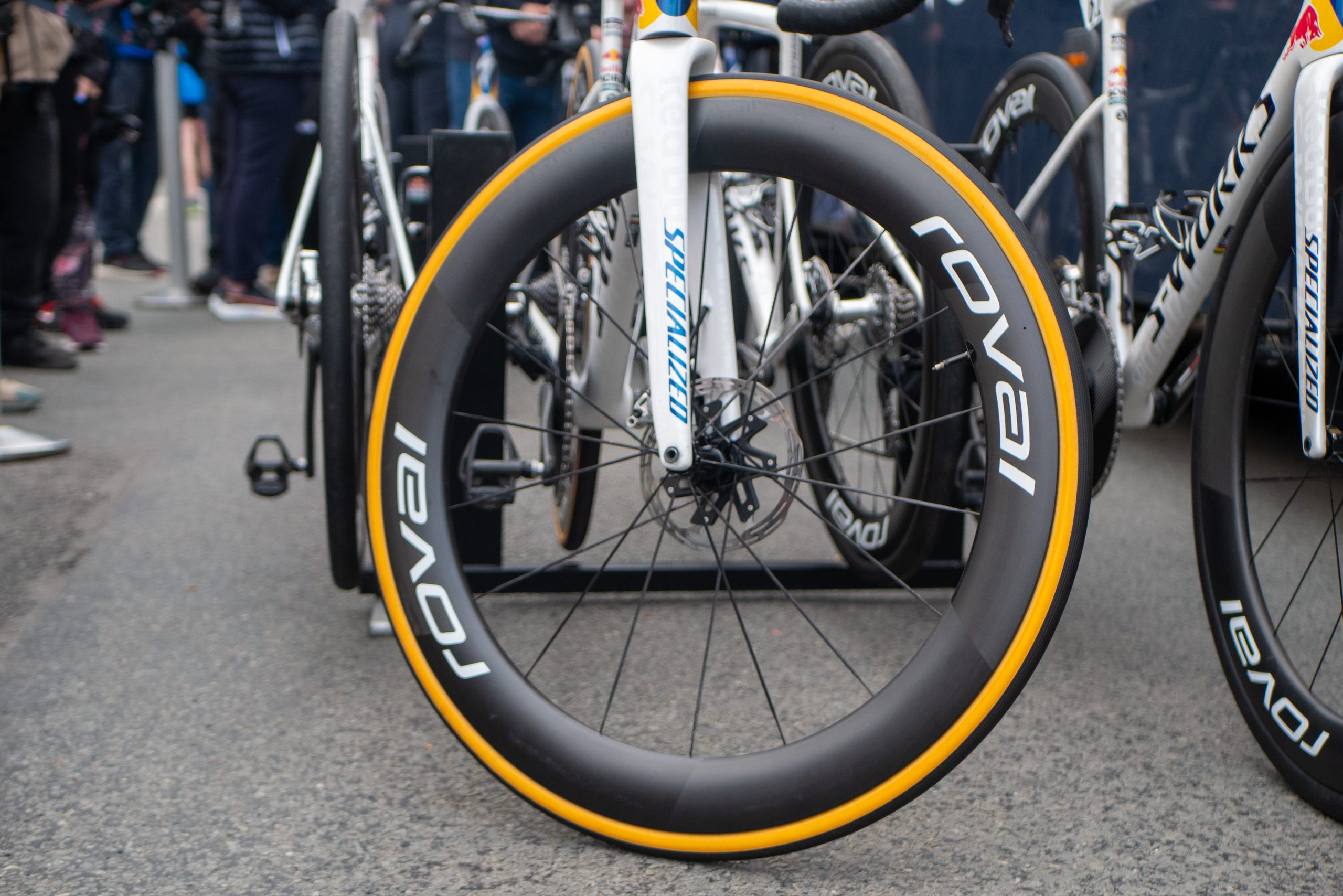
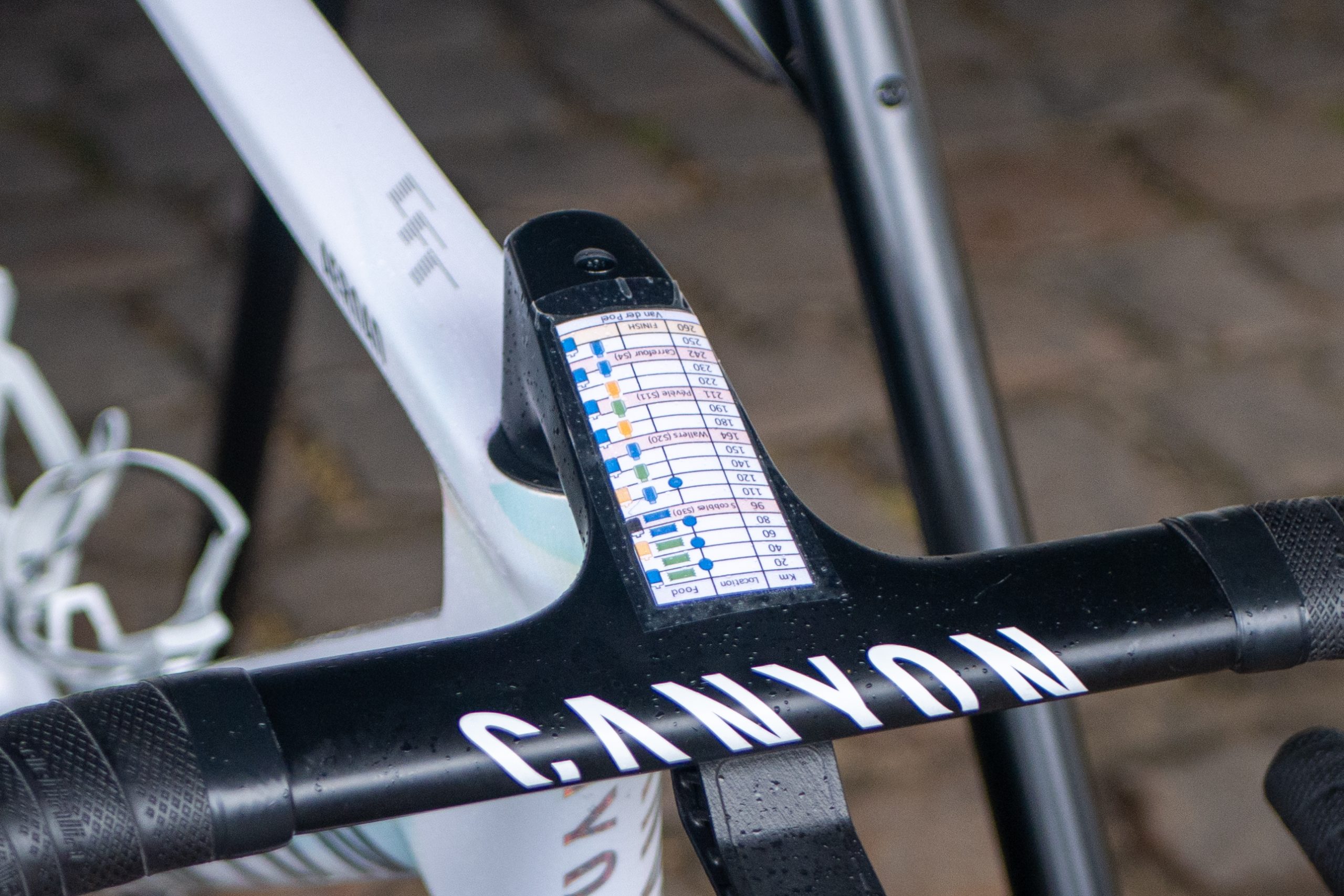
And the rest
Wout Van Aert snubs Cervélo S5 aero bike for Soloist at 2025 Paris-Roubaix
Wout Van Aert rode to a fourth place at the 2025 men’s Paris Roubaix aboard a Cervélo Soloist, featuring the Roubaix-proven Graava KAPS hub, glued on tubeless tyres, and even a nod to his time on Belgium’s version of The Masked Singer.
The choice is intriguing, because the S5 is Van Aert’s usual choice race bike, but team equipment manager Jenco Drost told me that he had deemed the Soloist a better compromise between comfort and aero efficiency.
Aside from this, the wheels are where Van Aert has made most of his changes since his last appearance at the race in 2023.
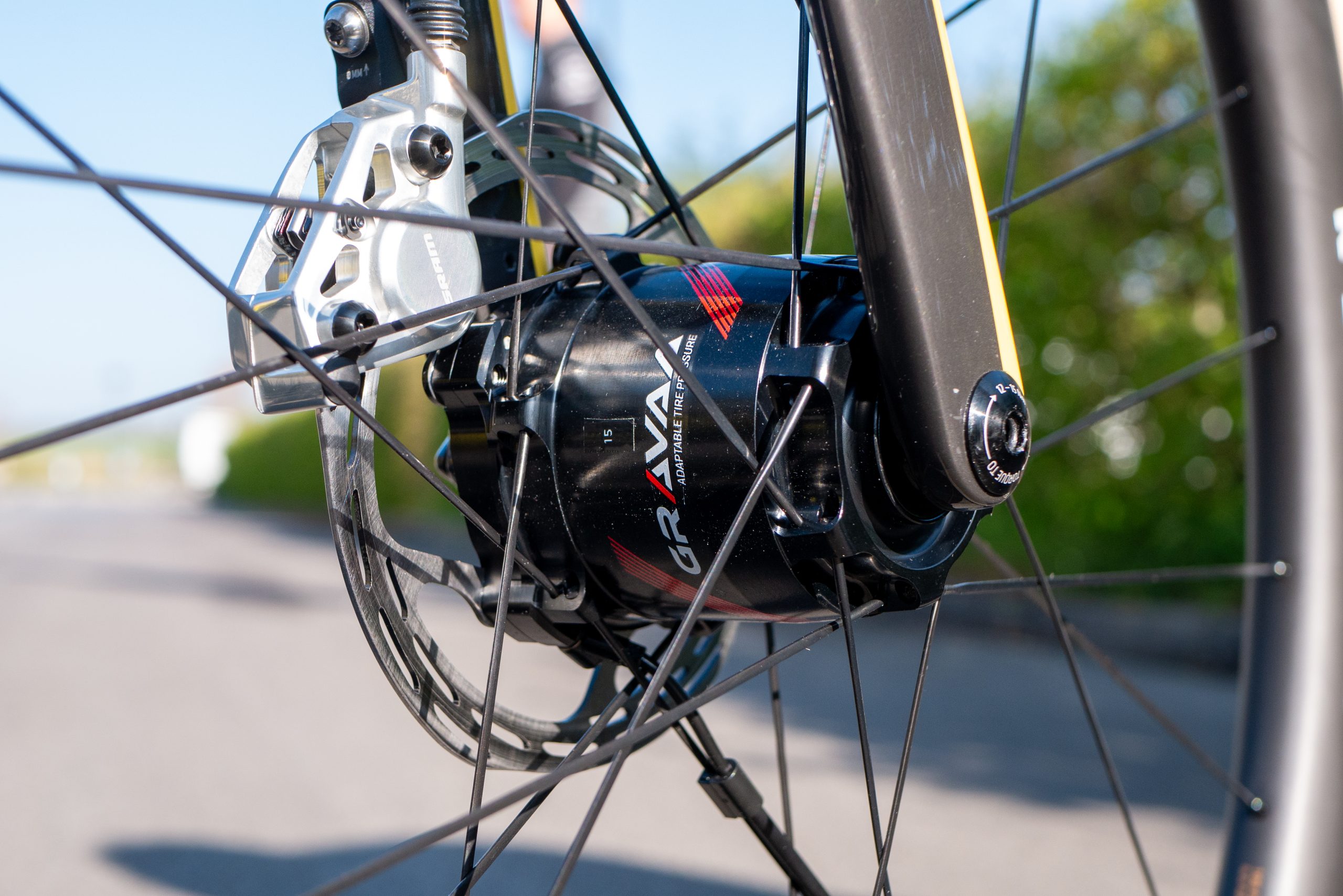
His Reserve wheels now include the Graava KAPS (Kinetic Air Pressure System), which Pauline Ferrand Prevot used to win Paris-Roubaix Femmes avec Zwift on Saturday.
We first spotted Van Aert’s use of the KAPS during a recon ride, but (of course) the Cervélo S5 that we saw in the photos was not the bike he ended up racing.
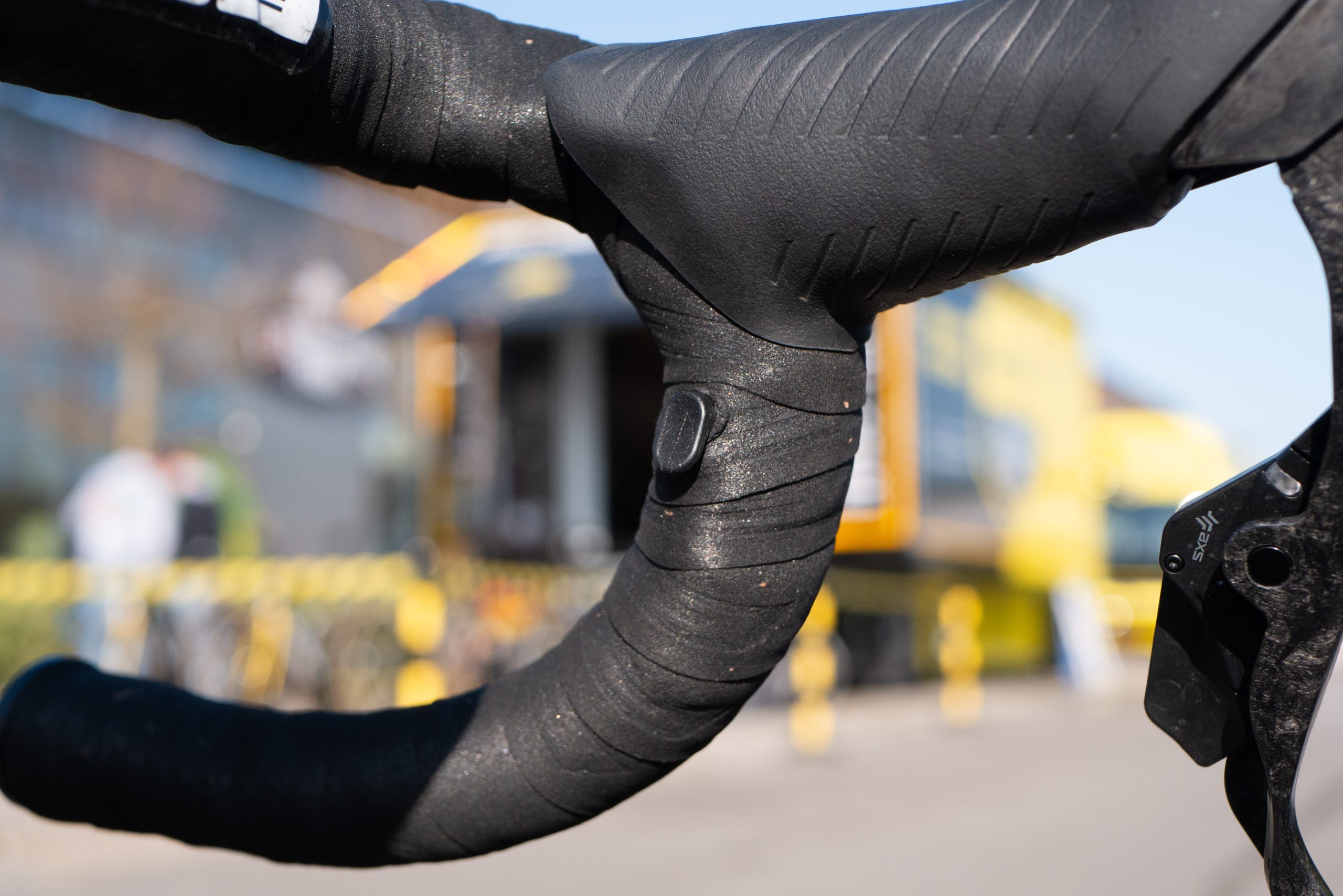
The system is now seemingly well established and allows a rider to swap between three set pressures on the fly.
Drost told us that while deflating a tyre doesn’t cost a rider any watts, inflating back up increases system drag by around 7 watts.
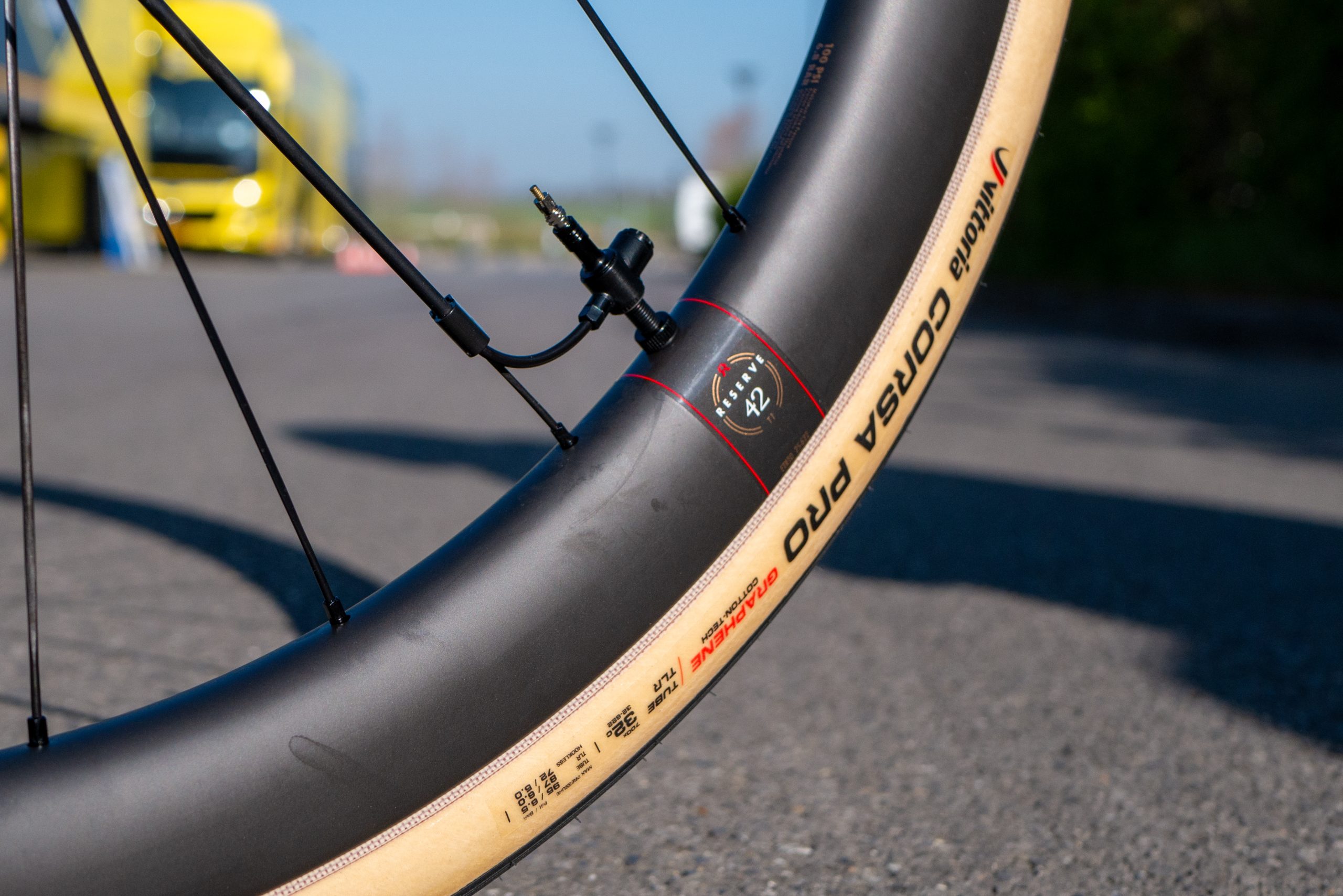
The system is controlled by small shifters located on the bar. The left switch decreases pressure while the right switch increases pressure.
Another interesting feature of Van Aert’s tyres is that they are glued to the rims with Vittoria’s Mastik Pro tubular glue.
Many teams have trialled tubeless inserts in an effort to aid tyre retention in the event of a blowout, but this is among the first times we’ve heard of tyres being glued.
Well, that is if you ignore tubulars, of course.
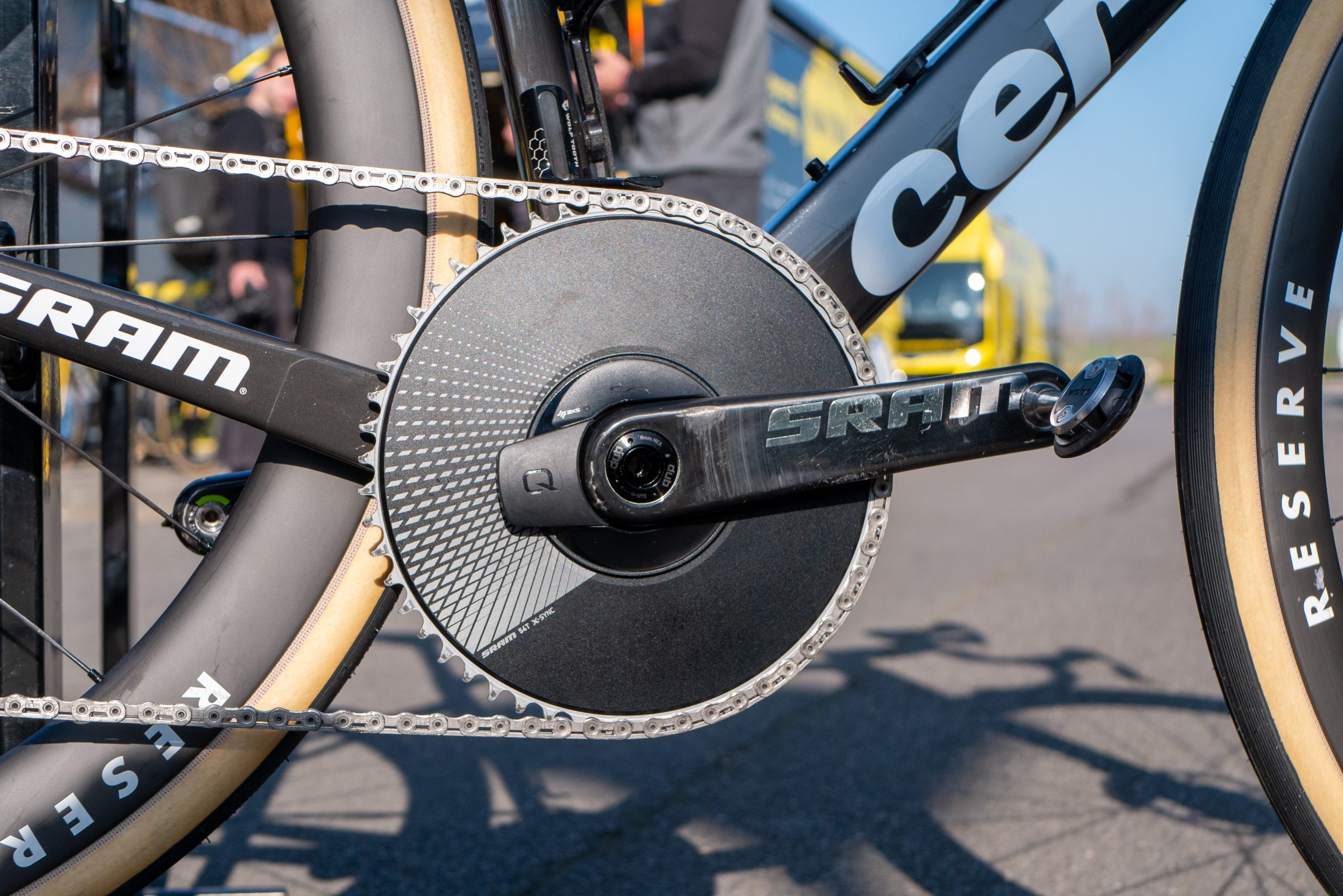
Van Aert is no stranger to a 1x gearing setup, but again we found very interesting nuggets of tech.
This includes SRAM’s fully-filled single chainring.
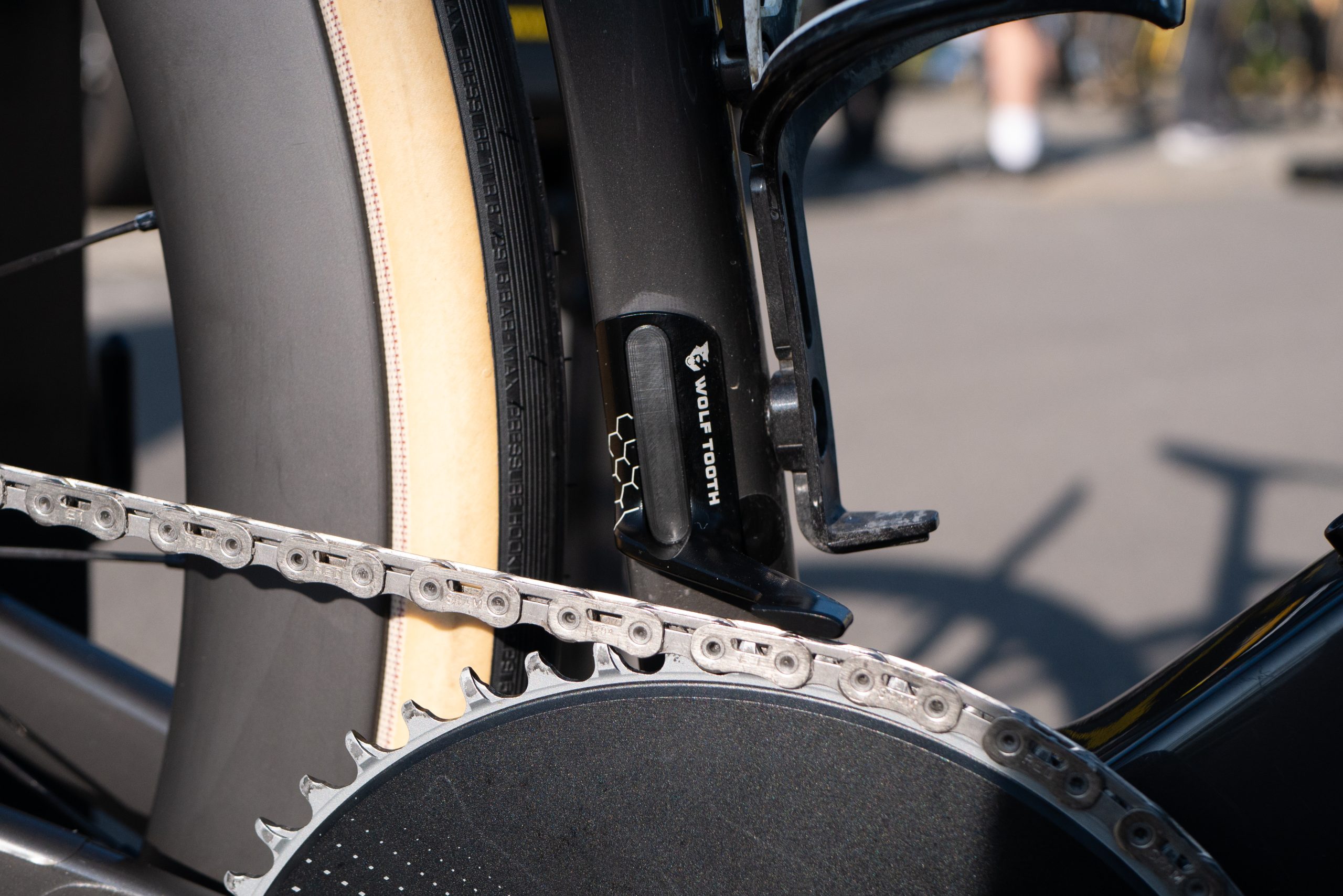
Drost says that WolfTooth has produced a slimmed down chain guide to provide a more aerodynamically efficient solution.
But while the Lidl Trek team used specially modified SRAM Red XPLR rear derailleurs with 12-speed road cassettes, Van Aert stuck with the regular Red AXS derailleur.
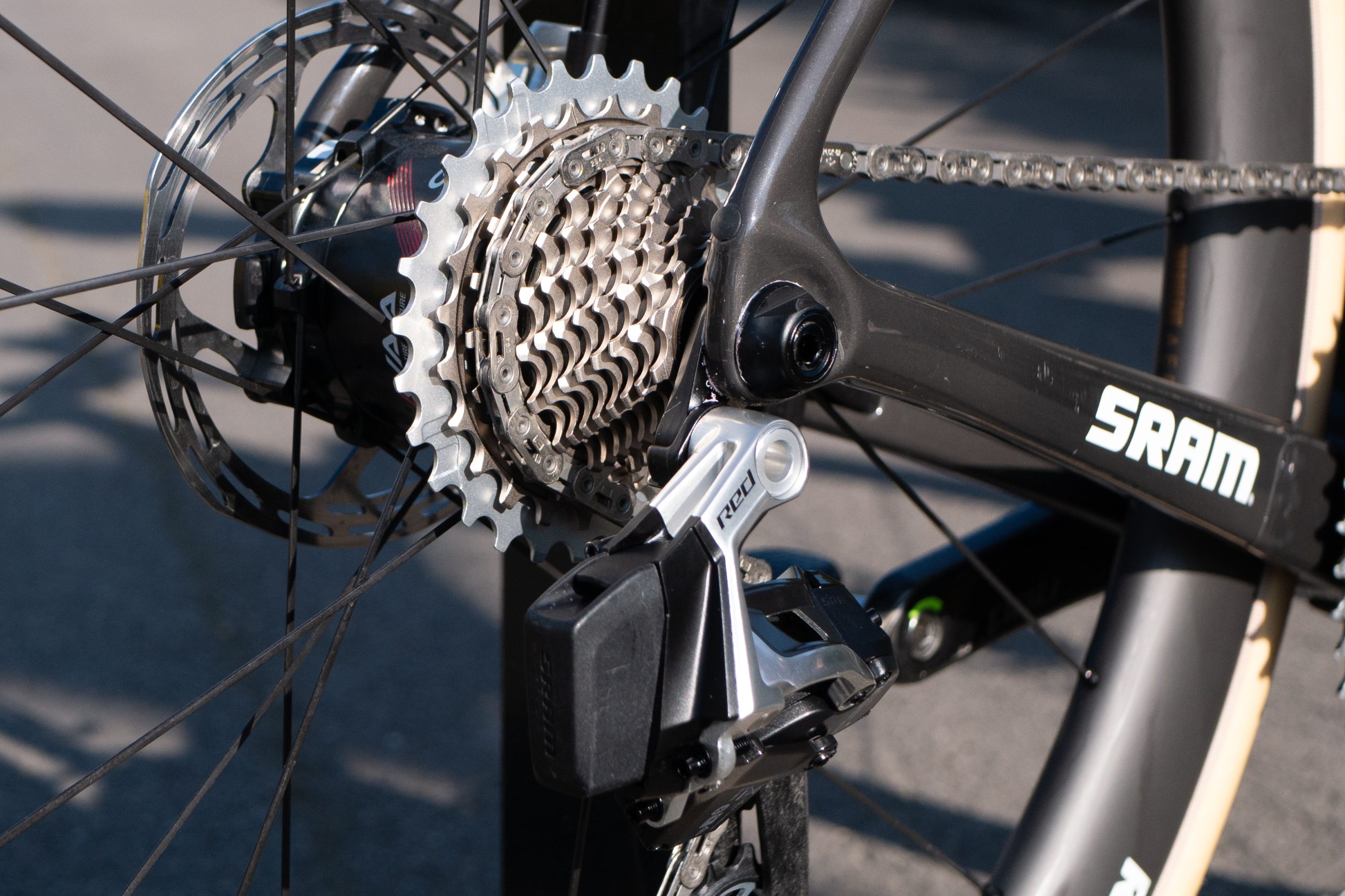
His gearing for Roubaix is huge, with a 10-30t cassette paired with an aero 54T chainring. His crank length is 172.5mm.
We’ve seen Visma Lease-a-Bike teammate Jonas Vingegaard trial very short crank arms, but that doesn’t appear to be Van Aert’s cup of tea.
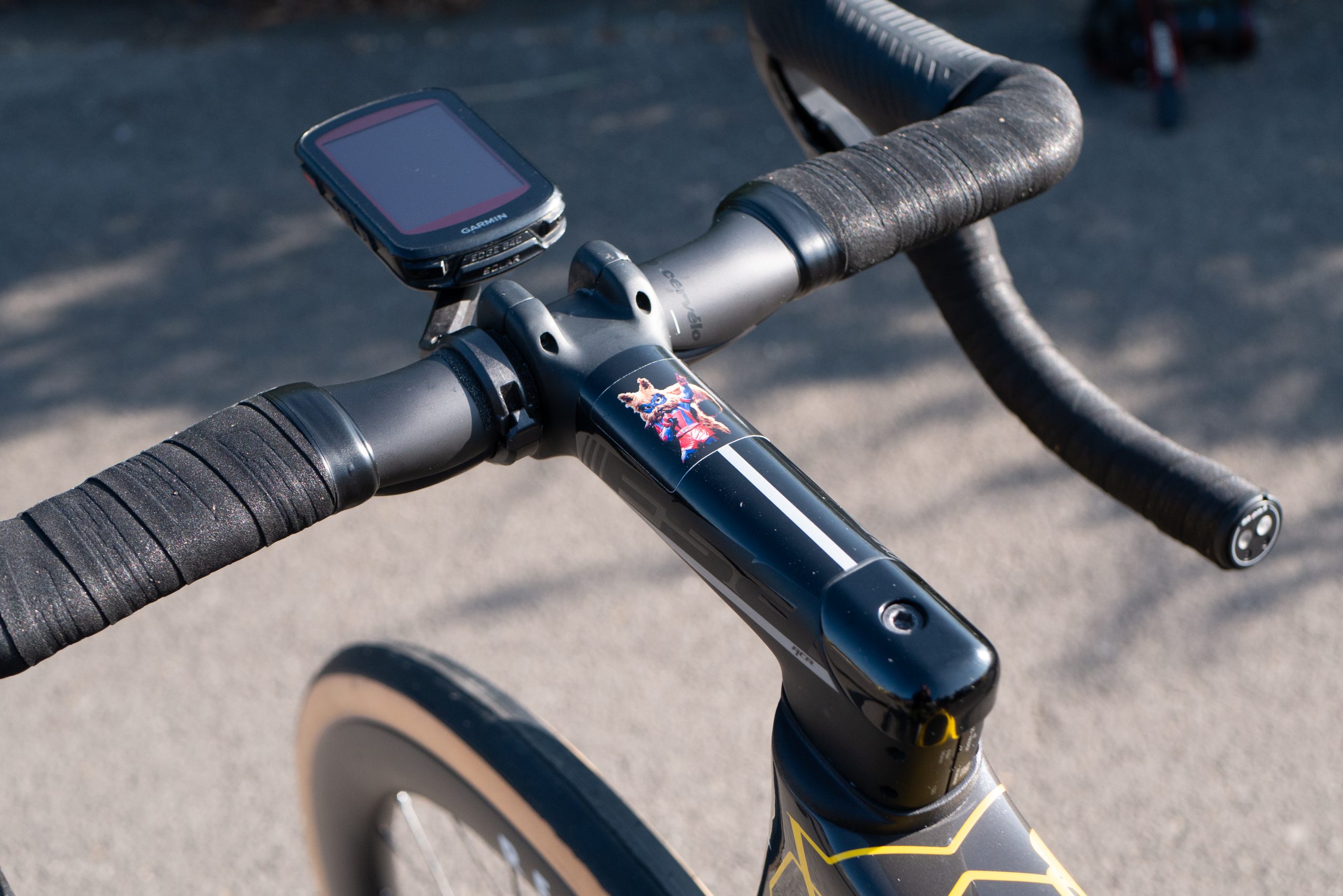
The Soloist doesn’t feature a one-piece cockpit like the split stem design on the S5, so Van Aert opted for a two-piece setup from FSA.
While his stem is fairly long at 130mm, Van Aert keeps things reasonably traditional with a 400mm bar width and little-to-no tilt on his levers.
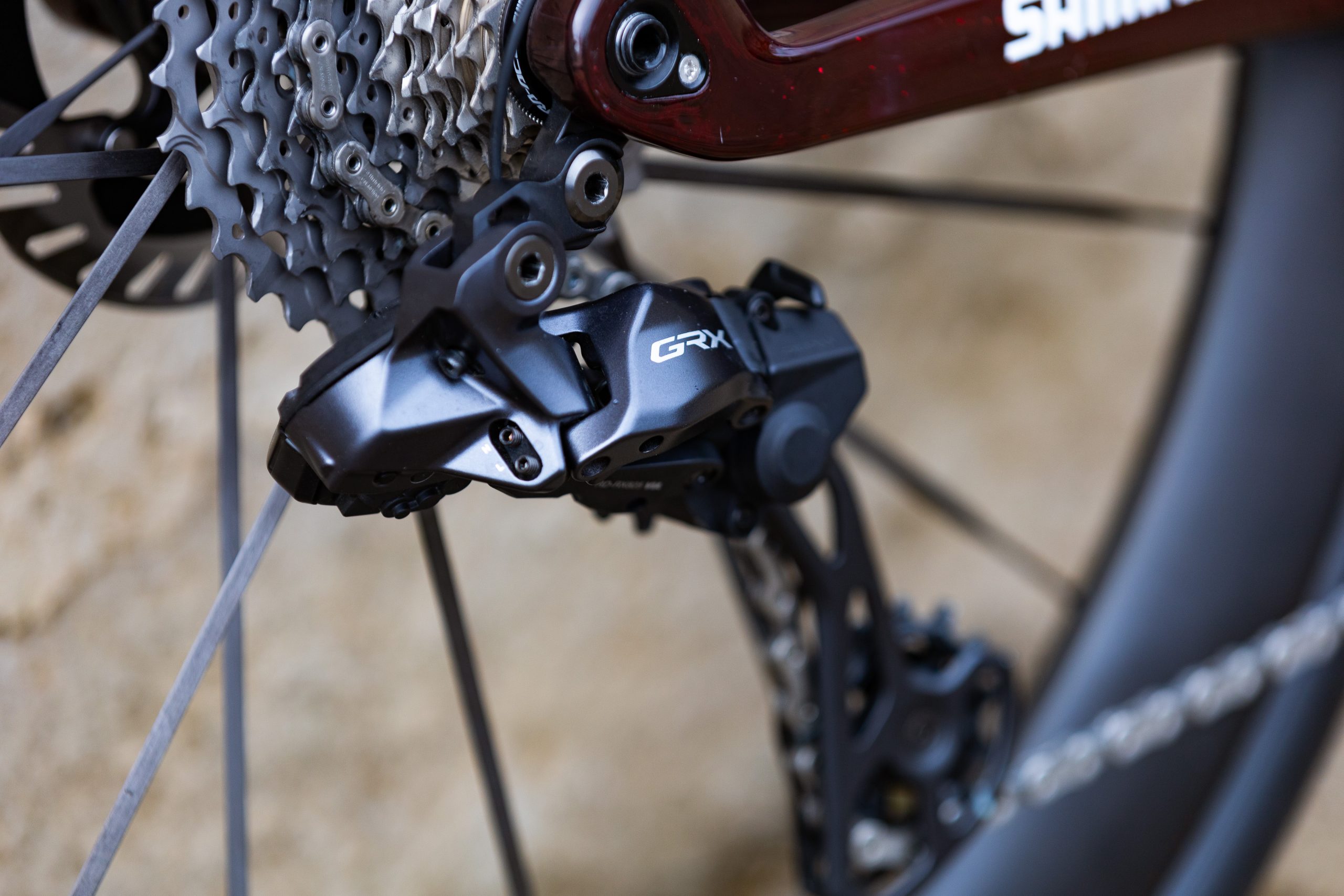
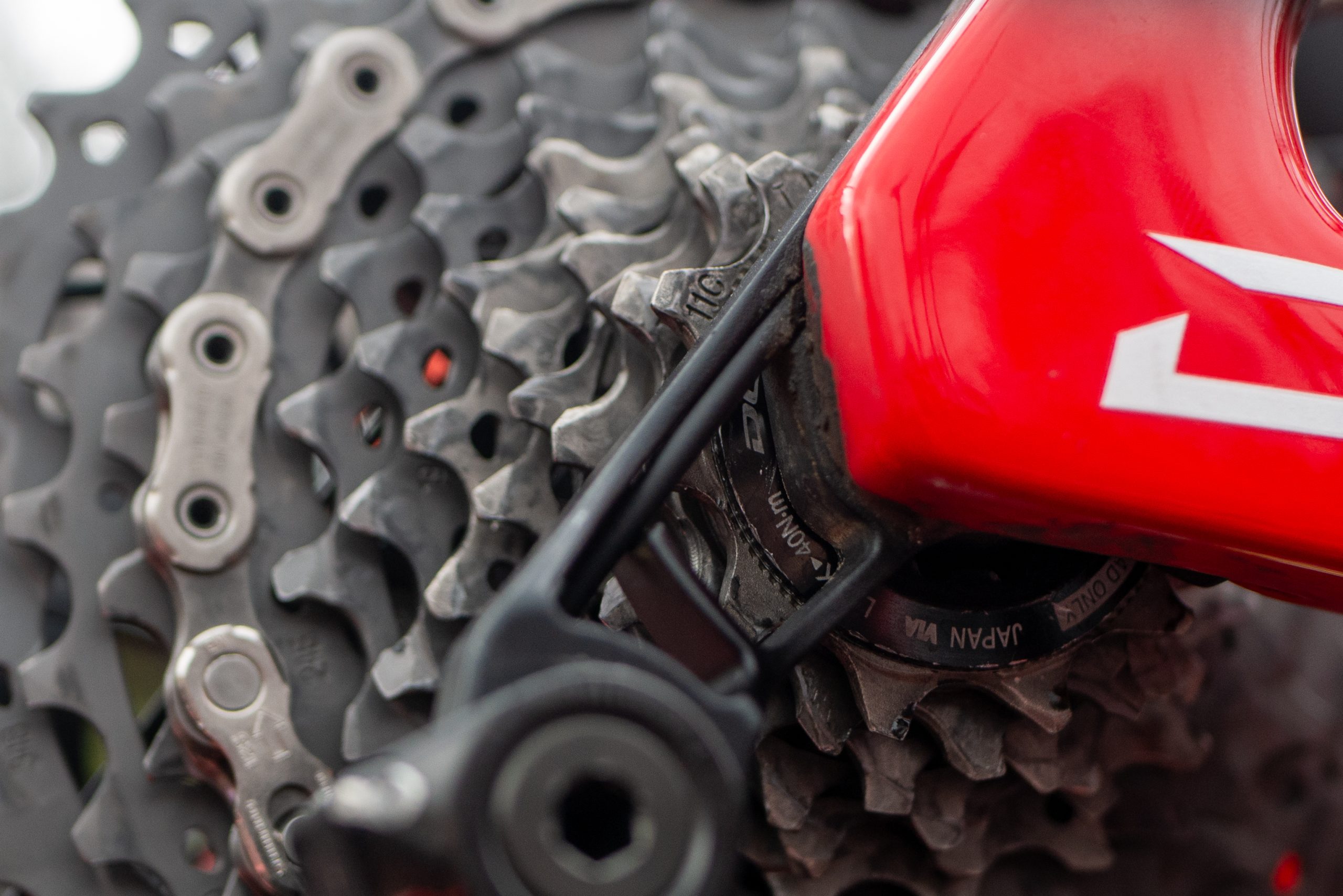
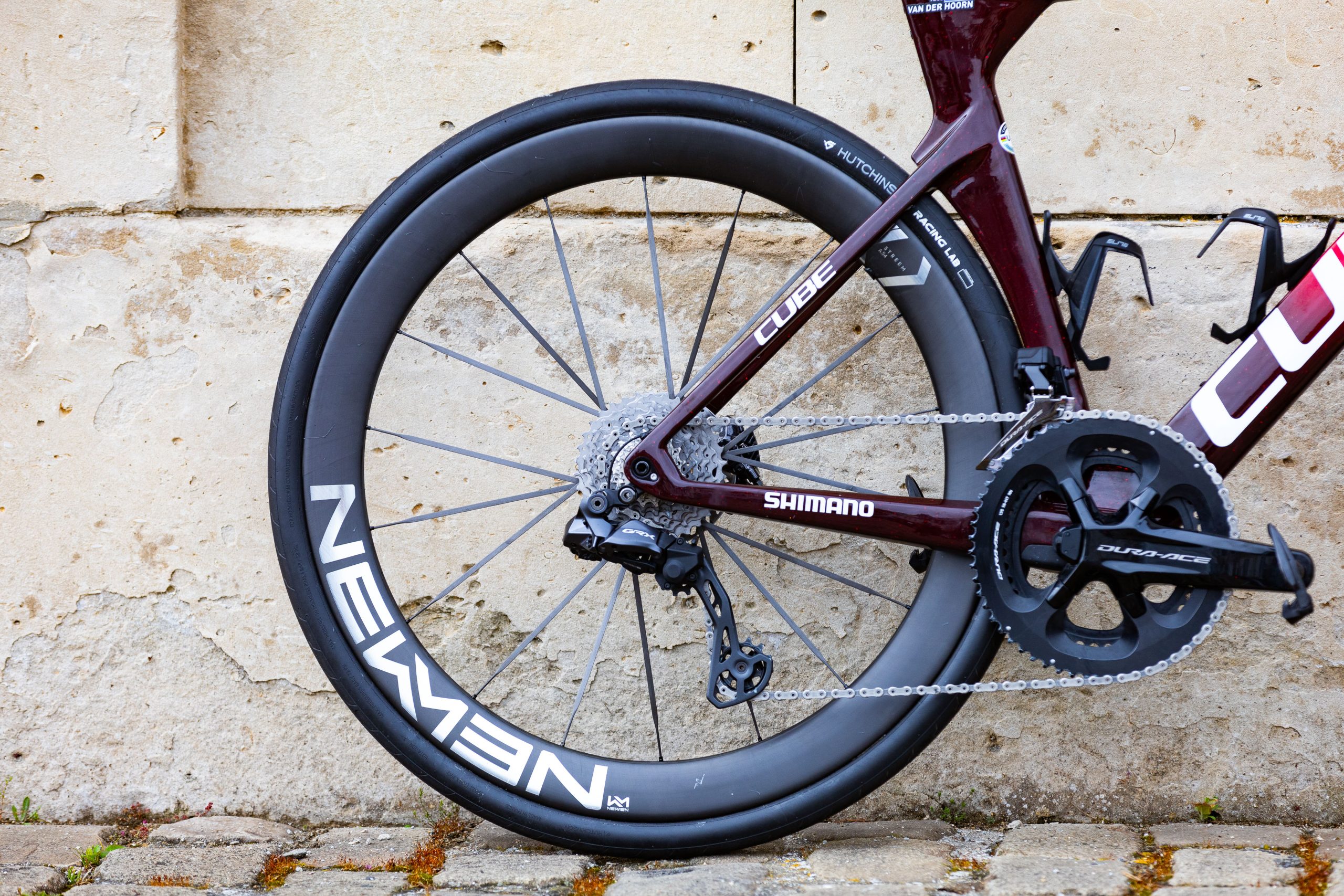
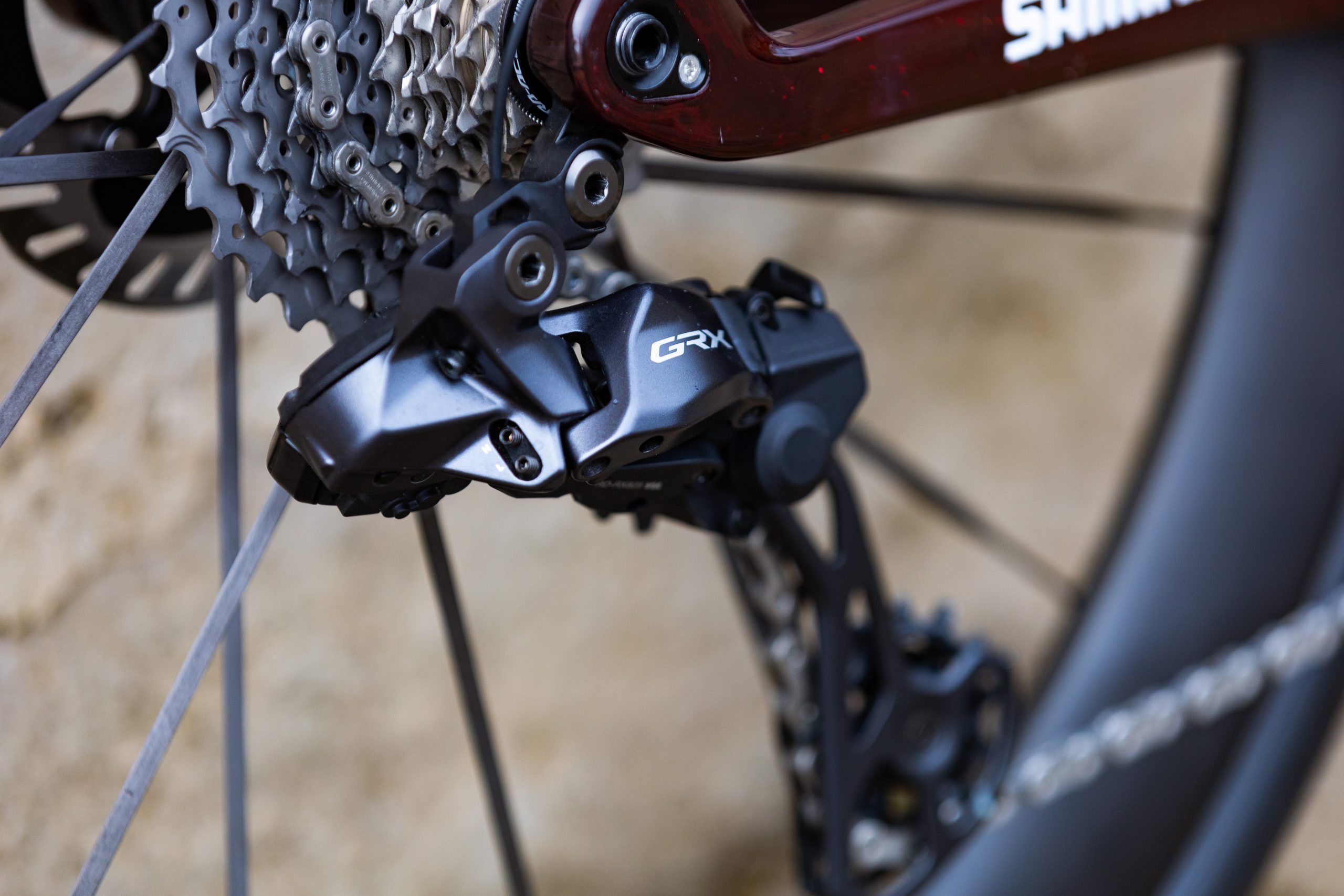
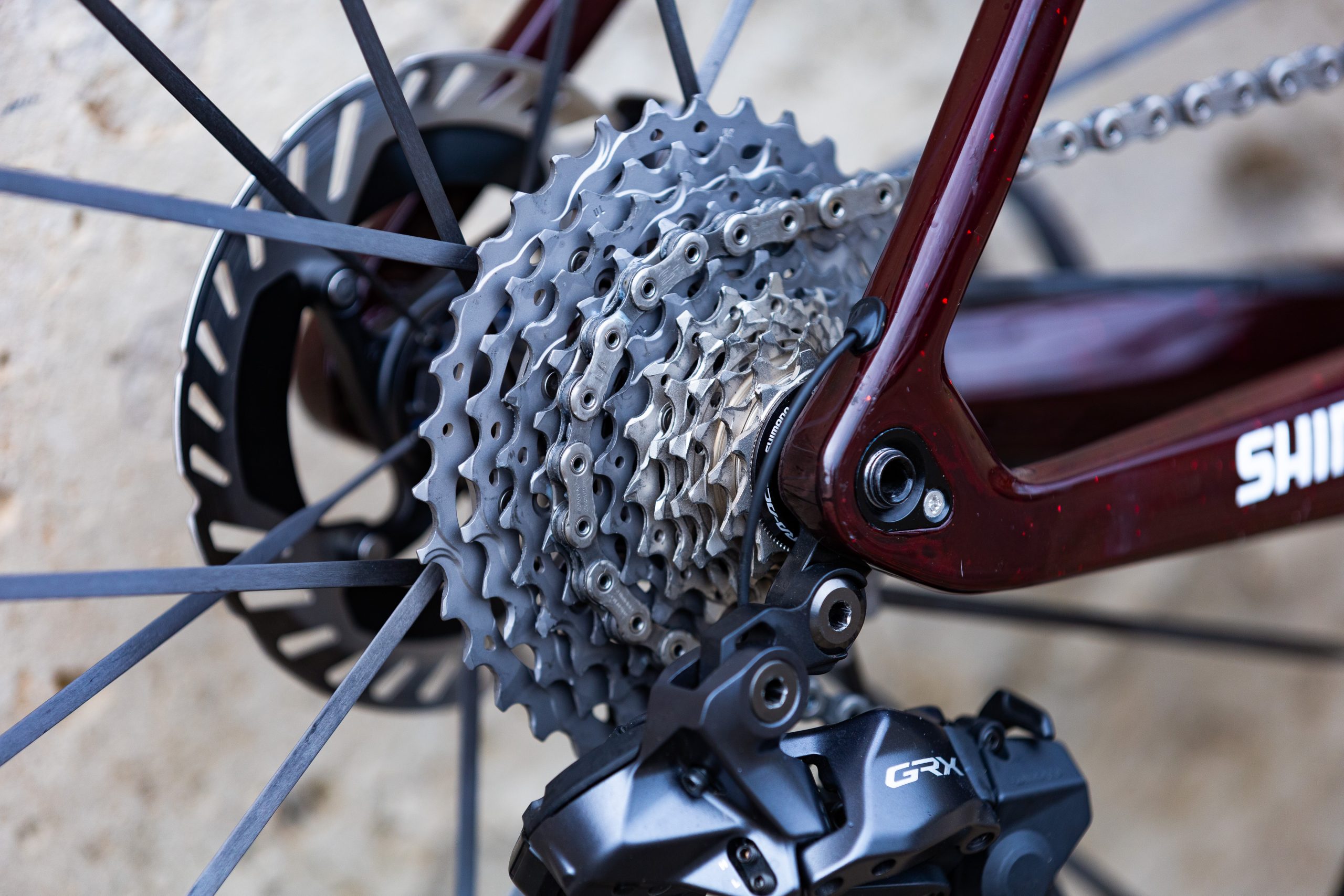
Taco van der Hoorn mixes Shimano Dura-Ace and GRX components for Paris-Roubaix
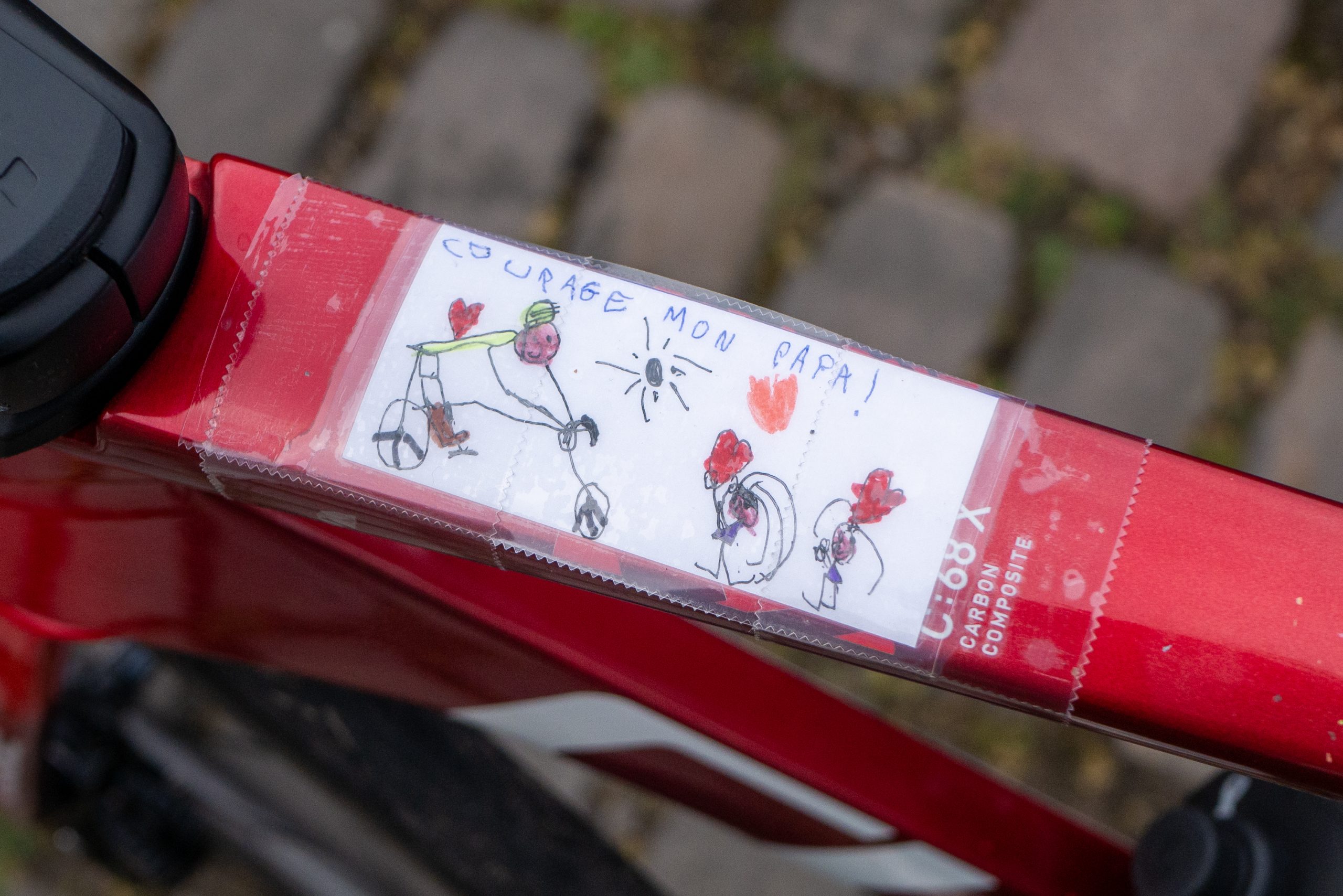
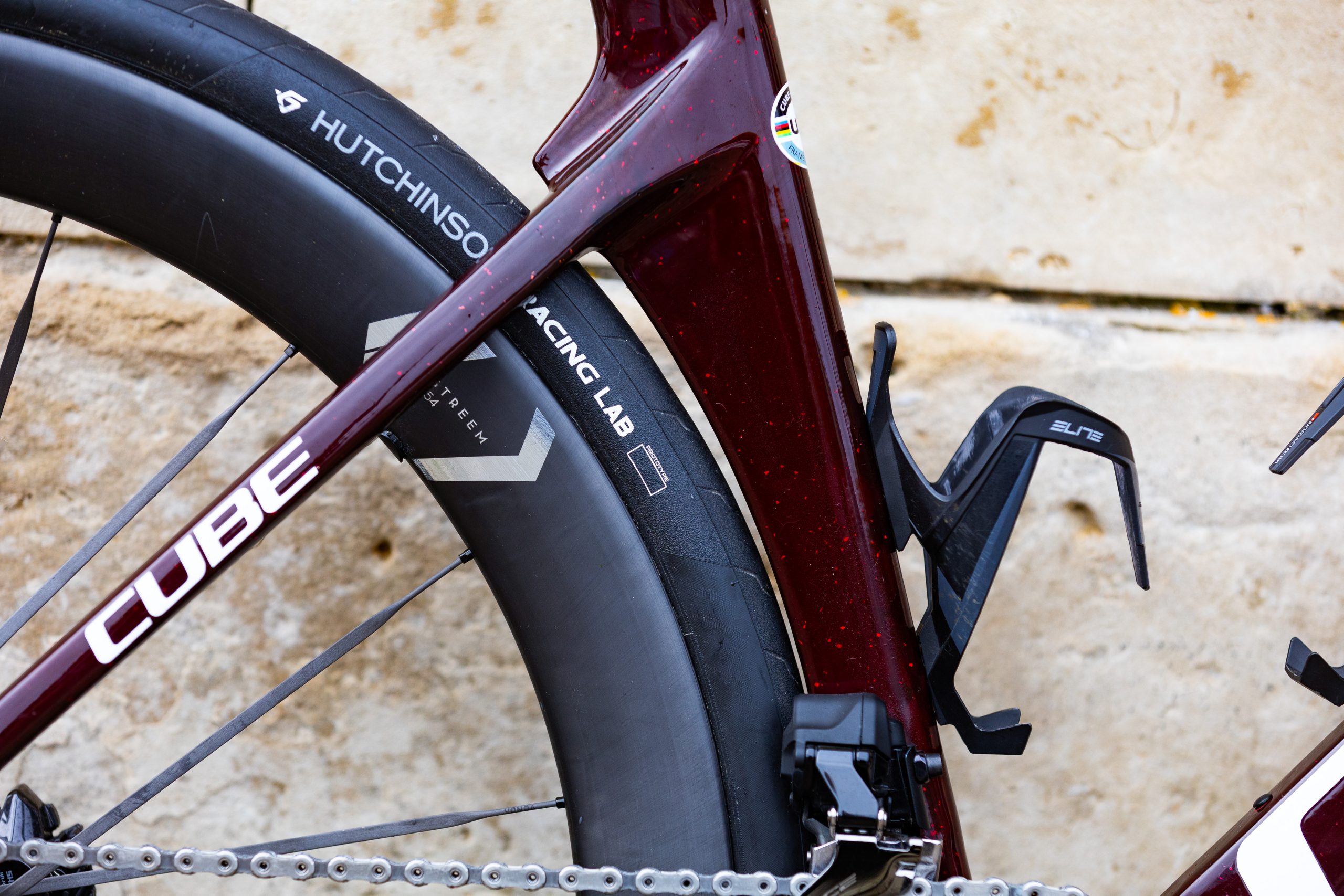
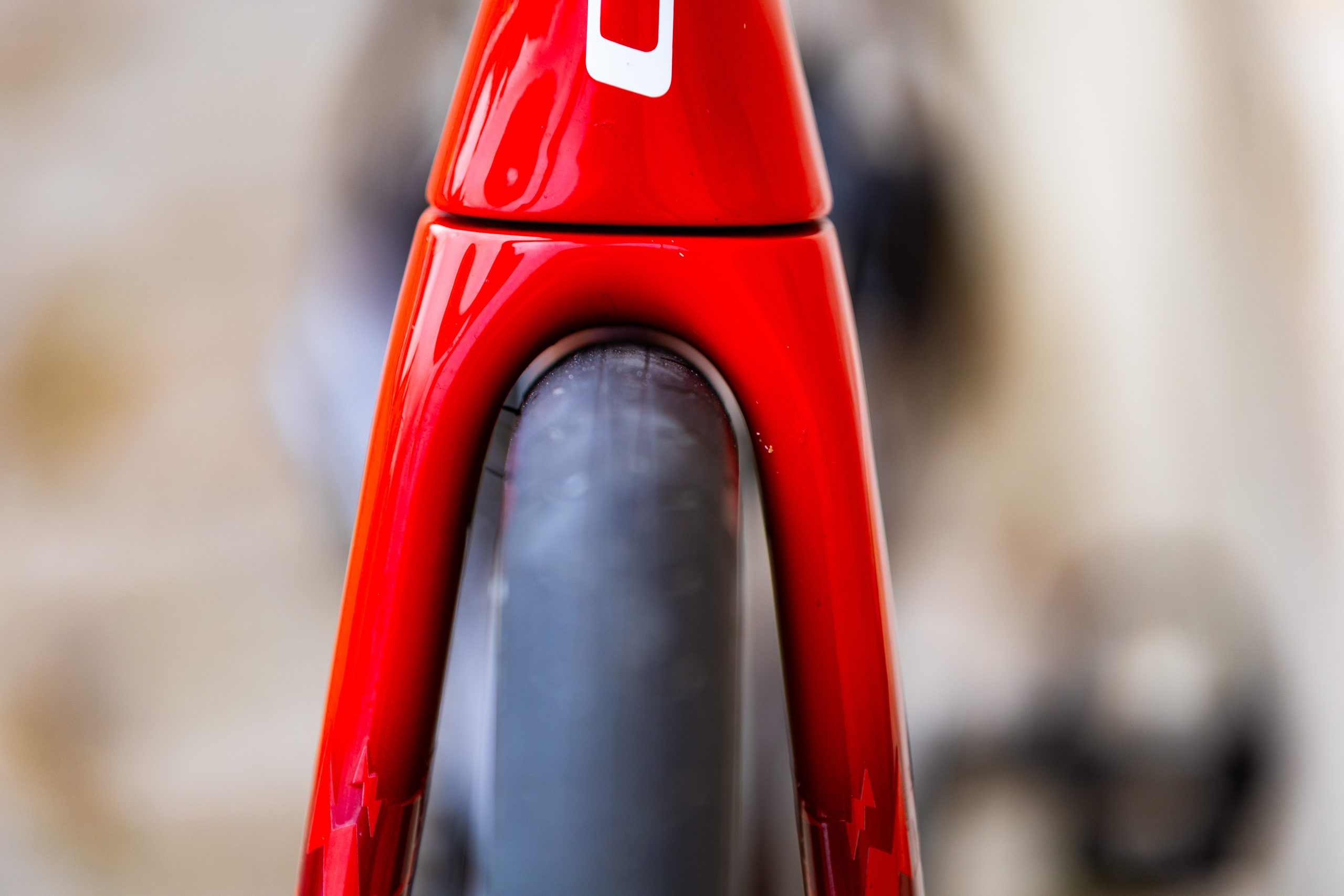
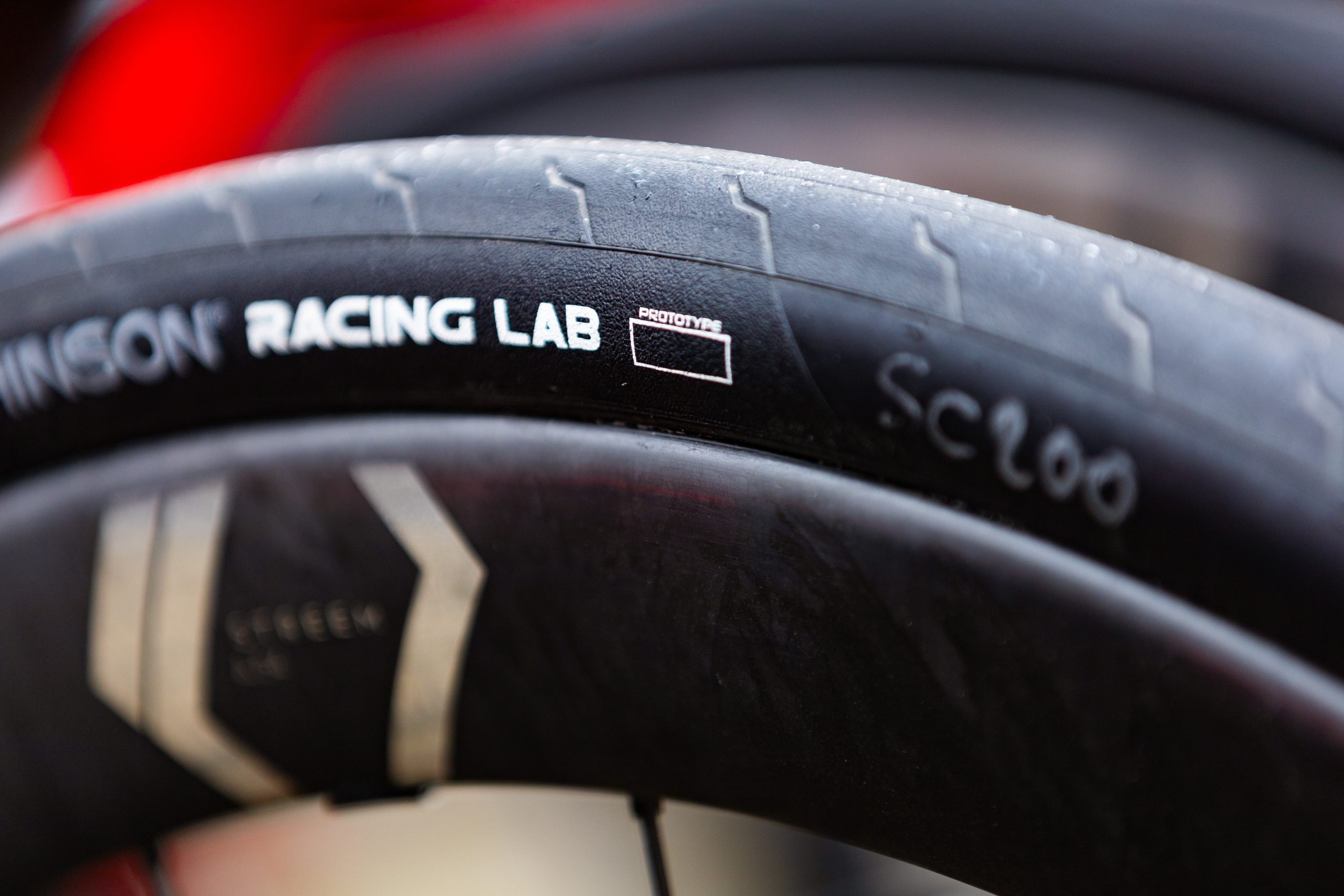
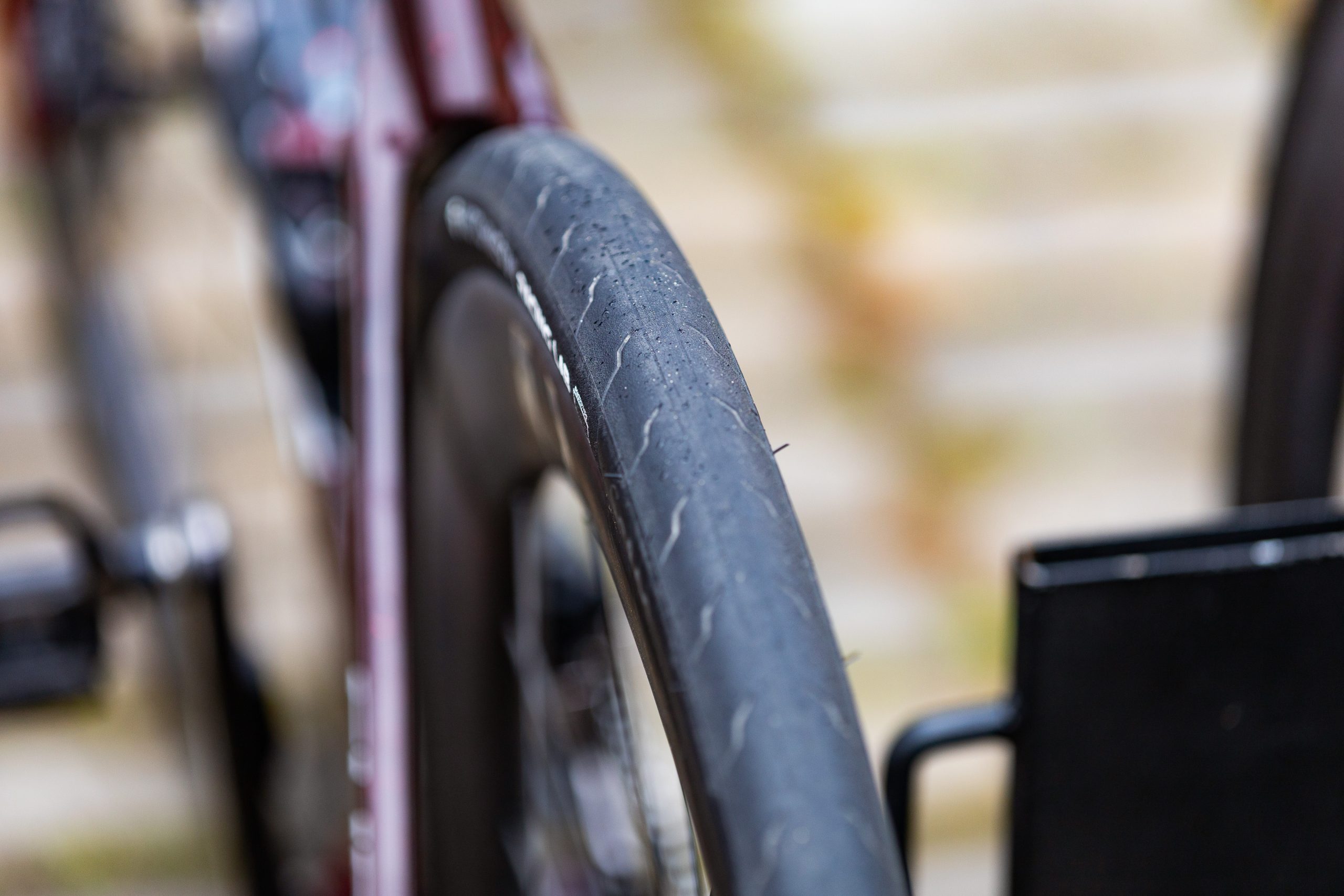
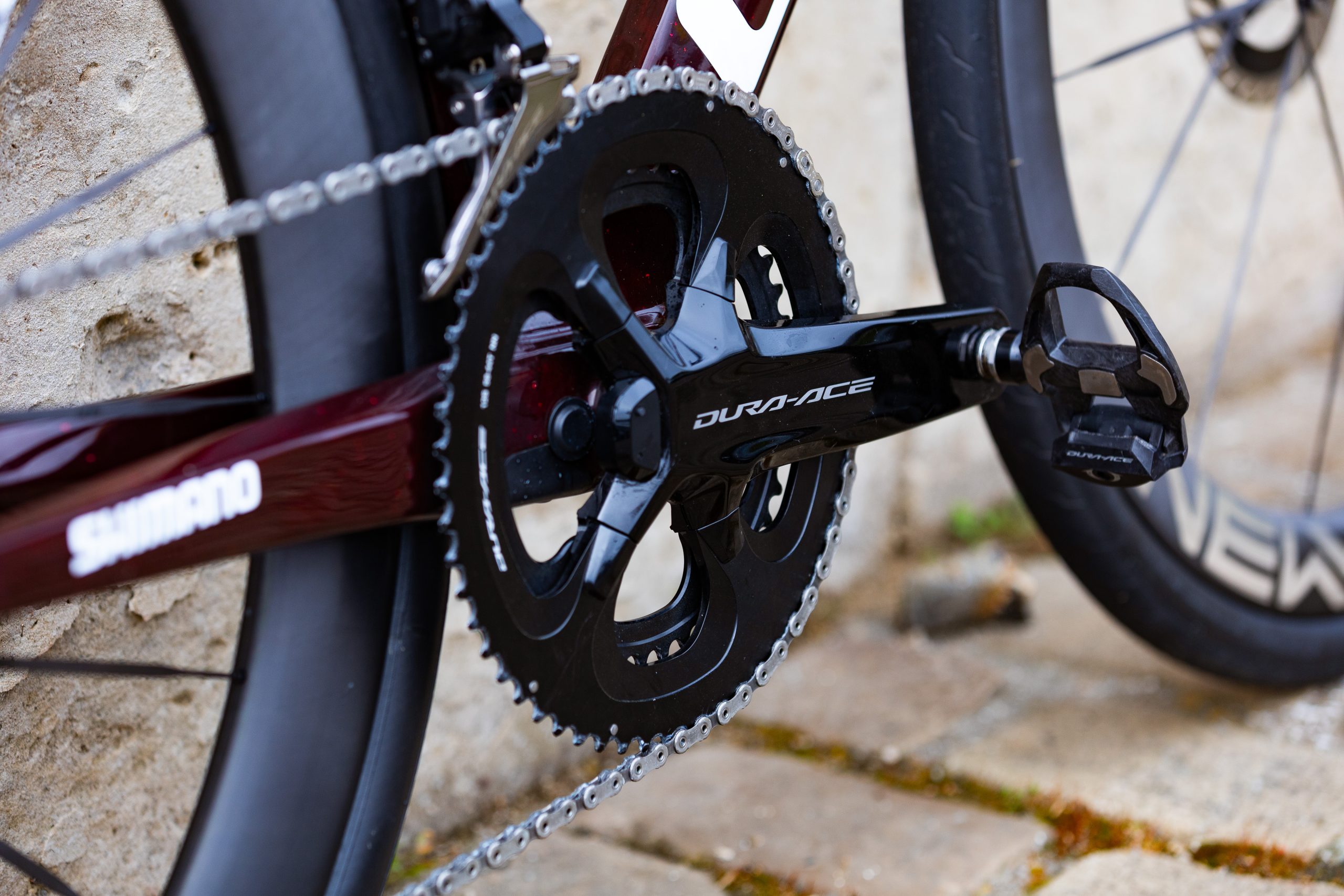
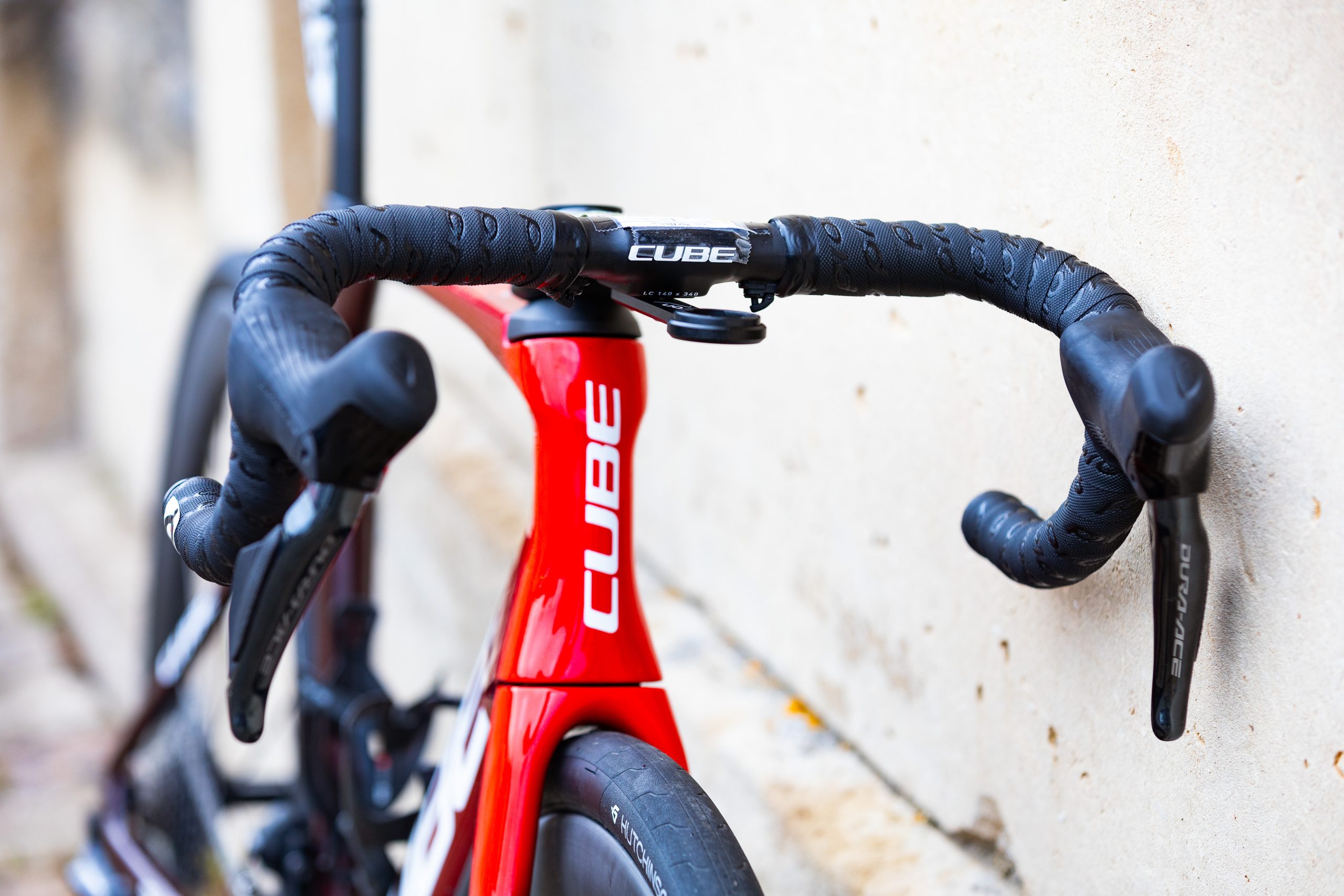
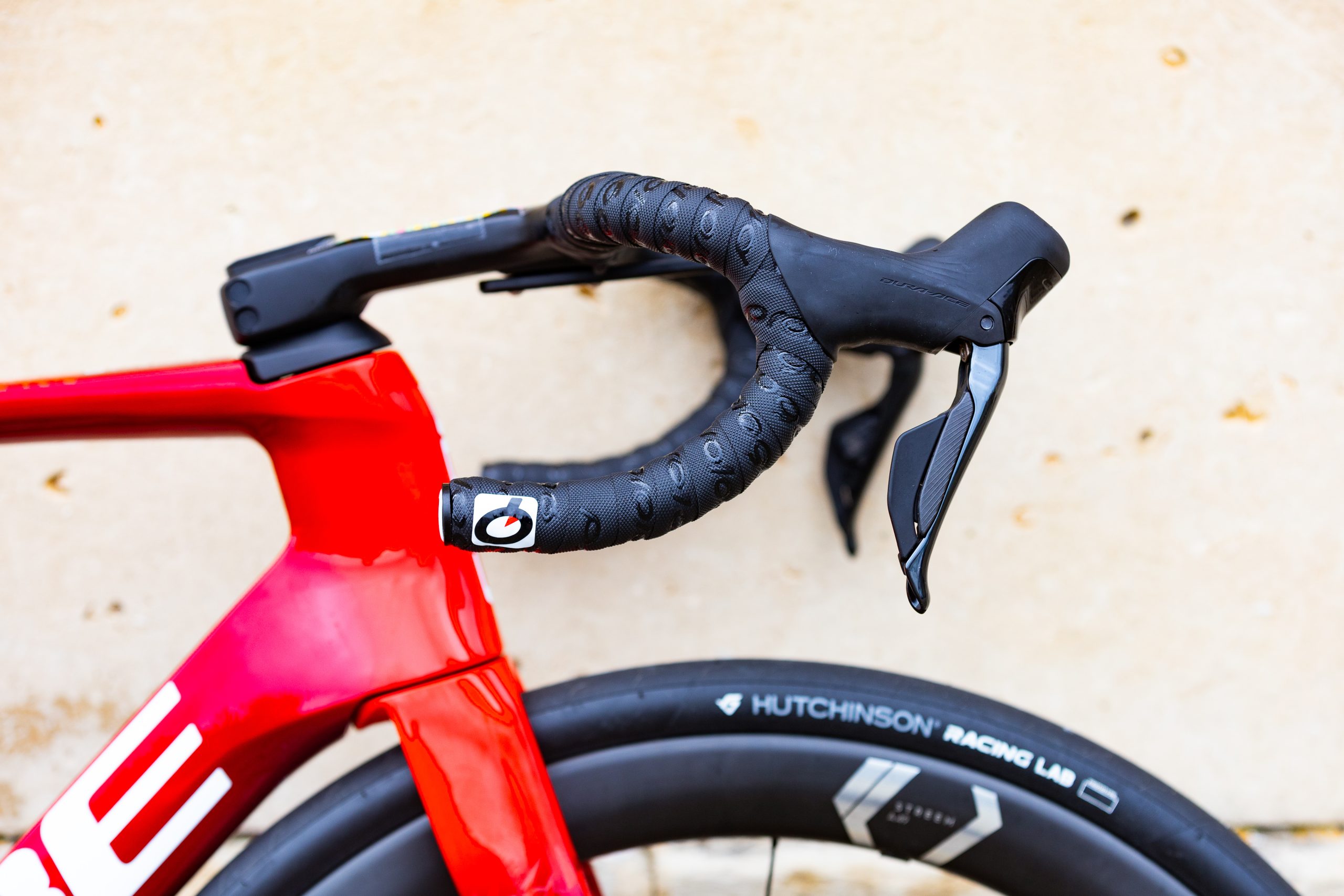
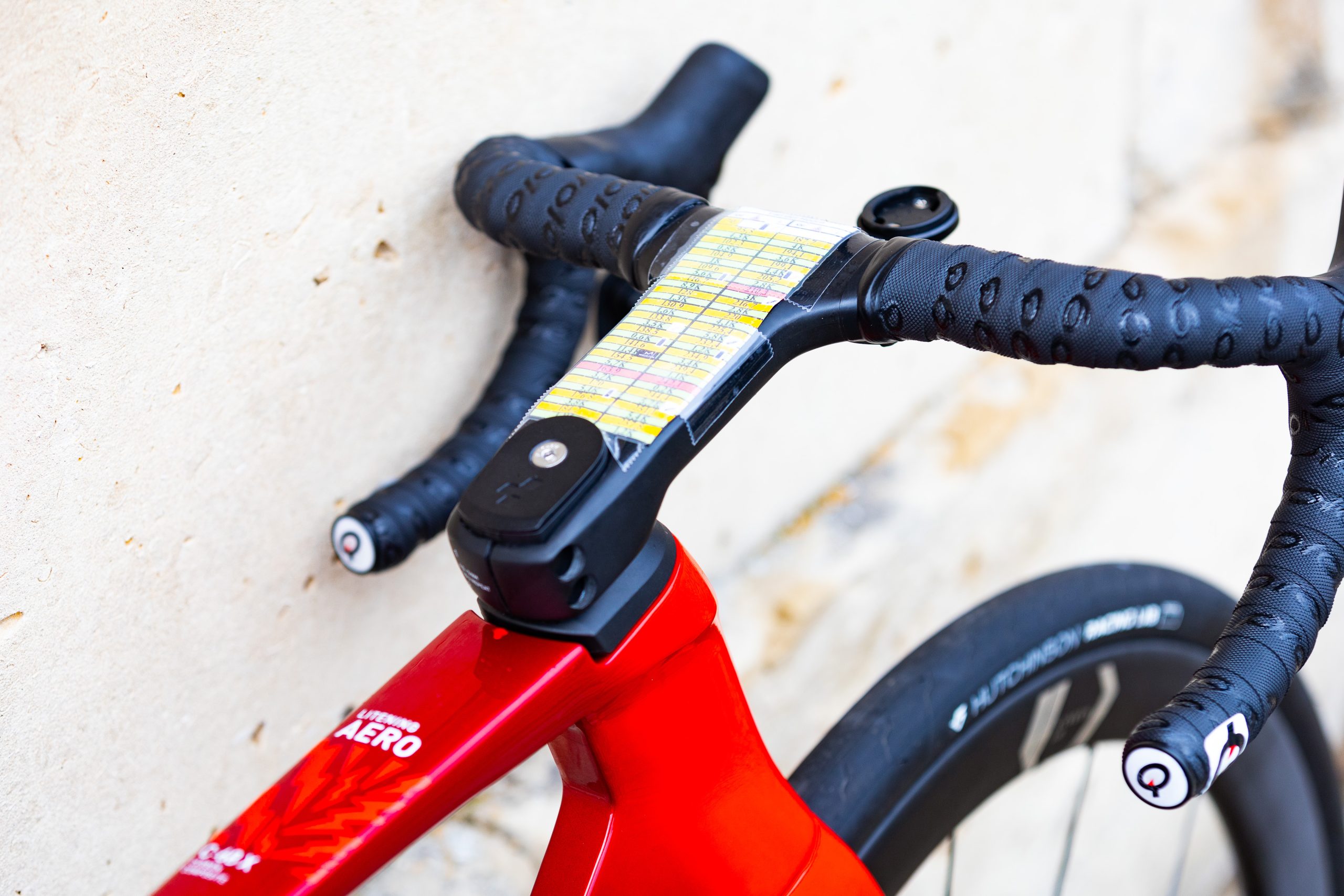
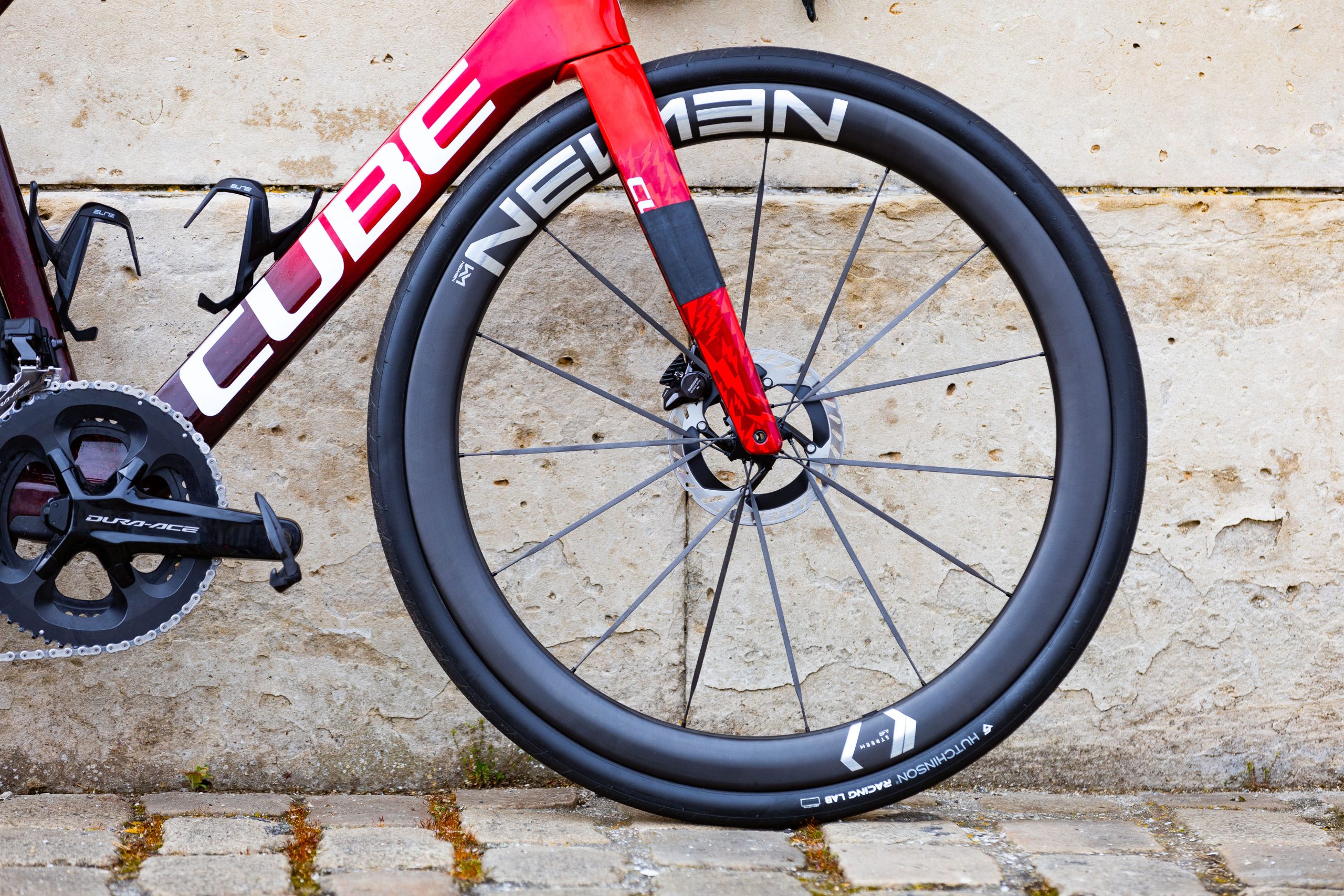
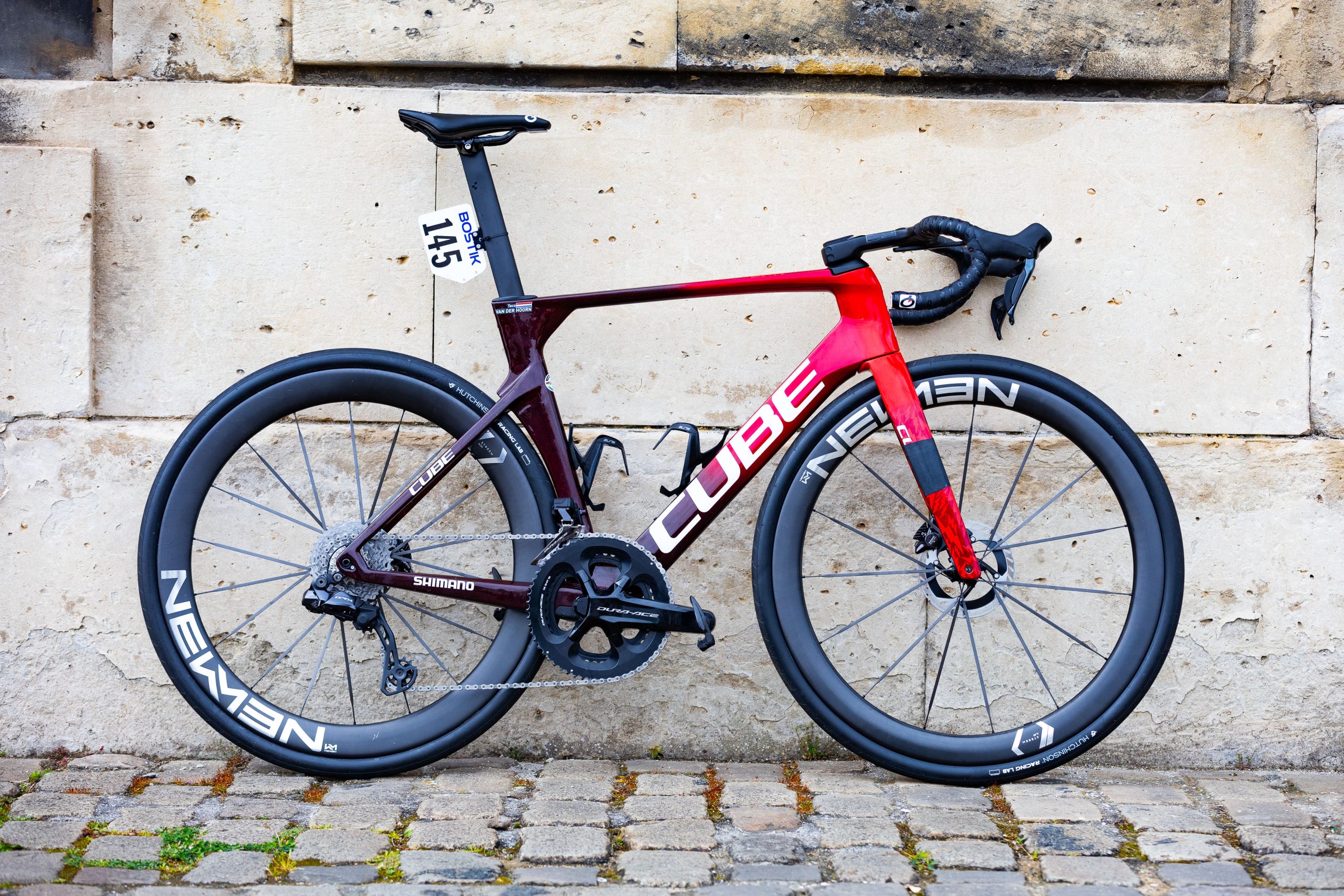
Taco van der Hoorn’s Cube Litening Aero C:68X must be the most custom bike of the 2025 men’s Paris-Roubaix.
The Cube Litening Aero C:68X is the aero bike used by the Intermarché–Wanty WorldTour team.
However, the mechanics have been tinkering with van der Hoorn’s race bike, which we were able to take a good look at before the race got underway in Compiègne.
11 surprising things you need to know about Tadej Pogačar
Since the 1970s, Eddy Merckx had been cycling’s undisputed greatest rider of all time – until Tadej Pogačar arrived.
The 26-year-old Slovenian announced himself on the world stage by winning his debut Tour de France in 2020 and has dominated most of the races he’s entered since – mastering Grand Tours and one-day Classics in a way that hasn’t been seen since the Cannibal hung up his wheels.
In 2024, he became only the third man after Merckx and Stephen Roche to claim cycling’s Triple Crown (winning the Giro d’Italia, Tour de France and world championship in the same season). With his debut at Paris-Roubaix this Sunday, he’s not content with his lot, and has set about targetting his missing Monuments.
But who is the boyish blond-haired Slovenian? And what sets him apart from the rest of the WorldTour peloton?
1. He earns €8 million per year
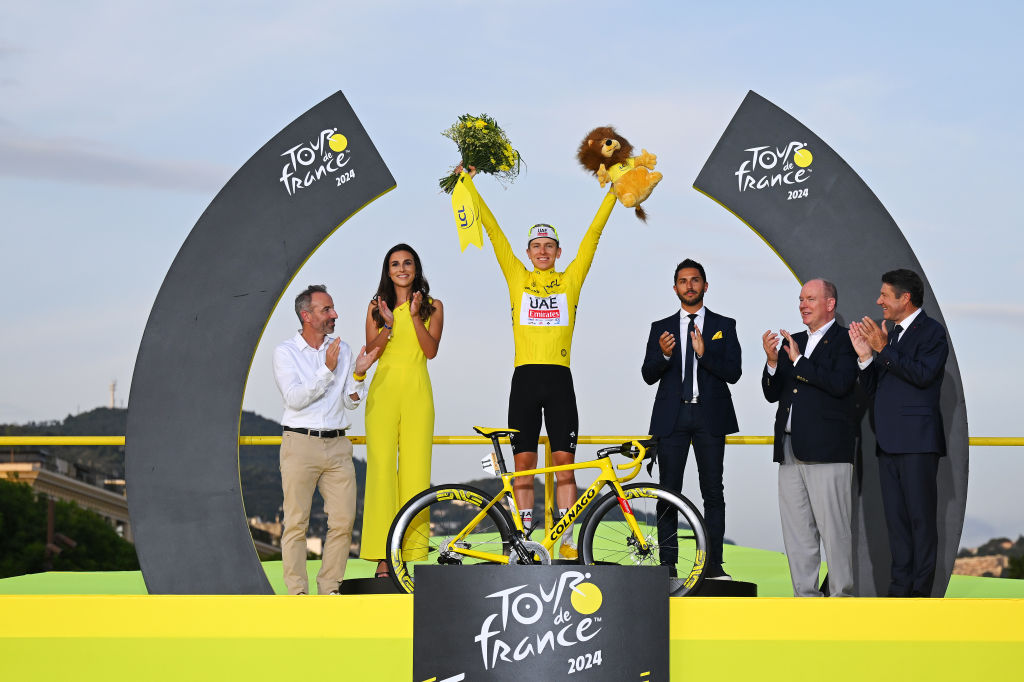
As the best cyclist of his generation, it’s only fair that Pogačar is rewarded handsomely for his efforts.
La Gazzetta dello Sport reported in November 2024 that his latest contract with UAE Team Emirates-XRG sees the Slovenian earn €8 million per year until 2030, while he has a chunky €200 million buy-out clause.
His fee is the highest in the WorldTour peloton, with La Gazzetta estimating that compatriot Primož Roglič is the second-highest – earning €4.5 million per year at Red Bull-Bora-Hansgrohe – and Jonas Vingegaard’s annual Visma-Lease a Bike take-home third at €4 million.
2. He is engaged to women’s pro rider Urška Žigart
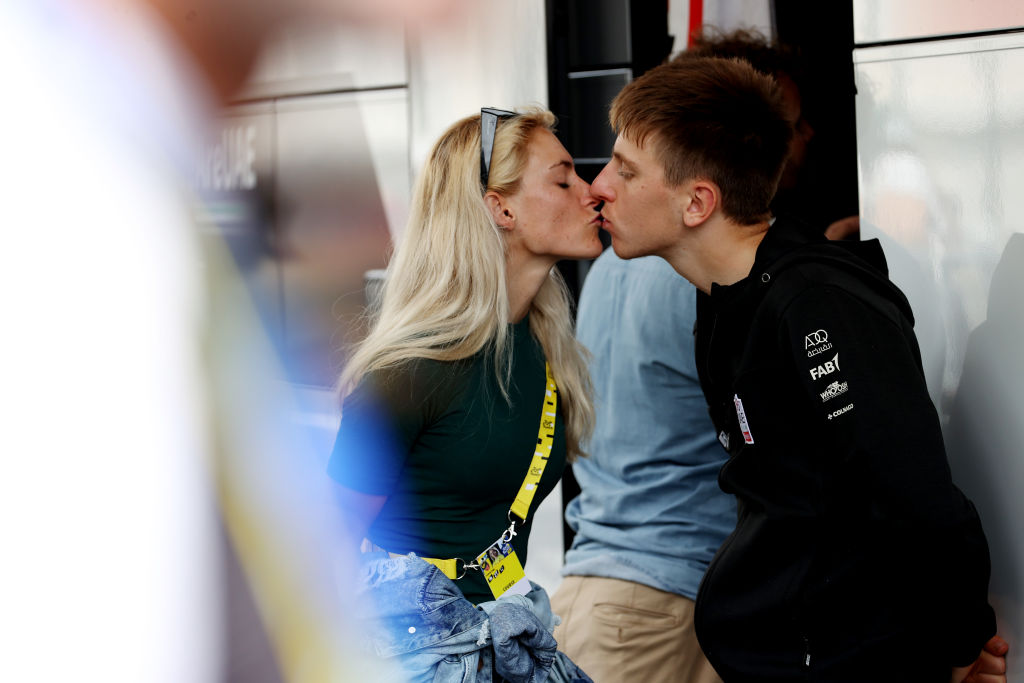
The training and racing commitments of a pro cyclist can make finding time for love hard.
But Pogačar has found a sympathetic partner in Urška Žigart – a fellow professional cyclist for Women’s WorldTour team, AG Insurance-Soudal.
The pair met on a City Ljubljana cycling program training camp in 2017 and have been engaged since 2021. In fact, Žigart’s non-selection for the Paris 2024 Olympics is said to have swayed Pogacar’s decision not to compete himself.
3. His FTP is 415 watts
@triviumcolombia pic.twitter.com/iqQxNhowmU
— Ryan Rodman (@Rodman1_r2) September 8, 2024
The Slovenian is a beast on the bike who is just at home in one-day races as he is mountain-top finishes of a Grand Tour, and it’s largely thanks to an out-of-this-world functional threshold power (FTP).
X user, Ryan Rodman calculated that based on a screenshot of his head unit, Pog set an FTP of 415 watts during a training ride for last year’s world championships (which Pogačar went on to win).
4. He is 1.77m and his race weight drops to 64.5kg
While the Slovenian can’t be accused of being average, his height and weight are where he’s around the middle of the pack.
At 1.77m tall, he is 2cm taller than his Tour de France rival, Jonas Vingegaard, and is the same height as compatriot Roglič.
His weight fluctuates, and he revealed to longevity expert Peter Attia that his natural weight is 69kg but dropped as low as 64.5kg for the start of the 2024 Tour de France.
5. He was the youngest rider to win the Tour in over a century, and the second youngest ever
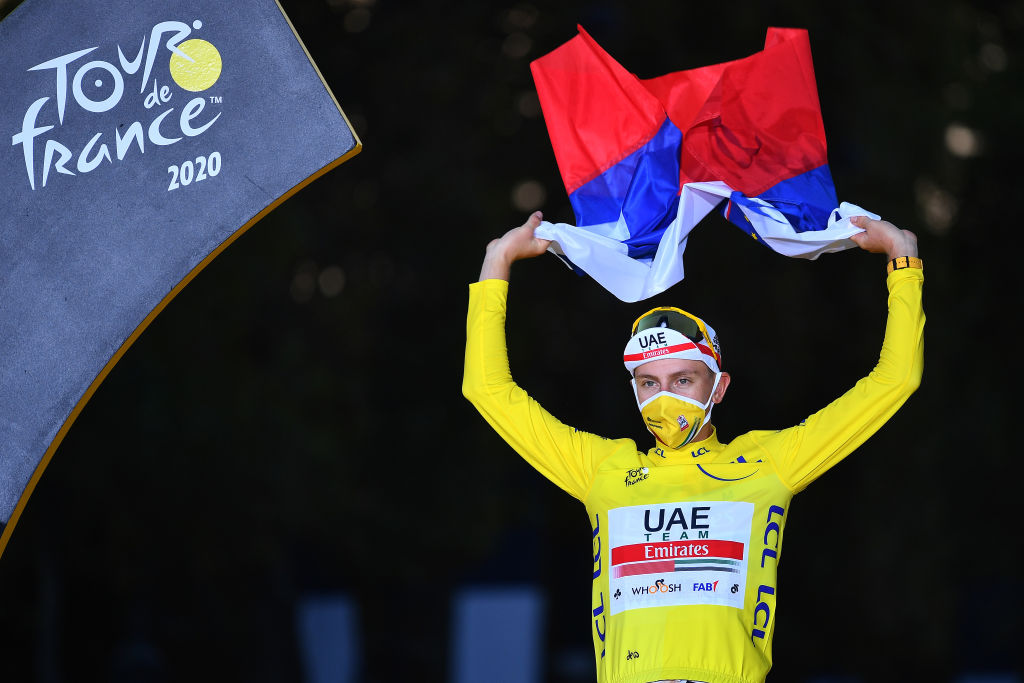
While a third place in 2019’s La Vuelta signalled that Pogačar had Grand Tour potential, the then 21-year-old announced himself on the grandest stage of them all by winning his debut Tour de France.
The Covid-impacted race was held in September 2020, and meant Pogačar secured his victory on the streets of Paris aged 21 and 365 days old – the youngest winner in over a century and second only to Henri Cornet, who won in 1904 aged 19 and 352 days.
6. He lives in Monaco
Although he grew up Klanec, a small village on the outskirts of the Slovenian capital Ljubljana, Pogačar has lived in Monaco since winter 2020.
He moved to the principality for the warm weather and is among a number of professional riders to call the city-state home, including Roglič, Chris Froome and Peter Sagan.
7. He’s in the top 10 of Tour de France overall and stage wins
Most professional cyclists spend their whole careers trying and failing to win a Tour de France stage. But Pog isn’t like most pros.
In his five Tours de France since his debut, he has clinched the yellow jersey three times, propelling him to joint 6th in the overall list, with only Chris Froome (four wins) and Eddy Merckx, Bernard Hinault, Jaques Anquetil and Miguel Indurain (five) ahead of him. In that time, he’s racked up 17 stage wins, putting him eighth in the overall.
8. He’s finished on the podium of every Grand Tour he’s entered
Pogačar is well known for his three Tours de France wins and his 2024 Giro d’Italia maglia rosa, but even in the Grand Tours he hasn’t won, he’s never finished off of the podium.
In his Grand Tour debut, 2019’s La Vuelta, the then 20-year-old finished third, while in the two Tours de France he’s lost to Jonas Vingegaard, he’s still finished as the second-fastest overall rider.
From his seven Grand Tours, he’s also won the youth jersey five times (one La Vuelta and four Tours de France) and the mountains jersey three times (two Tours de France and one Giro d’Italia).
9. He rides a Colnago V4Rs (among other bikes)
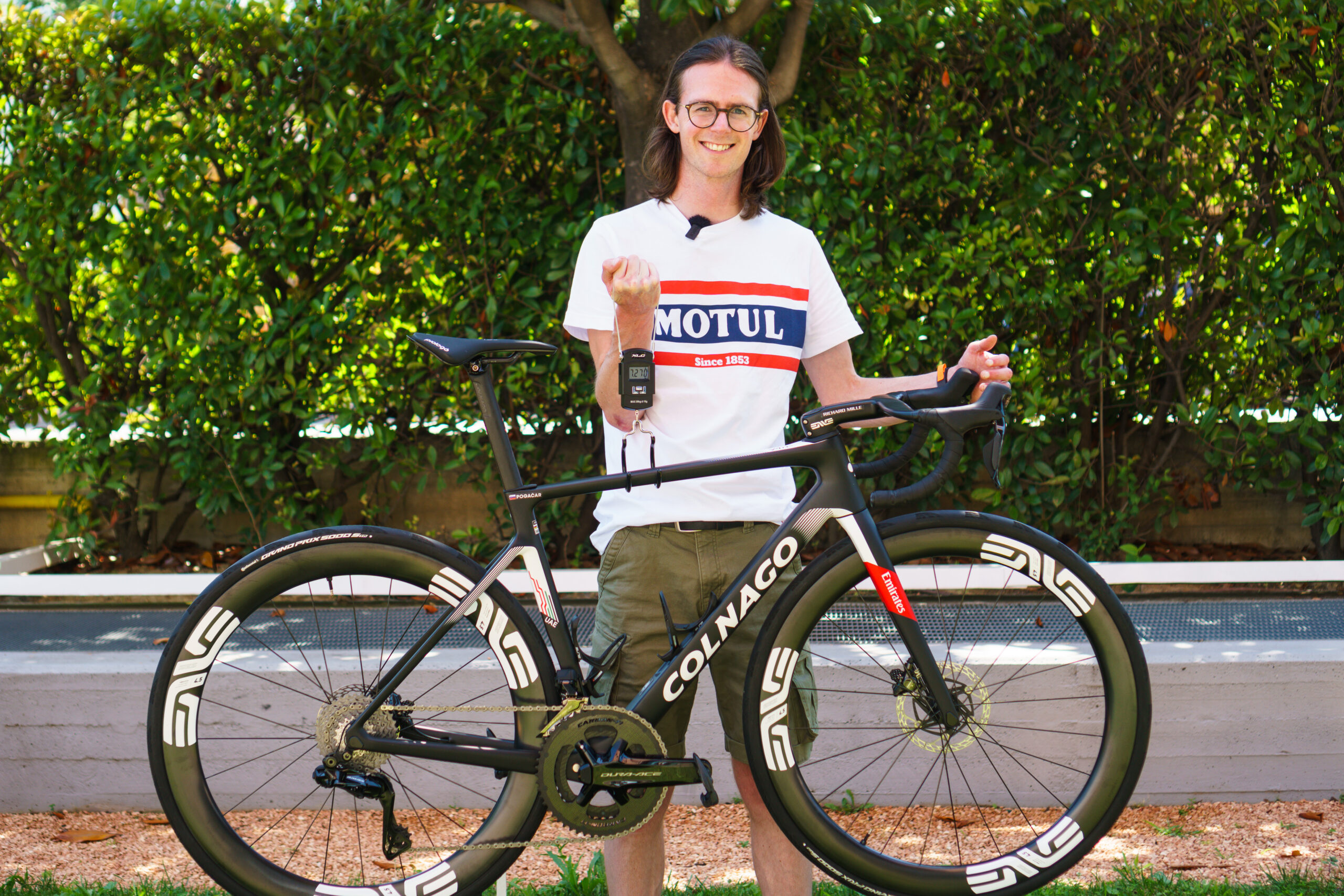
The Slovenian’s UAE Team Emirates-XRG team is sponsored by iconic Italian brand, Colnago.
Pog rides the manufacturer’s V4Rs Dura Ace Di2 – its pro-focused all-rounder – but it’s far from stock.
His Enve SES 4.5 wheelset are paired with Continental’s GP5000s TR tyres; Enve is also responsible for the SES Pro Team one-piece handlebar; while final flourishes include 165mm cranks, CarbonTi X-CarboRing EVO chainrings, and Di2 sprint shifters positioned beneath the brake hoods to allow him to change gear when in the drops.
Pogačar also has at his disposal – and uses – the Y1Rs aero bike, while Colnago has started to tease the V4Rs’ successor, the V5Rs.
10. He was the Slovenian national cyclocross champ
A lot is made of Mathieu van der Poel, Wout van Aert and Tom Pidcock’s multi-discipline mastery, but Pogačar is no stranger to dipping his toe into the world of cyclocross.
The phenom won the Slovenian national championship in 2018 and has competed in Ciklokros Ljubljana twice, winning in 2021 and finishing second in 2022. However, he’s yet to line up at a UCI CX World Cup or category-one race.
1.1. He has over 2,500 KOMs on Strava
Pogačar is one of the few pros worth following on Strava, and isn’t shy about uploading the occasional race-winning ride (although his heart rate and power data is understandably hidden).
Even though he doesn’t share every training session, he’s managed to amass more than 2,500 KOMs on the app, including the Koppenberg, Mons-en-Pévèle – and Yorkshire’s very own Buttertubs Pass.