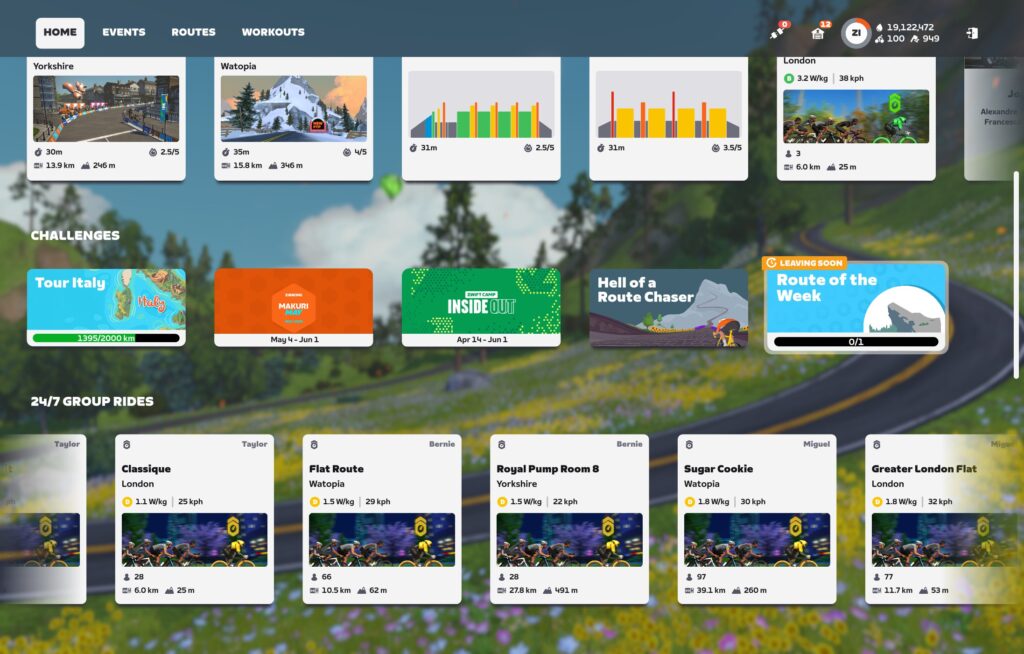
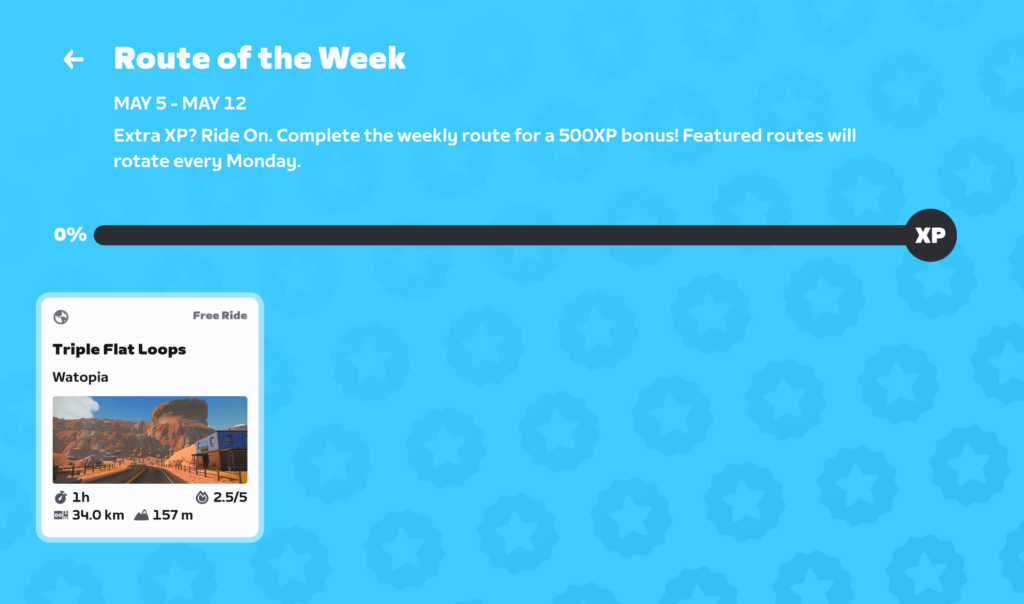
Yesterday, Zwift quietly rolled out a new “Route of the Week” Challenge card on the homescreen:
What’s the big idea? Simple, really: ride the Route of the Week and earn 500XP:
Note: “accidentally” riding the Route of the Week won’t earn you the XP bonus. You have to click the challenge card, which brings you to the blue screen shown above, in order to “register” for the Route of the Week challenge for that week. Then you can ride the featured route in any way you choose, in order to get the XP bonus.
Triple Flat Loops is a Watopia route that began life as Zwift Insider’s first-ever Rebel Route back in April of 2019. It does what it says on the tin, covering three connected loops of Watopia’s flattest roads, including the Tempus desert, Ocean Boulevard, the base of the Volcano, and the Esses.
Want even more XP? Zwift has also scheduled “XP Express” events on Tuesdays and Thursdays through May 22 where you earn double XP (so 40XP per kilometer/64XP per mile, vs 20XP per kilometer/32XP per mile).
These rides are 50 minutes long, open-paced, and held on a different route each day. Events are scheduled every three hours on Tuesdays and Thursdays.
Zwift tells me we’ll see a new Route of the Week featured each of the four weeks of May. This looks to be just the initial launch of a “weekly quest” concept that could include other small weekly goals that deliver an XP bonus. Being a big fan of carrots, I support this initiative!
As for the XP Express events, it sounds like these will continue to be added to the calendar strategically, and community events may also strategically get set up as double XP events in order to give them a boost. My guess is you won’t see XP Express events when other bonus XP series are happening (like Tour of Watopia), but you may see them more regularly otherwise.
(The XP Express idea is clearly popular. There are 193 riders signed up for the next event on the calendar, which is over 2 hours away as I write this!)
Your Thoughts
What do you think of this “Route of the Week” idea, and what sort of weekly quests (apart from route completion) would you like to see Zwift set up? Will you be riding in the XP Express events? Share your thoughts below…
John Abbott Valentine – better known to MBUK readers as John Stevenson – has died from cancer.
The outspoken Yorkshireman played a pivotal role in the early years of MBUK, joining the fledgling magazine as deputy editor in 1989, after several years working in bike shops and making his name on the UK MTB scene as a racer, team manager and event promoter.
In his own words, he “got the gig by phoning up the editor and telling him the magazine was rubbish”. Tym Manley called his bluff and gave him a job.
Although not trained as one, John had a journalist’s instincts and attention to detail, and wasn’t afraid to espouse controversial views, or call out brands or individuals for their mistakes.
Old friend Rory Hitchens, a fellow former racer turned UK cycling industry mainstay, remembers: “John was stand-out from the word go. I was drawn to his confidence, loudness and ‘couldn’t give a shit, that’s your problem mate’ way of going about life. Things always happened around John. The world is already less agitated without him, and all the more dull for it.”
John – and his trademark blond ponytail – moved with MBUK from its tiny office in Kent to the big offices of Future Publishing in Bath and went on to become international editor and then editor-in-chief of the media group’s cycling titles, which at that time included MBUK, What Mountain Bike magazine and BikeRadar.
Legendary snapper Steve Behr told us: “Very influential and much respected in the cycling world, John didn’t suffer fools gladly and wasn’t shy in letting people know when he was displeased about something or didn’t agree with something.
“Under that gruff and sometimes grumpy northern exterior, he was great company, very enthusiastic about many things, and loved to debate and discuss energetically a wide variety of topics.
“He pushed MBUK on the tech side a lot in the early years, and has influenced many people who’ve gone on to have careers in cycling journalism. He’s a good friend who’ll be greatly missed.”
Both Rob Weaver and I had the opportunity to work with John in Bath. He was kind and generous – not hesitating to circle back and give me a push after I bonked on one particularly long ride – but would quickly get worked up when people didn’t meet his (very high) standards. I can remember him getting genuinely angry about brands’ (and writers’) use of the word ‘compliance’ to describe engineered flex, arguing that it wasn’t a dictionary definition of the word.
“I’d rather be loud and wrong than quiet and right,” he once told Rob and test guru Guy Kesteven during a memorable rant at the Interbike trade show in Las Vegas. Generally, he was loud and right – although maybe not during that same trip when he drove their hire car up Boulder Canyon with the handbrake on because, “it’s a shit car and I can’t find it to take it off”.
On another memorable occasion, he yelled, “Coffee is a human right!” across the office.” Former MBUK art editor James ‘Jimmer’ Blackwell said: “He was a hard taskmaster but a top bloke, utterly unique, and his ideas were something to listen to.”
After parting ways with Future, John branched out into freelancing, worked briefly for Planet-X and then became editor at large of road cycling website Road.cc.
In 2024, he took a DNA test and tracked down his biological father, who’d sadly died five years earlier. John decided to drop the surname of his hated stepdad, which he’d used since his school days, and adopt his mum’s maiden name, Abbott, and his dad’s surname, Valentine.
A year earlier, John had been diagnosed with stage-four bowel cancer and tumours in his liver. Despite undergoing chemotherapy and various operations, the disease spread to his lungs and abdominal lymph nodes. He spent his last days with his wife, Caroline, and his beloved dogs.
Caroline announced his death on Facebook, saying: “John died overnight. It was peaceful and pain-free, as far as we could tell, after a very fast deterioration.”
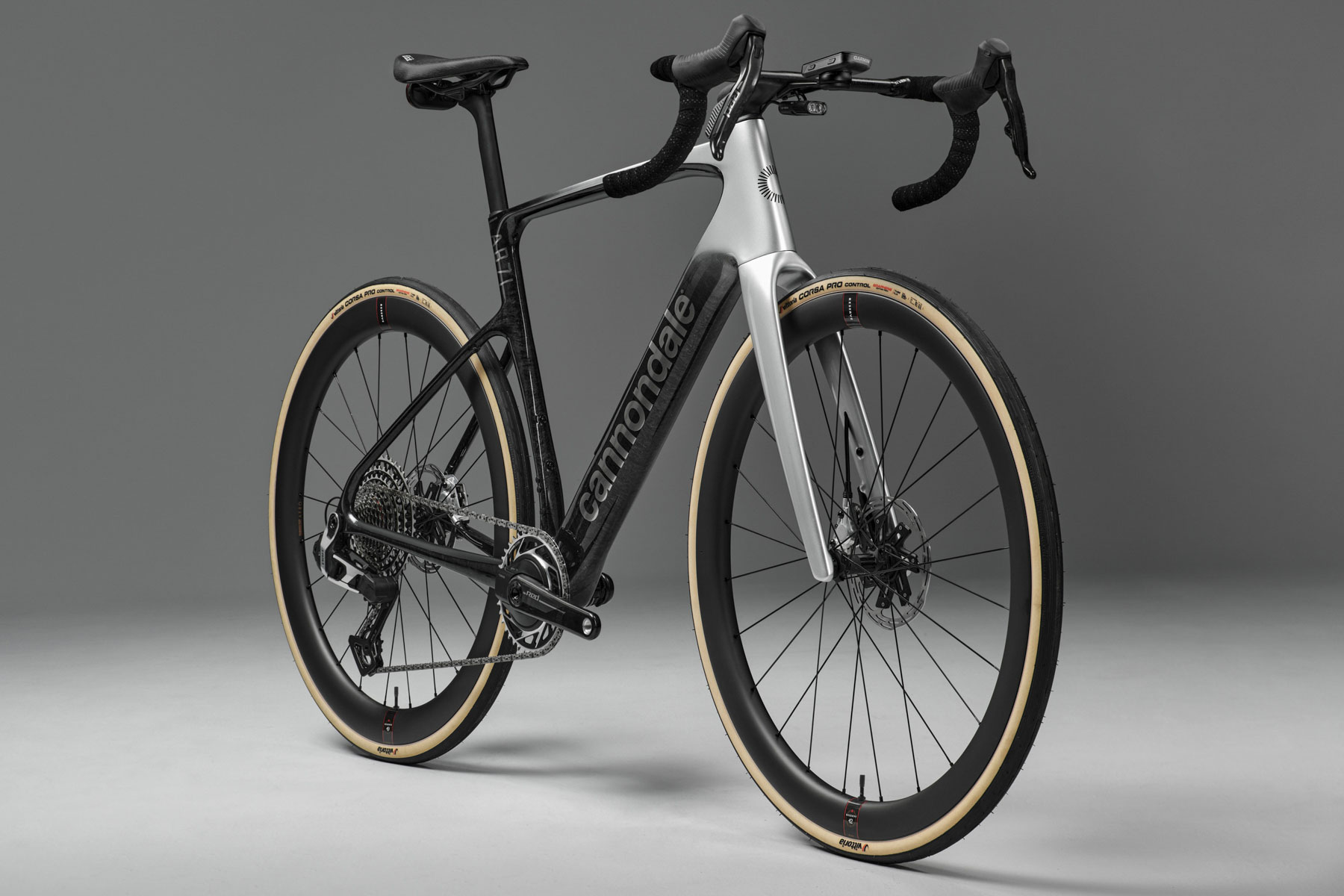
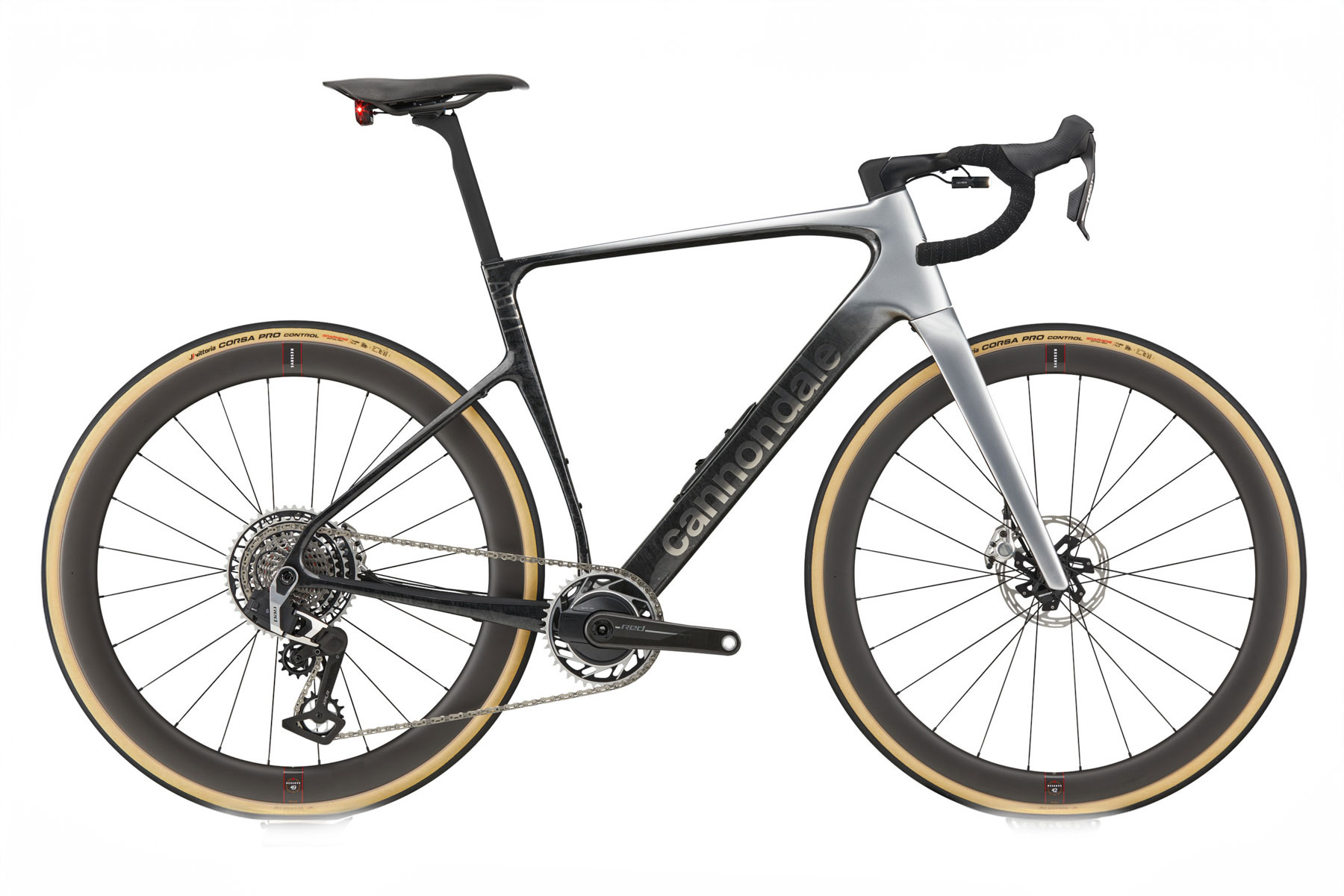
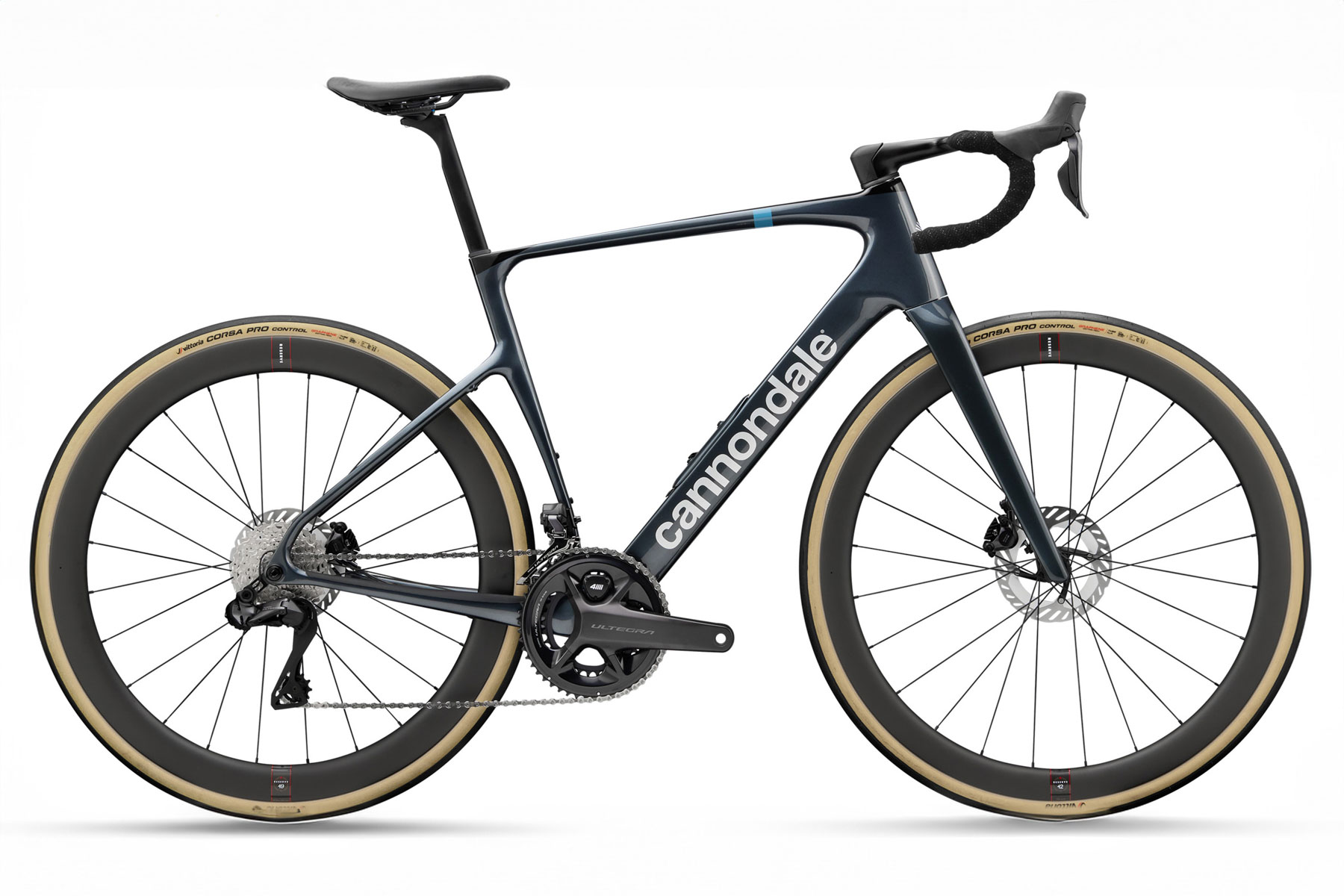
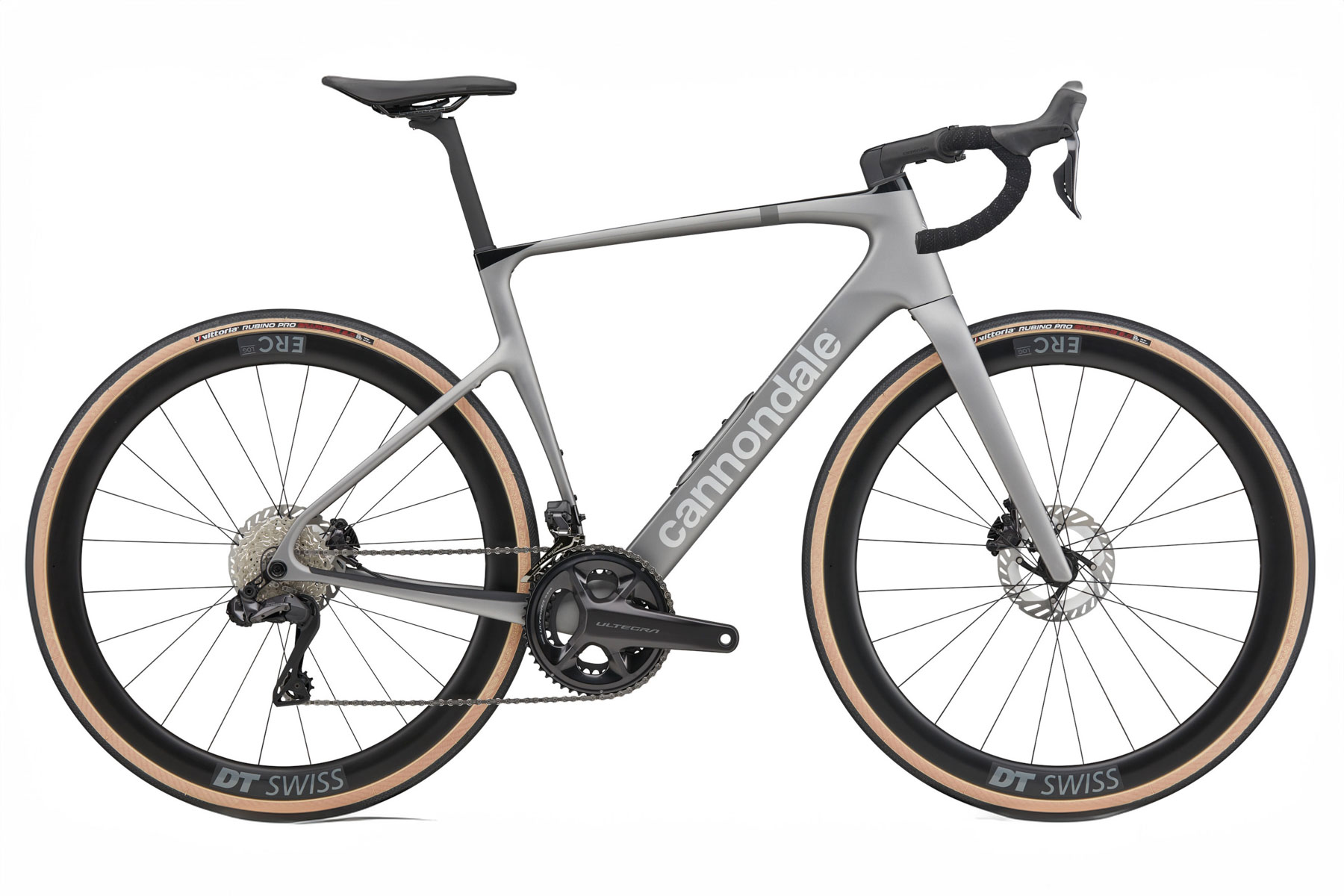
The new 2025 Cannondale Synapse takes its inspiration from the SuperSix Evo, but adopts frame-flex technology from the SuperX.
The latest iteration of Cannondale’s endurance bike platform elevates the humble Synapse to the same level as the pro-tour proven SuperSix Evo.
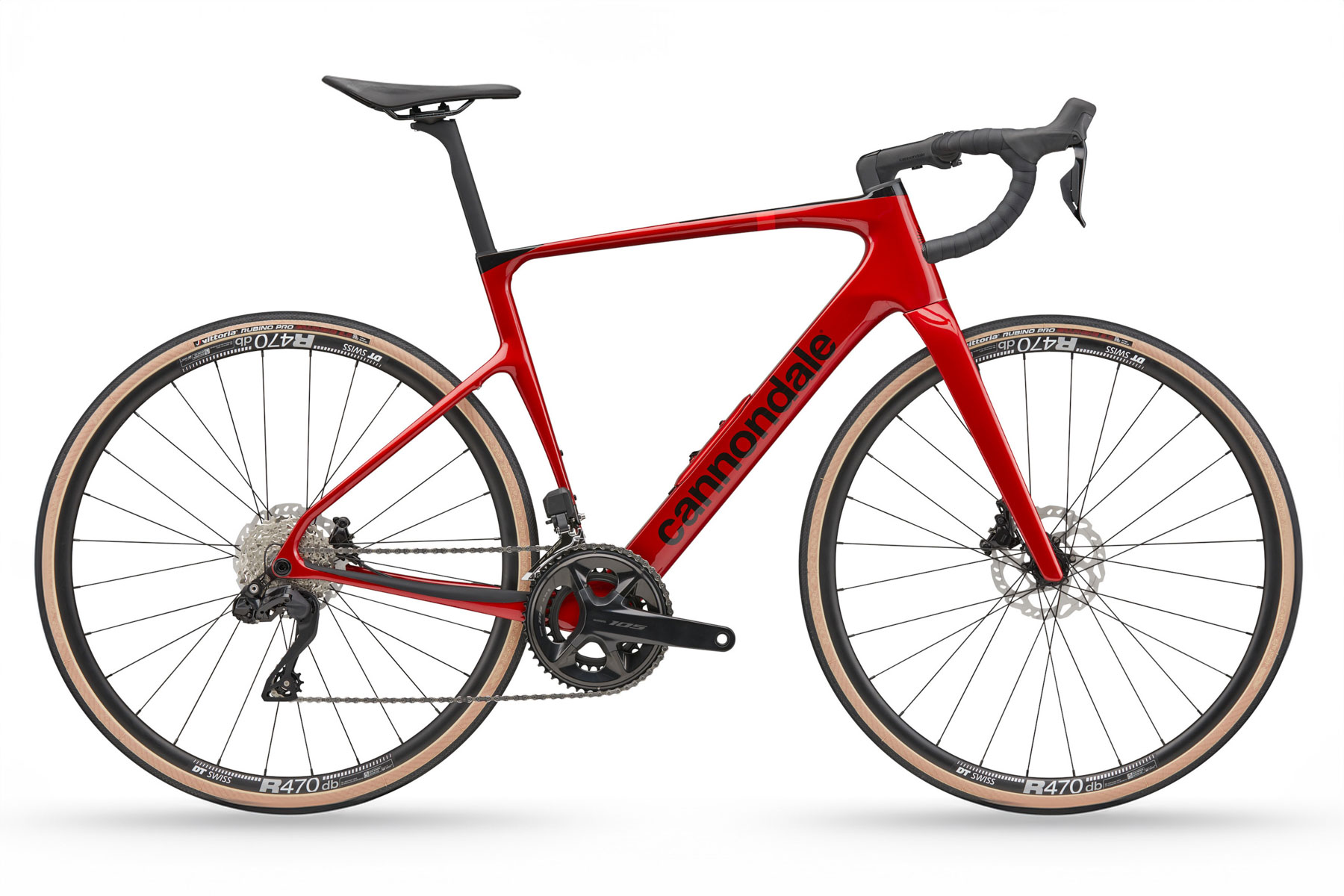
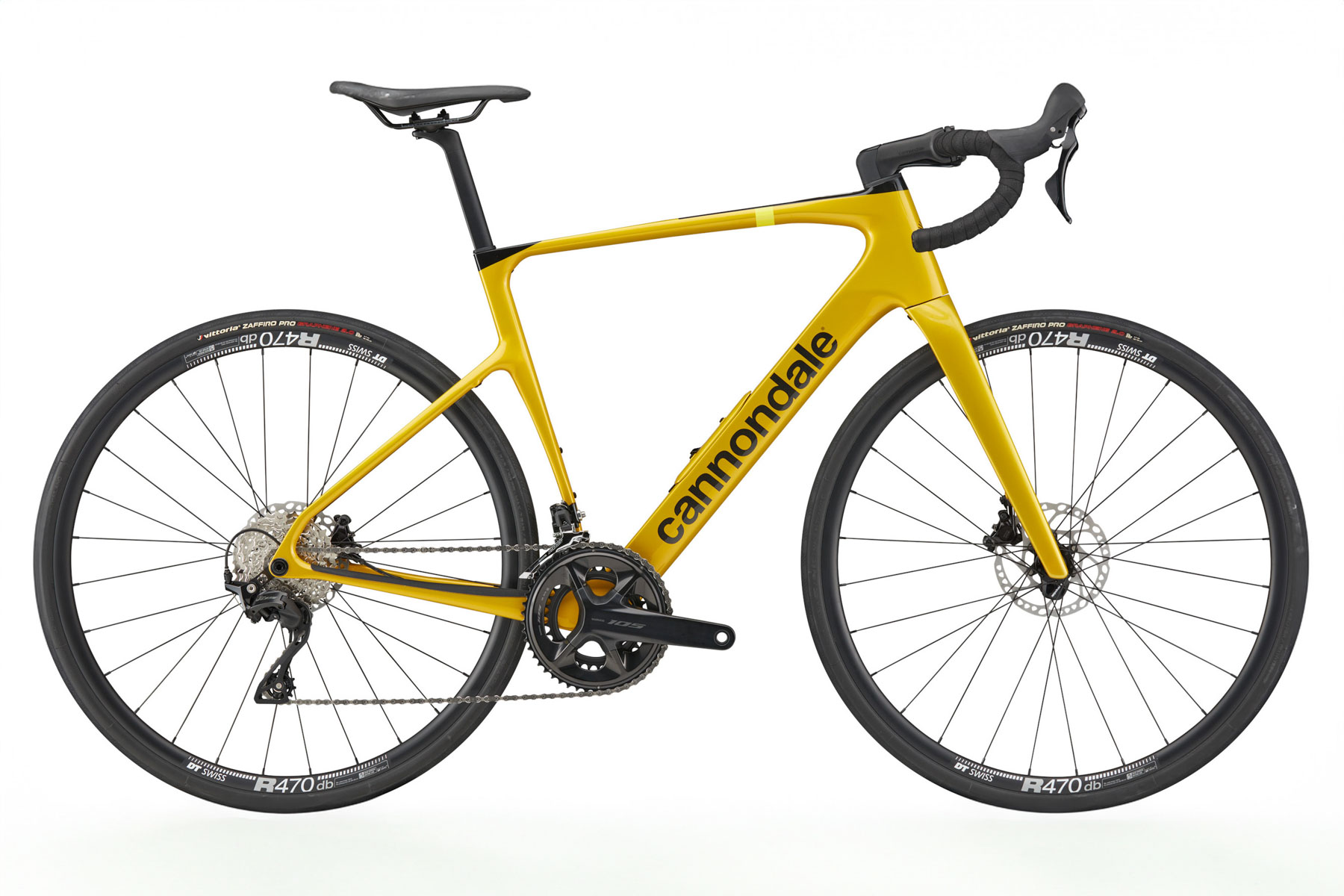
With a raft of bikes available at launch (and a couple more models coming in June), the new Synapse will cover all levels, from the Shimano 105 mechanical-equipped Carbon 5 to a new Lab71 SRAM Red AXS XPLR model complete with a power meter.
That marks a return to the highest-level specifications for the Synapse – something Cannondale didn’t offer on the previous 2022 model.
New Synapse frame design
The new 2025 Synapse. cannondale
The new bike brings plenty of what we would expect from Cannondale.
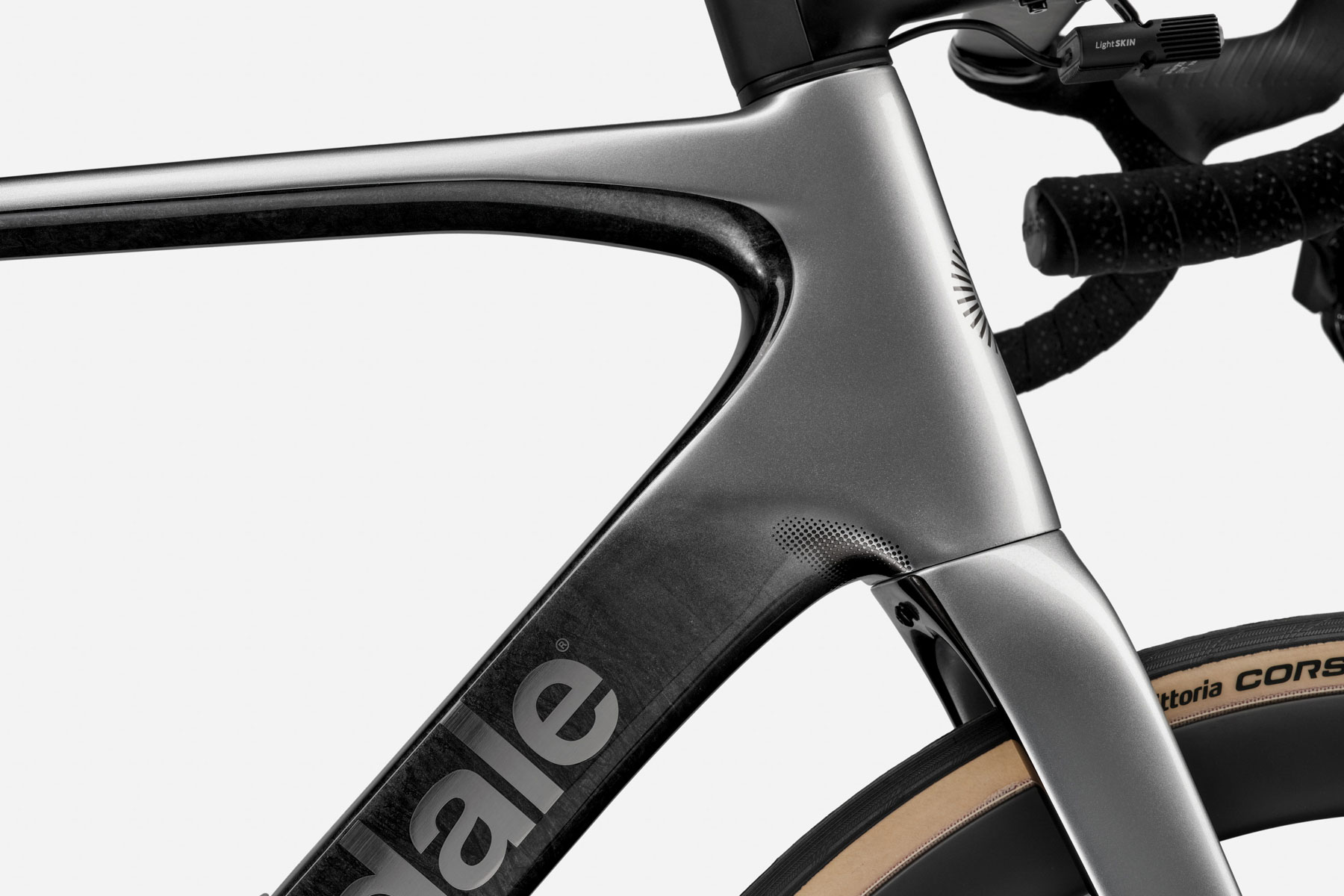
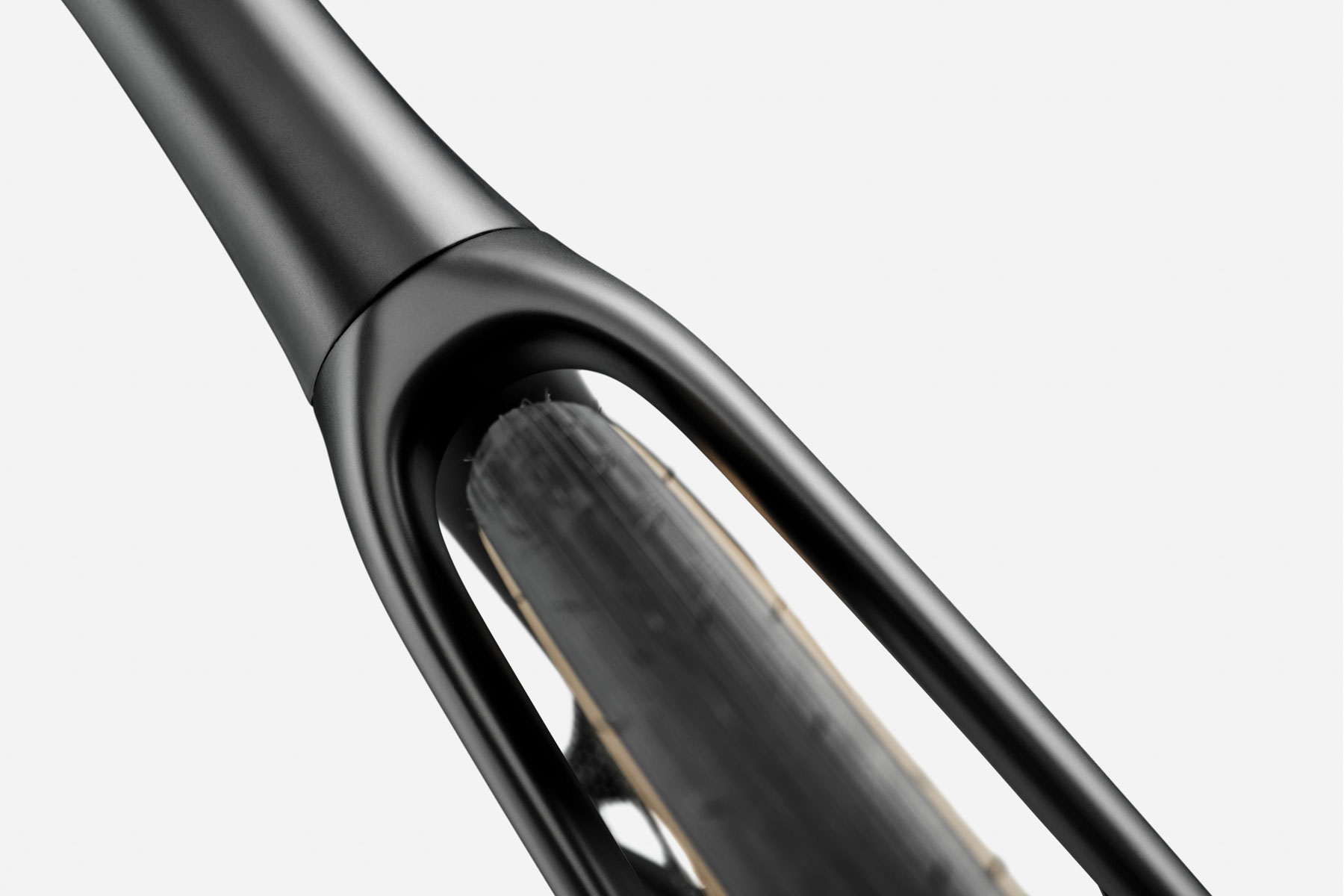
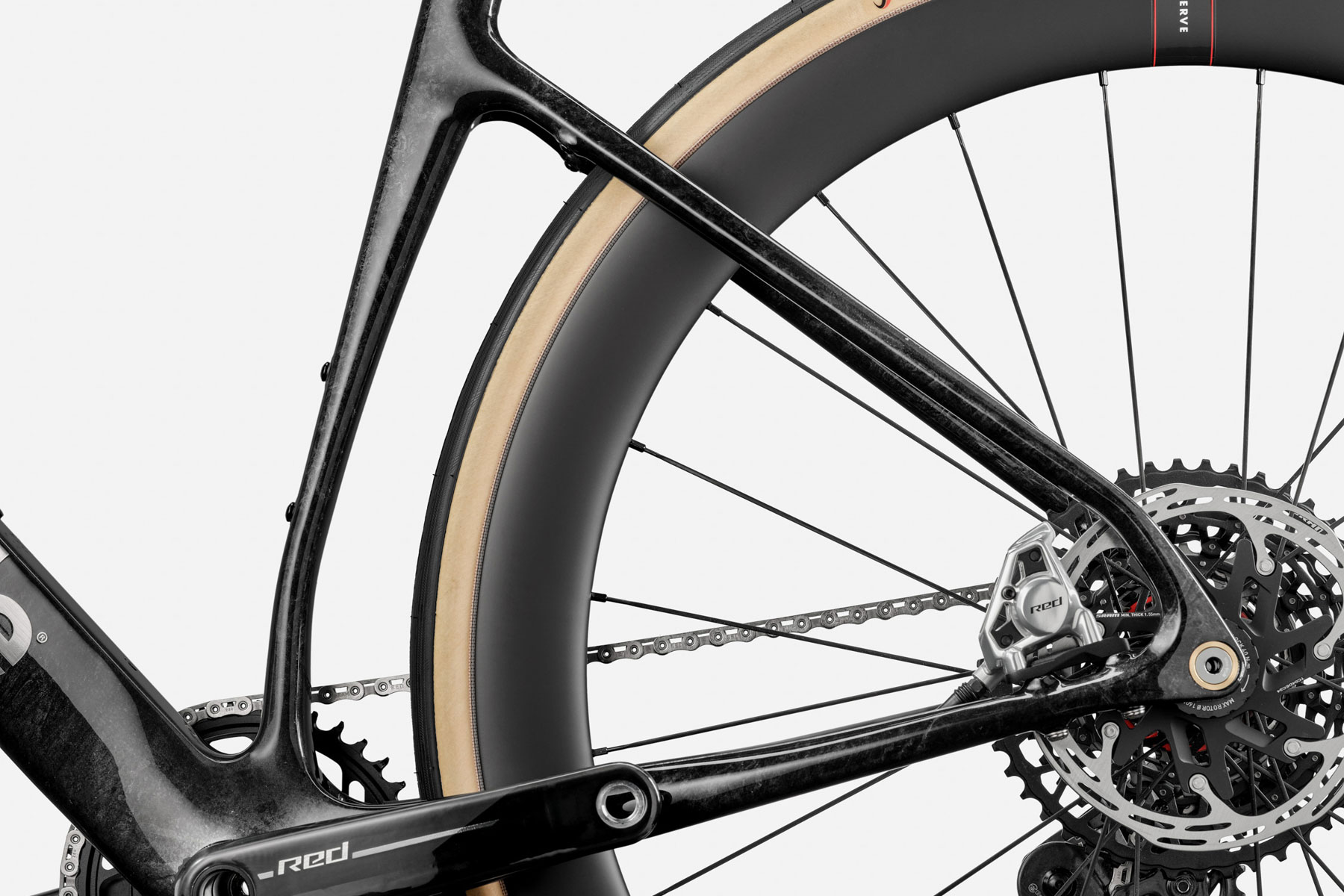
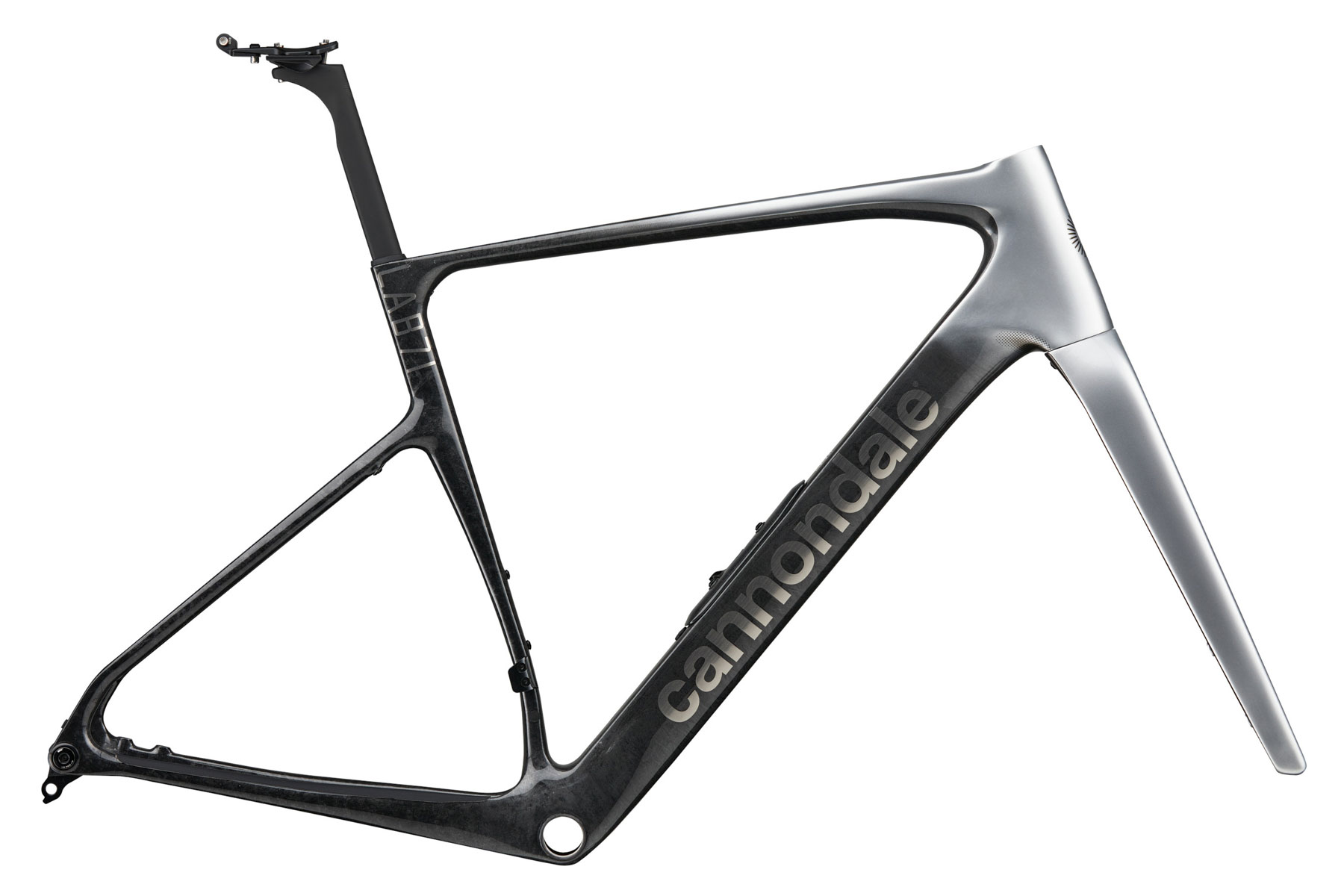
First up, the Synapse retains its BSA bottom bracket and uses the Delta Steerer from the SuperSix Evo. This brings standardised parts from the rest of Cannondale’s drop-bar offerings to the Synapse.
The aerodynamic tube shapes come straight from lessons learned on the SuperSix Evo. cannondale
For simplicity, it shares the same thru-axles, rear hangers, stems and even the SuperSix Evo’s slim aerodynamic seatpost.
With 42mm of tyre clearance, the Synapse has go-anywhere potential. cannondale
Add in huge 42mm tyre clearances (all models will ship with 32mm tyres), down-tube storage and mudguard/fender eyelets, and the new Synapse is a bike with practicality at its core.
Geometry tweaks
The Synapse doesn’t forgo practical touches such as fender bosses on the stays. cannondale
The geometry of the new bike is largely unchanged, although Cannondale has relaxed the head angle down from 73 degrees on the previous bike to 71.5 degrees.
This, and the advent of larger tyre clearances and larger stock tyres, has increased the wheelbase and trail figures, with the chainstays lengthened to 43cm from 41.5cm to account for 42mm tyre clearance.
The trail rises to 61mm from 59mm, bringing the Synapse in line with bikes such as Cervélo’s latest Caledonia 5. It’s only 3mm longer than its racing brother, the SuperSix Evo (58mm).
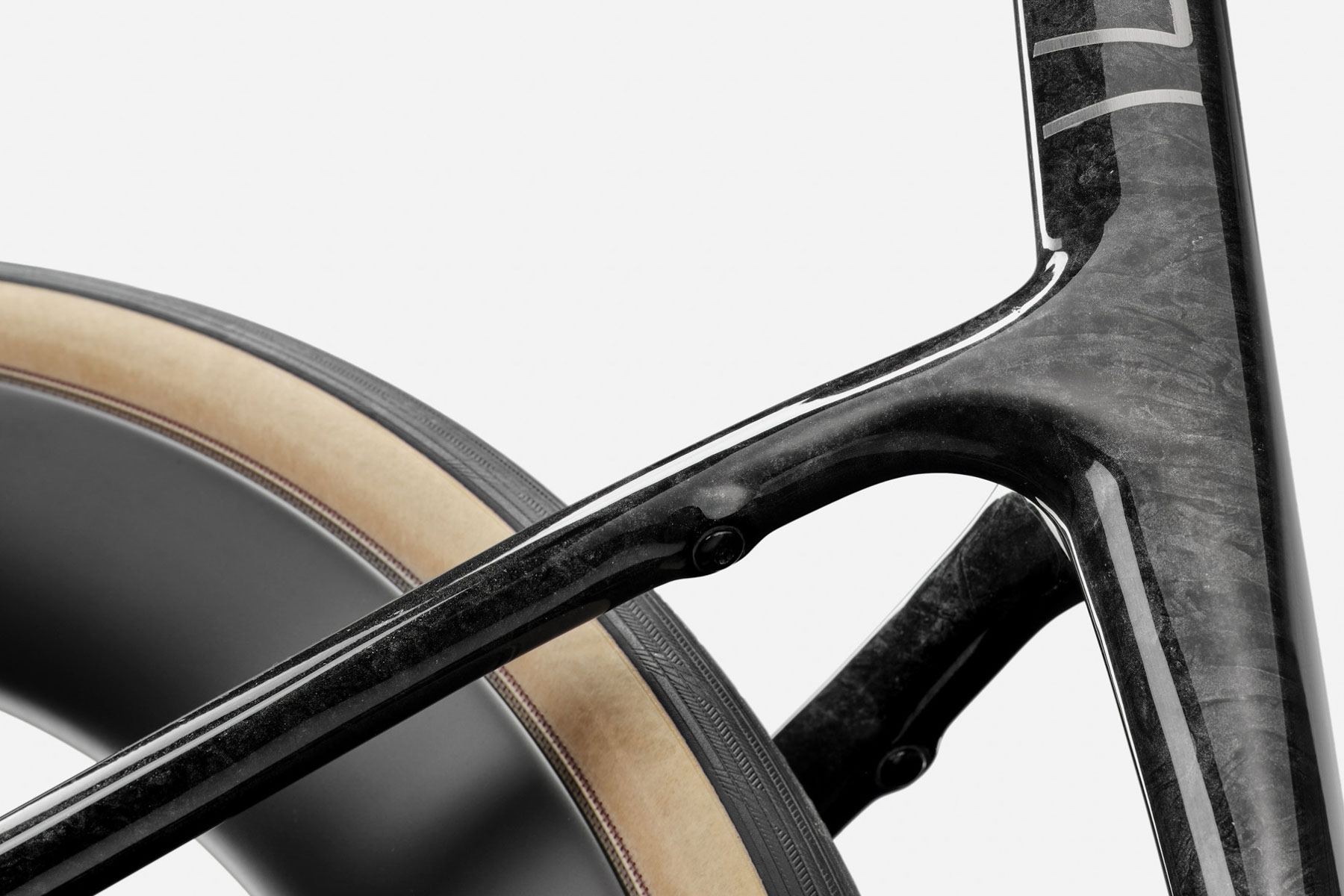
As for the Synapse’s appearance, it’s very much now a companion to Cannondale’s performance bikes. The head tube, down tube, top tube and dropped stays all bear plenty of similarities to the latest SuperSix Evo, while the kinked and flattened seat tube follows the same design cues as the latest SuperX.
The tapered and kinked seat tube is reminiscent of the new SuperX. cannondale
Cannondale tells us this gives similar compliance figures to the SuperX, too. The overall compliance of the new Synapse is up 20% over the previous model, while Cannondale has improved the vital stiffness figures at the head tube and bottom bracket.
Aerodynamics matter for endurance
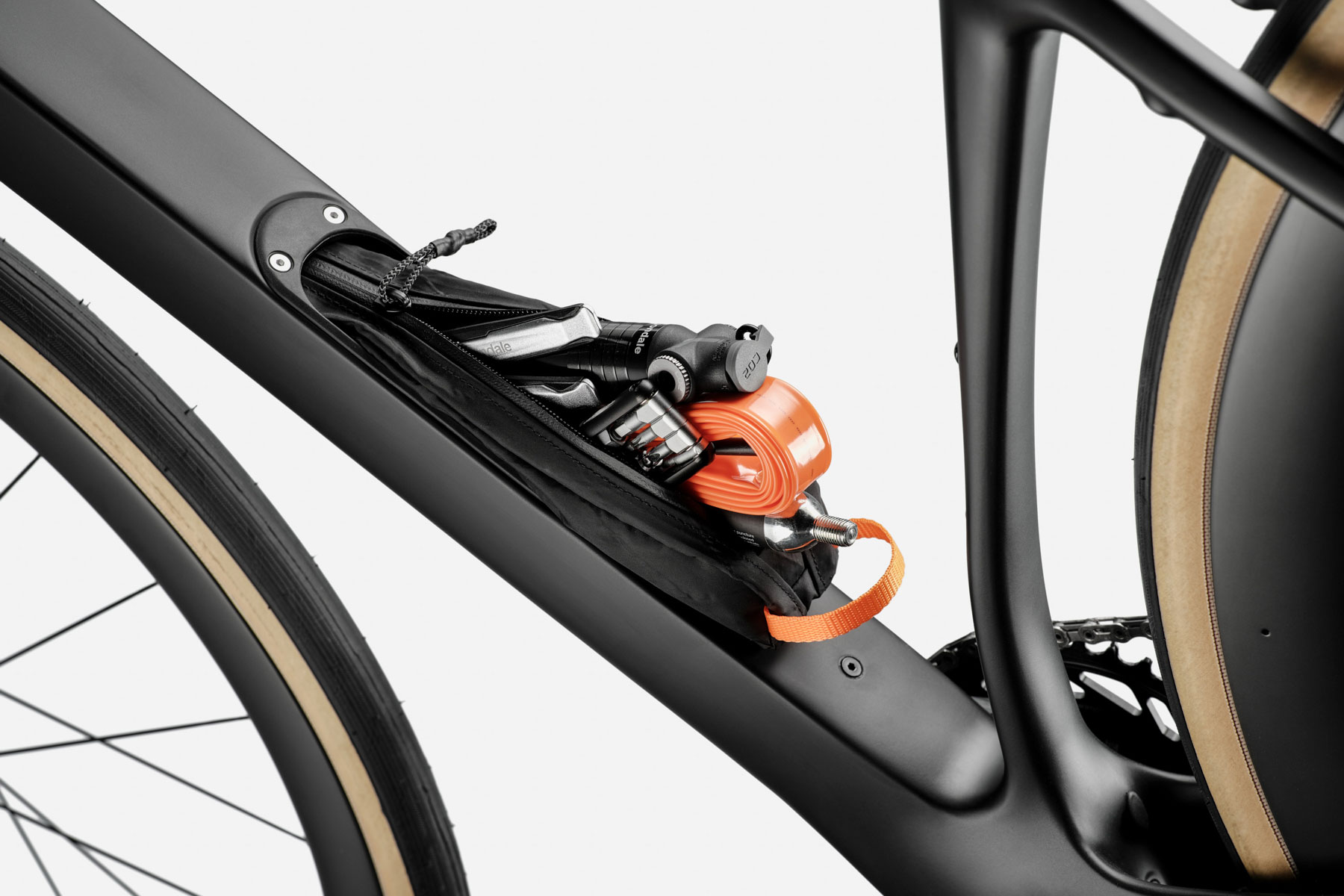
The down tube storage contains both the SmartSense battery and a large tool storage bag. cannondale
A focus on aerodynamics is also at the heart of the new design. Cannondale’s aerodynamics expert Nathan Barry explains: “Much of what we learnt from the Evo-derived performance is here, from the cockpit integration to the highly truncated airfoils (first used on the third-generation SuperSix Evo).
“Our performance-driven design is more about speed and efficiency for the Synapse. Aero is the biggest factor, much more than weight. Bike weight is a very small factor, weight is more about the rider than the bike.”
That said, Cannondale hasn’t exactly delivered a hefty bike with the new Synapse, with claimed frame weights of under 1,000g for the Hi-Mod frame, 1,150g for the standard Carbon and 900g for the Lab71 edition. The Hi-Mod fork adds 445g and the standard Carbon 494g.
Lab71 brings 1x for the road
The move to a 1x drivetrain is something of a shock move on a mainstream production road bike, outside of niche brands such as Vielo and its R+1, but one that we’ve seen coming – especially since Wout van Aert used SRAM’s 1x setup for Milan-San Remo back in 2023.
We saw the same move from van Aert again at this year’s Paris-Roubaix, with the Lidl-Trek team using XPLR rear derailleurs in Paris-Roubaix Femmes.
The Lab71 has a full Red AXS XPLR group, with a 10-46 13-speed cassette matched to a 40-tooth chainring. I’m expecting delivery of this bike any day now, so I’ll report back on how this gravel setup fares on the road.
SmartSense is back
Perhaps the most divisive element of the previous Synapse was the integration of SmartSense, which incorporated an integrated front light, rear light and rear radar using Garmin’s tech, all running from a down-tube mounted single battery.
While initially sceptical about the rear radar, after using it when testing the bike, I became a convert. The added safety of knowing what’s approaching from behind and at what speed makes riding on busy, fast roads safer. I now use a Garmin Varia RCT715 for my regular 30-mile each-way commute.
The issue with the system, however, was a rather clunky integration. The external battery, chunky light and the bracket all added weight, and didn’t have the seamless integration you’d expect from Cannondale design.
Lighting up Lachlan
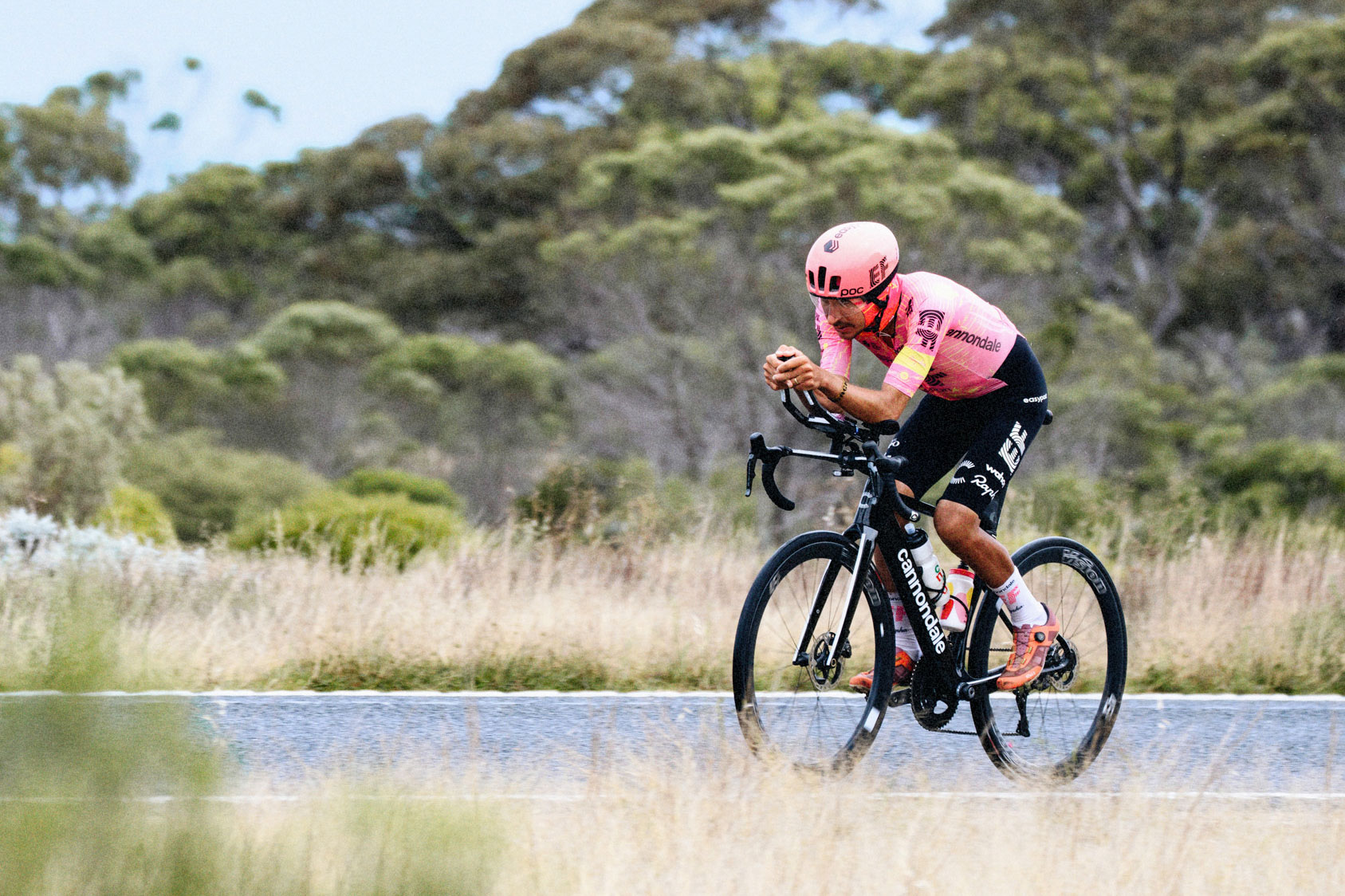
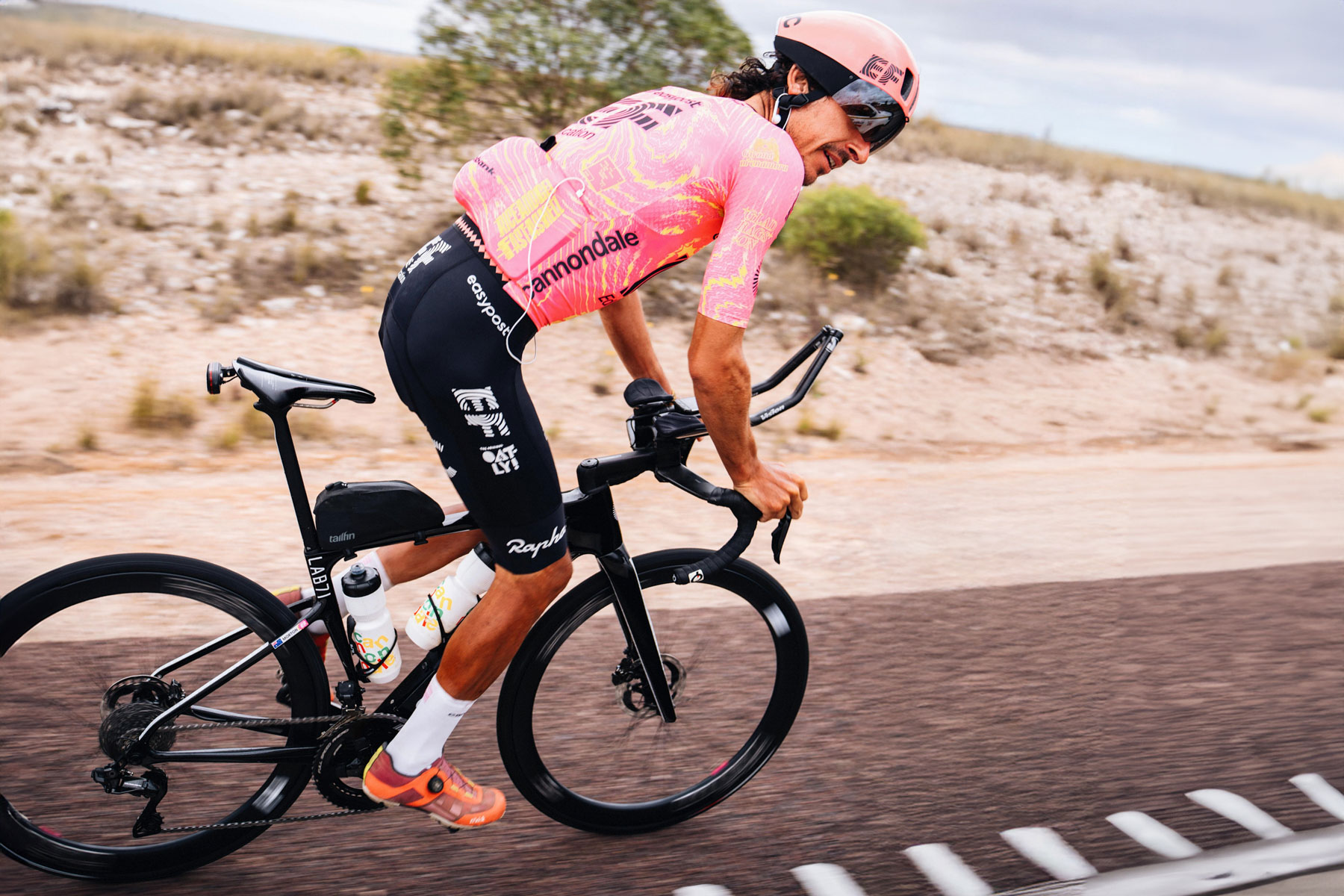
Lachlan Morton rode the new Synapse on a record-breaking lap of Australia. Karter Machen
The new Synapse does a much better job, and when Lachlan Morton rode the as-yet unreleased Synapse for his record-breaking lap around Australia, he employed the full SmartSense setup.
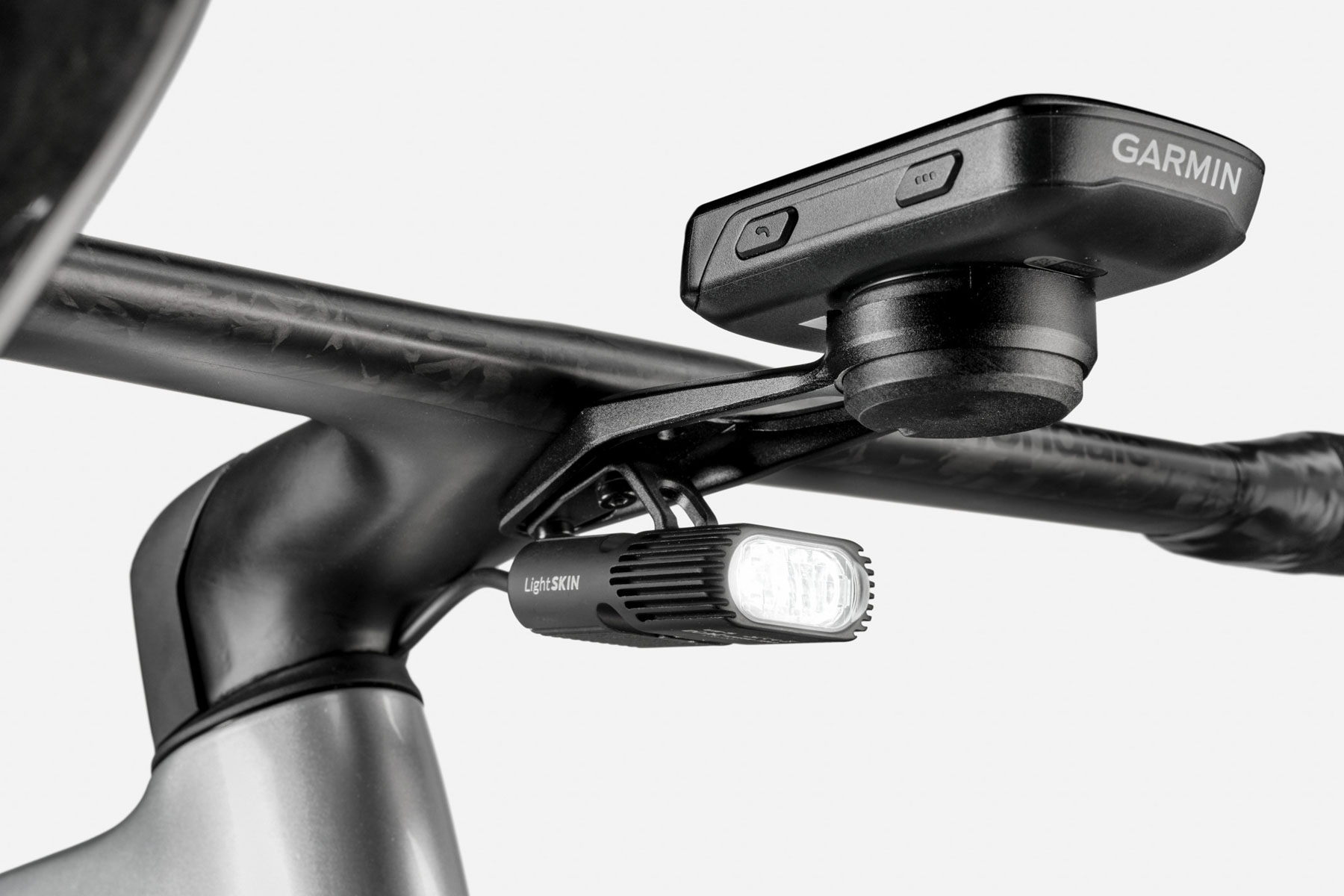
The new light can fit under the out-front mount and power a Garmin through a power mount.
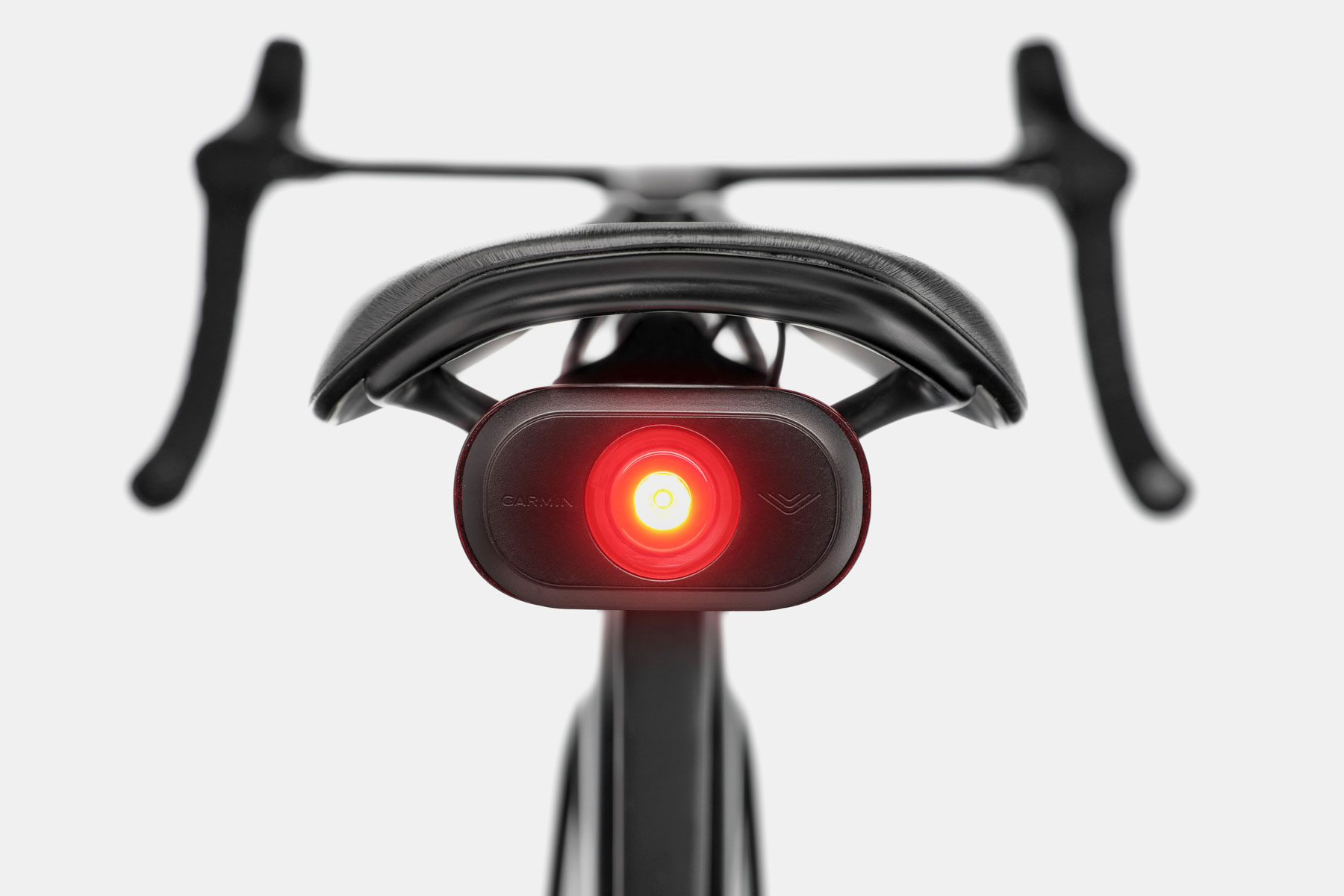
The new front light, made in conjunction with LightSkin, is much slimmer and more slickly integrated into the underside of the cockpit. It’s also much more powerful at 800 lumens (400 for STVZO-compliant countries). The rear light/radar is more minimal, too.
The central battery has a higher capacity of 43.5Wh. It is hidden within a down-tube storage chamber, which also houses storage bags for tools and spares. The storage even includes a built-in flashlight.
The battery also powers the AXS shifting on SRAM-equipped bikes. It can be recharged in place through the USB-C port or removed and charged off the bike.
The new rear light/radar is much more compact.
Any possible battery woes affecting shifting have been considered, with protection for shifting built in. Cannondale tells us the battery, at 5% charge, still has a higher capacity than a standard SRAM AXS battery.
SmartSense is available on all SRAM-equipped bikes, whereas Shimano bikes, both electronic and mechanical, are non-SmartSense models.
SmartSense components will be available aftermarket, should you want to add the system later.
What is the new Synapse?
Lachlan Morton on his lap of Australia. Karter Machen
The frame design has an emphasis on aero and integration on one hand, like the most popular 2014 iteration of the Synapse. On the other hand, it has huge tyre clearances, SmartSense tech and a flagship bike that comes with a gravel groupset.
I think it’s somewhere in between – a performance endurance bike with a go-anywhere spirit. It’s a bike designed for a new breed of rider at the highest level, personified by Lachlan Morton, who’s at home in any discipline and at a tremendous pace.
If the Synapse lives up to these (my) expectations, it could be the ultimate do-it-all bike – equally at home in the cut and thrust of fast-paced road rides, gravel excursions, and epic days, weeks, or more.
If it’s good enough to aid Morton in setting the record of a 14,200km lap of Australia in an astonishing 30 days, 9 hours and 59 minutes – averaging over 450km a day – it’s going to be enough bike for most of us.
2025 Cannondale Synapse range details
There are eight models in the new Synapse range, although the details of four are embargoed until 17 June, when fellow US company SRAM has its own announcements.
The range starts with the Carbon 5 at £2,995 / €3,499 / $3,599 and is topped by the new Lab71 Synapse (as ridden by Lachlan Morton), priced at £13,000 / €15,799.
Gravel suspension was a hot topic at this year’s Traka, and Lachlan Morton has weighed in with his take.
Speaking exclusively to BikeRadar at the Spanish event, the 2024 Unbound winner said the current trend towards ever-larger gravel tyres is essentially “trying to mimic what suspension does”.
“There’s no one fix” when it comes to determining the best gravel bike for every scenario, though, Morton cautions.
Four different courses, four different setups
Does suspension make gravel bikes faster? It depends, says Lachlan Morton. Liam Cahill / Our Media
A big part of the ‘problem’ with determining the best setup for gravel racing, Morton says, is that “you could race four different courses and there’d be four different setups that are better”.
There’s no doubt, he says, that “There are courses where suspension would be great”, but there are different ways to address the problems gravel suspension is designed to solve (namely smoothing out rough surfaces and increasing traction and control).
In Morton’s view, the current trend for riders to use the biggest tyres that will fit in their gravel bikes – with some riders even opting for cross-country mountain bike tyres – is driven by similar concerns.
Gravel racers regularly push the limits of their frame’s clearance in order to run bigger tyres. Liam Cahill / Our Media
“Effectively, that’s what using big tyres is doing,” he says. “It’s low pressure – you’re trying to reduce that up and down motion.”
Contrary to popular opinion, Morton says: “There’s not a huge traction gain from running a bigger tyre, necessarily.”
Likewise, Morton says “you kind of lose out” using them on the “really high speed stuff” – potentially because they’re heavier and less aerodynamic than narrower tyres.
“I’m sure you could probably get away with less tyre if you’re running suspension,” he adds.
Enjoying the process
Lachlan Morton opted for a rigid bike at this year’s race. Liam Cahill / Our Media
Part of the fun of gravel racing, Morton says, is enjoying the process of setting up your bike for maximum performance ahead of each race.
“It’s nice when you look at the course and make your decisions based on what the course is doing, what your body’s doing, and then what your plans are for the race.
“You can run a bunch of different setups, and different things could be faster on different parts of the course.”
Morton even says riders “might take more gambles on equipment” if they feel the need to make up for a deficit in physical prowess compared to their competitors.
Morton’s 42/44c tyres were relatively small by modern standards. Liam Cahill / Our Media
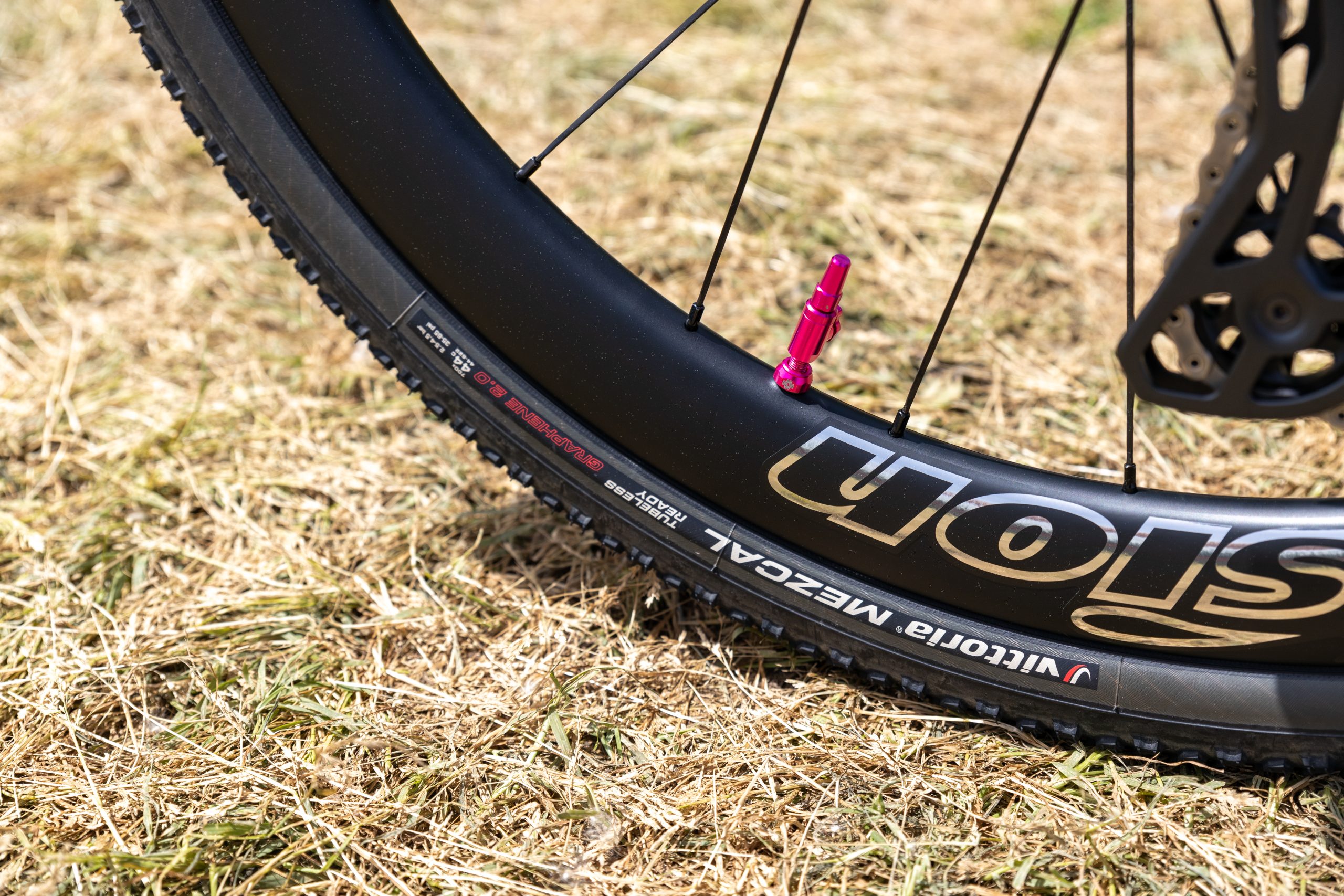
Morton, though, has clearly yet to be converted to gravel suspension. His bike for this year’s Traka 360 was a rigid Cannondale SuperX Lab71 equipped with relatively narrow, 700×42 and 44c Vittoria Mezcal Gravel Endurance tyres, front and rear.
The team at SISU Racing has just announced its first Grand Tour of 2025. Held on Saturdays and Tuesdays, it’s a 7-stage tour across the three weeks of the Men’s Giro d’Italia.
The series can be raced as an individual or a team, and features both an individual time trial in Bologna and a tough queen stage finish on the ZG25 Queen route. Read on for details!
If you’re tired of scrolling through your Strava feed and manually giving kudos to your friends’ rides, Strava Kudo All is the Google Chrome plug-in for you.
This browser extension automatically drops kudos on the activities of all the people you’re following, meaning you can sit back and watch the support return almost transactionally to your latest ride.
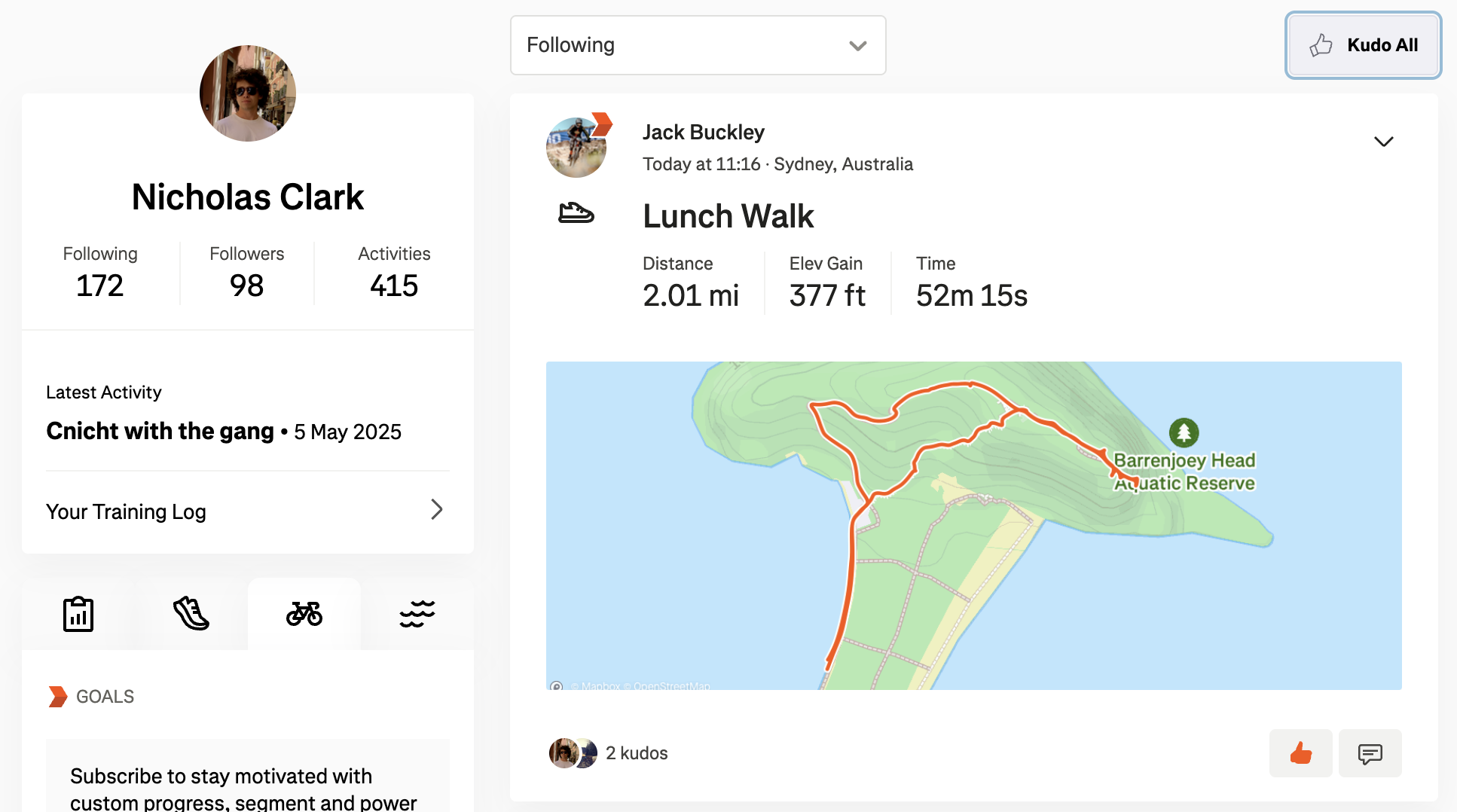
The plug-in, created by Thomas Ciles, adds a button to Strava’s homepage titled ‘Kudo All’, which, when pressed, sends kudos to all activities on your feed from the previous 24 hours.
Strava Kudo All is labelled as Featured in Google’s Chrome Web Store. Google Chrome Web Store
It only works on the desktop version of Strava and therefore won’t be available on mobile devices.
Having downloaded Strava Kudo All to see how it worked, I was impressed by its simple functionality and the increased kudos I received after using it for only a couple of days.
The button is added to the top-right of your feed on Strava’s Dashboard. Strava
While some may say the plug-in goes against the ‘spirit of Strava’, there’s no denying its effectiveness, with kudos on my rides now given in greater volume and by a wider variety of people.
Google Chrome’s Web Store says there are 3,000 users of the plug-in, a small number compared to the millions signed up to Strava, meaning it’s highly likely the kudos you’re receiving is genuine support from your followers.
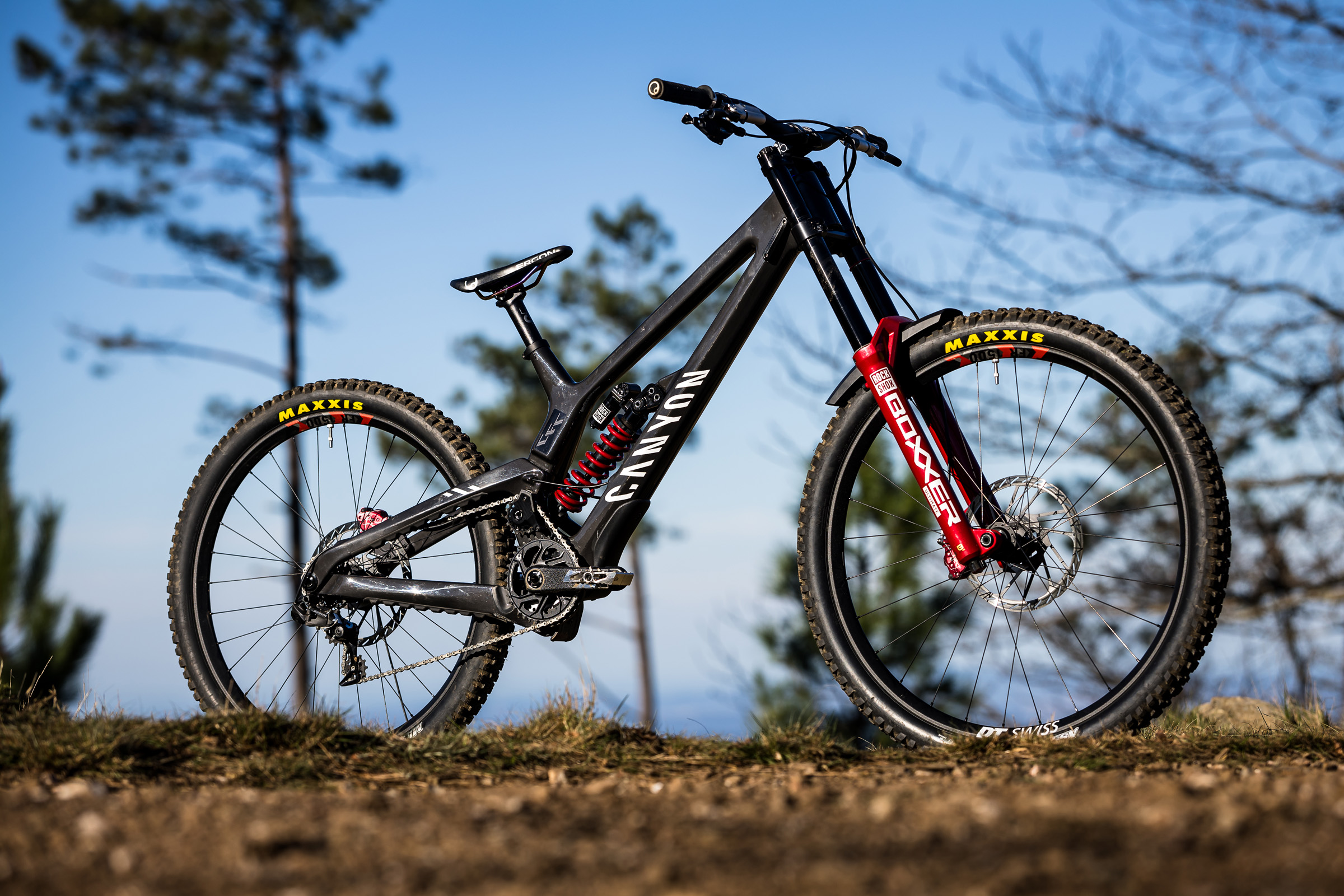
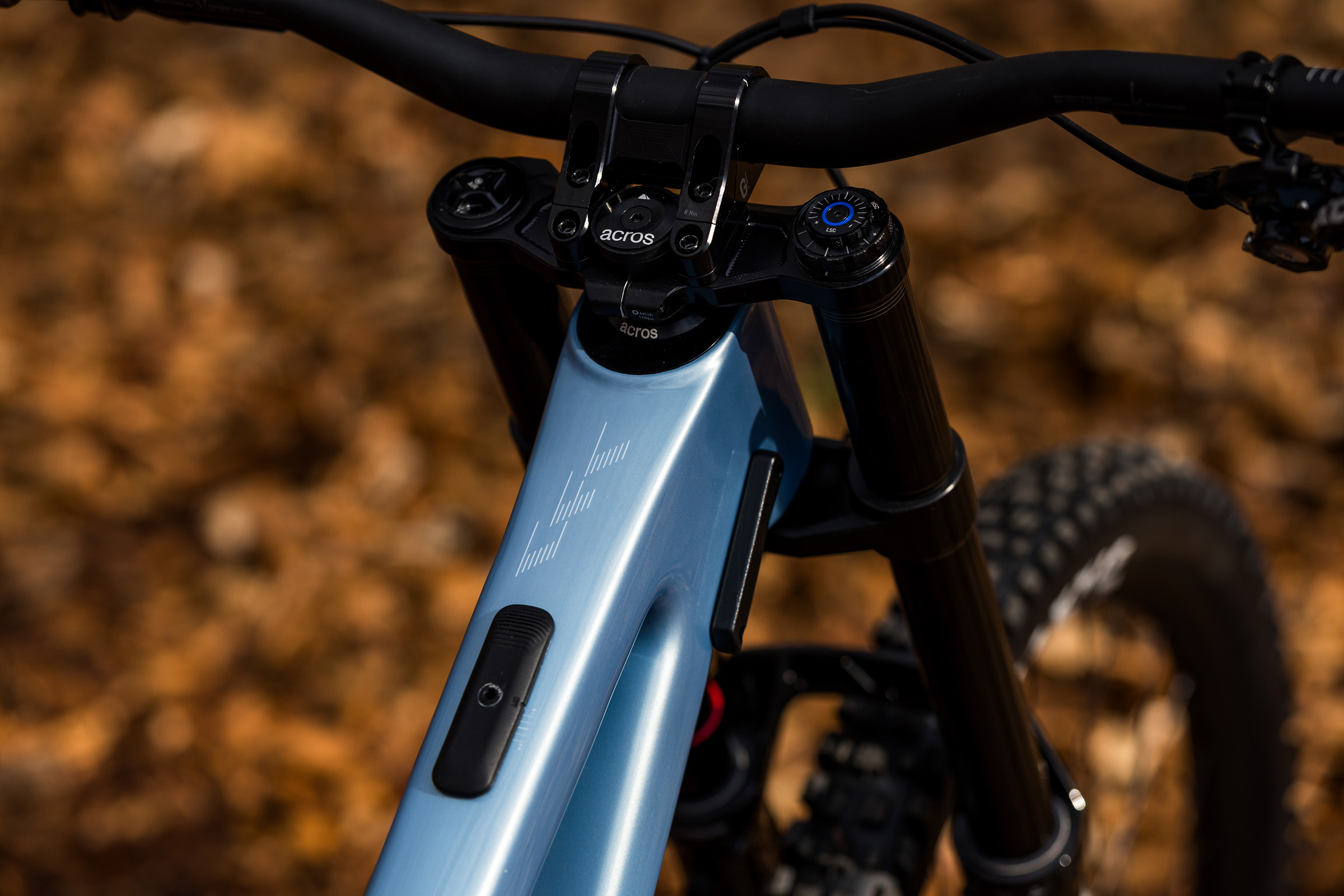
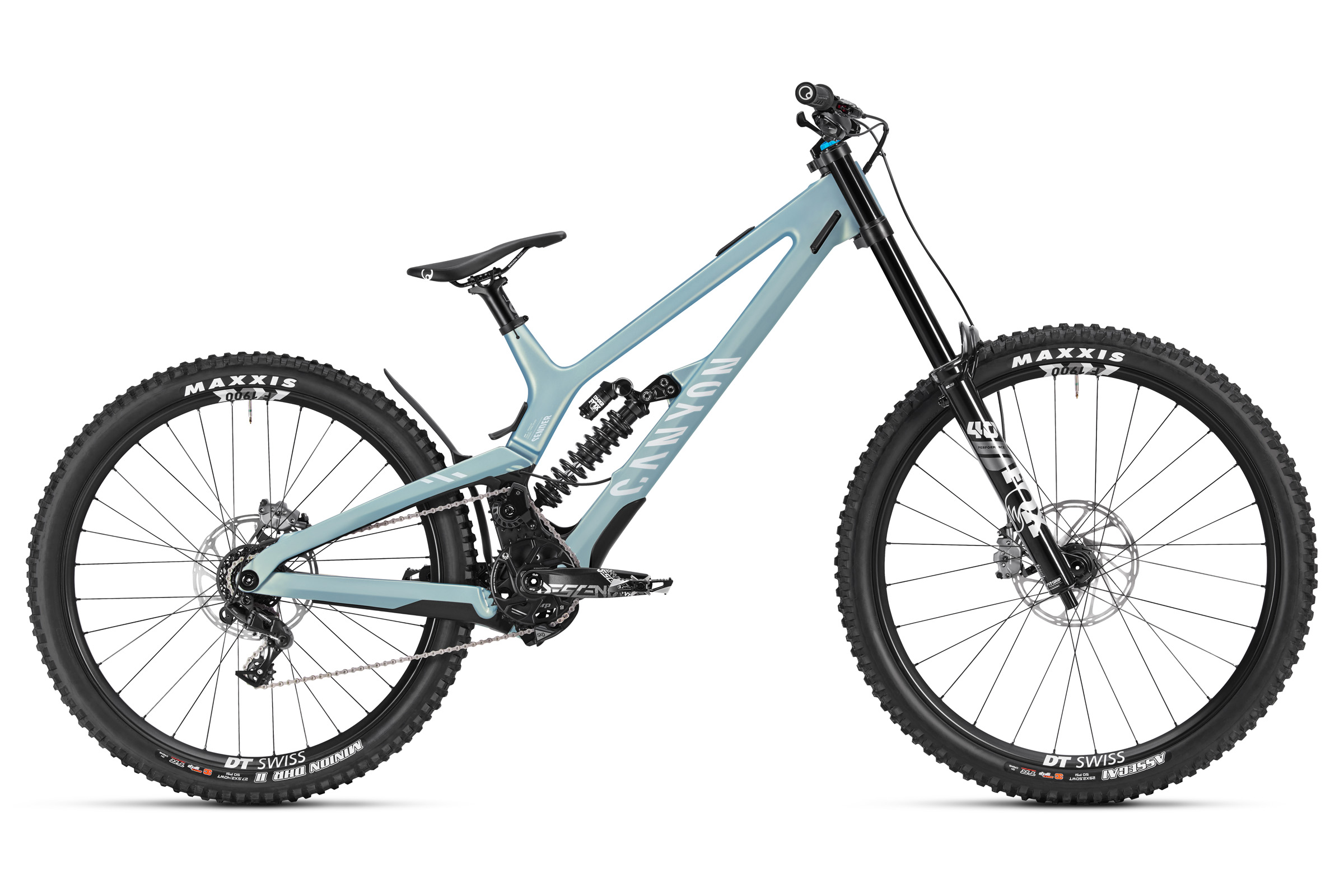
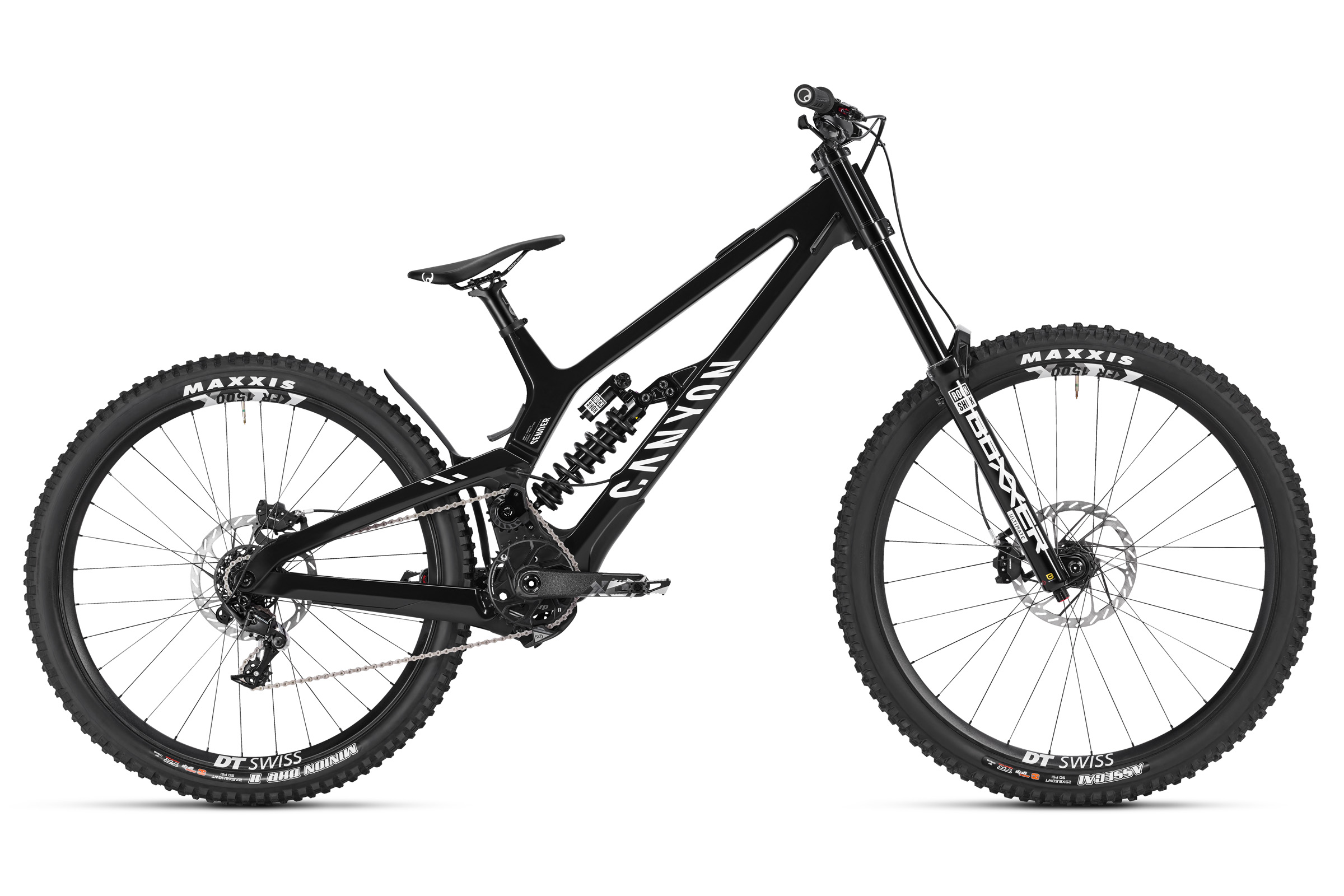
Canyon’s latest Sender downhill bike has a high-pivot idler-equipped rear suspension design and is the result of years of research.
Before the bike was available to the public, it had helped riders such as Troy Brosnan stand on the top step of the downhill World Cup podium.
While this proves the finished product is very good indeed, it’s how Canyon got to this point that’s interesting, though.
The warts-and-all development process of a bike can be filled with dead ends, red herrings and other unproductive quests.
However, Canyon built the ultimate prototype, which played its part in the success of the new Sender, leaving no stone unturned in the development process.
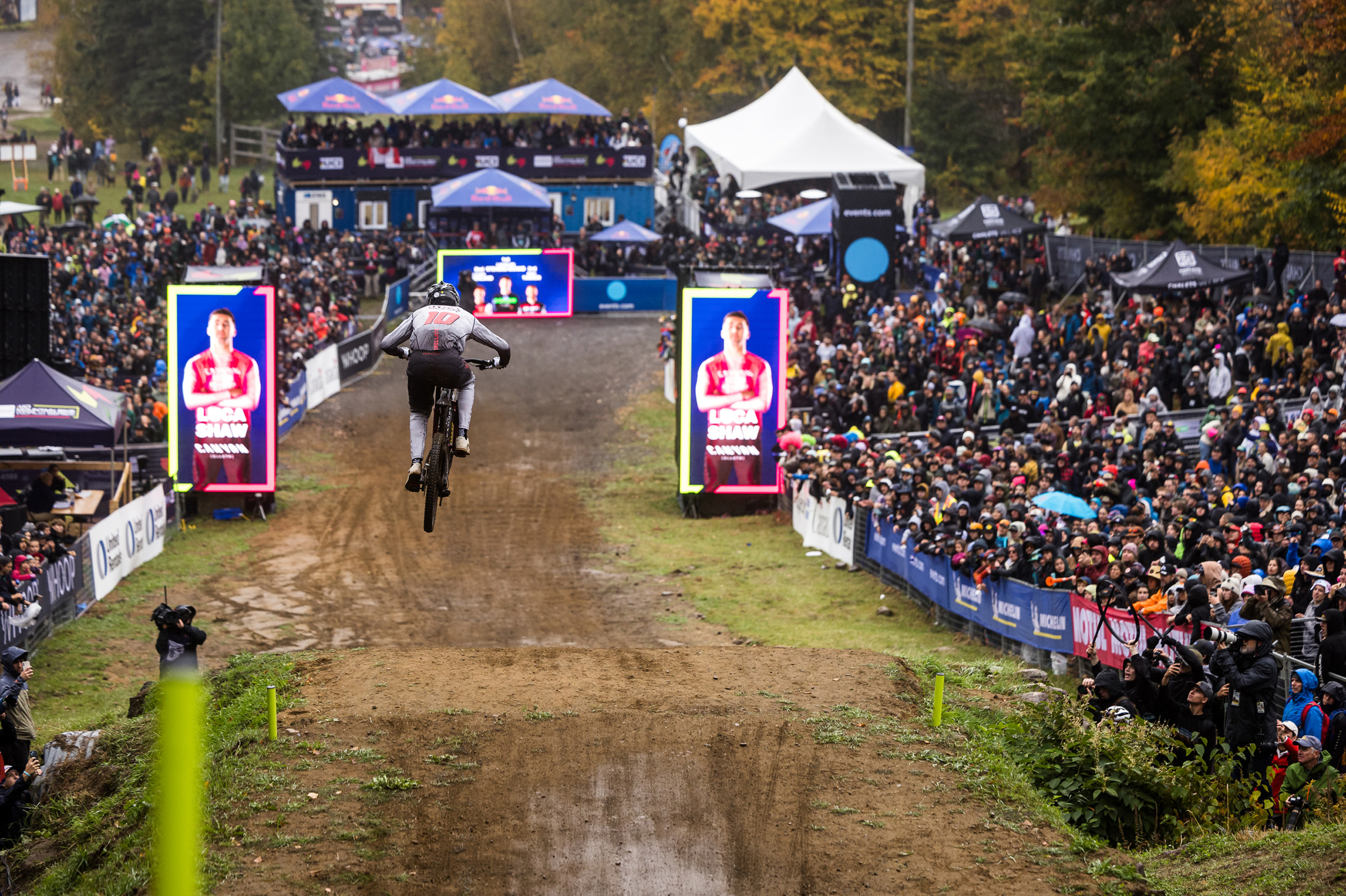
Troy Brosnan won the 2024 Mont-Sainte-Anne DH World Cup on the new Sender. Canyon Bikes
The final product is an affordable top-performing downhill bike.
With prices starting at €4,499 (CFR Underdog) and rising to €5,999 (CFR Team) for the top-flight model, podium-contending performance has never been more attainable.
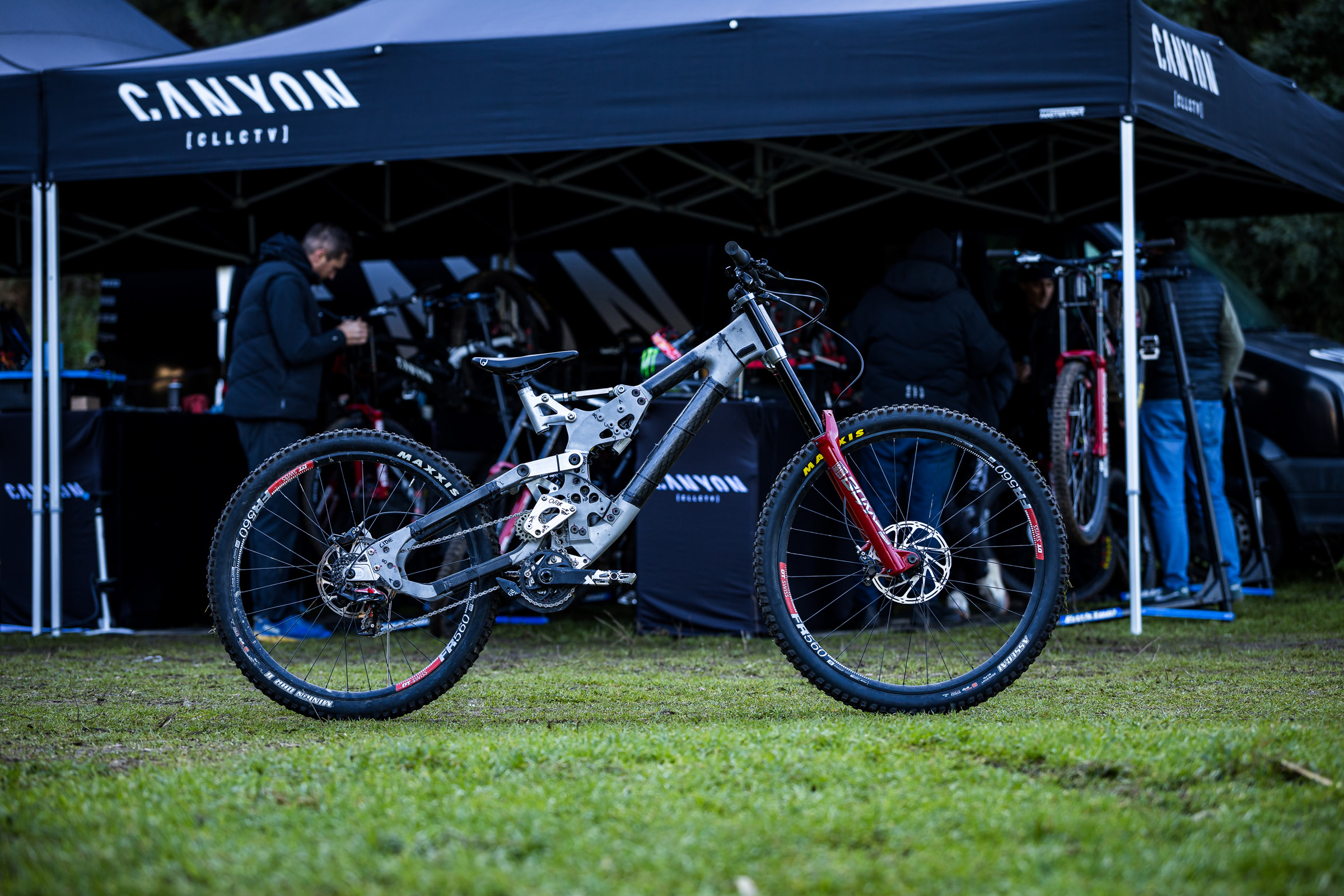
Cue the Canyon Frankenbike
The Frankenbike looks ugly but serves a beautiful purpose. Canyon Bikes
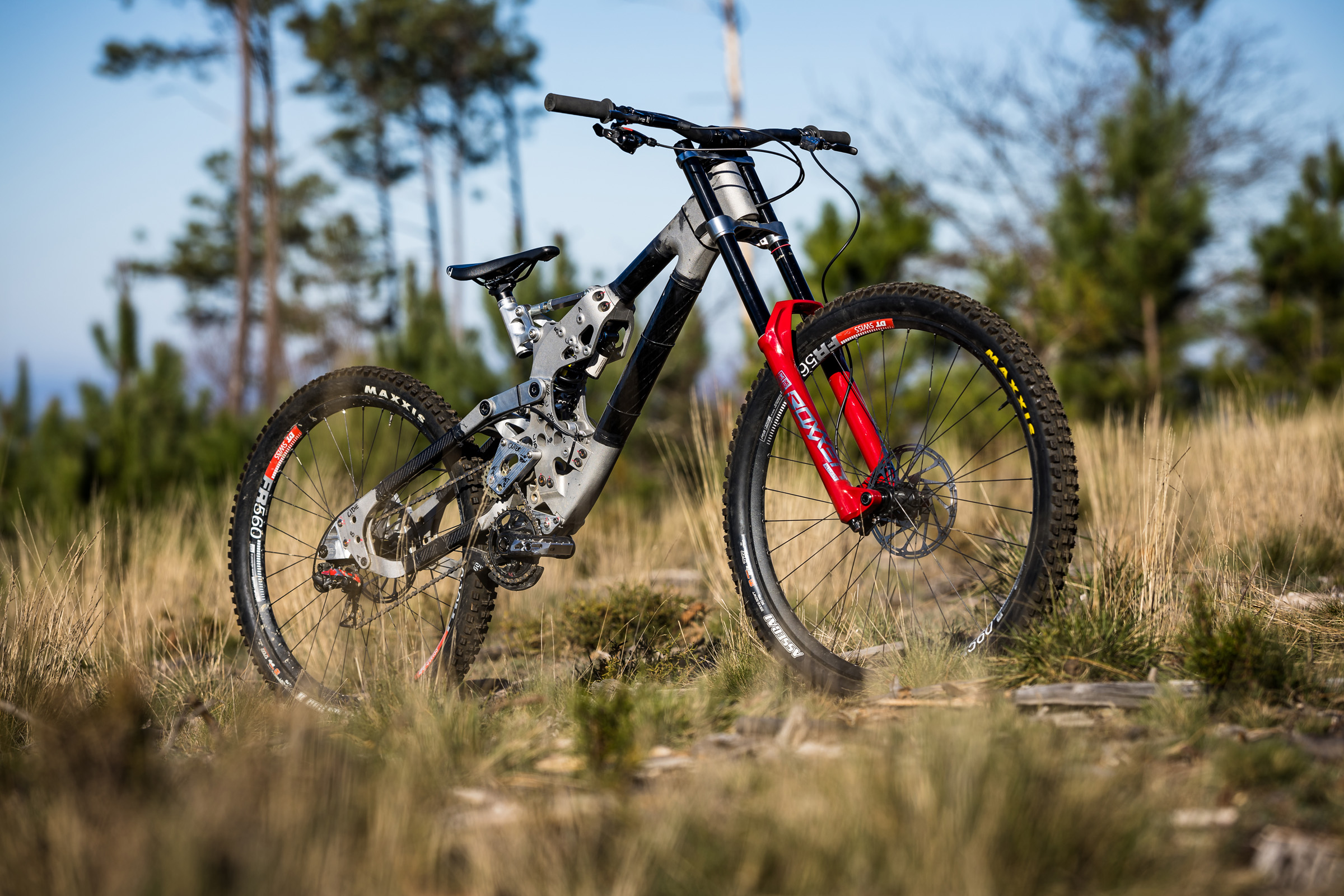
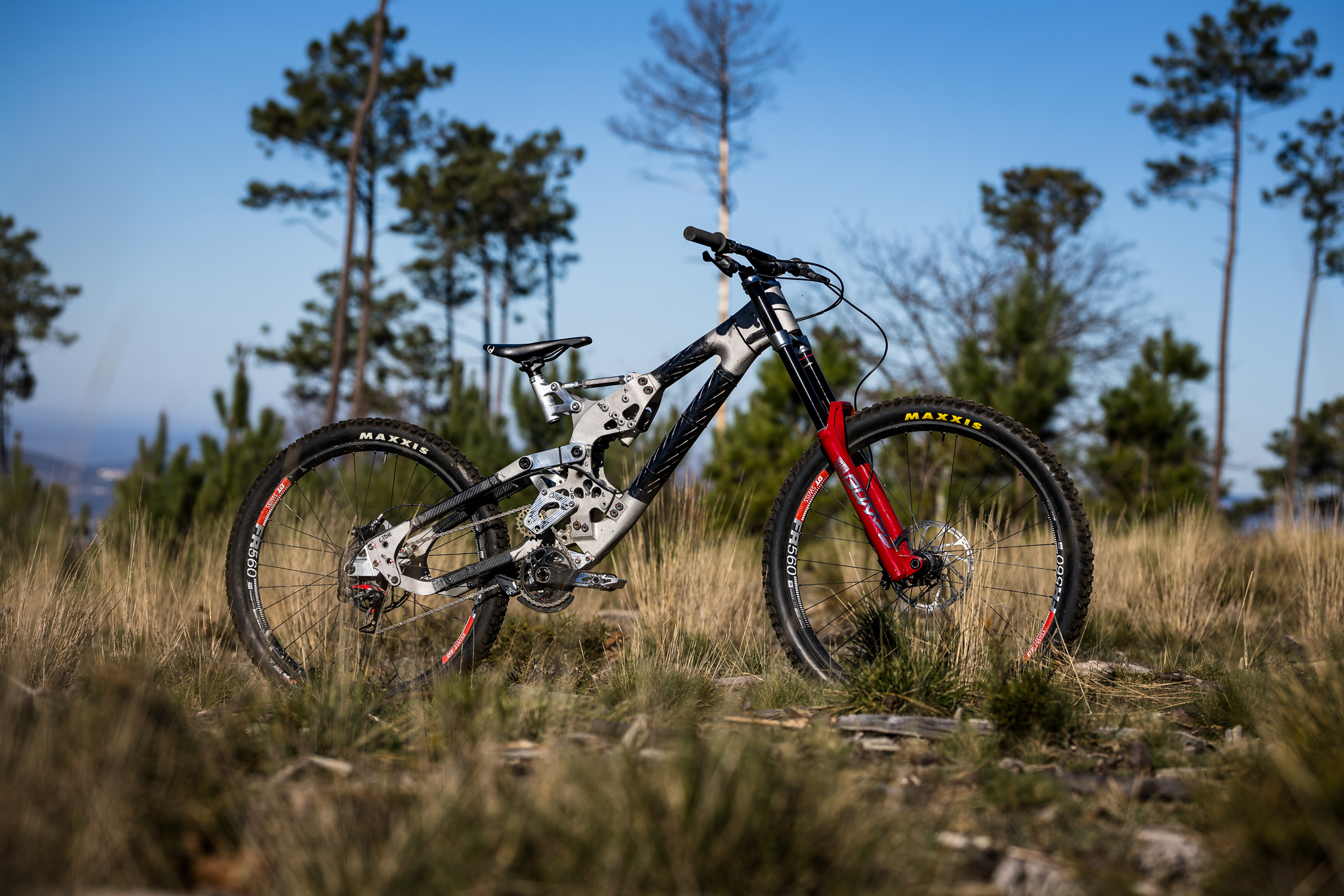
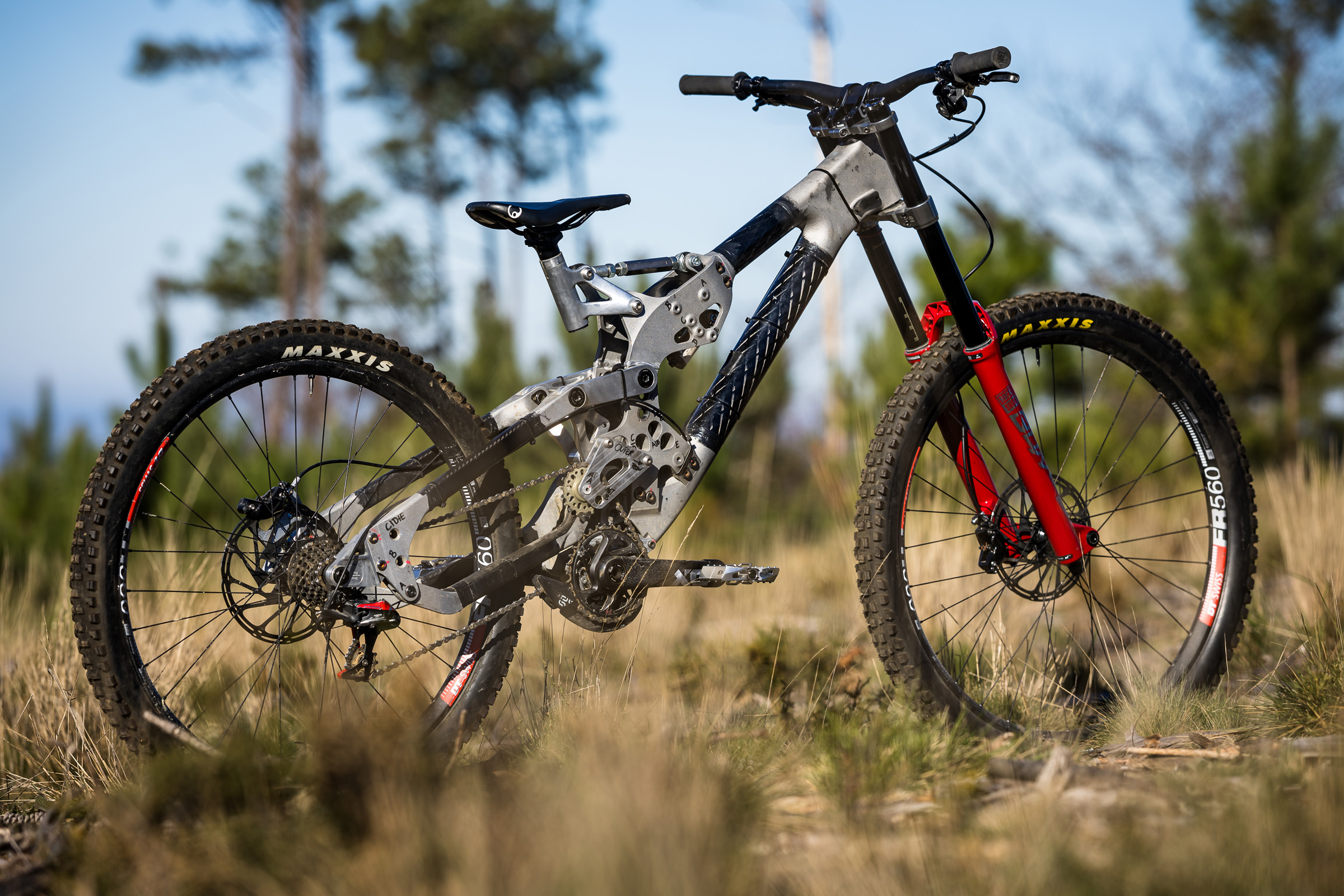
Created by Canyon’s engineers – the cycling equivalent of Victor Frankenstein – the Sender test mule is as monstrous and all-encompassing as it looks.
Recognised internally as the ‘most advanced’ prototype Canyon has ever built, the Frankenbike was created to test every conceivable suspension and geometry permutation.
But to achieve such a feat, Canyon had to sacrifice the Frankenbike’s looks.
The Canyon Frankenbike is one of the most advanced prototypes out there. Canyon Bikes
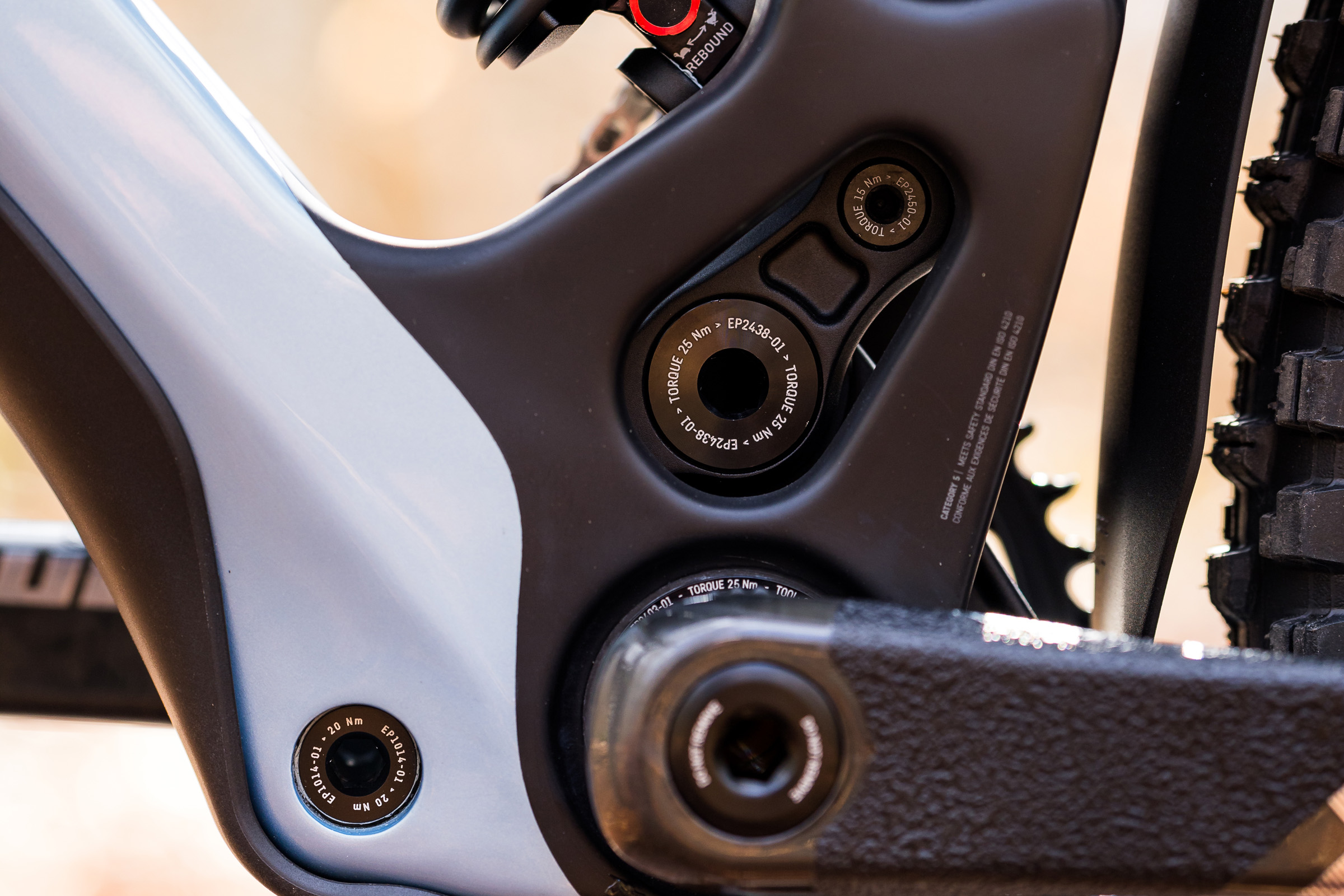
It has more holes, pivot points, bolts, lugs and mounting options than you can imagine, to test each of the bike’s parameters without affecting the others.
That means testing one variable – whether that’s leverage rate, wheelbase, wheel size, anti-squat, anti-rise or anything else – without influencing anything else, is possible.
The Frankenbike enabled Canyon’s test riders and engineers to form their own opinions and ideas of each parameter based on real-world testing, rather than being led by assumptions or dirtied data.
Despite having looks only a mother could love, the Frankenbike is wonderfully functional. Canyon Bikes
Usually, they’d rely on compromised and muddied input, where each prototype bike is relatively fixed. If an iterative change – say, reducing the leverage rate or increasing chainstay length – is needed, a whole new frame will have to be made.
Visually, the Frankenbike is far from beautiful, but conceptually it’s one of the best things on the MTB scene.
Each suspension and geometry parameter can be adjusted independently. Canyon Bikes
And it’s also one of the reasons downhill racing is such an important discipline; innovation, technological advancements and leaps in engineering are all at the forefront of competition.
Leaving no stone unturned in the development process – because brands and racers want to win world cups – means the production bikes you can buy are only ever going to get better.
The production Canyon Sender
The production Sender has clean lines and a great aesthetic. Canyon Bikes
The result of all this research and development is one of the most refined, bang-up-to-date DH bikes on the market.
Canyon was able to quickly turn the best combinations of Frankenbike into rideable, almost production-looking prototypes thanks to 3D printing at its Koblenz HQ in Germany.
This means the final look, including smooth, clean lines – that Canyon was really picky about, and spent a good chunk of time getting right – is also loaded with plenty of tech.
High-pivot suspension tech
The chain idler gives you some idea just how high the main high pivot is. Canyon Bikes
Multiple DH world champion and World Cup winner Fabien Barel – who heads up the Canyon Factory race team – was on a mission to give the Sender the most traction possible.
Key to this is the high-pivot suspension design.
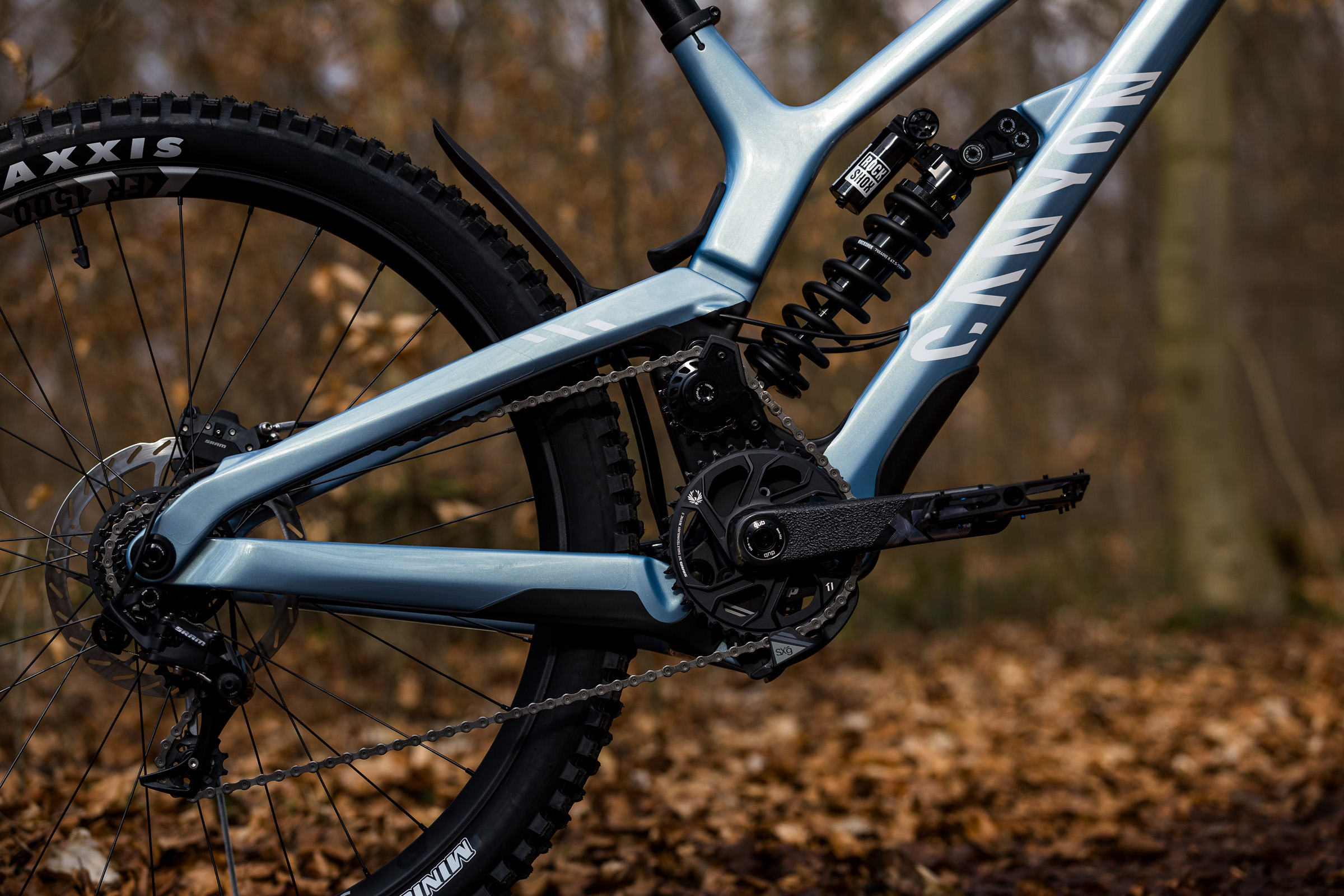
By moving the main pivot point on the single pivot, linkage-driven suspension, Canyon has given the new Sender a rearward axle path.
As the suspension compresses, the rear wheel moves in a rearward arc until the bike has compressed roughly 70 per cent into its travel.
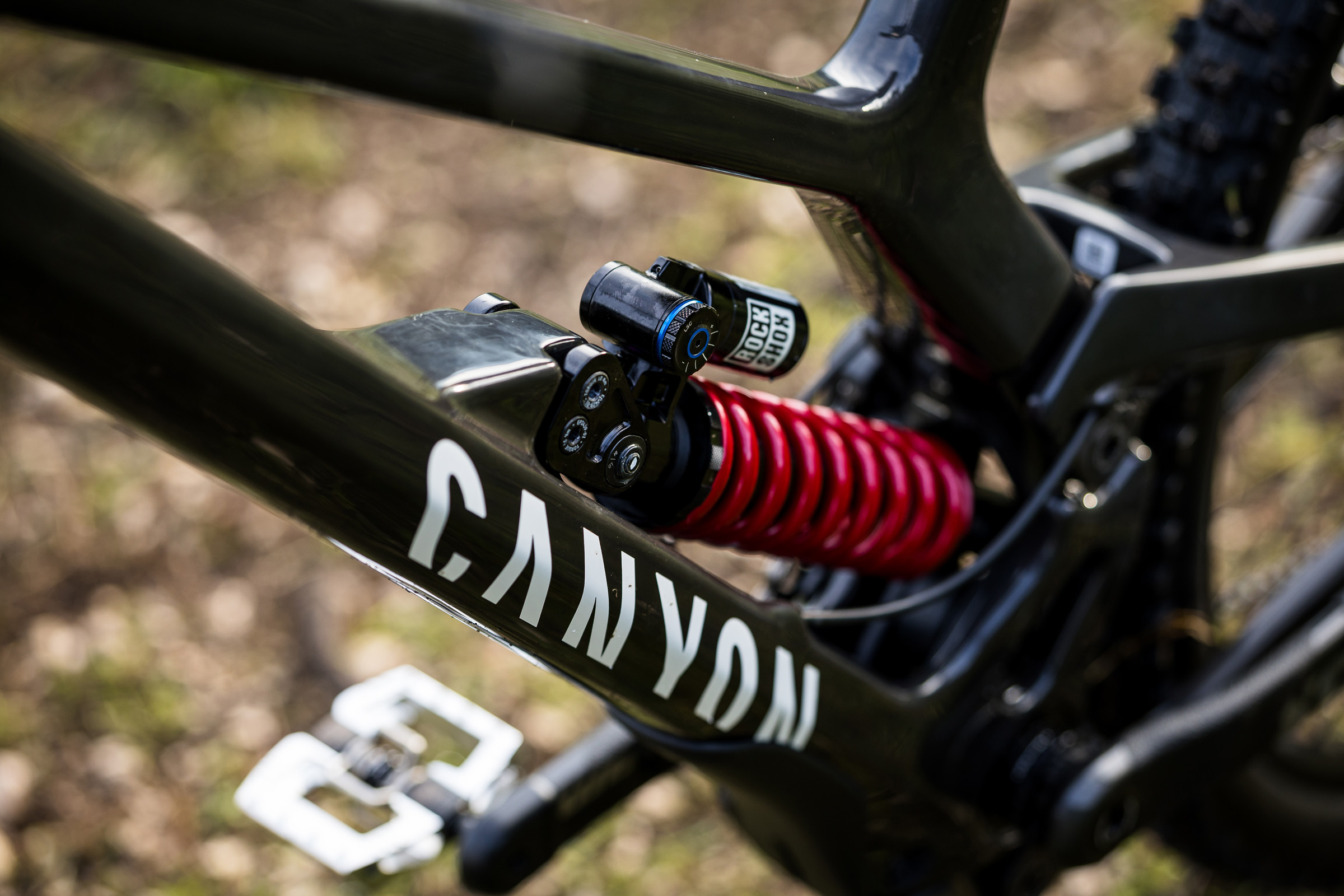
The rear suspension is a single-pivot design, but there’s a linkage to adjust the leverage rate. Canyon Bikes
From uncompressed up to this point, it has roughly 24mm of rearward travel. From 70 per cent of its travel to bottom-out, the rear wheel then moves forwards by 5mm, finishing roughly 19mm further back from where it started.
By positioning the idler so the chain runs directly in line with the main pivot, Canyon has virtually eliminated pedal kickback and upper chain growth.
The latter is now down to 0.1mm in all gears, from roughly 27mm in total on the old model.
Pedal kickback has been reduced to 0.5 degrees, from 5.7 degrees on the outgoing bike.
Canyon claims this helps boost grip, reduce rider fatigue and create an ultra-sensitive suspension platform.
Canyon says ‘pushability’
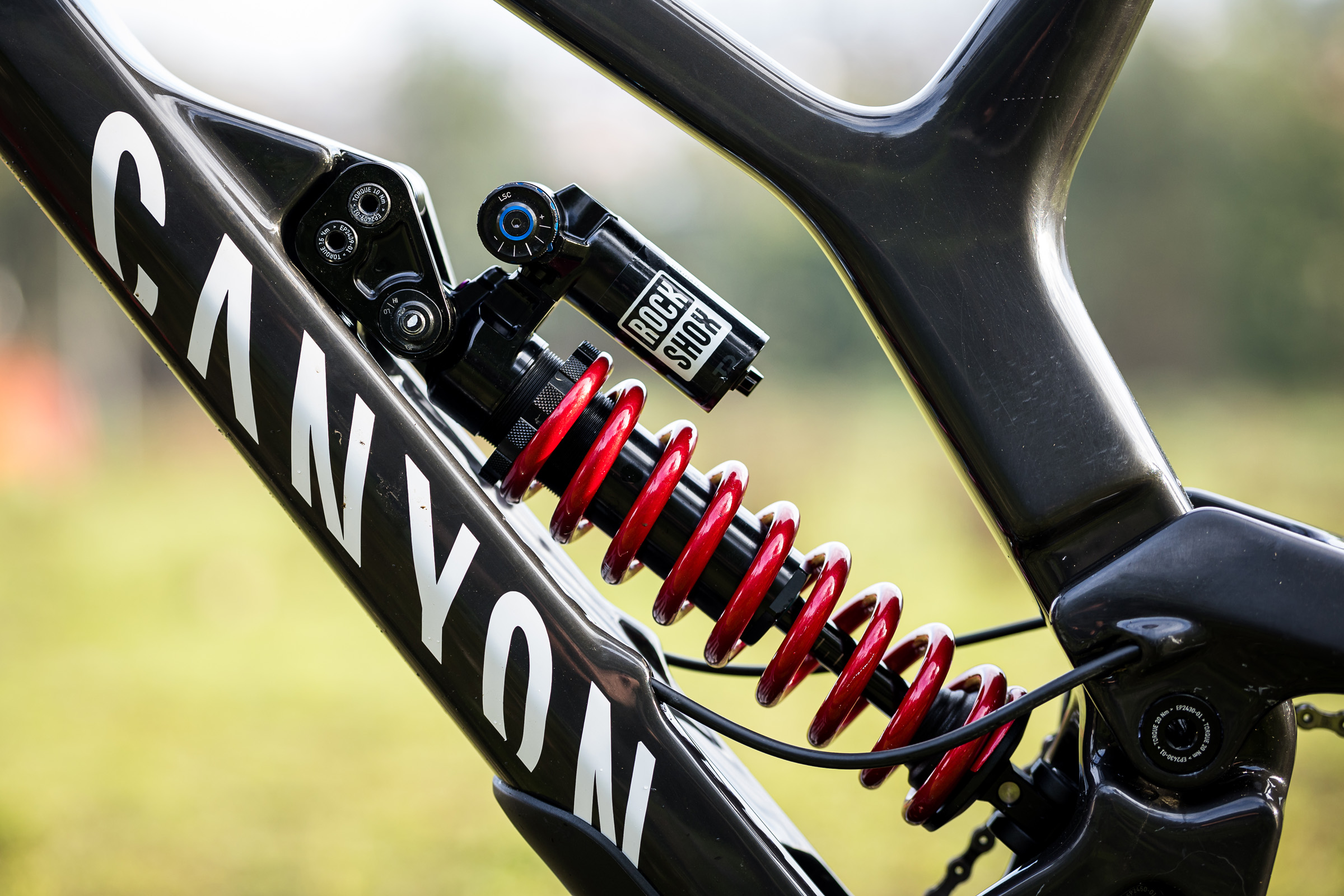
The progressive leverage rate means the bike is best suited to coil shocks. Canyon Bikes
But that’s not all.
A term coined by Canyon, ‘pushability’ refers to how well the bike picks up speed from pumping and pushing compressions in the terrain.
Clearly, this is important for racing, where every millisecond counts.
Bikes with no chain growth or kickback and plush, rearward-arcing rear suspension can feel soggy and slow, but Canyon has tuned the Sender’s suspension curve to retain its pushability.
Here, the mid-stroke’s leverage rate is claimed to provide a platform for the rider to work the bike against. Combine it with a custom shock tune and the bike’s responsive rather than lethargic.
Every pivot uses easy-to-remove hardware. Canyon Bikes
The Sender also has two progression settings – a more linear 32.7 per cent and a more progressive 37 per cent, changed by a flip chip.
Coil shocks or high-volume air-spring versions are going to be the order of the day here.
Finally, it’s got an unusually high anti-rise figure, sitting around 130 per cent at sag.
This means when you brake, those braking forces are more likely to cause the suspension to compress rather than extend.
During the prototyping phase, Canyon said it broke no frames. Canyon Bikes
Critics of high anti-rise claim it can cause the suspension to ‘pack down’ (keep compressing into its travel on successive bumps without being able to return to sag or full travel), resulting in a rough ride.
Proponents think it helps better preserve the bike’s geometry. When you brake, your weight shifts forwards, unweighting the rear of the bike, extending the suspension and loading up the front.
If braking forces are compressing the suspension thanks to higher anti-squat, in theory some of that rear-suspension extension should be mitigated against, helping preserve its geometry.
The perfect geometry mix
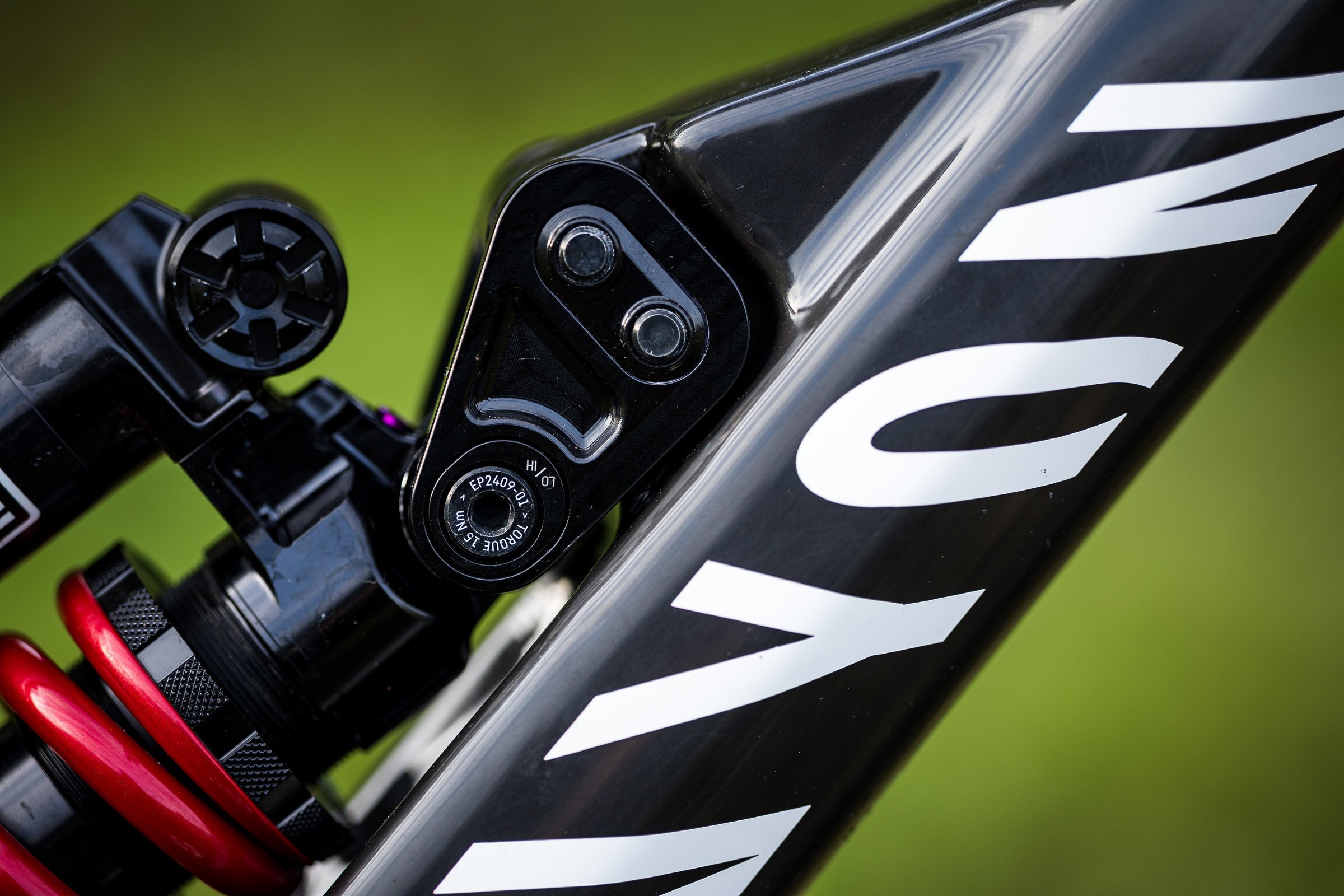
The upper shock mount has a high/low flip chip to adjust the bottom bracket height by 5mm. Canyon Bikes
Available in four sizes – from small to extra-large – the new Sender’s geometry is evolutionary rather than revolutionary compared to the outgoing bike.
But what it lacks in revelations, it makes up for with adjustability.
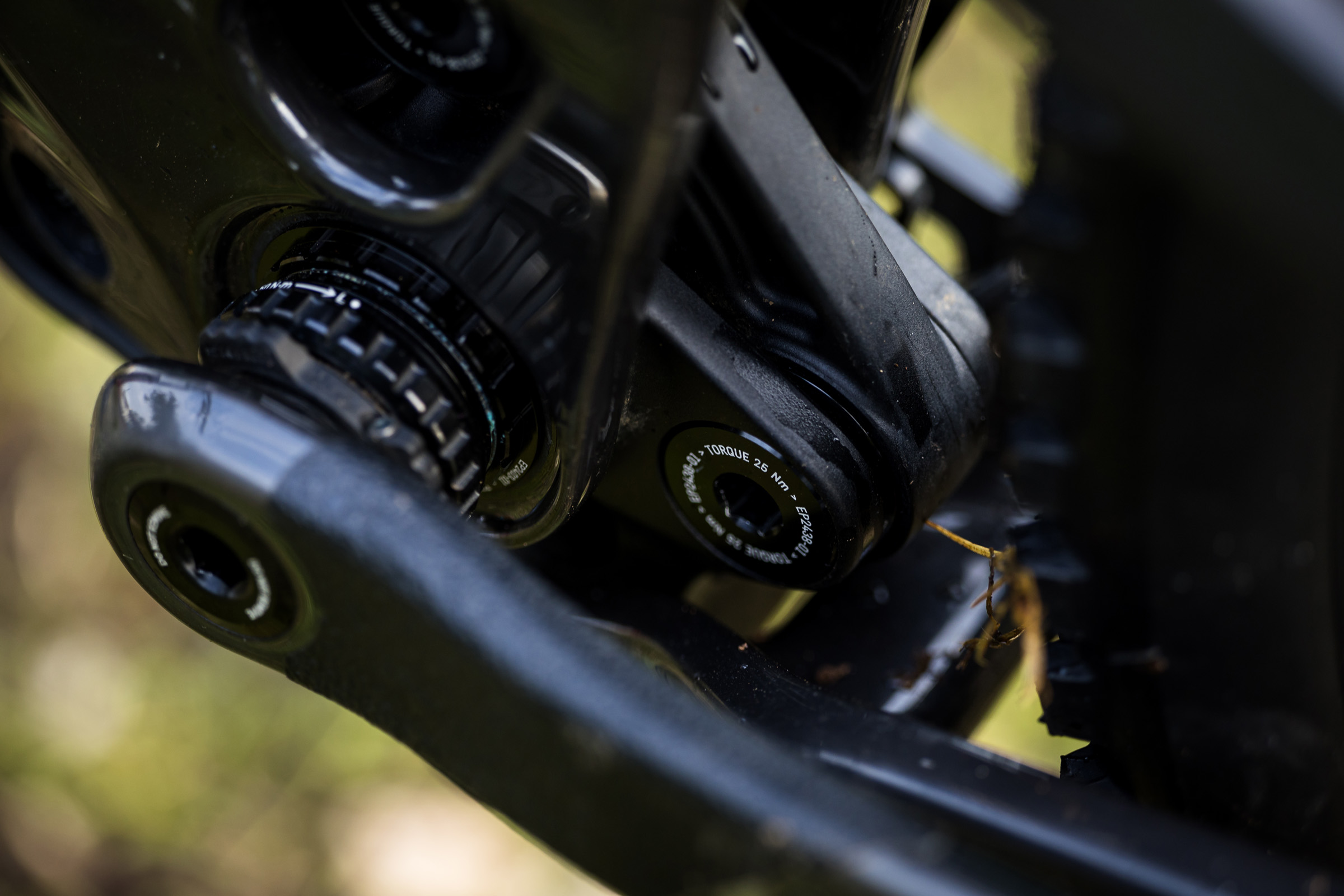
There’s 8mm of reach adjustment thanks to the offset headset cups and 5mm of bottom-bracket height adjustment with a flip chip.
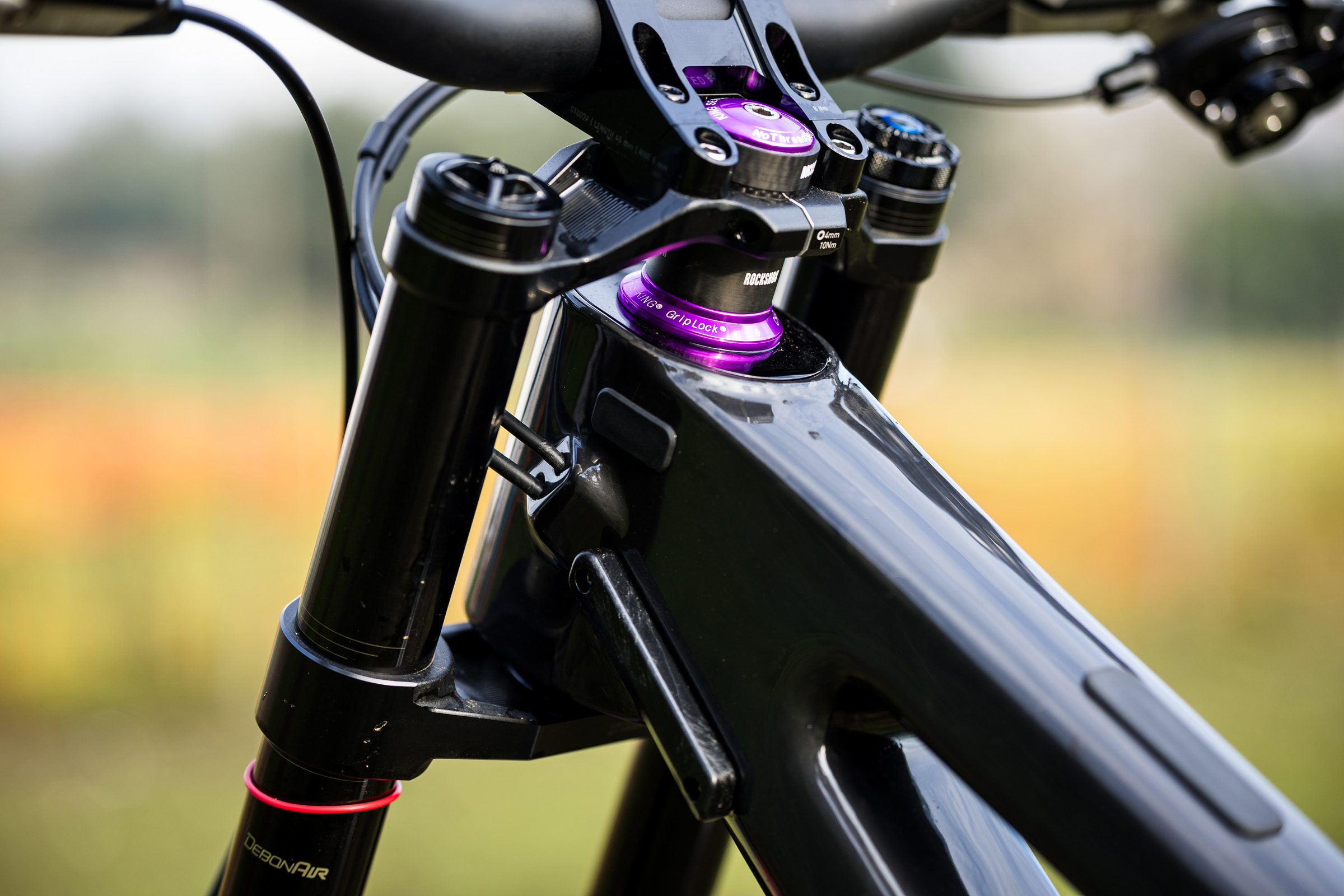
A reach-adjusting headset gives you more choice on frame size. Canyon Bikes
Standout figures include a 63-degree head tube angle and reach figures that span from 443mm (small, 0mm headset adjustment) up to 518mm (extra-large, 0mm headset adjustment).
The entire size range is built around mixed wheels – gone is the full 29er – and chainstay lengths stay at 438mm on all sizes.
Final details
A reach-adjusting headset and Canyon’s K.I.S. are both present. Canyon Bikes
Canyon’s K.I.S. (Keep It Stable) steering stabiliser is pre-installed on both models of Sender.
Canyon says it’s easier to remove than install, so wanted to give customers the option of trying it before removing it.
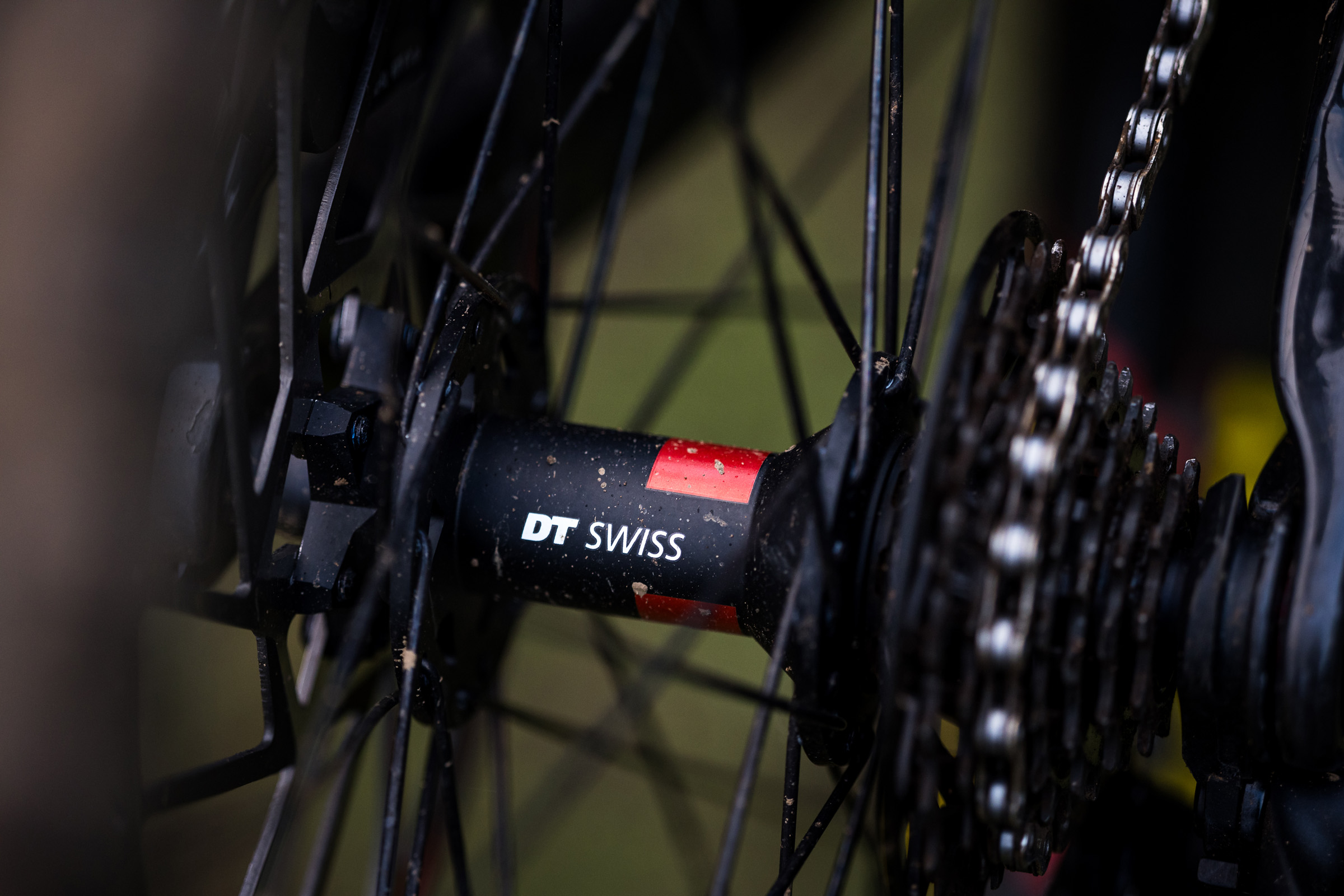
The rear end runs a 148mm-wide bespoke DT Swiss rear hub with wider spoke bracing.
Wider hub flanges, to give the wheel more strength, fit within the usual 148mm frame spacing. Canyon Bikes
Thanks to a narrower freehub body and wider spoke flanges, the 148mm hub shares its internal dimensions with the standard 157mm rear hubs usually found on DH bikes, while being thinner between the axle end caps.
One of the coolest things about Zwift is its inspiring and dedicated community. In this week’s top video, one rider sets out to break the Guinness World Record for most distance cycled in 24 hours in an attempt to raise money for breast cancer awareness.
We’ve also selected videos about using Zwift to prep for the Leadville 100, a Zwift race commentary, a fun vlog from Zwift Community Live in Mallorca, and a hack to stay comfortable on indoor rides.
Matthew Lefthand 24hr Virtual Cycling WR
Watch as Matthew Lefthand conquers the 24-hour virtual cycling record, and for a good cause.
Dad Life Meets Leadville Prep – My Indoor Training Setup That Actually Works
Steve Jacobson shares how his indoor cycling setup has helped him train for the Leadville 100 MTB while balancing life, work, and family.
Most Brutal Zwift Race Ever?! – Alpe du Zwift | Dream Bike Race (Cat. A)
Manuel Assl tackles the Dream Bike Race, which features a finish atop Alpe du Zwift. Watch as he battles to the finish.
Zwift Community Live Vlog (in Mallorca!)
LA Triathlete shares a day-by-day vlog of her time in Mallorca for the Zwift Community Live.
Simple Tennis Ball Trick Every Zwift Rider Needs to Know!
Struggling to stay comfortable on those long Zwift rides? Biker Campervan shares how the use of a few tennis balls can improve your ride.
Got a Great Zwift Video?
Share the link below and we may feature it in an upcoming post!
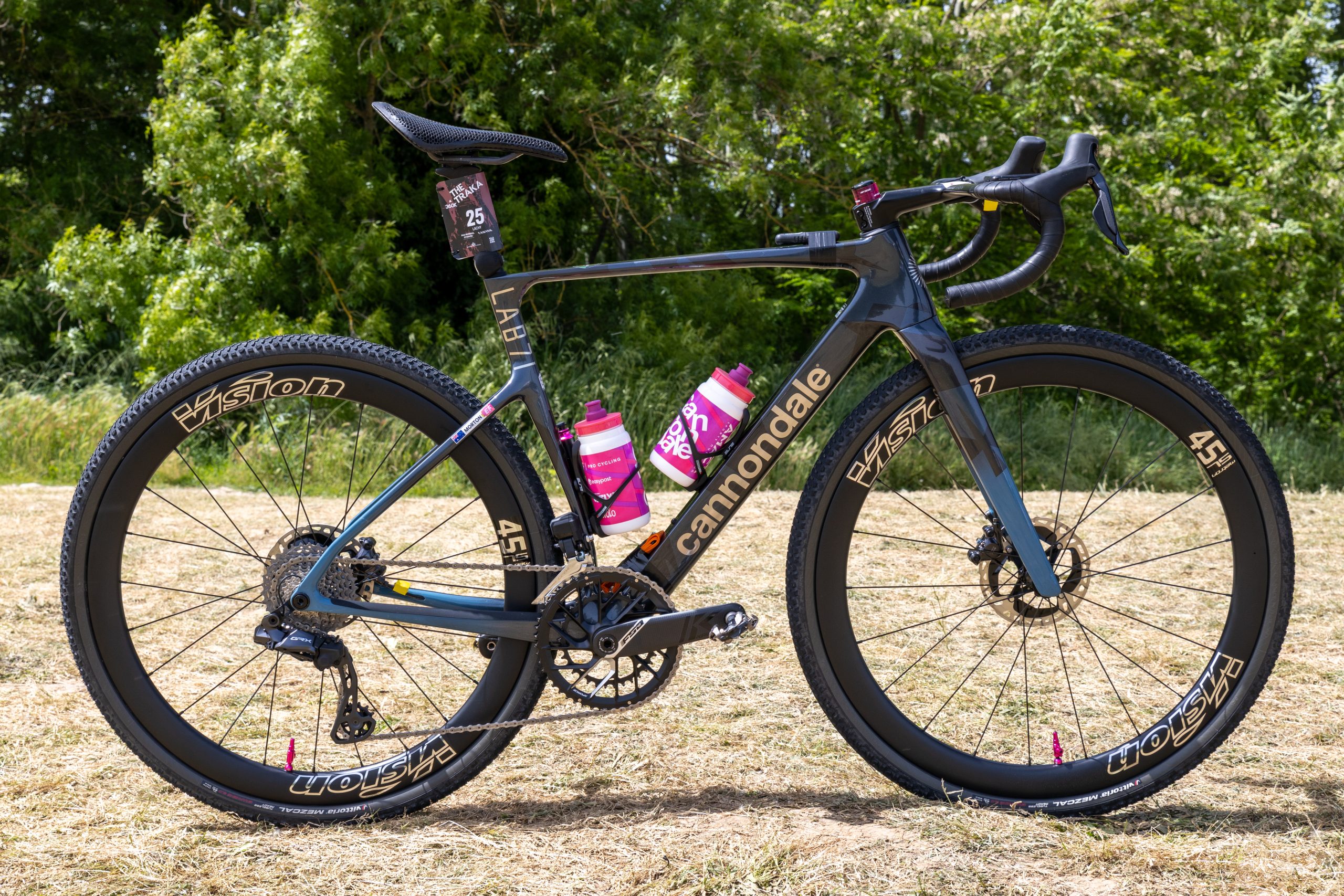
Lachlan Morton ranks as one of the best (and popular) multi-discipline endurance riders on the planet and he lined up for the start of the Traka 360 race having recently set a new record for riding around his native Australia. His Cannondale SuperX LAB71 was ready for a fast day out.
The SuperX has recently been revised to increase tyre clearance with the official figures now safely allowing for the 50mm tyres Morton rode at Unbound 2024.
His machine was built using an interesting mix of road and gravel components, but it also featured a very specific selection of puncture repair solutions, with each being ready for deployment quickly in the heat of battle.
2024’s Men’s Unbound 200 winner was unfortunate to suffer a serious mechanical mid-way through Saturday’s race, but given Morton’s dialled setup, we just had to take a closer look.
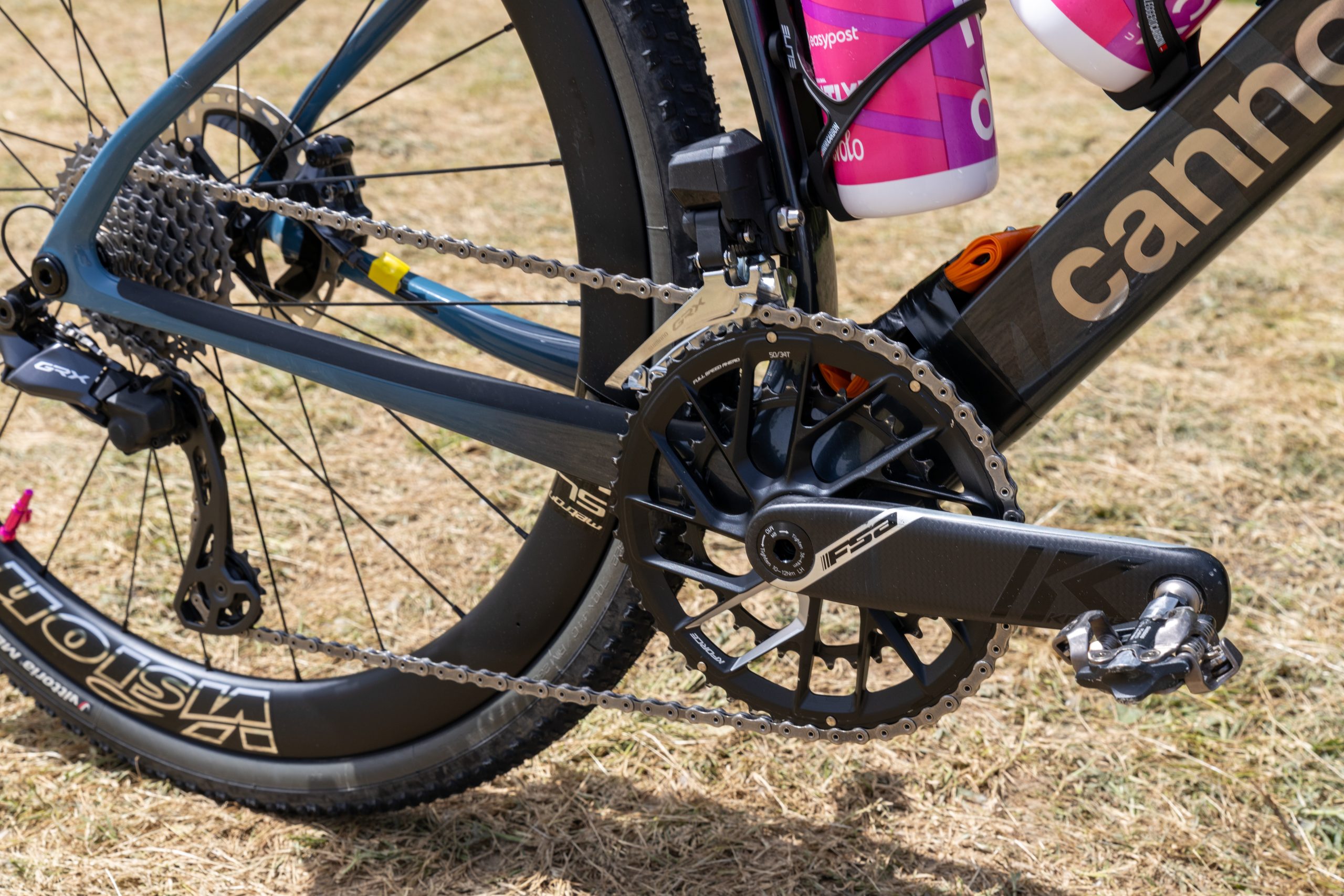
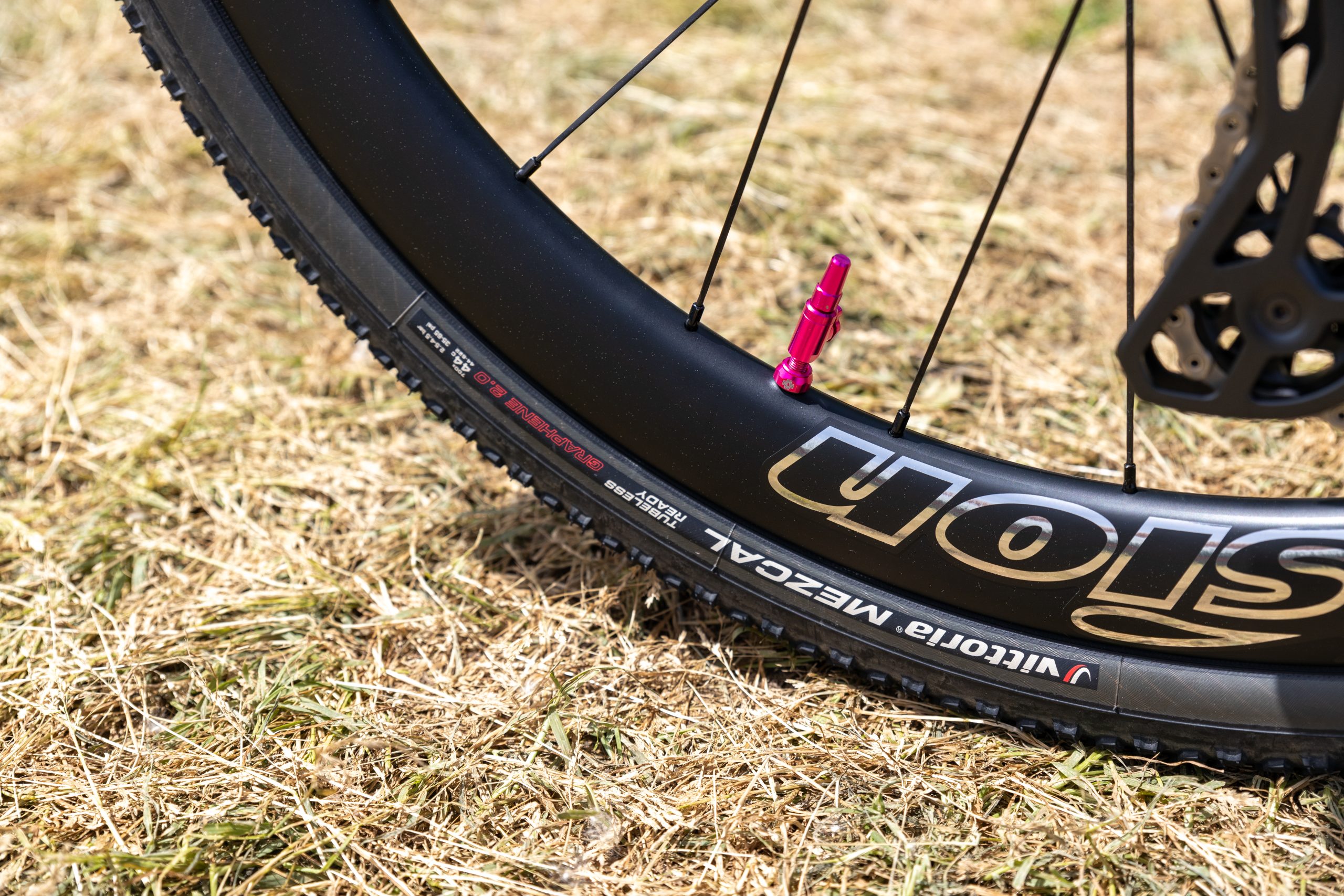
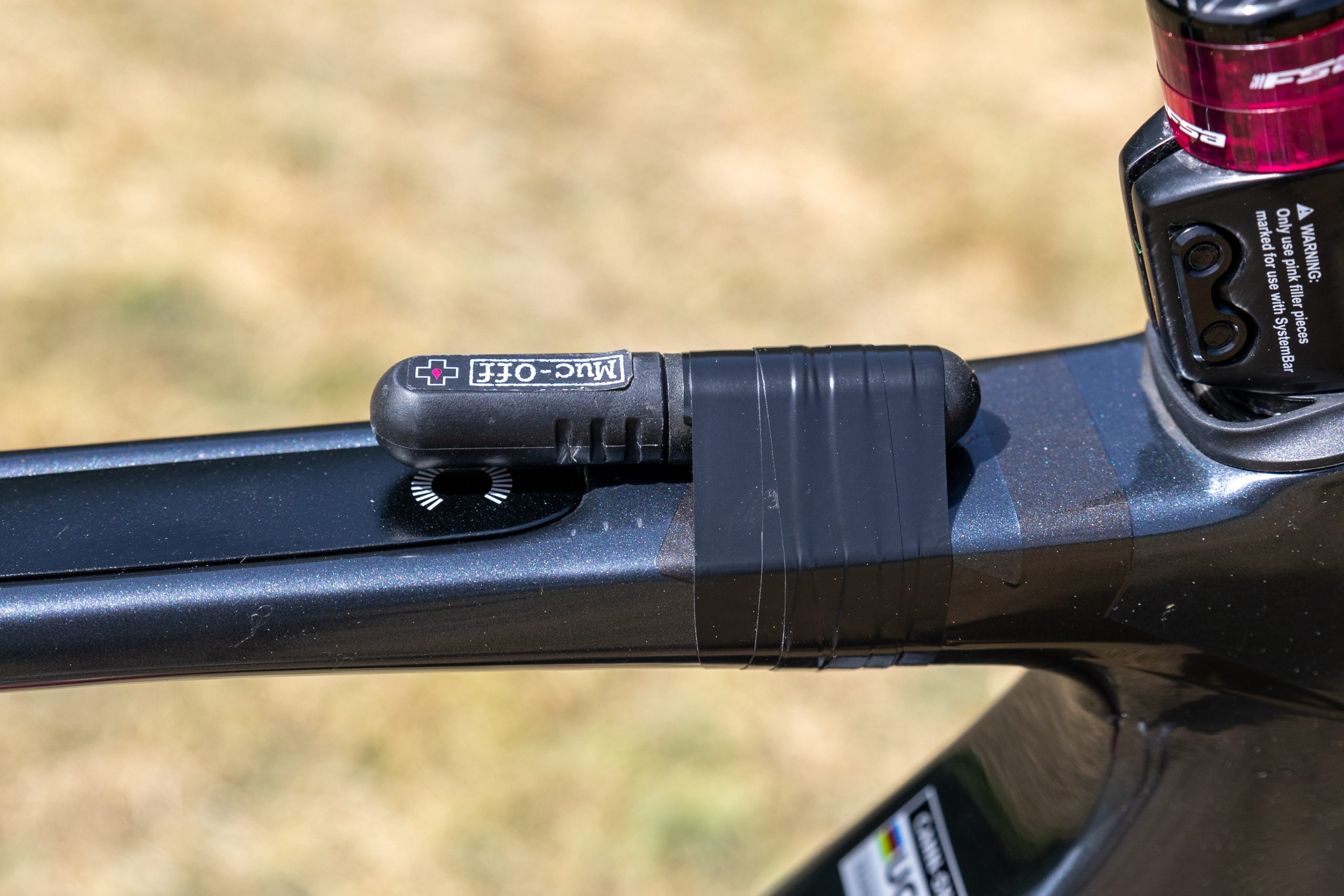
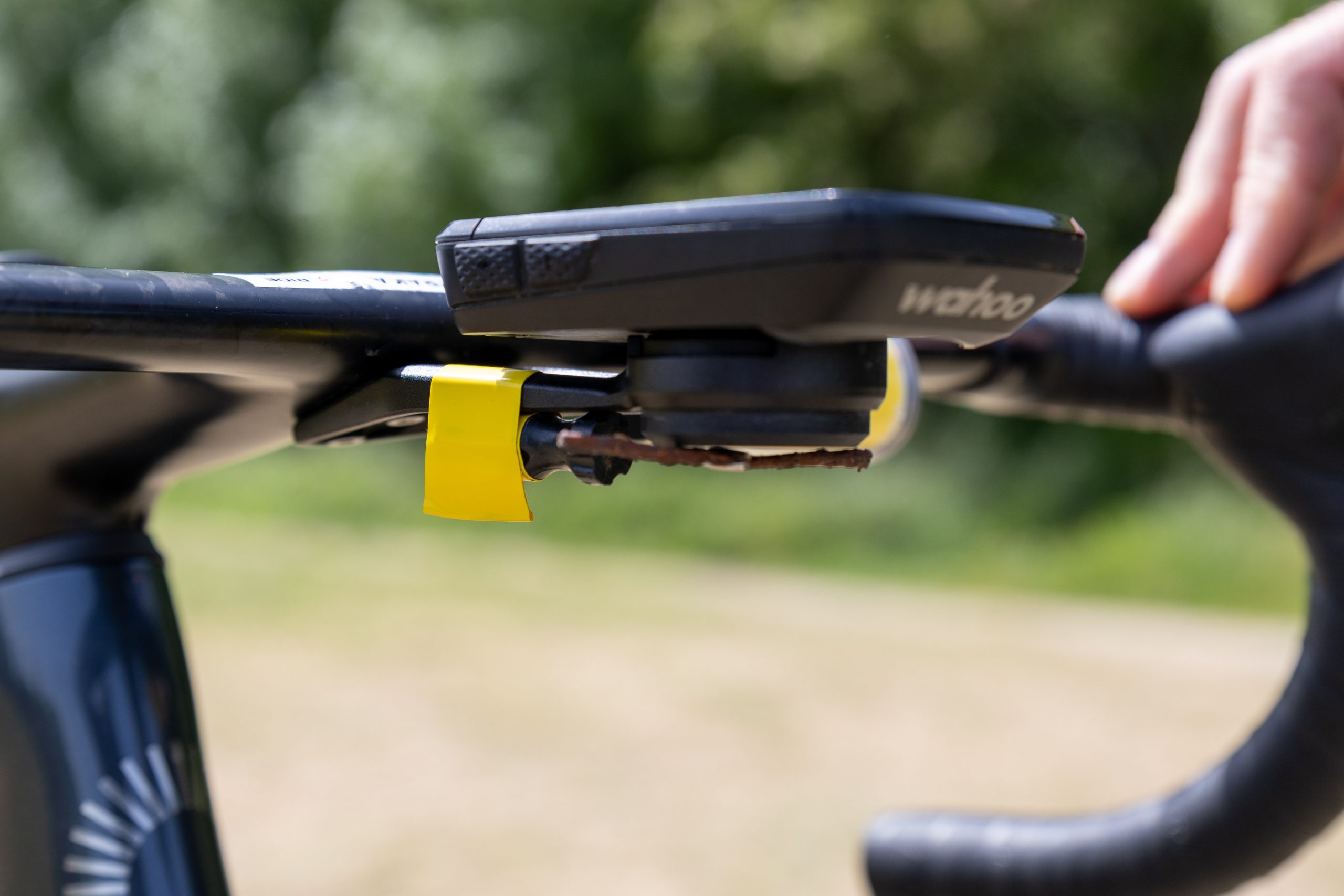
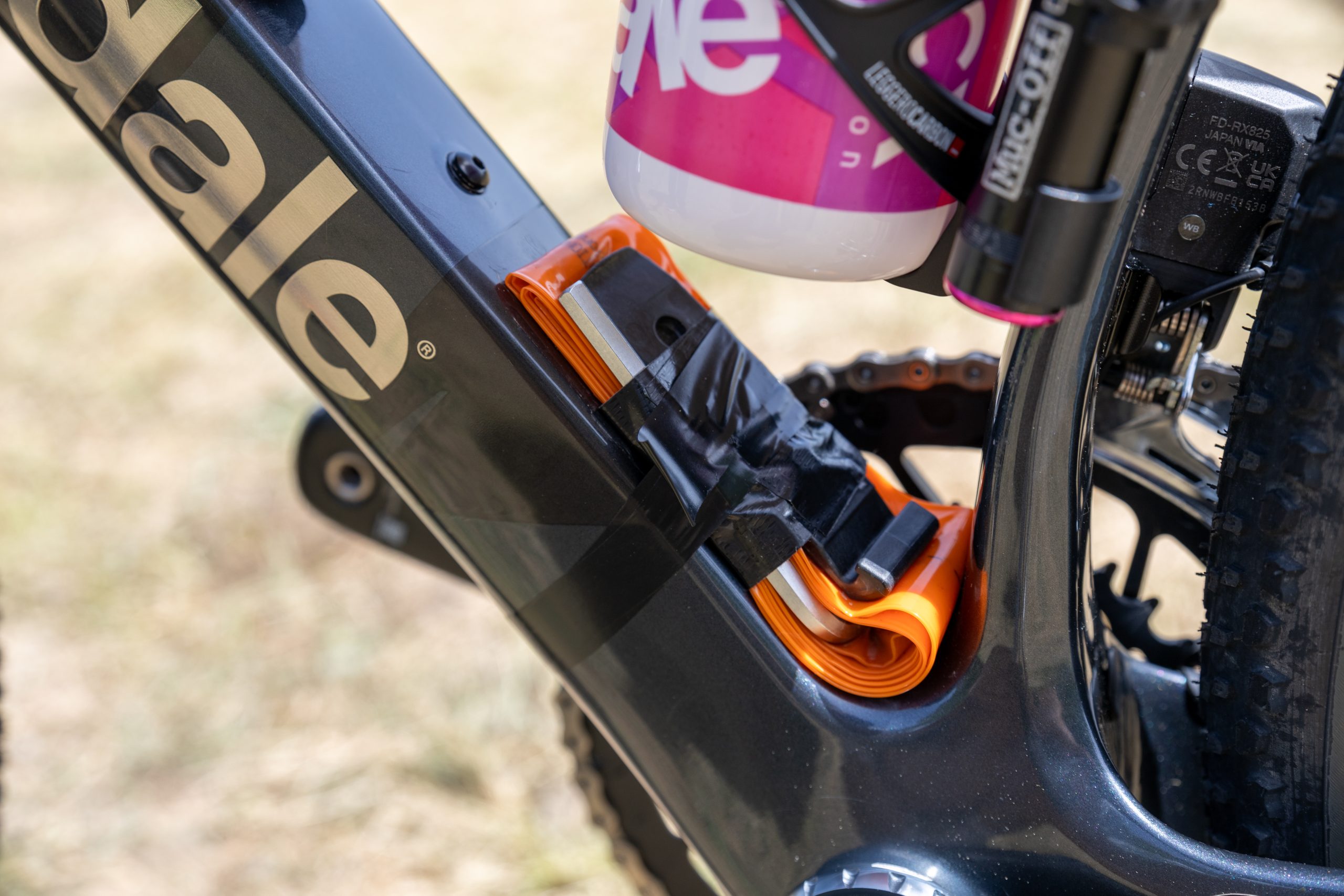
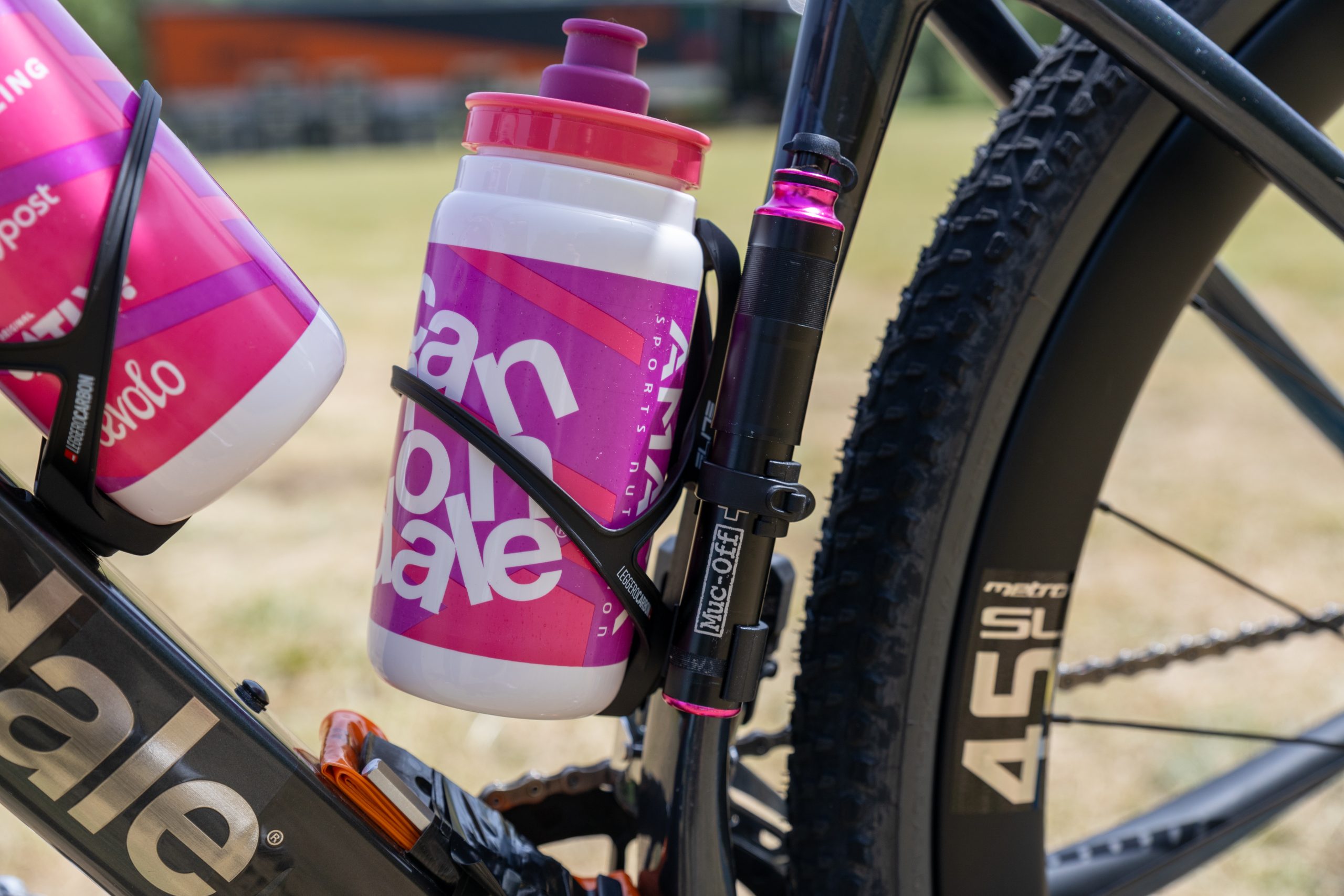
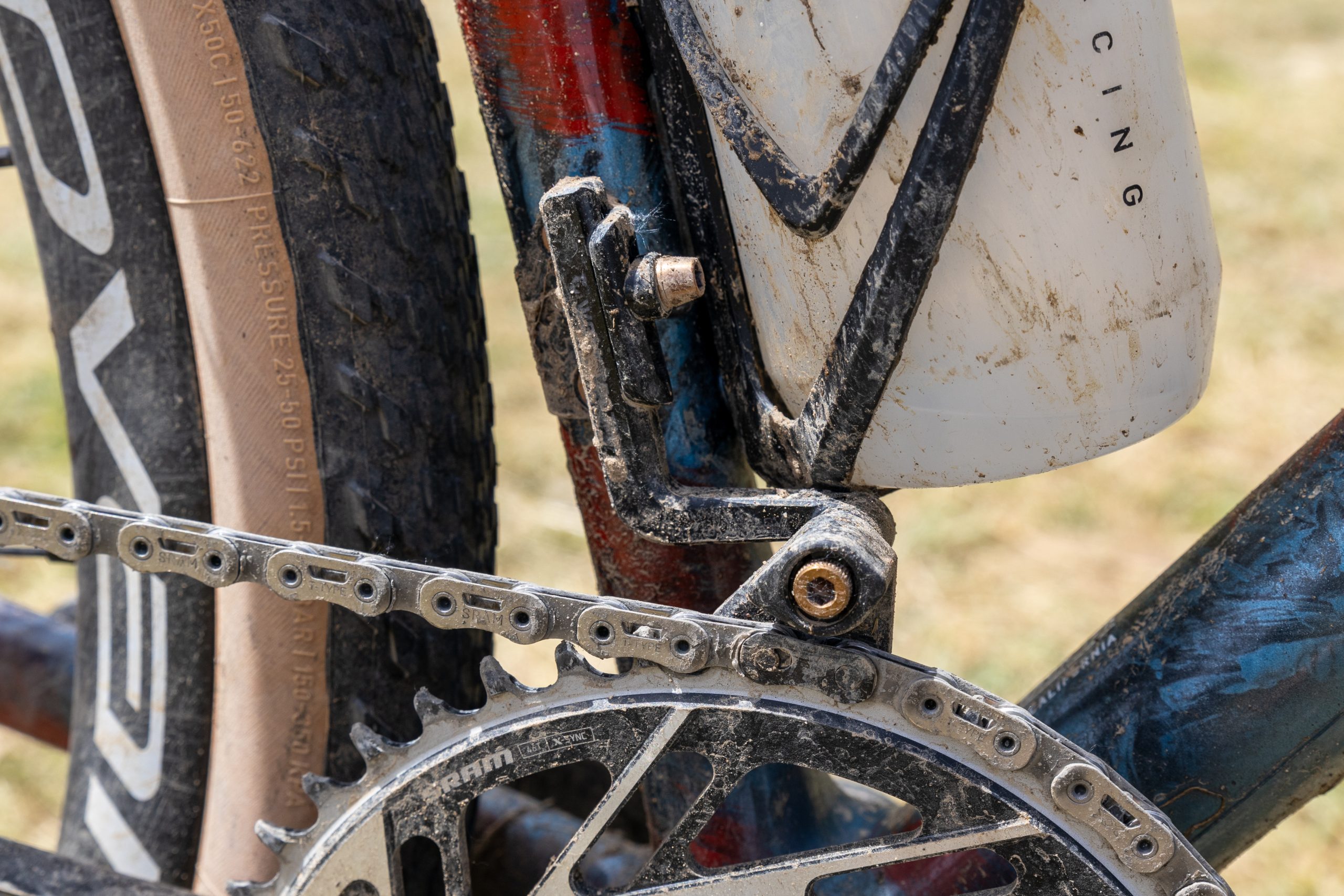
The drivetrain is a mix of road and gravel components, which Morton says is somewhat down to availability through the EF Education-EasyPost road race team. He told us he prefers the feel of Shimano’s road shifters, but that GRX is a better fit when it comes to derailleurs. Liam Cahill / Our Media Despite opting for some jazzy mullet setups in the past, Morton went with 44mm rear / 42mm front Vittoria Mezcal tyres for the Traka 360. He said after only a few weeks on the new bike, he didn’t want to alter the geometry with a larger front tyre. His race ended after cracking his front rim, though neither he, nor his mechanic Tom Hopper, were sure on what caused the failure. Liam Cahill / Our Media This pre-loaded tubeless plug is for larger holes. Morton said the positioning on the top tube makes it super easy to access when a tyre is rapidly losing air. Liam Cahill / Our Media A tool for slower punctures (and smaller holes) was mounted under his Wahoo bike computer. Liam Cahill / Our Media Less time-efficient puncture repair methods were located out of the way, with a tube and lever stashed at the bottom bracket. The way Morton sees it, if you’re putting in a tube, you’ll be stopped for longer than when using a plug. Liam Cahill / Our Media Morton carries a CO2 canister in the pockets of his skinsuit. This mini pump rarely comes out, but it’s good to have a dependable back up.
The Traka is fast becoming one of the most important gravel races of the season with the 200, 360 and 560km races being hotly contested.
Forming part of the Gravel Earth Series, the Traka attracts a host of pro riders, but like so many gravel events, it’s open to all. The result is a melting pot of hacks, bodges and some of the latest gravel tech available.
Last year, the race was heavily disrupted by stormy conditions, largely clement weather greeted 2025’s participants.
This year’s event gave us our first proper look at Canyon’s new gravel race bike, showed the divide in tyre choice and served up some questionable last minute mods.
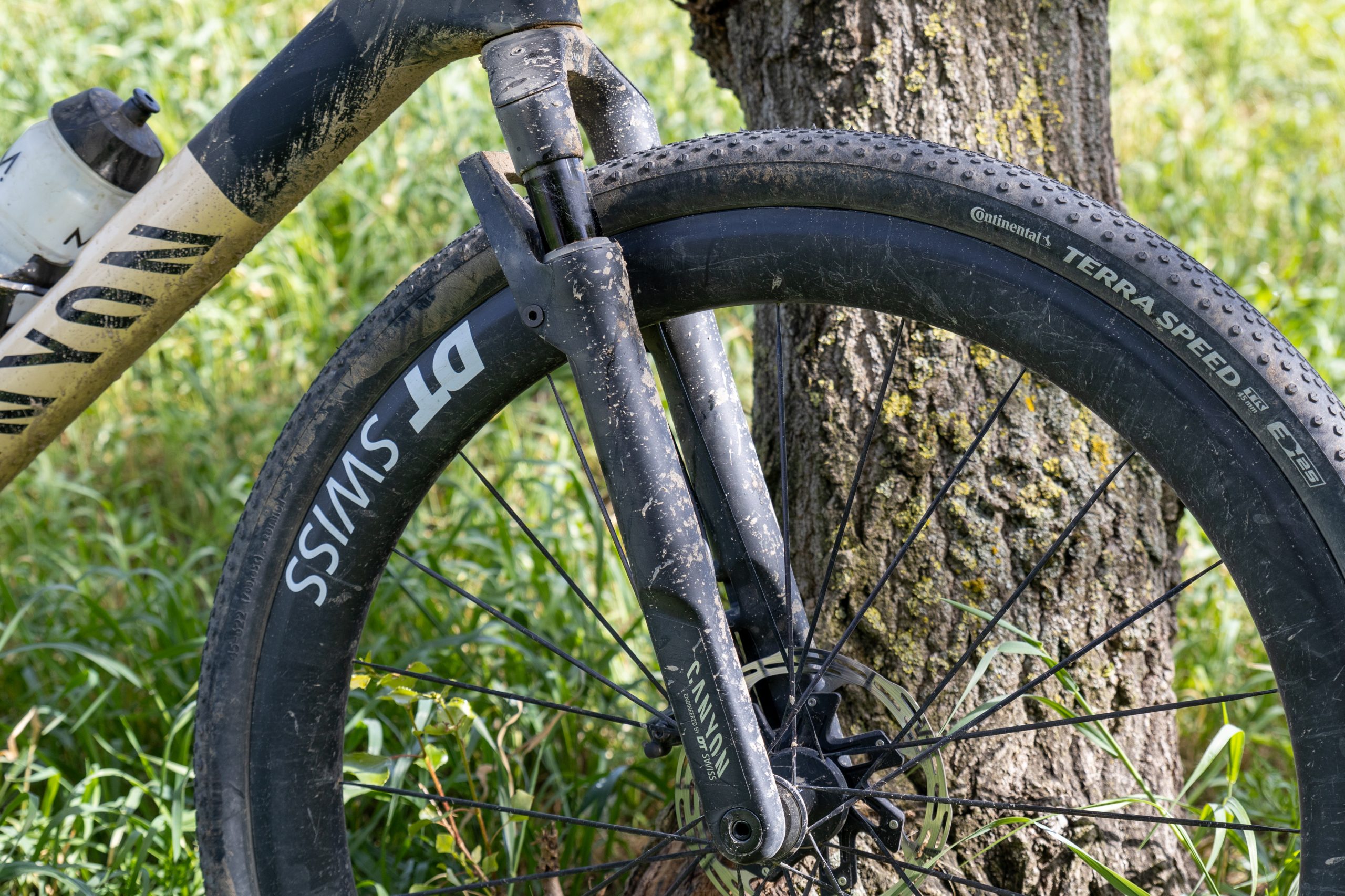
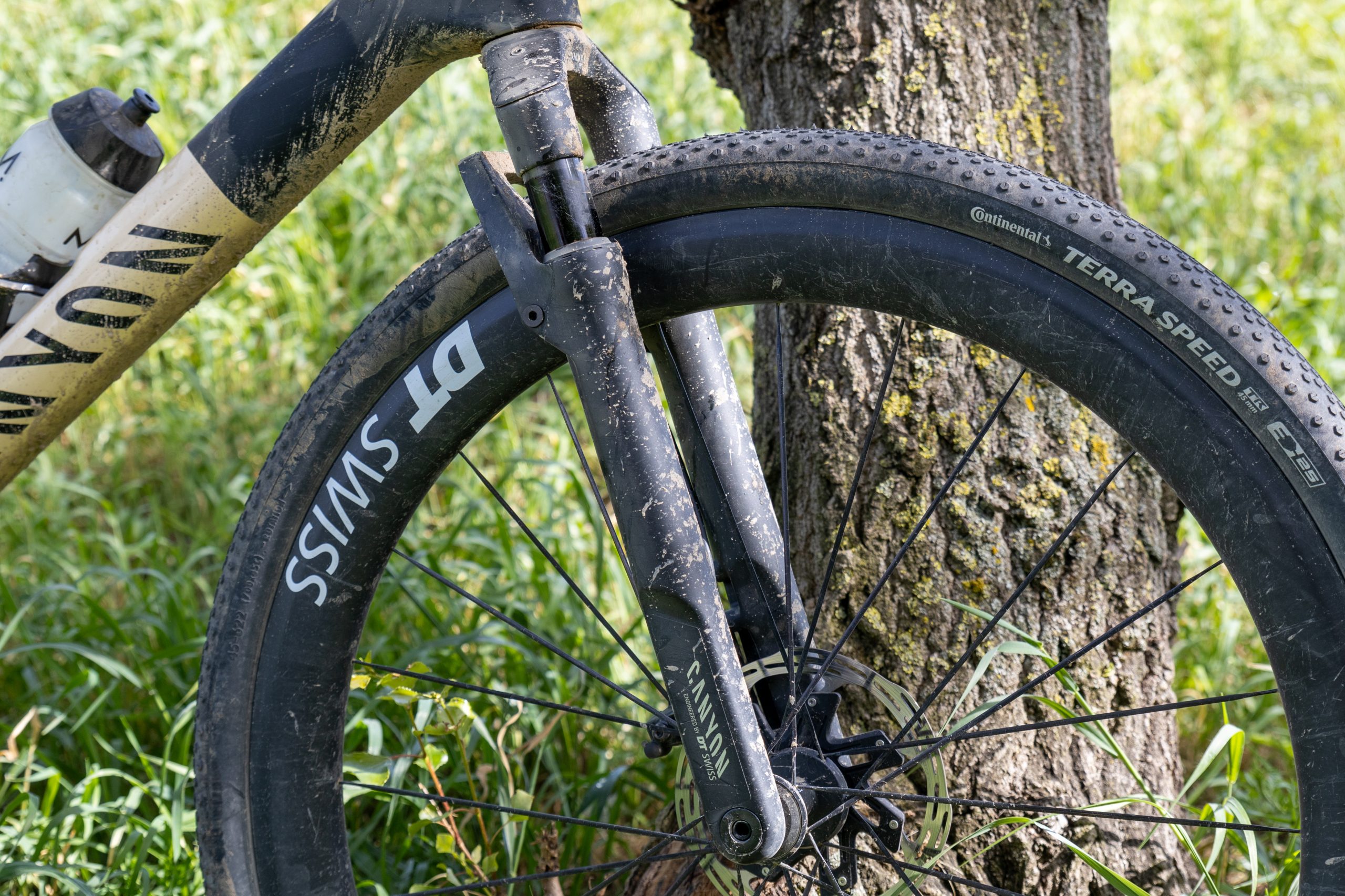
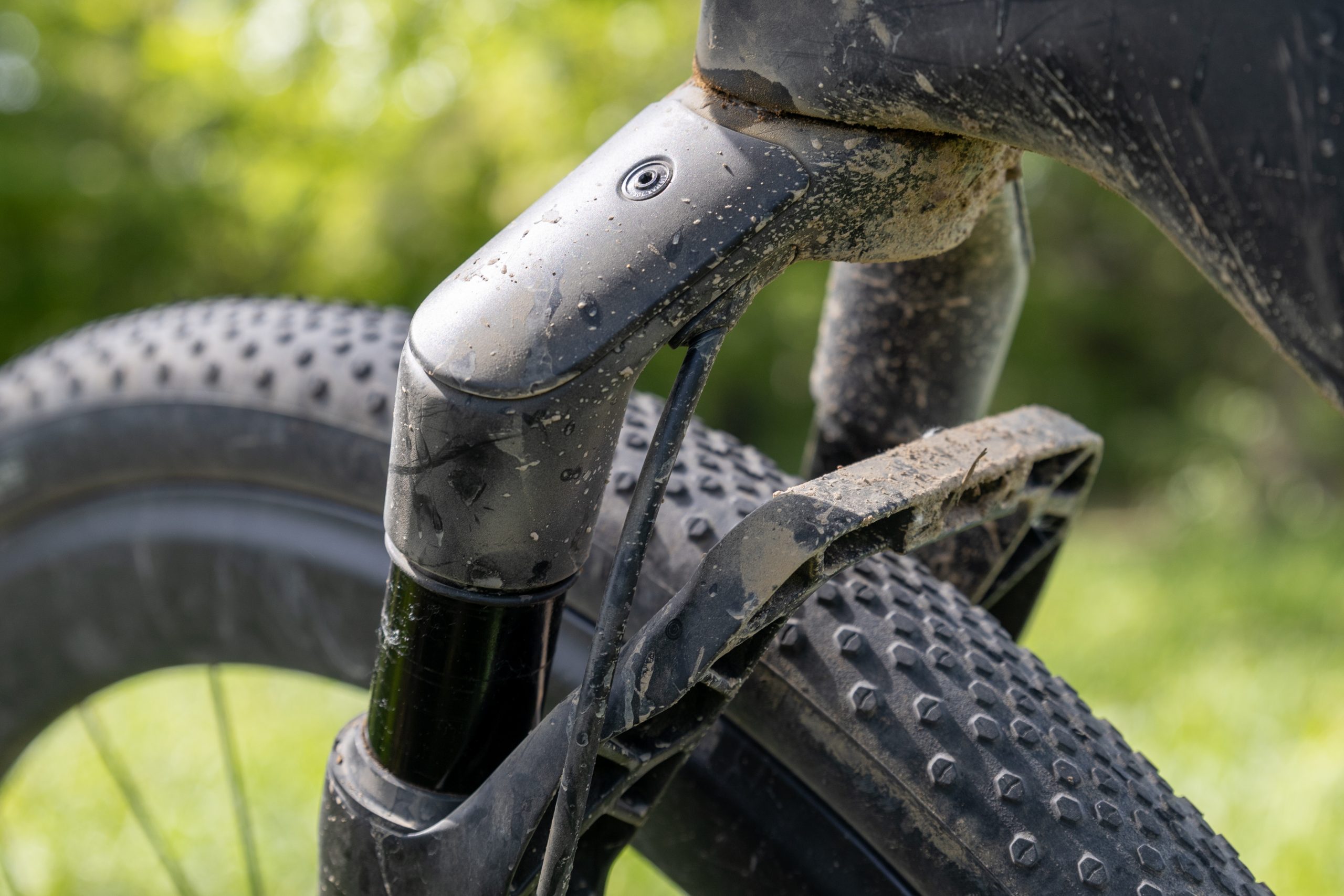
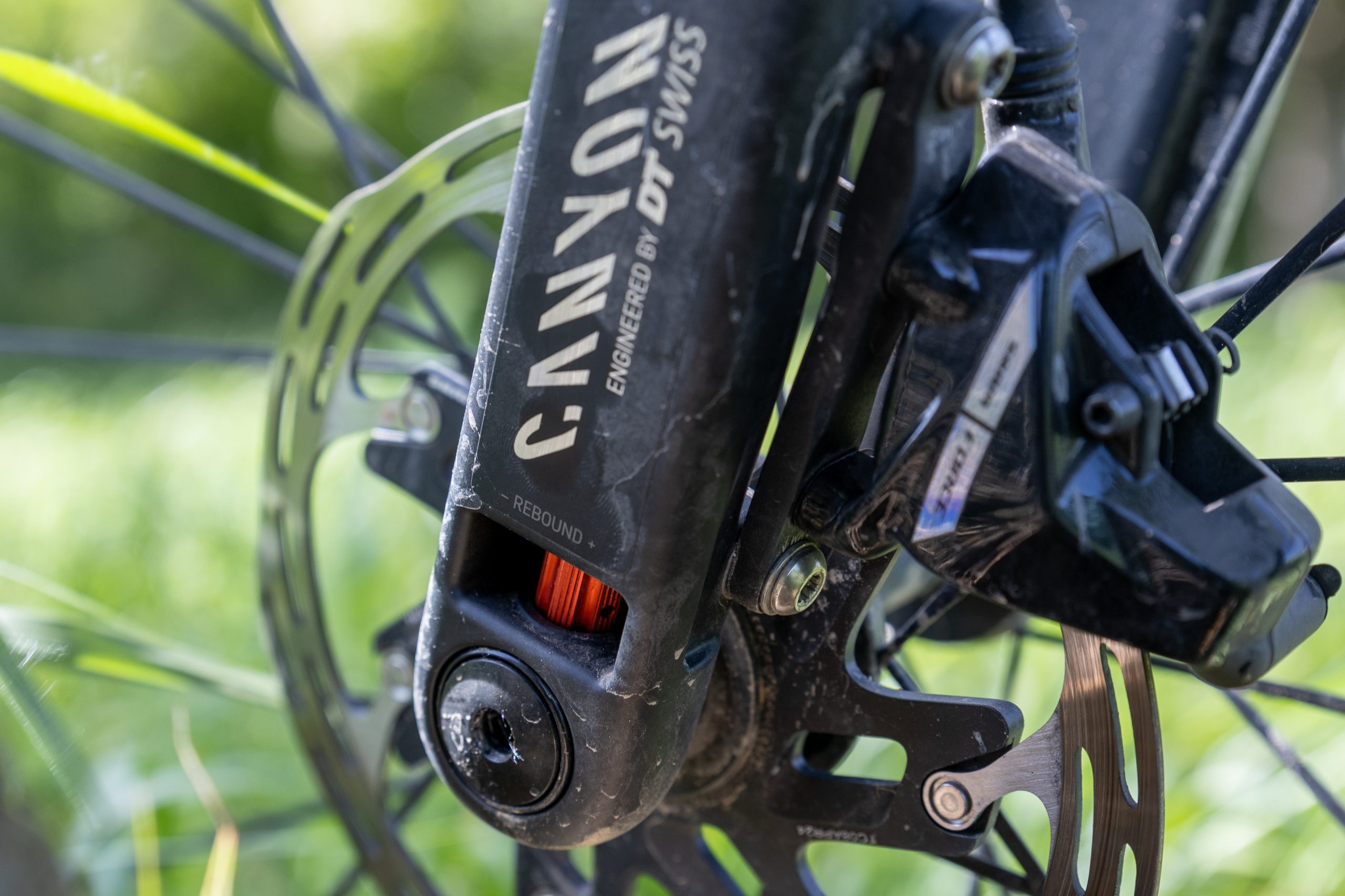
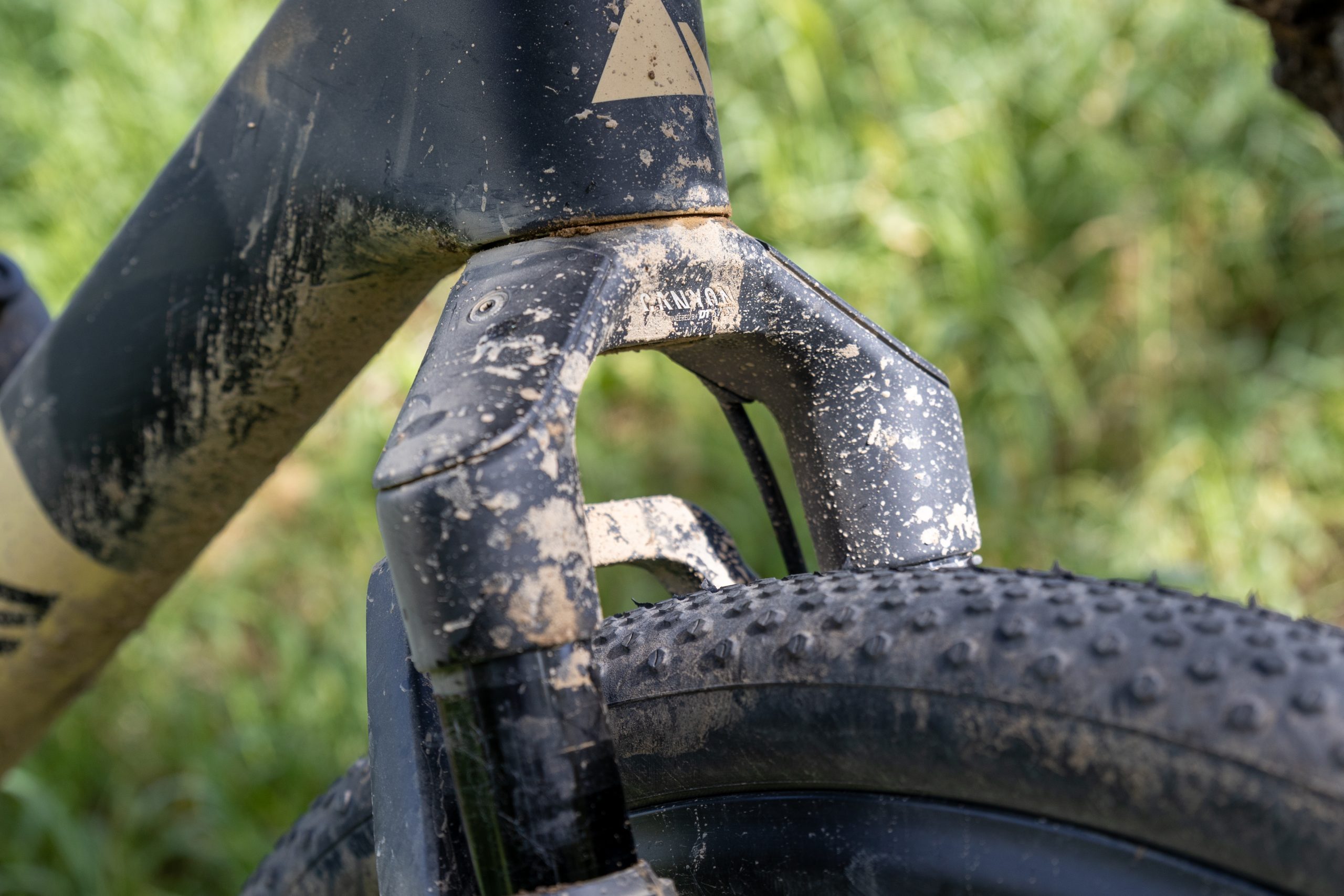
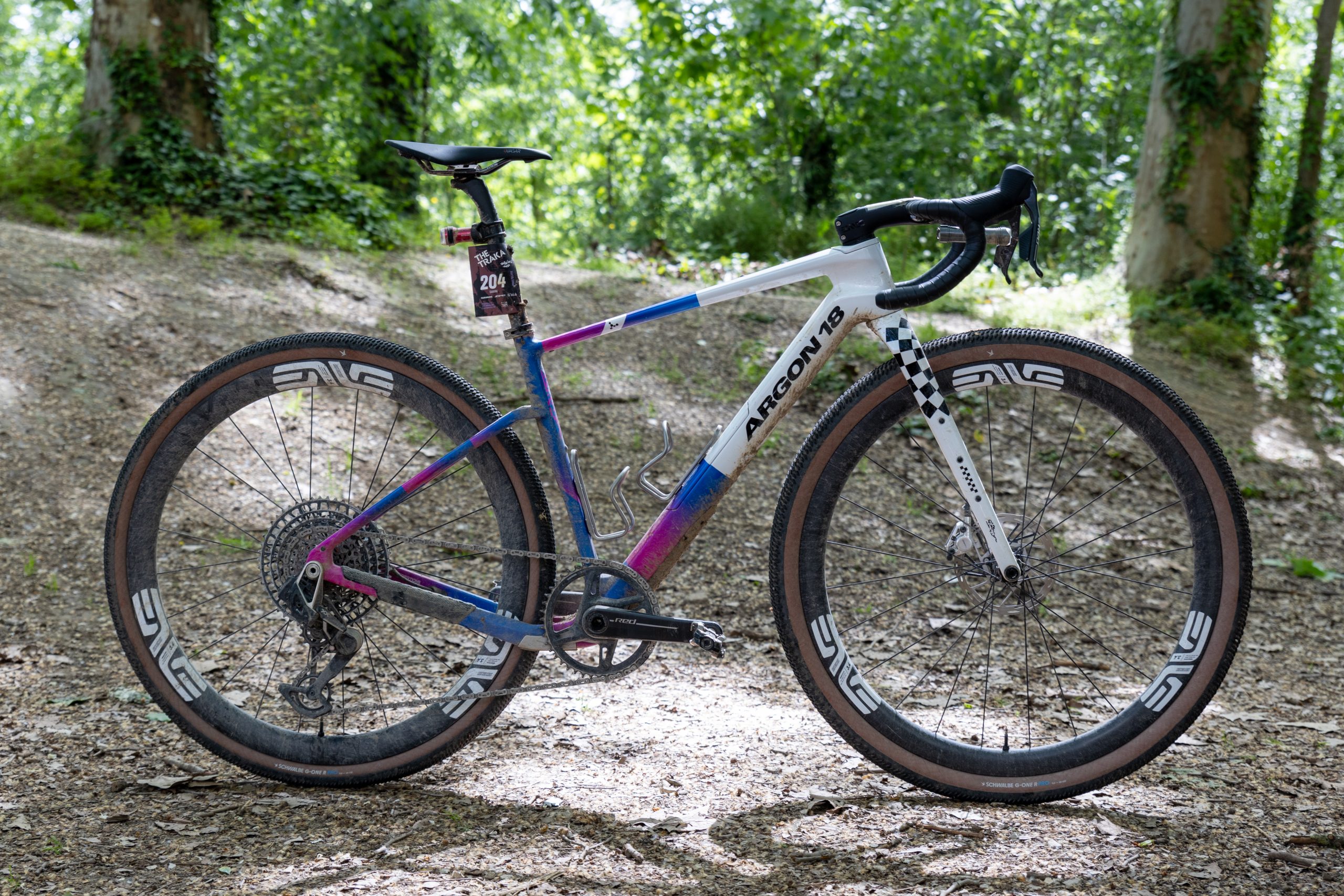
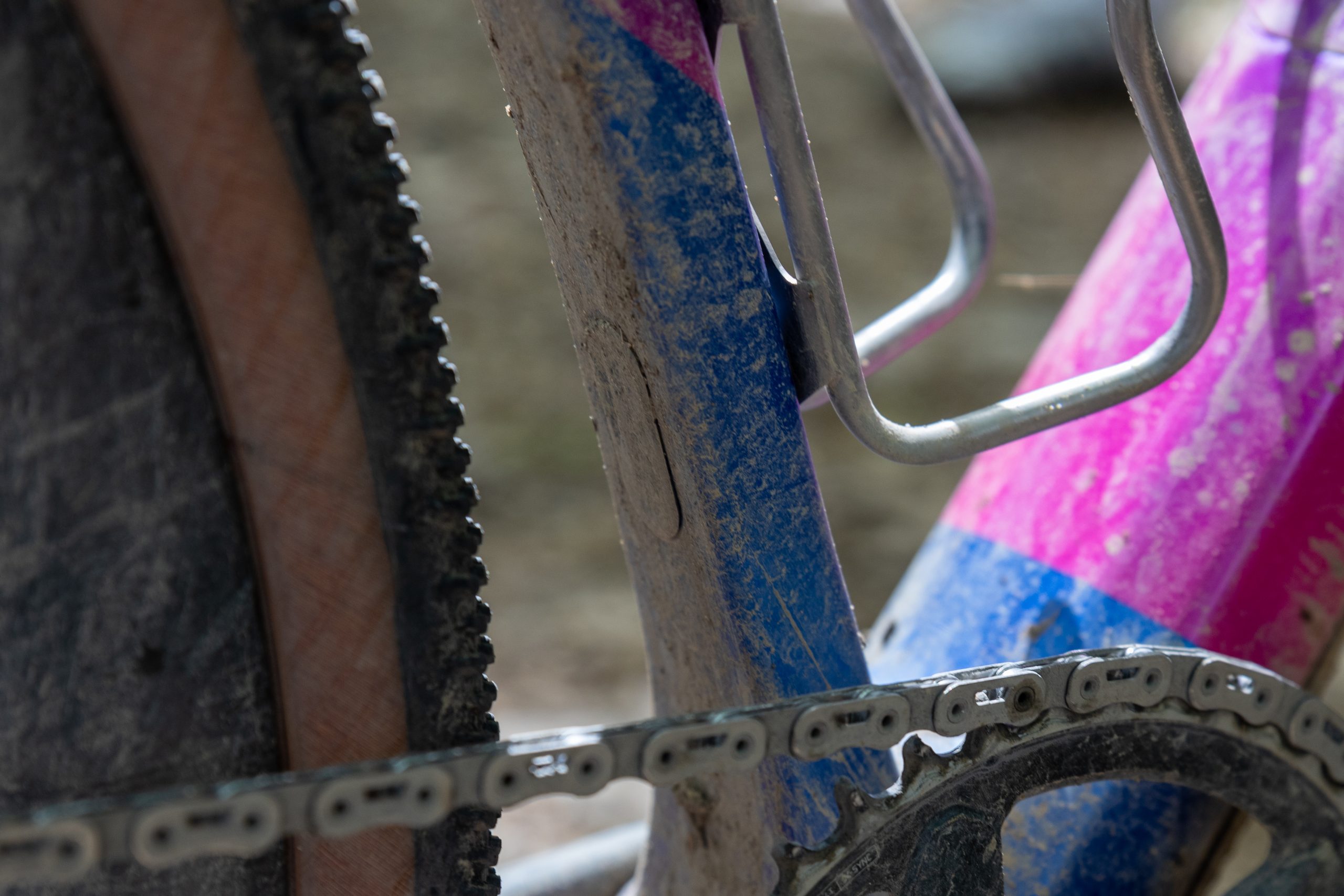
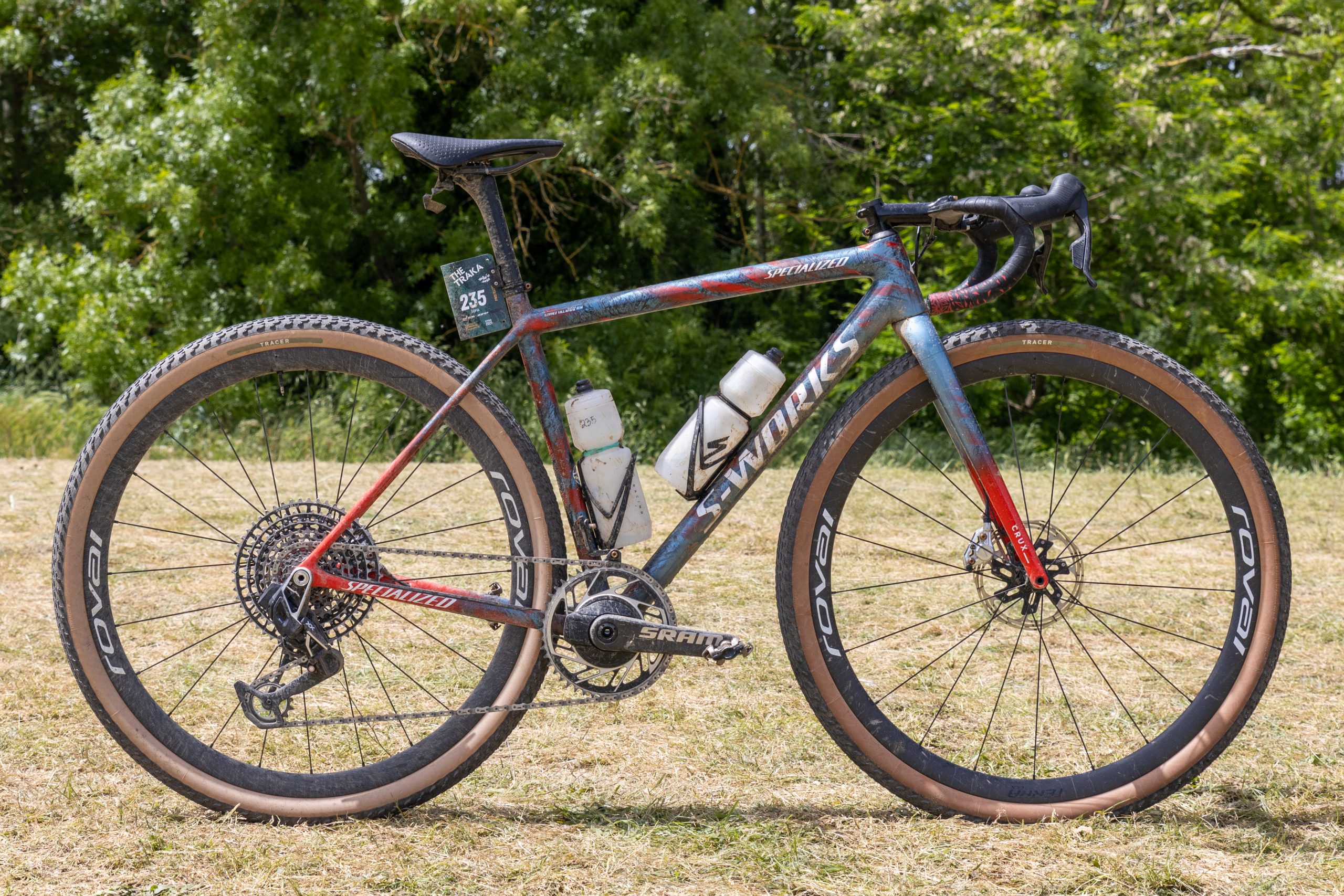
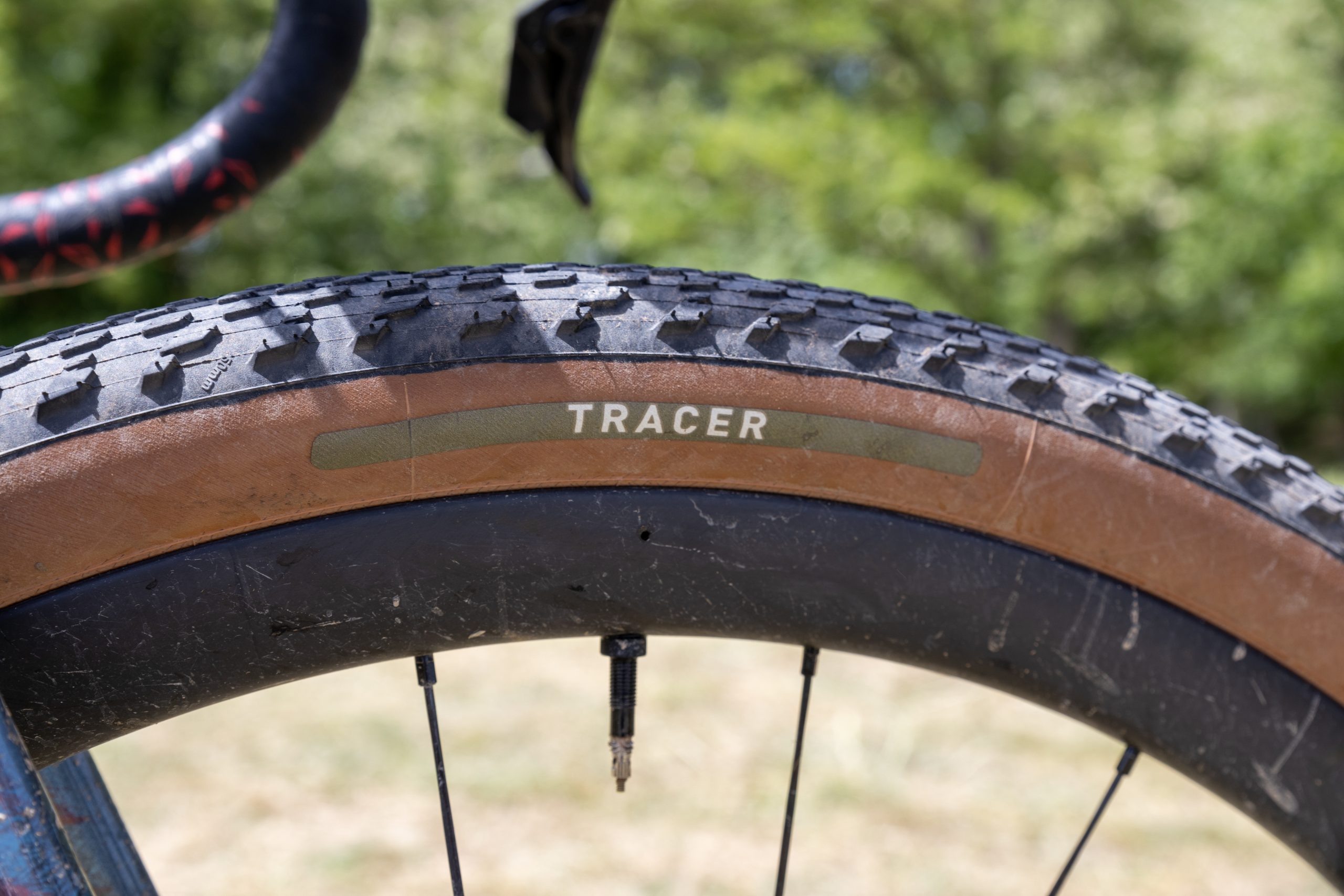
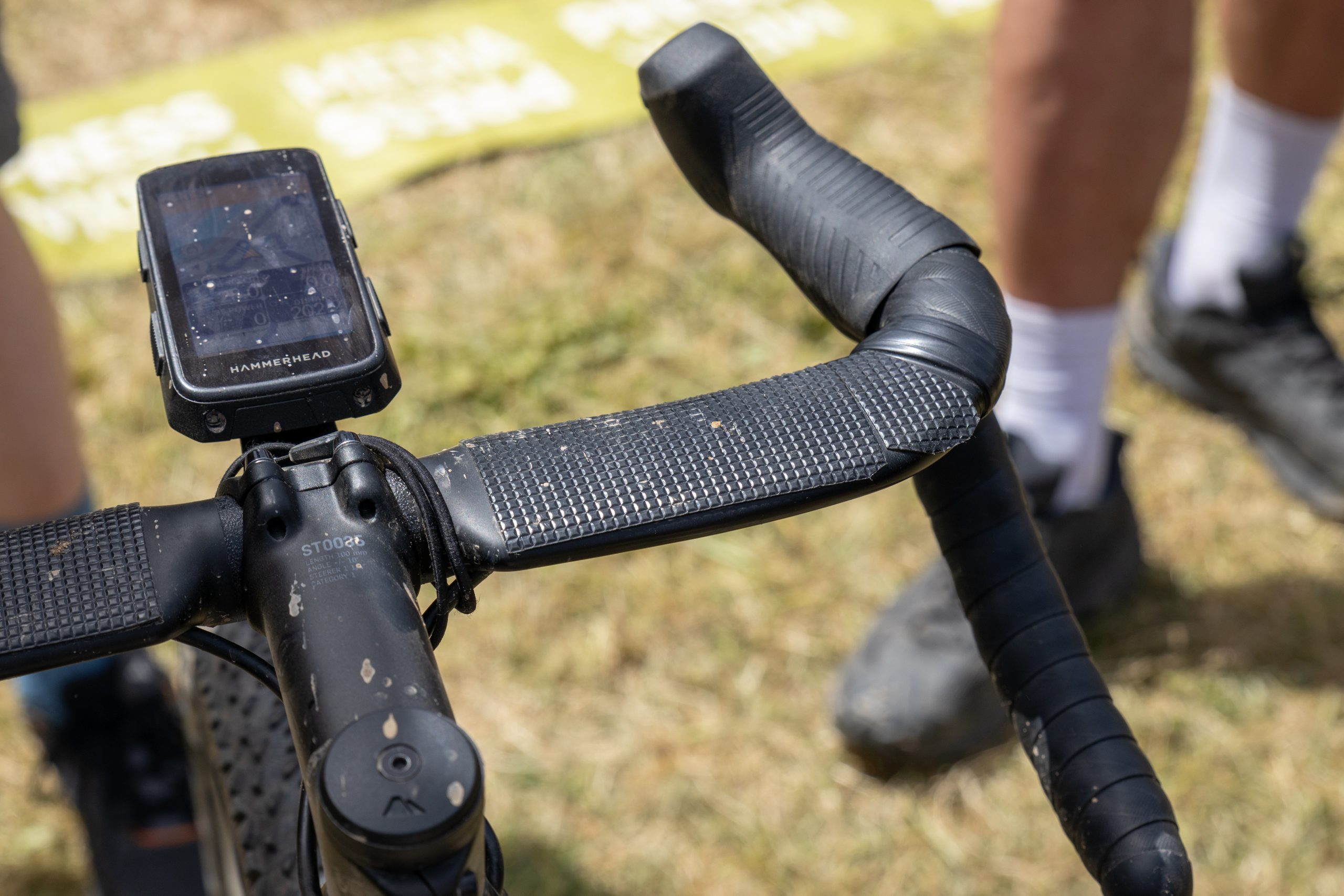
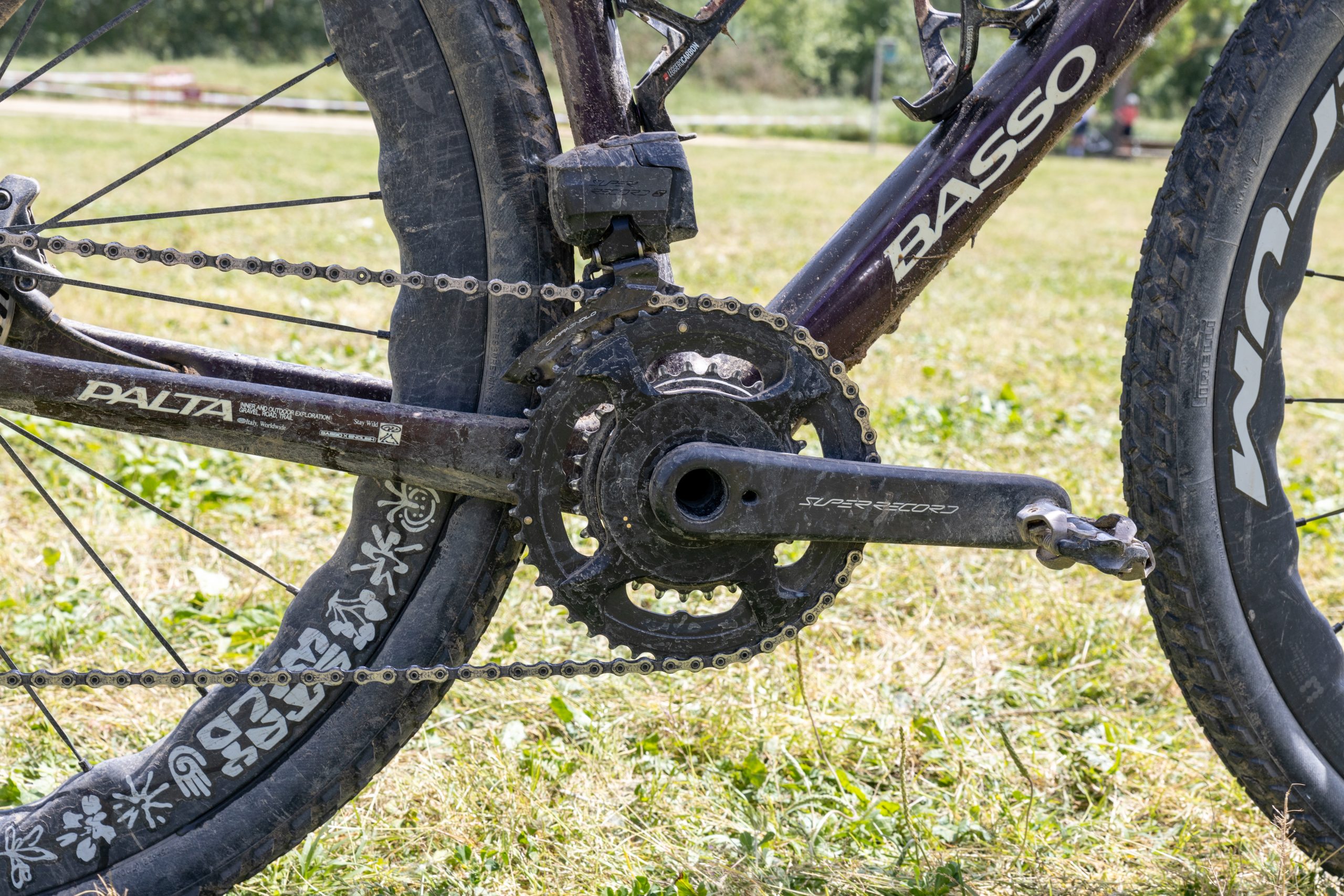
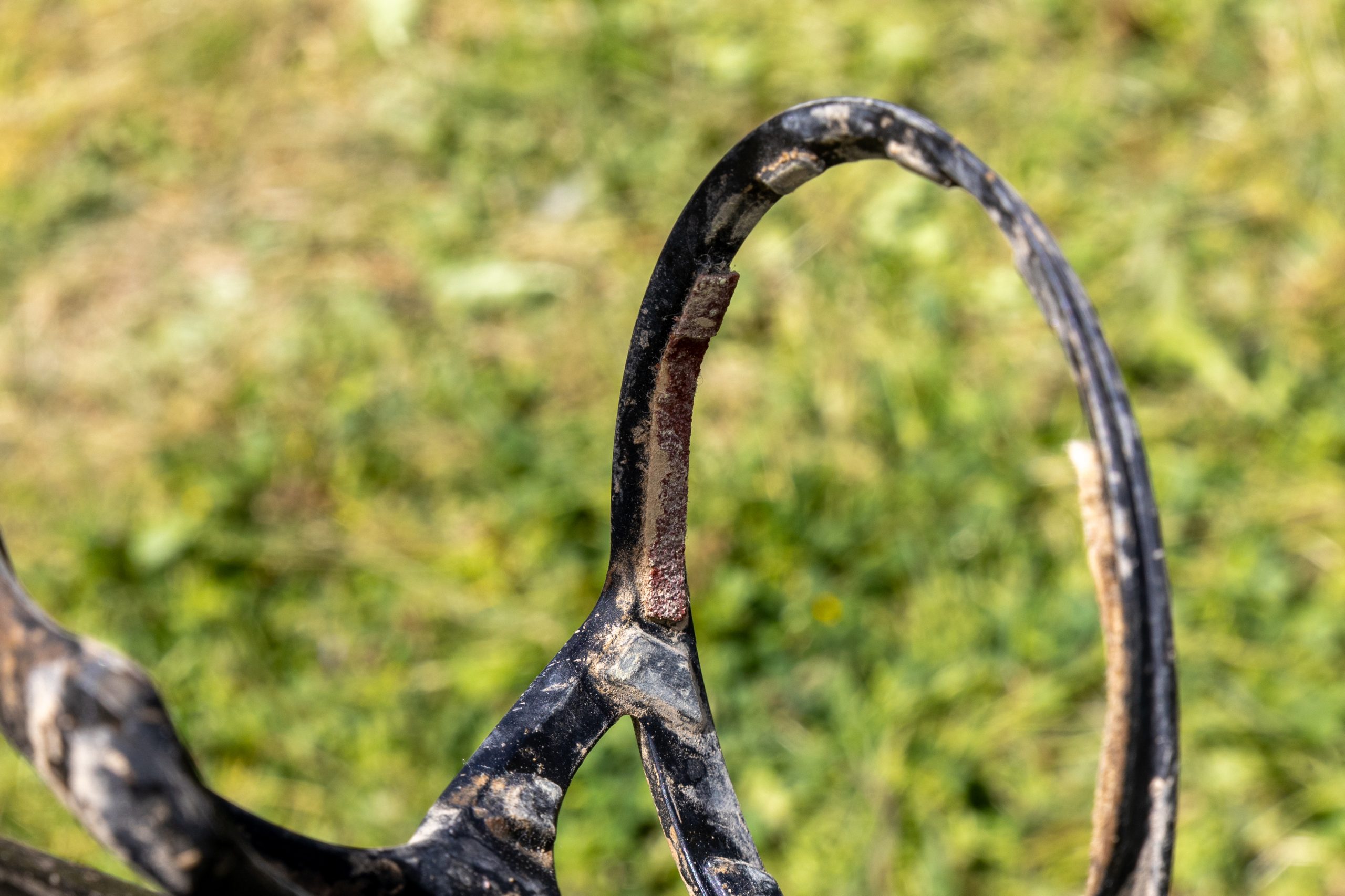
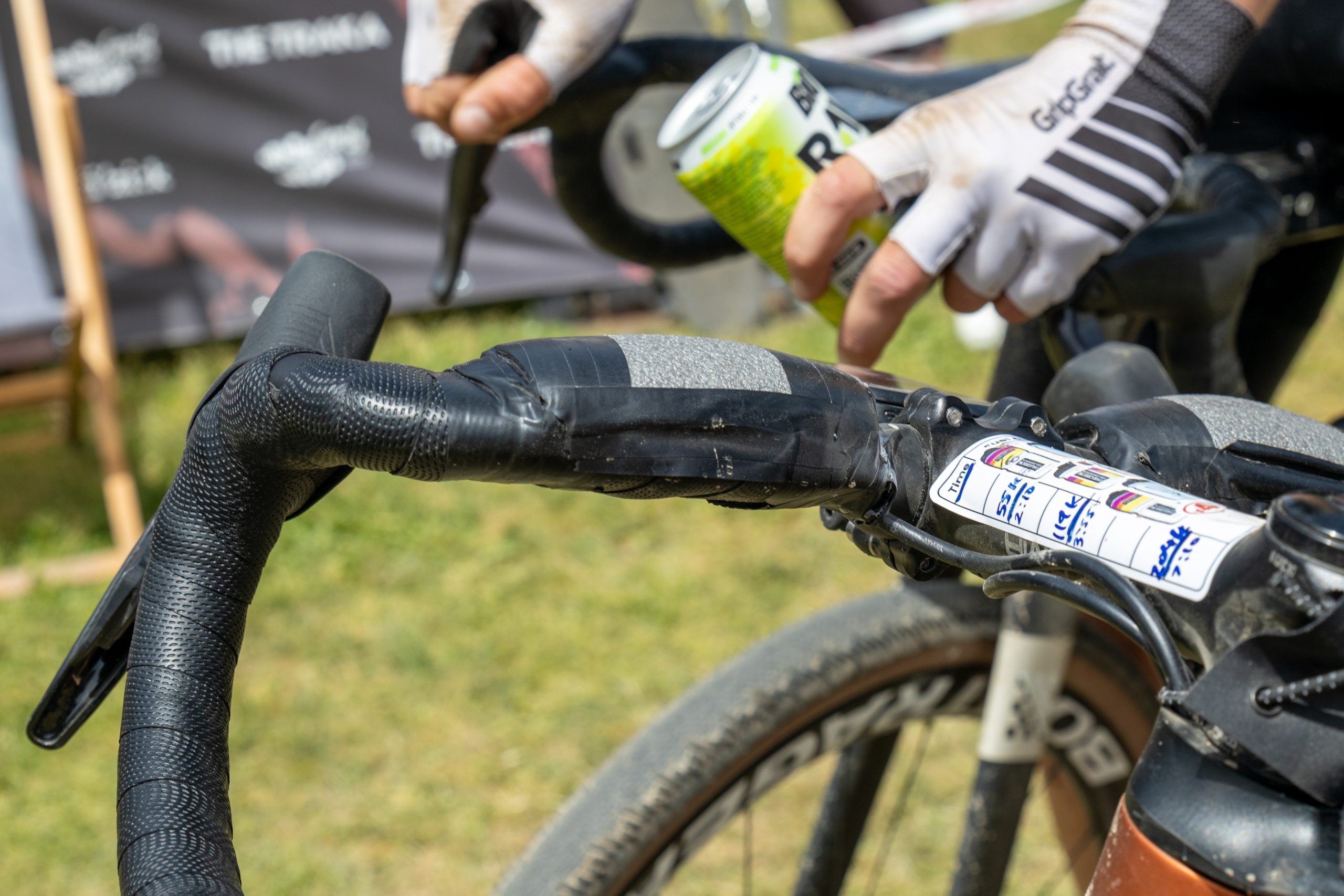
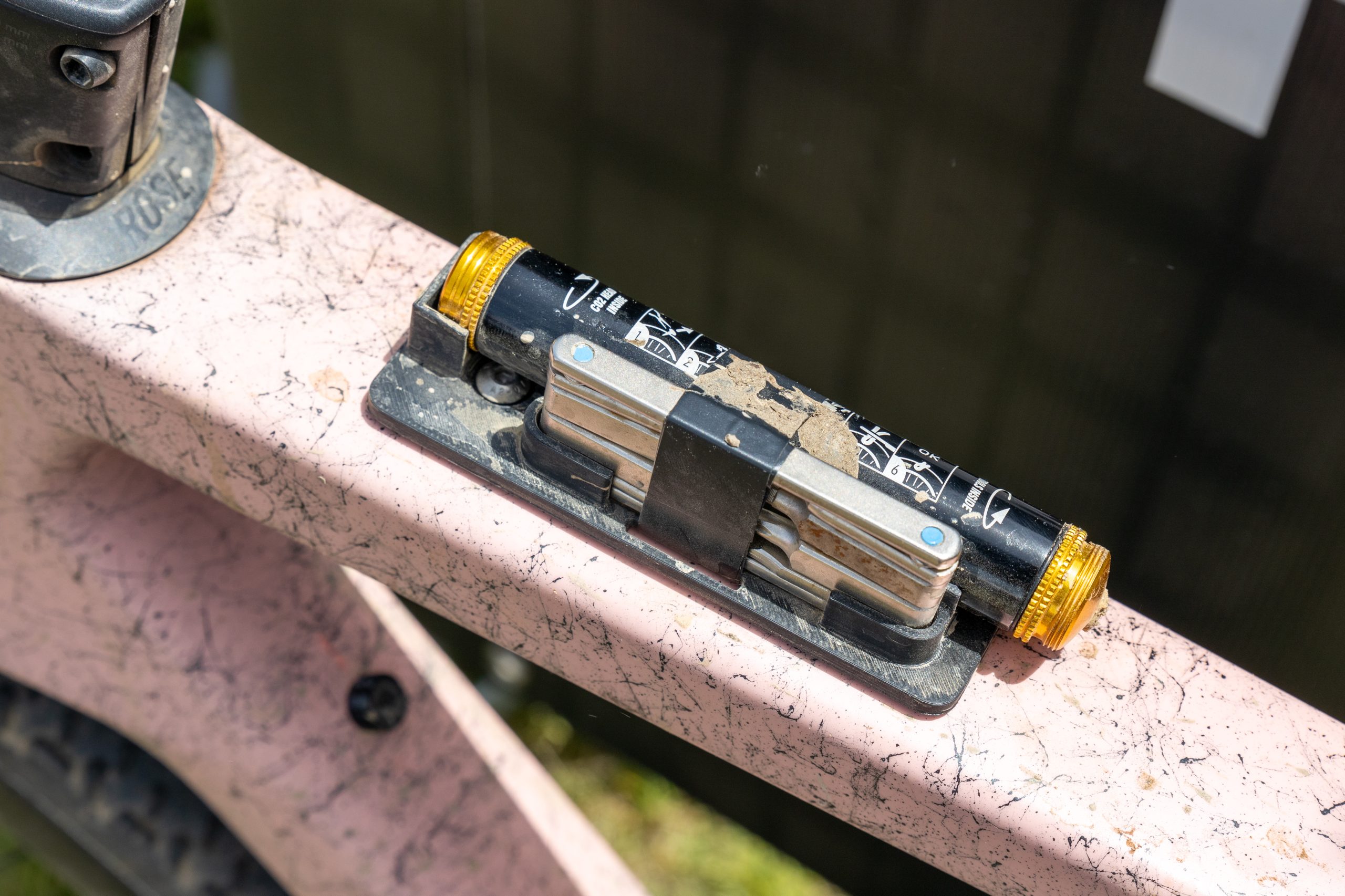
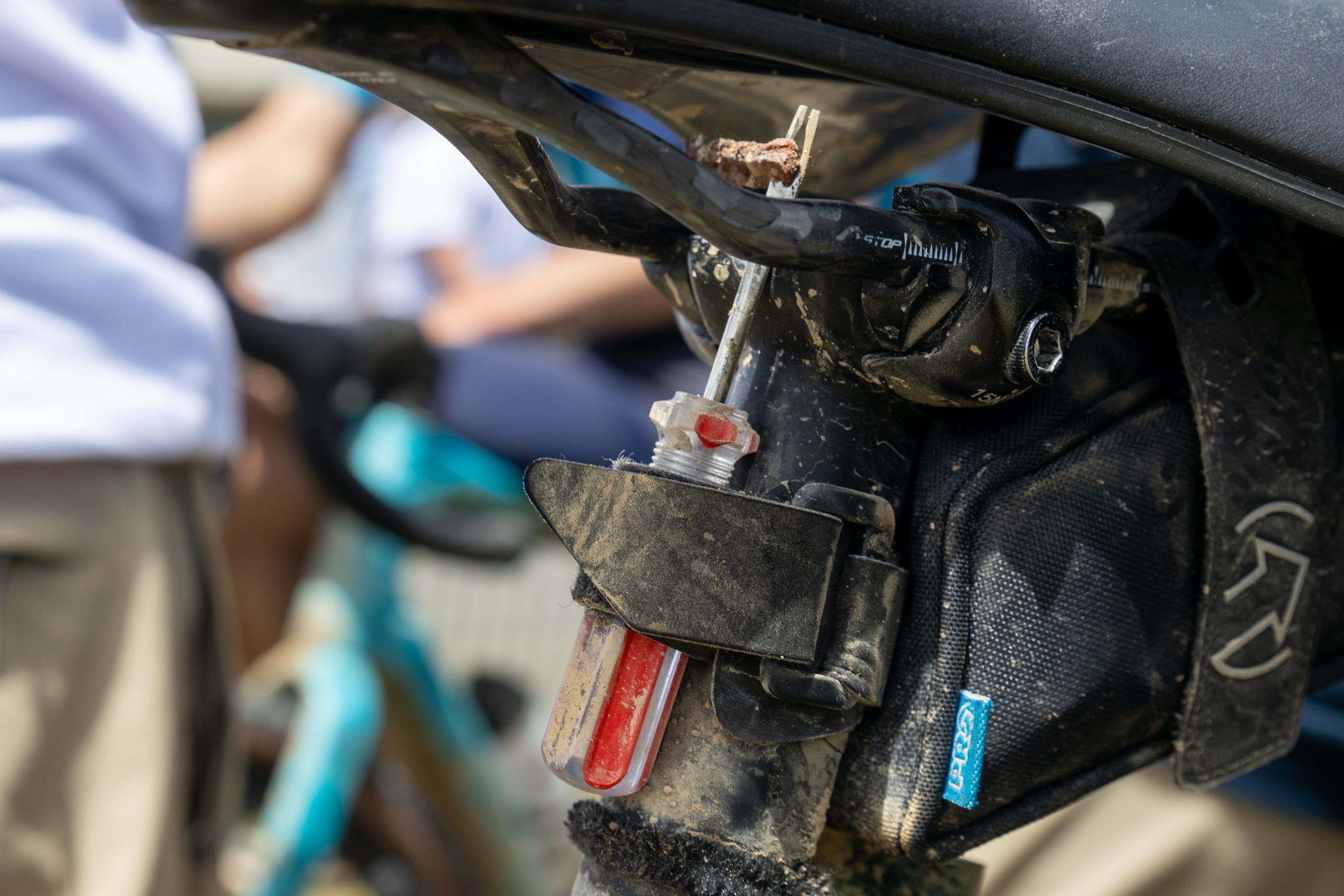
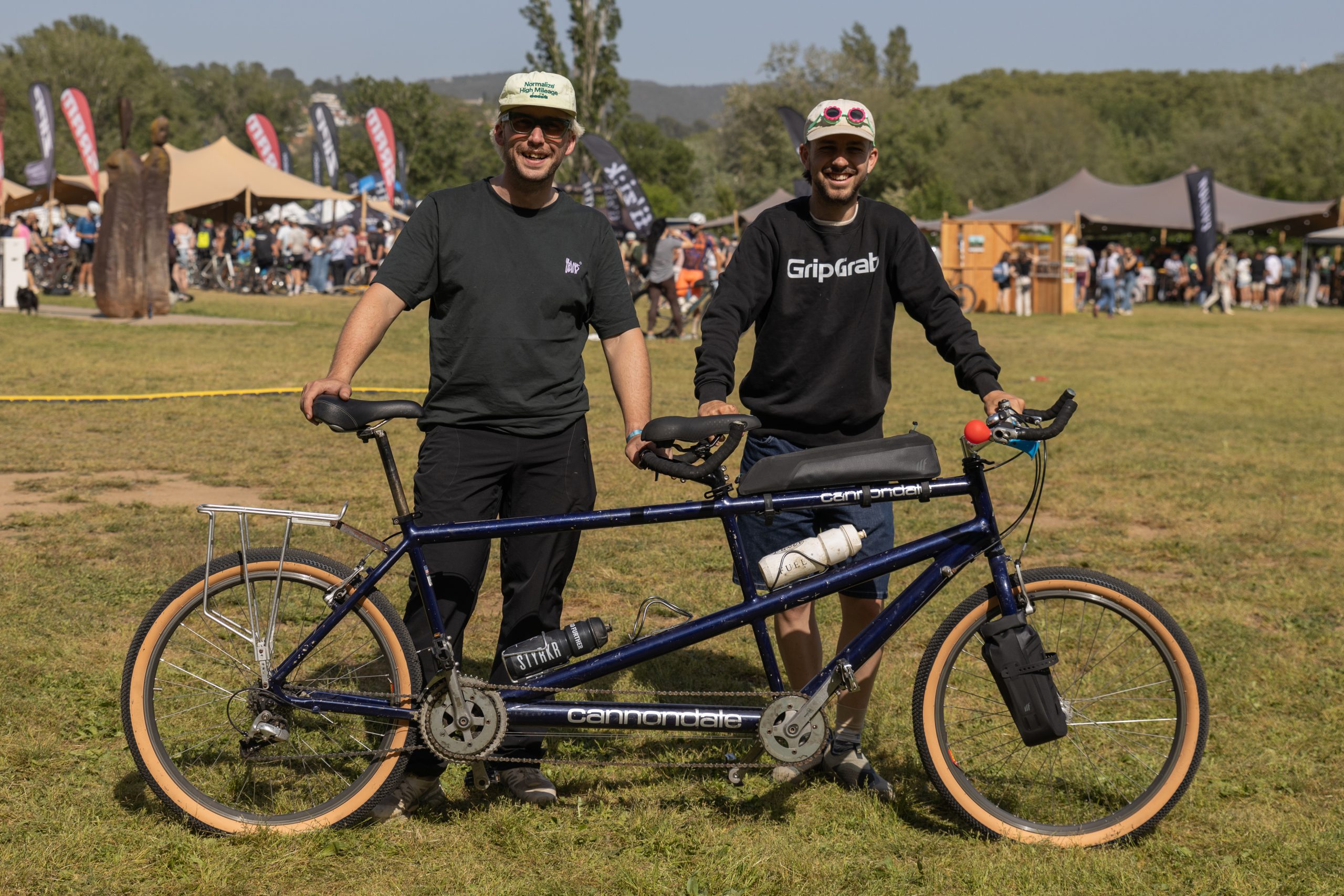
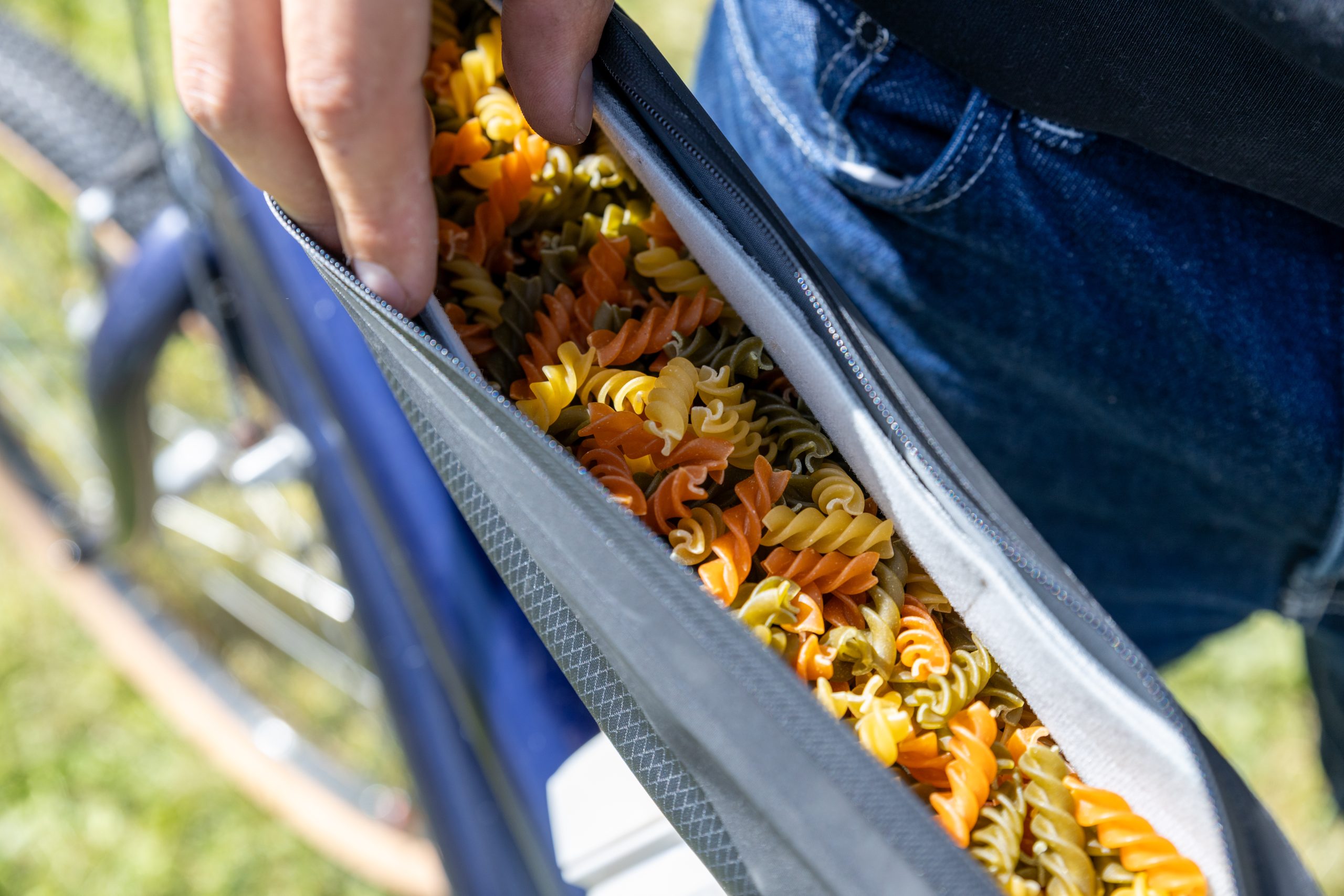
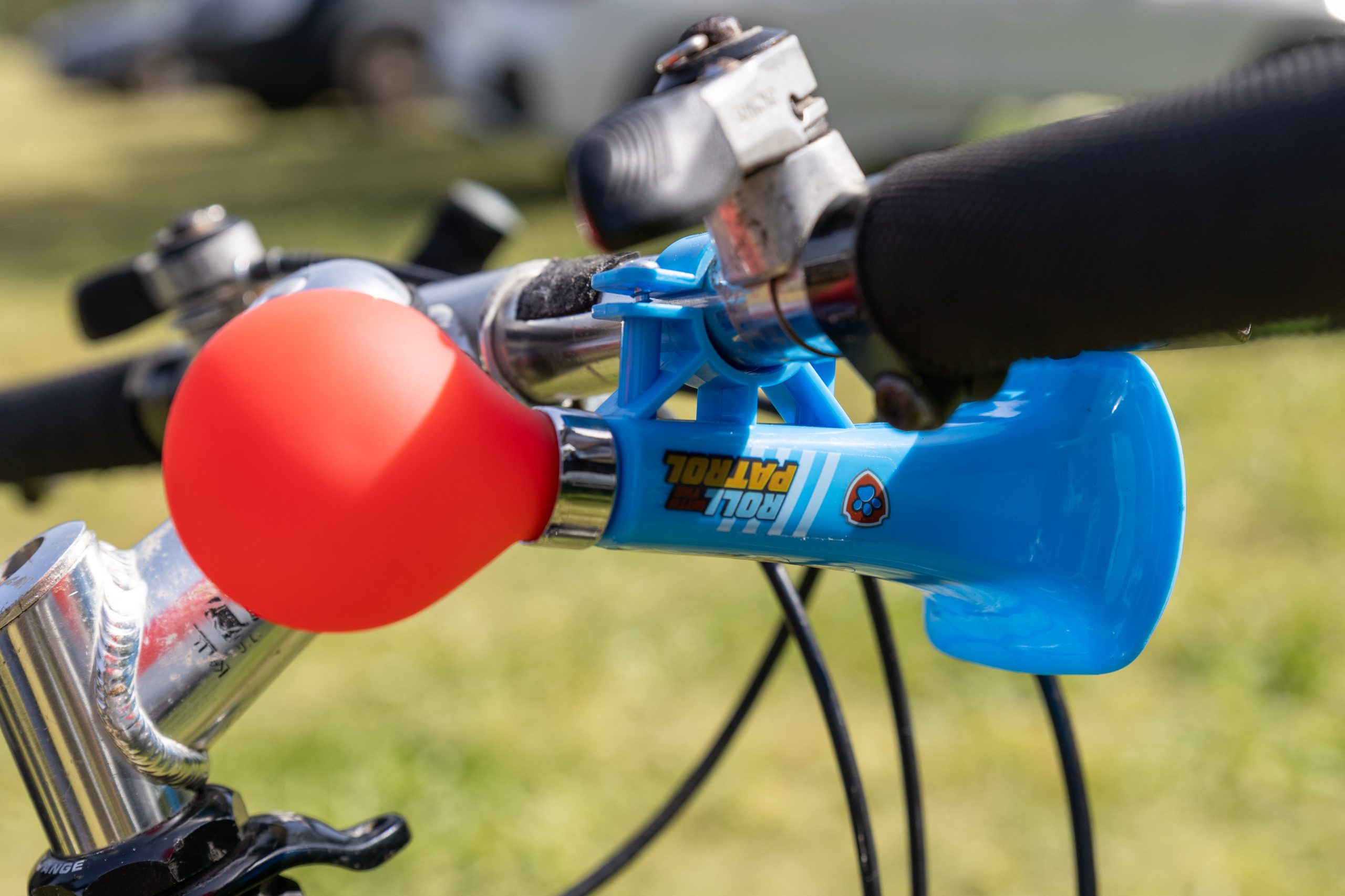
It looks like DT Swiss has been called upon for a gravel collab – Canyon now seems to have a specific suspension fork for the Grail. Liam Cahill / Our Media Canyon, despite being asked very nicely, was tight lipped when queried on it, but the travel looks to be in the region of 40mm. Liam Cahill / Our Media There are other interesting design features, such as a rebound adjustment knob at the bottom of the non drive-side fork leg. Liam Cahill / Our Media DT Swiss has also paid close attention to the aesthetics with this sleek fork crown area – could this new fork be trying to bridge the aesthetic gap between gnarlier off-road forks and road-going designs? Liam Cahill / Our Media Danni Shrosbree was also aboard a new bike, though this Argon18 Dark Matter was launched on Monday. Liam Cahill / Our Media The bike features some very cool tech with space for 57mm tyres front and back. There’s also a hidden mount for a front derailleur. Liam Cahill / Our Media The key tech trend continues to be the adoption of MTB tyres and Continental’s Race King was a common sight on the start line. Liam Cahill / Our Media Second in the women’s 200km race, Rosa Klöser, pushed her Canyon Grizl frame clearance to the limit. Liam Cahill / Our Media Winner of the women’s 200km race, Sofia Gomez Villafane, opted for a Specialized S-Works Crux with curiously unmarked S-Works Tracer gravel tyres. Liam Cahill / Our Media But look closely and a small ‘50mm’ marking is visible. Liam Cahill / Our Media The Argentine’s setup was very simple – the only addition to the SRAM Red / Eagle AXS mullet drivetrain was this small chain guide. Liam Cahill / Our Media Elsewhere, I was delighted to see riders getting inventive with some aero mods (that’s right, aerodynamics is truly a thing in gravel). This rubberised material stuck onto Klöser’s handlebar gives her a little extra grip, but also some forearm comfort when riding in an aero position. Liam Cahill / Our Media There were plenty of road groupsets on display – Mattia Di Marchi’s Campagnolo Super Record WRL was the most beautiful (and the least likely). Liam Cahill / Our Media His Basso Palta was resplendent under the Spanish sun, but it was these small sections of sandpaper which caught my eye, there to hold tightly onto bottles. Straight out of the Paris-Roubaix playbook. Liam Cahill / Our Media But Harry Tanfield took things to another level, by pinching packing materials from his bike box. The idea? Exceptional. The execution? Questionable. Liam Cahill / Our Media This über-neat storage of a tubeless tool and multitool was the antidote to Tanfield’s bodge. Liam Cahill / Our Media Speaking of puncture repair, riders continued to squirrel away pre-loaded tubeless plug tools in random locations. This one looks slightly… risky. Liam Cahill / Our Media When the award for ‘most left-field bike’ is handed out, there can be only one winner. SJ and Andre will tackle the 100km route aboard this tandem. Andre took me for a quick spin and I am only slightly worried for them! Liam Cahill / Our Media At least they’ll be fuelled well. They told me they were aiming for al dente. Liam Cahill / Our Media And their Paw Patrol-branded horn can sound the finish klaxon on this tech gallery. Toot! Liam Cahill / Our Media
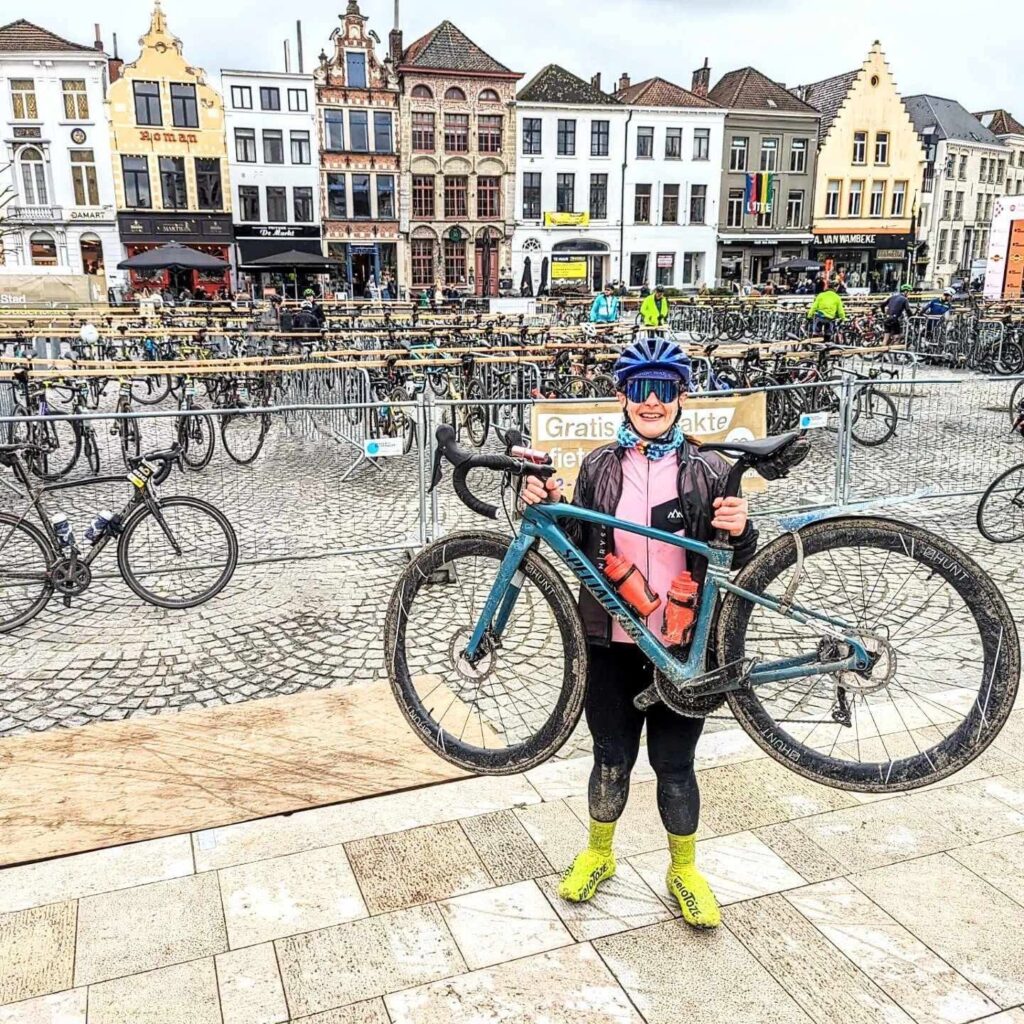
How did you get into cycling? It’s a long story! I was 144 kg till 19. At 12 years old I discovered sport. I threw the discus and hammer, then got injured and lost 100kg. I started training in Brazilian jiu-jitsu at the age of 22 and have successfully competed all over the world. I was the first British woman to medal at black belt in Brazil and the 3rd British woman to be awarded a black belt.
Then at 41 my life was turned upside down. I was diagnosed with a knee issue which turned out to be quite a serious disability. I decided to retire from the professional division and had my last fight. On the advice of my knee surgeon, I started cycling in mid 2020. I couldn’t do a 5-mile ride without stopping for hills even though I was fit.
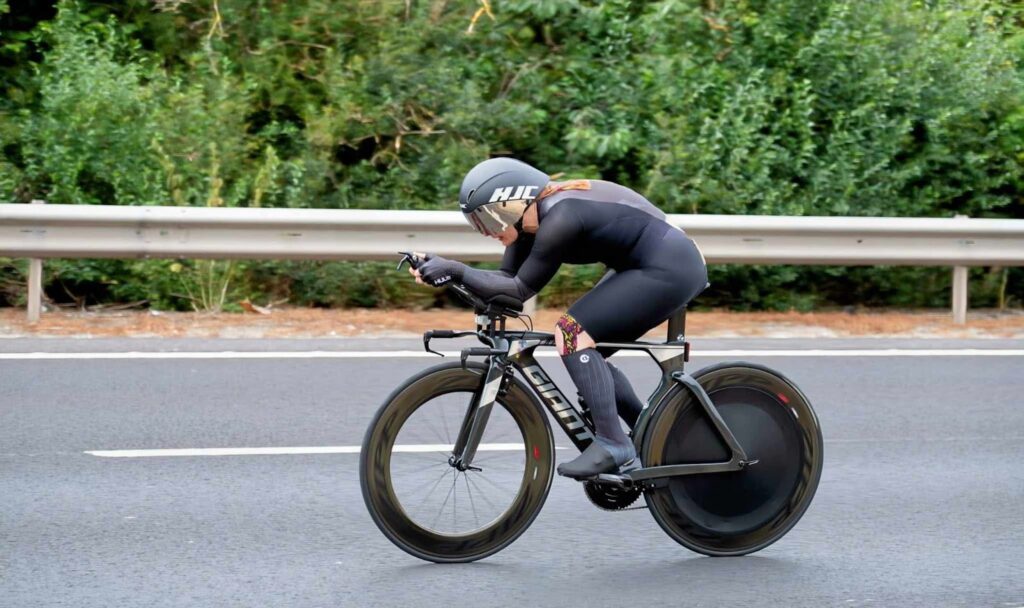
I met a lady at a local club who persuaded me to try an introduction to racing course she was teaching (thanks Liz!). I tried a few TTs in 2022 and enjoyed them. Racing filled the competitive gap I was missing after leaving high-level sport.
In 2023 I signed up for a full season of able-bodied TT’s. I medalled at the VTTA national 100-mile TT & won two open 10s. I now compete for the Born2Bike racing team. My physio suggested I contact British Cycling for a para assessment which after a year of fighting was completed in June ’24. My knee is a degenerative disability and some days I can’t walk. Some Zwift races I compete using one leg!
How many years have you been racing on Zwift? 3 years
Are you part of a Virtual team? Definitely! REVO, my team, is fantastic. You know when you’ve found “your people.” I love the ladies in my team, they are amazing.
What do you love most about racing? Pushing myself. That feeling of destroying yourself during a race and the exhilaration at the finish. Oh, and the spare calories!
What is your favourite style of race (e.g. points, scratch, iTT, TTT, Chase, duathlon)? I do love a TT!
What is your favourite Zwift women’s race series? TBD, but anywhere the whole team are involved and fighting for positions.
What is your most memorable racing experience, inside or outside or BOTH? I was in Cambridge at a 10-mile TT. I’d had bad news from my doctor. I thought f*** it. I emptied the tank and did 22.51. I cried at the side of the road after and 2 other riders stopped to check on me. They asked why I was crying. I said, “Because I just got an epic PB.” We rode the 8 miles back to HQ together!
What is your favourite food to eat post race? Protein shakes and cold pizza made by the expert Maria at Pizza Paz (I fought middle-heavyweight).
What advice would you give to a woman entering her first Zwift race? Have high expectations for yourself because you are stronger than you realise, and you can achieve more than anyone ever expected of you.
Any upcoming race you are looking forward to? I’m recovering from knee surgery and just want to start training ASAP.
Where can people follow your racing adventures? I’m old skool. I don’t like to post much, but if you like photos of cute German Shepherds then @gretzoeller on Insta.
**A big shout out to my biggest supporter. My husband Ben. He gets my bikes ready, maintains and repairs both them and me (which is a much bigger job!). I literally couldn’t do it without him.
Bastion’s creations are things of rare beauty, with hand-crafted carbon fibre tubes mated to sculpted titanium lugs. The Australian brand’s bikes are considered by many as masterpieces of bicycle engineering.
It has been a decade since Bastion released a new road bike and the new Archetype brings everything it has learned in the intervening years to the fore.
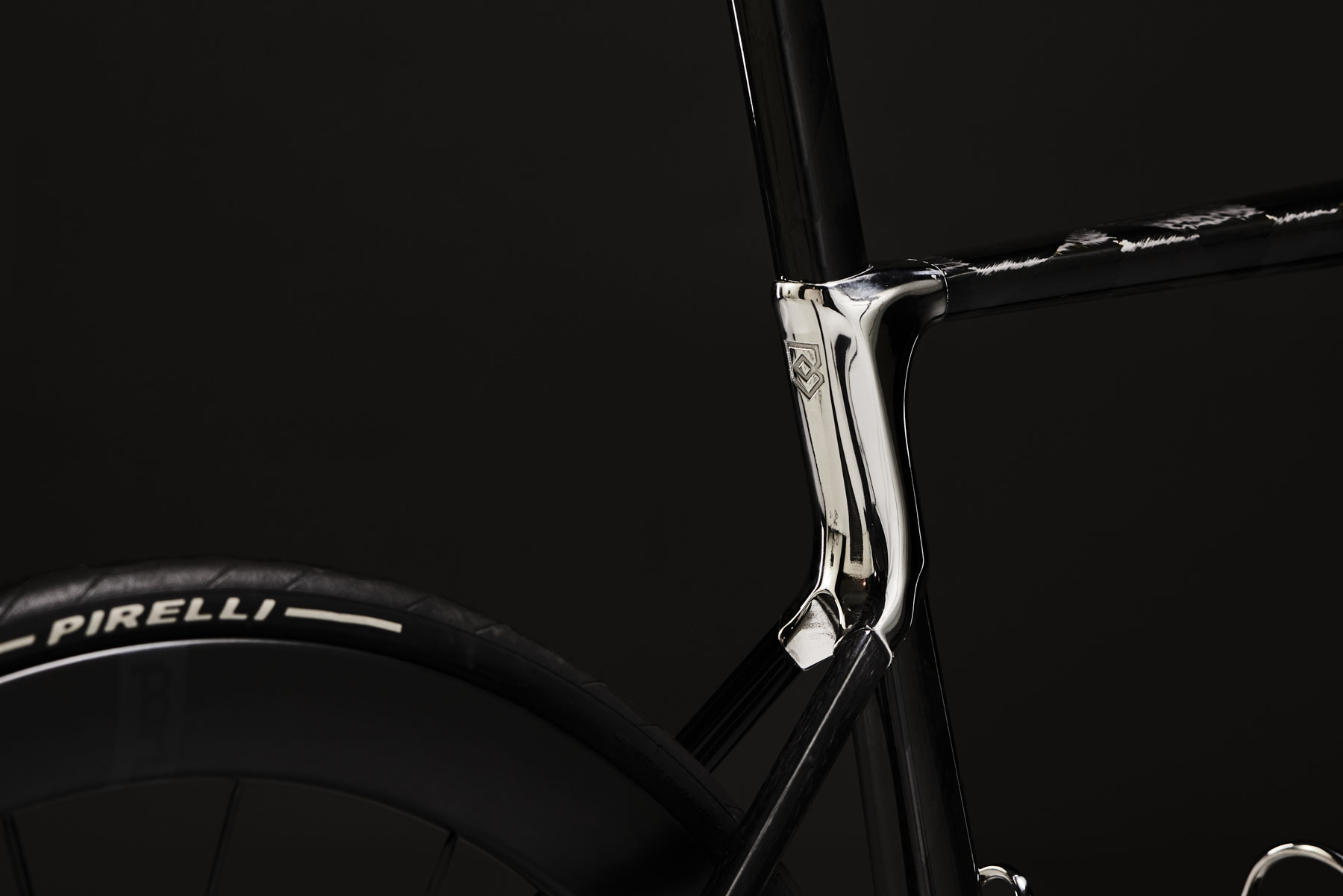
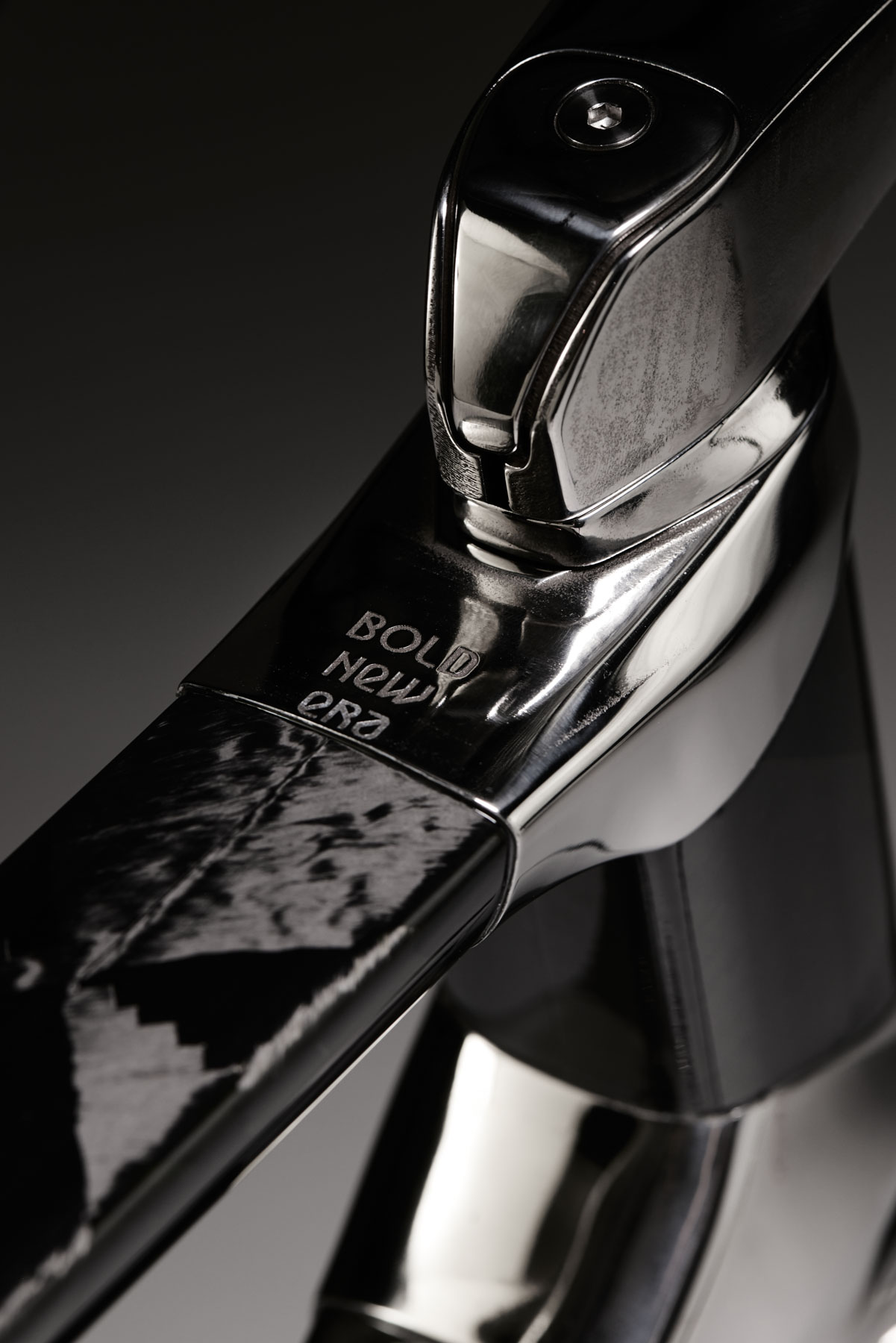
It’s the combination of mirror-polished 3D-printed titanium, raw filament-wound carbon and exquisite attention to detail that makes this custom aero race bike stand out.
Combine all that with a wind-tunnel proven design and, in my opinion, the Archetype is 2025’s best-looking bike.
Filament-wound carbon
The combination of mirror-polished 3D-printed titanium and raw filament-wound carbon looks spectacular. Bastion
Each tube is constructed using filament-wound carbon fibre.
Continuous individual fibre strands are woven around a mandrel to construct high-strength lightweight hollow tubes.
True aero profiles
All of the tubes are based on NACA profiles. Bastion
The Archetype’s tubes are different. For the first time, the tube profiles are based around NACA (National Advisory Committee for Aeronautics) true aerodynamic profiles.
That makes the new Archetype one of the first fully custom aero road bikes available. These tubes are then bonded to aero-optimised 3D-printed titanium lugs.
The new bike has tyre clearances of 34mm and uses a Universal Derailleur Hanger rear dropout for added practicality.
Wind-tunnel tested
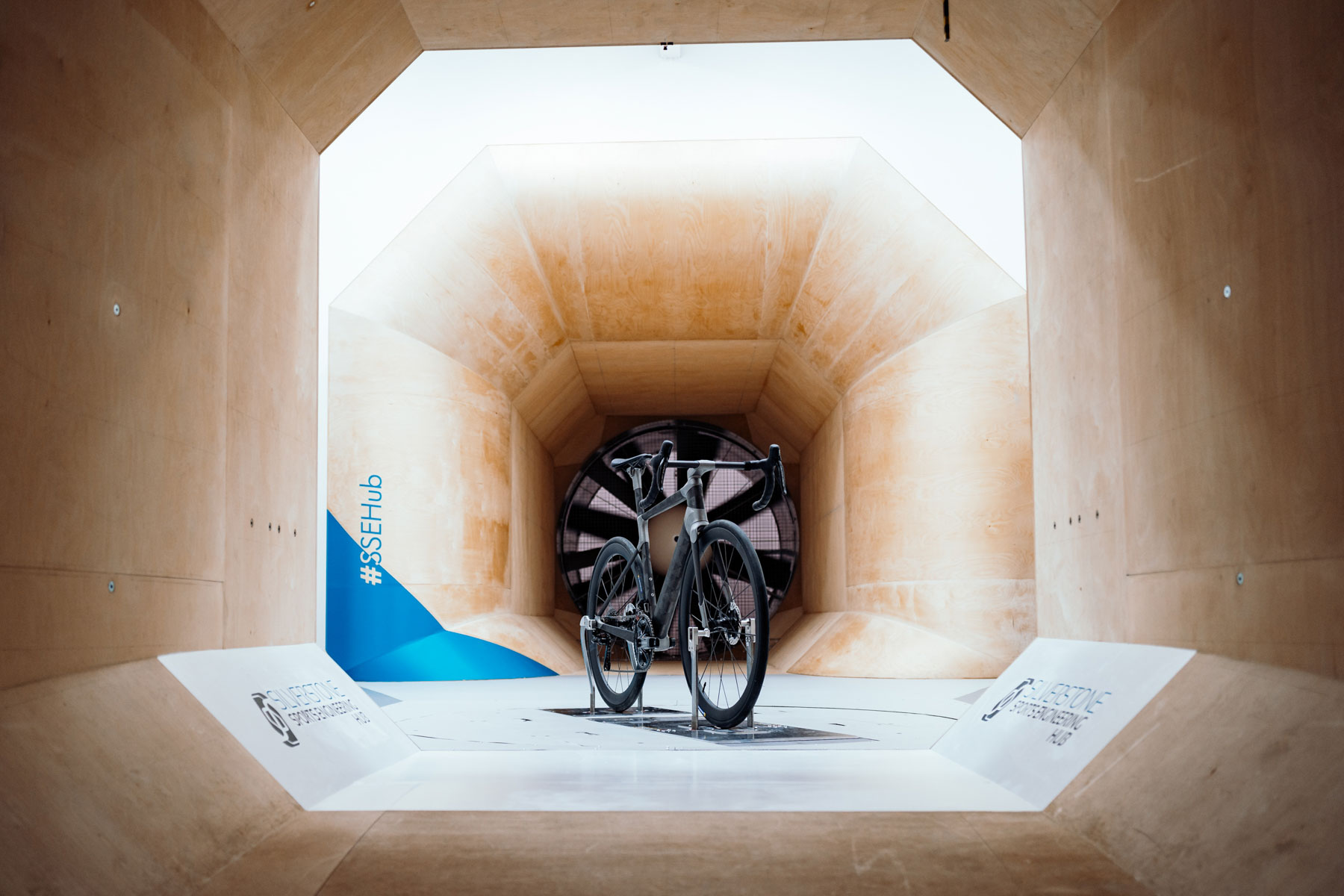
The Archetype was proven in the Silverstone wind tunnel. Bastion
The complete bike, with Shimano Dura-Ace Di2 and Partington’s R39/44 wheelset, was compared to Bastion’s Icon Superleggera. The Archetype reduced drag by 6-8 watts across 0-15° yaw angles at 35 km/h – speeds said to be typical for Bastion’s clientele.
For an ‘average’ rider outputting 200 watts, this represents a significant advantage. At higher speeds, the gains are even more dramatic. At 50 km/h, the Archetype slashed aerodynamic drag by an impressive 18-25 watts, according to Bastion.
10 years in the making
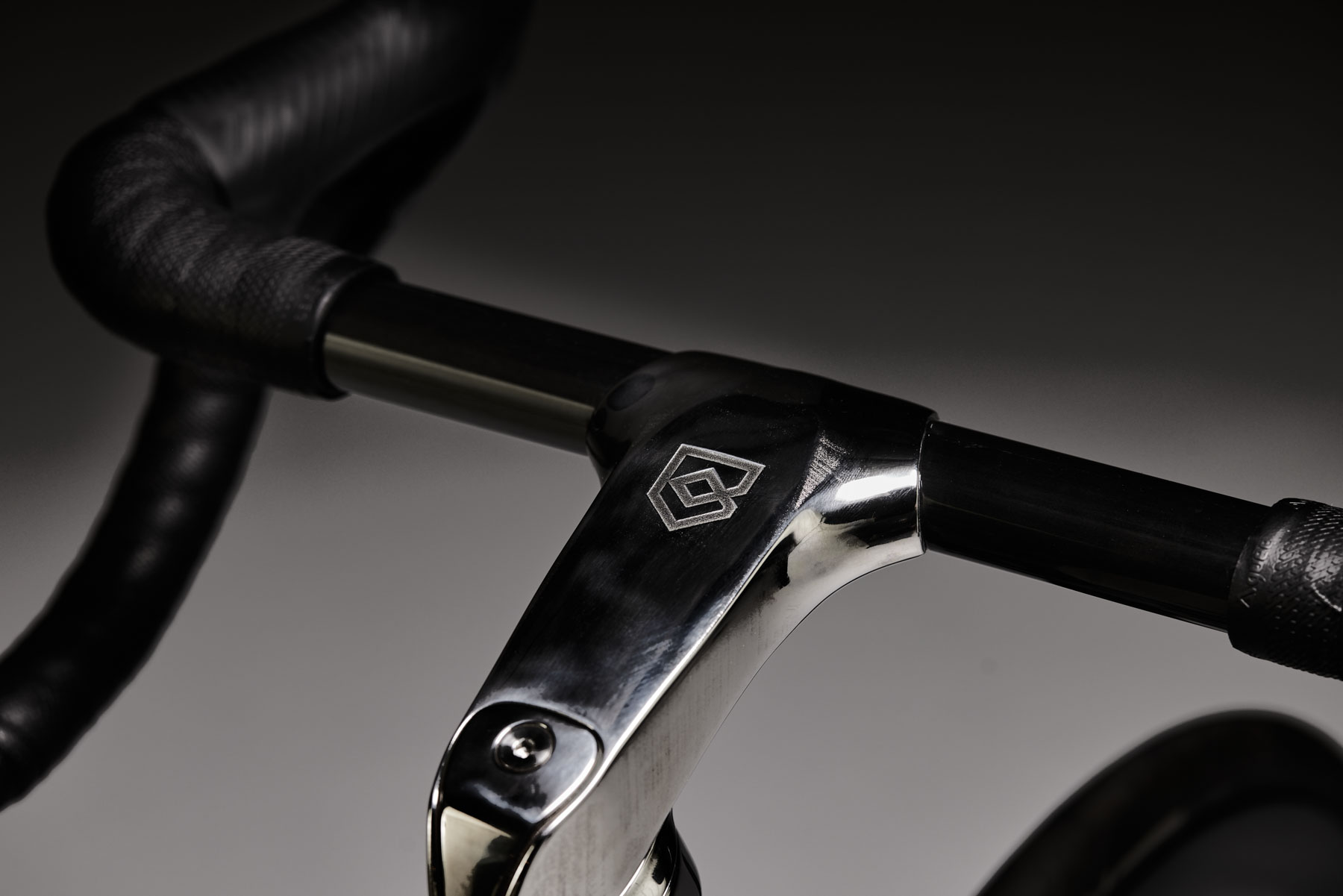
Every element of the Bastion is hand-crafted, even the one-piece cockpit. Bastion
Ethan York, Bastion’s R&D manager, explained the design behind the Archetype: “Our mission was to increase aerodynamic performance without compromising stiffness or weight. The Archetype achieves this with refined tube profiles and an ultra-efficient joining structure.
“We approached the Archetype with the mindset of evolution, not just innovation. We’ve taken the lessons of the past decade – from filament winding to moulded carbon fibre techniques – and redefined their potential in a new aerodynamic context.”
Attention to detail
The head badge is made from a 0.05mm-thick slice of etched stainless steel. Bastion
The head badge hasn’t been spared the aero overhaul. Instead of Bastion’s usual 3D-printed badge, the Archetype’s is etched from a 0.05mm-thick slice of stainless steel. It’s placed under the finished frame’s clear-coat finish.
Pricing hasn’t been announced, but I’d expect it to be somewhat POA.
Even if, like me, you’ve no chance of being able to afford this most exclusive of superbikes, Bastion has made its online configurator open to all. Previously, you could only access it after placing a deposit.
Alec Briggs will line up for the Traka gravel race aboard a very special Canyon Grail CFR. His bike has been heavily customised in the style of Colin McRae’s famous Subaru Impreza rally car.
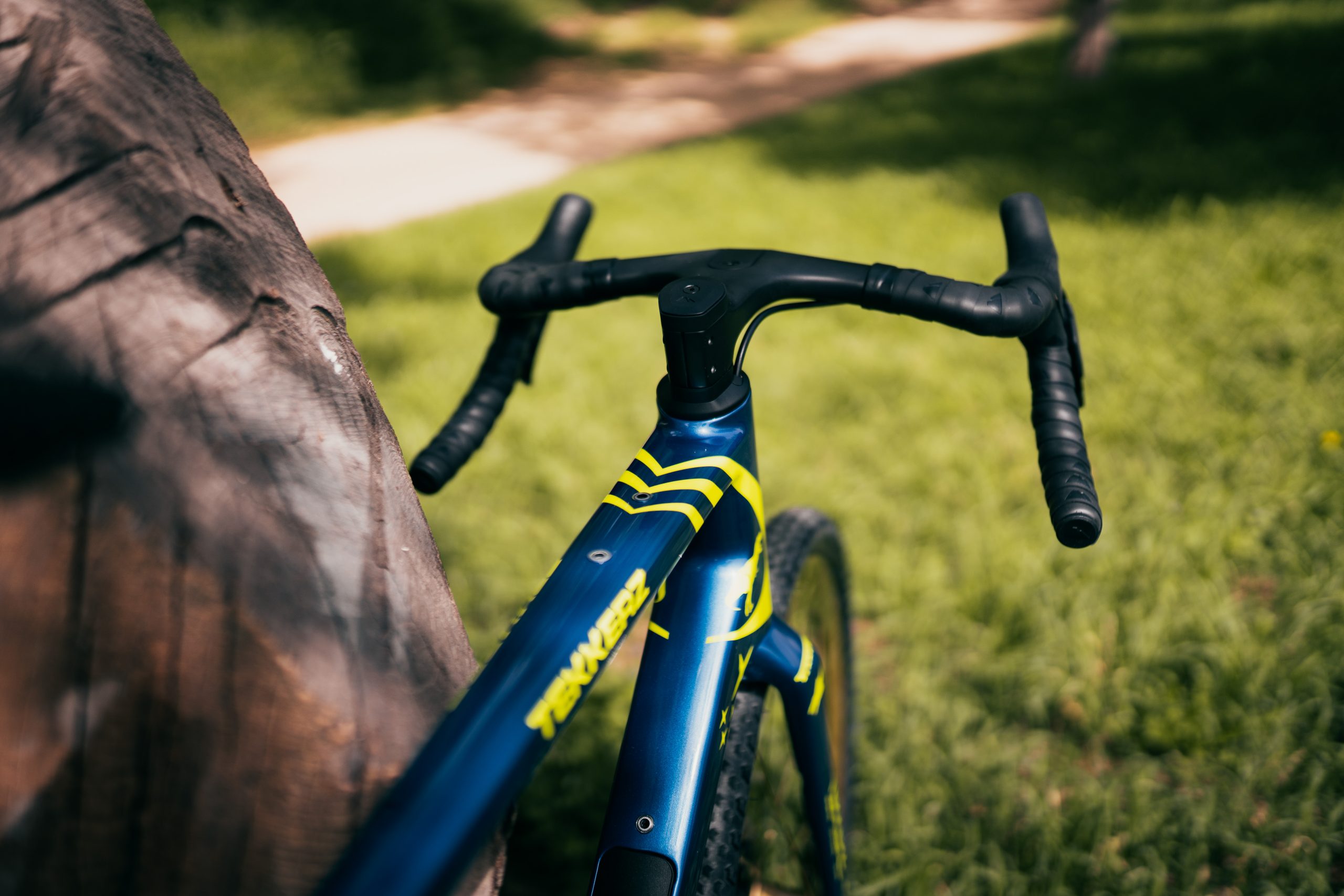
Briggs, founder of and racer for the Tekkerz CC team, arrived in Girona, Spain, ahead of the Traka with possibly the hottest gravel race bike of 2025.
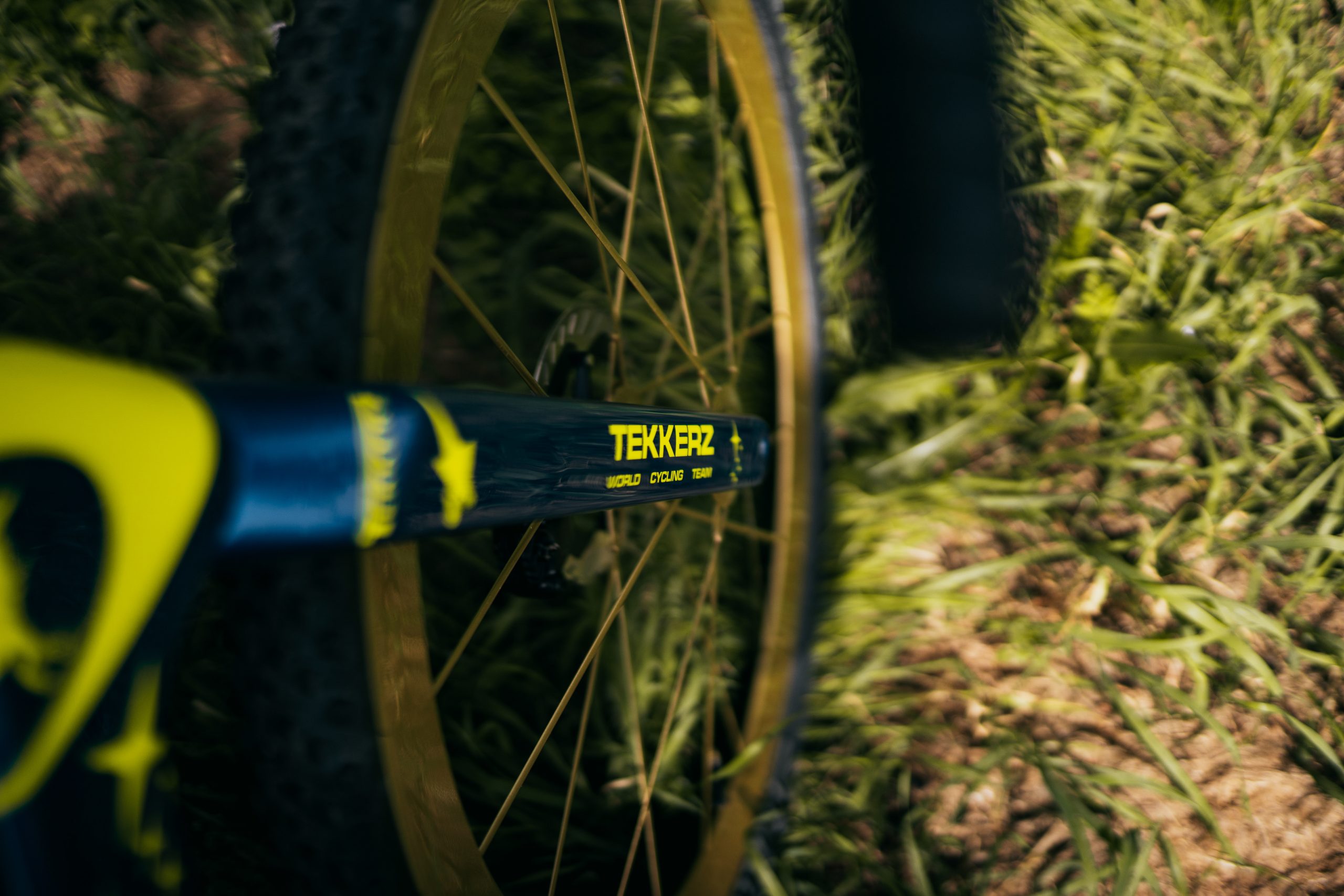
His Canyon Grail CFR features deep blue paint, bright yellow graphics and gold wheels that all hark back to Colin McRae’s career as a rally driver.
McRae was at the sharp end of World Rally driving in the 90s and his blue and yellow Subaru Impreza became an iconic design. Following McRae’s death in 2007, his race cars became highly sought after, with TopGearreporting his ‘555’ car sold for £230,000 in 2017.
In an Instagram post, Briggs touched on the time he spent playing Colin McRae’s video games, and said he wanted to channel the spirit of “if in doubt, go flat out”.
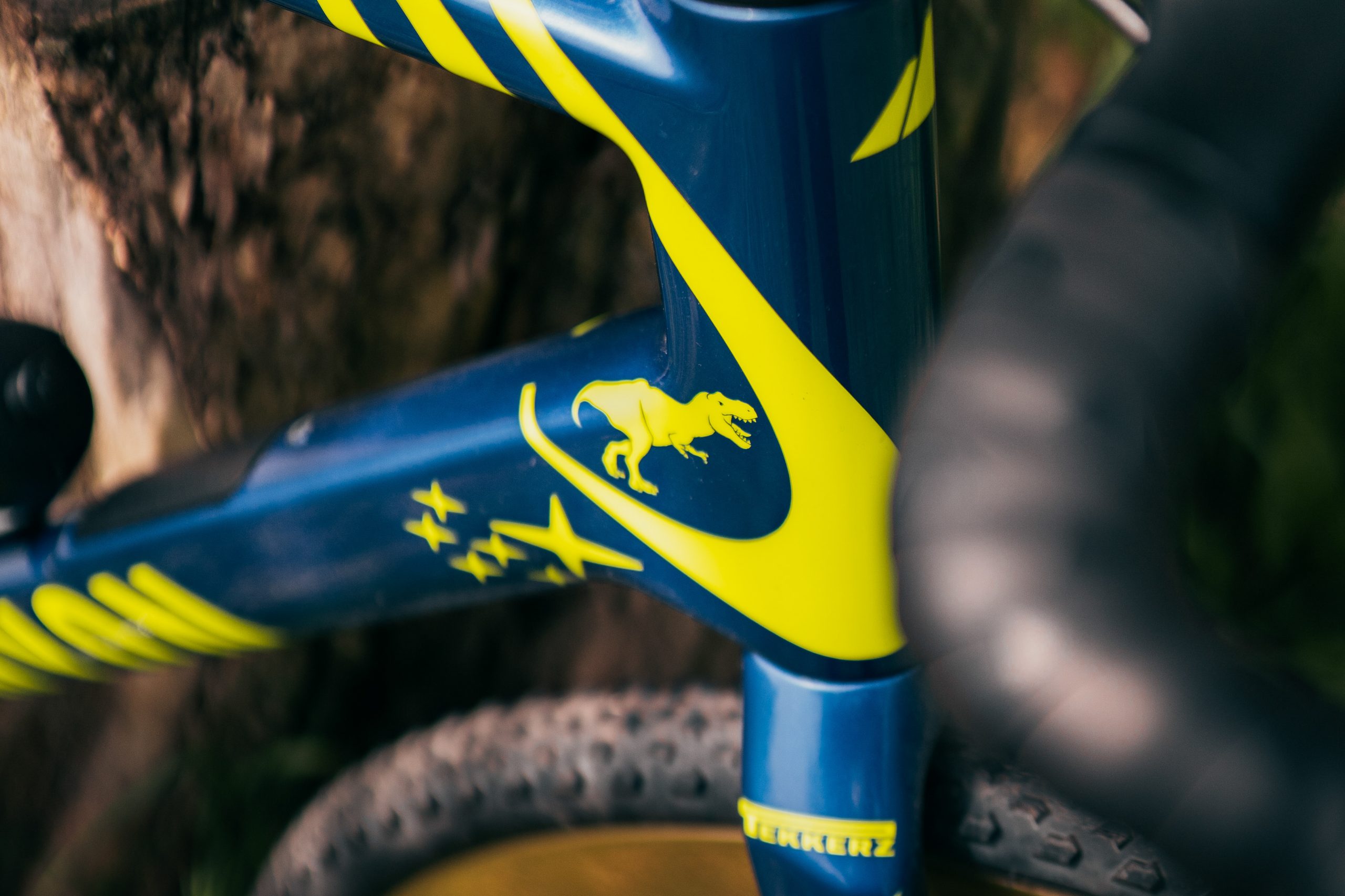
Briggs has opted for a roadie-influenced build, along with some of the coolest wheels we’ve ever seen. But watch out for the Tekkerz dinosaur.
Alec Brigg’s Colin McRae-inspired Canyon Grail CFR
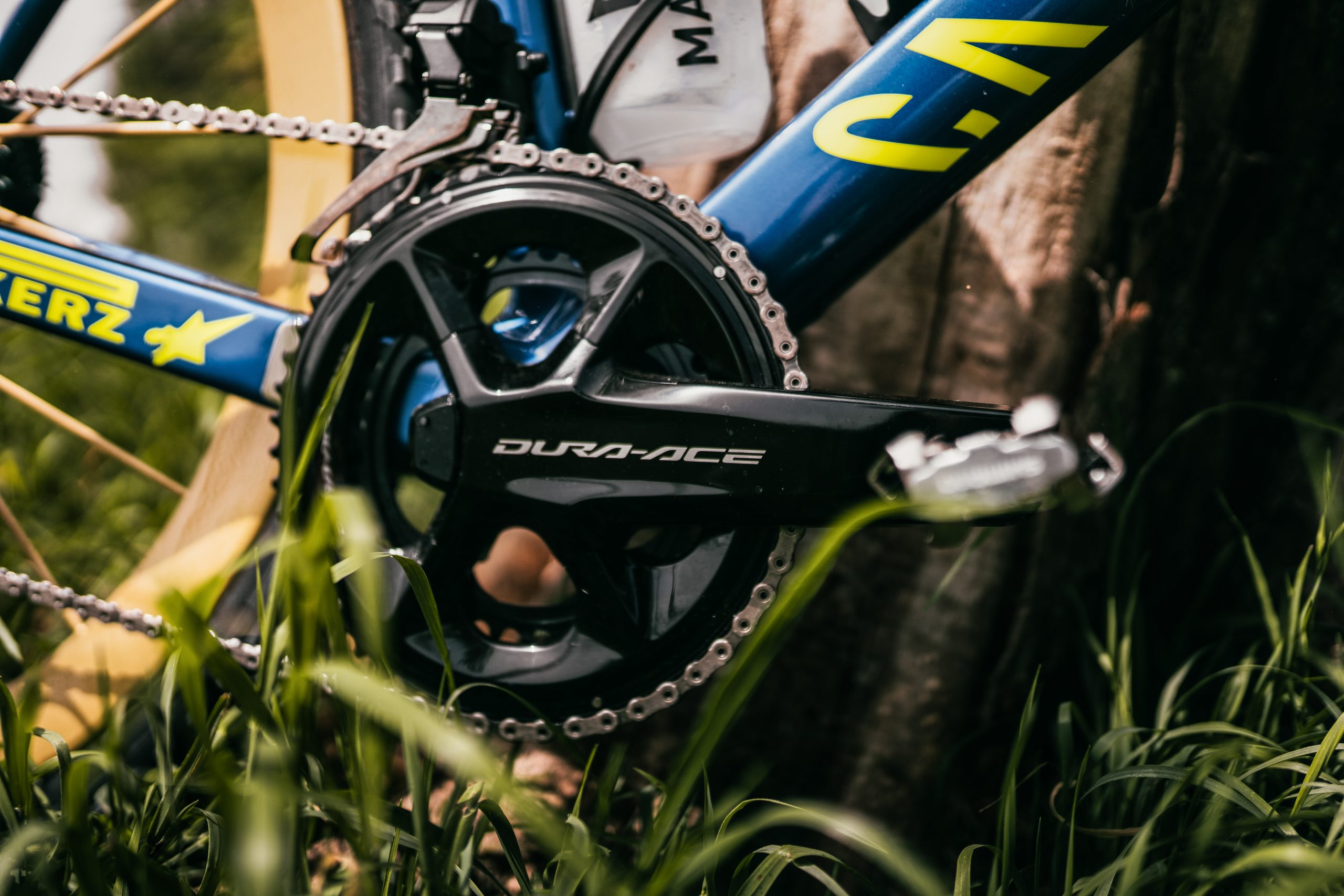
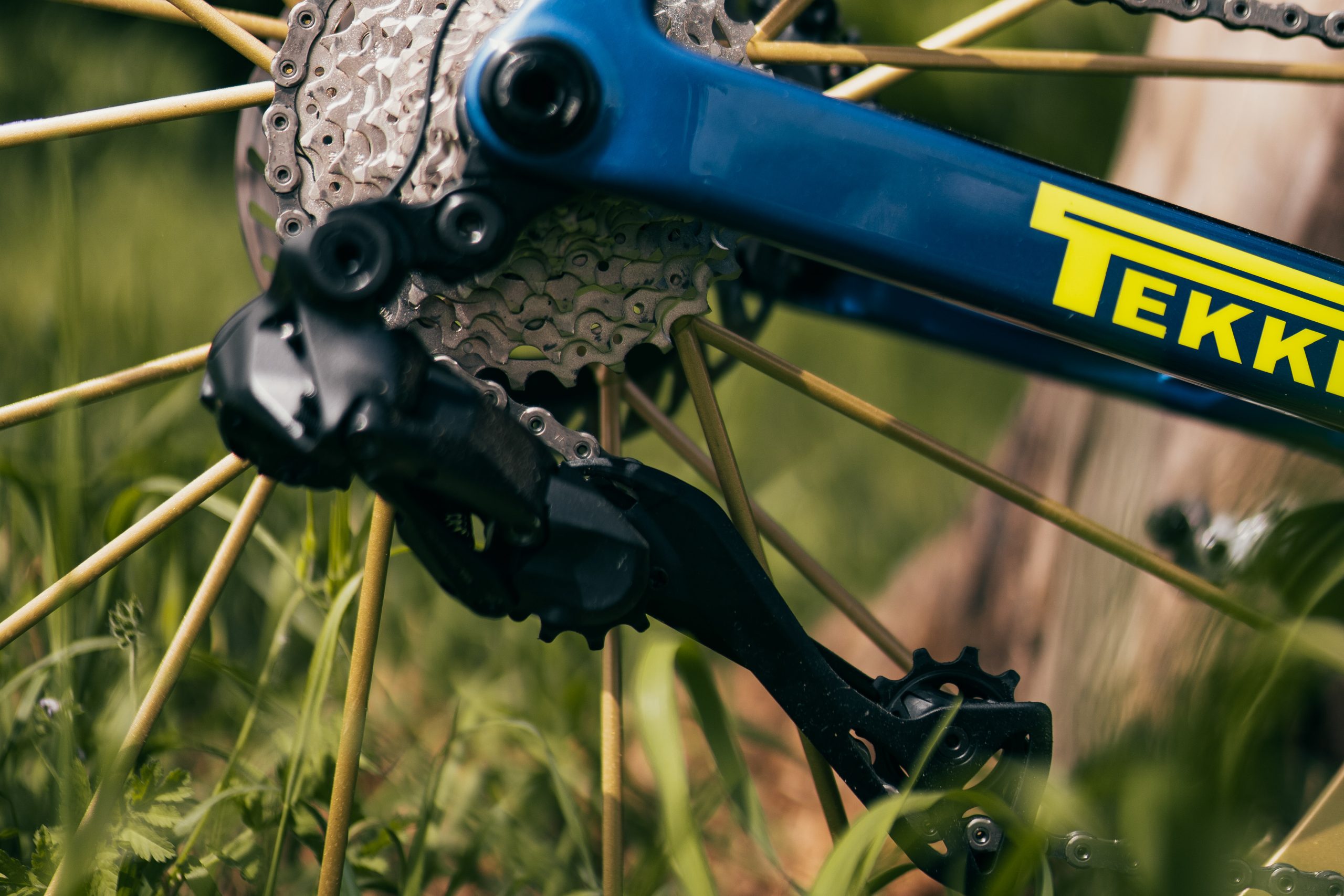
A Shimano Dura-Ace Di2 12-speed groupset is a relatively common sight in the pro gravel ranks. Racers often prefer the road groupset over Shimano’s dedicated GRX gravel groupset for the lower weight and larger chainrings. Canyon But looking at the angle of Briggs’ rear derailleur, he’s pushing the gear range to the limit. Canyon Briggs admits that painting the Lightweight Pfadfinder wheels gold did add a bit of weight. But I’m sure we can all agree that it was worth it? Canyon At the front end, Briggs uses Canyon’s Gear Groove CP0047 cockpit. It measures 400mm at the hoods and flares out at the drops by 16º. Canyon A Tekkerz CC dinosaur finishes what is an exceptionally cool bike. Canyon
Swytch, the maker of some of the world’s best-selling ebike conversion kits, has launched its most innovative kit to date.
After announcing the Max+ last year, alongside a complete Swytch bike, it’s now finally available to buy – and one has just arrived at BikeRadar for review.
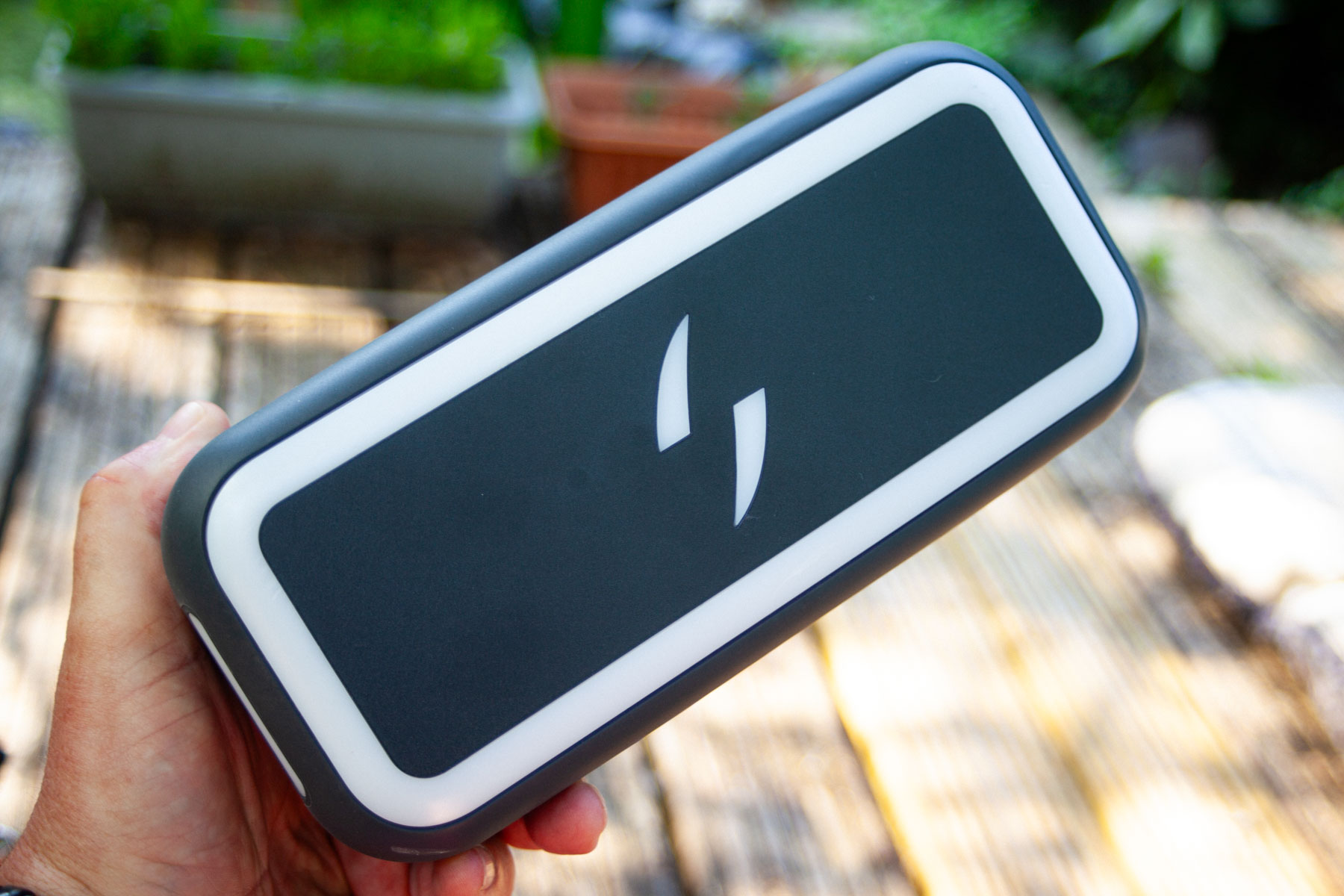
The new Max+ has a large battery capacity, an integrated front light and a USB-C charge point, while Swytch is also emphasising the kit’s battery safety technology.
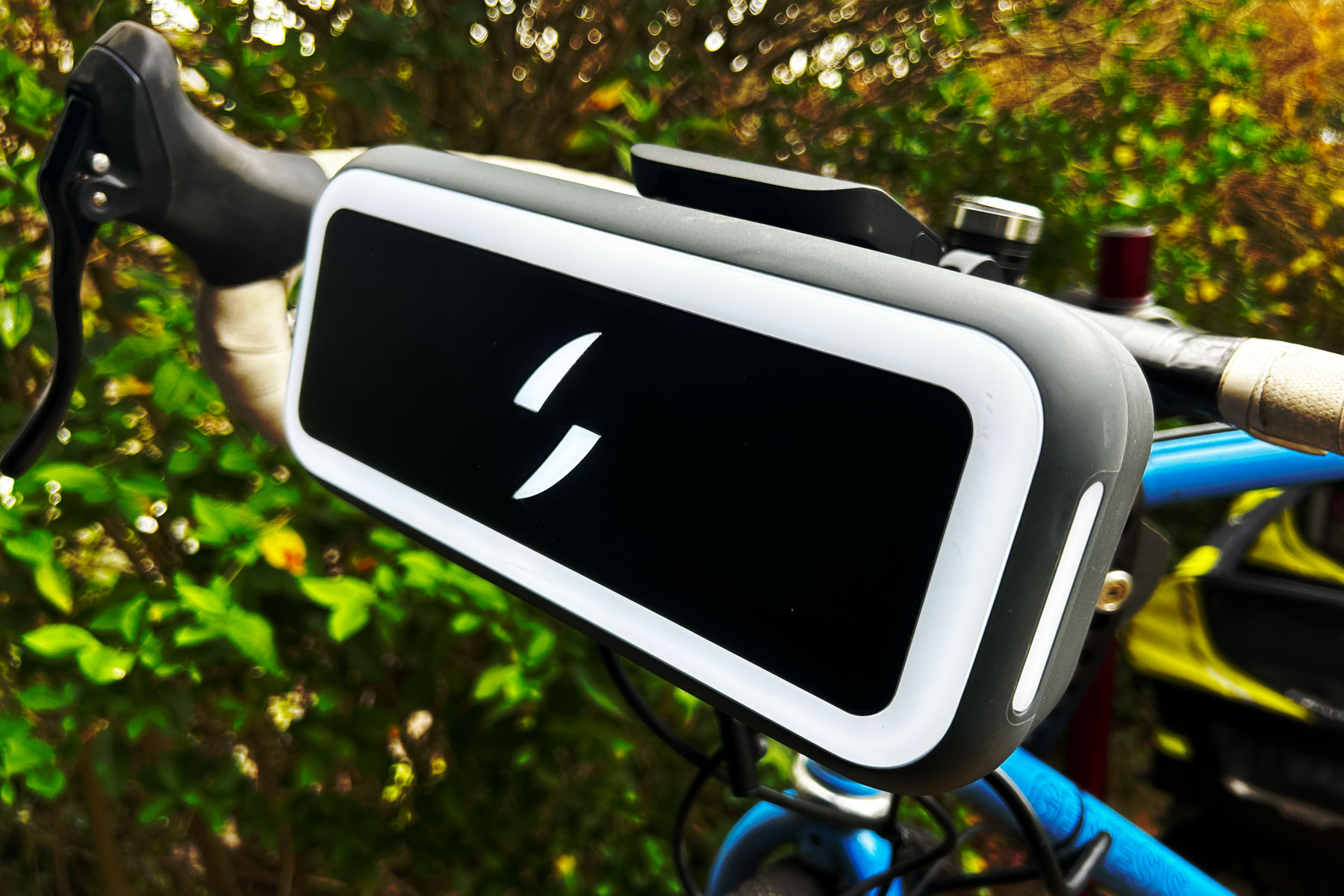
The compact battery is very well designed. Warren Rossiter / OurMedia
Like previous generations, the Swytch Max+ can convert almost any bike into a pedal-assisted electric bike, with a 250-watt motor and a top assisted speed of 15mph.
The Max+ promises an increased range of up to 40 miles from its 274.5Wh-capacity battery.
There’s also a Max++ option, promising a boosted range of 60 miles.
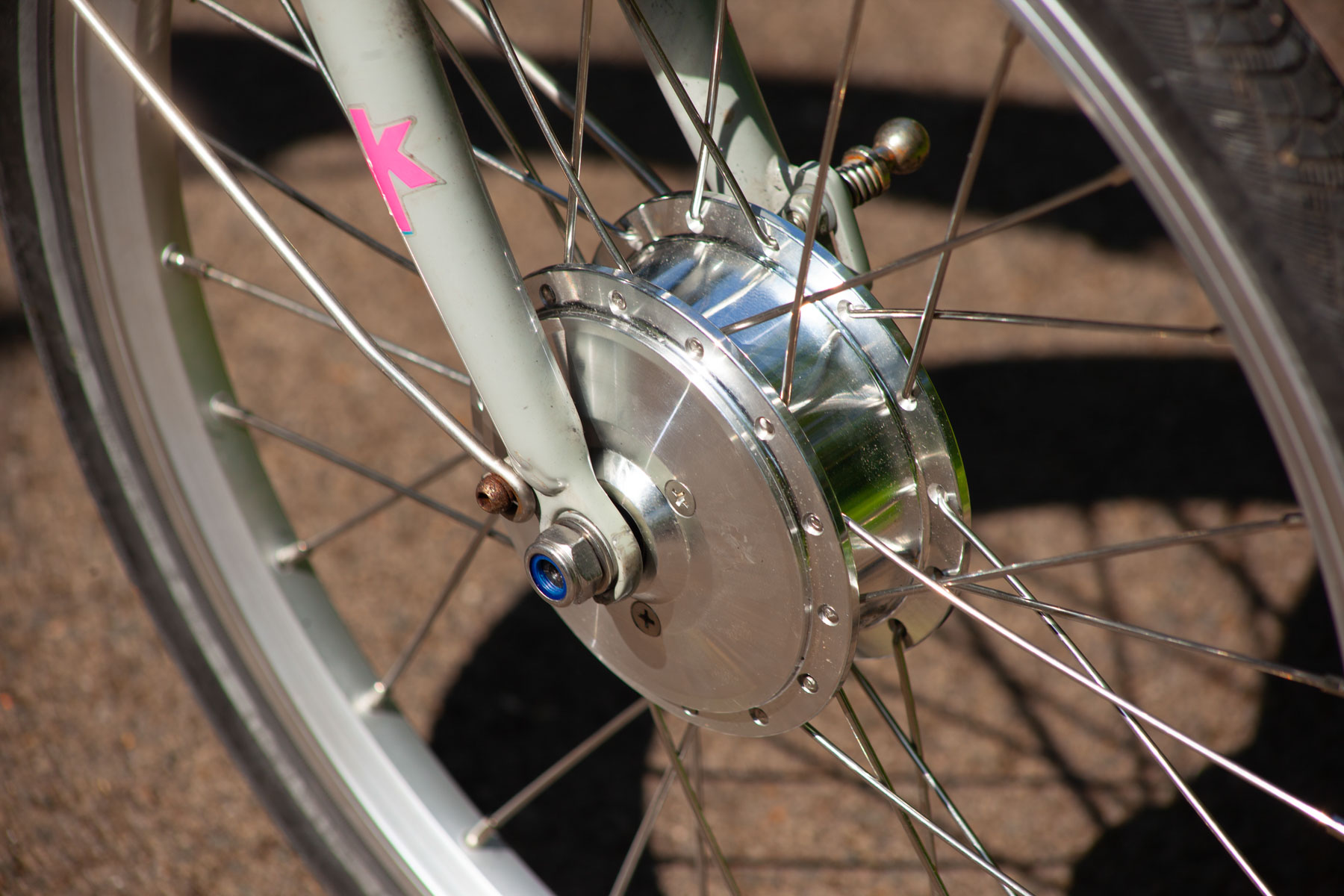
Here’s the Max motor hub built into a 20-inch wheel. Warren Rossiter / OurMedia
The Max+ works by replacing a regular front wheel with a Swytch motor wheel (built at Swytch’s Norwich factory). The quick-release bar-mounted battery can be removed at the flick of a lever. If you remove the battery, your bike becomes a standard bike again.
Swytch’s CEO, Oliver Montague, says this circumvents Transport for London’s recent ban on non-folding ebikes, if a Swytch bike’s battery is removed.
The Max+ is now in stock and on sale at £999.
Swytch Max+ first impressions
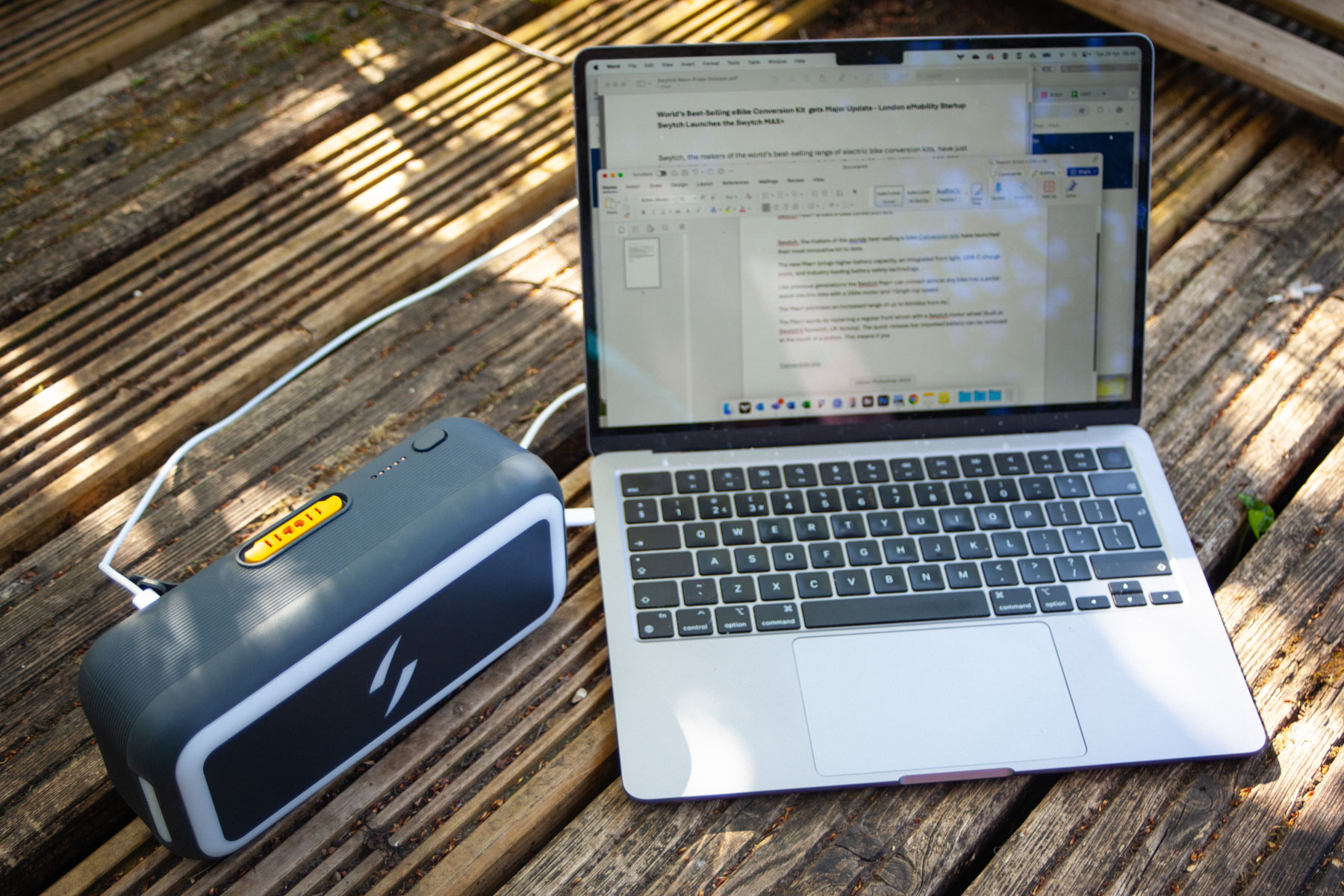
The battery pack’s USB-C port makes it a power source. It powered my laptop to write this article. Warren Rossiter / OurMedia
I’ve received two versions of the new Max+ kits for testing.
The first is built with a 700c disc wheel, which has found its way onto the Genesis Day One used to test the Boost kit.
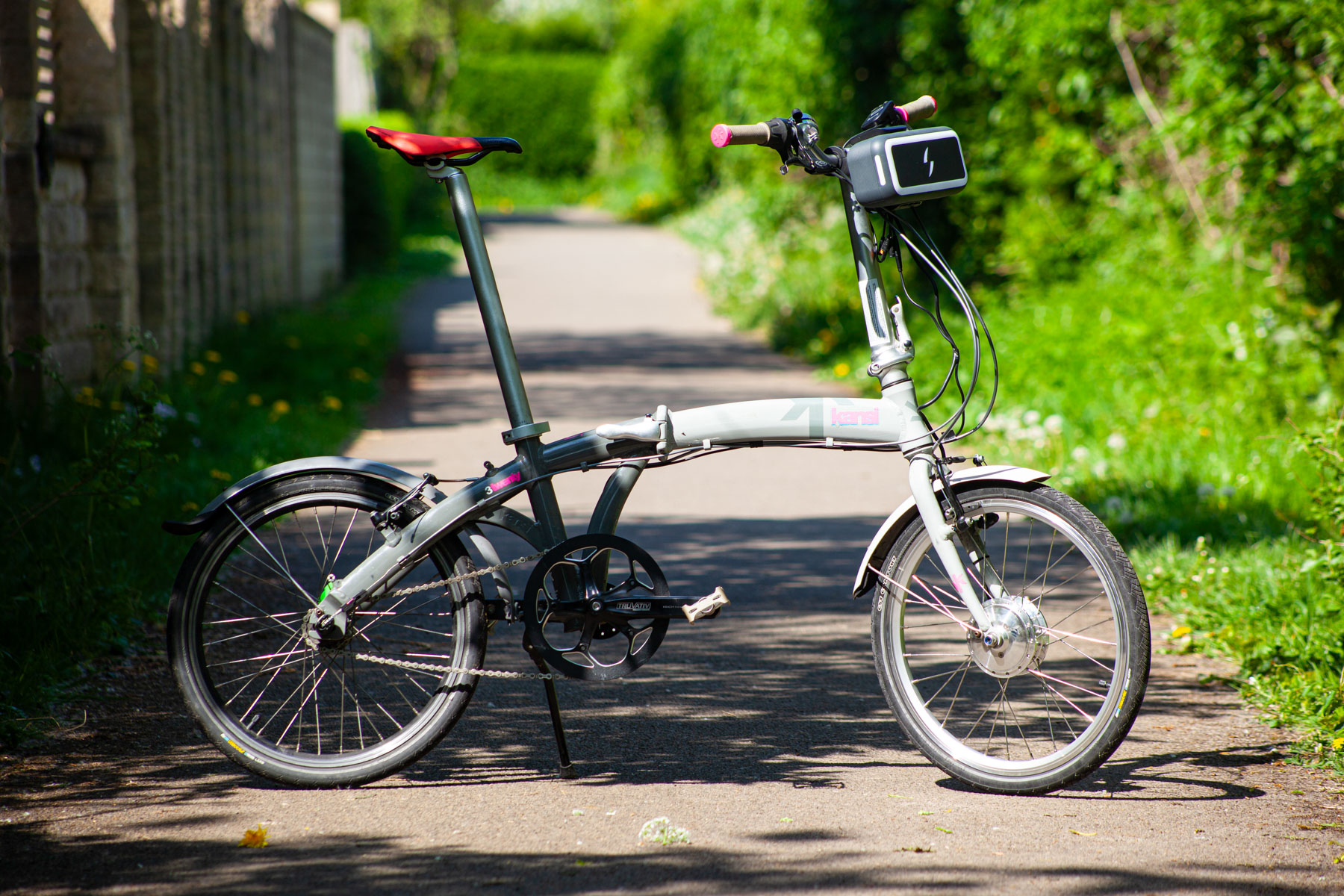
The second is built around a 20in wheel for a Kansi folding bike. I’ll be following up with full tests of both options soon.
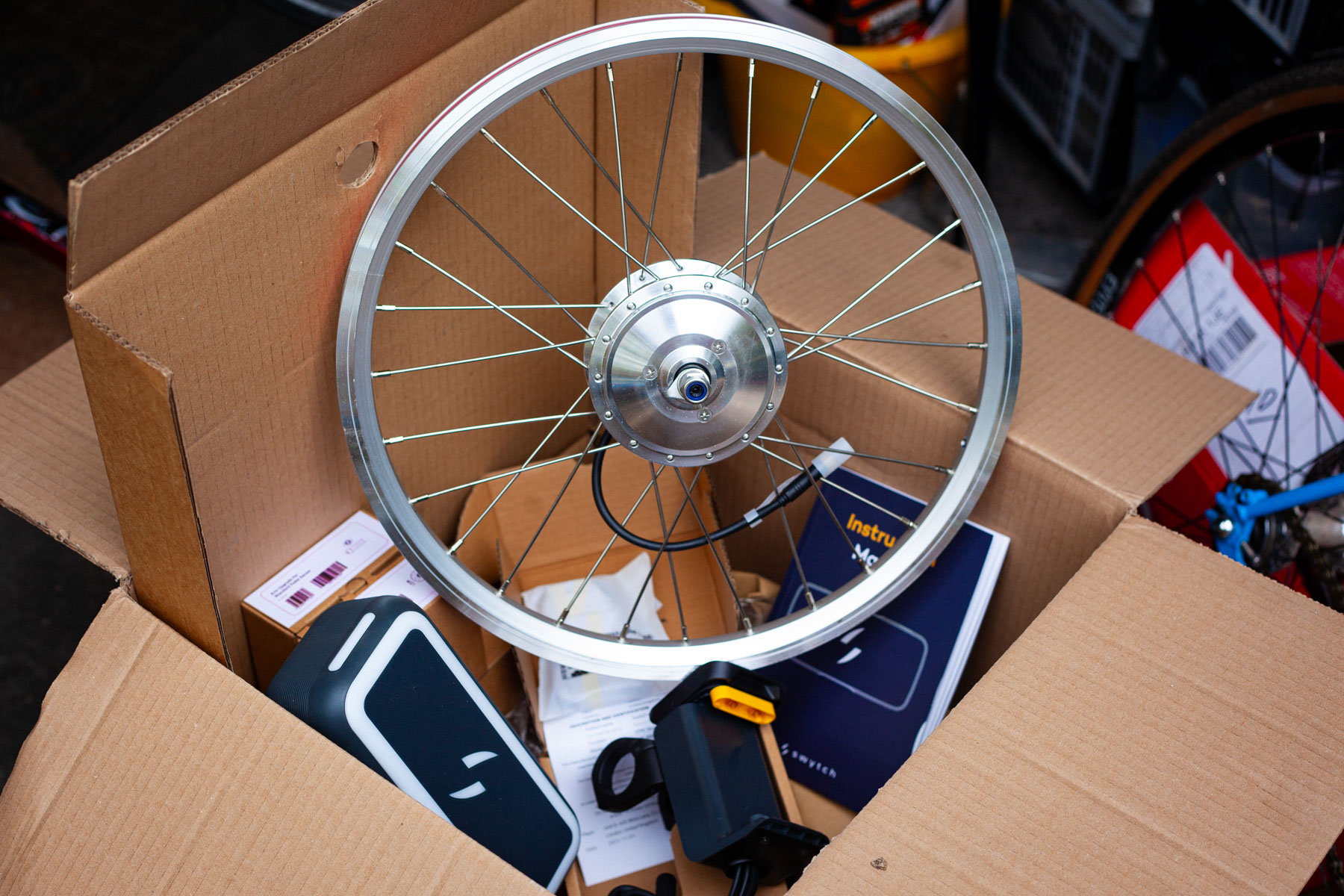
The Max kit arrives in fully recyclable packaging, with a comprehensive instruction manual. Warren Rossiter / OurMedia
It’s a slick-looking system, with a substantial mount for the battery. There are cables to run to the front-hub motor and down to the pedal sensor, which makes your donor bike look somewhat different.
I’d like to see Swytch adopt a wireless pedal sensor, much like Skarper’s strap-on rechargeable unit.
However, I’m impressed by the Swytch kit’s simplicity, along with the presentation, packaging, instructions and overall design.
The fitting of both kits is simple and requires minimal tools: hex keys, snips or scissors for the cable ties, a 17mm spanner for the wheel nuts, and that’s it.
The comprehensive and well-illustrated fitting manual helps things along, and it’s good to see the kit ships in fully recyclable packaging, too.
The battery itself, with its built-in front light and side illumination, is very well thought-out. It’s IPX6 waterproof-rated, which means it’s tested by being sprayed with water at a rate of 100 litres per minute, at a pressure of at least 15psi, for at least three minutes from all directions. This should make it weatherproof for all riding conditions.
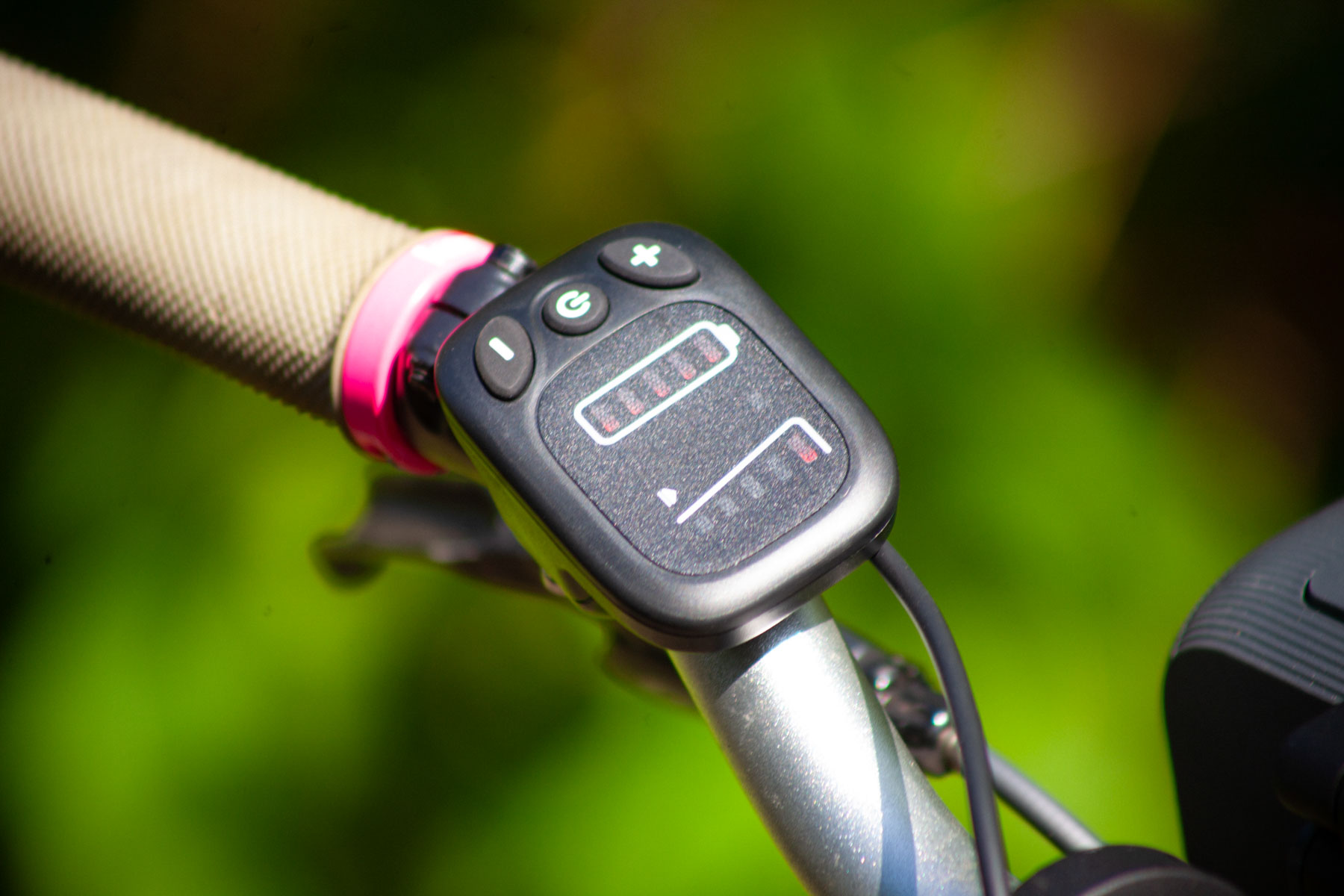
The bar-mounted remote shows the battery level and is home to the mode controls. Warren Rossiter / OurMedia
The inclusion of a USB-C charge port is most welcome, because it means the battery can double-up as a power pack, and its 272Wh capacity is enough to recharge an iPhone approximately 200 times.
The Swytch Max kit took less than 30 minutes to fit to my folding bike. Warren Rossiter / OurMedia
Fitting-wise, it took 25 minutes to convert the Kansi folder and 35 minutes for the Genesis.
Stay tuned for full reviews of the two kits once testing is complete.
US consumers can now buy Canyon bikes via Amazon. The German direct-to-consumer bike brand has listed a selection of entry-level to mid-range urban, recreational and mountain bikes.
Speaking to Bicycle Retailer and Industry News, a Canyon spokesperson said: “Expanding into this space is intended to meet a new consumer on an established platform, making cycling more accessible and convenient for everyone.”
Just don’t expect to find Canyon’s top-flight Aeroad or Ultimate models on Amazon. The company says selling products through the online retailer is to complement its premium range that’s only found on Canyon.com.
Targeting casual to intermediate riders, Canyon’s Amazon storefront has bikes ranging from just over $1,000 to $5,599.
The Canyon Grand Canyon:ON electric mountain bike. Our Media
If you’re looking for road bikes or gravel bikes, you’ll have to stick to Canyon’s website, for now at least.
The move to Amazon follows a period of change for Canyon. Last year, the brand expanded its service partner network in the US through a partnership with REI, the nation’s largest outdoor retailer, adding 28 locations to buy its bikes.
The direct-to-consumer brand’s network already includes 66 independent bike shops in the US.
Last month, Canyon also announced it had laid off an undisclosed number of employees in the US, in a move that was not tied to changes in tariffs. But it said it was employing a “shifting gears roadmap” to strengthen its direct-to-consumer model and grow new markets.
In the UK, Canyon recently opened two ‘Customer Experience Locations’ in London and Sheffield.
These bricks-and-mortar stores follow four Customer Experience Locations in Europe. Canyon is hoping to expand this number to 15 in 2025 across Europe and the US.
Over the years, Canyon has developed a reputation for value, with its direct-to-consumer model eliminating bike shops and enabling it to keep its margins high.
Expanding onto Amazon and focusing on physical locations to buy its bikes doesn’t mean Canyon has neglected its direct consumers, though. In February, Canyon launched the MyCanyon bike customisation programme, which offers consumers a range of paintjobs and componentry, including different stem lengths and groupsets.
Hunt has launched a new range of Aerodynamicist wheelsets that combine class-leading aero efficiency (backed up by wind-tunnel testing) with low weight, at a lower price than their industry-leading rivals. Could these be the performance wheels we’ve been waiting for?
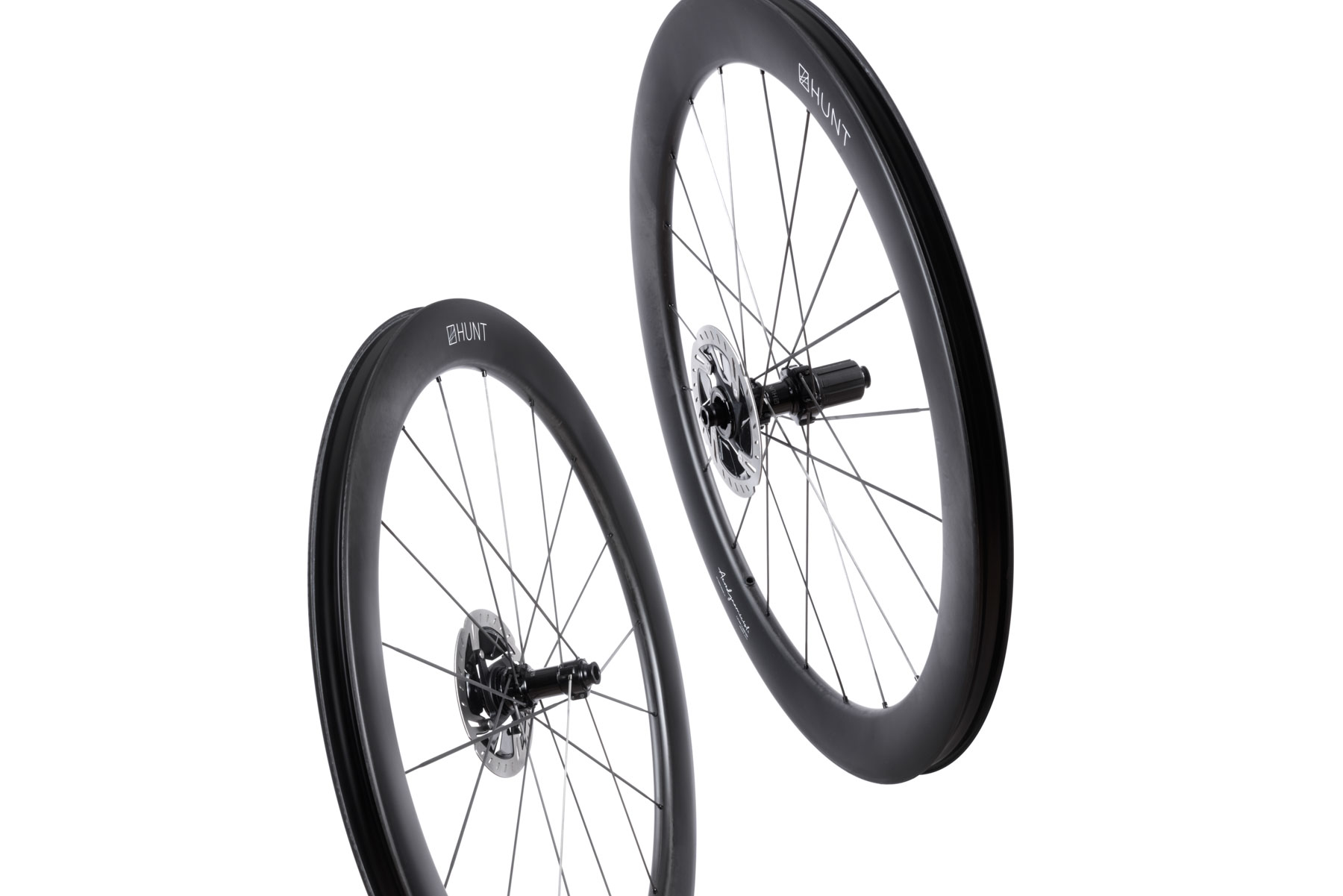
The updated Aerodynamicist wheel line is being launched in three sizes: 34mm, and 44/46mm and 54/58mm-depth combinations.
The wheelsets have Enduro bearings as standard, as well as carbon and steel spoke options.
The new hooked rim design, which has been optimised for 28-30mm road tyres, comes with claimed weights from 1,175g and prices starting at £1,149.
All-new Aerodynamicist
Hunt’s new Aerodynamicist rim profile uses a hooked design. Hunt
The new in-house engineered Aerodynamicist range differs from the Sussex wheel specialist’s high-end Limitless wheelsets. The new differential rim design is based around hooked rim profiles rather than hookless, a standard Hunt debuted back in 2016, alongside ENVE.
Going with a hooked design rather than hookless will be music to the ears of fans of clincher tyres. With brands still launching high-performance clincher tyres, the Aerodynamicist range could be the best option around.
Hunt’s aim with the new wheelsets was to match the previous-generation Aerodynamicist wheels across all sizes, but now optimised for larger tyres (from 28 to 30mm).
The Aerodynamicist has been developed over three years, with 47,000 hours of computer processing time alongside lots of wind-tunnel testing.
Different sizes
Hunt’s 44/46 wheelset has differential rim sizes front and rear. Hunt
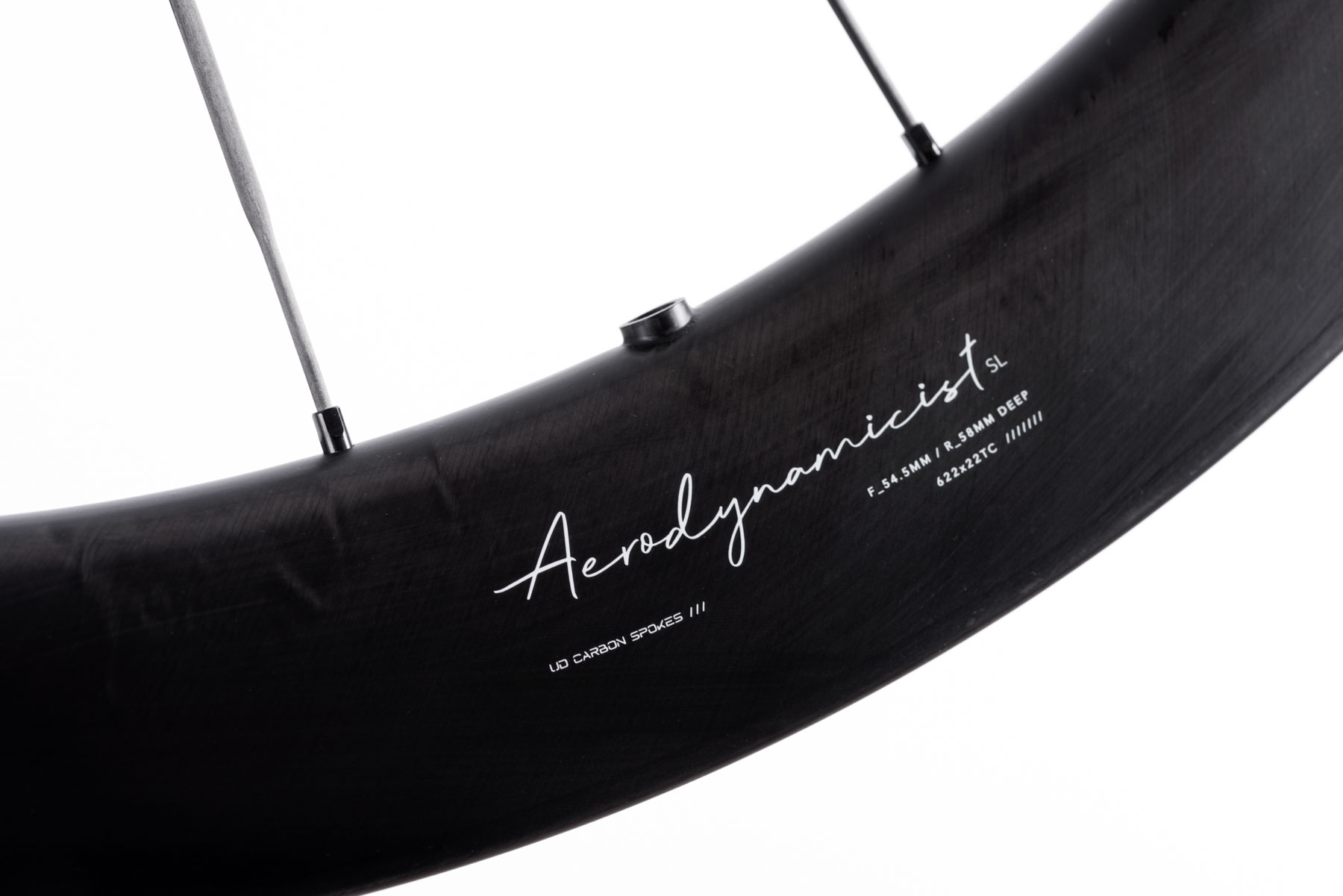
The new rim profiles come with a 22mm internal width across all heights, although, like the Limitless, the external widths vary across the sizes. The front and rear profiles also differ.
Hunt’s senior design engineer, Patrick Brown, told us this not only improves aerodynamic efficiency, but also helps reduce the mass in the rims, bringing down overall weight across all models.
The Hunt Aerodynamicist’s largest size combines a 54mm-deep front wheel and a 58mm-deep rear wheel. Hunt
The largest of the trio comes with a 54mm-deep, 31.7mm-wide front rim and a 58mm-deep, 30mm-wide rear. The all-rounder option comes with a 44mm-deep front and 30mm width, and a 46mm-deep rear with the same 30mm external width.
Hunt’s new 34mm-deep Aerodynamicist wheels. Hunt
The lightest option comes with 34.5mm-deep rims, both with a 28.4mm external width.
All wheels come with a 22mm internal rim width.
Options and weights
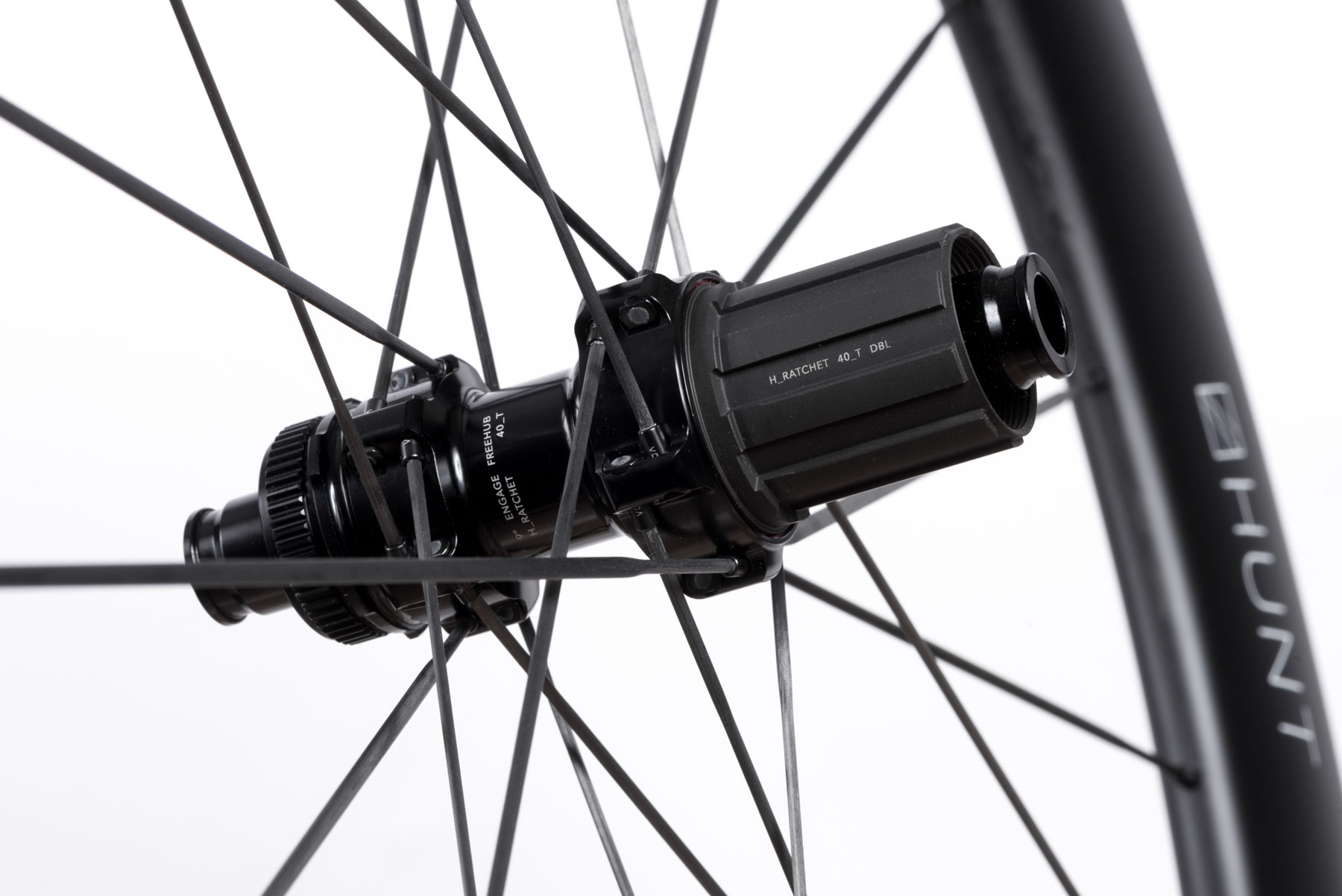
The H Ratchet freehub uses a dual-sided 40-tooth ratchet for a nine-degree engagement. Hunt
The new Aerodynamicist range is available with either UD Carbon spokes or triple-butted aero wing steel spokes.
All wheels come with Hunt’s hubs, constructed from lightweight 6066-T6 aluminium with a 7075-T6 alloy axle. The rear hub comes with the H Ratchet 40T DBL freehub system.
The dual-sided ratchet has a 40-tooth drive interface for a nine-degree engagement. Hunt says the ratchet requires less shell material compared to the standard pawl system, making for a lighter hub.
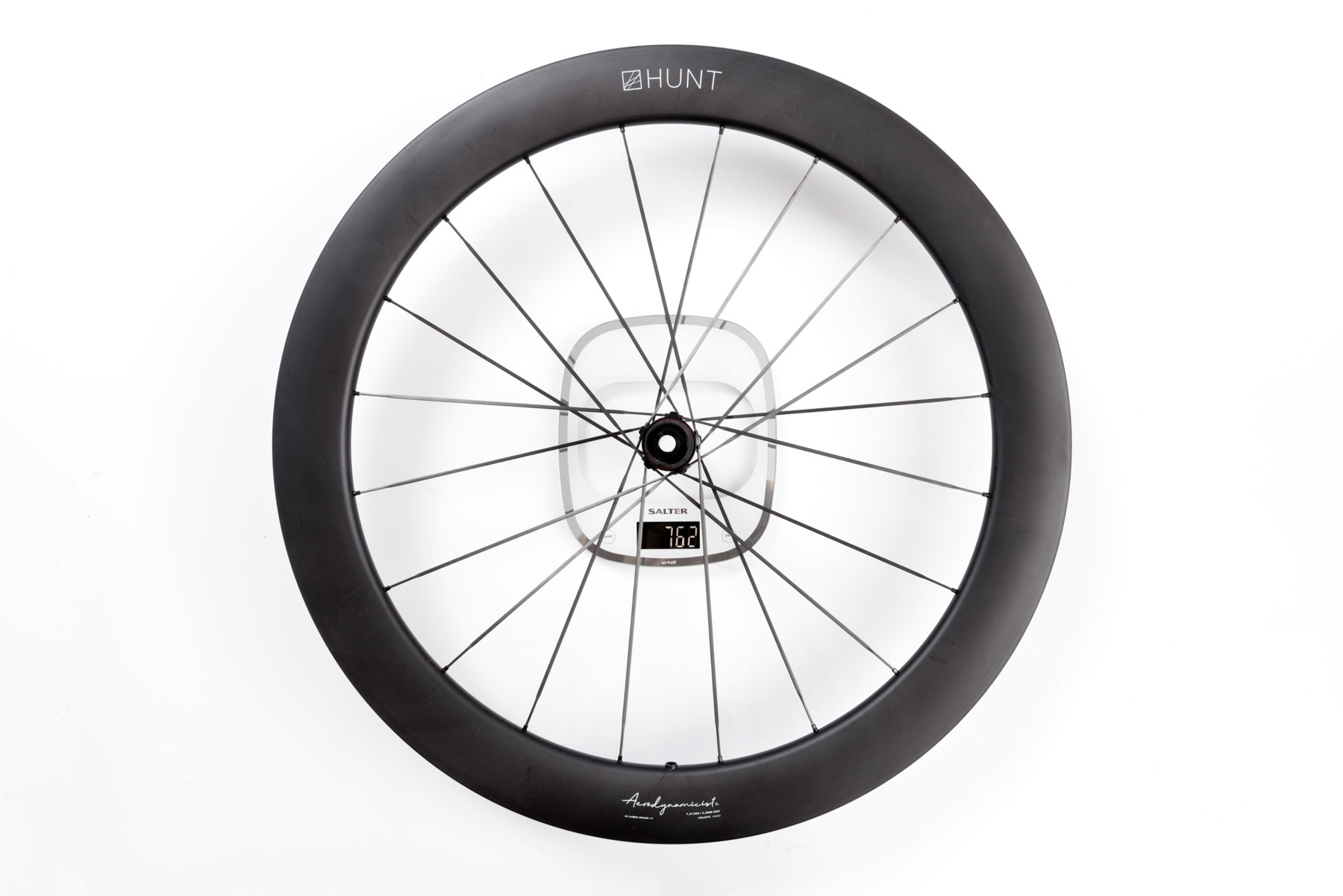
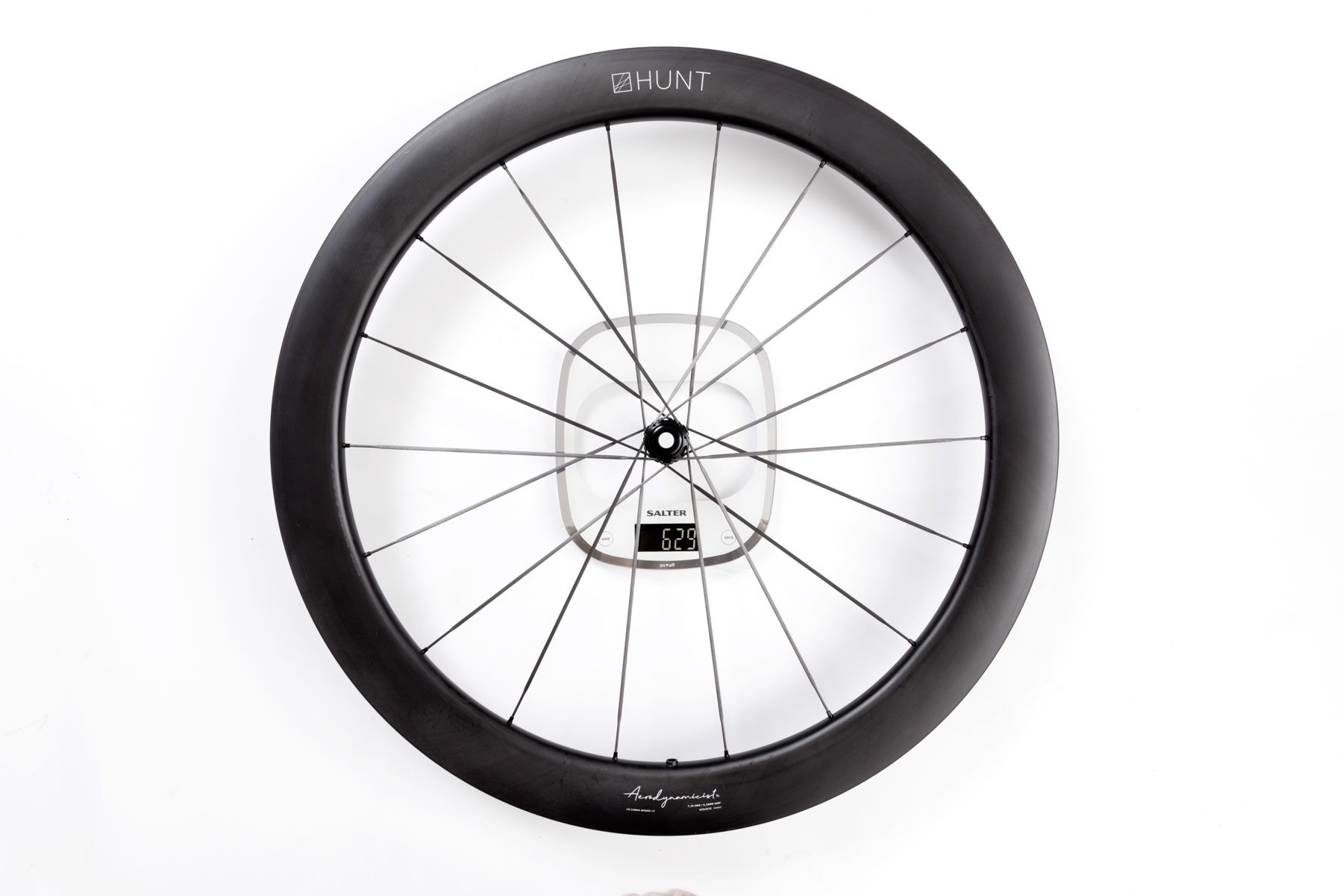
The 58mm-deep rear wheel weighs 762g in its carbon spoke option. Hunt The 54mm-deep Aerodynamicist front wheel weighs 629g. Hunt
The hubs come equipped with Enduro’s steel ABEC 5 cartridge bearings.
As before, the Aerodynamicist is available in two build options – the premium version with UD Carbon bladed spokes and a standard model with triple-butted aero wing steel spokes.
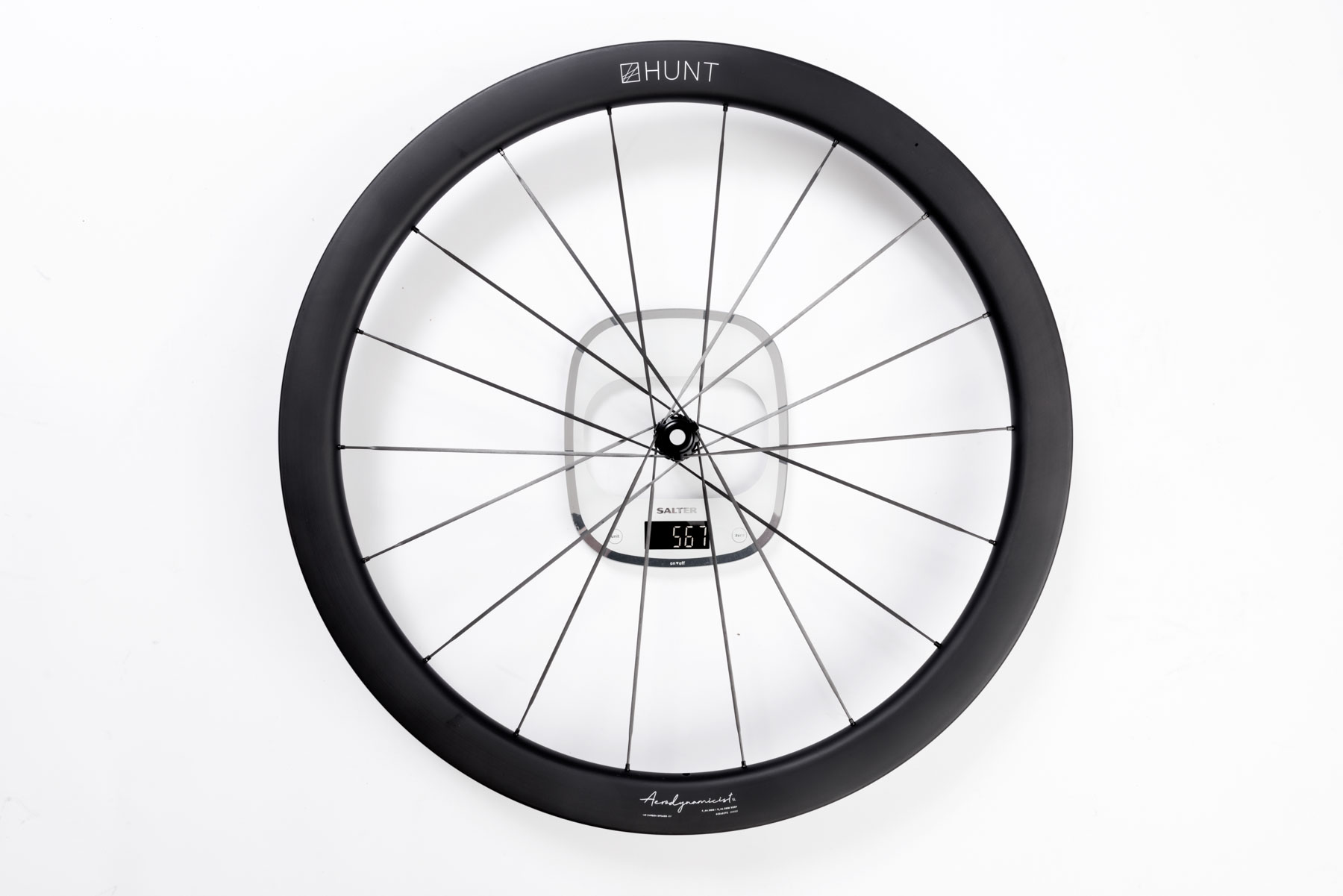
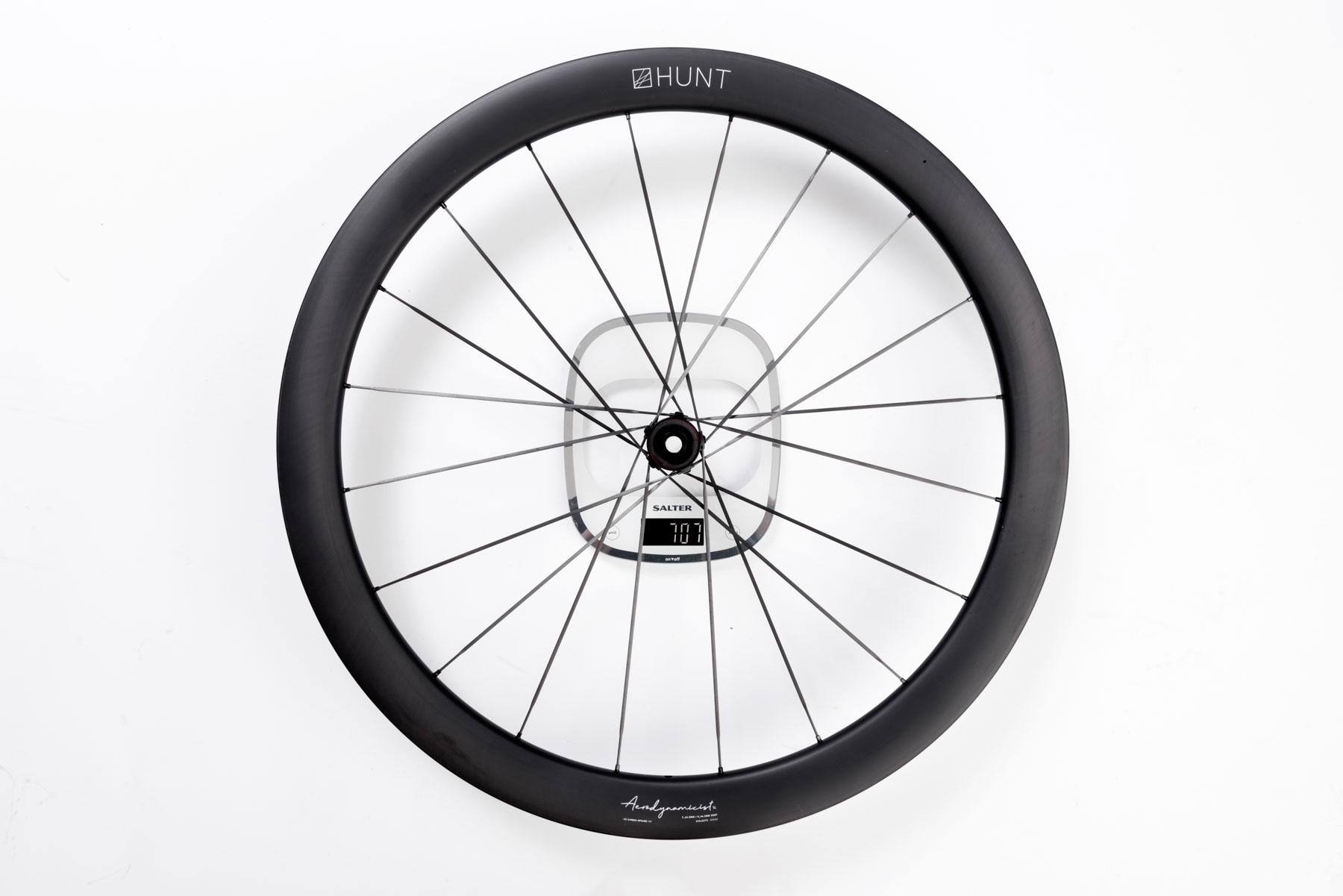
Hunt’s Aerodynamicist 44 front wheel weighs 567g. Hunt The Hunt 46 rear wheel tips the scales at 707g. Hunt
54/58: 1,391g with carbon spokes, 1,468g with steel spokes
44/46: 1,274g with carbon spokes, 1,364g with steel spokes
34/34: 1,175g with carbon spokes, 1,264g with steel spokes
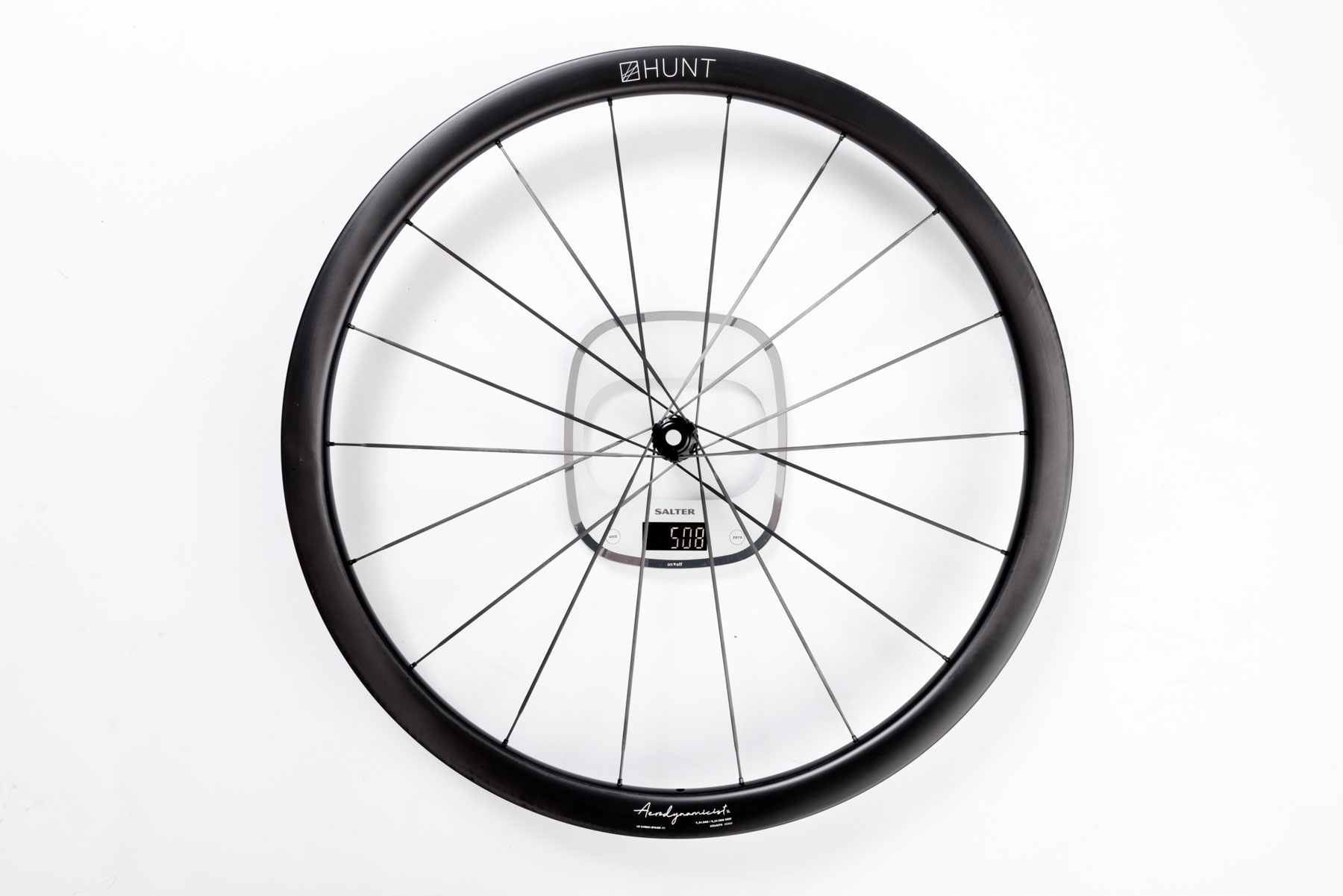
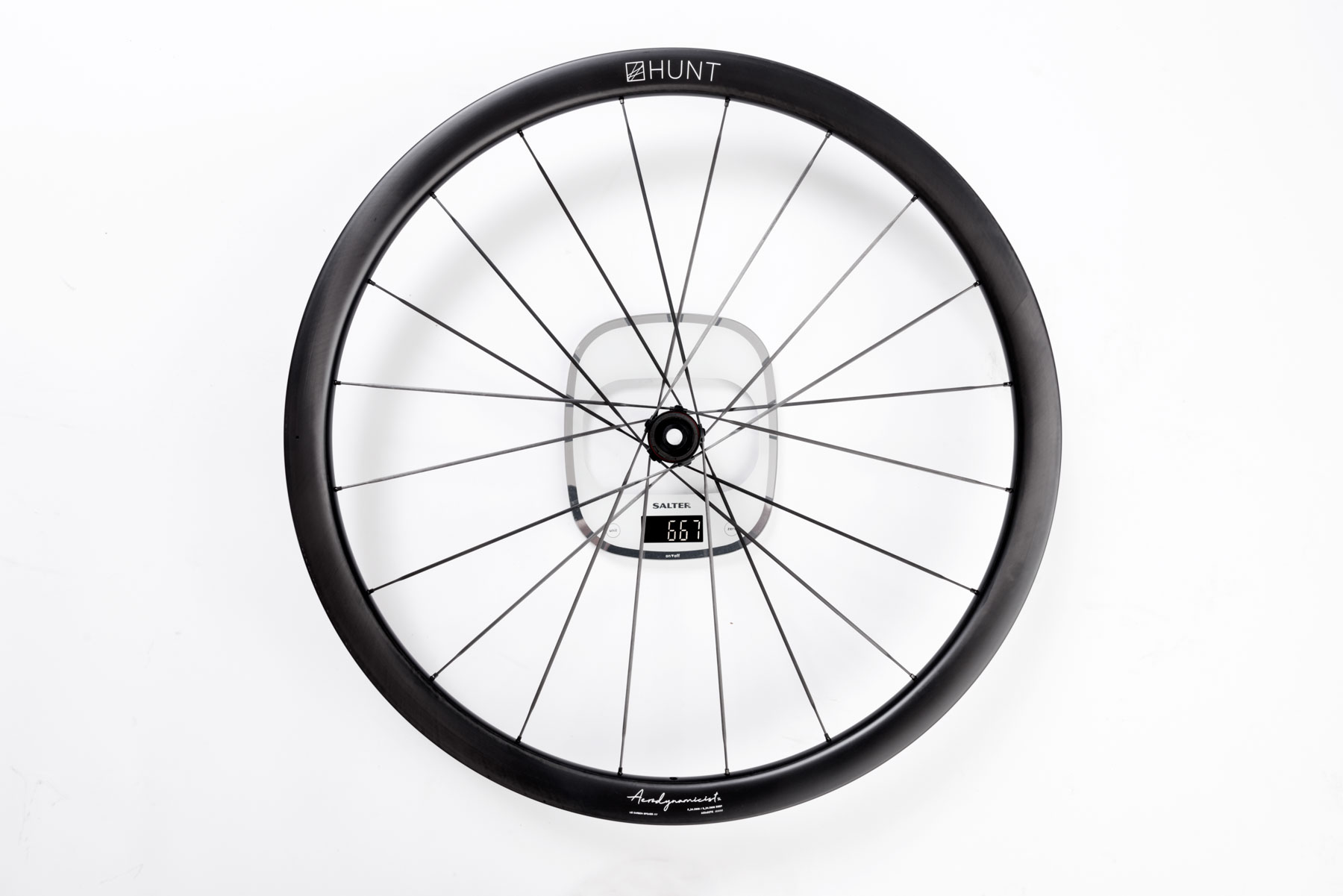
Hunt’s Aerodynamicist 34 front wheel weighs 508g with carbon spokes. Hunt The rear 34 Aerodynamicist weighs 667g. Hunt
Proven faster
Hunt claims the new Aerodynamicist range, paired with a 28mm Schwalbe Pro One tyre, offers an average 1.4-watt (2%) saving compared to the previous models.
When benchmarked against industry-leading wheelsets, Hunt’s wind tunnel results were positive.
All the wheel sizes were tested in the wind tunnel using Mavic’s WAD (wind averaged drag) protocol to analyse the data. WAD is explained as “The time spent at any given yaw angle will be different, depending on the conditions and route”.
To give a consistent method of combining these yaw angles into a single (WAD) value, Mavic has developed and published a ‘ponderation law’.
Wind angles over 15 degrees are unusual (and the WAD takes this into account), but this is a situation where the steering moment experienced by the rider is accentuated, leading to a feeling of instability.
Above 15-degree yaw angles, although experienced less often, it can have a significant effect on aerodynamic performance if stalling has occurred, leading to airflow detachment.
Wind tunnel results
In the shallowest 34/34 size, the Aerodynamicists were only outperformed in low aero drag (WAD) by Shimano’s Dura-Ace C36s, which bettered the Hunt wheels by 0.58W, although the Aerodynamicists weigh 172g less than Shimano’s 1,368g. The Hunts bettered Reserve’s 34/37, the DT Swiss ERC 1400 35, Campagnolo’s Bora Ultra WTC 35, Roval’s Alpinist CLX II and Mavic’s Cosmic 32.
In the 44/46 size, the Hunts topped the testing, besting Mavic’s Cosmic 45 SL, the ENVE Foundation 45, Zipp’s 353 NSW, the DT Swiss ERC 1400 45, Zipp’s 303 Firecrest and 303s and Campagnolo’s Bora WTO 45s. The difference between the top and bottom of the list, however, was a mere 2.47W (WAD). The Aerodynamicists are the lightest in this test group.
On the largest 54/58 wheels, the Aerodynamicist also topped the testing table, besting ENVE’s SES 4.5, Zipp’s 404 Firecrest, the Reserve 52/63, Shimano C50, Zipp 454 NSW and Roval’s Rapide CL II (round spoke version). The difference between the top and bottom of the range tested was 3.12W (WAD), and again, Hunt’s 54/48 was the lightest wheelset at this depth.
For a full run-down of the aerodynamic testing, head over to Hunt’s website to read the white paper that covers both results and testing protocols.
The US bicycle industry’s trade association, PeopleForBikes, says Trump’s tariffs will have “devastating impacts” on the industry if they aren’t adjusted in the short term, in an open letter addressed to the President.
PeopleForBikes represents more than 340 US manufacturers, suppliers and distributors of cycling products. Published this week, the open letter requests tariff relief or an exclusion process for bicycles and bicycle equipment.
“The current tariffs on complete bicycles and components used for assembly, imported from countries around the globe, will have devastating impacts on our industry if not adjusted in the near term. We are hearing concerns around additional layoffs and the risk of more companies closing their operations, including some of our few remaining domestic manufacturers,” the letter reads.
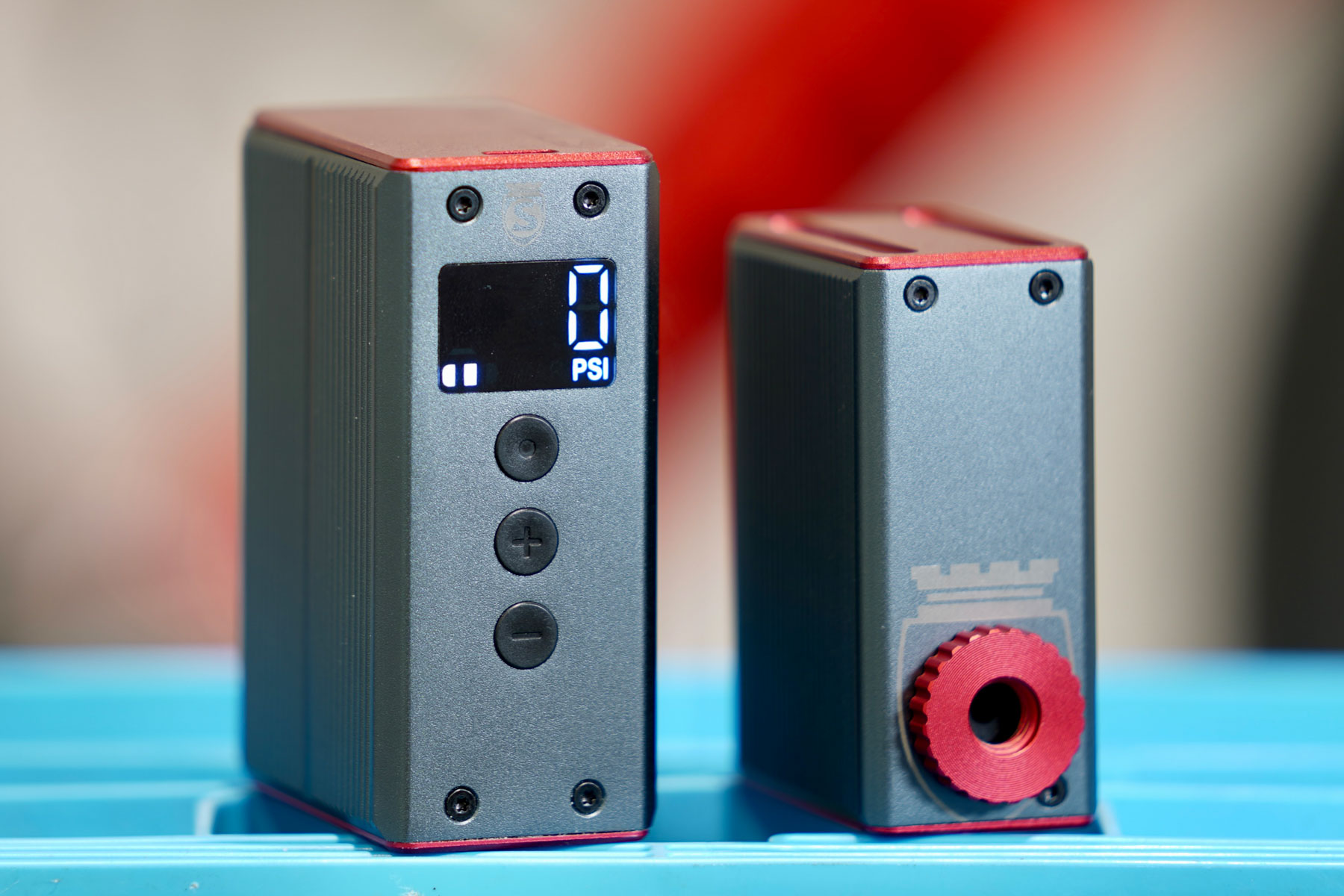
The tariffs announced by Donald Trump in early April have already begun to cause chaos in the cycling industry. Specialized and Trek have hiked prices in the US, while other brands have cancelled shipments, and Silca even described launching a product in the US as “not viable”.
Silca says it’s not viable to sell its Elettrico Ultimate electric pump in the US. Silca
While Trump has said his tariffs will boost US industry, PeopleForBikes warns that difficulties persist in moving the supply chain.
“[E]ach bicycle may have 200 or more component parts that are still primarily sourced from sub-suppliers in foreign countries,” PeopleForBikes explains. “Developing a domestic manufacturing base for this wide variety of components will take substantial time and capital investment at a time when capital is hard to come by and cash flow is tight. Even without new, additional tariffs, our industry was already projecting a 3.7% decrease in sales, driven by higher aggregate price levels and weaker consumer confidence.”
The trade association says that while the USA once made all the bicycles it needed domestically, this has not been the case for several decades. The letter says that since the mid-1990s, low-cost imports from China have threatened American companies, and that a combination of “unfair foreign competition and unwise U.S. trade policy” led to the closure of bicycle factories in the country.
According to a 2021 study, 87 per cent of bikes imported to the US are from China.
PeopleForBikes says it appreciates President Trump’s “focus on China’s competitive threat” and closing of the de minimis loophole, which eliminates the duty-free import of low-value commodities “which has undermined the U.S. bicycle industry and local bike retailers across America for many years”.
The letter also outlines how US manufacturers are facing increased steel and aluminium prices from foreign and domestic sources, while the lack of domestic textile manufacturing could put cycling clothing manufacturers out of business.
Current and proposed tariffs on bicycle helmets is another issue the letter, sent on 29 April, raises. It says these tariffs “make buying this essential and legally required safety equipment much less affordable” and could leave cyclists without protection.
“The bicycle industry has enriched American lives for more than a century,” says PeopleForBikes president and CEO Jenn Dice. “We urge the administration to give our businesses the runway they need to compete globally, invest domestically, and keep biking safe, affordable, and accessible for everyone.”


 B580, AMD Radeon