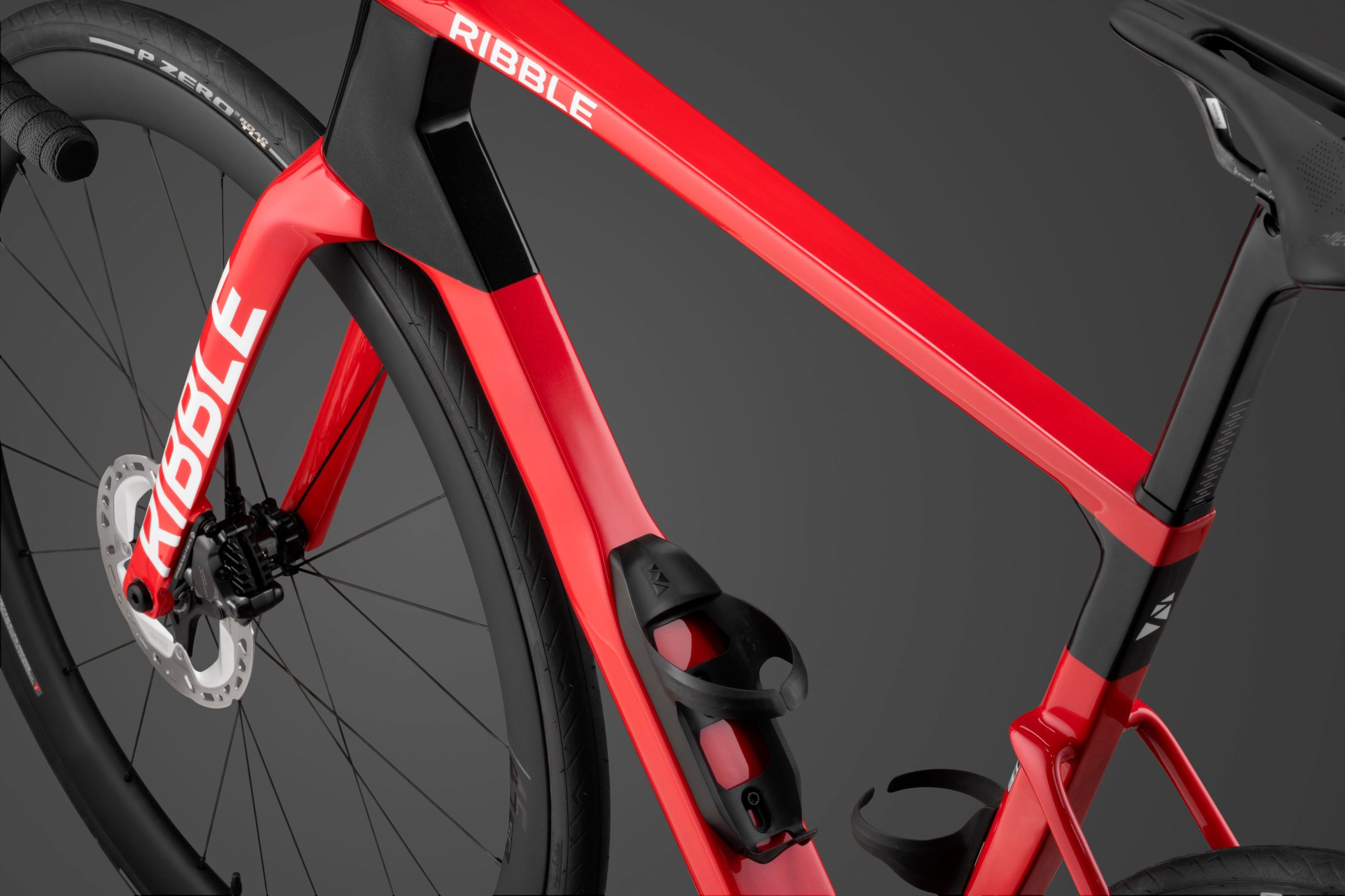
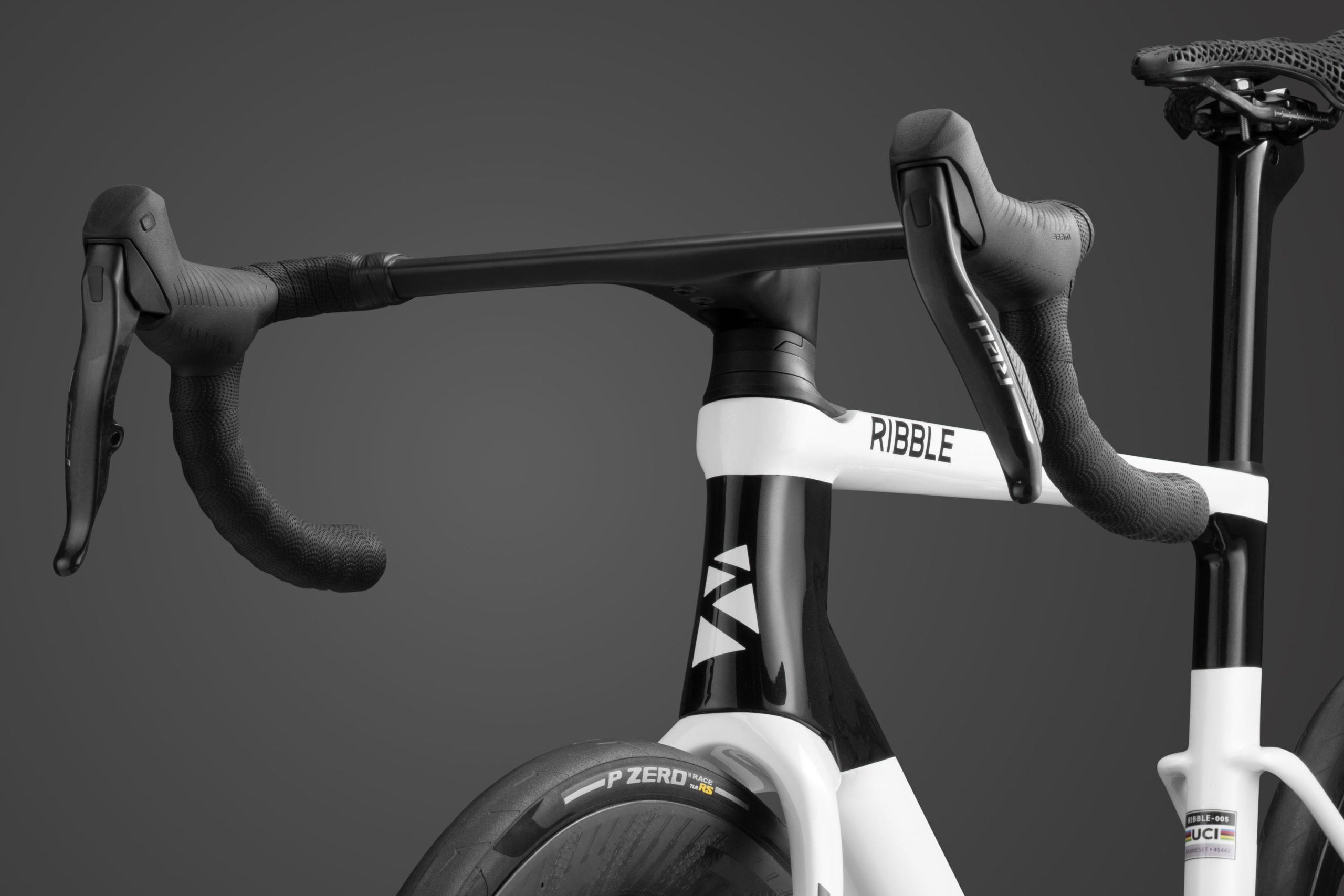
If you’re racing on Zwift, using the fastest frame and wheels available can cut some significant time off your efforts. But figuring out where to spend your hard-earned Drops can be confusing! So we’ve put together this table which lists the fastest frame and wheelset available at every Zwift level.
Keep in mind this list applies only to road bikes on flat and rolling routes. The data here doesn’t apply to climbing races or time trials using TT frames. (That info will come in other posts.)
Fastest Frames
Level
Fastest Frame
Time Savings
1
Zwift Steel (Free)
0s
3
Zwift Carbon (55,000)
5.1s
5
Parlee ESX (153,200)
30.9s
8
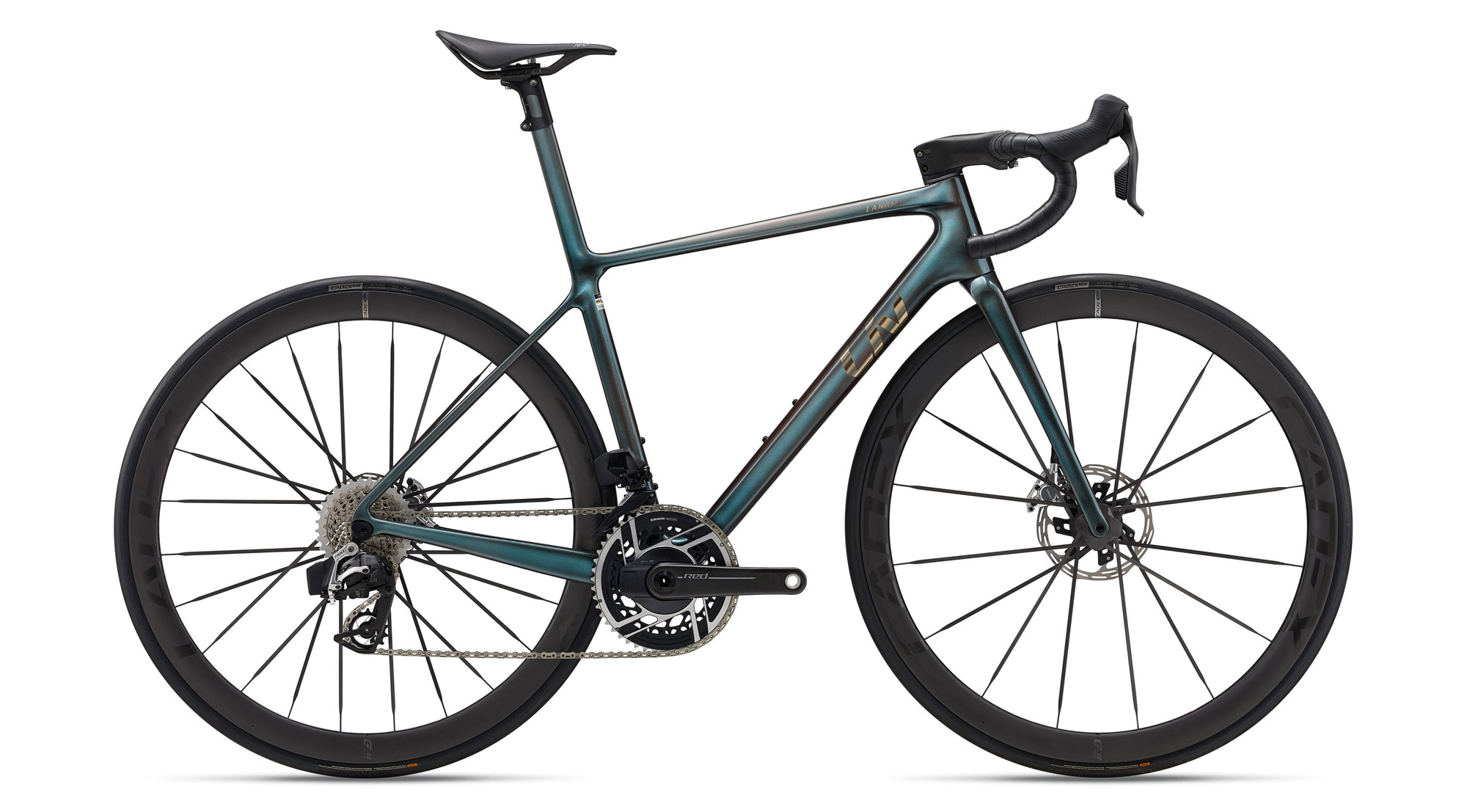
Liv Langma Advanced SL 2025 (1,000,000)
65.2s
10
Canyon Aeroad 2024 (1,100,00)*
68.1s
* The Canyon Aeroad 2024, Felt AR (level 23), Cervelo S5 2020 (level 36), Specialized Venge S-Works 2019 (level 37), Specialized S-Works Tarmac SL8 (level 40), and Pinarello Dogma F 2024 (level 40) all turn in times within ~1 second of each other in our flat tests, so we consider them to be essentially equal in flat performance. They differ significantly in climb performance, though (learn more) so you’ll want to pay attention to that metric when choosing a bike.
Fastest Wheelsets
Level
Fastest Wheelset
Time Savings
1
Zwift Classic (Free)
0s
3
Zwift 32mm Carbon (100,000)
6.2s
6
Mavic Cosmic Ultimate UST (525,000)
24s
7
Mavic Cosmic CXR60c (150,000)
26.4s
12
Shimano C60 (325,000)
31.6s
15
Roval Rapide CLX (500,000)
33.4s
16
Roval CLX64 (525,000)
40.1s
25
Zipp 808 (425,000)
42.1s
28
Enve SES 8.9 (550,000) fastest non-disc1
52.9s
37
Zipp 858/Super9 (750,000) fastest disc2
54.7s
1 The Enve SES 8.9 wheels are the fastest non-disc aero wheelset, making them the fastest legal wheelset for some top-end Zwift Esports races where disc wheels are not allowed.
2 Disc wheels perform better on TT frames than road frames, so the performance gap between disc and non-disc wheels will be larger on TT frames vs road frames. The data above applies to road frames only.
Total time savings of fastest frame and wheelset over stock Zwift setup (Zwift Steel frame and Zwift Classic wheels): 68.1+54.7=122.8 seconds
Times above based on our flat speed tests, done with a solo 75kg, 183cm rider at 300 watts on Watopia’s very flat Tempus Fugit route.
Strategic Shopping
It may seem simplest to just purchase each frame or wheelset on the list as soon as you level up, but if you want to maximize performance you also need to take Zwift’s Bike Upgrade functionality into account, since it rewards riders who stay on the same frame long enough to fully upgrade it. Simply put: it doesn’t make sense to buy each frame/wheelset on this list, since you won’t be able to fully upgrade it before having access to buy the next fastest frame. So you’ll need to choose your purchases/upgrades wisely.
Speaking of upgrades: all the time data in this post is from un-upgraded versions of the frames. Upgraded frames will be even faster. Get more details here >
The Zwift Concept Z1 (Tron) bike is much faster than the stock Zwift Steel+Classic wheels setup, and in fact just slightly faster than the fastest setup shown above.
The Tron bike doesn’t climb well, though, a fact you’ll want to consider if you are racing a course with any significant hills.
We didn’t include the Tron in the chart above since you can’t separate the Tron’s frame from its wheels, and there is no set level where the Tron bike is unlocked. That said, we think it’s certainly a bike worth unlocking! Here’s how to do that >
The biggest performance gains come early in a Zwifter’s level progression. Here’s how much time you would be saving at each level if you upgraded to the recommended setups above:
You can see that purchasing the fastest frame and wheelset at level 10 delivers 77% of the overall possible improvement. And once you’ve hit level 37, the only way you’ll get faster is by racing smarter and training stronger!
Hopefully this helps you select a bike for your next race, no matter your Zwift level. Got questions or comments? Post below!
Important note: this post contains speed test results for Zwift frames or wheels. These results may change over time, and a bike’s performance relative to others may also change. We don’t always revise posts when performance rankings change, but we do keep current, master versions of our speed test results which are always available. See the frame charts, wheel charts, and Tron vs Top Performers for current performance data.
Eddy Merckx bikes has announced a limited-edition version of its Pévèle Carbon all-road bike, designed in collaboration with Capri-Sun.
Inspired by the Capri Sonne–Campagnolo–Merckx professional team, which rode on Eddy Merckx bikes in 1982, the Pévèle Carbon is treated to a limited-edition paintjob inspired by the colours of the German drinks brand.
Alongside the bike, a retro-inspired Capri-Sun jersey will also be available, in the same blue and orange colours the team wore that year.
The Capri-Sun x Eddy Merckx Pévèle C will be available to order from 16 May – the International Day of Living Together in Peace (as declared by the United Nations) “until the end of September”, and will cost €5,575.
What might seem like an unexpected collaboration at first glance has its roots in cycling history. Eddy Merckx
The carbon fibre all-road frameset blends road and gravel geometry, and features clearance for tyres up to 38mm wide. The build also features a Shimano 105 Di2 R7100 groupset and a set of Forza carbon road bike wheels.
Alternatively, riders will be able to customise the bike’s spec using the brand’s online bike configurator.
According to the Belgian brand, all proceeds from sales of the bike will go to War Child – a non-governmental organisation (NGO) that supports children affected by war.
The Capri-Sun x Eddy Merckx jersey is inspired by the pro team that rode Eddy Merckx bikes in 1982. Eddy Merckx The original Capri Sonne–Campagnolo–Merckx team jersey, as worn by Dutch star Peter Winnen. HR/Cor Vos
Dutch cyclist Peter Winnen was the team’s star rider. Winnen won stage 17 of the 1982 Tour de France and finished fourth in the general classification, marking the team’s high point. Eddy Merckx bikes says: “One year later, the team disappears from the peloton, but the fruity aftertaste of that moment still lingers today.”
The Capri-Sun x Eddy Merckx Pévèle C features a playful paintjob inspired by the German drinks brand. Eddy Merckx A juicy collaboration. Eddy Merckx The paintjob includes retro-inspired Eddy Merckx logos, calling back to the 1980s. Eddy Merckx The Capri-Sun x Eddy Merckx Pévèle C will cost €5,575 and features a Shimano 105 Di2 build. Eddy Merckx
For the longest time, the Tron Bike (Concept Z1) has been one of the top-performing frames on Zwift. In this week’s top video, one Zwifter shares whether he thinks unlocking and upgrading the Tron Bike is still worth it.
We’re also featuring videos about the latest Zwift/indoor cycling news, a rider’s first time trial, and vlogs from professional athletes.
Is It Worth It to Upgrade the Tron Bike?
With the recent addition of bike upgrades, bike selection on Zwift is more strategic than ever. Road to A breaks down whether upgrading the Tron Bike is still worth it, considering the recent changes.
The Spring Sports Tech Tsunami Begins! Part One
Hear from Desfit and DCRainmaker as they discuss Zwift Community Live, new Zwift features, and the Elite Square Smart Frame.
My First Time Trial Race on Zwift
Ryan Condon tackles his first-ever time trial on Zwift. Watch as he conquers the famous Bologna TT course!
Full Training Week for the US Championships || running, injury recovery, cross training, & new goals
Get an inside look at a full week of training for professional runner Allie Ostrander, who schedules multiple Zwift rides each week to supplement her running.
Episode 2: “That wasn’t the plan”
In episode 2 of professional cyclist Puck Moonen’s vlog series, she documents her Zwift workouts, sim racing, and life.
Got a Great Zwift Video?
Share the link below and we may feature it in an upcoming post!
A new Campagnolo wireless electronic groupset has broken cover at the 2025 Giro d’Italia.
Adorning the bikes of Stefano Oldani of Cofidis, and Alessandro Pinarello of VF Group – Bardiani CSF – Faizanè, the new groupset appears to make some significant changes compared to Campagnolo’s existing Super Record Wireless groupset.
It seems the legendary Italian brand also looks set to update the shifter button layout, moving away from its current configuration and potentially bringing back its beloved thumb shifter (though not in its classic form).
While Campagnolo is understandably tight-lipped on this development, let’s take a look at what we can glean from the race photos – and what this might mean for the historic brand.
Campagnolo goes 13-speed for road
Campagnolo’s new 13-speed Super Record Wireless rear derailleur looks like a weight-weenie’s dream.
In our electronic age, the rear derailleur is the beating heart of any modern groupset, and it’s here we see some of the most significant changes.
As usual with Campagnolo Super Record, there’s still plenty of carbon fibre, and a Super Record Wireless battery is still located at the rear of the main body, just above the lower pivots.
However, Campagnolo looks to have aggressively cut material (and therefore likely weight, too) from the new rear mech, with a hollow outer parallelogram plate and a new hollow section near the hanger bolt.
From the looks of things, Campagnolo looks keen to challenge SRAM Red AXS’s claim to be the lightest electronic groupset (with disc brakes) available.
The new rear derailleur uses an updated pulley cage. Tim de Waele / Getty Images
The pulley cage has also seen significant reshaping, moving away from the smooth, curved design seen on the current Super Record Wireless rear derailleur, to a more angular design.
The two pulley wheels also appear to use taller teeth. Could this be designed to offer improved chain management when run in a 1x configuration? Oldani’s bike was set up with two chainrings up front, but with 1x on the rise in the WorldTour peloton, we wouldn’t be surprised if Campagnolo was considering this use case.
The carbon fibre crankset appears unchanged.
The derailleur also uses a Shimano-style ‘direct mount’ design, which eliminates the additional plate between the upper knuckle of the derailleur and the hanger, for increased stiffness and improved shifting performance.
At a glance, the carbon fibre crankset looks identical to the existing one, though it’s notable Oldani appears to be using Look Keo Blade power meter pedals, rather than Campagnolo’s recently announced spider-based option (the Campagnolo HPPM power meter).
Return of the thumb shifter
Oldani’s shifters suggest Campagnolo is revising the shifter button layout.
Up on Oldani’s handlebars, we can see another notable change to the new groupset.
On the right-hand shifter, Campagnolo has moved to a single shifter button behind the brake lever, retiring the vertical two-button configuration used on the current Super Record Wireless and Super Record Wireless S groupsets.
Zooming in and enhancing the image – CSI-style – appears to show something suspiciously button-esque on the inside of the left shifter, while images captured by Cyclingnews confirm the Italian manufacturer is indeed bringing back its iconic thumb shifter.
While it might seem a trivial detail, we suspect many Campagnolo fans will be delighted by this U-turn, as the thumb shifter played a key role in helping Campagnolo’s road groupsets stand apart from the crowd.
When asked whether he was excited about the potential return of this iconic control scheme, BikeRadar’s resident Campagnolo expert, Oscar Huckle, gave a firm “Yes.”
What does this mean for Campagnolo?
After some tough years, might Campagnolo finally be on the up again? Tim de Waele / Getty Images
Aside from the specific details of an extra cog, a little less weight and updated shifting layout, it’s also interesting to ponder what this could mean for the renowned Italian brand.
After it lost its place in the UCI WorldTour (road cycling’s elite racing series) for the 2024 season, many felt Campagnolo was diminishing in relevance in an area it once dominated.
However, with Campagnolo back in the elite ranks for this year (with Cofidis), and seemingly with something new and exciting to launch, that narrative is changing.
Excitingly, it looks as if Campagnolo could finally be getting back ahead of the development curve.
Recent firmware release notes for the Garmin Edge 1050 suggest more could be on the way.
While our first ride impressions of Super Record Wireless were broadly positive, it arguably represented Campagnolo catching up with what was already available (from SRAM, at least), and didn’t offer anything substantially new.
If Campagnolo can beat both SRAM and Shimano to the punch with a 13-speed, fully wireless 2x electronic road groupset, that could really be something to shout about – especially as Shimano appears to be working on just that, if patents are anything to go by.
Of course, as with all things carrying the hallowed ‘Super Record’ label, we’re sure this new groupset won’t come cheap.
However, with release notes for a recent Garmin Edge 1050 firmware update noting “Added presets for Campagnolo 13-speed groupsets”, could the plural suggest more – potentially cheaper – options are also on the way? We live in hope.
Your choice of virtual bike frame influences your Zwift speed significantly. And Zwift’s Drop Shop gives us access to a pile of bikes: over 125 if you include the Tron, TT, Gravel, and mountain bikes!
At Zwift Insider, we’ve tested every Zwift frame and wheelset using an accurate, repeatable procedure to determine how it performs in game.
Based on those speed tests, we’ve chosen the 10 best overall road bike frames in Zwift today. This isn’t just a stack rank of the most aero bikes in the game – we took into account how each frame performs across a variety of routes, and how they perform in their un-upgraded vs fully-upgraded states (read more about upgrades here).
Without further ado, let’s get to the list! Drumroll please…
The S-Works SL8 clearly earns the top slot, with aero performance within 1 second of the fastest bikes and climbing performance that puts it ahead of all others. (Only two bikes, the Aethos below and the Trek Emonda, outclimb the S-Works SL8 when comparing fully-upgraded versions of the frames.)
Why it’s a winner: top un-upgraded climbing frame coupled with very strong aero performance.
Coming in just a hair slower on the flats and a few seconds slower on the climbs, Cannondale’s top offering is ridden by the pros outdoors and many Zwifters indoors for good reason. It performs well, and looks sick!
Why it’s a winner: very strong all-around performance with a distinctive look.
The 2024 version of Pinarello’s flagship race bike slightly outperforms the S-Works SL8 and SuperSix Evo LAB71 on the flats, but loses several seconds on the climbs. Still, it’s a strong “aero all-rounder” that deserves a spot on our podium.
Why it’s a winner: most slippery of the top all-arounders, plus an eye-catching colorway if you finished all the Pinarello Powered races in September 2024.
The “standard” version of Specialized’s popular SL8 is more accessible than the S-Works version while remaining a very strong performer. It stays within 1 second of its S-Works brother while losing around 8 seconds on an hour-long climb.
Why it’s a winner: strong aero performance with a lower price and level unlock than the top three.
While not in the same aero performance league as the other bikes on this list, the S-Works Aethos earns its spot because it outclimbs every frame but the S-Works SL8 when not upgraded, and outclimbs every frame when fully upgraded. If you’re looking for a climbing weapon, this is it.
Why it’s a winner: best climbing bike in Zwift when fully upgraded.
The new TCR Advanced SL from Giant is very comparable to the Aeroad 2024 (below). It just loses a bit on the flats, but performs a bit better on the climbs. It’s a strong all-arounder, but definitely on a second tier below the top all-arounder frames.
Why it’s a winner: strong all-arounder performance.
Canyon’s latest Aeroad is best classified as an “aero all-arounder” because it turns in blazing fast flat times (the fastest of any bike in our tests, in fact) while turning in climb times that beat the pure aero bikes. It can’t quite hold the wheel of the top all-arounders on the climbs, but given its amazingly low level unlock, many Zwifters will buy this as their first serious race bike and never look back.
Why it’s a winner: strong aero all-arounder performance with a surprisingly low level unlock.
The only frame on this list from a women-specific brand, the new Langma is just a step behind the new TCR and Aeroad in our tests. Still, its all-around performance is surprisingly good considering its very low level requirement!
Why it’s a winner: a women-specific frame with strong all-arounder performance and the lowest level unlock on this list.
The Tron bike is popular because of its distinctive look and strong aero performance. In fact, it’s faster than any road frame and wheelset on flat ground (but only by a second or two over an hour!) Just keep in mind that it’s not the best climber, so if your race includes longer climbs, an all-arounder may be the better choice.
This frame has been hugely popular among Zwift racers for years, because until Zwift tweaked frame performance in 2025, the S-Works Venge was the most aero frame on Zwift! But it’s not 2019 anymore, and while the Venge still hangs with the best on flat ground, the top aero all-arounders on this list match its aero performance while climbing much faster. This battle-worn frame makes the top 10, but just barely.
Why it’s a winner: veteran racer favorite, strong aero performance.
We hope all you riders/racers found this post useful. Think there’s a frame we should have included in the top 10 but didn’t? Got other questions or comments? Share below!
Important note: this post contains speed test results for Zwift frames or wheels. These results may change over time, and a bike’s performance relative to others may also change. We don’t always revise posts when performance rankings change, but we do keep current, master versions of our speed test results which are always available. See the frame charts, wheel charts, and Tron vs Top Performers for current performance data.
For the really hardcore Zwifters out there, possibly the worst thing about vacation is the lack of Zwift. However, this week’s top video features a dedicated Zwifter’s solution to this problem.
Also included in this week’s picks are videos about the Elite Zwift Games, FTP testing on the Grade, and building the perfect pain cave for Zwift.
Is it possible to Zwift on a cruise ship?
Ever found yourself on a cruise ship just itching to ride on Zwift? Probably not… nevertheless, NoodleRidesBikes happened to find himself in that very situation, so he decided to get creative and find a solution to riding Zwift on a cruise ship.
Zwift Sprint for Big Money
Jeff from Norcal Cycling sits down with elite Zwifter Brian Duffy Jr. as he breaks down his race in the Zwift Games Elite Championships.
How Low Is Dan’s FTP? | Dan’s Journey Back To Cycling Ep. 3
In preparation for one of the longest rides Dan has ever done, he tackles an FTP test on The Grade to see where his fitness is at going into the training block.
Building the Perfect Pain Cave for Zwift
Lake District Cyclist provides a walkthrough of his pain cave and shares some of his thoughts on some of the key elements of his setup.
Elite Zwift Games 2025: My 5 Stages of Oh-Good-Grief
Professional cyclist Illi Garner breaks down each of the different stages in the Elite Zwift Games 2025.
Got a Great Zwift Video?
Share the link below and we may feature it in an upcoming post!
A nice mix of featured events this weekend, beginning with two beginner-friendly group rides, moving on to the first races of two new series, and finishing with Sir Chris Hoy’s charity ride. See details below!
The HERD Thundering Turtles
Beginner Friendly Legacy Leader
If you want a more mellow long ride, the HERD offers the perfect option for those trying to build endurance. Paul, the leader, will be holding 1-1.3 w/kg for the duration of the event.
HERD is well-known for its fun and inclusive events that take place daily – we highly recommend joining one of their rides! A great team of leaders and sweepers will be present.
The friendly Bikealicious crew is leading a “keep together” group ride on the Watopia’s “The Pretzel” route (72.6km, 1361). Grab this route badge if you haven’t done so yet, which comes with 1440 of extra XP! This is a banded ride, so as long as you keep turning those pedals over, you’ll hang with the group. Ride whatever pace you’d like!
Zwift Women’s Racing Series p/b FemmeCycle Collab || Race 1
Women Only Popular
Zwift’s Women’s Racing Series have always been popular, and the first series for 2025 started this week. Saturday is your last chance to race the first event, on Watopia’s Loopin Lava (32.7km, 408m).
It’s somewhat experimental, too, because for the first time ever, race groups are age-based! Learn more here >
The team at SISU Racing is holding its first Grand Tour of 2025. Held on Saturdays and Tuesdays, it’s a 7-stage tour across the three weeks of the Men’s Giro d’Italia. And it all starts on Saturday, with a lap of Watopia’s The Big Ring (51.2km, 275m).
Once again, one of the most popular rides this weekend is the open-paced Tour de 4 ride with Sir Chris Hoy (11x world champion and 6x Olympic champion). Tour de 4 is an initiative to change the perception of people living with stage 4 cancer and to raise vital funds for cancer charities across the UK.
We choose each weekend’s Notable Events based on a variety of factors including:
Is the event unique/innovative in some way?
Are celebrities (pro riders, etc) attending/leading?
Are signup counts already high, meaning the event is extra-popular?
Does the ride include desirable unlocks or prizes?
Does the event appeal to ladies on Zwift? (We like to support this under-represented group!)
Is it for a good cause?
Is it just plain crazy (extra long races, world record attempts, etc)?
Is it a long-running, popular weekly event with a dedicated leader who deserves a shout out?
In the end, we want to call attention to events that are extra-special and therefore extra-appealing to Zwifters. If you think your event qualifies, comment below with a link/details and we may just include it in an upcoming post!
The 108th Giro d’Italia is here, starting on Friday 9 May with a road stage in Albania, followed by a 13.7km time trial on Saturday and another road stage in Albania, before returning to Italy for the remaining 18 stages, finishing in Rome on Sunday 1 June. There’s a second individual time trial on Stage 10, covering 28.6km.
The route covers 3,443km and more than 52km vertically, significantly more than 2024’s 45km, so expect some big climbing days, as usual concentrated in the final week. Stage 19 has 4,950m of altitude gain and Stage 20 has 4,500m, so there’s a double dose of tough days right at the end.
In past years, the last few stages have often mixed up the overall general classification, keeping the GC racing interesting right up to the final stage.
The 2025 Giro’s start in Albania is a first for a grand tour. Giro d’Italia
Tadej Pogačar isn’t defending his title this year, but top pick for the overall win must be the Red Bull-Bora hansgrohe team, which boasts both 2023 winner Primož Roglič and 2022 winner Jai Hindley on its roster. Ineos Grenadiers is fielding 2021 winner Egan Bernal as co-leader, so there’s a crowded field of former maglia rosa wearers.
How can I watch the Giro d’Italia 2025 live in the UK?
Early-season weather in Italy can be a handicap for riders. Giro d’Italia
TNT Sports has live and on-demand coverage of each day’s racing, including multiscreen options. There’s a full schedule here. There is also pre- and post-stage analysis in The Breakaway and hour-long daily highlights at 8pm.
TNT Sports is available via the Discovery+ app, EE TV, Sky and Virgin Media, and can be viewed on a range of platforms, including tablets, mobile, TV with Chromecast or AirPlay, Android TV and Apple TV.
In a first for UK viewers, there are also free-to-air highlights on Quest, available via Freeview, with TNT’s highlights show typically broadcast on Quest at 7pm.
How else can I watch the 2025 Giro d’Italia when I’m outside the UK?
A Virtual Private Network (VPN) is software that enables you to change your device’s IP address, making it appear as though you’re accessing the internet from another country.
As long as you adhere to your broadcaster’s terms and conditions, a VPN enables you to unblock your usual streaming services, no matter your location. Additionally, a VPN can improve playback speeds and significantly enhance your overall internet security.
There are many VPN options available, but we recommend NordVPN as the best choice. It offers strong streaming capabilities, robust security features, and excellent value for money.
*At BikeRadar (published by Our Media Limited), we review VPN services to help you access online content and services securely while you’re on the go. This includes activities such as streaming your favourite TV shows, live web content or using apps from different countries (provided it’s okay with the service provider’s terms and conditions). It’s important to note: BikeRadar does not endorse or support the use of VPN services for illegal or malicious activities, such as accessing paid-for pirated content. Please ensure you enjoy online content responsibly.
How can I watch the Giro d’Italia 2025 live in the US?
This year, Giro coverage will be on Max in the US . A subscription costs from $9.99 per month or $79.99 per year, or you can escape the ads with plans from $16.99 / $139.99.
As usual, there’s a wide range of platforms supported, on-demand coverage and, with premium subscriptions, the option to download.
Canadian watchers can access Giro coverage on FloSports.
How can I watch the Giro d’Italia 2025 live in Australia?
The 2025 Giro finishes in Rome after 3,443km. Luca Bettini/Getty Images
SBS will be offering free coverage of the Giro d’Italia live and on demand on SBS Viceland and SBS On Demand. Typical start times are around 9pm AEST and there are also daily highlights.
How else can I watch the Giro d’Italia 2025?
There’s live terrestrial coverage in many European countries, with Italian chain Rai showing the racing live on Rai Sport (times TBA), and on Rai Play for on-demand access. If you have a VPN, you may be able to sign in to watch, complete with Italian commentary to get the full Giro experience.
There’s a full list of broadcasters by country on the Giro d’Italia’s site here.
How can I watch the Giro d’Italia 2025 if I can’t watch live coverage?
YouTube is a good option if you want shorter highlights and you don’t have on-demand access to any of the above sources. You can also watch short highlight videos on the Giro d’Italia site.
Both are also good sources for highlights of previous editions to get you geared up for the racing.
WHOOP has released the WHOOP 5.0 and WHOOP MG wearable fitness trackers, each featuring a 7 per cent smaller form factor, enhanced sensors and a redesigned processor for better power efficiency.
The wearables brand has also introduced new features to its health-tracking app, including Healthspan with WHOOP Age, Heart Screener with on-demand ECG, and Blood Pressure Insights.
The brand claims this marks a breakthrough in health and longevity, with Will Ahmed, founder & CEO, saying: “We’ve taken everything we’ve learned over the past decade and built a platform to help our members perform and live at their peak for longer. We’ve held nothing back.”
WHOOP Age has been developed in partnership with Dr Eric Verdin, CEO of the Buck Institute for Research on Ageing. It is claimed to enable you to quantify your physiological age and slow your pace of ageing.
Unlike smartwatches, WHOOP’s wearables don’t feature a display. WHOOP
The brand has also introduced three new membership tiers that are said to empower members to choose the hardware device, features and pricing that make the most sense for them.
WHOOP One is the entry level, priced at £169 a year, WHOOP Peak sits above that at £229 a year, and WHOOP Life – which is said to deliver medical-grade health and performance insights – is priced at £349 per year.
Smaller hardware
The new wearables are said to be 7 per cent smaller than before. WHOOP
Thanks to the faster processor, WHOOP says the new 5.0 and MG now have a battery life of 14 days or longer.
This, combined with a new wireless powerpack, is said to give users a full month of battery life.
A more bijoux bracelet can be had. WHOOP
The brand says there is an ‘elevated’ selection of accessories, with a new LeatherLuxe bracelet made from Italian leather.
WHOOP can be attached to clothing, such as sports bras. WHOOP
WHOOP has also given the devices its Body and AnyWear technology, which enables you to attach the device to any part of your body using technical garments sold by the brand.
New in-app features
The app features new metrics and insights. WHOOP
WHOOP has been trying hard to appeal to the cycling market over the past couple of years, becoming the title partner of the UCI Mountain Bike World Series and sponsoring the Tour de France.
WHOOP says insights into your daily habits can enable you to impact your pace of ageing. WHOOP
While the wearable devices don’t show data in the same way as the best bike computers or cycling watches, many riders and athletes have chosen to wear one for other insights.
New updates to the app include the following features:
Healthspan with WHOOP Age: This gives insights and guidance on how your daily habits impact your long-term health with Healthspan. It is said to use nine metrics to work out your WHOOP Age and pace of ageing.
Heart Screener with ECG: An FDA-cleared ECG feature that enables a reading to be taken at any time, from your wrist. The Heart Screener detects signs of Atrial Fibrillation, a cause of strokes, and provides Irregular Heart Rhythm notifications.
Blood Pressure Insights: Daily blood pressure insights and estimated systolic and diastolic readings.
Women’s Hormonal Insights: Personalised insights on how hormonal shifts influence recovery, sleep, stress and performance, whether navigating menstruation, pregnancy or perimenopause.
Sleep Performance update: Reimagined Sleep Score delivers a more accurate reflection of sleep quality.
Comprehensive Fitness Tracking: From daily steps and VO₂ max to muscular strain during strength training and 145+ supported activities, members can now optimise fitness for both performance and long-term health outcomes.
WHOOP Advanced Labs: When released, Advanced Labs will enable members to schedule blood tests and receive clinician reports that are integrated directly into the WHOOP app
Celebrate Ride Like King’s 17th year (and 8th year on Zwift) next week with events featuring celebrity leaders, product giveaways, jersey unlocks, and even Buffalo bikes!
Every 500km ridden by the Zwift community means one more Buffalo bike donated to World Bicycle Relief – up to 700 bikes. Read on for details…
What is Ride Like King?
In 2007, at age 73, Giant Group King Liu completed a 15-day, 927km ride around Taiwan. This resulted in a renewed passion for cycling and the benefits it brings to the individual, community, and country. Following this, King traveled to countries and spoke with governments to promote the positive impacts of cycling.
His message resonated within the company as well. ‘Ride Like King’ started in 2009 as a small event within the Giant Group to celebrate their founder’s passion for cycling. But it grew to be an annual event and is now in its 17th edition! Zwift is an active partner and has been hosting the event on its platform since 2018.
The WBR Buffalo Bike IRLAnd in game!
Event Details
“Ride to Raise” warm-up rides are scheduled hourly from 6am UTC Monday, May 12 to 3am UTC Friday, May 16th. These rides are 45 minutes long and rotate every other hour between two routes. Finishers will unlock the RLK17 kit (see below), and the distance from these rides counts toward our community distance goal to earn Buffalo bikes:
Open Category D will ride Revolt Advanced Pro gravel bikes with Cadex AR35 wheels
Women-Only Category E will ride Devote Advanced Pro gravel bikes with Cadex AR35 wheels
“Celebration Rides” are scheduled from 4am UTC Friday, May 16th to 6am UTC Monday, May 19th and are full laps of the selected routes led by ambassadors and athletes. Finishers will unlock the RLK17 kit (see below), be entered to win an IRL jersey (see below), and have their distance added to our community distance goal to earn Buffalo bikes.
The schedule rotates through three blocks of events, with each block hosting 7 event time slots which are 4 hours apart:
The big weekend Celebration Rides will feature pro riders from Giant and Liv’s most notable teams, including Team Jayco AlUla, Liv AlUla Jayco, and Giant and Liv triathlon, plus mountain bike and gravel pros, ambassadors like Ayesha McGowan and Louis Hatchwell, Zwift community ride leaders, and more.
Hint: check the signup list in Zwift Companion to see who is signed up as a ride leader for any events you’re interested in!
Giveaways and Prizes
Finish any of the RLK events and you’ll unlock the exclusive Ride Like King 17 kit in game.
Also, each Celebration Ride you complete earns you an entry to win a limited-edition RLK17 jersey along with a signed card by King Liu himself! Three winners will be drawn per main event, meaning 63 winners will be drawn overall.
When Garmin announced its January-March 2025 earnings in a conference call to investment analysts on 30 April, the headlines focused on a revenue increase to $1.54 billion and a record Q1 operating income of $333m.
The latter represented a 12 per cent year-on-year uptick, and Garmin’s president and CEO, Cliff Pemble, described the results as “outstanding” and “a continuation of the positive business trends we’ve been experiencing over the longer-term”.
But under the top-line figures were some developments that could impact the huge base of cyclists who use the company’s products.
Price increases driven by Trump’s tariffs?
A significant number of Garmin products are made in its own factories outside the US and would be affected by tariffs. Scott Windsor / Our Media
As with many global businesses and many in the cycling industry, Garmin expects to be adversely affected by the tariffs imposed by US president Donald Trump, and the more complex trade structures that result.
“The global trade environment is very dynamic due to recent changes in U.S. trade policy, which is affecting every business, especially those with extensive global supply chains,” he said. “It appears that higher tariffs and more complex trade structures will be a normal part of business going forward.”
Pemble noted that around 25 per cent of Garmin’s US revenue comes from products made outside the US, primarily in Taiwan, that could be hit by tariffs.
Around 40 percent of Garmin’s revenue is generated in currencies other than the US dollar, though, and a fall in the dollar’s value should help to increase its reported value.
Nevertheless, Pemble forecast a small reduction in demand for Garmin products, along with a $100m increase in the company’s costs.
According to Pemble, that’s likely to result in price increases: “So we’re evaluating pricing not broadly, but specifically in context of each market and product line… there are cases where definitely, there’s room to have different pricing, and there’s other cases because… it’s more competitive and difficult to increase prices.”
He added: “We’re going to make sure that we maintain our market share and optimize our overall profit dollars in this environment.”
Garmin’s smartwatches are also relevant to cyclists – and particular those who want a multi-sport device, or one for everyday health tracking.
Much of Garmin’s business is also driven by smartwatches, with a 12 per cent gain in Garmin’s fitness business revenue to $385m and a 20 per cent gain for its outdoor segment to $438m, also driven primarily by adventure smartwatches.
Pemble had previously described 2024 as “a year of remarkable growth” for Garmin, with “strong demand” highlights for smartwatches (or ‘wearables’), in particular, and revenues increasing 31 per cent year-on-year in the three months to Christmas.
Garmin Connect already offers insights not available to non-paying Connect users. Garmin
With the hit on revenue from tariffs, Garmin is likely to be exploring other mitigating steps.
The company recently launched Connect+, a paid-for premium tier to the Connect app, which underpins its activity recording and offers analysis and insights.
According to Pemble: “Connect+ certainly isn’t required for users, and we’re not taking any features away from people that they’ve had, and we still have a strong commitment to develop Garmin Connect and our devices with broad features that are available to everyone.
“The certain ones, we will likely reserve for premium offerings and so far, the response has been positive. We’re not measuring success in terms of the short-term. This is a long-term thing for us, a very important part of our Fitness segment going forward. So we’re going to build on where we started.”
The net result for users of Garmin products is that the company is likely to enhance its paid-for features in Connect+ at the expense of new features in its free Garmin Connect service.
Strava has followed a similar route, where its leaderboards, analysis and other functionality including route planning are now available only to paying subscribers and new features are mainly confined to the paid-for tier, leaving Strava’s basic activity logging as the app’s main free-to-use feature.
The EF Education-EasyPost team’s hot pink jerseys are an awkward match for the Giro d’Italia, where for three weeks the cycling world turns pink.
So, as not to be confused with the race leader (who wears a pink jersey – the maglia rosa – at the Giro d’Italia), the team’s clothing supplier for the past seven seasons, Rapha, produces a special non-pink design each year for the first Grand Tour of the season.
The diamond pattern from EF Education’s standard pink jerseys is retained in the Giro kit.
Things are more understated this year, though, with a ‘White Diamonds’ design applied to Rapha’s Pro Team Flaero jersey.
It’s predominantly white, but preserves the studded diamond pattern that’s a feature of the standard pink kit. The team’s Cannondale SuperSix Evo Lab71 bikes look to be standard issue, rather than the custom options that have been rolled out in previous years.
We miss the bolder designs of recent years. Rapha
Rapha says the Pro Team Flaero jersey’s white is intended to keep riders cool in the heat. But hot weather can be in short supply in Italy in May, with cold rain and snow often more typical, particularly in the Grand Tour’s final week in the Alps and Dolomites.
Maybe we can expect hotter weather for the Giro’s first three stages in Albania, although even there the temperature is only forecast to reach 24c during the race’s first three days around Tirana.
Is this the end of the wild designs? In past years, the team has also changed kits at the Tour de France, not just the Giro d’Italia, so perhaps we can expect something brighter later this year.
Pink remains the dominant colour for the team’s lettering, bikes and helmets.
Zwift’s latest update includes a new frame from Liv, Giant’s brand dedicated to female riders. Named the Liv Langma Advanced SL 2025, it’s an update to the game’s existing Liv Langma Advanced SL, which has been renamed to the “Liv Langma Advanced SL 2021”. Here’s what it looks like IRL:
On Zwift, you’ll need to be updated to game version 1.89+ to see the Langma Advanced SL 2025 in the Drop Shop. You’ll also need to be at level 8+ with 1,000,000 Drops to buy it. Here’s how it’s described in the Drop Shop:
“The third-generation Liv Langma is built to optimize every ounce of power, this bike helps you push harder, climb faster, and accelerate with precision. Whether you’re chasing that next QOM or leading a pack sprint, the Langma is engineered for speed and agility, making it perfect for riders who want to push their limits and conquer any virtual course. Climb Higher than the Tibetan summit it’s named after: Mount Everest.“
It’s rated 3 stars for aero, 3 stars for weight, so we didn’t expect this frame to be a new top contender. Still, since the 4-star system isn’t the most granular of performance measurements, we ran this frame through our precise tests to measure performance at nerd-level detail. Let’s dive in!
Note: test results below are from a 75kg, 183cm rider holding 300W steady using Zwift’s stock 32mm Carbon wheelset on the un-upgraded version of the frame.
Aero (Flat/Rolling) Performance
Liv’s Langma Advanced SL 2025 turns in a strong performance on the flats, trimming 60.1s off our baseline Zwift Carbon frame over an hour of flat riding.
That puts it in the top 15% of all frames on Zwift, and within 2.9 seconds of the game’s fastest frame.
Climb Performance
The Langma Advanced SL 2025 is a strong climber, but not in the same league as the game’s top all-arounders. It shaves 40.9 seconds off of our baseline Zwift Carbon’s time on an hour-long climb, placing it in the 20% of all road frames on Zwift and 15.5 seconds behind the fastest climber (Specialized S-Works Tarmac SL8).
Upgrading Your Liv Langma Advanced SL 2025
Like all frames in Zwift, Liv’s Langma Advanced SL 2025 can be upgraded in five stages. As a high-end race bike, each of the five stages results in a performance improvement. The Langma Advanced SL 2025 upgrade stages are as follows:
Ride 200km, pay 100,000 Drops for an aero upgrade
Ride 260km, pay 200,000 Drops for a weight reduction
Ride 320km, pay 350,000 Drops for a drivetrain efficiency improvement
Ride 380km, pay 500,000 Drops for an aero upgrade
Ride 440km, pay 750,000 Drops for a weight reduction
You can expect a fully-upgraded Liv Langma Advanced SL 2025 to be approximately 28 seconds faster on a flat hour and 36 seconds faster on an hour-long climb vs the “stock” Liv Langma Advanced SL 2025.
Conclusions
There are currently three top all-arounders on Zwift, and their unlock levels and Drops costs are high:
Just below them, with essentially the same aero performance but slightly slower climb performance, you’ll find the Canyon Aeroad 2024 which unlocks at just level 10 and costs 1,100,000 Drops. This frame bucks the trend, offering exceptional performance at a very low level unlock.
The Liv Langma Advanced SL 2025 is comparable to the Canyon Aeroad 2024 in that way: unlocked at level 8+, with a similar price (1 million Drops), the new Langma outperforms all other frames available to level 15 and below Zwifters, apart from the Aeroad 2024.
It’s also the top-performing female-specific frame in Zwift, although it doesn’t have much competition there.
While the new Langma’s performance won’t be compelling enough to cause racers to buy it en masse, some fans of Liv, including existing Langma Advanced SL owners, will surely add it to their garages. They may even buy it to replace the older Langma frame they already own, since the 2025 model performs much better, trimming ~34 seconds off our flat hour test and ~8 seconds off our climbing hour.
Questions or Comments?
What do you think of this new frame from Liv? Share below…
Important note: this post contains speed test results for Zwift frames or wheels. These results may change over time, and a bike’s performance relative to others may also change. We don’t always revise posts when performance rankings change, but we do keep current, master versions of our speed test results which are always available. See the frame charts, wheel charts, and Tron vs Top Performers for current performance data.
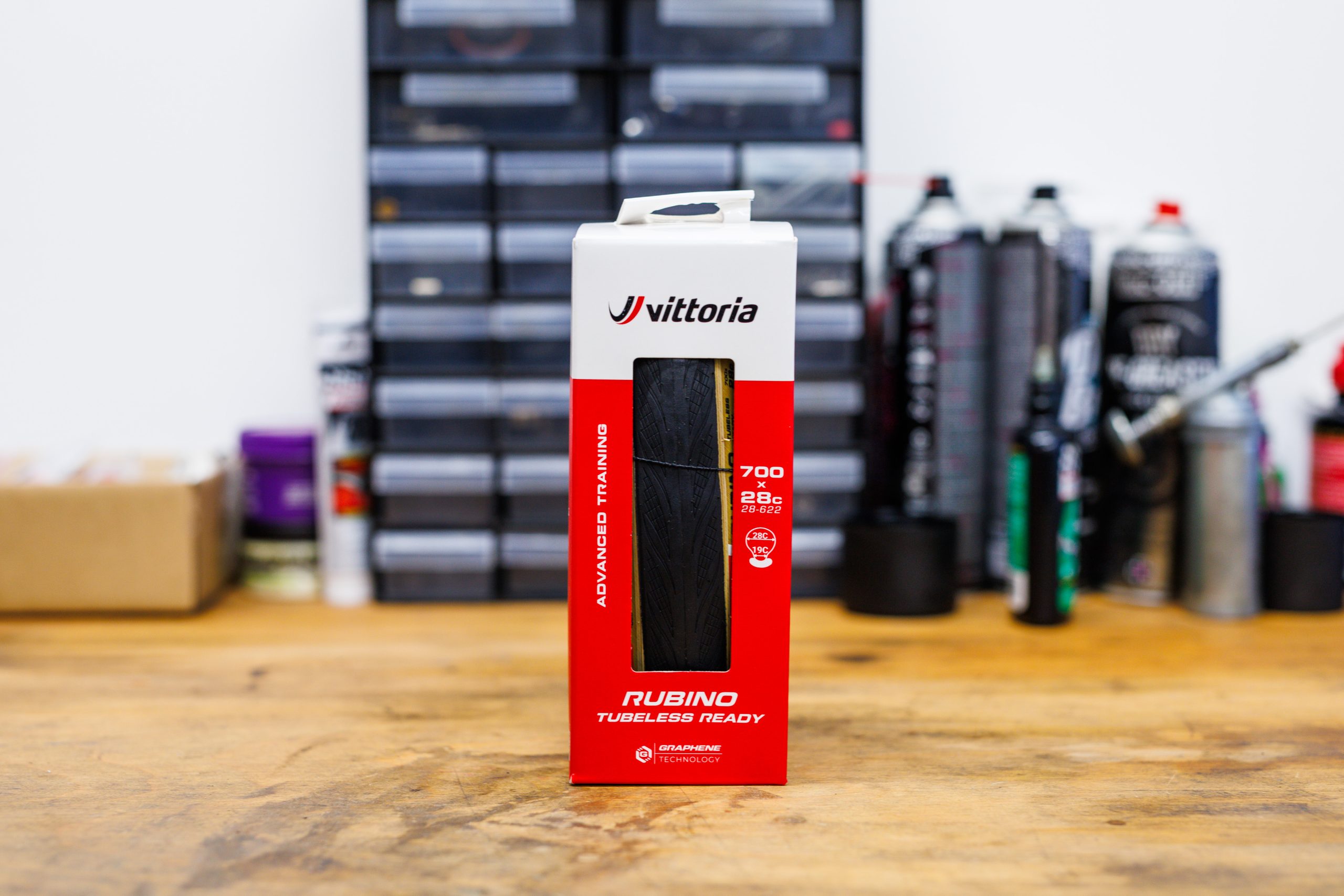
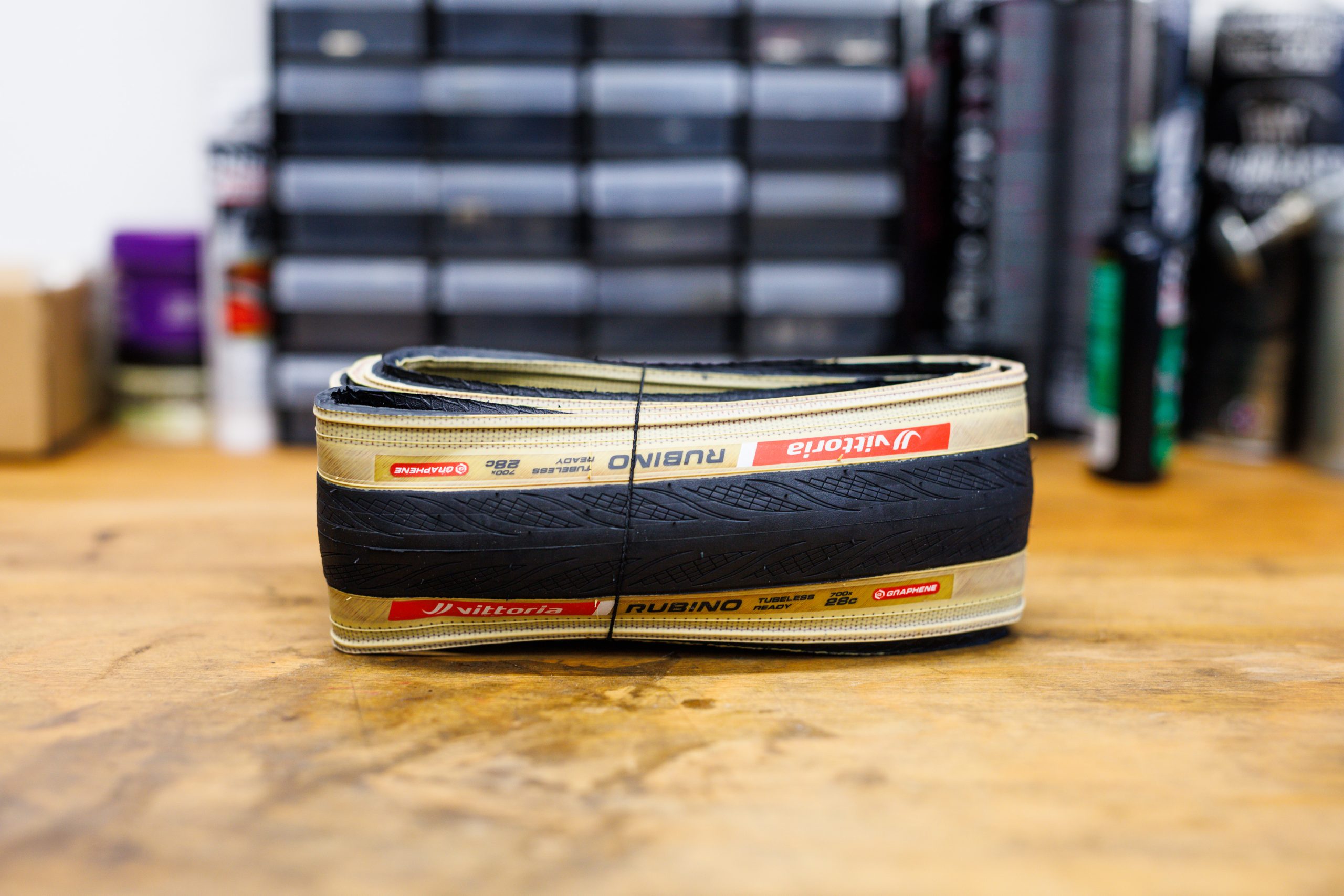
Vittoria has announced the latest update to its popular Rubino road bike tyre, bringing improved performance and tubeless compatibility.
Billed as an “everyday performance tyre”, Vittoria says the fifth-generation Rubino is lighter, grippier and features reduced rolling resistance compared to its predecessor, the Rubino Pro.
Despite this, Vittoria promises an updated casing gives the new Rubino “better ride quality and puncture resistance” than the outgoing version.
The champion of lunch rides
The Rubino is a mid-range tyre designed for training and everyday riding. Simon von Bromley / Our Media
While Vittoria’s Corsa Pro and Corsa Pro Control are designed for high-level racing, it says the Rubino is “the champion of lunch rides, town line sprints, and endless wanderings”.
According to the Italian brand, it opted to focus on improving the Rubino’s speed, puncture resistance and grip based on feedback from riders.
“When a product is already a bestseller, you don’t reinvent it – you refine it in the direction the riders take it,” says Vanessa ten Hoff, Vittoria’s chief marketing and innovation officer.
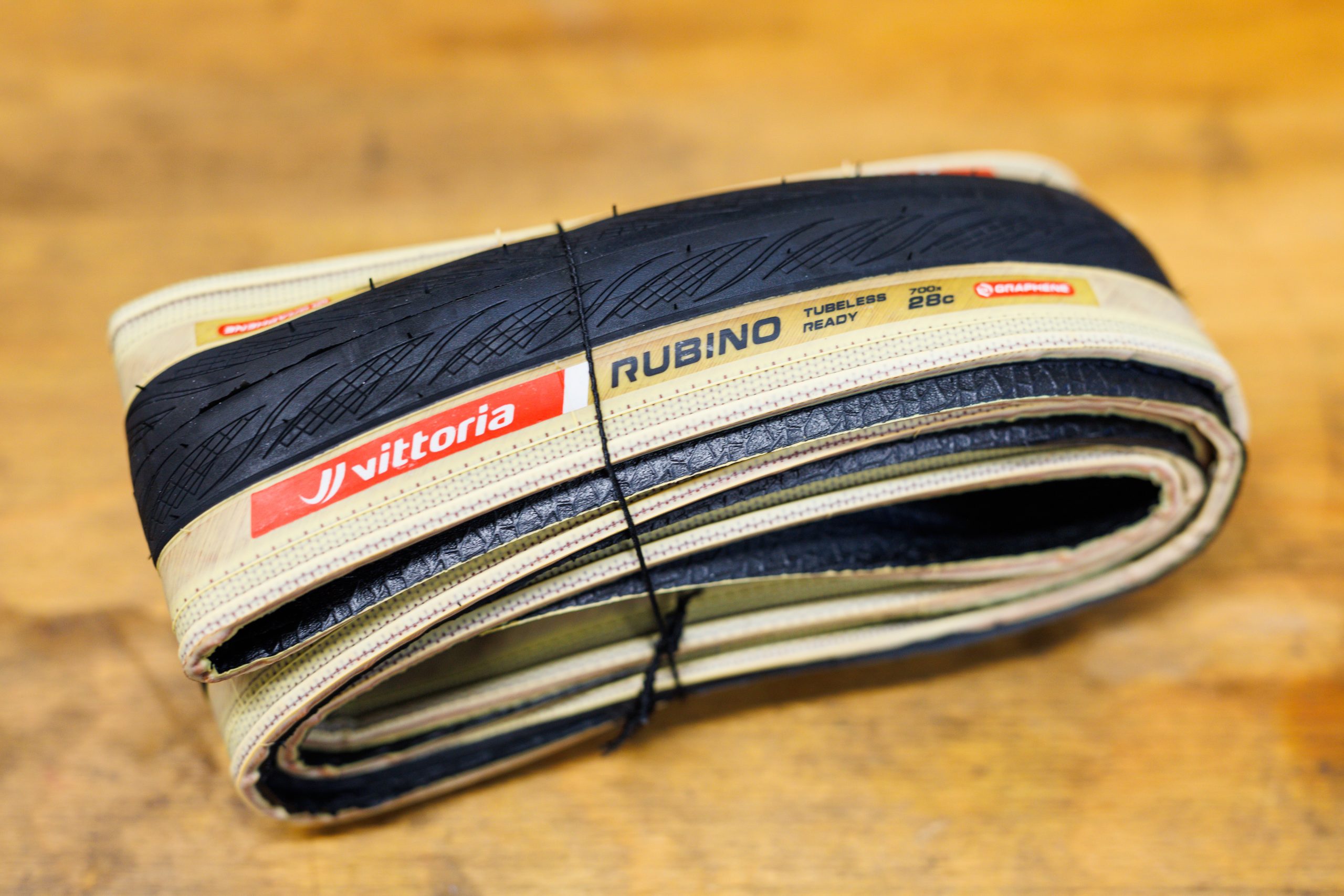
The new Vittoria Rubino gets an updated casing and tread. Simon von Bromley / Our Media
This was achieved, Vittoria says, by a new 100 TPI (Threads Per Inch) nylon casing mated to a new tread compound containing graphene and silica.
In terms of stats, Vittoria says the new tubeless-ready Rubino is 10 per cent lighter, with an 11 per cent improvement to “rolling efficiency” and 5 per cent more grip than the outgoing model.
The clincher version, meanwhile, is claimed to offer a 12 per cent reduction in weight, alongside 5 per cent improvements to rolling efficiency and grip.
Vittoria Rubino specifications and pricing
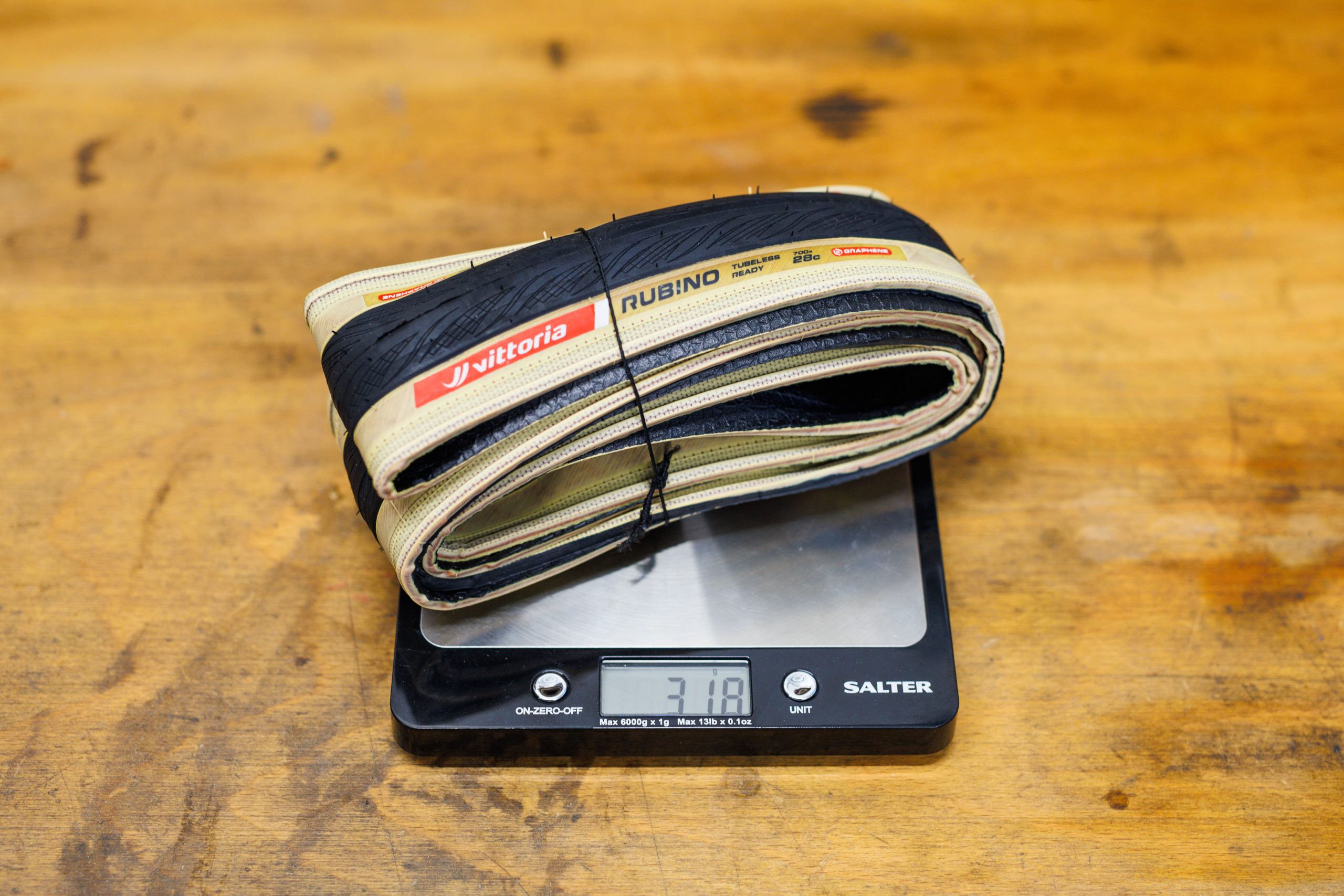
A 28c Rubino TLR weighs 318g on our scales. Simon von Bromley / Our Media
The Vittoria Rubino is available in clincher or tubeless form, in sizes from 700×26 to 700x34c.
In terms of price, the Rubino TLR costs £59.99 / $76.99 / €61.95, while the clincher comes in cheaper at £44.99 / $61.99 / €46.99.
Riders can choose between black or tan sidewalls in all sizes except the narrowest, 26c option.
Notably, according to Vittoria’s claimed weights, the tan sidewall tyres tend to be slightly lighter throughout the range.
It seems there’s more than meets the eye to the tanwall Rubino tyres. Simon von Bromley / Our Media
A 28c tubeless-ready Rubino with tan sidewalls, for example, weighs 318g on our scales, whereas Vittoria claims a weight of 340g for the same tyre with black sidewalls.
This suggests there’s likely a difference in how the tyres are constructed beyond a simple lick of beige paint on the sidewalls. We’ve asked Vittoria for clarification on this and will update this article if we receive a response.
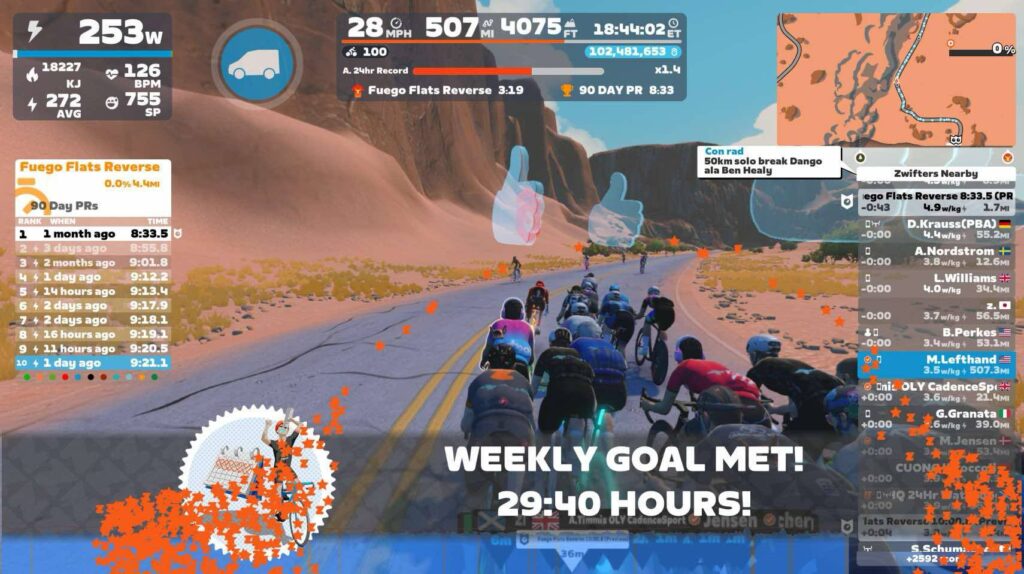
On April 19, 2025, at 6am MT, I took the first of 92,160 pedal strokes. The goal was to achieve the greatest virtual distance cycling ever officially recorded in 24 hours. With months of work behind me, a team of in-person and virtual supporters, and an iron will, I set off.
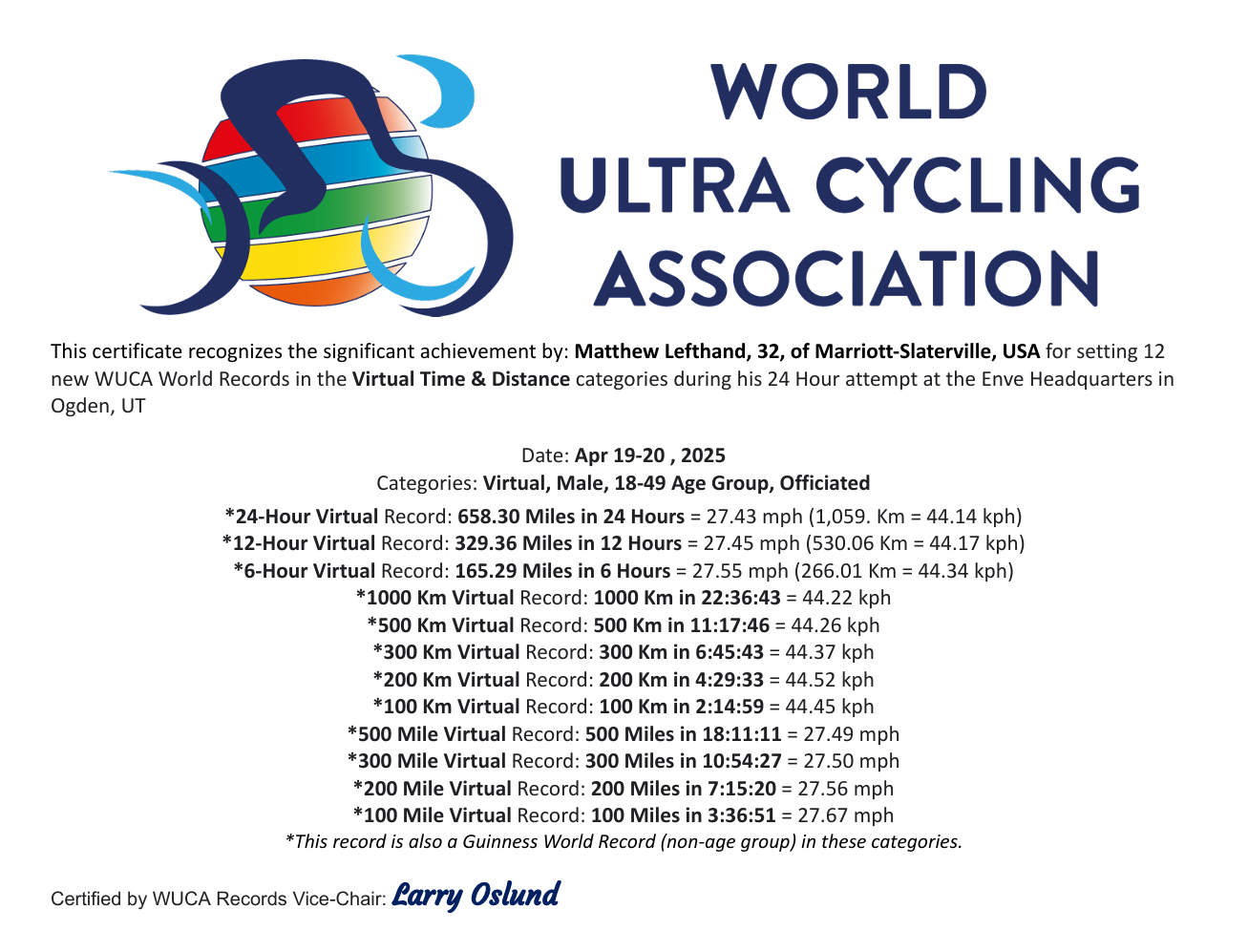
While the main goal was to complete the longest ride in 24 hours, there were a few records on the way to the 24-hour mark that I could potentially break. The final count? Fourteen potential world records.
Two of these records were previously standing Guinness World Records:
‘Greatest Virtual Distance on a Static Cycle in 12 hours (male)’
‘Greatest Virtual Distance on a Static Cycling in 24 hours (male)’
Additionally, the World Ultra Cycling Association (WUCA) had outlined the process for their own virtual cycling records, but no one had gone through the process. These WUCA records will be submitted to Guinness through their standing relationship for the other 12 records which are titled something to the effect of ‘Greatest (fastest time achieved for distance categories) Virtual Distance Covered by Standard Bicycle (WUCA) (male)’ for the following: 100km, 200km, 300km, 500km, 1000km, 100mi, 200mi, 300mi, 500mi, 6hr, 12hr, and 24hr.
WUCA Requirements
Why were the WUCA records unset? First of all, there are many cyclists who give no value to indoor cycling, at least not in comparison to outdoor cycling. Additionally, fairly and equitably estimating how far someone has gone indoors is a massively challenging task. Programs like Zwift go to great lengths to factor in details of speed based on real-life circumstances, but cyclists know that, for a variety of reasons, Zwift is not perfectly estimating one’s individualized distance and speed.
Due to these constraints, WUCA created a process to estimate the speed and distance of cyclists riding indoors based on that rider’s own outdoor performance. This is the route I took for the 12 WUCA records. I completed an outdoor test ride that measured my coefficient of aerodynamic drag (CdA). After this test, WUCA observed my speed at a given power output on the bike, and estimated my final outcome during the 24 hours based on this CdA. WUCA also measured how much time I spent in the time trial (TT) aero position vs. other positions during the attempt, because position on the bike massively affects speed!
The Day by the Numbers
Out of the 24 hours, I spent 23h 55m 42s pedaling. With only 6m 18s off the bike the entire day, paired with my average cadence of 64 rpm (many cyclists aim for 80+ rpm), it’s fair to say I was on the grindstone the whole day. Of this continual pedal time, I spent 33m 10s standing. I was in the TT aero position for 23h 21m 32s, the day’s ultimate test. While many are accurate when stating that indoor riding is not the same as outdoor riding, this record-breaking ride has its own legs to stand on by the time spent in the aero position alone.
Nutrition
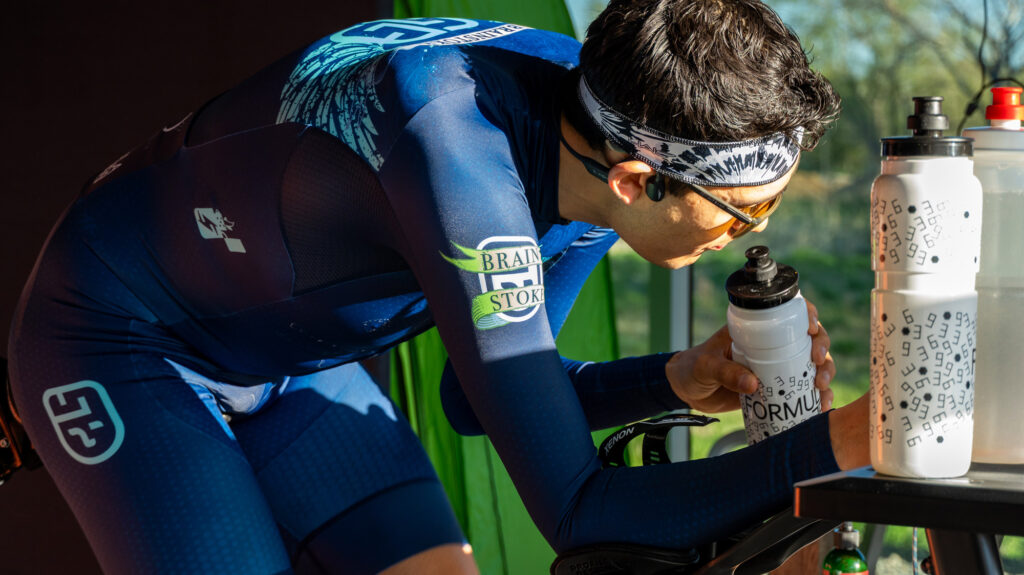
As for fueling, I am grateful for Formula 369. I am dedicated to my own research and only use products I trust and believe in, and this nutrition formula is one I believe in wholeheartedly. For a long time, the school of thought among endurance athletes was that 90g of carbs was the maximum hourly intake. Then it was updated to 120g, and others have measured elite athletes taking in 150g.
During the 24 hours, I consumed 168g of sugar (1:1 maltodextrin to fructose) and 9g of complex carbs each hour. I consumed 800 calories per hour of Formula 369’s High Protein Recovery Mix and coconut milk, totaling 19.2k calories consumed during the 24 hours.
While that sounds massive, and it is, it still left me in a large deficit from the 23,584 KJ burned from a 273W average power + resting energy. Yes, while eating 800 calories an hour, I burned 982.8 calories from active energy going straight to the pedals!
In addition to the calories, I needed water and electrolytes. I estimate that more than 25L of water were consumed. That is 50lbs (22.68kg) of water! The nutrition mix itself weighed in at just over 10lbs (4.54kg).
Speaking of weight, I added 6.9lbs (3.13kg) to my body over the course of the 24 hours, which means I sweated or expelled more than 50lbs (22.68kg) during this time. I was also taking a minimum of 1000mg of salt each hour and consumed 600mg of caffeine in the final 10 hours.
Maybe that’s more than you wanted to know, but I find it fascinating.
Equipment
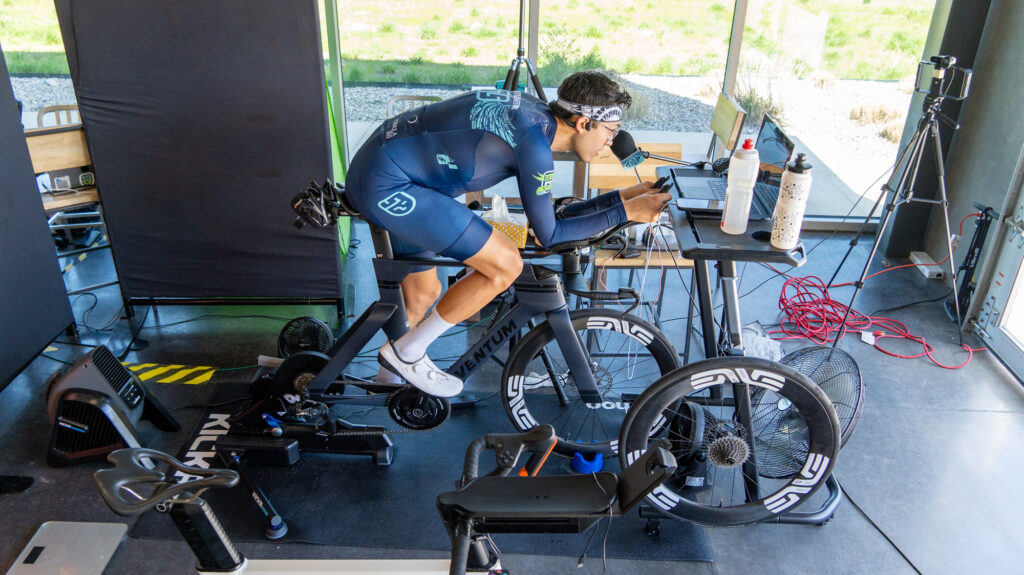
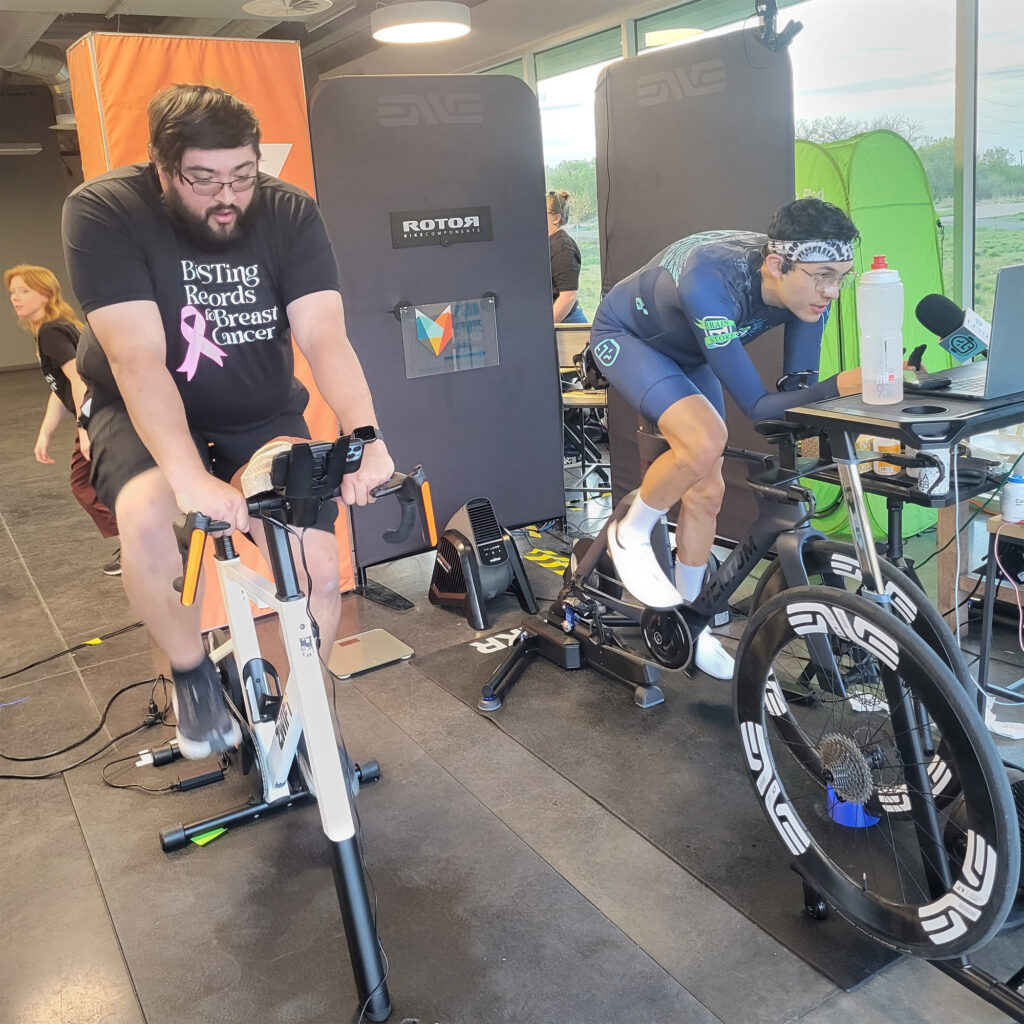
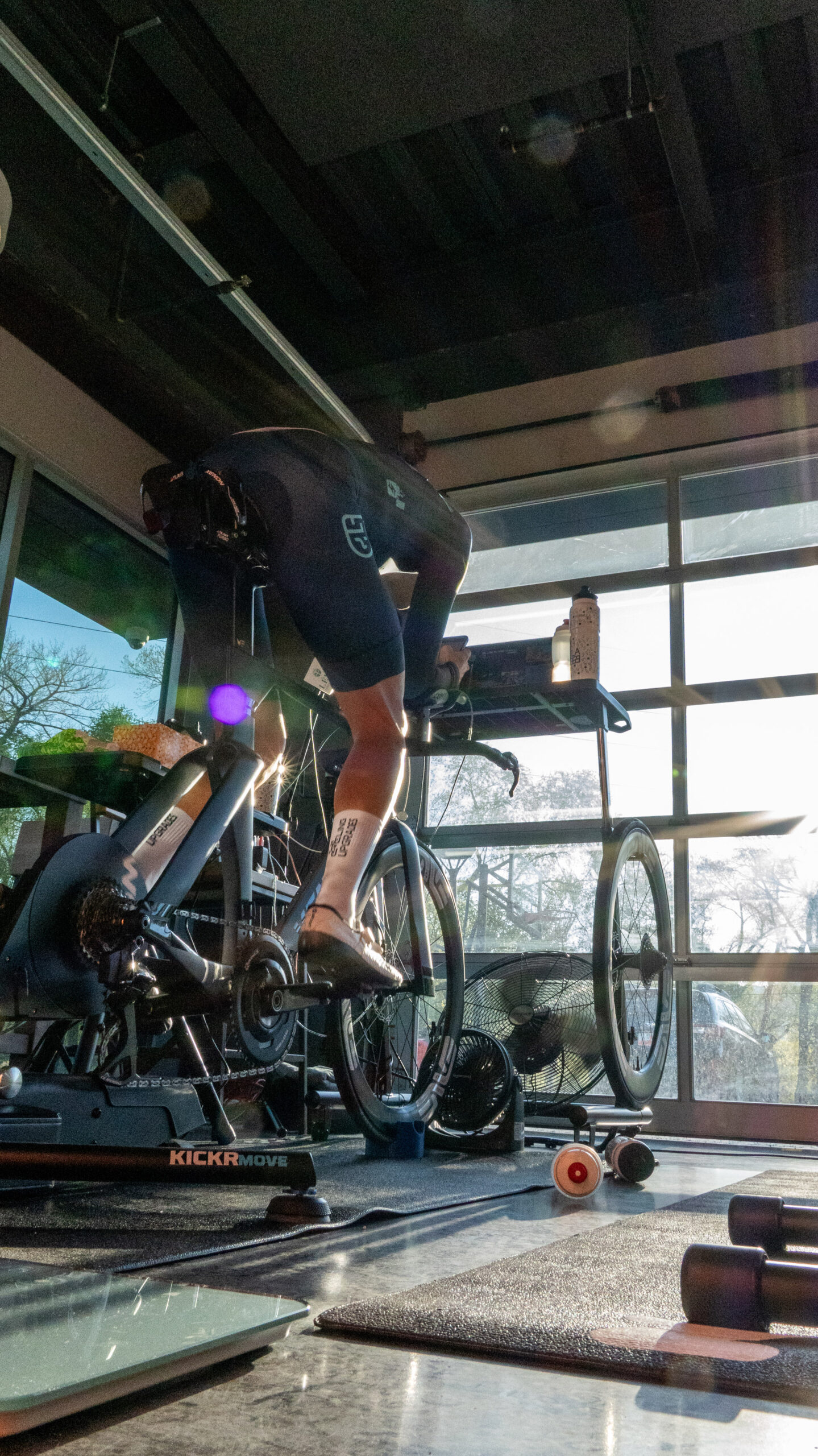
As required by WUCA, I rode the same bike used during the outdoor aerodynamic test. I was on the brand new Ventum Tempus – a truly record-breaking bike. The Tempus was hooked up to a Wahoo KICKR Move and had a Rotor INspider hub-based power meter. Both the Wahoo trainer and Rotor INspider were calibrated on site by representatives of the companies, and this calibration was witnessed by two independent individuals.
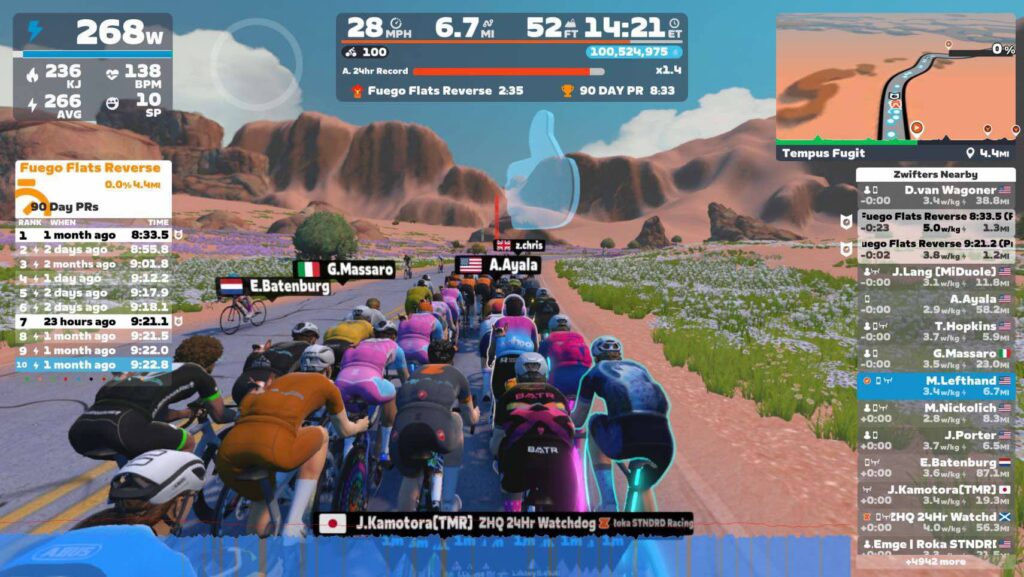
The Rotor power meter was used as my primary power source for my Zwift connection and bike computer, but when others were riding around me during the day, my bike computer lost connection with the power meter several times. I documented this via video showing my bike computer reporting different power than my Zwift connection. For this reason, WUCA will be provided the Zwift FIT file and the Garmin FIT file to access all required data points.
I’m incredibly grateful to Cycling Upgrades, who sponsored the remaining bike components and ensured it all came together.
Zwift Community
While the WUCA portion of the attempt was individualized in terms of effort, the Zwift-specific components were not possible without community support. I relied on many wonderful groups on Zwift, especially Dads Inside Riding Trainers (DIRT), DWGZ, DRAFT, Wahoo, and Bravery Motivation Teamwork Respect (BMTR).
I recruited individual cyclists to help form a group that could keep up the required speed for the day. I am beyond grateful for everyone who showed up for me on Zwift. Throughout the day, the group size was 25-60 riders. For some extended periods of time we were averaging 28.5 mph and the energy was electric! I am in love with the dynamic that Zwift creates and the group cohesion that it brings to indoor cycling.
Charitable Aspect
When my wife, Bailey, and I decided to attempt these records, we brainstormed ways to make the most of the day. Many similar events successfully make it about more than the person completing the attempt, because after all, that person lives in a community of people in various situations. This is certainly true for me. Bailey worked with me on creating this for two months, and this work often became a part-time (and some weeks a full-time) job to pull everything together.
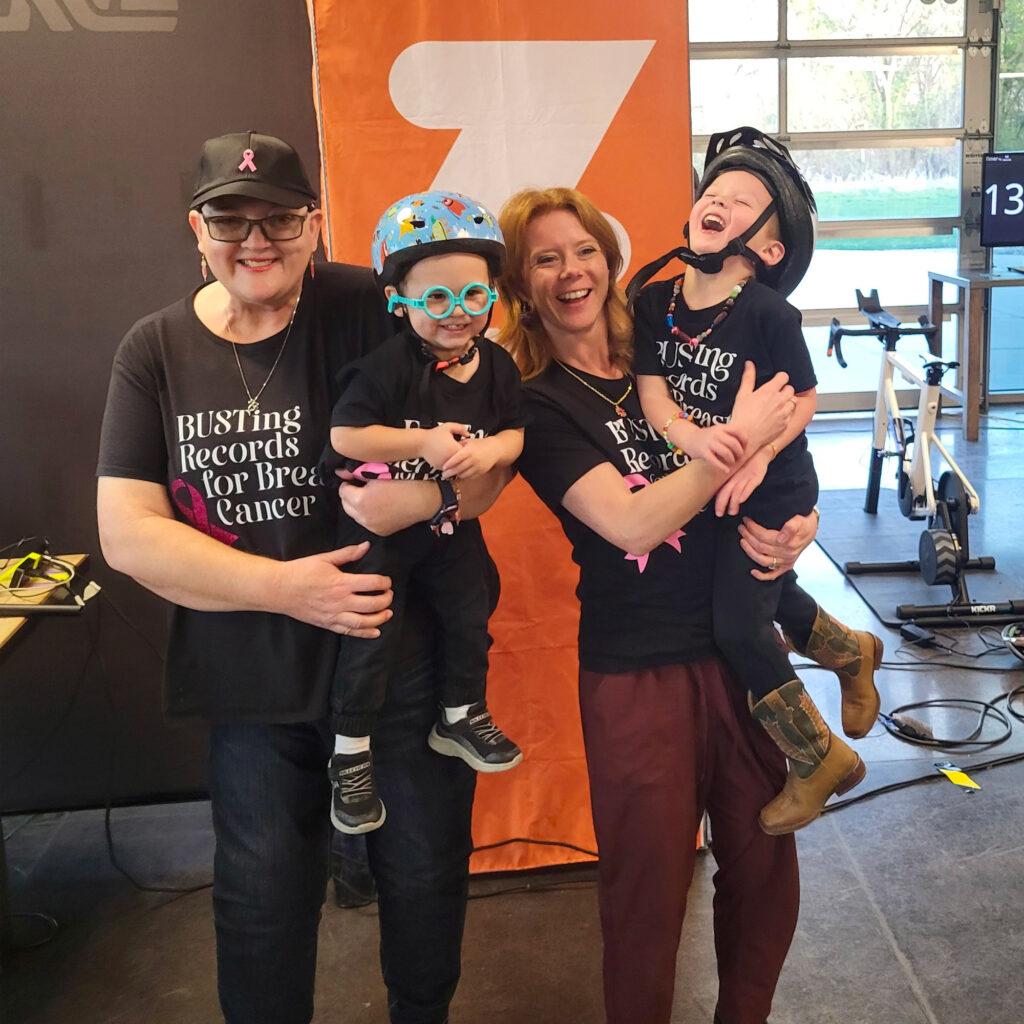
When I thought about a charitable cause to spotlight, breast cancer was an obvious choice because of my mom’s recent diagnosis. During our preparation for this attempt, my mom began chemotherapy treatment and has continued treatments and surgeries scheduled throughout the upcoming year. To set up a donation that could benefit her and others going through something similar was very appealing to me. The outcome was huge! The monetary donations received will allow her to pay for treatment costs that are not covered by insurance, without financing them – a huge burden lifted.
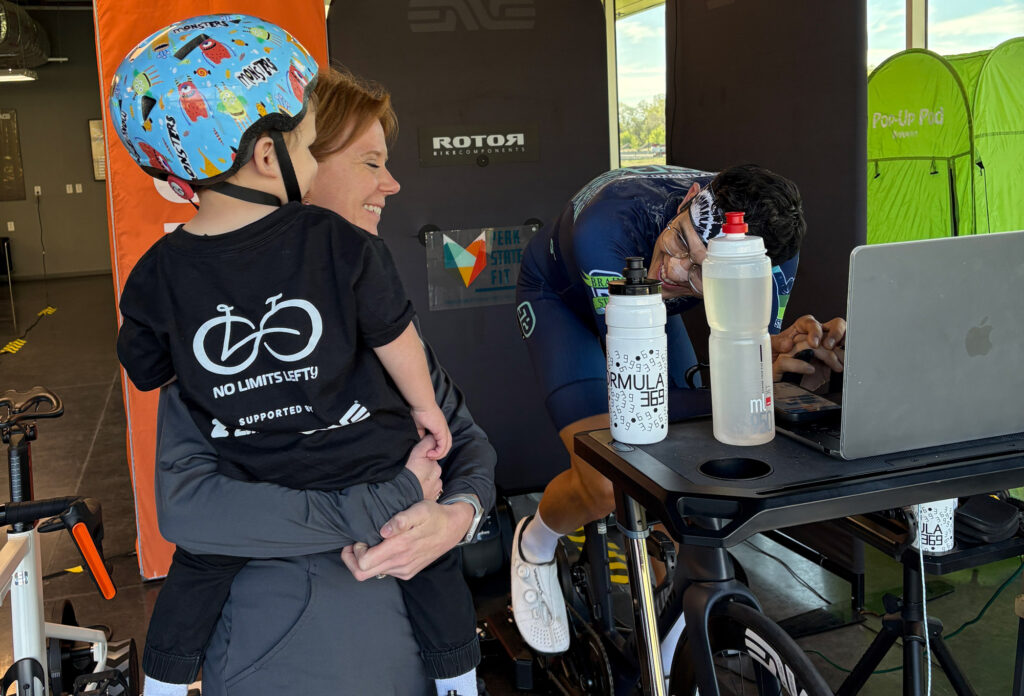
Mom, Bailey, and our two sonsMy brother joined me for part of the ride…
Once again, I am amazed by the cycling community and the generosity of others. Thank you to Drip Swag for the donation of event t-shirts and branded tumblers to help incentivize and simultaneously commemorate the day.
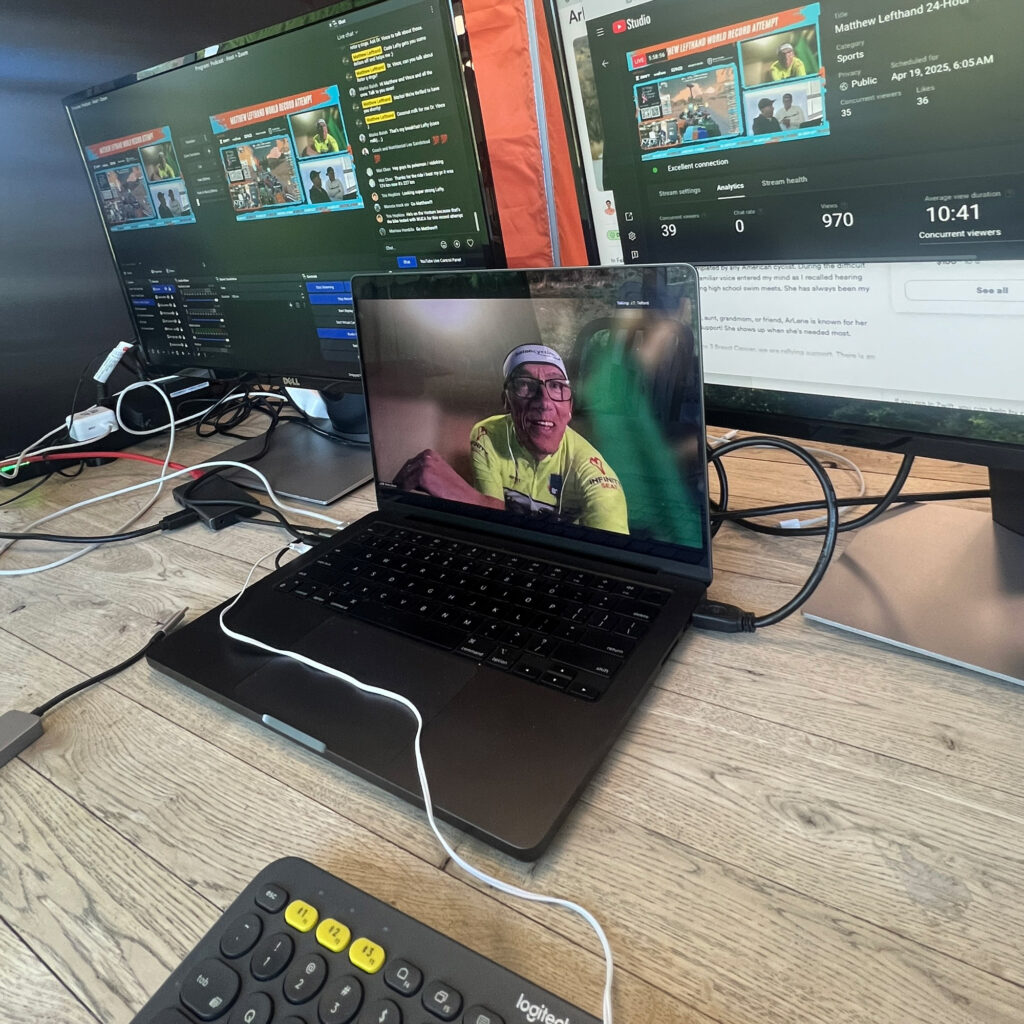
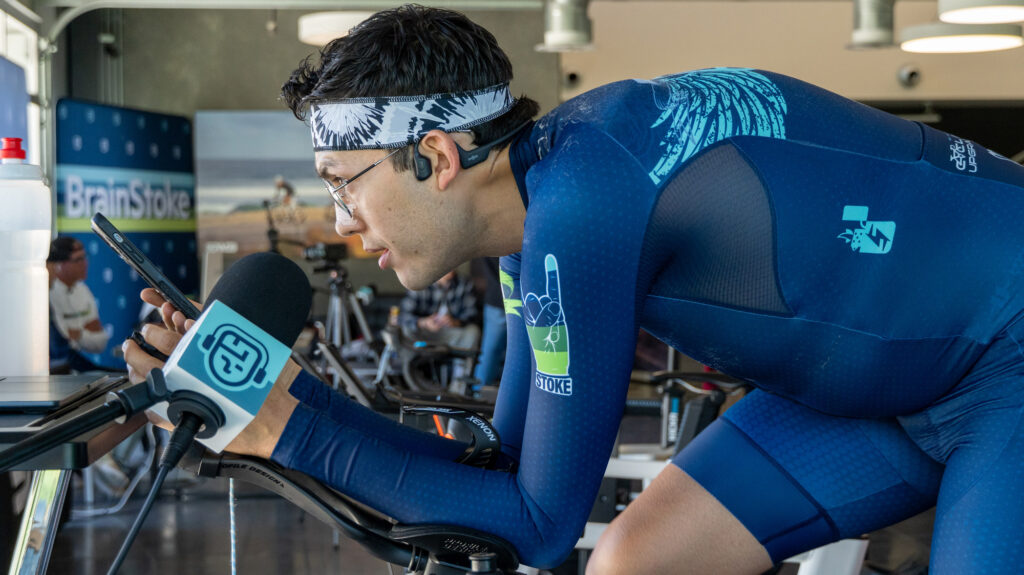
In addition to the charitable aspect, we hoped to livestream the event. Having to film the entirety of the event for Guinness and WUCA anyway, we thought we might as well make the most of it. We quickly realized that we may have bit off more than we could chew, but Bailey made it happen and connected all the dots. Huge thanks to JT Telford and BrainStoke for aiding in this endeavor.
While watching me pedal the bike nonstop for 24 hours might have been interesting to some, we thought it would be fun to invite others to be part of mini podcast interviews. Each guest had some personal connection to me, as well as something of value to share with those tuning in. Dr. Vince at Infinity Seat discussed the magic powers of his saddles, and Tyler Pearce (VC Adventure Time) talked about the madness of the effort and how eating changes everything. This was such a special aspect for me, not just because it was fun to hear everyone talk about the tenacity of the attempt, but to hear from cyclists and sponsors for whom I have great respect. Thank you to all who shared their time with us. Others interviewed include: Marko Baloh, Hayden Pucker, Magnus Kulset, Nathan Guerra, Korby Van Valkenburg, Eric Ellis, Dale and ArLene Johnson, Chris “Hoppo” Hopkinson, Nathan Guerra, and Peter Bradbury.
As far as media production, Bailey’s right-hand man was JT Telford. His roles included video, producing, audio, and podcast hosting. He set up and tested the night before, worked tirelessly to bring it all together, and apart from me probably burned more calories on site being here, there, and everywhere. From BrainStoke, Tom Telford and Preston Neiderhauser hosted and interviewed podcast guests. Kevin Day, a cycling legend himself, was willing to help fill gaps and work on photo and video elements. Kevin even hopped on a Zwift Ride next to me for the last hour or so, his first ever virtual miles. I’m grateful to be a BrainStoke Ambassador and work with these individuals.
Here are the livestream recordings, broken up into 3 parts:
Crew
While indoor cycling takes less crew effort than outdoor rides, I still had a few crew members helping throughout the day. Bailey, in addition to orchestrating all of the above-described media, was my main crewmember. She made my bottles, handed them to me, adjusted fans, helped with nature breaks, and provided motivation and wellness checks. My cousin, Amber Maynard, aided Bailey in making bottles. Additionally, Pat Casey, who is my bike fitter at Peak State Fit, helped apply wax to my chain after more than 400 miles. (Maybe it was time?)
Individual Preparations
During my winter training from 2024-2025 I decided to focus on ultracycling races, specifically 24-hour races. As with most things in my life, I did my own research to learn what this would require. Fueling seemed to be the biggest hurdle, and I had previously experienced a nutrition challenge during Hoodoo 500 in August of 2024. The challenge of fueling is exacerbated when you aim to maintain a fast average speed – eating any food at 24-27 mph in a TT position is a challenge. I found that others had done liquid-only diets; efficient for sure, but challenging on the gut.
I immediately began to practice. I knew that if I could master this piece, then I could perform very well at these 24-hour events. Around the same time, I did a 24-hour Zwift ride in December where Nick DeHaan and I rode all the roads in Zwift. After traveling every road, I continued riding for 24 hours, averaging 266 watts. Afterward, I realized that if I had done the effort with Constance, the fastest robopacer in Zwift, I could potentially go further than anyone had ever gone. This is when Peter Bradbury from Zwift Headquarters and I began talking about a world record project.
Zwift
Peter did some research to find the longest Zwift rides and we found the Guinness World Records. Around the same time, I learned that WUCA had virtual record rules but no completions of these records. I began talking with Larry Oslund, WUCA Records Chair, to learn what attempting these records would look like.
We mapped out a plan and I knew it was possible. I continued my gut training and prepared for my 24-hour outdoor race in Sebring, Florida in February 2025. I met with Peter via video call for the first time, the day before the Sebring race, to discuss how the record attempt could take place within Zwift. At Sebring, I successfully managed a liquid-only diet. The heat and the wind of the day partially defeated me, but with 576 miles (927 km) done in 24 hours, it was the furthest an American had ever gone outdoors.
The Space
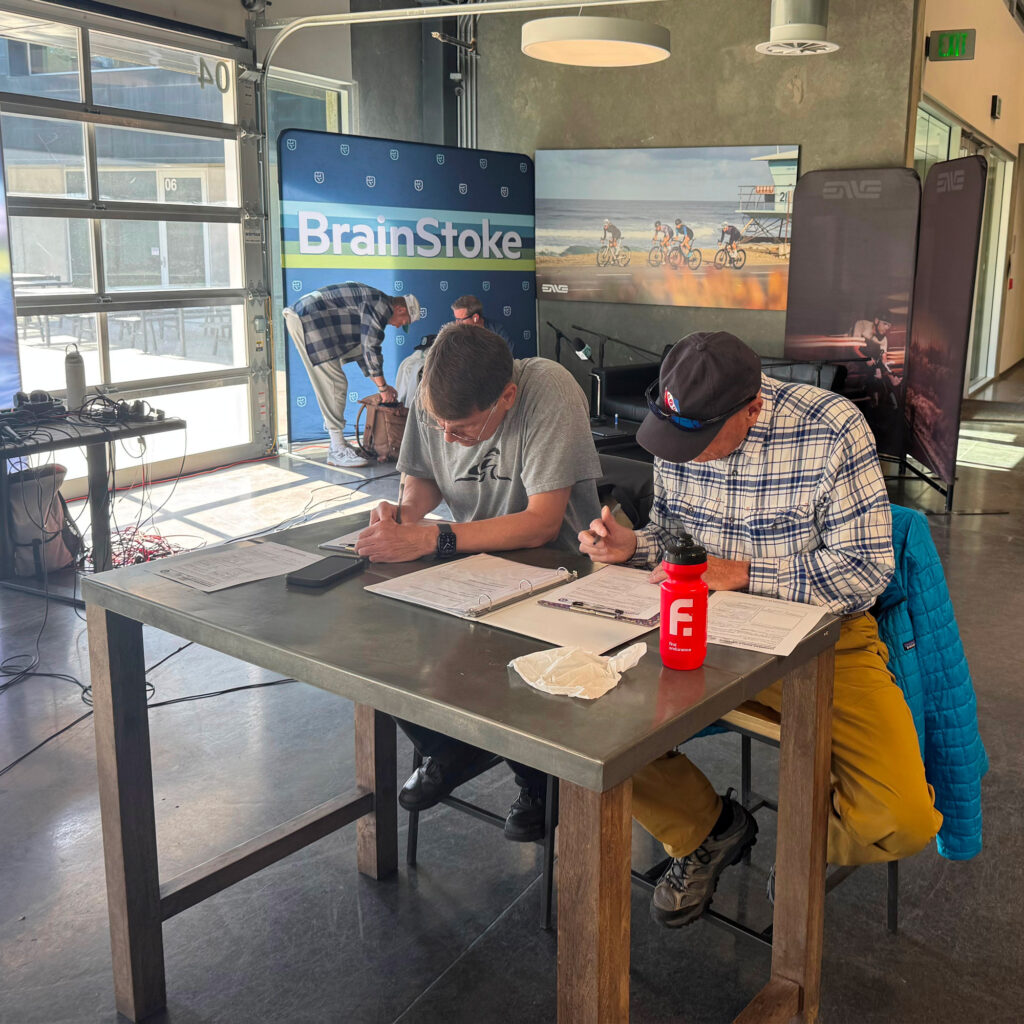
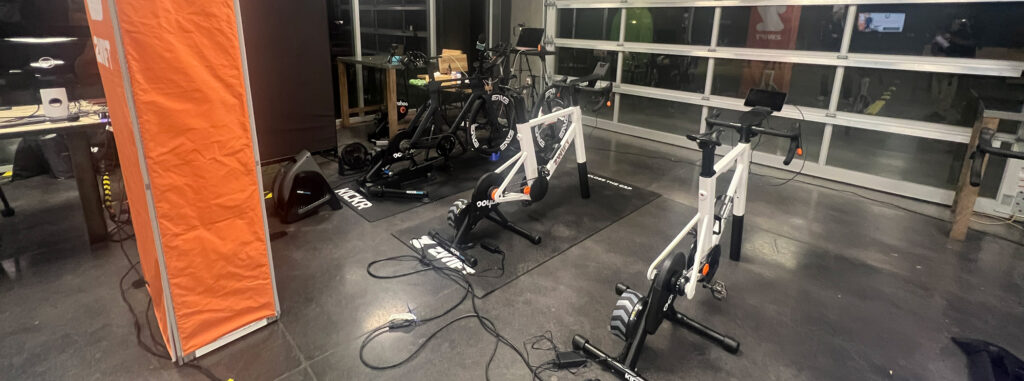
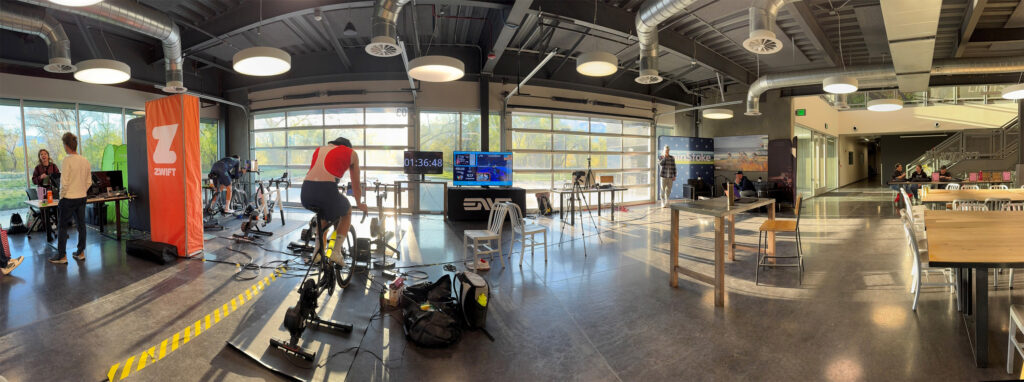
Through a growing relationship between BrainStoke and ENVE, we asked ENVE to host us at their headquarters for the attempt. (This was convenient as the attempt was required to take place in a public space that was open to anyone throughout the duration of the event, and ENVE is located just a few miles from my home.) They graciously said yes and we began to plan the specifics of the day. We needed space, internet, cameras, laptops, food, cameras, audio mixers, banners, and lots of cords. Honestly, it was a big ask and ENVE was very kind to let us utilize their gorgeous space.
The Struggle
Let’s talk about the struggle. After having such a successful outcome at Sebring, Bailey and I had a few sit down conversations about whether or not we wanted to commit our time, energy, money, and life to pursuing cycling. I could continue to pursue cycling as a hobby/interest, but the door was open to go after something bigger than personal fulfillment. We both understood that doing this meant going all in. After discussing pros and cons, we decided it was worth a try. With such amazing potential, how could we not see where it could take us?
So, I rewrote my cycling season and decided that now was as good a time as any to go for the virtual cycling record. This was originally decided within the context of a fairly stable home life that could afford for us to put time and money into pursuing this.
However, life changes.
Not long after deciding to go all in and beginning to make changes to do so, my mom was diagnosed with breast cancer (we are very close and she helps watch our children part of the week while my wife and I work). We also learned that Bailey’s work would be changing with unsure outcomes, and even today we are still taking it day-by-day and adapting accordingly.
They say, “If it were easy, everyone would do it,” but we weren’t expecting it to get hard this quickly. On top of the time it took to plan for the attempt, I knew that the training required would also constitute part-time and sometimes full-time shifts on the bike. There were many days that Bailey and I were close to breakdown; stretched thin and barely holding it together. Relying on one another, we always re-centered and did what we needed to.
Even with all the prep work, there was still a lot that needed to fall into place on the day-of. The streaming alone was its own massive challenge. My wife had been studying how to operate the stream for multiple weeks and had created amazing graphics for the stream, but to make it actually work took half a day and into the late evening hours the day before. So, the media team showed up already in a partial sleep and energy deficit.
I have learned with trial and error that the taper cannot be too big, or I lose the benefits of the high volume training. Some of my best performances have been in heavy weeks. So, prior to the attempt, I rode less time but with fairly normal intensity and I only reduced my training load a week and a half out from the event. I also get extremely stir crazy during a taper, because I have way more energy than I know what to do with and I can’t use it! I know that I’m supposed to sit around but my body is so busy. I try not to ruin the prep and just keep myself busy doing other things. Even on the day before, many were telling me you should just be sitting somewhere with your feet up; however, I did have to set up my bike station, which had to be locked in for the task at hand.
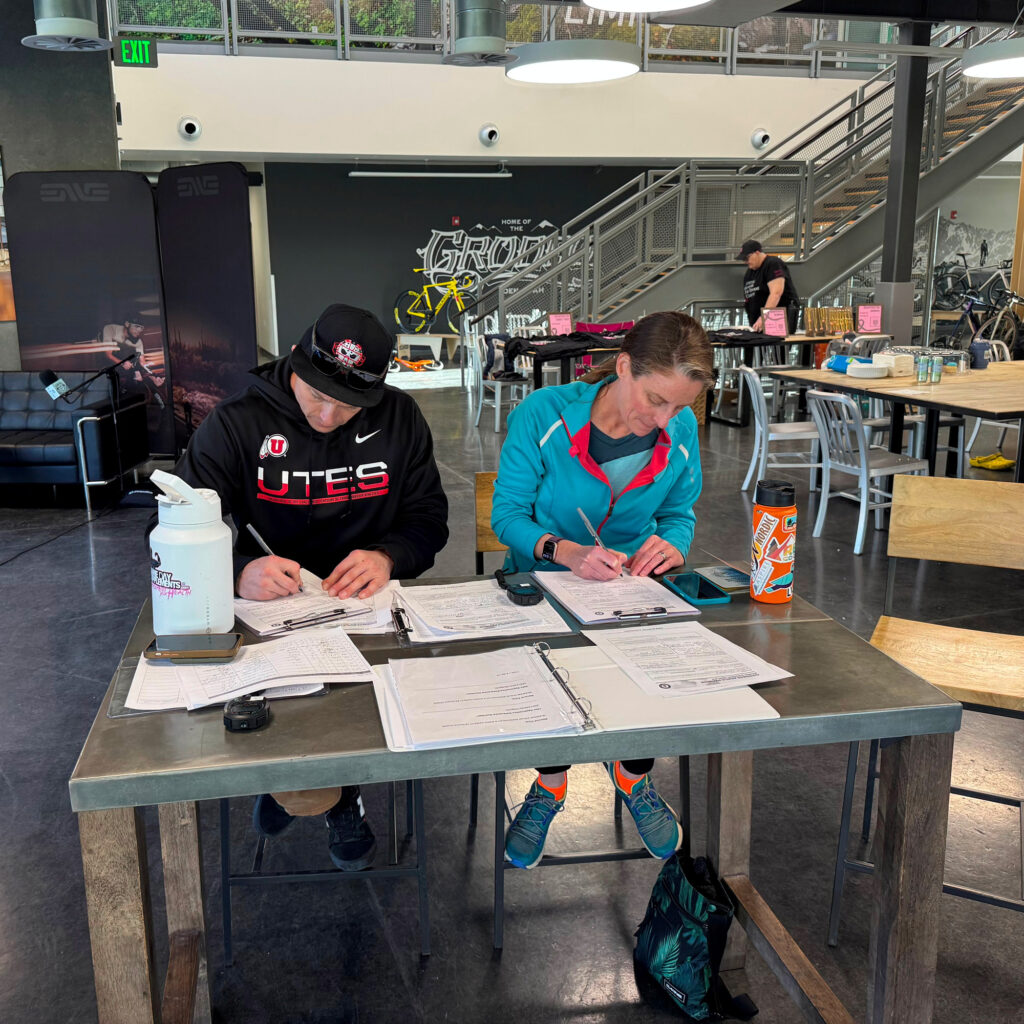
I am very happy with the setup I chose. In the ENVE lunchroom, I was in a corner with many surrounding windows viewing the outside and I faced those windows instead of the room. This gave me a good view during the day, although I did spend most of the time looking at Zwift as I had to manage the group dynamics. Looking away from the room also gave me the benefit of putting on some music and tuning out the people around me. While it was not a party atmosphere the whole time, we did have independent witnesses, the media team, and many visitors throughout the day. It was good to not be caught up in the room with everyone. Also, I could see people as they came and went, but they could not come straight up and talk to me, allowing me to monitor how many people were interacting with me at a time.
The pressure of performing in front of so many people is intimidating. Most of my performance pressures prior to this did not include an expectation of doing something truly remarkable. Even at Sebring, I was an unknown entity to many, so there really wasn’t anyone expecting anything special from me. When you go for a World Record, promote it nonstop for the weeks leading into it, and put yourself on display, the pressure is high. While that can be motivational, I know that many can also find it debilitating. That day, it was both for me. Being able to mobilize the energy that I receive from those who believe in me and who want me to succeed has always been helpful. I will say though, this type of energy is most useful in the less demanding times. During the real dark moments, I find that I need more to keep pushing forward. The fear of failure or letting everyone down, was combated by going back to my purpose and grounding myself in reality. I thought of mantras such as,
“You’ve done the work.”
“You are going to do your best and you can’t do any more.”
“Worrying about doing more than you can do is not going to help.”
“You either have it or you don’t. There is nothing you can do about it now.”
“The work has been done, now it’s time to let it happen.”
“You can only get in your own way at this point.”
As I focused on the task at hand and let the event energy float away from my mind, I was confronted by the wall of effort ahead. I was determined to keep a very hard pace for 24 hours with limited breaks and to do it in one static TT position to make the WUCA outcome as good as possible.
While on Zwift, position does not matter. In the real world, it matters a lot. I love the world of Zwift and will continue to use it as my main training device because of its versatility and community. However, it does not perfectly capture a rider’s capability because of individual factors such as position. In order to account for this, WUCA chose to have their records measured by their own calculation, not by Zwift. The main factor in this calculation is the CdA described previously. I knew going in that, despite being on Zwift, I needed to spend as much time as I could in the TT position. This was by far the hardest part of the day. I wanted to get up and move around so badly. I wanted to stretch and not stay static.
Working with Pat Casey at Peak State Fit has unlocked so much more potential. He has helped me find a position that really works for both comfort and power. I highly recommend him for a professional fitting. My setup on the new Ventum Tempus is extremely comfortable for hours on end. However, I don’t know if there is a way to be comfortable in the same position for 24 hours – it’s basically torture. I almost talked myself out of it many times. In fact, the last several hours I started to do the math of how much distance I would lose to just sit up the rest of the time. It wasn’t a huge sacrifice. If I sat up for two hours I would only lose around 4.6 miles. But it was just my mind trying to talk myself into giving up the position. Two thoughts crossed my mind.
First, when you go down one road it’s hard to get back to the previous one. In ultra events, I’ve found it’s hard to come back from a lull. If I broke position, I knew it was most likely going to be beyond impossible to go back to it as strong as I was before. It’s not a matter of rest, nothing was going to get better. I wasn’t going to get enough break time to make it feel better. I was just going to show my mind there was an easier way. Taking a break was only going to give my quitting side more power. No, I could not back down, even a little.
Second thought: in a world where I optimized everything as much as I could to be as fast as I could, why would I choose to give up speed now? I literally made choices to make myself a few seconds faster over the course of the whole event. So giving up 4+ miles? That logic didn’t make any sense.
In addition to battling the position and pressure of the day, I also had to overcome one of my major blocks. In previous ultra events, I have hated when people asked me, “How are you doing?” This was severe enough to the point that during Sebring it took me 10 minutes to bounce back after my wife asked how I was doing during a brief break. I spent the whole next lap thinking about how I was not doing okay and trying to climb out of the hole. At this attempt, there was no escaping it. Everyone who came and greeted me, immediately asked how I was doing. Ignoring it as a real question and interpreting it as their care or interest in me was helpful. I reminded myself that they meant good and avoided thinking about my real response, and instead immediately said, “I’m good.” I’ll be one of the first, as a mental health counselor, to say that one should not always rely on these techniques, but the context and goal of the day required these tools. I’m a big fan of using a tool analogy to help myself and others realize you have to use different tools for different jobs. This is equally true for projects in the mind.
Learning to balance interacting with others and not using too much energy on it was interesting. The effort was very high, but the point of being able to do it for 24 hours meant it had to be easy enough for me. So, most of the time I was comfortable and I had to be, for many hours. If it was uncomfortable in the first few hours, how would that have worked? I could not let this comfort go too far into making me use energy on other tasks.
Another interesting and unique challenge of the day was the many milestones. There were many records to overcome and each of them were their own success, but they were not the main goal. In fact, I chose to not even reflect on the fact that I was a WR holder until the last 20 minutes. At times these carrots were motivating, but at other times they were daunting. It sort of felt like a never ending list of things to do. However, it was rewarding that each of them became a bigger and bigger win.
The last struggle I will focus on is not letting up even a hair. I felt and knew that if I even came down a little on watts, it would be that much harder to talk myself into going back up. While negative splitting a marathon or shorter race is the way to go the fastest, I am not convinced it is the way for ultra. In fact, if you just think about the growing calorie and body deficit, it doesn’t make any sense to go fastest and hardest when you are so far behind on energy. It seems to me more like a war of attrition and you only truly win if you give in as little as possible.
Closing Thanks
If there’s more to the story, I will need to capture it in our post-event interview with BrainStoke. I want to end this document with many thanks. The biggest thanks goes to Bailey for her work which may outweigh my own going in, day of, and after. JT Telford from BrainStoke was the right-hand man of a Lefthand production. The rest of the crew from BrainStoke were stellar – thanks Tom, Preston, and Kevin.
The main event sponsors were a pleasure to work with and I hope to continue representing such amazing brands. ENVE, thanks for your excellent wheels and use of space (the rear disc wheel is the fast version used by Tadej and me). Thank you Neil and Jason for your help. It would not have been as spectacular without you. Thanks to Wahoo for providing a reliable and consistent trainer that could withstand 24 hours of pure torture! The same goes for Rotor, the primary recording meter of the attempt and the oval ring that worked perfectly with my style and capability.
Lastly, but in some ways the most successful partnership, a huge thanks to all at Zwift and especially Peter Bradbury. We did it Peter! What was a brainchild became a reality in more ways than we dreamed. Zwift is such an amazing platform and I am grateful to be a user and will sing its praises everywhere I can. Thanks for your support during this endeavor. To have a special robopacer (same as Constance in metrics, but branded by name and chat for the event) was incredible. The help managing fake accounts to simultaneously make this a legitimate effort and not get out of hand – just thank you, thank you, thank you.
This time last year, I don’t think I knew about WUCA. Now, it has been a pleasure to win their North American Ultra Distance Championship in 2024, start my World Cup bid at Bike Sebring, and now set world records. Thank you to the records chair Larry Oslund for working closely on this with me and refining the new process for others to follow.
The day after I finished, I made a video about not resting on my laurels. I have a lot more in me this season and in the future. But damn, this one feels good.
The Aftermath
The aftermath, what I’m calling the short-term recovery, is an event all on its own. It has been 8-12 hours of ups and down. This time I felt really good for 3-4 hours but after 5 hours I had a serious sugar crash and felt terrible – the first time I have thought, “Maybe I should go get a medical check.” Luckily, food righted the ship. So, here is what short-term recovery has looked like for me:
Eat as much solid food as I could tolerate. It seems that I can stomach 2-3k calories right after.
Sleep for 2 hours, or really as long as I can before I wake with a strong hunger sensation.
Then, it’s back to eating as much as I possibly can.
I repeat this one more time to sleep, eat, and sleep.
After that final sleep I generally am in a good spot, but then it’s long-term recovery time.
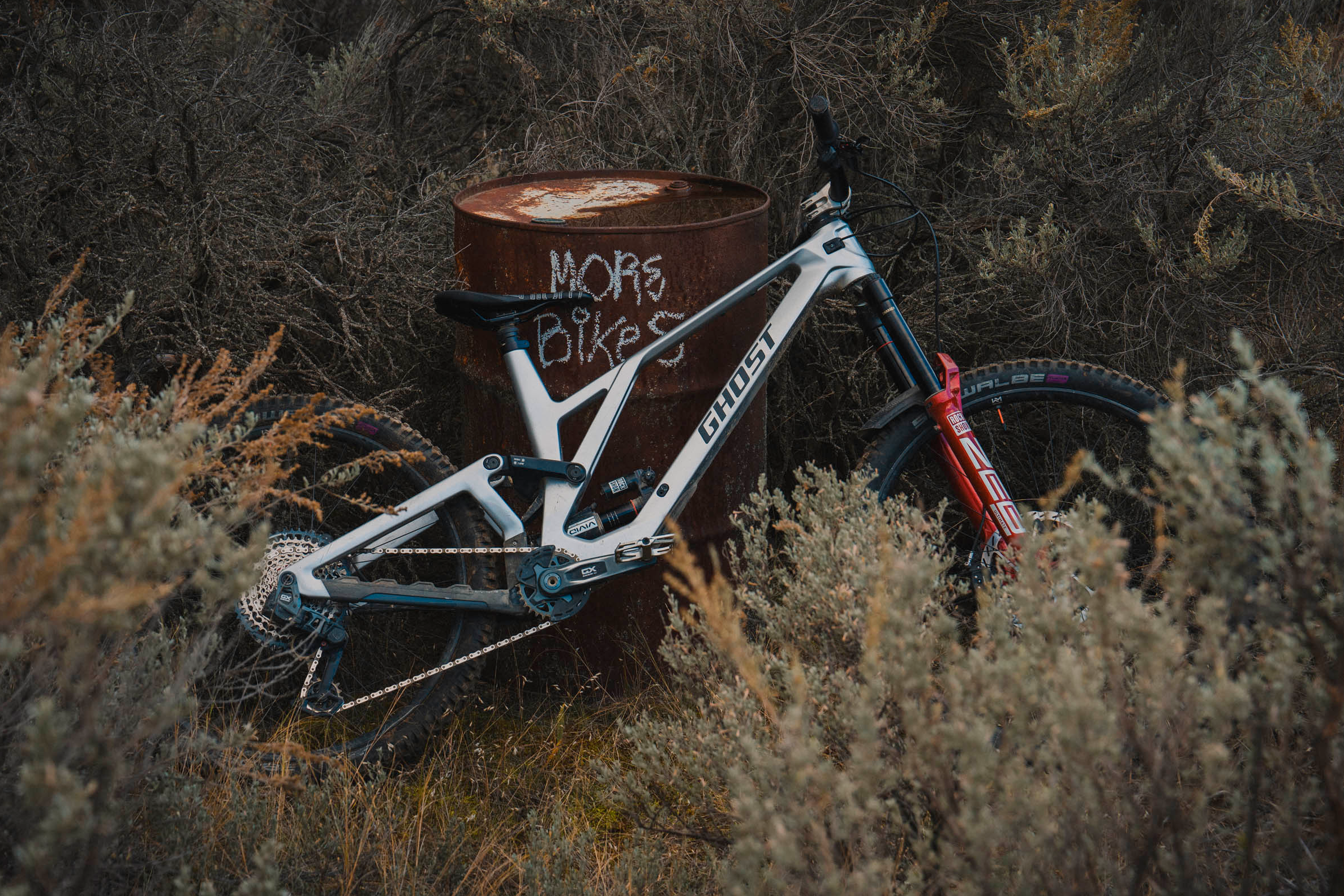
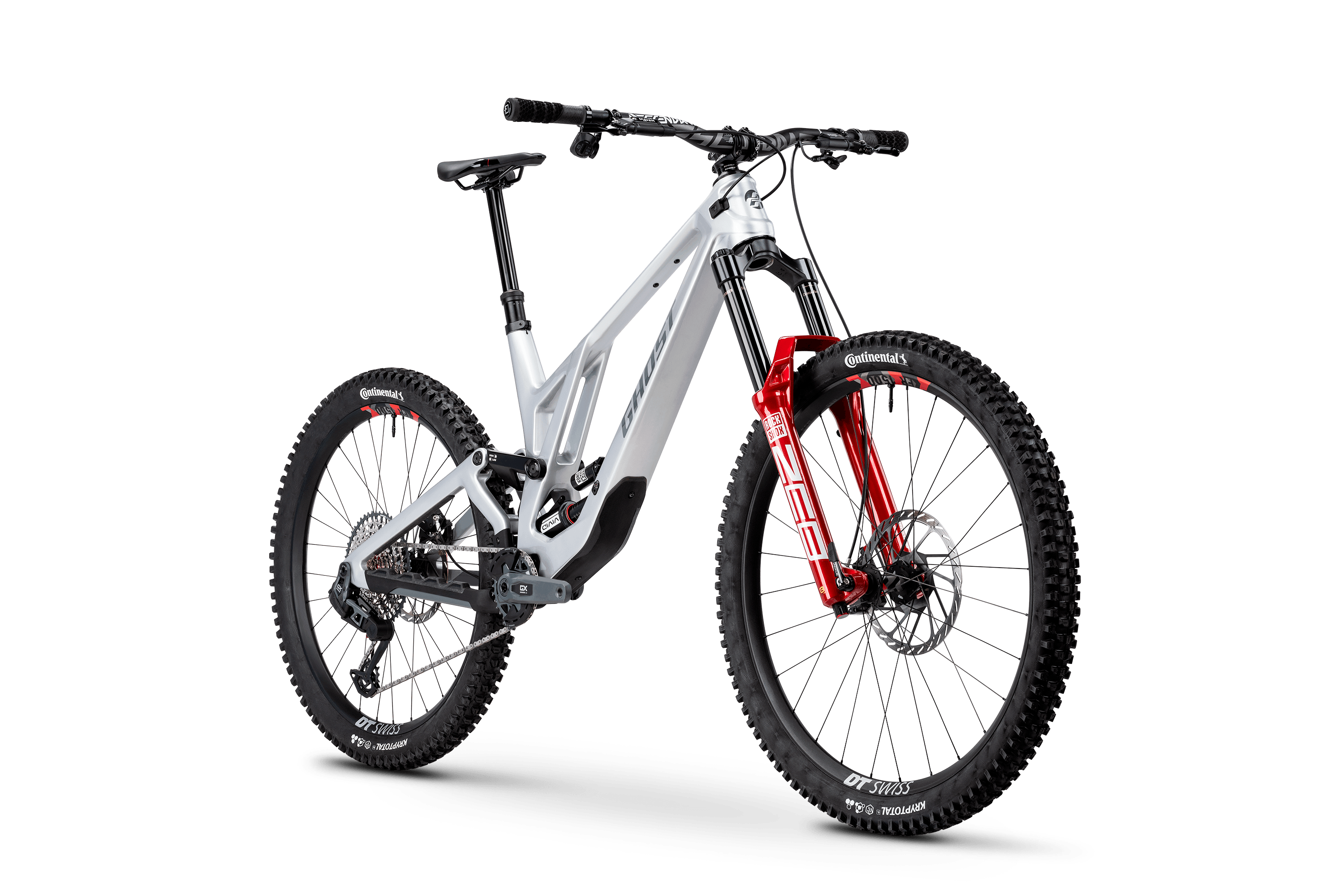
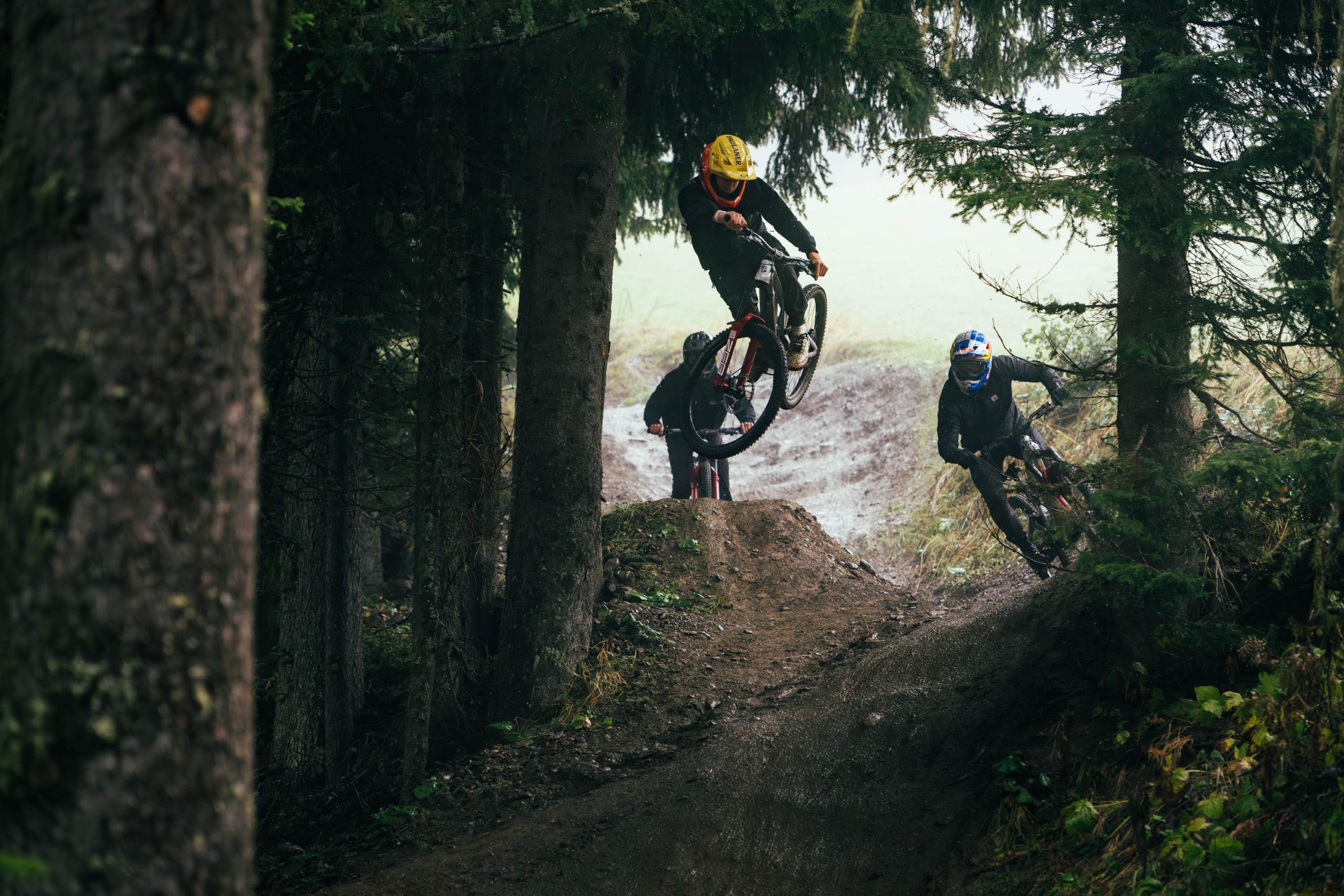
Ghost is ‘back in gravity’ with the release of the Poacha, a 180mm-travel MTB designed to take on the gnarliest lines.
The release of the Poacha marks the brand’s re-entry to the UK market, with a mountain bike built to appeal to riders looking for a long-travel bike designed to hit freeride lines, park laps and techy trails.
Three builds are available at launch, with the entry-level bike appearing to represent the good value Ghost has been associated with.
Prices start at £4,199 / €4,999 for the base model, with the top-of-the-range Poacha Full Party priced at £6,699 / €8,000.
Traction Link 3.0 suspension system
The Poacha is available in three builds. Ghost
The Poacha employs the brand’s Traction Link 3.0 suspension system, a virtual pivot point linkage, to deliver its rear suspension with forks that match the 180mm suspension figure up front.
The VPP setup is said to have a sensitive early stroke and gives the suspension a rearward axle path.
In theory, this should take the sting out of blunt hits, enabling the rear wheel to swing back out of the way rather than taking the brunt of the force.
A low-mounted shock is said to drop the centre of gravity, giving the bike better agility in the corners and steep sections of track.
Carbon tubes, alloy links
The Poacha is only available as a mullet setup. Ghost
The frame sees carbon tubes connected via alloy links and is Category 5 rated, meaning it’s safe to use on freeride and downhill trails.
Adjustability is the name of the game when it comes to the Poacha’s geometry, with flip chips and reach adjusters in the frame.
A new Acros headset enables the reach to be adjusted by 5mm either way, with reach measurements ranging from 440mm to 516mm through the sizes.
Ghost has given the Poacha fully replaceable hardware, with every aluminium piece tightening into itself, so there are no threads in the carbon to be damaged.
The bike is ‘double crown ready’, and Ghost says you can run up to a 200mm fork.
The Poacha is designed for back-to-back days in the bike park. Ghost
The rear suspension can also be increased to 190mm by using a shock with 70mm of stroke rather than 75mm, and it’s coil-compatible with 35 per cent progression overall.
The rear end features an asymmetric design for increased strength, with the frame shifted slightly towards the non-driveside.
It seems Ghost has designed the bike for easy maintenance, with the frame bearings sealed on the inside and outside for better durability.
The bottom of the down tube gets a rubber protector to fend off rock strikes, and there are plenty of mounting points to attach spare tubes or multi-tools in the event of mishaps on the mountain.
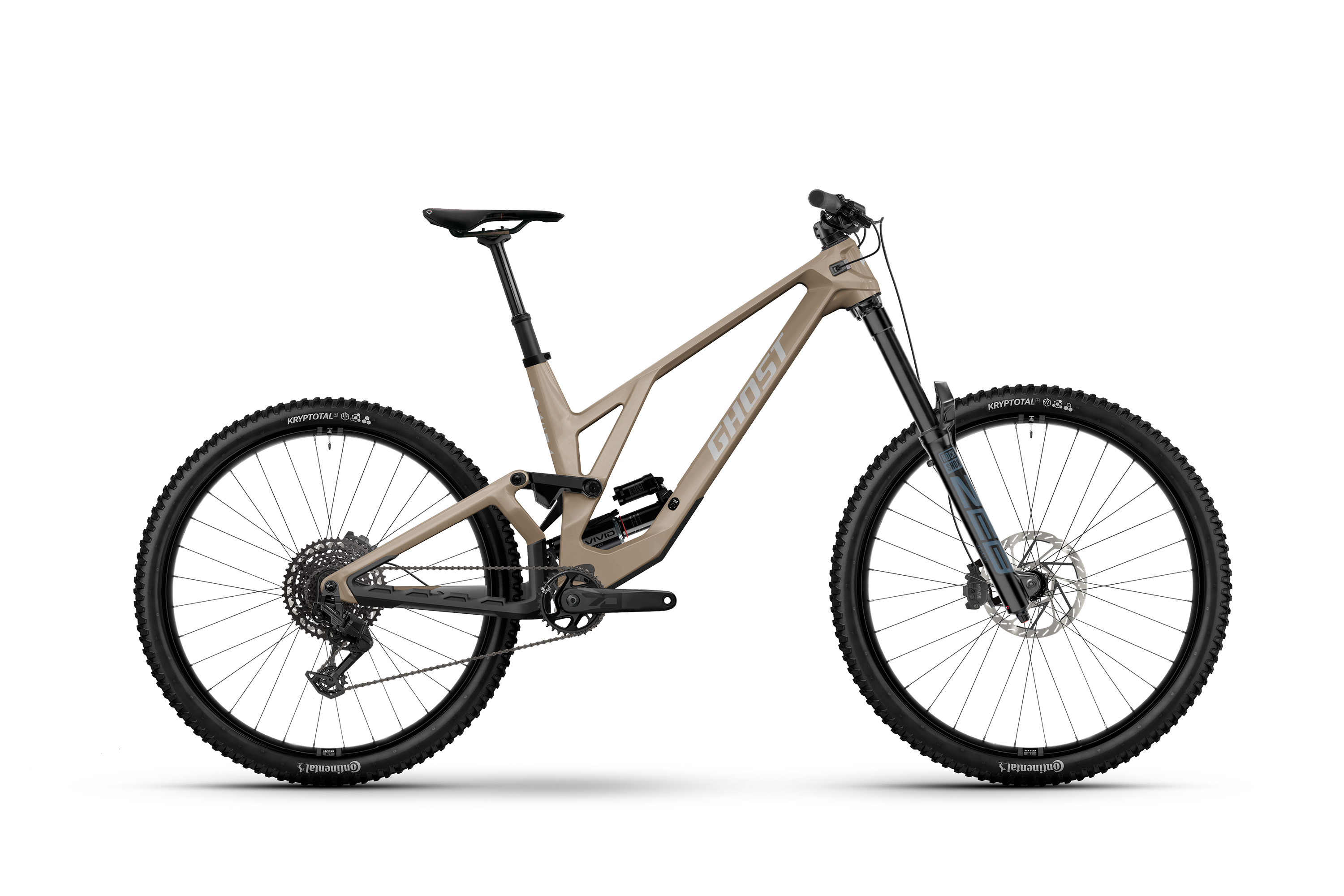
Ghost Poacha spec and price details
Ghost Poacha
The Poacha base model looks to represent decent value. Ghost
Fork: RockShox ZEB Select, 180mm
Shock: RockShox Vivid Select
Drivetrain: SRAM Eagle 70 T-Type
Brakes: SRAM DB Maven Bronze
Wheels: Shimano (hubs), WTB ST Tough TCS 2.0 (rims)
Tyres: Continental Kryptotal
Price: £4,199 / €4,999
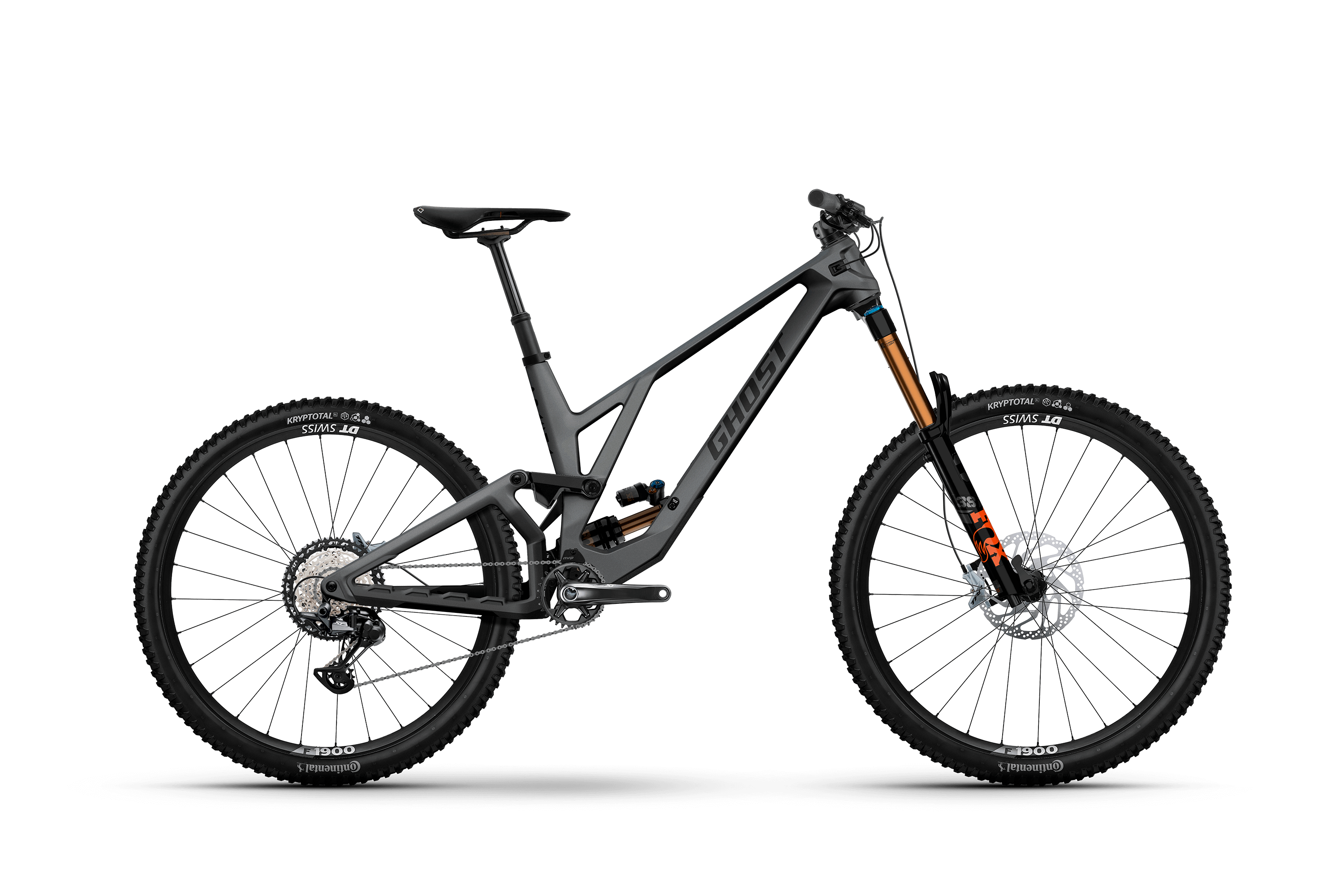
Ghost Poacha Pro
The Poacha Pro is the only model to run Fox suspension. Ghost
Fork: Fox 38 Factory, 180mm
Shock: Fox X2 Factory
Drivetrain: Shimano XT
Brakes: Tektro TRP DH-R EVO
Wheels: DT Swiss F 1900
Tyres: Continental Kryptotal
Price: £5,499 / €6,499
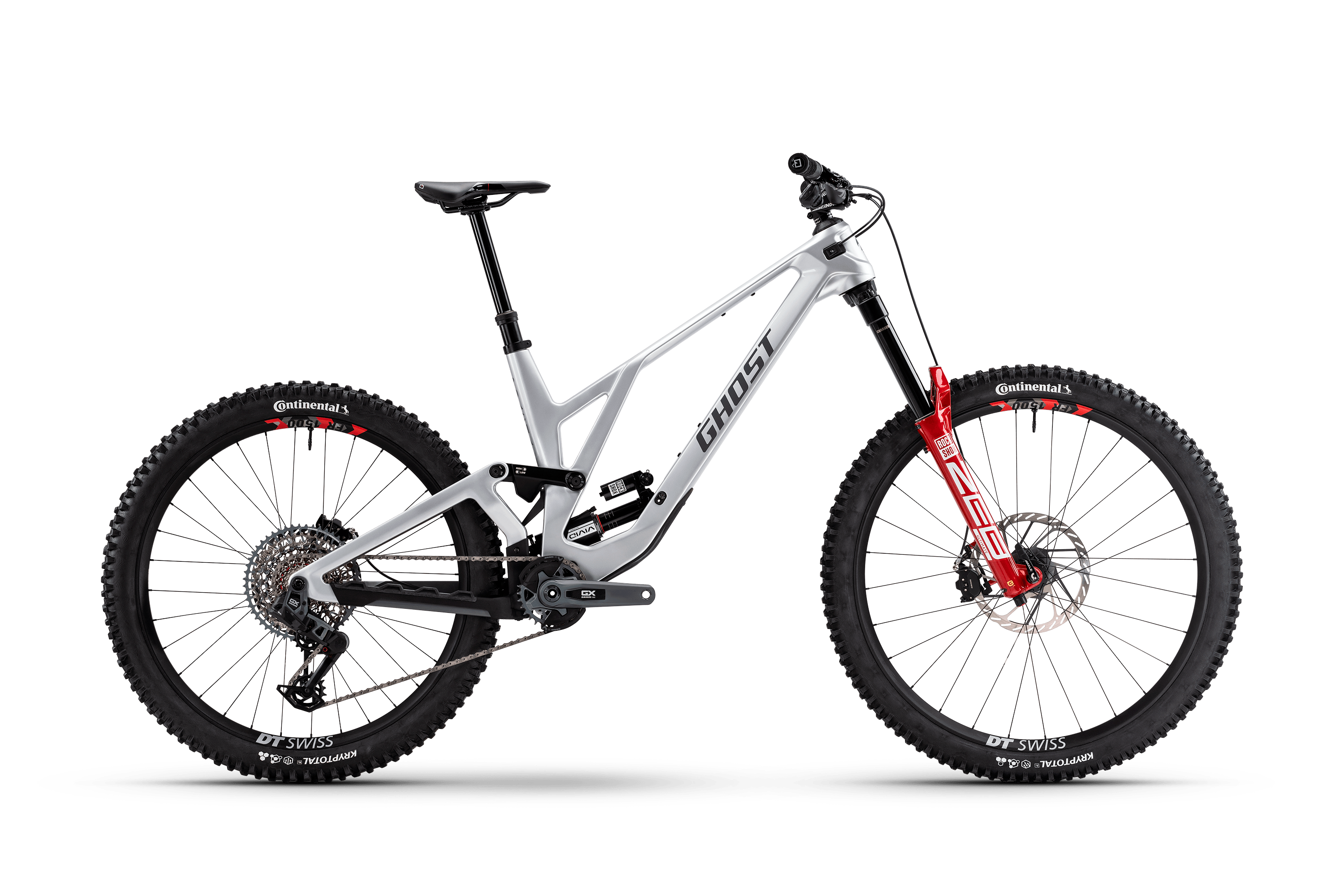
Ghost Poacha Full Party
The top-of-the-range Full Party is the only model to use electronic shifting. Ghost
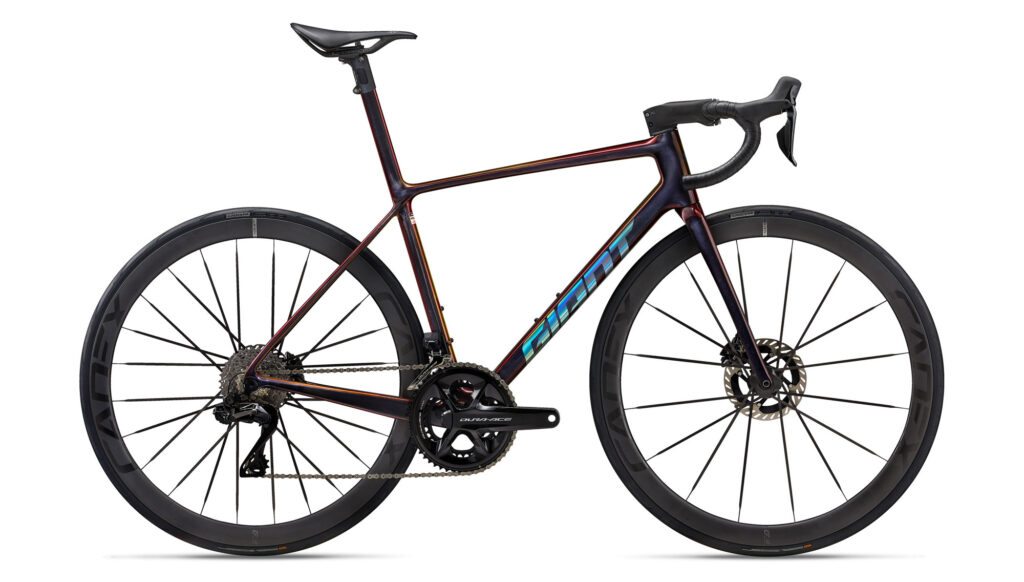
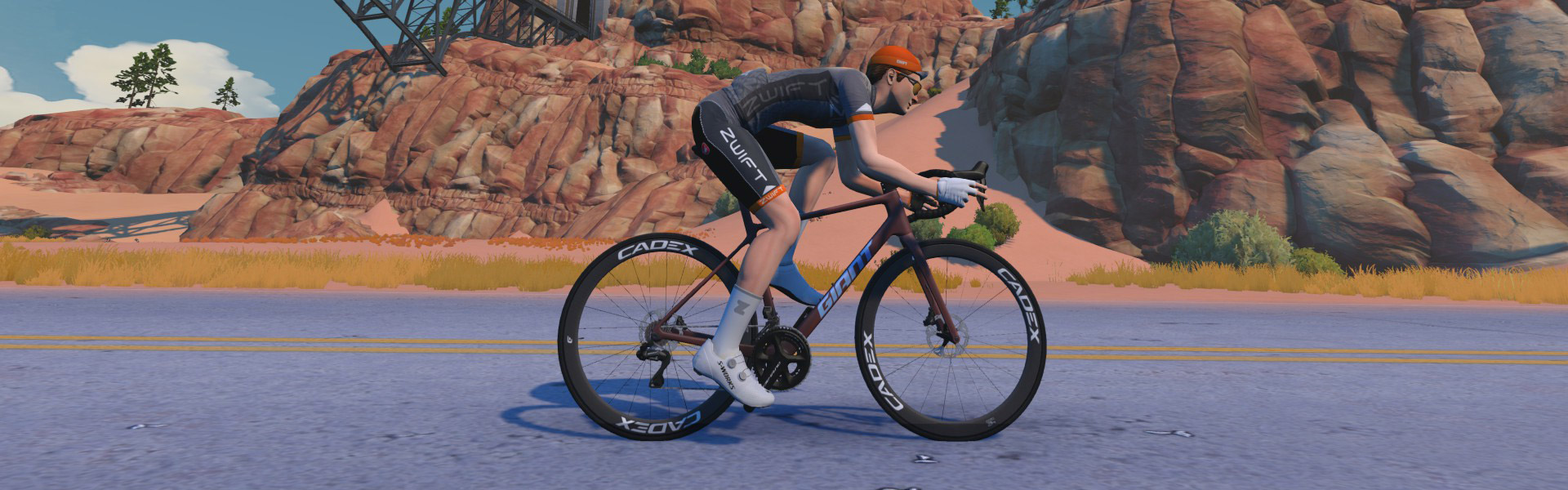
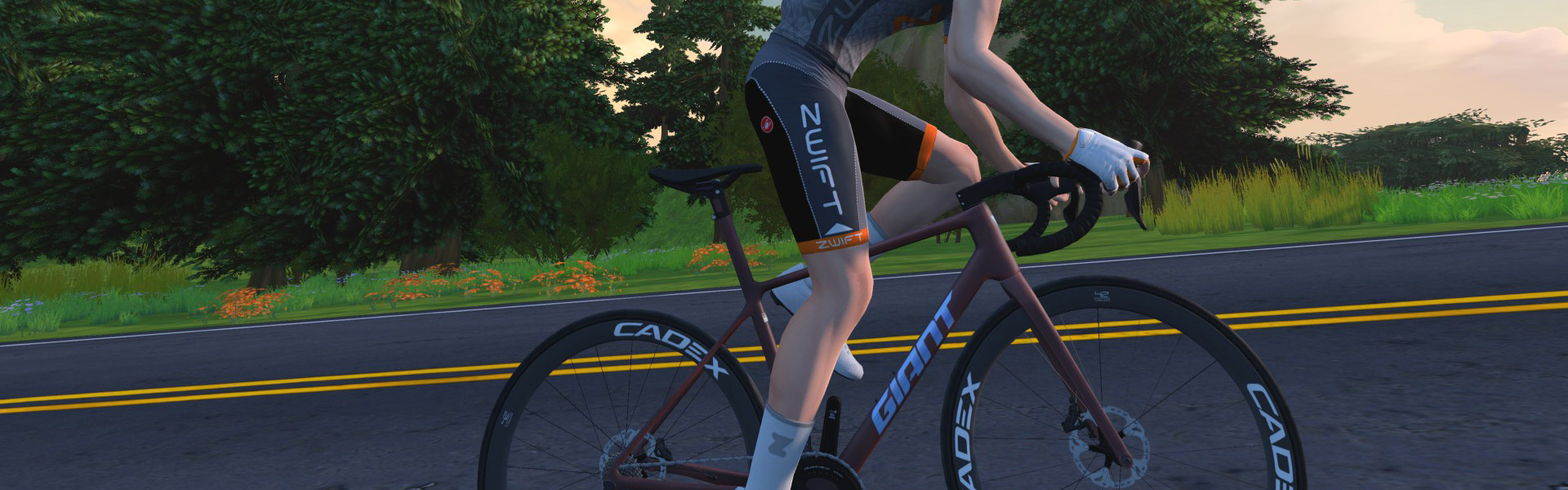
Zwift’s latest update includes a new frame from Giant, the TCR Advanced SL 2025. This update also renamed the game’s existing TCR Advanced SL to the “TCR Advanced SL 2021”, making it clear that this frame is the new version of Giant’s popular TCR Advanced SL road racing frame. Here’s what it looks like IRL:
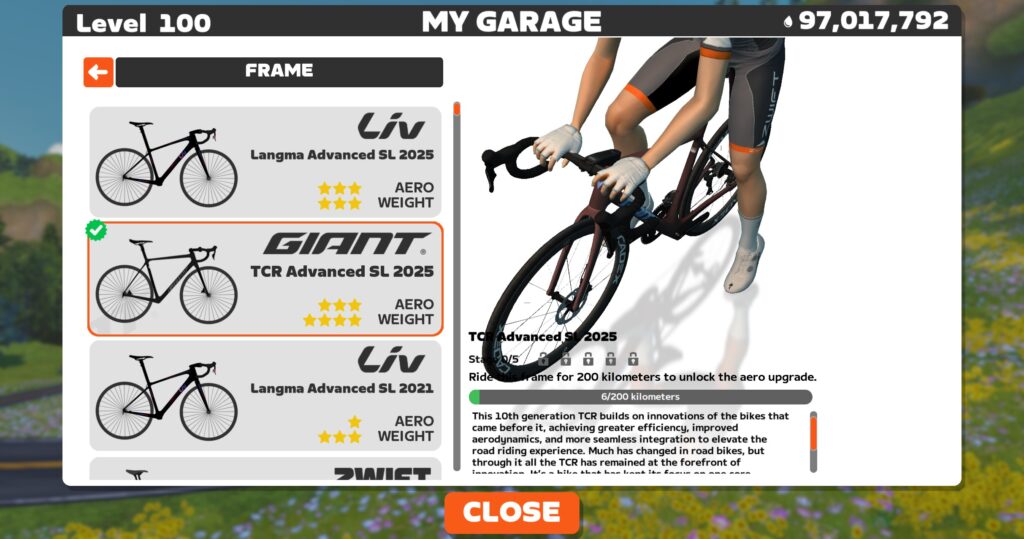
On Zwift, you’ll need to be updated to game version 1.89+ to see the TCR Advanced SL 2025 in the Drop Shop. You’ll also need to be at level 25+ with 1,100,000 Drops to buy it. Here’s how it’s described in the Drop Shop:
“This 10th generation TCR builds on innovations of the bikes that came before it, achieving greater efficiency, improved aerodynamics, and more seamless integration to elevate the road riding experience. Much has changed in road bikes, but through it all the TCR has remained at the forefront of innovation. It’s a bike that has kept its focus on one core mission: to give riders a competitive edge.”
It’s rated 3 stars for aero, 4 stars for weight, like a handful of other top frames with strong all-arounder performance. But a 4-star system isn’t the most granular of performance measurements, so we ran this frame through our precise tests to measure performance at nerd-level detail. Let’s dive in!
Note: test results below are from a 75kg, 183cm rider holding 300W steady using Zwift’s stock 32mm Carbon wheelset on the un-upgraded version of the frame.
Aero (Flat/Rolling) Performance
Giant’s TCR Advanced SL 2025 is slippery, trimming 61.2s off our baseline Zwift Carbon frame over an hour of flat riding.
That puts it in the top 10% of all frames on Zwift, and within 1.8 seconds of the game’s fastest frame. Considering that our tests have a 1-second margin of error, one could reasonably lump this frame in with the other fastest frames in terms of performance on flat roads.
Climb Performance
The TCR Advanced SL 2025 is a strong climber, but not quite in the same league as the game’s top all-arounders. It shaves 44.7 seconds off of our baseline Zwift Carbon’s time on an hour-long climb, placing it in the 20% of all road frames on Zwift and 11.7 seconds behind the fastest climber (Specialized S-Works Tarmac SL8).
Like all frames in Zwift, Giant’s TCR Advanced SL 2025 can be upgraded in five stages. As a high-end race bike, each of the five stages results in a performance improvement. The TCR Advanced SL 2025 upgrade stages are as follows:
Ride 200km, pay 100,000 Drops for an aero upgrade
Ride 260km, pay 200,000 Drops for a weight reduction
Ride 320km, pay 350,000 Drops for a drivetrain efficiency improvement
Ride 380km, pay 500,000 Drops for an aero upgrade
Ride 440km, pay 750,000 Drops for a weight reduction
You can expect a fully-upgraded Giant TCR Advanced SL 2025 to be approximately 28 seconds faster on a flat hour and 36 seconds faster on an hour-long climb vs the “stock” Giant TCR Advanced SL 2025.
Conclusions
There are currently three top all-arounders on Zwift, and their unlock levels and Drops costs are high:
Cannondale SuperSix Evo LAB71 (level 40, 1,750,000 Drops)
Pinarello Dogma F 2024 (level 40, 1,750,000 Drops)
Just below them, with essentially the same aero performance but slightly slower climb performance, you’ll find the Canyon Aeroad 2024 which unlocks at just level 10 and costs 1,100,000 Drops.
The Giant TCR Advanced SL 2025 is very comparable to the Canyon Aeroad 2024: same price, similar performance, and a lower unlock level (25+) than the top 3 frames. So we expect to see some beginning Zwifters purchasing this frame to race until they reach a level where they can purchase the next fastest all-arounder.
And while its performance won’t be compelling enough to cause racers to buy it en masse, fans of Giant, including existing TCR Advanced SL owners, will be buying it. They may even buy it to replace the older TCR frame in their garage, since the 2025 model performs much better, trimming ~35 seconds off our flat hour test and ~29 seconds off our climbing hour.
Questions or Comments?
What do you think of this new frame from Giant? Share below…
Important note: this post contains speed test results for Zwift frames or wheels. These results may change over time, and a bike’s performance relative to others may also change. We don’t always revise posts when performance rankings change, but we do keep current, master versions of our speed test results which are always available. See the frame charts, wheel charts, and Tron vs Top Performers for current performance data.
Ribble has revealed the Ultra Race, a new all-rounder race bike constructed using a “revolutionary” MT65 carbon layup.
The British brand claims its use of this new, high-modulus carbon fibre has enabled it to build a stronger, stiffer and lighter bike, without compromising on aerodynamic efficiency.
The Ultra Race replaces the Endurance SL R in Ribble’s range and doubles down on its racing focus, dropping features such as mudguard mounts and paying increased attention to low weight and aerodynamics.
The Ultra Race is Ribble’s latest all-rounder race bike. Ribble
According to Ribble, its use of MT65 carbon fibre is a “world first” within the cycling industry.
Jamie Burrow, Ribble’s head of design and product development, says this high-modulus carbon fibre was selected because the brand wanted to look beyond the types of carbon typically used by the bike industry (such as T800 and T1000).
The MT65 carbon is deployed strategically across the Ultra Race frame, alongside lower-modulus fibres.
Ribble claims it’s the first bike brand in the world to make use of MT65 carbon fibre. Ribble
The brand’s press materials say the use of this carbon fibre is “revolutionary”, although it’s fair to say the results – while impressive on paper – are predictable.
It likely won’t surprise anyone to discover this new carbon layup has enabled Ribble to make the Ultra Race lighter, stiffer and more compliant – all without sacrificing aerodynamic efficiency or durability.
In terms of figures, though, Ribble claims a size-medium frame (which is roughly equivalent to a 55cm) weighs 775g and is 75g lighter than its predecessor.
Ribble says the Ultra Race doesn’t compromise on strength or durability. Ribble
As a point of comparison, Specialized claims its S-Works Tarmac SL8 frame weighs 685g in a size 56cm, while its second-tier Tarmac SL8 Pro frame clocks in at 780g.
If aerodynamics weren’t such a concern, Burrow says Ribble “could have gone easily under 650g” with the Ultra Race. However, given the importance of aerodynamics to modern-day racing, this was deemed not worthwhile.
Likewise, Burrow says Ribble was keen not to compromise on the strength and durability of the frame by going too light, and emphasised it has been tested thoroughly in the real world throughout its three-year development cycle.
Refined aerodynamics
The Ultra Race uses aero features trickled down from Ribble’s aero bike. Ribble
While the overall silhouette of the Ultra Race is similar to its predecessor, the Endurance SL R, Ribble has refined the frame by taking inspiration from its Ultra SL R platform (which is now being rebranded as the Ultra Aero).
Like that aero road bike, the Ultra Race uses a wide-stance fork, with a profiled head tube and down tube shaped to shield water bottles from the wind.
The down tube on the Ultra Race is profiled to smooth the airflow around water bottles. Ribble
Up-front, Ribble has developed a new one-piece integrated cockpit for the Ultra Race, which is available in five sizes from 80x380mm to 120x420mm.
If that’s not to your taste, a two-piece cockpit, such as the Allroad SL R’s wake-generating UB-2 handlebar – plus a separate aero stem – can also be specced on the Ultra Race if desired.
Ribble’s new integrated handlebar uses a more traditional shape than its Ultra and UB-2 handlebars. Ribble
Overall, Ribble says its testing at the Silverstone Sports Engineering Hub wind tunnel showed the Ultra Race is 0.72 per cent more aerodynamic than its predecessor, across a yaw sweep of -10 to 10 degrees.
Notably, Ribble’s wind tunnel data says the Ultra Race is marginally less aerodynamic into a straight headwind (0 degrees of yaw).
On average, though, the Ultra Race is claimed to save a rider 2.6 watts at 46.8kph (Ribble said its wind tunnel data was gathered at a wind speed of 13 metres per second) or around six seconds over 40km.
Ribble Ultra range, specifications and pricing
Ribble says top-spec builds of the Ultra Race will weigh less than 6.8kg. Ribble
The Ribble Ultra is available in six sizes, from XXS to XL, which Ribble says covers riders from 150 to 196cm in height.
There are four builds in the range, all featuring Shimano Di2 or SRAM AXS electronic groupsets, the new Aero Road Carbon integrated handlebar and Pirelli tyres.
Ribble says the Ultra Race has clearance for 32mm-wide tyres, and that all builds will shop with 30mm tyres.
Optional upgrades include Zipp’s 353 NSW and Scope’s Artech 4 wheelsets, both of which can be specced via Ribble’s Bike Builder customisation programme.



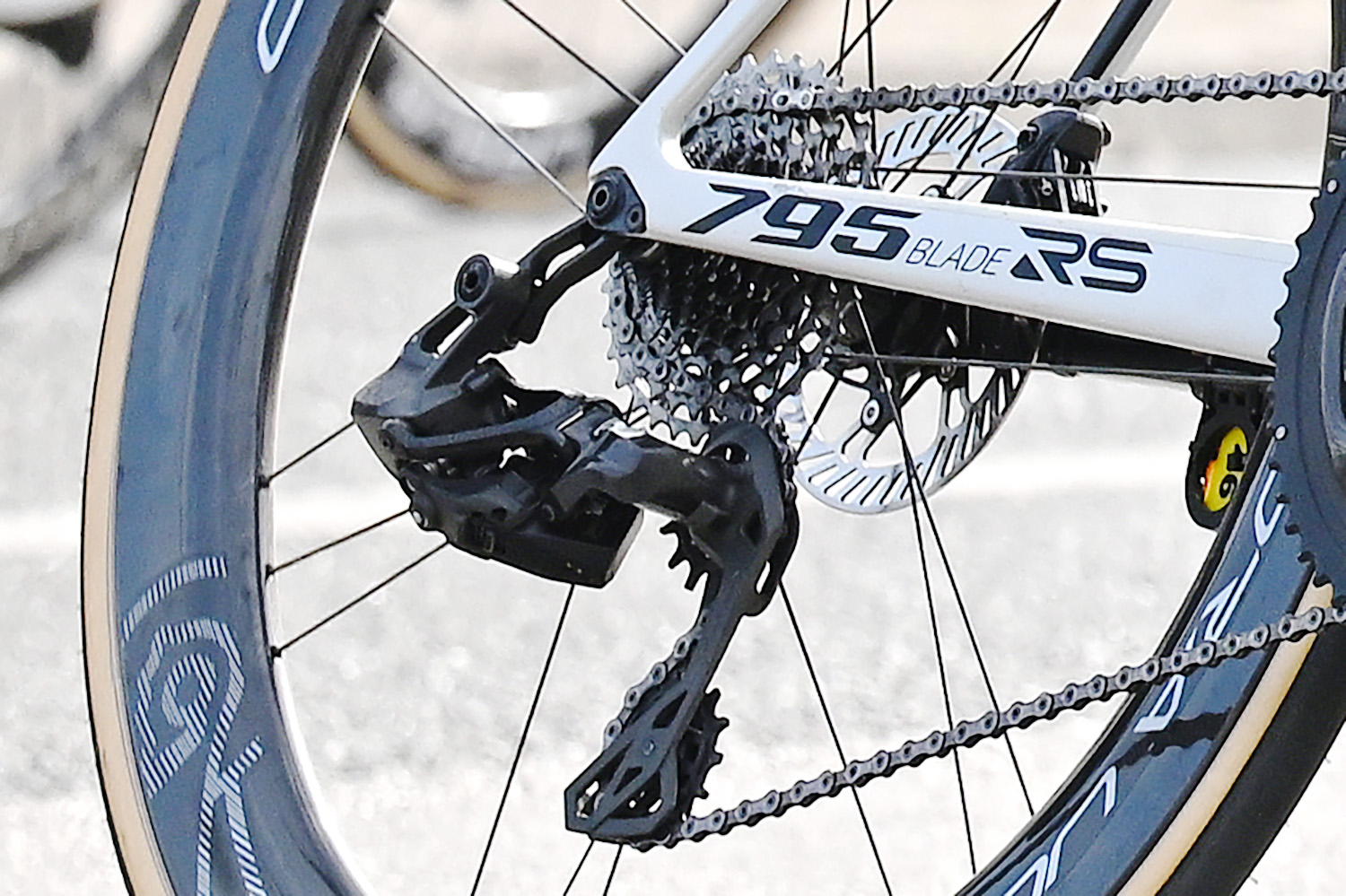


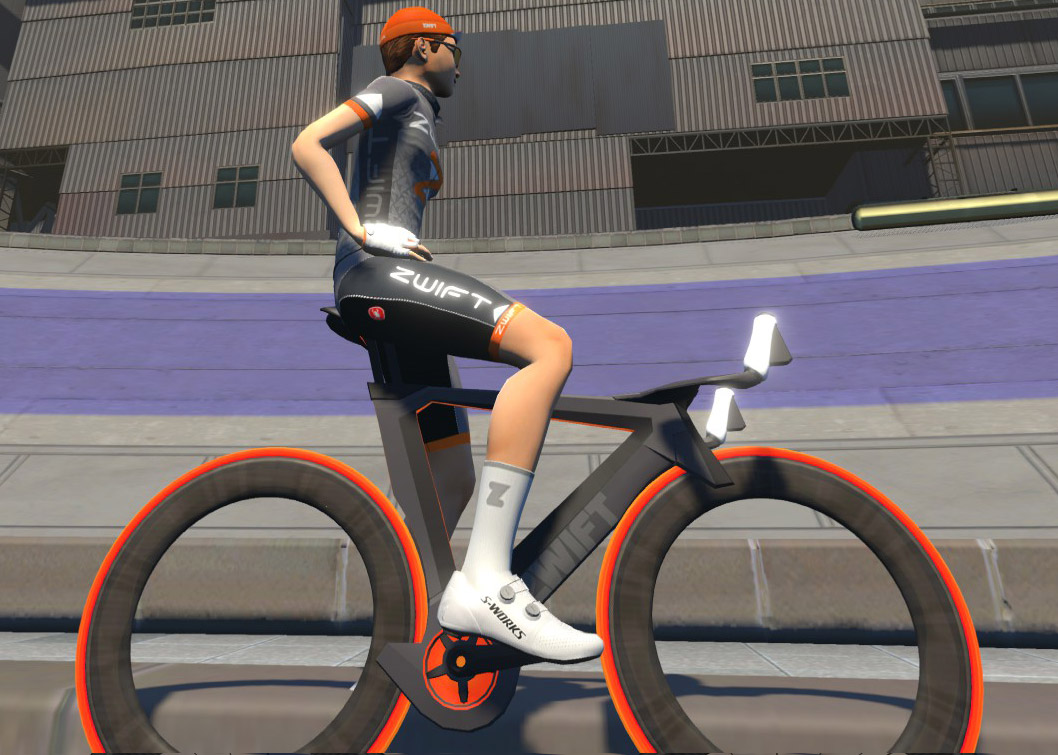


 The HERD Thundering Turtles
 Beginner Friendly
 Zwift Women’s Racing Series p/b FemmeCycle Collab || Race 1