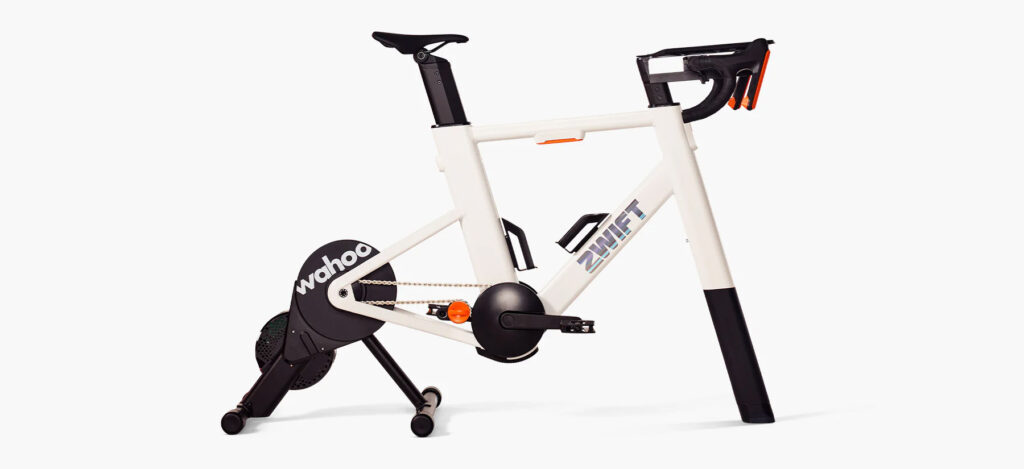
Zwift Racing is one of the best ways to stay engaged and challenge yourself indoors. In this week’s top video, hear from one Zwifter as she shares tips for those just getting started!
Also included in this week’s post are videos about weight loss, benchmark FTP tests, and the Wahoo KICKR Core 2.
Avoid These Zwift Racing Mistakes!
Looking to improve your Zwift racing skills? Jessica Strange shares everything she has learned from her recent races.
I Lost 3.1kg in 7 Days – Week 1 Challenge Results
Chad Rides shares an update after the first week of his weight loss challenge. How much progress has he made in the first week?
Indoor FTP Test After Crit Season: How Accurate Is My Zwift FTP?
After a long summer of training and racing outdoors, Cranks & Sprints puts his fitness to the test with an FTP test.
Wahoo KICKR CORE 2 In-Depth Review: Worth It?
Ray, aka DCRainmaker, shares an in-depth review of the Wahoo KICKR Core 2. Is it the best budget direct drive trainer?
Brutal First Race Back On Zwift… But One Of The Best!
Ed Laverack shares a recap and commentary on his first Zwift races back and shares why these first races were some of his best.
Got a Great Zwift Video?
Share the link below and we may feature it in an upcoming post!
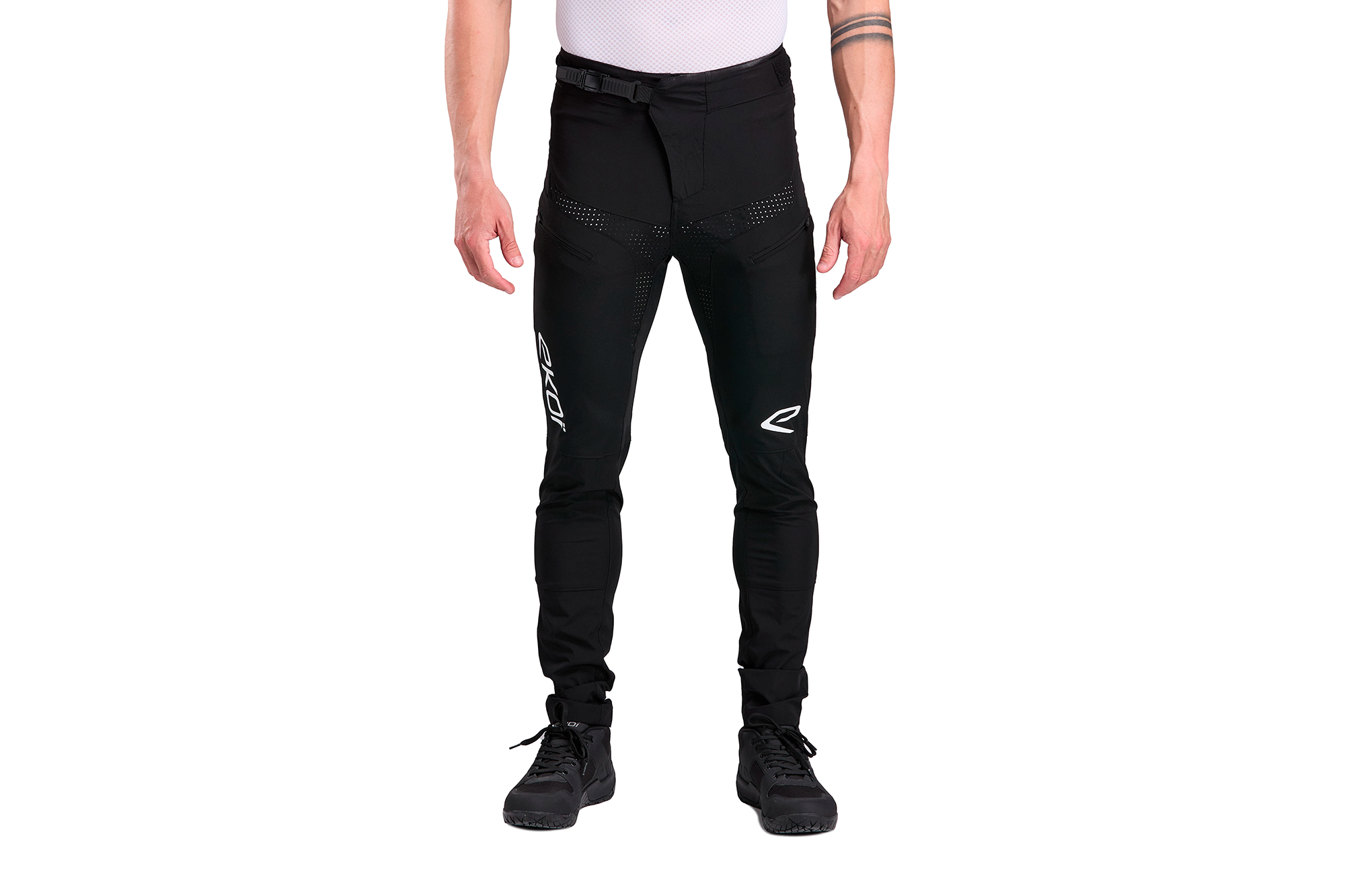
If you’re scouring the web for clothing deals this Black Friday, then be sure to check out Ekoi’s Black Friday sale.
The French clothing brand is offering up to 52 per cent off a massive array of products across its range. Why not upgrade your winter wardrobe or prepare for next year at a reduced price?
Helmets, clothing, shoes and accessories are included in the sale, with the brand catering to all disciplines.
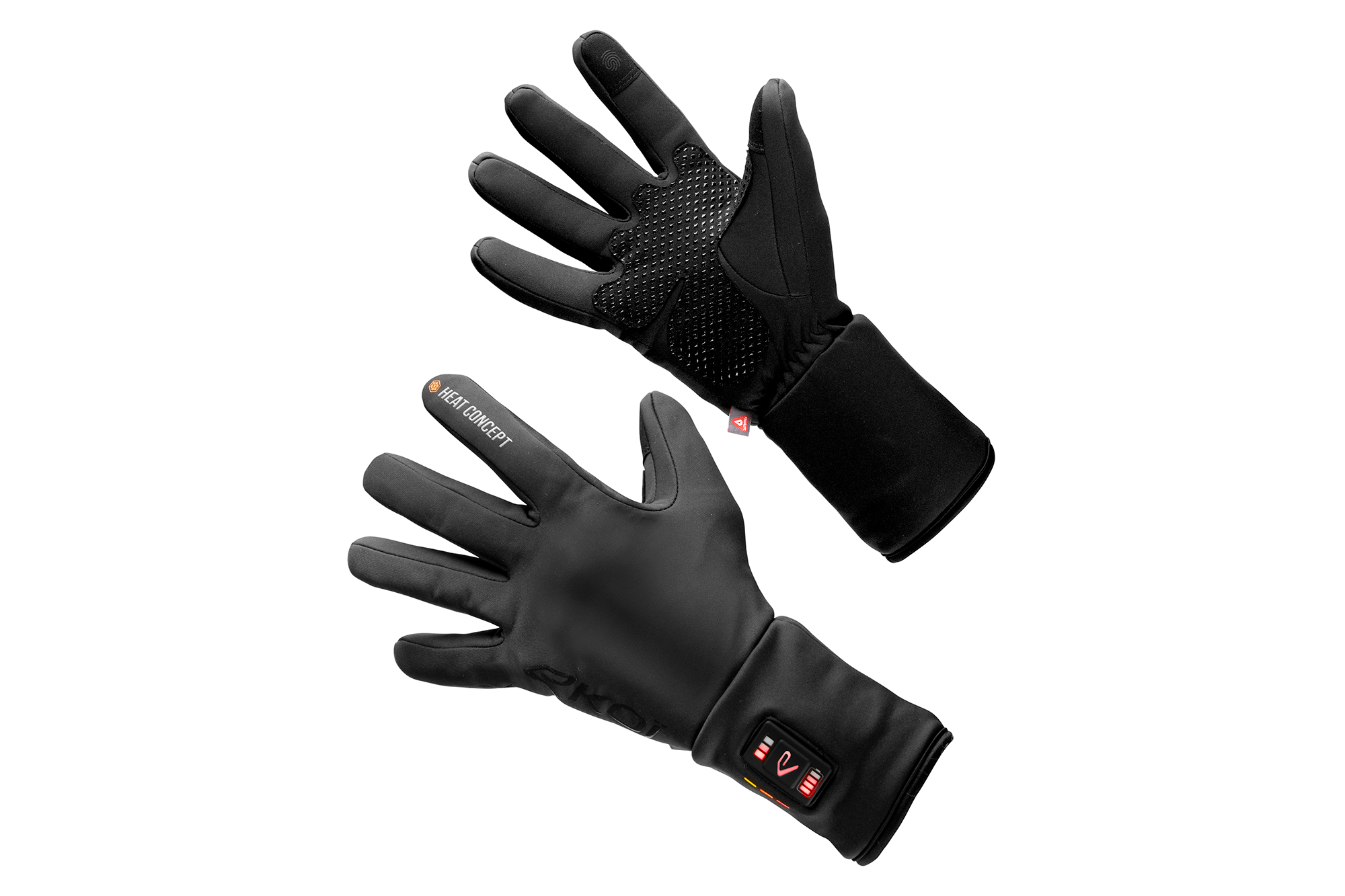
Every rider has contemplated this concept on an extra cold ride. Ekoi
Designed for riding in extreme conditions, these gloves have a built-in heater with 3 heat levels that last up to 4 hours.
They feature Primaloft Gold insulation and Y-Warm water repellent membrane to help retain that precious heat, with Ekoi claiming they’ll keep you comfy down to -11ºC.
If you suffer from cold fingers when out on the bike, then be sure to check these out.
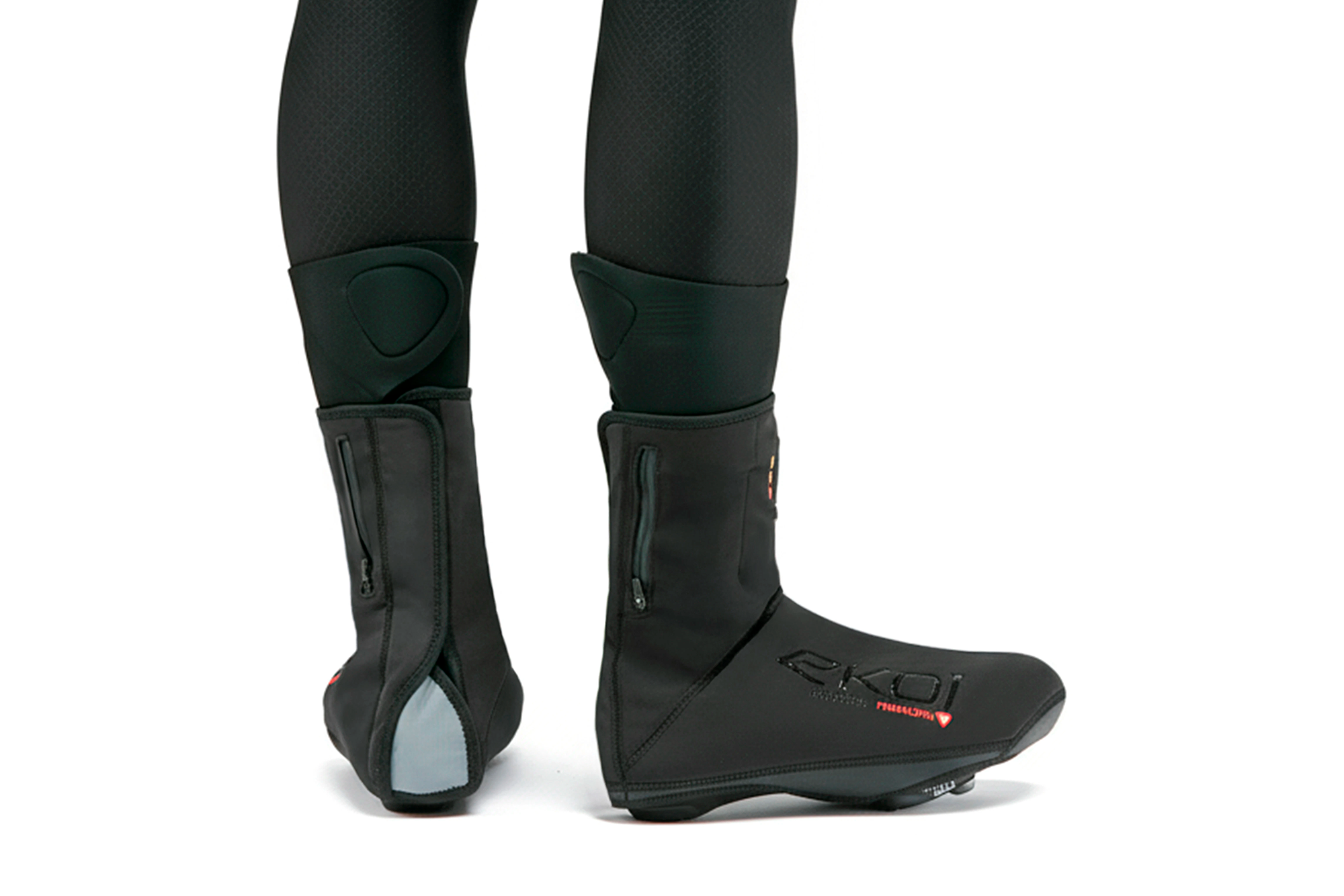
These overshoes should keep your feet toasty through the winter. Ekoi
These over-shoes must have been dreamed up by someone on the verge of hypothermia.
They share a similar heating unit to the gloves, and offer 3 heat settings that last between 2 and 4 hours to keep your little piggies toasty.
There’s the same Primaloft Gold insulation and Y-Warm water repellent membrane as the gloves, which the brand says provides excellent heat retention while staying light, flexible, breathable, and low-bulk.
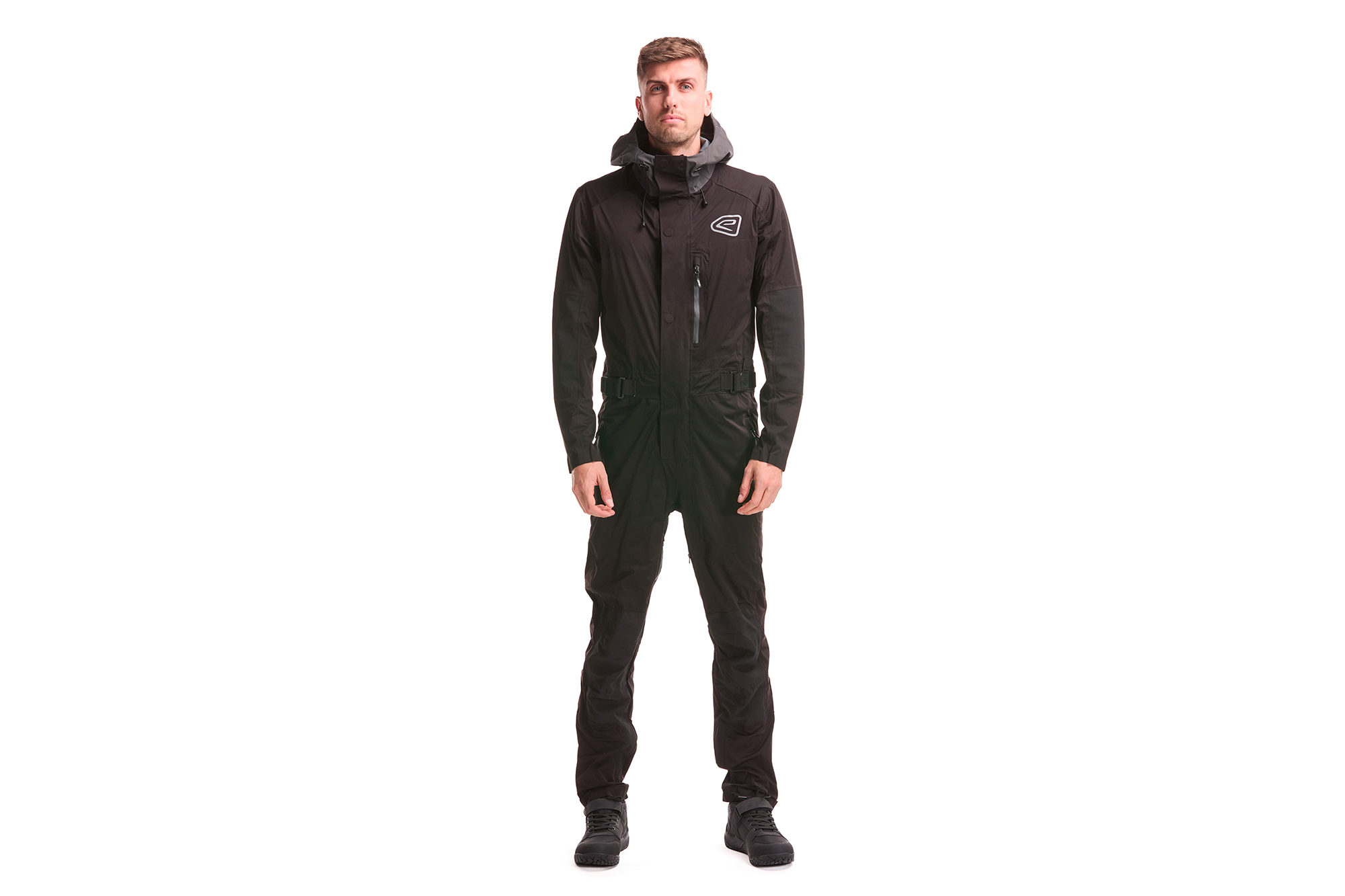
This mountain bike onesie should make clean-up easier after a ride. Ekoi
Mountain bike onesies have become very popular over winter, with high warmth and low maintenance making them perfect for cold, wet bike park laps.
Ekoi’s has a waterproof rating of 15,000mm and breathability of 15,000 g/m², meaning you should be kept dry without boiling in your own sweat.
Thermo-welded seams, reinforced knees and seat, and ankle adjustments ensure durability ensure a durable and snug fit, with Ekoi saying it allows for unrestricted movement.
Many jobs carry occupational risks and sport is no different. For pro cyclists, crashing hard on tarmac is the obvious one, but when it comes to health, iliac artery endofibrosis (IAE) is another.
It’s a health condition that’s rare in the general population, but increasingly common among professional cyclists who ride 10s of thousands of kilometres every year.
IAE is a vascular condition that causes a narrowing of the external iliac artery, which carries blood from the pelvis to the legs. It’s not just seen in professional cyclists in the sporting world, but they are especially afflicted by it.
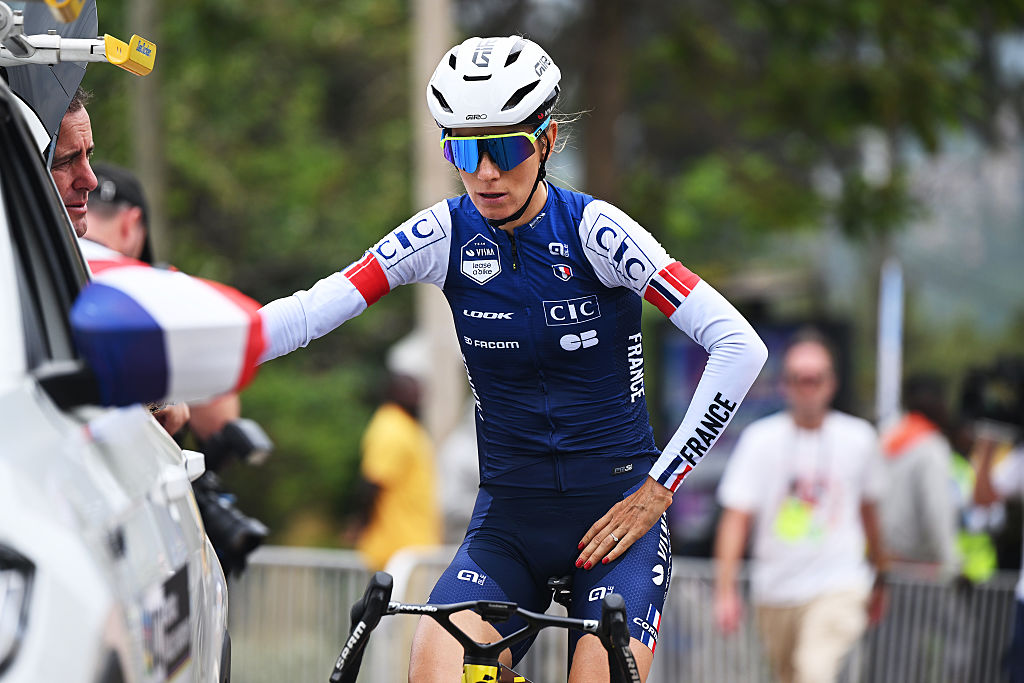
Pro riders who’ve suffered from issues with their iliac arteries are many, including Ineos Grenadiers’ Bob Jungels and recent Tour de France Femmes winner Pauline Ferrand-Prévot. It also curtailed the careers of Zdeněk Štybar and Tayler Wiles.
The exact number of cyclists with IAE is impossible to pin down because many cases go undiagnosed or are misattributed to other physiological or performance reasons, though it’s been reported that up to 20 per cent of elite road cyclists may develop IAE over time.
In fact, a 2022 paper published in the online medical journal Cureus called for IAE to be classified as an occupational disease, particularly in the case of athletes and cyclists. Whether it’s on the increase or awareness is growing remains to be seen.
So, what’s going on? And why might you, as a recreational rider, be affected?
Narrowing of the vessel
2025 Tour de France Femmes winner Pauline Ferrand-Prévot is one of several pros to suffer from IAE. Dario Belingheri / Getty Images
“The term endofibrosis means that somewhere within the wall of a blood vessel is an increase in fibrous tissue, which is essentially scar tissue,” says Professor Nick Cheshire, head of vascular surgery at Royal Brompton Hospital.
“Normally it’s flexible and soft, especially in young people, but if an area has been irritated over a long period of time, the scar tissue builds up and starts to narrow the blood vessel. This is called ‘stenosis’, which restricts the blood flow and is a secondary effect to the fibrosis.”
When a cyclist is resting, all is good. But when they work hard, their muscles demand more oxygenated blood to feed working muscles. This narrowness of the blood vessel reduces blood circulation of the limb, causing pain, weakness or numbness during movement.
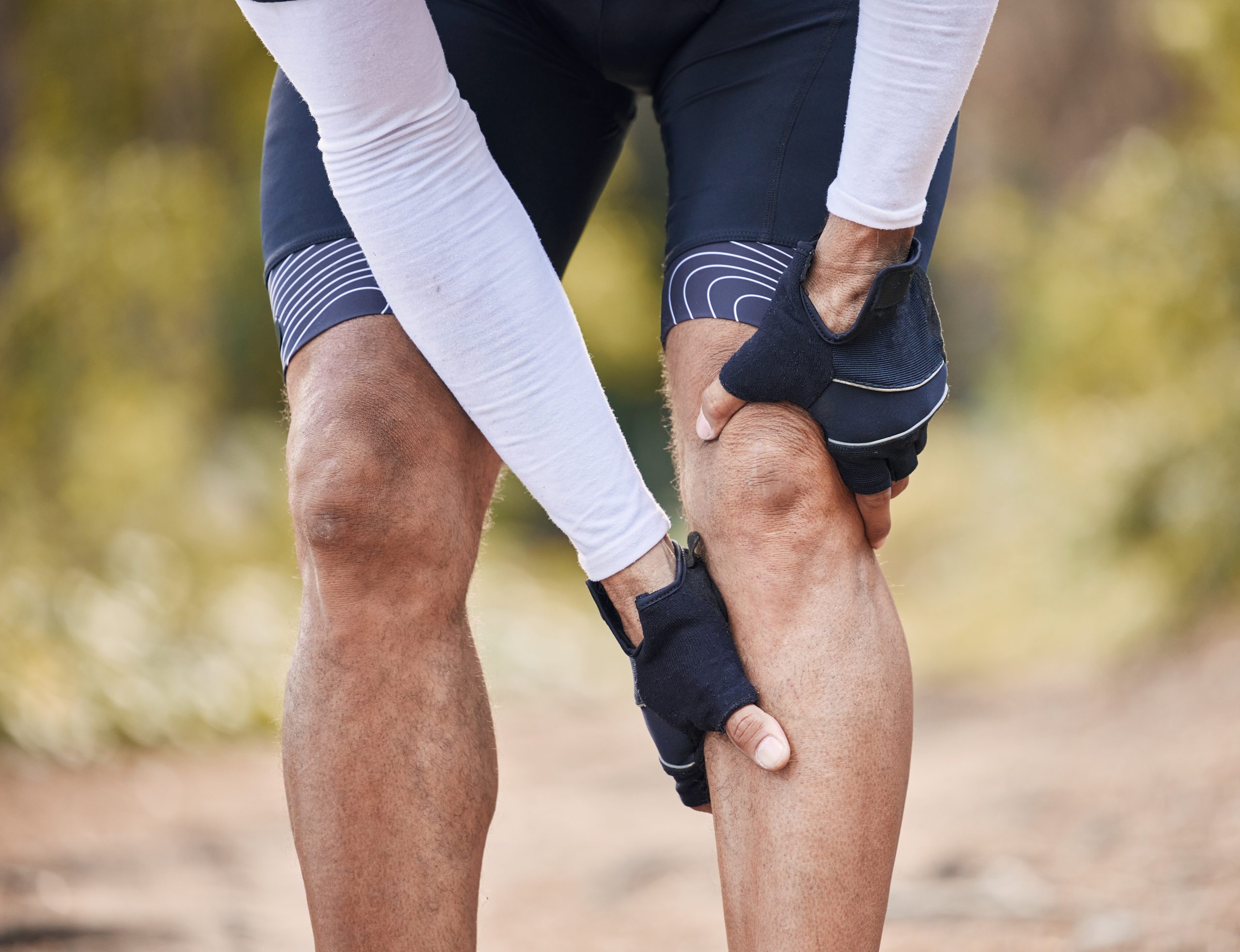
Leg pain is one of the ways IAE manifests.
The most common symptoms are a cramping or burning sensation in one leg, usually the thigh but also the calf or buttocks. Generally, it occurs during high-intensity efforts, like out-of-the-saddle ascents or sprinting to the line, but soon settles down once intensity is lowered.
Another symptom is losing power. This is how it manifested itself in Jungels, who’s had two IAE operations.
“Symptoms for me were fatigue and a loss of wattage,” says Jungels. “I could feel that I just hadn’t been able to hit those high, intensive numbers for a fair while. My body really struggled when we hit race pace.”
It was a similar tale for Štybar, who said at the time of his problems in 2023, “I was training well, hitting good numbers and should have been in the best shape of my life, but I just couldn’t perform in races.
“My legs were so tired, so sore. When we hit a climb, I was immediately dropped and could no longer do the numbers. I didn’t understand. It was such a weird feeling. I felt lost.”
What are the causes of iliac artery endofibrosis?
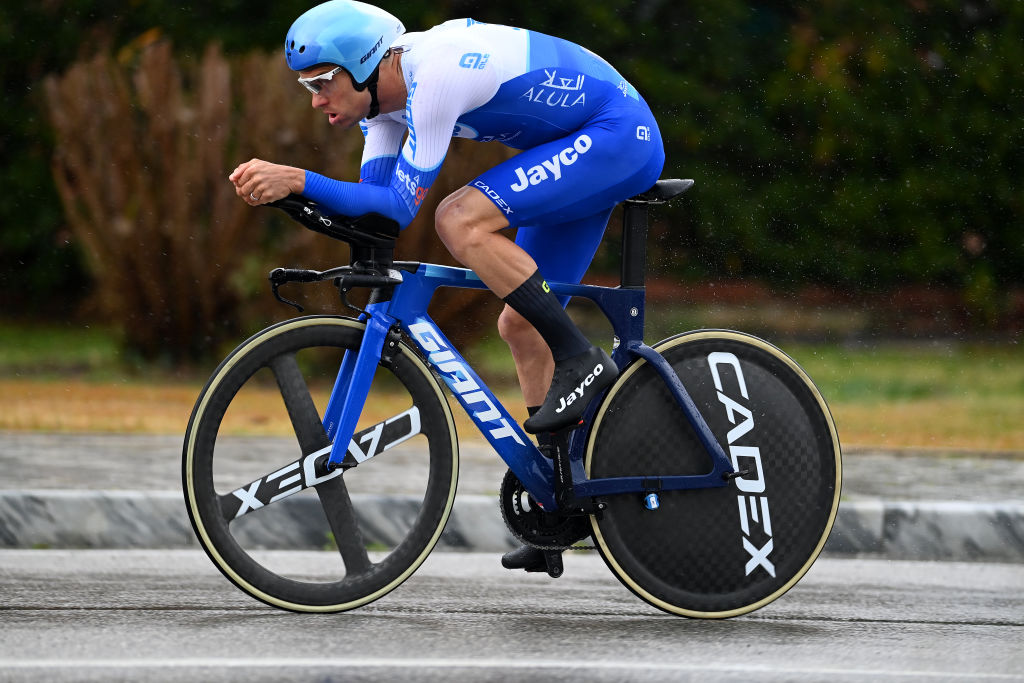
Flexion of the hip in the hunched cycling position is one reason riders like Zdeněk Štybar have been afflicted by IAE. Tim de Waele / Getty Images
For the general population, IAE is often down to the usual high-risk factors such as smoking and diabetes, resulting in narrowing blood vessels and painful calf muscles. For professional cyclists, it’s also down to lifestyle factors, albeit the usually positive ones.
“It’s down to repeated movements,” says Cheshire. “The arteries supplying the leg begin at the umbilicus level [commonly known as the naval or belly button]. This is where the main blood vessel exiting the heart divides into two. They’re called the iliac arteries.”
Each iliac artery divides into an external iliac artery, which continues down the limb and becomes the femoral artery that supplies most of the lower limb, and internal iliac artery, which supplies blood to the pelvic organs, gluteal region and parts of the reproductive organs. It’s the external iliac artery that’s often affected in IAE, especially in cyclists.
“The artery comes around the pelvis and into the leg via the groin,” says Cheshire. “To enter the groin, it has to come under the inguinal ligament. As you’re pedalling, the artery is irritated by the ligament.”
This can cause kinking and damage to the iliac artery wall, leading to a build-up of fibrous tissue within the artery. This not only narrows the artery but prevents it from dilating during exercise, impairing bloodflow and oxygen supply to the leg.
The large swathes of blood associated with intense efforts passing through the narrow or kinked artery can cause further microtraumas and endofibrotic changes.
This repetition of movement is at peak volume in the professional ranks with male pros accumulating over 30,000km in training and racing each year. If there’s an issue, every pedal stroke will only exacerbate the situation.
Although inconclusive, the cycling position has been cited as a major reason, too, with the extreme hip flexion seen in the professional peloton combining with heavy bloodflow during hard efforts to stimulate these endofibrotic changes. That’s how Jungels saw it.
“Cycling is a relatively unnatural activity for your body, so where you bend your leg from the hips, scar tissue forms inside,” he said. “After nearly 20 years of training, this can build up and prohibit bloodflow.”
Excessively long iliac vessels could also increase the likelihood of kinking during hip flexion, while there are suggestions that systemic factors could also play a part, like some metabolic disorders and autoimmune disease such as Raynaud’s, but this requires further exploration.
“There are very few studies on endofibrosis and athletes,” says Cheshire. “It’s a mixed bag. Some sufferers have a single point narrowing; some have a long area of narrowing; some it’s directly underneath the inguinal ligament; some people it’s closer up to where the iliac artery begins.
“Like any arterial disease and narrowing of any form, whether it’s smoking and diabetes related or repetitive injury related, there are often personal anatomical factors that mean one person suffers and another doesn’t.”
Treatment options
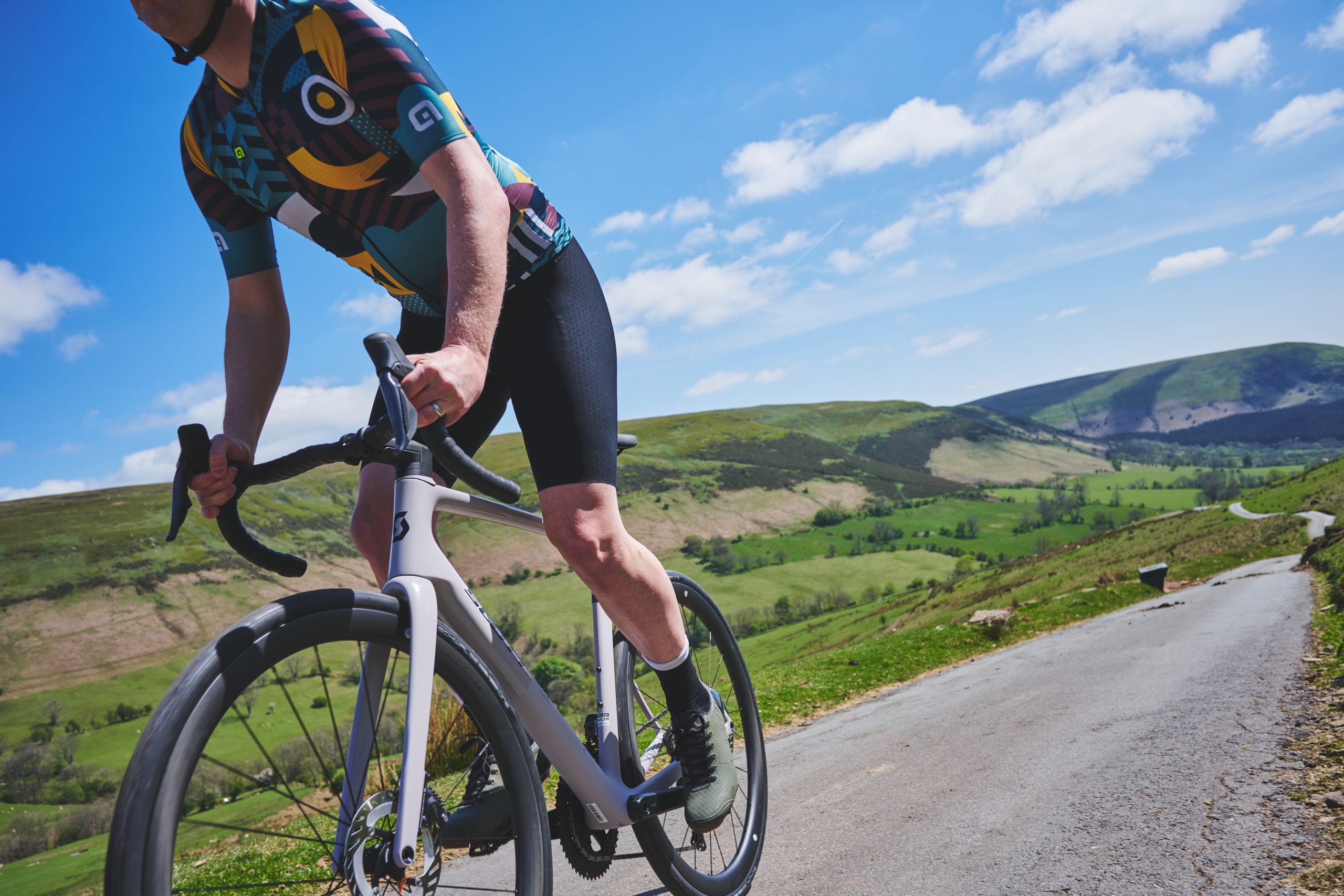
Recreational riders certainly aren’t immune to IAE. Joseph Branston /Our Media
If IAE is left untreated in cyclists, it can lead to the performance decline mentioned, plus significant vascular damage and, in some cases, permanent functional impairment.
While it’s not typically life-threatening, the impact on an athlete’s career and quality of life can be severe. Which is why treatment is the only option.
“The ideal treatment is something that avoids damaging the muscles,” says Cheshire. “So, the ideal treatment is ‘balloon angioplasty’. This is where a catheter with a small inflatable balloon is inserted into the narrowed section of the artery, which is then inflated to stretch the vessel and improve bloodflow.
“The problem is that this isn’t very effective when faced with the tough fibrous scarring in the elite athlete population.”
This is supported by research including a 2016 study that suggested balloon angioplasty, a minimally invasive procedure, failed in most cases, unlike surgery, which led to a 99 per cent return-to-sport rate.
“Surgery is often the only solution for athletes, which is a really big deal because they might return to the sport, but at what level?” says Cheshire.
“It often involves an abdominal incision before opening up the artery and then applying a patch.” More specifically, once the artery wall’s been opened, the narrowed section is removed and replaced with a sewn-in patch of tissue, which is either synthetic or from the rider’s own vein.
Like arterial disease in general, it’s more common in men. “A ratio of about four to one, I think,” says Cheshire, “albeit that could be heavily down to the fact there are more male cyclists. But the main problem is in identifying the problem.
“You see, it depends on the narrowing. If it’s less than 50 per cent, the pulse may be normal. And in fit athletes, it might not even show up on ultrasound. But there’s a much greater chance it will if you increase the blood flow, as if you were exercising.
“It’s why our investigation labs feature a treadmill and static bike. It’s called the ‘Stress Doppler’ and the ultrasound is done before and after exercise. It’s not routinely done but it can be invaluable for cyclists.”
Cheshire says that recreational riders can suffer from this condition, too, and if you have concerns that you might be suffering from IAE, mention this stress test to your doctor.
There’s also a diagnostic test called the ABI, or ankle-brachial index. The test measures blood pressure at the ankle and arm both at rest and immediately after exercise, and detects a drop in the ABI caused by reduced blood flow to the legs.
To ensure accuracy it should be performed in the cycling position, with exercise intensity gradually increased until symptoms appear, making the test sensitive enough to identify the condition.
How can you prevent IAE in the first place? That’s a tricky one. You might presume bike fit could play a part, but there is no research into its effectiveness.
In theory, you’d think the trend for shorter crank length would help by decreasing hip flexion and opening up the hips. Throw in a raised front end and you’d think the less-aggressive position might help. But again, there’s no research to support this idea.
“It’s hard to prevent because it’s down to lots of repetitive movements,” says Cheshire. “It’s a slow-burner of a condition.
“If you’ve had surgery, it might never come back, especially as a professional’s career is relatively short, so they won’t be racking up such enormous miles for decades upon decades. Ultimately, if you have any concerns, seek out an expert who can diagnose the problem or put your mind at rest.”
This glorious old film shows a vision of what one bicycle manufacturer thought would be the future of cycling.
The video goes behind the scenes of British brand Moulton, which is still producing bikes to this day. The short British Pathé clip details how Moulton designed and manufactured its bikes in the early 1960s.
Alex Moulton, the founder of the brand and a prolific car suspension designer, developed the double-bonded sandwich design for the small-wheeled bicycle to reduce bumps. This technology was used on the original Mini Cooper and Moulton continues to use it today, including on the NS Safari.
While the film focuses more on the brand’s commuting model, showing it being folded up into the boot of a car, towards the end we get a glimpse of the brand’s racing model.
The narrator claims this model can reach 50 miles, with the small wheels said to make pedalling easier and give terrific acceleration.
“Boudicca was the Queen of the Iceni who led a revolt against Roman rule in ancient Britain around 60-61 AD. A warrior queen, she was a true inspiration to women and a hero to her people. She might have failed in her quest but she gave it everything she had. The Warrior Games has created a three-day stage race in her honour open to all female Zwifting warriors.”
The Warrior Games has announced the seventh edition of Tour de Boudicca, perhaps the most popular women’s stage race held on Zwift. Registration deadline is December 27, with stage 1 kicking off January 2. See below for our summary of the event, and read the full race document for details.
Schedule and Route Details
Stage 1: Friday, January 2, 19:00 GMT/ 14:00 ET/ 11:00 PT/ 06:00 +1 AUS
Extra time slot for this race only, starting at 16:00 PT/19:00 ET
“We’re launching the Tour de Boudicca with a high-energy scratch race to get you fired up for the ride ahead! Feel those coastal beach vibes as you sprint to the finish and grab an early lead in the Individual General Classification.”
Stage 2: Saturday, January 3, 19:00 GMT/ 14:00 ET/ 11:00 PT/ 06:00 +1 AUS
“Get ready for three mini races through the heart of the Big Apple, a thrilling mix of sweat, grit, and pure fun! Teams of warriors will join forces to rack up valuable points for the Team GC, while the Individual GC heats up, based on cumulative time from Stage 1 + Stage 2. Can you survive the chaos and come out on top?”
Mini Race 1 ( 19:00 GMT) Avon Flyer (1 Lap) Total distance: 5.2 km
Mini Race 2 (19:15GMT) The 6 Train (1 Lap) Total distance: 6.6 km
Mini Race 3 (19:35 GMT) Spinfinity (1 Lap) Total distance: 20.1km
Stage 3: Sunday, January 4, 19:00 GMT/ 14:00 ET/ 11:00 PT/ 06:00+1 AUS
“Get ready for the ultimate showdown! The Queen’s Stage has arrived—the grand finale of the weekend! We’re taking you on an unforgettable journey through the Makuri Islands in pursuit of towering climbs. Pick your ideal bike and wheels, step up to the line, and prepare to dominate the streets.
You’ll take on one intense lap of Temple and Towers, pushing your limits as you battle alongside the fiercest competitors. Feel the electric atmosphere, soak in the city vibes, and leave it all on the course. Good luck, warriors—the crown is yours to claim!”
Individual GC winners will be awarded in each category based on each individual’s cumulative time across all three stages.
The Team GC will be based on points earned in each stage by the top three riders from each team. Team GC winners will be named for each category.
Prize Drawing
Here’s what’s up for grabs this year:
Overall Winners (Categories A–D): The champions will receive a commemorative Tour de Boudicca Badge and 2 months of Zwift subscription!
Grand Prize Draw: All riders who complete every event will be entered into a Grand Prize Drawing to win a Zwift Ride (frame and trainer!)
More Details + How to Enter
As explained in the race doc, “Interested, established teams must submit an entry form of team roster by 27th December 2025 to The Warrior Games at thewarriorgamesvirtual@gmail.com.“
Interested riders should read the full race document, which explains full entry requirements, including the Warrior Games weigh-in protocol.
Campagnolo is reportedly preparing to cut 120 jobs from its Vicenza headquarters – a reduction of around 40 per cent of the Italian firm’s 300 employees – as part of a restructuring plan intended to stabilise the company’s financial position.
According to a report from Il Gazzettino, the component maker has stated that “there is no alternative” to the planned reduction in staff numbers, warning that failing to act could have “dramatic consequences for the company and for the city of Vicenza”.
The report says that Campagnolo has recorded losses exceeding €24 million across the 2023, 2024 and 2025 financial years. The company attributes this to a challenging sector-wide downturn that has affected many manufacturers following the surge in demand during the pandemic era.
Despite additional funding received since November 2024, the report says the company has indicated its current liquidity cannot guarantee continued operation “under present conditions”.
Il Gazzettino reports that the restructuring plan outlined includes a 40 per cent reduction in labour costs. This would involve cutting around 120 positions in Vicenza, with the company suggesting that a smaller workforce would still allow manufacturing to continue at the site. Campagnolo also has a manufacturing facility in Romania.
Campagnolo has reportedly presented a financial plan to banks and potential partners in an effort to reverse the downturn and return the firm to a stable footing.
Local unions and regional authorities are expected to seek further clarity on the situation, given Campagnolo’s role as a major employer in the area.
Campagnolo has launched a flurry of new products this year. Campagnolo
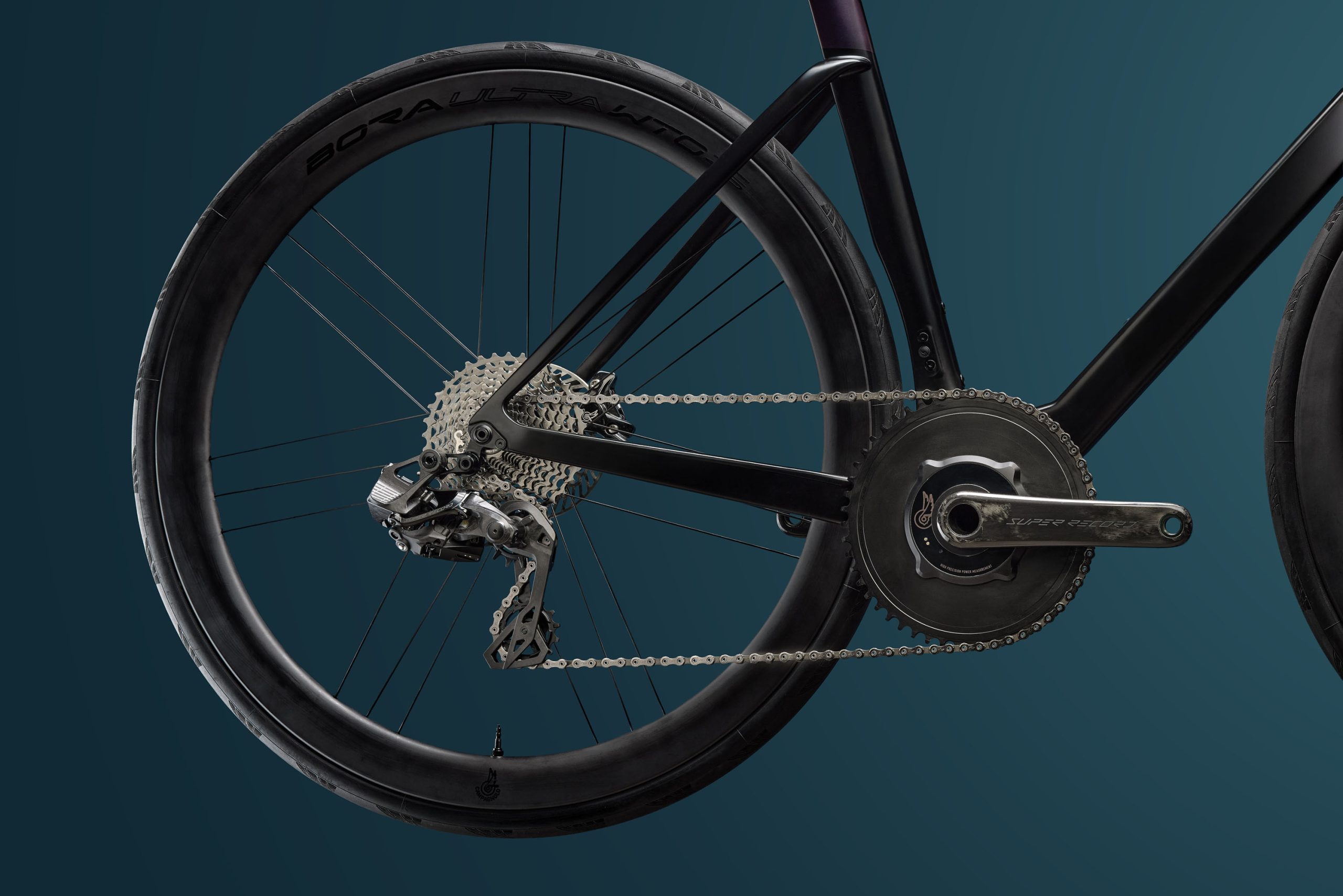
The news follows a busy year for the Italian brand, which has returned to the WorldTour after a one-year hiatus with Cofidis, launched its flagship Super Record 13 wireless road and gravel groupsets – and hinted that the imminent arrival of a more affordable 13-speed wireless platform could soon broaden its appeal.
Zwift has just replaced the achievement badges you could formerly earn for completing every race in a ZRacing series with XP bonuses. You will now earn a 1000 XP bonus for completing stage 1, then additional bonuses for each stage thereafter.
Zwift says you will “earn up to 1500 XP in a four-week series or 2000 XP in a five-week series.”
GC Leaderboards
Zwift’s web-based leaderboards are used for tracking the monthly GC competition for the ZRacing series. Unlike past years, no ZwiftPower registration or use is necessary.
Your GC ranking is based on your best finishing time for each stage, and you can race each stage more than once to try for a better time.
Category Options
Zwift schedules three different flavors of ZRacing events in order to encourage “Fairer, more competitive racing for everyone.” They each use different racing score ranges for categorization and are titled Advanced, Range 1, and Range 2. Click banners below to see upcoming events for each:
As I write this, tomorrow’s Thanksgiving Day Ride (hosted by Zwift CEO Eric Min, with special guest Mathieu van der Poel) has 5,406 riders signed up.
The ride is scheduled for 4pm UTC/11am EST/8am PST, and you can sign up here.
I haven’t seen this many riders on a single ride in quite a while, and was curious how this compared to past events. So I reached out to Zwift and asked for the 5 largest events ever held on Zwift. Here’s that list:
Participants
Event Name
Event Date/Time
10584
TDZ Stage 1: Group Ride
2021-01-04 17:00:00
9489
TdZ Stage 1: Flat is Fast
2022-01-10 17:00:00
8204
TDZ Stage 1: Group Ride
2021-01-05 18:00:00
7044
Stage 1 | Ride | Tour de Zwift 2024
2024-01-03 17:00:00
6864
Team INEOS Group Ride
2020-04-12 14:00:00
A few things worth noting about this list:
It’s based on actual ride participants, which differs from a signup count or a finisher count.
Two of the events were in January 2021, the busiest month in Zwift’s history due to the COVID-driven subscriber influx. In fact, the highest Peak Zwift number ever would be set just two weeks later: 49,114 concurrent riders on January 19, 2021!
The first 4 events all happened in early January, which is always each year’s “peak Zwift” time.
All the events happened within a 4-hour time window (14:00-18:00 UTC), which makes sense, because this is a time when riders in Europe/UK and the Americas can often ride. In fact, if you remove the last event, the first four all happened within an hour of each other (17:00-18:00 UTC)!
The INEOS Group Ride is the outlier here, since it happened in April instead of January, and at a slightly earlier time of day than the others. This particular event was actually one of three INEOS Group Rides that day, and if you combined all of those events, my guess is they hosted well north of 10,000 riders. Why were these rides so popular?
Team INEOS’ Egan Bernal had won the Tour de France in 2019
COVID lockdowns were in effect all over the world
The event was well-advertised across cycling media
How Big Will It Get?
Last year’s Thanksgiving Day ride had 3,562 participants, but no headline guest. This year’s ride features MvdP, a generational phenom who, among other achievements, is the only rider in history to be the Men’s World Champion in three disciplines (Cyclocross, Road, and Gravel). So it’s no surprise that we’re already at (checks signups list) 5,436 signups, 24 hours before the event.
With signup counts often doubling in the last 24 hours before an event, will tomorrow’s Thanksgiving Day celebration be the biggest group ride ever on Zwift?
We’ll know soon enough. I’ll be there, along with lots of friends and big names in the world of Zwift. (So far, the signup list includes 58 riders I follow… but the Companion app only lets me see the first 20 names on that list. When events get this big, it becomes clear that Zwift’s UI isn’t tailored for 5,000-rider events!)
Join Us!
The ride is 60 minutes long and held on the new Spinfinity route in New York. This route begins and ends on the new Times Square Circuit, taking riders down to Brooklyn via the Brooklyn and Manhattan Bridges. Since the route is only 19.3km long and quite flat, we’ll complete close to 2 laps in an hour.
Trek Bikes is offering great savings to celebrate Black Friday, with the coupon code BF20 unlocking 20 per cent savings site-wide.
To get these deals, you’ll need to enter the code at checkout, where the savings will be added to your total.
There are also savings to be had on bikes and accessories, with all items coming with free online delivery until 5 December.
The 20 per cent off coupon will also be applied to selected sale bikes, and you can save an extra 50 per cent off Electra bikes with the code ELECTRA50.
Despite rumours of a cap on the Cycle to Work scheme, Chancellor Rachel Reeves’ 2025 budget left the salary sacrifice bike purchasing programme’s rules unchanged.
The Financial Timesreported in early November that the previous £1,000 cap could be restored in Reeves’ budget. Yet, the Autumn budget, which promised “no austerity or reckless borrowing”, did not mention the salary sacrifice programme.
The previous £1,000 cap stood from the scheme’s inception in 1999 to 2019. But inflation in bicycle prices during the Covid pandemic, and the inclusion of electric bicycles in the scheme, meant many bikes and ebikes were beyond the cap.
Rumours of a cap prompted a backlash from the cycling industry. The Cycle to Work Alliance chair, Steve Edgell, pointed to the increased range of bikes available through the scheme since 2019.
“In 2019 a spending cap of £1,000 was abolished, as it was preventing people from being able to access the equipment they needed for everyday commutes. By effectively excluding e-bikes and adapted cycles from the scheme, the cap discriminated against older people and those with disabilities,” Edgell said.
Sarah McMonagle, Cycling UK’s director of external affairs, pointed to the return on investment from Cycle to Work: “While capping the scheme may sound like a sensible way for Ministers to save money, in reality, it will cost the government a lot more. For every £1 spent on the Cycle to Work scheme, we see over £4 in returns: boosting productivity, reducing sick days, and saving households money.”
Earlier this year, the Cycle To Work Alliance – a consortium including Halfords, Evans Cycles, Cycle Solutions, and Cycle Scheme – commissioned independent research to quantify the benefits of the scheme.
It found that the total financial benefit of the scheme is £573m. The numbers break down into cost savings to commuters, increased workforce productivity, retail income from new bike purchases and tax revenue.
The Cycle to Work Alliance says 199,000 employees made use of the scheme in 2023/24, and this number rose by 10,000 in 2024//25. Since the scheme launched in 1999, the Cycle to Work Alliance says it has been used by more than 2 million people.
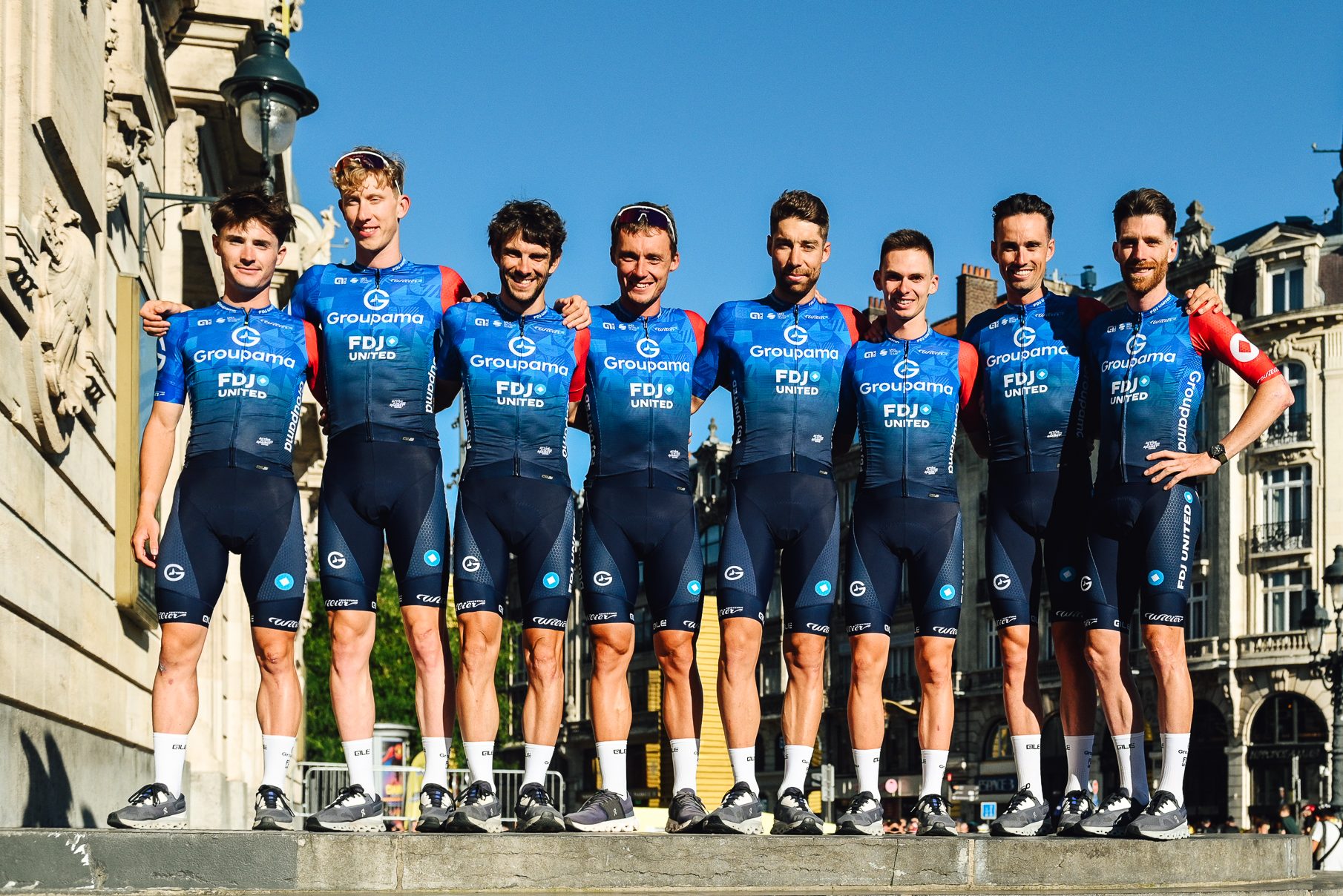
iGPSPORT will join the WorldTour in 2026 thanks to a new partnership with the Groupama-FDJ cycling team.
The agreement will see the Chinese bike computer and accessories brand supply the French team with bike computers, heart rate monitors and rearview radar bike lights.
According to iGPSPORT, its goal is to “bring the most advanced cycling computers to the team, offering reliable technical support to help them achieve outstanding results”.
iGPSPORT at the Tour de France
iGPSPORT will be present at the Tour de France alongside Groupama-FDJ.
As well as entering the WorldTour, iGPSPORT’s partnership with the historic French team (which was founded in 1997) will also see it debut at the sport’s most important race – the Tour de France.
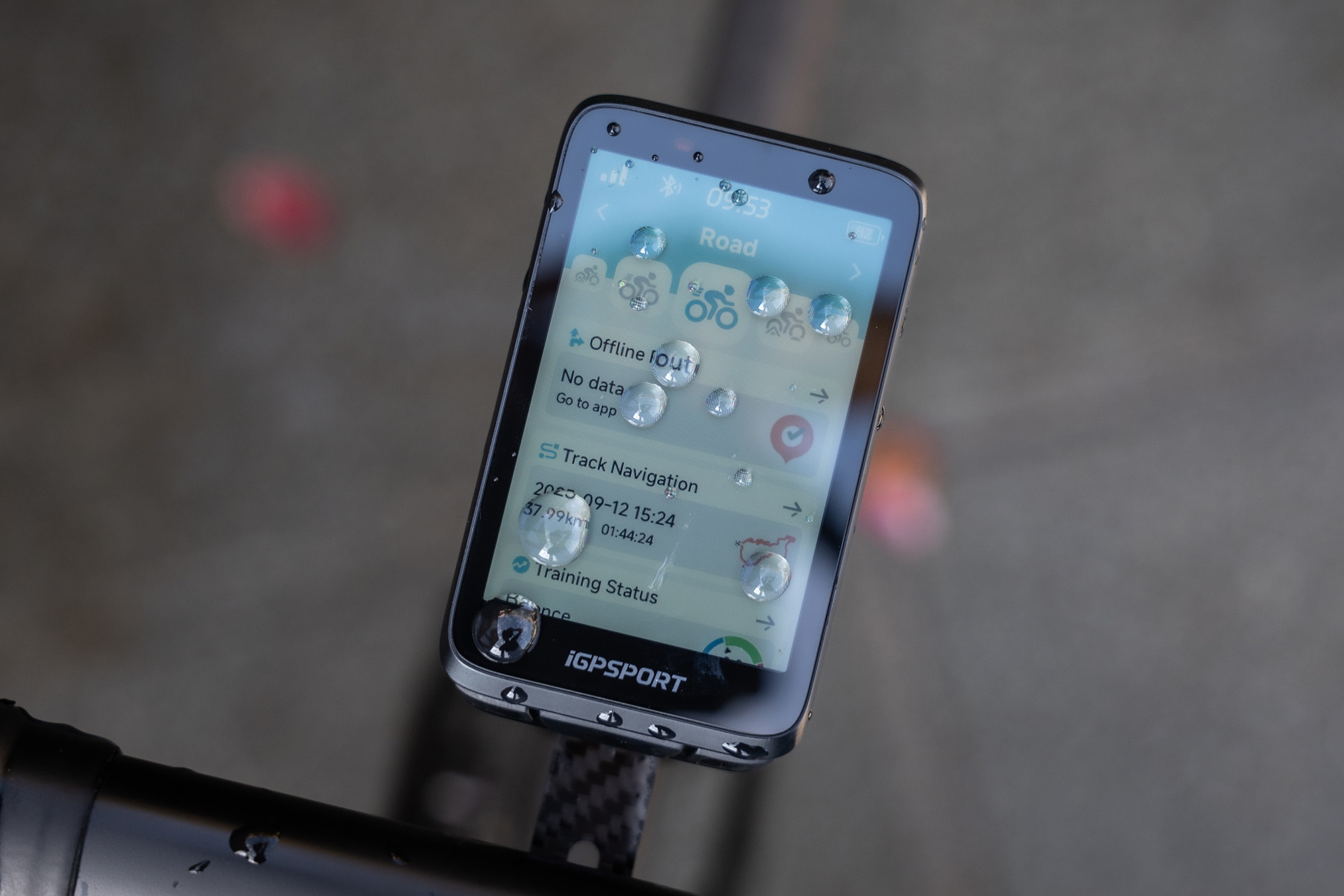
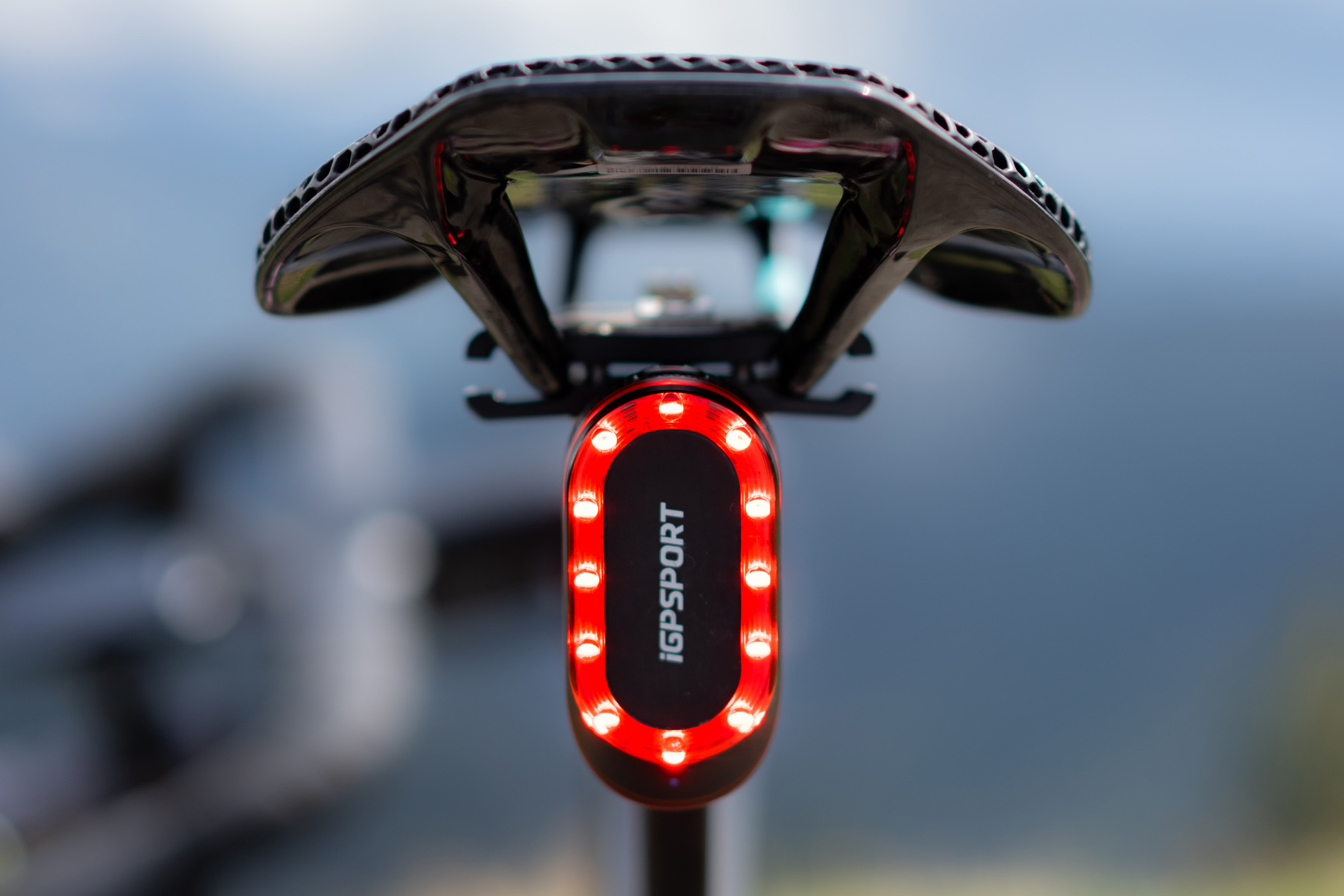
iGPSPORT will provide Groupama-FDJ with a full range of advanced cycling equipment, including the BiNavi Bike Navigator, a new-generation cycling computer with full-scale navigation capabilities; the BSC300T, an ultra-slim touchscreen cycling computer; and upgraded accessories such as the HR50 heart rate strap and the SRmini radar taillight.
The brand notes that “Professional racing has always been the ultimate testing ground for cycling technology”, and that devices used at the highest level must prove they can deliver under the most challenging circumstances.
Groupama-FDJ riders will use iGPSPORT’s BiNavi Bike Navigator computer for racing and training. iGPSPORT As well as the SR mini smart radar tail-light. iGPSPORT
A spokesperson for Groupama-FDJ said: “We are always committed to providing our riders with the highest-quality equipment.”
“We have already been using the BiNavi Bike Navigator in training and races, and have been impressed by its stability, comprehensive data display, and adaptability to our specific needs.”
Cementing its place on the world stage
iGPSPORT is taking steps towards becoming a global player in professional road racing. Tim de Waele/Getty Images
This development builds on iGPSPORT’s partnership with four-time Tour de France Champion, Chris Froome, who was announced as a global ambassador for the brand last year.
As we’ve come to expect of such partnerships, iGPSPORT says this partnership will not only “significantly enhance” its reputation on the sport’s biggest stage, but also “inject fresh momentum” into future product developments.
Nevertheless, the brand says this partnership “goes beyond commercial cooperation – it is also about promoting global cycling culture.”
With two intermediates per lap, including one just seconds after the race begins, there’s much to discuss along with our usual topics of bike choice, strategic options, and crucial segments. Let’s go!
A/B categories are racing 10 laps of the Glasgow Crit Circuit route for a total race length of 30.4km with 331 meters of elevation, while C/D categories will race 7 laps for a total of 21.3km with 232m of elevation.
Here’s a 3D view of the route:
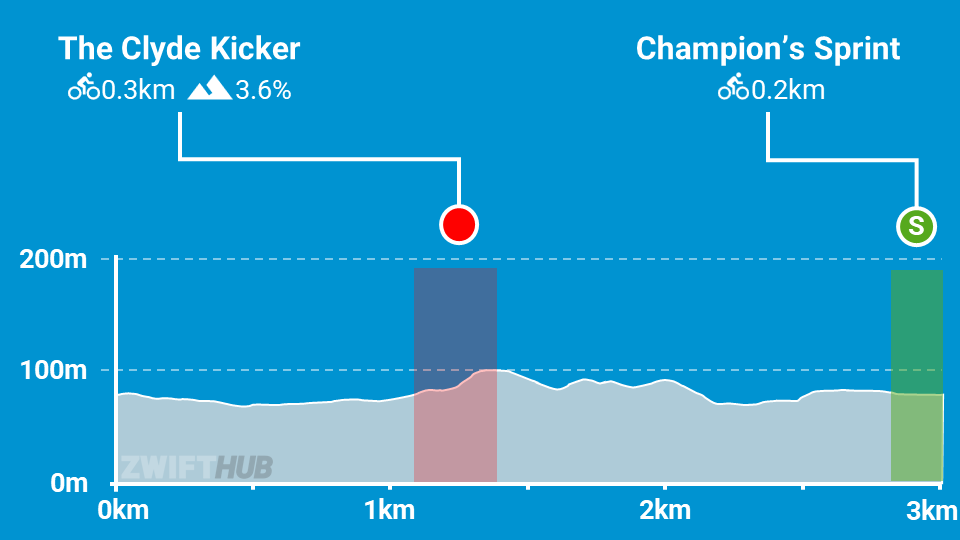
And here’s a simple route profile:
I won’t give you a turn-by-turn tour of the circuit, as that would make things more complex than they need to be. I’ll just walk you through the key sections.
Champion’s Sprint
The first points segment on this circuit will be contested straight out of the gate, so be ready for a hard start! You’ll need to be sprinting (or close to it) for the first 40 seconds to stay with the group through the Champion’s Sprint banner, which is also the Glasgow Crit Circuit finish line.
The Champion’s Sprint is only 200 meters long and slightly downhill. Expect the pace to pick up before that each lap as the group turns left and hits the sprint’s straightaway. Use your aero powerups just before the start line for maximum effect. My guess is the Champion’s Sprint at the end of lap 1 will turn in the fastest FTS times, because the pack size will still be large, and riders will have aero powerups at the ready.
The final time through the sprint is also the race finish, so those FAL sprint points are effectively finish points.
The Clyde Kicker
Our second points segment, and the key “selection section” each lap, is The Clyde Kicker. This 300-meter, two-part KOM begins about 1km after the Champion’s Sprint. Punch, rest slightly, then punch again. The big push tends to be up the second, longer, steeper bit, which is approximately 100 meters at 8%.
Most riders will use their feather powerup on this segment each lap. Feathers last for 30 seconds, so if you trigger it just as you cross the start line, it should stay activated until the arch. (A category riders may want to trigger it a bit sooner, and D category riders may want to trigger it a bit later.)
Descent from the Clyde
You’ll turn a hard right just after riding through the Clyde Kicker banner, then head downhill, picking up speed quickly, especially now that Zwift has improved drafting on inclines. You are descending to “ground level,” but the descent has some ups mixed into the downs. Since this is a points race, you probably won’t see many attacks in this section, as riders will take the opportunity to grab some much-needed recovery. But pay close attention and mind your pack position. You don’t want to fall off the back of the pack flying down the descent!
Once you finish descending, you’ve got around ~500 meters of road before the Champion’s Sprint begins. Watch for riders going early on the final lap, but try to stay in the wheels as long as possible, because wind resistance plays a massive role in high-speed sprints like Champions!
Riders will receive the lightweight (feather) powerups each time through the Champion’s Sprint arch, and the aero boost (helmet) powerup each time through the Clyde Kicker arch.
Aero Boost (helmet) at Clyde Kicker arch: makes you more aerodynamic (reduces your CdA by 25%) for 15 seconds. Use at higher speeds (flats and descents), especially when no draft is available (although it is still useful when drafting.) Riders will be saving their aero powerups for use on the Champion’s Sprint each and every lap.
Lightweight (feather) at Champion’s Sprint arch: reduces your weight by 10% for 30 seconds. Use on The Clyde Kicker, which is the route’s longest climb plus a hotly-contested points segment.
Bike Recommendations
An aero bike is the way to go on the Glasgow Crit Course, because the only climb (The Clyde Kicker) is so short and fast that aerodynamics matter more than bike weight. So we recommend any of the newer “aero all-arounders” paired with the newer DT Swiss Disc wheels.
Lots of recon events are scheduled on upcoming ZRL routes, led by various teams. See upcoming ZRL recons for this race at zwift.com/events/tag/zrlrecon.
Additionally, riders in the Zwift community do a great job every week creating recon videos that preview the courses and offer tips to help you perform your best on the day. Here are the recons I’ve found (comment if you find another!)
J Dirom
John Rice
Strategic Options
Points Distributions, Glasgow Crit Circuit
10 Laps (A/B)
7 Laps (C/D)
These charts show the maximum points a team of 6 could earn in a race with 60 participants. To learn how ZRL points races work, see this post.
How will the race unfold, and what strategies will riders employ in the final points race of round 2? Here’s what I predict:
First Blood Sprint: As mentioned above, the first 40 seconds of the race will be hectic, as riders go all-out to grab the first points through the Champion’s Sprint.
Powerup-Powered Segment Efforts: WTRL has structured this race so that particular powerups are given at particular arches to be used in a particular section on each lap. Everyone is essentially forced to use their powerups at the same time, because if you don’t, you’ll have to burn a match to keep up, while also taking yourself out of the running for intermediate points.
Strengths-Finder: With so many laps, most riders will contest just one of the intermediates (the climb or the sprint) based on their strengths. Got lots of W/kg? Go with the Clyde Kicker. Got pure watts? Go with the sprint. This is where a team with balanced strengths is a huge benefit. The trick for every rider employing this strategy is to conserve energy by sitting in on the segments you aren’t contesting, without getting dropped!
Breakaway Glory: The Glasgow Crit Circuit is nicely suited to breakaways. Perhaps an aero powerup attack down from the Clyde Kicker? It wouldn’t be easy, but if you stay away, you’ll grab max FAL points!
I Will Survive: Some riders will simply try to survive in the front group to the finish. But be warned: this is a losing strategy. The sprint and KOM points constitute ~90% of the race’s total points, so if your team isn’t chasing intermediates, you will lose.
Your Thoughts
Any insights or questions for this race? Share below!
Strava is overhauling its terms of service, privacy policy and cookie policy from 1 January 2026. The key changes relevant to everyday users include clarifications of the platform’s use of AI, how billing works, clear warnings on location sharing, and more.
In an email sent to users, Strava said it has “rewritten and redesigned” its policies to “provide you with more information, and support our evolving business.” The company says the updates are designed to make its data practices easier to understand and to reflect newer features and global privacy laws.
1. Strava defines its use of AI – and issues a warning
Strava uses AI to root out leaderboard cheats. Strava
Strava’s current terms only refer to machine learning and AI within broader sections.
The 2026 terms introduce a standalone section dedicated entirely to AI and machine learning, and how Strava uses these tools.
The updated privacy policy explains that Strava uses machine learning and artificial intelligence to provide features designed to enhance its services. These include familiar examples such as route suggestions, performance analysis, detecting suspicious leaderboard activity, and providing personalised training guidance.
The policy also makes clear that, depending on your privacy settings, Strava may also use personal information, including health and location data, to provide these recommendations.
Separately, the updated terms and conditions warn that these tools are not infallible and should be used with caution.
“AI technologies have known and unknown risks and limitations and may make mistakes; you understand and agree that you use AI Features at your own risk,” reads the statement, adding that users “should always use common sense and good judgment before using any AI-generated recommendations.”
2. Location sharing comes with clearer safety guidance
The updated terms now include a warning for users to think carefully about how they share location data. Scott Windsor / Our Media
Strava has added warnings about how GPS and live location tools should be used responsibly, putting the onus on end users: “You accept all safety, security, and other risks associated with the use of any Strava or third-party geolocation features, tools, and technology,” read the updated terms.
The terms also include a reminder for people in sensitive or high-risk jobs to think carefully before sharing real-time data.
This reminder is likely directed at those working on military bases, secret sites, or those for whom a public record of their movements may be unadvisable.
The updated terms make clear that “to the maximum extent permitted by law, Strava is not responsible for any such risks,” and that it is the responsibility of end users to use “geolocation features, tools, and technology in a way that is safe, secure, and responsible”.
3. Clarification for paid subscribers
Strava’s new terms explain in simpler language how billing works for paid features. Strava explains that subscriptions renew automatically at the end of each billing cycle, and will continue to renew until you cancel your subscription. It also makes clear that you must cancel your subscription at least 24 hours before the renewal date to avoid being charged for the next period.
The terms also explain that if a user does not cancel a trial at least 24 hours before it ends, the full subscription price is charged on the next billing date.
4. Some content can stay visible after you delete your account
Strava routes may be visible on the app, even if you delete your account. Stan Portus / Our Media
Strava’s terms now clarify that routes, segments and clubs you create might be visible, even if your profile and activities are removed when you delete your account.
Strava says this avoids breaking features that depend on user-created mapping data.
5. Privacy controls explained and legal rights expanded
Strava has also updated its policies to reflect changing privacy laws in regions including the EU, UK, Brazil and several US states.
Depending on where you live, you may now have stronger rights to access, delete or restrict your data. US riders, in particular, gain clearer options to limit how their information is used for advertising.
More broadly, Strava says its privacy policy has been rewritten to “make it easier to understand our data practices, including what we collect, how we use it to provide, improve, and develop features, and the types of parties we may share it with.”
Rollers on Zwift? Why? There are a few older articles here on Zwift Insider, along with some videos on YouTube, but I wanted to chronicle my thoughts and experiences on the subject.
TLDR:
Pros:
Much more like riding outdoors than a fixed trainer
Encourages smooth pedaling and higher cadence
Your “seated sprint” will get worked on
Very easy to switch bikes
No coasting or stopping means you burn more kj/hour
Cons:
Reaching maximum out-of-the-saddle sprint power is almost impossible
Cost is higher than most smart trainers
Requires a power meter to avoid rolling resistance losses
Need to pay attention, typing and handlebar-mounted tablets are not practical
Takes up more space
Getting Started
I never enjoyed riding fixed trainers. The unnatural feel of a bike that didn’t rock when you stood up annoyed me. Learning to ride rollers was a rite of passage for beginning bike racers back in the 80s, so of course I got a set.
The problem with ordinary rollers is that they have almost no resistance. You pretty much have to be riding a big gear at a high cadence to get much over 300 watts. Which is fine for us mortals to do threshold and sub-threshold training, but not anything beyond.
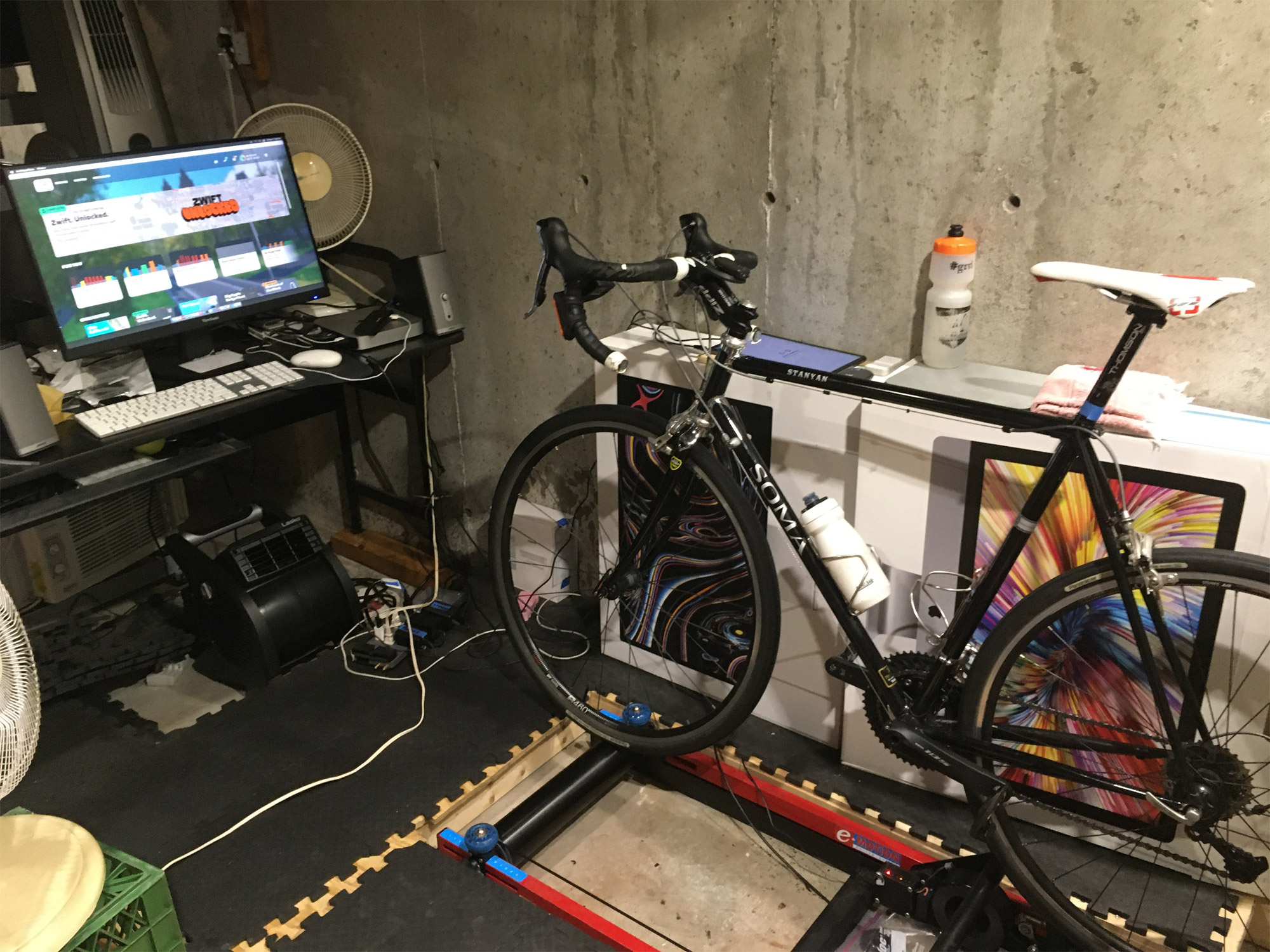
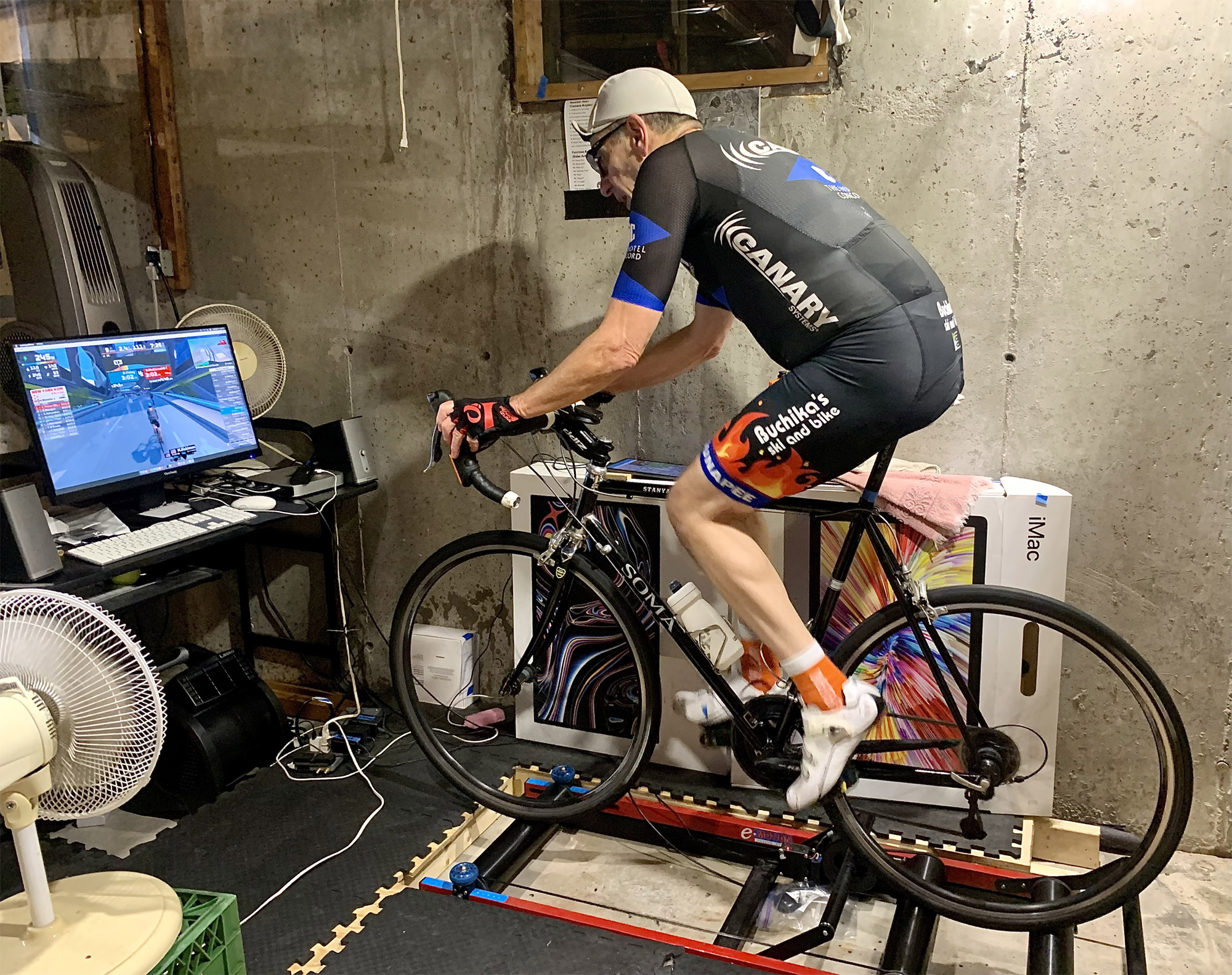
Fast forward to 2021. I saw an ad for Inside Ride rollers. If you’ve never seen them, these are like regular rollers, except the entire roller assembly is mounted on a carriage, sitting on a couple of small idlers that look like skateboard wheels. The top assembly can move back and forth a few inches/cm, and is mounted with springs so it is self-centering. They also have an electric resistance unit like a regular smart trainer, along with a pair of smaller supplementary rollers to keep you from driving right off if the resistance is too high.
The price was pretty steep, over $1000 USD. But I went for it. And I am so glad I did.
These rollers are amazing. For starters, they are so much easier to ride than regular rollers. Just hop on and go. You do not have to pedal perfectly smoothly. Standing up is a piece of cake, as is riding no hands, taking off your jacket, any of it. If you can do it outdoors, then you’ll have no problems doing it on these.
Of course, it’s still more stable the faster the wheels are turning. And like all rollers, if you start to wobble, the solution is to pedal faster. That is the one single tip I’d give anyone riding rollers for the first time. The last thing you want to do is slow down or stop pedaling. Once you condition yourself to spin faster, not slower, balancing is no problem. This is where the Trainer Difficulty setting in Zwift is a blessing. Without it, riding these rollers would not be practical on some of the hillier courses. I have mine set at 20% vs the default 50%. This way, even on the steeper courses, I can keep the wheels turning fast enough to keep the bike stable.
Getting on and off can be a challenge because the wheels of your bike are up on the rollers, somewhat above the floor. Most riders put their rollers next to a wall for support, and I’m no exception. I went a step further and recessed mine into a wooden subfloor platform in my basement. But you could get by with a stool, or ideally, an aerobic step platform set next to the rollers.
The Race Experience
So what is it really like to race Zwift on rollers? First, I’ll be honest – it’s the only way I’ve ever ridden Zwift. I have never tried a modern smart trainer at all, let alone one of the newer ones with all the bells and whistles such as a rocker plate and fork elevator. I can see some definite advantages to direct-drive, which I’ll touch on below. But I really hope that racing is never restricted to specific trainer models, as I’m not giving up my rollers.
Rollers inherently have some resistance from the two tires rolling on them. There is also the air resistance of spoked wheels spinning. And the belt that connects the front and rear rollers adds a bit as well. For these reasons, connecting the rollers to Zwift as your power source is going to shortchange you quite a bit compared to someone with a power meter or a direct-drive trainer. The solution is, of course, to use a pedal/crank/spider-based power meter as your power source.
The Inside Ride rollers are nominally rated at 800w maximum. Mine are from 2021, and I believe the resistance unit is made by Elite. Outdoors, I’m still capable of hitting 1000w for a few seconds, and >800w for the duration of a sprint. Contrary to what you might see in the IR promo video, sprinting with the same torque and vigor I might have outside is too sketchy for me to pull off on the rollers at the end of a Zwift race when I’m already in oxygen debt.
Is this a major deal-breaker for Zwift racing? Not for me. In the 50 races I have done on Zwift, I stayed in the saddle and wound up my “sprint” from a little further out than one would do outside on the road.
I’m willing to give up the ability to sprint at over 11w/kg in order to do my training on rollers, as I feel the trade-off is worth it for me. But if you are a powerful pure sprinter who likes to really thrash out of the saddle, these rollers are probably not for you.
Accessories
I am fortunate to have space in my basement for a dedicated riding/exercise studio. I set up three large fans connected to power strips with remote control, so that I can turn them on and off without leaving the saddle. I use a large computer monitor on a desk a few feet in front of me, as a handlebar-mounted tablet would (I suspect) make riding no hands difficult. I have a wireless mouse within reach on a shelf next to me, along with a cheap tablet to run the Companion app and to control my music. I also use Zwift controllers.
These things all make the rollers experience that much better. I do not use a keyboard and don’t chat during Zwift, as on rollers, you do need to pay attention in order to avoid riding off the edge and falling over.
What About You?
I would love to hear about anyone else’s experience with rollers on Zwift, Inside Ride or not. Thanks for reading, Ride On!
Carbon spokes are nothing new. First introduced by German manufacturer Lightweight in 1994 with the first fully carbon wheel, carbon spokes claimed their first Tour de France win in 1997. From then until fairly recent times, they remained the reserve of niche carbon exotica.
Fast forward to today, and most major and premium road bike wheel manufacturers offer wheelsets with composite spokes. Even the traditionally conservative DT Swiss has now dipped its toe in the carbon-spoke world with its 1,174g ARC 1100 Spline 38 CS wheelset.
For lightweight wheelsets where every gram counts, the weight-to-stiffness properties of carbon spokes offer clear benefits, where they can shave more than 100g off a wheelset compared to conventional steel spokes.
But their fragility from side impacts, patent-protected production processes and minor aerodynamic deficiencies mean they’re likely to remain a premium alternative to steel, rather than a wholesale replacement – at least for now.
Unbonded carbon spokes are now increasingly common. Ashley Quinlan / Our Media
As their name suggests, carbon fibre spokes replace the standard steel spokes, but there are two different approaches – unbonded and bonded.
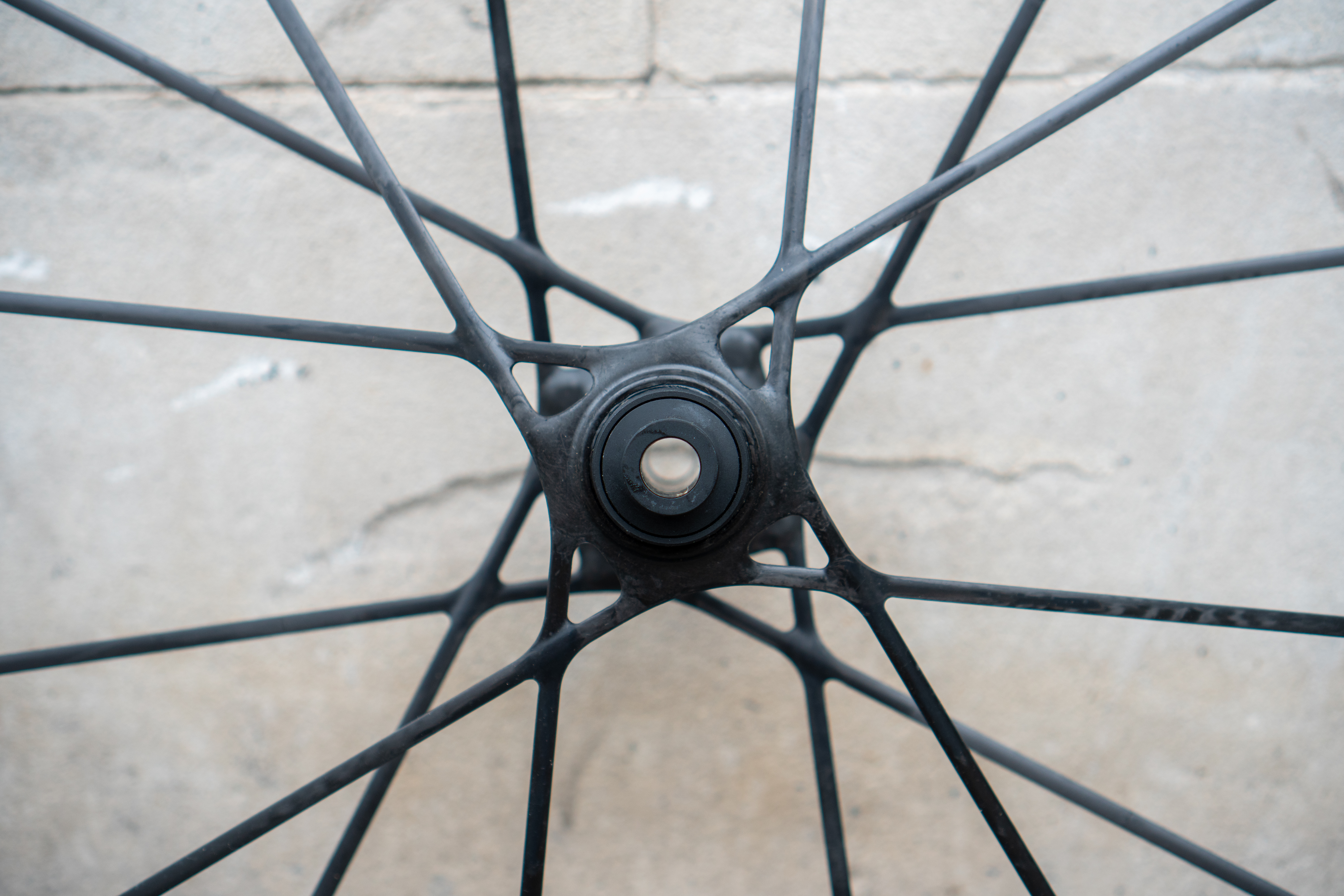
The former is similar to a standard wheel, with carbon spokes laced to the hub and rim like steel spokes.
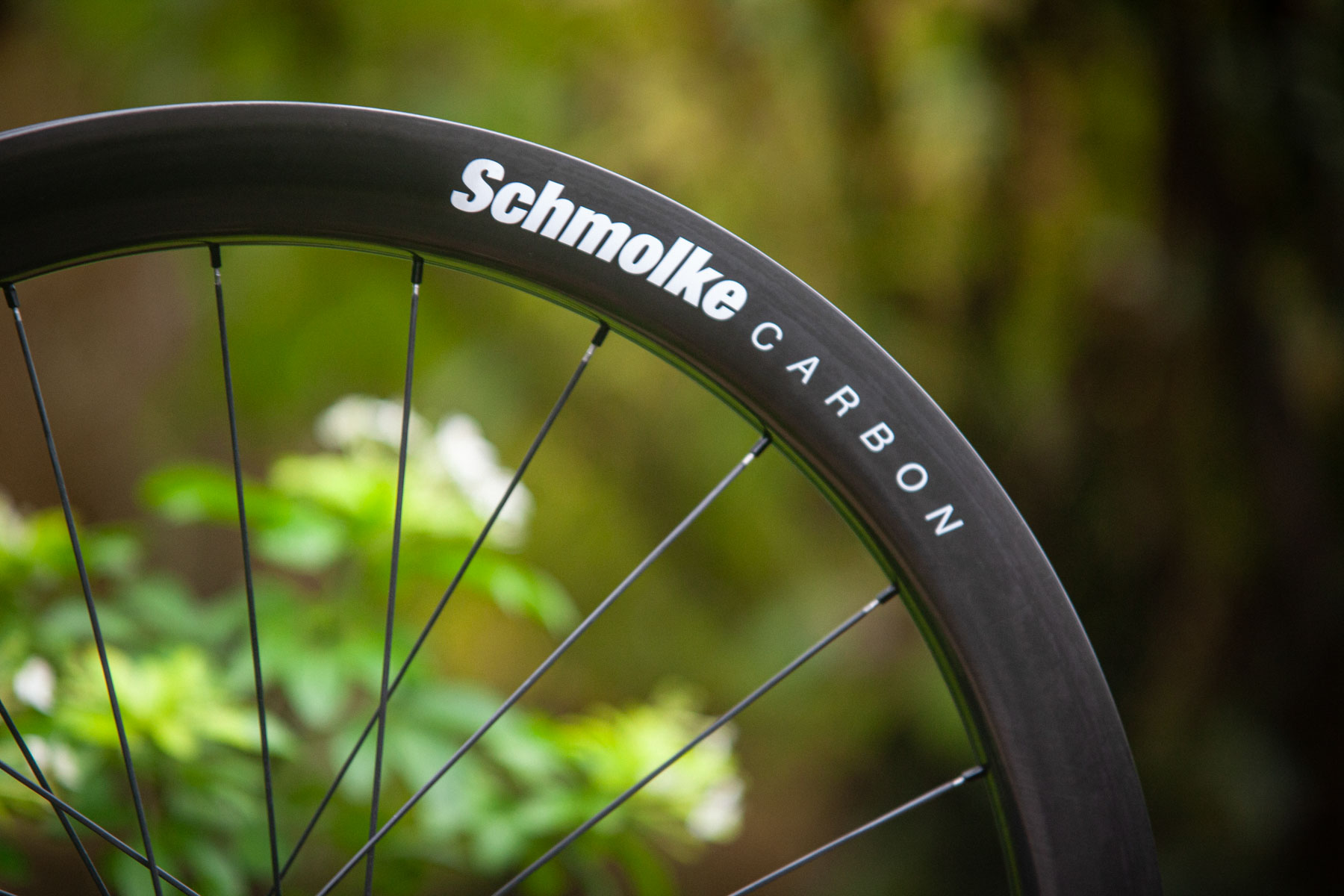
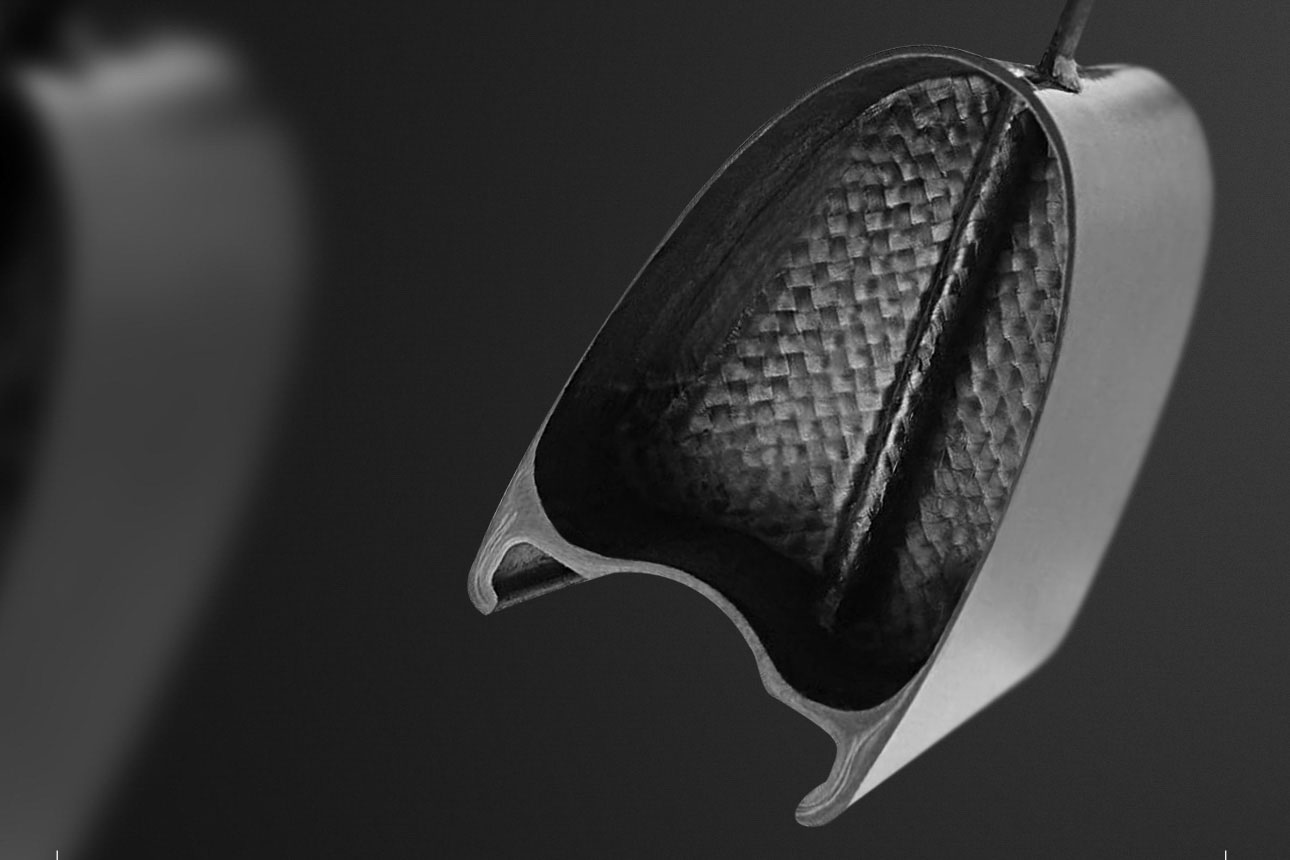
The majority of unbonded carbon spokes feature a carbon shaft that is bonded to a steel or titanium head and threaded tip. This means that the carbon part isn’t actually in contact with the hub or rim body, so only minor alterations have to be made to the hub and rim to use them.
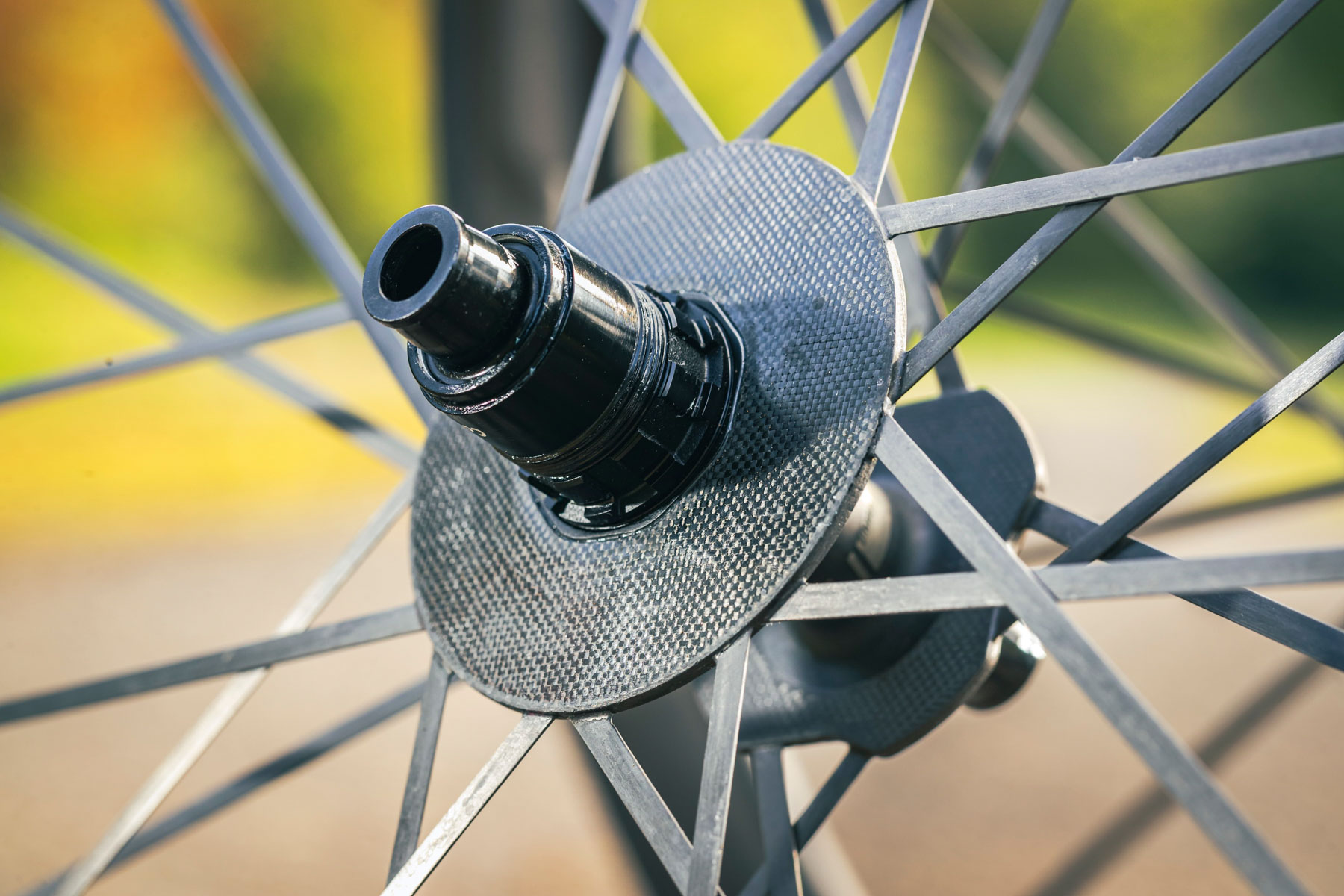
The latter is a one-piece design. Depending on the wheel construction, the rim, hubs and spokes can be separate components bonded together during the manufacturing process, or, as is the case with Syncros’ Capital SL-series wheels, all three components may be moulded as a single piece.
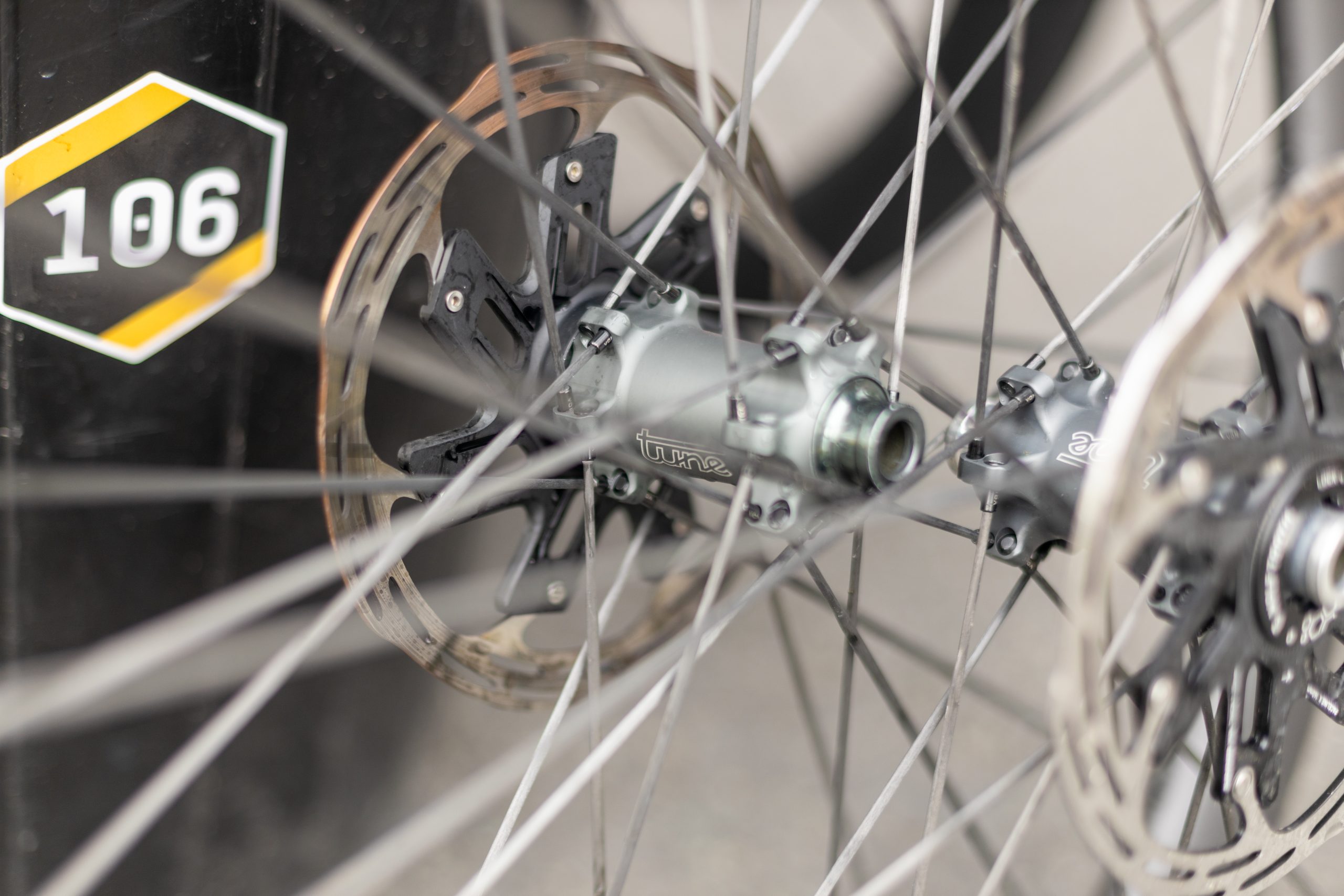
We spotted Team Visma-Lease a Bike trialling new carbon-spoked Reserve wheels with custom Tune hubs at the 2025 Tour de France. Ashley Quinlan / Our Media
Wheel manufacturers have adopted carbon fibre spokes primarily because of the weight savings on offer.
“They’re about half the weight of a steel spoke,” says Joel Smith, managing director of Reserve Wheels, explaining that the Vonoa carbon fibre spokes used by Reserve weigh 2.5g compared to Sapim CX-Ray’s 4.75g.
When laced to a 24-spoke rim, this enables Reserve to shave 108g per wheelset without sacrificing any of the rim or hubs’ properties. “We now have a lighter, deeper section wheel, without having to reduce the strength of our rims.”
But the performance benefits don’t end there. “With the same cross section of the spoke, you can build lighter wheels, or with the same weight, you can build much stiffer wheels,” explains Michael Hübner, Lightweight’s head of R&D.
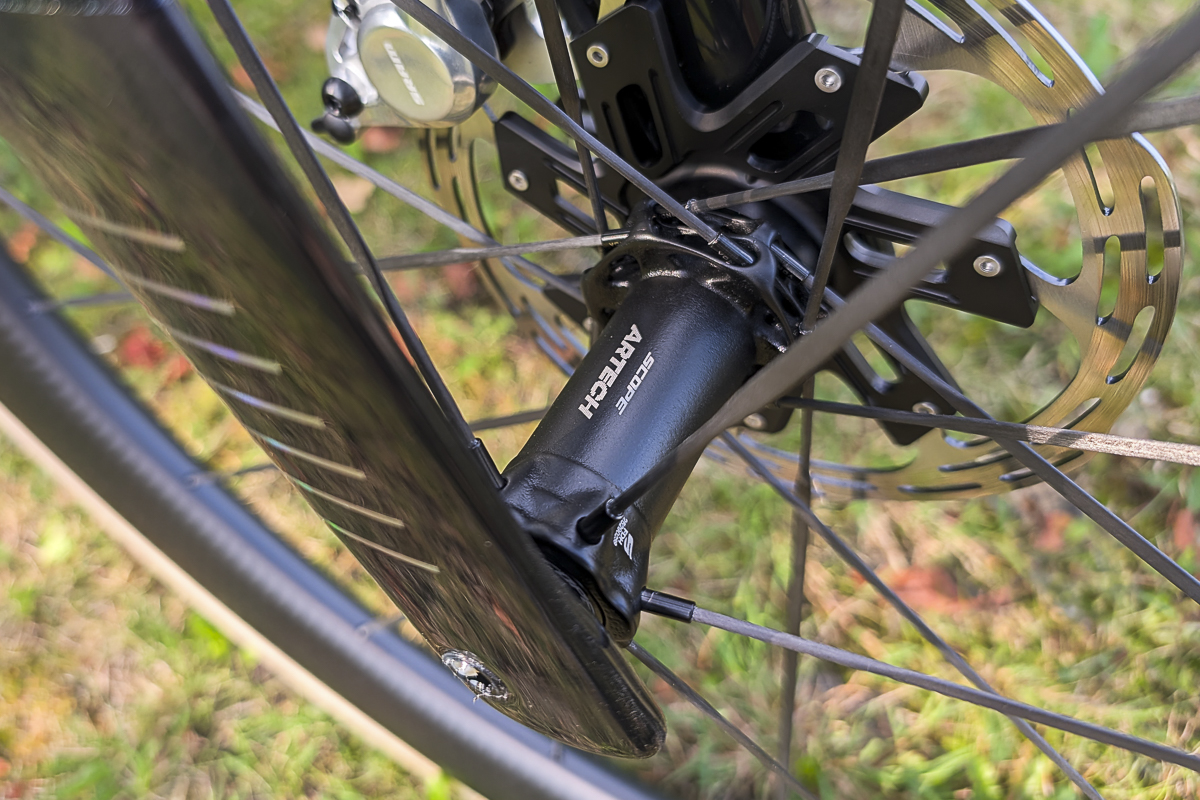
Scope uses carbon spokes extensively. Charlie Allenby / Our Media
Scope Cycling’s co-founder Nieck Busser adds that you can feel the difference a carbon fibre spoke design makes from a lateral stiffness and ride quality perspective.
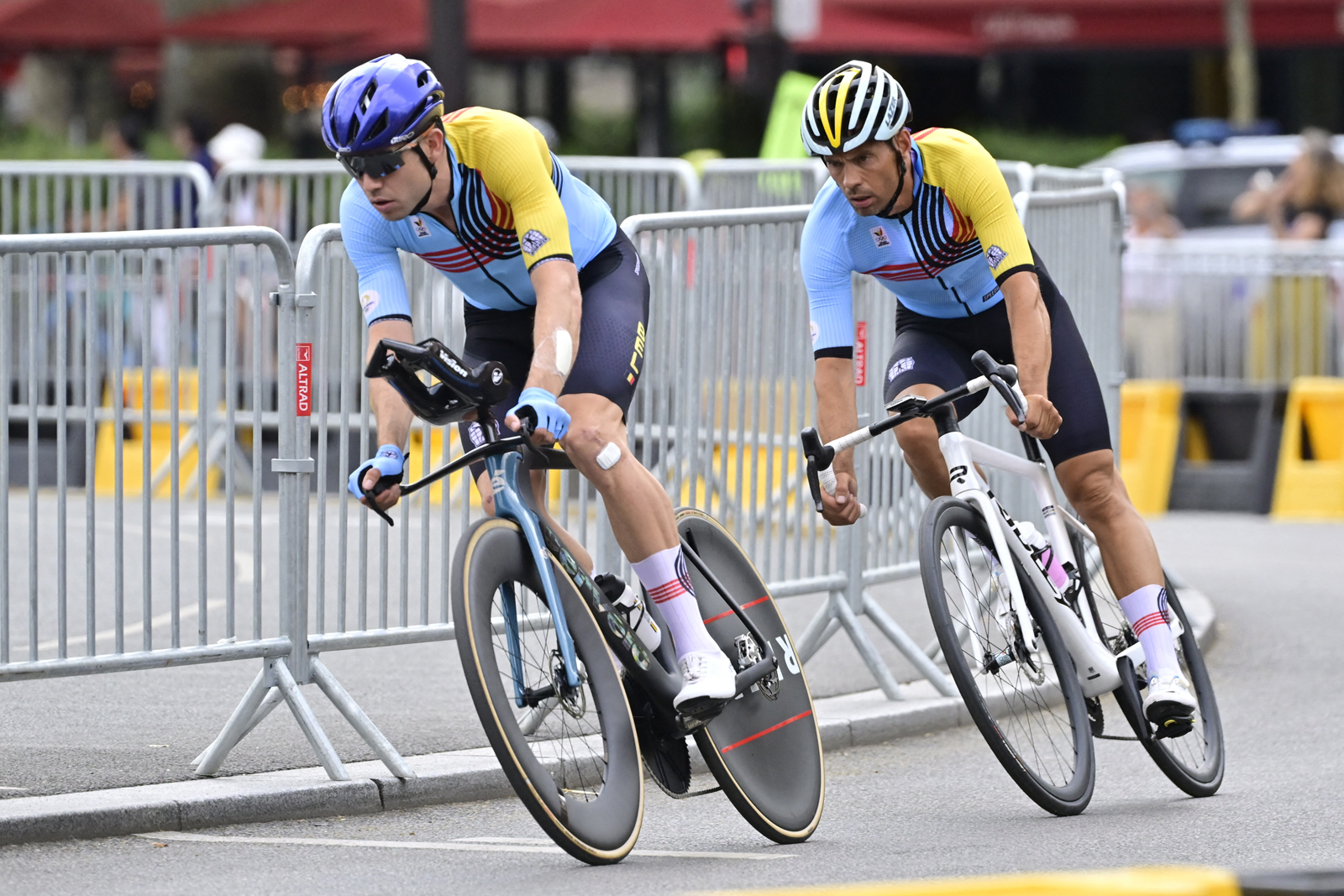
“The pivotal moment [for Reserve] has been this year, where Wout [van Aert] basically raced carbon spoke wheels the entire Tour de France,” says Smith.
“He kept saying they just felt way more planted with less movement in hard cornering situations where you’re going into an apex corner, hard on the brakes, and he noticed the snappiness of the wheel out of the corners as well on the rear.”
Easily damaged downsides
Carbon spokes aren’t quite as aerodynamic as their steel counterparts. Ashley Quinlan / Our Media
However, carbon spokes aren’t without their drawbacks.
From a performance perspective, the current crop of unbonded carbon fibre spokes isn’t as aerodynamically optimised as their steel counterparts. This means there is a marginal increase in drag to pay for the savings on the scales.
“If you want to build just aero wheels, you could have an advantage with a steel spoke because you can build it very thin, which is not possible… with a carbon spoke,” says Hübner.
While it’s possible to create carbon fibre spokes to the same profile and they would have enough lateral strength, he explains.
Bonded layouts mean the entire wheel can be at risk in the event of damage. Ashley Quinlan / Our Media
But the main downsides arise from the practical application of carbon fibre spokes during the cut-and-thrust nature of riding and racing.
“From a pull perspective, it’s a very strong product, and we hardly see any failure,” says Busser. “The difficulty is from a side impact – it’s a pretty sensitive product. Compared to steel spokes, it’s a huge difference.”
For unbonded carbon fibre spokes, this could mean a broken spoke, whereas for bonded models, like those made by Lightweight and Syncros, it could mean a whole new wheel.
“Performance-wise, I would definitely go for the carbon spoke, but take into consideration the complete picture,” says Busser.
“If you’re an amateur racer and you want to race with it, and you are in the bunch, or you do a Spring Classics or a criterium, and you hit a pedal or a derailleur with your spoke, a steel spoke can survive that; [with] a carbon spoke, it’s going to be more difficult.”
Why now?
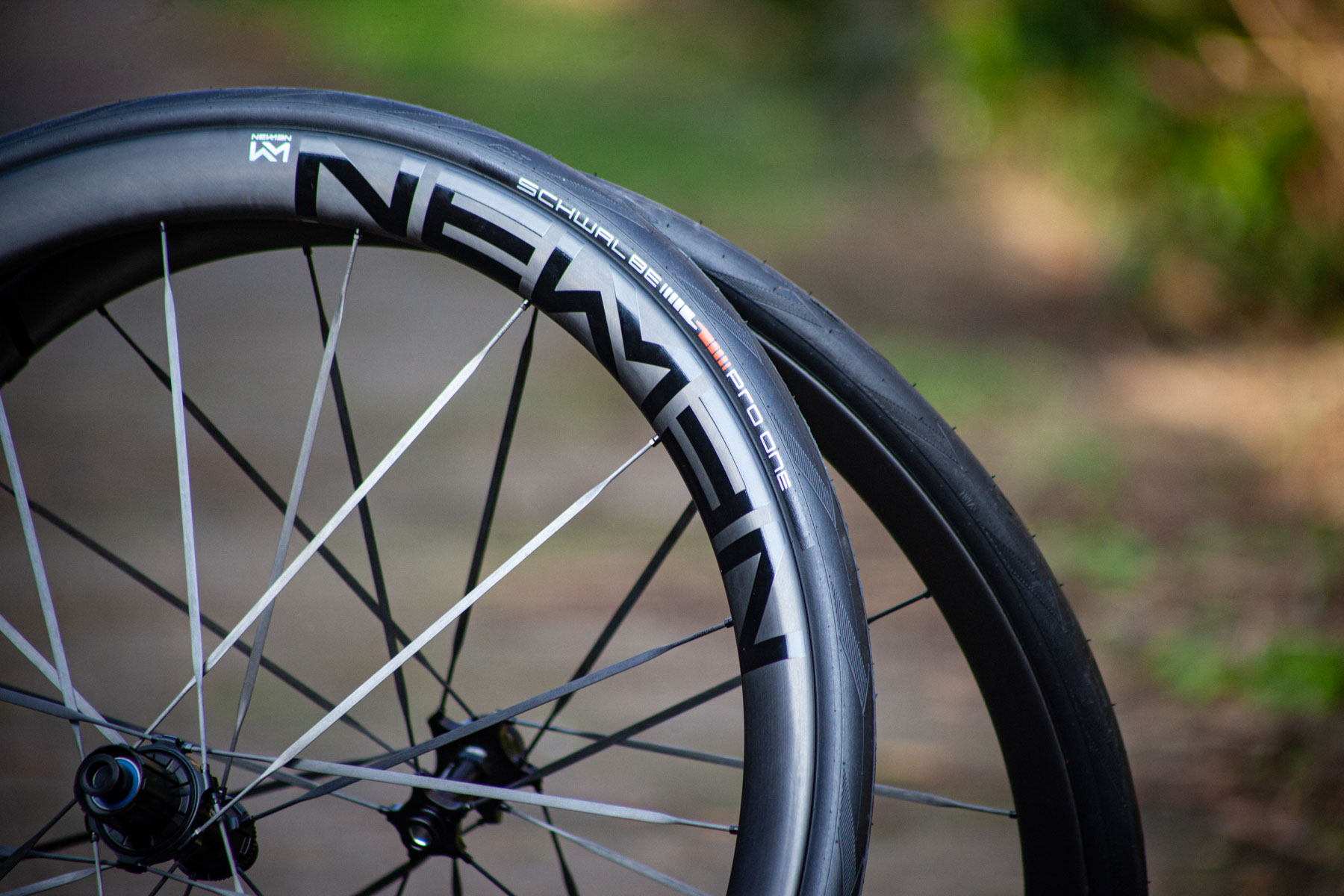
Brands such as Newmen (among many others) use Vonoa spokes. Warren Rossiter / OurMedia
For a technology that has been around for more than three decades, why is it only now that we’re seeing a swathe of brands coming to market with a carbon fibre spoke wheelset?
The answer lies in the improved consistency in the unbonded carbon fibre spokes themselves, and the lower barriers to entry offered by this approach.
“For the past five years that we’ve been looking into it, there was super inconsistency in the actual spokes until we found the company that everybody is using these days – Vonoa – and we started seeing consistency in spoke pull tests,” says Smith.
This has given manufacturers confidence to start investing R&D time in producing an unbonded carbon fibre spoke wheel without having to rethink the hub and rim design as with a bonded approach.
Despite continued advances in shaving weight, rim designs are claimed to be about as advanced as they’re going to get. Warren Rossiter / OurMedia
“We’ve kind of reached the design limitation [of the rim]. If you look at a cross-section, they’re so thin, so there wasn’t really a way for us to get a lighter wheelset without reducing strength. We didn’t want to do that. So [carbon spokes] was an opportunity to [reduce weight],” adds Smith.
There’s consumer demand too, with Busser saying that high-end, performance-focused customers expect carbon fibre spokes – as found on Scope’s Artech series – as standard, while Smith says that Reserve expects the technology to make up 10 to 15 per cent of its aftermarket wheel sales next year.
Bonded vs unbonded
Wout van Aert trialled bonded carbon spokes at the 2024 Paris Olympics. Dirk Waem / Getty Images
The current trend is being driven by unbonded carbon fibre spokes, but there are pros and cons to each approach.
The unbonded path is a cheaper (albeit still more expensive than steel) approach for brands to invest in.
“We did the [bonded] front and rear for Wout [van Aert] at the Olympics last year, but that’s a long path for us. Those wheels have to be $5,500 to make them, especially consistently. I don’t know if we’re ready to go into those price points now,” says Smith.
But it also comes down to the end-user and how the product is going to be used.
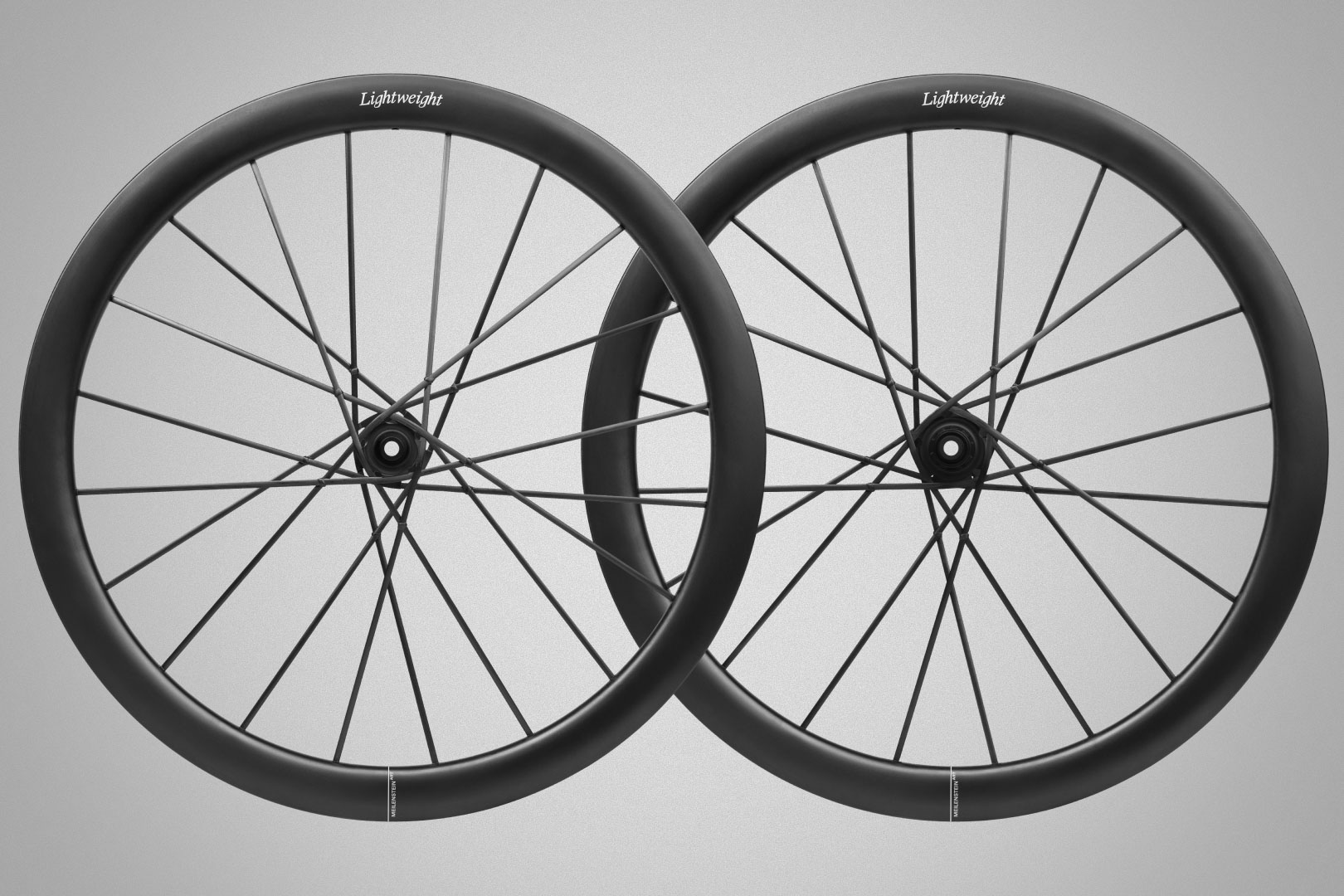
Lightweight Meilenstein wheels are claimed to weigh just 1,109g a pair, with the brand considered leaders in full carbon layouts. Lightweight Carbovation GMBH
“We don’t see the benefit of making it a one-piece design for durability and maintenance reasons,” says Busser. “We see a huge benefit of being able to replace the product.
“If you have a €4,000 product, and something happens to your rim or your hub, and you’re not under warranty, we can still repair products for a reasonable amount. Whereas for [bonded] wheels like Syncros or Lightweight, if it’s not over the warranty, you literally have to throw out your wheels.”
Of course, cottage artisans, such as Lightwheels Repair Service, offer repairs to one-piece carbon wheels, though whether OEMs would advocate this is unclear.
Regardless, for Syncros and Lightweight, the additional performance benefits of a bonded design are worth the risks and even greater costs.
“We are always looking for the best performance, best quality, and also the best durability,” says Hübner. “It makes sense to bond it because for a fibre composite, you are always looking for a direct connection between the fibres, and if you bond the spokes directly or laminate it inside the rim, you can use the full properties of the material.
“If you use an unbonded one with nipples and a thread, then you will lose some of the properties.”
The Cadex Max 40 uses bladed carbon spokes bonded to deep hub flanges for strength. Russell Burton / Our Media
Hubner also claims that if you bond the spokes or laminate inside the wheel, the performance remans the same for the life of the wheel. “With an unbonded spoke, it loses some of the properties over the years.”
Nicolas Rondeau, head of Syncros’ product division, adds, “Quite simply, this construction delivers the best aerodynamic performance and the best stiffness to weight ratio, bar none. [The Silverton SL and Capital SL] were developed as a complete and unique system with a fully optimised structure, meaning the spokes are optimised to work perfectly with the rim and hubs.
“The unique construction allows a uniform spoke tension, tuned from the spoke prestaining patented construction, ensuring the best performance from the composite material. In addition, it is a design that has maximum reliability in the long term, as there are no components that can fail or loosen over time.”
A ubiquitous alternative? Not for now
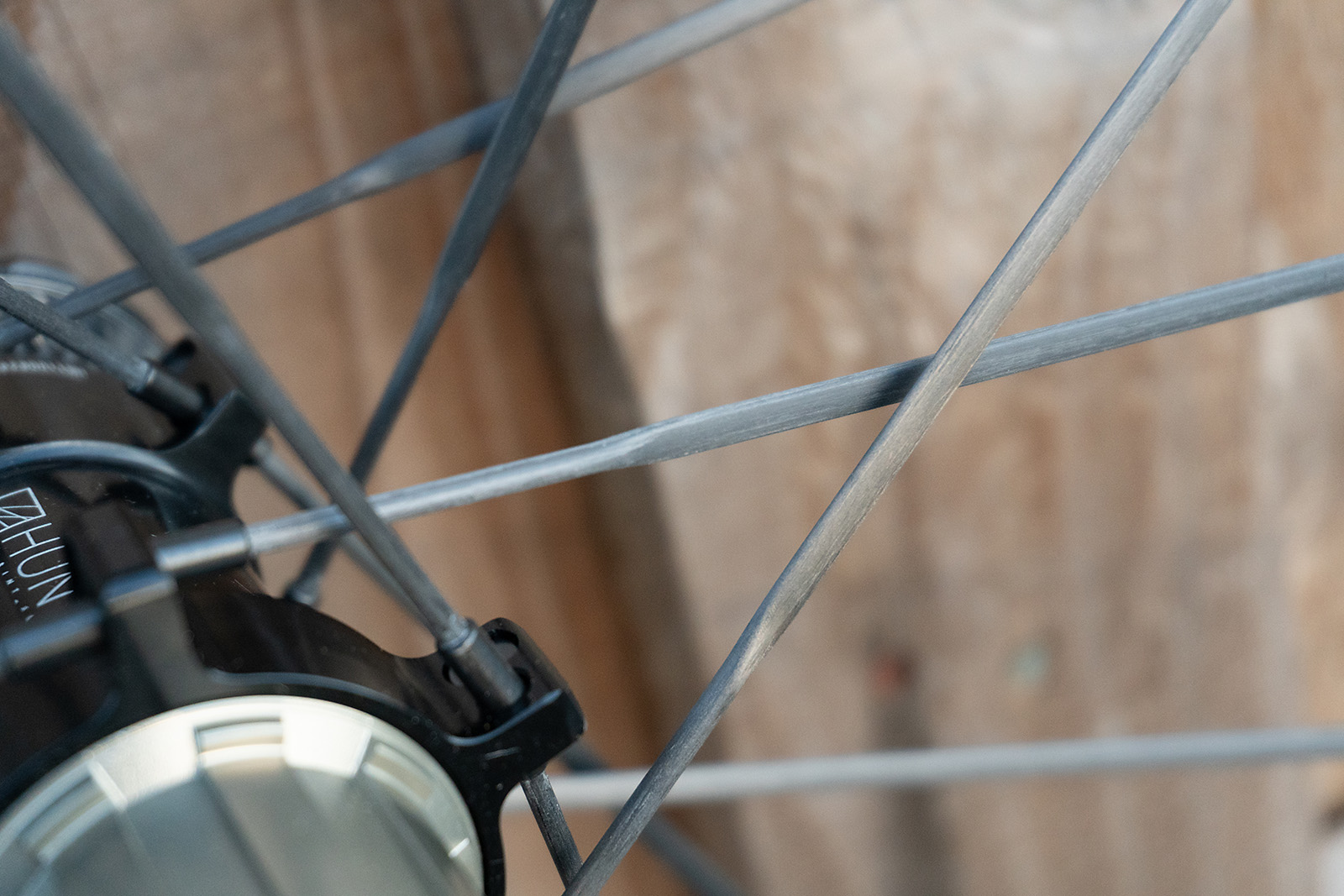
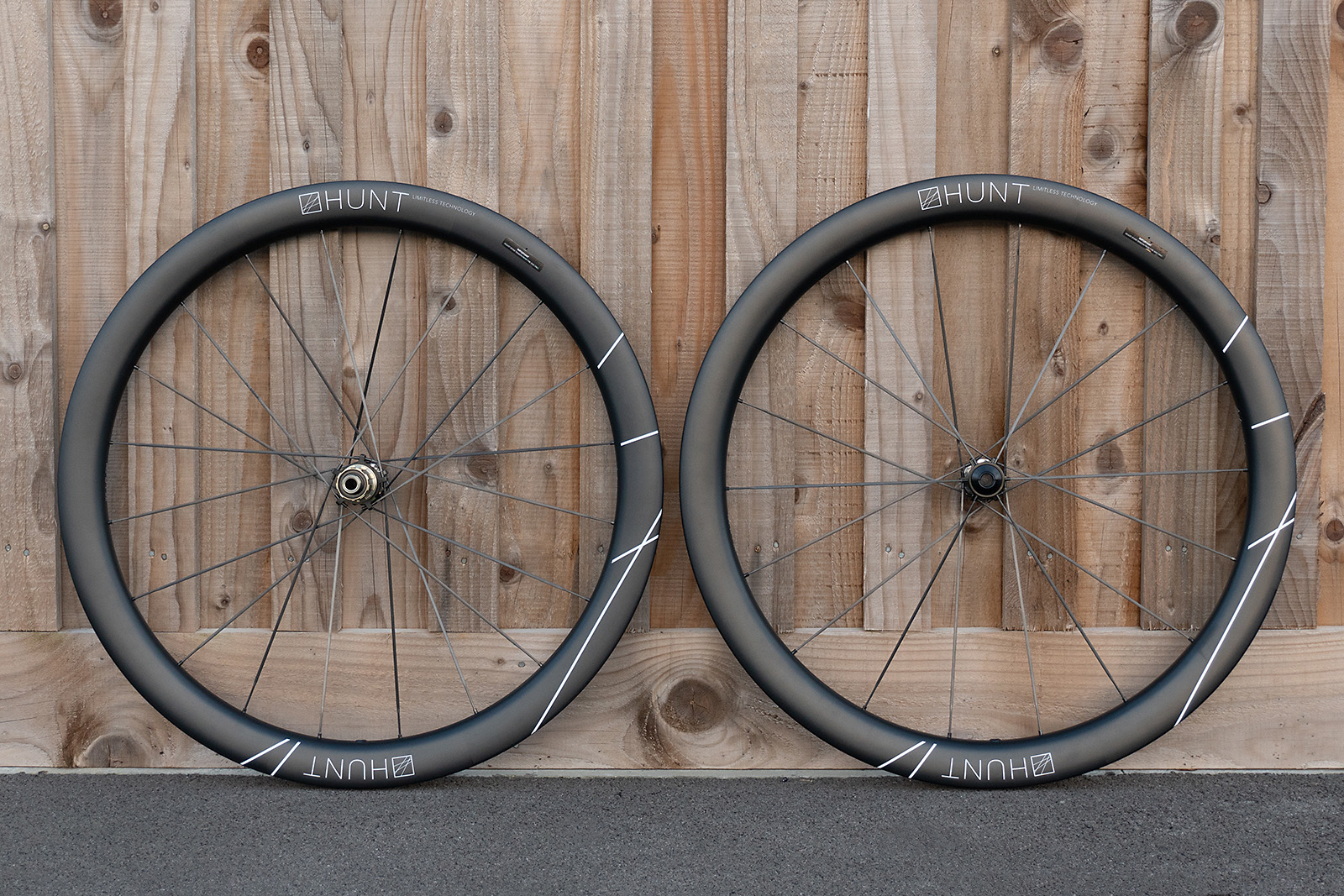
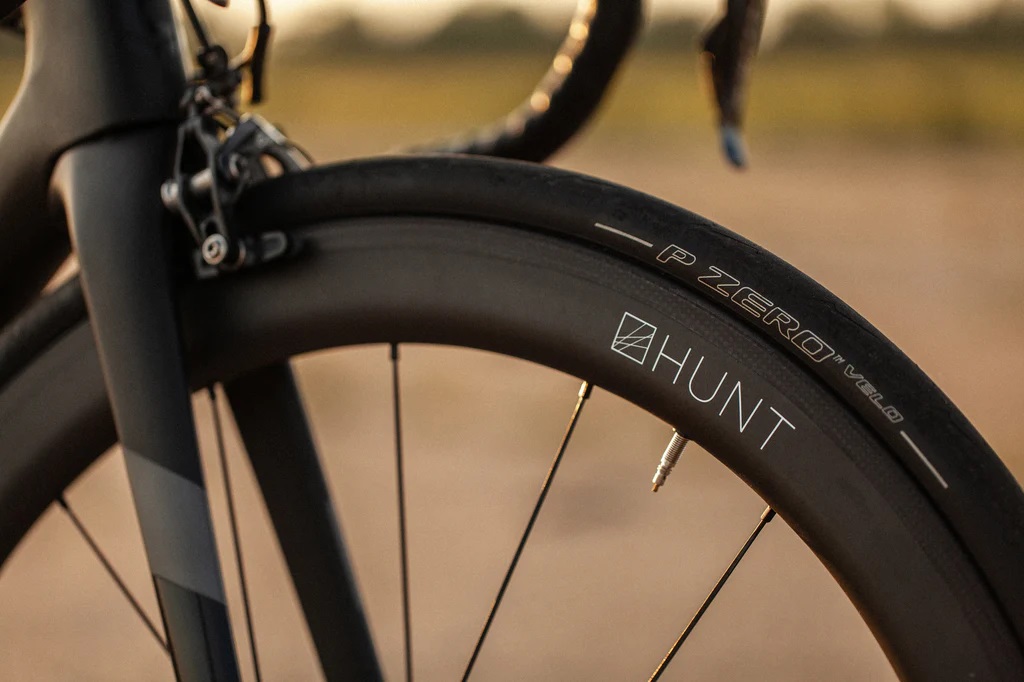
Hunt even fits carbon spokes to some of its rim brake wheelsets. Hunt wheels
Given carbon fibre spokes have been around for more than 30 years and are still eye-wateringly expensive compared to their steel alternatives, the chances of prices falling and accessibility increasing might seem slim.
But a carbon-spoked future might be edging closer for those with moderately deep pockets.
“I think there will be more suppliers in the future for the ‘classic’ [unbonded] carbon spokes, and so the price in these segments will be falling,” says Hübner.
“I do see that carbon spokes are going to become ubiquitous,” agrees Smith, before conceding that because of the patents surrounding the tech, price falls will be modest.
“There are only one or two companies that are going to be able to produce them, because there’s so much intellectual property on the carbon spokes. This is going to be bad because I don’t think we’re going to be able to drive down pricing [because of it].”
Lightweight’s ART rim design has internal ribs that add strength. The carbon spokes are anchored at the tyre bed and bonded to the ribs. Lightweight Carbovation GMBH
However, for bonded wheels like Lightweight, expect price points to remain prohibitively expensive.
“Our engineering and production is based in Friedrichshafen, Germany. There’s no way to make it cheaper if you decide to produce it in Germany, and that’s obviously the reason why we have such a high price point,” concludes Lightweight’s marketing manager, Marco Hinzer.
“There are people out there who appreciate that we’re not going to China for production, so they’re willing to pay the price for it.”
In the immediate future, carbon fibre spokes are likely to remain the preserve of premium, range-topping, performance-focused wheelsets.
If prices do come down, or the aerodynamic and side-impact properties of unbonded spokes are improved to match steel, then they may become a viable and practical alternative for those seeking moderate weight savings without sacrificing durability.
Until then, carbon fibre spokes are likely to remain a niche product, albeit one where consumers with big enough bank balances have a greater choice than ever before.
Cycling journeys in London are up 43 per cent compared with 2019 levels, according to new data published by Transport for London.
TfL’s 2025 Travel in London report shows that the number of daily cycling journeys has increased in 2025 to an estimated 1.5 million journeys per day, up by 12.7 per cent from 1.33 million last year.
The growth was biggest in inner London, with daily journeys increasing by 14.8 per cent, from 650,000 in 2024 to 747,000 in 2025. Daily cycle journeys in central London increased by 12.8 per cent and by 9.9 per cent in outer London.
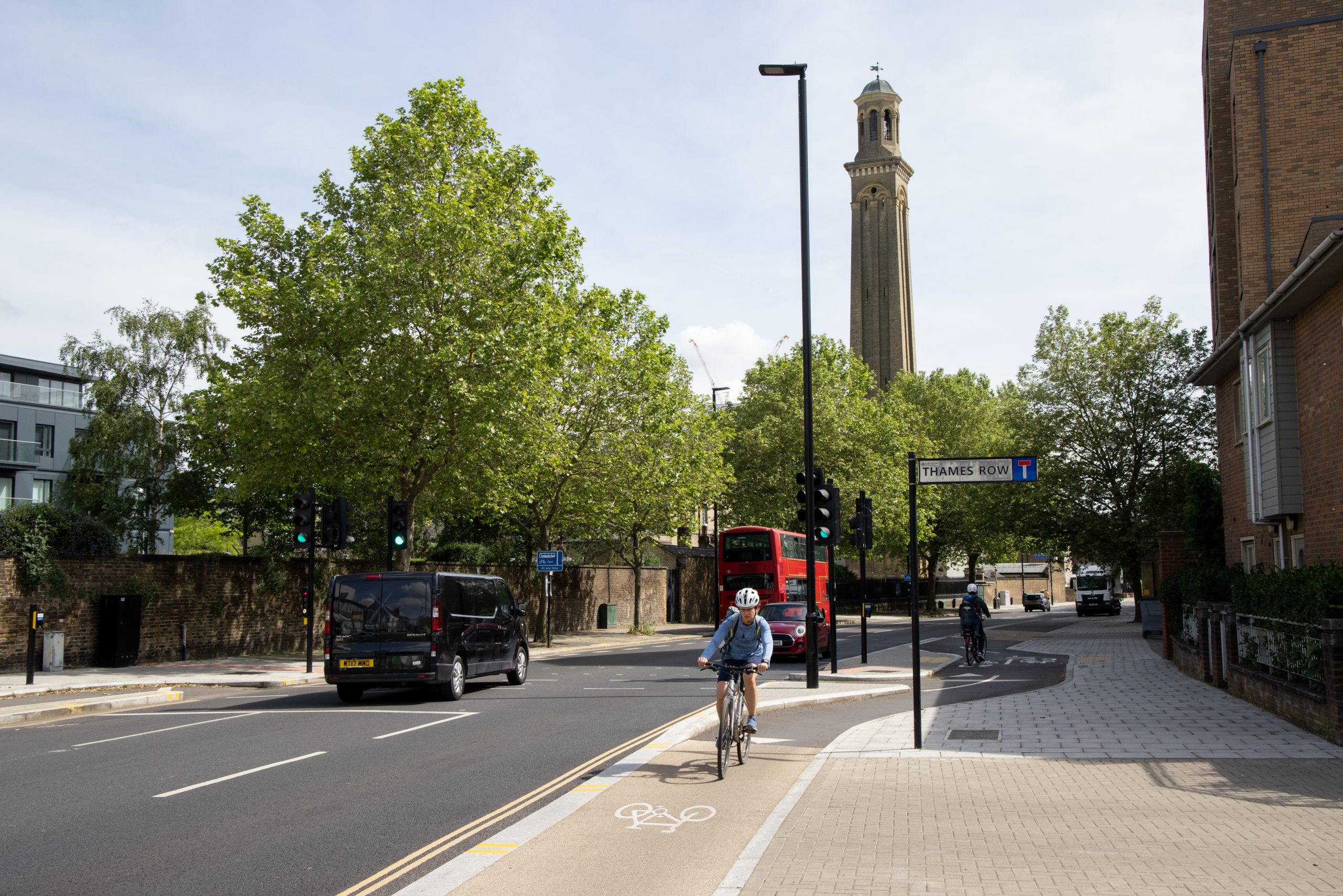
A Transport for London Cycleway. Transport for London
TfL says the growth in cycling journeys demonstrates the capital’s “continued investment in high-quality infrastructure”.
The transport authority has worked with London boroughs to increase the length of its cycle network from 90km in 2016 to over 431km in 2025.
“In 2024/25 alone, TfL launched 17 new Cycleways routes, and since September 2025, 29 per cent of Londoners live within 400 metres of the cycle network,” TfL said in a statement.
Mayor Sadiq Khan has set a target of 40 per cent of Londoners living within 400m of a Cycleway by 2030.
TfL continues to expand the network with construction next year starting in Southwark, Newham, Harrow and Waltham Forest.
How safe do people feel cycling in London?
76 per cent of people said they felt safe on designated cycle routes Dan Kitwood / Getty Images
Included in the Travel in London report are results from the London Travel Demand Survey.
The survey revealed that among those who cycled at least once a month and had used a Cycle in the last year, 76 per cent reported feeling safe on designated cycle routes. But only 40 per cent felt safe when cycling on other roads or paths.
Alongside its analysis, LCC launched a new email campaign directed at Sadiq Khan to highlight its campaign for faster action to reduce risks at known dangerous junctions.
TfL revealed in May that the provisional number of people killed or seriously injured on London roads fell from 3,710 in 2023 to 3,696 in 2024.
Nine people were killed while cycling in the capital last year. While this is higher than the eight people killed while cycling in 2023, it is a third lower than the 2010-2014 baseline.
Will Norman, London’s walking and cycling commissioner, said: “There’s no doubt that London is fast becoming a cycling city. Of course, there is more to do. The Mayor and I will keep working closely with TfL and the boroughs, investing in more high-quality routes to enable even more people to walk and cycle, building a better, greener London for all.”
Alex Williams, TfL’s chief customer and strategy officer, added: “Every extra journey by bike or on foot helps reduce congestion, improve air quality and make our streets safer and more welcoming.”
The rise of Lime bikes
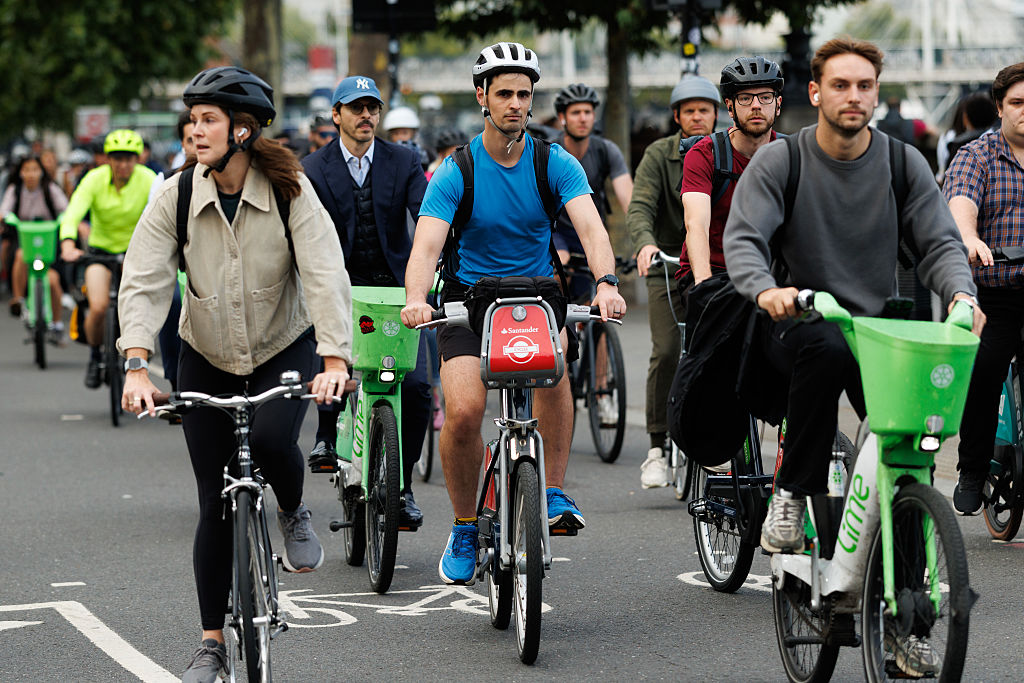
The Travel in London report also estimates that approximately 10 per cent of the total daily cycle journeys could have been on dockless cycle hires, such as Lime bikes.
Londoners made 16 million journeys by Lime during commuting hours in 2024, while the company saw an 85 per cent increase in total journeys.
The summer’s tube strikes led to a spike in Lime bike usage. Lime saw a 50 per cent increase in rentals on Tuesday 9 September compared to the same day in 2024 due to the strikes, according to the Financial Times.
Cycling in the City of London increased by 50 per cent from 2022 to 2024, the City of London Corporation revealed in April. It said “dockless cycles have quadrupled since 2022 and now account for one-in-six bikes on City streets.”
Hal Stevenson, director of policy at Lime for the UK and Ireland, said: “It has been incredible to see London’s cycling transformation over the past few years.
“Our capital has set a bar for cycling globally, and we’re proud of the role we’re playing. Rental ebikes are helping reduce car trips and congestion and support the Mayor’s ambitious active travel goals.”
Forest Bikes is another dockless bike hire provider in the capital. It announced a new pay structure in November to reduce its bikes from clogging up London’s streets, where users are offered free minutes if they choose to ride a bike that’s parked in an overcrowded area.
The professional cycling kit website Pro Kit Club is selling Israel–Premier Tech clothing to help feed children in Gaza.
Based in Tasmania, Australia, Pro Kit Club sells team-issue kit with the aim of reducing waste and providing consumers with “pro-level cycling gear at a fraction of the original price”.
The website announced it would be selling Israel–Premier Tech clothing on 23 November with an Instagram post that described it as a “different type of drop”.
In the post, the company said it has “agonised” over the decision to release the kit for almost a year. Now it has decided to sell the kit to raise funds to help feed children in Gaza.
“As a father, if my child were starving and someone offered to donate money to feed them, I would not concern myself with who was right or wrong, or where that money came from. That debate is a luxury we have from the safety of our homes,” the post read.
“Because we were not comfortable making a profit from this kit, we have decided that every dollar of profit from this IPT collection will be donated directly to the UN World Food Programme to help feed children facing famine and severe hunger in Gaza.
“Currently, over 130,000 children in Gaza are at risk of death from malnutrition. It really doesn’t matter your politics, nobody wants to see children starve,” it continued.
Pro Kit Club said that releasing the kit now and donating the profits to the World Food Programme enables it to “contribute in a meaningful way”.
“You get great quality authentic IPT [Israel–Premier Tech] kit. Children in desperate need get meals, stability and a chance,” the post said.
The post, signed by Pro Kit Club’s owner Paul Braybrook, also said that the company understands how its decision will “upset some people,” and that acknowledgement of that fact may upset others. The kit will go on sale on 27 November.
Following its acquisition by the entertainment company NSN and Stoneweg, a global investment platform based in Geneva, Switzerland, the team announced it is now called NSN Cycling Team. It will race under a Swiss license with a base in Spain,
The change of name and racing license follows Factor Bikes and Premier Tech threatening to withdraw their sponsorship if the team did not drop its affiliations with Israel.
Although the team complied with the demand, Premier Tech said in November that it was still ending its sponsorship of the squad because “the core reason for Premier Tech to sponsor the team has been overshadowed to a point where it has become untenable for us to continue as a sponsor.” Premier Tech now sponsors Michel – Preference Home – Auber93.
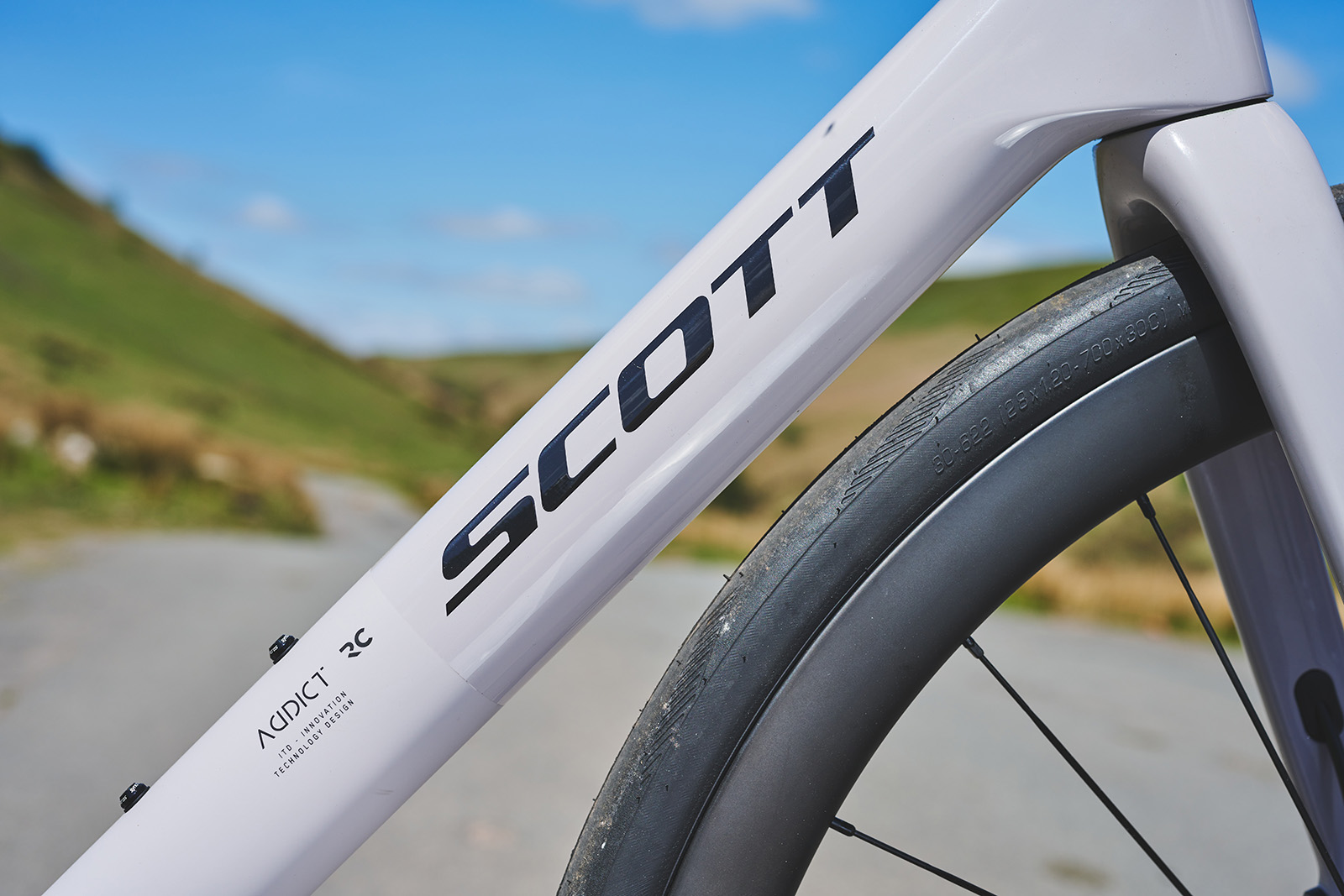
Scott looks set to supply the team next season. Scott Windsor / Our Media
It is also rumoured that Factor Bikes has left the team, with Scott Bikes said to be providing bikes for NSN Cycling Team next season.
The team faced growing pressure in 2025 with protests at all three Grand Tours. Demonstrators at La Vuelta said they were protesting against the team’s participation in the race and labelled its presence as “sportwashing”.
The protests affected several stages of the La Vuelta, with riders expressing concern for their safety, with the organisers eventually cancelling the final stage in Madrid.
Yesterday, Zwift enabled an adjustment/fix for drafting which will be particularly noticeable on descents. Here’s what was posted on their forum:
We’ve made an adjustment/fix to the drafting effect that’s now enabled for game version 1.102 and newer. Here’s how you can check what version you’re using.
Up until now our drafting algorithm didn’t properly use road incline/decline percentage in the equations and this change will fix the issue. The steeper the climb or descent, the more the change will be noticeable.
The end result is:
You’ll be able to stay with riders just ahead on steep climbs with slightly less effort than before.
Staying in the draft behind a rider while going downhill will be much easier than before – you should be able to draft supertucked riders easily now.
Pack speeds on the downhills will be slightly higher than before in general, on the order of 10-15% on steeper descents.
Drafting on flat roads is unchanged, and speeds while riding solo are also unaffected.
For group rides and races making it to the top of a climb with the group is more important than before because of the points above
What Was Fixed?
Zwift says, “Up until now our drafting algorithm didn’t properly use road incline/decline percentage in the equations and this change will fix the issue.” So what was actually broken (and fixed)?
It’s an interesting little bug that is easy to understand. In Zwift, as in real life, every rider casts a draft “shadow” behind them as they cut through the wind. If you’re in another rider’s draft shadow, you’re hitting less air resistance, making it easier to move forward. Cycling 101.
But Zwift’s algorithm was calculating perfectly horizontal draft shadows regardless of road pitch. This works fine on flattish roads, but as the gradients get steeper, horizontal draft shadows will impact riders behind less and less! Zwift confirmed with me that the draft shadows now now extend parallel to the slope of the draft-giving rider.
How Does It Feel?
In my tests, the results of Zwift’s draft update are exactly as described above. It’s particularly noticeable on descents, where the draft is simply stronger than it used to be. Riders used to have to put out some power to hold the wheel of a supertucking rider, but you can now sit on that wheel at 0W, because the draft off that supertucking rider is stronger.
So while supertuck is still a fast and easy way to descend steeper hills, its utility as a weapon of attack has been blunted.
One important result of this change is that it’s now easier for lightweight riders to hold a good pack position on descents, as they sit in the stronger draft.
Coming Soon: More Tests
It’s time for me to run fresh tests and update this post, which showed how much power it took to sit on another rider’s wheel while they were descending in the supertuck or at certain wattage, in race events or group rides.
Questions or Comments?
Go do a test ride or two, then report back your thoughts on the updated draft for climbing and descending. Chime in on the Zwift forum topic, or comment below!