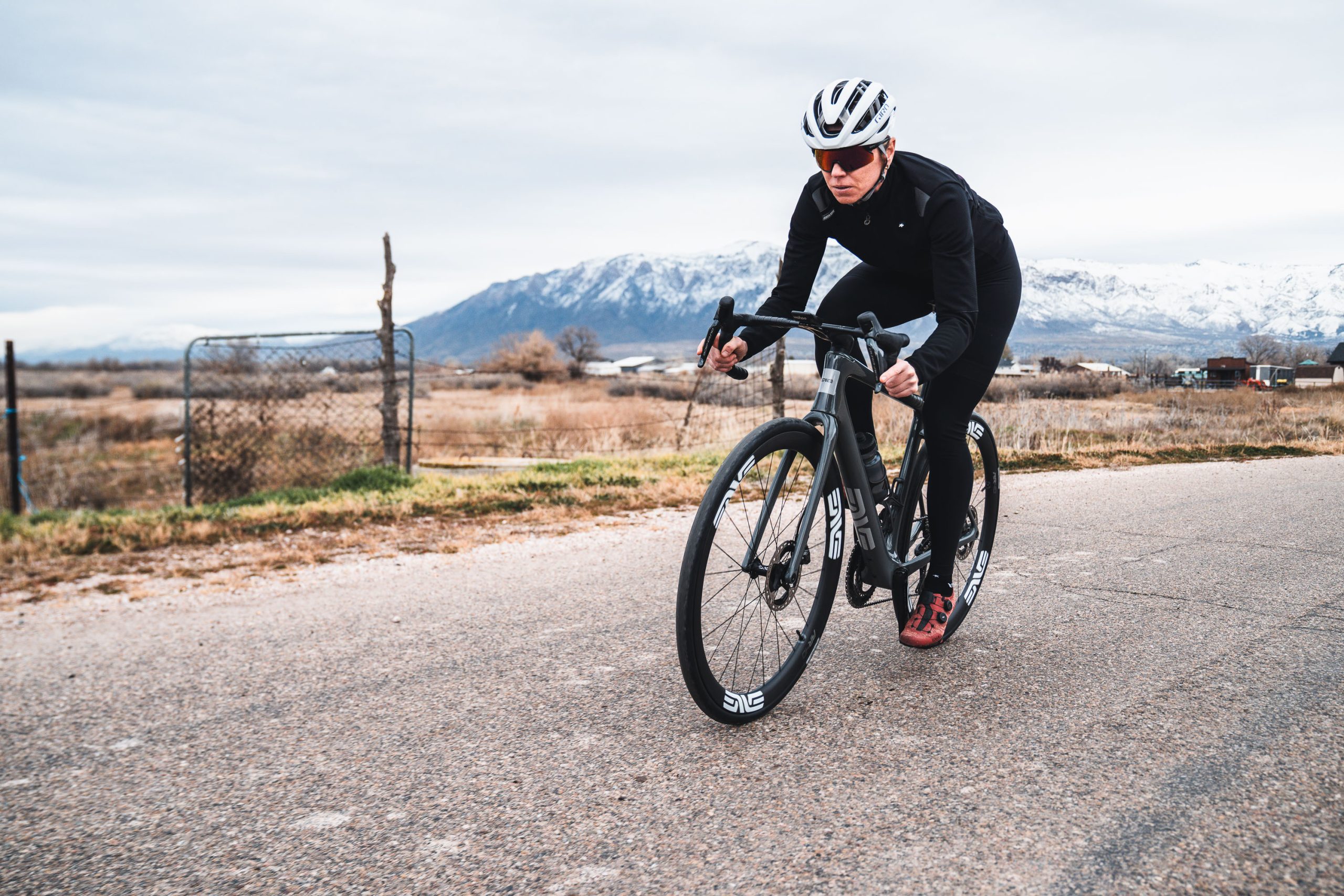
ENVE has announced the release of its new AR40 wheelset, the latest addition to the value-focused Foundation line-up.
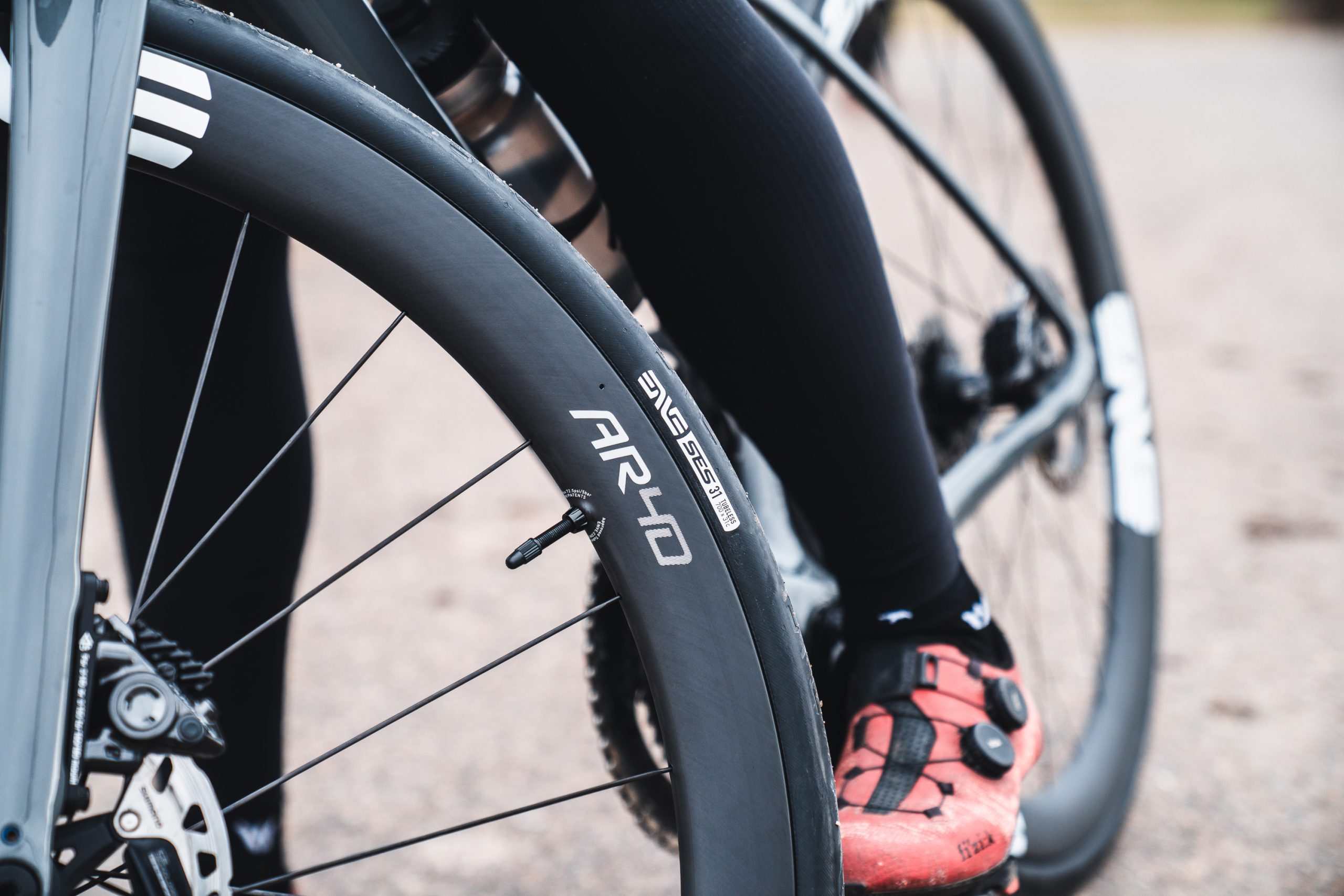
Featuring 40mm-deep and 32.2mm-wide carbon rims, the Foundation AR40 wheelset features hookless rims and is designed to work across road, all-road and gravel bikes.
According to the American brand, the Foundation AR40 wheelset “borrows” from knowledge gleaned during the development of ENVE’s pricier wheelsets, and is claimed to be more aerodynamic than Reserve’s 42|49 wheelset with a 29mm tyre.
Priced at £1,800 / $1,500 / €1,649 and claimed to weigh 1,515g, ENVE says it “represents the highest quality wheelset on the market” at its price.
Rather than citing potential cost savings, ENVE says using a hookless profile “allows the rim’s critical tolerance at the bead seat diameter to be both consistent and accurate”, which helps “deliver a safer and more reliable tubeless system”.
As with other hookless rims, this means the Foundation AR40 wheels are only compatible with tubeless tyres between 27 and 50mm wide, and ENVE’s spec sheet notes that riders should only use models listed as “Approved/Recommended” on its website.
The AR40 wheels use a wide, hookless rim optimised for larger road bike tyres and beyond. ENVE
Beyond this, ENVE says the AR40 rims use its ‘wide hookless bead’ technology, which helps reduce the chance of pinch flats from rock strikes, and its patented moulded spoke holes.
These are said to create a lighter and stronger rim compared to drilled spoke holes because the carbon fibres remain intact and enable them to withstand higher spoke tensions with reduced risk of failure.
The Foundation AR40 wheels are specced with ENVE’s own alloy hubs, with steel bearings and an “oversized 42mm ratchet drive system”. The design prioritises “low maintenance and easy serviceability”, according to the brand.
Optimised for road, but off-road capable
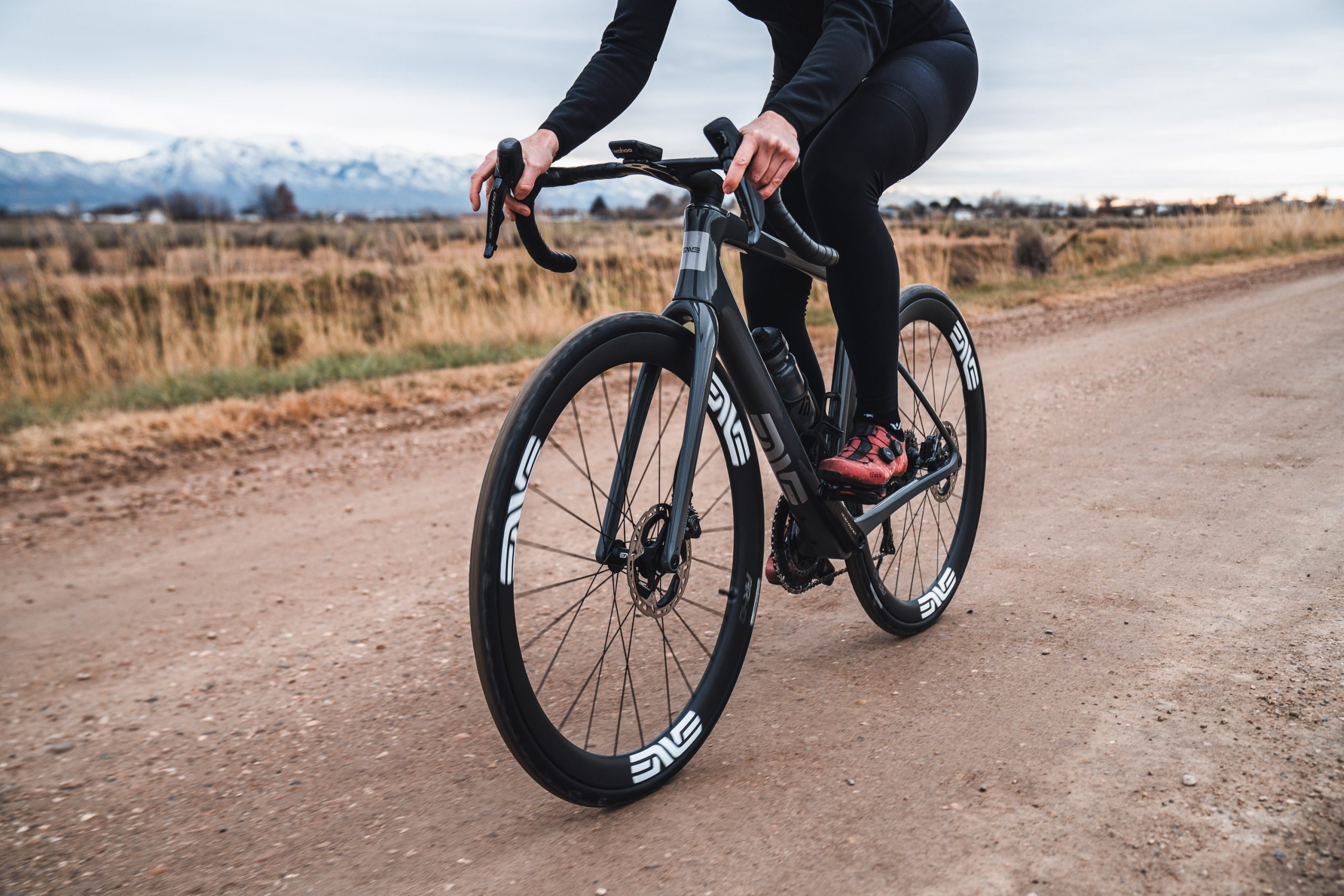
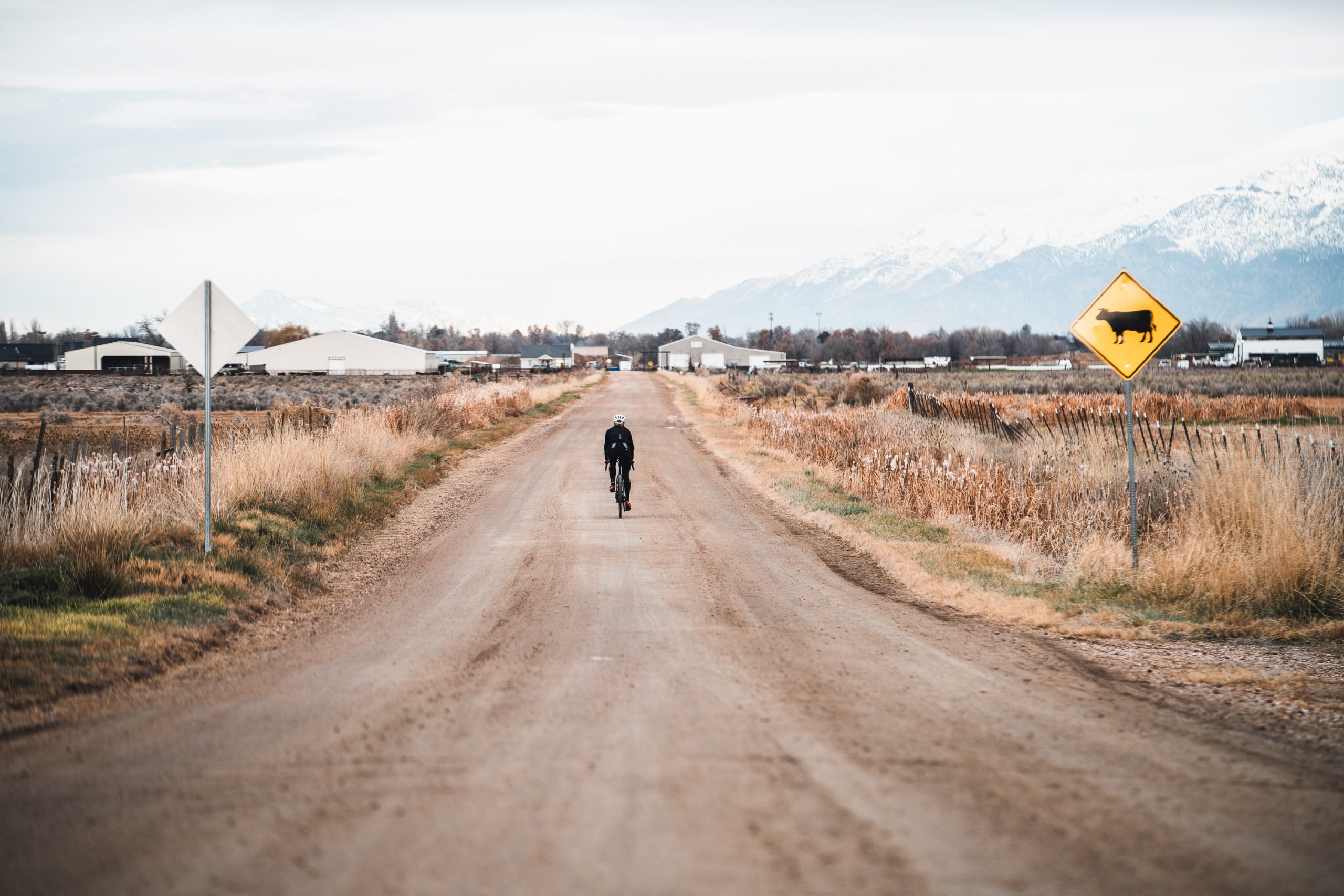
Although aero-optimised for road tyres, ENVE says the AR40s are off-road capable. ENVE
Although the Foundation AR40 wheelset is optimised for use on road bikes first and foremost, and has been designed around road bike tyres, ENVE says it has been designed to withstand the rigours of riding and racing off-road.
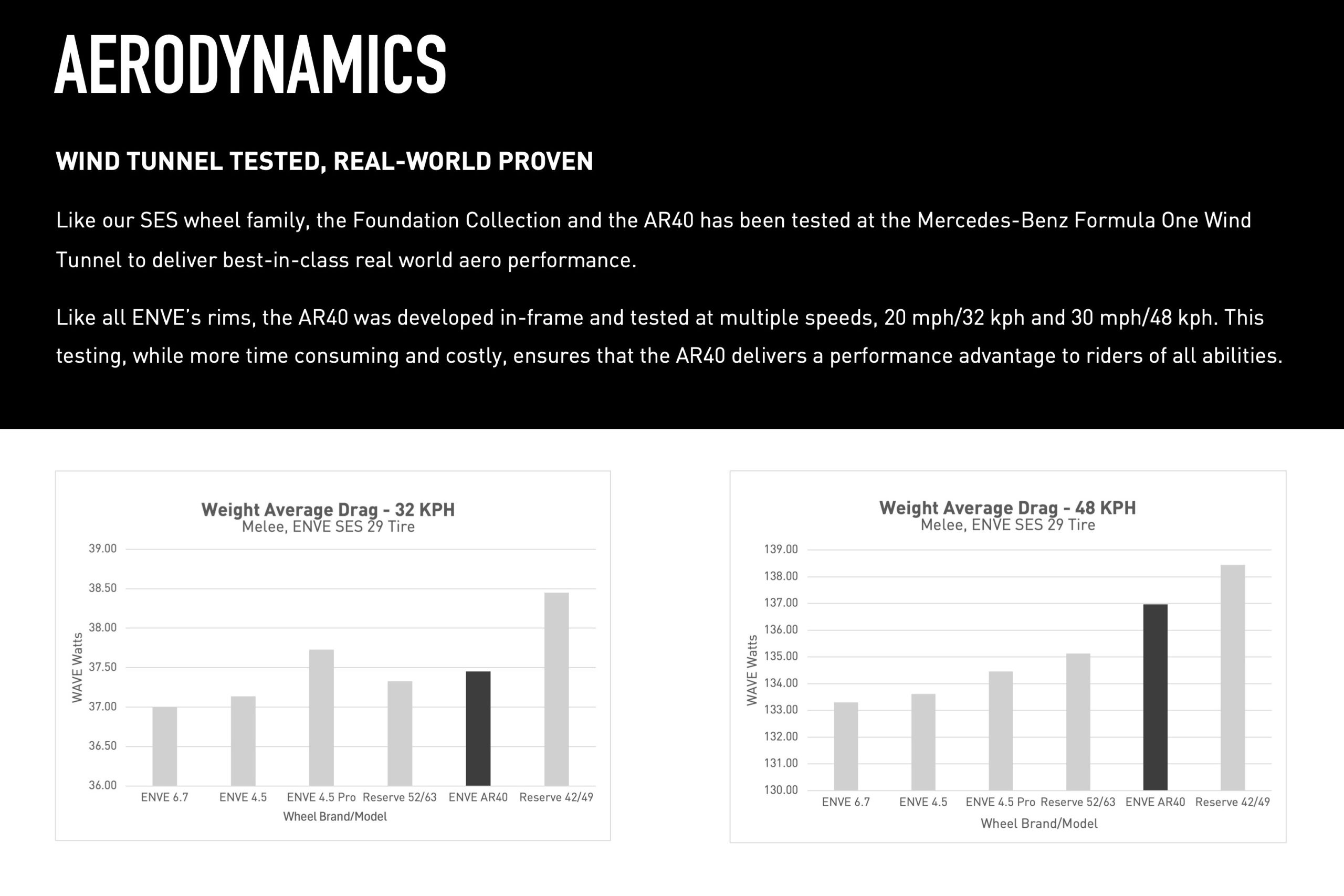
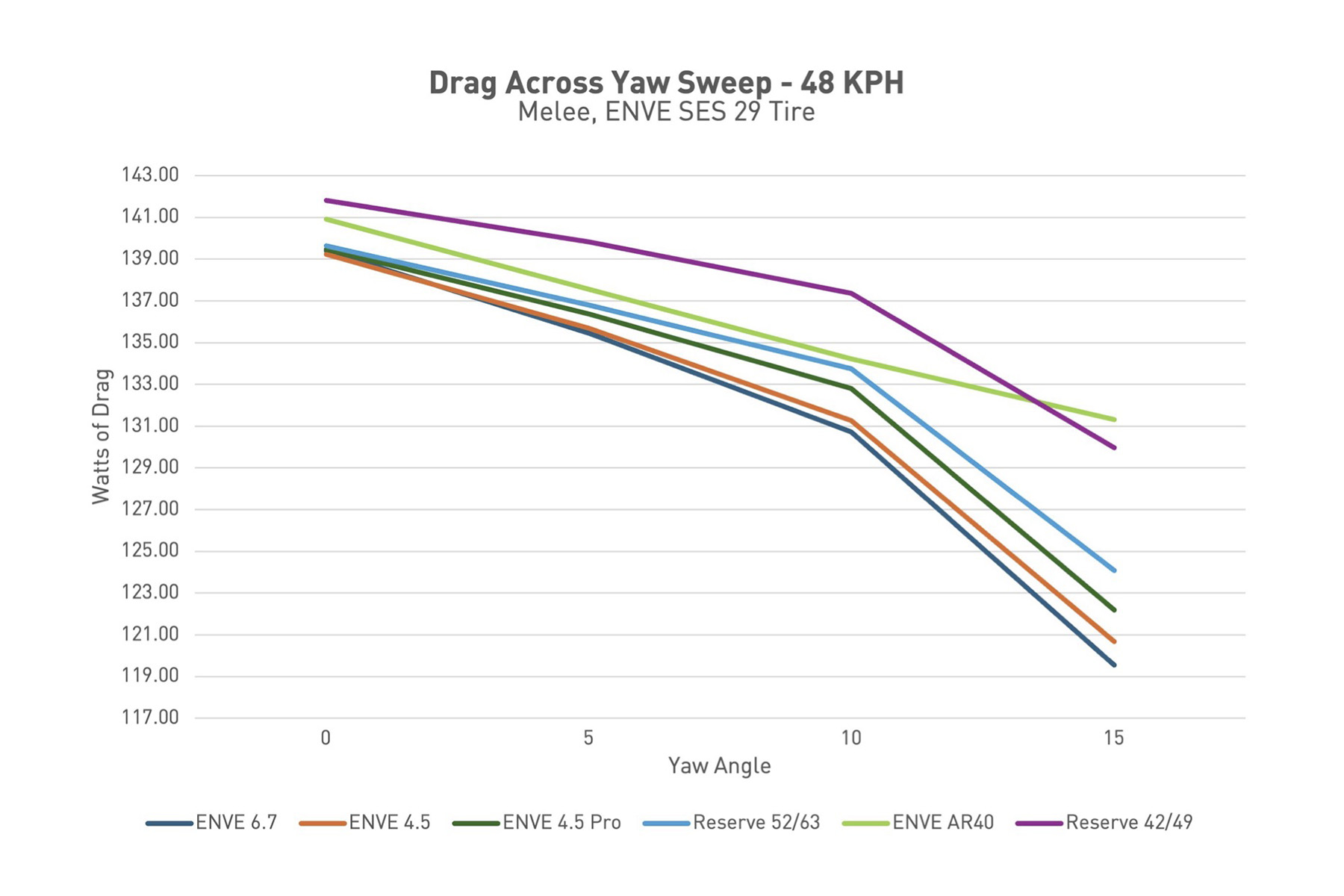
In terms of performance, ENVE says it pitted the Foundation AR40 wheels against its own SES 4.5, 4.5 Pro and 6.7 wheels, as well as Reserve’s 52|63 and 42|49 wheelsets, at the Mercedes-Benz Formula One wind tunnel.
ENVE performed aero testing for the AR40s at the Mercedes-Benz Formula One wind tunnel. ENVE The results show the AR40s are competitive with ENVE’s pricier wheelsets. ENVE
With a 29mm tyre, the results show the AR40 wheelset outperforms the pricier SES 4.5 Pro wheelset (£4,100 / $3,750 / €4,499) at 32kph / 20mph, and is competitive with the deeper-rimmed alternatives.
It’s fair to say the increased scale on the Y-axis exaggerates the difference significantly, though, given the actual difference appears to be less than 0.5 watts, and no margin of error is quoted for the figures.
ENVE’s Foundation AR40 wheelset is claimed to perform almost as well as wheelsets costing twice as much. ENVE
At 48kph / 30mph, the differences are a little clearer and the 4.5 Pro wheelset pulls ahead by around 2.5 watts. The data shows the AR40 wheelset outperforms the Reserve 42|49 (£1,599 with DT Swiss 350 hubs) by a little more than one watt, though.
All things considered, then, these are small margins, but it’s encouraging that the AR40s ought to offer competitive aero performance even when compared to options costing significantly more.
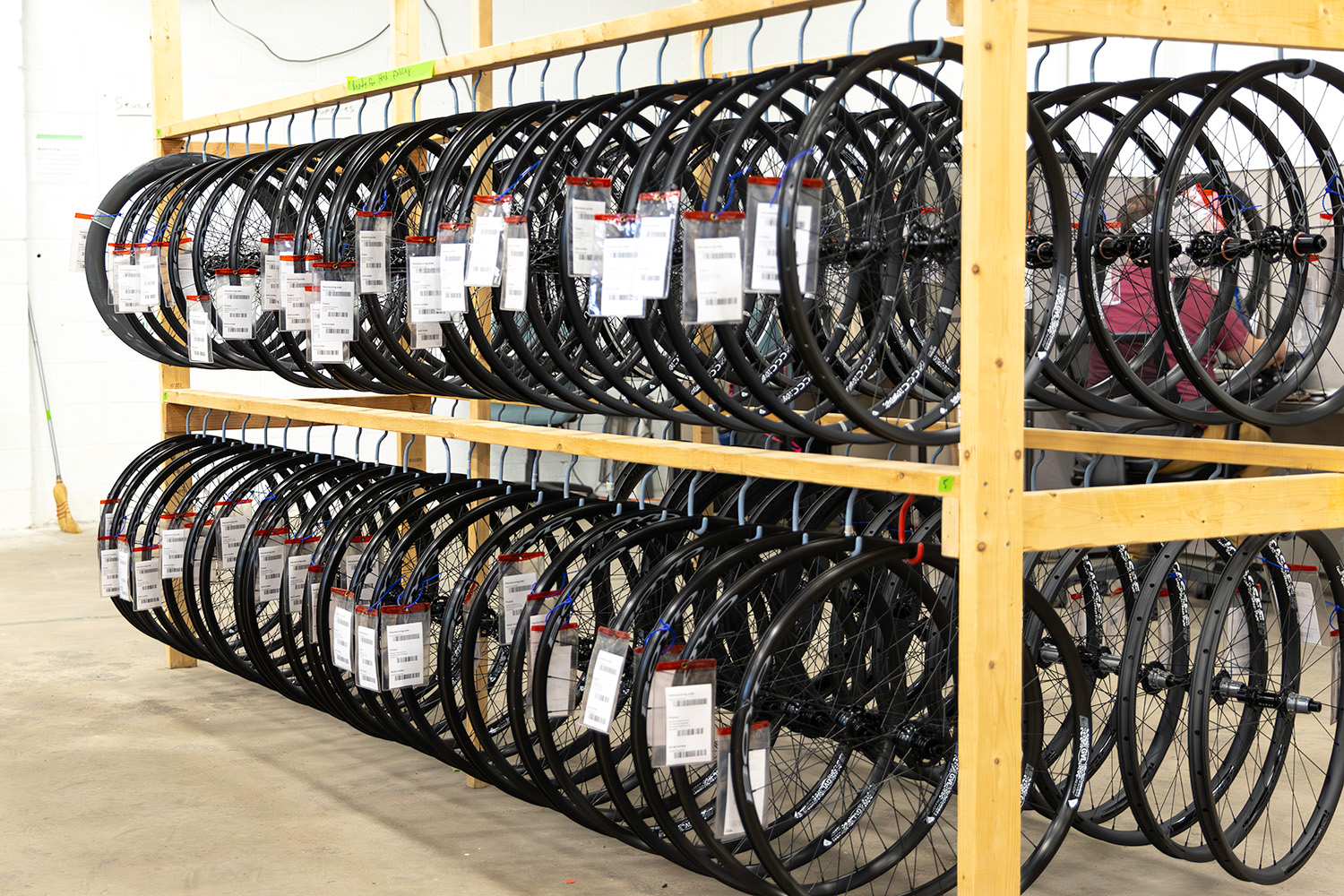
Boyd is looking to expand with USA manufacturing. Boyd
Alongside its established alloy rim facility, Boyd is introducing carbon fibre production, where its carbon fibre rims will be made.
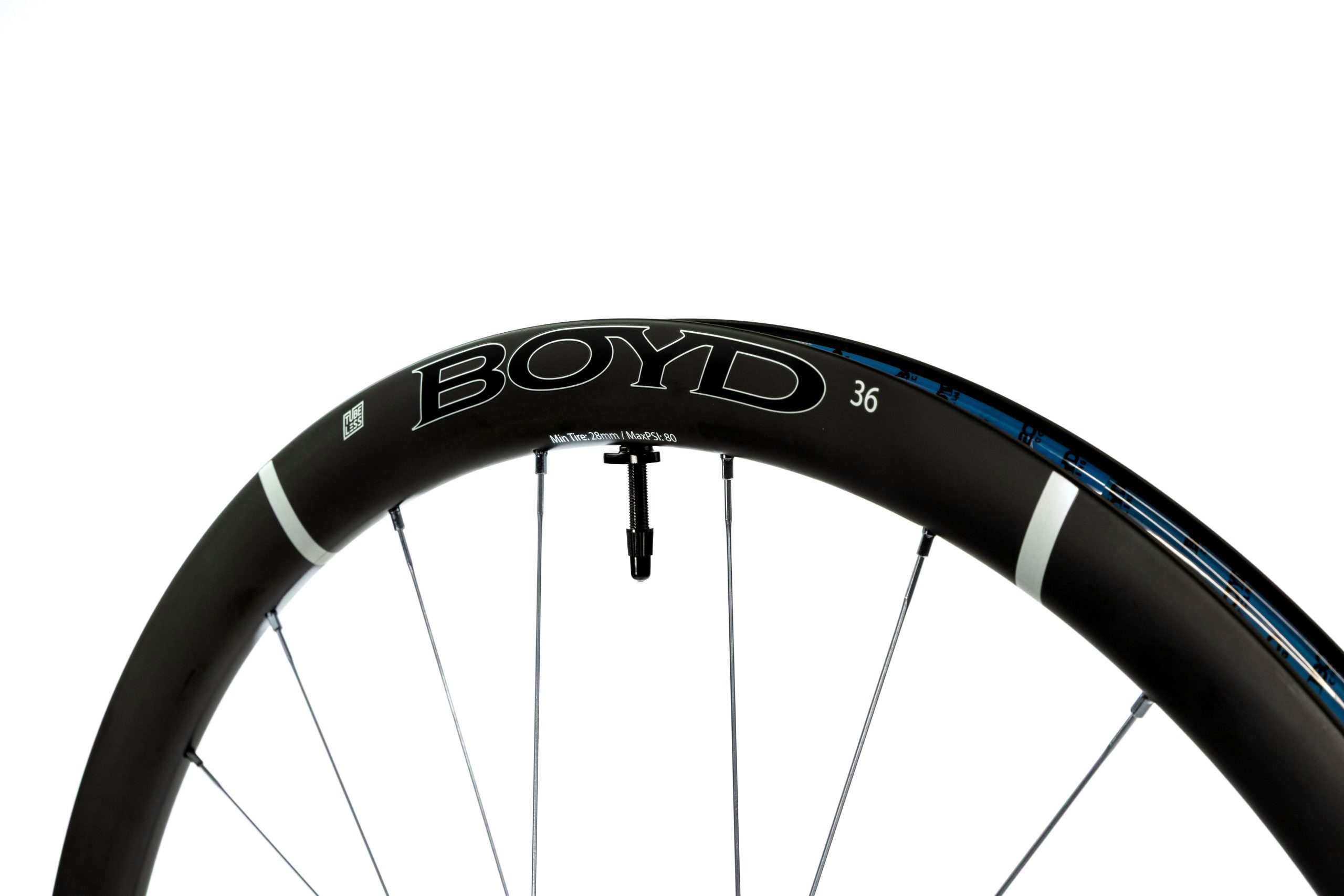
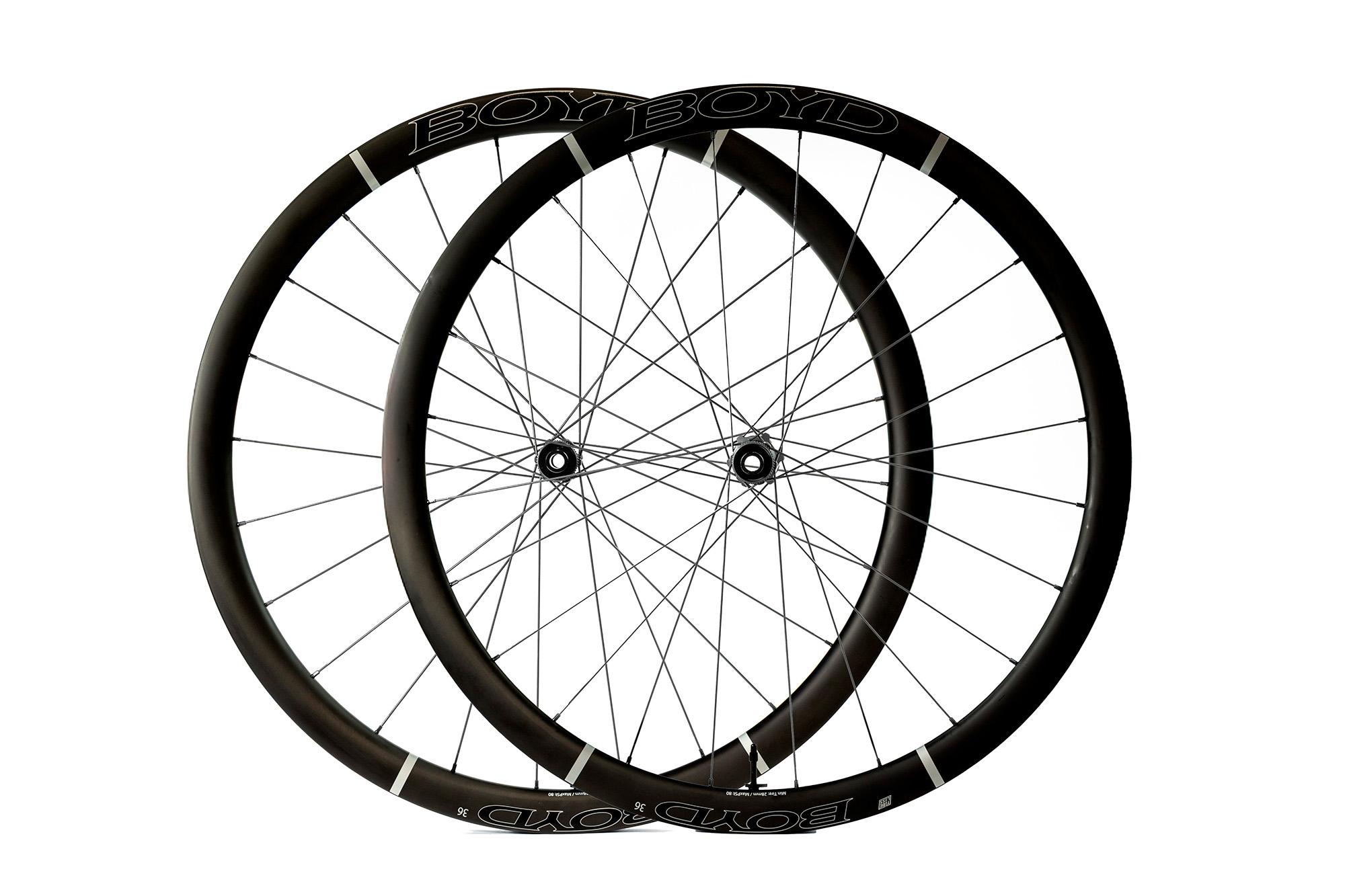
The Podium 36mm Carbon Disc SL features a carbon fibre rim construction with a 36mm rim depth and a 24mm internal width, optimised for 28-38mm tyres.
The rims are hooked carbon tubeless. Boyd
Boyd says the rim uses aerospace-grade T1000 carbon fibre in high-stress zones, with high-modulus carbon fibres placed at strategic cross angles in the layup.
Boyd says the wheels are hand-built for long-term durability. Boyd
This is said to result in an impact resistance exceeding 110 joules, more than 2.5 times the UCI’s requirement of 40 joules.
Multi-angle spoke hole reinforcement is used to distribute spoke tension forces across multiple directions.
This is said to enable higher, more stable spoke tension without adding unnecessary mass.
24 Pillar Wing 20 spokes pull the wheels together. Boyd
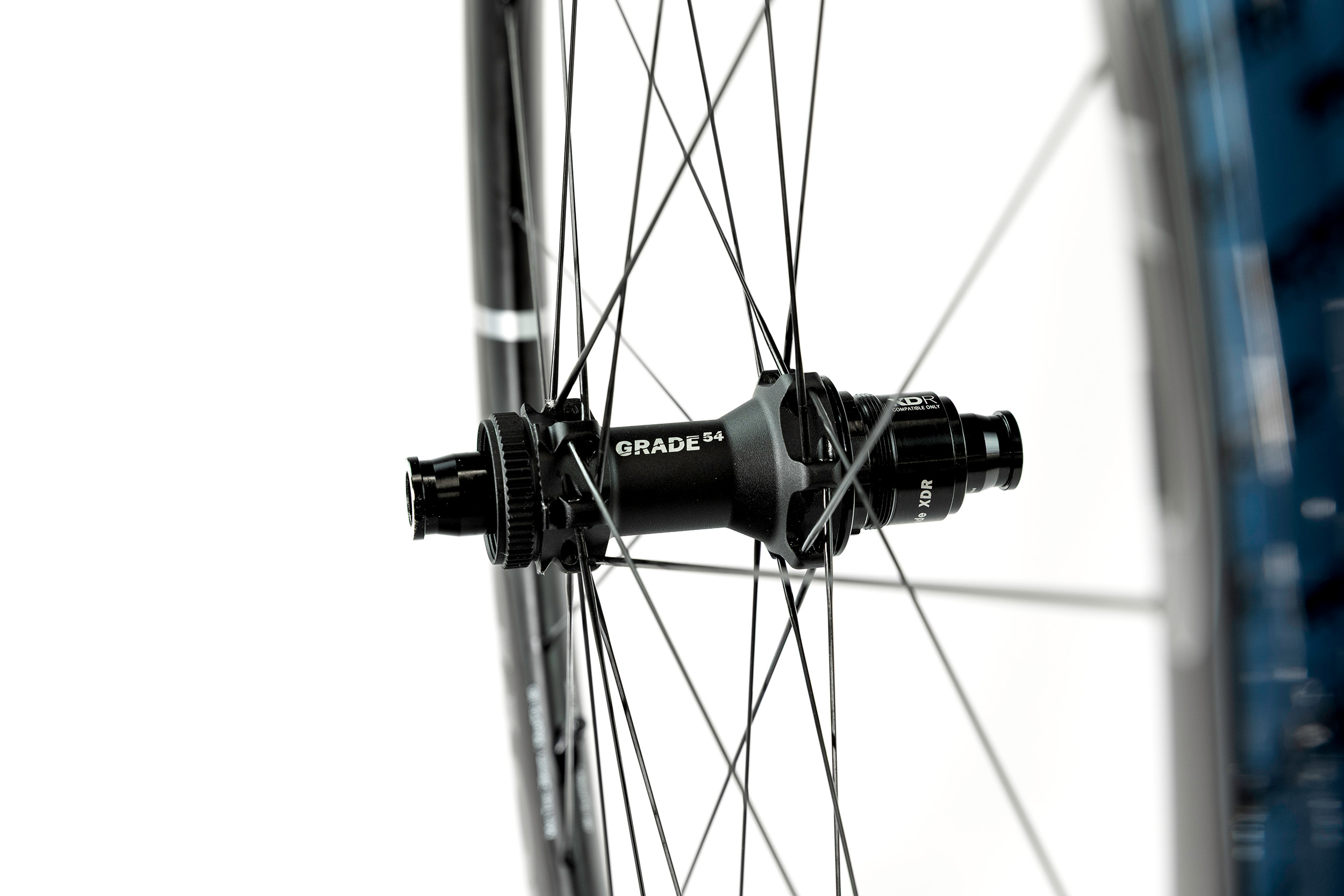
Alongside the new carbon rim, the brand has also released new Grade 36 and Grade 54 hub platforms, with the Podium 36mm Carbon Disc SL wheels using the later, which boasts 6.6° engagement.
The hubs weigh 85g for the front and 185g for the rear, and inside Enduro ABEC-5 bearings are used for rolling performance and longevity.
The wheels are priced at £1,860 / $2,100 / €2,150.
Today, we release the last of three special “full map” Rebel Routes. We recently published The Full Makuri and The Full New York, but today’s is the big one, covering every road in Watopia, Zwift’s biggest map!
But first, credit where credit is due: Zwifter Tim Nikkel gets the kudos for putting in the work to devise this route, sharing it with us via the ZwiftMap website. With so many intersections in Watopia, computing the shortest possible route is no easy task. But Tim figured it out!
We’ve released these three “full map” Rebel Routes in hopes that Zwift will adopt them as new fondo routes. It’s been way too long since we’ve had fresh fondos, and there are so many great new roads we could use!
This route in particular would make a splendid Gran Fondo course. It would be the second-longest route in Zwift (behind The PRL Full), with 250 meters more elevation gain than the PRL Full. A difficult but doable challenge for a well-trained rider!
About Rebel Routes
“Rebel Routes” are Zwift rides not available on Zwift’s routes list, thus requiring manual navigation.
The reward for your rebel ride? Exploring a new route, knowing you’ve gone where few Zwifters have gone before. And a Strava segment rank in the tens or hundreds instead of the thousands! Rebel Routes are also included as a separate category on our Veloviewer Route Hunter leaderboard.
Route Description
A complete turn-by-turn tour of this route would take much too much space. So we’ll summarize it instead.
Start by selecting the “Oh Hill No” route from the Watopia route picker.
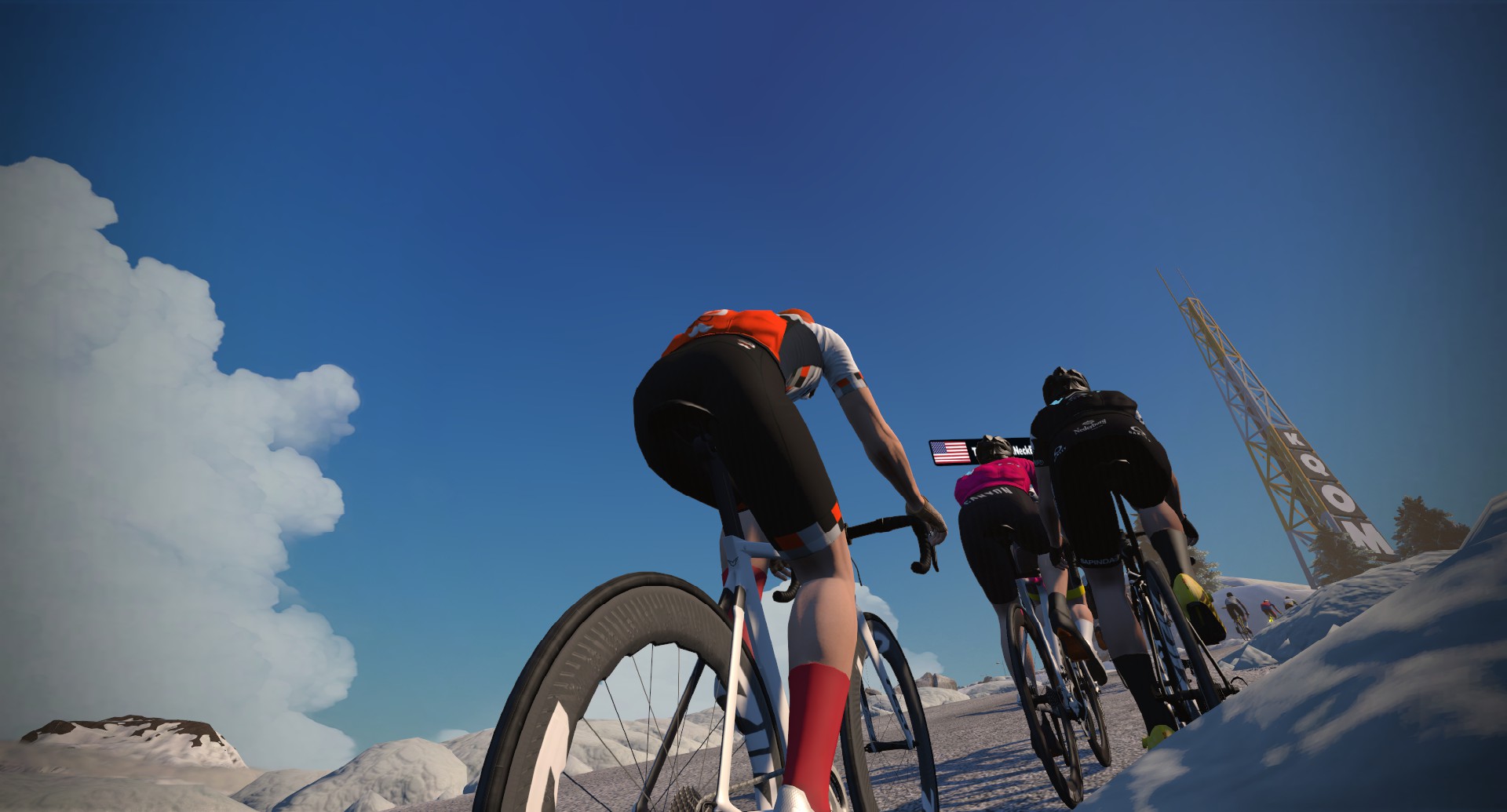
The Full Watopia is bookended by the biggest climbs in Watopia, starting with The Grade + part of the Epic KOM (including the Radio Tower), and finishing on Alpe du Zwift.
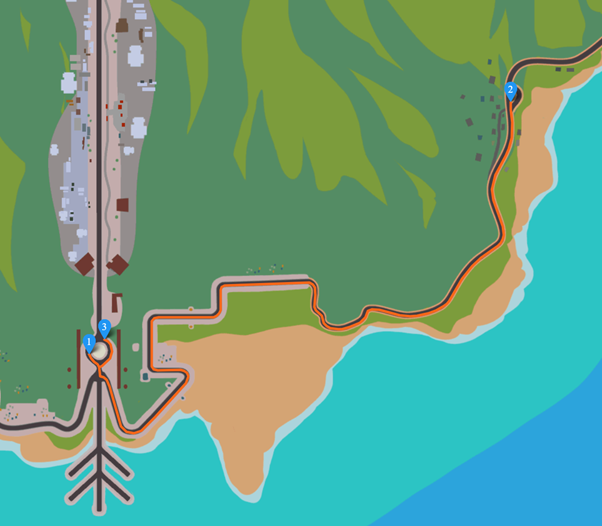
After descending from the Radio Tower, you’ll loop around onto the Epic KOM Bypass road and head to the Mayan Jungle, then down to the southern coast road to take in this long stretch of shoreline.
Continue up and over the rollercoaster road through Titans Grove, then head into Watopia proper to cover most of those roads, including ascending the Volcano KOM. You’re well past the halfway mark!
Descend from the Volcano, head out to cover the Jarvis loop, then ride through the Ocean Blvd tube and hang a right to enter Fuego Flats.
From the Flats to the climbs, you’ll head up the Epic KOM forward, but turn left to head down The Grade, then turn right to descend the Mayan and Itza KOM roads. 20km to go!
Knock out the remaining Mayan Jungle dirt, then turn right and head up the Alpe. The route finishes at the top.
Please note that the Strava segment includes the turnaround road atop the Alpe, because we figured everyone would ride that road anyway as they finish their climb and want to come around to descend the Alpe. Being at the top of the Alpe means you get another ~12.5km of distance once the route finishes, if you just let your avatar coast to the bottom. Why not? You earned it!
Speaking of turnaround roads, it’s worth mentioning that this route doesn’t attempt to cover every bit of pavement on the roundabouts and turnarounds in Fuego Flats, the LAX Roundabout, and Ciudad La Cumbre. Doing so would add significant distance, and these are really just turnaround points built into the game.
Turn By Turn Directions
Be warned: this route has a lot of turns. Begin by choosing the Oh Hill No route, which starts you at the base of The Grade, heading in the right direction.
This is a route we’ve raced before in ZRL, but it was done as a points race in the past, with a custom finish line. So while it may be a re-run of a course, the race will unfold very differently!
There’s much to discuss, including crucial course segments, powerups, bike decisions, and strategic options. Let’s dive in!
Looking at the Route
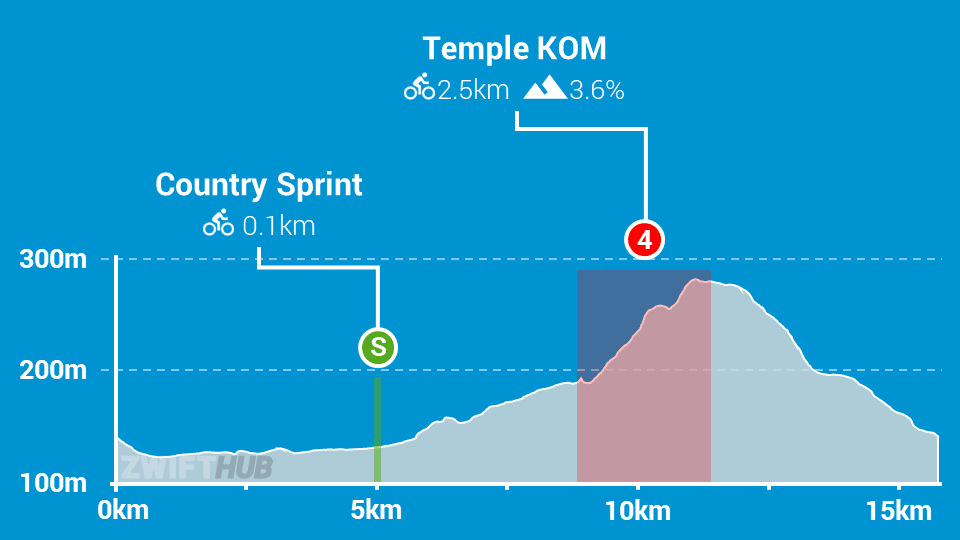
One lap of Countryside Tour is 16km (9.9 miles) long, with 185m (607′) of climbing. A/B categories will race 3 laps (48.2km), making this the longest race of Round 3 for A/B teams! C/D will race 2 laps (32.2km).
The race begins at the “main” Yumezi start pens near the lap start/finish banner. This is a downhill start, so riders will get up to speed quickly as we descend to the farmland flats. Enjoy the easy start. You can see from the route profile that the spiciness is up the road!
The first 5km will probably be quite docile, as the road is flat and there is no incentive to attack the sprint since this isn’t a points race.
After the sprint, a slack and therefore draftable climb begins, taking you through Village Onsen and the Fishing Village before turning left onto the big feature of this course: the Temple KOM.
This dirty little bugger (literally, it’s a dirt road) has hosted many ZRL battles over the years. It’s 2.5km in length and averages 3.6%, but don’t let those numbers lull you into a sense of security. This climb is almost entirely dirt, which means it rolls slower than pavement. It also includes some hard punches at 7%+! While a gravel bike would indeed perform better than a road bike on this climb, you’ll probably want to avoid that option (more on this below under “Bike Recommendations”).
The Temple KOM is where the first real selection of the day will happen, as the pack inevitably strings out over the draggy climb.
Once you ride through the KOM banner in the giant mystical tree it’s a twisty dirt descent back to the pavement of the Castle/Marketplace area, then more descending to the lap start/finish line.
Heavier riders can use this descent to chase back onto the wheels, and heavier riders will also have the advantage on the downhill finish in the final lap. (Of course, lighter riders will know this and work to drop the heavier riders on the Temple KOM.) Good luck to all!
Three different powerups are on offer for this race, given with equally-weighted probability at each arch. There are three arches in each lap of the route: the lap arch, the Countryside Sprint arch, and the Temple KOM arch.
Lightweight (feather): reduces your weight by 10% for 30 seconds. Use on climbs, where weight slows you more than it does on flats and descents. This is the one you want heading into the Temple KOM, for use on the steepest dirt slopes.
Draft Boost (van): increases the draft effect you are experiencing for 40 seconds. Use at higher speeds (flats and descents) when you are already drafting off another rider (since this powerup only helps when you are drafting.) This powerups lasts the longest and is most useful when sprinting in a pack at the finish, or if you’re wanting some recovery on the flats/descents while sitting in the wheels.
Aero Boost (helmet): makes you more aerodynamic (reduces your CdA by 25%) for 15 seconds. Use at higher speeds (flats and descents), especially when no draft is available (although it is still useful when drafting.) This powerup gives you the maximum speed advantage in the fast final sprint. Also useful if you’re in the wind, trying to bridge up to riders ahead.
Bike Recommendations
With the dirt Temple KOM looming, many riders will be wondering if a bike swap makes sense here like it has in some previous races.
But here’s the thing: much has changed since those past races. Zwift’s pairing screen no longer works as a brake hack. Gravel vs road bike performance has changed. This is a scratch race, not a points race. And it doesn’t finish at the top of the Temple KOM!
I did some bot tests with various bikes, to see how much faster the gravel bike was up the Temple KOM. Here are the times, using a 75kg rider at 300W steady:
Specialized Crux with Zwift Gravel wheels: 6:32
S-Works SL8 with ENVE 4.5 Pro wheels: 6:54
S-Works Aethos with ENVE 4.5 Pro wheels: 6:55
Tron bike: 6:58
A gravel bike can trim 22+ seconds off your Temple KOM time, as shown above. But keep in mind you have to stop moving before you can swap bikes, and you’ll have to swap at the bottom and top of the KOM. How do you quickly stop moving when braking is disabled in ZRL races? Answer: you don’t. The pairing screen only works to stop you if you unpair your power source.
So swapping to a gravel bike is off the table.
This race’s key climb is long and steep enough that you should steer away from pure aero setups unless you’re very confident you can hang with the front pack up and over the Temple KOM. For most riders, a strong all-arounder is probably the best move, given the mix of a key climb and a fast downhill finish. There’s no perfect setup for everyone, but our recommendation for most would be the new ENVE SES 4.5 PRO or DT Swiss 65 wheels paired with one of these bikes:
Lots of recon events are scheduled on upcoming ZRL routes, led by various teams. See upcoming ZRL recons for this race at zwift.com/events/tag/zrlrecon.
Additionally, riders in the Zwift community do a great job every week creating recon videos that preview the courses and offer tips to help you perform your best on the day. I’ll add them below as I find them!
J Dirom
John Rice
Strategic Options
Forming a cohesive strategy for this route was a real challenge in past years’ points races, but much of the complexity is removed in this scratch race.
Remember: all that matters is your finishing position.
With that in mind, here are some of the strategies we’ll be seeing next Tuesday:
KOM Attrition: Strong climbers who lack the weight or pure wattage to win in a downhill pack sprint will be smart to push the pace up the Temple KOM on early lap(s). It’s not so much about forcing an early selection – it’s about forcing sprinters to burn matches, so get dropped on the final KOM.
Final KOM Fireworks: The last time up the Temple KOM will be the key selection point of the race. Climbers were just trying to hurt everyone else on the early laps, but here they’ll try to make everyone explode, so the climbers don’t have to sprint against heavier, more powerful riders in the finish.
Table Scraps: Most of the field will be dropped from the front up the final Temple KOM. Riders who find themselves in that position will be fighting for lower points, but don’t give up! Each and every point will be crucial in a race where you may only have 1-2 teammates in the front group.
Your Thoughts
Any insights or further thoughts on this race? Share below!
Good-value bikes never go out of fashion here at BikeRadar, and we’ve just discovered a hidden gem tucked away on Giant’s Chinese website.
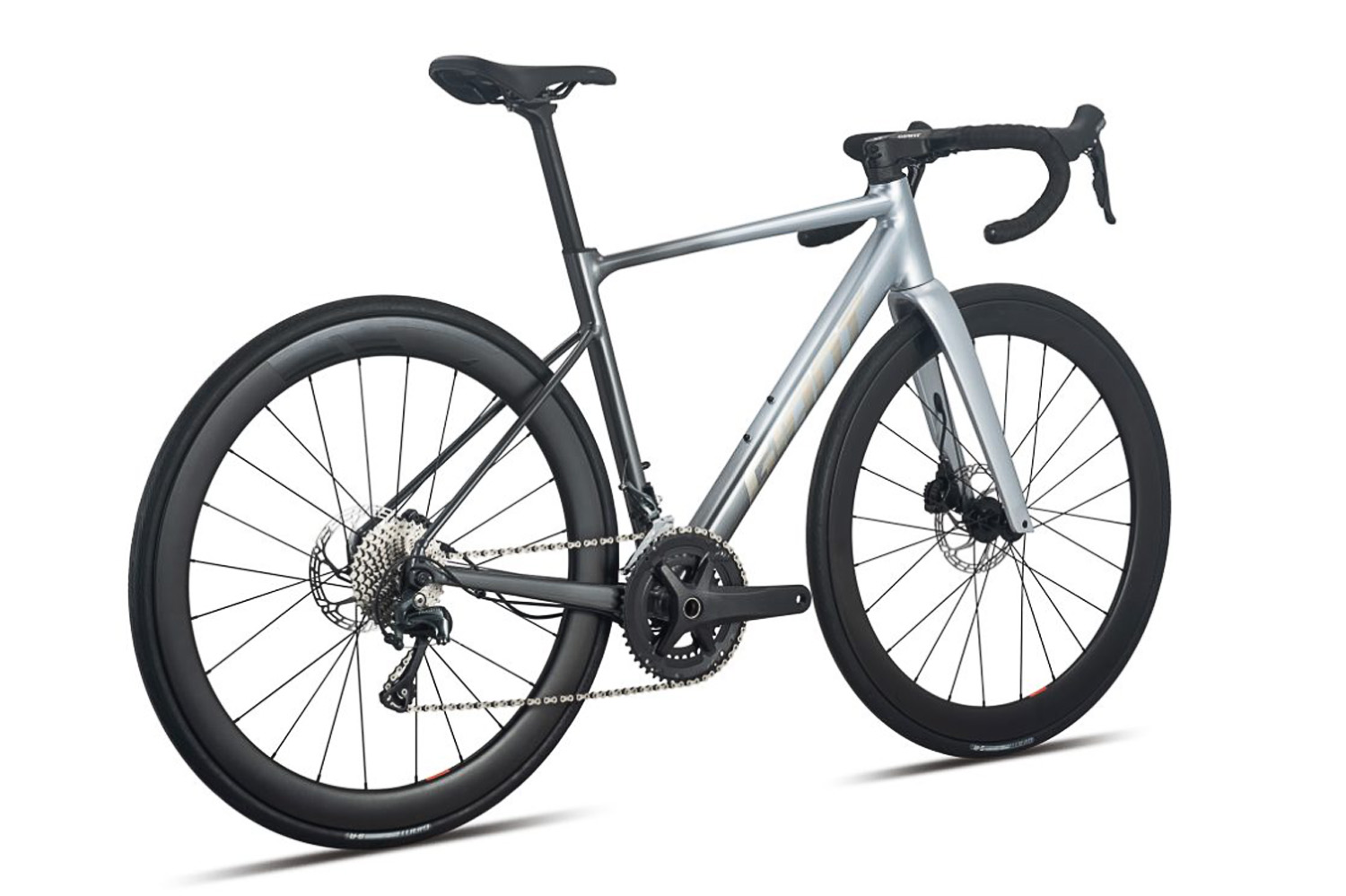
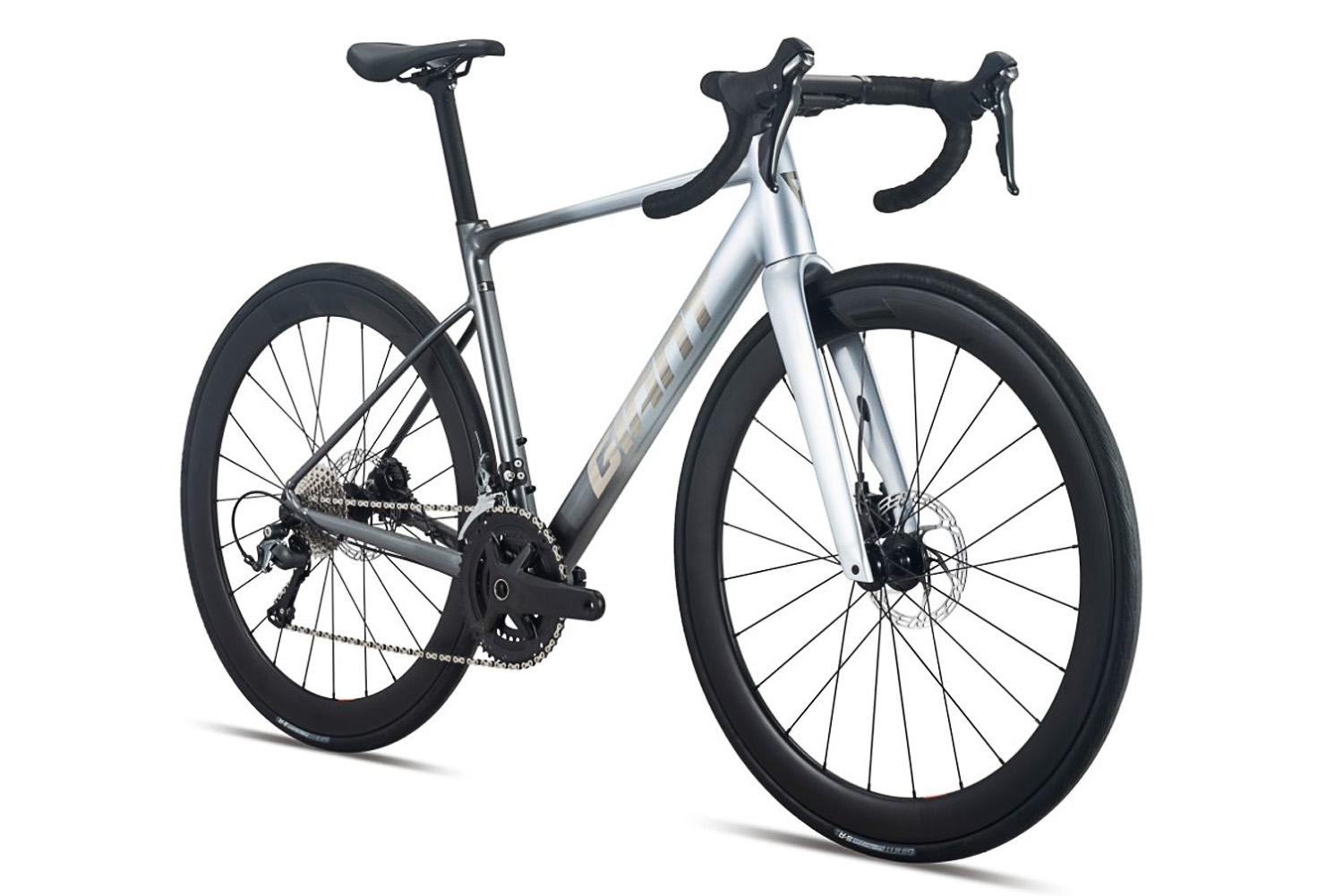
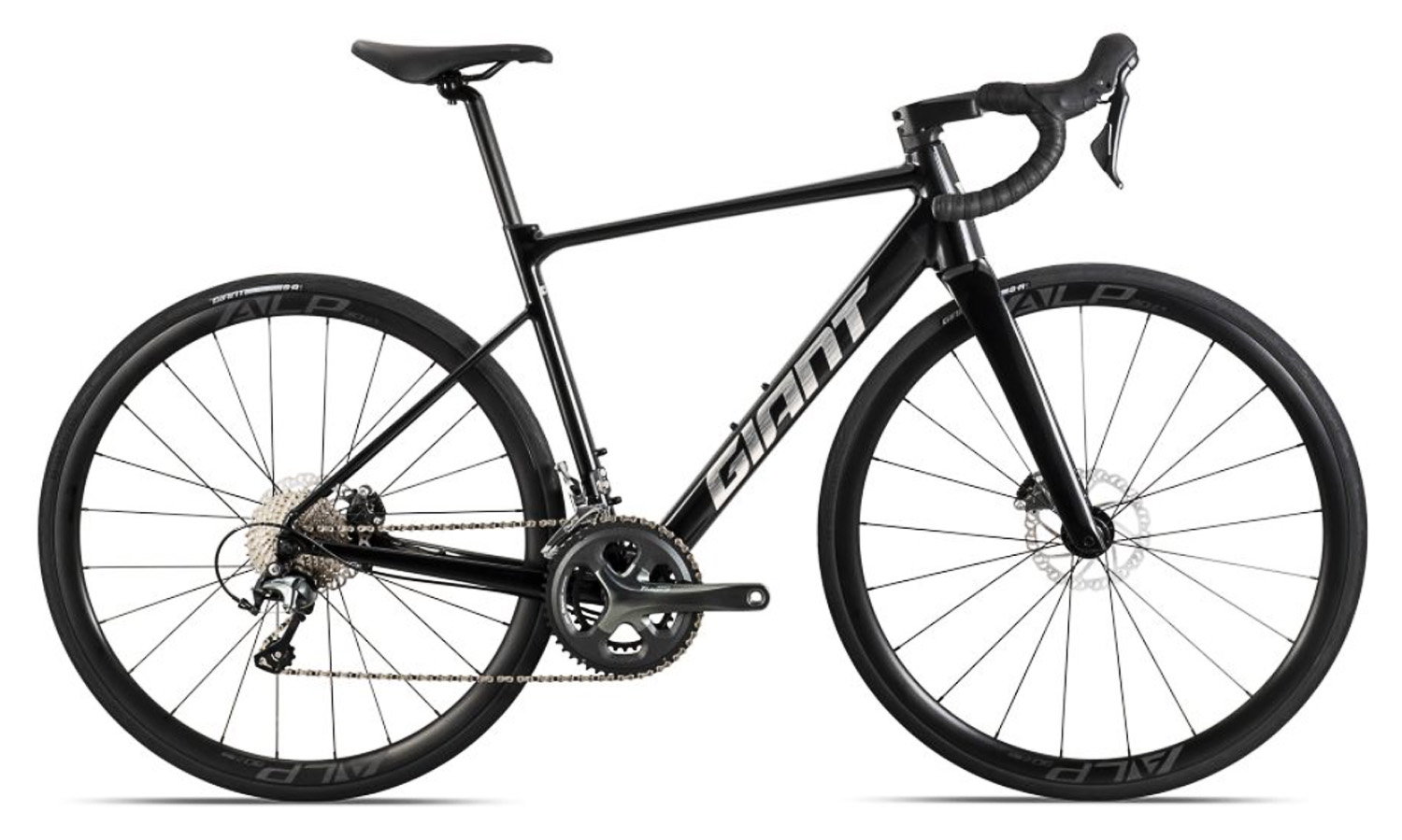
Brought to our attention by a viewer on our YouTube channel (thanks @Jaco_ocaJ), the Giant PCR LTD is an aluminium mash-up of the Taiwanese brand’s best road bikes.
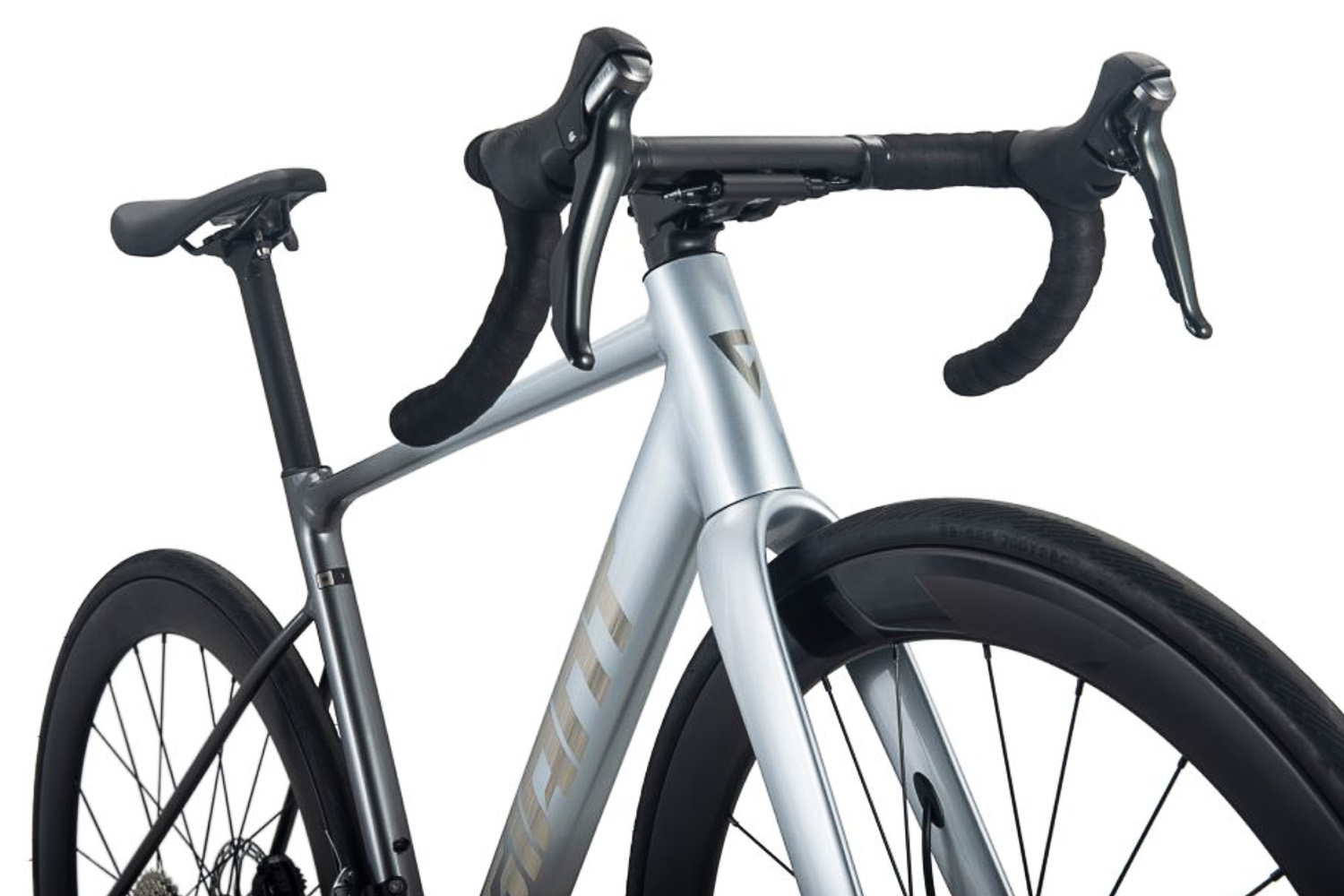
Up front, for example, is the fork and integrated front end from the Propel, while we also see the lightweight rear end from the TCR and the slim, flexible seatpost from the Defy.
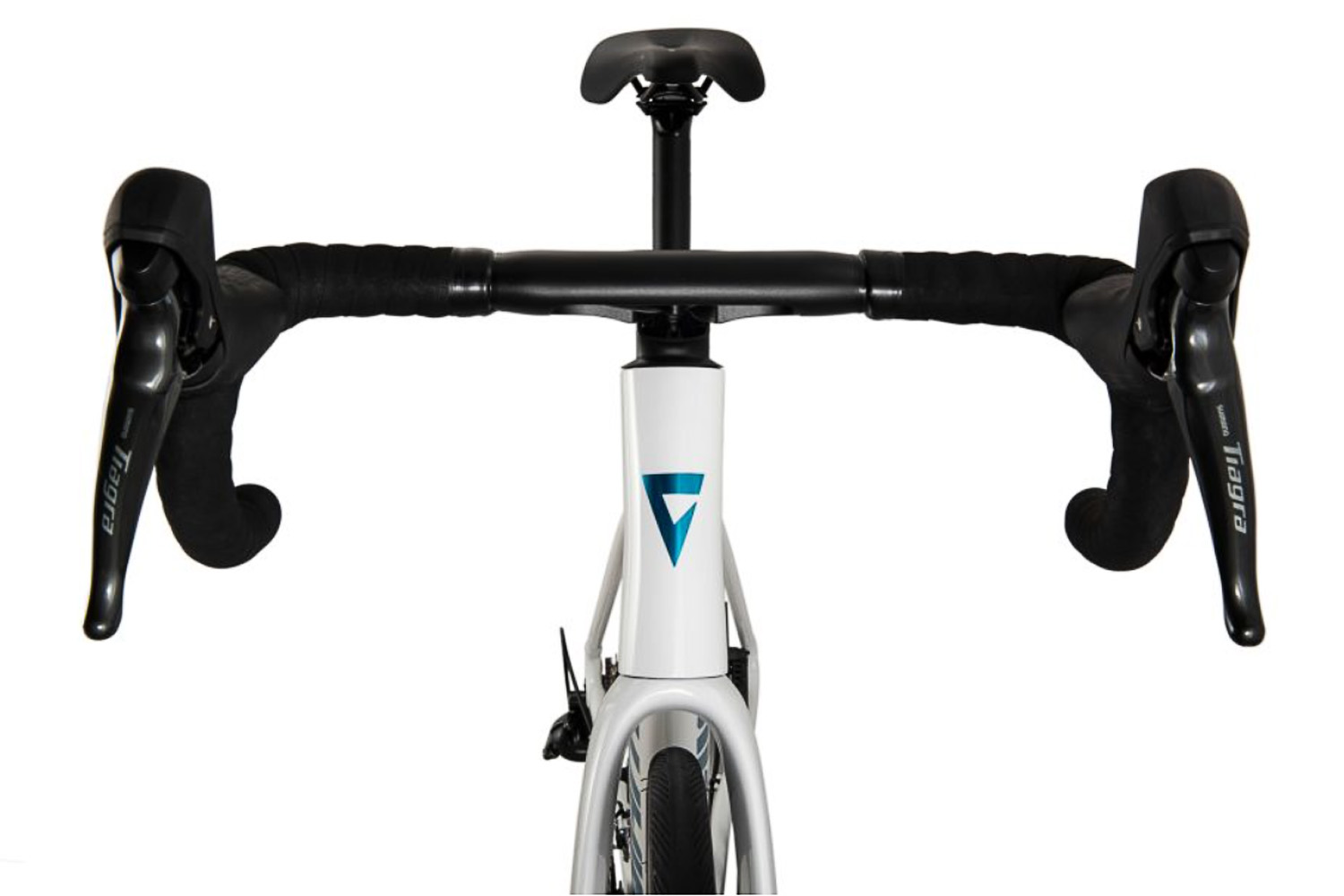
Best of all, a build featuring carbon wheels, a fully integrated carbon cockpit and a Shimano Tiagra groupset is available for only CN¥6,998 – around £750, according to current conversion rates.
The catch? We likely won’t ever see it outside of Asia.
PCR, not TCR
The PCR doesn’t look to be a ‘new’ bike, but it was news to us.
The PCR LTD, Giant says, “integrates the simple and efficient ACE concepts” – these stand for Aero, Climbing and Endurance.
According to Google Translate, it’s “an all-around motorcycle designed specifically for riders”.
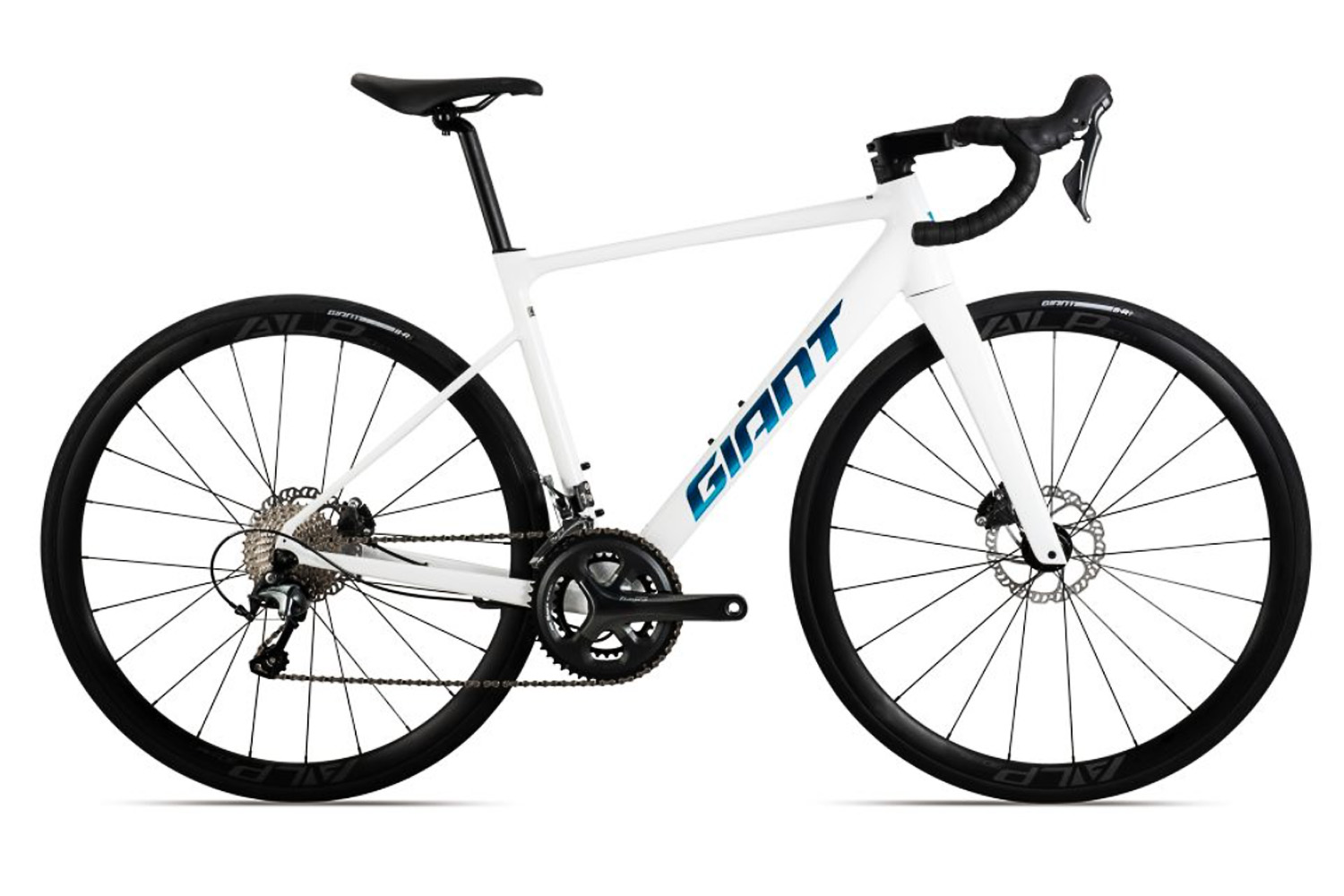
In terms of specifics, the frame is aluminium and made using Giant’s Aluxx SL technology.
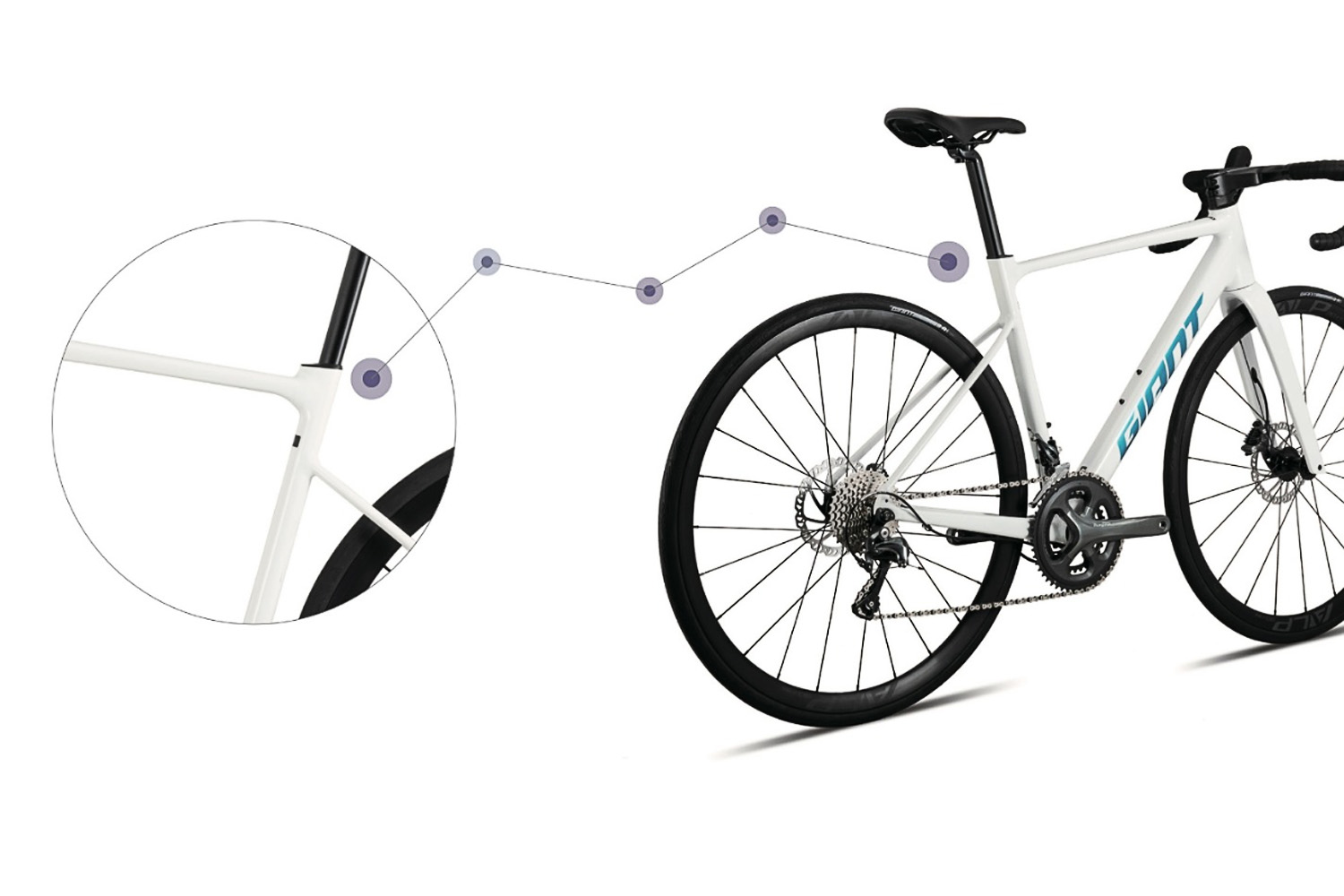
The PCR is an all-rounder road bike. Giant It combines characteristics from Giant’s range of premium carbon road bikes. Giant
The down tube looks to be subtly aero-optimised, while the rear is borrowed from the Contend SL Disc, with slim alloy tubes, dropped seatstays and a distinctive bulge at the bottom of the seatpost for the frame’s integrated seatpost clamp.
The fork is a full-carbon affair, made using Advanced-grade fibres and a tapered steerer tube.
To my eye, it looks almost identical to that found on the Propel Advanced, save for a little less sculpting at the rear of the crown and a bump up in tyre clearance to 32mm (according to the spec sheet).
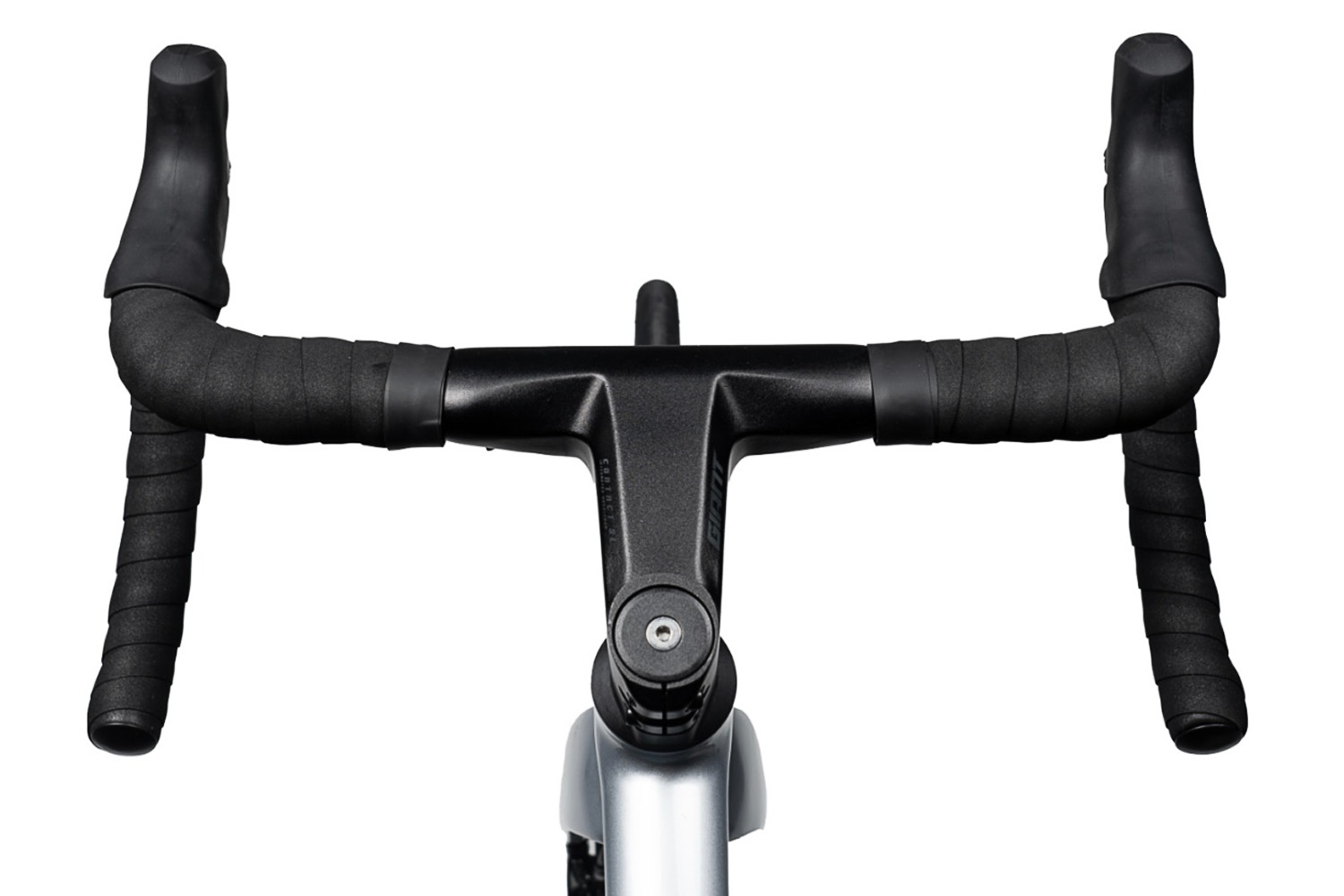
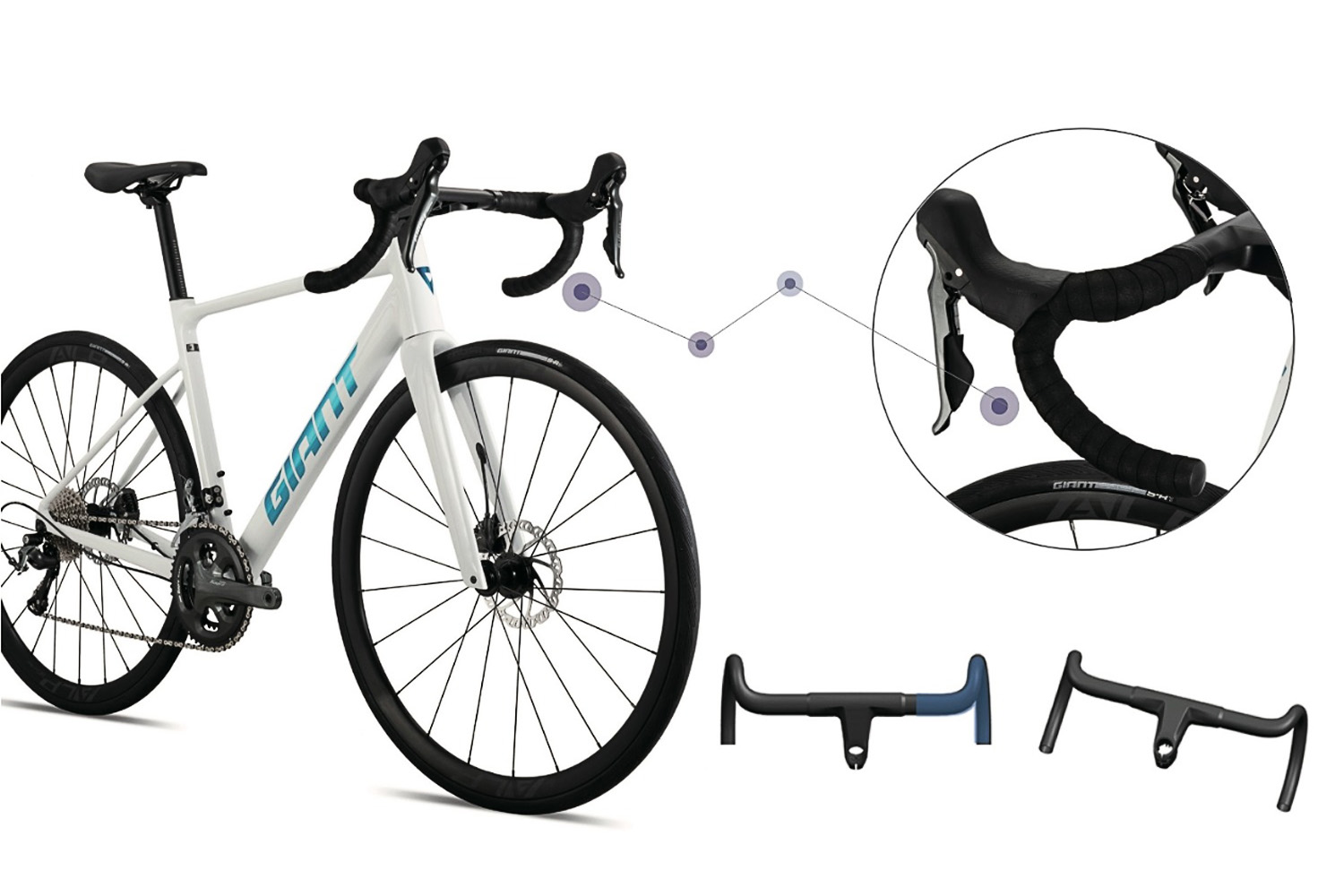
A one-piece aluminium cockpit is a rare sight in 2025, but presumably helps keep costs down. Giant The underside of the handlebar can hide a cable-to-hydraulic junction box for the disc brakes. Giant
The PCR LTD features fully integrated cable routing and even a one-piece handlebar – the latter of which is an aftermarket upgrade for even the top-spec Propel Advanced SL.
Notably, though, rather than being made from carbon fibre, the one-piece bar is made from aluminium, and is slotted to allow for easier cable routing or the integration of a cable-to-hydraulic converter junction box (on certain models).
The bike is finished with a Giant D-Fuse seatpost (carbon or aluminium, depending on the model) and a Shimano Tiagra 4700 groupset.
The PCR LTD 2+ features alloy wheels with proper hydraulic brake levers. Giant
Opting for the PCR LTD 2+ (CN¥5,698 / ~£600) nets you a build featuring proper, conversion-free hydraulic disc brakes and alloy wheels.
The slightly pricier PCR LTD 1 (CN¥6,998 / ~£750) features 50mm-deep carbon rims and cable-actuated brake levers, plus a hydraulic converter box that nestles into the integrated bar.
Why you can’t have one
The PCR doesn’t look like a cheap bike from the front end, but it’s remarkably good value. Giant
All things considered, it’s an enticing package – especially at the bargain prices quoted on Giant’s Chinese website.
In comparison, the closest equivalent model available in the UK is the Contend AR 2. A much more endurance-focused bike, it has an RRP of £1,449 – almost twice the price of the PCR LTD 1.
So why the discrepancy, and will riders ever see the PCR LTD reach Western markets?
Giant is keen to point out the PCR’s slickly integrated front end… Giant As well as its slight rear. Giant
We suspect the likely answer is that Giant – the largest bicycle manufacturer in the world – is simply so big that it can afford to make market-specific bikes and price them accordingly.
Beyond that, though, there are also increased costs involved in selling in places such as the UK, US and EU, including import duties, distribution costs, wages for local staff, local taxes and so on. These things exist in Asia, of course, but we’d imagine Giant faces higher costs for these factors in Western markets.
Will we ever see the PCR in Western markets? We hope so, but we won’t hold our breath. Giant
There may be an element of market segmentation, too. Perhaps Giant is worried that having a bike such as the PCR available in the West could eat into sales of its higher-value bikes, such as the TCR, Propel and Defy.
Of course, we put these questions to Giant and will update this article if we receive a response.
Either way, it’s a useful reminder that the UK and EU aren’t always at the centre of the bicycling world despite what the Mercator projection might suggest.
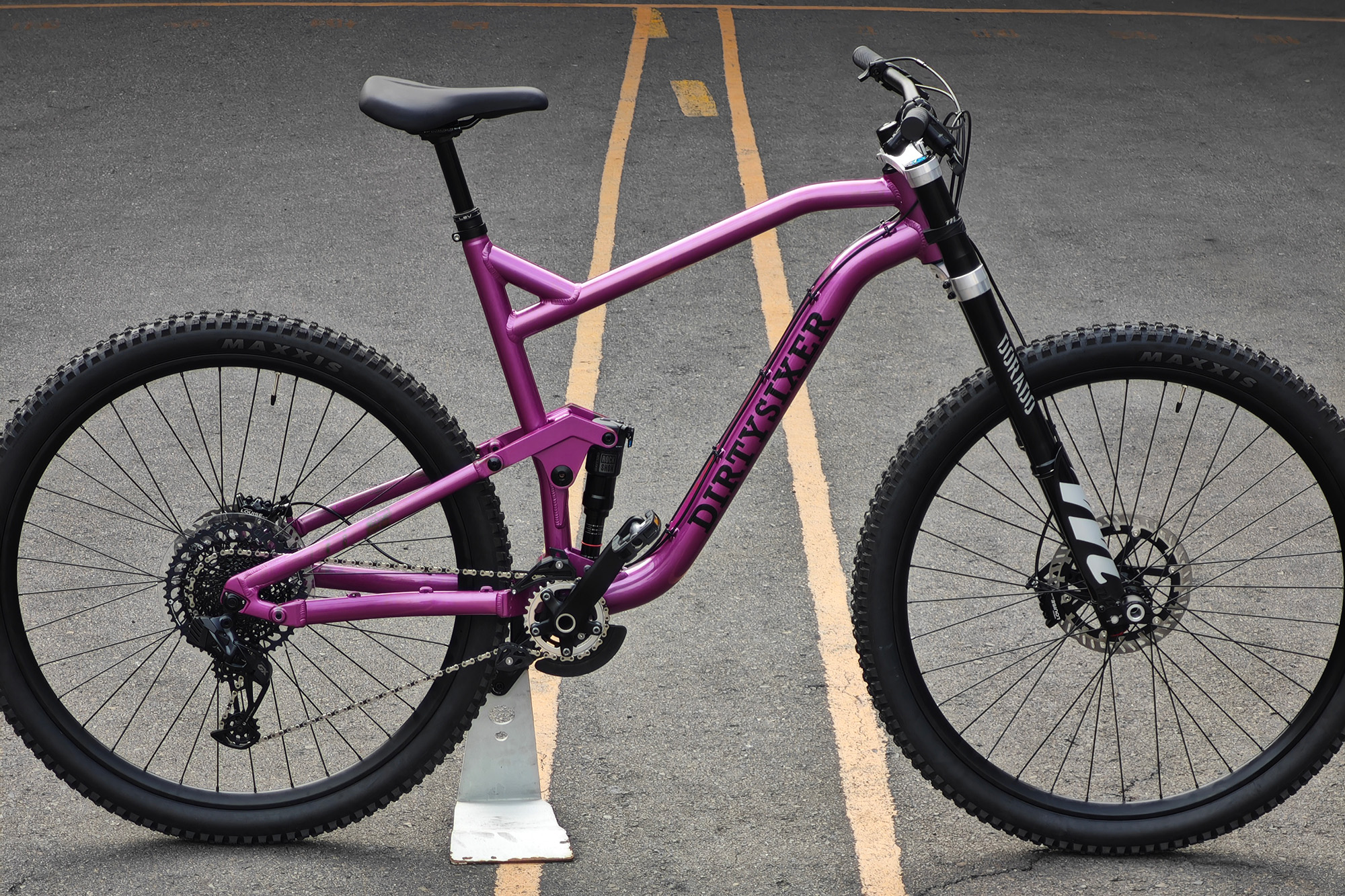
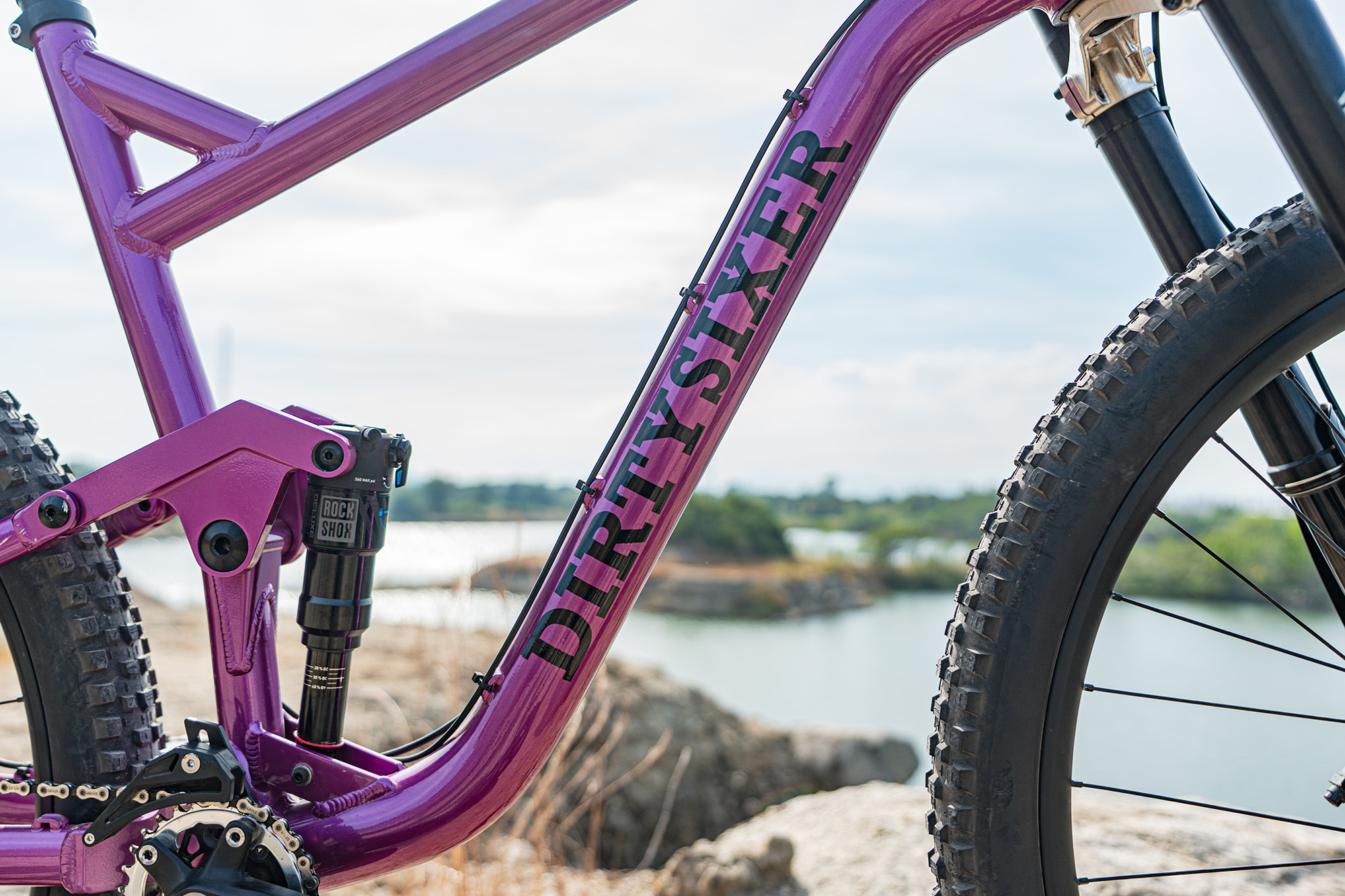
DirtySixer has unveiled the MonsterEnduro, a full-suspension enduro bike built around 32in wheels and designed specifically for tall riders – but it’s not a looker, with kinked top and down tubes that are sure to divide opinion.
The current trend seems centred on XC bikes, with the MonsterEnduro being one of the first production enduro models to feature 140mm of rear-suspension travel.
The new mountain bike takes inspiration from the brand’s 36in DH prototype shown at Eurobike and raced at Megavalanche last year.
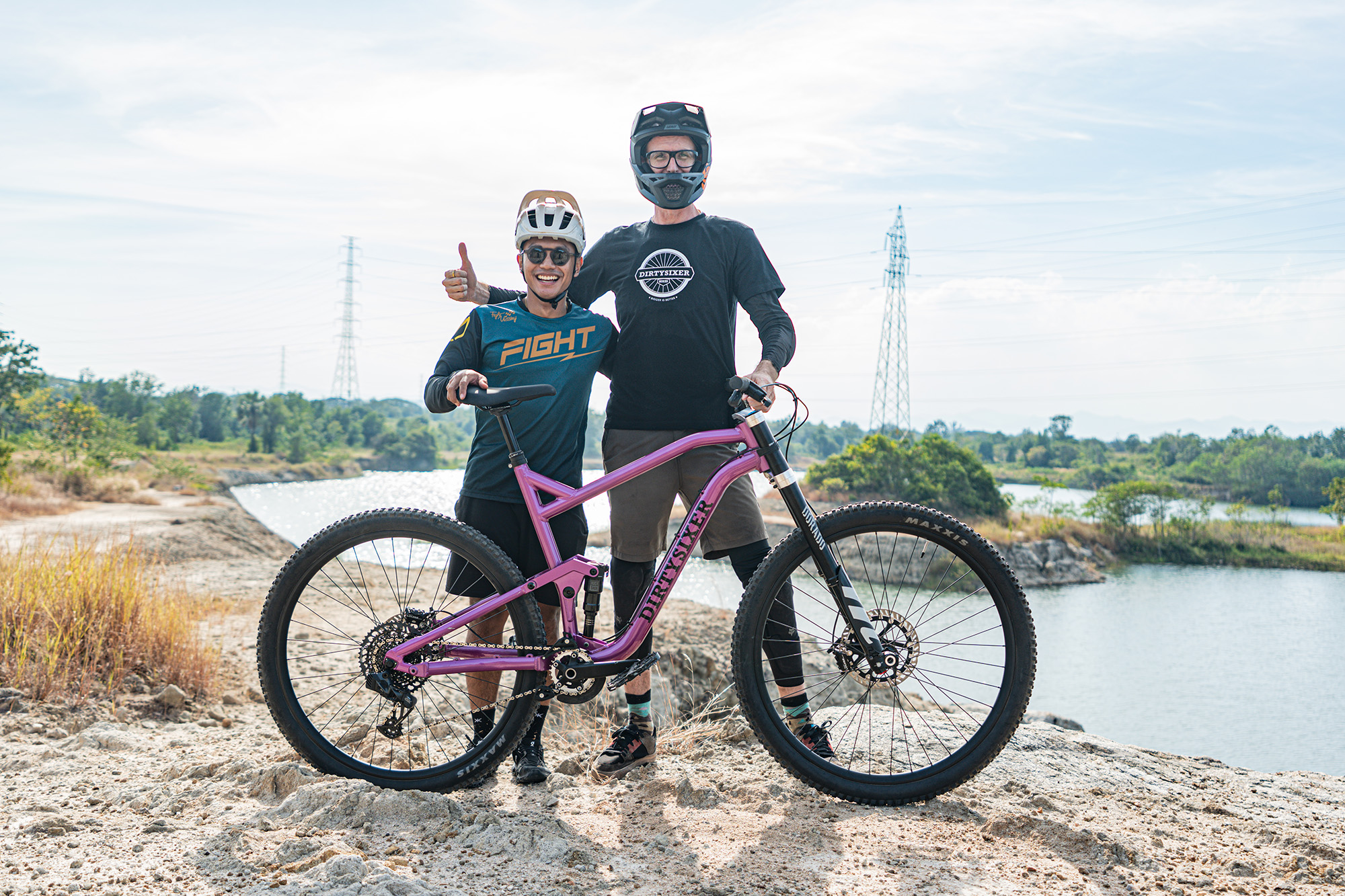
The MonsterEnduro is for tall riders. DirtySixer
The new bike comes in five sizes, with the smallest a size L, which is said to fit riders who are over 170cm, and the largest 4XL.
The MonsterEnduro is available at one build level, priced at $8,999, or around €7,708, plus shipping, as well as in rolling chassis form, complete with headset, fork and wheelset for $3,599.
While the travel figure may seem small for a conventional enduro bike, it’s one of the longest-travel 32in-wheel bikes on the market.
The brand says: “Conventional travel categories don’t really apply to bigger wheels, as they don’t need that much travel to overcome bigger bumps.”
Up front, DirtySixer is running a modified Manitou Dorado fork, complete with custom CNC-machined crowns, with the rear shock yet to be confirmed.
The geometry is yet to be confirmed. DirtySixer
The brand hasn’t listed any finalised geometry figures, but says it is targeting a 65-degree head angle, 75-degree seat tube angle and 490mm chainstays.
As with DirtySixer’s other bikes, chainstay length and crank length will increase with frame size to maintain rider proportions.
The bike uses a T47 bottom bracket with inboard bearings, paired with a narrow 186mm Q-factor, despite the use of fat-bike derived standards.
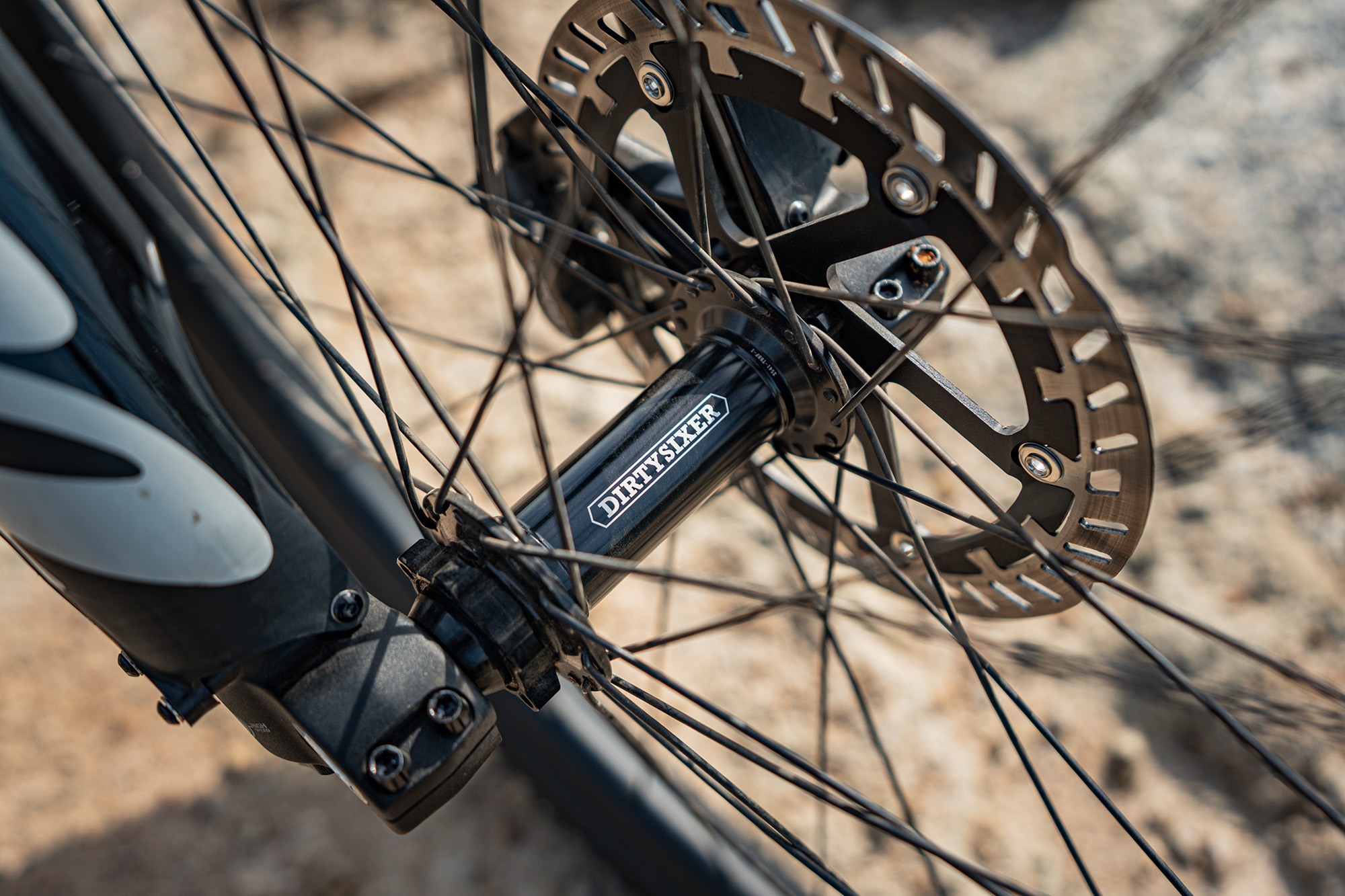
Hub spacing is 150mm front and 197mm rear. DirtySixer
A SRAM Eagle 90 drivetrain is used for shifting, while braking comes courtesy of Magura’s new four-piston Louise brakes with 200mm rotors front and rear.
The frame uses a 34.9mm seatpost and accepts dropper posts exceeding 200mm of travel.
DirtySixer has been testing several carbon rims, but says it might ultimately use its own wheels that it developed for ebikes.
Since launching, Zwift have added or updated their road networks 32 times. On 11 of these occasions, they added a new world, or 2 worlds as was the case with Paris and France both dropping at the same time. The other 21 updates have been to expand possibilities in existing worlds with either large new networks or a few simple connector roads.
Watopia accounts for 14 of these as Zwift’s largest world. Makuri Islands and London have both had 2 updates, and France, New York, and Richmond just 1 each. That means Paris, Crit City, Bologna, Innsbruck, and Scotland have never been updated and remain today as they were at launch.
Interestingly, Zwift hasn’t launched a new world for 3 years (Scotland was launched at the start of 2023). If you look at the release timelines in this article, you can clearly see a change post-2020. The rate of new km’s has not changed dramatically, but the rate of new releases has definitely slowed, and if you look at the launches of new worlds, this has almost stalled.
If we use Paris + France as the chronological midpoint, we had 8 new worlds before COVID and 2 new worlds after it. Scotland was a small world in terms of map size with around 15km of new roads, but Makuri Islands has been a huge addition with 3 large segments released in stages.
The trend has been to add roads to existing maps. We know Watopia is constantly being extended, but the last 2 updates have been on the rotation worlds of France and New York that many probably thought would never be updated.
That got me thinking: what about the other rotation maps that we’ve previously seen as “finished?” Can they be updated and given a new lease on life, too? What updates be time efficient enough to have a chance of implementation, yet have a big enough improvement to make them worth the effort?
Aside from a world’s total road length, what often makes a big impact is the number of junctions and connecting roads which open new route options for racing and free riding. The Epic KOM bypass was a short addition but created many new routes. Some maps have many junctions and connectors, but others are much simpler and therefore have very few route options. The worst of these “limited” worlds are:
Bologna – 1 road
Crit City – 1 loop
Paris – 1 loop
Innsbruck – 2 loops
Richmond – 2 loops
Yorkshire – 2 loops
As an example, if you ignore Ven-Top, the original France map was also only 2 loops and offered very few route options. In early 2025, Zwift added 2 new roads, amounting to just 3km of tarmac, yet the result was a plethora of new routes and therefore increased value to all the existing roads.
Here are my thoughts on quick-win expansions with increasing difficulty.
Innsbruck
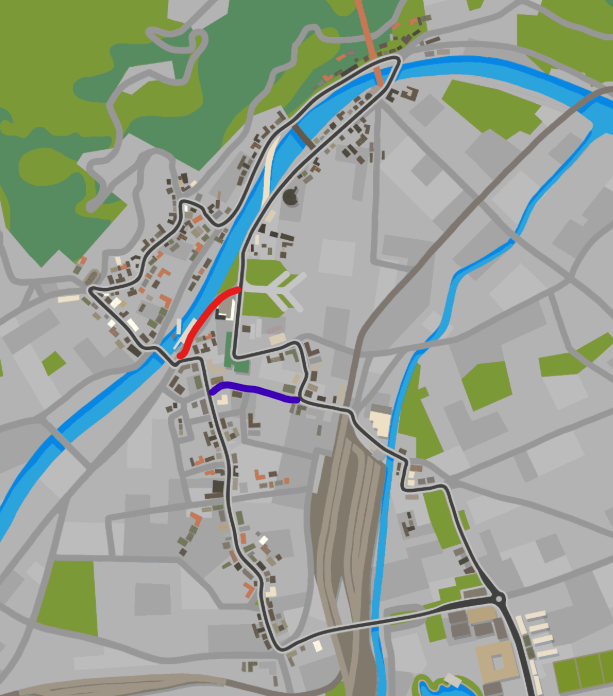
Innsbruck routes all fall into 1 of 2 categories. Those that go up the KOM, and those that don’t. If you avoid the KOM you have 2 options, Legsnapper or Legsnapper Reverse. Ignoring the KOM portion as being a big project to expand, the lower single loop circuit has many interesting features, but everyone usually just saves their legs for the Legsnapper each lap. What if there was a new short 400m long road opposite the pens taking you straight to the bottom of the Legsnapper? Better warm up well for those race starts, although that’s just 1 of many possibilities.
The Red road on my map does just that, but also creates 2 crit-style loops which can be combined or isolated in many ways. Laps of the northern loop gives you little respite from the Legnapper, while the southern loop is rather gentler other than the rise over the railway bridge which may become a valid attack point. Perhaps you fancy 10 Laps of the southern loop with a Legsnapper afterparty or Pretzel routes to break your legs in both directions?
I’ve also added a second Blue road which is also 400m long and opens more options, but I don’t think it adds enough extra value. It could, though, serve as an alternate connection. The best bit is that both these roads exist in real life, and much of the graphics for them appear to already exist in Zwift’s map.
Yorkshire
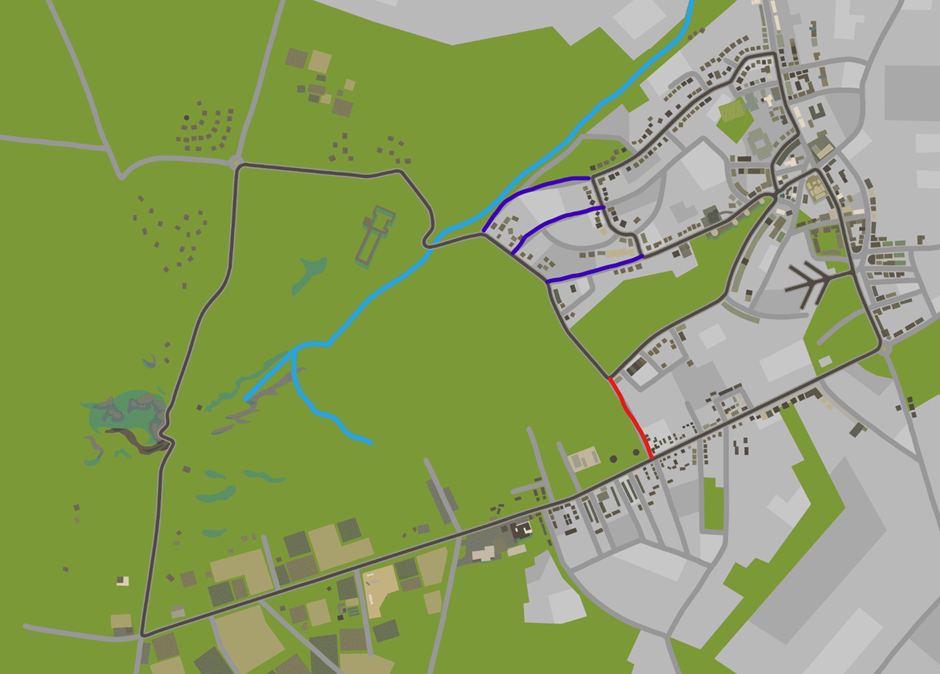
This is probably the least tarmac for the most possibilities. The red road offers the biggest wins with just 600m of road needed, plus most of the graphics of the environment will already exist. A shortcut between Otley Road and the top of the KOM will create a Pot Bank bypass or pretzel options, although it doesn’t play nicely with the KOM banner position.
There are also 3 similar length connection options shown in Blue. Any one of those would add a different dynamic and again should mean limited effort compared with the reward. The most northerly of the 3 is my preference as a KOM bypass, but all are equally viable. None of them work nicely with the KOM segment, but the most southern works with the sprint just fine. Just 1.5km of new road and how many new route options? Anyone fancy Yorkshire KOM repeats? As with Innsbruck, these roads also exist in real life, too.
Crit City
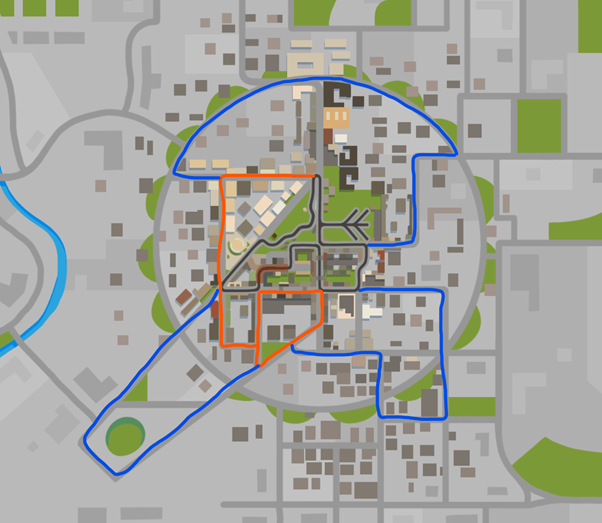
This is the only fictional route on the list, and the smallest map in the game with just 2km of roads. Despite being an event-only map, it’s a very popular race map with races here several times every day. There are also plenty of options for alternate routes without straying too far from the pens. Many of the side roads are visible from the current route, and as it’s not modelled on a real location, Zwift do not need to replicate, just create what they want.
Given that crits are very short circuits, adding 2km of extra roads should be possible and offer many new potential routes. Going further though and adding the Blue roads would transform the map. Who knows what lies on those roads as they don’t exist yet, but I’m curious what the Zwift design team’s imagination can do with them. (And yes, the map looks like a running mushroom.)
Bologna
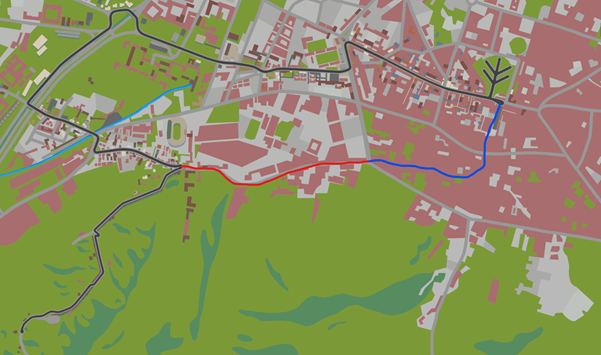
This is an interesting world, as it’s just 8km of road, up and down a hill. Like Crit City, the map is event-only and tends to only be used for occasional time trials. The route starts quite flat for the first 6km before turning quite sharply, both right around a hairpin and up a brutal climb. These factors mean the route is rarely ridden, and I’d bet many casual riders don’t even know it exists.
The climb portion follows the Portici di San Luca (the longest portico in the world) to Santuario Madonna di San Luca, a shrine at the top of the climb where you do a 180-degree turn and return to the start. The route only follows the portico for roughly half of its total length, however, as we deviate from its route at the hairpin. The map design team would have to do more work than adding a mere 400m link road, but any additions here may bring this map out of obscurity and allow regular racing on it.
The portico stretches along the shown red road to the Porta Saragozza, after which there is a maze of narrow roads and further porticos which Zwift can use to create a circuit back to the start pens and finish banner. We would now have an interesting ~10km loop with a reverse option, and an afterparty finish for the daring. As with Innsbruck’s Leg Snapper, the climb in Bologna renders the rest of the route into conservation mode. Offering an alternate section without the climb would create compelling alternative routes for an otherwise little-used map.
Paris
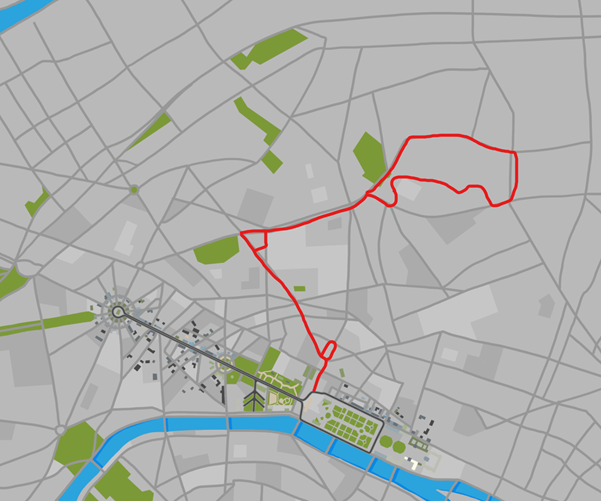
This map came out alongside France during the COVID pandemic to host a virtual version of the 2020 Tour de France. I can’t fault it for being limited in scope, as it was rushed out alongside a bigger map and was intended to replicate the iconic TdF finishing circuit, which it does very nicely. However, as a single loop, it has just 2 route options which are largely the same other than sprint and finish line locations, and is therefore only really used for racing.
Recently, the tour has added an extension to this route which goes north, meandering through Paris to take in some short but tough cobbled climbs around Montmartre. The entirety of this new section can be traced on the Zwift route map already (although it really tested my MSPaint skills), but I highly doubt it’s been rendered in game beyond some low-resolution outlines. This would take a bit of work to achieve, but would make this iconic route even more interesting, varied, and current to the real-life route.
Richmond
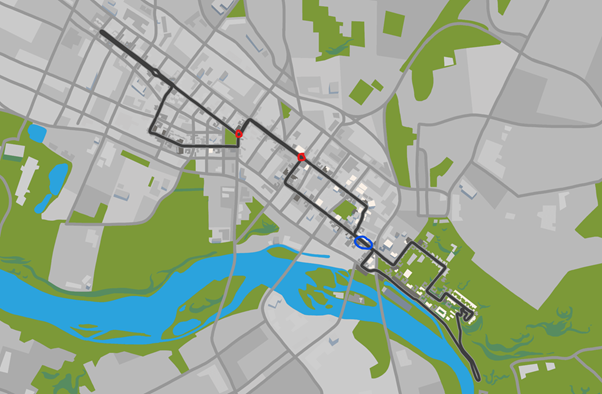
I almost didn’t add this map, it’s been updated once already, and I don’t see any easy or valuable additions. The map as it is, bears similarities to my proposal for Innsbruck, with 2 loops, 1 flat and one with punchy climbs. A quirk, though, is that when the map was updated to be rideable in both directions, the junctions circled in red and the road between them don’t quite work as expected. I’m not even sure if you can do a proper U-turn here, as it’s actually 2 roads rather than 1. The sprint is only on 1 of the roads for example.
Another quirk is the 2 roads alongside each other I’ve circled in blue. I’ve seen many Zwifters propose a junction here. It would be very little work as no extra road would be needed, but I’m not sure how much value it adds. I’m more interested in what possible routes lie north, south, east, and west to expand this map, and I have no idea if any gains would be worth the effort.
Other Maps
For me, the other maps are fairly strong and don’t have any low effort and high return options. (Not that I think adding 400m or road is low effort, but relative to adding the long rumoured Mt. Fuji to Makuri Islands, it is a walk in the park.)
London has a lot of route options already, and a lot of variation too. There are certainly options to travel further north and take in the sights of Oxford St, Leicester Square, St Paul’s, and Covent Garden, but that would be a lot of work, and I’m not sure it would add any new dynamics.
France has just had an update, but many would love to see an alternate route up/down Ven Top. I’m just not sure how many riders would go up there vs the time to make it.
We can assume Makuri is not finished, as there is an enticing bridge to nowhere leading east from Mech Island before the canyon.
New York has just had a huge update, but the map is very linear, with essentially 3 additional circuits dotted along a long and flat (apart from escalators) road. I would imagine it is too much to ask for an alternate route from Prospect Park to Central Park on the east side of the Hudson, especially not so soon after this previous update.
Watopia is almost certainly not finished, and there are many ways they could expand it, from simple link roads to large updates. There are also plenty of roads to nowhere teasing us with potential new routes! (The blocked-off mine entrance as you descend towards the jungle, and the barriered road by the southern Tempus Fugit turn around are 2 good examples.) A quick search on the forums will show you many riders’ dreams and ideas for new roads such as linking Jarvis to the base of the Alpe.
Of course, as Zwift’s biggest map, it also has hundreds of possible routes available, as last year’s ZRL route design competition showed. For example, the Southern Crit (below) is one I’d like to see. Try to make your own here: zwiftmap.com/watopia
Wildcard
My final option for minimal effort and maximum reward is Gravel Mountain. It must be in the game, as I managed to ride it last year due to a glitch, and it seems to be basically finished. Ok, I get it, lots of people are gravel averse, including myself, but at the same time lots of people don’t like climbing, or crits, or TT’s, or workouts, or racing, or steering, or RoboPacers, or even cycling. I know some who only use Zwift for running. So why not put a nearly finished map to use and let people ride it?
What About You?
What map expansions would you like to see? Share below!
As of January 13, 2026, there are 239 routes on Zwift that award a route completion badge. A few of these are event-only routes, but the vast majority are free-ridable.
We had many requests for a more printable version of our Master Routes List, specifically for riders looking to get all the route badges. So we created a printable list of badged routes, sorted by difficulty.
This printable list is current through January 13, 2026. You can find an always-up-to-date live list of badged routes here.
Routes are organized into 5 groups based on difficulty described as the number of water bottles (bidons) you may need to finish the route, assuming 1 Bidon per 40 minutes of riding at 2 W/kg.
Today, Zwift launched a six-workout challenge designed to help users kick off the year with structure and momentum. The workouts are built by Kristin Armstrong, three-time Olympic gold medalist, bringing elite experience into an approachable and flexible training format.
The series runs from January 13 through February 28 and focuses on building durability and staying in control as fatigue builds. Read on for details!
Challenge Requirements
The Challenge features six stages, each with a short and long option:
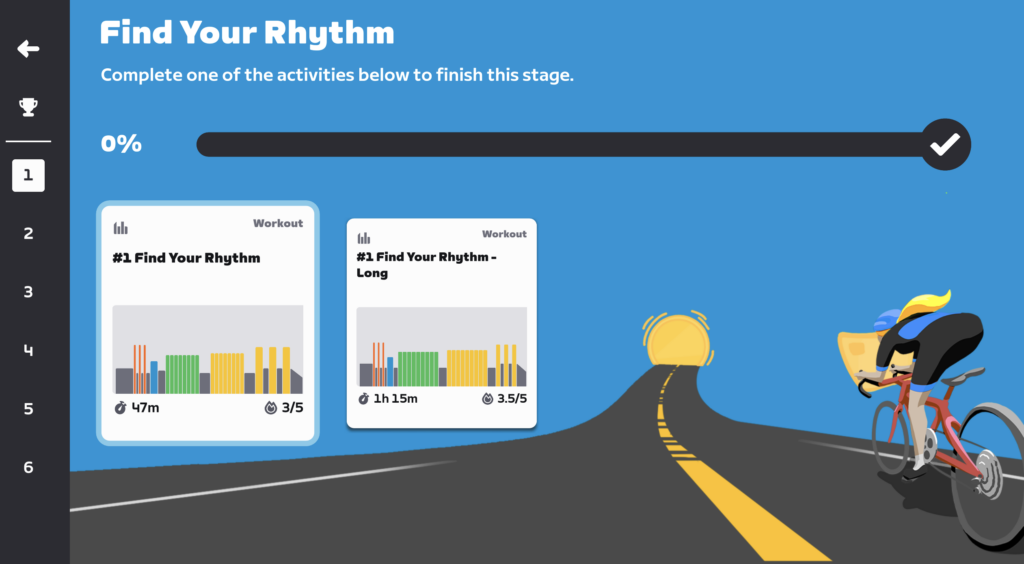
Find Your Rhythm (Short: 47 minutes / Long: 75 minutes): This first ride sets the tone. Today’s about finding rhythm and control, learning how to settle in, stay patient, and ride with purpose. Let the effort build naturally and stay focused and in the game from start to finish.
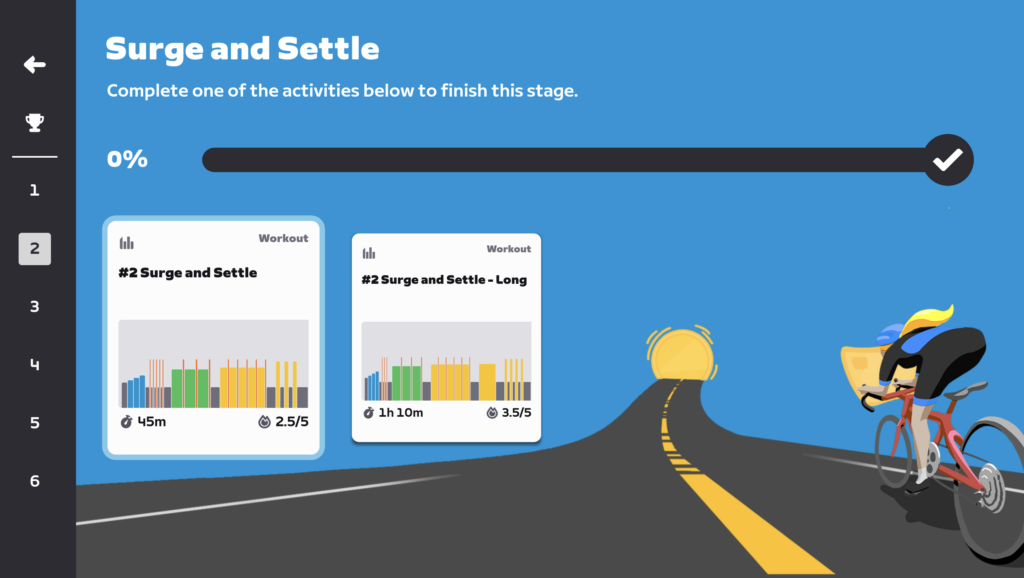
Surge and Settle (Short: 45 minutes / Long: 70 minutes): Durability means keeping your rhythm when you legs don’t want to. This ride teaches just that, you’ll surge, settle, and keep the pressure on. Control your breathing, keep your form, find your focus, and finish smoother than you started.
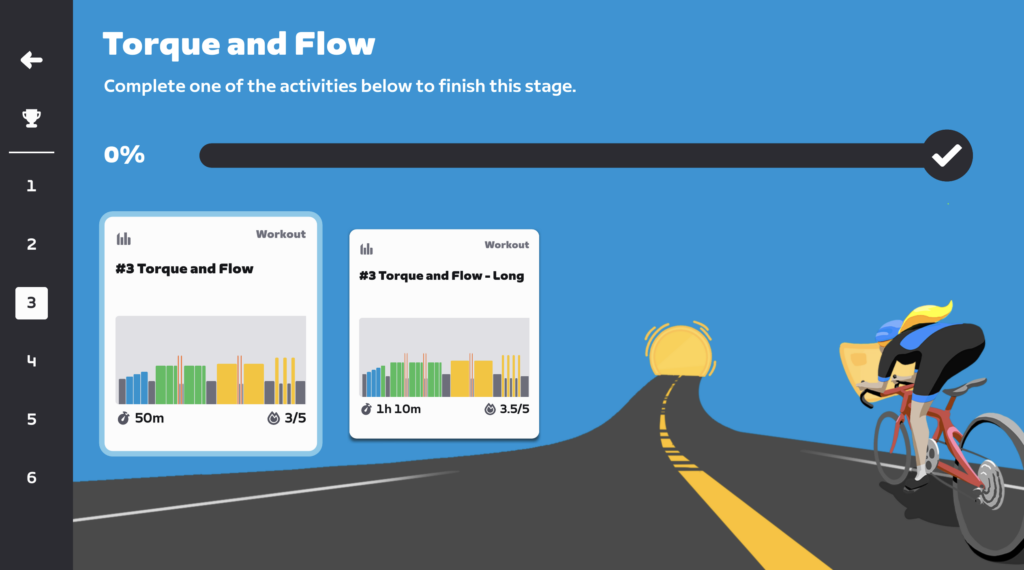
Torque and Flow (Short: 50 minutes / Long 70 minutes): Build muscular endurance through controlled torque and cadence variation. The goal is steady strength, not speed. Feel the load in the legs while staying relaxed. We’ll use low-cadence torque work to build resilience, then include high-cadence rev’s to train efficiency and recovery.
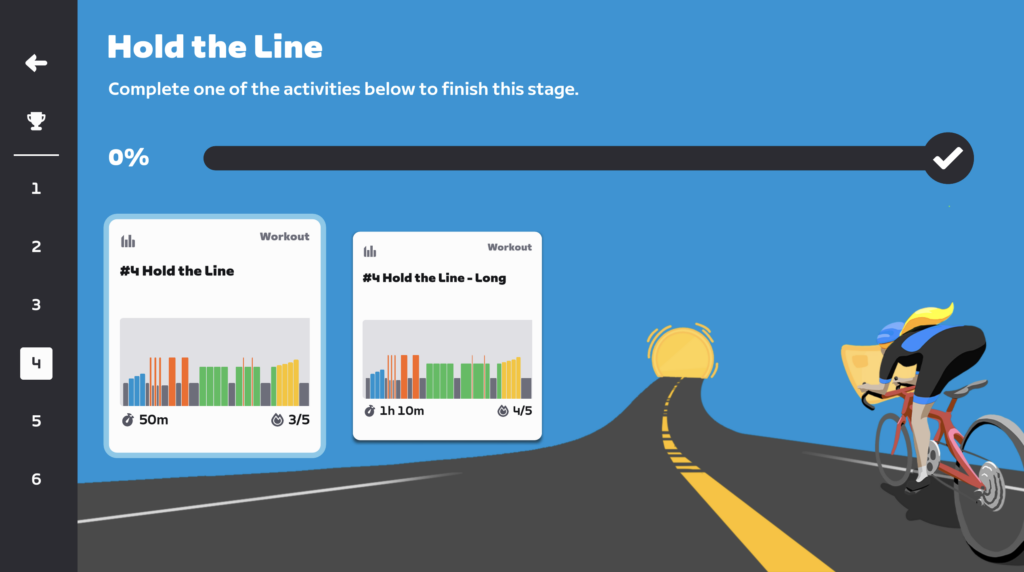
Hold the Line (Short: 50 minutes / Long: 70 minutes):This ride starts with two strong efforts to put early stress on the system, by design. From there, you’ll shift to upper tempo work with varied cadence that teaches you how to stay steady after fatigue sets in. The goal isn’t just to hit the power, it’s to find rhythm and composure once your legs are loaded. Hold your focus, control your breathing, and stay smooth all the way through, that’s durability.
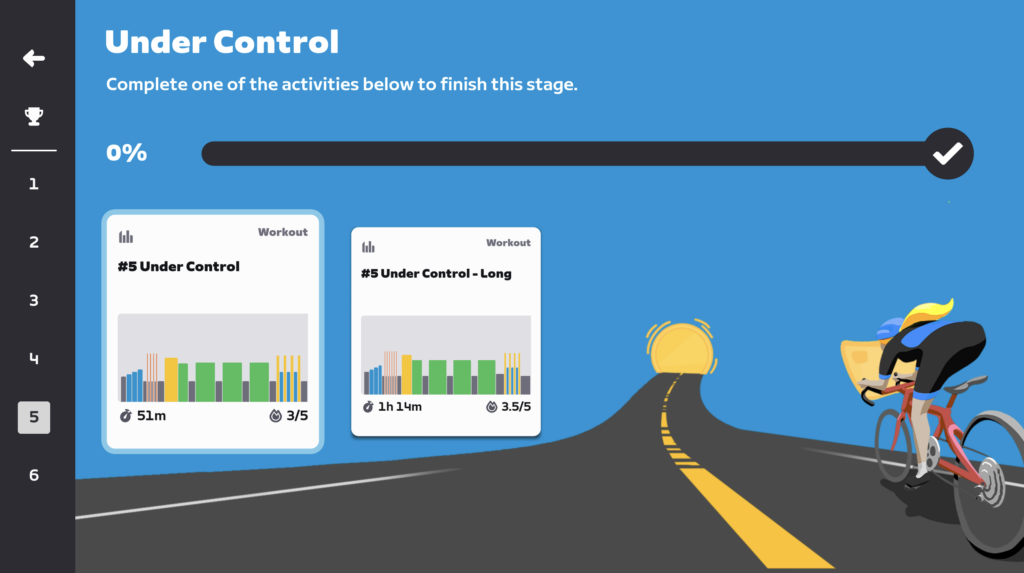
Under Control (Short: 51 minutes / Long: 74 minutes): This ride is about composure under pressure. We start strong to build early stress, then spend time in extended tempo work to strengthen efficiency, focus, and control. You’ll feel fatigue early and have to manage your effort, that’s where durability is built.
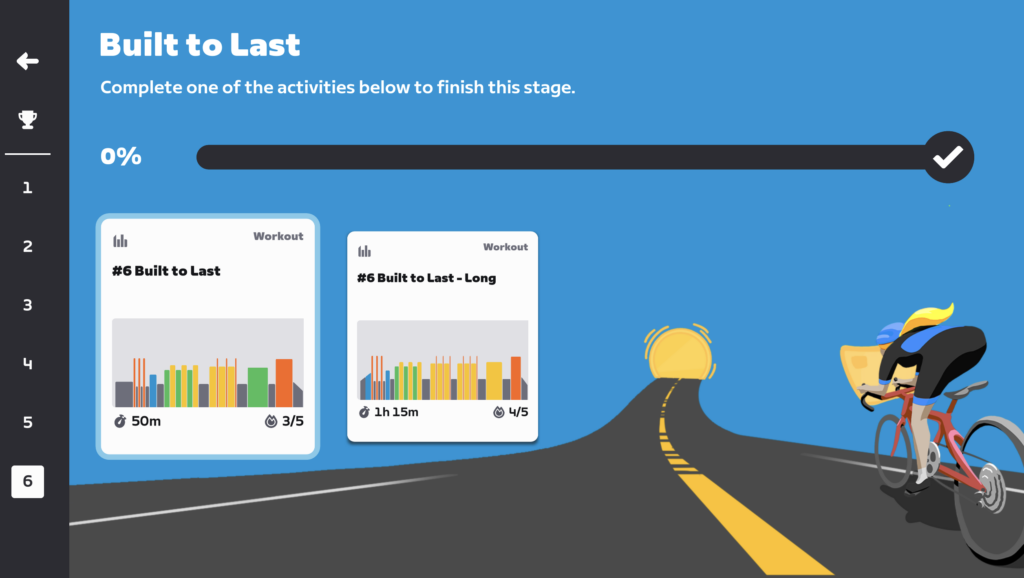
Built to Last (Short: 50 minutes / Long: 75 minutes):The final ride brings everything together. You’ve built strength, focus, and control, now it’s about putting it all to use. Ride steady, stay smooth, and finish strong.
Finish either the short or long workout in each stage, and you’ll complete the Challenge!
Joining the Challenge
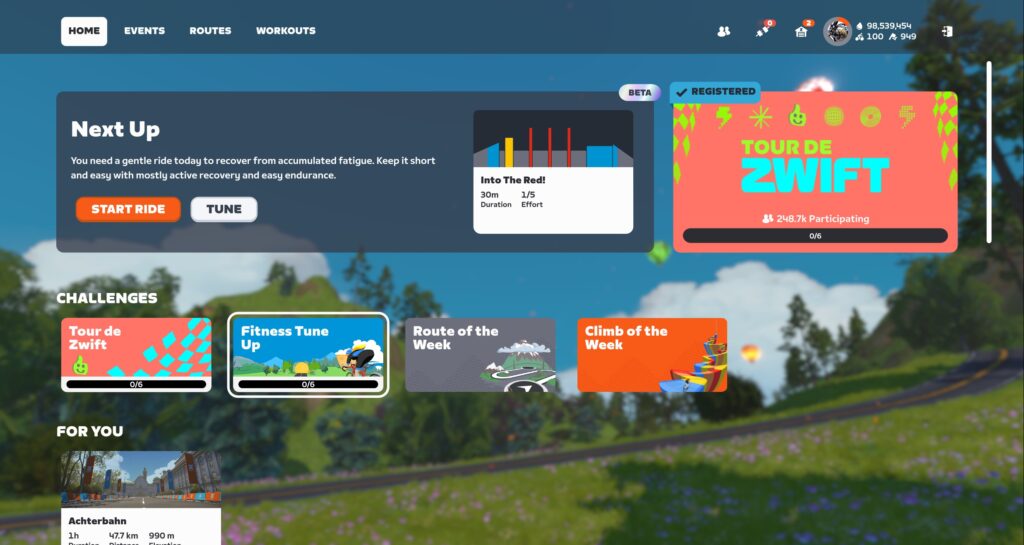
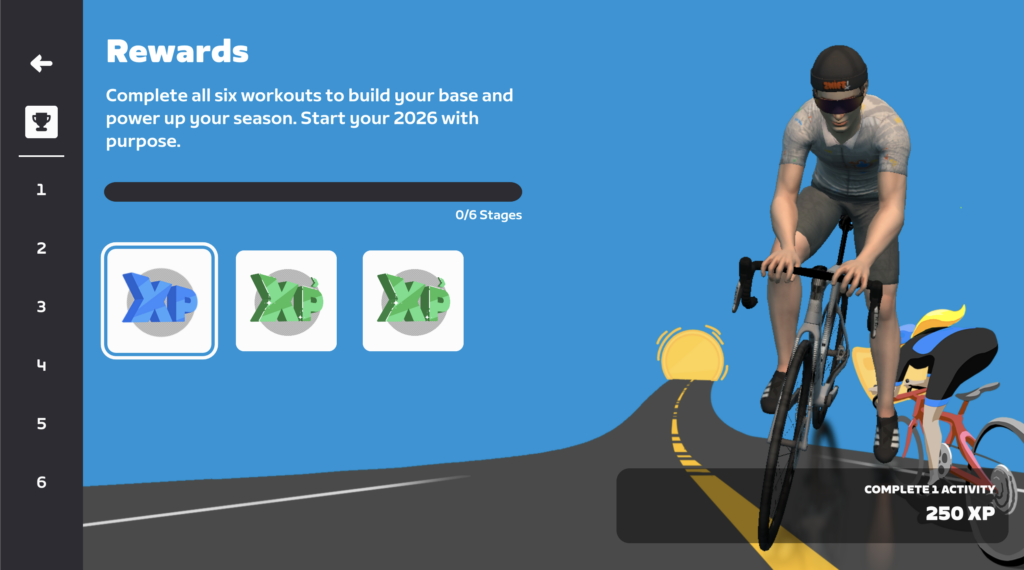
Unlike past Challenges, everyone is automatically signed up for this challenge. As long as you’ve got version 1.105 or higher installed, you’ll see a progress bar on the homescreen:
Click that card to access the workouts in the challenge or see reward details.
Challenge Rewards
You will earn a total of 1500 XP as you move through this Challenge:
This challenge goes live at 9:00 PT on January 13, 2026, and ends February 28, 2026, at 23:59 PT.
(I recommend finishing before the final day, though, as past Challenges have ended earlier than expected in the past, and you don’t want to be caught out if that happens.)
SRAM has revealed a swathe of new and updated products designed to improve your “experience on the bike”.
The most ‘on-trend’ addition to SRAM’s portfolio is shorter crank arms for its top-of-the-line Red AXS groupset.
Typically, crank arms that come fitted to road bikes are 172.5mm long. But, in recent years, professional cyclists have been choosing shorter crank arms to achieve a better, more comfortable fit on the bike.
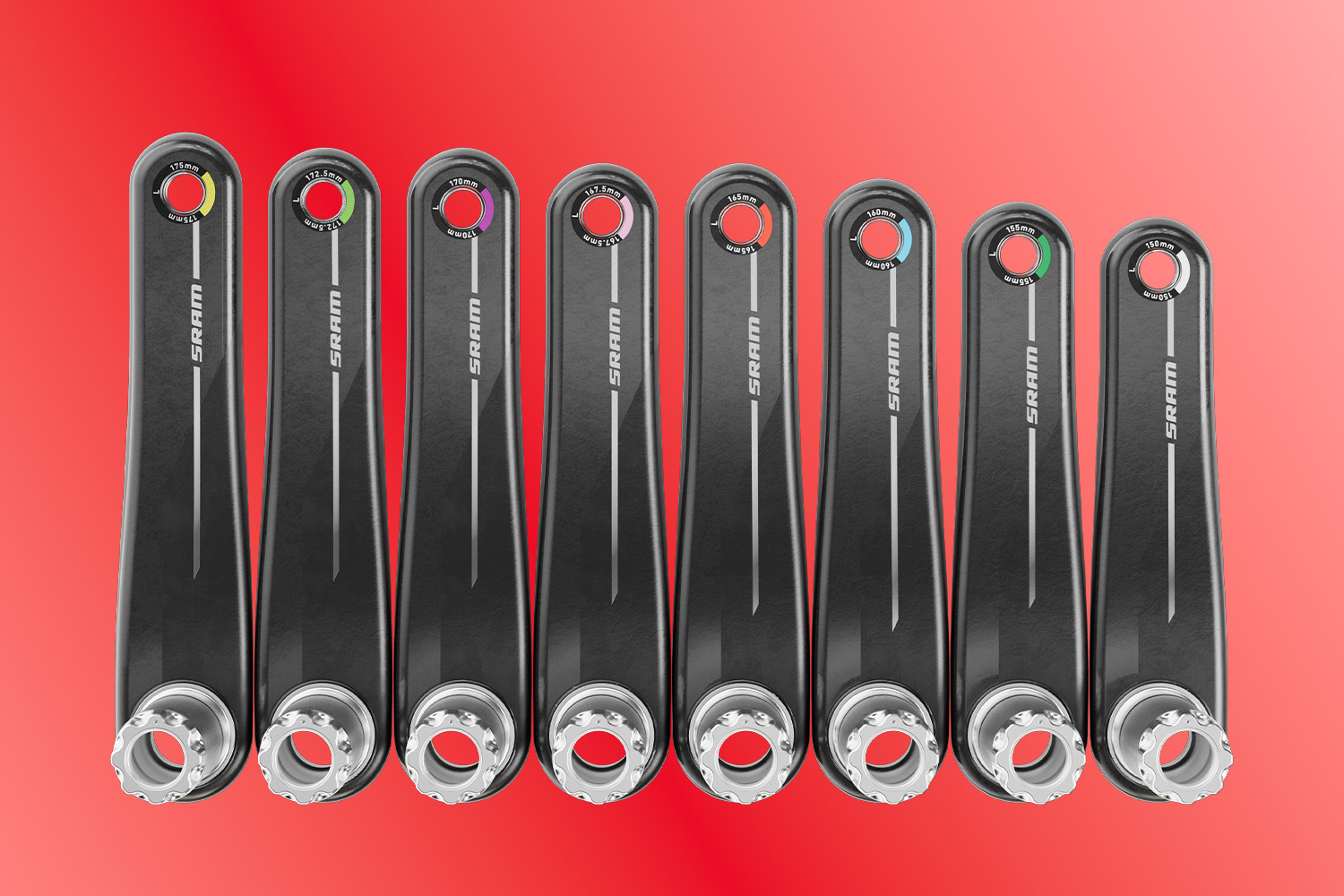
Jonas Vingegaard was spotted using shorter 150mm Red cranks last year, and SRAM has made this length available to the public. It also added a 155mm-long crank arm to its Red range, which now has eight options up to 175mm.
SRAM now has eight crank-length options for its Red groupset. SRAM
“Shorter crank arms provide better efficiency and comfort to many riders, and we’re proud to be leaders in rider choice,” SRAM says in its press material.
It added that the crank arms are now 29g lighter than the previous generation.
The 150mm and 155mm crank arms cost £400 / $440.
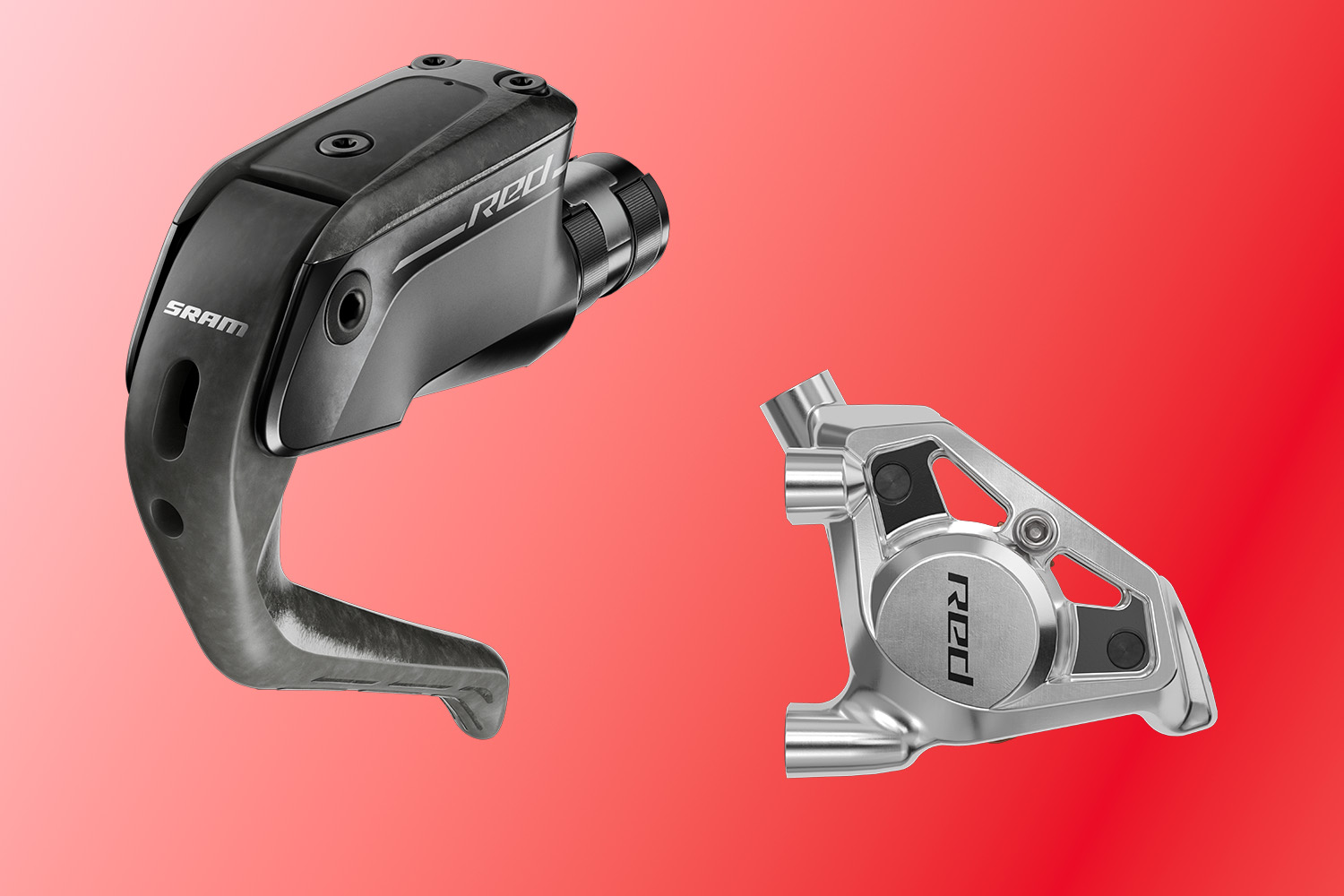
The SRAM Red Aero Disc Brake. SRAM
SRAM has also added three ‘aero’ time trial and triathlon brake-lever options to the line-up, across its Red, Force and Rival groupset tiers.
SRAM says the Red Aero Disc Brake reduces braking effort and increases power. It features a textured carbon brake lever for grip and you can adjust the reach to fit your hands.
The Force Aero Disc Brake shares these features but is paired with a Force rather than Red caliper and costs £42 / $60 less at £245 / $310. Meanwhile, the Rival Aero Disc Brake will set you back £205 / $210.
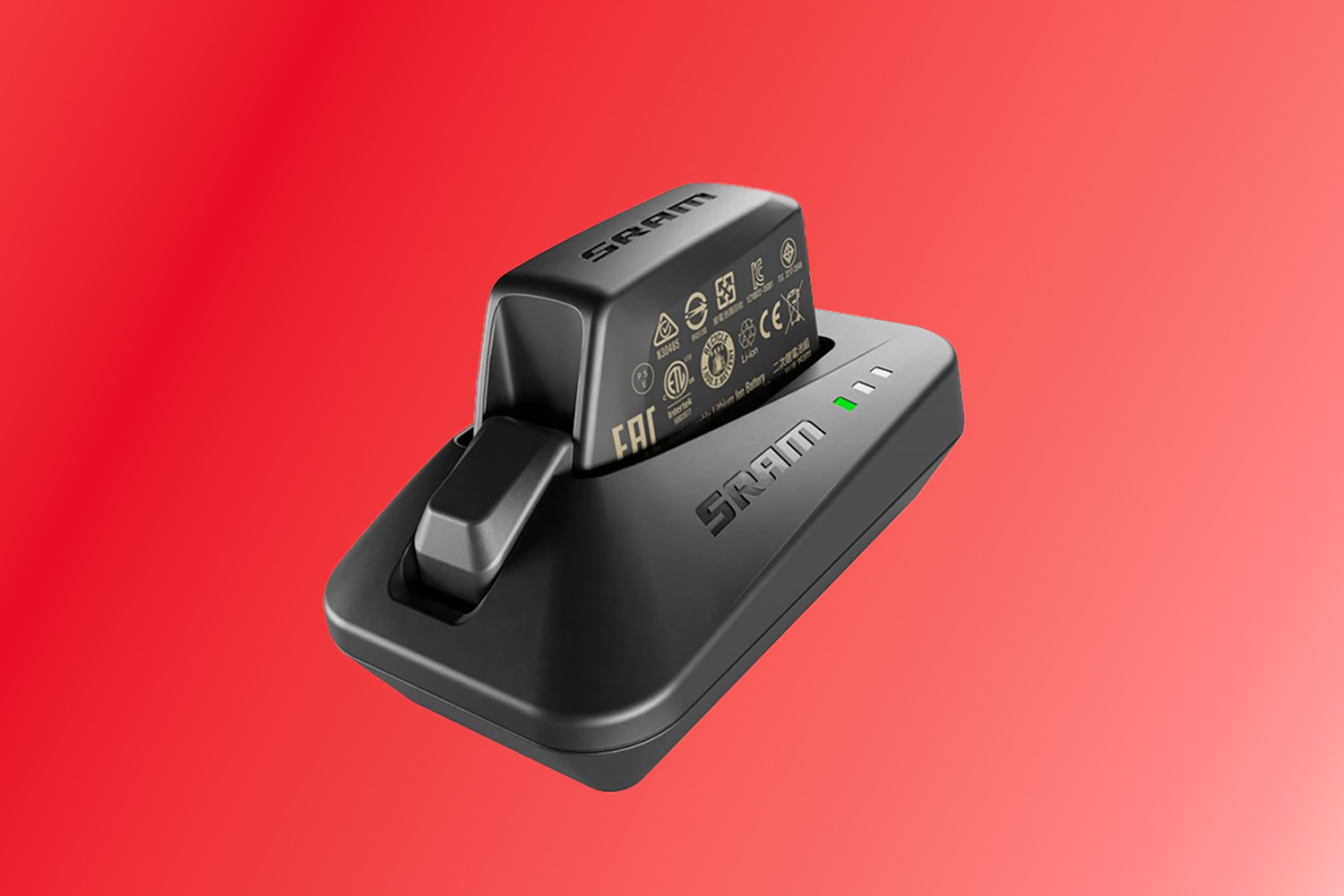
SRAM’s latest battery charger features a USB-C port. SRAM
SRAM has also released a new Universal Derailleur Hanger, which comes with a silver bolt and washer because “every bike needs a little style”.
A more practical addition to SRAM’s range is a new AXS battery charger that will charge your battery in 60 minutes. It also features a USB-C cable port, which should make finding the right cable that bit easier.
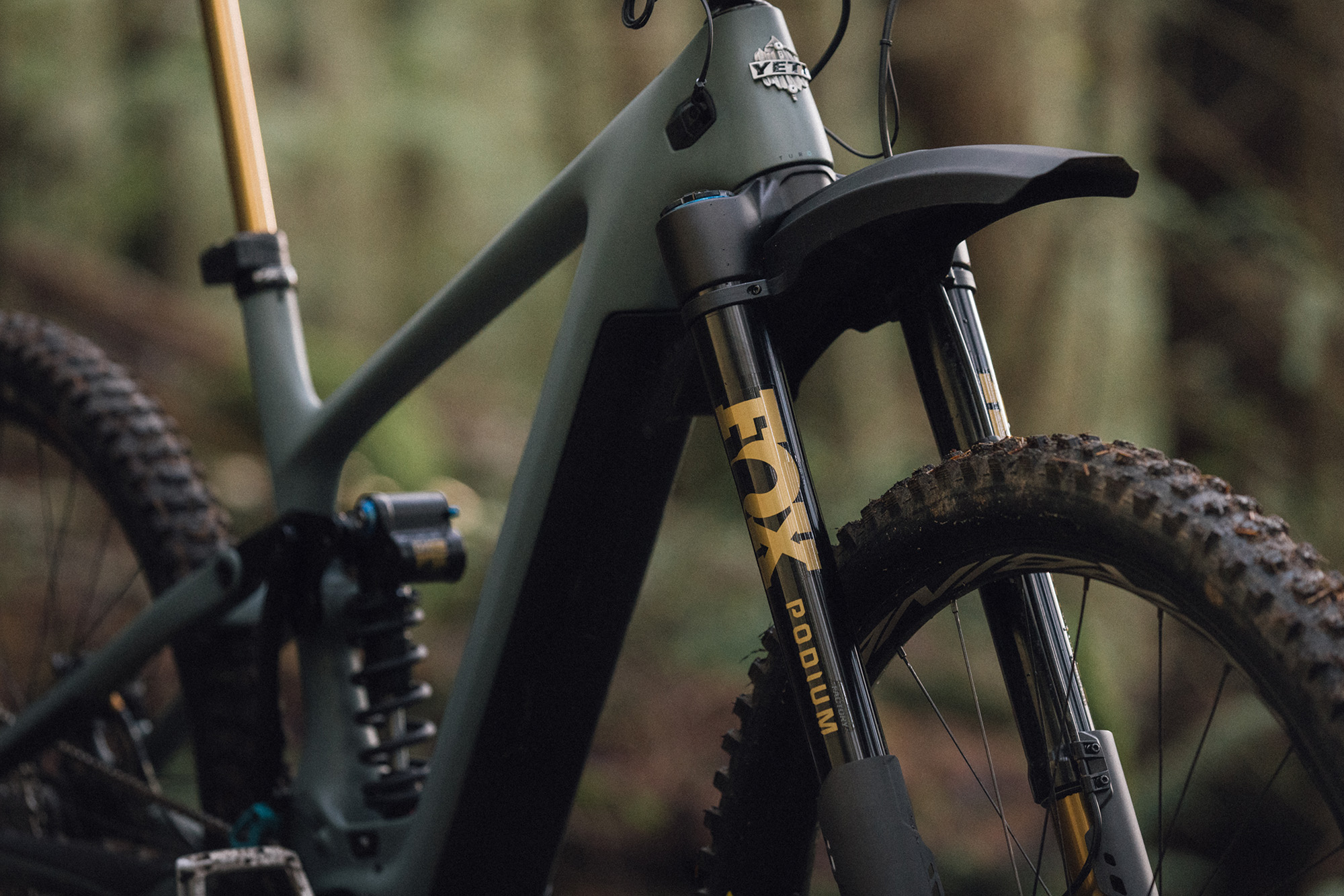
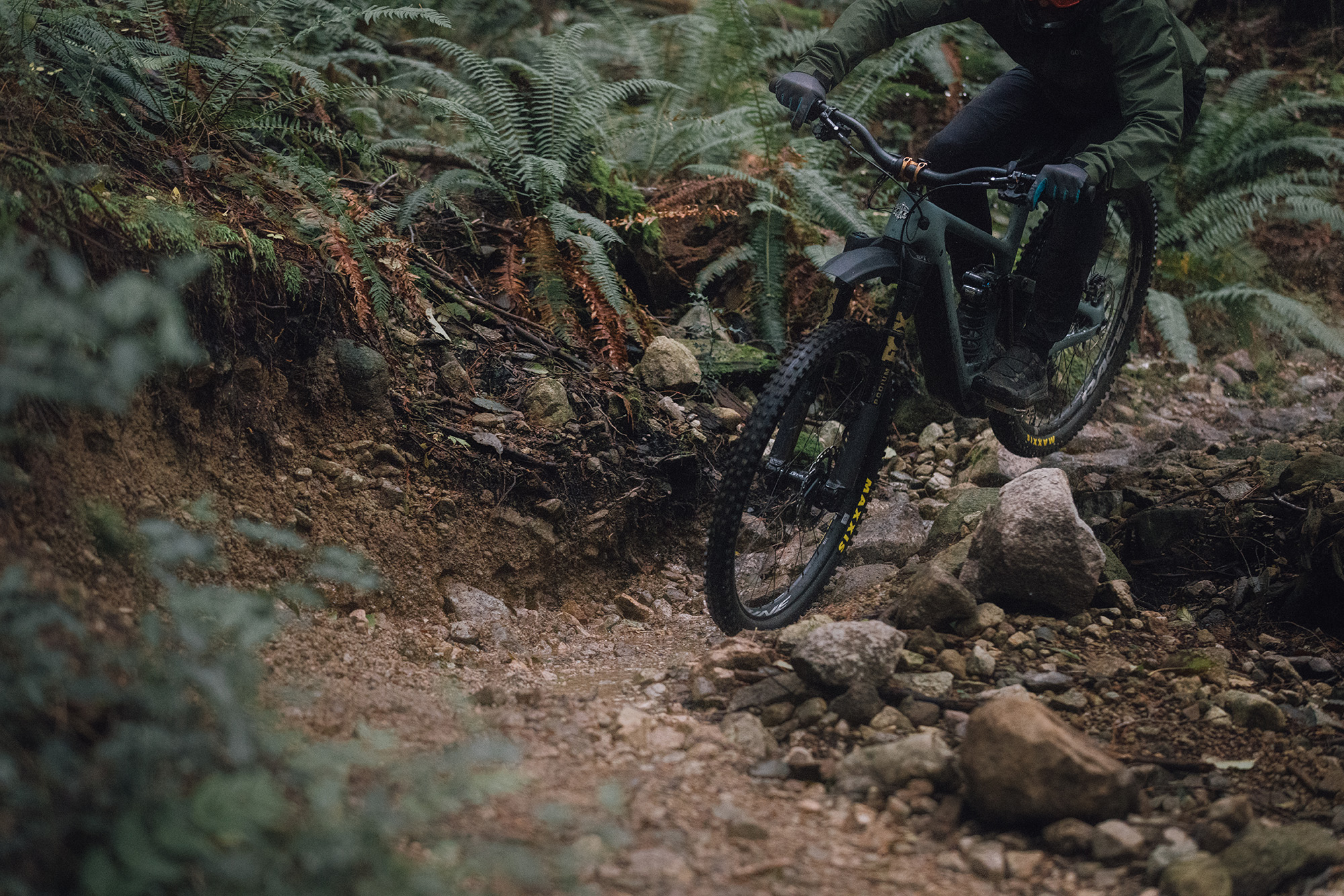
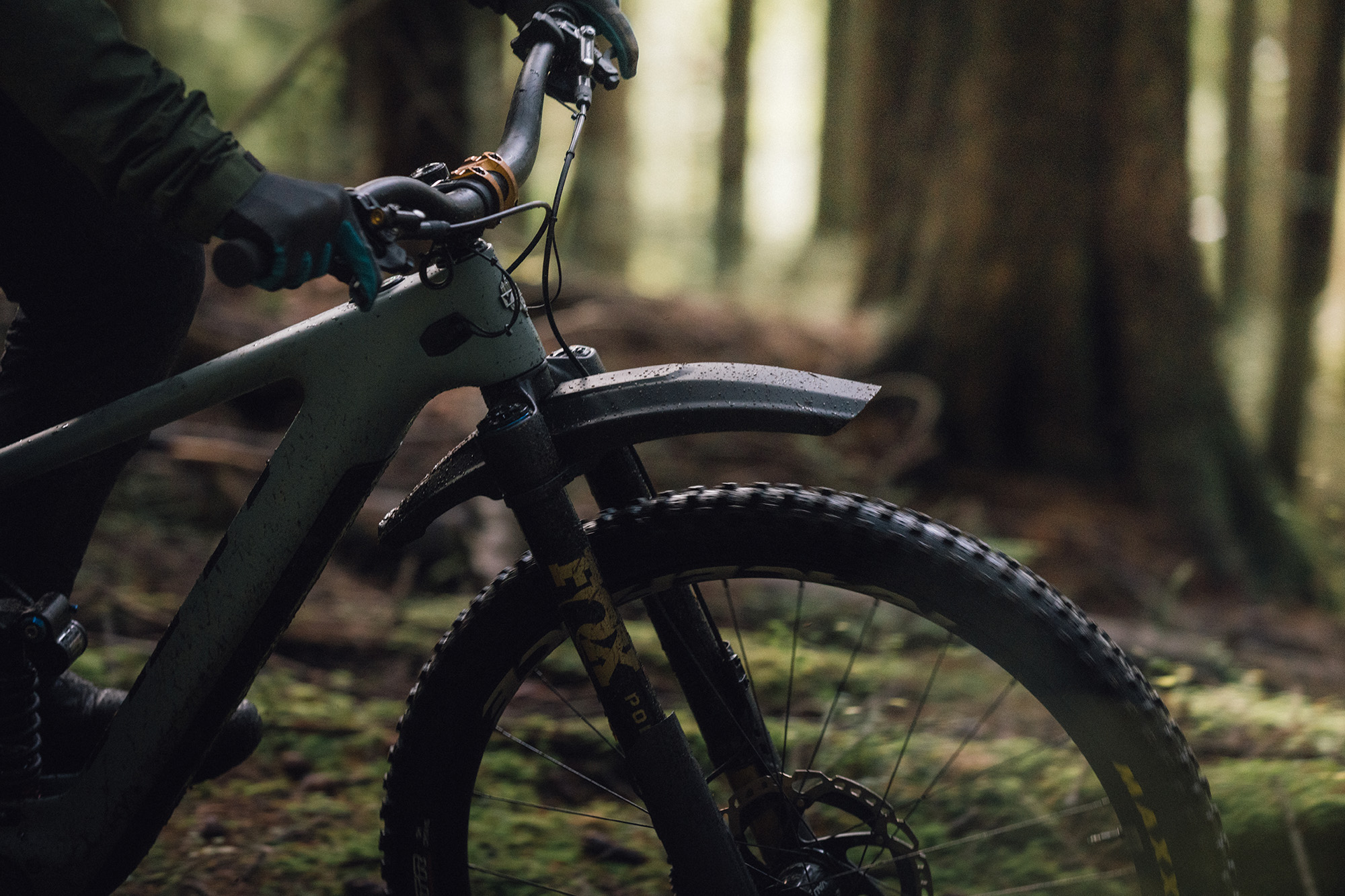
Fox has released the Podium Mud Guard, finally offering spray and mud protection to its top-tier fork.
The new Mud Guard has been a long time coming, with Fox finally settling on a high-mount design rather than the low-mount approach seen on many conventional mountain bike forks.
Up until now, there hasn’t been a designated mudguard for the Podium fork, with our tester Alex Evans having to take a drill to modify a Mudhugger to shield himself during testing – and while Alex was hugely impressed by the fork, it was a drawback.
The Mud Guard attaches to the fork via a clamp. Fox
Fox says its new mudguard has been designed to protect you from dirt that is thrown up into your eyeline.
Despite the Podium Mud Guard having a shorter tail and longer nose, the coverage it provides is said to be similar to that of a normal long mudguard when the fork is at around 20-25% compression.
If you’ve set up your sag correctly, you’ll likely be riding at 20-25% compression. Fox
Fox says: “Some people might also assume that having a large gap between the tail and the tyre is ineffective. However, while less efficient at top out, that gap closes significantly under dynamic riding conditions.”
It says fixing the mudguard to the crown reduces unsprung mass, improves mud shedding and reduces rattling when compared to low-mount designs.
The Mud Guard is something of a throwback. Fox
The design will likely split opinion; for some, it’ll be a nod back to older mountain bike mudguard designs before the fender style took over, while others may see it as an afterthought.
However, looking at the world where many mountain bike innovations are born, off-road motorbikes using upside-down forks also tend to feature top-mount mudguards for the same reasons.
Zwift version 1.105 begins its phased rollout today. This is a minor update containing mostly bug fixes, although it does include a homescreen UI upgrade that will (hopefully) be rolled out elsewhere in game to better inform Zwifters. See details below…
KICKR CORE 2 Bridging Upgrade
Announced with this week’s release is a feature Wahoo actually rolled out last week, allowing Zwift Ride controllers and Click v2 controllers to be bridged through Wahoo’s KICKR CORE 2 trainer.
According to Zwift, this was done to “improve Bluetooth connectivity and to work around the Apple TV Bluetooth connection limit.”
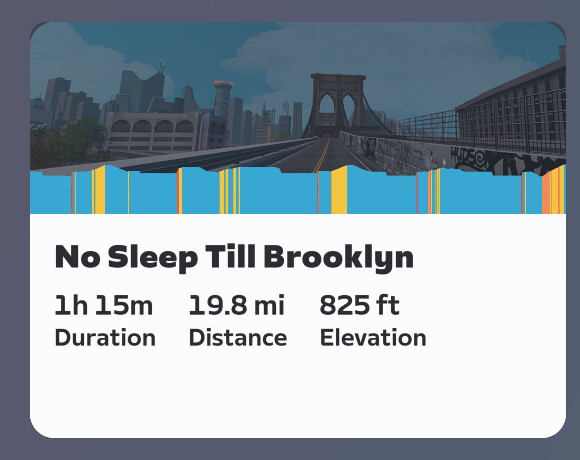
Zwift says, “On the home screen, you may see a gradient profile on route cards when hovered/focused. This feature will be rolled out slowly.”
This looks like a helpful and welcome change, although it isn’t live for me yet. I especially appreciate the gradient color-coding, which is a nice upgrade from the one-color route profiles used elsewhere in the game.
Now I’m going to do the most Zwifter thing ever, and complain about a feature before it’s even released.
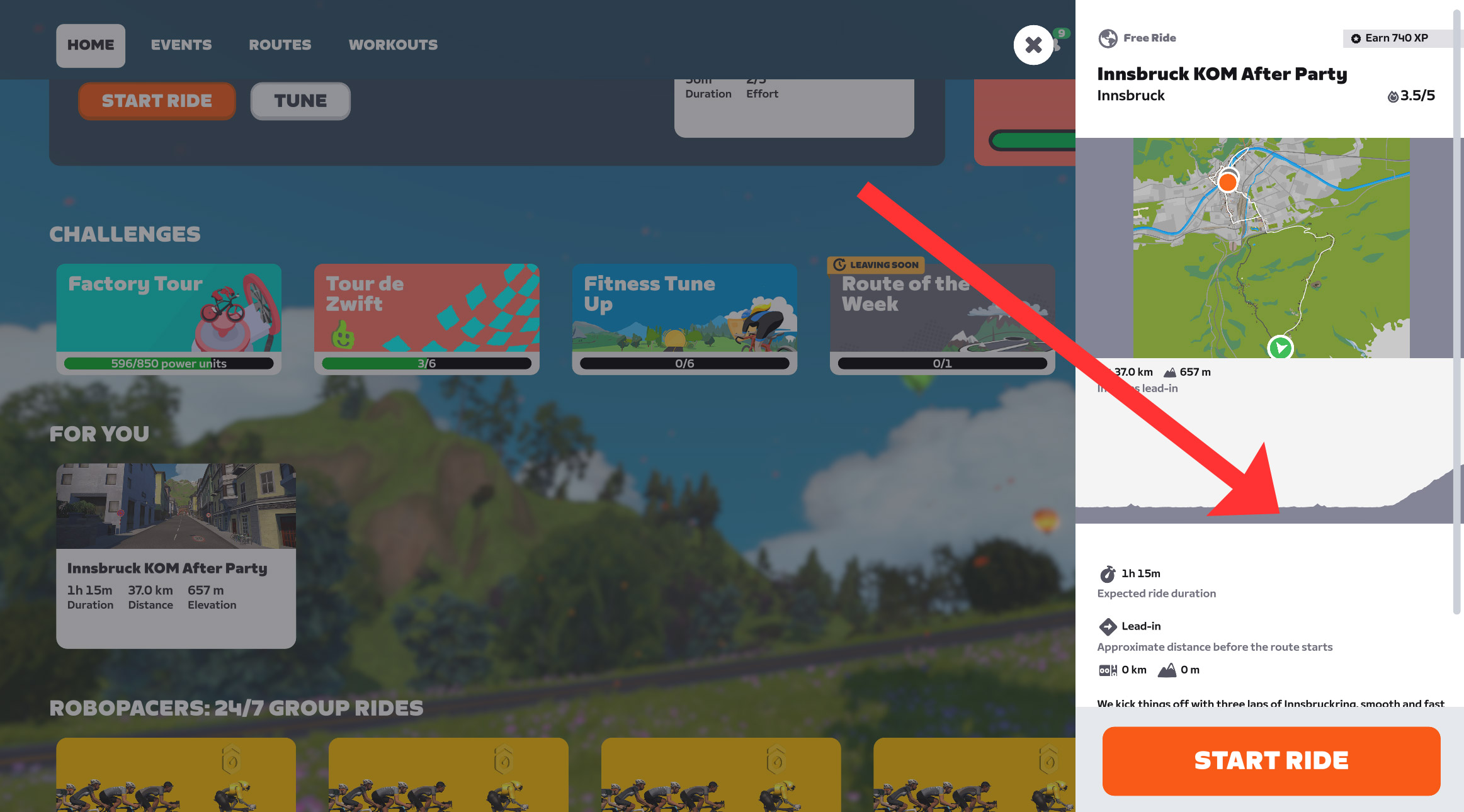
Yes, the route profile on hover is a good upgrade nobody will complain about. But Zwift should show this color code the route profile sidebar as well:
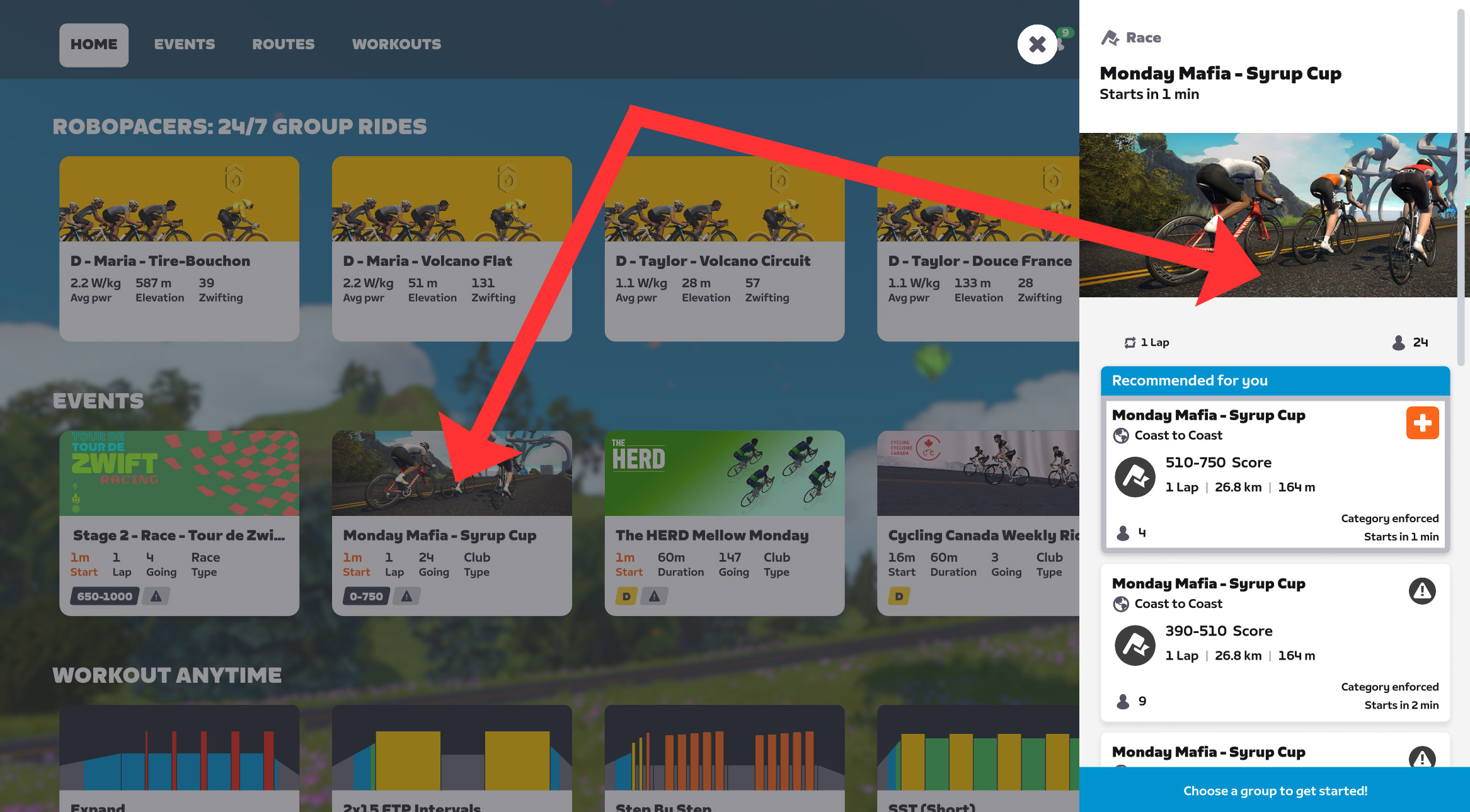
And much more importantly, this profile should be available on event cards and in the event sidebar:
Notice: the event cards don’t even say which route the event is on. That’s saved for the sidebar, which helpfully shows the route name, number of laps, total distance, and total elevation. But even the sidebar displays no route map and no route profile.
This is all fine, as long as you know the route. But there are now over 300 routes in Zwift. The game needs to do a better job of telling riders what they’re signing up for. Hopefully, this new “mouseover profile” feature is a step in that direction.
Release Notes
Zwift supplied the following additional release notes:
Fixed an issue where some ANT+ devices could have a blank name in the Pairing screen.
Fixed an issue with extra lanes in New York on Central Park roads; Scotty at NYC DOT corrected the issue.
For races with event cooldowns enabled, fixed an issue where race rank could be incorrectly positioned on the Zwifter’s avatar on some devices.
Running: Improved the appearance of time input fields in Public Profile settings.
In group events, if a Ride Leader or Ride Sweeper have unsupported characters or emojis in their name, their event chat messages in the HUD will be shown as sent by “Ride Leader” or “Ride Sweeper”.
Android: Improved Bluetooth connection reliability for Zwifters on Android 15 and newer.
Discuss this update in Zwift’s forum > (link coming soon)
Questions or Comments?
If you spotted any other changes or bugs in the update, please comment below!
At the time, it was said this had the potential to trigger a short-circuit that bypassed the fail-safe protection mechanisms in the battery.
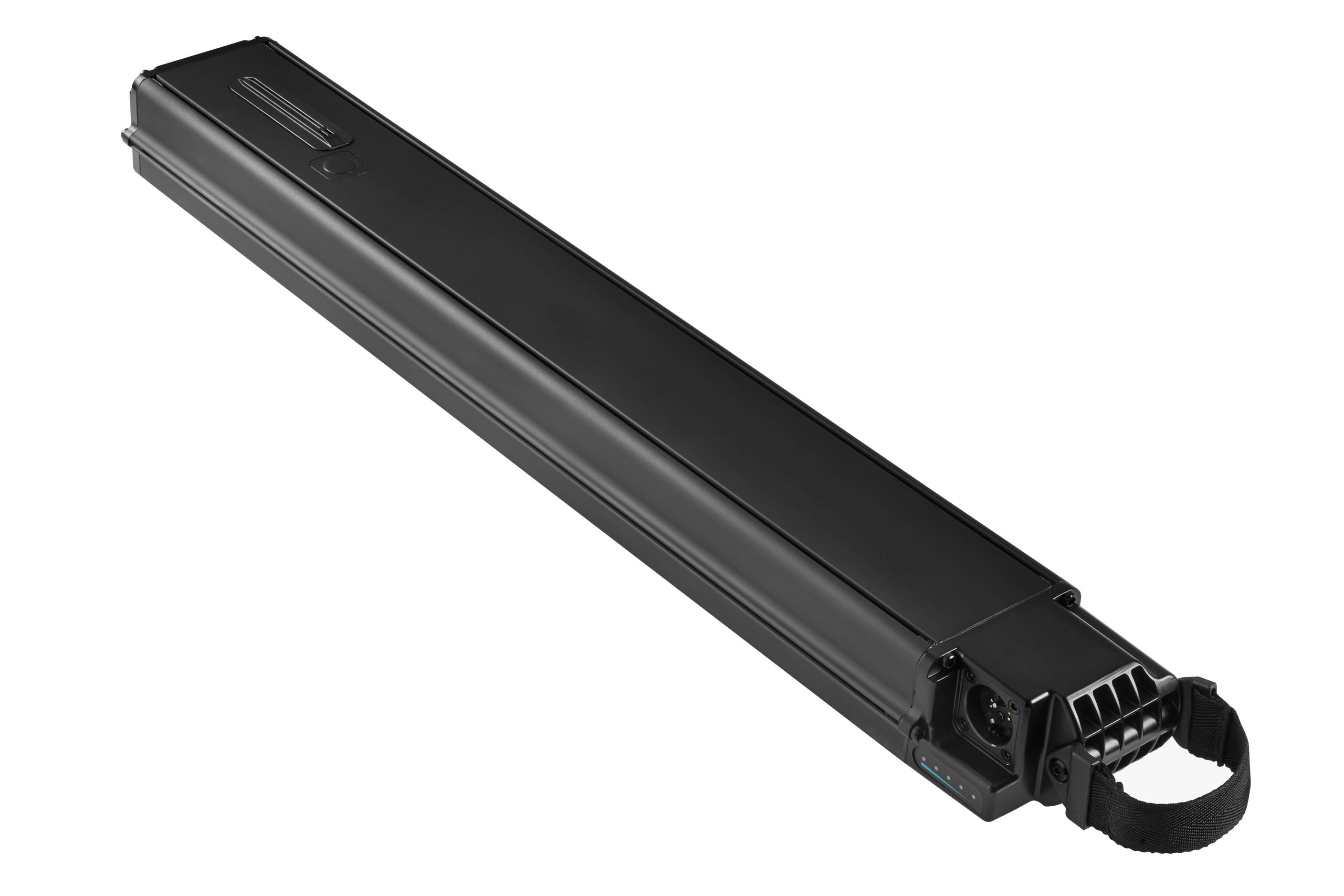
The previous battery was a proprietary Canyon part, with the new one being made by Darfon. Canyon
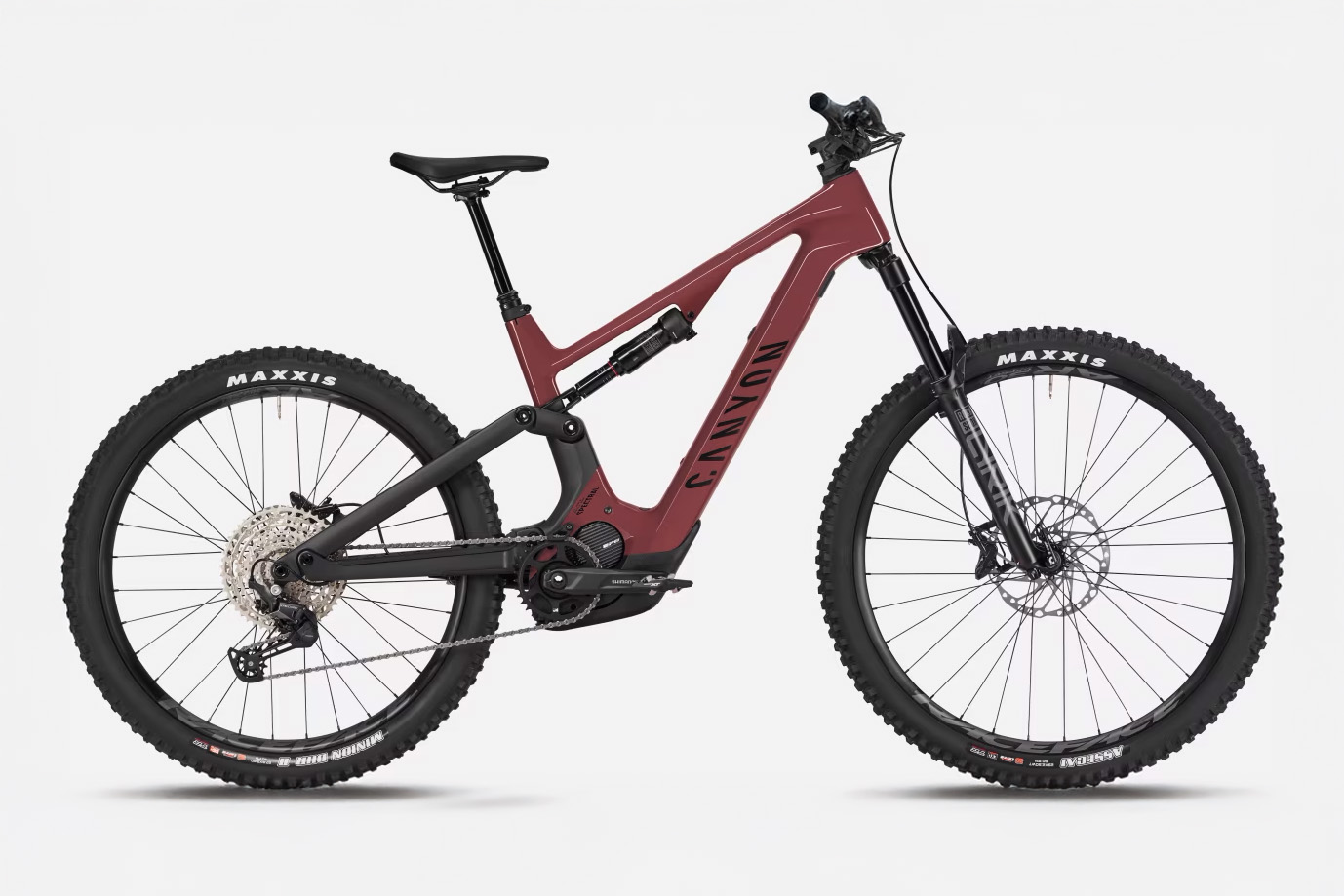
Now Canyon has relaunched the electric mountain bikes with an 800Wh battery that is 150g lighter than the previous 900Wh battery.
To ease these safety concerns, Canyon says it now uses a reinforced, highly durable aluminium housing, with every interface point being double-sealed to prevent water ingress.
There is a new internal membrane to prevent moisture build-up.
Canyon says this results in a waterproof rating of IP7, up from IP4, meaning the bike can be submerged in up to one metre of water – although it doesn’t recommend you try this.
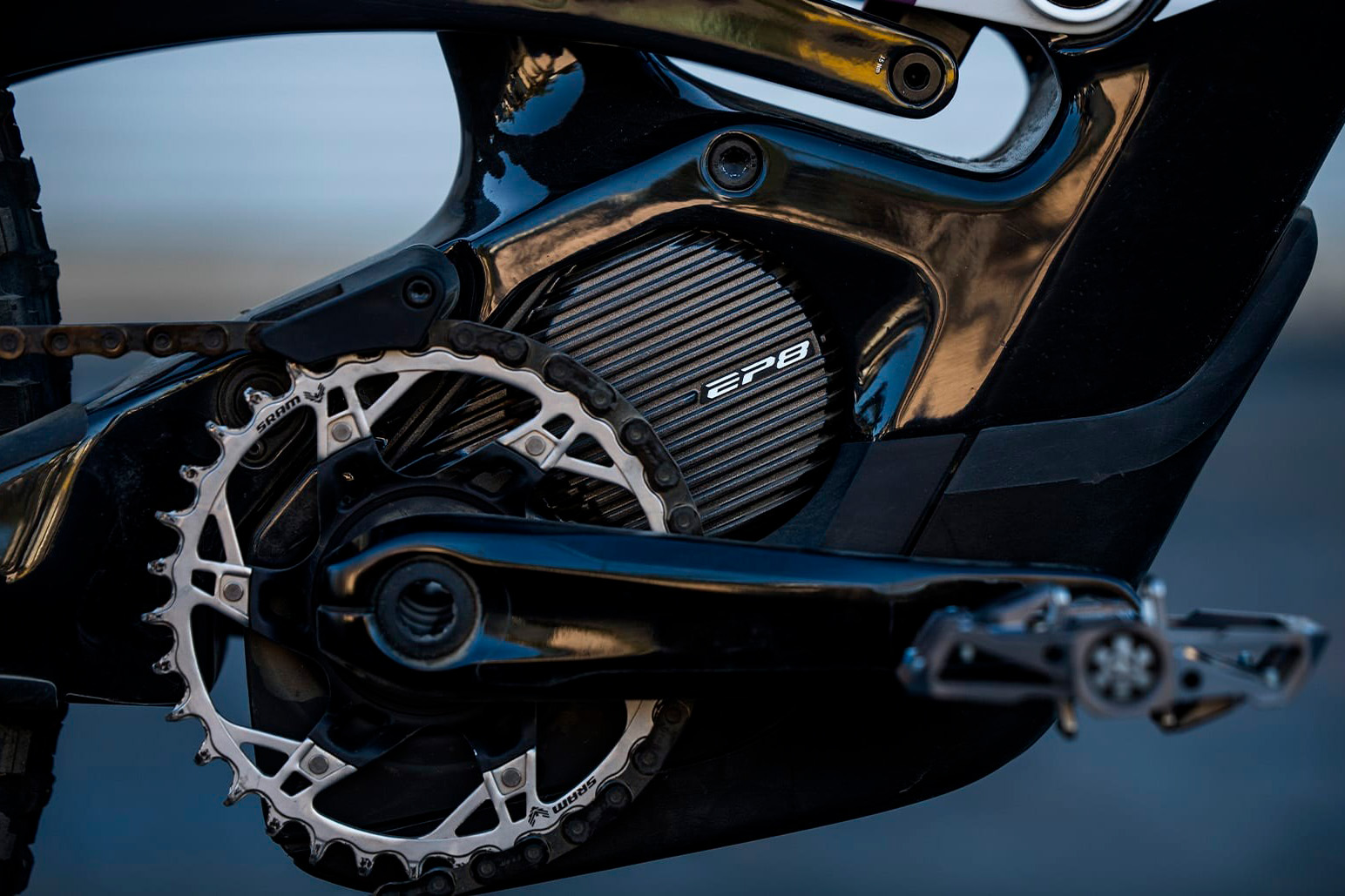
Shimano’s EP801 motor still sits at the heart of the bikes. Canyon
Canyon also claims the Darfon battery is the first complete aluminium battery on the market, with aluminium end caps that should increase durability.
While the battery is smaller at 800Wh compared to the 900Wh of the previous bikes, Canyon says it has been able to take advantage of faster charging times, smart charging, more efficient battery cells and a better distribution of weight.
Apart from the new 800Wh battery and the lighter weight, Canyon says the bikes remain the same as they were before they were taken off sale.
Despite the bikes being first released in May 2023, they remain a serious value proposition, featuring impressive spec sheets and credentials.
Both bikes continue to use Shimano’s EP801 motor, which churns out 85Nm of torque and up to 600 watts.
Canyon’s Spectral:ON CF7 looks great value for money. Canyon
It starts at £3,749 / $3,899 / €3,999 for the CF7 build, featuring a RockShox Lyrik fork and Deluxe Select R shock, and tops out at £5,599 / €5,999 for the CFR build that features Fox Factory suspension and SRAM’s X0 Eagle AXS.
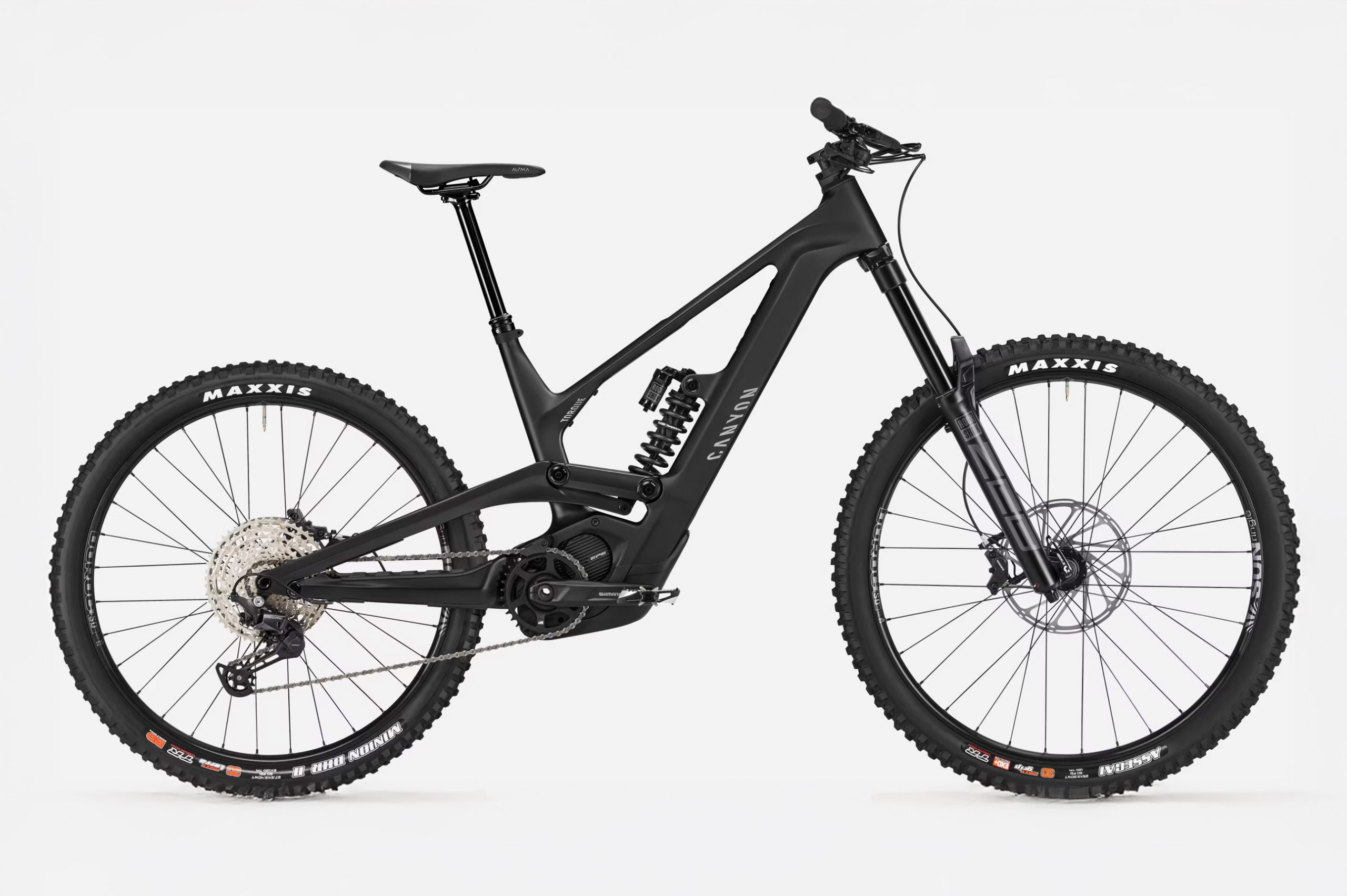
The Torque:ON CF7 comes well-specced for blitzing bike-park laps, and comes in under £4,000 / €4,000. Canyon
The Torque:ON is the brand’s beefiest offering, designed as a self-shuttling bike-park shredder with 175mm rear travel and a burly 180mm fork.
Prices start at £3,749 / €3,999 for the CF7, which sees a RockShox Zeb Select fork paired with a Super Deluxe Coil Select, with the top-spec CF9 priced at £4,649 / €4,999 with a Fox Factory 38 fork and Float X2 shock.
Cyclists will face three new sets of traffic lights on the Outer Circle of Regent’s Park in a bid to improve safety, The Royal Parks charity announced yesterday.
Royal Parks said work has already begun to install the three pedestrian crossings on the road, which is one of London’s most popular cycling routes. Work is due to be completed by the spring.
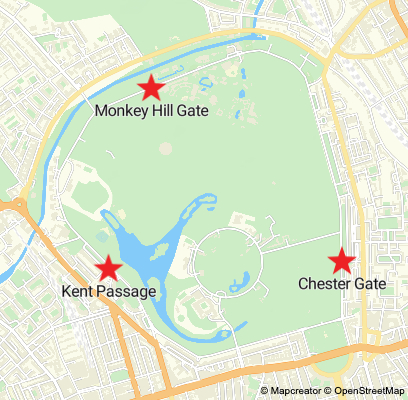
The new crossing will be at three locations on the 2.7-mile road: Monkey Hill Gate, Chester Gate and Kent Passage.
Cyclists who are caught jumping the traffic lights will face a £50 on-the-spot fine.
The project is jointly funded by the Royal Parks and the Crown Estate Paving Commission (CEPC). It is part of a set of measures to reduce the risk of collisions between pedestrians and other road users, following a series of crashes and incidents.
In June 2022, Hilda Griffiths, 81, died two months after being hit by a cyclist while crossing the Outer Circle with her dog. The cyclist was not prosecuted.
Another dog walker was injured in May 2024.
The locations of the three new crossings at Regent’s Park.
The Royal Parks launched a ‘considerate cycling’ campaign in April 2025, following several incidents in the eight London green spaces it manages. The campaign revealed that 72 per cent of London pedestrians had witnessed or experienced a near miss with a cyclist. 86 per cent thought the 20mph vehicle speed limit should apply to bicycles, which are currently exempt.
Darren Share, The Royal Parks director of Parks, says it is “vital” green urban spaces such as Regent’s Park “remain safe and welcoming for everyone”.
“The installation of new, signalised pedestrian crossings on the Outer Circle is an important step in improving safety and helping people move around the park with greater confidence,” says Share.
“The Royal parks are shared spaces, and we all have a role to play. By encouraging road users to slow down, respect speed limits and be considerate of others, alongside making practical improvements like these crossings, we hope to foster a culture of mutual respect and create a safer, more enjoyable experience for all visitors.”
The Royal Parks previously asked Strava to remove segments from Regent’s Park. When asked by BikeRadar if it intends to do this, Strava declined to comment.
Ahead of the crossings being installed, the CEPC said it had engaged with local authorities, residents, community groups, members of the public and Transport for London.
Nick Packard, director of the CEPC, says: “This project forms part of the CEPC’s key strategic priority to improve pedestrian safety on the Outer Circle and aims to respond directly to concerns raised by CEPC ratepayers.
“By investing in high-quality, well-designed infrastructure and subsequently monitoring its impact, we are supporting safer movement through the wider Regent’s Park estate. We are grateful for the collaboration of The Royal Parks in facilitating these changes to the Outer Circle.”
Sarah McMonagle, director of external affairs at Cycling UK, says additional measures to make public spaces safer are welcome, but that the greatest danger to pedestrians comes from people driving.
“Our parks and green spaces are for everyone to enjoy safely, regardless of whether we’re riding a bike or on foot. While we need to continue to encourage greater respect and consideration towards each other on our roads, the focus needs to shift to reducing car incidents. That’s where we can have the greatest impact in terms of increasing safety,” McMonagle says.
“Cars continued to be involved in most collisions that killed or seriously injured someone else in 2024. Excess speed remains one of the biggest risks to road users, with around half of the 2024 fatal collisions in London reporting speed as a contributory factor,” TfL said.
Vittoria has announced it has started a Strategic Collaboration Agreement with reTyre to produce performance tyres that are 100% recyclable.
reTyre’s patented injection moulding technology is claimed to reduce CO₂ emissions by 80% and enable 100% recyclability.
The brand claimed to have created the world’s first carbon-neutral tyre at Eurobike 2024, utilising recycled and repurposed materials, including fishing nets, in its construction.
reTyre was founded in 2015 by a group of chemical engineers. Vittoria
It recently received €7 million in funding, led by Hatch Blue’s Blue Revolution Fund, and plans to install its first fully automated production cell in Norway, followed by a second facility in Asia in 2026.
This is said to offer decentralised, clean tyre production close to OEM assembly lines – cutting transport emissions and costs dramatically.
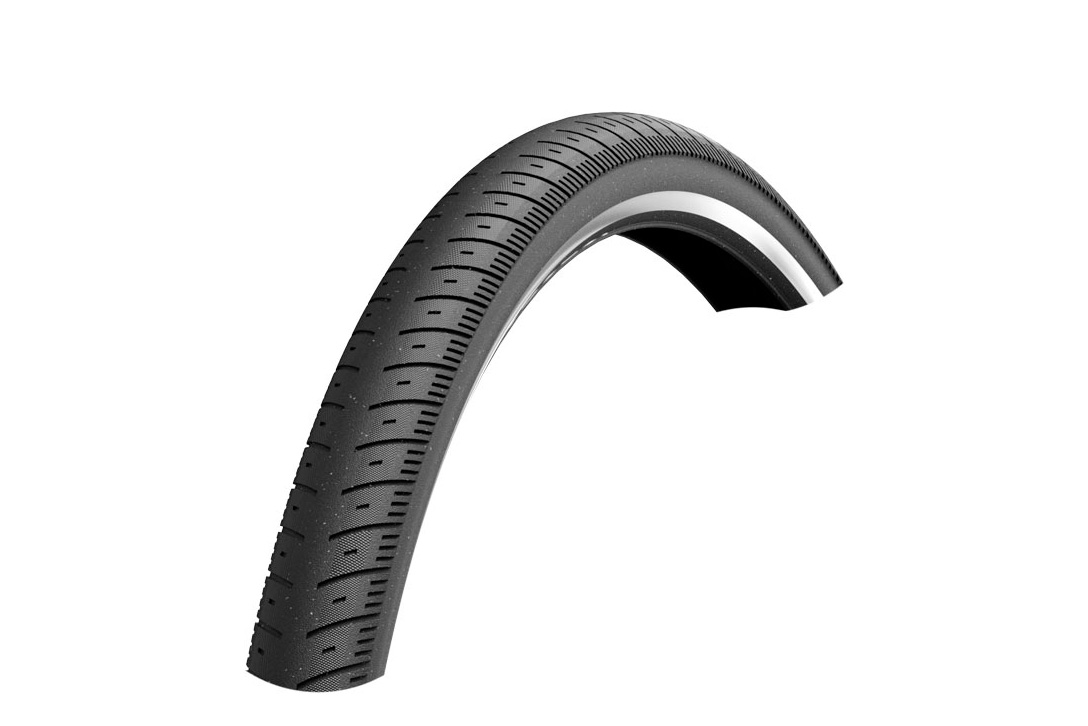
The brand’s current offering caters for urban riders. reTyre
reTyre offers a wide range, including hybrid, city, trailer and children’s bike tyres, but is preparing to enter the performance tyre market through a co-development partnership with Vittoria.
Paul Magne Amundsen, CEO & founder of reTyre, says: “After a decade of focused R&D, we’re proud to disrupt the industry with a technology that delivers a new level of performance while enabling true circularity and a sustainable solution in tyre manufacturing. Support from Hatch Blue, Fundracer, and our co-development partnership with Vittoria, reflects deep confidence in both our vision and the breakthrough potential of our platform as we continue to scale.”
Stijn Vriends, chairman & CEO of Vittoria, says: “We’ve followed reTyre for many years and are convinced that their unique production method can successfully be applied to utility bicycle tyres. Vittoria stands for performance and sustainability, and reTyre’s technology delivers both. We’re excited to collaborate and bring this next generation of sustainable performance tyres to market.”
British steel bikes brand Temple has cut the price of many of its gravel, road, touring and electric bikes by 50% – including the Adventure Disc 2, which was my long-term test bike for a year.
I had the AD2 on test throughout 2025, describing it as “a bike for life”. I awarded it 4/5 stars in my review as I enthused about the allure of a bike assembled two miles from my house “from quality steel that will last a lifetime – the antithesis of the throwaway, digital hellscape of the modern world”.
I used the AD2 as my daily commuter bike, and took it on a series of tarmac and off-road adventures in the New Forest, Cornwall and Dorset, falling for its solid build quality, Shimano 105 groupset and urbane additions such as the Brooks B17 saddle.
Temple has cut the price of the AD2 from its RRP of £2,595 to £1,298 – a saving of 50%.
Temple refreshed its Adventure Disc gravel range in September, introducing the more modestly specced AD3, priced at £1,488.
The outlet sale comes as Bristol-based Temple prepares to move to a new high-street HQ and store.
Some of the bikes are listed as new, while others are ex-demo models and described as showing “light signs of wear… fully cleaned, serviced, and safety-checked by our workshop team to ensure reliable performance”.
Also included in the sale are the AD1 gravel bike, AD Tour, Road 2 and a number of electric bikes, which start at £1,600.
There are also frame-only deals, with 50% off Classic, Adventure Disc and Road frames in a variety of sizes, starting from £298.
Temple founder Matt Mears says of the brand’s move to its new home: “It’s something we’ve been quietly working towards for a while, and we’re incredibly excited for this next chapter.”
You’ll need to be quick if you want to grab a bargain, because bikes are starting to sell out.
Last May, we published a post by Matthew Lefthand recounting his 24-hour world-record attempt on Zwift. He was successful in his attempt and, in fact, set 12 new World Ultra-Cycling Association (WUCA) records, which were also Guinness World Records.
“Lefty” is an avid Zwifter, but his massive 24-hour indoor effort wasn’t the only achievement of his breakout 2025 season. Not by a long shot. He also notched major achievements riding outside, showing once again how indoor training can fuel outdoor results.
Below, find a press release detailing Matthew Lefthand being named the WUCA World Cup Champion in his rookie season. Congrats, Lefty!
Utah Man Named 2025 World Cup Champion by the World Ultra-Cycling Association
Matthew Lefthand takes the Ultra-Cycling Scene by Storm in his Rookie Season
Salt Lake City, UT — January 3, 2026 — The World Ultra-Cycling Association (WUCA) proudly announces the conclusion of its 2025 World Cup season, a global competition recognizing the world’s most dedicated and high-performing ultra-distance cyclists across four endurance disciplines. The World Cup requires competitors to complete two timed challenges, and two long-distance races, which are then awarded points based on their performances at each event.
This year, the spotlight shone brightly on Matthew Lefthand, (Utah, USA) a licensed mental health counselor turned elite ultra-cycling athlete, whose record-setting performances propelled him to the forefront of international endurance racing. Lefthand’s introduction to ultra-cycling began in August 2024 when he broke the course record by six hours at Hoodoo 500, a 520-mile race through Southern Utah.
Lefthand’s 2025 season has been defined by his relentless pursuit of personal growth and has garnered more attention around the world with each performance.
Early in 2025, Lefthand covered 576.17 miles in 24 hours at Bike Sebring, the most miles ridden by an American in 24 hours, setting the course record and taking 1st place overall.
In June, Race Across the West, (RAW) an 862-mile route known as the first third of the iconic Race Across America (RAAM) event, was Lefthand’s second qualifying effort. He not only won the race, but he beat a course record held for 12 years.
Lefthand returned to Hoodoo 500 for a second attempt, besting his own record from 2024 by 4 hours. His position at the top of the leaderboard was clear, but he had one event left.
After a crash in October, one week prior to his planned 12-hour event, Lefthand required collarbone surgery and had to make alternate plans. On December 14, he set 9 WUCA and Guinness World Records during a 12-hour ride on a recumbent bike and completed the Word Cup challenge.
Lefthand’s first place finishes and new course records at each of his events, landed him 8 points ahead of second place, Ingolf Micklisch (USA) and had more than double the points of third place, Piotr Mos (ITA).
“Not only did Matthew earn more points than any other previous World Cup winner, but his performances have brought a new level of excitement to all who follow the sport,” said Marc Polland, Past President of WUCA.
Lefthand’s journey this season was not just marked by competitive success, but also by personal breakthroughs and meaningful challenges:
“This season has been about discovering my limits, then continuously working to push past them, challenging what is believed to be possible in endurance athletics,” said Lefthand. “Every race, every record, and every training session has been a step toward redefining the limit on possible growth.”
His achievements have inspired athletes and fans around the world, illustrating that with grit, methodical preparation, and mental resilience, seemingly impossible goals can be achieved. Lefthand shares that he is often met with comments from strangers who express that they “rode their first 100 miles” on a day when Lefthand is completing a challenge and sharing his story online.
“People see me doing crazy things and then think, ‘Oh, maybe I haven’t given it everything I’ve got.’ And it’s incredible to hear these stories. It makes everything I’m doing that much more satisfying,” Lefthand said.
Both Lefthand and the global ultra-cycling community look toward 2026 with heightened ambitions, continued innovations in endurance training, and a deeper appreciation for the extraordinary athleticism that drives ultra-cycling forward.
“Matthew has breathed much needed, new life into this sport with his incredibly impressive race wins and world records this year. It seems that there’s nothing he can’t do. WUCA is thrilled by the enthusiasm and charisma Matthew has put behind sharing his experiences online. It is inspiring current athletes and bringing new cyclists to our sport,” said Deborah Bowlin, current President of WUCA.
Lefthand has set his sights on a similar trajectory in 2026, with plans to compete in the World Cup again, as well as each of the North American Championships for 6-hour, 12-hour, 24-hour, and Ultra Distance. Lefthand is also working on a special project that could lead to breaking 24 world records in 24 hours. Those interested in learning more can follow Lefthand on Facebook, Instagram, or YouTube, or visit his website at nolimitsleft.com.
ABOUT WORLD ULTRA-CYCLING ASSOCIATION (WUCA)
The World Ultra-Cycling Association (WUCA) is a global, non-profit organization that sets standards for excellence and accomplishment in ultra-cycling. As the sport’s governing body, WUCA sets standards of rules for competitive events, annual challenges and records. Its mission is to support, inspire and grow ultra-cycling globally, providing resources and structure to empower both athletes and event organizers.
ABOUT WUCA WORLD CUP
Established by the World Ultra-Cycling Association (WUCA), the World Cup is a season-long competition and is at the pinnacle of competitive ultra-cycling. Athletes accrue points through performances in diverse ultra events including 12-hour, 24-hour, and fixed distance events including one 750–1,500 km event, and one beyond 1,500 km, showcasing versatile strength and endurance over a global calendar of challenges.
Chinese cycling equipment brand Magene will supply WorldTour team XDS-Astana with its cycling computers, smart trainers, radar tail lights and heart rate monitors in 2026.
According to Sam Li, vice-president of global marketing at Magene: “Through this collaboration, Magene aims to strengthen its presence at the highest level of global cycling, advance the professionalization of power-based training, and deliver smarter, more precise, and more efficient cycling experiences to riders worldwide through innovative, professional smart cycling solutions.”
Magene says it expects to gain insights from racing, which it can apply to its product development, improving its devices’ data accuracy, reliability and intelligent training functionality.
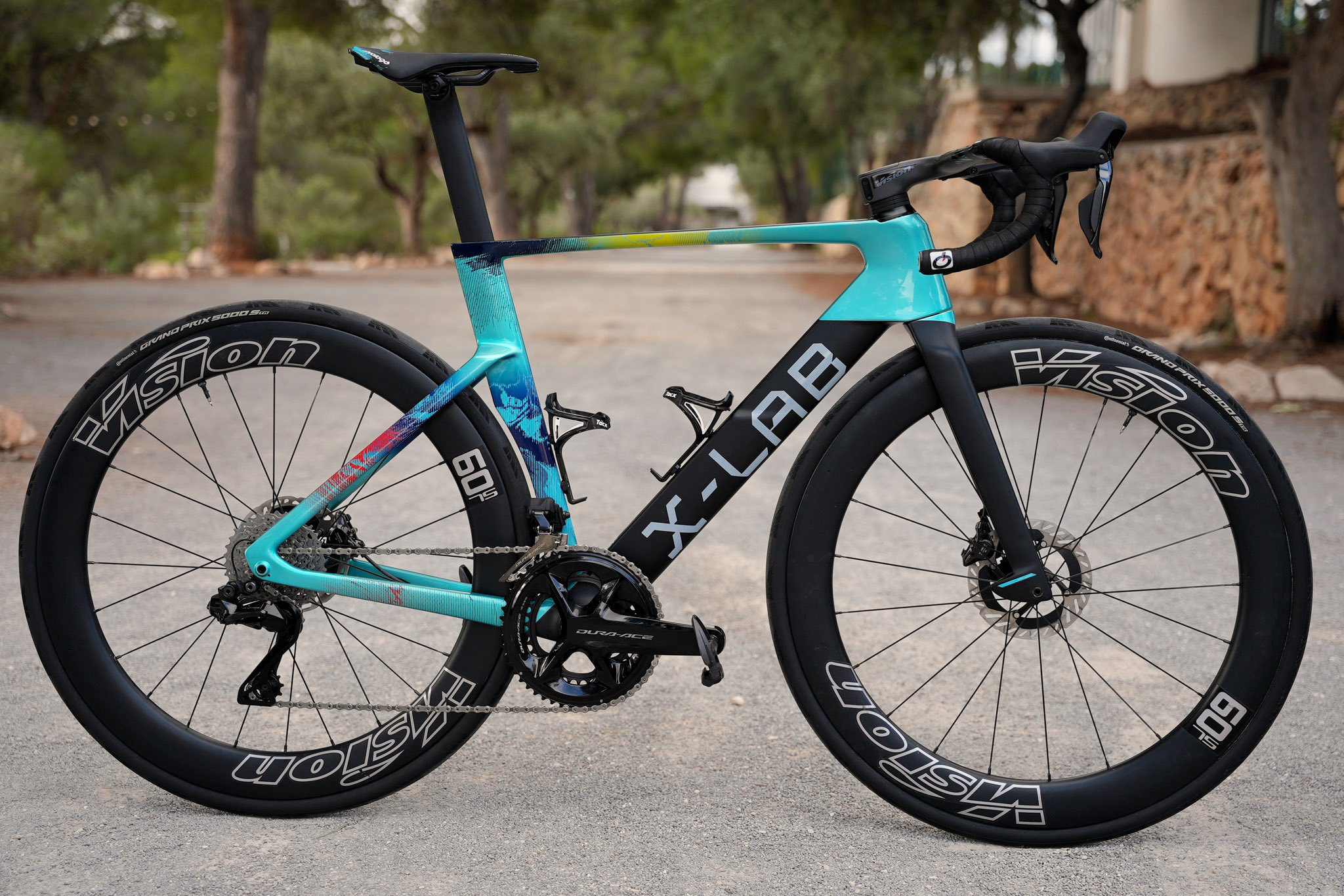
Magene will join X-Lab as a sponsor of the XDS-Astana WorldTour team in 2026. XDS Astana Team
Magene joins an increasingly large roster of Chinese brands choosing WorldTour sponsorship as a way to increase their global profile.
XDS is a Chinese bike brand, too, with its X-Lab bikes taking over from Wilier at the start of the 2025 season as the ride for the Astana team, registered in Kazakhstan.
Meanwhile, the Groupama-FDJ United team, which will again ride Wilier bikes in the 2026 WorldTour, is equipped this year with cycling computers, heart rate monitors and rearview radars from iGPSport, also based in China.
In our gravel tech predictions for 2026, we highlighted gravel as the next frontier for Chinese bike brands, with Winspace launching the G3 Gravel last year and X-Lab teasing its own yet-to-be-launched gravel bike.
We were impressed by the older Magene SeeMee 508 rearview radar, co-developed with MagicShine, when we reviewed it back in 2013. It compares well to the Garmin Varia RTL515 and is more customisable, but sells for a lower price.
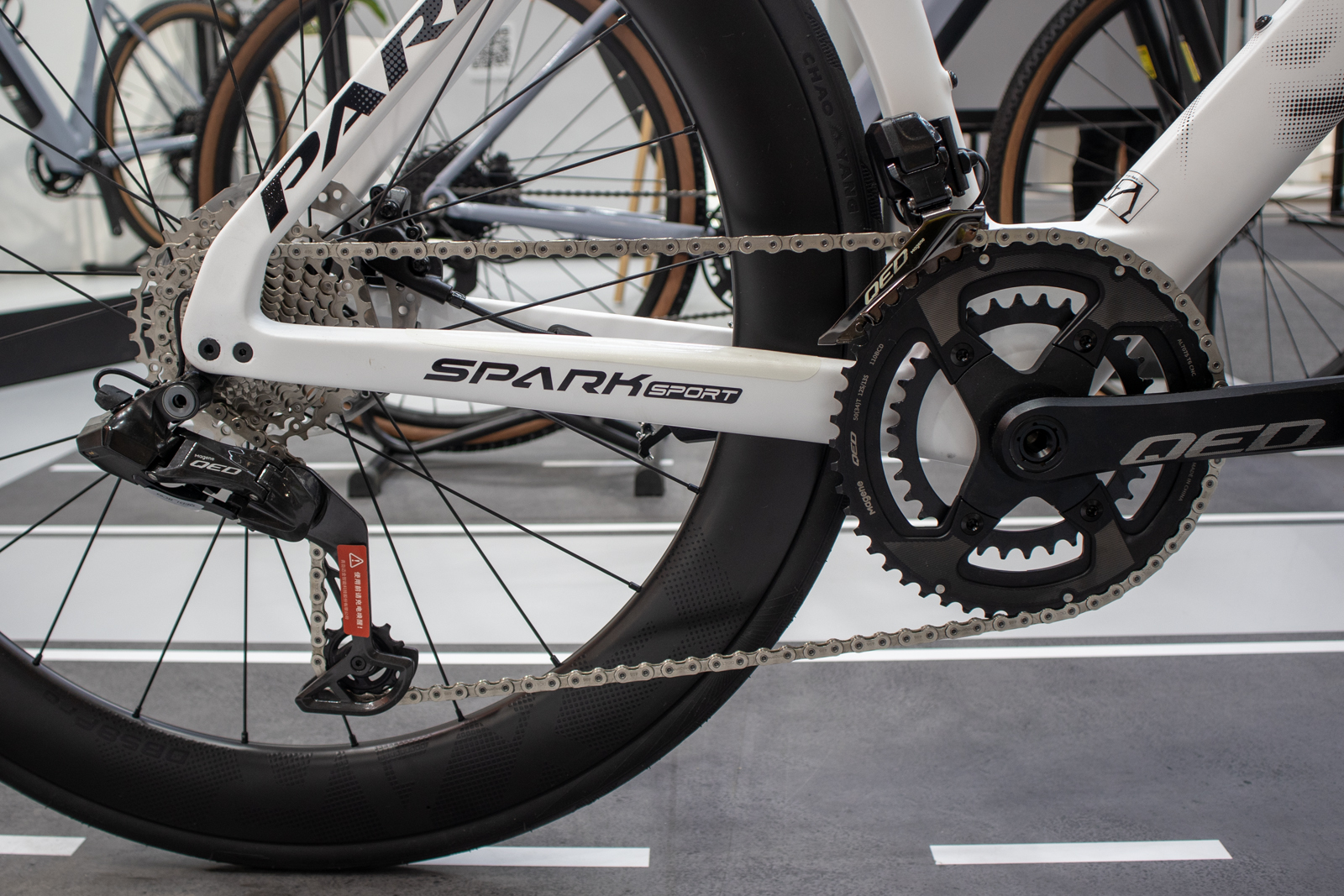
Magene is looking to rival Shimano Ultegra with its QED groupset. Stan Portus / Our Media
Magene also sells crank spider and pedal power meters, although these are not covered by the new sponsorship, with XDS Astana continuing to use Shimano groupsets and power meters on its X-Lab AD9 2026 bikes.
The team had a strong 2025 season, moving from dead last in the UCI WorldTour team rankings in 2024 to fourth best in 2025, with 25 race wins.
Not making it to the WorldTour – yet – is Magene’s QED electronic groupset, which was on display at Eurobike in 2025 and which the brand told BikeRadar is benchmarked against Shimano Ultegra.
Strava is progressing its initial public offering (IPO) of shares, according to Reuters.
Originally reported by business news site The Information, Reuters says Strava has hired investment bank Goldman Sachs as an advisor and has filed confidentially for an IPO.
Reuters says Strava’s last funding round in May 2025 valued the fitness-tracking site at $2.2 billion. It was financed by a number of venture capital companies, including the high-profile Silicon Valley firm Sequoia Capital.
US stock markets are riding high at the moment and Strava’s IPO would enable the May investors and Strava’s founders to realise their investments, doubtless with a hefty profit.
What it will do for Strava users, beyond securing the brand’s financial future, is less clear. When the planned IPO initially surfaced in October, Strava CEO Michael Martin told the Financial Times that going public would provide easier access to capital for it to acquire other companies.
Last year, Strava bought the Runna running coaching app, as well as cycling training platform The Breakaway, enabling it to offer tailored training plans. We’d guess it has larger fish in its sights after the IPO, potentially triggering a consolidation in training apps for cycling and other sports.
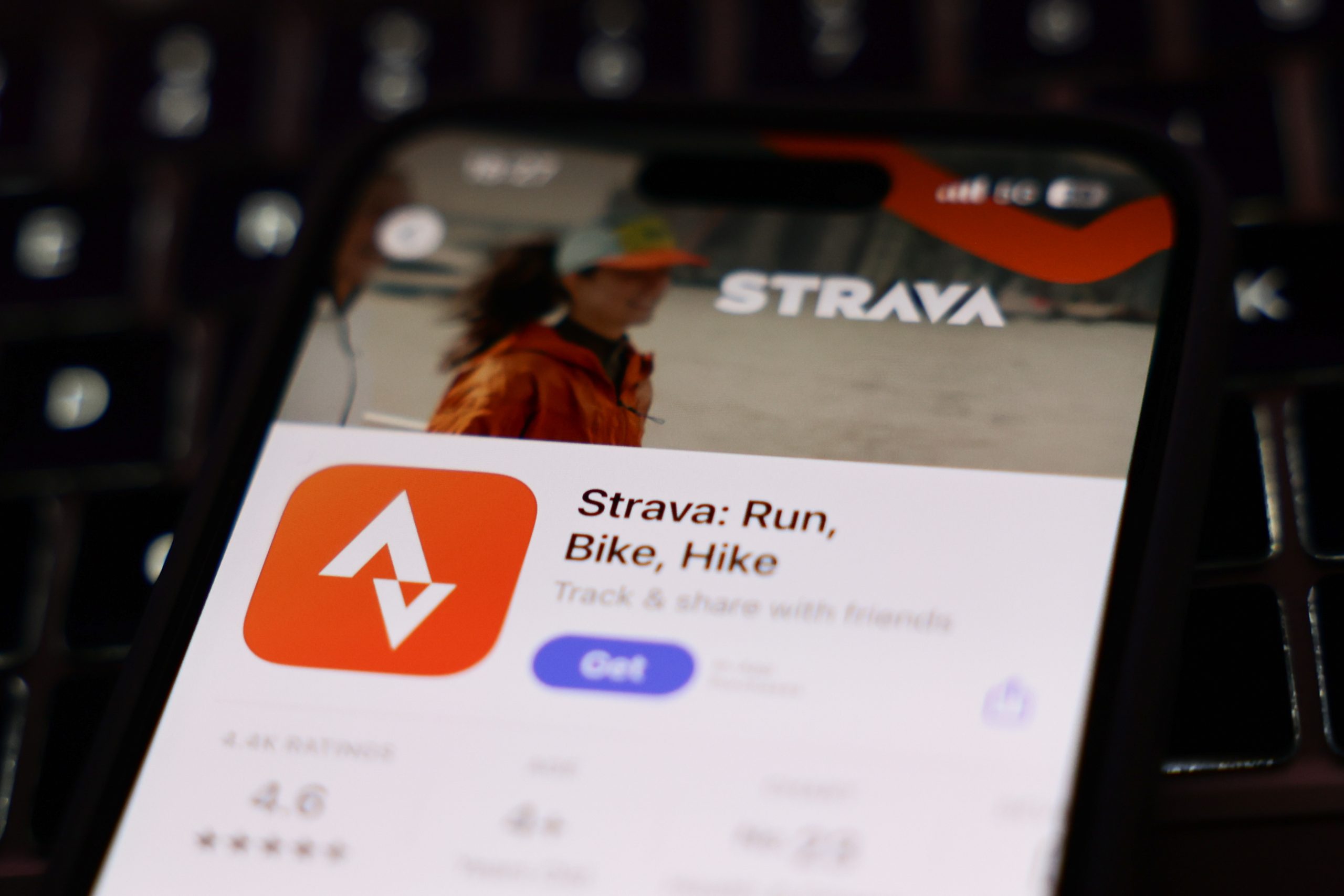
Strava’s download screen reflects its increased focus on running. NurPhoto / Getty Images
Strava appears to be focused increasingly on running. Its 2025 Year in Sport highlighted the app’s take-up by Gen Z runners, with a large increase in its user base, while cycling takes a back seat.
Strava’s research, highlighted in the report, found its users believe that mountain biking and gravel cycling, in particular, present high barriers to entry, behind only snow sports.
In the Year in Sport, Strava also says the social side of sport is growing. Gen Z users surveyed said they expect to use Strava more in preference to Instagram and TikTok in 2026, suggesting the fitness app’s aim of becoming the social network for athletes is bearing fruit.
Around 14 billion units of kudos were given in 2025, 20 per cent more than in 2024, and Strava highlighted the increased number of clubs on the site.