Hard-Fought Treaty To Protect Ocean Life Clears a Final Hurdle

The high seas, the vast waters beyond any one country’s jurisdiction, cover nearly half the planet. On Friday, a hard-fought global treaty to protect the “cornucopia of biodiversity” living there cleared a final hurdle and will become international law. From a report: The High Seas Treaty, as it is known, was ratified by a 60th nation, Morocco, crossing the threshold for United Nations treaties to go into effect. Two decades in the making, it allows for the establishment of enormous conservation zones in international waters. Environmentalists hailed it as a historic moment. The treaty “is a conservation opportunity that happens once in a generation, if that,” said Lisa Speer, who directs the International Oceans Program at the Natural Resources Defense Council.

It is also a bright spot amid a general dimming of optimism about international diplomacy and cooperation among nations toward common goals. It will come into force just as the high seas are poised to become the site of controversial industrial activities including deep sea mining. The treaty provides a comprehensive set of regulations for high seas conservation that would supersede the existing patchwork of rules developed by United Nations agencies and industrial organizations in sectors like oil, fishing and shipping. Currently, less than 10 percent of the world’s oceans are protected under law, and conservation advocates say little of that protection is effective. The treaty states a goal of giving 30 percent of the high seas some kind of protected status by 2030.


Read more of this story at Slashdot.

Africa’s Only Internet Cable Repair Ship Keeps the Continent Online

The Leon Thevenin, Africa’s only permanently stationed cable repair ship, maintains over 60,000 kilometers of undersea internet infrastructure from Madagascar to Ghana. The 43-year-old vessel employs a 60-person crew who perform precision repairs on fiber-optic cables that carry data for Alphabet, Meta, and Amazon — companies that consumed 3.6 billion megabits per second of bandwidth in 2023.

Operating costs range from $70,000 to $120,000 daily, according to owner Orange Marine. The ship has experienced increased demand due to unusual underwater landslides in the Congo Canyon causing frequent cable breaks. Cable jointer Shuru Arendse and his team spend up to 48 hours on repairs that require fusing hair-thin glass fibers in conditions where a speck of dust can ruin the joint. The vessel gained Starlink connectivity last year after decades of relying on satellite phones and shared computers for crew communication. Sixty-two cable repair ships operate globally to maintain the infrastructure supporting streaming media and AI applications.


Read more of this story at Slashdot.

There Isn’t an AI Bubble – There Are Three

Fast Company ran a contrarian take about AI from entrepreneur/thought leader Faisal Hoque, who argues there’s three AI bubbles.

The first is a classic speculative bubble, with asset prices soaring above their fundamental values (like the 17th century’s Dutch “tulip mania”). “The chances of this not being a bubble are between slim and none…”

Second, AI is also arguably in what we might call an infrastructure bubble, with huge amounts being invested in infrastructure without any certainty that it will be used at full capacity in the future. This happened multiple times in the later 1800s, as railroad investors built thousands of miles of unneeded track to serve future demand that never materialized. More recently, it happened in the late ’90s with the rollout of huge amount of fiber optic cable in anticipation of internet traffic demand that didn’t turn up until decades later. Companies are pouring billions into GPUs, power systems, and cooling infrastructure, betting that demand will eventually justify the capacity. McKinsey analysts talk of a $7 trillion “race to scale data centers” for AI, and just eight projects in 2025 already represent commitments of over $1 trillion in AI infrastructure investment. Will this be like the railroad booms and busts of the late 1800s? It is impossible to say with any kind of certainty, but it is not unreasonable to think so.
Third, AI is certainly in a hype bubble, which is where the promise claimed for a new technology exceeds reality, and the discussion around that technology becomes increasingly detached from likely future outcomes. Remember the hype around NFTs? That was a classic hype bubble. And AI has been in a similar moment for a while. All kinds of media — social, print, and web — are filled with AI-related content, while AI boosterism has been the mood music of the corporate world for the last few years. Meanwhile, a recent MIT study reported that 95% of AI pilot projects fail to generate any returns at all.

But the article ultimately argues there’s lessons in the 1990s dotcom boom: that “a thing can be hyped beyond its actual capabilities while still being important… When valuations correct — and they will — the same pattern will emerge: companies that focus on solving real problems with available technology will extract value before, during, and after the crash.” The winners will be companies with systematic approaches to extracting value — adopting mixed portfolios with different time horizons and risk levels, while recognizing organizational friction points for a purposeful (and holistic) integration.

“The louder the bubble talk, the more space opens for those willing to take a methodical approach to building value.”

Thanks to Slashdot reader Tony Isaac for sharing the article.


Read more of this story at Slashdot.

Latest Report Shows The PC Gaming Hardware Market Is Exploding Again

Latest Report Shows The PC Gaming Hardware Market Is Exploding Again
The market for PC gaming hardware, including systems and accessories, is projected to grow by 35% in 2025 by Jon Peddie Research. This data is considered “conservative in relation to total PC hardware expenditure”, and is attributed by the firm to the forced migration to Windows 1, due to Windows 10’s pending End of Life in October. Another

EPA scientists were reportedly ordered to halt publication of research papers

According to a report by The Washington Post, scientists with the Environmental Protection Agency’s Office of Water were told by “political appointees” to stop work on studies that were headed for publication, as they’ll now be “subject to a new review process.” Staffers were reportedly given the instructions in a town hall meeting this week. The only papers exempt are those for which “scientific journals had already returned proofs — the final step in the academic publication process,” reports The Washington Post, which spoke to two agency employees. Among other things, the role of the Office of Water is to ensure the safety of drinking water. 

It’s the latest in a string of changes at the EPA under the Trump administration, and raises yet more concerns for public health. In May, the agency announced plans to roll back limitations for some perfluoroalkyl and polyfluoroalkyl substances (PFAS), known as “forever chemicals,” that had been set by the Biden administration, saying it would keep only the limits for the two most common, PFOA and PFOS. In July, the EPA laid off thousands of employees and announced it would shut down its scientific research office. The same month, the EPA proposed rescinding certain greenhouse gas emissions standards, and just last week announced a plan to do away with the Greenhouse Gas Reporting Program that requires some of the nation’s biggest polluters to report their emissions.

Following the latest orders, staffers with the Office of Water who spoke to The Washington Post said they were not given a reason to provide scientific journals as to why the papers have been halted, and no details on the new review process have been shared. One employee told the publication, “This represents millions of dollars of research, potentially, that’s now being stopped.”

This article originally appeared on Engadget at https://www.engadget.com/science/epa-scientists-were-reportedly-ordered-to-halt-publication-of-research-papers-183751436.html?src=rss

The complicated Subnautica 2 lawsuit just took a bizarre twist

Unlike the joy of exploring the underwater world in Subnautica, diving deeper into the Subnautica 2 lawsuit is the furthest thing from rewarding. The latest update in the convoluted lawsuit between Subnautica‘s developer, Unknown Worlds, and its parent company, Krafton, represents a complete 180 with one of the case’s key claims. According to a PC Gamer report, Krafton said that “documents relating to the readiness of the game were irrelevant to the termination” of Unknown Worlds’ leadership, which was one of the main disagreements that led to the legal action in the first place.

As a quick recap, Subnautica 2‘s developers felt the game was ready for early access, while Krafton claimed otherwise and instead delayed it to 2026. The lawsuit hinged on this major dispute and included many crucial elements, like a $250 million performance bonus and the leadership team being fired and replaced. This change of heart from Krafton has left Fortis Advisors, who represent the founders of Unknown Worlds, confused and called this “a seismic shift in the case,” according to PC Gamer.

Krafton reps didn’t offer clear reasoning as to why they’re not pursuing this argument anymore, but instead want to focus on making the case that Unknown Worlds’ leadership “abandoned their post” and “deceived” Krafton, according to the report. To further complicate things, Fortis claimed that Krafton isn’t cooperating with providing evidence for the lawsuit. As the case moves through the discovery phase, where both sides try to obtain evidence from the other, it’s obvious that thalassophiles will have to wait a little longer for the hotly anticipated sequel.

This article originally appeared on Engadget at https://www.engadget.com/gaming/the-complicated-subnautica-2-lawsuit-just-took-a-bizarre-twist-175829731.html?src=rss

This tiny brand could challenge SRAM’s UDH dominance with new direct-mount derailleur

Ratio Technology appears to be preparing to launch its first complete rear derailleur, which, as far as we’re aware, would be the first non-SRAM model to use the Universal Derailleur Hanger (UDH) standard in the direct-mount format it was originally designed for.

Ratio Technology – a small brand based in the Lake District of England – is best known for producing aftermarket conversion kits for SRAM and Shimano drivetrains. 

Its products enable riders to mix and match components across brands and disciplines – for example, SRAM mechanical road shifters with mountain bike derailleurs, or converting 11-speed SRAM shifters to run 12- or even 13-speed cassettes.

The brand also offers replacement pulley cages and jockey wheels, often marketed as like-for-like upgrades over OEM components.

Ratio Mech rear derailleur – B-tension screw detail.
The B-tension screw is a notable addition. Jack Luke / Our Media

The appearance of a complete derailleur – which appears to be called the Mech – marks a significant step beyond Ratio’s previous focus on small parts and conversion kits.

Fitted to a Hope HB.916 enduro bike, the derailleur mounts using a system similar to SRAM’s T-Type, with an extended ‘B-knuckle’ that clamps on either side of the Universal Derailleur Hanger. 

Unlike SRAM’s design, however, the Ratio derailleur features a B-adjust screw. This would, in theory, enable users to run different cassette sizes, rather than being restricted to one option, as is the case with SRAM.

Ratio Mech rear derailleur – limit screw adjustment
Limit screw aren’t present on SRAM’s mechanical or electronic Transmission groupsets. Jack Luke / Our Media

Limit screws for high and low gears are also present. These also point to a wider adaptability of the derailleur compared to SRAM’s existing UDH-mounted designs.

According to Bikepacking.com, which spotted the derailleur at the Made handmade bike show, the derailleur can be adapted to both UDH and conventional hanger mounts. 

It can also be adjusted to work with a wide range of cable pulls using interchangeable fins, enabling compatibility with Shimano and SRAM shifters across road and mountain bike platforms. 

The site reports that the derailleur is compatible with almost all 1×12 and 1×13 drivetrains and will be offered with cages for 46- and 52-tooth cassettes. Ratio also told Bikepacking.com it is aiming to make the derailleur fully user-serviceable.

Ratio Mech rear derailleur on Hope enduro bike
The derailleur was teased on a Hope enduro bike. Jack Luke / Our Media

The sample pictured was paired with a standard SRAM cassette, with no visible modifications. 

The derailleur features notably clean cable routing. The cable enters near-vertically at the back of the derailleur, running around what appears to be a fin or roller before joining the main knuckle at the bottom, where it clamps.

It is reasonable to assume the derailleur incorporates a clutch mechanism. A small screw cover on the body suggests the clutch may be either serviceable or adjustable.

Ratio has been contacted for comment.

Self-Replicating Worm Affected Several Hundred NPM Packages, Including CrowdStrike’s

The Shai-Hulud malware campaign impacted hundreds of npm packages across multiple maintainers, reports Koi Security, including popular libraries like @ctrl/tinycolor and some packages maintained by CrowdStrike.

Malicious versions embed a trojanized script (bundle.js) designed to steal developer credentials, exfiltrate secrets, and persist in repositories and endpoints through automated workflows.
Koi Security created a table of packages identified as compromised, promising it’s “continuously updated” (and showing the last compromise detected Tuesday). Nearly all of the compromised packages have a status of “removed from NPM”.

Attackers published malicious versions of @ctrl/tinycolor and other npm packages, injecting a large obfuscated script (bundle.js) that executes automatically during installation. This payload repackages and republishes maintainer projects, enabling the malware to spread laterally across related packages without direct developer involvement. As a result, the compromise quickly scaled beyond its initial entry point, impacting not only widely used open-source libraries but also CrowdStrike’s npm packages.
The injected script performs credential harvesting and persistence operations. It runs TruffleHog to scan local filesystems and repositories for secrets, including npm tokens, GitHub credentials, and cloud access keys for AWS, GCP, and Azure. It also writes a hidden GitHub Actions workflow file (.github/workflows/shai-hulud-workflow.yml) that exfiltrates secrets during CI/CD runs, ensuring long-term access even after the initial infection. This dual focus on endpoint secret theft and backdoors makes Shai-Hulud one of the most dangerous campaigns ever compared to previous compromises.
“The malicious code also attempts to leak data on GitHub by making private repositories public,” according to a Tuesday blog post from security systems provider Sysdig:
The Sysdig Threat Research Team (TRT) has been monitoring this worm’s progress since its discovery. Due to quick response times, the number of new packages being compromised has slowed considerably. No new packages have been seen in several hours at the time…

Their blog post concludes “Supply chain attacks are increasing in frequency. It is more important than ever to monitor third-party packages for malicious activity.”

Some context from Tom’s Hardware:

To be clear: This campaign is distinct from the incident that we covered on Sept. 9, which saw multiple npm packages with billions of weekly downloads compromised in a bid to steal cryptocurrency. The ecosystem is the same — attackers have clearly realized the GitHub-owned npm package registry for the Node.js ecosystem is a valuable target — but whoever’s behind the Shai-Hulud campaign is after more than just some Bitcoin.


Read more of this story at Slashdot.

Xbox Prices Are Going Up Again But You Can Score Game Consoles For Less Right Now

Xbox Prices Are Going Up Again But You Can Score Game Consoles For Less Right Now
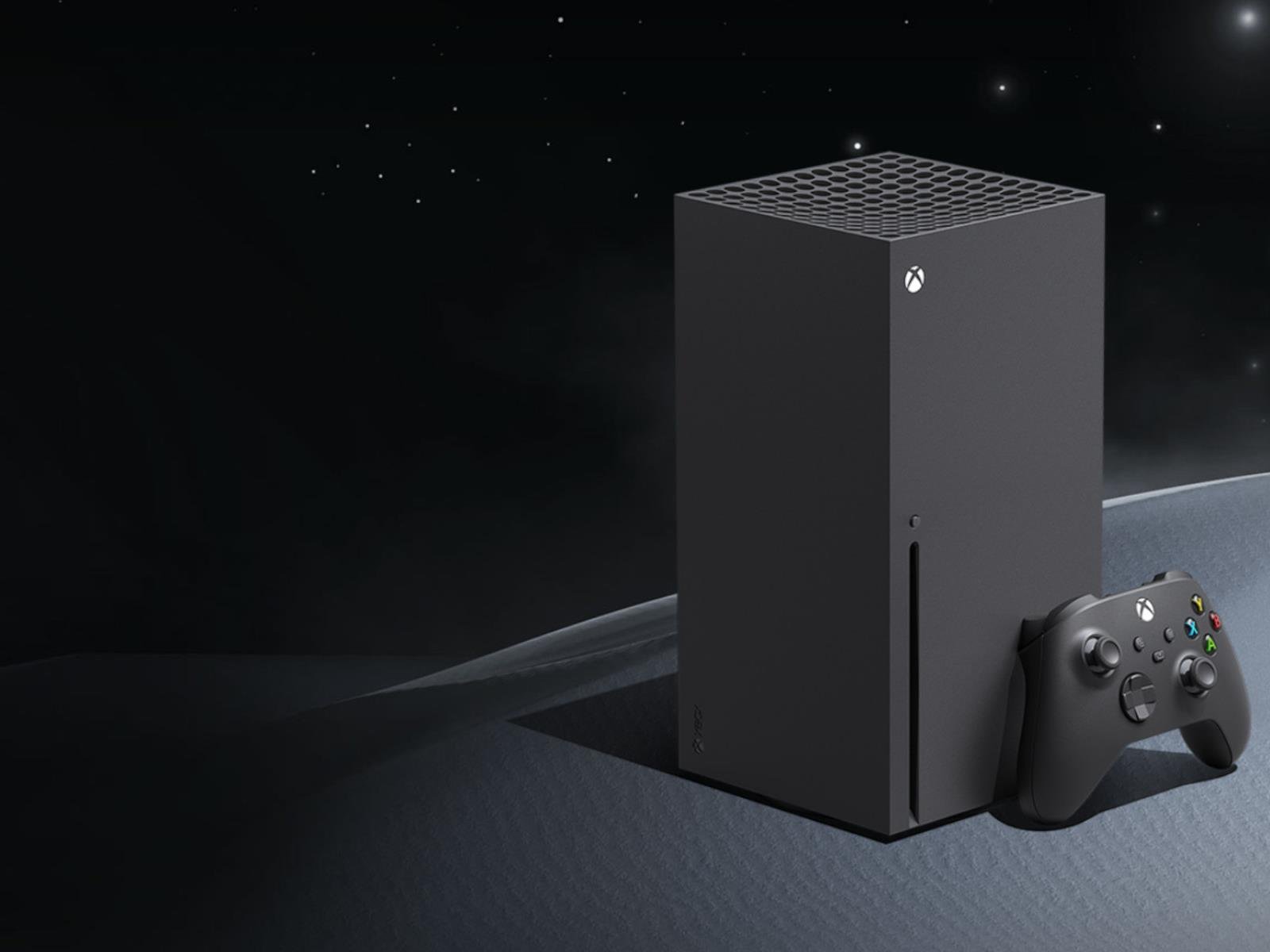
Microsoft is initiating a second price hike on its existing series of Xbox consoles sold in the US, raising prices of all Xbox Series S|X models starting on October 3rd, 2025. For the Xbox Series S 512GB, the price is increasing from $379.99 to $399.99, a $100 total increase from its launch MSRP of $299.99. Similarly, the Series S 1TB is also

C++ Committee Prioritizes ‘Profiles’ Over Rust-Style Safety Model Proposal

Long-time Slashdot reader robinsrowe shared this report from the Register:

The C++ standards committee abandoned a detailed proposal to create a rigorously safe subset of the language, according to the proposal’s co-author, despite continuing anxiety about memory safety. “The Safety and Security working group voted to prioritize Profiles over Safe C++. Ask the Profiles people for an update. Safe C++ is not being continued,” Sean Baxter, author of the cutting-edge Circle C++ compiler, commented in June this year. The topic came up as developers like Simone Bellavia noted the anniversary of the proposal and discovered a decision had been made on Safe C++.

One year ago, Baxter told The Reg that the project would enable C++ developers to get the memory safety of Rust, but without having to learn a new language. “Safe C++ prevents users from writing unsound code,” he said. “This includes compile-time intelligence like borrow checking to prevent use-after-free bugs and initialization analysis for type safety.” Safe C++ would enable incremental migration of code, since it only applies to code in the safe context. Existing unsafe code would run as before.

Even the matter of whether the proposal has been abandoned is not clear-cut. Erich Keane, C++ committee member and co-chair of the C++ Evolution Working Group (EWG), said that Baxter’s proposal “got a vote of encouragement where roughly 1/2 (20/45) of the people encouraged Sean’s paper, and 30/45 encouraged work on profiles (with 6 neutral)… Sean is completely welcome to continue the effort, and many in the committee would love to see him make further effort on standardizing it.”
In response, Baxter said: “The Rust safety model is unpopular with the committee. Further work on my end won’t change that. Profiles won the argument.” He added that the language evolution principles adopted by the EWG include the statement that “we should avoid requiring a safe or pure function annotation that has the semantics that a safe or pure function can only call other safe or pure functions.” This, he said, is an “irreconcilable design disagreement….”


Read more of this story at Slashdot.

Lenovo abruptly cancels some Legion Go 2 preorders due to overwhelming demand

From a disastrous AMA on Monday to disappointing Legion Go 2 preorder customers on Friday, the Lenovo team is having a hell of a week. To kick things off, the Lenovo Legion team hosted an AMA on Reddit revolving around its gaming handheld launch. The Legion Go 2 generated a ton of hype, being Lenovo’s next-gen gaming handheld with more powerful specs and a higher price tag, but the team only answered 10 questions before abandoning the thread. On Wednesday, Lenovo apologized for not being prepared enough to answer all the questions, but followed it up with a bombshell in an edit posted on Friday, adding that “we will need to cancel some preorders placed directly on Lenovo.com” for the Legion Go 2.

According to the Lenovo team, the demand “substantially exceeded our projections” and led to “unforeseen delivery range extensions.” While the orders with Lenovo’s retail partners, like Best Buy, aren’t affected, anyone who preordered the Legion Go 2 directly on the Lenovo website may see some frustrating news in their inboxes. The cancellations might not be a total shocker, since some user reports are circulating that Lenovo already pushed initial ship dates from September to October with “zero communication about the delay.”

To try to save face, Lenovo explained that “as soon as our inventory is replenished, Lenovo.com will show updated availability and ordering will reopen.” There’s no indication yet if those with canceled orders will get priority with the next batch of available devices, but the Lenovo team said it would respond to the AMA thread’s questions over the rest of the month. However, if Reddit comments are any indication, there’s a good chance a lot of customers won’t reorder following this catastrophic launch.

This article originally appeared on Engadget at https://www.engadget.com/gaming/lenovo-abruptly-cancels-some-legion-go-2-preorders-due-to-overwhelming-demand-161250775.html?src=rss

Apple Reportedly Booked Majority Of TSMC’s 2nm Chip Capacity To Get A Head Start

Apple Reportedly Booked Majority Of TSMC's 2nm Chip Capacity To Get A Head Start
If you’re looking to have a cutting-edge chip created in late 2025 or early 2026, you’re probably looking at TSMC, because the only other company operating a fab at a similar node is Intel, and Team Blue canceled acceptance of external orders for 18A earlier this year. Only, you’re probably not getting in at TSMC, either, because as it turns

Study Links Microplastic Exposure to Alzheimer’s Disease in Mice

Micro- and nanoplastic particles “infiltrate all systems of the body, including the brain,” notes the University of Rhode Island, “where they can accumulate and trigger Alzheimer’s-like conditions, according to a new study by researchers in the University of Rhode Island College of Pharmacy.”

ScienceDaily shares the announcement:

After a previous study that showed how microplastics can infiltrate all systems of the body — including the blood-brain barrier, which protects the brain from harmful substances as small as viruses and bacteria — University of Rhode Island pharmacy assistant professor Jaime Ross expanded the study to determine the brain health impacts of the plastic toxins. Her findings indicate that the accumulation of micro- and nanoplastics in the brain can lead to cognitive decline and even Alzheimer’s disease, especially in those who carry genetic risk factors.

Ross’ latest study, published recently in the journal Environmental Research Communications, examined mice that had been genetically modified to include the naturally occurring gene APOE4, a strong indicator of Alzheimer’s risk making people 3.5 times more likely to develop the disease than those who carry the APOE3 variant of the gene that is passed from parents to offspring… Ross and her team exposed two groups of mice — one with the APOE4 variant and one with APOE3 — to micro- and nanoplastics in their drinking water over a period of three weeks. The tiny particles from polystyrene — among the most abundant plastics in the world, found in Styrofoam take-out containers, plastic cups and more — infiltrated the mice’ organs, including the brain, as expected…

Ross’ team then ran the mice through a series of tests to examine their cognitive ability, beginning with an open-field test, in which researchers put a mouse in a chamber and allow it to explore at will for 90 minutes. Ordinarily, a mouse will hug the walls, naturally attempting to hide from potential predators. However, after microplastic exposure, the APOE4 mice — especially the male mice — tended to wander more in the middle of the chamber and spend time in open space, leaving themselves vulnerable to predators…

The results are concerning enough to warrant further study into the cognitive decline caused by exposure to micro- and nanoplastics, which are among the most prominent environmental toxins to which people are routinely exposed… Ross is continuing to expand her research into the topic and encourages others to do so, in the hope of leading to better regulation of the toxins.


Read more of this story at Slashdot.

Is OpenAI’s Video-Generating Tool ‘Sora’ Scraping Unauthorized YouTube Clips?

“OpenAI’s video generation tool, Sora, can create high-definition clips of just about anything you could ask for…” reports the Washington Post.
“But OpenAI has not specified which videos it grabbed to make Sora, saying only that it combined ‘publicly available and licensed data’…”

With ChatGPT, OpenAI helped popularize the now-standard industry practice of building more capable AI tools by scraping vast quantities of text from the web without consent. With Sora, launched in December, OpenAI staff said they built a pioneering video generator by taking a similar approach. They developed ways to feed the system more online video — in more varied formats — including vertical videos and longer, higher-resolution clips… To explore what content OpenAI may have used, The Washington Post used Sora to create hundreds of videos that show it can closely mimic movies, TV shows and other content…

In dozens of tests, The Post found that Sora can create clips that closely resemble Netflix shows such as “Wednesday”; popular video games like “Minecraft”; and beloved cartoon characters, as well as the animated logos for Warner Bros., DreamWorks and other Hollywood studios, movies and TV shows. The publicly available version of Sora can generate only 20-second clips, without audio. In most cases, the look-alike scenes were made by typing basic requests like “universal studios intro.” The results also showed that Sora can create AI videos with the logos or watermarks that broadcasters and tech companies use to brand their video content, including those for the National Basketball Association, Chinese-owned social app TikTok and Amazon-owned streaming platform Twitch…

Sora’s ability to re-create specific imagery and brands suggests a version of the originals appeared in the tool’s training data, AI researchers said. “The model is mimicking the training data. There’s no magic,” said Joanna Materzynska, a PhD researcher at Massachusetts Institute of Technology who has studied datasets used in AI. An AI tool’s ability to reproduce proprietary content doesn’t necessarily indicate that the original material was copied or obtained from its creators or owners. Content of all kinds is uploaded to video and social platforms, often without the consent of the copyright holder… Materzynska co-authored a study last year that found more than 70 percent of public video datasets commonly used in AI research contained content scraped from YouTube.
Netflix and Twitch said they did not have a content partnership for training OpenAI, according to the article (which adds that OpenAI “has yet to face a copyright suit over the data used for Sora.”)
Two key quotes from the article:

“Unauthorized scraping of YouTube content continues to be a violation of our Terms of Service.” — YouTube spokesperson Jack Malon
“We train on publicly available data consistent with fair use and use industry-leading safeguards to avoid replicating the material they learn from.” — OpenAI spokesperson Kayla Wood


Read more of this story at Slashdot.

Lenovo Comments On Intense Legion 2 Demand And Status After Cancelling Preorders

Lenovo Comments On Intense Legion 2 Demand And Status After Cancelling Preorders
Lenovo has issued another statement about its upcoming Legion Go 2 handheld, and this time it has nothing to do with the backlash over sticker shock. Not directly, anyway—instead, the general messaging is that it was caught off guard by a flurry of preorders, and rather than make customers wait indefinitely while holding onto their money,

Microsoft’s Entra ID vulnerabilities could have been catastrophic

As businesses around the world have shifted their digital infrastructure over the last decade from self-hosted servers to the cloud, they’ve benefitted from the standardized, built-in security features of major cloud providers like Microsoft. But with so much riding on these systems, there can be potentially disastrous consequences at a massive scale if something goes wrong. Case in point: Security researcher Dirk-jan Mollema recently stumbled upon a pair of vulnerabilities in Microsoft Azure’s identity and access management platform that could have been exploited for a potentially cataclysmic takeover of all Azure customer accounts.

Known as Entra ID, the system stores each Azure cloud customer’s user identities, sign-in access controls, applications, and subscription management tools. Mollema has studied Entra ID security in depth and published multiple studies about weaknesses in the system, which was formerly known as Azure Active Directory. But while preparing to present at the Black Hat security conference in Las Vegas in July, Mollema discovered two vulnerabilities that he realized could be used to gain global administrator privileges—essentially god mode—and compromise every Entra ID directory, or what is known as a “tenant.” Mollema says that this would have exposed nearly every Entra ID tenant in the world other than, perhaps, government cloud infrastructure.

“I was just staring at my screen. I was like, ‘No, this shouldn’t really happen,’” says Mollema, who runs the Dutch cybersecurity company Outsider Security and specializes in cloud security. “It was quite bad. As bad as it gets, I would say.”

Read full article

Comments

You’ll enjoy the Specialized Turbo Vado SL 2 6.0 Carbon even without assist

Two things about the Specialized Turbo Vado SL 2 6.0 Carbon are hard to fathom: One is how light and lithe it feels as an e-bike, even with the battery off; the other is how hard it is to recite its full name when other riders ask you about the bike at stop lights and pit stops.

I’ve tested about a half-dozen e-bikes for Ars Technica. Each test period has included a ride with my regular group for about 30 miles. Nobody else in my group rides electric, so I try riding with no assist, at least part of the way. Usually I give up after a mile or two, realizing that most e-bikes are not designed for unpowered rides.

On the Carbon (as I’ll call it for the rest of this review), you can ride without power. At 35 pounds, it’s no gram-conscious road bike, but it feels lighter than that number implies. My daily ride is an aluminum-framed model with an internal geared hub that weighs about the same, so I might be a soft target. But it’s a remarkable thing to ride an e-bike that starts with a good unpowered ride and lets you build on that with power.

Read full article

Comments

Patapon’s spiritual successor, co-op Lego and other new indie games worth checking out

Some of the year’s biggest blockbuster games have just dropped or are coming very soon. But among the likes of Borderlands 4, EA Sports FC 26 and Battlefield 6, there are a ton of neat indie games popping up. We’re here to tell you about some of ’em and what else is going on in the space with our weekly indie games roundup.

There were showcases this week from Critical Reflex (which was packed with neat oddities), Game Devs of Color, Six One Indie and Convergence. There’s far too much cool stuff in these for us to highlight everything — during the Six One Indie preshow alone, I added three games to my Steam wishlist. So, if you’re into indie games and have the time, I recommend checking these streams out.

If all of that isn’t enough for you, there’s another indie showcase coming next Wednesday called Indie Fan Fest from The Mix and Digital Bandidos. That’s not all: a Capcom stream is taking place on September 24 (not exactly indie, but Pragmata looks interesting) and rumors of a PlayStation event are ramping up ahead of Tokyo Game Show next week.

Elsewhere, I’ve been keeping an eye on an Itch.io game jam that’s been running this past week. It’s all about falling block games. I’m really enjoying the updates that a developer named Wallaber is sharing on Bluesky for a project called Jelly Well.

A quick note for any indie developers who are joining us before we check out some of this week’s new releases: submissions for the December edition of Day of the Devs are open. Landing a spot in that showcase is one of the highest-profile spotlights an indie developer can get these days, so if you have a cool game to show off, shoot your shot.

New releases

The team behind Patapon is back with a spiritual successor to that classic rhythm game series. There are strategic and roguelike elements in Ratatan, which is from TVT Co. Ltd., Ratata Arts and publisher Game Source Entertainment. There’s co-op for up to four players as well.

You’ll need to match the beat of the soundtrack to defeat enemies, and battles can feature more than 100 characters. It all looks quite charming, though I can’t help but think of that song by Babymetal and Electric Callboy whenever I read the game’s title (the immensely catchy “Ratatata” is rarely far away from my thoughts anyway). Ratatan is out in early access on Steam for $25, but there’s a 10 percent launch discount until September 28.

Lego Voyagers is a lovely-looking co-op adventure from Light Brick Studio (Lego Builder’s Journey) and publisher Annapurna Interactive. It’s out now on PS4, PS5, Xbox Series X/S, Nintendo Switch, Switch 2, Steam and Epic Games Store.

Here, you and a partner (there’s local co-op and online support) will go on a journey to rescue an abandoned spaceship. Your lil’ bricks can snap together and combine with other Lego pieces to solve puzzles as you make your way through this land. It’s said to be a fairly short game, clocking in at between three and five hours, but that’s not necessarily a bad thing given how much bloat there is in many games.

I’ve had my eye on Henry Halfhead — from Lululu Entertainment and co-publisher Popagenda — for a while and I’m looking forward to checking out this sandbox adventure. You play as Henry, who is just the top half of a human head. You can transform into any nearby object and play around with things in the environment. A narrator will react to your escapades as you solve challenges and guide Henry through life. There’s a co-op mode too.

Henry Halfhead is available on Steam, Switch and PS5. It typically costs $13, but there’s a 25 percent launch discount until September 30.

11 Bit Studios’ Frostpunk 2 has now landed on Xbox Series X/S and PS5 after debuting on PC this time last year. It’s a city-building survival sim that starts 30 years after a blizzard ravaged the planet and caused an eternal winter.

I dig the set up and aesthetic here. City builders in this vein aren’t usually my kind of thing, but since Frostpunk 2 is on Game Pass, I might give it a try.

Don’t Die, Collect Loot hit early access on Steam this week. This is a vertically scrolling Vampire Survivors-esque roguelite from solo developer Dan Marchand (aka Dan Makes Video Games) and indie.io.

If you’ve been looking for a new way to watch numbers go up and live out a power fantasy, this one might be of interest. For what it’s worth, I love the chiptune music in the trailer. Don’t Die, Collect Loot costs $10 and there’s a 10 percent discount until October 3.

A trailer for Troleu hooked me in during publisher Critical Reflex’s showcase. At its essence, this is a trolleybus conductor simulator, but it looks like things will get very much out of hand. You’ll get into fist fights with unruly passengers (who may include aliens) and punt them from the vehicle if necessary. There are multiple routes, leaderboards and even a T. rex. It all seems quite chaotic.

Troleu, which was made by solo developer andrground, is out now on Steam. You can get it for 20 percent off the regular price of $10 until September 29.

Speaking of aliens, here’s a theme park (and zoo?) simulator with a difference: it’s set in the universe of Mars Attacks. In Mars Attracts, you can abduct humans and experiment on the lowly primates for the entertainment of Martians, who come for the cruelty. The Convergence Games showcase featured a short look at the early stages of the game — experimenting on the loely specimens is your path to unlocking upgrades.

Outlier’s Mars Attracts is in early access on Steam. The $25 game has a 10 percent discount until September 22, and I might just pick it up.

Upcoming

Relooted was one of the more exciting games that caught our attention during Summer Game Fest. South African developer Nyamakop is creating a heist game that sees your crew setting out to reclaim plundered African artifacts from the hands of private collectors. It’s a terrific setup, and you can now find out how the game actually plays thanks to a demo that dropped this week on Steam.

You’ll get to play through the tutorial and one mission while getting a sense of the game’s story. Before you grab any of the valuable artifacts, you’ll need to spend a little time planning your escape from a given area with the help of your crew. You can replay the mission to try different options and routes.

I enjoyed the demo quite a bit. The movement is slick (it reminds me a bit of Aerial_Knight’s Never Yield) and the light strategy and puzzle solving sits just right for me. There’s no release date for Relooted as yet, but I’ll absolutely be playing it. The game is coming to Steam, Epic Games Store and Xbox Series X/S.

Dispatch is a game we’ve covered a few times, and now it has a release date. This is a superhero workplace comedy from AdHoc Studio, a team of former Telltale developers. It’s about a sidelined hero who becomes a superhero dispatcher.

The animation and art look sumptuous, and there’s an outstanding cast that includes Aaron Paul, Laura Bailey, Matthew Mercer and Jeffrey Wright. Dispatch is coming your way on October 22 on Steam (where you can check out a demo) and PS5.

Jupiter Junkworks had flown under my radar, but it’s firmly on there after a gameplay trailer was featured in the Convergence showcase. It’s a Tetris-style game in which you can slam parts of each tetromino into gaps further down the screen.

This arcade puzzler from Pixel Drake has a narrative that involves a trio of ragtag travelers learning to work together and make something of a spaceship salvage yard. Jupiter Junkworks is coming to Steam and Switch, and there’s a demo on the former.

It wouldn’t be an indie game roundup without a Metroidvania, and this week Critical Reflex showed off one that’s also a dating sim. There’s a new Steam demo available (but no release date as yet) for 2Awesome Studio’s Altered Alma, the trailer for which is drenched in a lovely “cyberpink.”

Okay, how about another Metroidvania? Solo developer Eric Manahan (aka The Matte Black Studio) is billing Lucid as the first “Celestoidvania” — take a wild guess which platformer it’s taking inspiration from.

One other reason to get excited about Lucid is that it features music from bearbot and the legendary David Wise, who famously worked on the Donkey Kong Country series. Fingers crossed that the crystalpunk aesthetic of this game will lead Wise to create a piece that’s on par with “Aquatic Ambiance.” In any case, a demo for Lucid is available on Steam now. There’s no release date as yet for this game, which Apogee Entertainment is publishing.

A Heavy Morning was the most compelling game to me in the Game Devs of Color showcase. It’s a narrative adventure focused on mental health. The aim is to help a young woman who is struggling to get out of bed to start her day. Among other things, you’ll enter her mind to help remove mental blocks with the help of Cognitive Behavioral Therapy techniques.

The latest trailer for this game from Saf Interactive and co-publisher Bright Gambit features an absolutely lovely art style. You’ll be able to play it on Xbox and Steam this fall.

I’ll take any excuse I can to write about Skate Story. Every time a new trailer pops up (as was the case during the Game Devos of Color showcase), I think it’s one of the coolest-looking games I’ve ever seen. Publisher Devolver Digital has now confirmed that along with the previously announced Steam and PS5 releases, Sam Eng’s Skate Story is coming to Nintendo Switch 2.

Alas, there’s still no release date for Skate Story. But Devolver says it will arrive by the end of the year, so I’m glad it hasn’t been pushed back to 2026.

This article originally appeared on Engadget at https://www.engadget.com/gaming/patapons-spiritual-successor-co-op-lego-and-other-new-indie-games-worth-checking-out-110022924.html?src=rss