Why One Computer Science Professor is ‘Feeling Cranky About AI’ in Education

Long-time Slashdot reader theodp writes: Over at the Communications of the ACM, Bard College CS Prof Valerie Barr explains why she’s Feeling Cranky About AI and CS Education. Having seen CS education go through a number of we-have-to-teach-this moments over the decades — introductory programming languages, the Web, Data Science, etc. — Barr turns her attention to the next hand-wringing “what will we do” CS education moment with AI. “We’re jumping through hoops without stopping first to question the run-away train,” Barr writes…

Barr calls for stepping back from “the industry assertion that the ship has sailed, every student needs to use AI early and often, and there is no future application that isn’t going to use AI in some way” and instead thoughtfully “articulate what sort of future problem solvers and software developers we want to graduate from our programs, and determine ways in which the incorporation of AI can help us get there.”

From the article:

In much discussion about CS education:

a.) There’s little interest in interrogating the downsides of generative AI, such as the environmental impact, the data theft impact, the treatment and exploitation of data workers.

b.) There’s little interest in considering the extent to which, by incorporating generative AI into our teaching, we end up supporting a handful of companies that are burning billions in a vain attempt to each achieve performance that is a scintilla better than everyone else’s.

c.) There’s little interest in thinking about what’s going to happen when the LLM companies decide that they have plateaued, that there’s no more money to burn/spend, and a bunch of them fold—but we’ve perturbed education to such an extent that our students can no longer function without their AI helpers.


Read more of this story at Slashdot.

One of road cycling’s most iconic shoes has finally been updated

Lace-up fans, rejoice – Giro has finally revived an icon with the long-awaited release of the Empire SLX II, the first update to its flagship lace-up road shoe since 2019.

The previous generation Empire SLX was famously favoured by riders like Bradley Wiggins and Taylor Phinney – clearly firm favourites with riders who, among other things, are as stylish as it gets.

We first spotted what looked like an update to the shoe at this year’s men’s Tour de France on the big Dutch feet of double stage winner, Thymen Arensman. They then appeared on the brand’s site, confirming it was the new Empire, without fanfare, but this is the first time we’ve seen them in the flesh.

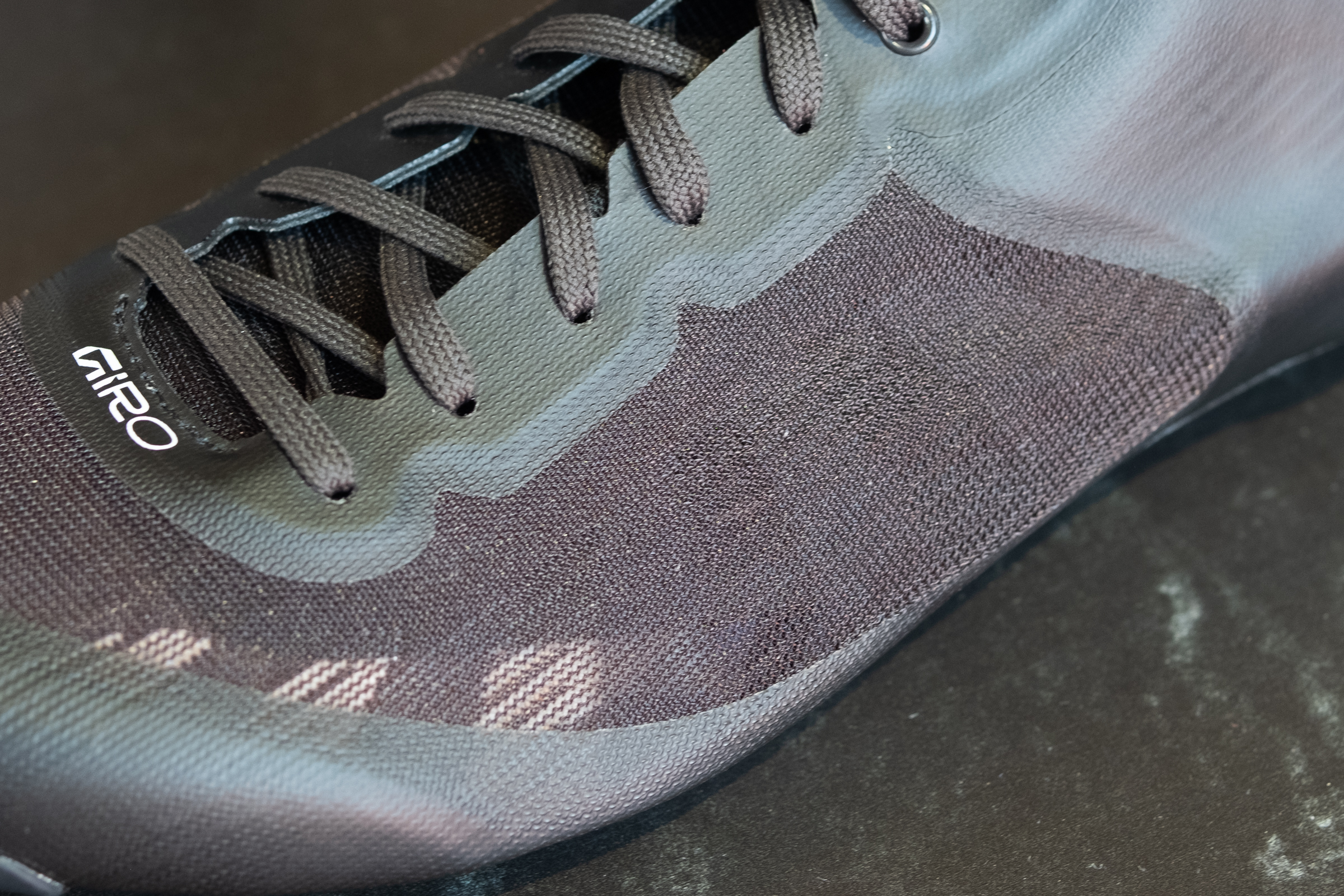
Giro Empire SLX II – mesh panel detail
Large portions of the shoe’s upper are mesh. Jack Luke / Our Media

The updated Empire’s upper is made of Synchwire – a seamless material, which Giro says offers “incredible airflow and structural integrity.” This is paired with large mesh panels for lighter weight and more breathability. 

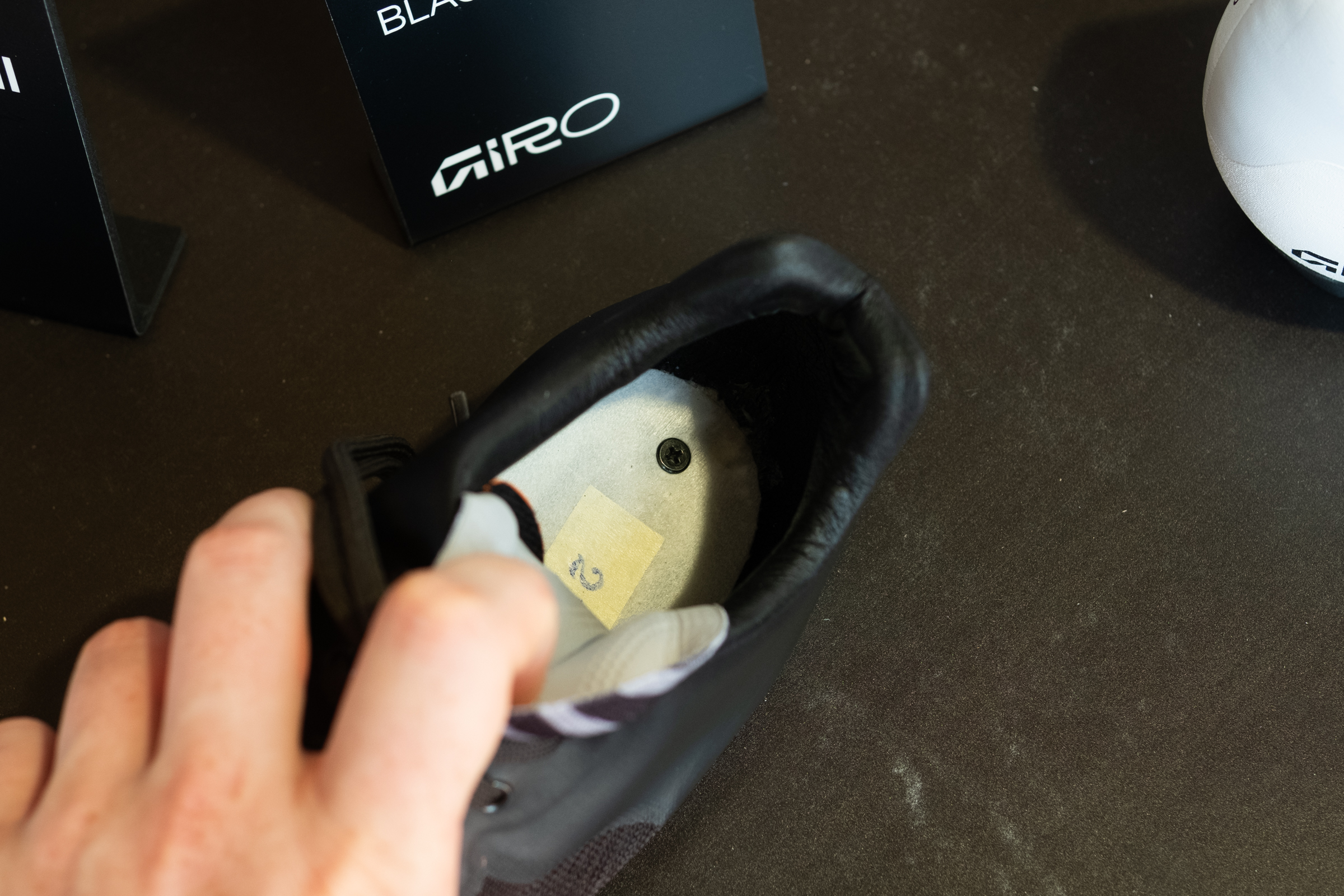
Giro Empire SLX II – heel replacement
Replaceable shoe components are always to be celebrated. Jack Luke / Our Media

The shoes feature a removable heel block, which should enable riders to eek a bit more life out of their shoes if the sole starts to wear. The outsole is forged carbon, completing what Giro tells us is an “ultra-lightweight, supremely efficient update to the icon that reimagined laces.”

The Empire SLX II has a claimed weight of 195g (size 43). For reference, the previous Empire SLX model was slightly lighter at 185g (size EU 42.5). 

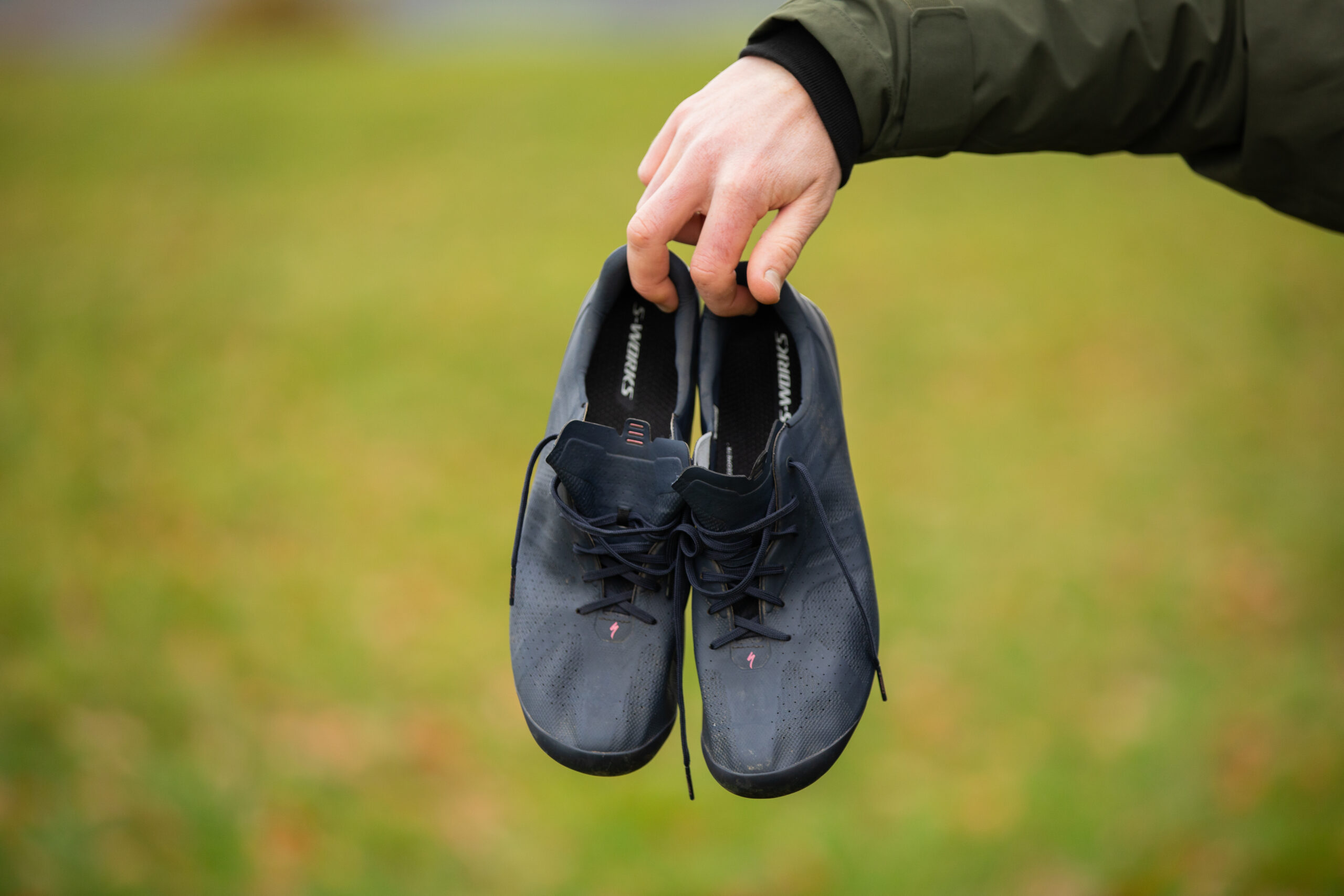
Specialized S-Works Torch Lace road cycling shoes
The S-Works Torch Lace is one of few similarly premium lace-up road shoes. Scott Windsor / Our Media

For comparison, the Specialized S-Works Torch Lace shoes have a claimed weight of 200g (size 42).

We’re yet to hear pricing in the UK and Europe, but the Empire SLX II costs $449.95 – a steep price tag, but in-keeping with the broader market for premium road shoes.

Aside from the Specialized Torch Lace, there are few high-end lace-up options available, so no doubt the return of the Empire SLX will please a lot of cyclists looking for the ultra-adjustable fit, low weight, and retro charm of a lace-up shoe.

AI Tools Give Dangerous Powers to Cyberattackers, Security Researchers Warn

“On a recent assignment to test defenses, Dave Brauchler of the cybersecurity company NCC Group tricked a client’s AI program-writing assistant into executing programs that forked over the company’s databases and code repositories,” reports the Washington Post.

“We have never been this foolish with security,” Brauchler said…

Demonstrations at last month’s Black Hat security conference in Las Vegas included other attention-getting means of exploiting artificial intelligence. In one, an imagined attacker sent documents by email with hidden instructions aimed at ChatGPT or competitors. If a user asked for a summary or one was made automatically, the program would execute the instructions, even finding digital passwords and sending them out of the network. A similar attack on Google’s Gemini didn’t even need an attachment, just an email with hidden directives. The AI summary falsely told the target an account had been compromised and that they should call the attacker’s number, mimicking successful phishing scams.

The threats become more concerning with the rise of agentic AI, which empowers browsers and other tools to conduct transactions and make other decisions without human oversight. Already, security company Guardio has tricked the agentic Comet browser addition from Perplexity into buying a watch from a fake online store and to follow instructions from a fake banking email…

Advanced AI programs also are beginning to be used to find previously undiscovered security flaws, the so-called zero-days that hackers highly prize and exploit to gain entry into software that is configured correctly and fully updated with security patches. Seven teams of hackers that developed autonomous “cyber reasoning systems” for a contest held last month by the Pentagon’s Defense Advanced Research Projects Agency were able to find a total of 18 zero-days in 54 million lines of open source code. They worked to patch those vulnerabilities, but officials said hackers around the world are developing similar efforts to locate and exploit them. Some longtime security defenders are predicting a once-in-a-lifetime, worldwide mad dash to use the technology to find new flaws and exploit them, leaving back doors in place that they can return to at leisure.
The real nightmare scenario is when these worlds collide, and an attacker’s AI finds a way in and then starts communicating with the victim’s AI, working in partnership — “having the bad guy AI collaborate with the good guy AI,” as SentinelOne’s [threat researcher Alex] Delamotte put it. “Next year,” said Adam Meyers, senior vice president at CrowdStrike, “AI will be the new insider threat.”

In August more than 1,000 people lost data to a modified Nx program (downloaded hundreds of thousands of times) that used pre-installed coding tools from Google/Anthropic/etc. According to the article, the malware “instructed those programs to root out” sensitive data (including passwords or cryptocurrency wallets) and send it back to the attacker. “The more autonomy and access to production environments such tools have, the more havoc they can wreak,” the article points out — including this quote from SentinelOne threat researcher Alex Delamotte.

“It’s kind of unfair that we’re having AI pushed on us in every single product when it introduces new risks.”


Read more of this story at Slashdot.

NASA resurrects its VIPER moon rover for a 2027 mission with Blue Origin

NASA is apparently giving its ice-scouting moon rover mission another try. The space agency has announced that the Volatiles Investigating Polar Exploration Rover (VIPER) project — which was called off last year after a series of delays and mounting costs — could catch a ride to the moon with Blue Origin in 2027 under the Commercial Lunar Payload Services (CLPS) program. Blue Origin must first plan and demonstrate how the delivery at the lunar surface would work, and if it’s all to NASA’s liking, VIPER will be ferried by the company’s Blue Moon Mark 1 lander.

Blue Origin hasn’t yet attempted a moon landing, but the first opportunity for its Blue Moon Mark 1 lander is expected to launch later this year as part of another CLPS delivery. That mission will also help to inform NASA’s decision about VIPER’s rideshare, which would use a second Mark 1 lander that the agency says is already in production. If VIPER does eventually make it to the moon, it’ll be deployed in the extreme environment of the lunar South Pole to search for water ice and other resources that could support future missions. 

“This delivery could show us where ice is most likely to be found and easiest to access, as a future resource for humans,” said Joel Kearns, Deputy Associate Administrator for Exploration with NASA’s Science Mission Directorate, in a statement. “And by studying these sources of lunar water, we also gain valuable insight into the distribution and origin of volatiles across the solar system, helping us better understand the processes that have shaped our space environment and how our inner solar system has evolved.”

This article originally appeared on Engadget at https://www.engadget.com/science/space/nasa-resurrects-its-viper-moon-rover-for-a-2027-mission-with-blue-origin-211315035.html?src=rss

More Durable UV Coating For Solar Panels Made From Red Onion Skins

Long-time Slashdot reader fahrbot-bot shared this report from ZME Science
Researchers from the University of Turku, in collaboration with Aalto University and Wageningen University, have developed a bio-based UV protection film for solar cells that not only blocks nearly all harmful ultraviolet light but also outperforms commercial plastic films. The key ingredient is a water extract made from red onion skins…

[T]he same sunlight that powers [solar cells] can also degrade their delicate components — particularly the electrolyte inside dye-sensitized solar cells (DSSCs), a type known for their flexibility and low-light performance. To mitigate this, manufacturers typically wrap cells in UV-protective films made from petroleum-based plastics like polyethylene terephthalate (PET). But these plastics degrade over time and are difficult to recycle… Nanocellulose can be processed into thin, transparent films that serve as the perfect substrate for UV-blocking compounds.

Their breakthrough came when they dyed these films using an extract from red onion skins, a common kitchen waste. The result was a filter that blocked 99.9% of UV radiation up to 400 nanometers, a feat that outstripped even the PET-based commercial filters chosen for comparison… [T]he onion-treated filter excelled: it let through over 80% of light in the 650-1,100 nm range — an ideal sweet spot for energy absorption… Even predictive modeling based on early degradation trends suggested the CNF-ROE filter could extend a solar cell’s lifetime to roughly 8,500 hours. The PET-based filter? Just 1,500 hours… [T]he red onion extract offered a rare combination of longevity, transparency, and sustainability…
The team envisions biodegradable solar cells for smart packaging, remote sensors, or wearable devices — especially in applications where recovery and recycling are not feasible. Their work is part of the BioEST project, funded by the Research Council of Finland, which supports sustainable innovation across electronics and materials science. This achievement taps into a broader movement to decarbonize every step of solar energy production. Plastic packaging is one of the overlooked sources of emissions in clean technology. Swapping out fossil-based plastics for biodegradable alternatives helps close that loop…

The findings appeared in the journal Applied Optical Materials.


Read more of this story at Slashdot.

Meta’s UK Arbitration ‘Threatens to Bankrupt’ Facebook Whistleblower, Says Her Lawyer

In a debate on employment rights, a U.K. Parliament member brought up Meta’s former director of global public policy Sarah Wynn-Williams

Louise Haigh, the former Labour transport secretary, said Wynn-Williams was facing a fine of $50,000 (£37,000) every time she breached an order secured by Meta preventing her from talking disparagingly about the company… “I am sure that the whole house and the government will stand with Sarah as we pass this legislation to ensure that whistleblowers and those with the moral courage to speak out are always protected….”

Meta has emphasised that Wynn-Williams entered into the non-disparagement agreement voluntarily as part of her departure. Meta said that to date, Wynn-Williams had not been forced to make any payments under the agreement… [The ruling came after Wynn-Williams published an exposé in March about her time at Facebook titled Careless People: A Cautionary Tale of Power, Greed, and Lost Idealism.] The ruling stated Wynn-Williams should stop promoting the book and, to the extent she could, stop further publication… Wynn-Williams has not spoken in public since appearing at the Senate hearing in April.

Wynn-Williams “remains silenced” according to her lawyer, who tells the Guardian that Meta’s arbitration proceedings in the U.K. “threaten to bankrupt” the whistleblower.


Read more of this story at Slashdot.

Some iPhone 17 models are reportedly prone to very visible scratches

Early shoppers are taking to the web to warn about the potentially scratch-prone nature of specific iPhone 17 model and color combos. According to a Bloomberg report, those demoing the latest iPhone in-store noticed that the iPhone 17 Pro in Deep Blue and the iPhone Air in Space Black models already had very noticeable scratches and scuffs. The report is backed up by social media posts following the release, where users recorded display models with residual marks from being used with a MagSafe charger and showed off photos of the back camera housing with chipped edges.

In a video by JerryRigEverything, the YouTuber puts the iPhone 17 models to the test with razor blades, coins and keys. The video highlights the edges of the iPhone 17 Pro’s back camera housing as particularly prone to scuffing since the colored aluminum oxide layer from the anodization process tends not to stick to sharp corners. However, the YouTuber also purposely marked up the iPhone 17 Pro blue model’s camera plateau itself and the phone’s back, which showed clear scratches that were easily wiped off.

The visibility of the scratches could be attributed to Apple’s decision to switch back from the iPhone 16 Pro‘s titanium chassis to aluminum, which is known to be susceptible to marking. However, all of these scratches are cosmetic and won’t affect how these latest iPhones function. Many iPhone buyers may not even run into this issue at all, considering a majority of owners use a case.

This article originally appeared on Engadget at https://www.engadget.com/mobile/smartphones/some-iphone-17-models-are-reportedly-prone-to-very-visible-scratches-191147266.html?src=rss

America’s Space Force is Preparing for a New Kind of War

A July combat training exercise involved a satellite dish-style antenna that “could fire enough electromagnetic energy to fry the satellite 22,000 miles away,” reports the Washington Post. But “Instead, the salvo would be more covert — millisecond pulses of energy that would subtly disrupt the satellite’s signals, which U.S. military forces were using to communicate in the Pacific Ocean.”

The goal was to disguise the strike as a garbled connection that could be easily remedied by securing a loose cable or a simple reboot, leaving U.S. service members frustrated without raising their suspicions. [And using less power “would make it harder for the Blue Team to track where the interference was coming from.”] This is how the next war could start: invisible shots fired in space on the electromagnetic spectrum that could render U.S. fighter jets and aircraft carriers deaf and blind, unable to communicate. In this case, the “aggressors” targeting the U.S. satellite were not from China or Russia, but rather an elite squadron of U.S. Space Force Guardians mimicking how potential adversaries would act in a conflict that begins in orbit… Involving more than 700 service members and spanning 50 million square miles and six time zones, the training exercise, called Resolute Space, was observed firsthand exclusively by The Washington Post.
The article describes leadership at the U.S. Space Force “still honing their mission while jousting with adversaries, such as China, that are moving quickly and conducting combat-like operations in orbit… While the Space Force continues to evolve, many defense analysts and some members of Congress fear the United States has already ceded its dominance in space to China and others.”
With a budget of just $40 billion, the relatively tiny Space Force makes up just about 4 percent of the Defense Department’s budget and less than 1 percent of its personnel. It has more than 15,000 Guardians, which also includes several thousand civilians. By comparison, the Army has nearly 1 million soldiers. The Space Force has been squeezed under the department of the Air Force and struggled to distinguish itself from the other branches…

China, Russia and others have demonstrated that they can take out or interfere with the satellites operated by the Pentagon and intelligence agencies that provide the nation’s missile warning and tracking, reconnaissance and communications. China in particular has moved rapidly to build an arsenal of space-based weapons… [R]ecently, several of China’s satellites have engaged in what Space Force officials have called “dogfighting,” jousting with U.S. satellites at high speeds and close ranges.


Read more of this story at Slashdot.

BYD’s all-electric hypercar, the YangWang U9 Extreme, hits a record-breaking 308mph

A new hypercar has dethroned Bugatti’s record for the fastest production car, and unsurprisingly, it’s an electric vehicle. During a livestream at the Automotive Testing Papenburg testing site in Germany, the YangWang U9 Extreme hit a facemelting top speed of 496.22 kmph, or around 308.33 mph. That metric edges out the previous record from the Bugatti Chiron Super Sport 300+, which achieved 304.77 mph in 2019.

Officially, the fastest production car record is factored from the average of runs in both directions, whereas the U9 Extreme only reached its 308 mph top speed one way. That’s not to minimize this achievement, whose pivotal moment from the livestream was highlighted by CarNewsChina, since Bugatti’s record was also a one-way run. Although it’s not surprising that the U9 Extreme was able to push these limits since it’s packed with four motors that produce just under 3,000 horsepower. The electric hypercar also runs on one of the world’s first 1,200V platforms, which offers better performance and efficiency, along with some weight reduction.

Like the Chiron Super Sport 300+, the U9 Extreme is going to be extremely limited with production capping at 30 units. There’s no price yet, but looking at those specs, this EV will likely have a high cost to match. However, with this latest achievement, the YangWang U9 Extreme shouldn’t have any trouble selling out quickly.

This article originally appeared on Engadget at https://www.engadget.com/transportation/evs/byds-all-electric-hypercar-the-yangwang-u9-extreme-hits-a-record-breaking-308mph-180727354.html?src=rss

Hundreds of Google AI Workers Were Fired Amid Fight Over Working Conditions

Last week the Guardian reported on “thousands of AI workers contracted for Google through Japanese conglomerate Hitachi’s GlobalLogic to rate and moderate the output of Google’s AI products, including its flagship chatbot Gemini… and its summaries of search results, AI Overviews.”
“AI isn’t magic; it’s a pyramid scheme of human labor,” said Adio Dinika, a researcher at the Distributed AI Research Institute based in Bremen, Germany. “These raters are the middle rung: invisible, essential and expendable….” Ten of Google’s AI trainers the Guardian spoke to said they have grown disillusioned with their jobs because they work in siloes, face tighter and tighter deadlines, and feel they are putting out a product that’s not safe for users… In May 2023, a contract worker for Appen submitted a letter to the US Congress that the pace imposed on him and others would make Google Bard, Gemini’s predecessor, a “faulty” and “dangerous” product
This week Google laid off 200 of those moderating contractors, reports Wired. “These workers, who often are hired because of their specialist knowledge, had to have either a master’s or a PhD to join the super rater program, and typically include writers, teachers, and people from creative fields.”

Workers still at the company claim they are increasingly concerned that they are being set up to replace themselves. According to internal documents viewed by WIRED, GlobalLogic seems to be using these human raters to train the Google AI system that could automatically rate the responses, with the aim of replacing them with AI. At the same time, the company is also finding ways to get rid of current employees as it continues to hire new workers. In July, GlobalLogic made it mandatory for its workers in Austin, Texas, to return to office, according to a notice seen by WIRED…
Some contractors attempted to unionize earlier this year but claim those efforts were quashed. Now they allege that the company has retaliated against them. Two workers have filed a complaint with the National Labor Relations Board, alleging they were unfairly fired, one due to bringing up wage transparency issues, and the other for advocating for himself and his coworkers. “These individuals are employees of GlobalLogic or their subcontractors, not Alphabet,” Courtenay Mencini, a Google spokesperson, said in a statement…

“Globally, other AI contract workers are fighting back and organizing for better treatment and pay,” the article points out, noting that content moderators from around the world facing similar issues formed the Global Trade Union Alliance of Content Moderators which includes workers from Kenya, Turkey, and Colombia.

Thanks to long-time Slashdot reader mspohr for sharing the news.


Read more of this story at Slashdot.

iFixit’s teardown shows the iPhone Air doesn’t sacrifice repairability for thinness

Apple manages to hold onto its recent repairability record with the latest iPhone Air, which maintains a provisional 7 out of 10 in iFixit’s teardown. As seen in the teardown, the iPhone Air can easily swap batteries, has a modular USB-C port and offers day-one repair guides. Even though the iPhone Air represents Apple’s thinnest iPhone ever at 5.6mm, iFixit said the slim design makes repairs “more approachable, not less.”

Apple kept the same battery design that was introduced with the iPhone 16 lineup, which switched to an electrically released battery adhesive for more consistent replacements. Similarly, you don’t have to ever risk damaging the OLED display when swapping an iPhone Air battery, since there’s still that dual-entry access allowing you to access it from the back glass.

Being a smartphone that emphasizes thinness, Apple had to sacrifice some battery life with the iPhone Air. However, in our review, we found that the iPhone Air was comparable to other models in the iPhone 17 lineup and lasted nearly an entire day in real-world testing. iFixit also discovered that the battery is the same exact one found in the accompanying MagSafe Battery accessory that goes for $99, which iFixit likened to a “spare tire.” On top of that, the included battery is encased in metal, making it easier to replace and offering some protection against bending.

This article originally appeared on Engadget at https://www.engadget.com/mobile/smartphones/ifixits-teardown-shows-the-iphone-air-doesnt-sacrifice-repairability-for-thinness-161641244.html?src=rss

Secure Software Supply Chains, Urges Former Go Lead Russ Cox

Writing in Communications of the ACM, former Go tech lead Russ Cox warns we need to keep improving defenses of software supply chains, highlighting “promising approaches that should be more widely used” and “areas where more work is needed.”
There are important steps we can take today, such as adopting software signatures in some form, making sure to scan for known vulnerabilities regularly, and being ready to update and redeploy software when critical new vulnerabilities are found. More development should be shifted to safer languages that make vulnerabilities and attacks less likely. We also need to find ways to fund open source development to make it less susceptible to takeover by the mere offer of free help. Relatively small investments in OpenSSL and XZ development could have prevented both the Heartbleed vulnerability and the XZ attack.

Some highlights from the 5,000-word article:

Make Builds Reproducible. “The Reproducible Builds project aims to raise awareness of reproducible builds generally, as well as building tools to help progress toward complete reproducibility for all Linux software. The Go project recently arranged for Go itself to be completely reproducible given only the source code… A build for a given target produces the same distribution bits whether you build on Linux or Windows or Mac, whether the build host is X86 or ARM, and so on. Strong reproducibility makes it possible for others to easily verify that the binaries posted for download match the source code…”
Prevent Vulnerabilities. “The most secure software dependencies are the ones not used in the first place: Every dependency adds risk… Another good way to prevent vulnerabilities is to use safer programming languages that remove error-prone language features or make them needed less often…”
Authenticate Software. (“Cryptographic signatures make it impossible to nefariously alter code between signing and verifying. The only problem left is key distribution…”) “The Go checksum database is a real-world example of this approach that protects millions of Go developers. The database holds the SHA256 checksum of every version of every public Go module…”
Fund Open Source. [Cox first cites the XKCD cartoon “Dependencies,” calling it “a disturbingly accurate assessment of the situation…”] “The XZ attack is the clearest possible demonstration that the problem is not fixed. It was enabled as much by underfunding of open source as by any technical detail.”
The article also emphasized the importance of finding and fixing vulnerabilities quickly, arguing that software attacks must be made more difficult and expensive.
“We use source code downloaded from strangers on the Internet in our most critical applications; almost no one is checking the code…. We all have more work to do.”


Read more of this story at Slashdot.

Tech Boomtown Seattle Grapples with Fewer Tech Jobs

Near Microsoft’s headquarters in Redmond, the Five Stones coffee shop advertised for a barista a few months ago — and started getting resumes from “people who listed Microsoft and other tech companies,” writes the Wall Street Journal:

The applicants typically had master’s degrees and experience in graphic design or marketing roles, Andrews said — sometimes senior ones. They were applying to jobs at Five Stones that would pay Redmond’s minimum wage, $16.66 an hour. Five Stones hasn’t yet hired such candidates because the coffee shop gives priority to more traditional entry-level baristas, like high-schoolers…

[Microsoft and Amazon] have laid off more than 46,000 employees since 2023, according to Layoffs.fyi, which tracks workforce reductions. That represents 85% of layoffs by Seattle-area tech companies… As Amazon and Microsoft have made cuts — and other local tech firms including Expedia and Redfin have followed suit — the effects have rippled through Seattle’s other business sectors. Weakness in payroll and sales tax contributed to a projected $146 million shortfall in revenue over the next two years. Restaurant and retail spending is down in the business and shopping districts surrounding Amazon’s and Microsoft’s campuses, with total transactions falling by as much as 7% in some popular areas in the past year, according to data from Square. In the first half of 2025, around 450 restaurants closed in Seattle, or about 16% of its total. “At the halfway point of the year, we’ve already seen as many closures as we’d usually see in a full year,” said Anthony Anton, chief executive officer of the Washington Hospitality Association.

Uber driver Juan Prado made six figures in 2021, often shuttling passengers in town for job interviews and doing frequent drop-offs near downtown tech offices. Now, he said, demand is much lower. “There are moments where you can be online, and in certain areas, it shows nothing….” Seattle tech firms are asking for significantly fewer job placements than years ago, said Noelle McDonald, senior vice president at recruiting company Aquent, which counts Amazon and Microsoft as clients. Hiring windows have lengthened and open roles receive around 10 times as many applications.
And of course, “Commercial real-estate vacancies stand at a record high as offices built to accommodate a boom sit empty… ”
While some laid-off employees launched their own startups, “the outlook for many tech workers is dour as companies invest in software tools they can use to streamline teams,” the article points out. Microsoft CEO Satya Nadella “has said the company is increasingly looking to AI to perform coding and other tasks once done by people,” while in June, Amazon “said its workforce would shrink going forward.”


Read more of this story at Slashdot.

Radeon RX 9070 Flashed With XT BIOS Scores A 25% Performance Boost

Radeon RX 9070 Flashed With XT BIOS Scores A 25% Performance Boost
A Radeon subreddit user revealed that their PowerColor Reaper Radeon RX 9070 had been flashed with the RX 9070 XT vBIOS, which boosted performance by up to 25% in some synthetic benchmarks. In Cyberpunk 2077 with “a mix of ray-tracing-settings enabled”, gains were limited to just 8-12% over the stock RX 9070. These gains are still quite impressive,

How to combine PDF files

PDFs remain a common way to share documents because they preserve formatting across devices and platforms. Sometimes, however, you end up with several separate PDFs that would be easier to handle as a single file. Perhaps you’re sending a client multiple contracts or keeping all your scanned bills in one place. Whatever the reason, combining PDFs is simple once you know which tools to use. Adobe Acrobat offers the most direct approach, but there are plenty of free alternatives to consider as well.

How to combine PDFs with Adobe Acrobat

Adobe Acrobat has long been the default solution for editing and managing PDFs. If you already use the desktop app, you can merge files without relying on any third-party tools. Start by opening Acrobat and selecting the Tools tab. From there, choose Combine Files. You’ll see an option to add your documents. Usefully, this doesn’t limit you to just PDFs either. Word files, Excel sheets and image formats are all supported, too. 

Once the files appear in the workspace, you can rearrange them by dragging them into the order you want. If there are pages you don’t need, they can be removed before finalizing. Acrobat also gives you the option to turn off automatic bookmarks if you prefer a cleaner output. When everything looks correct, click Combine and the program will generate a single PDF that you can save anywhere on your device.

If you don’t have the desktop version, Adobe also provides a free online tool. The web-based version works in any modern browser. You simply go to Adobe’s merge tool page and drag your PDFs into the upload window. The interface lets you change the order before confirming. Once you click Merge, the combined document is processed and offered as a download. 

The service supports up to 100 individual files or 1,500 total pages, which is more than enough for most everyday needs.

Consider free alternatives online

If you prefer not to use Adobe or are working with smaller projects, several free services handle PDF merging in a browser. I Love PDF is one of the more popular choices. Using I Love PDF is nice and simple too: you upload your documents, arrange them as needed and download the finished file. 

However, there are limits to keep in mind: I Love PDF’s free tier allows up to 25 files or 100 MB per merge, but it remains a quick option when you don’t want to install extra software.

Sejda is another widely recommended tool. It works similarly, but places an emphasis on security and deletes files after processing. You can upload multiple PDFs, make changes such as reordering or removing pages and then merge them into one file. The free version of Sejda comes with task limits, but for occasional use, it covers the basics well.

Foxit also offers its own online merge service that requires little more than adding files, clicking merge and downloading the result. These web-based solutions are fast and convenient, though they are best suited to smaller, non-sensitive projects, given the need to upload documents to a server.

Desktop programs beyond Adobe

For those who prefer keeping documents offline, open source and freeware options are available. PDFsam Basic is a long-standing desktop application that runs on Windows, macOS and Linux. Unlike online tools, everything happens locally, which is good if you have concerns about privacy. 

After installing the program, you open the Merge module, select your files and choose whether to include features such as bookmarks or a table of contents. Once you’re satisfied with the settings, the program merges the documents into a single file stored directly on your computer.

Windows users can also turn to PDF24 Creator. It adds a virtual printer and a toolbox with options for editing. Within the toolbox, you select Merge Files and then arrange them in the preview window. After confirming, the program saves the combined PDF to your system.

Both PDFsam and PDF24 are free, lightweight and reliable, making them strong alternatives if you need an offline solution without subscribing to Adobe Acrobat.

How to combine PDF files on macOS using Preview

If you’re on a Mac, be aware that you don’t necessarily need third-party software. Apple’s Preview app, which comes pre-installed on macOS, has a built-in way to combine PDFs.

Open one of your files in Preview, then enable the thumbnail sidebar from the View menu. With the sidebar visible, you can drag another PDF directly into it, dropping the new document either before or after the existing pages. Once the arrangement looks correct, choose Export as PDF from the File menu to create the combined version. It’s a simple solution that requires no downloads and works well for basic needs.

Choosing the right method

The best option depends on how often you work with PDFs and whether privacy is a concern. Adobe Acrobat provides the most features and the smoothest workflow, but it requires a subscription for desktop use. The free online version is fine for occasional merging, especially if you want something quick and easy.

Services like I Love PDF, Sejda and Foxit offer comparable convenience, though file size limits may restrict larger projects. Desktop tools such as PDFsam Basic and PDF24 Creator are better suited for anyone who wants to keep files local and avoid upload restrictions. Mac users benefit from the built-in Preview app, which covers the basics without requiring extra software.

This article originally appeared on Engadget at https://www.engadget.com/computing/how-to-combine-pdf-files-120046452.html?src=rss