For years, Customs and Border Protection agents have been quietly harvesting DNA from American citizens, including minors, and funneling the samples into an FBI crime database, government data shows. This expansion of genetic surveillance was never authorized by Congress for citizens, children, or civil detainees.
According to newly released government data analyzed by Georgetown Law’s Center on Privacy & Technology, the Department of Homeland Security, which oversees CBP, collected the DNA of nearly 2,000 US citizens between 2020 and 2024 and had it sent to CODIS, the FBI’s nationwide system for policing investigations. An estimated 95 were minors, some as young as 14. The entries also include travelers never charged with a crime and dozens of cases where agents left the “charges” field blank. In other files, officers invoked civil penalties as justification for swabs that federal law reserves for criminal arrests.
The findings appear to point to a program running outside the bounds of statute or oversight, experts say, with CBP officers exercising broad discretion to capture genetic material from Americans and have it funneled into a law-enforcement database designed in part for convicted offenders. Critics warn that anyone added to the database could endure heightened scrutiny by US law enforcement for life.
Besides the support for MRDIMM-8800 memory, another distinct advantage of Intel Xeon 6 “Granite Rapids” processors is the continued presence of Advanced Matrix Extensions (AMX). Here are some fresh benchmarks looking at the impact of AMX on the Intel Xeon 6980P processors for AI inference workloads.
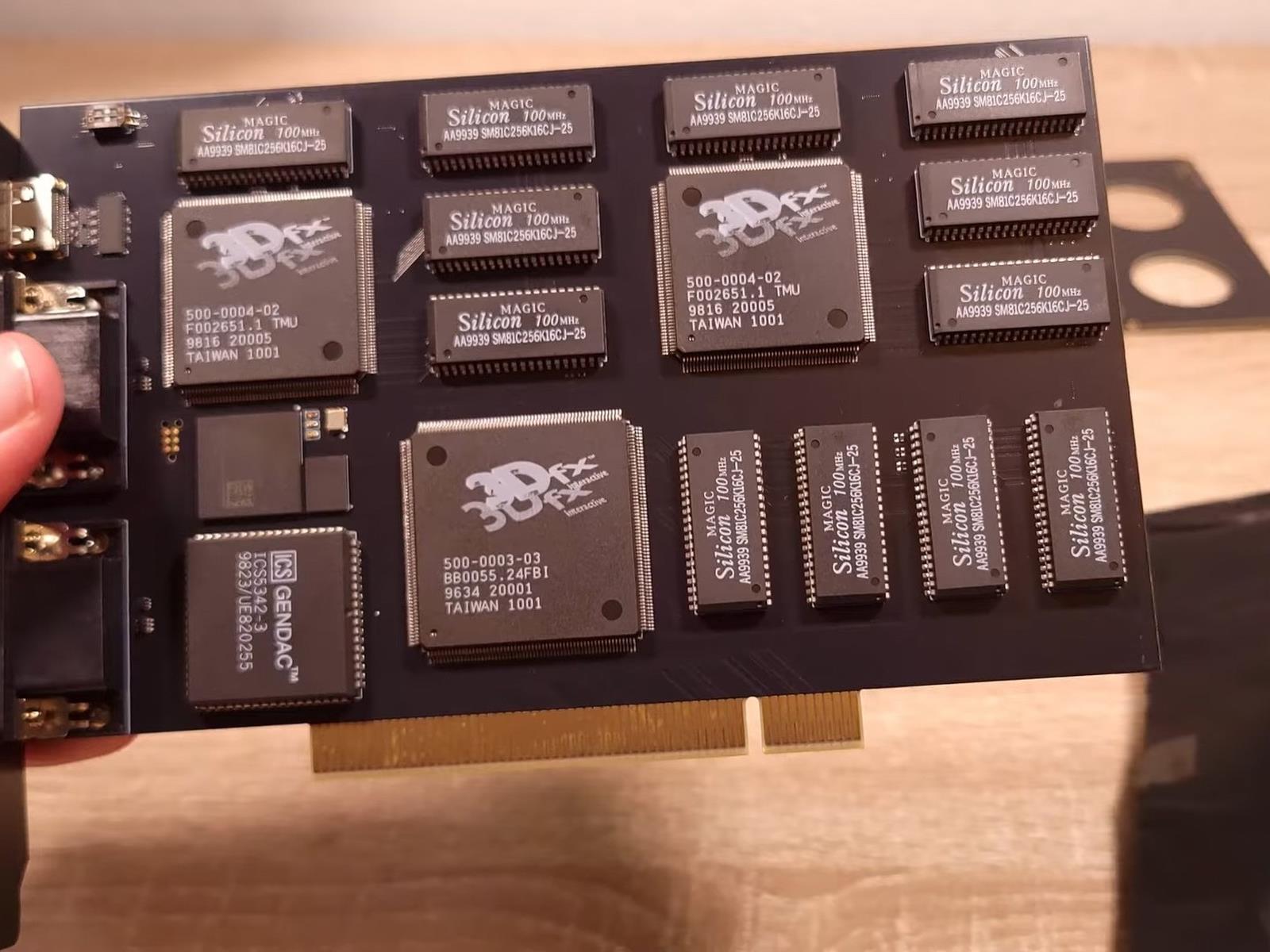
If you weren’t there, it’s hard to understand just how disruptive 3dfx and its Voodoo graphics cards were. At the time, simply displaying textured polygons at interactive frame rates was an achievement. When the original Voodoo came out, Intel’s MMX didn’t exist yet, the Pentium Pro was the fastest processor in the x86 world, 32 megabytes
The Capability
Hardware Enhanced RISC Instructions (CHERI) project is a rethinking of
computer architecture in order to improve system security. Carl Shaw gave
a presentation at Linux
Security Summit Europe (LSS EU) about CHERI and the efforts to get
Linux running on it. He introduced capabilities,
which are a mechanism for access control, and outlined their
history, which goes back many decades at this point, then looked more
specifically at the CHERI project and what it will take to apply the security constraints of capabilities to an operating system like Linux.
The idea of using an electric vehicle’s battery to send energy from the EV to the electrical grid is not a new idea. Ars first covered the technology, known as vehicle-to-grid or V2G, back in 2009 when Ford and American Electric Power in Ohio started playing with the idea, although that pilot involved hybrids rather than battery EVs. A couple of years later, General Motors tried something similar with the plug-in hybrid Volt, and since then, battery EVs with much larger lithium-ion packs have gotten in on the act, although such pilot programs have invariably involved commercial EV fleets.
More recently, we’ve started seeing EVs that have been designed from the ground up to be capable of bidirectional charging. And since July, some owners of Ford F-150 Lightnings have been sending stored energy back into the grid between 5 pm and 9 pm on weekdays, earning them some cash in the process.
Sunrun, which provides home energy storage and solar solutions, started working with Baltimore Gas and Electric Company on the project last year. This summer, it expanded its work to include the nation’s first residential V2G pilot, with a trio of Lightning owners using Sunrun and Ford’s Home Integration System. Participants can earn up to $1,000 from the program, which runs until the end of this month.
Following Sega’s Ryu Ga Gotoku Studios accidentally leaking the game’s existence last week, Yakuza Kiwami 3 has been officially announced by the developer during its RGG Summit presentation. Like Yakuza Kiwami and Yakuza Kiwami 2 before it, Yakuza Kiwami 3 is a full remake of an early entry in the long-running series, in this case 2009’s Yakuza 3, which originally launched on the PlayStation 3.
Yakuza Kiwami 3 is another ground-up remake from RGG, featuring modern graphics, enhanced gameplay and new cutscenes. The game continues the adventures of the (at this point in the story) middle-aged Kazuma Kiryu, who temporarily puts his criminal career on hold to help run an orphanage that will become very important in later entries in the series. Yakuza Kiwami 3 is also bundled with a free spinoff game called Dark Ties, which focuses on Kiryu’s adversary, Yoshitaka Mine.
Yakuza Kiwami 3 and Dark Ties will be released on February 12, 2026, for PS4 and PS5, Xbox and PC (Steam), as well as the Switch 2. Yakuza Kiwami and Yakuza Kiwami 2 are both coming to Switch 2 later this year, and RGG has also announced that Yakuza 0: Director’s Cut is coming to PS5, Xbox and PC on December 8. The expanded version of what many consider to be the best Yakuza game of all time has been a Switch 2 exclusive until now.
This week’s RGG Summit also gave us a brief update on the studio’s next game, Stranger Than Heaven, which we still know very little about, other than that it’s separate from the Like a Dragon and Judgement series and is set during multiple time periods in the 20th century. The game is still several years away from release, but a new behind the scenes trailer shows off snippets of in-game footage and motion capture sessions with actors.
At the time of writing, we’re still waiting for an announcement of the next Like a Dragon game, with the most recent entry being this year’s wonderfully titled Like a Dragon: Pirate Yakuza in Hawaii.
This article originally appeared on Engadget at https://www.engadget.com/gaming/yakuza-kiwami-3-is-official-and-its-out-next-year-with-a-bonus-new-spinoff-game-140315189.html?src=rss
Microsoft AI CEO Mustafa Suleyman told The Verge today that the company plans to transform Edge into an “agentic browser” where Copilot controls tabs, navigates websites and completes tasks while users watch. Unlike The Browser Company’s new Dia browser, Microsoft will integrate these capabilities directly into Edge.
Suleyman described Copilot opening tabs, reading multiple pages simultaneously and performing research transparently in real-time. The AI visits websites directly, preserving publisher traffic. Current Copilot features include tab navigation, page scrolling and content highlighting. Users will have the option to disable AI features entirely. Suleyman predicted that within years, AI companions will handle most browsing tasks while users provide oversight and feedback.
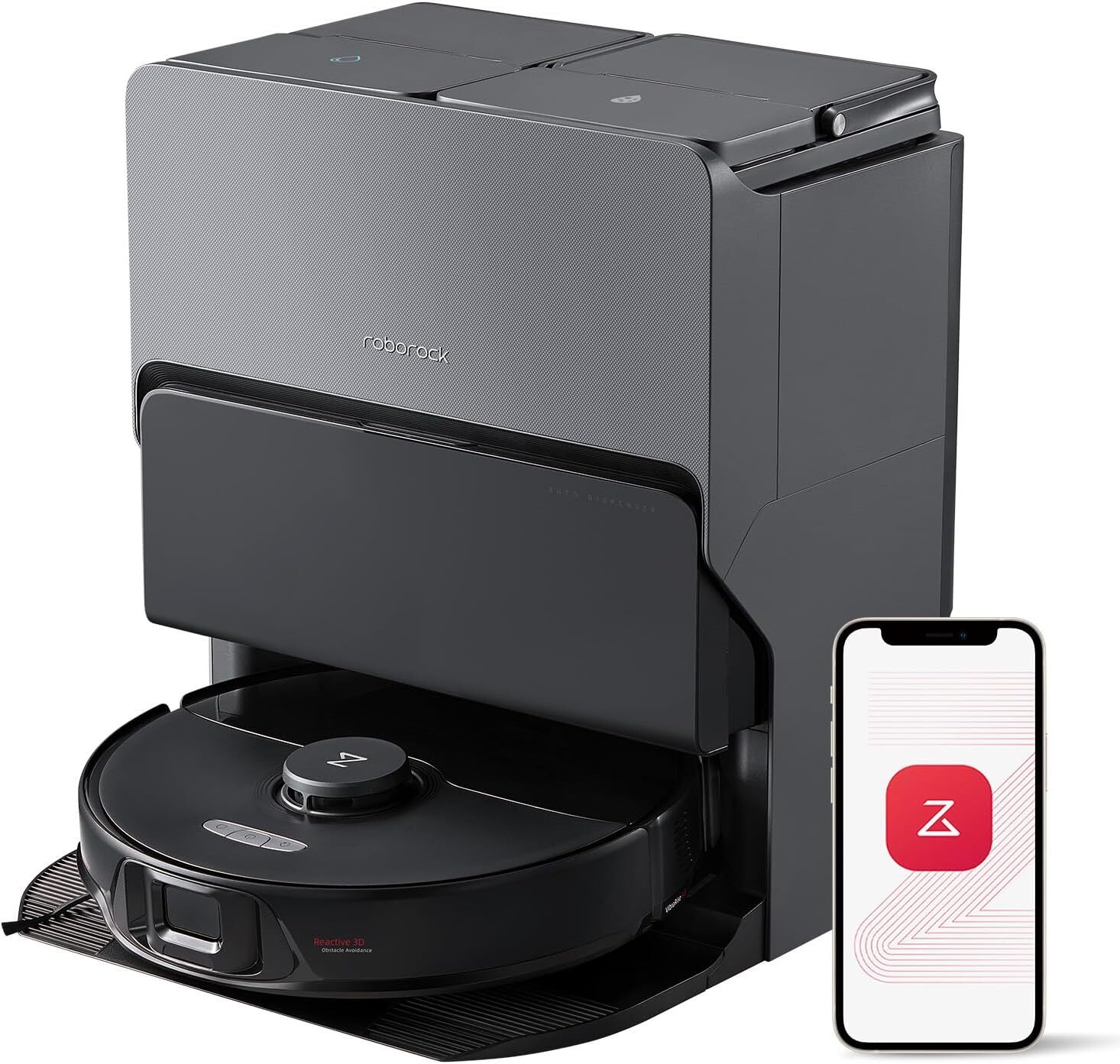
If you’re looking for a new all-in-one robot mop and vacuum to make your life easier, the Roborock S8 Max Ultra Robot Vacuum and Mopis currently 42% off, dropping from $1,300 to $750 in this deal ahead of Prime Day in October and marking its lowest price ever, according to price tracking tools.
This vacuum and map combo has a robust auto-dock system with auto-dust emptying, mop washing, and mop drying. It has a suction power of around 8,000Pa compared to the 10,000Pa suction of the pricier and more advanced S8 MaxV model, according to this PCMag review. The mop features hot-water washing with smart dirt detection to better clean the spinning pads as well as heated air drying, which reduces odors. A single fill of the automatic detergent dispenser will last you for about three months of cleaning. Like the S8 MaxV, they both have a 100ml built-in water tank, a 4L clean water tank, and a 270ml dustbin. Unlike the S8 MaxV, this model doesn’t include an Intelligent Voice Assistant and remote viewing, though the Roborock app uses AI to adjust cleaning intensity based on certain areas.
You can customize cleaning zones by tweaking features like “Add Area” for more targeted cleaning, and “Skip Area” to bypass spots, while the mop lifts to avoid soaking carpets. Furthermore, different modes like deep-carpet cleaning or carpet boost make it ideal for mixed floors. A FlexiArm side brush also reaches edges more effectively, while LiDAR tech and Reactive 3D Obstacle Avoidance stop it from bumping into furniture (and pets) more effectively. Another perk for pet owners, who praise this model on Amazon, is the Pet Area Deep Cleaning setting, which provides extra sanitation of areas where pets sleep or spend their time.
Overall, if you’re seeking an advanced robot mop and vacuum hybrid with plenty of hands-free features and don’t mind slightly less suction than the S8 MaxV (which will cost you an extra $350) and the lack of an RGB camera and voice control, theRoborock S8 Max Ultra is a top-tier model with solid performance, strong automation, and only a couple of small tradeoffs, offering strong value at 42% off.
To the person on Reddit who, just five months ago, pleaded with Logitech to “please start making solar keyboards again!,” your wish has been granted. Following up on the launch of its solar powered K750 plank released way back in 2010, Logitech today introduced the Signature Slim Solar+ K980, a wireless keyboard that sips on light from any
SquashFS developer Phillip Lougher posted a patch today just over one hundred lines of code yielding an outright massive performance gain for some operations with this compressed. read-only file-system…
Imagination’s open-source PowerVR Vulkan driver within Mesa now is able to generate its different internal shaders required by the driver to forego shipping old hard-coded shaders…
Hackers are keeping Cloudflare busy these days with increasingly bigger distributed denial of service (DDoS) attacks at an alarmingly frenetic pace. In a post on X, Cloudflare said its cybersecurity mechanisms autonomously blocked a gargantuan DDoS attack that peaked at 22.2 Tbps, which Is “twice as large as anything seen on the internet before.”
An anonymous reader quotes a report from Reuters: OpenAI, Oracle, and SoftBank on Tuesday announced plans for five new artificial intelligence data centers in the United States to build out their ambitious Stargate project. […] ChatGPT-maker OpenAI said on Tuesday it will open three new sites with Oracle in Shackelford County, Texas, Dona Ana County, New Mexico and an undisclosed site in the Midwest. Two more data center sites will be built in Lordstown, Ohio and Milam County, Texas by OpenAI, Japan’s SoftBank and a SoftBank affiliate.
The new sites, the Oracle-OpenAI site expansion in Abilene, Texas, and the ongoing projects with CoreWeave will bring Stargate’s total data center capacity to nearly 7 gigawatts and more than $400 billion in investment over the next three years, OpenAI said. The $500 billion project was intended to generate 10 gigawatts in total data center capacity. “AI can only fulfill its promise if we build the compute to power it,” OpenAI CEO Sam Altman said in a statement. The Tuesday’s announcement, expected to create 25,000 onsite jobs, follows Nvidia saying on Monday that it will invest up to $100 billion in OpenAI and supply data center chips. OpenAI and partners plan to use debt financing to lease chips for the Stargate project, people familiar with the matter said.
Intel announced this week that its moving its graphics driver support for integrated graphics on 11th Gen through 14th Gen processors over to their legacy driver model on Microsoft Windows. While this is a setback for those using Raptor Lake processors on Windows as well as the few Xe DG1 discrete graphics out there, Linux users don’t have much to worry about…
My massage guns are precious to me, and I don’t plan on giving them up any time soon. At the same time, the world of sports recovery is so much bigger than a $400 Theragun. Maybe you love your massage gun, but you’re still wondering what other tools are out there to help soothe your sore muscles. I’ve got you covered on this front. After six years of running marathons without any major injury, here are some of my favorite massage gun alternatives that deserve a spot in your recovery arsenal.
Percussive foam rollers
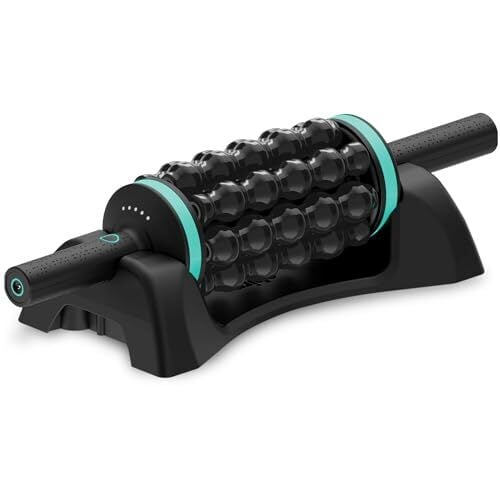
Foam rolling is a recovery staple on its own, but I recently discovered how the Chirp RPM Rolling Percussive Massager (which I review in-depth here) elevates this classic technique with built-in vibration. This hybrid tool combines the familiar benefits of traditional foam rolling with gentle percussion therapy, which seriously reduces the effort required for effective self-massage. Traditional foam rolling can be exhausting, especially when you’re already fatigued from training. The percussive action does much of the work for you, allowing for deeper muscle penetration without the same physical exertion. Anecdotally, I’ve noticed solid improvements in my recovery time when using the Chirp roller, particularly for IT band and calf muscle maintenance.
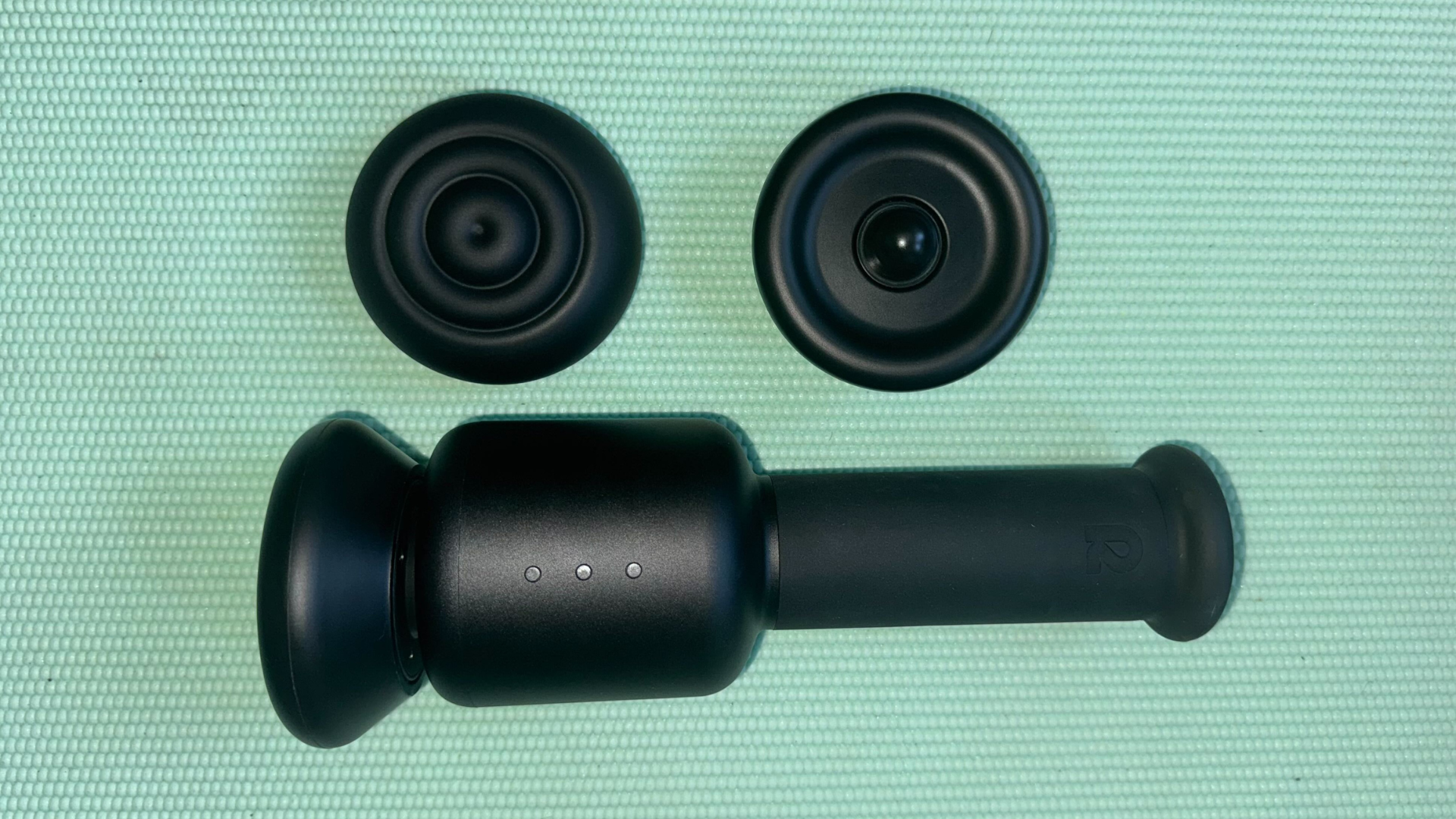
When most people think of massage guns, they picture the typical back-and-forth percussion motion. Lately, I’ve opted for the Rally orbital massage gun to break up the jackhammering with a unique circular motion pattern. It feels less aggressive than traditional percussion therapy, but just as effective. I’ve found it particularly effective for post-workout recovery on large muscle groups like quads and hamstrings, where traditional massage guns can sometimes feel too intense. Plus, if you turn the orbital massager at a slight angle, it works just like a percussive massage gun, too.
The device is also surprisingly quiet compared to most percussion massagers, making it ideal for apartment living or late-night recovery sessions. It’s no small investment, but for me, it’s been worth every cent.
Professional compression therapy systems can cost thousands, but I get a lot out of simple compression socks. While they may not have all the bells and whistles of medical-grade units, there’s a good chance you don’t need a medical-grade unit—just a $20 3-pack of socks.
Tennis or lacrosse balls
Before massage guns existed, athletes relied on simple tools like tennis balls and lacrosse balls for trigger point release. These remain incredibly effective and cost basically nothing. And trust me, a $5 lacrosse ball from a sporting goods store performs identically to a $25 “recovery ball” with fancy packaging.
Pro tip from dealing with plantar fasciitis: You can put your tennis ball in the freezer for a nice cooling effect, especially if you muscles are inflamed.
Recovery techniques that cost nothing
Before you drop hundreds on a fancy massage gun or decompression table, make sure you’re taking care of yourself for free in these ways:
Mobility work. The most overlooked recovery tool is completely free: strategic stretching and mobility work. Spending 15-20 minutes on targeted stretches can be more beneficial than any gadget. Focus on dynamic stretching before workouts and static stretching afterward, paying special attention to areas that feel tight or overworked.
Quality sleep. Quality sleep is the foundation of all recovery, yet it’s often ignored in favor of expensive gadgets. I’ve invested in my sleep with this pair of sleepbuds so that I can actually sleep through my partner’s snoring.
Active recovery sessions. Light movement on rest days can be more effective than complete inactivity. Walking and yoga are great ways to get your blood flowing without adding training stress.
The bottom line
The best recovery protocol is the one you’ll actually follow. Whether that includes high-tech gadgets or a simple tennis ball matters less than your commitment to making recovery a priority in your training regimen. I’ve always made it a priority, and I’ve yet to be sidelined from marathon running in the past six years (knock on wood). My advice is that a combination of one or two quality devices—alongside all those free recovery techniques—used regularly will always deliver better results than a collection of expensive gadgets used sporadically. And remember that the most powerful recovery tool is time itself, so don’t turn to a massage gun when what you really need is a rest day.
I’m currently testing a $599 decompression and massage table, so stay tuned on whether I think that sort of device is worth your money.
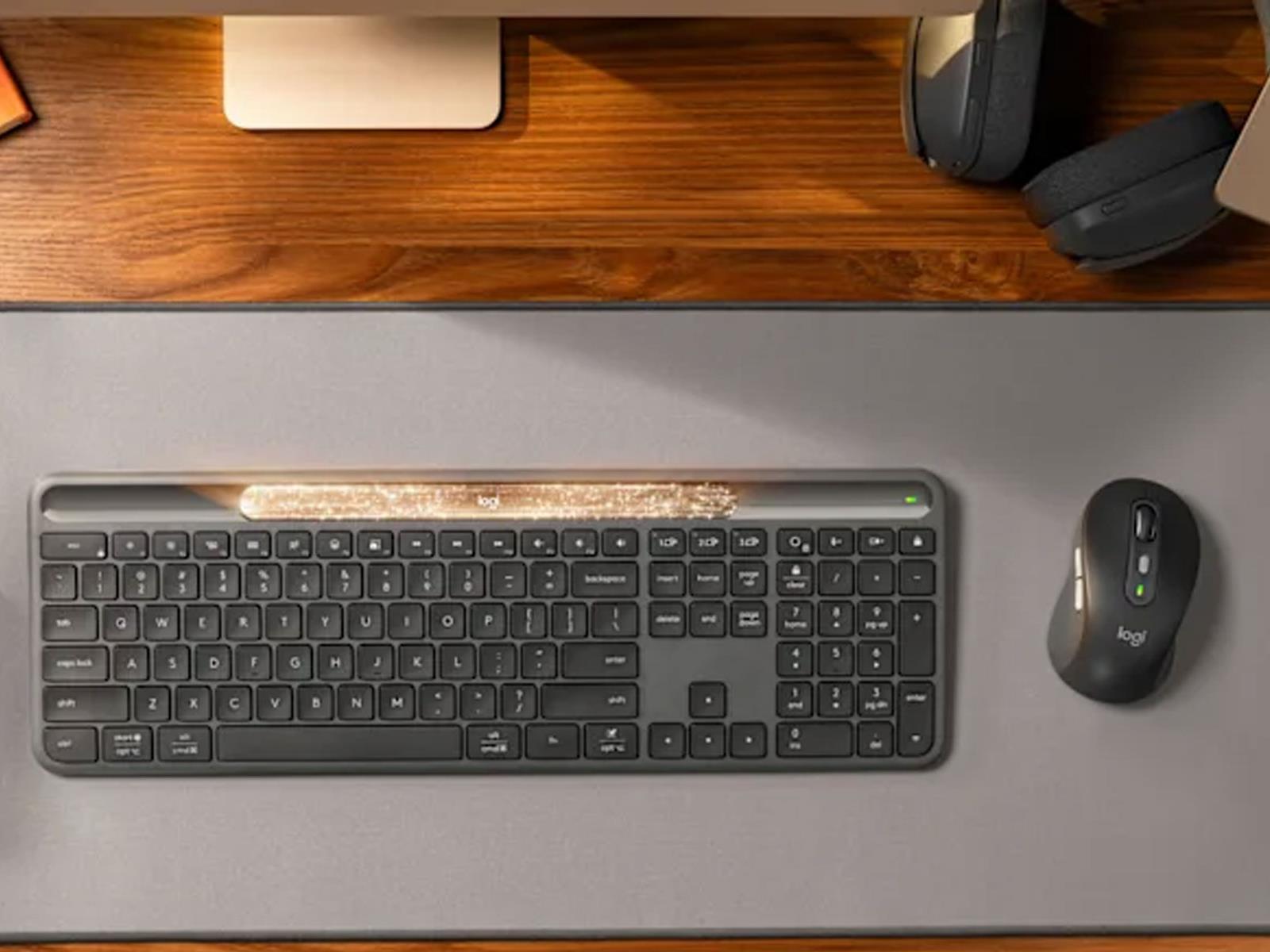
Logitech has launched the Signature Slim Solar+ K980, a new solar-powered keyboard that you don’t need to put under the sun whenever it runs low on battery. The company says it can use “light from any light source to stay charged and ready to use” and that you can use it in complete darkness for up to four months once it’s fully charged. As long as the light source reaches 200 lux in brightness, which is considered dim lighting during daytime, it can charge the keyboard. “Even the need to think about charging can be a distraction, so we designed Signature Slim Solar+ to take that off your plate completely,” said Art O’Gnimh, the General Manager of Core Products Group at Logitech.
You don’t have to think about plugging the keyboard in or changing its battery: It’s powered by a rechargeable battery that Logitech says can last up to 10 years. But if it does malfunction, the company told The Verge that you can replace it on your own, because it’s encased in plastic and is sold by iFixit. The keyboard absorbs light through a strip above the keys themselves, which use a scissor-switch mechanism and are in a full-size layout with a separate number pad. It’s compatible with multiple operating systems, and you can link it with up to three multi-OS devices and jump from one to the other with its Easy-Switch keys. If you use the Logi Options+ app, you can program its action key to automate simple tasks and to customize its AI launch key to instantly fire up the AI chatbot of your choice.
This article originally appeared on Engadget at https://www.engadget.com/computing/accessories/logitechs-new-keyboard-can-be-recharged-by-any-kind-of-light-120019932.html?src=rss
The Lee Cougan Rampage Origin is a proper cross-country race hardtail in the best sense of the word, offering a lot of what I’m looking for in this style of bike.
There are slacker, rowdier and even lighter XC hardtails out there. However, on paper, the Rampage Origin strikes an unusually rare balance, combining the – dare I say it – old-school charm of chasing low weight with practical features.
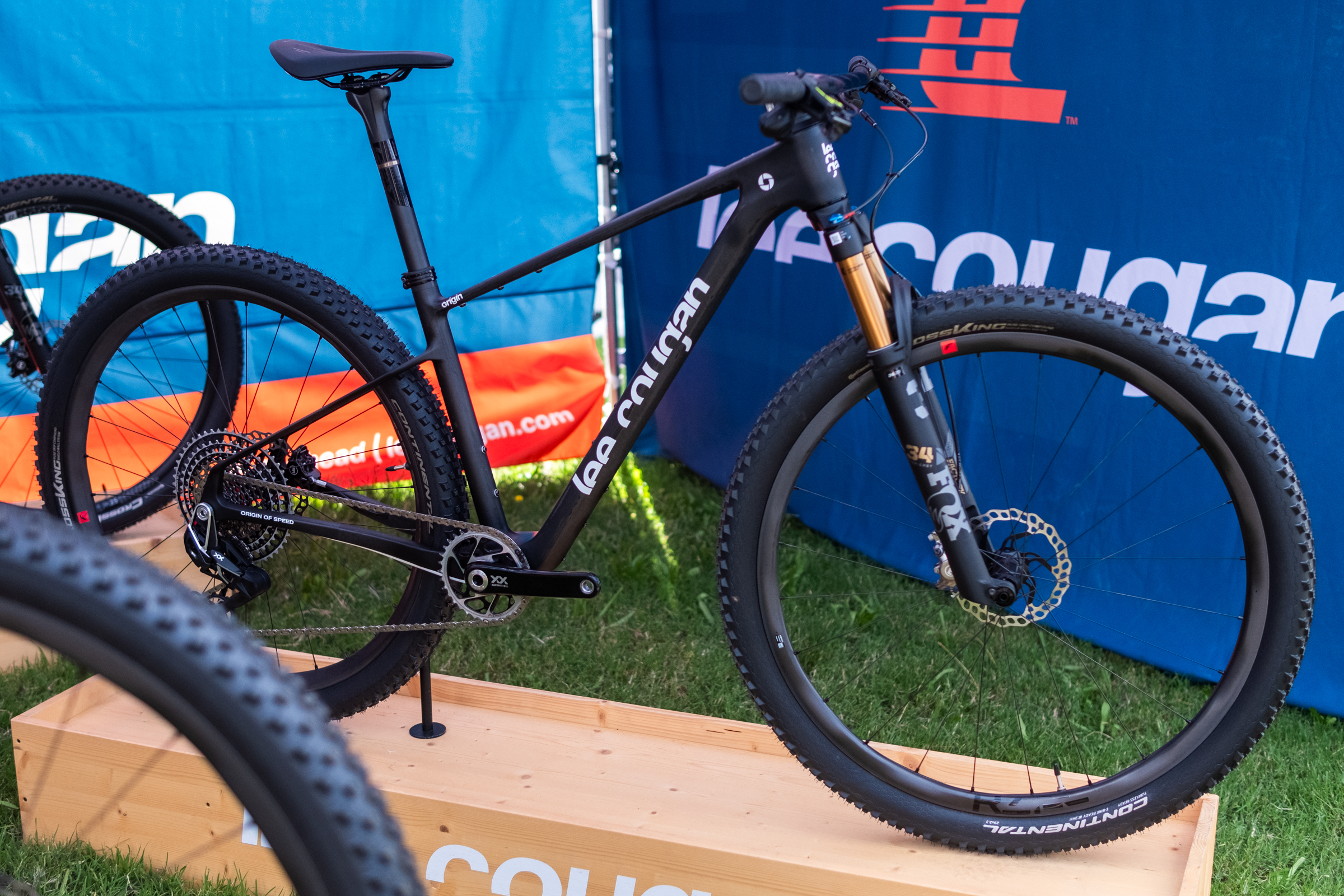
Spotted at Sea Otter Europe and launching officially today, it’s a hardtail MTB designed for XC marathon riding, that prioritises low weight and practical touches, with a claimed frame weight of only 940g for a size small in the raw-carbon finish.
The new frame has a far more contemporary silhouette than the outgoing Rampage, with slimmer, dropped seatstays and a less aggressive version of the distinctive kink where the seatstays and chainstays meet.
Geometry has also been brought up to date. The head angle has been slackened to 68 degrees (down from 70), while the seat tube angle steepens to 75 degrees (up from 73).
Neither number is wildly out there, and they are exactly what you’d expect of a modern XC race bike of this ilk.
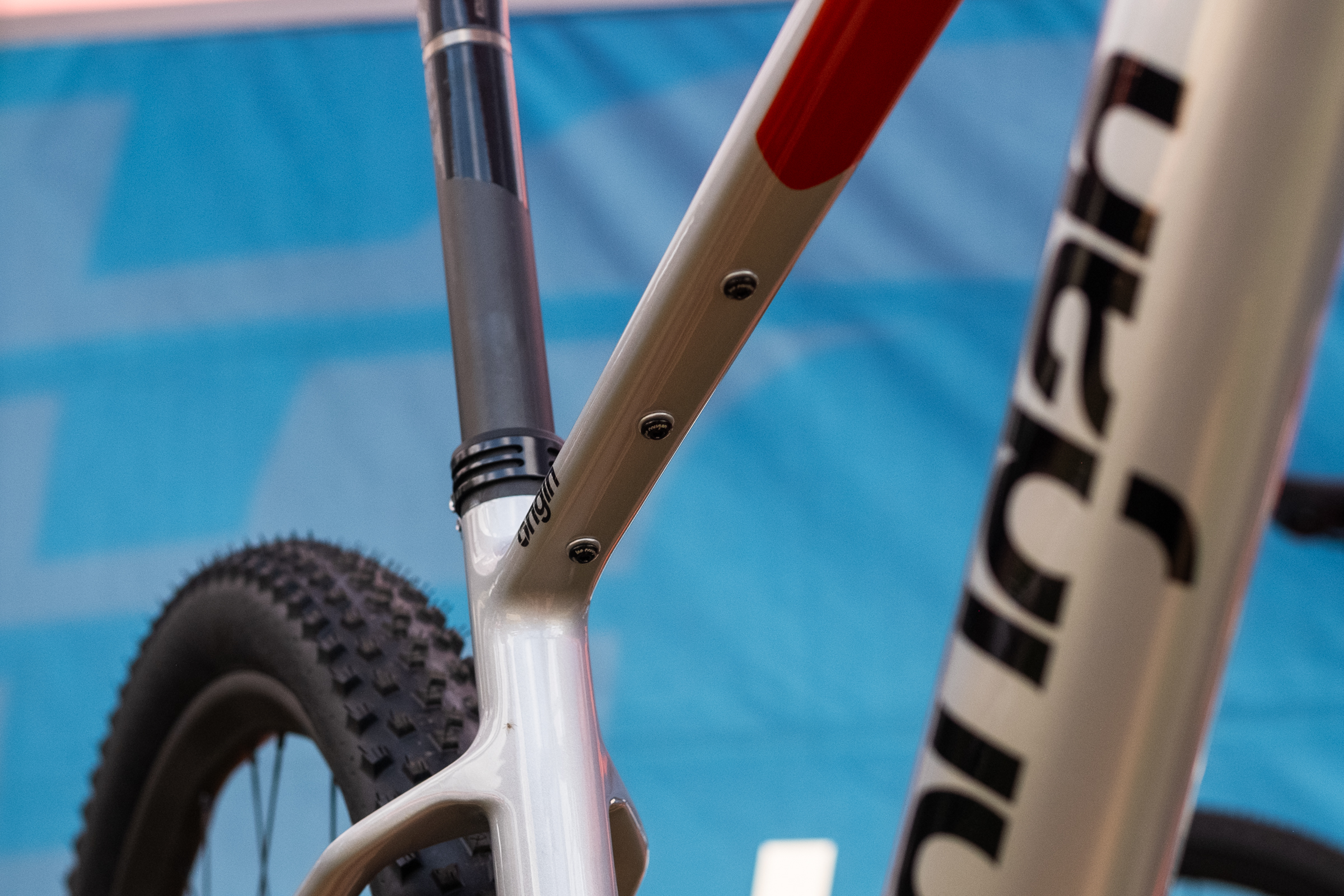
Although not unheard of, it’s relatively unusual to see a proper XC bike with down tube bosses… Jack Luke / Our Media …but it’s even more unusual to see top tube bosses. Jack Luke / Our Media
Despite the focus on weight, practicality hasn’t been ignored.
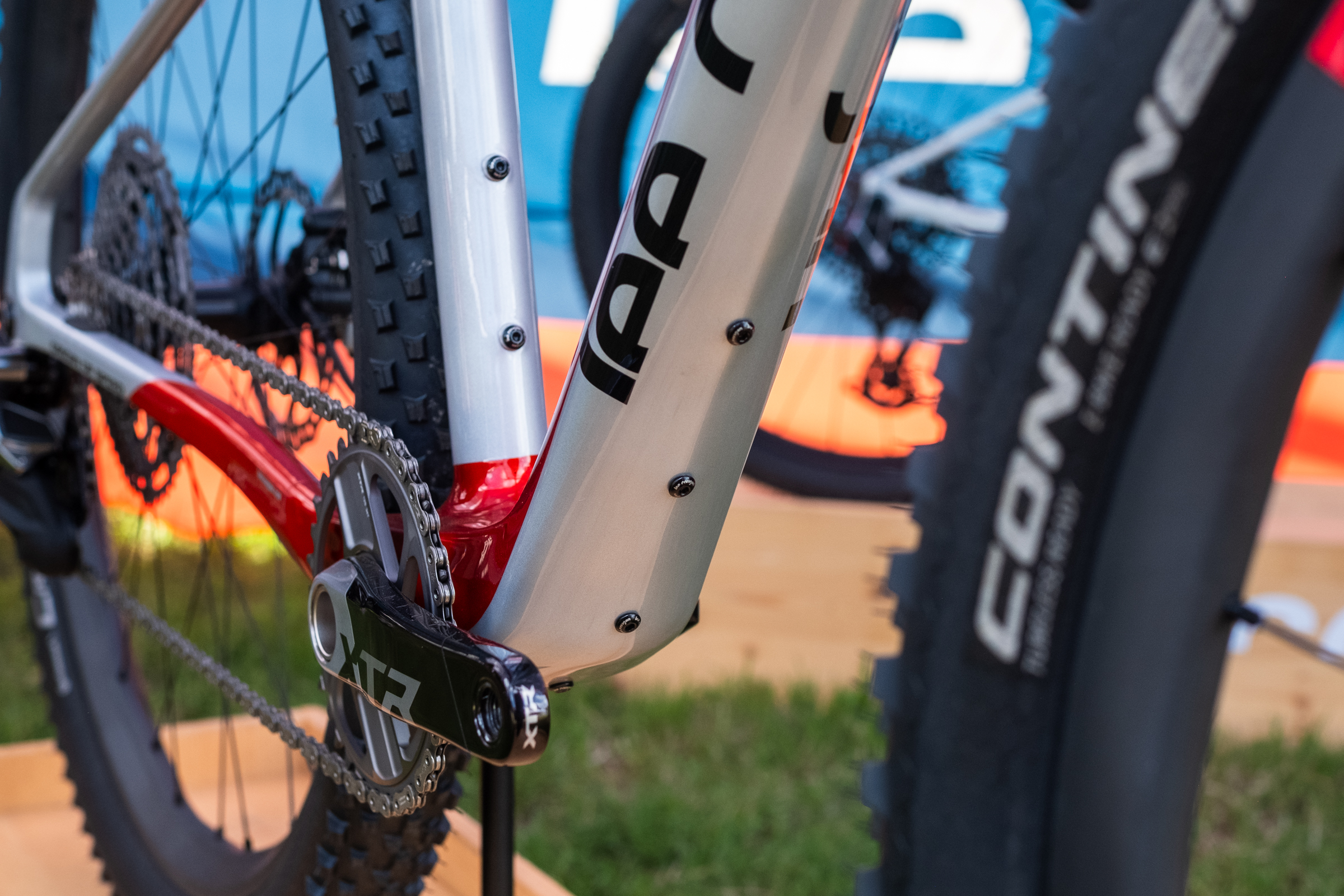
I’m particularly fond of the triple boss accessory mounts under the top tube and space for an extra bottle cage beneath the down tube. This makes the bike more marathon- and ultra-friendly, but also offers a useful place to stash tools or spares for day-to-day riding.
The Merida Big.Nine springs to mind as a frame offering a similar setup on the underside of its top tube, although the additional boss on the Lee Cougan broadens compatibility with bikepacking accessories. Plus, the Big.Nine misses out on the additional down tube bosses.
Official tyre clearance is 2.4in. That’s around standard for a contemporary XC hardtail, particularly one focused on XC marathon racing. As expected, the frame now uses SRAM’s UDH standard.
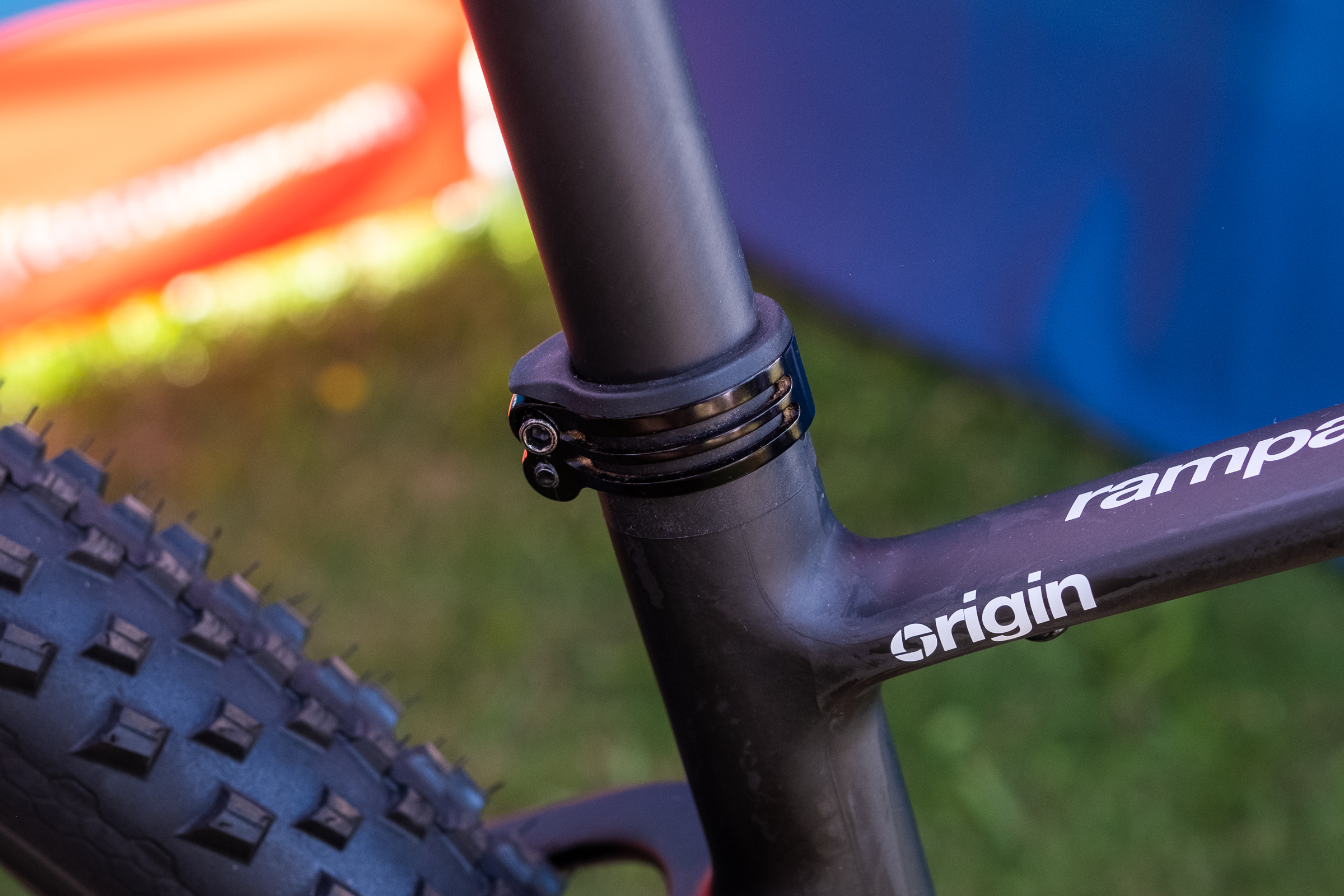
If nothing else, I like the look of the twin-bolt seat clamp. Jack Luke / Our Media
Other nice touches include a chunky double-bolt seat clamp – slipping seatposts are rare on quality frames, but it’s reassuring to see, and a nice touch beyond a generic rebranded single-bolt clamp.
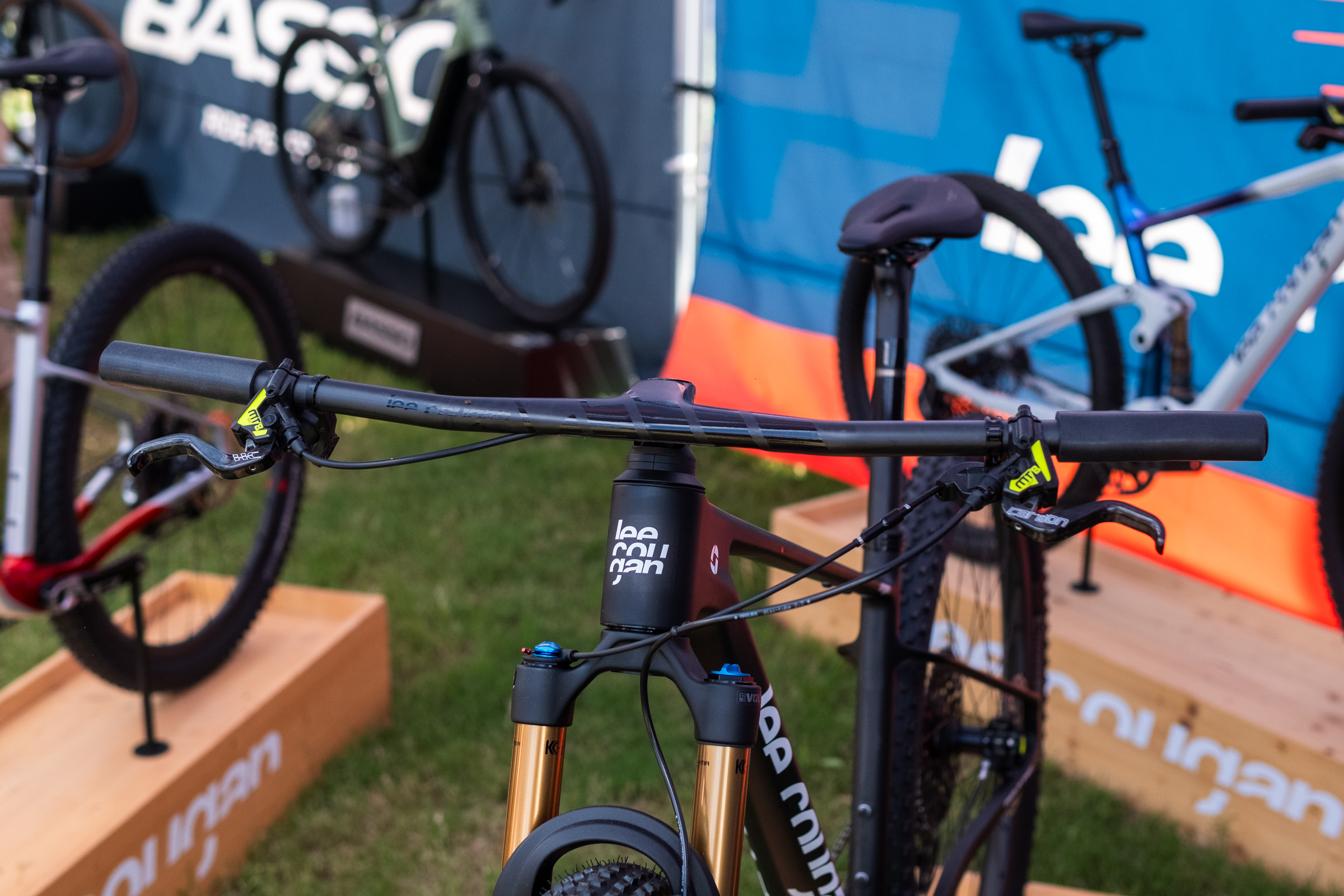
One-piece cockpits are par for the course on modern hardtails. Jack Luke / Our Media
Lee Cougan’s own integrated one-piece cockpit is a handsome visual match for the frame. While adjustability is, of course, impacted compared to a two-piece cockpit, these are an increasingly common sight on high-end XC builds, so it doesn’t feel out of place.
In a slightly unusual move, at least from the perspective of someone based in the UK, the two complete builds come specced with rigid posts.
Fixed posts remain popular in ‘traditional’ marathon racing, but dropper posts are approaching a point of anecdotal near-ubiquity and, to a lesser degree, as spec on complete XC bikes.
The bike is offered in two finishes, and the stealthy black option looks wicked. Jack Luke / Our Media
That said, the frame is, of course, fully compatible with internally routed droppers.
The bike was designed with input from two-time marathon world champion Leo Páez, who rode a custom build with a DT Swiss dropper, pedals and tyre inserts to a bronze medal at the 2025 XCM World Championships. That build tipped the scales at only 9.4kg.
The Rampage Origin will be offered in three complete builds, with either SRAM XX SL Eagle AXS, Shimano XTR Di2 or XT Di2. Pricing starts at €4,599 and runs to €6,799, depending on spec. No frame-only option is available at present.
The bike is available in the two finishes pictured. Some will argue that black bikes are boring, and I’m usually in agreement, but I will make an exception for the purposeful stealthiness of the matt carbon option, which looks fetching with its flash of Kashima-coated stanchion.
This week my team (Coalition Delusion, racing in the B1 Development Lime division), took on 8 others in a points race slugfest in Urukazi. Everyone knew heading in that it would be a tough race. Could we survive in the front to the finish, while grabbing enough sprint points along the way?
Only time would tell. Here’s how our race unfolded…
Planning + Warmup
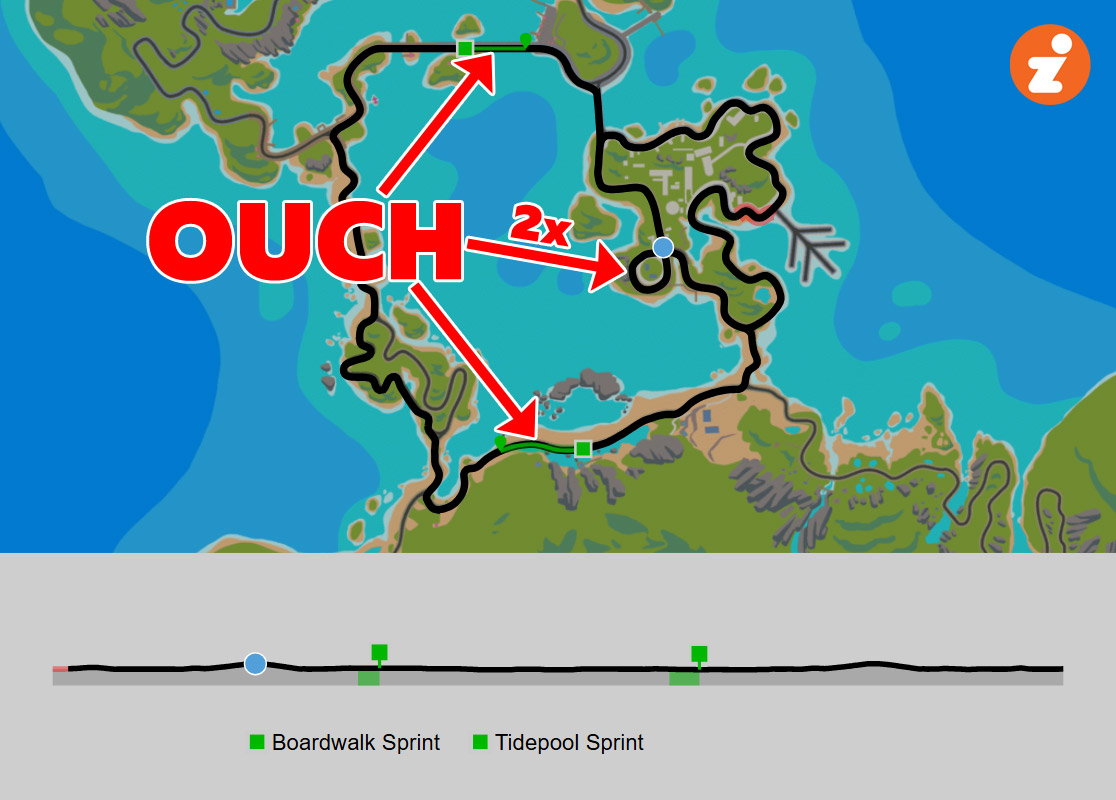
Our team had been chatting on Discord for several days leading up to this race. How could we best attack four laps of Fine and Sandy? Nearly all the race-winning points were in the 8 sprints, but we would also have to survive 8 repeats of the short, dusty Mech Isle climb.
We really didn’t know much about the other teams, either, it being a fresh division and we having only raced a TTT together.
In the end, we decided that the key was to stay in the front group for as long as possible (first priority) while also contesting as many sprints as possible (second priority). It was left to each rider how exactly that would happen.
I was already one dirty chai and a few pieces of Neuro caffeine gum into my day by the time I got on the bike at 9:35am, so I was nicely caffeinated. I’d also applied some PR Lotion to my legs, then I rode a 20-minute warmup, keeping the effort mostly zone 2, with a few spinups to get my heart rate up in zone 4.
After updating my name to include [Coalition] and changing to my chosen race rig (Pinarello Dogma F 2024 + DT Swiss disc), I headed to the pens. Let’s race!
Lap 1 – the Start
The 50 riders in our race started quite tamely, but that was expected. Everyone knew we would need every bit of power we could muster to hang on over 8x Mech Isle climbs and contest 8x sprint segments.
If you’re wondering what this course looks like conceptually, it’s this:
Captain Neil was on comms, keeping on and carrying on, calmly directing and giving atta boys.
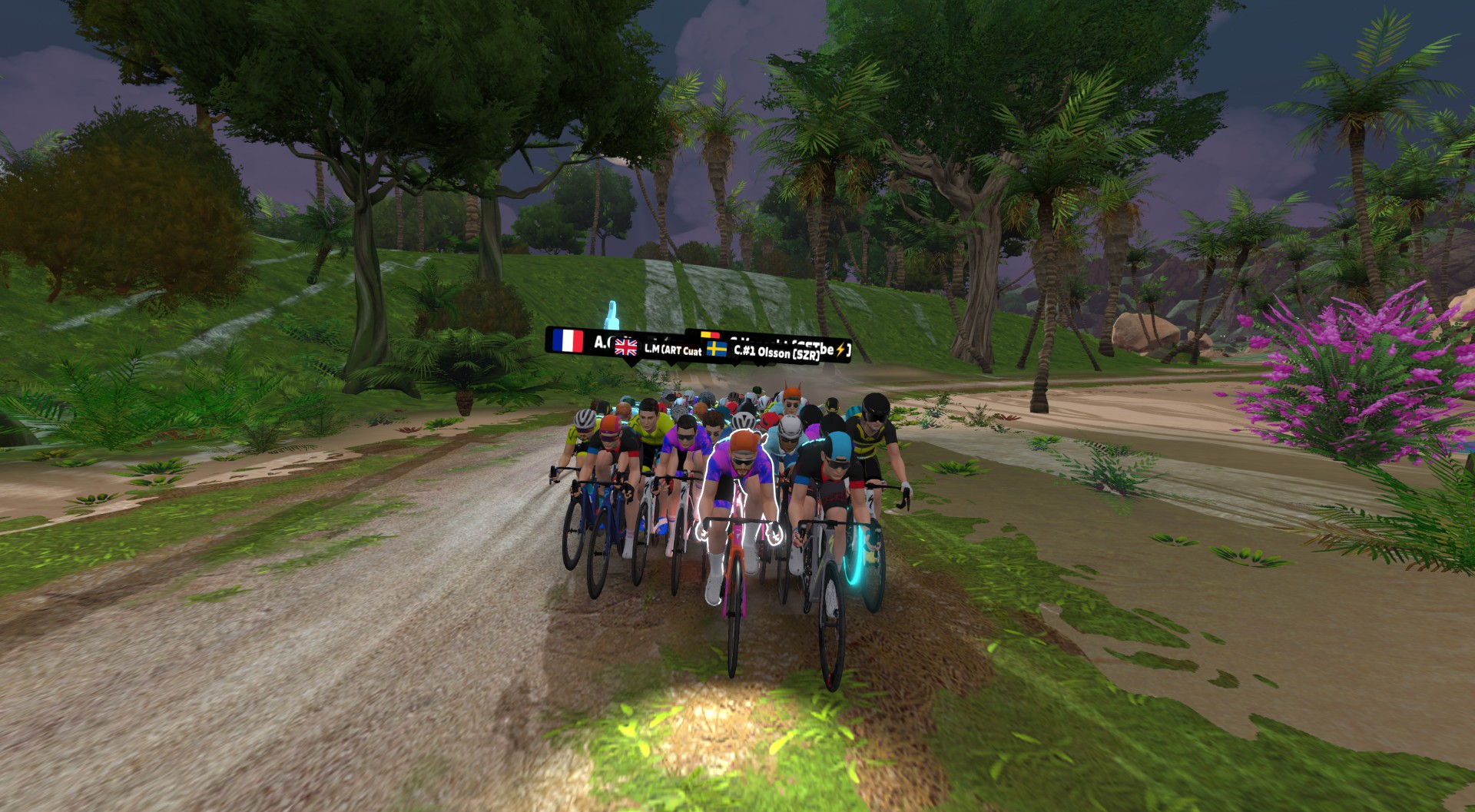
As we crossed the wooden bridge to begin the first Mech Isle climb, I was well-positioned just a bike length from the front, giving me room to “sag” the climb if the group was pushing harder than I could hold.
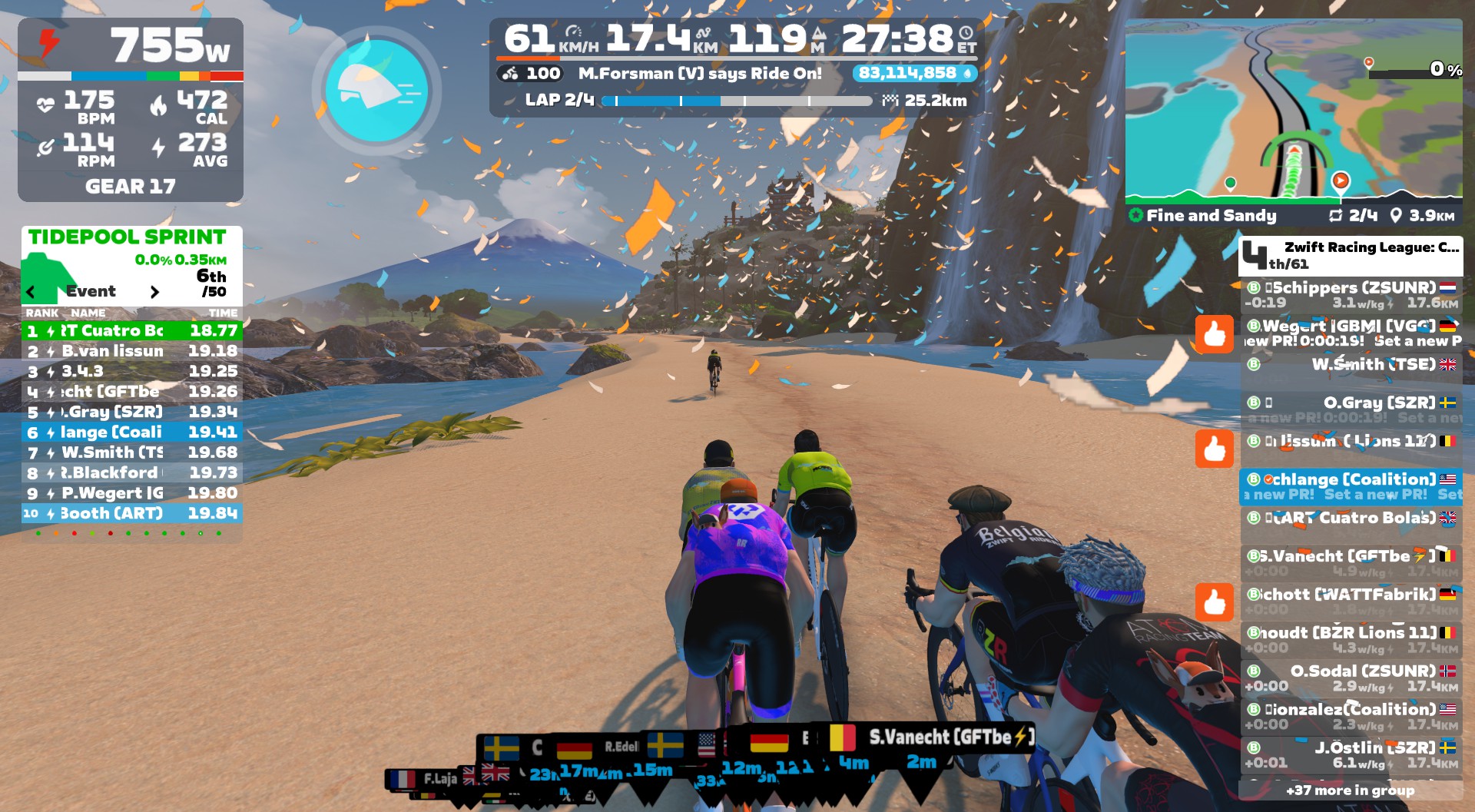
Vanecht from the Belgian Zwift Riders team through down a huge attack as we began, but I wasn’t going to chase that. Too much action up the road. Apparently others though the same, as he stayed away, taking max FAL points on the Boardwalk Sprint before sitting up and rejoining the peloton.
For my part, I put in a hard sprint, but not a maximal sprint. 11th place.
The group slowed quickly after the sprint point, and I realized I had my first powerup: a steamroller. Should I hold it for the Mech Isle climb up the road, or burn it in hopes of getting an aero at the next arch? I decided to hold onto it.
On Discord, it sounded like teammate Chris M was already feeling the effort. We all told him to hang on as long as he could. In ZRL, every point counts!
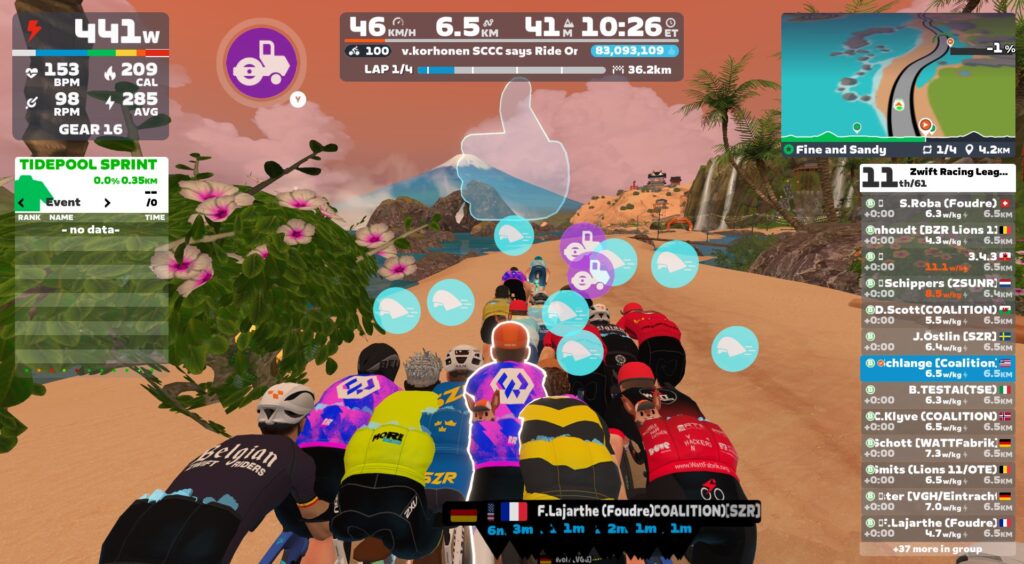
The first Tidepool Sprint is where I realized I’d made a tactical error in holding onto my steamroller. Because it was clear that riders with aero (helmet) powerups had a huge advantage in the sprints, as they rode away from me quite handily and I crossed in 23rd:
I decided then and there not to make that mistake again. My new goal was to have an aero powerup heading into as many of the sprints as possible. If that meant burning a steamroller and suffering more on the Mech Isle climb, so be it.
Because I thought I could hold on up that climb, even though it was a hard effort. And sprint points were all that mattered. 39 riders left in front. On to lap two.
Lap 2: the Winning Move
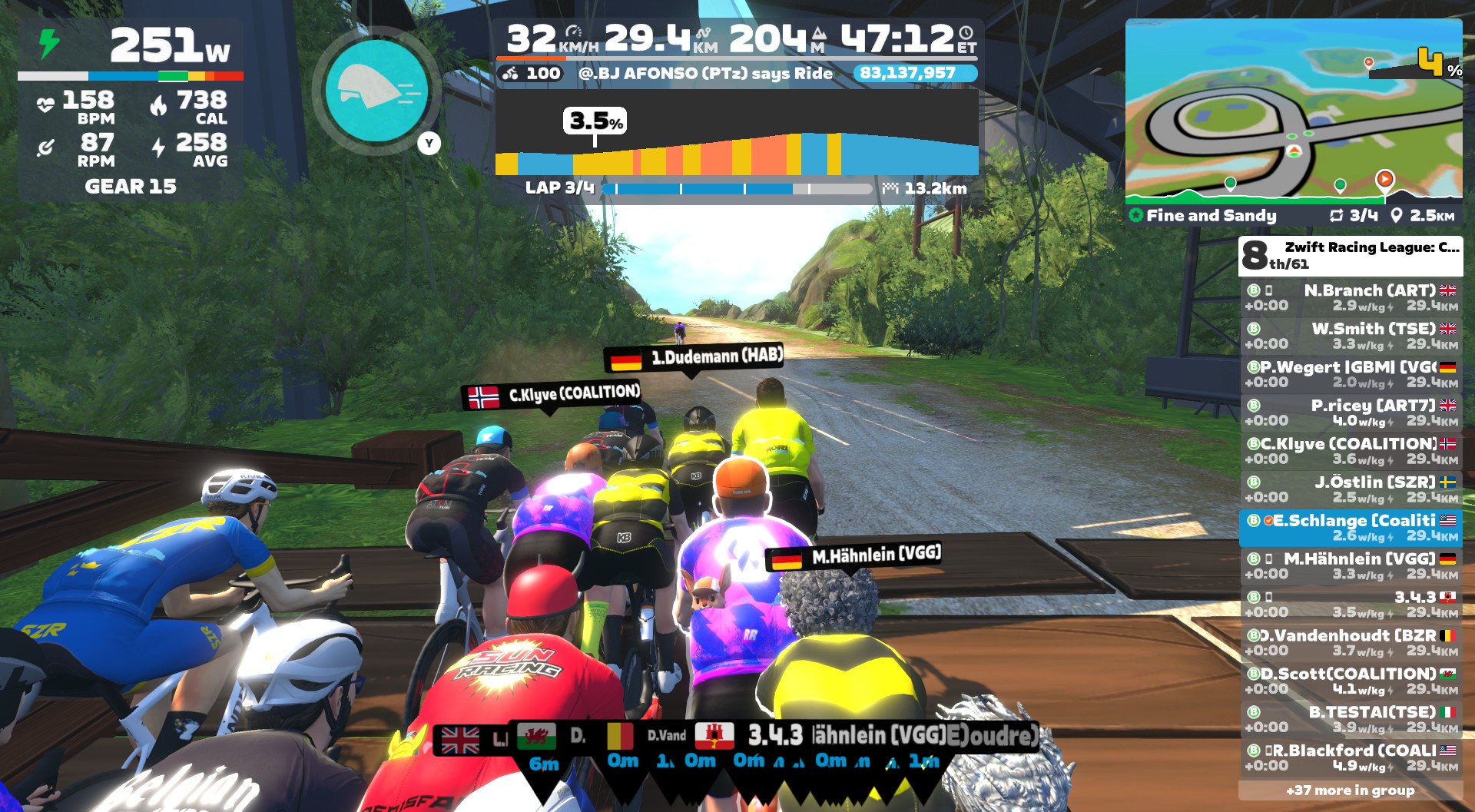
As the race unfolded, we settled into a rhythm: go hard on the Mech Isle climb and sprint segments. Ride easy in between. Most of that in between riding was really easy, in fact. I kept finding myself poking my nose into the wind, even though I was only holding 150-200 watts!
On the Mech Isle climb at the start of lap 2, ZSUN rider T. Schippers attacked hard, chasing another rider who was even further off the front. I didn’t think much of it, and neither did most of the riders, it seemed.
But this was the winning move.
I came through the Boardwalk Sprint in 11th, without any powerup to assist me. I was starting to believe that I had the legs today to grab some solid sprint points, especially if I could land an aero powerup. And just like that, the Zwift gods gifted me one – my first on the day!
As we wound our way through Mangrove Maze, we noticed T. Schippers was growing his gap off the front, now 15 seconds ahead. Impressive. But still, I don’t think anyone saw it as a move that would last.
The Tidepool Sprint on lap two was my first all-in sprint effort, as I had an aero powerup and thus, I hoped, a shot at a top-5 finish. I crossed the line in 4th. 47 points! And a steamroller, which meant I’d have one easier go up the Mech Isle climb, but another meagure finish on lap 3’s Boardwalk Sprint.
35 riders were left in the front group as we finished our second lap, with 1 additional rider (Schippers) 38 seconds off the front.
Lap 3
As we made our way toward the first sprint of our third lap, we all began to understand the beautiful plan T. Schippers was executing. While we sprinted our guts out 4x each lap, sitting up in between to recover, he was keeping the power steady and slowly growing a gap on the peloton.
I certainly didn’t have the legs to bridge up to him solo. And it seems nobody else did, either. As long as he was riding within himself, he was going to win this race and land a huge points haul. Would that be what his team (ZSUN) needed to win? We weren’t sure, as we really didn’t know who the strongest teams were.
A 14th-place finish on the Boardwalk Sprint earned my team 37 more points, and more importantly, another aero powerup! I used that aero to grab 3rd (and 48 points) on the Tidepool Sprint, where I got another aero powerup.
It meant I would suffer a bit on the two Mech Isle climbs just up the road. But hopefully that meant I could finally put in a fast effort on the Boardwalk Sprint.
The Mech Isle climb at the end of lap 3 proved to be the one that dropped teammate Chris M from the front group. He’d done a remarkable job of holding on, though, and continued to soldier on in the chase group.
The front pack had been whittled down to 29 riders (plus Schippers well off the front) as we headed into our final lap. Five Coalition riders remained in the front group.
Lap 4 – the Finish
Several riders went surprisingly early on the final Boardwalk Sprint, but I wasn’t feeling spicy enough to follow. Still, I had an aero powerup, so I gave it a go, crossing in 8th.
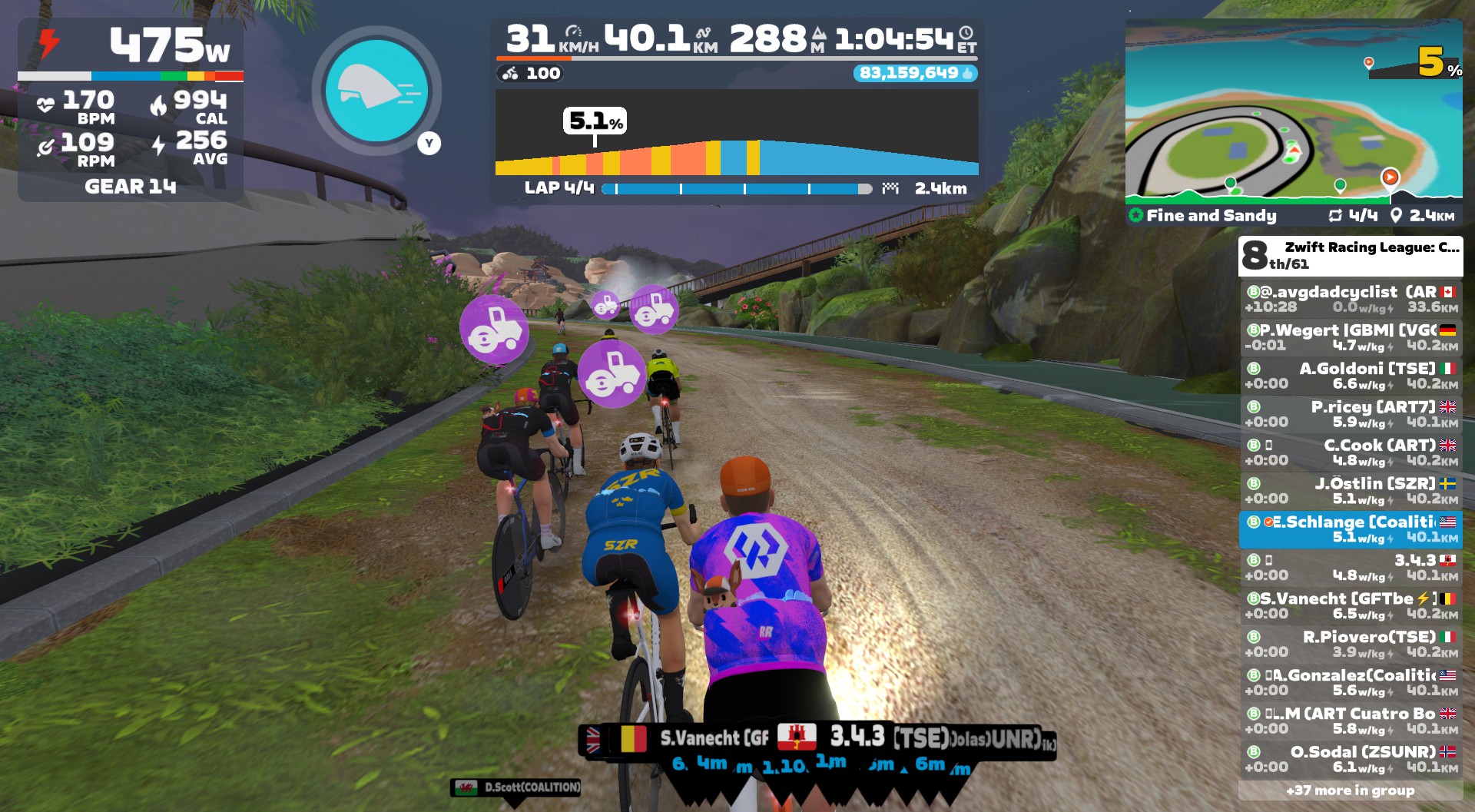
Landing a steamroller powerup put me in a bit of a quandary. Should I hold onto it to ease my final effort up the dirt climb? Or ditch it in hopes of getting an aero powerup?
I decided to burn it – to literally trash it (so other riders wouldn’t see what I did). And it worked! I got 16th on the final Tidepool Sprint, well behind the riders with aero powerups. But I also landed an aero powerup myself, which I knew would be helpful in my finishing sprint, as long as I could hold onto the wheels up and over the final Mech Isle climb.
Three riders managed to get away off the front up that final climb, and I just suffered my way over it, making sure I didn’t get gapped off the back. My gamble had worked: I had survived the final climb, and had an aero in my pocket for the finish.
My plan was to surf the wheels until the final few hundred meters, and that’s what I did. I probably left it a bit late, but managed to cut through most of the group and finish 6th.
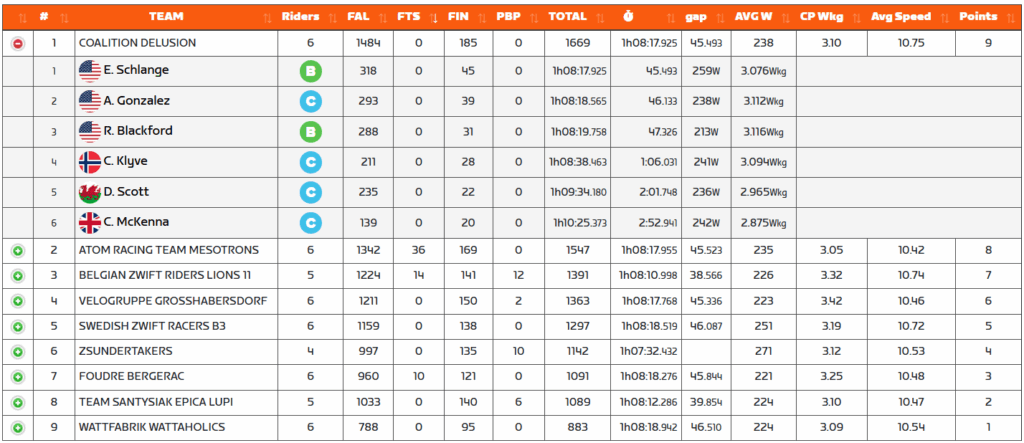
The results from WTRL came in quicker this week, and we were stoked to see Coalition Delusion atop the leaderboard!
Just like we’d told Chris M, every point counts. Without his 159 points we would have lost to Atom Racing. That’s why you never give up in a ZRL race.
Of course, everyone on the team contributed in a big way, as you can see from our points totals above. You can’t win these sorts of races with just one or two outstanding performers. Well done, Coalition Delusion!
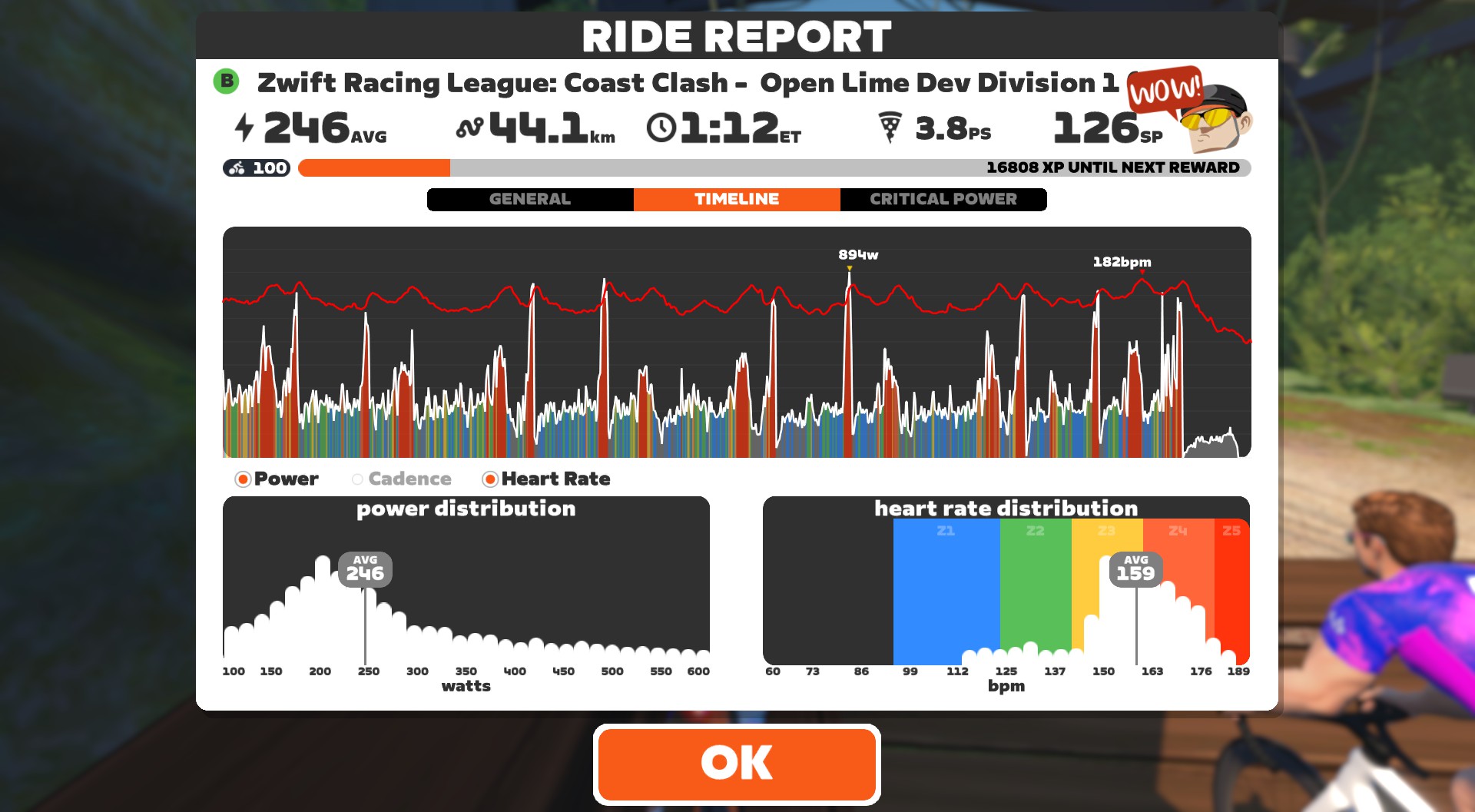
Personally, I was really happy with my result, as I somehow managed to be the leading points scorer for my team this week. While my average power for the race wasn’t anything impressive, 17 sprint efforts across 69 minutes of racing certainly emptied my matchbook!
I’m enjoying my ZRL races so far this year, more than I have in some past seasons. It’s fun to be in the mix, instead of just holding on for dear life until I get shelled off the back.
Lastly, kudos to T. Schippers for nailing the long breakaway, Jensie-style, and taking the overall win. It was a strategically brilliant move, and he managed to do it with a 319W (3.365 W/kg) average. He, not surprisingly, earned more FAL and FIN points than anyone else in the race (434 total).
Request: Realtime Points
This was a fun race. But it would have been so much cooler if we had real-time points results displayed in the HUD. Imagine the strategic elements that would bring into the race.
Please make it happen, Zwift!
Your Thoughts
How did your race on Fine and Sandy go this week? Share below!
Servers running on motherboards sold by Supermicro contain high-severity vulnerabilities that can allow hackers to remotely install malicious firmware that runs even before the operating system, making infections impossible to detect or remove without unusual protections in place.
One of the two vulnerabilities is the result of an incomplete patch Supermicro released in January, said Alex Matrosov, founder and CEO of Binarly, the security firm that discovered it. He said that the insufficient fix was meant to patch CVE-2024-10237, a high-severity vulnerability that enabled attackers to reflash firmware that runs while a machine is booting. Binarly discovered a second critical vulnerability that allows the same sort of attack.
“Unprecedented persistence”
Such vulnerabilities can be exploited to install firmware similar to ILObleed, an implant discovered in 2021 that infected HP Enterprise servers with wiper firmware that permanently destroyed data stored on hard drives. Even after administrators reinstalled the operating system, swapped out hard drives, or took other common disinfection steps, ILObleed would remain intact and reactivate the disk-wiping attack. The exploit the attackers used in that campaign had been patched by HP four years earlier but wasn’t installed in the compromised devices.