
Merged overnight for Linux 7.0 and set to be back-ported to existing Linux stable kernel versions is a fix for aging AMD GCN 1.0 “Hainan” GPU models. This closes a 2021 bug report that was long neglected and ended up being just a small tweak to fix the issue reported of GPU hangs…
Category Archives: Unfiltered RSS
We keep finding the raw material of DNA in asteroids—what’s it telling us?
On Monday, a paper announcing that all four DNA bases had been found on an asteroid sparked a lot of headlines. But many of the headlines omitted a key word needed to put the discovery in context: “again.” The paper itself cited similar results dating back to 2011, and the ensuing years have seen various confirmations and more rigorous studies. The new work was less notable for showing that we had found these bases in Ryugu than for solving a previous mystery: earlier studies had failed to detect them there, despite their presence in many other asteroid samples.
Outside the headlines, though, the new work provides some interesting details, as it may answer an important question: how these bases got there in the first place. Understanding that better may be critical for getting a better picture of how the raw materials for life ended up on Earth in the first place.
Searching for bases
Let’s start with a description of what the researchers found. Both DNA and RNA, the two nucleic acids used by life, share a similar structure. That includes the backbone, a chain that alternates between sugars and phosphates that are all chemically linked together. While the specific sugar differs between DNA and RNA, the chain itself varies only in length; otherwise, the backbone of every DNA or RNA molecule is identical.
NASA’s Hubble Unexpectedly Catches Comet Breaking Up
NASA’s Hubble Space Telescope unexpectedly captured a rare, early-stage breakup of comet C/2025 K1 (ATLAS) just days after it first began disintegrating. Phys.org reports: “Sometimes the best science happens by accident,” said co-investigator John Noonan, a research professor in the Department of Physics at Auburn University in Alabama. “This comet got observed because our original comet was not viewable due to some new technical constraints after we won our proposal. We had to find a new target — and right when we observed it, it happened to break apart, which is the slimmest of slim chances.”
Noonan didn’t know K1 was fragmenting until he viewed the images the day after Hubble took them. “While I was taking an initial look at the data, I saw that there were four comets in those images when we only proposed to look at one,” said Noonan. “So we knew this was something really, really special.” Hubble caught K1 fragmenting into at least four pieces, each with a distinct coma, the fuzzy envelope of gas and dust that surrounds a comet’s icy nucleus. Hubble cleanly resolved the fragments, but to ground-based telescopes, at the time they only appeared as barely distinguishable, bright blobs. […]
“Never before has Hubble caught a fragmenting comet this close to when it actually fell apart. Most of the time, it’s a few weeks to a month later. And in this case, we were able to see it just days after,” said Noonan. “This is telling us something very important about the physics of what’s happening at the comet’s surface. We may be seeing the timescale it takes to form a substantial dust layer that can then be ejected by the gas.” The findings have been published in the journal Icarus.


Read more of this story at Slashdot.
Fedora Asahi Remix 43 Released for Apple Silicon Macs with KDE Plasma 6.6
Fedora Asahi Remix 43 distribution is now available for Apple Silicon Macs based on Fedora Linux 43 and the KDE Plasma 6.6 desktop environment. Here’s what else is new!
FOSS Force’s Top Five Articles — For the Week Ending March 20, 2026
Did you miss this week’s top articles? Here are the five most read article on FOSS Force for the week that just ended.
The post FOSS Force’s Top Five Articles — For the Week Ending March 20, 2026 appeared first on FOSS Force.
DOGE goes nuclear: How trump invited silicon valley into America’s nuclear power regulator
Last summer, a group of officials from the Department of Energy gathered at the Idaho National Laboratory, a sprawling 890-square-mile complex in the eastern desert of Idaho where the US government built its first rudimentary nuclear power plant in 1951 and continues to test cutting-edge technology.
On the agenda that day: the future of nuclear energy in the Trump era. The meeting was convened by 31-year-old lawyer Seth Cohen. Just five years out of law school, Cohen brought no significant experience in nuclear law or policy; he had just entered government through Elon Musk’s Department of Government Efficiency team.
As Cohen led the group through a technical conversation about licensing nuclear reactor designs, he repeatedly downplayed health and safety concerns. When staff brought up the topic of radiation exposure from nuclear test sites, Cohen broke in.
How to Install Rust on Ubuntu and Other Linux Distros
Discover a step-by-step guide to install the latest version of Rust via the Rustup installer script on Ubuntu and other Linux distros.
Officer Leaks Location of French Aircraft Carrier With Strava Run
schwit1 shares a report from the BBC: A French officer has reportedly revealed the location of an aircraft carrier deployed towards the Middle East after publicly registering a run on sports app Strava. French news outlet Le Monde first reported the officer, referred to as Arthur, logged a 35-minute run on the app while exercising on the deck of aircraft carrier Charles de Gaulle on 13 March. He used a smartwatch to record his run and upload the activity to the app, the paper said, creating a map that showed his location. […] The location of the vessel was said by Le Monde to have been northwest of Cyprus, around 100km (62 miles) from the Turkish coast, with satellite images capturing the carrier and its escort. A representative from the French Armed Forces said the officer’s behavior “does not comply with current guidelines,” which “sailors are regularly made aware of.”


Read more of this story at Slashdot.
After 2012, cycling on the roads was a dream, but now it’s a nightmare – here’s what we can do about it
For years, cyclists were seen by many as pariahs and I had plenty of road-rage abuse thrown at me. Tropes such as ‘pay road tax or get off the road’ were hurled at me by people driving worse cars than I do – and mostly not worth as much as the bike I was riding. I had lots of near misses too, either from ignorance or – I’m sure of it – sometimes malice.
Then, the London 2012 Summer Olympics saw incredible success for Britain’s cyclists, with no fewer than 12 medals won by British legends Sir Chris Hoy, Sir Bradley Wiggins, Dame Laura Kenny (nee Trott), Sir Jason Kenny, Victoria Pendleton, Geraint Thomas, Ed Clancy, Joanna Rowsell, Dani Rowe (nee King) and more. That year also saw Sir Bradley Wiggins winning the Tour de France, with Chris Froome rolling in second.
This led to British Cycling gaining a foothold in the mainstream media and our riders rightly being celebrated as national heroes. There was an upsurge in cycling participation, too, with claims of cycling being ‘the new golf’.
For me and my long-time riding friends, we started to notice a new-found respect on the roads. Other road users seemed more considerate and courteous. They gave us more room, and were just generally nicer.
But while I thought the sunny uplands of the post-2012 world would last, sadly, that hasn’t been the case.
Dark days are back
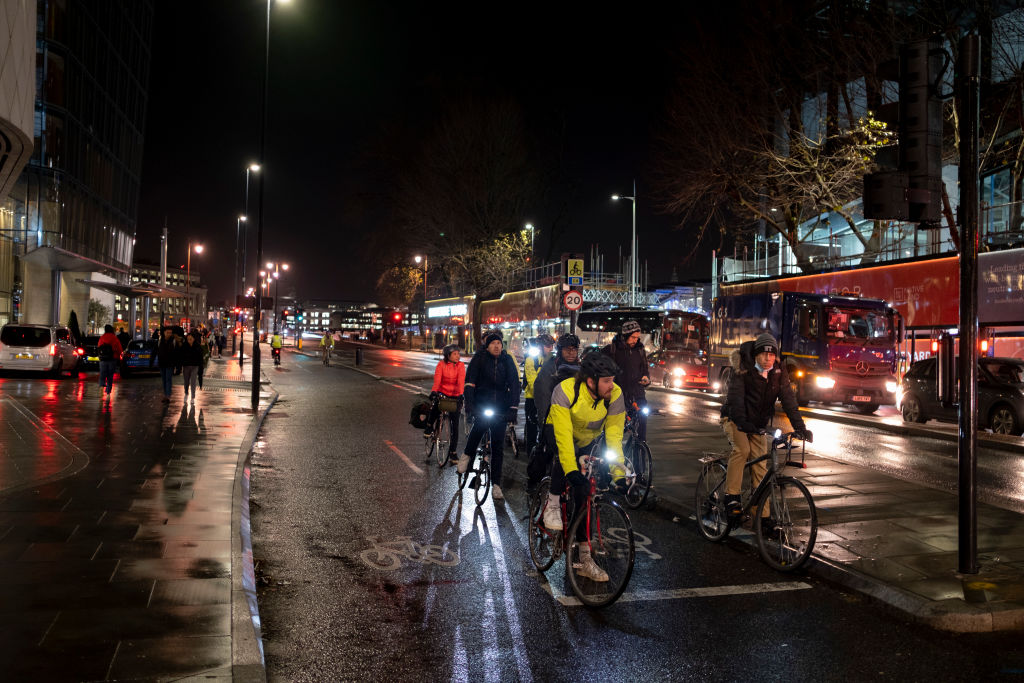
Politics and society in general have become much more polarised, and the same has happened on our roads.
Instead of the mainstream media celebrating success from the new generation of riders such as Tom Pidcock or Junior world road champion Harry Hudson (I bet you never saw any reports of that in a national newspaper or news website), what do we get now?
Apparently, London is full of balaclava-wearing, cycling terrorists who’ll steal your phone, watch or necklace as soon as you step outside. We’re told ULEZ is bad, Lime bikes are a nuisance, that “cyclists are turning UK roads into death traps”, and more.
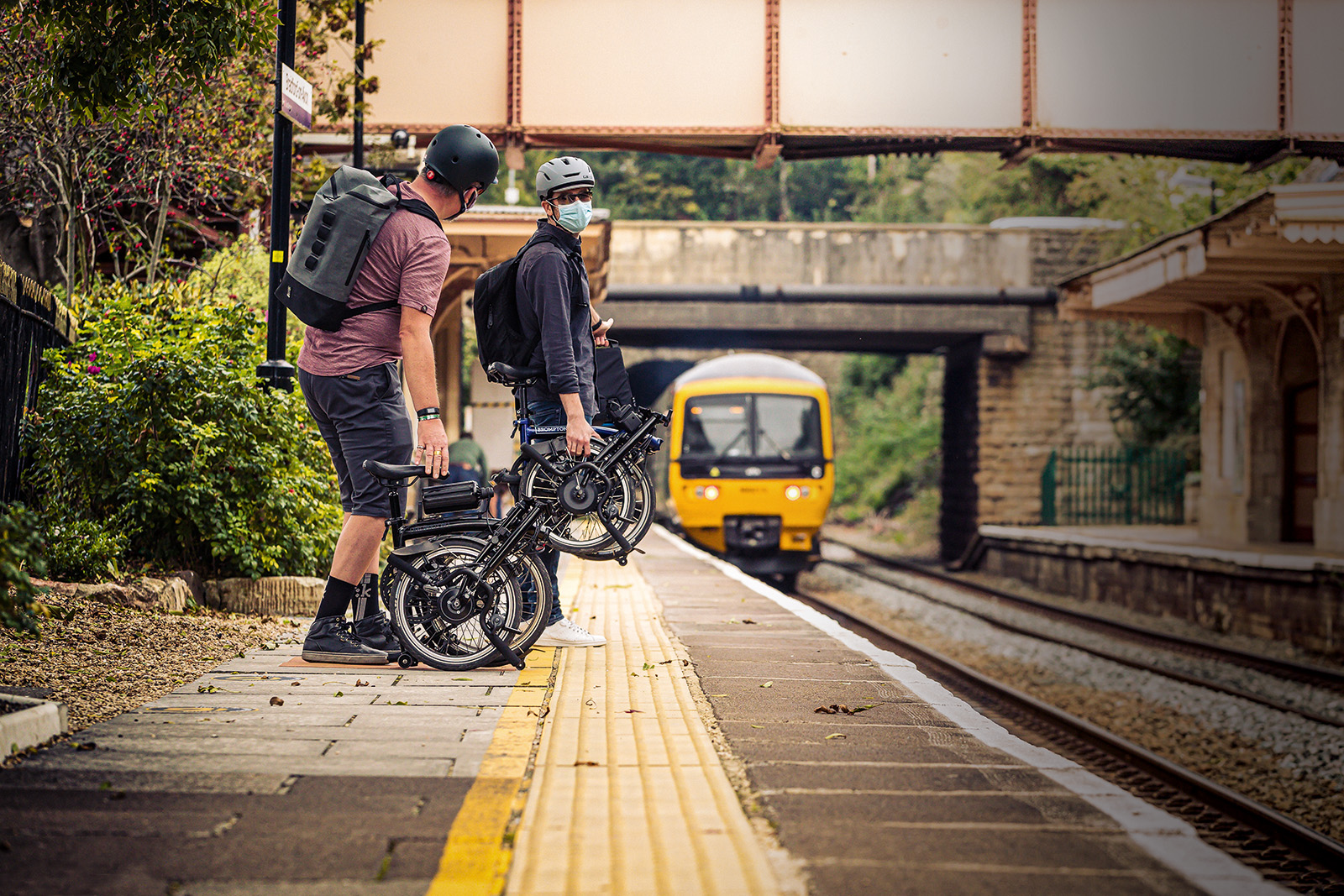
This is all rather than reporting that London is cleaner than ever thanks to 1.5 million daily bike journeys in 2025, an upshift of 43% since 2019. At the same time, the reduction in traffic has made it better for motor vehicle users.
Meanwhile, pollution can have a devastating effect on the health of the young and elderly. And guess what: cycling can help reduce that.
You’d think people would be grateful for cyclists, not targeting them for hate.
Electric bike terror!
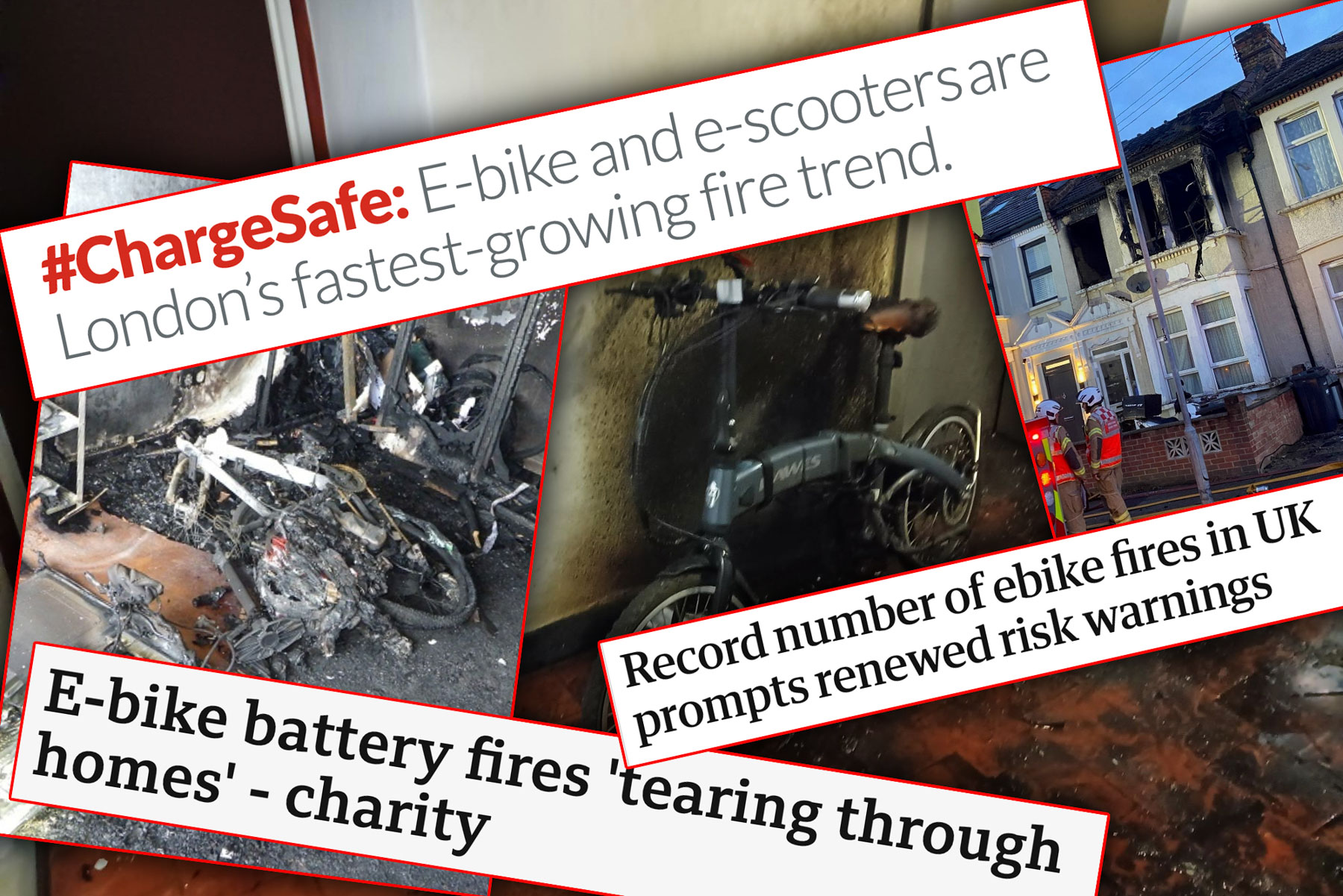
When you consider electric bikes, things get even worse. Apparently, ebikes are both ticking time bombs that’ll burn down your house and the silent tools of those balaclava-adorned thieves, even though in almost all footage I’ve seen of any said criminal activity it’s been a Surron.
For those who don’t know, a Surron isn’t an ebike. It’s a basic electric off-road e-moto, its speed regulated by a throttle with no human effort at all.
It’s illegal to ride them on the road in the UK, unless it’s a registered road-legal model with a Vehicle Identification Number, insurance and you have a licence (full or CBT). The standard model is off-road only, supposedly sold only to be used on private land. Surely that’s a legal loophole that should be closed as soon as possible.
But this confusion over ebikes and e-motos is further proof of how anti-cycling rhetoric is whipped up, regardless of the facts.
Abuse is back
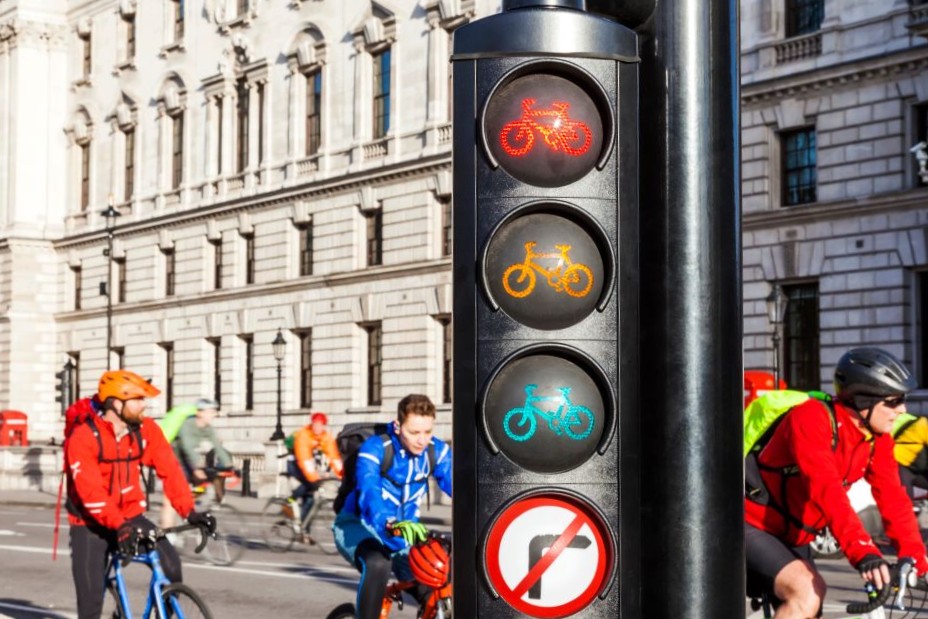
In the last year, the abuse has returned, I’ve had SUV drivers screaming at me to get out of the way. I’d suggest they buy smaller cars if they don’t think they have space to overtake a solitary cyclist. I’ve had bags of fast-food trash thrown from moving vans, and I’ve even been purposely squeezed against the kerb when riding in traffic.
Now, I’m not an advocate of the complaining near-miss culture we see in some other cycling media. It simply doesn’t achieve anything other than creating more division. Neither do I see the GoPro-wearing cycle vigilantes doing anything but stir up hate on both sides.
But this animosity from drivers puts lives at risk, and I can’t help but feel that it’s a consequence of how cycling and cyclists are discussed across the country.
If you happen to capture abuse, threats or dangerous road users, don’t post the footage on social media, just inform the police via your local police website or Operation Snap, where you can submit footage of driving offences.
But what can we do?
I wouldn’t advocate any direct action or confrontation; we are the more vulnerable road user compared to car and van drivers. The law now reflects that, too. Amendments to the Highway Code in 2022 enforced a hierarchy of road users, placing pedestrians, cyclists and horse riders at the top and increasing responsibility on drivers of larger vehicles.
I know how hard it is to take the high road, but I just tend to be as courteous as I can be. If I’m on a climb and traffic is building up behind me, I’ll soft pedal at a layby, or pull in and wave traffic through. I’ll also pull over on single-lane rural roads to let traffic pass.
And don’t give cause for other road users to get irate. That means not jumping traffic lights. Ever.
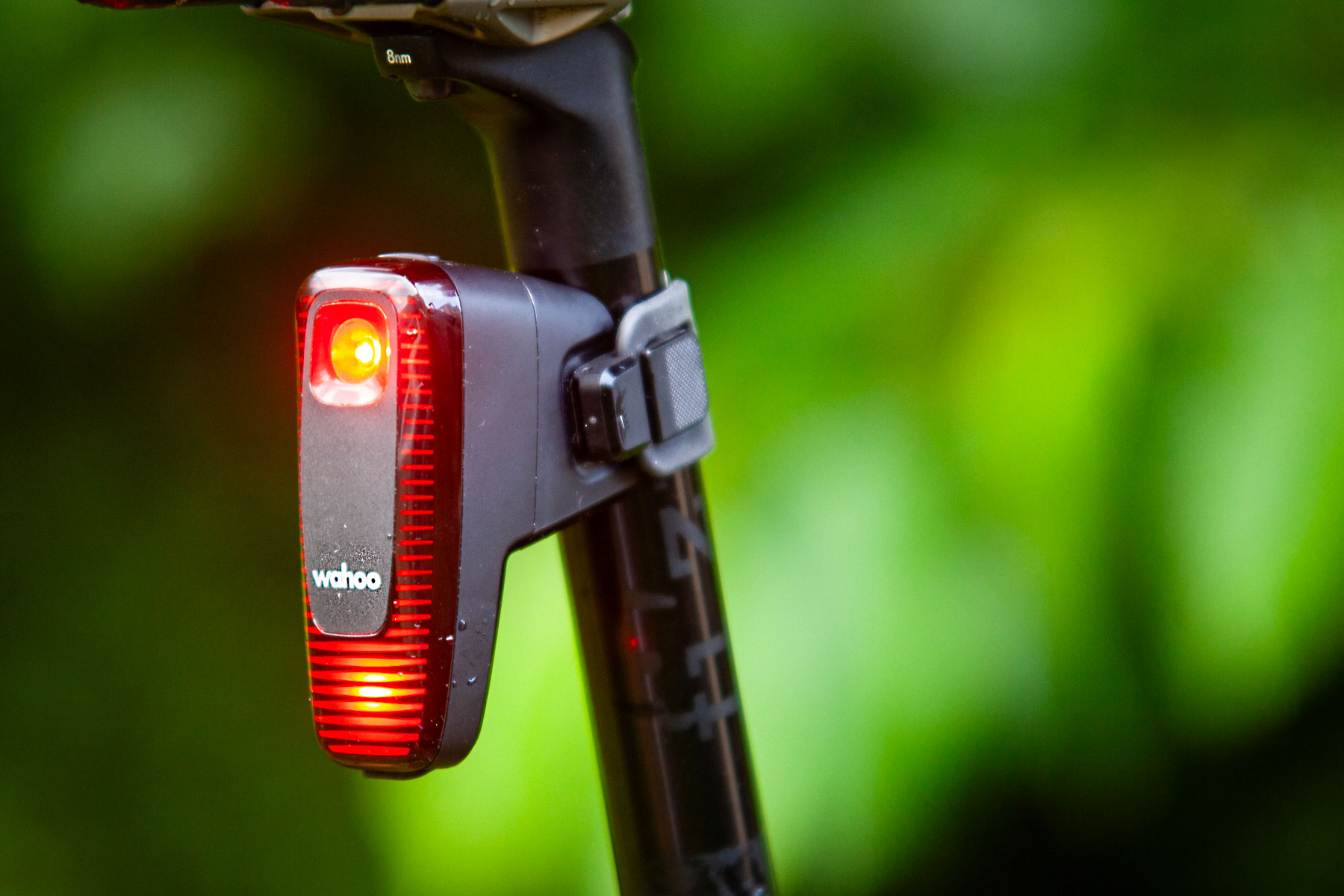
You should protect yourself, too, with the right clothing choices (don’t ride head-to-toe in black, for instance), bike lights even in the daytime, and maybe even a rear-view radar if you can afford one.
As well as making sure you’re safe on the road, there are other tactics we can all employ.
If your chosen mainstream media, newspaper or website continually runs anti-cycling rhetoric, boycott it. Don’t buy the paper, don’t give them clicks online. And if brands seem to endorse anti-cycling rhetoric by advertising with the same media, don’t put their products in your shopping trolley.
Comment on and correct media ebike crime reports if it’s not an ebike, and especially if it’s an illegal, unregistered electric moto.
I’ve been riding and writing about bikes for a long time, so I know how depressing experiencing aggression out on the road and reading anti-cyclist rhetoric can be. But I’m hopeful that soon we’ll see a shift back to greater tolerance as people realise the benefits of cycling as a mode of transport, especially when they’re faced by rising fuel costs.
And who knows? Maybe the Tour de France starting in the UK next year will help change people’s perception of cycling, just as London 2012 did.
Emmabuntüs Debian Edition 6 1.01 Is Out with More Accessibility Improvements
The Emmabuntüs Collective informs 9to5Linux.com today about the general availability of Emmabuntüs Debian Edition 6 1.01 as the first point release to the latest Emmabuntüs Debian Edition 6 series of this Debian-based distribution designed to facilitate the reconditioning of old computers.
White House Unveils National AI Policy Framework To Limit State Power
An anonymous reader quotes a report from CNBC: The Trump administration on Friday issued (PDF) a legislative framework for a single national policy on artificial intelligence, aiming to create uniform safety and security guardrails around the nascent technology while preempting states from enacting their own AI rules.
The six-pronged outline broadly proposes a slew of regulations on AI products and infrastructure, ranging from implementing new child-safety rules to standardizing the permitting and energy use of AI data centers. It also calls on Congress to address thorny issues surrounding intellectual-property rights and craft rules “preventing AI systems from being used to silence or censor lawful political expression or dissent.”
The administration said in an official release that it wants to work with Congress “in the coming months” to convert its framework into a bill that President Donald Trump can sign. The White House wants to codify the framework into law “this year” and believes it can generate bipartisan support, Michael Kratsios, director of the White House Office of Science and Technology Policy, said in an interview with Fox News on Thursday evening. That won’t be easy in a deeply divided Congress where Republicans hold thin and often fractious majorities, and where Trump has already urged GOP lawmakers to prioritize his controversial voter-ID bill above all else ahead of the November midterms. BCLP has an interactive map that tracks the proposed, failed and enacted AI regulatory bills from each state.


Read more of this story at Slashdot.
OpenShot 3.5 Video Editor Released With New Default Timeline and ComfyUI AI Integration
OpenShot 3.5 introduces a default QWidget timeline, smoother editing, smaller export files, enhanced stability, and initial ComfyUI AI tool integration.
KiCad 10.0 PCB Design and Electronics CAD Software Released as a Major Update
The KiCad development team announced today the release and general availability of KiCad 10.0 as the latest major update of this open-source, free, and cross-platform PCB design and electronics CAD software for GNU/Linux, macOS, and Windows.
Cambalache 1.0 Released After Five Years For Designing Modern GTK UIs
Cambalache 1.0 released today after more than five years in development as a What You See Is What You Get (WYSIWYG) application for creating and editing user interfaces for both GTK3 and GTK4…
OpenShot 3.5 Released As One Of Their “Biggest Releases” Ever
OpenShot 3.5 hit the web today for this open-source non-linear video editor that describes the new version as one of their “biggest releases” ever in its 18+ year history…
Mageia 10 Enters Public Beta Testing with Linux Kernel 6.18 LTS and Mesa 26.0
Mageia 10 Linux distribution is now available for public beta testing, bringing various upgraded components, bug fixes, and other changes for those who want to help the devs ensure a stable and reliable release ahead of the scheduled launch in April 2026.
Elon Musk misled investors during his Twitter takeover, jury finds
A group of former Twitter investors have prevailed at a federal civil trial over Elon Musk’s actions amid his $44 billion acquisition of the social platform in 2022. A jury in San Francisco found Friday that tweets made by Musk about fake accounts on the platform had defrauded investors in the company. The jury sided with Musk on other allegations in the case.
It’s not yet clear how much Musk will owe in damages as a result of the case but, as the Associated Press reports, it could amount to billions of dollars. Jurors calculated that shareholders should get “between about $3 and $8 per stock per day.”
The class action lawsuit, one of several brought against Musk in the months following his takeover of the company, cited Musk’s tweets about fake accounts on the platform. Facing a sinking Tesla share price in the days after announcing he would buy Twitter for $54.20 a share, the suit said Musk made tweets and statements that were intentionally meant to drive down Twitter’s share price in an attempt to renegotiate or exit the deal.
The suit called out Musk’s May 13, 2022, tweet that claimed the Twitter deal was “temporarily on hold” due to the number of fake accounts and bots on the platform, as well as one a few days later that suggested fake accounts might account for more than 20 percent of users. Twitter’s stock dropped significantly following the May 13 tweet.
During the trial, Musk said the tweets were him “speaking his mind” and maintained that Twitter executives had “lied” about the number of bots on the platform, according to KQED. Former Twitter shareholders, on the other hand, said “they sold shares at deflated prices amid Musk’s public waffling.”
Musk faced several lawsuits during and after his $44 billion takeover of the company. That includes other shareholder lawsuits related to his delay in disclosing his stake in the company, as well as one from former executives related to unpaid severance benefits (Musk later settled those claims). He also narrowly avoided a trial over his attempts to back out of the deal.
This article originally appeared on Engadget at https://www.engadget.com/social-media/elon-musk-misled-investors-during-his-twitter-takeover-jury-finds-232033028.html?src=rss
b4 v0.15.0 released
Version 0.15.0 of the b4 patch-management tool is out. Highlights in this
release include the b4 review workflow manager for maintainers
(covered briefly in this article), b4
dig, which can find the original mailing-list submission behind a
commit, three-way-merge support in b4 shazam, and more. See the release
notes for details.
CBS News Shutters Radio Service After Nearly a Century
CBS News is shutting down its nearly 100-year-old radio news service due to economic pressures and the shift toward digital media and podcasts. Longtime CBS News anchor Dan Rather said: “It’s another piece of America that is gone.” The Associated Press reports: When it went on the air in September 1927, the service was the precursor to the entire network, giving a youthful William S. Paley a start in the business. Famed broadcaster Edward R. Murrow’s rooftop reports during the Nazi bombing of London during World War II kept Americans listening anxiously. Today, CBS News Radio provides material to an estimated 700 stations across the country and is known best for its top-of-the-hour news roundups. The service will end on May 22, the network said Friday.
“Radio is woven into the fabric of CBS News and that’s always going to be part of our history,” CBS News editor-in-chief Bari Weiss said in delivering the news to the staff. “I want you to know that we did everything we could, including before I joined the company, to try and find a viable solution to sustain the radio operation.” But with the radical changes in the media industry, she said, “we just could not find a way to make that possible.”
It was unclear how many people will lose their jobs because of the radio shutdown. CBS News was cutting about 6% of its workforce, or more than 60 people, on Friday. It’s not the end of turmoil at the network, as parent company Paramount Global is likely to absorb CNN as part of its announced purchase of Warner Bros. Discovery.


Read more of this story at Slashdot.
Jury finds Musk owes damages to Twitter investors for his tweets
On Friday, a jury in California determined that Elon Musk had misled investors in Twitter via public statements that depressed the price of the company’s stock ahead of his ultimately successful purchase of it. Because it was a class action lawsuit, Musk is likely to be faced with paying out damages to a huge range of investors, payments that may ultimately reach billions of dollars.
In the lead up to Musk’s ultimate purchase of the social media platform, he made a number of comments on the platform itself and while appearing as a guest on a podcast that raised questions about whether the sale would go through, largely focused on the prevalence of bot accounts on the platform. This depressed the price of the company’s shares and raised fears that the deal wouldn’t go through, causing some investors to sell shares at a depressed price during this period.
A number of those investors started a suit that was certified as a class action, claiming that the statements defrauded them, and that Musk did so intentionally as part of a larger scheme. The jury rejected the arguments about the larger scheme, but found Musk liable for the tweets.