
Giant seeks contact with US customs to resolve ban on its products entering the country

Giant has taken several steps to try to resolve the embargo preventing its products made in Taiwan from entering the USA, according to a statement released today. 

On 24 September, US Customs and Border Protection (CBP) announced a Withhold Release Order (WRO) on any bicycles, bicycle parts and accessories manufactured by Giant in Taiwan after an investigation that found alleged forced labour. 

“Giant Group has been committed to openness and transparency, and has taken multiple actions,” the statement says.

Giant says that on 29 September it formally engaged with CBP through its US legal counsel and will arrange an official meeting in the near future. 

“On September 30, Giant submitted formal letters to Taiwan’s Ministry of Foreign Affairs, Ministry of Labor, and Ministry of Economic Affairs, reporting the progress up to date and respectfully requesting assistance,” adds Giant. 

Giant also says it is “actively communicating” with key international partners to safeguard its supply chains and market confidence. 
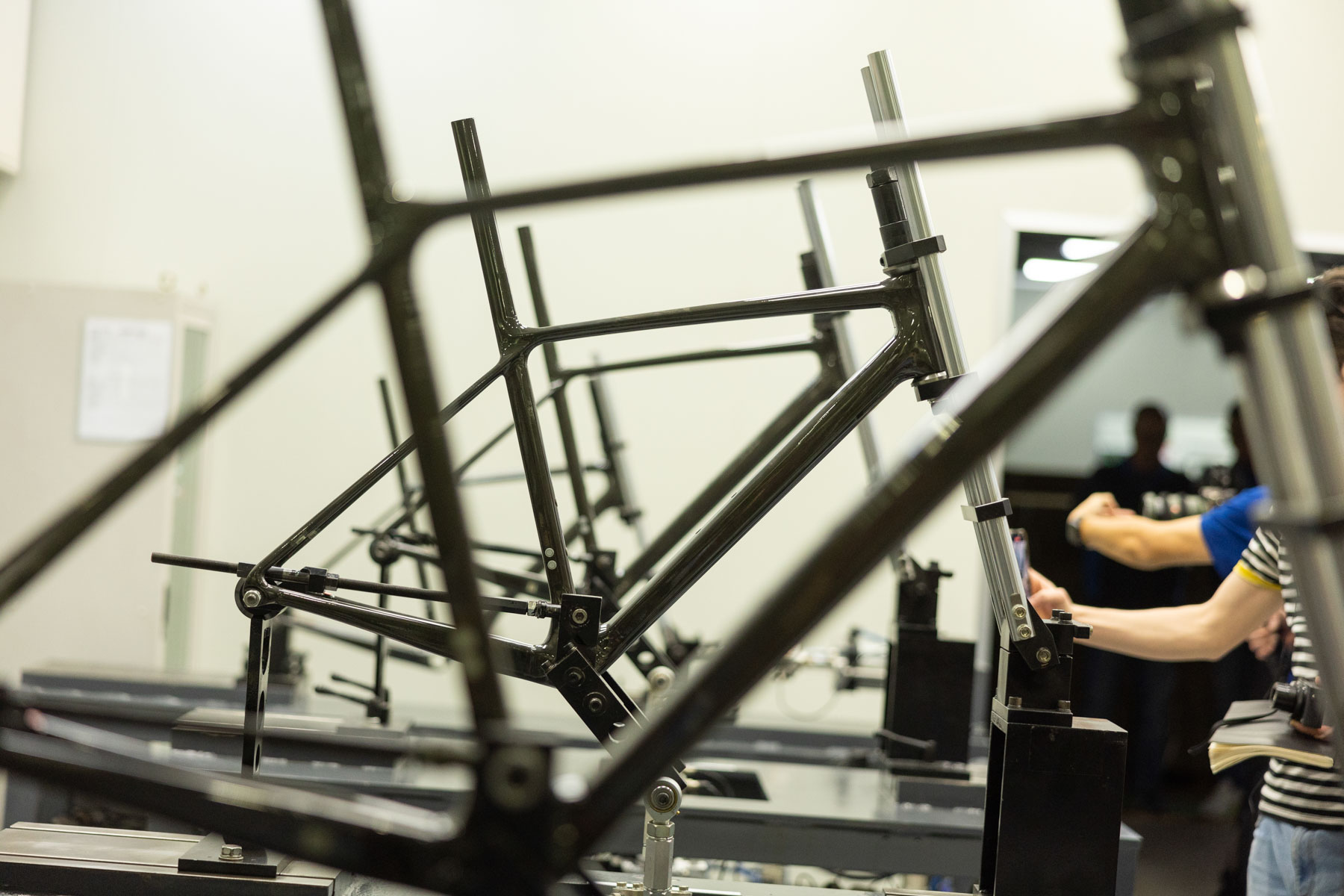
Giant factory in Taichung City, Taiwan
Giant has already taken “concrete actions” in the last year to address potential labour rights violations. Sterling Lorence

The source of CBP’s allegations of forced labour is unclear. “CBP has never conducted any on-site investigation at Giant Group’s Taiwan manufacturing factory, nor have any of our departments or personnel been contacted by CBP for interviews or inquiries,” Belinda Yeh, a Giant PR specialist, told trade publication Bicycle Retailer.

The only public report on labour conditions at Giant’s facilities in Taiwan is by investigative journalist Peter Bengtsen, who told BikeRadar that debt bondage “is the rule, not the exception, for migrants employed in Taiwan’s bicycle and other industries”. 

But after the suspension on imports was revealed, Giant says it has taken “concrete actions” in the last year to address potential labour rights violations, which includes implementing a zero recruitment fee policy and upgrading its employee housing.

Taiwanese Labor Front, an activist group, released a statement on 25 September, which said this is the first time CBP has accused a Taiwanese company of forced labour. 

“Taiwanese companies generally lack awareness of human rights risks, particularly regarding the internationally recognized issue of forced labor. This not only fails to meet the expectations of European and American legislative trends, but also risks being gradually excluded from the international market,” the group explained. 

Giant says it appreciates the concern and support from the public regarding the import ban. 

“Upholding our principles of openness, transparency, and accountability, we will proactively report progress to regulators, partners, and the public, and ensure that all related issues are properly addressed in accordance with international standards,” it said.

How America fell behind China in the lunar space race—and how it can catch back up

For the last month, NASA’s interim administrator, Sean Duffy, has been giving interviews and speeches around the world, offering a singular message: “We are going to beat the Chinese to the Moon.”

This is certainly what the president who appointed Duffy to the NASA post wants to hear. Unfortunately, there is a very good chance that Duffy’s sentiment is false. Privately, many people within the space industry, and even at NASA, acknowledge that the US space agency appears to be holding a losing hand. Recently, some influential voices, such as former NASA Administrator Jim Bridenstine, have spoken out.

“Unless something changes, it is highly unlikely the United States will beat China’s projected timeline to the Moon’s surface,” Bridenstine said in early September.

Read full article

Comments

Google Cuts More Than 100 Design-Related Roles In Cloud Unit

Google has laid off over 100 employees in design-related roles, including user experience research and cloud design teams, as part of broader cost-cutting measures to prioritize AI infrastructure. CNBC reports: Earlier this week, the company laid off employees within the cloud unit’s “quantitative user experience research” teams and “platform and service experience” teams, as well as some adjacent teams, according to internal documents viewed by CNBC. The roles often focus on using data, surveys and other tools to understand and implement user behaviors that inform product development and design. Google has halved some of the cloud unit’s design teams, and many of those affected are U.S.-based roles. Some employees have been given until early December to find a new role within the company.


Read more of this story at Slashdot.

SigCore UC Industrial Control Module Prepares for Crowd Supply Launch

Crowd Supply recently featured the SigCore UC, an upcoming universal industrial I/O controller that combines rugged hardware with open-source software for engineers, researchers, and educators seeking a flexible control and data acquisition platform. Unlike typical development boards or expansion modules, SigCore UC arrives as a complete, ready-to-deploy solution. It is capable of handling real-world voltages, […]

Prospect of Life On Saturn’s Moons Rises After Discovery of Organic Substances

Scientists have discovered complex organic molecules within the icy plume erupting from Saturn’s moon Enceladus, strengthening the case that its hidden saltwater ocean may harbor the conditions for life. The Guardian reports: The sixth largest of Saturn’s moons, Enceladus has become one of the leading contenders in the search for bodies that could harbor extraterrestrial life, with the Cassini mission — which ended in 2017 — revealing the moon has a plume of water ice grains and vapors erupting from beneath the surface at its south pole. The phenomenon has since been captured by the James Webb space telescope, with the plume reaching nearly 6,000 miles into space. The source of this material is thought to be a saltwater ocean that lies beneath the moon’s icy crust.

Now researchers studying data from the Cassini mission say they have discovered organic substances within the plume, with some types of molecule detected there for the first time. Dr Nozair Khawaja, a planetary scientist at Freie University Berlin and lead author of the work, said the results increased the known complexity of the chemistry that is happening below the surface of Enceladus. “When there is complexity happening, that means that the habitable potential of Enceladus is increasing right now,” he said. Writing in the journal Nature Astronomy, Khawaja and colleagues reported how their previous work had revealed the presence of organic substances and salts within ice grains found in a ring of Saturn, known as the “E-ring,” that is composed of material ejected from Enceladus. […]

While the new findings do not show that there is life on Enceladus, Khawaja said they indicate there are complex chemical pathways at play that could lead to the formation of substances that could be biologically relevant. The results, he added, support plans by the European Space Agency (ESA) to investigate the moon for signs of life. “I think all the signals are green here for Enceladus,” Khawaja said. The findings add momentum to ESA’s proposed mission to directly search for biological signs around 2042. According to the ESA, the mission will consist of an orbiter around Enceladus that will also fly through the plumes, as well as a lander that will touch down in the south pole region of the moon.


Read more of this story at Slashdot.

Mira Murati’s Stealth AI Lab Launches Its First Product

An anonymous reader quotes a report from Wired: Thinking Machines Lab,a heavily funded startup cofounded by prominent researchers fromOpenAI, has revealed its first product — a tool called Tinker that automates the creation of custom frontier AI models. “We believe [Tinker] will help empower researchers and developers to experiment with models and will make frontier capabilities much more accessible to all people,” said Mira Murati, cofounder and CEO of Thinking Machines, in an interview with WIRED ahead of the announcement.

Big companies and academic labs already fine-tune open source AI models to create new variants that are optimized for specific tasks, like solving math problems, drafting legal agreements, or answering medical questions. Typically, this work involves acquiring and managing clusters of GPUs and using various software tools to ensure that large-scale training runs are stable and efficient. Tinker promises to allow more businesses, researchers, and even hobbyists to fine-tune their own AI models by automating much of this work.

Essentially, the team is betting that helping people fine-tune frontier models will be the next big thing in AI. And there’s reason to believe they might be right. Thinking Machines Lab is helmed by researchers who played a core role in the creation of ChatGPT. And, compared to similar tools on the market, Tinker is more powerful and user friendly, according to beta testers I spoke with. Murati says that Thinking Machines Lab hopes to demystify the work involved in tuning the world’s most powerful AI models and make it possible for more people to explore the outer limits of AI. “We’re making what is otherwise a frontier capability accessible to all, and that is completely game-changing,” she says. “There are a ton of smart people out there, and we need as many smart people as possible to do frontier AI research.” “There’s a bunch of secret magic, but we give people full control over the training loop,” OpenAI veteran John Schulman says. “We abstract away the distributed training details, but we still give people full control over the data and the algorithms.”


Read more of this story at Slashdot.

Solar Leads EU Electricity Generation As Renewables Hit 54%

Renewables generated 54% of the EU’s net electricity in Q2 2025, with solar power emerging as the leading source at nearly 20% of the total mix. Electrek reports: According to new data from Eurostat, renewable energy sources generated 54% of the EU’s net electricity in Q2 2025, up from 52.7% year-over-year. The growth came mainly from solar, which produced 122,317 gigawatt-hours (GWh) — nearly 20% of the total electricity generation mix. June 2025 was a milestone month: Solar became the EU’s single largest electricity source for the first time ever. It supplied 22% of all power that month, edging out nuclear (21.6%), wind (15.8%), hydro (14.1%), and natural gas (13.8%). […]

In total, 15 EU countries saw their share of renewable generation rise year-over-year. Luxembourg (+13.5 percentage points) and Belgium (+9.1 pp) posted the most significant gains, driven largely by solar power growth. Across the EU, solar made up 36.8% of renewable generation, followed by wind at 29.5%, hydro at 26%, biomass at 7.3%, and geothermal at 0.4%.


Read more of this story at Slashdot.

Meet the Arc spacecraft: it aims to deliver cargo anywhere in the world in an hour

A relatively new spacecraft company, Inversion, revealed its new “on demand” delivery vehicle Wednesday evening during a splashy ceremony at its factory in Los Angeles.

The company said it is building the Arc spacecraft to provide a capability to the US military to deliver as much as 500 pounds (225 kg) of supplies almost anywhere in the world, almost instantaneously.

“The nominal mission for us is pre-positioning Arcs on orbit, and having them stay up there for up to five years, able to be called upon and then autonomously go and land wherever and whenever they’re needed, being able to bring their cargo or effects to the desired location in under an hour,” said Justin Fiaschetti, co-founder and chief executive of Inversion, in an interview with Ars before the event.

Read full article

Comments

Forlinx OK3506-S12 Mini SBC Featuring Rockchip RK3506J and Pi-Compatible GPIO

Forlinx Embedded has introduced the OK3506-S12 Mini, a compact single board computer built around the Rockchip RK3506J processor. The board is intended for industrial applications that benefit from modest power consumption, stable operation, and long-term supply availability. The system-on-module integrates the RK3506J, which combines three Cortex-A7 cores running at up to 1.5GHz with a Cortex-M0 […]

Intel and AMD Trusted Enclaves, a Foundation For Network Security, Fall To Physical Attacks

Researchers have unveiled two new hardware-based attacks, Battering RAM and Wiretap, that break Intel SGX and AMD SEV-SNP trusted enclaves by exploiting deterministic encryption and physical interposers. Ars Technica reports: In the age of cloud computing, protections baked into chips from Intel, AMD, and others are essential for ensuring confidential data and sensitive operations can’t be viewed or manipulated by attackers who manage to compromise servers running inside a data center. In many cases, these protections — which work by storing certain data and processes inside encrypted enclaves known as TEEs (Trusted Execution Enclaves) — are essential for safeguarding secrets stored in the cloud by the likes of Signal Messenger and WhatsApp. All major cloud providers recommend that customers use it. Intel calls its protection SGX, and AMD has named it SEV-SNP.

Over the years, researchers have repeatedly broken the security and privacy promises that Intel and AMD have made about their respective protections. On Tuesday, researchers independently published two papers laying out separate attacks that further demonstrate the limitations of SGX and SEV-SNP. One attack, dubbed Battering RAM, defeats both protections and allows attackers to not only view encrypted data but also to actively manipulate it to introduce software backdoors or to corrupt data. A separate attack known as Wiretap is able to passively decrypt sensitive data protected by SGX and remain invisible at all times.


Read more of this story at Slashdot.

Apple Shelves Vision Headset Revamp to Prioritize Meta-Like AI Glasses

Apple has paused development of a cheaper, lighter Vision Pro headset to shift resources toward AI-powered smart glasses aimed at competing with Meta. Bloomberg’s Mark Gurman reports: The company had been preparing a cheaper, lighter variant of its headset — code-named N100 — for release in 2027. But Apple announced internally last week that it’s moving staff from that project to accelerate work on glasses, according to people with knowledge of the matter. The company is working on at least two types of smart glasses. The first one, dubbed N50, will pair with an iPhone and lack its own display. Apple aims to unveil this model as soon as next year, ahead of a release in 2027, said the people, who asked not to be identified discussing internal matters.

Apple is also working on a version with a display — something that could challenge the just-released Meta Ray-Ban Display. The Apple version had been planned for 2028, but the company is now looking to accelerate development, the people said. […] Apple’s glasses will rely heavily on voice interaction and artificial intelligence — two areas where it hasn’t always excelled. It was slow to introduce the Apple Intelligence platform and had to delay upgrades to its Siri voice assistant.

The Apple glasses are expected to come in a variety of styles and run a new chip. They’ll include speakers for music playback, cameras for media recording, and voice-control features that will work with a connected phone. Apple has also been exploring a suite of health-tracking capabilities for the device. The priority shift to glasses is just the latest change to the company’s headset strategy following an underwhelming debut by the Vision Pro. The $3,499 product, which melds virtual and augmented reality, is seen as too heavy and expensive to be a mainstream hit. It’s also short on both video content and apps. Apple executives have acknowledged the product’s shortcomings in private, viewing it as an overengineered piece of technology.


Read more of this story at Slashdot.

AirPods Pro 3 Impossible To Repair, Earn Score of 0 In iFixit Teardown

An anonymous reader quotes a report from MacRumors: iFixit today disassembled the AirPods Pro 3, giving us a look at what’s inside and how the AirPods Pro 3 have changed in comparison to the AirPods Pro 2. […] To get a look at other components inside the AirPods Pro 3, iFixit essentially had to destroy them because Apple didn’t design them to be repaired. Since the first version of the AirPods launched, they’ve included a battery that is sealed shut with glue, and that hasn’t changed with the AirPods Pro 3. iFixit says battery replacements are so difficult that many repair shops won’t even attempt to do it. The AirPods Pro Charging Case has the same glued-in battery.

There’s no way to attempt a battery repair without causing blemishes on the plastic of the earbuds and the casing, because they have to be pried open. Heat needs to be used to melt the adhesive, and there’s no easy way to disconnect the flex cable that’s inside each earbud. With the need for specialized equipment and the inability to repair the earbuds and the case without causing damage, the AirPods Pro 3 earned a 0 out of 10 repairability score from iFixit.


Read more of this story at Slashdot.

Meta Plans To Sell Targeted Ads Based On Data In Your AI Chats

Meta will begin using data from AI chatbot conversations and other AI-powered products to fuel targeted advertising across Facebook and Instagram, with no way to opt out. The policy change, effective December 16, excludes users in South Korea, the UK, and the EU due to stricter privacy laws. TechCrunch reports: If a user chats with Meta AI about hiking, for example, the company may show ads for hiking gear. However, Meta spokesperson Emil Vazquez tells TechCrunch that the privacy update is broader than just Meta AI and applies to the company’s other AI offerings. That means Meta may use data from AI features in its Ray-Ban Meta smart glasses — including voice recordings, pictures, and videos analyzed with AI — to further target its ad products.

Meta may also use data from its new AI-video feed, Vibes, and its AI image generation product, Imagine. Conversations with Meta AI will only influence ads on Facebook and Instagram if a user is logged into the same account across products. […] Meta says the company has “no plans imminently” to put ads in its AI products, though CEO Mark Zuckerberg has suggested they may be coming in the future.


Read more of this story at Slashdot.

Building A Mechanical Version Of Bouncing DVD Screensaver Out Of LEGO

This is a video following LEGO builder Grant Davis’s quest to construct a working mechanical version of the bouncing DVD logo screensaver using LEGO. And what a quest it is! If somebody asked me if you could make a working DVD logo screensaver out of LEGO I would have told them they’ve lost their mind. But Grant over here — he did it. Hands down one of the greatest human achievements of the last century, and if there was ever a video to convince the aliens to unzip their human costumes and reveal their true form, this is it. Show yourselves!