How to Use Almost Any Computer Without Leaving a Trace

We may earn a commission from links on this page.

Almost everything we do digitally leaves a trace of some kind, and while it can be useful to look back on this past activity—when trying to remember where that great coffee shop you stumbled across is, perhaps—this continual logging and tracking doesn’t really align with best privacy and security practices.

Meet Tails (The Amnesic Incognito Live System), a Linux distro based on Debian that maximizes user security and privacy. It can run from a USB drive, which means you’re able to plug it into any laptop or desktop with a free port (Mac or PC) and take it away again when you’re done, with nothing left behind on the computer you borrowed. Tails also comes with anonymous internet browsing built in as standard, through the Tor browser and the Tor network that reroutes your online activity across several private web nodes. No one can tell who you are or where you are, and you can get online without all the tracking and monitoring that’s usually associated with opening up a browser.

It’s perfect for hiding who you are online, and for dialing up your privacy and security protections to the absolute maximum—not to mention getting around state-level censorship, if that applies to you. Here’s what you need to know, and how to get started.

What you get with Tails
Tails OS
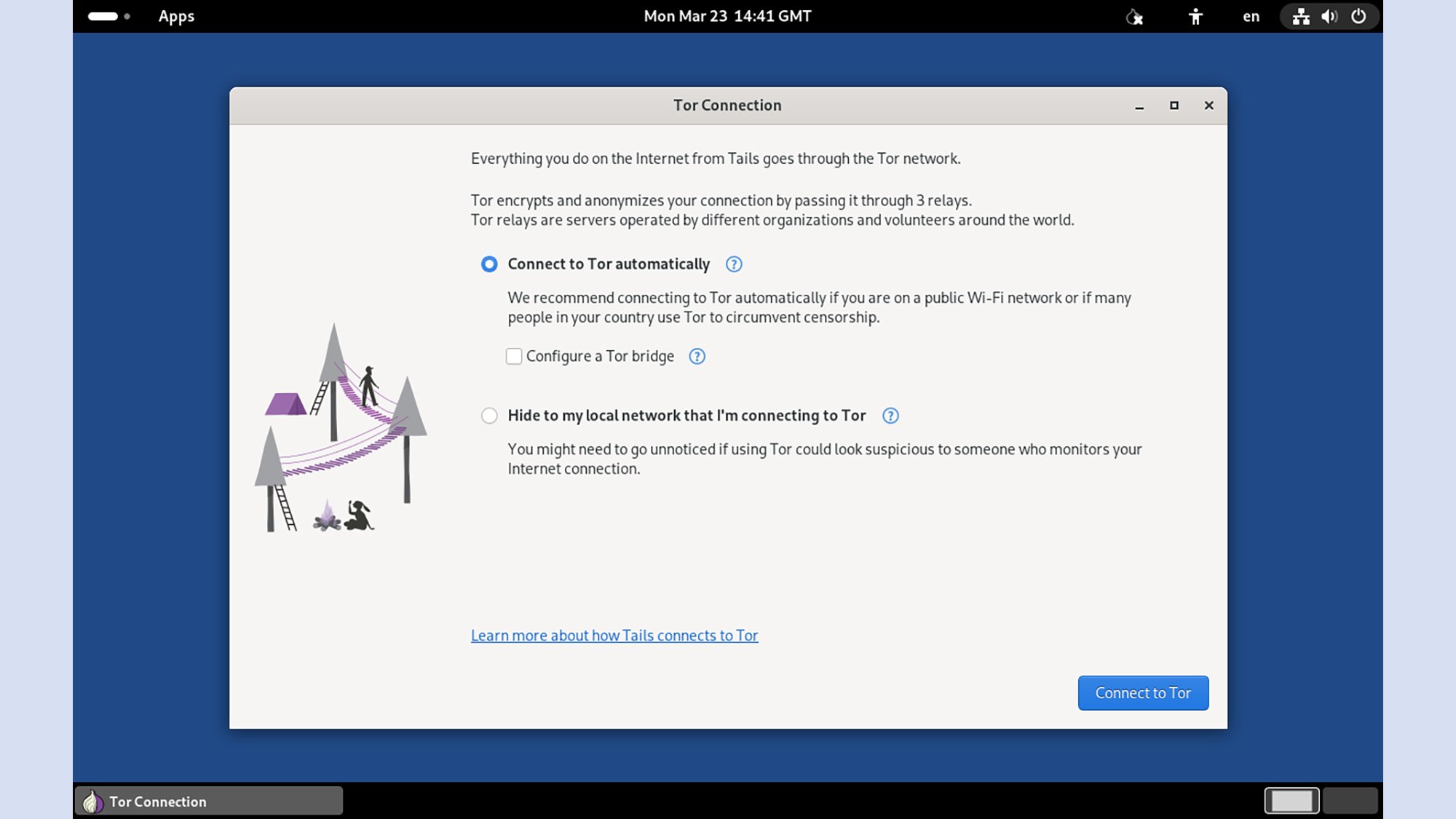
Tails will connect you to the Tor network right away.
Credit: Lifehacker

Tails includes everything you need to get your computing done, as is the case with most Linux distros: You’ve got the Tor Browser on there, office applications courtesy of LibreOffice, image editing with GIMP, graphic design with Inkscape, and a variety of audio and video utilities too.

As soon as you start up the operating system from your USB drive for the first time, you’ll be prompted to get online through the Tor network. This reroutes your browsing through several different relay points, so it’s very difficult for websites to tell who you are or where you’re from (unless you start logging into them, of course). It also keeps your browsing hidden from your internet service provider, law enforcement agencies, and anyone else who might be tempted to take a peek. To make sure you’re running Tails and the Tor Browser with as much security protection as possible, check out our tips for browsing the dark web.

One big difference with Tails is that you can’t actually save anything by default—it’s one of the ways the operating system prioritizes privacy and security. If you do want a space on the USB drive to save files permanently, you need to specifically create it: Click Apps > Tails > Persistent Storage and then follow the instructions. When you’re done, you can just click the power button (top right), choose Power Off, unplug the USB drive and be on your way.

How to start using Tails
Rufus app
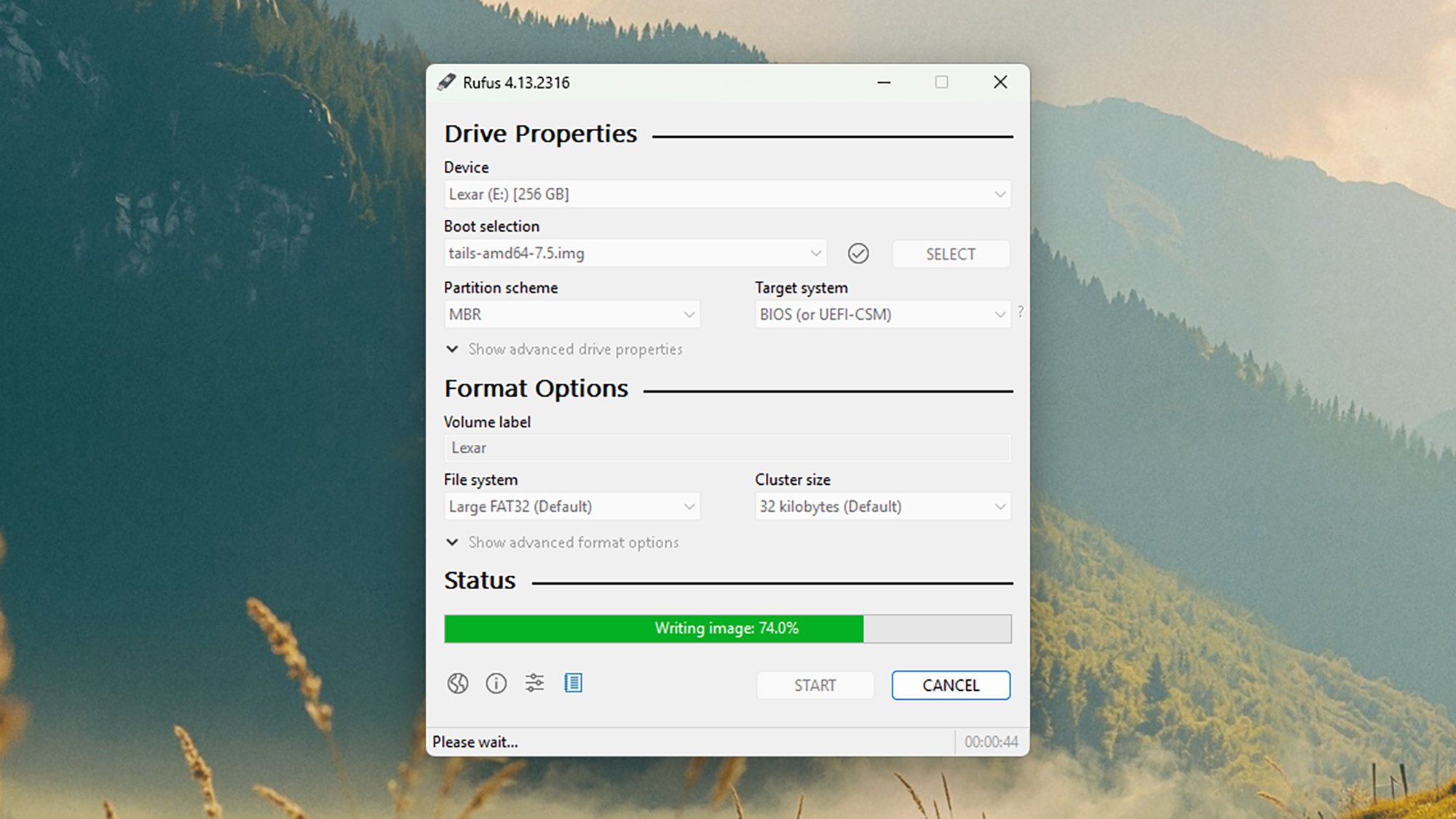
Using Rufus to create a Tails USB stick.
Credit: Lifehacker

To get started, head over to Tails’ website, follow the Install Tails link, then click Download Tails only (for USB sticks). This gives you a file roughly 2GB in size, which you need to put on a USB drive. This drive must have a capacity of 8GB or higher, and can’t have anything else on it (anything already saved on the USB drive storage will be wiped when you add Tails).
For actually putting the operating system image on your USB drive, Tails recommends Rufus for Windows and Etcher for macOS. Both tools are simple to use and free: All you have to do is point these programs towards your Tails download, and your USB drive, and they’ll do the rest.

In the case of Rufus, the Device drop-down menu is where you pick your USB drive. From here, click Select to point the app towards the Tails file. You can leave the other settings on the program interface as they are, and click Start to create your bootable USB drive, which should only take a minute or two.

You’re then ready to boot from the USB drive, either on your own computer or someone else’s. This should work on most systems, with the exception of Macs that use Apple Silicon. The Tails team is busy trying to add compatibility for newer Macs, but it’s not completed yet, so you’ll mainly be looking for Windows PCs to boot from.

The specifics of how you do this depends on the computer you’re using, but typically you’ll need to hit a key like F8 as the computer boots up to pick the Tails USB drive rather than the main hard drive system—instructions for this may well appear on screen during start up, but if you’re unsure, consult the documentation that came with the laptop or desktop, or check online.


Sony’s Lead PS5 Architect Discusses Frame Generation Plans For PlayStation

Sony's Lead PS5 Architect Discusses Frame Generation Plans For PlayStation
Sony’s lead systems architect, Mark Cerny, has confirmed that AI-powered frame generation is indeed on the roadmap for PlayStation hardware, stressing that the feature isn’t yet ready for prime time in 2026. While the PlayStation 5 Pro recently introduced a PlayStation Spectral Super Resolution (PSSR) 2 upscaler that gave the APU a chance

Intel FRED Can Yield Greater Performance – FRED Benchmarks On Panther Lake

With Intel’s new Core Ultra Series 3 “Panther Lake” laptop SoCs, the Xe3-based Arc B390 graphics and much improved CPU performance capture much of the spotlight. One new capability with Panther Lake that isn’t featured as much though is the new FRED capability with Flexible Return and Event Delivery. Today’s Intel Panther Lake testing is looking at the very interesting performance impact of FRED on Linux.

Elon Musk Says Terafab Mega AI Chip Factory Will Be The Largest Ever Built

Elon Musk Says Terafab Mega AI Chip Factory Will Be The Largest Ever Built
Elon Musk’s latest industrial gambit, called Terafab, aims to interrupt the semiconductor supply chain by building a massive $25 billion chip fabrication facility in Austin, Texas. As a joint venture between Tesla, SpaceX, and xAI, the ambitious project has ambitions of producing a terawatt of computing power yearly to fuel Musk’s most ambitious

AMD’s Awesome Ryzen 7 9800X3D Gaming Chip Hits All-Time Low Price

AMD's Awesome Ryzen 7 9800X3D Gaming Chip Hits All-Time Low Price
Forget for a moment that PC memory and storage prices are getting out of control. If you’re building a new gaming PC or upgrading and existing one, you could do a lot worse than assembling a system around AMD’s spunky Ryzen 7 9800X3D (see our review). It’s a stout chip for gaming, and even better, it’s on sale for the lowest price it’s ever

Samsung Galaxy S26 Is Getting AirDrop Support To Share Files With iPhones

Samsung Galaxy S26 Is Getting AirDrop Support To Share Files With iPhones
Apple and Google have recently been removing barriers and implementing features that make it easier for users to switch between rival platforms, which includes finally opening up compatibility between Quick Share and AirDrop. The latter first became available on the Pixel 10 late last year, with Google promising to bring this feature to the

M5StampS3 BAT Module Combines ESP32-S3 and Battery Management

M5Stack has added the M5StampS3 BAT, a compact embedded module based on the ESP32-S3 platform with integrated battery power management. The module is intended for IoT and low-power applications requiring wireless connectivity and flexible GPIO access in a small form factor. The module is built around the ESP32-S3-PICO-1-N8R8 system-in-package, featuring a dual-core Xtensa LX7 processor […]

Scientists Find DNA And RNA Building Blocks In Asteroid Sample With Big Implications

Scientists Find DNA And RNA Building Blocks In Asteroid Sample With Big Implications
Rock sample analysis from the asteroids Ryugu and Bennu (collected in 2018) has confirmed that the entire library of the chemical code for DNA and RNA exists in space. 

The space-delivery theory for life’s origins has been missing several chapters. While meteorites that crashed into Earth often contained some of these ingredients, scientists

Wheely, an on-demand chauffeur app, makes its US debut in NYC

When the Uber Black isn’t premium enough, New Yorkers now have the option to call for a Wheely instead. Whimsical name aside, the London-based company is breaking into the US market by offering its chauffeur-hailing services to residents of New York City first, as first reported by Bloomberg. Think of it like Uber, but for business executives and VIPs who prefer better service and riding in Cadillacs and Mercedes.

“New York has long been requested by our customers, whether that be New Yorkers who have traveled with us in Europe and the Middle East, or our international clients who regularly visit the city,” Anton Chirkunov, founder and CEO of Wheely, said in a press release.

Using the Wheely app on several smartphones.
Wheely

Besides its black car Business SUV service, New Yorkers can opt for Wheely First that offers a Mercedes-Benz S-Class W223 filled with amenities like Fiji water and towels. For a more dedicated service, Wheely has its Perfect Airport Pickup where drivers will track flights to line up a pickup, and the Chauffeur for a Day option that lets users reserve a chauffeur that will also pick up friends and family or run errands for you. For interested drivers in New York City, Wheely will port over its in-house “Chauffeur Academy,” which is expected to grow to a network of 5,000 qualified drivers over the next five years.

While Wheely currently operates in London, Paris and Dubai, the company plans to expand to five major US cities within the next three years. According to Bloomberg, Wheely is considering markets in Texas, Miami and Palm Beach, Fla. as well as Washington, D.C. Wheely’s entry into the US market comes about a week after the announcement of the Uber Elite program, which targets a similar demographic. However, Uber Elite is only available in Los Angeles and San Francisco currently, with plans to expand to New York soon. However, Uber may have Wheely beat when it comes to hailing a helicopter, thanks to its upcoming Uber Air option.

This article originally appeared on Engadget at https://www.engadget.com/transportation/wheely-an-on-demand-chauffeur-app-makes-its-us-debut-in-nyc-143233840.html?src=rss

Intel Hears You And Signals It May Slow Down Socket Changes For Future Chips

Intel Hears You And Signals It May Slow Down Socket Changes For Future Chips
The big news today is that reviews of Intel’s Core Ultra 7 270K Plus and Core Ultra 5 250K Plus processors are live, including our own, and of course these Arrow Lake Refresh parts slot into the same LGA 1851 socket as their regular, non-Plus Arrow Lake counterparts. What about future generation CPUs, though? This is probably the end of the

Hello World #29 out now: Safety & security

Digital safety is a pressing concern in an increasingly connected world. In classrooms everywhere, educators face the challenge of supporting young people to learn about cybersecurity and to navigate online risks and the impact of AI tools and social media.

Graphic displaying covers of Hello World issue 29, 'Safety and Security'.

In issue 29 of Hello World, out today for free, educators all over the world share what digital safety and security mean in their classrooms. We hope this new issue will help you to actively empower your learners by equipping them with the understanding and skills to safely navigate our complex digital landscape.

The issue covers questions such as:

  • How can educators connect learners to real cybersecurity experiences?
  • What does youth online safety look like in the Global South?
  • How is Australia’s youth ban on social media impacting young coders?

Other highlights from Hello World issue 29

Beyond the focus on safety and security, here are three highlights from issue 29:

  • Shuchi Grover explores what ‘thinking’ means in the current age of large language models (LLMs)
  • Sethi DeClerq provides a checklist of important questions to ask yourself before spending your precious budget on new education technology
  • Rachel Fenichel argues that block-based programming isn’t just for kids, highlighting how Blockly can be a helpful abstraction when talking about algorithms at any age or stage

New podcast series coming soon

We also have new podcast episodes coming out over the next few weeks to continue the conversations started in the magazine.

Photo of the cast of the Hello World podcast episode – 'What’s next for computer science education in 2026?'.
A photo from the last series of the Hello World podcast: ‘What’s next for computer science education in 2026?’

The first episode is another edition of our teacher tips series, where computer science educators and experts from around the globe share practical, actionable tips that you can use in your classroom. In the upcoming episode, teachers will be sharing what works for them to engage students in cybersecurity, protect schools from cybersecurity breaches, and safely introduce generative AI to the classroom.

In the second episode, we’ll talk to Dr. Karla Badillo-Urquiola about her research in online safety in the Global South.

To listen to these podcasts, make sure you follow us in your preferred app, or head to helloworld.cc/podcast.

Share your thoughts and subscribe to Hello World

Visit helloworld.cc/29 to read our newest issue for free today, and let us know what you think by leaving a comment here or on our social media.

helloworld.cc is also where you go to subscribe and find older issues of Hello World magazine.

If you have a moment, do leave us a podcast review or share the magazine with a fellow educator. It really helps more people to discover Hello World.

The post Hello World #29 out now: Safety & security appeared first on Raspberry Pi Foundation.

Hey Nintendo, US Gamers Want The Same Switch 2 Revision That’s Headed To Europe

Hey Nintendo, US Gamers Want The Same Switch 2 Revision That's Headed To Europe
Gamers in the European Union are getting a revised version of Nintendo’s popular Switch 2 console that will make battery replacements a cinch, according to a Japanese news report. Assuming the report is accurate, the special hardware revision is in response by recent EU regulation that requires portable devices to have user-replaceable batteries.

Technically,

This 360° Action Camera Bundle Is $100 Off, Days Before Amazon’s Spring Sale

We may earn a commission from links on this page. Deal pricing and availability subject to change after time of publication.

Amazon’s Spring Sale is set to kick off later this week, but some early discounts are already live. One worth paying attention to is the Insta360 X5 Essentials Bundle. Currently listed at $559.99 (originally $659.99), this is the lowest this bundle has ever reached, according to price trackers. It’s also worth noting that PCMag gave the X5 an “outstanding” rating and named it the best action camera of 2025. That context makes the $100 discount feel more meaningful, especially since this bundle already includes most of what you need to get started, including a selfie stick and a carry case. You’ll still need to factor in a microSD card, but this gets you most of the way there without needing to piece things together later.

The X5 is built around the idea that you don’t have to frame your shot perfectly while filming. It captures everything in 360 degrees at up to 8K, so you can decide what the shot should look like later in the app. That approach makes a lot of sense for fast-moving situations like biking, traveling, or navigating crowded places where stopping to adjust angles just isn’t practical. It can also shoot 4K at 120fps for slow-motion clips and take 72MP photos that are detailed enough for social media. You can take it straight into the water too, since it’s waterproof up to 49 feet without needing a case.

One of the more practical upgrades is the user-replaceable lenses. Scratches are common with action cameras, and this lets you fix the problem without replacing the entire unit. Plus, the touchscreen is easy to work with, and the app does a decent job of guiding you through edits with AI tools that can pull together highlights or suggest templates. That said, the learning curve is the main trade-off. You can shoot quickly, but getting polished results takes some effort, especially when reframing clips and applying edits. As for its battery life, it’s rated for up to 185 minutes in endurance mode, though that number drops with higher resolutions and frequent use of features.


Our Best Editor-Vetted Amazon Big Spring Sale Deals Right Now

Deals are selected by our commerce team

These Noise-Cancelling Earbuds Are $50 Off Ahead of Amazon’s Spring Sale

We may earn a commission from links on this page. Deal pricing and availability subject to change after time of publication.

Amazon’s Spring Sale hasn’t officially started, but some of the better discounts are already live, like the OnePlus Buds 4. These latest earbuds from the brand are down to $79.99 (from $129.99), their lowest price so far, according to price trackers. Amazon is also testing one-hour and three-hour delivery in select locations, as reported by our senior tech editor Jake Peterson, which makes these early deals easier to act on if you need something fast. The Buds 4 are positioned as a step up from the Buds 3, borrowing a few ideas from the more expensive Pro series, particularly in how they handle noise cancellation and overall tuning.

The biggest reason to consider these is the noise cancellation—it cuts down steady background sounds like traffic, fans, or office chatter well enough that you don’t have to keep increasing the volume. They’re also light enough to wear for a few hours without ear fatigue. Sound-wise, these lean toward bass. Songs with heavier beats feel fuller and more engaging, though it can come at the cost of some clarity in vocals or instruments. You also get Bluetooth connectivity that stays stable, along with decent battery life that can stretch through most of a day with the case. 

That said, the experience isn’t perfect. The companion app can feel inconsistent, with occasional bugs that make adjusting settings more frustrating than they should be. Plus, the touch controls take some getting used to and can misfire if you’re adjusting the earbuds on the go. There’s also the fact that these cost more than the Buds 3 (at full price), which still hold up well for less money. Still, at $79.99, the Buds 4 makes more sense as a value buy, especially if strong noise cancellation is high on your list.


Our Best Editor-Vetted Amazon Big Spring Sale Deals Right Now

Deals are selected by our commerce team

From the Basement to the Finish Line: How Zwift Helped Scott Richards Change His Life

Late in the evening in an unfinished basement outside St. Louis, Missouri, Scott Richards settles onto his bike and clips in. The room is quiet except for the hum of the trainer and the fan he sometimes forgets to turn on until the ride is already underway. Within seconds, the screen in front of him fills with motion—avatars climbing mountains, spinning through volcanic circuits, chasing route badges and finish lines.

For Richards, the scene is more than a workout. It is a daily reminder of how far he has come, and how much further he plans to go.

“You Don’t See Old Guys That Are Fat”

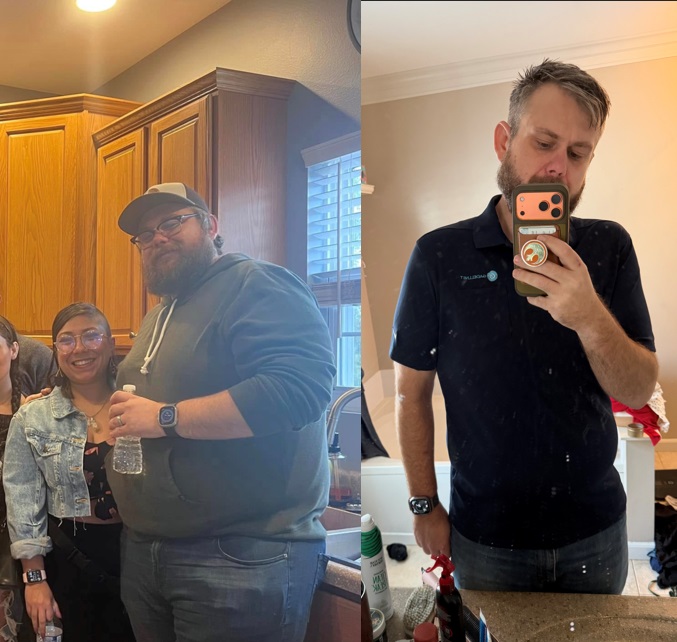
Four years ago, the life he is living today would have felt almost impossible. At the time, Richards weighed more than 330 pounds and was facing a reality that had slowly crept up over years of stress, poor habits, and long workdays. When a doctor told him he was pre-diabetic, the warning landed harder than he expected. He had recently married, and conversations about the future, about longevity, about the possibility of children, suddenly felt more urgent. “You don’t see old guys that are fat,” Richards said. “That really scared me.”

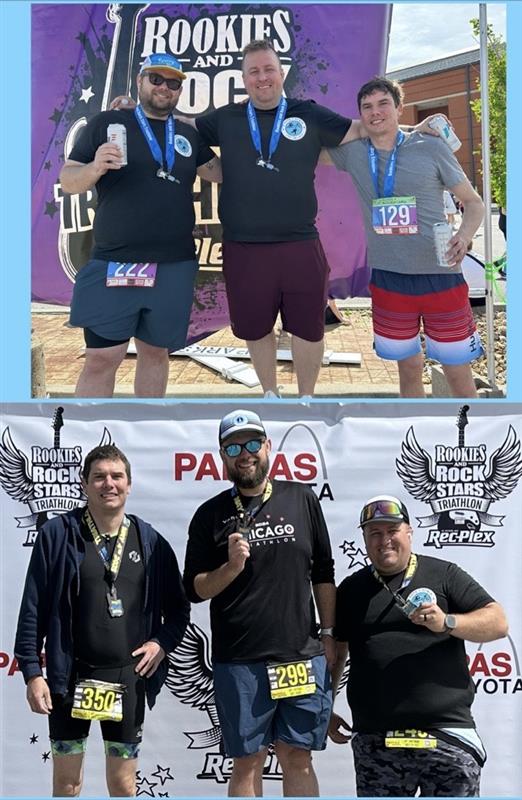
Around that same time, Richards and his close friend Charles Hays made a decision that would alter both of their lives. The two had worked together in a high-stress environment where stress eating had become routine, and both had begun to realize the consequences of those habits. On New Year’s Day 2024, they made a pact to hold each other accountable and start turning their health around. The agreement was simple: take their health seriously and see what was possible if they committed to the process. What followed was anything but ordinary.

The Compound Effect

Like many people facing a major lifestyle change, Richards did not begin with dramatic athletic goals. Instead, he started with manageable steps—hiking, tracking calories, and simply moving his body more often. “I made it work for me,” he said. “Instead of forcing myself to do something I hated, I tried to find things I actually enjoyed.” As the weeks passed, those small decisions began to compound. Weight came off gradually, confidence returned, and the idea of attempting something bigger eventually emerged.

That “something bigger” turned out to be a triathlon. Richards had one advantage that many first-time triathletes lack: he had been a competitive swimmer from age six through eighteen. While swimming felt natural, the other disciplines, particularly running, were far more difficult. Even so, he and Hays committed to the challenge.

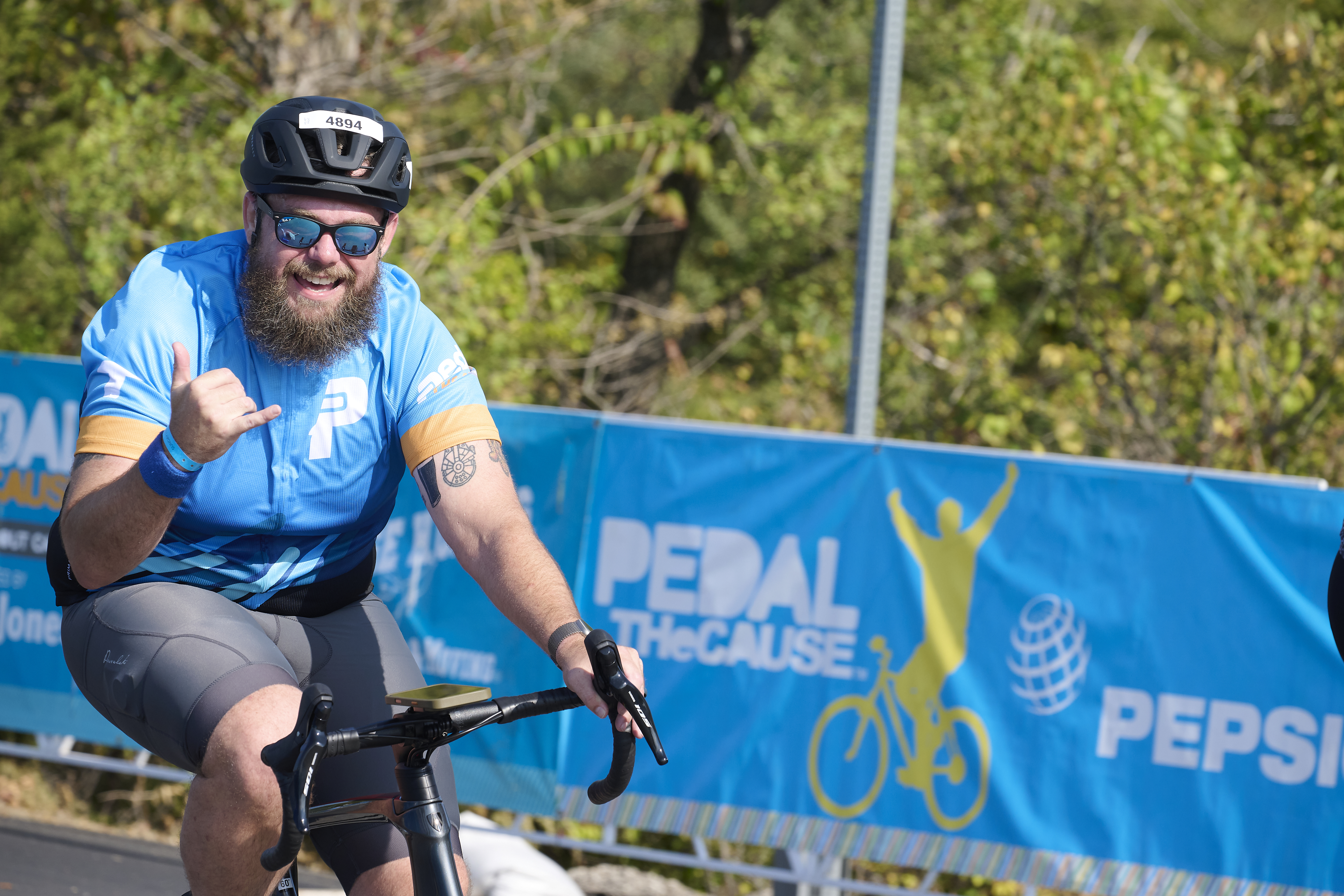
Standing at the start line of their first race, Richards remembers feeling something he had not experienced in years. “We were standing there waiting to start and realized we hadn’t felt that feeling in a long time,” he said. “That feeling that you’re about to compete for the next few hours. It’s going to hurt, but it’s going to be worth it.” Since then, Richards has completed seven triathlons and is currently preparing for a half Ironman later this year.

Winter Regression To Zwifting Obsession

Despite the progress he had made, winter presented a familiar obstacle. After that first season of racing, colder weather arrived in Missouri and outdoor cycling disappeared from his routine. Months passed without riding, and when he finally returned to the bike in the spring, the loss of momentum was obvious. “It felt like I was back to square one again,” he said.

That realization pushed him toward a tool he had been researching for months.

In September 2025, Richards ordered the Zwift Ride bundle and set it up in his basement. What began as a practical way to keep riding through the winter quickly turned into something much more significant. “I became obsessed quickly,” he said with a laugh. The difference, he explained, was immediate. Traditional indoor riding had never appealed to him. Sitting on a stationary bike while watching television felt dull and disconnected from the experience of riding outdoors. Zwift changed that dynamic entirely. “The first time I did Alpe du Zwift, I felt super accomplished,” he said. “It made me look forward to killing myself in a workout.”

For Richards, the appeal of Zwift extended beyond fitness. As a lifelong gamer, he immediately recognized the structure behind the platform’s design. “I played a lot of RPG games growing up where you level up your character,” he explained. “Zwift scratches that same itch. You’re leveling up, unlocking bikes, getting gear. It’s the perfect way to hook me.” The same mechanics that once kept him playing video games for hours now kept him riding. “I used to be addicted to video games,” he said. “Now I’m addicted to Zwift.”

Community As Motivation

Group rides soon became one of his favorite aspects of the platform. Over time, he began to recognize familiar riders who appeared again and again in the virtual peloton. Conversations in the in-game chat gradually created a sense of connection that surprised him. “It’s wild how you start to see the same people over and over,” he said.

One of his most memorable rides came during the Rapha Festive 500 challenge, when Richards organized a ride that attracted more than 130 participants. Together, the group completed 25 laps of the Volcano Circuit, riding more than 65 miles in a single session. “The first half was a lot of fun,” he said. “The second half was definitely a struggle.” What made the effort special, however, was the support that emerged among riders. “The people pulling the group were telling me, ‘Scott, you need to get up here for the finish.’ That kind of support is what makes it special.”

That sense of community has become a powerful motivator on days when the ride itself feels difficult. Even when fatigue or lack of motivation creeps in, the thought of joining a group ride often brings him back to the bike. “Sometimes I think, ‘I don’t really want to ride tonight,’” he admitted. “But the social side makes it entertaining. It’s better than just sitting on a spin bike.”

Looking Behind/Looking Ahead

The results of that consistency have been remarkable. Since beginning his health journey, Richards has lost more than 116 pounds and now weighs roughly what he did as a teenager. The improvements show up everywhere—in climbing hills that once felt impossible, in average speeds that have increased by several miles per hour, and in the simple reality that everyday life has become easier. “Every aspect of my life is easier,” he said.

The changes have also altered the way he sees himself. “If you told me four years ago that I’d be excited to sweat my butt off in my basement every day, I wouldn’t have believed you,” he said. What began as a weight loss effort has evolved into something closer to a lifestyle. Exercise now functions as a mental reset as much as a physical one. “If I don’t work out for three or four days, I get cranky,” he said. “I never thought I’d be that kind of person.” The effect, he says, feels almost therapeutic. “It’s tough when you’re doing it, but afterwards you feel so good—physically and mentally.”

Richards and Hays now document their ongoing journey through their weekly podcast, 2 Guys 1 Scale, where they talk openly about the ups and downs of trying to lose weight and stay healthy. The podcast began primarily as a way to keep themselves accountable, but over time, it has grown into something more meaningful. Their transparency and frankness resonate deeply with listeners, prompting them to reach out with their own stories of struggle or questions about how to begin fitness journeys of their own. Some friends started hiking more frequently. Others began exercising regularly after watching Richards’ progress. “If I can inspire one person to turn their life around,” he said, “then everything I’ve put into this has been worth it.”

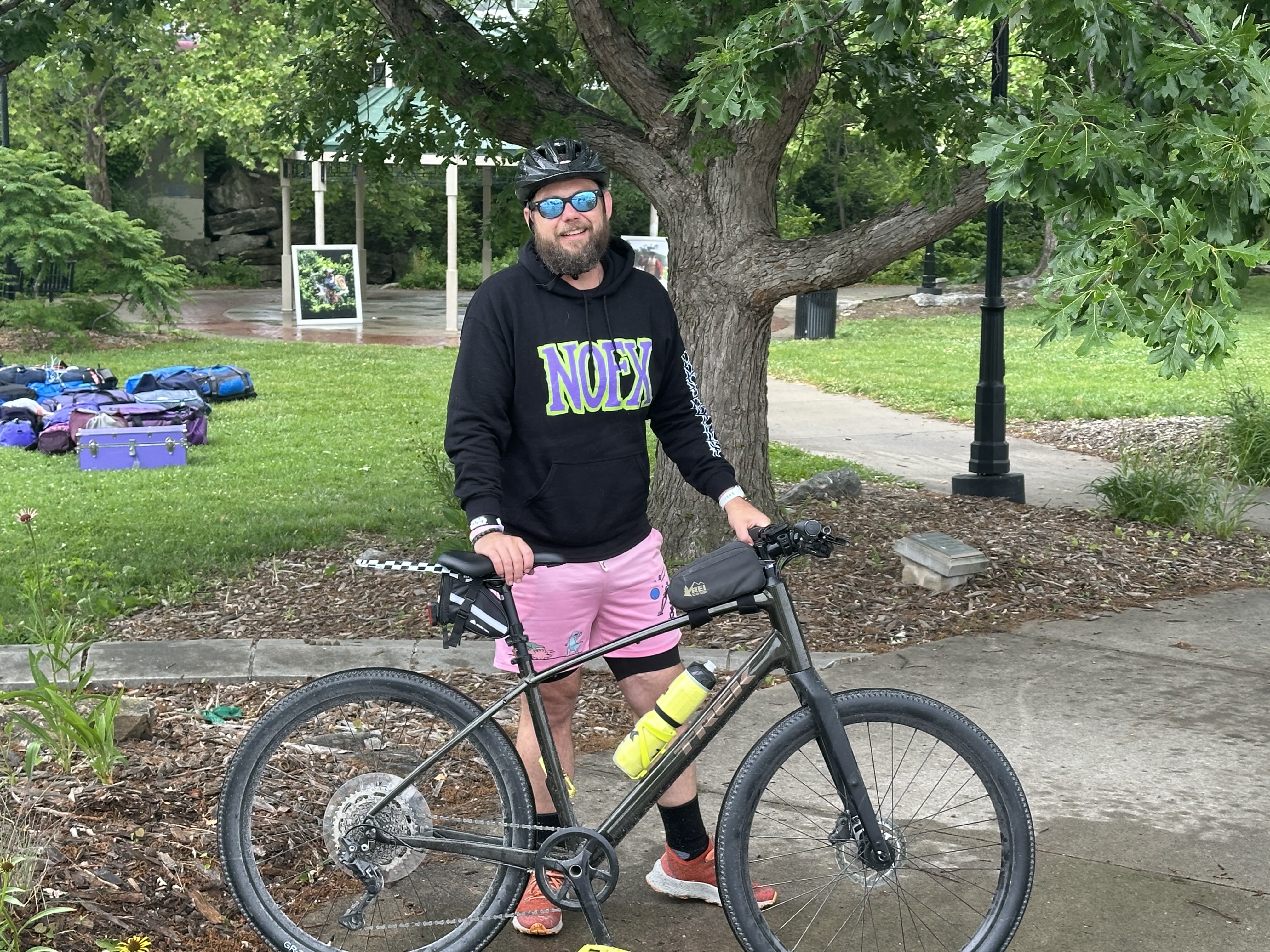
The road ahead remains full of goals. This year alone, Richards plans to complete a half marathon, tackle his first half Ironman in Michigan, and ride Missouri’s 240-mile Katy Trail over several days. Zwift will remain a central part of that preparation, particularly during the cold or rainy months when outdoor riding becomes difficult.

Perhaps the most meaningful change, however, is how he feels about himself and the life he is building. “I love the person I’ve become,” Richards said.

For an athlete who once struggled simply to begin moving, that transformation may be the most powerful achievement of all.