Nothing’s new ‘pro’ headphones feature a flat EQ, bucking the trend of custom equalizers.


Nothing’s new ‘pro’ headphones feature a flat EQ, bucking the trend of custom equalizers.
Despite a $2 trillion valuation ahead of its IPO, Anthropic hasn’t been a money-spinning operation so far.

The agent can now connect to ad accounts and analytics for Instagram and Facebook.

It’s limited to Opera users in certain countries, however.

According to The New York Times, OpenAI scrapped GPT-6.1 Astra’s release because it didn’t meet safety standards.

With the release of Firefox 157 rolling out to all supported platforms, Mozilla promoted the next major release, Firefox 158, to the beta channel for public testing, so it’s time to take a look at the new features and improvements.
New research suggests Enceladus may be an especially promising place to search for extraterrestrial life: microbes similar to those found near Earth’s hydrothermal vents survived in lab conditions designed to mimic the Saturnian moon’s subsurface ocean. A separate study also found that material blasted from Enceladus’ plumes may naturally separate and concentrate salts, organics and potential biosignatures into individual ice grains, potentially making them easier for future spacecraft to detect.
“That is great news in the search for life,” Frank Postberg, lead author of one and co-author of the other of these new studies and professor at Freie Universitat Berlin, said in a statement. “Future spacecraft will have to analyze many individual ice particles in the plume. But if they come across one with microbial material in it, they could identify biosignatures in the particle relatively easy with already available technology.” Space.com reports: Enceladus isn’t the only place in our solar system with water — so, why is it so exciting in the search for life? Well, it has to do with the seafloor of its extensive, liquid ocean. Down deep at the bottom of this body of water, scientists think hydrothermal processes, or movement or reactions with hot water under the surface, are taking place. The plumes shooting upward from the ocean also contain trace amounts of salts and organic compounds. NASA’s Cassini spacecraft found these traces when it flew through the plumes over a decade ago. Between the hydrothermal activity and the organics and minerals in the water, this moon’s ocean has a number of aspects that could be involved in supporting life.
What’s more, using a combination of Cassini data, theoretical models and laboratory experimentation, in Postberg’s new study the team found that the plume’s water droplets blasting out into space at up to 621 miles per hour (1,000 kilometers per hour) don’t freeze as quickly as expected. Before, scientists thought the freeze would happen instantaneously once the droplets reached space, but Postberg and fellow researchers say they found the freezing would actually happen much slower.
They also found that during this freezing process, the salt, organic compounds (and maybe possible signs of life) in the water droplets separate from one another. Not only that, but the team says that as the particles are blasted out into space, they should often collide with the icy cracks of the planet’s surface. This ultimately would leave behind tiny shards of frozen droplets with individually separated out components. Essentially, it’s like the planet has organized its oceanic ingredients into tiny, frozen particle fragments. This work is described in two new studies published in the journal Science Advances here and here.


Read more of this story at Slashdot.
The latest Git release brings a dedicated resolved-files staging mode, new maintenance commands, and substantial scalability improvements.
Your Mac’s Shortcuts app is a powerful way to automate tedious tasks, and you can now set up scripts using natural language.

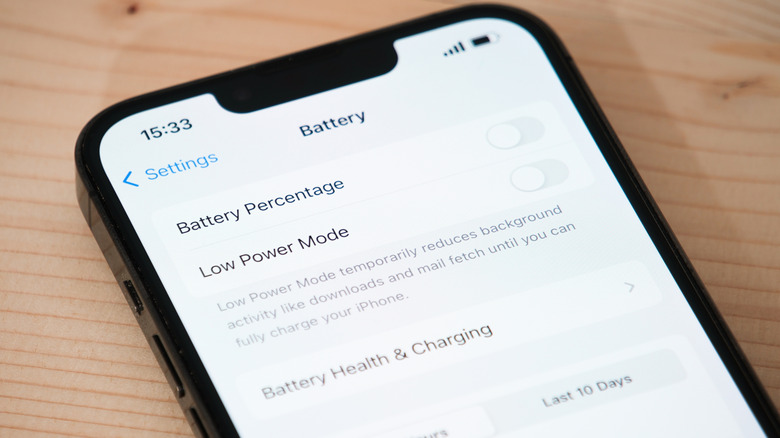
Your iPhone’s battery doesn’t have infinite longevity. Over time, it degrades, and you’ll know that’s happening when you see these signs.
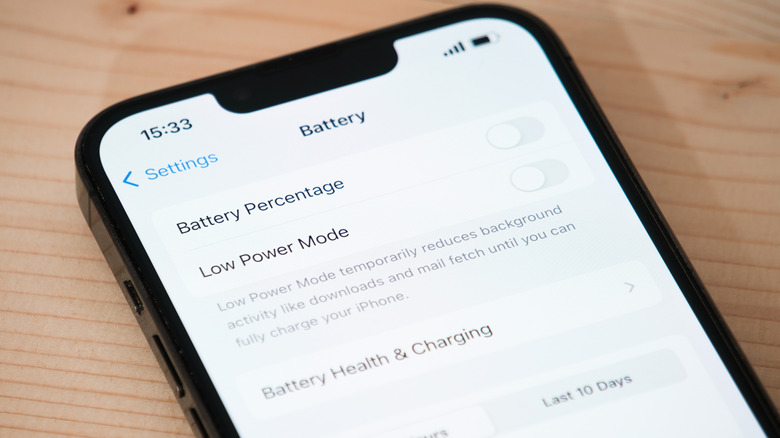
Your iPhone’s battery doesn’t have infinite longevity. Over time, it degrades, and you’ll know that’s happening when you see these signs.
NASA announced on Monday that it will exercise options to purchase two additional flights on Boeing’s Starliner spacecraft, as well as financially support the company in its efforts to return the crewed vehicle to flight and find a new rocket after the Atlas V vehicle retires.
The space agency’s announcement confirms reporting by Ars Technica earlier this month on NASA’s plans to maintain access to low-Earth orbit after the impending retirement of SpaceX’s Crew Dragon vehicle.
“I do not think it’s a secret that SpaceX intends to sunset older platforms like Falcon and Dragon as they concentrate on their next-generation capability, Starship,” NASA Administrator Jared Isaacman said during a news conference on Monday afternoon.
NASA announced on Monday that it will exercise options to purchase two additional flights on Boeing’s Starliner spacecraft, as well as financially support the company in its efforts to return the crewed vehicle to flight and find a new rocket after the Atlas V vehicle retires.
The space agency’s announcement confirms reporting by Ars Technica earlier this month on NASA’s plans to maintain access to low-Earth orbit after the impending retirement of SpaceX’s Crew Dragon vehicle.
“I do not think it’s a secret that SpaceX intends to sunset older platforms like Falcon and Dragon as they concentrate on their next-generation capability, Starship,” NASA Administrator Jared Isaacman said during a news conference on Monday afternoon.
Don’t give up just yet on your Android. If the poor battery is your main complaint, give these usage and settings tips a try.

Don’t give up just yet on your Android. If the poor battery is your main complaint, give these usage and settings tips a try.

Longtime Slashdot reader schwit1 shares a report from Business Standard: China has expanded overseas travel restrictions for top AI professionals in private firms to include the families of key personnel, further tightening measures designed to prevent the outflow of critical know-how and information to the US. Government agencies have recently begun to share the wider restrictions with affected people, which include prominent startup founders as well as the heads of strategically important companies in AI-related fields, people familiar with the matter said. Direct relatives such as spouses and children of certain AI and chip executives, whose work is considered paramount to state security, are now required to obtain approval from Beijing before going abroad even for short trips, the people said.
That marks a broadening of existing curbs on the freedom of movement of China’s most influential tech talent — a category that encompasses entrepreneurs, researchers and executives. While not an outright ban on travel, the new requirement is likely to exert a further chilling effect on a tech sector already facing unprecedented curbs. China has restricted foreign travel for top AI professionals in private firms such as Alibaba Group Holding Ltd and DeepSeek since earlier this year, Bloomberg News reported in May, reflecting Beijing’s determination to safeguard its technology as it makes big strides in AI and chipmaking.
It’s unclear whether all those people’s families need to follow the new strictures, the people said. China is also separately implementing rules, which became effective Sept 15, for enforcing exit bans in cases ranging from criminal investigations to potential violations of the country’s industrial and technological security. Beijing’s plan is to add relevant individuals to the list as time goes by, the people said, asking not to be identified discussing a sensitive issue. Government departments have already notified several people of the need to clear family travel, two of the people said.


Read more of this story at Slashdot.
Longtime Slashdot reader schwit1 shares a report from Business Standard: China has expanded overseas travel restrictions for top AI professionals in private firms to include the families of key personnel, further tightening measures designed to prevent the outflow of critical know-how and information to the US. Government agencies have recently begun to share the wider restrictions with affected people, which include prominent startup founders as well as the heads of strategically important companies in AI-related fields, people familiar with the matter said. Direct relatives such as spouses and children of certain AI and chip executives, whose work is considered paramount to state security, are now required to obtain approval from Beijing before going abroad even for short trips, the people said.
That marks a broadening of existing curbs on the freedom of movement of China’s most influential tech talent — a category that encompasses entrepreneurs, researchers and executives. While not an outright ban on travel, the new requirement is likely to exert a further chilling effect on a tech sector already facing unprecedented curbs. China has restricted foreign travel for top AI professionals in private firms such as Alibaba Group Holding Ltd and DeepSeek since earlier this year, Bloomberg News reported in May, reflecting Beijing’s determination to safeguard its technology as it makes big strides in AI and chipmaking.
It’s unclear whether all those people’s families need to follow the new strictures, the people said. China is also separately implementing rules, which became effective Sept 15, for enforcing exit bans in cases ranging from criminal investigations to potential violations of the country’s industrial and technological security. Beijing’s plan is to add relevant individuals to the list as time goes by, the people said, asking not to be identified discussing a sensitive issue. Government departments have already notified several people of the need to clear family travel, two of the people said.


Read more of this story at Slashdot.
The state has enacted several new rules around cryptocurrencies.

The state has enacted several new rules around cryptocurrencies.

I’ve had my iPhone 15 Pro Max for three years and have completed 1,000 battery charge cycles. Here’s what the experience has been like.