Google announced a landmark investment in India tallying $15 billion over the next five years—its largest in the region to date—to build its first artificial intelligence (AI) hub in the country. Located in the port city of Visakhapatnam (Vizag), Andhra Pradesh, this multi-faceted project is not only Google’s most significant investment in
SpaceX’s second-generation Starship vehicle has just made a graceful exit. The company achieved every major objective it set for the super-heavy lift vehicle’s 11th flight test, the second-gen Starship’s final flight, which launched from Starbase in Texas on October 13. It followed another successful test in August, which saw Starship deploy its payload for the first time ever. Before those two most recent flights, SpaceX suffered a series of failures: Starship exploded during its ascent stage in the company’s seventh and eighth tests, and it failed to deploy its payload during its ninth test. Another Starship vehicle blew up on the ground during a routine test while SpaceX was preparing for its 10th flight.
All of the vehicle’s 33 Raptor engines ignited upon launch, and the stage separation and first-stage ascent went smoothly. The Super Heavy booster splashed down into the ocean as planned, while Starship was able to deploy all its Starlink simulators before re-entering the atmosphere. During its reentry burn, SpaceX intentionally stressed the vehicle to determine the capabilities of its heatshield. And with just a few minutes left to the flight, the vehicle executed a banking maneuver to “mimic the trajectory that future missions returning to Starbase will fly.”
The company says it will now focus on developing the next generation of Starship and Super Heavy. It has multiple versions of the vehicle and the booster being prepared for tests at the moment, and it expects them to be used for the first Starship orbital flights and operational payload missions.
This article originally appeared on Engadget at https://www.engadget.com/science/space/spacex-is-preparing-the-next-gen-starship-after-a-successful-flight-test-130027382.html?src=rss
Apple has rebranded its streaming service Apple TV+ to simply Apple TV, further blurring the already confusing line between the Apple TV device, the Apple TV app, and the Apple TV service. As John Gruber notes, users can now “watch Apple TV in Apple TV on Apple TV.” From Daring Fireball: In some ways, I get it. Like, if you’re telling someone how much you enjoy Slow Horses and they ask how to watch it, it’s more natural and conversational to just say “It’s on Apple TV.” That’s what most people say. That’s what I say — and as part of my job, I completely understand the difference between Apple TV the device, Apple TV the (free) app, and Apple TV+ the (paid) streaming service.
But right there in Apple’s own “About Apple TV” description, you see just how overused “Apple TV” now is. You can watch Apple TV in Apple TV on Apple TV — the paid service in the free app on the set-top box. But you can watch any streaming service you want on the box, in that service’s own app. But many of those services are also available in the Apple TV app. And the Apple TV streaming service is also available on just about all other popular set-top hardware platforms. So don’t need an Apple TV to watch Apple TV. It’s a bit like Abbott and Costello’s classic “Who’s on First” routine.
If you’ve been looking for a great pair of noise-canceling earbuds that don’t cost a fortune, the JBL Tune Buds are now down to $44.95, their lowest price yet, according to price trackers. That’s less than half of what they’re originally sold for, which makes them a strong contender in the under-$50 range.
These are true wireless earbuds that focus on delivering that signature JBL bass (deep and thumpy) but with enough flexibility to tweak the sound using the JBL app. Out of the box, they lean heavy on the low end, which works well for pop and EDM, but you can easily adjust the EQ if you prefer something more neutral.
Performance-wise, the Tune Buds pack in more than you’d expect for the price. They support Bluetooth 5.3, AAC, and SBC codecs, along with multipoint pairing, so you can jump between your phone and laptop without reconnecting. The active noise cancellation is solid for casual use—good enough to dull traffic noise or a chatty office, even if it can’t fully block the low rumble of a subway, notes this PCMag review. There’s also an IP54 rating, meaning these can handle sweat and light rain, making them suitable for workouts or daily commutes. Touch controls are customizable through the companion app, and there’s built-in Alexa support if you like using voice commands hands-free.
As for the battery life, JBL claims up to 10 hours per charge with ANC on and 12 hours without, plus an extra 30 to 36 hours from the charging case. That’s easily a few days of use (your mileage may vary) without needing to plug in. The 10mm drivers cover the standard 20Hz to 20kHz range, and the earbuds come with three silicone tip sizes to help with comfort and fit. They don’t offer premium-level sound or the silence of high-end ANC sets from Sony or Bose, but they strike a good balance between affordability, sound, and everyday convenience.
The Free Software Foundation’s Licensing and Compliance Lab
concerns itself with many aspects of software licensing, Krzysztof Siewicz
said at the beginning of his 2025 GNU Tools
Cauldron session. These include supporting projects that are facing
licensing challenges, collecting copyright assignments, and addressing GPL
violations. In this session, though, there was really only one topic that
the audience wanted to know about: the interaction between free-software
licensing and large language models (LLMs).
Therabody just revealed a bunch of new products, including the TheraFace Mask Glo. This MF Doom-looking full-face mask offers quite a different experience from the pre-existing TheraFace Pro. The Pro is essentially a face massager, but the Mask Glo is a giant mask that uses LED lights to “reduce fine lines and wrinkles, firm and tighten skin and even tone and texture.”
The company promises results in “as little as eight weeks” with daily 12-minute sessions. The mask has been cleared by the FDA and includes 504 medical-grade LEDs to deliver “an effective, full-face treatment.” It also doubles as a Halloween mask if you are so inclined. Tis the season. The TheraFace Mask Glo is available to order today and costs $380.
The Theragun Mini Plus is a portable version of its popular massage gun, but with one feature missing from the original Mini. This one has heat. It combines “percussive massage with consistent, rapid heat.” Therabody says this results in a “benefits 3x faster than percussive massage alone.”
Therabody
It features three massage speeds, three heat levels and app-guided routines to target specific muscle groups. The gun is TSA-approved, so bring it on a plane. The Theragun Mini Plus is available today and costs $280.
The company also released a new version of the Theragun Prime massage gun, which costs $330, and the Theragun Sense massage gun. That last one features an LCD screen and real-time pressure feedback to make sure people are using it right. It costs $300.
This article originally appeared on Engadget at https://www.engadget.com/home/therabody-just-introduced-the-theraface-mask-glo-which-uses-leds-to-reduce-wrinkles-123044315.html?src=rss
TiVo has confirmed that it has stopped selling its DVR set-top boxes, marking the end of an era that changed how we watch television forever. As first reported earlier this month by Cord Cutters News, TiVo Corporation quietly pulled its once-groundbreaking digital video recorder from its website. Holding company Xperi later confirmed that the listing was removed on October 1.
“I can confirm that as of October 1, 2025, TiVo stopped selling physical DVR products, including hardware and accessories, both online and through agents,” a TiVo spokesperson confirmed to PCMag. “TiVo no longer manufactures hardware, and our remaining inventory is now depleted, though we will continue to offer support for the products going forward.”
The TiVo box revolutionized television upon its launch in 1999, allowing viewers to pause, rewind and record live television. There was a time when you would just miss the start of a show if you weren’t punctual, and you’d have to sync grabbing a snack with a commercial during the big game. You also had to actually watch the commercials, something that is unfortunately making a comeback with an increase in ad-supported streaming.
The DVR pioneer is now a software company. It has been producing TiVo OS almost exclusively in the European market since 2022, though the smart TV OS premiered in the US this year via Sharp. “The Sharp Smart TV Powered by TiVo” launched as a 55-inch QLED display with 4K resolution and HDR support. TiVo OS functions like many other television operating systems, aggregating streaming services and offering its own library of free and paid content.
TiVo will still offer customer support for its now-discontinued boxes, which bodes well for customers who have purchased a lifetime plan.
This article originally appeared on Engadget at https://www.engadget.com/entertainment/tv-movies/tivo-has-discontinued-its-dvr-boxes-123037999.html?src=rss
NVIDIA’s DGX Spark AI computer revealed earlier this year goes on sale today for $3,999, the company announced. Though relatively tiny, it hosts the the company’s entire AI platform including GPUs and CPUs, along with NVIDIA’s AI software stack “into a system small enough for a lab or an office,” NVIDIA said.
The Spark isn’t something you’d buy to play Baldur’s Gate 3, though. It’s designed to give developers, researchers and data scientists enough computer power to run complex AI models. Early recipients of the PCs include Anaconda, Google, Hugging Face, Meta and Microsoft. NVIDIA CEO Jensen Huang even hand-delivered a unit to Elon Musk at SpaceX’s headquarter in Starbase, Texas.
The DGX has plenty of power on offer despite its diminutive 2.6 pound size. It boasts NVIDIA’s GB10 super system-on-chip that weds a 20-core ARM CPU with a Blackwell GPU powered by the same number of cores as an RTX 5070 GPU. It’s outfitted with 128GB of LPDDR5x RAM shared between the CPU and GPU and includes 4TB of NVMe storage, along with four USB-C ports, Wi-Fi 7 and an HDMI connector. NVDIA calls it “the world’s smallest AI supercomputer.”
The DGX Spark runs Nvidia’s DGX OS, a custom version of Ubuntu Linux that’s configured with AI software. With that, developers can access NVIDIA AI models, libraries and microservices in order to do chores like refining image generation or creating AI chatbots.
The DGX Spark is also an entry point for similar machines. Other vendors like Dell, HP, Lenovo and ASUS showed off similar AI-oriented mini PC’s at Computex this year using the same GB10 chip, with Acer’s Veriton GN100 being one example.
The DGX Spark mini PC is now on sale for $3,999 through NVIDIA and its partners. While not cheap, it’s a drop in the bucket for AI developers and all of the companies listed above, and considering the hardware inside, the price doesn’t seem unreasonable. NVIDIA is also working on the DGX Station that will feature GB300 Grace Blackwell Ultra Desktop Superchip, with 20 petaflops of performance and 784GB of unified system memory. A price has yet to be announced for that model
This article originally appeared on Engadget at https://www.engadget.com/ai/nvidia-starts-selling-its-3999-dgx-spark-ai-developer-pc-120034479.html?src=rss
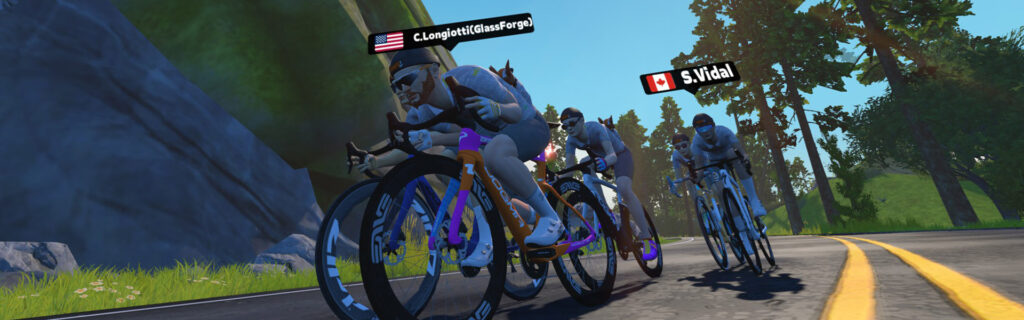
Indoor bike racing has evolved into a cycling discipline of its own, and every platform has its own idiosyncrasies. The more you ride on Zwift, the more you’ll learn strategies and tricks that can give you an edge. Here are five intermediate-level tips for next-level eRacing on Zwift.
Stay within a few bike lengths of the front so you don’t lose sight of the pack or get gapped on an attack
Watopia and Makuri Islands have several dirt sections, and even though it’s virtual, riding in the dirt is different than riding on tarmac! Dirt has a higher rolling resistance on Zwift, so your smart trainer’s resistance will increase a bit on dirt sections, and your speed will drop compared to riding on tarmac. Additionally, dirt sections are dusty, which limits visibility in larger groups.
Another way to look at it: these dirt sections essentially behave like small climbs, with the added benefit of reduced visibility. If you’re feeling good and want to attack, consider the dirt.
Attacks in the dirt are what dropped GCN’s Simon Richardson from the lead group in the famous “Si vs the Volcano” race in Zwift’s early days. The takeaway is: if you’re barely holding onto the pack and are approaching a dirt section, try to start near the front of the group and be ready to put in an extra dig to avoid getting dropped.
This also gives you better visibility, because unless you’re near the front, you won’t be able to see more than a few bike lengths ahead in a large pack. (Pro tip: for visibility, you can also change the camera angle – hit 9 on your keyboard for an overhead view without dust.)
#2: Don’t Over-Power It
Thanks to updates in pack dynamics, Zwift’s draft isn’t nearly as “sticky” as it used to be, but there is still a wattage range that will keep you in the draft. That is, if you are drafting behind someone who is pulling at 300 watts, you will stay in their draft if you do 250 watts… but you may also be able to stay in the draft at ~225 watts. So why put out the extra wattage?
Racing is all about conserving energy so you’ve got the watts when you need them most. So try to maintain the minimum wattage necessary to hold your desired position in the pack. This will require constantly adjusting your power output, but once you’ve spent some time doing it, it becomes second nature. (Riding with Robopacer groups is a great way to practice efficient pack positioning.)
#3: Know Your Draft Status
One key aspect of efficient pack riding is knowing whether or not you are currently drafting. Zwift uses the visual cue of having your avatar “sit up” on the hoods to indicate when you are in the draft on a road bike, with two key exceptions:
Your avatar will also sit up at slow solo speeds (but in a race situation, this rarely applies).
When riding the Tron bike or a TT bike, your rider will never sit up, even though it is drafting. This is simply because Zwift never created those rider positions for those bikes!
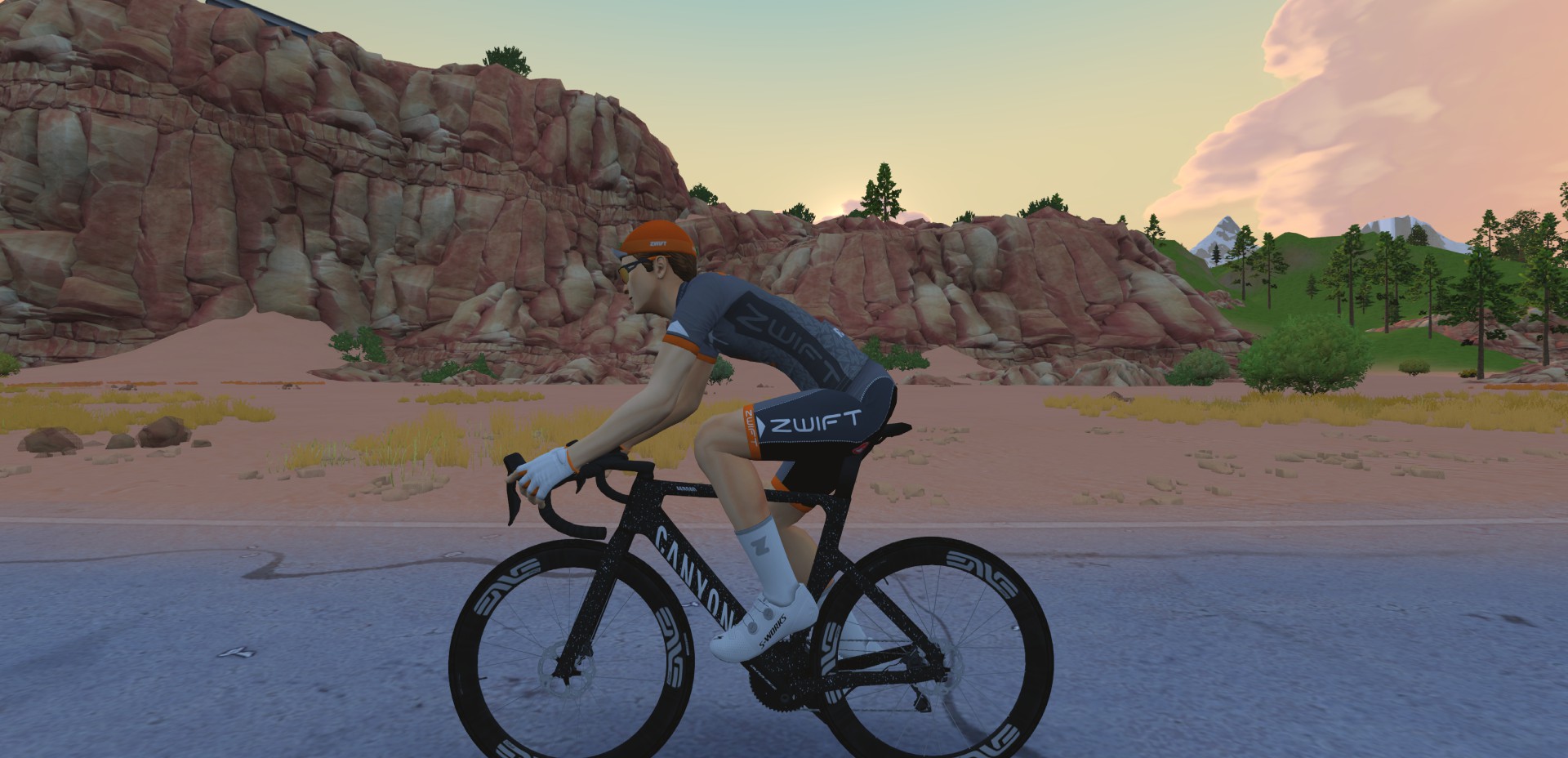
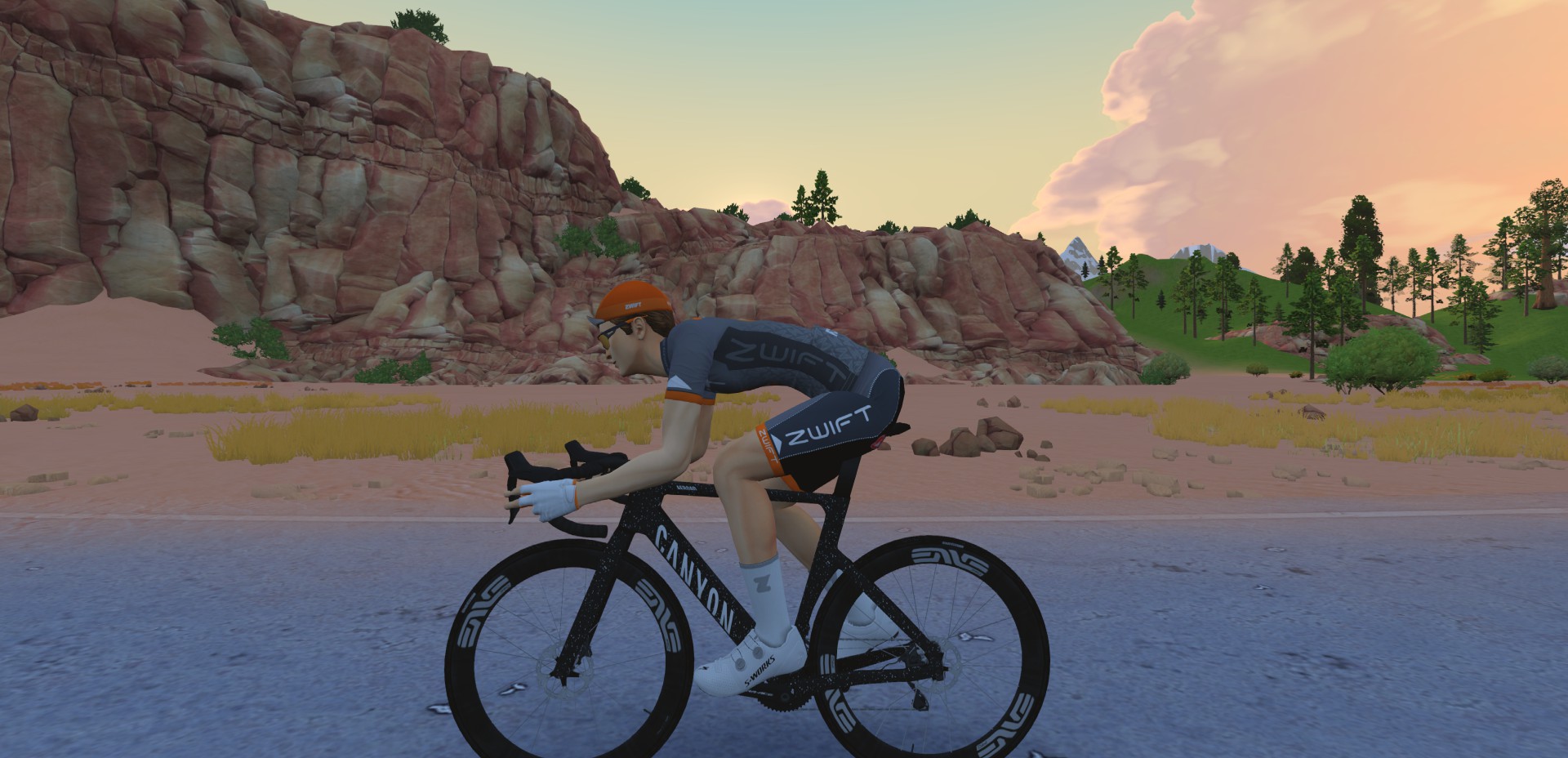
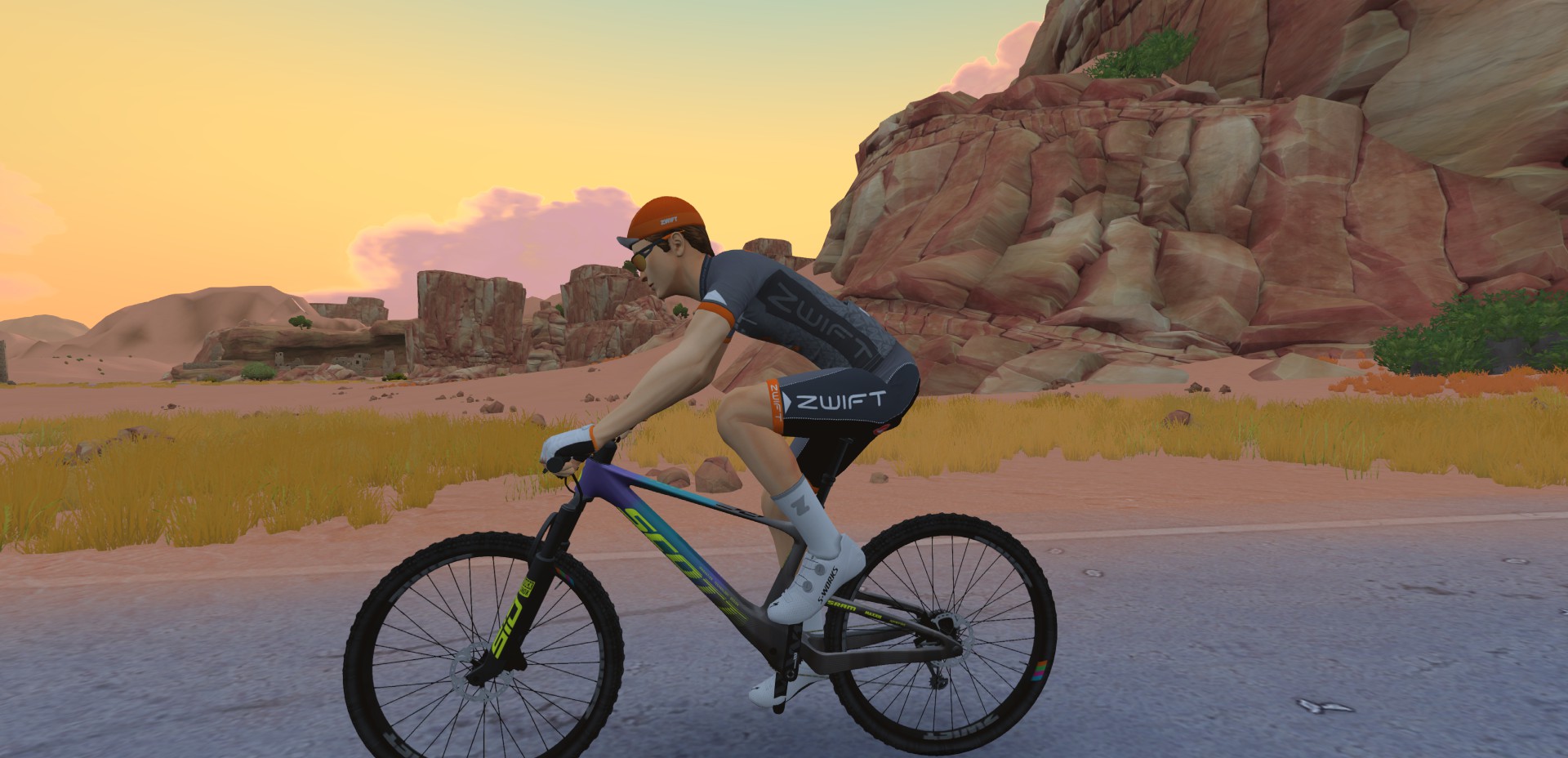
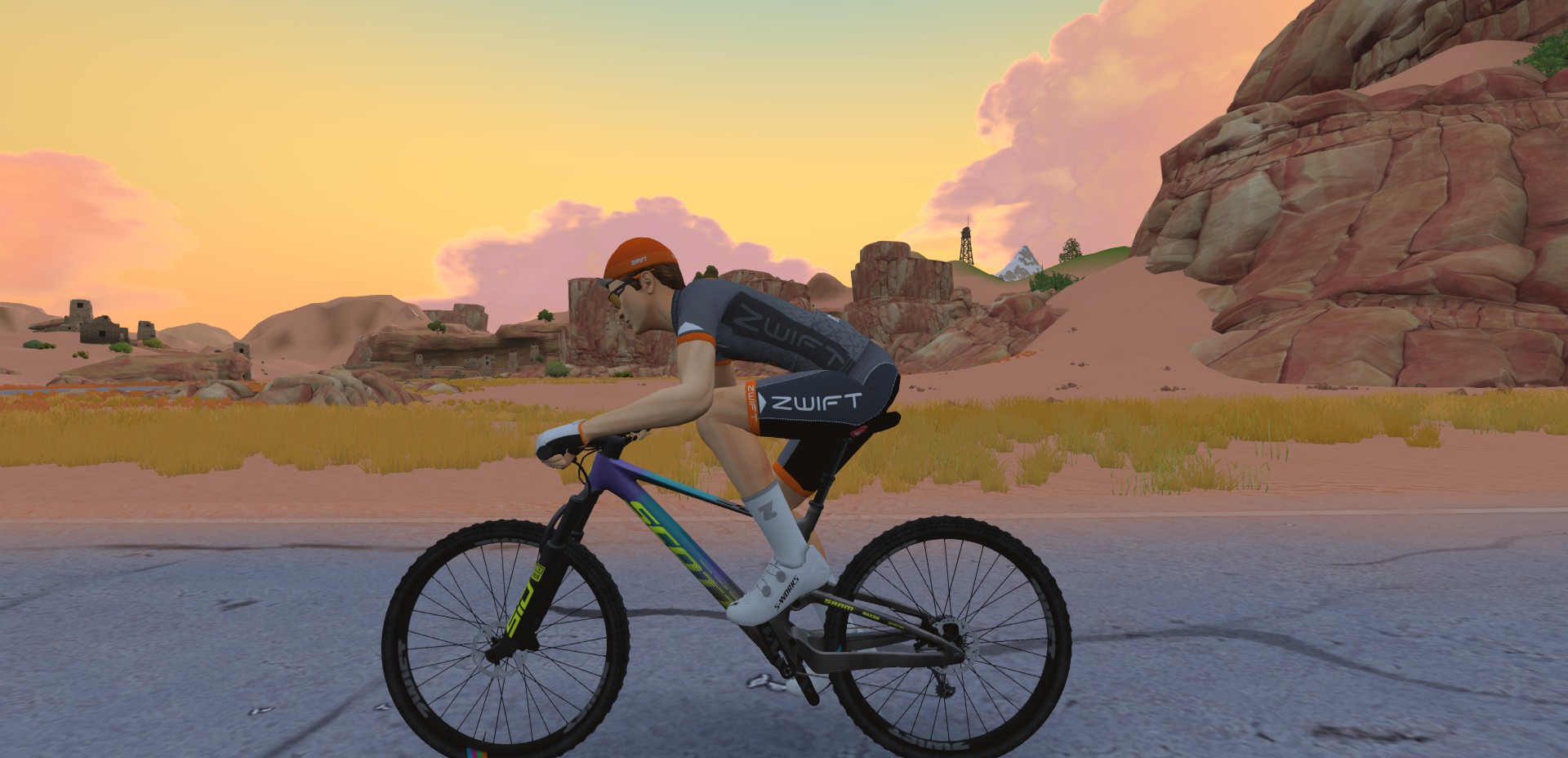
If you are moving at 33kph (20mph) or more and your avatar is sitting up, you are in the draft. If you’re hunched down in the drops, you are out of the draft and probably working harder than you want to be. Here are side views of the two positions (for road bike and MTB):
Drafting in Zwift actually introduces some randomness into group riding, as the game positions you right to left automatically unless you are actively steering. Sometimes this means you get moved out of the draft – when this happens and your rider crouches down, be prepared to work a little harder to keep pace with your group until Zwift takes you back into the draft.
Supertucking can be the most efficient way to make others work hard to stay with you on a descent. But you need to know how the supertuck works in order to use it to maximum advantage! Supertucking in Zwift requires four conditions to be met:
You must be traveling at least ~36MPH (~58km/hr)
The gradient’s decline must be at least -3%
Your power output must be below 11 watts
You must not be drafting (safety first!)
Because of these requirements, supertucking is most efficient if you’re in a group where others aren’t fighting for the supertuck slot. When others aren’t fighting to be the rider in the front who isn’t drafting (and thus is able to supertuck), you can stay in that slot with little or no effort apart from what’s required to move to the front of the group at the start of the descent.
If others are fighting for that slot, though, it may be easier to simply ride the wheels of the supertuckers, sitting in their draft with as little effort as possible. You will need to pedal, though!
A word of warning: the supertuck works great until you hit a flat section or slow down enough that the game sits you up. At that point, if you’re with a group that is hammering, you can get dropped very quickly. Pay close attention to the road and other riders, and start pedaling hard if you see flat road just ahead or riders begin to pass you quickly.
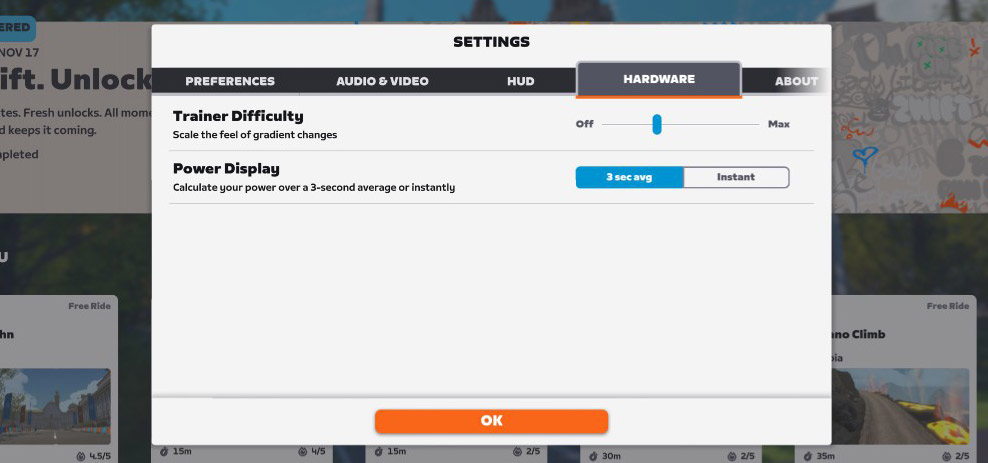
In races, do you typically overtake riders on short climbs, then need to put down extra power to stay with the pack on descents? This can happen if you’re a strong climber or if you’re racing against riders who have turned down their Trainer Difficulty. (For the details behind why this happens, read “Hanging with the Group Over Gradient Changes“.)
One way to reduce this yo-yo effect is to adjust your trainer difficulty settings under Menu>Settings>Hardware to something in the 10-30% range. Doing so will make your resistance change less in response to gradient changes, helping you keep power more consistent so you can ride more efficiently.
Trainer Difficulty set to approximately 30%.
Reducing Trainer Difficulty also means you won’t have to shift as often, which some people prefer. Of course, the lower you set Trainer Difficulty, the less “realistic” your trainer resistance will actually be. So if you want your trainer to reproduce the actual in-game gradients, go ahead and slide this setting all the way up to 100% and get ready to shift.
Note: this tip only applies to smart trainer users – but that’s pretty much everyone these days.
Share Your Tips
Got any racing tips of your own? Share them below!
Instagram is tightening the settings on its “teen accounts” to add new limits on what kids on the platform are able to see. Older teens will also no longer be able to opt out of the default stricter settings without parental approval.
Meta first introduced teen accounts for Instagram a year ago, when it began automatically moving teens into the more locked-down accounts that come with stricter privacy settings and parental controls. The company recently rolled out the accounts for teens on Facebook and Messenger too, and has used AI tools to detect teens that are lying about their age.
While teen accounts are meant to address long-running criticism about Meta’s handling of teen safety on its apps, the measures have been widely criticized as not going far enough to protect the company’s most vulnerable users. A recent report from safety advocates at Heat Initiative found that “young teen users today continue to be recommended or exposed to unsafe content and unwanted messages at alarmingly high rates while using Instagram Teen Accounts.” (Meta called the report “deeply subjective.”)
Now, Meta is locking down teen accounts even more. With the latest changes, teens will no longer be able to follow or see content from accounts that “regularly share age-inappropriate content” or that seem “age-inappropriate” based on their bio or username. Meta says it will also block these accounts from appearing in teens’ recommendations or in search results in the app.
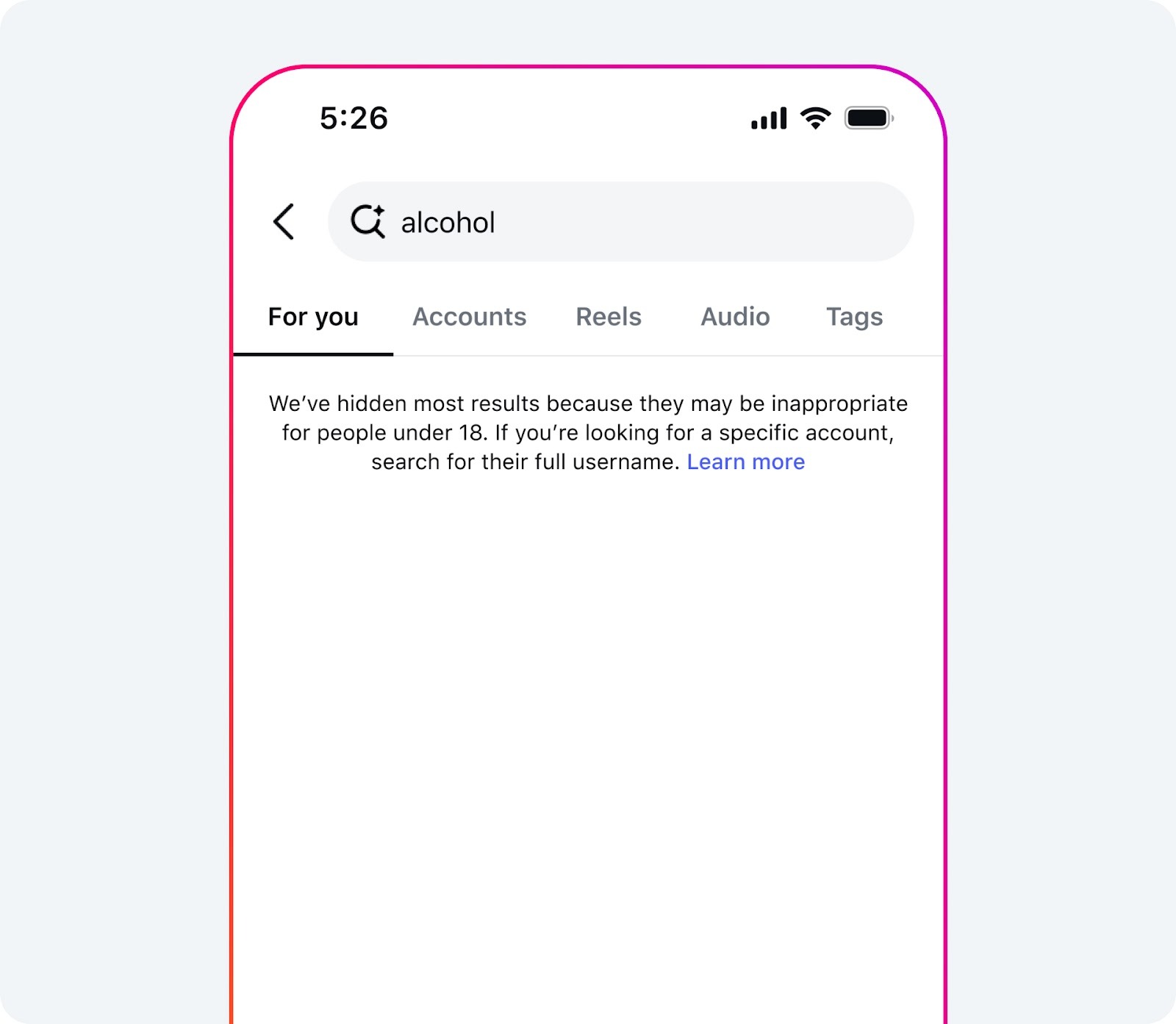
Instagram will also block a “a wider range of mature search terms” for teens, including words like “alcohol,” “gore,” and intentional misspellings of these words, which is a common tactic to avoid Instagram’s filters. And, even if an account a teen already follows shares a post that goes against these rules, teens should be prevented from seeing it, even if it’s sent to their DMs.
Instagram will block teens from searching for more term associated with inappropriate content,.
Meta
While these changes may seem like Meta once again filling somewhat obvious gaps in its safety features, the company says the revamp is meant to make the content teens encounter on Instagram more like a PG-13 movie. “Just like you might see some suggestive content or hear some strong language in a PG-13 movie, teens may occasionally see something like that on Instagram – but we’re going to keep doing all we can to keep those instances as rare as possible,” the company explained in a blog post.
That’s a somewhat confusing analogy as there’s a fairly wide spectrum of what might appear in a PG-13 movie. Meta also says that some of its rules for teens are more restrictive than what teens might see in a PG-13 movie. For example, the app aims to prevent teens from seeing any kind of “sexually suggestive” content or images of “near nudity” even though that type of content might appear in movies rated for 13-year-olds.
For parents that want even tighter restrictions, Instagram is also adding a new “limited content” setting that filters “even more” content from teens’ view (Meta didn’t explain what exactly would be restricted). The setting also prevents teens from accessing any comments on the platform, either on their own posts or other users’. Finally, Meta is testing a new reporting feature for parents that use Instagram’s parental control settings to monitor their teens’ use of the app. With the feature, parents can flag specific posts they feel are inappropriate to trigger a review by Meta.
Meta says the latest changes will be rolling out “gradually” to teen accounts in the US, UK, Canada and Australia to start and that it will eventually “add additional age-appropriate content protections for teens on Facebook.”
This article originally appeared on Engadget at https://www.engadget.com/social-media/instagram-makes-teen-accounts-more-restrictive-120000653.html?src=rss
After more than a decade of service, Microsoft is declaring the end of Windows 10’s usable life. If your machine still uses it, rest assured it’ll continue to work, but you won’t see any more software and security updates. If your machine is compatible, you’ll be able to upgrade to Windows 11 for free, or this can provide the justification you need to buy a new machine.
But there’s also a way to keep your status quo without the additional stress, at least for the next year. It’s possible to sign up to Microsoft’s Extended Security updates program, giving you an extra year of software and security patches. It won’t cost you any money, but you will be expected to sign up to Microsoft’s cloud services.
The FCC has outlined a plan to once again allow ISPs to charge hidden fees, making it easier to rip off consumers. It follows a complaint from those poor carriers that believe it’s far too hard to be required to tell customers what it is they’re charging for. I bet that’s loads of fun for all of the FCC employees who went into public service in the hope of actually serving the public.
The rumor mill suggests we’ll see them in a few days.
Apple
Apple is reportedly gearing up to announce a series of updated devices, each one packing its new A5 chip. Bloomberg claims the company will announce new MacBook Pros, Pad Pros and an updated Vision Pro online over a period of days. If so, it would be mirroring the release pattern from last year, when an updated product was launched online each day across a week. Rumors suggest we’ll only get the vanilla A5 versions this fall, with the higher-end versions of the silicon not arriving until the start of next year.
Ratchet & Clank superfans have unearthed a fairly substantial gem after a years-long search: a finished but essentially unreleased mobile title from 2006. Clone Home was the sequel to Going Mobile developed for mobile phones running Java from those halcyon pre-iPhone days. It was axed shortly before launch, but a few copies did find their way into the ether, which enabled YouTuber The Golden Bolt to show it off to the world.
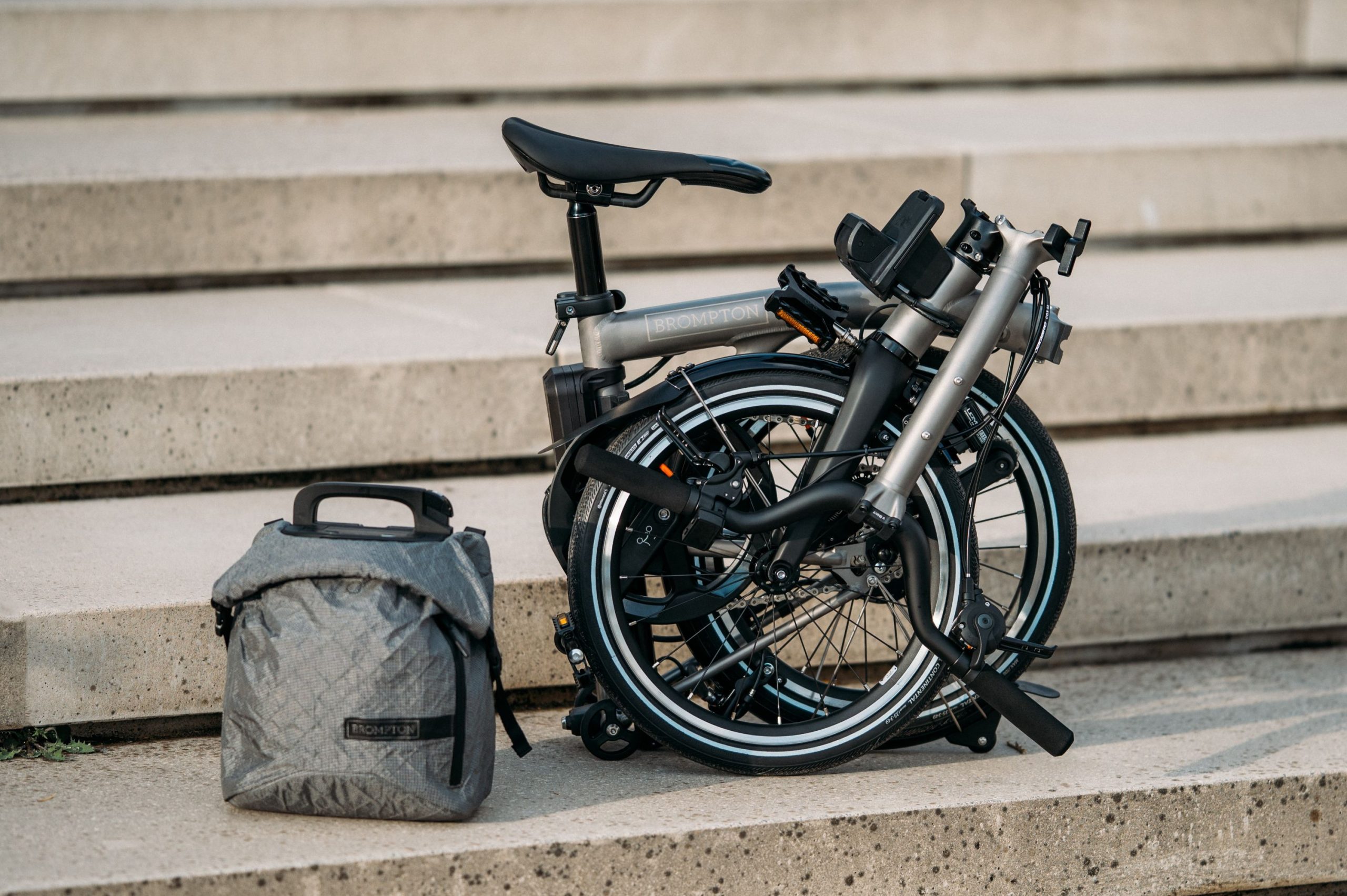
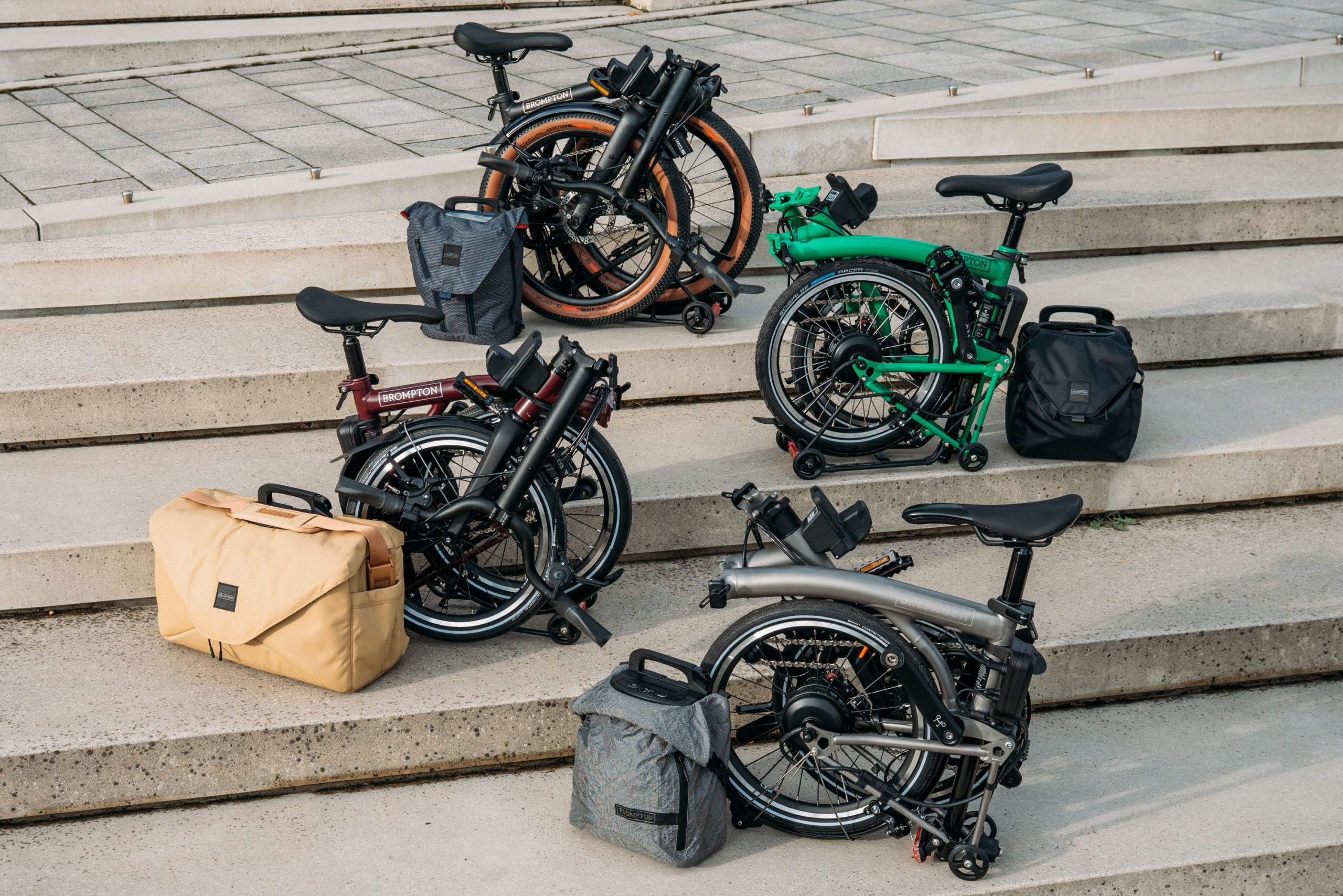
Brompton has launched the new T Line Electric, its lightest electric bike yet, with a claimed 14.1kg weight including the removable battery pack and an 11.2kg weight for the bike alone. UK prices start at £5,799, while the updated Brompton Electric bike range is priced from £2,999.
The T Line Electric is powered by the Brompton e-Motiq rear-hub motor introduced on the Electric G Line when it was launched in 2024. The C Line Electric and P Line Electric bikes have also been updated to use the e-Motiq motor in place of their previous front-hub motor system.
“The new Brompton Electric range is our answer to the evolving way we live and move. We’ve kept everything people love about Brompton – the portability, the engineering, the joy of the ride – and added the intelligence and lightness to make it easier, smarter, and even more fun,” says Will Carleysmith, Brompton’s chief design and engineering officer.
There’s the same compact fold and titanium/carbon construction as for the non-electric T Line.
At 14.1kg, the T Line Electric removes more than a kilogram in weight from Brompton’s ebike range, making it one of the lightest electric folding bikes.
Brompton launched its first ebike in 2017, based on the C Line’s all-steel frame. The C Line Electric has a claimed weight starting at 16.6kg for the four-speed model. It was joined in 2022 by the P Line Electric. This has a steel main frame, but with a titanium rear frame, and the four-speed bike has a claimed 15.6kg weight.
The T Line Electric is based on the pedal-only T Line, which has claimed weights starting from 7.45kg for the singlespeed bike and is made of titanium with a carbon fork and crankset, and a carbon seatpost with steel sheathing. Even the pedals are lighter than Brompton’s standard folding pedals.
Brompton’s entire electric bike range is now powered by the e-Motiq rear-hub motor.
The T Line Electric, like the C Line and P Line Electric 16-inch wheel bikes, is powered by the same e-Motiq motor as used in the G Line Electric 20-inch wheel folding bike.
The e-Motiq motor is toned down a little for the T, C and P Line bikes, with 250W output and 24Nm torque in place of the Electric G Line’s 30Nm torque. Brompton says that the output is calibrated to provide the same degree of rider support across the different electric bike lines.
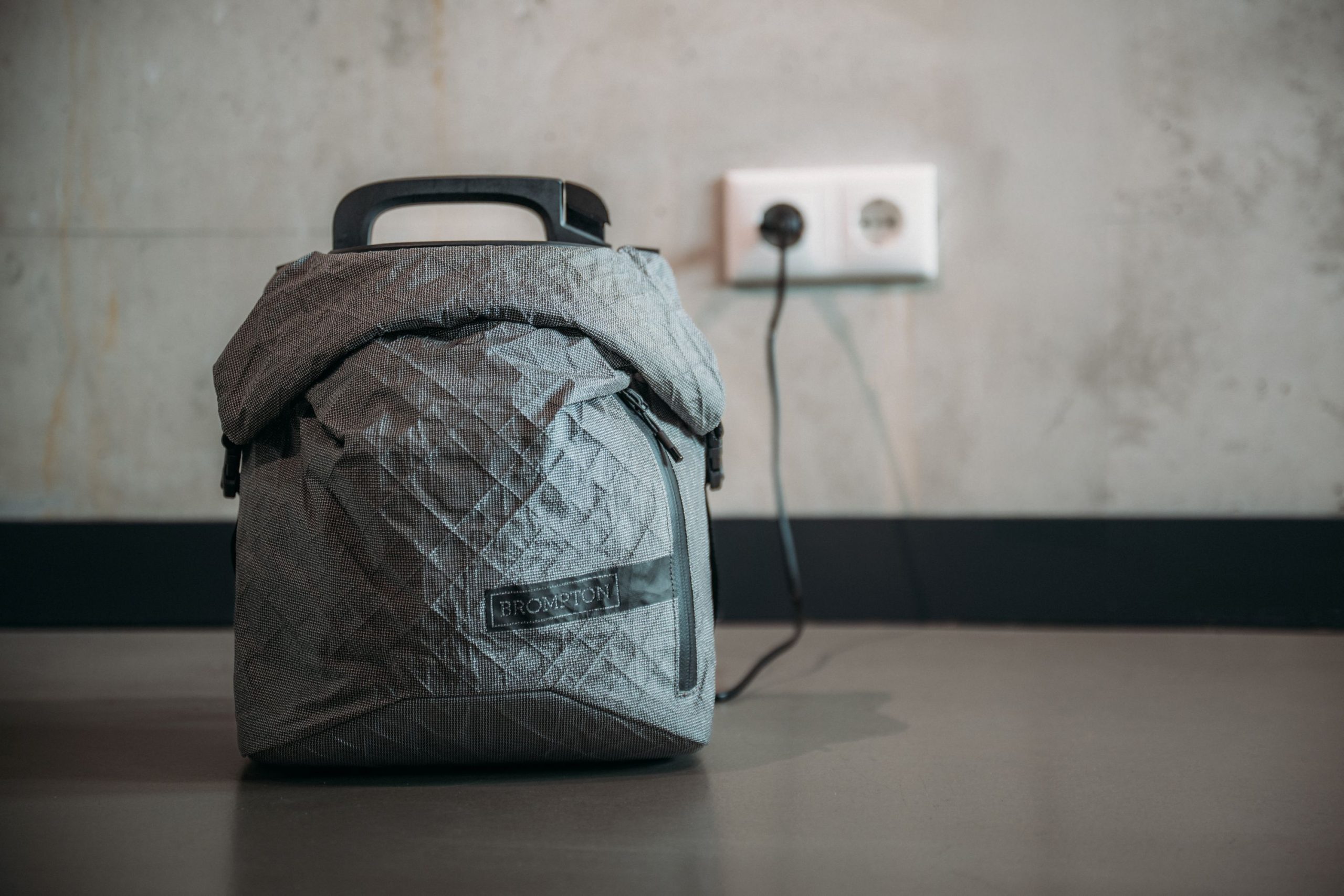
All Brompton ebikes include a torque sensor to ensure the motor output matches that of the rider. They all share the same 345Wh removable battery, which sits in a clip-on backpack that’s attached to the handlebar.
Brompton’s ebike system learns and adapts to your riding style.
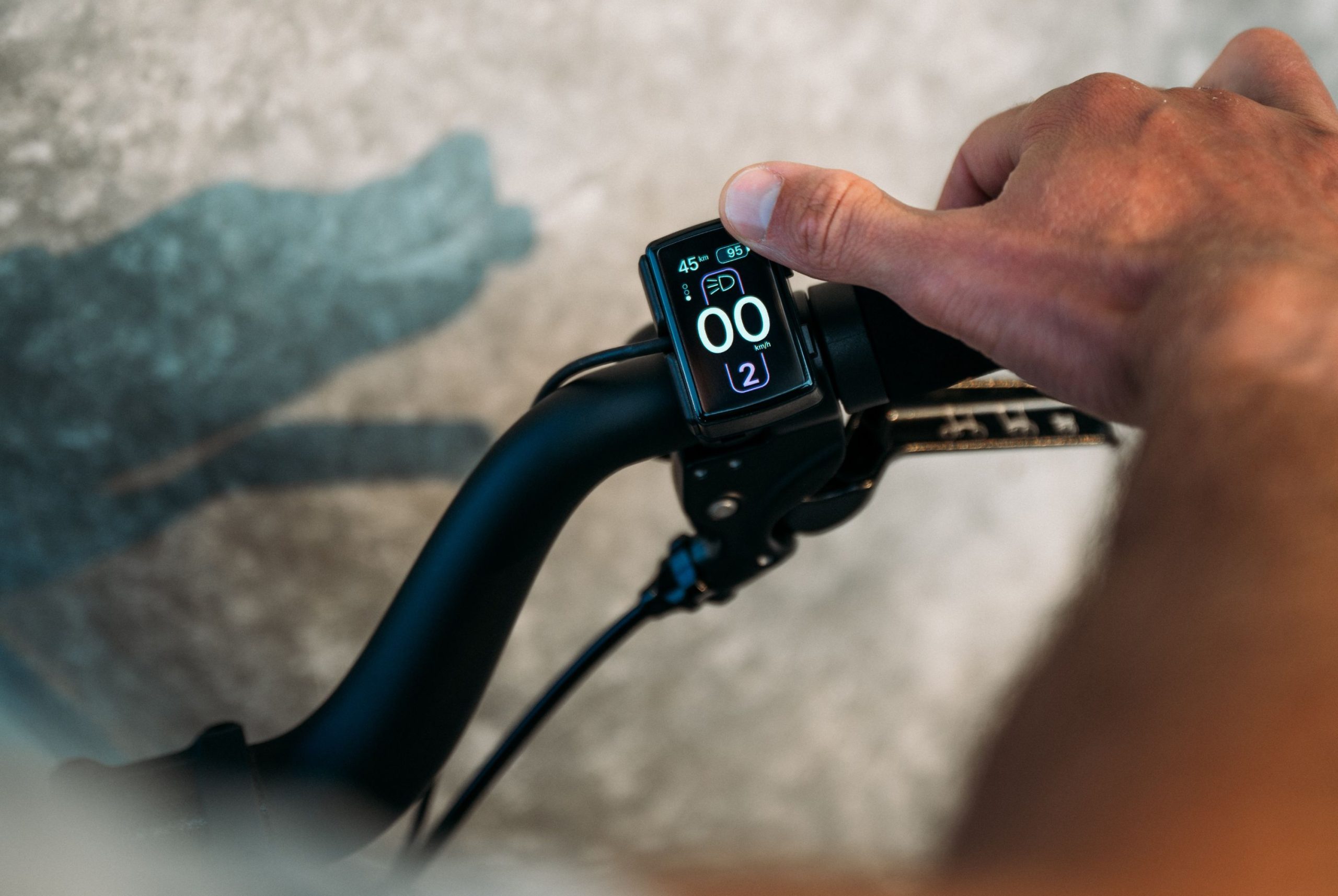
Brompton claims a range of up to 90km for the e-Motiq motor in the T Line Electric. It says the motor system will learn and adapt to your riding style, developing an understanding of how you ride over the first 100km, then making changes every 6km to fine-tune its personalisation. It uses this data to make accurate predictions of the available range via the Brompton Electric app, which also supports over-the-air firmware updates.
The motor offers a Start Assist mode for speedy acceleration from stops and to give an extra boost for steeper hills. There’s also a Walk Assist mode to help you move the bike around more easily when you’re on foot, which will run the motor at speeds of up to 6km/h.
Electric system safety certified
Brompton’s electrical system has been independently safety certified.
There’s been a lot of negative publicity about the safety of electric bike batteries over the last few years. That’s down largely to low-quality batteries sold via online outlets, with fires often the result of users pairing them with mismatched chargers.
Brompton is at pains to stress the safety of its batteries, though, which are assembled in London and have been independently certified to meet international standards for electrical and fire safety. Its electric bikes carry a three-year electric system warranty.
Brompton says it is also one of the first ebike brands to be audited and listed on the Bicycle Association Register of Safety-Audited E-Bike Brands.
The Brompton T Line Electric is available for pre-orders via Brompton’s site and its Brompton Junction store from 21 October and will be on general sale from Brompton and its 1,500 Brompton Accredited retailers from 28 October. It’s priced at £5,799 / €6,799 / $TBA.
The Nvidia CUDA toolkit is an extension of the GPU parallel computing platform and programming model. The Nvidia CUDA installation consists of inclusion of the official Nvidia CUDA repository followed by the installation of relevant meta package and configuring path the the executable CUDA binaries. In this tutorial, you will see how to install CUDA on Ubuntu Linux. This will get your video graphics running with the latest drivers and software available.
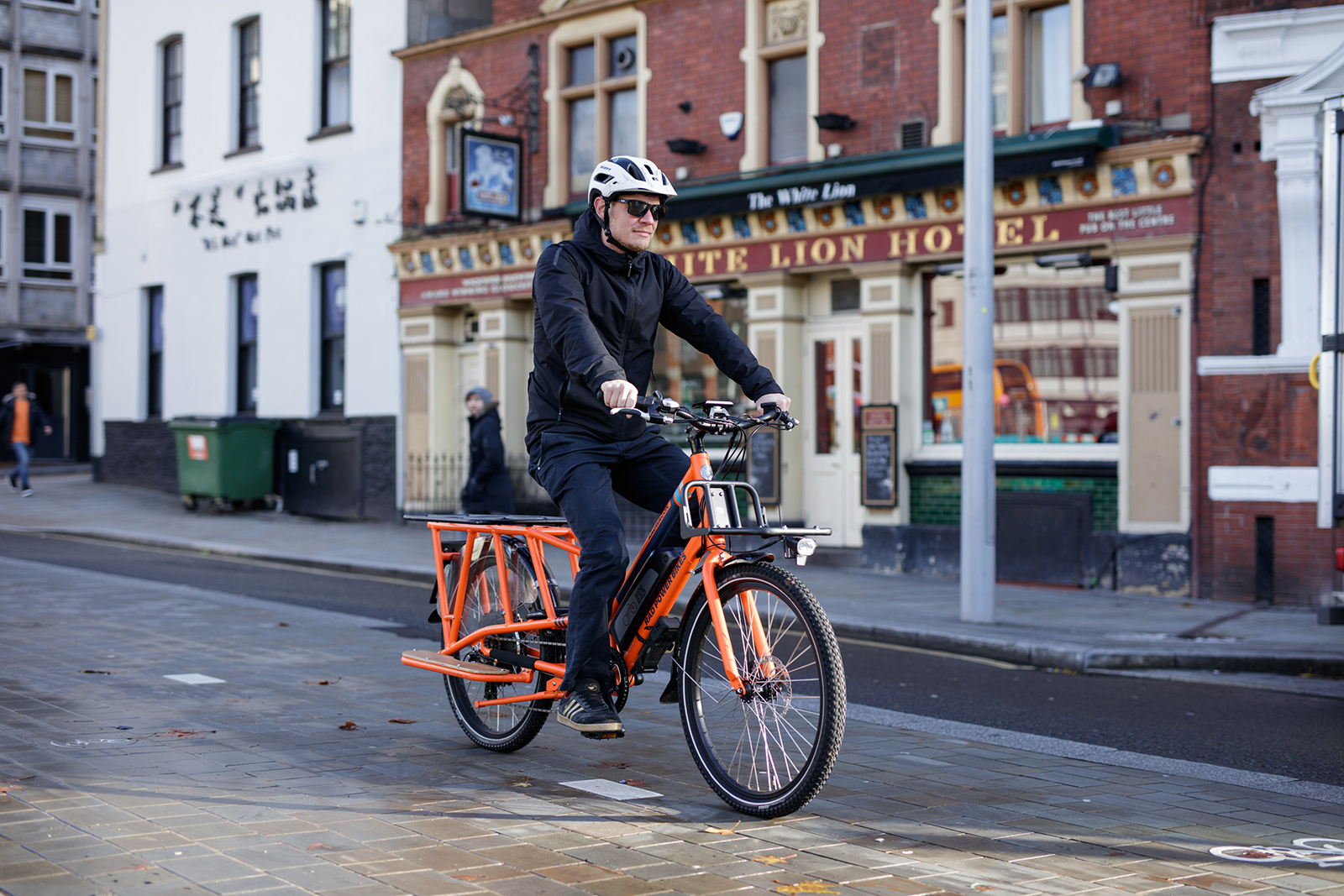
Electric cargo bikes could change people’s perception of cycling and replace cars for many tasks, including school runs, shopping, family outings and commuting, a new study suggests.
The study, published in the journal Geoforum and supported by the UK’s Engineering and Physical Sciences Research Council, was led by Clara Glachant of the University of Eindhoven.
Commenting on the study’s findings, Glachant said: “Our findings suggest that e-cargo cycling may help cultivate a cycling culture both at the household level and the community level.
“They may reshape ideas of who belongs on the road, who is entitled to space. This could help to reduce anti-cyclist sentiment which would help active travel contribute more to sustainable transport.”
The study also found that e-cargo bikes lead to a change in users’ view of cycling, seeing it as a practical activity, not just a pastime for leisure or fitness.
59% of the main users of the bikes were found to be women riders. Bosch eBike Systems
49 UK families living in Brighton, Leeds and Oxford were loaned an electric cargo bike for one month each during the summer of 2023, with 11 families additionally loaned an e-cargo bike for winter riding from October 2023 to March 2024. The bikes were a mix of longtail and front-loading designs, and 51% of the households taking part already owned one car, with 47% owning two or more.
While Oxford has a high rate of cycle use, the figure in Leeds is low, with a previous survey finding it to be one of the UK cities least friendly to cyclists; Brighton sits between the two. The families were recruited via local publicity and follow-on surveys, so were found to have had a predisposition to trial cycling rather than driving and be more keen to reduce car use than the national average.
67% of participants were between the ages of 35 and 49, and 67% already cycled weekly.
Findings on use of the bikes suggested 59% of their main users were female, in comparison to cycle use in general, with only 20% of British Cycling members being women.
Different perceptions
Riders reported being given more road space by drivers than when riding recreationally. Simon Bromley / Our Media
Among the study‘s findings was that there were benefits for the perception of cycling in the community, helping to normalise it, and also changing study participants’ views of cycling.
“It’s also about culture: people’s habits, identities and perceptions of transport. Our research shows e-cargo bikes can help reshape these, challenging what psychologist Ian Walker has coined ‘motonormativity’,” Glachant says.
Several study participants commented on the different perception of car drivers of riders of cargo bikes compared to recreational riders, feeling they were given more road space and that drivers were more patient.
On the other hand, some participants reported feeling out of place and unconventional, as well as having concerns over child safety.
The researchers suggested that e-cargo bikes could also shift the balance of cycle commuting and utility cycling in the UK away from its current male domination, encouraging more women and children to travel by bike.
A shift away from car use?
This was one of the first studies to look at family use, rather than for deliveries. Trek
While previous studies had concentrated on the use of e-cargo bikes to replace motor vehicles for last-mile deliveries, the study was one of the first to look at their potential to replace motor vehicles for family mobility.
Many of the families’ trips included carrying passengers and, unlike riding a single-person bike, they reported that an e-cargo bike enabled riders and their passengers to interact with each other, more like riding in a car, although how effectively depended on the design of the bike.
The participants found it also enabled them to connect more with their surroundings and local communities than sitting in a car, which previous studies have characterised as ‘private-in-public’ spaces, limiting social interactions in comparison to cycling. They felt they were given more road space by drivers than on solo leisure rides, too.
The study points to surveys that show that in the UK in 2021, 75% of mileage was by car or van and only 1.7% by bicycle.
The 2024 National Transport Survey found that 17% of journeys under one mile were made in a car or van, with 81% on foot. That tipped to 69% by car or van for trips of one to five miles and 83% for five to 10-mile journeys, excursions for which e-cargo bikes could often substitute.
But the study points out that, while 90,000 cargo bikes were sold in Germany and 70,000 in France in 2022, only 4,000 were sold in the UK.
schwit1 shares a report from Hackread: On October 3, 2025, Hackread.com published an in-depth report in which hackers claimed to have stolen 989 million records from 39 major companies worldwide by exploiting a Salesforce vulnerability. The group demanded that Salesforce and the affected firms enter negotiations before October 10, 2025, warning that if their demands were ignored, they would release the entire dataset. The hackers, identifying themselves as “Scattered Lapsus$ Hunters,” a collective said to combine elements of Scattered Spider, Lapsus$, and ShinyHunters, have now published data allegedly belonging to 6 of the 39 targeted companies.
The companies named in the leak are as follows: Fujifilm, GAP, INC., Vietnam Airlines, Engie Resources, Quantas Airways Limited, and Albertsons Companies, Inc. In all 6 leaks, the record contains personal details of customers, business, including email addresses, full names, addresses, passport numbers, phone numbers. The hackers said on Telegram that they will not be releasing any additional information, stating, “A lot of people are asking what else will be leaked. Nothing else will be leaked. Everything that was leaked was leaked, we have nothing else to leak, and obviously, the things we have cannot be leaked for obvious reasons.”
Last month Arm announced the Lumex CSS platform with C1 CPUs and Mali G1 GPUs. One month later, Arm is already beginning to open-source graphics driver patches for enabling the new Mali-G1 graphics processor…
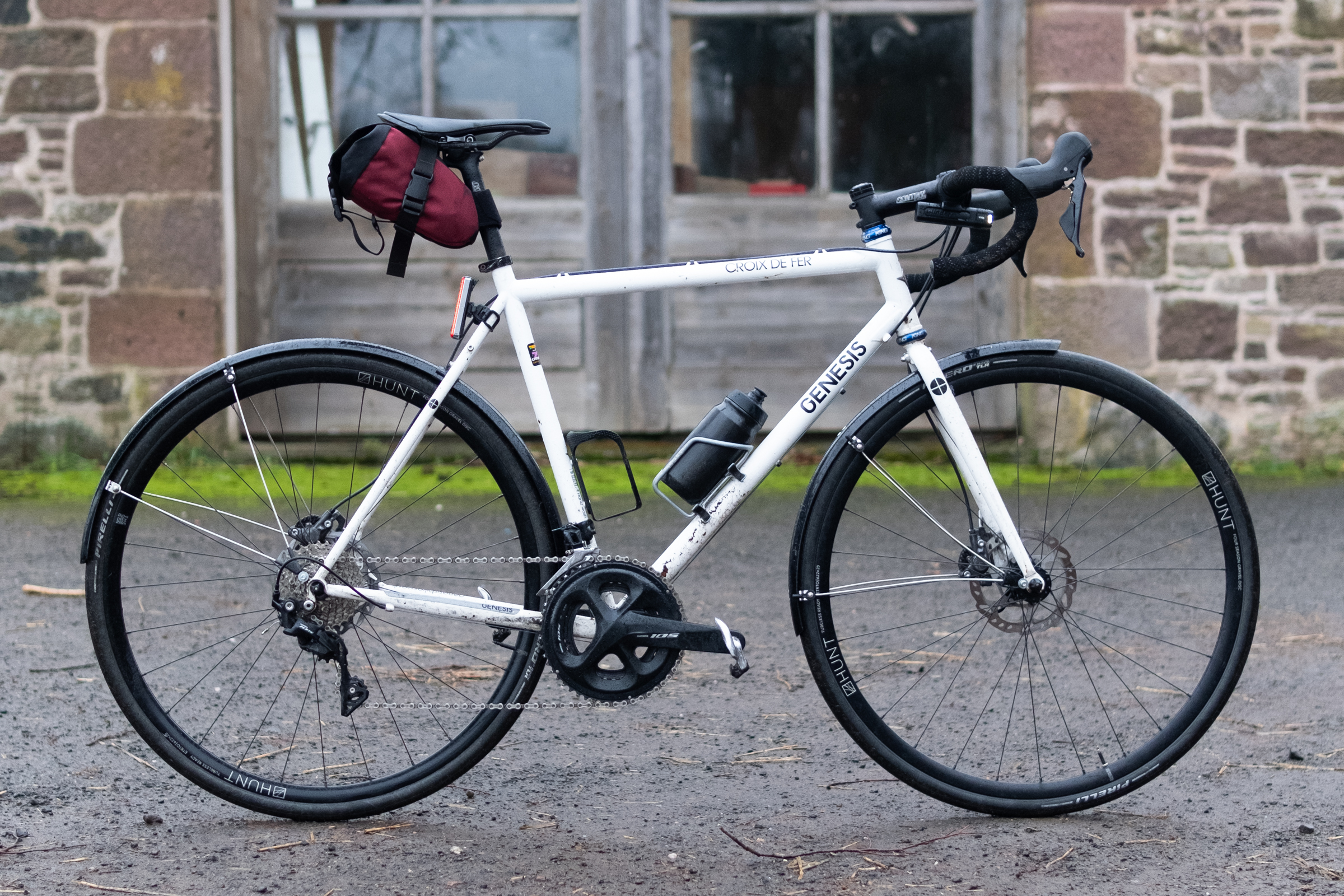
I have fitted quite literally hundreds of mudguards during my time as a cyclist. That might sound like exaggeration, but I swear it’s true.
Some of that’s down to my own bikes – most of which have mudguards – but it’s largely thanks to my time spent preaching the good word of the mudguard evangelists while working as a mechanic in a perpetually damp Edinburgh bike shop.
Our poor customers left the shop having spoken to me, feeling mudguards weren’t optional – they were practically compulsory.
And with good reason – we all know mudguards keep you drier, protect your drivetrain and generally make riding in bad weather tolerable. I’m sure they thanked me when splish-splashing along a cobbled vennel.
But my commitment to the way of the fender is lifelong. My dad’s dad taught him that no meal is complete without chips – along with that nugget of culinary wisdom, my father passed on to me the equally valuable belief that no bike is complete without mudguards.
Over the years, I’ve learned what makes the difference between a noisy, half-baked setup and mudguards that disappear into the background – quietly doing their job, rattle-free, for years.
Here are my hard-earned tips for fitting mudguards properly, so you too can enjoy dry-bum bliss.
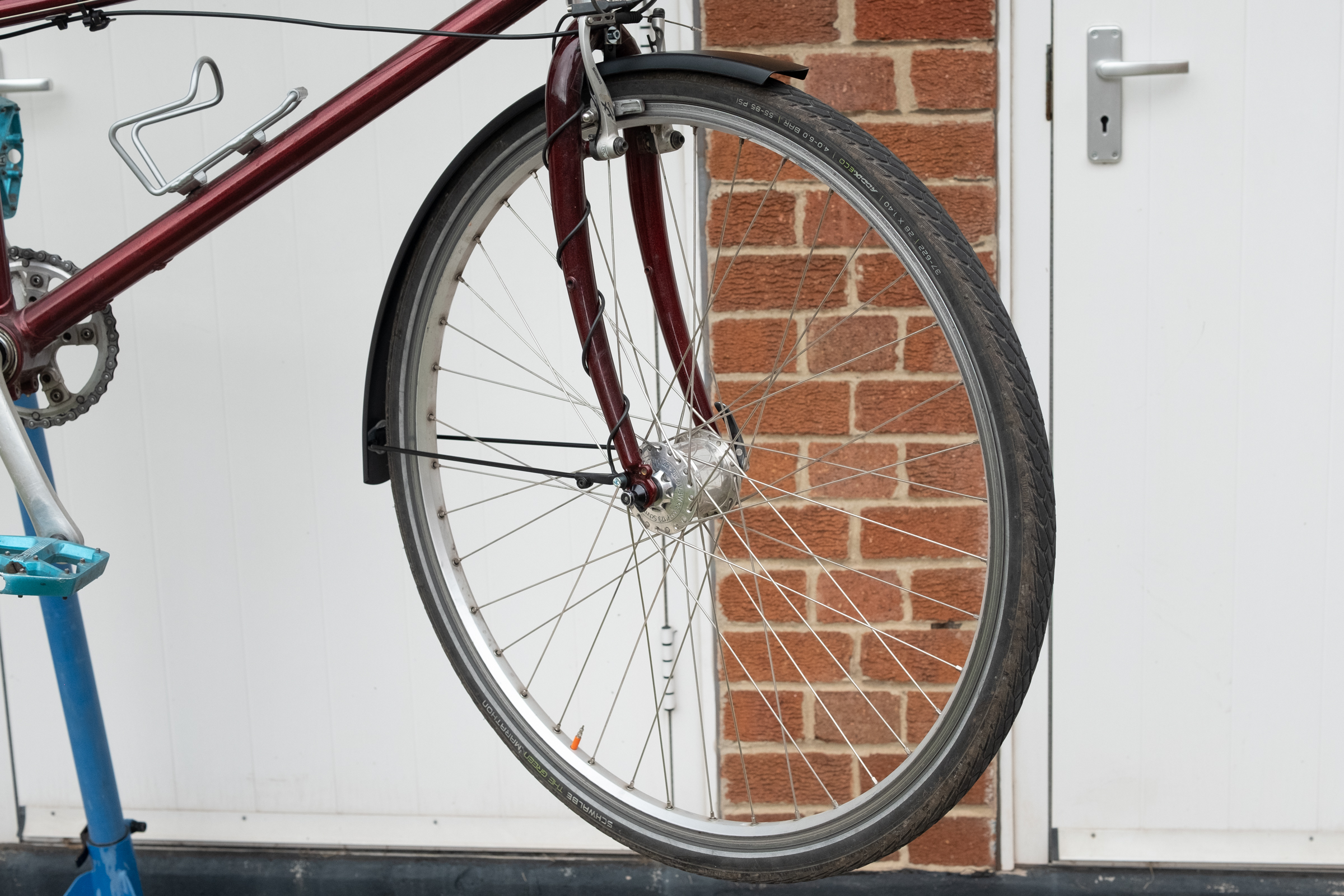
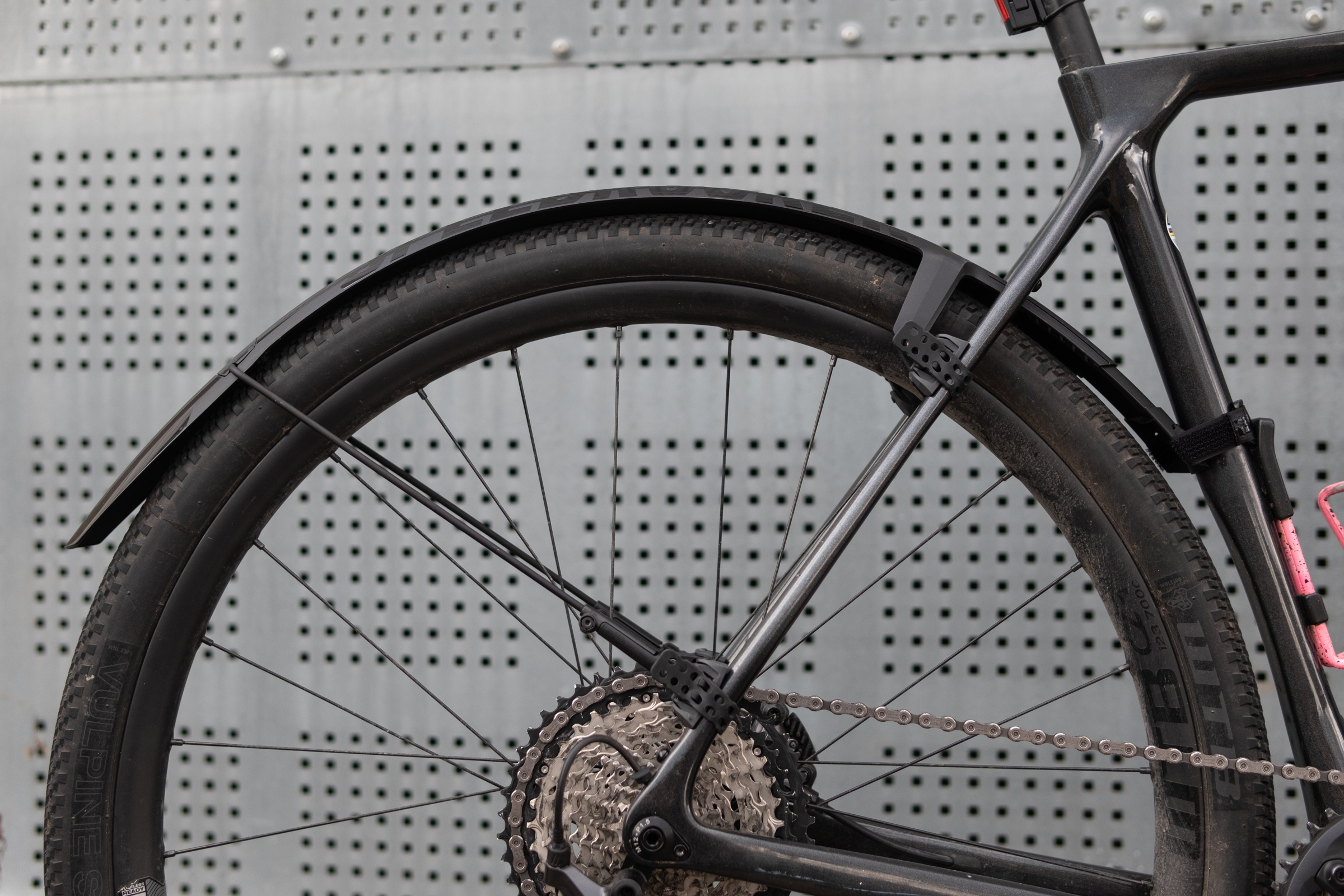
Set up correctly, mudguards will provide full coverage, and can even complement the look of a bike. Jack Luke / Our Media
Even the best-designed mudguards are fiddly to fit – don’t rush it. A slapdash job means wobbly stays, uneven tyre lines and countless rattles.
For alloy mudguards, especially, set aside a couple of hours the first time around. Once you’ve got the hang of it, or you’re refitting after summer, it’s much quicker – but patience is your friend here.
Take pride in a job well done. Jack Luke / Our Media
I advise changing your mindset before committing to the temple of dry bum. Treat the job as a pre-winter afternoon project, and indulge in the pleasure of a job well done.
2. Do your research
One mudguard may better suit the shape of a bike than another. Jack Luke / Our Media
Patience must also be employed before you fit anything – mudguards aren’t one-size-fits-all.
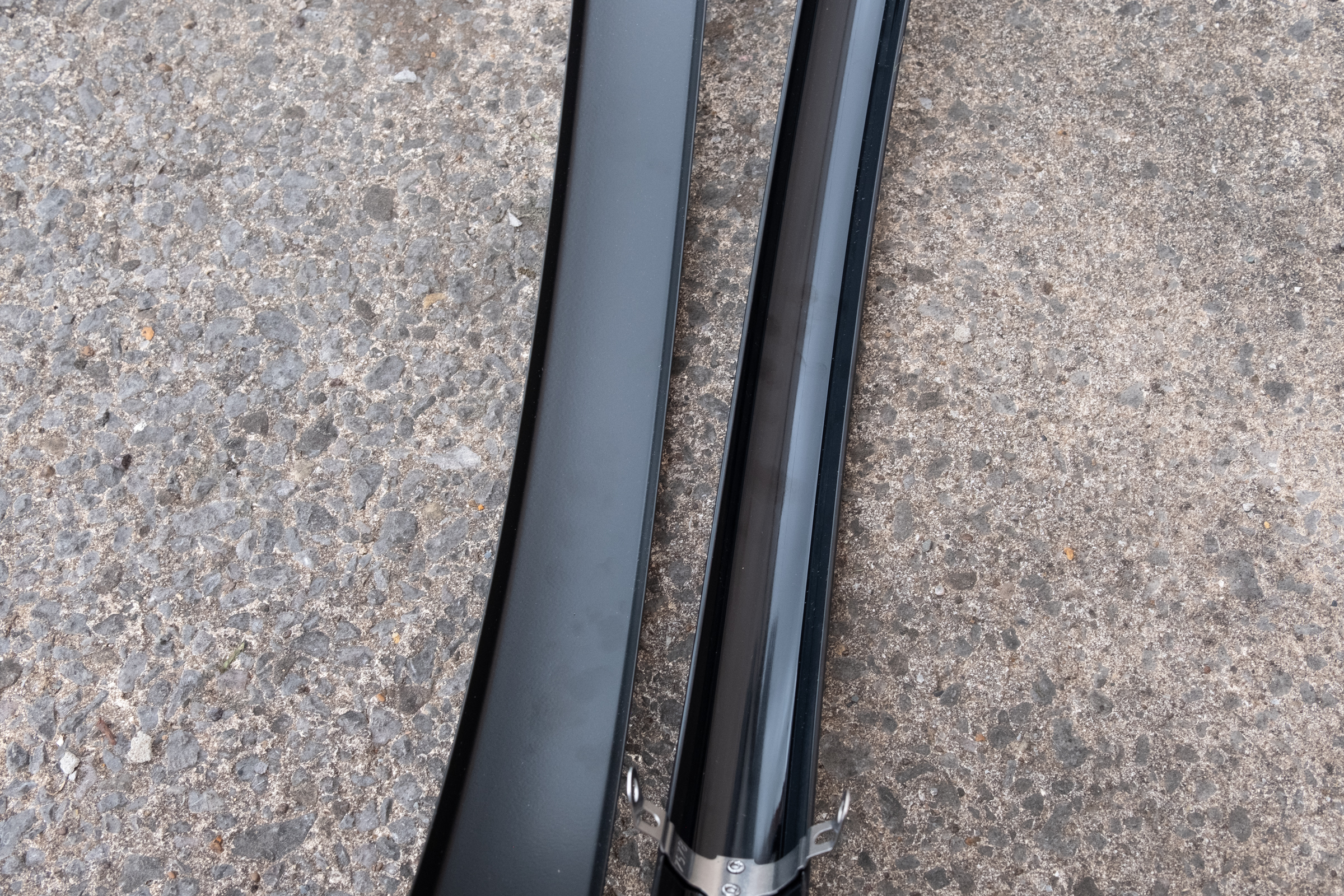
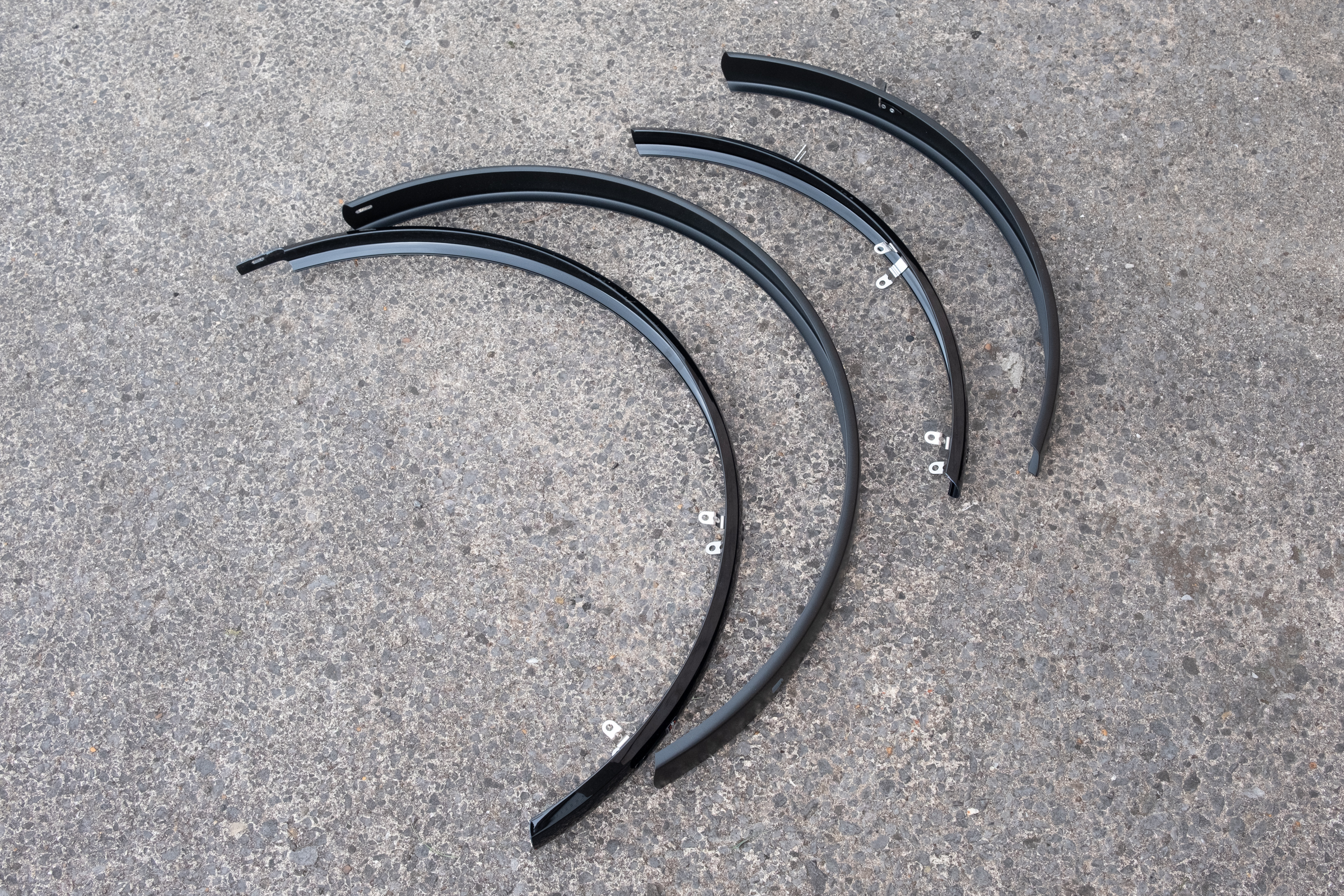
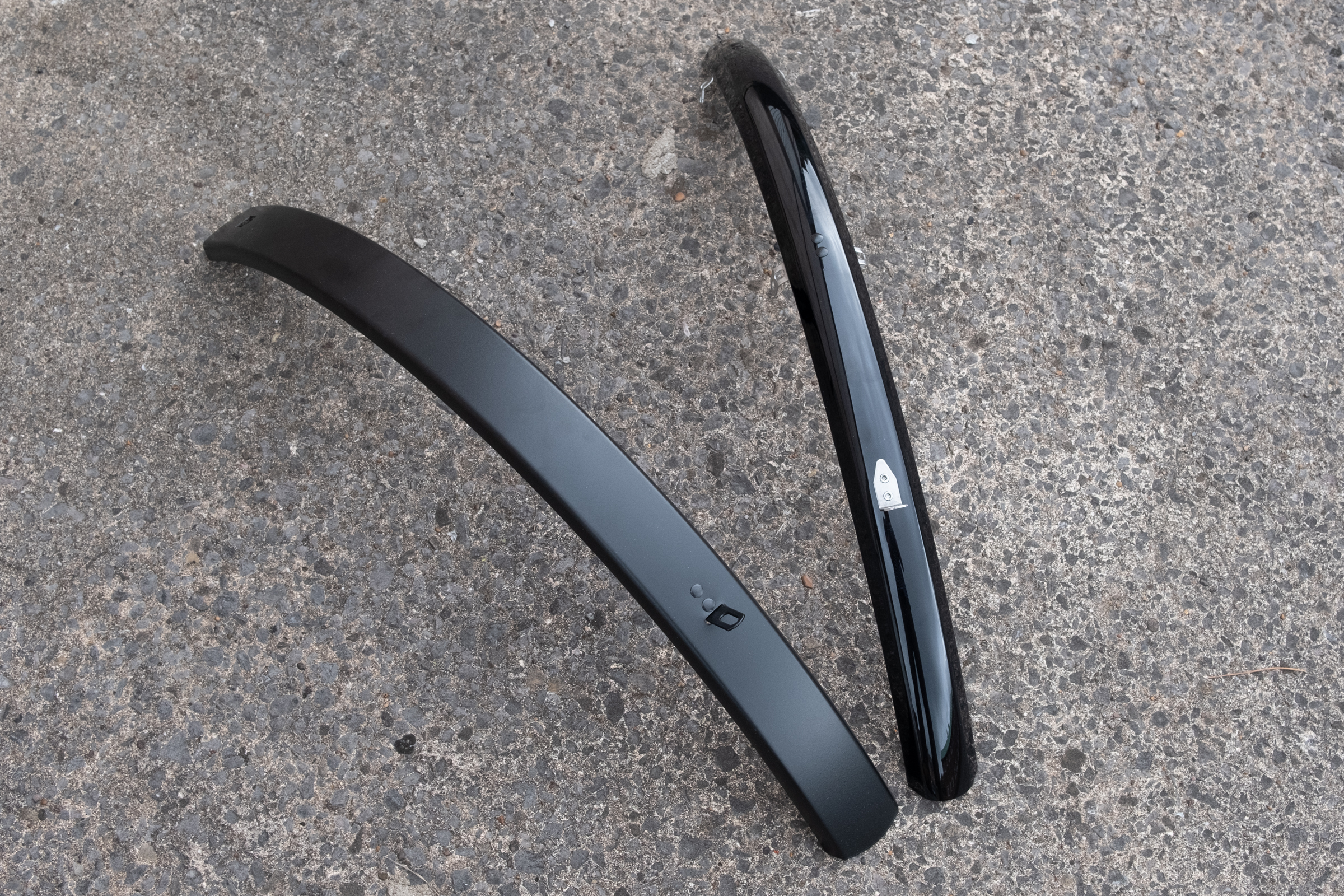
To start, profiles vary. A round guard might hug a road tyre beautifully, but look awkward or rub on a gravel bike. Conversely, fenders with a flat profile often suit chunkier tyres better.
The shape also really matters. Round guards tend to channel water down and away, but in muddy conditions, they can clog more easily.
Although this flat guard still left enough clearance for chunky tyres, a mudguard with a rounder profile would enable you to squeeze a slightly wider tyre in there. Jack Luke / Our Media
Equally, some mudguards will simply suit some bikes better than others.
We sold dozens of entry-level Trek Domane road bikes in the aforementioned bike shop. This was in the rim-brake era, and we found the slightly narrower, rounder profile of SKS guards suited the bike far better than Trek’s own-brand fenders.
Clip-on mudguards can be a good choice for some bikes. Jack Luke / Our Media
On the other hand, a bike with flat seatstay and chainstay bridges might suit flat-profile mudguards and enable you to eke out a few extra millimetres of clearance.
Good mudguard manufacturers will provide detailed measurements that you can cross-reference with your bike. Consult these closely and don’t rush the buying decision. You might also find your local bike shop has advice for your specific bike.
3. Pick the right material
Mudguards come in two broad flavours – alloy or plastic. Jack Luke / Our Media
Mudguards broadly come in two flavours: alloy and plastic.
Each has pros and cons, and choosing the right one depends on how you’ll use your bike.
Alloy guards look fantastic, last for years and can be more easily repaired if damaged. They also tend to be available with higher-quality hardware and spares, which means you can keep them running almost indefinitely.
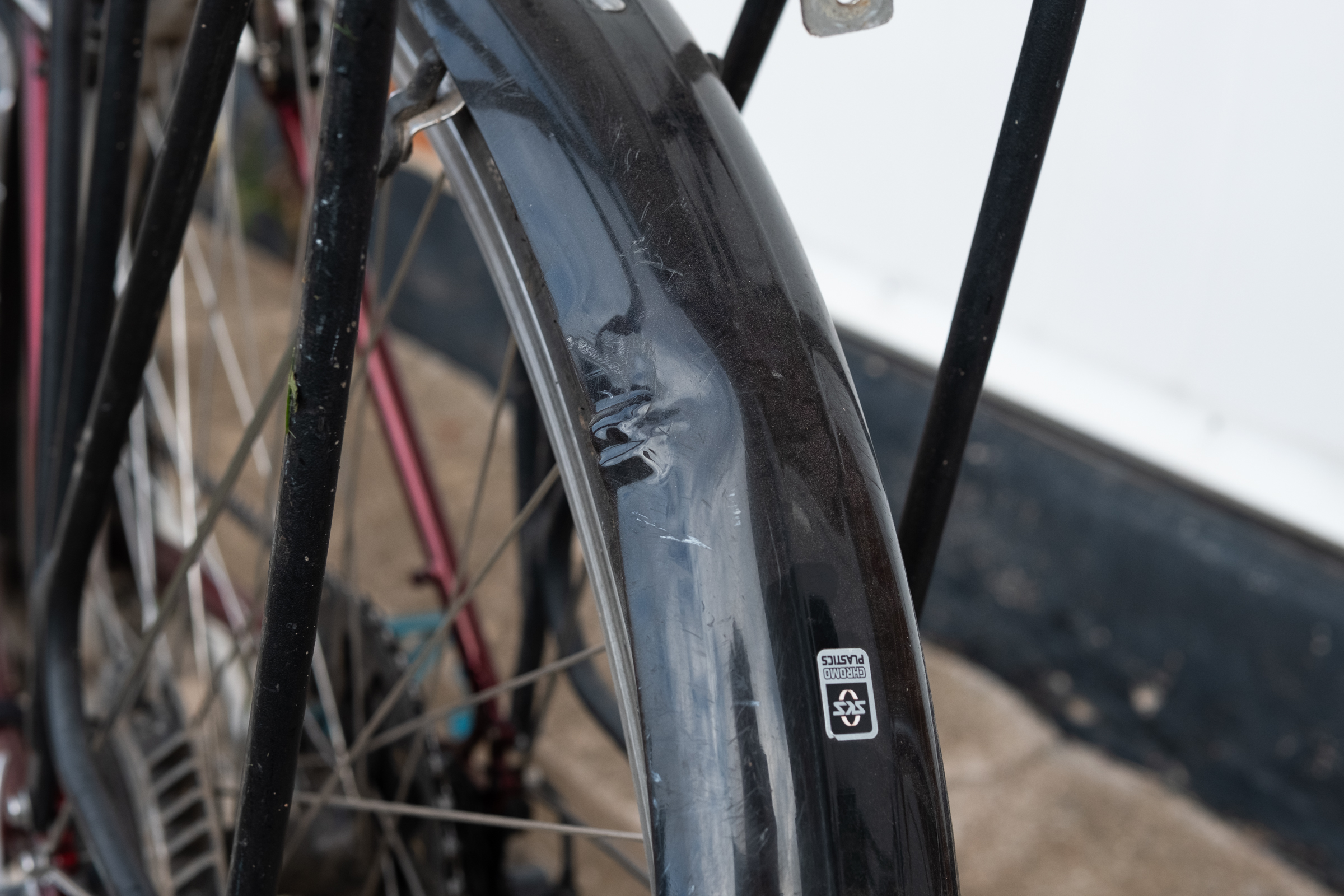
This poor plastic mudguard survived a trip to Scotland, squashed into the too-small bike compartment of a train. I’m not sure an alloy guard would have fared so well. Jack Luke / Our Media
They aren’t always the best solution, however. If you park your bike in a crowded rack, an alloy guard will not appreciate being bent or squashed. Plastic guards, by contrast, will more easily shrug off knocks, flex rather than bend, and are generally easier to swap between bikes.
If you want longevity and don’t mind them being a little fussier, go alloy. If you’re rougher on your bike, or want something more forgiving, plastic might be the smarter choice.
4. Go as wide as possible
A wider mudguard gives you more tyre options, and reduces the chance of clogging up with mud or debris. Jack Luke / Our Media
Your frameset will dictate the maximum size of mudguard you can fit, but my rule of thumb is simple: go as wide as you can.
Even if your tyres are narrower than the guard, a wider mudguard gives you more clearance for mud, a margin for error in setup and the freedom to fit bigger tyres later.
Done neatly, it rarely looks odd, and the pay-off in coverage and practicality is worth it.
There’s really no good case for going narrow, unless you’re utterly obsessed with the perfect fender line, but even that’s possible provided the difference between tyre and mudguard width isn’t cavernous.
5. Prep your threads
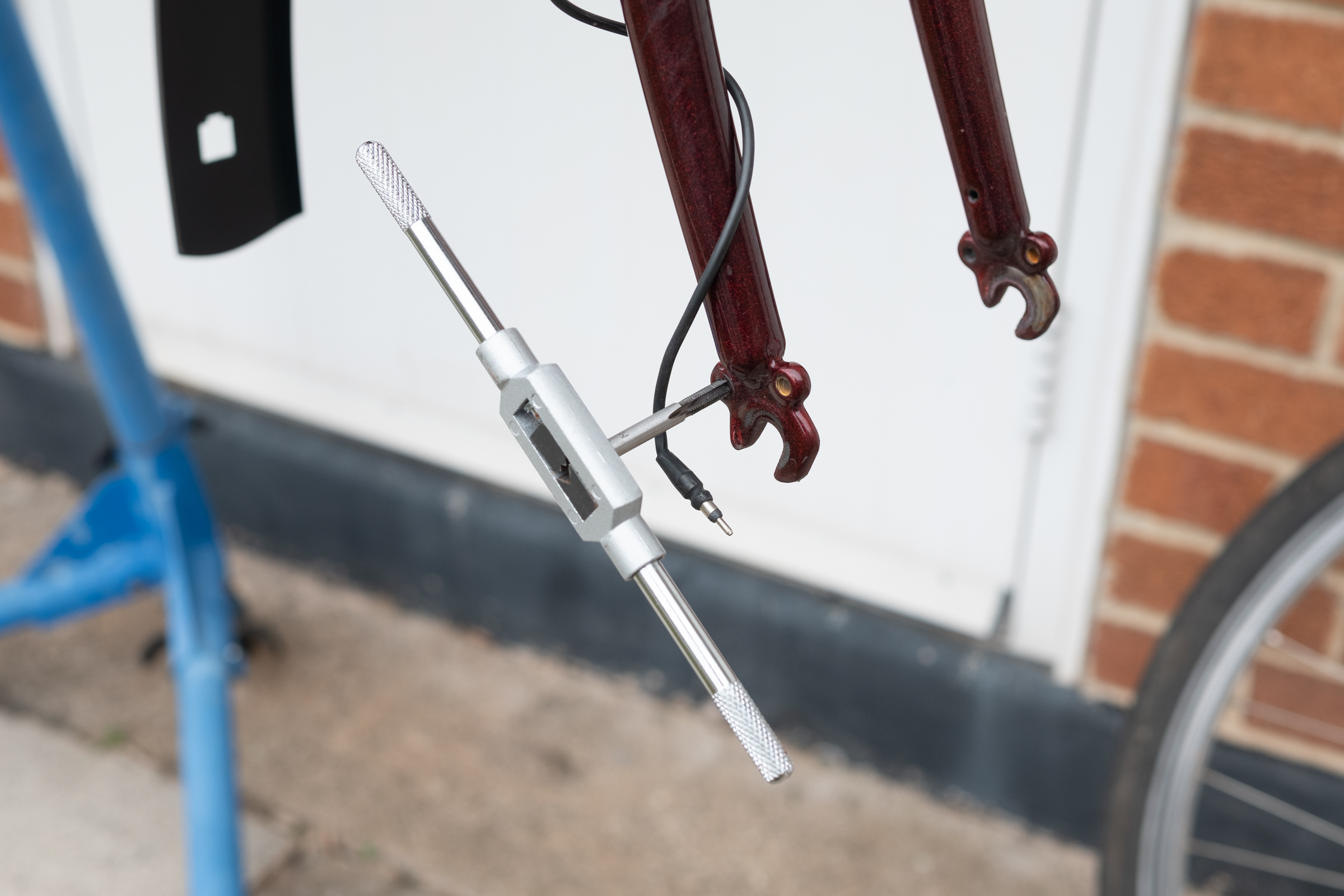
I always recommend chasing threads before fitting mudguards or racks. It’ll save headaches down the line. Jack Luke / Our Media
Mudguard eyelets live a hard life. They’re continually blasted by spray, salt and grit. If you don’t look after them, they’ll seize solid and turn removal into a nightmare.
Before fitting, chase the threads with a tap if you can. This ensures the bolts go in cleanly. Then, when you fit them, absolutely smother the threads in grease or antiseize.
Wipe away the excess once it’s tightened, and you’ll have peace of mind knowing the bolts won’t seize and the guards will still be removable come summer.
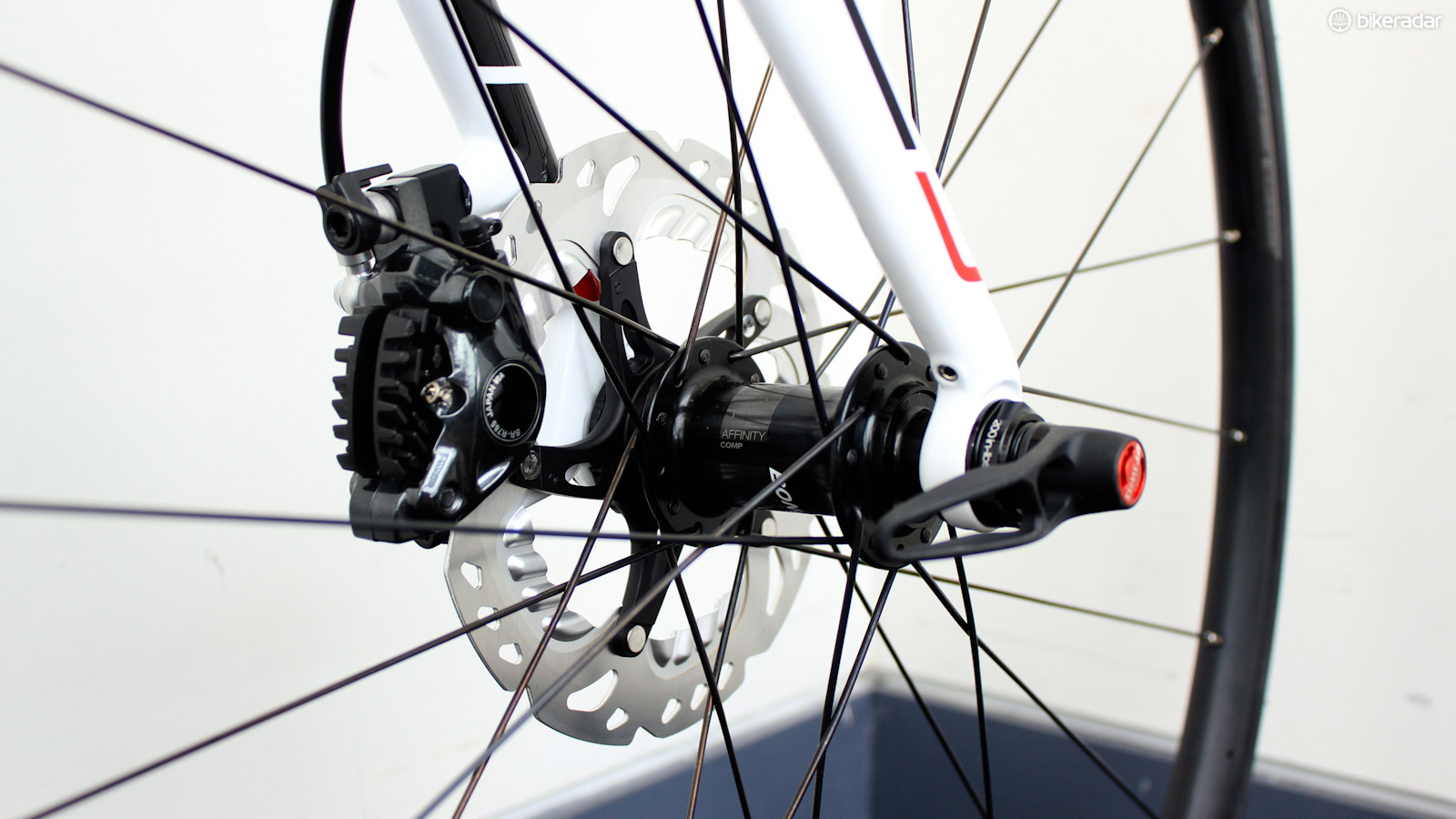
Hidden eyelets look cool, but can be a real pain. Matthew Allen / Bikeradar
Prep is even more important when fitting guards to a bike with hidden eyelets.
Referring back to the Domane, Trek’s neat banjo-bolt style mudguard mounts made for clean lines in the summer, but the grub screws used to cap these eyelets seized with alarming ease.
In summary, ‘clean those threads and grease liberally’ is a good rule to live your life by.
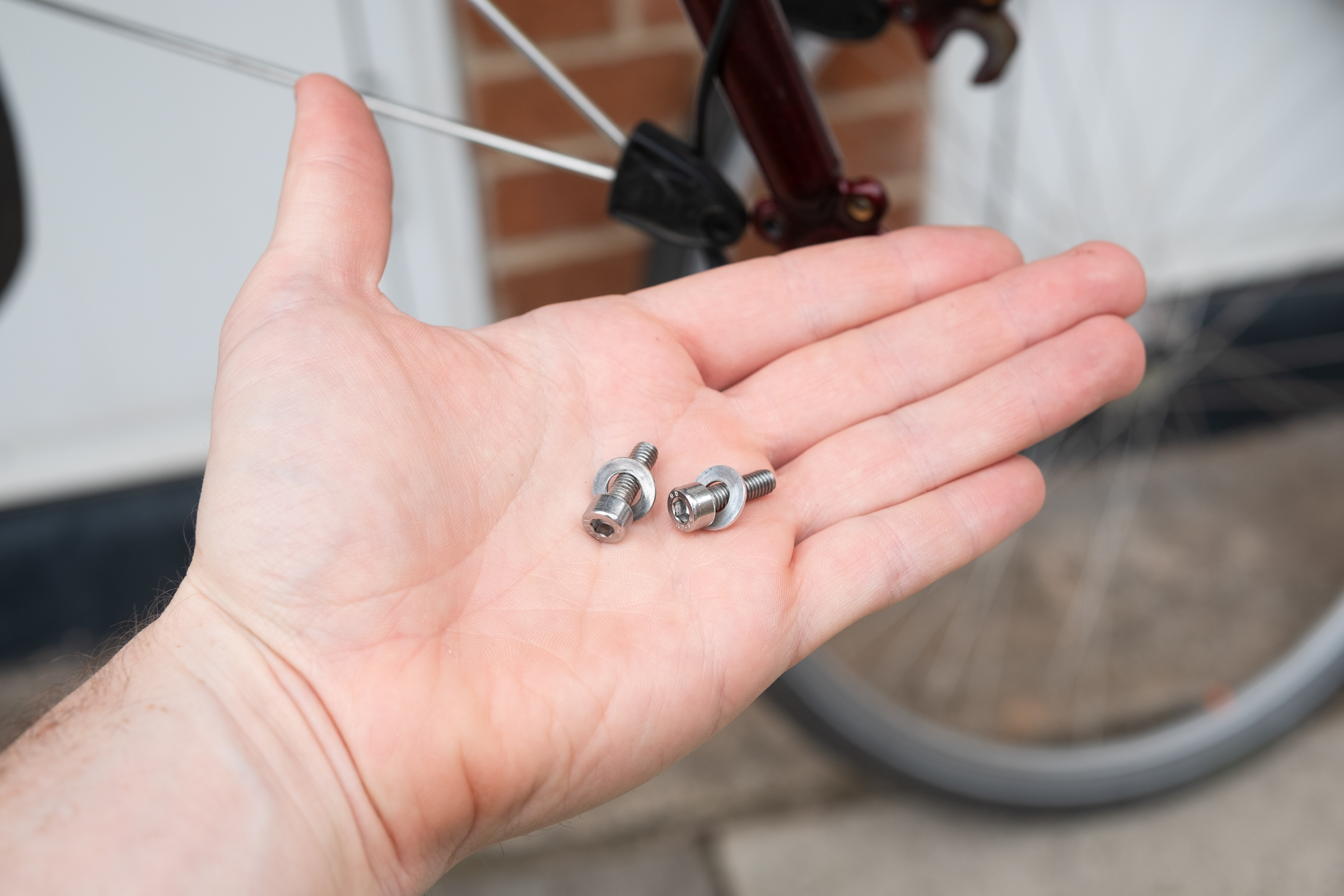
Stainless steel fasteners are not optional – do not waste your time with anything else! Jack Luke / Our Media
High-quality fasteners are also essential. As with bottle-cage bolts, I recommend stainless steel cap head bolts with a good, deep 4mm socket for most applications.
I refer back to my previous point on being patient and encourage you not to skip this boring, five-minute step – it will save hours of swearing in the long run.
6. Kill the rattles
A wee dab of bar tape can make all the difference in the world – although this bridge comes with the foam installed as stock. Jack Luke / Our Media
Mudguard rattles put off many from enjoying a life less soggy. Once they start, they’re all you’ll hear, and they make people conclude wrongly that mudguards are inherently awful.
The truth is, rattles almost always come down to setup. Stays too long? Bolts not tight enough? Clearances slightly off? Those are your usual culprits. Take the time to adjust and readjust until everything lines up neatly – again, patience.
If you’ve done all that and there’s still a buzz, damping contact points can work wonders.
I like to use greenhouse tape to protect my paint and reduce the chance of rattles. Jack Luke / Our Media
I like to stick on a bit of thick, rubbery, transparent greenhouse repair tape where the mudguard touches the chainstays or fork crown. It’s a simple hack that silences most niggles and helps protect paint.
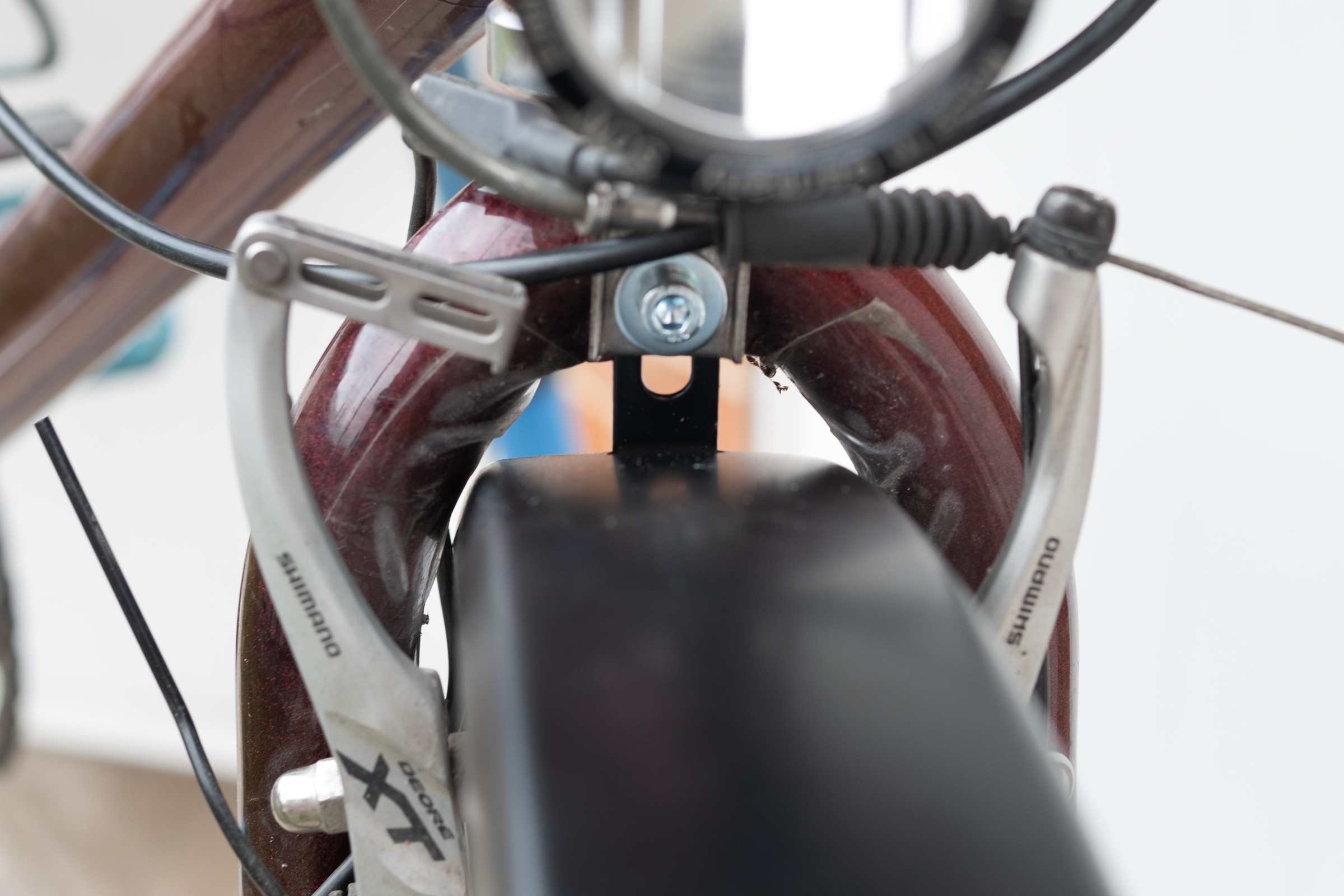
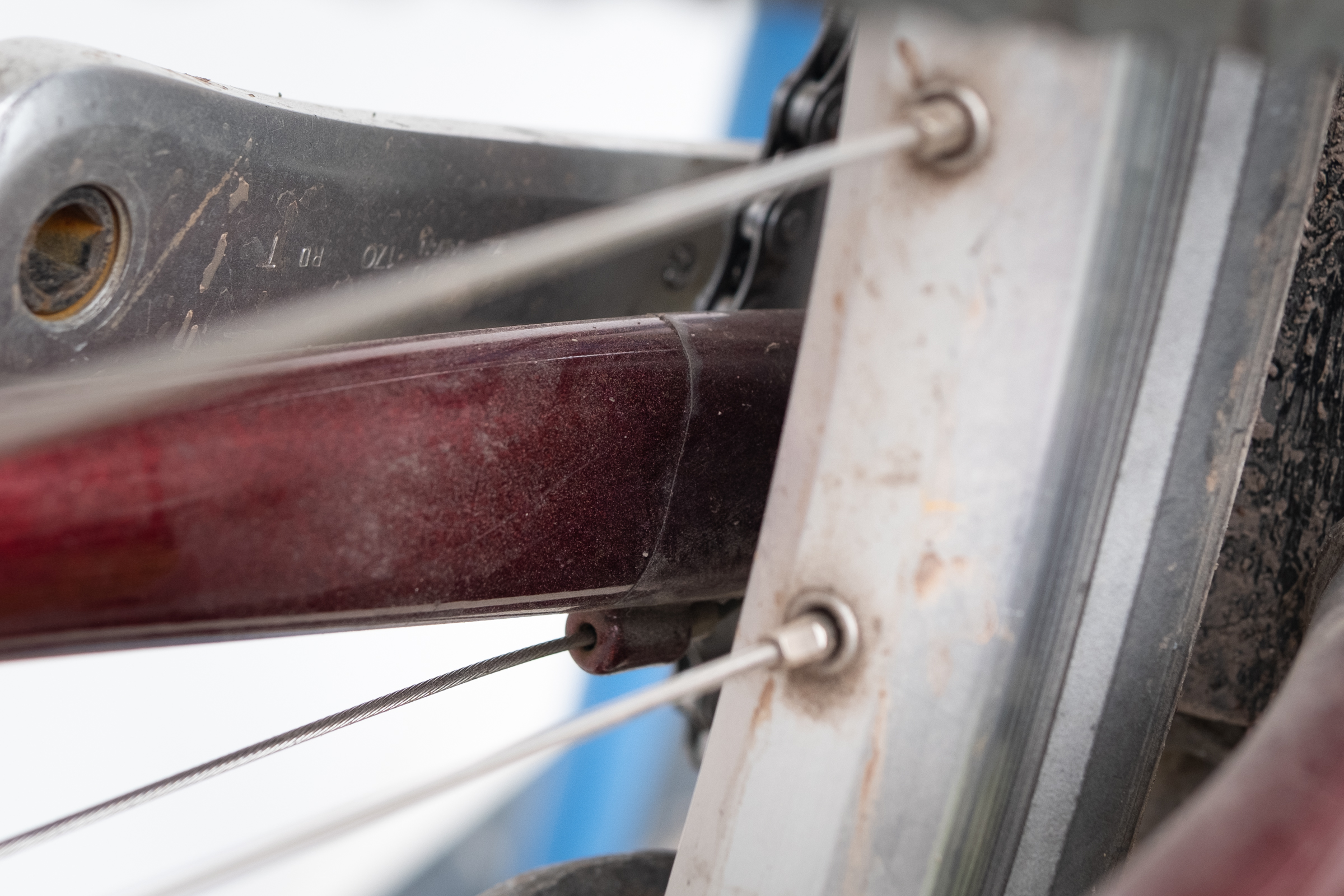
Small off-cuts of bar tape can also be used where there’s a larger gap to bridge. This is most useful to fill the gap between the mudguard and the underside of the fork bridge.
But don’t ignore persistent wobbles or clattering – that almost always means the fit isn’t right. Keep tweaking until they’re silent. A properly fitted set should be fit and forget.
7. Buy guards with spares available
Stuff breaks – that can’t be helped. So make sure you buy mudguards with spares available. Jack Luke / Our Media
Cheap guards are a false economy because once a stay bolt, flap or clip breaks, you’re usually out of luck. No spares, no fixing and straight to landfill they go – very depressing stuff.
Better brands, though, sell spares for everything – from bolts to stays to mudflaps. This means you can keep a single set of guards alive for years.
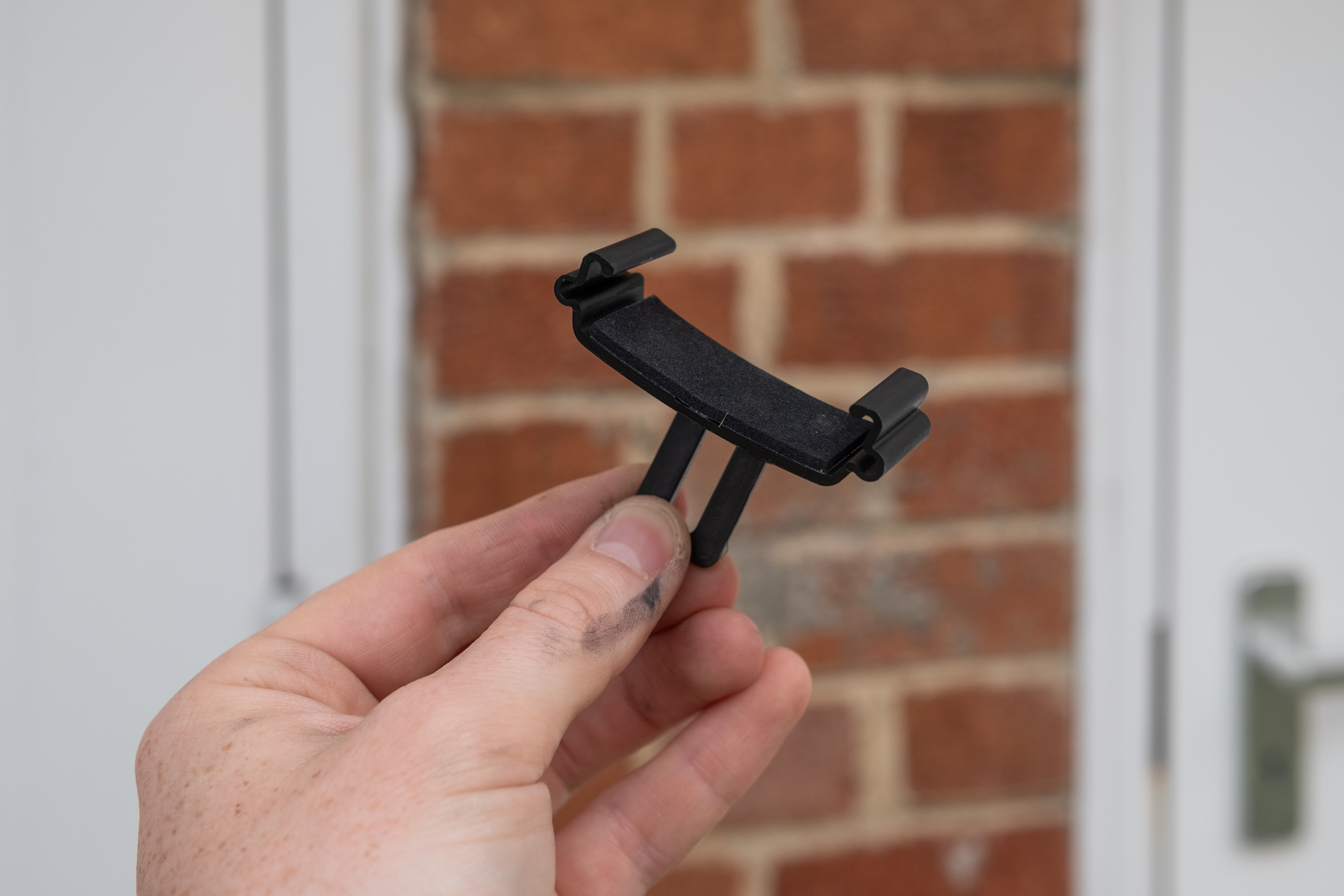
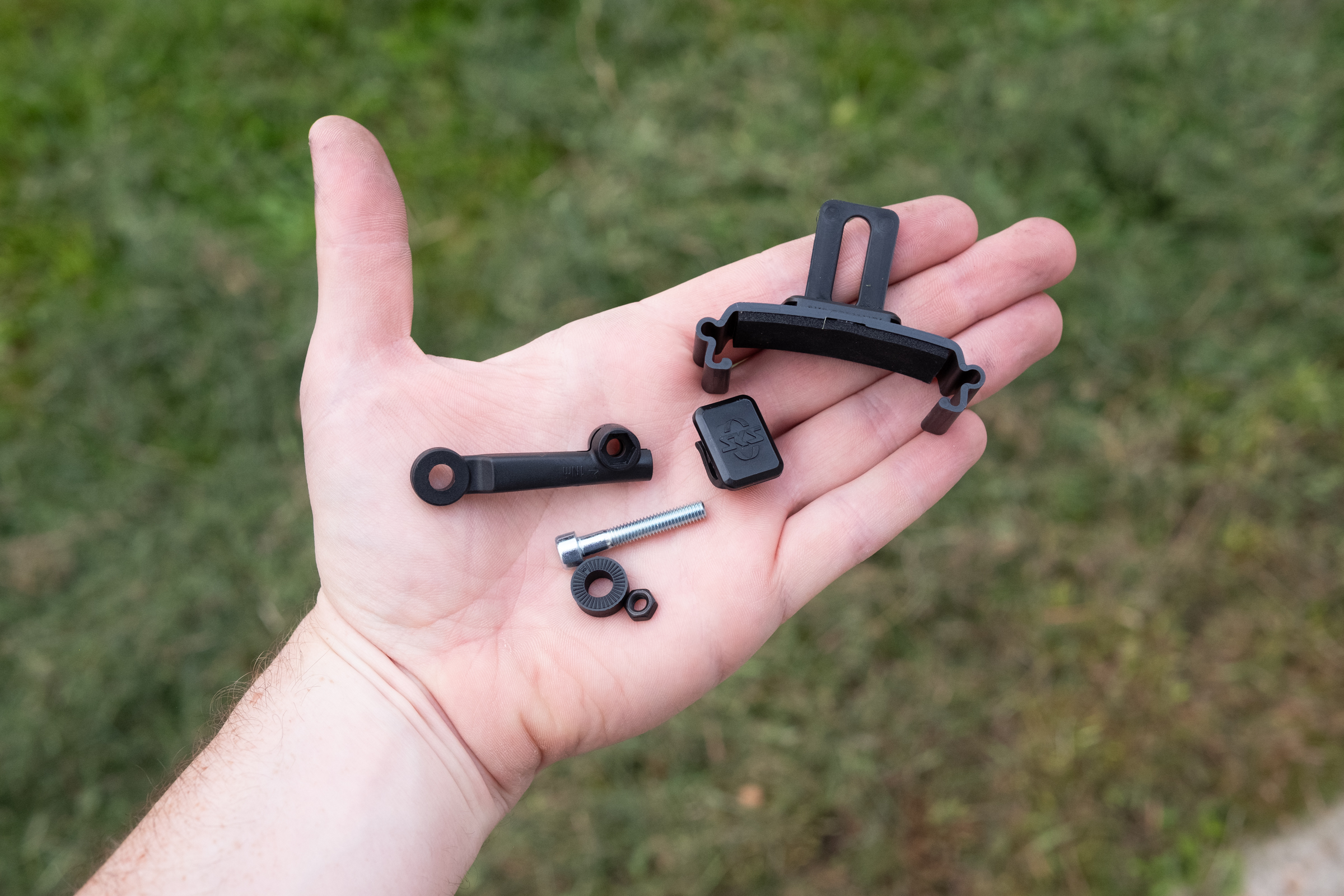
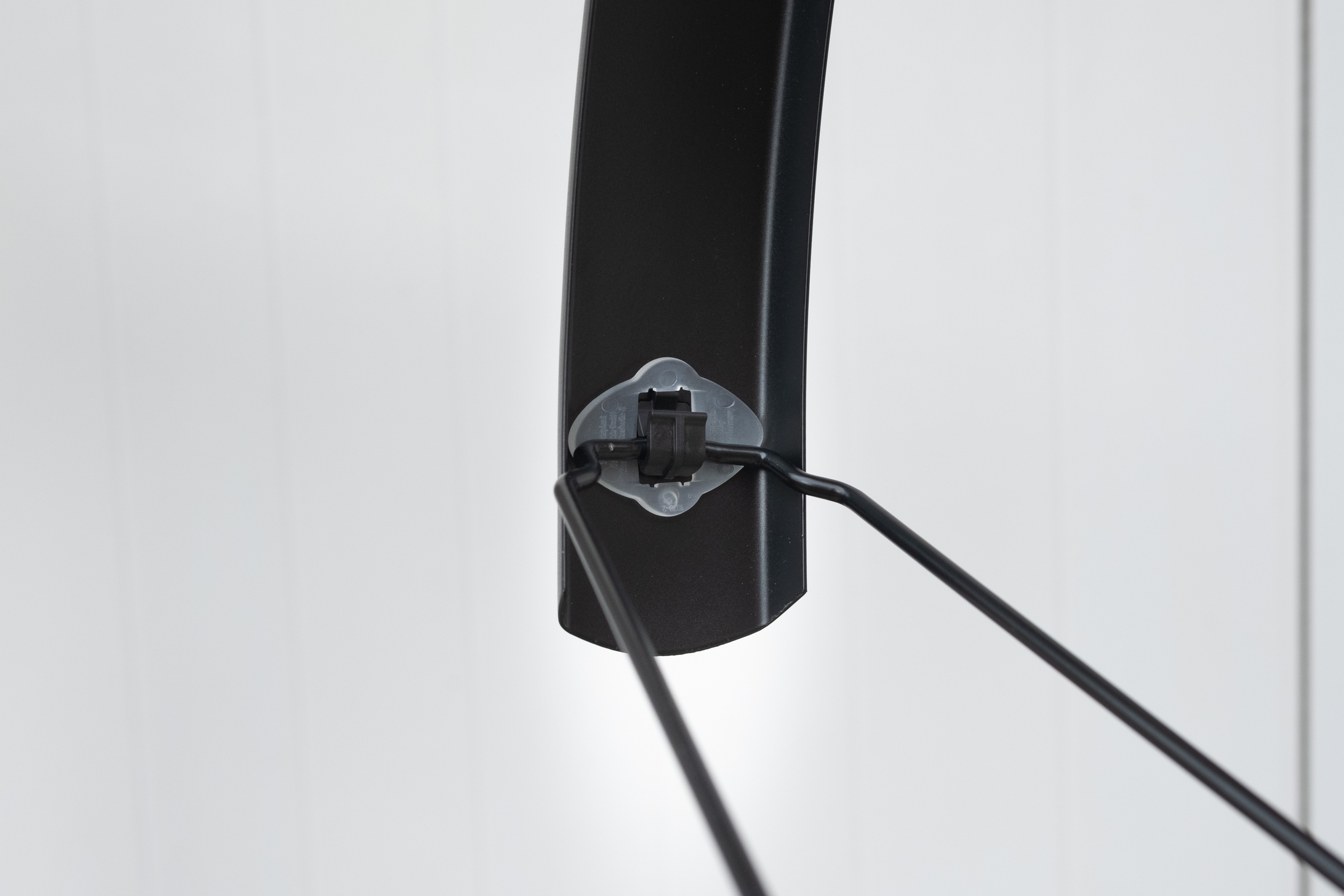
Most mudguards will use some degree of proprietary components. Losing or breaking these can render them useless, but high-quality brands will offer them as spares. Jack Luke / Our Media
At the time of writing, I have a set of alloy guards that have survived eight years and three bikes of riding, simply because I could replace a stay or a bolt when needed.
If you want your guards to last longer than a season, choose a brand that makes spares readily available.
8. Don’t be afraid to modify
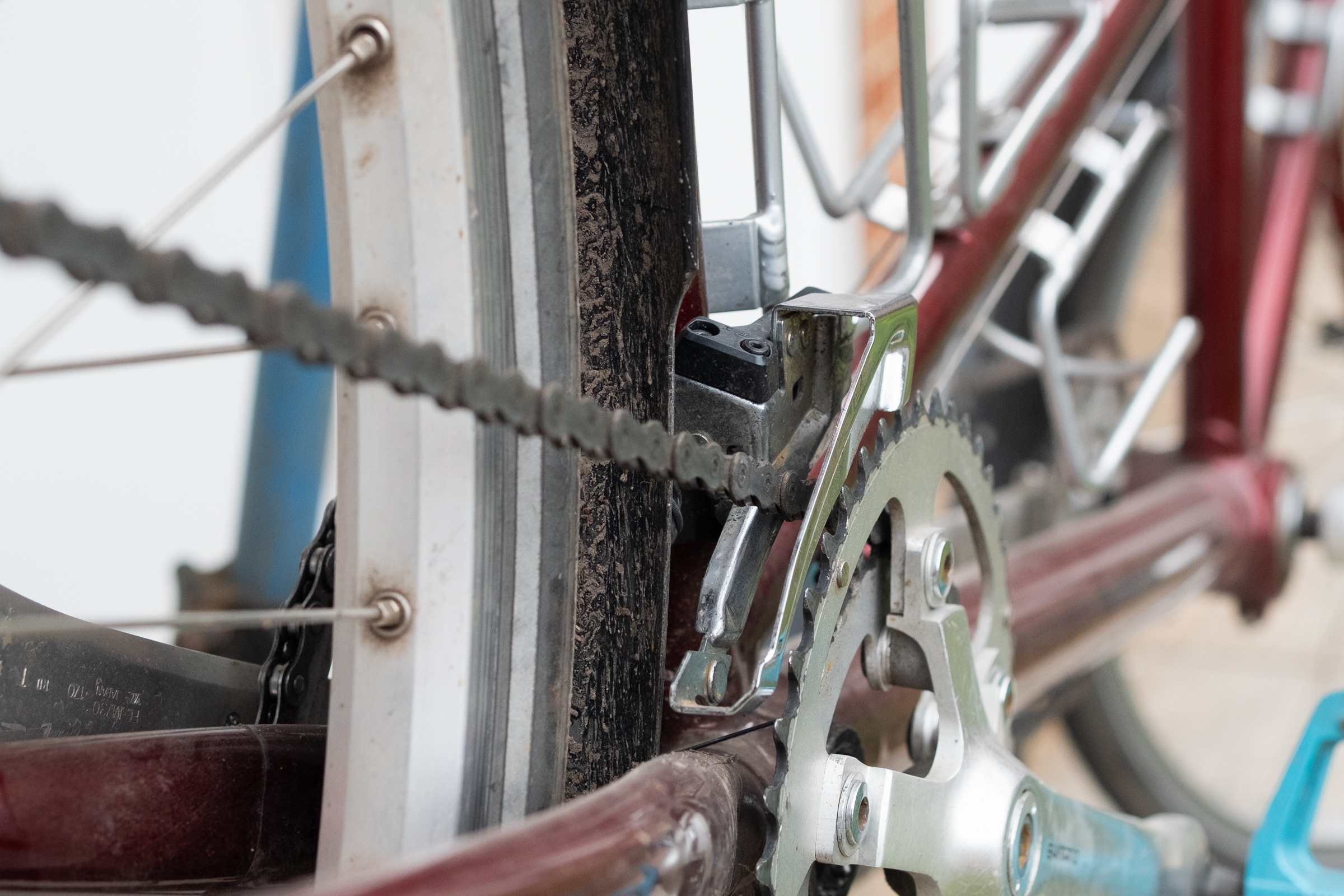
This mudguard came pre-cut to fit around a front derailleur, but don’t be afraid to lightly modify to ensure the best fit possible. Jack Luke / Our Media
Sometimes, a mudguard will fit almost perfectly, but not quite – that’s where a little modification comes in.
Small tweaks – a wee cut here, a reprofile there – can make the difference between endless frustration and a neat, silent fit.
Common mods include trimming a slot to clear a front derailleur, gently reshaping a guard to clear tight chainstays and adding a supplementary stay to stiffen up a long front guard.
Manufacturers might officially discourage this, but if you do a neat job with the right tools, there’s rarely any downside. A rotary tool such as a Dremel, in particular, is worth its weight in gold for this sort of fettling if you need to make a neat cut.
9. Mud flaps are not a crime
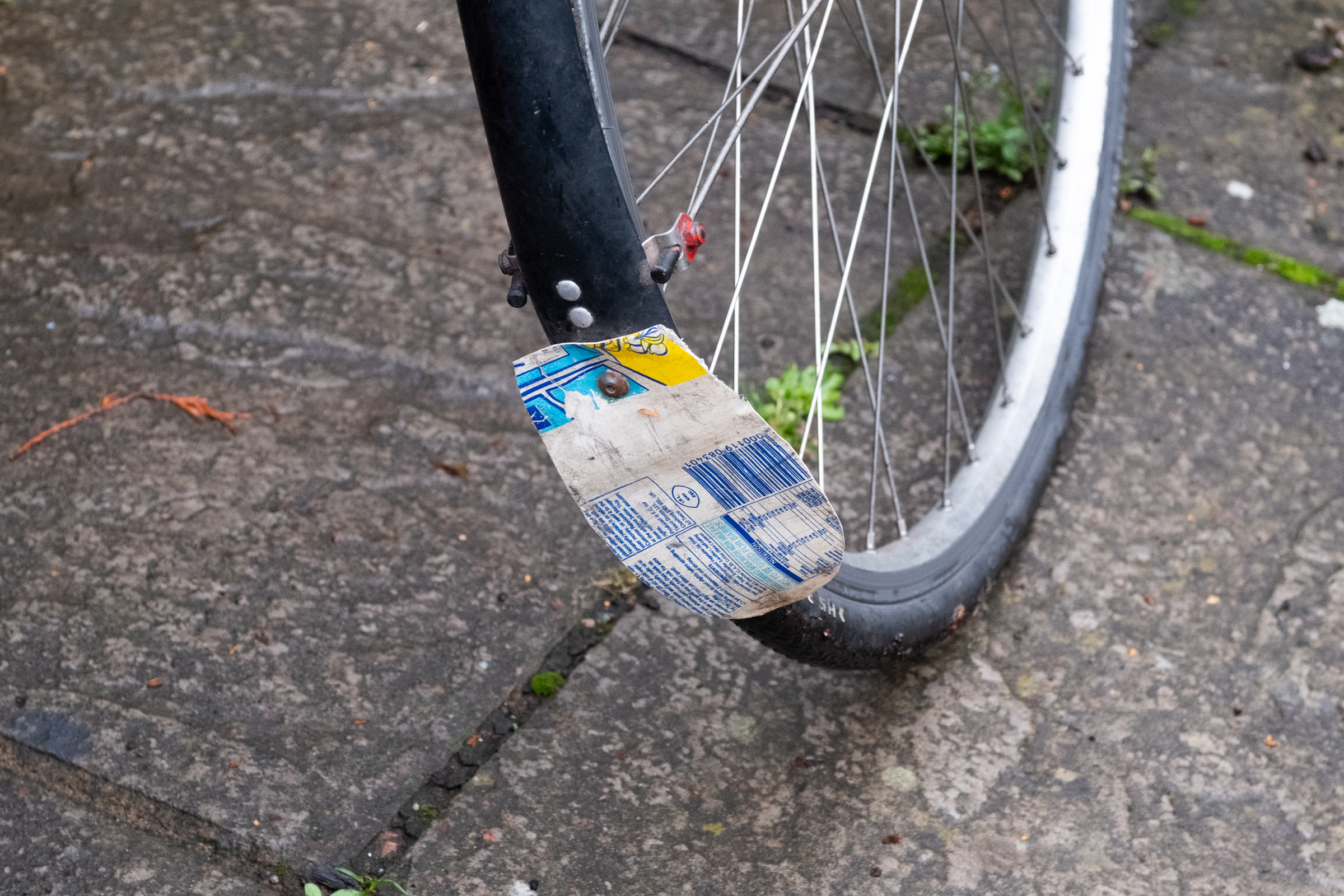
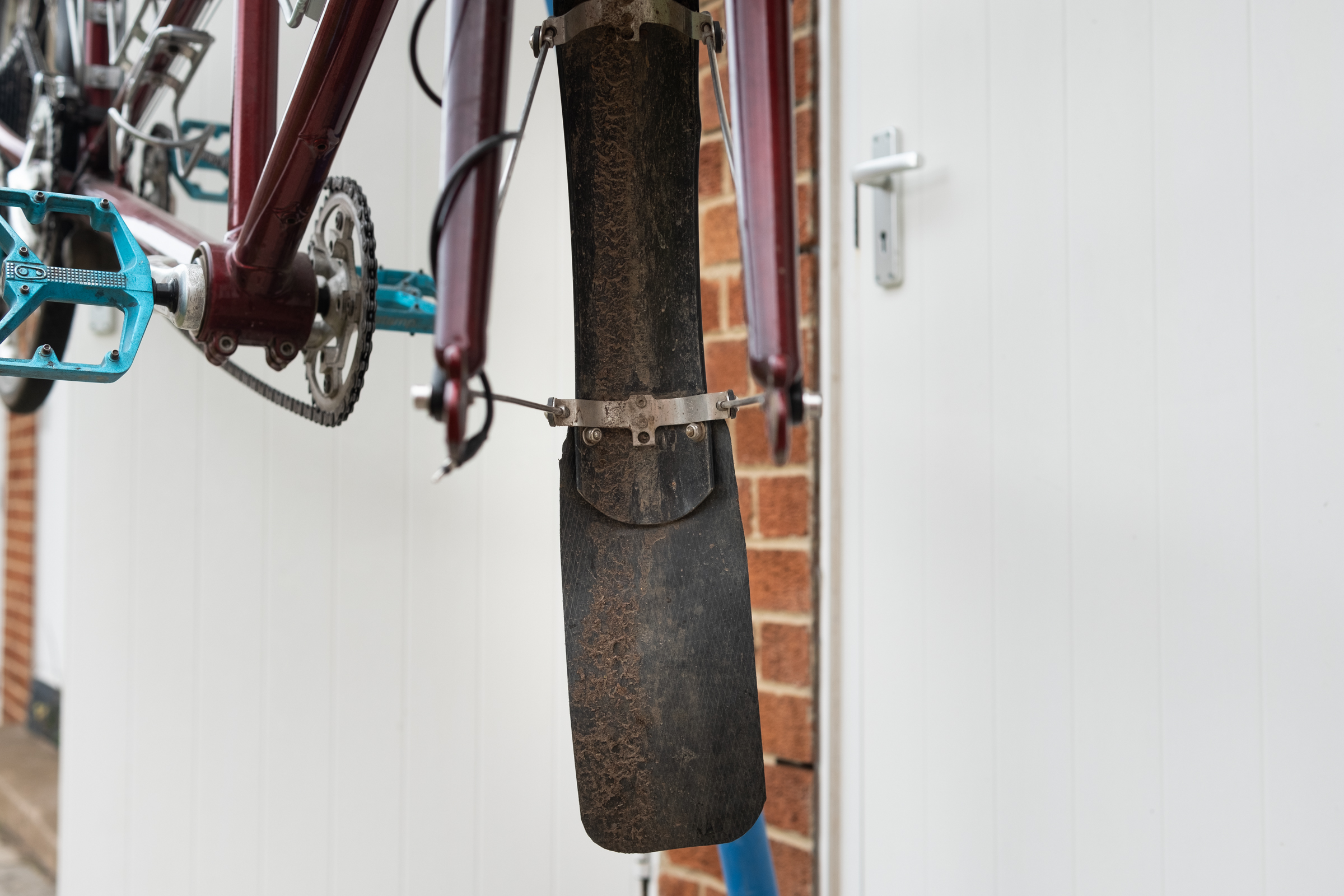
A mudguard flap made out of an old plastic bottle is a mark of pride for the dedicated winter rider, although you may wish to… Jack Luke / Our Media …make a slightly neater one out of lightweight, flexible plastic. I like to use damp-proof coursing. Jack Luke / Our Media
Yes, they look dorky, but mud flaps are the quiet mark of a deeply committed winter rider likely to gather admiring nods from those in the know.
They extend the coverage of your mudguards, stop spray from soaking your shoes and prevent your riding chums from cursing your existence when they sit on your wheel in January. Some more traditional cycling clubs even insist on them, and with good reason.
You can buy aftermarket ones, or go classic and cut up a washing-up bottle. Either way, wear them with pride. They’re not dorky – they’re practical, effective and charming in an old-school way.