Spotify’s managed accounts will help keep your kids from wrecking your music taste profile

Spotify has introduced a new “managed accounts” feature aimed at younger listeners. Initially piloted last year and launching in seven new markets, including the US, today, it allows parents and guardians with a Spotify Premium Family plan to allocate their children a dedicated profile with their own personalized recommendations and custom playlists.

The idea is that the adults can filter out explicit content, limit the playback of certain artists and hide video playback features, including Canvas, should they want to. Users on this profile can’t use interactivity features like Messages either. 

Perhaps most importantly of all for some, a managed account also ensures that your personal Wrapped results at the end of the year aren’t dominated by whatever TikTok-viral songs the kids have been obsessively playing on repeat for months — and they won’t mess with your Discover Weekly algorithm either. Spotify’s ‘Exclude from your Taste Profile’ feature already offers a way of keeping the nonsense your kids might be listening to away from your own recommended content, but this feels like a cleaner option for families.

Standard Spotify Premium features like daylist and the aforementioned Discover Weekly remain available to someone using a managed account, making it a better option for kids becoming interested in music (they may even have gotten hooked on a band you’ve been listening to in the car) than the Spotify Kids app, which is very much designed for the ‘Baby Shark‘ devotees. It’s probably helpful to think of a managed account as a bridge between that and an unrestricted Premium account where all the music in the world is at your fingertips.

To set up a managed account, the plan owner has to go into their account settings within the Spotify app and select “Add a Member,” followed by selecting “Add a listener aged under 13.” The app will provide further instructions from there. As a reminder, a Spotify Premium Family plan is required to set up a managed account. This currently costs $20 per month.

This article originally appeared on Engadget at https://www.engadget.com/entertainment/music/spotifys-managed-accounts-will-help-keep-your-kids-from-wrecking-your-music-taste-profile-154406843.html?src=rss

Android Pixnapping Flaw Affecting Billions Of Devices Can Steal Your Data & 2FA Codes

Android Pixnapping Flaw Affecting Billions Of Devices Can Steal Your Data & 2FA Codes
Android users beware—a new form of Android malware dubbed Pixnapping has been revealed to the public, and in theory, all current Android devices running Android 13 or newer are vulnerable since “the core mechanisms enabling the attack are typically available in all Android devices.” The attack can be leveraged from any running Android app,

GitHub Will Prioritize Migrating To Azure Over Feature Development

An anonymous reader shares a report: After acquiring GitHub in 2018, Microsoft mostly let the developer platform run autonomously. But in recent months, that’s changed. With GitHub CEO Thomas Dohmke leaving the company this August, and GitHub being folded more deeply into Microsoft’s organizational structure, GitHub lost that independence. Now, according to internal GitHub documents The New Stack has seen, the next step of this deeper integration into the Microsoft structure is moving all of GitHub’s infrastructure to Azure, even at the cost of delaying work on new features.

[…] While GitHub had previously started work on migrating parts of its service to Azure, our understanding is that these migrations have been halting and sometimes failed. There are some projects, like its data residency initiative (internally referred to as Project Proxima) that will allow GitHub’s enterprise users to store all of their code in Europe, that already solely use Azure’s local cloud regions.


Read more of this story at Slashdot.

GM’s EV push will cost it $1.6 billion in Q3 with end of the tax credit

The prospects of continued electric vehicle adoption in the US are in an odd place. As promised, the Trump administration and its congressional Republican allies killed off as many of the clean energy and EV incentives as they could after taking power in January. Ironically, though, the end of the clean vehicle tax credit on September 30 actually spurred the sales of EVs, as customers rushed to dealerships to take advantage of the soon-to-disappear $7,500 credit.

Predictions for EV sales going forward aren’t so rosy, and automakers are reacting by adjusting their product portfolio plans. Today, General Motors revealed that will result in a $1.6 billion hit to its balance sheet when it reports its Q3 results late this month, according to its 8-K.

Q3 was a decent one for GM, with sales up 8 percent year on year and up 10 percent for the year to date. GM EV sales look even better: up 104 percent for the year to date compared to the first nine months of 2024, with nearly 145,000 electric Cadillacs, Chevrolets, and GMCs finding homes.

Read full article

Comments

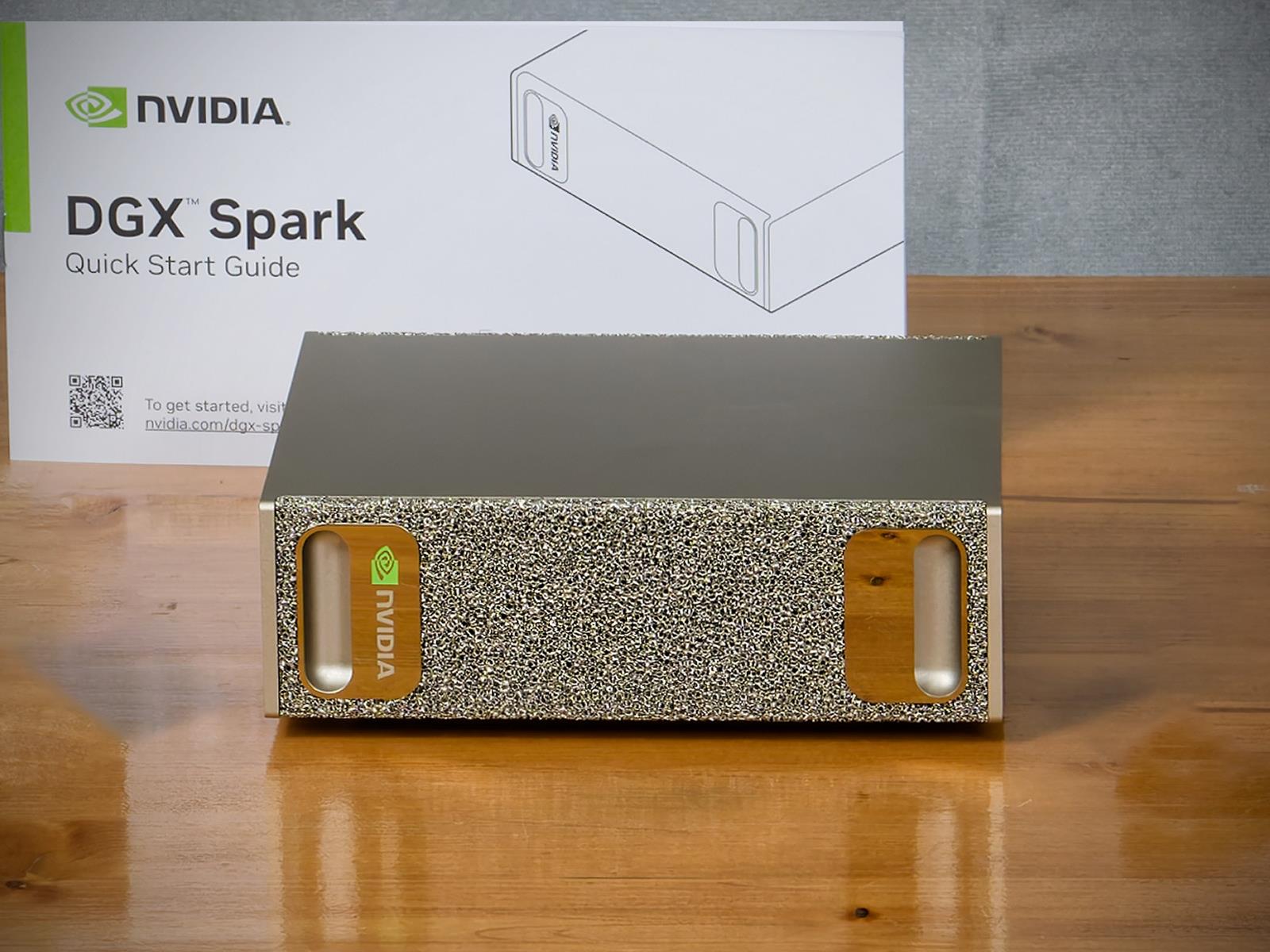
NVIDIA DGX Spark Review: A GB10-Infused Mini AI Development Powerhouse

NVIDIA DGX Spark Review: A GB10-Infused Mini AI Development Powerhouse
NVIDIA DGX Spark – $3,999 NVIDIA’s diminutive DGX Spark development companion moves away from the robotics focus of its forebears and into the office with general AI development in its sights. Grace Blackwell GB10 is purpose-built for AI 128 GB of fast memory is more than any consumer GPU NVIDIA’s Playbooks are easy to follow Sync app makes…

The At-Home Nasal Flu Vaccine Is Now Available for Delivery

I love being able to go to the pharmacy for my own (or my kids’) flu shots. Pop in, get the shot, then go about my day. That process has now gotten even easier: Last year, the FDA approved the first flu vaccine that you can administer yourself, or that parents can administer to their children, and it’s now available for at-home ordering. I just placed my order. And best of all: It’s a nasal spray, so no needles.

How can you get the at-home flu vaccine? 

The nasal spray vaccine, called FluMist, still needs to be prescribed by a medical provider. But since nearly everyone aged two through 49 is eligible, FluMist’s maker (AstraZeneca) has a telehealth website that bundles the provider’s approval with an order to an online pharmacy. The process takes about five minutes on average, they say, and I found that to be accurate.

I’ve already had my flu shot this year, but my kids haven’t gotten it yet. (I also know my daughter strongly prefers the nasal to the injection when possible.) The website allowed me to add multiple people to the same order, so I filled out the questionnaire for each child, giving their names, ages, allergies, and so on.

The website then reached into some big data cloud out there and told me it already knew their insurance information (existentially frightening, yet convenient!) and presented me with my bill: an $8.99 fee, which included $2.50 for physician evaluation and $6.49 for shipping and processing. Insurance covers the cost of the vaccine itself.

Who can use the at-home flu vaccine? 

The at-home vaccine is the same as regular FluMist, which is approved for ages two through 49. That means babies and older adults will still need to visit a provider for the regular, injectable flu vaccine. Children can get flu shots starting at the age of six months.

FluMist uses a live, weakened virus. It can’t give you the actual flu, but it can cause some respiratory symptoms in people with weakened immune systems. So it’s not recommended for people who are pregnant, have certain medical conditions, or are immunocompromised or have close contact with an immunocompromised person. If that’s you, talk to a provider about your best options. You may be advised to get the regular injectable type, which doesn’t include any live virus.

How do you give yourself the at-home flu vaccine? 

Mine hasn’t arrived yet, but the instructions say that a package containing the vaccine will arrive at my door on the day I selected. It will be packed in an insulated container with cold packs, and should be put in the refrigerator upon arrival. There’s also a tag I can scan to make sure the vaccine stayed at the proper temperature during the shipping process.

Assuming that all goes well, you follow the instructions to spray the vaccine up your nose. (If you’ve gotten a FluMist at a pharmacy, it’s the same idea.) Adults can administer it to themselves, and children will need an adult to do it for them. Instructions are, of course, provided. After you administer the vaccine, there is a prepaid envelope you can use to return the sprayers for disposal.

Windows 10 support “ends” today, but it’s just the first of many deaths

Today is the official end-of-support date for Microsoft’s Windows 10. That doesn’t mean these PCs will suddenly stop working, but if you don’t take action, it does mean your PC has received its last regular security patches and that Microsoft is washing its hands of technical support.

This end-of-support date comes about a decade after the initial release of Windows 10, which is typical for most Windows versions. But it comes just four years after Windows 10 was replaced by Windows 11, a version with stricter system requirements that left many older-but-still-functional PCs with no officially supported upgrade path. As a result, Windows 10 still runs on roughly 40 percent of the world’s Windows PCs (or around a third of US-based PCs), according to StatCounter data.

But this end-of-support date also isn’t set in stone. Home users with Windows 10 PCs can enroll in Microsoft’s Extended Security Updates (ESU) program, which extends the support timeline by another year. We’ve published directions for how to do this here—while you do need one of the Microsoft accounts that the company is always pushing, it’s relatively trivial to enroll in the ESU program for free.

Read full article

Comments

Top Affordable Windows 11 Laptop Deals Under $800 To Keep Getting Microsoft Updates

Top Affordable Windows 11 Laptop Deals Under $800 To Keep Getting Microsoft Updates
Looking for a new laptop now that Microsoft has officially declared end of life (EOL) status for Windows 10? Before you do, note there are ways to extend support for free, such as syncing backups to OneDrive or redeeming 1,000 Microsoft Rewards points. Or you could pony up $30, though if you need a new PC anyway, we have you covered with a

The Great Software Quality Collapse

Engineer Denis Stetskov, writing in a blog: The Apple Calculator leaked 32GB of RAM. Not used. Not allocated. Leaked. A basic calculator app is hemorrhaging more memory than most computers had a decade ago. Twenty years ago, this would have triggered emergency patches and post-mortems. Today, it’s just another bug report in the queue. We’ve normalized software catastrophes to the point where a Calculator leaking 32GB of RAM barely makes the news. This isn’t about AI. The quality crisis started years before ChatGPT existed. AI just weaponized existing incompetence.

[…] Here’s what engineering leaders don’t want to acknowledge: software has physical constraints, and we’re hitting all of them simultaneously. Modern software is built on towers of abstractions, each one making development “easier” while adding overhead: Today’s real chain: React > Electron > Chromium > Docker > Kubernetes > VM > managed DB > API gateways. Each layer adds “only 20-30%.” Compound a handful and you’re at 2-6x overhead for the same behavior. That’s how a Calculator ends up leaking 32GB. Not because someone wanted it to — but because nobody noticed the cumulative cost until users started complaining.

[…] We’re living through the greatest software quality crisis in computing history. A Calculator leaks 32GB of RAM. AI assistants delete production databases. Companies spend $364 billion to avoid fixing fundamental problems. This isn’t sustainable. Physics doesn’t negotiate. Energy is finite. Hardware has limits. The companies that survive won’t be those who can outspend the crisis. There’ll be those who remember how to engineer.


Read more of this story at Slashdot.

These Beats Fit Pro Earbuds Are Less Than Half Their Original Price Right Now

We may earn a commission from links on this page. Deal pricing and availability subject to change after time of publication.

There’s no shortage of wireless earbuds out there, but if you want noise cancellation, full iOS compatibility, and a fit that won’t budge during a workout, you should consider the Beats Fit Pro. Right now, you can buy them on sale for $99.99 at StackSocial (reg. $199.99). The sale includes all four color options—white, black, gray, and purple.

They’re “open box” models, meaning that they’ve likely been handled but not used, and they’ve been inspected to make sure they’re still in new condition. They’re rated IPX4 for water resistance, so sweat and light rain aren’t a problem, though the case itself isn’t protected and doesn’t support wireless charging. Battery life is around six hours with ANC on and another 18 to 23 hours from the case, depending on how you use them.

Sound-wise, these lean hard into bass, which some folks will love and others might find a bit much. The low end hits especially well at high volumes without distortion, which makes them great for hip-hop, pop, or EDM, notes this PCMag review. The noise cancellation holds up pretty well for sounds like plane rumbles and low-frequency distractions, but don’t expect total silence in a noisy café (higher-pitched noises still leak through). There’s also a decent Transparency Mode that lets in just enough outside sound for you to cross the street or chat with someone without pulling out an earbud. Android users do have access to most core features through the Beats app, but some perks, such as automatic switching, hands-free Siri, and Spatial Audio, are still iOS-only. Getting all that for over half off isn’t a bad deal at all.

HP Unveils Limited Edition Omen 16 Gaming Laptop For Diehard League Of Legends Fans

HP Unveils Limited Edition Omen 16 Gaming Laptop For Diehard League Of Legends Fans
HP chose the 2025 League of Legends World Championship event as a launchpad for its limited-edition Omen 16 gaming laptop, which incorporates design accents from the popular game with a potent selection of parts. The new laptop also sports an upgraded thermal design and intelligent performance optimization through Omen AI, the company says.

Developed

Uniqlo honours one of cycling’s most iconic brands with limited-edition T-shirt

Uniqlo has launched a new Brooklyn Machine Works T-shirt, and the good news is, it’s on sale for only £9.90 – I’ve already ordered one.

The T-shirt, honouring the iconic New York bike brand, is part of Uniqlo’s Nostalgia Tees series, which also includes Maxell audio cassettes, Kodak film and Wendy’s old-fashioned burgers.

Back in the 90s and early 2000s, at the height of the dirt jump/skate park mountain bike scene, Brooklyn Machine Works was undoubtedly one of the coolest brands on the block, alongside the likes of Spooky, Santa Cruz and the UK’s DMR, which made the Trailstar.

uniqlo BMW tshirt
With a BMX photo on the front and Brooklyn’s many logos from over the years on the back, this is 90s cool. Uniqlo

For me, though, Brooklyn’s cool factor was off the charts.

That’s because Brooklyn Machine Works, or rather cheekily BMW, built the toughest, sturdiest big-hitting bikes in New York from 4130 chromoly steel.

The range of 24-inch cruiser-style BMXs, hardtails and even futuristic-looking full-suspension designs (Google the TMX) were – in my eyes – the coolest bikes around.

uniqlo BMW tshirt
Uniqlo’s BMW (that’s Brooklyn Machine Works) T-shirt has a classic Brooklyn BMX photo on the front. Uniqlo

It seems someone in fashion retail giant Uniqlo’s graphics department has the same fond nostalgia for this important era in bikes as I do.

Digital Platforms Correlate With Cognitive Decline in Young Users

Preteens who use increasing amounts of social media perform poorer in reading, vocabulary and memory tests in early adolescence compared to those who use little or no social media. A study published in JAMA examined data from over 6,000 children ages 9 to 10 through early adolescence. Researchers classified the children into three groups: 58% used little or no social media over several years, 37% started with low-level use but spent about an hour daily on social media by age 13, and 6% spent three or more hours daily by that age.

Even low users who spent about one hour per day performed 1 to 2 points lower on reading and memory tasks compared to non-users. High users performed 4 to 5 points lower than non-social media users. Jason Nagata, a pediatrician at the University of California, San Francisco and study author, said the findings were notable because even modest social media use correlated with lower cognitive scores.


Read more of this story at Slashdot.

OpenAI wants to stop ChatGPT from validating users’ political views

“ChatGPT shouldn’t have political bias in any direction.”

That’s OpenAI’s stated goal in a new research paper released Thursday about measuring and reducing political bias in its AI models. The company says that “people use ChatGPT as a tool to learn and explore ideas” and argues “that only works if they trust ChatGPT to be objective.”

But a closer reading of OpenAI’s paper reveals something different from what the company’s framing of objectivity suggests. The company never actually defines what it means by “bias.” And its evaluation axes show that it’s focused on stopping ChatGPT from several behaviors: acting like it has personal political opinions, amplifying users’ emotional political language, and providing one-sided coverage of contested topics.

Read full article

Comments

What People Are Getting Wrong This Week: The Short Video to Conspiracy Theory Pipeline

Did you know you can customize Google to filter out garbage? Take these steps for better search results, including adding my work at Lifehacker as a preferred source.


While sometimes there’s a big piece of misinformation that a lot of people latch onto—like The Rapture or the existence of “MedBeds“—the fractured nature of the information sphere has all but killed the overarching conspiracy theory. No longer do big ideas like “we never went to the moon” unite the dumbest minds; instead, the algorithm creates bespoke conspiracy theories. So instead of joining the Flat Earth Society, you might think the actual year is 1728, or that AI secretly imagined a British comedian from the the 1980s and seeded the web with evidence of his existence.

But how does it start? And how quickly can social media platforms transform someone from a person from a seeker-of-knowledge to a believer-in-bullshit? YouTuber Benaminute recently posted a video where he dug in to find out. His question: If you start with a benign, broad, randomly chosen subject, and you only watch videos having to do with that subject, how long will it take until TikTok, YouTube Shorts, and Instagram Reels feed you a conspiracy theory video? The answer: not long at all.

Different topics all lead to the same place (more or less)

For the experiment, Benaminute created “blank” social media profiles and behaved like someone who was innocently curious about one of three topics—dinosaurs, The Vietnam War, and the 2000 presidential election. He put the keyword in each platform’s search bar and only watched and liked videos about the initial subject.

Dinosaurs

  • YouTube Shorts: The initial videos were ads for Jurassic Park, AI slop featuring dinosaurs, and the occasional educational video, but the 541st video was a clip from the Joe Rogan Experience about how the pyramids were not tombs, but “DNA restoration devices.”

  • TikTok: If you thought TikTok would get to conspiracy theories quickly, you’d be right. The 144th video was this fake UFO video that has 24 million views.

  • Instagram Reels: Insta took 661 videos to get from dinosaurs to a “forbidden phone from the 2000s that lets you see into a parallel dimension.”

The Vietnam War

Things get worse for people interested in historical or political events. On all short-form platforms, an interest in Vietnam will lead you pretty quickly to right-leaning content, which leads you to conspiracy theories.

  • YouTube Shorts got to a conspiracy theory video about Noah’s Ark in only seven videos.

  • TikTok took a little longer; video 161 was about how financial services company Blackrock had something to do with the attempted assassination of Donald Trump.

  • Reels took 139 videos to get to “Bush did 9/11.”

The 2000 election

The election of 2000 is still a charged topic, but it’s been awhile, so maybe cooler heads and verified information will win the day? Spoiler: nope.

  • YouTube Shorts took 136 videos to get to the same Noah’s Ark conspiracy as it did for dinosaur fans.

  • TikTok only took 38 videos to get to “The Rapture is happening on September 24.”

  • Reels took only 26 videos to land on “The World Trade Center was bombed” (by either Clinton or Bush).

Which social media app leads to conspiracy theories fastest?

The champion of “normal search to conspiracy theory” speed runs is TikTok, with an average of 114 videos or 57 minutes of watching. YouTube Shorts comes in second with 230 videos or 1 hour 57 minutes of time, and Reels takes 275 video or 138 minutes. It’s a distinction without a difference; however, all three platforms lead to conspiracies in the time it takes to watch a Marvel movie.

What does it all mean?

It would be easy to conclude that the massive tech companies that built YouTube, Instagram, and TikTok companies weight their recommendation engines so viewers are led to fake stories. Maybe they have specific political aims and are trying to sway votes, or maybe (as Benaminute posits in a semi-tongue-in-cheek way) these apps are built to “keep us angry, divided, and distracted” from realizing the conflict isn’t between Left and Right, but between “up and down.”

This is also a conspiracy theory, however. I’m not saying he’s wrong, but we don’t have enough information to know why algorithms recommend conspiracy content. It could be because bad actors at the top demand specific results for some purpose, but it seems more likely to me that TikTok et al. don’t have an agenda beyond making money.

I have no doubt that a social media platform featuring an algorithm that weighs the truth heavily would fail pretty quickly; the Truth is boring compared to conspiracy theories. Conspiracy theories, broadly, make believers feel special, like they have inside knowledge the rest of us lack. People scroll TikTok to have fun; the truth usually isn’t fun. Conspiracy theorist can say things like “UFOs are here!” or “They’re turning the frogs gay!” Meanwhile, if you’re devoted to the truth, you mostly have to go with “the best evidence suggests…” or “it seems logical that…” and who wants to hear that?