Proposed Patches Make Upstream Linux Kernel Usable For The OpenWrt One Router

Announced nearly one year ago was the OpenWrt One as a router/AP that is “hacker-friendly” and open-source. The OpenWrt One is powered by a Filogic 820 SoC and features WiFi 6. This official OpenWrt device is manufactured by Banana Pi. While there is downstream open-source code available for customizing the OpenWrt One to your heart’s content, the upstream Linux kernel support to date hasn’t been full-featured…

GrapheneOS Finally Ready To Break Free From Pixels

GrapheneOS, the privacy-focused Android fork once exclusive to Google Pixels, is partnering with a major Android OEM to bring its hardened, de-Googled OS to Snapdragon-powered flagship phones. Android Authority reports: Until now, GrapheneOS has been available only on Pixel phones, making Google’s flagships popular among privacy enthusiasts, journalists, and, as a Spanish police report suggested earlier this year, even organized crime groups in Catalonia. But that Pixel exclusivity may end by 2026 or 2027. GrapheneOS revealed in a Reddit thread that it has been working with a “major Android OEM” since June 2025 to enable official support for “future versions of their existing models.” These devices will reportedly use flagship Snapdragon chips, a notable shift from Google’s in-house Tensor processors.

The project explained that only Pixels have met its strict security and update requirements so far. However, the new partnership suggests that another OEM is finally matching those standards. GrapheneOS also hinted that the mysterious partner’s devices will be “priced similarly to Pixels” and available globally as part of the brand’s standard lineup.


Read more of this story at Slashdot.

Strava: “We don’t agree with the extensive branding Garmin is forcing”

The last few weeks have been full of surprises from the world’s biggest training app, Strava. 

On October 2, we reported that Strava was suing Garmin over patent infringement, related to Segments and heatmaps. Strava claims in its lawsuit that it has suffered damages, including lost revenue and business opportunities, due to the alleged infringements.

Yet, news of the lawsuit was followed quickly by a Reddit post from Strava’s chief product officer Matt Salazar, putting a new spin on why the company was suing its long-time collaborator.

Salazar said the primary reason behind the litigation was in fact a set of “new developer guidelines for all of its API partners”. According to Salazar, these guidelines would require Strava and other platforms using its API (Application Programming Interface) – which offers developers a data connection between services – to integrate Garmin’s logo “on every single activity post, screen, graph, image, sharing card, etc”.

The guidelines will take effect from 1 November. Meanwhile, Salazar’s post has had 1,500 comments and zero upvotes. 

When contacted by BikeRadar, Garmin declined to comment on Salazar’s post – and the noise has continued to come from Strava’s side. 

An email sent to Strava developers on Friday, 11 October, provided an update to Strava’s own API that says Garmin attribution will be required.

“Activity data obtained through the Strava API may include data that requires attribution to Garmin. Therefore, if your application displays information derived from Garmin-sourced data, you must display attribution to Garmin in the form and manner required by Garmin’s brand guidelines,” the guidelines reportedly state.

On the one hand, this could be read as Strava capitulating to Garmin, despite Salazar’s strong words. But it’s more a case of Strava ensuring that however many of its 150 million athletes that use Garmin smartwatches or bike computers don’t run into issues next month. Losing Garmin’s data would be a big blow. 

When asked about the updates to its own API, Strava told BikeRadar that it’s unable to comment on ongoing disputes. But a spokesperson said: “While we don’t agree with the extensive branding Garmin is forcing, uninterrupted connectivity for the subset of our community that uses Garmin remains our top priority, and we have also decided that we will give similar attribution to all of our device partners going forward to be fair. 

“Our aim is to make branding as unintrusive as possible and we believe it is the right thing to do in light of the mandatory changes that Garmin is asking all developers to implement by November 1st.”  

From Strava’s statement, it seems that come next month you won’t only see attribution to Garmin but also other platforms and devices “to be fair”.

The further context to Strava’s decision is its bid to go public in the US. The San Francisco-based company was valued at $2.2 billion last May following a funding round.

Rumours began to circulate last month after Reuters reported that Strava was in discussions with banks about an initial public offering. This made sense considering the value of the company, but also one big hire. In August, Strava announced Matt Anderson as its new chief financial officer, joining from Nextdoor, a social network for neighbourhood communities, which he helped guide through its public listing. 

And this week, Strava’s CEO Michael Martin confirmed the app has an “intention to go public at some point” because the move “provides easy access to capital in case we wanted to do more and bigger acquisitions”. 

There’s no indication yet of when Strava will join Wall Street, but smoothing things over with Garmin may be a way to stay in the good books of any potential investors.

Whether the lawsuit will continue to go ahead is yet to be seen, but it’s unlikely Salazar will take to Reddit again any time soon. 

You may like 

Celebrating creativity at Coolest Projects Sri Lanka 2025

In August, young tech creators from across Sri Lanka gathered for the country’s second-ever in-person Coolest Projects event, hosted by our partner STEMUP Educational Foundation. The showcase was a chance for young people to share and celebrate their ideas and inventions with families, friends, mentors, and the wider digital making community, while having lots of fun trying out projects and meeting fellow creators. 

Coolest Projects Sri Lanka 2025.

With 150 projects showcased by 200 young people, the event highlighted the incredible creativity and problem-solving skills that come into play when young people have an opportunity to get hands-on with technology and explore their curiosity. It was great to be there on the day and hear from the creators themselves. From a cake chase game (that was really about the importance of friendship) to an AI-powered classifier that could identify organic and non-organic material, there was no shortage of imagination on display.

Here are just a few of the standout projects I saw at the event.

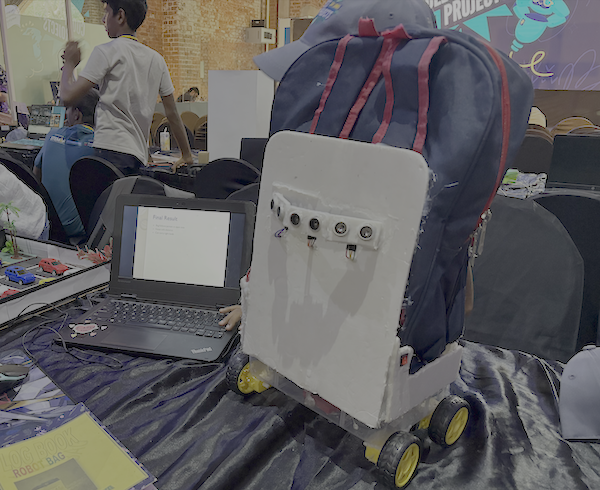
The Robot Bag project at Coolest Projects Sri Lanka.
Udula | Robot Bag, Hardware category

Inspired by young people carrying heavy backpacks full of textbooks, Udula created ‘Robot Bag’ to help people of all ages carry their bags. You simply place your bag on the robot, and it will start following you around! One challenge Udula faced was trying to figure out how far the robot was from people. With just one camera, the robot could not really determine depth, so it could not detect how far away a walking person was. To solve this, he added two more cameras at an angle. This allowed him to calculate a more accurate average distance using input from all three cameras.

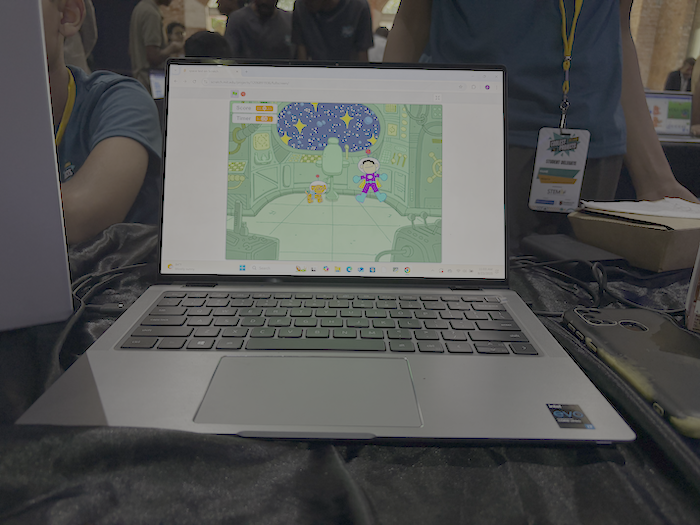
The Ripley’s Adventure: Beyond the Horizon project at Coolest Projects Sri Lanka.
Yahya | Ripley’s Adventure: Beyond the Horizon, Scratch category

Yahya built an astronaut reaction time game that followed Ripley, an astronaut in training. In order to pass his training, he had to hit as many moving targets as possible in one minute. Thankfully, Yahya had built an adjustable difficulty level, so I could complete the challenge in spite of my slow reaction times!

The Jellyfish or Plastic Bag? project at Coolest Projects Sri Lanka.
Khadeejah | Jellyfish or Plastic Bag? AI to Differentiate Jellyfish from Plastic Bags, AI category

Khadeejah is passionate about the environment and learned that ocean clean-up technology tools often incorrectly identify jellyfish and plastic bags. Underwater, they have a lot of the same characteristics and movements: they are translucent, flexible, and amorphous. She started creating her own dataset and training her own AI model to distinguish between the two. In doing so, she learned a lot about AI bias and how creating a balanced dataset is really important to prevent bias and improve accuracy.

Young people leading the way

From beginners to experienced programmers, every young creator at the event had the chance to celebrate their work, talk about their ideas, and see what others were building. 

Having so many young creators in one space highlighted the importance of providing opportunities where they can share ideas, learn from one another, and build a sense of community. We would like to say a huge thank you to STEMUP Educational Foundation for organising such an inspiring day, and to the volunteers and mentors who made the event possible. Most importantly, thank you to the young digital makers of Sri Lanka for sharing your creativity with us. We can’t wait to see what you will make next!

Want to know more about how you can get involved with Coolest Projects? Sign up to receive the newsletter and be the first to hear announcements and updates.

The post Celebrating creativity at Coolest Projects Sri Lanka 2025 appeared first on Raspberry Pi Foundation.

New Alzheimer’s Treatment Clears Plaques From Brains of Mice Within Hours

Scientists from Spain and China have successfully repaired the blood-brain barrier in Alzheimer’s-model mice, enabling the brain to naturally clear amyloid-beta plaques and reverse cognitive decline. “After just three drug injections, mice with certain genes that mimic Alzheimer’s showed a reversal of several key pathological features,” adds ScienceAlert. From the report: Within hours of the first injection, the animal brains showed a nearly 45 percent reduction in clumps of amyloid-beta plaques, a hallmark of Alzheimer’s disease. The mice had previously shown signs of cognitive decline, but after all three doses, the animals performed on par with their healthy peers in spatial learning and memory tasks. The benefits lasted at least six months.

These preclinical results don’t guarantee success in humans, but they’re an encouraging start, which the authors say “heralds a new era” in drug research. “The therapeutic implications are profound,” claim the international team of researchers, co-led by scientists at the Institute for Bioengineering of Catalonia (IBEC) and the West China Hospital Sichuan University (WCHSU). The findings have been published in Signal Transduction and Targeted Therapy.


Read more of this story at Slashdot.

Focused Sound Energy Holds Promise For Treating Cancer, Alzheimer’s and Other Diseases

An anonymous reader quotes a report from the Conversation: Sound waves at frequencies above the threshold for human hearing are routinely used in medical care. Also known as ultrasound, these sound waves can help clinicians diagnose and monitor disease, and can also provide first glimpses of your newest family members. And now, patients with conditions ranging from cancer to neurodegenerative diseases like Alzheimer’s may soon benefit from recent advances in this technology.

I am a biomedical engineer who studies how focused ultrasound — the concentration of sound energy into a specific volume — can be fine-tuned to treat various conditions. Over the past few years, this technology has seen significant growth and use in the clinic. And researchers continue to discover new ways to use focused ultrasound to treat disease. […] Research on focused ultrasound has primarily focused on the most devastating and prevalent diseases, such as cancer and Alzheimer’s disease. However, I believe that further developments in, and increased use of, focused ultrasound in the clinic will eventually benefit patients with rare diseases.

One rare disease of particular interest for my lab is cerebral cavernous malformation, or CCM. CCMs are lesions in the brain that occur when the cells that make up blood vessels undergo uncontrolled growth. While uncommon, when these lesions grow and hemorrhage, they can cause debilitating neurological symptoms. The most common treatment for CCM is surgical removal of the brain lesions; however, some CCMs are located in brain areas that are difficult to access, creating a risk of side effects. Radiation is another treatment option, but it, too, can lead to serious adverse effects.

We found that using focused ultrasound to open the blood-brain barrier can improve drug delivery to CCMs. Additionally, we also observed that focused ultrasound treatment itself could stop CCMs from growing in mice, even without administering a drug. While we don’t yet understand how focused ultrasound is stabilizing CCMs, abundant research on the safety of using this technique in patients treated for other conditions has allowed neurosurgeons to begin designing clinical trials testing the use of this technique on people with CCM. With further research and advancements, I am hopeful that focused ultrasound can become a viable treatment option for many devastating rare diseases.


Read more of this story at Slashdot.

Western Executives Shaken After Visiting China

mspohr shares a report from Futurism: Western automotive and green energy executives who visit China are returning humbled — and even terrified. As The Telegraph reports, the executives are warning that the country’s heavily automated manufacturing industry could quickly leave Western nations behind, especially when it comes to electric vehicles. “We are in a global competition with China, and it’s not just EVs,” Ford CEO Jim Farley told The Verge last month. “And if we lose this, we do not have a future at Ford.” Some companies are giving up on new initiatives altogether, with the founder of mining company Fortescue, Andrew Forrest, claiming that his recent trip to China led to him abandoning attempts to produce EV powertrains in-house. “There are no people — everything is robotic,” he told The Telegraph.

Other executives recalled touring “dark factories” that don’t even need to keep the lights on, as most work is being done around the clock by robots. “You get this sense of a change, where China’s competitiveness has gone from being about government subsidies and low wages to a tremendous number of highly skilled, educated engineers who are innovating like mad,” British energy supplier Octopus CEO Greg Jackson told the newspaper. According to recent figures by the International Federation of Robotics, China has deployed orders of magnitude more industrial robots than Germany, the US, and the UK.


Read more of this story at Slashdot.

Norway Says ‘Mission Accomplished’ On Going 100% EV, Proposes Incentive Changes

Norway has effectively achieved its 2025 goal of 100% electric new car sales, prompting the government to declare “mission accomplished” and propose scaling back EV tax exemptions to reflect a mature market. “We have had a goal that all new passenger cars should be electric by 2025, and … we can say that the goal has been achieved,” announced Finance Minister Jens Stoltenberg. Electrek reports: With the finish line in sight, the Norwegian government is now fine-tuning its approach. The current incentive program maintains the crucial VAT exemption for EVs, but only up to a purchase price of 500,000 Norwegian kroner (approximately $49,000 USD). This move is designed to target more expensive, luxury EVs, ensuring that the incentive benefits a broader range of consumers.

However, the latest budget proposal aims to reduce the EV tax exemption to vehicles costing 300,000 Norwegian kroner (~30,000 USD). This would apply for 2026, and then the tax exemption would completely end in 2027. Additionally, the government plans to increase taxes on new gasoline and diesel cars, further widening the cost gap between polluting and zero-emission vehicles.

However, the proposal still needs to be adopted by Norway’s government, and there is some opposition. EV associations are advocating for a more extended phase-out period to ensure that the adoption rate doesn’t decline.


Read more of this story at Slashdot.

China ‘Stole Vast Amounts’ of Classified UK Documents, Officials Say

Boris Johnson’s former adviser claims that China infiltrated a key UK government data-transfer network for years, compromising highly classified materials and prompting a Whitehall cover-up that prioritized Chinese investment over national security. The Times reports: Dominic Cummings, who served as a senior adviser to Boris Johnson, said that he and the then prime minister were informed about the breach in 2020 but that there had subsequently been a cover-up. He said he was warned at the time that disclosing some specific details of the breach would be a criminal offence. He claimed that the breach included some “Strap” material, which is the government term for the highest level of classified information.

The breach, which was confirmed by two other senior Whitehall sources, was said to have been connected to a Chinese-owned company involved in Britain’s critical national infrastructure. Tom Tugendhat, a former Tory security minister, supported Cummings’s account. Cummings said that he and Johnson were informed of the breach in the “bunker” of No 10 — a reference to the secure room in Downing Street.

He told The Times: “The cabinet secretary said, ‘We have to explain something; there’s been a serious problem’, and he talked through what this was. “And it was so bizarre that, not just Boris, a few people in the room were looking around like this — ‘Am I somehow misunderstanding what he’s saying? Because it sounds f***ing crazy.'” He added: “What I’m saying is that some Strap stuff was compromised and vast amounts of data classified as extremely secret and extremely dangerous for any foreign entity to control was compromised. “Material from intelligence services. Material from the National Security Secretariat in the Cabinet Office. Things the government has to keep secret. If they’re not secret, then there are very, very serious implications for it.”


Read more of this story at Slashdot.

Waymo’s Robotaxis Are Coming To London

An anonymous reader quotes a report from The Guardian: People in London could be hiring driverless taxis from Waymo next year, after the US autonomous vehicle company announced plans to launch its services there. The UK capital will become the first European city to have an autonomous taxi service of the kind now familiar in San Francisco and four other US cities using Waymo’s technology.

The launch pits an innovation sometimes dubbed the “robotaxi” against London’s famous black cabs, which can trace their history back to the first horse-drawn hackney coaches of the Tudor era. But a representative of the capital’s cab drivers said they were not concerned by the arrival of a “fairground ride” and questioned the reliability of driverless vehicles. Waymo said its cars were now on their way to London and would start driving on the capital’s streets in the coming weeks with “trained human specialists,” or safety drivers, behind the wheel.

The company, originally formed as a spin-off from Google’s self-driving car program, said it would scale up operations and work closely with Transport for London and the Department for Transportto obtain the permits needed to offer fully autonomous rides in 2026. Uber and the UK tech company Wayve have also announced their own plans to trial their driverless taxis in the capital next year, after the British government said it would accelerate rules allowing public trials to take place before legislation enabling self-driving vehicles passes in full.


Read more of this story at Slashdot.

‘Flying Suitcase’ Personal Helicopter Can Fit In The Back Of A Truck

This is a flight demonstration of X Control’s Janus-I, a personal dual-blade helicopter that was dubbed the ‘flying suitcase’, presumably in honor of George Jetson’s flying car (which unfolded from his suitcase). The gas-powered helicopter folds up small enough to fit in the back of a truck, weighs only 154-pounds but can carry 440-pounds, has a top speed of around 100MPH, can reach altitudes of ~20,000ft, and can even take off and land on water. What it can’t do is make you feel the least bit safe flying it at any altitude over 10 feet. Especially considering you don’t even need a pilot’s license to fly it, so there’s very little chance you’ll have any idea what you’re doing besides being moments from death.

Mozilla Is Recruiting Beta Testers For a Free, Baked-In Firefox VPN

Mozilla is testing a free, built-in VPN for Firefox that routes traffic through Mozilla-managed servers directly in the browser. The Register reports: According to a staff post on Mozilla Connect, the company’s idea-sharing platform, Firefox VPN is still an experimental feature in the early stages of development, but users will be selected at random to test it “over the next few months.” Moz describes the feature as one that will sit beside the search bar on Firefox, routing web traffic through a Mozilla-managed VPN server, concealing the user’s real IP address while adding a layer of encryption to their communications. Firefox VPN is a different project entirely from Mozilla VPN, a separate, paid-for product. The Firefox version will be free to use and confined to the browser itself, while Mozilla VPN can be used by up to five devices at a time.

The Moz staffer on the product team who announced the feature said of the upcoming beta test: “We’ll start simple, then gradually add new capabilities while learning how it impacts browsing, usage, and overall satisfaction. “Our long-term vision is ambitious: to build the best VPN-integrated browser on the market.” In response to feedback, the staffer noted that while it will be a desktop browser feature first, “mobile is definitely a natural next step.”


Read more of this story at Slashdot.