A massive outage at Amazon Web Services (AWS), the world’s largest cloud computing provider, crippled major websites, apps, and corporate services across the globe this morning. Thankfully, Amazon has been on the case (having dealt with biggies like this in the past) and most key services are already back online.
For those wondering how the AMD 3D V-Cache performance with the Ryzen 9 9950X3D is looking on Linux relative to Microsoft Windows, a few weeks back I carried out some comparison benchmarks of Windows 11 25H2 against Ubuntu Linux both the Ubuntu 24.04.3 LTS release and an Ubuntu 25.10 development build using both the AMD Ryzen 9 9950X and Ryzen 9 9950X3D processors.
Rapha has announced a new partnership with USA Cycling as its latest financial results reveal a net loss for the eighth consecutive year.
Last month, Rapha revealed it was ending its seven-year partnership with EF Pro Cycling, and Rapha’s CEO Fran Millar said the relationship had “gotten tired”.
The new partnership is part of a renewed vision for the lauded cycling brand and will see Rapha working with USA Cycling for the 2028 LA Olympic Games.
Rapha will manufacture kit for a range of new disciplines, including BMX racing. Emily Maye / Rapha
“We wanted to build a broader portfolio that spoke to a new and different demographic of the sport in a way that we haven’t done before. This will be sort of one of the pinnacle things that we do,” Millar said at a press event in October.
Millar, who joined Rapha last year, says the LA Games could have the same impact on cycling in the US that the London 2012 Games had in the UK, encouraging more people to ride bikes.
Rapha will dress USA Cycling’s athletes from 2026 through to the end of 2029, which will take the company into new cycling disciplines, including BMX, and notably track cycling.
Working with the USA track team will push Rapha in ways Millar feels its relationship with EF Pro Cycling did not.
Millar says the skinsuit for EF Pro Cycling was last tested in 2022. “That’s an anathema to me in terms of having a high-performance suit – that you wouldn’t test every year and get it in the wind tunnel to understand what you could be doing to go faster.”
She says there isn’t the luxury of waiting that long in track cycling “where every millisecond counts”, and that the performance gains developed for the USA track team will eventually filter into Rapha’s other products.
Financial results and kicking the “discounting drug”
Rapha CEO Fran Millar says the 2028 LA Olympic Games could have the same impact on cycling in the US as the London 2012 Games had on cycling in the UK. Emily Maye / Rapha
Millar says there is a “real confidence” in Rapha for the first time in a long time. Its financial backers are supportive of the company pursuing opportunities that could be seen as risky but with high-reward potential, including partnering with USA Cycling.
This may come as a surprise to those who have followed Rapha’s financial results in recent years. Rapha’s latest financial results reveal an annual revenue of £96.2m in the year ending January 2025 and a net loss – its eighth in a row – of £15.6m.
However, Rapha’s chief financial officer, Michelle Woolaghan, says this is not a number the company is focused on internally. Instead, Rapha is concerned by its Earnings Before Interest, Taxes, Depreciation, and Amortisation (EBITDA).
In 2023, Rapha achieved a positive EBITDA of £900,000. For the latest results, ending in January 2025, the EBITDA has moved back to -£2.6m. Woolaghan says this is due to a conscious decision to reduce the level of discounting and promotional sales.
“Within the 2024 numbers, the full price sales held level and what dropped back was promotional or discounted sales. So our gross margin improved across all the channels. But nevertheless, because of that volume drop in the short term, that impacts profitability,” says Woolaghan.
“We’re kind of coming off the discounting drug, I suppose,” she says.
£10 million payback
Woolaghan and Millar are also keen to explain why Rapha’s results look the way they do, and a large contributing factor is amortisation, or the depreciation of goodwill and tangible assets, after it was bought by the grandsons of the Walmart founder Sam Walton, Steuart and Tom Walton, in 2017.
Woolaghan says the amortisation is roughly £10 million a year: “So we just have that hit to the profits and losses every single year until we’ve paid off the kind of purchase price.” She expects this will continue for the next eight to 10 years.
Rapha has also decided to reduce the carrying value of the company – the measure of a company’s value based on its balance sheet – by £102m.
“What that means in practice is when we assess the outlook of what it will take to get back to strong EBITDA and revenue growth,” says Woolaghan.
Millar says this will have no impact on customers.
AWS experienced a three-hour outage early Monday morning that disrupted thousands of websites and applications across the globe. The cloud computing provider reported DNS problems with DynamoDB in its US-EAST-1 region in northern Virginia starting at 12:11 a.m. Pacific time. Over 4 million users reported issues, according to Downdetector. Snapchat saw reports spike from more than 22,000 to around 4,000 as systems recovered. Roblox dropped from over 12,600 complaints to fewer than 500. Reddit and the financial platform Chime remained affected longer. Perplexity, Coinbase and Robinhood attributed their platform disruptions directly to AWS.
Gaming platforms including Fortnite, Clash Royale and Clash of Clans went offline. Signal confirmed the messaging app was down. In Britain, Lloyd Bank, Bank of Scotland, Vodafone, BT, and the HMRC website faced problems. United Airlines reported disrupted access to its app and website overnight. Some internal systems were temporarily affected. Delta experienced a small number of minor flight delays. By 3:35 a.m. Pacific time, AWS said the issue had been fully mitigated. Most service operations were succeeding normally though some requests faced throttling during final resolution. AWS holds roughly one-third of the cloud infrastructure market ahead of Microsoft and Google.
If you found it difficult to access sites and services early Monday morning, you are not alone. In fact, the rest of the world was having trouble, too. For a short period of time, a global outage prevented people from accessing a wide variety of sites and services, from Facebook to Fortnite.
The trouble stemmed from Amazon Web Services (AWS), an Amazon product that offers cloud hosting for a massive number of websites and companies. If you use internet-connected products, chances are a good number of them rely on AWS. As such, when AWS goes down, so do those sites and services.
That includes social media platforms like Facebook and Snapchat; retailers and restaurants like Amazon, AT&T, and McDonald’s; streaming services like Prime Video, Hulu, and Disney+; messaging apps like Signal; games like Fortnite, Roblox, and Pokémon; cryptocurrency platforms like Coinbase; and media organizations like The New York Times. Even services not immediately associated with AWS appear to have struggled over the past 12 hours. Notably, that includes Apple online services like Apple TV, Apple Music, and the App Store.
Amazon says an issue with one of its core database products caused the outage. AWS’s first report came at 12:11 a.m. PT (3:11 a.m. ET) noting “increased error rates and latencies” specifically with its services around its U.S.-East-1 Region center. After a few more updates, AWS confirmed it had discovered a “potential root cause” at 2:01 a.m. PT. By 2:22 a.m. PT, the company had rolled out the first of its mitigations to solve the issue, and saw “early signs of recovery.” Five minutes later, they reported “significant signs of recovery.” By 3:35 a.m. PT, AWS says the underlying issue was fixed, and most operations are normal now, though certain requests may be throttled, while some services may also be working through a backlog.
The issue highlights the fragility of the current internet and its services: When so many companies all rely on the same provider for cloud hosting, any critical issues to that cloud hosting service can take out a huge number of sites and services.
For now, the internet as a whole appears to be back to normal operations—just in time for anyone on the East Coast to start work.
There is speculation that Grand Theft Auto VI could cost as much $100 for the standard edition when it comes out next year, and when given the opportunity to squash the rumor, Take-Two Interactive CEO Strauss Zelnick opted to keep gamers in suspense. Whatever it ends up costing, though, gamers in Mexico may have to pony up even more to cover
GIGABYTE has announced the AI TOP ATOM personal AI supercomputer designed for on-premises AI development. The compact system is powered by the NVIDIA Grace Blackwell GB10 Superchip and delivers supercomputer-level performance within a 1-liter chassis. The AI TOP ATOM integrates a 20-core Arm processor (10 Cortex-X925 and 10 Cortex-A725 cores) paired with 128 GB of […]
ProPublica is a Pulitzer Prize-winning investigative newsroom. Sign up for The Big Story newsletter to receive stories like this one in your inbox.
Three women become choked up as they deliver news in a video posted to social media. “We did it, everybody,” says Leslie Manookian, the woman in the middle. She is a driving force in a campaign that has chipped away at the foundations of modern public health in Idaho. The group had just gotten lawmakers to pass what she called the first true “medical freedom” bill in the nation. “It’s literally landmark,” Manookian said. “It is changing everything.”
With Manookian in the video are two of her allies, the leaders of Health Freedom Idaho. It was April 4, hours after the governor signed the Idaho Medical Freedom Act into law.
That’s a strong deal for a doorbell/camera combo that’s been highly praised by reviewers—PCMag named it the best video doorbell of 2024. It’s a smart, wireless setup that delivers a clear 2K video feed and works without a base station, making it easy to install. You can mount it on your front door, porch, or gate in minutes. It runs on a rechargeable battery that lasts up to four months, or you can hardwire it into your existing doorbell system for continuous trickle charging.
When someone presses the doorbell button, your phone rings like a call instead of sending a silent push notification, which makes it harder to miss visitors or deliveries. And the built-in 2K camera captures a wide 180-degree field of view, giving you a full head-to-toe look at whoever’s outside. The motion detection kicks in even if no one presses the button, and the app lets you speak to visitors or play pre-recorded messages if you’re busy. Daytime video looks sharp, with balanced contrast and detail, while the black-and-white night vision holds up well for spotting people or packages after dark, notes this PCMag review.
The bundle also includes the Arlo Chime 2, which plugs into any wall outlet and acts as an indoor alert system. You’ll get audible notifications whenever the doorbell rings or motion is detected, and you can even customize the chime sound, volume, or silence it completely if you prefer just app notifications. There’s also an 80-decibel siren built into the Chime 2 for extra deterrence. Arlo doesn’t lock basic features behind a paywall—you’ll get live video access for free, but if you want to store clips or get smarter alerts, you’ll need an Arlo Secure subscription (starting at $7.99/month). That unlocks cloud recording for up to 60 days, plus object detection for people, packages, and vehicles. Also, while it’s compatible with Alexa, Google Home, SmartThings, and IFTTT, it lacks Apple HomeKit support.
Lenovo has quietly introduced a new 16-inch laptop that it claims is the world’s first of its kind to weigh under a single kilogram (or right around 2.2 pounds). To Lenovo’s boast, the laptop is not in an unprecedented weight class as far as notebooks go, though as it applies to the 16-inch form factor, there are not a lot of options that
Welcome to The Out of Touch Adults’ Guide to Kid Culture, where I make sense of youth nonsense. This week, kids are bringing hollowed-out pumpkins into Starbucks and demanding they be filled with pumpkin spice lattes; TikTok is obsessed with a fake video game called Bird Game 3; everyone’s growing the universe’s AI slop-pile with videos about a fictional video game, and teens are fighting about Lorax costumes. Plus the world’s police departments are issuing a warning about a prank that is not funny and you should never do.
Filling pumpkins with pumpkin spice latte
Look, we’re all excited for Halloween; it’s decorative gourd season, motherfuckers. But please, in the name of all that is holy, do not bring a hollowed-out pumpkin to the Starbucks drive-through and ask the baristas to fill it with a pumpkin spice latte. Even if influencers on TikTok are doing it. Even if their videos are getting millions of views. Virality is not a permission slip.
It’s fine, sometimes heroic, to be whimsical, but baristas are doing seven invisible jobs at once and being paid for half a job, and trying to force them to be extras in your twee little video is job number eight. Maybe they’ll force a smile when you hand them the gourd, but when they say “oh, cute,” there will be murder in their eyes. They want to react like this, I promise:
What is “Bird Game 3”?
Bird Game 3 is the name of an imaginary video game for the imaginary Xbox50 game system. Making AI videos of people who are very excited to play Bird Game 3 is becoming a hot thing to do on TikTok and elsewhere. Unlike almost all other AI slop videos, some of the Bird Game 3 videos are actually funny. Like this one:
And this one:
I don’t know what everyone is so excited about. Now, when I played the firstBird Game at E3 2010, that was exciting.
Everyone is making “celebrity elevator selfies”
Speaking of AI slop, if you’ve been anywhere near TikTok lately, you’ve likely seen the proliferation of posts of people posing with celebrities in elevators, like this one:
They are, of course, fake—products of AI image generation tools—but it’s a fun kind of fakery that’s easy to be part of. You just use CapCut or Gemini, or any AI-slop-making machine, and you too can pretend you rode an elevator with Brian Boitano or Ice Spice. If you’d like more detailed instructions, I broke it down here.
On a more serious note, the kids making these fake videos are devaluing the unique and meaningful relationship between some random person and a celebrity jerk who are forced to interact because they’re trapped in an enclosed space. Now no one will believe my dream-come-true celebrity elevator encounter with Dr. Phil actually happened.
Viral videos of the week: Invasion of the Lorax girls
Over the last few years, TikTok and Instagram have been taken over by Lorax girls every October. Videos of girls dressed as Dr. Seuss’s self-righteous hero are everywhere. Here’s a typical example:
The Lorax costume pioneer seems to be TikToker McKenna, who posted a Lorax video in 2023 that went viral to the tune of over 30 million plays:
Since then, the costume has become very popular; there are over 200,000 TikTok videos tagged #Lorax. The trend has become so widespread that a backlash is building. The word among young men/boys is that only “unfunny popular girls” dress as the Lorax for Halloween. Some teenage boys are even calling the costumes a red flag and posting anti-Lorax-Girl meme videos like these:
Fellas, the only thing less funny than dressing as the Lorax for Halloween is complaining about other people dressing as the Lorax for Halloween. Face it: You’re actually mad because girls are doing something that isn’t designed for male approval. On the flip side of the coin, I can totally understand the appeal of the costume for “popular girls.” You gotta really work on shaping your personality to be “well-liked” in the murder pit of high school popularity, so having a night where you dress like a pot-bellied goof and act the fool must be liberating, especially when acting the fool in an established way that won’t reflect badly upon your image and might get millions of views.
Police warn of AI homeless prank
Last week, I laid out the basics of the AI Homeless Person prank going viral—basically, kids are AI-faking images of homeless dudes in their houses and sending them to their parents as a funny joke. Well, the cops want everyone to know it’s not funny and no one should do it, because some parents, understandably, seem to have called the cops when they got the message.
The police in Salem, MA got the ball rolling by issuing a statement warning that pranksters could face up to two and a half years in jail for the stunt. Many other police departments followed, from all over the U.S. and even overseas. My favorite is from Yonkers, NY, who posted this on its Facebook:
“We get it — some pranks are funny and we like to laugh at the best of them. Some, though, pose a public safety risk…”
Yonkers Police Department, you do not “like to laugh at the best of them.” I’ve had enough teachers use that line to know it’s a lie.
But on a serious note, it’s actually a bad idea to pretend a homeless person is in your house to scare your parents. It wastes resources and the cops coming to your door is almost always a bad thing. If you must pull a prank, try the less confrontational option of generating a shirtless plumber to prank your boyfriend:
Catch up on the latest Linux news: LMDE 7, Zorin OS 18, Mobian 13, Alacritty 0.16, GNOME 49.1, Firefox 144, a possible malware incident on Xubuntu, GIMP’s new official Snap package, and more.
It looks like the upcoming Linux 6.19 kernel could land initial Tenstorrent vendor support and provide initial support for the Blackhole SoC with the initial Blackhole P100/P150 PCIe accelerator cards…
Beats devices have been the more colorful, full-of-personality complements to Apple’s clean-and-minimal gear ever since Apple bought the company back in 2014. Beats earbuds and speakers are the more flexible alternatives to things like AirPods and HomePods, and the new Beats Powerbeats Fit keep that tradition alive. Some six months after the Powerbeats Pro 2 debuted earlier this year, Beats now has an updated version of the Fit Pro to offer folks looking for many of the conveniences of an Apple device in something with slightly more character and versatility. Rather than reinventing the wheel, Beats made small changes on the Powerbeats Fit that ultimately make for a more polished version of its predecessor.
What’s new
If you’re familiar with the Beats Fit Pro, you’ll be familiar with the Powerbeats Fit. Beats kept much of what worked with its previous $200 earbuds here (including the price), making very minor changes to improve the comfort and the overall design. The new buds have 20 percent more flexible wingtips and the charging case is 17 percent more compact than that of the Beats Fit Pro. More on the wingtips in a moment, but first I have to commend Beats for making the charging case feel ever so slightly more premium this time around — and since it’s smaller than before, it’s less cumbersome to tuck in your back pocket. The buds also fit snugly into the charging case with a satisfying snap every time; they always align properly to recharge, something I cannot say about past pairs of the AirPods Pro I’ve owned.
When it comes to the wingtips on the Powerbeats Fit, they appear to be a hair shorter than those on the Beats Fit Pro, and certainly more malleable. I felt the biggest difference in flexibility at the base of the wingtip where it meets the earbud — those on the Powerbeats Fit have a bit more give than those on its predecessor. These small changes make it easy to pop the Powerbeats Fit into your ears and really not fuss with the wingtips at all. They’re present just to provide a more secure fit during intense workouts, and they do just that.
I wore them during strength training, 5K runs and leisurely walks and I didn’t have to adjust them at all once I popped them in. When Beats announced these new buds, the company claimed its design tweaks would also make the Powerbeats Fit more comfortable to wear all day long, not just during workouts. I’ll admit that I didn’t find the previous Beats Fit Pro uncomfortable to wear when not at the gym or on the trail. Yes, the Powerbeats Fit are marginally more comfortable now and the wingtips are more supple, but the change is subtle. If you jibe with the wingtip design to begin with, you’ll safely be able to use the Powerbeats Fit as daily drivers in addition to workout companions.
Notably, the Powerbeats Fit come with one extra pair of eartips in the box (four instead of the previous three), so once you find the eartips that are your best fit, you’ll be off to the races. There are also two new bold colors to choose from, orange and pink, in addition to gray and black.
Valentina Palladino for Engadget
What’s the same
Thankfully, Beats didn’t mess with all of the good things about the Fit Pro when developing the Powerbeats Fit. The new buds have an IPX4 water resistance rating, which isn’t the highest level of protection out there, but more than enough to withstand your sweatiest training sessions. Onboard controls in the form of physical buttons remain the same, although I didn’t accidentally trigger the buttons on the Powerbeats Fit nearly as much as I did with the Fit Pro. That might be because all the small changes Beats made in the design paid off — I didn’t fuss with the new buds in my ears as much as before, therefore I didn’t accidentally press the buttons as much.
The Powerbeats Fit also have Apple’s H1 chip inside, which enables features like hands-free Siri, automatic switching between devices, Adaptive EQ, Audio Sharing and Personalized Spatial Audio with dynamic head tracking. Transparency mode returns here as well, and it remains one of the standout features of any Apple-associated wireless earbuds. And if you do decide to wear the Powerbeats Fit all day long, you’ll likely make even more use of transparency mode as you need to jump in and out of conversations happening around you. In addition, you can keep track of the new earbuds in Apple’s Find My app.
Beats didn’t bill any improvements in sound quality on the Powerbeats Fit, and after listening to them alongside the Beats Fit Pro, I can say they sound almost identical. While listening to some tracks with the Powerbeats Fit, I noticed an almost imperceptible increase in the clarity of vocals, but that’s about it. Bass remains punchy and strong, and the buds get decently loud.
Active noise cancellation (ANC) is also the same on the new buds: strong enough to block out ambient noise around you and people’s voices. While running outside, I still heard the loudest disturbances like passing trucks and oddly sonorous cackling of nearby wildlife, but that’s arguably for the best. If you’re exercising outside, be it in a park or on city streets, you should be at least somewhat aware of your surroundings.
Valentina Palladino for Engadget
Battery life is consistent here as well, with Beats promising up to seven hours on a single charge (or six with ANC turned on) and up to 30 hours total when employing the Powerbeats Fit charging case. Anecdotally, after a week of using the Powerbeats Fit for an average of one hour each day, the charging case still had 75 percent battery left. If you’re using these all day, every day, you’ll obviously need to power it up more frequently. But if these are primarily your workout companions, you could get a week or two before needing to plug them in.
Wrap-up
The Powerbeats Fit are a fitting update to the Beats Fit Pro. The latter was one of the best devices in the Beats lineup to begin with, and the latest model only improves upon the winning formula. They offer a solid balance of a comfortable, secure design, good sound quality and ANC and handy additional features at a decent price. The latter is arguably just as important as the buds’ ability to withstand a sweaty training session: folks looking for many of the conveniences found in AirPods will find them here in an alternative design, and in a pair of buds that also works just as well with Android devices. If you’re willing to pay more, you could shell out $250 for either the Powerbeats Pro 2 to get that full over-ear hook style, or AirPods Pro 3 — both of which have built-in heart rate tracking But that feature in particular will be more of a nice-to-have than a necessity for most.
This article originally appeared on Engadget at https://www.engadget.com/audio/headphones/beats-powerbeats-fit-review-deja-vu-in-a-good-way-120058332.html?src=rss
Women’s cycling is enjoying unprecedented attention and appreciation from a growing global audience, with more eyes than ever on its professional races and athletes. Women’s racing is dynamic, tactical, and CLOSE in a way men’s racing isn’t at the moment. However, beneath this visible success lies a critical vulnerability: the foundational support and development structures may not be robust enough to sustain this boom and ensure the sport’s long-term health.
Natascha Knaven-den Ouden, a Dutch development team lead with daughters in the pro peloton, posted the following on Instagram in spring 2025, highlighting what may be a growing problem with the evolution of women’s professional cycling.
“On the surface, women’s cycling is booming. We see more live broadcasts, increasing prize money, and iconic races like the Tour de France Femmes and Paris-Roubaix are now part of the women’s calendar. Major WorldTour teams are fielding women’s squads, and fans are finally starting to recognize the talent and excitement in the women’s peloton.
It all looks like progress, and to a degree, it is.
However, behind that spotlight is a problem we don’t talk about enough: the base of the sport is far too weak to support the weight of the top.
While the elite side is expanding, the broader structure, especially development and grassroots racing, is actually shrinking. Smaller races disappear. Continental and amateur teams struggle to survive. And most critically: young riders are left with fewer opportunities to grow gradually within the sport.
Today, it’s possible, even common, for a beginner to obtain a license, sign with a small continental team, and be thrown directly into the same races as world-class athletes like Lotte Kopecky. That would be unthinkable in football, tennis, or athletics. But in women’s cycling, it’s a reality.
This isn’t a criticism of individual riders or teams, it’s a systemic issue. A sign that we’ve focused too much on building the top, without strengthening the ladder that leads there. Without regional races, strong national calendars, and structured development programs, we’re setting up a system where only the most exceptional talent breaks through, and where many others drop out before they’ve had a chance to develop.”
Increasing the number of women racing bikes, inside or outside, has to become a priority for those interested in the future of the sport. The FemmeCycle Collab, a group of passionate cyclists and indoor cycling enthusiasts, has a few ideas to get more women onto the roads, whether they be virtual or IRL. We are dedicated to increasing the number of women racing bikes at all levels and ages.
What is something that could increase the number of women racing bikes?
Somewhat recent innovations such as indoor riding platforms (eg Zwift, MyWhoosh, Rouvy, and TrainingPeaks) are beginning to change the thin support for developing riders described above. These virtual environments serve as accessible training grounds, allowing women—whether casual riders or aspiring racers—to develop their skills and understanding of racing culture from home. These platforms enable riders to participate in structured workouts, group rides, and competitive events, with full transparency of their performance stats. Women can track their progress, analyze their strengths and weaknesses, and gain a deeper appreciation of racing strategies—all in a highly engaging, community-oriented environment.
Why are indoor platforms a good tool for accomplishing grassroots growth for women specifically?
While indoor platforms may not fully replicate training outdoor bike handling and pack riding skills crucial for professional racers, they offer a vital stepping stone. For racers in thinly populated areas, especially, these platforms provide an opportunity to compete against strong female competitors, helping them identify their unique talents, such as a “puncheur” superpower, which might otherwise go unrecognized when training with mixed-gender groups. Identifying an athlete’s strength is a starting point for building their personal race profile or strategies (think, Pidcock as a descender, or Cavendish as a sprinter, informing their training).
By engaging with these digital spaces, women can transition from casual cyclists to athletes, developing an understanding of their own racing tactics and the physical demands of competition. This accessibility democratizes participation by overcoming barriers like cost, geography, and time constraints often faced at the grassroots level. As more women utilize these platforms, they gain the skills, motivation, and confidence necessary to excel in outdoor racing.
Expanding participation through these virtual environments is not a substitute for traditional racing, but rather a complement that broadens the base of future cyclists. When women can immerse themselves in the sport digitally—competing, setting goals, and learning about race dynamics—they are more likely to stay engaged and aspire to compete in real-world events. Over time, these virtual experiences can feed into physical competitions, creating a seamless pathway from online training to outdoor racing. The next step in this pathway would naturally be to take this larger pool of riders and build their skill level in outdoor settings in more local settings before they feed into the greater elite pool of riders.
Furthermore, increasing the number of women actively involved at every level—with the aid of such platforms—builds a strong, diverse talent pool. When participation is higher, talent is naturally identified earlier, and more riders receive the support they need to progress. A larger, more inclusive community nurtures the next generation of elite racers, ensuring that talent is not lost due to a lack of exposure or development opportunities. In addition, indoor racing can help bridge the gap for riders who don’t have access to larger fields of racers in their hometowns. Additionally, indoor racing offers a solution for riders in areas with limited access to larger competitive fields.
What’s one thing you’re doing right now to show you value racing?
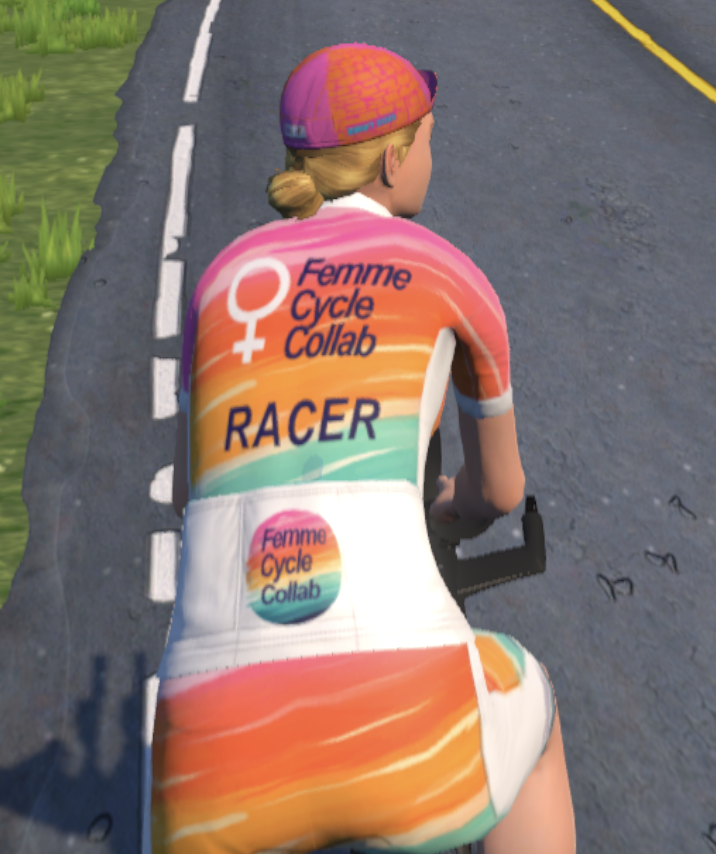
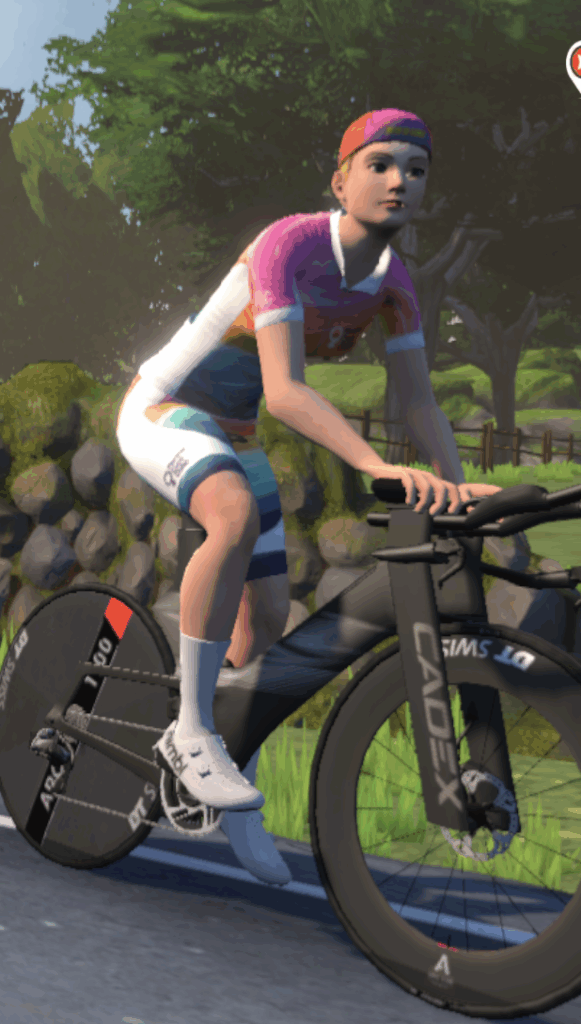
The FemmeCycle Collab created an in-game kit for Zwift that reflects our hopes for the future of the sport. That jersey is a statement of our belief that women’s racing should be more approachable and more visible. Identifying a rider as a female racer shows other women on the platform that there ARE women racing, not just the elites, but moms, grandmothers, retirees, and everyone else that doesn’t have the bandwidth or desire to train 12+ hours a week. Because the more women who race means the more women’s fields will be needed, inside and outside. We hope that increasing the number of women who race will, in turn, drive the demand for more women’s fields, both virtually and in real-world events.
Elevating women’s cycling will require a multifaceted approach. Building a robust base of participation through grassroots races, structured development programs, and innovative platforms like Zwift is crucial. These efforts create a sustainable pipeline where women can progress from casual riders to seasoned racers, understanding and appreciating the sport’s culture and intricacies along the way. A strong top must be supported by an equally resilient foundation—only then can women’s cycling reach its full potential.
And what do you think is next?
With a growing number of women participating in cycling, it’s crucial for those competing at higher community levels to grasp performance verification in indoor training. This encompasses everything from accurately inputting height and weight online to a thorough understanding of their equipment. Initiatives like the Fair e-racing alliance (https://www.f-e-r-a.org/) are already assisting teams with this vital aspect of legitimizing online racing.
A recent article in Noema magazines explores the issues in “editing nature to fix our failures.”
“It turns out playing God is neither difficult nor expensive,” the article points out. “For about $2,000, I can go online and order a decent microscope, a precision injection rig, and a vial of enough CRISPR-Cas9 — an enzyme-based genome-editing tool — to genetically edit a few thousand fish embryos…” So when going beyond the kept-in-captivity Dire Wolf to the possibility of bringing back forests of the American chestnut tree, “The process is deceptively simple; the implications are anything but…”
If scientists could use CRISPR to engineer a more heat-tolerant coral, it would give coral a better chance of surviving a marine environment made warmer by climate change. It would also keep the human industries that rely on reefs afloat. But should we edit nature to fix our failures? And if we do, is it still natural…? Evolution is not keeping pace with climate change, so it is up to us to give it an assist [according to Christopher Preston, an environmental philosopher from the University of Montana, who wrote a book on CRISPR called “Ma href=”https://mitpress.mit.edu/9780262537094/the-synthetic-age/”>The Synthetic Age.”] In some cases, the urgency is so great that we may not have time to waste. “There’s no doubt there are times when you have to act,” Preston continued. “Corals are a case where the benefits of reefs are just so enormous that keeping some alive, even if they’re genetically altered, makes the risks worth it.”
Kate Quigley, a molecular ecologist and a principal research scientist at Australia’s Minderoo Foundation, says “Engineering the ocean, or the atmosphere, or coral is not something to be taken lightly. Science is incredible. But that doesn’t mean we know everything and what the unintended consequences might be.” Phillip Cleves, a principal investigator at the Carnegie Institute for Science’s embryology department, is already researching whether coral could be bioengineered to be more tolerant to heat.
But both of them have concerns:
For all the research Quigley and Cleves have dedicated to climate-proofing coral, neither wants to see the results of their work move from experimentation in the lab to actual use in the open ocean. Needing to do so would represent an even greater failure by humankind to protect the environment that we already have. And while genetic editing and selective breeding offer concrete solutions for helping some organisms adapt, they will never be powerful enough to replace everything lost to rising water temperatures. “I will try to prepare for it, but the most important thing we can do to save coral is take strong action on climate change,” Quigley told me. “We could pour billions and billions of dollars — in fact, we already have — into restoration, and even if, by some miracle, we manage to recreate the reef, there’d be other ecosystems that would need the same thing. So why can’t we just get at the root issue?”
And then there’s the blue-green algae dilemma:
George Church, the Harvard Medical School professor of genetics behind Colossal’s dire wolf project, was part of a team that successfully used CRISPR to change the genome of blue-green algae so that it could absorb up to 20% more carbon dioxide via photosynthesis. Silicon Valley tech incubator Y Combinator seized on the advance to call for scaled-up proposals, estimating that seeding less than 1% of the ocean’s surface with genetically engineered phytoplankton would sequester approximately 47 gigatons of CO2 a year, more than enough to reverse all of last year’s worldwide emissions.
But moving from deploying CRISPR for species protection to providing a planetary service flips the ethical calculus. Restoring a chestnut forest or a coral reef preserves nature, or at least something close to it. Genetically manipulating phytoplankton and plants to clean up after our mistakes raises the risk of a moral hazard. Do we have the right to rewrite nature so we can perpetuate our nature-killing ways?
For more than a decade, researchers have wondered whether artificial intelligence could help predict what incapacitated patients might want when doctors must make life-or-death decisions on their behalf.
It remains one of the most high-stakes questions in health care AI today. But as AI improves, some experts increasingly see it as inevitable that digital “clones” of patients could one day aid family members, doctors, and ethics boards in making end-of-life decisions that are aligned with a patient’s values and goals.
Ars spoke with experts conducting or closely monitoring this research who confirmed that no hospital has yet deployed so-called “AI surrogates.” But AI researcher Muhammad Aurangzeb Ahmad is aiming to change that, taking the first steps toward piloting AI surrogates at a US medical facility.
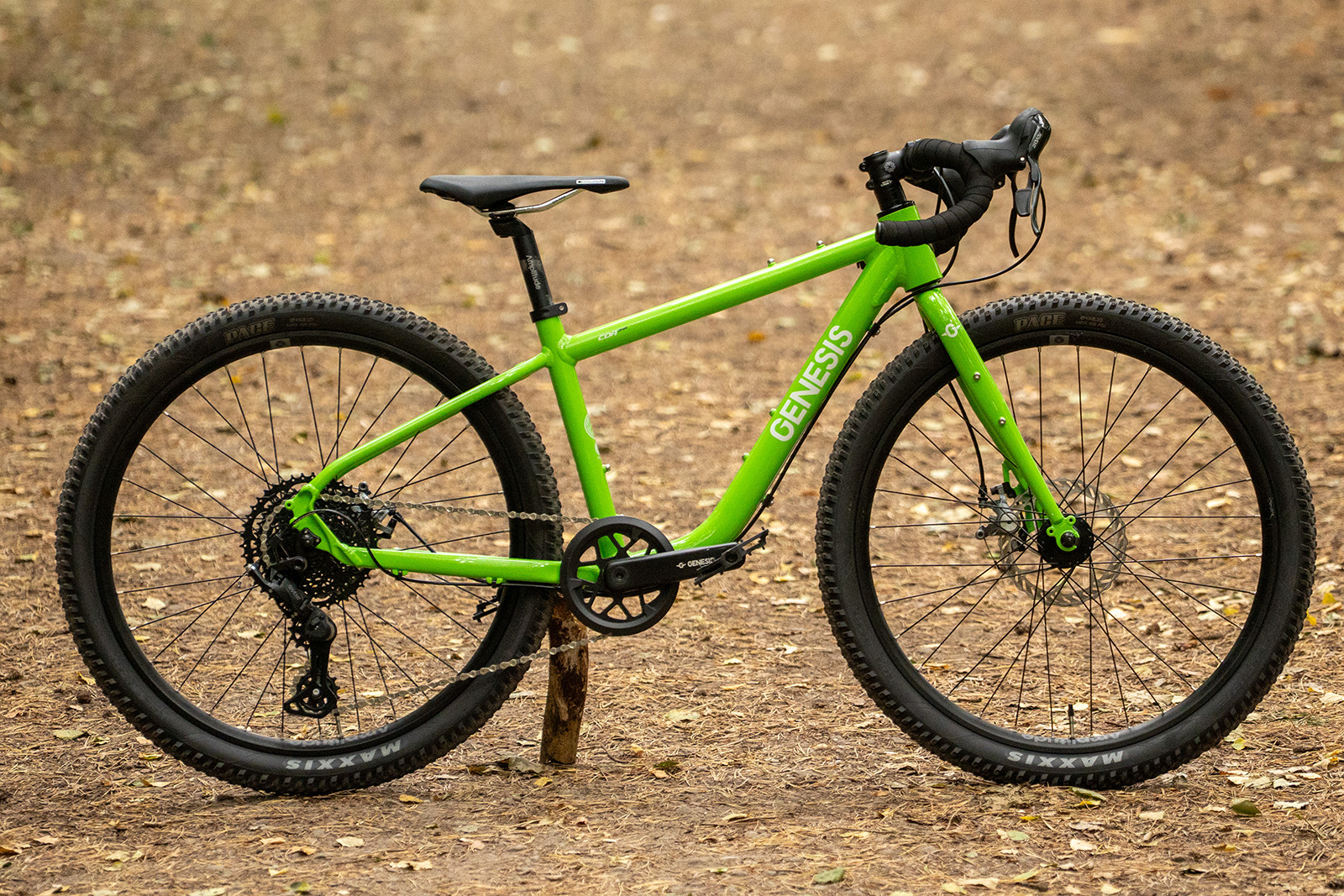
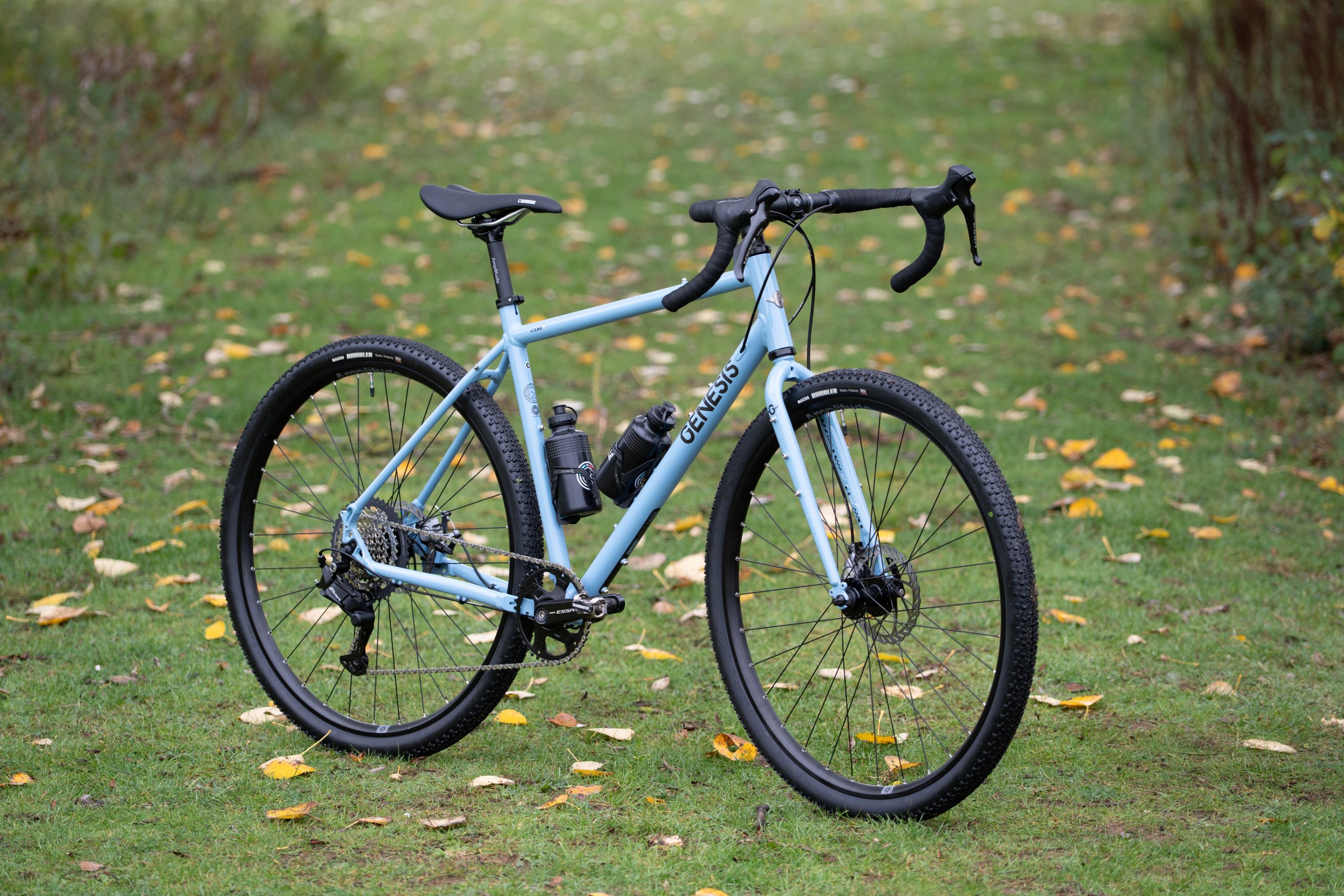
British bike brand Genesis has released the CDA Junior, a new addition to its gravel adventure bike range tailored specifically for smaller riders.
Genesis says its CDA range is designed for riders “seeking a versatile and affordable bike” that’s equally at home on your commute or light gravel trails. The CDA Junior now brings the brand’s “spirit of adventure to riders of all ages.”
Genesis has also revealed two new adult bikes, the CDA 10 and CDA 20, both costing less than £1,000.
Genesis says its CDA Junior kids’ bike is a “scaled down model” that’s light, tough and easy to maintain.
Instead of offering an age range, Genesis says the CDA Junior is suitable for riders between 140 and 157cm tall.
The bike has a lightweight aluminum frame and fork engineered specifically for young cyclists.
Genesis product manager, Sam Lawson, says: “The introduction of the CDA Jnr marks a new chapter for Genesis in children’s bikes. We understand how important the family side of cycling is, and that’s why we’ve created a purpose-built 24in gravel bike that delivers the same performance, versatility, and adventure-ready features as our adult platforms.”
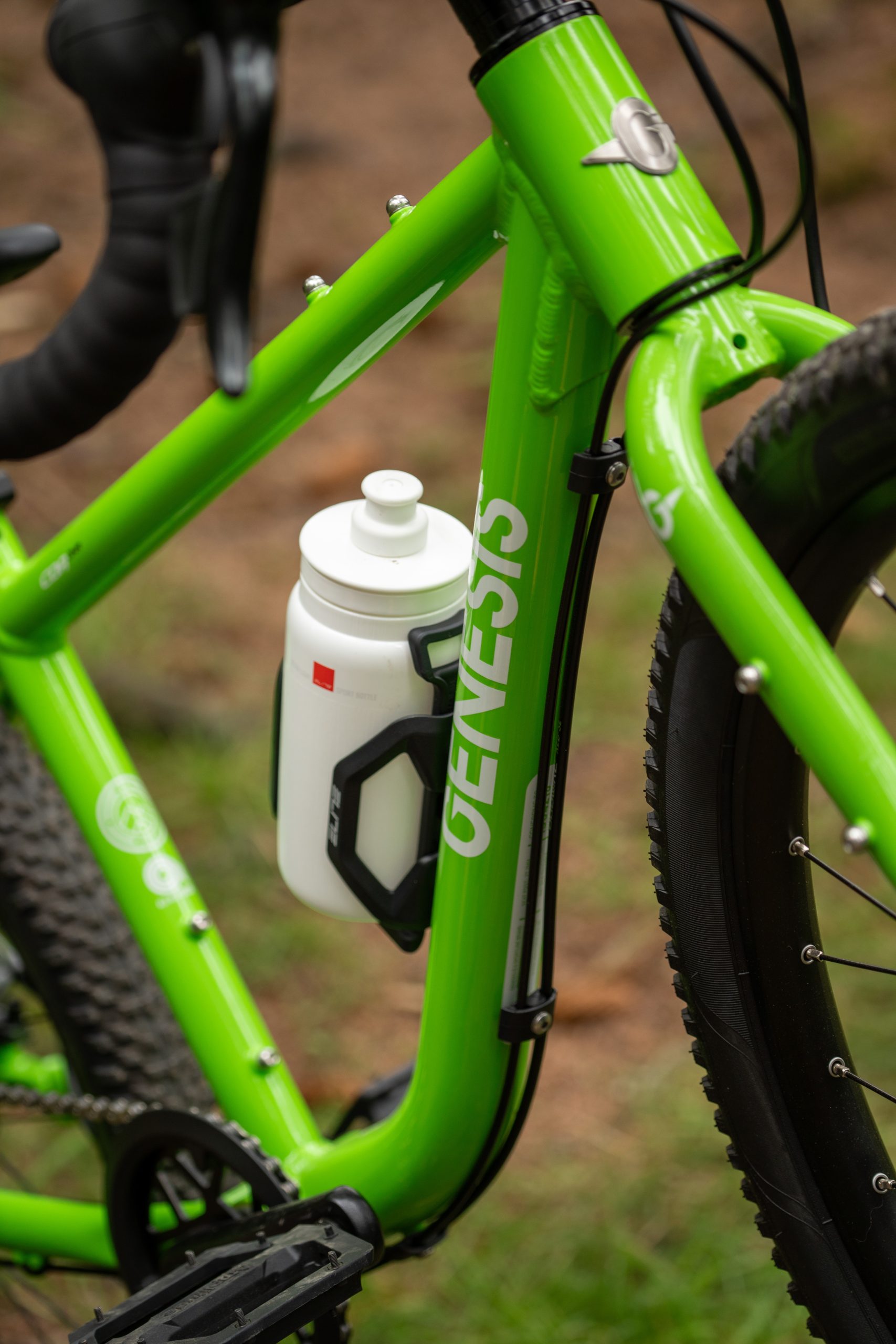
The bike even has top tube and fork mounts. Genesis
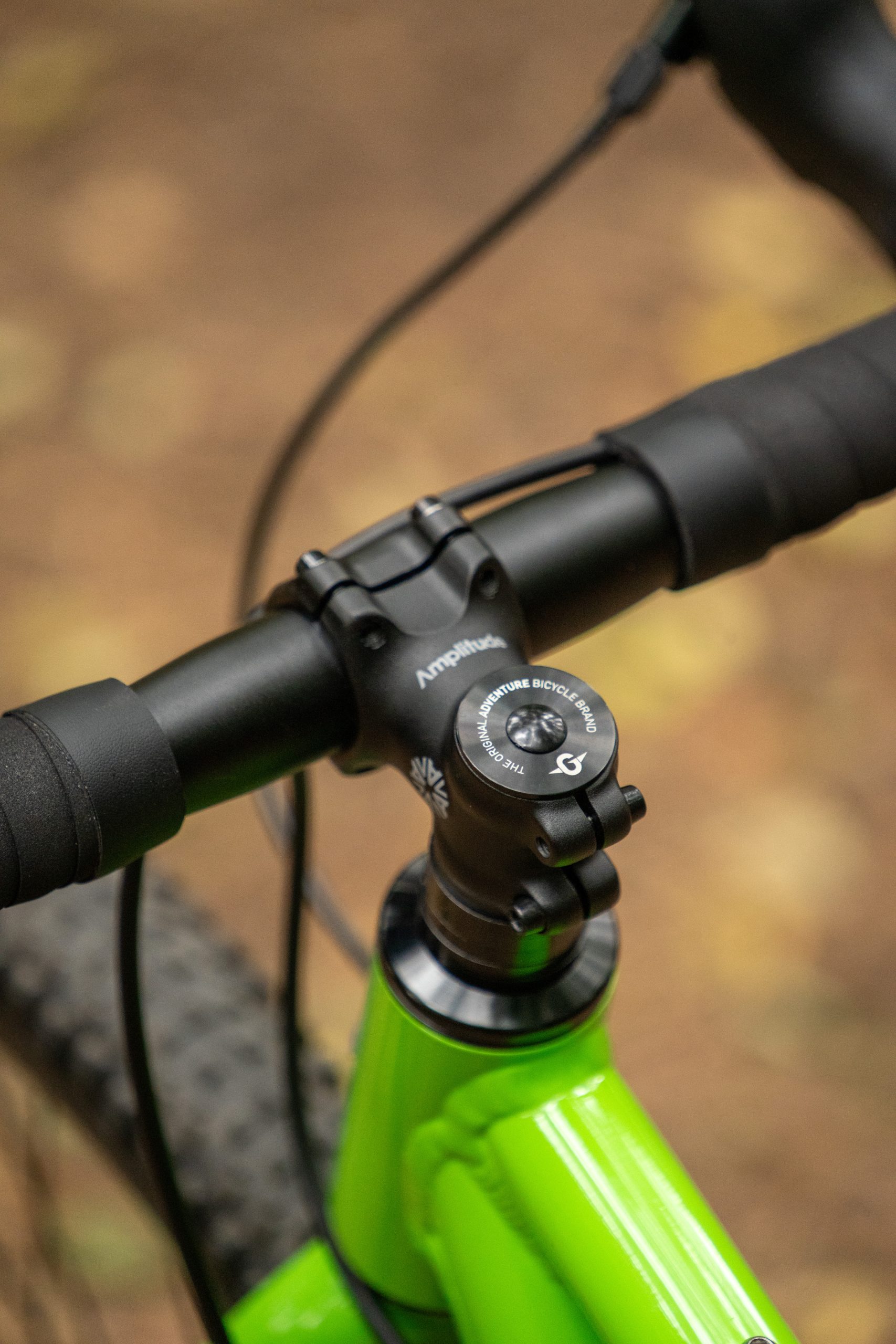
The finishing kit comes courtesy of Amplitude. Genesis
The bike’s geometry is optimised for the 24in wheels. A 468mm effective top tube and 340mm seat tube are said to provide a comfortable and confidence-boosting fit.
Elsewhere, it has a Microshift Advent 1×9-speed drivetrain for easy maintenance and to provide riders with a wide range of gears. There are even bottle cage mounts, top tube mounts and fork mounts for accessories or bikepacking bags.
The bike will retail for £749.99 / €899.
Genesis CDA 10 and 20 adult bikes
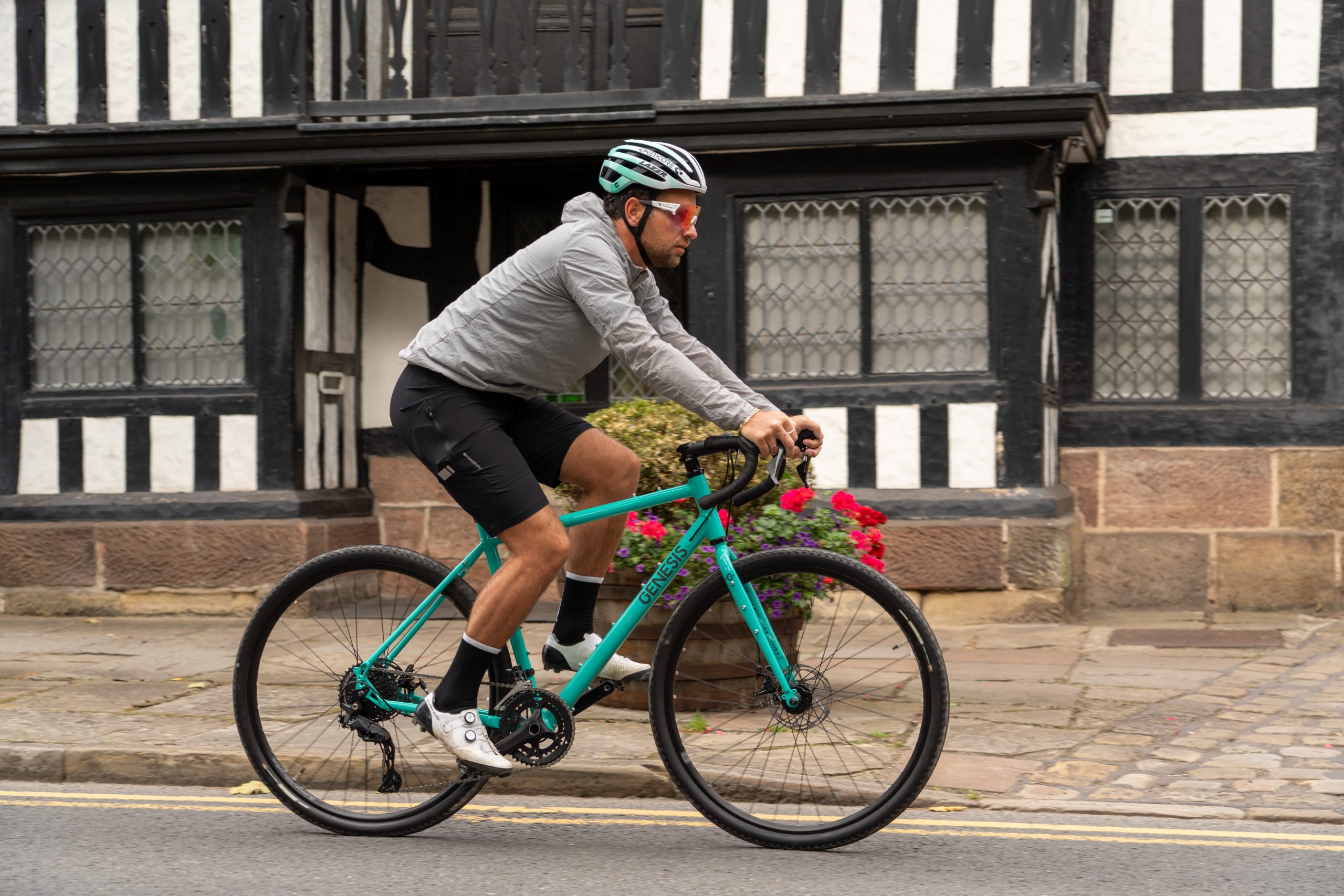
The new Genesis CDA 10 gravel bike. Genesis
Alongside the CDA Junior, Genesis has released two budget gravel bikes for adults, the CDA 10 and CDA 20.
Genesis says the CDA 10 is the “ideal entry point into the world of gravel” and combines practical features with “off-road capability”.
The £799.99 / €979 bike has an aluminium frame and chromoly fork, with Genesis promising a “smooth, confident ride on any surface”.
The CDA 10 features the new Shimano Essa 1x drivetrain to ease maintenance and ensure there’s a ready supply of spare parts available, alongside 45mm Maxxis Rambler gravel tyres.
The Genesis CDA 20 has the same frame as the CDA 10, but is built for riders who want more performance. Genesis
While it has the same frame and fork as the CDA 10, the CDA 20 is “built for riders who want more range, control, and performance from their all-terrain bike.”
Instead of a Shimano Essa drivetrain, the CDA 20 has a Shimano Cues 2×10-speed drivetrain and TRP Spyre brakes with dual pistons for “reliable stopping power and a responsive lever feel”.
The bike is complete with the same Maxxis Rambler tyres and Amplitude finishing kit.
Well this wasn’t on my bingo card for 2025… There is now yet another NTFS file-system driver for Linux. There’s long been the read-only NTFS driver in the Linux kernel, the more capable NTFS FUSE driver in user-space, and then in recent years the NTFS3 driver that was upstreamed to the Linux kernel by Paragon Software. NTFS3 offers read/write support and other improvements over the prior kernel driver. Now there is “NTFSPLUS” as a new driver with read/write support and claiming to offer better performance and features than NTFS3…
Earlier this month Intel Linux graphics driver engineers began posting the initial Intel Xe3P graphics enablement code with a focus on the integrated graphics to be found with Nova Lake. Xe3P will also later be found in Intel discrete graphics cards like Crescent Island and more. That very early Intel Xe3P code is now expected to be merged as part of the Linux 6.19 kernel as what will be the first Linux kernel release of 2026…