AWS Isn’t the Only Company Holding Up the Internet

For many of us, Monday was a workday defined by the AWS outage. Amazon Web Services experienced intermittent issues, throwing a huge fraction of the internet into chaos, as the sites and services built on it faltered or stopped working altogether.

It was a sobering reminder that a lot of the world relies on AWS for networking, computing, and data storage. Truth be told, I was surprised to learn just how owned we really are, especially after a number of my work apps experienced issues. In fact, over four million business with a physical address use AWS for cloud-computing needs. It is the largest cloud infrastructure servicer in the world, with a whopping 30% of the market share. That’s why when a global outage like this occurs, it’s impossible to ignore: So many companies and products are affected, from streaming platforms like Prime Video, to social media sites like Facebook, that almost everyone who goes online will experience the disruption.

But 30% is not 100%. AWS might be the market leader, but it is not the entire market. There are plenty of other cloud infrastructure companies out there offering similar services—and posing similar risks should they experience outages.

Why use a cloud infrastructure company?

It’s not necessarily a bad thing for companies turn to an AWS for their computing needs. It’s simply much more cost efficient to outsource the resources necessary for running programs, storing data, and hosting traffic, especially as businesses rapidly grow and change. Rather than spend the time and money constantly purchasing and upgrading on-site hardware, companies can pay for servers as they go. Companies like AWS will scale up or down as needed, without interruption to service—until, of course, there is an interruption to services.

These companies can offer a host of cloud-based services and tools, including compute, databases, machine learning, networking, security, and storage. AWS just so happens to be the biggest of the bunch, but plenty of companies choose other cloud infrastructure options for their needs.

AWS alternatives

There are many other companies offering the same services as AWS, but for our purposes, I’m going to list seven of the most popular, starting with AWS’ main competitors:

  • Microsoft Azure: Microsoft’s cloud computing services is only second to AWS in terms of global market share. Microsoft obviously uses its own cloud infrastructure, but plenty of other companies do too, including Ralph Laruen, Best Buy, Procter & Gamble, Coca Cola, Abercrombie & Fitch, and even local, state, and federal governments.

  • Google Cloud: Google Cloud is the third largest player in this space, with companies like Lowe’s, Wendy’s, EA, Fox Sports, Bayer, and McLaren all using its services.

  • Alibaba Cloud: Alibaba Cloud has a large cloud computing market share, and is used by companies like Air Asia, Zara, Lenovo Group, and JNE Express.

  • Oracle Cloud: Oracle Cloud includes customers like Quest Diagnostics, Baylor University, Smeg, Northwell Health, DHL, and MEO.

  • Salesforce: Companies like Pacers Sports, Indeed, F1, and The Adecco Group use Salesforce’s data cloud services.

  • IBM Cloud: Deloitte, Pfizer, Harvard, Vodafone, and even the US Open purchase cloud products from IBM Cloud.

  • Tencent Cloud: You might know Tencent particularly from its massive games division, but its cloud services are also wide reaching. They include services for companies like L’Oréal Paris, Tim Hortons, and Dell, as well as its own subsidiaries like Supercell and DouYu.

If there’s a silver lining here, it’s that there are more than just two or three companies powering sites and services around the globe, and we’re not quite at the point where every company connected to the internet relies on AWS, Azure, and Google Cloud. That level of centralization would pose even larger risks than the ones we’re currently living with.

Still, present circumstance are, still pretty risky. AWS has 30% of the market share, Azure has 20%, and Google Cloud has 12%. Taken together, these three companies make up 62% of all cloud infrastructure companies around the globe. Yes, it’s good the other 38% is spread out amongst a collection of other players, but the risk of another AWS-like outage is high. Hopefully, following Monday’s debacle, there is work currently being done to prevent such a thing from happening again, but that’s being optimistic.


AlmaLinux 10.1 Will Support The Btrfs File-System

It’s been nearly a decade since Red Hat notably deprecated Btrfs back in Red Hat Enterprise Linux 6.8 after it being a tech preview in earlier versions of RHEL. While upstream Red Hat Enterprise Linux 10 remains on XFS and supporting the likes of Stratis Storage with LVM, AlmaLinux today announced that their AlmaLinux 10.1 release will support Btrfs…

Upcoming iOS and macOS 26.1 update will let you fog up your Liquid Glass

Apple’s new Liquid Glass user interface design was one of the most noticeable and divisive features of its major software updates this year. It added additional fluidity and translucency throughout iOS, iPadOS, macOS, and Apple’s other operating systems, and as we noted in our reviews, the default settings weren’t always great for readability.

The upcoming 26.1 update for all of those OSes is taking a step toward addressing some of the complaints, though not by changing things about the default look of Liquid Glass. Rather, the update is adding a new toggle that will let users choose between a Clear and Tinted look for Liquid Glass, with Clear representing the default look and Tinted cranking up the opacity and contrast.

The default glassy look of the notifications in iOS 26.

The Tinted toggle fogs up the glass, preserving a hint of translucency.


Credit:

Andrew Cunningham

The toggle behaved less consistently in macOS 26.1, but here’s an example of the glassy look in the Photos app.


Credit:

Andrew Cunningham

And the same UI with the Tinted toggle turned on.


Credit:

Andrew Cunningham

The new toggle adds a half-step in between the default visual settings and the “reduce transparency” setting, which aside from changing a bunch of other things about the look and feel of the operating system is buried further down inside the Accessibility options. The Tinted toggle does make colors and vague shapes visible beneath the glass panes, preserving the general look of Liquid Glass while also erring on the side of contrast and visibility, where the “reduce transparency” setting is more of an all-or-nothing blunt instrument.

Read full article

Comments

OpenAI looks for its “Google Chrome” moment with new Atlas web browser

Back in 2008, Google launched the Chrome browser to help better integrate its industry-leading search engine into the web-browsing experience. Today, OpenAI announced the Atlas browser that it hopes will do something similar for its ChatGPT Large Language Model, answering the question “What if I could chat with a browser?” as the OpenAI team put it.

OpenAI Founder and CEO Sam Altman said in a livestreamed announcement that Atlas will let users “chat with a page,” helping ChatGPT become a core way that users interact with the place where “a ton of work and life happens” online. “The way that we hope people will use the Internet in the future… is that the chat experience and a web browser can be a great analogue,” he said.

The new browser is available for download now on MacOS, and Altman promised Windows and mobile versions would be rolled out “as quick as we can.”

Read full article

Comments

Lenovo Yoga 9i Aura Review: 2-In-1 OLED Beauty With All-Day Power

Lenovo Yoga 9i Aura Review: 2-In-1 OLED Beauty With All-Day Power
Lenovo Yoga 9i 2-in-1 Aura Edition: On Sale For $1,399 A premium OLED display with pen support, great build quality, and Intel’s Lunar Lake platform make the Lenovo Yoga 9i a versatile 2-in-1 laptop. Gorgeous OLED display Flexible 2-in-1 Yoga design Robust and versatile performance Excellent battery life Lenovo Pen serves a purpose OLED is…

AMD Ryzen 9 9950X3D2 With More 3D V-Cache May Be Coming Plus Another X3D CPU

AMD Ryzen 9 9950X3D2 With More 3D V-Cache May Be Coming Plus Another X3D CPU
Time was, processor companies released new CPUs a generation at a time. In the last several years, AMD has thrown that practice out the window. New CPUs come from the company whenever they’re good and ready, it seems, and supposedly, there are two more Zen 5 desktop chips with 3D V-Cache on the way: the Ryzen 7 9850X3D, and the Ryzen 9 9950X3D2.

This

Microsoft’s Emergency Windows 11 Update Arrives To Fix Recovery Failures

Microsoft's Emergency Windows 11 Update Arrives To Fix Recovery Failures
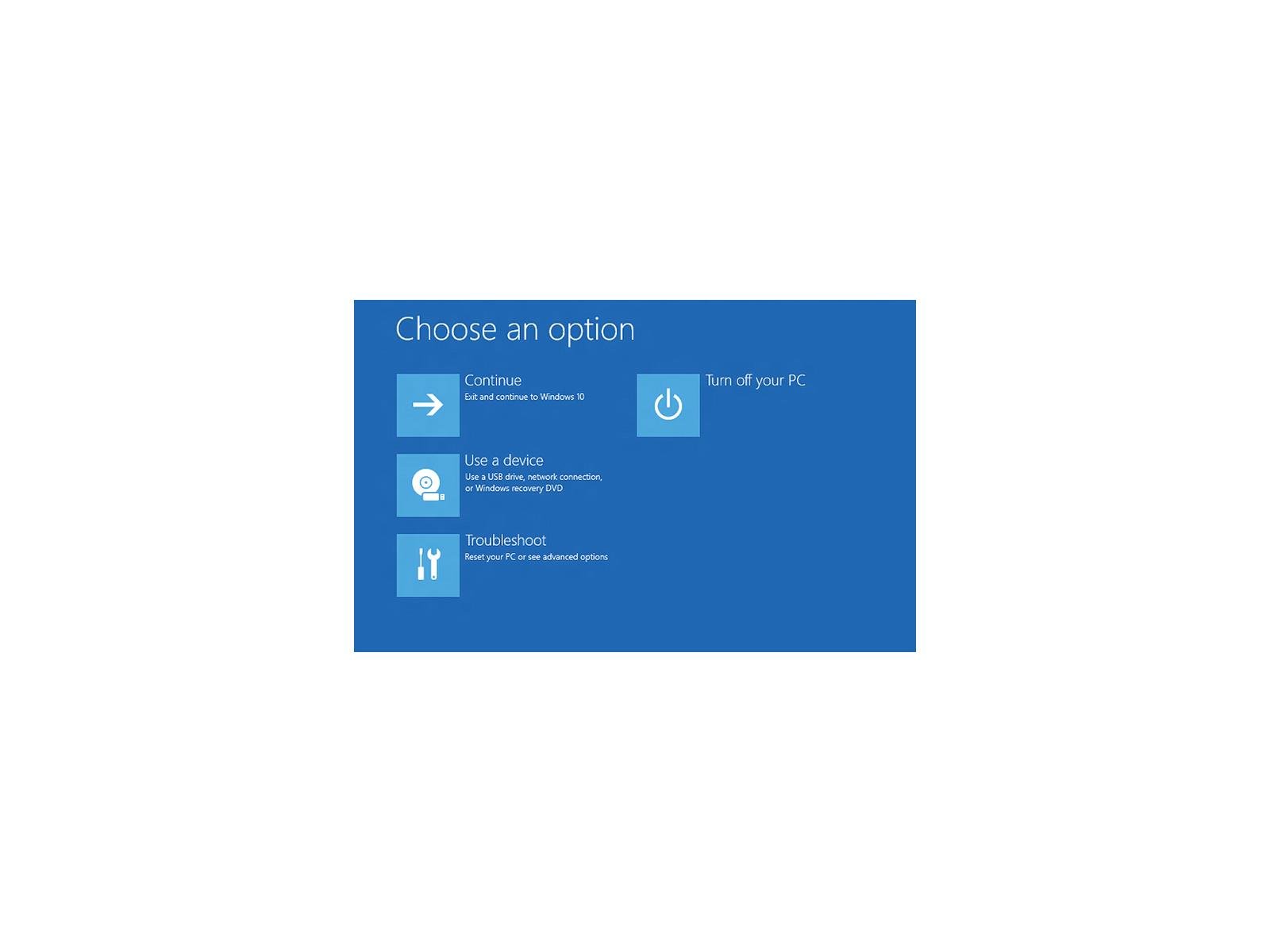
A few unfortunate users of the Windows 11 October 2025 update (and Windows Server 2025) may have stumbled upon a critical issue where the Windows Recovery Environment (WinRE) failed to pick up mouse or keyboard input—but thankfully, Microsoft has finally released a patch fixing the issue. Well, to a point, anyway…if you were actually impacted

YouTube’s likeness detection has arrived to help stop AI doppelgängers

AI content has proliferated across the Internet over the past few years, but those early confabulations with mutated hands have evolved into synthetic images and videos that can be hard to differentiate from reality. Having helped to create this problem, Google has some responsibility to keep AI video in check on YouTube. To that end, the company has started rolling out its promised likeness detection system for creators.

Google’s powerful and freely available AI models have helped fuel the rise of AI content, some of which is aimed at spreading misinformation and harassing individuals. Creators and influencers fear their brands could be tainted by a flood of AI videos that show them saying and doing things that never happened—even lawmakers are fretting about this. Google has placed a large bet on the value of AI content, so banning AI from YouTube, as many want, simply isn’t happening.

Earlier this year, YouTube promised tools that would flag face-stealing AI content on the platform. The likeness detection tool, which is similar to the site’s copyright detection system, has now expanded beyond the initial small group of testers. YouTube says the first batch of eligible creators have been notified they can use likeness detection, but interested parties will need to hand Google even more personal information to get protection from AI fakes.

Read full article

Comments

GM to end production of its Chevy Brightdrop electric vans

GM is ending production of the Chevy Brightdrop electric van, according to portions of a transcript of a recent earnings report published by The Verge. The decision was made due to slowing demand in the EV market, as hundreds of Brightdrop vans have begun piling up in dealer lots.

“This is not a decision we made lightly because of the impact on our employees,” CEO Mary Barra said in the earnings call. “However the commercial electric van market has been developing much slower than expected, and changes to the regulatory framework and fleet incentives has made the business even more challenging.”

Those changes to the regulatory framework she mentions likely refer to the recent disappearance of the federal EV tax credit. The policy offered prospective buyers a $7,500 tax credit and was supposed to wind down in 2032, but the Trump administration killed it back in September as part of the so-called Big, Beautiful Bill. Brightdrop vans were also eligible for a $7,500 rebate for commercial EVs under 18,000 lbs, which went away along with the tax credit.

In other words, Brightdrop electric vans are simply too expensive for most consumers. They started at $74,000. The double discount brought the starting price down to $59,000, but that’s gone now. Additionally, rival Ford’s E-Transit van starts at $51,600.

GM first launched the Brightdrop vans back in 2021, and this seemed to be a serious attempt to capture the commercial EV market. The company made its own fleet management software and inked deals with Walmart, FedEx and others. Money is money, however, and not too many commercial customers have an extra $15,000 laying around to make up for those lapsed credits and rebates.

This article originally appeared on Engadget at https://www.engadget.com/transportation/evs/gm-to-end-production-of-its-chevy-brightdrop-electric-vans-183622673.html?src=rss

Satellite operators will soon join airlines in using Starlink in-flight Wi-Fi

A little over a year ago, one of SpaceX’s Crew Dragon spacecraft flew a team of four private astronauts to orbit on a mission that made history with the first fully commercial spacewalk.

Jared Isaacman and Sarah Gillis briefly floated out the door of the Dragon capsule, wearing SpaceX-built pressure suits to protect them against the hostile environment of space. It was the first time anyone ventured outside of their spacecraft without the involvement of a government space agency.

The mission, named Polaris Dawn, made an important contribution in another area. It was the first space mission to connect with SpaceX’s Starlink broadband network, using laser links between the Dragon spacecraft and Starlink satellites to communicate with the Earth.

Read full article

Comments

“Butt breathing” might soon be a real medical treatment

Last year, a group of researchers won the 2024 Ig Nobel Prize in Physiology for discovering that many mammals are capable of breathing through their anus. But as with many Ig Nobel awards, there is a serious side to the seeming silliness. The same group has conducted a new study on the feasibility of adapting this method to treat people with blocked airways or clogged lungs, with promising results that bring rectal oxygen delivery one step closer to medical reality.

As previously reported, this is perhaps one of the more unusual research developments to come out of the COVID-19 pandemic and its associated shortages of ventilators and artificial lungs to assist patients’ breathing and prevent respiratory failure. The Cincinnati Children’s Hospital Medical Center team took their inspiration from the humble loach, a freshwater bottom-dwelling fish found throughout Eurasia and northern Africa. The loach (along with sea cucumbers) employs intestinal breathing (i.e., through the anus) rather than gills to survive under hypoxic conditions, thanks to having lots of capillary vessels in its intestine. The technical term is enteral ventilation via anus (EVA).

Would such a novel breathing method work in mammals? The team thought it might be possible and undertook experiments with mice and micro-pigs to test that hypothesis. They drew upon earlier research by Leland Clark, also of Cincinnati Children’s Hospital, who invented a perfluorocarbon liquid called Oxycyte as a possible form of artificial blood. That vision never materialized, although it did provide a handy plot point for the 1989 film The Abyss, in which a rat is able to “breathe” in a similar liquid.

Read full article

Comments

France and Spain Call on EU To Uphold 2035 Combustion Engine Ban

France and Spain are calling on the European Union to stick with plans to ban combustion engine cars in the bloc after 2035, at odds with German Chancellor Friedrich Merz ahead of a meeting of leaders in Brussels this week. From a report: The European Commission, the bloc’s executive branch, is currently reviewing rules designed to accelerate the automotive sector’s green transition. Merz has called on the bloc to give up its 2035 deadline to help Germany’s troubled car industry.

France and Spain “hope that the upcoming review will preserve the 2035 cap and the environmental ambition of the CO2 emissions trajectory that underpins it,” a paper presented to climate ministers in Luxembourg on Tuesday, and seen by Bloomberg says. “This revision should in no way call into question the zero emissions exhaust target in 2035.”


Read more of this story at Slashdot.

Cards Against Humanity lawsuit forced SpaceX to vacate land on US/Mexico border

A year after suing SpaceX for “invading” a plot of land on the US/Mexico border, Cards Against Humanity says it has obtained a settlement and will provide supporters with a new pack of cards about Elon Musk.

The party-game company bought the land in 2017 in an attempt to stymie President Trump’s wall-building project, but alleged that SpaceX illegally took over the land and filled it with construction equipment and materials. A September 2024 lawsuit filed against SpaceX in Cameron County District Court in Texas sought up to $15 million to cover the cost of restoring the property and other damages.

Cards Against Humanity, which bought the property with donations from supporters, told Ars today that “we’ve been in negotiations with SpaceX for much of the last year. We held out for the best settlement we could get—almost until the trial was supposed to start—and unfortunately part of that negotiation was that we’re not allowed to discuss specific settlement terms. They did admit to trespassing during the discovery phase, which was very validating.”

Read full article

Comments

Top 5 Zwift Videos: Zwift Stories, First Races, and Zwift Setups

For some, Zwift is just a tool for training during the long winter months. But for others, it’s a lot more than that! Watch one rider share how Zwift has propelled his wellness and fitness journey.

We’re also featuring videos about first Zwift races, getting started on Zwift, setups of pro triathletes, and racing in Zwift Unlocked.

How Zwift Changed My Life: 236 to 180 lbs Transformation

In this video by John at Casual Creations, he discusses how Zwift has changed the course of his life.

My First Zwift Race Was Pure Pain

Liam Shaw is on a mission to move up the racing score categories on Zwift. Hear from him as he talks through his experience as a category E Zwift racer.

How to Prepare for Your First Zwift Ride!

New to Zwift? Chad Rides shares a step-by-step guide to getting you going.

Home Training Setup Tour – What It Takes to Train Like a Pro Triathlete

Looking to upgrade your home training setup? Professional triathlete Megan Mcdonald shares tips and tricks for enhancing your indoor setup.

Fastest Pen in Zwift Unlocked – Can I Hang On? | Stage 2 | Electric Break (Makuri Islands)

Watch as Manuel Essl tackles one of the fastest heats of Stage 2 of Zwift Unlocked. Can he hold on until the finish?

Got a Great Zwift Video?

Share the link below and we may feature it in an upcoming post!

YouTube is rolling out likeness detection tool to combat deepfakes

When AI tools first began proliferating around the web, worries about deepfakes quickly rose alongside them. And now that tech such as OpenAI’s recently released Sora 2 is getting more capable and more widely available (and being used exactly as irresponsibly as you might have guessed), both famous and ordinary people may want more control over protecting their likenesses. After teasing the feature last year, YouTube is starting to launch a likeness detection tool to combat unwanted deepfakes and have them removed from the video platform. 

Likeness detection is currently being rolled out to members of the YouTube Partner Program. It’s also only able to cover instances where an individual’s face has been modified with AI; cases where a person’s voice has been changed by AI without their consent may not be caught by this feature. To participate, people will need to submit a government ID and a brief video selfie to YouTube to ensure they are who they say they are and give the feature source material to draw from in its review. From there, it works similarly to YouTube’s Content ID feature for finding copyrighted audio, scanning uploaded videos for possible matches that the person can then review and flag infringing videos for removal.

This article originally appeared on Engadget at https://www.engadget.com/entertainment/youtube/youtube-is-rolling-out-likeness-detection-tool-to-combat-deepfakes-175917315.html?src=rss

Apple steps up its attacks on Europe’s DMA regulations

Apple’s war of words with Europe over its Digital Markets Act (DMA) is bleeding into the court system. Bloomberg reports that the company criticized the regulations at the General Court in Luxembourg. The European Commission is currently conducting its first formal review of the law. Apple lawyer Daniel Beard told the court reviewing the DMA that it “imposes hugely onerous and intrusive burdens.”

The language echoes Apple’s go-to framing of the regulations as an anti-consumer, anti-privacy hardship on the nearly $4 trillion company. “Over time, it’s become clear that the DMA isn’t helping markets,” the company wrote in a September blog post. “It’s making it harder to do business in Europe.” Apple even cited porn as one of the law’s alleged dangers. “For the first time, pornography apps are available on iPhone from other marketplaces — apps we’ve never allowed on the App Store because of the risks they create, especially for children.”

Apple also claimed the DMA caused it to delay several features. These include AirPods Live Translation, iPhone Mirroring in macOS, and the Visited Places and Preferred Routes features in Maps.

The iPhone maker asked the EC to repeal the law in September. In response, the commission essentially told the company to shove it. “Apple has simply contested every little bit of the DMA since its entry into application,” EU spokesperson Thomas Regnier said. He added that the EC had “absolutely no intention” of ditching the law.

Bloomberg reports that Apple is challenging the DMA on three fronts. First is its requirement that rival hardware (like earbuds and smartwatches) work with the iPhone, which Apple claims is a security risk. The company also objected to the App Store’s inclusion under the rules and a probe into whether iMessage should have been included.

In response, EC lawyer Paul-John Loewenthal highlighted Apple’s immense power in Europe. He said the company’s “absolute control” over the iPhone has led to “supernormal profits” in markets where competitors can’t possibly compete on equal footing.

“Only Apple has the keys to that walled garden,” Loewenthal told the court. “It decides who gets it and who can offer their products and services to iPhone users. And through such control, Apple has locked in more than a third of European smartphone users.”

This article originally appeared on Engadget at https://www.engadget.com/big-tech/apple-steps-up-its-attacks-on-europes-dma-regulations-175332390.html?src=rss

M5 iPad Pro tested: Stop me if you’ve heard this one before

This year’s iPad Pro is what you might call a “chip refresh” or an “internal refresh.” These refreshes are what Apple generally does for its products for one or two or more years after making a larger external design change. Leaving the physical design alone preserves compatibility with the accessory ecosystem.

For the Mac, chip refreshes are still pretty exciting to me, because many people who use a Mac will, very occasionally, assign it some kind of task where they need it to work as hard and fast as it can, for an extended period of time. You could be a developer compiling a large and complex app, or you could be a podcaster or streamer editing or exporting an audio or video file, or maybe you’re just playing a game. The power and flexibility of the operating system, and first- and third-party apps made to take advantage of that power and flexibility, mean that “more speed” is still exciting, even if it takes a few years for that speed to add up to something users will consistently notice and appreciate.

And then there’s the iPad Pro. Especially since Apple shifted to using the same M-series chips that it uses in Macs, most iPad Pro reviews contain some version of “this is great hardware that is much faster than it needs to be for anything the iPad does.” To wit, our review of the M4 iPad Pro from May 2024:

Read full article

Comments

My Favorite Amazon Deal of the Day: This 75-inch Toshiba C350 Smart TV

We may earn a commission from links on this page. Deal pricing and availability subject to change after time of publication.

It’s not very common to see a budget 75-inch Smart TV for $400, but that’s what Amazon is offering right now with the Toshiba C350 Smart TV for $399.99 (originally $729.99), the lowest price it has ever been, according to price-tracking tools. If you’re looking for a massive, affordable budget TV that won’t break the bank, this is your best bet right now.

The Toshiba C350 Smart TV won’t be winning any awards or be on the list for best TVs of 2025, but it serves a purpose for people who want size at an affordable price. This TV series has been around for many years, getting an update every couple of years. This is the 2025 version, which comes with some new features, like Apple AirPlay compatibility, so you can seamlessly cast your media from your iPhone.

This is a 4K LED TV with Fire TV as its OS, meaning you’ll be able to install Kodi to virtually stream anything you want for free. It has a 60 Hz refresh rate and 300 nits of brightness; neither is impressive, but it’s a budget TV after all. The viewing angle is 178 degrees, which is perfect for such a big TV, so a sports night with friends and family gathered around the TV should not be a problem. There is HDR10, so compatible streaming services should look good. The remote is an Alexa Voice Remote, making searches and navigation much easier. There are three HDMI ports as well, so you can have a different streaming stick, a soundbar, and a video game console installed all at once if you wish.

This is a good deal for anyone looking for a statement TV in a large living room for a budget price. Getting 75-inch TVs of any caliber usually costs much more than $400, so getting the Toshiba C350 Smart TV for $399.99 is a great deal.


Our Best Editor-Vetted Tech Deals Right Now


Ring Battery Doorbell Plus


—
$149.99

(List Price $149.99)


Ring Indoor Cam (2nd Gen, 2-pack, White)


—
$79.99

(List Price $99.98)


Amazon Fire TV Stick 4K (2nd Gen, 2023)


—
$49.99

(List Price $49.99)


Amazon Fire HD 10 (2023)


—
$139.99

(List Price $139.99)

Deals are selected by our commerce team