AI-generated receipts make submitting fake expenses easier

Businesses are increasingly being deceived by employees using artificial intelligence for an age-old scam: faking expense receipts.

The launch of new image-generation models by top AI groups such as OpenAI and Google in recent months has sparked an influx of AI-generated receipts submitted internally within companies, according to leading expense software platforms.

Software provider AppZen said fake AI receipts accounted for about 14 percent of fraudulent documents submitted in September, compared with none last year. Fintech group Ramp said its new software flagged more than $1 million in fraudulent invoices within 90 days.

Read full article

Comments

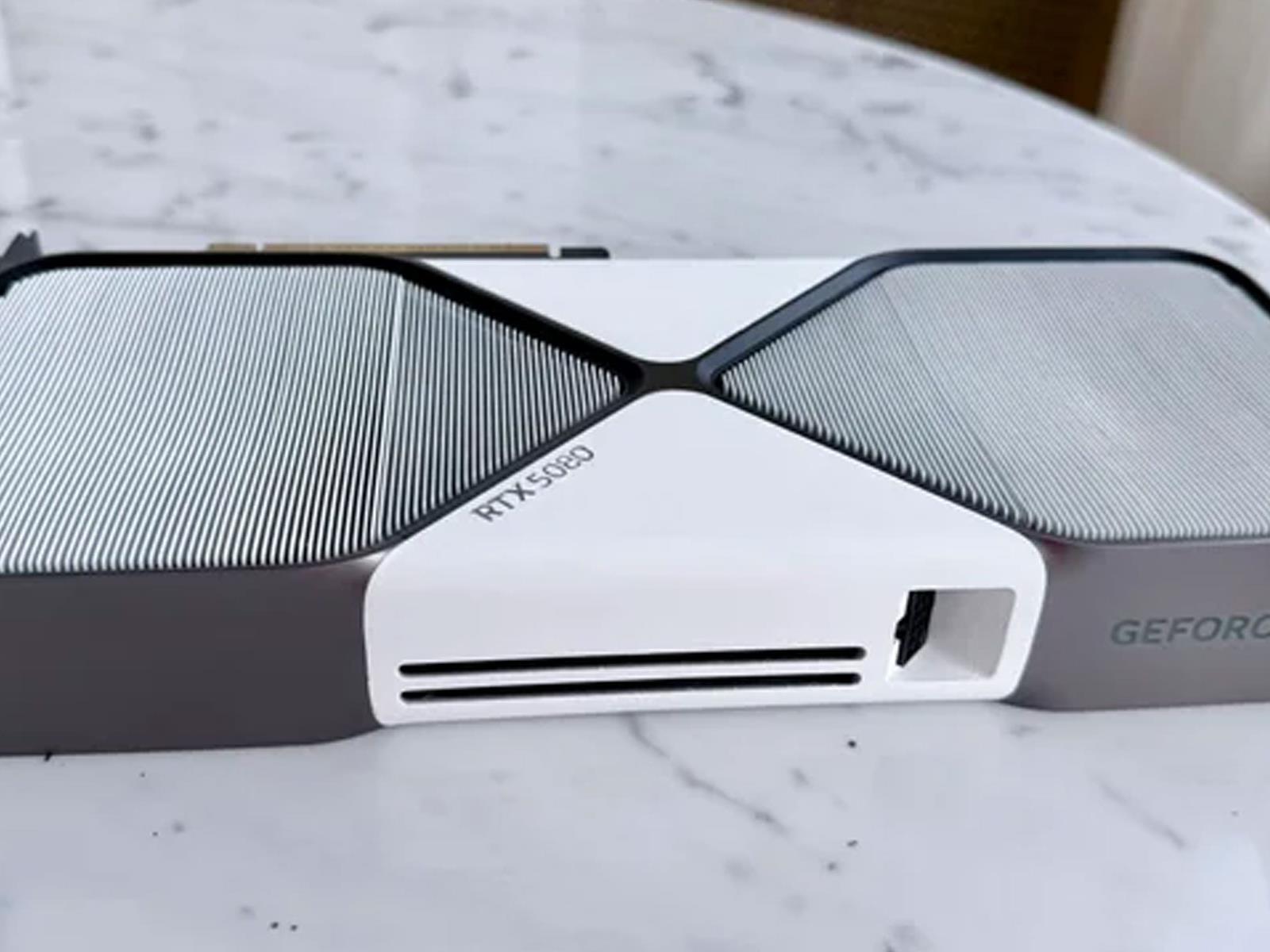
White GeForce RTX 5080 FE Mod Looks So Good NVIDIA Should Make It Official

White GeForce RTX 5080 FE Mod Looks So Good NVIDIA Should Make It Official
A lot of add-in board partners have dabbled with white-themed graphics cards, but a modded GeForce RTX 5080 Founders Edition model posted to Reddit takes the cake. It looks so good (at least in photos) that we could have been convinced it was an official release by NVIDIA, if we didn’t know any better. It’s not, but it certainly should be.

NVIDIA’s

This Subscription-Free Eufy Outdoor Security Camera Is Over $100 Off Right Now

We may earn a commission from links on this page. Deal pricing and availability subject to change after time of publication.

The Eufy SoloCam S340 is designed for individuals who want complete control over their home’s security without a monthly subscription commitment. Now $223.99 at Walmart, down from $349.99, which is about $55 cheaper than Amazon’s current price of $279.98 (and an all-time low, according to price trackers), this outdoor home security camera delivers 3K resolution, 360-degree coverage, and solar-powered operation. Its two-lens setup captures both wide-angle and zoomed-in footage with surprising clarity. You can easily mount it anywhere—the solar panel connects via a 10-foot USB-C cable or sits neatly on top—so setup is as simple as picking a spot. As our reviewer put it in her review, “choosing where to put the SoloCam S340 will be the hardest part of installing it.”

Design-wise, the camera looks as sturdy as it feels. The IP67-rated weatherproof housing makes it safe for all seasons, and the motorized base allows 360-degree horizontal panning and 70-degree vertical tilt. That flexibility gives you full yard or driveway coverage, and you can control the view remotely through the Eufy Security app, complete with a virtual joystick and preset “stations” for quick repositioning. The dual-lens setup means you can see both the big picture and fine details you’d normally miss, like the license plate of a passing car or a squirrel raiding your plants. Color night vision and a built-in spotlight make low-light monitoring surprisingly clear, while two-way audio lets you talk through the camera in real time.

Everything saves locally, thanks to onboard storage or the included HomeBase 3 hub, which can hold up to 16TB via USB. That means you get smart motion detection, human and vehicle alerts, and full access to recordings without ever paying a monthly subscription fee. That said, there are a few things to consider. It doesn’t support Apple HomeKit or Matter, and clip loading and live feed access can occasionally lag, especially from a distance. But paired with Alexa or Google Assistant, it’s still easy to manage hands-free, notes this PCMag review.


Our Best Editor-Vetted Tech Deals Right Now


Amazon Fire TV Stick 4K Plus


—
$29.99

(List Price $49.99)


Ring Video Doorbell Pro 2 with Ring Chime Pro


—
$149.99

(List Price $259.99)

Deals are selected by our commerce team

AMD Radeon AI PRO R9700 Linux Performance For Single & Dual GPU Benchmarks

Today the AMD Radeon AI PRO R9700 is officially shipping as the company’s new RDNA4-based offering designed for AI workloads and priced at $1299+ USD. The AMD Radeon AI PRO R9700 offers 32GB of GDDR6 video memory and features 128 AI accelerators and rated for 96 TFLOPs peak half-precision compute, up to 1531 TOPS INT4 sparse, and has a 300 Watt TDP. Here are the initial benchmarks of the AMD Radeon AI PRO R9700 under Linux with ROCm 7.0 and testing both in single and dual R9700 graphics card configurations.

Apple’s iPad Pro (M5) is $50 off right now

Apple only released its newest iPad in mid-October but the device is already on sale. Right now you can pick up the 11-inch iPad Pro (M5) for $949, down from $999. The five percent discount is exclusive to the 256GB Wi-Fi model with standard glass. It’s also only available for the Space Black model, though the Silver version is currently listed as $983. 

We gave the new iPad Pro an 85 in our review, in large part because of its impressive M5 chip. It’s especially powerful when you’re using the iPad for GPU-powered tasks. While you’ll see an improvement from the M4 model, it’s a really significant boost if you have an iPad Pro with an M3 chip or older. 

Then there’s the other bits and bobs we liked, such as its extremely thin and lightweight design. It also has Apple Intelligence and an ultra retina XDR display — the screen is really great overall. Plus, the iPad Pro finally supports fast charging, so a 60W power adaptor should get you to 50 percent in just a half hour.

Check out our coverage of the best Apple deals for more discounts, and follow @EngadgetDeals on X for the latest tech deals and buying advice.

This article originally appeared on Engadget at https://www.engadget.com/deals/apples-ipad-pro-m5-is-50-off-right-now-122611748.html?src=rss

OpenAI’s Less-Flashy Rival Might Have a Better Business Model

OpenAI’s rival Anthropic has a different approach — and “a clearer path to making a sustainable business out of AI,”
writes the Wall Street Journal.

Outside of OpenAI’s close partnership with Microsoft, which integrates OpenAI’s models into Microsoft’s software products, OpenAI mostly caters to the mass market… which has helped OpenAI reach an annual revenue run rate of around $13 billion, around 30% of which it says comes from businesses.

Anthropic has generated much less mass-market appeal. The company has said about 80% of its revenue comes from corporate customers. Last month it said it had some 300,000 of them… Its cutting-edge Claude language models have been praised for their aptitude in coding: A July report from Menlo Ventures — which has invested in Anthropic — estimated via a survey that Anthropic had a 42% market share for coding, compared with OpenAI’s 21%. Anthropic is also now ahead of OpenAI in market share for overarching corporate AI use, Menlo Ventures estimated, at 32% to OpenAI’s 25%. Anthropic is also surprisingly close to OpenAI when it comes to revenue. The company is already at a $7 billion annual run rate and expects to get to $9 billion by the end of the year — a big lead over its better-known rival in revenue per user.

Both companies have backing in the form of investments from big tech companies — Microsoft for OpenAI, and a combination of Amazon and Google for Anthropic — that help provide AI computing infrastructure and expose their products to a broad set of customers. But Anthropic’s growth path is a lot easier to understand than OpenAI’s. Corporate customers are devising a plethora of money-saving uses for AI in areas like coding, drafting legal documents and expediting billing. Those uses are likely to expand in the future and draw more customers to Anthropic, especially as the return on investment for them becomes easier to measure…
Demonstrating how much demand there is for Anthropic among corporate customers, Microsoft in September said Anthropic’s leading language model, Claude, would be offered within its Copilot suite of software despite Microsoft’s ties to OpenAI.

“There is also a possibility that OpenAI’s mass-market appeal becomes a turnoff for corporate customers,” the article adds, “who want AI to be more boring and useful than fun and edgy.”


Read more of this story at Slashdot.

10M people watched a YouTuber shim a lock; the lock company sued him. Bad idea.

“Opening locks” might not sound like scintillating social media content, but Trevor McNally has turned lock-busting into online gold. A former US Marine Staff Sergeant, McNally today has more than 7 million followers and has amassed more than 2 billion views just by showing how easy it is to open many common locks by slapping, picking, or shimming them.

This does not always endear him to the companies that make the locks.

On March 3, 2025, a Florida lock company called Proven Industries released a social media promo video just begging for the McNally treatment. The video was called, somewhat improbably, “YOU GUYS KEEP SAYING YOU CAN EASILY BREAK OFF OUR LATCH PIN LOCK.” In it, an enthusiastic man in a ball cap says he will “prove a lot of you haters wrong.” He then goes hard at Proven’s $130 model 651 trailer hitch lock with a sledgehammer, bolt cutters, and a crowbar.

Read full article

Comments

Splash DRM Client Proposed For Linux But Its Future Is Uncertain

Sent out on Sunday to the Linux kernel mailing list was a proposal for a new Direct rendering Manager (DRM) client for providing “splash screen” type functionality such as for embedded systems and more. But with Plymouth in user-space already being the dominant solution here and upstream developers tending to prefer such functionality in user-space instead, its future remains uncertain with some developers already questioning the value of this proposed solution…

Microsoft Disables Preview In File Explorer To Block Attacks

Slashdot reader joshuark writes: Microsoft says that the File Explorer (formerly Windows Explorer) now automatically blocks previews for files downloaded from the Internet to block credential theft attacks via malicious documents, according to a report from BleepingComputer. This attack vector is particularly concerning because it requires no user interaction beyond selecting a file to preview and removes the need to trick a target into actually opening or executing it on their system.

For most users, no action is required since the protection is enabled automatically with the October 2025 security update, and existing workflows remain unaffected unless you regularly preview downloaded files. “This change is designed to enhance security by preventing a vulnerability that could leak NTLM hashes when users preview potentially unsafe files,” Microsoft says in a support document published Wednesday.

It is important to note that this may not take effect immediately and could require signing out and signing back in.


Read more of this story at Slashdot.

California Colleges Test AI Partnerships. Critics Complain It’s Risky and Wasteful

America’s largest university system, with 460,000 students, is the 22-campus “Cal State” system, reports the New York Times. And it’s recently teamed with Amazon, OpenAI and Nvidia, hoping to embed chatbots in both teaching and learning to become what it says will be America’s “first and largest AI-empowered” university” — and prepare students for “increasingly AI-driven” careers.

It’s part of a trend of major universities inviting tech companies into “a much bigger role as education thought partners, AI instructors and curriculum providers,” argues the New York Times, where “dominant tech companies are now helping to steer what an entire generation of students learn about AI, and how they use it — with little rigorous evidence of educational benefits and mounting concerns that chatbots are spreading misinformation and eroding critical thinking…”

“Critics say Silicon Valley’s effort to make AI chatbots integral to education amounts to a mass experiment on young people.”

As part of the effort, [Cal State] is paying OpenAI $16.9 million to provide ChatGPT Edu, the company’s tool for schools, to more than half a million students and staff — which OpenAI heralded as the world’s largest rollout of ChatGPT to date. Cal State also set up an AI committee, whose members include representatives from a dozen large tech companies, to help identify the skills California employers need and improve students’ career opportunities… Cal State is not alone. Last month, California Community Colleges, the nation’s largest community college system, announced a collaboration with Google to supply the company’s “cutting edge AI tools” and training to 2.1 million students and faculty. In July, Microsoft pledged $4 billion for teaching AI skills in schools, community colleges and to adult workers…

[A]s schools like Cal State work to usher in what they call an “AI-driven future,” some researchers warn that universities risk ceding their independence to Silicon Valley. “Universities are not tech companies,” Olivia Guest and Iris van Rooij, two computational cognitive scientists at Radboud University in the Netherlands, recently said in comments arguing against fast AI adoption in academia. “Our role is to foster critical thinking,” the researchers said, “not to follow industry trends uncritically….”

Some faculty members have pushed back against the AI effort, as the university system faces steep budget cuts. The multimillion-dollar deal with OpenAI — which the university did not open to bidding from rivals like Google — was wasteful, they added. Faculty senates on several Cal State campuses passed resolutions this year criticizing the AI initiative, saying the university had failed to adequately address students using chatbots to cheat. Professors also said administrators’ plans glossed over the risks of AI to students’ critical thinking and ignored troubling industry labor practices and environmental costs.

Martha Kenney, a professor of women and gender studies at San Francisco State University, described the AI program as a Cal State marketing vehicle helping tech companies promote unproven chatbots as legitimate educational tools.

The article notes that Cal State’s chief information officer “defended the OpenAI deal, saying the company offered ChatGPT Edu at an unusually low price.

“Still, California’s community college system landed AI chatbot services from Google for more than 2 million students and faculty — nearly four times the number of users Cal State is paying OpenAI for — for free.”


Read more of this story at Slashdot.

GM Plans to Drop Apple CarPlay and Android Auto From All Its Cars

GM plans to dump Apple CarPlay and Android Auto on all its car new vehicles “in the near future,” reports the Verge.

In an episode of the Verge’s Decoder podcast, GM CEO Mary Barra confirmed the upcoming change to “phone projections” for GM cars:

The timing is unclear, but Barra pointed to a major rollout of what the company is calling a new centralized computing platform, set to launch in 2028, that will involve eventually transitioning its entire lineup to a unified in-car experience.

In place of phone projection, GM is working to update its current Android-powered infotainment implementation with a Google Gemini-powered assistant and an assortment of other custom apps, built both in-house and with partners. GM’s 2023 decision to drop CarPlay and Android Auto support in its EVs has proved controversial, though for now GM has maintained support for phone projection in its gas-powered vehicles.


Read more of this story at Slashdot.