I Asked People the Real Reasons They Post Their Workouts Online

I run marathons. I post about running marathons. But you won’t see my sweaty face mid-stride, my pace per mile, or the unglamorous truth of what 26.2 miles does to a body. No shots of my form breaking down at mile 20, no documentation of the new insecurities that crop up when you realize your running gait is asymmetrical or your breathing sounds like a dying dog. I share the accomplishment—the medal, the bib number, maybe a scenic shot from the course—but I carefully curate out the messy reality.

Is this humility? Self-protection? Or am I just bragging with plausible deniability, performing health while refusing to actually perform it? After all, isn’t social media fundamentally a bragging platform, a highlight reel we all tacitly agree to maintain? But then why does hitting “post” feel like walking a tightrope between inspiration and judgment, between pride and shame? And why am I so acutely aware that in 2025, as thinness resurges as the aesthetic ideal and fatphobia floods our feeds with renewed vigor, any post about fitness exists in a minefield of interpretation? Social media may not be “the real world,” but when it comes to our mental health and how we perceive our bodies, it’s very much a real world—one with real consequences.

I put out a call on Instagram asking people about their relationship with posting workout data and fitness content. The response was overwhelming: well over a hundred replies, from fitness influencers building their brands, to private account holders who rarely post, and everyone in between. People were bursting to talk about this, which suggests we’re all grappling with the same question: When does sharing our health journey become performing it—and what do we lose in translation?

The performance of health on social media

“Social media didn’t create this—it just amplified what was already there in fitness culture,” says Echo Wang, founder at Yoga Kawa. “It’s become a place to gain clout and sell an image, so it’s no surprise that wellness and gym culture thrive there. People have always wanted to look a certain way, which social media has just made public and constant.”

What’s shifted isn’t necessarily the desire for fitness or even the vanity that sometimes drives it—it’s the volume and velocity. Wang says that what’s really worrying “is how body image expectations keep getting more extreme. The duality of social media is that you have access to an infinite amount of knowledge and community, but at the same time, you are swimming in comparison and misinformation. The flood of conflicting advice keeps the industry spinning because everyone’s searching for that quick fix or magic formula.”

This sense of being pulled in contradictory directions was a major theme in my inbox. “I feel like I’m non-consensually being pulled in a million different directions regarding what I should be doing to benefit the most from working out,” says Polina Jewel. “I’m thinking about reps, calorie deficits, and creatine, when the only way for me to feel better about exercising (read: being in my body) is turning inward and listening to what feels good, and using that information to better myself.”

Even when you’re performing for no one but yourself, you internally negotiate the relationship between what you see in the mirror and what you feel in your body. Social media isn’t designed to cater to such a delicate, fraught balancing act. These platforms designed to share information have created such an overwhelming cacophony that the only escape is to tune it all out and listen to your own body. 

The true cost of “public accountability”

Ryan Nilsen sums up what many seemed to feel, saying that “public accountability helped me start a routine right off the bat for going to the gym, but never helped performance. I feel like I need to trick myself sometimes when developing a new routine.”

Dr. Simon Faynboym, a psychiatrist at Neuro Wellness Spa, outlines both sides of the public accountability equation: “Posting your workouts can feel like you have your own cheer team; likes, leaderboards, and streaks make effort visible and give you quick hits of social reward. That public accountability can help people show up more consistently, especially if you thrive on competition, enjoy friendly challenges, or find it motivating to see progress over time.”

But he quickly identifies the pitfall: “On the flip side, it’s easy to chase vanity metrics like pace or the amount of steps at the expense of recovery and/or sleep. Constant benchmarking can create fitness performance anxiety, where the fear of looking slow, running less, cycling lower distance, or lifting less pushes people to overtrain or to curate only ‘good’ workouts.”

One Instagram response about step tracking perfectly captured this sort of performance anxiety: “I’ve had a 10,000 step streak going since last year. I’ve been updating my friends online regularly, so I feel determined to push the streak to at least 365 days, but at some point within the past few months it became less about keeping myself fit and more about hitting the number even when I should probably rest.” I’d be remiss not to mention that there’s nothing special about taking 10,000 steps each day in the first place. But the reasoning behind these goals gets lost in the pursuit of posting about achieving them. And when metrics inevitably don’t align with expectations, people feel like failures.What started as a tool for accountability morphed into an obligation, potentially at the expense of the very health it was meant to promote.

Sara Lebow also voiced this contradiction behind the “public accountability” defense. She says, “most of what people are doing online is pseudoscience wellness, or a form of optimization that can only be described as an obsession with control, one that’s bleeding into every part of our lives from work to dating. I want to work out and not track everything in this world. And yet, I weigh myself and then feel insecure, because that is what we do.”

The illusion of effortlessness

If you’ve ever been served a “candid” photo of a fitness influencer, it probably hasn’t made you feel great about your own body. But isn’t it oh-so inspiring? #Bodygoals, right?

Matthew Singer, a yoga teacher, says most “fitspo” (fitness inspiration) “is as helpful for fitness as previous winning lottery numbers are for winning millions. Fitspo cannot take into account genetics, job and family circumstances, health history, or any of the other countless factors that influence health outcomes.”

This gets at a fundamental problem: fitness inspiration content presents results without context, and bodies without the invisible scaffolding that created them. Similarly, actor Sean O’Connor says, “you have to remember that everything through the lens of a camera from a phone or otherwise is relatively propped up and fabricated, in the same way food commercials never use actual food.” The same mechanics apply to fitness influencers, O’Connor argues: “Even the selfie cam with no additional filters/digital trickery is a lens that doesn’t exist in reality. Simply turning on a ring light illuminates your face in a way that would never happen organically out in the world.”

But it’s not just about angles and lighting. O’Connor describes the invisible infrastructure that makes aspirational bodies possible: “All these public figures have teams of people helping look effortless. They have nutritionists, private chefs, personal trainers, state of the art equipment at their homes and some even have a team of PR people helping them manage an eating disorder, scheduling out how to give them the bare minimum of nutrition to keep them relatively functional, not unlike a warden at a prison labor camp.”

The class dimension is impossible to ignore: “These people don’t have to work, commute, rush through lunch breaks, have to cook their own food or pack lunches so they won’t be subject to the ever-declining quality of fast casual restaurant food. There is absolutely no reason to make yourself feel bad for comparing yourselves to wealthy public facing rich people with every resource imaginable at their disposal.”

O’Connor reframes what fitness actually is: “Fitness is less about looking perfect and is more about taking small steps to achieve and maintain longevity to live a long and healthy life. Anyone trying to sell you a quick fix is lying. Fitness is a marathon. And it takes a ton of frustratingly small steps to see what you want to see in the mirror. Don’t let the smoke and mirrors of social media dent the resolve of a slow and steady approach. Your body will thank you. (And so will your bank account because we live in a deeply stupid propaganda-riddled society where the healthcare system is run like a casino).”

Mason Boudrye, who describes himself as “someone known to post gratuitous thirst traps,” offers perhaps the most layered perspective on the pressure to perform fitness online. “I think the first thing to consider is how many of the men literally flexing their physique online are enhanced using steroids/tren/testosterone etc.,” he says. “Removing those from the equation, the next thing to consider is that for many creating this content is their job, so they’re dedicating hours a day to achieving their aesthetic, which isn’t remotely practical or realistic for most people.”

Boudrye also describes the dark side to achieving the perfect thirst trap: “Body dysmorphia, disordered eating, and exercise bulimia,” that last one describing when “bulking” is actually binging and “cutting” is unhealthy restriction. “This is certainly true for me, and I know it’s common, even if people don’t admit that the obsessive tracking and strict adherence to diet qualifies as disordered eating.”

But even with that self-awareness, Boudrye acknowledges the mental toll: “I have bad days where I am terrible to myself for failing to exercise, which sometimes transforms into resentment and indignation at the belief that people feel entitled to my body. This all might feel disingenuous considering my literal naked body is being liked and shared thousands of times as we speak. There’s so many levels and elements to it.” When you feel pressured to always perform a version of perfection—something unsustainable even to you—there’s naturally going to be shame on the days where you just can’t sustain it.

It’s so much more than metrics

Take it from me: Fitness is boring, incremental, unsexy work that happens outside the frame of social media entirely. The performance of fitness—the ring-lit selfie, the carefully pumped muscle, the optimized angle—bears almost no relationship to the actual practice of maintaining a healthy body over time. But that doesn’t get likes.

Instead, another recurring theme was the observation that social media fitness culture has become almost entirely divorced from actual health. Especially when it comes to viral fitness content, the need for perfect aesthetics gets absurd. “The need to go viral causes these influencers to be absolutely out-of-pocket,” says Andrew Barlow. “On the male side, I see extreme workouts including once a guy doing decline sit-ups while lifting a literal bench. From women influencers, it’s hyper-sexualized, where their target demographic doesn’t even seem to be women looking to be fit. Both of these are obviously issues in our culture in general, but exacerbated by the algorithm and chase of likes.”

Echo Wang frames this disconnect in terms of what gets lost: “From a wellness point of view, that incessant chatter is what causes anxiety and burnout. The pressure to show that you are ‘healthy’ enough, ‘fit’ enough, or ‘disciplined’ enough is very tiring. When everything is about data, validation, and aesthetics, you lose the connection with your body.” This goes for aesthetic-based apps like Instagram, but also ostensibly fitness-based ones too, like Strava with its leaderboards. Because when I post my runs on Strava, I keep all my data private—I’m too self-conscious to reveal what an utterly average runner I am, and I know plenty of runners who share my shame-based privacy. So, if you’re anything less than perfect, why post at all?

Who is this performance really for?

Perhaps the most revealing question is: Who is the intended audience for fitness posts? The responses suggest even the posters themselves aren’t always sure.

Claire Lower, former Lifehacker writer and powerlifting enthusiast, offers a perspective rooted in genuine love for her sport: “I like lifting, I look forward to it. I go to the gym whether I post or not. It has nothing to do with accountability—that’s why I pay my trainer. Posting is a good way for me to document for myself and track my progress. But if you look at any video of a woman powerlifting, a man has something to say about her form; I don’t want to reach a wider audience.” Here, posting serves a documentary function—a digital training log—but Lower deliberately limits her audience to avoid unsolicited feedback and mansplaining that plague women in fitness spaces online. Good on her.

Chika takes a different approach, posting strategically with a specific political intent: “I post heavy lifts intentionally because it’s really important to me that people see women lifting over 200 pounds, especially as there’s this move to thinness. Granted, health/fitness is very low on the list of my online presence, and some of that is probably because I don’t have the body of a traditional ‘fitness girl’, and so I fear if I posted regularly about working out, people would assume I’m on a ‘fitness journey,’ instead of just doing what I always do.” Plus, I know firsthand that Chika is correct in saying that fitness content “is guaranteed to get a good response, so I often do it intentionally when I want to promote something else on my story.”

For others, the audience becomes an unwelcome source of anxiety. Shenuque Tissera says, “I feel like there’s some really great representations of fitness for the sake of health, but a lot of the content and performance of fitness online has made me feel bad. I definitely now feel a bit compelled to work out because of online health performance even though I started working out for my own needs and health concerns. And while I used to not judge myself over the regular fluctuations of my own body, I find myself doing way more negative talk about my body that gets heightened with social media.”

Maya Almogy describes the comparison trap succinctly: “When I see other people post, all that functions as a reminder that I personally didn’t run today. Even if I did run that day, and I saw a post that someone ran more? Now I get an overwhelming sense of inadequacy.”

The fatphobia factor

The resurgence of thinness as the beauty ideal emerged as a particularly concerning theme. Jo Wild articulates the cognitive dissonance many feel: “I’ve recently seen a rebirth of fatphobia being seen as ‘cool’ that really disgusts me, and honestly makes me embarrassed to intentionally change my body in any way. I worry that the reason I want to be strong is that secretly I want to be skinny, and I don’t want people to know that secretly I want to be skinny. At the same time, I don’t fit into my favorite pants anymore, so maybe I only exercise in the hope that one day the button will close again. But I keep most of my gym time and dance classes off of socials, because I don’t like to think I’m contributing to a ‘health craze’ that’s really just fatphobia in a poor disguise.”

This represents a new layer of anxiety, not just about whether you’re fit enough, but about whether your pursuit of fitness makes you complicit in a larger cultural problem. It’s performance anxiety about the performance of fitness itself.

Alex Phipps, a fitness instructor, gave me an interesting counterpoint about online fitness classes: “People who normally didn’t work out or like working out really got into it way more than they did in person, and a lot of them told me that they felt that they couldn’t work out any other way, because they were terrified of being perceived by other ‘conventional’ fitness people. But online, they felt free to try and actually push themselves. The idea of strength as opposed to thinness being the goal is what has always motivated me, and it’s what I’d try to cultivate in my students.”

This suggests that for some, the digital space actually provides more freedom from judgment than physical gyms—though this creates its own irony given how much anxiety others experience from posting workouts online.

Finding balance

Faynboym offers practical advice for navigating this landscape: “The best fix is to occasionally hide or de-emphasize numbers that trigger you, share selectively, set goals you control, think of long-term progress, and post about rest days and form wins as often as you feel. Ultimately, use the crowd for support and let the metrics follow your body’s needs, not the other way around.”

But one of my favorite assessments comes from Dorian Debose, who posts fitness progress as part of adult content: “I think the vast majority of people are happy to see you make an effort. They understand it’s a process and they’re accepting of your faults. I project my own insecurities out onto them. I think for me, that’s like shadow boxing.” In other words, much of the performance anxiety around posting fitness content isn’t about what the audience actually thinks. It’s about what we fear they think, which is often just a projection of our own harshest self-judgments.

The overwhelming message from these responses is that fitness culture on social media exists in a state of productive tension: It can inspire and support, but it can just as easily trigger comparison, anxiety, and a disconnection. 

The question isn’t whether to post or not to post—it’s whether we can find a way to engage with these platforms that keeps the focus on our actual bodies and health, rather than the performance of health for an audience that may be more imagined than real.

And maybe that starts with posting the sweaty face after all. Or not posting at all. Or posting only on days when it feels like record-keeping, rather than performance. The answer, frustrating or freeing as it may seem, is there is no answer to how you should post. Like with posting pictures of your kids, or your political opinions, or that perfectly curated gym selfie you snuck in the locker room: It’s your choice. There’s private physical experience, and there’s how we package that up for a wider audience. It’s an ongoing negotiation, and you need to be honest with yourself if you’re getting a raw deal.
Fractal Design Scape review: A stellar debut

Unless you’re a PC nerd like me, chances are you’re not familiar with Fractal Design. The company has made a name for itself in recent years by designing some of the best cases you can buy for a DIY build. In a space known for its gaudy aesthetics, Fractal’s products stand out for their simplicity. Now the company is entering the crowded audio space with the $200 Scape, a gaming headset that not only looks sophisticated, but also sounds surprisingly great too.  

Design

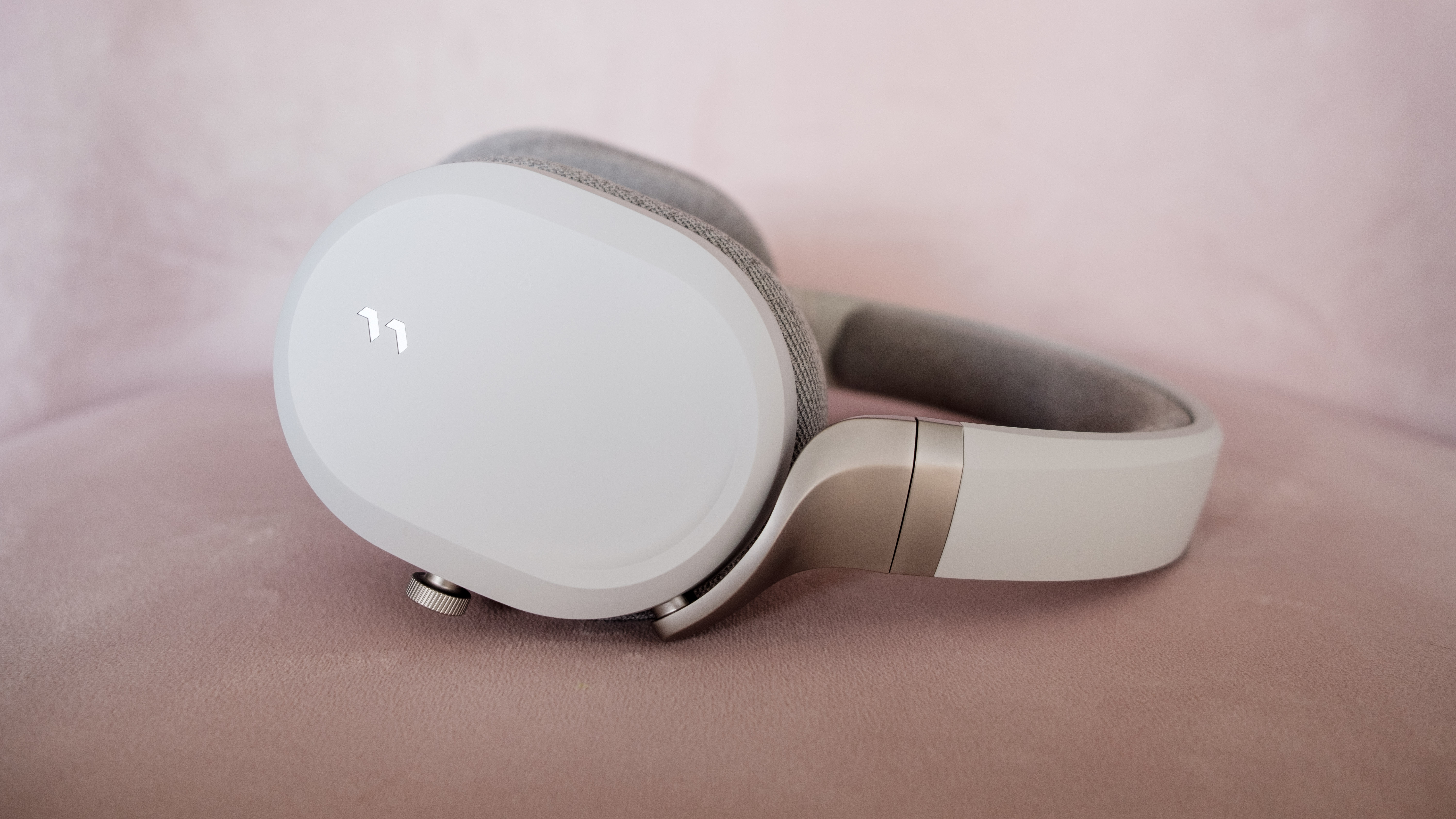
The Fractal Scape features an attractive mix of materials.
Igor Bonifacic for Engadget

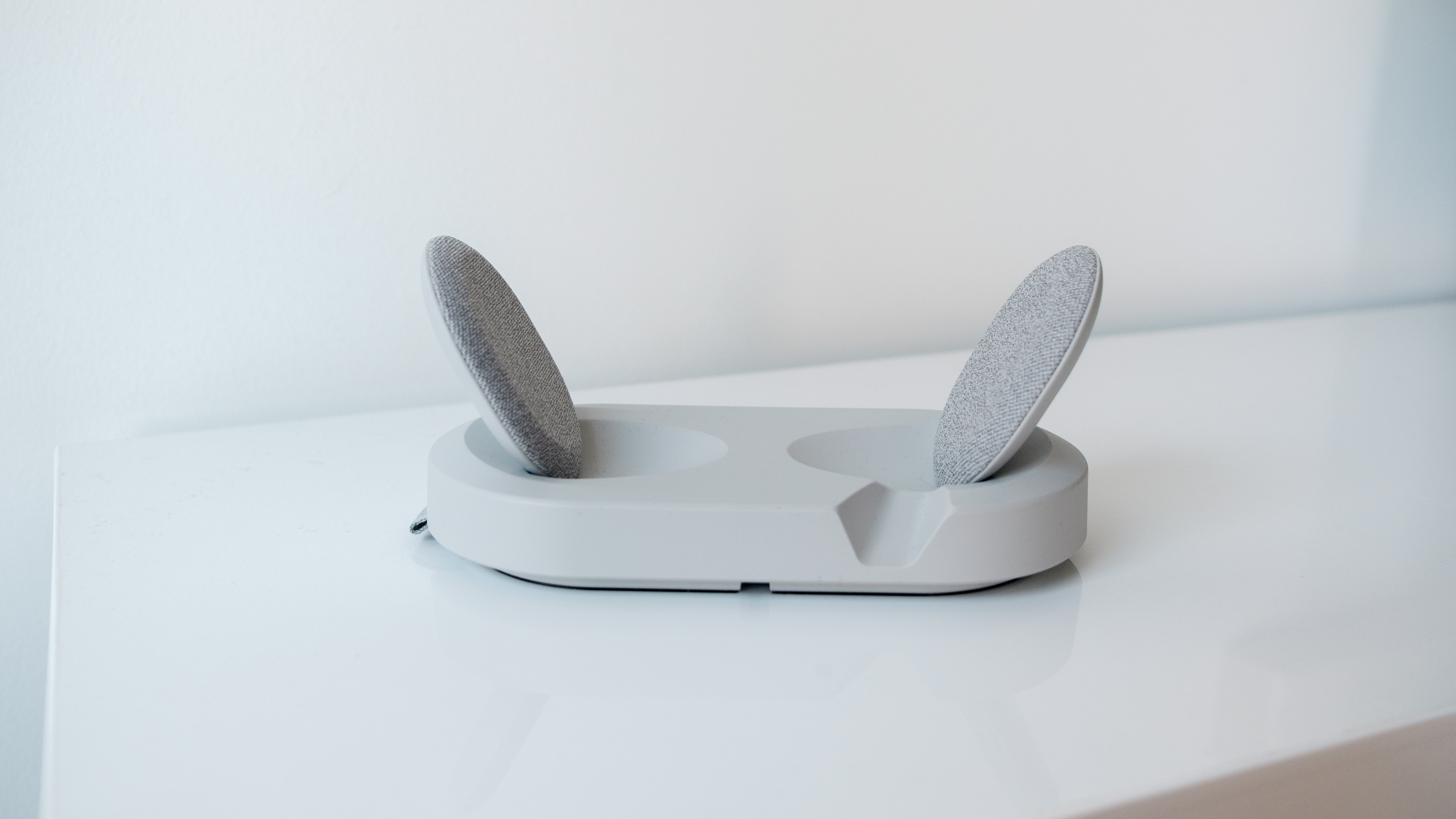
I mentioned the design of the Scape first, and for good reason. It shows attention to detail, with a lot of thoughtful flourishes. The best of those is the dock that comes included with the headset. It charges the Scape inductively, so there’s no need to align any charging pins, and it cleverly houses the headset’s 2.4GHz wireless transmitter. When connected to your main PC, the dongle can sit inside the dock, ready to go when you want to use it with your PlayStation 5, PS4, Nintendo Switch or another PC or Mac (sorry, Microsoft fans, there’s no Xbox support). The base also has wire channels to make cable management easy.     

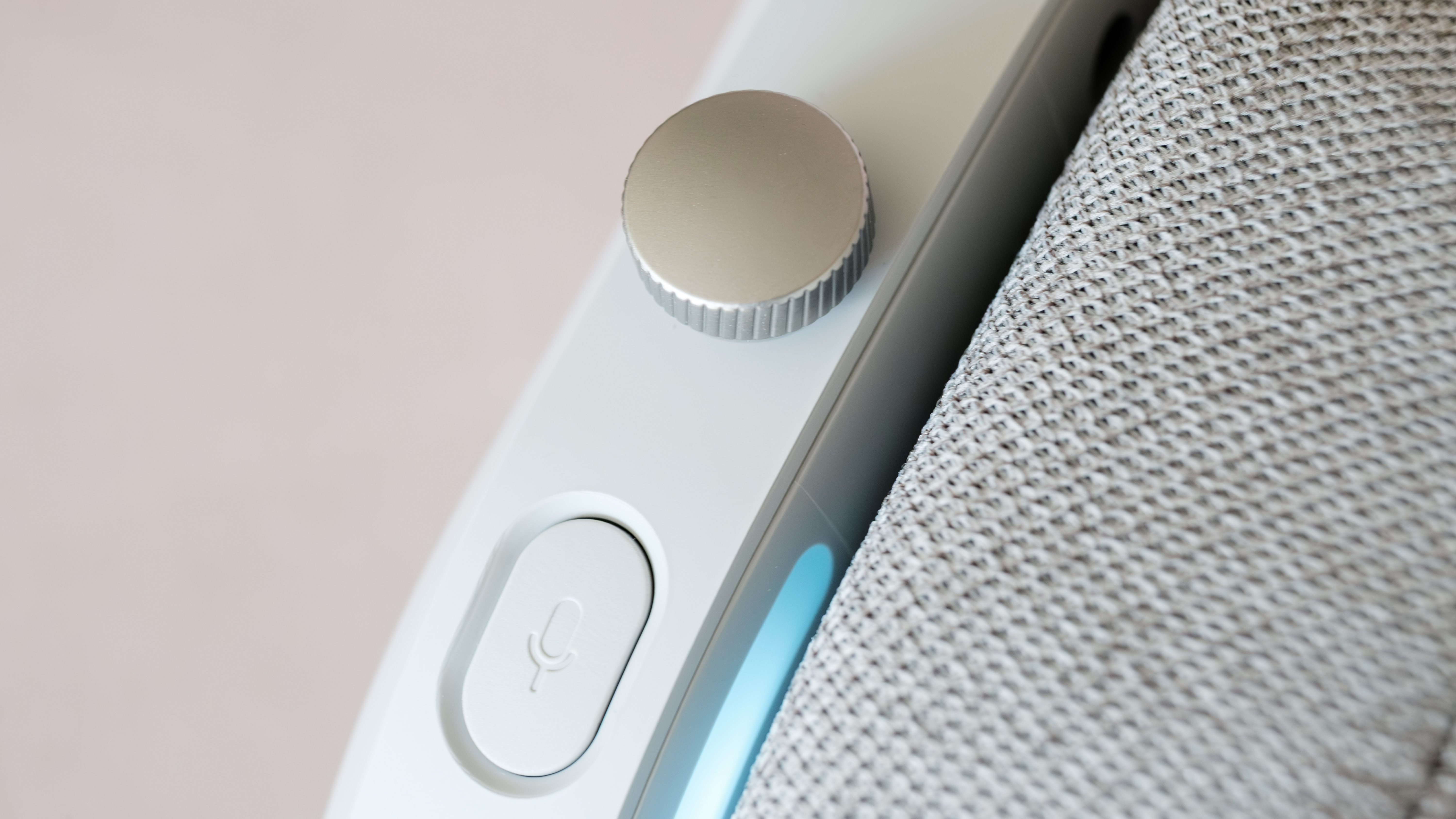
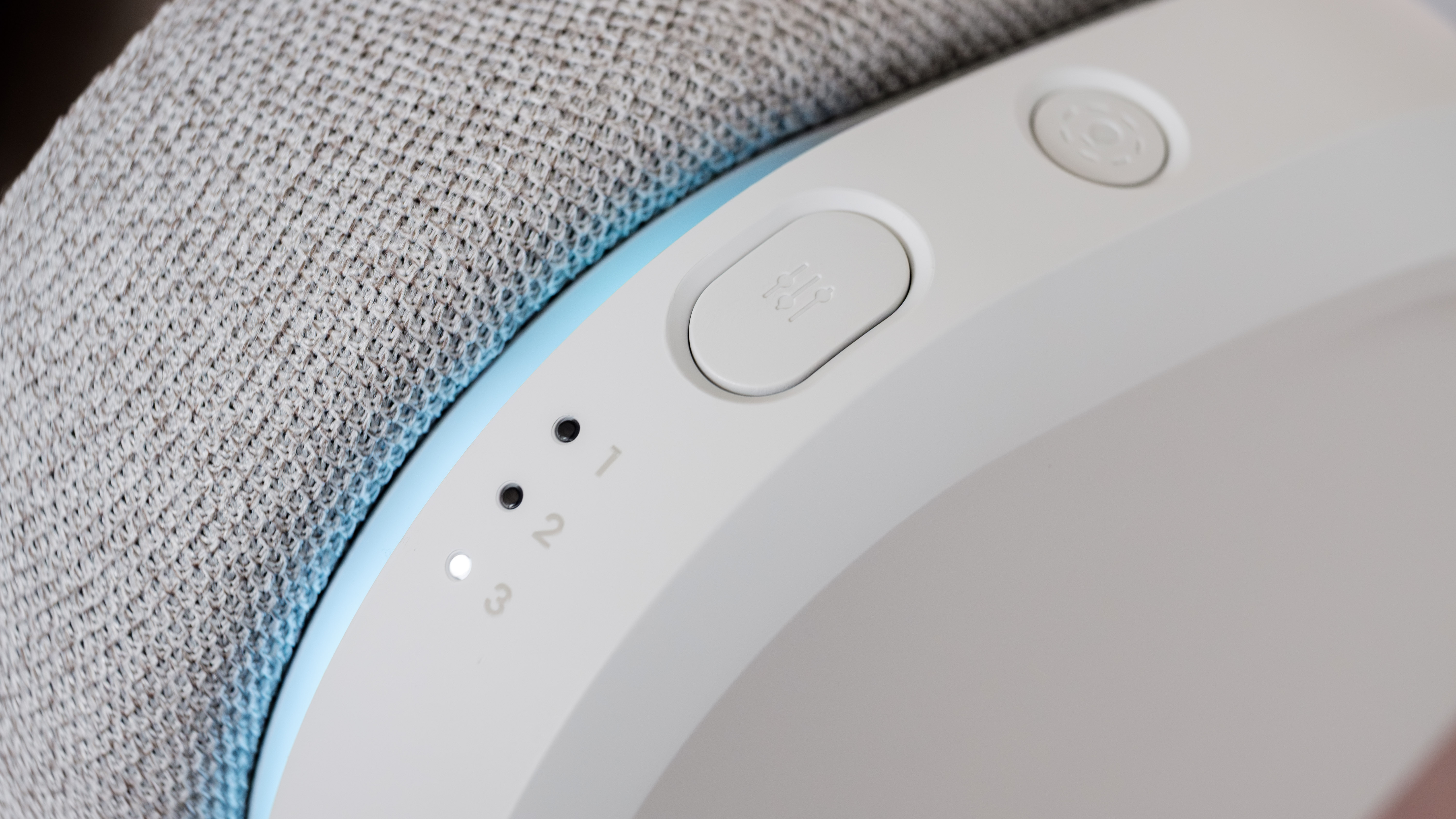
Those same thoughtful design touches extend to the headset itself. On the back are four buttons, a dial and a toggle that cover nearly every function of the Scape. You can adjust the volume, mute the built-in mic, switch between 2.4GHz and Bluetooth connectivity, power the headset on or off, turn the RGB lighting on or off and switch between three EQ presets. What’s more, all of the controls feel distinct and are easy to use. There’s also a USB-C connection for wired audio and a three-pole headphone jack for the detachable microphone. 

The headset is primarily made of plastic, with a touch of brushed metal. Fractal offers the Scape in two colors — the aptly named light and dark — and despite the company’s choice of materials, the headset feels undoubtedly premium. Tilt adjustment is limited — it’s not possible to lay the ear pads flat on a table, for example — but the headband offers a fair amount of resistance, adding to the high-end feel.  

That said, the Scape could be more comfortable. Clamping force feels just about right, but there’s not enough padding along the top of the headband. I found I could wear the headphones for a few hours, but I eventually had to take them off to relieve the pressure that had built up on the top of my head. I’m also not a fan of the fabric Fractal used for both the headband and ear pads. It feels scratchy and it’s not great at dissipating heat. Thankfully, the high-density memory foam beneath is plush and the pads were deep and wide enough to comfortably accommodate my ears. 

Fractal has made it easy to swap the ear pads if needed; they come right off with just a small amount of force. For the time being, the company isn’t selling replacements, but a spokesperson told me Fractal will send customers who need new pads a set for free. You just need to contact their support team.           

Sound quality

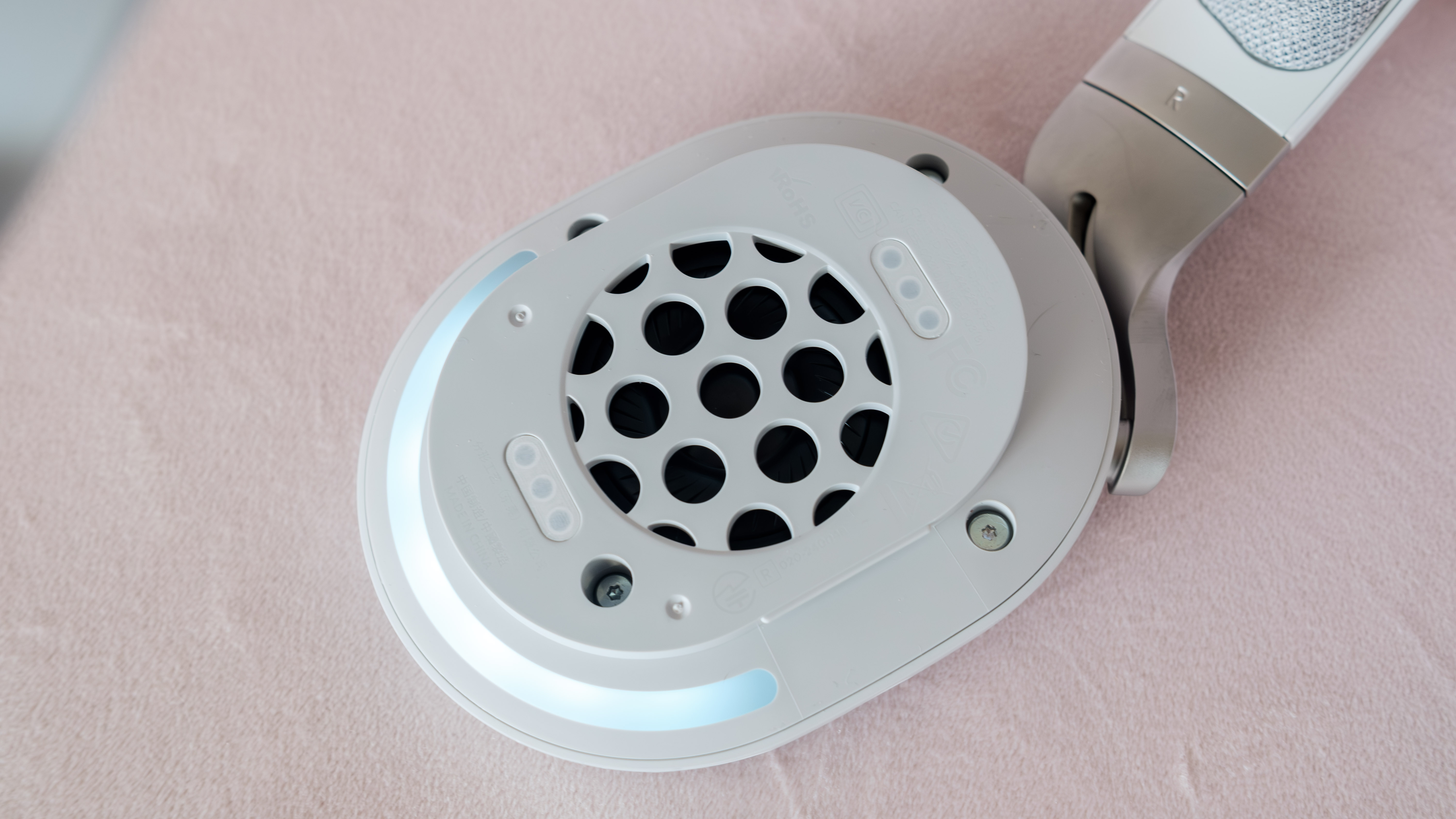
The Scape comes with a set of custom-tuned drivers.
Igor Bonifacic for Engadget

Out of the box, the Scape’s dynamic drivers are tuned to a soft v-shaped curve, with an emphasis on accuracy over character. Bass frequencies are punchy without being bloated, and there’s nice detail to mid-focused instruments like guitars. To my ear, the one issue with the Scape’s default tuning were the upper mids and treble frequencies. They weren’t shouty to the point of being sibilant, but there was definitely a harshness to the vocals of singers like Jeff Buckley and Caroline Polachek who are known for their falsetto. Thankfully, this was easy to fix with the Scape’s built-in EQ settings.  

I’ll have more to say in the software section of this review, but Fractal’s Adjust app allows you to make parametric EQ adjustments. This is different to most gaming headsets, which often limit people to restrictive fixed-band tweaks. Even when I used just five potential points of customization, I found I had a great deal of control over the tonality of the Scape. 

Overall, for casual music listening these are excellent headphones capable of covering many different genres. When it comes to gaming, they’re great too — with some caveats. For singleplayer games, the default tunings are an excellent match. Playing Ghost of Tsushima, the Scape did a great job of reproducing the game’s immersive sound design, allowing me to soak in all the little audio details Sucker Punch packed into its rendition of 13th century Japan. The soundstaging isn’t as expansive and lush as I’m used to with my Sennheiser HD 600, but for a pair of closed-back headphones, it’s above average.  

When it comes to competitive first-person shooters, some tweaks are required. I found all the default presets produced too much bass to easily isolate sound cues in games like Valorant. Again, Fractal’s software made this simple to fix; however, the Scape can only store three presets. Some gaming headsets, particularly those from Steelseries, come with tunings for hundreds of different games. For the ultra-competitive gamer, this can be useful since every game has a different sound engine. I’m not one of those people, so I found the Scape had just the right amount of customization.   

A closeup of the Scape's volume dial.
A closeup of the Scape’s volume dial.
Igor Bonifacic for Engadget

One feature you won’t find on these headphones is active noise cancellation (ANC). Don’t get me wrong, ANC is great, but I also didn’t feel like the Scape was a worse product without it. My girlfriend is a Pelton fanatic and she does all of her daily classes without wearing headphones in our small apartment. In that situation, the Scape’s passive noise isolation was enough to block the loud music coming from those workouts.    

That said, the one area where the Scape could have been better is Bluetooth connectivity. It’s a 5.3 headset, but codec support is limited to SBC and AAC. If you’ve ever tried a pair of wireless headphones only to be disappointed by how they sounded, SBC was probably to blame. When I used the Scape over Bluetooth, there was a subtle difference, but in a beat ’em up like Absolum, the game’s excellent sound design was less effective because it sounded more compressed, with more lag between what was happening on-screen and the effects that followed.      

I would have liked to see Fractal support more modern codecs like aptX Adaptive, but given that you need a dongle like the Creative BT-W6 to get access to those protocols on PCs and consoles, I can’t fault the company for its decision. Also missing from the Bluetooth equation is multipoint support, meaning I wasn’t able to connect the Scape to my PC or Switch and my iPhone at the same time.  

The Scape’s detachable microphone is fine but uninspiring. In listening back to a chat I had with some friends over Discord, I found the Scape compressed my voice to the point where there wasn’t a lot of life or nuance to it. The optional noise cancellation algorithm does a good job of filtering out nearby commotion, but does so at the expense of adding more compression. You can flip the microphone to mute yourself, and if you’re feeling lazy, the Scape also has a built-in mic — though it sounds about as good as you might imagine. Still, it’s handy in a pinch.         

Software 

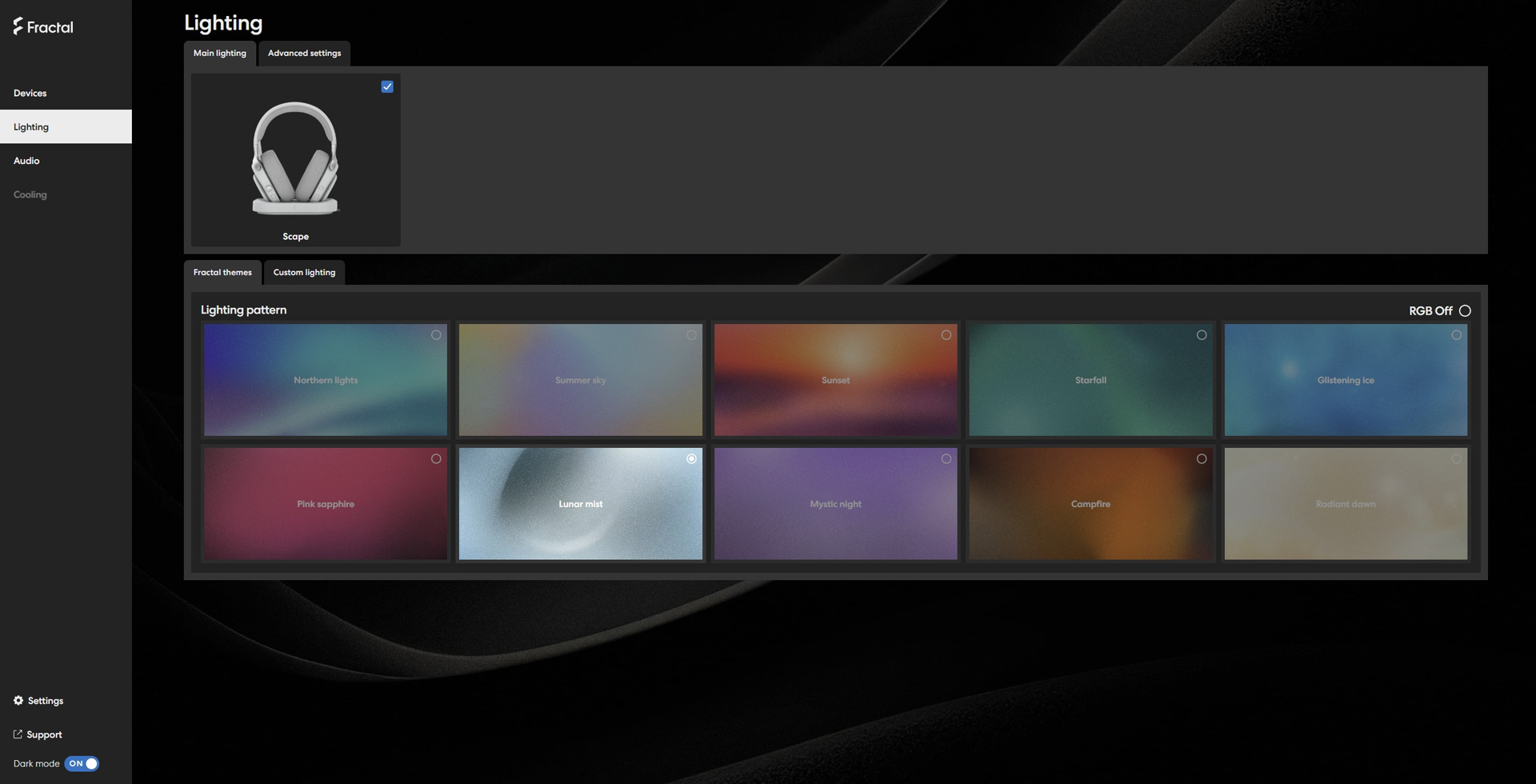
Fractal's Adjust app is web-based and easy to use.
Fractal’s Adjust app is web-based and easy to use.
Igor Bonifacic for Engadget

I mentioned Fractal’s Adjust software, but what I didn’t note is that it’s not an app you need to install on your computer. Instead, it’s a website you can access through any Chrome-based browser. It’s a small thing, but one I really appreciate. I can’t count how many times I’ve had to troubleshoot issues with Windows that were caused by a conflict created by Logitech G Hub or NZXT Cam. 

The web-based software itself is simple, with two pages, named Lighting and Audio, encompassing all the options you can tweak. The Scape comes with 10 lighting themes out of the box, and like the headset itself, these presets are understated and classy. Naturally, you can also create your own lighting schemes, and the tool for doing so is fairly robust. 

A closeup of the Fractal Scape's EQ button
A closeup of the Fractal Scape’s EQ button
Igor Bonifacic for Engadget

When it comes to the EQ adjustments you can make with the Adjust app, the one thing I’ll add here is any presets you save are stored on the Scape, so they’re available everywhere you want to use the headset. That was great because it meant I didn’t need to Alt-Tab out of a game to switch the headset to a more competitive tuning.   

The one area where Fractal’s software feels lacking is when it comes to microphone controls. It’s possible to adjust sidetone (the volume of your mic input as heard through the headset) and enable microphone noise cancellation, but that’s it. It’d be nice if it was possible to configure those settings for the two mics independently of one another, but the software doesn’t support that right now.  

Battery life

According to Fractal, the Scape can go up to 40 hours on a single charge with RGB lighting off. With the feature turned on, battery life drops to about 26 hours. I’ll be honest, I had a tough time putting those claims to the test because of how easy it is to charge the headset. As best as I can tell, those estimates are accurate. I managed to get three days of battery life from the Scape with the RGB lights turned on and about eight hours of use each day. 

One nice touch: when you tap the power button, the RGB lights will briefly illuminate to indicate how much battery life the Scape has left. Those same lights will turn off when you place the headset to charge so that they’re not distracting.  

The competition

With the Scape, Fractal has entered a crowded market. That said, the Scape is competitive with some of the best gaming headsets you can buy right now. At $200, it’s $100 cheaper than the Audeze Maxwell, Engadget’s pick for the best premium gaming headset. The Scape doesn’t sound as good as the Maxwell or offer LDAC support for Bluetooth connectivity, but it’s lighter and charging is easier thanks to the included charging base. If you ask me, the Scape also looks a lot better too. 

If you can’t live without ANC, your best bet is Razer’s BlackShark V3 Pro, but it costs $50 more and doesn’t sound as good as the Scape. You also need to put up with Razer’s annoying Synapse software. For the best mic on a gaming headset, my longstanding recommendation has been the $199 Drop PC38X. It also has one of the best default tunings for competitive gaming. However, it’s a wired headset, and Drop doesn’t offer a wireless option.    

Wrap-up

The charging station also houses the Scape's 2.4GHz transmitter.
The charging station also houses the Scape’s 2.4GHz transmitter.
Igor Bonifacic for Engadget

If you can’t tell by now, I think the Fractal Scape is a great gaming headset. There are models like the Audeze Maxwell that beat it in one or two categories, but for $200 the Scape is an excellent all-around package. Nitpicks about comfort aside, the Scape sounds and looks great. It’s also a tremendous first effort by Fractal, and I can’t wait to see what the company does next in the audio space and beyond. 

This article originally appeared on Engadget at https://www.engadget.com/gaming/fractal-design-scape-review-a-stellar-debut-173000007.html?src=rss

Disney+ gets HDR10+ via “over 1,000” Hulu titles

Disney+ has started streaming movies and shows in the HDR10+ format.

Support is somewhat limited for now. Only certain content from Hulu, which The Walt Disney Company acquired in June, is available in HDR10+. In an announcement today, Samsung said that “over 1,000” Hulu titles are available in HDR10+ and that “additional Disney+” content will support HDR10+ “in the future.” Previously, Disney+ only supported the HDR10 and Dolby Vision HDR formats.

Samsung TVs are the first devices to gain the ability to stream HDR10+ content from Disney+, according to an announcement from Samsung today. The electronics company said that its Samsung Crystal UHD TVs and above from 2018 onward, including its OLED TVs, The Frame TVs, QLED TVs, and Micro RGB TV, support HDR10+.

Read full article

Comments

EU Carmakers ‘Days Away’ From Halting Work as Chip War With China Escalates

Carmakers in the EU are “days away” from closing production lines, the industry has warned, as a crisis over computer chip supplies from China escalates. From a report: The European Automobile Manufacturers’ Association (ACEA) issued an urgent warning on Wednesday saying its members, which include BMW, Fiat, Peugeot and Volkswagen, were now working on “reserve stocks but supplies are dwindling.”

“Assembly line stoppages might only be days away. We urge all involved to redouble their efforts to find a diplomatic way out of this critical situation,” said its director general, Sigrid de Vries. Another ACEA member, Mercedes, is now searching globally for alternative sources of the crucial semiconductors, according to its chief executive, Ola Kallenius. The chip shortage is also causing problems in Japan, where Nissan’s chief performance officer, Guillaume Cartier, told reporters at a car show in Tokyo that the company was only “OK to the first week of November” in terms of supply.


Read more of this story at Slashdot.

Canva Is Making Affinity Free and Launching a ‘Creative Operating System’

Adobe just wrapped up its Max keynote, which means its time for its biggest free competitor to announce its own set of new features. While Adobe’s done its best to keep up with Canva by adding its own free, web-based tools to its lineup, the simple browser-based editor has become a key part of my creative routine. Now, it’s coming for more of Adobe’s lunch by launching a “creative operating system,” which while largely a rebrand of existing (but expanding) tools, smacks of the Photoshop makers’ “creative cloud” branding. As part of the update, Canva’s introducing a bunch of—say it with me—AI to its products, but is also taking a big swing by making popular Photoshop alternative Affinity free for everyone.

AI will hold your hand while designing

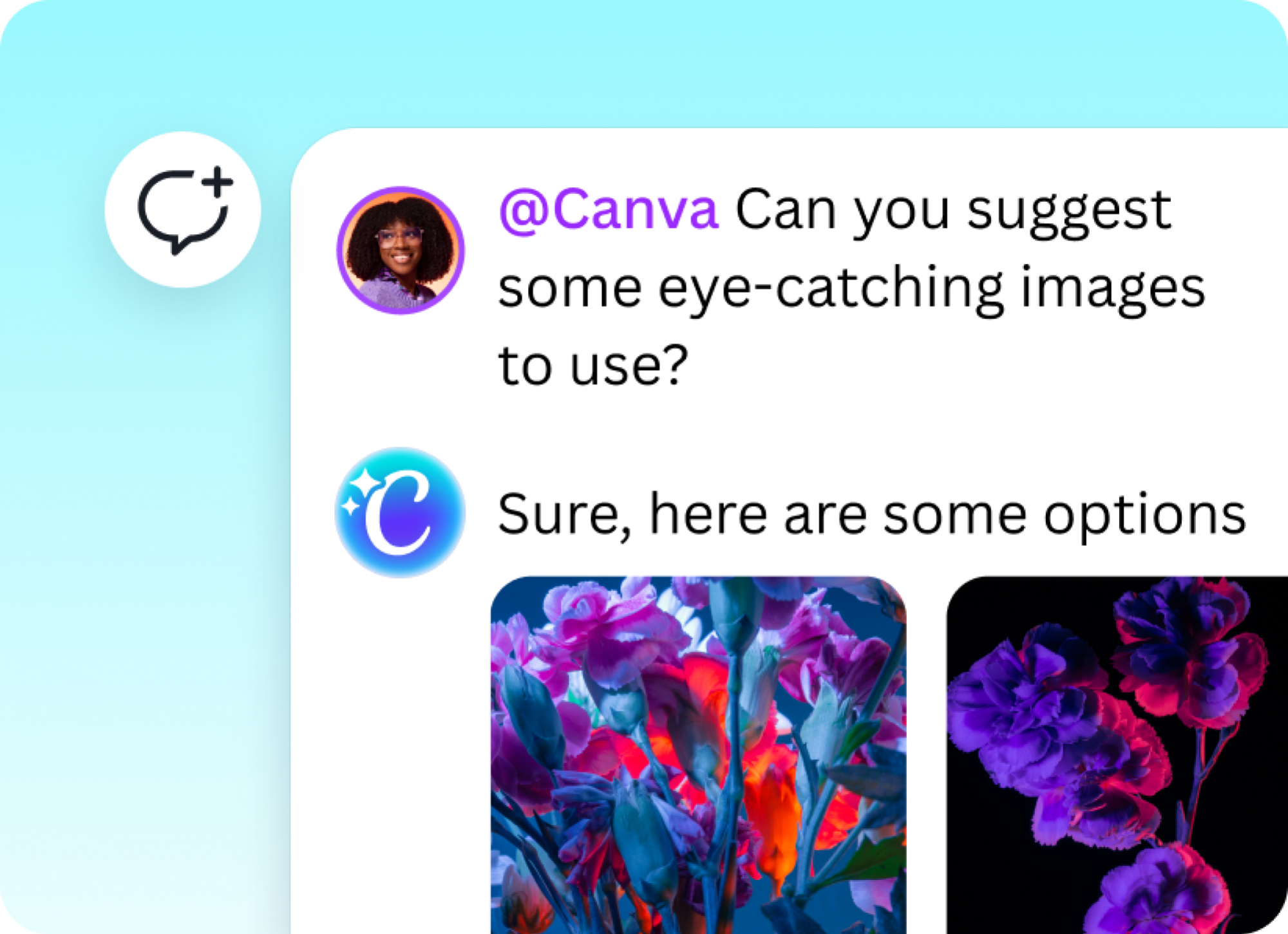
Ask Canva

Credit: Canva

Adobe made its own AI promises during its Max keynote, with the biggest one being “AI Assistant in Adobe Express.” The feature essentially lets you create or refine whole designs from an AI chat box, all in the company’s Canva-like free web editor. Not to be outdone, Canva is also bringing an AI assistant to its browser-based designer, but it’s promising finer control than Adobe’s version.

AI Assistant in Adobe Express is a bit odd, in that toggling it on takes away your toolbar. The idea is to simplify things, but it also adds a bit of a barrier to asking for help. Meanwhile, Canva’s trying to naturally integrate AI into its entire workflow by upgrading its existing Ask Canva chatbot.

Right now, Ask Canva simply sits in one spot on your screen, where you can ask it to generate text or images for you. Now, Canva says you can summon it anywhere in your design, and it’ll be able to give you feedback, make suggestions, or make edits for you, all related to specific design elements.

Alongside an updated AI model, the idea is to make it a “true creative partner,” but personally, I’m just glad that accidentally bringing it up won’t dismiss my tools.

Canva Video 2.0

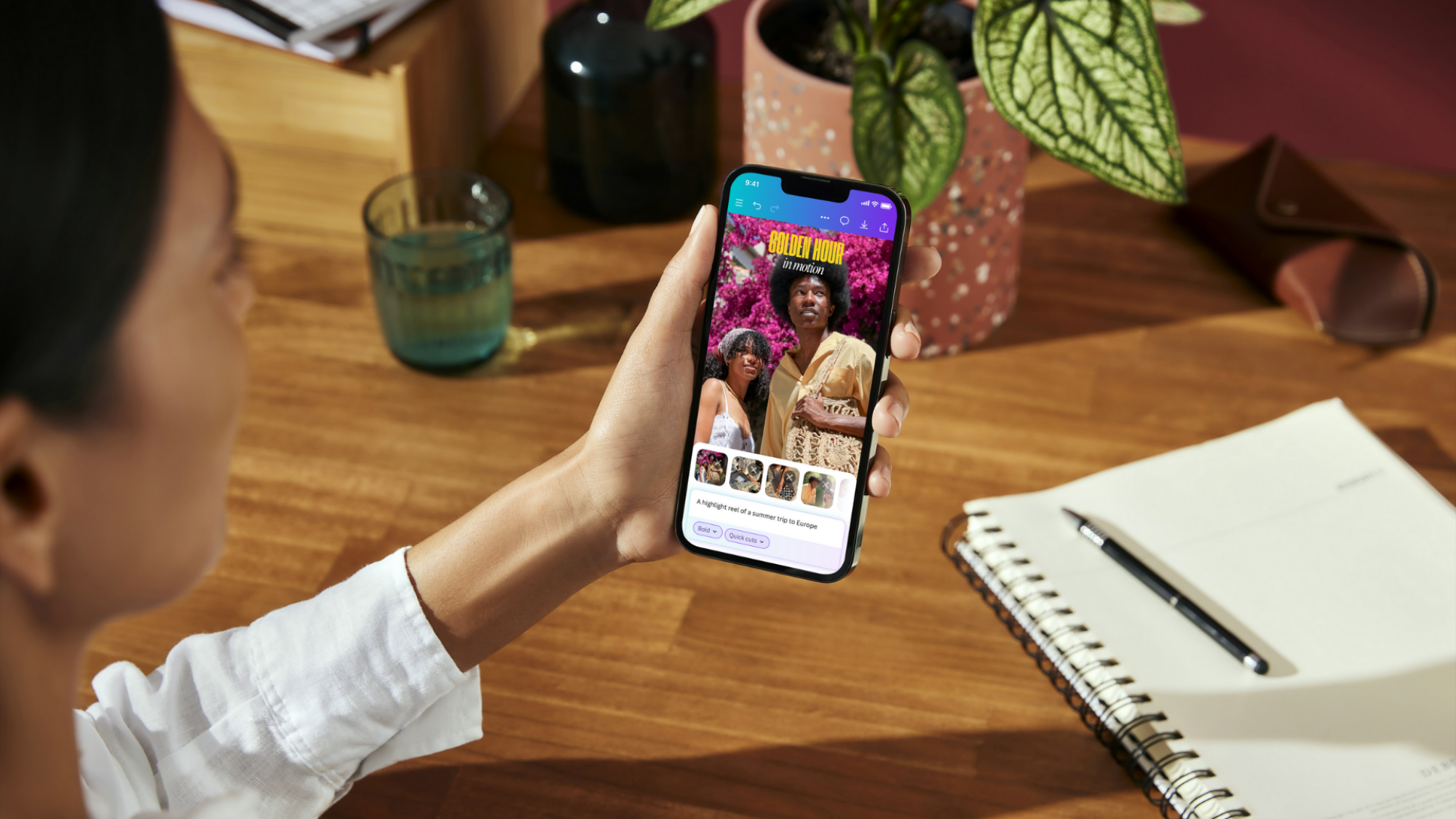
Canva Video 2.0

Credit: Canva

Keeping with the AI theme, Canva’s also redesigning its video editor with a new mobile-friendly interface and an expanded ability to instantly create a publishable video with a single prompt.

You’ll still be able to manually edit a timeline if you like, and you can still generate AI footage as separate clips to put alongside or layered over your other footage, but the new system aims to make it easy to go right from raw footage to posting a video on your timeline.

Called Magic Video, it works like the existing Magic Design feature, but Canva says it’s a bit more powerful. You’ll upload clips and tell the AI what type of video you want, just like with Magic Design, but you’ll also be to select a tone for your video and an editing style from dropdown menus, then navigate through a “new library of on-trend templates” to get your final result. That should mean more control, but also more transition effects and title cards.

It’s all free, and it reminds me of Adobe’s upcoming YouTube Shorts feature for Premiere, which is getting added to the free Premiere iPhone app as well as directly into YouTube. That’s not set to release for a while yet, but Adobe says it’ll come with “exclusive” effects, transitions, stickers, and templates, although no AI to put it all together for you. It will, though, let you publish directly to YouTube without having to leave the app. Canva can do this with a few platforms, like Instagram, but doesn’t have direct integration with YouTube yet.

Whether you prefer having an AI assistant and a more platform-agnostic approach, or an editor with a direct pipeline to publishing, is up to you.

Affinity is now free for everyone, “forever”

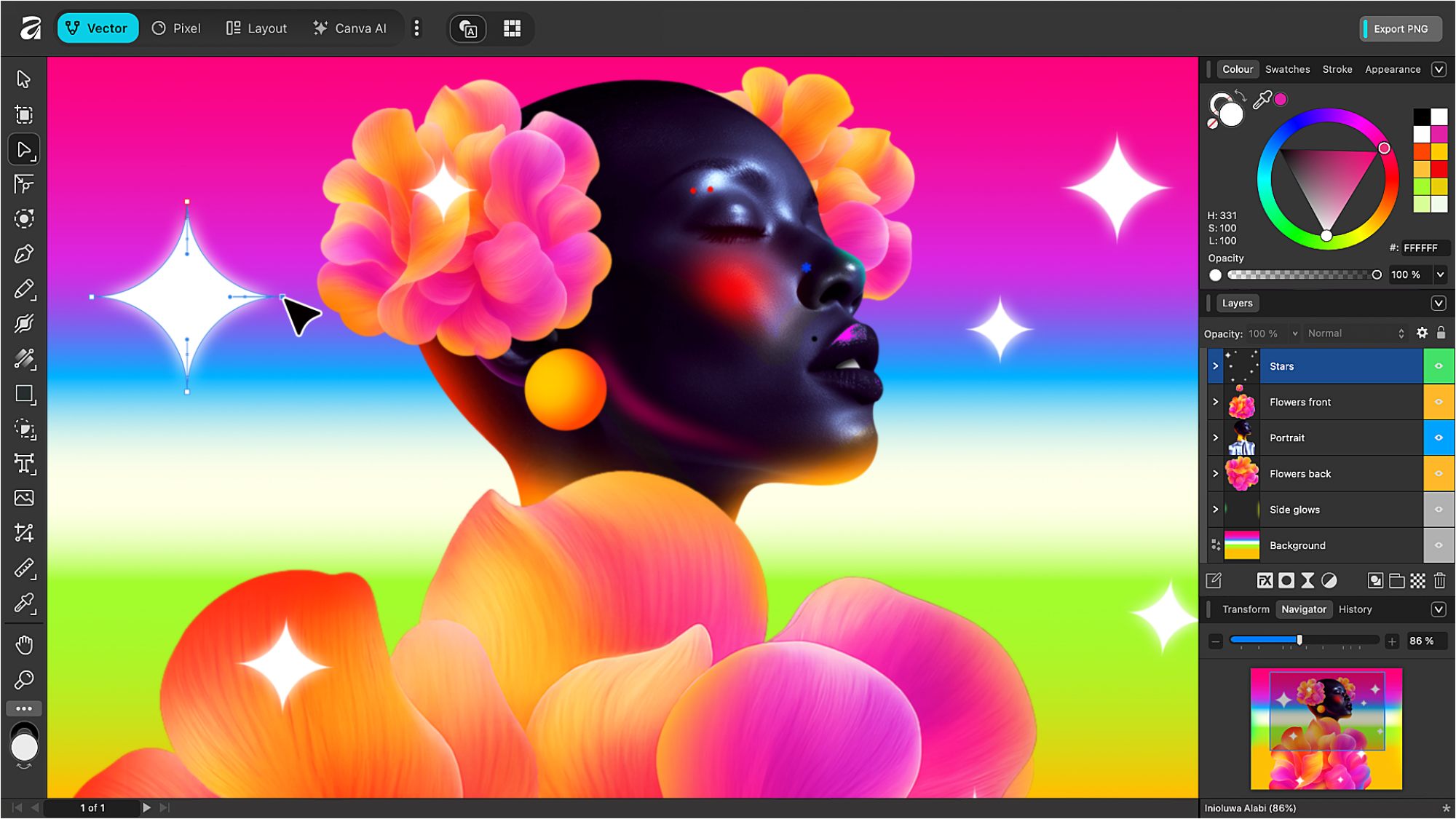
Affinity screenshot

Credit: Canva

Moving away from AI and browser-based editors, Canva’s also got some news regarding the popular standalone Photoshop alternative, Affinity. As a downloadable tool, this offers finer control than Canva’s web-based editor, including tools like vector editing, and that makes sense—it wasn’t always part of Canva’s family. Canva actually bought Affinity in March of last year, and while an acquisition of a beloved tool isn’t always good news for existing users, Canva’s latest announcement should go a long way towards earning some good will.

Part of what made Affinity stand out was its buy-it-once-and-keep-it-forever pricing, which made it highly competitive next to Photoshop’s subscription model. Now, Canva says it’s making Affinity free for everyone, “forever.”

That’s an improvement over the app’s prior free models, which were limited to iPad spinoffs and Education accounts. It’s also a shot across the bow at the competition. While Adobe has been making free light versions of its core apps for mobile and web over the past few years, it has yet to take the plunge with a fully-featured free desktop editor.

Aside from pricing, Canva also says it’s combining all of Affinity’s various functions into one program, so you’ll no longer need to swap between Affinity Photo, Affinity Designer, and Affinity Publisher based on your needs.

Improvements for businesses

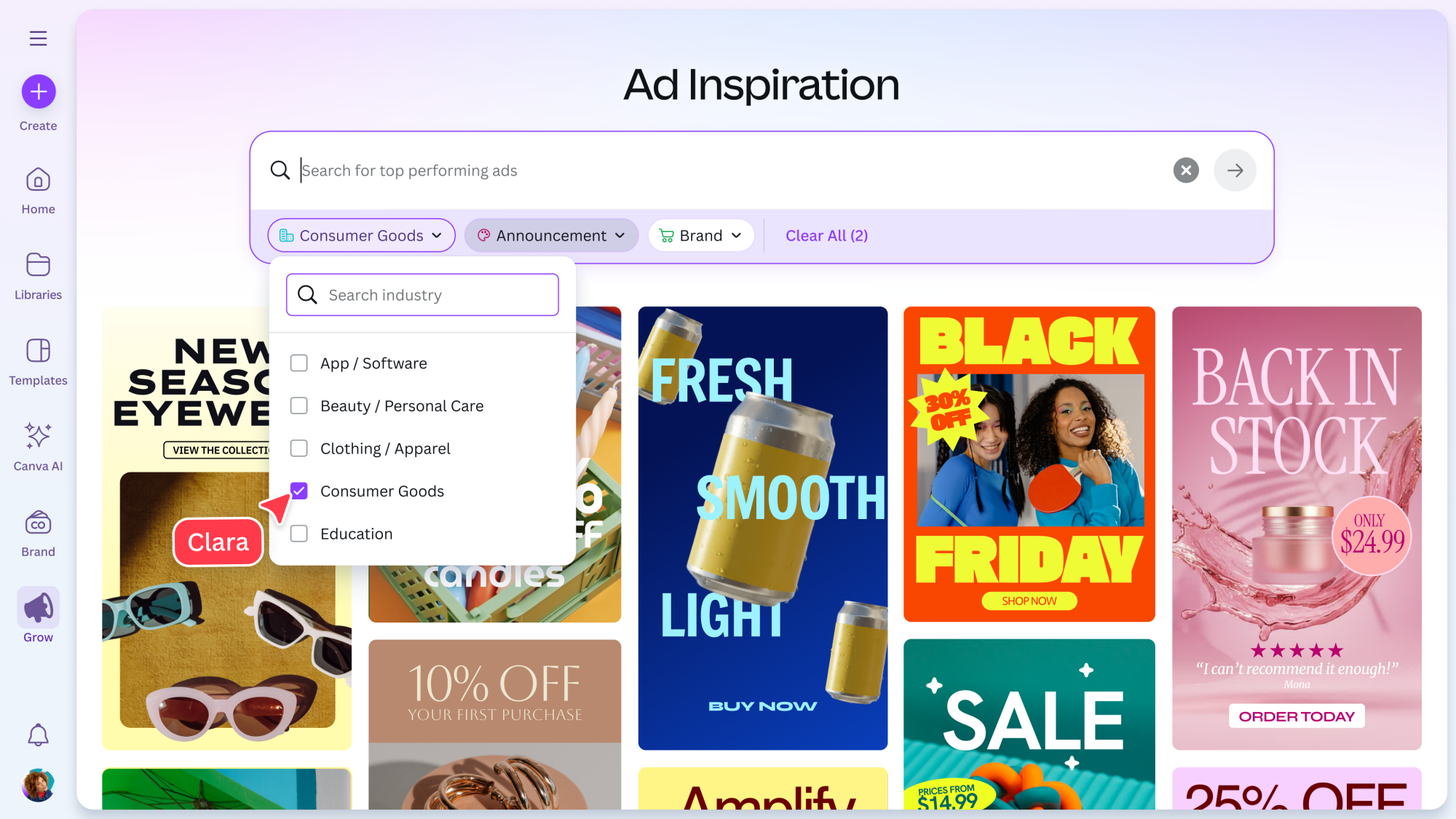
Canva Grow

Credit: Canva

While many of Canva’s users are individuals using the free versions of its editors, the company does have an enterprise plan for businesses, and a few of today’s updates are tailor-made for them.

That includes Canva Grow, a new product aimed at marketers for launching ads, as well as a “brand system” that will help teams stay consistent with which apps they’re using.

On a smaller scale, though, you can also now finally use Canva to design HTML elements for email, which could be useful to large and small businesses and individuals. Additionally, Canva is getting its own survey system called “Forms,” which can be added to websites or other designs and will flow responses into your Canva Sheets.

Speaking of Canva Sheets, it can now interact with Canva Code, meaning you can use data from Sheets to power interactive widgets like live dashboards or calculators.

All of that’s a bit more intensive than what I use Canva for, but I’m sure some folks are raising their hands up in relief right now.

When is all of this going live?

Compared to Adobe, where most of the features announced at Max are either still in beta or development, Canva’s newest updates will start rolling out in their live versions today, as part of its Creative Operating System launch.

Personally, I’m not big on using AI in design, but free Affinity could carry the launch for me in and of itself. Add in those quality-of-life features for businesses, and it’s clear Adobe will have to keep experimenting with its low-cost and browser-based editors to keep up.

New study settles 40-year debate: Nanotyrannus is a new species

For four decades, a frequently acrimonious debate has raged in paleontological circles about the correct taxonomy for a handful of rare fossil specimens. One faction insisted the fossils were juvenile Tyrannosaurus rex; the other argued that they represented a new species dubbed Nanotyrannus lancensis. Now, paleontologists believe they have settled the debate once and for all due to a new analysis of a well-preserved fossil.

The verdict: It is indeed a new species, according to a new paper published in the journal Nature. The authors also reclassified another specimen as a second new species, distinct from N. lancensis. In short, Nanotyrannus is a valid taxon and contains two species.

“This fossil doesn’t just settle the debate,” said Lindsay Zanno, a paleontologist at North Carolina State University and head of paleontology at North Carolina Museum of Natural Sciences. “It flips decades of T. rex research on its head.” That’s because paleontologists have relied on such fossils to model the growth and behavior of T. rex. The new findings suggest that there could have been multiple tyrannosaur species and that paleontologists have been underestimating the diversity of dinosaurs from this period.

Read full article

Comments

Mixed Reality Link for Windows 11 and Meta Quest headsets is now available to everyone

Immersive productivity for Windows 11 is now available on the Meta Quest 3 and 3S with the latest release of Meta’s Horizon OS. The feature, called Mixed Reality Link, was available on a limited basis after public previews began last year. The Windows virtual desktop experience is now rolling out to all users.

After installing Mixed Reality Link on their Windows 11 PC, users will pair the machine with their Meta Quest headsets. Mixed Reality Link also supports portable, cloud-based solutions such as Windows 365 Cloud PC, Azure Virtual Desktop, Microsoft Dev Box and others. The virtual environment, which displays the equivalent of multiple high-resolution monitors, is similar to the Apple Vision Pro.

The stark difference in cost between the headsets makes this a far more approachable virtual working tool for the average consumer. The Meta Quest 3S starts at $300, while the Apple Vision Pro comes out of the gate at a hefty $3,500.

Facebook parent company Meta has been investing heavily in virtual reality and augmented reality technology. The company recently teased a futuristic VR headset that it says will offer VR experiences “indistinguishable from the physical world” as well as Ray-Ban smart glasses with Meta AI live translation and 3K video recording.

This article originally appeared on Engadget at https://www.engadget.com/ar-vr/mixed-reality-link-for-windows-11-and-meta-quest-headsets-is-now-available-to-everyone-165545794.html?src=rss

Obesity Rate Declining in U.S.

Gallup: After peaking at a record high of 39.9% in 2022, the U.S. adult obesity rate has gradually declined to 37.0% in 2025. This is a statistically meaningful decrease representing an estimated 7.6 million fewer obese adults compared with three years ago. Meanwhile, diagnoses of diabetes — a lifetime disease that can be managed but not cured — have now reached an all-time high of 13.8%. Both metrics are part of the ongoing Gallup National Health and Well-Being Index.

[…] Over the past year, more Americans have turned to Type 2 antidiabetic GLP-1 drugs such as semaglutide (brand names Ozempic and Wegovy) for weight loss purposes. The percentage of adults who report taking this class of medicine specifically for weight loss has increased to 12.4%, compared with 5.8% in February 2024 when Gallup first measured it. Usage among women (15.2%) continues to outpace men (9.7%), but both groups have more than doubled their use in the past year. These results dovetail with increased awareness of the drugs used for weight loss, which has risen from 80% to 89% nationally in the same period.


Read more of this story at Slashdot.

Samsung’s web browser arrives on Windows, with an AI future on its radar

On Thursday, Samsung launched a desktop version of its web browser. Why bother putting its mobile browser on Windows? Well, the company offers a hint in describing Samsung Internet as “evolving from a PC browser that waits for input to an integrated AI platform.” So, surprise, surprise: It’s about AI.

As one would imagine, Samsung Internet on Windows supports cross-platform syncing of data like bookmarks, browsing history and autofill. The company says it also prioritizes privacy and security, offering standard features like tracker blocking and a privacy dashboard.

But those aren’t likely the main reasons Samsung is launching a desktop web browser in 2025. (Incidentally, Samsung briefly launched Samsung Internet for Windows in 2024, before pulling it from the Microsoft Store without fanfare.) Instead, this launch appears to be about positioning it in the rapidly emerging landscape of AI browsers.

AI browsers have been all the rage lately. Samsung’s move follows the launch of OpenAI’s ChatGPT Atlas, Microsoft’s Edge Copilot Mode updates, Opera Neon’s early access and general availability for Perplexity’s Comet browser. Samsung says its cross-platform browser will advance its “vision for ambient AI,” anticipating your needs and offering more personalized assistance. If Samsung wants to be part of that fray, it makes sense for its software to be available on the desktop, too.

Samsung Internet is available (via a beta program) for Windows 11 and Windows 10 (version 1809 and up). You can sign up on the product page.

This article originally appeared on Engadget at https://www.engadget.com/computing/samsungs-web-browser-arrives-on-windows-with-an-ai-future-on-its-radar-163526726.html?src=rss

WhatsApp Is Rolling Out Passkey Support for Encrypted Backups

In the beginning, WhatsApp users could not protect their chat backups with encryption—while all communications were encrypted end-to-end, backups weren’t afforded the same protection. Since 2021, however, WhatsApp has offered two ways for users to encrypt these backups: a standard password, or a 64-digit encryption key.

There are security issues with both of these methods. Passwords can be secure, but let’s be real, many of us use very simple passwords that are easy to remember, and, in some cases, we even repeat passwords from account to account to make things easier on our brains. If your password for WhatsApp backups is the same password you use for your email, and the latter gets leaked, hackers can easily break into your WhatsApp backups. Not good. (Side note: Please use a strong and unique password for all of your accounts.)

The 64-digit encryption key, on the other hand, is extremely secure. It would take a computer a long time to crack (perhaps a few lifetimes) and would be essentially impossible for a human to guess. But it’s 64 characters long. You’re not going to remember it, and if you don’t store it somewhere safe and secure, you could lose track of it—and with it, access to your encrypted chat backups. Again, not good.

On Thursday, however, WhatsApp announced it is adding a new authentication method to protect your encrypted backups, and a big improvement over the existing two options: passkeys. If you choose to encrypt your chat backups with a passkey, you’ll be able to decrypt them the same way you unlock your device, such as with your fingerprint, face scan, or device passcode.

Passkeys offer the best of both passwords and two-factor authentication (2FA). The “key” is stored on-device or associated with your account, so there’s no passphrase to remember, write down, or store in a password manager. That means you don’t need to worry about it landing in a hacker’s hands due to a data leak. The only way to access the passkey is to authenticate yourself with a connected and trusted device, such as your smartphone. Without your fingerprint, face scan, or passcode, no one is getting into your encrypted backups.

How to check if you have passkey support

WhatsApp says it is gradually rolling out this passkey support “over the coming weeks and months.” To check if your account supports it, head to Settings > Chats > Chat backup > End-to-end encrypted backup.

Google makes first Play Store changes after losing Epic Games antitrust case

Since launching Google Play (née Android Market) in 2008, Google has never made a change to the US store that it didn’t want to make—until now. Having lost the antitrust case brought by Epic Games, Google has implemented the first phase of changes mandated by the court. Developers operating in the Play Store will have more freedom to direct app users to resources outside the Google bubble. However, Google has not given up hope of reversing its loss before it’s forced to make bigger changes.

Epic began pursuing this case in 2020, stemming from its attempt to sell Fortnite content without going through Google’s payment system. It filed a similar case against Apple, but the company fell short there because it could not show that Apple put its thumb on the scale. Google, however, engaged in conduct that amounted to suppressing the development of alternative Android app stores. It lost the case and came up short on appeal this past summer, leaving the company with little choice but to prepare for the worst.

Google has updated its support pages to confirm that it’s abiding by the court’s order. In the US, Play Store developers now have the option of using external payment platforms that bypass the Play Store entirely. This could hypothetically allow developers to offer lower prices, as they don’t have to pay Google’s commission, which can be up to 30 percent. Devs will also be permitted to direct users to sources for app downloads and payment methods outside the Play Store.

Read full article

Comments

Toxin Levels in Fish Lead To Calls For UK-Wide Ban on Mercury Dental Fillings

Britain is facing mounting pressure to ban mercury dental fillings, one of the few countries yet to prevent the practice, as new data reveals alarming contamination levels in the nation’s fish and shellfish. The Guardian: Mercury is a potent neurotoxin that can harm the nervous, digestive and immune systems, as well as the lungs, kidneys, skin and eyes, even at low levels of exposure. Its organic form, methylmercury, is particularly dangerous to unborn babies and can move through the food chain building up in insects, fish and birds.

Britain is lagging behind the rest of the world on phasing out mercury dental fillings, with 43 countries having already banned mercury amalgam, including the EU, Sweden, Norway, Tanzania, Uganda, Indonesia and the Philippines. Northern Ireland will outlaw mercury fillings from 2035 but no such ban is planned in the rest of Britain. According to new analysis by the Rivers Trust and Wildlife and Countryside Link, more than 98% of fish and mussels tested in English rivers and coastal waters contain mercury above safety limits proposed by the EU, with more than half containing more than five times the recommended safe level.


Read more of this story at Slashdot.

We finally have a real-deal trailer for Stranger Things season five

It’s been around three and a half years since season four of Stranger Things premiered. We finally have an actual trailer for the fifth and final season of Netflix’s retro-soaked adventure series. It’s a good thing, as the first batch of episodes drop on November 26.

As previously mentioned, this is a real trailer with tons of footage and not a teaser. It’s over two minutes of Hawkins-based goodness. This is an action-packed affair that’s heavy on emotion and light on the type of 1980s-style humor the show has become known for. That seems right, given the stakes are higher than ever.

If you just clicked on this and don’t plan on actually watching the trailer, this is when I go into some light spoilers. It looks like the gang is trapped in Hawkins following the events of season four. There’s a military enclosure around the city and, surprise, Vecna is back and looking for vengeance.

There’s a very scary scene in which the entity looks to be controlling or torturing poor Will and we don’t even know if he has a cassette player loaded with Kate Bush just out of frame. It’s all very tense.

While the show premieres on November 26, this isn’t a one-and-done season drop like many Netflix shows. It’s being split into three installments. The first batch of episodes are set for November 26, with another batch dropping on December 25. The final episode will air on December 31 and is even coming to some movie theaters. It’s a holiday miracle.

The showrunners do promise that this season will finally tell us exactly what the upside down is, which is something to look forward to. While Stranger Things is ending, the franchise will continue on. Netflix has some spinoffs planned for the future, but they won’t have series creators the Duffer Brothers on board as showrunners. The pair recently signed a deal with Paramount.

This article originally appeared on Engadget at https://www.engadget.com/entertainment/tv-movies/we-finally-have-a-real-deal-trailer-for-stranger-things-season-five-160222670.html?src=rss

AMD Strix Point Performance Continues Evolving Nicely With Ubuntu 25.10

This week marks fifteen months since AMD Strix Point laptops began shipping. Back at the end of July 2024 the Linux performance and support was already in good shape while since then the Linux performance has only evolved even more to make these AMD Zen 5 laptops perform even better. Here is a fresh look at how the performance has evolved since launch day and the added gains when moving to the recently released Ubuntu 25.10 and some performance advantages too if moving to the in-development Linux 6.18 kernel.

The Best OLED TV of 2025 Is $500 Off Right Now

We may earn a commission from links on this page. Deal pricing and availability subject to change after time of publication.

It’s impressive when new flagship TVs that came out this year drop in price months after their release, but when they also happen to be the best OLED TV your money can buy, it becomes a bargain (well, if you can afford it). The 65-inch LG G5 OLED TV is $1,996.99 (originally $2,496.99), the lowest price it has been since its recent release, according to price-tracking tools. The bigger 77-inch and 83-inch series are also at their lowest prices right now.

OLED TVs offer the best colors and contrast ratio that money can buy. They don’t come cheap, though (but you can still shop for budget options). Two of the biggest downsides of OLED TVs, though, are that they can suffer from the notorious burn-in effect and that they don’t get as bright as QLED or LED TVs, so they’re better suited for dimmer or theater rooms. But when LG upgraded the G4 in 2025, they made sure to address one of these issues. For an OLED, the Evo G5 gets bright, at 1,608 nits (average for an LED). That means you can actually use this OLED TV in a bright room without getting the quality washed away.

The color accuracy is on point out of the box, and it comes with a 165Hz VRR, 12.9 ms of input lag in Game Mode, and a 120Hz native refresh rate, making it great for gaming, according to PCMag’s “outstanding” review. They also deemed it the best OLED TV of 2025. Like all LGs, you’ll get HDR-10 and Dolby Vision, but not HDR10+.

If you’re searching for the best OLED TV of 2025 at its best price, you’re looking at it.


Our Best Editor-Vetted Early Black Friday Deals Right Now


Amazon Fire TV Stick 4K Plus


—
$29.99

(List Price $49.99)


Ring Video Doorbell Pro 2 with Ring Chime Pro


—
$149.99

(List Price $259.99)

Deals are selected by our commerce team

Pinterest has its own AI assistant now

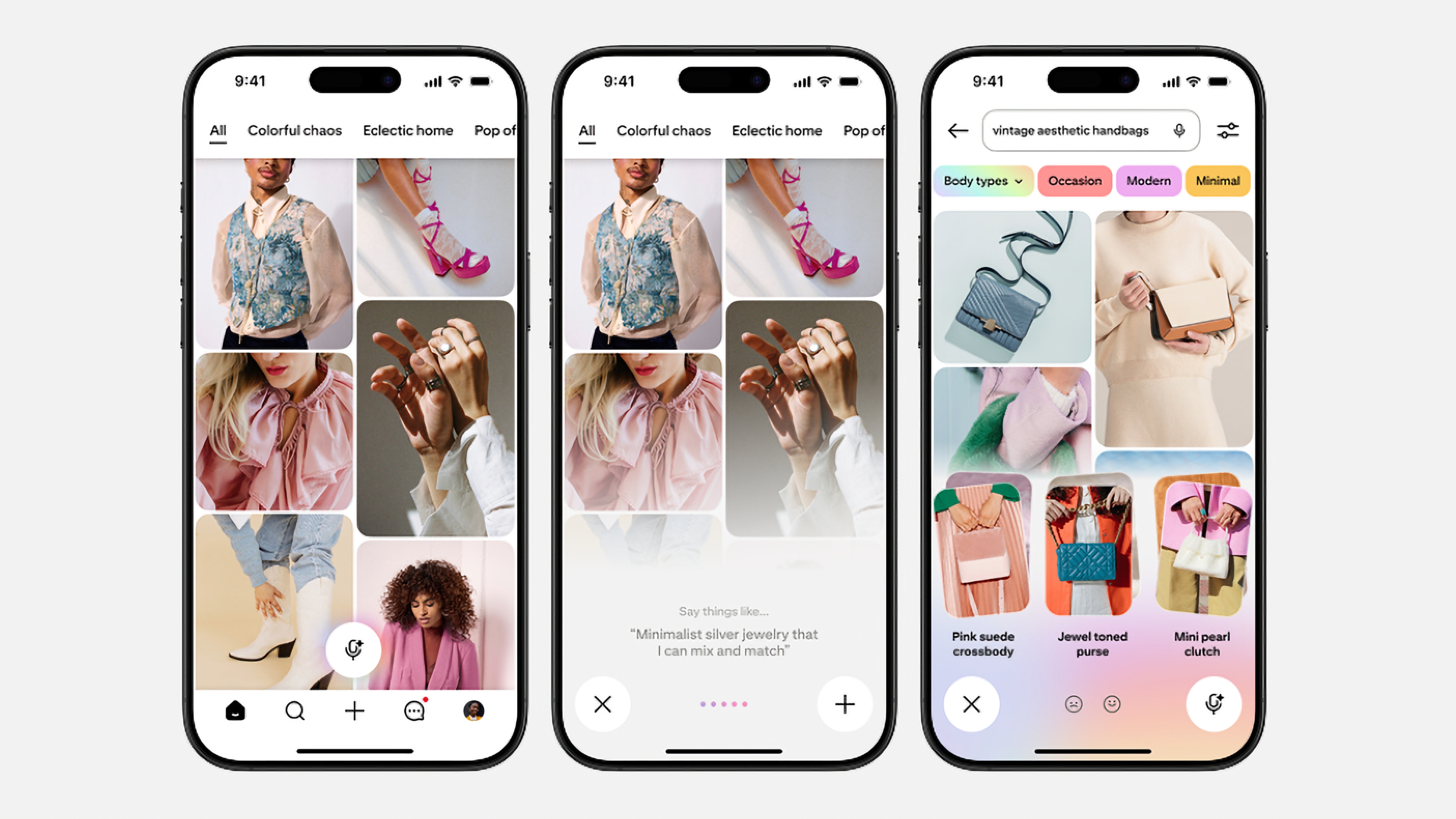
Pinterest is adding a new way to find clothes, furniture and other sources of aesthetic inspiration through its app. It’s called Pinterest Assistant, and it’s an AI-powered search and recommendation tool that uses knowledge of your Pinterest activity to tailor its responses.

Whereas other search features work best when you have a specific thing you’re looking for in mind, Pinterest says the Pinterest Assistant is meant to handle more open-ended requests. Asking for pillows that match your “living room decor” is supposed to be enough for the AI to surface interesting results. To do that, the Pinterest Assistant looks at the items you’ve saved and the boards you’ve created (for example, a board full of living room decor inspiration), compares it with the things Pinterest users with similar taste have saved and displays visual results tailored to you.

Three screenshots showing the Pinterest Assistant mic icon, what you see when you dictate a prompt and results provided by Pinterest Assistant.
You start a search with Pinterest Assistant by tapping on the mic icon.
Pinterest

Pinterest appears to be specifically interested in the multimodal aspect of this new feature. The main way the company imagines you’ll interact with Pinterest Assistant is via a mic icon in the Pinterest app that starts a voice search. The AI assistant then takes that audio prompt and uses it to filter and analyze visual content to find the best fit. Besides surfacing items you might not have found on your own, Pinterest says the whole process should be “closer to how people shop in real life.”

Rolling out its own AI features puts Pinterest in an interesting place when it comes to AI content on its platform. Users have complained that the growing amount of AI-generated material on Pinterest has made it hard to find real things to buy or add to a board. In May, the company started labeling AI content in the app to make finding real items easier, and earlier in October it added a way to “dial down” the amount of AI generated content users see in the app. Pinterest Assistant isn’t necessarily a solution for an AI slop problem the company is struggling to solve, but it might help users who are sick of sifting through AI content anyway.

Pinterest Assistant begins rolling out in beta today to users in the US who are 18 and over, with wider availability coming in the next weeks and months.

This article originally appeared on Engadget at https://www.engadget.com/social-media/pinterest-has-its-own-ai-assistant-now-160000183.html?src=rss

After teen death lawsuits, Character.AI will restrict chats for under-18 users

On Wednesday, Character.AI announced it will bar anyone under the age of 18 from open-ended chats with its AI characters starting on November 25, implementing one of the most restrictive age policies yet among AI chatbot platforms. The company faces multiple lawsuits from families who say its chatbots contributed to teenager deaths by suicide.

Over the next month, Character.AI says it will ramp down chatbot use among minors by identifying them and placing a two-hour daily limit on their chatbot access. The company plans to use technology to detect underage users based on conversations and interactions on the platform, as well as information from connected social media accounts. On November 25, those users will no longer be able to create or talk to chatbots, though they can still read previous conversations. The company said it is working to build alternative features for users under the age of 18, such as the ability to create videos, stories, and streams with AI characters.

Character.AI CEO Karandeep Anand told The New York Times that the company wants to set an example for the industry. “We’re making a very bold step to say for teen users, chatbots are not the way for entertainment, but there are much better ways to serve them,” Anand said in the interview. The company also plans to establish an AI safety lab.

Read full article

Comments

Threads is making it easier to hide replies you don’t like

Social media conversations can be vastly more enjoyable when you pick and choose who you’re talking with. Today, Threads is adding more controls that let users determine who can reply to their posts. 

One new feature is Reply Approvals, where the user will get a first look at responses before allowing them to appear publicly. The approval option can be turned on for individual posts rather than as a blanket policy for more granular control over replies. Threads is also adding new filters for viewing post replies. Now you can look at replies just from other Threads users you follow or sort them by mentions.

Threads has already had a busy week. Earlier this week, the social network introduced its take on ephemeral “ghost” posts, akin to the limited-time visibility features on Instagram Stories and many other platforms. According to parent company Meta’s third-quarter earnings call, Threads has grown to 150 million daily active users.

This article originally appeared on Engadget at https://www.engadget.com/social-media/threads-is-making-it-easier-to-hide-replies-you-dont-like-154500456.html?src=rss