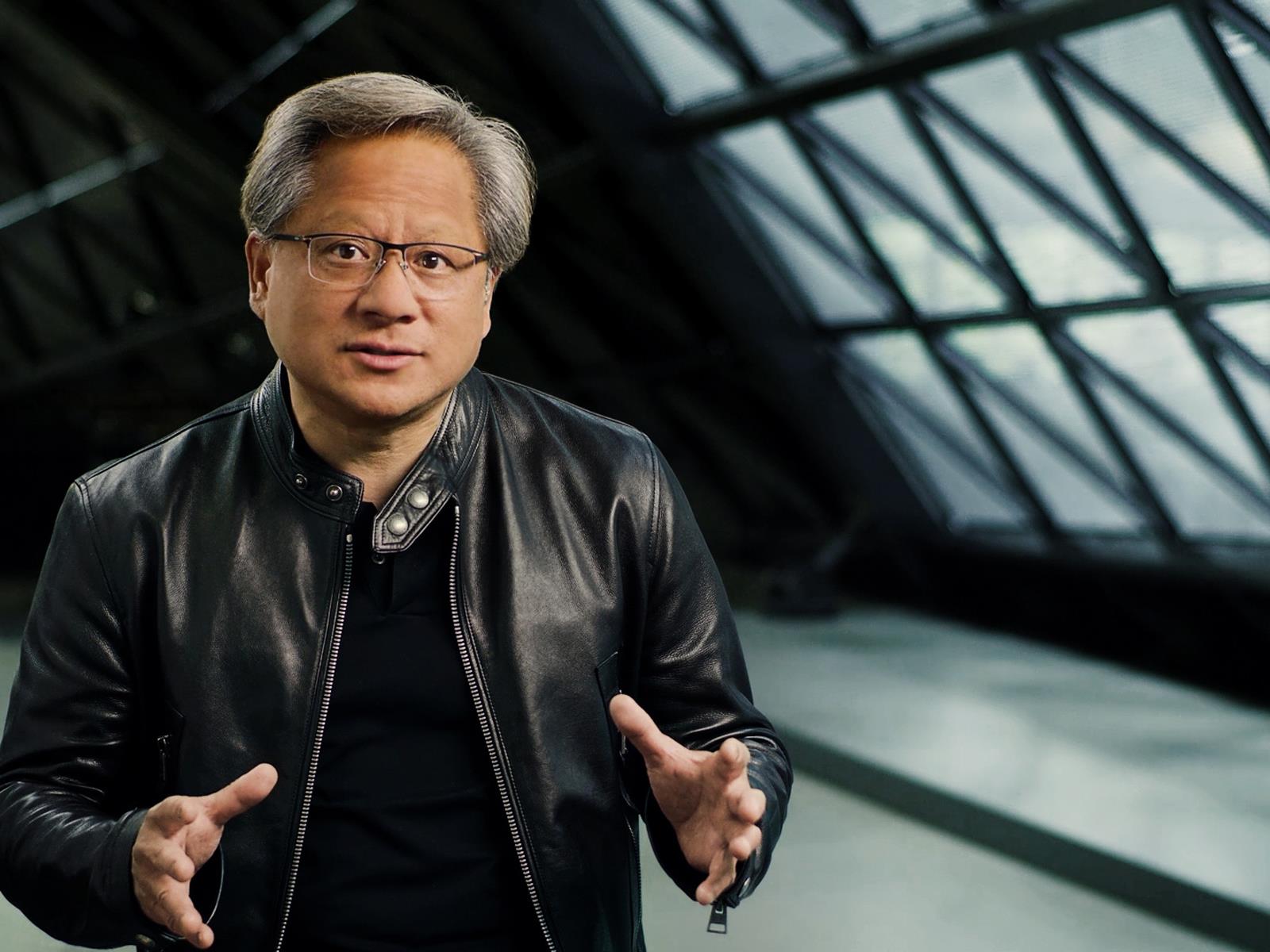
NVIDIA co-founder and CEO Jensen Huang has a message for U.S. lawmakers: If changes in policy are not enacted in short order, including a ban on exports of NVIDIA’s most advanced silicon to China, the United States will lose its lead in the AI race. It’s not a matter of if, but when, and Huang says China is mere nanoseconds behind America
Google released Gemini’s Deep Research feature in March, a few months after unveiling the tool, giving you the capability to ask the AI chatbot to create comprehensive reports on complex topics. Deep Research uses sources from the web to write reports for you, but now a new update also allows it to pull information from your Gmail, Docs, Drive and Chat. Google says it’s one of the tool’s most requested features, and you’ll be able to take advantage of it in Gemini, even if you’re not paying for a subscription.
With Google’s latest update, Deep Research is now able to use your emails, all the Slides, Docs, Sheets and PDFs in your Drive, as well your chat history as references. That translates to a more personalized report, since Gemini wouldn’t just be using sources from the web. If you ask it to write a marketing analysis for you, for instance, it will take into account your notes, any document your team has written or any back-and-forth between you and your colleagues on email. It can cross-reference information from your account with public data to make, say, comparison spreadsheets for competitor analysis.
Take note that you will be able to control which Google service to link to, if you’re uneasy about giving Gemini access to all your information. When you click on the Deep Research tool in Gemini, you’ll see a drop-down menu where you can tick on Search, Gmail, Drive and Chat individually. At the moment, the feature is only available on desktop, but it will make its way to mobile devices “in the coming days.”
This article originally appeared on Engadget at https://www.engadget.com/google-gemini-can-now-do-deep-research-on-your-gmail-and-drive-data-143000300.html?src=rss
As a tech journalist, I’ve got Windows, macOS, and ChromeOS devices at home—not because I’m especially wealthy, but because I need to write about all of these platforms, all of the time—and it’s my trusty Chromebook that I find myself turning to more often than not.
The usual argument against Chromebooks is that they’re just a Chrome browser: Windows and macOS give you the same Chrome browser, and much more besides. However, sometimes less is more, as I’ll get to below.
Sadly, it seems Google is less keen on Chromebooks than I am. The last Google-made Pixelbook launched in 2019, and it’s been left to the likes of Asus, Acer, HP, Samsung, and others to keep new Chromebooks coming in. If you’re reading, Google, it’s high time we had a new Pixelbook.
Chromebooks cut down on the clutter
There is the argument that Windows and macOS give you the Chrome browser plus a lot more, but most of the time, I don’t really need the “more”—unless I’ve got some detailed image edits to do, or want to play some games. Almost everything I need runs on the web.
There are a lot fewer software updates, background programs, app assistants, and system utilities to think about. While ChromeOS does have updates, they’re mostly done seamlessly in the background, and applied whenever you next reboot your Chromebook.
Another chore I don’t have to regularly take care of on my Chromebook is tidying up the desktop or my local folders, because there isn’t really anything to download, save, or sync. The laptop file system and internal storage is tidier by default, because I never use it.
Chromebooks save everything instantly
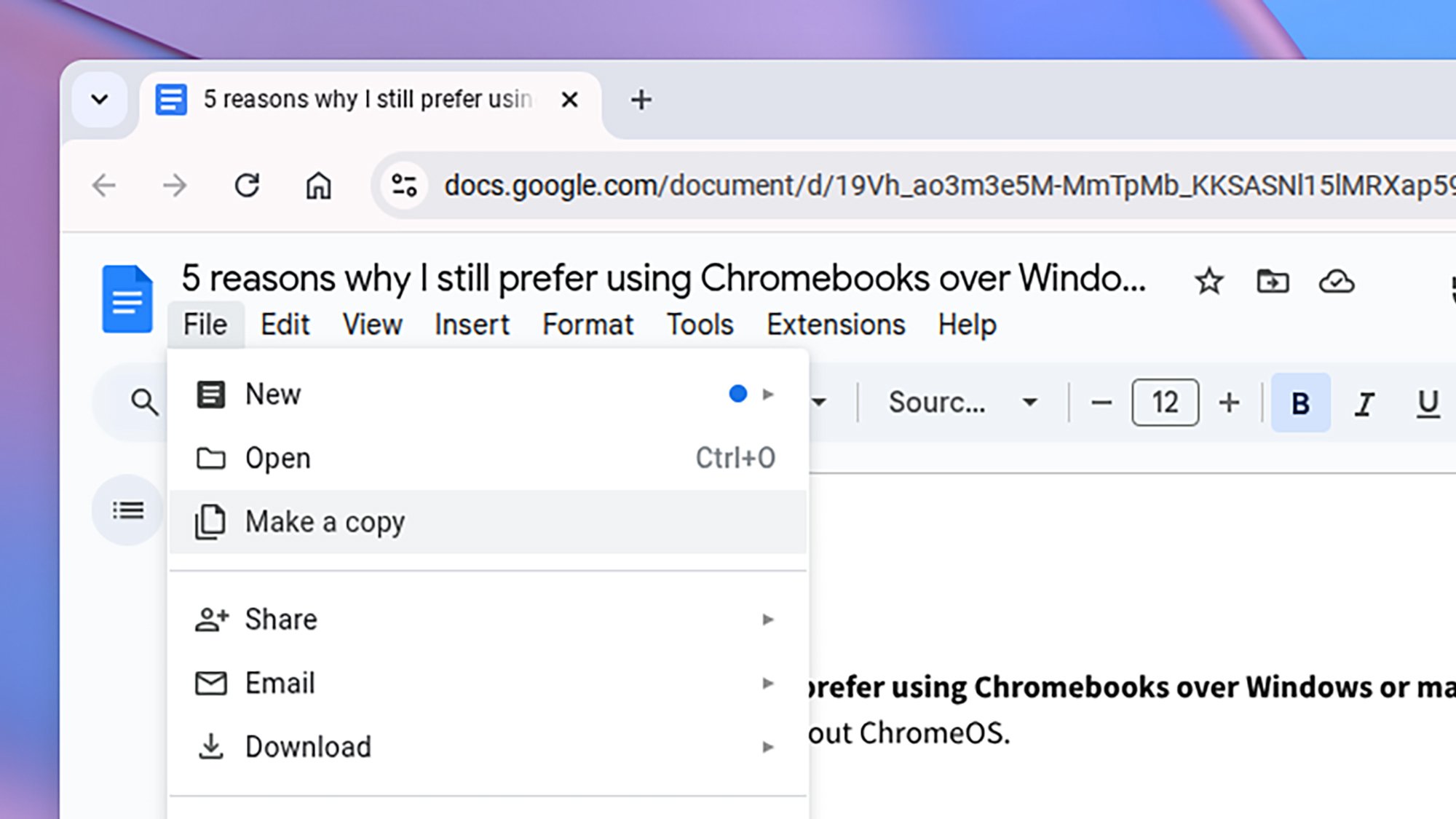
No save button required. Credit: Lifehacker
All the work I do on my Chromebook is inside a browser, and usually inside Google apps like Google Docs and Gmail. That means everything is instantly saved—should a power cut or a system crash happen, I don’t have to worry about losing what I’ve been working on.
I don’t need to check for open programs and files in the background that I might have forgotten about, and if I need to jump up and do something else quickly, I can just shut my laptop and I’m done—I’m not clicking through dozens of save dialogs first.
Chromebooks put everything on the web
When you’re working inside web apps all the time, without the option of locally installed tools, syncing is seamless. To work on a document that I need to access across Windows and macOS, for example, I need to think about saving, syncing, and app compatibility.
When I’m working in Google Docs in a Chromebook, everything syncs automatically. I can even have a document open simultaneously across ChromeOS, Windows, and macOS, and jump between them as needed to make edits—something which saves a lot of time.
Chromebooks tie in tightly to the Google ecosystem
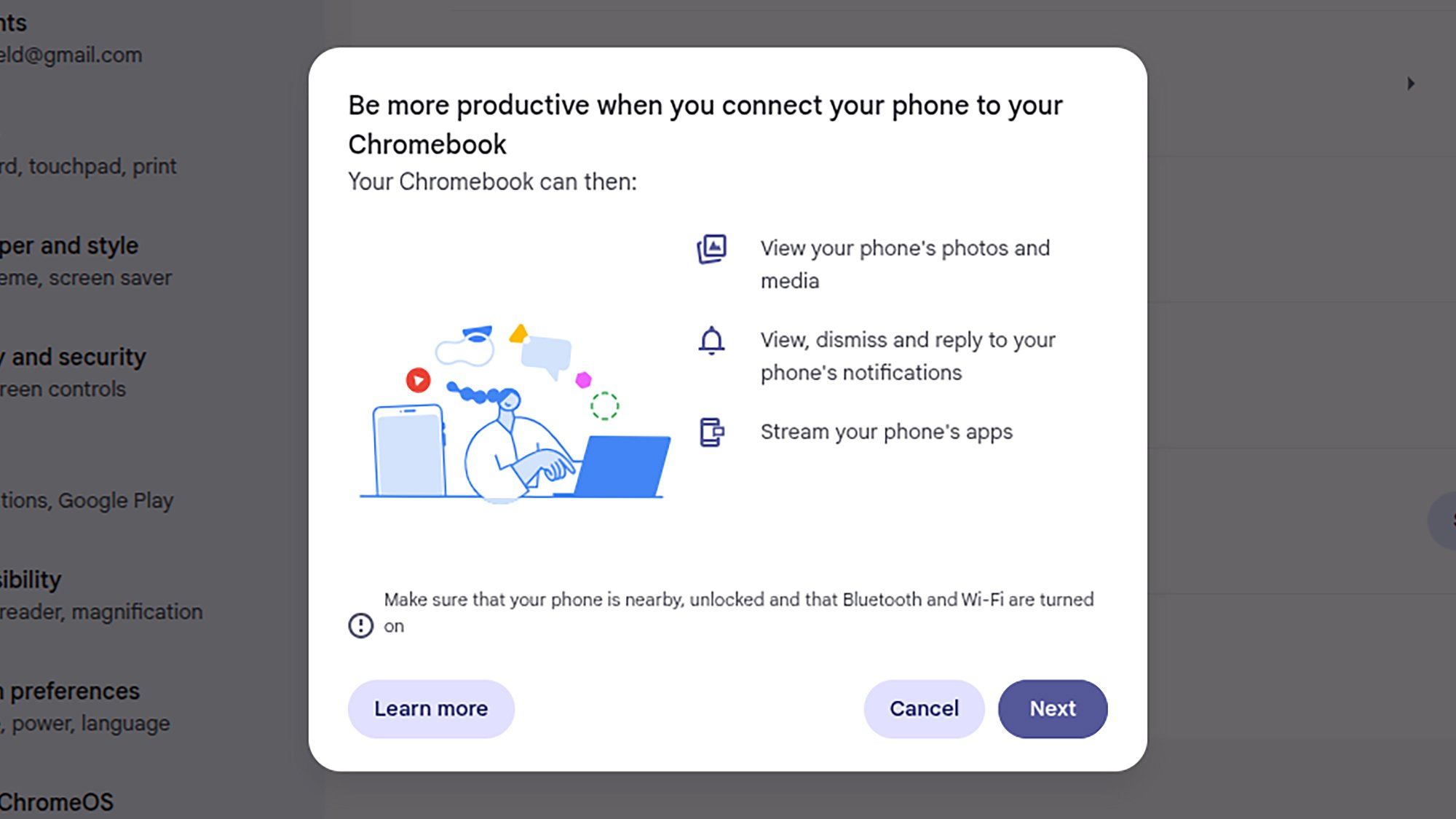
Android phones and Chromebooks play nicely together. Credit: Lifehacker
I can understand that Chromebooks may have less appeal if you’re not always using Gmail, Google Maps, Android, Google Docs, Chrome, and everything else Google makes—but for someone heavily invested in the Google ecosystem (like me), they make a lot of sense.
If you’ve got an Android phone, for example, you can use it to set up a Chromebook, share files across both devices, respond to text messages from ChromeOS, and get hotspot access with a click. There’s a level of integration you don’t get on other platforms.
Chromebooks actually work as distraction-free devices
One of the criticisms leveled at Chromebooks is that they’re pretty much useless without an internet connection, but that’s only partly true. Google Docs, Sheets, and Slides, and even Gmail actually work perfectly well offline now.
If I’m traveling without steady wifi, I enjoy using my Chromebook as a distraction-free device, getting through a ton of writing and email replying without constantly switching tabs. When wifi returns, everything I’ve done gets synced back to the web automatically.
While we’re on the subject of ChromeOS being useless when it’s not online, I think it’s fair to say internet access is almost ubiquitous now (via public wifi or phone hotspots), and that Windows and macOS aren’t particularly useful either when the web is cut off.
The Switch 2 edition of Overcooked 2 drops today, which is something we’ve known was coming since September. Now it’s here and ready to ruin relationships and friendships.
The developer promises “enhanced graphics in-line with PC” and 4K 60 fps gameplay when docked. This should be a night-and-day graphical upgrade when compared to the original Switch version.
Perhaps the biggest news here is Camera Play integration. This is a feature exclusive to Nintendo’s new console and it leverages a connected camera to throw up the faces of players under their avatars. Overcooked 2 is already a frantic experience, but now you’ll be able to see the look on the faces of your friends as you royally screw up a burger order.
The Switch 2 version also works with Game Share, which lets people hop onto a multiplayer match without actually owning the game. Basically, the person who owns the game “shares” it with someone who doesn’t.
It’s also cross-platform with the original Switch, which is neat given the massive user base. Upgrading seems like a simple affair, as DLC, save files and star ratings all carry over. This upgrade costs $10 and buying the game outright costs $30. However, there’s a 20 percent discount for the first week.
This article originally appeared on Engadget at https://www.engadget.com/gaming/nintendo/overcooked-2-drops-for-switch-2-today-and-it-makes-full-use-of-camera-play-140021993.html?src=rss
Nvidia chief executive Jensen Huang has warned that China will beat the US in the AI race, thanks to lower energy costs and looser regulations. From a report: In the starkest comments yet from the head of the world’s most valuable company, Huang told the FT: “China is going to win the AI race.” Huang’s remarks come after the Trump administration maintained a ban on California-based Nvidia selling its most advanced chips to Beijing following a meeting between US President Donald Trump and Chinese leader Xi Jinping last week.
The Nvidia chief said that the west, including the US and UK, was being held back by “cynicism.” “We need more optimism,” Huang said on Wednesday on the sidelines of the Financial Times’ Future of AI Summit. Huang singled out new rules on AI by US states that could result in “50 new regulations.” He contrasted that approach with Chinese energy subsidies that made it more affordable for local tech companies to run Chinese alternatives to Nvidia’s AI chips. “Power is free,” he said.
Spotify delivers a lot of personalized, data-driven music recommendations, and now the streaming service is adding new weekly snapshots of your listening activities. Listening stats will highlight the artists and songs that a user has heard the most over the previous four weeks and creates a playlist inspired by those selections. And according to the blog post: “Each week, it also includes a special highlight that captures what makes your listening unique, whether it’s a milestone, a new discovery, or a fan moment.” That’s a pretty vague introduction, and how engaging the highlights are in practice will likely depend on how much they actually surprise and delight listeners.
It sounds like a midway point between the company’s year-end Wrapped data package and its daily mix playlists. More ways to view listening data are always fun, and several competing services like Apple Music, Amazon Music and YouTube Music have already upped how often they share reports with their users. This seems to be Spotify’s move to catch up on that trend.
The listening stats will live under your profile and can be shared internally on Spotify or as an external link. The new features will be available for both free and paying listeners across 60 international markets.
This article originally appeared on Engadget at https://www.engadget.com/entertainment/music/spotify-introduces-weekly-listening-stats-140000577.html?src=rss
We may earn a commission from links on this page. Deal pricing and availability subject to change after time of publication.
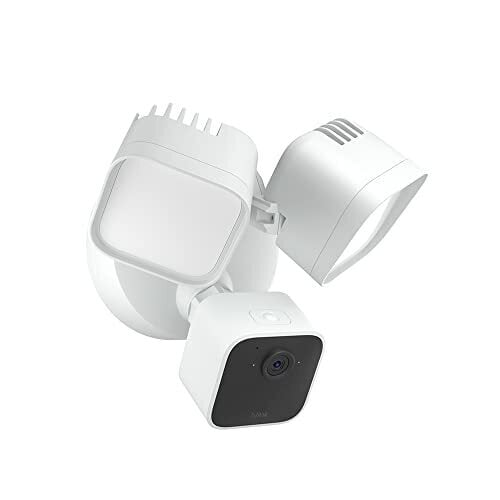
If you’ve been planning to tighten up your home security without spending much, the Blink Wired Floodlight Camera is worth a look. It’s selling for $49.99 (down from $99.99), which is its lowest price yet, according to price trackers.
It’s a hardwired setup that combines dual-LED floodlights with 1080p HD video, giving you both visibility and surveillance in one go. The lights throw out 2,600 lumens, which is plenty to brighten a driveway or backyard, and color night vision means you can actually make out faces and details instead of staring at grainy gray footage. Speaking of, the 143-degree field of view of this camera captures a wide area, and daytime footage looks crisp with good color balance and clarity.
In day-to-day use, the Blink Floodlight Camera performs better than you’d expect for the price. Motion alerts are quick to arrive, and the live feed on the Blink app loads fast enough to check what’s happening in real time. You can flip on the floodlights manually, talk through the built-in two-way audio, or trigger the 105dB siren if someone’s snooping around. The siren is loud enough to make anyone jump or at least get a neighbor’s attention. Nighttime performance is also solid; even without the floodlights, the infrared black-and-white view stays clear up to about 30 feet, notes this PCMag review. Once the LEDs kick in, you’ll easily recognize people, pets, or vehicles.
Still, the camera isn’t without its fine print. You’ll get motion alerts and live view for free, but recording video clips or using person detection needs a Blink subscription. The Basic plan runs $4 a month and stores 60 days of footage, while the Plus plan costs $12 and covers multiple cameras. Those who prefer skipping subscriptions can get the Blink Sync Module 2 as an add-on and plug in a USB drive for local storage. The camera works well with Alexa and IFTTT, but there’s no support for Google Home or Apple HomeKit.
Installation is simple if you’ve swapped a wired light before, but it’s best to call an electrician if you haven’t. For under 50 bucks, it’s an easy, practical upgrade for anyone looking to brighten their yard and boost home security in one go.
Fwupd 2.0.17 has been released today as the seventeenth maintenance update to the fwupd 2.0 series of this open-source Linux firmware update utility, adding support for more devices, new features, and bug fixes.
This story about Paul McCartney begins with one of his old bandmates. “I’m not really Beatle George,” the ever-philosophical George Harrison once said. “For me, Beatle George was a suit or a shirt that I once wore. And the only problem is, for the rest of my life, people are going to look at that shirt and mistake it for me.”
On one hand, that’s, well, George being George. But his quote does speak to our need to mythologize the Beatles. It’s hard not to! The music is so exquisite, influential and timeless that we look for grand stories to tell about it. We want a stronger connection to it, so we pore over biographies, interviews and documentaries. We seek meaning and purpose in their story.
Still, it must be surreal to be one of the four protagonists of that story. At some point, the narrative takes on a life of its own that may not reflect your experience. McCartney alluded to that in the 2013 song “Early Days.” “Now everybody seems to have their own opinion on who did this and who did that,” he sang. “But as for me, I don’t see how they can remember when they weren’t where it was at.”
So, I’ll try not to mythologize the Beatles too much as I describe my experience photographing Sir Paul McCartney last month. I will, of course, fail spectacularly at that mission.
The crowd ranged from seniors to teens in Sgt. Pepper costumes.
Will Shanklin for Engadget
Months before I watched him play for nearly three hours in front of 15,000 fans (at age 83!) at Albuquerque’s Isleta Amphitheater, I sent a press request to his team. A few days before the concert, I learned that my photography pass had been approved. Once it sank in, I screamed and giggled, not unlike the teenagers in Ed Sullivan’s audience. (Don’t judge those gals until you’ve been near a Beatle!)
But there wasn’t much time to soak up the excitement. Without any real cameras on hand — my iPhone 17 Pro certainly wasn’t going to cut it — and only a few days to prepare, some quick decisions were in order. After enough internal debate to make my head spin off its axis, I settled on an oddball combination. For the body, I went with the Canon EOS R50, an ultra-compact mirrorless with a 24-megapixel APS-C sensor.
Was it the best one available? Not at all. But instead of renting a $3,000 camera, I decided to buy something in my budget that I’ll enjoy using for years. I’d already eyed it after handling a display model and reading Steve Dent’s review. Plus, it created a fun challenge: How can a sub-$800 consumer-facing camera stand up to the unique demands of concert photography?
The lens, on the other hand, is no place to mess around. So I rented the Canon EF 70-200mm f/2.8 L IS USM, a gargantuan, professional-grade telephoto one. (It’s the precursor to this $2,399 one.) This choice was simple: It was by far the most concert-appropriate lens available to rent. It maintains sharpness and contrast across its long zoom range, its autofocus is fast and its f/2.8 aperture is crucial for the unique demands of stage lighting.
Put the tiny camera and ginormous lens together (with this $38 adapter), and you get the odd couple you see below. To say this sucker was front-weighted would be an understatement.
“She’s so heavy…”
Will Shanklin for Engadget
Camera in hand (and Beatles hoodie equipped), I took my position in the tight press pen. The photography area was about 150 yards from the stage and didn’t allow for lateral movement, so ideas for creative compositions were set aside. My only option was to push that glass out to 200mm (or close to it) and fire away. Save those composition ideas for when it’s time to crop.
When photographing someone like Sir Paul, you ideally want an image that captures not only the man and the musician, but also that larger-than-life myth. It should be something grand that you’d want to hang on your wall. No pressure!
Sir Paul’s first number was the John Lennon-penned classic “Help!” Until this year’s leg of the Got Back tour, McCartney hadn’t played the song in full since 1990. We can only speculate about his reasons for pulling it out of his bag now. But I feel like the song’s desperate pleas gain new poignancy in 2025. I can’t count the times I’ve wanted to cry out to someone — anyone! — to “Please, please help me” after reading the news.
We were huddled close enough together that I was glad I wore these $16 kneepads under my jeans. When the crowd in front of us settled down a bit, I kneeled to give my photographer cohorts more elbow room. My right knee bounced pleasantly onto the cozy leg pillow.
Will Shanklin for Engadget
With one song already down, the R50’s burst mode was getting a workout. The stock Canon battery was still going strong, but I had these two third-party spares stashed in this camera bag to swap out if necessary. (I didn’t end up needing them, despite snapping over 600 photos.)
McCartney transitioned into his second number, “Coming Up,” the first track from 1980’s McCartney II. That LP was ahead of its time, embracing synths, drum machines and other studio tricks before they became commonplace. Contemporary critics didn’t care much for it, but it later became a cult classic. That combination illustrates something about his solo career: always experimenting, sometimes misunderstood, but ultimately vindicated.
Two songs were over in a flash. Macca addressed the crowd, and picture time was over. Off to leave my camera with security, and claim the faraway lawn seat I bought long before I knew I’d have press access.
The rest of McCartney’s set included a perfect balance of Beatles, Wings and solo numbers. (There was even an old Quarrymen song, “In Spite of All the Danger.”) As you can see in the photos, he started on his trademark Höfner bass. But he moved on to piano, acoustic and electric guitars and ukulele. The latter was for his beautiful rendition of Harrison’s “Something.”
That number wasn’t the only point that moved me. The most notable was where he teamed with Lennon on “I’ve Got a Feeling.” Present-day McCartney singing with 1969 Lennon, who appeared on the giant screen above (via the restored rooftop concert footage in Get Back), was profound. “I love that one because I get to sing with John again,” he said.
Will Shanklin for Engadget
Sir Paul strikes me as someone who’s always looking forward. But the Got Back tour is a chance to look back. It lets us, the romanticizing fans, join him on the long and winding road from the Quarrymen to today. The entire production made me feel like a passenger on his journey.
I could go on. But you don’t need me to elevate Paul McCartney’s musical legacy any more than you need me to explain Michael Jordan’s basketball skills or Meryl Streep’s acting chops. Listen to the music — and catch his tour if you can — and you’ll feel it.
As for the photos, my favorite is the one at the top of this article. (I also included a color version in the gallery below.) It’s the only one that (to me) captures the man, musician and myth as he plays his Höfner bass. Out of more than 600 rapidly-fired photos, one that feels just right is good enough for me.
But even if they all sucked, who cares! Decades from now, I’ll tell everyone at the old folks’ home that, when I was young (and my heart was an open book), I snapped some pictures of Sir Paul McCartney. The story may grow more inflated by then, and maybe I’ll invent new details. But perhaps I can be forgiven for a bit of mythologizing.
This article originally appeared on Engadget at https://www.engadget.com/cameras/the-gear-i-used-to-photograph-paul-mccartney-133033591.html?src=rss
Brewing beer can be a highly polluting activity because gas boilers are normally used to create the enormous volumes of steam required for the process. Now, Heineken is teaming with a battery and electric company on a new solution at its Lisbon, Portugal brewery. They’re building a 100MWh grid- and solar-powered heat battery that will generate the steam while reducing carbon emissions, Heineken announced.
Heat batteries use materials like ceramics to store and then release heat, much as a regular battery stores and releases electricity. Heineken’s brewery will employ a Rondo Heat Battery (RHB) built with refractory bricks that capture heat, then convert it to steam. When completed, it will be powered by onsite solar and renewable electricity from EDP and supply 7 MW of steam — enough to run the brewery 24 hours a day. When the system goes live in April 2027, it will be one of the largest heat battery systems in the beverage industry.
It’s a significant milestone for the industry, as high temperature steam is one of the hardest things to produce with electricity. It’s a key part of Heineken’s goal to hit net zero carbon emissions by 2040 while also being a win for Portugal, which aims to reduce greenhouse gas pollution 55 percent by 2030.
The system will be hands-off for Heineken, as EDP will take care of building and running it, and Rondo will supply the battery technology. “This project not only helps us reduce our reliance on conventional energy, it shows how practical innovation and strong partnerships can deliver meaningful improvements across our supply chain,” said Heineken VP Magne Setnes.
This article originally appeared on Engadget at https://www.engadget.com/general/your-next-heineken-beer-may-be-brewed-with-steam-from-a-100mwh-heat-battery-130045925.html?src=rss
This week, the second round of Zwift Racing League 2025/26 kicked off with a team time trial on Greatest London Flat. I knew it wouldn’t be easy, but I didn’t make it any easier by getting the start time wrong…
Once again, I’m racing with team Coalition Delusion in the Lime B1 Development division. Read on to learn how our race unfolded!
Shortest Warmup Ever
It was Tuesday at 9:55am here in Northern California when I glanced at my phone, opening the Companion app on a whim. I’m still not sure why I did it.
But it’s a good thing I did. Because Companion told me my ZRL race started in 12 minutes. I thought it was still over an hour away!
I’ve given up trying to understand how daylight savings changes work in ZRL, or in Zwift events as a whole. I had assumed my races were still at 11am like they were in Round 1, and I hadn’t even looked at my start time after signing up for this first race.
Panic immediately set in. Could I be ready to ride in 12 minutes? Would my lack of a warmup ruin my performance?
Mentally tossing those thoughts aside, I dashed downstairs as I yelled to the wife, “Gah! My race starts in 12 minutes and I thought it was an hour away!”
I rushed into my bedroom and started grabbing what I needed. I’ve done this, slowly, hundreds of times before. But it sure feels like a lot of stuff when you’re in a hurry!
Bibshorts
Jersey
Sweatband
Gloves
Socks
HRM
I put all that on and hustled upstairs, turning on my Zwift computer while my sainted wife filled a couple of bidons and grabbed me a sweat towel. Seven minutes to go. Pull on the shoes.Climb on the bike.
Happily, my computer already had the latest Zwift update installed, plus it boots up fast. I changed my in-game kit to Coalition’s, changed my name so it included my pull number (I was rider #6) and team name, switched to the Cadex Tri bike with DT Swiss 85/Disc wheels, and joined the pens with around 4 minutes to go. It was a good thing we were the 7th team to start (at 10:07) instead of the first (at 10)!
Our sixth man joined the pens with just a minute to go (cutting it closer than me, Fabian), and I even had a spare minute to fire up OBS and get my race video recording for posterity (see it at the bottom of this post). Whew. Let’s race!
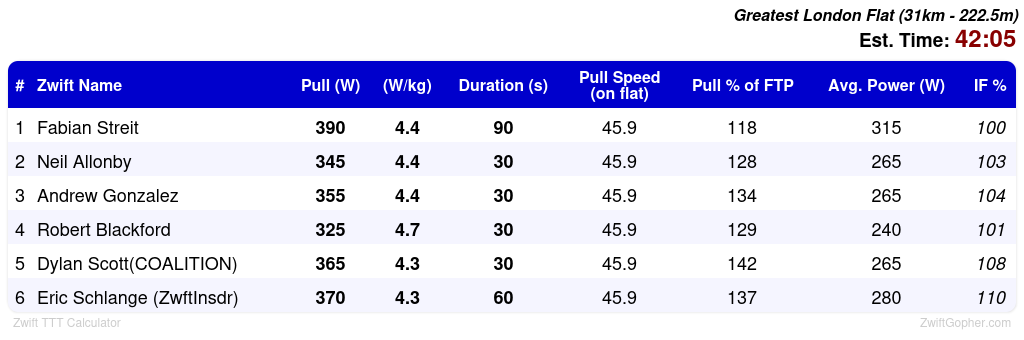
This being the first race of a new round, and only my fourth race with Coalition Delusion, I’m still getting to know my team and their strengths. Captain Neil had our pull order worked out, with a bit of help from the Zwift TTT Calculator:
When the clock hit zero, it was go time. I’d been spinning my legs for a few minutes, but I was far from warmed up. Happily, I was the last guy on the list to pull, which means I’d have a few easier minutes before needing to ramp it up to 370 for 60 seconds!
Settling Into a Strong Pace
We rolled out like pros, getting into a single file quickly despite the rollers at the start that can make it difficult to hold formation. Teammate Chris M was on Discord as our DS, not racing but playing a vital role in calling out what’s going on and making decisions so we didn’t have to.
We settled into a rhythm, calling out what time on the ride clock we’d be pulling to each time we took to the front and when we were about to pull off. I’d forgotten to fire up Sauce for Zwift, so I clicked to do that, giving us extra visibility into time gaps for teams ahead and behind.
As we turned right onto Northumberland Ave, I could see we were doing well, having put time into all the teams I could see in Sauce: to up the road and two behind. A good start, but could we hold the pace?
We ramped up the effort a bit on Northumberland, the first proper uphill of the course. While you have a pull order with power targets in a TTT, that’s your target on flat ground. For a team to maximize their overall speed, they need to push over those targets on climbs. And if you need to, you can ease and drop below the target on descents. The same rules apply in outdoor time trials, because… that’s how physics works.
Bless this Mess
Things got a bit messy formation-wise as we continued our race, so I reminded everyone on Discord that riding 2-3 meters behind the next guy is helpful in TTT races. You still get a full draft, but you aren’t constantly overlapping wheels and pushing each other out of the draft. It gives you breathing room. So we tried to stretch our line out a bit, with varying degrees of success.
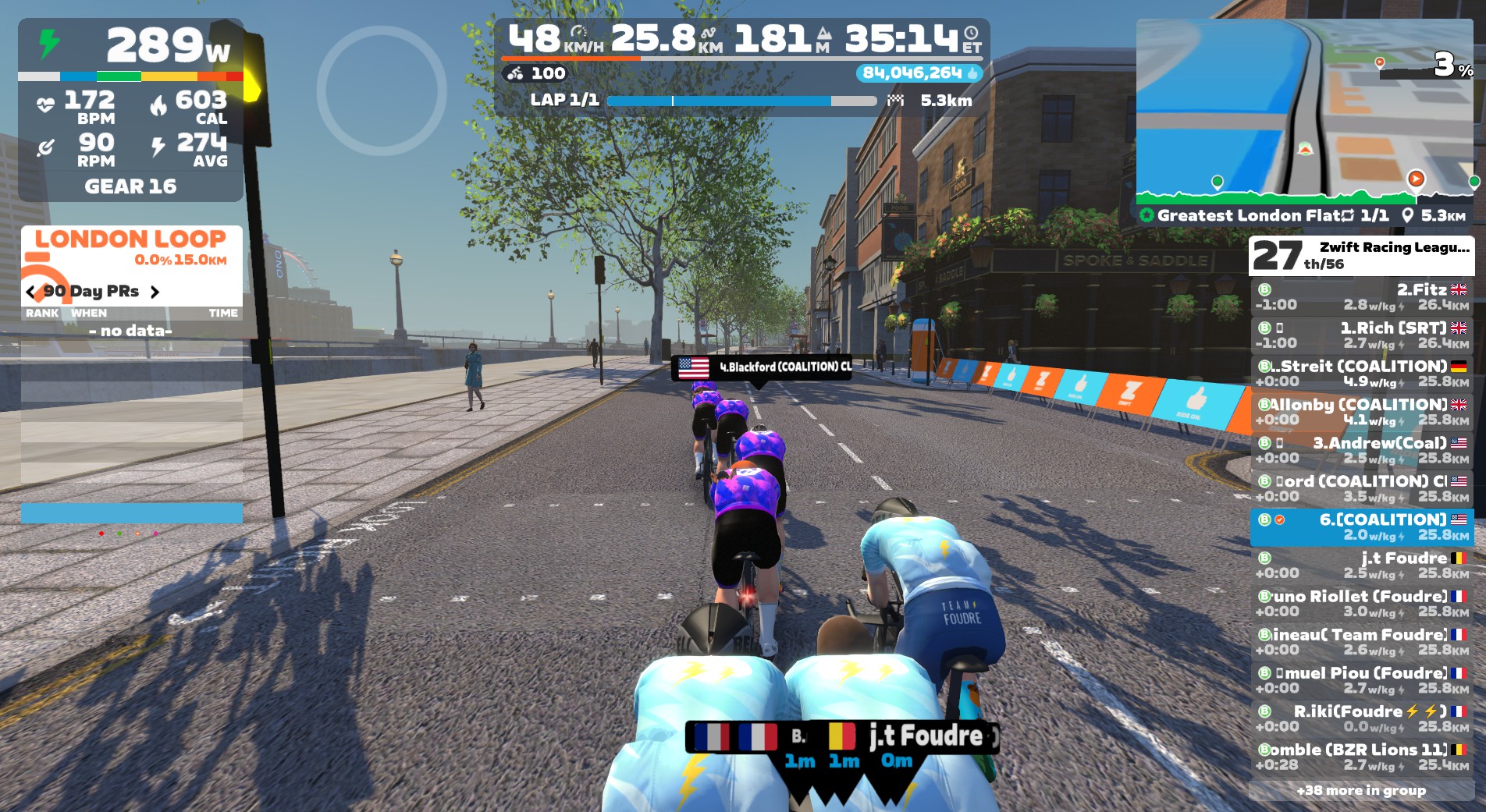
I might have pushed on Discord for a cleaner formation, but what I was seeing in Sauce showed that we were still putting time into all the teams we could see. At the 16.6km mark we passed the team ahead, the BZR Lions. These poor guys had their work cut out of them, because they started with only four riders! I gave them a ride on as we passed…
Suffering In the Hills
Through the subway, then out into the countryside. This is where the work begins on this course! You’ve got a small climb up to the base of Box Hill, then a series of shallow, draftable climbs through the park area. We ramped up our power on the climbs, but also reminded each other to hold formation since the climb were quite draftable. Sauce said I was saving 40W drafting on the climb, and by the end of this tough section we were less than 30 seconds from catching the next team up the road.
Chris was on Discord, dishing out the positivity: “You’re flying, guys. Keep doing what you’re doing, this is awesome.”
Down the other side, into the Underground, then the next challenge reared up: the escalator ramp! Chris reminded us of the best approach to this tricky section: ramp up before you get to the bottom so you carry momentum up the climb, then keep pushing over the top.
I was first over the top, which gave me a welcome chance to ease up and let the team pass, with Fabian starting another long pull and me catching the tail end so I could sit in for a bit.
One Rider Down
We still had all six riders at this point, but I could tell Dylan, the rider ahead of me, was struggling. I was on his wheel, and he let a big gap open to the four riders ahead. Uh oh! He didn’t call for help, and was able to push hard and close the gap. A noble and strong move, but I think it pushed him past the redline. Seconds after closing the gap he sat up. Parachute pulled. Well done, sir.
We caught the next team (Foudre) at the 24.8km mark, then kept pushing. Fabian and I had been taking longer pulls, and we were both feeling it. We called out our pull lengths, shortening them so we could hold on to the finish.
The Foudre team sort of sat in our draft for a bit, making things a bit messy and not dropping off until around 26.1km:
(This happens often in TTT races, and I think it’s generally not intentional. It’s hard for the passing team to increase their power even more in order to gap the passed team quickly, and the team getting passed doesn’t want to ease up to let the gap form. So instead, the passed team gets sucked into the draft of the passing team until the elastic snaps!)
Andrew’s Disappearing Act
At the 26.4 mark, our team of five suddenly became four when Andrew disappeared. He was the middle rider in our formation when it happened, too, which really confused things. Fabian was dropping back after taking his pull, Neil had just started his, then Andrew disappeared, leaving Neil 20 meters off the front and the rest of us wondering how that gap opened up!
Andrew appeared again as Fabian started pushing to close the gap. I was feeling the effort, but I knew Fabian was too, having just taken a pull, so I upped the power and came around him to try to pull Fabian and Robert up to Andrew and Neil. Andrew disappeared again, and we climbed up Northumberland, catching Neil halfway up.
That’s when DS Chris noticed Andrew had disappeared. (It’s only in watching my video that I’m seeing what happened earlier.)
Up Northumberland, we were clearly all on the rivet. “Is anyone able to go?” Chris asked, looking for someone to take a pull. *crickets*
Eventually, team captain Neil got on the front (chapeau!) then suddenly, Andrew appeared again, 3 seconds up the road. What a stud! (Anyone who’s ever had an Internet dropout on Zwift knows how hard it is to stay with the other riders when they disappear from the screen and you lose their draft and position. He must have pushed hard to keep his speed higher than ours.)
With 3km to go, the five of us turned right onto the Classique course for our finish. Chris put together an ad-hoc order and we kept rotating through, complete with Andrew disappearing again mid-pull. But we kept our speed up, then went all-in with 400 meters to go. Empty the tank!
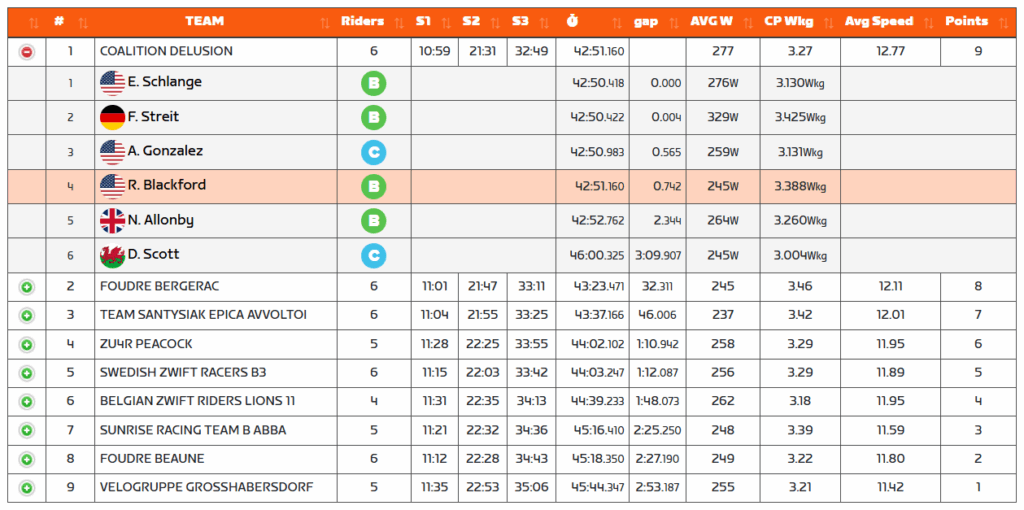
I averaged 493W for the final 30 seconds, pushing hard on tired legs. Our final time, taken off our fourth rider, would be 42:51.16.
We knew we had beaten the teams we could see on screen. And the results screen that popped up showed us in 1st place, but I wasn’t sure if that results screen works the way it should for a TTT. (In hindsight, I think it does.)
After cooling down, I headed over to the WTRL website to see if our results were up yet. And they were… and we’d won!
Overall, I was happy with my performance on the day, as I was able to take 60-second pulls, help close gaps, and generally be an asset and not a liability for the team. That’s the beauty of racing in the B Development division… I’m not constantly struggling just to hold on!
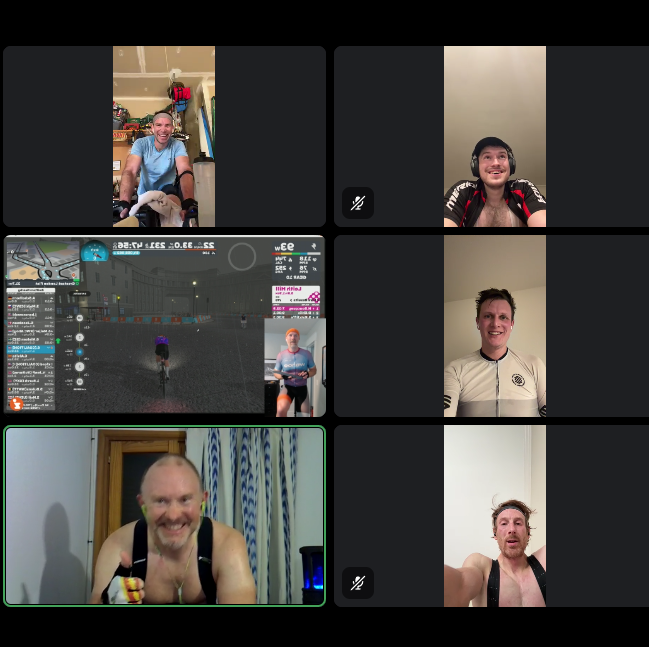
Traditional team Discord snapshot
The team did well as a whole, too, of course. While we could certainly tighten up our formation and get even faster, a win in the first race bodes well for this round. Next week is gonna be a tough one, but that’s part of racing ZRL. See you then!
Your Thoughts
How did your first race of round 2 go? Share below…
A curious engineer discovered that his iLife A11 smart vacuum was remotely “killed” after he blocked it from sending data to the manufacturer’s servers. By reverse-engineering it with custom hardware and Python scripts, he managed to revive the device to run fully offline. Tom’s Hardware reports: An engineer got curious about how his iLife A11 smart vacuum worked and monitored the network traffic coming from the device. That’s when he noticed it was constantly sending logs and telemetry data to the manufacturer — something he hadn’t consented to. The user, Harishankar, decided to block the telemetry servers’ IP addresses on his network, while keeping the firmware and OTA servers open. While his smart gadget worked for a while, it just refused to turn on soon after. After a lengthy investigation, he discovered that a remote kill command had been issued to his device.
He sent it to the service center multiple times, wherein the technicians would turn it on and see nothing wrong with the vacuum. When they returned it to him, it would work for a few days and then fail to boot again. After several rounds of back-and-forth, the service center probably got tired and just stopped accepting it, saying it was out of warranty. Because of this, he decided to disassemble the thing to determine what killed it and to see if he could get it working again. […] So, why did the A11 work at the service center but refuse to run in his home? The technicians would reset the firmware on the smart vacuum, thus removing the kill code, and then connect it to an open network, making it run normally. But once it connected again to the network that had its telemetry servers blocked, it was bricked remotely because it couldn’t communicate with the manufacturer’s servers. Since he blocked the appliance’s data collection capabilities, its maker decided to just kill it altogether.
“Someone — or something — had remotely issued a kill command,” says Harishankar. “Whether it was intentional punishment or automated enforcement of ‘compliance,’ the result was the same: a consumer device had turned on its owner.” In the end, the owner was able to run his vacuum fully locally without manufacturer control after all the tweaks he made. This helped him retake control of his data and make use of his $300 software-bricked smart device on his own terms. As for the rest of us who don’t have the technical knowledge and time to follow his accomplishments, his advice is to “Never use your primary WiFi network for IoT devices” and to “Treat them as strangers in your home.”
The semiconductor market is currently a tale of two titans, but one is largely flying under the radar while delivering explosive, calculated growth. NVIDIA, having reached the historic peak of a $5 trillion market capitalization, faces the immense pressure of living up to that hyper-valuation. Meanwhile, AMD, led by a management team praised for its focused execution, is quietly delivering record revenue of $9.2 billion, up 36% year-over-year (YOY), comfortably surpassing analyst consensus estimates. This isn’t just a strong quarter; it’s a strategic masterclass in how to win the AI infrastructure war by focusing on execution, diversification and meeting customer needs rather than chasing stock market distractions.
The Power of Focus: Flying Below the Valuation Radar
AMD’s success this quarter is defined by its ability to execute its long-term plan without the crippling pressure inherent in NVIDIA’s valuation. While NVIDIA must constantly deliver unprecedented growth to justify its colossal market weight, AMD operates with a more reasonable forward earnings multiple, making it a more attractive and stable investment in the volatile AI sector.
AMD’s non-GAAP gross margin hit a robust 54%, flat YOY and was up 11 percentage points quarter-over-quarter (QOQ), demonstrating tight cost control even amidst rapid scaling. Non-GAAP net income surged to $2 billion, up 31% YOY, and a staggering 152% QOQ, translating to a powerful non-GAAP EPS of $1.20, up 30% YOY. These results confirm that AMD is successfully converting revenue growth into substantial profitability, achieving financial robustness that allows it to accelerate R&D and product roadmaps without the external distraction of defending an astronomical market cap.
The Strategic Shift: Slipstreaming Past Intel’s Weakness
AMD’s impressive results highlight the continuing erosion of Intel’s historic market dominance, confirming that AMD is successfully slipstreaming past its rival in critical segments. The Client and Gaming segment revenue hit $4 billion, up an incredible 73% YOY.
Client Revenue: Client revenue reached a record $2.8 billion, up 46% YOY, driven by record sales of Ryzen processors and a richer product mix. This signifies that the performance and value offered by Ryzen are continuing to capture high-value segments of the PC market, chipping away at Intel’s entrenched overall x86 market share (which Intel still leads, but is losing ground in high-performance sectors).
Gaming Revenue: Gaming revenue jumped 181% YOY, fueled by higher semi-custom revenue (think console chips) and strong Radeon gaming GPU demand. This double-digit growth demonstrates AMD’s comprehensive health across both consumer and enterprise markets.
These consistent gains in the Client and Gaming markets are a direct consequence of AMD’s strategic decision to focus on performance and execution, offering consumers and OEMs compelling reasons to migrate away from Intel’s established, but currently slower-to-innovate, x86 platforms.
The AI Factory: Data Center Dominance Takes Hold
The true bellwether for the future, the Data Center segment, reported revenue of $4.3 billion, up 22% YOY. This vital growth was fueled primarily by strong demand for 5th Gen EPYC processors and Instinct MI350 Series GPUs. The EPYC processors continue to capture high-end server market share from Intel, and the MI350 ramp-up is putting serious pressure on NVIDIA in the AI accelerator market.
Crucially, the Q2 results were impacted by $800 million in charges related to the U.S. government’s export restrictions on AMD Instinct MI308 GPUs (the China-specific variant). The fact that AMD was able to absorb this massive regulatory hit and still post record overall revenue and strong data center growth underscores the fundamental strength and diversification of its current business model. This demonstrates resilience against geopolitical risks, something few of its competitors can claim.
Management Excellence: A Blueprint for Growth
The consistently strong results are a direct reflection of the management team’s stable leadership and disciplined execution. Unlike some competitors whose corporate strategy seems to shift daily, AMD has maintained a clear vision, focusing on its next-generation hardware cadence (MI350, MI400, MI500) and aggressively expanding its open-source ROCm ecosystem. This dedication is paying off, as the company’s Q4 2025 guidance projects revenue of approximately $9.6 billion, plus or minus $300 million, with a non-GAAP gross margin climbing slightly higher to 54.5%. This confidence in continued margin expansion and growth, despite ongoing regulatory uncertainty, is a powerful endorsement of AMD’s strategic plan and the increasing demand for AMD’s AI-focused solutions.
Wrapping Up: The Quiet Giant’s Momentum
AMD’s Q3 2025 financial report is a powerful indictment of the hyper-focus on valuation over substance in the semiconductor market. By posting record revenue, phenomenal earnings growth and strong guidance, AMD proves that steady execution and strategic diversification are the keys to long-term success. While NVIDIA risks distraction from its immense valuation and the competitive threat of open source, AMD is leveraging its strong EPYC and Ryzen platforms to relentlessly gain share from Intel and is utilizing its open ROCm ecosystem to provide a compelling, cost-effective alternative in the lucrative AI market. AMD is no longer just playing catch-up; it is setting the pace for sustainable growth in the age of AI.
IKEA has officially announced its range of Matter-compatible smart home products. The Swedish furniture store is releasing 21 new items under the tentpoles of lighting, sensors and control. IKEA teased these releases back in July.
Part of the roll out will include updates to existing categories in order to work with Matter, an open source smart home standard. “We’re upgrading our most-appreciated products while also adding new ones to solve even more everyday challenges,” Stjepan Begic, product developer at IKEA. “Our focus has been on keeping things simple from setup to daily use, so it’s easy for people to start, use and grow a smart home.”
As for the products themselves, 11 come as part of the KAJPLATS smart bulb range. They will have a mix of shapes and sizes, along with dimming functionality. Then there’s the five smart sensors., starting with an indoor and outdoor motion sensor called MYGGSPRAY, which automatically turns on lights. Similarly, there’s MYGGBETT, which sends a notification when a door or window gets opened or closed.
On the more technical safety side are sensors like TIMMERFLOTTE, which monitors temerature and humidity. Then there’s ALPSTUGA, an air quality sensor and KLIPPBOK, a water leakage sensor.
Finishing the lineup is a range of remote controls and one smart plug, GRILLPLATS, which works with regular lamps and appliances to turn them on and off, along with tracking energy use. Then there’s the four BILRESA products, starting with a dual button remote control that can turn lights on and off, adjust the brightness, and create a preset scene. Meanwhile, the remote control with a scroll wheel does similar functions, along with dimming. Two kits of three controls each are available for each type.
IKEA doesn’t include exact pricing or release dates, noting that it might vary market to market. In its July teaser, the company said these products would be available come January next year.
This article originally appeared on Engadget at https://www.engadget.com/home/smart-home/ikea-announces-new-matter-compatible-smart-home-products-120013040.html?src=rss
Adding to the array of software projects and specifications under the FreeDesktop.org umbrella, the Filesystem Hierarchy Standard “FHS” has been adopted by these desktop-focused open-source developers…
The new Skarper companion app brings full control to what I believe is the smartest ebike conversion kit you can buy.
Skarper’s revolutionary DiskDrive Ebike Drive System impressed me massively when I tested it last year.
It combines great power delivery, low weight and being an ebike converter that, uniquely, can be fitted in seconds and removed just as quickly.
I’ve been impressed by ebike converters from the likes of Boost, Swytch and Cytronex. However, the downside is that once you’ve fitted any of those conversion kits, your bike can’t be restored to its former non-assisted state.
The Skarper unit simply clicks into place and can be removed in seconds. Russell Burton / Our Media
The beauty of Skarper’s groundbreaking solution, which clicks on and off, is that your bike remains a bike. It only becomes an electric bike when you want it to be.
The Skarper system can be shared across multiple bikes, making it a great-value option.
The only niggle I had with the system was the lack of information; with no on-bar display or controller, you have to look at the lights on the unit to check on battery level and current mode. That’s not easy when riding, and not being able to change modes while pedalling seemed like an oversight.
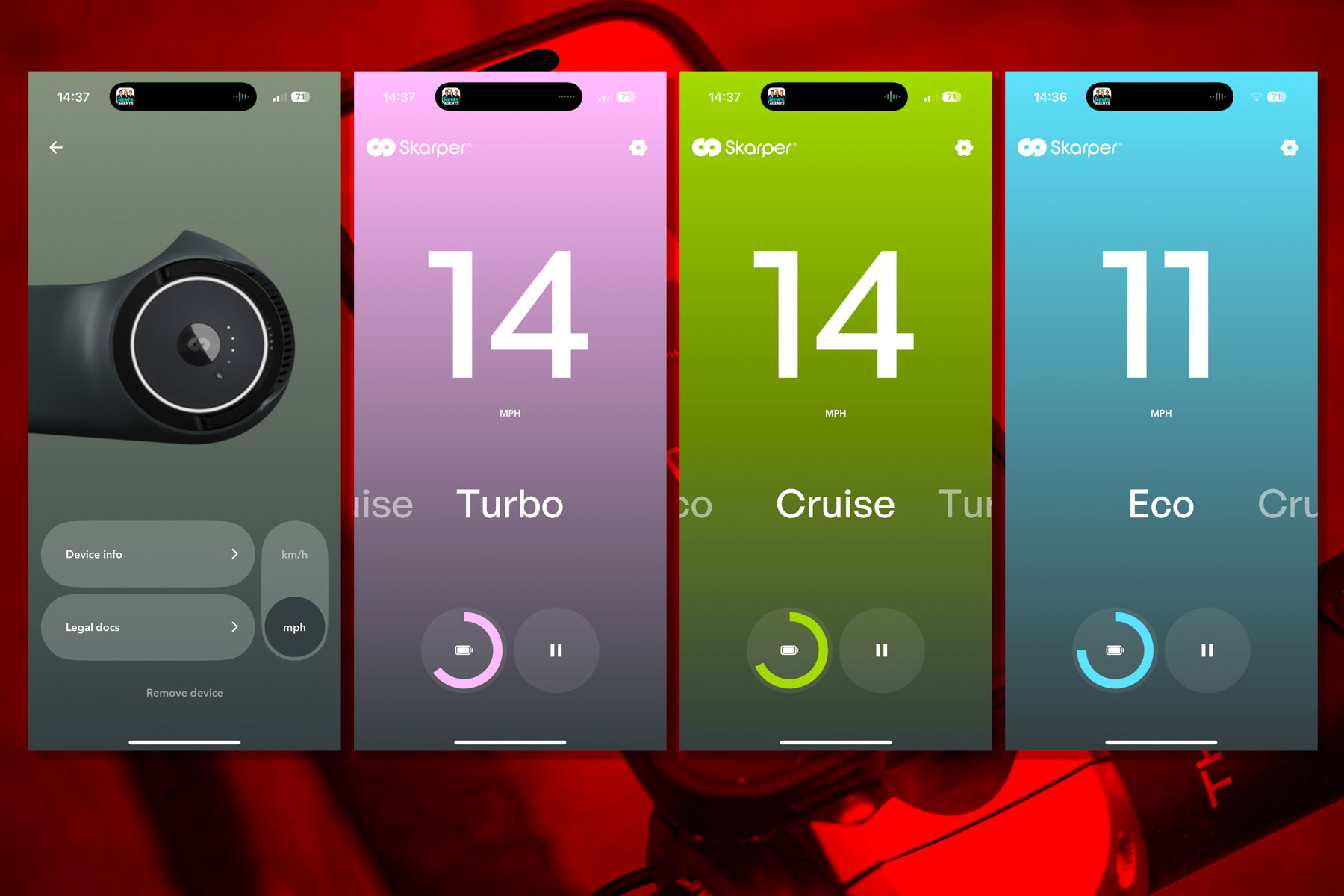
The new Skarper companion app enables you to check firmware, and changes colour as you swipe through the modes. Warren Rossiter / OurMedia
I called out for an app to make the system complete and Skarper has answered my prayers. I’ve had the Beta version of the new Skarper app on test for a couple of months now, and it’s just what I wanted.
The app converts your smartphone into a speed display; it also shows the battery level, and you can switch between Eco, Cruise and Turbo modes by swiping the display left or right.
It will also show warnings if something is amiss with the system, and you can check the firmware is up to date within the system settings. There’s an odometer for the unit, too.
The Skarper kit delivers smooth power thanks to clever programming. Russell Burton / Our Media
The Beta version has these simple functions, but Skarper tells me it will continue development and is looking into expanding the features of the free companion app soon.
The official roll-out of the Skarper companion app is set for early December.
Several winners of Cycling UK’s 100 Women in Cycling prize have declined their nominations following the charity’s decision to exclude trans women and non-binary people from the award.
The charity has produced a list of notable women in cycling every year since 2017. It says the winners are “making cycling more accessible and inclusive to all and shaping the future of cycling”.
But this year, Cycling UK limited its eligibility criteria so only biological women could be nominated, citing a Supreme Court ruling from earlier this year.
The ruling found that references to ‘woman’ and ‘sex’ in the Equality Act refer to biological women and biological sex.
The case was brought to the Supreme Court by gender-critical campaign group Women For Scotland, which is financially backed by JK Rowling, after two Scottish courts rejected its arguments over the 2010 Equality Act’s definition of a woman being limited to people born biologically female.
Cycling UK said on its website: “We have received legal advice which says that for our awards to continue to comply with the law we have to limit who can be nominated to biological women only.”
The charity’s decision has now come under fire from nominees of the 100 Women in Cycling Award.
Last week, Megan Joy Barclay, who runs the women’s development programme at Herne Hill Velodrome, declined the award.
In the letter Barclay wrote to Cycling UK, and posted on Instagram, she said: “Thank you for the recognition, I’ve enjoyed your women’s 100 list from afar for years and am flattered to have been chosen. Unfortunately I am going to politely decline the award as a result of your trans-exclusionary policy this year.
“I know that women are incredibly underrepresented at all levels of cycling as a result of years of marginalisation, inaccurate depictions of our capabilities, and binary ideals around what sport should be and look like. We now see the same thing happening to trans and non-binary riders and it saddens me that a sport I love will make the same exclusionary mistakes again.”
“I hope you will reconsider how these awards are run next year to ensure all women and non-binary people are included as we work towards better representation in cycling,” Barclay continued.
Cycling Weekly covered Barclay’s withdrawal from the award on 5 November and, since then, other nominees have turned down a place in the 100 Women in Cycling.
Sarah Ruggins, who holds the Land’s End to John O’Groats record, said in a statement on Instagram that she is declining the award due to the selection criteria.
Ruggins wrote on Instagram: “I will not accept recognition from a committee that has chosen to align with the Supreme Court’s definition of “woman” as sex at birth. This stance excludes trans women and other minorities, denying the dignity, inclusion, and opportunity they deserve.
“Sport is about belonging, not barriers. Trans women are women. Their exclusion from women’s categories and spaces sends a message that undermines the very principles of fairness, respect, and unity that sport is meant to uphold.”
The Bristol-based cycling guide and coach Claire Sharpe also declined the award because Cycling UK “didn’t mean all women”, she said in an Instagram video.
“If they don’t want to ride with all women, that’s not the kind of ride I want to be on anyway,” Sharpe added.
Athlyn Cathcart-Keays, founder of Roll Models, which empowers women and “marginalised genders to ride adventurously, independently, on their own terms”, said: “I cannot accept recognition from an organisation whose position excluded members of our community. Celebration means nothing if it comes at the expense of others’ belonging.”
The Green Party councillor Saskia Heijltjes also posted on Bluesky, saying she had asked to have her name and face removed from the awards.
The New Forest Off Road Club, which aims to grow representation in the outdoors, said that it understands from Cycling UK that the 100 Women in Cycling initiative is about “decentering the male perspective” and that to do that “we need trans voices too”.
In response to the criticism, Sarah Mitchell, chief executive at Cycling UK, said: “Cycling UK is absolutely dedicated to making cycling open and welcoming for everyone. This change to the awards doesn’t alter our strong commitment to including and supporting all those who cycle, including transgender and non-binary people. We truly believe cycling is for all, and we’ll keep working towards that goal.
“We also plan to review the overall format of our 100 Women in Cycling Awards ahead of the tenth anniversary next year – as there may be new and better ways to champion diversity and inclusivity in cycling.”
China has delayed the return of its Shenzhou-20 crewed spacecraft after it was suspected to have been struck by space debris while docked at the Tiangong space station. “The Shenzhou-20 crewed spacecraft is suspected of being struck by a small piece of space debris, and impact analysis and risk assessment are underway,” the China Manned Space Engineering Office (CMSEO) statement Nov. 5 read. “To ensure the safety and health of the astronauts and the complete success of the mission, it has been decided that the Shenzhou-20 return mission, originally scheduled for Nov. 5, will be postponed.” SpaceNews reports: CMSEO did not specify the location of the suspected strike, the extent of any damage, or the data that indicated an impact. No potential dates were noted for a return to Earth. The Shenzhou-20 spacecraft launched April 24, carrying three astronauts — commander Chen Dong and crewmates Chen Zhongrui and Wang Jie — to the Tiangong space station. The spacecraft docked at the radial port of Tiangong’s Tianhe core module. The crew have completed their six-month-long mission in orbit, and had handed over control of the space station to the newly-arrived Shenzhou-21 crew Nov. 4.
Checks on the Shenzhou-20 spacecraft could include telemetry and leak tests, verifying guidance and propulsion systems, and screening for impacts in accelerometer and acoustic sensor data. A key concern would be potential damage to the spacecraft’s thermal protection system or parachute deployment structures, both critical for safe atmospheric reentry and landing. Tiangong features a 10-meter-long robotic arm, capable of crawling, and a smaller, more precise arm. These could be employed to position cameras and provide closeup imagery of a potential impact. Crews may be able to conduct an extravehicular activity (EVA) to assess the situation. Tiangong crews have recently added debris shields during a number of EVAs; the same procedures, tools, and arm support can be adapted for a Shenzhou inspection.
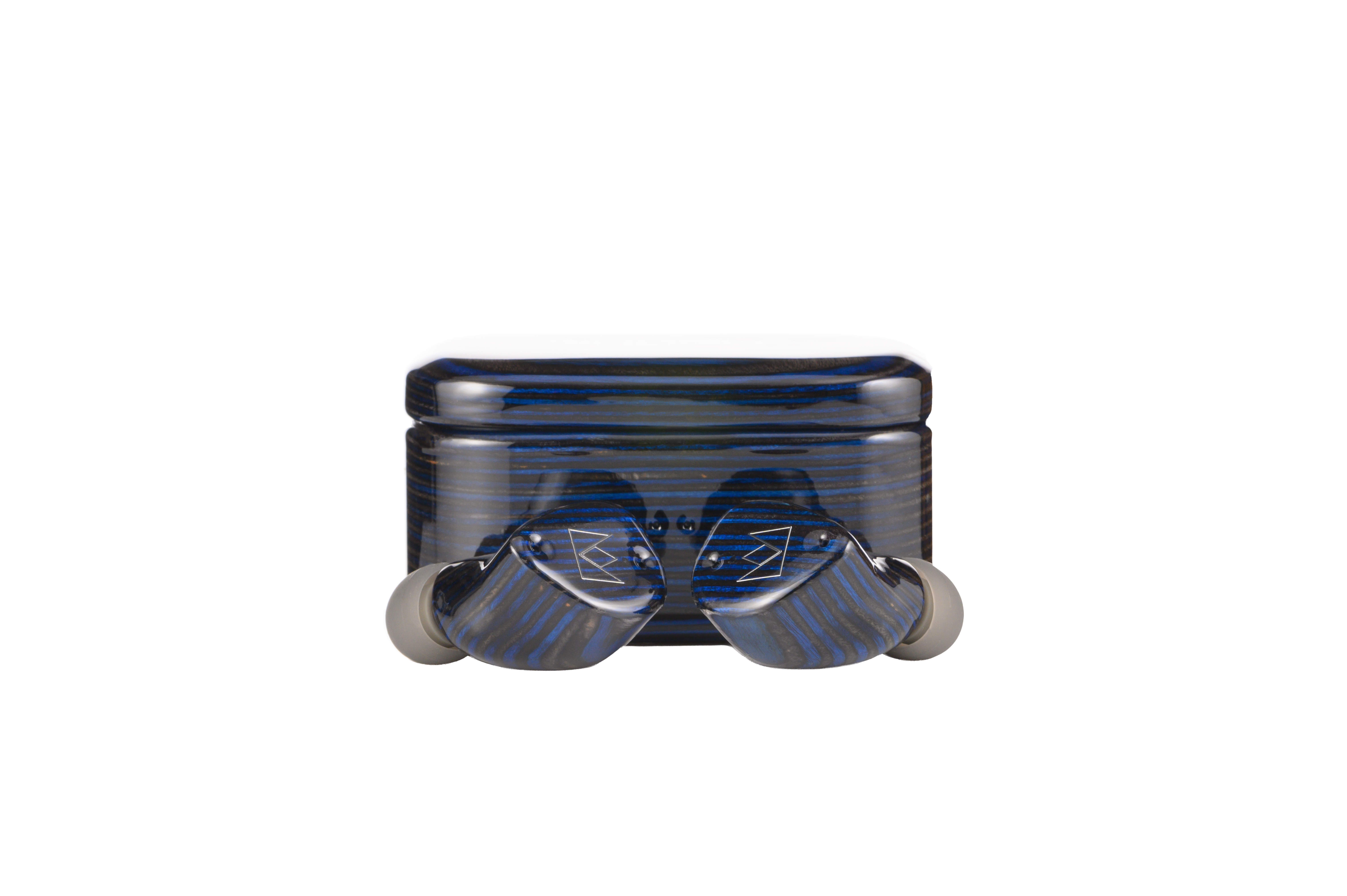
The last time I used a set of Noble Audio earbuds, the company managed to pack five drivers into the tiny housings. Now it’s back with a new model, the FoKus Prestige Encore, and despite only having four drivers this time, the company still took plenty of cues from its line of pro-grade in-ear monitors (IEMs). The biggest downside is that this new set is still plenty pricey, hitting your wallet for $699.
Inside, the FoKus Prestige Encore has one 8mm dynamic driver, two balanced armature drivers and one 6mm planar magnetic driver. According to Noble, each of these components have different duties. The dynamic drivers handle bass while the midrange goes to the Knowles balanced armature drivers. Lastly, the planar magnetic driver is tasked with the treble to “reveal microdetail.” The company says it also designed new “triple-vented” nozzles to make airflow efficient and the seal consistent.
Noble Audio FoKus Prestige Encore
Noble Audio
Rather than using plastic or some other affordable material, Noble opted for solid wood for both the earbud housings and the charging case. Since this is the real thing and not a printed plate, each set of the FoKus Prestige Encore will have its own unique grain pattern — no two sets will look the same. What’s more, Noble reduced the overall size of the buds, which it says offers “a secure, fatigue-free fit.”
The FoKus Prestige Encore is equipped with hybrid active noice cancellation (ANC) and a transparency mode. The earbuds also support aptX Lossless, aptX Adaptive and LDAC for higher quality listening. For calls, dual noise suppression mics won’t overly process your voice for the sake of reducing background distractions, which Noble says will keep you sounding clear and natural in all settings.
Noble promises up to seven hours of use on a charge with ANC enabled or up to 10 hours with noise canceling turned off. When you factor in the case, you’re looking at up to 35 hours of total listening time. A quick-charge features will give you up to two hours of playback. The FoKus Prestige Encore also supports Audiodo for personalized calibration for each user’s hearing, and those profiles are stored on the earbuds for use on any device.
The Fokus Prestige Encore is available starting today for $699 (£649/€799).
This article originally appeared on Engadget at https://www.engadget.com/audio/headphones/noble-audios-latest-earbuds-have-a-four-driver-setup-and-a-solid-wood-design-090000651.html?src=rss