Windows 11 Users Will Get a Major Start Menu Redesign This Week

Windows 11 users are getting a long-awaited Start menu redesign this week. While the features have been available in beta for awhile, Microsoft is rolling out the updated interface to everyone alongside November’s Patch Tuesday.

What’s new with the Windows 11 Start menu

The Start menu will now be scrollable, so you can see all of your apps on the homepage instead needing to click All apps to open a separate page. Below pinned apps and recommendations, Microsoft will now automatically categorize similar apps into groups—the Productivity group may include your browsers and Microsoft 365 suite, for example—and place remaining apps under Other. Categories are created with three or more similar apps. For the time being, Microsoft does not allow you to customize your own. This will be the default view after the update, though you can change back to grid view with apps listed A to Z.

The new Start menu will also adapt to fit your screen: Larger screens will default to eight columns of pinned apps, six recommendations, and four category columns. If your screen is smaller, the menu will shrink to six pinned app columns, four recommendations, and three columns of categories. You can also disable recommendations, which will allow you to see more installed apps on the Start menu without needing to scroll. You’ll find this option under Settings > Personalization > Start.

In addition to the improved Start menu, Windows 11 users will also see a handful of other updates this Patch Tuesday. The battery icon now will have an optional percentage display and color indicator, and File Explorer will have a Recommended section on the Home page in place of Quick Access. Voice Access and Click to Do also have improved features.

You do not need to reinstall Windows in order get the Start menu redesign. Just ensure your system is set to automatically check for updates as soon as they’re available.

Runaway black hole mergers may have built supermassive black holes

A new simulation could help solve one of astronomy’s longstanding mysteries—how supermassive black holes formed so rapidly—along with a new one: What are the James Webb Space Telescope’s (JWST) “little red dots?”

Invisible leviathans lurk at the cores of nearly all of the 2 trillion or so galaxies strewn throughout space-time. Monster black holes entered the cosmic scene soon after the Universe’s birth and grew rapidly, reaching millions or even billions of times the Sun’s mass in less than a billion years. Astronomers have long wondered how these supermassive black holes could have grown so hefty in such little time.

The monster black hole mystery became even more perplexing in 2022 when “little red dots” were spotted at the far edges of space. When these tiny scarlet orbs began unexpectedly popping up in JWST images of the distant Universe, their nature was hotly debated. Now that scientists have amassed a sample of hundreds of them, many think the dots are growing supermassive black holes.

Read full article

Comments

The Algorithm Failed Music

An anonymous reader shares a report: Spotify is the most popular music streaming service in the world. While its algorithmic recommendations aren’t necessarily the reason, its reach has meant that hundreds of millions of people are being fed a steady diet of music curated by a machine. Spotify’s goal is to keep you listening no matter what. In her book Mood Machine, journalist Liz Pelly recounts a story told to her by a former Spotify employee in which Daniel Ek said, “our only competitor is silence.”

According to this employee, Spotify leadership didn’t see themselves as a music company, but as a time filler. The employee explained that, “the vast majority of music listeners, they’re not really interested in listening to music per se. They just need a soundtrack to a moment in their day.” Simply providing a soundtrack to your day might seem innocent enough, but it informs how Spotify’s algorithm works. Its goal isn’t to help you discover new music, its goal is simply to keep you listening for as long as possible. It serves up the safest songs possible to keep you from pressing stop.

The company even went so far as to partner with music library services and production companies under a program called Perfect Fit Content, or PFC. This saw the creation of fake or “ghost” artists that flooded Spotify with songs that were specifically designed to be pleasant and ignorable. It’s music as content, not art. […] Artists, especially new ones trying to break through, actually started changing how they composed to play better in the algorithmically driven streaming era. Songs got shorter, albums got longer, and intros went away. The hook got pushed to the front of the song to try to grab listeners’ attention immediately, and things like guitar solos all but disappeared from pop music. The palette of sounds artists pulled from got smaller, arrangements became more simplified, pop music flattened.


Read more of this story at Slashdot.

Patreon is adding a discovery feed to help creators avoid social media platforms

Patreon has spent the last few years pitching itself as a healthier alternative to algorithmic social platforms for creators. Now, the membership service is adding a bunch of new social features for its creators in an attempt to make its platform more of a viable alternative to mainstream social media.

The updates include a new post format, called Quips, that allows creators to share non-paywalled updates that can include text, photos or video. Patreon users can browse quips from creators via the app’s redesigned “home” feed, which now includes recommended posts. (Patreon says users can opt to only see posts from creators they’re already following if they wish.) The company is also working on a saved posts feature and a tagging feature so creators can @-mention each other in their posts. 

All that may sound a lot like social media, but Patreon CEO Jack Conte says the updates are meant to give creators a way to grow their audience without relying on platforms that aren’t as invested in their success. “I don’t think of it as competing with Instagram …  I feel like we’re competing with what Instagram should have and could have become, but did not,” he said in an update shared on his Patreon. 

Patreon's "Quips" will make the service feel more like social media.
Patreon’s “Quips” will make the service feel more like social media.
Patreon

With the updates, the company is also walking a fine line between offering creators an alternative to social media and becoming the type of algorithmic platform it has railed against. Conte seems aware of this tension, noting that the membership-only tab will still deliver updates only from creators people are already following. “If we pivot too much to discovery and you don’t see the creators that you’re subscribed to and love, then we’re not doing our job of helping you cultivate long-term relationships, and we have to fix that,” he said.

At the same time, he says there are early signs that the changes will be positive for creators. According to Conte, creators who have tried a beta version of Quips have already seen a significant rise in new free memberships from the feature. So far, there’s been a much smaller rise in paid subscribers, with “somewhere in the 5 to 10 percent” range of new paid memberships coming from Quips, though Conte says he’s “optimistic” about its potential to drive paid growth,

Patreon plans to roll out these updates slowly, with full availability coming sometime next year. In the meantime, creators who want access to Quips sooner can join a waitlist to be added to the beta.

This article originally appeared on Engadget at https://www.engadget.com/social-media/patreon-is-adding-a-discovery-feed-to-help-creators-avoid-social-media-platforms-173000049.html?src=rss

Apple Is Working On These Five New Satellite Features for the iPhone

AI has been the tech buzzword over the last few years, but it’s stolen attention from other technological advancements that are possibly more impactful in your everyday life. Take satellite connectivity for example: For most of the time cellphones and smartphones have existed, losing cell signal meant your mobile device was largely useless. With satellite connectivity, however, as long as you’re within range of a satellite, you can continue to make calls and send texts. It’s remarkable, for both the convenience of communication, as well as your safety.

Right now, there are only a few companies leading the satellite connectivity charge, at least as far as consumer technology goes. T-Mobile is the only carrier pushing it, having partnered with Starlink to offer satellite communications to its customers. But you don’t need T-Mobile for satellite connectivity if you have an iPhone: Since 2022, Apple has been building the iPhone’s ability to connect to satellites, starting with Emergency SOS via Satellite (the ability to reach out to emergency services over satellite), before rolling out general satellite messaging with iOS 18. Whether you have T-Mobile, an iPhone, or both, it’s possible to send your friend a text in the middle of nowhere, assuming you have a clear line of site to a satellite overhead. Amazing.

And according to Bloomberg’s Mark Gurman, Apple has some major plans to expand the iPhone’s satellite connectivity capabilities.

“Natural usage” improvements

Perhaps most importantly, Apple wants you to be able to connect to satellites without the need for an unobstructed view of the sky. Right now, that’s arguably one of the technology’s biggest hurdles: It’s great when you have a clear path between your iPhone and a satellite, but if there’s something in the way—say, a bunch of trees, or if you’re inside a building—the signal might not reach. The company is working on what is called “natural usage” improvements, which would support satellite connectivity across a wider variety of situations. Maybe your iPhone is in your pocket, or you’re in your car, but it’s as if you’re outside in a wide open clearing.

Apple Maps via satellite

Once you’re able to connect to satellites in more places, the other new features become even more useful. That includes a new version of Apple Maps that supports satellites, which would let you use the app without needing wifi or cellular. This is probably the feature I’d be most be excited for: It can be so stressful trying to pull up directions in an area with low to no signal, so to know you almost always have a way to connect Maps—even if it’s slower than usual—would be a relief.

Sending photos via satellite

Messaging is another area that will reportedly see some improvement: While you can currently text over cellular, Gurman says Apple is working on supporting sending photos over satellite as well.

Third-party support

It won’t just be Apple’s own apps and services that are benefitting, either. Gurman says Apple is working on an API to let third-party developers add satellite support to their apps as well. Apple’s own software may have the best experience, but it does open the door for expanded support. Other navigation apps, like Google Maps, could potentially connect to satellite this way. If you prefer it over Apple Maps, you wouldn’t have to stick with your iPhone’s built-in maps app when you don’t have cell service.

More coverage for future iPhones

While it wouldn’t impact current iPhone owners, the iPhone 18 will likely support 5G NTN, which lets cell towers themselves connect to satellites to boost coverage.

When these features will launch

Apple can’t add all of these improvements on their own, unfortunately. According to Gurman, the company will need Globalstar, the company that builds this satellite infrastructure, to make hardware improvements on their end. Assuming that happens, the idea of “dead zones” may be a relic of the first quarter of the 21st century.

Lezyne recalls early models of tubeless reservoir pumps – how to check if you’re affected

Lezyne has issued a voluntary recall notice for its Pressure Over Drive and Digital Pressure Over Drive reservoir pumps.

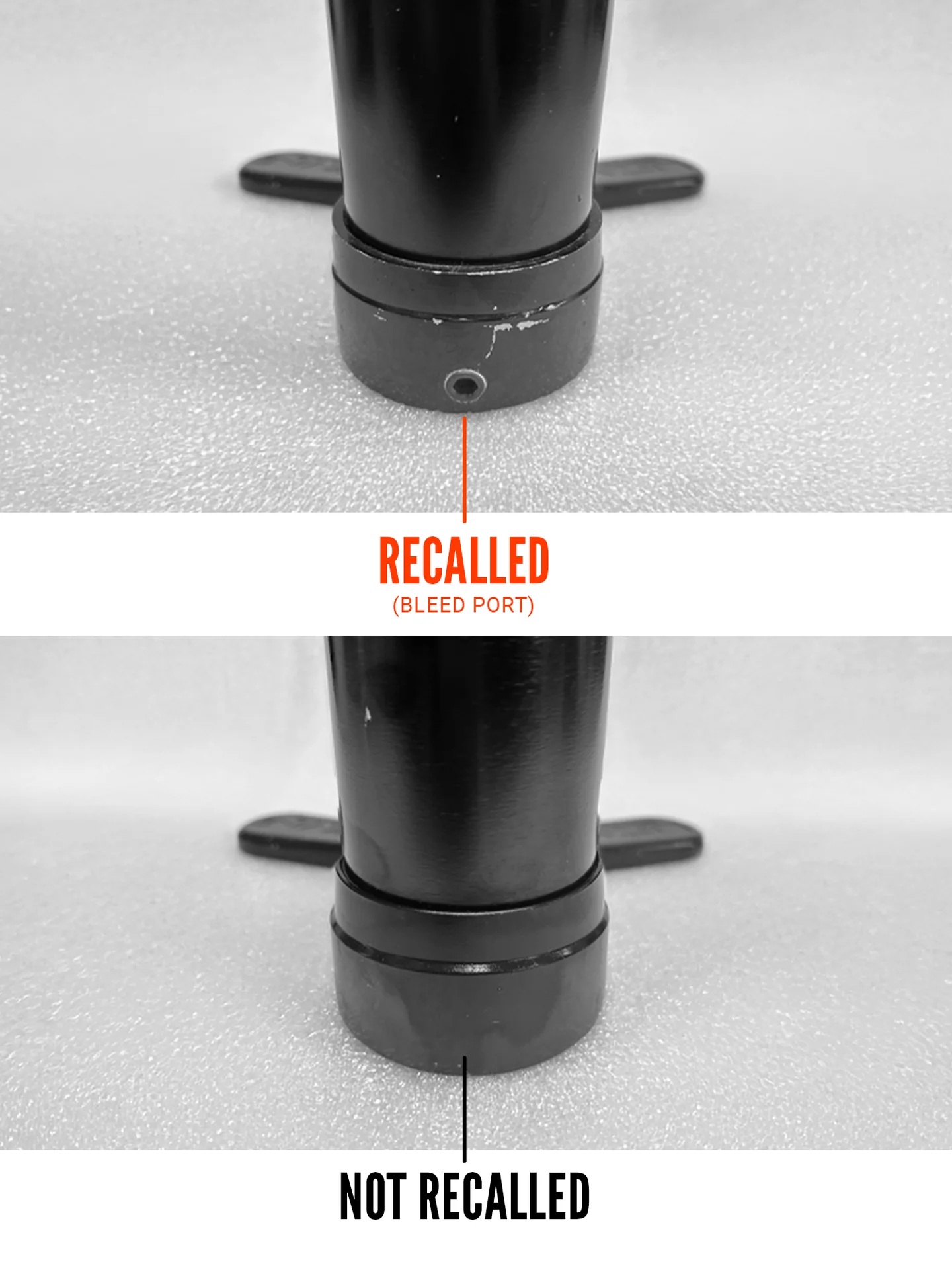
The recall notice is for older-model pumps that were manufactured between February 2016 and December 2021, and which have a bleed port located on the front of the pump’s base. 

Lezyne says the recall is the result of a single incident where the pump’s reservoir, when pumped up to pressure, ejected from the pump’s base. Lezyne says there’s a risk of serious injury from impact and has instructed owners to stop using the pump immediately.

What to do if you have an affected pump

It’s only pumps with a front bleed port in the base that are affected.

Lezyne is asking owners to log a claim on its site and register for a free replacement (this link only worked for me on Chrome and not Firefox). If you can’t complete the online recall form, Lezyne says you should email recall@lezyne.com.

If you have an affected pump, Lezyne says that, as well as ceasing use, you should cut, drill or grind a hole in the (depressurised) reservoir and send it a photo of the disabled pump as proof that it cannot now be used. The photo also needs to show the Lezyne logo and the front bleed port.

If you don’t have the wherewithal to inactivate the pump, Lezyne suggests asking your local bike shop for assistance. 

Once you’ve done that, Lezyne says you should dispose of the pump as mandated for steel and aluminium products. If you have a digital version, you’ll need to dispose of the coin cell battery separately, as per local hazardous waste/recycling regulations.

Lezyne says Pressure Over Drive and Digital Pressure Over Drive pumps made in 2022 or later are safe to continue using.

Venmo introduces a rewards program for its debit card users

PayPal has introduced a Venmo cash back rewards program that the company is calling Venmo Stash. The program is designed to scale rewards with user engagement, offering more cash back to those who use more of the platform’s suite of products.

The rewards are earned when users spend on their Venmo Debit Mastercard, but only at “curated bundles” of certain brands. Unless users are judicious about only using their Venmo debit cards at these brands, this could mean a net monthly cash back far below what is advertised.

In the company’s announcement, Paypal depicts brands like McDonald’s, TikTok Shop, Uber and Uber Eats bundled together, while another bundle shows Amazon, DoorDash, Domino’s and Walgreens. Users can change their bundle of brands every 30 days.

Cash back tiers start at 1 percent when users spend at their chosen brands, scaling to 2 percent when auto reloads are turned on to keep a balance in Venmo. The highest tier is 5 percent cash back, which requires customers to receive monthly Direct Deposits on Venmo of at least $500. PayPal says it will be introducing more ways to earn rewards next year.

The fine print for Venmo Stash mentions a monthly reward cap, the amount of which is only visible during the enrollment process. Once this cap is reached, no more rewards can be earned until the next calendar month.

PayPal has been making moves lately in hopes of enticing new customers. Earlier this year it offered a free year of Perplexity Pro to its users, along with early access to the AI powered Comet browser.

This article originally appeared on Engadget at https://www.engadget.com/big-tech/venmo-introduces-a-rewards-program-for-its-debit-card-users-170807513.html?src=rss

AMD Confirms Zen 6 CPUs Will Support AVX512 And These Other Instruction Sets

AMD Confirms Zen 6 CPUs Will Support AVX512 And These Other Instruction Sets
The idea that AMD’s Zen 6 would support AVX-512 in some fashion has never really been in question, to tell the truth. With native 512-bit vector datapaths and a nearly-complete AVX-512 implementation, AMD’s Zen 5 already has the strongest AVX-512 support on client systems, but it does seem like Zen 6 is poised to expand that support considerably.

Watch Out for These Tap-to-Pay Scams

Contactless payment, also known as tap-to-pay, has become a fast, easy, and relatively common way to complete a transaction using your smartphone or credit card. It relies on Near Field Communication (NFC) to transmit data between your device and a payment terminal when the two are in close proximity, up to an inch or two away.

While NFC technology does provide some additional security—transmitting a virtual account number instead of your actual card details, for example—scammers have found a way to capitalize on tap-to-pay to steal money from unsuspecting targets. These “ghost tapping” schemes may exploit both cards and mobile wallets.

How tap-to-pay scams work

According to the Better Business Bureau, ghost tapping takes advantage of a potential victim’s proximity and lack of attention to detail. They suggest it is possible for a scammer to bump into you in a crowded public space, getting close enough to trigger a contactless transaction without your knowledge. (It’s not clear how common a close brush with a tap-to-pay machine actually is.)

But other versions of ghost tapping rely on you to actively engage while missing the warning signs of fraud.

For example, scammers might appear to be selling goods or collecting small donations for charity using tap-to-pay, but they are actually charging your card for a much larger amount to a fraudulent business. They count on you not to look closely at the transaction details before tapping, or they rush you through the process and fail to offer a receipt.

In one instance reported to the BBB’s Scam Tracker, individuals were targeted by a door-to-door salesman who claimed to be selling chocolate for a charitable cause. The transactions were for hundreds of dollars, which the victims didn’t see before tapping.

How to avoid contactless payment scams

As with any scam, vigilance is key. Tap-to-pay is easy enough to feel automatic, and you may be less likely to pause and check the details than you would when swiping or entering your credit card. Always slow down and confirm the merchant name and transaction and tip amount before pulling out your phone or card (again, close proximity is enough to trigger tap-to-pay). Beware of any vendor who tries to rush you, hide the screen, or avoid giving you a receipt.

You may also want to set up transaction alerts with your bank or credit card company so you can catch any suspicious charges immediately. If you get a notification about a “test” charge, that is also a scam red flag.

Finally, while scammers probably aren’t going around secretly scanning tap-to-pay en masse, you could protect your cards using a radio frequency identification (RFID)-blocking wallet or sleeve. You can disable NFC on your Android in Settings (type “NFC” into the search bar). On iPhone, you have to turn on Airplane Mode to block NFC.

Data Centers in Nvidia’s Hometown Stand Empty Awaiting Power

Two of the world’s biggest data center developers have projects in Nvidia’s hometown that may sit empty for years because the local utility isn’t ready to supply electricity. From a report: In Santa Clara, California, where the world’s biggest supplier of artificial-intelligence chips is based, Digital Realty Trust applied in 2019 to build a data center. Roughly six years later, the development remains an empty shell awaiting full energization. Stack Infrastructure, which was acquired earlier this year by Blue Owl Capital, has a nearby 48-megawatt project that’s also vacant, while the city-owned utility, Silicon Valley Power, struggles to upgrade its capacity.

The fate of the two facilities highlights a major challenge for the US tech sector and indeed the wider economy. While demand for data centers has never been greater, driven by the boom in cloud computing and AI, access to electricity is emerging as the biggest constraint. That’s largely because of aging power infrastructure, a slow build-out of new transmission lines and a variety of regulatory and permitting hurdles. And the pressure on power systems is only going to increase. Electricity requirements from AI computing will likely more than double in the US alone by 2035, based on BloombergNEF projections. Nvidia’s Jensen Huang and OpenAI’s Sam Altman are among corporate leaders that have predicted trillions of dollars will pour into building new AI infrastructure.


Read more of this story at Slashdot.

Check Your Email for a $20 Credit From YouTube TV

Following posts on social media last week where some YouTube TV subscribers noticed a $60 credit waiting for them in their account settings, Variety is reporting that YouTube is now sending subscribers an additional $20 credit. The company has not yet made an official statement on the matter, although a YouTube spokesperson confirmed the timetable for the credit’s rollout to TechCrunch. The news follows promises from YouTube to give YouTube TV customers a $20 credit if the blackout of Disney content on the Live TV service continued.

According to the report, emails with instructions on how to claim the credit began sending out yesterday, and “all credits will be issued by Wednesday, Nov. 12.” That would mark a little over ten days since Disney content disappeared from YouTube TV at the end of October.

Variety’s report also iterates that the credit is a one-time offer, answering one of the larger lingering questions about the deal. The prior $60 credit, for instance, was actually made up of six $10 credits spread over half a year.

Subscribers could theoretically use the saved money to purchase a month of the Disney+, Hulu, and ESPN bundle (with ads), although there’s no obligation to do so. YouTube had previously promised a similar compensation credit matching the cost for a month of Paramount+ when it seemed like Paramount channels might leave the YouTube TV service, although a deal was struck before it became necessary.

The most important thing to know about this credit is that it will not apply automatically, nor is it just free money. It’s instead a discount on your next billing cycle, which means you’ll need to stay subscribed to at least another month of YouTube TV to benefit from it, and you shouldn’t expect a gift card or payout. Currently, YouTube TV costs $73 a month for the first three months, and $83 a month afterwards. With the credit applied, that’ll take the cost down to either $53 or $63, depending on how long you’ve been subscribed.

To apply the credit to your account, keep an eye out on an email, and if you don’t get one by Wednesday, follow up with YouTube TV support. Alternatively, try checking your account settings page in the meantime, specifically under Settings > Membership > Manage. If the new credit is anything like the old one, you’ll be able to apply it here. Just make sure you’re on a desktop computer—the previous credit wasn’t showing up for users on mobile. (Note that if you don’t see a “Manage” button next to the Base Plan under Membership, you’re likely not logged in under the “Family Manager” account; only that account—not other users in the family—can claim the credit.)

The Running Man’s final trailer amps up the high-octane action

It’s shaping up to be an excellent season for Stephen King adaptations. In September, we got The Long Walk, an excellent (though harrowing) adaptation of King’s 1979 Richard Bachman novel. Last month, HBO debuted its new series IT: Welcome to Derry, which explores the mythology and origins of Pennywise the killer clown. And this Friday is the premiere of The Running Man, director Edgar Wright’s (Shaun of the Dead, Baby Driver, Last Night in Soho) take on King’s novel of the same name. So naturally Paramount has released a final trailer to lure us to the theater.

As previously reported, the 1987 action film starring Schwarzenegger was only loosely based on King’s novel, preserving the basic concept and very little else in favor of more sci-fi gadgetry and high-octane action. It was a noisy, entertaining romp—and very late ’80s—but it lacked King’s subtler satirical tone. Wright expressed interest in adapting his own version of The Running Man in 2017, and Paramount greenlit the project four years later. Wright and co-screenwriter Michael Bacall envisioned their film as less of a remake and more of a faithful adaptation of King’s original novel. (We’ll see if that faithfulness extends to the novel’s bleak ending.)

Per the official premise:

Read full article

Comments

Minisforum Unveils World’s First Arm-Based Mini Workstation With UEFI Boot

Minisforum Unveils World's First Arm-Based Mini Workstation With UEFI Boot
The compact PC world may just have been given a good shake up with Minisforum’s new MS-R1, a mini workstation with server-grade Arm performance in an expandable desktop form factor. But hold up, the machine is also being hailed as the first of its kind in the world to support UEFI boot. With UEFI, the MS-R1 makes it as simple to install and

Public-inbox 2.0.0 released

Version 2.0.0 of public-inbox, the mail archiving system behind
lore.kernel.org and LWN’s email archive, has been released. “This
release includes several new features and fixes; mostly around improved
integration between inboxes and coderepos for solver. Portability and
reliability is also improved, especially in the internal process management
of lei.
“