Microsoft Preps Windows 11 26H1 For A New Breed Of Snapdragon X2 & NVIDIA N1 Silicon

Microsoft Preps Windows 11 26H1 For A New Breed Of Snapdragon X2 & NVIDIA N1 Silicon
That’s right: another Windows feature update is coming, but don’t worry, because you probably won’t get this one. Windows 11 26H1 is actually already available to Windows 11 Insiders on the “Canary” channel, which is the most bleeding-edge release of Windows 11. What features does this update bring? A few fixes for issues that only exist in

China Scrambles To Rescue Astronauts Stranded By Space Debris Crash

China Scrambles To Rescue Astronauts Stranded By Space Debris Crash
Instead of a triumphant touchdown, China held its breath as the three-member crew of its latest long-duration Shenzhou-20 mission remained orbiting the Earth, their return indefinitely delayed by an unforeseen threat: a cloud of fast-moving orbital debris. After initial silence over the matter, state media has now declared that what was supposed

US states could lose $21 billion of broadband grants after Trump overhaul

A Senate Republican has drafted legislation that would effectively cut a $42 billion broadband deployment program in half.

The bill would complement the Trump administration overhaul of the $42.45 billion Broadband Equity, Access, and Deployment (BEAD) program. The administration required states to rewrite their grant plans, reducing the overall projected spending and diverting some of the money from fiber projects to satellite.

The result is that over $21 billion is projected to be left over after money is allocated to projects that expand broadband access. Current US law allows nondeployment funds to be used for other broadband-related purposes, like providing Wi-Fi and Internet-capable devices to US residents. But a draft bill by Sen. Joni Ernst (R-Iowa) would change the law to redirect all the remaining money to the US Treasury for deficit reduction.

Read full article

Comments

Google announces even more AI in Photos app, powered by Nano Banana

We’re running out of ways to tell you that Google is releasing more generative AI features, but that’s what’s happening in Google Photos today. The Big G is finally making good on its promise to add its market-leading Nano Banana image-editing model to the app. The model powers a couple of features, and it’s not just for Google’s Android platform. Nano Banana edits are also coming to the iOS version of the app.

Nano Banana started making waves when it appeared earlier this year as an unbranded demo. You simply feed the model an image and tell it what edits you want to see. Google said Nano Banana was destined for the Photos app back in October, but it’s only now beginning the rollout. The Photos app already had conversational editing in the “Help Me Edit” feature, but it was running an older non-fruit model that produced inferior results. Nano Banana editing will produce AI slop, yes, but it’s better slop.

Nano Banana in Help me edit

Google says the updated Help Me Edit feature has access to your private face groups, so you can use names in your instructions. For example, you could type “Remove Riley’s sunglasses,” and Nano Banana will identify Riley in the photo (assuming you have a person of that name saved) and make the edit without further instructions. You can also ask for more fantastical edits in Help Me Edit, changing the style of the image from top to bottom.

Read full article

Comments

All the New AI Features Coming Soon to Google Photos

Most of our apps these days continue to receive AI upgrades—whether or not we actually want them. That’s no surprise from a company like Google, who is among those leading the AI charge right now. If you use Chrome, Android, or Google Workspace, you’ve likely dealt with Gemini in some capacity.

The charge, as you might expect, continues to this day. On Tuesday, Google announced a set of new AI-powered features coming to Google Photos, for both iOS and Android users. Google doesn’t yet have a definitive release date for these new features, but it seems they’re rolling out soon. These are largely optional—you can keep using Photos as an image library, and avoid using the AI features if you wish. But if you have an interest, especially in AI image editing, here’s what you can expect to see:

Nano Banana

Nano Banana is Google’s current “big thing” in AI imaging. The model allows you to generate or edit images with greater flexibility than previous models—specifically, you can use it to change a single photo in multiple ways, while keeping the subjects consistent across edits. You can ask Nano Banana to change hairdos, outfits, sceneries, image styles, add or remove elements, stack edits, and even combine different attributes of multiple photos. If you take Google’s word for it, it’s a big deal.

Now, Google is making Nano Banana available in Google Photos’ editor. You’ll find the tool under the new “Help me edit” button when opening a photo in the app. Here, you’ll be able to ask the app to make whatever changes you’d like. Google suggests prompts like turning you into the monarch on a deck of cards; transforming a picture into a tiled mosaic; or adding a winter theme to an image to make your family’s holiday card.

a photo of a woman on a stoop (left) compared to an ai generated image of that woman as royalty

Credit: Google

We will need to investigate whether Google Photos’ Nano Banana editor stack up to the tool you’ve been able to use in Gemini. But the option is now there, should you choose to use it.

Personalized edits

What is a photo? You might think that’s a simple one to answer: You point your camera at some, snap away, and boom: A picture is born. But companies like Google are changing the ways we take and edit photos, to the point where that question isn’t so easy to answer. If you adjust the image itself to such a degree that much of the original data is no longer there, is that really a photo? Did that really capture reality? I’m not so sure.

That’s how I’m feeling about Google’s new “personalized edits” for Google Photos. The company says you can fix “minor flaws,” such as blinks or sad faces, with the new “Help me edit” tool. If your kid had their eyes closed during the picture, for example, you can ask “Help me edit” to open their eyes. Google Photos then pulls data from other photos with your kid to generate a version of the photo with their eyes open. Again, I ask you: What is a photo?

Google has used this tech before: Best Take, for example, can snap a series of photos at once, then use the best version of each subject’s face to composite the “best take.” It’s clever, but it’s also strange, especially when the data is not pulled from a different version of the same scene, but from different images of that person from the past.

Google Photos for iPhone catches up to Android

Google is also rolling out new previously Android-only features for iPhone users with the Google Photos app. First, the iOS app now support “ask to edit,” a feature that lets you use text or your voice to request edits from Google’s AI. Now, of course, both apps use Nano Banana, but previously, only Android’s app supported this natural language editing system.

In addition, iPhone users will notice a redesigned photo editor. This is the same one Google announced back in May for Android users. The new editor includes edit suggestions (powered by AI, of course) that apply multiple effects at once to your photos. You can also tap on an area of your photo to receive suggested tools for making edits.

Ask about your photos

I feel like I’m saying “ask” a lot in this article, but that’s the crux of Google’s new features here. To wit, the last new feature Google announced for Photos is simply the ability to ask about the images themselves. You can ask about the content of the picture, request similar images in your library, or, if you want, ask for edits. It seems Nano Banana follows you around in multiple places in this update.

Again, none of these new AI features are mandatory if you want to keep using Google Photos AI-free. You can still edit your images yourself; you’ll just need to avoid the “Help me edit” button. You can look at your photo’s metadata manually, instead of using the Ask button. But it does seem, for the foreseeable future, like Google is all-in on these AI features.


Google Photos now has six more AI-powered features

Google Photos introduced a fresh batch of a half-dozen AI-powered features today. First is personalized photo editing. Using “Help me edit,” you can now make adjustments to portraits and group shots, such as removing sunglasses or fixing closed eyes. Google says that the AI uses other images stored in a user’s face groups to make accurate changes to the people in your photo library. The “Help me edit” voice- or text-controlled photo editing tool is also starting to roll out to iOS users in the US.

Next, the company is integrating its Nano Banana image editor into Google Photos. Users can make open-ended restyling requests in the “Help me edit” tool, such as making a picture look like a Renaissance painting or a mosaic. Nano Banana will also power a new Create with AI section, which will provide templates based on popular requests to jumpstart the AI editing process. This feature will roll out to the Create tab for Android users in the US and India beginning next week. Later on, Google will begin personalizing these templates to the particular hobbies and experiences captured in a person’s photo library. 

Following a “pause” and restart in June, the Ask Photos tool is also expanding. The feature for AI-powered searches of the Google photo library will be available in more than 100 new markets and will support 17 new languages starting this week. 

Finally, Google Photos is getting a new Ask button aimed at delivering more details about a specific image. After tapping the button, a user can type questions about the content of the photo, find similar pictures in their library or begin describing desired edits. This feature is rolling out just in the US for now, but on both Android and iOS platforms.

This article originally appeared on Engadget at https://www.engadget.com/ai/google-photos-now-has-six-more-ai-powered-features-170000125.html?src=rss

The iPad Pro at 10: a Decade of Unrealized Potential

The iPad Pro went on sale ten years ago, launching with a 12.9-inch screen that Apple believed would redefine computing through size alone. The company initially resisted making the device a laptop replacement and maintained strict limitations on multitasking, browser capabilities, and app installation. Over the past decade, Apple reversed course. The iPad Pro gained USB-C ports, external drive support, keyboard and trackpad accessories, and an improved Files app.

The current M5 model includes OLED screens in 13- and 11-inch sizes. iPadOS 26 added free-form multitasking, a menu bar and the Preview app. The webcam now sits in landscape orientation. Despite these advances, the device remains constrained by App Store-only software installation, The Verge writes, limited system access, and the absence of desktop-class browsers. Apple spent years positioning the iPad as a third category between phones and computers. The hardware and accessories now support full computer functionality, but artificial software limitations remain in place.


Read more of this story at Slashdot.

MacBook Air Built For Apple Intelligence Is A Steal At $699 Ahead Of Black Friday

MacBook Air Built For Apple Intelligence Is A Steal At $699 Ahead Of Black Friday
Who would have guessed that Apple would eventually become a strong value play in the laptop space? Sure, there are some decked-out MacBook Pro laptops that command a hefty premium, but there are also far more cheaper options that offer a lot of bang for your buck, especially as we head into the Black Friday shopping season. Just look at discounted

Apple’s $230 iPhone Sock

Apple has launched the iPhone Pocket, a knitted bag designed to hold iPhones. The limited edition collaboration with Japanese designer Issey Miyake costs $229.95 for the crossbody version. A shorter version is priced at $149.95. Apple said the 3D-knitted design was inspired by “a piece of cloth” and was born from the idea of creating an additional pocket for any iPhone and small everyday items. Yoshiyuki Miyamae, design director at Miyake Design Studio, said the product “speaks to the bond between iPhone and its user” and explores “the joy of wearing iPhone in your own way.” Steve Jobs mocked similar $29 iPod Socks as “a revolutionary new product” in 2004.


Read more of this story at Slashdot.

My Favorite Amazon Deal of the Day: These Amazon Kindles

We may earn a commission from links on this page. Deal pricing and availability subject to change after time of publication.

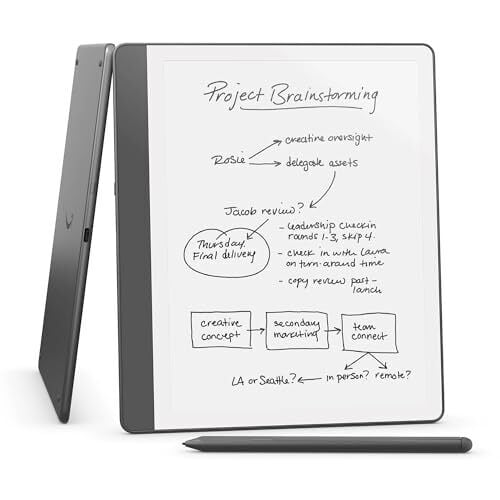
Amazon announced its Black Friday and Cyber Monday plans this week—although it won’t start until Nov. 20, you can already find early Black Friday deals on Amazon devices. Their “like-new” Kindle readers, in particular, have good discounts right now. The Kindle Paperwhite is $106.99 (originally $143.99), the Kindle Paperwhite Signature Edition is $126.99 (originally $179.99), the 16GB Kindle Scribe is $212.99 (originally $309.99), and the 64GB Kindle Scribe is $278.99 (originally $404.99).

Amazon Kindle Paperwhite 16GB 7″ eReader (Like-New, Black)


$106.99
at Amazon
$143.99
Save $37.00

Amazon Kindle Paperwhite 16GB 7" eReader (Like-New, Black)


$106.99
at Amazon
$143.99
Save $37.00

Amazon Kindle Paperwhite Signature Ed. 32GB 7″ eReader (Like New)


$126.99
at Amazon
$179.99
Save $53.00

Amazon Kindle Paperwhite Signature Ed. 32GB 7" eReader (Like New)


$126.99
at Amazon
$179.99
Save $53.00

Certified Refurbished Amazon Kindle Scribe (16 GB) the first Kindle and digital notebook, all in one, with a 10.2” 300 ppi Paperwhite display, includes Premium Pen 16 GB Without Kindle Unlimited


$212.99
at Amazon

Amazon Prime
$309.99
Save $97.00

Certified Refurbished Amazon Kindle Scribe (16 GB) the first Kindle and digital notebook, all in one, with a 10.2” 300 ppi Paperwhite display, includes Premium Pen 16 GB Without Kindle Unlimited


$212.99
at Amazon

Amazon Prime
$309.99
Save $97.00

Like-New Amazon Kindle Scribe (64 GB) – Your notes, documents and books, all in one place. With built-in AI notebook summarization. Includes Premium Pen – Tungsten


$278.99
at Amazon
$404.99
Save $126.00

Like-New Amazon Kindle Scribe (64 GB) - Your notes, documents and books, all in one place. With built-in AI notebook summarization. Includes Premium Pen - Tungsten


$278.99
at Amazon
$404.99
Save $126.00

The Kindle Paperwhite is the most popular reading tablet from Amazon, and it’s the best for most people, according to PCMag’s “outstanding” review. It offers many improvements over the 11th-generation version from 2021—mainly a larger seven-inch display and a much faster boost in performance. It still retains all of the great attributes that made the previous version great, like a fully waterproof design with an IPX8 rating, enough storage to hold more than 10,000 books, and unlimited cloud storage. If you want an ad-free experience with some better features, get the Signature Edition.

We also have a breakdown of every kind of Kindle to help you decide. If you already own the 11th generation, there might not be enough here to warrant an upgrade, unless you just want the latest Amazon has to offer. However, any devices older than that may be worth an upgrade for features like Bluetooth compatibility, which is great for audiobooks.

The latest version of the Kindle Scribe, an upgraded version of the classic e-reader designed for note-taking, came out in December 2024, offering some nice upgrades that make the device more pleasant to use. It comes with a Premium Pen and a more paper-like feel screen that gives you resistance when writing notes.

Pokémon Pokopia, an Animal Crossing-esque life sim, will hit Switch 2 on March 5

Nintendo and The Pokémon Company are trying something a little different with Pokémon Pokopia. It’s a life sim game in the vein of Animal Crossing. Nintendo unveiled the game during a Direct in September, saying that it would arrive in spring 2026. Now, the company has revealed that Pokémon Pokopia will hit Nintendo Switch 2 on March 5.

There’s no new trailer for the game just yet — you’ll have to wait until Thursday, November 13 for that. Nor did Nintendo discuss more details about Pokémon Pokopia, other than to indicate the cartridge will be a Game Key Card (no game files are stored on such a cart, which is effectively a physical key that allows you to download a game). The company announced the release date with the most bare bones of tweets:

Build a Pokémon paradise in Pokémon Pokopia, releasing for #NintendoSwitch2 on Mar 5. pic.twitter.com/m3XFXFdqOu

— Nintendo of America (@NintendoAmerica) November 11, 2025

Koei Tecmo studio Omega Force is developing Pokémon Pokopia. We learned during the Nintendo Direct a couple of months ago that you’ll play as a Ditto who has taken on the guise of a human. You’ll meet more Pokémon and learn new abilities to help you upgrade your community and make your home just the way you want it.

Last month, there was another leak of files from Game Freak, the main developer of Pokémon games. Among other things, the details indicated that an expansion for Pokémon Pokopia is in the works.

Before Pokémon Pokopia arrives, you’ll be able to warm up for a Pokémon flavor of life sim by dipping back into Animal Crossing New Horizons, which is getting a major update and a Switch 2 version in January. It includes support for mouse controls, visual enhancements and other upgrades on Switch 2. An update that will also apply to the original Switch version will introduce a new hotel location, more cosmetic items, a Lego collaboration and much more.

This article originally appeared on Engadget at https://www.engadget.com/gaming/nintendo/pokemon-pokopia-an-animal-crossing-esque-life-sim-will-hit-switch-2-on-march-5-160000254.html?src=rss

Lawyers keep giving weak-sauce excuses for fake AI citations in court docs

Amid what one judge called an “epidemic” of fake AI-generated case citations bogging down courts, some common excuses are emerging from lawyers hoping to dodge the most severe sanctions for filings deemed misleading.

Using a database compiled by french lawyer and AI researcher Damien Charlotin, Ars reviewed 23 cases where lawyers were sanctioned for AI hallucinations. In many, judges noted that the simplest path to avoid or diminish sanctions was to admit that AI was used as soon as it’s detected, act humble, self-report the error to relevant legal associations, and voluntarily take classes on AI and law. But not every lawyer takes the path of least resistance, Ars’ review found, with many instead offering excuses that no judge found credible. Some even lie about their AI use, judges concluded.

Since 2023—when fake AI citations started being publicized—the most popular excuse has been that the lawyer didn’t know AI was used to draft a filing.

Read full article

Comments

Samsung Galaxy S26 Plus Rises From The Dead In Revealing Render Leak

Samsung Galaxy S26 Plus Rises From The Dead In Revealing Render Leak
Leaked CAD renders, circulating after the apparent cancellation of the ultra-slim Galaxy S26 Edge, show Samsung returning to the stalwart Plus variant, this time sporting a different camera module design. For awhile now, Galaxy S phones have had an almost flush camera setup with individual lenses protruding from the backplate. Now, the Galaxy

Intel Core Ultra 7 255H Linux CPU Performance

Lenovo recently sent over their new ThinkPad P1 Gen 8 laptop for review under Linux. My Linux review on that ThinkPad P1 Gen 8 laptop will be coming up in the near future along with some other benchmarks from that premium mobile workstation. But with this being the first time I’ve had an Intel Core Ultra 7 255H “Arrow Lake H” device at Phoronix, here are some standalone benchmarks looking at the CPU performance of that 16-core mobile processor compared to various other Intel and AMD SoCs in different laptops while running Ubuntu Linux.

Sam Altman’s Worldcoin Project Struggles Toward Billion-User Ambition With 17.5 Million Sign-Ups

Sam Altman’s Tools for Humanity has verified around 17.5 million people through its iris-scanning Orb device. The company has set a goal of reaching 1 billion users, so it is less than 2% of the way there. The startup has raised $240 million from investors including Andreessen Horowitz, Bain Capital and Khosla Ventures. PitchBook estimates its valuation at $2.5 billion.

The Orb is a volleyball-sized metal sphere that scans irises to generate a World ID. Users can claim tokens of the cryptocurrency Worldcoin, currently worth around 80 cents per coin. Business Insider spoke to former Tools for Humanity employees, a former Orb operator from Kenya, and a former head of operations in Mexico City. Some questioned whether the company had a clear long-term strategy. Nick Maynard, vice president of fintech market research at Juniper Research, said he does not see a killer use case that will drive major traction. The company also continues to face regulatory headwinds. In October, agencies in the Philippines, Colombia and Thailand took action to halt operations. German authorities determined last year that the company’s data protection measures would not be sufficient to protect against cybercriminals or state attackers.


Read more of this story at Slashdot.

Pirelli’s Cyber Tire might become highway agencies’ newest assistant

Pirelli’s sensor-embedded Cyber Tire is starting to find a whole new niche helping traffic agencies. When we first learned of the smart tire, it was making its debut fitted to McLaren’s then-new plug-in hybrid supercar. As an alternative to a tire pressure monitoring system fitted to the car’s wheels, the Cyber Tire wirelessly reports its temperature and pressure to its car via Bluetooth Low Energy, along with some specific information about the tire itself.

Since then, Pirelli has continued to develop the technology. When it created Cyber Tires for the Pagani Utopia, it allowed a car to tailor its antilock braking and electronic stability control to the specific rubber fitted to the wheels. Right now, a car’s ABS or ESC will be tuned regardless of the tires it’s fitted to.

But a high-performance summer tire acts quite differently from a winter tire, not just because of the composition of the rubber but also due to the tread pattern, depth, and stiffness, not to mention factors like sidewall stiffness. And the Utopia can take advantage of that fact.

Read full article

Comments

Silicon Power XPower XS90 SSD Brings Blistering 14.3GB/s Speeds To Gaming PCs

Silicon Power XPower XS90 SSD Brings Blistering 14.3GB/s Speeds To Gaming PCs
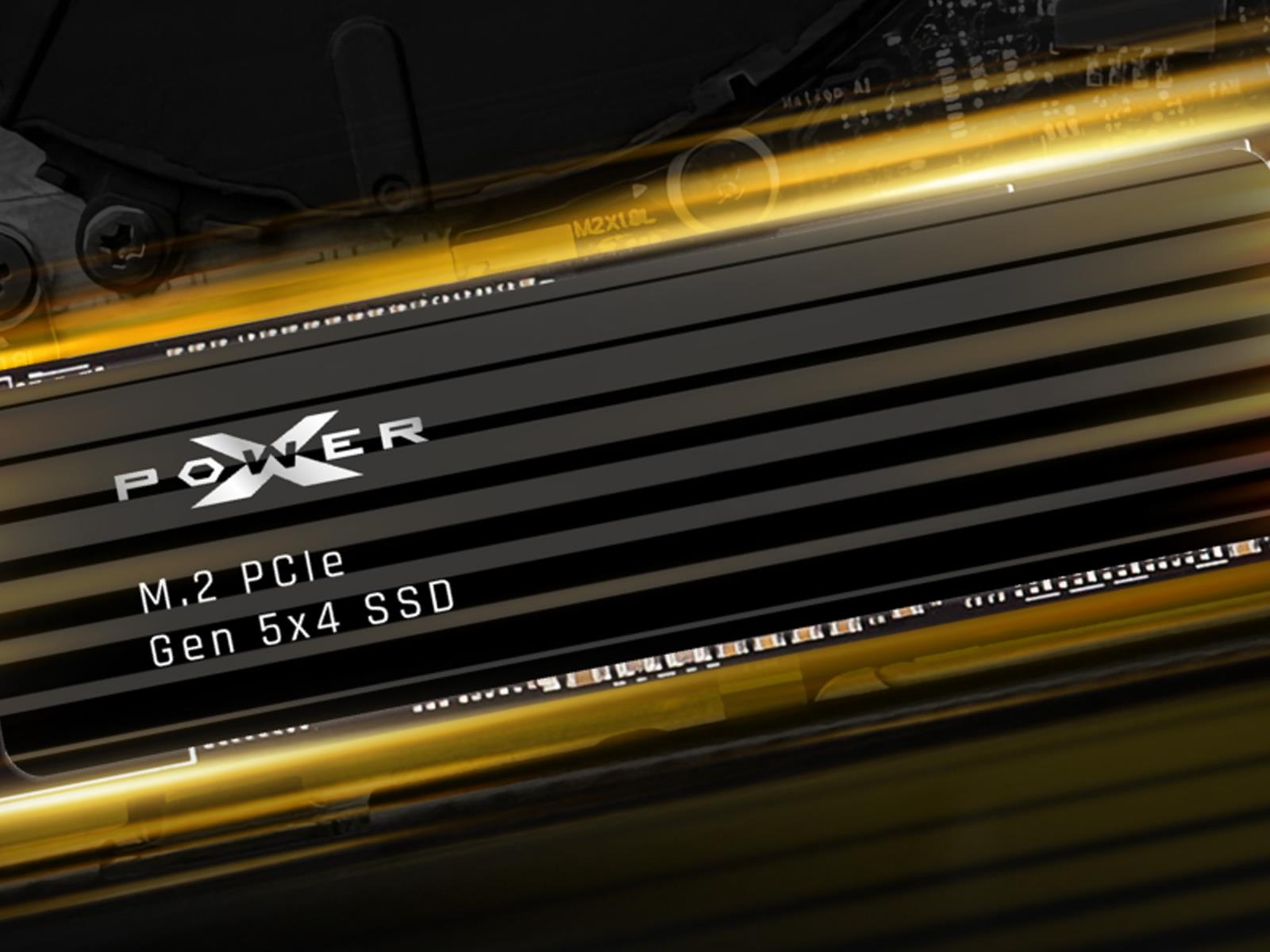
Storage prices may be on the rise (boo!), but flagship solid state drives are also getting faster (hooray!). We’ve seen a handful of new SSDs push the envelope lately, and Silicon Power’s new XPower XS90 Gen 5 SSD joins the bunch with blazing-fast sequential read speeds of up to 14,300MB/s (14.3GB/s) and sequential writes of up to 13,400MB/s

[$] Protecting privacy with Tails

Tails is an unusual Linux
distribution developed by the Tor Project; it
is designed to help users work around internet censorship and avoid
surveillance. It is a “portable” operating system that is meant to be
run from a USB stick or ISO image and to leave no trace on the
computer it was run on. Tails routes connections to the internet over
the Tor
network
and includes a selection of applications and tools
suited to working with sensitive documents, communicating securely,
and preserving users’ anonymity. The tradeoff, of course, is that
Tails is less convenient and requires users to learn a new set of
tools to avoid compromising their own security and anonymity. Tails 7.1 was
released in October, and it seemed like as good a time as any to take
it for a spin.