
In addition to the release today of a big refresh to Endeavour OS, CachyOS is out with their latest ISO refresh for this additional Arch Linux powered desktop OS. CachyOS for its November 2025 refresh brings installer improvements, now installs additional packages for media acceleration when capable Intel graphics are detected, handling for Bcachefs with its DKMS module, and other improvements…
Category Archives: Unfiltered RSS
Listing All the Available Shells in Your Linux System
In this article, you will learn different ways to list all the available shells in your Linux system, including shells associated with specific users, your own default login shell, and many more.
Uber Launches Driverless Robotaxi Service in Abu Dhabi, and Plans Many More
“A year after launching a commercial robotaxi service in Abu Dhabi, Chinese autonomous vehicle technology company WeRide and partner Uber can finally call that service driverless,” reports TechCrunch.
A company official hailed it as “a historic transportation milestone, as the first driverless AV deployment outside of the U.S. or China.” But TechCrunch notes that’s just the beginning:
Uber has spent the past two years locking up partnerships with 20 autonomous vehicle technology companies in various countries, including the United States, Europe, and the Middle East.
Those partnerships have expanded beyond the realm of robotaxis as well. Uber’s deals span the full range of self-driving applications, including delivery and trucking. This year alone, it announced partnerships withAnn Arbor, Michigan-basedMay MobilityandVolkswagen, Chinese self-driving firms Momenta,Pony.ai, and Baidu, as well as a recent deal to create a premium robotaxi service using Lucid Gravity SUVs equipped with a self-driving system from San Francisco-based startup Nuro.
These deals are finally beginning to materialize into commercial services. For instance, Uber and Waymo launched a robotaxi service earlier this year in Austin. Now, Uber has expanded to the Middle East with WeRide in Abu Dhabi — with even more cities to come, including Dubai. Uber CEO Dara Khosrowshahi forecast in the company’s third-quarter earnings report that there would be autonomous vehicle deployments on the Uber network in at least 10 cities by the end of 2026. Uber and WeRide have previously shared plans to expand to 15 cities throughout the Middle East and Europe, eventually scaling to thousands of robotaxis. That would represent a massive leap for WeRide, which today has more than 150 robotaxis in the region.


Read more of this story at Slashdot.
The Ayaneo Next II is a hulking gaming handheld with a 9-inch display
Ayaneo may be working on more affordable gaming handhelds lately, but it hasn’t forgotten how to do the extravagant designs that the handheld maker is known for. One-upping the bulky Legion Go 2, Ayaneo announced its latest Windows handheld called the Next II.
Ayaneo is continuing the theme for its Next lineup of devices, making these handhelds as big and powerful as possible. The Next II packs a 9.06-inch OLED display with a 2,400 x 1,504 resolution and a variable refresh rate that can be adjusted between 60 and 165 Hz. Ayaneo’s latest premium handheld should handle any game you throw at it thanks to an AMD Ryzen AI Max+ 395 chip and a massive 115 Wh battery. The company didn’t reveal any battery life estimates yet, but it’s unlikely we’ll see all-day usage with these high-end specs.
Ayaneo
To match the powerful internal components, Ayaneo equipped the Next II with Hall effect joysticks and triggers to prevent deadzones and stick drift. Borrowing from its previous high-end handheld called the Ayaneo Kun, the Next II also features dual smart touchpads that can be customized with gesture controls and key mapping. The back of the handheld is home to four extra buttons, but you can also set specific controls for four other customizable buttons.
Ayaneo hasn’t revealed any pricing details yet, but the Next II might be reserved for those willing to spend closer to $2,000. Don’t forget that Ayaneo’s previous flagship handheld, the Ayaneo Kun, could be fully kitted out for a $1,700 price tag.
This article originally appeared on Engadget at https://www.engadget.com/gaming/the-ayaneo-next-ii-is-a-hulking-gaming-handheld-with-a-9-inch-display-175018940.html?src=rss
How Bad Will RAM and Memory Shortages Get?
Digital Trends reports:
A wave of shortages now threatens to ripple across RAM, SSDs, and even hard drives, affecting not only performance-hungry rigs but also everyday systems.
— CyberPowerPC has publicly confirmed it will raise prices on all systems starting December 7th due to RAM costs spiking by 500% and SSD prices doubling since October.
— Memory suppliers warn of a global DRAM and SSD shortage running into late 2026 or even 2027, driven heavily by AI server demand.
— As reported by Bloomberg, Lenovo has already stockpiled memory to ride out the crunch and maintain steadier PC pricing.
— Among other OEMs, HP, in its recent earnings call, flagged possible price increases or lower-spec models on the back of rising component costs.
But Apple “may also be in a good position to weather the shortage,” reports Ars Technica, since “analysts at Morgan Stanley and Bernstein Research believe that Apple has already laid claim to the RAM that it needs and that its healthy profit margins will allow it to absorb the increases better than most.”
Ars Technica also shows how much RAM and storage prices have jumped — sometimes as much as 2x or even 3x in just three months. “In short, there’s no escaping these price increases, which affect SSDs and both DDR4 and DDR5 RAM kits of all capacities (though higher-capacity RAM kits do seem to be hit a little harder).”
Memory and storage shortages can be particularly difficult to get through. As with all chips, it can take years to ramp up capacity and/or build new manufacturing facilities… And memory makers in particular may be slow to ramp up manufacturing capacity in response to shortages. If they decide to start manufacturing more chips now, what happens if memory demand drops off a cliff in six months or a year (if, say, an AI bubble deflates or pops altogether)? It means an oversupply of memory chips — consumers benefit from rock-bottom prices for components, but it becomes harder for manufacturers to cover their costs… The upshot is: Not only are memory prices getting bad now, but it’s exceptionally difficult to predict when shortage-fueled price hikes might end…
Tom’s Hardware reports that AMD has told its partners that it expects to raise GPU prices by about 10 percent starting next year and that Nvidia may have canceled a planned RTX 50-series Super launch entirely because of shortages and price increases.


Read more of this story at Slashdot.
Linux 6.18 Features From Apple M2 To Sheaves, DM-PCACHE & More Intel + AMD Hardware
With the Linux 6.18 stable kernel release expected to take place tomorrow on 30 November, here is a reminder about some of the new hardware support and other interesting features coming in this next stable version of the Linux kernel…
EndeavourOS Ganymede Rolls Out with KDE Plasma 6.5 and Linux Kernel 6.17
The EndeavourOS team announced today the release and general availability of EndeavourOS Ganymede as the latest stable snapshot of this Arch Linux-based distro featuring the KDE Plasma desktop environment.
New Hyperloop Projects Continue in Europe
Hyperloop One ceased operations in December 2023, notes CNN. “Yet nearly two years on, in other parts of the world, hyperloop projects are ongoing.” For example, Rotterdam-based Hardt Hyperloop has a cool web site — and the company’s managing director tells CNN that hyperloops are the only “actionable, sustainable solution to replace short-haul air travel” over distances greater than 300 miles. “It’s 90% more efficient than air travel, operational expenses and maintenance costs are much lower than conventional high-speed railways and, as an enclosed, autonomous system, it’s not affected by external factors such as bad weather or strikes.”
Rail-friendly Europe appears to be the new hyperloop hub, with four companies dedicated to it… Europe’s Hyperloop Development Program (HDP) is a public-private partnership backed by EU funding and the private sector. HDP’s vision is to have the first set of commercially viable hyperloop lines open by 2035-40, followed by a route network by 2050. It estimates that a 15,000-mile network linking 130 of Europe’s major cities could shift 66% of short-haul flight passengers to hyperloop by 2050, saving between 113 million and 242 million tons of carbon dioxide emissions. Core network hubs would be scattered across the continent from London to Berlin, Madrid to Belgrade, and Sofia to Athens, while loops would serve the Iberian Peninsula, the Baltic States and Scandinavia, the Balkans and Central and Eastern Europe. The cost? A cool 981 billion euros, or $1.1 trillion, according to HDP estimates…
[T]hose behind the EU-backed HDP project are hoping to have a full-scale test track of up to 3 miles operational by the end of 2029, followed by a 20-30 mile twin-tube “Living Lab” which would replicate all aspects of day-to-day operation and public service, slated to be up and running by 2034. Elsewhere, Hyperloop Italia is investing in a demonstration line between Venice and Padua costing up to €800 million ($929 million) which could be ready by 2029, while Germany, Spain, India and China are also investigating trial routes to establish the viability of the technology.
And meanwhile China and Japan are also building “maglev” (magnetic levitation) train lines, the article points out — though it also includes this quote from rail expert and author Christian Wolmar. “Hyperloop is unworkable. The infrastructure it needs would be amazingly expensive to build and it can’t deliver the capacity to compete with high-speed railways or airlines.
“It doesn’t integrate with existing transport modes, the infrastructure required to reach city centers would cause intolerable noise and disruption. And there are doubts over energy costs, capacity and passenger safety if something goes wrong at such high speeds….
“[T]he economics of it just don’t work.”


Read more of this story at Slashdot.
These 8 Black Friday Robot Vacuum Deals Suck, No Actually They’re Great
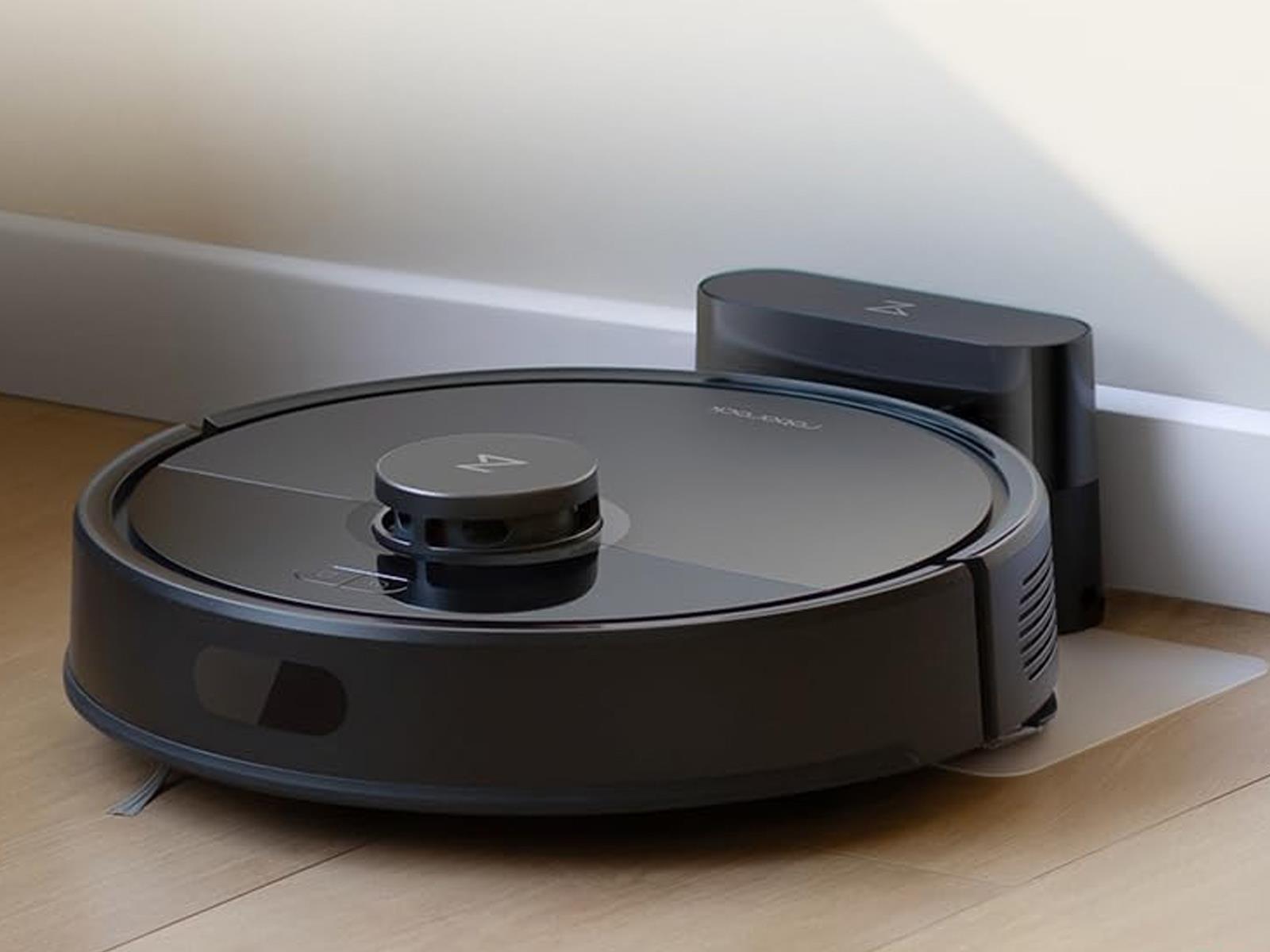
We wouldn’t say this about most other items, but ff your vacuum doesn’t really suck, then it’s time to invest in one that does. That’s the whole point, right? Solid suction to extract dirt and grime from your floors. Do you know what doesn’t suck, though? The Black Friday / Cyber Monday discounts that are in play for an assortment of robot
8 Black Friday Prebuilt Gaming PCs That Crush High Part Prices

Don’t worry if you missed out on the Black Friday sales bonanza because it’s not as if retailers suddenly stopped offering discounts. There are bunch of lingering Black Friday deals out there, some of which are now labeled as Cyber Monday bargains. Call them whatever you want, if you’re in the market for a new gaming PC and are hoping to get
How to Install VLC Media Player on Ubuntu and Others
Learn multiple ways to install the stable and latest version of VLC Media Player on your Ubuntu desktop and server systems.
Viral Song Created with Suno’s genAI Removed From Streaming Platforms, Re-Released With Human Vocals
An EDM song by the British group Haven ran into trouble in October after it shared clips of upcoming song “I Run” on TikTok.
The song “was an overnight viral sensation online,” writes Digital Music News — racking up millions of plays “even before it hit streaming services.” (Although the Washington Post notes that “Record labels and TikTok users began questioning whether ‘I Run’ used an AI deepfake, modeled off British R&B singer Jorja Smith, for the vocals.”)
Digital Music News picks up the story:
The artist says he used his own voice to record the vocals, and then ran it through layers of processing and filtering to turn it into the female-sounding voice heard in the track. However, that filtering also included the use of the controversial genAI platform Suno — and that’s what complicates things… [The article says later that Suno “is currently in the middle of a blockbuster lawsuit with the Big Three major labels over allegations of widespread copyright infringement of sound recordings used during the AI model training process.”]
Meanwhile, the song was rapidly amassing listenership. It soared to #11 on the U.S. Spotify chart and #25 on Spotify globally. Videos using the song continued going viral on TikTok and Instagram, including one in which rapper Offset had apparently played the song during a Boiler Room set, which later turned out to be falsified. And then, as quickly as it appeared, “I Run” was taken down from streaming services, including Spotify and Apple Music. That was due, in part, to numerous takedown notices from The Orchard, the label to which Jorja Smith is signed, as well as the RIAA and IFPI. The takedown notices alleged various issues with the track, including the “misrepresentation” of another artist, as well as copyright infringement.
As a result, the song has also been withheld from the Billboard charts, including the Hot 100, on which it had been predicted to debut this week before the controversy. Billboard points out that it “reserves the right to withhold or remove titles from appearing on the charts that are known to be involved in active legal disputes related to copyright infringement that may extend to the deletion of such content on digital service providers.”
The song itself has now been re-released with an all-human vocal track. But going forward will the music industry ever work with AI platforms? The Washington Post reports:
“I Run” has taken off as record labels remain unsure of the extent to which they should welcome generative AI programs such as Suno or Udio into the industry. After the two AI music companies began growing in popularity, the three major labels — Sony Music, Warner Music Group and Universal Music Group — filed lawsuits against Suno and Udio, claiming that the AI companies have used the labels’ sound recordings to train their model.
Since then, UMG and Warnerhave reached agreementsto work with Udio, ending their litigation… It comes shortly after all three major labels licensed their catalogue to Klay, a music streaming start-up that allows users to adjust songs using artificial intelligence. Major licensing organizations such as ASCAP and BMI shared that they would register songs that were partially AI-generated — but not fully generated ones.
Haven appears to present an uncomfortable edge case. While some AI-generated songs that sound broadly like other artists have been allowed to remain on streaming platforms, the voice in “I Run” appears to have been deemed too duplicative for comfort.


Read more of this story at Slashdot.
Early Cyber Monday Laptop Deals Under $500 To Save Big On A Budget

Black Friday has officially come and gone, but the deals are still rolling in as retailers pivot to Cyber Monday. And in reality, we can expect a full holiday season of sales, as this is the busiest time to shop. You don’t have to spend big to participate, either. Proving otherwise, we found a bunch of discounted laptops that are now priced
GNOME Gains New Clipboard Manager Option With “Copyous”
For those looking to improve their clipboard management experience on the GNOME desktop, Copyous is a new GNOME Shell extension serving as a new clipboard manager…
FOSS Force’s Top Five Articles — For the Week Ending
Did you miss this week’s top articles? Here are the five most read article on FOSS Force for the week that just ended.
The post FOSS Force’s Top Five Articles — For the Week Ending appeared first on FOSS Force.
OpenAI Partners Amass $100 Billion Debt Pile To Fund Its Ambitions
OpenAI’s data centre partners are on course to amass almost $100 billion in borrowing tied to the lossmaking start-up, as the ChatGPT maker benefits from a debt-fuelled spending spree without taking on financial risks itself. Financial Times: SoftBank, Oracle and CoreWeave have borrowed at least $30 billion to invest in the start-up or help build its data centres, according to FT analysis. Investment group Blue Owl Capital and computing infrastructure companies such as Crusoe also rely on deals with OpenAI to service about $28 billion in loans.
A group of banks is in talks to lend another $38 billion for Oracle and data centre builder Vantage to fund further sites for OpenAI, according to people familiar with the matter. The deal is expected to be finalised in the coming weeks. OpenAI executives have said they plan to raise substantial debt to help pay for these contracts, but so far the financial burden has fallen to its counterparties and their lenders. “That’s been kind of the strategy,” said a senior OpenAI executive. “How does [OpenAI] leverage other people’s balance sheets?”


Read more of this story at Slashdot.
How to Upgrade to Zorin OS 18 from 17: A Step-by-Step Guide
Here’s how to upgrade from Zorin 17 to Zorin 18, with all the steps you need to ensure a smooth, safe, and trouble-free system update.
Achieving lasting remission for HIV
Around the world, some 40 million people are living with HIV. And though progress in treatment means the infection isn’t the death sentence it once was, researchers have never been able to bring about a cure. Instead, HIV-positive people must take a cocktail of antiretroviral drugs for the rest of their lives.
But in 2025, researchers reported a breakthrough that suggests that a “functional” cure for HIV—a way to keep HIV under control long-term without constant treatment—may indeed be possible. In two independent trials using infusions of engineered antibodies, some participants remained healthy without taking antiretrovirals, long after the interventions ended.
In one of the trials—the FRESH trial, led by virologist Thumbi Ndung’u of the University of KwaZulu-Natal and the Africa Health Research Institute in South Africa—four of 20 participants maintained undetectable levels of HIV for a median of 1.5 years without taking antiretrovirals. In the other, the RIO trial set in the United Kingdom and Denmark and led by Sarah Fidler, a clinical doctor and HIV research expert at Imperial College London, six of 34 HIV-positive participants have maintained viral control for at least two years.
Arch Linux Based Endeavour OS Updated After ISO Refresh Hiatus
Endeavour OS is one of the popular desktop Linux distributions built around Arch Linux providing a nice out-of-the-box experience. Since their last ISO refresh back in March there hadn’t been much news from the project nor any new ISO releases for this rolling-release distro. But thankfully today they are back in the saddle with a new ISO release, Endeavour OS 2025.11.24 “Ganymede”…
Framework Computer Now Sponsoring LVFS / Fwupd Development
With the Linux Vendor Firmware Service serving more than 135 million downloads for Linux users updating their system and device firmware, LVFS has been working to get more hardware vendors to contribute either engineering resources or directly contributing annual dues as sponsors. Framework Computer is now the first one to have executed an agreement under these new sponsorship efforts…